2026: Evidence-Based Approach to Population Health
Reflecting on 20 Years of Well‑Being at the University of Iowa
For two decades, the University of Iowa has shown a strong commitment to supporting the well-being of its people. Continued improvement and focused strategies have helped create an environment where faculty, staff, and students can do their best work and live healthier lives. Drawing on years of experience and population health data, the university offers services that meet the evolving needs of its workforce.
Campus Culture: Supervisor support and the built environment shape well being.
Our environment—both the people around us and the spaces where we work—plays a key role in fostering healthier habits and supporting everyday well-being.
Sustained, Evidence‑Based Approach Data continues to guide programs and decisions.
By using long - term trends and current assessments, work-place well-being efforts have returned to strong, prepandemic levels and continue to move forward with purpose.
WELL-BEING FOLLOWS Supervisor Support
Supervisors play a key role in supporting well-being across the workplace. Their ability to use resources, encourage team success, and shape the local culture has a lasting effect on how employees experience their work. In 2025, 24.3% (n=2,471) of PHA respondents strongly agreed that their supervisor supported a healthy culture. Among this group, 62.3% reported thriving.
My supervisor is supportive of well-being in my unit:
2025: Well-Being Index by Supervisor Support
In addition to Thriving status, supervisor support has a positive impact on Productivity Barriers, Health Behaviors, and Healthy Culture. These results show a clear trend: strong supervisor support is closely linked to higher levels of employee thriving.
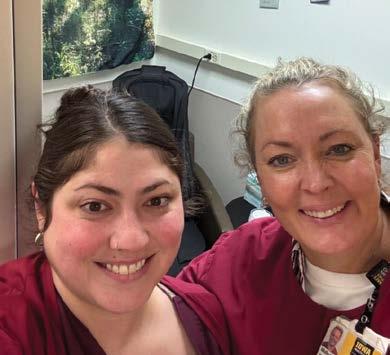
“ The leaders within the Patient Access Center actively embrace the liveWELL program, modeling its principles to encourage and support team members across the department. Through liveWELL, we’ve gained access to valuable educational resources and practical tools that help us meet the evolving needs of our teams. This approach is further guided by insights drawn from our local Personal Health Assessment (PHA) data , allowing us to tailor our support in meaningful and informed ways."
Keri Semrau RN, MSN, CACM
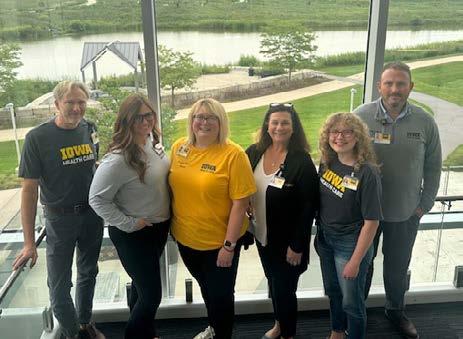
Keri Semrau and the leadership team at HSSB
Built Environment CAMPUS
In 2010, the Campus Recreation and Wellness Center opened, creating a shared space for health and well-being in the center of the University of Iowa campus. Soon after, liveWELL launched the Recreational Membership Incentive, which covers 50% of the cost of a membership.
Since then, levels of physical activity among our faculty and staff have stayed stronger than national averages. By supporting an environment that makes healthy choices easier, the University of Iowa continues to build a more active and engaged community— consistently performing above national benchmarks.
CASE STUDY: AMBULATORY SURGICAL CENTER (ASC)
The Ambulatory Surgical Center, led by Wellness Ambassador and Associate Director, Molly Kucera, and Assistant Nurse Manager, Jill Carmoney, developed a respite room for team members to use throughout their workday using a liveWELL Wellness Grant. The goal was to create a dedicated space within the ASC to enhance well-being and reduce stress. A suitable space was identified and retrofitted to support sensory recovery with the addition of lamps, massagers, meditation guides, a Zen garden, and essential oils.
The Wellness Grant was implemented in August 2024. Personal Health Assessment data highlights the impact of the respite room in the ASC:
" I liveWELL because it helps me lead by example— for my students and for myself. Making healthy choices in my daily life—like staying active and eating with intention—has transformed how I show up every day. The liveWELL program gave me the tools and support to create the best version of myself and build a healthier, more energized life—at work and beyond."
Ana M. RodriguezRodriguez, PhD
Associate Dean for Academic Affairs and Student Success, Graduate College Associate Professor, College of Liberal Arts and Sciences
Respite Room Implemented
“ The wellness room has become an essential space for our staff, offering a moment of calm in the middle of busy days. As one team member shared, 'I love every aspect. It is nice when you need a second to breathe.' Another noted, 'Every aspect of the room helps bring a calming vibe.' These reflections capture the true value of the room- it’s more than just a physical space; it’s a sanctuary that supports mental well-being, reduces stress, and helps our staff recharge so they can continue to bring their best selves to their work.”
CURRENT POPULATION Health Trends
Sustaining workplace well - being efforts during and after the pandemic has supported a steady return to the population health levels seen in 2019. Ongoing, evidence - based programs continue to help employees feel supported and contribute to a productive work environment at the University of Iowa.
Well-Being Index
Productivity Barriers
Data-driven efforts to support work-life have shown to have a positive impact on supporting UI people. (Lower scores are better.)
Programs:
Financial:
• Emergency Hardship Fund
• Hills Bank Financial Coaching
• Y NAB™ (You Need a Budget)
Taking Care of Someone Else:
• LivWell Seniors
* U S Employees thriving; 53% in 2022 and 50% in 2024.
The Well-Being Index shows that well-being is declining, on campus and nationally. Continued support for campus remains a priority and identifying drivers for well-being like supervisor support (see page 2).
Programs:
• E AP Short-Term Counseling
Health Coach Service Healthy Culture
Health Condition:
• liveWELL Health Coaching and Group Health Coaching
• Wondr Health™
• Diabetes Prevention Program
Using targeted tools and communications to
Programs:
• R U OK?
• Wellness Ambassadors
Wellness Grants
Departmental Toolbox
The complexity of health behavior change is hard. liveWELL resources support UI Faculty and Staff with programs to find the right support, at the right time, in the right way.