Tuition, fee increases on the table
Proposal open for comment until April 15
academic is proposed to rise about 5% to about $9,872.
The tentative tuition and fee rates at the University of Idaho for the 2026-27 academic year will be presented to the State Board of Education on April 15-16. Until then, students, staff and faculty are welcome to provide feedback by emailing studentfees@uidaho.edu or by contacting Trina Bower, vice president of University Budget and Planning, at tmahoney@uidaho.edu or (208) 885-4387.
In the initial notice, Green primarily addressed the proposed tuition increase, explaining it will be necessary to address rising costs driven by inflation, including expenses related to information technology, utilities and health benefits, while also supporting institutional growth.
For full-time undergraduate students, resident tuition would increase from $3,514 to
$3,738 per semester, an increase of 6.4%; nonresident tuition from $13,132 to $13,356 per semester, an increase of 1.7%; and Western Undergraduate Exchange tuition would increase from $5,271 to $5,607 per semester, an increase of 6.4%. For part-time undergraduate students, resident tuition would increase from $418 to $440 per credit, or 5.3%, and non-resident tuition would

Cuts total 8% for 2026 despite university growth
The University of Idaho will have to cut at least $6.7 million from its current budget, and $8.4 million from the Fiscal Year 2027 budget. The Idaho legislature voted March 2 to add another 1% cut for FY26, on top of a 3% cut
passed in the fall, to UI’s general education budget. Legislators also voted for a permanent 5% reduction beginning in FY27.
According to an email to the university from President Scott Green, rising health care costs and a $2 million holdback of other funds will result in the financial impact on UI for FY26 being closer to an 8% budget cut, or approximately $13 million.
“Since the holdback was issued last summer, the


university has been aware that additional recissions may be made. For more than six months we have worked to identify areas where additional saving may be found such as deferring spending and salary savings,” said Jody Walker, executive director of communications at UI, in an email to The Argonaut.
UI will handle staff cuts through voluntary retirement incentives, according to Walker, as well as delaying hiring and eliminating open positions.
“This will increase student-to-faculty ratios, reduce student support services and slow research competitiveness and innovation that benefits Idaho industries and communities,” wrote Green.
Student advising, tutoring, career services and other academic support functions will also be limited with less staff.
According to Walker, every college has been asked to cut its budget equally for FY27. Some

impacts are already visible with the College of Natural Resources announcing it will discontinue the forest and sustainable products undergraduate program due to lower enrollment.
In engineering and other high-cost programs, enrollment will be capped and limits will be placed on sections for high-volume classes. According to Green, these actions help control costs but will extend the time needed for some students to earn a degree.
“Capacity lost through permanent reductions cannot be quickly rebuilt,” Green said.
These budget cuts come as UI continues to expand, with 10 continuous semesters of growth reported after spring 2026 and UI investing $162 million into student dormitory and apartment construction projects. Most recently, UI purchased a piece of property near campus for $1.6 million with plans to connect UI to downtown Moscow.
increase from $1,380 to $1,402 per credit, or 1.6%.
Graduate full-time rates would increase from $4,380 to $4,604 per semester, 5.1%, for residents and from $13,998 to $14,222 per semester, 1.6%, for non-residents. Part-time graduate rates would increase from $566 to $591 per credit, 4.4%, for residents and from $1,635 to $1,660 per credit, 1.5%, for non-residents.
Green also highlighted an activity fee increase for the Counseling and Mental Health Center, which is expected to generate approximately $200,000 for the department.
The consolidated mandatory fee would increase from $1,186 to $1,198 per semester, 1%, for full-time students, while the part-time student fee of $52 would not change. The fee covers Student Enrollment, Engagement and Success ($140.89); Institutional Operations, Services and Support ($756.50); Student Health and Wellness ($227.55); Student Government ($68.73); and the optional portion of the Student Government fee ($4.33). Professional fees, which include the doctor of psychology, directentry master of science in nursing, art and architecture and law programs, are not projected to change. Certain program fees, which are paid instead of regular tuition, are projected to increase, while others will decrease slightly. Most of these program fees will not change.
On March 28, Moscow participated in the third “No Kings” protest that was held in thousands of cities across the U.S. and multiple countries. Protesters held signs denouncing the current administration and gave speeches before marching to a busy intersection to demonstrate.
Moscow’s protest started in Friendship Square downtown, where speakers tested the audience’s civic knowledge by asking questions like who was running for governor in the state, as well as ensuring participants’ voter eligibility. Community members organized stands for demonstrators to make their own signs.
The protest moved to Ghormley Park, where co-organizer Brandon Urie of Indivisible Moscow
thanked participants for the large turnout. The crowd practiced their chants before moving to the intersection of Pullman Road and Stadium Drive. Cars whizzed by and honked their horns for the chanting demonstrators.
“Congress needs to push back on the president,” said a demonstrator. “They have laid down and are doing nothing—with the war, the tariffs, with everything…In the state of Idaho, we need to be an independent state and not bow down to the president.”
Participants said this protest was about reaching the people of the U.S. just as much as the leaders, that people need to ask, “What is this president doing for me?” and “What is he doing for our democracy?” They also emphasized the administration’s unjust treatment of students, who are “losing the opportunity to go to a university that is fully funded and accepts everyone.”
“This is what democracy looks like,” the crowd chanted.


Dakota Steffen ARGONAUT
John Keegan | Argonaut
AP News Wire
After
Marcia Dunn ASSOCIATED PRESS

CAPE CANAVERAL, Fla. (AP)—Four astronauts embarked on a high-stakes flight around the moon Wednesday, humanity’s first lunar voyage in more than half a century and the thrilling leadoff in NASA’s push toward a landing in two years.
Carrying three Americans and one Canadian, the 32-story rocket rose from NASA’s Kennedy Space Center where tens of thousands gathered to witness the dawn of this new era. Crowds also jammed the surrounding roads and beaches, reminiscent of the Apollo moonshots in the 1960s and ’70s.
Supreme Court may reject Trump’s birthright citizenship proposal
Mark Sherman ASSOCIATED PRESS
WASHINGTON (AP)—The Supreme Court seemed poised Wednesday to reject President Donald Trump’s restrictions on birthright citizenship in a consequential case that was magnified by his unparalleled presence in the courtroom.
Conservative and liberal justices questioned whether Trump’s order declaring that children born to parents who are in the United States illegally or temporarily are not American citizens comports with either the Constitution or federal law.
Average gas prices pass $4 as Iran war continues, highest since 2022
Wyatte Grantham-Philips
ASSOCIATED PRESS
NEW YORK (AP)—U.S. gas prices jumped past an average of $4 a gallon for the first time since 2022 on Tuesday, as the Iran war continues to push fuel prices higher worldwide.
According to AAA, the national average for a gallon of regular gasoline is now $4.02—over a dollar more expensive than it was before the war began on Feb. 28. That’s the largest monthly jump the motor club has seen on record. And the last time U.S. drivers were collectively paying this much at the pump was nearly four years ago, following Russia’s invasion of Ukraine.
FBI agents sue after being fired for looking into 2020 campaigns
Eric Tucker
ASSOCIATED PRESS
WASHINGTON (AP)—Three fired FBI agents sued on Tuesday to try to get their jobs back, saying in a class action lawsuit that they were illegally punished for their participation in an investigation into President Donald Trump’s efforts to overturn his 2020 election defeat.
The federal lawsuit adds to the mounting list of court challenges to a personnel purge by FBI Director Kash Patel that over the last year has resulted in the ousters of dozens of agents, either because of their involvement in investigations related to Trump or because they were perceived as insufficiently loyal to the Republican president’s agenda.
The three agents—Michelle Ball, Jamie Garman and Blaire Toleman—were fired last October and November in what they say was a “retribution campaign” targeting them for their work on the investigation into Trump. Despite roughly eight and 14 years of “exemplary and unblemished” service in the FBI, they were abruptly fired without cause and without being given a chance to respond, the lawsuit says.
ASUI approves student fees set forth by Green
Fees increase to retain on-campus services
Dale
Fussell ARGONAUT
The University of Idaho Humanitarian Engineering Corps funding bill was approved unanimously by the ASUI Senate. S26-B13 funds the club’s yearly Spring Bash. In addition to Spring Bash, the funds will be allocated to a project to provide potable water to forty families in rural Peru.
Business Professionals of America requested funding through S26-B13 for the national leadership conference, which would provide funds for both lodging and registration for the students attending the event. The bill passed
unanimously, allowing six of the Business Professionals of America members, who qualified for the national competition after finishing first in at least one event, to attend the national conference.
The National Society of Black Engineers is hosting the 19th annual Dynamic Engineering Lecture Series. This event requires the rental of the Vandal Ballroom. Their organization previously received donations from technology company Micron to aid in the rental.
In S26-B11, the NBSE requested funding for the remaining portion of the rental space, and the bill passed unanimously.
The Barker Trading Club is seeking funding in S26-B14 for various events and meeting supplies.
The Senate approved the
funding allocation bill unanimously. The Barker Trading Club focuses on real-world risk and reward through the investment of real money into the markets for educational purposes and hands-on work for their members. All money invested is kept invested and all money generated is reinvested within the club.
The Bangladesh Association of Students and Scholars requested funding for an Eid community celebration, which will take place at Mountain View Park. S26-B12 requests funds to support this event for the local community in conjunction with BASS.
The event focuses on the celebration between the community and students over Eid which is the end of fasting during Ramadan.
ASUI Senate approved S26-R07 for the increase
of student fees. The fees highlighted in the bill result in a $12.50 increase of student fees to support the Counseling and Mental Health Center. The original proposed increase was 6.24%. The bill is drastically different now in its current form, which reduced the overall increase to 1.65%.
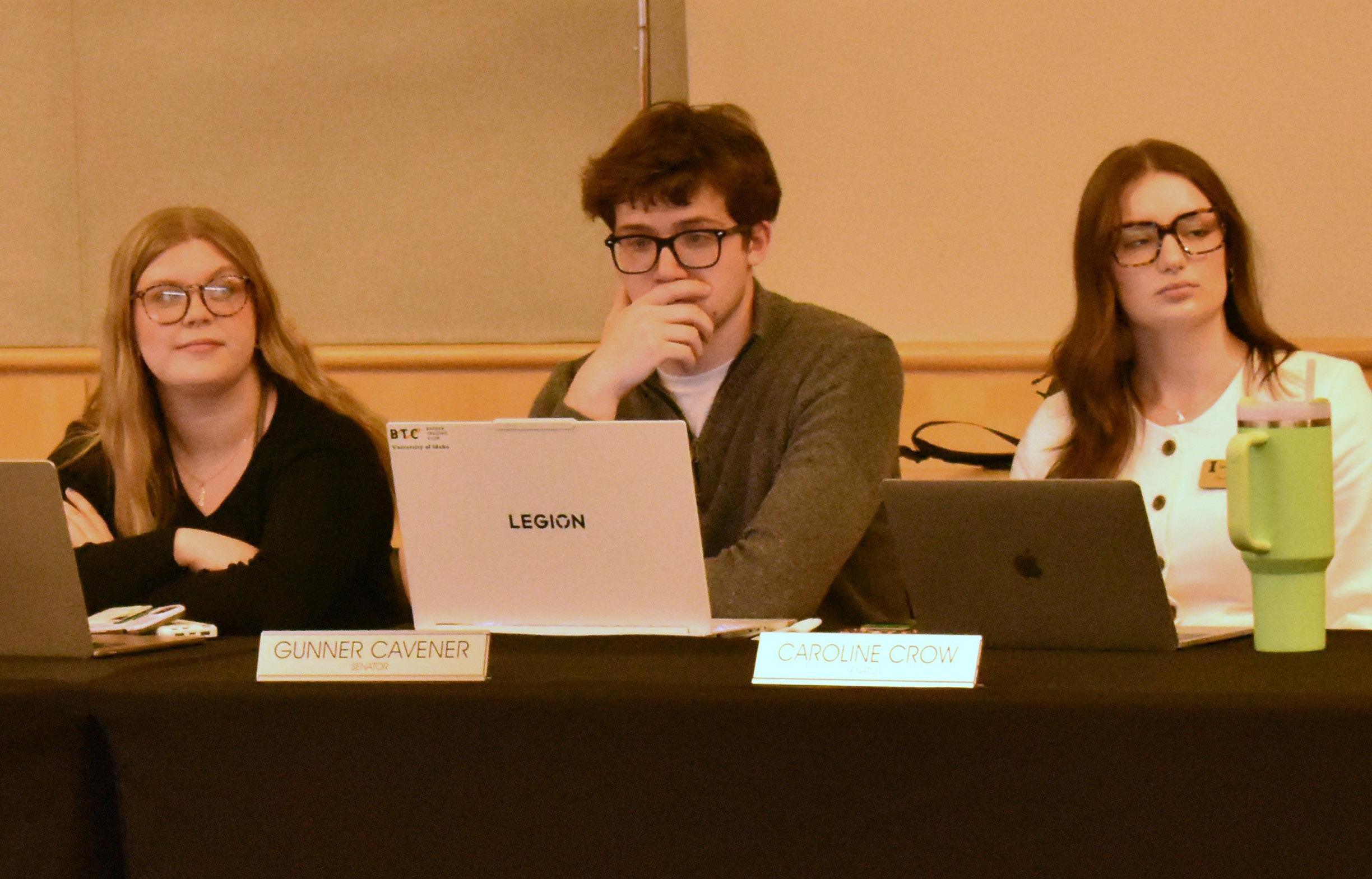
Charlie Peacock and Gunner Cavener are running an Engage workshop on Tuesday, April 28. The workshop is designed for club presidents and representatives to be able to work with Engage, the platform that student organizations and clubs use for membership. This workshop comes after continuous issues with the platform and complaints of difficulties from students.
UI Faculty Senate votes to change department titles
Updates aim to adjust UI catalog to field standard
Dale Fussell ARGONAUT
Name changes to two departments were approved by the University of Idaho Faculty Senate on March 31. The department of movement sciences was changed to the department of kinesiology and the department of clinical medicine was changed to the department of health professions.
The motivation behind the name change is to better align the university catalog with the most commonly used term within the field according to Phillip Scruggs, a professor of movement sciences.
The department of clinical medicine has changed significantly since the beginning of the program, adding multiple new degrees that are better represented by the health professions title.
Rusty Baker, a professor of athletic training, stated the move was necessary to adapt to the ever-changing academic programs within
the department. The senate also approved changes to the code of ethics and the faculty code of conduct. Section C-3.C, which includes language that would protect staff from retaliation when good faith reports are made, was contentious.
Kristin Haltinner, a professor of sociology, proposed a change to the language that would exclude the term “good faith” due to the subjective nature of the term. The vote to remove the term failed with 10 in support of the change and 13 against.
Haltinner also proposed an ad hoc committee on e-bike and e-scooter safety around campus. The faculty and staff safety survey results cited concerns over the growing method of transportation around campus. Haltinner said respondents to the survey worried about being run over by e-scooters and e-bikes and about students charging the devices within university buildings due to the lithium-ion batteries used. The ad hoc committee on e-bike and e-scooter safety was unanimously approved by the senate.


Aubrey Sharp | Argonaut
From left to right: Charlie Peacock, Gunner Cavener and Caroline Crow
Great Debate examines if Scripture alone is enough
Wilson and Heschmeyer on opposing sides of issue
Rebekah Brown ARGONAUT
The sixth annual Great Debate presented Douglas Wilson, arguing on behalf of Protestant beliefs, against Joe Heschmeyer, arguing on behalf of Catholic beliefs at the ICCU arena on Thursday, March 16. The topic of the debate was Sola Scriptura is Scripture alone enough?
Wilson’s opening argument took the affirmative of Sola Scriptura, defending the belief that the Bible is the sole infallible and ultimate source of authority that Christians should follow. Sola Scriptura relies on personal interpretation, which allows individuals to make decisions dependent on what they determine to truly align with Scripture.
Wilson, the senior pastor of Christ Church in Moscow, received a bachelor’s degree in philosophy, a bachelor’s degree in classical studies and a master’s degree in philosophy from the University of Idaho.
“Scripture alone, all 66 books, is the only spiritual authority in our lives that has the twin characteristics of ultimacy and infallibility,” Wilson said. “My view includes all of Scripture, front to back, side to side, and only Scripture.”
Wilson went on to describe an evolution of traditions found in the church. Tradition zero can be defined as “solo scriptura,” a Christian and their Bible against the world. Tradition one is Sola Scriptura, a popular Protestant belief where Scripture alone has the final say.
Tradition two encompasses the idea that the Bible and traditions orally passed down through the church are to be treated with the same respect. Tradition three is a more recent development in the Catholic church, where the only source of revelation is from the Rome magisterium.
“When it comes to teaching the people of God what God wants us to know, does the church use the truth from one [source] or from two?” Wilson said. “The Protestant says one. Tradition one. Scripture
alone. The Roman Catholic says there are two quarries. Tradition two. Scripture together with traditions handed down from the apostles.”
Wilson argued that the Catholic stance lacked specificity and relies on personal inability to interpret Scripture. For specificity, Wilson clarified that the Protestant Bible contains 66 books, listed in a table of contents. Catholics, on the other hands, not only have seven more books added to their Bible, but also lack a set of written transcripts of church traditions. For a newcomer to the Catholic faith, Wilson argued, how would they know what rules or interpretations they’re signing up to agree to?
Wilson also emphazised that whether a Christian believes in the church’s supreme authority of truth, it still boils down to a personal interpretation. For Protestants, interpretation is left to the mind of individuals, which is shown through the resulting numerous denominations of the church. For Catholics, although they all align on interpretable beliefs, someone whether the current pope or one of the past had to make a decision about what they personally believed.
Heschmeyer countered Wilson’s claim. He instead believes that while the Scripture is an infallible source of authority or truth in a Christian’s life, the church also provides the same infallible authority through interpretation and traditions. He argued that God promised his believers all truth, as found in John 16:13, and this alludes to the God-given authority of the church as the enlightener of this truth.
Heschmeyer works as an apologist for Catholic Answers and holds a bachelor’s degree in philosophy from Kenrick-Glennon Seminary, a degree in sacred theology from the Pontifical University of St. Thomas Aquinas in Rome and a Juris Doctor from Georgetown University.
Heschmeyer quoted the apostle Paul, who instructs his audiences in both Second Thessalonians and First Corinthians to keep apostolic traditions,


both spoken and written. Heschmeyer illustrated that the way Paul’s followers in the first century had spoken traditions that were passed down is the way the Catholic church currently has traditions.
Heschmeyer claimed that, if an instructor is teaching a lesson on some topic, and the audience of that lecture walks away without an understanding of that topic, then the instructor has failed. In the same way, if God provided Scripture which contains many passages that may not be understood on the first read through without means to understand the Scripture, then he has failed. There-

Joshua Reisenfeld ARGONAUT
Annual Tutxinmepu Powwow returns to UI April 4, 2026
The Tutxinmepu Powwow is a free annual event to celebrate Native American culture on Saturday, April 4, 2026. Hosted by the University of Idaho Tribal Nations Student Affairs and the Office of Tribal Relations, the event will be held in the ICCU Arena between noon and 7 p.m.
Entertainment will include a drum contest, dance specials, native vendors and a raffle. There will also be a community feast starting at 5 p.m. Vendor registration and volunteer sign up is available through the UI Tutxinmepu Powwow event webpage.
Sexual assault awareness month events advocate for victims
The University of Idaho has multiple events for sexual assault awareness month, which occurs every April.
Green Dot Bystander Intervention Training offers tools to help measurably reduce interpersonal violence in the community. The class for employees is from 2:30-4 p.m. on Tuesday, April 7, and will be held online. The student training is from 9:30 a.m. to 12:30 p.m. on Saturday, April 11.
Starting on Friday, April 3, the Violence Prevention and Education Office and the UI Climbing Center are offering “healthy belaytionships” from 6-8 p.m. where students can get free climbing basics lesson and learn how to strengthen communication skills within their relationships.
April 7 is Wear Teal Tuesday and the violence prevention and education office will be tabling outside of Memorial Gym from 1-2:30 p.m. where students can pick up a ribbon and engage with SAAM social media.
Employees can register for an online training class on handling disclosures of interpersonal violence from students that will be held Thursday, April 16, 9:30-11 a.m.
April 29 is Denim Day Wednesday, which aims to show solidarity with survivors and help end victim-blaming.
Visit UI Violence Prevention on Instagram @uiviolenceprevention for information about these events and other programs this month.
Spring 2026 graduation gowns must be ordered by April 3
fore, the church’s authority acts as God’s means to understanding for believers.
“Why is Sola Scriptura not enough?” Heschmeyer said. “It is self-refuting... [and] the doctrine of Sola Scriptura is not itself in Scripture.”
Heschmeyer also addressed Wilson’s point of specificity. Protestants adhere to the 66-book canon because it was a decision made by man, he claimed, not because it was expressly laid out in Scripture. Likewise, the Catholic church follows a 73-book canon and traditions of the church, and the Scripture does not say that those should be exluded.
Bill banning release of images containing dead bodies passes
Championed by sister of Kaylee Goncalves
On Thursday, March 26, Gov. Brad Little signed into effect a bill that will ban the publishing or release of all photos displaying the deceased by government agencies in Idaho. Senate Bill 1250 will be enforced statewide, with the bill being passed in an effort to provide courtesy to the families of the deceased. It will pertain to all images containing dead bodies, regardless of the cause of death. The only
people who will be able to request access to those images will be the families of the deceased.
SB1250 was introduced on Feb. 3 by Senate Minority Leader Melissa Wintrow, but was championed by another. Alivea Goncalves, the sister of one of the 2022 University of Idaho Kings Road killings victims, Kaylee Goncalves, was a main proponent of the bill and its efforts. In a TikTok video she recently released, Goncalves explained the trauma that incurred when documents and photos pertaining to the crime came out publicly after the sentence of Bryan Kohberger in summer of 2025.
“When the first scene photos released, they were everywhere all at once. Within an hour they were unavoidable,” Goncalves said. “The internet has fundamentally changed the consequences of releasing sensitive materials, especially images of bodies.”
She went on to describe continuous pain the families of the victims endured, when, on July 23, 2025, the Moscow Police Departmentreleased 578 pages of new documents describing the graphic nature of the scene in more detail.
Then again, on January 20, 2026, nearly 3,000 previously unreleased photos were published accidentally by Idaho State Police. Ac-
cording to an article by Fox News, the incident caused outrage amongst the families of the victims.
In a Facebook post made by Little the day SB1250 was signed, he offered his support for families who have been hurt in the past, and his hopes for a better future.
“I commend the many champions of this bill, including Alivea Goncalves. This change will help protect grieving families from the additional pain of having sensitive photos released that should remain private,” Little wrote.
The bill, which was voted upon unanimously by the Senate, will go into effect on July 1.
The deadline for ordering all spring commencement regalia for bachelors, masters, law, doctorates and faculty is 5 p.m., Friday, April 3, 2026. Regalia must be ordered though Jostens. Academic regalia is required when participating in University of Idaho’s commencement ceremonies. Tassel and hood colors are color-coded for specific majors, which can be seen on the regalia colors list available through the UI GradFair information page.
Bachelors and master’s gowns ordered through Jostens will be delivered directly to the graduate.
Doctorates and faculty rental gowns will be available for pick up from 8 a.m. to 5 p.m., Monday, May 11, to Friday, May 15, at Alumni Relations, Hays Hall, 1212 Blake Avenue.
Law graduate rental gowns will be distributed by the College of Law in Moscow and Boise. Rentals are due back no later than a week after the ceremony.
Easter egg hunts April 4 in Administration Building Lawn
Two easter egg hunts will be held on April 4, 2026 from 10-11 a.m. in the Administration Lawn for ages 12 and under. Children who find gold eggs win a special prize. From 7-8 p.m. also in the Administration Lawn is an after-dark easter egg hunt for ages 18 and older. Golden eggs will hold a free ticket to see the Lil Jon concert on April 10 at 7:30 p.m. in the ICCU Arena. Both events are organized by the Student Alumni Relations Board.
ASUI elections open next week, president and VP uncontested
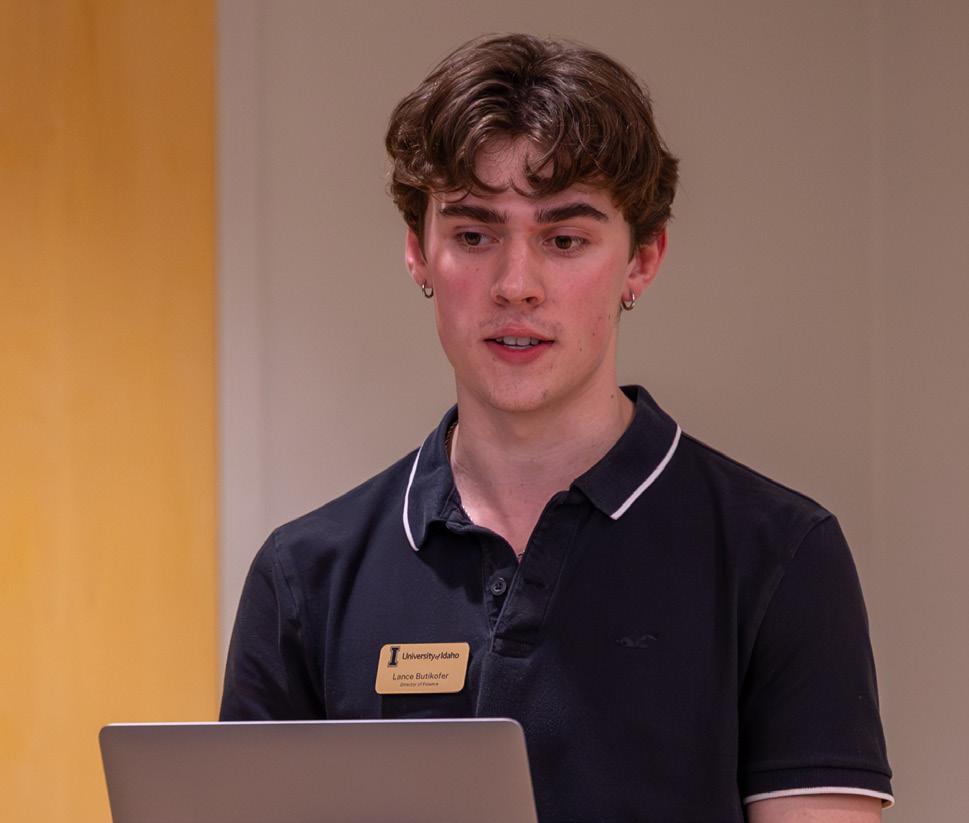
ASUI election applications have closed with seven open senate seats and seven applicants. Lance Butikofer and Alma Azócar Agurto are running uncontested for of ASUI president and ASUI vice president. Azócar Agurto is the current director of legislator affairs in ASUI and Butikofer served as director of finance Fall 2025.
Voting will be open Wednesday, April 8 through Friday, April 10 and will be available through students’ Vandal email.
Reagan Jones | Argonaut
Heschmeyer and Wilson participate in the Great Debate
Colton Moore | Argonaut Butikofer while serving as director of finance in December
Cruise the World shows global cultures
The event has become wellknown in Moscow, going back almost three decades
Cal Torres
ARGONAUT
On Sunday, the Bruce Pitman Center was transformed into a multicultural mall for the 28th annual Cruise the World, an event held by the International Programs Office.
The event draws thousands of people, students and community members alike, with its food and global displays each year.
“My favorite has got to be the South Korea table. They had japchae this year, which are these noodles with vegetables, and they look like glass noodles. They tasted amazing, honestly,” said Julissa Gonzalez Mendoza, a psychology major in her sophomore year.
“I was here for the flag walk, for the flag ceremony,” she continued. “One of the [performances] I got to watch was the Baile Folklorico, which, that one was pretty awesome. The dances were down amidst the crowd, and it was really nice.”
Food, purchasable with tickets exchanged for cash at the event, remained a focal point.
A dozen vendors offered beverages, desserts, meals and snacks. Eventgoers enjoyed refreshments like lassi—a yogurt drink common in South Asia and sold by the Ban-
gladeshi vendor—and passion fruit mousse, sold by the Brazilian vendor, as they went from performance to performance and from booth to booth.
In addition to food, many tables offered pins with their nation’s flags on it, books that could be flipped through and other small souvenirs or trinkets.
“I love looking at all of the different things that people have,” said Aodhán Plantagenet, a Moscow local who has been going to Cruise the World for the past decade.
“I love seeing the physical items that other cultures make. I’m always a big fan of any Native American tribes that come around, like this year with the Nimiipuu tribe and all of their beadwork,” said Plantagenet. “I have Native American family ancestry, so I always love seeing what—not necessarily my people, but what indigenous tribes have made because it reminds me of my own culture.”
For certain eventgoers like Plantagenet, Cruise the World provides an opportunity to connect with a broader culture they identify with.
For many of the volunteers running the booths—particularly international community members—Cruise the World provides an opportunity to share their culture with others.
In a previous interview with The Argonaut, Saif Sikdar Riyadh, part of the student

committee for the event, spoke of the pride with which he’d participated in the Bangladesh committee in prior years.
Meanwhile, other booths were run by organizations dedicated to the sharing of culture or by people that had traveled to certain countries in the past.
“This kind of promotion, it’s really good,” said Fedelina Dag Imán Shaw, president of the Filipino and Friends of the Palouse.

“It’s a motivation for kids to go around the world and experience the culture, the food.” Over time, her organization has remained dedicated to sharing Filipino culture and food locally. They have tabled with Cruise the World in the past.
Each year, months of planning go into the event; it is the largest that the IPO holds.
Mimi Kestle, the program coordinator of the IPO, had previously discussed working on outreach to nearby towns, but the coordination didn’t halt as the event drew closer.
This year’s Cruise the World had over 80 volunteers, working not just on tabling and performing but also on things such as monitoring recycling and composting bins.
“We were standing outside of trash cans and making sure everybody throws the right things away in the right spots,” said Bryce Johnson, a freshman majoring in business and part of the University of Idaho men’s rugby team.
“[People] were pretty good about it, I thought they were fine. I like to try and make people laugh. It’s pretty easy when it’s a light subject like that.”
After finishing their volunteering shift, Johnson and his friends grabbed a travel guide to investigate the booths.
Small “passports” were designed for the event, which people could get stamped at different booths and show for a small commemorative pin.
Between performances, presentations, food and the booths themselves, Cruise the World offered many entertainments and a rewarding experience for volunteers, organizers and “tourists” alike.
This year’s event was one more success in a longstanding tradition of showcasing multiculturalism at UI.
“Cruise the World is so special and so important,” Kestle said.
“Historically we’ve done it to celebrate the achievements of international education, and the fact that even though we’re a small town in Moscow, we bring so many people from abroad here to the campus…It’s so rewarding to see this community come together to celebrate.”
The Quartetto Gelato to perform at UI
ACMS presents its last concert for the spring semester Shelby
On Thursday, April 2, at 7:30 p.m. in the Administration Building Auditorium, the Quartetto Gelato will be performing for ACMS’s last concert of the season.
The ensemble consists of Colin Maier on oboe, saw and vocals; Dobrochna Zubek on cello; Konstantin Popovic on violin and vocals; and Matti Pulkii on accordion.
This classical quartet experiments with their instruments to create a unique and famous sound of their own. They showcase pieces of a variety of genres, mixing their energy with sound in their performances.
They have sold out performances all over the world and won “Debut Artist of the Year” for their first DVD. They also were honored as Best Classical Ensemble at the 2010 INDIE Awards. They are famous for Canadian astronaut Robert Thirsk having brought a DVD of their music to outer space to be played. Their most recent release was their album “Tasty Tunes” in 2021 with 13 songs for listeners to enjoy.
Tickets can be purchased online or at the door with a card. General tickets are $25, senior tickets are $20 and University of Idaho student tickets are $10.

Before their performance, a masterclass will be held in the Administration Auditorium from 1:30 to 2:20 p.m. They will be talking about how to arrange a lead sheet, and there will be opportunities to ask them questions. The masterclass is free to attend and open to all. ACMS is a group that started in 1986 and works to bring world-class
perform at the University
Bands wanted for “Clash of Bands” contest by VE
This would be the beginning of an annual musical tradition supporting local artists at UI
Cal Torres ARGONAUT
Vandal Entertainment is looking for local bands with at least one student member to participate in “Clash of Bands,” a contest that will determine the opener for this year’s Finals Fest concert featuring Young the Giant. According to Vandal Entertainment program coordinator Kyle Mallett, one band has confirmed their participation, and a few others have expressed interest. The goal is to get at least two or three to participate—so while the registration
ends on Friday, April 3, participation will likely still be sought going into next week.
At “Clash of Bands,” which is currently scheduled for Friday, April 17, each band will perform two or three songs.
Afterward, student audience members and a committee would vote on their preferred band, according to Mallett.
“When we bring in some of the larger names from different touring artists, [the selected band would] have a shot to be able to open at one of those concerts, possibly meet their management teams… especially if they’re looking to try to further their musical career in the entertainment industry,” he said.
Interested groups should contact Mallett at kylemallett@uidaho.edu for more information and to register.
ensembles to
of Idaho.
Jaelynn Durels | Argonaut
Nathan Tinno performs on stage at Cruise the World in 2025
Jaelynn Durels | Argonaut
A group of people dressed in
Courtesy | University of Idaho
The Quartetto Gelato will close out the ACMS season with a highly-anticipated performance
“Project Hail Mary” is a breathtaking story
The second-highest grossing film of 2026 earns its success with an amazing theatrical experience
Joshua Reisenfeld ARGONAUT
“Project Hail Mary,” an adaptation of a 2021 book by the same name, released on March 20, 2026. It became the second-highest grossing film of the year so far, earning $317 million with a budget of $200 million.
This movie is the second time an adaptation of an award-winning science fiction book by Andy Weir has had major success, with the first being “The Martian,” which was released in 2015.
One of the greatest strengths of Weir’s work is its scientific accuracy, which was nailed in the novel, but simply did not have the time to be fully explored and explained in the theatrical release.
The true greatest strength of Weir’s work, however, is the expression of human spirit and resolve to overcome adversity, which is shown almost perfectly in “Project Hail Mary.”
The 2026 film is not the book, but that is not a critique, as it makes the best choices for each scene with the comparatively short time the movie has to tell a compelling story.
The movie is in no way off-putting to fans of the original work and is a great entry point into science fiction as a genre.
While box office earnings do not tell the whole story, its title as second-highest grossing film of the year so far is deserved.
The story follows Ryland Grace—played by Ryan Gosling—a science teacher turned astronaut who works to uncover the mystery of why Earth’s sun is dimming, something that will lead to catastrophe as crops die and global temperatures decrease.
Ten light years away is a single star that seems unaffected by the cosmic virus called Astrophage—or “star eater” in Greek—and so a mission with three crew members is launched to investigate.
Beyond science, this movie is about hope and cooperation. It takes the stance of other science fiction stories, such as the “Three Body Problem” by Liu Cixin, that humanity can come together in the face of something greater.
The spaceship, the Hail Mary, is a speck of white in a black expanse, but the movie never feels dark. The visuals capture the bizarre beauty of the cosmos in a fantastic color palette that includes light beyond the visible spectrum.
The cinematography makes this movie an experience benefited by the large screen and deep colors of a theater.
Arriving at the star as the sole surviving member of the crew, Grace encounters extraterrestrial life who appear to be there for the same reason.
Much of the movie is about first contact with this creature he calls “Rocky” based on its rocky appearance, and the slow process of two beings learning how to communicate with each other while knowing nothing about the other.
The bond created between Grace and Rocky is the most moving part of the film and continues the themes of hope and collaboration. Their bond is also very humorous with jokes that come about from communication mishaps, such as Rocky saying “fist my bump” instead of “fist bump.”
Even though they both have a job to do, they have fun together as they learn about each other’s worlds and life before they leave for space.
For the movie to progress, the details of interspecies communication that Weir wrote were shortened. Rather than detracting from the plot, it offered the book as a complementary piece where audiences who wanted more could find it.
The theatrical ending is more ambiguous than the novel, which felt mildly unsatisfying, but it is such a small moment at the end that it does not reframe anything by being changed.
Only once did the shortening or omission of scientific explanations feel out of pace with the theatrical pacing. This instance was a scene where Grace understood the findings of an experiment with the Astrophage so quickly it seemed like a jump scare to not see a short montage of science being conducted.
Even though Grace is not alone because of Rocky, Gosling is the only actor in much of the movie and does an excellent performance to make scenes feel full.
Because of him, the vastness of space— which in some movies is used as a piece of horror or suspense—feels rather comfortable and works well with the hopeful

themes of the story.
There are still stakes and tension that push the narrative forward and create some nail-biting moments, but they are placed scarcely and used extremely effectively.
The story of Grace and Rocky’s friendship and the hope for a better future is something that can connect with anyone, making it a movie for almost all ages.
It is worth noting that the movie has a PG-13 rating because of themes of death, suicide and a little swearing, but unlike most
action movies full of fighting, war and violence, this movie is more appropriate than a Marvel movie for audiences younger than the recommend rating.
The East Side Marketplace Village Cinemas in Moscow is showing “Project Hail Mary” through April 9. The cinema’s schedule has not been updated past that day, but due to the film’s success, it may be shown in select or all locations until the end of April, as was recently announced for all IMAX theaters.
Horoscopes and predictions for the month of April
What does April have in store for you?
Brooklynn Jolley ARGONAUT
Aries (March 21 – April 19)
As spring starts taking hold of the weather and flowers bloom, so will you. This month will hold a lot of growth for you, both in your personal and professional life. Perhaps some of the growth has already begun. Keep taking those steps forward and you may be surprised with the position you’re in at the end of the month.
Taurus (April 20 – May 20)
April will be a quiet month for you. It may feel boring at times but remember that it’s a blessing in disguise. Take this time to relax and prepare yourself for the busy times that the future holds. It’s okay to slow down sometimes and take things on one at a time. Take in the peace and quiet that this month will bring and enjoy it.
Gemini (May 21 – June 20)
April will be a very fun and exciting month for you. Your social life will thrive, and you may also experience some romantic endeavors. You’re an emotional person at your core, so allow yourself to indulge in yours and others’ emotions this month. Don’t be afraid to be vulnerable and let people in. You may even make some new friends this month.
Cancer (June 21 – July 22)
You may have felt like you’ve been struggling recently, but those struggles will come to an end in April. You may come into a sum of money or resolve a conflict with a loved one. The things that have been weighing on you recently will be lifted from your shoulders, and you’ll start to feel a lot better this month.
Leo (July 23 – Aug. 22)
April will be the month for you to let loose. Drop any feelings of stress, anxiety or unpleasantry. Allow your wild side to take over for a little bit and try to make the most out of this month. Focus a little less on work and a little more on play. Don’t be afraid to go out with friends or join those plans that you keep putting off for work.
Virgo (Aug. 23 – Sept. 22)
Your professional life will flourish this month. Pivotal moments for your career are coming your way, and you may see a big change happen soon. Look for opportunities to boost your career and keep working hard this month. There will be rewards coming your way soon.
Libra (Sept. 23 – Oct. 22)
Take this month to focus on yourself. You push hard all the time, but it’s important to remember that you don’t need to prove your value. Your hard work and dedication are enough proof of your worth. You’re a very valued person in many others’ lives, and they recognize that. Take some time to sit back and relax for once; you deserve a break.
Scorpio (Oct. 23 – Nov. 21)
Pay close attention to the signs and symbols in your life this month. There is an important message that you need to hear. Be open-minded to your surroundings and to new things. Don’t be afraid to branch out from your normal routine to see what else is out there and let life take you where it wants you to go.
Sagittarius (Nov. 22 – Dec. 21)
Some energies in your personal life may have felt off lately, but things will start to align again in April. Try having some difficult conversations with your loved ones to foster closure and deal with any grievances you may have. April should be a cleansing month for you, so try to resolve anything that’s weighing you down.
Capricorn (Dec. 22 – Jan. 19)
Life may have felt like it was moving too fast recently, and maybe you feel like everything is happening at once. You may have a lot going on in your private life, but April will come with answers to many of your questions. Be patient and hang in there because things will start to slow down and feel less overwhelming soon.
Aquarius (Jan. 20 – Feb. 18)
Try to dig deep this month and figure out exactly what you want. You’re typically a “go with the flow” type of person, but it may be time for you to take charge

this month. You may be surprised at what you can accomplish when you take an assertive, leading role. Don’t be afraid to stand up and advocate for your ideas.
Pisces (Feb. 19 – March 20)
Your work and play balance has been off lately, and it may be starting to weigh you down. Maybe you recently got a promotion and you’re trying to figure out your new balance point. Don’t neglect your own needs and your personal life because of this new workload in your career. Be intentional with your down time this month and try to schedule in time for you to relax and recharge.

Joshua Reisenfeld | Argonaut The movie poster for “Project Hail Mary” in the theater
Kieran Heywood | Argonaut A horoscopes graphic showing all of the zodiac sign symbols
Standout Vandal Spotlight
Blake Sturgis launching into new heights
Sturgis looks to end javelin career on a high note with Idaho
Gage McElroy
ARGONAUT
Although the 2026 outdoor track and field season is still fresh, one athlete has stood out from the crowd to make an early name for himself this season. As of now, senior Blake Sturgis has recorded a podium finish in every meet he has attended, as he continues to dominate the men’s javelin throw. So far, his consistency and powerful performances have quickly made him a key athlete to watch, setting the tone for what could be a standout final season.
After graduating high school back in 2022, Sturgis took his javelin talent to the corn state of Iowa to attend Dubuque Collegiate. Once there, the young freshman quickly turned heads by beginning his collegiate career with a bang with four first place finishes in the javelin. His success continued as he attended the Augustana College Midwest Twilight Qualifier, where he placed second. Sturgis also qualified for the American Rivers Conference Outdoor Championships, in which he finished fourth, capping off a truly impressive freshman year.
As a sophomore, Sturgis transferred to Washington State University, where
he threw for the Cougars for two years. In just two years at Washington State, Sturgis transformed into a young key player for the Cougars as he threatened in nearly every meet he attended.
In his sophomore year, Sturgis secured gold in the 2024 Buc Scoring Invite, as well as the 2024 Cougar Classic Invitational, while also recording multiple top five performances in other meets as well. To finish off his sophomore year, he competed in the 2024 West Division I Outdoor Championship, where he recorded a best 62.90-meter throw.
Going into his junior year, Sturgis would
have another dominant year as he went on to take gold in the 2025 Pacific Coast Invitational and the 2025 WSU Cougar Classic, as well as the 2025 PAC 12 Open. He again appeared in the Division I West Outdoor Championships, finishing the day with a best throw of 67.92 meters.
Now going into his senior year, Sturgis took his talents across the border to attend the University of Idaho to finish his incredible career as a Vandal. Now that the 2026 outdoor track and field season has been officially underway, Sturgis has shown quite early that he might be having one of his best seasons of the year. To start the new season,

Sturgis attended the 2026 Sam Adams Classic in his hometown of Spokane, Washington.
He went out and put on a show for his hometown, as he took first in the javelin with a 66.62-meter throw. Thanks to his stellar performance, Sturgis won the Big Sky Men’s Field Athlete of the Week, solidifying himself as an Idaho field star in his next meet at the West Coast Relays, in Fresno, California.
There he went on to make history, throwing a career best 68.25-meter throw, while also recording the third best throw in school history. Sturgis has had such a great start to the season that he is already the best men’s javelin thrower with a 13-meter lead on second place.
With momentum building and confidence at an all-time high, Sturgis is quickly positioning himself as one of the most dominant athletes in the conference heading into the heart of the season.
As the season continues, all eyes will be on Sturgis to see just how far he can take his final year. With each throw, he isn’t just competing, he’s building a legacy defined by growth, resilience and excellence at every level of his journey.
Whether it’s chasing a conference title or making a push toward the national stage, one thing is certain; Sturgis isn’t just finishing his career, he’s launching it to new heights, one throw at a time.
Idaho Vandals building a championship standard
This is only the beginning of what the Vandals are building in Moscow
Jayden Barfuss
ARGONAUT
For the Idaho Vandals women’s basketball team, this wasn’t a magical or one-hitwonder season. This is the beginning of the new standard of Idaho basketball.
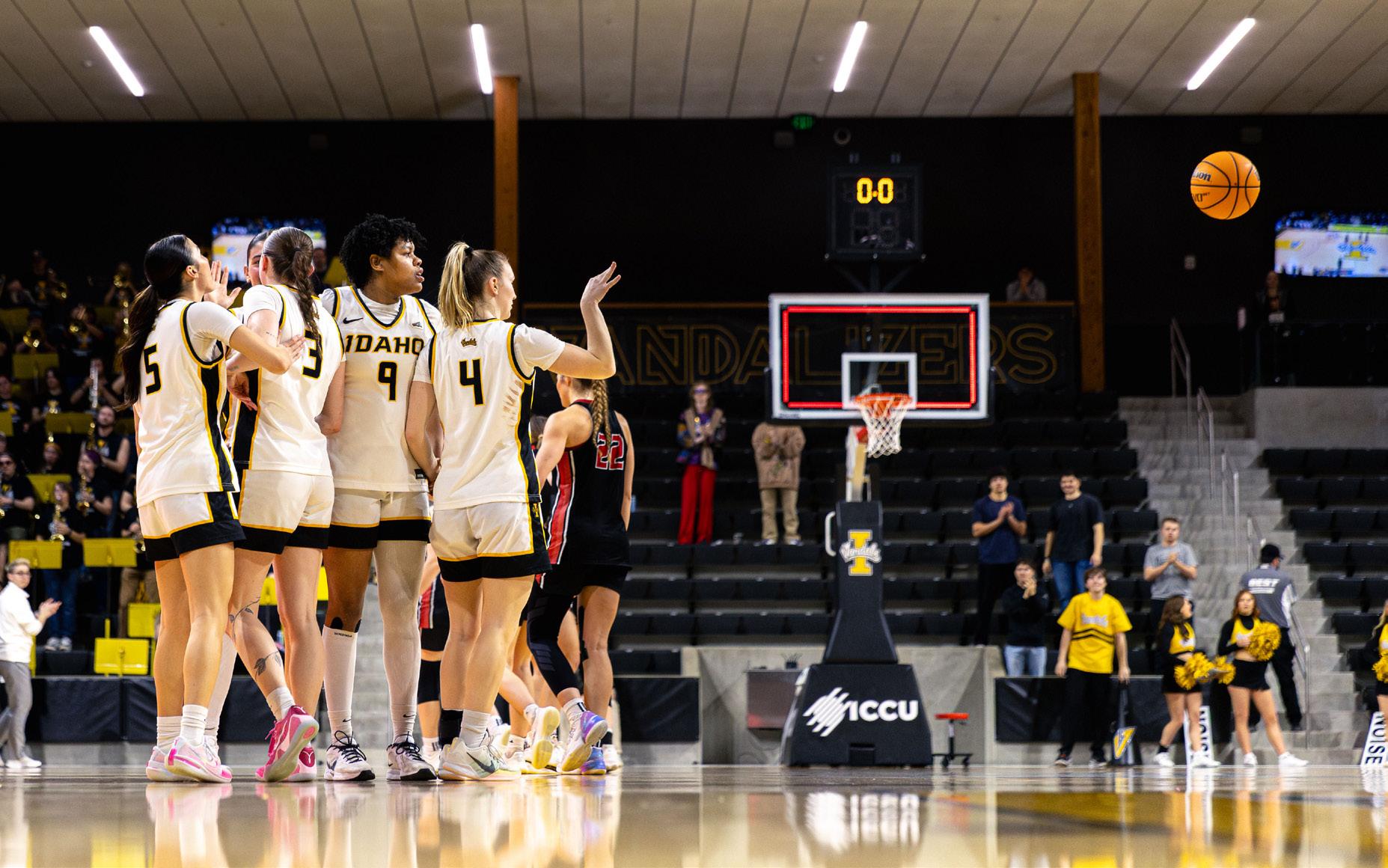
After a 29-6 (17-1) season where they won the regular season and Big Sky championships, cut the nets twice and appeared in March Madness, they also set program records in wins (29), longest winning streak (18) and most home wins in ICCU Arena history (14).
This team, with seven international players from five different countries, returned one starter from last season, came together and proved that the Idaho standard is just beginning.
“Such a special group, you know, like, I feel like we do a really good job of recruiting,” head coach Arthur Moreira said. “And even when I was here as an assistant, I felt like we had really high character people. With Carrie [Eighmey] my first year here, a lot of great people. And this year, for some reason, the group just really connected, you know, they really bonded.”
The season didn’t begin when they walked onto the court at Beasley Coliseum—it began on a team retreat in July when they mapped out the season.
As the new team gathered, they began discussing their goals and writing them down. The obvious ones were to win the Big Sky championship and get to March Madness. They then took pieces of paper and wrote down smaller goals and their paths to reach them.
“It wasn’t just the big goals; we broke down what it means to get there,” junior guard Hope Hassmann said. “We broke down into different sheets of paper of how hard we’re going to play. We’re going to be great teammates, we’re going to be vocal, we’re going to do these things off the court to make sure on the court we’re great.”
The group would develop into a team as the year went on.
The team consisted of seven returners, five transfers and three freshmen.
The returners were led by Hassmann, who had a great sophomore season and emerged as a leader for the Vandals on and off the court. Hassmann led the team with 496 points, averaging 14.2 points, 3.6 rebounds and four assists per game. She was especially huge down the stretch and into the Big Sky Tournament, where she won Tournament MVP and was voted to the
All-Big Sky team.
Idaho also had a trio of sophomore guards in Ella Uriarte, Ana Pinheiro and Beatriz Passos who all took steps forward and were key contributors. Pinheiro and Uriarte broke into the starting lineup and started all 35 games. Both were solid offensively but shined on the defensive end, with Pinheiro earning a spot on the All-Big Sky Defensive team. Passos capped off the season with 12 huge points in the Big Sky championship versus Montana State.
Idaho was also active and effective in the transfer portal, landing several key pieces.
Moreira and his staff went across the border and got senior guard Kyra Gardner, who had a breakout season on both ends. Gardner scored 455 points, averaging 13 points, 6.8 rebounds and two assists per game, while adding 88 steals and 34 blocks. She formed a lethal backcourt with Hassmann, the duo reaching a combined 951 points.
The Vandals then added premier frontcourt players in University of San Francisco transfers Lorena Barbosa and Debora dos Santos. The two combined for 602 points and 347 rebounds, helping Idaho rank fourth in the country in rebounding at 47.1 per game. Dos Santos earned Big Sky Best Reserve honors for her efforts.
play. After wins over Eastern Washington and Montana, they ran into Montana State and suffered a 99-66 loss that changed the course of the season.
“It was a horrible game for us, but at the same time, I feel like it was the best thing that could have happened,” Hassmann said. “It was a total 180 switch. We went from having that poor mindset and switched it to, all right, now we have to lock in. We have to do better so we can accomplish these goals.”
Moreira echoed that sentiment.
“That loss kind of made them lock in even more,” Moreira said. “Losing that bad, it kind of shocked us in a way where, okay, we need to work. We can’t take a day off.”
From then on, everything changed from the practice court to game night.
When they stepped on the practice court, drill after drill, that competitive switch had
achieved their second goal, beating Montana State 60-57 to book their trip to March Madness.
Nine days later they were in Norman, Oklahoma, facing no. 4 seed Oklahoma in the first round.
“It was super exciting. For all of us, this is exactly what we dreamed of and exactly why we came to Idaho,” Hassmann said.
The Vandals will look different next season, losing seven seniors. But the group coming back, led by Hassmann, is on a mission to maintain the standard and return to March Madness.
“Next year I’m going to be a senior, which is crazy to even think,” Hassmann said. “But yeah, just really take on that leadership role even more. Set the standard to let everyone know we want to win regular season. We want to win in Boise.
From the time Moreira was hired as head coach, the team hasn’t settled for average. They compete every year not just for improvement but for championships, and that journey began the first game of the season.
“The standard is to compete for a championship every year,” Moreira said. “We got to taste what it’s like in the NCAA tournament. We want to do it again.”
The season began Nov. 3 when the Vandals took down border rivals Washington State behind a breakout performance from Gardner, who posted a career-high 27 points and the game-winning block to secure Idaho’s first win over the Cougs since 2005.
The Vandals finished the non-conference slate 12-5 before heading into conference
flipped. The Idaho standard that everyone saw game after game morphed into a belief and an expectation.
The Vandals then won 18 straight, including a 73-70 revenge win over Montana State. On Feb. 28, they had a chance to seal the regular season title against Northern Colorado. After a 55-41 victory, the buzzer sounded and their first goal was complete.
“Winning that regular season title was so accomplishing,” Hassmann said. “Anyone can win the Big Sky Tournament. You could have a couple good games and you win. But winning regular season shows consistency and the best team overall. I’m happy we got to prove that.” Idaho then stepped into Boise and
Our goal is March Madness. You can’t just say that without doing the things. That starts in summer, working hard every day, putting the work in the weight room, on the court, off the court. Just all the little things. Being that voice and being that leader.”
The Idaho Vandals now face their biggest challenge yet: maintaining the standard. Through the ups and downs, they had confetti fall twice, cut two nets and put together a program-historic season. For some programs that is enough. For the Vandals under Moreira, this is the baseline. The standard is set on and off the court, and the Idaho Vandals are here to compete every year, not just for wins but for championships. They have the right core to do it.
Courtesy | Idaho Athletics
UI senior Blake Sturgis won the Big Sky Men’s Field Athlete of the Week
John Keegan | Argonaut
UI guard Hope Hassmann tosses the ball to a ref after their final home victory versus EWU
Idaho football spring practice begins with high hopes
Experienced roster sets the stage for the Vandals’ 2026
The Vandals will begin their 2026 spring practices on March 31, kicking off a five-week stretch of 14 sessions that will culminate in the annual Spring Game on May 1. Practices will be held three times per week, offering an early look at a program that appears further along in its development under second-year head coach Thomas Ford Jr.
“Really excited to get going with spring ball,” Ford said in an Idaho Athletics press release. “Our guys have done a great job this winter in the weight room.”
Spring football serves as the bridge between seasons. It is where position battles begin to take shape, schemes are installed and refined and returning players have a chance to take on larger roles. For Idaho, it also represents the next phase of a rebuild that showed flashes but lacked consistency in 2025.
The Vandals finished 4-8 last fall in Ford’s first season, navigating a roster overhaul that left them among the youngest teams in the Big Sky. Close losses and late-game struggles highlighted the growing pains of a group still learning how to win together.
“We have a much more experienced group than we did a year ago, especially on the offensive side of the ball,” Ford said. “A lot of our guys have now played 500-plus snaps as opposed to 200 or less.”
That added experience starts at quarterback with Joshua Wood, who emerged as one of the conference’s most dynamic dual-threat players despite missing time due to injury. Wood returns after completing nearly 60% of his passes while averaging 59 rushing yards per game, providing Idaho with a proven option under center entering the spring.
He will not be alone in that room. Sawyer Teeney and Jack Wagner, both of whom saw action last season, are expected to compete for snaps.
Up front, the Vandals return four starters


along the offensive line, a key factor for an offense that struggled at times with consistency in 2025. The only major loss is all-conference guard Nate Azzopardi, but the continuity elsewhere should provide stability as Idaho installs a new offensive system under coordinator Ian Shoemaker.
The skill positions also return a mix of production and potential. Ryan Jezioro, the team’s leading receiver as a freshman, is back after a redshirt season, while Marquawn McCraney, Tony Harste and Trais Higgins give Idaho a group of pass-catchers with experience in game situations.
For an offense that showed flashes but rarely operated at full strength last season, spring will be about finding rhythm and establishing identity under a new play-caller.
Defensively, Idaho enters the spring with a stronger foundation than it did a year ago, returning key contributors at all three levels of a unit that graded among the best in the Big Sky against the run.
Mitch Jaskowiak and Titus Ringor headline the defensive front, while lineback-


er Cruz Hepburn returns after a 71-tackle season that established him as a leader in the middle of the defense. In the secondary, Tim Jackson, Zach Wusstig and Hysan Dalton provide experience in a group that saw significant action in 2025.
“I’m also fired up to see our new guys on the defensive side of the ball get after it with pads on,” Ford said. “We’ve had a great start to the 26 season and [I’m] looking forward to seeing our guys improve their consistency, and master the fundamentals of their position.”
That emphasis on consistency reflects one of the biggest areas of focus for Idaho this spring. The Vandals were competitive in multiple games last season but struggled to close, particularly in one-possession contests. Turning experience into execution will be a central theme over the next five weeks.
The defensive unit will also be adjusting to a new voice. First-year defensive coordinator Lee Stalker arrives after three seasons at Iowa State, where he helped develop multiple all-conference players. His system
will be one of the key storylines to watch throughout spring practices.
Special teams will see a similar transition under coordinator Joe Begnal, who inherits a group with returning experience in kickers Owen Forsman and Cameron Pope, as well as long snapper Dylan Fischer.
With all three phases of the game featuring new leadership, spring offers the first opportunity to evaluate how those changes translate to the field.
Beyond scheme and personnel, the most significant difference for Idaho may simply be time. A year ago, the Vandals were assembling a roster and learning a system simultaneously.
Now, they return with a full offseason in place, a highly ranked recruiting class added to the mix and a clearer understanding of the program’s expectations.
For Ford, the goal is straightforward— build on the foundation established last season and move closer to the standard the program expects.



John Keegan | Argonaut
The Vandals run out of the tunnel before their first game of the 2025 season against WSU
GALLERY: Hundreds of bands rock Boise for Treefort Music Fest







John Keegan | Argonaut
Matthew Lewin and Mica Tenenbaum of Magdalena Bay play on the Main Stage on Friday night. Multiple outfit changes and psychedelic, dreamy imagery enthralled the crowd
John Keegan | Argonaut Ian Ehrhart of Jesus Christ Taxi Driver
John Keegan | Argonaut Dillon Basse of Flipturn plays “Glistening” as the crowd waves their arms back and forth
John Keegan | Argonaut
INJI whips her hair during her Main Stage show
John Keegan | Argonaut Evan Honer dances with another guitarist
John Keegan | Argonaut
Jay William Miller, a local Boise artist, plays rock and roll at Boise Brewing
John Keegan | Argonaut Basse, lead singer and guitarist for Flipturn, jumps during a s olo
The Argonaut’s Housing Guide 2026
How do I look for housing?
Whether you’re living on or off campus, here’s how to begin looking for housing
Jayden Barfuss, Brooklynn Jolley ARGONAUT
Finding housing can be a stressful part of college and is one of, if not the most, important decisions you’ll make when starting your college journey. Whether you’re living on or off campus, here are some tips to help you find housing.
On campus
The University of Idaho provides a wide range of on-campus housing options for all students and is a great resource to take advantage of. Each residence hall comes equipped with free laundry, internet, maintenance assistance and many other amenities to help meet your housing needs.
Full-time freshmen under 21 are generally required to live on campus, though exemptions are available. First-years
choose from the Wallace Residence Center, Theophilus Tower or a Living Learning Community.
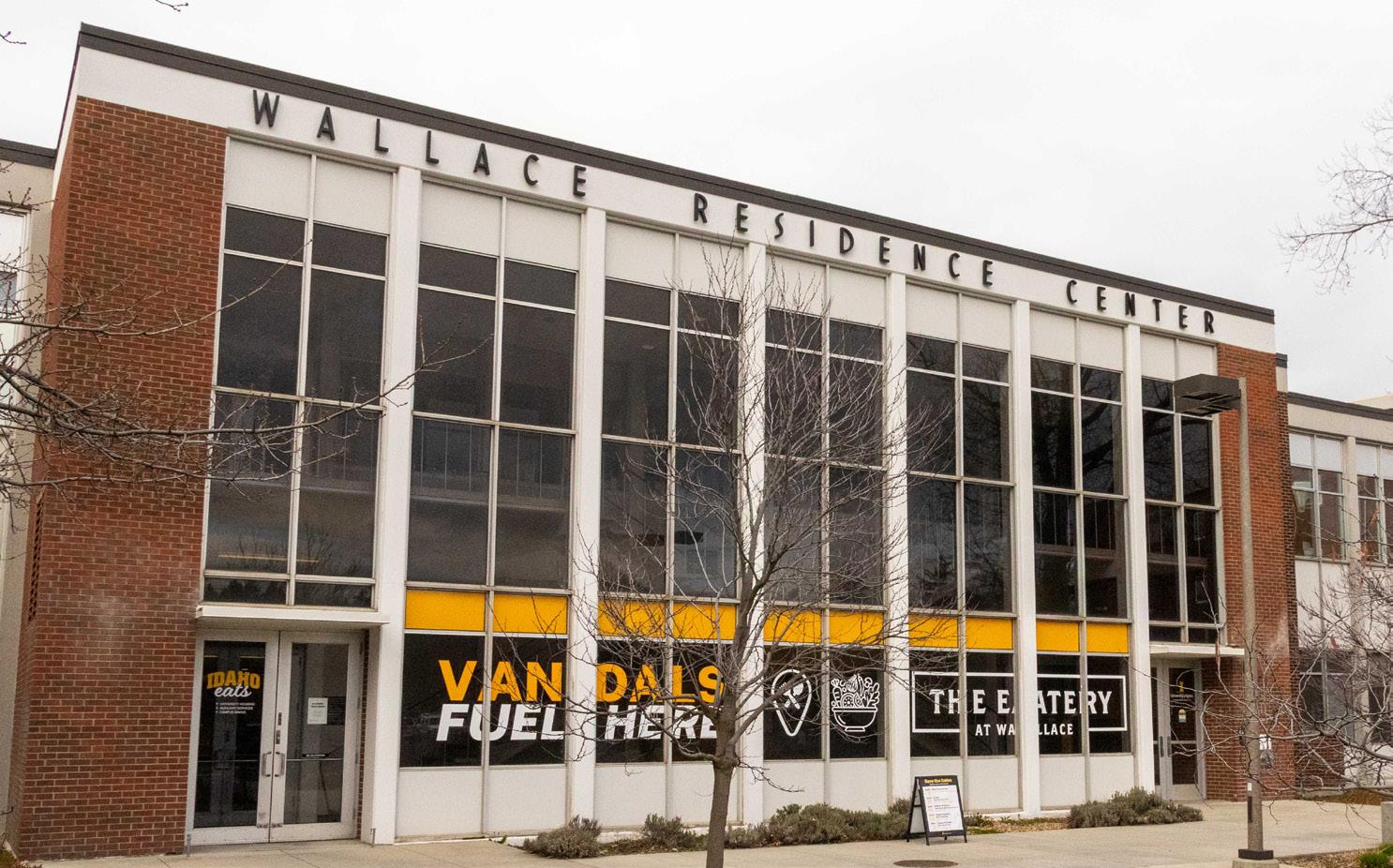
The Wallace Residence Center is the largest residence hall, housing over 800 students.
Wallace features lounges, community spaces and study areas. It consists of four wings: Ballard, Wiley, Stevenson and Gooding. It is also home to the campus dining hall, the Eatery.
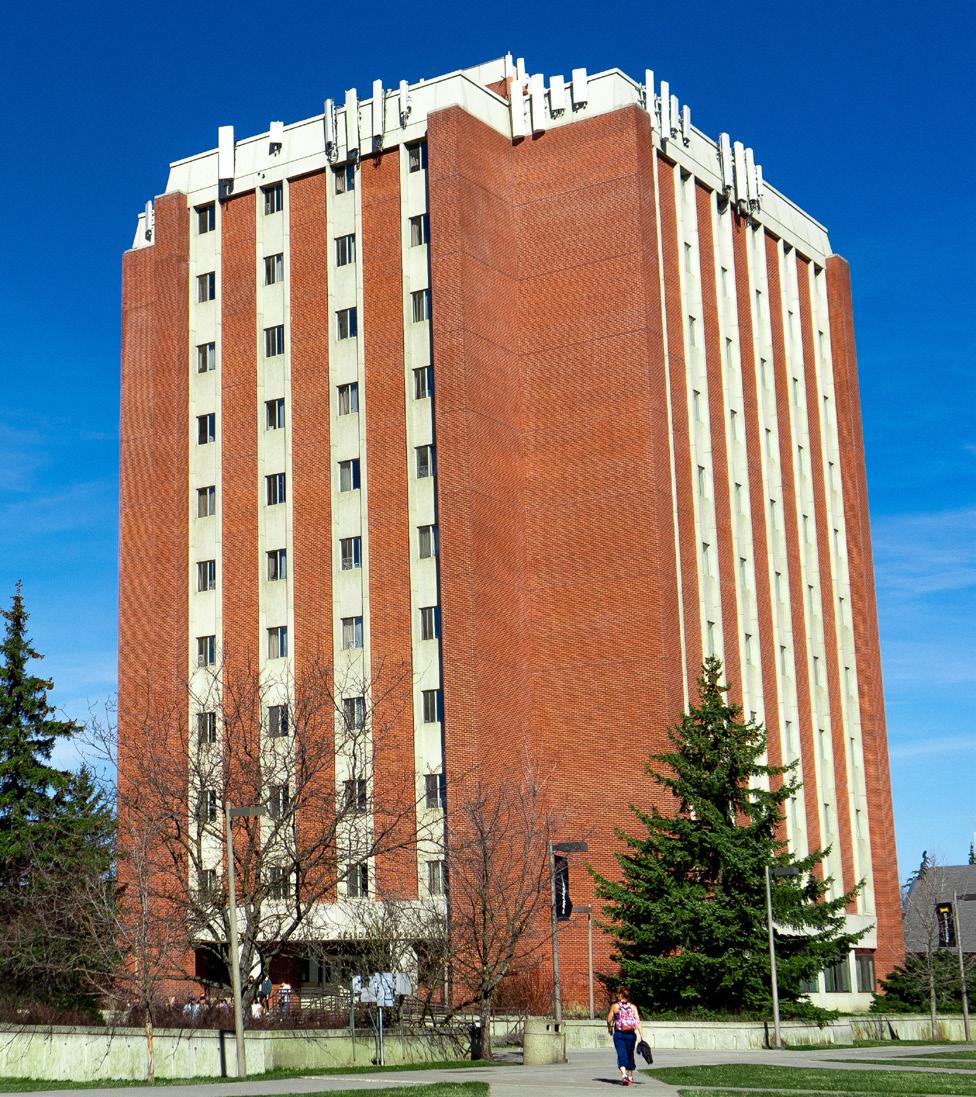
Theophilus Tower is an 11-story building housing over 350 residents. If you’re coming straight from high school and want a place that helps you settle into college life, the Tower is built with that in mind.
There are plenty of ways to meet people and find your footing, both socially and academically. The Tower features a TV room on every floor, a laundry room, a game room, a computer lab and private study rooms. All resident rooms include a mini-fridge and microwave.
Another option for students who want more independence while still remaining on campus is the LLCs. The LLCs do a good job of blending academics and social life, making
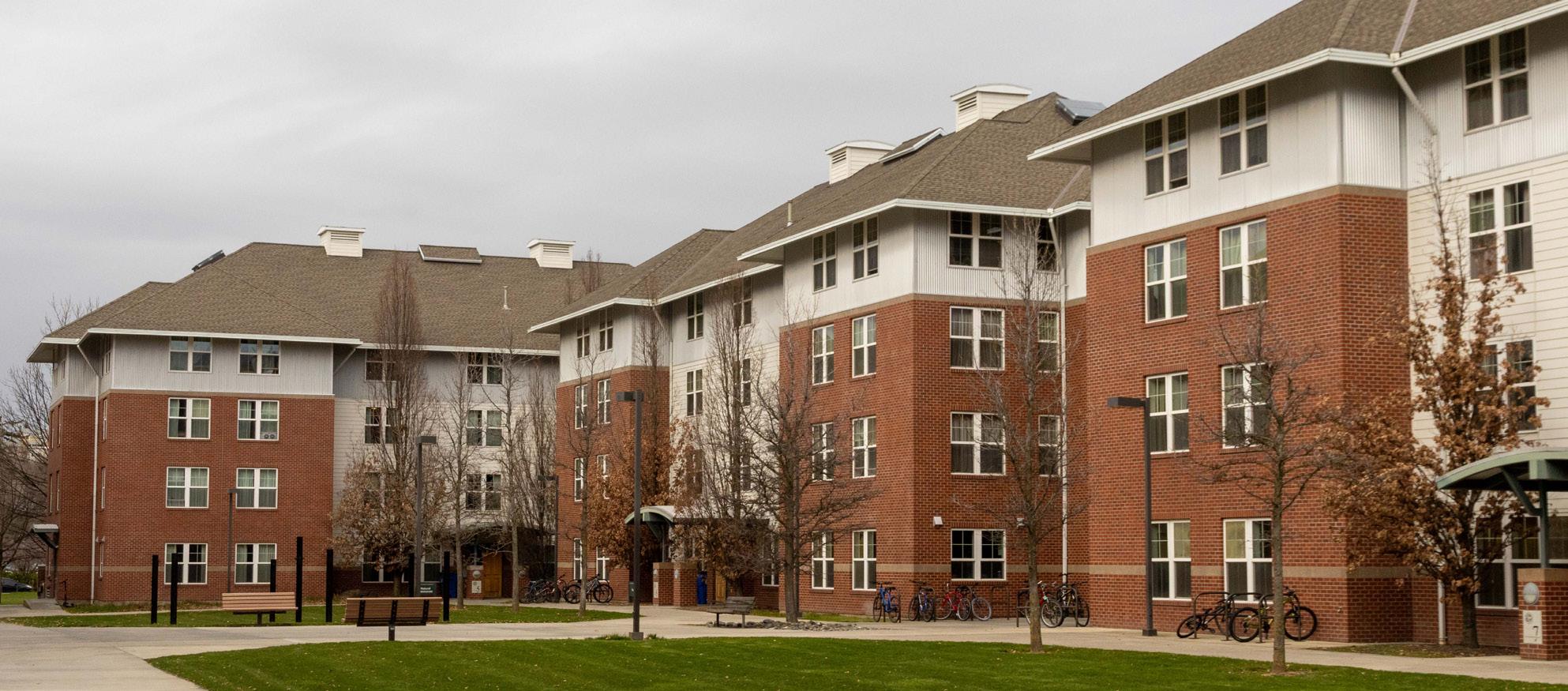
situation to be more than just a place to sleep.
Comprised of eight buildings and housing over 600 students, each LLC building is home to approximately 75 students and features private study rooms, lounge spaces, community kitchens and game rooms. While transfer students and upperclassmen can continue to live in the above housing options, they also have another: McConnell Hall. McConnell is a great fit for students who value their own space and want
campus living options available.
McConnell also features single-gender floors and a large hangout space in the basement. Each bedroom includes a sink, twin XL bed, closet, desk, bookshelves, chair and a set of three drawers.
Choosing housing can feel overwhelming, but UI’s many on-campus options can help take some of the stress out of the process. With so many students living nearby, it’s a great opportunity to make friends, create memories and experience life on your own, all with the support of a campus community just steps away.
Off campus
Choosing to live off campus and rent an apartment is a big step in one’s life. It can be a scary step to take, especially if you don’t know where to start or how to go about finding a place to live off campus. There’s no housing portal that tells you exactly how to do it, and there’s not really a guide either. If you want to pursue living off campus, here’s a guide on how to effectively find the perfect place for you.
One of the most important things to do when
looking for an off-campus apartment is to tour any of the places you’re interested in. You’ll never quite get a realistic feel of the place from just the photos alone. Don’t hesitate to reach out and request a tour.
Taking a tour doesn’t mean that you have to settle on that place—it doesn’t even mean that you have to apply—but it’s a good way to see if you truly like the apartment.
Something important to know is that rental companies want you to rent from them, and they want to help. Go visit them in person and ask about their catalogs and availability. Nothing is better than faceto-face interactions. They may even be able to tell you about places that aren’t on the market yet but will be soon, and you can be the first person to check it out.
Alternatively, you can look online for available rentals. Rental websites— Zillow, Apartments.com, Rent.com and others—are also great places to look for apartments that are currently on the market. Oftentimes, these platforms allow you to schedule a tour from their website or at least get in touch with a representative from
whichever rental company oversees the apartment that you’re interested in.
Another option is to do a lease takeover with a current tenant who is moving. A lease takeover is when a current tenant transfers their lease to a new tenant, often to avoid breaking a lease if they need to move out before their lease is up. Facebook Marketplace is a good option to find people wanting to do a lease takeover. There are also posts from rental companies on there, so you can browse available units that way, too. Facebook has forums and groups dedicated to things like housing, roommates, lease takeovers and more.
Apartment hunting can be scary, but if you get a head start early on, you’ll likely find a place that suits your needs. Don’t be afraid to be persistent. Show up in person to rental companies and ask what they have; you can even do this more than once if a few weeks have passed between visits. With some exploring, apartment tours and dedication, you’ll eventually find an apartment that you can call home.
First-year housing at UI offers distinct experiences
From suitestyle living to classic dorms, freshmen can choose from many different housing options
Liam Bradford ARGONAUT
For most first-year students at the University of Idaho, choosing where to live comes down to three options: Wallace Residence Center, Theophilus Tower or the Living Learning Communities. On paper, the differences, such as price, layout and amenities, can seem straightforward. However, students say the day-to-day experience in each space can feel drastically different.
Wallace remains one of the most popular options for first-year students, offering suite-style living with shared bathrooms between rooms and co-ed floors across its four wings: Willey, Gooding, Ballard and Stevenson.
This year, Wallace has undergone renovations.
The Stevenson wing was renovated in the fall
semester, with students from Ballard relocating there in the spring while Ballard undergoes its own renovation. The renovations shift the bathroom layout, placing it between two rooms rather than inside one, a change that improves privacy but, according to some students, subtly alters the social dynamic.
First-year student Makaylin Snelling experienced both versions firsthand after moving from a non-renovated Ballard room to a newly renovated Stevenson room midyear.
“I would much rather have the non-renovated dorm,” Snelling said. “You don’t really need to go into their room to go to the bathroom anymore, and that’s kind of how I got close to my suitemates.”
Despite that shift, Snelling said Wallace still makes it easy to build connections. “Since the Eatery is in Wallace, you meet a bunch of people from all the other wings,” she said.
Weekly traditions, like game nights and crafts in the lounge, also help foster a sense of community. Snelling described the layout as feeling “like I have my own little apartment,” with built-in
storage, a vanity and a shared suite setup.
“I like Wallace a lot more than the Tower because I like the layout so much better, and I like that the floors are co-ed,” Snelling said.
For students looking for a more traditional dorm experience, Theophilus Tower offers 11 genderspecific floors with community bathrooms and a central, social atmosphere. First-year student Emmett Maxwell said his first impression of the Tower was positive, especially on the recently renovated upper floors.
“I thought the rooms were super nice on my floor, and I was super happy to be on a renovated floor, especially because of how nice the bathrooms were,” Maxwell said.
The Tower’s layout encourages interaction, particularly in the first few weeks of the semester. “I just left my door open to meet everyone, and most of my best friends here are from the first couple days,” Maxwell said.
Rooms in the Tower can also feel more customizable than expected, especially with lofted beds that open up space for desks or seating areas. Still,
the building comes with some drawbacks. Maxwell pointed to maintenance issues, particularly with elevators and laundry access. “The elevators break at least once a week,” he said. “Also, there are so many people for not very many washers.”
The LLCs offer a different approach entirely, with private bedrooms, shared living areas and kitchenettes. Not limited to just first-year students, they are a popular option for those looking for more independence.
Second-year student Cameron Beaver said the difference is noticeable immediately. “My first impression was that the LLCs were very well put together and in tip-top shape,” Beaver said.
Unlike traditional dorms, many LLC suites include single bedrooms, something Beaver said makes a significant impact.
“I don’t think people expect how different it is to have your own room,” he said. “It makes a huge difference at the end of the day to be able to go in your room and close your door and be by yourself.”
At the same time, the layout still allows for social interaction. “It’s very easy
to meet people in the LLCs, whether it’s the people in your suite or on your floor,” Beaver said.
Common areas, like the lobby filled with couches and study spaces, also serve as gathering points.
Beaver’s suite includes a shared living space with a TV and kitchenette. Beaver said the LLCs stand out compared to other housing options on campus. “I’ve been in every other dorm on campus, and the LLCs
blow them all out of the water,” he said. However, the setup isn’t without minor drawbacks. Beaver noted that heating and cooling are controlled at the building level, limiting adjustments. Each option offers a different version of the first-year experience, and for many students, where they live ends up shaping much more than just where they sleep.
John Keegan | Argonaut
The Living Learning Communities are popular on-campus housing options for both new and returning students
Ashley Kramer | Argonaut Theophilus Tower has 11 floors with shared bathrooms
John Keegan | Argonaut Wallace Residence Center features four wings of suite-style dorms and the Eatery
Campus housing options 2026-27
Wallace Residence Center
Wallace rooms are suite-style, with each pair of rooms sharing a bathroom. Floors are co-ed, but suites are generally single gender.
Willey (fall) / Gooding (spring) double (Willey residents will be moving to Gooding for spring semester): $2,870/semester
Ballard or Stevenson double (newly renovated): $3,060/semester
Theophilus Tower
Theophilus Tower floors are single gender. Floors have central shared bathrooms rather than private bathrooms ensuite.
Floors 1-5 double: $2,790/semester
Floors 6-11 double (newly renovated):
$3,060/semester
Living Learning Communities
LLC rooms are available as single or double rooms in gender-specific suites. Suites include a furnished living room, a bathroom and a kitchenette. Suites hold three to five students.
Living Learning Community double:
$3,385/semester
Living Learning Community single:
$4,435/semester
McConnell
McConnell offers single rooms for nonfirst-year students. Floors are single gender.
McConnell single: $3,915/semester
Specialized communities
Specialized communities allow students to live with other students that share the same college, academic program or other interests.
College of Art and Architecture: Ballard, first floor
College of Agricultural and Life Sciences: Ballard, fourth floor
College of Business and Economics: Theophilus Tower
College of Letters, Arts and Social Sciences: Ballard, second floor
College of Natural Resources: LLC
Building 5
College of Education, Health and Human Sciences: Gooding, first floor
College of Engineering: Theophilus Tower; LLC Building 7 (non-first years)
Honors: LLC Building 8
Women in Idaho Science and Engineering (WiiSE): Theophilus Tower
Gender-inclusive living: Designated rooms in Wallace and LLCs. Gender-inclusive housing allows for same gender, opposite gender or gender nonconforming students to live together, regardless of biological sex.
Meal plans
The Idaho Experience: Unlimited weekly meals, including four Gold Meals + 225 dining dollars; $3,135 per semester
Joe’s Choice: 14 meals per week, including three Gold Meals + 325 dining dollars; $2,705 per semester
Vandal Fuel: 8 meals per week, including two Gold Meals+ 425 dining dollars; $2,245 per semester
Social Plate: 3 meals per week, including one Gold Meal + 450 dining dollars; $1,195 per semester
Finding belonging within Greek life
Students share how their housing choice affected their campus experience
Reagan Jones ARGONAUT
Community and connection. Those two things are what makes living in Greek life special at the University of Idaho. When Ethan Moore, a senior who is a part of Sigma Alpha Epsilon, was touring the school before becoming a student here, he saw the opportunity and sense of belonging that came with Greek life.
“I saw how tight-knit it is, and I decided I wanted to be part of that,” Moore said.
For Moore, the best part about being in a fraternity is that there’s never a dull moment. Moore says that there is always someone doing something and that the spontaneous fun makes the experience great. But with that, he also had to learn time management and then organizational skills.
want to work more on it, but it’s helped me actually be more aware,” Wargi said.
Wargi encouraged students who are thinking about joining Greek housing to prepare for the fact that all of the houses have their differences.
Her advice was to not get stuck on one idea of where you want to live but be open-minded during the entire process.
“You don’t know which place you’ll end up, and if you try to go in wanting to live in one spot, in one spot only, you kind of lose the opportunity to, like, meet and enjoy your experiences where you’ll actually find it,” Wargi said.
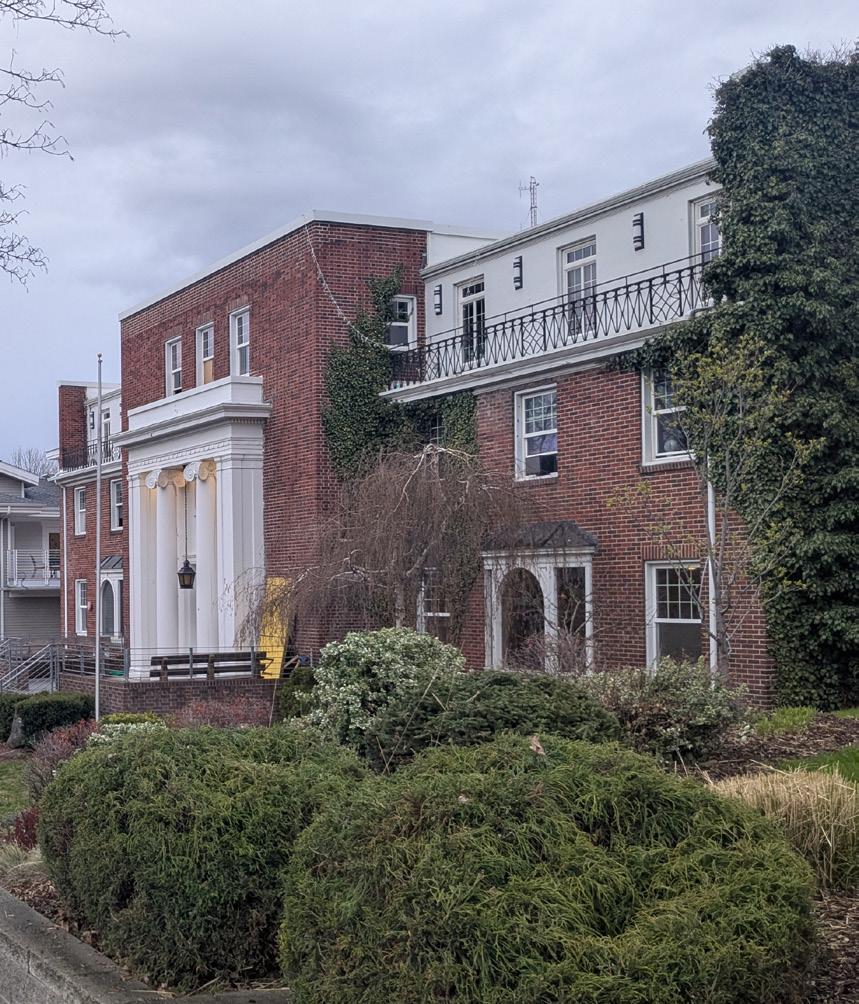
There are 28 Greek housing options at the University of Idaho, with 10 Panhellenic sororities and 18 IFC fraternities. While each Greek house has different designs, most of them typically include living quarters for members, a common area that can be used for both academic and social activities, dining facilities with meals provided and study spaces.
Greek life
Meal plan costs are typically included in house bills. Meals are usually provided Monday breakfast through Friday lunch, prepared by an in-house chef or catering service.
Sororities
Sorority cost range: $3,900 - $5,300 per semester
• Alpha Gamma Delta
• Alpha Phi
• Delta Delta Delta
• Delta Gamma
• Delta Zeta
• Gamma Phi Beta
• Kappa Alpha Theta
Kappa Delta
Kappa Kappa Gamma
Pi Beta Phi
Fraternities
Fraternity cost range: $2,800 - $4,900 per semester
• Alpha Gamma Rho
• Alpha Kappa Lambda
• Alpha Sigma Phi*
• Beta Theta Pi
• Delta Sigma Phi
• Delta Tau Delta
• FarmHouse
• Kappa Sigma
• Lambda Chi Alpha
Phi Delta Theta
Phi Gamma Delta
Phi Kappa Tau
Pi Kappa Alpha Pi Kappa Phi
“Prepare to have good time management,” Moore said. “I think it’s important to have a balance between Greek life and the rest of school and to set priorities early on.”
Natalie Wargi, a senior in Alpha Gamma Delta, says that the best part of being in a sorority is that there are always people there. Growing up in a family of six, Wargi says she is used to being around people and having to share a space.
“Usually somebody is everywhere,” Wargi said.
“You can always go visit and talk to people.”
The price to live in Greek housing depends on the house, but the average costs per semester for sororities can range from $3,900 to $5,300 while the average range for fraternities is $2,800 to $4,900.
There are two key ways to join Greek life: primary recruitment or continuous open bidding.
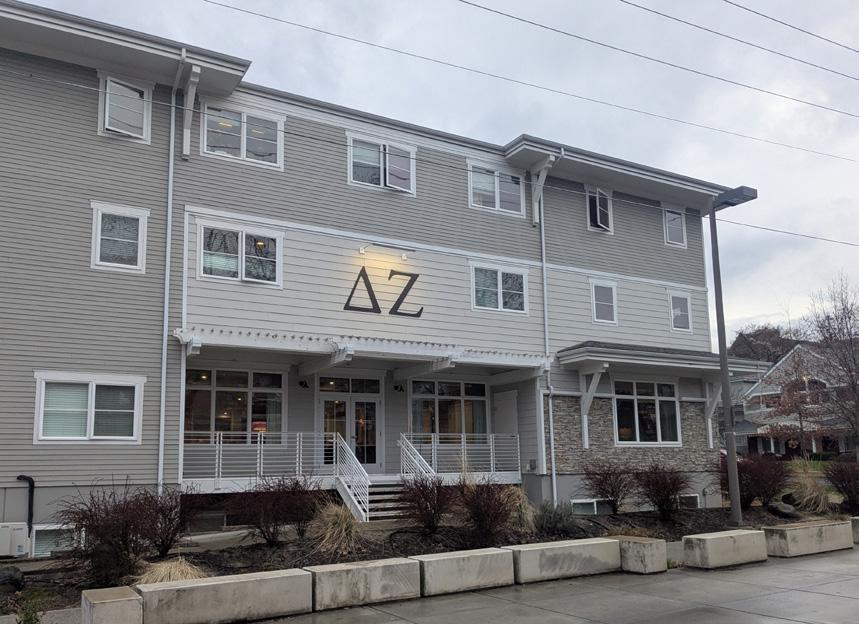
Despite being from a large family, Wargi says that she was very shy and reserved as a kid, and that she has learnt a lot more about socializing from being in a sorority.
“Over the course of being in a sorority, surrounded by people, I got better about that and improved significantly. And of course, I
Primary recruitment happens each fall before the new semester begins. Students will live on campus for around a week, during which they will visit the houses.
The decision of what Greek house you are put into is a mix of them picking you and you picking them. Continuous open bidding is available if you miss formal recruitment.
Several chapters will welcome new members throughout the semester so students can find the right house for them.
• Sigma Alpha Epsilon
• Sigma Chi
Sigma Nu
Tau Kappa Epsilon*
Theta Chi
*No housing provided
Deadlines
Deadlines for housing
May 1, 2026–ADA housing accommodations priority deadline June 1, 2026–Room selection closes, housing application remains open July 1, 2026–Last day to cancel without incurring a fee
Fraternity and sorority life
registration
Fall 2026 recruitment dates: Aug. 12-17
Registration is open until Aug. 1. The registration fee is $195 for Panhellenic Sorority Recruitment and $95 for Interfraternity Council Recruitment. Fees are unrefundable after June 1.
To register, visit www.uidaho.edu/student-life/greek-life/recruitment.
First-year live on requirement
The University of Idaho requires all fulltime, first-year students under 21 years old to live in university-recognized housing for their first academic year.
To learn about or submit an exemption, visit www.uidaho.edu/student-resources/ dean-of-students/first-year-residency.
Essential tips for living in the dorms
policies set by the university that are stated around campus and in your housing agreement. Some rules are very strict and can get you in a lot of trouble if you break them. It’s respectful to both your roommate and your RA if you follow the rules.
Decorating
If you’ve never shared a room or lived in a dorm before, it can feel very daunting to begin doing both when you head to college and live on campus.
It can be even more nerve-racking if you’re rooming with a stranger.
Whether you’ll be living in the Tower, the LLCs, or Wallace, these tips can help you navigate the multi-faceted nature of living in the dorms.
Getting along with your roommate
One of the most impactful aspects of living in the dorms is how well you get along with your roommate.
The first tip is to set boundaries with each other and set up expectations for the room and each other. A room with no rules is bound to cause problems. Have a healthy and mature conversation with your roommate when you both move in and set some ground rules.
Some key points to talk about are guests, sleeping/waking routines and the cleanliness of the room. Another tip is to remember that this is a shared space.
Both of you deserve to live in a space that you feel comfortable in, so be mindful of your roommates’ wants and needs as well as your own. Try to compromise rather than going one way or the other. Let both of your opinions be heard and be open-minded.
What not to do
Living in the dorms comes with its own set of rules that will be established by your RA, but it’s still important to know what you should avoid doing while living there.
Everyone loves to make their living space feel like their own and decorate how they want to. The dorms should be no different, but remember to be mindful of your roommate and the rules set in your housing agreement.
The first tip is to try picking out some decor with your roommate and decide if you want to decorate for the holidays or not. Try to combine your styles and tastes in decor so that you’re both happy with the results.
The next tip is to try to find “dorm-friendly” decor. The dorms can be easily damaged by certain decorations, especially the way that you hang things up. Excessive damage to your room will result in fines from the university, so be mindful of what you’re using. Command strips and thumbtacks are some dorm-friendly options. Avoid using screws or nails.
Rules for the dorms
As mentioned before, there will be a set of rules stated by the university and/or by your RA.
It’s important to follow these rules, but what about the unspoken ones?
The first thing is: don’t skip out on the floor events run by your RA. This is a great opportunity to meet people on your floor and socialize.
Don’t just stay in your dorm room 24/7. Try to spend a decent amount of time outside of your dorm. This gives you opportunities to meet new people, study, explore the campus and it gives your roommate some time alone in the room.
Don’t break the rules. There are certain
The first rule is to be on top of your laundry. The laundry facilities are shared among many students, so set a timer on your phone to ensure that you’re switching out your laundry on time. Don’t start it and then go to class for a few hours and jam up the units so that others can’t use them.
The next rule is to abide by quiet hours. Nothing is worse than hearing people yelling and stomping at 11 p.m. when you’re trying to sleep. Be mindful of your noise early in the morning and late at night. Your dorm building may have set quiet hours, but if not, it’s common practice to be quiet from 10 p.m. to 7 a.m.
Living in the dorms on campus can be a really fun experience, so do your best to make the most of it!
Try to have fun and enjoy the lively environment, but also remember that there are others around you, so be respectful to your peers.
John Keegan | Argonaut One
John Keegan | Argonaut The fraternity Sigma Nu on a cool spring evening
John Keegan Argonaut
The sorority Delta Zeta is beside the Pitman Center
Tips for first-time apartment renters
The ins and outs of living in an apartment
Brooklynn Jolley ARGONAUT
Deciding to move off campus and rent your first apartment can be intimidating, especially if you don’t know how to go about it. There are many things to consider, so this article will lay out the most important tips for new renters.
Finding a roommate
Although living alone is definitely an option, it can be a bit difficult financially as a college student. You could try to live with some friends or opt for the “random roommate” route.
The first tip is to talk to your friends and see if any of them are considering living off campus. Living with someone you know well and are comfortable with can help alleviate some of the nerves surrounding getting an apartment. If you find a friend who wants to live off campus, have a conversation about what you both want in an apartment, such as number of bedrooms, number of bathrooms, in-unit washer and dryer and more.
What if none of your friends want to live off campus, but you’re still set on
getting an apartment? You can opt for a random roommate instead!
A tip to finding a roommate is to use social media. There are groups on Facebook specifically for finding housing and roommates in certain areas, including Moscow. Join one of those groups and see who else is also looking for a roommate. Reach out to people whose ideals seem to line up with yours and then try to get together to talk about things and determine if you’d be a good fit as roommates. What not to do
The first tip for renters is: don’t live out of your means. It can be compelling to choose a nice and fancy apartment for your first one, but you need to be sure that it’s affordable above all else. Many people’s first apartment has its own quirks and isn’t anything super fancy, but it’s affordable and works well with their needs and their lifestyle; try to choose something that checks those boxes for you.
The next tip is: don’t be late on rent. Ideally, you’ve chosen a place that is affordable, so be sure that you’re on top of your rent payments. Set a reminder on your phone or write down in your calendar when rent is due so that you can pay it on time! This applies to other bills as well. If for some reason you will be late
on paying rent, be sure to communicate with your landlord/property management company.
The next tip is: don’t break the rules set by your company/landlord. This may seem self-explanatory, but it’s still very important. If you break the rules, you may incur fines or even get evicted, if the offense is high enough. Be respectful to your landlord and the rules that they put in place. If you’re unsure about a rule, don’t be afraid to ask questions or ask for clarification!
The next tip is: don’t be rude or disrespectful to your neighbors. Don’t encroach on their personal spaces or their apartment’s property. If you want to have a lot of friends over, try to have them carpool instead of taking up 10 parking spaces in the shared lot. Just remember to be mindful that this is still a shared space in certain areas and be respectful of your neighbors. Also be sure to be aware of your noise levels at certain times of the day/night. Many apartments don’t have explicit “quiet hours,” but following the city of Moscow’s established quiet hours is good practice.
How to decorate
Decorating your first apartment—or any apartment for that matter—is a really
fun experience! However, remember that although this place feels like yours, it’s not technically “yours.” Try to avoid any unnecessary damage to the apartment when you decide to decorate.
The first tip is to use “renter-friendly” supplies, such as tacks and Command tape/hooks. These are great alternatives to using nails/screws, which will put visible holes in the wall and could jeopardize you getting your deposit back.
The next tip is to decide how you want to decorate. What style and vibe are you going for? Looking on Pinterest and TikTok is a great way to gather inspiration for what you want your apartment to look like.
The next tip is to utilize thrift stores and second-hand options. Once you’ve nailed down the aesthetic that you want, take a trip to the local thrift stores before you browse Amazon. Not only will you find better deals, it’s also more environmentally friendly! Facebook Marketplace is another good option for finding cheap, second-hand items.
Choosing to rent an apartment may seem scary and much more multi-faceted than living in the dorms, but these tips will help you navigate through some of the aspects of apartment living!
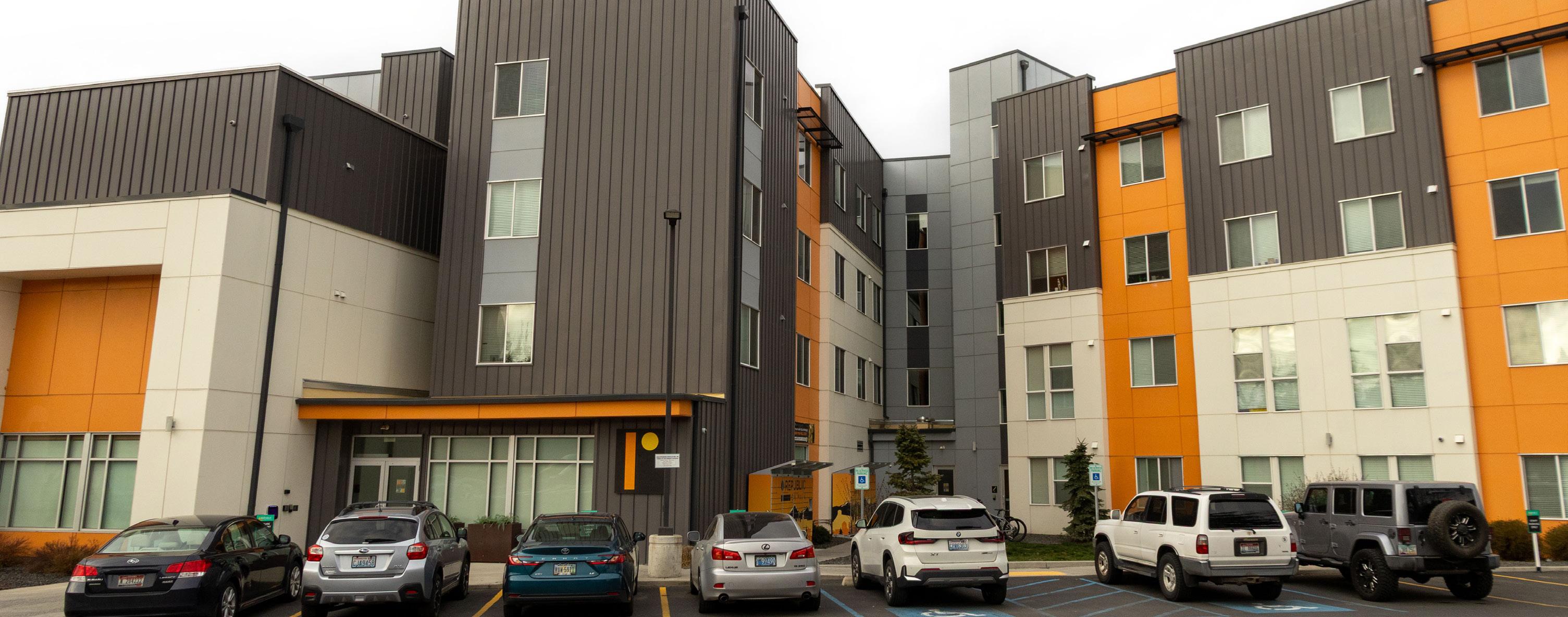
Living on campus makes life simpler
Student support and community provided
Living on campus is a crucial part of the college experience, and in a lot of ways can be cheaper and more convenient than living off campus. Most of the dorms available at the University of Idaho allow faster commutes, numerous food options and built in community events, making them the easy choice for anyone planning their college housing.
The biggest benefit to living in the dorms is that you are much closer to your classes. Compared to comuting from an off-campus apartment, a walk up the academic mall is quicker—and in a busy student’s schedule—time that could be better spent studying or working.
Some students that live off campus choose to stay on campus all day to avoid having to commute multiple times between classes, meaning that they can’t go home to take a break or do work during the day. When you live on campus, it’s as easy as a couple minute walk back to the dorms to rest.
Living on campus also gives you easier access to the dining hall and restaurants
for food. A student living in an apartment needs to account for meals themselves, and cooking is just another thing that takes up time. Living on campus with a meal plan gives you lots of options for every meal, and there are many healthy options too.
Running to the Eatery for a meal is fast and easy and has dozens of different food options every day for every meal. Over a semester, that’s a lot of hours saved from cooking and cleaning.
The dorms are also very community oriented. Every dorm has weekly events, put on by the Residence Hall Association. Your neighbors are your built-in community, and UI pushes hard for your RHA community to have fun events and support systems.
RAs are always on call and available, so if you ever have an issue, you can go to someone who is a peer. RAs are there to help you and are usually very supportive. They check in a few times a semester to make sure you’re doing okay, a crucial piece of support to make sure you’re not feeling like you’re falling behind.
Living in the dorms can be a great experience. It makes college life easier. Easy access to classes, food, community and resources save time and support a successful student experience.
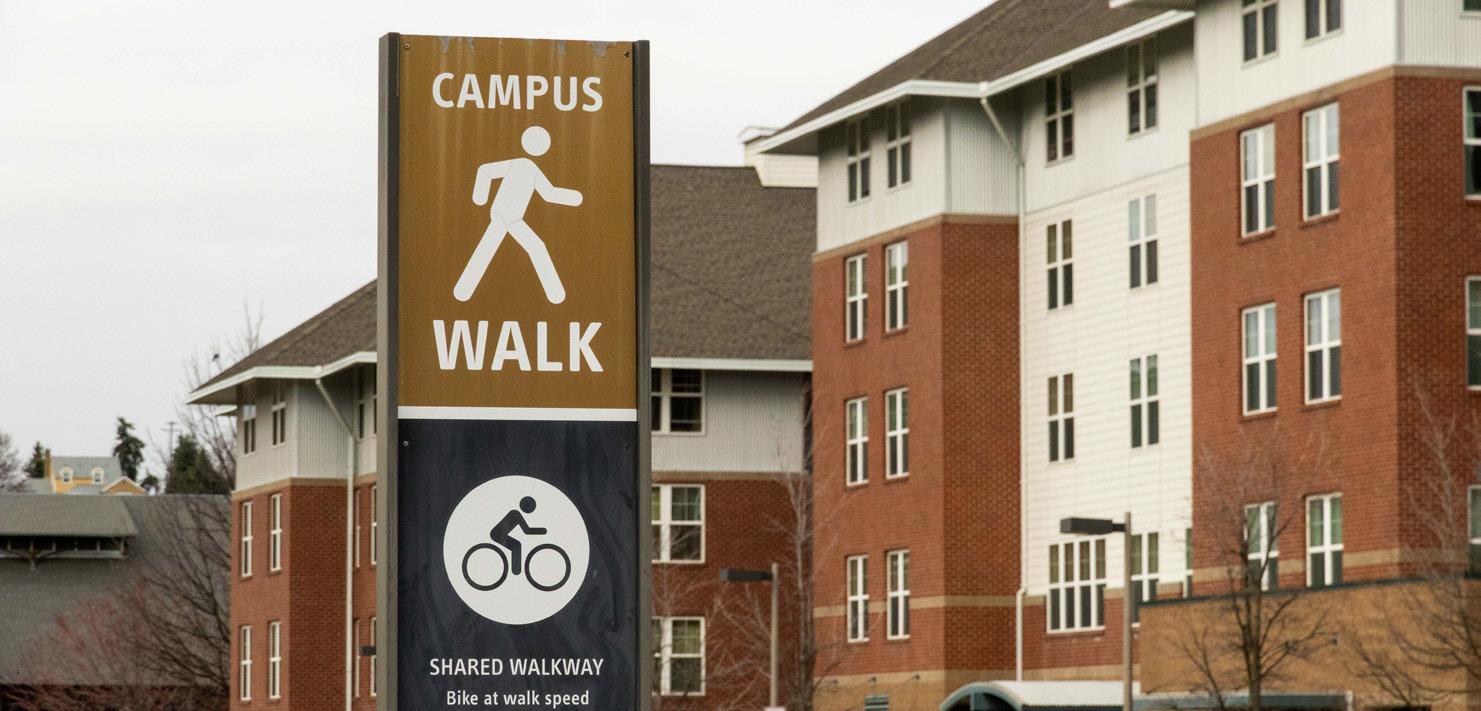
Opinion
Living off campus is an introvert’s dream
An apartment is a private and quiet living environment
Brooklynn
Jolley ARGONAUT
Living in the dorms or Greek life on campus is supposed to be the epitome of “college life.”
But that’s not the case for introverts.
Living in a place that’s shared—possibly with stranger—and has 100+ other people around at all times isn’t ideal for introverts or people who value privacy and a quiet space.
When you live on campus, whether it’s in the dorms or in Greek life, being social and engaging in the community feels like it’s a necessity.
If you’re the person who always stays in their room and doesn’t engage in the events, you may feel a bit ostracized at times. Having your own apartment, or even an apartment with one or two close friends, feels right.
You know that you won’t be judged for feeling reclusive and staying in your room all day. But you also know that you can go into common areas and not be surrounded by strangers. You feel safe in that space that is truly your own.
In your own apartment, you can still have gatherings and surround yourself with people, if you want to. The biggest difference is that, in the dorms, those people are likely going to be strangers, but in your own apartment, those people are going to be your friends.
If you’re living alone off campus, you’ll never have to worry about coming home to a mess that someone else made. Or worrying about coming home to your roommate having a stranger in the room.
Everything that happens in that apartment is in your control. For an introvert, there’s truly nothing better than that.
You control the noise volume, the
cleanliness of the place, how it’s decorated and everything else.
Living in an off-campus apartment also comes with more privacy, especially if you’re living alone.
It can be very hard to find some time alone if you’re living in the dorms. But with an apartment, you’ll have a surplus of it.
Another nice thing about living in an off-campus apartment is the roommate situation. While opting for a random roommate is an option, it’s never something that you may be forced into.
For an introvert, being forced to live with a stranger can be their worst nightmare. With your own apartment, you control who you live with, whether that’s on your own or with some friends or a significant other.
Often, there is a higher level of respect that comes with living with someone who is a close friend or your significant other. You and that person will co-exist well. If any arguments arise, you’ll probably be able to work through them, rather than receiving the silent treatment and a glare that you might get from a stranger.
The number of roommate horror stories that float around online seem endless. Living on campus with a roommate that you don’t know can easily turn into one of those stories, especially if your living requirements and styles don’t align well.
While living on campus can provide some people with their ideal “college life” and more opportunities for engaging in social events, that is not the case for everyone.
For some, living on campus just creates anxiety and unhappiness with their living situation. Choosing to live off campus in your own apartment is the best option for introverts and people who value their privacy. It allows for greater control over your living situation, and it helps you avoid those awkward and tense situations with roommates that you don’t know well.
John Keegan | Argonaut
The Republic on Main is one of many off-campus apartment options available to UI students
John Keegan | Argonaut
Living Learning Communities are
Alternative on-campus housing options
Beyond the typical dorms, all of these options provide their own unique experiences
Jayden Barfuss ARGONAUT
When it comes to living on campus at the University of Idaho, there are a lot of options that everyone knows, such as Wallace Residence Center, the Theophilus Tower and the Living Learning Communities. However, there are also some that go under the radar that are a big part of the housing process for prospective and current UI students, such as McConnell Hall and the Stevenson wing in Wallace.
McConnell Hall McConnell, designed for upperclassmen, offers single rooms perfect for students wanting a more private and academically-focused living environment.
This can give you the private feel of an apartment but is still in close proximity to everything that you will need.
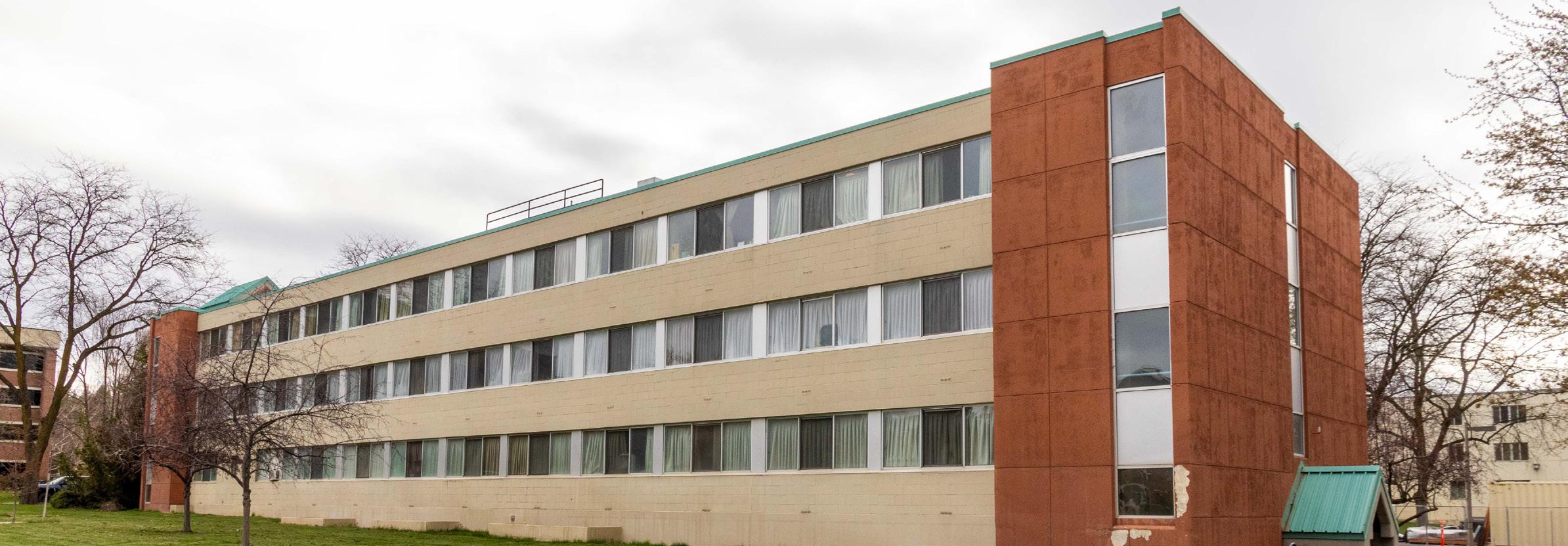
McConnell features single-gender floors and has a large hangout space located in the basement.
Each bedroom includes a sink, twin XL bed, closet, desk, bookshelves, chair and an additional set of three large drawers.
On paper it sounds like the perfect place, but like every place, it has its downfalls.
Resident Justin Klerck, like most students, has had mixed reviews with housing. His time at McConnell has not been much different.
“McConnell, I’d say it’s a little better than the Tower, but not by much,” Klerck said. “It has its pros, like, it’s all single rooms. It’s got the communal bathrooms, so we don’t have to clean them.”
“The laundry room situation is annoying because there are three washers and three dryers for the entire building. And of course, it floods every year. But as far as the room itself goes, it’s pretty good. And the people on my floor are pretty nice. I haven’t met all the guys, but the ones I have don’t have any complaints.”
Klerck has lived all three of his years at UI on campus and even with the deficits and challenges he has faced, he sees the benefits of living on campus.
“The convenience of being
able to walk to class and being five minutes away from most of my classes, that’s the biggest thing,” he said. “You meet a lot of people, you’re close to a lot of people that are your exact same age. So, you’ll make a lot of friends, and you’ll really get connected with the campus compared to, I would say, living off campus, you won’t be able to spend as much time on it.
“Living here for three years has probably made me connected to the point where I’ll miss it once I graduate. But now I would say I would recommend that
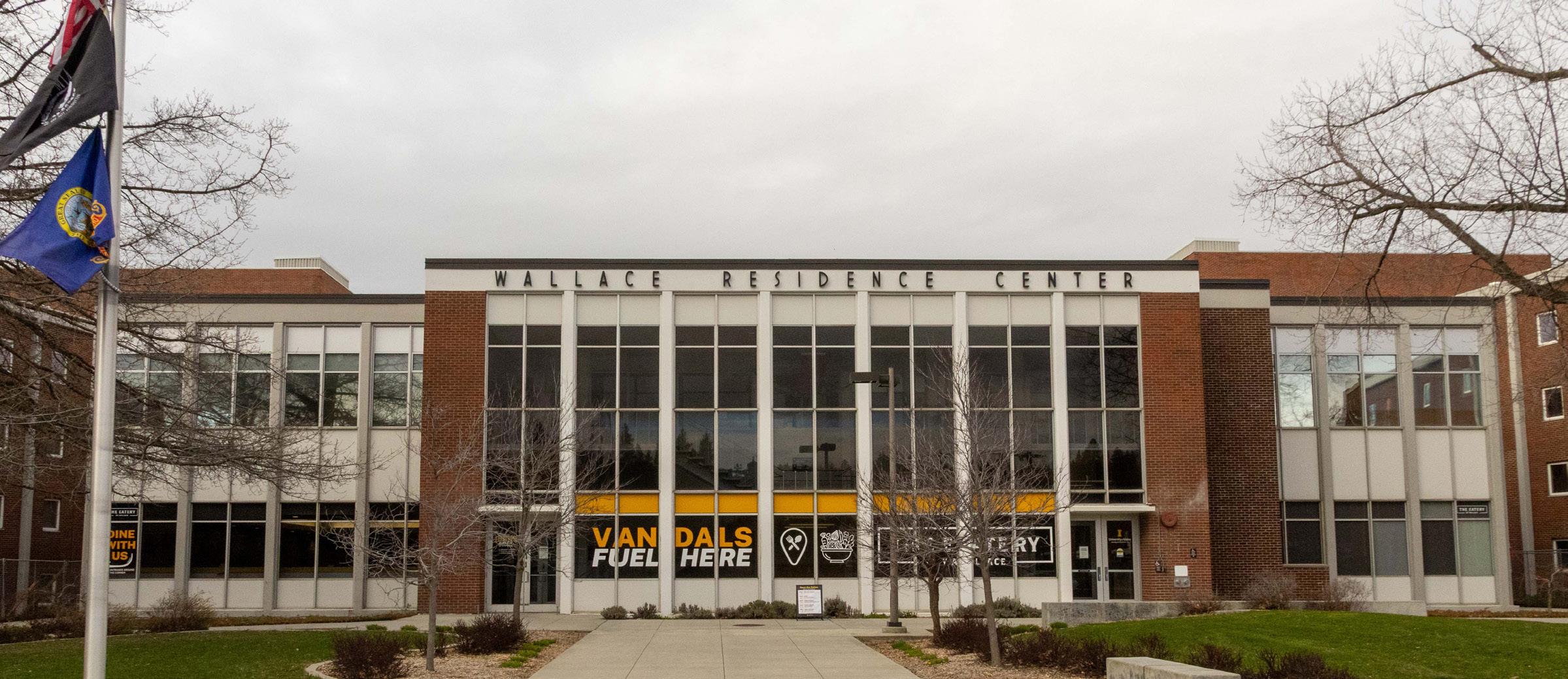
ways. Being an RA comes with a lot of work. Besides your school schedule, you also have to deal with potential issues, violations and residents.
But along with the responsibilities come the perks.
Out of all the housing positions, the resident advisor is one of the most overlooked and underappreciated roles on campus.
On every floor in every building, there is an RA who is in charge of that floor in all sorts of




Most people see the free housing and meal plan as the only benefit to being an RA, but there is much more to it.
For some residents, especially those leaving home for the first time, an RA is a role model and someone to look up to. They can be an influential figure. The connections they build with
residents and the community they create are a huge part of the overall experience for everyone on the floor.
North Campus Communities second floor RA Tabitha Stoner is a first-year RA who broke down what the job looks like day-to-day.
“It’s a lot of things. The basics are like, I go on duty, I make sure that everything in the area is working as it’s supposed to be, like nobody’s in need of help or something,” Stoner said. “I’m also around if residents are having issues, or there’s noise,

or the many possible violations, whatever could be going on.”
Stoner also touches on the community-building side of the role.
“I put on events within just our area for people to connect with other people. You don’t have to be interested in a specific thing to be a part of the community where you live.”
Stoner has enjoyed her time as an RA but admits there are pros and cons to the job.
“You get to help people. That was a big part of why I got into it,” Stoner said. “You also get
freshmen live on campus their first year. They really should... mainly just [to] meet a lot of friends.”
Stevenson For upperclassmen who want to stay more in the heart of campus, the newly renovated Stevenson wing in the Wallace Residence Center is another great option when it comes to housing.
Stevenson, unlike the freshman wings, offers single rooms, a hot commodity when housing season comes around.
Along with the single rooms, they offer traditional double rooms with a bathroom shared between two rooms.
Over this past school year, the university added some new perks and made a multimillion-dollar investment in modernizing the wing.
Some of those include new bathrooms, movable furniture and more, plus the traditional layout with laundry machines on the second and fourth floors. Additionally, each floor has its own lounge where students can hang out, work on homework and more.
Housing has a lot of variables and options and can be stressful, but with all the options UI has to offer, it also presents an exciting opportunity to build connections and develop a sense of belonging at the university.
free housing, a stipend and a meal plan. But cons, you live where you work. There are days you can take off, which is great, but one of the things the housing director loves to tell us is we live in a fishbowl.”
To become an RA it takes dedication, will and sacrifice, but the role can make a real difference in a community.
To apply, candidates can fill out the
























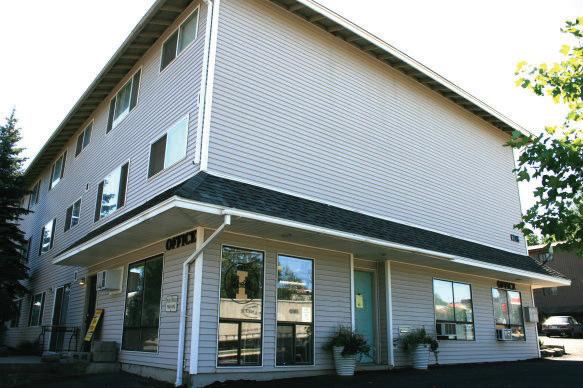







John Keegan Argonaut
Hall is located at the corner of Rayburn Street and W 6th Street and is designed for upperclassmen
John Keegan | Argonaut
Stevenson wing is part of Wallace Residence Center, located on the corner of
6th Street and Stadium Drive and is an on-campus option

Bill against transgender people goes too far
How HB752 will hurt transgender people and enable predators
Chris Sprague ARGONAUT
Idaho House Bill 752 makes it illegal for any person to enter the restroom or changing room of the opposite biological sex at any government owned building or place of public accommodation. The first offense is a misdemeanor and carries up to one year in prison, and the second offense, if committed within five years of the first, is a felony and carries up to five years in prison.
Recently, on March 30, HB752 passed both the Idaho House of Representatives and the Idaho Senate. The bill was sent to Gov. Brad Little where it is waiting to be signed into law.
HB752 expands the bathroom restriction from schools to every public place in the state with places of public accommodation, or private businesses that serve the public, having to comply. This broadened reach is why this bill is such a big deal.
The state is now telling private businesses to enforce compliance with the bill, removing the freedoms of small businesses, opposed to the earlier 2023 bathroom bill that focuses on schools and makes administrators enforce compliance.
Idaho would be one of about 20 states that have bathroom restrictions in place for transgender people. Not only does this bill target transgender people similarly to other states, but it also goes even further than similar laws.
This is part of the wave of bills that have been passed by the Idaho legislature in recent years to target transgender people’s rights and access to public spaces. It seems that Idaho’s goal is to legislate
Budget cuts threaten the university’s future
As funding shrinks, reduced programs and fewer resources impact higher ed.
AJ Pearman ARGONAUT
The University of Idaho is once again facing budget reductions, and while administrators insist the institution remains financially stable, the reality for students and faculty paints a far more uncertain picture.
In a recent campus-wide email, UI President Scott Green acknowledged the scale of the issue, writing that “combined cuts of this magnitude require that we make difficult decisions that impact our students, employees and peer institutions.”
Those decisions are already beginning to take shape—and they are not small.
According to reporting by The Argonaut, student concerns are mounting as programs face reductions, class availability tightens and support services shrink. The publication noted that students are particularly worried about how these changes will affect time to graduation and access to essential academic resources.
While universities often frame budget cuts as operational adjustments, the lived experience for students is far more immediate: fewer classes, less support and higher barriers to success.
The administration’s message attempts to reassure. Green emphasized that the university has “worked diligently to right-size our university and live within our means” since 2019. Enrollment has grown, and the institution has implemented what it calls a “Vandal Hybrid Budget Model” to ensure spending aligns with actual revenue.
But even a well-managed budget cannot shield the university from statelevel decisions. This year alone includes a $2 million holdback, a 4% one-time reduction and a looming permanent 5% cut. When combined with rising healthcare costs and withheld funding tied to enrollment growth, the university estimates the impact closer to an 8% reduction to its operating budget.
That distinction—between temporary cuts and permanent ones—is critical. A one-time shortfall can be managed through savings. A permanent reduction forces structural change.
And structural change is exactly what is happening.
Green outlined several immediate consequences: capped enrollment in high-cost programs like engineering, fewer course sections and reduced staffing across advising, tutoring and career services. “This will increase student-tofaculty ratios, reduce student support services and slow research competitiveness,” he wrote.
For students, that translates into a longer and more difficult path to a degree.
The Argonaut highlighted that some students fear delays in graduation due to
transgender people out of existence, which is not possible.
This also creates new problems of how trans men who appear as biological males will be received going into women’s restrooms and changing rooms. The same for trans women going into men’s restrooms. This might lead to trans people being attacked and assaulted and eventually intimidated away from public life.
Trans people are still people and should be treated as such. They should not have their rights and safety threatened through harmful legislation. On top of this, transgender people are far more likely to be victims of assault than perpetrators of assault.
Additionally, this bathroom bill enables people in positions of power to get away with assault. There are some provisions in the bill, such as exceptions for custodial services, medical services and emergencies, as well as other things. A notable ex-
ception is “to provide coaching or athletic training during athletic events.”
There isn’t a single time where athletic coaching happens in the bathroom. However, this does give leeway for predatory coaches to enter the bathrooms or changing rooms of the opposite sex. Already, a PowerHealth study reports that one in five NCAA athletes are abused by their coaches.
This very thing happened in 2024 when the University of Idaho volleyball coach resigned over abuse allegations.
Transgender people are not going to go away, and they are part of the people of Idaho just like every other person who lives here.
This bill seeks to intimidate trans people and push them away from society and into hiding. More so, this bill actually enables real predators by exempting athletic coaching staff from legal ramification.
limited course availability—a concern that directly contradicts the university’s mission to promote timely degree completion. Others worry about diminished hands-on learning opportunities, particularly in fields like veterinary medicine and healthcare, where practical experience is essential. Perhaps most troubling is the broader impact beyond campus. UI is not just an educational institution; it is a cornerstone of the state’s economy. Green noted the university contributes approximately $1.79 billion annually and supports more than 33,000 jobs statewide.
Cuts of this magnitude do not just affect classrooms—they ripple through agriculture, technology and healthcare sectors that rely on university research and workforce development.
And yet, despite these stakes, higher education funding often becomes an easy target in state budget negotiations.
This raises a fundamental question: what is the long-term cost of short-term savings?
Reducing funding may balance a budget on paper, but it risks undermining the very systems that drive economic growth. Programs are being eliminated, including the forest and sustainable products degree, and key research positions are being delayed. Once lost, these resources are not easily rebuilt.
Universities operate on long timelines. Faculty recruitment, program development and research initiatives take years to establish. An 8% cut cannot simply be reversed when funding improves—the damage lingers.
There is also an equity issue at play. As support services shrink, the students most affected are often those who rely on them the most—first-generation college students, low-income students and those balancing work with academics.
Budget cuts, in this sense, are not neutral. They disproportionately impact those already facing barriers.
UI’s situation reflects a broader national trend, where public universities are asked to do more with less. But there is a breaking point.
If Idaho values its workforce, its industries and its future, it must also value the institution that helps sustain them.
AI degree is forwardthinking, but classrooms are not ready for it
As UI embraces artificial intelligence, its policies lag behind its ambition
AJ Pearman ARGONAUT
The University of Idaho is stepping into the future with the approval of a new bachelor’s degree and minor in artificial intelligence. On paper, it is a bold and necessary move. In practice, however, it exposes a contradiction at the heart of higher education: universities are racing to teach AI while simultaneously discouraging students from using it.
According to The Argonaut, the university’s Faculty Senate approved the new Bachelor of Science in artificial intelligence and a corresponding minor in early February, with both programs set to begin in fall 2026. The degree will be housed in the computer science department as a 120-credit program, offering specialized tracks ranging from robotics to AI in data science.
This expansion is not happening in a vacuum. Universities across the country—and even within Idaho—are investing in AI programs to remain competitive. As former department chair Terence Soule noted, “If we want to be competitive, I think we need degrees in this area.” That sentiment reflects a broader reality: artificial intelligence is no longer optional in the modern workforce.
Idaho itself is rapidly positioning AI as a cornerstone of education. According to KMVT, state leaders recently emphasized that students must be prepared for an “AI-driven world,” highlighting the growing expectation that graduates will understand and work alongside these technologies. From a workforce and innovation standpoint, UI’s decision makes sense. Enrollment in traditional computer science programs has stagnated nationwide, while specialized degrees like cybersecurity—and now AI—continue to grow. Creating a dedicated AI major is a strategic attempt to adapt to both student interest and industry demand.
But here’s the problem: the same
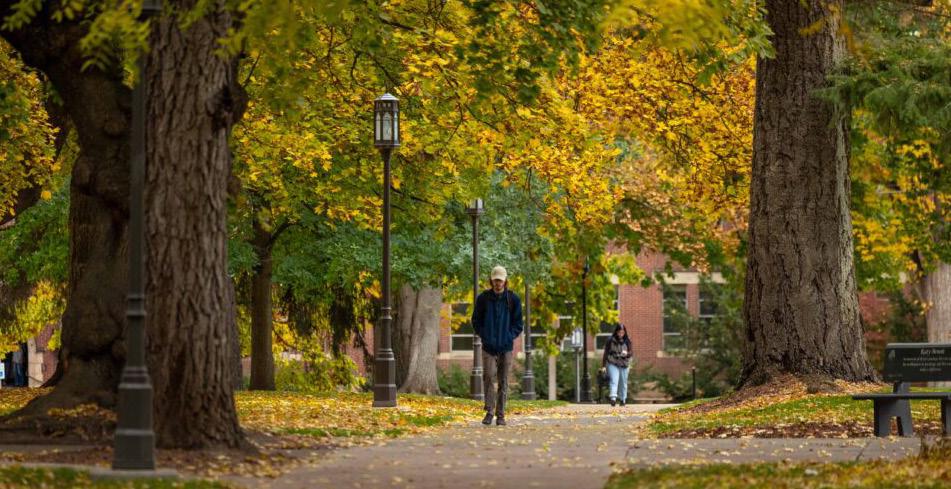
institution preparing students for an AIdriven future often restricts their ability to engage with AI in the classroom.
Across many courses, students are explicitly warned against using tools like ChatGPT or other generative AI platforms for assignments. In some syllabi, using AI is treated as a form of academic dishonesty, equated with plagiarism. If students are expected to build, analyze and innovate with AI technologies, they must also be allowed to experiment with them in real academic settings. Learning about AI in isolation—through lectures and theory—is not enough. Like any tool, from calculators to coding software, mastery comes through application.
Even education leaders acknowledge that balance is key. AI should “supplement learning rather than replace human instruction,” according to discussions among Idaho education officials in Idaho News. That perspective suggests that AI is not inherently harmful but instead requires thoughtful integration.
Right now, many classrooms are stuck in a defensive posture, treating AI as a threat rather than an opportunity. Concerns about plagiarism, accuracy and overreliance are valid. However, banning AI outright does not teach students how to use it responsibly—it simply pushes its use underground.
UI has an opportunity to lead, not just by offering an AI degree, but by rethinking how AI fits into all disciplines.
Imagine assignments that require students to critique AI-generated responses. Or projects that ask students to compare human and machine outputs. Or policies that encourage transparency—allowing AI use as long as it is properly cited and evaluated.
These approaches would align classroom practices with the realities of the AI major itself.
To its credit, the university is already considering this broader integration. A proposed introductory AI course could even become part of general education, focusing on ethics and responsible use. That is a step in the right direction.
Still, the gap remains. A university cannot fully embrace artificial intelligence while simultaneously discouraging its use in everyday learning.
The creation of an AI major and minor is an exciting milestone for UI. It signals innovation, adaptability and a commitment to preparing students for the future.
But unless classroom policies evolve alongside these programs, the university risks sending mixed messages—and leaving students caught between them.
In the end, the question is not whether AI belongs in higher education. It already does.
The real question is whether universities are ready to teach students how to use it—or just how to avoid it.
John Keegan | Argonaut
A student takes a walk through campus near the Hello Walk on a fall day
UI tuition hike burdens students
AJ Pearman ARGONAUT
The University of Idaho’s proposed tuition increases for the 2026–27 academic year is being framed as a necessary response to inflation. But for students already struggling to afford college, the latest proposal feels less like an adjustment and more like a pattern—one where the financial burden continues to fall on those least able to carry it.
According to a recent report from The Argonaut, UI President Scott Green outlined a plan to raise tuition across the board. Resident undergraduate tuition would increase from $3,514 to $3,738 per semester, while non-resident tuition would climb from $13,132 to $13,356. These are not minor changes. Over the course of a degree, even modest increases can translate into thousands of additional dollars in debt.
Green justified the proposal by pointing to “rising costs driven by inflation,” including expenses tied to technology, utilities and employee benefits. On the surface, that reasoning is understandable. Universities, like any institution, must adapt to economic pressures. But what remains unclear is why tuition increases have become the default solution.
Students are not immune to inflation— in fact, they are often among those most affected. Housing, groceries and transportation costs have all risen sharply. The university itself estimates total annual costs for in-state students could reach over $30,000 when living expenses are included. Adding tuition increases on top of that reality only deepens the financial strain.
What makes this proposal more concerning is the broader context. Idaho’s higher education system has been grappling with budget cuts at the state level, with millions of dollars reduced from funding streams in recent years according to Idaho News. When public funding decreases, universities often turn to tuition to fill the gap. But

that shift effectively transfers responsibility from the state to students—a move that undermines the idea of public education as a shared investment.
There is also a troubling sense of inevitability surrounding these increases. In 2025, the Idaho State Board of Education approved a 3.5% tuition hike, citing similar inflation-related pressures.
Now, just a year later, another increase is on the table. If this trend continues, students may face annual tuition hikes as a new normal.
University leaders often emphasize that Idaho still offers relatively affordable tuition compared to other states. While that may be true, affordability is not a static concept. What matters is not just how Idaho com-
pares nationally, but whether students here can realistically afford to attend without excessive debt.
The proposal also includes increases in student fees, such as a boost to support the Counseling and Mental Health Center. While investing in student services is important, bundling these costs into mandatory fees further inflates the overall price of attendance. Students are left paying more, even for services they may not use.
To be clear, universities do face real financial challenges. Maintaining quality education, supporting staff and upgrading infrastructure all require funding. But the current approach raises a fundamental question: why are students consistently expected to absorb these costs?
There are alternatives that deserve more attention. Increased state investment, administrative cost reductions and greater transparency in budgeting could all play a role in easing the burden. Without these efforts, tuition hikes risk becoming a convenient but unsustainable solution.
Ultimately, UI’s proposal reflects a larger issue within higher education—one where the promise of opportunity is increasingly tied to a growing price tag. If universities continue to rely on tuition increases as their primary strategy, they risk pricing out the very students they aim to serve.
For many students, the question is no longer whether college is worth it, but whether they can afford to stay.
69 Bridal path 70 Go viral 71 Female deer 72 Garden pest 73 Spooky
Down
hole 64 Heartless 65 Sound
68 “___ was saying...”
1 Reagan Airport code 2 Under the weather 3 Not always available 4 Summer getaway 5 Sleep soundly? 6 Dish cleaner 7 Suspend 8 “It’s not ___, it’s a when” 9 App associated with Hydroflasks 10 Observer 11 Sushi condiment 12 King of the fairies 13 Family pooch 21 “___ bin ein Berliner” 22 Armed conflict 23 “High Voltage” band 24 Tropical tuber 28 Moody music genre 30 Garlicky sauce
31 Uno y uno
32 “The Racer’s Edge” 33 Split hairs?
35 Greek god of war
38 Sound booster
39 Way to go: Abbr.
40 Annoy
41 “Hardly a surprise”
42 Happy
43 Lost traction
46 Misbehaved
47 Rio Grande city
48 Country singer Morgan
49 Hawaiian garland
50 Executed perfectly
51 Yukon automaker
55 Glide
58 Final Four org.
59 Film crew member
60 Like an easy job
61 Prefix with pad
62 River at Chartres
66 Pasta suffix
67 Poem of praise
Henry Halcomb | Argonaut
A sign in the Pitman Center showing different offices in the building where students can go to dicuss aid and tuition with staff members
“Turning Over a New Leaf” By Dakota Steffen