





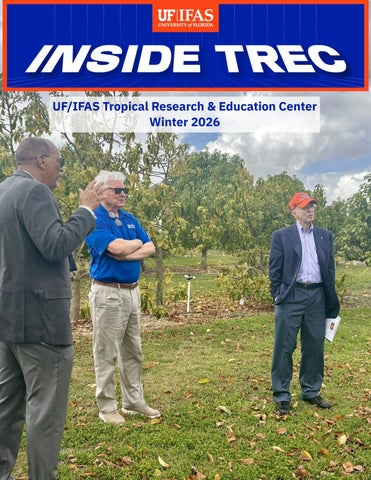
Dear All,
I’m excited to share some of the wonderful things that have been happening at TREC since the start of 2026; well, mostly wonderful. One major milestone falls squarely into the category of “mixed emotions”: the retirement of Dr. Jonathan Crane, our tropical fruit specialist, after nearly 40 years of extraordinary service to both the academic and grower communities.
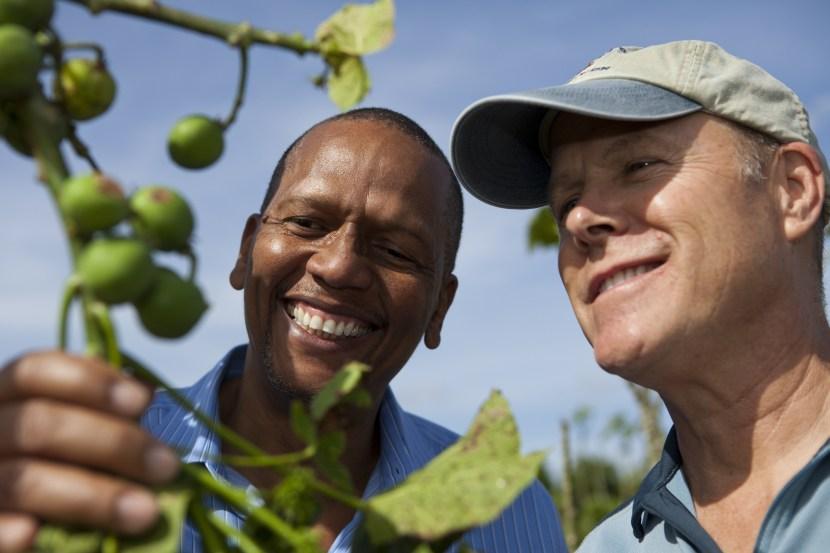
Jonathan’s impact is impossible to overstate. From guiding growers through hurricanes, pests, diseases, freezes, and countless other challenges, to offering solutions grounded in solid science and real-world experience, he leaves behind very big shoes to fill. Equally impressive is the legacy he built by mentoring and training the next generation of scientists and professionals. One of the clearest testaments to his influence came at his recent retirement celebration. We expected about 75 attendees, nearly 250 people showed up. That incredible outpouring of appreciation says everything about how much he means to this community. And so, with genuine gratitude and a bit of sadness, we said farewell to a true legend. (Learn more about Jonathan Crane’s career here.)
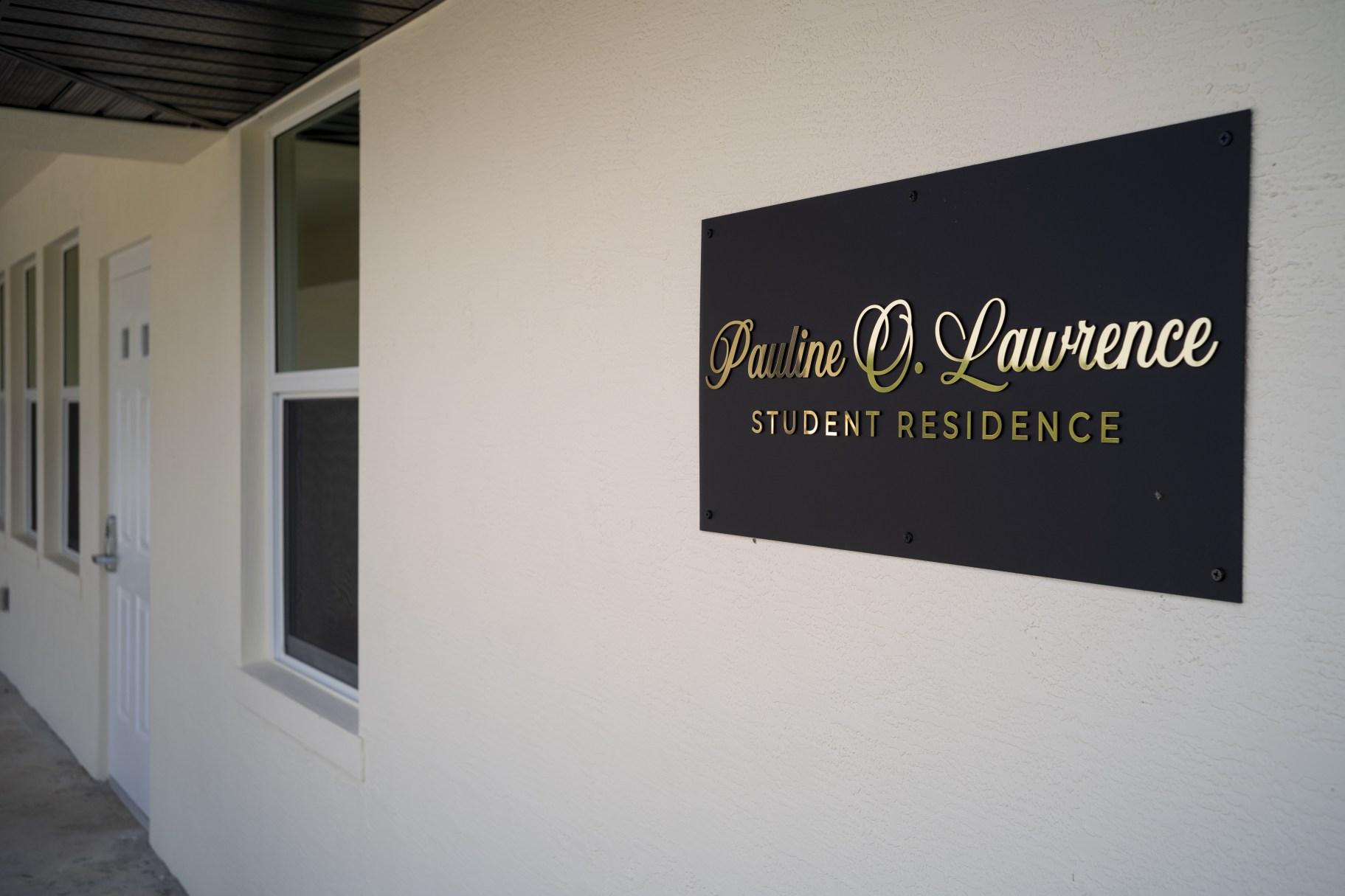
On the exciting news front, we’ve made significant progress in expanding and modernizing our campus. The Pauline O. Lawrence Student Residence is now complete, and at the start of the year, eight starry-eyed students moved into their new home away from home. Even now, they continue to express their appreciation, regularly thanking the donors who made this building possible.
We also renovated our Soils lab with the installation of a much-needed new fume hood to better support experiments, and we paved the road leading to the dorm—small changes that make a big difference. In addition, we hosted an extremely successful fundraising event where we launched Challenge 180, an initiative aimed at raising $180,000 to support our graduate students. As always, the response from this incredibly generous community was overwhelming.
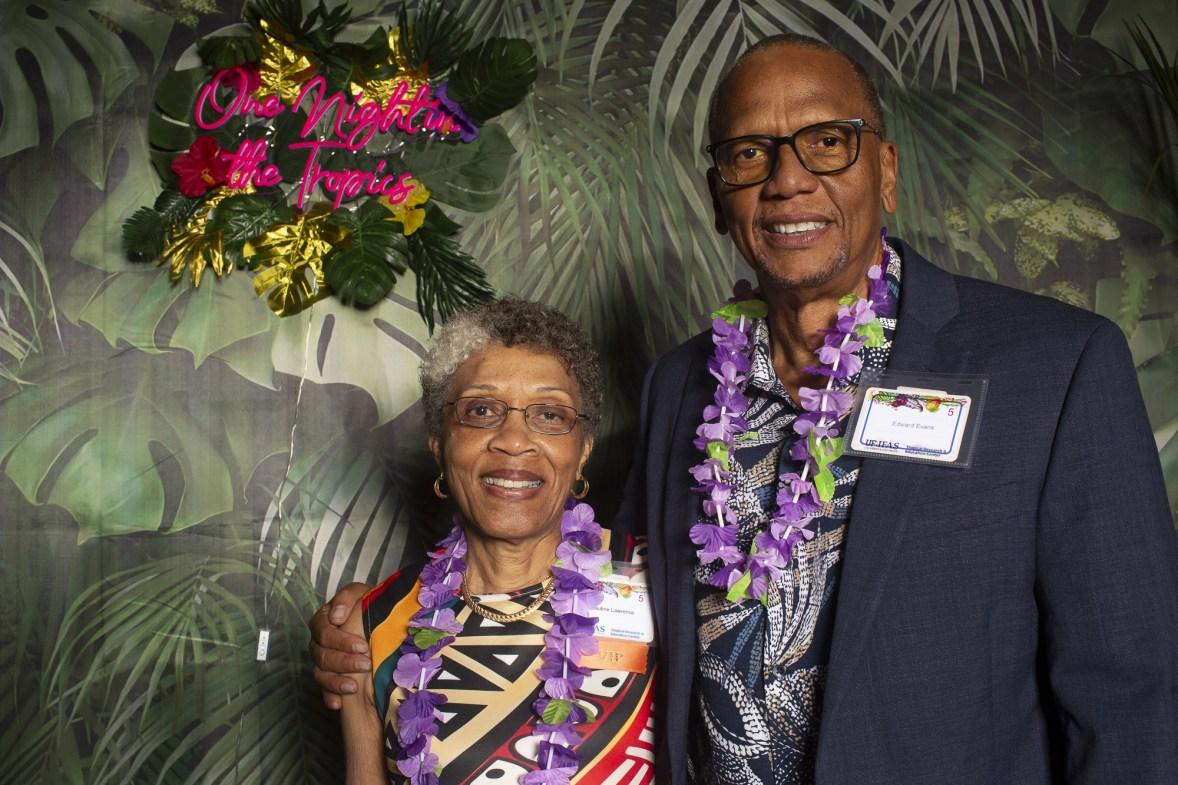
At our flagship fundraising One Night in the Tropics event, which drew more than 300 attendees, we were truly blown away by a special announcement from Dr. Pauline O. Lawrence: a $1 million endowment in honor of her late husband, Dr. Carlton G. Davis. The proceeds from this endowment, the Carlton G. Davis PhD Scholarship, will support a PhD student working on tropical agriculture research directly relevant to our growers. We cannot adequately express our appreciation for this remarkable act of generosity and for the investment it represents in the future of tropical agriculture. Learn more about Dr. Carlton G. Davis and this gift here.)
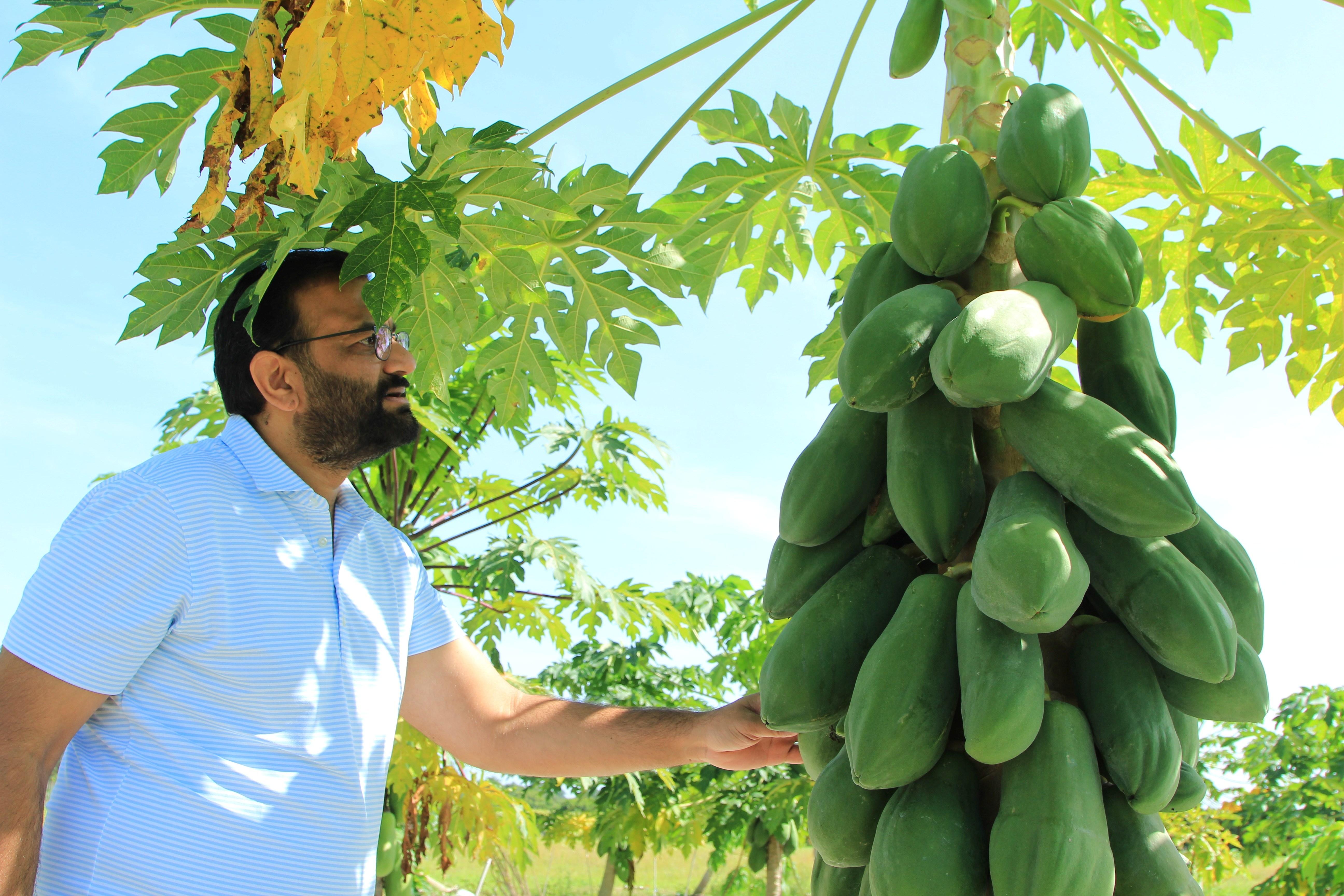
For a brief introduction to Dr. Jugpreet Singh’s work at the UF/IFAS Tropical Research & Education Center, read this article. In this installment of the Research Report, we’ll learn more about how Dr. Singh’s research programs aim to improve the tropical and subtropical fruit cultivars for Florida’s stakeholders and consumers.
One of the joys of living in south Florida is having access to many cultivars of lots of different tropical fruits. Access to specialty cultivars like Coconut Cream mangos and Choquette avocados are great for our local, specialty growers (and consumers!). As more Americans are developing a taste for tropical fruits, finding cultivars ideal for large-scale production in Florida is a goal of the Singh lab. This can be accomplished by testing cultivar potential, their suitability to expanding area under production, and potentially evolving new markets for various tropical fruits.
From screening and sequencing germplasm to analyzing DNA-markers, Dr. Singh and his lab are is developing tools and technology for the breeding of exceptional tropical fruit including but not limited to mango, papaya, and avocado. In addition to improving the flavor and nutritional quality of these fruits, his program aims to improve production efficiency, disease resistance, and germplasm adaptability to new climatic zones due to recent weather changes in past years.
Another goal of the Singh lab is to address the resistance and tolerance to biotic/abiotic stresses in tropical fruit crops. On the short list: creating a cultivar of papaya with resistance to papaya ring spot virus (PRSV). In collaboration with Dr. Romina Gazis, Dr. Singh will address anthracnose on mango and Laurel Wilt tolerance of specific avocado cultivars. These efforts are focused on characterizing mango and avocado germplasm for discovering new sources of durable disease resistance and genetic markers associated with the resistant traits.
Argolo, P. S.,Roda,A.L., Revynthi,A.M. & Carrillo,D. (2026). Biorational pesticides for the control ofBrevipalpus yothersi (Acari: Tenuipalpidae) and their compatibility with predatory mites. Agronomy 16(3), 291. DOI: https://doi.org/10.3390/agronomy16030291
Ataide, L. M. S., Riley, S., Dutra, J., Giosa, M.,Canon,M.A., Della Vechia, J. F., Tassi,A.D., Villamarin,P., Crane, J. H., Carrillo,D., & Revynthi,A.M. (2026). Spatiotemporal infestation patterns ofAceria litchi Keifer (Acari: Eriophyidae) in a lychee orchard in south Florida. Scientific Report. DOI: https://doi.org/10.1038/s41598-026-39535-y
Awoke,G.W., Hailegnaw, N. S., Berihun, M. L., & Bayabil,H.K. (2026). Solute transport and environmental impacts in seawater-flooded soils: Insights from experiments, numerical modeling, and machine learning. Journal of Hazardous Materials Advances, 21(100898). DOI: https:// doi.org/10.1016/j.hazadv.2025.100989
Biondi, S., Pinton, D.,Canestrelli, A., Dix, N., Chia-Chu, C., Smyth,A.R.,& Reisinger, A. J. (2025). Salinity and temperature surge trigger nitrogen accumulation in a coastal dam controlled lake. Social Science Research Network. DOI: https://dx.doi.org/10.2139/ssrn.5876812
Costa Neto, A. de O., Hariharan, J., Ampatzidis, Y.,Canon,M.A., Villamarin,P., & Revynthi,A. M.(2026). Early detection ofspider mite stress in hibiscus using hyperspectral imaging and machine learning framework: toward application-oriented multispectral solutions. Computers andElectronics inAgriculture, 243(1), 111369. DOI: https://doi.org/10.1016/ j.compag.2025.111369
De Giosa, M. &Revynthi,A.M. (2026). Prophylactic releases ofPredatory mites to protect Ruellia simplex from the eriophyois mite Acalitus simplex. Biological Control, 105995. DOI: https:// doi.org/10.1016/j.biocontrol.2026.105995
Kim, D.,Her,Y., Crane,J. & Fraisse, C. (2026). Spatial and temporaltrends in air temperature and evaporativedemand in Florida: implicationsfor climate adaptation. Climatic Change, 179(24). DOI: https://doi.org/10.1007/s10584-026-04117-4
Lugo-Duque,M.A., Tafesse, F., Thakur,S.,Li,X.,Meru,G., &Zhang,S.(2026). First report of root rot and stem blight in water spinach (Ipomoea aquatica) caused byCeratobasidium sp. Related to AG-A and AG-K lineages in Florida, USA. New Disease Reports, 53(1). DOI: https:// doi.org/10.1002%2Fndr2.70107
Reyes-Arauz,I., Ataide, L. M. S., Velázquez-Hernández,Y., Mou, D., & Revynthi,A.M.(2026). Unravelling unknownaspects ofthe biology of short-spined thrips. Journal of Economic Entomology, toaf336. DOI: https://doi.org/10.1093/jee/toaf336
Sanchez,F.W., Crane,J.H., Bayabil,H.K., Sarkhosh, A., Shahid, M., & Schaffer,B. (2026). Physiological and biochemical responsesof juvenile achachairu trees(Garcinia humilis (Vahl) C. D. Adams) to elevated soil salinity induced by saline irrigation. horticulturae, 12(1), 20. DOI: https://doi.org/10.3390/horticulturae12010020
Tulu,B.B., Teshome, F. T., Ampatzidis, Y., Li, C., Pavan, W., Golmohammadi, G., & Bayabil,H. K. (2025). RGB-to-synthetic-thermal image translation using generative AI to support crop water stress assessment. Computers and Electronic inAgriculture, 241 (111273). DOI: https:// doi.org/10.1016/j.compag.2025.111273
Vargas, G. Velázquez-Hernández,Y., Seal,D., Kanchupati, N., Revynthi,A.M. (2025). Host feeding by Jaliscoa hunteri Crawford (Hymenoptera: Pteromalidae) suppresses populations of Anthonomustestaceosquamosus Linell (Coleoptera: Curculionidae). Agriculture, 16(1). DOI: https:// doi.org/10.3390/agriculture16010016
Crane, J. H., Schaffer, B., Her, Y. G., Bayabil, H., Wasielewski, J., Fraisse, C. (2026). “Quick Guide to environmental factors impacting subtropical and tropical fruit crops in Florida: HS1499, 1/2026”. DOI: https://doi.org/10.32473/EDIS-HS1499-2026
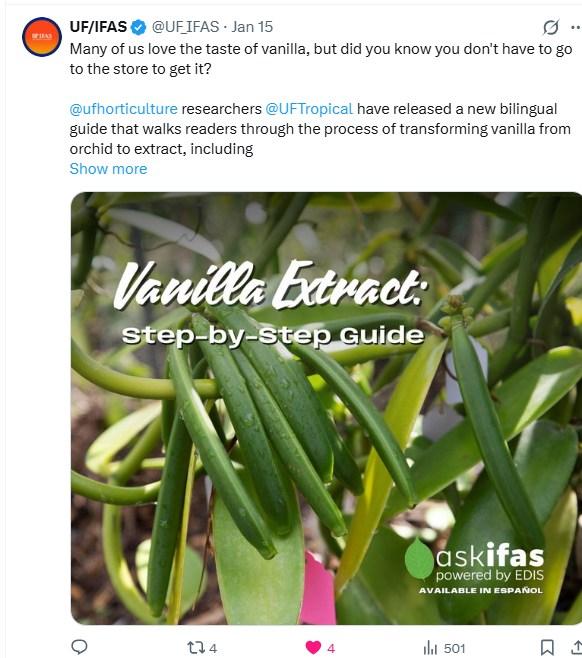
Gastelbondo, M., Wu, X., & Moon, P. (2025). “Natural Vanilla Extract Production: EP656M 12/2025.” EDIS 2025 (6). DOI: https://doi.org/10.32473/edis-ep656-2025
Jalpa, L., Mylavarapu, R. S., Hochmuth, G., Li, Y., Rathinasabapathi, B. (2026). “Optimizing Nitrogen management for sustainable tomato production in North Florida: SL540, 1/2026”. EDIS 2026(1). DOI: https://doi.org/10.32473/edis-SS756-2026
Li, X., Ecklund, P., Li, Y., Seaton, M., Seal, M., Zhang, S., Hajihassani, A., Liu, G., Wu, X., & Bayabil, H. (2026). “Okra: Nutritional value and production practices in south Florida: HS1512, 1/2026”. EDIS 2026(1). DOI: https://doi.org/10.32473/EDIS-HS1512-2026
Sanchez, F. W., Crane, J. H., Bayabil, H., Sarkhosh, Al., Shahid, M. A., & Schaffer, B. (2026). “Achachairu (Garcinia humilis), árbol frutal: botánica y cultivo commercial en el sur de Florida: HS1480s, 1/2026”. DOI: https://doi.org/10.32473/edis-HS1516-2026
Seaton, M., Li, X., Zhang, S., Liu, G., & Wu, X. (2026). “Control strategies for seed-borne diseases on okra (Abelmoschus esculentus): HS1514, 1/2026”. EDIS 2026(1). DOI: https://doi.org/10.32473/ edis-HS1514-2026
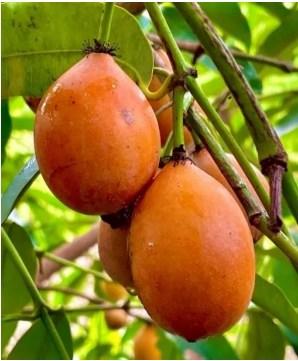
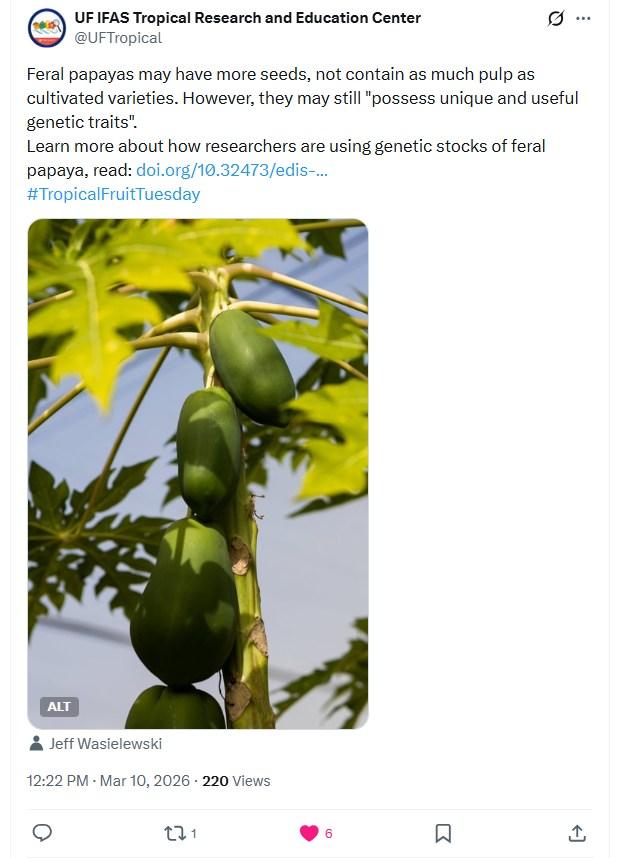
Singh, J., Jangra, S., & Crane, J. H. (2026). “Feral papaya plants in Florida A resource for breeding new cultivars: HS1515, 1/2026”. EDIS 2026(1). DOI: https://doi.org/10.32473/EDIS-HS1515-2026
Smith, H. A., Velazquez-Hernande, Y., Revynthi, A. M. (2026). “Two-spot cotton leafhopper Amrasca biguttula Ishida (Insecta: Hemiptera: Cicadellidae): EENY-827/IN1470, 3/2026”. EDIS 2026(1). DOI: https://doi.org/10.32473/edis-in1470-2026
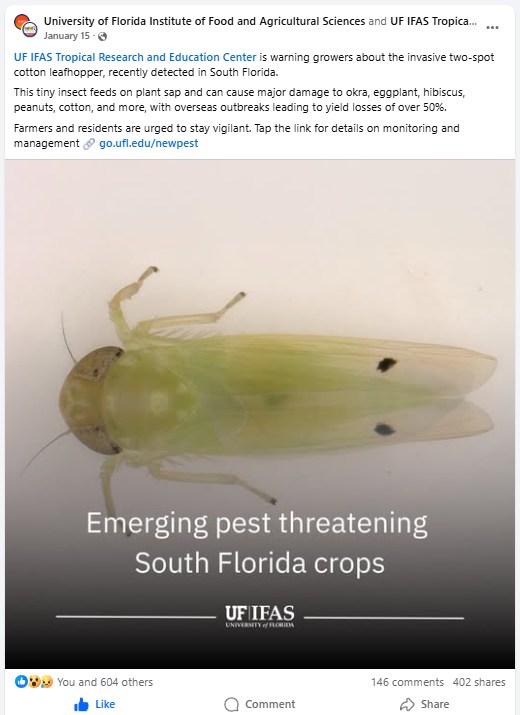
If you’ve been a subscriber to Inside TREC for more than one season, then you already know of the two-spot cotton leafhopper’s presence in south Florida. Originally detected in December 2024, this tiny pest can cause serious damage to food and ornamental crops throughout south and central Florida. What was identified as an emerging pest just last year, may have native, beneficial wasps to help regulate the invasive leafhopper.
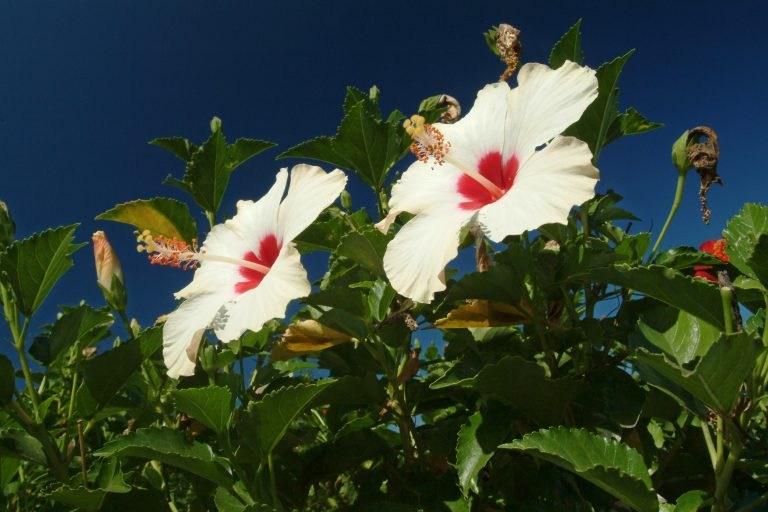
During a field sampling at the UF/IFAS Tropical Research & Education Center, scientists observed these tiny wasps emerge from the leafhopper’s eggs. To learn more about this recent discovery, we encourage you to read this article or the original publication.
Prerna Sabharwal is a PhD candidate in Dr. Geoffrey Meru’s Vegetable Breeding, Genetics and Genomics lab. Originally from Haryana, India, Prerna comes from a family of farmers. Many of her summer vacations were spent helping her grandparents in the fields sowing and harvesting vegetables and occasionally being trusted with the important task of turning up the irrigation.
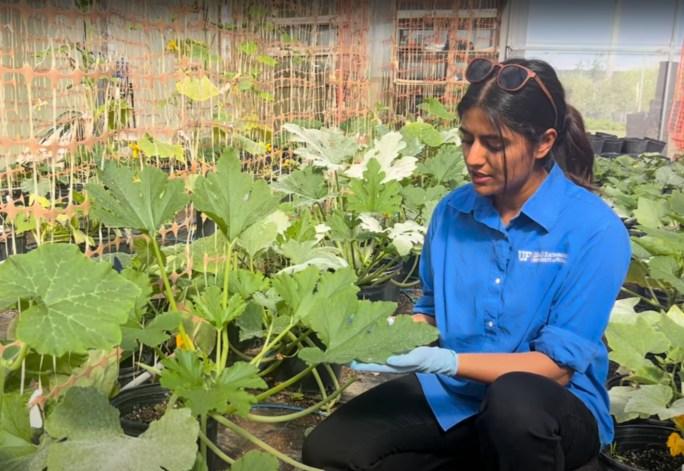

At a young age, Prerna was fascinated by the idea that fields could be used to develop better crop varieties and support farmers. This draw continued to university where she pursued her bachelor’s and master’s degrees in plant biotechnology. She recognized, though, that to understand the process more deeply how improved varieties are developed from selecting parents and making crosses to evaluating plants under real field conditions—she would have to train as a plant breeder. Having the opportunity to work on a meaningful research problem while gaining handson experience in plant breeding led her to Dr. Geoffrey Meru’s lab. In Dr. Meru’s lab, she’s looking for a natural resistance to powdery mildew in cucurbits that will help farmers spend less money on fungicides and profit from healthier crops. Learn more about Prerna’s research here.
Pamela Aracena Santos is the County Extension Director and Extension Agent II for the UF/IFAS Extension Miami-Dade County. After earning her PhD in Soil Science and Plant Nutrition from Selcuk University, Turkey, Dr. Aracena Santos returned to Florida to work as a post-doctoral researcher at the UF/IFAS Everglades Research and Education Center. Her childhood passion for civic engagement and appreciation for agriculture motivated her to work in Extension. Her commitment to expanding access to agricultural, environmental and nutrition education served communities—is what led her to the County Extension Director position. Now, her energy and drive allow her to engage stakeholders, work with Extension Agents and staff to strengthen programming, and advocate for her community.
To learn more about Dr. Aracena Santos previous works, you can access these resources:
Miami native returns home to focus on youth, community, climate as UF/ IFAS Extension director - News
From Garden Roots to Global Fields
“Turning challenges into opportunities: Building resilience through collaboration and innovation”
From grit to grace: A new perspective on resiliency in the workplace
Daniel Palberg, a post doctoral researcher in Dr. Bruce Schaffer’s Ecophysiology of Subtropical and Tropical Horticultural Crops lab.
Question: Where did you complete your Bachelor's, Master's, PhD? How did you arrive at TREC?
Answer: Trent University (Ontario, Canada) is where I completed my B.Sc. (Biochemistry & Molecular Biology) and began my M.Sc. in the same field. I was then granted an accelerated path to PhD—based on the early outcomes of my graduate research—which I began without completion of the M.Sc. program.
During my doctoral studies, I received a research award ($120,000) from the Natural Sciences and Engineering Research Council of Canada, and an associated travel supplement ($7,000) to study at any location of my choice, globally. Bringing my own funding, I came to TREC initially in 2024 and worked with Dr. Gazis in the UF/IFAS TREC PDC as a research scholar. After the completion of my PhD, I returned to TREC this time as a postdoctoral fellow under the direction of Dr. Schaffer.
Q: What is something unique to your role or your teaching/research/ extension project here that you have not encountered before?
A: Field space and a short growing season was a major limitation in Canada. Most of our work was conducted in greenhouses, chambers, on the bench in the lab. TREC offers so much productive space for field-level study and scale-up of technology developed in the lab.
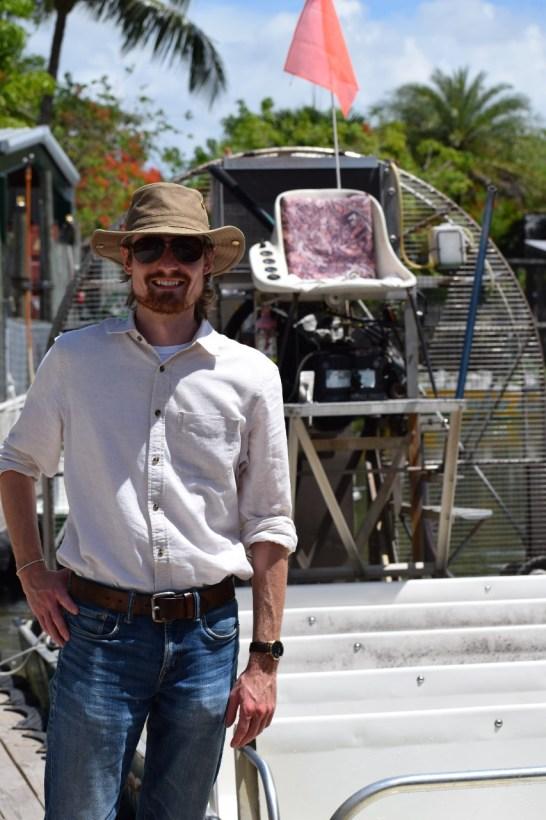
Q: How do your previous experiences prepare you for your role at TREC?
A: My experience in biochemistry has given me a unique perspective in joining the Laurel Wilt project at TREC. Previously, I have worked in a laboratory which specialized in the analysis of plant hormones my project was examining the hormone dialogue between crops and their related fungal pathogens. Many phytopathogenic fungi use hormone cues to recognize a susceptible host, and I was investigating the modification of these signals as a method for preventing disease. I also conducted part of my doctoral work in Germany with BASF. There, I learned techniques in priming the plant immune system against disease and isolating new antifungal compounds from soil and plant microorganisms. All these techniques have coalesced into a toolbelt suitable for joining the team addressing lethal Laurel Wilt of avocado.

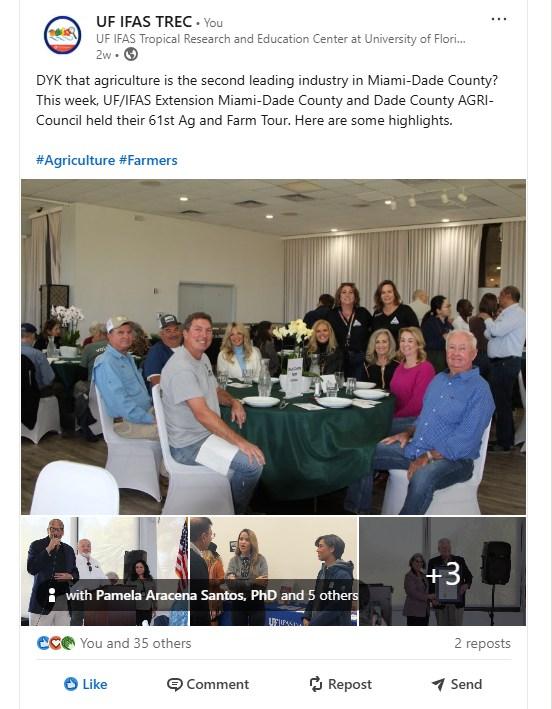
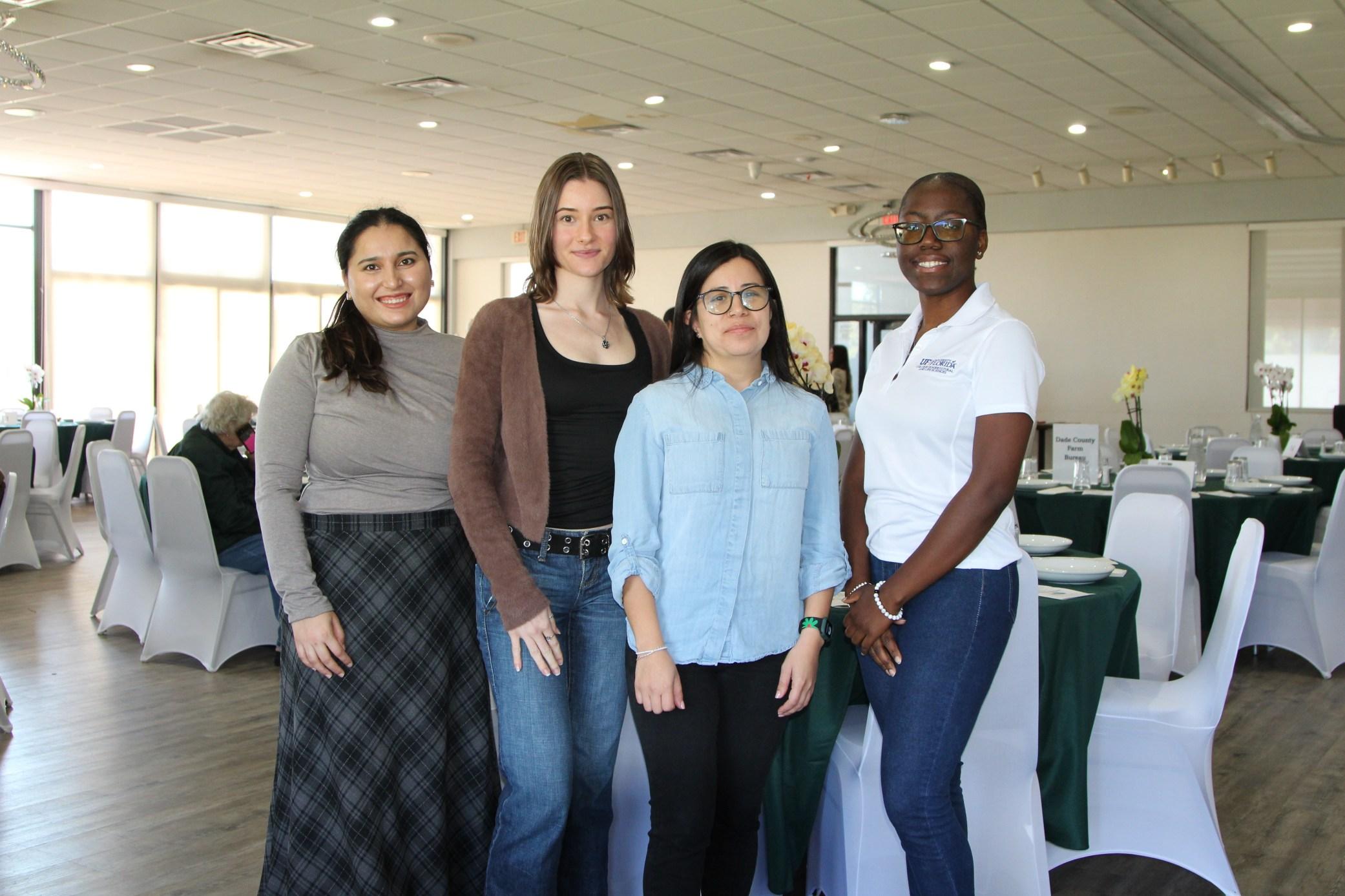
On February 24, members of our the TREC faculty, staff, and students joined the luncheon of the 61st Annual Agricultural & Farm Tour of Miami-Dade County. This annual event is hosted by AGRI-Council and UF/IFAS Extension Miami Dade County. At the luncheon four graduate students were awarded scholarships for research impacting local growers.
Simranjot Kaur, a PhD student in Dr. Geoffrey Meru's Vegetable Breeding, Genetics, and Genomics lab, was awarded the L. Russell Norton Memorial Fellowship and $500 for her research: Leveraging genomics and phenomics for anthracnose race 2 resistance breeding in watermelon and cucumber.
Peyton Ackland, a Master's student in Dr. Xiaoying Li's Horticulture Vegetable Crops lab, was awarded the Warren Wood, Sr. Memorial Fellowship and $500 for her research: Detecting and evaluating seed-borne pathogens to support sustainable okra production
Paola Villamarin, a PhD student in Dr. Alexandra Revynthi's Ornamental Entomology Lab, was awarded the Seymour Goldweber Scholarship and $500 for her research: Biological control of the invasive pest Thrips parvispinus Karny using predatory mites.
Monalisa Seaton, a PhD student in Dr. Dak Seal's Vegetable Entomology lab, was awarded the William H. Krome Memorial Fellowship and $500 for her research: Biology and distribution of the two spot cotton leafhopper Amrasca biguttula.
The US Department of Agriculture National Institute of Food and Agriculture (USDA NIFA) awarded Drs. Malek Hammami, Conner Mullally, Zhengfei Guan, and Ms. Alissa Hevesh over $590,000 for their project “Where Does the Land Go, and Why? Rapid Farmland Loss and the Push and Pull Factors”. This project will serve as a case study to illustrate the processes that are driving the decline in agricultural land use related to citrus farmland in central Florida.

Dr. Haimanote Bayabil was awarded over $250,000 from the Florida Department of Agricultural and Consumer Services (FDACS) Office of Agricultural Water Policy for his project “Enhancing Irrigation and Nutrient Management in the Nursery Industry”.
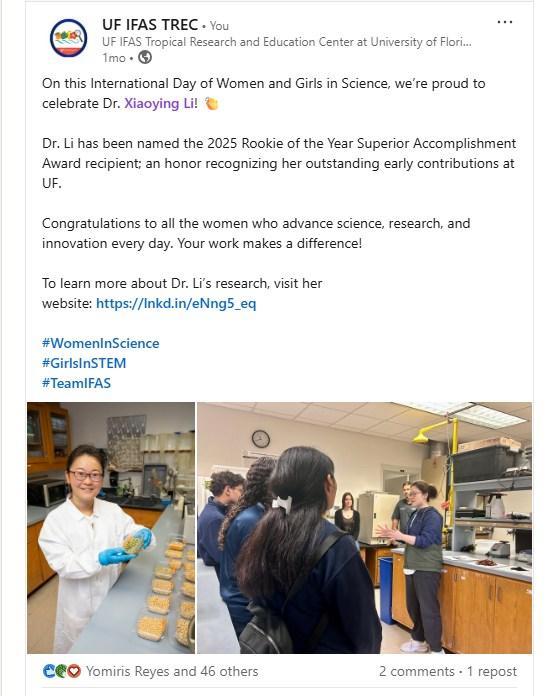
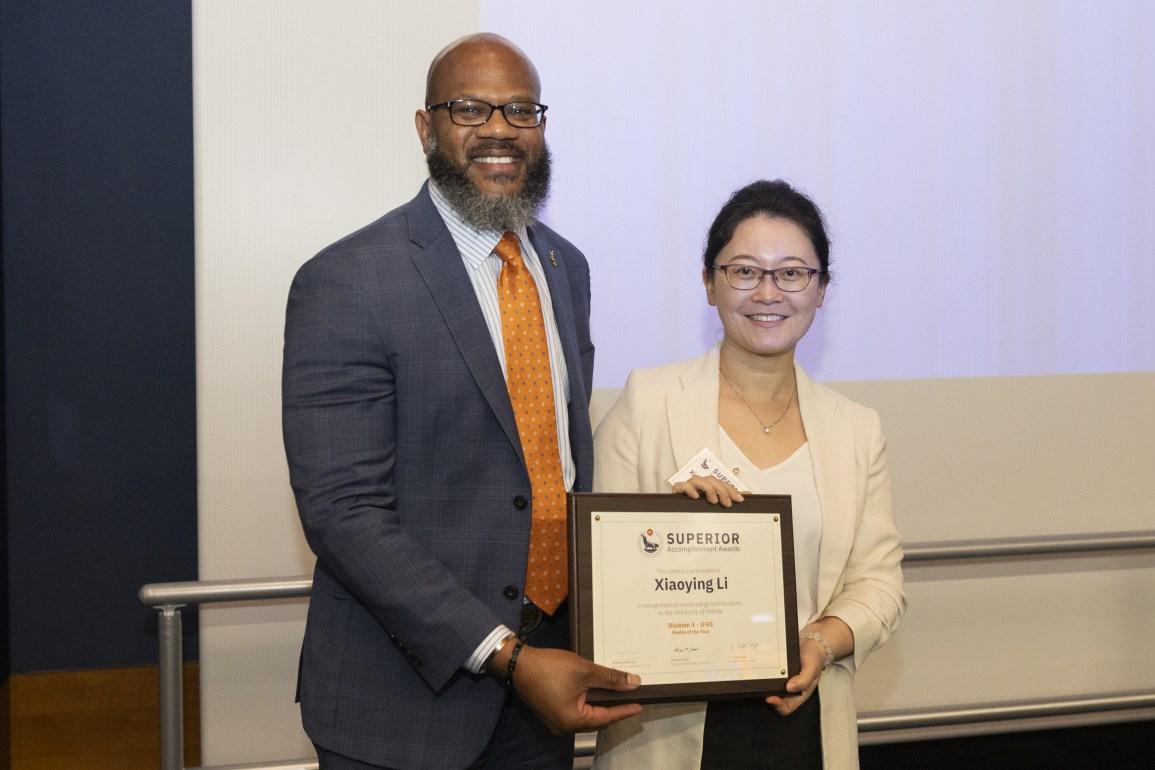
Dr. Xiaoying Li was recognized as the 2026 UF/IFAS Superior Accomplishment Award winner in the category Rookie of the Year. In her first year as an Assistant Professor, Dr. Li conducted grower consultations, led multiple on-farm trials, organized farm trials, and organized field demonstrations. Stay tuned to see if Dr. Li goes on to win the 2026 UFHR Superior Accomplishment award in the same category.
Drs. Alexandra Revynthi and Xiaoying Li each received awards from the UF/IFAS Equipment & Infrastructure Seed Grant Program. The program aims to boost faculty success and increase the impacts and scientific contributions of UF/IFAS faculty research programs.
Dr. Alexandra Revynthi received $65,000 for the purchase of a Plasma Activated Water (PAW). The PAW will is a novel, sustainable tool that has shown to increase plant responses to several environmental stresses. At TREC, the PAW applications will be used with tropical and subtropical specialty crops, including vegetables, fruits, and ornamentals. This research will support resilient production systems and greater crop productivity in south Florida’s high value agricultural sector and enhance the competitiveness of UF researchers in securing major multidisciplinary funding.
Dr. Xiaoying Li received $10,000 for the purchase of a Biosafety A2 class II cabinet for multidisciplinary research. The cabinet Is a biosafety hood for plant pathogen isolation and identification.
FDACS Division of Marketing and Development awarded Dr. Romina Gazis nearly $250,000 for her project “Expanding the production of mango in Florida through an integrated approach to manage anthracnose disease”.
FDACS Office of Agricultural Water Policy also awarded Dr. Young Gu Her $113,000 for his project “Synergistic effects of cover crops combined with soil moisture sensing-based irrigation”
Drs. Jaehyun Ahn, Cora Best, Xiaoying Li, and Yenan Zhu received funding for their project, Bay2Health: Food-as-Medicine Pilots in Pinellas and Miami-Dade. The group received $53,000 from PLANTMED and $20,000 from the UF Diabetes Institute.
Dr. Jugpreet Singh was the recipient of one of the Archer Early Career Seed Grant Awards for his project, “Identifying salinity resilience in an unexplored wild papaya germplasm from Florida.” This project was awarded $50,000.
The Everglades Foundation awarded Dr. Ashley Smyth $20,000 for her project “Internal Nutrient Recycling in Lake Okeechobee”
Stay tuned to UFTropical’s socials to learn more about these projects.
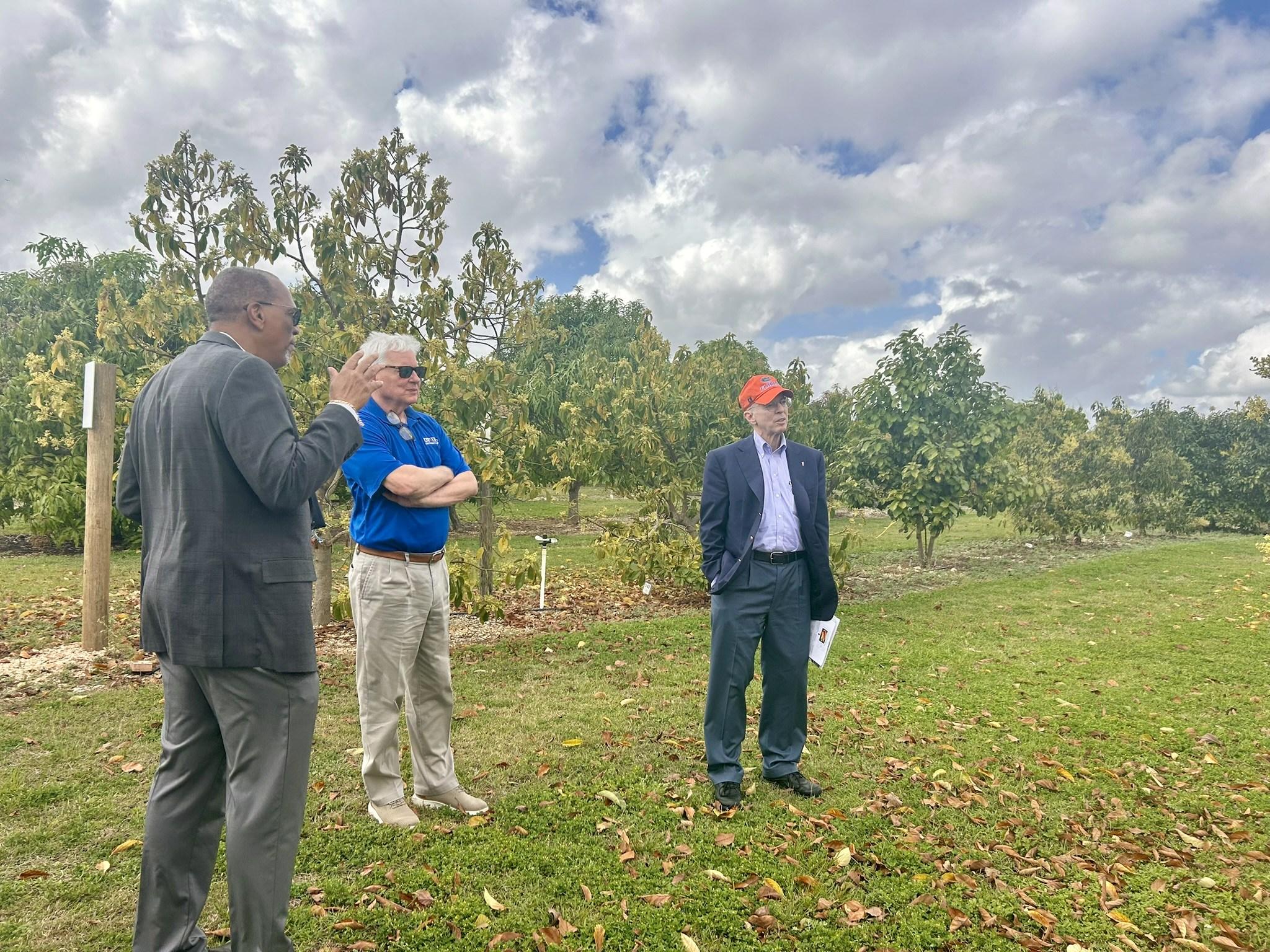
You know that the execution of your mission is exceptional when the top of your organization chooses to visit. Earlier this month, TREC hosted Dr. Donald W. Landry, the interim University of Florida President, as he familiarized himself with the Institute of Food and Agricultural Sciences (IFAS) and the University’s responsibility to all Florida residents as a land-grant university. Dr. Scott Angle, the Senior Vice President for Agriculture and Natural Resources, and Cody Helmer, the Executive Director for UF/IFAS Advancement accompanied Dr. Landry.
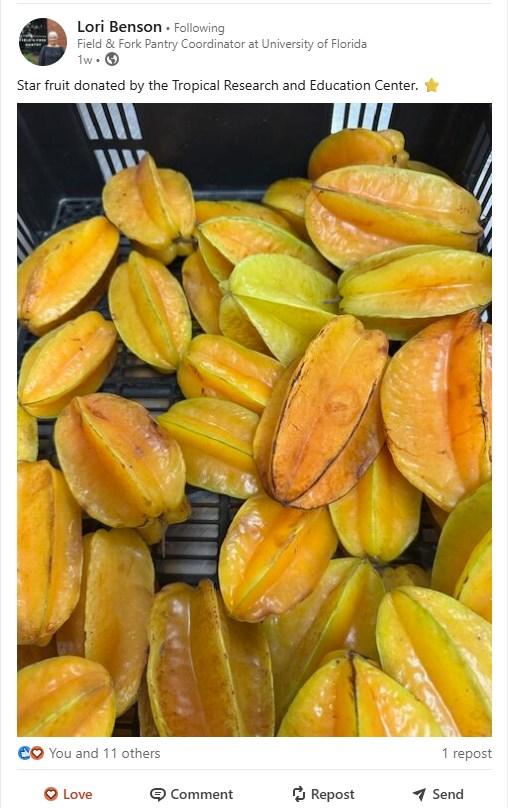
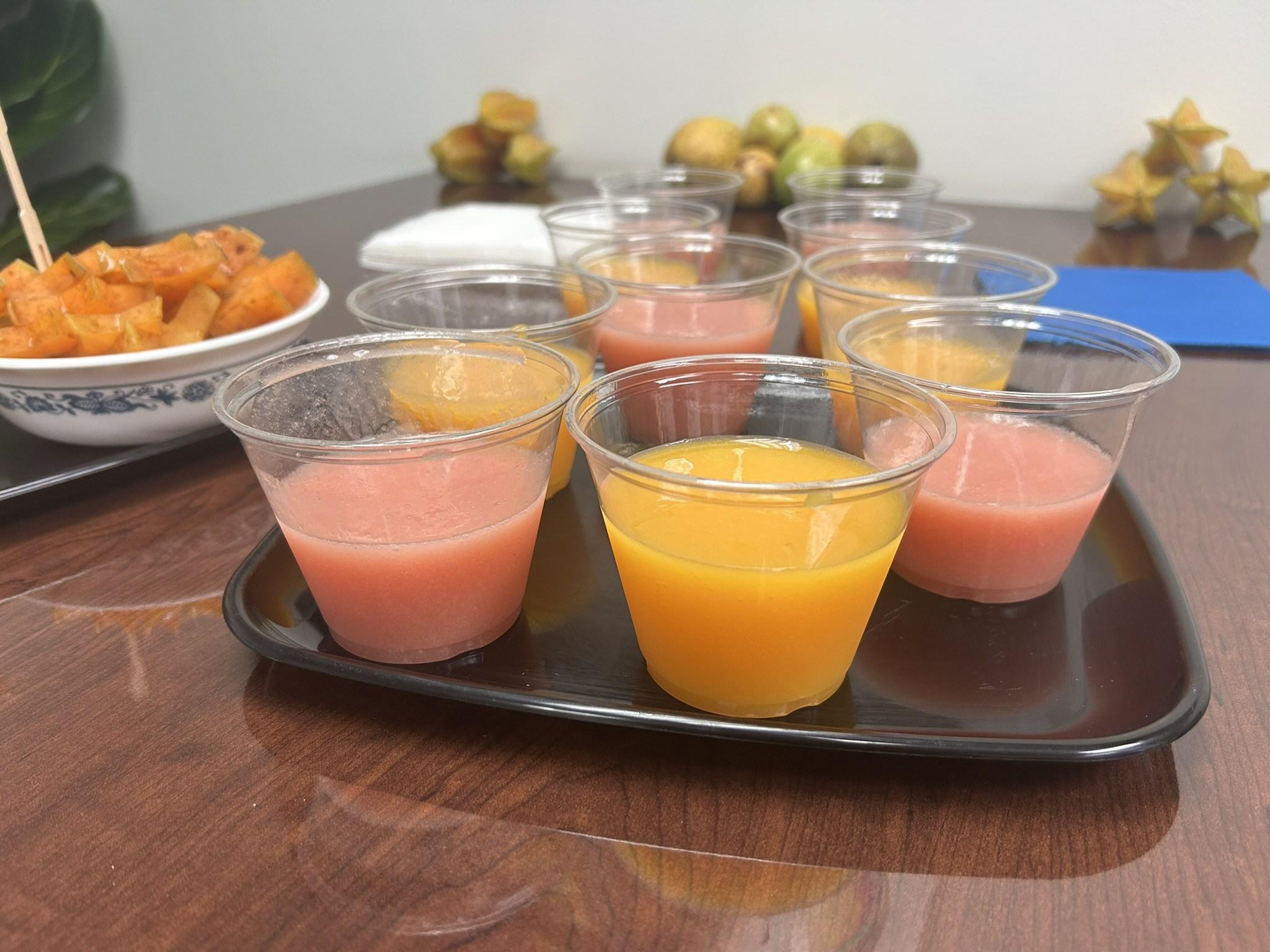
While at TREC, Dr. Landry sampled fresh tropical fruits like carambola, papaya, and finger limes. We prepared juices from fresh guavas and frozen mangos. We even introduced a TREC specialty Cuban coffee brewed with TREC-cultivated vanilla: TREC café.
Dr. Landry met with faculty, visited the Pauline O. Lawrence Student Residence, and learned about Dr. Meru’s genetic research to release a “calabaza that packs a punch for its nutritional content, adaptability and sustainability”. He also learned about Dr. Xiaoying Li’s work to initiate a Food-asMedicine pilot in Miami-Dade County.
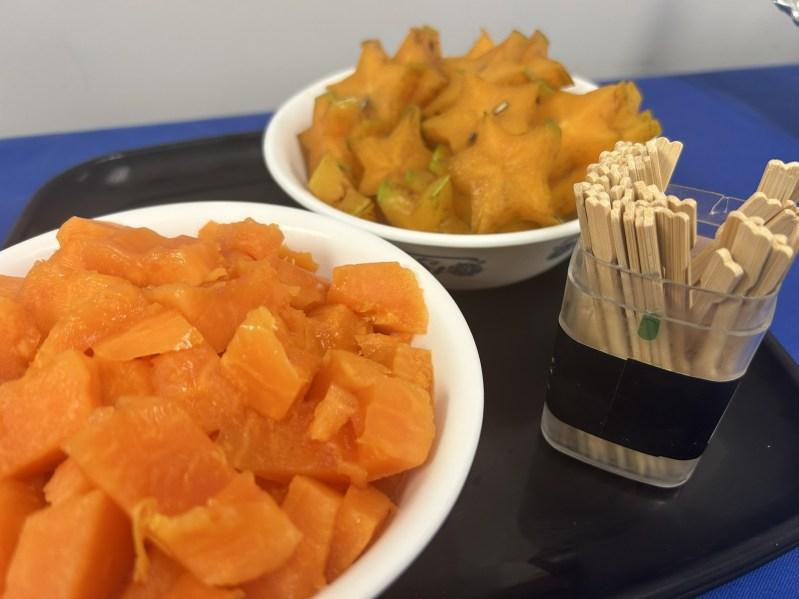
But the truest testament of TREC’s longevity in South Florida is the relationship we have with our growers. Our stakeholders explained to Dr. Landry the impact that TREC has had in the agricultural community for nearly a century. Further, they look forward to the University’s continued support for the Research & Education Centers that develop and disseminate sciencebased information about tropical horticulture to sustain and enhance the quality of human life and the natural environment.
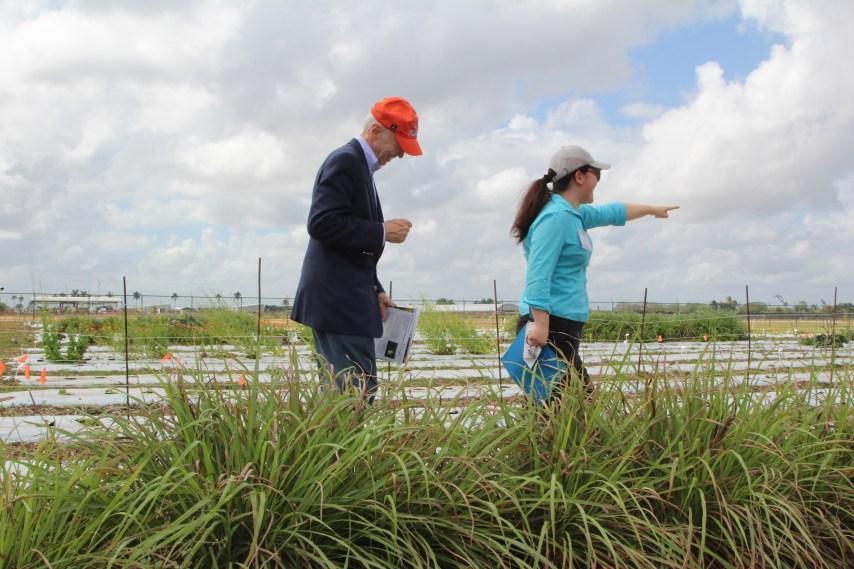
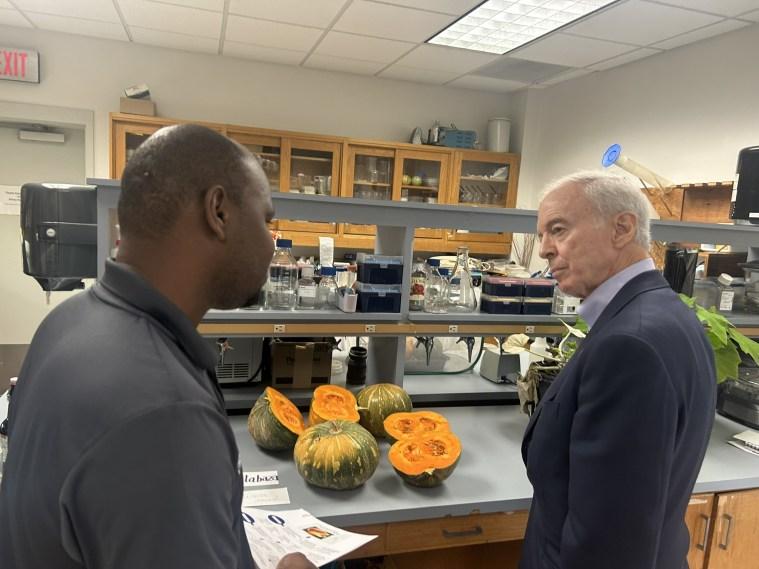
And just when we thought things couldn’t get any better, on March 4th we had the honor of hosting Dr. Donald Landry, Interim President of UF, on our campus. He was joined by Dr. Scott Angle, Senior Vice President of UF/IFAS, and Mr. Cody Helmer, Executive Director of Development of UF/IFAS Advancement. It was a wonderful opportunity to showcase what makes TREC unique: we are the only state university center working across such a wide range of tropical crops. We also highlighted our close collaborations with USDA, FDACS, Dade County Farm Bureau, FNGLA, local growers, and industry partners, and how these partnerships help ensure our research translates quickly into real-world solutions, all while aligning closely with UF’s strategic priorities. Several of our Board members were at hand to welcome the visitors. Everyone at TREC, along with our stakeholders, greatly appreciated the Interim President taking the time to visit and engage with us.
With all this excitement, I almost forgot to mention one challenge that had threatened to dampen our excitement: an unusual three-day cold spell with temperatures dipping below freezing. While it adversely affected many of our growers (wishing speedy recovery of their operations), our dedicated and highly capable farm crew rose to the occasion and successfully protected our important germplasm. Thanks to their efforts, for us it’s really been sunshine all the way.
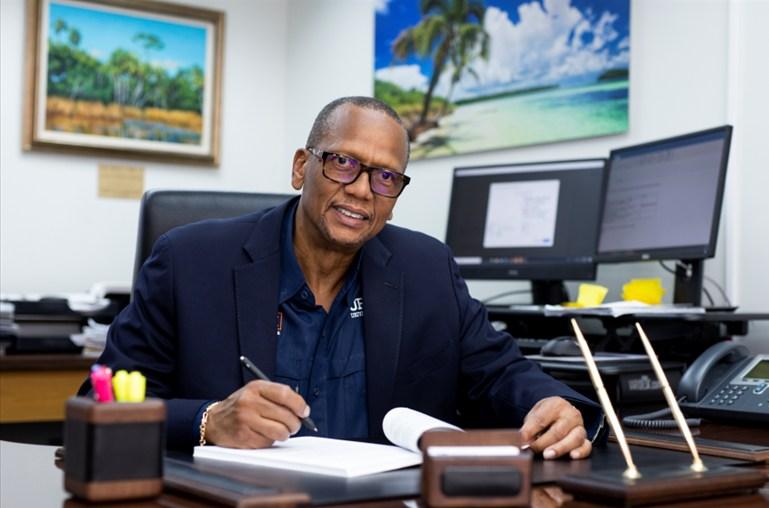
Edward “Gilly” Evans
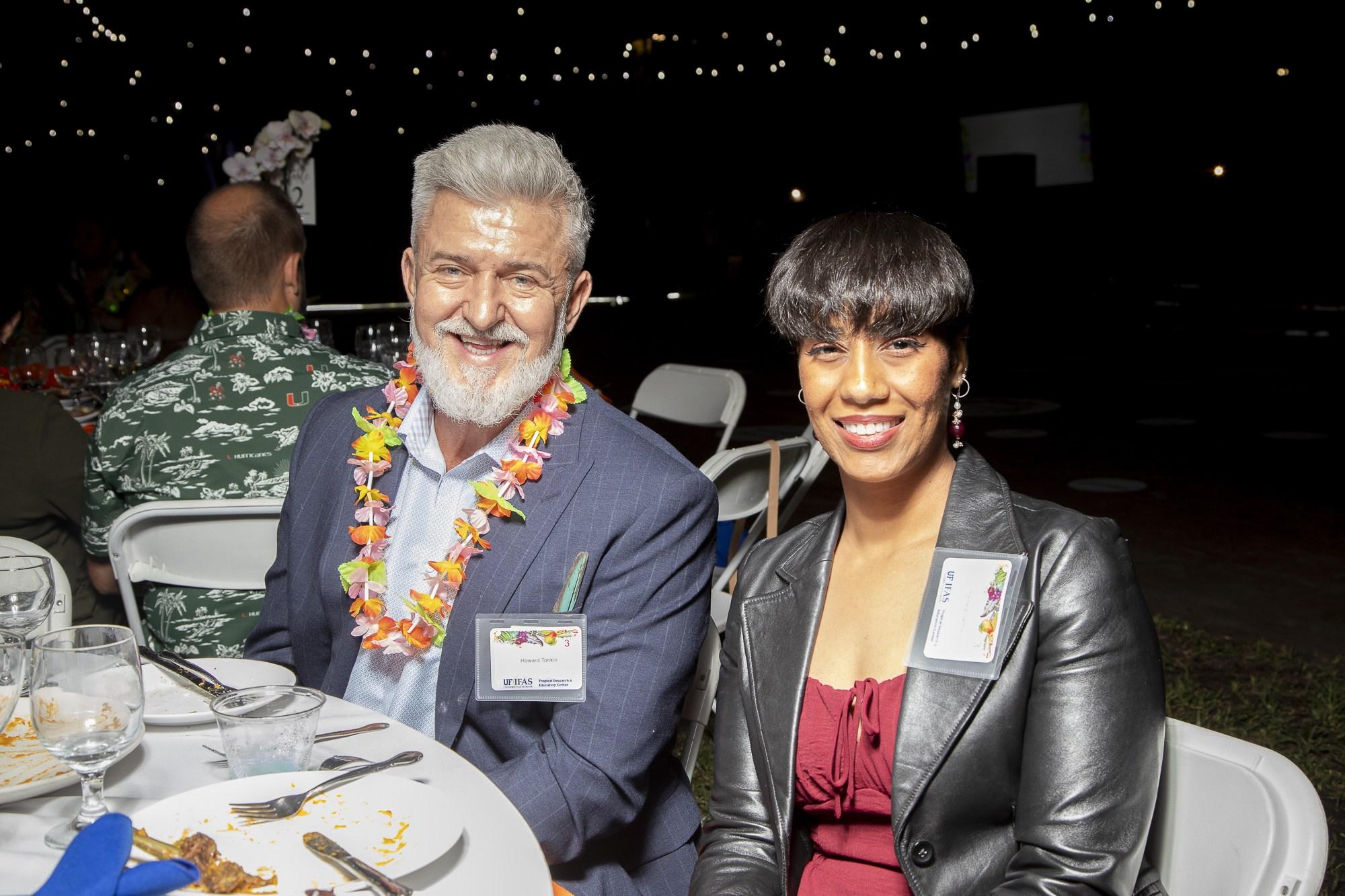
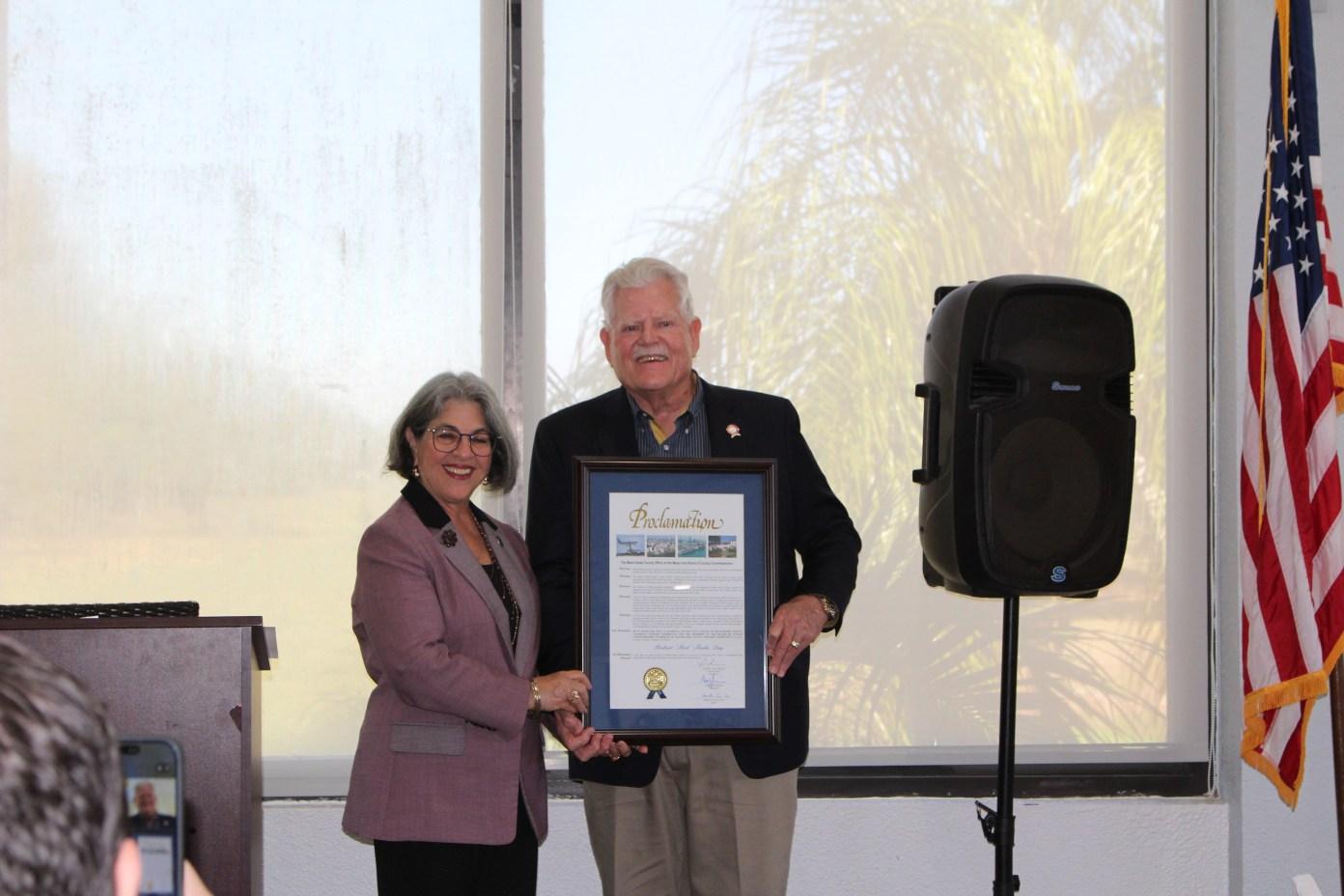
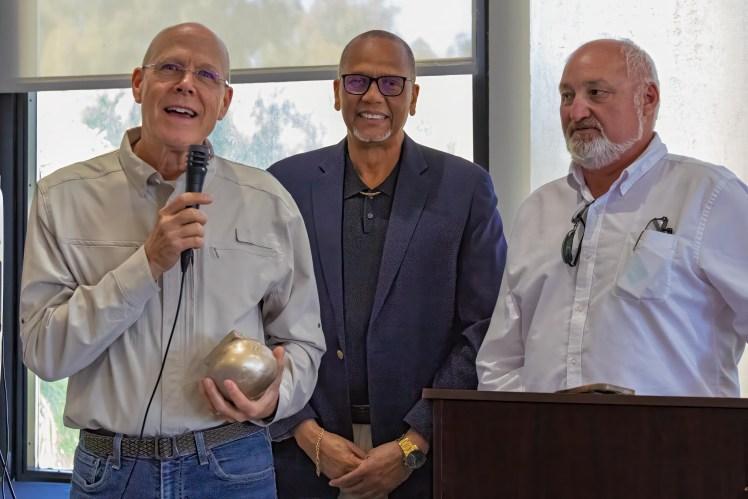
Here are a couple more moments from the luncheon of the 61st Annual Agricultural & Farm Tour of Miami-Dade County held at the Redland Golf and Country Club.
The event honored Robert (Bob) Fuchs, a third generation orchid grower, born and raised in Homestead, Florida. The industry awarded Dr. Jonathan Crane a golden avocado for his meritorious service to the community.
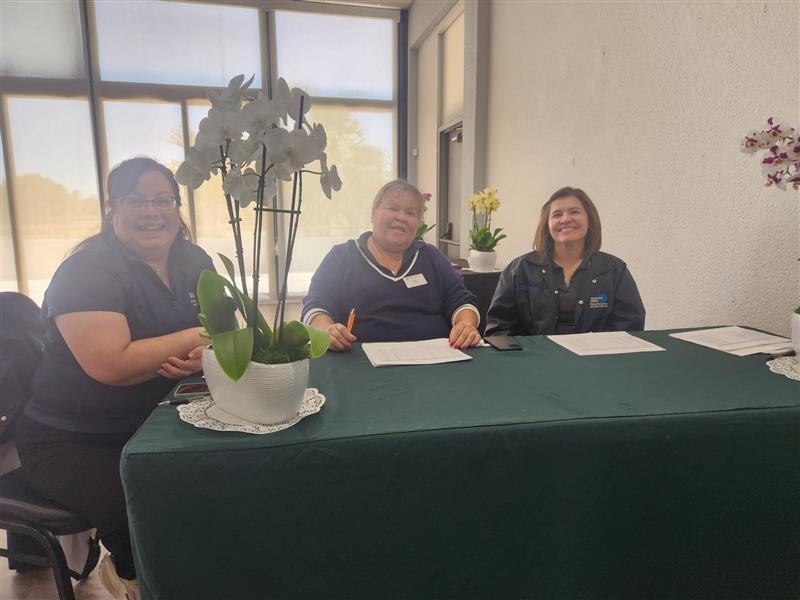
And last, but not least, the administrative team of the UF/IFAS Dade County works behind the scenes every year to ensure the event runs smoothly. Thanks Norma, Patty, and Iliana.
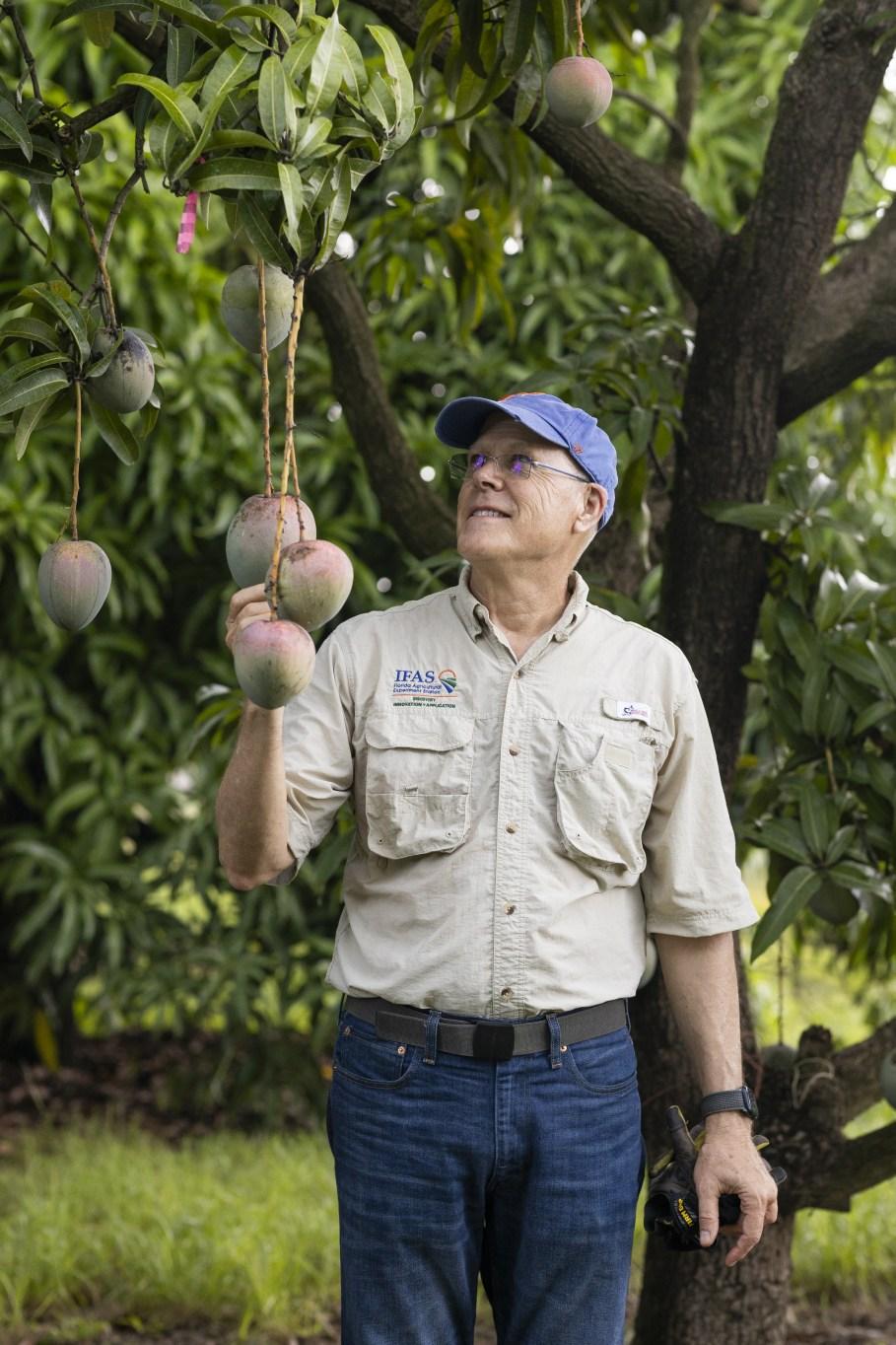
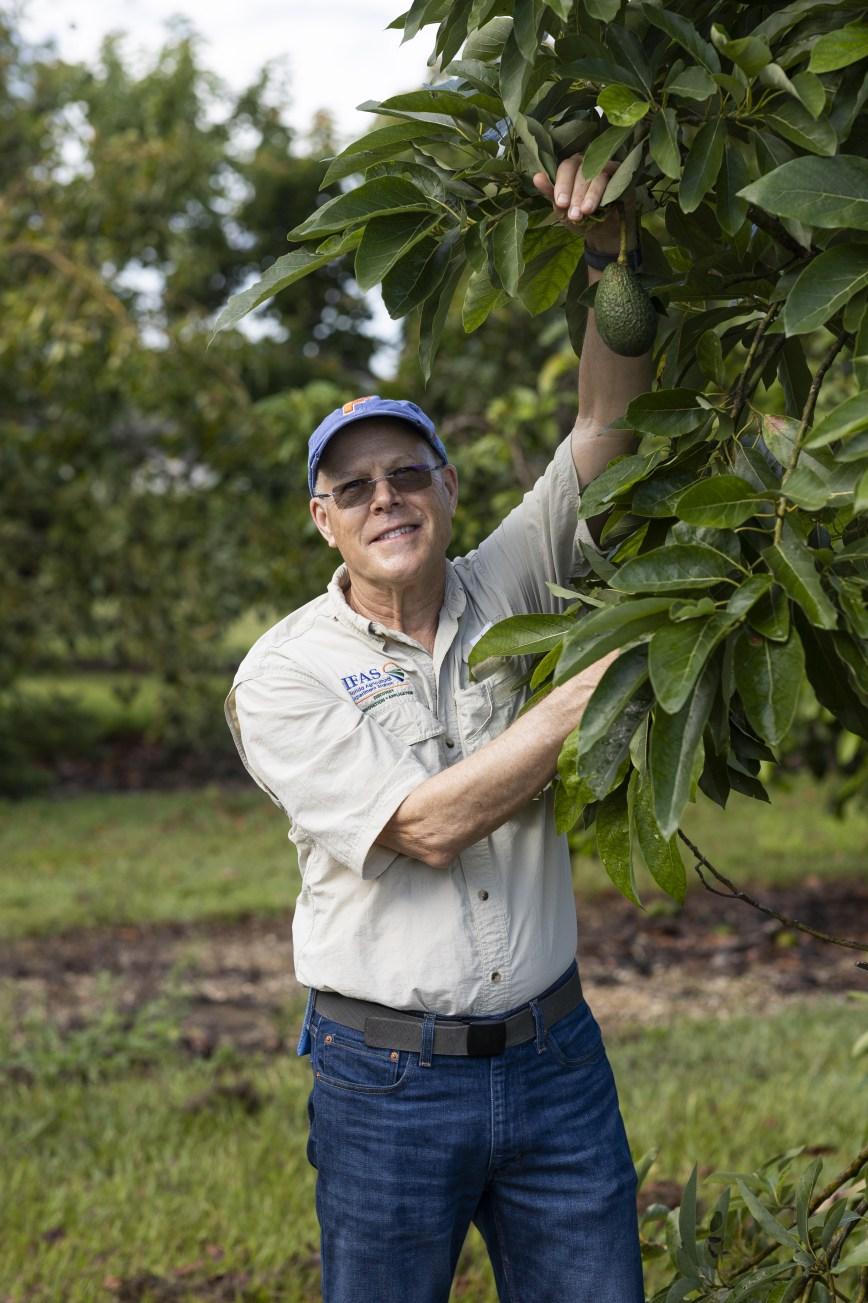
Dr. Jonathan H. Crane served the growers and residents of the State of Florida for over 38 years. He began his career in 1987 as a multi-county tropical fruit crops Extension Agent with (what is now called) the UF/IFAS Extension Miami-Dade County office. Within a couple of years, he was hired as an Assistant Professor at TREC, where he continued his work on tropical fruit crops and served the tropical fruit industries of south Florida.
Dr. Crane’s research has culminated in the publication of 14 book chapters, 102 refereed publications, 246 non-refereed publications, and 151 EDIS articles with more than a dozen rank among the top 100 “most viewed” for 2024! His efforts consistently focused on Extension with up to 70% of his workload dedicated to communicating and working with commercial growers. In 2024 alone he recorded over 7,500 contacts with clients and reached more than 6,000 participants in group learning events. Between 2020 and 2024 alone, more than 35 factsheets had been translated into the Spanish language, allowing Dr. Crane’s research to reach diverse audiences.
His personal share of grants exceeded $2 million and addressed critical issues facing the tropical fruit industry, including:
The Laurel Wilt and Ambrosia Beetle complex;
Disease and pest management (esp. dragon fruit canker, management of the lychee erinose mite, and anthracnose in mango);
Crop physiology and breeding; and
Postharvest quality.
Dr. Crane served as the field research director for the USDA IR-4 Minor Use Pesticide Registration Program. Under his leadership, the program successfully contributed to the registration of 28 active ingredients across 8 tropical fruit species.
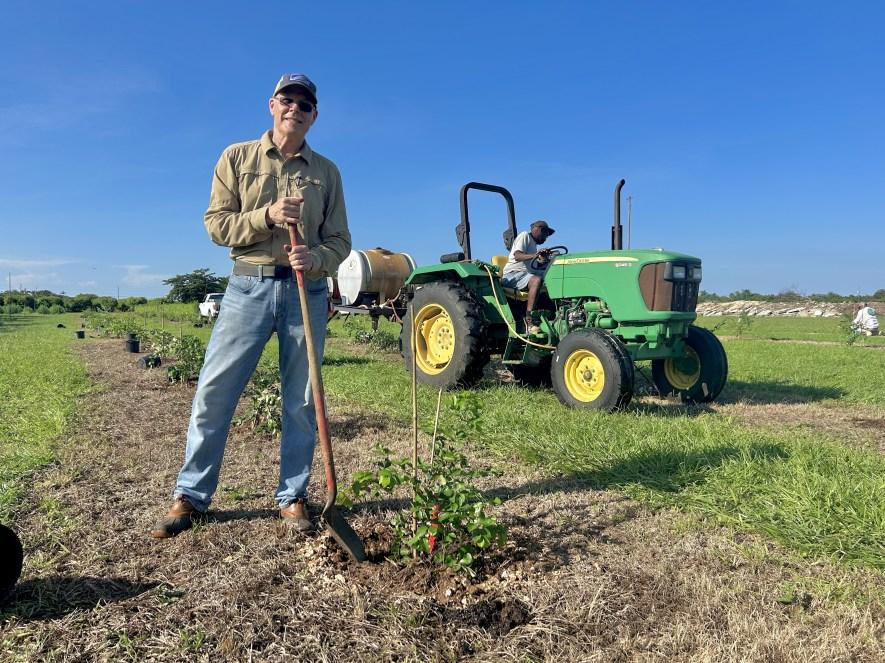
Everyone noticed. The Florida State Horticultural Society honored Dr. Crane with the Presidential Industry Award in 2021 and again in 2024 with the Presidential Gold Medal Award. In 2023, he received the Outstanding Factsheet Award from the American Society for Horticultural Science, Extension Division. And in 2022, he was recognized with the UF/IFAS TREC Outstanding Performance Award for his efforts in Extension.
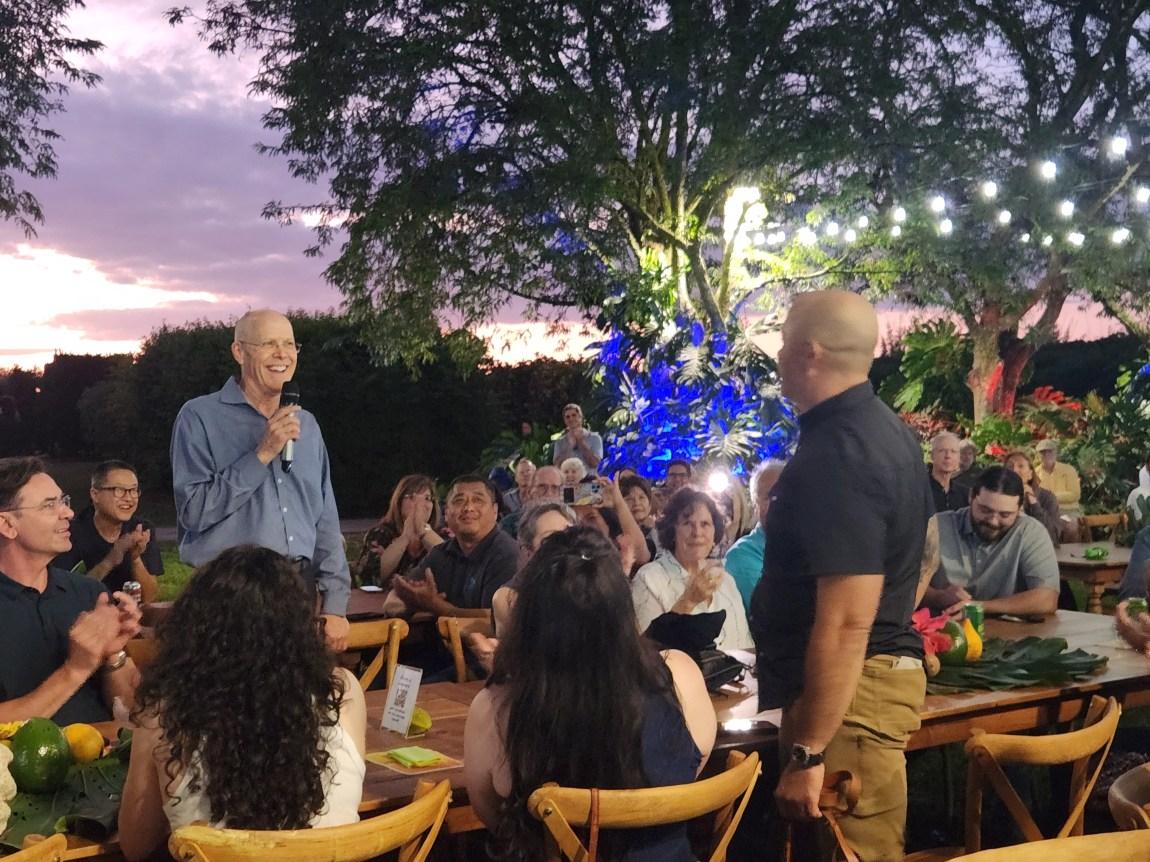
On January 26, when we hosted a celebration to honor Dr. Jonathan Crane’s career, over 200 people from all over the State of Florida showed up for him. Just like Dr. Crane showed for them.
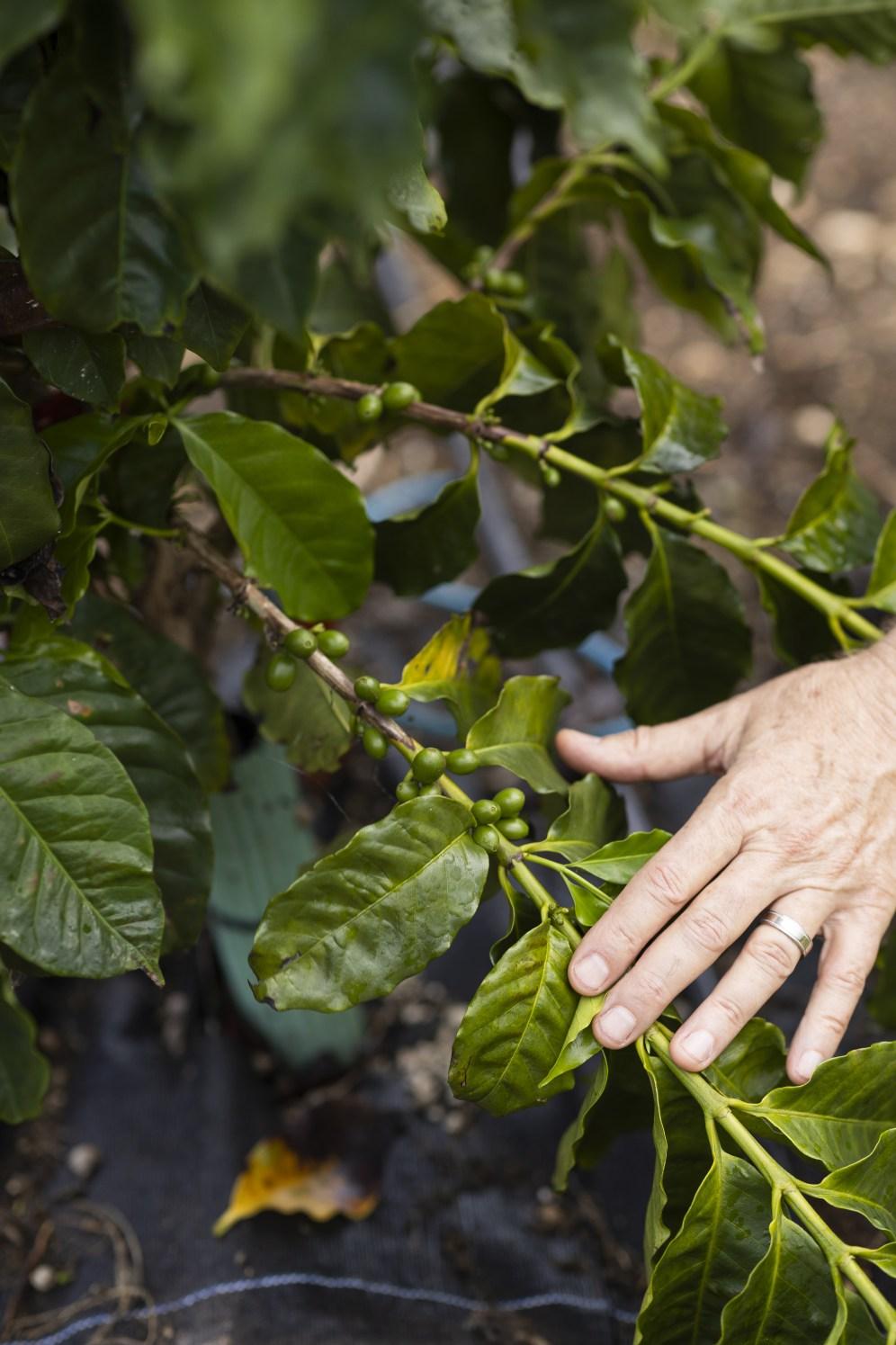
In his final semester before retirement, Dr. Jonathan Crane chose to focus his effort on Extension by publishing a whopping 8 EDIS publications! All of these Spanish language publications exemplify Dr. Crane’s dedication to ensuring accessibility to diverse demographics. We thank Dr. Crane for an industrious career that placed the UF/IFAS Tropical Research & Education Center at the epicenter of tropical fruit production in Florida.
Crane, J. H., Balerdi, C. F., Joyner, E. A., Vasquez, L., Charpentier, V. (2025). “Cultivando cacao en el jardín de su hogar en Florida: HS1057s/HS1505, 12/2025.” EDIS 2025 (6).DOI: https:// doi.org/10.32473/edis-hs1505-2025
Crane, J. H., Balerdi, C. F., Joyner, E. A., Vasquez, L., Charpentier, V. (2025). “Cultivando café en el jardín de su hogar en Florida: HS1056s/HS1506, 12/2025.” EDIS 2025 (6). DOI: https:// doi.org/10.32473/edis-hs1506-2025
Crane, J. H., Balerdi, C. F., Maquire, I., Vasquez, L., & Charpentier, V. (2025). “Cultivando atemoya en el jardín de su hogar en Florida: HS64s/HS1502, 12/2025.” EDIS 2025 (6). DOI: https://doi.org/10.32473/edis-hs1502-2025
Crane, J. H., Balerdi, C. F., Vasquez, L., & Charpentier, V. (2025).
Cultivando caimito en el jardín de su hogar en Florida: HS1050s/HS1507, 12/2025.” EDIS 2025 (6). DOI: https:// doi.org/10.32473/edis-hs1507-2025
Crane, J. H., Balerdi, C., Vasquez, L., & Charpentier, V. (2025).

Cultivando pitaya (fruta del dragón) en el jardín de su hogar en Florida: HS1068s/HS1509, 12/2025”. EDIS 2025 (6). DOI: https://doi.org/10.32473/edis-hs1509-2025
Balerdi, C., Vasquez, L., Charpentier, V. (2025). “Cultivando te en el Jardin de su hogar en Florida: HS1058s/HS1510, 12/2025”. EDIS 2025 (6). DOI: https://doi.org/10.32473/ EDIS-HS1510-2025
Crane, J. H., Balerdi, C. F., Vasquez, L., & Charpentier, V. (2025).
“Cultivando zapote negro en el jardín de su hogar en Florida: HS1055s/ HS1511, 12/2025.” EDIS 2025 (6). DOI: https://doi.org/10.32473/edishs1511-2025
Crane, J. H., Vasquez, L., Charpentier, V. (2025). “Cultivando pejibaje en el patio de su hogar en Florida: HS 1072s/HS1508, 12/2025”. EDIS 2025 (6). DOI: https://doi.org/10.32473/EDIS-HS1508-2025
Crane, J. H., Vasquez, L., Charpentier, V. (2026). “Cultivando limones’ Tahiti’o persas en el jardín de su hogar en Florida: HS1029s,2/2026”. EDIS 2026(1). DOI: https://doi.org/10.32473/edis-hs273-2005
What do people really think about Dr. Jonathan Crane? Check out what they said on this message board.