48
Sport Highlight Page 52
48
Sport Highlight Page 52
Spring Term, I am sure you will agree, is largely a misnomer for the past 11 weeks of school life. We were, meteorologically speaking, stuck in a rut for much of January and February, with a blocked weather pattern sending more rain south than we are used to. Nevertheless, this term has been anything but a damp squib. UCS pupils refuse to have their efforts or endeavours defined by the merely expedient or imperative. They want to go beyond the norm in their pursuit of excellence, and we have seen notable cases of achievement with the development of a high-performing app, the launch of a Geography podcast, and the chalking up of a century of Duke of Edinburgh’s Awards already this academic year.
If the weather forecasts were often grim, the weekly good news more than made up for any dampener, proverbial or literal, as pupils performed prodigiously in various
arenas including the performing arts, university applications, essay competitions, and sport. Risk-taking, volunteering, inventiveness and entrepreneurship speak to the spirit that we seek to inculcate at Frognal.
We had a Culture Week that underscored the school’s ethos of respect and appreciation of different views and backgrounds, and the collaborative cum ethical approach to learning continued through several Enrichment Weeks infused with intellectual curiosity. All areas of school life covered in this publication provide pupils with formative experiences which will help them develop important personal attributes such as confidence, resilience and problemsolving.
The overarching ambition is to turn out good citizens as well as good students – and in this metric it has been a very productive term.
For our Sixth Form students, this term has been defined by a sustained and purposeful focus on their A Level courses. Mock examinations have provided an important opportunity for reflection and consolidation, and it has been encouraging to see pupils respond with maturity, determination and a clear sense of direction as they move towards their final examinations.
Similarly, for our Transitus pupils, the Spring Term has marked a significant step forward in their academic journey. Progress tests and ongoing assessment have prompted thoughtful reflection
on their studies, while the early stages of the UCAS process have begun to connect their current learning with future pathways. Our January BeyondUCS event and the March BeyondUCS Day were particular highlights, welcoming universities into UCS and providing valuable opportunities for pupils to engage with higher education and hear from Old Gowers about their experiences beyond school.
Alongside this academic focus, the term has been rich in creativity, leadership and performance. The Sixth Performance Platform showcased
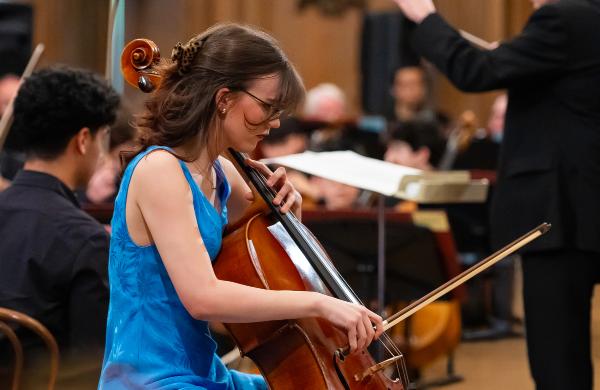
the exceptional musical talent, while both the Culture Cabaret and the International Women’s Day Concert were vibrant and memorable celebrations of the breadth of talent across the year groups. The Spring Concert was another standout moment, not only incredible in its quality but also a genuinely emotional occasion, marking the final concert for many of our Sixth students. The Sixth Form Union also played a leading role in shaping the culture of the school more widely, including delivering a thoughtful whole-school assembly for LGBTQ+ History Month.
Another highlight of the term was the Transitus Public Speaking Competition, where
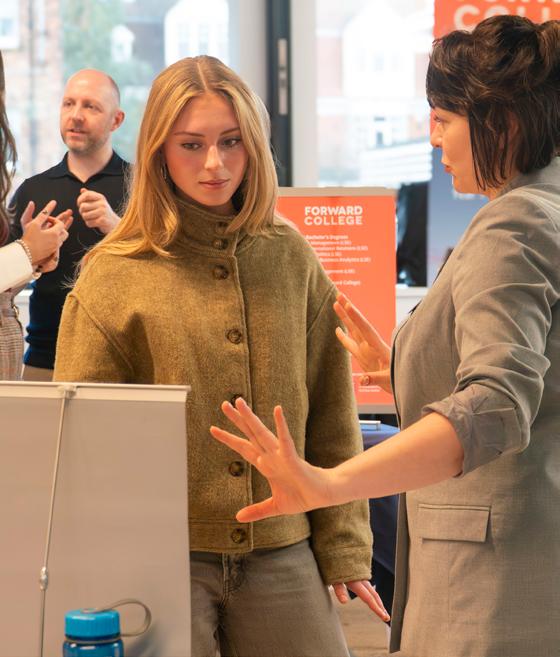
pupils demonstrated impressive confidence, clarity of thought and originality in presenting to their peers.
Overall, it has been a busy and highly productive term. Whether in the classroom, on stage, or through the many opportunities to engage with life beyond UCS, pupils have continued to demonstrate ambition, resilience and a genuine enthusiasm for learning. I have no doubt they will carry this momentum forward with confidence and purpose into the Summer Term.
— Contributions by P. Milton
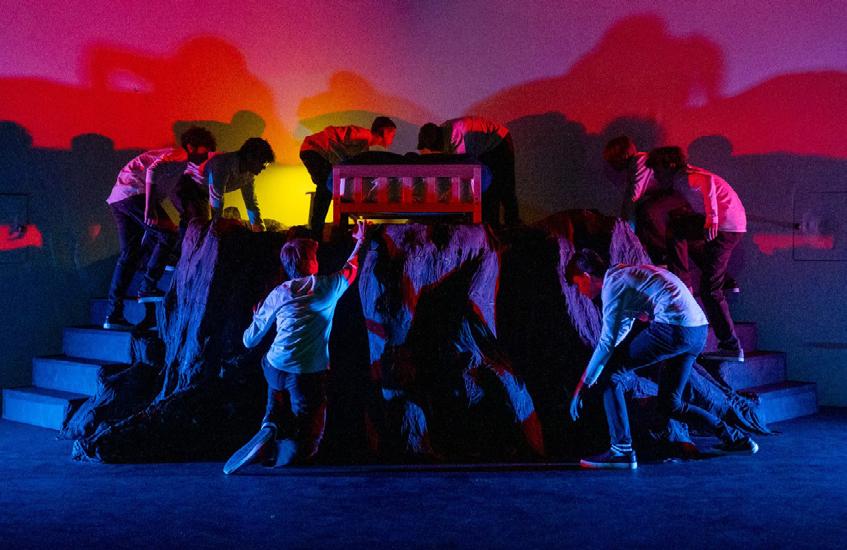
It has been a vibrant and rewarding Spring Term in the Middle School, marked by creativity, collaboration and impressive achievement across a wide range of activities. The Middle School production of A Monster Calls showcased remarkable talent on stage, with pupils demonstrating confidence and emotional depth well beyond their years. This artistic energy continued through the Ensemble and Chamber performances that highlighted both musical skill and dedication, and culminated in the much anticipated Spring Concert. Here, the incredible standard of talent did not disappoint
and it was a particularly special and memorable evening for all of those involved. Pupils also found opportunities to express themselves through the Upper Remove public speaking competition and the History photography competition, while Culture Week brought the community together through an inspiring range of stalls and talks that celebrated diversity and curiosity.
Alongside these cultural successes, pupils have excelled in both sport and academics. The UCS Padel team achieved an outstanding second place in the
National Padel Championships, while the Under-16 Hockey team secured a place in the National Finals in Nottingham. Deme events, including hockey, basketball and football, have been a particular highlight, with pupils showing excellent teamwork and a strong sense of support and camaraderie.
Pupils have also played an important role in shaping the school community through their representation on the Middle School Council and various focus groups, ensuring that pupil voice remains central to school life. Their contributions have been insightful, and hugely valuable. In addition, a number of pupils have taken on leadership roles through the Pupil Champion course, delivering thoughtful sessions on empathy to younger pupils in the Lower School. Academically, the term has been equally impressive, from the
engaging programmes of various Enrichment Weeks that have seen the pupils contribute through essay competitions, photography competitions and public speaking opportunities. There have also been some noteworthy accomplishments in Computer Science competitions, with one pupil even reaching the final of the British Informatics Olympiad 2026, a prestigious competition with only 15 finalists selected nationwide.
Pupils continue to show focus and determination as they prepare for end-of-year assessments and GCSEs. It has been a term of tremendous achievement, defined by the pupils’ enthusiasm, resilience and the many ways in which they have supported one another.
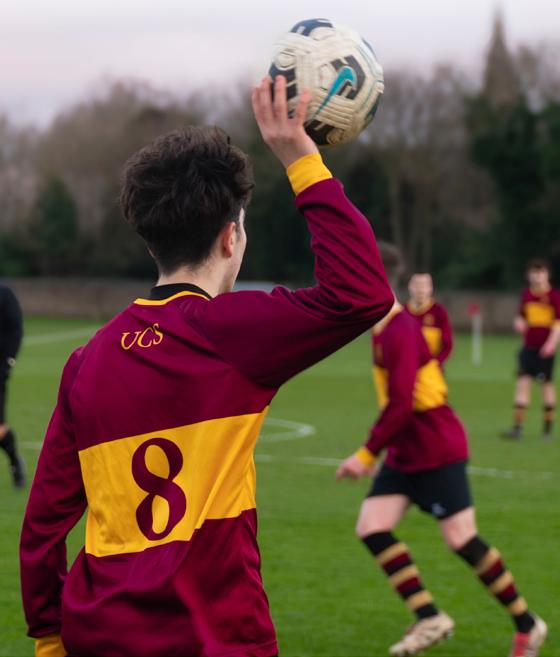
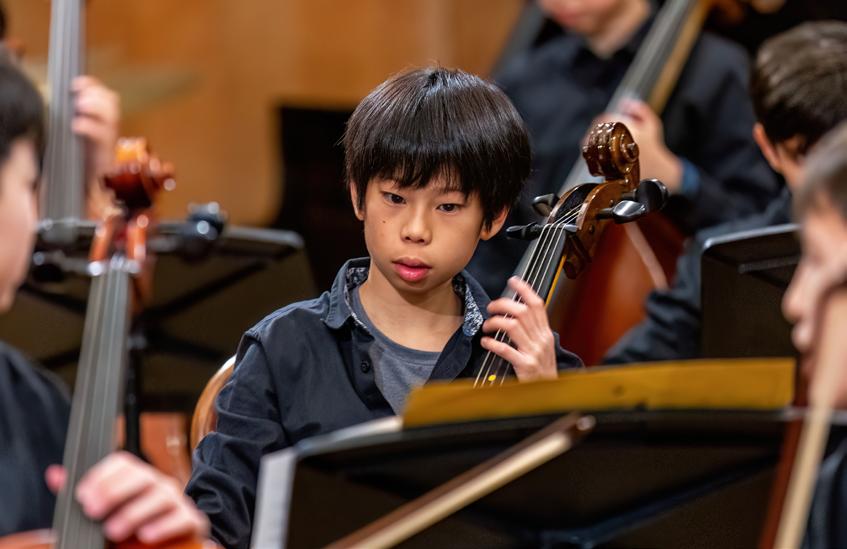
Over the last three months, our Lower School pupils have worked hard and have played even harder. Despite January’s dreadful weather, our football and hockey teams have competed well throughout the term, and I enjoyed hearing about the exploits of several Rugby Sevens teams at recent tournaments. Every Entry pupil who was available to play football represented UCS from A to G level, it was brilliant to see so many boys enjoying an afternoon of competitive inter-school sport. Across March, we enjoyed the fabulous Ensembles and Spring Concerts in the Great Hall, the Chamber Concert was sublime
and it was wonderful that so many Lower School pupils featured in these. Three Shell pupils took part in the finals of the South East Schools Chamber Music Competition in Hanover Square, which is a fantastic achievement. On the stage, the Trinity Showcase Evening was terrific, and the Improv Night allowed the same pupils to dazzle us with their quick thinking and their sense of humour.
Every term in the Lower School has a theme. This term’s theme was wellbeing, and at various points, pupils have addressed the concept of mental health
and wellbeing across all subjects, during form times and in assemblies. Discussing wellbeing in different lessons has allowed pupils and colleagues to raise the profile of mental health and explore cross-curricular links.
This term also saw the return of the Peer Education Project. Over five weeks, Entry pupils received a weekly lesson on mental health from members of the Transitus. Our Entry pupils benefited from these topics being discussed with them by older students rather than their teachers.
The Wellbeing Symposium in February gave Shell pupils the opportunity to research and present their ideas about wellbeing. It was a pleasure to see the sheer enthusiasm of the boys as they worked on the various projects, and I was also delighted
by the approach of two Shell groups to the Pre-Prep Reading activity.
In January, we collaborated with South Hampstead High School to deliver the latest incarnation of our Pupil Champion course. All Year 8s from both schools worked together to examine the roles that bravery, humility, vulnerability, and empathy play in society today.
Enrichment weeks have ensured the curriculum has been as broad as possible, and the quality of the essays submitted by the Shell in the Lower School Diploma (led by Mr Sharp) was exceptional. I now wish the Lower School pupils and their families a restful holiday and look forward to seeing the boys return ready for action in April.
— Contributions by E. Roberts
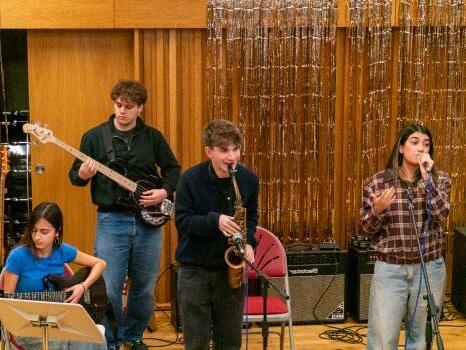
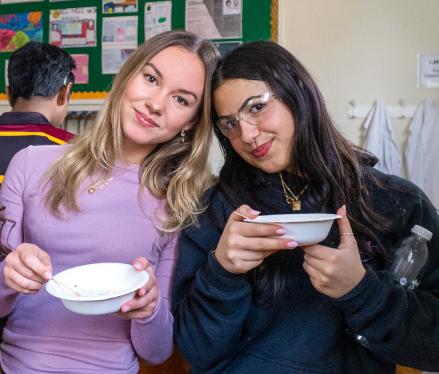
Culture Week 2026, now an annual tradition that started last year, began with the Culture Cabaret, a vibrant and meaningful musical celebration of the diversity that shapes our school community. Throughout the week, pupils were encouraged to reflect on what culture means through workshops,
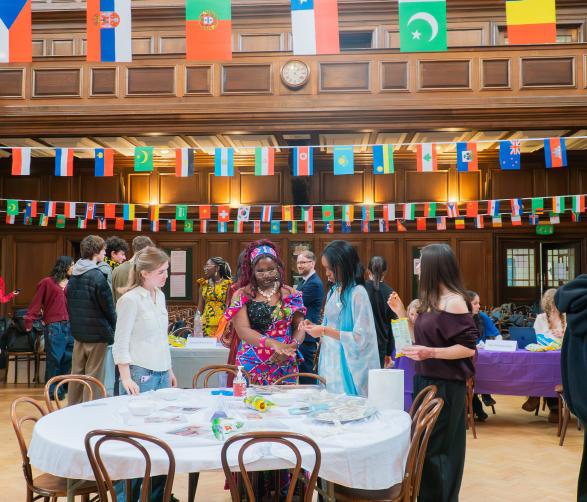
talks, one-off lessons, and special events at clubs and societies. Culture Week was an opportunity to examine not just nationality or heritage, but also family traditions, language, faith, food, music and shared experiences. It was a chance to recognise that culture lives in everyday
moments and helps form our identities.
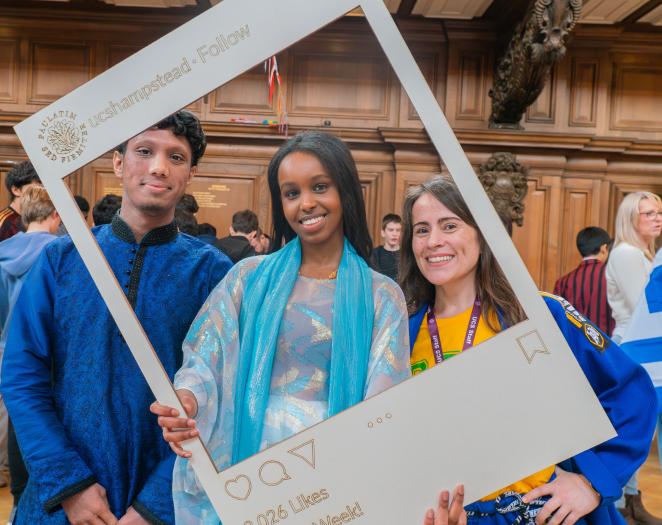
The highlight of the week was Culture Day, a wholeschool celebration filled with colour and energy. Pupils arrived in clothing that represented their heritage or something personally significant to them, while others chose
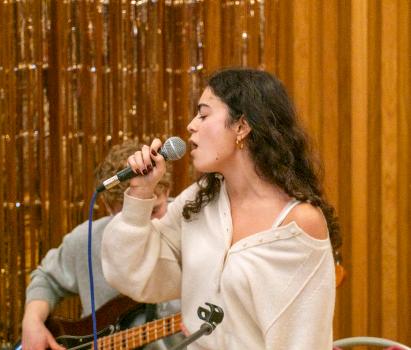
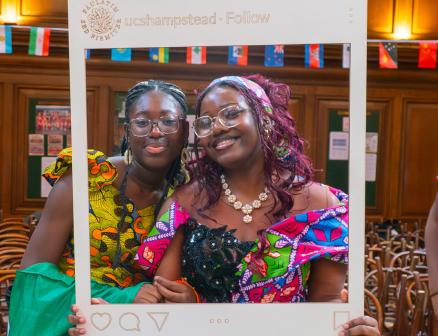
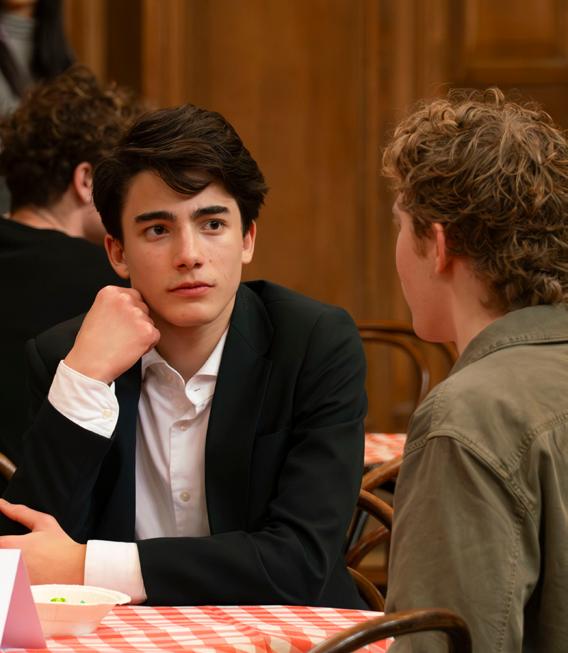
non-uniform, reinforcing that participation was about choice and comfort. At lunchtime, the Great Hall came alive with studentled stalls showcasing food, music, art and traditions from around the world. It was packed with pupils, and a really wonderful moment of community and togetherness.
Most importantly, Culture Week reminded us that inclusion is about belonging — ensuring everyone feels seen, respected and proud of who they are.
— Contributions by R. Baxter
UCS GeogPod is a dynamic, pupil-led school Geography podcast created by A Level pupils. The podcasts are designed to bridge the gap between the classroom and the wider world, transforming both human and physical geography topics, which can be highly complex, into more accessible and engaging content. At the heart of the podcast is our dedicated team of
student creators who drive every stage of production, whether that be in the form of researching, script writing, or even hosting the final recordings. Listeners to the podcast can look forward to a diverse range of content spanning the core A Level curriculum, as well as other varied and fascinating topics such as the rural-urban divide, oceanic ecosystems, and more. Whether you are a
fellow student looking to consolidate and bolster your learning or just a curious mind seeking fresh and exciting perspectives, GeogPod offers a view into the most pressing geographical issues of our time.
— Contributions by J. Williams

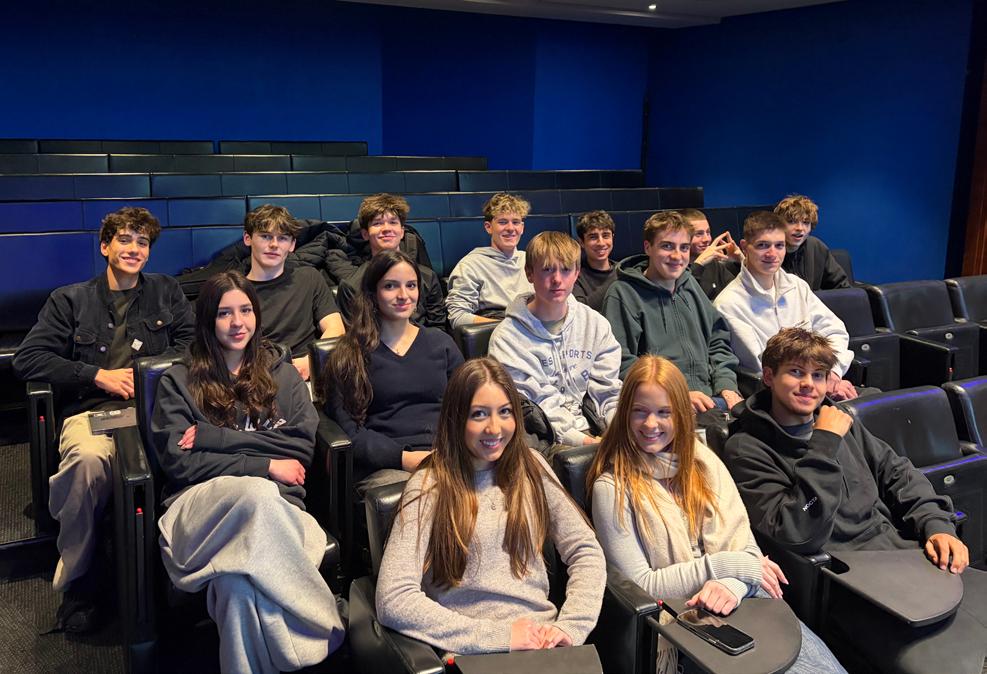
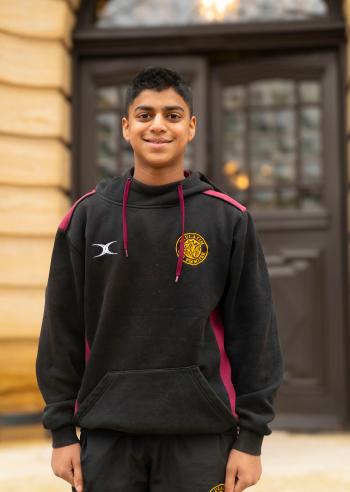
We are delighted to announce that Daisy (Transitus) and Roshan (Remove) have been selected as winners in this year’s Dove Essay Competition. This sees pupils from the Eton Group of schools (many of the top independent schools in the country) writing a 2,000 word essay from a range of questions related to the Politics
A Level course. Daisy’s entry expertly analysed the extent to which free speech was under threat in liberal democracies,
while Roshan wrote a convincing argument concerning the relative merits of extending the franchise to 16-year-olds. Both Daisy and Roshan were praised for the level of independent research undertaken as well as their ability to develop impressive evaluations concerning some key issues being considered in the current political climate. Well done, Daisy and Roshan!
— Contributions by L. Smith
Independent schools in London are synonymous with high academic standards as well as their breadth of educational opportunities. But did you know UCS belongs to an organisation, the London Fee Assistance Consortium (LFAC), which promotes awareness of such opportunities among an audience that might not otherwise consider an independent school Education?
The LFAC, comprising 17 member schools, works to highlight the availability of free or subsidised places for children who do well in entrance exams, but whose families may need support in paying fees. Each school is proudly different, yet all commit to opening eyes to life-changing possibilities, changing perceptions and encouraging a wider, more diverse pool of applicants — leading to improved social mobility and richer school communities.
As Headmaster of UCS and
Chair of the LFAC, I believe that offering a first-class education to children from disadvantaged backgrounds is a core and crucial aspect of our mission as educators. Thanks to the generosity of donors, we have at UCS over the past three years increased our Bursary provision and now have 60 Bursary Awards Holders at the Senior School.
At UCS, there is no levy on fees to fund our Bursary Programme. We know that families are making significant sacrifices to send their children to the school, and we do everything we can to keep fees as low as possible. We are proud that there are those across our parent and Old Gower communities who share our commitment to bursaries and so fund these places philanthropically.
Such bursaries are transformative for children and genuinely change people’s lives. Financial
assistance enables young people to achieve academically while gaining the confidence to be who they want to be. At UCS we are proud of both the education that pupils receive and the experience they have at school. We want to make these available to as many children as possible, regardless of financial background. That is why UCS is committed to our Bursary Programme, and that’s also why we are pleased to be members of the LFAC.
— Contributions by M.J. Beard
A key element of our Bios Programme of Sixth Form
PSHE is known as praxis, where pupils implement their existing knowledge and understanding into output that alters the world or our understanding of it for the better. The Transitus Bios Project plays a crucial role in this, imbuing pupils from their earliest moments in the Sixth Form with crucial skills in research, referencing, academic writing and presenting.
Their task: to write a short academic paper or an informed opinion piece on a topic of their choosing. This work, helps raise the level of discourse among the student body and best prepares them to vie for competitive courses at university.
— Contributions by X. Pollock
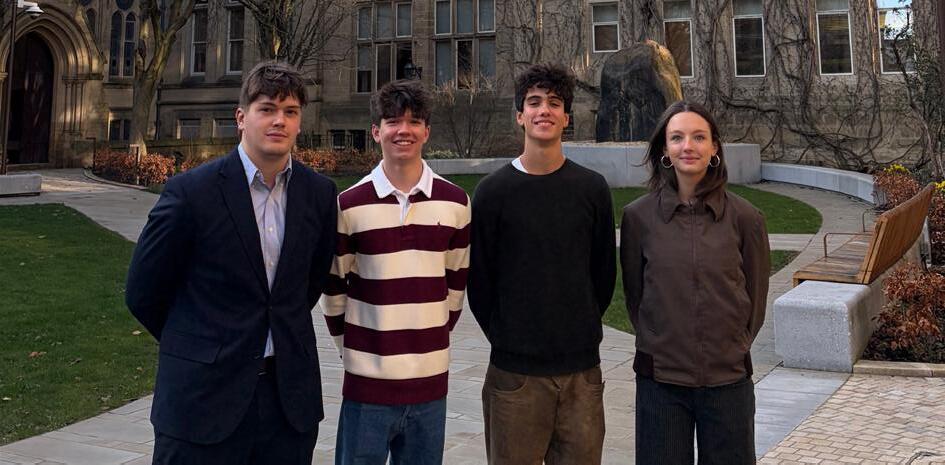
Four UCS pupils in the Transitus attended the 4th annual Resilience Conference at the University of Manchester. On the day, Giles and Amy sat on a panel discussion, with 200 people from professional networks, including the Red Cross and the Cabinet Office, in the audience. Both pupils offered mature and reflective responses to the hour-long discussion, even taking questions from the audience.
Following the discussion, they were joined by Seb and Matteo to visit tables and engage
with stakeholders on ‘resilience’ and how to engage young people in the face of dynamic threats, from cyberattacks to floods. Following the event, the organisers were glowing with their feedback and, on the back of such a wonderful experience, have invited UCS back next year. The organiser, Professor Duncan Shaw, had this to say:
“Our thanks to Giles and Amy for talking on stage so confidently about how we should think differently and why – they connected so
well with the audience. A number of delegates commented on how Sebastian and Matteo managed their table conversations so well and generously answered questions and suggested alternative framings that shed new light for their tables.
All four clearly garnered the respect of the room through thoughtful, honest, and respectful contributions, telling the adults how they should think differently.”
— Contributions by J. Williams
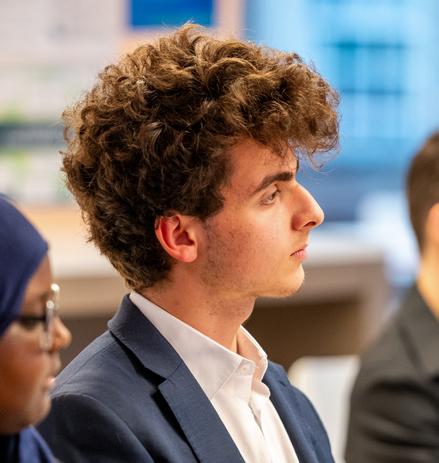
Throughout the Spring Term, the topic of wellbeing is woven into lessons, discussed in form time and highlighted in assemblies. Our annual Wellbeing Symposium is held every February, and Shell pupils spend a morning off timetable researching (in pairs) into a particular aspect of wellbeing and mental health of their choice. The morning concludes with presentations by the pupils on their research. It is worth noting that
the event is preceded by talks on how to conduct academic research, and the event mirrors the Symposium undertaken by the Transitus every June. The quality of the work produced by the Shell pupils this year was exceptional. They approached the task at hand with ambition and focus, and the presentations delivered at the end were first-class. We were impressed by the range of topics, which included:
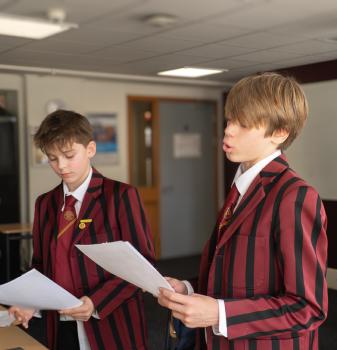
How do different cultures view mental health? How do pets affect our mental health? Competition and Comparison: How does it affect mental health?
We were delighted by the pupils’ commitment to their projects, and the top scorers were rewarded for their work with Certificates of Excellence at the end of term.
—
Contributions by E.
Roberts
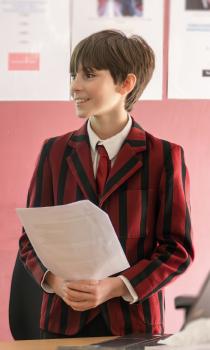
House Competitions are a key element of the Lower School provision, and they give Entry and Shell pupils the opportunity to indulge in some friendly competition. Some of the competitions allow Entry and Shell to work together, and others allow pupils a chance to test their leadership skills. In all our competitions, there is a strong emphasis on the importance of fun, and this is never more evident
than in our spring pancake flipping contest, which is held every year in the refectory.
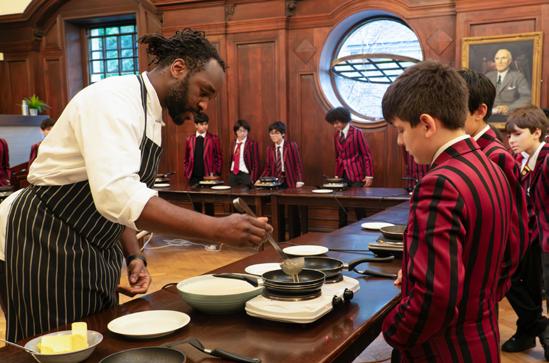
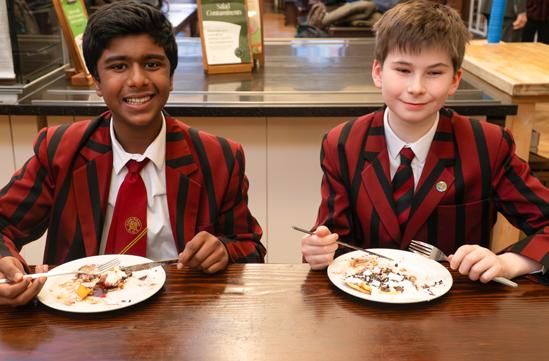
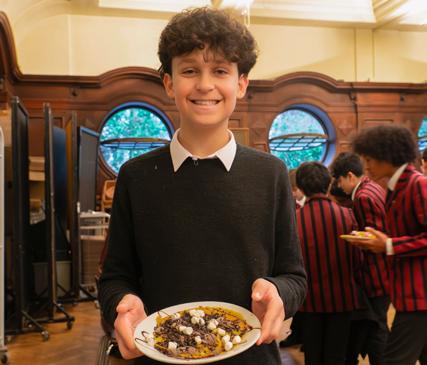
Chef Terri wowed competitors with his handling skills of the crepe pan and then handed over the reins to 60 highly excitable Lower School pupils. Batter was spilt, pancakes were tossed, new flavour combinations were created, and several hours later, Bannister were
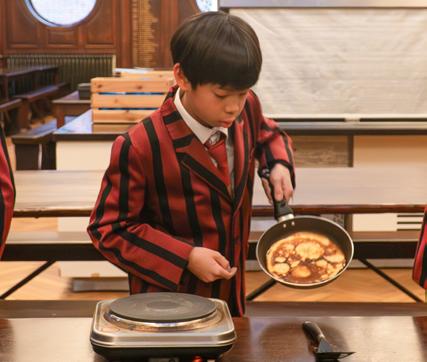
crowned House Pancake Flipping Champions. They were delighted to receive the iconic Golden Spatula trophy from Terri in assembly!
Contributions by E. Roberts
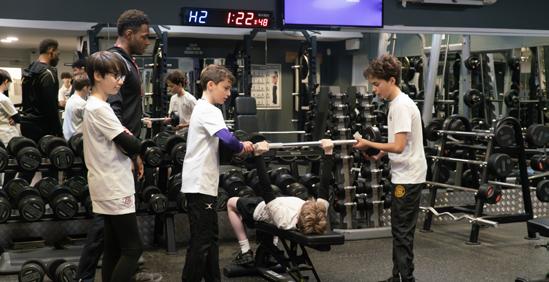
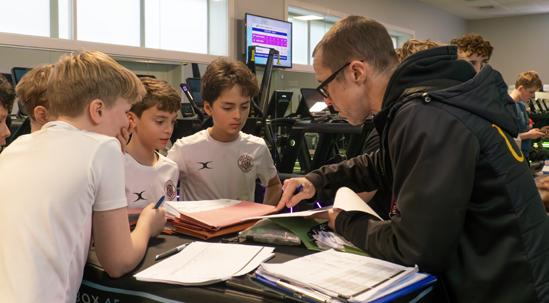
Since its inception in September ‘21, the Gym Club has become an increasingly popular part of the school’s co-curricular programme & an important part of the wider provision for health, well-being, physical activity and sports performance. With sessions before school, lunchtimes and after school throughout the week, the Gym Club offers students the opportunity to follow age appropriate and graduated training programmes in a safe and supportive environment outside of their timetabled PE and Games lessons. The purpose of Gym Club is to increase the pupils’ technical competence in fundamental movements skills,
develop stability and strength in key movement patterns and improve self-discipline and work capacity regardless of prior experience.
A strong community has also developed between pupils from different forms, in different Houses/ Demes and across different year groups with pupils supporting each other, sharing equipment and swapping training ideas. It has been especially rewarding to see students who do not particularly enjoy competitive sports developing enthusiasm for being active, challenging themselves and achieving success.
Contributions by A. Peck
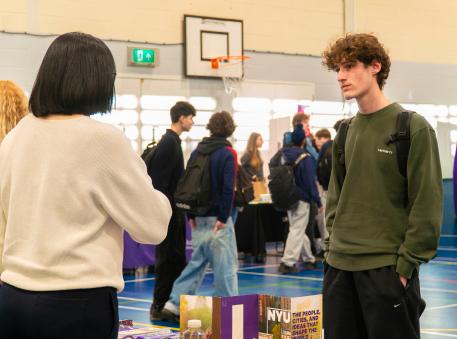
Our annual BeyondUCS Day and University Fair took place on Wednesday 25 March in a week focusing on Higher Education guidance for the Transitus.
Students were able to benefit from the
experience of Old Gowers currently at university; these sessions focused on what it was like to study a particular subject at undergraduate level and students were able to attend two different sessions. A further session featured advice from
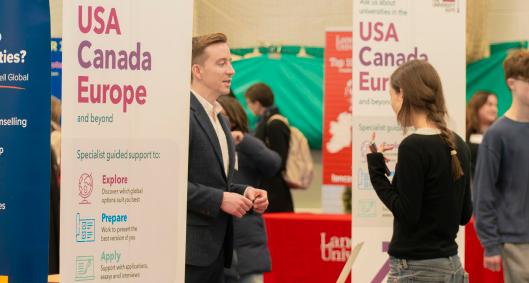
a range of university admissions tutors on making a competitive application.
From 4.30pm, students were welcomed to the University Fair in the Sports Hall — here we had 20 plus universities
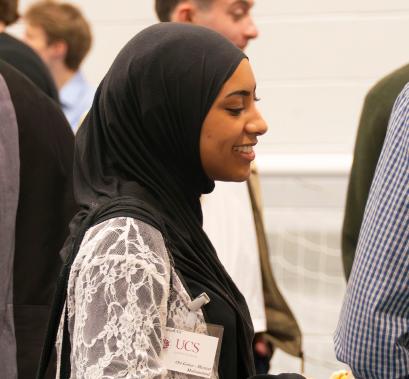
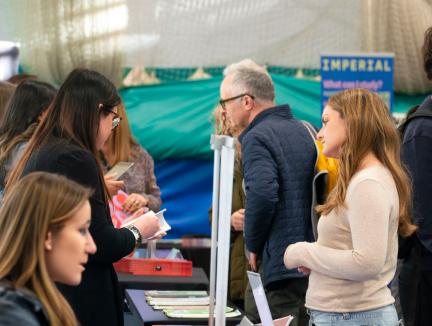
represented as well as advisers for overseas and Oxbridge applications. Our ‘Speakers’ Corner.’ facilitated mini talks on Making the Transition to University, Top Tips for Oxbridge and Pathways in Law.
Our aim in running such events is to help students
make informed decisions about their Higher Education applications and hopefully this was a useful day for all involved!
— Contributions by L. Jenkins
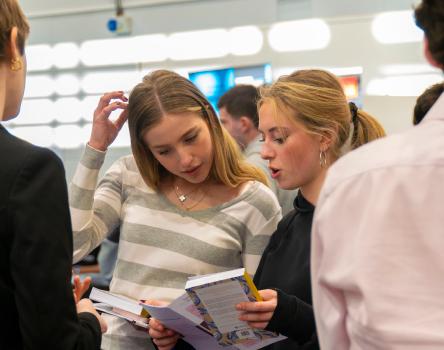
On Thursday 12 February, UCS hosted the ‘Models of the World’ careers event, welcoming more than 45 Sixth Form students alongside 30 peers from UCL Academy. The evening focused on the versatile applications of STEM, Quant, and Economics degrees in the modern landscape.
Across two dynamic panels, seven of our student Careers Champions expertly
chaired discussions exploring how mathematical modelling and analytical mindsets solve global challenges. We are immensely grateful to our distinguished guests for sharing their expertise: Richard Barker, Francesco Filia, Arjun Thawani, and Lucy Tinnes (Economics and Finance); Natasha Jeans, Stephen Keane, Shilpi Mahindroo Bordoloi, and Simona Svoboda-Greenwood (Maths and Computer Science); and Patricia Cobian, Dr. Jon Hill, Annie Lawrence, and Dr. Senthila Quirke (Physics and Engineering).
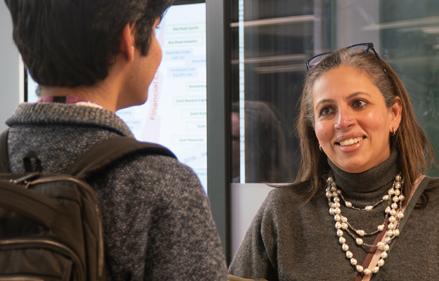
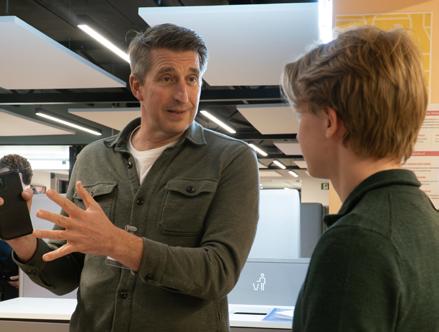
The event concluded with a vibrant networking session, where students engaged directly with these leaders in their sectors.
— Contributions by N. Salvatori
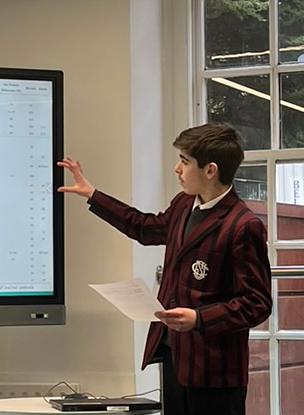
This year, we launched a public speaking competition for the Upper Remove pupils. The preparation took place as part of their PSHE lessons, and were centred on the theme of the fitness and the wellness industry. Pupils were given a choice of three enquiry questions and had to conduct their own guided research, ensuring all sources were reputable and properly cited. Each pupil then crafted and delivered a short speech alongside a presentation, which was assessed across four
key areas: structure, realworld examples, analysis, and engagement. . From each Deme, one pupil was shortlisted to progress to the final round. Finalists attended a ‘masterclass’ led by the Head of Oracy, Mr Riviere, who provided expert guidance on developing compelling content and delivering with impact.
The final itself was a fantastic event. It was a closely contested event, but the well-deserved winners were: Jack, Michael,and Rocco, respectively. A terrific
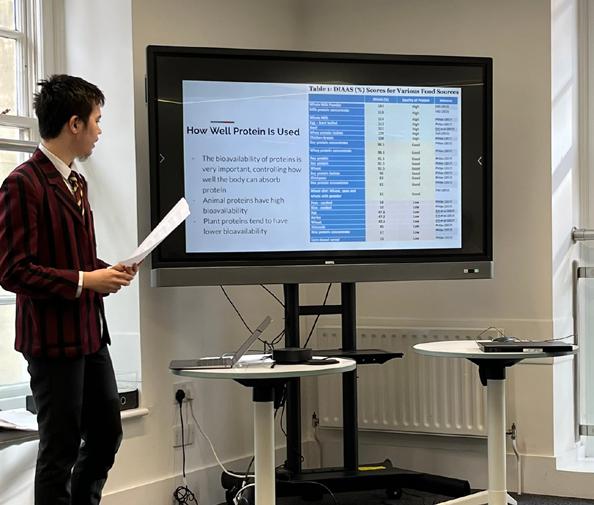
achievement for all of those involved who all produced presentations that were more than worthy of representing their Demes in the final. It was a valuable learning experience for pupils, giving them the opportunity to present their interests to an audience while also developing their research and citing skills. A huge thank you must go to Mr Riviere and Mr Pollock for their wise guidance, and a tremendous well done to all of the pupils for taking part.
— Contributions by S. Maze
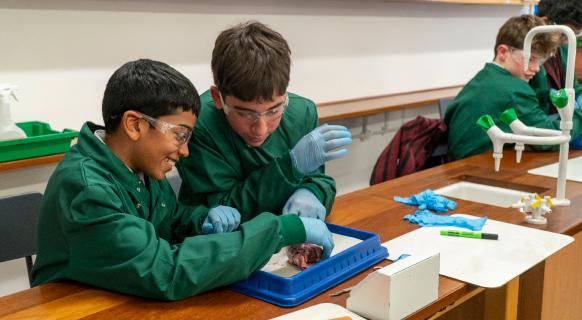
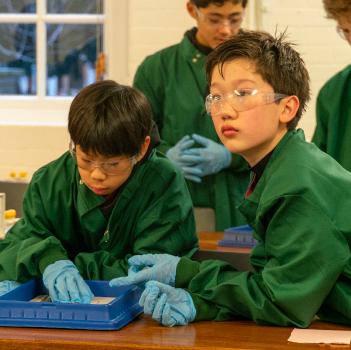
STEM Enrichment Week is just one of three that featured in this term’s co-curricular programme. Starting with the immersive anatomical squid dissection at 8.15 am on Monday and concluding with an after-school Chemistry competition on Friday, STEM Enrichment Week was jam-packed with
over 21 activities across the five days.
The week featured seven staff lectures on a diverse range of topics, including Laser Cooling, The Language of Physics, The Marriage Algorithm, and Our Chemical Future. Transitus Chemists enjoyed creating ice
cream with the use of liquid nitrogen, whilst our Entry boys got right in with their heart dissection practicals. Pupils and students across all year groups also tapped into their competitive spirit by participating in the fiercely contested Deme Chemistry and Lower
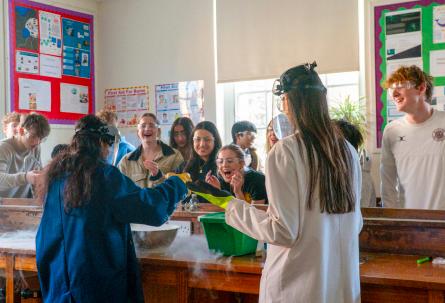
School Maths competitions.
The collaborative creativity involved in exploring ideas across different departments is a hallmark of these weeks, allowing both staff and pupils to go well beyond the syllabus.
— Contributions by J. Sharp
During STEM Enrichment Week, our Sixth Form pupils welcomed Dr Nicole Mathon for an inspiring talk on translational research, the process that takes scientific discoveries made in a lab and turns them into real treatments that change patients’ lives.
She explained that developing a new drug can take over a decade, cost billions of pounds and come with a high risk of failure. However, when research succeeds, the results can be life-changing. She shared powerful examples, including breakthrough cancer treatments and innovative
gene therapies for rare childhood diseases.
Importantly, the talk highlighted that careers in this field are not limited to the lab. Opportunities exist in clinical trials, regulatory affairs, business development, intellectual property, and investment, which collaborate to bring discoveries to patients.
With the UK life sciences sector employing hundreds of thousands of people and continuing to grow, students interested in science have exciting and impactful career pathways ahead.
—
Contributions by S.
Maan
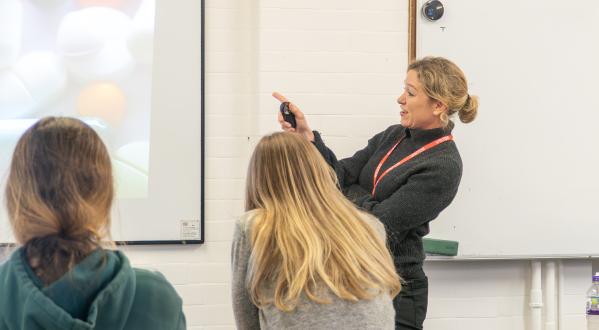
UCS Economists took part in the AmplifyMe trading simulation, an annual feat for our Transitus students during History, Economics and Politics Enrichment Week. Our Sports Pavilion was turned into a trading floor as students engaged in two competitive portfolio and asset-management simulations, typically used to train traders. Each simulation allowed pupils to individually trade $20,000,000they were required to
execute their trading strategies, monitor positions, and respond to rapidly changing market information.
Students learned how to balance growth and risk, diversify exposures and manage concentration risk. Success depended on being able to interpret the global news and sector-specific events correctly and deciding whether to go short or long. This required fast decision-making
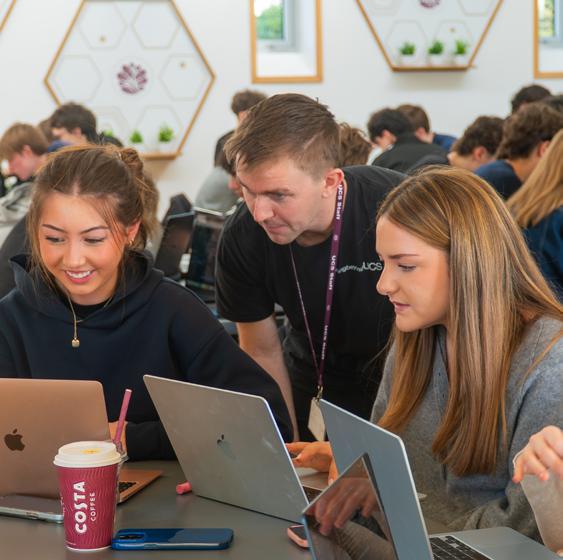
and disciplined position sizing. As a result, being at the top of the leaderboard required strong overall portfolio performance and health, rather than multiple single profitable trades.
It was a thoroughly enjoyable morning, complemented by access to the online careerbuilding opportunities offered by AmplifyMe.
—
Contributions by
K. Shah
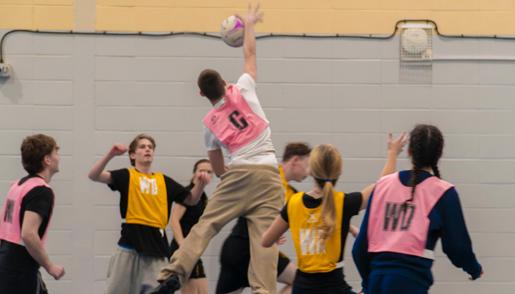
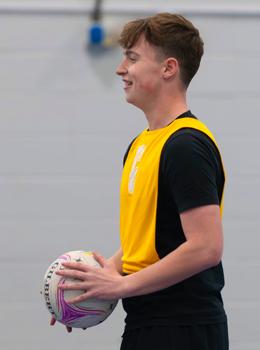
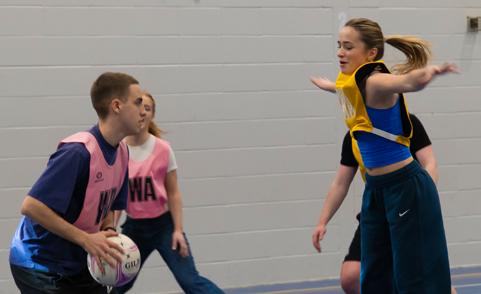
The Spring Term Deme competitions have once again brought great energy and enthusiasm to the school, with pupils across all year groups competing furiously for their Demes in a range of sporting events. The competitions continue to be a highlight of the term, creating a lively atmosphere and plenty of friendly rivalry.
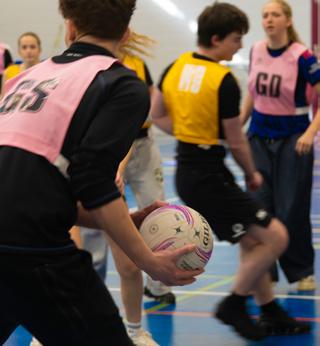
There have been several standout performances. Flooks produced an excellent display to win the Middle School Swimming competition, while Black Hawkins were particularly impressive in Transitus Football, finishing in first place. Baxters enjoyed a very strong term, securing victories in both Lower
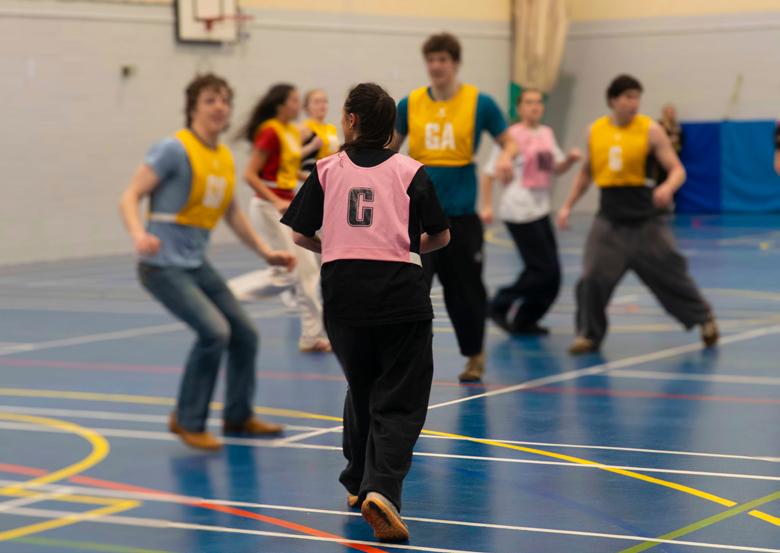
Remove Deme Fives and Mixed Deme Netball, results that have helped propel them to the top of the overall standings. Underwoods also celebrated success with a well-earned win in the Girls’ Deme Football competition. These results have contributed to a tightly
contested Deme table. Baxters currently lead with 39 points, with Black Hawkins and Underwoods close behind on 46 points. Flooks sit just behind on 47 points, while Evans are on 56 points and Olders on 59 points.
The competitions this term have once again showcased the enthusiasm, pride
and school spirit that the Deme system continues to foster across the school community.
— Contributions by D. Holliday
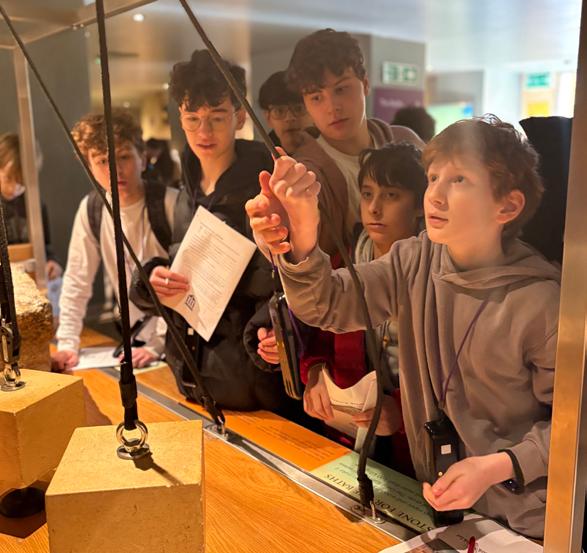
Just after spring half-term, we went to the city of Aquae Sulis, or as it is now known, Bath. After a long coach ride, we immediately went through an underground passage into the baths. We went around a terrace that looked down on the main bath, on which several statues of emperors such as Augustus, Hadrian and Constantine stood. After passing above the sacred spring that stood at the centre of the complex, we came face to face with the pediment that stood on the nearby temple.
Then we moved on to the curse tablets; letters to the goddess Sulis written on lead, requesting her to deliver justice on their behalf, that were thrown into the sacred spring.
These ranged from the theft of pans to coins, all calling upon the goddess to aid them.
To finish our trip, we did a workshop on translating the messages on the tombstones, which included a cavalry soldier who came to Britain with the Roman invasion, and a priest who married an ex-slave. I found the trip highly enjoyable and entertaining, and would recommend the Roman Baths as a fantastic day trip.
— Contributions by Oliver, Lower Remove
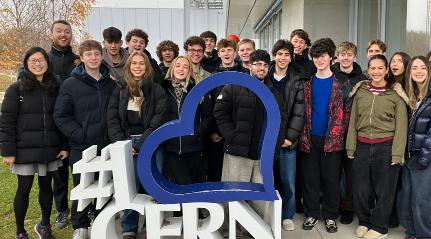
Our Transitus physicists had an extraordinary weekend before the start of term! Saturday morning saw us arrive at CERN. It was a joy to see them connecting classroom theory to the vast scales of the Big Bang and Quantum Mechanics. A particular highlight was our visit to the ATLAS Experiment, a gargantuan particle detector and the Synchrocyclotron, built in 1957 as CERN’s very first accelerator.
The scientific immersion continued with the ‘States
of Matter’ show in the CERN Lecture Theatre, where we witnessed the fundamental physical transitions of materials at extreme temperatures required for the functioning of the particle accelerators.
On Sunday, we shifted our focus to the evolution of scientific thought at the History of Science Museum. Our visit coincided with the vibrant celebrations of L’Escalade, Geneva’s most famous historical festival. Students were treated to the sights and sounds of 17thcentury reenactments, featuring traditional costumes, rhythmic drum processions, and the thunderous firing of authentic muskets and cannons. It was a fantastic, historical close to a trip that successfully bridged the gap between the ancient defence of a city and the modern defence of scientific truth.
— Contributions by N. Salvatori
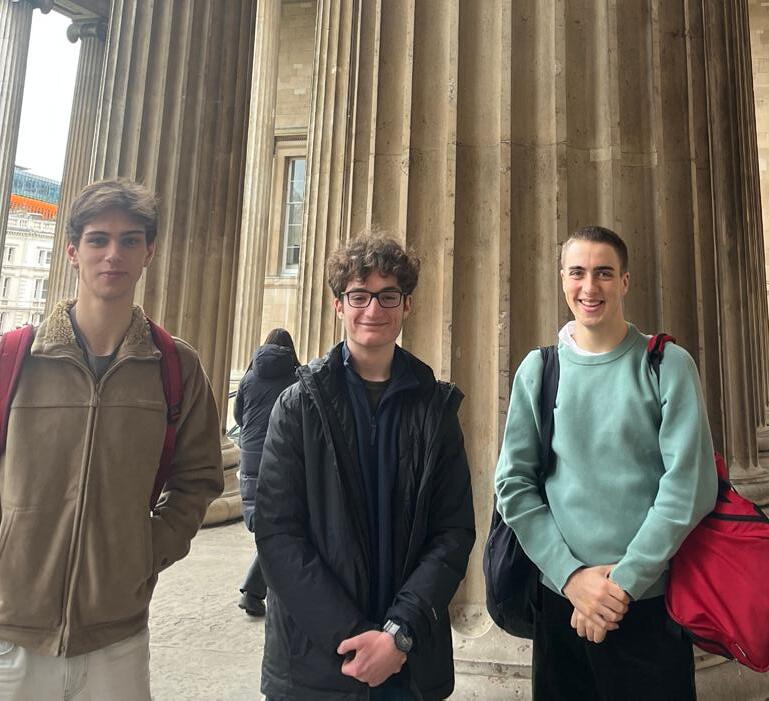
The British Museum recently served as a vibrant classroom for a group of our BIOS enrichment pupils, transforming creative human history into tangible reality. Wandering under the Great Court’s enormous glass roof the sheer scale of the 8 million objects can be profoundly daunting, and serves as a reminder to celebrate human creativity.
The highlight for many was the Rosetta Stone, where we examined the key to unlocking hieroglyphics of the ancient world. Navigating such vast history forces us to move beyond memorisation, fostering a resilient, global perspective that only a real world, lived experience can provide.
—
Contributions by
K. Allen
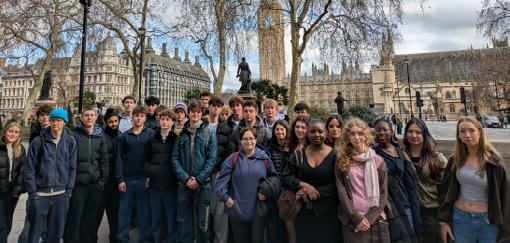
Our recent Transitus A Level Politics trip to the Houses of Parliament was an interesting insight into British politics. We visited the House of Commons, followed by the House of Lords, famous for its stark red benches and a more measured, calmer approach. Seeing Parliament in person helped us better understand our A Level Politics course.
Following our tour, we took part in an engaging election workshop. Dividing into groups, we organised and ran our own mock elections, appointing candidates,
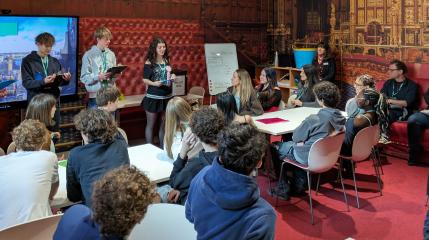
speechwriters, policy advisers and campaign managers. This hands-on experience allowed us to step into the roles of government ministers, developing policies and responding to the kinds of issues that arise in real political life. We also had the valuable opportunity to meet members of our local constituency team, who offered insight into the day-to-day responsibilities of working for a Member of Parliament and the different pathways into politics.
— Contributions by Kezban & Ollie, Transitus
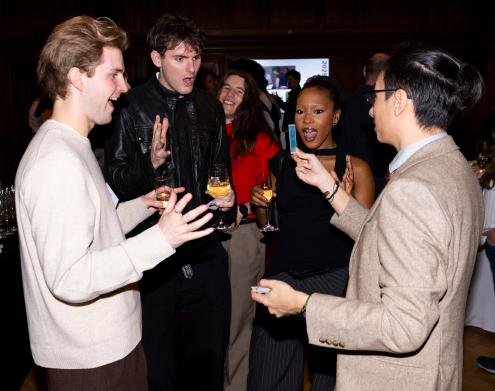
On 12 February, the Great Hall at University College School once again became a sea of familiar faces. Hosting 65 Old Gowers from the classes of 2013 through 2025, the Young Alumni Social was a powerful reminder that while the world outside feels faster and more complicated, the bond
of the UCS community remains a constant.
The evening included a world-renowned magician, a photo booth and a rolling slideshow of memories from the past decade. For the Class of 2020 whose final year was cut short by the pandemic, the
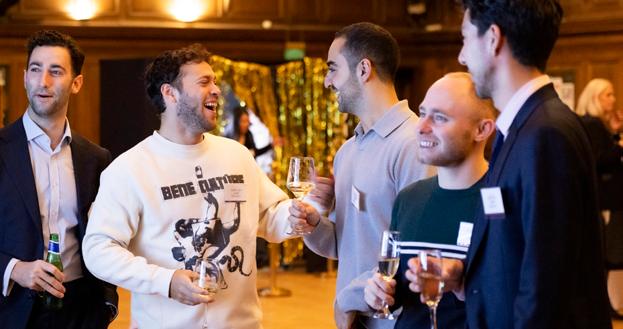
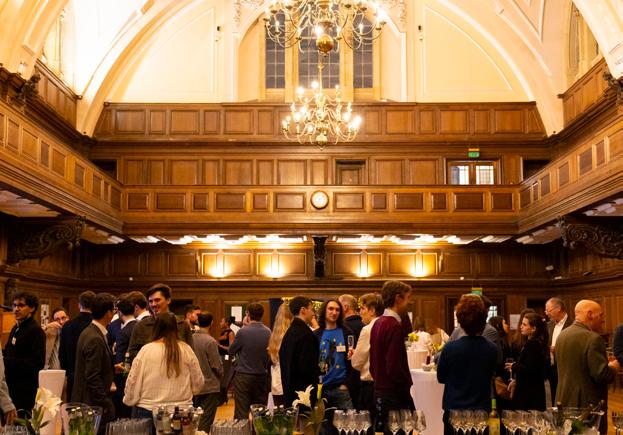
evening offered a longoverdue sense of closure. As one former pupil noted, walking back into the Great Hall felt like stepping into a space that had remained unchanged in both “appearance and spirit”.
Headmaster
Mark Beard was in attendance
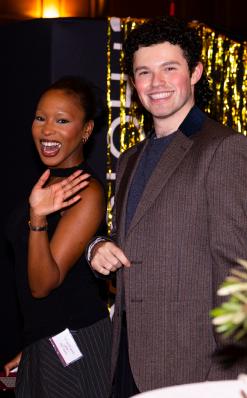
to catch up with the Old Gowers. His message was one of encouragement: that in an increasingly illiberal world, the values of a liberal education are needed now more than ever. UCS alumni are the school’s true legacy; embodying the academic rigour, moral compass and compassionate curiosity that
UCS has championed for nearly 200 years.
—
Contributions
by C. Hyotte
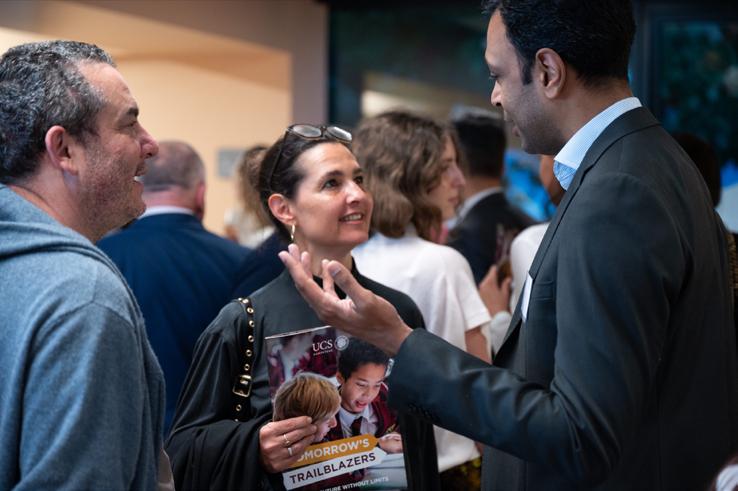
On Monday 23 March we celebrated those who have supported the Tomorrow’s Trailblazers campaign with our very first all-foundation donor thank you event. As Mr Beard noted in his speech, our community’s support has skyrocketed, growing from 40 donors in 2022 to over 650 this past year.
The evening centred on the profound impact of the Bursary Award Fund, among other projects. Vice Master, Mr English, spoke movingly about how these awards ensure that background does not dictate destiny, and reminded us that a UCS education is about more than results; it is about the moment a pupil realises their ideas deserve to be heard. With speeches, a Lower School
performance and ambient live music from our very own Jazz Band, the event showcased how pupils are at the heart of everything the Tomorrow’s Trailblazers campaign aims to achieve. In the words of Mr English, supporters become “coauthors of stories that will continue to unfold for generations to come.” Keep an eye on your mailboxes next term for more information about how you can support Tomorrow’s Trailblazers.
Want to discuss how to get involved in the Tomorrow’s Trailblazers campaign? Email us at development@ ucs.org.uk
—
Contributions by E. Sorohan
The totals are all nearly in and once again the funds raised by Community Action efforts exceed previous records. We must not lose sight of the good causes that we are supporting; each Deme as well as the Sixth and Lower School committee have chosen a wide array: Variety, the Children’s Charity; Pancreatic Cancer UK; Shelter; Ripple Africa; Secondary First; Alzheimer’s Research UK;
Black Minds Matter; and Ronald McDonald House. Increasingly inventive, we have seen the Deme Captains (rallied by Mrs Martin, Mr Enemuwe and Mr Peck) organising food sales, alongside the Parents’ Guild with the Fireworks at the Fields, Masked Singer, the Year 7 Disco (with magician), Back to Bletchley and the ever- popular Run in the Dark. These ‘big events’ are well supported by
many other activities to bring the school together at its very best: thinking about others and working collaboratively across year groups. Plans are already afoot for next year and the hope is to make things even bigger and have even more involved. Well done to everyone who has played a part in Community Action 25/26!
— Contributions by S. Fitzgerald
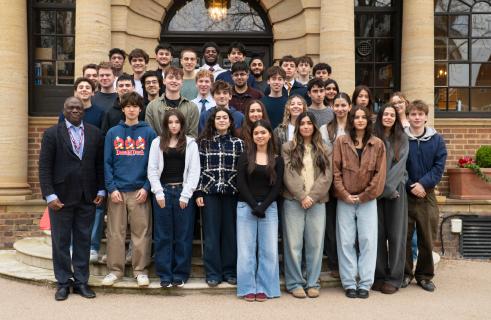
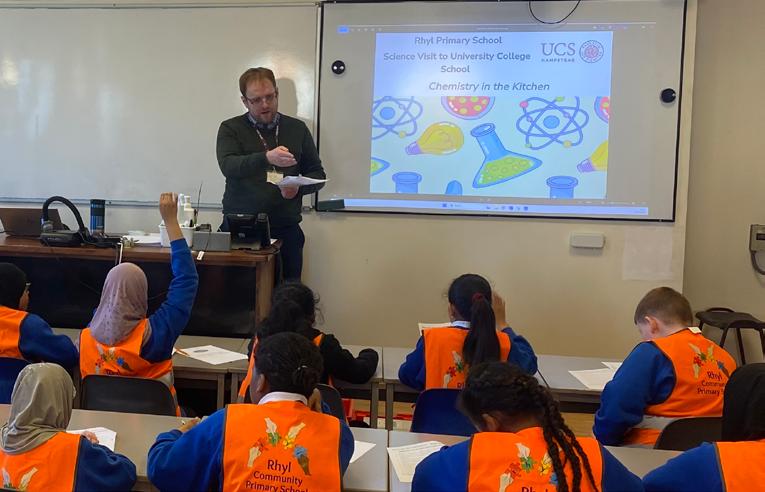
For the latest chapter in our ongoing partnership with Rhyl Primary School, UCS hosted Year 6 pupils for an immersive, hands-on science discovery morning. Stepping out of their usual classrooms and into our senior laboratories, the visiting pupils spent a high-energy morning exploring the tangible wonders of the physical world.
The session, led by Mr Edwards of the Chemistry Department, centred on a specialised ‘Rock Salt’ workshop. Our visitors transitioned from theory to practice, mastering the techniques of filtration and evaporation to extract pure crystals from raw minerals. The atmosphere in the labs was one of intense curiosity and academic rigour, as the Year 6 pupils tackled complex practical tasks with the focus of seasoned scientists. It was a fantastic morning of ‘doing’ science—fostering a spirit of inquiry and strengthening the collaborative bonds between our two schools.
—
Contributions by
M. Sammon
As a core pillar of the Sixth Form Bios Diploma, students from Transitus and Sixth have been making a tangible impact beyond our walls through our dedicated volunteering programme in collaboration with our partner primary and secondary schools. This initiative forms the heart of the diploma’s ‘Community’ strand, challenging our students to step into mentorship roles and provide meaningful support to both staff
and pupils in our local educational network.
The breadth of the project has been truly impressive, with UCS students facilitating everything from intensive English and Maths academic support to specialised Lego therapy sessions. Beyond the classroom, our volunteers have been instrumental in leading social skills development workshops, fostering confidence and
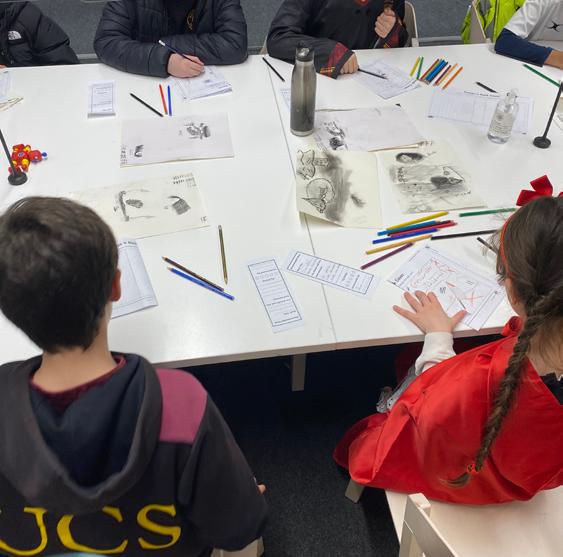
connection in younger learners. This exchange of knowledge and empathy has proven mutually transformative; while our partner schools benefit from additional enthusiastic support, our Bios students are developing the leadership, patience, and civic responsibility that help define the UCS spirit.
— Contributions by M.
Sammon
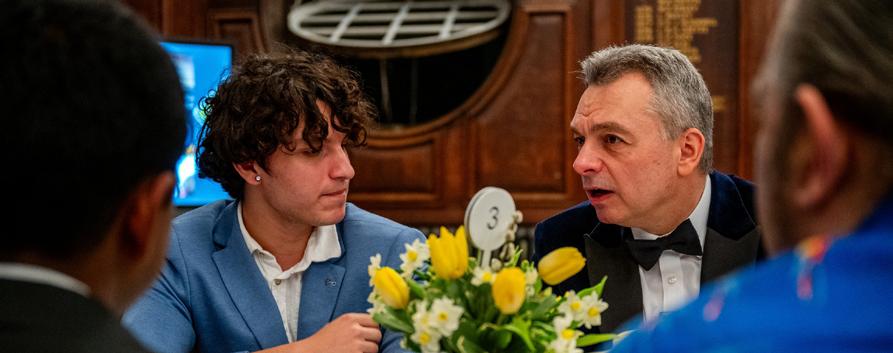
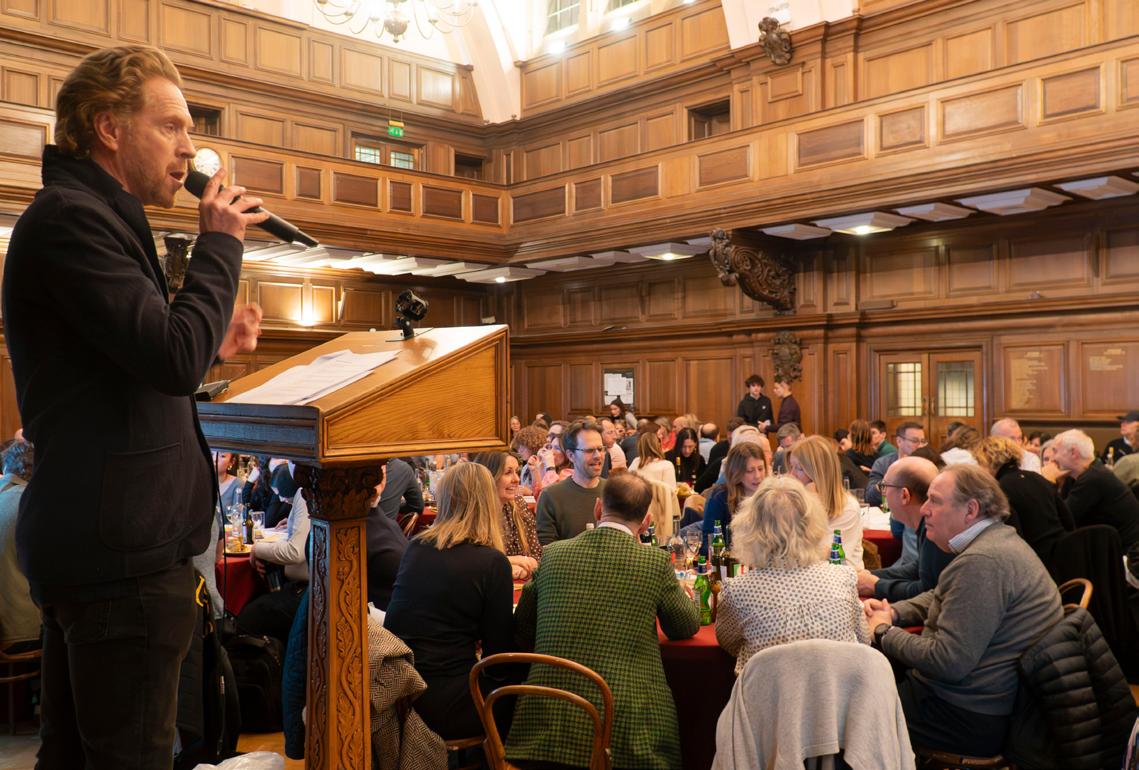
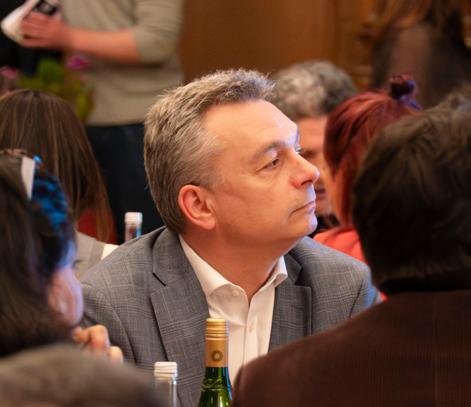
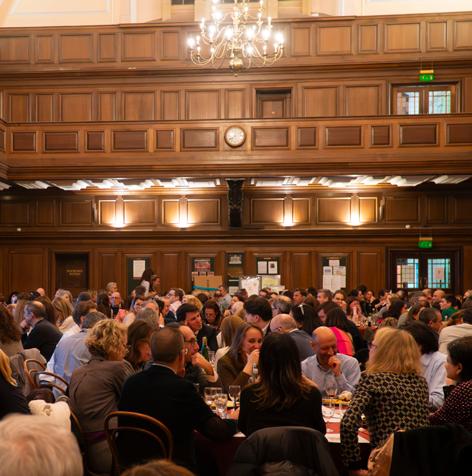
On a bleak evening in early March, the Great Hall was anything but gloomy. It was alive with parents, teachers and students, all enjoying the Annual Parents’ Guild Supper Quiz.
This year, we were delighted to welcome back Damian Lewis,
whose trademark wit and impeccable timing ensured that even the most questionable answers felt momentarily defensible. As Quiz Master Extraordinaire, he kept spirits high and teams firmly on their toes.
The Transitus students
were the engine behind the operation — deftly collecting and marking papers, selling raffle tickets with persuasive enthusiasm, and managing to keep glasses topped up throughout. Their efficiency (and stamina) did not go unnoticed.
The hall buzzed with good humour and the occasional confident but wildly inaccurate answer. In a historic and much-celebrated turn of events, the teachers’ table lost for the very first time — prompting a suspiciously well-prepared speech from Mr Beard, suggesting this outcome may
not have been entirely unforeseen.
It was a thoroughly enjoyable evening, made all the better by students joining the fray and holding their own against seasoned quizzers. Thanks to the efforts of the Guild and UCS staff, the evening
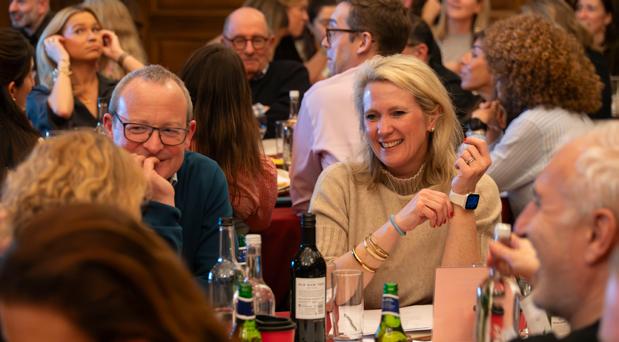
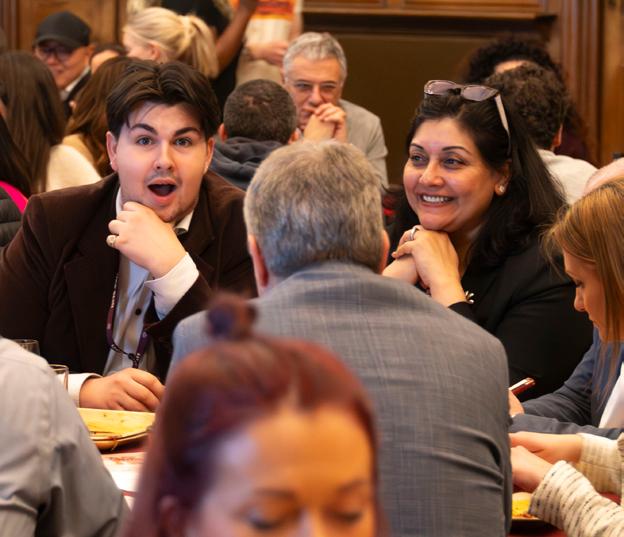
raised over £15,000 for the Bursary and Fee Assistance Fund.
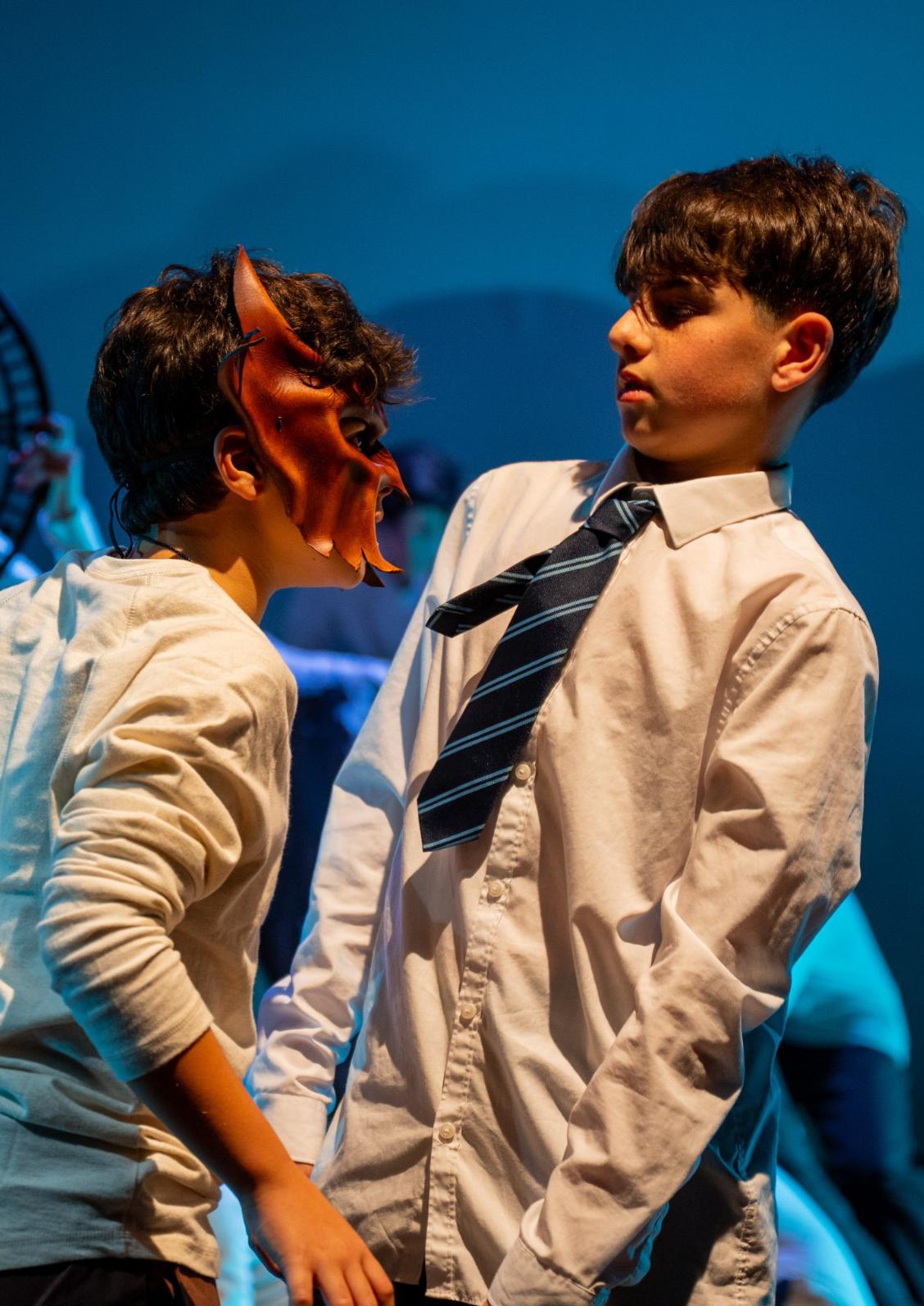
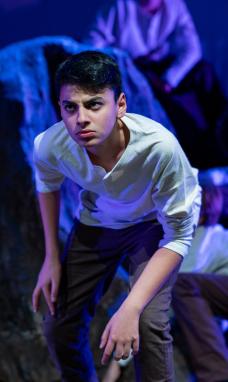
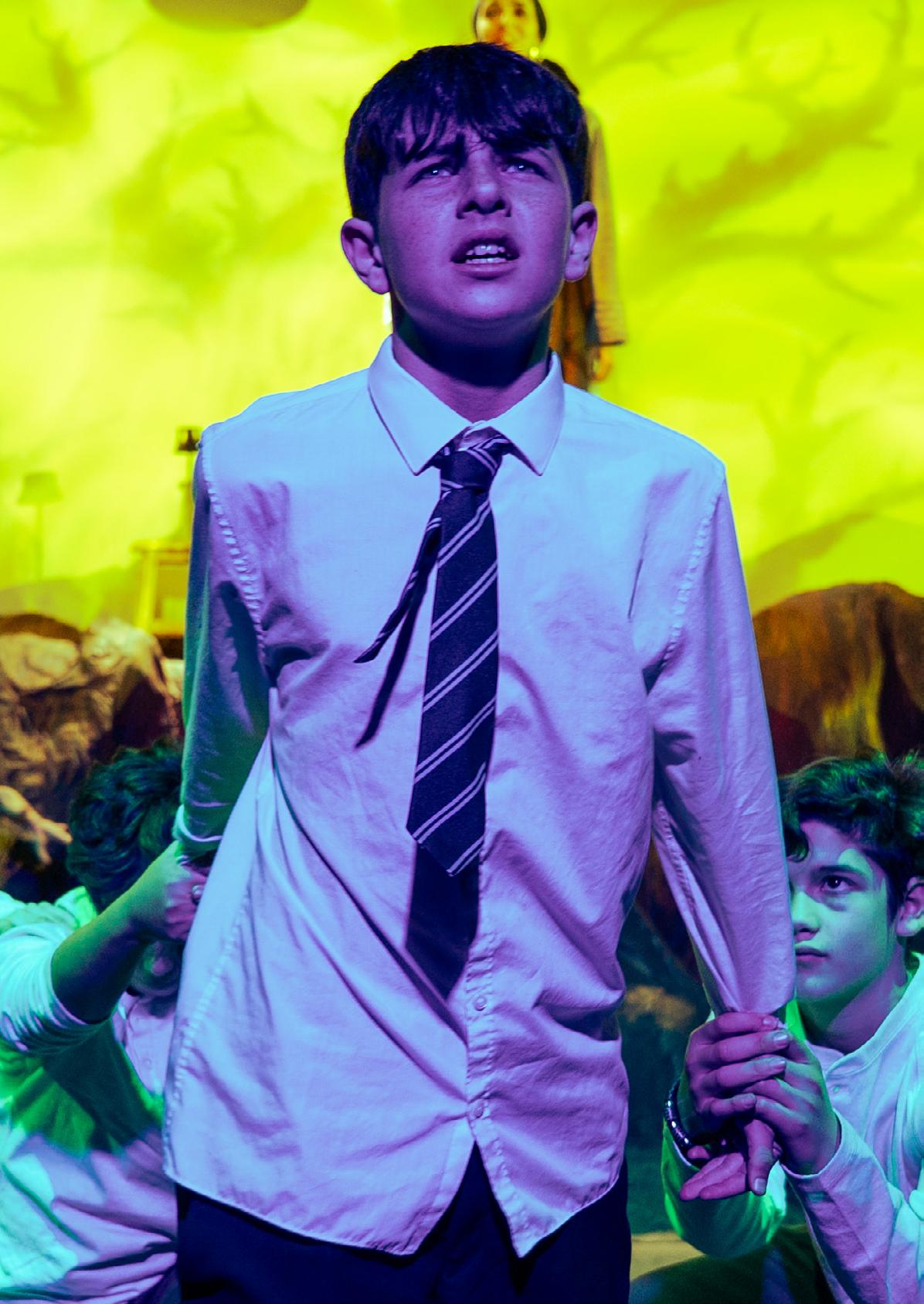
In March, the Middle School production of A Monster Calls was performed over three evenings in the Lund Theatre. Bringing such a powerful and emotionally complex story to life is no small task, and what made this production particularly striking was the calibre of acting from the pupils in the cast, including the Lower Remove pupils — the youngest members of the cast — who delivered sensitive and controlled performances that belied
the pupils’ age.
The production leaned heavily into physical theatre, with the cast working as a cohesive ensemble to shape the world around the central character. Moments of transformation and storytelling were achieved not through elaborate set changes, but through precise, disciplined movement. Inventive stage craft and clever choral movement were used to realise
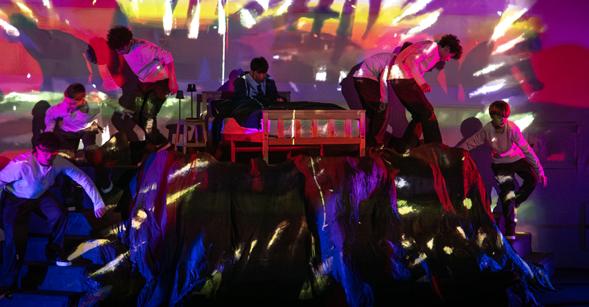
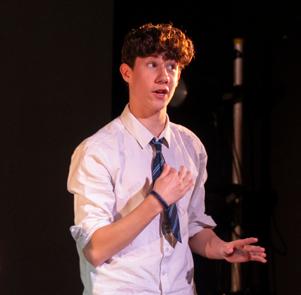
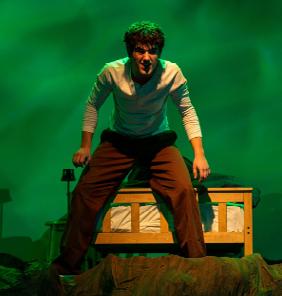
the play’s eponymous Monster.
Underpinning the ambitious concept were the significant technical demands of projection and sound, handled with great assurance by our pupil stage crew. A Monster Calls was an ambitious production, realised with care, creativity, and considerable skill.
The UCS Spring Concert featured the school’s senior musicians and ensembles. Concert Band opened proceedings with an exceptionally challenging programme that included Janáček’s Sinfonietta and Stravinsky’s Rite of Spring; their assured performances were a testimony to the
magnificent work that Mr Walton has dedicated to this ensemble over the past 23 years. Chamber Orchestra’s rendition of Albinoni’s Adagio featured distinguished solo contributions from Joshua (violin) and Charlie (organ) and it was a treat to hear Susan Spain-Dunk’s
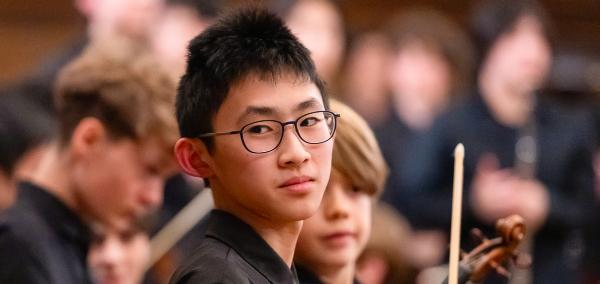
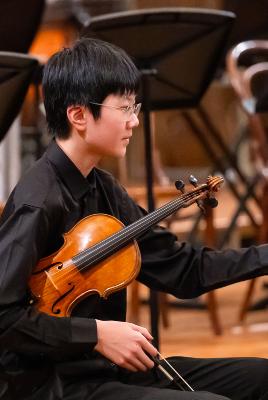
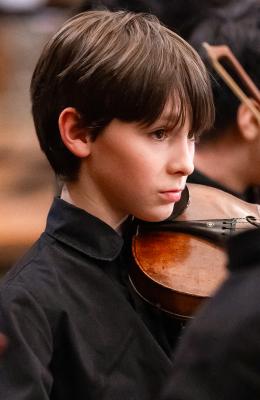
rarely heard Lament for Strings delivered with such authority and élan.
The first half closed with Daria providing the soulful vocals in Don’t Know Why with magnificent ‘big band’ style support from Senior Jazz.
Symphony Orchestra took centre stage
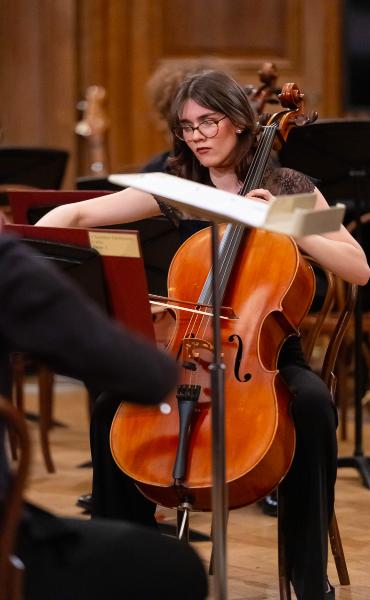
in the second half. First up was a performance of Shostakovich’s Cello Concerto No. 1 by Amy that was remarkable for its technical command and sheer commitment. Finally, Symphony Orchestra impressed with their musical maturity and sophistication in Brahms’ Symphony No.
2 – with notable individual contributions from William (french horn), Kousei (flute) and Joseph (oboe).
— Contributions by
C. Dawe
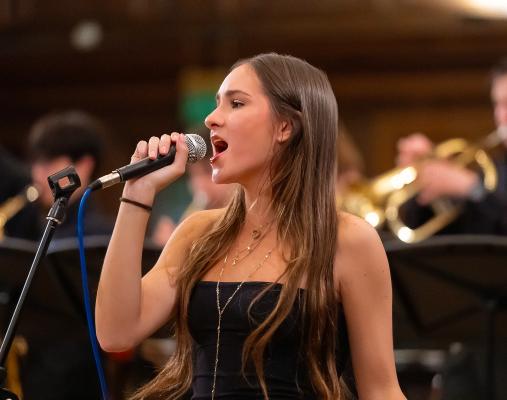
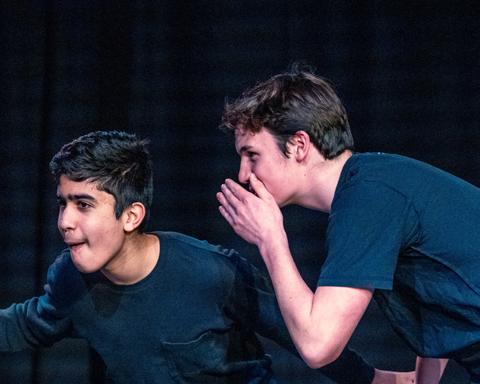
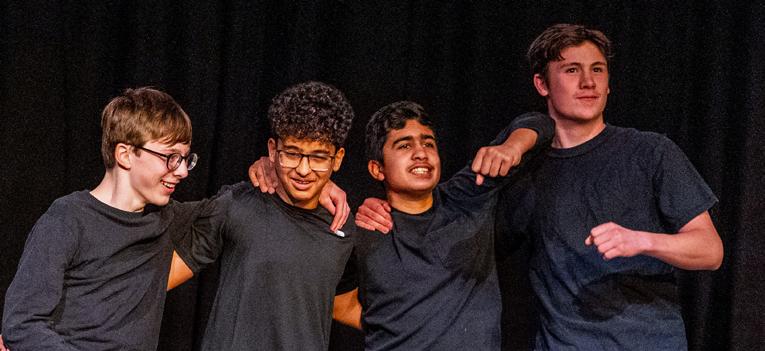
Following on from a set of truly outstanding Trinity exam results, the pupils performed their dramatic pieces for parents and friends at the Trinity Acting Showcase evenings, which took place over three nights in January. The pupils performed a variety of scenes from classic plays such as Journey’s End and The Wind in the Willows to more modern texts like Parlour Song and The Crocodile; some were even brave enough to write their own plays!
The acting ability and hard work were evident to all, and the stage crew provided the pupils with lighting effects. With over 100 young actors taking part across the three evenings, you were left marvelling at the depth of dramatic talent available at UCS in the Lower and Middle School.
—
Contributions by
D. Swanson
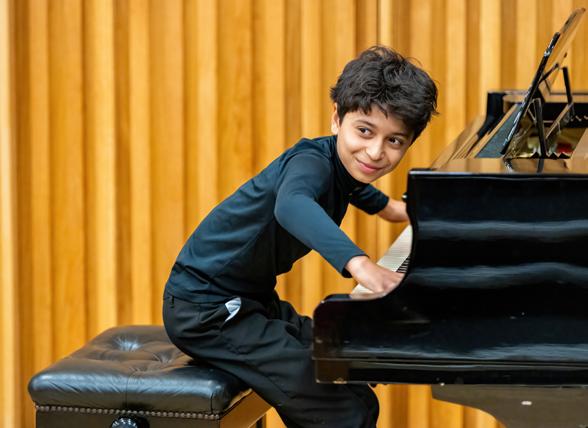
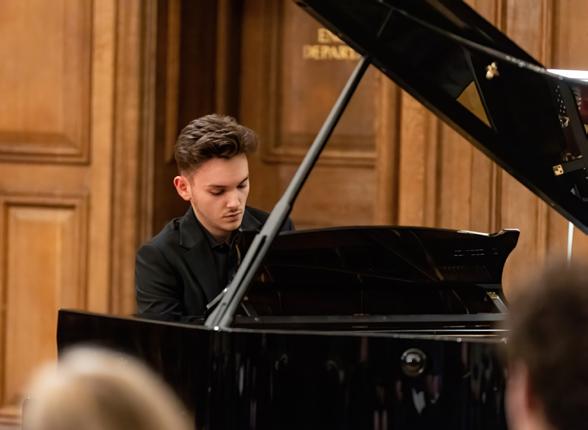
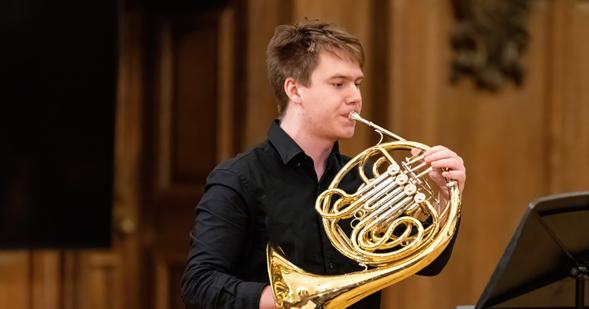
This was the most ambitious Performance Platform by a single year group that I have attended during my time as Director of Music at UCS, featuring 17 items across a wide range of disciplines and genres. There was outstanding piano playing from Jehaan in Chopin’s FantaisieImpromptu and Freddy in JS Bach’s Prelude and Fugue BWV 884. William
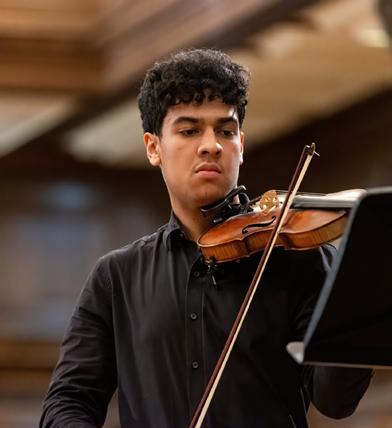
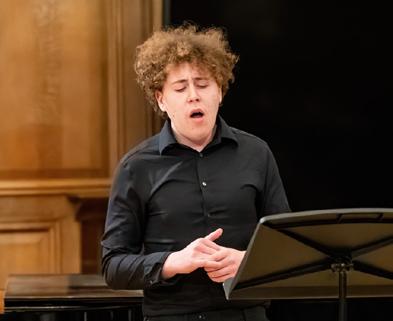
and Eden put in impressive vocal performances. But the cherries on the cake were the two student-led Jazz Ensembles (featuring Louis, Finn, Alex, Charlie R, Charlie H and Harry) who sparkled in Night in Tunisia and The Yellow Jacket to conclude a truly memorable evening of music-making in the Great Hall.
— Contributions by C. Dawe
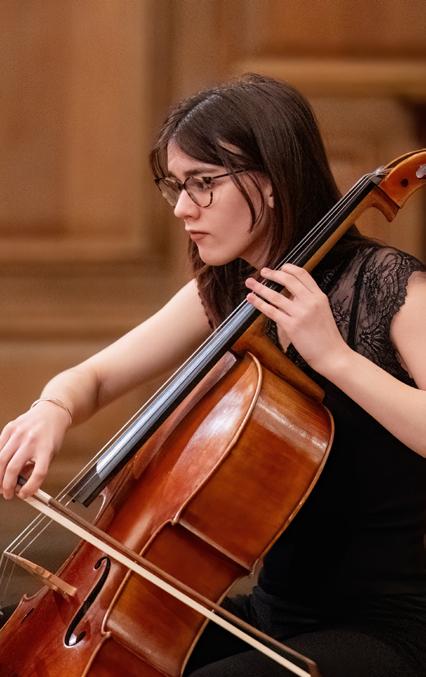
This was the biggest event of its kind in recent years, featuring 11 separate chamber groups (including a Wind Quintet for the first time) and 35 of the top UCS musicians. In an evening that included nine piano-based ensembles, special mention should go to pianists Joshua, Mariella, Ethan, Matteo and Joseph — the latter taking on the fearsome challenge of Jonathan Dove’s Piano Quintet. Following the concert, we were delighted to hear that two groups had
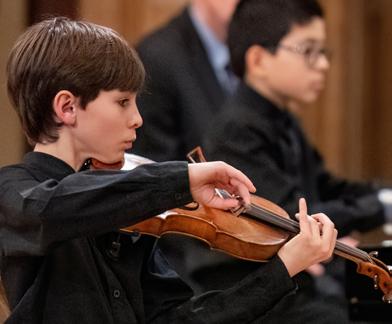
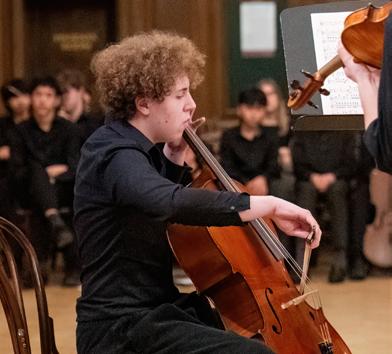
made it through to the final of the South East Schools Chamber Music Competition; congratulations are due to Leo and Blake (violin), Sam (cello), Nathan (piano) and Hugo (cello and piano!) on this tremendous achievement.
— Contributions by C. Dawe
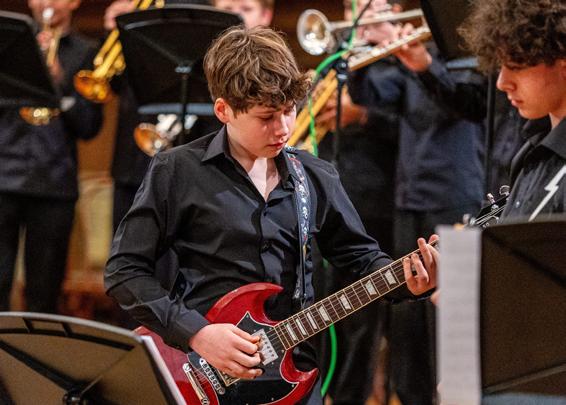
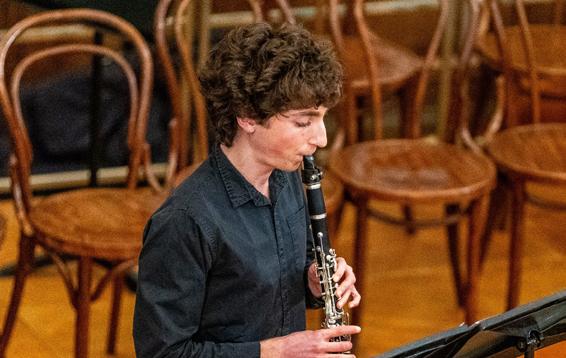
The Ensembles Concert was a celebration of the rich diversity of UCS musicmaking, featuring over a hundred pupils and nine groups across the full spectrum of instrumental families, from orchestral strings and brass to guitars and percussion. Highlights included a mellifluous saxophone solo from Ethan in Over The Rainbow, sympathetically
accompanied by Big Band. There was classy Mozart from Clarinet Ensemble as well as an impressive rendition of Gerald Shapiro’s challenging Fugue.
Flute Ensemble treated us to an entertaining rendition of Leroy Anderson’s The Typewriter, the typewriter ingeniously recreated with guiro scrape and bell
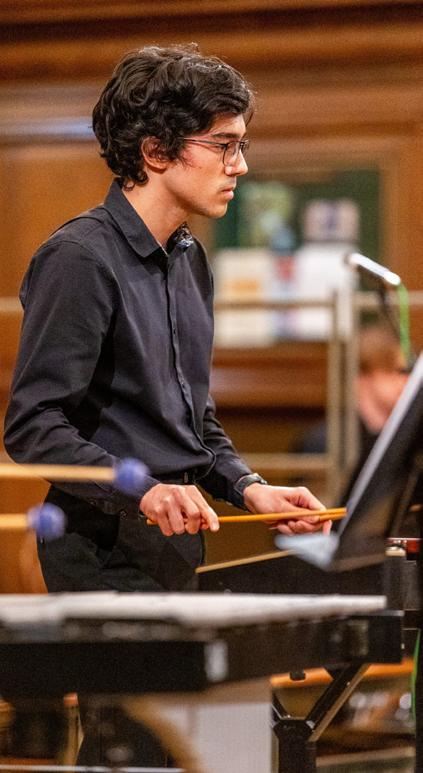
ring, before Jazz Ensemble closed proceedings with a toe-tapping account of Mr Da Silva’s Song for Sade. The quality of the musicmaking was a tribute to the dedication of the ensemble directors and the talent of UCS musicians right across the school.
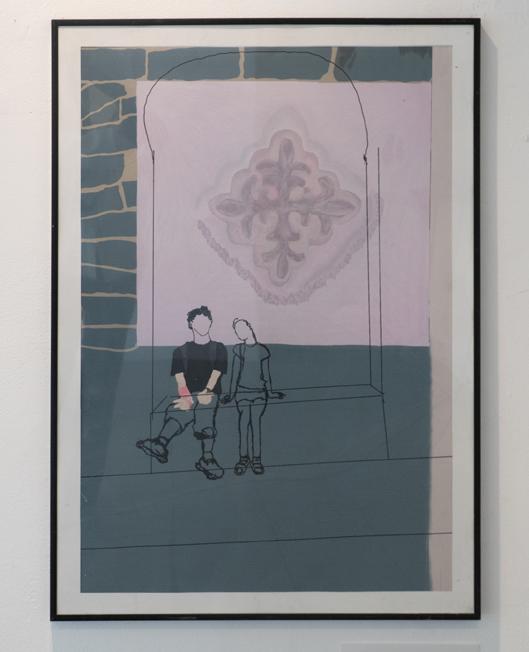
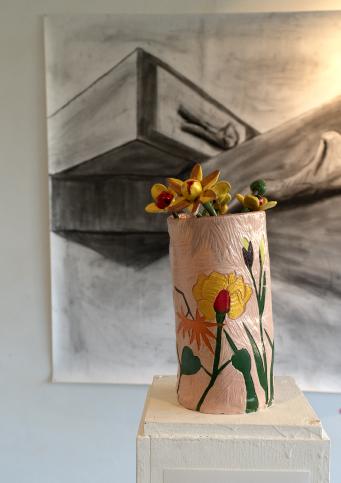
The Transitus Art Exhibition marks a significant milestone in our pupils’ creative development, showcasing a vibrant culmination of technical skill and personal inquiry. The project began with pupils investigating the theme of Disrupt through artist research, using those insights to experiment with a diverse range of materials. By translating their own primary research of photography and exhibition visits into tangible forms, they
bridged the gap between observation and artistic expression. The variety of media on display reflects the ambition of the cohort, ranging from expressive charcoal and precision pencil drawings to rich oil and acrylic paintings. The collection of work further showcases watercolour painting, mixed media cyanotypes, monoprints, and ceramic sculptures. These works represent more than just technical proficiency;
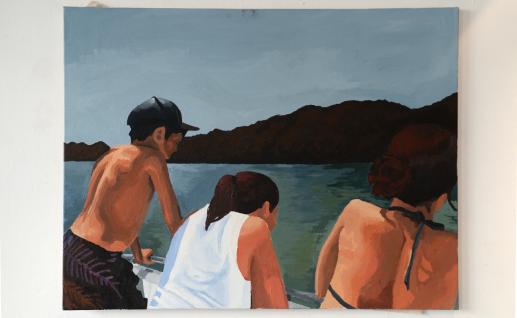
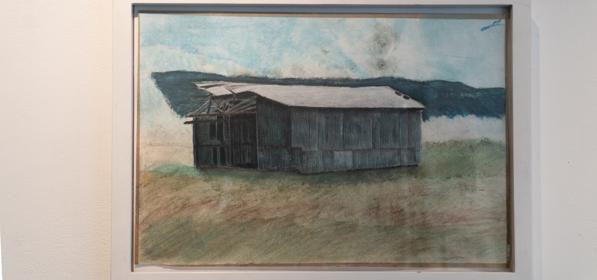
they demonstrate the resilience and focus required for working as a practising artist. As the exhibition concludes at the end of the Spring Term, pupils now transition into their Non-Exam Assessment (NEA), carrying forward the confidence and expertise gained during this pivotal Transitus phase to begin their independent portfolios.
— Contributions by E. Barten
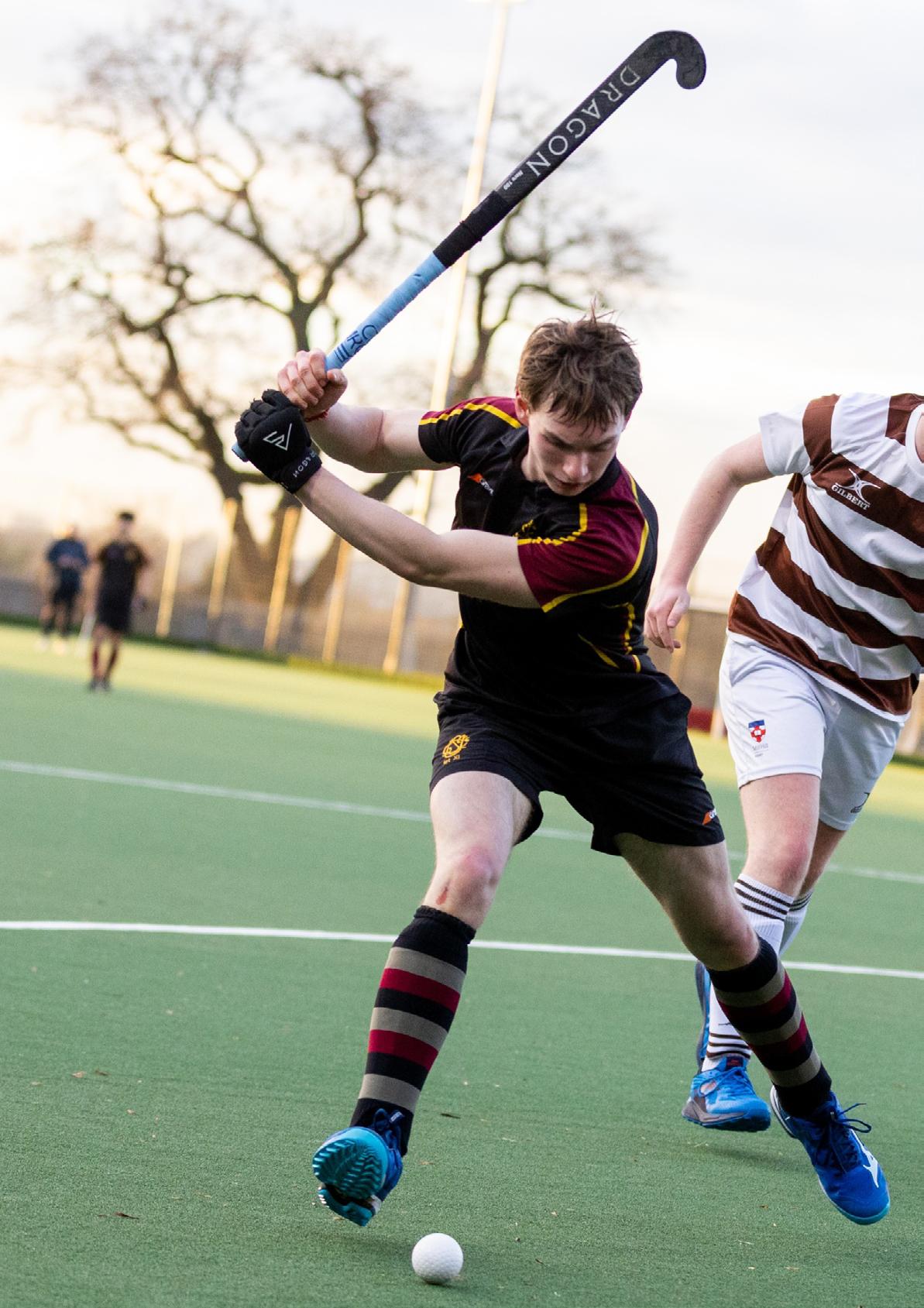
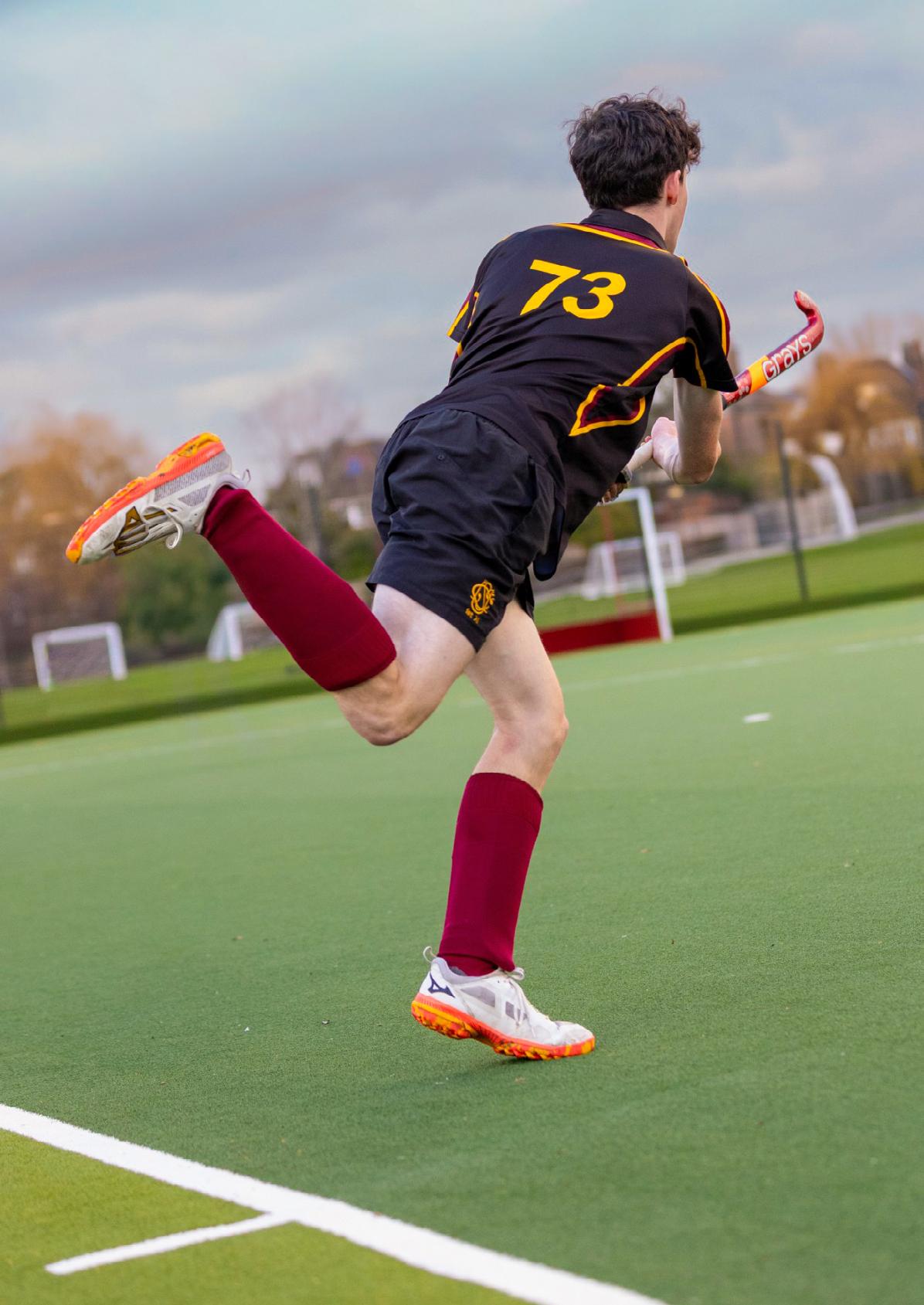
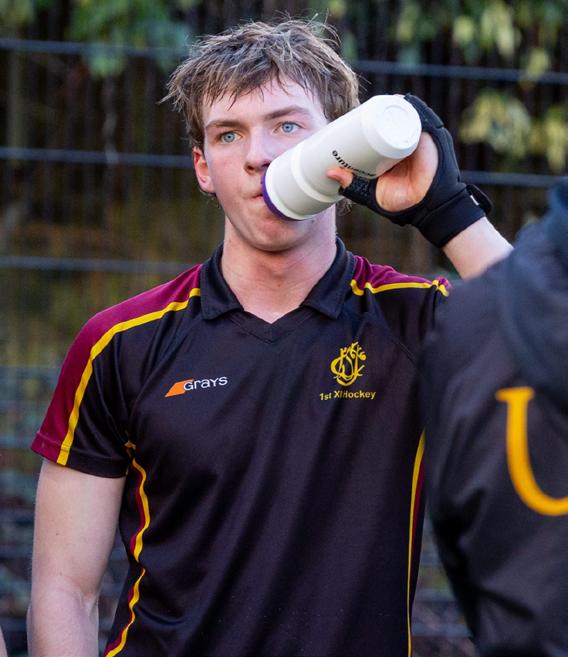
The 2025/26 Hockey season has seen a remarkable amount of success, with both the Under-16s and 1st XI qualifying for their respective Notts Sports Vase National Finals at the Nottingham Hockey Centre. The Under-16s finished eighth and the
1st XI seventh. The 1st XI’s achievements have been a result of their collective hard work, and some wonderful individual performances. Transitus student Lewis has shone, scoring 17 goals in 13 games this season. Lewis has also been selected for the Scotland Under-
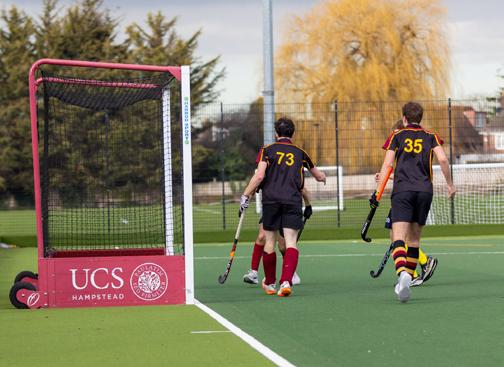
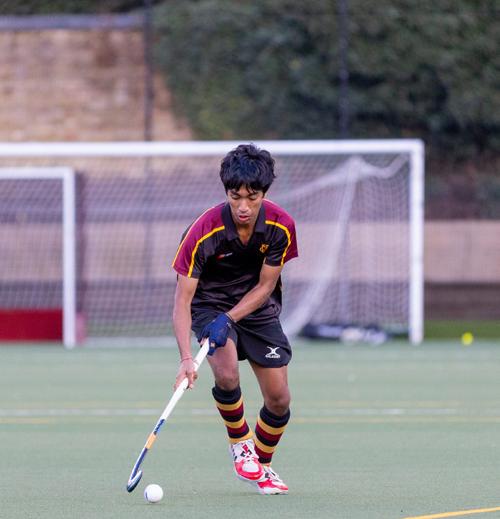
18s for their upcoming six Nations Tournament over Easter. In the Lower School, the Under-12 team have qualified for their London Schools’ Finals day by finishing second in their group in the first round.
— Contributions by J. Hillyer
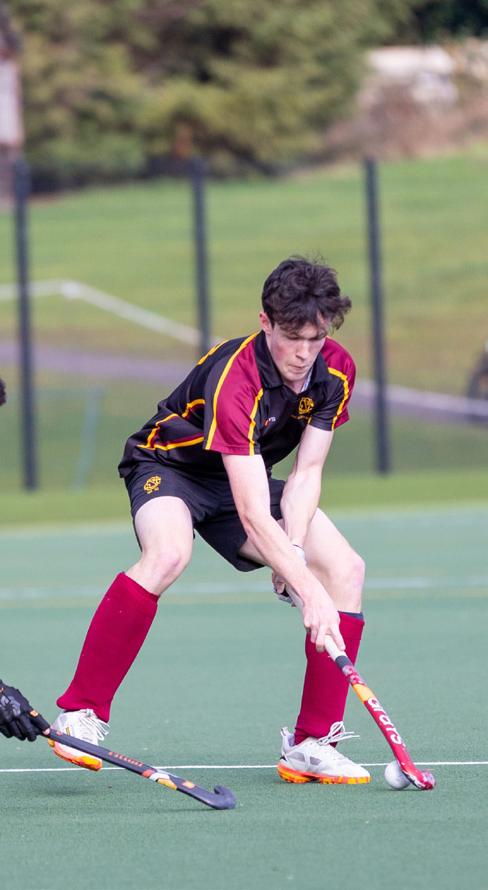
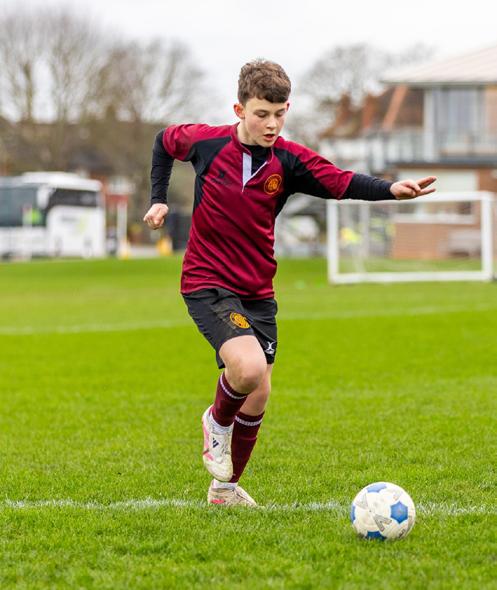
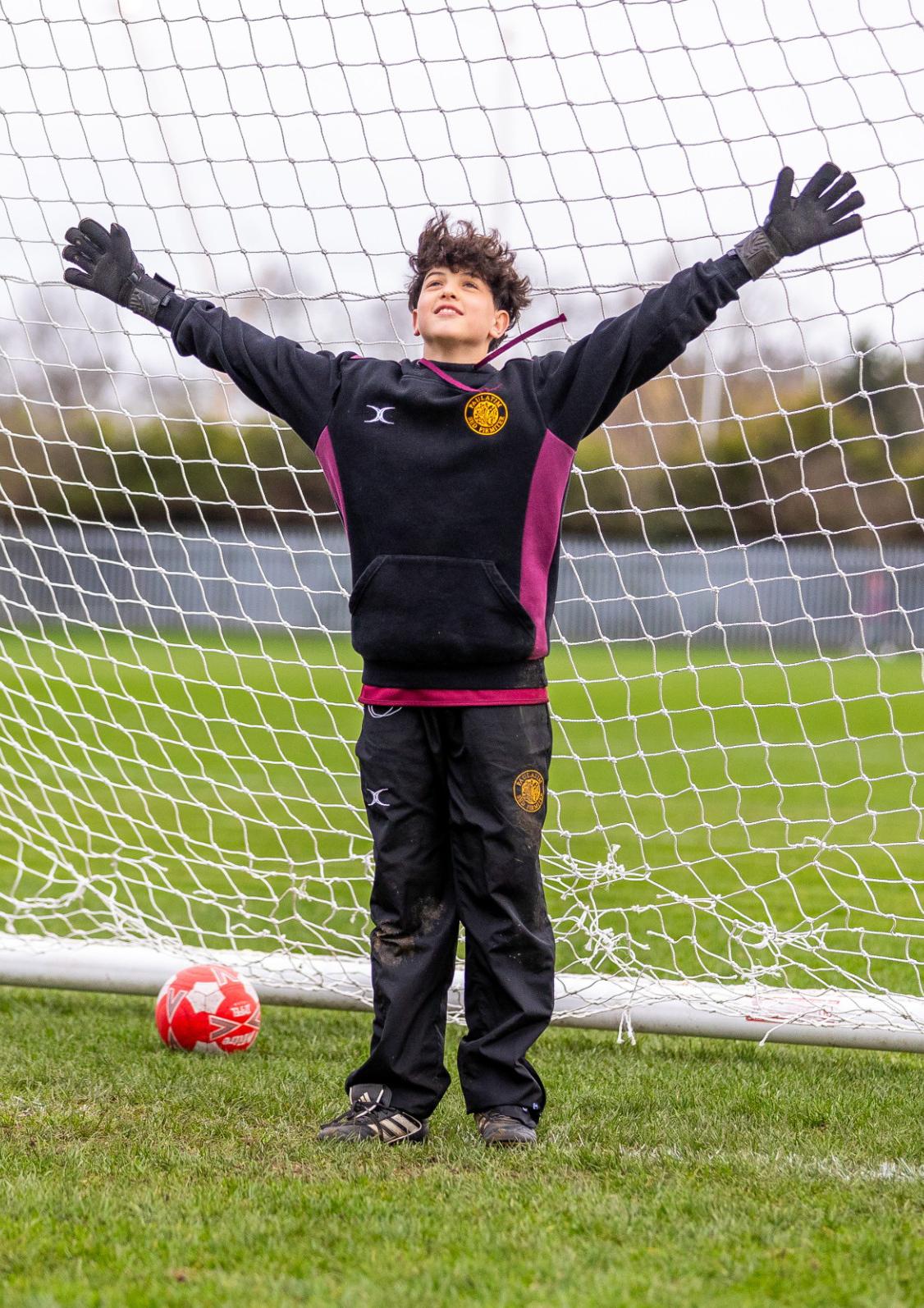
The 2025/26 football season has been a landmark year for the programme, defined by record-breaking performances and unprecedented engagement. A major highlight was the 1st XI achieving the school’s furthest-ever progression in the National Cup (3rd Round) and reaching the Middlesex Tye Cup Final, while the 2nd XI advanced to the quarter-finals of the London Independent
Schools Cup. We are also particularly pleased with the Under-15 year group, who have shown exceptional improvement in their performances over the last 12 months compared to the previous year.
Despite a Spring Term challenged by harsh weather, student interest reached an all-time high with over 600 pupils participating. This immense depth
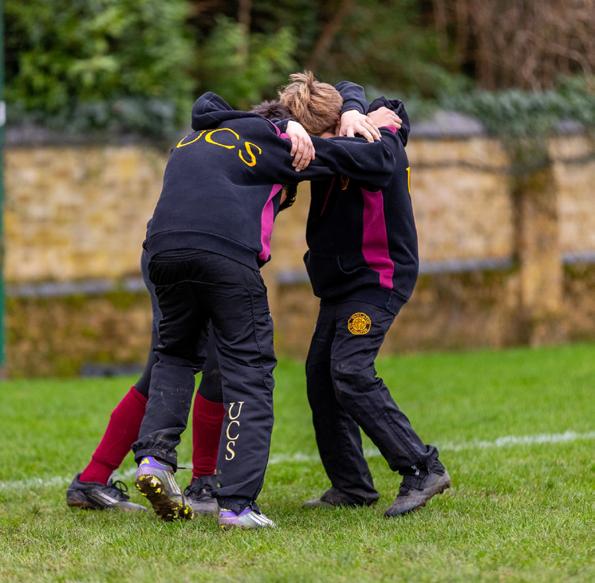
allowed the school to consistently field six senior squads for competitive fixtures. Overall performance remained elite, with the win ratio climbing from 56% last year to 57.6% this season. This growth proves the programme continues to thrive across all age groups, even against top-tier opposition.
— Contributions by R. Sousa
"Even though it was the first time UCS have ever competed at a padel competition, we played brilliantly. We all held our heads high, even after coming second in the group, we managed to win some tight matches to come second out of 16"
- Sam, Shell
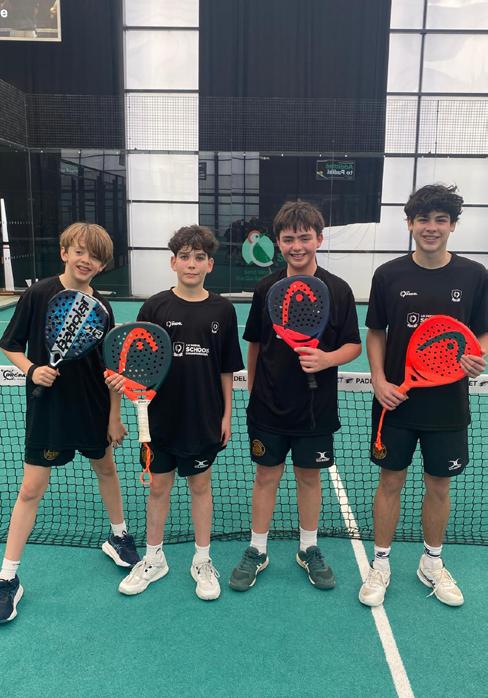
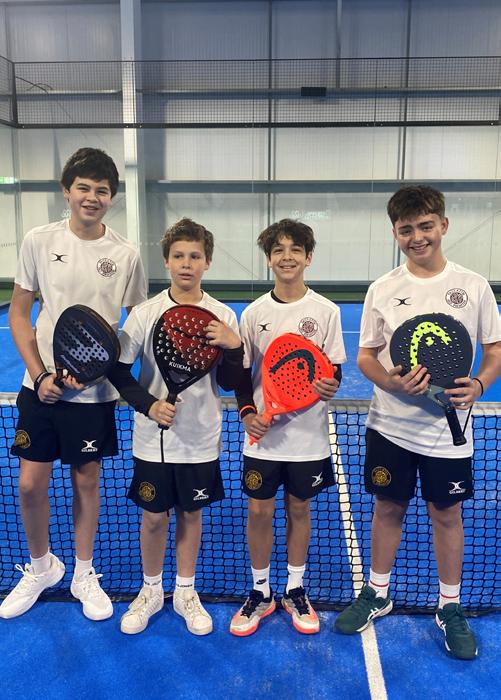
It has been a historic season for UCS Padel. Our inaugural Under-13 team made a stunning debut at the National Padel Championships, battling through a tough field to secure second place after a thrilling final against Whitgift. Following this momentum, our U15 squad matched that success at their National Championships, and also finished in second
place, just losing out to Aylesbury.
Both teams demonstrated incredible skill and determination, firmly establishing UCS as a rising powerhouse on the national padel circuit.
— Contributions by E. Sawtell
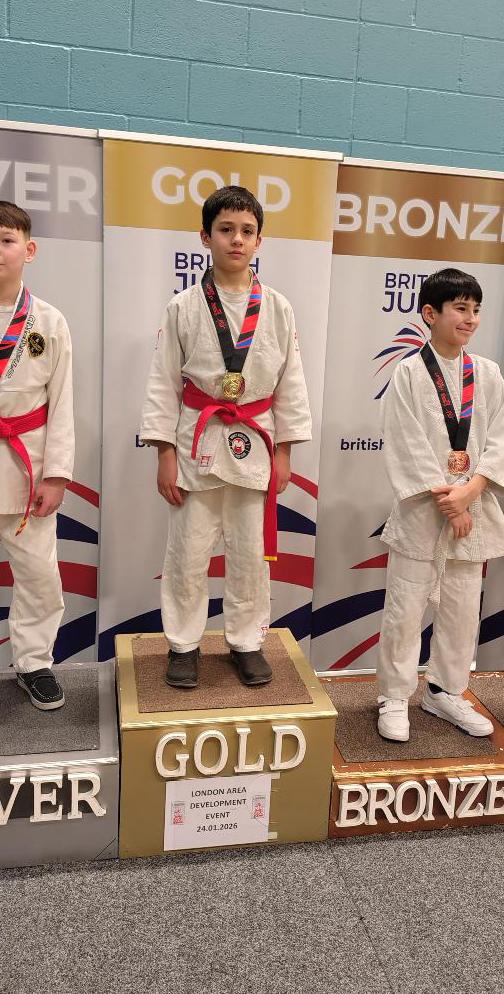
Congratulations to Entry pupil Alex, who secured a gold medal in Judo at the London Area Development event in January. He claimed victory after three challenging fights, showcasing both his physical strength and strategic thinking, honed through rigorous training sessions. Alex also carefully observed his opponents to mentally and tactically prepare himself.
This latest success brings his impressive record to 5 gold medals and 1 silver medal over the last two years. Looking ahead, Alex highlighted that his next goal is to “take part in the National Championships, which, given the chance, will be an amazing experience!”
— Contributions by M. Kyaw