No contract, no coffee: Riverside Starbucks workers protest
The multi-day protest called for Starbucks contract negotiations.
OVI MATHIVANAN Staff Writer
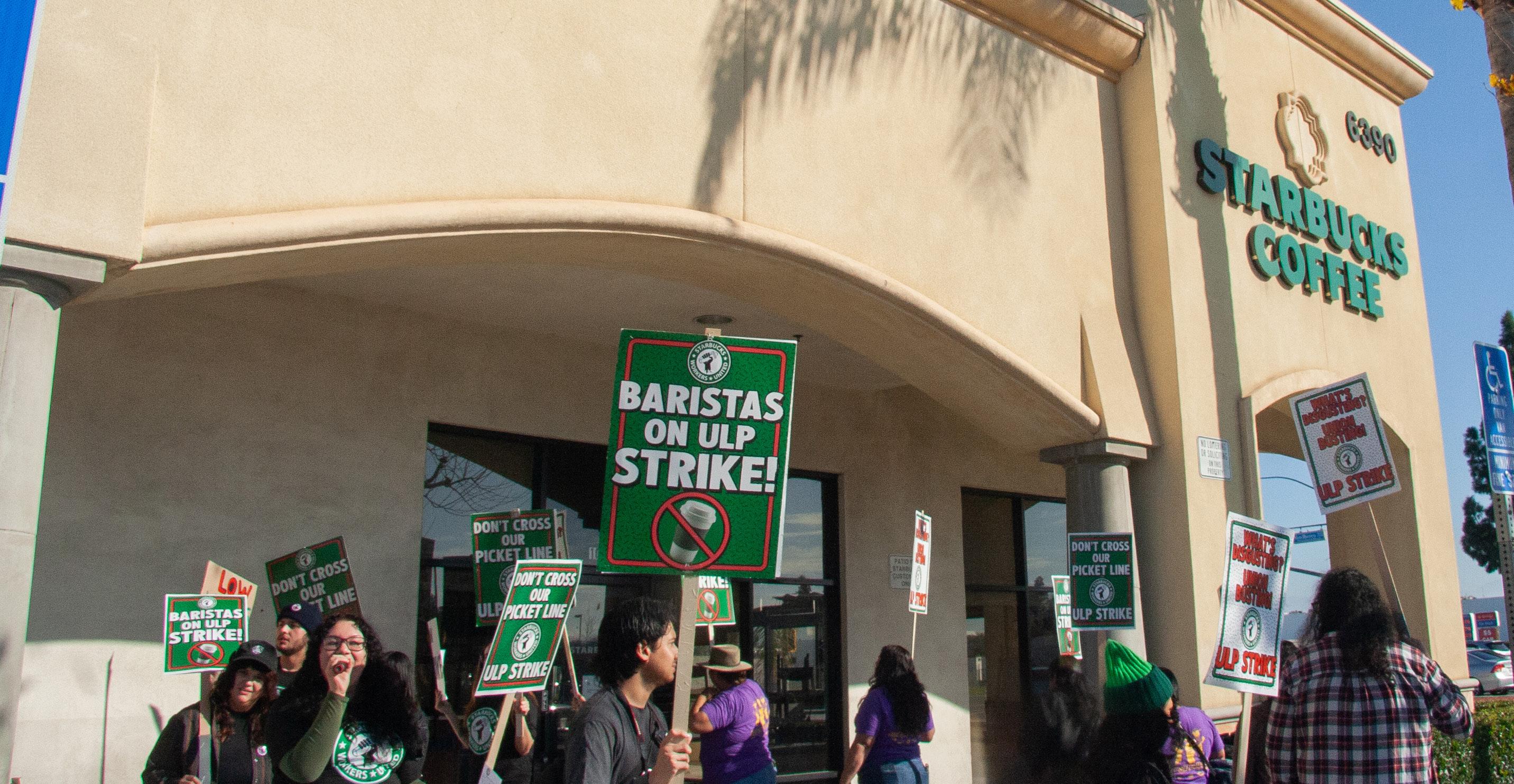
On Feb. 12, organizers and baristas gathered outside the local Starbucks at 6390 Van Buren Blvd in Riverside to protest. Workers at the strike called for a more equitable workers’ contract that addresses concerns about wages, staffing levels and overall working conditions.
The protest was part of a three-day effort that took place during morning hours from Feb. 12 to Feb. 14. Organizers described the protest as part of a broader, years-long series of open-ended strikes, with workers aiming to continue mobi-
lizing until they believe a fair contract is reached.
Supporters were encouraged by the Inland Empire Labor Council to “show solidarity in the spirit of Valentine’s Day by either donating to their strike fund” or joining the community and its baristas on the frontlines of the protest. Starbucks Workers United, a union representing thousands... Starbucks workers nationwide, also encouraged community members to support workers by signing the “No Contract, No Coffee” pledge.
“No Contract, No Coffee” is a protest slogan used by striking workers and supporters. The phrase calls on customers to delete the Starbucks app, cease purchases of Starbucks products and withhold financial support from the company during strikes over what workers describe...
FEATURES
UCR Theatre presents: ‘Fuenteovejuna, or Like Sheep to Water’
How standing up for each other is the way out of tyranny.
ANTHONY ASCENCIO-CARVAJAL Staff Writer
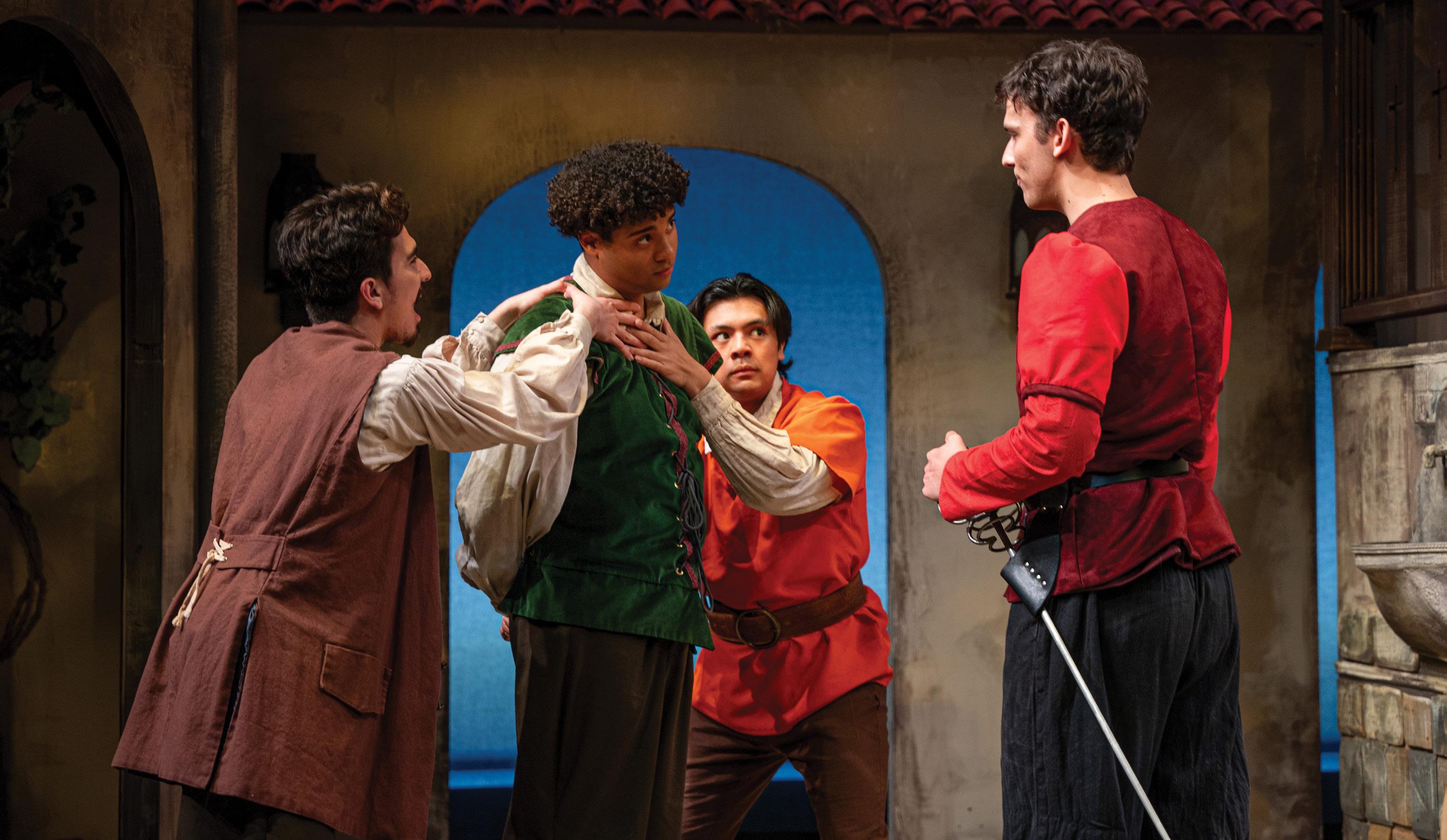
On Feb. 12, 2026, “Fuenteovejuna, or Like Sheep to Water” had its opening night. Presented by the UCR Department of Theatre, Film, and Digital Production, in the Arts Building Studio Theatre Arts Room 113, “Fuenteovejuna is a Spanish Golden Age play written by Félix Lope de Vega y Carpio in 1618. It portrays an event in the village Fuenteovejuna, in which its peasants revolt against an unjust tyrannical commander in 1476.
The play begins with the background of the antagonist commander, Fernán Gómez de Guzmán, played by Nathan Reiner. His presence in the village was a result of military conflicts near the city of Fuenteovejuna. All the while, the villagers discuss different subjects of love and relationships.
The daughter of the mayor, Laurencia, played by Kylah Kintaudi, and Pascuala, played by Yennie Cannon, feel indifferent towards these ideas due to the nature of men having one sided intentions or troublesome behavior...
The Best of Both Worlds
La Familia creates judgment free space for people to embrace themselves.
SANJANA THATTE Features Editor
Many of us at the University of California Riverside can relate to the struggle of balancing dual identities.
How we exist in one space can differ greatly from how we present in another. This need to mold ourselves depending on the situation can be exhausting. La Familia has made their club a space for students of all backgrounds allowing them to be amongst peers and be themselves.
La Familia is one chapter of a LGBTQ+ student organization aimed at providing support for Hispanic queer students. Aru López, third year political science major and president of the club, explained that a lot of the club’s early history is...
ALEXANDER WONG / THE HIGHLANDER
Editor-in-Chief
Mata Elangovan
editorinchief@highlandernews.org
Managing Editor
Isaac Solnick
managingeditor@highlandernews.org
News Editor José Del Ángel
news@highlandernews.org
Asst. News Editor
Angelica Brianna Acosta
asst.news@highlandernews.org
Opinions Editor
Cecile Diroll
opinions@highlandernews.org
Asst. Opinions Editor
Rubaita Iqbal
asst.opinions@highlandernews.org
Features Editor Sanjana Thatte features@highlandernews.org
Tech Director Ashna Pradhan techdirector@highlandernews.org
Asst. Tech Director Shenonaa Jenith Kumar
Ad Reps
Paris Cao
Xochitl Gutierrez
Xavier Scott
Zachary Hoisington highlanderadrep@gmail.com
Distribution Manager
Noah Davis Witten
Humans of UCR
Martina Carvajal (she/her), Psychology, Second Year
CONTACT US
The Highlander 101 Highlander Union Building Riverside, CA 92521 www.highlandernews.org editorinchief@highlandernews.org
TIP
LINE: (951) 827-2105
Help the Highlander stay on top of what is happening on campus and in the general UCR community. Call this number and leave a message for the Editorial Board with your tip. Be sure to include your full name, relation to UCR, and a number or email address where you can be reached for more details.
LETTERS TO THE EDITOR
The Highlander accepts letters from the campus community. They must be 600-800 words at length and include the author’s name and contact information. Topics should be UCR-centric and/ or pertain to our generation of students. Contact Opinions Editor Cecile Diroll at opinions@highlandernews.org by Wednesday if interested in writing a letter and submit the completed letter by Saturday at noon. Letters can and will be rejected if it does not meet requirements.
LEGAL
The Highlander is published and copyrighted by the Highlander for the students, faculty and staff of UCR. All rights are reserved. Reprinting of any material in this publication without the written permission of the Highlander is strictly prohibited. Readers are allowed one free copy of the newspaper. For additional copies or for subscription information, please contact the Highlander. The Highlander fully supports the University of California’s policy on nondiscrimination. The student media reserve the right to reject or modify advertising whose content discriminates on the basis of ancestry, color, national origin, race, religion, disability, age, sex or sexual orientation. The Highlander has a media grievance procedure for resolving complaints against it. All inserts that are printed in the Highlander are independently paid publications and do not reflect the views of the Editorial Board, the staff or The University of California or the Associated Students of UCR.
I live in Chino. I feel like commuting has its pros and cons. [Today,] I’m here from nine to five and I have a three hour gap and a two hour gap. I’m [also] late to my [classes] this quarter. I either start at 8 or 9 [a.m.] so it’s definitely a struggle to get out of bed in the morning.
I’m a volunteer at The Well. I started doing that because I found that I’m always here, but like never here at the same time. What’s funny is one of their videos came up on my Instagram reels and they were asking for volunteers. I joined with one of my friends, which [was] nice.
I’m a part of Active Minds. [The Well] has Golden Arches, Public Health Peers and Active Minds. Active Minds is more focused on reducing the stigma around mental health. I feel like [it] really correlated with [my] psych[ology] major and it’s been cool to meet other people there who are also psych[ology] majors and have similar interests as me.
I love the water so much. I started swimming when I was really little. I [also] love the beach. A couple years ago, I went [on] vacation in the Philippines with my family and they were getting mad at me because I was super far in the water. They were telling me to come back because apparently there were sharks or something.
When I’m underwater, I have no thoughts. I’m a very anxious person. I [tend to] overthink a lot. But in the water, I’m not thinking about anything.”
Compiled by Isaac Solnick, Managing Editor
DANIELA CRUZ / THE HIGHLANDER
Riverside firefighters get a device that will save 3 million-plus gallons of water annually
PUMPPOD: A PRODUCT OF COUNTYWIDE COLLABORATION THAT WILL SAVE MILLIONS OF GALLONS OF WATER.
ELIZABETH TENG Contributing Writer
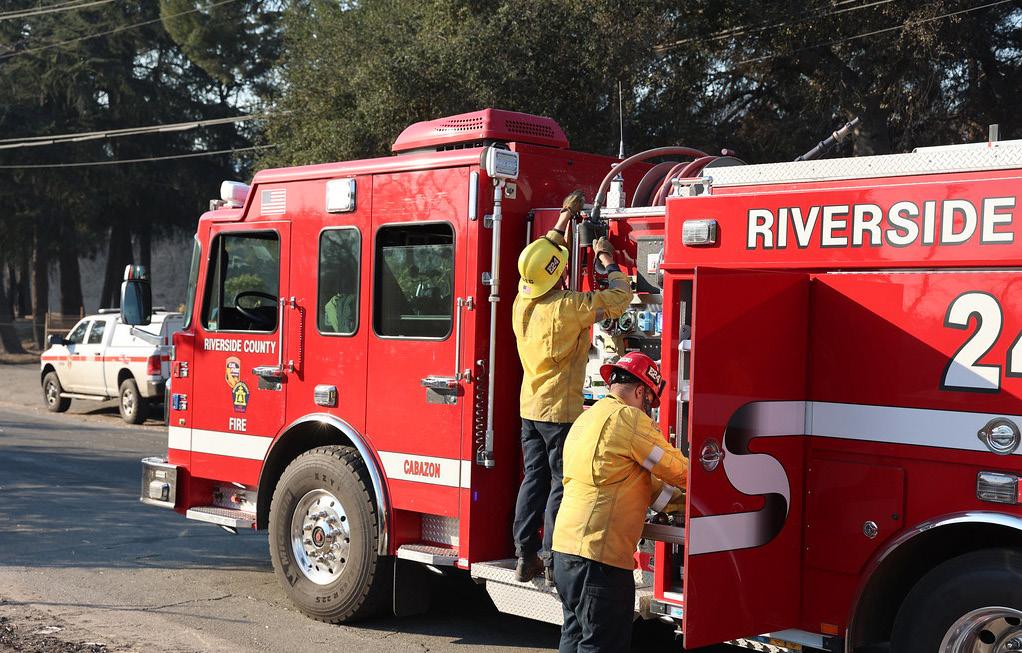
The Riverside Fire Department has become the first city in California to utilize the PumpPod, a device born from the cooperative effort of several local agencies that will save millions of gallons of water a year.
The PumpPod is a product of a two-and-a-halfyear collaboration between Riverside Fire Department, Riverside Public Utilities, Western Municipal Water District and Metropolitan Water District Southern California.
The PumpPod is constructed to be a closed system, meaning that the water produced by the pump during fire training will be recaptured and recycled. Firefighters practice by aiming a hose into a mobile tank. The
water from the hose is then returned to the pump, effectively allowing it to recycle
Fire Chief Steve McKinster ensures that the quality of training will not be compromised by the PumpPod and that the crew will “train exactly how they
would during real world emergencies, while saving thousands of gallons of water every single training evaluation.” This water conservation will save an estimated total of 3.5 to 4.5 million gallons of water per year, the equivalent to seven
ASUCR Senate Meeting
THIS WEEK’S MEETING COVERED GENERAL ADMINISTRATIVE UPDATES.
OVI MATHIVANAN Staff Writer
On Feb. 11, 2026, the Associated Students of the University of California, Riverside (ASUCR) meeting began at 7 p.m. and adjourned at 7:29 p.m.
The Senate unanimously approved Senate Resolution SR-W26-003 which enables ASUCR to address lawmakers’ concerns and establishes an annual review process to keep its actions aligned with student interests and state and federal legislative policies.
Special Elections for the School of Education Senator position were announced and will remain
open until the end of day Feb. 16. Eligible applicants were encouraged to apply via ASUCR’s Google Form. The elected individual will serve for the remainder of the 2025-2026 term.
The Feb. 4 Finance Committee hearing minutes were tabled due to a discrepancy between the reported opening and closing balances for ASUCR contingency funding. Tabled documents may be reviewed at a later Senate meeting once the authors have corrected any discrepancies or errors.
Olympic-sized swimming pools.
Laura Boughton, board president for Western Water, acknowledges the overall importance of water conservation, saying, “As our region faces hotter summers, longer wildfire seasons and
continued pressure on water supplies, aligning public safety and water reliability is increasingly important.” Additionally, the PumpPod is a better financial option since it is less expensive than traditional pump pits and cisterns, which would otherwise be used during firefighter training.
Roughton also highlights the significance of the collaboration’s execution of such a project, saying that it “reflects a true partnership by bringing together local leadership, regional wholesale support and state grant funding.” Robin Glenney, Assistant General Manager of Water for Riverside Public Utilities, says that the PumpPod will create a “roadmap” that other agencies can employ to deliver environmentally and fiscally responsible projects.
UCPD Crime Watch
STAY UPDATED WITH THE RECENT CRIMES HAPPENING AROUND CAMPUS.
JOSÉ DEL ÁNGEL News Editor
The following reports were provided by the University of California, Riverside Police Department. For more information make sure to visit the UCPD citizenRIMS website to stay updated on crime activity.
On Feb. 5 at 4:40 p.m. it was reported that there was larceny theft at the Student Resource Center.
On Feb. 6 at 6:30 a.m. it was reported that there was grand theft at Parking Lot 13.
On Feb. 9 at 10:45 a.m. it was reported that there was larceny theft at the Orbach Science Library.
Anyone with info relevant to any of these cases is urged to contact UCPD at ucrpdit@ucr.edu or (951) 827-3852.
COURTESY OF RAEAN
COURTESY OF FLICKR
Riverside’s City Council approves $1.9 million street maintenance project
PREVENTATIVE WORK EXPECTED TO CUT THE COST OF STREETS’ UPKEEP BY MILLIONS.
MARIBEL HERNANDEZ Staff Writer
After considering seven separate contractors for the job, Riverside’s City Council awarded Union Pavement Services, Inc. of Jurupa Valley a $1.9 million contract to install preventative work for an 11.6-mile-wide street maintenance. The City Council unanimously voted on the contractor on Feb. 3.
Councilmember Chuck Condor expressed his approval of this work during the council meeting, specifically noting his satisfaction with the contractor’s requirement to “sweep excess sand from slurry seal applications” in an effort to maintain Riverside’s streets during this process.
While the allocated funding towards preventative work may seem costly, Public Works Director Alex Ramirez has stated that this approach is more cost-effective in the long run, as it costs only oneeighth of the price of full resurfacing, which would approximately equate to $16 million.
The project is set to begin as early as this spring,
and progress can be tracked using Riverside’s Street Pavement Condition Map, an interactive map that allows residents to view their street’s condition score, as well as any work they are currently undergoing.
The funding for this project was drawn from a combination of Riverside’s Measure Z taxes, state gas taxes and the County Measure A sales tax. Measure Z is a “one-cent transaction and use tax” whose revenues directly go to the city and help pay for critical underfunded programs and services.
The County Measure A sales tax is a “halfcent sales tax” that helps provide funding for the construction and maintenance of local streets and roads, transportation improvements as well as public transportation, including Metrolink.
The City Council approved a separate project in January that aims to address street resurfacing work, and it is also funded by Measure Z funding.
There have not yet been any official reports made containing information as to how traffic will be impacted by either of the street maintenance projects, but any road closures in Riverside County
can be found reported on the Riverside County’s Transportation Department website.
Of the 11.6 miles being treated for the projects, 9.5 miles will be treated with slurry seal, which is a protective asphalt coating that can extend a road’s life from five to seven years. Slurry seals can dry in as little as three hours if weather conditions are hot and dry, but roads mustn’t be reopened until after the sealant is no longer tacky, as driving on it may damage both the road and vehicles.
The remaining 2.1 miles will be treated with a cape seal, an asphalt-rubber membrane layer that seals and bonds cracks in the existing pavement, creating smoother roads. This treatment requires two separate steps: first applying the chip or scrub seal, then applying a slurry seal, typically a week afterwards.
Overall, Riverside’s City Council’s approval of road improvement projects aim to extend the lifespan of roads, reduce the cost of upkeep by millions of dollars and ensure that residents’ taxes are being utilized in a manner that will benefit them in their day-to-day lives.
No contract, no coffee: Riverside Starbucks workers protest
OVI MATHIVANAN Staff Writer
THE MULTI-DAY PROTEST CALLED FOR STARBUCKS CONTRACT NEGOTIATIONS.
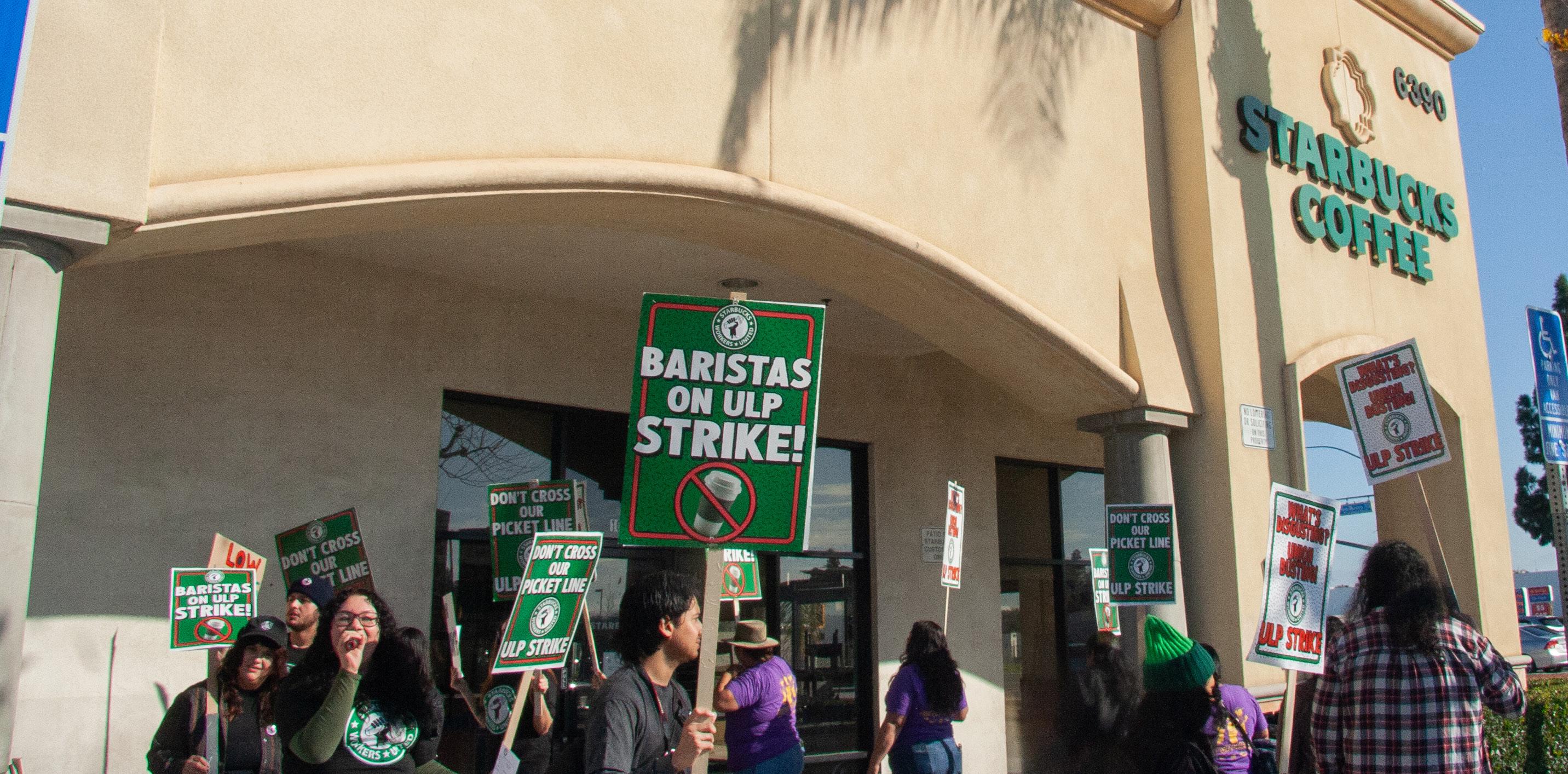
On Feb. 12, organizers and baristas gathered outside the local Starbucks at 6390 Van Buren Blvd in Riverside to protest. Workers at the strike called for a more equitable workers’ contract that addresses concerns about wages, staffing levels and overall working conditions.
The protest was part of a three-day effort that took place during morning hours from Feb. 12 to Feb. 14. Organizers described the protest as part of a broader, years-long series of open-ended strikes, with workers aiming to continue mobilizing until they believe a fair contract is reached.
Supporters were encouraged by the Inland Empire Labor Council to “show solidarity in the spirit of Valentine’s Day by either donating to their strike fund” or joining the community and its baristas on the frontlines of the protest. Starbucks Workers United, a union representing thousands of Starbucks workers nationwide, also encouraged community members to support workers by signing the “No Contract, No Coffee” pledge.
“No Contract, No Coffee” is a protest slogan used by striking workers and supporters. The phrase calls on customers to delete the Starbucks app, cease purchases of Starbucks products and withhold financial support from the company during strikes over what workers describe as ongoing unfair labor practices.
A standardized sign posted on the store door during the protest read, “Our store is temporarily closed.” Workers at the protest described feeling dejected and uncertain about the future, citing lack of recognition and concerns about unsafe working conditions related to understaffing.
Michael William Hickman, a barista trainer
who has been working with Starbucks for over four years, noted that on top of poor wellbeing and low sleep, they feel their work has gone unrecognized by the company. “I’m not being celebrated for the work that I’ve been putting in,” Hickman noted, adding that they have been “surviving some shifts that have been extremely awful.”
Amber Gonzalez, another Starbucks barista, reflected on what many workers describe as an isolating experience. The barista cited fear surrounding unionization efforts after hearing about Starbucks’ union-busting practices. Prior to joining these strikes, Gonzalez had also previously not spoken as much with fellow Starbucks employees, both within the same store and beyond it.
Gonzalez added that knowing that there is a community willing to gather in solidarity, along with having access to a union that provides guidance, has helped make the
situation feel less daunting for workers who may feel nervous or fearful about speaking out.
Workers also encouraged customers to seek alternatives to Starbucks, including patronizing local businesses, which they suggest still offers the “third place” experience that Starbucks has long promoted.
Workers maintained they are ultimately seeking increased transparency and collaboration from Starbucks moving forward. Protestors expressed frustration with what they described as being misrepresented by the company’s use of a symbolic empty chair at shareholder meetings, intended to represent the barista’s voice. They cite the exclusion of barista presence at these meetings, noting the lack of direct input from current employees has become a contributing factor to the growing divide between employees and corporate leadership.
ALEXANDER WONG / THE HIGHLANDER
San Francisco public teachers on strike
UNION CITES COST OF LIVING INCREASES AND LABOR SHORTAGES AS MAIN CAUSES.
LEO PRETTO Contributing Writer
On Monday, Feb. 9, San Francisco Unified School District (SFUSD) teachers began a historic strike. The strike prevents about 50,000 students from receiving classroom instruction and has continued throughout the week.
Over 100 schools are impacted with over 6,000 educators not working. With no end date, the strike will continue indefinitely, until members of the United Educators of San Francisco are able to reach an agreement with the District. The last San Francisco teachers’ strike in 1979 lasted seven weeks.
The President of the United Educators, Cassondra Curiel, speaking in regards to the union’s demands, stated, “We will continue to stand together until we win the schools our students deserve and the contracts our members deserve,” citing increased cost of living in one of America’s most expensive cities and chronic staffing shortages among the
districts. The union is negotiating for an 8% raise over the next two years, which would constitute a $92 million dollar increase in the district’s budget.
SFUSD is already dealing with a $100 million dollar budget deficit and thus was forced to reject the offer from the union. Teachers additionally demand fully funded healthcare for families and filling of vacant staff positions to assist overworked remaining employees.
The loss of education and growth for children has raised concerns among parents. For some students, free school meals are the only reliable source of food for their days. San Francisco’s Department of Children, Youth and Families offered free lunch and snack bags at more than 40 locations across the city. Local libraries have also seen daily visitor counts increase by over 30%.
State employee union challenges Newsom on remote work
CALIFORNIA UNION SPONSORS WORK-FROM-HOME BILL AS NEWSOM ORDERS STATE EMPLOYEES BACK TO OFFICES.
OSCAR GUO Contributing Writer
In a Feb. 6, 2026 press release, the Professional Engineers in California Government (PECG) introduced a bill that would require state employers to provide work-from-home options for eligible employees to the “fullest extent possible.” The bill further stipulates that departments would need to issue written justifications for any instances where an employee is required to report onsite.
The bill comes amidst a push by Governor Newsom to return state employees to in-person workplaces. An executive order issued by Newsom in March 2025 required state employees to report to their offices for at least four days a week, with a compliance deadline initially set for July 1, 2025.
The return-to-office order has been hampered by a critical lack of workstations across state departments, with offices unable to accommodate enough employees to comply with the order. As a result, the compliance deadline was extended by one year following union negotiations.
According to PECG executive director Ted Toppin, “the goal of the bill is not to nullify Newsom’s order. Rather, it’s to remind policymakers of the benefits that telework can bring.” Supporters of the bill have pointed to the estimated $225 million annual cost savings associated with remote work, as well as the environmental benefits of having fewer commuters on the road.
Toppin has expressed willingness on the part of the PECG to work with Newsom’s administration on the issue, including discussions over a further extension of the return-to-office order’s compliance deadline. If the bill is successfully passed by the California State Legislature, it will be up to Newsom to decide whether to back down as before when faced with union pressure, or reject the bill.
Opinions
U.S. policy in Gaza is now a long - term occupation by another name
TRUMP’S GAZA “PEACE” FRAMEWORK IS LESS AN EXIT STRATEGY THAN THE BLUEPRINT FOR AN OPEN - ENDED FOREIGN TUTELAGE OVER A SHATTERED TERRITORY.
ALAN LOK Staff Writer
On the campaign trail, President Trump had vowed to end “America’s endless wars,” but in Gaza he is quietly building the infrastructure for a long-term occupation in everything but name.
He has transitioned from “ending wars” at home to managing a territory abroad and turned his back on releasing America from costly foreign entanglements. The Trump administration in Gaza is designing a multi-year security and governance architecture that keeps Washington at the forefront of every major decision regarding Gaza.
What is sold to the public as an effort to “end the war” starts to look more like a long-term management project — one where the U.S. is less a neutral mediator and more a supervising power. He has chosen to outsource Gaza’s sovereignty to foreign nations rather than return it to the legal Palestinian governing body, the Palestinian Authority (PA).
Trump’s project in Gaza gives the U.S. and its allies broad authority over checkpoints and ceasefire management, which has been spearheaded by the deployment of the “International
Stabilization Force” overseen by U.S. commanders and allies. Importantly, the “Board of Peace”, a new, Trump-chaired international body created in late 2025 to oversee the Gaza ceasefire and postwar governance later broadened into a global conflict-management body, independent of the UN framework.
It includes a hand-picked technocratic Palestinian council set up to direct reconstruction and approve local partners, putting key decisions in foreign hands. This combination of hard power and financial leverage allows Washington to steer Gaza’s politics without formally calling itself an occupying power.
When an outside power like the U.S. controls borders, security forces and the flow of aid, and when local leaders cannot meaningfully govern without foreign approval, the arrangement functions as an occupation regardless of branding. The lack of a clear timetable for full Palestinian sovereignty in Gaza reinforces fears that “temporary” measures will become permanent. Palestinian leaders and many civil-society groups warn that this structure sidelines genuine self-determination and risks turning Gaza into a
U.S.-designed protectorate. By normalizing an open-ended “managed peace” in Gaza, the U.S. weakens its own arguments for self-determination in places like Ukraine and Taiwan, and signals to other powers that de facto occupations can be branded as security missions. This risks further eroding trust in Washington among younger voters and global publics who already doubt U.S. commitments to international law and human rights. A March 2025 Gallup poll shows only 10% of 18 to 34-year-olds believe the U.S. should assume a leadership role in international matters — 10 points lower than ages 35 to 54 and 13 points lower than those older than 55.
Gaza is already in the spotlight as the U.S role as an honest broker of peace is being carefully watched when it designs and polices the political future of a territory it does not inhabit. The Gaza model may embolden other powers to pursue similar “stabilization” occupations — China in Taiwan, Russia in parts of Ukraine — further eroding norms against annexation and foreign control.
For Gaza to achieve meaningful sovereignty, local Palestinian
groups and civil society advocates emphasize a process rooted in self-determination, free from external vetoes or technocratic proxies.
This would involve lifting Israel’s blockade, the removal of Israel Defense Forces (IDF) in Gaza beyond the border, enabling free elections for a unified Palestinian authority (integrating Gaza with the West Bank under international law) and full reconstruction led by Gazans themselves. The aid should flow unhindered, with no foreign military oversight in exception of peacekeeping operations to ensure a smooth and stable future for Gaza.
Ultimately, the framework set up by the Trump administration to end the conflict in Gaza is by itself contradictory as it seeks to control and manage the future of the region through its own mechanisms that President Trump has campaigned on avoiding — American involvement in foreign conflicts. If Gaza is to be safe and secure in the future, a heavy readjustment is needed in Trump’s plan and self-determination should be returned to the Palestinian people.
Social media is increasingly becoming a new concerning youth addiction
SOCIAL MEDIA PLATFORMS ARE THE NUMBER ONE REASON FOR YOUTH MENTAL HEALTH CHALLENGES.
SHREYA PATEL Staff Writer
It’s 2 a.m, and one makes the promise to look at their phone for two minutes and then go to sleep. Without even realizing it, the two minutes turn into one hour. This isn’t a unique experience. It’s a universal trend that affects the youth population.
Recent lawsuits have pointed out that this addiction may not be a habit, but a deliberate design by the social media companies to get youth addicted to their platforms. Big names such as TikTok, Meta’s Instagram and Google’s YouTube are negatively affecting teenagers and these impacts do not look like they will stop anytime soon. TikTok negotiated a settlement for the landmark lawsuits filed against them just before the trials kicked off. However, this is likely a business strategy that helps the company hide their algorithms and internal data, showing that they care more about their profits than the safety of young users.
According to AP News, the 2 a.m. doomscroll addiction that has been instilled in youth today is borrowed heavily from “the behavioral and neurobiological techniques used by slot machines and exploited by the cigarette industry.” This technique is embedded in social media platforms through features that aim at maximizing youth engagement just to drive advertising revenue and profits.
Similar to the dopamine boost that cigarettes achieve, the infinite scroll, push notifications for new content or the
autoplay of content releases the same “feelgood” hormone in users’ brains. Social media platforms market community building or facilitating communication, but instead, they negatively affect young users by distracting them with every
form design and accountability. Just recently, a lawsuit was filed against social media companies by a 19-year-old user named “KGM.” Claims in the lawsuits include early age addiction, exacerbated depression and suicidal thoughts through
that young users’ wellbeing isn’t a priority.
Meta has highlighted their contributions to child safety and how they have collaborated with the National Center for Missing and Exploited Children, along with information sharing
buzz, badge or push notifications they get — triggering a little hit of dopamine in their brains.
What starts as a casual free time activity quickly turns into a distraction from work and other activities. Social media is trying to make a profit from their users based on the time they spend on the app itself. However, this is at the expense of their users. Keeping oneself accountable for their screen time is the best way to combat this rush of dopamine in the form of endless scrolls.
Moreover, the lawsuits themselves show a deeper concern about plat-
deliberate design choices made by companies that sought to make their platforms more addictive to children to boost profits.
Lawsuits currently filed also sidestep the traditional protections under Section 230 and the First Amendment, which protects tech companies from liability for material posted on their platforms. This focuses on how platforms algorithmically promote content rather than the user-generated content that gets posted. Not only does this add to the point that most work done by social media companies is for profit, but it also emphasizes
initiatives with law enforcement to reduce this harmful issue. Meta also goes on to argue that lawsuits have tried to blame teen mental health struggles on social media, while clinicians claim that mental health trends in teens aren’t clear cut or universal for one reason.
Narrowing the challenges faced to a single factor ignores scientific research and many stressors impacting young people outside of social media, says Meta. But what needs to be understood is that mental health effects could be caused mainly or exacerbated by social
media — even if it isn’t the only cause.
Google also responded by claiming that these allegations are simply not true as their target has been to “provide safer and healthier experience” for all ages. However, TikTok remained silent on these allegations, later coming out last week to settle the case for an undisclosed amount. While these statements from social media companies may be true and part of an effort to fight this case, the effect on the young population is real and tangible.
Almost 48% of teens say they are depressed, sad or even harassed online as they get deeper and deeper into the quicksand of social media platforms. The companies that are responsible for this youth mental health crisis must be held accountable for the effects of their addictive apps. Regardless of how the courts ultimately rule, students do not have the luxury of time to keep waiting for legal outcomes. The effects are already embedded in personal and academic lives, as many students are getting distracted by every notification, running after that little dopamine boost. Setting screen time limits, whether for specific apps, using the iOS “downtime” feature, disabling notifications and creating a phonefree study period might be small but meaningful steps until safety precautions are concretely set and required by social media platforms.
ADELIA URENA / THE HIGHLANDER
Hispanic culture’s existence is resistance
BAD BUNNY’S PERFORMANCE WAS A SLAP IN THE FACE TO MAGA.
In the midst of the U.S.’s political turmoil exacerbated by ICE raids, Benito Antonio Martínez Ocasio — better known by his stage name Bad Bunny — took to the Super Bowl’s stage on Sunday, Feb. 8 and ignited a sense of cultural pride in viewers. The Puerto Rican artist’s very presence was a sign of resistance to the Trump administration’s anti-immigrant sentiments, meaning that existence itself is resistance.
Bad Bunny went from packing groceries to packing stadiums, representing the “American Dream” of creating a better life for yourself centered around social and economic mobility. However, many Americans did not see his presence as a manifestation of this dream, but more so as a threat to their vision of a white America.
The conservative nonprofit organization Turning Point USA (TPUSA) expressed its discontent with Bad Bunny being selected as the headliner. It promptly announced its own “All-American Halftime Show” with (shocker) only white performers. Clearly, TPSUA is among those who dislike being reminded that America is a country built by immigrants of all backgrounds, not just of European roots.
Lamar’s 2025 Super Bowl performance that reached 133.5 million people.
Kendrick Lamar’s halftime performance was full of political protest, one example being how one of his backup dancers held two flags with the words “Sudan” and “Gaza” written in black ink, calling for a ceasefire in both areas. With that being said, the Super Bowl halftime performances are turning into a politicized event, which, in this political climate, is necessary to inspire change.
Similarly, President Donald Trump’s social media posts give viewers an insight into his demented stream of consciousness of what “Make America Great Again” (MAGA) entails. His critique of Bad Bunny’s performance — which was entirely in Spanish — included excerpts like “[this] is an affront to the Greatness of America, and doesn’t represent our standards of Success, Creativity, or Excellence,” and “This ‘Show’ is just a ‘slap in the face’ to our Country,” grows increasingly less shocking when remembering Trump grew up in an era before the Civil Rights movement.
So, when Trump says he wants to “Make America Great Again,” he’s really talking about reverting
in the middle of Puerto Rico’s sugar cane fields, which highlighted the history of colonialism and slavery in the Caribbean. The transition to New York, or “NUEVAYoL,” is a direct reminder to immigrants that their presence in the U.S. is the very bedrock of this country.
The music video of the song was released on the Fourth of July and opened with Trump’s AI-powered voice saying, “I want to say that this country is nothing without the immigrants. This country is nothing without Mexicans, Dominicans, Puerto Ricans …” Unfortunately, this is something the real-life Trump would never say.
Bad Bunny’s set also included references to the governmental neglect Puerto Rico has faced time and time again, by climbing electricity poles, a nod to Puerto Ricans routinely having to fix the island’s power outages themselves because the U.S. government has historically neglected the island, but continues to claim it as one of its territories.
He proudly emerges from the fields carrying the light blue Puerto Rican flag that was outlawed on June 10, 1948, the Ley de la Mordaza (or “The Gag Law”) until 1957, for being tied to Puerto Rico’s call for revolution and independence, a blatant form of protest against U.S. imperialism and governmental overreach.
Trump and other conservatives have expressed their discontent with Bad Bunny performing his set entirely in Spanish because they view this to be un-American. However, as Bad Bunny’s performance demonstrated, America is a country built by immigrants from all over the world, including from Latin America. So, the belief that Spanish is not an “American” language is completely rooted in white supremacy.
As his closing remark, Bad Bunny held up a football displaying the words, “Together, We Are America,” after listing the names of Latin America’s countries and including people whose real-life professions are nail artists, taqueros and musicians who all help bring together Hispanic culture. Bad Bunny, stating “Seguimos Aqui” (We remain here), demonstrates Hispanic and Latino resistance in the U.S. despite racism, exploitation and rigid immigration laws forcing apart families for decades.
The activist artist is in no way new to protesting against social struggles the Hispanic community faces, but his Super Bowl halftime performance has pushed this over the top and ignited a sense of pride in viewers of all ethnicities, demonstrating the importance of representation in the media.
In the end, existence is resistance, and in the political climate Americans face today, this continues to ring true more every day.
MARIBEL HERNANDEZ Staff Writer
Putting the “doom” in doomscroll
IN A WORLD OF AI AND QUICK ANSWERS, WE ARE LOSING WHAT MAKES US HUMAN.
LIAM MCCANN Contributing Writer
College students and those in careers that rely heavily on technology are rapidly losing their ability to be autonomous and think critically. We live in a world that relies on artificiality and speed, costing us what makes us human: our ability to think and create. In doing so, we are forgetting a lot. We forget how to be functional people. We forget how to interact with one another. We lose sight of who we are as the human race.
I am sure it’s not news that our generation, Generation Z, relies heavily on technology. We use it for practically everything. We wake up to technology, check our Instagrams, send our Snapchat streaks. We go to school in our increasingly digital cars. Our classes are taught through PowerPoint presentations and videos. We do our PollEverywheres. Canvas is our hub for all our digital assignments. We don’t have a modern society that can thrive without technology, and while that in itself isn’t inherently bad, we are becoming more and more like malfunctioning machinery all the while.
We absorb the majority of our news through technology. There could be — and likely are — dozens of novels about the falsehood of social media activism. We have become so desensitized that we repost whatever tragic news has been released and immediately forget about it. You can repost global atrocities and argue that you stand a certain way, but that doesn’t mean much when it lasts 24 hours and disappears into the void. I hesitate to call it “real” activism, but at the same time, going to a protest or continuously advocating for legislation or political change is more memorable than a social media post. It will make an impact. But the technology used for that isn’t authentic either. It’s a spectacle. A distraction. We “plug in” to these apparatuses to get dopamine constantly. We watch edits to our favorite artists or idols that are hypersaturated. We spend all day on social media and call it
“doomscrolling,” but we ignore how truly doomed we are in the process.
As we have grown up, we have been given quick access to answers to anything we could think of. You can find the synopsis of a book so you don’t have to read it for class. You can ask ChatGPT and Google Gemini to summarize the readings for your political science class. Translate passages to and from Spanish or French. Before too long, we don’t think about much for ourselves. You can’t even really make an “ethical” Google search, as Google Gemini has a “handy” feature that summarizes all your search results. There isn’t a point in trying to do anything if the people deemed “successful” in our society are using these shortcuts, or so it feels.
We can use these types of technology recreationally too. Dozens of apps are devoted to having conversations with your favorite people or characters. AI is “writing” music and “creating” art.
It’s ridiculous. What distinguishes humankind from other species of the animal kingdom is the ability to create art. When AI “creates” art, it recycles what already exists. It steals from real artists to massproduce slop that doesn’t comment on the human experience. It can’t. AI doesn’t have the human experience to talk about it. We are on a self-destructive course to destroy our humanity.
People are unmotivated to do anything if we are minor gears in a machine, but if we don’t take control, we will be steamrolled by AI. As amazing as it is that everything is interconnected in so many ways, I propose that it’s one of our greatest weaknesses. Our thirst for quickly receiving knowledge, and not the acquisition of knowledge on its own, is costly. The longer we perpetuate this cycle, the more costly it becomes. We know we can get whatever information we want in seconds, so we don’t commit it to memory.
Also, forgetfulness doesn’t just
apply to an individual. There is a collective ignorance at play. As Generation Alpha has started their academic journey, more and more children struggle to read, with only 30% of fourth graders reading proficiently. Reading, speaking, writing and thinking are the pillars of culture — without them, we aren’t really people anymore. We are drones.
New technologies, particularly AI tools, are spreading like a virus. We are complicit in assimilating to it; it’s fast and easy to do so. In 100 years, when scientists are looking back on what we are doing, it’s hard to say that they will be amazed. We destroy the planet with AI and condition ourselves to be unthinking robots. It is probably bold to say there will be scientists in 100 years at all if we melt ice caps and destroy the ozone layer. Of course, the argument can be made that one AI search won’t be detrimental, but when that is the mindset of billions of people, we find ourselves in the same rut.
Riding into the new Years
What the Chinese New Year’s has in store for you.
VASH CHEN
Editor
Happy Chinese New Year to everyone! 新年快乐!
This year marks the Year of the Horse. In the Chinese Zodiac, every year is marked with one animal out of 12. This year falls under the seventh animal of the circuit. So if you were born in 1974, 1990, 2002 or 2012, then watch out: this year is your Ben Ming Nian (本命年), or bad luck year.
Rank 1: Ox (1973, 1985, 1997, 2009)
Congratulations to you! You are the luckiest zodiac sign this year. All of your hard work these past years will have paid off. People will find you very charismatic and you’ll achieve great career advancements with consistent work. However, be careful because great success will be earned through difficult challenges.
Rank 5: Pig (1971, 1983, 1995, 2007)
You’ll be surrounded by plenty of supportive people, so take this opportunity to network and connect with others. Be cautious about your health and address any problems quickly. Stick to a routine and avoid flaunting wealth or bragging to others. This year is good to start laying the foundation for any important projects in your life.
Rank 9: Snake (1965, 1977, 1989, 2001)
2026 is a year of great financial gains, so make bold investments and see great returns. You may also attract unusual business partners and benefactors. Trust your intuition to guide you to the right path. Be wary of moving locations or buying a new house, as the Snake is a neighbor to the Horse, so movement can be disruptive.
Unlike the Tropical Western Zodiac, in Chinese astrology, your zodiac year is seen as bad luck because your energy conflicts with Tai Sui, the god of age. But don’t fret, this is natural. In Chinese culture, there’s a give and take: this year is simply the Horse’s year to pay their karmic debt. You can protect yourself by wearing red; however, it must
Rank 2: Rabbit (1975, 1987, 1999, 2011)
Your year will be filled with lots of happiness in personal relationships and personal growth. You’ll likely meet beneficial people and enjoy a great social life. You’re also part of the Fab Four: a set of four zodiacs that will rule the cardinal directions this year. The Rabbit rules the Eastern direction. Be wary of impulsive decisions that could lead to arguments.
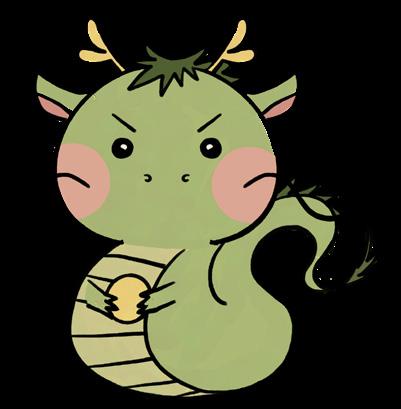
Rank 6: Dragon (1964, 1976, 1988, 2000)
be a red item gifted to you by a friend or a family member; this is because it is seen as more meaningful to have a friend or a family member wish you good luck. So, if you know if it’s someone’s bad luck year, go get them something red.
With that being said, let’s get into the zodiac predictions for the 2026 Year of the Horse!
Rank 3: Rooster (1969, 1981, 1993, 2005)
This year provides great opportunities to grow. As one of the four zodiacs in the cardinal directions this year (West), you’ll be part of the Fab Four! This provides you with great luck. Protect yourself from quarrelsome relationships and negative friendships. Collaborate with those who share your passion for life.
MAIN ST
This year will certainly have highs and lows for you. Dealing with tricky situations with a clear mind will help you through emotional turmoil. Thankfully, you also have a lucky star in your chart, so take advantage of it to overcome challenges. Surround yourself with like-minded people.
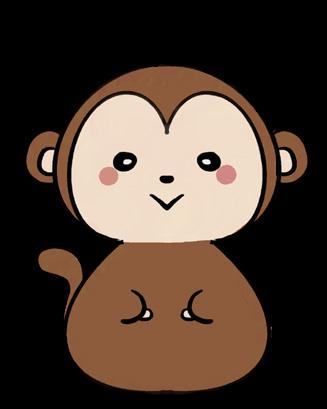
Rank 7: Monkey (1968, 1980, 1992, 2004)
You’ll receive wisdom and knowledge this year. Your relationships will be weak this year so actively spend time with those around you and avoid isolation. To protect yourself from negativity, you’ll find that it’ll benefit you to surround yourself with people.
ORANGE ST
Rank 10: Horse (1966, 1978, 1990, 2002)
The Horse rules the Southern direction in the Fab Four, however, be careful of the Southern direction due to your karmic energy. Enjoy some divine blessings as you are backed by Tai Sui, but use your judgement carefully. Do not isolate yourself this year, and instead rely on the support around you and make wise decisions.
Rank 11: Tiger (1974, 1986, 1998, 2010)
Despite being an ally of the Horse, this year brings two tigers into the celestial charts: a sign of bad luck. There’s an old Chinese idiom: 一山不容而虎 It means “One mountain cannot hold two tigers.” The meaning is that two apex predators cannot reside in the same place or their energies would conflict. The same concept applies to this year’s celestial charts. Regardless of bad energy, focus on networking and you should see some positive results.
Rank 4: Sheep (1967, 1979, 1991, 2003)
For the Sheep, this year brings resilience as well as a great time to bond with others. Your wealth is on the rise, so make strategic investments and career choices, but be careful to not overspend or get too emotional with money. Stay calm and practice cautious financial planning.
Rank 8: Dog (1970, 1982, 1994, 2006)
You will enjoy wondrous amounts of energy this year which can help mitigate stress or tension. However, address your health issues promptly or they will become bothersome. Your career will pick up quickly, so travel and connect with others. Make sure to be attentive to workplace conflicts and being misled. Think twice before acting and stay on guard against emotional decisions.
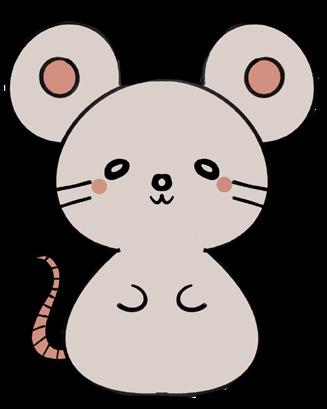
Rank 12: Rat (1972, 1984, 1996, 2008)
In 2025, you were the luckiest zodiac, so now it is time to pay your karmic debt as the enemy of the Horse. You are the last of the Fab Four, ruling the North. Be cautious of miscommunication; you will face tumultuous times so prepare yourself for an unlucky year. There’s luck on the horizon however, as you do have a lucky star in your chart that will aid you in your most desperate times.
Photo
SPOTLIGHT NORM’S NOOK
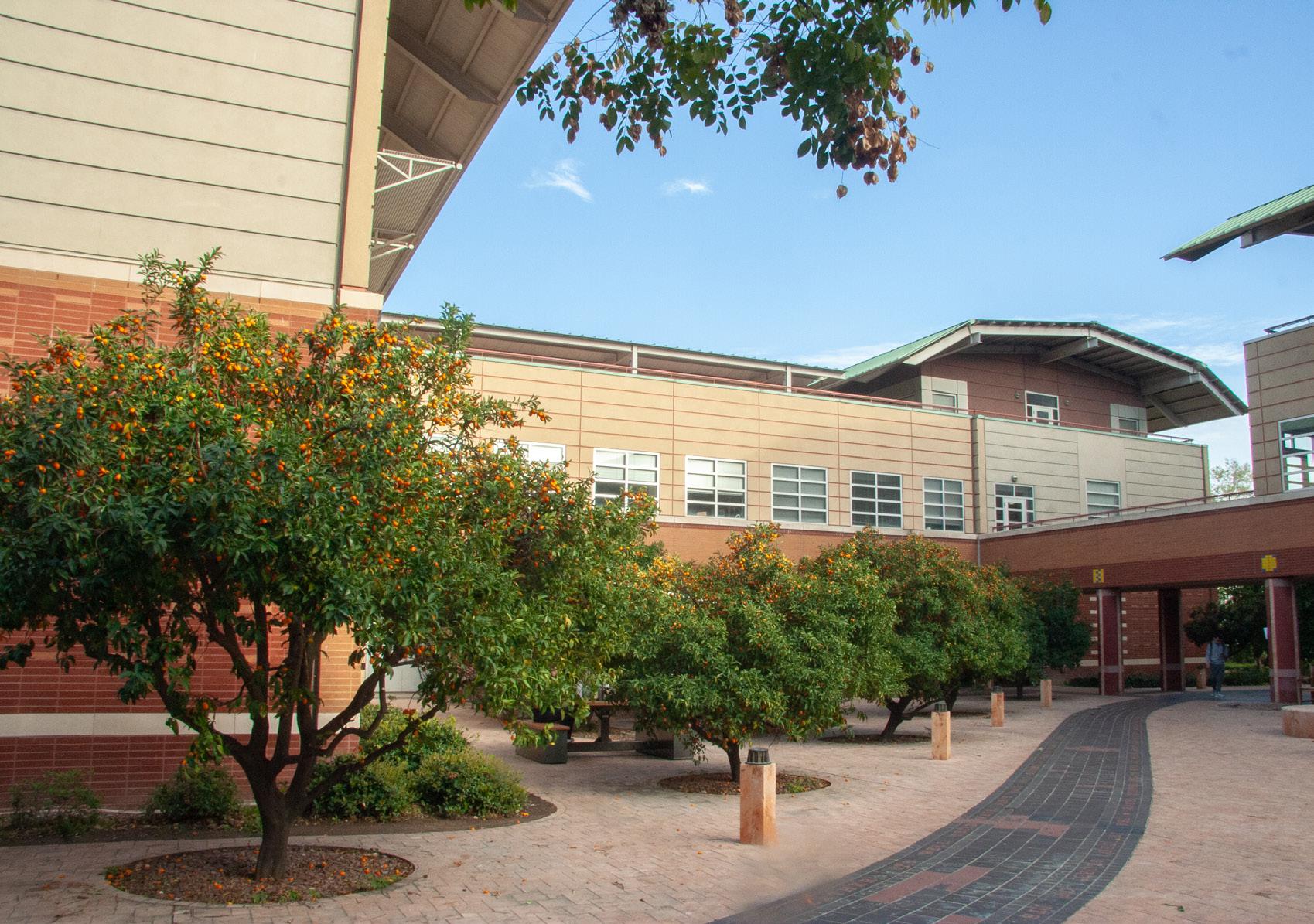
Citrus walkway
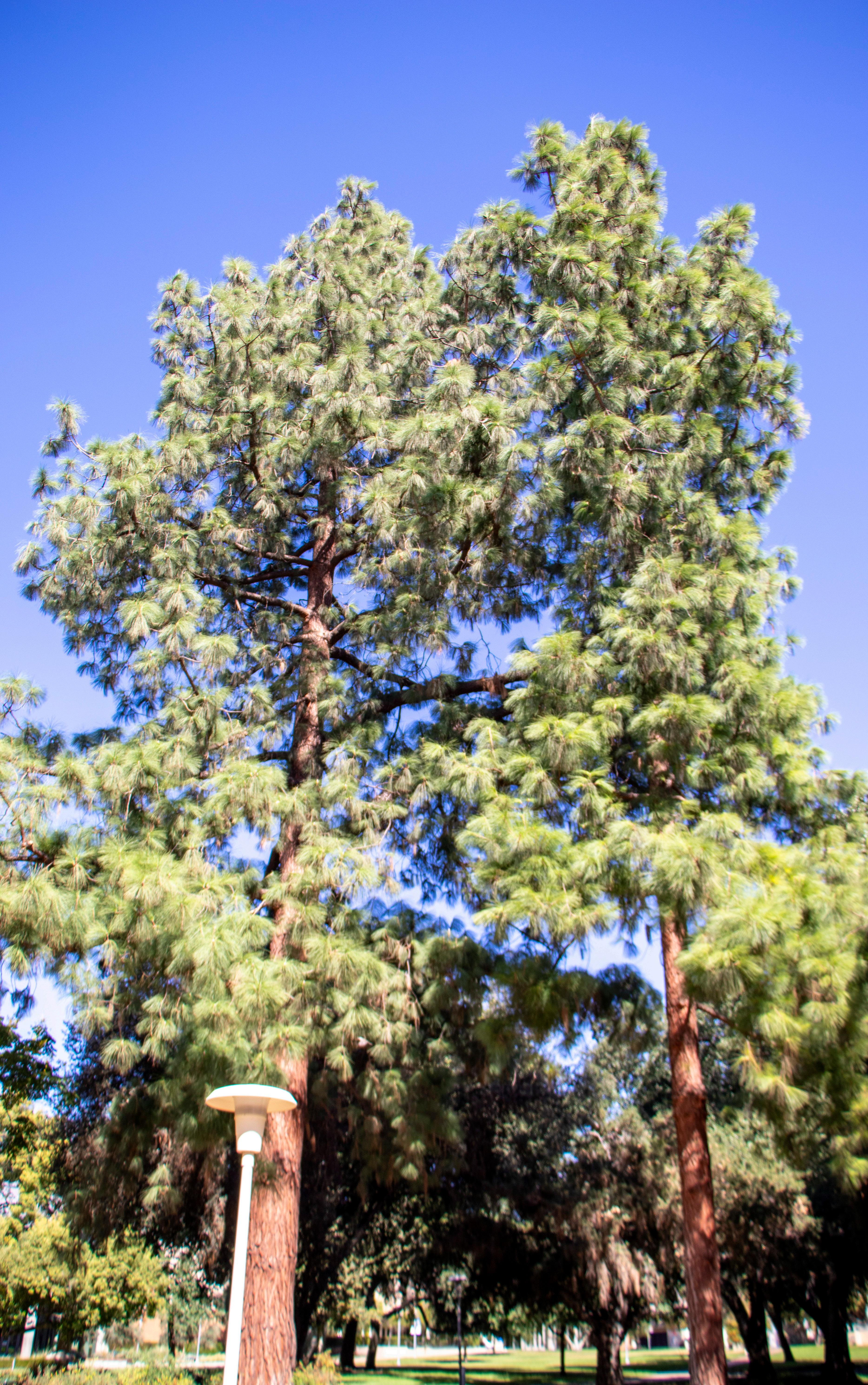
The University of California, Riverside (UCR), started as the Citrus Experiment Station in the early 1900s and traces of its past still remain today. The citrus walkway, located between the humanities building and The Barn, continues to be proof of that. This walkway is the perfect area for a stroll on a sunny day.
The faint aroma of citrus fruit wafts between the leafy
branches, inviting students in. Kumquats, oranges, pomelos and more are available to hand pick during winter and spring seasons, to provide students with a healthy vitamin C boost between classes. Next time you find yourself in the humanities building, take the time to take a walk through the orange trees and savor the sweet citrus juice.
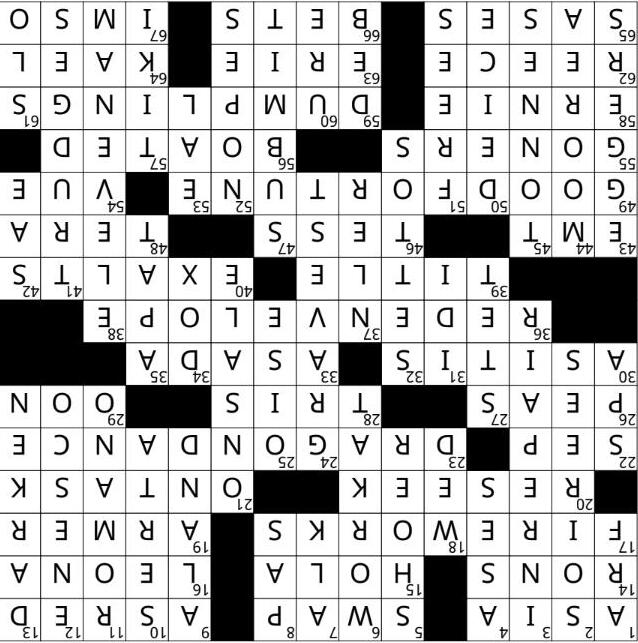
LUNAR NEW YEAR
Largest continent
Exchange
“Lips __ ___ as blood”
Pitchers Darling and Guidry 15. Spanish greeting 16. “Bleeding Love” singer Lewis
17. Explosive start to the New Year 19. Munitions supplier
Look again 21. Not distracted
Equinox mo.
23. Colorful Lunar New Year celebration dance 26. Black-eyed ____ 28. Tromethamine
29. Suffix with ball 30. If nothing changes
33. Carne _____ 36. Gifts symbolizing good luck and protection
39. Championship 40. Glorifies 43. CPR pro 46. Thomas Hardy heroine
48. Trillion: Prefix
By: H Staff
49. Symbolized by gold ingots and oranges
54. 2007 Saturn SUV
55. They’re history
56. Sailed
58. Bert’s buddy
59. Food shaped like ancient gold ingots
62. Volleyball star Gabrielle
63. Cleveland’s lake
64. Film critic Pauline
65. MS. enclosures
66. Wagers
67. The Beatles’ “_’_ __ Tired”
Down 1. Dog sound 2. Evening parties 3. Currently being worked on 4. Grieg’s “___’_ Death” 5. The edge of the beach?
Find out if you’re tang yuan, dumplings or a mooncake.
By: Nola Perifel, Assistant Features Editor
1. Your love language is:
A. Quality time
B. Physical touch
C. Gift-giving
2. Your friends describe you as:
A. Sweet and loving
B. Smart and resourceful
C. Open to experience and generous
3. What type of food do you prefer?
A. Sweet
B. Savory
C. Both, I can’t choose.
4. What is your favorite Lunar New Year activity?
A. Decorating the house with family
B. Sharing a traditional meal and exchanging red envelopes
C. Making crafts and decorating lanterns
answer key
If you got “A” more often, you are Tang Yuan. These sweet rice balls predict that you will be brought closer to your loved ones than ever before this year. You should prioritize unity and keeping a close bond with your family. You bring people together and you value tradition above all else. You are a sweet person, loving and accepting of everyone. You try to include everyone and you welcome friends into your life like they are family.
If you got “B” more often, you are Dumplings. These pockets of delight predict that you will run into luck and wealth this year. During the Lunar New Year, dumplings represent bundles of wealth. The more dumplings you eat, the more money you will run into throughout the year. You are resourceful and you bring good luck to those around you. You are comforting and welcoming. Like dumplings and their numerous fillings, you hold surprises that tend to be unexpected.
If you got “C” more often, you are Mooncakes. The mooncakes predict that you will find harmony this year and live a full life. You have a warm personality and you respect others deeply. You are pure and you strive for harmony and generosity at all times. You love gift-giving and your empathy comes from the heart. You show a poised exterior but you are also full of experience and your spark will shine brighter than ever this year.
BRIANNA GALAVIZ-VILLAGOMEZ/ THE HIGHLANDER
Creative crafts to calm your anxiety
CRAFTS TO ANCHOR YOU WHEN YOU FEEL AN ANXIOUS SPIRAL COMING ON.
provide a relaxing respite.
Painting/Coloring
Sometimes, anxiety can get the best of you. A lot of us don’t prioritize ourselves, but luckily, there are many ways to practice self care, like running errands alone and buying yourself some treats. That being said, taking some solo time can also look like learning and practicing hobbies that make you feel like you again. Here are a couple of hobbies you can explore to calm your anxiety and rediscover yourself.
Writing
Although less of a visual craft, writing is an amazing way to calm anxiety and reduce stress. It can act as free therapy, helping you understand your emotions and express them in a different way. To feel better after a stressful day, write down your emotions, feelings and thoughts to lift them off your chest.
To flex your creative muscles, write stories and create your own worlds to detach from the stressful realities of everyday life. In doing so, you can practice your calligraphy skills and practice writing beautiful cursive letters. There are many dimensions to writing, most of which can
Mixing colors and adding them on a canvas can be a very calming activity. You can just close your eyes and let your hands guide you. Painting can help you disconnect from reality and express yourself in unique ways. This type of art can let you drift away from problems that weigh on you everyday.
You can focus on your artistic side and create something that represents you on the canvas. Using this creative outlet, you can focus solely on yourself and be in your own little world. Coloring works in a similar way, however, you only need to think of color choices, rather than brushstrokes.
This means that you don’t have to think about anything else and you can let yourself meditate with the colors and patterns. Listen to music or play your favorite show in the background and let yourself enjoy the present moment.
Crochet
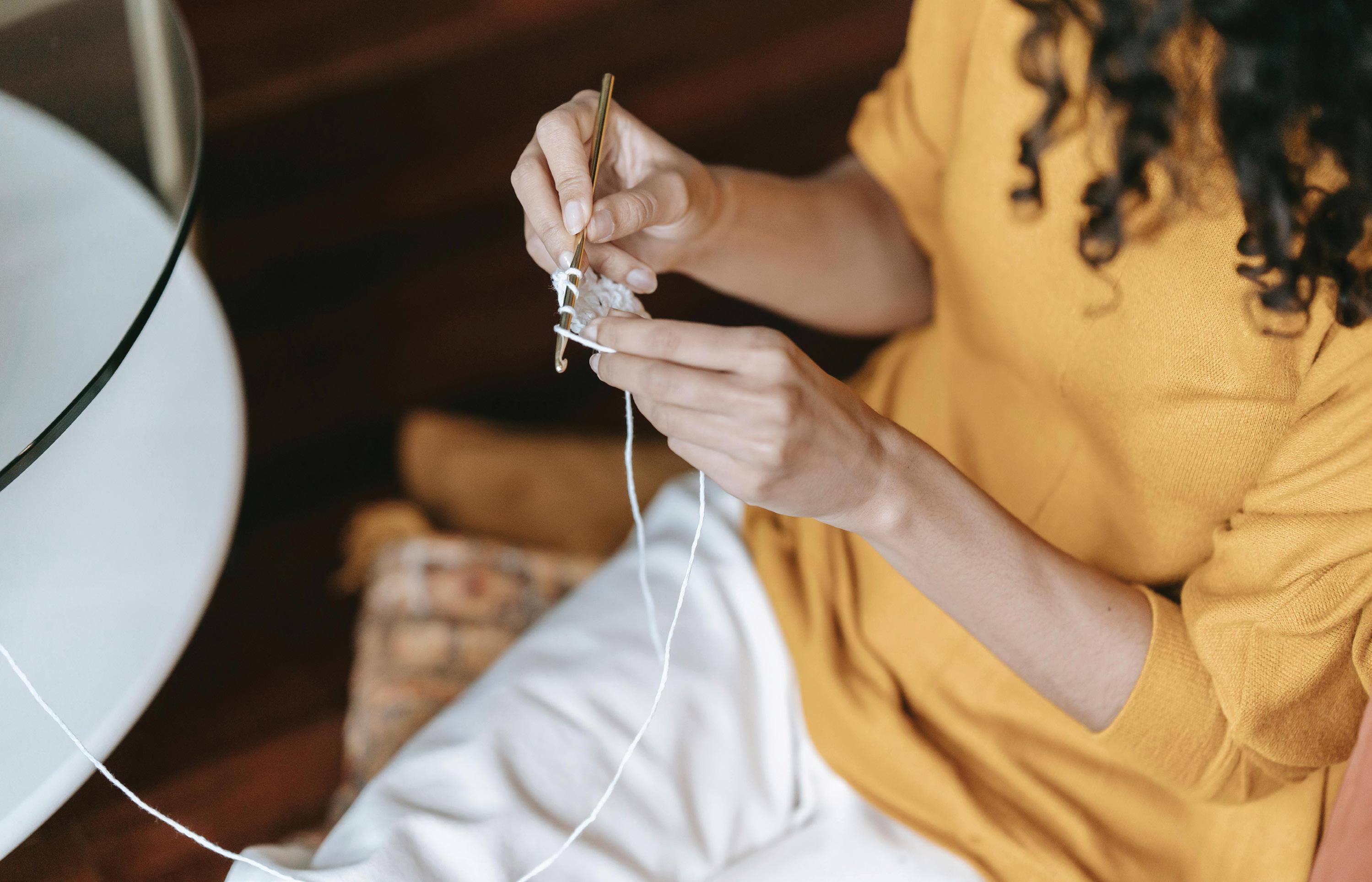
This might be a more difficult hobby to start, but once you get into it, you’ll cover your living space with crocheted creations everywhere. Although this craft requires more thinking, it is
relaxing nonetheless. You can drift off into your world, creating keepsakes for yourself and loved ones. Learn to manipulate yarns of all colors and let the hook undo your stress knots. With your concentration entirely focused on the repetition of the crocheting motions, you might enter a flow state, letting you forget everything around you and focus only on the movements of your fingers.
Pottery/Clay hand-building
This is probably the most pricey DIY craft on this list. If you have never done pottery before, it may be worth it to take a class to learn this very hands-on hobby. If you have already done pottery and you have access to materials, it might be a very relaxing option to detach from your worries. You can let the movements of your hands shape the spinning clay. The wheel itselfThe wheel itself might mesmerize you, making you enter a meditative state and focus on your mental well-being.
The combination of tactile stimulation from the clay, the spin of the wheel and the creative freedom that you have when making a piece is well known for being therapeutic and grounding. Research has actually shown
that pottery aids in stress relief and has numerous mental health benefits. If you ever feel stressed and nothing seems to calm you down, pottery might be the key.
Origami
If learning is something that you are always seeking, origami could be a great creative outlet to explore. You can follow tutorials and learn to fold papers in hundreds of different ways. This is a creative way to decompress while still keeping your brain active and working. You can make so many different creations and delight in the intricate details that come together from the different folds in the paper. This skill keeps you focused and concentrated for some time, lowering anxiety levels and having some therapeutic effects on your mental health. Next time you feel stressed, take some paper and try your hand at origami crafts.
College classes can be anxietyinducing and with the added stress of homework, midterms and studying, you might start to forget yourself. If you ever feel yourself slipping, try one of these relaxing crafts to hopefully ground yourself again.
NOLA PERIFEL
Assistant Features Editor
COURTESY OF MIRIAM ALONSO VIA PEXELS
The Best of Both Worlds
LA FAMILIA CREATES JUDGMENT FREE SPACE FOR PEOPLE TO EMBRACE THEMSELVES.
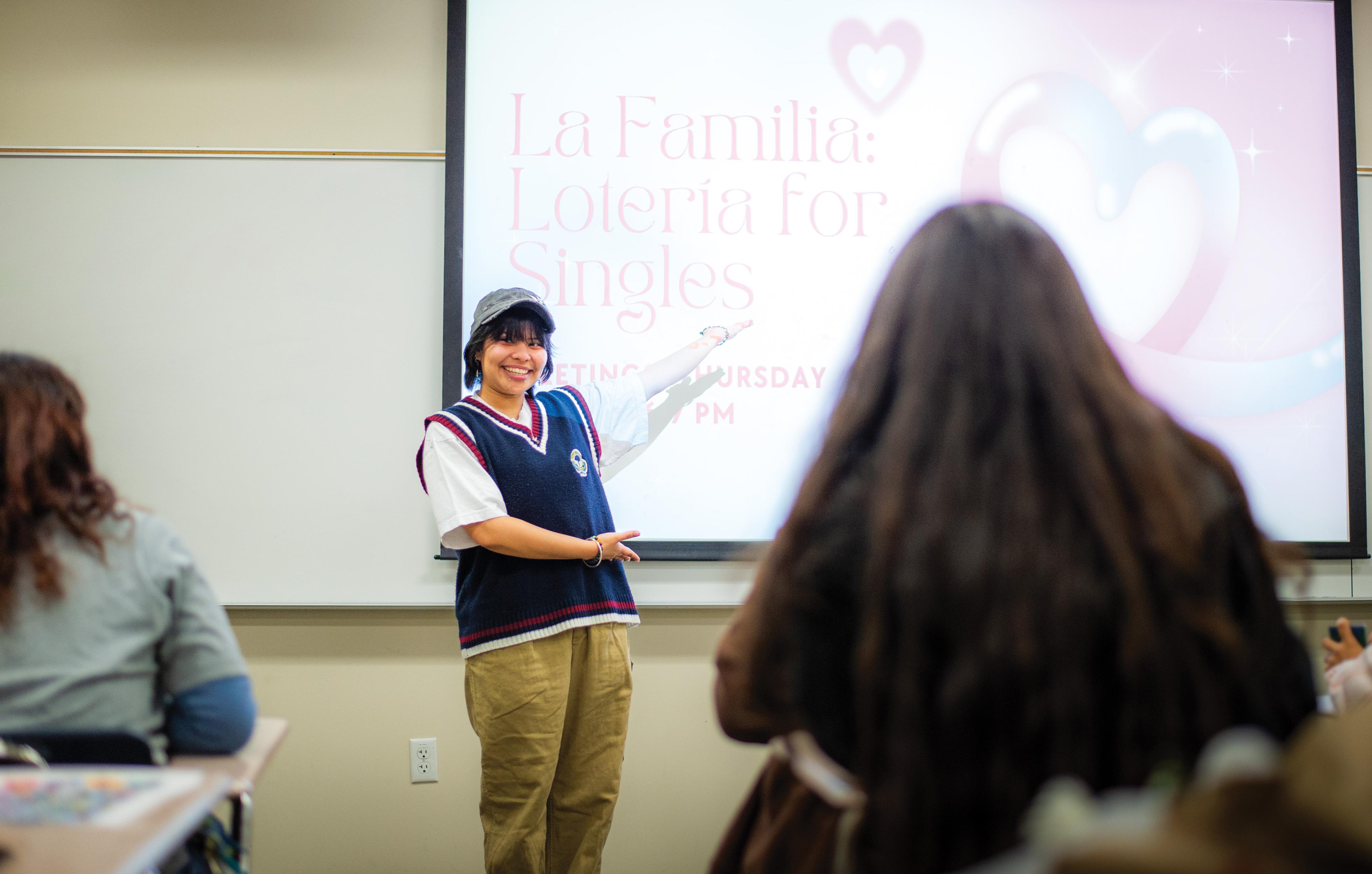
Many of us at the University of California Riverside can relate to the struggle of balancing dual identities. How we exist in one space can differ greatly from how we present in another. This need to mold ourselves depending on the situation can be exhausting. La Familia has made their club a space for students of all backgrounds allowing them to be amongst peers and be themselves.
La Familia is one chapter of a LGBTQ+ student organization aimed at providing support for Hispanic queer students. Aru López, third year political science major and president of the club, explained that a lot of the club’s early history is unclear. He explained that the club was founded a few years ago, but the board never found replacements causing the club to pause for a couple of years.
Last year, Aru’s predecessor re-founded the club with friends and handed it off to him come summer quarter. The pause likely happened during 2020, which is when many clubs couldn’t meet due to the pandemic.
López joined last year when the club was still holding meetings at the LGBT Resource Center to partake in the amenities such as free food and started talking to the club board members. They encouraged him to join the club’s board and later passed the club off to him.
MAIN ST
López explains, “I joined as a social chair, and then I didn’t really do much. There wasn’t much to do because it was really really small. I was just bringing food and socializing.”
Matthew Bolaños explained that he too attended the club regularly and was invited to join on as photographer before becoming program coordinator.
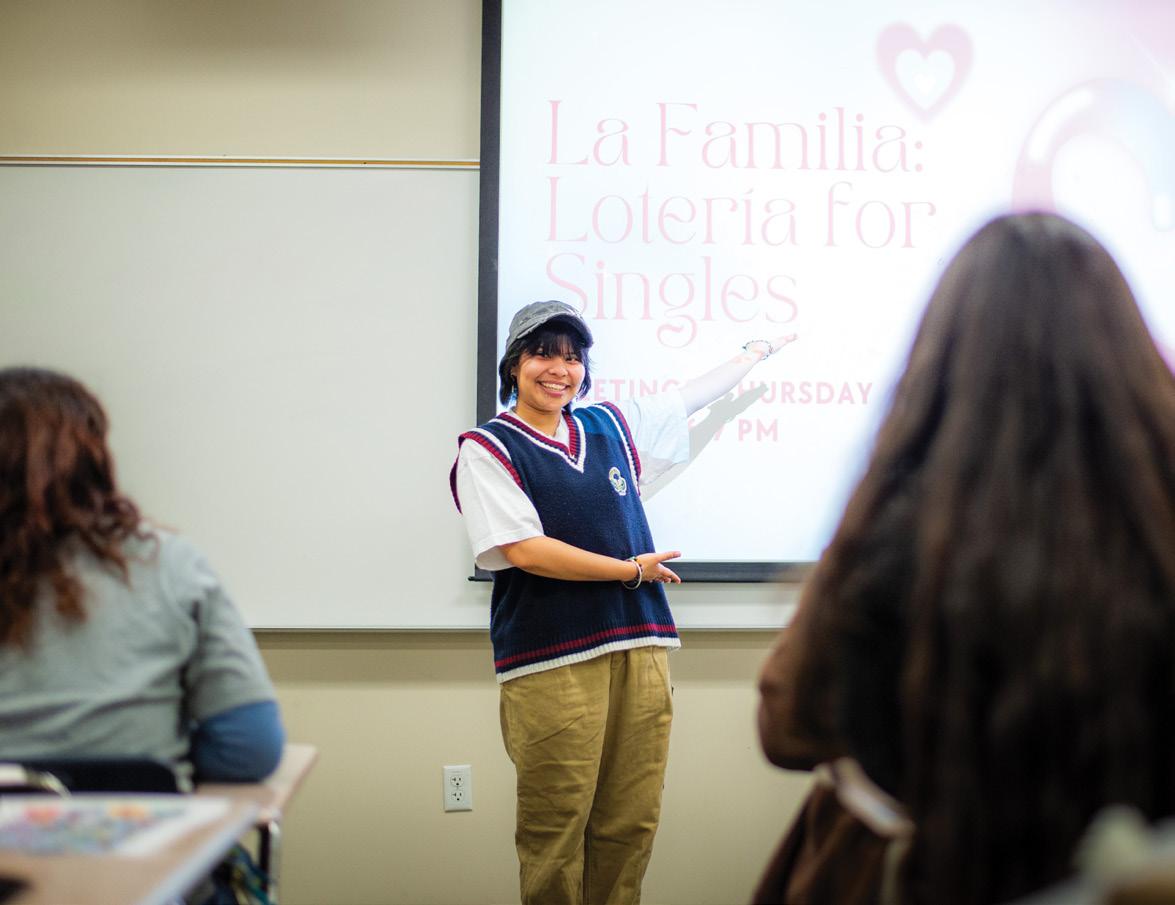
Club activities themselves are very relaxed, usually featuring a craft such as quilting, painting, sewing or playing games like Lotteria. López explained that they wanted the club to function as a sort of social circle so that people don’t feel pressured or a need to perform: “I think the goal is to just say, ‘Hey, we are a queer Hispanic [organization], and we would love to build a safe space for people who are part of that intersectionality …’ I don’t think it’s anything about curating the culture that we build. It just ends up being a safe space for those people.”
ORANGE ST
The club does not require anyone to sign in or ask for their names to avoid invading their privacy. The club is open to all as they have members who identify as queer but not Hispanic and vice versa.
López explains that the goal is to try to not put people in a box. They elaborates, “I guess we do have members who are queer and Hispanic, but our focus is creating a safe space
where you don’t have to think ‘Am I Hispanic enough? Am I queer enough? Which one do I come into the space presenting myself as?’ I don’t think we try to curate it, or plan about ‘How do we make this queer? How do we make this Hispanic friendly?’ It just is.”
López described their experiences as part of the Chicano Student Center (CSP) and the LGBT Resource center being one where they felt as though they had to present one aspect of their identity over the other. “I think when I go into CSP, I feel like I have to leave a part of myself outside. It could very much just be personal, internalized myself,” they said. “I think growing up Hispanic culturally … we do have … a presence of homophobia in the culture, and so sometimes I go in there and I look at people and they don’t look like me. It just doesn’t feel like I can be authentically me.” That is why López pushed for a separate meeting space away from the centers without the pressure of having to conform.
Some of their goals for the future include hosting larger events such as Hispanic rock events or picnics. The club also hopes to reach out to other Hispanic organizations. The two emphasized the close community of the club, as Bolaños described their “goofiness” and how they tease each other and are comfortable being themselves.
NIKO SUWANDI / THE HIGHLANDER
SANJANA THATTE Features Editor
A guide to your first Drag Show
A BRIEF GUIDE TO WHAT DRAG IS AND HOW TO ATTEND A DRAG SHOW.
So you’ve been presented with the opportunity to see the magic of a drag show. Like most art forms, it can be intimidating at first. After all, us gay people have big egos and bigger personalities. Regardless, drag shows are wonderful experiences and you should definitely try one out.
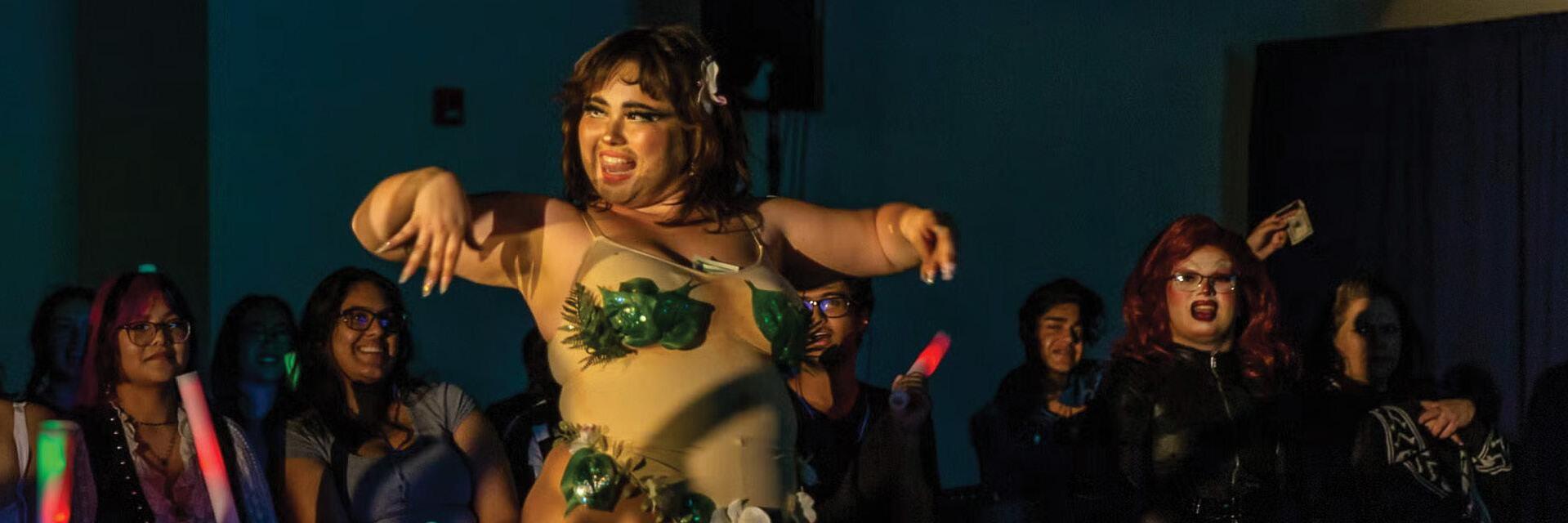
If you’re unsure, a drag show is a performance of various personas (called drag queens or kings) that perform extravagant representations of gender. If you attend a drag show at UCR, you’ll see both drag kings (male personas) and drag queens (female personas).
As for what you can expect, it’s a mixed bag. Occasionally, you’ll see a runway, but most of the time you will see lip-sync performances. Pop is the most common, but it changes performer to performer. The beauty of the internet is having a way to expose yourself to the art form in a low-stakes environment, but drag on social media isn’t necessarily reflective of a drag show. Most people have now heard of RuPaul’s Drag Race, which has made great strides in popular-
izing and globalizing the art of drag.
Sometimes drag can be erotic and raunchy, while other times silly and lighthearted. Even in the scope of a lip-sync, there are various forms. Drag as an art includes more than lip-syncing too; some performances include stand-up comedy, others sing live … It all depends on your performer, so go in with an open mind.
A final thing to note in the conversation about drag is the politics of it. Anything having to do with breaking gender stereotypes is going to be met with friction, but as the transgender community of the world is faced with more and more discrimination, drag as an art form is often shunned in a similar way.
A quick guide to attending a drag show:
1. Bring cash! You can bring a few one dollar bills — just know that tips for your performers are expected (and very much appreciated!).
2. Bring your friends! The more the merrier, and
the more of an audience there is in your venue, the more fun it will be.
3. Pick the right outfit! You want to be comfortable, but you equally want to serve. If there is a theme, dress to it. If there isn’t, still try to look your best. Even if that is the most dramatic look you can muster, you’ll have more fun that way.
4. Participate! This is done through tips, yes, but participation also involves cheering, clapping, yelling, what have you. You want to share as much energy as you can; they’re performing for you. Don’t be intimidated by words or expressions you don’t completely understand. Everybody wants to have a good time.
In short, you want to bring your best energy, cash, and remember to have fun! Drag shows can be eyeopening experiences, so don’t be afraid to expose yourself to them.
The Rani and Her Knight
QUEEN AYANA REUNITES WITH AN OLD CHILDHOOD FRIEND, YEARNING FOR WHAT WAS AND WHAT COULD BE.
MALINI JOSEPH
Contributing Writer
Ayana flung open her balcony doors and clutched the railing like a lifeline, her maroon saree crumpling against the metal. She hung her head and tried to swallow the summer air, but the mounting frustration was too much.
“This is my duty.” She pressed her knuckles to her eyes, heavy bangles clinking with the movement. “I have to feed and house a nation. I do not have time to entertain suitors.”
“What did you do, Umma?” Ayana desperately searched the stars for a response.
There was no answer from the darkness. She closed her eyes. The ocean crashed on distant rocks, thunderous even at its great distance. The breeze carried the scent of burning incense, filling the palace with memories.
Not for the first time, Ayana felt the crushing pit of loneliness threaten to swallow her, wishing for the friend she’d surrendered to the sands of time. Still, she whispered to the air, “One day …”
“One day for what, Rani?”
She barely stopped the undignified shriek from leaving her throat. “Perhaps we should put a bell on you, Jadestriker. I fear you are too light-footed for my constitution.”
“I did knock, Rani.”
There was such mirth in that voice, such teasing … Ayana’s chest constricted, fingers flexing under a phantom touch she was not allowed. With a forced laziness, she tilted her head, catching those brilliant green eyes in her periphery.
“How may I aid you this evening, my general-tobe?”
Kavisha clicked their tongue and stepped onto the balcony proper. Their soldier’s bulk filled the space, making the enormous entryways seem small.
“I see Arjun sir has been speaking with you.”
“He does seem rather adamant on retiring, does he not?”
“Retiring my ass,” they muttered, so low she would not have picked up on it. Except that she was starved of their voice and could focus on nothing else.
“Do not worry, Jadestriker. I will not force you into a position you do not desire. Though, I must say, Arjun Mamaya was quite adamant about his replacement.”
Ayana turned fully, brows raised playfully.
She did not realize how often she avoided looking at them until the full force of that emerald stare ensnared her. Almost unwillingly, her eyes traced the planes of their face, trying to memorize as much as possible.
Dangerous, she thought, reluctantly turning away. I have no right to look at them like that. Like I missed them. Like they are mine.
Her chest pulsed like a wound. As she faced outward to the ocean, she could not help the hand lifting to her chest to soothe the insatiable longing.
“He always was a stubborn one.”
That voice. Gravelly and rumbling. So close, so close.
She willed her body to not tense when Kavisha
stepped up next to her at the railing. Their shoulder occupied the space next to her head. Then, their arms brushed, and she almost shattered. Her throat constricted rebelliously. It will consume her, the wanting.
“Yana?”
Her eyes fluttered shut at the nickname, dusted in cobwebs and the rust of a broken friendship.
“My apologies.” Her voice barely carried above the crackling fires below. “What were you saying?”
They were looking at her and she was caught once more. How could she look away? When this is all she’s wanted for years?
Kavisha stared at her for a moment longer. When they spoke, it was almost as if they had come to a decision in their own head.
“It is … good to see you again, Ayana.”
She usually woke up now — heart shattering as she realized it was all a fantasy. But as the seconds tick by, she was still here. In this moment she had dreamed of for ten years.
This … is real?
The yawning chasm in her chest ignited with exhausted hope. She smiled then, losing all control of her reactions.
“It is good to see you as well. Kavisha.”
She hesitated on their name, asking for forgiveness and permission all at once.
They weren’t healed yet. This would not undo years of mistrust, but … it was a start.
LIAM MCCANN Contributing Writer
COMICS
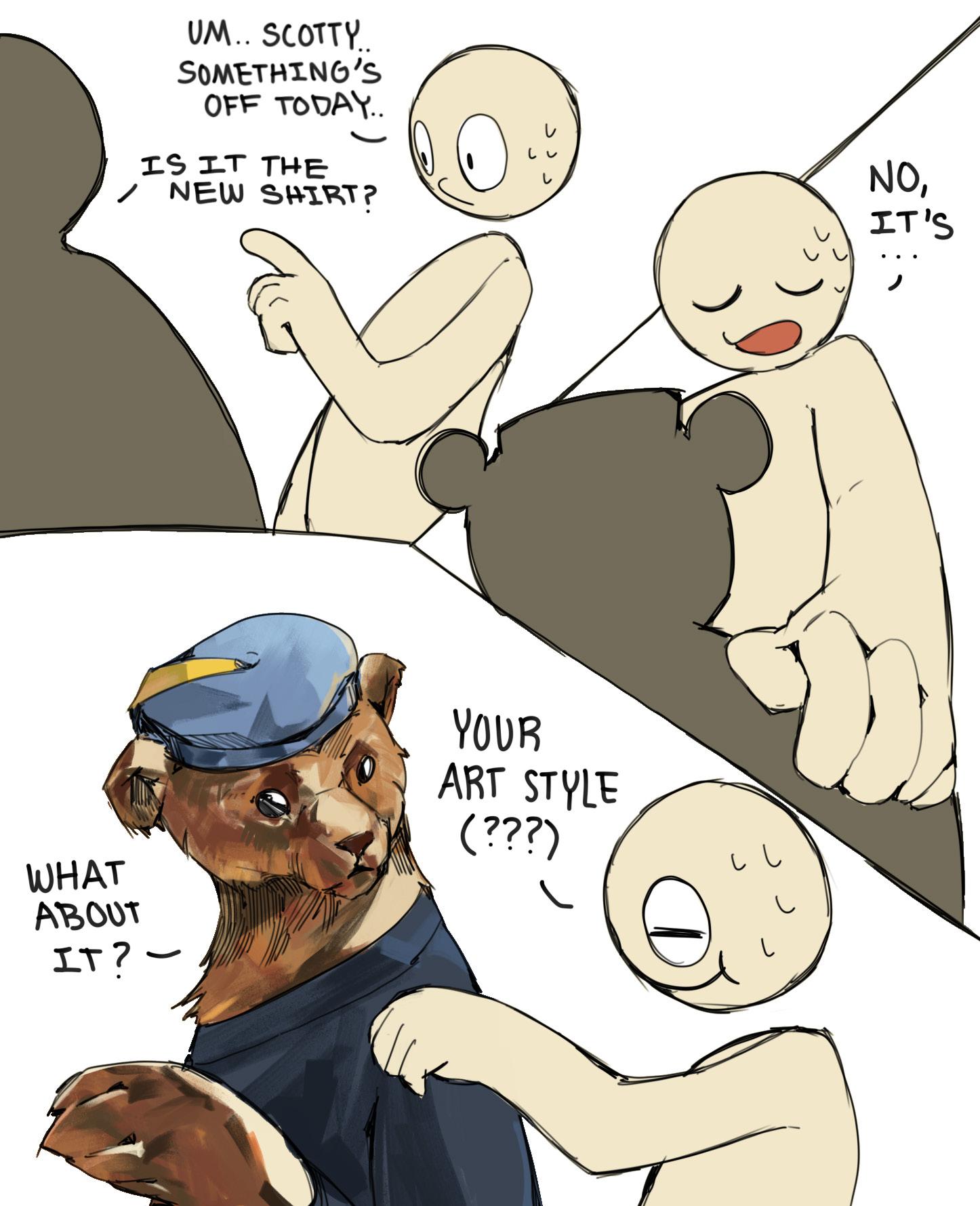
Relatively long wait time / By: JUXWAH Something Off / By:_Susanna Wu
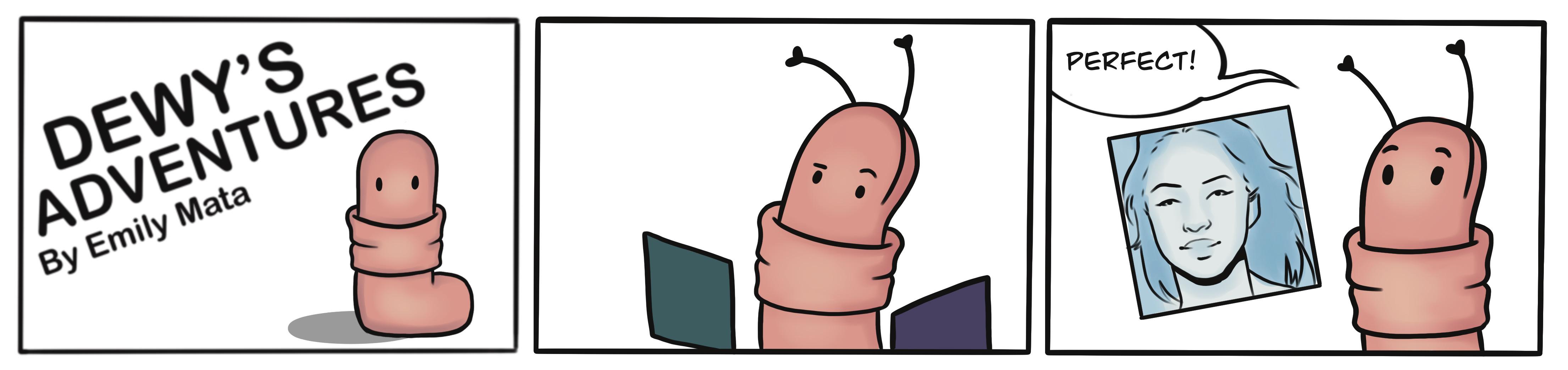
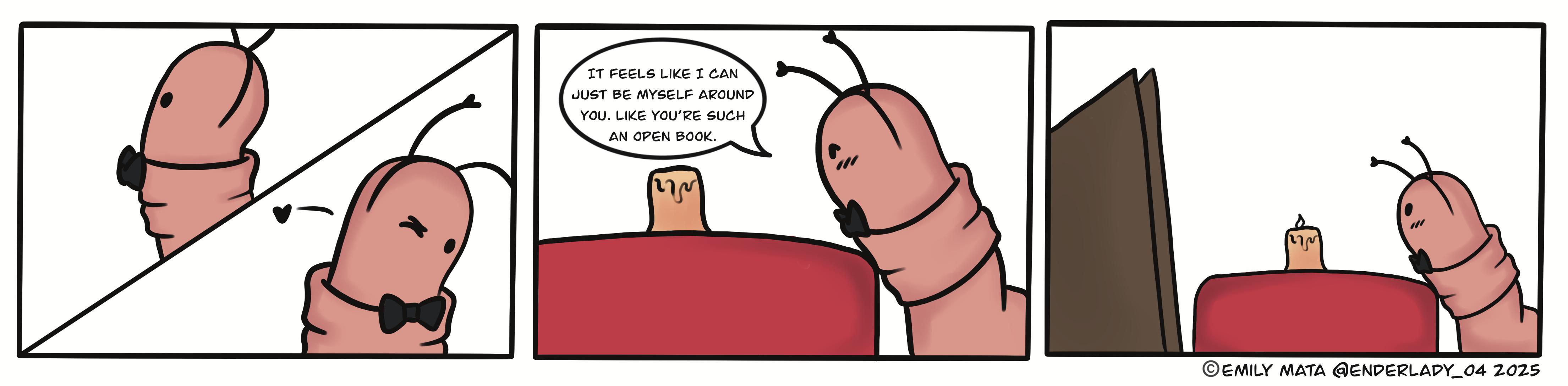
Dewy’s Adventures / By: Emily Mata
TUESDAY, FEBUARY 17, 2026
02/17
02/20 02/17 02/18 to 02/19 Rizvana Bradley: On the Minor Agonistics of Performance @ CHASS Interdisciplinary South, 1128, 3:15 p.m.
Neon in the Gutters: Cyberpunk Visions of the Future (Exhibit) @ Fourth floor of Rivera Library, 10 a.m. to 4 p.m. An Evening with Laila Lalami @ Tomás Rivera Library, Special Collections Reading Room 5:30 p.m.
Centro Mexicano para la Música y las Artes Sonoras / Mexican Center for Music and Sound Art (Florence Bayz Music Series) @ Arts Building 157, 12 p.m.
UCR Theatre presents: ‘Fuenteovejuna, or Like Sheep to Water’
HOW STANDING UP FOR EACH OTHER IS THE WAY OUT OF TYRANNY.
ANTHONY ASCENCIO-CARVAJAL Staff Writer
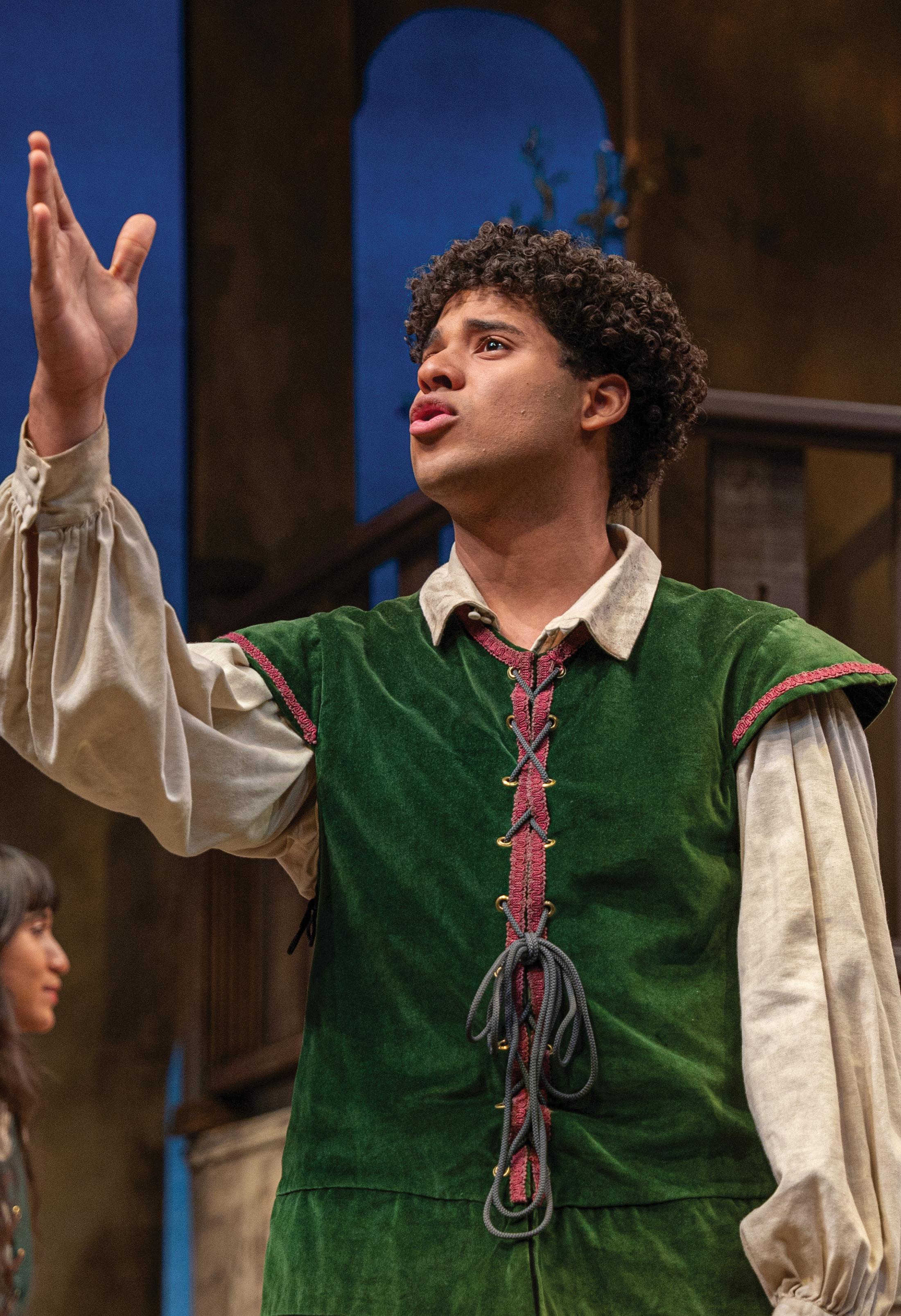
On On Feb. 12, 2026, “Fuenteovejuna, or Like Sheep to Water” had its opening night. Presented by the UCR Department of Theatre, Film, and Digital Production, in the Arts Building Studio Theatre Arts Room 113, “Fuenteovejuna is a Spanish Golden Age play written by Félix Lope de Vega y Carpio in 1618. It portrays an event in the village Fuenteovejuna, in which its peasants revolt against an unjust tyrannical commander in 1476.
The play begins with the background of the antagonist commander, Fernán Gómez de Guzmán, played by Nathan Reiner. His presence in the village was a result of military conflicts near the city of Fuenteovejuna. All the while, the villagers discuss different subjects of love and relationships.
The daughter of the mayor, Laurencia, played by Kylah Kintaudi, and Pascuala, played by Yennie Cannon, feel indifferent towards these ideas due to the nature of men having one sided intentions or troublesome behavior.
Despite the problems that persist
within the village, some characters like Mengo, played by Juan-Manuel Cardona-Flores, continue to believe in the idea of a genuine love between two willing partners. Frondoso, played by Kristion Antoine, is another important figure whose role would shape Laurencia’s idea of love, as he would risk his life to ask for her hand in marriage.
In a later scene where the Commander attempts to have his way with Laurencia by force, Frondoso takes the Commander’s crossbow and aims him down. However, resistance is not always easy. Mengo’s attempt to defend Jacina, played by Aneliz Rios, from the clutches of the Commander was taken to be whipped until he bled for his act of defiance. Thus, reform might not always feel feasible if people are busy licking their wounds in the face of the oppressor.
The conflicts continued as the Commander kept diligently searching for Frondoso. Amidst this, he asked Mayor Esteban, played by Kalin Pont-Tate, for Laurencia’s hand in marriage. Despite his cheerful approval, the wedding was interrupted by the
Commander, leading to Frondoso’s imprisonment and Laurencia’s kidnapping. Catching the audience off guard, viewers are struck by the reality that even in times of peace, the oppressor will do what they can to achieve their own goals, even at the demise of those around them.
Eventually, the village’s men congregated to find ways to get rid of this tragedy, unable to protect themselves or their women against the tyrannical Commander. Laurencia enters the scene with a dishevelled appearance, the aftermath of being taken by the Commander’s men by force. For most of history, women had not been allowed in spaces like these meetings to vote on important matters, yet Laurencia’s character shows that she has more reason to be listened to.
Laurencia’s monologue is the answer to the question of how much tyranny can people put up with before deciding to stand up. Her words reinvigorated their hopes to fight back, and talks of “we’re all suffering this endless abuse, what does it matter if we die,” turned into “If we die, we die together,” and
desires for having justice achieved. The village took up arms of anything they could use, clubs and farm tools, and went to save Frondoso and take vengeance against the Commander. Despite his pleas for mercy since he hadn’t “broken the law,” they finished the job for their honor. This also adds another question to ask, “If the law permits injustice, how can it be allowed to remain?” After the Commander’s death, they all carried the burden as one, so that as a group they can face the repercussions should there be any, and offer the real love for one another to be present.
“Fuenteovejuna” is excellent and resonated well with the audience because of its parallels to the modern world people are seeing today. Corruption and evils done in the highest of places by those bestowed the honor of carrying great titles. Many are afraid like Mengo, of the hardships that come with speaking out, but Laurencia’s actions show the truth, and begs the question the audience should ask themselves, “how can we not stand up?”
■ H
‘Fallout’: War never changes in the Wasteland
“PATROLLING THE MOJAVE ALMOST MAKES YOU WISH FOR A NUCLEAR WINTER.”
JOSÉ DEL ÁNGEL News Editor
**This Review Contains Spoilers**
On Dec. 25, 2025, the highly anticipated second season of “Fallout” premiered on Amazon Prime Video and released over eight weekly episodes. Season two directly opens the events that closed season one. The world remains a radioactive wasteland two centuries after the Great War of 2077, where society was fractured into brutal factions all desperate to survive.
The story expanded beyond the Los Angeles area where the last season mainly focused, introducing the audience to areas of the Mojave Wasteland and the deserted ruins of New Vegas. This season was able to adapt a variety of elements from the beloved “Fallout: New Vegas” game while charting its own narrative path without forcing the “Fallout: New Vegas” game to have a canonical ending.
The three protagonists, Lucy MacLean, Maximus and the Ghoul, go through a variety of obstacles and often conflicting goals, but ultimately their paths are intertwined as the season progresses.
Ella Purnell’s character Lucy MacLean begins the season with the goal to find
her father Hank. After her father’s betrayal of her and Vault 33, Lucy begins to learn more about the secrets and horrifying experiments of Vault Tec, which were teased throughout season one. Lucy’s idealism begins to crumble by the realization that the wasteland and the people living on the surface cannot be trusted, and that the world on the surface is hostile and filled with constant pain.
Walton Goggins’s character of the Ghoul receives more fleshed out motivations throughout the season. With the help of Lucy and Maximus, the Ghoul continues his quest to find and reunite with his long lost family. This season gives him more humanity and begins to shatter the hardened exterior of a one-sided bounty hunter, revealing a broken man driven by the possibility of redeeming himself, even as the world around him spirals into war.
Aaron Moten’s character Maximus, a member of the Brotherhood of Steel, finds himself in the middle of a civil war within the organization he had sworn an oath to protect. As he rises through the ranks he begins to understand that the sworn Brotherhood was not interested in simply recov-
ering and protecting pre-war technology, but something much more violent and devastating for the Mojave.
The majority of season two centers around the Mojave Wasteland, which shows the city of New Vegas, once a symbol of America’s pre-war glory, now a land filled with political power struggles and violent factions trying to rule the area.
Robert House, a prominent antagonist in “Fallout: New Vegas,” makes an on-screen debut in the show. Portrayed by Justin Theroux, he is depicted as a calculated and strategic man whose motives are never fully shown, only hinted at. His presence looms large over the city and he plays an important role in the season’s power dynamic, especially with the Ghoul.
A second faction that is introduced this season is Ceasar’s Legion, a militaristic faction modeled on Roman legions and led by Macauley Culkin’s character Lacerta Legate. Bringing an authoritarian ideology that threatens New Vegas.
Lastly, the third faction introduced this season was the fan favorite New California Republic, a democratic faction that serves as the counter-
weight to the Legion’s authoritarian rule. The presence of the NCR raises the stakes for a broader civil conflict for control of the Mojave Wasteland. The finale, titled “The Strip,” ties together many of the season’s threads while setting the foundation for the story to go into an even more chaotic future. Lucy and Maximus reunite after intense battles with Deathclaws and small faction groups, b, but this is overshadowed by the gathering forces of Ceasar’s Legion and the NCR, who are ready for a fullblown war over New Vegas.
Season two deepens the show’s exploration of identity, morality and the heavy burden of history in a world wiped out by catastrophe. Characters like Lucy are constantly forced to rethink their decisions and focus on what they are willing to sacrifice for their survival.
Verdict: War never changes, but the personal stakes for Lucy, the Ghoul and Maximus have never been higher. With Season 3 confirmed, the groundwork laid in New Vegas promises a strong conflict between the game’s most iconic factions, and a continuous expansion of the game’s original lore.
ADELIA URENA / THE HIGHLANDER
Finding the love in the hate
BAD BUNNY’S HALFTIME PERFORMANCE.
GABE VAZQUEZ Contributing Writer
Being the most watched sporting event in the country, Super Bowl LX KICKED off on Sunday, Feb. 8, inside Levi’s Stadium in Santa Clara, California. For a lot of people, this is the game of their lives as they watch their favorite teams go one-on-one to determine who gets the win. As for others, they are here for the commercials and the halftime show. Benito Antonio Martinez Ocasio, better known as Bad Bunny, was selected to perform at Super Bowl LX on Sept. 28, 2025. The event made Bad Bunny the first Spanish-only performance the Super Bowl has seen. However, many did not like the decision the NFL made, as people didn’t think he represented the American sport. Department of Homeland Security Adviser Corey Lewandowski and American commentator Benny Johnson were very open about how much they disliked Bad Bunny as a choice, with Lewandowski stating in Johnson’s podcast, “It’s so shameful that they’ve decided to pick somebody who just seems to hate America so much to represent
them at the halftime.”
Despite all the negativity that circled around the decision, it did not stop Bad Bunny from breaking the record of the most viewed halftime performance of all time with a whopping 135 million viewers.
It was a visual and energetic performance that embraced Puerto Rican culture entirely. He starts his performance by walking around a field that is full of vendors and Jibaros (rural farmers) wearing pavas, a straw hat worn primarily in Puerto Rico, tending sugarcane. It is what symbolizes Puerto Rican culture to the audience, as that is primarily what Bad Bunny grew up with. Nearing the middle of his performance when he is on top of La Casita, a Puerto Rican-style home, the audience are met with countless celebrities and voices for the Hispanic community like Cardi B, Pedro Pascal, Jessica Alba and Karol G..
Viewers are then met with a surprise performance by Lady Gaga performing a rendition of “Die With a Smile,” which was followed by a
real wedding. Another major name we saw perform was Ricky Martin, a popular Puerto Rican singersongwriter, singing Bad Bunny’s “Lo Que Le Paso a Hawaii.” Nearing the end of his performance, we see a family watching Bad Bunny’s 2026 Grammy win speech, in which Bad Bunny hands his award to his younger self, saying, “Cree siempre en ti,” or “Always believe in yourself,” getting the message across to the audience.
Possibly the strongest message Bad Bunny gave out was at the finale of his performance, where he
told the world, “God bless America.” Alongside a part of his speech he said at the Grammys, “The only thing more powerful than hate is love,” shining bright in the background. Finally, he brought out a group of people running out holding their countries’ flags, representing the diversity of the Americas. Overall, Bad Bunny’s message and performance was one to really look back on. It was an emotional ending overall, full of movement and meaning. Like the words on the football he held in the finale declared, “Together We Are America.”
It’s time to light the lights on ‘The Muppet Show’ (Special) tonight
MAIN ST
THE
MUPPETS
GO BACK TO BASICS, ALBEIT WITH A FEW MODERN TOUCHES.
IAN PALMA Radar Editor
To say that Disney has been fumbling “The Muppets” would be an understatement. With their last outing being the somewhat decent “Muppet Mayhem” back in 2023, the once renowned puppet troupe has been relegated to the darkest and dingiest corners of the Disney catalog. That was until February 2026, in which the dry spell was broken with the release of a special aptly titled “The Muppet Show.”
The special marked a biblical return of Kermit the Frog, Miss Piggy and the rest of the gang as they once again perform their renowned variety show. With a balance of slapstick comedy and self-aware humor, the special retains an
atmosphere and tone reminiscent of the original ‘70s television series that propelled Kermit and the gang to stardom in the first place. Reinforced by a nostalgic intro filled with episodes from the past, the special does seem like an ode to the glory days of the Muppets.
Unlike the more contemporary films and TV shows that’ve portrayed the Muppets in a modern and sophisticated light, the special strips all of the characters back to their original, somewhat two-dimensional personalities in a way that’s refreshing yet still funny. From Miss Piggy’s primadonna attitude to Statler and Waldorf openly flaming every act from the theater box, everything about the special screams good old fashioned Muppets.The addition of well-known comedians and actors such as Seth Rogen and Maya Rudolph, along with their own skits, further adds fuel to the comedic flame.
ORANGE ST
However, the star of the special surprisingly wasn’t Kermit or any of the other muppets.
Taking up around two-thirds of the screentime, Sabrina Carpenter stole the show with a hefty array of songs and jokes.
Carpenter’s performance of “Manchild” set within a bar full of giddy and disrespectful
Frackles, couldn’t be more on the nose. Her performance of the song as well as “Islands in the Stream” almost rivals that of legendary Muppet show guest singers such as Elton John and Debbie Harry.
Aside from all of the singing, Carpenter brings her own risqué humor — something that’s pretty much on-brand for her at this point — to the show. From having a diva-off with Miss Piggy over copyright infringement to delivering jaw-dropping lines such as, “I love a kink,” the amount of memorable moments Carpenter has throughout the show is almost endless.
The show marks a return of the comedic puppet group in which man or muppet can enjoy. Despite its half-hour runtime, the special manages to capture the essence of what made people fall in love with the Muppets in the first place. One could only hope that the special can open the door for more projects starring everyone’s favorite green frog and his motley crew of misfit performers.
Verdict: Even when going back to its roots, “The Muppet Show” still manages to remain amusing and relevant for all ages to enjoy.
COURTESY OF BRANDON C. DYER VIA WIKIMEDIA COMMONS
Charli XCX hates being a popstar
“THE MOMENT” HOLDS NO PUNCHES ABOUT THE MISERY OF A WORLD TOUR.
AAKIF IQBAL Assistant Radar Editor
Behind the many ambiguous clips of Timothee Chalamet in front of bright screens and men in ping-pong ball helmets is one Aidan Zamiri. When he’s not directing promotional material for Chalamet’s newest acting venture, he is the creative director behind Charli XCX’s most iconic moments. From music videos to photoshoots, Zamiri and XCX have formed quite the team for their newest film “The Moment.”
Directed by Zamiri based off of an idea by XCX, the film follows Charli amidst the success of “Brat” near the end of “Brat Summer,” as the music label has come to Charli XCX looking to make a concert film of her upcoming world tour. However, plans go awry when the director hired to make the concert film misunderstands what “Brat” is all about.
Though customary for many popstars to make a concert film surrounding their biggest tours, from Olivia Rodrigo to Taylor Swift, the approach taken here, produced by A24, is commentary on the behind the scenes of this process. Showing not what fans will see at a Charli XCX concert but a fictional glimpse into her tumultuous life, as she plays herself in the movie.
While the film features the likes of Kylie Jenner and Rachel Sennott, it mainly focuses on the conflict between Charli XCX, the label, and the concert film director, played excellently by Alexander Skarsgård. Taking inspiration from hit shows like “Industry” and “Succession,” “The Moment” is a dry British comedy that oscillates between moments of
anxiety and moments of geospecific British humor.
From making light of the fact that most of her fans are queer to debating whether the cocaine she sings about is metaphorical, the movie does not hold back in satirizing the life of the “Brat” star. Featuring clips of music reviewers like Anthony Fantano to people doing the apple dance based off of her song, it’s clear XCX is chronically online. Though this is not a surprise to anybody who’s skimmed through one of her TikToks or Substack essays.
In a lot of ways, “The Moment” is the literalization of the ideas she described on Substack. If the film is about anything, it’s about her struggling to maintain her creative vision in an industry that keeps trying to sanitize it. It is the push and pull between her understanding why it might be advantageous to make “Brat” more accessible and why she also cannot do that.
At its core, the film is a commentary on the intersection between art and commerce within the music industry. Though not an exact recreation of her own life, the film takes inspiration from her experiences and music. From a promotional Brat credit card to an Instagram paid sponsorship in Ibiza, the film pulls the curtain back to show the unseen world of what popstars tend to go through.
The film is not afraid to show the less likeable sides of popstars. The character Charli XCX is selfish, overwhelmed and indecisive. Oftentime she storms off or hides behind her massive black shades. Her aspirations to
continue the success of “Brat” well after the album has been out supersedes her desire to maintain relationships.
In an interview with Zane Lowe following the release of “Brat,” XCX made it clear she understands the way these album releases tend to go. That, no matter what, the immediate follow-up to such a successful album will always come with backlash. And, knowing this, she stated that her plan is to try and do what she thinks indie-darling Chloe Sevigny would do, given the circumstances. In that way, this is what “The Moment” is. The necessary zag XCX feels she must make given the culture surrounding her album.
This foray into the film world is not one she is unfamiliar with, having done the music for Emma Seligman’s “Bottoms” and creating an album for Emerald Fennell’s ”Wuthering Heights,” however diving deeper into the film scene is certainly part of this zag. Between “The Moment,” “Erupcja,” “100 Nights of Hero” and “I Want Your Sex,” Charli XCX the actress has a slew of projects coming out in 2026.
Verdict: While “The Moment” may seem like an unexpected follow-up to release of such a massive album, it is the exact kind of film one would hope to receive from such an artist as Charli XCX is, even if the specificity in its writing might veer a bit confused at times. As an original film, and as Zamiri and XCX have called it, a “2024 period piece,” it is certainly a must-watch for all those who took part in “Brat Summer.”
COURTESY OF ANNA HANKS VIA WIKIMEDIA COMMONS
Think Piece: Werner Herzog and the Nihilist Penguin
A CLIP FROM “ENCOUNTERS AT THE END OF THE WORLD” GOES VIRAL.
JIHOON KWON Staff Writer
In late January of 2026, a clip of a penguin walking towards the mountain away from its colony went viral. Generally called the Nihilist Penguin on the internet, this clip is from Werner Herzog’s documentary film “Encounters at the End of the World.” The documentary initially premiered in 2007 and it wasn’t until 2008 that it was distributed in the US, making its sudden resurgence after more than 15 years later intriguing.
Werner Herzog has shown a particular interest in madness as an existential condition rather than psychological one throughout his career, both in fictional and documentary films. Madness results from the obsession of eccentric individuals going out of their way to create their own meaning or sense of self, which Herzog portrays in spectrum from the monstrous dissent of “Aguirre, the Wrath of God” to absurd naivete of “Fitzcarraldo” to melancholic delusion of “Grizzly Man.” While Herzog sympathizes with the insanity of his characters, rarely does he romanticize it.
At the source of this obsession is the beguiling nature which leads the characters down the path. Throughout his works, it is consistently
portrayed as indifferent, yet unforgiving.
Individuals attempt to conquer it and fail, often leading to their demise. This highly contrasts his depiction of human society in “Stroszek,” which is shown to actively antagonize individuals, leading to alienation, erosion and ultimately madness.
captures a data point for how it is manifested.
The documentary is centered around the people in Antarctica which Herzog seems to view as akin to his own fictional characters.
The environment of Antarctica, due to its harsh environment, is not friendly to its visitors. People in
the penguin expert David Ainley who prefers solitude and doesn’t enjoy conversing with humans. Upon being asked about insanity among penguins, Ainley talked about penguins that refuse to stay with their colony or follow other penguins to the feeding ground, but instead walk towards
In fact, Herzog seems to view sanity itself as something arbitrarily assigned by human society, as alluded to in “The Enigma of Kaspar Hauser.”
“Encounters at the End of the World” largely exists in the same thematic atmosphere as it doesn’t particularly attempt to expand the worldview Herzog has circled around in his other works nor does it test it out to its limits but rather
Antarctica continually battle for survival while carrying out the research in order to make sense of the continent. The backgrounds of these people include occupations such as bankers and linguists, but ironically ended up in a continent without distinct currency and language, purely driven by their dreams and myths.
ORANGE ST
the mountain. When they are captured and returned to their colony, they keep walking towards the mountain regardless. The impact of the scene is further amplified by the voice of Herzog as he narrates with his detached, yet poetic tone as he asks the question of the reason for such behavior.
metaphorically given the ideas Herzog gravitates towards. Literally, it can be seen as part of the strangeness of nature which simultaneously confuses and fascinates humans, an extension of Antarctica that drew individuals from across the globe. The more popular interpretation seems to be the metaphorical one, treating the penguin as the existential madness of wanting to create one’s own meaning, rejecting the imposed norm and accepting a foreseeable death.
The Nihilist Penguin has become the biggest trend of the year so far, with millions of views across various platforms. Countless parodies have been produced, reinforced with the development in the AI art. While Herzog himself seems to enjoy the viral memes, they seem to flatten the nuance or neglect it entirely.
The Nihilist Penguin is introduced during Herzog’s interview with
The penguin’s behavior in the context of the documentary can be interpreted both literally and
One of the more notable parodies include White House’s post on X with an image of the penguin holding the United States flag with one arm and President Donald Trump’s hand with the other as they walk towards the mountain with the flag of Greenland. Comments pointed out that there are no penguins in Greenland as they live in the Southern Hemisphere.
COURTESY OF WERNER HERZOG FILM PRODUKTION
Sports
Highlander in the Arena: Seneca Hackley, 1,000 Points and Counting
SENECA HACKLEY HAS GROWN INTO A TEAM LEADER, MENTOR AND SHARPSHOOTER FOR UC RIVERSIDE.
ELENA VERSAGE Staff Writer
Growing up, Seneca Hackley knew she wanted to play Division I basketball. She watched her older brother’s games as a kid and decided to give it a shot. By seventh grade, Hackley was a tri-sport athlete, running track and playing volleyball along with basketball. However, she soon realized basketball was the sport she wanted to pursue at the next level. After trying out for a couple travel teams she found a team that she wanted to play for.
Coming out of high school, Hackley had just one Division I offer. She began her collegiate career at Florida Gulf Coast University, spending her freshman and sophomore year there before transferring to the University of Northern Colorado. After one season there, she made her most recent transfer, choosing to close out her career at the University of California, Riverside. Hackley wasted no time making her mark as a Highlander. In her first season, she played in 30 games with 23 starts, averaging nine points per game while leading the team in free-throw percentage and ranking second with 32 made three-pointers. This season, she is averaging 10.3 points and 4.3 rebounds per
game and leads the team at the free-throw percentage, shooting 88.3%.
During UCR’s Saturday, Feb. 7 game against California State University, Northridge, Hackley scored her 1,000th career point. “The best part was just having my teammates there to celebrate me and my
The UCR women’s basketball team is filled with support for one another. Hackley spoke about the team’s chemistry stating she felt she had a connection with every single player. “It really does feel like a family. People have your back and you know that you don’t have to worry about that,” commented Hackley.
coaches,” Hackley said, reminiscing about the moment she scored her 1,000th career point in college basketball. The Colorado native described the achievement as surreal and shared that guard Kaylani Polk had talked to her before the game about the milestone and how Polk would assist on her record-breaking shot.
As a graduate student and a veteran in collegiate basketball, Hackley took on a leadership role with the team, mentoring younger players. She often finds herself telling her freshmen to play with joy and that it’s more freeing to play when you’re happy and remembering why you started playing.
Although Hackley is closing out her collegiate career, she wants to keep basketball in her life after she graduates. She hopes to play professionally overseas but has no concrete plans yet. She is also currently pursuing a master’s degree in business and commented that sports management could also be in her future. “I’m kind of just gonna see where life takes me … I think that’s the beauty of life,” she said. “You just kind of take things as they go and see what happens.”
ELENA VERSAGE / THE HIGHLANDER
Highlanders lose fifth straight game after losses against UCSB and UCSD
UC RIVERSIDE’S ODDS TO MAKE THE POSTSEASON ARE SLIM-TO-NONE AFTER A ROUGH PATCH IN THE SEASON.
MAIN ST
On Thursday Feb. 12, the University of California, Santa Barbara (UCSB) defeated UC Riverside 76-68 after coming back from a 12-point deficit and controlling the game in the second half.
The first half belonged to UCR, playing terrific defense and holding the Gauchos to six points in the first eight minutes of the game. The Highlanders applied intense ball pressure, forced early turnovers and forced the Gauchos into tough 3-point attempts. Offensively, UCR moved the ball effectively and found rhythm from beyond the arc, building momentum through balanced scoring and disciplined shot selection.
The crowd came to life early, as UCR jumped out to a 16-4 lead, highlighted by 3-pointers by Dre Perteete and Andrew
Henderson. Strong rebounding efforts helped the Highlanders maintain a lead and dictate tempo throughout the first half, and it looked like they would get their first win since late January.
At halftime, UCR led by six, but the Gauchos came out of the locker rooms with renewed energy, outscoring the Highlanders 47-33 in the second half to earn their 10th win in conference play this season.
ORANGE ST
UCSB guard Aidan Mahaney led the Gauchos in scoring with 20 points, shooting 7/17 from the field and got help from his backcourt partner CJ Shaw who had 18 points. Andrew Henderson led the game in scoring, finishing with 22 points, but the Highlanders couldn’t find their defensive mojo in the second half and let the game slip away. UCR
intentionally sent the Gauchos to the free throw line in the final moments of the game, but it wasn’t enough to scare a comeback.
The Highlanders returned to the court on Saturday, travelling south to face UC San Diego. They would go on to lose 72-66, and dropped their fifth straight conference game to fall to 3-12 in the Big West this season. Odds to make the Big West playoffs in Henderson, Nevada are slim to none for the Highlanders, but there’s still hope that they can piece some wins together late in the season.
UCR has lost a lot of close games this year to tough opponents, but they’ve struggled to finish games in key moments this year. A couple lucky bounces late in the season could allow the Highlanders to sneak into the postseason.
RACHELLE REYNOSO GONZALEZ Contributing Writer
JAILEN DANIEL-DALTON (44) BRINGS THE BALL UP THE COURT
ELENA VERSAGE / THE HIGHLANDER
Tacko Fall deserved MVP for the 2026 NBA All-Star Celebrity Game
The 2026 NBA All-Star Celebrity Game was a fantastic watch. On Feb. 13, a jampacked celebrity roster of NFL players, influencers, actors and a few retired NBA players took over Los Angeles and created a suspenseful and entertaining night of friendly rivalry.
This year’s celebrity teams were coached by comedian Anthony Anderson and 2021 NBA Finals MVP Giannis Antetokounmpo. Anderson’s team had some serious star power with Sacramento Kings’ legend Jason “White Chocolate” Williams, NFL wide receiver Keenan Allen and previous “Love Island” cast member Nicolas Vansteenberghe. Giannis’ team also had some superstars on their roster. G-League player Tacko Fall, actor Rome Flynn and rapper GloRilla were some of the stand out players. Both teams had great players and phenomenal team chemistry. While Anderson’s team had some very strong
performances, they were not able to defeat Team Giannis and after putting up a strong fight throughout the game’s entirety, Team Giannis won 65-58.
After putting on a dazzling show and scoring 17 points for Team Giannis, Rome Flynn was named MVP of the game, winning his second consecutive All-Star Celebrity Game MVP. Flynn had some impressive plays such as his streak of eight 3-pointers in a row, but the true hero of the iconic game was Tacko Fall.
Standing at 7’6’’, Fall was the big man on the court, both literally and figuratively. He put up 20 points, five blocks and a whopping 21 rebounds during the game. This turned the tide and gave Team Giannis control of the game. Coach Giannis definitely viewed Fall as a key asset to his team. Despite Fall being briefly subbed out so that he could rest, Giannis was later seen on the sidelines urgently putting Fall back into the game.
Flynn put on an impressive performance but his impact on the game did not come close to Fall’s. Tacko Fall has the conditioning and speed of a professional player, and with height on his side, he can dunk effortlessly.
MVP titles should reflect the overall impact on the game, not just a few moments and good shots. If it came down to MVP of 3-pointers made, Flynn definitely deserved to win. While Flynn had the better highlights, he lacked the total game dominance and control Fall had.
Regardless, the game was very entertaining and both Flynn and Fall helped secure a win for Team Giannis.
Congratulations to Rome Flynn for being named the 2026 NBA All-Star Celebrity Game MVP, even if it was not well deserved. Despite that, the statistics still say that Tacko Fall was the true MVP.
IYANNA WALLACE Contributing Writer
COURTESY OF ERIK DROST WIKIMEDIA COMMONS
TACKO FALL’S DOMINANCE ON BOTH ENDS OF THE COURT SHOULD HAVE WON HIM THE MVP OVER ROME FLYNN.
Men’s Tennis - Tue Feb. 10
Loyola Marymount University vs. UC Riverside 0-7 L
Men’s Tennis - Thu Feb. 12 University of Hawai’i vs. UC Riverside 0-4 L
Baseball - Sat Feb. 14 Utah Tech vs. UC Riverside 3-4 L
MAIN ST
Baseball - Sat Feb. 14 Utah Tech vs. UC Riverside 8-12 L
ORANGE ST
Be unique.
The Highlander Newspaper is a great way to keep up with current events and news around campus. If you are interested in the newspaper’s articles or pictures, we offer opportunities in writing, photography and design. Join us every Monday at 5:15 p.m. in HUB 101 to learn more.