The Highlander

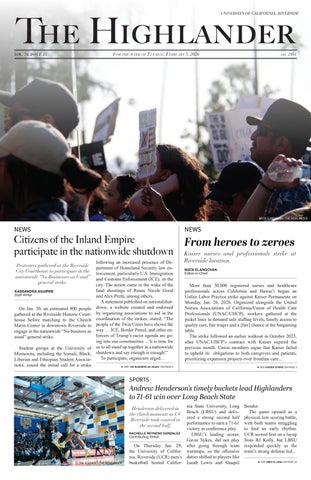
Protesters gathered at the Riverside City Courthouse to participate in the nationwide “No Businesses as Usual” general strike.
KASSANDRA AGUIRRE Staff Writer
On Jan. 30, an estimated 900 people gathered at the Riverside Historic Courthouse before marching to the Cheech Marin Center in downtown Riverside to engage in the nationwide “No business as usual” general strike.
Student groups at the University of Minnesota, including the Somali, Black, Liberian and Ethiopian Student Associations, issued the initial call for a strike
following an increased presence of Department of Homeland Security law enforcement, particularly U.S. Immigration and Customs Enforcement (ICE), in the city. The action came in the wake of the fatal shootings of Renee Nicole Good and Alex Pretti, among others.
A statement published on nationalshutdown, a website created and endorsed by organizing associations to aid in the coordination of the strikes, stated, “The people of the Twin Cities have shown the way … ICE, Border Patrol, and other enforcers of Trump’s racist agenda are going into our communities ... It is time for us to all stand up together in a nationwide shutdown and say enough is enough!”
To participate, organizers urged...

MATA ELANGOVAN Editor-in-Chief
More than 30,000 registered nurses and healthcare professionals across California and Hawai’i began an Unfair Labor Practice strike against Kaiser Permanente on Monday, Jan. 26, 2026. Organized alongside the United Nurses Associations of California/Union of Health Care Professionals (UNAC/UHCP), workers gathered at the picket lines to demand safe staffing levels, timely access to quality care, fair wages and a [fair] chance at the bargaining table.
The strike followed an earlier walkout in October 2025, after UNAC/UHCP’s contract with Kaiser expired the previous month. Union members argue that Kaiser failed to uphold its obligations to both caregivers and patients, prioritizing expansion projects over frontline care...
Henderson delivered in the clutch moments as UC Riverside took control in the second half.
RACHELLE REYNOSO GONZALEZ Contributing Writer
On Thursday Jan. 29, the University of California, Riverside (UCR) men’s basketball hosted Califor-
nia State University, Long Beach (LBSU) and delivered a strong second half performance to earn a 71-61 victory in conference play.
LBSU’s leading scorer, Gavin Sykes, did not play after going through team warmups, so the offensive duties shifted to players like Isaiah Lewis and Shaquil
Bender.
The game opened as a physical, low-scoring battle, with both teams struggling to find an early rhythm. UCR scored first on a layup from BJ Kolly, but LBSU responded quickly as the team’s strong defense led...
Editor-in-Chief
Mata Elangovan
editorinchief@highlandernews.org
Managing Editor Isaac Solnick
managingeditor@highlandernews.org
News Editor José Del Ángel
news@highlandernews.org
Asst. News Editor
Angelica Brianna Acosta asst.news@highlandernews.org
Opinions Editor
Cecile Diroll
opinions@highlandernews.org
Editor
Asst. Opinions
Rubaita Iqbal
asst.opinions@highlandernews.org
Features Editor Sanjana Thatte features@highlandernews.org
Asst. Features Editor
Nola Perifel
asst.features@highlandernews.org
Radar Editor
Ian Palma
radar@highlandernews.org
Assistant Radar Editor
Aakif Iqbal asst.radar@highlandernews.org
Sports Editor
Terry Nguyen
sports@highlandernews.org
Asst. Sports Editor
Sofia Majeed asst.sports@highlandernews.org
Photography Editor Vash Chen photo@highlandernews.org
Assistant Photo Editor
Alondra Ordaz photo@highlandernews.org
Staff Photographer Elena Versage Niko Suwandi photo@highlandernews.org
Production Manager
Ashley Cho productionmanager@highlandernews.org
Asst. Production Manager
Agna Soneji prodassistant.highlander@gmail.com
Production Assistants
Emma Cabrera Keyanna (Keys) Milenia Pinzon Nishi Girish prodassistant.highlander@gmail.com
Art Director
Adelia Urena highlander.art.director@gmail.com
Copy Editor Rachel Ko copyeditor.highlander@gmail.com
Graphic Designer Layna Lapikas llapi002@ucr.edu
Design Interns
Holly Dawson
Emily Mata
Business Manager Allison Fry highlanderads@gmail.com
Asst. Business Manager
Cinthia Meza highlanderads@gmail.com
Video Editor Edwin Basurto video.highlander@gmail.com
Asst. Video Editor
Isabella Hogan video.highlander@gmail.com
Marketing Director
Sinhayana Srivastava
marketing.highlander@gmail.com
Asst. Marketing Director
Isabell Gracia marketing.highlander@gmail.com
Marketing Interns
Henya Dadem marketing.highlander@gmail.com
Abby Lazar marketing.highlander@gmail.com
Tech Director Ashna Pradhan techdirector@highlandernews.org
Asst. Tech Director Shenonaa Jenith Kumar
Ad Reps
Paris Cao
Xochitl Gutierrez
Xavier Scott
Zachary Hoisington highlanderadrep@gmail.com
Distribution Manager
Noah Davis Witten
The Highlander 101 Highlander Union Building Riverside, CA 92521 www.highlandernews.org editorinchief@highlandernews.org
Help the Highlander stay on top of what is happening on campus and in the general UCR community. Call this number and leave a message for the Editorial Board with your tip. Be sure to include your full name, relation to UCR, and a number or email address where you can be reached for more details.
The Highlander accepts letters from the campus community. They must be 600-800 words at length and include the author’s name and contact information. Topics should be UCR-centric and/ or pertain to our generation of students. Contact Opinions Editor Cecile Diroll at opinions@highlandernews.org by Wednesday if interested in writing a letter and submit the completed letter by Saturday at noon. Letters can and will be rejected if it does not meet requirements.
The Highlander is published and copyrighted by the Highlander for the students, faculty and staff of UCR. All rights are reserved. Reprinting of any material in this publication without the written permission of the Highlander is strictly prohibited. Readers are allowed one free copy of the newspaper. For additional copies or for subscription information, please contact the Highlander. The Highlander fully supports the University of California’s policy on nondiscrimination. The student media reserve the right to reject or modify advertising whose content discriminates on the basis of ancestry, color, national origin, race, religion, disability, age, sex or sexual orientation. The Highlander has a media grievance procedure for resolving complaints against it. All inserts that are printed in the Highlander are independently paid publications and do not reflect the views of the Editorial Board, the staff or The University of California or the Associated Students of UCR.
I worked previously as a student assistant on the marketing team [for the School of Business.] When I graduated, I was looking around again for more jobs, since I wasn’t working at the time. And then, I got called back to come work again, officially [this time,] not [just] as a student assistant. We really wanted a more casual and interactive way to bring students to the School of Business. I know that our events can seem a bit intimidating. So we created this game where we would have students scanning QR codes that would [play] videos and would lead them to the next clue. They would also be given the chance to learn more about the grad program if they’re interested. I feel like UCR is a place where I really grew. I got to know myself more [and] what I wanted to do in life in general. I see a lot of opportunities to give back to students [and] help them in ways that I was helped.
[I would tell a first year marketing student to] just swallow the pill and do it. In the sense that if you’re gonna go to a networking event, it’s gonna be the worst feeling ever. I know I felt scared. I was like, ‘Oh my gosh, I’m gonna die, my hands are sweaty and I’m [going to] have a whole panic attack.’
[My go-to coffee order is a] hazelnut dry ice americano from Coffee Bean. It’s so strong. [but] it’s so good. It gives you the jitters, but not to where it’s like ‘Oh my gosh.’ [Instead] this is like peak productivity for me.”






MATA ELANGOVAN Editor-in-Chief
More than 30,000 registered nurses and healthcare professionals across California and Hawai’i began an Unfair Labor Practice strike against Kaiser Permanente on Monday, Jan. 26, 2026. Organized alongside the United Nurses Associations of California/ Union of Health Care Professionals (UNAC/UHCP), workers gathered at the picket lines to demand safe staffing levels, timely access to quality care, fair wages and a [fair] chance at the bargaining table.
The strike followed an earlier walkout in October 2025, after UNAC/UHCP’s contract with Kaiser expired the previous month. Union members argue that Kaiser failed to uphold its obligations to both caregivers and patients, prioritizing expansion projects over frontline care.
The Kaiser Permanente Riverside Medical Center
is undergoing an expansion to increase its bed capacity through the construction of a 5-level expansion. The project includes a new lobby, an emergency department replacement, expansions to its Neonatal Intensive Care Unit and a new parking structure.
At the Riverside picket line, Monica Martinez, a registered nurse in general surgery, pointed out the construction site as she criticized Kaiser’s investments in for-profit ventures instead of addressing urgent patient care needs.
“We’re fed up with the current healthcare system,” Martinez said. “We are here day in, day out to protect our patients, to provide quality care. Where we are seeing corruption, we are seeing fraud.”
Martinez also reflected on the COVID-19 pandemic, which began in 2019, and the toll it took on healthcare workers.
“We lived through a pandemic where these people called us heroes. We risked our lives to be there for our patients,”
THE SENATE ELECTS A NEW VICE PRESIDENT OF FINANCE AND APPROVES A FINANCIAL SPECIAL REQUEST.
KASSANDRA AGUIRRE Staff Writer
The Associated Students of the University of California, Riverside meeting on Jan. 27, 2026 began at 7:00 p.m. and concluded at 9:09 pm.
Special elections for the Vice President of Finance position were held in response to a needed appointment to resolve increasing confusion revolving around campus finances following the position’s vacancy.
Five candidates including Uma Akundi, Pauline Le, Swaraj Dash, Sofia Jimenez and Sanjana Kalidindi delivered campaign speeches
to the Senate which were followed by 5-minute questionings.
After this, the Senators proceed into a 38-minute closed session to deliberate, ultimately announcing their election of Swaraj Dash.
The Senate then approved a special request by Executive Director Asha Nettles which called for the allocation of funds and three grants to over 17 campus organizations whose requests risked not being processed by the Financial Committee. The request was approved 13-0-1.

she said. “I’ve worked for [Kaiser] for 20 years. I’m so proud to be a Kaiser nurse because of my brothers and sisters here on the line. What I’m ashamed of is now we no longer have a partnership that we can respect.”
UNAC/UHCP represents a wide range of frontline healthcare workers across various departments in Kaiser, including registered
nurses, pharmacists, nurse anesthetists, nurse practitioners and other specialty health care workers. In response to the strike announcement, Kaiser released a statement sharing “Your care and well-being remain central to everything we do. Thank you for your understanding, and we apologize for any inconvenience.”
As the strike continues, union leaders say patient safety and staffing conditions remain at risk without meaningful changes at the bargaining table. While Kaiser maintains that patient care remains its top priority, nurses say the outcome of this strike will determine whether that commitment translates into action — or remains a corporate talking point.
24-YEAR-OLD DANIEL RAMOS ACCUSED OF MANSLAUGHTER, DUI AFTER WOMAN IS KILLED IN COLLISION.
ANDREW HAGLER Staff Writer
On Sunday, Jan. 5, 24-year-old Bianca Esquival and her unborn child were killed in a collision with a drunk driver. The crash was reported at 12:09 a.m. at North Anaheim Boulevard and the 91 Freeway frontage road.
In a press release, it is reported that the suspect, 24-year-old Daniel Ramos, ran a red light before colliding with Esquival’s vehicle. Ramos failed a field sobriety test upon police arrival and was arrested on suspicion of vehicular manslaughter and driving under the influence (DUI). Esquival was found in the wreckage and pronounced dead on the scene.
Anderson stated that due to the victim being pregnant, prosecutors may consider additional charges pending investigation. Esquival’s boyfriend, who was driving at the time, as well as the two passengers riding in Ramos’ vehicle, were hospitalized but are expected to survive.
Police ask witnesses to call 714-
765-1900. Information may be left anonymously with Orange County Crime Stoppers at 855-847-6227 or on the website at occrimestoppers.org.

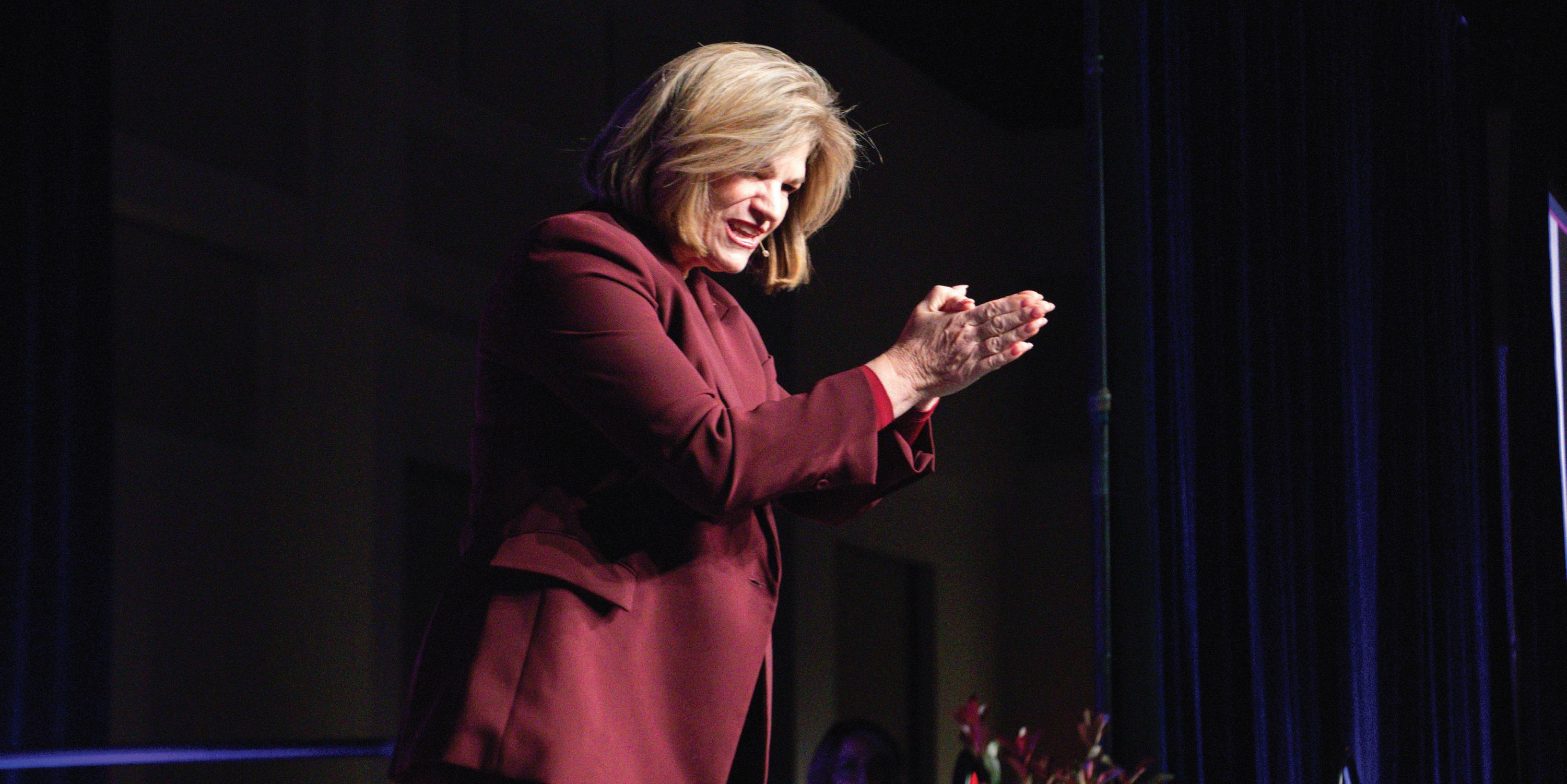
Riverside’s State of the City event, held on Jan. 28, 2026, honored award recipients with recognitions like the cultural preservation, the Mayor’s Award and the Riverside Hero Award. Mayor Patricia Lock Dawson took the stage to the upbeat song “Level Up” by the artist known as Ciara, setting a positive foundation for her update on the state of the city.
The mayor is a University of California, Riverside (UCR) alumna who graduated in 1988 with a Bachelor of Science in environmental biology, but has since gained experience in local politics while serving as head of the city’s government for the past five years. She is one of two women who have been elected as the mayor of Riverside.
Mayor Dawson began her introductory speech by stating that “every metric is going right in the city of Riverside,” while listing five key areas where Riverside has “leveled up.” The list goes as follows: safety and stability, economic opportunities, health and environment, identity and closure with our residents.
Beginning with safety and stability, the Mayor stated that “Riverside is an incredibly safe city and is becoming safer,” as statistics have shown a 35% drop in overall crime, a 12% drop in violent crime and a 38% drop in homicides in the past four years. Mayor Dawson even claimed that “every case has been solved this past year” in the city.
The remodelling of the 60-year-old police headquarters on Orange Street was announced, along with the building of a bridge over Third Street, otherwise known as the Third Street Grade Separation Project, which aims to reduce traffic congestion. About 96% of office space in Riverside is occupied, giving the city one of the lowest vacancy rates in the country.
Transitioning to the city’s economic opportunities, the Mayor reported Riverside being the “fourth fastest growing economy in the country.” She also discussed the $4.3 billion investment that has been diverted towards new construction in 2025, as well as the multiple international companies that have settled into the city.
This investment has also created 18,000 new jobs. It was stated that Riverside Public Utilities (RPU) offers some of the lowest electricity and water rates in the state. Six international companies have located here in the past two years, growing the city’s innovation economy.
Regarding the health and environmental sector, it was reported that 70% of the city’s energy will derive from renewable sources by 2027, paving the way for a sustainable future. UCR’s medical school was also highlighted for graduating its largest class of doctors ever, where Mayor Dawson then added that “additional investments will correct years of underinvestment” in healthcare. She concluded this segment by declaring that “Riverside is closing the healthcare gap and saving lives” through these innovations.
California Baptist University has doubled its physician assistant cohort. La Sierra University offers an online MBA in health care management. The mayor announces a nearly $1 billion expansion of Riverside Community Hospital is underway, and an expansion of Kaiser Permanente hospital in La Sierra is expected to open in 2027.
The fourth key point was based on the city’s identity, which led to introducing the Arts and Culture District (ACD) in Downtown Riverside, as being recognized by the California Arts Council. In celebration of the ACD’s achievements, the audience was serenaded by
two dance performances, one ballet and the other ballet folklorico. The Mayor closed by saying that “a city that knows where it comes from knows where it is going.”
The final key point the Mayor covered was the city’s residents. She declared that Riverside has lowered youth homelessness to 0%, while the county has experienced an overall 9% drop. She also discussed her plans for introducing 6,000 new housing units, which include 59 affordable senior units and 150 family homes.
Riverside’s senior centers now serve more than 75,000 seniors and deliver over 31,000 meals annually. The mayor’s new Senior Forum connected seniors to resources and provided a place for seniors to make their voices heard.
The mayor also brought attention that the community centers served more than 1.5 million people last year. Parks and playgrounds were upgraded, with more improvements on the way at Orange Terrace Community Center, Hole Lake and Fairmount Park. In the Eastside neighborhood, it was announced that a $300 million in state investment will create a new Jesus Duran Library, renovate the Cesar Chavez Community Center and build the new Dell Roberts Bordwell Park Gym.
Among the 1,100 attendees present, UCR’s Chancellor S. Jack Hu accepted the Mayor’s Award on behalf of the school for North District Phase 2 Student Housing’s advancements towards connecting the communities of UCR and Riverside Community College. When asked about expanding affordable student housing, including on-campus housing, the Chancellor stated that it is ultimately “dependent on Riverside’s architects,” but he is working to “support our students.”
Protesters gathered at the Riverside City Courthouse to participate in the nationwide “No Businesses as Usual” general strike.
KASSANDRA AGUIRRE Staff Writer
On Jan. 30, an estimated 900 people gathered at the Riverside Historic Courthouse before marching to the Cheech Marin Center in downtown Riverside to engage in the nationwide “No business as usual” general strike.
Student groups at the University of Minnesota, including the Somali, Black, Liberian and Ethiopian Student Associations, issued the initial call for a strike following an increased presence of Department of Homeland Security law enforcement, particularly U.S. Immigration and Customs Enforcement (ICE), in the city. The action came in the wake of the fatal shootings of Renee Nicole Good and Alex Pretti, among others.
A statement published on nationalshutdown, a website created and endorsed by organizing associations to aid in the coordination of the strikes, stated, “The people of the Twin Cities have shown the way … ICE, Border Patrol, and other enforcers of Trump’s racist agenda are going into our communities ... It is time for us to all stand up together in a nationwide shutdown and say enough is enough!”
To participate, organizers urged citizens to not work, go to school or shop but instead protest in their communities.
The demonstration in Riverside was organized by the Party for Socialism and Liberation (PSL) Inland Empire, a local branch of the PSL, which advocates for developing the socialist movement in the U.S.
On Jan. 29, PSL and other organizations, such as the Inland Coalition for Immigrant Justice (IC4IJ) and United Auto Workers Local 4811 (UAW 4811),
with the endorsement of Riverside city councilwoman Clarissa Cervantes, hosted a press conference with eight speakers to call for locals to contribute.
The protest officially began at 3 p.m. with majority PSL organizers and teenagers who had been participating in a walk out. More people filled in over time, many carrying signs, musical instruments such as drums and tambourines, flags and wearing political attire to express their reasons for attending.
Jeremy Subriar, a local and citizen with Tejon Indigenous roots, brought a Native American movement flag and a bundle of burning white sage to “soothe the mood.”
He explained how, as an Indigenous man, he feels his community is threatened by ICE. “We have a very diverse tribe, but a lot of them look like somebody ICE could target … I think ICE is the Gestapo, I mean, they’re not killing people yet, in mass numbers I should say, but they are lawless … They are very dangerous.”
Also in attendance were Breanna Ramirez and her two elementary-aged daughters. Ramirez shared that as a mother and wife of an immigrant, she felt it was important to take a personal stance. “I just know that it will come to their schools eventually, and I am standing up here, exercising our First Amendment right, teaching my kids,” she stated.
Others, such as a local teacher who wished to remain anonymous for fear of retaliation, shared that she decided to attend with her drum because of the effects she has seen that ICE’s presence has had on her school. “My students every day are terrified of ICE,” she said. “They talk to me, we have families in
our community deported, and you know I see their fear, so I’m out here today to show solidarity, participate, make some noise.”
The crowd began its march towards the Cheech Marin Center at 4:22 p.m. As they marched, passing cars honked their horns while others stationed by the crowd passed out water bottles.
Shepherding participants along, PSL organizer Juan Mereles explained how
Through the entirety of the event, organizers led the crowds in a series of chants aimed at denouncing ICE and uplifting citizens, such as “up with the people, down with ICE,” “Who’s streets, our streets,” “no hatred, no fear, immigrants are welcome here” and “¡El pueblo unido jamás será vencido! the people united will never be defeated,” among others.
The protest disbanded soon after 5 p.m. and throughout the event,
Riverside Police officers were stationed around the crowd.
Neither the police department nor the city released any statements regarding the demonstration. The police department posted an announcement on their Instagram account stating that they closed their station early at 1:30 p.m. Some commenters speculated that it may have been related to the protest, but it was not confirmed.
Protesters gathered in front of the Riverside Historic Courthouse before it officially began. Some attendees climbed the court’s pillars and others gathered elsewhere. Party for Socialism and Liberation (PSL) organizer Juan Mereles described the high turnout as a welcomed development. “We would have been happy with 200, we would have been happy with 400, I’m incredibly happy with what we’ve got. It shows that the people out here in the Inland Empire are ready to fight, we’re ready to fight for a better tomorrow.”

his longtime residency in the city gave him insight into how he perceived the turnout as particularly impactful. “I grew up in this area, and for so much of my life growing up, we were always told if you want political action, if you want to protest, you go to LA because the Inland Empire doesn’t protest … to see hundreds of, honestly, maybe damn near 1000 people here today has been incredibly inspiring,” he said.


OVI MATHIVANAN Staff Writer
On Jan. 20, Moreno Valley City Council members voted 3-2 to approve a motion to draft an initial 45-day moratorium on warehouses and industrial projects in all four districts of Moreno Valley. Moreno Valley mayor Ulises Cabrera was among the three council members who voted yes on the motion, with a final vote on the moratorium expected Feb. 3.
A moratorium is a temporary pause on new approvals for warehouse and industrial projects while the local legislative body reviews environmental, social and health impacts to decide if they need to change their warehouse rules and regulations. During a moratorium, previously approved warehouses and industrial projects may continue operating and developing uninterrupted.
The Council’s motion aligns with California Government Code Section 65858, which permits a
legislative body of an area, in this case the City Council, to adopt an interim urgency ordinance prohibiting land use under reasonable concern, given that the measure has at least a four-fifths vote of the legislative body.
The ordinance will remain valid for 45 days, after which it is eligible to be extended for 10 months and 15 days with a public hearing and subsequent four-fifths vote. However, there must be justifiable proof for the extension, as well as meaningful progress made towards resolving the initially listed concerns.
Cities, especially those that host a high volume of warehouses and active industrial projects, may vote to approve a moratorium when there are concerns about noise pollution, traffic congestion, air quality, heavy resource depletion, zoning issues and other safety risks affecting the local
environment and residents.
Additionally, a moratorium can allow cities to lessen or mitigate the burden that warehousing and manufacturing can disproportionately place on local residents and economies. However, some unionized construction and warehouse workers argue that moratoriums can often harm workers by reducing opportunities for warehouse-related jobs, thus hurting the economy due to limited labor output.
Juan Serrato, an organizer with the Laborers’ International Union of North America, reasoned that a moratorium could hurt workers more than it benefits them, proposing that concerns be addressed without shutting down warehouses, as that can affect individuals’ employment. Serrato previously voiced similar concerns about warehouse moratoriums during the Nov. 18, 2025, Perris
City Council meeting, stating that moratoriums extend beyond construction and can affect warehouse workers’ livelihoods.
The Los Angeles and Inland Empire area is among one of the largest logistics hubs in the U.S., and many local residents have become increasingly concerned about the massive warehouse presence near their homes, workplaces and businesses. Moreno Valley is not the only area in the Inland Empire to have enacted moratoriums or even total suspension on logistics warehousing and industrial projects. Colton, Hemet, Jurupa Valley, Norco, Perris, Pomona, Redlands, Rialto and Riverside are other cities in the Inland Empire that have either partially or fully suspended warehouse and industrial projects in the region, as of January 2026.
COUNCILMEMBER TREASURE ORTIZ CHARGED WITH ILLEGALLY RECORDING POLICE PERSONNEL.
OSCAR GUO Contributing Writer
On Jan. 21, 2026, San Bernardino County filed misdemeanor charges against Ward 7 representative, City Councilwoman Treasure Ortiz.
According to a press release from the San Bernardino City Municipal Government, Ortiz was charged with secretly recording conversations she had with police containing sensitive information via a recording device, a violation of California Penal Code Section 632(a). This criminalizes the nonconsensual use of “electronic amplifying or recording device(s) to eavesdrop upon or record (a) confidential communication.” The press release also indicated that no further public comments would be made
in regards to specific details of the charges made.
The alleged criminal actions committed by Ortiz took place during the proceedings of a previous lawsuit filed by her in 2025. In this lawsuit, she accused a former San Bernardino Police Department detective of abusing his access to the California Law Enforcement Telecommunications System (CLETS), in order to uncover information about her for political purposes. She further alleged that the department had attempted to pressure her into dropping the charges.
San Bernardino city officials denied the allegations put forward by Ortiz, issuing a statement in May 2025 decrying the lawsuit
as a misrepresentation of facts, calling it “frivolous.” The statement from the city clarified that “following a thorough review of facts and circumstances surrounding the original report and the claim that she filed, the City finds the information in the claim to be false and dishonest.” They also stated that the $2,000,000 claim filed against the city was “an attempt to swindle the City of San Bernardino.”
The situation remains ongoing, with more details related to both the original lawsuit and the recent criminal charges yet to be made public. Ortiz is expected to make her first court appearance on Feb. 19, 2026.
CECILE JUAREZ DIROLL Opinions Editor
In early Jan. 2026, the Trump administration launched what U.S. Immigration and Customs Enforcement (ICE) described as the “largest immigration operation ever” in Minneapolis, Minnesota. Deploying 2,000 federal immigration enforcement officers, the operation sought to crackdown on allegations of “fraud” among Somali residents in Minneapolis, which is home to one of the largest Somali communities in the U.S.
President Trump has previously criticized Somali immigrants, calling them “garbage,” accusing them of stealing money from Minnesota taxpayers and saying that Somalia is “barely a country.” He also recently announced his administration will end Temporary Protected Status for Somalia in Mar. 2026, affecting nearly 2,400 people. However, what began as an effort to respond to President Trump’s unproven claims of “fraud” and corruption in Somali communities has now reached a critical point in U.S. history.
In just a couple of weeks, two American citizens — a Minneapolis mother, Renee Good, and an intensive care nurse, Alex Pretti — were both shot to death by ICE agents. Good, who was sitting in the driver’s seat of her car when ICE agents told her to get out, was shot four times — once in the head — and called a “f-----g bitch” by an agent according to videos. Pretti, who was trying to protect and record ICE agents pushing other civilians to the ground, was pepper-sprayed, pinned to the ground, disarmed and then shot 10 times, killing him within seconds. Additionally, multiple children and students walking to school were detained by federal agents in the Columbia Heights area, a school district with a large Latino and Somali student population. Most notably, a photo of a five-year-old preschooler, Liam Conejo Ramos, being detained by ICE in his home’s driveway was widely circulated online.
In the photo, Liam stares at a black SUV while wearing his blue bunny hat and his Spider-Man backpack. Despite having a pending case to obtain citizenship legally, his father was detained with Liam and sent to a family detention facility in Texas. Liam is just one of several students in the area who were detained.
The videos and images of communities being raided, families being ripped apart, masked agents beating civilians and
thousands protesting in a severe snowstorm are chilling and heartbreaking. The murders of Good and Pretti, along with Liam’s detainment, show that no one is safe from the Trump administration and ICE — even white U.S. citizens and children.
President Trump has gone far beyond his 2024 campaign promise to deport “violent illegal” immigrants. Now, he is seeking to deport anyone who has crossed the border illegally or has a pending citizenship application. It does not matter whether someone has a family, has lived in the U.S. peacefully for years or pays federal and state taxes like everyone else. If a person appears to “look” or “speak” like an immigrant, they are a target of ICE.
His administration is targeting not only so-called “sanctuary” states with significant immigrant populations but also those that voted Democratic in the last presidential election. Minnesota Governor Tim Walz was former Vice President Kamala Harris’ running mate in the 2024 presidential election, and Minnesota voted Democratic. Other states, such as California, New York, Illinois, Colorado, Oregon and Washington, have all received ICE deployments and were all won by Harris.
One of the clearest examples of political retaliation involves Stephen Miller, Trump’s senior advisor and the main architect of his immigration policy. Miller, who grew up in Santa Monica, directed sweeping raids in Los Angeles, a city built by Latino immigrants. He reportedly holds a longstanding resentment towards his hometown after feeling ostracized for his views in high school. Once in the White House, Miller used his position to target the city. Reports indicate that raids were focused on specific parks in Santa Monica that immigrant caretakers and families often use.
These ICE deployments are not just about detaining undocumented immigrants; they are about political retaliation and pursuing personal grievances.
Ultimately, the Trump administration’s immigration policy is meant to stoke fear and chaos across the country. President Barack Obama carried out millions of deportations, which drew criticism, but his administration did not terrorize U.S. cities with massive displays of force and brutality. Gregory Bovino, the public face of Trump’s immigration raids, flaunts ICE’s unethical and barbaric actions on social media daily.
In one video posted to X, formerly known as Twitter, Bovino is shown smiling after a clip of Los Angeles Mayor Karen Bass saying, “This experiment that was practiced on the city of Los Angeles failed.” The video includes footage of federal agents chasing vehicles, jumping out of white vans and wearing military gear.
The video, along with all other immigration-related content shared by U.S. Homeland Security Secretary Kristi Noem and President Trump, is vile. This is not the behavior of a law-abiding enforcement officer or a civil servant, but rather that of a social media personality posing as a tough man.
However, this conduct extends from the highest levels of leadership to the frontline ICE agents. ICE officers lack training in de-escalation and crisis intervention. From breaking windows to spraying tear gas and shooting peaceful civilians, their first instinct is to attack anyone who gets in their way — not reducing the need for force. Agents also carry military-grade weapons, including suppressors, dump pouches and rifle combat magwells, that belong on the battlefield — not in local communities. They wear masks to hide their identities and protect themselves, knowing what they are doing is wrong.
Action must be taken now. As the president said, the “worst of the worst” must be removed, starting with Miller, who led these operations and is responsible for their outcome. Noem and Bovino should also step down, but real change will only happen if Miller no longer leads the White House’s immigration agenda.
Second, ICE must leave Minneapolis and every American city where its presence is causing fear. Third, the agents involved in the deaths of Good and Pretti must face justice in court and all the children detained with their families, like Liam and his father, must return home. Fourth, Congress must adopt the policy changes to immigration enforcement they are debating now, including reducing funding for enforcement and detention centers, ending “roving patrols,” requiring ICE agents to wear body cameras and ensuring independent investigations into ICE and other federal actions.
Liam, Good, Pretti and every American family and community affected by these raids deserve better.
MATA ELANGOVAN Editor-In-Chief
Clawing their way out of bed at the crack of dawn, people across the world reach for their phones and choose violence every time. Not against their enemies, but against themselves. Under the noble guise of “staying informed,” they ignore the obvious truth: they simply enjoy feeling helpless before their morning cup of joe.
Hardly anyone bothers with picking up a physical newspaper anymore. That would require intention and commitment, something many lack when short social reels and posts exist. Instead, they scroll endlessly in need to torment themselves. It’s not relaxing, nor is it inspiring. Thanks to their questionable taste in news outlets, it can’t even be said that they’re becoming smarter or better informed.
They’re trapped in this endless cycle of misery, driven by a well-intentioned effort to stay informed but ultimately fall victim to masochistic urges to read clickbaited titles, refreshing their screen every so often to see something new. Just in case the world has somehow gotten worse in the past hour.
The news is constantly filled with a plethora of unstoppable forces: wars outside of the control of the common man, political decisions that someone’s vote can’t stop, environmental disasters caused by the Global North and headlines so unhinged
they practically dare you not to click — like everything going on with the Epstein Files. People lower their voices and whisper, “Ain’t no way that’s real,” and then they click on it anyways. Immediately, they’re punched in the face with the knowledge that the headline was the most gentle part of the story.
Experts flood the pages, tired to the bones, explaining that the situation is complex and decades in the making, something that can’t improve anytime soon. But that’s not the part that hurts. The most depressing part is the hope segment, where there’s a paragraph about community or an action that makes a difference (I would know, I fall victim to this trap in writing all the time). It’s like slapping a Band-Aid on a broken bone and insisting that the system can be fixed, even though it is fundamentally broken.
But despite all this, we keep reading. We scroll through tragedy after tragedy and disaster after disaster on social media. This oftentimes makes us turn a blind eye and get desensitized to the atrocities going on in the world. We’re asked to care too much and too deeply and have too little power to make any meaningful change. And every day, we wake up in the morning and repeat the process once again. Because that’s the best way to be a well-informed citizen.


I aspire
be a selfish woman UNFORTUNATELY, I CHOSE MYSELF.
NAYSHA AGARWAL Staff Writer
In a bold act of rebellion against centuries of polite self-erasure, I have decided to aspire to the most dangerous thing a woman can be: selfish. Not villainous, not cruel, just inconveniently centered in her own life.
I always want to say “no” and stop immediately, but usually I say, “I’m so sorry, I feel so bad, I wish I could, maybe another time, please don’t hate me, I swear I’m a good person.” I shouldn’t treat declining plans like I ruined the vibes and betrayed the group chat.
I also want to rest without acting like I need to justify it in court. “Your honor, the defendant is tired because she…existed all day.” I want to lie down without narrating my productivity. I don’t need to earn rest. I am not a malfunctioning machine held together by caffeine and obligation, blinking twice and saying, “I can keep going,” when I very clearly cannot.
I want to take up space in conversations. Finish my sentences. Speak without softening every opinion so it doesn’t bruise anyone’s fragile ego. Not laugh at jokes that aren’t funny. Not say “it’s fine” when it is, in fact, not fine. I want to stop being the emotional support human for every mildly distressed person within a five-mile radius.
Men get to be the main character in their own lives by default. They’re not “selfish,” they’re “focused.” They’re not “bossy,” they’re “confident.” They’re not “dramatic,” they’re “assertive.” Meanwhile, women ask permission to exist loudly, then apologize for the noise. I would like to unsubscribe from that package of guilt.
I want to leave parties early. I want to not text back immediately. I want to choose myself without feeling like I just failed a moral exam. I want to be gentle with myself the way I’m gentle with everyone else.
So yes, I aspire to be a selfish woman. One who eats her own fries, guards her peace and centers her joy. One who realizes that constantly being “nice” is not the same as being kind, and self-sacrifice is not a personality trait.
Call it selfish. I call it finally being the main character instead of the emotionally exhausted side character.
Because I aspire to be a selfish woman.
MARIBEL HERNANDEZ Staff Writer
In the past year, the nation has borne witness to a federal administration that has defied constitutional norms, overexerted its power and treated immigrants as enemies of the state. Most recently, it shot and killed point-blank U.S. citizens protesting against the brutality that Immigration and Customs Enforcement (ICE) has grown all too accustomed to using. With this in mind, it can be said that there is no institutional neutrality under fascism.
Small businesses throughout the country that rely on customer loyalty and positive word of mouth are risking disrupting their economic inflow to take a stand against ICE by joining the nationwide shutdown on Jan. 30. This is a clear contrast to business chains with large financial inflows that are remaining quiet as an attempt to remain neutral on political affairs.
In an era where the nation is rapidly succumbing to fascist tendencies, this approach is simply not good enough anymore, as neutrality under fascism paves the way for totalitarianism.
Hauntingly enough, the parallels between the persecution of Jewish people under Nazi Germany’s rule and ICE’s persecution of immigrants in the U.S. are growing increasingly similar. By remaining
neutral under these fascist tendencies, those who remain silent are allowing history to repeat itself.
Turning one of the most recent stories of ICE brutality, the late Alex Pretti — an intensive care unit nurse at a Veterans Affairs hospital — was shot dead in broad daylight by ICE officials in the streets of Minneapolis while defending a fellow protestor against ICE’s manhandling.
Homeland Security Secretary Kristi Noem labeled Pretti as a “domestic terrorist” for legally conceal-carrying a handgun — a right protected by the U.S. Constitution’s Second Amendment — despite there being a clear video of ICE officials shooting Pretti multiple times after his weapon was already taken from him.
This man dedicated his life to saving the lives of others until his last breath, with his last words being “Are you okay?” directed at the fellow protester he was attempting to protect from being thrown around by an ICE agent. Stella Carlson was among the protesters present when she watched and filmed what would soon turn out to be Pretti’s last moments. She recalls how ICE agents “maneuvered his body around like a rag doll” after they shot him, which at first she believed was a form of medical aid, but soon discovered
that “it could be because they wanted to count the bullet wounds … like he’s a deer.”
These ICE agents killed him, and all they wanted to do was see how many times they shot him, not see if they could revive him. They wanted to know how many bullet wounds he had, presumably to include in their report of the incident.
This is not the first instance in which the Trump administration and its henchmen have lacked basic human empathy and have even gone as far as attempting to reframe ICE’s brutality to be the victim’s “fault.” This was also seen by the murder of Renee Good, who was also undeservedly labeled a “domestic terrorist” by Noem.
Attempting to rewrite stories or erase history is a clear-cut tactic utilized by fascist regimes to assert authoritarian rule. So when the Trump administration is repeatedly using these tactics to control and reframe the media, it should be concerning to Americans and evoke a desire to defend American values such as freedom of speech, freedom of the press and protection against discrimination.
While on this subject, it feels appropriate to mention how in Oct. 2025, journalists decided to walk out of the Pentagon rather
than agreeing to follow new “government-imposed restrictions,” as many reporters felt as though it was an imposition on their freedom of speech. Fascist governments tend to follow a pattern where they censor the media by attacking rights as freedom of speech, among other fundamental rights. So, when the U.S. federal government seeks to impose restrictive rules on journalists and actively attempts to rewrite stories to dismiss its violent tendencies, the public must defend the right to have unfiltered media.
Overall, rights are among the most prevalent foundations of American democracy, which were meant to protect the nation from once again succumbing to being ruled by a king rather than leaders who are held accountable by the public. By remaining a bystander and allowing the government to challenge these fundamental rights, it signals to the country’s leaders that there will be no backlash from the general public, ultimately throwing away centuries of American democracy.
There cannot be any institutional neutrality under fascism, or else the public permits history to repeat itself, as it did during Nazi Germany’s rule.

If you have the means, inaction is a choice
THE TERM “BOYCOTTING IS A PRIVILEGE” HAS BEEN MISREPRESENTED.
ZOË MINTER Contributing Writer

Boycotts were never meant to be easy. They are designed to disrupt institutions and corporations that have caused damage to communities. They may disrupt our daily routines or create some conveniences, but they apply pressure to organizations who otherwise have no incentive to change.
However, many have brought up the phrase, “boycotting is a privilege,” when these strikes have been called into action recently. The phrase serves as a reminder that not everyone has access to resources to shop ethically or opt out of unethical consumption due to personal financial circumstances.
The phrase has been raised to form excuses, most often by people who have the material resources to boycott, but do not want to be inconvenienced. Instead, they use this phrase to opt out of action, but still have the outward appearance of ethical consumption and morality.
Now, this is not an argument for moral absolutism. There is no way to boycott everything and no one should be shamed for surviving in an unjust society where corporations’ only goal is to gain profit, even at the expense of marginalized communities. However, when boycotts arise, it is important to make the distinction between the inability to boycott and the unwillingness to be inconvenienced.
The excuse this phase gives people can gain traction because, at first glance, it seems reasonable. 35.9 million Americans were living in poverty in 2024 and often must rely on one or two affordable retailers and have to
make the painstaking choice between groceries, childcare and rent. Their consumption is a matter of survival and they do not have as many resources to shop as ethically as others might.
However, the phrase, “boycotting is a privilege,” has been repurposed by people who do not participate in social action, despite having the resources to change, but not wanting to be inconvenienced. Sadly, this group of people will only boycott to the extent that it costs them nothing.
History makes this phrase harder to defend. A prime example of this is the Montgomery Bus Boycott, a sociopolitical protest lasting 381 days from 1955 to 1956. In the 1870s, the American South adopted Jim Crow laws, a “separate but equal” doctrine, that made it mandatory for all public facilities in the South to be segregated.
The Montgomery Bus Boycott was sparked by both the arrest of Claudette Colvin and Rosa Parks, two African American women, who refused to give up their seats to a white man on a crowded bus. After Park’s arrest, Black Americans refused to ride the bus as a source of economic retaliation against the Jim Crow laws.
Led by people without widespread access to cars, Black Americans organized carpools or walked several miles to work. Their boycott was not a privilege; it inconvenienced everything from finances to time and energy. However, they chose the inconvenience of boycotting the bus system because it was a necessary action that justice demanded. In
the end, the public transit segregation ended with the 1956 Supreme Court Browder v. Gayle decision, declaring that segregated seating was unconstitutional.
The Montgomery Bus Boycott is not the only boycott that shows this phrase is just an excuse. The Delano Grape Workers Strike and boycott was organized by Cesar Chavez, Dolores Huerta and Larry Itliong, along with many other California farmworkers. While many workers in this strike and boycott were surely “inconvenienced,” they also chose to stand up for their basic human rights.
The We Ain’t Buying It campaign asked Americans to boycott holiday shopping in 2025 from companies like Target, Amazon and Home Depot. These are just a few examples among many other protests that show why the phrase “boycotting is a privilege” is hollow. The people who are used as evidence as to why boycotting is unfair, including those who have been marginalized, have often been the organizers of historical boycotts despite their disadvantages.
Boycotting has always been uncomfortable and will cause inconveniences. This is by design because unfair systems and organizations in society want to discourage people from standing up to them. However, boycotting places pressure on systems that would otherwise ignore the people they are supposed to serve.
When the next boycott comes up, take a long look in the mirror and think about whether you can do your part or if you are choosing not to be inconvenienced.

Libra (Sept. 23–Oct. 22): Christian Gonzalez
Gonzalez’s fluid hips and elite speed help him stay with the best receivers. Instead of running from the competition, embrace it and let it bring out your best self.

Capricorn (Dec. 22–Jan. 19): Bad Bunny
Bad Bunny’s performance will relieve the pressure and tension the players are feeling during halftime. Keep on cracking jokes because your light-heartedness is essential for any friend group.

Aries (March 21–April 19): Will Campbell
Aries, your intensity is your superpower. Like Campell, you’re willing to “fight and die” for the ones you love, but remember to practice self care too.

Cancer (June 21–July 22): Charles Cross
You’re the unsung hero of the group. Like Cross, your friends wouldn’t be where they are without you. Keep doing your thing.

Scorpio (Oct. 23–Nov. 21): TreVeyon Henderson
Scorpio, sometimes it takes you a while to get going. But like Henderson’s big-play ability, you can easily make up for a slow start.

Aquarius (Jan. 20–Feb. 18): Byron Murphy II
A future All-Pro, Murphy II is lucky to have veterans like Leonard Williams and Demarcus Lawrence to look up too. Aquarius, take some time to find out how you can be the best version of yourself.

Taurus (April 20–May 20): Jaxon Smith-Njigba
Like Smith-Njigba’s smooth route running, your cool presence is vital during midterm season. Also, your dependability in big moments is a weapon similar to Smith-Njigba’s sure hands.

Leo (July 23–Aug. 22): Sam Darnold
Like Darnold, you often run hot and cold. Focus on the touchdowns and don’t let an interception or two put you in a mood.

Sagittarius (Nov. 22–Dec. 21): Nick Emmanwori
Emmanwori’s sideline to sideline quickness makes him a ball-hawk all over the field. But be careful not to be too all over the place.

Pisces (Feb. 19–March 20): Drake Maye
Pisces, your emotional intelligence is similar to Maye’s leadership and ability to throw with anticipation. Like Maye’s teammates, your friends are always counting on you.

Gemini (May 21–June 20): Robert Spillane
Spillane leads the Patriots defense with his play recognition and communication. During midterms, make sure to not just lean on your IQ, but also your friends too.

Virgo (Aug. 23–Sept. 22): Cooper Kupp
A 32-year-old Kupp continues to defy the odds. Virgo, don’t let the doubters keep you from being your best you!
DEEP DIVE INTO PROFESSOR MORGAN’S RESEARCH AT UCR.
NAYSHA AGARWAL Contributing Writer
Aging is often treated as a snapshot: a comparison between young and old, healthy and diseased. But according to the University of California, Riverside (UCR)’s bioengineering professor Joshua Morgan, this approach misses the most important part of aging- the slow, complex process that unfolds in the years between. His research aims to fill the gaps in the field, bridging the divide between simple cell-based studies and animal models that don’t fully reflect human biology.
Professor Morgan’s research focuses on aging and cellular stress, examining how human tissue changes over time under environmental and internal pressures such as oxidative damage, UV radiation and toxic exposure. Rather than relying solely on traditional cell cultures or animal models, his lab builds engineered human tissue models that more closely resemble real organs and can be studied over months rather than days.
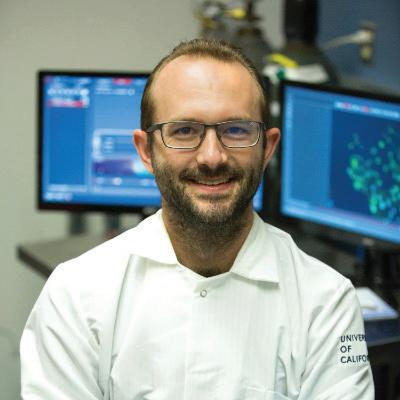
dermis signal to blood vessels? How does vasculature influence adipose tissue? How does environmental damage to one layer ripple through an entire system?
“We can take early tissue, middle-aged tissue and aged tissue and compare them,” Professor Morgan explained. “Those are great experiments, but they’re also very tricky.” Human samples come with decades of individual life history baked in — different diseases, medications, environmental exposures and stressors. While valuable, that variability makes it difficult to isolate precise mechanisms of aging.
This challenge is what led Professor Morgan’s lab, UC Riverside Tissue Injury & Mortality Engineering (TIME Lab), to focus on engineered tissue model systems designed to strike a balance between realism and experimental control. One example is the lab’s multi-layered skin model, composed of epidermal cells, fibroblasts, vascular cells and a subdermal adipose layer. By assembling these components in the same organization found in the human body, the lab can examine how different cell types communicate and age together.
“All models are wrong; some are useful,” Professor Morgan stated. “The question is which interactions matter most for the question you’re asking.”
These engineered tissues allow researchers to ask questions that were previously difficult to approach: How does the epi-
Professor Morgan’s goal is to make these models simple, accessible and affordable, lowering the barrier for biologists and clinicians who may not specialize in organoid or tissue-scale engineering.
“If someone has a question, we want them to be able to say, ‘Oh, there’s a model for that,’” he said.
To complement these physical models, the TIME Lab also develops computational models that tackle a major limitation in aging research: time. While lab experiments are constrained to weeks or months, computational simulations can model years or even decades of biological change.
In one ongoing project, the lab is modeling how repeated UV exposure leads to DNA damage and cellular senescence across many cell divisions. “We can model 10 or 20 days in a few seconds,” Professor Morgan explained. “We can model years in about 30 minutes.”
This approach opens the door to studying chronicity, the long-term accumulation of damage that defines aging. Though computational models are more abstract and dependent on the assumptions built into them, Professor Morgan believes they offer a powerful new tool when paired with experimental data.
This work also connects to emerging ideas around digital twins which are the computational versions of cells, tissues or even people that can be simulated over an
entire lifespan. “If we can simulate 80 years of aging,” Professor Morgan said, “we can finally study aging on the scale that it actually occurs.”
Beyond modeling, one of the lab’s most unexpected and exciting projects draws inspiration from an unlikely organism: the tardigrade, a microscopic animal known for its extreme stress tolerance. Professor Morgan’s team has been inserting tardigrade-associated genes into human cells to see whether they can increase resistance to oxidative, inflammatory and toxic stress.
“We published a paper last year showing a broad protective effect in stem cells,” Professor Morgan noted. While the work began as a side project, early results suggest these stress-tolerance mechanisms could have implications for aging research, regenerative medicine and cell therapies. “It’s a little sci-fi,” he admitted, “but it’s been a lot of fun and surprisingly promising.”
Central to Professor Morgan’s lab is a hands-off mentoring style that gives students significant independence. This freedom encourages creativity and innovation, but it also requires discipline. Students from a wide range of backgrounds including bioengineering, biology, mathematics, chemical engineering and neuroscience have worked in the lab. While prior experience isn’t required, Professor Morgan looks for curiosity, conscientiousness and an interest in programming, which underpins both the lab’s computational work and data analysis.
“Research isn’t like a lecture,” he explained. “You have to be willing to ask your own questions and chase them.”
As the lab enters a new phase of growth, with a renewed emphasis on computational aging models, Professor Morgan hopes his work will help shift how the field thinks about aging not as a fixed endpoint, but as a slow, interconnected process unfolding across tissues and time.
“Aging isn’t something that suddenly happens,” he stated. “If we want to improve quality of life, we have to understand how it starts and how it progresses long before the end.”
The Glen Mor Market — a student oasis. Located across from the Lothian residence hall, this student store contains the food and drink for any situation. Whether it be needing an urgent coffee fix at Starbucks before your first class or getting a midnight dinner at Noods, Glen Mor Market provides. Students have access to last-minute necessities such as dish soap, tissues and over-the-counter medicine. Grocery items, food
and energy drinks are also available for students.
Hot foods from Noods and Savor are another attraction for freshmen with meal swipes. The market offers many indoor and outdoor seating options that students can use to eat lunch, gather with friends and have study sessions. Use the Glen Mor Market to your advantage next time you have an upcoming midterm!




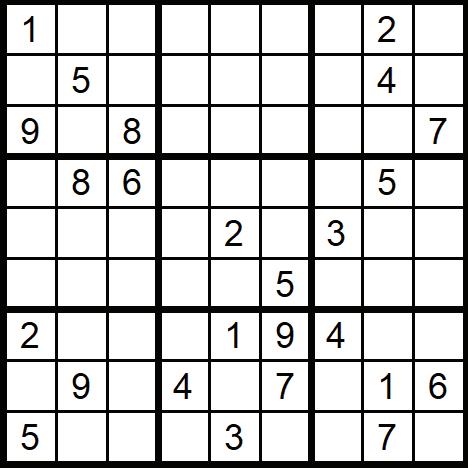
Unit led by the QB
Non-lethal weapon
Vixen’s mate 16. Finery 17. Ragged
18. What an Uno player has in hand upon crying “Uno!”
19. “The Addams Family” cousin
20. Irritable 22. Villa d’____
Baby’s bed 25. Shorthand for ‘on
___ pride
27. Asian peninsula 29. Z __ __ zebra 31. Region 32. Puffs up 34. Super bowl team with 12th man
36. Blunder
38. Massachusetts team competing for the Lombardi Trophy
41. Staff symbols
45. ____-deucy
46. Low voice
48. Impassive
49. “___-ching!”
50. ____calate
52. “My Way” lyricist
By Staff


53. Parsley, sage, rosemary or thyme
55. Mass book
57. Family member shorthand
58. “Peekaboo” follower
60. Simultaneously
62. Pitcher’s problem
63. Member of native american tribe in virginia
64. Here and there 65. Touchdown site
Down
1. Sir Isaac Newton’s book on the fundamentals of light
2. Where many parties are found
3. Snow bike necessity 4. Med. specialty 5. CBS crime drama 6. “___ __ evil ...”
7. An error in printing
8. What a legendary athlete might have shelves full of
9. Start of a counting rhyme
10. Get older

11. Marathon, e.g.
12. UCR dining hall
13. Scuba diver equipment
14. Pitiful gaze
21. Has
24. Proverbial place for bats
28. Kyrgyzstan range
30. D.C. baseball team
31. Mexican Revolution figure
33. Messy person 35. Evil laughs
37. Where football games are played 38. It’s played on a
cross-shaped board
39. Secretary of state before Dulles
40. Shredders
42. Bacardi competitor
43. Soldier armed with a spear
44. Like some triangles 47. Oil used in a lot of asian food 51. Perched
Ming of the NBA


Find out the type of brain food you are.
By: Nola Perifel, Assistant Features Editor
1. When studying, I usually:
A. Procrastinate until I pull an all nighter the night before.
B. Start early and take frequent breaks.
C. Power through and study for hours at a time.
2. I prefer:
A. Savory snacks
B. Refreshing food
C. Energizing sustenance
3. When looking for perfect snack food, I prioritize:
A. Guilty pleasures
B. Health
C. Nutrients
If you got “A” more often, you are Chips. You love the crunchy and savory aspects of chips. They are one of your favorite last-minute study snacks and although they are not the healthiest, they get you through the task of studying for midterms. You might not employ the healthiest study habits and you sometimes find yourself procrastinating until the last-minute, studying in the library to pull all-nighters. Like chips, taking zero breaks is unhealthy. Try to improve your study habits next time you have an upcoming exam.
If you got “B” more often, you are Fruit You love the fresh and sweet taste of fruits like apples, oranges, berries and more … You opt for a healthy route that gives you energy, vitamins and a nice boost. You employ healthier study habits, starting to study days in advance, taking frequent breaks and sharing your knowledge with peers. You have a strong will to understand your lessons and make sure you arrange your study sessions to be at your best advantage. Keep going, you’re doing great!
If you got “C” more often, you are a Protein Bar. You may love or hate the taste of protein bars, but one thing is sure, you strive for power and energy. You power through study sessions, fearing that if you stop, you’ll lose all progress. Often studying for hours on end, the word “break” is not in your vocabulary. You often study so much, you end up being overprepared, but at least you are almost guaranteed a good grade. Protein bars fuel your brain, but taking some breaks might be best for a more effective study session.■ H
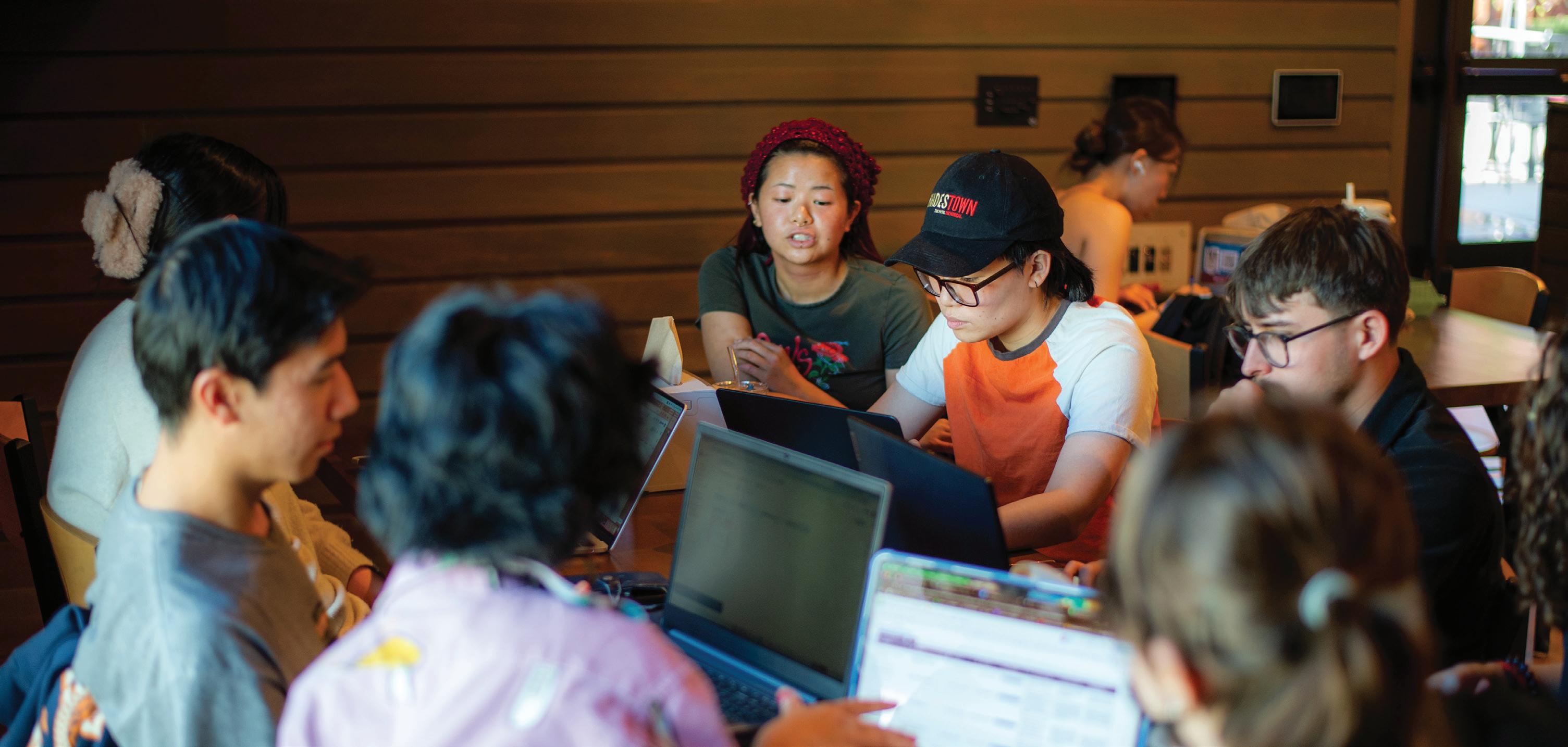
Amidst the sea of mainstream media and Hollywood films, it’s difficult — and daunting — to have your voice heard in a world that favors household names. Yet here on the University of California, Riverside (UCR)’s campus, it’s possible. In fact, it’s encouraged. What was once known as “Model Minority” a decade ago is now known as the “Asian Americans of Riverside Theatre,” a club dedicated to sharing the voices of the underrepresented through theatrical and film arts. This is the perfect place for you to tell your story.
As a student-run nonprofit theater club, AART focuses on producing and performing shows written by writers who often originate from under-appreciated groups, with their latest winter project being “Wolf Play” by Hansol Jung. Tickets to their shows are free, and their goal is to shine light onto those who are often overlooked in the mainstream. Consider joining AART if you’re interested in the craft or want to help produce thoughtprovoking shows.
Despite the name, AART is open to all storytellers and theater lovers regardless of background. “It’s not meant to be exclusionary to anyone who’s not Asian American,” Ren Nguyen, second year theatre, film, and digital production (TFDP) major and co-president of the club explained. “We are accepting of everyone who’s willing to tell the stories that we want to tell.” As long as you’re passionate about storytelling, AART may just fit your vibe.
Both co-presidents stress that previous experience is not required, and that newcomers will be taught all the ins and outs of a true theater production. Nguyen emphasized that there are endless roles in a production and there’s always something for someone. “There’s a job for every kind
of person,” he said. “If you’re good at math, you would be great for finances. Or if you’re super extroverted and want to just perform, then you can act for us.”
Prior to joining AART, both Nguyen and Emily Luong, fourth year psychology major and co-president, had little experience in theater, yet they soon developed a passion for the arts and found a warm and welcoming community that guided them along. As a former newcomer herself, Luong understood the intimidation of joining a theater club. “I think it’s the hesitancy of, ‘oh, this is a theater club so I have to act.’ It’s definitely not true,” she reassured.
“We have so many people on our board that are not interested in acting at all, but they have other skills that are very useful, like logistics,” Nguyen added. “We’re going to teach you. Just making it about truly loving the craft of art, rather than being so focused on doing it right.”
How production works in AART is they first select a script and then put out calls for crew and cast members that are publicized on their social media. After carefully choosing applicants and thorough rewatches of audition tapes, the finalized production team of around 20 people gets together and has a table read and uses the time to familiarize themselves with each other. Producing a show requires tremendous efforts of creativity and teamwork, characteristics that are evident in AART’s past works.
When asked about their favorite memories of AART, both co-presidents mentioned the community within the club. Nguyen reminisced about a crew-party after one of their shows in their first year, describing it as a pivotal moment in which he realized he truly found his people. “I just remember at the end of that party just feeling really content and
knowing that I had found a sense of belonging at college,” they said.
Luong also talked about a field trip she went on with the club, in which they watched various shows, including a Harry Potter play. “We are again creating a community of artists that want to create, but also experience art together,” Luong explained, “and I think that’s what we strive to do.”
The AART co-presidents have high hopes and goals for this year. They would love more people to get involved with the club, as more people mean more voices and perspectives. This winter quarter, AART will perform “Wolf Play” for their opening night on Mar. 6 at 7 p.m. Additional performances will be held on Mar. 7 and Mar. 8, so there’s plenty of time to reserve tickets. Nguyen also mentioned for spring quarter, they are currently planning on releasing next year’s board applications as well as a field trip.
To those who are curious but still on the fence about joining, it may be helpful to remember that everyone was new at some point. Not all AART members joined as seasoned theater veterans, so take this as an opportunity to try and learn new things.
Because AART focuses on producing shows, they do not formally host meetings, but when they meet up, it’s often for rehearsals at Humanities 411. You can follow their Instagram (@aart.ucr) to stay updated on their schedule.
AART is not just an organization made up of theater lovers; it’s a welcoming community devoted to letting the voices of the underrepresented be heard. With thought-out visions and endless creativity, this is a place where anyone can do anything. As Nguyen summarizes perfectly, “We’re just truly trying to tell stories and involve people.”
SOPHIA UCROS Contributing Writer
The worst feeling in the world is realizing that your friends might not actually be very good friends at all. Letting go of familiarity can be scary. But take it from someone who has gotten through a toxic friend group before and found their way to somewhere new and secure. I’m here to assure you that it will be okay and to guide you through getting out of a toxic friendship environment.
Analyze if you truly feel yourself around the people you call friends
Making friends is hard but keeping them is harder. There’s this giddy phase at first, where everything you do together feels exciting and new. You share stories about one another and develop your friendship. But then you may start to realize that instead of being yourself around these friends, you find yourself overcompensating, being someone you’re not.
With a friend, silence should feel comfortable, laughing should come
easy and boundaries should feel healthy. If you don’t like the version of yourself you are around these people then it may be a toxic environment for you. You thrive around people who have your best interest at heart.
Does being around these people feel like a breath of fresh air or a weight in your chest?
In most cases hanging out with friends can feel like a relief, somewhere where life feels easier even when it might not be. If you’re constantly uncomfortable with the way you’re treated, to the point where you don’t really look forward to hanging out with them as much anymore, this should be your sign to leave. You may be thinking, what if I leave and I find no one else? Well I’m here to assure you that while it will take time to adjust and find something new, you will find new people, and it will be worth it.
Make the leap to get to the other side
So you aren’t feeling fulfilled and seen to the max capability in your friendships. Make your move. You can start by telling them how you feel. If they’re accepting of your feelings then maybe the friendship can be salvaged. Communication is important in all types of relationships, especially friendships. Maybe your friend doesn’t realize what they’re doing is wrong, so point it out and try guiding them in the right direction first. Now, if they still ignore it or just say that’s the way they are and there’s no changing it, then you can know you tried. Let that be your final sign to let go.
Know your worth. Walking away doesn’t make you dramatic, it just means that you chose yourself. You deserve friendship where you will be respected and seen as you are, not for playing the part of someone you’re not. So let’s keep the real friendships in and the toxic ones out this year, Highlanders.
NAYSHA AGARWAL Staff Writer
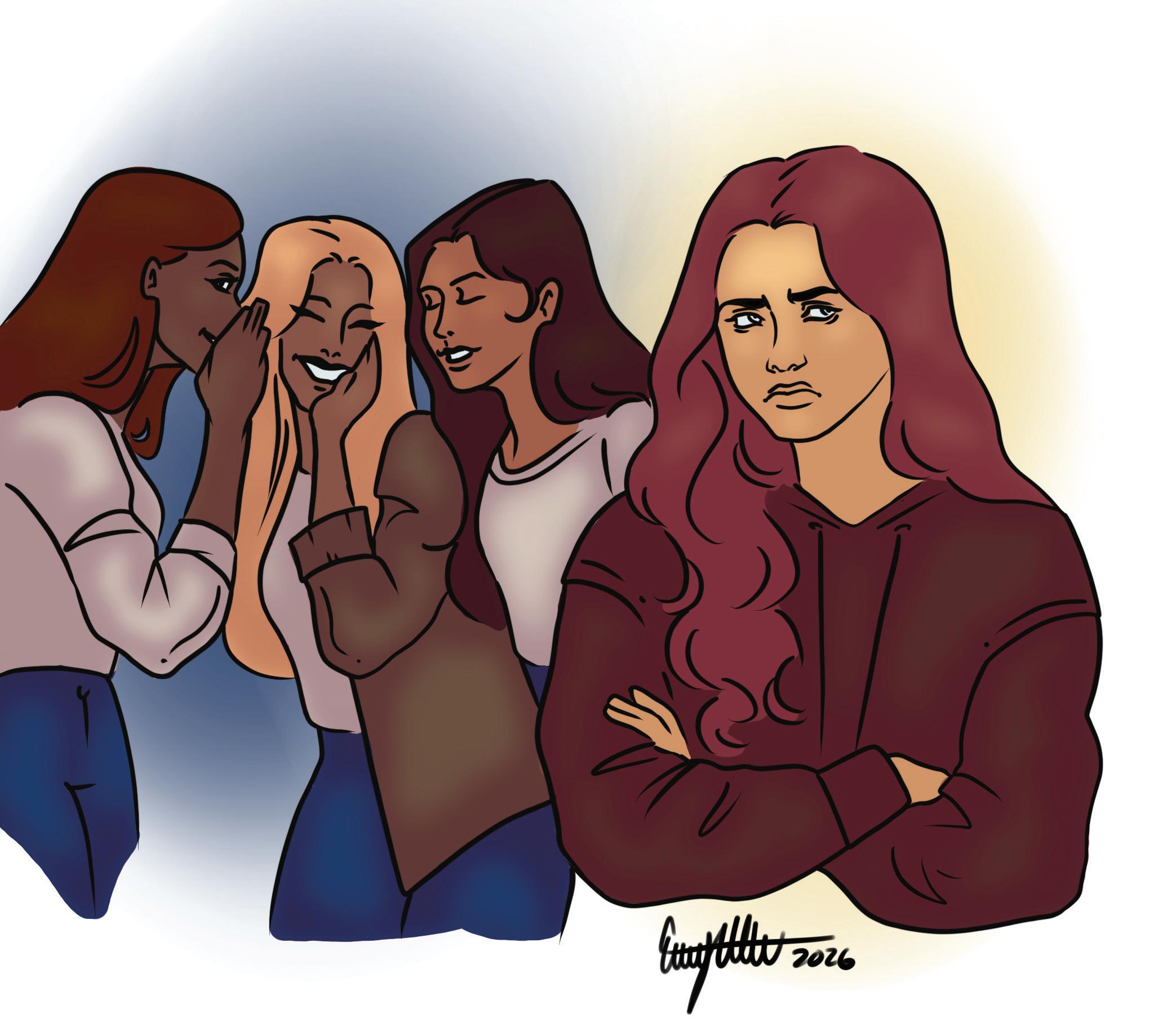
Friend,
Oh … what is a friend?
Not the kind who smiles in passing, Not the kind who nods but never stays, But someone with you.
Someone who sees the storm behind your smile And still stays.
I’ve never known. Not really.
There were many who cared in pieces — Faces that turned toward me
When I laughed loud enough, But disappeared
When my silence started to speak. Their love was like mist —
Soft, fleeting, Never something I could hold.
And many more who pretended.
Masks worn with grace, Kindness offered like crumbs
Falling from a table
Where I was never invited to sit.
God …
The pretending hurts more than the absence. The way they say “I’m here”
And you want to believe it
So you pour your soul out
Only to realize They never even brought a cup.
Friend …
What is it like to call someone that?
To speak their name like shelter, To run to them not out of need, But out of trust —
To be seen, fully and not flinch?
To trust without second-guessing your own worth. To believe they’ll stay
Even when you’re not easy to love. Especially then.
F-R-I-E-N-D
A word so small
Yet heavier than sorrow when it’s missing. Is it a hand that reaches into your darkness
And doesn’t let go when you tremble? Is it a heart that knows your shadows And still opens its door?
Is it a voice that doesn’t vanish with the light? Is it laughter stitched into the broken places? Is it presence —
Not just in joy, but in the unraveling?
Because this word —
This short word can carry a lot of weight. More than I’ve ever been allowed.
This fragile, sacred word — Is more than syllables. It is safety. It is presence.
It is love that doesn’t vanish when you’re broken. And I …
I have longed for that.
With everything in me.
And though I’ve carried this loneliness
Like a second skin, Somewhere, deep beneath the ache, A small voice still whispers —
Maybe, one day ...
I’ll say friend
And someone will answer, “I’m here.”
And they’ll mean it. ■ H
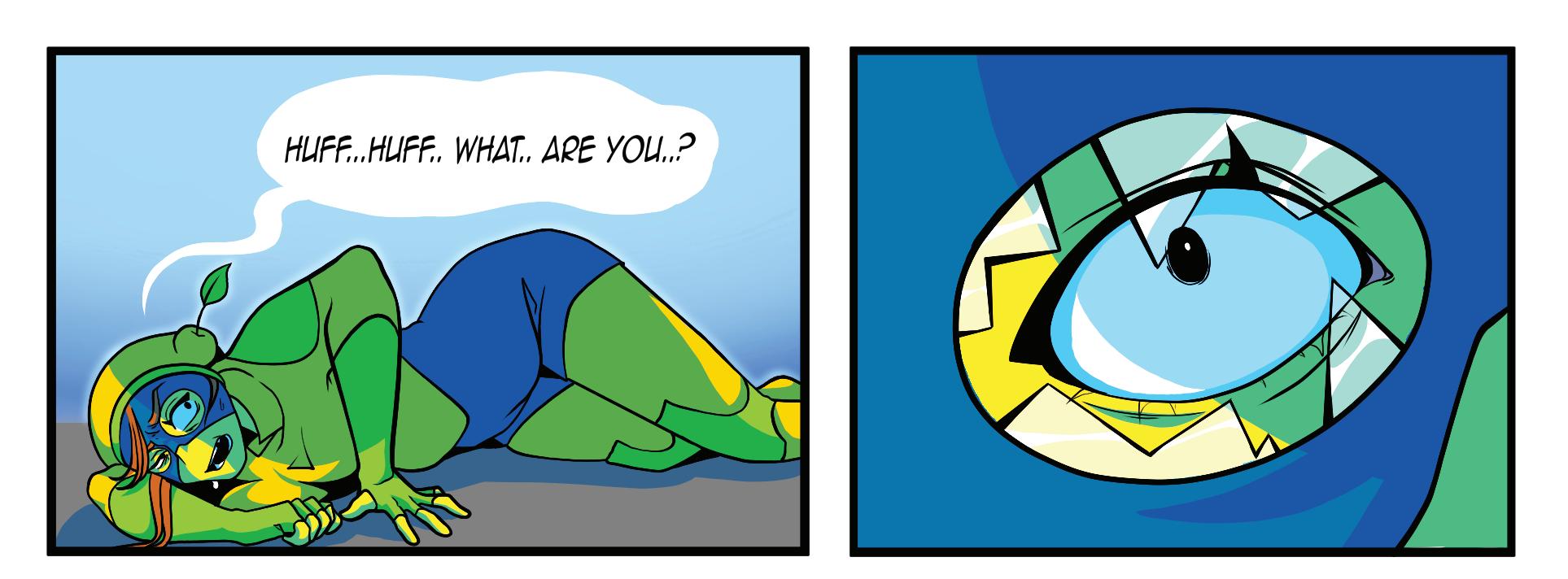
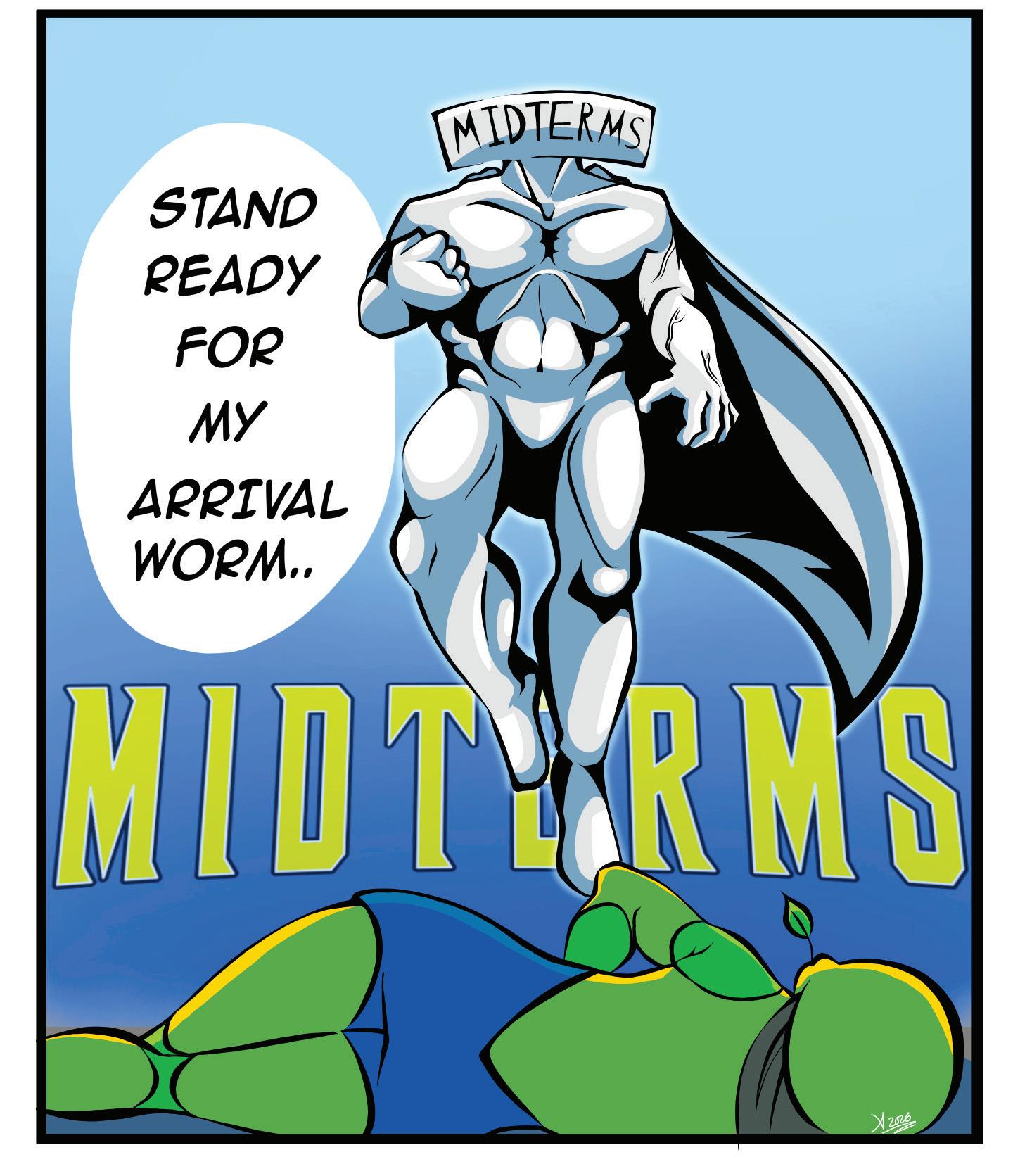
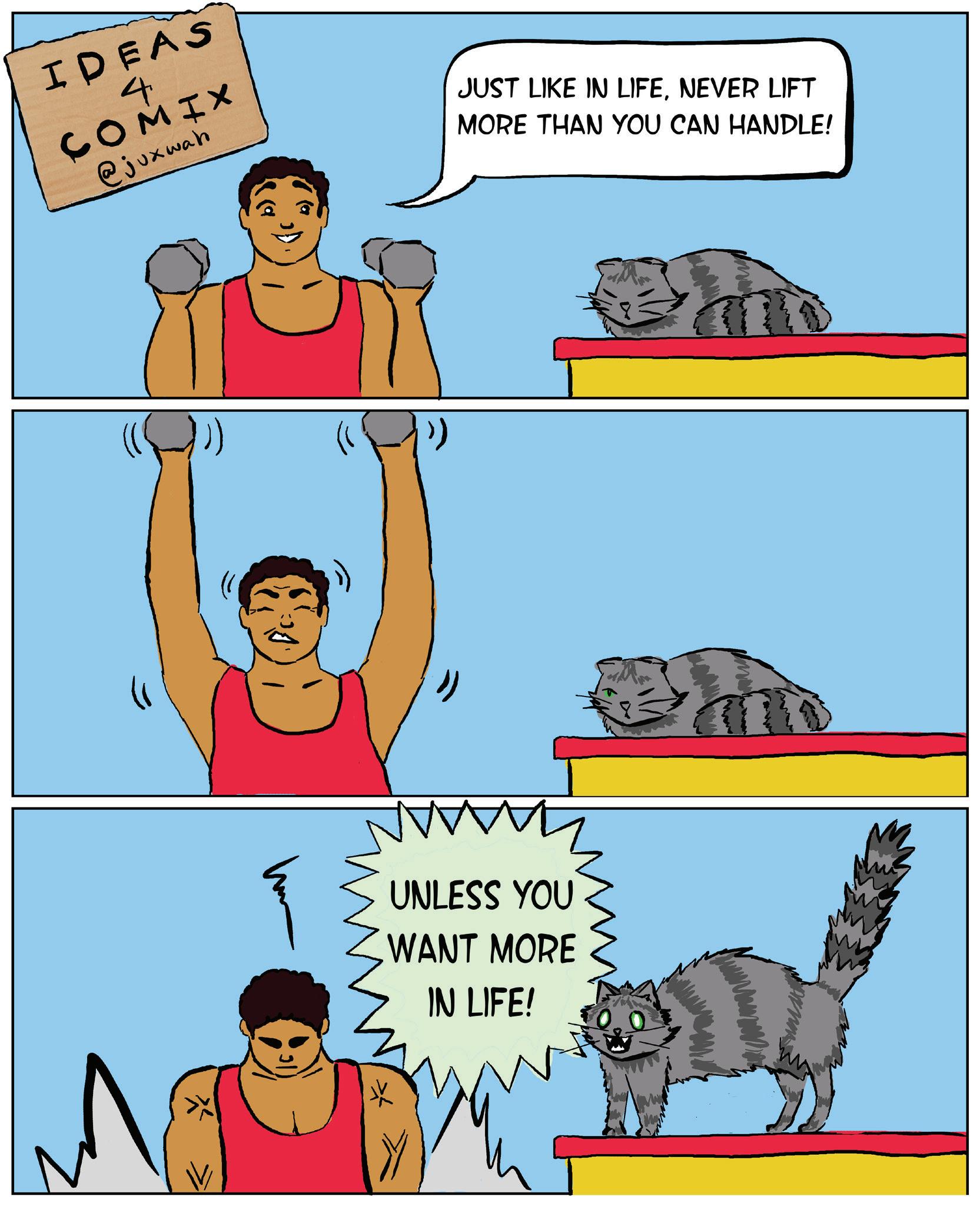
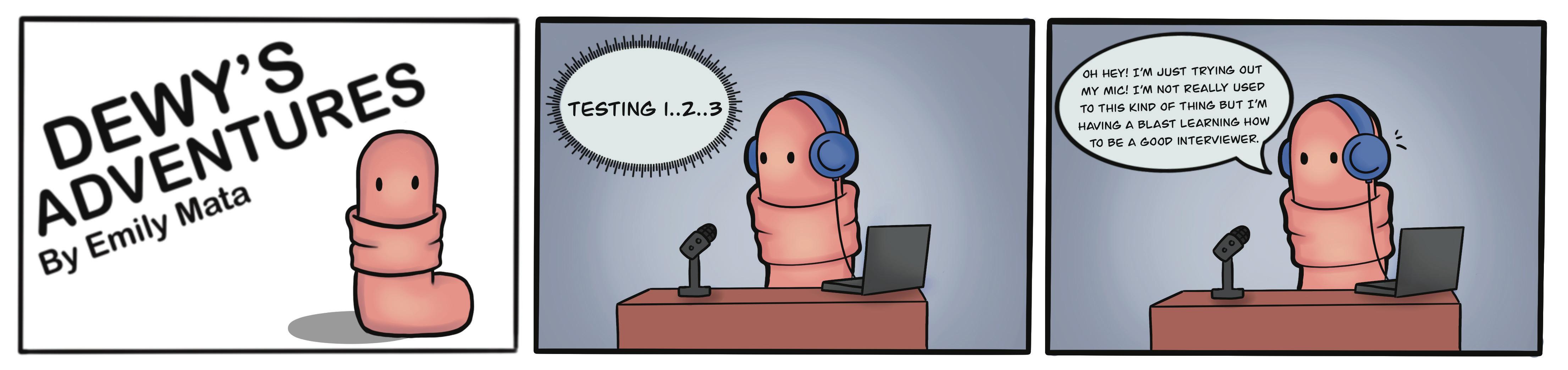
Invinciterms / By: Adelia Urena


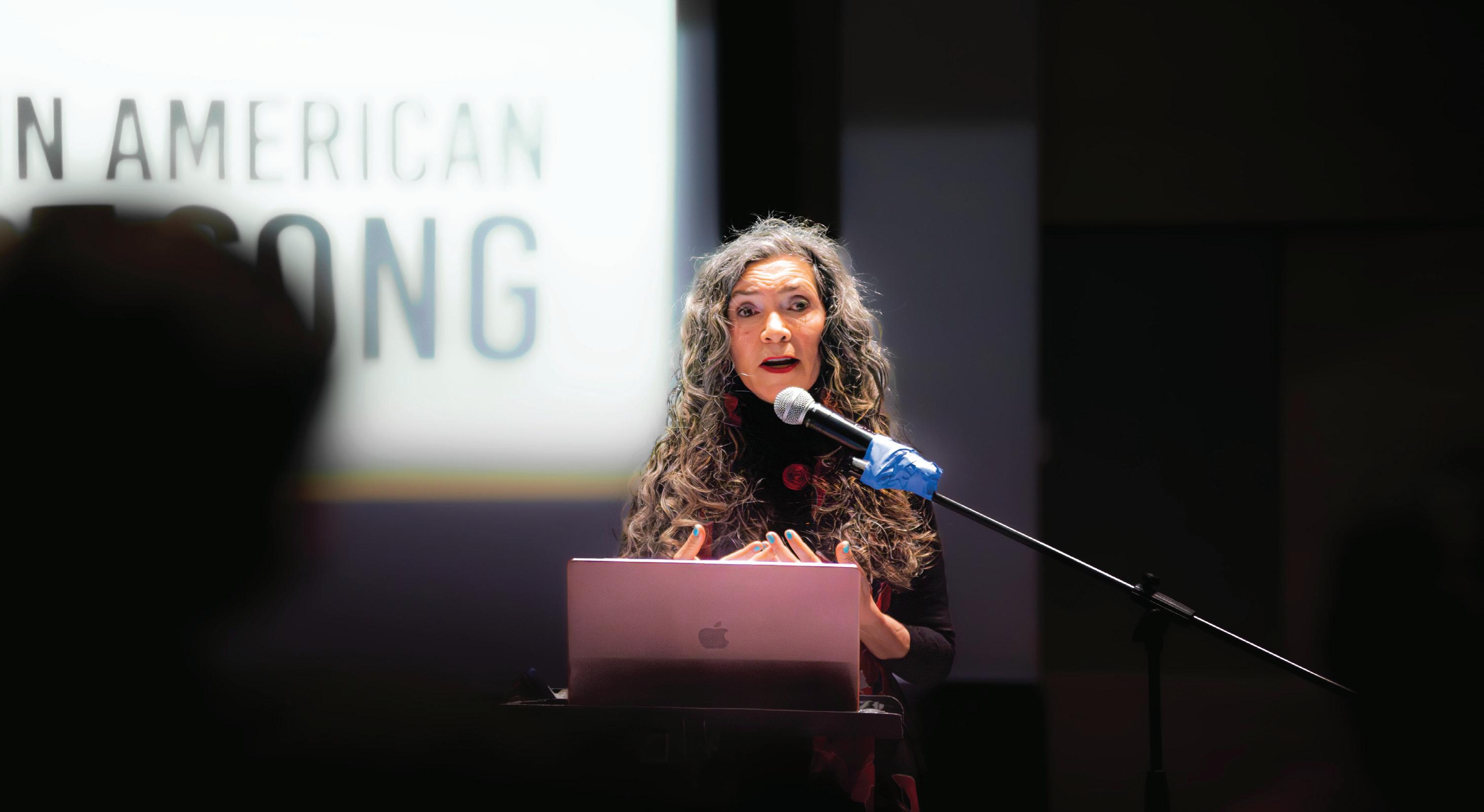
THE LECTURE DECONSTRUCTS THE ART SONG WHILE HIGHLIGHTING THE RECOVERY OF CULTURAL IDENTITY THROUGH MUSIC.
IAN PALMA, JIHOON KWON Radar Editor, Staff Writer
On Jan. 28, 2026, soprano, musicologist and physician
Patricia Caicedo was invited to UC Riverside (UCR), Arts Building 157, to provide a lecture on “Decolonizing the Art Song: Latin America’s Voices, Identities and Soundscapes” as part of the Florence Bayz Music Series.
Caicedo established the source of the epistemological hierarchy that the Europeans imposed on its colonies, including South America, as modernity of early modern European philosophy. She then elaborated on how the European colonizers used this to erase South American culture and heritage, especially in the realm of music. By the 19th century, while South American colonies gained independence, the national identity was still fragile as the agents of the independent movements were South Americans seeking more power. The values imposed upon by the Europeans were internalized by South Americans, including the eurocentric repertoire of music, leading them to adopt the sound and language of European music. A categorical distinction was drawn between art songs and folk songs, with art songs being heavily influenced from French, German and Italian music. National anthems
of South American countries were inspired by operas and were usually composed by Europeans. A prime example of this is the national anthem of Uruguay, written in the style of European classical music by Hungarian composer József Debály. Anthems and elements of “the national style” came from the pentatonic melodies of rural songs. It is also around this time that new rhythms like the pasillo and samba were being formed from the influence of rural communities.
In the early 20th century, aspects of indigenous and folk music began to embed itself into other genres across the Americas, contributing to the reclamation of cultural identity in music. In Peru, compositions such as the famous “El Condor Pasa” utilized sounds of traditional folk. Genres such as the bolero and ranchero have had their roots in folk music as well.
Additionally, South American composers of the time such as Alberto Nepomuceno and Mário de Andrade have also called for the need for national and cultural identity within the music of their nations. Nepomuceno even boldly declared, “The country that does not sing in its own language has no culture.” Caicedo additionally sheds light on female composers such as Chiquinha Gonzaga and Gisela Hernández who, in spite of the
social restrictions placed on them, contributed to the establishment of national music within their countries.
Down in Cuba, the emergence of Afrocubanism in the 20th century gave rise to poets such as Nicolás Guillén, whose works heavily centered around the Afro-Cuban experience. Guillen’s poems were interpolated into musical compositions such as “Tú No Sabe Inglé.” The synergy between poems, culture and music could not be any more clearer.
Despite the significant progress made in finding and developing a unique national identity in music, Caicedo believes that institutions are still largely Eurocentric despite the vastness of catalog in South American music. She urged that the musicians, philosophers, historians or a member of any discipline across the world look into their own culture to rescue and highlight their cultural voices.
“The problem is not how the music evolves or not,” Caicedo said.
“It is the educational institutions, universities and conservatories that continue to exclude this music.
[Despite the vast number of music] produced by composers, the music continues to be excluded and the canon continues to be Central European, not acknowledging the presence of other music, not only
Latin America, but music from Asia, from Africa and other corners of the world.”
The lecture is part of the Florence Bayz Music Series, a program run through the UCR Department of Music. From concerts to lectures to demonstrations, the Bayz series covers all things related to music, aiming to reframe the way people hear and play. “Students who come to free Bayz series events not only get to see professional performances from top international musicians and talks from leading scholars, but they also get to participate in Q&A sessions every week, which is a unique opportunity to ask these performers and speakers questions about their careers,” said Amy Skjerseth, an Assistant Professor of Popular Music at UCR and coordinator of the Bayz series. The program delves through an eclectic mix of music genres ranging from classical to electronic and beyond, and runs every Wednesday at noon during the quarter in Arts Building 157 for all to enjoy.
Patricia Caicedo’s lecture exemplarily places an emphasis on understanding the cultural and social influences behind art songs all the while stressing the need to properly listen, teach and perform them in order to break the cycle of colonization. ■ H

JIHOON KWON Staff Writer
With the Academy Awards announcing its Oscar nominations on Jan. 22, 2026, here are some predictions on the following categories.
Best Picture - “Marty Supreme”
“Marty Supreme” manages to capture the theme of moral ambiguity arising from self-destructive ambition and self-entitlement in pursuit of materialistic goals, desperation and the illusion of such dreams in a capitalistic system and while keeping the general audience entertained with its intensity. Although the final emotional consolation does feel abrupt, it also feels necessary and the theme stays coherent and consistent for the majority of the film. Best International Feature Film - “It Was Just An Accident”
Jafar Panahi took a great risk even filming “It Was Just an Accident,” which subsequently led to his one year sentence. The film touches on Iranian government’s brutal authoritarian torture, institutional corruption and the moral ambiguity between retribution and justice. The film is bleak with moments of uncomfortable humor and a powerful ending.
Best Directing - “One Battle After Another”
Paul Thomas Anderson, or PTA, has unflinchingly examined the American identity throughout his career and it is no different in his most recent film “One Battle After Another.” While the film does become overly allegorical at times, PTA nevertheless succeeds in making a film that is largely accessible while maintaining his distinctive voice.
Best Actress in a Leading Role - “Sentimental Value”
There is something unmistakably human about Renate Reinsve’s performance, perfectly capturing the emotionally chaotic state of Nora Borg in a way that feels natural and lived-in. The trauma, psychological tension, guilt and even the moments
of moral failures feel seamlessly human.
Best Actor in a Leading Role - “Marty Supreme”
With the Oscars’ decision to leave Jesse Plemons out of a much deserved nomination for his role in “Bugonia,” Timothée Chalamet’s performance stands out in “Marty Supreme.” With the intensity and energy that he brings in, the role does not feel exaggerated but rather an extension of himself. Marty Mauser is a psychologically and morally complicated character, and Chalamet’s performance makes it compelling for the audience without losing the nuance.
Best Cinematography - “Train Dreams”
The visual poetry of “Train Dreams” locates meaning and depth in its images by capturing them with its gorgeous cinematography. Its tranquil and solemn approach to nature almost imbues the film with a metaphysical weight.
Best Visual Effects - “Avatar: Fire and Ash”
There are two things that James Cameron always circles back to which are the failure and threat of technology and the ocean. And he’s created the fictional world of Pandora where he employs the most advanced visual effect techniques to bring these two things on the screen alongside hyperrealistic aliens, mystic creatures and the planet’s ecosystem. “Avatar: Fire and Ash” certainly delivered in this regard that earned the franchise its massive popularity.
Best Production Design - “Frankenstein”
The romanticized, almost naive, retelling of the gothic classic’s biggest strength lies in its ability to bring into life the grandiose, grotesque and grim fantasy world of del Toro’s imagination in its dreamlike images of scientific experiments in laboratories.
Best Original Score - “Bugonia”
While “Bugonia” refuses to take risks beyond its source material, the soundtracks of the film understand and play their role perfectly, creating a dark humor in absurd contrast between the scene and the music. This is done most effectively in the final scene of the film, which is one of the few scenes that justifies the need for the remake, where “Where Have All the Flowers Gone?” plays in the total annihilation of human civilization.
Best Original Music - “Sinners”
The scene in which Sammy plays “I Lied to You” is easily the most memorable cinematic moment of 2025. More importantly, it is musically ambitious, blending various genres within the lineage of African-American music from past and present.
Best Makeup and Hairstyle - “Frankenstein”
Guillermo del Toro made a new addition to his list of monsters with Frankenstein’s creature, suffering from paternal rejection and social alienation, through makeup and hairstyling process that took hours, though if del Toro’s intention was to bring into life the literary accurate creature so abominable his mere looks fundamentally incompatible with human society, it seems that he has failed to cover up Jacob Elordi’s attractiveness entirely which ultimately works in favor of del Toro’s version of “Frankenstein.”
Best Costume Design - “Hamnet”
The way “Hamnet” uses costumes is very noticeable from the beginning of the film, contrasting Agnes’ red and crimson to William’s muted green and grey, managing to convey her mystical qualities and the complimentary color palette with both the forest and William. The changes in the color and the style of the outfits that show the emotional state of the characters as the film progresses is a bit too explicit, but works for the sake of the film that “Hamnet” is trying to succeed as.
OVI MATHIVANAN Staff Writer
On Jan. 19, Italian fashion designer Valentino Garavani passed away at age 93.
Born in Voghera, Italy on May 11, 1932, Garavani was recognized in life and in death for his trademark red fashion marked by Italian elegance and femininity. Affectionately known as The Last Emperor of Fashion, Garavani’s garments were worn by star-studded clientele, including Jacqueline Kennedy, Anne Hathaway and Diana, Princess of Wales, among many others.
On Jan. 30, the Valentino Foundation issued a press release honoring Garavani, saying, “Valentino Garavani was not only a constant guide and inspiration for all of us, but a true source of light, creativity, and vision. His extraordinary example shapes the way we think, create, and work, and he will continue to guide us every day.” Additionally, the statement affirmed the foundation’s commitment to carrying his legacy and vision forward, as well as expressed gratitude for those who stood alongside the family to remember and honor Garavani.
Garavani’s first dress, named “La Fiesta,” was a strapless cocktail dress made of wrapped tulle and served as the first of many iconic red dresses released by the brand; the particular red shade has become a hallmark of the brand, earning the signature Valentino Red moniker.
In 1960, Garavani and Giancarlo Giammetti founded the iconic luxury fashion house Valentino Società per Azioni, more commonly known as Maison Valentino. Giammetti was frequently referred to as Garavani’s partner both in business and in private, due to their decades-long professional partnership that extended beyond their 12-year ro-
mantic relationship from 1960 to 1972.
Following the launch of his luxury house, Garavani rapidly rose to acclaim, having been invited to present his debut haute couture at the historic Pitti Palace in Florence, Italy in 1972. The show brought him to the international stage and cemented his status among the fashion elite.
Beyond his classic red couture, Garavani was recognized for the craftsmanship and attention to detail in his designs. The Valentino two-piece dress Kennedy wore to her 1968 wedding to shipping magnate Aristotle Onassis exemplified his elegant and sensible artistry. Garavani’s designs have been noted as a defining agent in Kennedy’s transition from her identity as former First Lady of the U.S. “Jackie Kennedy” to “Jackie O,” with the O referring to her new married name, Onassis.
Garavani’s designs primarily focused on women’s tastes and style, and his brand has continually embraced a feminine philosophy committed to elegance and luxury. “I know what women want,” Valentino once remarked. When asked what they wanted, he replied, “They want to be beautiful.” This emphasis on beauty, while central to the Valentino brand identity, has also prompted public and media scrutiny for its perceived role in reinforcing obsessive and unrealistic beauty ideals and standards.
a July 6, 2007 conference celebrating his then 45 years in fashion, he notoriously commented, “Designers have to show for the first time on the runway the clothes that they want to be seen, so automatically if the girls are skinny, the dresses are more attractive.” He went on to say that a dress worn by a heavier model would not appear as im-

pressive.
In an industry widely criticized for shamelessly celebrating underweight models and casting aside those with average or heavier frames, Garavani has faced ongoing criticism for perpetuating unhealthy beauty and body image standards through his preference for underweight models when showcasing his design.
Despite these criticisms, Garavani’s influence within and beyond the fashion industry has remained significant, including recognition for his philanthropic work, particularly his contributions to AIDS-related causes. He contributed to those causes both financially and by helping destigmatize public conversations about AIDS, using his brand and the fashion industry as a stage to raise awareness and promote activism.
Although he formally retired from his career as a fashion designer with a final runway show in 2008, he continued to receive accolades and recognition for his work. Among those honors is the release of “Valentino: The Last Emperor,” a documentary recounting the end of his active work in fashion that premiered at the 2008 Venice International Film Festival.
Ultimately, Garavani’s brand has been lauded for maintaining its iconic Valentino identity and its signature style despite changes in creative direction, demonstrating the long-lasting impact of the strong roots and tone he established for the brand over the decades he spent building it. Central to those roots is the unmistakable Valentino Red, which has persisted in the brand’s designs, creating a timeless color — and a legacy — that continues to define Maison Valentino and fashion itself.”

AAKIF IQBAL Assistant Radar Editor
The cycle of fashion remains consistent throughout the year as fashion houses move from “FallWinter” to “Spring-Summer” every couple of months. At the speed of which the calendar moves, so too do collections by new creative directors and industry veterans. From Giorgio Armani to Schiaparelli, many collections took the fashion world by storm.
Of the most notable and discussed fashion designers to have emerged in the last decade, Jonathan Anderson has become a household name within and outside of the fashion world. From his collaborations with UNIQLO taking off with cropped and boxy button-up shirts, to revitalizing the house of Loewe, to doing costume design for Luca Guadagnino’s “Challengers,” Anderson has been everywhere. Now taking on the role as the creative director at the eponymous house of Dior, Anderson has set himself quite the challenge.
While in the mid-twentieth century when the fashion industry began to blossom, it was normal for a creative director to have control of each collection that goes on to the runaway. Within the last three decades, luxury brands have taken a massive shift. From Yves Saint Laurent, to Dior, to Hermès, most houses have designated one designer for the Men’s collections and one designer for the Women’s collections. But this is where Anderson differentiates.
For the first time in decades, Anderson is the first creative director to design the Men’s, Women’s and Couture collections all by himself. That is four collections for the Men’s line, four collections for the Women’s line and two collections for couture, not to mention the six collections he’s continuing
to do for his own brand “JW Anderson” and the two he does in collaboration with UNIQLO all in one year.
As a creative director, designing every single one of these collections and being able maintain a cohesive narrative through all of them, at each respective house, while not resorting to repeating rehearsed ideas, is an absolute undertaking for Anderson to attempt. But from the moment his first collection debuted in October, it was clear he had it under control.
In January alone, Anderson debuted his first haute couture collection as well as his Fall-Winter Men’s collection. Each is well worth discussing. Continuing along from the idea he opened his first show with, montaging clips of the previous creative directors at Dior, Anderson is investigating and analyzing what Dior means to people. In his fall-winter Men’s collection, Anderson is taking clear inspiration from infamous Dior men’s creative director Hedi Slimane.
The boom of skinny jeans brought on by Slimane in the 2000s with his influence from punk and classic rock are put back on the runaway in clear homage by Anderson. Combining this homage, this new Dior collection continues this current of French aristocracy through a modern lens that began back in October. Drawing from the likes of 1920s designer Paul Poiret and guitarist Michael Gordon, or “Mk.gee,” a completely unexpected world has emerged from the Dior Men’s Fall-Winter 2026 collection.
Following it up just a few days later, Anderson debuted his first collection for Dior Haute Couture. While Hedi Slimane’s time at the house influenced
the Men’s collection, Raf Simons and John Galiano’s times doing Dior couture were the clear references for this collection.
While the house is most known for the bar jacket Christian Dior designed in the mid-twentieth century, John Galiano’s time as designer for the Women’s collections at Dior in the late 90s is perhaps what the brand is still most known for in a lot of ways. As Anderson said in an interview with The Business of Fashion, for a lot of people “Galiano is Dior.”
COURTESY OF
As a staple of the brand, the couture collection contained a multitude of flower imagery from ear-pieces, to bags, to embroidery on the dresses. Taking Galiano’s influence on the drama and regality of fashion, and fusing it with the modernity of Simons’s time at Dior, this new collection is both dramatic and regal and modern all at the same time. Many looks contain layers and layers of detail but without the constriction of classic couture patterns. The influence of the bar jacket is still recognizable within the collection, as it’s a must for any designer attempting to honor Christian Dior’s legacy, but with short sleeveless dresses and deeper v-neck coats as well, Anderson is proving the Dior woman can still exist comfortably within this modern climate.
Being the creative director does not alone mean creating collections for a brand, but also facilitating its image as well. Creating bags inspired by works of literature like Brahm Stoker’s “Dracula” to displaying new collections for locals to view free of charge, the direction Anderson is taking the house in expands well beyond the clothing racks.
COURTESY

IAN PALMA Radar Editor
With her last album being released back in 2023, fans have wondered when singersongwriter and professional yearner Mitski would come back and serenade the masses. After three years of anxious waiting, Mitski released “Where’s My Phone?” a single meant to herald her new album coming out next month. Straying away from the acoustic, warm tones of “The Land is Inhospitable and So Are We” and heading back into the more rock oriented sound that could be heard from her older albums, Mitski’s new single is sure to put listeners in a paranoid yet captivated trance.
The track goes deep into contemplative themes of loneliness and longing. Going beneath the surface level despite the straightforward title, the song tackles conformity and whether clearing one’s mind is the best way to live. Her trademark lyrics of desire and the need for company is also evident in the track, especially when she laments, “I keep thinking surely someone will save me / At every turn, I learn that no one will.”
until my mind is like a clear wax.”
With a hearty rock chorus that sounds eerily evocative of “Digsy’s Diner” by Oasis, the upbeat tempo interceded with lyrics about fear and loneliness makes it confusing as to whether listeners
grand hard-rocking scale of the track is almost unlike anything seen from her discography. Simply put, the song is Mitski at her most Beatlesque.

Giving these topics the same charm and wit present in her other previous songs such as “Washing Machine Heart” and “I Bet on Losing Dogs,” Mitski’s illustrative and relatable prose could be seen in lines such as “like a bug floating in the clear amber of a citronella candle / I will float
should smile or cry along to the song. Juxtaposition between upbeat sounds and melancholic lyrics isn’t new to Mitski and could be seen in her previous works like “Me and My Husband.” However, the way she blends different tones to the point where it induces anxiety in the listener, as with many of her other songs, is nothing short of magical.
Distorted guitar notes and reverb can be heard throughout the song, strengthening a sense of dread and despair placed by Mitski’s wordplay. It’s all the more nerveracking when the track ends in a cacophony of horns and stringed instruments. The
The music video that was concurrently released with the song heavily reinforces feelings of anxiety. With an eccentric mix of choppy camera shots, awkward close-ups and a Victorian house with some puritanical imagery to go along with it, the video would most likely stir a sense of discomfort within viewers. The single’s themes of loneliness and unconformity are meant to give way to a bigger narrative in Mitski’s new album, “Nothing’s About to Happen to Me.” The story sees Mitski as a woman secluded in an unkept house, free from society’s hassling and constrictions.
With the release of “Where’s My Phone?” as well as the upcoming release of her album being on the same month of Valentine’s Day, maybe single people and yearners might have something to look forward to after all.
Verdict: “Where’s My Phone?” is a song fit for an extraordinary return from an artist as long-awaited and cherished as Mitski. With haunting lyrics and a hardrocking sound, her new single paints an awesome picture of what’s to come from her next album.
RACHELLE REYNOSO GONZALEZ
Contributing Writer
On Thursday Jan. 29, the University of California, Riverside (UCR) men’s basketball hosted California State University, Long Beach (LBSU) and delivered a strong second half performance to earn a 71-61 victory in conference play.
LBSU’s leading scorer, Gavin Sykes, did not play after going through team warmups, so the offensive duties shifted to players like Isaiah Lewis and Shaquil Bender.
The game opened as a physical, lowscoring battle, with both teams struggling to find an early rhythm. UCR scored first on a layup from BJ Kolly, but LBSU responded quickly as the team’s strong defense led to missed shots, blocks and turnovers from the Highlanders, keeping the score close throughout the first half.
LBSU gained some momentum midway through the half, taking a small lead behind a handful of pull-up midrange shots and crafty layups from Isaiah Lewis. UCR stayed within reach by scoring inside and making free throws. At halftime, the Highlanders trailed by just three points after Ben Waller closed out the first half with a steal and slam
as the Highlanders snatched momentum from LBSU heading into the locker room.
With their newly-found momentum, UCR came out stronger in the second half, and began to close the gap. Andrew Henderson hit several key shots to keep the Highlanders in the game. With just under ten minutes remaining, Henderson knocked down a three-pointer to give the Highlanders a 48-47 lead, their first lead of the second half.
From that point on, UCR controlled the game. The Highlanders played strong defense, forced turnovers and limited Long Beach State’s scoring chances. Kolly and Osiris Grady scored important baskets near the rim, while Jailen Daniel-Dalton added a big three-pointer with four minutes to play to extend the Highlander lead to eight.
Long Beach State made an effort to come back in the final minutes, but UCR stayed calm and made free throws to protect the lead. Henderson sealed the win with a deep three-pointer in the final minute, helping the Highlanders pull away for the 71-61 victory.
Following the win, UCR’s Ben Waller spoke about the importance of the relationship
between the team and the students section, highlighting how the crowd’s energy played a key role in their second-half surge. Waller pointed to the first half as an example of how that connection and rhythm can spark momentum on the court, explaining how feeding off the students’ enthusiasm helps elevate both his own energy and the energy of his teammates.
Waller added, “I love it. You probably saw it in the first half. I was yelling, ‘you’ve got to give them something to come back for!’ and I think if I can get my team going with an energy play like that, I mean I’m all for it. It gets me hyped and I get involved. I absolutely love it.”
UC Riverside returned to their home court on Saturday night to play a Cal Poly team that features the leading scorer in the conference, Hamad Mousa. Both teams needed a win badly, and Cal Poly pulled away late to secure a 94-87 victory despite a season-high 39 points from Henderson. UCR fell to 3-8 in conference play and will need a strong finish to the season to get to the Big West tournament.

CARLOS GARCIA Contributing Writer
On Tuesday Jan. 27, the University of California, Riverside (UCR) women’s tennis team faced California State University, Fullerton (CSUF) in what ended as a 5-2 defeat.
The UCR women’s team entered their doubles matches with the following pairs: Kei Kato and Ramey Yu on court one, Crystal Kim and Susannah Su on court two and Kaia Paulo and Sam Condevillamar on court three.
Court three housed the two season debuts in Condevillamar and Paulo with this being Paulo’s Highlander debut following her transfer from California Baptist University. The court was lost 6-3
to CSUF followed by court two’s Su and Kim losing 6-2 leaving Kato and Yu’s match unfinished.
With CSUF having taken the doubles point UCR needed to win four of the six singles matches. The Highlanders took to their courts for the singles round. Court one housed Yu as she lost in straight sets 7-5 and 6-0. Court two housed the longest running match as Kato won 6-3, lost 6-1, and won 6-3 in the third set giving UCR their first point.
Kim lost 6-4, 7-5 losing a point on court three. Court four was also lost by Su 6-3, and 6-3. Li obtained the court five point through her two set wins of 6-3, and 6-4.
Curcic lost court six after winning the first set 6-4, but lost the next two sets 6-1 and 6-2.
While UCR lost 5-2, the match had plenty of encouraging moments to fall back on. Kato’s three-set match win and Li’s first career win for the Highlanders in straight sets were some positive takeaways for the team.
After losing to Cal State Long Beach 5-2, the Highlanders will resume conference play on Feb. 17 against California Polytechnic University, San Luis Obispo.
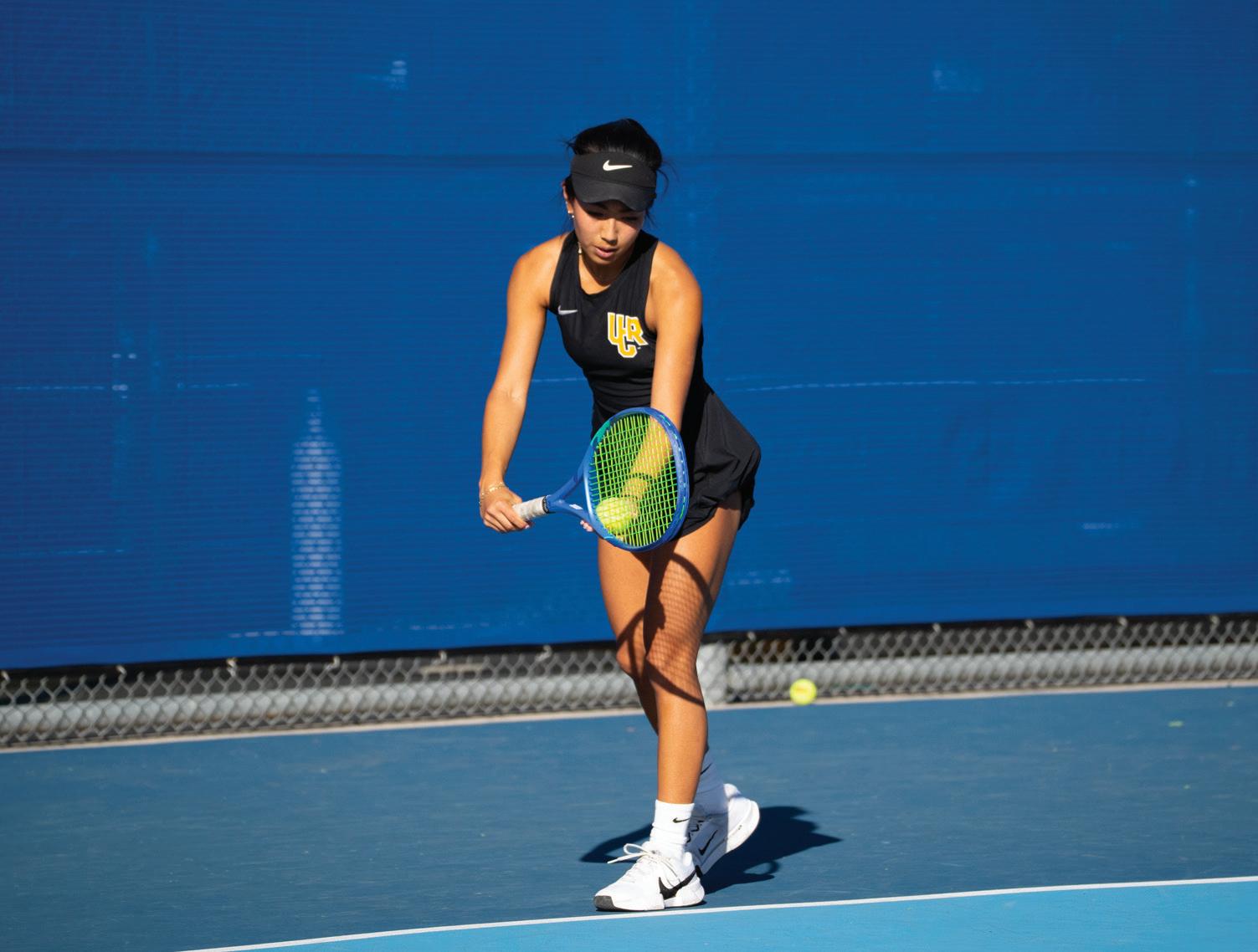


IYANNA WALLACE Contributing Writer
Veteran forward Jimmy Butler was getting accustomed to life with the Golden State Warriors after being traded last year. During his first full season with the Warriors, he has proven to be a great asset to the team.
Butler had been a key offensive player for the Warriors, averaging 20.0 points, and 4.9 assists per game. With his impressive ability to drive to the basket and effortlessly score, he has been able to match Stephen Curry’s speed, agility and skillset creating a dynamic duo on the court, while lessening the offensive load Curry had to handle.
This came to a halt on Jan. 19 during a game against the Miami Heat. In the third quarter after playing for 21 minutes and scoring 17 points, Butler was unfortunately taken out of the game due to a bad landing that caused his right knee to rotate and buckle. After the game it was
announced that Butler tore his anterior cruciate ligament (ACL) and will require surgery causing him to be out for the rest of the season.
While Butler has proven to be a great addition to the Warriors, Butler is not an essential player to the franchise. He has been out on injury before due to various other health issues, including back and glute pain, while on the Warriors. Despite this, the team was still able to win games. This time in Butler’s absence, the team will have to rely on Brandin Podziemski and Moses Moody to step in and support Curry’s playmaking abilities in the same ways Butler does.
Trailing right behind Butler, Podziemski is the third leading scorer for Golden State averaging 12.1 points per game. He has been in the league for only three seasons during which he has been able to further develop his skills and has been considered a new and emerging “Splash Brother” in Golden State. Although with Butler out on injury, the Warriors cannot rely solely on Podziemski and will also need Moses Moody to
continue to step it up offensively.
On Jan. 28, the Warriors defeated the Utah Jazz 140-124. In that game, Moody more than proved he is capable of playing in Butler’s place. His phenomenal flexibility of shooting threepointers, going in for lay-ups, and offensive rebounding led him to put up 26 points being the second highest scorer on the night behind Curry.
Podeziemki and Moody will be able to easily account for the missing points Butler had provided. As for the assists and playmaking, veteran Draymond Green will have no problem making up for them as he is the current leader for the team averaging 5.3 per game, and has a long history of dominating the court both offensively and defensively.
With Podziemski, Moody and Green all stepping up while Jimmy Butler is out, the Warriors will be able to continue winning games and will stay within the play-in spots in the western conference.

Women’s Tennis - Tue Jan. 27
Cal State Fullerton vs. UC Riverside 5-2 L
Women’s Basketball - Thu Jan. 29
UC Riverside vs. Long Beach State
75-72 L
UCR Team Leaders:
Points: Hannah Wickstrom (28)
Rebounds: Hannah Wickstrom (10)
Assists: Kaylani Polk, Hannah Wickstrom (5)
Men’s Basketball - Thu Jan. 29
Long Beach State vs. UC Riverside
71-61 W

UCR Team Leaders:
Points: Andrew Henderson (19)
Rebounds: Osiris Grady (8)
Assists: Marqui Worthy Jr. (5)
Women’s Tennis - Fri Jan. 30
Long Beach State vs. UC Riverside 5-2 L
Women’s Basketball - Sat Jan. 31
UC Riverside vs. Cal Poly
70-66 W
UCR Team Leaders:
Points: Hannah Wickstrom (24)
Rebounds: Maya Chocano (9)
Assists: Hannah Wickstrom (4)
Men’s Basketball - Sat Jan. 31
Cal Poly vs. UC Riverside
94-87 L
UCR Team Leaders: Points: Andrew Henderson (39) UCR season-high*
Rebounds: Waller, Grady, Worthy Jr. (7)
Assists: Marqui Worthy Jr. (4)


The Highlander Newspaper is a great way to keep up with current events and news around campus. If you are interested in the newspaper’s articles or pictures, we offer opportunities in writing, photography and design. Join us every Monday at 5:15 p.m. in HUB 101 to learn more.