improvements in fitness from exercise, or in
of highly processed animal-based foods
weight from dieting. For a behavior change
is associated with microbial dysbiosis and
to cause significant changes in chronic
elevated low-grade inflammation.”
disease risk in just days really excited me.” The 500-plus bacterial species comprising our gut microbiome have 100 times
GUT REACTION
says, means consuming six servings per day (approximately 20% of daily calories)
more genes for extracting nutrients from fiber-rich foods than humans do. The bacteria convert these nutrients into metabolites valuable for their human host, such as short-chain fatty acids, which provide 10% of the host’s daily calories and help regulate glucose, appetite, and inflammation. “Most of our gut microbes can’t live
“…our immune system is heavily influenced by our gut microbiota.” — Dr. Bill McCarthy
without us, we thrive when they do well, and our immune system is heavily influ-
of fiber-rich, minimally processed plant-
enced by our gut microbiota,” McCarthy
based foods drawn from the U.S. Depart-
says. “They are helpful in many ways in
ment of Agriculture’s MyPlate food groups;
protecting the host from all sorts of
most Americans are starving their microbial
threats, including metabolic threats like
allies by eating two servings or less.
heart disease, diabetes, and some cancers.”
To ensure adequate nutrition for one’s
Along with McCarthy, UCLA Fielding
FSPH’s Dr. Bill McCarthy is among a growing group of public health researchers who have turned to emerging gut-microbiome evidence for clues in fighting obesity and improving health.
Feeding your microbes well, McCarthy
microbes, McCarthy recommends fresh,
School faculty Drs. Catherine Carpenter,
minimally processed vegetables and fruits
Dena Herman, Jonathan Jacobs, and
(apple slices, rather than applesauce, for
Karin Michels have studied the microbiome
example); protein-rich legumes, nuts and
as it relates to nutrition and health.
seeds; and whole grains, like brown rice
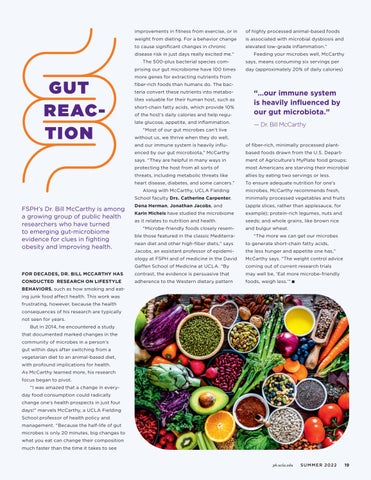
“Microbe-friendly foods closely resemble those featured in the classic Mediterra-
and bulgur wheat. “The more we can get our microbes
nean diet and other high-fiber diets,” says
to generate short-chain fatty acids,
Jacobs, an assistant professor of epidemi-
the less hunger and appetite one has,”
ology at FSPH and of medicine in the David
McCarthy says. “The weight control advice
Geffen School of Medicine at UCLA. “By
coming out of current research trials
FOR DECADES, DR. BILL MCCARTHY HAS
contrast, the evidence is persuasive that
may well be, ‘Eat more microbe-friendly
CONDUCTED RESEARCH ON LIFESTYLE
adherence to the Western dietary pattern
foods, weigh less.’”
BEHAVIORS, such as how smoking and eating junk food affect health. This work was frustrating, however, because the health consequences of his research are typically not seen for years. But in 2014, he encountered a study that documented marked changes in the community of microbes in a person’s gut within days after switching from a vegetarian diet to an animal-based diet, with profound implications for health. As McCarthy learned more, his research focus began to pivot. “I was amazed that a change in everyday food consumption could radically change one’s health prospects in just four days!” marvels McCarthy, a UCLA Fielding School professor of health policy and management. “Because the half-life of gut microbes is only 20 minutes, big changes to what you eat can change their composition much faster than the time it takes to see
ph.ucla.edu
S U M M E R 2 02 2
19