Opposition politicians reiterate their calls for legislation banning ‘sex for rent’ arrangements
A Place to Pause: The Value of Third Spaces In defence of Olivia Dean
March 2026
The Making of Retrospect Arts Festival: A Festival that Looks Back
Opposition politicians reiterate their calls for legislation banning ‘sex for rent’ arrangements
A Place to Pause: The Value of Third Spaces In defence of Olivia Dean
March 2026
The Making of Retrospect Arts Festival: A Festival that Looks Back
Editor: Paula Dennan motleyeditor@ucc.ie
Deputy Editor: Cleo Morrison O’Riordan motleydeputyeditor@ucc.ie
Current Affairs and Investigations
Stepan Krykun
Oisín Bailey motleycurrentaffairs@ucc.ie
Features and Opinions
Nefeli Pyrovolaki Claire Dineen motleyfeatures@ucc.ie
Arts and Culture
Paula Dennan
Cleo Morrison O’Riordan motleyartsculture@ucc.ie
Music
Ray Burke
Clíodhna O’Driscoll
Ruby Poland motleymusic@ucc.ie
Events Guide
Gemma Sadler motleyentertainment@ucc.ie
Designer: Sara Troisi
Copy Editor: Kate Holohan
Website Manager: David Lesiak
Social Media Manager: Leah Hurley
Contributors
Chiara Alessio
Oisín Bailey
Susan Brown
Ray Burke
Stacey Cambridge
Paula Dennan
Amelia Kearney
Stepan Krykun
Cleo Morrison O’Riordan
Michael Murphy
Clíodhna O’Driscoll
Ben O’Sullivan
Ruby Poland
In defence of Olivia Dean 03 17 23 29
Opposition politicians reiterate their calls for legislation banning ‘sex for rent’ arrangements
The Making of Retrospect Arts Festival: A Festival that Looks Back
Recognition of the UCC Young Fine Gael Society was ended in April 2024 by the 2023/2024 Societies Executive, not September 2024 as stated in the article ‘UCC Societies’ Battle For Political Expression’ (UCC Societies’ Battle For Political Expression, Issue 2 February 2026, p.23).
Risk assessments are processed by the Office of Corporate & Legal Affairs (OCLA), not the Societies Executive, as stated in the article ‘UCC Societies’ Battle For Political Expression’ (UCC Societies’ Battle For Political Expression, Issue 2 February 2026, p.24).
We omitted to include a credit for Amanda Guerin Photography, whose headshots of Grace Alice Ó Sé accompanied the article ‘Grace Alice Ó Sé: ‘It’s 2026, Why Do I Have To Censor The Word Sex?’ (Grace Alice Ó Sé: ‘It’s 2026, Why Do I Have To Censor The Word Sex?, Issue 2 February 2026, pp.7-10).
We regret these errors and omissions.
Paula Dennan, Editor
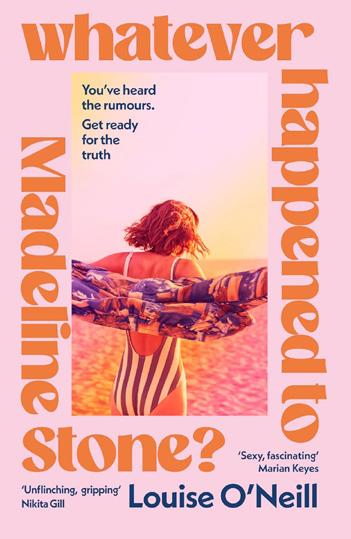
Currently reading: An advance copy of Louise O’Neill’s new novel, Whatever Happened to Madeline Stone? It’s out April 9 from Bantam
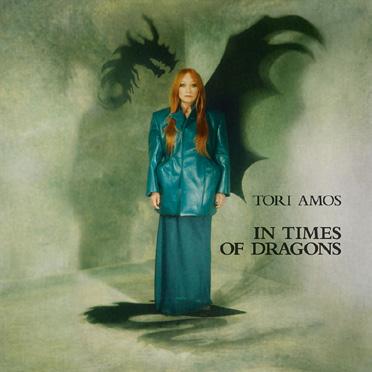
Listening to: “Stronger Together” by Tori Amos – in preparation for seeing her live at the Bord Gáis Energy Theatre, Dublin on April 19 and the release of the album In The Time of Dragons in May.
Listening to: The OC, Again – The OC rewatch podcast, hosted by Alex Steed and Niko Stratis.
Cleo Morrison O’ Riordan, Deputy Editor
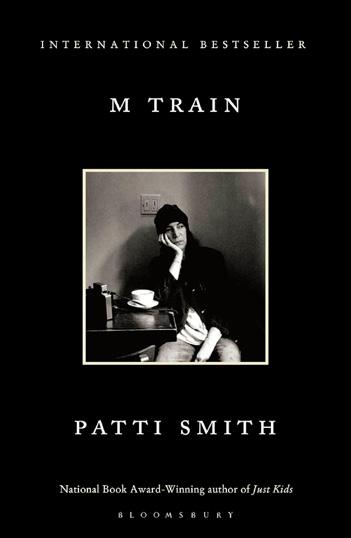
Currently reading: M Train by Patti Smith.
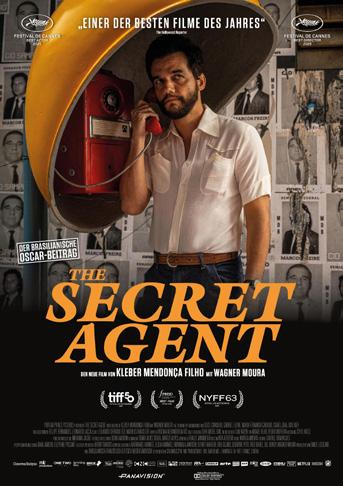
Watching: The Secret Agent (2025) to prepare for the Academy Awards!
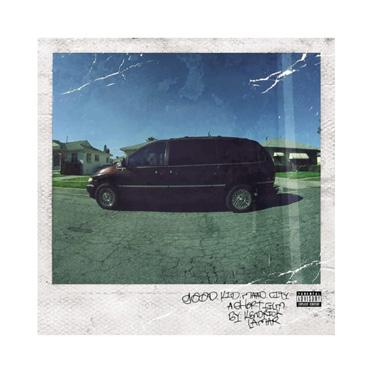
Listening to: Kendrick Lamar’s good kid, m.A.A.d city.
Ray Burke, Music Editor
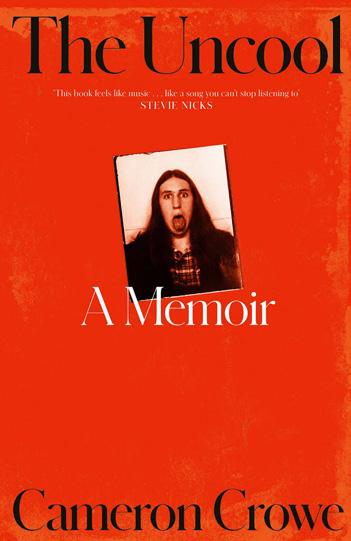
Currently reading: The Uncool by Cameron Crowe and just finished What Do you Do When You’re Lonesome - The Authorised Biography of Justin Townes Earle by Jonathan Bernstein
Watching: loved Good Luck, Have Fun, Don’t Die and rewatching the excellent, Patriot. Really looking forward to new Severance and From.
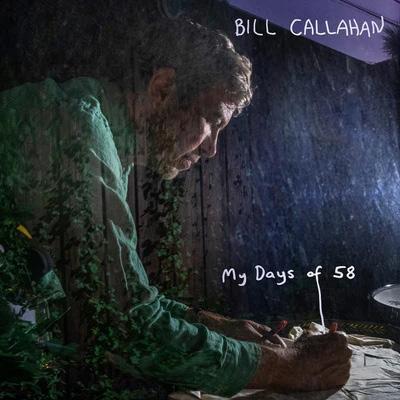
Listening to: new Bill Callahan, Seamus Fogarty, and Dry Cleaning






Ireland’s ongoing and expanding housing crisis affects every corner of the country. Increasingly, people are falling further from eventual ownership of safe and affordable housing, regardless of their age, gender, or income. Figures released by the Central Statistics Office show that the average age of house buyers was 40 years old in 2024. Ireland’s housing crisis is placing vulnerable people, particularly women and young people, at a critical disadvantage and in potential danger.
Predatory landlords and homeowners are exploiting the lack of affordable and adequate housing to take advantage of vulnerable groups. Vulnerable women are in a particularly precarious position within Ireland’s fragile and unattainable housing market, with the Simon Communities of Ireland detailing the staggering increase in the unhoused population from 2024 to 2025. As of December 2025, over 16,000 people were living without permanent housing in Ireland; almost 5,000 of whom were women, marking a
“We know that around 5% of international students have seen or been directly offered a proposition in relation to sex for rent.”
15% increase in the population of unhoused women. These factors have led several troubling media reports detailing offers for sex for rent, both in Ireland and abroad. Labour Senator Laura Harmon defined the term sex for rent as “situations where landlords, property owners or those subletting offer reduced or free accommodation in exchange for sex from prospective or current tenants.”
The housing shortage and accommodation crisis have long been knocking at UCC’s front gates; many students face soaring rents, unsafe living conditions and even eviction. Sourcing affordable, safe accommodation in a desirable location from a registered, helpful landlord seems like an impossible task for most. UCC Students’ Union published a cost-of-living report in 2024, which exposed that al-
“Predatory landlords and homeowners are exploiting the lack of affordable and adequate housing to take advantage of vulnerable groups... women are in a particularly precarious position within Ireland’s fragile and unattainable housing market.”
most one in five students were renting from an unregistered landlord, making accountability or legal recourse almost impossible if a student renter is in some way violated or persecuted by their landlord. The same report highlighted how accommodation and rent were some of the greatest concerns for UCC’s student body. University College Cork is one of the largest campuses in Ireland, with a thriving population of over 25,000 students. Yet, UCC operates only six accommodation complexes, containing just over 1,500 beds. UCC hosts almost 4,000 international students, meaning that less than half of the population of international students could be housed within UCC complexes, without considering the thousands of students who have come from counties outside of Cork who also require accom-
modation. This is deeply troubling when one considers that international students are especially at risk of being targeted by predatory landlords. A survey carried out by the Irish Council for International Students found that 5% of female respondents had been offered rental arrangements in exchange for sexual acts.
There have been cases where presentations have been prosecuted for such offences, in the United Kingdom, for example, where legislators are also pursuing more specific legislation against sex for rent propositions. To do so, the Sexual Offences Act 2003 Section 52 was used; Section 52 makes it a crime for a person to cause or incite another person into prostitution for the first person’s or a third party’s gain.
The UK’s first prosecution
took place in 2021, preceding an attempt by Social Democrats TD Cian O’Callaghan to establish legislation which would criminalise sex for rent in Ireland, by a year. O’Callaghan’s introduction of the Ban on Sex for Rent Bill 2022 sought to make it an offence to require or accept sex as a condition of accommodation as well as “arranging or facilitating the requirement or acceptance of sex as a condition of accommodation.” Under this proposed legislation, a landlord found guilty of one of these offences would be issued a fine or imprisoned for up to seven years. In a statement issued to Motley, Deputy O’Callaghan restated the need for legislation to protect tenants from exploitation, almost four years after his call for criminalisation amidst an unprecedented housing shortage, “It is now nearly four years since I introduced the Ban on Sex for Rent Bill 2022, which would have severely punished requiring or accepting sex as a condition of accommodation.
“While the Government did not allow my bill to progress at the time, they promised to bring forward their own legislation. However, despite a deepening of the housing crisis since then, we are still waiting for legislation to be enacted. This has left vulnerable renters, including international students and workers, open to sexual exploitation.
“The recently introduced Criminal Law and Civil Law (Miscellaneous Provisions) Bill 2026 will finally make this exploitative practice an offense. While it is vital that action is finally taken, this legislation is much narrower in its scope and lighter in its pen-
alties. In 2022, I proposed fines of up to €50,000 or 7 years in prison while also making it an offense for platforms to publish these advertisements. The Government’s bill will apply a Class A fine of just €5000 with no penalties for publishing the advertisements.
“It is incredibly disappointing we have waited this long only to be presented with a watered-down bill that fails to grasp the seriousness of this predatory behaviour.”
Ultimately, the Ban on Sex for Rent Bill 2022 was halted at a committee stage. However, the vital issue it addressed continued, evolving and expanding into a large and looming prospective threat to all young female tenants, with the Irish Council for International Students highlighting the increase in media reports in March 2025.
In 2025, Labour Senator Laura Harmon reignited the fight against this violating practice by seeking comprehensive action against predatory landlords who attempt to solicit sexual acts in exchange for rent. As former executive director of the Irish Council for International Students, Harmon has a keen insight into this area and helped compile vital data on the issue. Senator Harmon published the Prohibition of Advertising or Importuning Sex for Rent Bill 2025. The bill, currently before the third stage of the Seanad, will impose a fine of up to €50,000 for convicted landlords if successful.
Speaking with Motley’s deputy editor, Senator Laura Harmon stated, “I brought forward this legislation to tackle the preda-
tory issue of sex for rent in Ireland. We know that around 5% of international students have seen or been directly offered a proposition in relation to sex for rent. We also know that this affects vulnerable women and migrants in our communities. It absolutely needs to be clamped down on and we need a specific piece of legislation to deal with this [issue]. I have been liaising with the Minister for Justice in relation to [sex for rent] and with civil society groups such as the National Women’s Council, the Migrant Rights Centre, the Irish Council for International Students and other organisations representing vulnerable women and migrants so we will be bringing forward amendments in terms of legislation to make sure that it’s as inclusive as possible and that it’s as strict as possible in terms of penalising this predatory behaviour.”
If you or someone you know has been offered an unsafe or illegal rental arrangement, see the supports below:
UCC Accommodation & Community Life Office at resservices@ucc.ie.
You may contact the Small Claims Court regarding financial disputes over rental arrangements.
The Residential Tenancies Board provides tenancy rights advice and operates a resolution service for tenants and landlords regarding tenancy disputes.
Threshold: The National Housing Charity offers free aid for tenants.
An Garda Síochana at 999/ 112, locations include: Anglesea Street Station, Bridewell Station and Gurranabraher Station.
A constant stream of information, all of it conflicting, and horrific images are flooding our screens, so what should you know?
Iran, Israel, and the United States have been engaged in an escalating conflict for, at the time of writing, just under a week. The origin of this war has been reported by The New York Times and Reuters as being a “preemptive” missile attack launched by the United States on Iran due to alleged intelligence that Iran
was considering a strike on Israel. The Trump administration has also allegedly launched attacks due to Trump’s concerns regarding Iranian nuclear proliferation.
The death of Iranian Supreme Leader Ayatollah Ali Khamenei
President Donald Trump had expressed a desire to remove Iranian Supreme Leader Ayatollah Ali Khamenei from power and had received information regarding his location. Ayatollah
“The death toll in Iran has surpassed 1,000 people.”
Ali Khamenei was killed in Israeli air strikes, an event which has provoked widespread mourning and celebrations across not only Iran but globally. Ayatollah Ali Khamenei had been the Supreme Leader of Iran and a theocratic government since 1979, when he assumed power

following protests which resulted in the exile of former leader Mohammad Reza Pahlevi.
Since 1979, several events have caused tension between Iran and the United States, such as American wars in the Middle East, oil disputes, the 1979 US embassy hostage crisis and, in recent years, disagreements regarding sanctions and Iran’s nuclear capabilities.
The past
In 2023, the United States carried out a number of attacks on Iraq and Syria, both Iranian allies, which further harmed Iranian American relations.
In 2024, in light of the ongoing assault by Israel on the Gaza Strip and the Palestinian people, Iran, Yemen and Lebanon all exchanged drone strikes and targeted missiles with Israel. According to the Council on Foreign Relations, this event was the first time Iran had directly en-
gaged with Israel. This escalated throughout 2024, resulting in the widespread suffering of citizens in both countries and what the Council on Foreign Relations described as Israel’s “largest direct attack” on Iran in October of that year, allegedly to target Iranian weapons facilities.
In 2025, the United States launched an attack on Iranian nuclear sites and subsequently Iran and the United States engaged in talks relating to a nuclear weapons agreement. However, these have stagnated and the two countries are unlikely to reach consensus in the immediate future.
The present
The mounting tensions between the three actors reached boiling point when the United States launched the “largest US military build-up in the Middle East” since 2003, according to the BBC, on February 28 against Iran. Reuters polls show that the
Photo: Sajad Nori
recent American military offensive against Iran is unpopular at home, with only a quarter of Americans approving of the attack. The conflict is escalating rapidly, with the three states exchanging threats, promising indefinite retaliation, resulting in more lives lost each day.
The offensive has led to widespread flight disruptions as well as a closure in the Strait of Hormuz, leading to a likely rise in oil and petrol costs globally.
At the time of writing, the death toll in Iran due to the airstrikes has surpassed 1,000 people; 150 of whom died when a primary school was struck by missiles, most of whom are believed to be children. Six American soldiers have also been killed.
While the situation quickly escalates, all we can do is keep those in the regions affected in our thoughts and advocate for a rapid cessation of the conflict.

For much of the late twentieth century, the bachelor’s degree functioned as a reliable labour-market signal. It marked its holder as skilled, disciplined, and employable. In Ireland, as in most developed economies, mass participation in higher education transformed that signal from elite credential to mainstream qualification, with Ireland ranking 2nd globally in terms of adults aged 25-64 with a college degree by population percentage according to the OECD. Canada is 1st. While at face value this sounds like a positive, and there are certainly reasons to think that, perhaps it is time to stop and think about the implications this has should we continue in this direction. In a hypothetical world where 100% of adults possess a college degree, what does that mean for the labour market? Where will all the jobs come from? Will everyone obtain a so-called skilled job? What about the current jobs which don’t require a college degree; who will fill those jobs?
This phenomenon is known as credential inflation, which
“Postgraduate education may become a holding pattern, a socially expected step before confronting an uncertain job market.”

Oisín Bailey
refers to the gradual escalation of educational requirements for jobs that historically required lower qualifications. It does not necessarily reflect an increase in job complexity. Rather, it reflects changes in labour supply, employer screening practices, and institutional incentives within higher education. The question is not simply whether more people are pursuing postgraduate study. The more important question is whether the master’s degree has shifted from optional specialisation to a quasi-mandatory baseline for entry into professional careers.
Credential inflation occurs when the educational norm for accessing a given occupation rises without a proportional change in skill demands. In eco-
nomic terms, degrees function as signals, shorthand indicators of productivity in contexts where employers cannot perfectly observe candidate ability. Think of it as proof that you can commit to something.
When a bachelor’s degree was rare, it signalled organisational capacity and the ability to commit to a task long-term. As higher education expanded, that signal weakened. In Ireland, participation rates in third-level education have risen dramatically over the past three decades. A bachelor’s degree is no longer a differentiator; it is increasingly the norm.
Employers, of course, respond rationally to this shift. When a large proportion of applicants hold undergradu-

Photo: Joshua Hoehne
ate degrees, requiring a master’s degree becomes a simple screening mechanism. It narrows applicant pools without necessarily increasing wages or job responsibilities, because that is what the bachelor’s did 30 years ago.
This dynamic creates a self-reinforcing cycle. As more employers list postgraduate qualifications as preferred or essential, students pursue master’s degrees to remain competitive. As more students do so, the credential premium diminishes, prompting further escalation, and the snowball continues.
Ireland’s higher education system has undergone rapid expansion, driven by demographic growth, policy emphasis on the knowledge economy and the
“The bachelor’s degree was once the gateway to professional mobility. If that gateway shifts upward, access narrows again; if the master’s degree becomes the new baseline, attention may shift to doctoral degrees or elite institutional branding as differentiators.”
state’s alignment with multinational sectors such as science, business, and technology. Institutions including University College Cork, Trinity College Dublin, and University College Dublin have significantly expanded postgraduate offerings based on data from the NUI strategic plan 2023-2027. Taught master’s programmes, in particular, have proliferated across disciplines ranging from data analytics to public policy. Fees for postgraduate courses are often triple those of bachelor’s degrees. Universities receive vast amounts of funding from these programmes, particularly from non-EU students who pay a much higher fee, simply because they are from there and not here. Universities are not blind to the labour market either; they market the postgrad degrees as industry-focused, using words like “Let your potential shine through” from UCC or “Go Further” from DCU. For many undergraduates, the implicit message is clear: a bachelor’s may not be enough.
The rise in master’s enrolment is sometimes framed as a natural response to technological complexity based on a report from Maynooth’s research archive library. Universities are adapting by offering more specialized, professional master’s programs, often with STEM-designated curricula, to align with industry demand. It is true that certain sectors artificial intelligence, biotechnology, and financial modelling require advanced technical skills. In these fields, postgraduate education may reflect genuine upskilling rather than inflation. However, creden-
tial inflation becomes problematic when the degree requirement expands into roles that historically relied on on-the-job training or experiential learning. Entry-level policy roles, marketing positions, administrative posts, and NGO work increasingly list master’s degrees as desirable, even where the job tasks remain broadly similar. In effect, educational attainment becomes a sorting device rather than a functional necessity.
Robin Panzarella at The Wall Street Journal writes, “This creeping credentialism has equated yesterday’s high-school diploma to today’s college degree, an expensive shift that leaves many [...] behind.” Sociologists describe it as a status competition. Both perspectives converge on the same outcome: more years in education, delayed labour market entry and increased financial burden. The financial implications are significant. While undergraduate fees in Ireland are capped through the student contribution charge, taught master’s programmes frequently cost several thousand euro more, often without equivalent state subsidy. Students who complete four years of undergraduate study and then invest an additional one or two years in postgraduate education face additional tuition costs. As well as extended dependency on family support or loans due to not being able to properly enter the workforce to financially support themselves.
If wage premiums for master’s holders do not rise proportionally, their return on investment shrinks.
There is also a psycholog-
“In a mass higher education system, differentiation occurs elsewhere: postgraduate study, institutional prestige, internships, and extracurricular achievements. The master’s degree may not fully replace the bachelor’s as the new baseline, but in many competitive sectors, it is becoming the new expectation.”
ical cost. When postgraduate education becomes normalised as a default pathway, students may feel compelled to continue studying even when uncertain about their career direction. The master’s risks becoming a holding pattern, a socially expected step before confronting an uncertain job market.
Credential inflation does not distribute benefits evenly. Universities benefit from increased enrolment and fee income. Employers benefit from a larger pool of highly educated candidates without necessarily increasing
compensation. Students, by contrast, assume greater risk.
This is not to suggest that universities deliberately inflate credentials. Many master’s programmes provide genuine intellectual depth, research training and specialised expertise. However, institutional incentives align with programme expansion, particularly in a funding environment where Irish universities consistently argue they are under-resourced relative to European counterparts.
Credential inflation also has distributional consequences. Students from higher-income backgrounds are better suited to self-fund postgraduate study. If a master’s becomes a de facto requirement for entry into competitive sectors, those unable to afford further study face a systemic disadvantage.
This dynamic risks undermining decades of progress toward widening participation in higher education. The bachelor’s degree was once the gateway to professional mobility. If that gateway shifts upward, access narrows again; if the master’s degree becomes the new baseline, attention may shift to doctoral degrees or elite institutional branding as differentiators. The hierarchy simply moves up a level.
The answer depends on the field of specialty, timing, and objective. In regulated professions like psychology, architecture, and certain engineering specialisations, postgraduate qualifications are clearly necessary. In research-intensive fields, a master’s degree may be a stepping stone to doctoral study. In other sectors, however, work ex-
perience, internships, and professional certifications may offer comparable or superior returns.
The key distinction lies between skill acquisition and credential accumulation. If a programme provides scarce, market-relevant competencies, it likely retains value. If it primarily functions as a signalling device, its marginal benefit may decline as more candidates obtain the same signal. Students considering postgraduate study should ask themselves, what specific skills will I gain? Is this qualification required or merely common? What is the opportunity cost of delaying employment? It is important to frame credential inflation as systemic rather than individual miscalculation. Rational students respond to labour market signals. If employers list master’s degrees, students pursue them. If peers enrol in postgraduate programmes, competitive pressure intensifies.
The broader issue lies in labour market sorting mechanisms. Employers often default to formal qualifications because they are easy to measure. Assessing soft skills, practical ability, or creative potential is more costly. Some responses could include putting a greater emphasis on structured graduate training programmes, transparent reporting of wage premiums by qualification level. By actually showing us the needs of doing the additional degree, we can see why it is beneficial. Without such reforms, the equilibrium will likely continue shifting upward.
The bachelor’s degree is unlikely to become obsolete. It remains a foundational credential and, in aggregate, still
confers lifetime earnings advantages compared with secondary education alone. However, its positional value, its ability to distinguish candidates, has diminished. In a mass higher education system, differentiation occurs elsewhere: postgraduate study, institutional prestige, internships, and extracurricular achievements. The master’s degree may not fully replace the bachelor’s as the new baseline, but in many competitive sectors, it is becoming the new expectation.
Whether this represents progress or inefficiency depends on one’s perspective. If it reflects genuine skill deepening, it signals an increasingly specialised economy. If it reflects credential inflation unrelated to job complexity, it reflects a costly escalation in signalling competition.
For students navigating Ireland’s higher education system today, the distinction is not abstract. It shapes financial decisions, career trajectories, and perceptions of self-worth. The master’s degree may be rising in prevalence, but whether it is rising in value is a more complicated question.
As this year’s UCCSU elections were underway, the sabbatical officers felt as busy as ever. Stepan Krykun, Motley’s Current Affairs editor and a radio producer at UCC98.3FM, spoke on-air with Alex Fuertes Roper, UCCSU’s Communications and Engagement Officer and Conor Taylor, the Entertainments Officer. Alex Fuertes Roper and Conor Taylor discussed their achievements and regrets, as well as broader aspects of UCCSU’s work for the student body. This extract of the radio interview has been edited for clarity and length.
How did you find the job?
Alex Fuertes Roper: I feel like the job itself is something that you learn along the way. You don’t know what you’re doing when you’re getting into it. You have a vague idea, but you really do make it your own. And then once you’re in the swing of it, that’s when you actually know what you’re doing, and you can pass it off to the next person in a very good broad way, I’d say.
Conor Taylor: I suppose, to be a bit cliché, it’s been very entertaining for me. Yeah, it’s just been a great year, good craic for myself, had some good fun in it, and it’s just been fun getting
to know all my colleagues and friends.
What would be the advice for people who’d like to run for Students’ Union positions? What skills should a person who wants to run possess?
Alex Fuertes Roper: Anything. Anything at all. I had no clue about social media when I went into this job and now I’m
in charge of the Students’ Union social media. Now that should scare people, but it’s not that scary. You learn on the job. It’s such a hands-on situation. Our Commercial and Fundraising Officer had no idea about money when they went into their job and now we’re getting a good amount of fundraising, don’t we? We had a very successful RAG
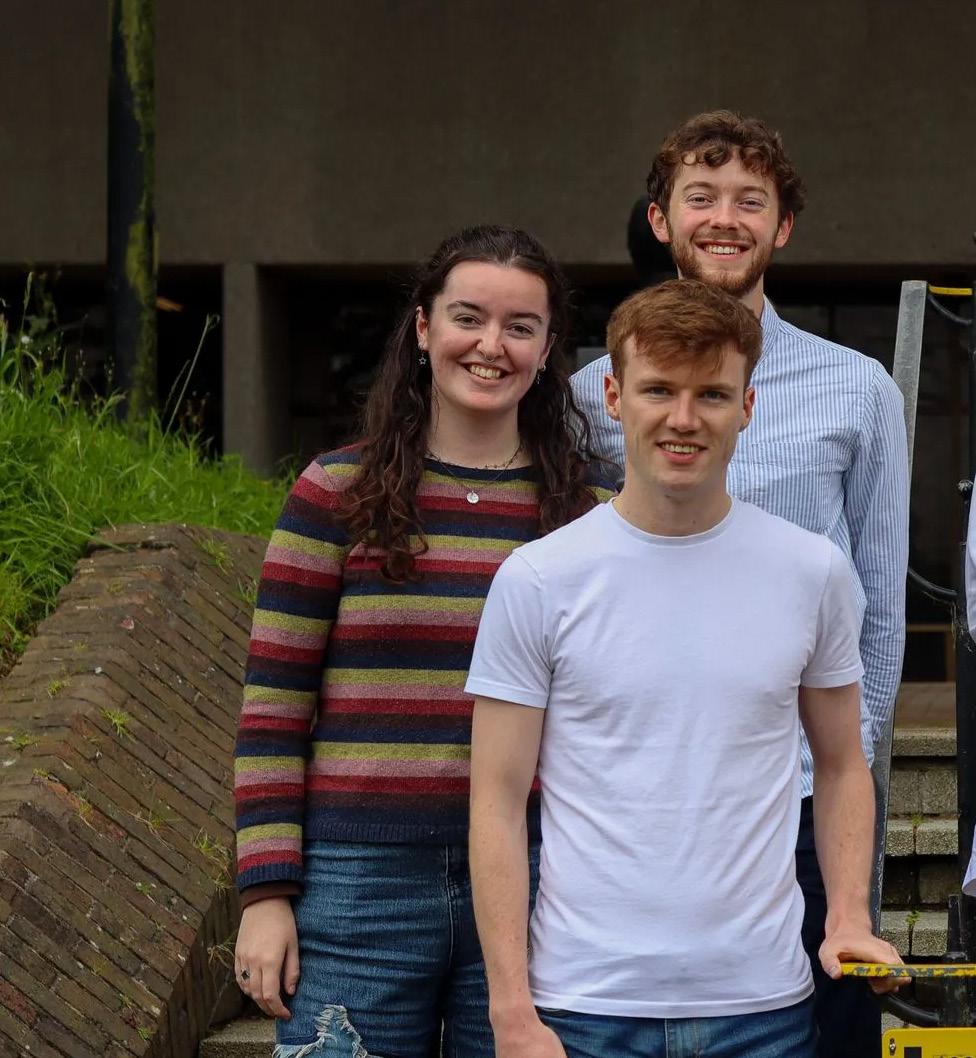
[Raise and Give] Week. So it very much, what you need is just a passion, a wanting to do it and the ability to lock in and do some work.
Conor Taylor: For skills, just anything again, really, to echo that. I didn’t have all the skills I have now, thanks to this. It’s honestly the best place to probably learn skills coming out of college, well, while still in college. The amount I’ve learned, how to contact agents, how to contact venues, how to do so much because of this. It’s actually really good when you don’t know what you’re doing, but you have a passion for something, like entertainment.
In terms of promises and deliveries, how did that work out? Were each of you able to deliver on what was part of your
Alex Fuertes Roper: Yeah, I mean, there’s always going to be that one bunch of stuff that you put on your manifesto and you don’t really know what the job is. And you’re like, I’m going to do this. And then you sit down in the office and you have those meetings to actually make that happen. And they all look at you and you go, no, you’re crazy. So there have been a few things I unfortunately haven’t been able to get through.
Like the app, it’s just not possible for UCC. It’s just something that the way UCC is laid out, just governmentally and in its entirety, is not possible. But transport-wise there are ongoing discussions. It takes a while, but there are ongoing discussions about the buses, bus fares
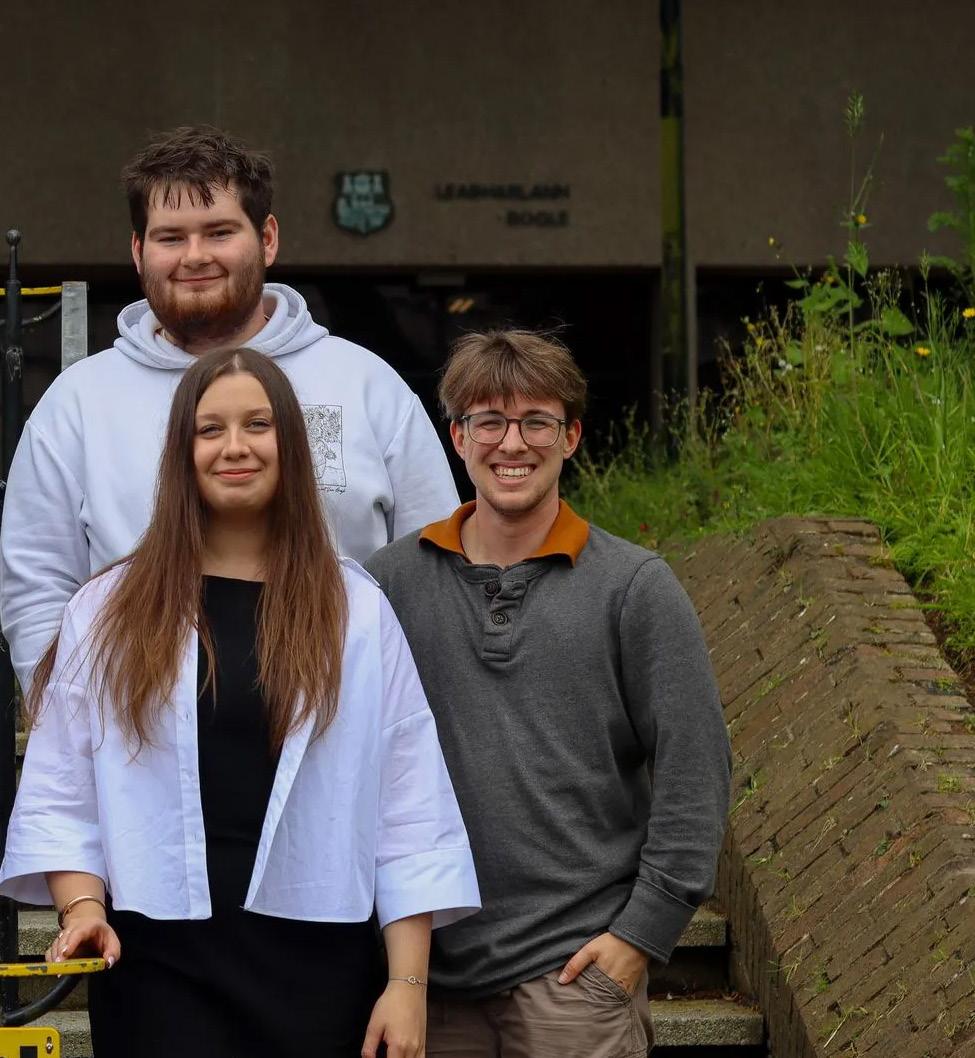
being reduced in Cork, getting the cap introduced that Dublin has, getting the 90-minute fare restriction into Cork and all that. But then on top of that, you forget you’ve got the stuff you put in your manifesto and then you have the things that students are already asking you to do from council [UCCSU Representative Council]. So there’s a lot to manage, but I would say that my manifesto has been pretty successful.
Conor Taylor: For mine, I suppose I’ve definitely made some progress, but I really wish I could have done more in my time. Obviously, with time constraints of only a year, I can’t really do some of the stuff. I worked really hard at the start of the year to try and get those late-night shuttle buses running. And we got so close so many times. Unfortunately, I think it’s going to be another year before we get them running, but progress has been made and hopefully next year they’ll start running.
With the time you have left, what are the two or three realistic things that you’ll be able or you’d like to deliver before the end of your term?
Alex Fuertes Roper: What are the two or three things that I’m going to be doing? There is the revamp of the website that we’re doing. We got an audit done of the website, so it’s going to be a nice little revamp of that, hopefully. I’ve been saying in every single council, I’m doing the website, I promise. I just never get to it. Another thing is working on trans healthcare support [...] and maybe some queer week, of sorts, might fall during Easter. Might make it a bit of an
online situation due to that. But yeah, those are my main bits really. It just feels like protests and stuff like that. You get the odd protest here and then you get invited to it.
What would you want students to judge your term on if they were assessing it fairly? What is the one thing you would like students to remember?
Conor Taylor: Refreshers are pretty epic. For me, it’s just if you’ve had fun on campus, I hope you did enjoy it. Just the good times.
Alex Fuertes Roper: Yeah. For me, I’d say seeing the social. If you see me on Instagram a few times, I’d say I’m happy. If you’ve seen the social media pop up a few times and if you’ve gone to a few events, I’m a happy man.
Why do you think it is important for UCC students to vote [in the SU elections]?
Alex Fuertes Roper: I must say this very clearly. You pay for us, you pay us. So you might as well use that money. I think that it’s very important to vote because democracy. We will represent you. We do represent students in UCC and we can’t do that if students don’t vote for us at the end of the day. We want to hear what you want and this is the best way to show us what you want. There are different candidates for different positions. There are some that are contested, some that are uncontested. RON [Re-Open Nominations] is always an option. [...] I’m not telling you what to vote for, but my point is that this is the best way for students to tell us what it is that they want.
Conor Taylor: I mean, it’s the
one time of year, really, that you can tell us what to do in just a single vote. If you can read the manifesto, see who you like, if you like any of them, if you don’t like one. It’s when, probably as a union, we’re strongest during our elections because we decide what we want to do.
What is the biggest achievement of this year’s committee? If you can talk for anyone else that is not present in the studio, what is one single biggest thing that made this year’s committee different from others?
Conor Taylor: I don’t know if it’s the biggest in total, but one of the biggest that I can think of anyway is definitely commuter breakfast, spearheaded by our Welfare Officer, Fergal [Crowley]. He has put so much time into that and so much effort, time, love, everything really into it. And every Monday, Tuesday, Wednesday, students come in, they get some free breakfast. And it’s just free, and there’s nothing really to stop you coming in. If you do want to come in as well, please do. We love having people there, and the more students we feed, the happier we are. It’s actually great to see, even when you do work in the morning, because we have to give Fergal a break sometimes.
Alex Fuertes Roper: I would say, actually, I would say the same. That’s what I was thinking, really. Just kind of our welfare initiatives have been really, really good this year. Fergal is absolutely amazing at his job and he’s just such a sunshine of a person. And the commuter breakfast genuinely, both of us, we’ve worked it in the mornings and it’s just such a nice thing because all
the students are so happy about the actual campaign itself. I’d say another thing that went really well was the food pantry. Which is in the Maker Space every single Monday until stocks run out. And we have like 300, 400 kilos of food every single week and it literally disappears.
Is there a last thing you would like to add, a message to the students on campus?
Alex Fuertes Roper: We work for you at the end of the day. We’re a union for the students. We can’t do our job if they don’t tell us what to do, and that’s what [student] council is for. That’s what election is for. And we love our job. Our friends may hear us complain, but we do actually love our jobs quite a lot.
Conor Taylor: I suppose just thank you for the year. I’ve really enjoyed this and I’m glad you let me be your entertainment officer this year.
UCCSU sabbatical officers play a crucial role in representing the student body, as well as in governing the aspects of student life on campus. With the new UCCSU Sabbatical and Part-Time Officers taking up their roles in June, it is important to look back on the year of the 2025/26 Executive to ensure there is continuity across SU actions in the year to come.
Make sure to pick up the next issue of Motley, which will include coverage of the UCCSU elections and referendum results. The radio show from which this conversation was taken airs every Thursday at 3p.m. on 98.3FM all across Cork.
Do you ever feel like all your days are blending into one?
The third space. We should all have one. Urban life is not only shaped by where we work, study or live. The in-between space is something that humans naturally gravitate towards. Sociologist Ray Oldenburg described the third space as a setting that allows people to linger without the pressure of today’s fast-paced society. It is a place where your mind can switch off the conveyor belt of daily life, and you can just be. It is a café or pub where conversations take place over a drink, a library in which time passes quietly, or a park bench shared with a stranger. These all allow individuals to feel part of the community.
In Cork, third spaces play a crucial role in how the city functions and feels. They rely on different factors to work smoothly, such as atmosphere, seating, accessibility and cost. Here are some of Cork’s most popular social hubs.
Cafés: convenient but conditional
Cafés are perhaps Cork city’s most visible third space. Their appeal lies in their comfort, warmth and atmosphere. The soft lighting, background noise, and comfortable seating are designed for staying rather than just passing through. The Lough Café is the perfect combination of the above, filled with a variety of indoor or outdoor
seating options. There is something for everyone. The warm lighting and the books scattered around the coffee shop create a cosy atmosphere to unwind. A twelve-minute walk from UCC, why not take that study break? MYO Café is a riverside treasure that consistently supports a good cause. They believe in giving back to the community, and all ingredients are sourced from local suppliers. MYO is a multi-dimensional space that hosts a variety of cultural, charitable, and literary events. Sip on your coffee while you take in the unique decor. Alchemy Coffee on Barrack Street has a similar vibe. The book-lined walls and dim lighting, paired with a hot matcha, create a welcoming atmosphere for unwinding.
Pubs: social anchors beyond alcohol
Pubs have long functioned as informal community hubs in Cork. Outside of peak drinking hours, many become relaxed social spaces where conversation, not consumption, takes centre stage. Regulars recognise one another, staff learn names, and a sense of familiarity builds over time. The Roundy in the city centre is full of character. It is the perfect place to catch up with a friend. The outdoor heaters allow you to sit outside and watch life go by. I might also add that they make an amazing Baileys hot chocolate. O’Sho pub is known for its trad music nights
“Investing in genuinely free, welcoming indoor spaces is not just a cultural choice but a social necessity.”
and cosy interior. They offer a variety of drinks, from alcoholic beverages to herbal teas, catering to all. Lastly, Tom Barry’s stands out for its pizza and pint deals. Enjoy a freshly-made pizza while you sip.
Libraries: one of the last free indoor spaces
Libraries are one of the rare indoor spaces where people can stay without needing to spend money. They offer warmth and shelter, but are limited by strict rules, expectations of quietness, and fixed hours, making them unsuitable for informal socialising. Among the options available are Cork City Library, where you can browse books without a library card (unless you wish to borrow one), and Boole Library, a known spot to all UCC students.
Parks: open, free of charge, and weather dependent Parks are free and accessible to all, supporting spontaneous use and brief social encounters. However, Cork’s climate makes them unreliable as long-term
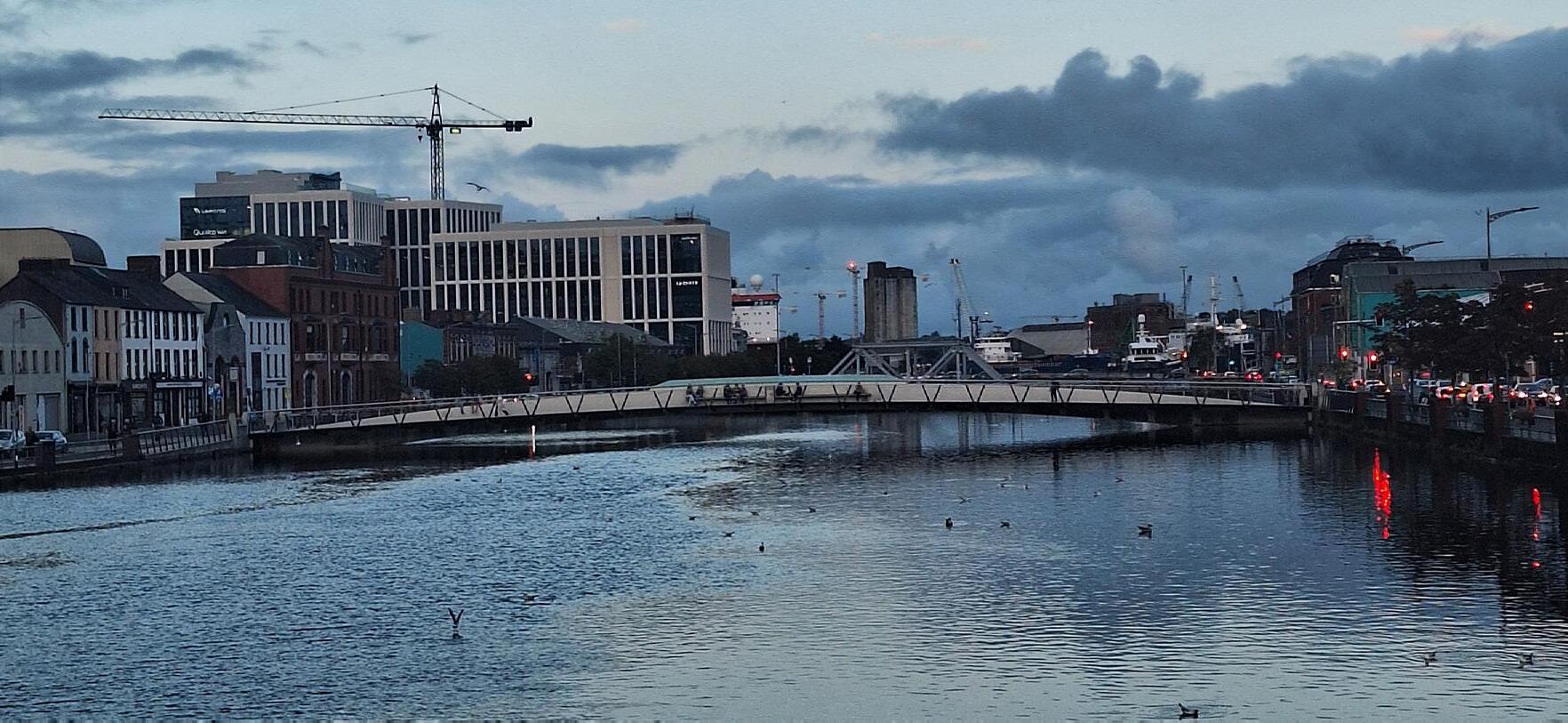
social spaces, turning them into places of fleeting movement rather than of gathering. Fitzgerald’s Park is a free, open space that supports informal use and spontaneous social interactions. The park is home to many species of birds, and at its heart is a lake with a fountain. Tria café is also situated here, offering a variety of food and drinks, from sandwiches to açai bowls. Nano Nagle Place is a hidden gem, with its greenery, museum, and restaurant, Good Day Deli. The heritage site offers a break away from the hustle and bustle of city life, and entry is free! The Lough is the perfect place to stroll if you’re looking for a short loop to break up your day. The lake is surrounded by benches where you can stop and take in the wildlife. The Lough Café and Lulu’s Café are also situated right next to it.
Taken together, Cork’s third spaces reveal a clear imbalance. While cafés and pubs successfully foster atmosphere and connection, access to them is often conditional, demanding spending. Libraries and parks, though free and essential, are
also subject to limitations in the form of rules, hours, weather, and design. The result is a city in which community life increasingly depends on consumption, and where simply existing indoors comes with a price. This raises important questions as to whether Cork values public life. If third spaces are vital to wellbeing, social connection, and a sense of belonging, they cannot rely solely on commercial models. Investing in genuinely free, welcoming indoor spaces is not just a cultural choice but a social necessity.
For example, the redevelopment of Bishop Lucey Park has drawn strong criticism, with concerns highlighted by the Irish Independent. Despite a €7 million investment, the project has been accused of eliminating much of the park’s original green character in favour of hard paving and concrete. Critics argue that the redesign has reduced areas for sitting and lingering, leaving the space feeling exposed, cold, and more like a route through the city than a place to gather. As reported by the Irish Independent, the controversy reflects
Words: Amelia Kearney
wider frustration about how public spaces in Cork are designed, raising questions about whether expensive redevelopments are truly creating welcoming third spaces or merely reshaping movement through the city, rather than encouraging community and connection.
A solution to Cork’s lack of third spaces is the deliberate creation of free, non-commercial indoor public places designed for lingering rather than transit. This can be achieved by expanding the role of existing public buildings, such as libraries and community centres. Longer opening hours, more relaxed rules, and interiors that encourage informal use would all help to utilise pre-existing spaces. Thoughtful design, including comfortable seating, accessibility, and regular upkeep, can help these spaces feel cared for and welcoming. Treating third spaces as essential social infrastructure, rather than as optional amenities, would support wellbeing, reduce exclusion, and ensure that community in Cork is not dependent on spending.
It usually starts quietly. You’re sitting in a lecture hall, or scrolling through LinkedIn, reading all the different posts – someone announcing a summer internship, someone else talking about graduate schemes, someone who just got a promotion, another person posting about their plans to move abroad after college – and you start to think, Am I falling behind?
It’s a strange feeling, because nothing in your own life has actually changed. You are still attending lectures, meeting friends, studying for exams, and trying to enjoy college like any other college student. Yet somehow it begins to feel like everyone else is moving faster than you. College is supposed to be the time when everything starts to make sense. However, when the finish line has never been so close, you start to finally check your position in the race, and many people don’t like the place they guess they are in. For many students, college is the first time that we are expected to make decisions that feel permanent. What career do you want? What industry are you aiming for? What internships are you applying to? Where do you see yourself in five years? These questions appear everywhere, from conversations with friends to networking events and job applications. Eventually, they begin to feel less like questions and more like demands.
Research suggests that uncertainty among college students is far more common than we think. A survey from career platform Tallo found that nearly two-thirds of young adults aged 18–30 feel uncertain about their career path. Despite this huge number, the environment surrounding students often makes it feel like everyone else already has their future planned out, and you are the exception.
Part of this pressure comes from the world we live in today. Social media and professional platforms allow achievements to travel far beyond the moment they happen. An internship offer, a scholarship, a graduate role; each success becomes visible to hundreds or even thousands of people. But all we see is the announcement, not all the applications that failed, not the interviews that didn’t go their way, or the amount of hours they spent to get that one offer. We see the success, but not the failure along the way.
Failure is a part of the process, but in the age of social media and the ego, failure is hidden and often not talked about. The mindset of failure being part of the process has disappeared in today’s society. Figures compiled by Glassdoor shows that the path to success is paved with rejection, yet many people, after just one no, stop trying. These statistics indicate that each job opening attracts an av-
“College is not simply about choosing a career. It is also about discovering what interests you, what motivates you and, sometimes, what does not suit you at all. Plans change, interests shift and opportunities appear in places you did not expect.”
erage of 250 resumes, with only one person ultimately receiving an offer. This data demonstrates the massive volume of ‘nos’ required to get a single yes. Yes, you will encounter failure along the way, but it is much more common than you think.
Many students feel pressure about trying to decide what they want to do for the rest of their lives. If you are part of this cohort, you needn’t feel alone. A survey by BestColleges found that more than half of American high school students feel this way, pressured to decide their future career before they are ready. When we are bombarded by constant updates about what everyone else is doing, it becomes easy to believe that there is a timeline we are expected to follow. But that timeline is rarely
a reality for students.
College is not simply about choosing a career. It is also about discovering what interests you, what motivates you and, sometimes, what does not suit you at all. Plans change, interests shift and opportunities appear in places you did not expect. It’s great to be flexible, especially in the world we now find ourselves in, in which a job someone has wanted to do since they were a child might not even exist in the new age of AI.
In fact, many graduates do not end up working in the exact field they had originally planned for. According to data from the Federal Reserve Bank of New York, around 40% of graduates work in jobs that are not directly related to their degree. The same can be said for us in Ireland, the Higher Education Authority found that just over six in ten graduates consider their course very relevant or relevant to their jobs; this projects the same picture around different countries. And yet, these paths are often just as successful. What feels like uncertainty during college is often just exploration. Still, the fear of falling behind persists. It appears during late-night conversations with friends about the future. It appears when someone asks what you want to do after graduation and you don’t have an answer that lights up your face like it does theirs. It appears when you realise that the plan you thought you had no longer feels right.
But perhaps the problem is not uncertainty itself. Perhaps the problem is the expectation that clarity should already exist. College is a period of change.
You meet new people, encounter new ideas and experience situations that shape the way you see the world. It would almost be strange if those experiences did not influence the direction you take. I think one of the most important things to keep in mind is just how different everyone’s path is, and that everyone is on a different schedule. Look no further than Colonel Sanders, who founded KFC at 62. You’re not behind; you’re exactly where you need to be.
Words: Ben O’Sullivan
Next time you feel like you are falling behind, ask yourself whether there is a race taking place in the first place. Everyone moves through college differently. Some people discover their path early, while others take longer to explore different directions. Both experiences are valid. And if uncertainty is part of the process, then feeling unsure sometimes might not mean you are behind at all. It might simply mean that you are still figuring things out.

For World Bipolar Day on March 30, Motley’s Editor Paula Dennan shares how living with bipolar disorder affects her studies and student experience.
Ten years ago, I was diagnosed with bipolar disorder. The diagnosis wasn’t a surprise because it followed years of treatment that didn’t work for the periodic bouts of depression and anxiety that I had experienced since I was a teenager. The reason those treatments didn’t work was that I wasn’t depressed and anxious; I was depressed and hypomanic. The medications used to treat bipolar disorder aren’t the same as those used to treat unipolar depression or a depressive episode. Medication isn’t the only treatment for people living with or recovering from a mental illness, mental health condition or mental ill-health. However, it can be an important step in a person’s treatment or recovery plan. Being prescribed a mood stabiliser has been
life-changing for me, particularly in the time directly after my diagnosis, because my symptoms were lessened to a level that allowed me to engage in other aspects of treating my bipolar disorder. Namely, psychotherapy and multiple forms of self-care that I was incapable of doing when my depression and hypomania were at their worst.
According to St Patrick’s Mental Health Services, bipolar disorder affects about one in 50 adults in Ireland. Bipolar disorder is categorised into two types based on the intensity and duration of mood fluctuations. As described by the World Health Organization, bipolar type I disorder involves shifts between mania and major depressive episodes. Bipolar type II disorder involves shifts between hypomania and major depressive episodes, where the person has no history of experiencing manic episodes. While the symptoms of hypomania and mania are
“Over the last two years, I have gotten more involved with college life... Things I didn’t trust my recovery enough to risk doing during my first year. Now, they are part of my routine, meaning they are also part of my recovery.”
similar, hypomanic episodes are shorter in duration, less severe and do not disrupt a person’s life to the same extent as a manic episode. That’s not to say hypomania has no negative impact on a person’s life, but it is the severity of the disruption caused by these symptoms that distinguishes hypomania from mania. Hypomanic episodes also do not involve symptoms of psychosis,
whereas mania can include experiences of psychosis. I have bipolar type II.
I dropped out of college (not UCC) in 2015, which is the event that led to me receiving a bipolar diagnosis in 2016. Academic stress was considered a prominent trigger for significant shifts in my mood. This was another unsurprising realisation because it was my second time dropping out of college. The first time was in the early 2000s, when I still lived in Dublin. Given my lessthan-stellar track record, applying to study Social Science at UCC as a mature student wasn’t a decision I reached lightly.
I am now in my final year, and with the end of the semester only weeks away, keeping an eye on my reactions to the everyday pressures that come with balancing assignment deadlines, studying for exams, my dissertation, working at Motley, and my daily commute from Kerry is second nature to me. Yet, how bipolar disorder has impacted my experiences as a student has changed over the three years of my degree.
During my first year, I focused only on academic work. My internal monologue kept insisting that the pressure would get to me and I would lose my mind again, so reducing the number of things that could go wrong seemed like a reasonable way to address my fear. University is about more than attending lectures, so while my mood remained stable, my world shrank to only include the basics. In hindsight, it’s not an approach I would recommend. But if you dropped me back into first year now with the same level of fear
about trusting myself, I would probably do the same thing. Just to be on the safe side.
I no longer have that inner monologue. It disappeared early in my second year. I don’t entirely know why, but it was likely a combination of finding my first year easier than I had expected, the support of my family and friends, counselling, medication and knowing that I could ask for academic support if I needed it. These may sound obvious to you. Here’s the thing about bipolar, or at least my experience of it: it often takes longer for me to internalise things that I know are true on an objective level, even when my mood is stable.
Raise your hand if you’ve made it this far into being a student without pulling at least one all-nighter to meet a deadline. My hand is not in the air; congratulations if yours is. We all know the importance of getting enough sleep, but for me, those decisions to pull all-nighters –yes, I have done this more than once – come with the added concerns that not sleeping can be both a trigger and a symptom. When I am hypomanic, I don’t need to sleep. I mean, I do because I am human, but my heightened and elated state convinces me otherwise. My depressive episodes usually have insomnia as their main feature. Prolonged insomnia has also triggered hypomanic symptoms for me. When I haven’t slept, be it deliberately to meet a deadline or for other reasons, what I do the following day often depends on whether I am tired or not. Tiredness is welcome here. If I’m not tired, I know it’s time to check in with my husband and
Photo: Nick Fewings
potentially a doctor or counsellor, with the former being the judge of whether a doctor’s appointment is necessary. My family and friends can spot when I am heading towards a hypomanic or depressive episode sooner than I can.
Over the last two years, I have gotten more involved with college life: writing for the Express, editing and writing for Motley, being an academic class representative and becoming an Access Ambassador for Mature Students. Things I didn’t trust my recovery enough to risk doing during my first year. Now, they are part of my routine, meaning they are also part of my recovery.
A note on language: The language I use to describe my mental illness has changed over the last ten years. This isn’t solely because my diagnosis changed. In the immediate aftermath of my bipolar diagnosis, I was insistent that I had bipolar rather than being bipolar. These days, I am comfortable with saying either. I am not a fan of the word disorder. However, I have used it in this article when explaining the differences between bipolar type I and bipolar type II, so that the official diagnostic criteria are accurately represented. I have switched between using mental health condition, mental ill-health and mental illness as descriptors, because I want to be mindful of the fact that people use different terms to describe their experience. Personally, I find mental illness to be the most accurate descriptor of mine.
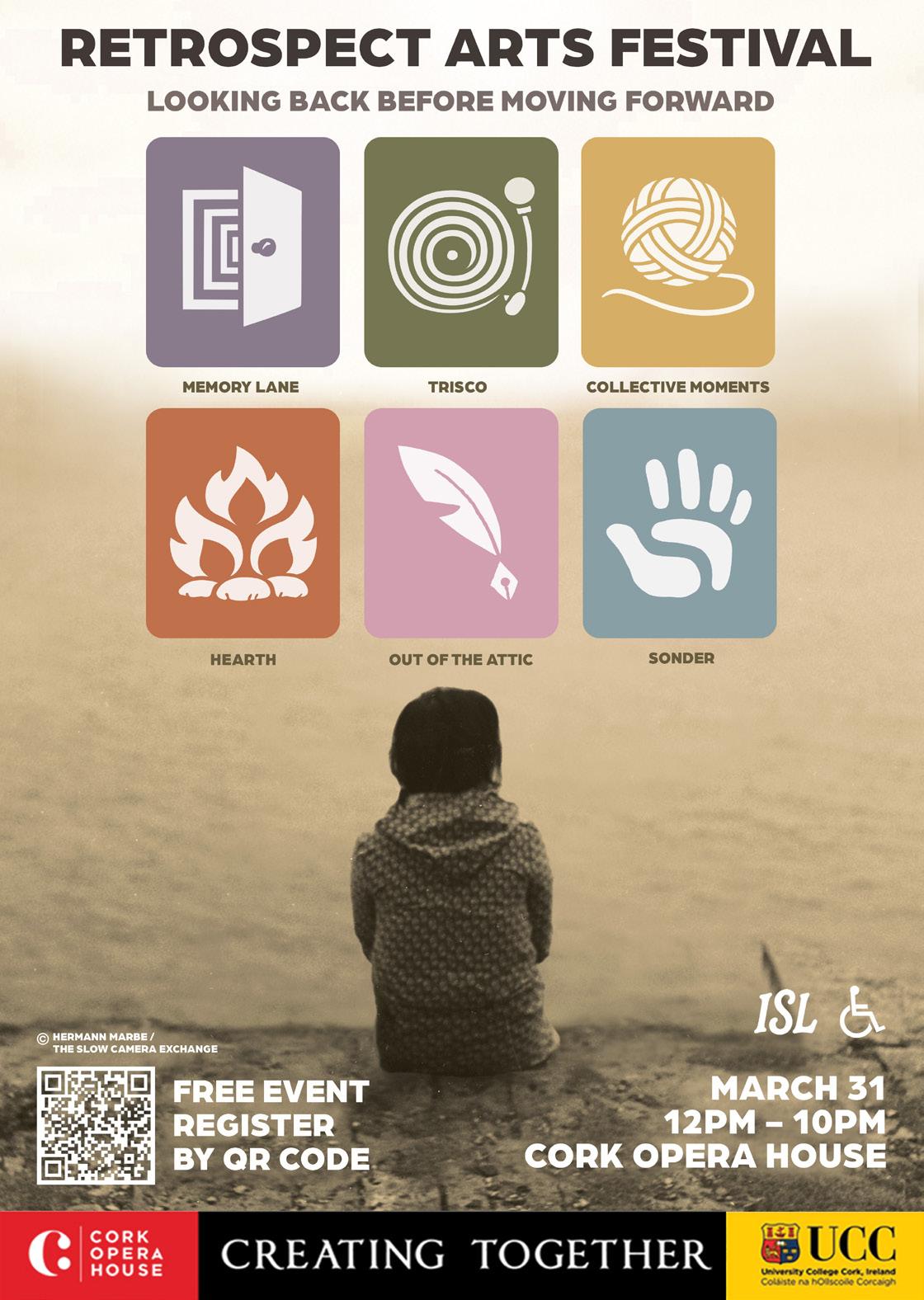
This year’s student-led festival, produced by the post-graduate students of UCC’s Arts Management and Creative Producing, is officially titled Retrospect. Retrospect is a festival about memory, and when people figure that out, we are often met with a mix of curiosity, intrigue and confusion. Some ask themselves the question, why would a group of young people think so obsessively and deeply about looking back and remembering? I guess, there is still this idea of young adulthood having a careless, or future-focused quality that is intrinsic to it. However, the answer to that question lies between the essence of festivals as we know them and experience them.
Festivals are liminal, as defined by Victor Turner in Liminality and Communitas, where “liminal entities are neither here nor there.” Similarly, festivals create their own rules, customs and laws. They invent new ways of expressing oneself, new characters, and new landscapes. New ways of seeing the world.
In order to shake the ordinary person awake and push them to the liminal edge, engaging in festival-like behaviours, it is cardinal to stress this feeling of being in-between something There is something ecstatic
Words: Chiara Alessio
about being squished in the middle of things, the shedding of the old and the marriage with something new. For this reason, many festivals are temporally set between the change of seasons.
Our festival, Retrospect Arts Festival, is effectively a spring festival, happening on March 31, at the Cork Opera House. Like every spring festival, we look at the old one last time before moving on with the electrifying life of the warmer months. During the Kurdish Newroz, celebrated on the Spring Equinox, a bonfire is lit to celebrate the start of something new, and the triumph of light and warmth over the dark and cold of the winter months. Similarly, Uzgavenes, in Lithuania, chases and burns the character of winter. Imbolc also marks the transition from the old cold to the new warmth. A commonality between all of these celebrations is the impossibility of moving forward without acknowledging the past. It seems obvious that memory and remembering are intrinsic to the act of moving forward, and that without one, the other does not, and cannot, exist.
So, in Retrospect, we ask the audience to find shelter in their memories before entering normalcy again. In the chaotic hecticness of the world we live in, to stop and think is something radical. It’s a suspension of everyday, ordinary customs that often ask people to push through what is on their mind, making it impossible to grow, heal, and understand what is happening to us and to others. During Retrospect, there won’t be this impending and oppressive need to push forward and think ahead. For a day. For a moment.
When producing Retrospect,
I found that I was most often linking the concept of memory with that of grief. With the very action of remembering something that was not there anymore. To me, that was nothing more than melancholia and nostalgia. I could not bring myself to see a ‘positive’ side of it. As the theme of memory became our Arts Festival’s focus, my views began to change, consistently, over time. Shortly after having chosen the theme, we gave ourselves the task of compiling a series of images, photographs and quotes which represented our own version of memory. We looked at the images we compiled together, with each person explaining their collages inspired by memory: old Christmas trees, photographs of family get-togethers, familiar landscapes, letters and postcards, dogs and cats, a series of seashells, but also more abstract images such as bonfires, spirals, and coloured lights – some kind of phosphene, the little flashing lights one gets after closing their eyes. Even though my series of images was seemingly colder and almost inhospitable compared to the others, my view of the concept of memory was changing from a swallowing, melancholic pit to a warm, fuzzy sensation. It was a well-rounded approach to the concept of memory. One that took into consideration every emotion which was sparked by the act of remembering. The more we talked about memory, the more its ability to trigger something seemed to be interesting. Memories, in fact, can lay dormant for years, resurfacing, when an emotional imprint is tickled or stimulated, stay on the surface for a while, and then eventually
Poster design by Sara Troisi
bubble, heavily, back down. It reminded me of what Sara Ahmed said about this ‘pressing’ quality of emotions in The Cultural Politics of Emotions, “We need to remember the ‘press’ in an impression. It allows us to associate the experience of having an emotion with the very affect of one surface upon another, an affect that leaves its mark or trace.”
Something is experienced. That experience leaves a trace, a lingering emotion or physical sensation. Like the round rim of a way-too-full coffee cup, which leaves a stain on the table it has been sitting on. That trace is kept, archived within the body, until it is triggered again. Then, it resurfaces through memory, aided by a familiar sensation or situation. This is what Maurice Merleau-Ponty defined as “The Intertwining […] the Chiasm” in The Visible and The Invisible, “since perhaps our own experience is this turning round that installs us far indeed from “ourselves,” in the other, in the things. […] By a sort of chiasm, we become the others and we become the world.”
Retrospect is about taking one look back to move one step forward. To its core, the festival uses the past, the act of remembering, personal and collective history, to propel itself forward. The result is an intertwining of time, an intertwining of experiences – a chiasm of sorts? – an ongoing conversation between the artists, us, the producers, and the audience. A constant ‘remember when…?’ and ‘how does that make you feel?’ Awareness and stillness are a rare tonic indeed, these days.
Look in Retrospect with us on March 31, at Cork Opera House.
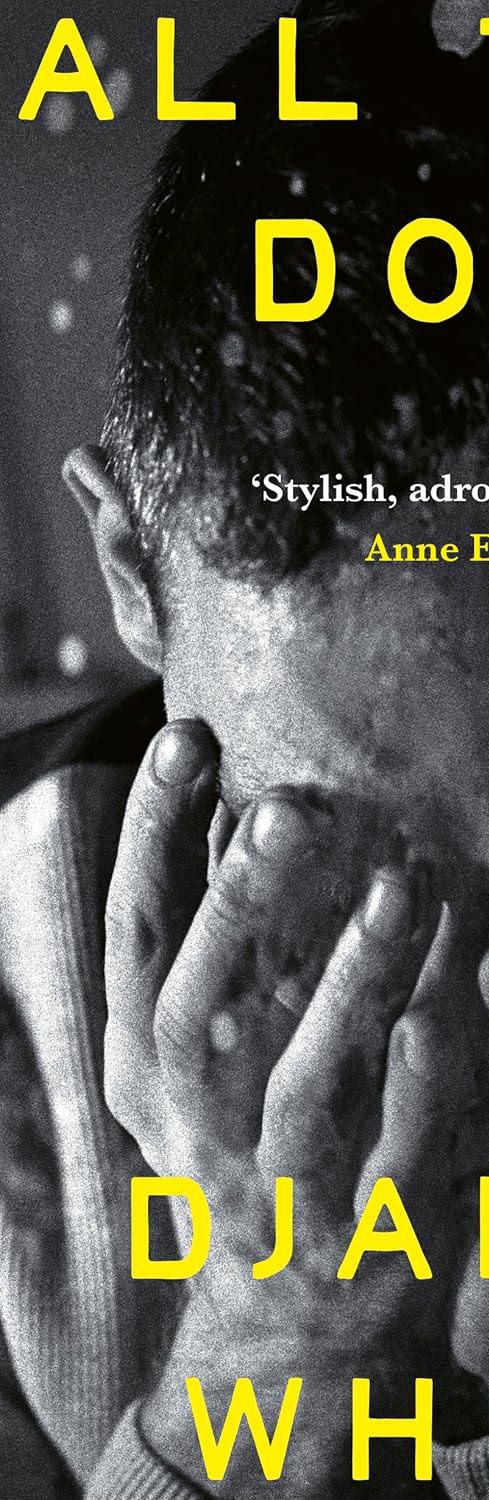
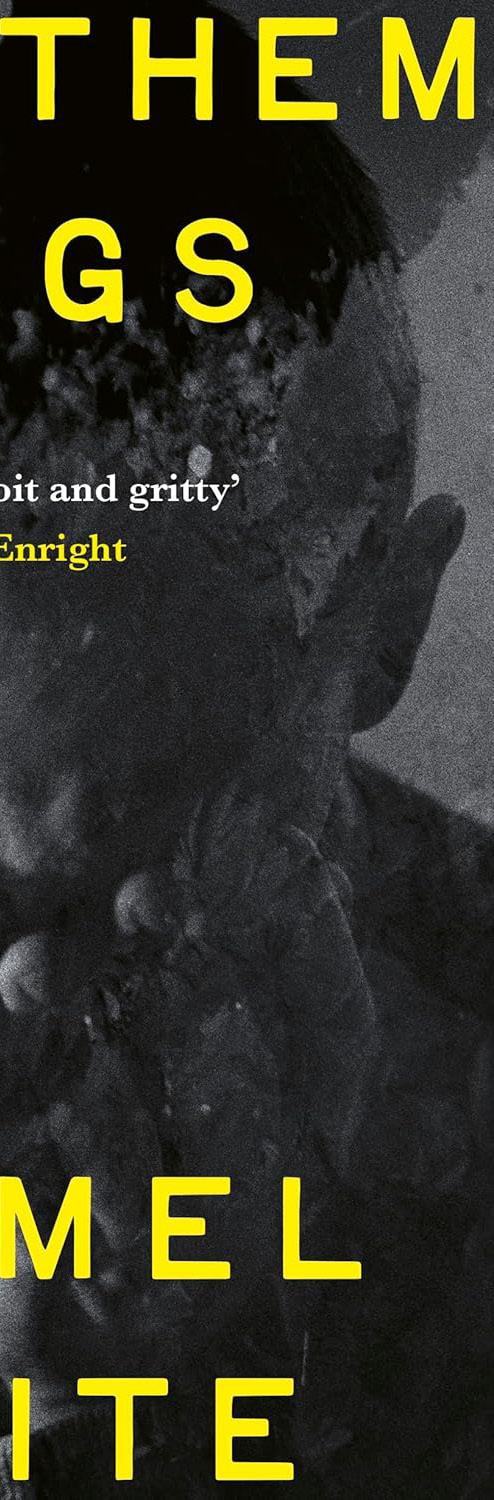
Djamel White’s use of the word gaffs in the opening sentence of All Them Dogs lets the reader know that Irish vernacular is welcome in this literary crime story set within the West Dublin gangland scene. When reprobate and “do be” are used not long afterwards, my notes in the book’s margins read: You don’t hear the word reprobate much these days! At least not in the rural part of Kerry that I moved to when I left Dublin. All this to say that All Them Dogs immediately drew me into the frenetic and claustrophobic world of the novel’s protagonist, Tony Ward.
Tony Ward is back in Dublin after years of lying low abroad, but the drug scene has changed. His mentor, Phillip Mooney, is dead. His best friend, Kenny Boyle, no longer leads a life of crime. But Tony needs protection, so when he is teamed up with Darren ‘Flute’ Walsh, an enforcer for Aengus Lavelle, he cannot pass up the opportunity. Aengus is a “community man” and also “the key link between all the major suppliers and the rest of the gangs in the country.” As Tony is drawn further into doing Aengus’s bidding, he is pulled towards Flute’s unpredictability in more ways than one. As the tension ratchets up, so does the violence.
This isn’t a novel about the fact that Tony is gay or queer,
“All them dogs is an engrossing story about power, violence, lust, and whether people are doomed to repeat their past behaviours or are capable of change.”
although his sexuality influences elements of the plot. The word queer is used once, in a way that can be read as derogatory or as an act of recognition. Tony is guarded about his sexuality, but White portrays this in a way that feels realistic to how someone in Tony’s situation may behave.
I grew up in one of the areas depicted in the novel, although a couple of decades before the events in All Them Dogs take place. Even when you aren’t directly involved with drugs and gangs, when you live alongside them, it can become a lens through which you view where you live. Partly because it’s how people who don’t live there view it, and partly because there is, or can be, an element of not want-
ing to know what the people you bump into every day on your way to the shop are up to, because not knowing might be safer for all involved. White’s focus is firmly on Tony’s actions and, frustratingly at times, his inactions, yet he also brilliantly captures the sense of fear or dread felt by those caught in the crossfire because of where they live.
All Them Dogs is a violent story, but the violence never feels gratuitous or solely intended to shock the reader. Although much of it is shocking, it is clear that this isn’t White’s main aim. Some readers may feel that by choosing to write about gang and drug-related crime and violence, White is automatically glamorising it. I don’t read the novel this way. Tony Ward isn’t written to be a hero who can do no wrong. Nor is he portrayed as a man so evil that he is beyond redemption. Instead, White shows us a man who has done and continues to do terrible things without being a complete sociopath or psychopath. Tony is not incapable of emotion. In fact, his heightened emotions are the catalyst that pushes the novel towards a violent conclusion.
Words: Paula Dennan
A conclusion that, in many ways, felt inevitable from the opening pages, but it still surprised me because White directs your attention away from the obvious. As if he delights in saying: This is a whole lot more complicated than you assumed, right? More than once, I wondered how different life would be for everyone involved if drugs were no longer criminalised.
All Them Dogs is an engrossing story about power, violence, lust, and whether people are doomed to repeat their past behaviours or are capable of change.
All Them Dogs by Djamel White is published by John Murray Press, an imprint of Hodder & Stoughton and Hachette UK.
“White’s focus is firmly on Tony’s actions and, frustratingly at times, his inactions, yet he also brilliantly captures the sense of fear or dread felt by those caught in the crossfire because of where they live.”
Don’t mind me, digging out a pair of Levi’s and a fitted shirt from the back of the closet ... FX’s latest hit Love Story, based on the chaotic romance of John F. Kennedy Jr. and Carolyn Bessette, is sitting at 80% on Rotten Tomatoes. The world obviously loves Love Story, and I can see why.
America loves political drama; from The West Wing to Scandal, there is something almost voyeuristic about the peeling back of the White House curtains for public consumption. The Kennedy family, politics and drama have always been synonymous; in the absence of a monarchy, the American public propped up the family as faux royalty, larger than life and a symbol of an aspirational family. The show itself jokingly draws a comparison between Carolyn and Princess Diana.
The Kennedys are not only a political dynasty, from Joseph P. Kennedy Sr., to modern-day mess RFK Jr., and fun, eccentric Jack Schlossberg, but also an enduring symbol in American culture. John F. Kenendy and Jackie Kennedy instantly captured the public’s imagination. JFK was handsome and charismatic – messy wars to the east be damned – while Jackie was classy, elegant and an immediate style icon. It’s not uncommon to see women worldwide looking to her for style inspiration over thirty years after her death. Subsequently, their children came under the same public adoration and harassment.
John, their eldest son, became an 80s heart throb, need I remind us all of those graduation photos? He was armed with his father’s looks and magnetism, and apparently the generational affliction for blondes. When John met Carolyn Bessette, America fell in love as fast as the pair did. They blended fashion, luxury, politics and power; the world wanted to be them, and be with them.
Carolyn became an instant icon, with Vogue noting she remains our “perennial style inspiration”, she made Levi’s look luxurious, and a plain white shirt stylish. Chances are, if you’re poring over Pinterest boards looking for effortless 90s minimalism, pictures of Carolyn are coming across your feed.
And don’t think I’ve forgotten JFK Jr., not many men could seamlessly move between a tailored Armani suit on a Friday to sweatpants and a backwards cap on a Saturday – and honestly, make both work.
Love Story follows the pair, blowout arguments in the street and all, to a soundtrack that will make you want to jump out of your seat, featuring Lenny Kravitz, The Cranberries, Sade, and one Jeff Buckley moment just to knock the air out of us. All against the backdrop of 80s and 90s New York that we long for now that the American dream has become an American waking nightmare.
Part of the appeal is the flawless casting. Sarah Pidgeon somehow brings a 365 par-
“They blended fashion, luxury, politics and power; the world wanted to be them, and be with them.”
ty girl meets Audrey Hepburn presence to the screen; she’d definitely judge you for wearing an outdated pattern, but she’d also give you a tampon in the women’s bathroom of a club after one too many cocktails. Paul Anthony Kelly, besides his undeniable similarities in looks to JFK Jr., manages to balance aloof with lovable; he’s arrogant, out of touch, and takes his privileges for granted, but he’s sweet and dependable when it matters… unless you need someone to watch your dog for the weekend. Together, they could be your cousin who works in finance and his judgy girlfriend at Christmas dinner. You’re uncomfortable at first, but by the end of the night she’s recommending lipstick shades and demonstrating how you should cut your hair to frame your face, and he’s listening to your senile grandfather ramble on about outdated political views.
Love Story perfectly captures those tense moments everyone has experienced, failing an important exam, navigating a messy breakup with an ex (from getting back together to breaking up again), the fear before an important meeting with a boss, the excitement and wonder fol-
Words: Cleo Morrison O’ Riordan
lowing the first few dates when you’re trying to figure out if it just…fits….and meeting the family for the first time. Although I reckon most of us haven’t had to attend the birthday dinner of the daughter of a former American president in order to meet your partner’s family, all while being trailed by armies of paparazzi and watched by the entire nation
Another selling point is the staggered release of one episode a week, each Friday. The excitement this provokes reminds me of when classics like Dawson’s Creek and Gilmore Girls released episodes on a weekly basis, or childhood favourites such as Hannah Montana and The Fresh Prince of Bel-Air had dedicated slots on Disney Channel or Nickelodeon, so you had to wait to watch. The rise of streaming services and
binge-watching has made this a thing of the past, but the leavethem-wanting-more feeling evoked when I get to the end of a Love Story episode and realise I have to wait for the coming Friday to check back in with John and Carolyn reminds us that this is a lost art of television.
What is compelling about the show, and something creator Ryan Murphy has showcased in his career, is that despite the fact we know how it’s going to end, we can’t look away. We as viewers love a tragedy, it’s a tragic story that took place over 25 years ago, made new and engaging. Creator Connor Hines and Executive Producer Ryan Murphy are seamlessly bringing us into the world of JFK Jr., making us love the young couple, and lying in wait to pull the carpet out from under us.
Photo: Courtesy of FX
“The leave-themwanting-more feeling evoked when I get to the end of a Love Story episode and realise I have to wait for the coming Friday to check back in with John and Carolyn reminds us that this is a lost art of television.”
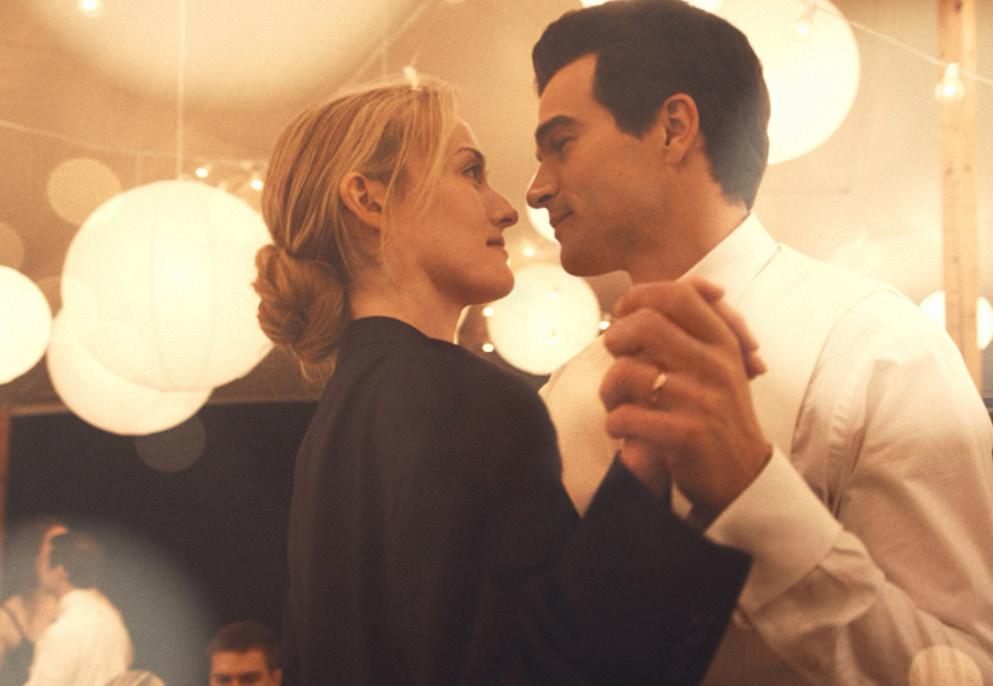
During Grammy season, devout fans are known to die on the hill for their favourite artists. When there’s a loss in a category, the throwing of their toys out of the pram naturally ensues. The outrage looked different than expected for Olivia Dean’s Best New Artist Win at this year’s Grammys. Somehow, the description of ‘’trad-wife’’ found its way into the conversation. Depending on what corners of the internet you inhabit, you may have seen this discussion gaining traction on socials during the run-up to the awards. A familiar argument any pop-defenders hear is the idea that the genre is soulless, which is nothing new. That exact criticism was applied to Dean, but escalated into this X headline: ‘’Olivia Dean’s Grammy Win Draws Tradwife Backlash Debate’’. You could read it and assume it was satirical. It was not.
How did we get here? It simply seems that amongst her peers, within the category, she is arguably the most commercially conventional and holds the most general appeal to a wider audience who have a more conservative-sounding listening habit.
On social media in the aftermath of the win, there were many versions of this since deleted tweet reiterated again and again: ‘’Olivia Dean has a beautiful face and voice but she makes Bloomingdale’s makeup counter music and gives off the vibe of
someone who’s in bed by 10pm every night after a 12-step skincare routine, and that’s just not what I look for in a pop star.’’ It garnered 111,000 views, which gives you an idea how far-reaching and current the conversation was, not just taking place in an echochamber.
Olivia Dean is thought to be solely appealing to, and embodying a ’’Molly-Mae’’ archetype: think a sub-section of young women who shop at Pretty Little Thing, are partial to an Espresso Martini, and enjoy Love Island. We know these individuals; we all have one in our lives, and we love them.
They’ve argued that to have found herself appealing to this demographic of listenership is self-sabotage, believing that her commercial appeal has done away with her artistic credibility before she’s even really started. This is a symptom of a sickness that believes only the esoteric, those ‘in the know, get to be the musical taste-makers. That pop-commerciality results in a project being perceived as meaningless and corporate by default.
Dean’s 2025 sophomore album, The Art of Loving, challenges that.
Indicative of the title, Dean’s central message is that there’s ‘’something [to be] lost / [and] something [to be] gained’’ in moments of love. Be it that of
“Maybe it’s time we reconsider who gets to be the tastemakers and decide what ‘taste’ looks like.”
‘transitionary’ love, “Nice to Each Other”, “Close Up”, self-love, “Lady Lady”, “So Easy (To Fall in Love)”, or the universal love for life and family, “I’ve Seen It”. It doesn’t shed itself of her debut sound on Messy, with songs like “Ladies Room’’ and “The Hardest Part” being precursors to the sound she masters on The Art of Loving.
Modern-Americana has dominated the radio waves with the likes of Zach Bryan, Noah Kahan and Luke Combs. Rather than chase a current production sound, Dean didn’t fall into that trap and instead melted into a voice that is distinctly hers.
It doesn’t reinvent the wheel, but manages to establish a production that now sounds synonymous with Dean. Her clear preference for live instruments is a breath of fresh air and lends itself beautifully to many of her live performances, most notably for Jools Holland’s 2025 Hootenanny. Her sound occupies a similar space as Adele’s 19, with themes of turbulent love, but also in their shared R&B with an inclination for Pop; they could be sister-records. Similar to 19, The Art of Loving is self-assured and narrative-driven.
Dean’s rounded meditation on love has been taken and flattened into the reductive in-
terpretation that resulted in the trad-wife comment gaining traction: that the album’s preoccupation with romantic love is regressive. It’s a glass-half empty way to interpret her message, especially when the album is much more than that.
The most damning evidence that seems to lend itself to the X headline is “So Easy (To Fall In Love)”, a song about being a perfect candidate for her love interest. It’s not a demeaning song, but simply theatrical and kitschy, something that you’d expect to hear in an M&S (said lovingly), something your mum would turn up if it came on the radio. “Man I Need” was taken up much the same. Its core message is not about the absolute necessity of a romantic partner like it has been tarred and feathered as, but instead the encouragement of partners-to-be to become the kindest version of ourselves that we can hope to be.
So if the pursuit of connection now is synonymous with
trad-wifeism, First Dates must be informed stat.
In all seriousness, to dismiss the value which Dean’s message of love holds is to try to, and fail, to deny how much The Art of Loving resonated with the public. When watching her perform it live, you’ll involuntarily smile, as you can clearly see you’re watching someone who loves their job do it to the best of their capabilities. Her discography is social media’s current soundtrack, cropping up in the background of Instagram posts of someone’s weekend getaway.
The diminishment of Dean’s demographic of not entirely, but largely, young women is nothing new. The best example of it goes back as early as the 1960s when you look at early-Beatles and their listeners. These young women made sure The Beatles held zero credibility in the eyes of critics, but when their listenership diversified over the years, their artistry was no longer questioned. That coincided with them
Words: Stacey Cambridge
beginning to appeal to men. Funny how that works.
Olivia Dean is just the latest on a long list of artists to have their artistic credibility called into question due to their commercial success and an appreciation from a young female listenership. She manages to satisfy these so-called lowbrow indicators whilst having made a gorgeous piece of work. Maybe it’s time we reconsider who gets to be the tastemakers and decide what ‘taste’ looks like.
“The diminishment of Dean’s demographic of not entirely, but largely, young women is nothing new.”

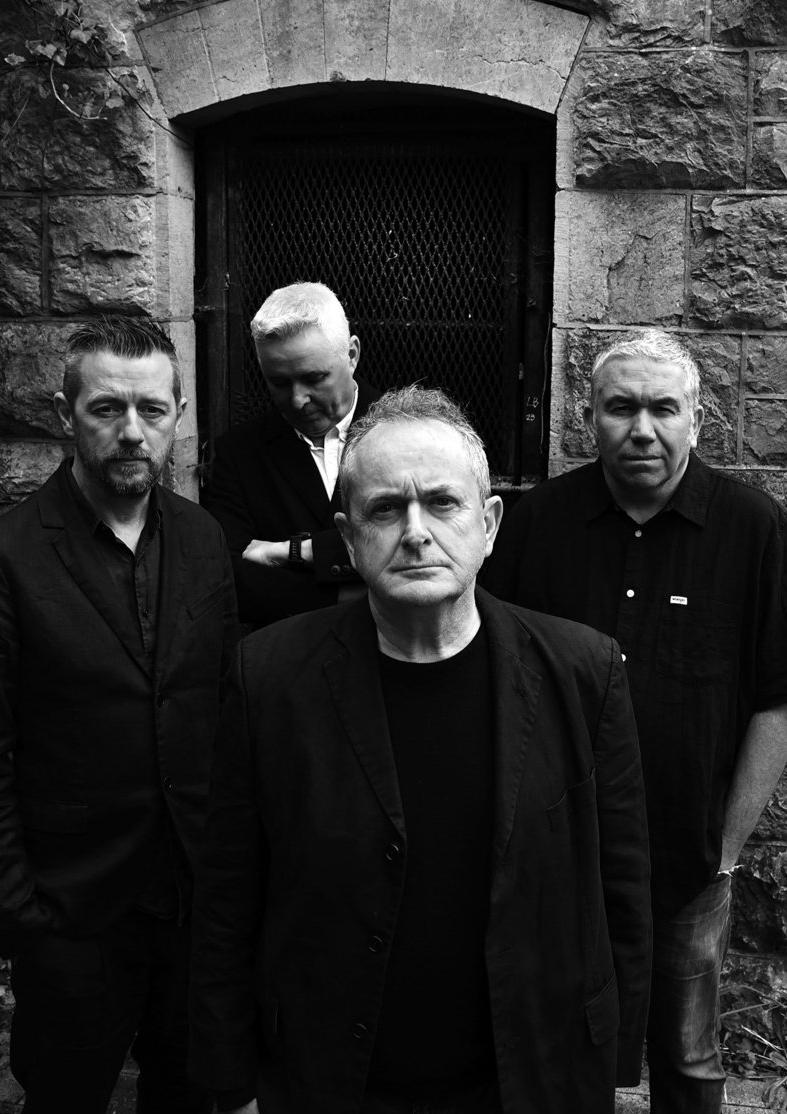
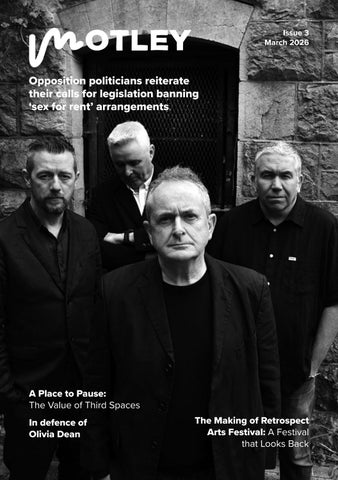
Cypress, Mine! are back in a way that can sometimes be rare: not as a heritage act doing victory laps, but as a band with new songs, a new record, and a reason to be here. Formed in Cork in 1984, they first made their name with Exit Trashtown before disbanding in 1989. Now, with Pulling All The Clouds Apart just released, and dates on the calendar, they sound less like a neat reunion than a band still moving.
We caught up with band member Mark Healy for a few questions. What comes through isn’t nostalgia for its own sake, but the practical graft of making a band work again across distance, history, and the changed reality of live music. There’s affection for the old Cork that shaped them, of course, but this version of Cypress, Mine! feels more interested in what comes next than in looking back.
Cypress, Mine! could easily have come back as a nostalgia act, but the new material is determined to live in the present. How conscious were you of avoiding the trap of simply revisiting the 1980s?
We could have reconvened for old times’ sake and played a couple of gigs, but we realised we had enough new material for a new album and decided to go with that. There are some similar musical themes, but I definitely think we’ve created something new and old at the same time.
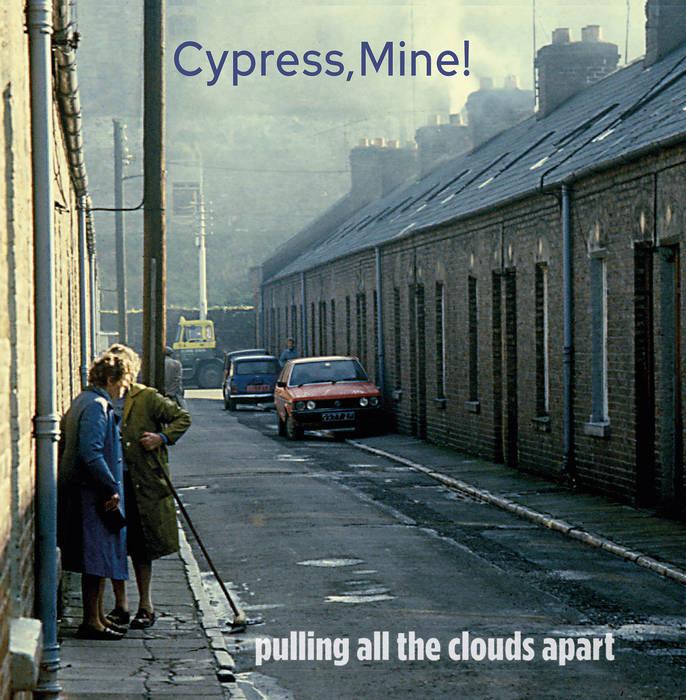
Live, we’ve also added an extra guitarist, Eddie Walsh, which adds an extra layer to the sound. We were also joined onstage recently by Jodie Lyne from Mirrors, whose singing added another dimension to our live performance.
In the original line-up you were the drummer, but in the reunited band you’re on bass. How has that change shifted the way you hear the band, and the way you contribute to it?
Even though I play drums and guitar, it was quite a change for me to pick up the bass. Some
of the older material was more complicated than I expected and even trying to work out what Skoda, the original bass player, was playing was challenging. Once it clicked, however, it was grand. Skoda lent a lot to the original band sound with his melodic playing for sure.
Cypress, Mine! formed in Cork in 1984, but the mid-80s scene still feels under-documented. What do people miss when they talk about that period now?
The abundance of live venues was probably one thing.
Venues that would welcome you, no matter what you were trying to do. Sir Henry’s was also an incredible spot, as was the Savoy. Being able to see big bands in Cork on a regular basis back then shows how much we need a dedicated venue of that size in Cork now.
When you listen back to Exit Trashtown now, what still feels completely true to who the band were, and what feels like the sound of a band still figuring it out?
We had to put a setlist of old and new songs for our recent gigs and the two that featured from the album were “Wedding Dress” and “Justine”. Back then, and even now, there was constant change between rehearsal and what finally came out as a release. We are even currently playing a song called “Golden Gate One”, which was on our first demo tape.
There’s a long gap between the band ending in 1989 and reforming in 2025. What had to line up, personally or musically, for this to feel worth doing now?
We started sharing recordings for what turned out to be our new vinyl album, Pulling All The Clouds Apart, a few years ago. A demo here and a demo there, exchanged back and forth until we had enough solid material to go into the studio, which we did over two sessions with the wonderful Jessica Corcoran in Perry Vale Studios, London.
A long time ago, a Cypress, Mine! rehearsal would involve little more than a bus trip into Parnell Place to our rehearsal room, which is now part of the extended Maldron Hotel.
Now, playing live and re-
hearsing is a bigger problem as all four members live in different parts of the world. Sweden, London, Dublin and Cork respectively. So it was a real labour of love, particularly by the nonCork residents, to get everyone in the same place to achieve everything we’ve been doing for the last few months.
Your first gig came from blagging a support slot with The Bluebells in Ballybunion. Do you still recognise that same DIY instinct in how bands have to make things happen now, or has the culture changed?
If anything, the DIY thing is more prevalent than ever. Anyone with a laptop and a song can have a digital release available relatively easily. That said, you still have to be able to perform in front of a live audience.
Cypress, Mine! shared bills with acts like U2, and later drew the attention of Rory Gallagher. At the time, did those moments register, or is it only years later that you grasp what kind of company you were keeping?
We played out in the Lee Fields the same day U2 made a surprise appearance six weeks after they played Live Aid, which was mad when you think about it. The biggest change since then was the emergence of festivals. With the exception of the Macroom Mountain Dew Festival there probably weren’t as many around.
Pulling All the Clouds Apart arrives almost four decades after Exit Trashtown. What did age, distance, and time make possible on this record that would not have been possible in 1988?
More than eight-track recording studios for a start! We’ve all
been involved in producing music over the years and that experience brings an element of passion and commitment to what we’re doing. It’s probably easier for us to articulate what we want to hear from a finished product. What song do you play to win over someone in the crowd who knows nothing about Cypress, Mine! and has no interest in the backstory?
I’d go with “Sugar Beet God”. Quick fire round: best Cork venue, past or present, one record you return to all the time, one Irish act more people should be paying attention to right now? If you were starting out again, would you do anything differently? What are you looking forward to for the band in 2026?
Sir Henry’s / Pet Sounds / BABYRAT.
Playing in the Bello Bar in Dublin on March 21 with Big Boy Foolish and a few other dates later in the year.
If reunion records often arrive wrapped in memory, Cypress, Mine! seem more interested in momentum. The old story is there, but it is not the whole point. What matters is that the songs hold up, the band sounds alive, and there’s still somewhere for it all to go.
For anyone coming to them cold, Mark recommends “Sugar Beet God” as an entry point, and we reckon that’s as good as any. After that, the next chance to catch them live is Bello Bar in Dublin on March 21, and keep an eye out for Cork dates too.
Áine Tyrrell with Cian FinnLevis’, Ballydehob
March 14
Breaking stereotypes and igniting power, Áine Tyrrell is a force.
Artist, mother, sister and community-builder, Tyrrell is grounded in song, story and shared responsibility, creating music as both medicine and resistance. She weaves culture, community and social change into a living practice. A fearless multi-instrumentalist songwriter, she pushes against labels and blends genres with ease. At the centre of it all is her unmistakable voice, electric and intimate, stirring memory and reckoning while inviting us to rise, belong and build something braver for those who come after.
Cian Finn opens, which only adds to the appeal. Levis’ suits this sort of night down to the ground, and it sounds like a very good one.
Tama Sumo & Lakuti / East West Assembly ft. Monica Blaire / Shane Breen & Abbie Lee / Frawl Kino, Cork
March 16
For Rory’s second birthday party this year, he has chosen Cork City and pulled together a seriously stacked line-up for the occasion. On the eve of St Patrick’s Day, March 16, it all kicks off in the Kino, 22 Washington Street, from 7p.m. until late. Early arrival is strongly advised.
One of the best and busiest duos in the game, Tama Sumo and Lakuti fly in from Berlin for an extended set that should send people home grinning and wrecked in equal measure. Expect Chicago house, disco heat, African rhythms, and wall-to-wall quality. East West Assembly are one of the most exciting live outfits operating out of Ireland right now, with an album forthcoming on Theo Parrish’s Sound Signature label. Joined by Monica Blaire on lead vocals, direct from Detroit, they promise a high-energy set from an 11-piece band made up of incredible musicians from all over the world.
Rory’s residents Frawl and Shane Breen will keep things moving, while Cork’s own Abbie Lee joins with unreleased
material that plenty will be hearing for the first time. The whole thing runs through Big Red, the all-analogue sound system being brought into the Kino for the night. There will, as promised, be nuff bass. Get down early and make a night of it.
Pinch of Snuff
De Barra’s Folk Club, Clonakilty March 16
Pinch of Snuff are a Japanese Irish trad band currently on tour and set to play De Barra’s in Clonakilty on March 16. Their sound feels like a heartfelt love letter to folk music, but delivered with a fiery stage presence and total devotion. Their first album, Pinch of Snuff the Best 1, builds on the momentum of their earlier EP with an electrified edge and a perfectly punchy blend of Celtic flair and snap-fast pace.
This is a rare chance to catch a standout band in full flight, so well worth making the trip for.
Dan Donnelly
Connolly’s of Leap March 21
Dan Donnelly is a Northern Irish songwriter, storyteller and performer with a long and wind-
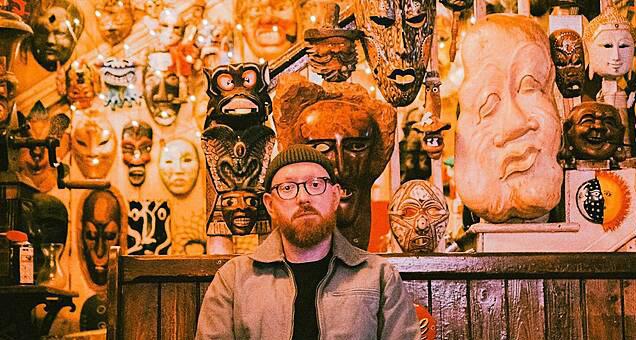
ing career that has taken him across Ireland, the UK and the US. He first made his name with Belfast folk-rock outfit Watercress, one of the great live Irish bands of the 1990s, before relocating to New York, where he performed extensively and collaborated with alternative pop group Joy Zipper.
Back in the UK, Donnelly became a much sought-after musician, playing with a wide range of acts and spending five years as a full member of The Wonder Stuff. In 2022, he joined the Levellers, adding his voice and musicianship to the band’s live shows and recordings. A compelling live artist, and one we haven’t seen in quite a while, this feels like a real treat.
John Spillane
Coughlan’s, Cork
March 22
John Spillane plays two intimate shows in Coughlan’s on March 22, and there are few better settings in which to catch him. One of Cork’s most beloved songwriters, Spillane has a gift for making songs feel both deeply rooted and gloriously loose at the edges, full of wit, warmth, longing and the odd sideways turn that catches you off guard.
Whether he is drawing from folk, ballad tradition or something more playful and personal, there is a deceptive ease to what he does. In a room like Coughlan’s, that closeness matters. These should be lovely shows: intimate, generous, and full of songs that stay with you.
The Savoy, Cork
March 25
Everyone, get excited. After a decade of inactivity, Cork’s Savoy is back, and with its revival comes the promise of a run of very promising gigs in the months ahead. Among them is BABYRAT’s first ever headline show, booked for Wednesday, March 25.
This punk-slash-power-pop outfit has been on a tear since debuting in December 2024. They have already played the Gleneagle Arena in support of The Coronas and landed a slot at this summer’s All Together Now, so this feels like the right moment to get in early and say you were there before the rats went global.
Cutouts / Faraway Shapes
Dali, Cork
March 27
Following appearances at both UCC’s and MTU’s
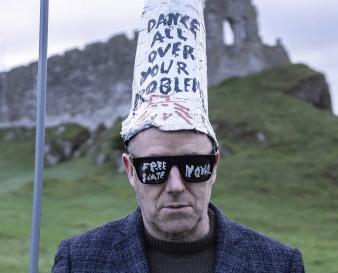
Battle of the Bands contests this spring, local indie outfit Cutouts are set to hit Dali’s stage on March 27. Currently working on their debut album, the four-piece are already familiar faces on the Cork circuit, having played Cyprus Avenue, Fred Zeppelin’s, The Roundy, and supported Ways of Seeing for their sold-out show in Coughlan’s.
If you like your gigs loud and dryly funny, this should do the trick. Cutouts begin at 8.30pm, followed by Faraway Shapes at 10.15pm, a Finnish band blending garage rock, psychedelic rock and blues. Tickets are €11.70 through Eventbrite.
Ben de la Cour Coughlan’s Bar, Cork April 1
If you happen to be going out on April Fools’ Day, then Ben de la Cour is a fitting choice. The Brooklyn-based artist has carved out a distinctive lane for himself as an Americanoir songwriter, with six albums behind him and a sound that folds Southern Gothic drama into Americana with real ease.
His recent album New Roses lets that balance shine, while songs like “I Must Be Lonely” carry a melancholic but catchy country pull. He also released
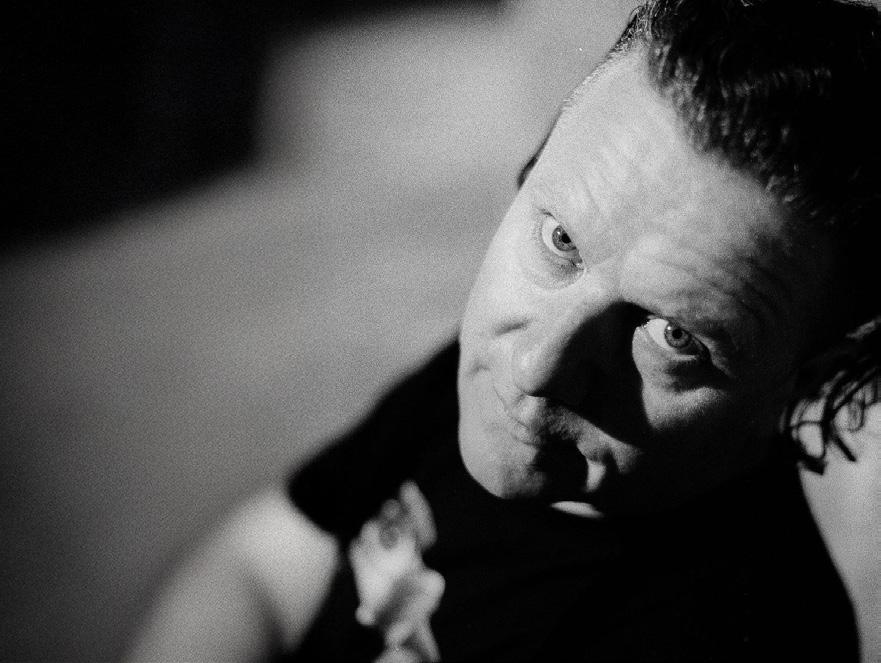
“Stuart Little Killed God (on 2nd Ave)”, which remains an objectively ridiculous and brilliant sentence to type. It is a sweet-sounding single, laced with darkness and a crooked sense of humour. He hits Cork as part of his UK and Ireland tour, and he is well worth catching. God Is An Astronaut
Cyprus Avenue, Cork
April 5
One of our absolute favourites returns. God Is An Astronaut are back at Cyprus Avenue on Sunday, April 5, and they remain one of the great bands for sheer immersive force, all slow-burn build, tidal release and beautifully controlled noise. Few acts do atmosphere with this much heft. Expect a room full of heads tilted slightly skyward, letting it all wash over them. Tickets are €25.
Jinx Lennon and Wasps Vs Humans
Cyprus Avenue, Cork
April 11
Jinx Lennon rolls into Cyprus Avenue on April 11 with Wasps Vs Humans for what should be one of the most gloriously unhinged nights of the month. Jinx has always sounded like somebody reporting from the edges of the map, part punk poet, part street

preacher, part delighted troublemaker. Wasps Vs Humans are along for the ride too, and if you want to hear more about them, have a look at issue one of Motley. Tickets are €17. Some really great shows coming up over the next month.
How I Became a Wave
Coughlan’s Bar, Cork
April 12
Pat Carey, formerly of The Hard Ground, launched his solo project How I Became a Wave in 2025, releasing singles that settled into a soft rock and folk space with a quietly unforgettable, sombre aura. Recent single “Sea Swell” begins in a wistful, dreamy register before opening into a beautiful melodic narrative.
The self-titled debut album lands on March 27, and demand for this show has already been strong. The evening performance is sold out, but an afternoon show has now been added at 3p.m., which gives people another shot at seeing one of Cork’s most quietly arresting songwriters live.
BABYRAT
The Savoy, Cork
March 25
Everyone, get excited. BABYRAT’s first headline show lands
in the Savoy on Wednesday, March 25, and it feels like exactly the right room for a band moving this quickly. Since arriving in late 2024, the Cork punk-slash-power-pop outfit have been on a serious charge, already ticking off support slots with The Coronas and a place on this summer’s All Together Now bill. There is real momentum around them now, so this is the moment to get in early and say you were there before the rats went global.
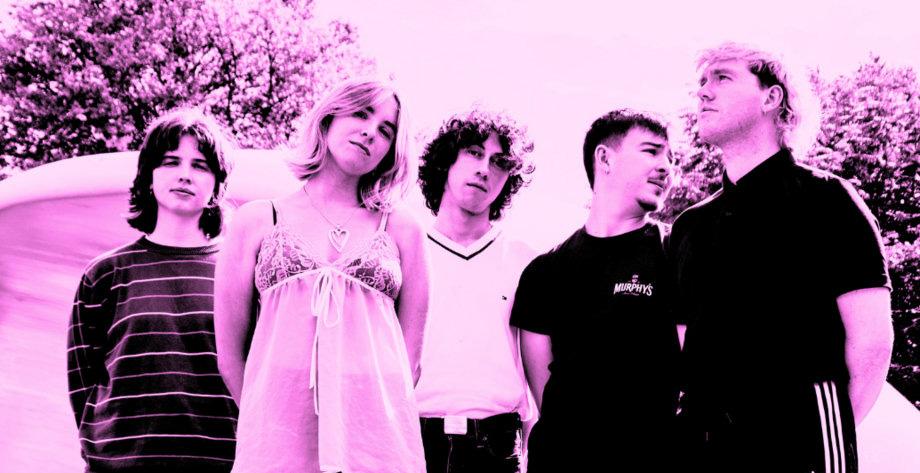
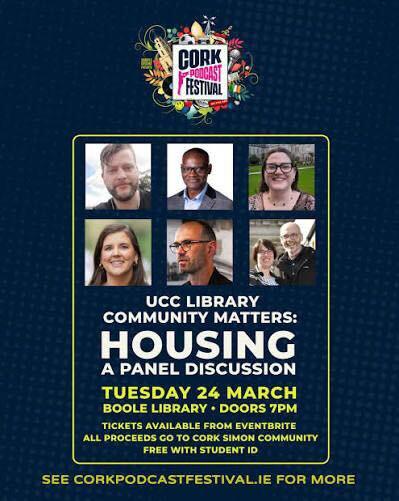
Ye Vagabonds - All Tied Together
Label: River Lea / Rough Trade
Released: January 30, 2026
There was always something lovely about Ye Vagabonds, and critics were right to hear it. Across their first three albums, brothers Diarmuid and Brían Mac Gloinn built a reputation on precision, warmth and those exquisitely blended harmonies, earning strong notices from the start and establishing themselves as one of the most admired acts in contemporary Irish folk. But on their fourth album, All Tied Together, something shifts.
This is the first Ye Vagabonds record that really digs in. The harmonies are still gorgeous, but there is more weight underneath them now, more ache in the writing, more texture in the arrangements, more sense of lived-in feeling rather than careful preservation. The songs feel tethered to real people, real places, real losses. You can hear
time passing through them.
“Danny” is the standout and one of the best things they have written. It has that rare strength of storytelling where the details do not simply decorate a song; they give it its pulse. Built around cello, harmonium and synthesiser, it carries a bruised tenderness without ever tipping into mannerism. It is a portrait drawn with real care, and all the more moving for its restraint. “This Is Where the Heart Lies” cuts just as deep, catching in the throat without having to force the emotion.
Ye Vagabonds have always had craft, taste and control. All Tied Together is the album where those qualities are joined by a deeper emotional pull. It does not overturn what made the earlier records special. It just lets more weather in.
Label: Lost Map Records in association with Sing A Song Fighter
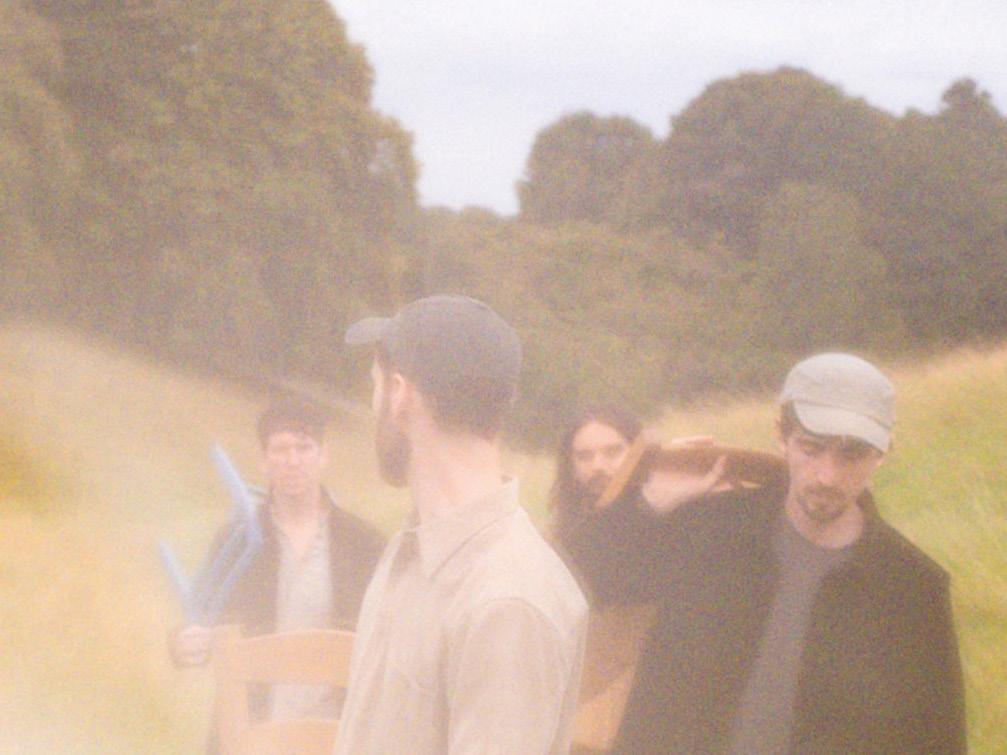
Released: March 6, 2026
Seamus Fogarty has been making singular records for long enough now that the surprise no longer lies in how strange they are, but in how sharply they can land. Ships, his fourth album, folds folk, electronica, drone, spoken-word cadences and a kind of deliberate scuffiness into something that feels unmistakably his own.
What makes the record so gripping is its balance of intimacy and oddness. The arrangements are slyly intricate without ever sounding laboured. Repetition is used not as a hook-delivery system, but as a way of worrying at a thought until it starts to glow. You hear it across the record, from the bruised title track to the disquieting pull of “I Passed Your House”, but also in the album’s stranger corners, where humour, grief and accusation all seem to share the same coat.
“They Recognised Him” is one of the key moments, a dark-
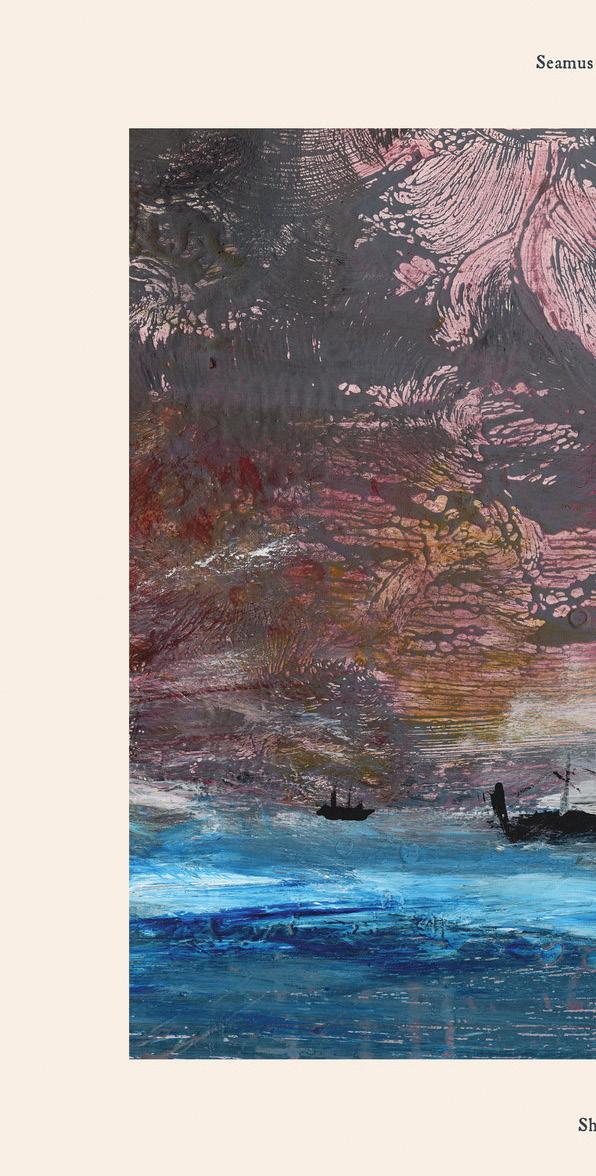
ly funny and quietly unsettling song about celebrity, ritual and public possession. “The Last Days of Watchmaker Joe” is another, all hypnotic repetition and eerie drift, proof of Fogarty’s gift for making the off-kilter feel emotionally exact.
This will not be for everyone, and that is part of its strength. Ships does not flatter the listener or tidy itself into easy shapes. It makes its own weather and trusts you to step into it. Early days, perhaps, but it already feels like one of the strongest Irish records of 2026.
The Nilz - Ambivert Label: FOAD Records
Released: January 9, 2026
The Nilz have always sounded like a band with one boot on the monitor and the other already halfway through the door, and Ambivert sharpens that chaos into something more deliberate, both a celebration of collaboration and a snapshot of a scene.
This is not just a punk blast. It is a record built around collision: punk rock, hardcore, sleaze,
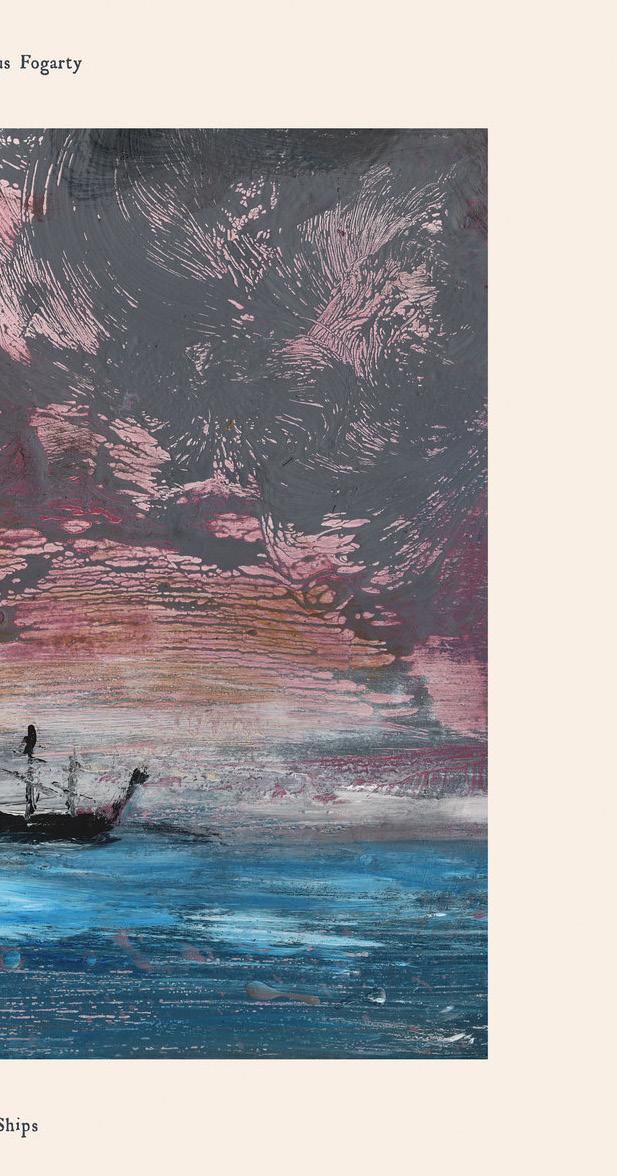
and a run of guest turns that give each track its own flavour without ever diluting the band’s identity. The Nilz still sound like themselves throughout, just dragged through a few different shades of scuzz and abrasion.
“Three Way Kiss” opens with the kind of snotty momentum they do well, all blunt-force riffing and hurled-forward attitude, but the mini album gets more interesting as it goes. “This Is Me Smiling” brings a warped, needling edge. “Turn Off My Gas”, with Glen from Def Nettle, has the stomp of something dragged in from a back alley, while “Deaf Tongued”, featuring Deep in the Woods, leans into something nastier and more wired, less pub-punk throwback than mutant scene communiqué. Even the Def Nettle remix of “Food For Thot” earns its place, closing the record in a haze that feels slightly hallucinatory rather than simply tacked on.
What gives Ambivert its charge is that it never feels overworked or tidied into lifelessness. The guest spots widen the band’s world rather than
soften it. For a five-track release, it carries real scene energy: unpolished, unconcerned with respectability, and fully committed to being loud, crooked and alive. Not a stopgap, not a placeholder, but a snarling bridge to whatever mess they make next.
Ailbhe Reddy - Kiss Big Label: Don Giovanni Records
Released: January 30, 2026
Ailbhe Reddy has been so consistently good that it is easy to forget how hard this kind of songwriting actually is. Kiss Big, her third album, looks at first like a breakup record, but it is really about the long stupid afterlife of one: the conversations you keep having in your own head, the humiliating comparisons, the weird practical grief of no longer being part of a unit. It is not interested in heartbreak as grand tragedy. It is interested in the repetitive, undignified, fucking exhausting mess of it.
That is why lines like “We were two strangers / Living in the same house / I barely recognise you now” hit so hard on “So Quickly, Baby.” It catches
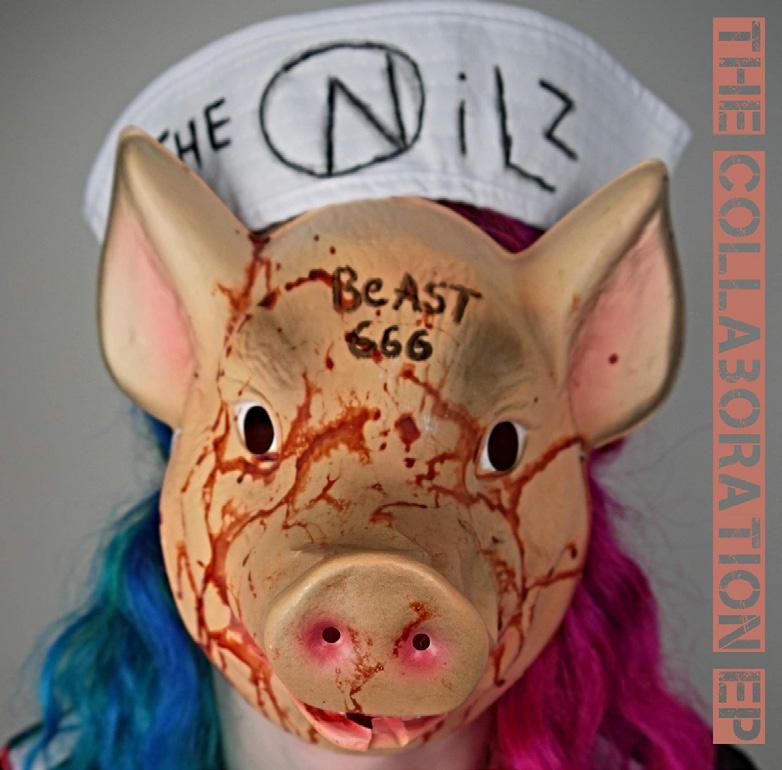
that specific post-breakup madness where your ex is still somehow living rent-free in your head long after the relationship itself has collapsed. “That Girl” has a different sting, more composed on the surface but full of self-interrogation underneath, while “Align” opens the album with a sense of emotional imbalance that never quite leaves. The title track is one of the album’s best moments, starting in strippedback territory before opening into something fuller and more bittersweet.
Musically, Reddy stretches without losing the intimacy that makes her so compelling. There are sharper rhythmic turns, crunchier drums, strings, synth detail, and enough movement in the arrangements to stop the record settling into singer-songwriter autopilot. Her voice remains the thing holding it all together, dry-eyed one minute, quietly wrecked the next.
Kiss Big does not overplay its hand. It just tells the truth, another excellent record from Reddy.
Label: Milan Records
Released: March 20, 2026
Peaky Blinders: The Immortal Man continues the franchise’s long-running habit of using music as more than accompaniment. Across the series, and now the film, soundtrack has been central to the whole thing, shaping mood, menace and aftertaste as much as plot does. Here, the emphasis shifts a little. This is less a jukebox flex and more a slow crawl of dread, fallout and atmosphere, with Antony Genn and Martin Slattery stitching together a 36-track set of instrumentals, specially commissioned songs, collaborations and pieces of dialogue that will likely land more heavily after seeing the film.
What works best is the way the familiar Peaky sound gets pulled into darker, more unstable shapes. Nick Cave’s “Red Right Hand (Immortal)” does not merely reappear; it returns fractured and more foreboding. Grian Chatten is superb throughout, especially on “Puppet”, his voice full of bruised gravity and
that half-broken poise that suits this world perfectly. Amy Taylor’s “Nobody’s Son” brings a different abrasion, more ragged and immediate, while Mclusky’s “people person” arrives like a short, sharp headbutt. The Lankum and Grian Chatten version of “Hunting the Wren” is one of the record’s strongest moments, deepening its sense of dread and old-world unease, while the two Massive Attack covers drag it further into murk and tension.
The score will almost certainly work better in the film itself, but on record it is the commissioned songs and collaborations that leave the deepest mark. It does not all hit equally, but when it hits, it really does.
Released: March 13, 2026
Kim Gordon’s PLAY ME, her third solo album, is an angry, wiry record, lean and barbed and often very funny, with Gordon’s deadpan delivery making the irritation cut even deeper. It follows The Collective but trims the fat further, running to barely half an
hour while pushing deeper into a sound built from rap-adjacent beats, industrial grime, motorik drive and Gordon’s wonderfully disaffected half-spoken delivery.
What makes it satisfying is that it does not try to cosplay youth or recreate past glories. Gordon is not reaching backwards towards Sonic Youth here. She is doing something more interesting: taking that old instinct for abrasion and rerouting it through contemporary production with Justin Raisen, where trap thud, dub pressure and noise-rock instinct all rub against each other until the songs feel both skeletal and menacing.
The title track is brilliantly caustic, built from playlist language and platform-era dead speech, while elsewhere the record keeps swerving between sneer, absurdity and genuine dread. “Busy Bee”, with Dave Grohl on drums, sounds gloriously unwell. “BYEBYE25!” spits its satire with the kind of flat affect Gordon has turned into an art form. Even when the record is funny, it sounds poisoned by the world that produced it.
It is not flawless. Some of the politics are blunt to the point of obviousness, and another touch more silliness might have sharpened the humour rather than softened the bite. But the brevity helps. PLAY ME moves too quickly to sag, and its flaws become part of the abrasion. It does not make peace with the absence of another Sonic Youth record. It does something better than that: it refuses nostalgia and keeps mutating.
The Next Big Thing is a small festival celebrating and showcasing the beginnings of new musicians in their locality. Operating since 2024, the event’s first time in Cork was over the St. Brigid’s Day bank holiday weekend, from January 31 to February 1.
Previously hosting artists in the Workman’s Club in Dublin, The Next Big Thing made their debut in Cork in Dali, a small but cosy club above Nudes, Craft and Cocktail. Though small, the venue highlighted the intimacy and excitement of small bands coming together for a weekend of diverse music united by passion.
I went for both nights of the festival and it was clear that a lot of thought had been put into the lineups for each night. While Sunday was more subdued and laid-back, with HANNABELLA as the headliner, the overall vibe of the lineup on Saturday was much more upbeat and punk,
with Gorilla Gorilla ending the night.
Saturday night opened with Abbie Lee, a striking vocalist fusing R&B, reggae and dance-pop with addicting loops and melodies, instantly opening the dance floor. Following them, Jo Blonde, a full band with a trio of vocalists. A highlight of their performance was their cover of “Glory Box” by Portishead, a powerful rendition for three strong female voices. I enjoyed the bass solo from one of the main singers, a surprising but welcome addition to their set. MDR brought a different energy with emotional but ultimately bright music and a strong sense of musicianship, with several high-energy guitars, uplifting lyricism and some fun moments of crowd involvement. Telekura juxtaposed this with largely electronic music and unique vocals blended together. Gorilla Gorilla ended the night with a charged and chaotic set
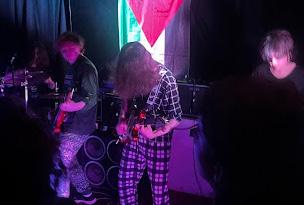
of addictive guitar riffs, aggressive feminine vocals and lots of crowd involvement. By the end of the night, everyone was jumping, dancing, headbanging, and the guitarists were within the mosh pit. A very high energy night to say the least!
Sunday was at times far more subdued, with HANNAHBELLA headlining. Having everyone seated on the floor of the club for one song was quite different from the night before, but allowed everyone to focus on her emotional and lyrical performance. Before her were Red Sun Alert, potentially the most intense band of the weekend and a personal favourite of mine, with impressive heavy guitar, drum and vocal performances, and dynamic moments of softness scattered throughout. Another highlight from Sunday was Other Mother, a five-piece indie rock band with some emotional but upbeat originals. A more relaxed night than Saturday, and ended earlier than expected, but ultimately suited the vibe.
The Next Big Thing was a great showcase of new and diverse talent that I would recommend to anyone looking for a high-quality variety of wellpicked artists. Looking forward to the next one! Words: