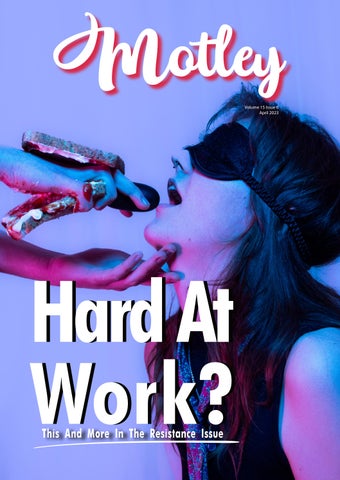
Volume 15 Issue 6 April 2023
This And More In The Resistance Issue
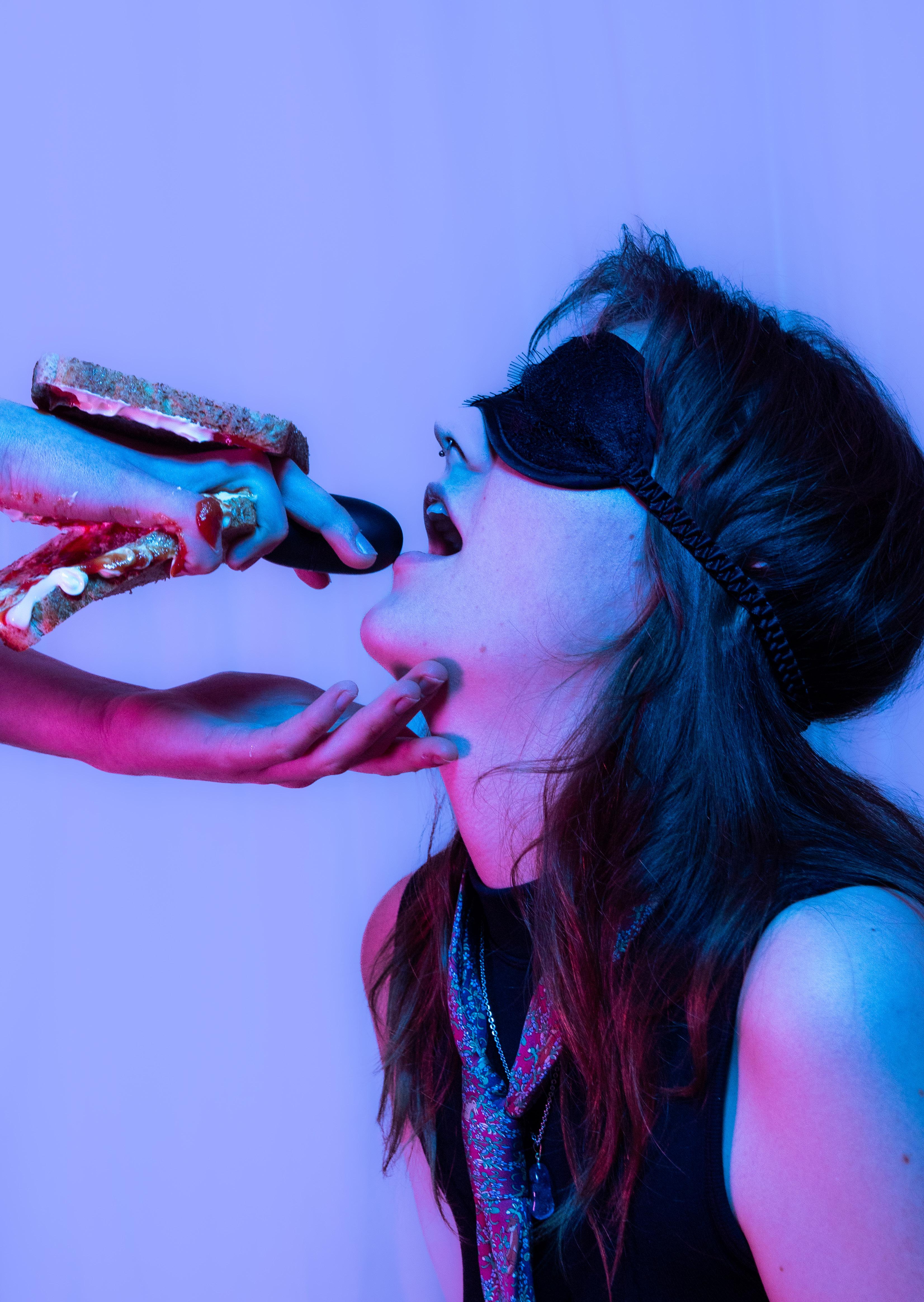
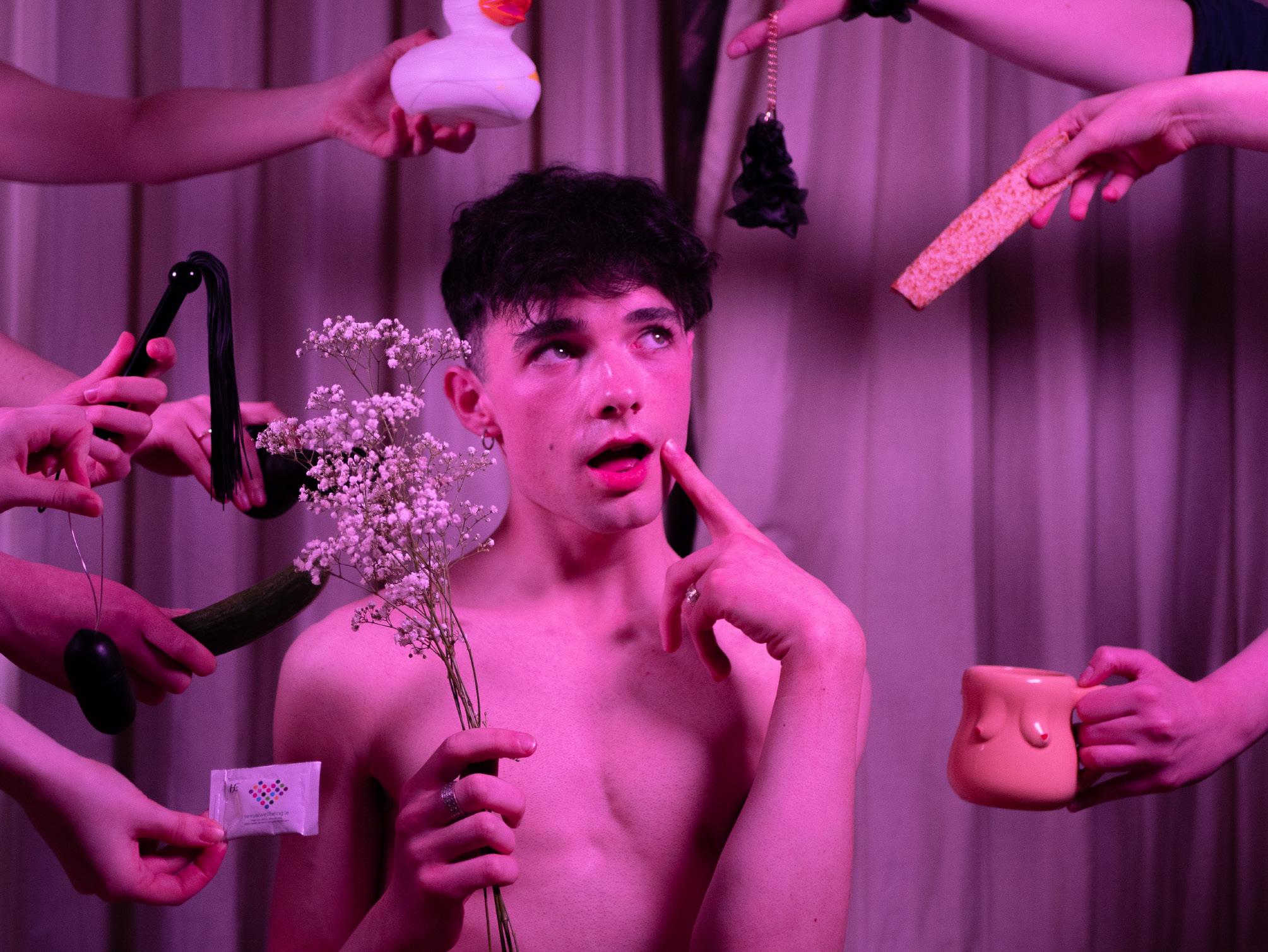
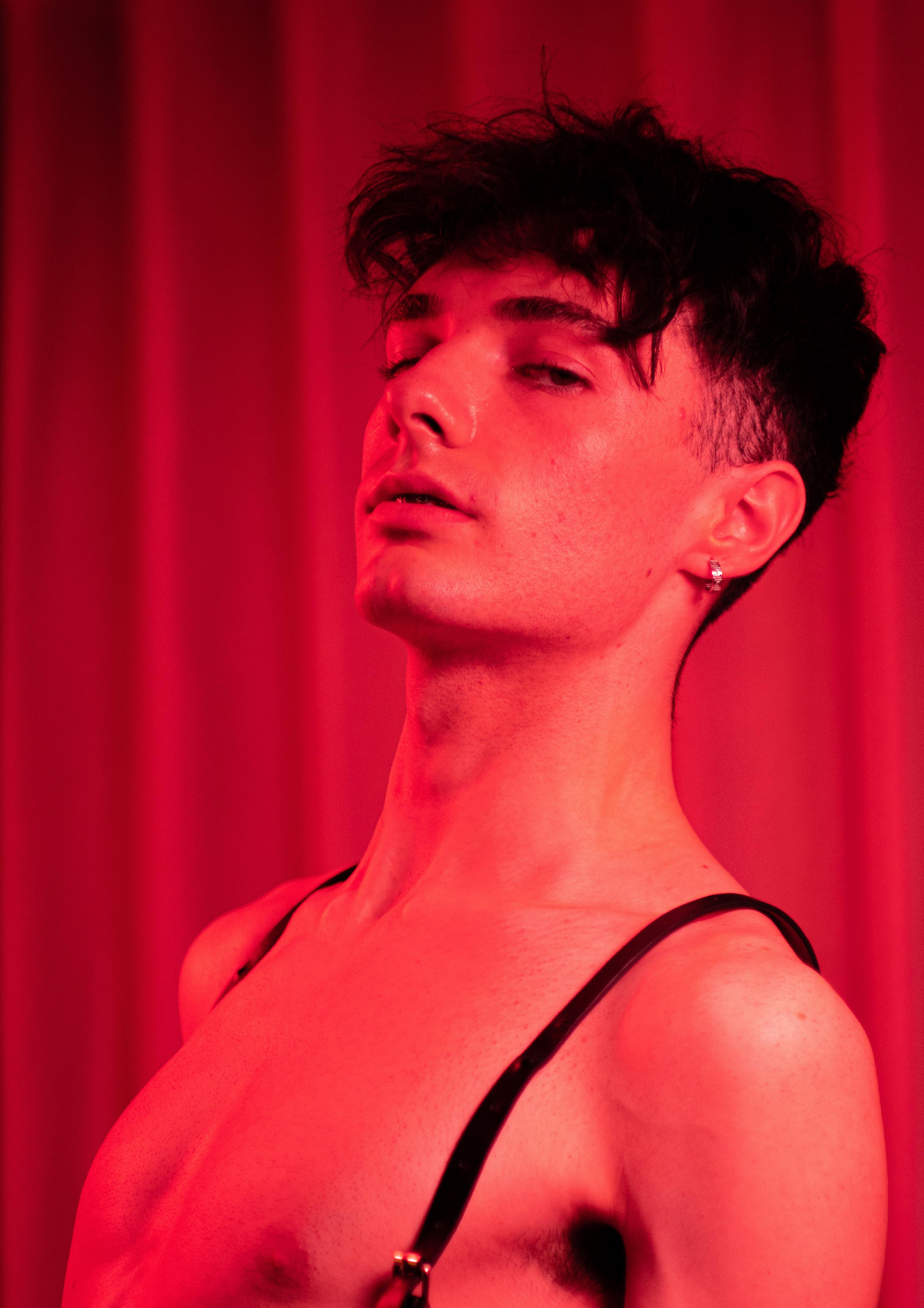
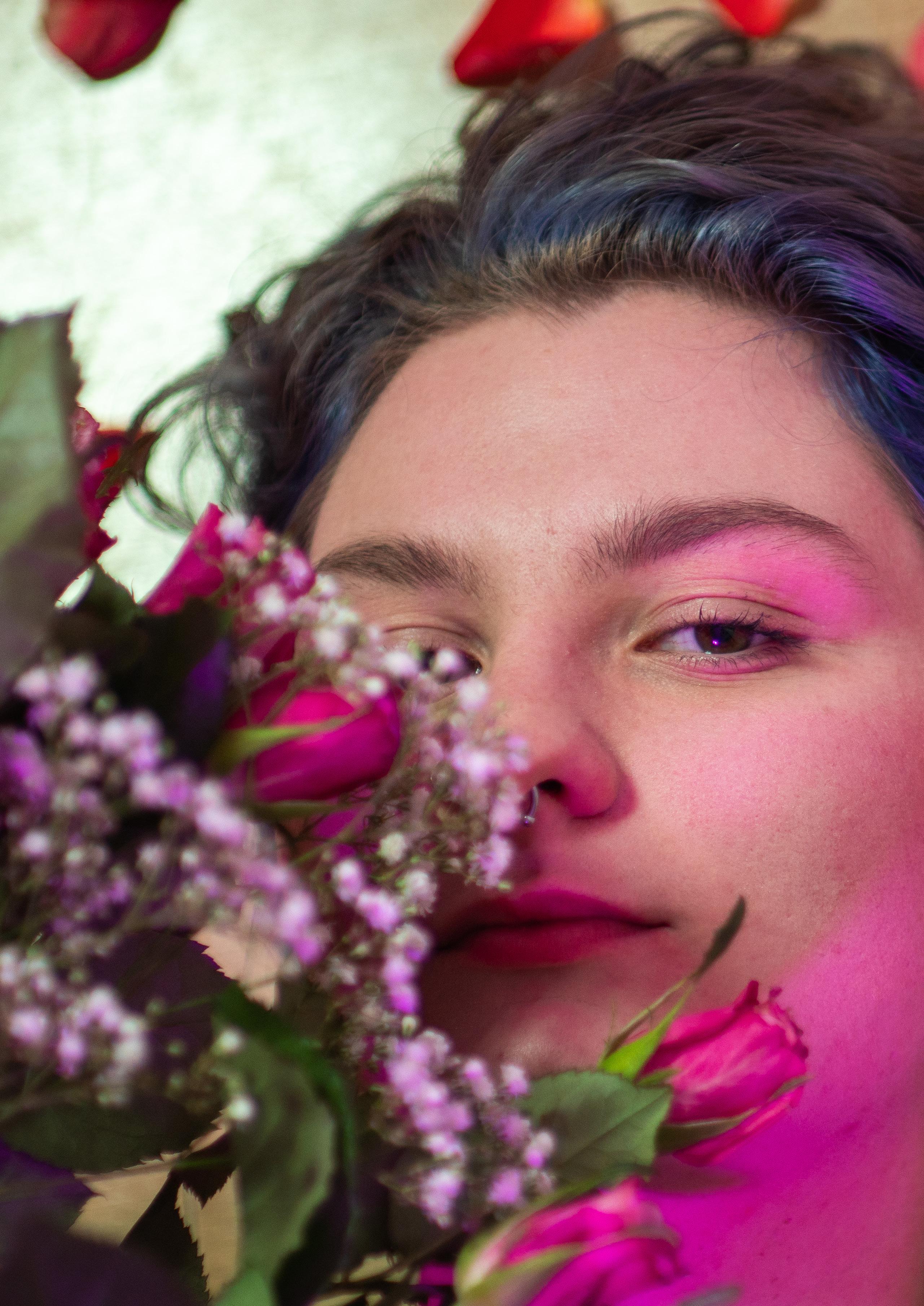
Hard At Work? Hard At Work?
Niamh Browne Editor in Chief
Niamh Browne is a final year philosophy and art history student. She has previously written for publications such as Motley, Hot Press and the Irish Examiner. She is a part-time mad bastard.
Web Editor
Klaudia is studying Computer Science and is a self employed illustrator. Her hobbies consist of drawing, claiming people's cats as her own, and playing videogames.
Ronan Keohane Current Affairs Editor
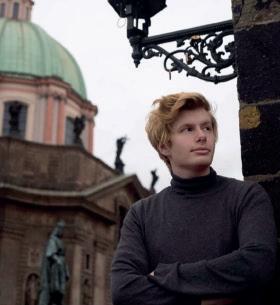
Ronan is a 3rd year world languages student with a strong interest in political philosophy and international relations. He is passionate about education, the environment and minority rights.


Seán Enda Entertainment Editor
Seán Enda studies Digital Cultures, but don’t ask him to explain that because he’s not so sure either. His writing has featured in many publications, including several bathroom walls.
ustine Lepage (also known online as Loucoffee), is currently pursuing the MA in Arts Management and Creative Producing. Her work has been published in magazines like Sound of Brit or the Outpost Eire. She is interested in maximalism and funky gnome fashion.
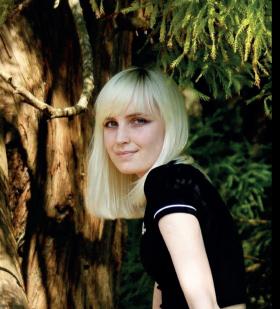
Édith studies Commerce & Irish and previously worked with UCC’s University Express. She’s relying on a diet of Coke Zero, Desperate Housewives and Taylor Swift to get her through final year.
Shuga-Tit Graphic Designer

Kev live, laugh, loves long walks on the beach and is a tired designer from Cork. He has a degree in colours from CIT and in his spare time makes comic books available nationwide. Ask him about the Fungie The Dolphin conspiracy.
Lisa Ahern Social Media & Deputy Editor
Lisa is a second-year BA English student and has previously written for Motley magazine in the past. She spends her time reading and writing, your typical Rory Gilmore wannabe.

Tiernán Ó Ruairc
Deputy Current Affairs Editor
Tierán is a first year arts student, with an interest in international relations and Irish Policing. Currently trying to catch up with the rest of the team’s writing experience.
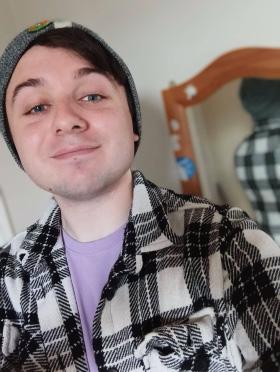
Chloe Barrett Deputy Entertainment Editor
Chloe is a third year English student and was previously the Gaming Editor for the University Express. She reads an unhealthy amount of books and loves her dogs a totally normal amount, she promises.
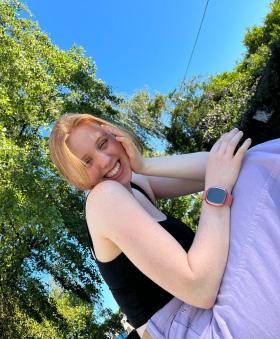
Sinéad Mckeown
Deputy Fashion Editor
Sinéad is a final year English student who has been published in the Quarryman. She enjoys reading, writing and pretending to prepare for exams. She finds comfort in having her research tabs open on the computer while she binges Supernatural.
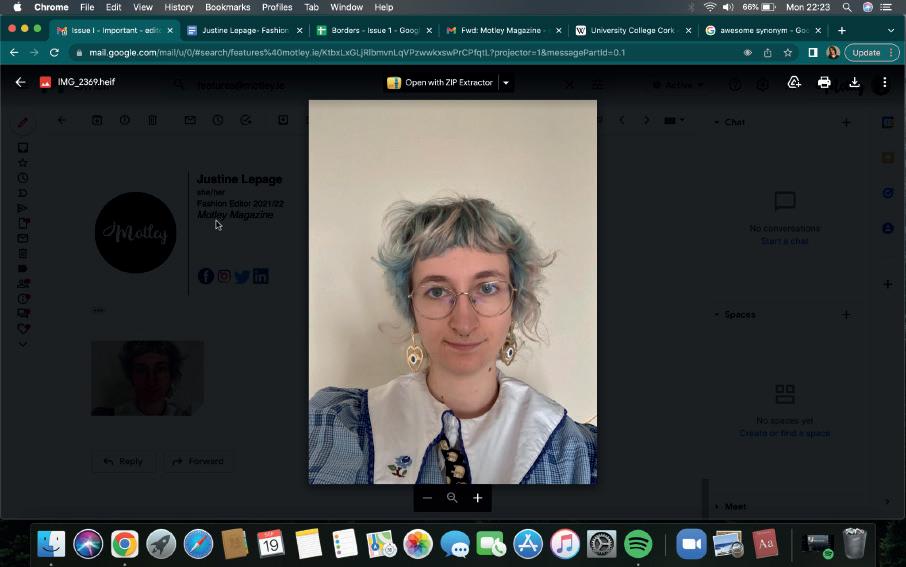
Sarah O’Mahony
Deputy Features
Sarah is a second year English and Politics student. Shortlisted for a features award at the 2022 SMEDIAs in Dublin, she’ll only go to the big smoke if there’s free food involved.
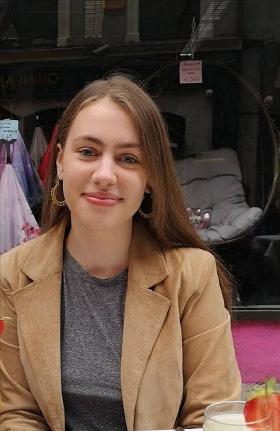
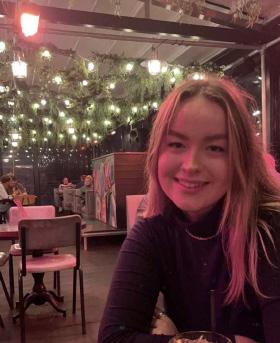
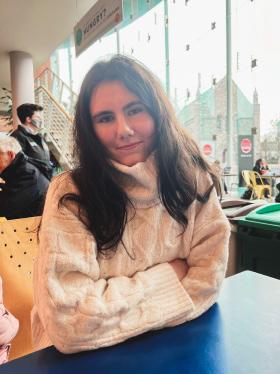

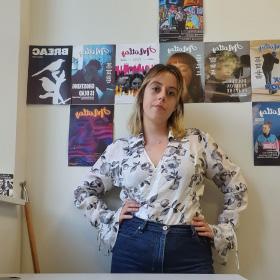 Klaudia Kulas
The word Motley is defined as ‘incongruously varied in appearance or character; disparate’. This to me is the strength of Motley, the magazine. We are various, eclectic and we have the freedom of being freaks. To quote Jughead Jones, a character on one of my favourite tv shows, Riverdale: Ah yes, how one (albeit fictional), aspiring writer speaks to another.
Niamh Browne Editor In-Chief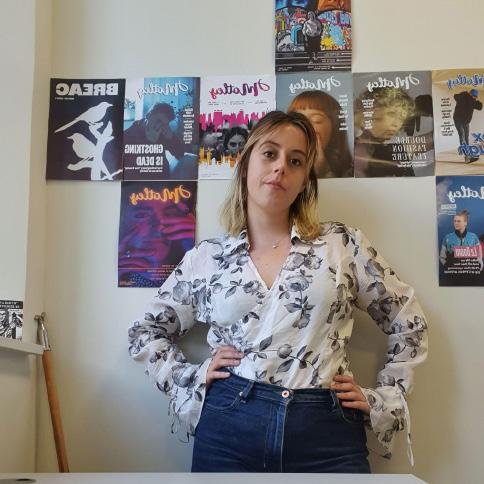

drink Coke, too’. Somehow in a world with over 8 billion people, we have managed to make life more samey rather than enriching. Entertainment Editor Séan Enda Donnelly speaks to this phenomenon beautifully in his article this month ‘Resistance in Late Capitalist Art’.

Every Thursday while there’s a new season of Riverdale running, myself and my brother get a couple of beers and play a game called ‘Riverdale and Liverfail’ which as you can probably guess from the name does not follow UCC alcohol policy guidelines. Everyone makes fun of me for my shitty taste in TV shows - possibly rightly so. What I like about Riverdale though isn’t the bisexual lighting, nor the impeccable performances, and it isn’t well crafted story telling, I like that it’s different. That I can say hand on heart, that there is quite simply no other show like it. I have watched dozens of well made mid-quality Netflix documentaries with no satisfying resolution, I have seen the same talk shows again and again and if I have to sit through another episode of the US Office I will scream. I’m sick of globalisation, I’m sick of all our accents blurring into a generic midwest one, I’m sick of all office buildings being soulless glass boxes and I’m sick of the same luxury student accommodation popping up all over the world. Andy Warhol once said: ‘You can be watching TV and see Coca-Cola, and you know that the President drinks Coke, Liz Taylor drinks Coke, and just think, you can
It is in this spirit that the last theme of Motley was set, that it would challenge us as writers and readers, to explore counter-culture, to protest, and to resist. I am proud to be affiliated with this magazine for many reasons but one of them is the diversity of well thought out and intelligent opinion that is included in its pages. We don’t always get it right, but we create a space for students to explore their creative voice and develop their point of view. The people who run the top institutions of the world were once college students like us, whose minds were shaped and changed by ideas and discussions. If Motley in all her humility as a small college publication can change someone’s mind, or foster an idea, then that’s something I’m proud to be a part of. And I certainly don’t think ideas or institutions get any better unless we challenge them.
The 2010s for my money can be said to a decade of protest and resistance, more so than the 50s. The movements that arose from the 2010s include but are not limited to: Occupy Wall Street and other occupy movements globally, the Arab Spring, Strike for Climate Action, The Women’s March, Repeal the 8th, Marriage Equality, Extinction Rebellion, Black Lives Matter, Anti-Government protests in Hong Kong, and countless of others, both left and right. It’s clear that the world is changing and that people have fire in their belly.
The ‘Resistance’ issue offers solutions to the housing crisis, analysis on the scary rise of Andrew Tate, and sexual assault culture in nightlife in Cork. Over the course of the 22/23 academic year, the Motley Crew have evolved enormously as writers and contributors and I am happy to say I think this is our best issue yet.
I’m weird. I’m a weirdo. I don’t fit in and I don’t want to fit in. Have you ever seen me without this hat on? That’s weird.
CURRENT AFFAIRS
“It's an environment of you brush it off and get back to work”

P. 6
ISSUE No6 - APRIL 2023
MOTLEY.IE
ENTERTAINMENT
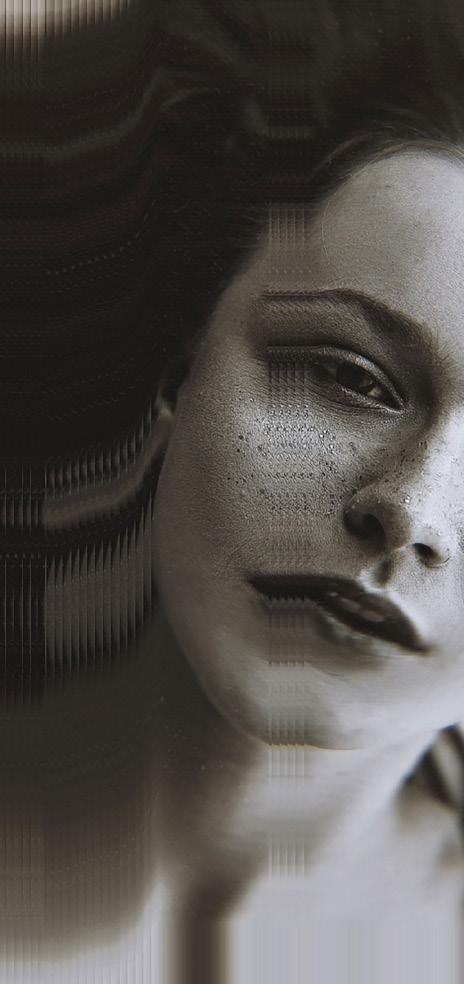
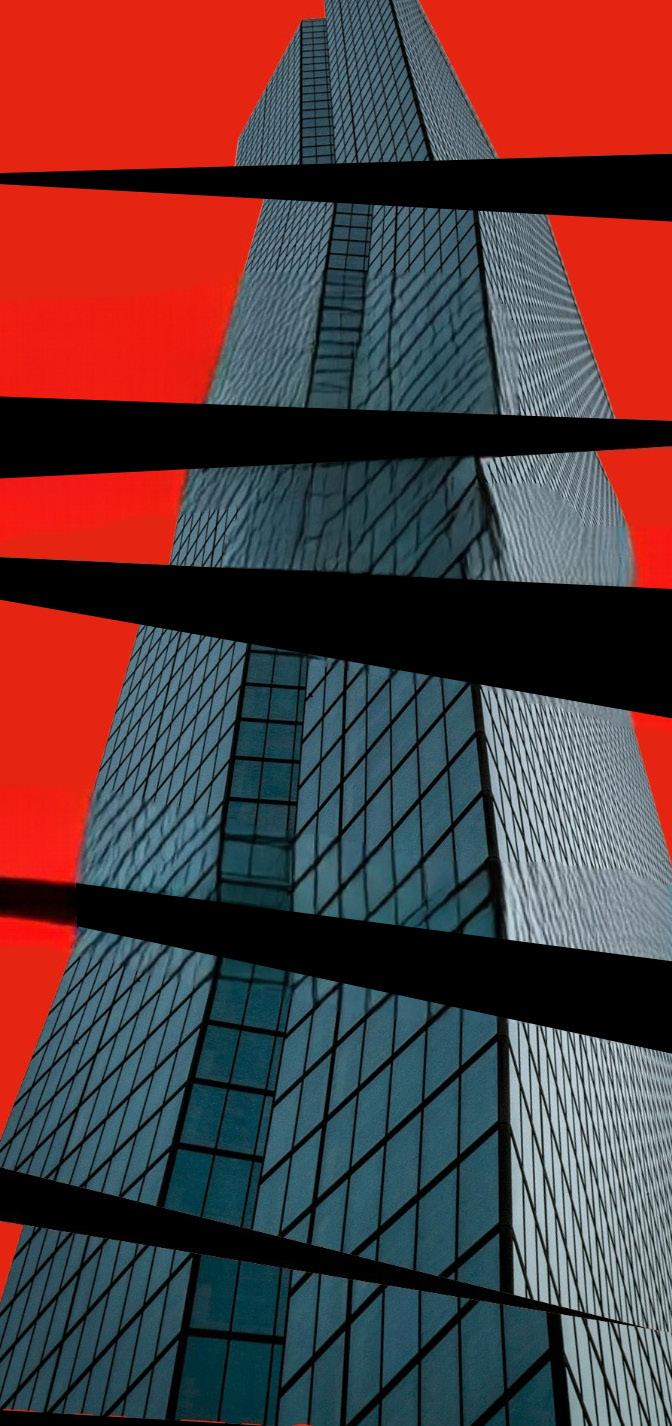
Resistance in Late-Capitalist Art & The Irresistible Appeal of Electronic Literature
P. 18
FEATURES
Blind Dates Return, More Poetry and Disabilities in Fairy Tales
P. 27
FASHION
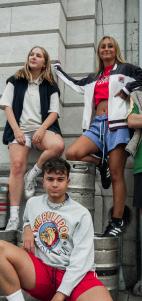
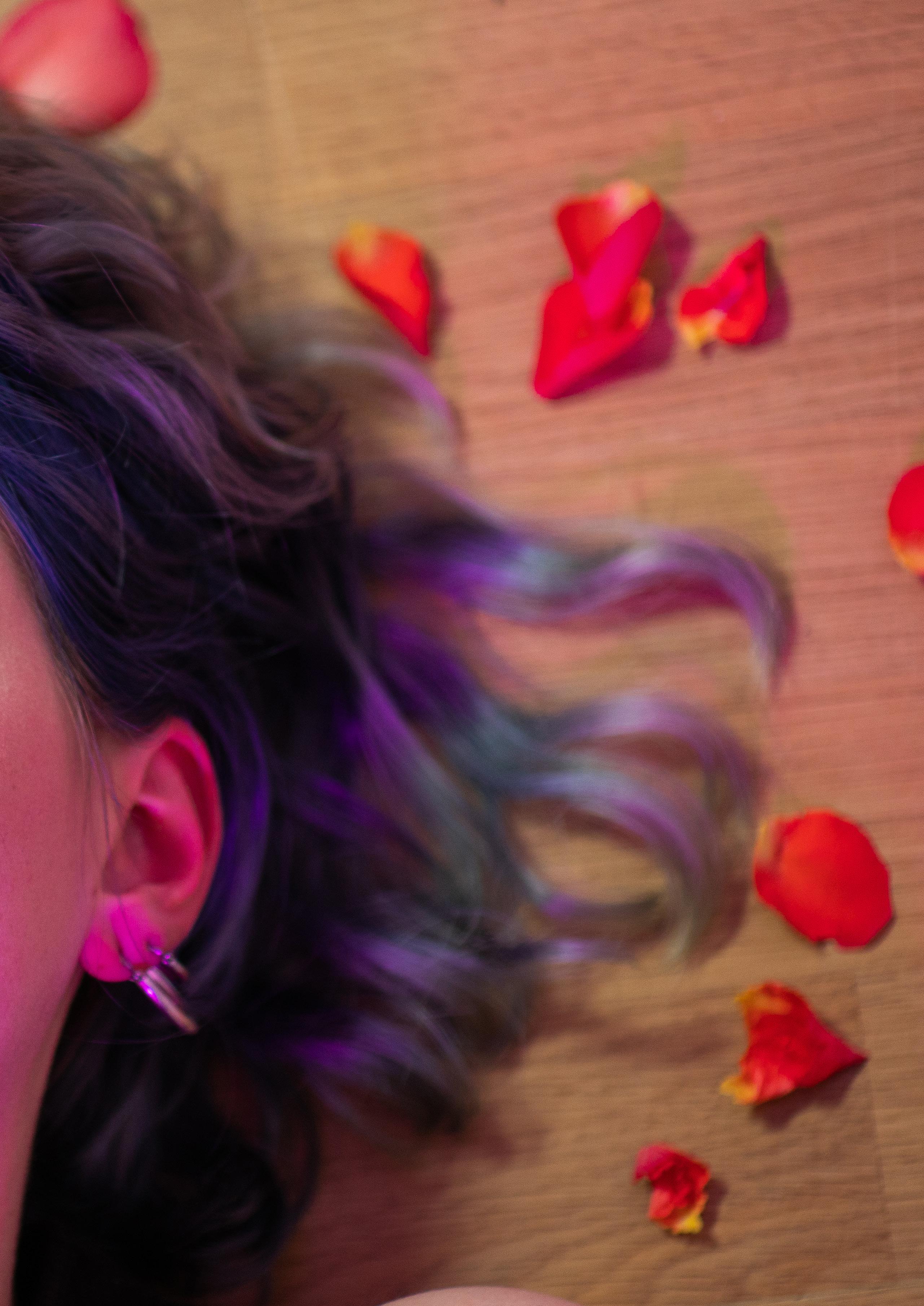
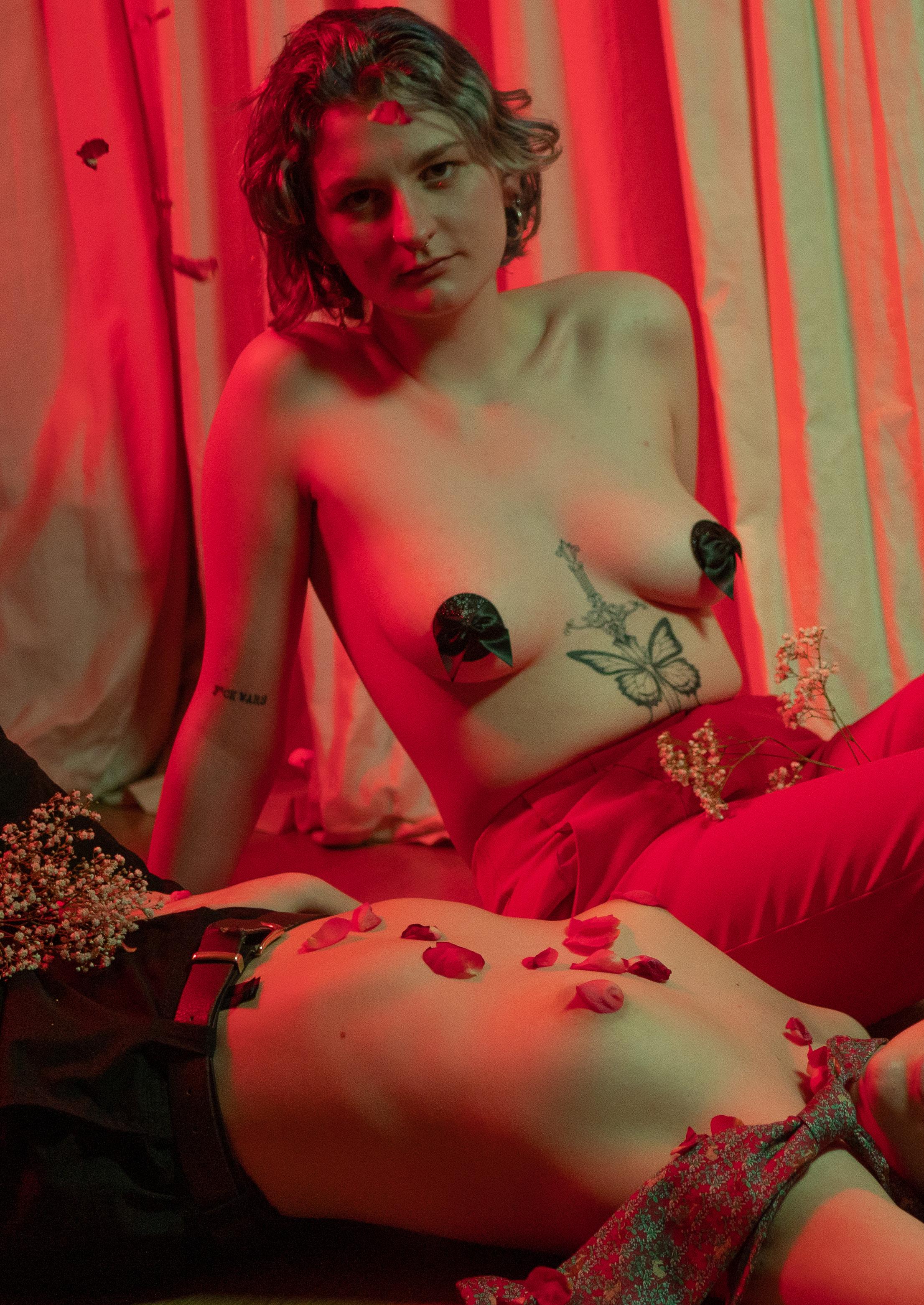
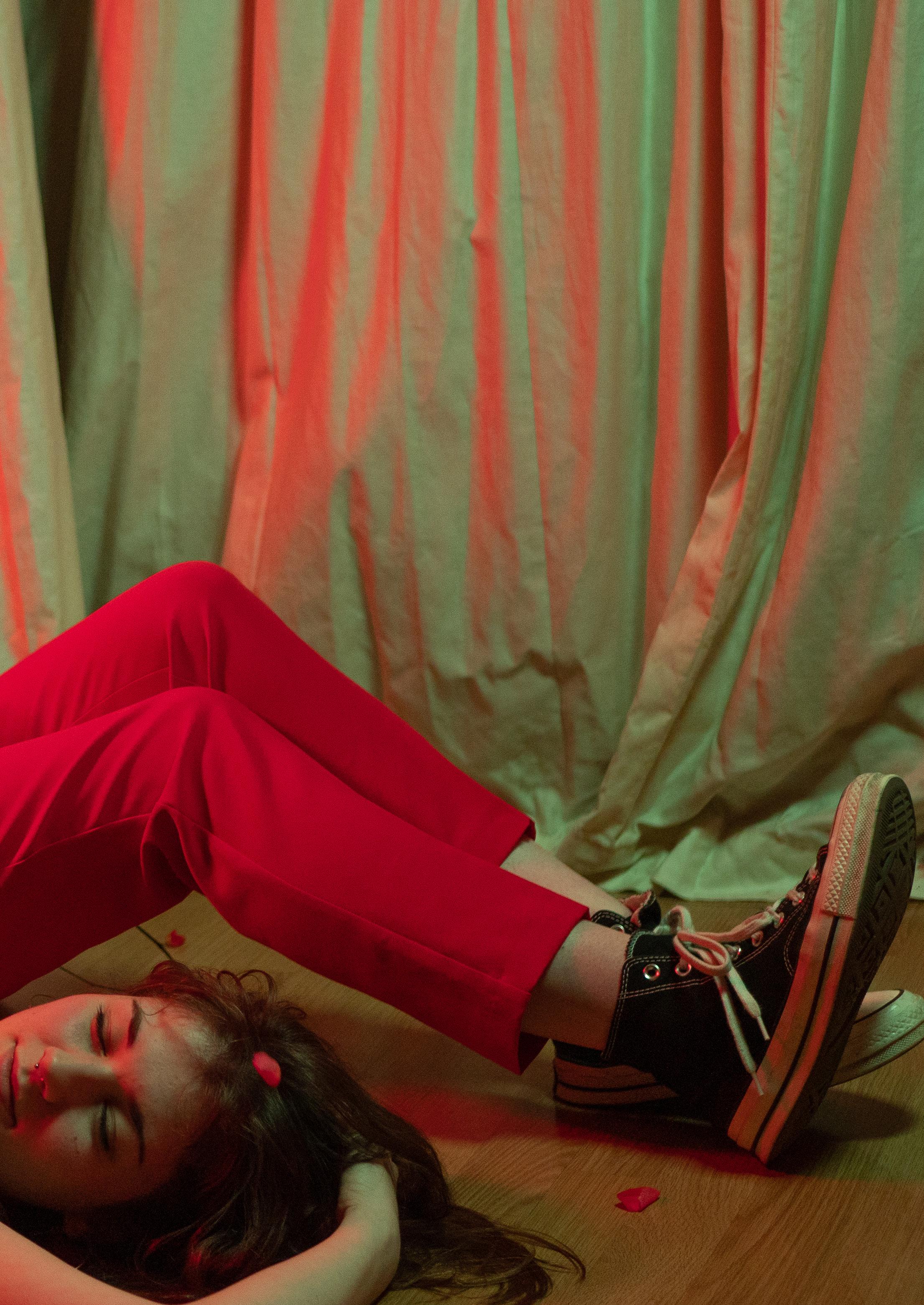
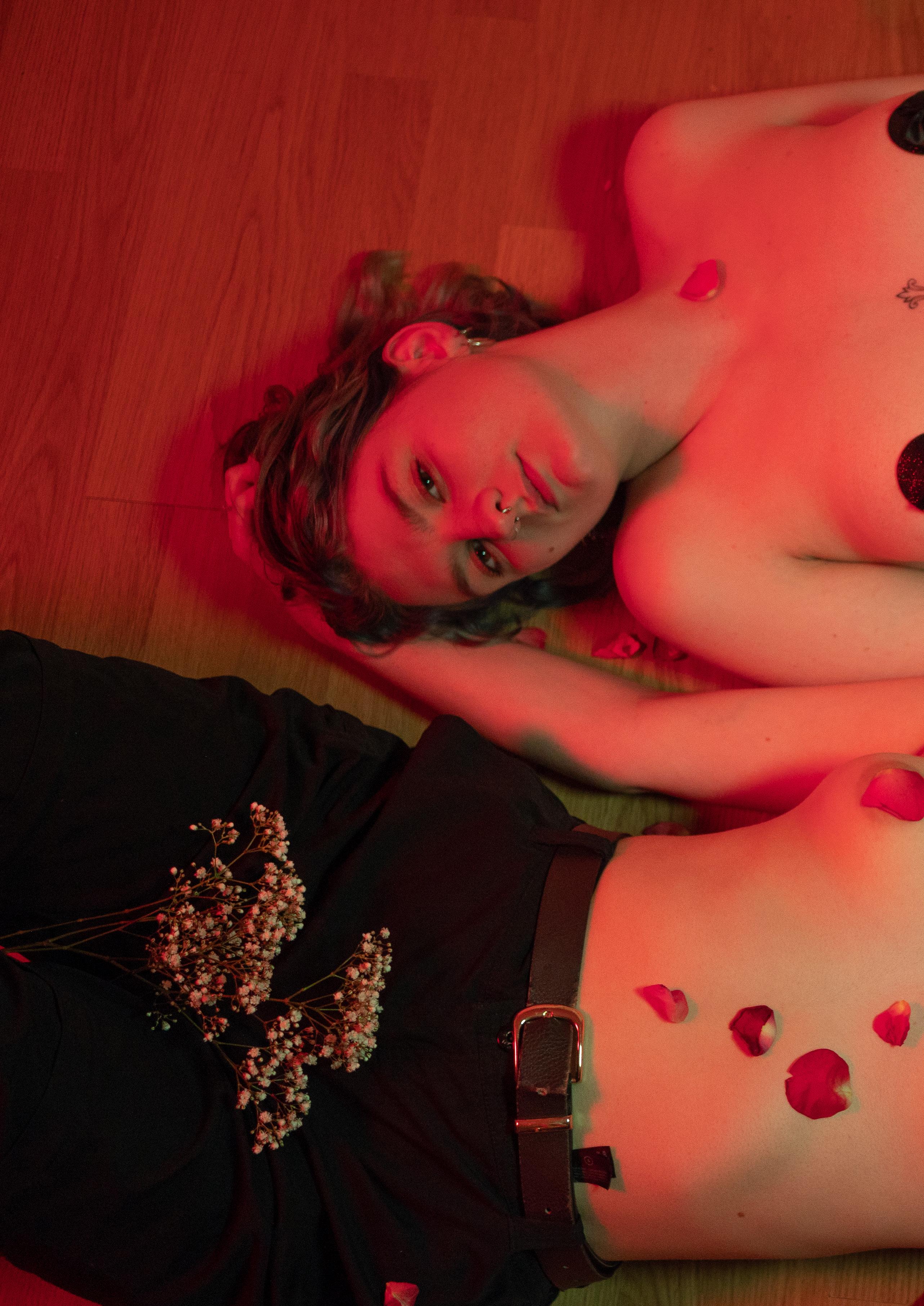
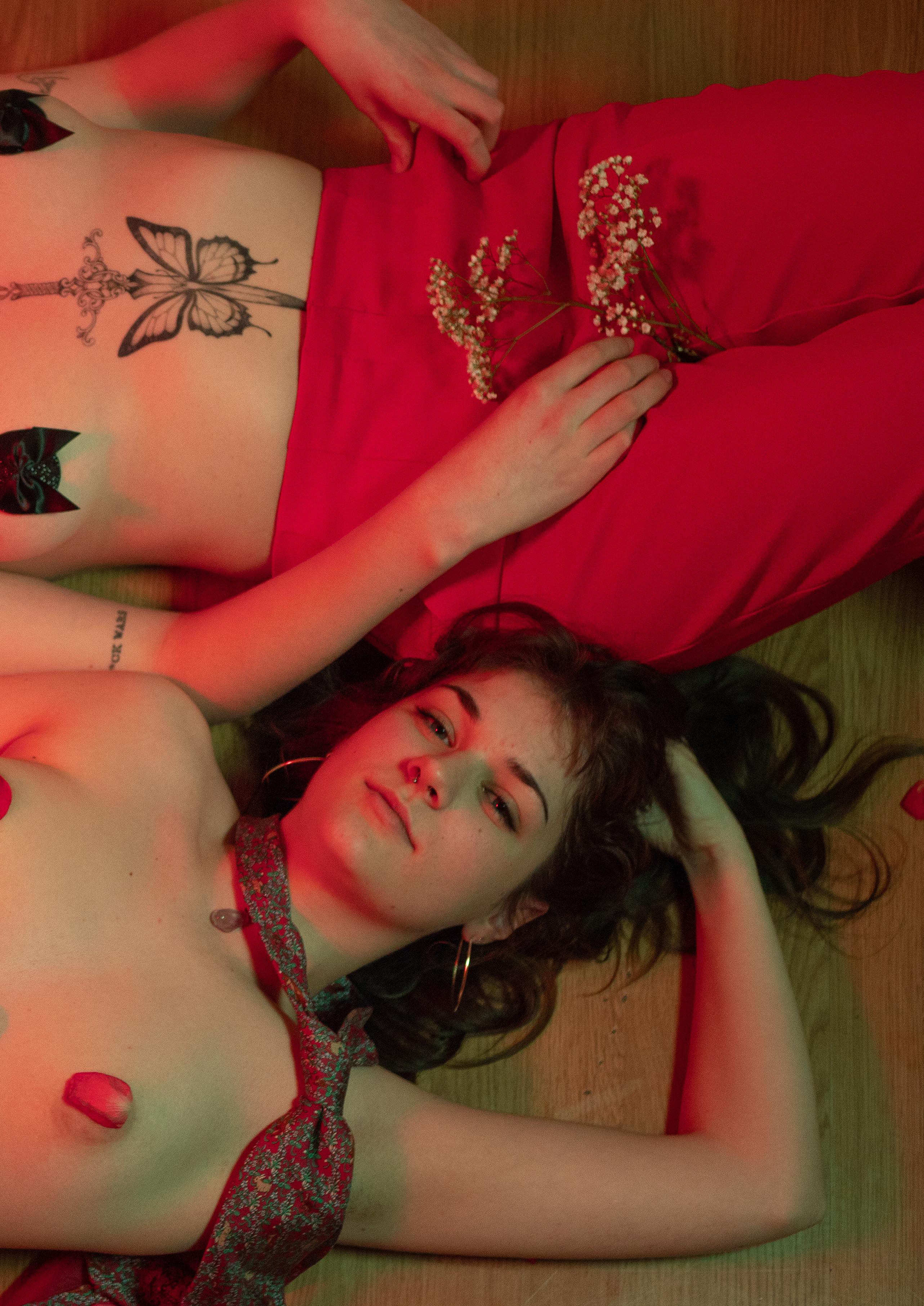
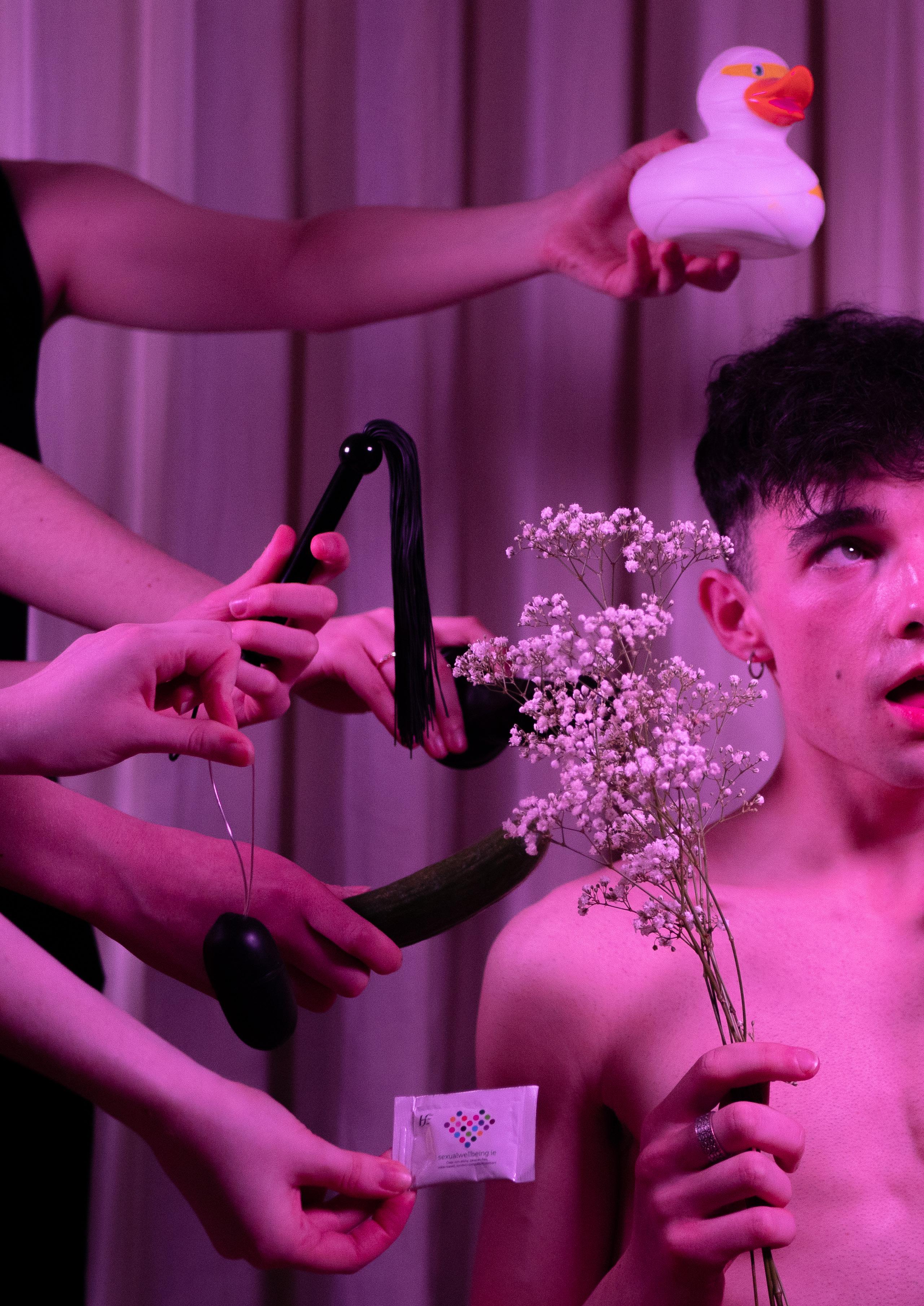
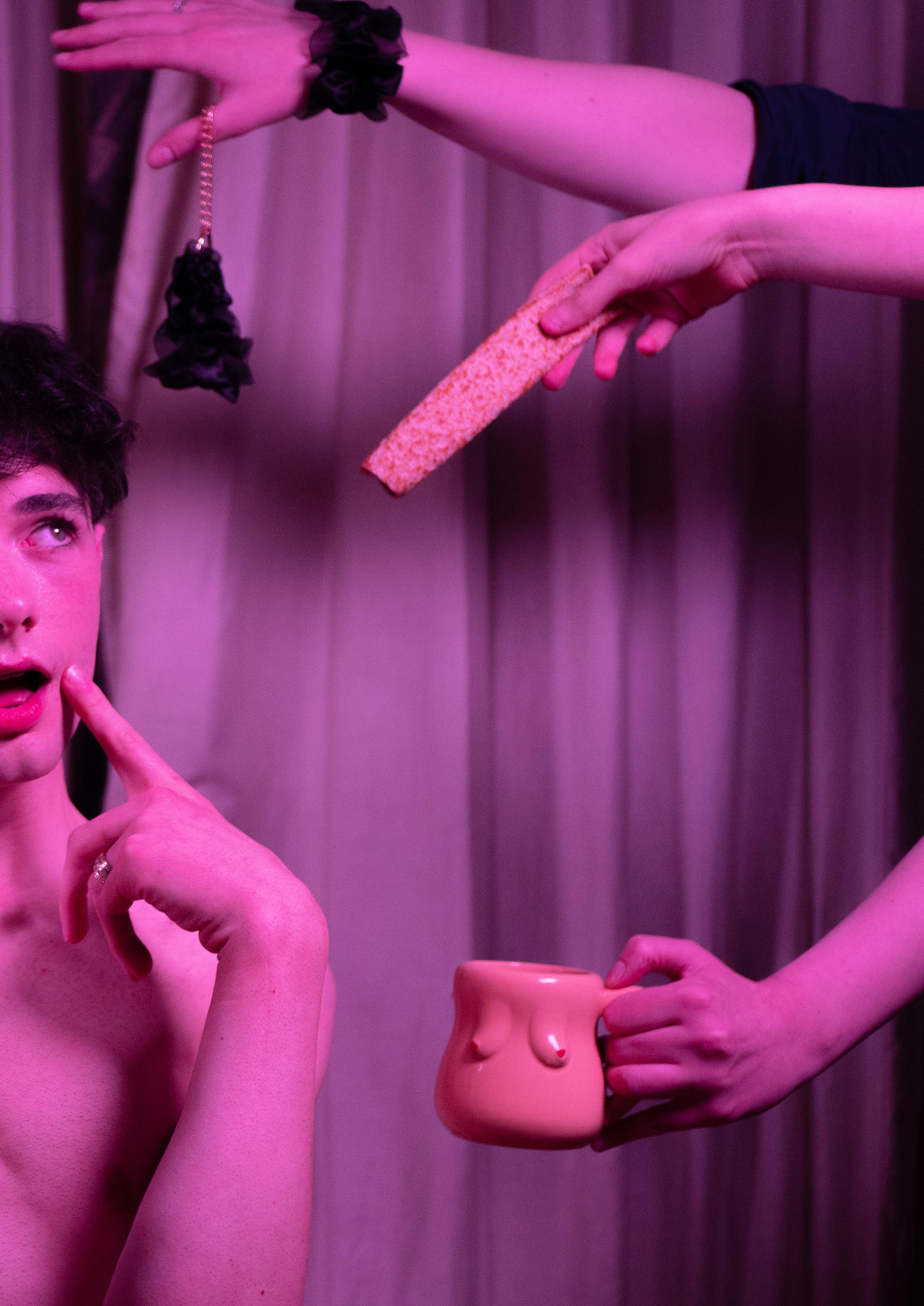
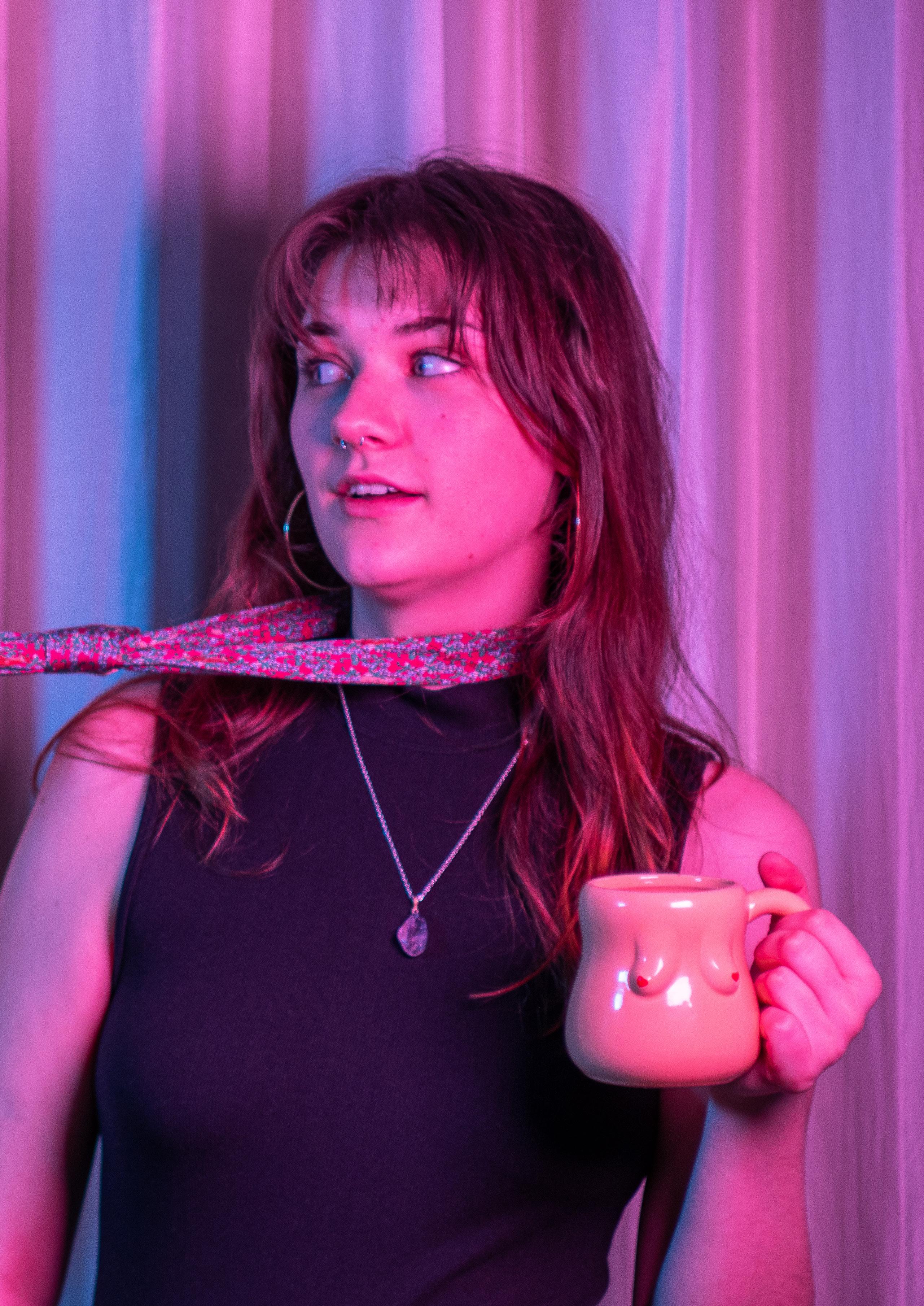
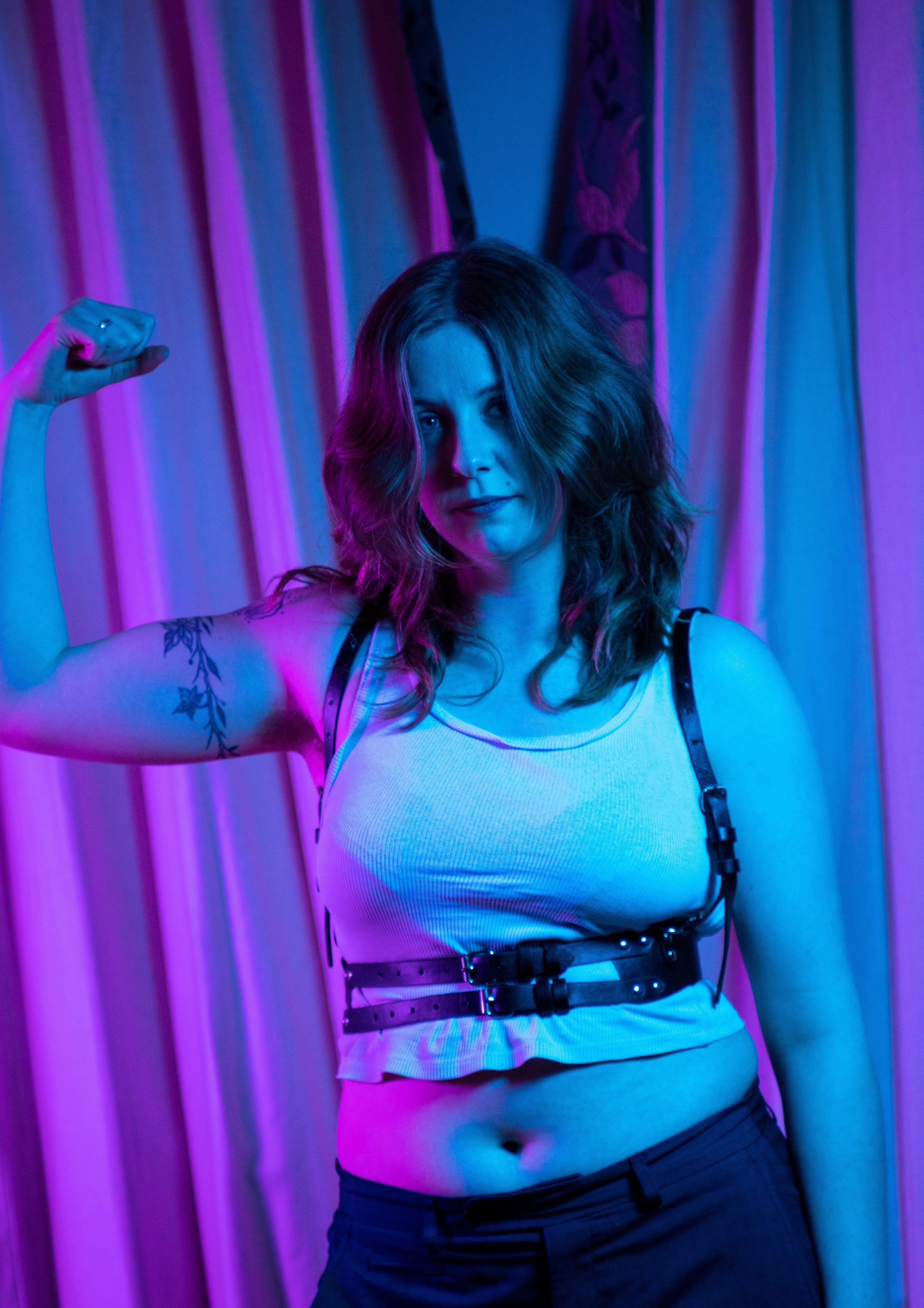
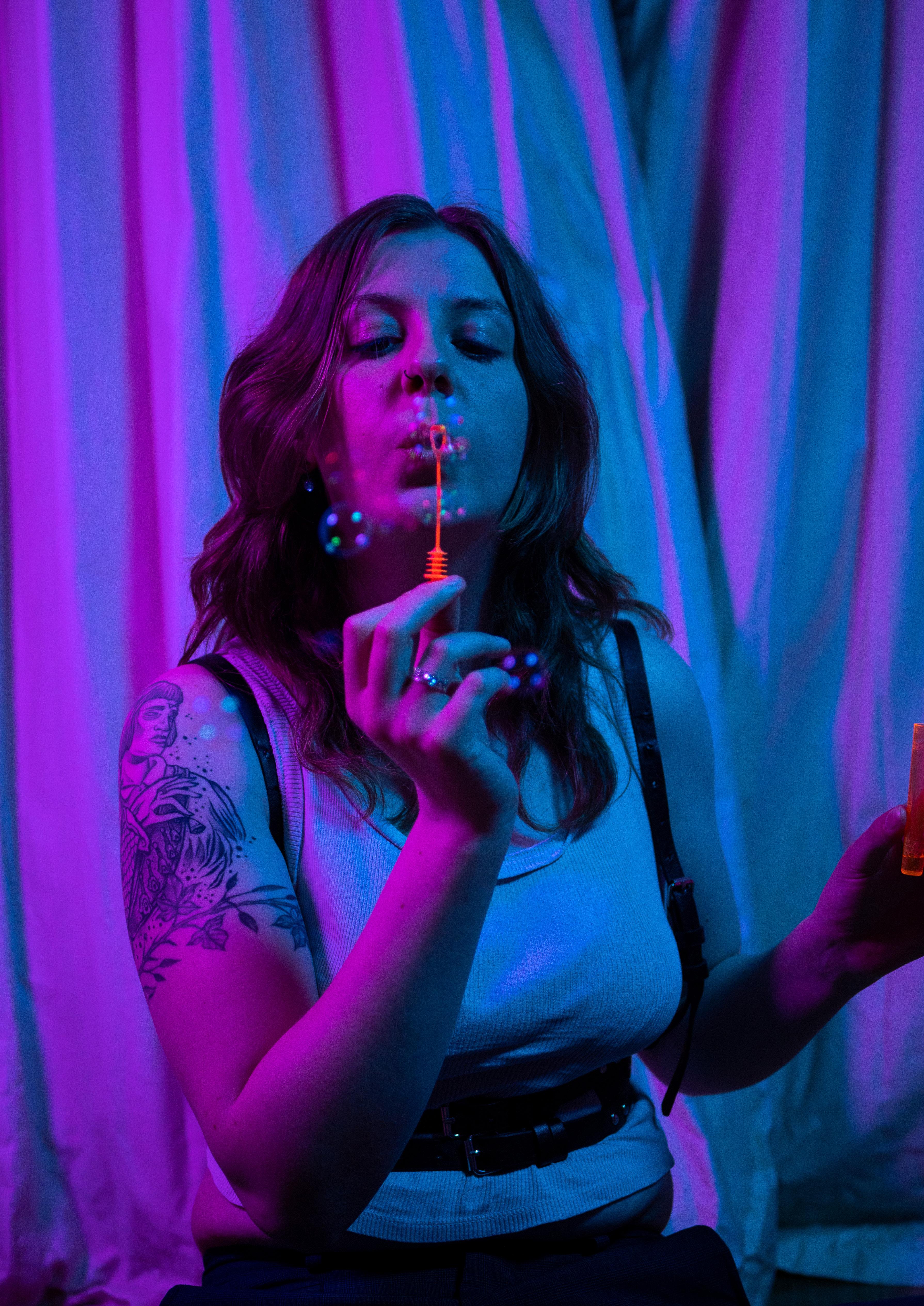
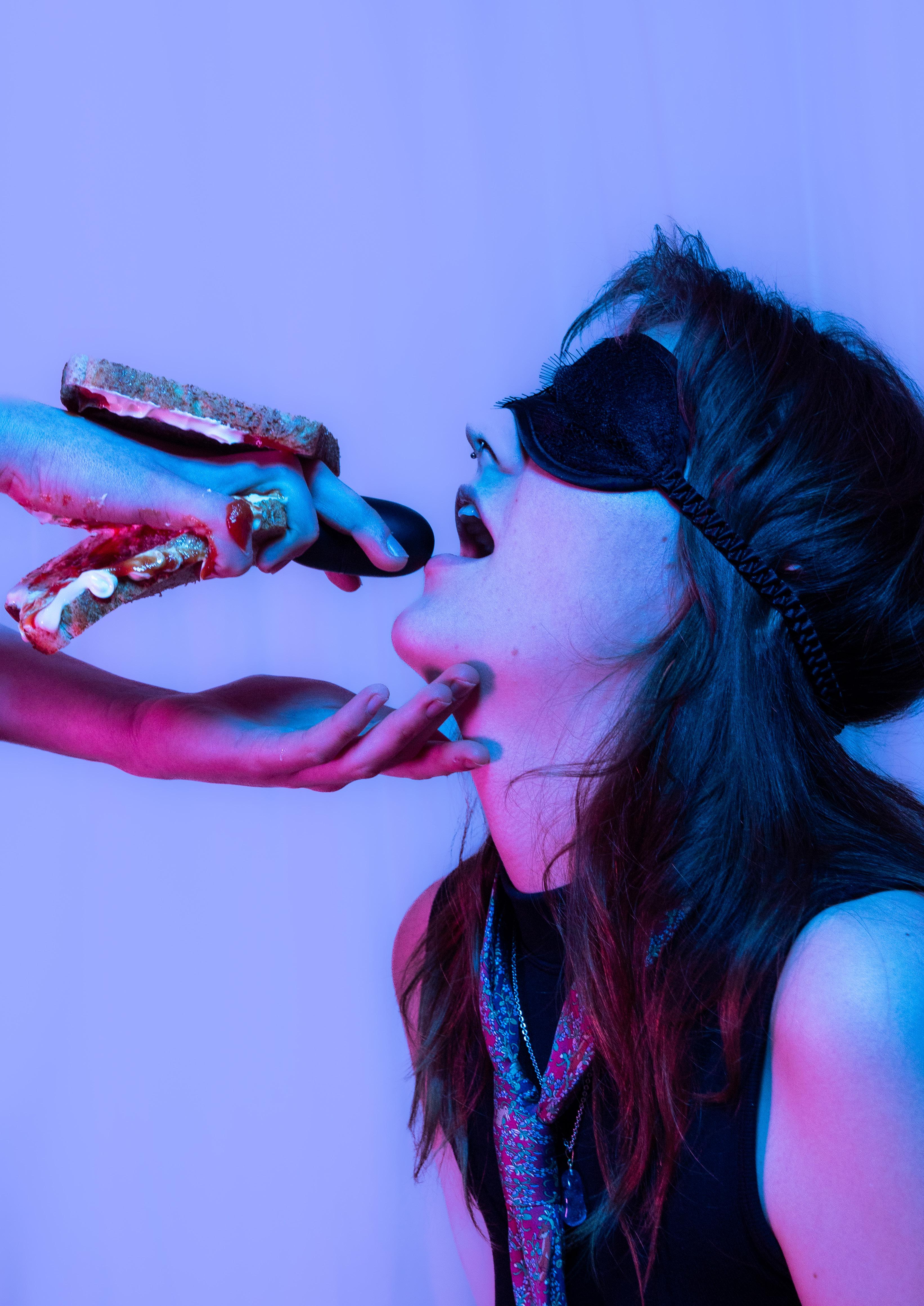
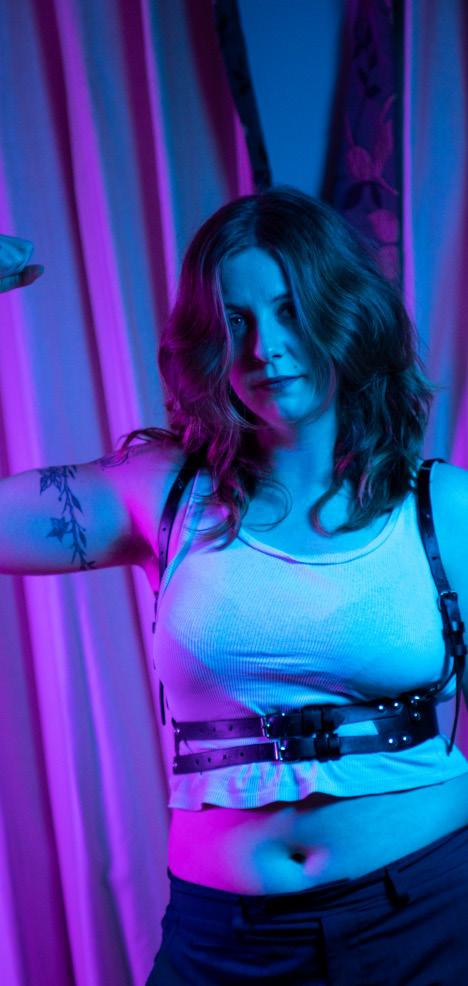
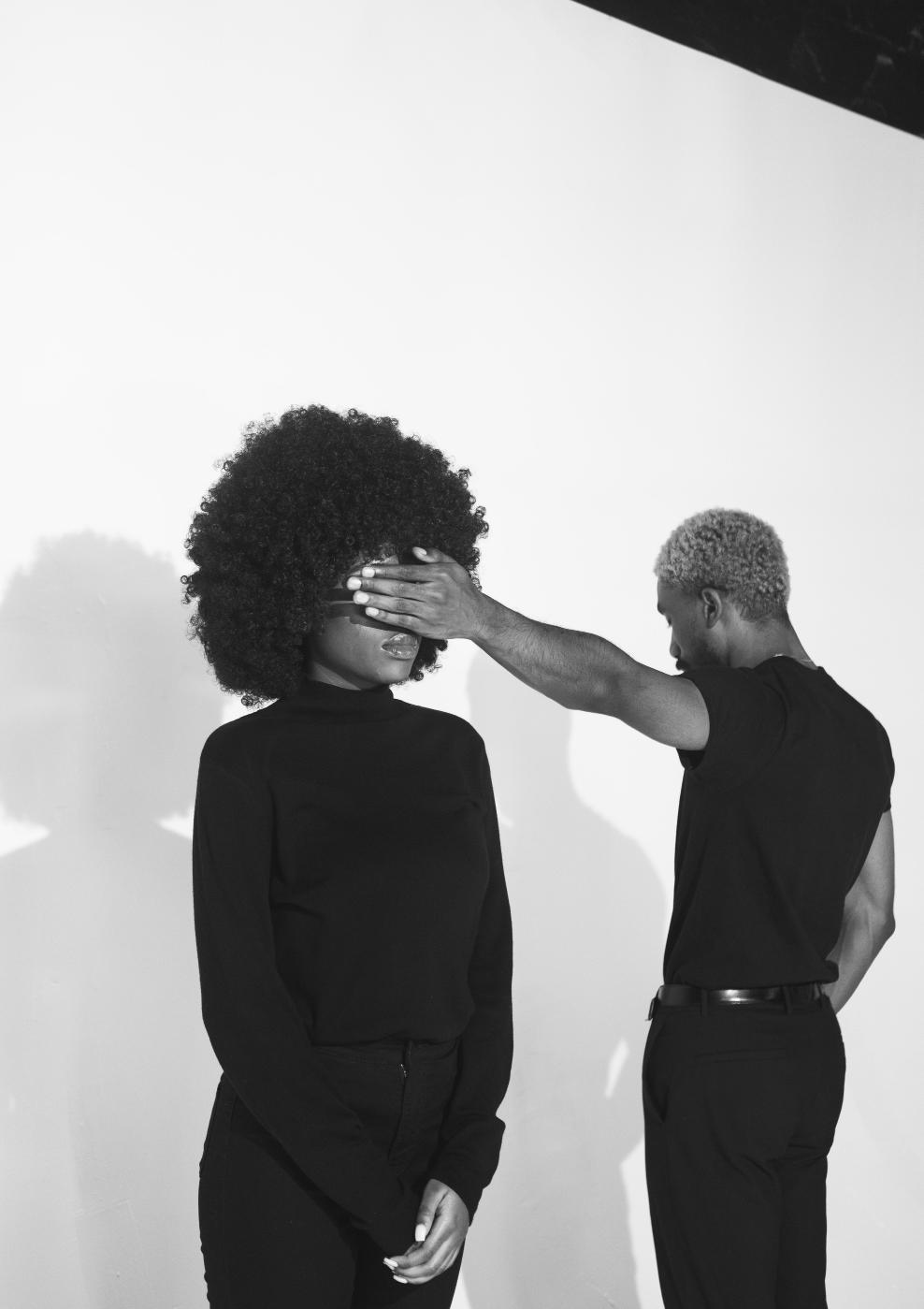
Interview with Ríon Hannora & The "Hard at Work" Photoshoot
P. 36
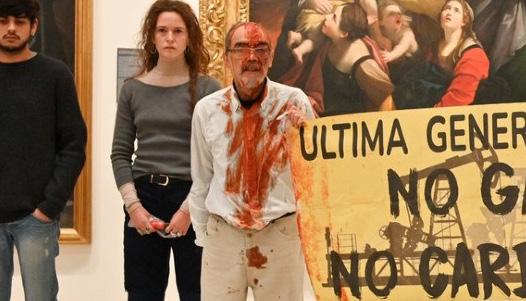
CONTRIBUTING WRITER CHIARA ALESSIO DISCUSSES THE REASONING BEHIND VARIOUS ACTIONS OF THE MODERN CLIMATE ACTIVIST MOVEMENT ‘ULTIMA GENERAZIONE’ ALONG WITH OUTLINING THEIR SYMBOLIC AND ARTISTIC RESISTANCE AGAINST THE CLIMATE CRISIS
For millennia, humans tried to come to terms with their own mortality: that meant finding ways to potentially overcome it. Thus, monuments, family and art arose in the West as the three big alternatives for this problem: the first became a physical boundary, a manifestation of individual power or the centre for ancestral commonality. The second established a direct line of patriarchal power that protected property and wealth. The third and last alternative, Art, was seen as an even bigger force, maybe the closest to immortality, the de facto ‘I was here’: As roman poet Horace stated in his Odes III, XXX: ‘I have made a monument more
lasting than bronze / and set higher than the pyramids of kings. / It cannot be destroyed by gnawing rain / or wild north wind, by the procession / of unnumbered years or by the flight of time. / I shall always be here’.
However, what if such hopes for immortality and for the future are long gone? What If we are the last generation before the ecoclimate collapse? This is the issue portrayed by Ultima Generazione (translated to: “Last Generation”), an Italian activist group that is asking for nonviolent civil disobedience against the ecoclimate collapse, as the Italian government is set on keeping investing in fossil fuels even though the Italian landscape is already in serious drought in the first months of 2023. What does civil disobedience have to do with art and monuments? The link is within Ultima Generazione’s protest tactic in itself: splattering (washable) neon orange paint on the pure white marble, the polished bronze, the organised brick and the smooth cement of key statues and palaces of Italian cities, once the focuses of the so acclaimed within the West, the Renaissance. This tactic shocks the museum owners and the art collectors preoccupied with the “protection” of the monuments: however, humans leaving marks on the landscape, on the pure material, is not unusual behaviour even in the world of archaeology and art, from the handprints found on the walls of Spanish prehistoric caves all the way to Lucio Fontana’s physical slashing of the canvas. Ultima Generazione interacts with space not only for political means, but in the realm of the symbolic and of the iconographical, de facto approaching the same art they are accused of ruining and disrespecting.
‘A MONUMENT MORE LASTING THAN BRONZE’:
The enraged splashing of the orange paint by young university students in a struggling, impoverished Italy governed by a far-right elite is not only political, but superbly and quintessentially artistic. It leaves a message, it encourages the viewer to think, it breaks the elitist boundary between the citizen and the museum. As sociologist Pierre Bourdieu said in Distinction: it creates a moral panic between the elites that are influencing the policies on the usage of fossil fuels, ultimately challenging the idea of the ‘good citizen’, nationalistically and loyally bound to their country and the symbols thereof (such as, City Halls, Trading Squares, Statues commemorating Monarchs or Rulers).
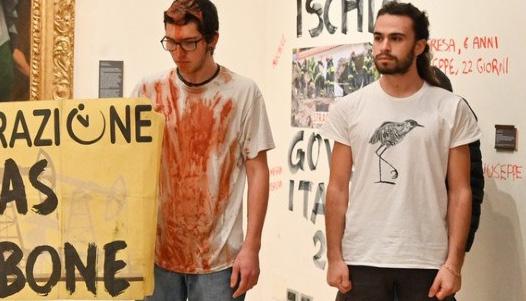
‘Today we chose to target the City Hall (in Florence, editor’s note), the Symbol of Power’ exclaims an Ultima Generazione activist as he’s being handcuffed after the most recent “attack”, having smeared the iconic orange paint on Florence’s Palazzo della Signoria (the City Hall, once upon a time the Parliament of the Kingdom of Italy). Meanwhile, the mayor of Florence is scolding the young man.
The way he found out about the attack? The mayor was making a video for his voters, later posted on TikTok: he is heard saying: ‘Signoria Square is the biggest, most beautiful, outdoor museum’ before being seen running towards the newly painted City Hall. The difference in views on what the space is representing between mayor Dario Nardella and the young activist is stark: the biggest, most beautiful plaza is soon called a symbol of Power as the arrest is taking place and as Nardella becomes more and more enraged. A statement caught again on video and posted on the internet of Mayor
Nardella is crucial to understand how the two varying views are influenced by class and power dynamics: ‘These two uncivilised vandals have lashed out against The Palace. [...] It was a miracle that we had restaurant owners who used cleaning brushes and hydrants on the statues’ construction sites, so thanks to their help we have immediately washed the entire façade of Palazzo Vecchio (also called Palazzo della Signoria)’. As the citizens try to grab the attention of a government that is insensitive towards the climate crisis,
the figures in power are concerned with the material façade as the splashing of the paint is a direct insult to the power they are obtaining: thus, the need to purge, to cancel out, and to ultimately be seen as heroes intervening against “uncivilised vandals”.
That said, reducing Ultima Generazione’s activism to pure art is banal and superficial. However, Ultima Generazione and their political (and quintessentially artistic) interaction with space brings forward a vision on art and its use that goes beyond the bourgeois need to encapsulate works of art in the museums, or to elevate them in public squares, alienating the average citizen from it and making art sterile in its message: the energic splashing of an eye-grabbing orange paint on the white marble symbolically summarises what has been the fight against the eco crisis like so far, as industrialization keeps devouring the West and the political promises are left empty: ultimately, the orange paint is the Last Generation’s political and symbolic (so, artistic) resistance.

Anybody reading this will know or have heard about the ‘housing crisis’. ’ It’s everywhere. But it’s quite acute in Ireland – with 11,754 homeless people in Ireland at a recent count (according to Kitty Holland, Irish Times, Friday February 24, 2023). And students are among those affected: students in UCC are being forced to commute up to 200km a day, pay rents of up to €1036 a month, vacate at the weekends perhaps, that is, if they are lucky enough to find accommodation in the first place.
But, there IS a solution. It’s been tried and tested elsewhere and it works, brilliantly.
This solution was the topic of a fascinating and jam-packed event, held on March 21st in UCC, called Student Accommodation Crisis: Co-operative Ways Forward. It was attended in person and online by an engaged group of listeners and participators. What the event spoke about, is something that third-level students and apprentices in Cork, if they get behind it, should be more than excited about. What is it? Student Co-operative Housing.
We heard from Scott Jennings from Student Co-op Homes in the UK (and now Ireland). This student co-operative housing federation supports students to be in control of their own housing. Ryan Harling spoke to the group about the Belfast Student Housing Co-operative which is getting started, and was able to talk about their exciting developments. Using the co-operative model, students (members of the co-op) can buy a share (a small returnable deposit) and become co-owner in what becomes the student-owned housing co-op. This is run by the students, for the students. It’s run like any
business that wants to stay viable (that is to cover all its costs) except profits are ploughed back into the co-operative itself, not into the bank accounts of wealthy landlords or vulture funds. The amazing thing is, it works! There are hundreds of Housing Co-operatives across the world to prove it! There are 6,400 housing co-ops in the US, almost 2,000 in Germany and 23% of Sweden’s housing stock are Housing Co-operatives. Nearer to home, there are a number of Student Housing Co-operatives operating in the UK - Edinburgh with 106 beds, Brighton, Birmingham, and Sheffield, with several others waiting in the wings to get access to accommodation.
What makes a Student Housing Co-operative different? Like any co-operative, it is a democratic, one-person one-vote, business model founded on the 7 progressive co-operative principles:
1. Open and Voluntary Membership,
2. Democratic Member Control,
3. Members' Economic Participation,
4. Autonomy and Independence,
5. Education, Training, and Information,
6. Cooperation Among Cooperatives and
7. Concern for Community.
Co-operative Housing is an alternative to a profit-led housing market. It is changing ‘student accommodation’ into ‘student homes’. Student Housing Co-operatives are places where members can share meals, make decisions in the running of the home and have more of a community in their living space; accommodation that is not ‘just’ a space for empty profit. Rent is used for the co-op itself, to help cover running costs to run the home and to improve the lives of the tenants living in it.
It is a Housing Model that is designed to respect and benefit the tenants, rather than seeing them as something to make money off of.
In Ireland, 150,000 people are members of co-operatives. Indeed, this country is one of the birthplaces of the co-operative movement with the first co-operative established in Doneraile, Co. Cork in 1889. Irish co-operatives today are in several sectors, mainly agriculture and finance, and are highly successful – we all know of Kerry Group, Glanbia (now Tirlán), and of course, Credit Unions that are in all towns across Ireland.
Now, there is a group of students and alumni in Cork City who are aiming to create a Student Housing Co-operative for Cork City. The group has the support of UCC and MTU Student’s Union, UCC Centre for Co-operative Studies, Student Coop Homes and a number of Cork City Councillors.
All that’s missing is you! The Cork Student Housing Co-op group needs students (Level 6+) in Cork City to get behind the wheel to make this happen.
Check out the Cork Student Housing Co-op’s website here. Come to a meeting. Get in touch! Take action! It’s time to stop looking to big business to provide us with substandard housing and profiting off students who are trying to access higher education. Students have the power to take this Student Accommodation Crisis into our own hands, if we dare to believe it.
Email: corkstudenthousingcooperative@gmail.com
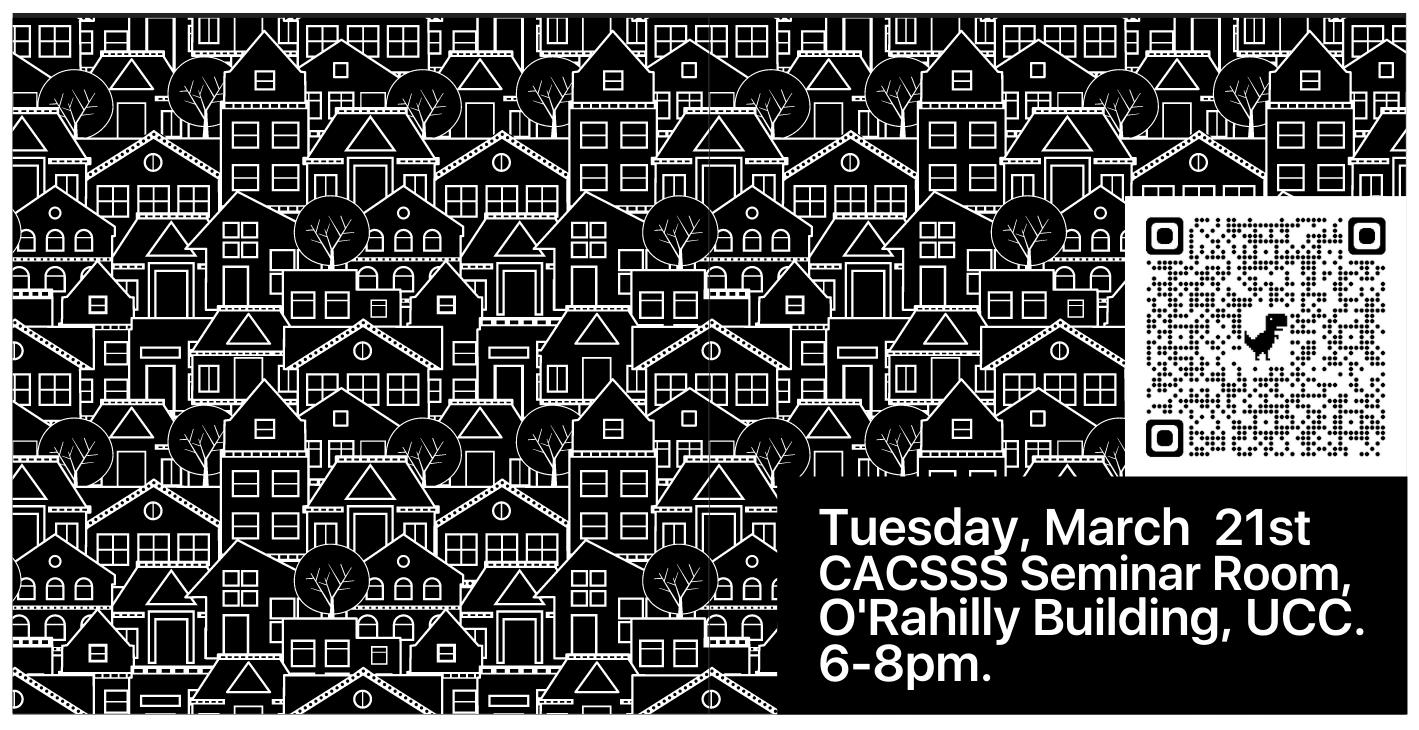
Iona Logan writes on the housing crisis and tells us not despair- there is hope in restsistence.
Sinéad McKeown examines Sexual Assault and Harassment in Cork City Nightlife
TW: Discussion of Sexual Assault and Sexual Harassment
Earlier this year I launched a survey that was targeted towards employees of bars and nightclubs in Cork. The results show that many bars across the city are failing to train staff, from the security to the senior managers to the floor staff, on how to handle instances of sexual assault, not only by customers but by other staff members. In many places, there is no support system in place for staff who have struggled with these types of encounters.
I conducted an interview with Dola Twomey who works in the Sexual Violence Centre Cork and was part of a team which put together a charter to help improve staff safety in the hospitality industry. This charter was picked up by the Department of Justice and will become part of the new legislation in 2024 that is set to be imposed on bars and nightclubs across Ireland. Dola discussed how it will work and the effect that it will have on employee well-being.
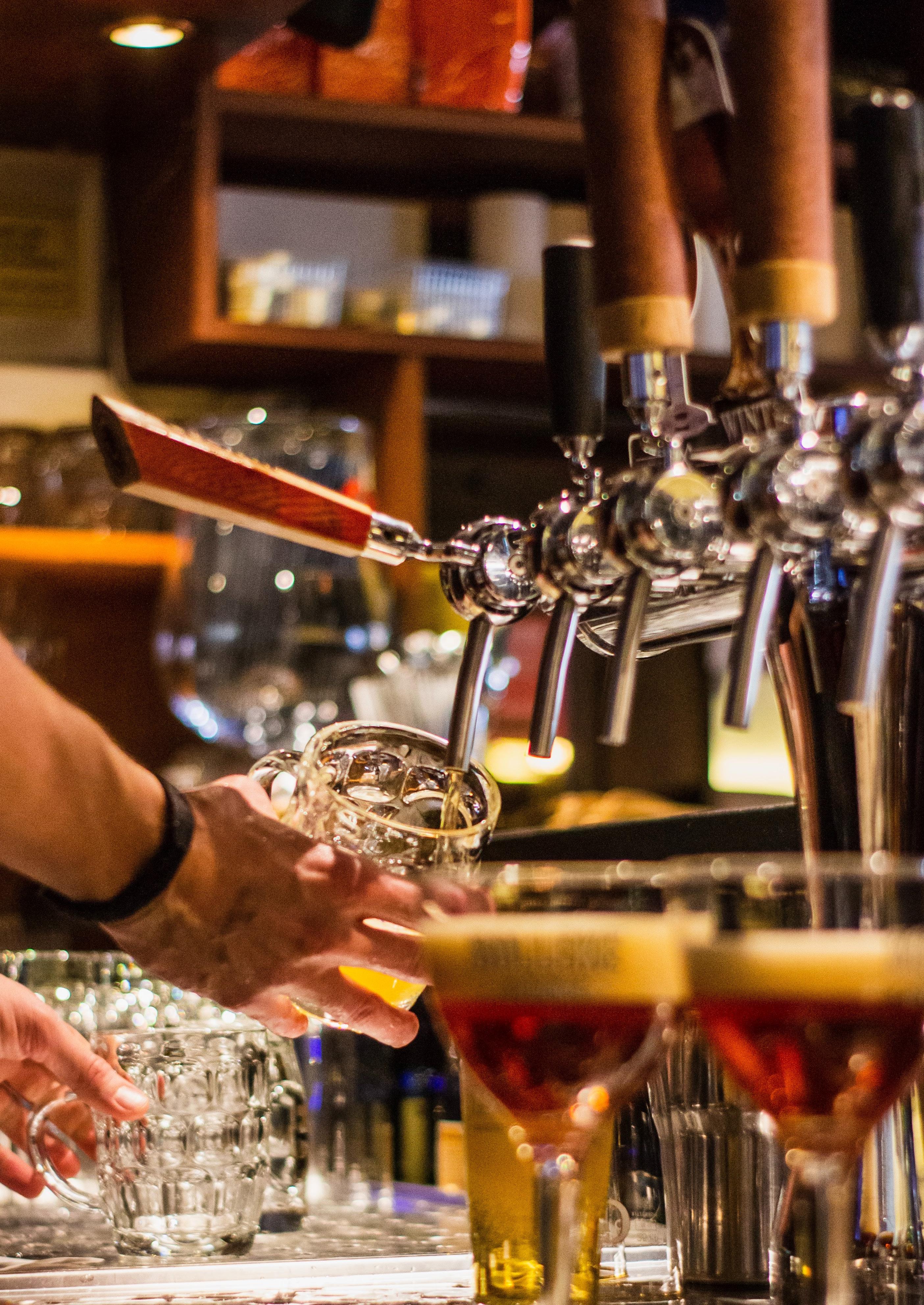
“It's an environment of you brush it off and get back to work”
66.7% of respondents said that they did not receive any training on how to handle situations of sexual assault or harassment. Those who said they did receive training gave the following descriptions;
• “Go to the floor manager”
• “I’m more important than the customer, and I don’t have to do anything that makes me uncomfortable. I also won’t get in trouble for standing up for myself”
• “We had a 5-minute conversation about letting a supervisor know and if we felt more comfortable being relocated”

• “I was informed of a straightforward zero-tolerance policy and the procedure for reporting the incident.”
• “Go to security immediately”
I asked Dola Twomey her opinion on what is considered sexual assault and sexual harassment training and whether these descriptions qualified as such. Her response was as follows;
• “This is not training and the problem is that there is no obligation for them to be trained nor is there anyone to provide it. However, we put together a charter that we wanted to be taken up as a voluntary code to be used by venues, with a view of bringing in training and support so that people would follow it. But thankfully the Department of Justice were already looking at doing something about this in conjunction with the licensing laws. What we put together is more than training. Every venue is going to be different yet the same. Each venue and even different parts in the same venue need to be looked at on its own basis. It’ll be like doing a Health and Safety Audit. We’ll be working from the ground up so it’s not ‘Here’s the list, this is what you do'. It’s about actually looking at 'what you do, where do you think things can go wrong, how do you work out what to do if…’. It’s similar to a Risk Assessment and that’s always going to be the first step. Anything that’s generic is not going to work. What works for a country bar is not going to be the same as what’s needed for a nightclub in the city.”
44.5% of respondents rated the security’s response as 3 or below in relation to instances of sexual assault and sexual harassment.
• “As a female, my male colleagues supported me but I feel my male colleagues received little support when sexually assaulted by women. But management encouraged female door staff to flirt with men when they were asked to leave”

• “When reported, the bouncers would escort the perpetrators out of the club. Issues arise if the perpetrators are staff members.”
• “Security was present in all areas, they were sometimes overzealous with men and coddled women (even if they were aggressive/abusive towards staff).”
• “Members of management were witnesses and were told of cases of sexual assault and refused to do anything”
I asked Dola what options staff who feel as though they can’t quit or as though they won’t be able to get a job elsewhere have and how this new legislation could help them.
• “You can look at this as a Rights Basis, you have a right to be treated properly, you have a right not to be harassed, you have a right to a lot of things. But, in a sense, you only have the rights you can hold onto. It's a big ask for somebody to start making a formal complaint, to go through that whole process. People need to work, they need to earn money, they’re probably students, and it’s quite a hill to climb. I would love to see a form of anonymous reporting and that each venue would have to report on the number of anonymous complaints to the Gardaí. When you’re working closely with people it can be difficult to put your name on a complaint like this, especially if it’s the managers or owners who are the problem. The whole environment is toxic and it’s toxic from the top down because it's all about the tills. So the idea behind the charter is not just that you tick a box but that you have to implement it and the way it comes into play is that when they go to renew their licence. If they can’t show that they’ve been compliant, they will lose major time and possibly their licence.”
54% of those who raised their concerns with management were not satisfied with the result.
• “The behaviour was deemed ‘normal' for a staff member of a club”
• “It took weeks for them to bar the men and since I’ve left the company they’ve been allowed back”
• “I was told not to make a big deal about it or I was scolded for not bringing it up sooner, two very contrasting responses”
• “I have heard many stories of management and higher staff sexually assaulting staff. I was lucky that it had not reached me during my time with the company, though only a week after I left, my female coworker was sexually assaulted by the owner. She had previously been assaulted by a manager of another sister bar.”
• “If you weren’t flirty with management you wouldn’t be assigned the nicer spots. [One of the places] I worked was notorious for encouraging violence while I preferred working with [a different company] once two of the managers left.”
• “One of the company directors used to bring 18/19 year old back to theirs for afters and get them really drunk, it made everyone uncomfortable and it was never dealt with”
• “It was swept under the rug"

61.5% of respondents said that there were instances with other staff members that made them feel unsupported and were not handled properly by management.
• “One of the other supervisors used to make the young lads extremely uncomfortable. I reported it to my manager and he said he didn’t have the courage to say it to her because it was too uncomfortable”
• “Female floor staff tend to be hassled by drunk male patrons”
• “A manager sexually assaulted an employee”
• 16.7% said that they did not feel safe at work and a further 22.2% were unsure about their safety.
• “I didn’t know how to speak up or who to speak to. What constitutes as harassment and lads being lads?”
• “Inebriated management using power to make us stay in their company for long periods of time”
There is one company in the city that requires its staff to sign an NDA. However, the NDA only protects industry secrets. It doesn’t protect the company against claims of illegal activity, such as sexual harassment or sexual assault. I asked Dola what are the psychological effects on young people who are asked the sign an NDA in an environment that has some of the most serious reports of sexual assault and harassment towards its staff.
• "It’s power play. What the industry is doing is getting cheap labour and making them feel as though they’re lucky to have a job when in actual fact right now, businesses are crying out for people. Hospitality and retail are desperate for workers and yet people are afraid to lose their job. And it’s not that they’re afraid to lose just their job but their reference and reputation as a worker. It’s a small world and they’re only a few big employers.”
Many of the respondents raised issues regarding the behaviour of management in these industries so I asked Dola if it is the managers who have failed in their responsibility yet she disagreed with this assessment stating;
• “I think things start from the top down. They can be changed from the bottom-up but they start from the top down and an owner’s unspoken brief to a manager is ‘maximise my profits, minimise my losses, minimise my exposure'. That does not mean ‘treat the staff well, treat the customers well, let’s have an ethical, well-run business'. So if an owner isn’t consciously running his business in that way what can a manager do? The owners pick the managers. They’re going to pick the managers that will do the job that they want them to do and staff welfare would not be high on the agenda, it wouldn’t be on the agenda at all. They don't seem to care about staff turnover, which is strange as a business model but they don’t. They don’t want anybody lipping, they just want you to come in, do your job and go. They don’t care what you’re subjected to either internally or by the punters nor do they care about the experience of the punters. It’s almost like mini jungles all over the place and that's why this change is going to be amazing. There’s no other way for it to happen.”
While the legal symptoms are catching up and recognising that there’s a need to improve staff safety in nightlife work there remains a stream of denial by the industry and those who run Cork nightlife. I reached out to bars and nightclubs across the city to comment on what measures they’re taking ahead of this legislation to improve their response to issues of sexual assault and harassment. None responded.
Contributing writer Aine Feeney discusses repetitious voting patterns of the Irish public along with the need for a growth in active youth participation in politics
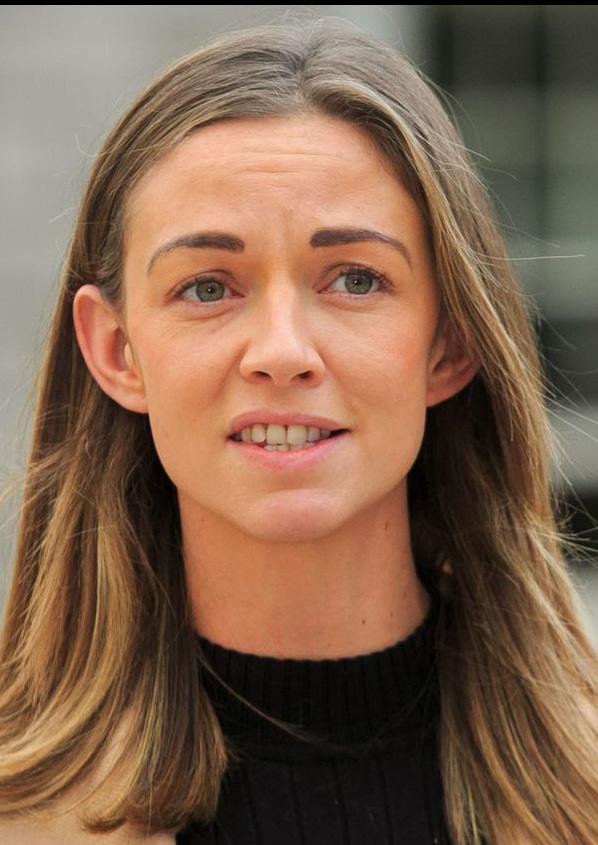
With the recent news of West Cork TD Holly Cairns taking over the leadership of the Social Democrats, a wave of optimism has rippled through Irish political circles. At just 33 years of age, Cairns is the youngest person to lead a political party in Ireland. In her first Dáil speech as party leader, she addressed the Taoiseach with a sobering reminder of the state of the country’s housing crisis: “I am a member of the first generation who will be worse off than our parents.”
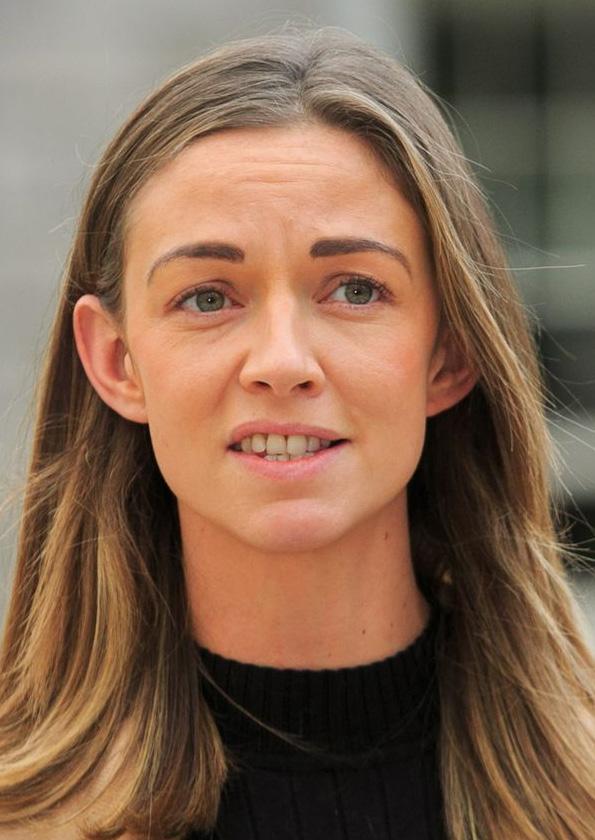
The Irish Times described Cairns as a ‘breath of fresh air for the Soc Dems’ and according to the Sunday Independent’s Think Poll, support for the party has almost doubled, with support for Sinn Féin remaining at the top of the charts, now standing at 29%. Evidently, a tide is turning in Irish politics as the public begins to realise that the continuous re-election of Fianna Fáil and Fine Gael has done more harm than good. Although the two parties have buried the Civil War hatchet and have struck up a historical coalition, voter faith is clearly dwindling and the general consensus is that they both have had more than their fair share of time in power.
With a general election due to come up in 2025, left-leaning parties may finally have their
chance to initiate a seismic shift in Ireland’s political landscape. However, one thing stands in their way - voter turnout. In the 2020 general election, overall turnout was 62.9%, down 2.2% on the 2016 election. Interestingly, voter turnout was lowest in urban areas, with constituencies like Dublin Central, Dublin Bay South, and Dublin South Central all recording figures in the low fifties. This is concerning, given that Dublin’s urban population accounts for 28.5% of the country’s total population and urban areas of Cork, Galway and Dublin have traditionally been home to a younger demographic. Since 2016, the National Youth Council of Ireland have been campaigning to lower Ireland’s minimum voting age to 16. There is clearly an appetite to increase youth participation in politics.
again, some continue the generational pattern of blindly voting for the same party as their parents. Historically, families (particularly in rural Ireland) picked a side of the Civil War and stuck to it, and this has informed their political choices for the past century. Up to the present day, Irish people over a certain age bracket still vote rigidly for the same party every five years, without any real knowledge of their candidates or the party policy. It is precisely this attitude towards politics that has Ireland stuck in this repetitive coin-toss between Fine Gael and Fianna Fáil, who once upon a time, evolved from the very same party.
Each citizen of Ireland has a democratic right to vote, not just at a general election level but at local, European and presidential level as well. The generation that Holly Cairns identifies as being the first to be worse off than their parents now have a rare opportunity to break this cycle of blind voting.
Voter turnout among younger age brackets has been steadily increasing in recent years, with concentrated efforts made to increase youth participation in politics. In the weeks leading up to the 2020 general election, UCC Students Union held a voter registration day, during which over 800 registration forms were handed out and 683 students were officially registered. But despite these positive signs, many young voters still feel disillusioned towards politics.
There is a growing sentiment among 18-25 year olds that things will not get better in this country, and that the myriad of issues in modern Ireland are too complex to solve. Some feel like their vote doesn’t matter. Others don’t feel well enough informed about the political system. Worse
With just under two years until the next general election, there is time to develop an awareness of politics in Ireland: Who are your local TDs? Do you agree with their policies? Can you find their manifestos online? Are you registered to vote? In the age of the internet, it has never been easier to answer these questions. You can figure out your voter registration status by visiting checktheregister. ie and inputting your details. The Oireachtas website also has a list of all the TDs and their constituencies, and information about TD’s can be found on their party website, where you will also find manifestos in the run-up to elections. By making an informed decision, the up and coming generation can change the course of Irish politics and begin a route to solving the problems that have plagued Irish society for decades. The worst thing that any citizen can do for their country is abstain from voting, and if too many people believe that their vote is useless, then it’s almost guaranteed that nothing will ever change.
Deputy Current Affairs Editor Tiarnan O’Rourke takes a look at the rise of angry young men on the internet and what factors drive them to beacons like Tate.
When scouring the internet for information regarding the plight of women many articles will come up. Statistics will appear that discuss the high rates of violence against women in many areas of society. The issue often found with this kind of mindset is that it is a generalisation of the statistics. For example, in 2021 one could say women were most affected than any other group by violence; that is not an untrue statement with women accounting for 82% of sexual offences according to the central statistics office (CSO). However, in the same year, men were also the overwhelming victims of homicide at 69% and assault statistics still consistently see higher rates of men affected, ranging from 55% to 60% over the period of 2018 to 2021. In the year 2020, 338 of the 465 total suicides in the Republic of Ireland were men. Homeless statistics from 2016 continue the trend of men being at disadvantage in society, showing nearly 50% more men sleeping rough than women.
The above is the guts of every viral Jordan Peterson clip on Instagram, Tik Tok, Twitter and for those old enoughFacebook. Those statistics are not false, in fact, they’re stark reminders of the inequalities in our society, built up over years and years by both men and women who have justified certain behaviour among certain groups. For women in particular modern-day fourth or fifth-wave feminists, it’s a reminder that
trusted both male and female.
“All that time they (men) spend snivelling about how hard it is to be a poor persecuted man nowadays is just a way of adroitly shirking their responsibility to make themselves a little less the pure products of patriarchy,”
Pauline Harmange wrote in her 2020 Book ‘I Hate Men’.
It’s a common mentality that can be observed amongst feminists. When statements like those by Pauline Harmange are thrown about it is inevitably going to cause discontent, and with one extreme comes another. There is a palpable rise of internet personalities like Andrew Tate, Sneako, Jordan Peterson, Ben Shapiro, and Pearl Davies all of whom have been blasted extensively on social media while amassing huge followings. They range from one end of the extreme to the other, and often the degrees of their extremity can chart someone's stage in the antifeminist pipeline.
Ben Shapiro in recent times has been found to be more of a quippy mouthpiece than the intellectual he would often like himself to be seen, but Dr Jordan Peterson on the other hand came to prominence when most of us were still only in our early teens when he refused to accept state legislation that required him to use whatever preferred pronouns people had. He has since become a leading figure in what can loosely be called the ‘Men's Mental Health Movement’ it’s not as coherent as the feminist movement but it’s clearly something that’s garnered support in the past few years. It was refreshing for many
young men as Peterson would allow himself to be emotional in interviews.

Following on from men’s mental health Paterson began to discuss masculinity, the basis of a large quantity of his work. This is where the emergence of the feared masculinity comes in. Paterson discusses the concept of being a dangerous man, this in and of itself is not actually dangerous as what he discusses is just strong men with values who hold themselves to a high standard. Not too dissimilar to the kind of values instilled into young women. This appeals to young men, who feel that they have been handed the dregs of the patriarchy and are now to be blamed for it.
The sigma male is a continuation of this, videos of strong male characters doing even the most menial tasks have been backed by some phonk music and is now a
beloved meme format. The iconic smoky clip of Thomas Shelby head down fag in hand is often accompanying a clip of a mildly to extremely sexist clip. But it's exactly that strong male character that 14-year-old boys find inspiring.
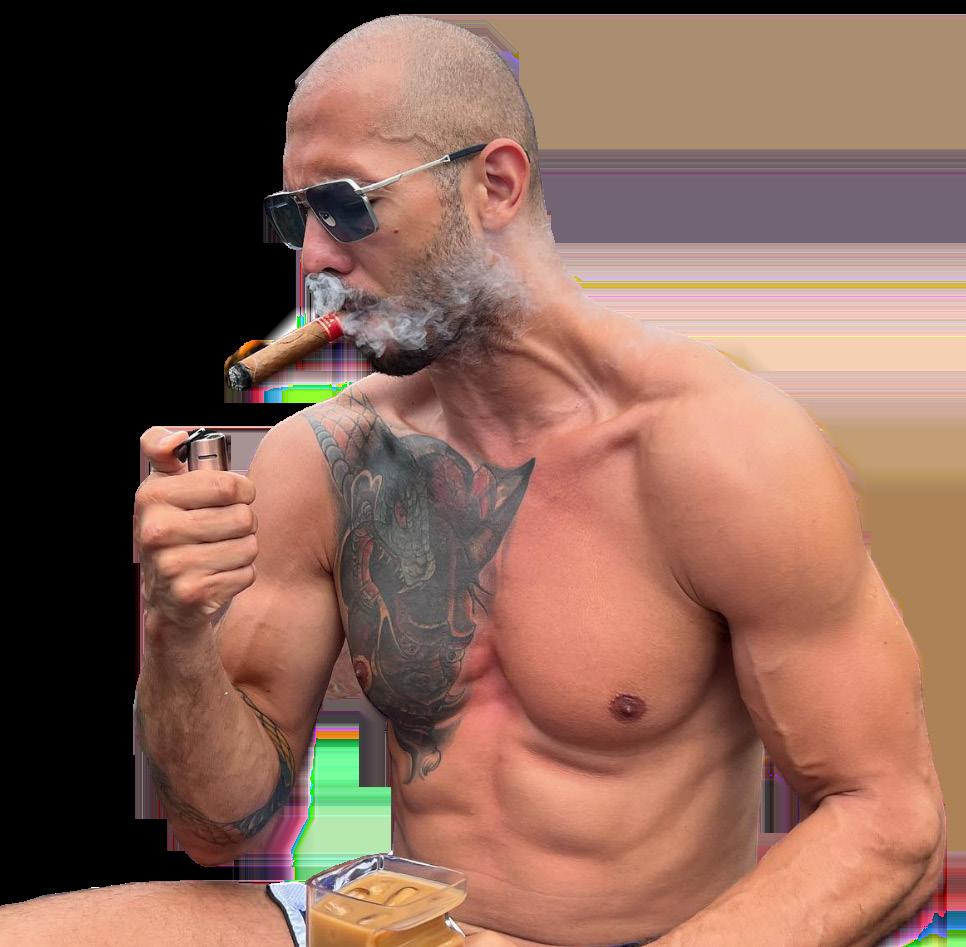
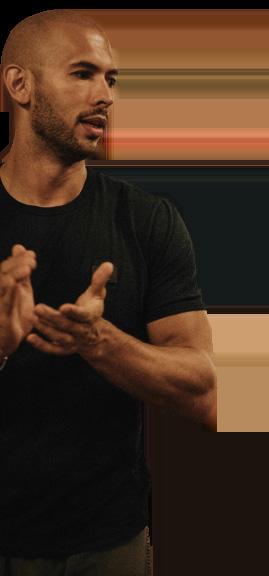
Andrew Tate is the next name on the list, the former world kickboxing champion needs little introduction, easily the biggest name on the internet at the moment. His followers are like an army, most are not the average redditor, these are young men enthralled by all of the Tate persona and it does feel like even in prison he has a true army of physically fit young men who feel marginalised by the new world.
Tate’s messages on Tik Tok have been viewed millions of times and at this stage they have reached almost every young man with a phone. His messaging: ‘regardless of what you are now, you can be like me’- that is a Top G with the most beautiful half-naked woman at your service. Mixed among his motivational words is sexist rhetoric. Which at times is truly quite abhorrent, while other times it is a lot closer to the opinions genuinely held by many young men in particular regarding sexual triumphs and modesty among women, but once you’ve listened to enough of Tate’s stories why would you stop when he says something you may not initially agree with.
Tate also utilises this idea that women only use feminism when it's convenient, something again that a lot of people agree with, something that there’s even some feminist discourse around; ‘girl-boss’ self-serving capitalist feminism or intersectionalist feminist. Tate’s over simplistic way of explaining that leaves young men so eager to hear more “The king moves one square at a time and the queen can just zip across the board. So you’re partying in Miami – you see all these chicks on a boat. For the man to get on that boat, he has to move one square at
a time: he has to get a good job, he has to get his credit right, he has to go through all this shit, stage by stage … a chick, what does she need? Lip fillers? Boom. Zip. That is the difference between the king and the queen.” He is extremely dangerous here, but it's something that goes deeper than trophy girlfriends and wives. It again comes back to feminism- feminism being the opposing force to young men living good lives.
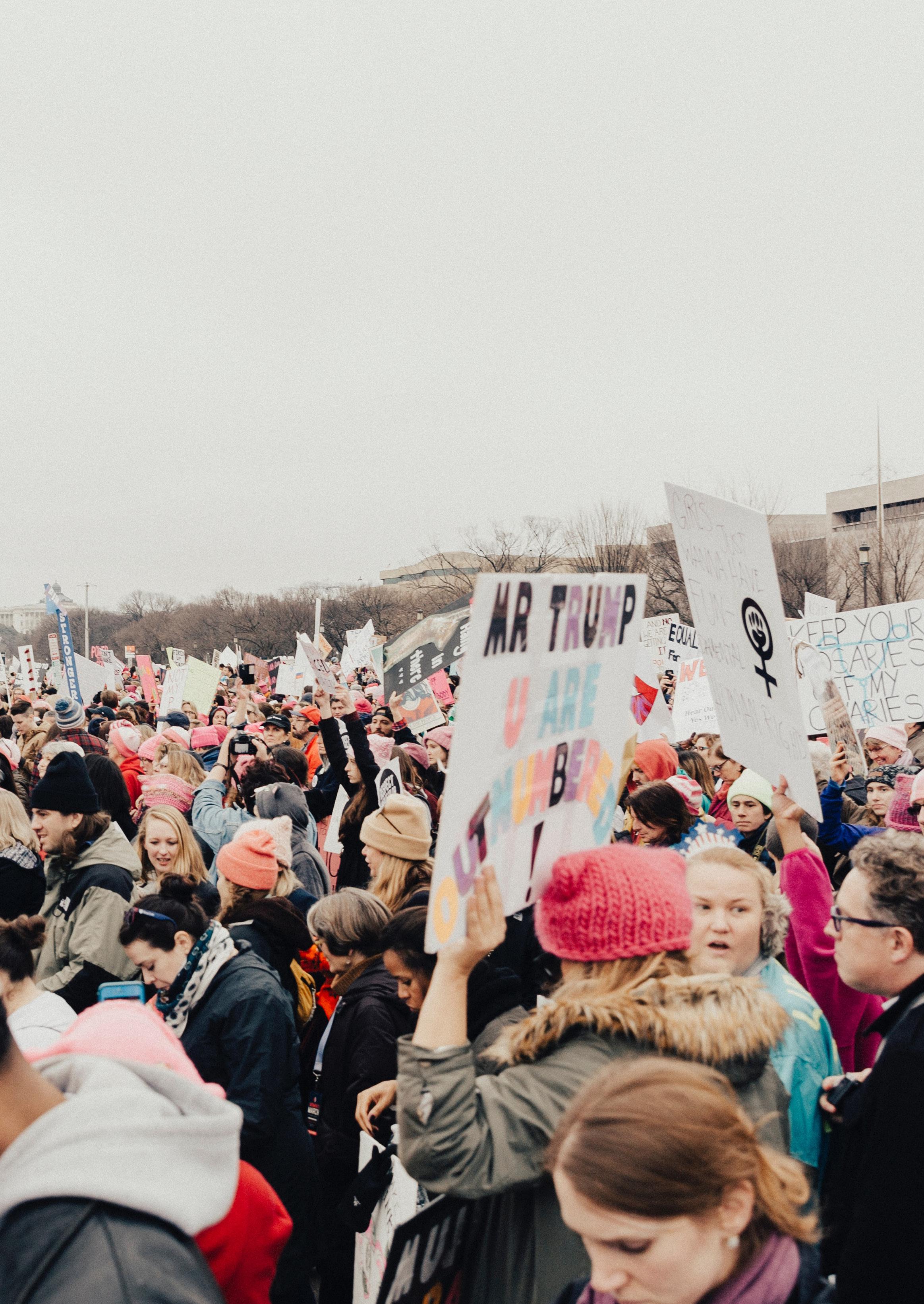
What is even scarier is the introduction of Pearl Davis into the mix, the daughter of a former member of the board of directors of the UN women’s council, her presence on the internet amid Andrew Tate’s imprisonment has filled what seemed to be an unfillable void. What makes Davis so powerful is her femaleness being a justifier for young men to agree with her opinions. ‘If a woman does not think women should be sleeping around then they shouldn’t be’- this is the mental process her followers must go through. She’s also an attractive woman, so it feels like she’s truly choosing to agree with the ‘truth’ despite having the option to possibly jump across that chess board.
The moral of Tate’s story in the young male psyche is in need of a leader. The guy literally lives in a mansion, has millions of euros, has copious amounts of sex, and smokes cigars, he’s developed an army of young men who seem almost unwavering in their obedience to him. He is to many young men on the internet; seen as a paradigm of success. These young men see the world they wish to live in as broken down by women and the broader feminist movement around them. Either way, there is undoubtedly a movement of disenchanted young men resisting the feminist movement and mainstream media. If and when Tate dies in prison or does a Trumpesque call to arms our society may not be united enough to withstand such a social shift. It is a sort of rebellion waiting to happen.
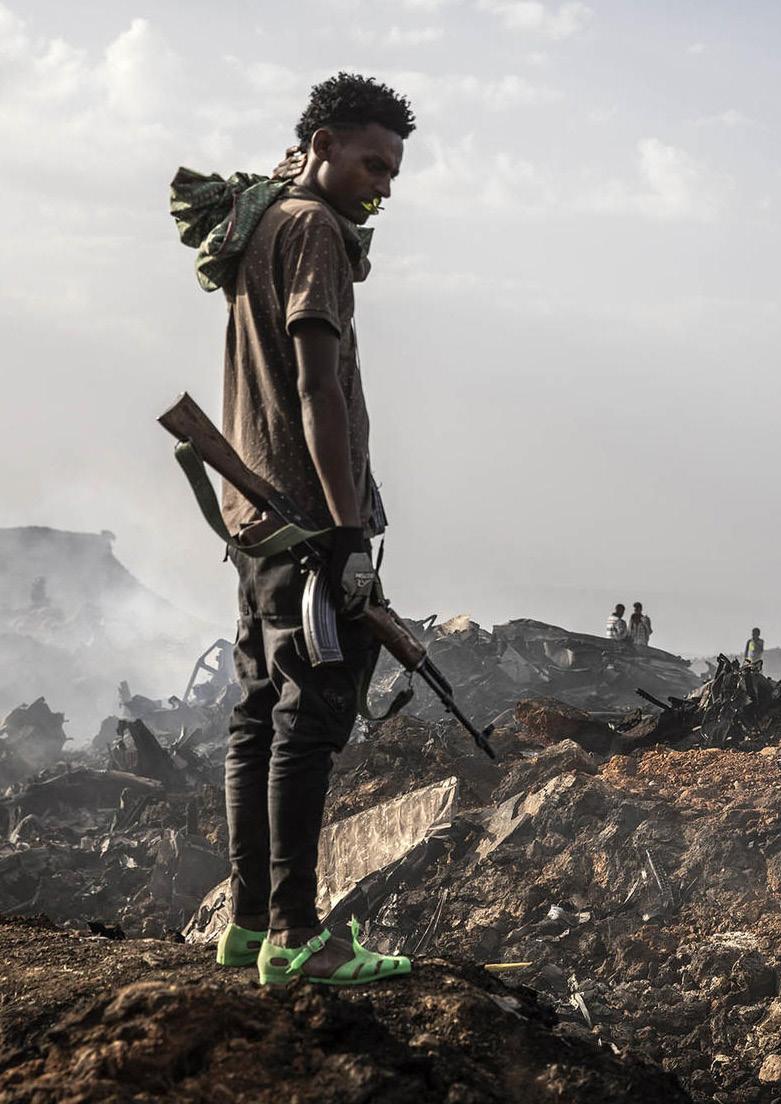
A country born out of defiance; the only country in Africa not colonised by a European nation. In fact, to quote an Ethiopian woman during these interviews ”we [Ethiopia] scrambled for Africa too” a reference to the famous book by Thomas Pakenham titled ‘The Scramble for Africa’. After defeating an Italian expeditionary force twice, on both occasions the people of Ethiopia united, acknowledging themselves as a united nation brought together by successive royal lines, and fought for freedom. Many Ethiopians today see themselves as just that, Ethiopians. A nation formed from the great Abyssinian empire of Sheba and her son Menelik. So, a question remains, why in the past few years has this changed? This has become ever more evident following the past two years of civil war between the TPLF (Tigray People Liberation Front) from the northern mountains of the country and the central federal government based out of the central city of Addis Ababa.
To give a brief background on the parties involved in the conflict, the TPLF –along with other militia such as the OLF, and ALF to name a few; with each militia representing a different ethnic region in the county. These groups fought through the seventies to the early nineties against an oppressive communist military administration called the Derg. It was during this time that Eritrea through the EPRDF (Ethiopian People Revolutionary Democratic Front)gained independence with the TPLF (arguably the leading group at the time), beating the oppressive regime and taking control of the central government in Addis Ababa. While elections were held over the years, the TPLF pretty much maintained control of the federal government as part of the Ethiopian People’s Revolutionary Democratic Front (EPRDF).
In 1991 the new administration began creating the country's new ethnic-federal system whereby the distinct ethnic regions in the country had control over their own internal administration in their own language, whilst benefiting from the stability of being a united nation with one of the largest as and most populous countries in Africa. The administration vaguely resembled the pre-communist regime in structure where an imperial emperor headed the country from Addis Ababa and smaller kings controlled basically the equivalent of these new ethnic regions. And so, from this point on the Ethiopia people lived happily ever after…!
This ethnic federal state system may have been possibly the beginning of all this trouble, as it had been during the empire. A northern Tigrayans and Amhara elite ruled the country steering her whichever way they deemed fit.
Deputy Current Affairs Editor Tiarnan
Ó Ruairc discusses the civil war that nobody is talking about.
Allowing a space for discontent to fester among those not in power. Ancient rivalries among ethnic groups saw the northern semitic peoples dominate the lowland ethnic groups and these senses of superiority persisted to the present time... Additionally unresolved border disputes about the Eritrean border, more specifically along the Tigrayan-Eritrean border, two groups who share ethnic roots and almost identical histories except for a short period of Italian rule in Eritrea. Again, there are a vast number of factors that caused this but still the country’s history as a colonising power and not the colonised could be the reason behind at least some of the troubles.
Without continuing to bore you with an ‘Ethiopian History for Dummies’ it’s time to discuss the current events that have occurred in the northern regions of Ethiopia since November 2021. An unsanctioned election held in Tigray led to an attack on federal installations in the region, from there the violence escalated, as federal troops began to funnel into Tigray. With claims and counterclaims of abuses very quickly violence and chaos engulfed the region, unrest spilling out into neighbouring Gondar.
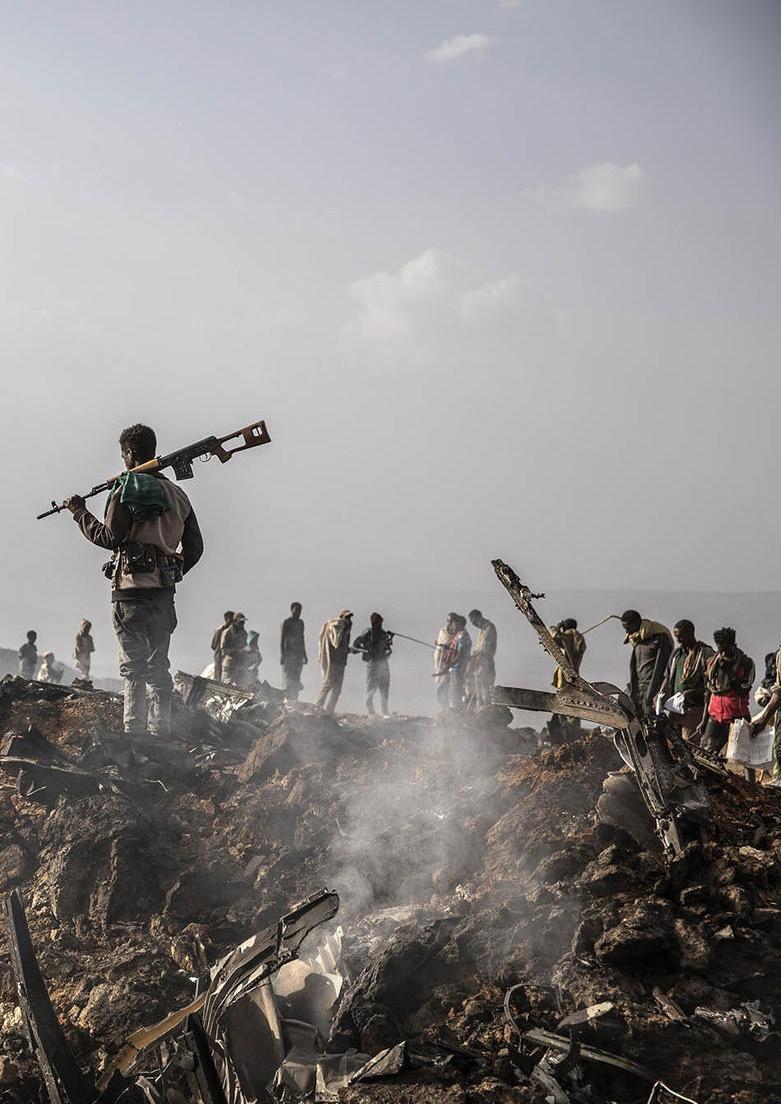
In particular what became apparent was the wave of anti-Tigrayan sentiment and in this the plan was to get an understanding of why this was. Here are the thoughts of some of the people that were interviewed.
“They were going door to door again, just like in the Derg” one woman commented, born and bred in Ethiopia’s capital, she says her ancestry is Tigrayan with her parents being the first of her family to live in the city of Addis Ababa. Her comments are of course a stark reminder of the claimed genocide and the displacement of the Tigrayan people. “we don’t speak Tigrinya at home now” again much like the Derg regime, the current regime seemed to enforce cultural stigmas that had previously brought about great destruction to the nation. Despite the threat of violence from the people she now lived with there is a common consensus amongst both the Tigrayan community and the wider Ethiopian community that the TPLF were not truly victims.
One interviewee, a young Ethiopian Irish man who has lived in Ireland for most of his life, said that he felt that the Tigrayans who were fighting in the north didn’t understand what they were fighting for, and that they had been misguided by a false sense of nationalism. When pushed further he commented that “we are all Ethiopians”. Something previously mentioned here, the people of each region are of course culturally diverse and in times envious and disgruntled by other ethno-federal groups; but the nation of Ethiopia identity is far greater or at least was supposed to be far greater than any internal dispute. Further interviews revealed similar sentiment regarding the ‘misguided nature of the boys fighting in the north’ there seemed to be a consensus between Tigrayan and non-Tigrayans who were interviewed as to their thoughts on
Debretsion Gebremichael.
“…having fought for two years and to pretend it’s all solved now. No one to this day can pinpoint any valid reason as to why this war started. After all the blood spilled and destruction of property on both sides to “kiss and make up” without public participation is disrespectful to the lives lost…”
An older woman commented when asked on their thoughts on the war. Old enough to live through the Derg and see Ethiopia’s golden years during the relative peace over the last government, it seemed like a pathetic attempt to keep young men busy in a state of growing economic fear, much like the young conscripts of Eritrea.
The Eritrean regime is what won president Abiy Ahmed his Nobel Peace Prize in 2019. However now that very award is coming into question with papers like The New Yorker publishing headlines like ‘Did a Nobel Peace Laureate Stoke a Civil War?’ some would consider that this peace deal brokered between the most secretive corrupt state in the world, Eritrea and one of Africa’s power houses was a well thought out military deal in which Mr. Ahmed acknowledged the military superiority of the TPLF and sought to suppress or win with external support from Eritrea. Of course, as we saw the deep animosities between the Tigrayan people and the Eritrean government spew into war crimes committed mainly by the invading (Eritrea’s army, comprising of press-ganged young men forced into conscription with no prospects of ever leaving the army but also TPLF fighters who turned to violence at times against their own people.
People seemed even more reluctant to discuss the federal government. As if any sort of wrong move might see a dictatorship-like response and repercussions against their family, despite all these recent events have seen an improvement in relations between the TPLF leadership and the Ahmed government. The TPLF as of the 15th of March has been removed from the state’s terrorist list, a positive move and one that takes away any justification for violence or hate of the Tigrayan people. This followed the appointment a week later of Tigrayan rebel figure Getachew Reda to head the interim government of the northern region, a major step in the implementation of a peace deal signed by the two sides after two years of civil war. Mr. Reda, the former Minister of Government Communication Affairs will hopefully help bring about some semblance of peace but also ensure that atrocities against the Ethiopian people are reprimanded regardless of who the perpetrator was. Reda’s previous appointment as Minister of government in the federal government is also a reflection of the integral part the Tigrayan people and people who identify and hail from the culture are to the Ethiopian state as a whole, and continues to show the inequalities in the system and of course it reveals the risk of further violence that may occur when so many positions have been filled by a people from a smaller ethnic group in the wider Ethiopian context.
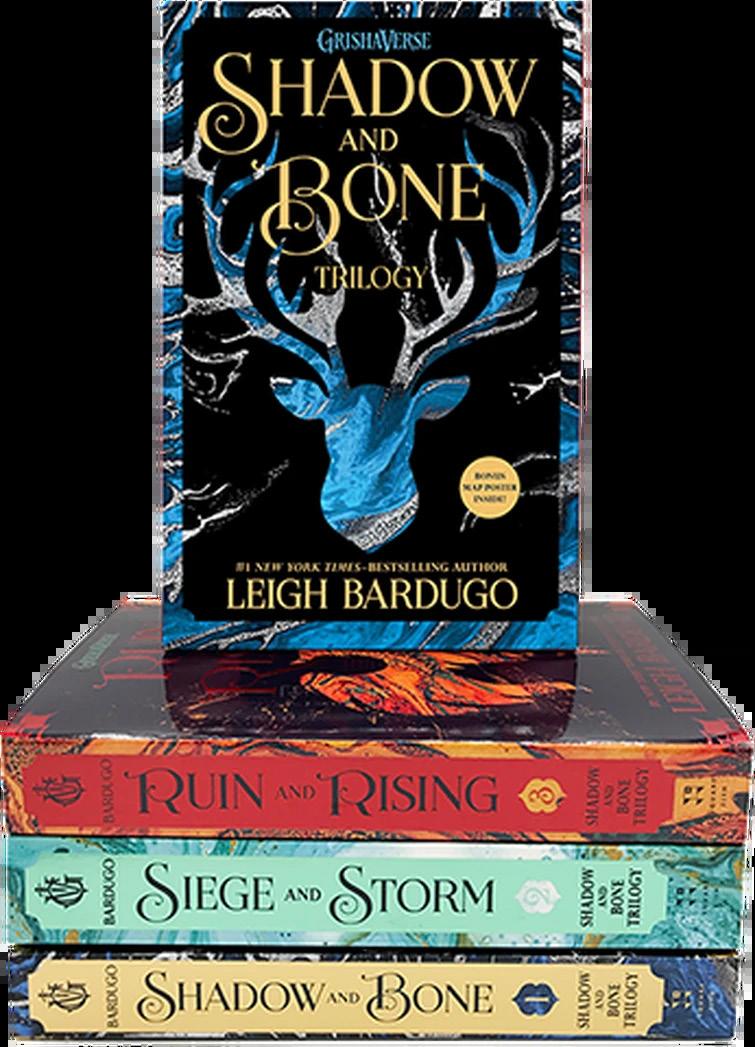
Deputy Entertainment editor Chloe Barrett discusses Netflix’s recently released adaptation based on the bestselling novels while exploring its integral theme of resistance.
Leigh Bardugo’s fantastical world, commonly referred to as the ‘Grishaverse’, has had two epic seasons on Netflix, with the latter having been released only a month ago. Within it live unforgettable characters, intricate world building, and a plot centred on equality.
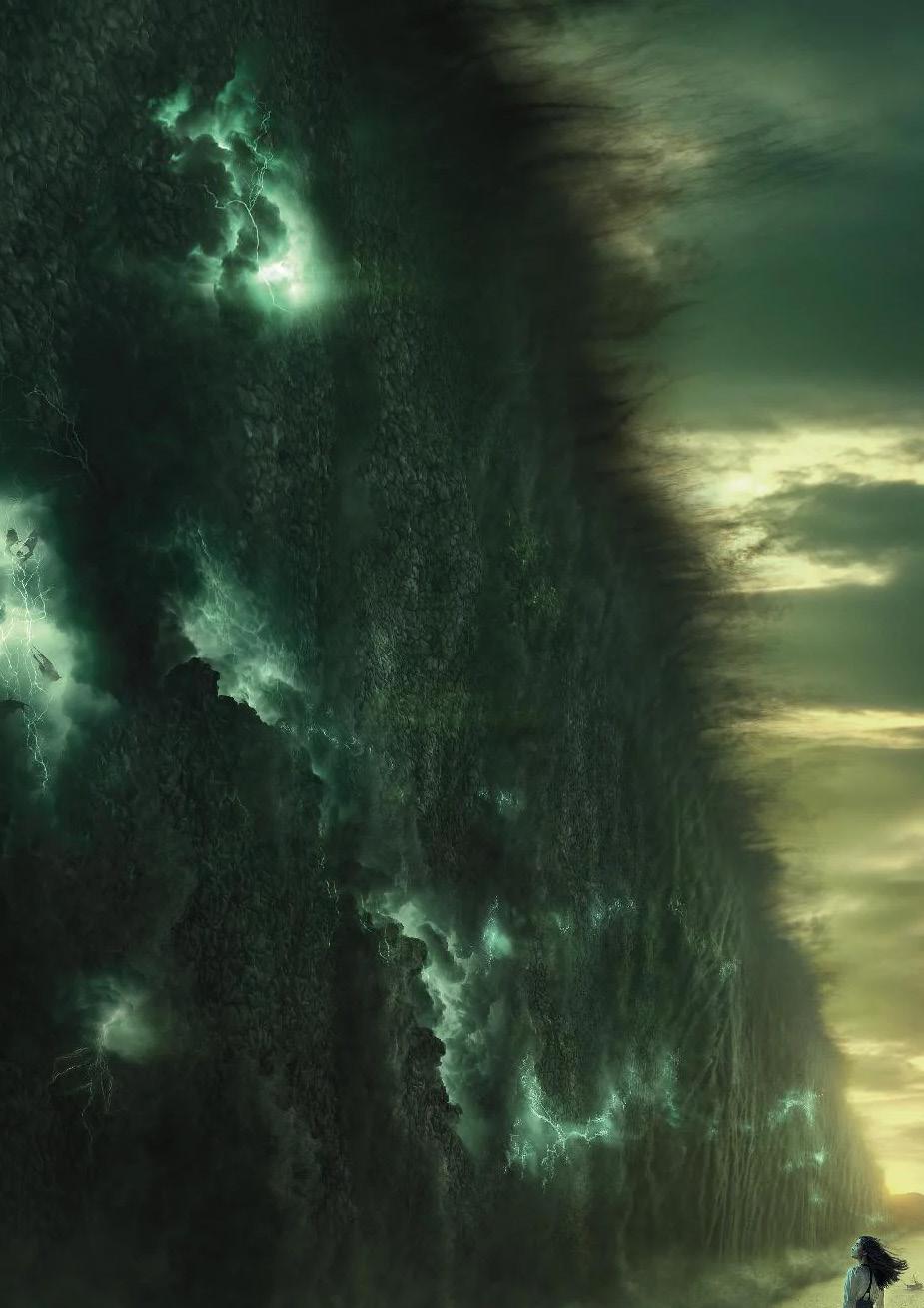
Based on Bardugo’s bestselling novels, which I would highly encourage you to pick up (they are brilliant), the adaptation brought characters that have been beloved by book lovers globally onto the screen. Uniquely, a creative approach was taken to blend together Bardugo’s multiple book series into one shared production. The main plot focuses on her first trilogy: Shadow and Bone, Siege and Storm, Ruin and Rising. At the centre is Alina, a soldier who has discovered that she possesses the ability to summon light. She is a Grisha, which simply means that she can harness a gift and is a magic user. There are three orders of Grisha, and their abilities range from summoning elements found in the natural world, such as fire, to being able to slow someone’s heartbeat down with the wave of a hand. Alina was granted a supremely unique power, and falls into the presence of General Kirigan, a man who is her opposite, he can summon darkness. He believes that Alina can destroy the Fold, a pitch-black desert that very few can cross, which resulted in their world being at war. The theme of resistance is an overarching concept throughout the series’ entirety, as not only is Alina attempting to bring an end to a war, but she is also advocating for her fellow Grisha’s rights. Being able to cast magic is not seen as the wonderous ability that many believe it to be throughout the world, with Grisha being knowingly trafficked and executed for their ‘witchcraft’ based abilities. For the
Grisha, their war extends far past an abyss of unyielding darkness, but each day is a battle for who they are as people. After all, why should they be punished for being born with a gift that they had no control over?
The subplot of the show dedicates its attention to the infamous Crows, a gang of misfits residing in Ketterdam. Their leader, Kaz Brekker, can be found hiding amongst the most dangerous shadows with Inej and Jesper, the two he trusts most, at his side. While the duology consisting of Six of Crows and Crooked Kingdom which is deemed as Bardugo’s best work, is canonically non-existent in her original trilogy, the show writes a new storyline for them and brings the characters together, with the Crows having been hired to kidnap Alina. If you are a fan of the books, it is a really clever way to connect their two worlds together. Plus, the Crows are the highlight throughout both seasons, so you do not want to miss them. After all, who doesn’t love some traumatised criminals that look absolutely dashing when they wear black?
The show itself does an excellent job of portraying the injustices that these fictional characters are faced with, and how they will not take defeat easily. Featuring an incredible cast full of up and coming stars, many of who will be rightfully stealing the spotlight in the future, you really can’t go wrong with sitting down and having a binge of this awesome show.
Shadow and Bone season two is now streaming on Netflix.
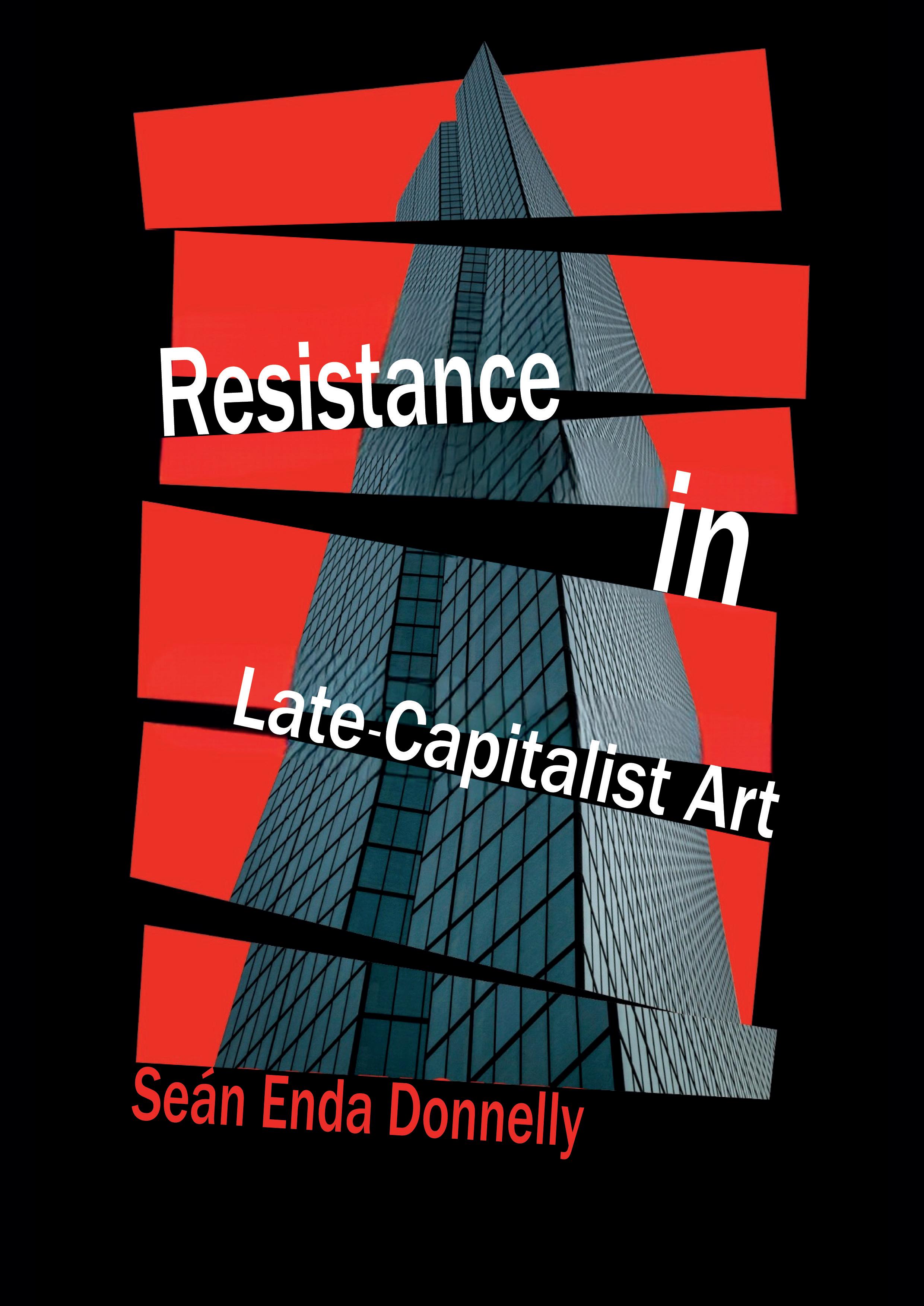
In 1848, a year wracked by revolution throughout the globe and in their native Germany, philosophers Karl Marx and Friedrich Engels published The Communist Manifesto. The political pamphlet was a summary of their theories regarding the nature of politics and society. It traces human history through the lens of class struggle and criticises the capitalist system. Since its publication much has changed, but much has stayed the same. We currently live in what German economist Werner Sombart called ‘late-stage capitalism’ or simply ‘late capitalism.’ Sombart first wrote of late capitalism over a century ago, but the term has since become a shorthand for the various failings, both tragic and comedic, of the modern capitalist system. Writing in The Communist Manifesto, Marx and Engels argue that capitalism, ‘has drowned the most heavenly ecstasies of religious fervour, of chivalrous enthusiasm, of philistine sentimentalism, in the icy water of egotistical calculation.’
Late capitalism can be used as a synonym for ‘capitalist realism,’ itself a play on the phrase ‘socialist realism.’ Where socialist realism was the official, state-sanctioned and state-governed art as practised in the Soviet Union, capitalist realism originated in the writings of Michael Schudson, and later, Mark Fisher’s book of the same name. Schudson used the term to describe advertising trends in the mid-1980s that promoted private consumption over the common good. Though their moral and aesthetic standards are different, socialist realism and capitalist realism require that these demands be upheld. Schudson outlines the attributes of successful socialist realism as follows:
1. Art should picture reality in simplified and typified ways so that it communicates effectively to the masses.
2. Art should picture life, but not as it is so much as life as it should become, life worth emulating.
3. Art should picture reality not in its individuality but only as it reveals larger social significance.

4. Art should picture reality as progress toward the future and so represent social struggles positively. It should carry an air of optimism.
5. Art should focus on contemporary life, creating pleasing images of new social phenomena, revealing and endorsing new features of society and thus aiding the masses in assimilating them.
Two decades later, Mark Fisher expanded this idea to encompass all forms of mass media, not just advertising, to illustrate his thesis that, ‘it is easier to imagine the end of the world than it is to imagine the end of capitalism.’ Under capitalist realism there is no space to imagine conceivable alternatives to capitalism, as the free market has since been applied to all forms of governance; there is only individual responsibility, not collective responsibility, for improving one’s circumstances. Capitalist realism cannot simply be limited to advertising or culture, as Fisher writes, but instead refers to, ‘a pervasive atmosphere, conditioning not only the production of culture but also the regulation of work and education and acting as a kind of invisible barrier constraining thought and action.’ Our transition into capitalist realism began in the 1980s and, in Fisher’s view, solidified with the fall of the Soviet Union in 1991. As communism faded into the ether capitalism receded into the background, transformed from an ideology into an environment. Every institution, including healthcare and education, should be run as a business. Its ubiquity has permeated every aspect of our society, including our culture. The cultural sphere has not necessarily gone extinct under capitalist realism. On the contrary, it has bloomed to encompass the social realm. Everything, as the theorist Frederic Jameson writes, ‘from economic value and state power to practices and to the very structure of the psyche itself…can be said to have become “cultural” in some original and yet untheorized sense.’
Fellow cultural theorist Slavoj Žižek draws a concrete line between reality and that which is known as “the Real” to illustrate this increasing sense of dissonance under capitalism. Reality, Žižek writes, is ‘the social reality of the actual people involved in interaction, and in the productive process; while the Real is the inexorable “abstract” spectral logic of Capital which determines what goes on in social reality.’ If everything is cultural, as Jameson attests, and subject to the whims of capitalist unreality as Žižek claims, then what can be said of culture produced in a late capitalist world? Does it live in ignorance of the reality – or the Real – that we live in, or does it tacitly acknowledge - or even critique –capitalist realism?
Certain works in the transgressive fiction genre, most notably Bret Easton Ellis’s American Psycho (1991), Irvine Welsh's Trainspotting (1993) and Chuck Palahniuk’s
Entertainment editor Seán Enda Donnelly talks about the nature of art and entertainment in our modern society through the lens of Mark Fisher’s Capitalist Realism (2009) and transgressive art.
Fight Club (1996), push against the norms of contemporary capitalist society through the graphic depiction of taboo subjects, antisocial acts and nihilistic themes. In an example of capitalist realism’s appropriation of even virulently anti-capitalist works, all three have been adapted into major blockbusters. Yet the critique is still present.
Ellis’s American Psycho is a scathing indictment of the 1980s “yuppie” or “young urban professional” subculture. Patrick Bateman, the main character, embodies the excesses of the subculture but is in many ways trapped inside it. As Matthew Kavanagh writes, Bateman cannot imagine an alternative, an elsewhere, an otherwise, beyond what Kavanagh refers to as a ‘brute (and brutal) positivism.’ Therefore, trapped in the world that birthed him, he is compelled to act out his antagonism in gratuitous displays of violence. A similar motif dominates Palahniuk’s Fight Club, wherein the displays of violence are organised into weekly meetings (the titular ‘Fight Club’) in an effort to liberate themselves from the bland consumer culture that Bateman embodies, and the white-collar work environment lampooned in works like Mike Judge’s
popular visual analogue to the sense of entrapment under late capitalism; indeed the most seminal escapist work of the period, The Matrix (1999) directed by the Wachowskis, depicts the dystopic simulation as a bland but ‘respectable’ software company. Office cubicles are like prison cells, segregating people from one another.
This palpable sense of anxiety with this system is not merely limited to middle-class existence. For example, Mark Renton’s ‘Choose Life’ monologue in Trainspotting reflects a similar dissatisfaction with life, openly questioning at its end why he would want to choose a long, belaboured existence based on materialism, consumption and the nuclear family. Like the aforementioned examples, Mark Renton finds escape in extreme circumstances when confronted by the malaise of working-class poverty. More recent examples, and one favoured by Mark Fisher in his introduction to Capitalist Realism, is the 2009 adaptation of P.D. James’s Children of Men. The film depicts a dystopia already in progress, a world wherein coffee chains and concentration camps exist in tandem, prompted by an unexplained pandemic of global
it is these themes of ‘sterility’ that Fisher finds to be evocative of our current cultural wasteland. There is no escape, no alternative; merely the slow cancellation of the future as capitalist realism takes its hold.
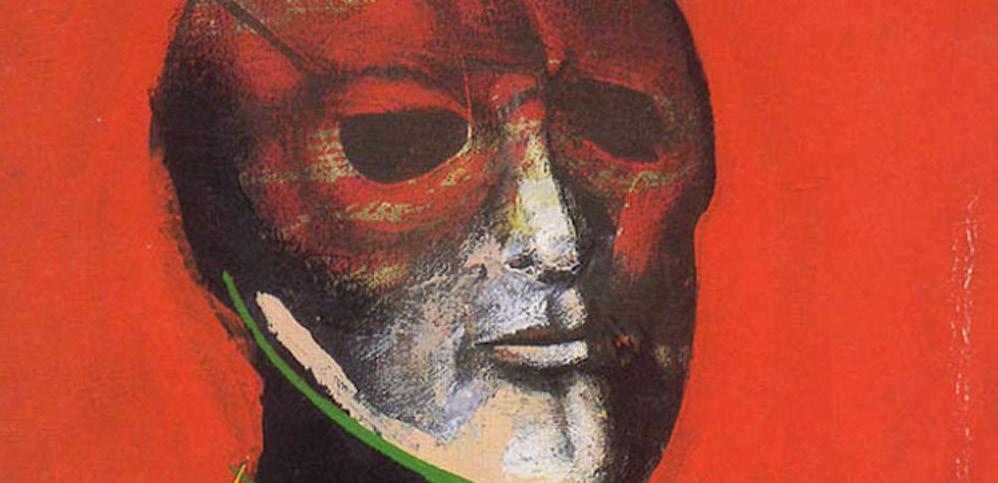
T.S. Elliot’s poem The Waste Land – a significant influence on the film – is invoked by Fisher as he writes, ‘The new defines itself in response to what it already established; at the same time, the established has to reconfigure itself in response to the new…the exhaustion of the future does not even leave us with the past. Tradition counts for nothing when it is no longer contested and modified. A culture that is merely preserved is no culture at all.’
In 1843, Marx asserted the need for a ‘ruthless critique of all that exists’ claiming that it was necessary in a blueprint for the future, specifically a post-capitalist society. Radical movements would need to subject themselves to such criticism in order to achieve their vision. Capitalist realism seeks to cut off all possible substitutes to it. In upholding critical thinking - rather than passive engagement - with culture under capitalist realism, there may still be room for an alternative despite all appearances to the contrary.
Michael Joyce’s publication of afternoon: a story (1990) marks the foundation of electronic literature, though it has clear antecedents. Joyce wrote his seminal work through Storyspace, which was written specifically to be used by writers of new media literature. Indeed it was one of the first tools of its kind; launched by Eastgate Systems Inc. in 1987, and to quote Daniela Côrtes Maduro, “challenged the notion of a literary text as exclusively verbal and undermined any hierarchical relations between word and image. However if we stretch our definition of ‘electronic literature’ to include computers used as tools for literary expression we can trace its origin to Alan Turing and Christopher Strachey’s 1952 love-letter generator. Yet thirty years after its publication, while regarded as a classic of hypertext fiction, afternoon: a story is scarcely mentioned outside of academia.
The environment was rapidly changing. Death of the author and fragmented, reader-centric text had dominated literary discussion since the 1960s, but by the 1990s they had been made real by technology. Joyce’s publication prefigured the expansion of the World Wide Web and subsequent acceleration of technology that added multiple ways to craft a narrative across different forms of media. Henry Jenkins describes
this cultural shift as a ‘convergence,’ an assembly of content across multiple media platforms in the spirit of creative collaboration that will be followed by a faithful audience. One example is that links would allow you to jump to different textual locations, but the overall impact on storytelling – through the proliferation of hypertext literature – was highly anticipated.
The reality was somewhat different. Today Eastgate Systems remain the only commercial publishers of hypertext fiction, which sell in the ‘low thousands.’ This calls into question what is hindering the appeal of hypertext fiction to a modern audience. Moreover these reading spaces had the problem of simply being difficult to write, owing to the technical complexity of the hypertext format. Hypertext fiction cannot act like fiction in print, and triggers responses from readers that are distinct from analogue literature. Consequently they behave like they are not reading a book, which means that creators must pay close attention to the interface.
The variety of interfaces has been explored in other mediums. Comics are an example of what Marshall McLuhan dubbed a ‘cool medium,’ one that invites an active level of participation from its readers. The gutter
Though an alienating medium in some regards, reader resistance to electronic literature is slowly shifting, as Entertainment Editor Seán Enda Donnelly explains.
spaces of comics are borders between panels, but also separate time and space. Readers can either fill in those interstices or ignore them completely. This imaginative effort on the reader’s part not only involves speculation but is needed to maintain any kind of interaction with a text. This is not limited to electronic literature but is also true of print novels, interactive fictions, games and/or virtual reality. It follows that immersion in a fictional world is affected not only by the limits of our technology, but also by a reader’s investment of their imaginative effort.
As James Pope attests the answer to unlocking such states of immersion and/engagement lies in the concept of flow used in play and game theory defined by the psychologist Mihaly Csikszentmihalyi. Flow is described by Pope as ‘that finely balanced condition in the player where effort and reward are so closely matched that the reader acts seemingly effortlessly, though in fact highly absorbed through the game, using cognitive and motor skills.’
Though many hypertext fictions do not deliver a flow experience, it is possible. The ARG (alternative reality game) Speculation was a game that, beginning in 2012, unfolded in online and offline spaces. This new transmedia experience was delivered via a network of short prose stories, fictional corporate


documents, audio files, videos, computer games, doubleencoded slow-scan television transmissions, social media challenges, flash drive dead drops and internet relay chats, among others. This ARG was a significant departure from the usual consumer-oriented triple-A games and transmedia entertainment products. Instead Speculation promoted a unique form of interplay between the game designers and a varied collective of players: active, improvisational and unscripted. Thus it transformed from a creator-driven work into a collaboration akin to practicebased research, altering the core narrative in ways that were unforeseen by the designers. Other examples of hypertext fictions successfully delivering a flow experience include The Virtual Disappearance of Miriam (1999). Despite the peculiarities inherit within hypertext fictions that resist expectations of a flow experience, Pope argues otherwise, saying that if writers of hypertext fiction can find balance between their innovative narrative structures and clearly and sufficiently explained interfaces, ‘then flow may begin to be a readily achievable state and then hypertext narrative itself will begin to flow more freely.’
The aforementioned graphic narratives and digital games have always had a degree of influence on each other, mainly through adaptations, though original works have also adopted new media mechanics and aesthetics. Independent animations made with Adobe Flash (later Adobe Animate) such as Homestar Runner permit the viewer to explore submenus and be rewarded with bonus content for their curiosity. Ryan Woodward’s Bottom of the Ninth (2012) is an interactive graphic novel that similarly incorporates audio, animation and user agency enabled by a touch screen. A contemporaneous example is Andrew Hussie’s webcomic Homestuck; a browserbased graphic narrative of stupefying length, it numbers over six thousand total panels on the MS Paint Adventures website. Homestuck makes frequent use of new media features including basic Flash animations, hyperlinks and original music. The comic repeatedly frustrates the user’s expectations of explicit interactivity, for both comedic and dramatic purposes. The changes heralded by Web 2.0 have given rise to new artistic modes including transmedia narratives and networked video games. Games like The Stanley Parable (2013) push at the boundaries of fiction and subvert narrative logic, coherence and the denouement. Readers are chided that there is no such thing as freedom of choice with each disobedient act they commit. That interaction between text and reader – or author and reader – is one constructed on empathy. It is also constructed on imagination; readers feel that they are participants in the story’s construction, not because the story is self-generating.
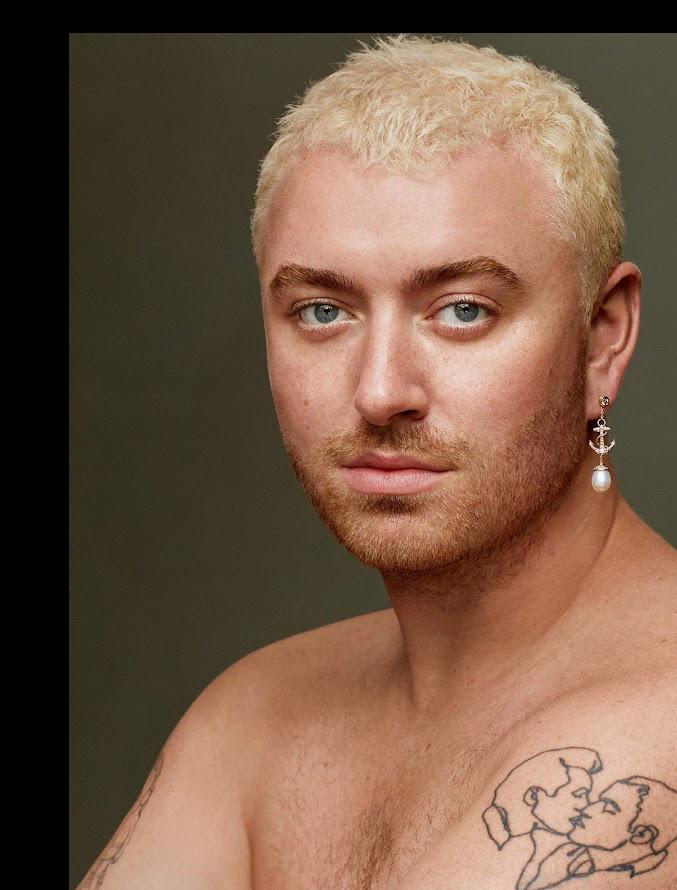
At age thirty, singer and songwriter Sam Smith has won five Grammys, an Oscar, a Golden Globe, three BRIT awards, composed the theme song to 2015 Bond film Spectre, and has amassed 45 billion multi-platform streams per their Spotify biography. I found all this from a quick Google search, but only after sifting through various articles popping up surrounding everything they wear, being openly insulted by Noel Gallagher for no apparent reason, wearing corsets in a music video, and being condemned for their ‘Satanic’ performance at the Grammys. I never set out to become a fan of Sam Smith. Sure, I listened to their songs on the radio, but until last year - upon the release of their song Unholy - I hadn’t seen them in mainstream news.
Smith came out as non-binary in 2019, which I remember causing outrage simply because they chose to use they/them pronouns. The outrage bewildered me as I had come across non-binary people online and was well-acquainted with gender-neutral pronouns. Being seventeen at the time I was naive and assumed the negativity would die down once people became familiar with what it means to be non-binary. All Smith had asked for was to be addressed by a different pronoun, which isn’t difficult. This was until the amount of pure hatred
continually directed towards Smith for everything they do - every outfit they wear, every song they sing - became all I ever heard in reference to their previously revered name.
One of the most common threats hurled at the LGBTQ+ community is that we’re all headed to hell. It doesn’t matter whether you have Christian beliefs or not; you’re automatically headed to their hell for something you can’t control. Smith followed in the footsteps of gay rapper Lil Nas X by taking the ‘hellbound narrative’ and running with it, profiting from the accusations of being akin to the devil by performing as what these hateful people claimed they both were. It’s empowering to see them take a concept of something so vile that all LGBTQ+ people are threatened with at some point in their life, twisting vitriol into inspiration. Smith’s Grammy performance alongside Kim Petras was legendary and it felt like the whole awards ceremony only began when the pair performed. Do I think Smith actually ‘worships Satan?’ No. I think they realised they would be harassed no matter what they did and followed in Madonna’s footsteps by playing into the controversy.
Outside of music, Smith seems to be a lovely person. I’ve always enjoyed their interviews and the way they build up
other people, such as giving Kim Petras the full time for the pair’s Grammy award acceptance speech for Best Pop Duo Performance. I decided to listen to their new album, Gloria, and found myself quite emotional when I reached the track No God. The album lives up to its name with a reverent sound throughout, incorporating gospel music and a gospel choir throughout. No God’s lyrics are quite genius. Smith speaks empathetically and directly to those who hate them for their gender identity, trying to persuade them to meet them halfway. The chorus is a powerful dual narrative where the lyrics can be interpreted as directed towards Smith themself, as well as those who despise them.
“You're no god (no), you're no leader (no)
You're no saint (no), you're no teacher (no)
You're no god (ain't nobody wanna hear your voice)
No god (when nobody's tryna save you, save you)
No god (give up, no), no leader (wake up, no)
You're no saint (shut up, no), you're no teacher (that's enough now, no)”
Each track flows into the other with no stops in between and features two interludes paying homage to other LGBTQ+ legends. I simply don’t know how Smith can remain so gentle and compassionate with all they have endured and will continue to endure. If they had chosen to hide and pretend to be straight and male, maybe none of this hatred would’ve erupted. If they chose to cover up and wear conservative clothing, would the public tear their appearance apart? Or would they suspect Smith was LGBTQ+ and relentlessly hound and make a mockery of them until they came out, like they did to Heartstopper’s Kit Connor. Like people try to do to Shawn Mendes, Jenna Ortega or Harry Styles. I recall a boy telling me I should be grateful for not having to conceal my sexuality, because if I wasn’t happy with what we as a community had, straight people might as well take it all away from us again. Don’t get me wrong, everyday I thank those who fought before me who cleared the path for me to just exist as a lesbian in 2023. But homophobia has not disappeared, it has changed to adapt to the times. Drag Queens are being banned because of pedophilia accusations. Gender affirming healthcare is silently being taken away. Conversion ‘therapy’ still exists, and so does the stigma around HIV and AIDS.
The hatred experienced by Sam Smith and all other queer artists in the public eye is only the tip of the iceberg of how LGBTQ+ people are harassed, abused, and killed only for existing. People like Smith remain important to us because they offer us a beacon of hope, that despite everything, you can be yourself and still be successful. We need people like Sam Smith in the same way we need our yearly Pride parade - to remind ourselves that underneath our grief and trauma we deserve to be proud to exist, to be celebrated and to be seen.
A supernatural redemption. A utopia with a terrible secret. A Kafkaesque tale of artistry. When linked together these three narrative pieces, twenty minutes apiece, make up Chained Bodies, a performance organised by the final-year students of UCC’s resident Department of Theatre. Though at first glance these stories are worlds apart, there is a common thread tying them together: the ties that bind us, constrain us, limit us. They may be self-imposed, or shackles placed on us by others, society as a whole or fate itself. But are these chains so permanent as to be unbreakable? Or are we condemned to wear them forever? That is what Chained Bodies seeks to explore and understand in a display of startling theatricality.
The students have been tasked to adapt a previous literary work, from short stories to myths and legends of yore. This is no ordinary adaptation however; indeed these performances challenge our perception of adaptation as something that should treat text as gospel. Chained Bodies was largely informed by the students’ study of Linda Hutcheon’s A Theory of Adaptation. Hutcheon’s text rubbishes the notion of faithfulness to the original text as a benchmark for its artistic quality or as a basis for critical evaluation. The original text is merely a springboard for an adaptation to leap from, creating a
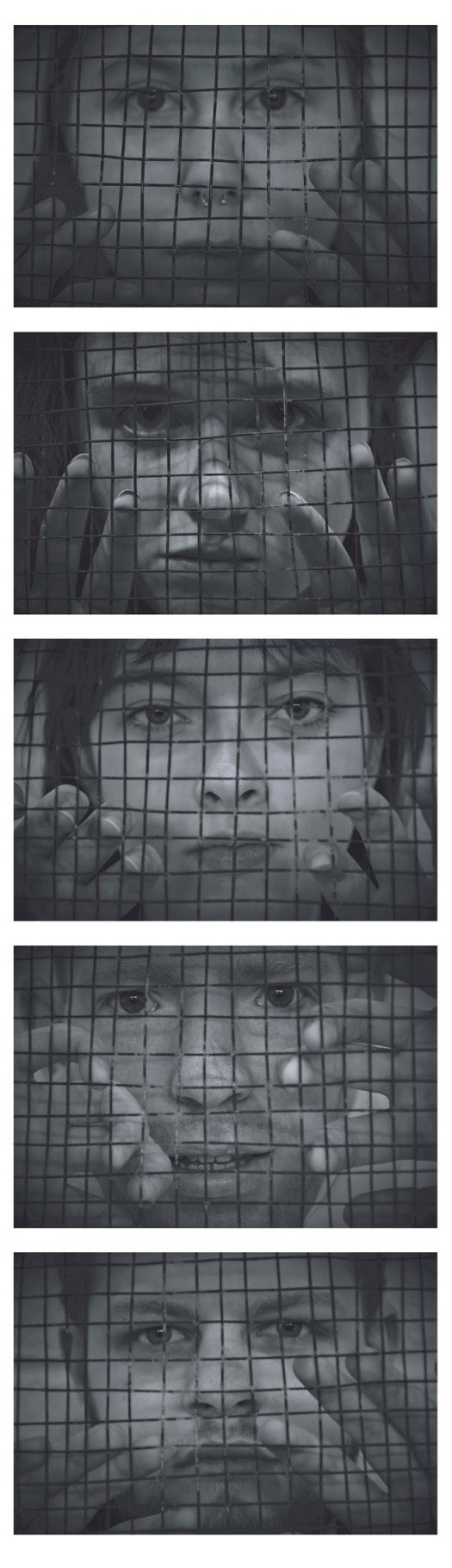
final work that may deviate from the work in radical and unexpected ways. There is plenty of inspiration to be cultivated from these original works, written by authors as wide and varied as Ernest Rhys, Ursula K. Le Guin and Franz Kefka, and students are permitted to seize upon these inspirations in a host of different ways. A minor character may take the spotlight. A secondary theme may be expanded on. An excerpt could be spun off into its own story.
There are no limits with this approach, which is especially ironic when you consider that all three plays -- An Corpán by Briste Gaeilge Productions, The Happy Place by 18 Peaks Productions and Craving by the Red Group -- engage so overtly with the idea of constraints and limitations. Nor is there any risk of confounding or alienating an audience who may not be familiar with the source material; each play is constructed to work independently of the source material and can thus be understood by any unknowing audience. Of course, any savvy audience member familiar with the source material will enjoy a fresh perspective on literary classics that strive to be as bold and daring as possible. ‘Repetition without replication,’ as Hutcheon calls it, is instrumental to the success of adaptations and perhaps storytelling generally, which is already full of nods, echoes and allusions to past works. Chained Bodies highlights the best and brightest of tomorrow’s acting talent and is well worth a look when it premieres in the Granary Theatre next week.
Chained Bodies is a showcase of UCC’s final-year acting students and can be viewed in the Granary Theatre, April 5th and 6th, at 7PM.

‘L’homme est né libre, et partout il est dans les fers.’ Man is born free, and everywhere he is in chains
Recently Deputy Features editor Sarah O'Mahony sent James and David on a blind date to Alchemy café, Barracks Street. On route they faced the aftermath of the tornado that hit the street that week but were met by the lovely Bev once inside. Will it be a whirlwind romance for the pair or a cold front to the friend zone? David is a 20 year old Arts student from Waterford and James is a 20 year old English student from East Cork.
What were you looking for from the date?
David (D) I thought it would be interesting and didn’t have any expectations - my friend also convinced me to do it (you know who you are).
James (J) I suppose I was just looking for a new experience. The idea of the blind date just sounded fun, I wasn’t expecting too much going into it and thought that anything that comes out of it would just be a bonus.
What was your first impression of them?
(D) Kind - he seemed sweet and bubbly so it wasn’t awkward at all really.
(J) I thought David at first seemed really nice and approachable. When I walked over to say hello, he was very open straight away and dispelled my nerves about how the date would go right away.
One thing you had in common?
(D) Adele. (J) We both love Adele. I’ll be surprised if his cringiest moment of the date isn't when I went on about my obsession with her for too long.
How long was the date?
(D) Around two hours. (J) We were together for the bones of two hours I'd say.
Did you guys go somewhere else after?
(D) No. (J) We didn't go anywhere else afterwards.
Would you introduce them to your friends?
D) Yes I would introduce him to my friends. He was very pleasant and receptive so I think my friends would get on well with him.
(J) I would. I think they would like his energy.
What do you think they thought of you?
(D) I really don’t know. I think we got on well but it may not be any more than that.
What did you talk about?
(D) We talked about a lot of different things - a good bit about college and our interests, as well as Cork nightlife, and some housemate dramas.
Cringiest moment of the date?
(D) Not being able to eat because of my retainers.
(J) We kind of talked about a bit of everything. We obviously had a lot in common both being in second year of college. Then moved from there onto hobbies and then spent a while sharing funny stories from bad nights out. bad nights out.
(J) Probably when I was thinking I would get a parking ticket after the date because I left the car in a dodgy spot.
Final impression of them?
(D) Again, he was really bubbly, with a humorous personality, and very comfortable to have a chat with.
(J) Overall I thought David was a
(J) I hope he thought I was nice. My fear before the date was that I would shut down because of nerves or something like that, and there were times where I was panicking about what to say next. He was really good at keeping the conversation going so hopefully that didn't get in the way of his opinion too much.
Would you like to meet them again?
(D) Yes. I think we got on well and had a natural conversation. It was possibly hard to tell the vibes of any connection romantically just because of the setting but I would be willing to see him again.
(J) I would. I think we get on well and would be good as friends for sure.
RONAN KEOHANE MAKES THE ARGUMENT THAT THE MODERNISATION OF EDUCATION IS NECESSARY TO COMBAT UNIQUE PROBLEMS BROUGHT UPON BY TECHNOLOGICAL DEVELOPMENT AND GLOBALISATION
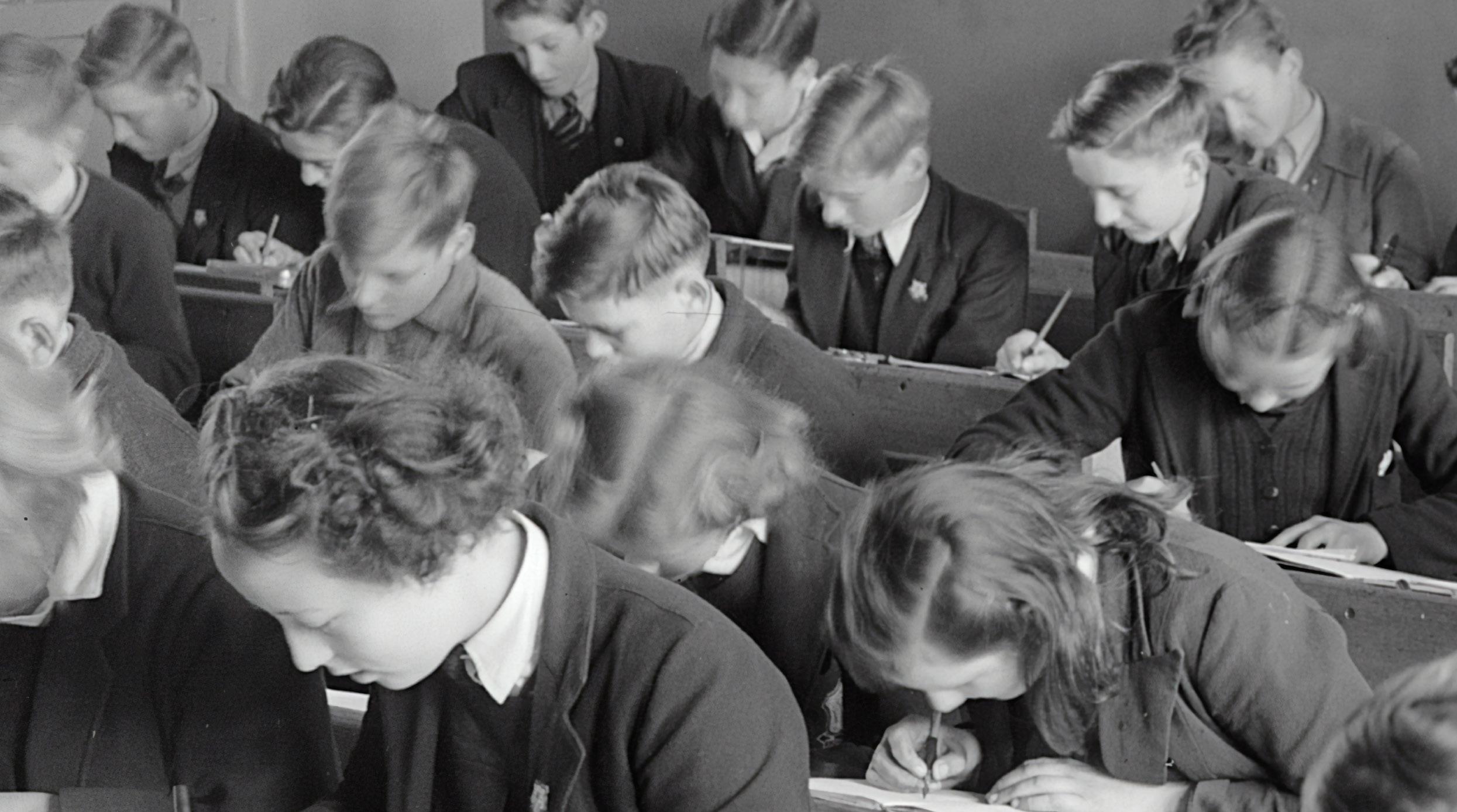
Time and time again throughout history, we have seen humanity turn towards looking at each other’s differences and letting our fears of each other divide us. For centuries, we have been divided from one another by arbitrary inherent characteristics of our identity. Whether it be by race, gender, ethnicity, sexuality, social class, religion or whichever it may be, there has always grown a reason in societies to deprive someone of their human rights and dignity. We have an extensive history of viewing each other through the lens of ‘what makes us different’ from each other and not what truly unites us: Our humanity.
In our modern context, we live in an unequal world where wealth and power are now exceedingly unequally distributed in the world. This is a result of the legacy of imperialism along with the various discontents of neoliberalism and globalisation. We also live in an era of unprecedented development of information technologies which have also impacted our introspection and critical thinking which are becoming continuously discouraged. Social media sites run by profit-seeking social networking spans domain and weaken the attention spans of our youth while the information in our cyberspace only continues to expand. This has coincided with a growing tendency for users to occupy spaces with a distinct narrative known as an ‘echo chamber’ within which misinformation is easily circulated. On an individual level, the role that our inherent ‘confirmation bias’ in analysing online political discourses is significant since it outlines how the structure of online algorithmic platforms coincide directly with our set of cognitive mechanisms which have ensured our survival for generations. With all of technology’s benefits, it has also given rise to new forms of dehumanisation, people are now no longer seen as complex human beings but rather figures within a cyber space. The cyberspace subjects people to a new world of extremes where public figures may receive either extreme appraisal or extreme criticism (or perhaps a combination) on massive public platforms. Public humiliation and cruelty becomes easier to justify and normalise since it is easier to dehumanise people when they become merely viewed behind a lens.
EDUCATION AS A RESISTANCE MECHANISM AGAINST DEHUMANISATION: A CALL TO MODERNISE OUR EDUCATION
This complicated era has brought into question the relocation of power to ‘elites’ who, many opine, are selfserving and do not speak on behalf of the general public nor care enough about the public good. That is the source of much dissatisfaction in today’s world: the ongoing processes of globalisation which are responsible for stark intra-national and international wealth. In light of this, we have seen the widespread emergence and growth of populist ideologies, who’s foundation primarily depends on this ‘othering’ and division. What is dangerous about populist rhetoric is that it is typically based around formulating connections between a number of initially disparate unmet demands which serve to construct a collective identity amongst ‘the people’ which subsequently links them to the proposed leadership that serves to represent them, this cohesion is usually accomplished by establishing a ‘common enemy’ which the ingroup holds responsible for these unmet demands.
This rise in populism has been widely argued to severely threaten a fundamental EU value: Democracy.
It has long been argued that the progress and advancement of a civilization is dependent on our education. Our education system,
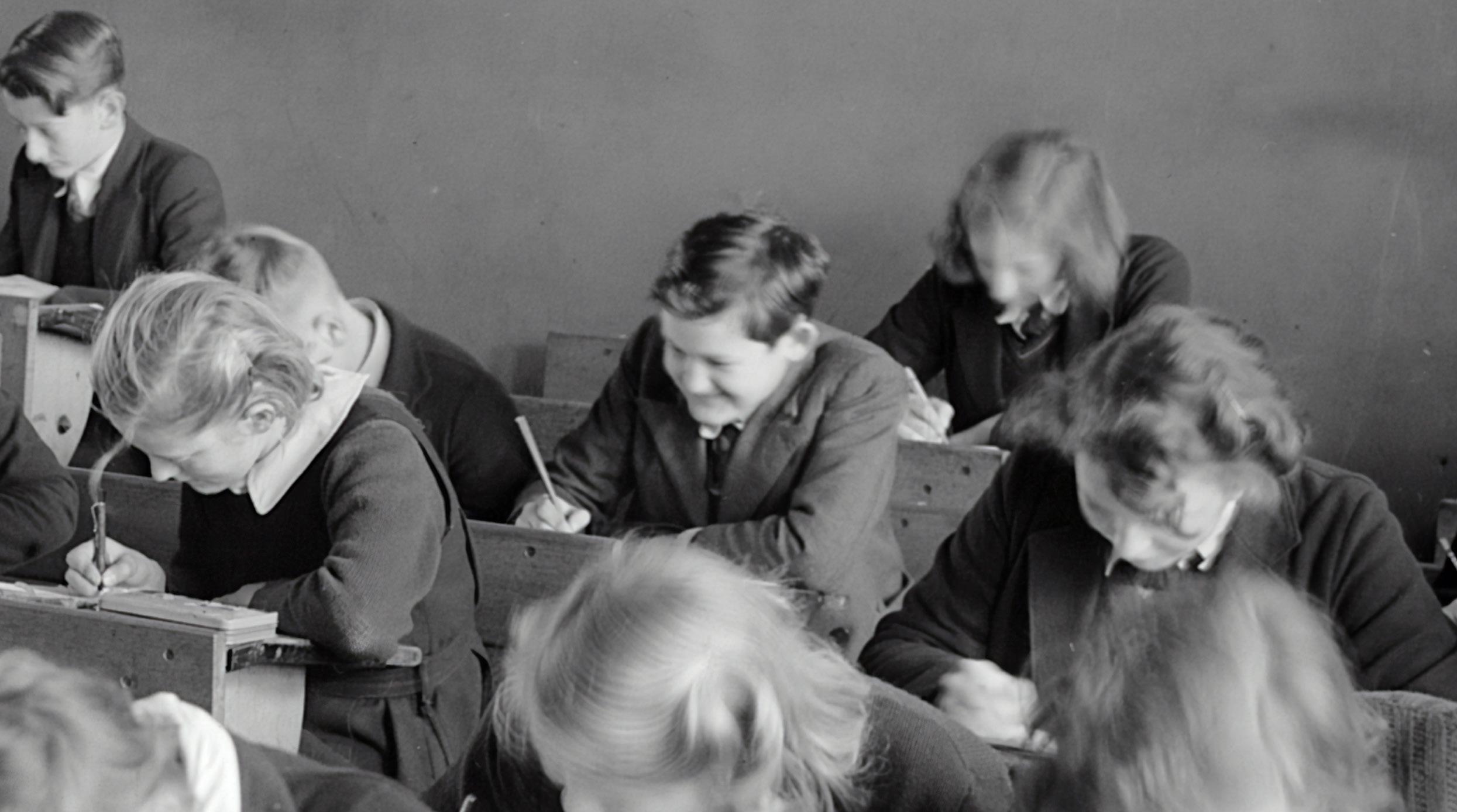
however, has not fully modernised with the challenges that our generation faces uniquely. There is no substantial awareness being spread about the danger that these populist rhetorics pose and a lack of understanding about why they are dangerous. Additionally, conventional education in and of itself is currently riddled with many inequalities as a result of the underlying system. Privatisation has also exacerbated inequalities giving significant systemic advantages to people within higher income brackets over lesser privileged counterparts to perform well in standardised tests. Within the educational institutions, people are subjected to operate in an unfair system where a certain set of skill sets are valued in comparison to others. A system where rat-race standardised testing is the norm and the racers are scurrying for college places on a bell-curve grading chart. People are longer viewed as complex beings but reduced to exam score stats, percentages and numbers stretched along a bell-curve grading system which all serve to define their futures.
Similarly troubling is the underfunding and undervaluing of the humanities. If we give disciplines like history less priority, we learn substantially less from the mistakes of our past. If we give politics less priority, we learn less about the various systems of power under
which we operate. If we give sociology less priority, we learn less about society at large and intersectional approaches to social issues. If we give philosophy less priority, we learn less about the very foundation of knowledge itself and what many brilliant minds of the modern and ancient worlds have theorised about the nature of reality, existence, systems of power and humanity itself. In order to resist this growing dehumanisation and repeating patterns of cruelty and humanity, we need to remind people of the importance of humanities and modernise and adapt our education.
Although STEM is the primary driving force behind our unprecedented technological advancement, it should not be the only knowledge set which is valued by our society. With all of this emphasis on the particularities, we have ignored one of the fundamental cornerstones of modern education and human civilization as we know it; the humanities. This knowledge set as an entire branch has become increasingly neglected and underfunded.
Paulo Freire discussed in his book ‘the pedagogy of the oppressed’ how the oppressor needs to dehumanise the oppressed in order to justify harmful behaviour.
love on film
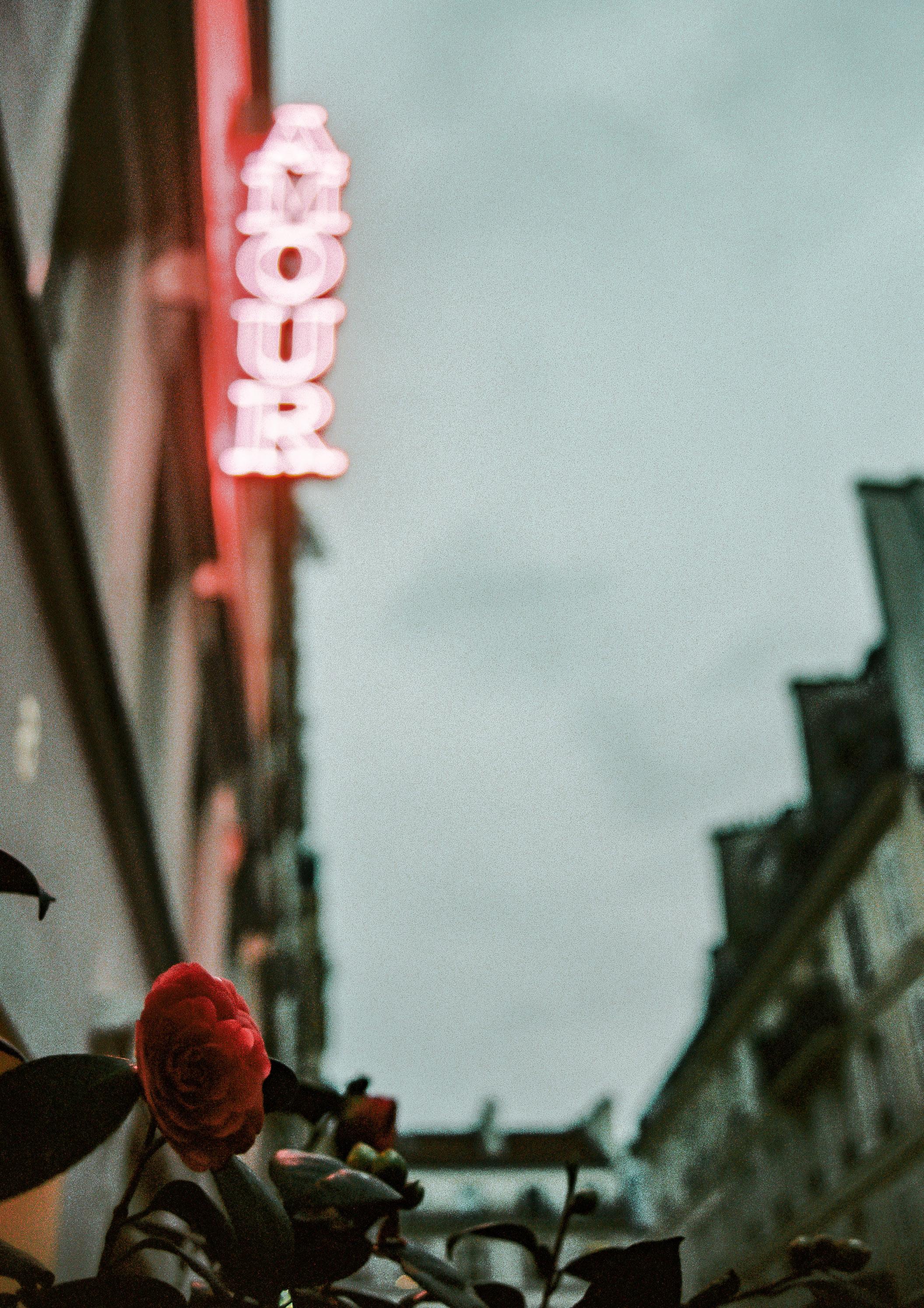
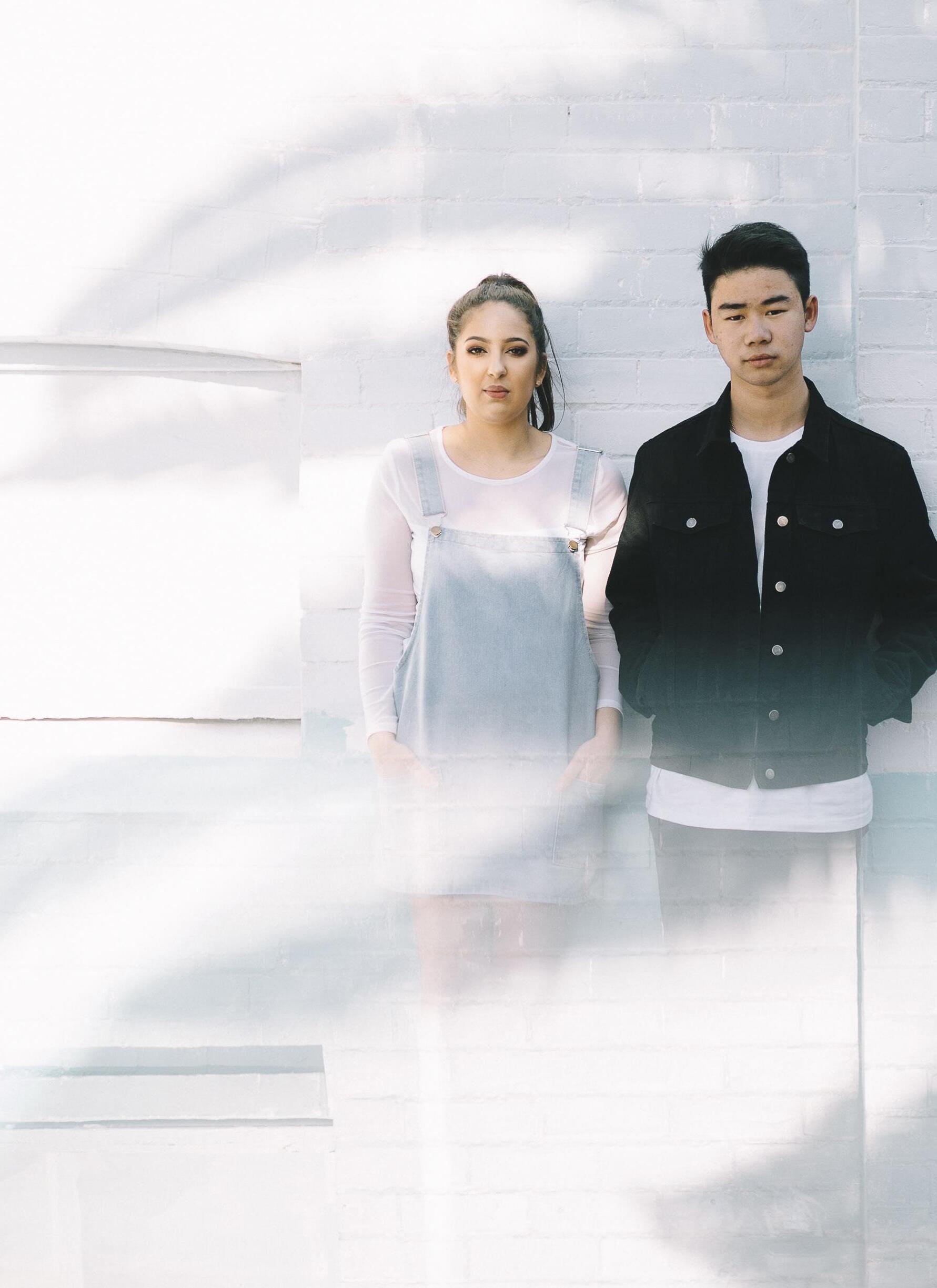
two hearts nervously yet undeniably ablaze
my own bonfire is falling to smithereens as i have thrown the final damning log and yet I stare at theirs, bewitched by the beautiful flames they hold each other like the last thing on earth nervous glances in the haze are we alone yet and they are and they hold each other tighter still love on film
finally we see each other in the light going to see our kind in the dark hundreds of sales and hundreds of smiles and hundreds of tears going out their flame got sparked up and rekindled, and their one burned so bright only to be put out but we revel in the ashes of whatever was left it was here
it was here too that we once hid ourselves away from prying eyes and judging stares no reason to hide under unheld hands love on film
the smaller screen bores into my eyes like a half- light terrified i wait for the onslaught instead the screen goes dark as she holds the remote i secretly find the footage later in life like a forgotten present and half laugh half sob in the dead of the night headphones down so low i can almost not even hear it but i do love on film
in our home we watch the love in the half light and we make it whole we take those embers and gently blow on them like dust so softly that they have no choice but to exist the ashes bellow upwards back onto the screen we know to be ours and we remember what’s lost and we know what we have
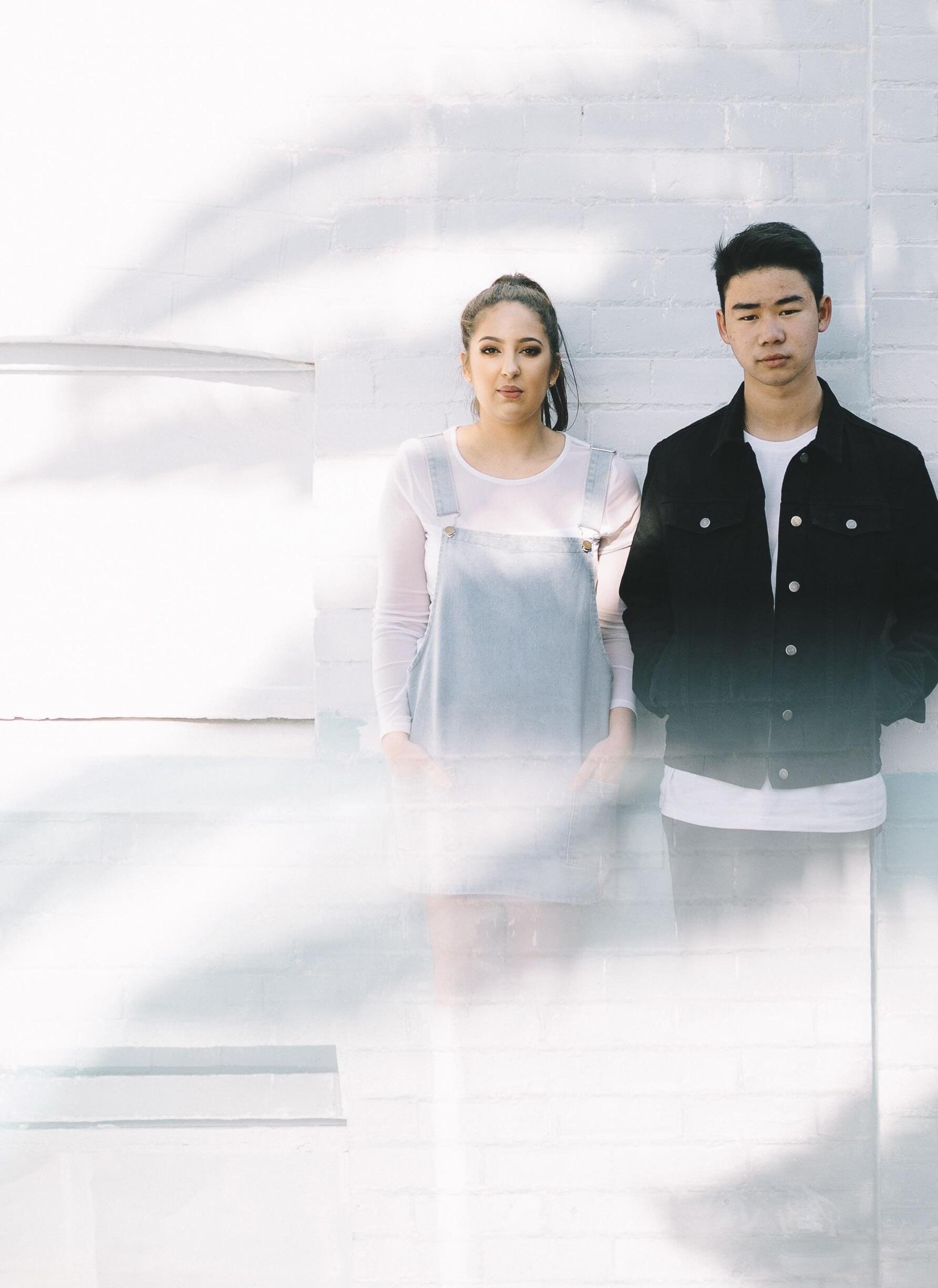 JESSICA ANNE ROSE
when i was nine a boy told me my father and my mother were gay what a shock! not to find that the two of them were supposedly homosexual but to find they were Gay, inherently bad.
my friend told me i should tell my parents it looked like i should be upset so i told them and they laughed but i think the boy was grounded when i was thirteen on the school bus i thought about kissing my friend imagined it would taste sweet, and she smelled like cheap flowery perfume and had soft warm hands that fit better than boys realized i’d never felt attraction before naturally i panicked for six or so months having never heard of a lesbian broke down crying into my nuggets one evening and eventually spat it out to my mother ‘i think i like girls.’
when i was fourteen i was in my first relationship where we were too self conscious to hold hands one day, drunk on the silliness of it, we came out online and it wasn’t until she went home i remembered I had a cousin’s communion later that day (the joys of Catholic Ireland)
i hid in the bouncy castle and watched family arrive and huddle to talk mortified i’d ruined someone else’s special day then one by one my uncles came to me hugged me tightly, told me well done, and that was that.
i mean grandad thinks it’s unnatural but he has two metal hips, so now i am nineteen
i was never naive knew part of the world would relentlessly hate me but i didn’t care about what that part of the world thought about something so harmless joyful
so natural like learning to fly but i see what some post their perverse lesbian fantasies like we exist to fuel their libido and never think of anything else but when i fell, that aspect never once entered my mind loving women is wonderful gentle to hold, warm to touch empathetic listeners who care so much beautifully different, not one the same none interested in playing some game we love to love we share our passion and pain though no coming out is ever the same we unite in our similarities fall again and again hopeless romantics and built in best friends when i am seventy, i imagine sitting in a chair my wife beside me, ruffling our grandchildren’s hair a pretty house, maybe by the ocean always full of music, the kitchen a commotion i cannot picture her, all i know is her smile easy, reassuring, reminding me while that though we didn’t choose who to love, we still chose each other and her hand’s in mine for life through stormiest weather they’ll still call it sin they’ll still find it perverse they’ll still make it a tragedy, because we’ve got to have it worse we’ll watch their caricatures on screen laugh at the inaccuracy, flick it off dance in the kitchen and into the loft and then continue loving, knowing we don’t exist to create history we love because we love, no other reason or mystery you were the ones who called us queer when we’re not any different than anyone else here
They say you never forget your first First love, first heartbreak, first kiss.. But you were my first everything.
I'm not scared of the dark anymore
Because you took me apart in broad daylight
I held you in my arms like a god could hold the sun I lived as Zeus, yet I fell like Icarus.
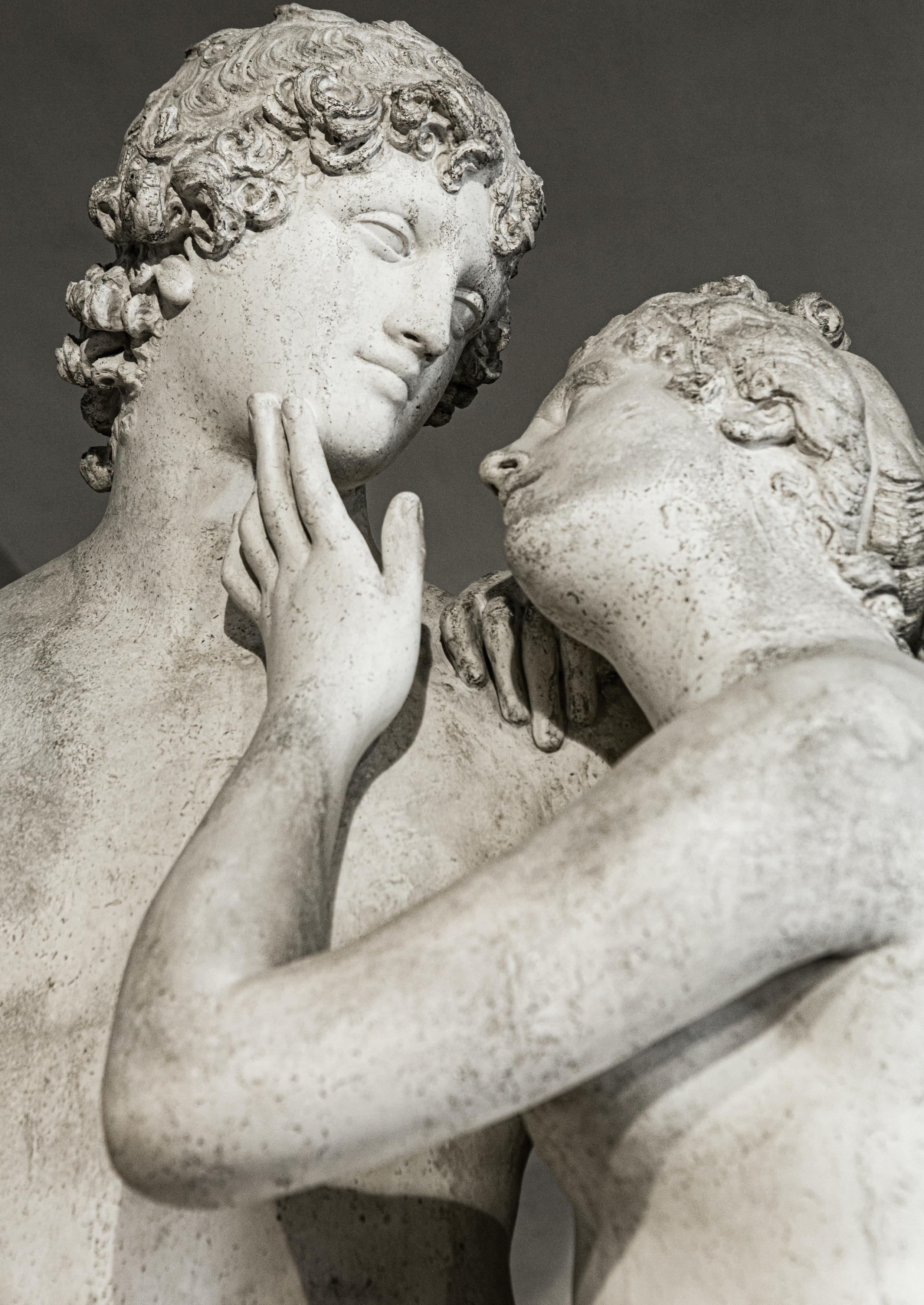
Drowning in your absence and the silence of unspoken history
Once living as one in tandem with you Now I am only burned with the memory of us.
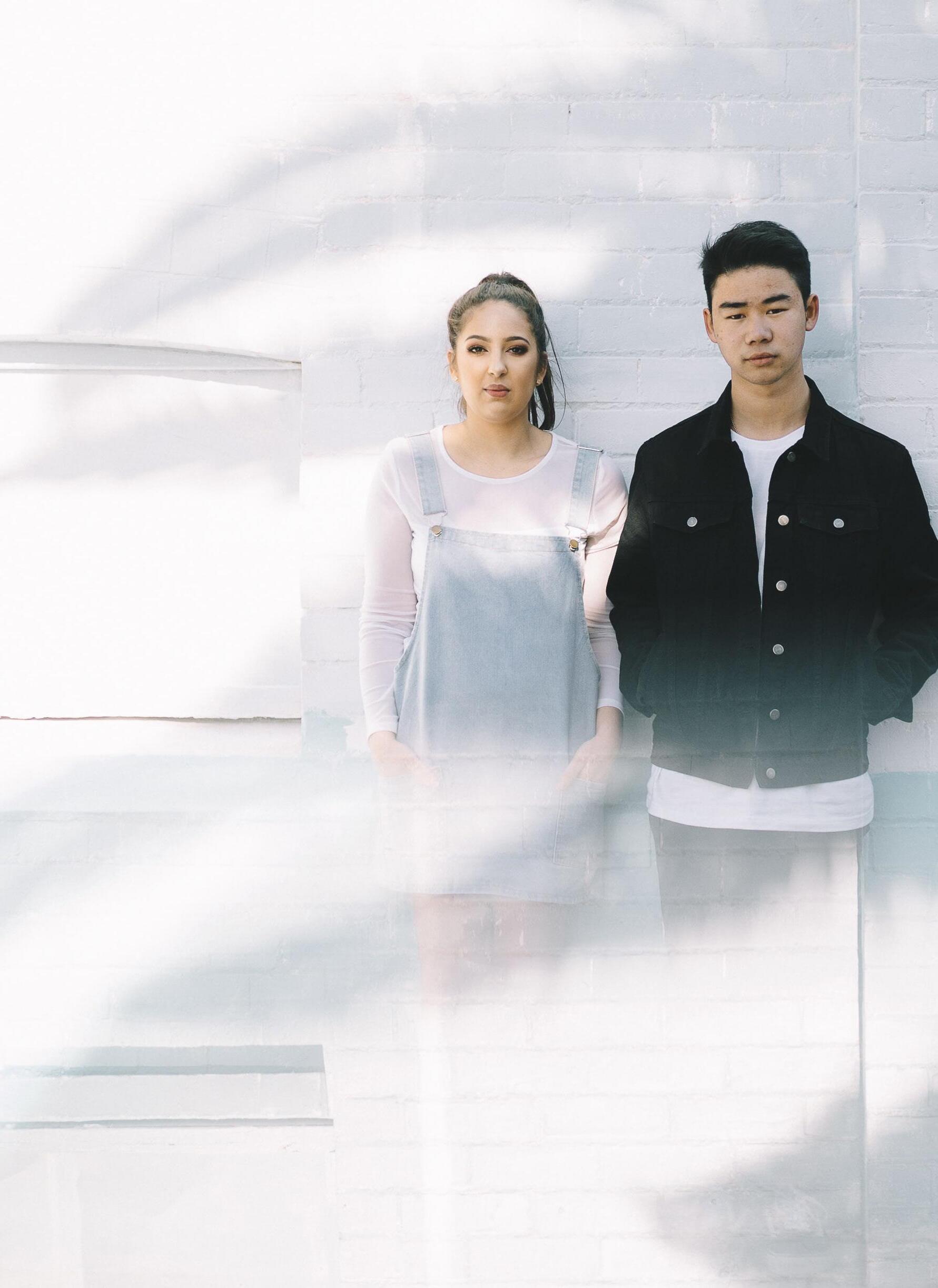
I am a whole person no more
As I watch you decorate your walls with The parts of me you took when you left
And I must stay away
Never answer the call in the night
They say you never forget your first
 MORGAN LYONS
Raspberry flesh
Broken branches
Is this planet my planet
Watching forests crumble, watching fire, watching landfills of plastic
Plastic razor blades
Plastic beauty
Standards that will never decompose, never fade away
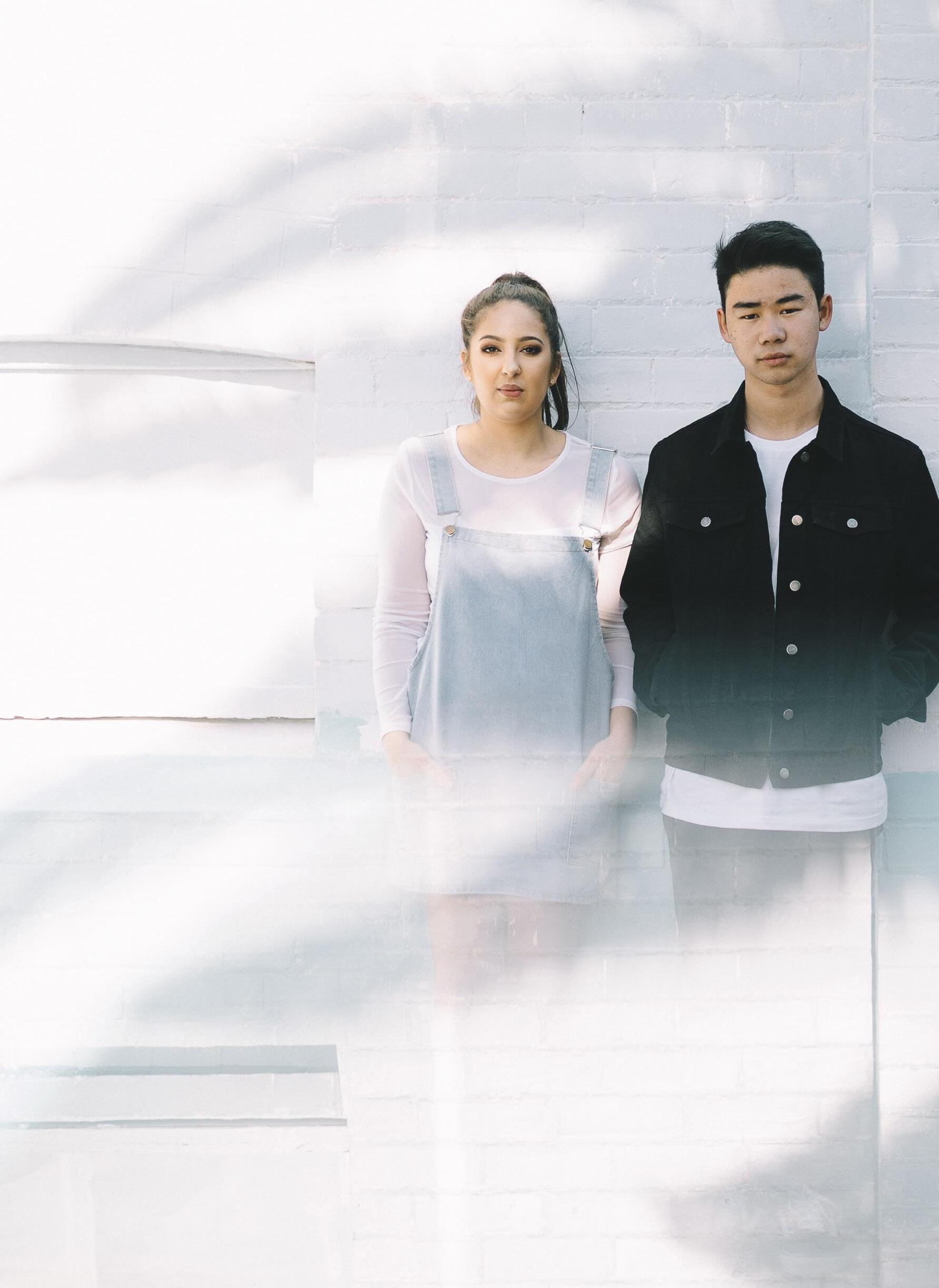
Is this skin my skin
Feeling blades slide over it, the cuts, the ingrown hair the razor burn
Cutting down trees just like waxing off body hair
Body as a landscape to be regulated, stripped down, kept neat and tidy and in line
In line with that body trend
No not this one that one
A trend decides how much we eat, a trend dictates exercise as punishment, a trend tells us work harder
Pave over wrinkles with foundation like paving over woodlands
Scraggly trees have to disappear
Goodbye dandelions
Weeds, not flowers
Pest, not joy
Is this what we do? Is this all there is?
Body of water, a reservoir for toxins
Body of woodlands, just your average dumping ground
Body of human, well, call it a project
A sculpture
Cannot crack
Cannot break the mould
Listen to advertisements, read the magazines
There are instructions, hidden meanings and screaming necessities
And there is me
Slipping off my shoes, standing in the soil
Dandelions at my feet
What if
My body hair is not a weed
What if my stretch marks, my wrinkles, my bruises reclaim the land, twisting and tangling my belly, my thighs, the hills and valleys that make me, that carry me, that keep me safe from storms
I take a step
Among the dandelions
Insects
Bumblebees, protecting our flowers, ourselves
Seen as a nuisance
But they do not know that They are just in flight, just basking in the sun, just existing Eating when they are hungry, when they need to feel full, feel safe, feel nourished
Tree branches reaching out
As I reach up
In nature, I am not among trends
Among fads
Among unspoken rules and stigmas
In nature
I am free
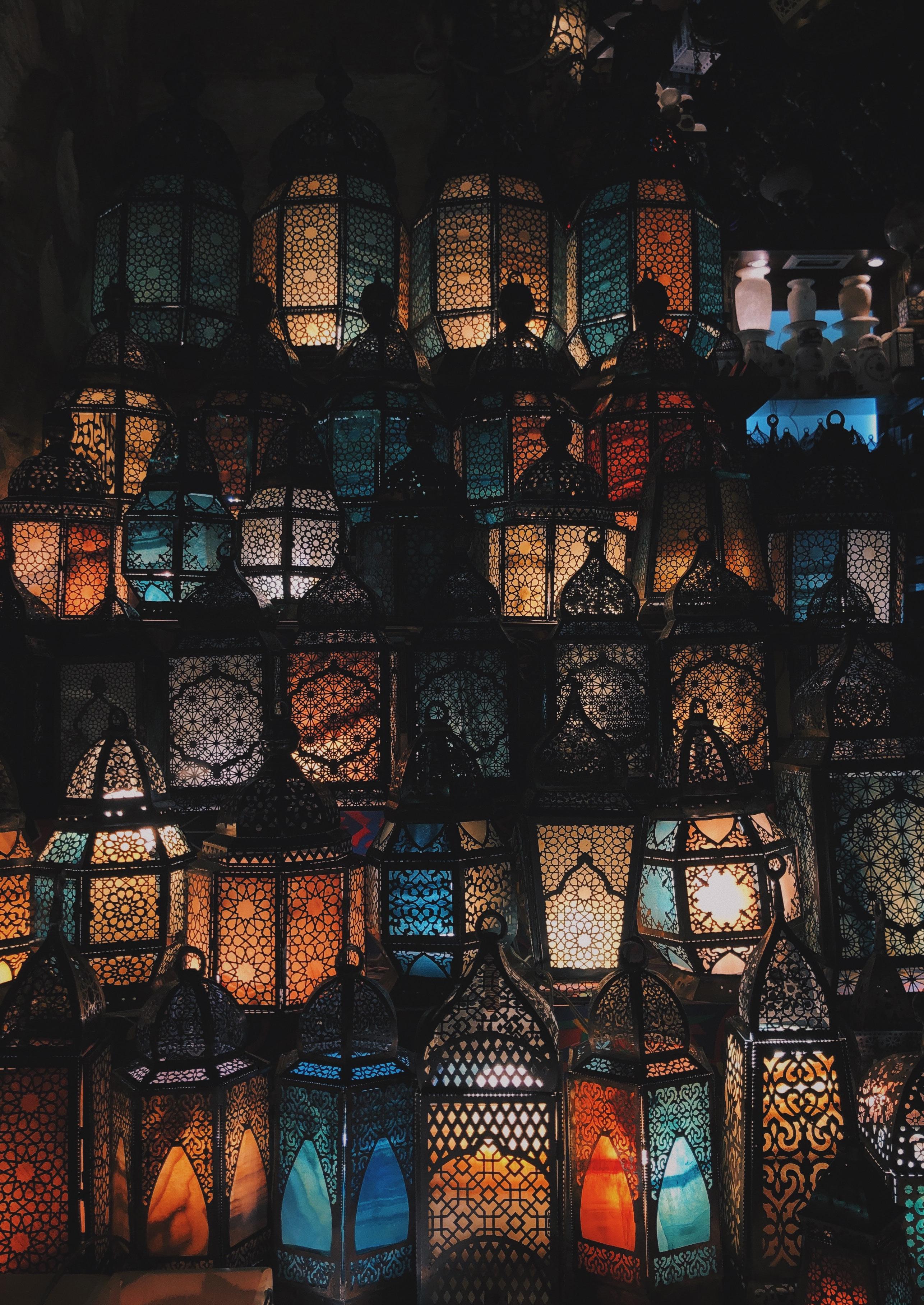
It is becoming harder for young people to identify as religious in Ireland. Most of the people I know are either atheists or agnostics. Science is advancing at an astronomical pace, and with the rise in education and logic, people want to be able to see things and ask for the reason behind why things are the way they are. I completely understand their choice to not associate with organised religion; the atrocities of the Catholic Church are outrageous, and even in Islam, things are perfect. So when people see me fasting during Ramadan, they are amazed that I am willing to not eat or drink water from sunrise and sunset every day in the name of something that I cannot see.
My relationship with my faith is a work in progress. I am not the best Muslim, but I pray daily, try to be a good person. Prayer helps me calm down; it lets me think that life is more significant than mine. In this world that revolves around the individual, the best job and the next exam, prayer makes me feel like I can count on God to leave my stress with him, hoping he will guide me to solve it. Prayer has changed my life. People would not flock in their millions to Hajj or Lourdes if there was nothing there, and people would not give up food and water for nothing. Faith gives me hope in this dark, gloomy world.
Fasting is not just about giving up food and water. It is about thinking of those who don’t have access to food and water every day and putting yourself in their shoes for once. It shows us how privileged we are. It is about resisting temptation and finding purpose beyond capitalism's false promises. When Muslims fast, they are looking for ways to be better. They are trying to incorporate the lessons that God teaches us about kindness. It encourages people to be more respectful. It enables us to be patient. It encourages us to give charity and look beyond ourselves. It discourages us from doing wrong. It reminds me of the values that religion encouraged before those in power tried to manipulate it for their own gain.
Religion can offer a sense of community to people. Places of worship used to act as a free social space where people would come together and connect. Nowadays, finding a place to socialise that does not involve payment can take time and effort. During Ramadan, people are encouraged to share their Iftar (night meal) with friends or neighbours and open their fasts together. We are encouraged to pray together and attend mosque. Ramadan can inspire us all to be better people. Faith does not need to be something extravagant; it can be as simple as trying to manifest something but believing that maybe God can fast-track the process. It can be helping someone out with a problem or simple acts of kindness to brighten up someone else’s day. I cherish my white friends who actively wish me Ramadan Mubarak, avoid eating and drinking around me and do what they can to ensure my fasts run as smoothly as possible.
Being a person of faith does not mean someone is less intelligent or disregards science. In fact, science allows me to marvel at the world that God created with everything in perfect alignment. It makes me want to find answers and dig deeper. Science and religion are not in conflict with each other. Science can be the tool for answering religions' most profound questions. So the next time someone gasps at me, “not even water?” I will politely answer, “yes, I do it for God; yes, I know it sounds crazy”, but it actually adds sparkle to my life.
CONTRIBUTING WRITER SAOIRSE MANNION EXPLORES THE DEPICTIONS OF DISABILITIES FOUND IN FAIRY TALES AND FOLKLORE AND OUTLINES HOW MANY OF THESE DEPICTIONS PERPETUATE HARMFUL STEREO TYPES.
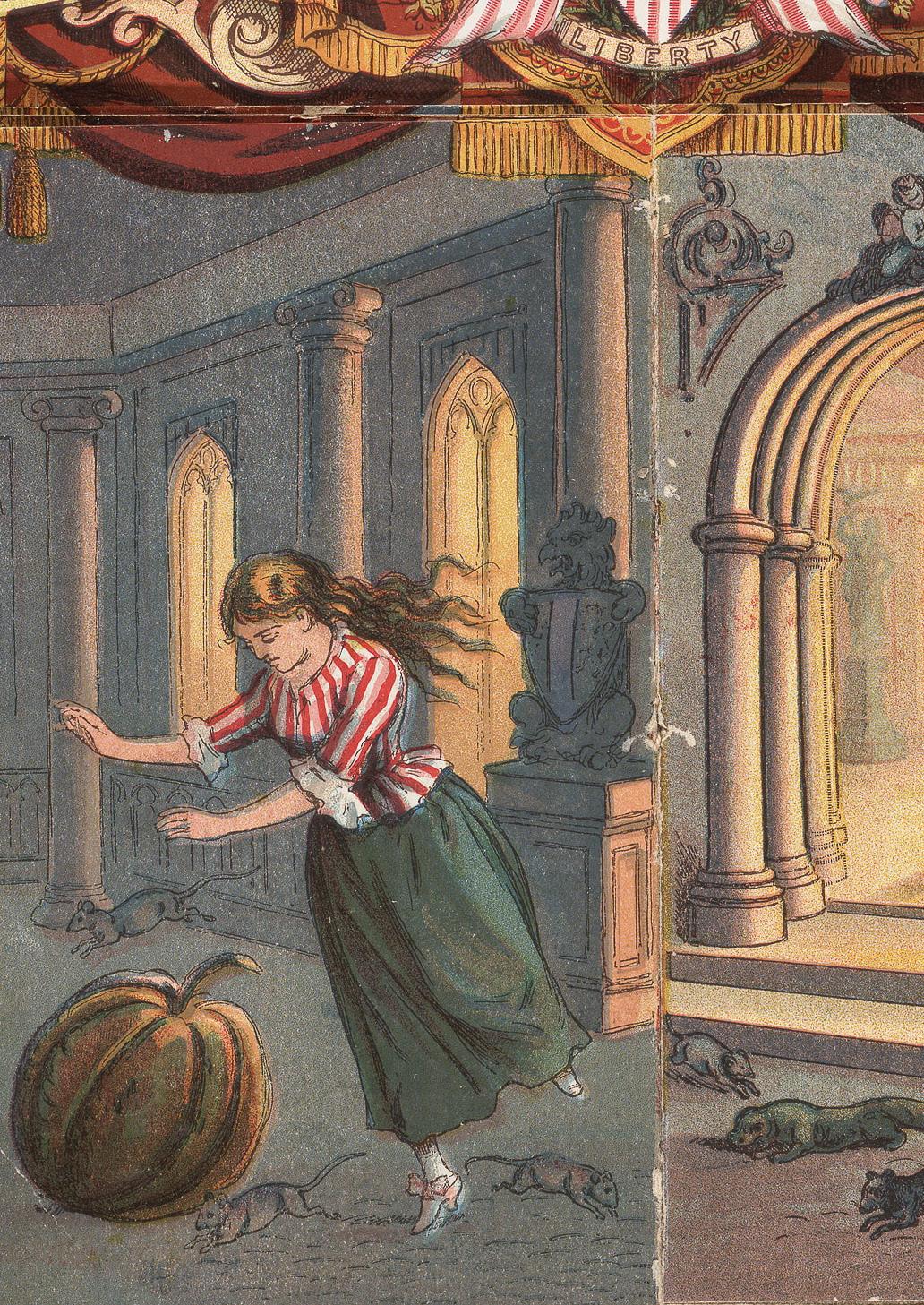
It is undoubtedly true that fairy tales and folklore have existed in our society for centuries, being retold and reimagined over generations. Their whimsy and moral lessons have made them a device for escapism for many audiences. But it is important to acknowledge that these stories have also immortalized the beliefs and cultural values of the times they were written. This is especially clear in how disability is represented in these tales.
Disabilities have existed since the beginning of human history. Still, unfortunately, due to the lack of research and modern knowledge, people with disabilities or disorders have historically been misunderstood and misrepresented. In ancient cultures, people with disabilities were often seen as cursed by the gods. Some were even abandoned and left to die. Thankfully as societies evolved, so too did the attitudes surrounding disability. We have seen greater acceptance and understanding in recent years. However, we still have a long way to go, as people with disabilities are often marginalized.
Folklore and fairy tales have represented disability in various ways, some of which have been positive but, for the most part, have been negative. One of the most common ways disabilities are represented in fairy tales is through transformations or magical cures. We see this both in ‘The Little Mermaid’ and ‘The Beauty and the Beast’, where the main protagonists are transformed by love. Some may see this as a positive representation of disabilities and how people can overcome them if the conditions are met. But when explored deeper, this can be very problematic. This may be an example of what is known in the disability community as ‘inspiration porn’. This phrase was first used in 2012 by disability rights activist Stella Young and has since gained popularity. The term was defined on an episode of ABC's Speechless as a "portrayal of persons with disabilities as one-dimensional saints who only exist to warm the hearts and enlighten the minds of able-bodied people". This is because it only emphasizes people who "succeed" in "overcoming" their disability to become "normal," this ideology is damaging. It overlooks that disabled people are “normal” people, many of whom have no desire to overcome their disabilities, as it is simply a part of who they are.
In some stories, we see that disabilities are a plot device to create a sense of otherness. For example, in ‘The Ugly Duckling’, we know the protagonist is ostracized due to his appearance until he transforms into a beautiful swan. It is also evident that characters with limb differences are villainized in many stories. This is so harmful as so many fairy tales are marketed towards children, not only causing distress and discomfort to disabled children but this could also perpetuate harmful stereotypes and biases in able-bodied children. More inclusive representations of disabilities in fairy tales and folklore have recently been produced. In a new adaptation of "Cinderella," for instance, a princess uses a wheelchair. The protagonist in the "Beauty and the Beast" adaptation has hearing loss. The increased understanding and acceptance of disability in contemporary culture have been reflected in these adaptations.
In conclusion, the representation of disabilities in fairy tales and folklore is complex. It varies widely depending on the story and cultural context. While some accounts offer positive representations of disabilities, others perpetuate harmful stereotypes or use disabilities as a plot device. As society continues to evolve and become more inclusive, it is essential to critically examine these stories and promote more inclusive representations of disabilities. Doing so can create a more just and equitable world for people with disabilities.
Rion’s identity as a designer is fun and creative. She mixes fitted corsets with poofy skirts, emulating the volume and extravagance of the baroque era. Her use of repurposed materials and unconventional processes, like spray painting, is a big part of the design process. “For my last collection, I created the fabric first. I had a party with my friends, they were playing music and I put fabric all around the walls. Everyone who was there was able to spray paint onto it. That was the start of the creative process for me. And then creating something out of other people's work, who maybe never even used spray paint before, who didn't even know what would be happening.” The juxtaposition of modern spray paint on vintage silhouettes creates a fun and cheeky textile universe. She adds: “I feel like my friends influence my creations as well, the people I surround myself with, and the places I surround myself with definitely come into my collection quite a lot.” But Ríon doesn’t have a one stop shop process. She is still learning and shaking things up with every new collection. Her interest in fashion was encouraged through college where she learned to push it in more interesting ways. She found out that on top of being a way of everyday self expression, fashion and design was a chance to be creative and make art.
Designing snazzy outfits for the stage is also a specialty of Ríon’s, with collaborators including Orla
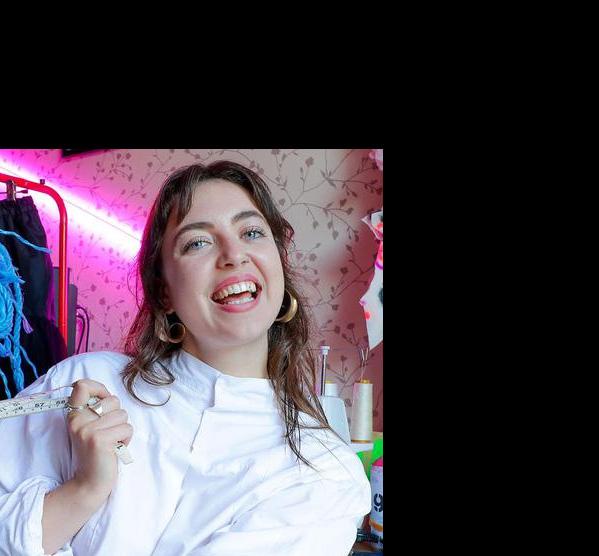
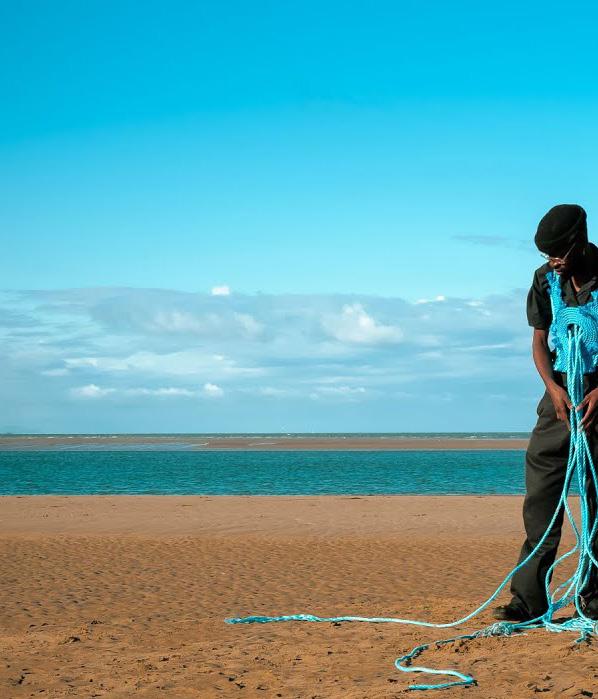
FASHION EDITOR JUSTINE LEPAGE CHATS WITH RÍON HANNORA, A CORK-BORN EMERGING DESIGNER AND STYLIST WHO IS ALL ABOUT CREATIVITY, SUSTAINABILITY, AND BREAKING THE NORMS OF GENDER AND AGE IN THE FASHION INDUSTRY. THE FASHION REBEL TELLS MOTLEY ALL ABOUT STYLING CMAT, HER UNCONVENTIONAL DESIGN PROCESS AND HER ADORABLE “SCRAP BABIES”.
Gartland and CMAT (who she has been styling for for years). Working with singers consists in balancing showing her own style and skills with the image the artists want to present of themselves. “With CMAT, she has a very distinct style herself. She’s quite western, and I suppose that fits into my pieces, because my corsets and drapeful dresses are quite western. I made her a capsule wardrobe, six looks over the course of maybe six months. When she went on tour, she just mixed and matched everything as she went. A lot of the pieces were layerable or adjustable, so it's kind of perfect if you're on tour, because you don't have to bring a big suitcase with you. She wears them in her everyday life as well.” Ríon and CMAT worked closely together on that capsule, having regular fittings and throwing ideas at each other, “everything that I give to her she's like “yeah, perfect”. She's so easy going about it.” When collaborating with Orla Gartland the process was a bit different, as the singer contacted Ríon two weeks before her concerts at the Olympia asking if there was anything pre-made she could wear to the show. “I came to the green room of the Olympia the day before her show with just a few pieces, we put a few outfits together and thankfully, everything fit perfectly.” The process is different for every collaboration.
Repurposing materials and allowing her customers to rewear her pieces in different ways are only some parts of Ríon Hannora’s sustainable ethos. She also recycles fabrics and scraps to create what she calls her “scrap babies”, cute and bizarre little creatures that she creates as one of a kind pieces “without a specific plan or pattern” and
stuffs with scraps. “I just go for it. I think that's kind of my method of designing. I don't normally have a big plan, I see what happens. Sometimes that doesn't work out, that's okay.” These critters sprouted from Ríon’s fabric stash, accumulated over her years of fashion college “I’m a big hoarder, I keep everything. But I don’t want to use these fabrics in my collections that much, a lot of them would be synthetic and stuff. Even though I own them, I hardly want to throw them away, or even give them to someone else, because I wouldn't be sure where they'd be going.” She decided during lockdown to start making these scrap babies, as a way to use up all her scraps and fabrics and as part of a zero waste and sustainable practice. “I have so much fun making them, and I definitely personify everything. I feel like everything that I own has a name. So it just makes sense that I would name them and give them all little personalities.” For example, her scrap baby Jasintha comes with the attached description “Hi! I’m Jasintha, and group chats make me nervous”.
We move on to chatting about being online as a creator, a topic that inspired Ríon for her previous collection “horse girls”. She defines her relationship with social media as “love-hate”, recognising that without an online platform she “probably wouldn’t have a business”, and being thankful for the ability to have full control over her brand and online presence. But on the other hand, she mentions the pressure and toxicity of social media, and how easily ideas are stolen and plagiarised from creatives online. She adds “you might spend so much time on making something, but you just need a really good photo of it. And that's the thing that matters most, rather than the quality or the idea behind something. You just need to grab someone's attention within five seconds or less, that can be quite frustrating.”
While she makes clothing that could be dubbed feminine, RÍon collaborates with models and talent of all genders for her creations. Men in frills and corsets and genderless creatures populate the colourful world she creates. I asked Ríon about where she thinks gender lies in the future of fashion.

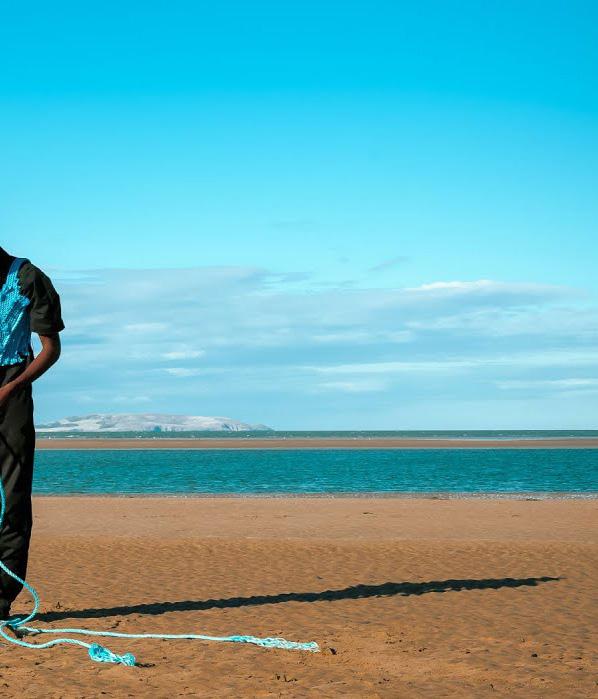
“Although I wouldn’t be his biggest fan, I think people like Harry Styles are making way for straight men to wear dresses and more. Now, I know that’s not him directly, he has a stylist, and a designer in the back, but he’s normalising it and making it cool, less scary. I think that the more people like that, the better. On the red carpet these days, a lot of guys are wearing really femme clothing. And I think it's amazing! Women have been wearing suits for quite a while, but, I think there’s been a turn in the past few years. People are just exploring that part of themselves, and I love it.”
Ríon’s collections use bold colours and playful shapes that can be dubbed as youthful, but she is aiming to design for older customers as well. “The past few collections I've made have been very aimed towards people our age, young people. Which is great, but I think I'm actually gonna try and design for older people as well. I love the idea of seeing women in their late sixties, seventies, wearing a corset, and a big gown on the daily. I've been thinking about it… Our bodies obviously change as we age, they get bigger, and more skin forms. I would obviously love to see sixty year olds in crop tops, but you have to make things that people are comfortable in. So I want to create pieces that might be longer, to ask people over the age of sixty what they like to wear, what are the shapes that they find empowering. I remember one person saying to me that wearing one of my corsets is like having a weighted blanket, and that they felt so secure in it. It made me so happy. I would hate for people to feel excluded from that experience just because of their age so I'm going to try and make things for everyone. I'm always so happy when I'm looking through fashion magazines and there’s people with grey hair, or elderly men wearing Prada.”
Ríon also mentions she wants to explore designing with less crazy colours, to focus on the pieces themselves. “I think I'm going to try and use straight cotton without any spray paint, just to see. I use cotton canvas a lot, that's what painters use, so it could be like, you get a dress, or you get a corset, and you can create onto it then? If you want to, you can paint, draw on it, dye it yourself, whatever you want. And then you have a piece that you kind of created.”