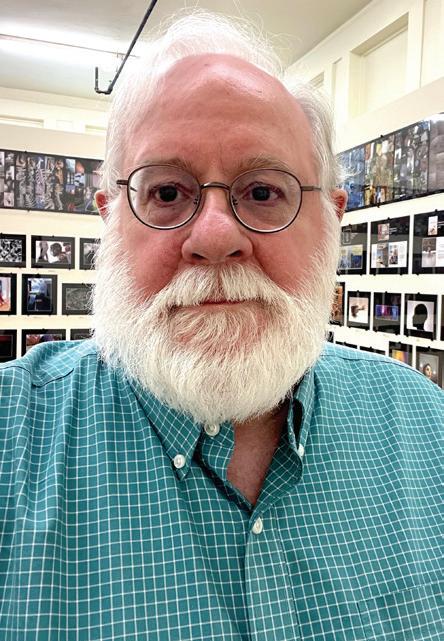
BY H. MICHAEL SANDERS
“I really believe there are things nobody would see if I didn’t photograph them.”
- Diane Arbus1
As both a photographer and a poet, the distinctions between visual modes of poetry and that of language has remained ambiguous for me. I experience poetry is an intensified state of living and an attitude of deepened awareness in which your attention is drawn to subjects in an ecstatic manner of heightened responsiveness. Poetry in all media evoke emotional, sensory, or intellectual responses, and often arrives as gestalt experiences that can bypass the rational mind. Where poetic language relies upon meter, rhythm, sound, and rhyme; photographic poetry relies upon color and luminance, texture, repetition, and contrast.
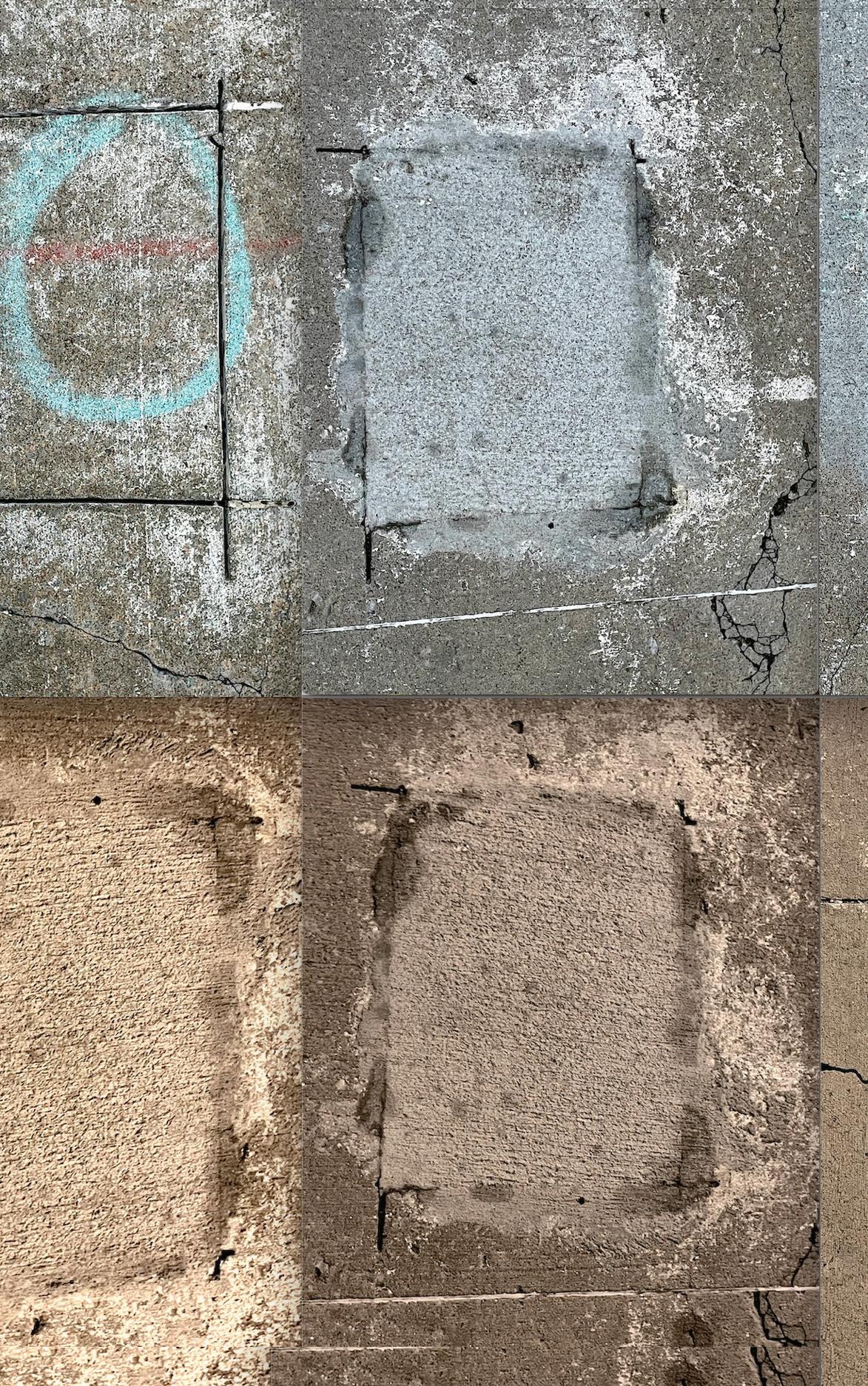
Poetry functions similarly with photography as it does with language, compressing and condensing perceived and emotional experiences into integrated, synthetic compositions that function metaphorically (saying one thing is another). The results range from provocation and questioning to the promotion of reflection and evocation of emotional memory. This is particularly true when constructing montage images composed of multiple photographic frames that link to one another like words in a stanza. Such images permit repetition with slight variation that can evoke change and passage of time. On the other hand, clashing or unrelated images surprise and confound us with reverberating conundrums in their jarring juxtaposition with one another.
There is a long history of thinking about photography as a mirror held up to reality, capturing “facts” or “truth.” This concept has many adherents and was popularized by photographer and curator, John Szarkowski (1925-2007) as “the thing itself.”2 This notion refers to photography’s ability to capture and guarantee the existence of a subject, presenting it as a fact rather than an interpretation of the subject. It emphasizes the tangible presence of a subject rather than the photographer’s interpretation, narrative, or intention, acting as an objective “significant presentation” of that subject.
Famed photographer Ansel Adams (1902-1984) has an often-repeated response to this is, “You don’t take a photograph, you make it.”3 This emphasizes, as opposed to mere documentation of objective fact, the intentional, subjective creative process employed by photographers as they select, visualize, and create imagery through exacting composition, refined technical skill, and aesthetic vision. Any photographer intrepid enough to utilize the technical process of the Zone System of exposure, developed by Adams, knows this is truth. I obviously subscribe to the Ansel Adams view of photographic authorship which incorporates my personal experiences, insights, knowledge, emotions, and craft.
A brief example of the way experience plays a foundational role in my photography stems from my myopia, or nearsightedness. Since I was a small child, my vision has been significantly impaired by myopia. In an unfortunate cycle of events, my parents failed to have my eyes properly checked until I reached age 9, when I was in the third grade. This prolonged period living with myopic vision established an outer limit to the clarity of my visual reality that was measured in feet and inches rather than yards and miles. Therefore, I noticed and was captivated by lots of things in the world that were quite tiny and found upon the ground or
on a wall in front of me within arm’s reach. I saw clearly very little else. My experience was akin to always peering through a microscope while navigating the world.
Once I got my first pair of glasses, the world exploded in front of me. I was shocked, bewildered, and completely overwhelmed by the sheer magnitude of what there was in the world to see, to examine closely, and to marvel upon. While I slowly acclimated to this newly expanded visual world, I remained comforted by the old myopic world which I knew best for quite some time. By the fifth grade I began to photograph with a hand-me-down Kodak Brownie, and later a Kodak Instamatic. Of course, the world I was able to explore photographically was constrained by the lack of adjustable controls, but it began to open windows to imagery in the same way that obtaining glasses had previously accomplished.
This experience, it seems to me, formed the foundation for my lifelong photographic fascination with mundane subject matter in which the ordinary and the largely overlooked features of the world become elevated as visual metaphors for personal experience, tangled memories, and perplexing ideas while retaining their irreducible identities as concrete, physical objects in the world.
The process through which these visual subjects are alchemically transmuted into photographic poetry is well described by German filmmaker Werner Herzog in his theory of photographic “ecstatic truth.”4 Herzog argues that a deeper poetic reality is discovered by abandoning mere factual photographic recording in favor of stylized fabrication, imaginative contextualizing, and teasing out the extraordinary in the mundane. This subsequent “ecstatic truth” emerges in the imagery as revelation and illumination. I have embraced this notion in my manner of seeking out subject matter, combining images into fabricated and stylized compositions, and often forcing them to wear titles that weigh them down with metaphor.
The work in this exhibition is organized into three major groupings:
1) Dark Garden Series
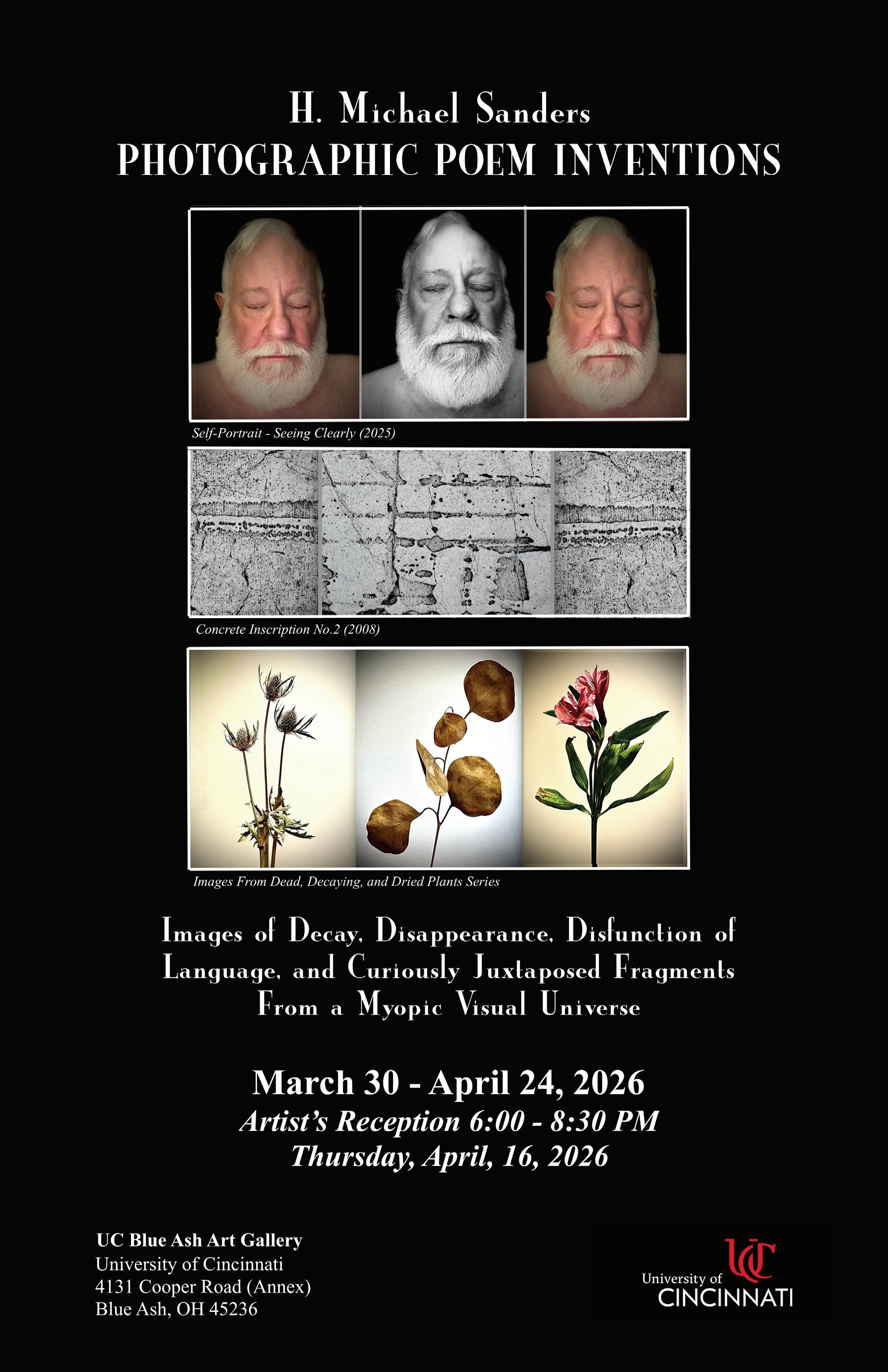
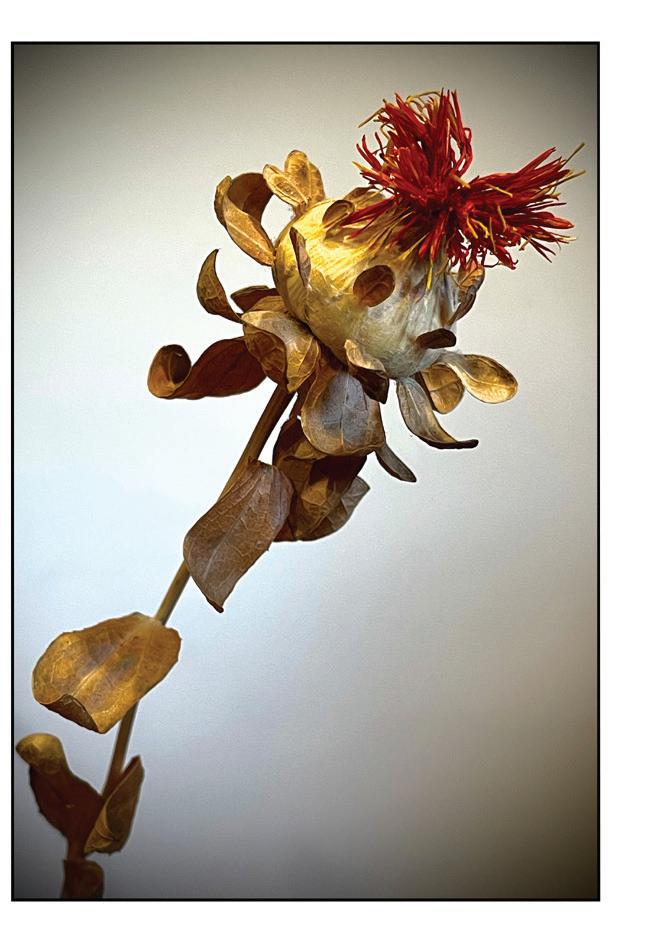
Photographs of dead, dying, and dried plants and deceased animals, my “dark garden” hearkening to the siren song of Charles Baudelaire (1821-1867) to extract beauty from decay. Baudelaire’s flower imagery from the poems in Les Fleurs due mal (The Flowers of Evil -1857) sees evil lurking within the heart of beauty.5 However, I see images of dead and decaying plants and animals as symbolic metaphors of the inevitable natural processes in which we ourselves are entwined as we experience our brief and fragile lives. The aesthetic intention is to amplify the preciousness of life and heighten appreciation of our shared ephemeral experience. Beyond the obvious influence of Baudelaire, my plant series is also deeply indebted to the exquisite botanical imagery of German photographer Karl Blossfeldt (1865-1932).6
2) Disappearing and Dysfunctional Language Series
Images focusing on the dysfunction and disappearance of language, including photographs of actual words in a variety of contexts such as the pages of books and fragmented signage, as well as work that
explores what I consider to be “found” asemic texts. Asemic writing is a form of gestural mark-making that appears to be language but intentionally lacks semantic meaning. Also within this grouping of photographs are images of blank signage and message boards, faux ancient tablets, and other curious oddities of vaporized and disabled language.
3) Decay and Disappearance in the Material World & Curious Juxtapositions
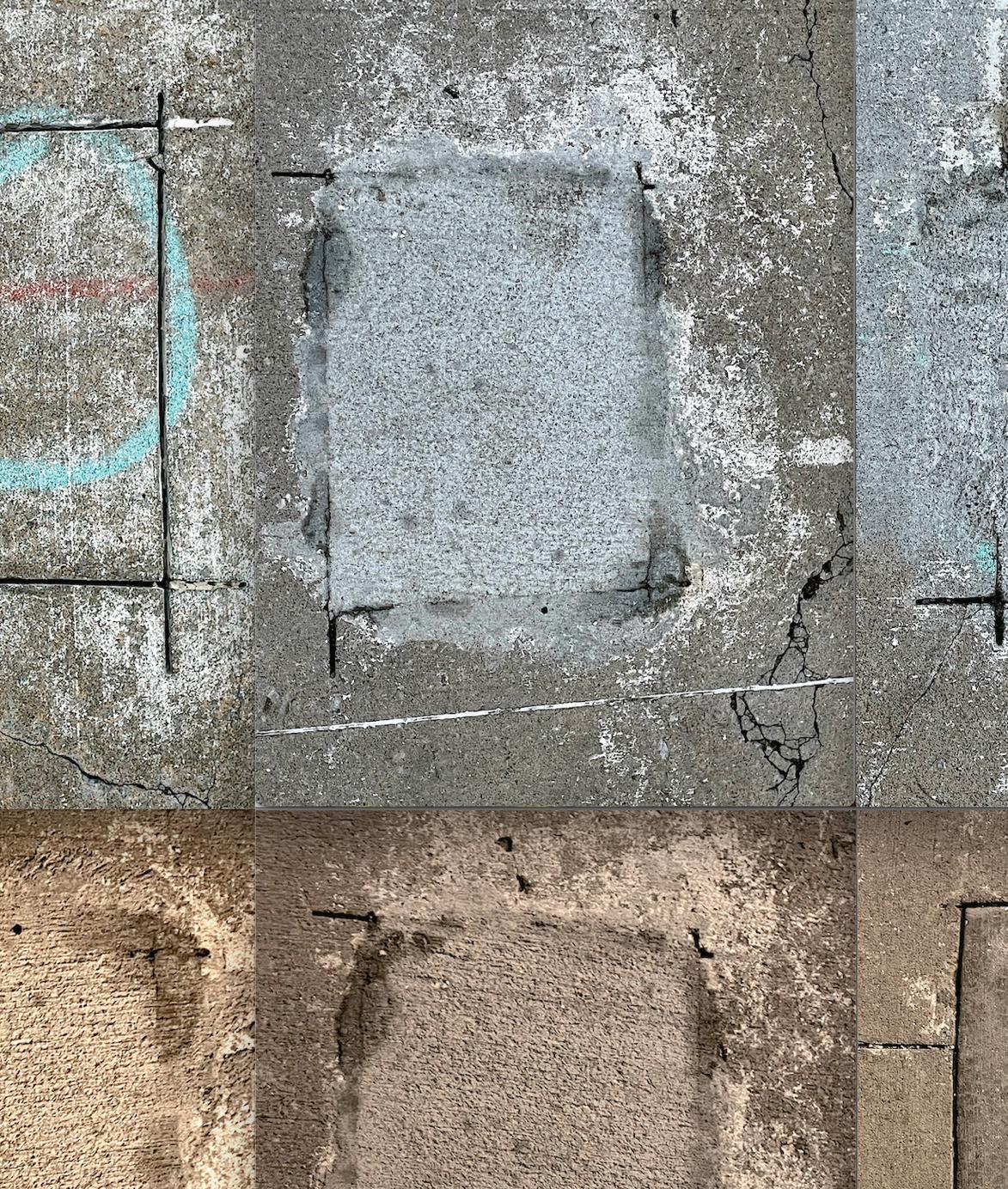
Images constructed of multiple, discrete photographic frames (montage) that either collide like atoms in their combination with one another to create unlikely and surprising new visual connections posing questions of the viewer, or compositions that offer poetic repetition and/or subtle variety through incremental change to suggest non-literal poetic impressions.
The titles of many of these works are as important as the imagery itself in establishing the poetic context in which the photograph or montage might be viewed and is derived from my fevered imagination or some uncanny sense of pareidolia, in which I psychologically recognize some familiar shape or feature in a photographic subject that does not actually exist therein, such as when we randomly see faces in clouds.
My deepest appreciation to Roo Hedrick for the mountain of work she climbed as my studio associate to help me prep an incredible backlog of image files for consideration and printing. This was a project that I literally could not have completed without her nimble technical assistance. I’m also deeply grateful to William Smith at DLS Photo/CEI Sports for his excellent, detail-oriented work to print my image files under the ridiculous burdens of my verbose instructions, massive file lists, and irresponsible deadlines. I remain indebted to Michael Ziepfel who has produced high-quality posters and catalogue designs and managed their printing during the many years of my projects in the
Notes
UCBA Art Gallery, and the catalogue for this exhibition is no exception. However, please note the poster in this instance is my own thumbfisted un-handiwork. My sincere thanks to John Wolfer, acting gallery director, for making this exhibition opportunity possible; and kudos to Eric Anderson, Department Chair of Media Communications & Technology for his support. Finally, endless love and gratitude to Nelly Rimini, my wife and partner, for her lifelong support and encouragement of my idiosyncratic creative work, and her indispensable role in providing the space, time, and resources with which I’m able to accomplish the work. This exhibition is dedicated to her.
1. Diane Arbus: An Aperture Monograph, New York: Aperture, 1972. Republished 2011.
2. John Szarkowski, The Photographer’s Eye. New York: Museum of Modern Art, 1966. Republished 2007.
3. Ansel Adams and Mary Street Alinder, Ansel Adams: An Autobiography. New York: New York Graphic Society, 1985. Republished 1996.
4. Werner Herzog, “The Minnesota Declaration: Truth and Fact in Documentary Cinema,” manifesto. Minneapolis: Walker Art Center, 1999.
5. Charles Baudelaire, Les Fleurs du mal. Paris: Auguste Poulet-Malassis, 1857. English translation, The Flowers of Evil by Richard Howard. Boston: David R. Godine, 2022.
6. Hans Christian Adam, ed. Karl Blossfeldt: The Complete Published Work. Köln: Taschen, 2014
Unless otherwise noted, all photographs in this exhibition are digital silver-halide chromogenic prints from original digital image files.
Blue Bird Elegy, digital silver-halide chromogenic print of scanned paper print montage from 35mm negatives (2003)
Bob Huber’s Bleeding Head (Montage), digital silver-halide chromogenic print of scanned paper print montage from 35mm negatives (2005)
Carcass, No.1 (Triptych), inkjet print from original digital file (2002)
Carcass, No.2 (Triptych), inkjet print from original digital file (2002)
Dead Agave (2009)
Dead Bird (New York City) (2007)
Dead Cardinal (Cincinnati) (2007)
Dead Cat Under a Black Moon (Montage) (2025)
Dead Zinna, inkjet print from original digital file (2025)
Decaying Silvert Ragwort, inkjet print from original digital file (2025)
Deceased Jeffrey Pine – Sentinel Dome (Yellowstone), inkjet print from original digital file (2009)
Disintegrating Leaf (2020)
Dissolving Leaf (2014)
Dried Chrysanthemum, inkjet print from original digital file (2025)
Dried Eucalyptus (2025)
Dried Leucospermum Jelena (2024)
Dried Lotus Seed Pod (2025)
Dried Pussy Willow, No.2 (2007)
Dried Safflower (2024)
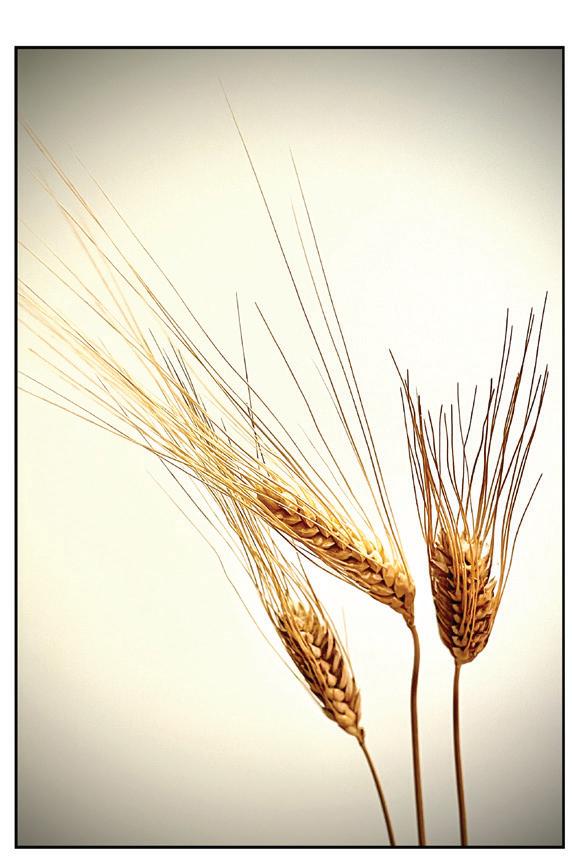
Dried Wheat Stalks, No.2 (2024)
Drooping Penstemon (2025)
Dying Pink Rose Shedding Petals, inkjet print from original digital file (2026)
Dying Sicilian Honey Garlic in Window (2025)
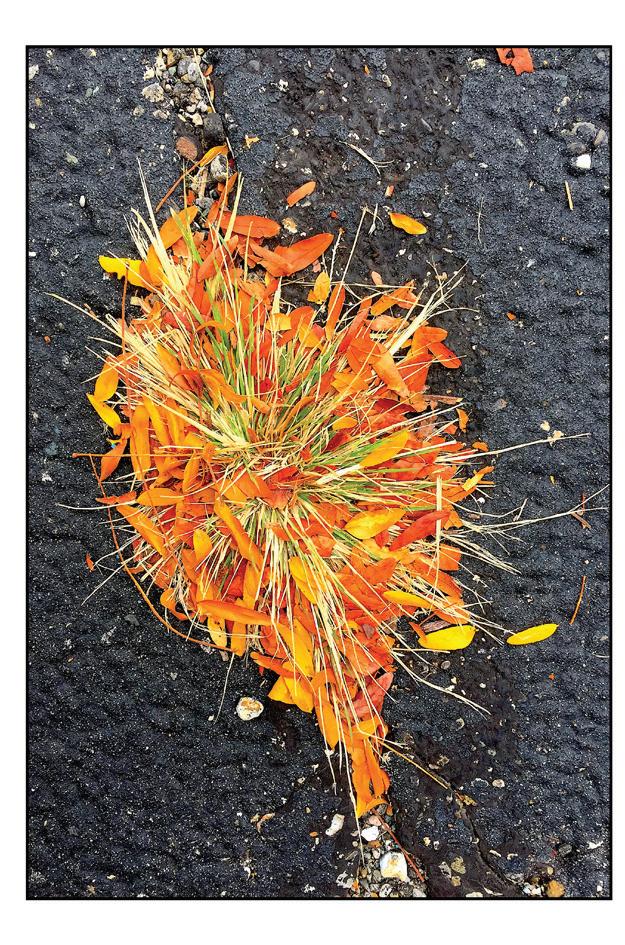
Fall Bouquet – Dead Leaves and Grass (2020)
Glistening Leaf, No.1 (2021)
Last Moment of an Ant’s Life (2007)
Pin Oak Leaf and Salt Stains (2008)
Plucked Grape Stem (2025)
Poppy Seed Pod, No.1 (2009)
Wilting Calla Lily (2025)
Withering Blue Thistle (2025)
Withering Pink Alstromeria (2025)
Ancient Asemic Ostracon (2025)
Ancient Asemic Text (Diptych) (2021)
Ancient Tablet of Forgotten Law (2014)
Asemic Cuneiform, No.1 (2023)
Asemic Cuneiform, No.2 (2024)
Asemic Inscription (2024)
Asemic Tablet – Partially Eroded (2016)
Cause Death (Triptych) (2026)
Concrete Inscription, No.2 (Triptych) (2008)
Disintegrating Tombstone (Triptych) (2026)
Dissolving Newspaper No.1 (2007)
Dissolving Newspaper No.2 (2023)
Entrance to the Dream World (2017)
Epidaurus Inscriptions, No.1 (2022)
Faint Impression of Vaporized History (2023)
Grass Scripture (Montage), digital silver-halide chromogenic print of scanned paper print montage from 35mm negatives (2002)
Gunshot and Rusted Sign (2014)
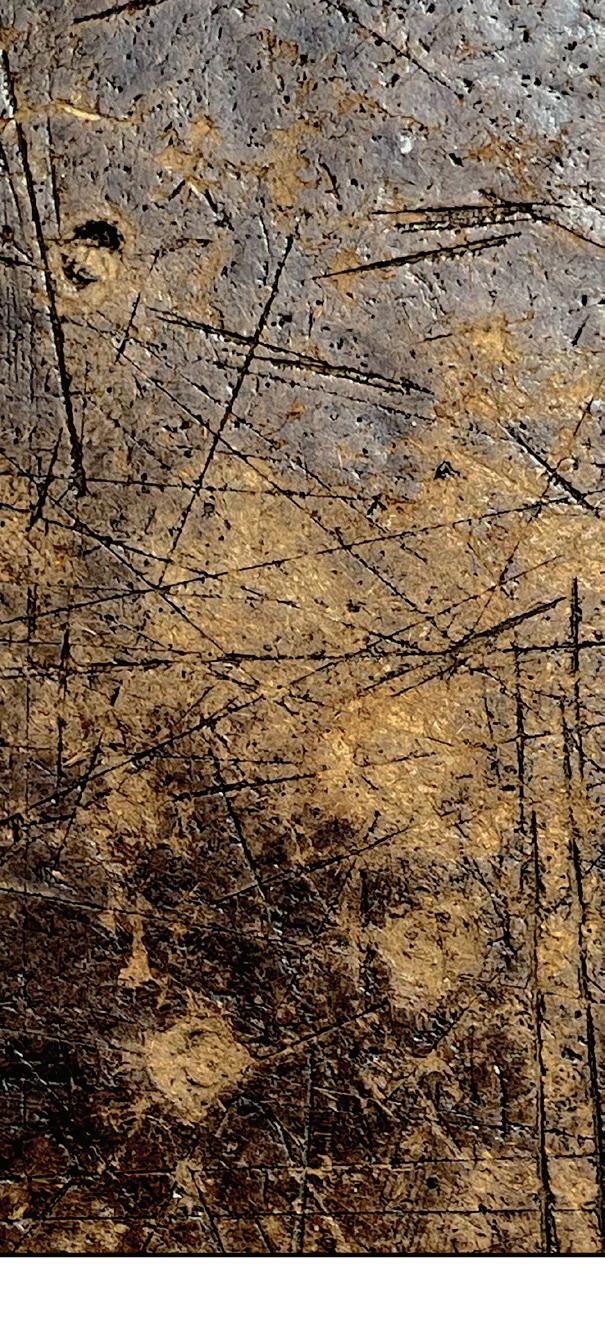
Information (2023)
Parking Garage Inscription (Palimpsest) (2025)
Sidewalk Asemic Inscription (2024)
Tablet of Immutable Laws (2010)
Tablet With Escaping Asemic Text (2016)
Texticles – A Pair of Free-Hanging Texticles (Montage) (2026)
Texticles – Free-Hanging Texticles-No.1 (Montage) (2026)
Texticles – Free-Hanging Texticles-No.1 (Montage) (2026)
Texticles – Free-Hanging Texticles-No.3 (Montage) (2026)
Texticles – Partially Modified Texticle (Montage) (2026)
Texticles – Surgically Modified Texticles (Montage) (2026)
The Unwritten Rules of Work (2013)
Undeciphered Santorini Glyphs (2022)
Vacant Corkboard (Columbia, MO) (2025)
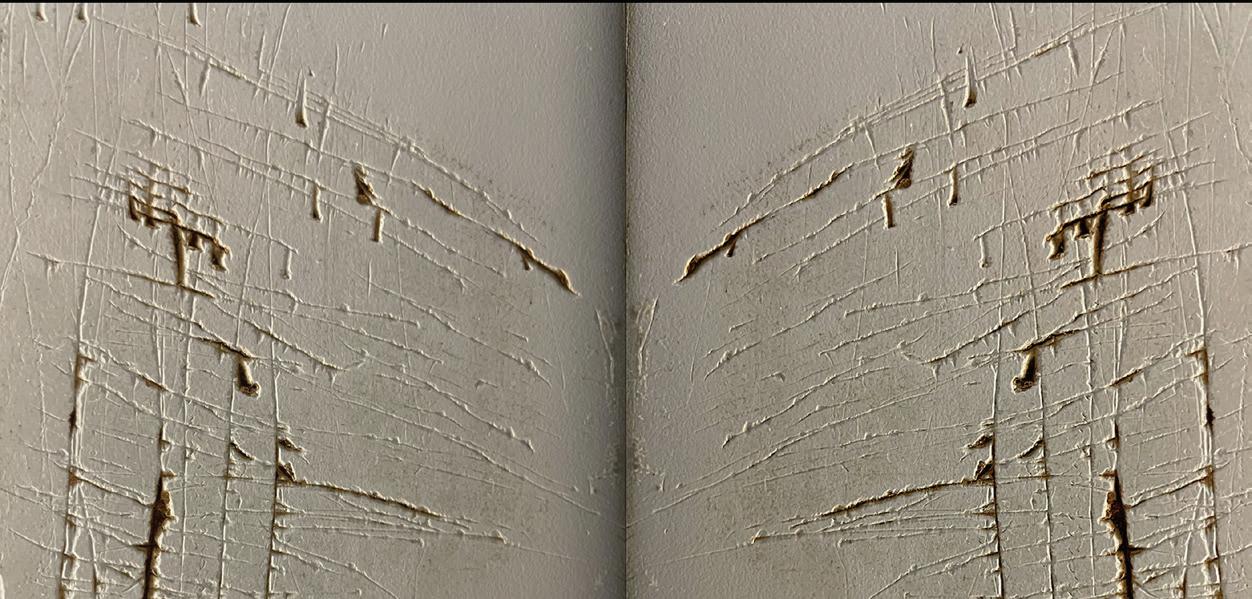
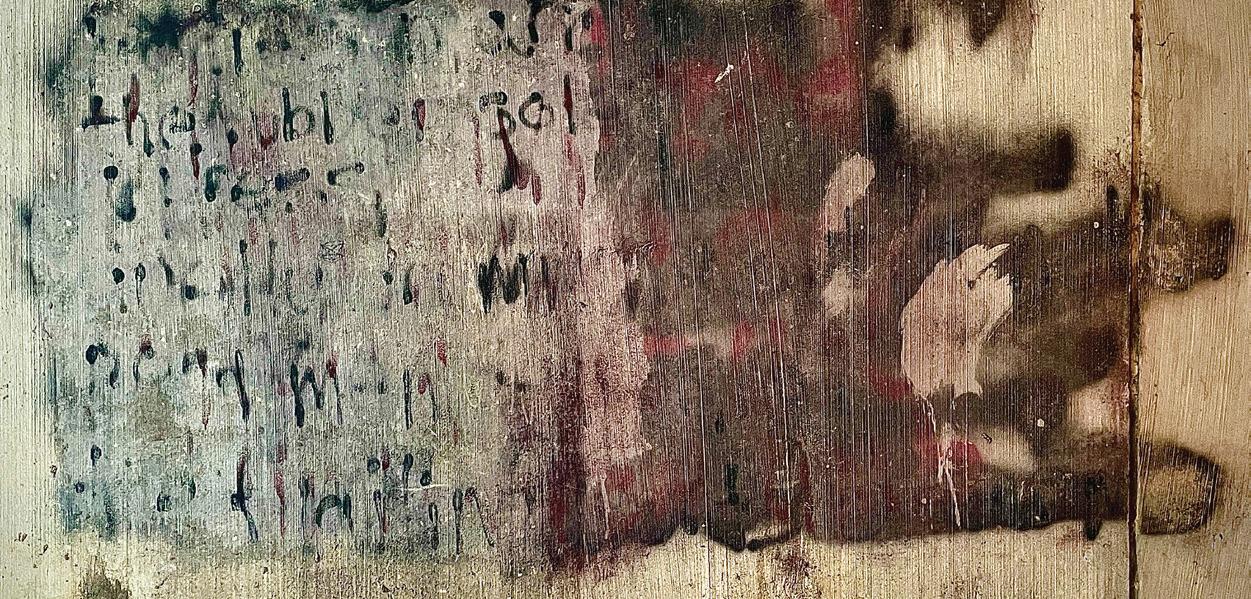
Abstract Asphalt Drawing, No.2 (Diptych) (2007)
Aliens Have Probed the Children (Triptych) (2008)
Angel of Motherhood (Montage), digital silver-halide chromogenic print of scanned paper print montage from 35mm negatives (1998)
Asphalt Horn – Photographed Over 14 Months (Montage) (2020)
At Long Last, Rocks! (Triptych) (2012)
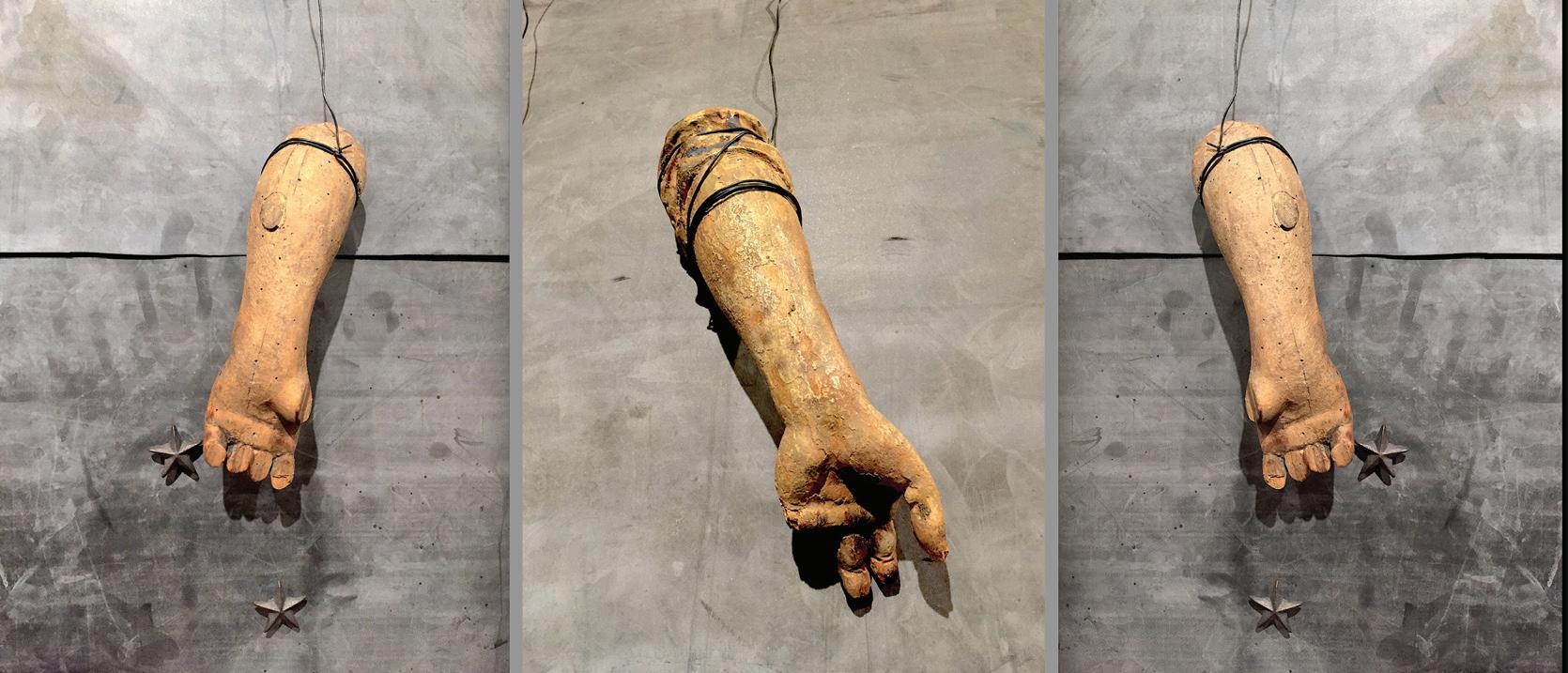
Baby Arms Hung From Wires (Triptych) (2018)
Birth of a Numeral (2007)
Cincinnati Cityscape (2016)
Circular Logic (Montage) (2007)
Cracked Asphalt Paint (2023)
Cracked Yellow Paint (Montage), digital silver-halide chromogenic print of scanned paper print montage from 35mm negatives (2005)
Cueva de las Manos (Cave of Hands) (2008)
Diagram for a Prehistoric Henge (2016)
Disintegrating Family Crest (2016)
Dreamscape (Diptych) (2014)
Elegant Shadow (2024)
Encoded Plan for Attack (Diptych) (2016)
Facial Recognition (2023)
Gold and Red Found Painting (Montage) (2018)
House Paint Detail, No.1 (Diptych) (2017)
House Paint Detail, No.2 (Diptych) (2017)
Incubus Rising (Triptych) (2008)
Imaginary Topographical Map (2008)
Interrupted Genetics (Triptych) (2007)
Just Wave Goodbye (Montage) (2018)
Landscapes With Various Cloud Patterns (Triptych) (2007)
Marked With a Sign (Triptych) (2012)
Memory (Montage) (2018)
Mother of Gravel Giving Birth (2016)
Mystery of the Three Nipples (2008)
Night – North Rampart Street (New Orleans) (2024)
Obscure Hand Gestures Conveying Ancient Truth (Montage) (2010)
Optical Investigation, No.1 (Montage) (2008)
Organic Interruptions (Montage), digital silver-halide chromogenic printof scanned paper print montage from 35mm negatives (2004)
Pink Shapes on Wall (2017)
Red Film Flare (Montage), digital silver-halide chromogenic print of scanned paper print montage from 35mm negatives (2005)
Red Map, No.1 (2008)
Rusted Panel Composition (Triptych) (2018)
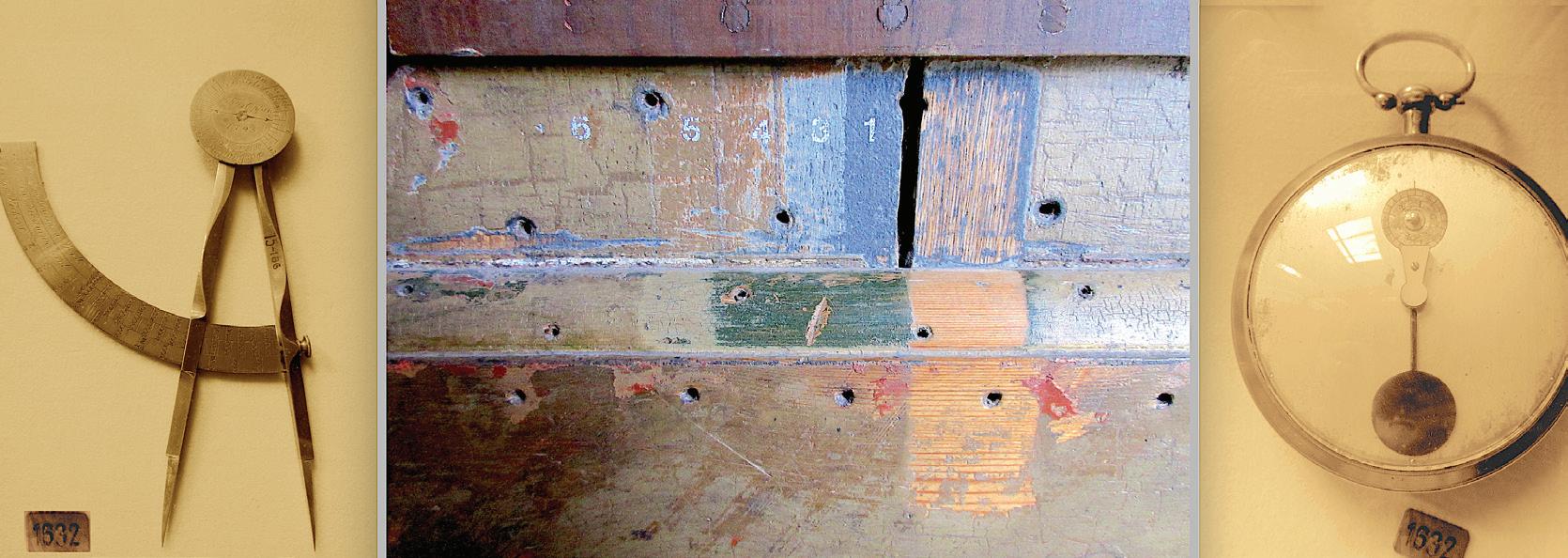
Scientific Measurement – Copenhagen (2022)
Scraped Pole (Diptych) (2016)
Scuffed Paint – Blue and Yellow (Montage), digital silver-halide chromogenic print of scanned paper print montage from 35mm negatives (2004)
Shadow Mountain (Triptych) (2025)
Sidewalk Fish (2016)
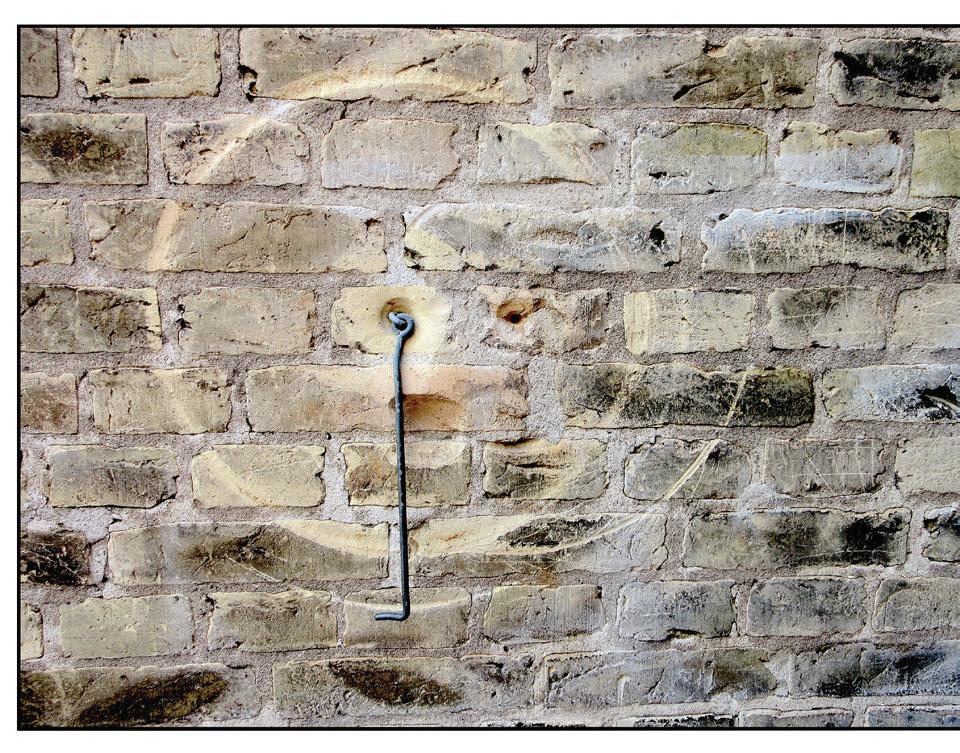
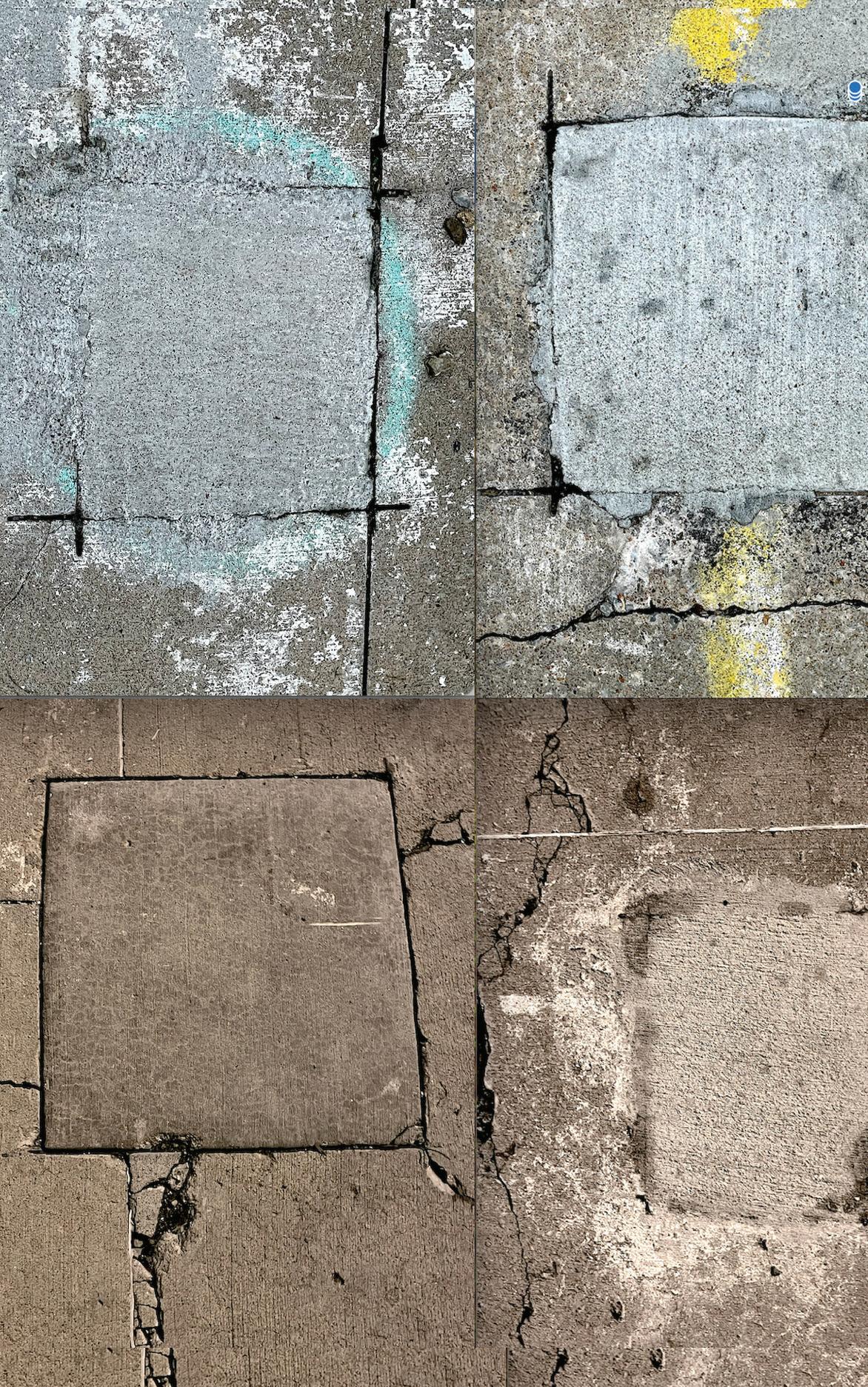
Sidewalk Rectangles (Columbia, MO) (2023)
Snow on Branches (Montage), digital silver-halide chromogenic print of scanned paper print montage from 35mm negatives (2004)
Spilled White Paint on Asphalt (Mother of Ghosts) (2024)
Stain Details (Triptych) (2025)
Stone Abstraction (Diptych) (2024)
Sunrise Over Dolomites (2014)
Three Forms of Discontinuity and One Form of Connection (2014)
Time-Keeping Device – Copenhagen (2022)
Two Men Rusted Into black Holes (Diptych) (2014)
Two Perspectives on Paint and Screw Holes (Diptych) (2017)
Valid Euclidean Monument (2015)
Where I Keep My Balls (2014)
Yellow Talisman (2024)

Self-Portrait – Eye Scan (Triptych) (2023)
Self-Portrait – Seeing Clearly (Triptych) (2025)
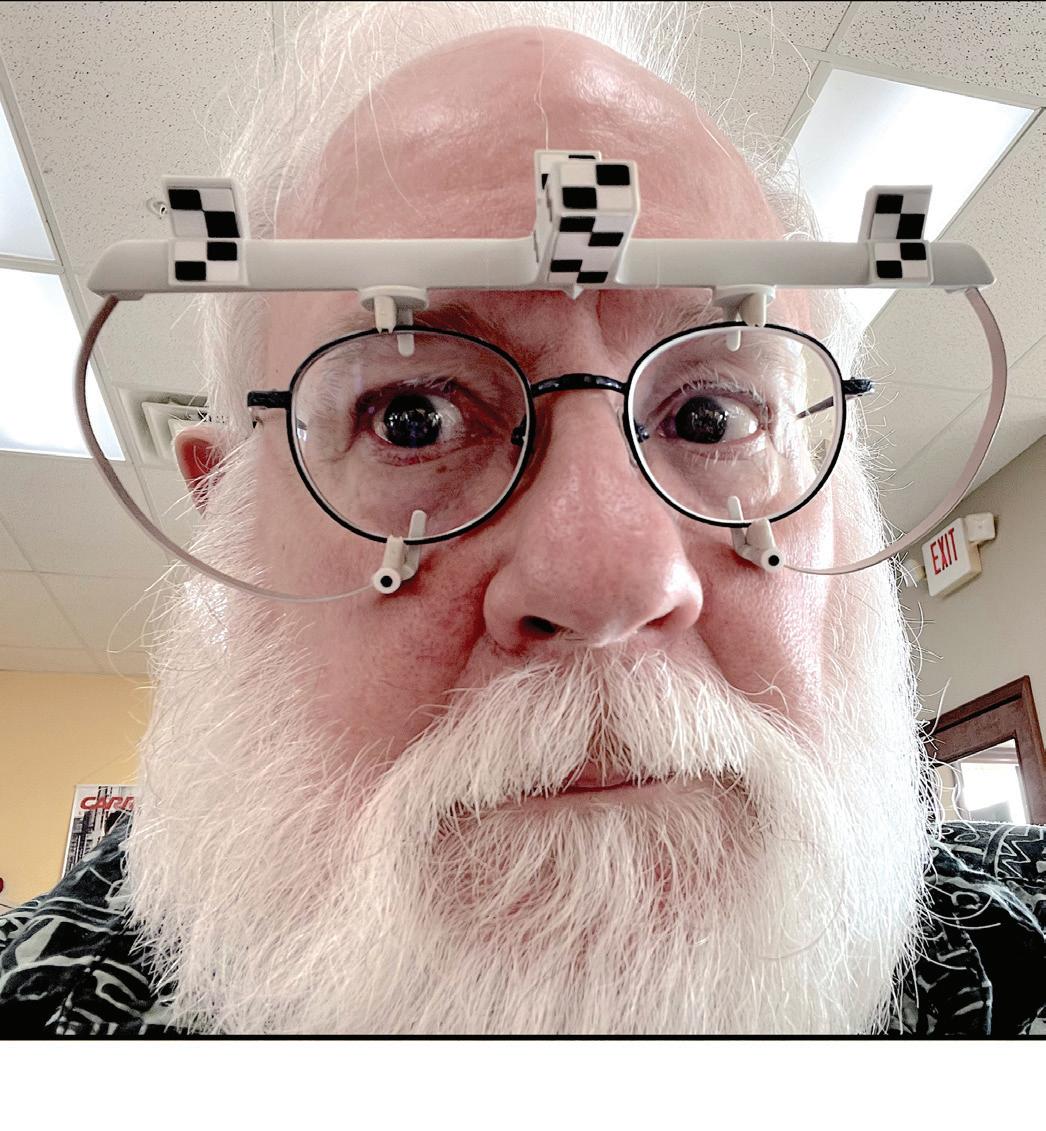
Self-Portrait – Spectacle Test in Hopes of Seeing Better (2023)
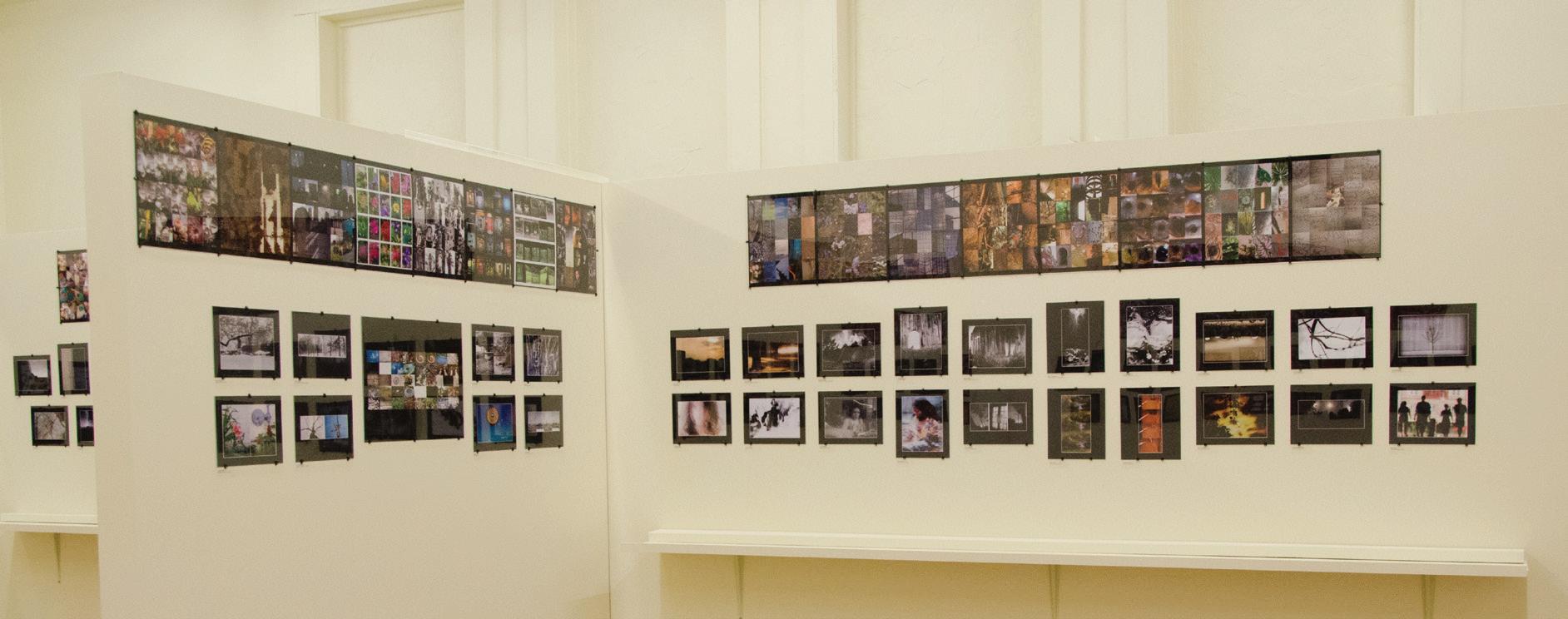

The UC Blue Ash Art Gallery is supported by the Office of the Dean and the departments of Art & Visual Communication and Media Communications & Technology. This exhibition was developed and curated by H. Michael Sanders with the assistance of Roo Hedrick.
This gallery publication was written and edited by H. Michael Sanders, with catalogue design by Michael Ziepfel. Gallery webpage design and maintenance is by David Bostic. John Wolfer is gallery director.
A full online catalogue, including a PDF of this catalogue brochure, is available for the exhibition at the UC Blue Ash Art Gallery webpage at: ucblueash.edu/about/community/art-gallery