• EPA Takes Action Against Microplastics; Further Financial Concern for Water Systems Ahead?
• Additional Awards for Watershed Coalition Surface Water Monitoring
• News in
Unit of the Massachusetts Office of the Attorney General Addresses the Permissible Grounds for
Editor: Joseph F. Nolan; Magazine Designer/Associate Editor: Sherri Klayman; Associate Editor: Suzanne Hatch; Writer: Brandon Ward
Construction Outlook Chair: Chris Valenti
Editorial Board: Chris Valenti, Querino Pacella, Lisa French Kelley, and Justin Goodheart
CONSTRUCTION OUTLOOK published monthly by the Utility Contractors’ Association of New England, Inc., 300 Congress Street, Suite 101, Quincy, MA 02169; Tel: 617.471.9955; Fax: 617.471.8939; Email: jnolan@ucane.com; Website: www.ucane.com. Statements of fact and opinion are those of the authors alone and not necessarily those of UCANE and the Construction Outlook editorial board and staff. Subscriptions are included in dues payments for UCANE members. Presorted Standard postage paid at Brockton, MA. POSTMASTER, please send form #3579 to Construction Outlook, Crown Colony Office Park, 300 Congress Street, Suite 101, Quincy, MA 02169.
JOINING FORCES TO BETTER SERVE YOU
The Jack Farrelly Company, Putnam Pipe and HR Prescott have united, as part of the Core & Main family.
• W. Boylston, MA 508-835-4431
• Bloomfield, CT 860-769-6760
• East Lyme, CT 860-739-5457
• New Britain, CT 860-826-0517
• Hopkinton, MA 508-435-3090
• North Haven, CT 203-777-5548
• Westbrook, ME 207-464-0585
• N. Billerica, MA 978-459-6701
• Norwood, MA 781-407-9133
• Taunton, MA 508-880-8736
• Worcester, MA 508-752-7473
• Loudon, NH 603-263-7350
• New Milford, CT 860-210-6262
• Springfield, MA 413-732-8400
• Johnston, RI 401-725-0140
We’re still the dependable experts you’ve always known, but now as one team, continuing to handle all your water, wastewater, fusible, and storm drainage material
As Spring Breaks in New England, the UCANE Team Continues to Work to Keep Our Industry Strong
As winter finally loosens its grip on New England, many of our members are coming off what was a long and challenging season. Crews worked through difficult conditions to keep critical projects moving, often in less-than-ideal weather, demonstrating once again the resilience and commitment that define UCANE contractors. With spring now arriving, there is a renewed sense of momentum as we transition into the heart of the 2026 construction season.
We recently had the opportunity to kick things off on a strong note at our annual Trade Show and Forecast Dinner Meeting. With another outstanding turnout, the event brought together contractors, agency leaders, and industry partners for a comprehensive look at the year ahead. We were fortunate to hear from an excellent lineup of speakers, including Fred Laskey of the MWRA, John Sullivan of the Boston Water and Sewer Commission, and John Beling of the Massachusetts Department of Environmental Protection. Their insights into capital plans, regulatory priorities, and upcoming opportunities provided tremendous value to our members and reinforced the importance of collaboration across our industry.
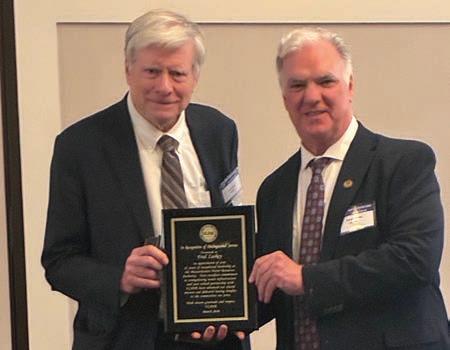
Before introducing our speakers that evening, we took a moment to recognize a true leader in our field, Fred Laskey, on the occasion of his retirement. Fred has been a trusted partner to UCANE for decades, and his leadership has had a lasting impact on water infrastructure across the Commonwealth. In recognition of his contributions, UCANE is proud to announce the establishment of an annual scholarship in Fred’s name. This scholarship will support students pursuing careers in engineering and construction— an investment not only in honoring Fred’s legacy, but in strengthening the future of our industry.
Looking ahead, our advocacy efforts remain a top priority this spring. UCANE staff will once again be participating in Water Week in Washington, D.C.,
joining industry partners from across the country to advocate for sustained investment in water and utility infrastructure. These efforts are critical to ensuring that policymakers understand the importance of continued funding and long-term planning for the systems that are so essential—but too often overlooked.
We are also excited to share some great news on the member engagement front. Our annual Golf Tournament will be moving to Pinehills this year, allowing us to expand the event to nearly twice the size of last year’s outing. This has quickly become one of our most popular networking events, and we look forward to welcoming even more members, especially our contractors, partners, and guests for what promises to be a great day of fun and networking.
As we move into the busy months ahead, it is important that we continue to carry forward a message that defines our industry: water and utility infrastructure may be out of sight, but it must never be out of mind. The work you do every day ensures the health, safety, and economic vitality of our communities.
I am honored to serve as your President and to represent such a dedicated and accomplished membership. I encourage all of you to stay engaged, participate in our events, and continue to support UCANE’s mission.
Stay safe, and I look forward to seeing you in the field and throughout the season. n
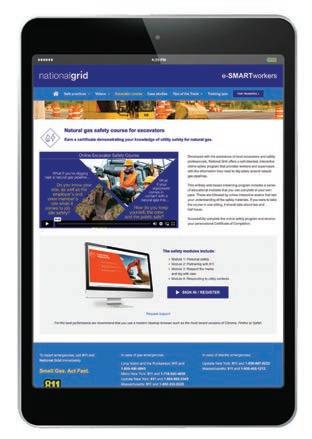
Equip your team with the skills to dig responsibly and prevent accidents before they happen.
Visit ngridsafety.com/utility-safety-course and connect with us on
Keep yourself, your crew and the public safe. Register and start your online course today!
UCANE Testifies on Proposed Amendments to Emissions Rules; Highlights Legal and Practical Issues
On March 16, the Massachusetts Department of Environmental Protection (MassDEP) held a public hearing on proposed regulations to the Commonwealth’s Heavy-Duty Omnibus (HDO) and Advanced Clean Truck (ACT) rules, 310 CMR 7.40 et. seq. As previously reported in Construction Outlook magazine and mainstream media publications, the Commonwealth has had to delay both rules previously due to a variety of reasons. The most pressing? Recent actions by Congress and the Trump Administration have raised the specter that the Commonwealth’s adherence to the rules, originally developed by the California Air Resources Board (CARB) and approved by the United States Environmental Protection Agency (EPA) at the end of the Biden Administration, is no longer valid.
Nonetheless UCANE’s Executive Director Joe Nolan, joined by other organizations such as the Transportation Association of Massachusetts, Massachusetts State Auto Dealers Association, and the Massachusetts Water Works Association, offered oral testimony outlining both the legal and practical concerns with the MassDEP’s actions. Among other organizations who also testified through written testimony included, but was not limited to the Retailers Association of Massachusetts; the Greater Boston Chamber of Commerce; the Engine Manufacturers Associations; the Massachusetts Forest Association; the Massachusetts Chemical and Technology Association; the Statewide Towing Association of Massachusetts; and a variety of companies, including UCANE members such as C. N. Wood Co., Inc. and W. L. French Excavating Corp.
In UCANE’s written testimony, which acknowl -
edged the HDO and ACT rules murky legal underpinnings, the association wrote:
“At the outset, UCANE appreciates the MassDEP’s decision to further delay the HDO rule. There remains a significant lack of compliant engines in the MHD truck market, due in part to ongoing federal uncertainty as to whether the HDO and ACT rules are even legal in light of recent federal actions revoking the California Air Resources Board’s waivers under the federal Clean Air Act. The issue is now further compounded by manufacturers being told not to comply with the HDO rule, which creates further supply limitations. As a result, it is clear that the market is not yet capable of supplying sufficient HDO-compliant vehicles to meet demand in Massachusetts. The delay is both practical and necessary, and UCANE encourages the MassDEP to remain flexible should additional delays prove warranted.
With that in mind, UCANE continues to have serious concerns regarding the ACT rule and the proposed amendments. The central issue is straightforward: electric medium- and heavy-duty vocational trucks that meet the operational requirements of UCANE members do not currently exist at scale or capacity in the marketplace. UCANE members rely on highly specialized trucks equipped with power take-off (PTO) systems and other auxiliary functions necessary to operate critical equipment such as vacuum pumps, cranes, hoists, and hydraulic systems. These vocational configurations demand significant and sustained energy output, which current electric truck technology cannot reliably provide.
Even where electric truck models are techni -
continued on page 7
Mark Molloy, Esq.
cally available, they are not viable substitutes for the equipment UCANE members depend on daily. Electric MHD trucks currently suffer from limited range, reduced payload capacity due to battery weight, performance degradation in cold weather conditions, and significant constraints on jobsite usability—particularly for projects requiring continuous operation or remote deployment. These limitations fundamentally undermine the ability of contractors to perform essential public infrastructure work.”
In the past couple of years, UCANE has been working with a wide variety of associations and companies to highlight the pragmatic and legal problems associated with the HDO and ACT rules. With Massachusetts law requiring the Commonwealth to follow laws and regulations created in California, it has become exceedingly apparent that the Commonwealth lags far behind California in many of its policies and infrastructure investment decisions. Even in California, the well-intentioned, but unrealistic rules, have led to an assortment of direct and indirect harm for end users of medium- and heavy-duty trucks and the businesses and residents they serve.
continued on page 9 Legislative Update continued from page 5
Mid-March saw the Healey-Driscoll Administration award $267,000 to seven regional watershed coalitions and planning collaboratives to help communities better manage stormwater and keep harmful pollution out of Massachusetts waterways.
As detailed in the MassDEP press release on the same, stormwater is created when rainwater and snow melt flows over hard surfaces like pavement,
The awarded projects will help communities meet the requirements of the Municipal Separate Storm Sewer System (MS4) permits that are required to manage stormwater discharges and prevent pollutants from entering storm sewer systems. Two hundred and sixty Massachusetts municipalities are subject to the MS4 permit. The MS4 Permit is issued by the EPA under the Clean Water Act National Pollutant Discharge Elimination System (NPDES), and the projects are selected by the Massachusetts Depart
Legislative Update continued from page 9
munities choose the right solutions for specific locations, update cost estimates, and provide training for municipal staff on the planning tools.
• Charles River Watershed Association ($55,480). The Charles River Watershed Association will help install stormwater controls to help reduce nutrient pollution in the Charles River Watershed. A technical advisory committee and consultant will work to build public-private partnerships that allow municipal stormwater to infiltrate on private land.
• Greenscapes North Shore Coalition ($17,212). The Greenscapes North Shore Coalition will conduct public outreach activities to address and reduce pet waste pollution, combining a high visibility public signage campaign with stormwater education and regional advocacy to reduce pet waste pollution and support MS4 compliance for North Shore Communities.
• Merrimack Valley Planning Commission (MVPC)($33,500). The MVPC will expand its regional stormwater mapping tool, the LID Viewer, to help municipalities identify priority sites for management, reduce flooding risks and move
John
projects closer to funding and implementation. MVPC will work directly with municipal staff through surveys and outreach to confirm existing data, track progress, and identify top stormwater mitigation opportunities.
• Neponset River Watershed Association and Neponset Stormwater Partnership ($41,860). The proposed project will create and/or adapt standardized design details for green stormwater infrastructure features and develop a framework for identifying key policies around retrofitting priorities in lead partner towns so that retrofitting can be routinely incorporated into other infrastructure maintenance projects. This framework will serve as a model to help other Neponset Stormwater Partnership communities implement a similar approach.
• Massachusetts Statewide Municipal Stormwater Coalition (MSMSC)($16,000). The MSMSC will translate public education graphics, flyers, and social media posts from the Think Blue MA Education and Outreach toolkit into four non-English languages.
Hoadley and Sons Inc.
Water Works Specialist Tel: 781-878-8098 Fax: 781-878-5298
• Old Colony Planning Council ($39,935). The Stormwater Partnership Pilot will bring together Abington, Bridgewater, and Plympton to build a shared stormwater asset inventory and develop peer-to-peer training for municipal staff. Through GIS mapping, field assessments, and joint workshops, the project will strengthen local capacity to meet MS4 permit requirements.
“Our Products Are the Most Trusted Names in the Industry”
� U.S. Pipe
“Our Products Are the Most Trusted Names in the Industry”
● Cultec Chambers
• U.S. Pipe
� Mueller Fire Hydrants
• Mueller Fire Hydrants
� Mueller Tapping Sleeves & Valves
John Hoadley and Sons Inc.
Water Works Specialist
Tel:781-878-8098 Fax:781-878-5298
“Our Products Are the Most Trusted Names in the Industry”
� U.S. Pipe
• Cultec Chambers
� Mueller Fire Hydrants
● National Pipe & Plastics
• Mueller Tapping Sleeves & Valves
� Smith Blair Clamps & Couplings
• National Pipe & Plastics
� Mueller Tapping Sleeves & Valves
� Smith Blair Clamps & Couplings
● ADS Pipe & Chambers
• Smith Blair Clamps & Couplings
• ADS Pipe & Chambers
● General Foundry Castings
Mechanical Services
Mechanical Services
• General Foundry Castings
� Tapping Sleeves & Gates Installed / Cut
• Tapping Sleeves & Gates Installed / Cut
● Cultec Chambers
● National Pipe & Plastics
● ADS Pipe & Chambers
● General Foundry Castings
Mechanical Services
� Tapping Sleeves & Gates Installed / Cut
� Line Stop / EZ Valves
� Cutting of Chilled Water Lines & Steam Lines
Pressure Testing & Disinfection of New Mains
Installation & Testing of Backflow Preventers
• Line Stop / EZ Valves
� Line Stop / EZ Valves
� Cutting of Chilled Water Lines & Steam Lines
• Cutting of Chilled Water Lines & Steam Lines
• Pressure Testing & Disinfection of New Mains
� Pressure Testing & Disinfection of New Mains
Large Diameter Hydraulic Pipe Cutting
Hydrant Installation & Repair
Electronic Leak Detection
The Stormwater MS4 Municipal Assistance Grant Program, introduced in 2017, enables groups of Massachusetts municipalities to expand their efforts to meet requirements for the 2016 Small Municipal Separate Storm Sewer System (MS4) General Permits, and to reduce stormwater pollution through coordinated partnerships that emphasize resource sharing.
Serving all of New England
• Installation & Testing of Backflow Preventers
� Installation & Testing of Backflow Preventers
• Large Diameter Hydraulic Pipe Cutting
� Large Diameter Hydraulic Pipe Cutting
• Hydrant Installation & Repair
“Water-Sewer-Drain Supplies at a Competitive Price” www.hoadleyandsons.com 672 Union Street Rockland, MA 02370 24 Hours Sales&
• Electronic Leak Detection
� Hydrant Installation & Repair
� Electronic Leak Detection
“Water-Sewer-Drain
“Water-Sewer-Drain Supplies at a Competitive Price”
www.hoadleyandsons.com 672 Union Street Rockland, MA 02370
For more information about this grant program, please visit: https://www.mass.gov/info-details/ grants-financial-assistance-watersheds-water-quality#stormwaterms4-municipal-assistance-grantprogram.
continued on page 13
McElroy Fusion Training from F.W. Webb
Get certified and job-site ready with hands-on McElroy fusion training at the F.W. Webb McElroy Training Center in Springfield, MA. Whether you're new to HDPE or looking to sharpen your edge, our experts deliver the skills you need to fuse with confidence.
Our certified trainers offer two ways to learn:
FUSION TRAINING CENTER
Visit us in Springfield for immersive, hands-on instruction.
Our training sessions offer McElroy-backed certification, giving your team the credentials and confidence to tackle any HDPE piping project.
After training, we’ve got your back with full-service McElroy maintenance, repair, and rental capabilities – including the powerful TracStar® line of remote controlled, off-road capable fusion machines that handle pipe up to 48" in diameter.
ON-SITE TRAINING
Receive expert instruction at your job site.
F.W. Webb is proud to partner with McElroy, a leader in HDPE piping fusion equipment.
F.W. Webb is a certified McElroy dealer and rental distributor. Receive McElroy Equipment training and certifications from the knowledgeable F.W. Webb team.
EPA Takes Action Against Microplastics; Further Financial Concern for Water Systems Ahead?
Federal requirements on acceptable (or unacceptable) limits of contaminants in drinking water can have a trickle-down effect on state regulations – particularly where a specific state standard does not currently exist. One new area to watch: microplastics. At the start of April, the United States Environmental Protection Agency (EPA) and United States Department of Health and Human Services (HHS) announced coordinated actions to address microplastics contamination.
According to a joint press release from the EPA and HHS, for the first time in the program's history, EPA is including microplastics as a priority contaminant group in its draft Sixth Contaminant Candidate List (CCL 6), now open for public comment. CCL 6 also includes pharmaceuticals
as a group—another first—along with per- and polyfluoroalkyl substances (PFAS), disinfection byproducts, 75 individual chemicals, and nine microbes that may be present in public drinking water systems.
Additionally, the Advanced Research Projects Agency for Health (ARPA-H) announced the launch of STOMP—Systematic Targeting of Microplastics—a first-of-its-kind nationwide initiative to build a comprehensive toolbox for measuring, researching, and removing microplastics and nanoplastics (MNPs) from the human body. STOMP takes a three-pronged approach:
• Target: Identify the most harmful plastic contaminants and determine how they enter and move through the body.
• Remove: Develop and validate methods to eliminate microplastics from the human body.
Together, these two initiatives represent the most comprehensive federal effort to date to understand and combat the risks posed by microplastics to public health.
By way of background, the CCL is published every five years under the SDWA and guides EPA's research priorities, funding decisions, and regulatory agenda for substances not yet subject to national drinking water standards. Inclusion on the CCL does not constitute regulation, but signals that a substance warrants serious scientific attention and may be considered for future regulatory action.
To learn more about the Draft CCL 6, please visit: https://www.epa.gov/ccl/draft-contaminantcandidate-list-6-ccl-6.
continued on page 17
Additional Awards for Watershed Coalition Surface Water Monitoring
The Healey-Driscoll Administration announced $200,000 in Water Quality Monitoring Grant funding for five watershed coalitions across Massachusetts. Administered by the MassDEP, the grants will support surface water monitoring efforts in rivers, lakes, ponds, and coastal resources in eastern Massachusetts, the Connecticut River Valley, and Cape Cod.
The awarded funding will be used for handson activities like collecting water samples, training local teams, and setting up ongoing programs to track water quality in the regions. The Water Quality Monitoring Grant program is designed to bring people and groups together, focusing on projects that are located in or will benefit disadvantaged communities. The program addresses surface water issues by testing water, talking with residents, and teaching people how to protect and improve their local water resources.
The water quality data from these efforts will help the MassDEP to implement program requirements under the federal Clean Water Act. Grants are available to eligible federally or state recognized Tribal Nations within the Commonwealth and non-profit organizations, including watershed groups, lake and pond associations, and other organizations with expertise in conducting surface water quality monitoring.
The grant recipients and project awards include:
• Connecticut River Watershed Council d/b/a Connecticut River Conservancy ($50,000). Organizations: Deerfield River Watershed Association, Fort River Watershed Association, Chicopee 4Rivers Watershed Council, Millers River Watershed Council, and X-Cel Conservation Corps
continued on page 19
DigSafe.com or Call 811 Before You Dig
• Pre-mark the location of intended excavation using white stakes, paint or flags.
• In MA, ME, NH, RI and VT, notify Dig Safe® at least 72 hours in advance, not including weekends and holidays.
• Notify non-member facility owners.
• Maintain the marks placed by underground facility owners.
• Use caution and dig by hand when working within 18” of a marked facility.
• If a line is damaged, do not backfill. Notify the affected utility company immediately if the facility, its protective coating, or a tracer wire is damaged.
• Call 911 in the event of a gas leak, or if a damaged facility poses a risk to public safety.
• Know your state’s excavation requirements.
• Go to digsafe.com for educational material and current laws.
Legislative Update continued from page 17
• Buzzards Bay Coalition ($49,823). Organizations: Wampanoag Tribe of Gay Head Aquinnah Environmental Laboratory and Westport River Watershed Alliance
• Ipswich River Watershed Association ($33,398). Organizations. Parker River Clean Water Association, Chebacco Lake and Watershed Association, and Friends of Hood Pond, Inc.
• Nashua River Watershed Association ($47,310). Organizations: OARS 3 Rivers, Charles River Watershed Association, and Mystic River Watershed Association
• North and South Rivers Watershed Association ($19,469). Organizations: Neponset River Watershed Association and Cohasset Center for Student Coastal Research
For more information on this grant program, please visit: https://www.mass.gov/info-details/ grants-financial-assistance-watersheds-waterquality#water-quality-monitoring-grant-program
News in Brief
• DOR Reports Increased Revenue Amid Uncertainty. The Massachusetts Department of Revenue reported that preliminary revenue collections for March totaled $4.355 billion, $164 million or 3.9% more than actual collections in March 2025, and $64 million or 1.5% above benchmark. Fiscal year 2026 year-todate collections totaled approximately $30.660 billion, which is $980 million or 3.3% more than actual collections in the same period of fiscal year 2025, and $653 million or 2.2% above the year-to-date benchmark. March 2026 revenue included increases relative to March 2025 collections in withholding, non-withholding income tax, and sales tax. As the Commonwealth enters uncertain times relative to reduced federal funding assistance, policymakers and budget analysts are keeping a close eye on the Commonwealth’s revenue tools.
• Committee Takes Action on Remaining “Sideguard” Bill. The Joint Committee on
Transportation reported on a variety of matters that were originally outstanding on an extension order until March 31, 2026. One of the matters on which the Committee took action on was Senate Bill 2343 An Act Expanding the Truck Safety Program, which would have expanded the current law requiring sideguards, convex and concave mirrors, and rear-view cameras to all municipal, quasiindependent, and utility contracts. The matter was placed into a study order. A similar House matter, House Bill 3653, was placed into a study earlier in the session. UCANE opposed the legislation for a myriad of reasons including, but not limited to, concerns about its constitutionality and the fact the state program was only truly kicked off in January of this year. Further review of the program will allow for an analysis to determine improvements to this program.
continued on page 23
Legislative
Update continued from page 21
• Committee Extends Tax Proposal on Heavy-Duty Trucks. At the outset of the 2025-2026 legislative session, particular attention was given to Senate Bill 1941, An Act Establishing a Highway Use Tax for Heavy Trucks. The legislation would introduce a Connecticut style tax surcharge on all motor vehicles exceeding 26,000 lbs. gvw for miles traveled in the Commonwealth. The Joint Committee on Revenue recently extended the reporting period for the legislation until late June. UCANE and other mediumand heavy-duty end user organizations will continue to oppose the passage of this antitrucking/anti-commerce legislation.
• Tarr Wins House Seat. Andrew “Dru” Tarr won the special House election to succeed his former boss, Representative Ann-Margaret Ferrante, who died in November. Representative-Elect Tarr, a Democrat who worked as Ferrante’s research and district director for more than two years, captured nearly 64% percent of the vote in the 5th Essex district.
of the vote, followed by independent candidate Gilbert Frieden. The district includes Essex, Rockport, Manchester-by-the Sea, and Gloucester. Representative-Elect Tarr, a lifelong Gloucester resident, began working in state government in 2016 as a legislative aide. Before that, he was campaign manager for Ed O’Reilly’s run for Essex County sheriff and the membership and outreach director for the Young Democrats of Massachusetts.
• Howard Sworn in as Senator. Democratic Representative Vanna Howard of Lowell won the special Senate election to succeed Senator Ed Kennedy, who died in October. SenatorElect Howard captured 58.1% of the vote for the First Middlesex Senate District; Republican businessman Sam Meas garnered approximately 23% of the vote, followed by unenrolled candidate Joe Espinola. The district includes Lowell, Dracut, Dunstable, Pepperell, and Tyngsborough. A survivor of the Cambodian genocide who came to the United States at age 11, Senator-Elect Howard worked for Congresswoman Niki Tsongas for 11 years. She was elected to represent the 17th Middlesex
Construction & Public Contracts Group, Hinckley Allen, LLP
The Bid Unit of the Massachusetts Office of the Attorney General Addresses the Permissible Grounds for Rebidding
The Bid Unit of the Massachusetts Office of the Attorney General (“Bid Unit”) closed out March with a decision addressing an awarding authority’s ability to rebid a public works project. More than 30 years ago, the Massachusetts Appeals Court recognized three valid bases for rebidding: (1) insufficient funds; (2) ambiguous specifications; and (3) new specifications on rebid. In this case, the Bid Unit examined the awarding authority’s ability to rely on the “insufficient funds” basis for rebidding.
The case arose out of a park improvements project, which was part of a “broader infrastructure improvements plan for which $40,000,000 ha[d] been appropriated.” In its Invitation for Bid, the awarding authority estimated that this particular project would cost $7,000,000. The project entailed both lump sum and unit price items.
Five contractors submitted bids. The bid price of the apparent low bidder was below the awarding authority’s estimate, but that bidder eventually withdrew its bid. The bid price of the next lowest bidder was $7,268,270, or $268,270 over the estimate. However, instead of awarding the contract to the next lowest bidder, the awarding authority decided to rebid the project.
The project architect advised the awarding authority that the next lowest bid price exceeded the “budgeted estimate” and added that “[G]iven the significant cost difference between the remaining bids and the engineer’s estimate, it is in the City’s best interest to reject all bids and readvertise the project to seek more competitive pricing.” After advertising the project for rebid, the awarding authority updated the
original bid tabulation sheet to read: “Over budget –No bids could be considered.”
Bid protests ensued. The awarding authority argued that the “Project’s $7,000,000 estimate is the Project’s ‘budget,’” and that, as a result, it was entitled to rebid the project due to “insufficient funds.”
The Bid Unit disagreed.
The Bid Unit reaffirmed several important principles when it comes to rebidding:
• Rebidding is “decidedly disfavored because the
continued on page 27
Christopher Morog Partner
Robert T. Ferguson Partner
initial bidders’ secret prices are exposed . . . .”
• Therefore, “rebidding can disrupt equal footing by opening the door to an awarding authority favoring a certain bidder who may not have been able to obtain the award on the first round.”
• To “avoid these pitfalls” and to further the purposes of the competitive bidding laws, an awarding authority “may voluntarily rebid a project in narrow circumstances: ambiguous specifications, materially new specifications on rebid, or insufficient funds appropriated for the work.”
Given these principles, the Bid Unit stated that the “law is clear” that an awarding authority “may not reject bids simply to obtain a lower price.” According to the Bid Unit “this is precisely what the [awarding authority] did” here by rejecting all bids to “seek more competitive pricing.” The Bid Unit stated definitively that “[o]btaining better pricing is not a lawful basis to rebid a project.”
The Bid Unit went on to conclude that the awarding authority failed to establish “insufficient funds.” Asserting that the awarding authority “recast[ed] the Project’s cost estimate into a budget, then recast[ed] the budget into a hard funding cap,” the Bid Unit stated that these “leaps fail.” The Bid Unit was clear: “an estimate is not a cap” but a “good faith projection of what a project will cost.” The Bid Unit added that an estimate “denotes neither a budget nor ultimate funding” and confirmed that “awarding authorities, including the City [in this case], routinely award contracts to bidders whose bids exceed the estimate.” According to the Bid Unit, if the Massachusetts Appeals Court “wished for ‘over-the-estimate’ to be a viable rationale for rebidding a public construction project, it certainly could have done so” but “did not.” In short: “[b]eing over an estimate is not the same thing has having insufficient appropriated funds.”
Ultimately, the awarding authority failed to demonstrate that there was “truly insufficient funding” for the project. Not only was the project part of a larger, $40,000,000 appropriation, the Bid Unit noted that the awarding authority did not reduce the scope of work or its cost estimate on rebid. Regardless, the fact that the project included “many unit price elements” “defeat[ed]” the awarding authority’s insufficient funds argument. This is because the awarding authority retained “ample means” to control construction costs through its use of many unit price items. In these circumstances, the Bid Unit concluded that the awarding authority’s attempt to rebid the project “lack[ed] legal justification.” The Bid Unit allowed
continued on page 29
THEY DON’T DO WHAT
ON-SITE/INCIDENT & PREVENTION
• Project Safety Staffing
• Medical Trailers and Wellness Programs
• Drug /Alcohol Screening
TRAINING & DEVELOPMENT
• CPR/First Aid/Narcan/Pathogens
• Competent Person
• Reasonable Suspicion
REGULATORY COMPLIANCE EXAMS
• Pre-Employment Physicals
• DOT/FMCSA Exams
• Respiratory Fit Testing & Training
CONFINED SPACE & HIGH ANGLE RESCUE
• Highly Specialized and Trained Team Members
• On-Site making sure your employees are safe
CARE
OHS Total Care
OHS Training & Consulting, Inc.
1340 Soldier’s Field Rd. Brighton, MA 02135
O: 866-510-3002
F: 617-663-6677
ohs.totalcare@ohstc.us ohstrainconsult.com
Your Partner for Employee Health & Well Being
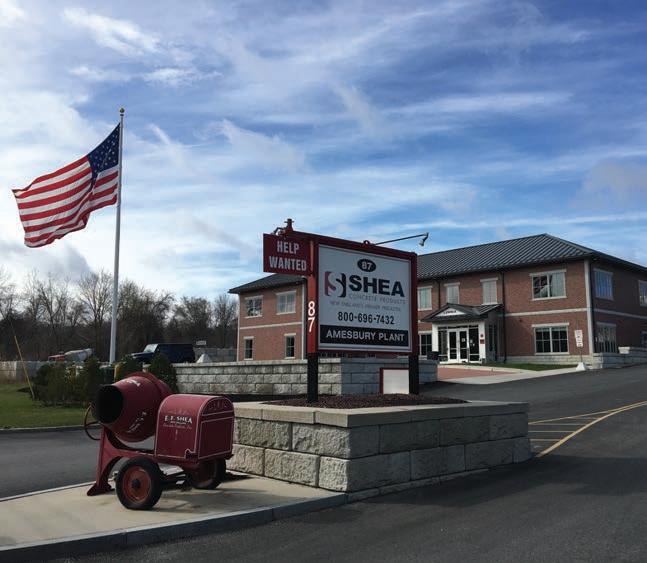
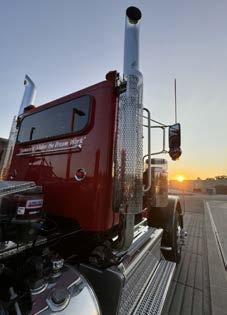
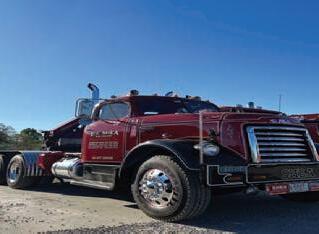
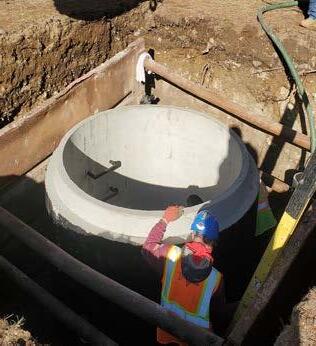
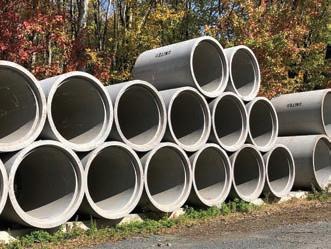
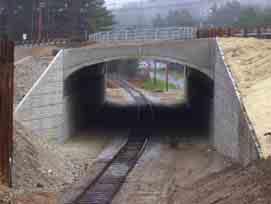
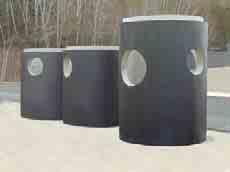
For over 75 years, Shea Concrete Products has proudly served the New England construction market by providing industry leading product quality and service to our customers and industry partners. Our robust product line of precast concrete products provides solutions for all project types and our truck fleet ensures on-time delivery.
the protest, and instructed the awarding authority to: (1) “disregard” the results on rebid; (2) “review the next lowest bid from the first round of bidding . . . in the usual and compliant course”; and (3) “award the contract to the lowest responsible and eligible bidder.”
Key Takeaways
Although the decision is not binding legal precedent of an appellate level Massachusetts court, it presents several key takeaways for contractors to keep in mind, including the following:
1. Awarding authorities cannot rebid a project simply to obtain a lower price; otherwise, public awarding authorities could undermine the purposes of the competitive bidding laws by engaging in multiple rounds of bidding until they arrive at a favored contractor or price.
2. “ Insufficient funds” remains a valid basis for rebidding. However, an awarding authority must demonstrate that it “truly” lacks sufficient appropriated funds for the project. An estimate does not necessarily equate to a “funding cap” and the fact that bid prices may exceed the awarding authority’s estimate – without more – does not automatically mean the awarding authority can rebid on the basis of insufficient funds.
3. The “insufficient funds” basis for rebidding may not be available where – as here – the contract entails several unit price items, which enable the awarding authority to control construction costs.
When contractors encounter situations in which an awarding authority seeks to reject all bids and re-procure a project, contractors should examine whether there is a valid basis for the awarding authority to do so. It is often advisable to submit a public records request to obtain public records that may shed light on the awarding authority’s decision. The contractor did so here, and the resulting records revealed that the awarding authority’s decision making “lack[ed] legal justification.” Contractors resisting a rebid may employ several other arguments depending on the facts. However, just because an awarding authority rejects all bids and advises that it will rebid a job does not automatically mean that it has lawful authority to do so. n
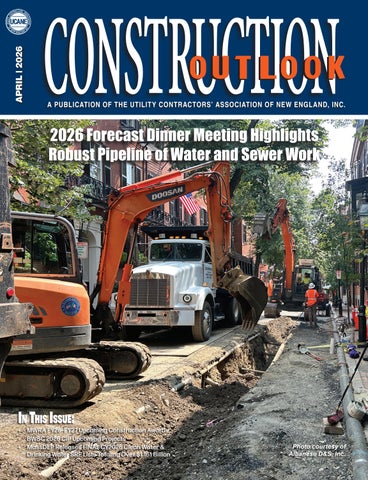
2026 Forecast Dinner Meeting Highlights Robust Pipeline of Water and Sewer Work
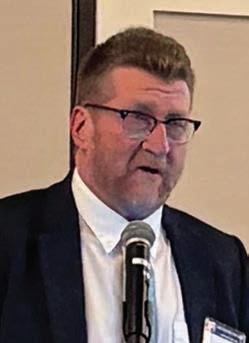
John Beling MassDEP
Deputy Commissioner
UExecutive Director
CANE’s Annual Forecast Dinner, held on March 25, 2026, brought together contractors, public agency leaders, and industry stakeholders for an in-depth look at the upcoming water, sewer, and infrastructure landscape across Massachusetts. With presentations from Fred Laskey, Executive Director of the Massachusetts Water Resources Authority (MWRA), John Sullivan, Chief Engineer for the Boston Water & Sewer Commission (BWSC), and John Beling, Deputy Commissioner of the Massachusetts Department of Environmental Protection (MassDEP), the event delivered a clear message to contractors: the pipeline for critical utility work remains strong, with billions of dollars in ongoing and upcoming investment.
A highlight of this year’s event was the recognition of Fred Laskey, who recently announced his retirement after more than two decades of leadership at the MWRA, making this his final appearance at a UCANE Forecast Dinner Meeting. Laskey’s tenure has been defined by an unprecedented level of investment in the region’s water and wastewater infrastructure and a strong collaborative relationship with UCANE contractors. In recognition of his lasting impact on the industry, UCANE announced the creation of the Fred Laskey Honorary Scholarship, which will be awarded annually to a deserving student within the UCANE member community. The scholarship serves as a tribute to Laskey’s long-standing commitment to public service, as well as a meaningful investment in the families whose hard work drives the utility construction industry.
Fred Laskey’s presentation brought a similar sentimentality as he reflected on his remarkable 25-year career as MWRA’s Executive Director, which saw approximately $3.3 billion invested in construction projects – much of it completed by UCANE members. That investment has modernized both the water and wastewater systems, while maintaining financial stability for MWRA member communities. Some of the most important projects highlighted included the John J. Carroll Water Treatment Plant in Marlborough, the Norumbega Covered Storage Facility, and the Wachusett Aqueduct Pumping Station. Looking ahead to the upcoming year, Fred Laskey highlighted 26 active construction projects totaling $323 million, along with a steady flow of additional work in design and procurement phases. Key ongoing projects include pipeline improvements in Newton, Boston, and Belmont; pump station rehabilitations; and major upgrades at the Deer Island Treatment Plant. For contractors, the most significant opportunities lie in pipeline rehabilitation, pump station work, and treatment plant upgrades, as well as continued investment in redundancy projects to strengthen system reliability.
Fred Laskey also emphasized the MWRA’s extensive local financial assistance programs, which are quietly driving a substantial volume of municipal work. The Infiltration/Inflow (I/I) program alone has funded over 700 projects with a total budget exceeding $1 billion, while the Lead Service Line Replacement Program is accelerating efforts to eliminate lead service lines by 2032. These programs translate directly into local bid-
Fred Laskey MWRA
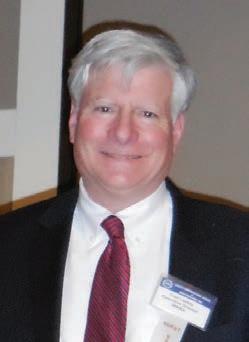
John Sullivan, P.E. BWSC Chief Engineer
ding opportunities for sewer rehabilitation, lining, and water main replacement projects across MWRA member communities—an important takeaway for contractors seeking consistent, smaller-scale work.
The Boston Water & Sewer Commission presentation delivered by John Sullivan reinforced the scale of opportunity within the City of Boston, particularly through its aggressive combined sewer overflow (CSO) and sewer separation programs. Major efforts in South Boston, East Boston, and previously completed work in Roxbury are being delivered through phased contract packaging, creating multiple bid opportunities for contractors. Ongoing and upcoming work includes sewer, drain, and water main installation, as well as large-diameter water main replacements ranging from 36 inches to 48 inches.
John Sullivan also highlighted the BWSC’s expanding capital program tied to system monitoring and resiliency. With over 1,500 miles of sewer and drain infrastructure and a growing network of sensors and flow monitoring equipment, the Commission is investing in data-driven system improvements and stormwater management. For contractors, this translates into future work tied not only to traditional pipe installation, but also to drainage upgrades, flood mitigation infrastructure, and specialized structures driven by climate resiliency planning. Notably, upcoming sewer separation work in East Boston and continued construction along Massachusetts Avenue signal a steady stream of near-term bidding opportunities.
Last but not least, MassDEP’s presentation by John Beling shifted the focus to the critical role of the Massachusetts Clean Water Trust and its administration of the State Revolving Fund (SRF) programs, which continue to serve as the backbone of water infrastructure financing across the Commonwealth. Through the Clean Water and Drinking Water SRF programs, over one billion dollars in lowinterest loans and principal forgiveness are being made available this year to municipalities and agencies across the state for projects ranging from water
continued on page 33
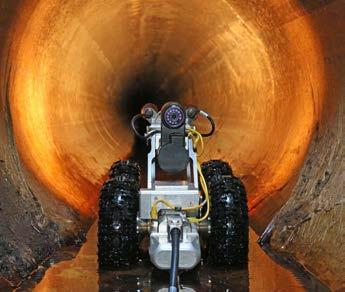
PIPE RENEWAL OR REPLACEMENT, MANHOLE REHAB
• Geopolymer Lining
• Pipe Bursting
• Manhole Rehabilitation
PIPE RELINING
• CIPP Lining
• UV CIPP Lining
• Slip Lining
• Clean & CCTV
Serving the municipal and industrial markets, you can count on Vortex Services Northeast for end-to-end trenchless rehabilitation services!
INSPECTION, CLEANING & ASSESSMENT
• Multi-Sensor Inspection
• Specialty Cleaning
GROUTING
• Leak Stoppage
• Soil Stabilization
• I&I Prevention
main replacement and treatment plant upgrades to sewer separation and stormwater improvements. For UCANE contractors, these programs are a key driver of the municipal project pipeline, as communities rely on SRF funding to advance projects that might otherwise be delayed. The ongoing emphasis on affordability, combined with incentives for climate resiliency and lead service line replacement, ensures a steady flow of publicly bid water and sewer construction projects throughout Massachusetts, reinforcing longterm stability in the market.
Overall, the 2026 Forecast Dinner paint ed a highly encouraging picture for UCANE members for the upcoming year. From largescale treatment plant upgrades and trans
Your trusted partner in construction
mission pipelines to municipally funded water and sewer replacements, the volume and diversity of work remain substantial. Just as importantly, the continued use of phased contract packaging and local assistance programs ensures that opportunities will be accessible to firms of all sizes. As Massachu-
For over a decade, we’ve proudly supported UCANE, and our commitment to protecting what matters most.
We partner with construction professionals to navigate risk and build with confidence:
Owners
Developers
General contractors
Designers
Subcontractors
At The Baldwin Group, we’re not just protecting projects — we’re Protecting the Possible.
With a track record of excellence and positive outcomes, our nationally recognized Construction & Public Contracts practice is committed to delivering results for you and your business. We understand construction and our clients’ needs and businesses. Our experienced attorneys thrive on addressing complex challenges by leveraging their extensive industry knowledge, partnering with industry leaders, and participating in a vast network of professional affiliations.
Our comprehensive suite of services includes contract analysis, drafting, negotiation, procurement and bid protest issues, strategic project advice, crisis management, claims preparation, prosecution and defense, and all forms of dispute resolution, such as mediation, arbitration, litigation, and appeals. We also assist with compliance and investigations, OSHA investigations, insurance recovery, and risk management.
We can help you navigate any phase of your project and protect your interests through practical advice and effective legal strategies.
MassDEP Releases FINAL CY2026
Clean Water & Drinking Water SRF Lists Totaling Over $1.161 Billion
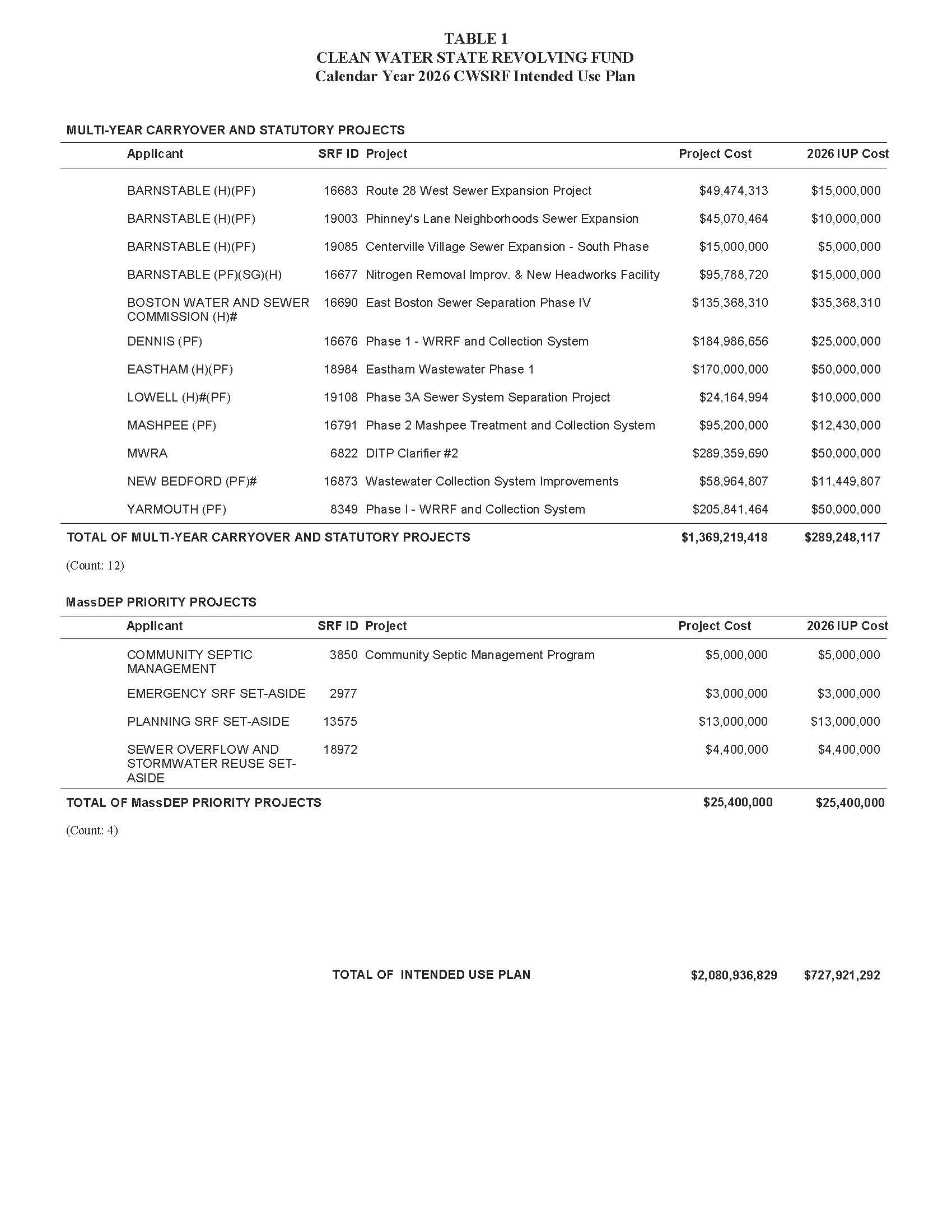
Over $728 Million Offered for Clean Water SRF in 2026
TJanuary 26, 2016
To All Interested Parties:
he Massachusetts Department of Environmental Protection (MassDEP) is pleased to present the Calendar Year 2026 Intended Use Plan (IUP). The federal Water Pollution Control Act (Clean Water Act) requires Massachusetts to annually prepare an IUP – a plan identifying the intended use of funds in its Clean Water State Revolving Fund (CWSRF). The State issues a Final IUP annually after a public review and comment period. The U.S. Environmental Protection Agency (EPA) must receive the Final IUP before it awards its annual Capitalization Grant to the CWSRF.
CWSRF is funded with federal funding received through the EPA, which is supplemented by state matching funds, repayment of loans, and interest earned.
The Massachusetts Department of Environmental Protection (MassDEP) is pleased to present the Final 2016 Intended Use Plan (IUP), which details the projects, borrowers and amounts that will be financed through the Clean Water State Revolving Fund (CWSRF) loan program. The CWSRF is a joint federal-state financing loan program that provides subsidized interest rate loans to improve or protect water quality in the Commonwealth.
The CWSRF is a joint federal-state financing program managed jointly by MassDEP and the Massachusetts Clean Water Trust (Trust) that provides subsidized loans and grants to improve and protect
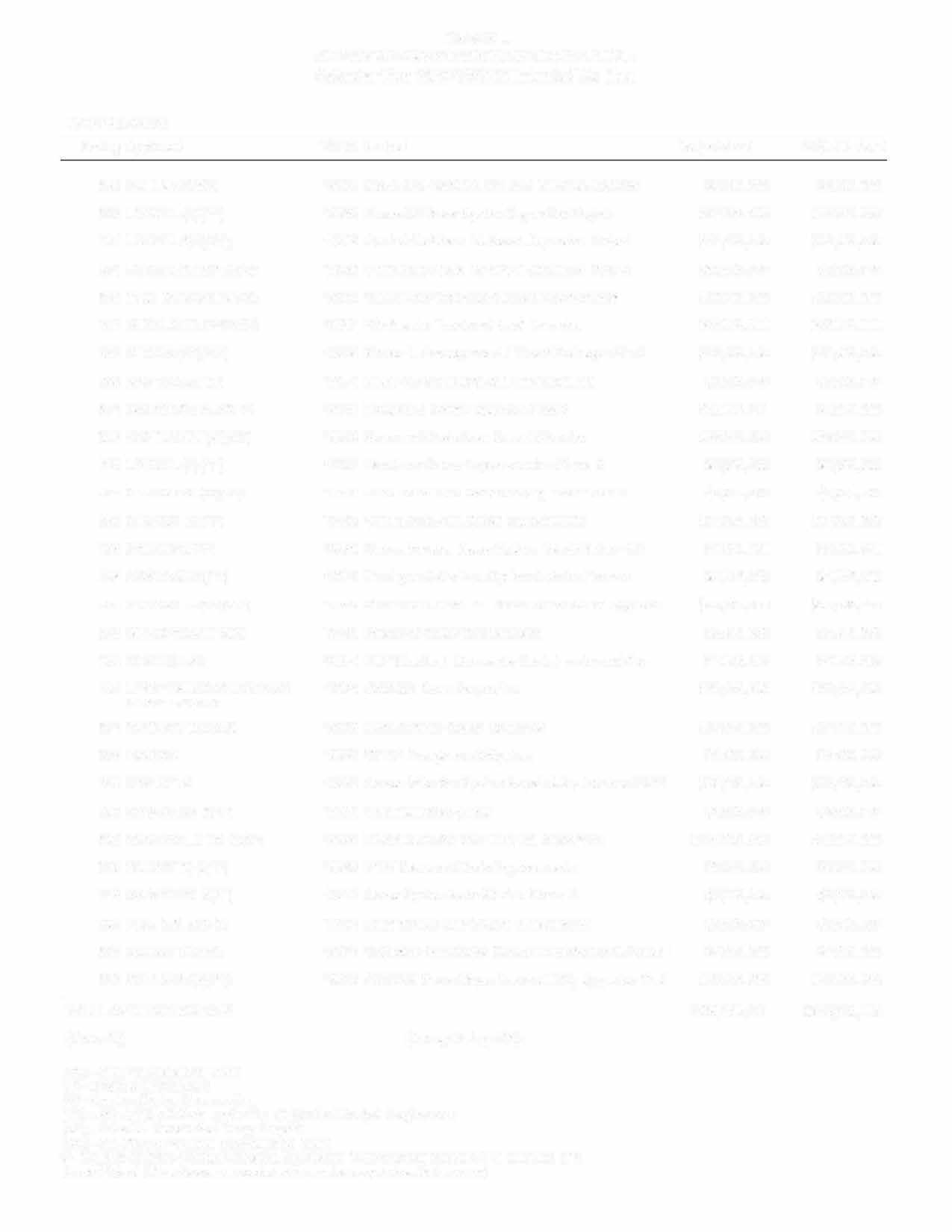
As noted in Table 1, Massachusetts is offering approximately $414 million to finance clean water projects across the Commonwealth. Approximately $380 million will fund 35 new construction projects and an additional $15 million will be allocated towards funding 9 previously approved multi-year projects. $2 million has been allocated to the emergency set-aside account, and $3 million will be directed to the Community Septic Management Program to remediate failed septic
The IUP details the intended projects, total project costs, and amount of funding being offered through the CWSRF. This year, MassDEP and the Trust are offering $728 million in financial support to wastewater projects across Massachusetts, subject to the availability of funding. Approximately $413 million is being offered to finance 29 new construction projects, $289 million is being offered to finance 12 previously approved multi-year projects, and $300,000 is being allocated to fund two Asset Management Planning (AMP) Grant projects. Additionally, approximately $25 million will be allocated to programs that will be available to communities on a
19320 Long Pond Sewer Expansion Project 19209 Somerset Needs Area Sewer Extension 19327 Downtown Sewer Improvements - Phase 2
19214 Lowell Street and River Crossing Sewer Rehab
19260 Wonderland Area Sewer Improvements
19269 Comprehensive Sewer System Rehabilitation -1D 19253 Montague Collections System Rehab - Phase 2
19263 WWTF and South Mill Street Pump Station Upgrades
19251 Phase 2C Sewer Improvements
19314 PCP Structural stormwater Control Implementation
19271 CSO 005 Sewer Separation
19313 North Scituate Sewer Expansion
19267 WPCF Phosphorus Mitigation
19212 Sewer Collection System Repair & Replacement 2026
19221 Cashman Road Sewer
19286 MORRISON AVENUE LINEAR STORAGE
19282 FY27 Sewer and Drain Improvements
19220 Sewer System Rehabilitation Phase 5
19284 Ferry Street Pump Station Rehabilitation
19274 Wollaston Stormwater Capacity Improvements Phase I
19312 CHE-004 Sewer Separation and Utility Upgrades-Ph.2
(Average Rating: 538.)
$9,630,000 $9,630,000
$47,567,730 $12,000,000
$37,900,000 $12,000,000
$63,900,000 $2,000,000
$22,620,000 $22,620,000
$32,358,000 $32,358,000
$39,000,000 $25,000,000
$8,000,000 $8,000,000
$43,787,111 $5,000,000
$36,800,000 $36,800,000
$2,000,000 $2,000,000
$2,733,675 $2,733,675
$12,200,000 $12,200,000
$5,512,470 $5,512,470
$1,774,190 $1,7 74,190
$66,497,000 $50,000,000
$3,410,000 $3,410,000
$4,329,664 $4,329,664
$32,170,438 $32,170,438
$27,000,000 $27,000,000
$2,450,000 $2,450,000
$16,999,000 $16,999,000
$4,500,000 $4,500,000
$130,392,395 $50,000,000
$5,000,000 $5,000,000
$2,500,000 $2,500,000
$2,900,670 $2,900,670
$7,000,000 $7,000,000
$15,385,068 $15,385,068
$686,317,411 $413,273,175
(H) - Housing Choice Communities (PF)- Affordability Criteria applicable, eligible for Principal Fo rgiveness. All eligible projects are anticipated to receive subsidy. (RE) - Potential Renewable Energy Projects (SG) - BIL CWSRF General Supplemental Grant #- Projects contains Energy Efficiency, Renewable Energy and/or meets EPA's definition of a Green Project (https://www.epa.gov/greeningepa/energy-and-emission s-epa)
TOTAL OF MassDEP PRIORITY PROJECTS $25,400,000 $25,400,000 (Count: 4)
TOTAL OF FINAL INTENDED USE PLAN $2,080,936,829 $727,921,292
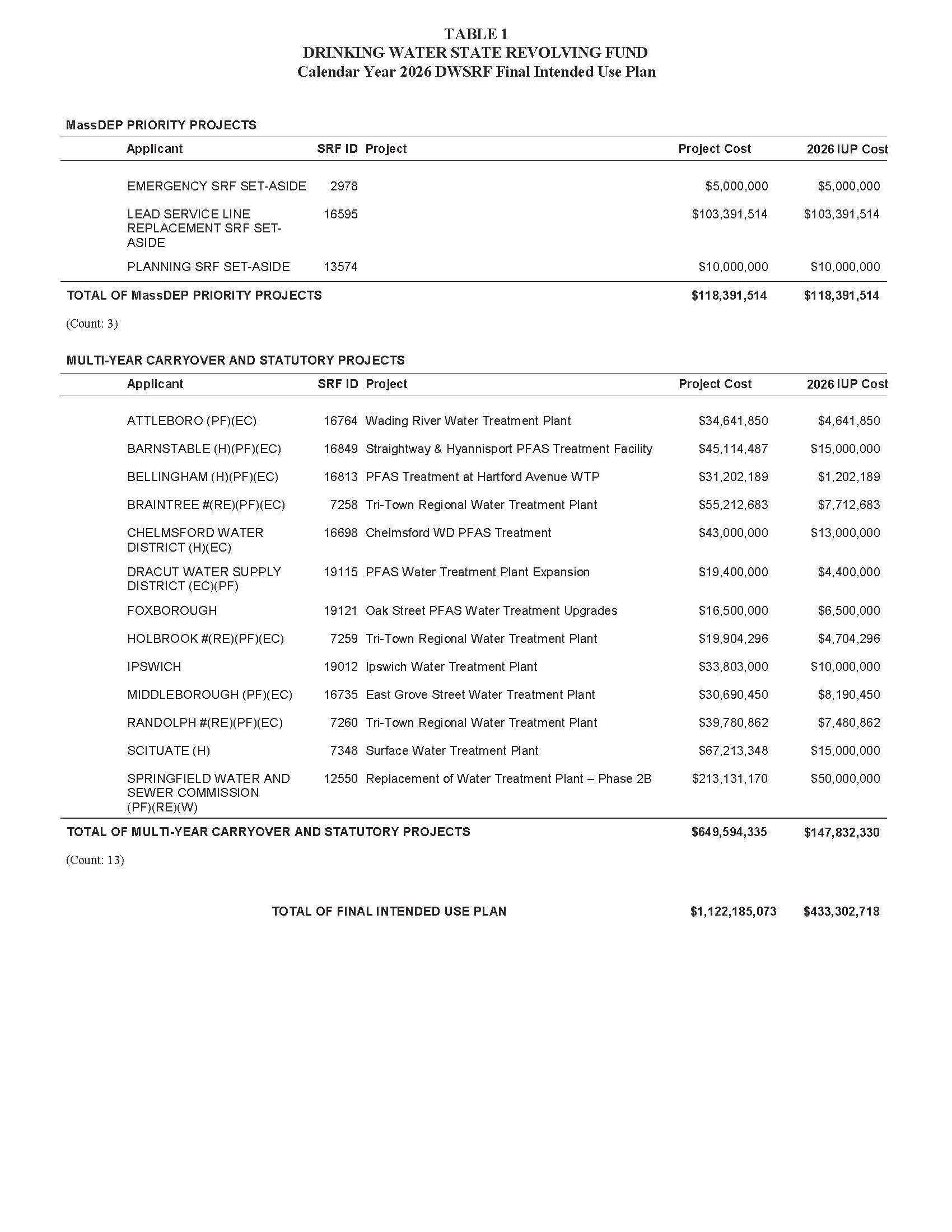
Over $433.7 Million Offered for Drinking Water SRF in 2026
The Massachusetts Department of Environmental Protection (MassDEP) is pleased to present the Calendar Year 2026 Intended Use Plan (IUP). The federal Safe Drinking Water Act requires Massachusetts to annually prepare an IUP – a plan identifying the intended use of funds in its Drinking Water State Revolving Fund (DWSRF). The State issues a Final IUP annually after a public review and comment period. The U.S. Environmental Protection Agency (EPA) must receive the Final IUP before it awards its annual Capitalization Grant to the DWSRF.
The DWSRF is a federal-state financing program managed jointly by MassDEP and the Massachusetts Clean Water Trust (Trust) that provides subsidized loans and grants to improve and protect drinking wa -
with federal funding received through the EPA, which is supplemented by state matching funds, repayment of loans, and interest earnings.
The IUP details the intended projects, total project costs, and amount of funding being offered through the DWSRF. This year, MassDEP and the Trust are offering approximately $434 million in financial support to wastewater projects across Massachusetts, subject to the availability of funding. Approximately $167 million is being offered to finance 16 new construction projects, $148 million is being offered to finance 13 previously approved multi-year projects, and $443,000 is being allocated to fund four Asset Management Planning (AMP) Grants. Additionally, more than $118 million in setaside allocations are in -
527 C ENTERVILLE-OSTERVILLEMA RSTONS MILLS FIRE DISTRICT (H)(PF)(EC)(SG)
526 HANOVER (EC)(SG)
524 • GROVELAND (PF)(EC)(SG)
522 • LUNENBURG WATER DISTRICT (PF)(EC)(SG)
521 NORWELL (EC)
516 • MIDDLETON (EC)
515 • DUDLEY (PF)(EC)
TOTAL OF NEW PROJECTS (Count: 16)
to Serve PFAS Impacted Homes 19225 Eagle Drive Neighborhood Water Main Extension
(Average Rating: 526.)
* - Small System (BG) - Base Capitalization Grant (D)- Dropped by Applicant (EC) - BIL DWSRF Emerging Contaminants Grant (H) - Housing Choice Co mmunities (PF) - Disadvantaged Co mmunity, eligible for Principal Forgiveness. All eligible projects are anticipated to receive subsidy. (RE) - Potential Renewable Energy Projects (SG) - BIL DWSRF Supplemental Grant #- Projects contains Energy Efficiency, Renewable Energy and/or meets EPA's definition of a Green Project (hllps://www.epa.gov/greeningepa/energy-and-emissions-epa) $13,440,000 $13,440,000 $7,250,000 $3,404,775 $39,050,000 $3,404,775 $26,338,000 $15,000,000 $18,833,000 $15,000,000 $44,553,900 $15,000,000 $41,000,000 $15,000,000 $19,720,000 $7,500,000 $6,675,000 $6,675,000 $10,250,000 $10,250,000 $354,1 99,224 $167,078,874
Recycled
Sand
Delivery services
Mobile crushing
Accepting excavated materials
On-site
BOND Civil & Utility
Construction, Inc.
720 University Ave., Unit 2
Norwood, MA 02062
Rep: Chris Decker
Tel: (617) 387-3400
Email: cdecker@bond-civilutility.com
Website: bond-civilutility.com
Contractor
Ferri Equipment, Inc.
2516 Cranberry Highway
Wareham, MA 02571
Rep: Boone Ferri
Tel: (508) 295-7700
Email: calden@ferriequipment.com
Website: ferriequipment.com
Associate
Melvin Civil, LLC
44 King Phillip Pathe
Marshfield, MA 02050
Rep: Michael Melvin
Tel: (781) 718-3331
Email: mike@melvincivil.com
Website: melvincivil.com
Associate
Northeast Portable Restrooms
939 Orleans Road
Harwich, MA 02645
Rep: Samantha Williams
Tel: (508) 237-3642
Email: neprestrooms@gmail.com
Website: northeastportablerestrooms.com
Associate
Woodall Construction Co., Inc. P.O. Box 878
Norfolk, MA 02056
Rep: Joseph Woodall
Tel: (781) 603-2058
Email: jwoodall@woodallcorp.com
Website: woodallcorp.com
Contractor
COMPONENT
What Is the Right One for Your Confined Space Entry: Tripod, Davit System, or Gantry?
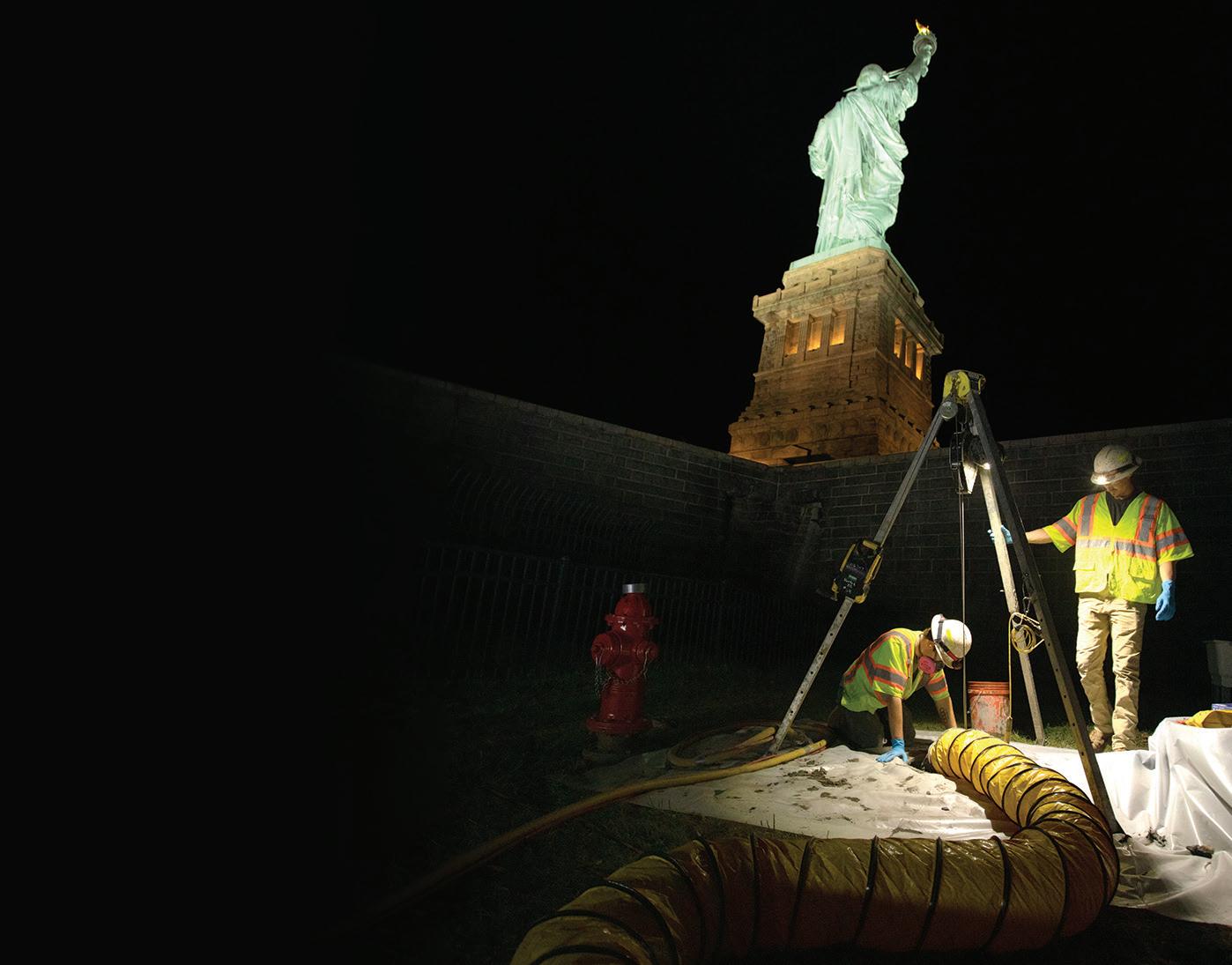
For utility contractors across New England, confined space entry is not an occasional event. It is a routine part of work in manholes, vaults, pump stations, access doors, and similar below-grade structures. Yet one of the most common planning mistakes in the field is assuming that one entry and retrieval system can handle every scenario. As safety professionals and field supervisors know, confined spaces are defined as much by geometry and access as they are by atmospheric hazards.
When it comes to overhead anchor systems for vertical entry and non-entry retrieval, tripods, davit systems, and gantries all have a place. The key is understanding what each system does well, where it falls short, and how total suspended load, worker movement, tools, and site conditions factor into the decision. The right choice is not about picking the most common system. It is about selecting the one that best matches the opening, the work, and the rescue plan.
Tripods: The Straight-Down Solution
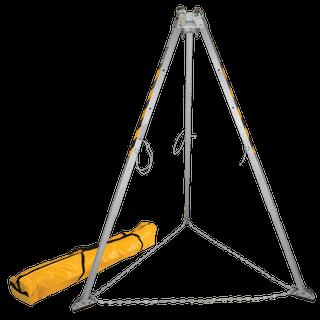
Tripods are the most recognizable confined space entry system and, in many cases, the fastest to deploy. A typical tripod is designed for vertical, unobstructed openings, most commonly round manholes set flush in pavement or concrete.
Strengths
Tripods work best when the opening is clean, symmetrical, and centered within the footprint of the legs. With three legs evenly spaced around the opening, the load path remains vertical, which helps reduce side loading on winches, lifelines, and connection points. Most standard tripod systems are rated for a working load of roughly 310 to 350 pounds for personnel support and retrieval, while the tripod
structure itself may be capable of withstanding a 5,000-pound vertical load. The system’s relatively light weight, often around 45 to 60 pounds without the winch, makes it easy to transport and quick to set up. Some heavy-duty tripod models offer working load ratings above 600 pounds, but that added capacity usually comes with a trade-off in size, weight, and portability. Supervisors also need to account for the full suspended load, not just the worker’s body weight. Clothing, boots, tools, retrieval devices, and even mud or water can all add weight and affect system selection.
continued on page 53
MATERIALS AVAILABLE FOR PURCHASE:
• 1” MINUS PROCESSED GRAVEL
• ¾” & 1½” CRUSHED STONE
• SCREENED LOAM
• SCREENED SAND
MATERIALS ACCEPTED:
• BROKEN ASPHALT
• NON & REINFORCED CONCRETE
• CONCRETE WITH WIRE MESH
• ROCK
• BL ASTED LEDGE
PLANT LOCATION: 200 LEGACY BLVD. DEDHAM, MA 02026 Plant: 617-590-0024
OFFICE: 1039 EAST STREET DEDHAM, MA 02026 Office: 781-329-4111 Fax: 781-329-1039
DELIVERIES AVAILABLE ON LARGE ORDERS. PLEASE CALL FOR PRICING.
BUILD WITH US BUILD WITH US
Limitations
Tripods require enough room around the opening and enough overhead clearance to be erected safely. In traffic zones, on narrow sidewalks, or in mechanical spaces, tripod legs can create trip hazards or interfere with barricades and work-zone control. Uneven pavement, sloped ground, or damaged concrete can also make it difficult to seat all three feet securely.
Tripods also lose effectiveness when the opening is offset or obstructed, such as a manhole located behind a guardrail or an access hatch set close to a wall. In those situations, the lifeline may rub against an edge, increasing wear and complicating retrieval. Load position is another critical is -
sue. If the suspended load falls outside the tripod’s footprint, the system can become unstable very quickly.
Best Applications
• Standard manholes in flat pavement
• Vertical entries where the worker remains centered
• Sites with enough clearance to safely manage tripod legs
From a supervisory standpoint, tripods are simple, familiar, and quick to inspect. For crews that routinely perform manhole entries, that simplicity is a major advantage. But simplicity should not be mistaken for foolproof operation. Proper training is still needed to understand load position, footing conditions, and resultant forces.
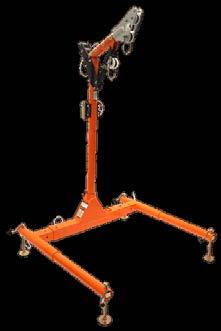
Davit Systems: Offset Access with Better Control
Davits are modular systems and are often the next step when a tripod does not fit the job. An offset davit arm allows the anchor point to be positioned over the opening while the base sits to one side, solving many access problems commonly encountered in utility work.
Strengths
A davit system provides an overhead anchor point while allowing crews to work around curbs, parapets, railings, and other structural obstructions. This makes davits especially valuable at vault access doors, wall-adjacent entries, and rectangular hatches where a tripod cannot be positioned effectively. Many systems also offer multiple base options, allowing teams to connect to trailer hitches, road plates, jersey barriers, and other fixed or portable support points.
Davit systems are typically rated differently for entry and egress than they are for retrieval or rescue. Many configurations allow one worker at 310 pounds for entry, while rescue ratings may permit two workers at 310 pounds each, accounting for assisted re -
Safety Corner continued from page 53
trieval or attendant involvement. That distinction is critical. Supervisors must understand exactly which rating applies to the specific task being performed.
Another advantage is work-zone control. By keeping legs and bases out of walk paths and away from the immediate edge of the opening, davits often create a cleaner, more controlled setup.
Limitations
That added flexibility comes with added complexity. Davit systems involve more components, more weight, and a more detailed setup process than most tripods. Bases, pins, mast sections, and arms all have to be assembled correctly. If the base cannot be seated, mounted, or secured properly, the system’s advantages disappear quickly.
Davits also require a higher level of procedural control. Crews need training not only on assembly, but also on load ratings, base selection, and application limits. For managers and competent persons, davits demand more oversight, but they reward that effort with much greater flexibility in the field.
Best Applications
• Vault access doors and wall-adjacent openings
• Manholes near curbs, guardrails, or obstructions
• Sites where tripod leg placement is impractical
For contractors who regularly encounter awkward access points, a davit system can be easier to justify than forcing a tripod into a situation it was never designed to handle.
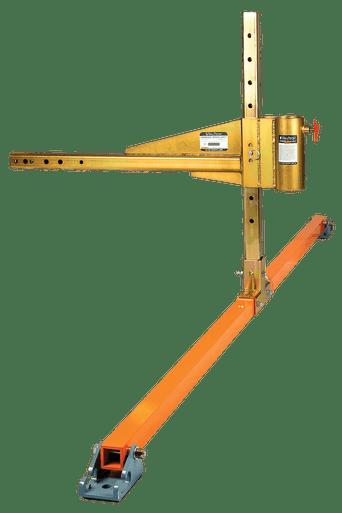
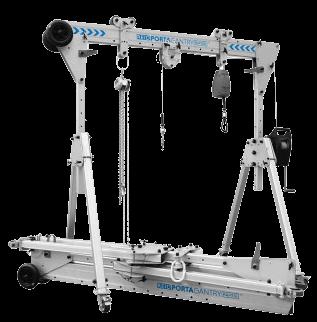
Gantry Systems: Span, Stability, and Flexibility
Portable gantry systems are often viewed as overkill until a jobsite makes it clear that nothing else will work as safely. Gantries are designed to span
continued on page 55
larger openings or work areas while keeping the perimeter more open and accessible.
Strengths
Gantry systems excel where the “opening” is really a wider access area, such as a large rectangular hatch, a vault door, or a below-grade work area requiring broader coverage. With adjustable spans, the anchor point can be positioned directly over the entrant without moving the entire structure. In some configurations, the system can also move with the work area, which is useful when access needs shift during the task.
Gantries also offer flexibility through accessories such as trolleys, pulleys, and multiple anchor points. This can make it easier to move personnel, tools, and materials in a controlled way. From a capacity standpoint, gantries often support much higher loads than tripods or davits. Personnel-rated configurations may allow up to 1,100 pounds, while goods-lifting ratings can reach several tons depending on the specific setup. That added capacity can be valuable when both workers and equipment need support from the same system.
Gantries can also make financial sense on jobs with repeated or long-duration entries, where longer setup time is offset by improved access, better mobility, and reduced congestion around the opening.
Limitations
The biggest drawbacks are size, storage, transportation, and planning. Larger gantry systems may require more truck space, more setup time, and more coordination before they ever arrive at the site. Even smaller portable gantries, while designed to be relatively manageable, still require more planning than a typical tripod.
Best Applications
• Large or irregular openings and trenches
• Wide access areas requiring clear perimeter space
• Repetitive confined space work where flexibility and higher capacity matter
continued on page 56
Corner continued from page 55
When the opening is too wide, too irregular, or too congested for other systems, a gantry may be the safest and most defensible choice.
One Size Rarely Fits All
For UCANE contractors, the takeaway is straightforward: the confined space should define the system, not the other way around. A tripod may be perfect for a standard manhole in open pavement but inadequate for a vault door behind a guardrail. A davit may solve offset access issues but still fall short when a wider span is needed. A gantry may seem excessive until it becomes the only option that truly fits the work safely.
From a safety management standpoint, having access to more than one type of system is not redundancy. It is preparedness. The ability to match the right equipment to the actual space, suspended load, and retrieval scenario is what separates a minimally compliant plan from a well-executed one.
When supervisors can clearly explain why a different system is needed, they are doing more than requesting equipment. They are building a safer operation, a smoother workflow, and a stronger justification for decisions made in the field. n
The Biggest, Baddest Ditch Witch Hydrovac to ever hit the wild ...
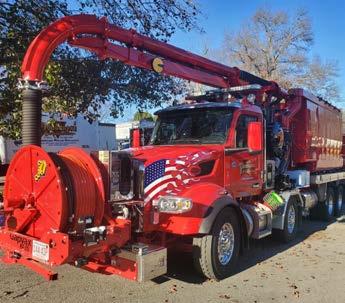
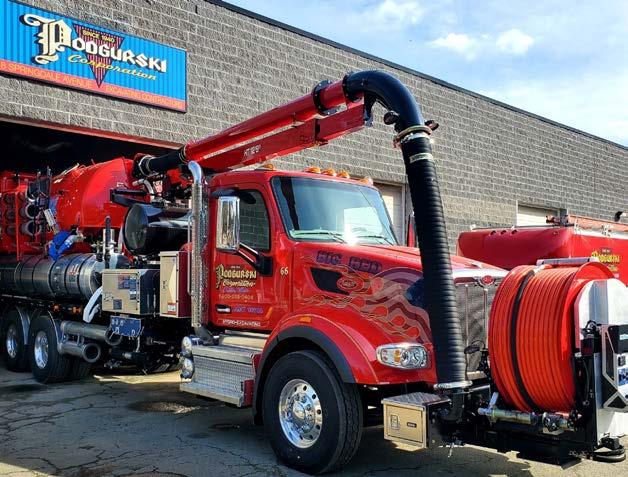
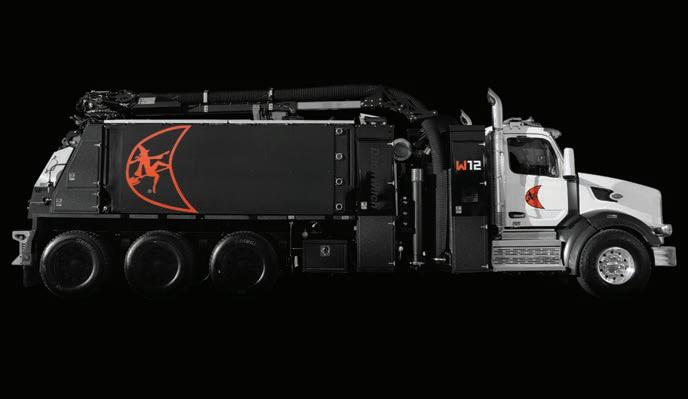
Introducing the most powerful Ditch Witch truck vac to ever hit the open road — the Warlock Series W12. With a 2,800 PSI water system, 12 cubic yard debris tank capacity, and a 5,000 CFM, 27″ Hg vac system, this beast-of-a-machine easily devours jobs of all shapes and sizes. CALL FOR
It’s late Friday afternoon. Crews have wrapped up trenching along a municipal roadway. Horizontal directional drilling (HDD) operations are staged for next week. Permits are in place. Work orders are queued. As you review the schedule before heading out, your operations manager calls.
They can’t access the project management system. Geographic information system (GIS) mapping files won’t load. Fleet tracking is down. Invoices tied to completed work are locked. Then a message appears:
“Your data has been encrypted. Pay 155,000 in Bitcoin within 48 hours.”
This is not an IT problem—it’s a business interruption. And for underground utility contractors, it’s an increasingly real risk.
A Field Based Business Powered by Data
Underground utility work is physical, complex, and highly coordinated. While the work happens below ground, the business runs on interconnected systems:
• Project management and work order platforms
• GIS mapping and utility locating data
• GPS-enabled fleet and equipment tracking
• Payroll systems managing field crews and subcontractors
• Permitting documentation and municipal communications
• Client contracts, billing systems, and compliance records
protocols, and contractual obligations can quickly be affected.
Cybercriminals understand this dependency. Increasingly, they are targeting contractors who rely heavily on digital systems but may not have enterprise-level cybersecurity resources.
Cyber Incidents are Reaching Infrastructure Contractors
Cyber risk is no longer confined to tech companies or financial institutions. It has expanded into construction and infrastructure sectors, particularly
continued on page 61
among contractors managing complex projects, distributed crews, and sensitive data.
In January 2025, ENGlobal, a major energy industry contractor, reported that a ransomware attack left it unable to access key financial and operating systems for about six weeks and involved the compromise of sensitive personal information. In another case, a 2022 ransomware attack on engineering firm Sargent & Lundy led to the theft of data tied to multiple U.S. electric utilities, emphasizing how cyber incidents can ripple through critical infrastructure projects at an alarming rate.
Most recently, in early 2026, R.J. Zavoral & Sons, Inc., a construction contractor whose services include underground utilities, was also listed by a ransomware group on a public leak site, highlighting that even regional firms linked to utility work are now appearing alongside larger infrastructure players in a growing list of attacks.
Underground utility contractors often operate across municipalities, coordinate with engineers and inspectors, and maintain detailed records tied to critical infrastructure. That combination creates both operational dependence on data and greater exposure when systems fail or are compromised.
The pattern is clear: servicebased contractors with timesensitive operations and multiple system dependencies are increasingly becoming targets.
How Most Attacks Actually Begin
Despite the sophistication of cybercrime, most incidents don’t start with advanced hacking. They begin with something much simpler:
• An email appears to come from a municipal contact requesting updated documents.
• A message that looks like it’s from an engineer or project manager.
• A file-sharing link tied to a familiar job name or permit.
One click is often all it takes.
From there, malware can spread across systems: locking project files, disrupting mapping tools, and shutting down communication between field crews and office staff.
In active job cycles, even a short outage can delay excavation schedules, disrupt inspections, and strain client relationships.
Where Cyber Insurance Becomes Critical
Cyber insurance is often misunderstood as something that only responds to ransom demands. In reality, its most valuable function is immediate access to coordinated response support.
When systems go down, the question becomes
continued on page 62
Insurance continued from page 61 urgent:
Who do you call first: IT, legal counsel, law enforcement, or the client?
A well-structured cyber policy typically provides access to a 24/7 breach response team. That single call activates:
• Forensic investigators
• Cybersecurity specialists
• Legal advisors
• Communications professionals
For underground utility contractors, that coordination can mean the difference between a contained disruption and a prolonged delay that impacts project timelines and revenue.
What Cyber Insurance May Cover
Coverage varies, but policies may respond to:
• Ransomware and cyber extortion demands
• Business interruption and lost income
• Data restoration and system recovery
• Legal, regulatory, and notification costs
• Social engineering and funds transfer fraud
• Lost or stolen devices containing sensitive data
Importantly, response resources are typically available at any time, on nights, weekends, or during active project phases.
Managing a Modern Operational Risk
Reducing exposure starts with practical steps aligned to how utility contractors operate. That includes keeping systems and software updated across both office and field devices, and making sure crews and staff can recognize phishing attempts before they become incidents.
Strong password protocols and multi-factor authentication add another layer of protection, particularly for systems tied to project data and financial transactions. Just as important is maintaining secure, regularly tested backups of mapping files, project documentation, and operational data.
When paired with guidance from an advisor who understands how these risks manifest in day-to-day operations, these steps help ensure that cyber protection reflects the realities of the work, not just the policy language.
A Risk That’s No Longer Theoretical
Underground utility work is built on continued on page 63
LARGE RESOURCES. LOCAL RELATIONSHIPS.
IS YOUR INSURANCE PROGRAM KEEPING PACE IN TODAY’S MARKET?
Let us review your programs and recommend improvements to ensure you are fully protected should the unexpected happen.
COMMERCIAL INSURANCE & BONDS
• All forms of liability and property coverages
• Bonds including Express Bond Program
• Competitive terms
• Personalized service
• Highly experienced with Construction programs
RISK MANAGEMENT SOLUTIONS
• Employee and executive benefits
• Retirement planning services
• Investment advisory services
• Private wealth management
• Personal and high-net-worth portfolios
CHRISTOPHER CLARK, PRINCIPAL, CLIENT ADVISOR
World Insurance Associates LLC, 50 Prospect Street, Waltham, MA 02453 O 781-642-9000 | D 781-398-9318 | M 508-400-4010 | christopherclark@worldinsurance.com worldinsurance.com
Insurance continued from page 62 precision, timing, and coordination. Today, that coordination depends just as much on data systems as it does on crews and equipment.
Scheduling platforms, GIS data, payroll systems, and client communications are now mission-critical infrastructure within your business.
Cyber risk has followed that shift.
Cyber insurance provides more than financial protection; it provides expertise, coordination, and a path forward when operations are disrupted.
So, when systems go dark late on a Friday afternoon, the real question isn’t whether cyber risk applies to your business—It’s who you’ll call first.
This article is intended for informational purposes only and does not constitute legal or insurance advice. Readers should consult qualified legal counsel or an insurance professional regarding their specific circumstances. n
5 Cyber Risks Underground Utility Contractors Often Overlook
1. Municipal or engineer impersonation: Emails appearing to come from inspectors, municipalities, or engineers requesting documents or changes are a common entry point.
2. Compromised field devices: Tablets, GPS units, and mobile devices used on jobsites often lack the same protections as office systems.
3. Project data and mapping exposure: GIS files, utility layouts, and project documentation can be sensitive and disruptive if lost or locked.
4. Payroll and subcontractor systems: Multiple crews, subcontractors, and off-cycle payments increase the risk of fraud and credential theft.
5. Assumption that vendors absorb the risk: Software providers and IT vendors may support systems, but liability for a breach often remains with the contractor.
Lawrence-Lynch Corp.
P.O. Box 913 • Falmouth, MA 02541
396 Gifford Street • Falmouth, MA 02540
PH 508-548-1800 • FX 508-457-1825
White Bros. – Lynch Corp.
P.O. Box 155 • Oak Bluffs, MA 02557
20 Vineyard Ave. • Oak Bluffs, MA 02557
PH 508-693-0845 • FX 509-693-0312
Visit our website @ www.lawrencelynch.com
UCANE’s Associate Members
Featured at 14 th Annual Trade Show
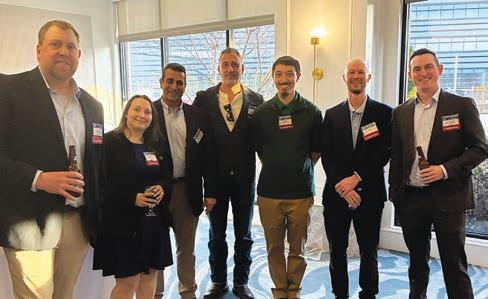
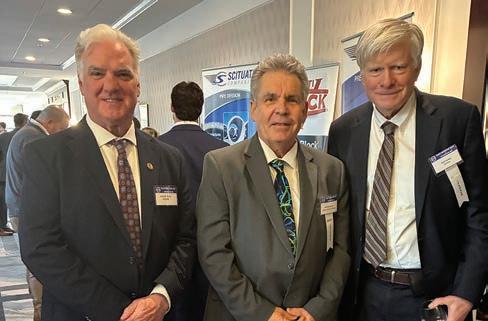
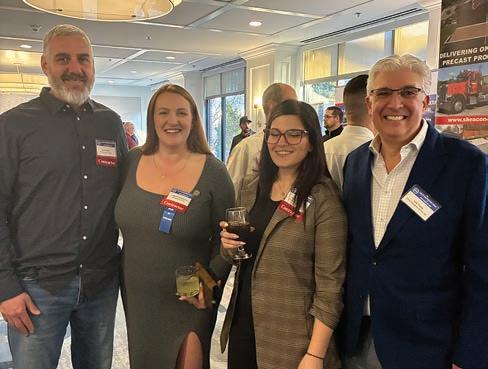
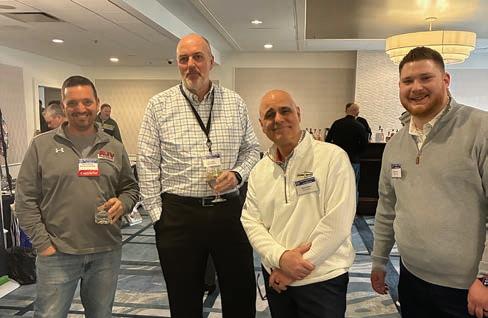
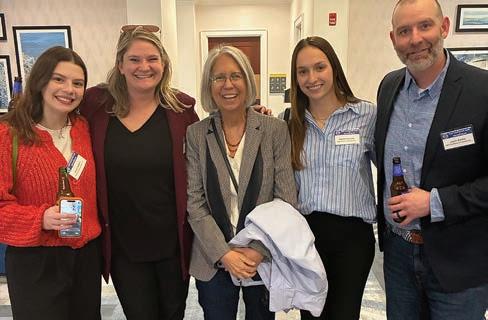
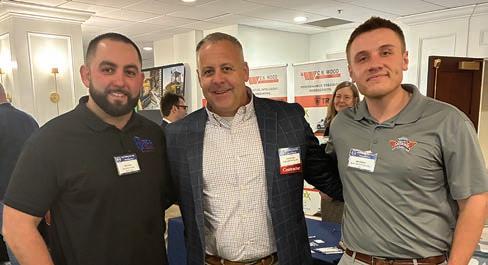
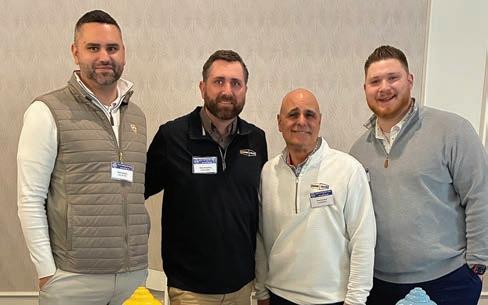
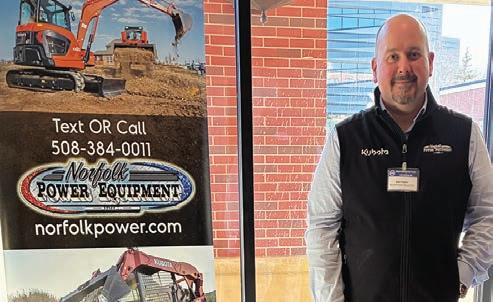
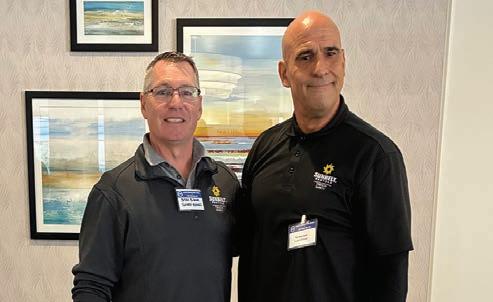
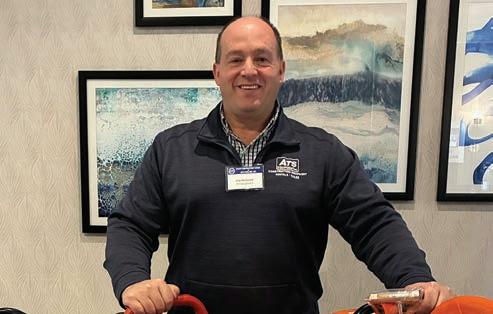
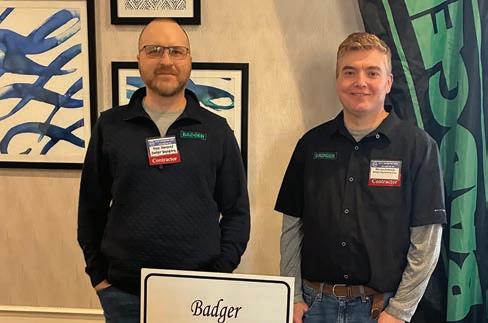
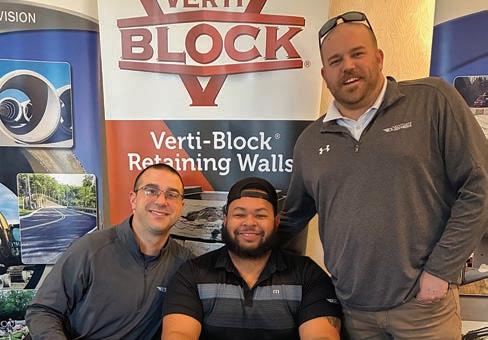
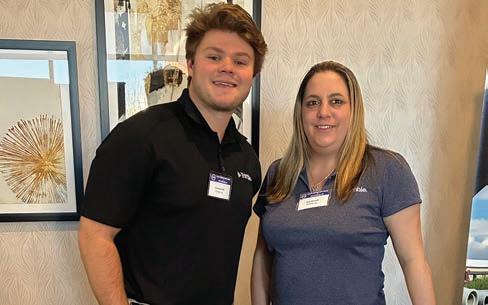
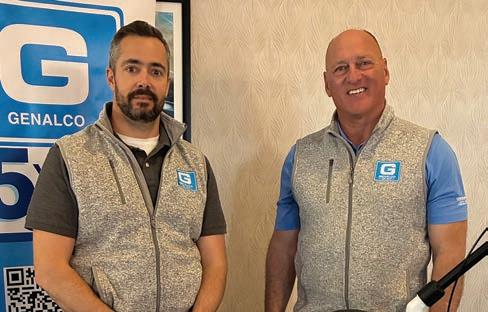
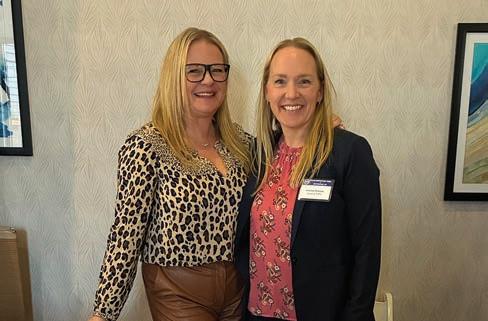
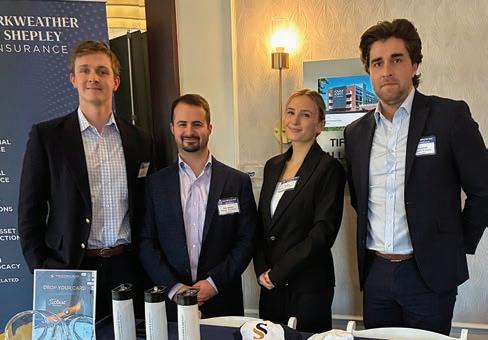
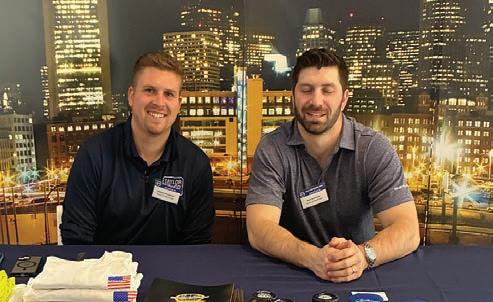
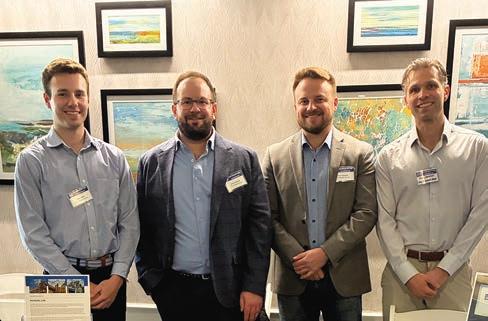
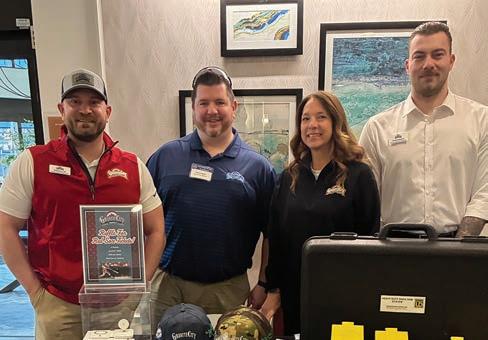
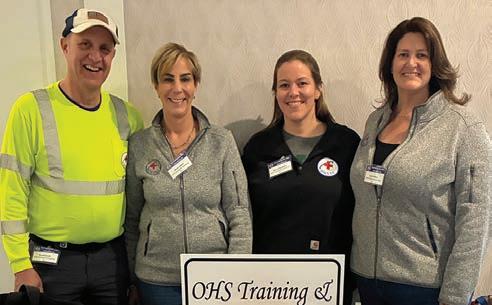
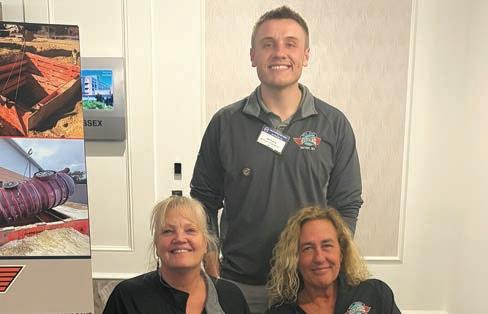
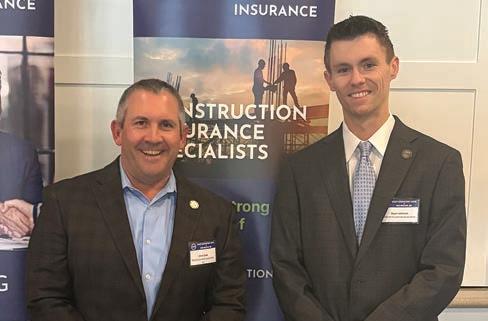
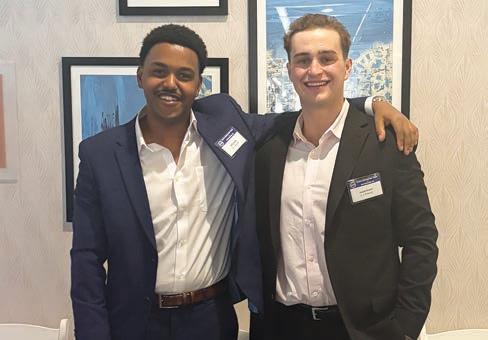
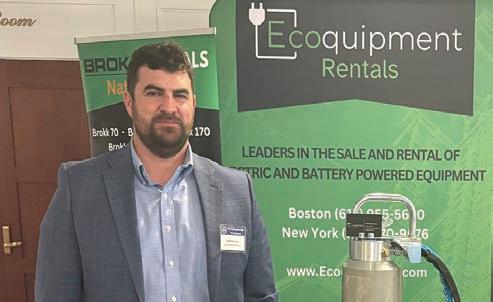
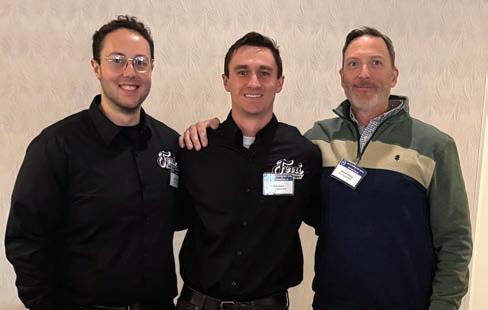
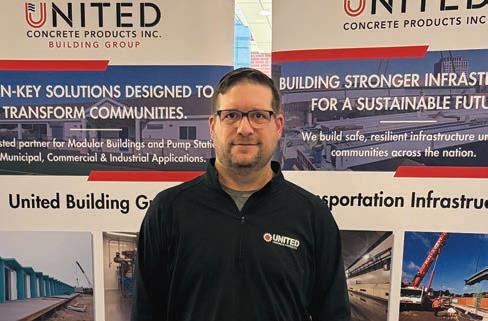
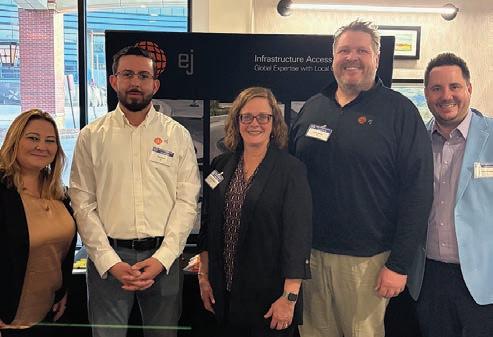
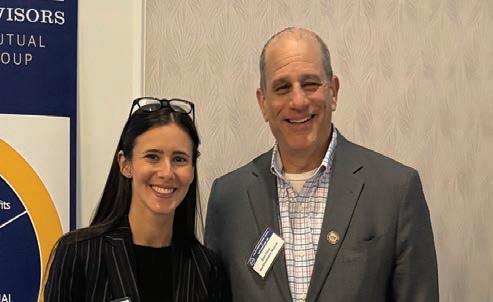
UCANE Contractors and guests gathered in March at the Four Points by Sheraton Hotel in Norwood, MA to learn about and see the latest in equipment, technology, and business support offered by UCANE’s many Associate Members.
On March 25, 2026, the energy inside the Sheraton Four Points Hotel was unmistakable as UCANE members gathered for one of the Association’s most valuable events of the year – the Annual Trade Show. Since its launch in 2012, the Trade Show has evolved into far more than a pre-dinner gathering. It’s become an exhibition hub where the water and sewer construction community come together to discover new solutions, strengthen partnerships, and prepare for the season ahead.
This year, 33 UCANE member companies transformed the first-floor corridors into a showcase of innovation tailored to the underground utility industry. From cutting-edge equipment and materials to specialized services that keep water and sewer projects moving efficiently, exhibitors brought practical, job-ready solutions directly to contractors. The steady flow of attendees –connecting with longtime partners and meeting new faces – highlighted what makes this event so valuable: real conversations that translate into real work.
Held just before UCANE’s Annual Forecast Dinner – where the Massachusetts Water Resources Authority (MWRA), Boston Water &
Sewer Commission (BWSC), and MassDEP outline their upcoming projects – the Trade Show offers a strategic advantage for contractors and suppliers alike. It’s a chance to align capabilities with projects about to hit the street, making it one of the most productive networking opportunities of the year. With more than 300 members and guests in attendance, the strong turnout underscored the industry’s eagerness to connect and collaborate ahead of a busy construction season.
The Trade Show also reflects the strength of UCANE’s community and the value of its memcontinued on page 66
Trade Show continued from page 64
bers’ support. Complimentary booth space is offered to companies that advertise in Construction Outlook, reinforcing the magazine’s role as a cornerstone of the industry. Widely regarded as New England’s leading publication for the horizontal construction sector, Construction Outlook reaches key decision-makers – from contractors and DPW directors in all 351 Massachusetts communities to state and federal leaders and agencies. Together, the magazine and Trade Show create a powerful platform – connecting the people, projects, and products that keep the region’s water and sewer infrastructure moving forward.
Associate Members and Construction Outlook
Advertisers: UCANE extends its sincere thanks to all our Associate members and advertisers who have helped to strengthen our organization by their ongoing support!
Contractors: Please support our Associate members throughout the year whenever possible. When making purchases for your next project, looking to renew a policy, or looking to lease, buy, or rent – please give our Associate Members a chance to earn your business. n
Thank you to all our advertisers. UCANE is strengthened when members give other members an opportunity to bid!
ATS Equipment, Inc.
Badger Daylighting
The Baldwin Insurance Group
Dennis K. Burke, Inc.
Concrete Systems, Inc.
Core & Main
Ecoquipment Rentals
EJ
Ferri Equipment
Genalco, Inc.
Granite City Electric
HUB International New England
National Trench Safety
Norfolk Power Equipment, Inc.
North East Shoring Equipment, LLC
Northeast Portable Restrooms
Northwestern Mutual
OHS Training & Consulting, Inc.
E. J. Prescott, Inc.
Rain for Rent - New England
Scituate Concrete Products Corp.
Scrap It, Inc./Minichiello Bros., Inc.
Shea Concrete Products, Inc.
Starkweather & Shepley
Insurance Brokerage, Inc.
Stopping Traffic, LLC
Sunbelt Rentals
Taylor Oil North East
Tonry Insurance Group, Inc.
TransCOR
Trimble, Inc.
United Concrete Products
Vortex Companies
C. N. Wood Co., Inc.
World Insurance Associates, LLC
Doug Seyler, Trimble
How Integrated Technology Is Powering the Future of Utility Construction
(This is the third article in a 3-part series on anticipated 2026 utility contracting trends)
Utility contractors are at a pivotal moment, as rising infrastructure demands collide with tighter budgets, workforce constraints and growing expectations for accuracy and accountability. Across the industry, digital transformation is accelerating and reshaping how projects are planned, built, managed and financed.
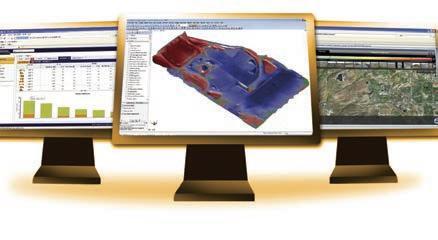
From GIS-driven asset intelligence and more accessible construction technology to financial management platforms that bring clarity to complex projects, digital tools are redefining how utility contractors deliver critical infrastructure. Together, these trends point to a future where data, integrated systems and strategic adoption of technology enable contractors to work more efficiently, manage risk and play a central role in building resilient, long-lasting utility networks.
GIS-Centric Infrastructure and Asset Management Continues its Momentum
Municipalities, state agencies, and private asset owners are under growing pressure to manage expansive portfolios of aging infrastructure while also delivering increasingly complex new construction projects, often with constrained budgets and leaner teams. Traditional, siloed approaches to asset management are no longer sufficient. In response, many owners are turning to advances in 3D GIS and digital modeling technologies to gain a clearer, more connected view of their assets from the outset.
Today’s 3D GIS environments create richer, more precise digital representations of public and private infrastructure, capturing not just location but geometry, condition, and contextual data. At the same time, GIS-centric asset lifecycle management is be -
ing reshaped by AI, real-time spatial intelligence, and secure data-sharing frameworks. Together, these capabilities enable seamless collaboration across planning, design, construction, and operations teams – supporting faster, more informed decision-making while reducing risk and inefficiency throughout the asset lifecycle.
3D digital models, long associated with building construction, are providing competitive advantages in the utility sector. Contractors adept at working in this environment gain far richer data than traditional 2D drawings can provide and a much more efficient way to update and share that data as plans are modified. 3D Models are also increasingly being used to
continued on page 72
Technology in Const. continued from page 71
provide up-to-date data to modern machine guidance systems, automating and improving the accuracy and efficiency of excavating, grading, and other essential utility construction operations.
Utility Contractors Rethink Tech Adoption
As construction technology continues to advance, 2026 will mark a tipping point for broader adoption – particularly among small and mid-size utility contractors. What was once viewed as complex, costly or out of reach is becoming far more accessible. Subscription-based and SaaS delivery models for both software and hardware are lowering upfront
investment requirements, allowing contractors to pay for what they need, when they need it. Utility construction examples range from affordable machine guidance for compact track loaders to scalable SaaS applications for estimating, performance tracking, and resource scheduling.
At the same time, improvements in usability, interoperability, and modern user interfaces are reducing learning curves and the need for deep in-house IT expertise, making implementation, training, and optimization far more manageable.
Technology purchasing itself is also evolving. Ecommerce options, tiered pricing models, and modular software capabilities enable contractors to start small and scale over time as their needs grow. This flexibility is especially important for firms navigating tight margins and fluctuating workloads. In parallel, vendors are increasingly offering solutions that support multiple workflows within a single ecosystem, simplifying integration, and reducing the complexity of managing fragmented technology stacks.
Financial Management Platforms Power Smarter Utility operations
In 2026, financial management will continue to emerge as a defining capability for competitive utility contracting firms. The complexity, capital intensity, and tight timelines of modern infrastructure projects leave little margin for error, and fragmented systems can quickly undermine performance. Process inefficiencies, limited visibility into project data, and delays in transferring information between applications often result in cost overruns, scheduling disruptions, and misallocated resources. To mitigate these risks, more contractors are turning to ERPs or specialized financial management applications.
Financial management apps –well-suited for small to mid-sized contractors – are designed to help owners or managers track costs and streamline project and business finances. Primary benefits
continued on page 73
Technology in Const. continued from page 72
include streamlined financial workflows delivered through flexible subscription models, real-time jobto-financial visibility, and AI-driven insights that provide clear, actionable intelligence with minimal effort or accounting expertise from contractors.
Modern construction enterprise resource planning (ERP) solutions – a great fit for larger contractors – integrate accounting with vendor and subcontractor payments, compliance and performance tracking, timekeeping, and human resources. This unified approach gives contractors stronger control over job costing, budgets, and cash flow while improving coordination across teams. Increasingly, these systems are also integrating with project management and materials procurement tools – a trend gaining urgency amid ongoing volatility in tariffs, supply chains, and material pricing.
At their core, ERP systems and other specialized financial management apps are built around financial logic, giving finance teams access to consistent, accurate, and timely information. Detailed cost projections, budget-to-actual tracking, work-in-progress reporting, and cost-to-complete forecasts provide deeper insight into project health and profitability. With a clear view of performance, contractors are
We improve the lives of our partners, and our family by going beneath the surface to build America’s essential infrastructure.
While we’re capable of taking on any trenchless construction project across the U.S., we’re bestsuited for the hard jobs no one else wants to touch.
We are proud to offer an array of trenchless construction methods to choose from to perfectly fit every job. Partner with us on your next project.
better positioned to make proactive decisions, meet reporting requirements, and protect margins in an increasingly uncertain market.
In 2026 and beyond, successful utility contractors face a turning point as infrastructure demand rises amid tighter budgets and increasing labor, material, and competitive challenges. The leading contractors are following a phased, pragmatic approach to technology adoption, setting realistic goals, adding functionality incrementally, and aligning technology investments with measurable business outcomes –turning advanced capabilities, accessibility, and flexibility into lasting competitive advantages.
Doug Seyler is vice president of customer success at Trimble. In his role, he leads implementation services to assist contractors in planning and optimizing software applications for construction estimating and operations. n
Bettering lives from the ground up
150 Grossman Drive Suite 200
Braintree, MA 02184 (617) 773-9200
238 Bedford Street Lexington, MA 02420 (781) 861-1800
OSHA CARES
As an employee, you have the right to:
y A safe workplace
y Speak up about safety and health concerns without retaliation
y Report an injury or illness
y Training in a manner you understand
y Be provided required safety equipment
y Request an OSHA inspection and speak with the inspector
y File a complaint with OSHA about workplace hazards
y Free safety and compliance assistance from OSHA at any time