

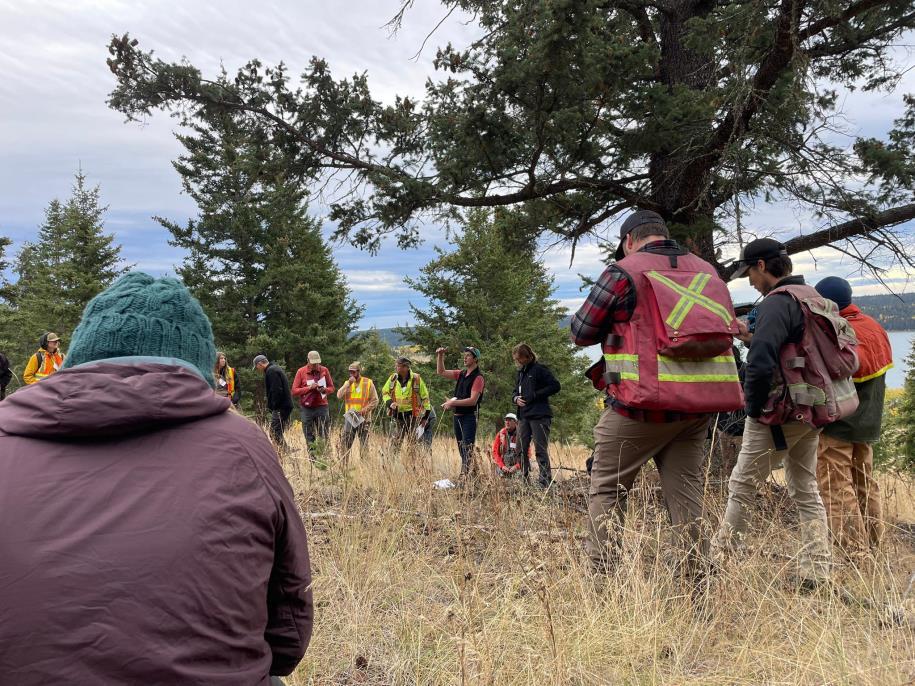
We were among over 50 students who attended this year’s Southern Interior Silviculture Committee (SISCO) fall field tour near Williams Lake in Secwépemc territory. The tour offered a valuable opportunity to observe on-the-ground silvicultural practices and discuss the multiple values and challenges of forest management alongside practitioners from across the province, many of whom described themselves as ‘students of the forest’. With rising wildfire risk and shifting climate, social and economic pressures, effective management depends on continuous observation, learning, and adaptation.
The 2025 tour highlighted proactive silviculture systems with an emphasis on wildfire fuel treatments in the dry-belt Douglas-fir ecosystems and the launch of the updated Silvicultural Systems Handbook of British Columbia. Field stops included Chimney Valley and Chimney Lake Rec Site, fuel treatments near Bond Road’s Thunder Mountain Speedway, the UBC Alex Fraser Research Forest and the Wildwood Fire Trial. Here, we observed industry, research and Esk’etemc First Nation and T’Exelc (Williams Lake First Nation) forestry practices.
Spending two days in the field demonstrated how adaptive, forward-thinking silviculture can help navigate this rapidly changing landscape. In the dry-belt Douglas-fir ecosystems, this means integrating wildfire risk reduction, grassland management and cultural values into silviculture systems designed for long-term resilience.
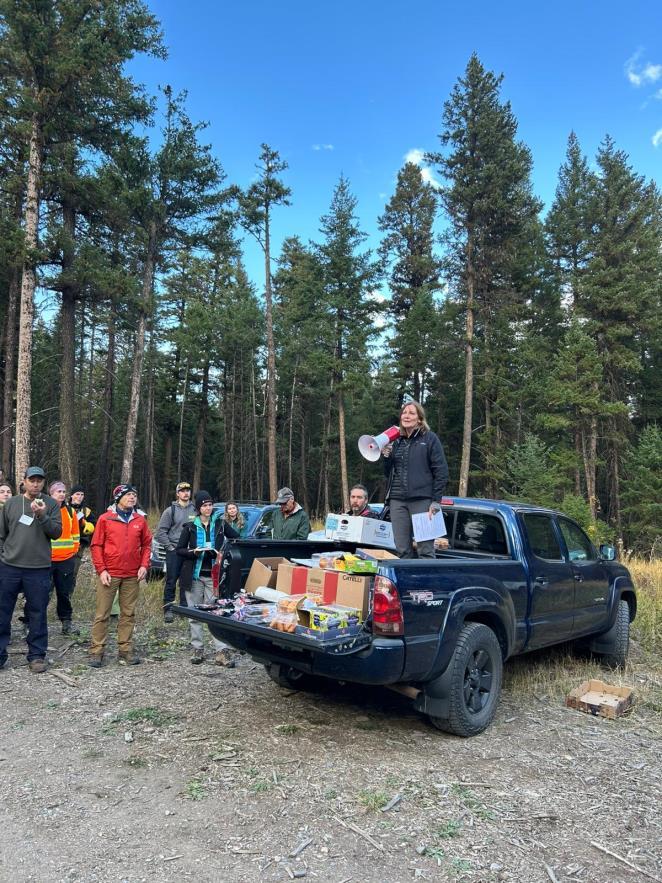
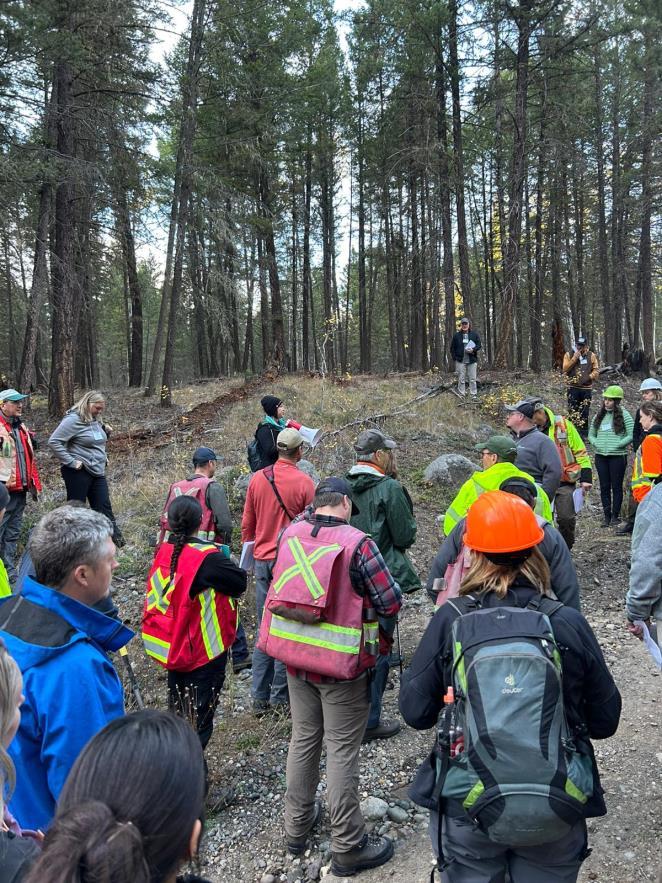
We heard from the resident forester at UBC’s Alex Fraser Research Forest, Ryen Leslie, as she discussed the recent experiment using small machinery to conduct thinning operations. Other stops included fuel treatments conducted by Williams Lake First Nation and Alkali Resource Management, where their respective groups were able to complete treatments in Old Growth Management Areas and Mule Deer Winter Range. These treatments were neither simple nor inexpensive, but they demonstrated what can be achieved through creativity and a strong understanding of stand dynamics.
Discussions at Chimney Valley captured tension between feasibility and value. Questions like “How much did it cost?” and “How many did it employ?” highlighted economic pressures and community considerations. Fuel treatments are expensive and often only viable when subsidized, yet they provide substantial benefits, including local employment and wildfire risk reduction. Evaluating the sustainability and feasibility of these projects requires integrating multiple perspectives across communities and landscapes, particularly in the wildland-urban interface. Williams Lake Fire Chief Evan Dean offered a municipal perspective on the growing urgency of wildfire risk mitigation, while Williams Lake First Nation shared the importance of proactive treatments in slowing the spread of fire, giving responders a better chance to protect communities and reduce the risk to critical assets. This was one of many examples of proactive work that is already making a difference in the community.
Economic feasibility remained a central challenge. Practitioners spoke candidly about financial gaps that constrain the scale of wildfire risk reduction treatments even where ecological and social benefits are clear. Some solutions included expansion of community forest licenses, partnershipbased approaches, integrating fuel management with timber operations and embedding these treatments into broader landscape-level management strategies to help align these goals with economic realities.
Flexibility in decision-making was another recurring point. Current regulatory frameworks can limit the ability to adapt quickly or manage for multiple, sometimes conflicting values. Many practitioners spoke to the need for less rigid regulation and more trust in professional expertise, allowing for strategic innovation on the ground.
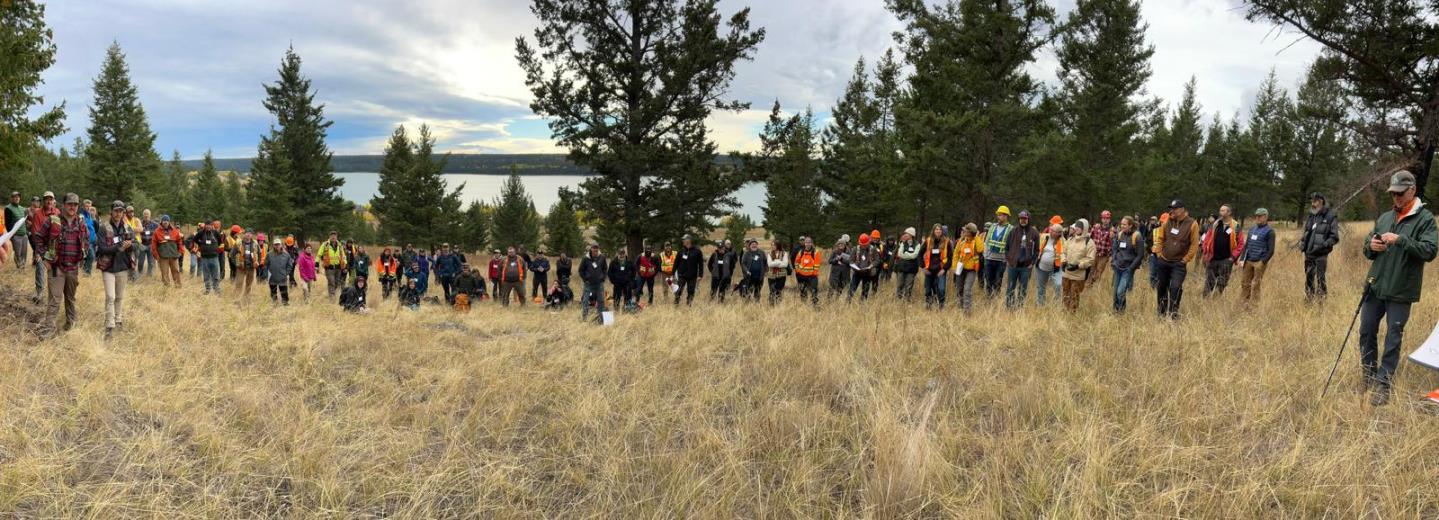
The updated Silviculture Systems Handbook of British Columbia offers a framework to support flexible, context-specific silviculture innovation. Ken Day and Ken Zielke discussed the use of stand development pathways to provide long-term guidance on taking a stand from its current condition to a desired future state. These pathways rely on multiple interventions, in contrast to the businessas-usual approach of minimal management until rotation age. These interventions, or proactive treatments, can influence future stand structure and productivity through successive partial commercial or non-commercial cuts. Their long-term success depends on flexible planning and ongoing monitoring to ensure desire outcomes are achieved. Monitoring through on-the-ground observations as well as support from remote sensing, modelling and other tools are essential in supporting the feedback loop between our strategies and our operations.
We also saw how valuable it is to have operational and actionable recommendations for the work we are doing. Tom Sullivan presented a simple yet effective example of using harvest residues and slash to create wildlife piles that can improve habitat for small mammals in recently harvested cutblocks.
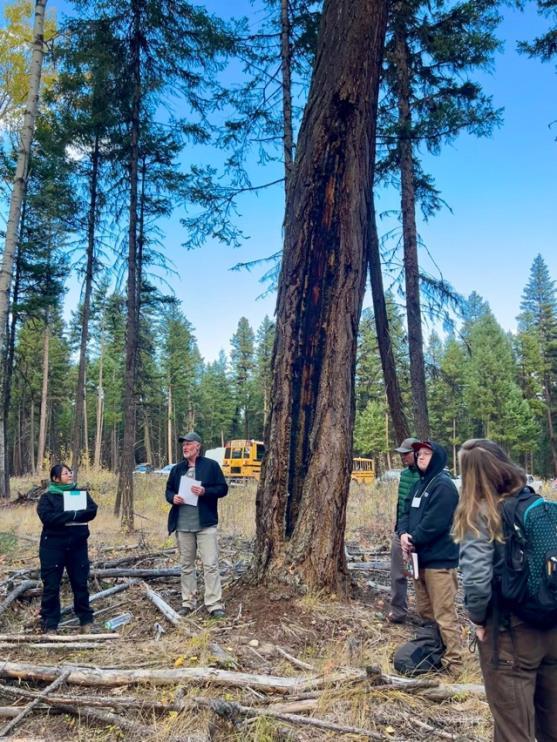
learning and these conversations represent an important step in that direction. As future and emerging professionals and researchers, we are inspired by those who continue to be ‘students of these forests’ and are committed to taking that approach in our own work. We are grateful to have had the opportunity to attend the fall field tour with SISCO and engage with all those who participated.
The 2025 SISCO fall field tour provided an encouraging learning experience and highlighted the value of community and collaboration in forestry. One of the most valuable aspects of the tour was the openness of practitioners in engaging with students, offering honest perspectives on what is working, what is not, and where creativity is needed. As noted by Dr. Lori Daniels, challenges once viewed as distant futures are now immediate realities. Record-breaking wildfire seasons have made proactive and adaptive management more urgent than ever, underscoring the need to tailor strategies to the unique ecological, cultural and operational context of each site rather than applying “copy-and-paste” prescriptions across the landscape. Tackling essential forest management at the scale and pace required to address climate challenges and wildfire threats demands ongoing

• Rosalia Jaffray, MASc Student, FRESH Lab
• Carson Lopatka, MSc Student, Centre for Wildfire Coexistence
• Jamie Iversen, MASc Student, FRESH Lab
• Kate Donaleshen, PhD Candidate, Silviculture for Resilience Lab
• Mike Stefanuk, PhD Candidate, Centre for Wildfire Coexistence
• Aeron Westeinde, MSc Student, Centre for Wildfire Coexistence