
Health Workforce Research Centers (HWRCs)

Health Workforce Research Centers (HWRCs)

The Health Workforce Research Centers serve as nationally recognized experts on key health workforce topics, providing essential information and technical assistance to local, regional, state, and federal planners and policymakers.


As the healthcare system continues to evolve— shaped by demographic shifts, policy changes, technological advances, and lingering impacts from the COVID-19 pandemic—the work of the federally-funded Health Workforce Research Centers (HWRCs) remains critical. This report documents a year of impactful research and collaborative problem-solving aimed at ensuring the US health workforce is well-prepared, well-distributed, and equipped to meet the challenges of today and tomorrow.
This year the HWRCs tackled complex and timely issues such as workplace violence in healthcare settings, shortages and maldistribution of various health professions, and the impact of staffing models on maternal health outcomes. Several Centers led work that directly influenced policy conversations—such as research on the use of agency and overtime nurses and its association with patient safety and studies examining state-level regulatory barriers to dental hygiene practice.
This report also highlights how the HWRCs are improving care delivery in underserved and rural communities, expanding access to care, and identifying strategies to build a more resilient and sustainable workforce. Whether by examining the effectiveness of the Nurse Licensure Compact, evaluating the training pathways for addiction counselors, or piloting tools for dementia care in primary care settings, the HWRCs continue to demonstrate a commitment to evidencedriven solutions.
Collectively the Centers produced a rich portfolio of research and outreach this year, including 41 peer-reviewed journal articles, 17 research reports and briefs, and 152 presentations and posters. Their research was cited in national media, referenced in government discussions, and utilized by professional associations and advocacy groups.
There were some significant accolades among HWRC leadership over the course of the past year: Dr. Erin Fraher was appointed to the Congressional Budget Office Panel of Health Advisors; Bianca Frogner joined the editorial board of Health Services Research; and Joanne Spetz was appointed to a new National Academy of Medicine committee: A Data
Infrastructure for Measuring the Care Economy.
This year also marked a leadership transition at the UCSF HWRC on Long-Term Care. Effective July 1, Laura Wagner, PhD, RN, FAAN, has been named Deputy Director, succeeding founding deputy director Susan Chapman, PhD, RN, FAAN, who is retiring from her leadership role. The HWRCs thank Susan for her years of service and contributions to stellar health workforce research.
As this report illustrates, the HWRCs continue to play a critical role in shaping the future of healthcare delivery by generating research that drives policy, strengthens workforce planning, and promotes access to care. In the face of continued workforce challenges, their work remains a vital resource for building a stronger, data-informed foundation for the nation’s health system.

The National Center for Health Workforce Analysis (NCHWA) is a national resource for health workforce research, information, and data. As a division within the Bureau of Health Workforce (BHW) at the Health Resources and Services Administration (HRSA), NCHWA supports policy makers with information and data to help inform decisions regarding health workforce education, training, and healthcare delivery (https://bhw.hrsa.gov/health-workforce-analysis/about).
As part of these efforts, NCHWA oversees HRSA’s Health Workforce Research Center (HWRC) cooperative agreement program, which provides funding to 9 centers in the US. Collectively, these Centers offer expertise in the following arenas:
Allied Health
University of Washington
Health Workforce Research Center – Allied Health
Behavioral Health
University of North Carolina at Chapel Hill
Behavioral Health Workforce Research Center
Emerging Health Workforce Topics
George Washington University
GW Health Workforce Research Center on Emerging Health Workforce Topics
Long-Term Care
University of California at San Francisco
Health Workforce Research Center on Long-Term Care
Oral Health
University at Albany, State University of New York
Oral Health Workforce Research Center
Population Health
University of Washington
Health Workforce Research Center – Population Health
Public Health
University of Minnesota
Public Health Workforce Research Center
Technical Assistance
University at Albany, State University of New York
Health Workforce Technical Assistance Center
Workforce Training and Team-Based Models of Care
University of North Carolina at Chapel Hill
Carolina Health Workforce Research Center
The HWRCs’ rich body of work and expertise inform the understanding of the health workforce. Collectively the HWRCs have shared findings with the health workforce community through:













Trends Impacting the Existing Workforce: Workplace Violence, the Changing Composition of the Hospital Nursing Workforce, and Primary Care Physician Typologies
The Carolina Health Workforce Research Center (CHWRC) conducts and disseminates research on a wide range of emerging, interprofessional health workforce issues. While many health workforce studies focus on efforts to expand health workforce supply through workforce development initiatives and training, one of the most pressing issues facing our nation is attrition from our existing workforce. This year, the CHWRC published 3 manuscripts in academic journals to help policy makers, educators, and employers understand critical factors impacting the existing healthcare workforce including workplace violence, the changing composition of the nursing workforce in hospitals, and the career typologies of primary care physicians.
Rising rates of workplace violence (WPV) in healthcare settings have garnered increased attention due to concerns about healthcare workers’ well-being and retention. This year, the CHWRC’s published paper, “Trends in Workplace Violence
for Healthcare Occupations and Facilities Over the Last 10 Years,” examined WPV rates among healthcare occupations and facilities over the past decade and found a 30% increase in WPV across all healthcare facility types between 2011 and 2021/2022. These findings suggest that rising WPV rates are a longstanding problem that require a combination of federal, state, and organizational efforts and interventions to safeguard healthcare workers.
News of nursing workforce shortages dominate the headlines. Although most registered nurses (RNs) continue to be employed in hospitals, recent data suggest that the fastest employment growth for RNs is taking place outside hospitals. The CHWRC’s study entitled “Trends in General Acute Care Hospital Nurse Staffing From 2017 to 2022” investigated changes in the utilization of RNs, licensed practical nurses (LPNs), and nursing assistive personnel (NAP) in US hospitals between 2017 and 2022. Researchers found that relative to 2017, RN adjusted staffing intensity (RN FTEs per 1,000 inpatient days) decreased by 0.11 RNs in 2021 and further decreased by 0.27 in 2022. RN staffing intensity varied significantly by state and LPN full-time equivalents increased by 7% between 2021 and 2022. These data raise concerns about whether RNs will continue to seek hospital employment at current pay scales, working conditions, and rates of workplace violence.
The nation also faces a persistent shortage and maldistribution of primary care physicians (PCPs). A better understanding of PCP career typologies could help policy makers target interventions toward certain sub-groups, rather than employing a “one-size fits all” strategy. A third study published this year, “Toward a Better Understanding of Primary Care Physician Career Typologies,” found that PCPs fall into 4 distinct career typologies and these typologies were relatively stable over the decade between 2009 and 2019. Distinguishing factors between typologies included practice in a rural area, hospital and ambulatory care employment, and provision of obstetric and prenatal care. A better understanding of PCP career typologies could be used to tailor interventions to support trainees’ decision-making about future careers and policy makers’ efforts to target funding for training to support careers in rural and ambulatory settings.
Go to page 16 for a list of completed research.
LEADERSHIP: Erin Fraher, PhD, MPP, Director
Brianna Lombardi, PhD, MSW, Deputy Director
WEBSITE: https://www.shepscenter.unc.edu/ programs-projects/workforce/chwrc/

The GW Health Workforce Research Center (GW HWRC) continues to play a pivotal role in shaping national discussions on telemedicine and nurse staffing. Its 2025 publication, “Increased Utilization of Overtime and Agency Nurses and Patient Safety,” in JAMA Network Open, found that excessive use of overtime and agency nurse hours is associated with higher rates of pressure ulcers—a critical patient safety concern. The study sparked significant public interest, receiving coverage from 45 news outlets and social media platforms.
...state governments are interested in understanding how [nurse licensure] compacts have affected nurse movement across state lines
The GW HWRC routinely engages stakeholders from the outset of a research project and keeping them informed as it unfolds. As a result, the GW HWRC study examining the impact of the Nurse Licensure Compact on labor supply has been much anticipated. The National Council of State Boards of Nursing, the Utah Division of Professional Licensing, and the workforce offices in Maryland, Virginia, and DC have all requested
that researchers discuss early findings with them. These state governments are interested in understanding how the compacts have affected nurse movement across state lines. Similiarly, the GW HWRC consulted with state policy leaders to share early results of its community health worker study, “Medicaid Billing for Community Health Worker Services Growing, but Remains Low, 2016-2020.” Several states have also reached out to discuss the findings in greater depth following publication.
Earlier research continues to shape national policy conversations. KFF Health News recently released its third investigative report, utilizing GW HWRC’s HRSA-supported Medicaid tracker to help identify areas with limited provider availability and broadband access. The tracker’s continued use in major reporting underscores its value in supporting access to care and guiding infrastructure investment.
Together, these developments reflect the GW HWRC’s growing influence in driving evidence-based change across healthcare systems and policy.
Go to page 16 for a list of completed research.
LEADERSHIP: Patricia Pittman, PhD, FAAN, Director Clese Erikson, MPAff, Deputy Director
WEBSITE: https://www.gwhwi.org/hwrc_emerging_topics.html

Providing Research, Resources, and Services to Assist in Health Workforce Planning
Across the country, states and organizations look for guidance on complex health workforce issues. From improving access to care in rural and underserved communities to strengthening recruitment and retention strategies, the demand for actionable, high-quality research continues to grow. Yet, decision-makers often face barriers to accessing reliable data, lacking both the time and expertise to distinguish rigorous research from studies with questionable validity. To support evidence-based planning, health workforce leaders need timely access to credible and relevant information.
The Health Workforce Technical Assistance Center (HWTAC) brings expertise and a long-standing commitment to helping stakeholders navigate these challenges. Through an extensive portfolio of resources and technical support, HWTAC empowers workforce planners, policymakers, and researchers across the health sector. The HWTAC website serves as a central hub for tools, publications, and learning opportunities—designed to inform and encourage action.
In the past year alone, HWTAC hosted 10 informative webinars tackling timely topics such as nursing workforce trends, artificial intelligence in healthcare, and strategies to support frontline providers. Highlights include:
● The Evolving Landscape of Nursing: RNs in Public Health and Long-Term Care
● For Nurses, By Nurses: Endorsed Strategies to Address Retention
LEADERSHIP: David Armstrong PhD, Director
● Artificial Intelligence’s Role in Reshaping the Health Workforce: Solution or Disruption?
● Supporting the Frontline: Strengthening the Community Pharmacy Workforce
● Psychological Safety, Work Environment, and Burnout in Nurse Practitioners
These webinar events—along with an expert panel on career pathways and a video tutorial on creating an address locator in ArcGIS—reflect HWTAC’s commitment to addressing evolving workforce needs through practical and policy-relevant insights. Presently there are more than 110 videos available on the HWTAC website, supporting both learning and application.
The HWTAC website also houses a robust and growing research library of more than 480 technical reports, research and policy briefs, peer-reviewed articles, and tools developed by all 9 of the Health Workforce Research Centers (HWRCs) across the US. All content is searchable and can be filtered by topic, center, or author—making it easy for users to find the information they need. To keep stakeholders informed of new research as it is released, HWTAC offers a “research alert” subscription, delivering timely updates directly to subscribers’ inboxes. By streamlining access to high-quality health workforce research, HWTAC plays a critical role in supporting informed, strategic decision-making in health workforce planning nationwide.
Go to page 16 for a list of completed research.
WEBSITE: https://www.healthworkforceta.org/
Over the past year, the Oral Health Workforce Research Center (OHWRC) has played a key role in advancing knowledge about the oral health workforce and informing strategies to improve access to care, particularly for underserved populations. Through timely, policy-relevant research, OHWRC provides federal and state policymakers, educators, and advocacy organizations with actionable data, practical tools, and evidence needed to strengthen the oral health system. OHWRC’s work promotes workforce innovation, informs policy development, and supports the creation of a more accessible and responsive oral health system nationwide.
One of OHWRC’s most influential and widely used resources is its visual dental hygiene scope of practice (DH SOP) infographic. OHWRC researchers examined recent state laws and regulations to determine changes since the infographic’s last update in 2019 and updated the tool to reflect these changes in November of 2024. This tool presents key state-level policy variation in a clear and comparative format, helping stakeholders track progress, identify reform opportunities, and understand the implications of expanding dental hygienists’ roles. Used by professional associations, public health agencies, and legislative advocates, the infographic has directly informed and supported successful efforts in multiple states to broaden DH SOP laws—especially those aiming to increase preventive care access in underserved communities.
Another key area of OHWRC’s impact is workforce sustainability. OHWRC has produced important evidence on job satisfaction and workplace experiences among dental hygienists and dental assistants. By analyzing factors such as communication, leadership, professional development, compensation, and work-life balance, this research offers practical insights for creating supportive work environments. These findings are essential for employers and policymakers to guide initiatives that improve staff recruitment, retention, and overall workforce resilience—ensuring consistent, highquality care delivery across various settings.
LEADERSHIP: Simona Surdu, MD, PhD, Director

OHWRC’s research continues to address persistent gaps in oral health care delivery, with a focus on improving access for pregnant women—an often overlooked population in workforce policy. By examining barriers to care and providing evidence to integration into maternal health services, OHWRC’s work highlights the strong connection between oral health and overall health. Findings show that expanding provider training, strengthening interprofessional collaboration, and improving workforce distribution can increase access during pregnancy and help reduce risks for conditions such as gestational diabetes and hypertensive disorders.
OHWRC research also highlights key factors affecting oral health service delivery at Federally Qualified Health Centers (FQHCs). Increasing dental staffing, particularly hygienists and therapists, significantly improves access to preventive and restorative care. The findings also show that federal capital development grants and comprehensive state Medicaid dental benefits expand service capacity and utilization. However, issues remain, with some populations more likely to rely on emergency dental services. This research underscores the need for sustained investment and targeted policy to strengthen oral health infrastructure at FQHCs and improve access to comprehensive care.
Go to page 17 for a list of completed research.
WEBSITE: https://oralhealthworkforce.org/

Over the past year, the Public Health Workforce Research Center (PHWRC)—run by the Consortium for Workforce Research in Public Health (CWORPH)—has advanced the strategic development of the public health workforce, particularly in critical areas of public health nursing, the rural health workforce, and roles supporting population-based health. Among PHWRC’s most notable contributions is the work of Betty Bekemeier and Paula Kett at the University of Washington, to advance research on public health nursing (PHN) – a field that bridges both clinical care and population-based health interventions. Drs. Bekemeier and Kett conducted a nationwide survey of the United States Public Health Service (USPHS) nursing workforce, providing a detailed snapshot of PHN characteristics, their work settings, and the functions they perform, while also testing new ways to measure PHN activities. Through this work, the PHWRC has elevated the visibility of PHNs and shared impactful evidence on workforce gaps, best practices for training and recruitment, and policies that promote career longevity and advancement.
Michael Meit and Casey Balio from East Tennessee State University have conducted impactful research on critical facets of the rural public health workforce. Their study on “PHN deserts” across the US—areas with a critical shortage of PHNs—highlighted the uneven distribution of PHN resources and the need for targeted policy interventions to address workforce issues in rural areas. Additionally, they evaluated
structural changes in rural local health departments (LHDs), often prompted or exacerbated by the COVID-19 pandemic. Structural changes included the decoupling or disbanding of regionalized health departments, as well as the outright closure of rural LHDs, likely to diminish workforce capacity and compromise community health outcomes. Finally, a third project examined the nature and effectiveness of rural public health partnerships with healthcare organizations. While the benefits of such collaborations are well-documented in broader contexts, this study uniquely focused on rural settings, identifying both successful models and the unique barriers rural communities face.
Another central question the PHWRC addressed this year was: who should comprise the workforce responsible for delivering population-based services? PHWRC’s research promotes a multidisciplinary team approach, integrating PHNs, epidemiologists, community health workers, health educators, and environmental health specialists. To support this model, the PHWRC developed standardized job descriptions that align with contemporary public health challenges and competencies. Building on this work, Heather Krasna of Columbia University and Janette Dill of the University of Minnesota submitted 2 proposals advocating for new Standard Occupational Codes (SOC) for the US Bureau of Labor and Census Bureau to identify workers in federal surveys and provide critical data for 2 essential public health occupations: PHNs and disease intervention specialists (DIS). Finally, the PHWRC investigators from Indiana and Johns Hopkins universities advanced research on recruitment, retention, and well-being of the public health workforce to assure sufficient workforce capacity in the context of today’s changing labor market landscape.
Through its data-driven insights, the PHWRC plays a critical role in shaping a workforce that is not only capable but also adaptable and able to thrive in the evolving public health landscape. By highlighting the importance of PHNs, investigating the rural public health workforce, and modeling effective workforce structures and practices, the PHWRC continues to influence how population-based services are delivered across the US.
Go to page 17 for a list of completed research.
LEADERSHIP: JP Leider, PhD, Director Janette Dill, PhD, MPH, Deputy Director
WEBSITE: http://phwrc.org/

Improving Primary Care for People With Dementia
Context and Challenge
The increasing prevalence of Alzheimer’s disease and related disorders (ADRD) presents a significant challenge to the US healthcare system, particularly for the primary care workforce. Primary care practitioners (PCPs) are often the first point of contact for patients experiencing cognitive decline. However, many clinicians face barriers to providing effective dementia care, including limited training, time constraints, lack of access to specialists, and systemic fragmentation. Addressing these challenges is essential to preparing a workforce capable of delivering high-quality dementia care.
Research Overview
The UCSF Health Workforce Research Center for Long-Term Care (UCSF HWRC) conducts policy-relevant research that informs strategies to strengthen the long-term care workforce. Two recent studies, led by UCSF HWRC scholar Alissa Sideman, PhD, offer complementary insights that help bridge the gap between workforce needs and evidence-based solutions.
One study, “Family Physicians’ Perspectives on Important Outcomes and Policies When Caring for People With Dementia,” involved qualitative interviews with 20 family physicians to explore the outcomes they prioritize in dementia care. Physicians emphasized the importance of relationship-centered care that supports patient and family preferences, comprehensive management of both dementia and coexisting conditions, and a proactive focus on safety and crisis prevention. These provider-identified outcomes
LEADERSHIP: Joanne Spetz, PhD, FAAN, Director
Laura Wagner, PhD, RN, FAAN, Deputy Director
form a critical foundation for workforce planning and the development of care models.
In a related study, “Primary Care Workforce Capacity in Dementia Diagnosis and Care: A Qualitative Study of Project Alzheimer’s Disease–ECHO,” Dr. Sideman evaluated the Alzheimer’s Disease–Extension for Community Healthcare Outcomes (AD-ECHO) program, which is specifically designed to enhance PCPs’ capacity to diagnose and manage dementia. By employing a hub-and-spoke model, the AD-ECHO program connects PCPs with a central team of dementia specialists. The program enhances PCPs’ skills in diagnosis, behavior management, and medication management, as well as the use of community resources. It was found to increase PCP knowledge, confidence, and collaboration in dementia care, supporting the priorities identified by family physicians in the study described above.
The UCSF Health Workforce Research Center for Long-Term Care produces rigorous, policy-driven research that highlights critical workforce priorities, uncovers gaps, and identifies effective strategies to strengthen the long-term care workforce. By transforming complex data into clear, actionable insights, the UCSF HWRC lays the groundwork for practical, evidence-based solutions that advance a skilled, confident, and collaborative workforce capable of meeting the evolving needs of long-term care populations.
Go to page 17 for a list of completed research.
WEBSITE: https://healthworkforce.ucsf.edu/

Aligning Training, Regulation, and Payment Policy to Advance the Behavioral Health Workforce
The US continues to grapple with a behavioral health crisis worsened by significant workforce challenges, which restricts access to treatment. Although the behavioral health workforce includes multiple occupations and credentials, there is significant misalignment in training, regulation, and payment policies that undermines the effective deployment of these roles to address behavioral health needs. The UNC Behavioral Health Workforce Research Center (BHWRC) proposed a framework for understanding this workforce alignment in a Health Affairs Scholar article, that presents training, regulation, and payment as a “3-legged stool” essential for aligning state efforts to better meet community behavioral health needs and more effectively deploy the behavioral health workforce.
Understanding the Continuum of Behavioral Health Professionals Working in Substance Use and Addiction Services in the United States
Despite the growing need for substance use disorder (SUD) treatment, significant gaps in service access remain—especially for individuals from underserved communities, rural areas, and socioeconomically disadvantaged populations. Addiction counselors are a workforce equipped with skills to address SUD, yet workforce shortages persist. Currently, no standardized definition or titles for addiction counselors exist, leading to wide variability across states. In their article published in Substance Use & Addiction Journal, BHWRC
researchers identified state-level credentials for high school through bachelor’s-level addiction counselors, defined training and supervision requirements, and described the proportion of states that permit addiction counselors to be reimbursed for substance use treatment and service delivery via state Medicaid plans. This work was also summarized in an abstract and policy brief
Amid a growing behavioral health crisis in the US, less than half of individuals who need services for mental health or substance use concerns receive care. BHWRC researchers conducted a study that examined the geographic distribution of 3 types of behavioral health clinicians (BHCs)—counselors, social workers, and psychologists—across US communities with varying levels of social disadvantage, as measured by the Area Deprivation Index (ADI). The analysis revealed significant differences in BHC distribution, with areas with higher disadvantage having fewer BHCs per 100,000 residents compared to less disadvantaged areas (267 vs 351, respectively). Study results were published in The Journal of Behavioral Health Services & Research, and a policy brief and abstract summarizing findings were also developed. Helping stakeholders understand national shortages and maldistribution of the behavioral health workforce can inform policy to increase access to behavioral health services.
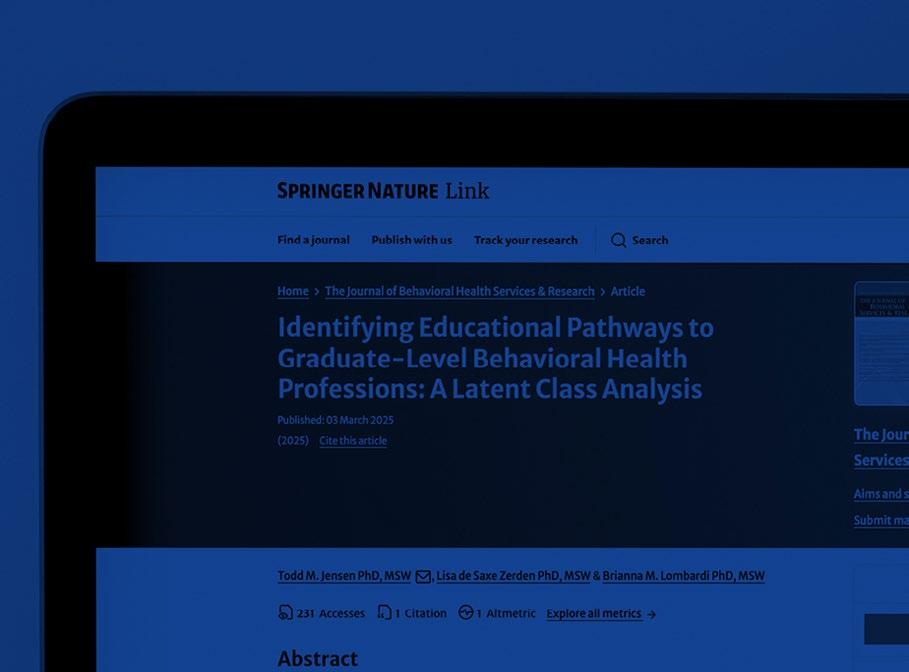
In support of the goal to increase supply, geographic distribution, and composition of the behavioral health workforce, there remain valuable opportunities to identify common pathways for individuals to enter full-time behavioral health professions in the US. BHWRC researchers leveraged nationally representative data to identify distinct educational pathways into graduate-level behavioral health professions and assessed associations between particular pathways and individual and employment characteristics. Findings were shared in an article published in The Journal of Behavioral Health Services & Research, an abstract, and policy brief.
Go to page 18 for a list of completed research.
LEADERSHIP: Brianna M. Lombardi, PhD, MSW, Director
Lisa de Saxe Zerden, PhD, MSW, Deputy-Director
WEBSITE: https://bhworkforce.unc.edu/

Skilled nursing facilities (SNFs) employ over 1.3 million workers across the US and provide care to millions of patients annually. SNFs are currently facing substantial regulatory scrutiny from the Centers for Medicare & Medicaid Services (CMS) in regard to adequate staffing levels as well as increasingly frequent changes in ownership. Prior research has linked specific ownership changes, such as private equity investment, to declines in nurse staffing. However, ownership changes can encompass a variety of different types of transactions, in addition to private equity investment, and CMS has expressed concerns that ownership changes may serve to help SNFs minimize tax liabilities and shift funds away from patient care. Additionally, while the UW HWRC on Allied Health’s prior work found that nursing occupations account for about 80% of hours worked in SNFs, the remaining 20% worked by other occupations including administrators may be impacted by ownership changes. The UW HWRC on Allied Health conducted a robust difference-in-differences study to examine whether skilled nursing facility ownership changes led to changes in patient census and levels of nurse, non-nurse, administrator, and contract staff. Among over 11,500 facilities in the data between January 2018 and June 2023, researchers found that 21.7% of SNFs changed
LEADERSHIP
:
Bianca K. Frogner, PhD, Director Ben Stubbs, MPH, Deputy Director
ownership. Ownership changes were associated with 2.8% increases in daily patient census. While census increased after ownership change, staffing levels declined by about 1.5% for all direct care staff, driven by a 2.2% decrease in staffing levels for nursing staff. There were 6.4% increases in administrator staffing and no differences in contract staffing after ownership changes. Results suggest that SNFs may be increasing admissions to drive revenue after ownership changes, but they did not keep pace with increased nurse staffing as census increased. Administrator staffing increases after ownership changes may be related to the operational demands of managing the ownership transaction. Overall, results support concerns that skilled nursing facility ownership changes may negatively impact staffing levels for nursing staff. As SNFs navigate substantial challenges, such as high staff turnover, ownership changes may further exacerbate these challenges, which could ultimately negatively impact quality of care.
Findings from this study resulted in a journal article, a conference presentation, and a media trade article in McKnight’s Long-Term Care News
Go to page 18 for a list of completed research.
WEBSITE: https://familymedicine.uw.edu/chws/hwrc/ allied-health/

Over the past 5 years, there has been increasing attention put toward growing the certified nurse midwife (CNM) workforce, with targeted funding put toward increasing and supporting programs for training this workforce. CNMs provide prenatal, birth, and postpartum care as well as other gynecological services and have been shown to be associated with improved birth outcomes, including lower odds of cesarean sections among low-risk pregnant people and fewer obstetric interventions. As such, CNMs represent a critical part of the workforce needed to support better maternal and child health outcomes in the US. The UW HWRC on Population Health conducted 2 studies focused on this workforce. The first—a longitudinal study examining birth outcomes among different staffing models in federally-funded health centers— found that health centers with CNMs had the lowest percent of low-birthweight births compared to those with only obstetricians (OBs) or those with neither CNMs nor OBs. The second study examined the career pathways and employment experiences of CNMs as compared to other advanced practice registered nurses (APRNs) using data from the 2018 and 2022 National Sample Survey of Registered Nurses. In
LEADERSHIP: Bianca K. Frogner, PhD, Director
Paula M. Kett, PhD, MPH, RN, Deputy Director
this study, researchers found that in comparison with APRNs, CNMs tended to be more likely to have been a community health worker prior to entering the nursing workforce, to have taken out a loan to finance their nursing education, and to report owing $60,000 or more in educational loans. CNMs were less likely to report working at the top of their scope of practice and education and on average earned $20,000 less per year than their APRN counterparts. Findings from each of these studies highlight the importance of CNMs for ensuring better birth outcomes as well as emphasizes some areas of concern, namely that CNMs may be facing restrictions in their practice as well as be burdened by high rates of educational loans.
The peer-reviewed paper and presentations have received significant attention, particularly from those in the CNM workforce who cite the need for more research specific to ways this workforce can be better supported. This includes being cited by the California Healthcare Foundation in their newsletter summarizing the latest data on the midwifery and doula workforce.
Go to page 18 for a list of completed research.
WEBSITE: https://familymedicine.uw.edu/chws/hwrc/

Carolina Health Workforce Research Center
Toward a Better Understanding of Primary Care Physician Career Typologies
Trends in General Acute Care Hospital Nurse Staffing From 2017 to 2022
Trends in Workplace Violence for Health Care Occupations and Facilities Over the Last 10 Years
Understanding Available Data Sources to Estimate the Size and Distribution of Community Health Workers in the United States
GW Health Workforce Research Center on Emerging Health Workforce Topics
Current Approaches to Addressing Burnout and Moral Injury: Experiences From 4 Community Health Centers
Increased Utilization of Overtime and Agency Nurses and Patient Safety
Medicaid Billing for Community Health Worker Services Growing, but Remains Low, 2016-2020
Obstetrician-Gynecologists’ Telehealth Provision at the Beginning, During, and Latter Stages of the COVID-19 Pandemic

Health Workforce Technical Assistance Center
Health Workforce Issues and Challenges in the Post-Pandemic Era
Health Workforce Research Digest
Health Workforce Data Collection in the United States
HWRCs’ 2024 Annual Report
Utilizing Federal Data Sources to Support Nursing Workforce Analysis
Tutorial
How to Create an Address Locator and Geocode Health Care Providers’ Addresses in ArcGIS Pro Webinars
A Comprehensive Overview of the National Dementia Workforce Study
Artificial Intelligence’s Role in Reshaping the Future Health Workforce: Solution or Disruption?
Career in Health Workforce Research – A Fireside Chat With Experts
“For Nurses By Nurses”: Nurse Endorsed Strategies to Address Nurse Retention
Psychological Safety, Work Environment, and Burnout in Nurse Practitioners: A Mixed-Methods Study
Supporting the Frontline: Strengthening the Community Pharmacy Workforce
The Changing Face of Nursing: Understanding Trends in Nursing Turnover
The Evolving Landscape of Nursing: RNs in Public Health and Long-Term Care
Vertical Integration Among Community Health Centers: Impacts on Staffing and Patient Outcomes

Oral Health Workforce Research Center


Key Factors Associated With Oral Health Services at Federally Qualified Health Centers
Use of Oral Health Services Among Pregnant Women and Associations With Gestational Diabetes and Hypertensive Disorders of Pregnancy
Variation in Dental Hygiene Scope of Practice by State – 2024 Update
Workplace Factors Associated With Job Satisfaction Among Dental Hygienists and Assistants in the United States
Public Health Workforce Research Center
2024 State of the Evidence: Employment Choices of Recent Public Health Graduates
A Holistic and Sustainable Approach to Public Health Staffing and Workforce Development
Composition of the Public Health Workforce: Distribution, Training, and Tenure
Expanding Options to Recruit, Grow, and Retain the Public Health Workforce
Exploring the Geospatial Variations in the Public Health Workforce: Implications for Diversifying the Supply of Potential Workers in Governmental Settings
Public Health Occupations and the Standard Occupational Code System
Racial and Ethnic Representation of the Local Public Health Workforce
Salary and Job Requirement Differences for Jobs in Local and State Health Departments Versus the Private Sector: Analysis of Large-Scale Job Postings Data
The Demographics, Training, and Job Functions of the United States Public Health Service Commissioned Corps Nursing Workforce
The Public Health Workforce Calculator in a Post-COVID Era
UCSF Health Workforce Research Center on Long-Term Care
Association Between Self-Direction and Personal Care Aide Wages
Family Physicians’ Perspectives on Outcomes, Processes, and Policies in Dementia Care
Palliative Care Services in Long-Term Acute Care Hospitals: A National Survey Study
Training Standards for Personal Care Aides Across States: An Assessment of Current Standards and Leading Examples
Tribal Community Health Representatives (CHR): Home Care Workforce Insights, Experiences, and Recommendations for Elder Care
UNC Behavioral Health Workforce Research Center
Aligning Training, Regulation, and Payment Policy to Advance the Behavioral Health Workforce
Behavioral Health Workforce Distribution in Socially Disadvantaged Communities
Characteristics of Substance Use Disorder and Mental Health Disorder Treatment Facilities With Perinatal Programs
Identifying Educational Pathways to Graduate-Level Behavioral Health Professions: A Latent Class Analysis
Identifying Factors Associated With Variation in Telemental Health Delivery at Federally Qualified Health Centers
Job Assessments and the Anticipated Retention of Behavioral Health Clinicians Working in US Health Professional Shortage Areas
State-by-State Variation in the Credentialing, Training, Supervision, and Medicaid Reimbursement of the High-School, Associates, and Bachelor’s-Level Addiction Counselor Workforce
UW Health Workforce Research Center – Allied Health
Career Pathways Into the Medical Laboratory Workforce: Education, Exposures, and Motivations
Differences in Staffing for Non-Nursing Occupations Across US Skilled Nursing Facilities During 2018-2023
Economic Insecurity During the COVID-19 Pandemic Among Health Care Workers by Educational Attainment
Impacts of Skilled Nursing Facility Change of Ownership on Staffing: A Staggered Difference-inDifference Analysis
US Home Care Worker’s Access to and Use of Benefits During the COVID-19 Pandemic: A MixedMethods Study
Who Is Leaving the Emergency Medical Services Workforce?
UW Health Workforce Research Center – Population Health
Low Birthweight Rate Differences Associated With Distinct Perinatal Staffing Mixes at Federally Funded Health Centers
New Opportunities or More of the Same? Health Industry Entrants in the Post-Pandemic Era
Why Public Health Nurses Matter: Bringing Specialized Knowledge and Skills to Advancing Health
Whether you’re a healthcare policymaker, provider, educator, or advocacy leader, our research alerts help you make data-driven decisions that shape the future of healthcare.

Subscribe to Health Workforce Research Alerts to receive the latest publications from the federally-funded health workforce research centers delivered straight to your inbox—so you never miss current insights that inform policy, planning, and practice.
Subscribers also receive:
• Newsletters (including the Health Workforce Research Digest)
• Webinar invites
• Notifications when webinar recordings and tutorial videos are posted Click Here To Subscribe Stay connected with research that matters.