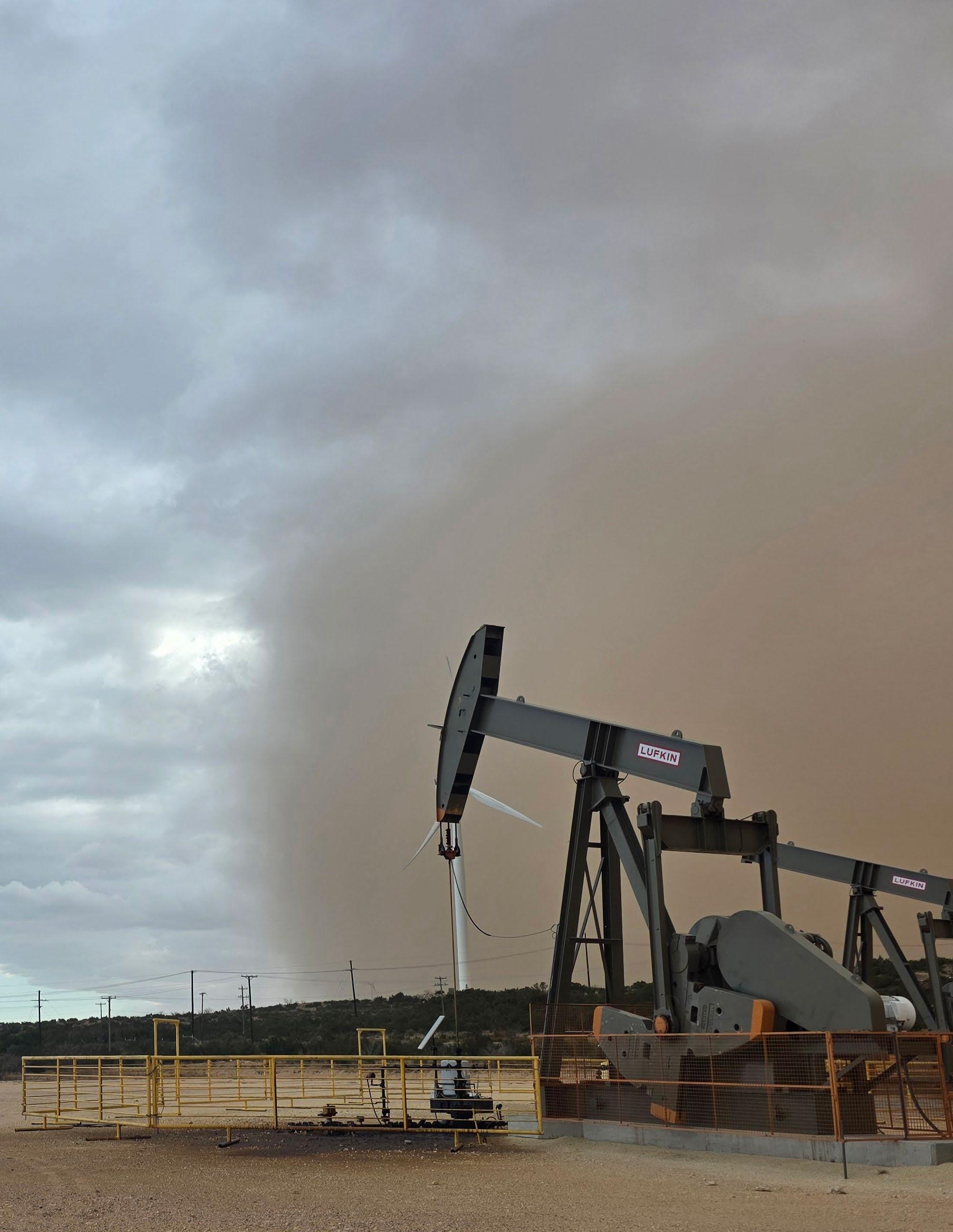
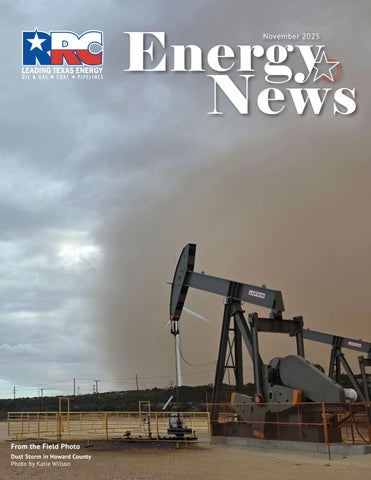
From the Field Photo
Dust Storm in Howard County
Photo by Katie Wilson
P. 3 Texas Granted Primacy Over Class VI Wells
P. 4-5 What Is Primacy and Why It Matters To Texas
P. 6-9 Commissioners’ Corner
P. 3 Texas Granted Primacy Over Class VI Wells
P. 4-5 What Is Primacy and Why It Matters To Texas
P. 6-9 Commissioners’ Corner
RRC Open Meeting December 16, 2025
VIEW OPEN MEETING WEBCASTS
The U.S. Environmental Protection Agency (EPA) has announced that it has approved the State of Texas’ application and will be granting Class VI Underground Injection Control (UIC) primacy to the state.
This approval will give the Railroad Commission of Texas primary enforcement authority for Class VI wells, which are used for the injection of carbon dioxide into deep underground rock formations for permanent storage.
“This approval by the EPA recognizes RRC’s expertise to add Class VI wells to our UIC program, to continue our work of protecting Texans and our natural resources,” said Wei Wang, RRC Executive Director. “Additionally, primacy will streamline the application process and provide the regulatory certainty that is critical to Texas, which is one of the most productive energy regions in the world.”
The RRC has a long history of regulating various classes of injection wells, providing strong oversight and protecting underground sources of drinking water, and its UIC program has been commended by the EPA Region 6 during annual evaluations.
“Approving Texas’ request to be in charge of this critical program is a big step forward for cooperative federalism—as big as the state of Texas,” said Regional Administrator Scott Mason. “The Texas Railroad
Commission has demonstrated that the state is ready, willing, and able to add Class VI wells to its underground injection control program, and the Trump Administration is proud to support Texas as it shows once again that you can protect natural resources and grow our nation’s energy economy at the same time.”
Since 2021, the RRC has been proactively developing its Class VI program, with RRC staff reviewing permit applications alongside EPA’s Region 6 office. As a result, the RRC will hit the ground running ready to safely and effectively manage the permitting process.
The duties and responsibilities for the Class VI program are handled by geologists and engineers in the Special Injection Permits Unit with a combined 140 years of industry experience and 50+ years of Texas regulatory experience. In September, the RRC was also awarded the UIC Class VI grant from the EPA which will provide an additional $1.93 million in funding to support implementation.
The RRC currently has received 18 applications and is aware of additional projects that are being planned by industry in Texas.
For more information on the Class VI wells visit: https://www.rrc.texas.gov/aboutus/faqs/primacy-faq/

What is primacy?
• The federal Safe Drinking Water Act allows EPA to grant a state primary enforcement authority or “primacy” to administer and enforce federal environmental programs; in this case it refers to administration of the Class VI Underground Injection Control (UIC) Program.
Why does Primacy matter for states and operators?
• Gaining state-level control over the permitting process for Class VI wells will streamline permitting processes and allow for better coordination and improved efficiencies as the state administers these programs going forward. The EPA recognized that Texas is best positioned to protect the State’s underground sources of drinking water while advancing economic growth and energy dominance.
How are Class VI well projects regulated?
• Class VI wells are regulated under an existing, rigorous federal Safe Drinking Water Act framework that manages the permitting process while protecting the environment, supplies of drinking water, public health and safety. There are numerous protections that include construction standards, operating and monitoring requirements, and closure requirements to prevent contamination of underground water sources.
• RRC rules require operators of Class VI wells to have a safety plan that includes emergency response procedures, CO₂ release detection and prevention measures, instructions and procedures for alerting the public and public safety personnel in the case of an emergency. The regulations are in place to protect the health and safety of the public and the environment.
Which states currently have Class VI Primacy?
• Texas would join Arizona, West Virginia, Louisiana, Wyoming and North Dakota who have already been granted primacy.
How is primacy granted?
• To attain Class VI primacy, states must apply to the EPA and demonstrate that they have the legal framework, staffing, resources and enforcement mechanisms necessary to implement a regulatory program that meets or exceeds federal standards.
What are the EPA Class VI primacy application review phases?
• Phase I: Pre Application, the EPA meets with states to outline the process and identifies resources for states.

• Phase II: Application Evaluation and Completeness Determination, the EPA receives, reviews and evaluates application components.
• Phase III: Proposed Rulemaking, the EPA publishes a proposed rule indicating intent to approve or disapprove primacy and opens for comments.
• Phase IV: Final Rulemaking and Codification, the EPA reviews all comments and issues official approval or disapproval.
What oversight does the EPA retain after granting Primacy?
• The EPA will conduct regular reviews of the state’s regulatory program to ensure that the program is effective and that the regulatory program continues to meet or exceed federal standards.
What is a Class VI well?
• A Class VI well is a well used for the injection of CO₂ into deep underground rock formations for permanent storage, a process known as geologic sequestration or geologic storage.
How does CO₂ get transported to Class VI wells?
• CO₂ is typically transported safely to Class VI injection sites through pipe -
lines. It is usually captured from “point sources” such as industrial facilities like petrochemical plants, oil refineries, energy production operations such as ethanol plants, hydrogen production facilities, natural gas processing facilities and electric power plants, facilities manufacturing products such as steel, iron, lead, aluminum, ammonia, fertilizer, cement, glass and chemicals, or captured directly from the atmosphere.
be stored underground?
• Contrary to what many people believe, CO₂ is typically not stored in large underground caverns, caves, or tanks. Instead, CO₂ can be stored deep underground in sedimentary rock formations composed of smaller sediment grains, such as sand or gravel. Additionally, depleted oil and gas reservoirs provide another option for storage due to their well-understood geological properties.
• Selecting a suitable Class VI well location to inject CO₂ involves extensive geological and engineering studies to identify suitable underground formations that have the necessary depth, porosity, permeability, and containment characteristics for safe and permanent CO₂ storage.

In November, Chairman Jim Wright was busy traveling across the state to speak to Texans about the importance of energy production and its long-term impact on our economy. The Chairman first spent time in Fort Worth speaking to the Texas Alliance of Energy Producers Annual Conference, before returning to Austin to participate in the Texas Tribune fest where he participated in two panel discussions on oil and gas production in Texas. He then traveled to San Antonio where he was joined by Public Utility Commission Chairman Kathleen Jackson and representatives from the Bureau of Economic Geology for a panel discussing the importance of Texas produced natural gas to help fuel our growing electrical grid.



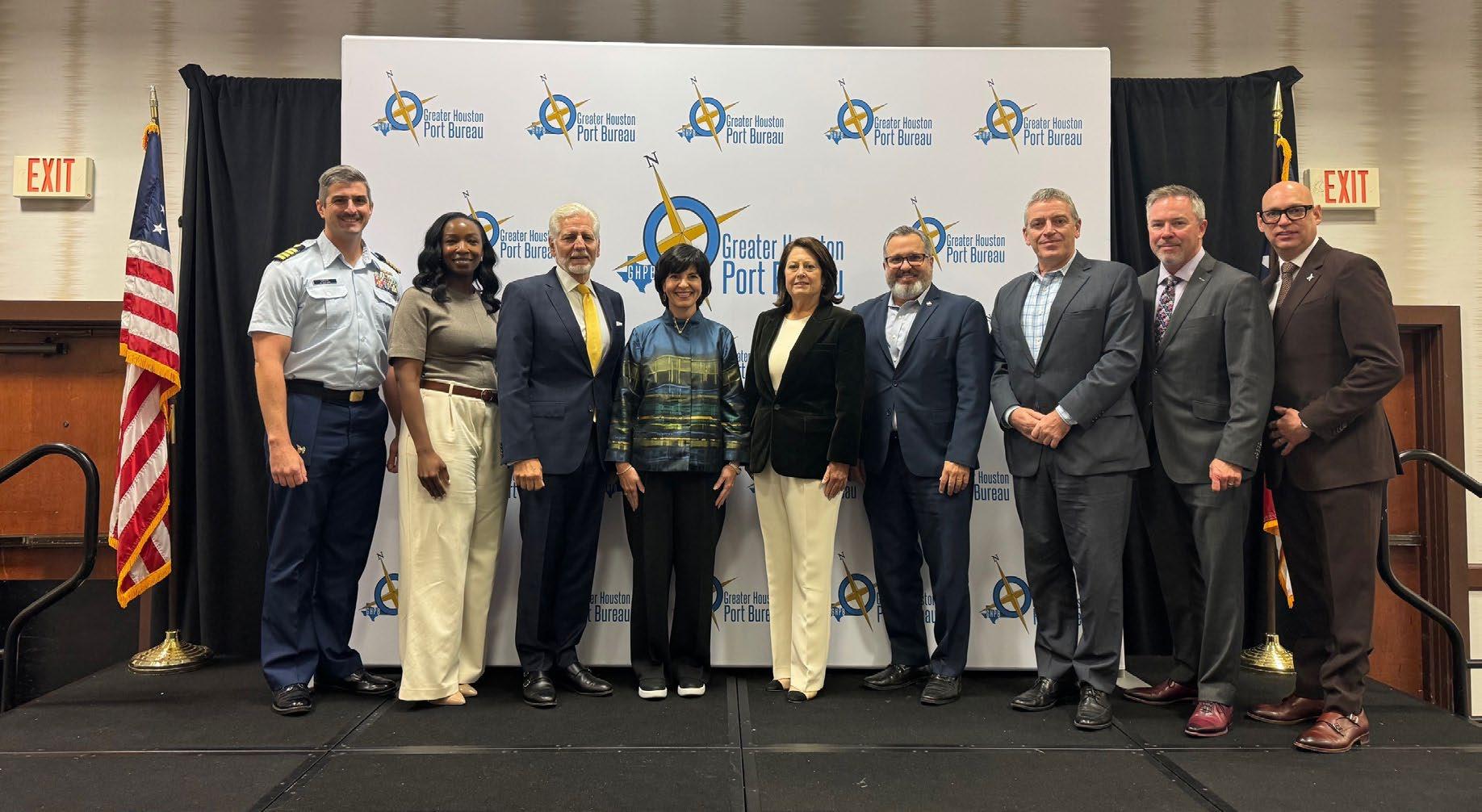
Last month, Commissioner Christi Craddick delivered the keynote address at the Greater Houston Port Bureau’s November meeting, where she spoke on the importance of the Port of Houston and its role in ensuring Texas remains the world’s most reliable supplier of affordable and abundant energy.

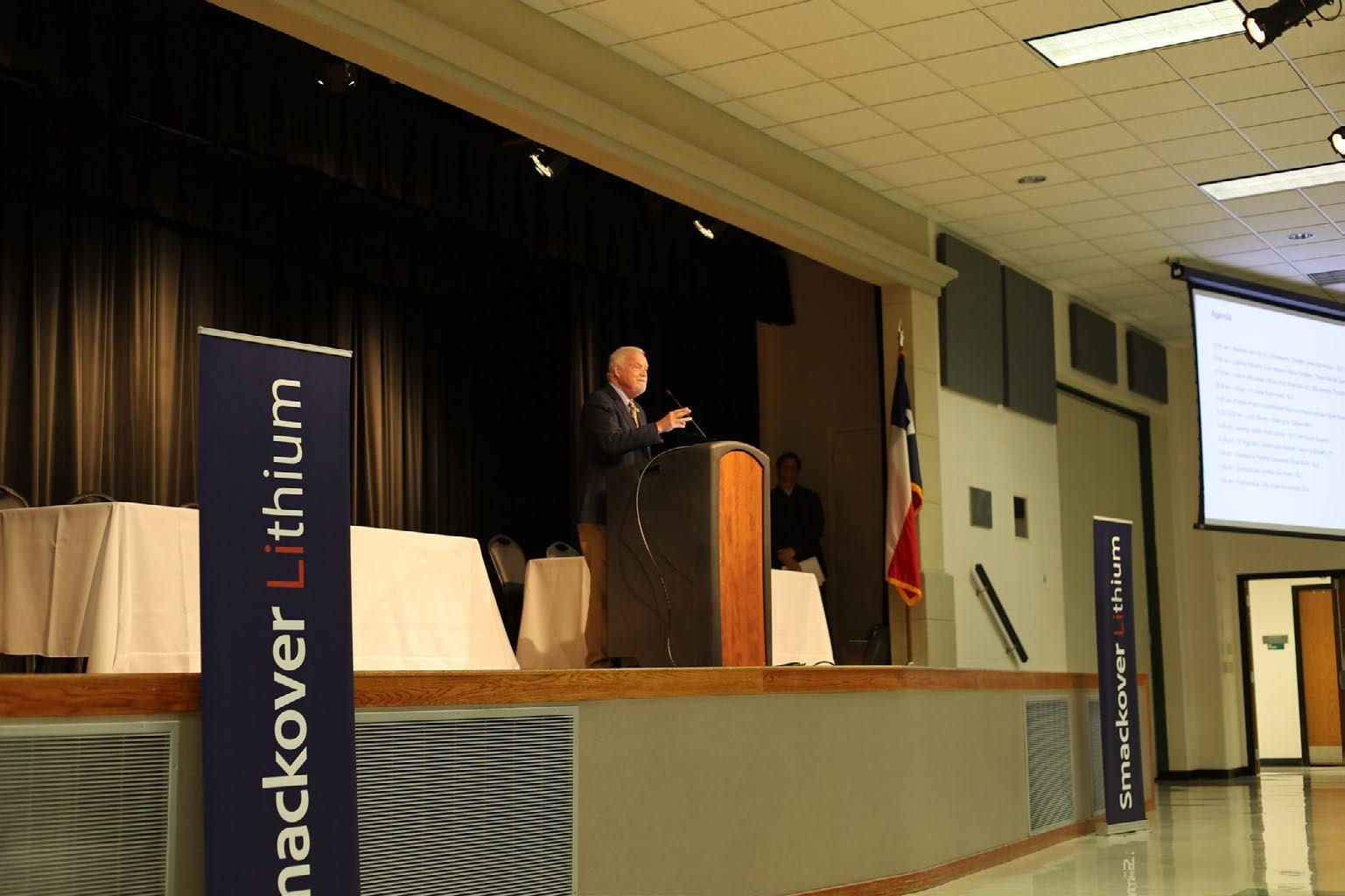
This past month Commissioner Wayne Christian spoke at the East Texas Lithium Workshop hosted by Standard Lithium. Commissioner Christian championed the new mineral production hoping it will be a boom for the Texas energy industry and overall economy.
“Texas has always led the world in powering the future — and that includes the next generation of energy. The Smackover region’s lithium resources can help secure America’s energy independence, create jobs and keep our supply chains here at home instead of in China. Responsible lithium development right here in Texas means more American energy, more Texas jobs and less foreign dependence. Texas energy leads the way — and we’re just getting started.” -Commissioner Wayne Christian
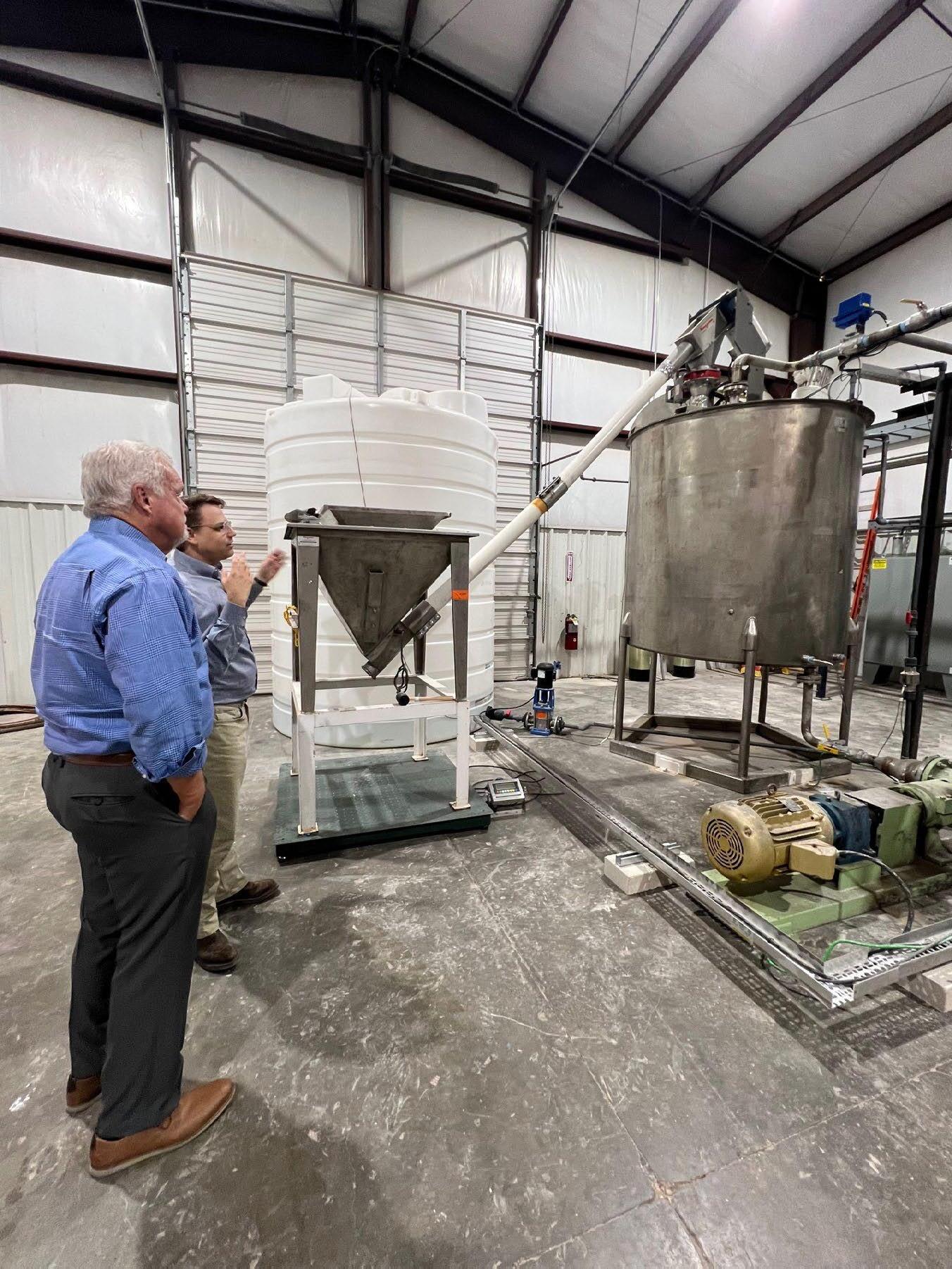
Additionally, the Commissioner toured Ele -
ment3’s lithium extraction facility in Midland, Texas.
“This exciting new company is pulling lithium from oil and gas wastewater out in the Permian Basin to commercially sell to the military and American companies. Currently, America imports nearly all our lithium needed to produce batteries, phones, laptops, glass, metals, medicine and more. The US needs more lithium production companies — like Element3 — to secure our national supply chains to compete with foreign nations. Love to see Texas companies working hard to ensure our national security!” -Commissioner Wayne Christian
Lastly, the Commissioner released his latest podcast episode featuring Texas Public Policy Foundation CEO Greg Sindelar. You can listen here .
View monthly production totals of crude oil, condensate and total oil; and of gas well gas, casinghead gas and total natural gas.
The Commission has primary oversight and enforcement of the state’s oil and gas industry and intrastate pipeline safety. View RRC’s Latest Enforcement Actions here.
The Public GIS Viewer allows users to view oil, gas and pipeline data in a map view.