TEXASCHAPTERAMERICANSOCIETYOFLANDSCAPEARCHITECTS
CHAPTER LEADERSHIP TEXASASLA

PRESIDENT
PAST PRESIDENT
TRUSTEE
PRESIDENT-ELECT
TREASURER
VICE CHAIR OF GOV. AFFAIRS
MEMBER-AT-LARGE
SECRETARY
PUBLIC RELATIONS CHAIR
FELLOWS COMMITTEE CHAIR
2026 CONFERENCE CO-CHAIR
2026 CONFERENCE CO-CHAIR
D.E.I. CHAIR
T.N.L.A. REPRESENTATIVE
CLIMATE ACTION CHAIR
STUDENT ORG./L.A.C.E.S. CHAIR
EMERGING PROFESSIONAL CHAIR
HALS CHAIR
ASLA TEXAS CHAPTER -
EXECUTIVE DIRECTOR
MARGARITA PADILLA-POSEY
LANDON BELL
MARISSA MCKINNEY
NICK WESTER
CHRIS DAVIS
JONATHAN WAGNER
JARED HORSFORD
MICHELLE DAVIS
PHILLIP HAMMOND
MARGARET ROBINSON
ANNE HARMAN
ANITA BEARD
MATT STUBBS
BOBBY EICHHOLZ
LISA CASEY
ALISON PINO
SUZANNE SHARP
SANDRA CHIPLEY
JENNIFER FONTANA
CHAPTER SERVICE AWARD
DISTINGUISHED MEMBER AWARD

V. ERIC PEREZ (POSTHUMOUS)
KAY TILLER AWARD
NICHOLAS NELSON CHAD ST. JOHN (POSTHUMOUS)
ENVIRONMENTAL STEWARDSHIP
SAN ANTONIO BOTANICAL GARDEN
WEST SECTION
CHAIR
CHAIR ELECT
MEGAN ABERNATHY
THOMAS BROWN
CENTRAL SECTION
CHAIR
SECRETARY
TREASURER
CHAIR ELECT

MICHAEL AVERITT
MICHAEL TSAPOS
ANDREW LESMES
CLAIRE HEMPEL

SOUTH SECTION
CHAIR
SECRETARY TREASURER
CHAIR ELECT

TARA LINDBERG
WYATT MARSH
TIFFANY PRICE
LUKE ANDERSON
LOCAL SECTION LEADERSHIP

DALLAS / FORT
WORTH SECTION

CHAIR
SECRETARY
TREASURER
CHAIR ELECT
JOELLE SANDERS
THOMAS BROWN
XIAOMENG CAI
PATRICK PTOMEY

HOUSTON / GULF COAST SECTION
CHAIR
SECRETARY
TREASURER
CHAIR ELECT
KAYLIN SLAUGHTER
YIMENG ZHANG
RACHEAL HERRING
YIRAN SHEN
JURY STUDENT AWARDS AWARD LEVELS
Laura Brusson
Ten Eyck LA
Delaney Zubrick Design Workshop
Lei Xiao
Partners
AWARDS & RECOGNITION
Winners may be selected by the jury for each of the following categories:
• Undergraduate Award of Excellence
• Undergraduate Honor Award(s)
• Undergraduate Merit Award(s)
• Graduate Award of Excellence
• Graduate Honor Award(s)
• Graduate Merit Award(s)
MERIT
At the discretion of the jury, any number of Merit Awards may be given in each of the five categories.
HONOR
At the discretion of the jury, a maximum of 20 percent of the entries in each of the five categories may receive this award.
EXCELLENCE
At the discretion of the jury, the Award of Excellence may be given to any entry representing outstanding achievement in landscape architecture. One Award of Excellence may be awarded each year in each of the five categories.
CATEGORIES
GENERAL DESIGN RESIDENTIAL DESIGN RESEARCH
Recognizes: Site specific works of Landscape Architecture or Urban Design.
Typical Entries Include: Single-site public, institutional, or private landscapes of all kinds (except entries qualifying for urban design or residential design categories); projects which include historic preservation, reclamation, or conservation; green roofs, stormwater management, sustainable design; design for transportation or infrastructure; landscape art or installation; interior landscape design; and more.
URBAN DESIGN
Recognizes: Projects which activate networks of spaces which mediate between social equity, economic viability, infrastructure, environmental stewardship and beautiful place-making in the public and private realm.
Typical entries include: Urban projects in the realm of public, institutional, or private landscapes; streetscapes, waterfronts, mixed-use developments, neighborhoods, districts, cities, placemaking interventions and civic improvements which may include elements of reclamation, stormwater management, transportation or infrastructure studies, art, and more.
Recognizes: Site specific works of Landscape Architecture for residential use.
Typical Entries Include: Sustainable landscape applications, new construction or renovation projects; historical preservation, affordable landscape concepts for single or multi-family residential projects; activity areas for cooking, entertaining, recreation, and relaxing for residential users, and more.
ANALYSIS & PLANNING
Recognizes: The wide variety of professional activities which lead to, guide, and evaluate Landscape Architecture design.
Typical Entries Include: Urban, suburban, rural, or regional planning efforts; development guidelines; transportation, town, or campus planning; plans for reclamation of brownfield sites; environmental planning in relation to legislative or policy initiatives or regulatory controls; cultural resource reports; natural resources protection; historic preservation planning; and more.
Recognizes: Research which identifies and investigates challenges posed in Landscape Architecture, providing results which advance the body of knowledge for the profession.
Typical Entries Include: Investigations into methods, techniques, or materials related to Landscape Architecture practice; study of relationships of Landscape Architecture to law, education, public health and safety, public policy or creating equitable environments; and more.
COMMUNITY DESIGN
Recognizes: Projects created with communities instead of for them. This category honors true collaboration where designers act as partners and facilitators, listening to diverse community voices, shaping ideas together, and turning shared input into designs that advance equity, cultural identity, and stewardship of place.
Typical Entries Include: Projects of any scale that demonstrate meaningful community involvement, from site design and neighborhood or district master plans to participatory initiatives like Park(ing) Day installations, community gardens, or other built efforts. Submissions should document engagement—charrette outcomes, surveys, public meeting reports, or other feedback—showing how community input guided both the process and final design outcomes.
PROFESSIONAL AWARDS
JURY
AWARD LEVELS
Illinois
ASLA Chapter
Mimi McKay
Mark Jirik
Sharon L. Dickson
Alan C. Watkins
Jenna Pfau
Katie Martin Peck
Seth Dreier
Zack Rees
Anya Domlesky
Jennifer Draper
AWARDS & RECOGNITION
Winners may be selected by the jury for each of the following categories:
• Professional Award of Excellence
• Professional Honor Award(s)
• Professional Merit Award(s)
MERIT
At the discretion of the jury, any number of Merit Awards may be given in each of the five categories.
HONOR
At the discretion of the jury, a maximum of 20 percent of the entries in each of the five categories may receive this award.
EXCELLENCE
At the discretion of the jury, the Award of Excellence may be given to any entry representing outstanding achievement in landscape architecture. One Award of Excellence may be awarded each year in each of the five categories.
CATEGORIES
GENERAL DESIGN
Recognizes: Site specific works of Landscape Architecture or Urban Design.
Typical Entries Include: Single-site public, institutional, or private landscapes of all kinds (except entries qualifying for urban design or residential design categories); projects which include historic preservation, reclamation, or conservation; green roofs, stormwater management, sustainable design; design for transportation or infrastructure; landscape art or installation; interior landscape design; and more.
URBAN DESIGN
Recognizes: Projects which activate networks of spaces which mediate between social equity, economic viability, infrastructure, environmental stewardship and beautiful place-making in the public and private realm.
Typical entries include: Urban projects in the realm of public, institutional, or private landscapes; streetscapes, waterfronts, mixed-use developments, neighborhoods, districts, cities, placemaking interventions and civic improvements which may include elements of reclamation, stormwater management, transportation or infrastructure studies, art, and more.
RESIDENTIAL DESIGN RESEARCH
Recognizes: Site specific works of Landscape Architecture for residential use.
Typical Entries Include: Sustainable landscape applications, new construction or renovation projects; historical preservation, affordable landscape concepts for single or multi-family residential projects; activity areas for cooking, entertaining, recreation, and relaxing for residential users, and more.
ANALYSIS & PLANNING
Recognizes: The wide variety of professional activities which lead to, guide, and evaluate Landscape Architecture design.
Typical Entries Include: Urban, suburban, rural, or regional planning efforts; development guidelines; transportation, town, or campus planning; plans for reclamation of brownfield sites; environmental planning in relation to legislative or policy initiatives or regulatory controls; cultural resource reports; natural resources protection; historic preservation planning; and more.
Recognizes: Research which identifies and investigates challenges posed in Landscape Architecture, providing results which advance the body of knowledge for the profession.
Typical Entries Include: Investigations into methods, techniques, or materials related to Landscape Architecture practice; study of relationships of Landscape Architecture to law, education, public health and safety, public policy or creating equitable environments; and more.
PROFESSIONAL AWARDS
JURY
CLIMATE CHAMPION GREEN RIBBON
Green Ribbon (Texas Chapter)
Jordan Clark
Affil. ASLA, SITES AP TBG Partners
Ellen Mitchell
AIA, LEED AP BD+C, WELL AP LPA
Professional Award applicants may choose to apply for the Climate Action Champion Green Ribbon as an additional recognition. Green Ribbons will be awarded at the discretion of the Texas ASLA Climate Action Committee, to recognize projects that demonstrate an exceptional effort towards designing for a better future in the areas of climate mitigation, climate resiliency, biodiversity, environmental equity, or environmental advocacy. In the application you will be asked to provide a narrative statement supporting how this project achieved these initiatives.
The ASLA Climate Action Plan calls for all landscape architecture projects to:
Michael Averitt PLA, ASLA
University of Texas at Austin
• Achieve zero embodied and operational emissions and increase carbon sequestration
• Provide significant economic benefits in the form of measurable ecosystem services, health co-benefits, sequestration, and green jobs
• Address climate injustices, empower communities, and increase equitable distribution of climate investments
• Restore ecosystems and increase and protect biodiversity

TABLE OF CONTENTS
STUDENT
UNDERGRADUATE // GENERAL DESIGN
NOC2RNO
Preserving Nature: An Answer to Growing Urbanism Within the Texas Triangle
Raíces
GRADUATE // GENERAL DESIGN
Play with Playa: A Nature Based Learning Playground for Children which Preserves Lubbock’s Playa Lakes
Railway Melody-Renovation Design For Ishpaistation Railway Station
GRADUATE // URBAN DESIGN
Flowing Green Belt
From Highways to Healing Air : A Clean Air Framework for East Austin
GRADUATE // ANALYSIS AND PLANNING
Tracks of Rain
GRADUATE // COMMUNITY-CENTERED DESIGN
Landscape As Culture:
Everyday and Everyone
Nature's Urban Nexus
UNDERGRADUATE // URBAN DESIGN
Acequia Community: Creating Refuge from Warming Cities and Urban Sprawl
GRADUATE // GENERAL DESIGN
Bee Creek Backwaters
Play and Grow: A Nature-Based Learning Playscape
Synanthropic Corridor: Rethinking HumanElephant Interactions through Community Conservation in Northern Bangladesh
UNDERGRADUATE // RESEARCH
Landscape Architecture in Carceral Environments
GRADUATE // RESEARCH
Dancing Fire-Mountain Fire Defense and Management UNDERGRADUATE //GENERAL DESIGN
// ANALYSIS AND PLANNING
Between Waters —Qinhe Resilient River Modification Design
TABLE OF CONTENTS
MERIT // PROFESSIONAL
INSTITUTIONAL, CORPORATE, COMMERCIAL
Alterman Headquarters
Botanical Cafe
Cultivating Connection: Bank OZK’s New Campus for Next Generation Worker and Community
Energy Square
The John F. Kennedy Park for Hope, Healing and Heroes
Jones on Main - 6th Floor Terrace
Magellan International School
Summit Center
Thomas F. Farrell II Building
PUBLIC
Bell District Master Plan (Bell Park & Cedar Park Public Library)
Berkley V. and Vincent M. Dawson Park
Cottonwood Park
Heritage Park Redevelopment
Mineral Well Plaza
The River Walk at Central Park
Rotary Dream Park
RESIDENTIAL
City Park Residence
Engawa Garden
Rose Branch
Shaw Residence
Urban Ranch DESIGN
4th Street Plaza
Grand Park
//
AND ANALYSIS
2050 Pearl Masterplan: A Roadmap to Pearl's Evolution
Downtown Lafayette Corridor Revitalization Master Plan
GREENprint Fort Worth: Parks, Recreation, Open Space and Public Realm Master Plan
More Space: Main Street
COMMUNICATION
Creative Regionalism: Renewing the Aesthetics of Landscape in Environmental Design and Planning
Whitesboro Comprehensive Plan - Guide
Whitesboro Podcast
INSTITUTIONAL, CORPORATE, COMMERCIAL
City Place
Ismaili Center, Houston
PUBLIC

Robert L. Crandall Campus, American Airlines
Camden Park
Harwood Park
RESIDENTIAL
Casa de Ondas
Mill Spring Ranch
Stonebridge
DESIGN UNREALIZED // INSTITUTIONAL, CORPORATE, COMMERCIAL
A New Backyard for Girl Scouts of Southwest
Texas: Pivot with Urban Nature Center in Central San Antonio
DESIGN
Eastwood Park
PLANNING AND ANALYSIS
The Great Trinity Prairie
Texas State Spring Lake Vision Plan
PUBLIC
Texas Capitol Complex Mall & Garage
Contemporary Landscape Performance
Methods and Techniques: Lessons from the Houston Arboretum and Nature Center Book
COMMUNICATION
Austin Parks Activation Toolkit
RESIDENTIAL
Point Breeze Ranch
DESIGN UNREALIZED // PUBLIC
Alice Martinez Rodriguez Park
PLANNING AND ANALYSIS
Rooted in Place: Reimagining the Lady Bird Johnson Wildflower Center Through a Collaborative Master Plan


AWARDS STUDENT MERIT




MERIT AWARD
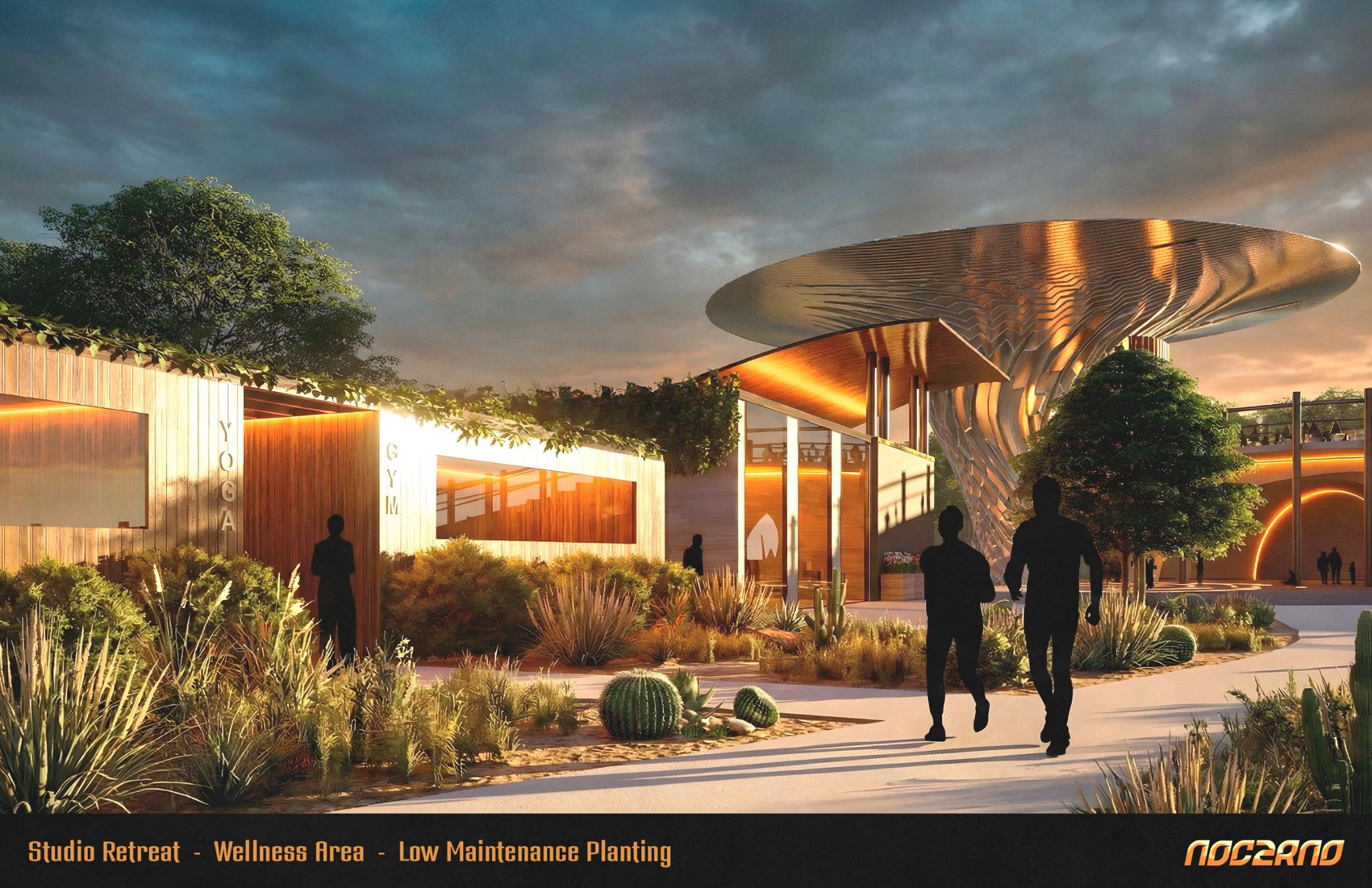
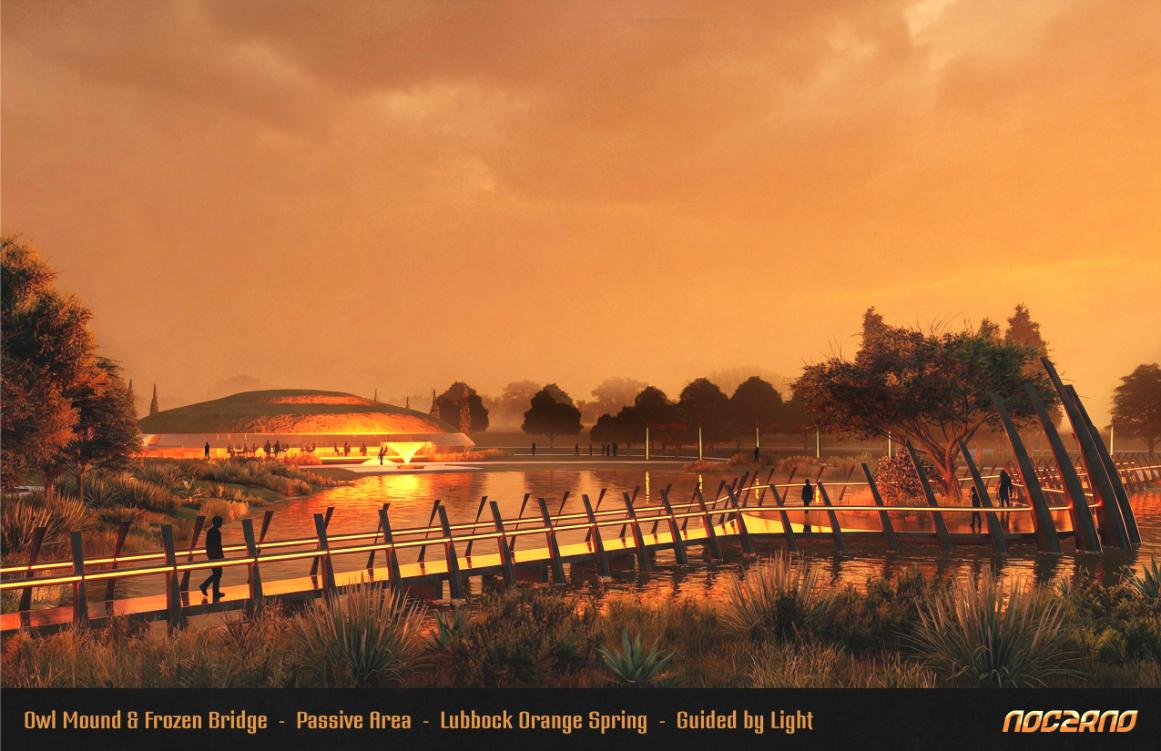
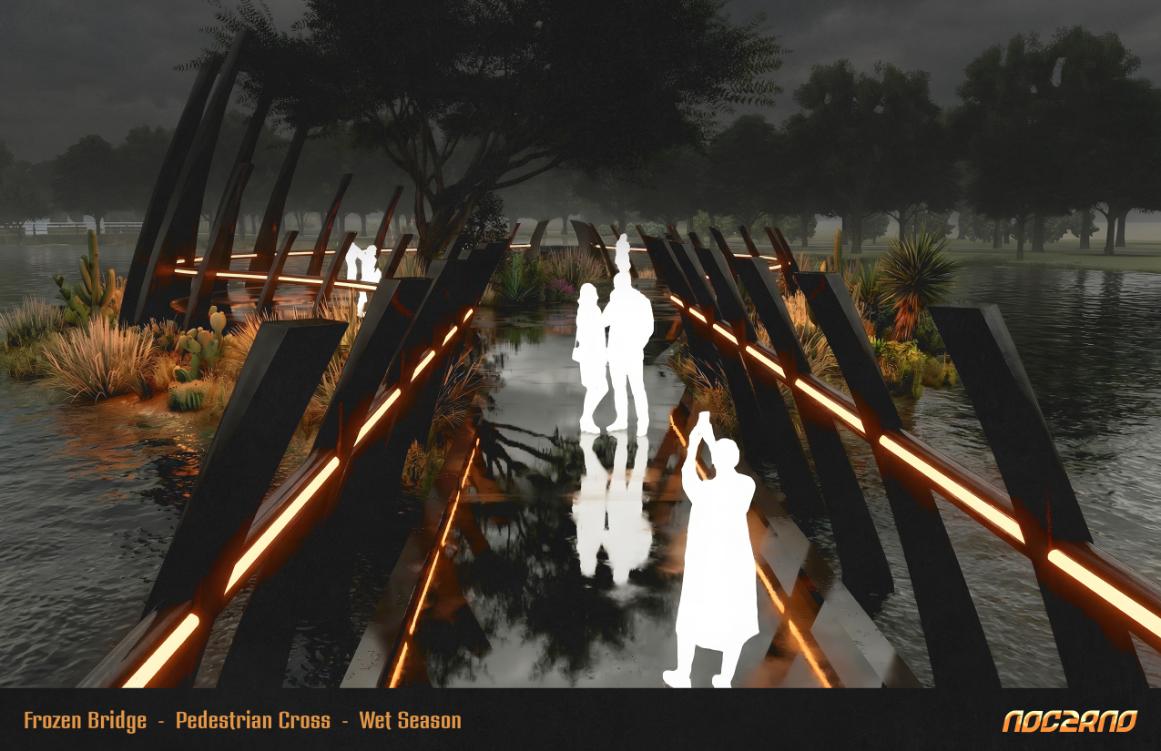
Noc2rno reimagines a neighborhood park as a safe, atmospheric, and inclusive nighttime environment through lightdriven design. The project uses calibrated warm lighting, native West Texas planting, and sculptural infrastructure to transform underlit public space into a place of comfort, orientation, and community use after dark. By balancing visibility with restraint, the design improves safety and wayfinding while respecting adjacent residential contexts. Noc2rno demonstrates how thoughtful lighting and landscape strategies can extend the life of public space without spectacle, creating a park that feels intuitive, calm, and deeply connected to its setting.
NOC2RNO // Jonathan Gomez, Texas Tech University
MERIT AWARD
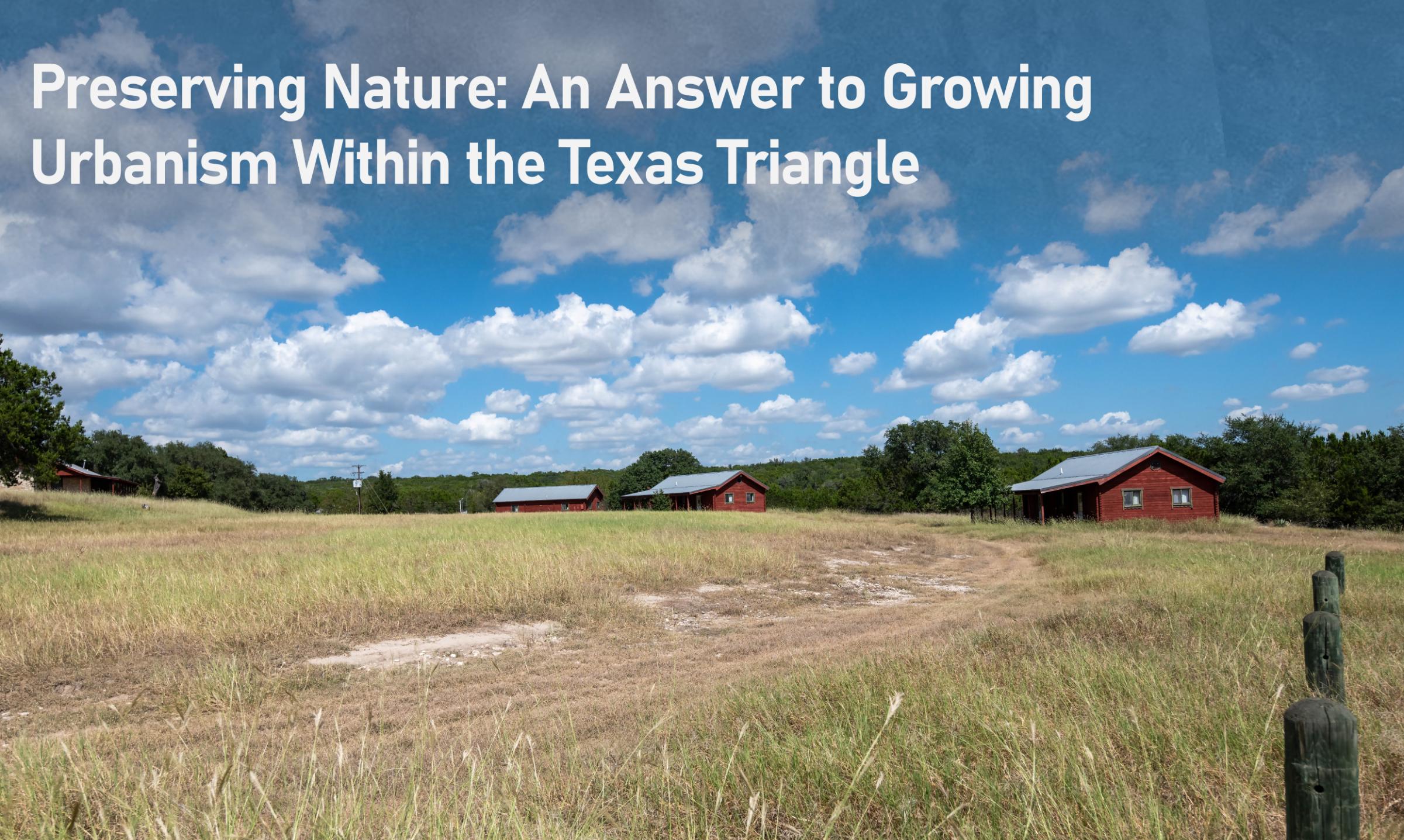
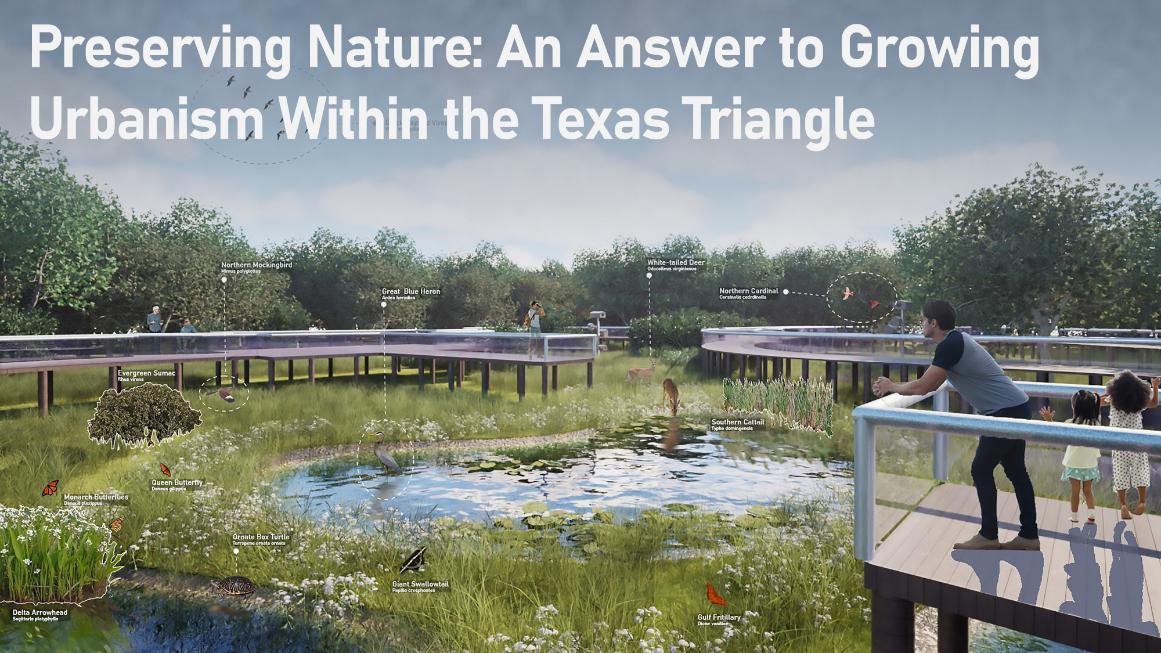
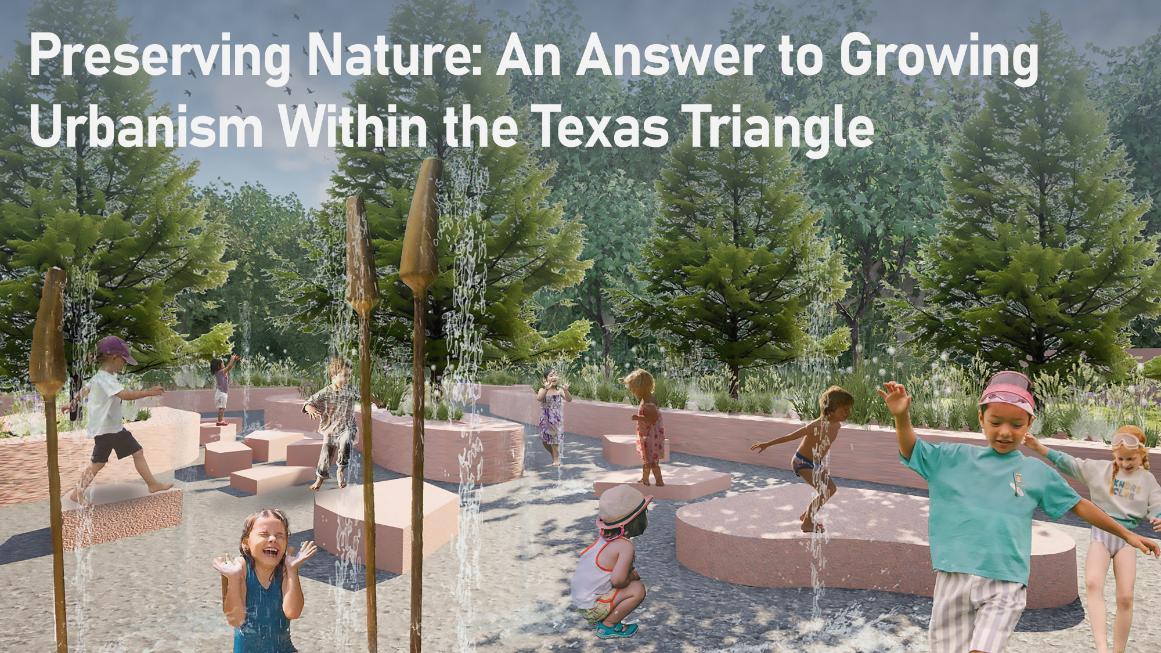
This project aims to offset rapidly growing urbanism within one of the fastest growing regions in the United States by preserving a historically significant site and providing habitats for some of the country's most endangered species. This project is award-worthy because it effectively balances social, economic, and ecological aspects in regards to the overall design and design process. This design refurbishes already developed areas instead of creating new ones. In addition to preserving natural space, this design also provides opportunities for ecologically driven experiences while still displaying the history and context of the overall site.
Preserving Nature: An Answer to Growing Urbanism Within the Texas Triangle //
Drew Kennedy, Jaqueline Guijosa Rodriguez, Matthew Bauer , Texas A&M University
MERIT AWARD
OUTLOOKSTRUCTUREAREA Raíces
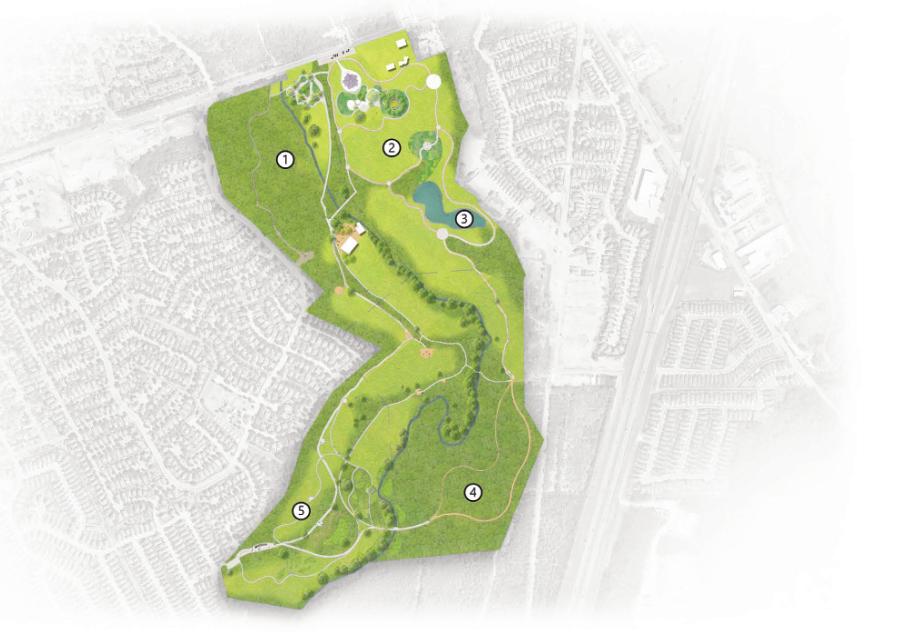
Binocularshavebeenaddedtothe site,offeringvisitorstheabilitytoexploreandobservedistantspeciesup closefromafar
Raíces:SanAntonioArboretum
“Thepulseoflifewhereecologytakesroot,knowledgegrows,and communitythrives.”
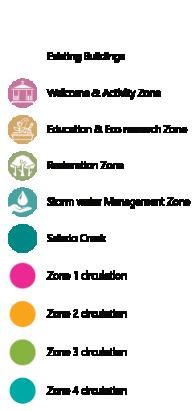
CIRCULATION ZONING


UNDERGRADUATE
RIPARIANREPAIRHIGHLIGHT
ThisoutlookhighlightstheriparianspeciesoftheSaladoCreekand givesvisitorsachancetoimmersethemselvesintheecology
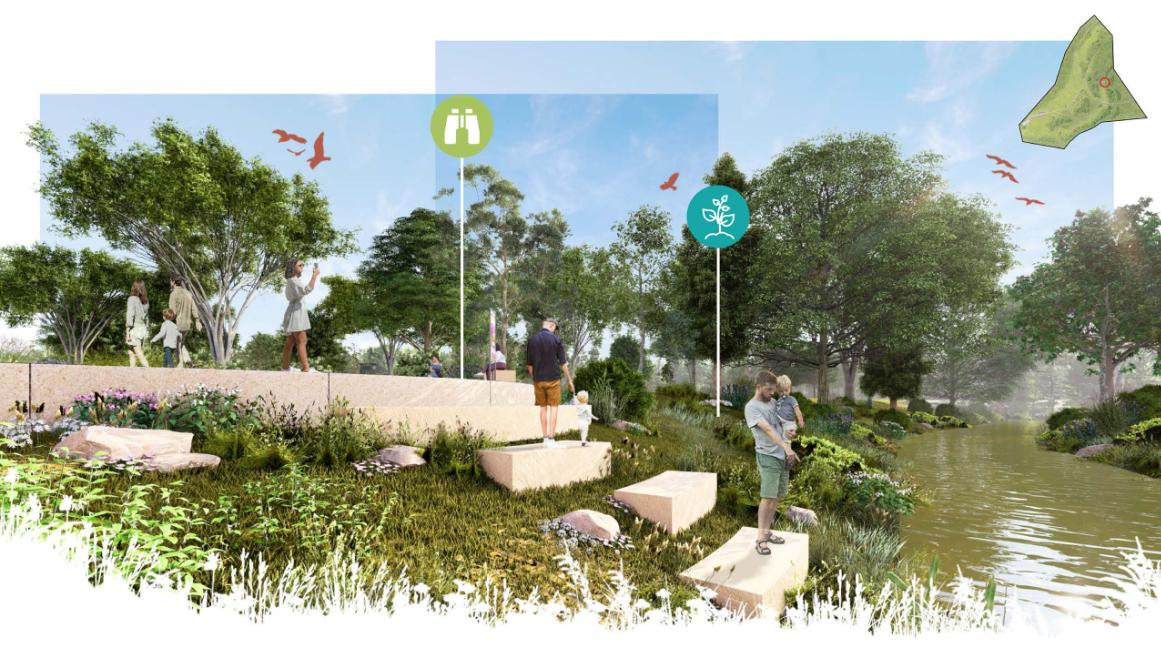
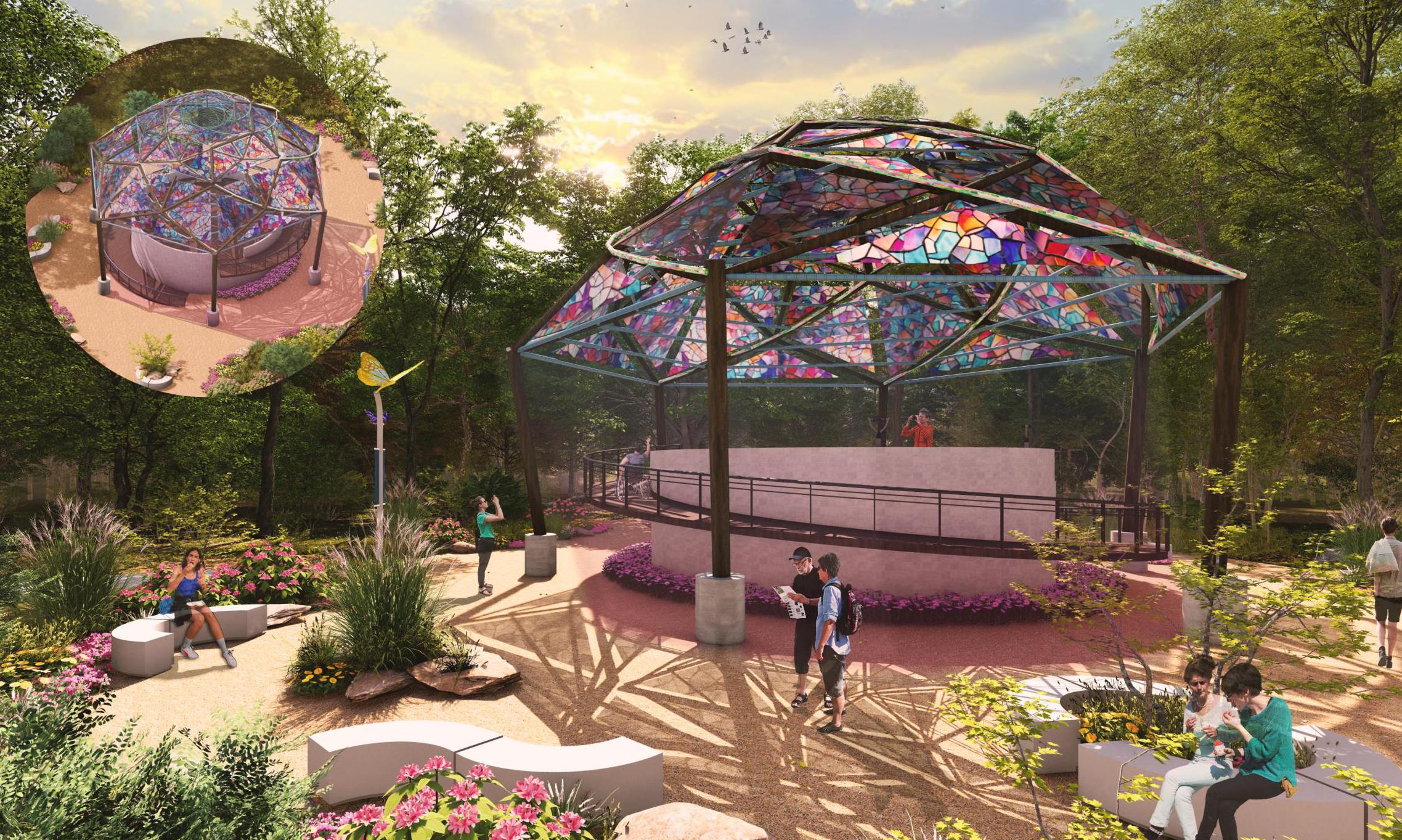
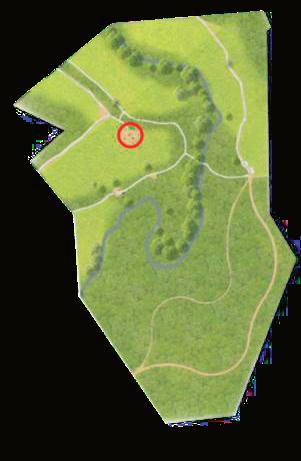
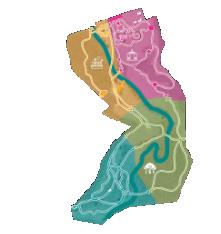
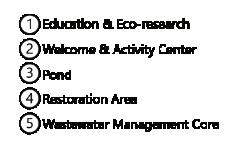
The Raíces arboretum is grounded in ecological restoration, community education, and sustainable stormwater design. By revealing San Antonio’s hidden hydrology and elevating the native ecoregion, the project creates a rooted network where biodiversity expands, knowledge develops, and the community experiences nature as an essential public resource. The overall design demonstrates how intentional ecological thinking can regenerate derelict land, strengthen regional identity, and set a strong example for climate resilient public spaces.
ZONEMAP
Raíces
Raíces // Raegan Jabor, Enya Conde, Anissa Cantu, Jocesline Medina, Texas Tech University
MERIT AWARD
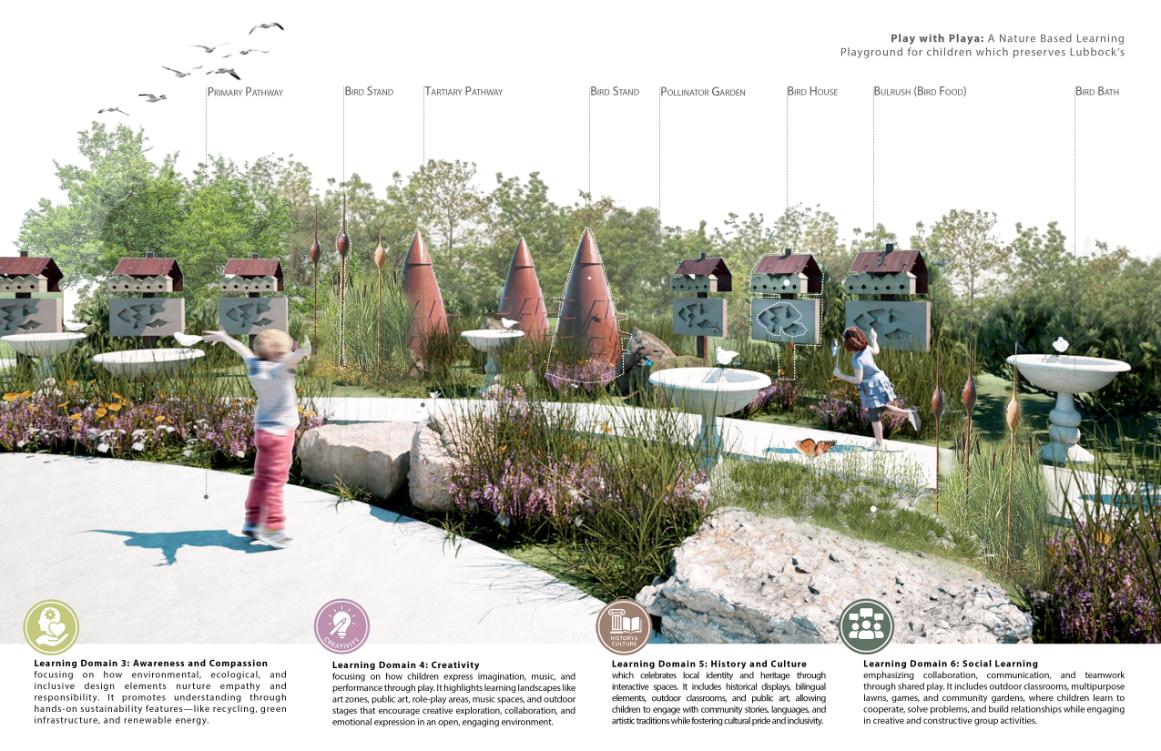
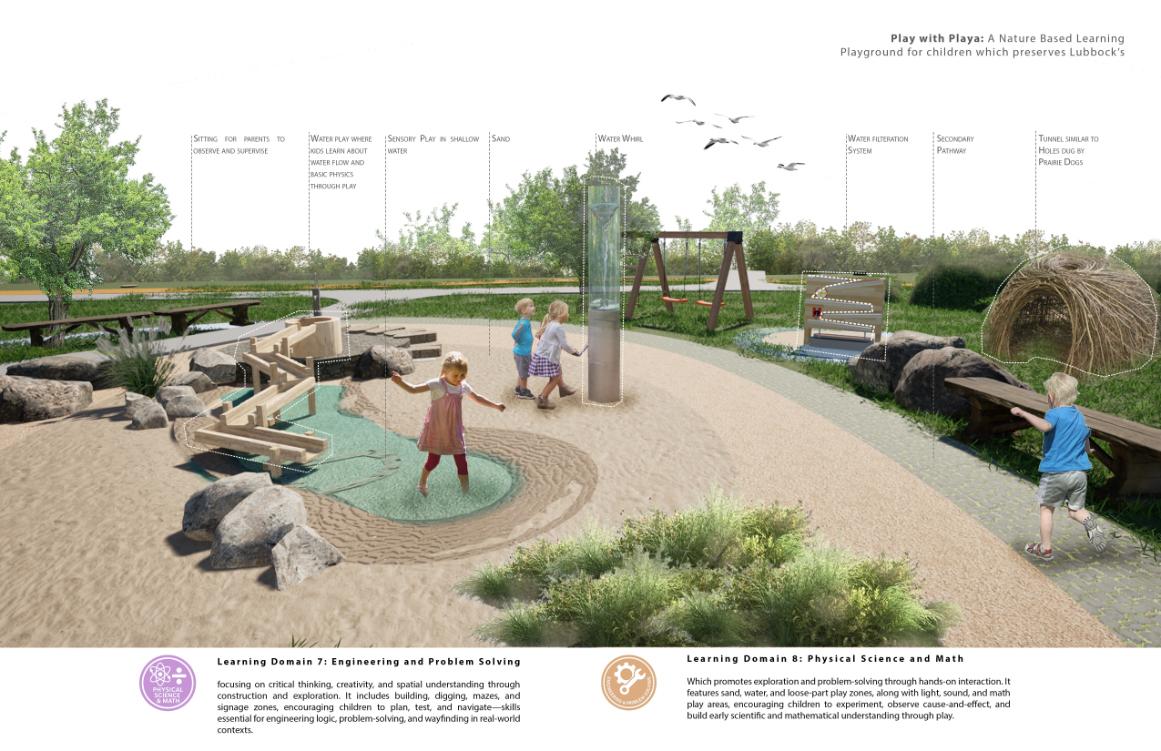
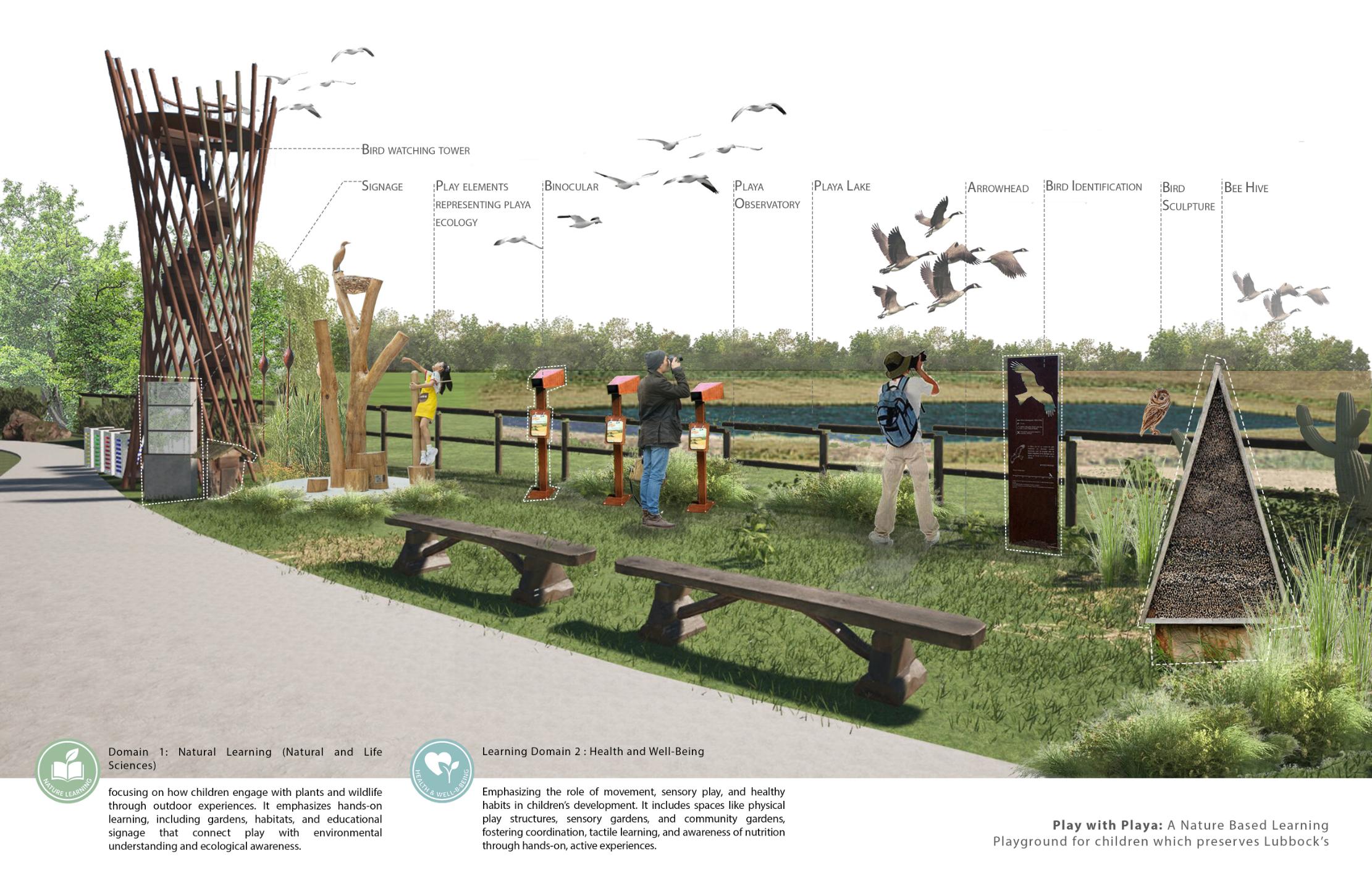
Play with Playa transforms an overlooked wetland into a living learning landscape where children explore ecology through play and participation. Rooted in community voices and research driven design, the project unites environmental restoration, climate education, and childhood development to demonstrate how playful landscapes can advance resilience, equity, and meaningful public engagement.
Play with Playa: A Nature Based Learning Playground for Children which Preserves Lubbock’s Playa Lakes // Fawzia Bhuiyan, Texas Tech University
MERIT AWARD
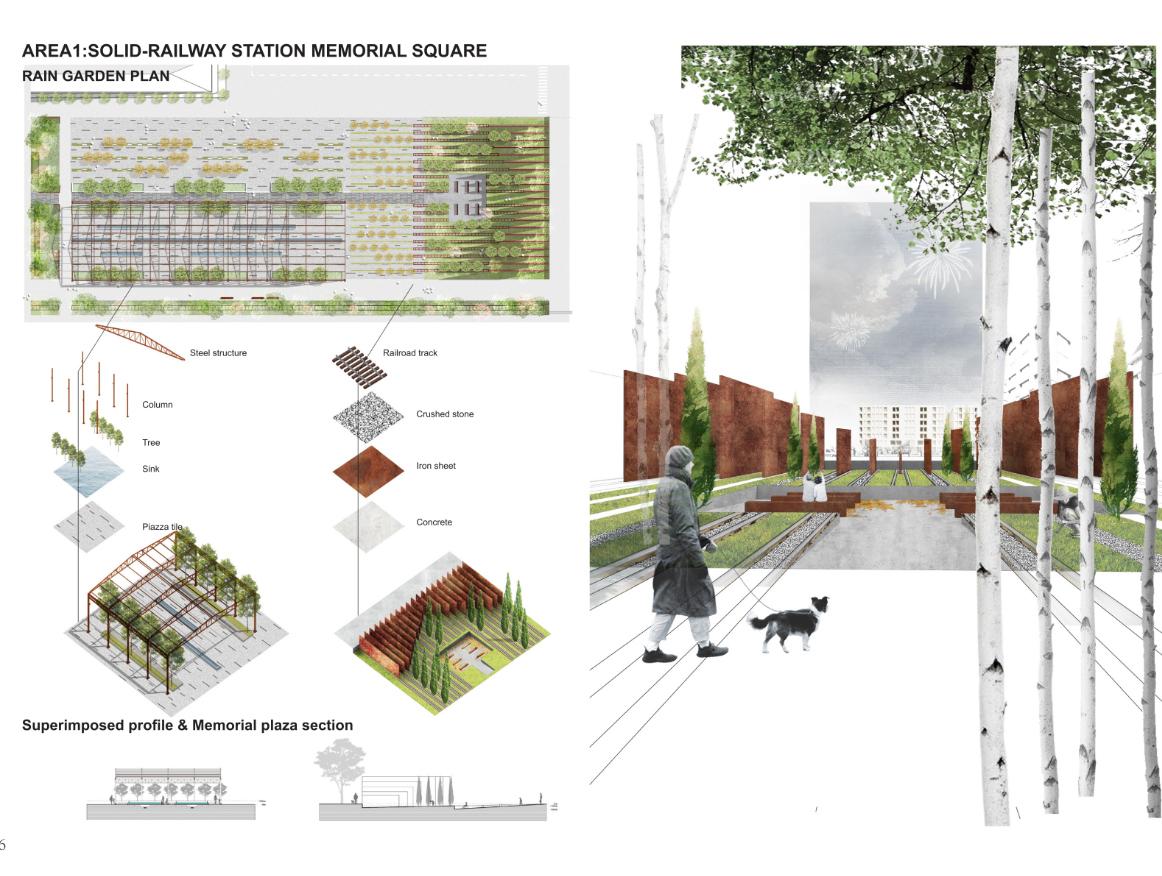
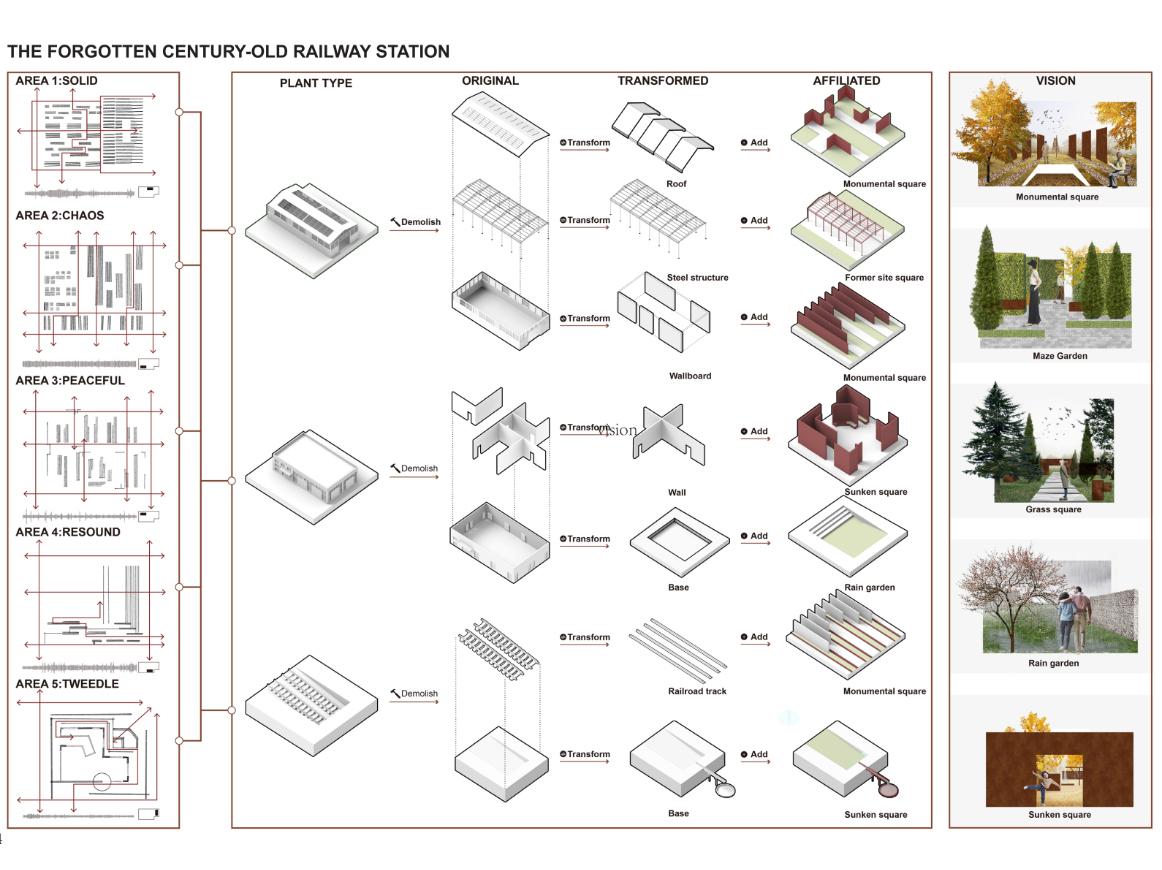
Transforming an abandoned industrial railway into a vibrant urban corridor, this project exemplifies the power of landscape architecture in brownfield regeneration. It is a strong contender for its ability to stitch together severed urban fabrics using a linear park system. The design is celebrated for preserving industrial heritage—the tracks and signals—as "memory anchors" while infusing the site with new ecological and recreational functions, turning a barrier into a connector.
Railway Melody-Renovation Design for Ishpaistation Railway Station //
Texas A&M University
Haozhe Shan,
MERIT AWARD
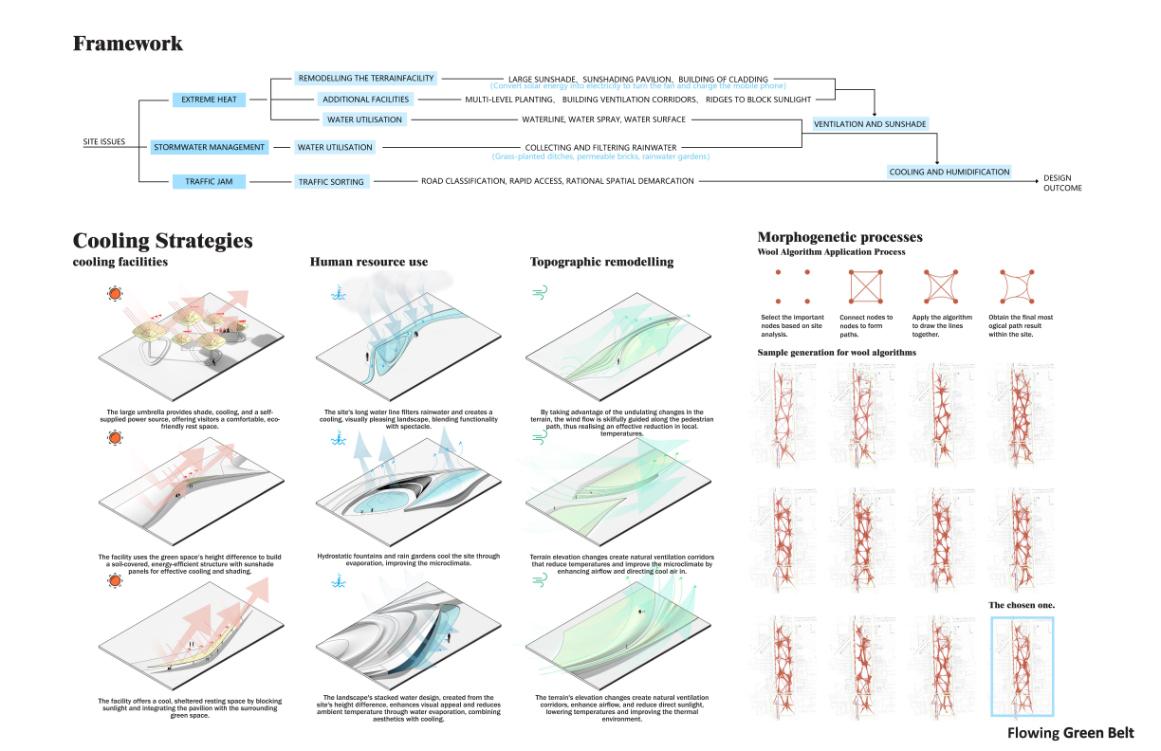
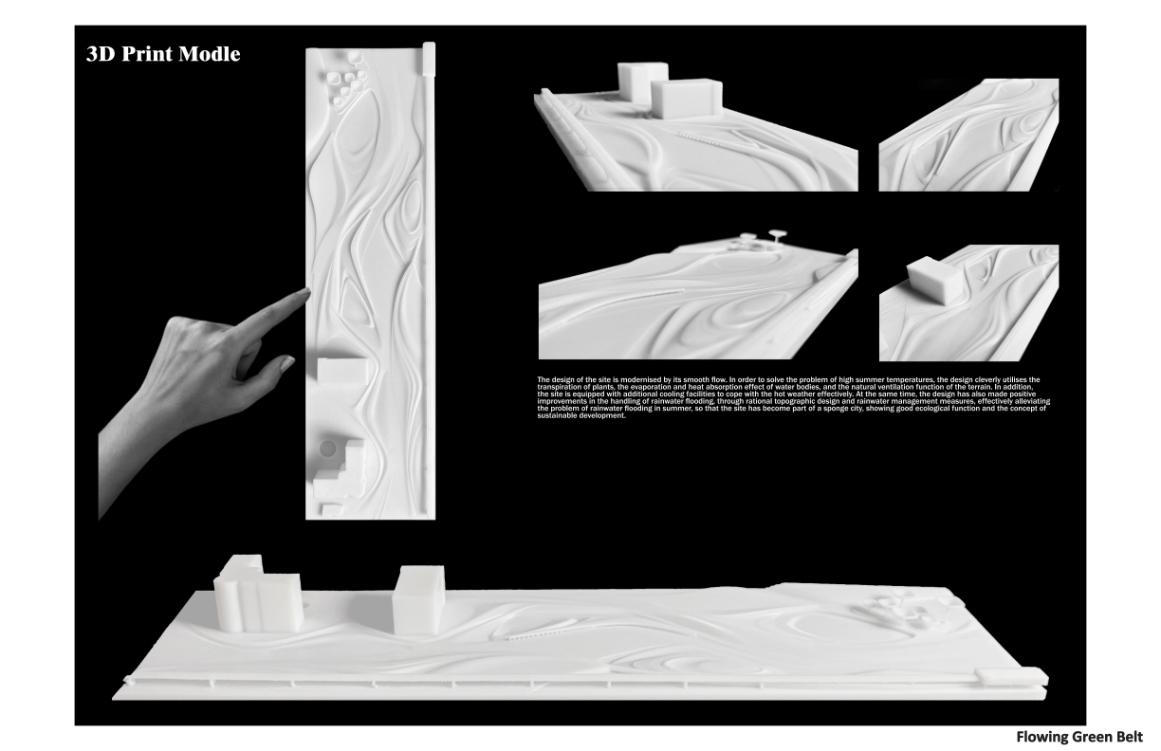
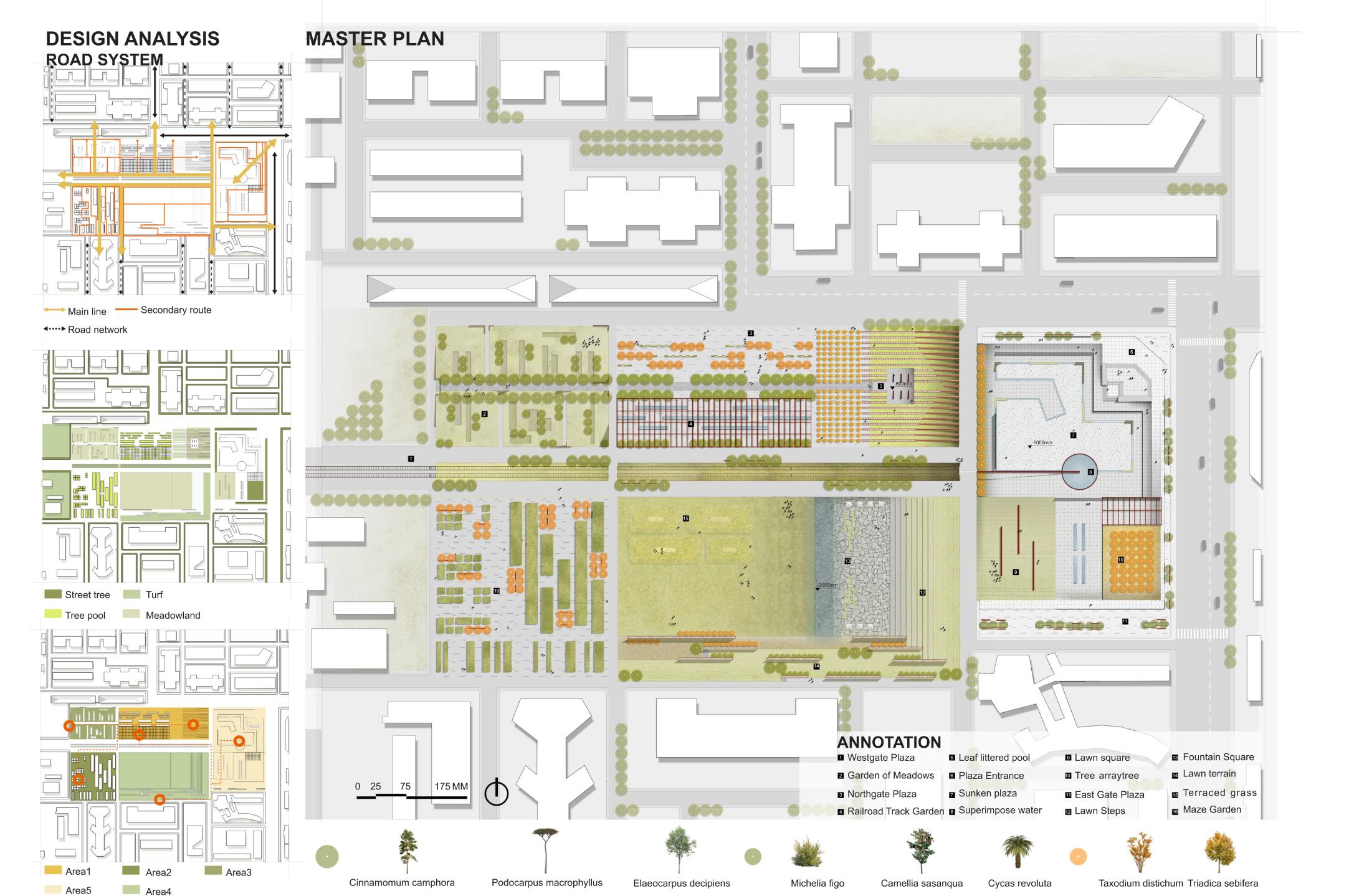
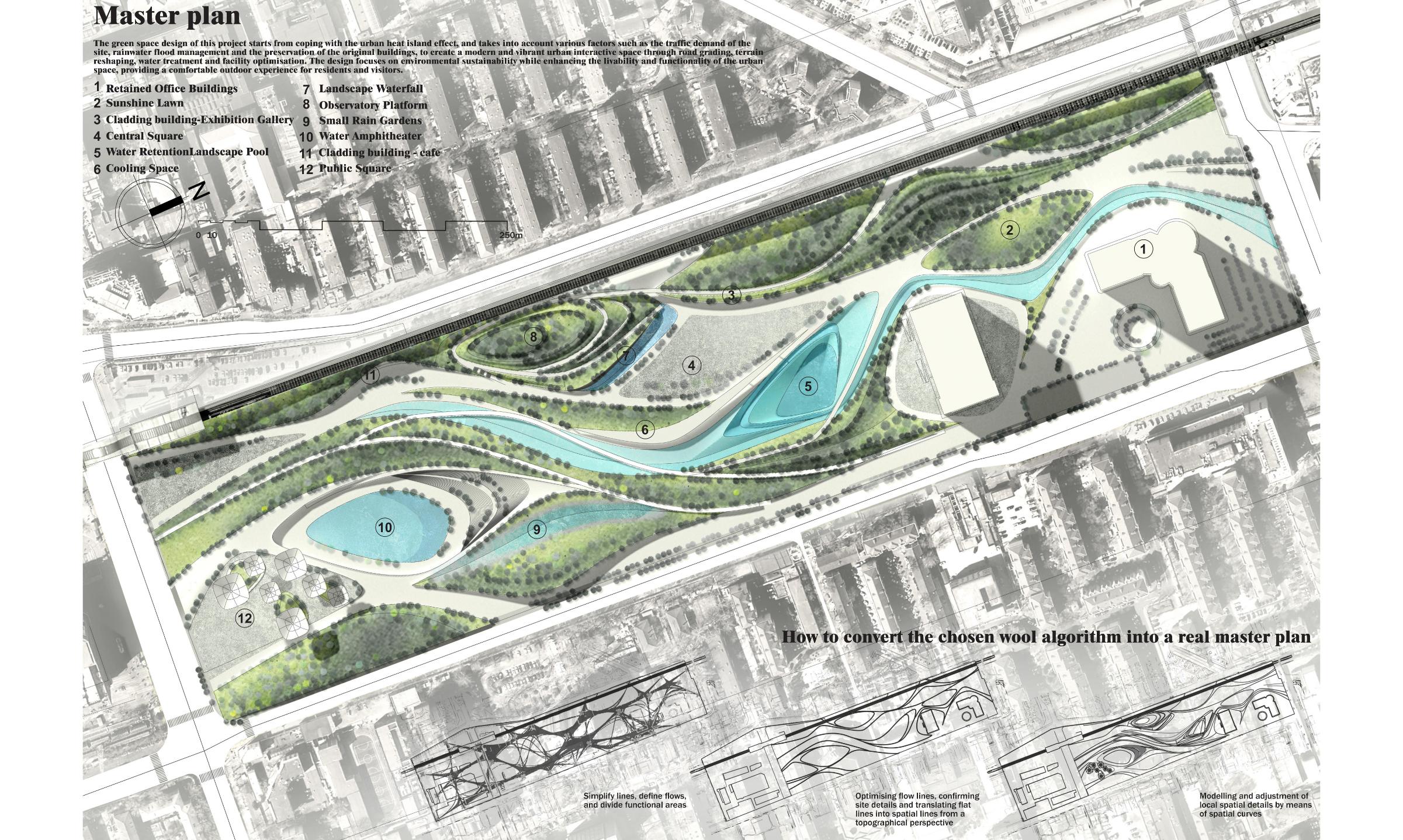
Flowing Green Belt proposes an urban cooling green space for the high-density Wudaokou area in Beijing, addressing extreme heat, flooding risk, and heavy pedestrian flows. The project integrates topographic reshaping, continuous water systems, and climate-responsive facilities to mitigate the urban heat island effect while improving microclimate and accessibility. An algorithm-based path-generation method organizes circulation according to environmental performance and human movement patterns. By combining heat reduction, stormwater management, and public space design into a unified landscape system, the project demonstrates an innovative and replicable model for climate-adaptive urban green infrastructure in dense metropolitan contexts.
Flowing Green Belt // Jiayi Wang, Texas A&M University
MERIT AWARD
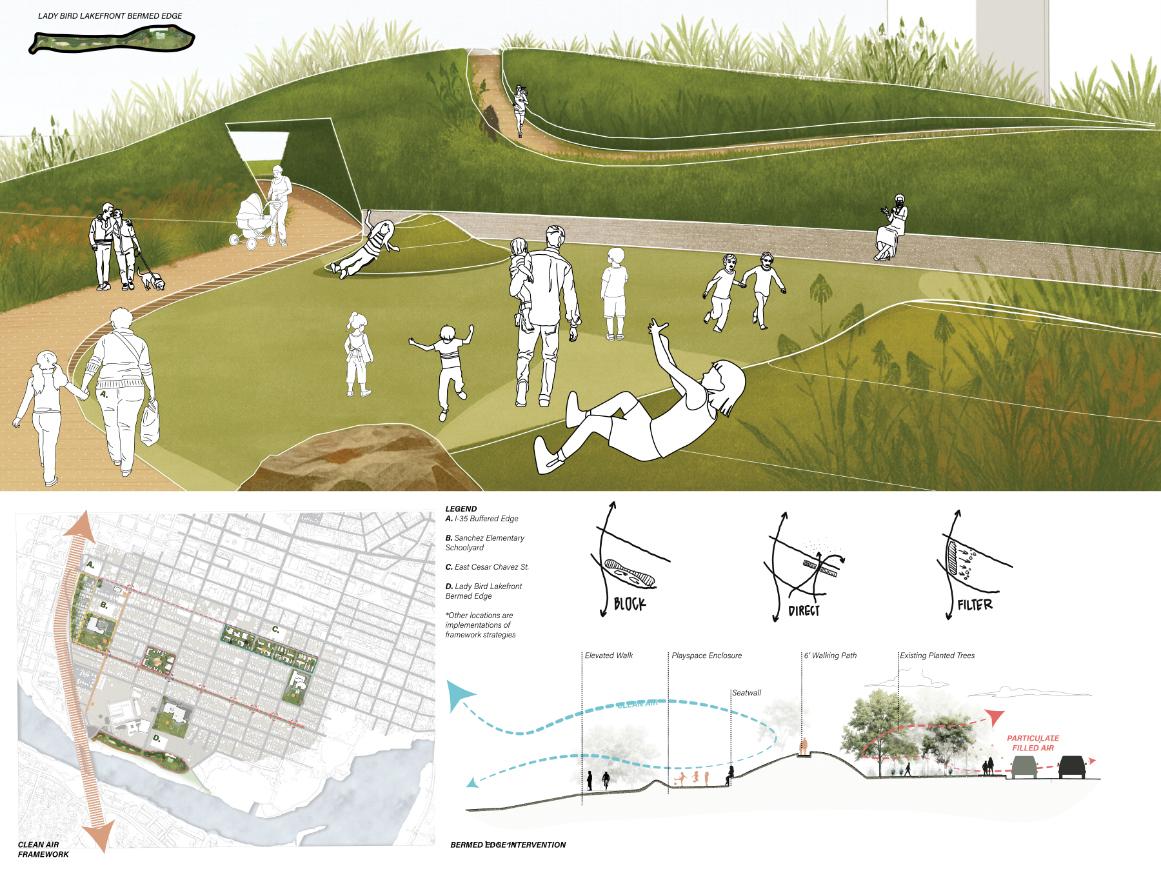
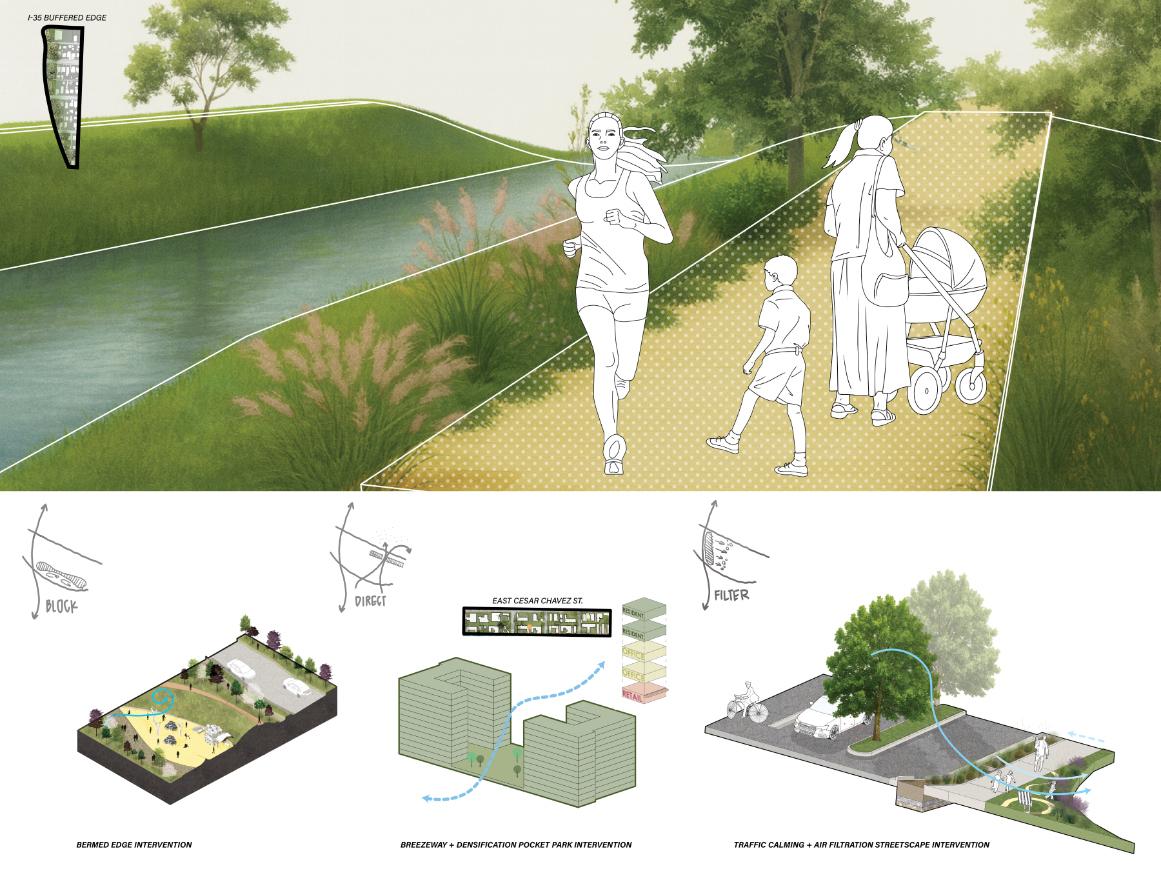
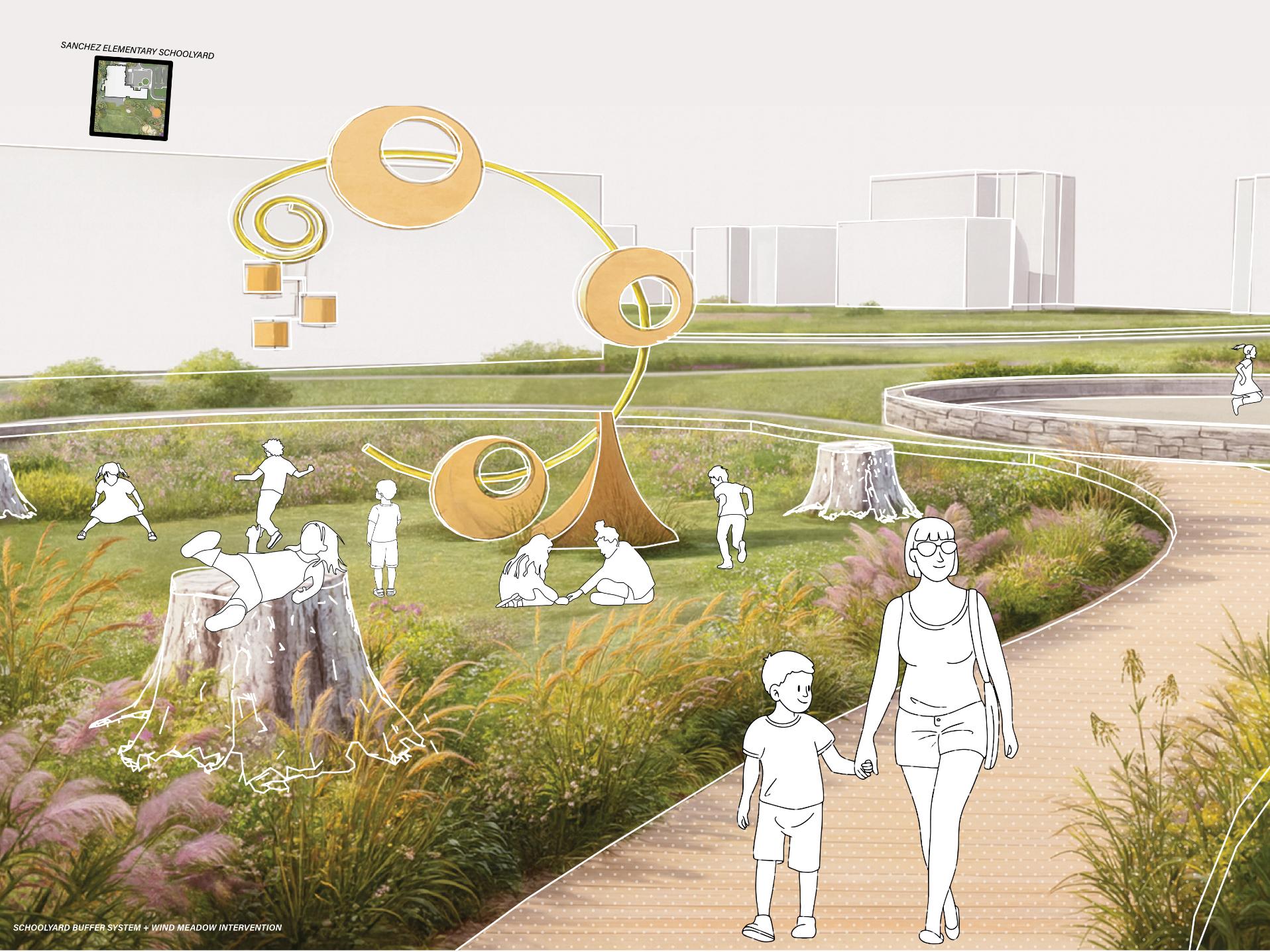
This project is a scalable landscape framework that confronts air quality and environmental injustice in rapidly growing cities. The framework reframes highway infrastructure as an opportunity for repair by transforming displacement prone land into a layered air filtration buffer that protects communities within the first thousand feet of major roadways. By integrating wind oriented design, vegetated edges, and child centered spaces, the framework advances public health while restoring dignity, safety, and play. Its focus on children, often overlooked in urban design, and its adaptability to other highway adjacent neighborhoods make it a replicable model for equitable driven urban transformation nationwide.
From Highways to Healing Air : A Clean Air Framework for East Austin //
Dominique Lang, University of Texas at Austin
MERIT AWARD
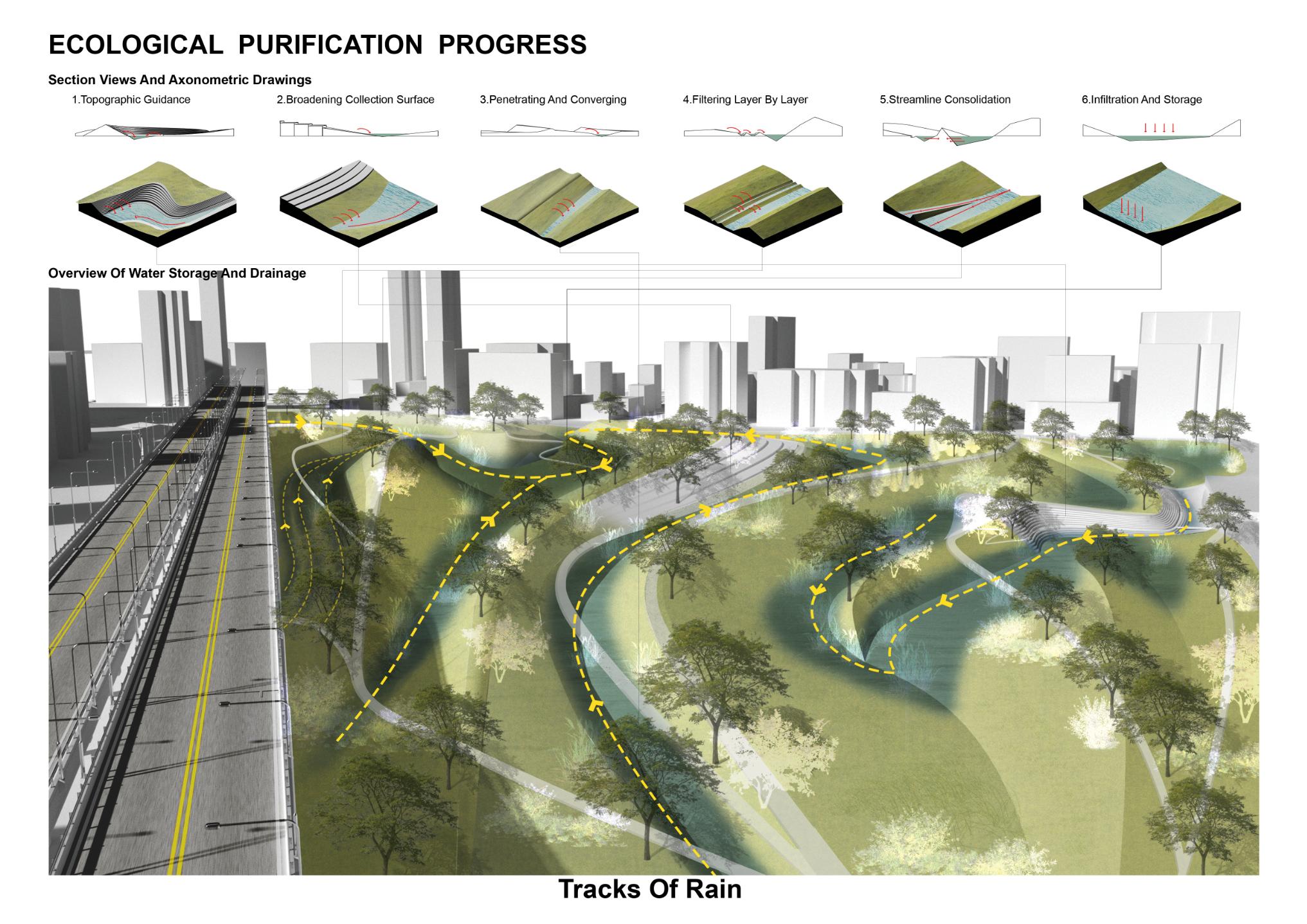
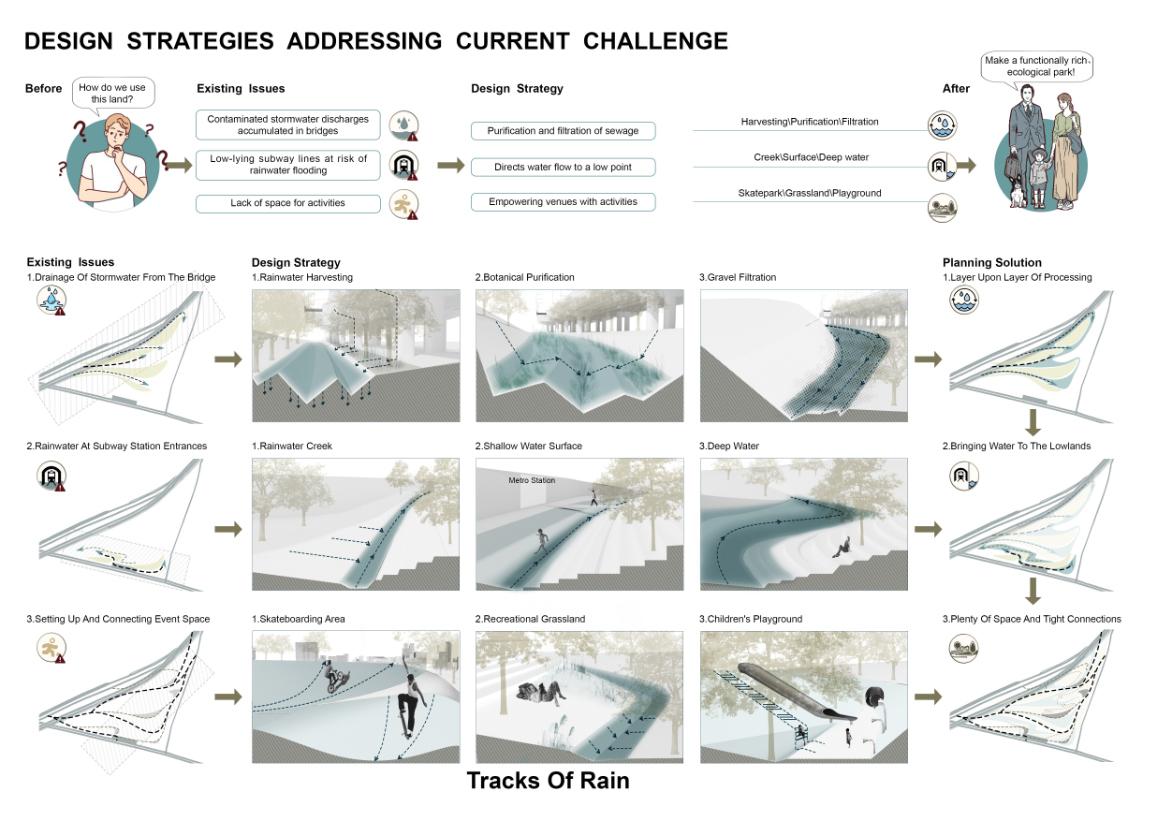
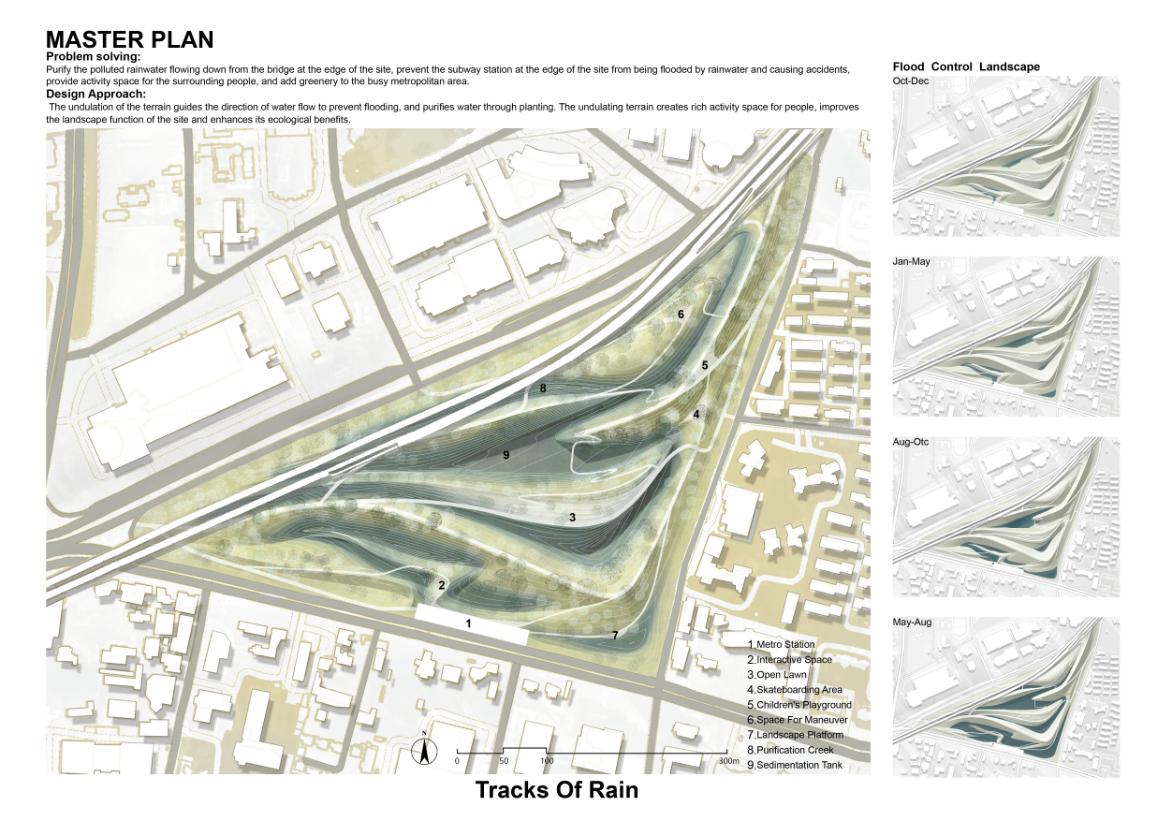
Tracks of Rain is an urban stormwater purification and ecological safety landscape located in Changning District, Shanghai. The project addresses polluted runoff from elevated roads and flood risks at adjacent metro stations through terrain-guided drainage and layered ecological filtration. By integrating topographic manipulation, native planting, and multifunctional public spaces, the design transforms a residual infrastructural site into a resilient green system that purifies stormwater, mitigates flooding, and provides accessible recreational space. The project demonstrates how landscape-based planning strategies can simultaneously resolve hydrological risks and enhance urban livability in high-density metropolitan environments.
Tracks of Rain // Jiayi Wang, Texas A&M University
MERIT AWARD
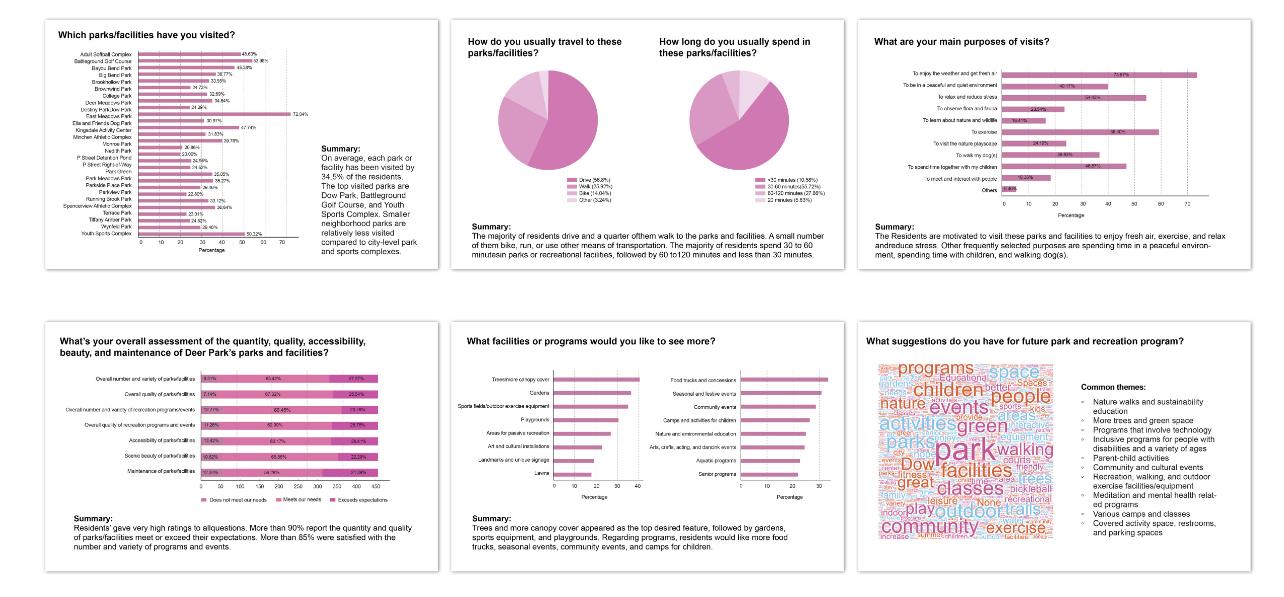
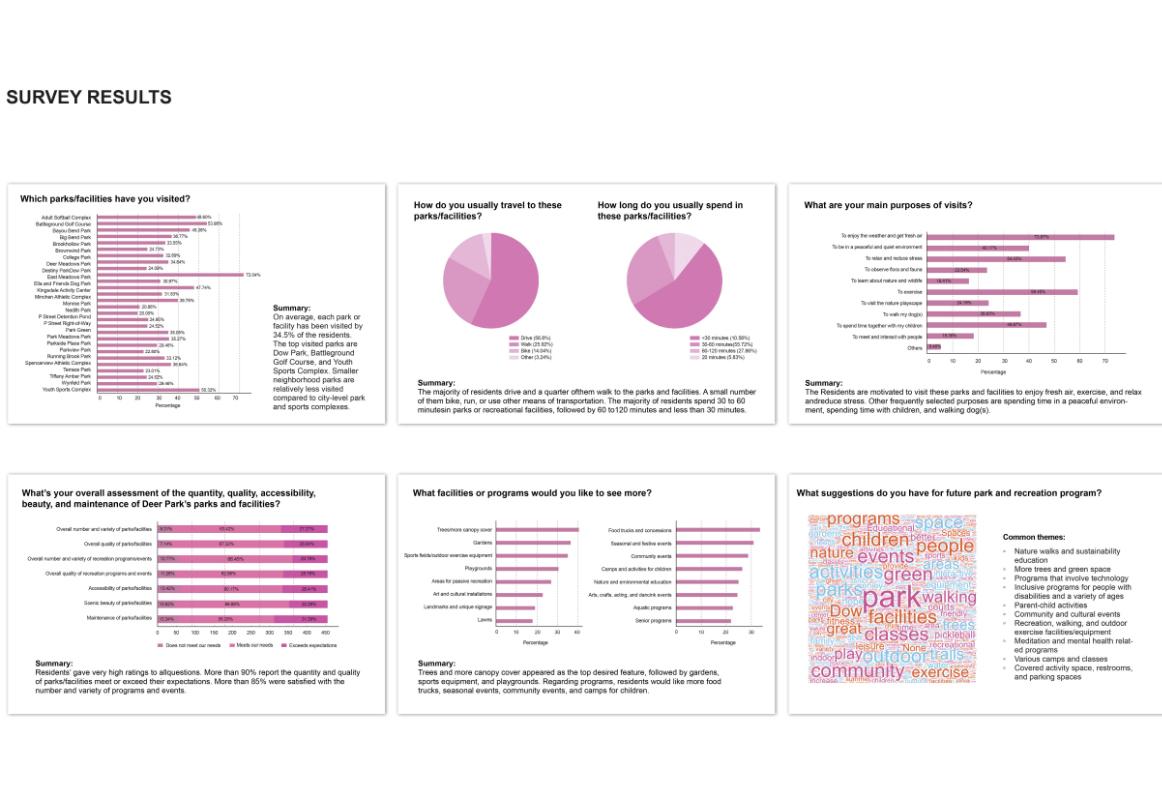
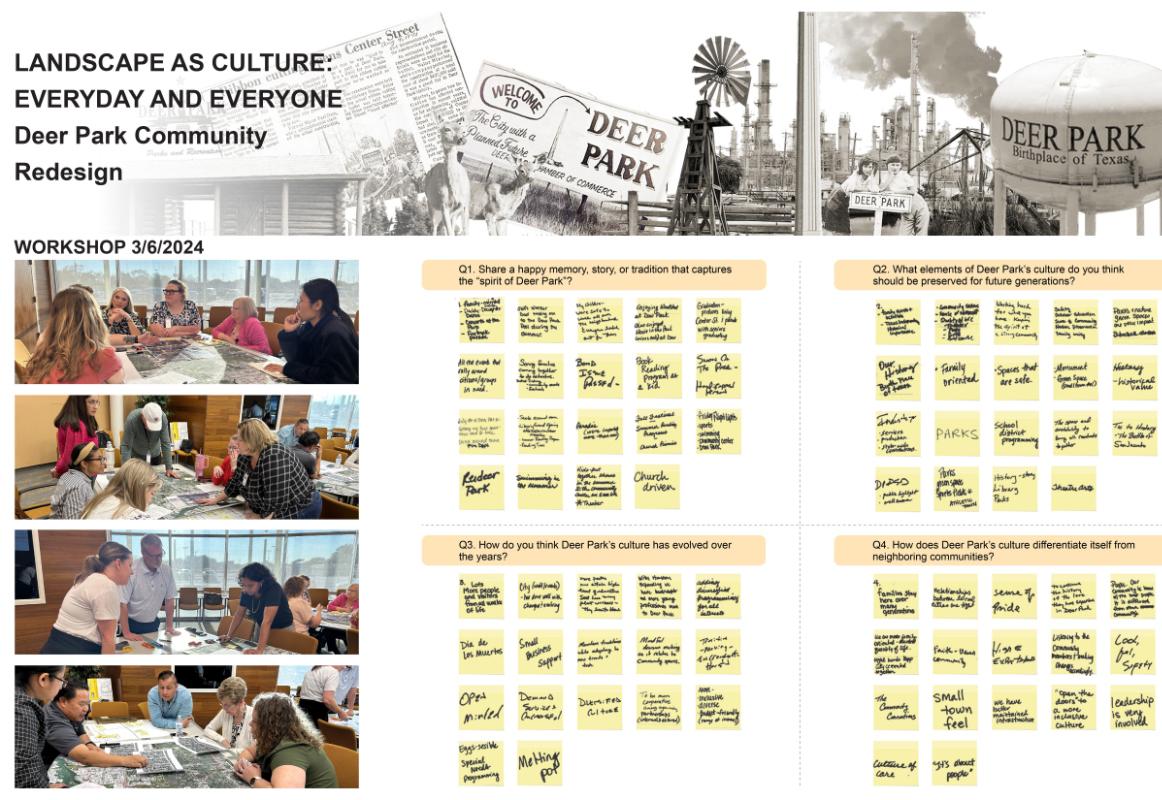
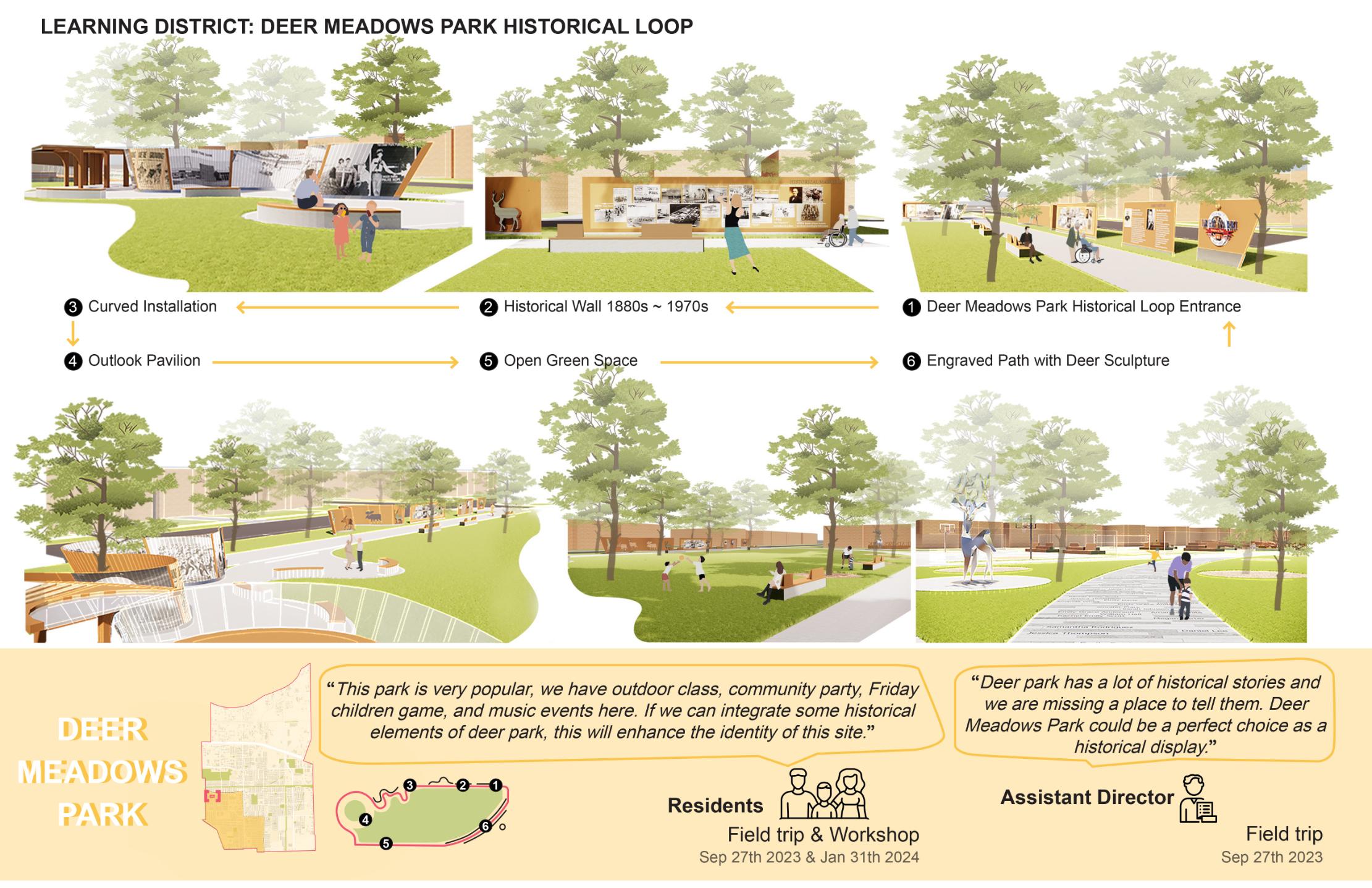
The City of Deer Park, “Birthplace of Texas”, is aging, along with its residents and culture. In this service-learning project, we developed an open space framework that not only echoes the city’s historical roots but also incorporates everyone’s everyday activities that are shaping the city’s evolving culture. Over two semesters and four courses, a collaborative team of 32 students, 5 faculty members, 4 city officials, and 20 representative residents worked together through workshops, inspections, surveys, analysis, planning, design, and programming. We envisioned a landscape that embraces Deer Park’s intangible culture of tomorrow, both the old and the new.
Landscape as Culture: Everyday and Everyone // Grace Canady, Na Wang,
Wafa Bassiouni, Urvi Joshi, Kayla Koma, Yue Zhang, Texas A&M University
MERIT AWARD
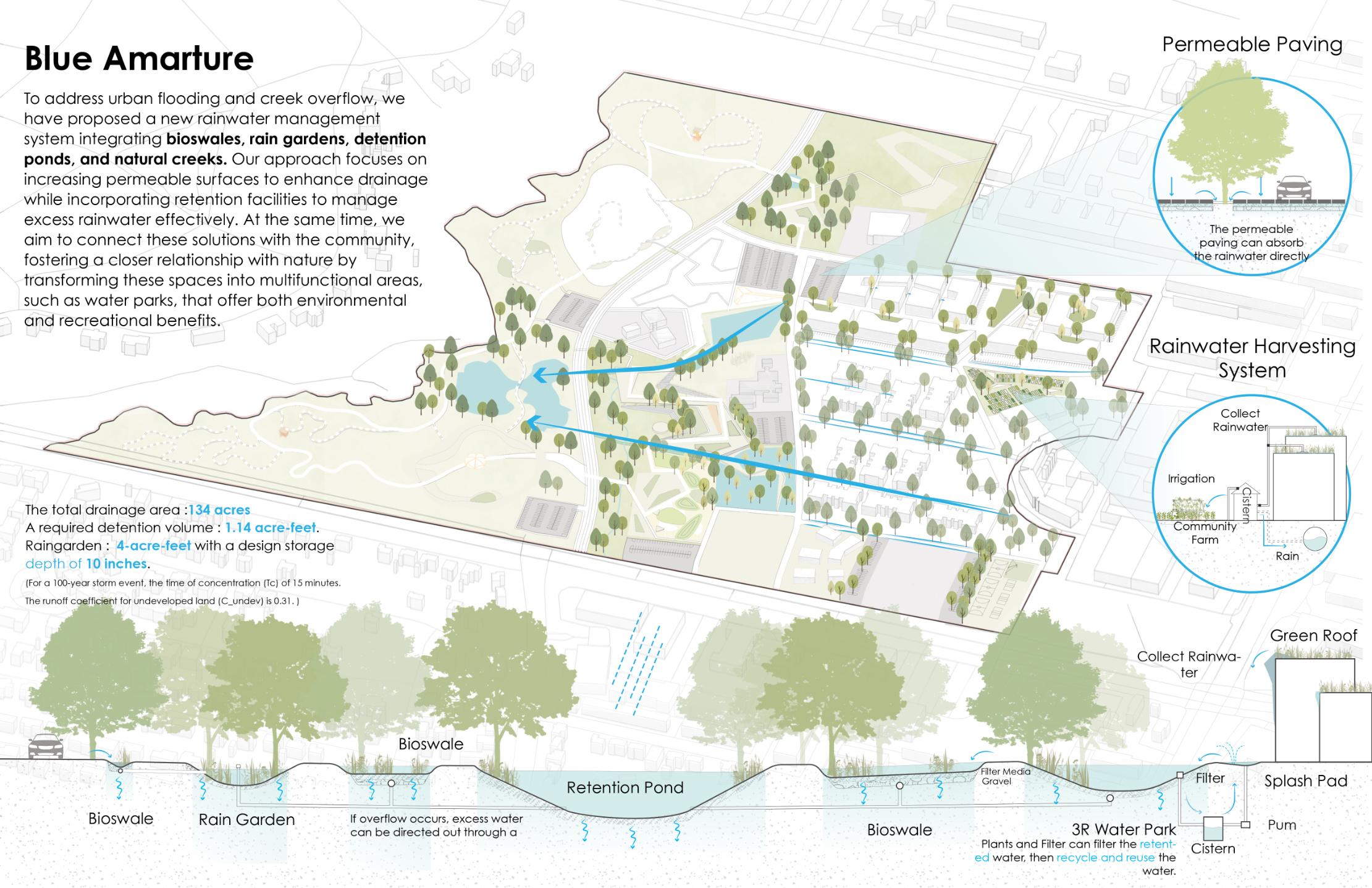
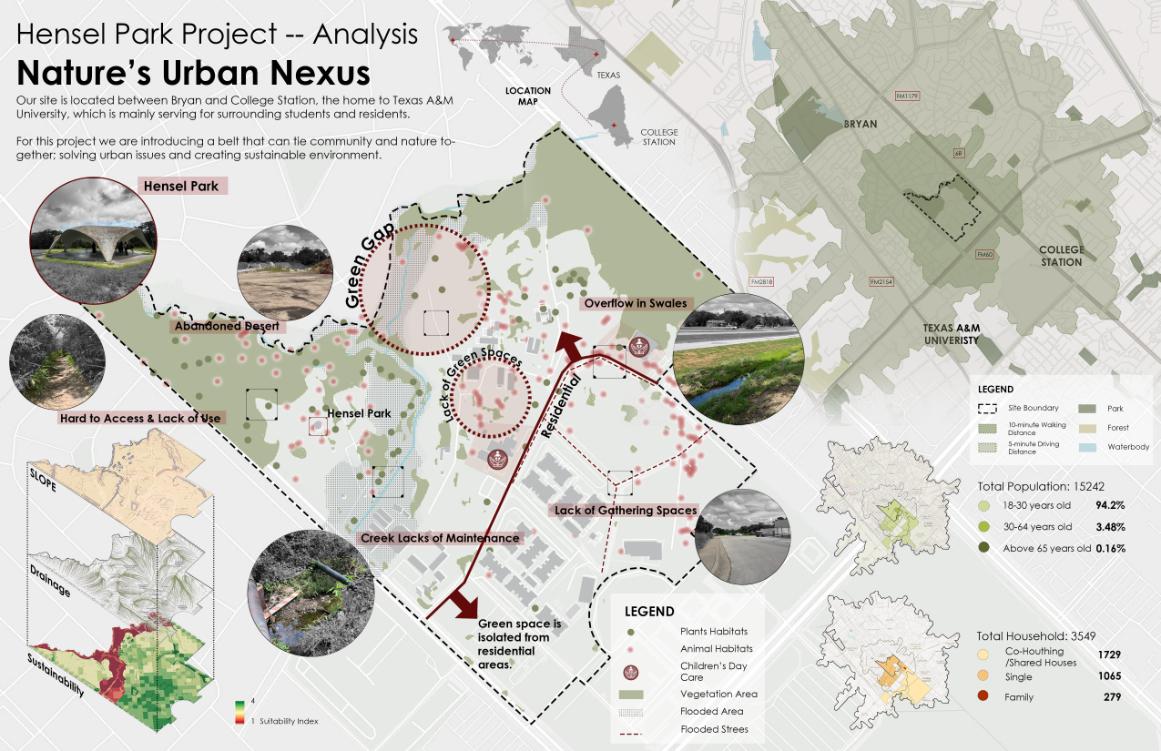
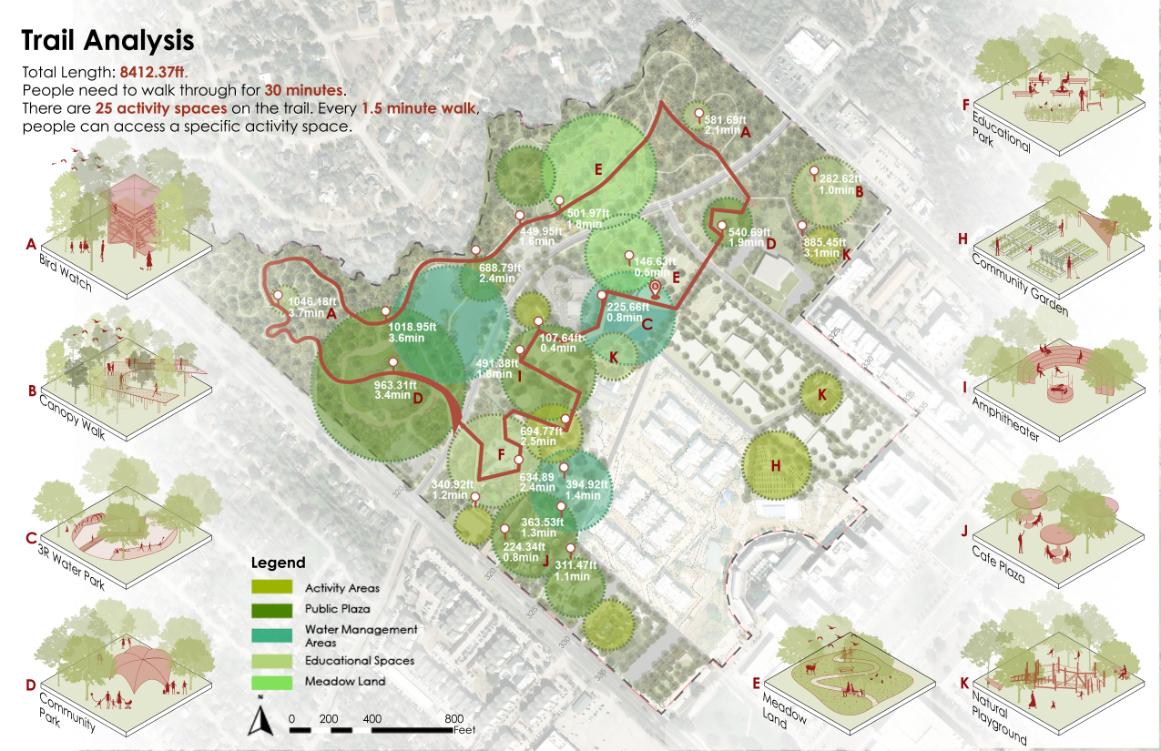
Nature's Urban Nexus is located between Bryan and College Station, serving students and residents near campus. The project addresses existing site challenges through targeted design interventions that improve accessibility, usability, and spatial organization. It connects different community groups by creating shared spaces and circulation networks that support daily activities for diverse users. At the same time, the project strengthens the relationship between nature and the community by preserving existing wildlife while introducing designed natural areas. By integrating urban functions with natural systems, the project creates a sustainable environment that supports social connection, ecological balance, and long-term community resilience.
Nature's Urban Nexus //
Shiyun Wen, Beatriz Watanabe, Angkita Hawlader, Texas A&M University
AWARDS STUDENT HONOR

HONOR AWARD

ACEQUIACOMMUNITY
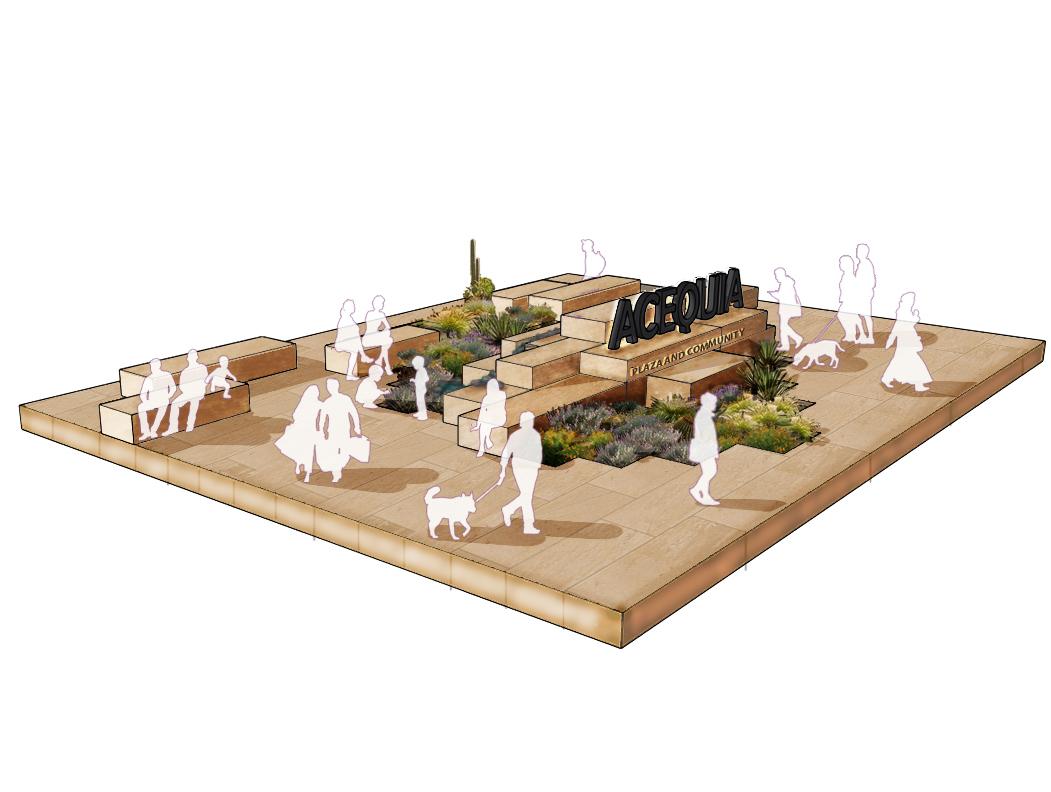
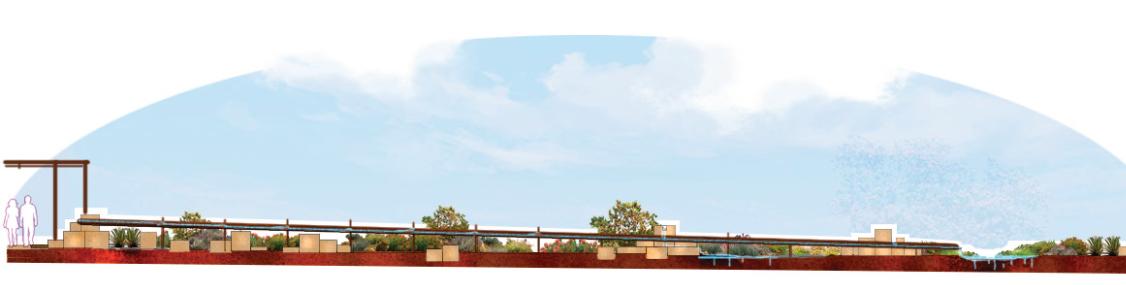
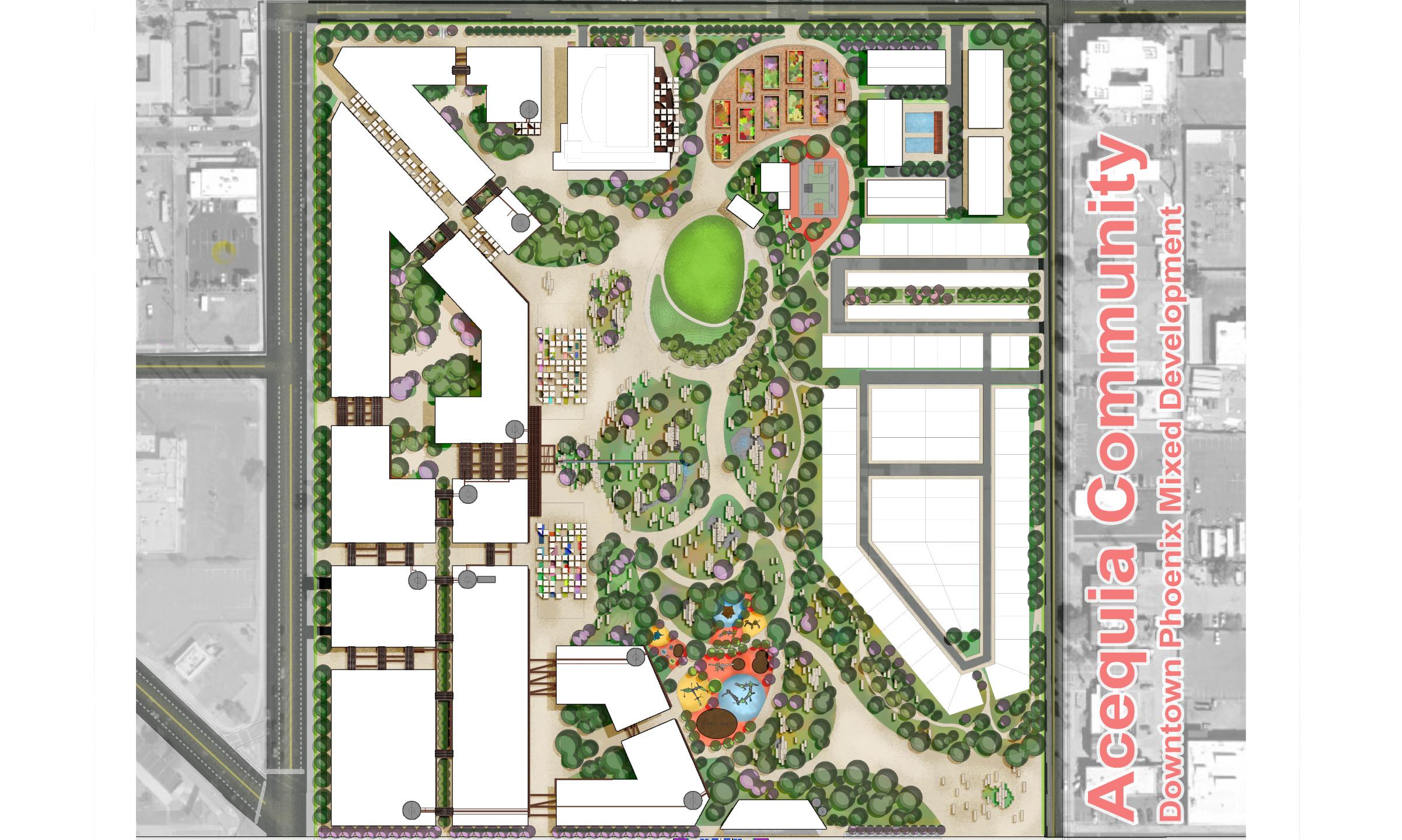
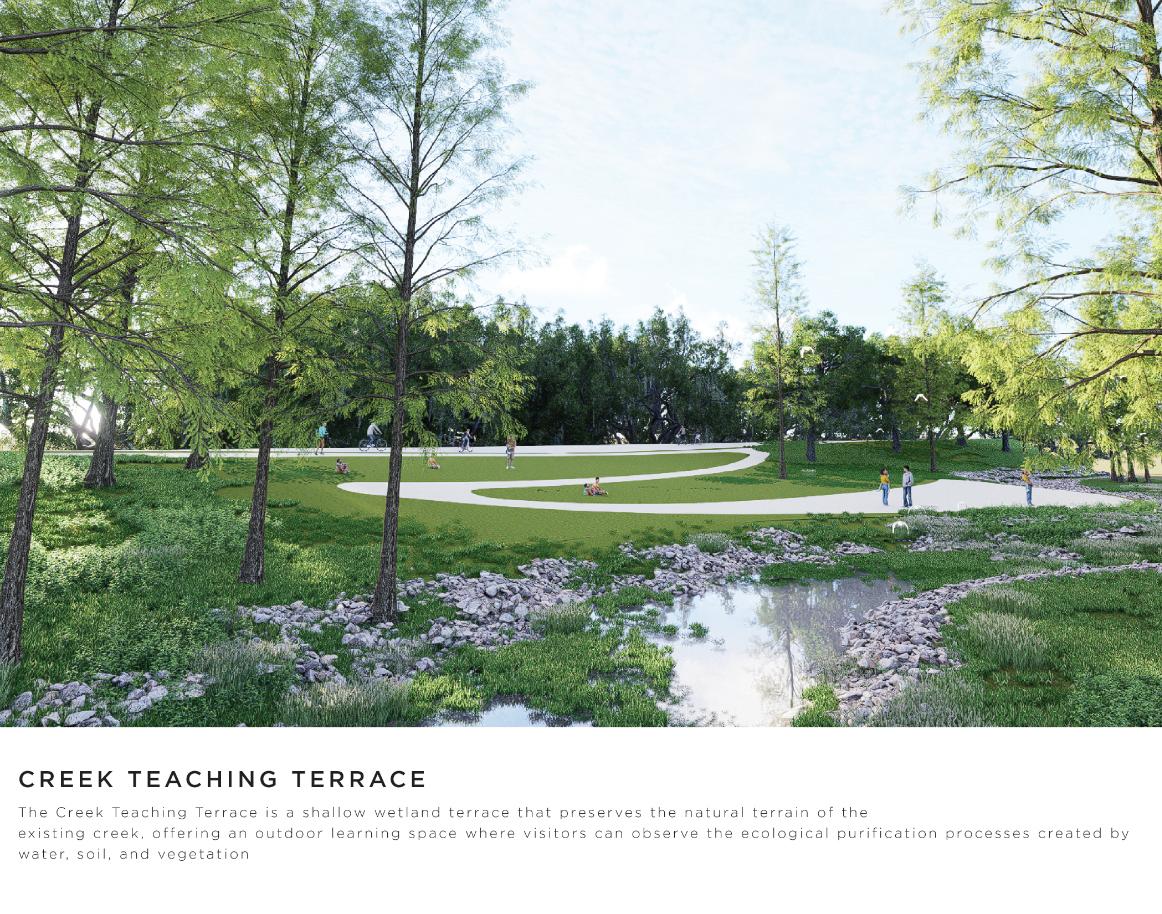
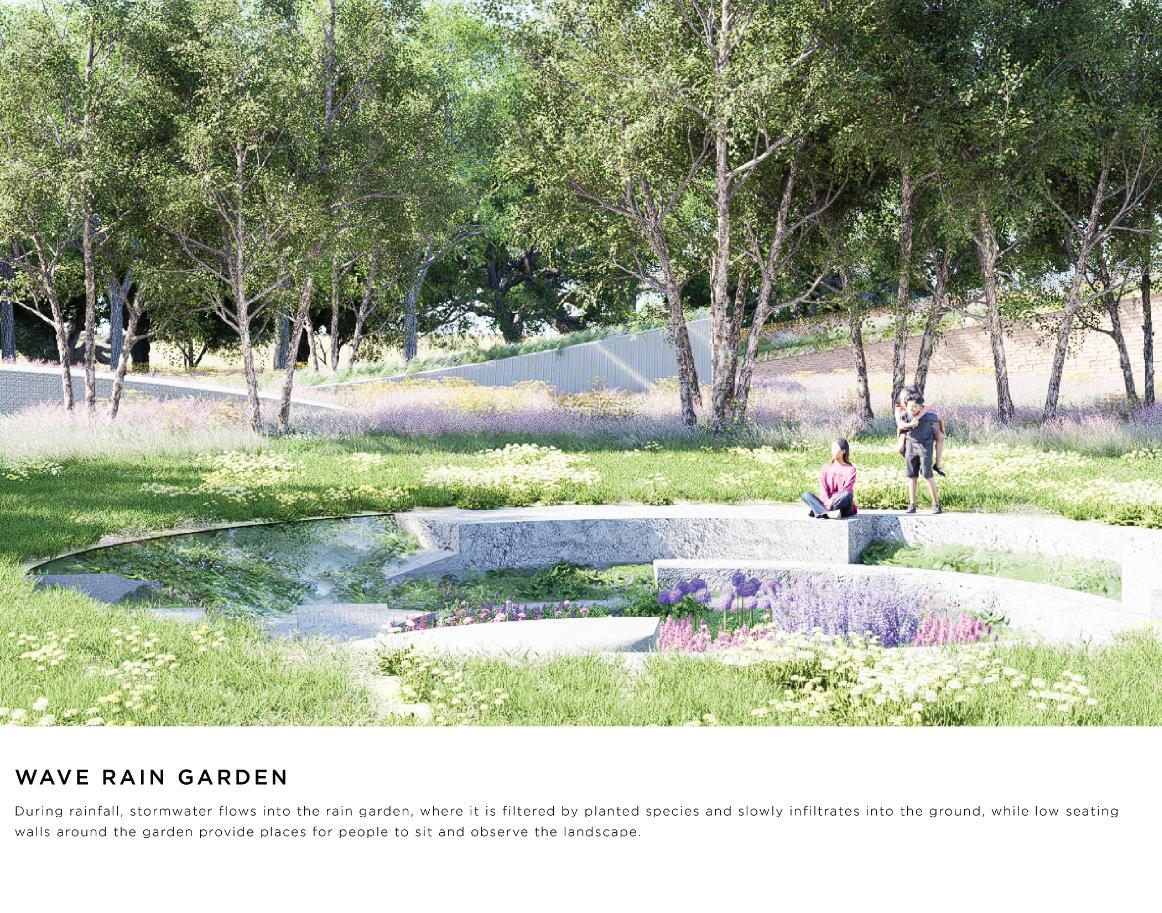
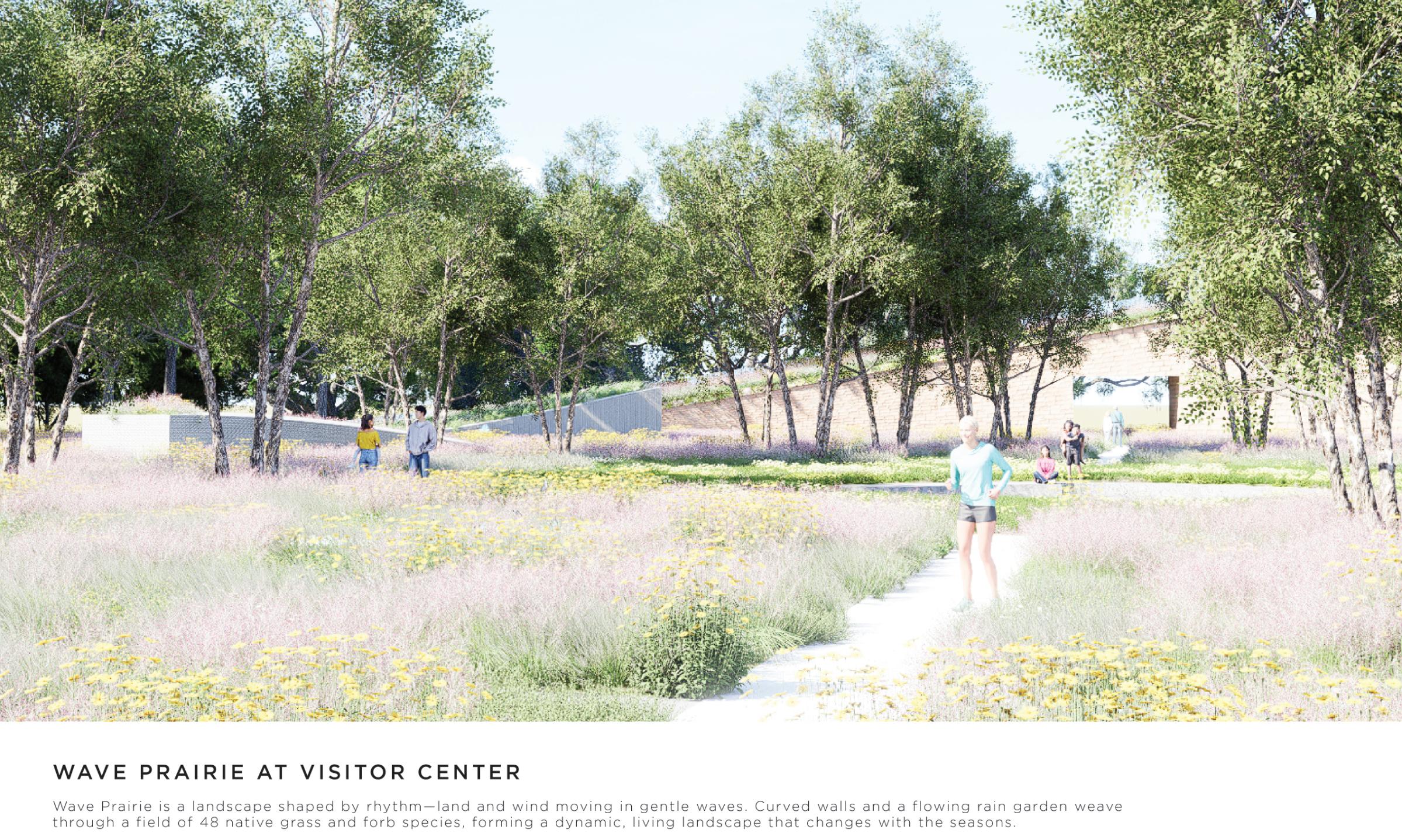
Acequia channels demonstrate the ability of humans to shape the land, allowing us to grow and thrive in a hostile environment. Like water, communities flow together; resilient cities are built through cooperation, understanding the land, and equitable access to resources. Like a channel, this project carries people where they need to go without relying on cars, providing respite and relief to residents while maintaining and cooling the community. The Acequia Community is a mixed-use development that integrates work and play by connecting public and private spaces. Creating a place of refuge from the heightening temperatures and fighting urban sprawl.
Acequia Community: Creating Refuge from Warming Cities and Urban Sprawl // Ella Gielstra, Texas Tech University
HONOR AWARD
This project reimagines a floodplain as resilient civic infrastructure where water, ecology, and public life coexist. Designed to accommodate seasonal inundation, the landscape expands flood storage while restoring native habitats and improving water quality. Subtle landforms, backwater basins, and adaptive circulation transform hydrologic constraints into spatial opportunities. Programmed zones balance ecological restoration with everyday recreation, education, and observation. Material reuse, low impact construction, and long term management strategies reinforce environmental responsibility. By aligning regional hydrology with human experience, the project demonstrates how flood prone landscapes can function as productive, inclusive, and expressive public spaces for communities facing climate uncertainty worldwide.
Bee Creek Backwaters // Jiho Park, Texas A&M University
HONOR AWARD
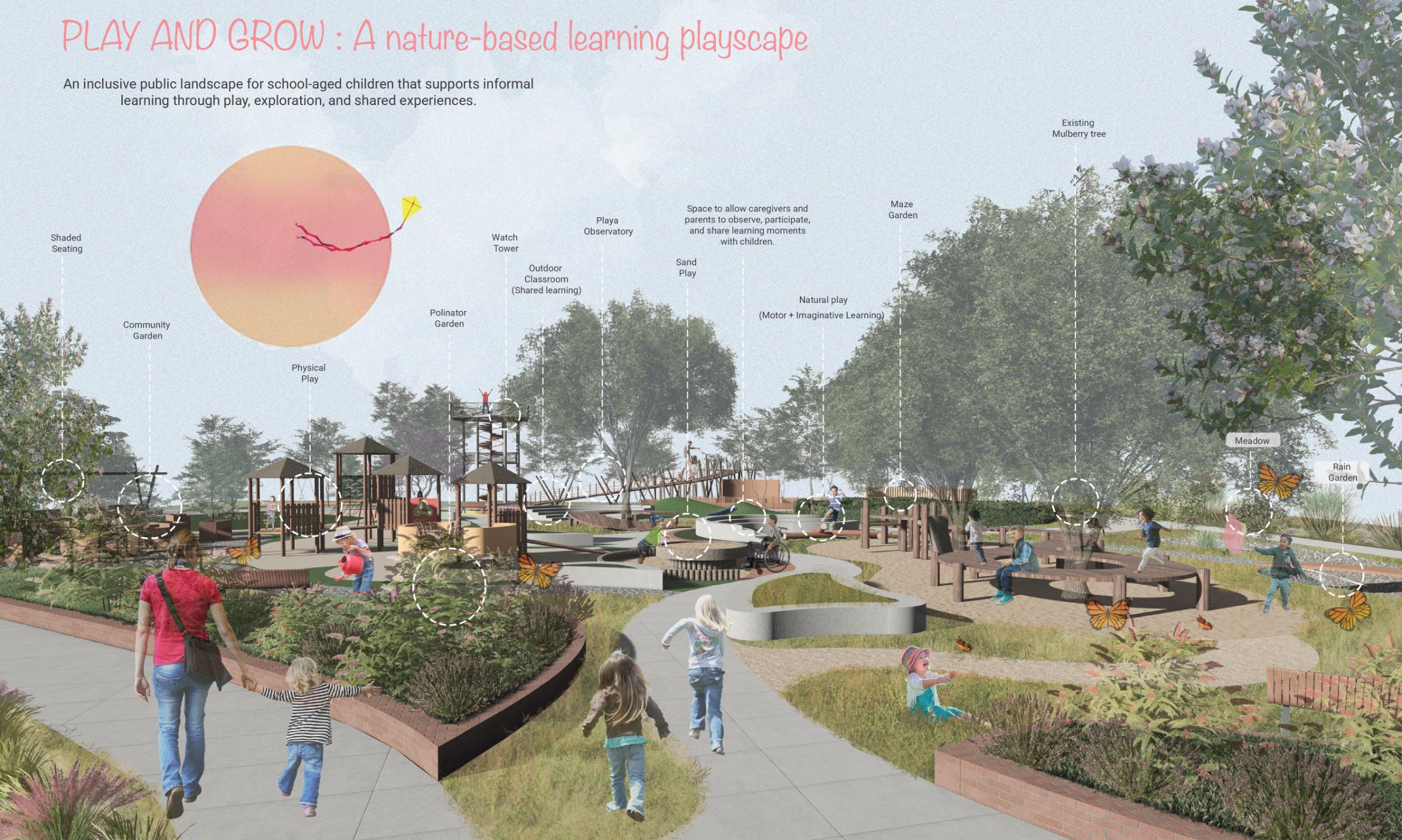
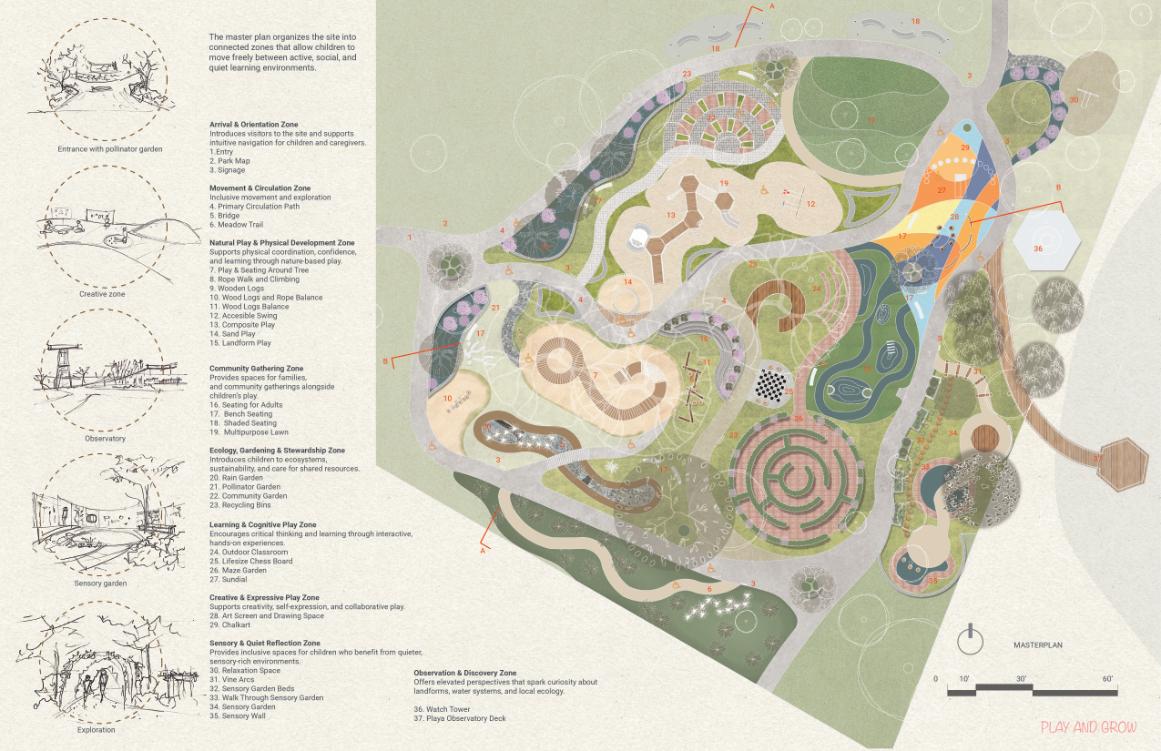
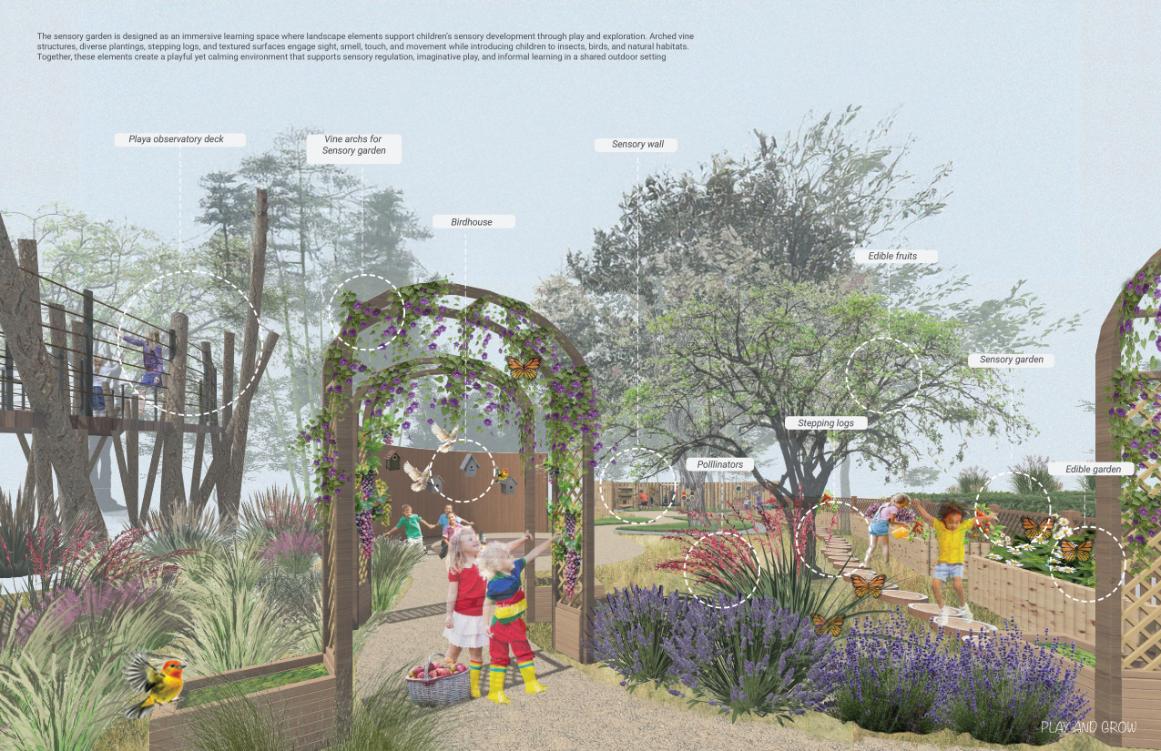
"Play and Grow" is a nature-based learning playscape designed within the Lubbock Memorial Arboretum, adjacent to a natural playa. The project transforms an underutilized site into a cohesive landscape that integrates landform, planting, circulation, and play. Existing mulberry trees, native vegetation, and the playa ecosystem guide the spatial organization, creating a sequence of shaded play zones, sensory gardens, and elevated viewpoints. By blending physical play, creative expression, and ecological awareness within a unified design framework, the project demonstrates how landscape architecture can shape meaningful outdoor experiences while responding sensitively to site context, sustainability, and long-term public use.
Play and Grow: A Nature-Based Learning Playscape
Mehri Farnaz, Texas A&M University
HONOR AWARD
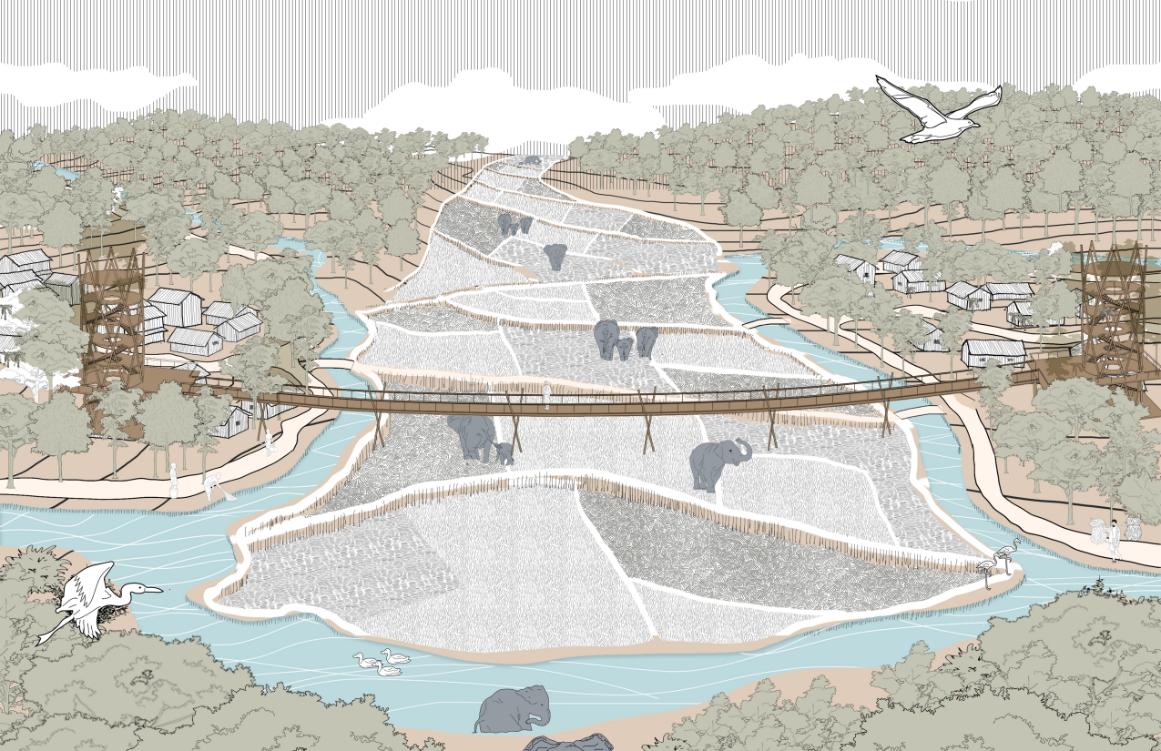
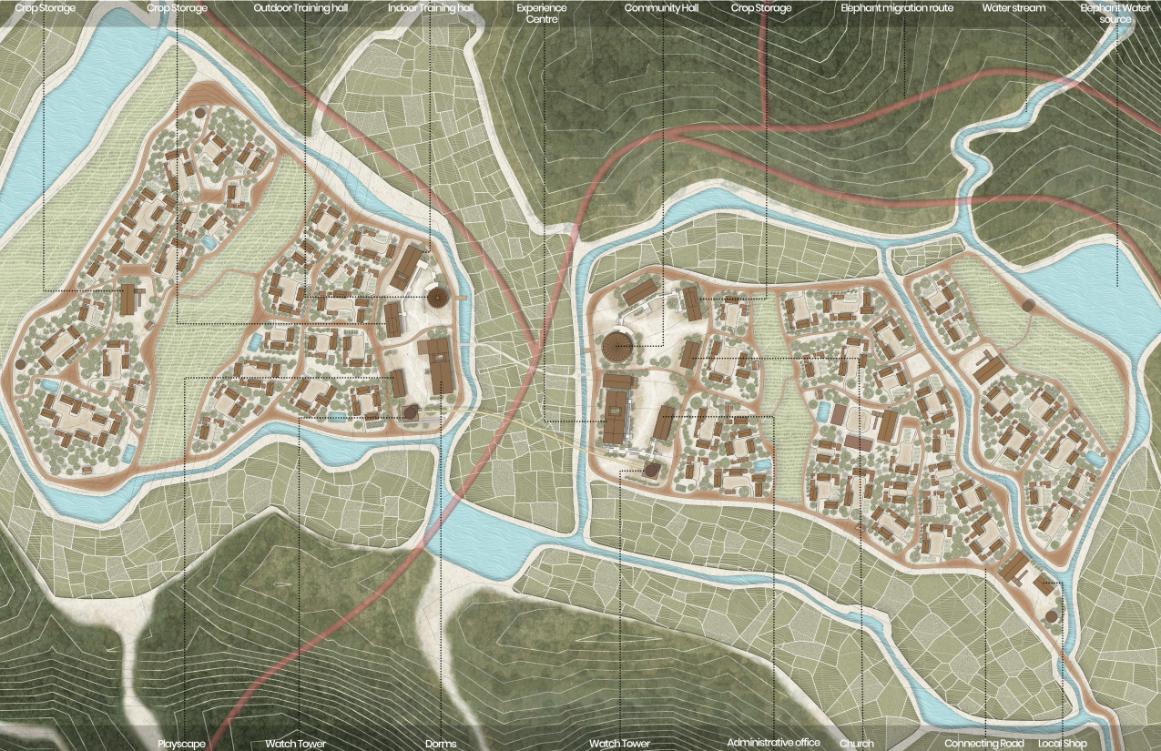
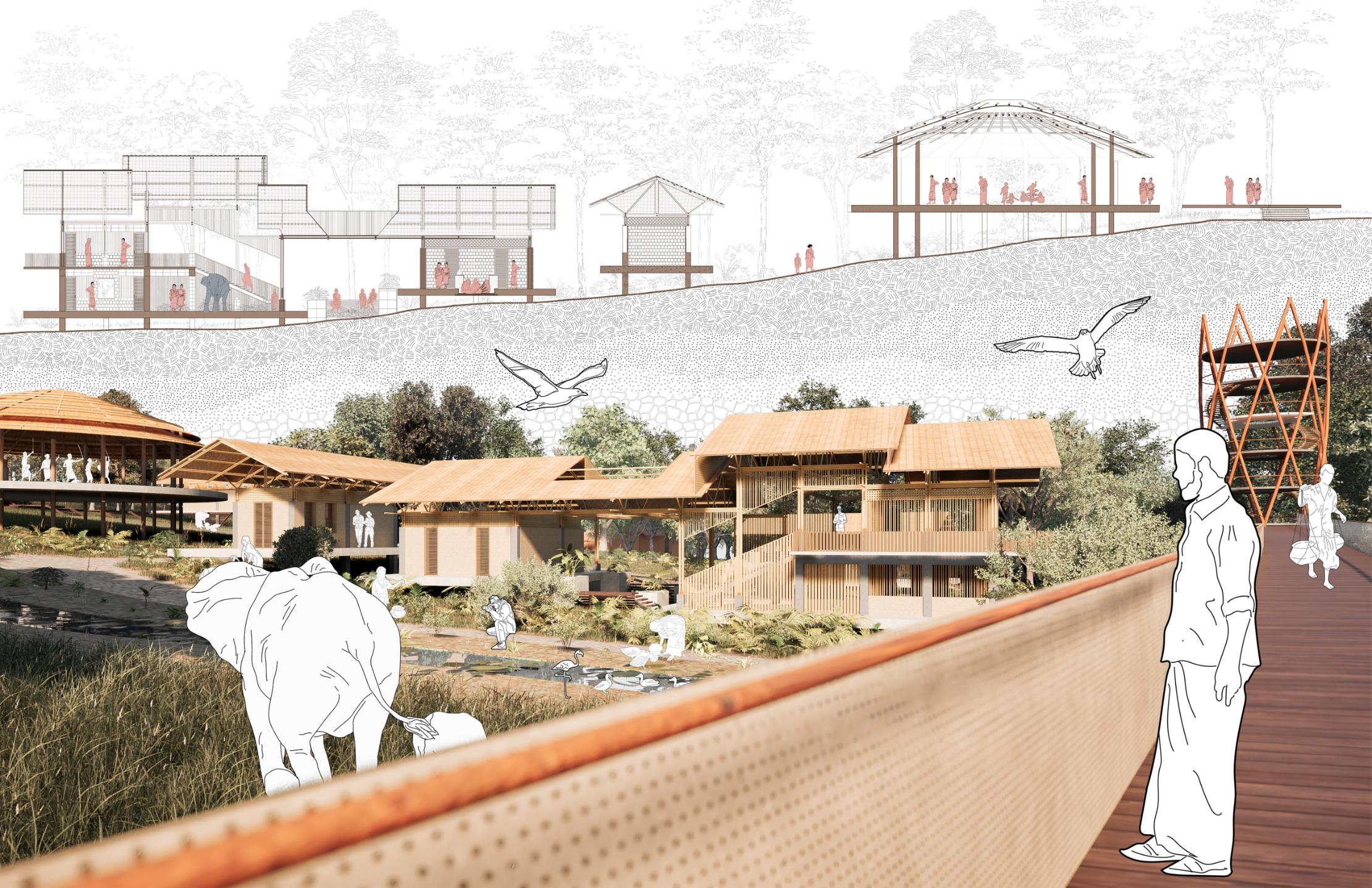
The objective of this project is to better understand human-elephant interactions and generate a sustainable masterplan for restoring ruinous forests so as to support coexistence. It provides guidelines for Northern Bangladesh communities to mitigate elephant conflicts utilizing natural initiatives and adaptive interventions. Asian elephant is an endangered species, which has observed its population in Bangladesh deteriorate from 3,274 to 228 over the past century as a consequence of habitat loss and human-wildlife conflict. The architectural approach addresses this by drawing on historical cohabitation and cultural memory, ensuring that the design aligns with local ethnic identity and fosters a synanthropic environment.
Synanthropic Corridor: Rethinking Human-Elephant Interactions through Community Conservation in Northern Bangladesh // Shafaet Alam Abir, Texas Tech University
HONOR AWARD
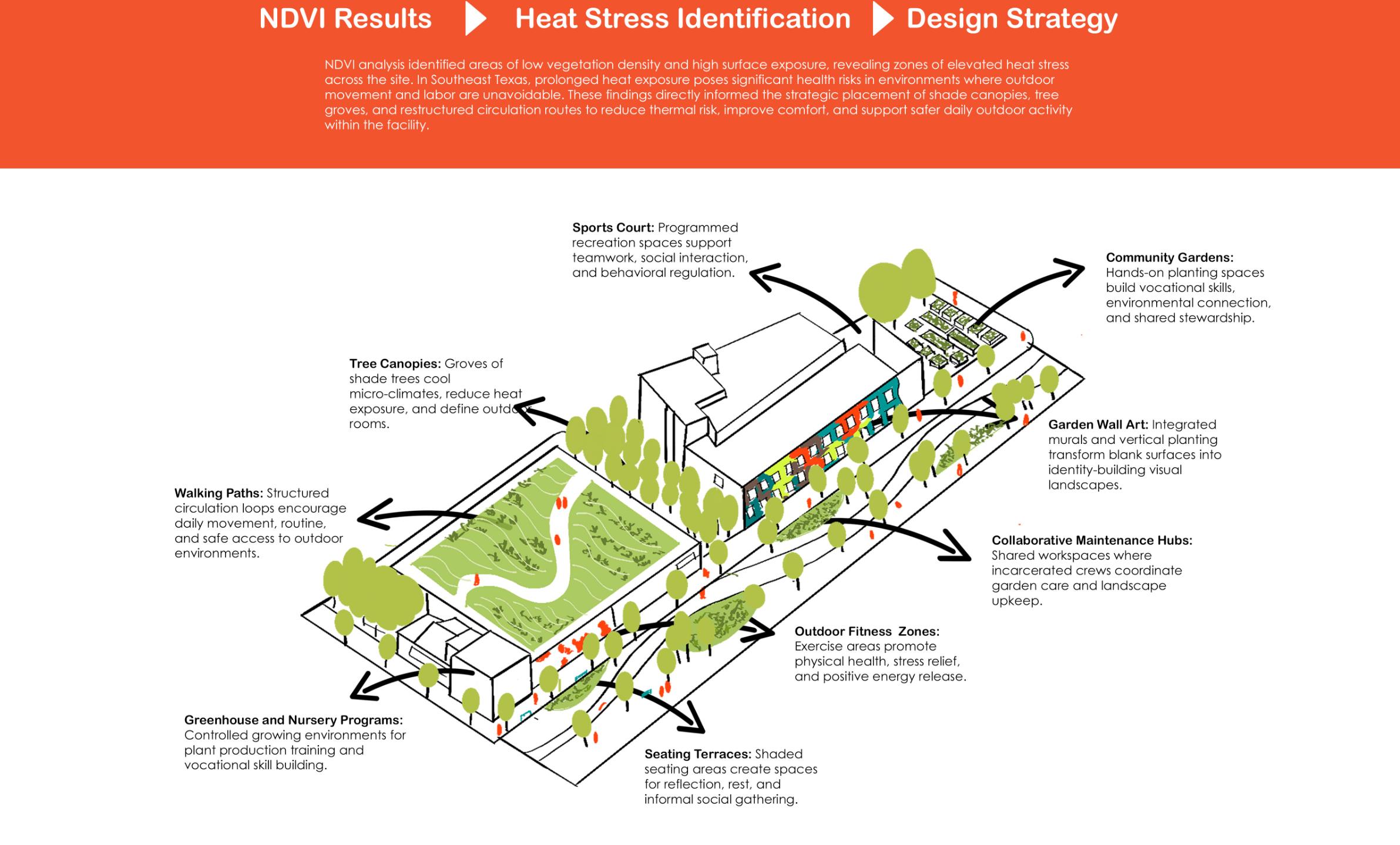
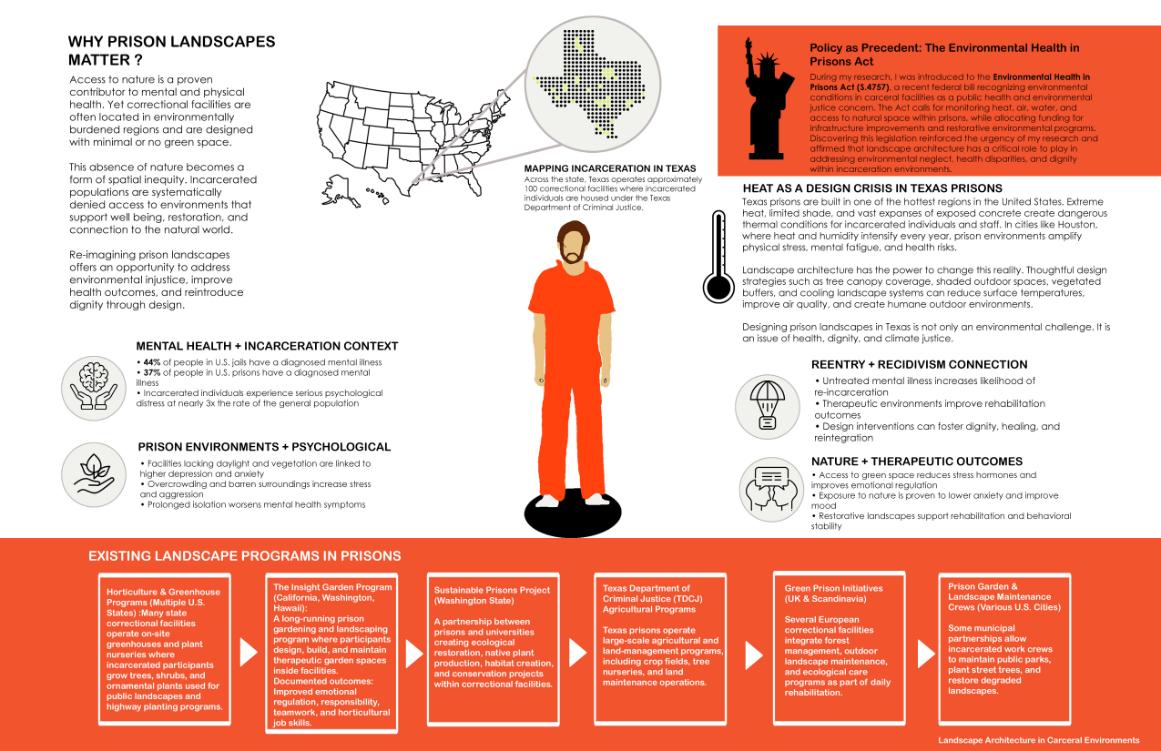
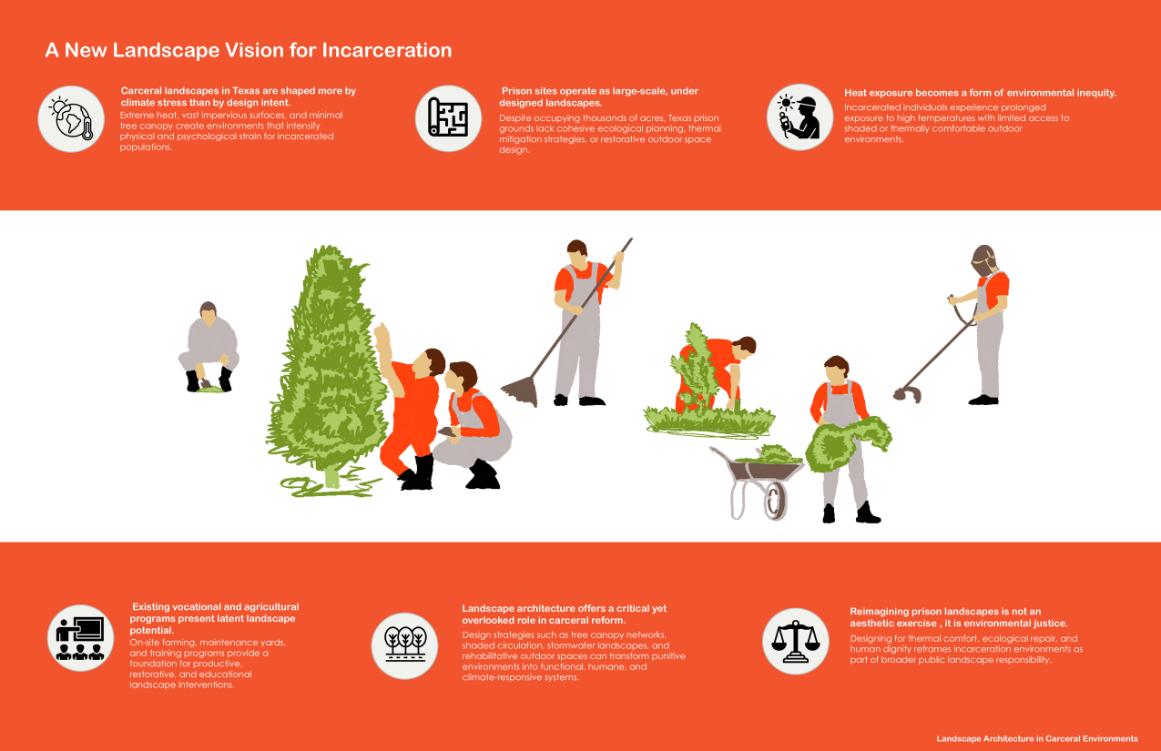
This project challenges the conventional boundaries of landscape architecture by transforming the Ramsey Unit prison into a living system of ecological repair and human restoration. In the harsh climate of coastal Texas, environmental analysis reveals how excessive heat, limited vegetation, and disconnected land management intensify both ecological and social stress. The design introduces reforested shade networks, water-sensitive infrastructure, and productive training landscapes that improve microclimate conditions while supporting rehabilitation and skillbuilding programs. By reframing prisons as landscapes of opportunity rather than exclusion, this project demonstrates how design can advance climate adaptation, environmental equity, and renewed relationships between people and place.
Landscape
Architecture in Carceral Environments// Jocseline Medina, Texas Tech University
HONOR AWARD
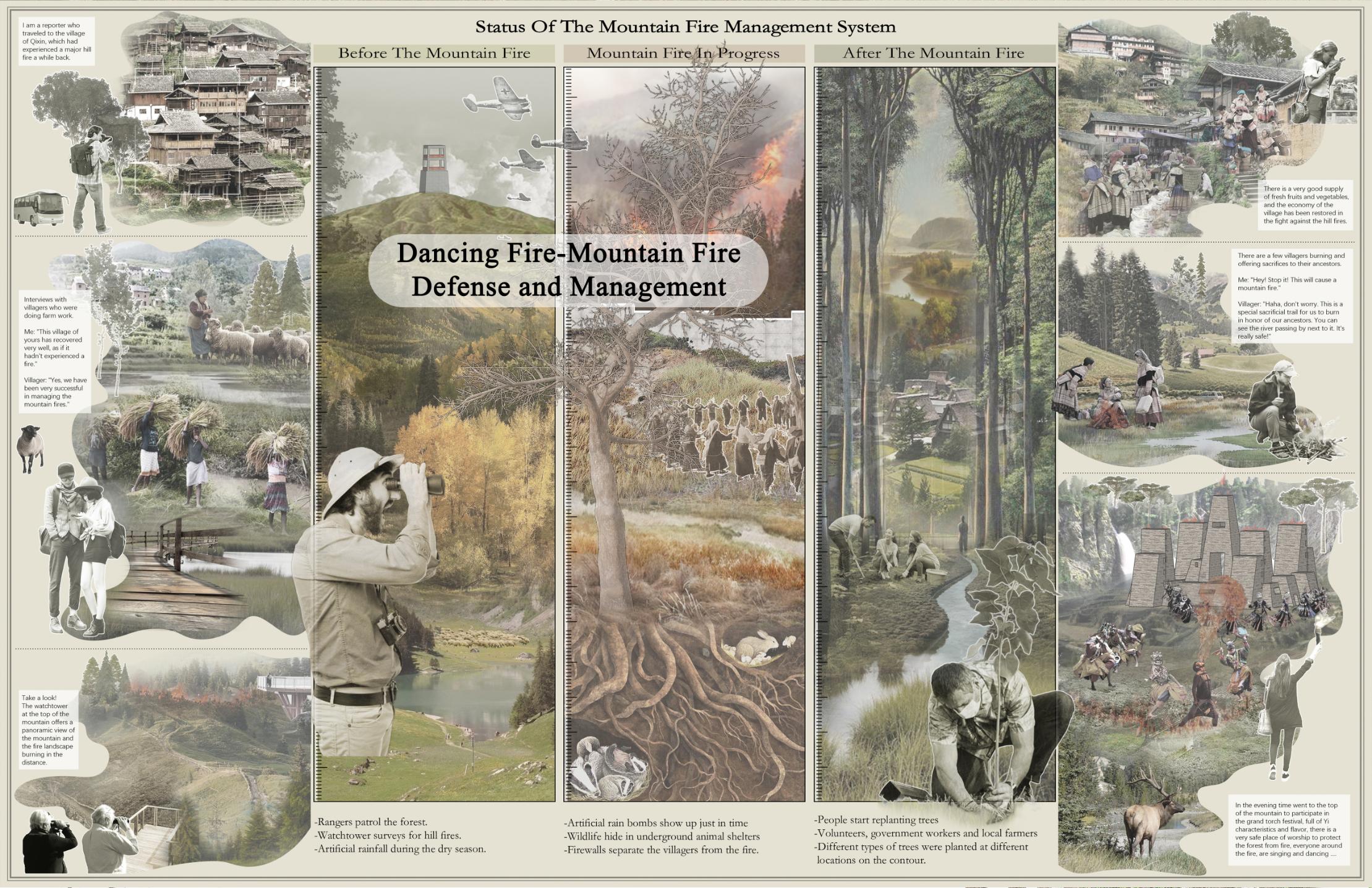
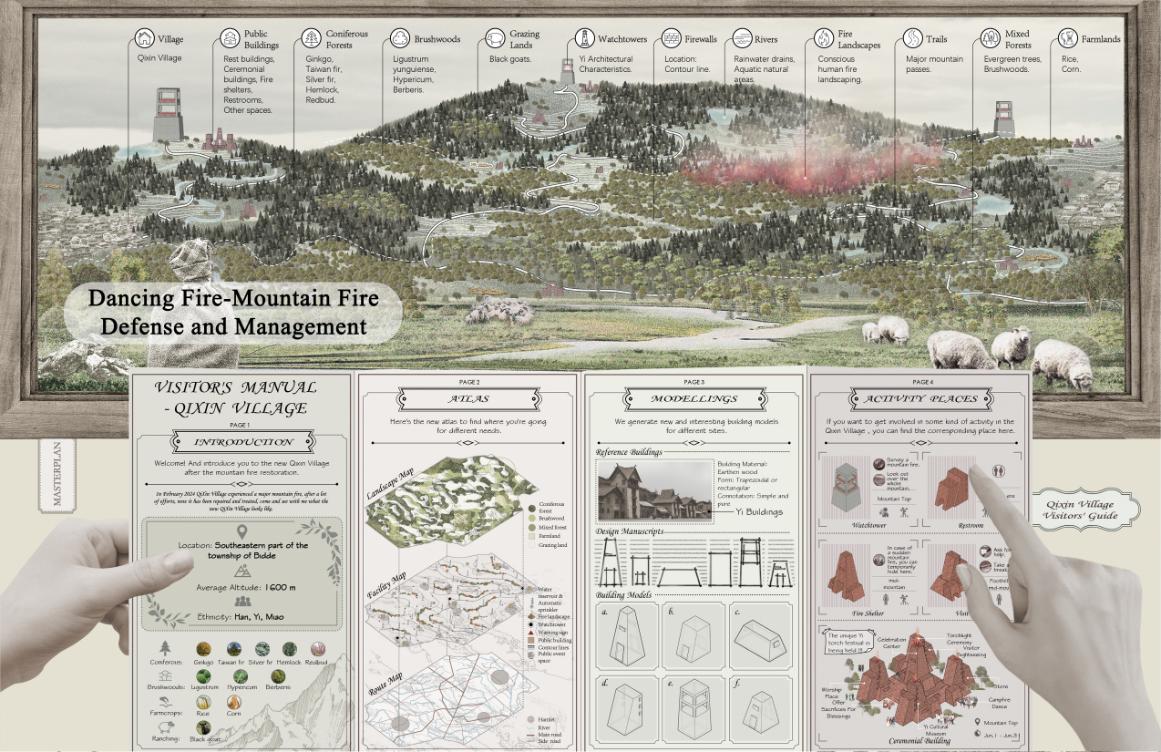
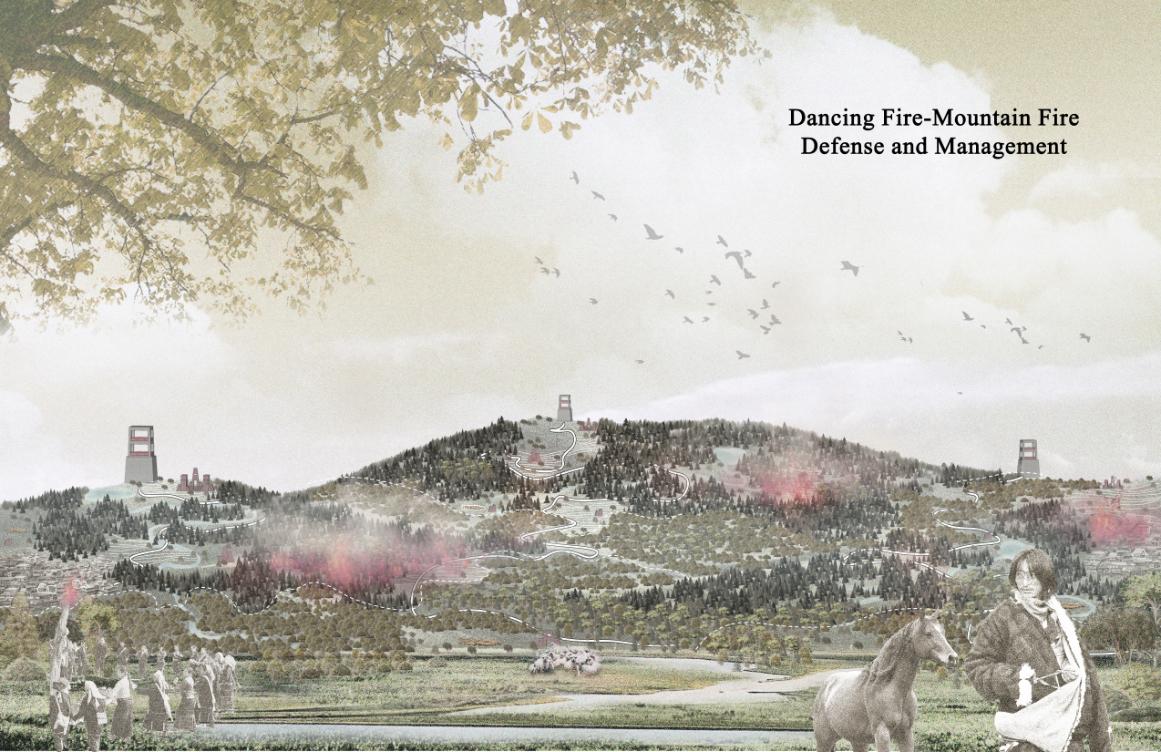
"Dancing Fire" is a mountain fire defense and management project in Guizhou Province, aiming to establish an effective fire prevention system by integrating modern technology with traditional wisdom. The design includes fire monitoring, early warning systems, firebreaks, and emergency shelters to address the complex terrain and climate conditions of the region. The project uses drones and remote sensing technology to monitor and predict fires in real-time, while combining community education with traditional fire prevention methods to raise local awareness. The design focuses not only on fire prevention but also on post-fire recovery, emphasizing ecological restoration.
Dancing Fire-Mountain Fire Defense and Management
Cao,
AWARDS STUDENT EXCELLENCE
EXCELLENCE AWARD
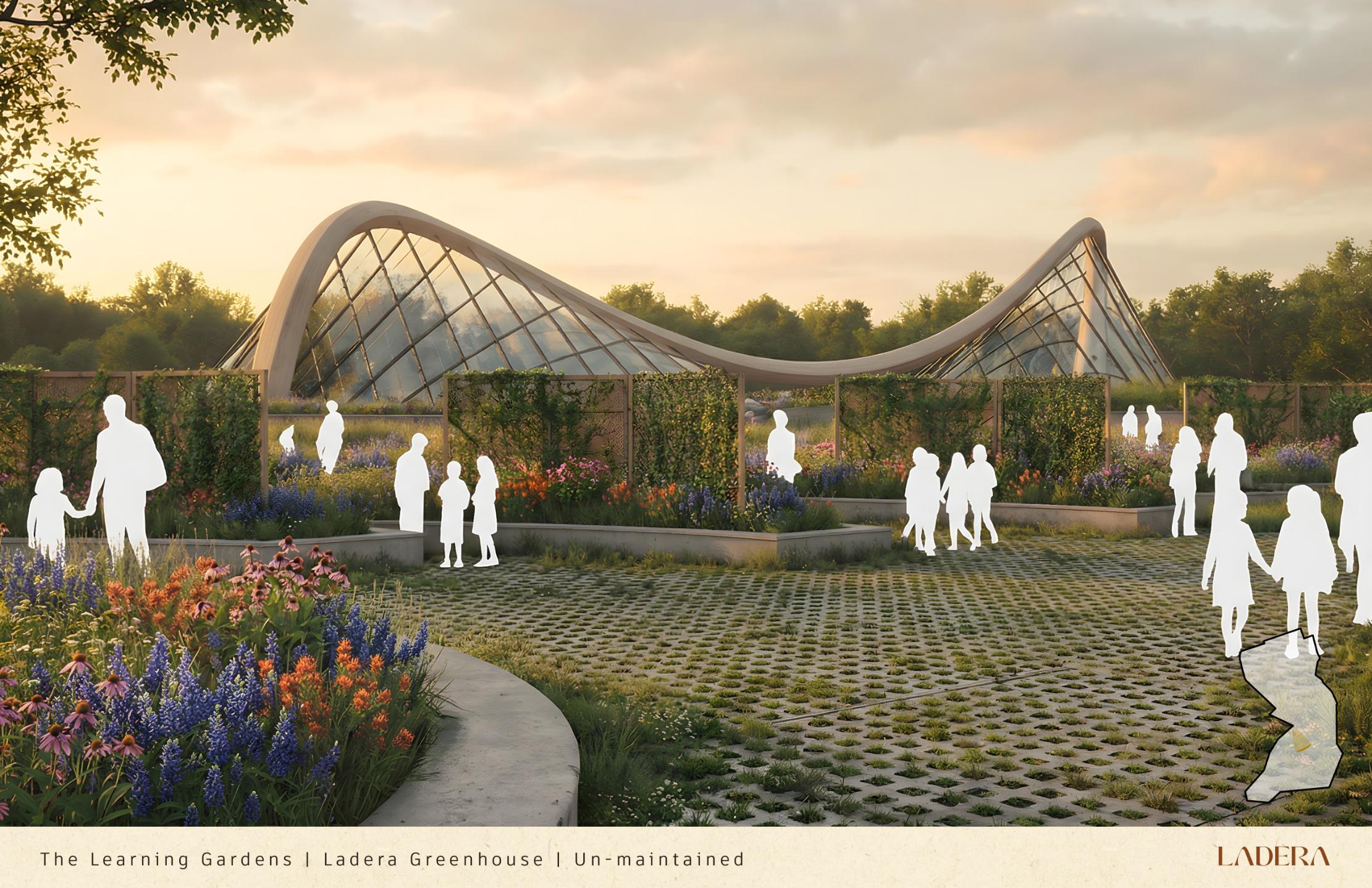
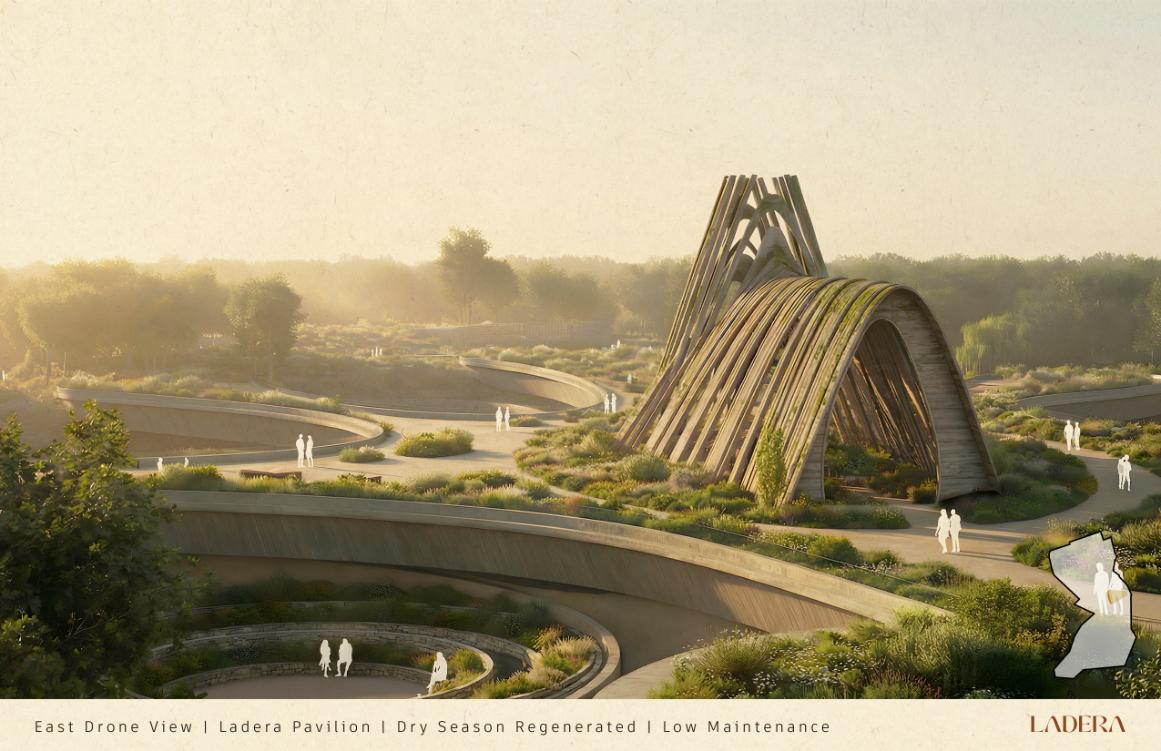
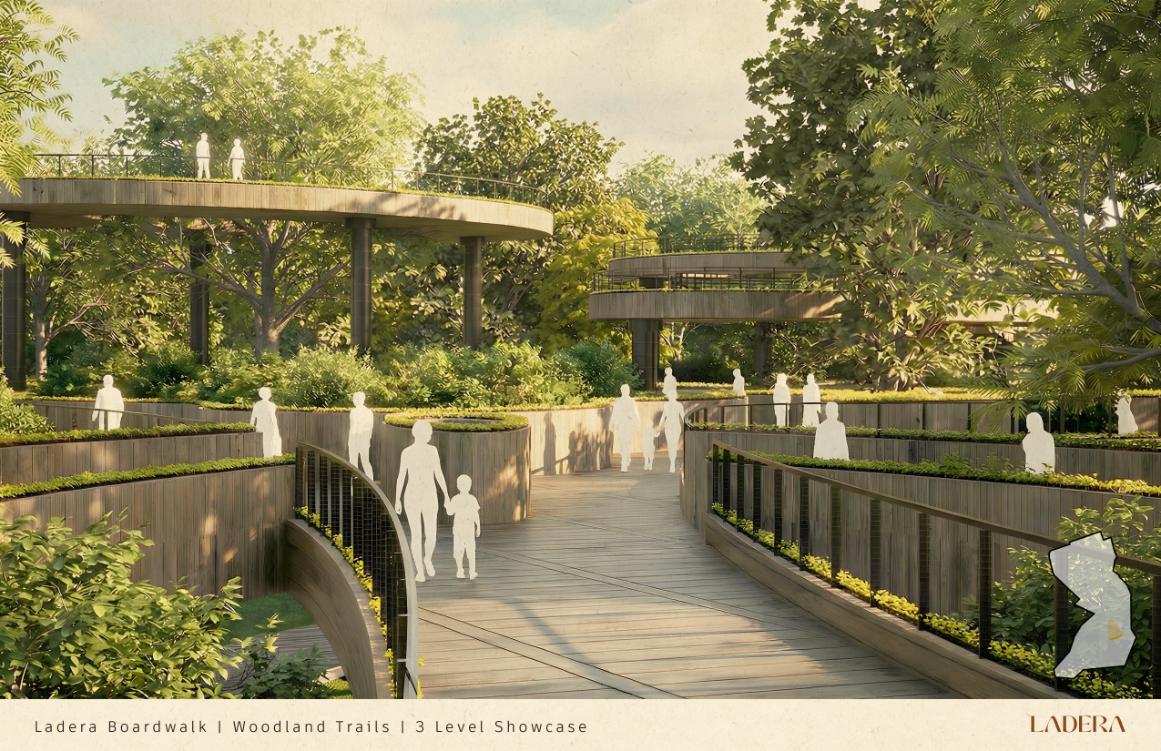
Ladera transforms a flood-prone site along Salado Creek into a living arboretum that connects people, landscape, and water through ecological restoration and nature-based stormwater design. Rooted in regional ecology, the project embraces seasonal flooding as a defining feature, allowing water to slow, infiltrate, and support native plant communities. Terraced wetlands, bioswales, permeable surfaces, and shaded woodlands create a layered public landscape that balances education, recreation, and conservation. Ladera is award-worthy for its clear environmental vision, integration of hydrology and habitat, and its ability to translate ecological processes into a meaningful and culturally grounded public experience.
Ladera // Jonathan Gomez, Josue Guerrero, Nesreen Jallad, Mehri Farnaz, Emma Shephard, Texas Tech University
EXCELLENCE AWARD
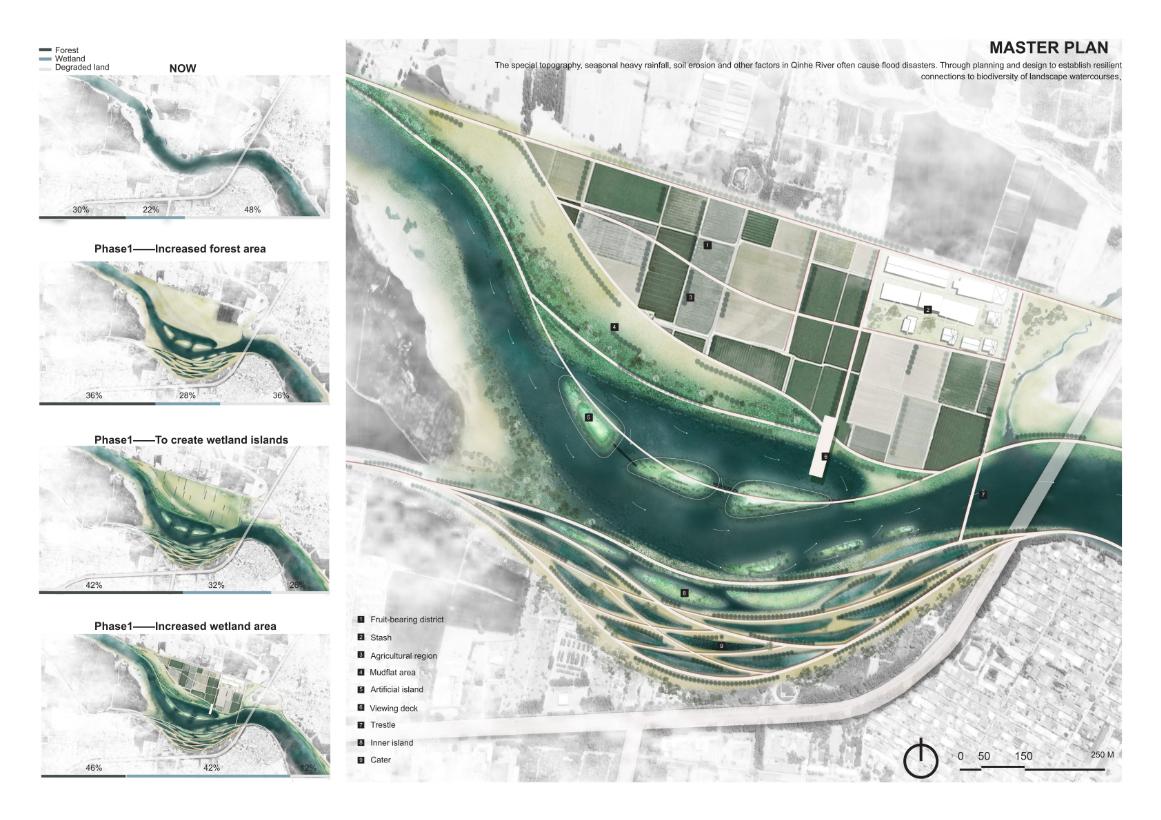
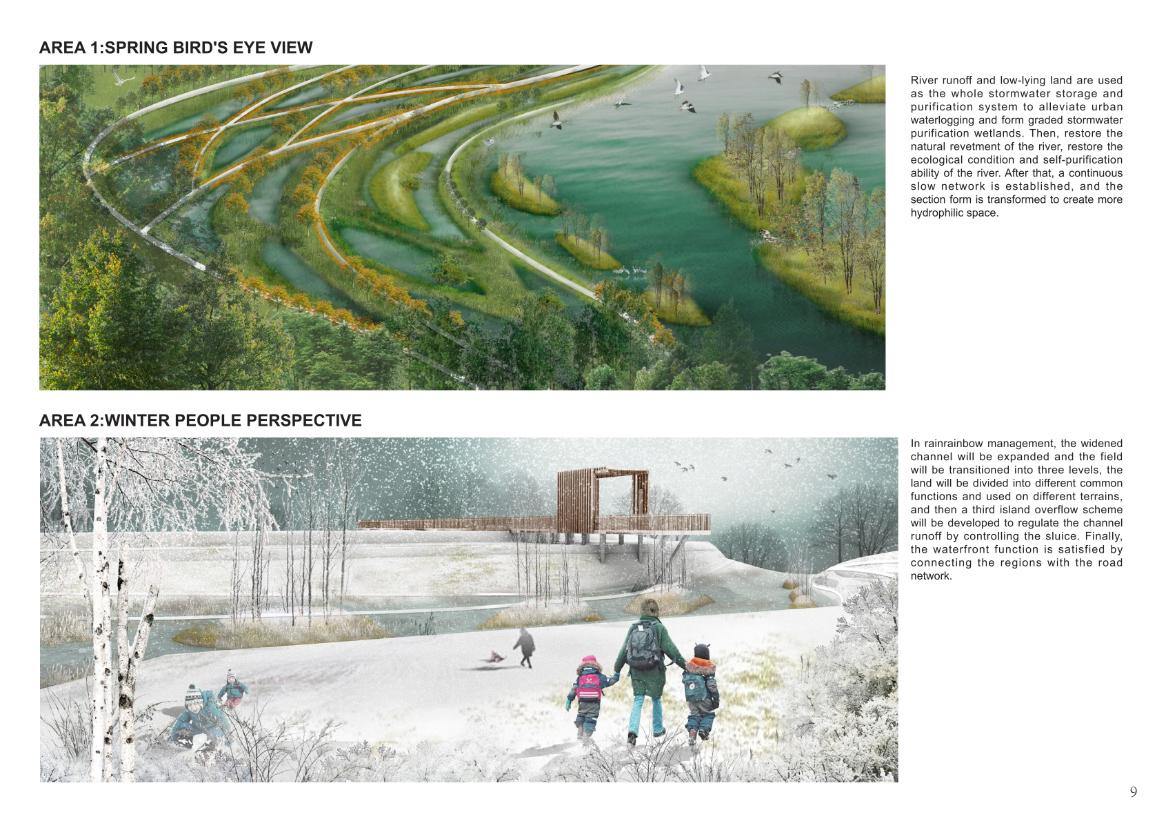
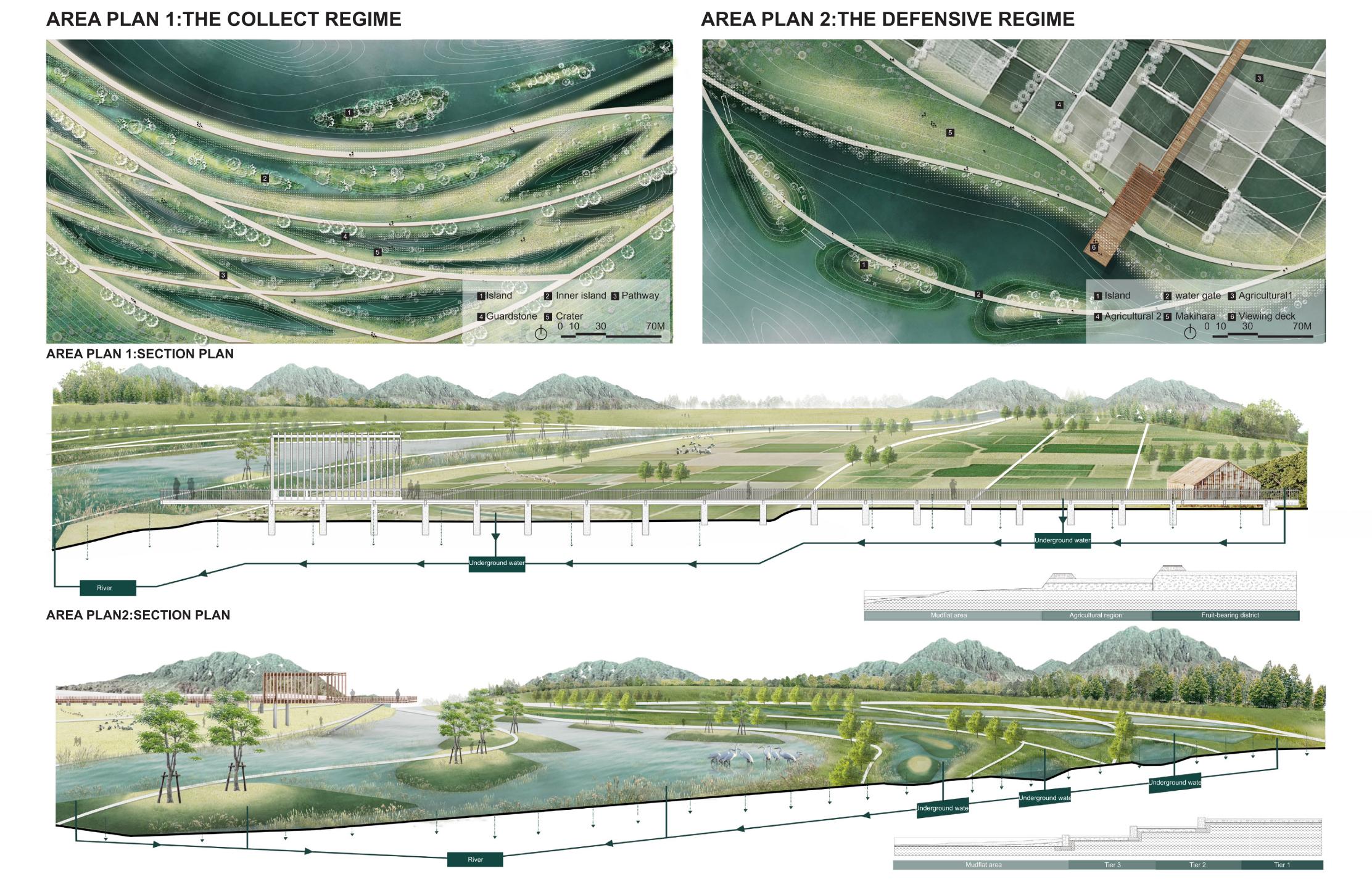
This project addresses the critical issue of urban waterlogging in high-density cities. By transforming a flood-prone riverbank into a resilient "Sponge City" park, the design effectively manages stormwater while providing recreational space. The project deserves recognition for its innovative "Adaptive Terrace" strategy, which turns the threat of rising water levels into a dynamic landscape feature. It demonstrates a sophisticated balance between hydrological engineering and aesthetic landscape design, offering a replicable model for climate-adaptive urban waterfronts.
In Between Waters — Qinhe Resilient River
Modification Design
// Haozhe Shan, Texas A&M University
AWARDS PROFESSIONAL MERIT AWARD
MERIT AWARD
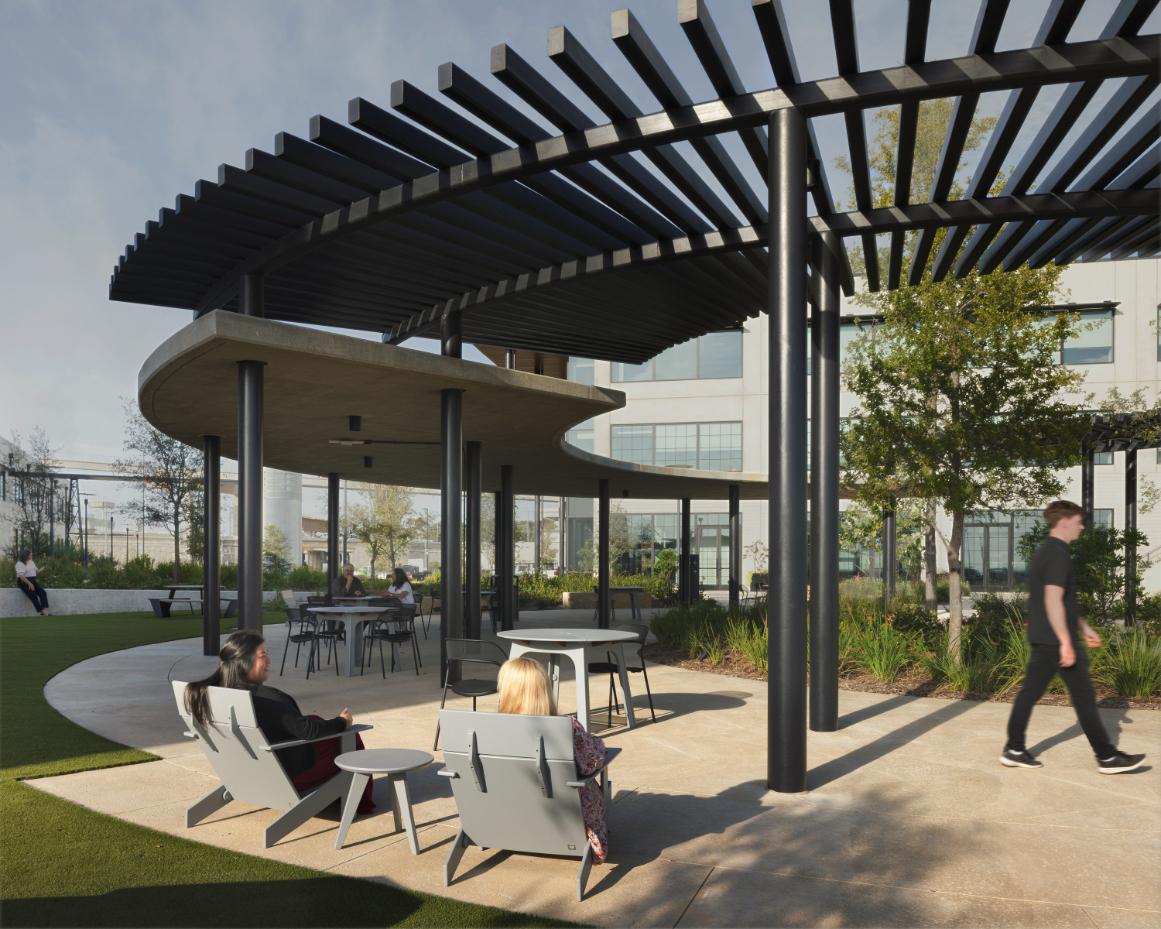
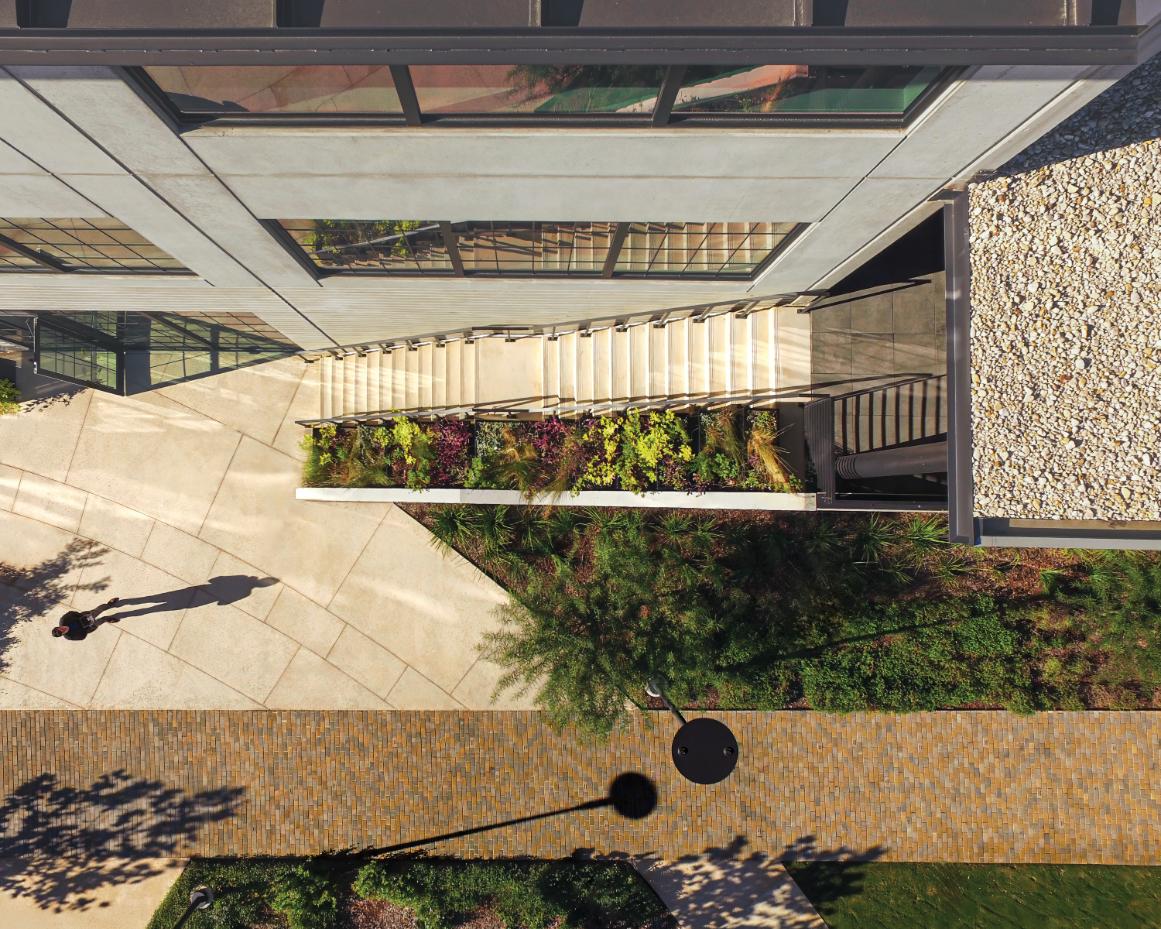
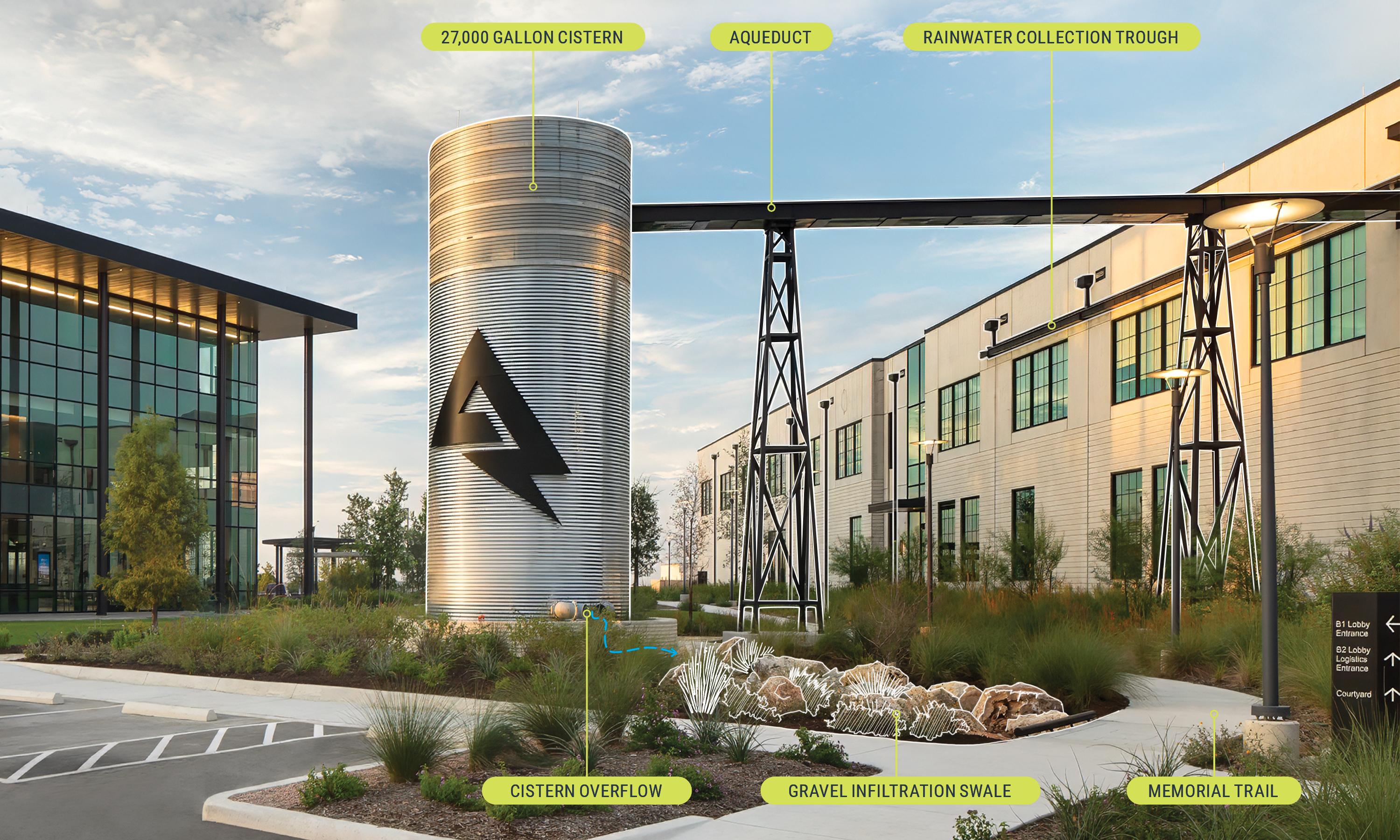
The landscape of a new 20-acre corporate/manufacturing campus foregrounds rainwater harvesting and the beauty of the native Blackland Prairie landscape in a high visibility freeway frontage context. The master plan integrates site amenities for events and gatherings in a central hub, and for exercise in a campus trail, supporting employee wellbeing. It also allows for future expansion. The design team cast the industrial materials of the hardscape and buildings in strong contrast against the loose character of native plantings and the ruggedness of regional stone, giving the campus a dramatic look.
MERIT AWARD
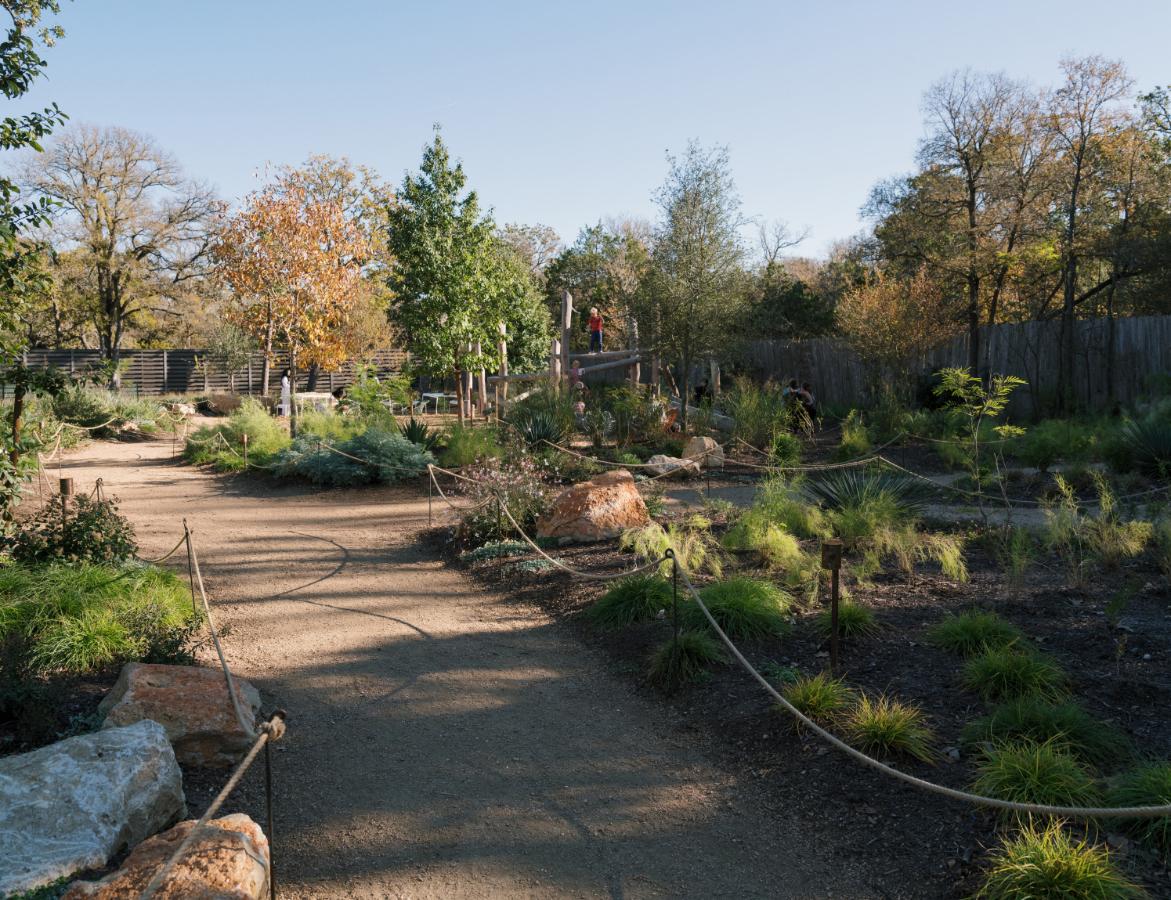
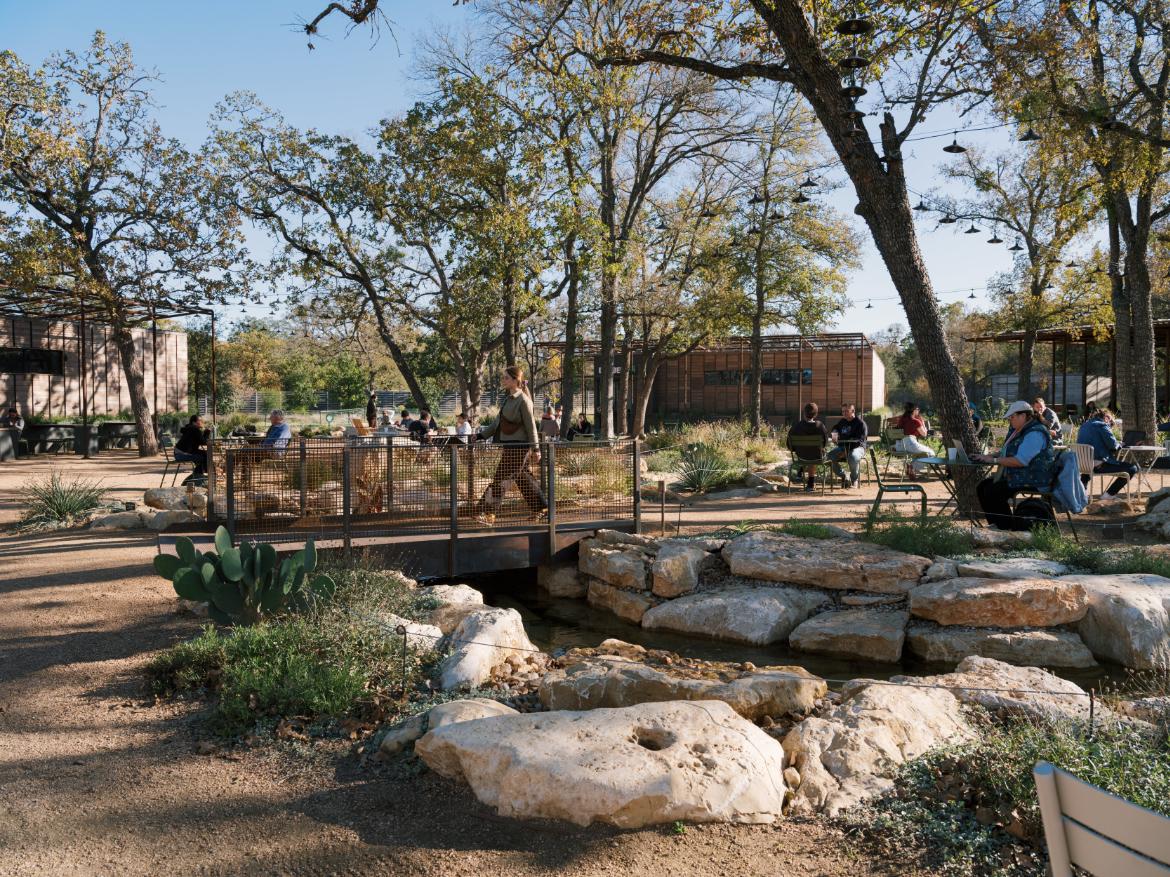
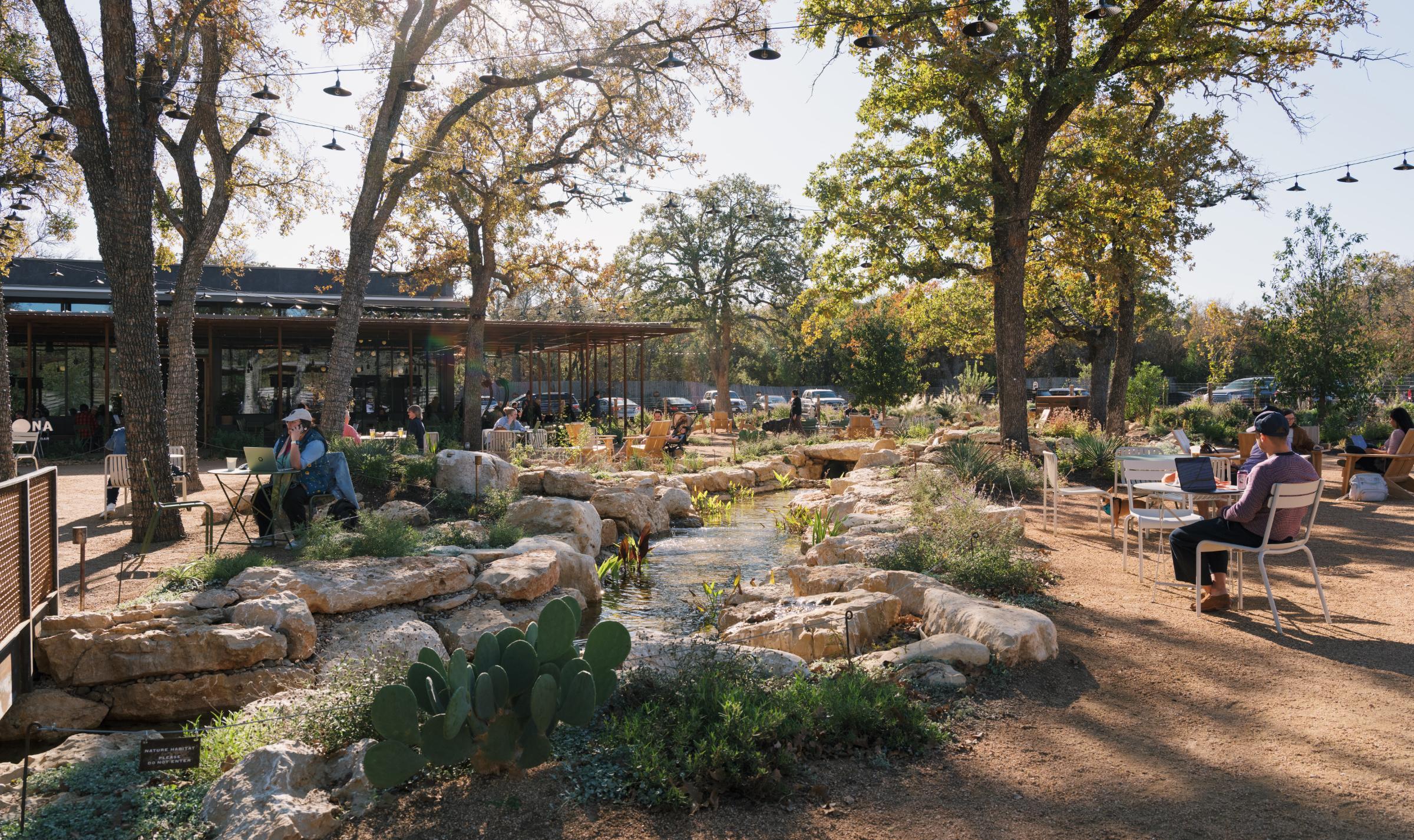
Botanical Cafe transforms an underutilized Sunset Valley site into a hyperlocal botanical destination rooted in ecological stewardship, sensory experience, and community connection. More than 90 mature trees were preserved, with 75 additional trees planted and 19,000 square feet conserved as native habitat. Over 7,000 native and adapted plants support biodiversity, pollinators, and seasonal change. Integrated Low Impact Development strategies, including a detention basin, recirculating water-quality stream, irrigation field, and cistern, create a closedloop water system. Reclaimed limestone, custom site elements, Dark Sky lighting, and edible plantings seamlessly connect landscape, culture, and cuisine.
Architecture
Botanical Cafe // Campbell Landscape
MERIT AWARD
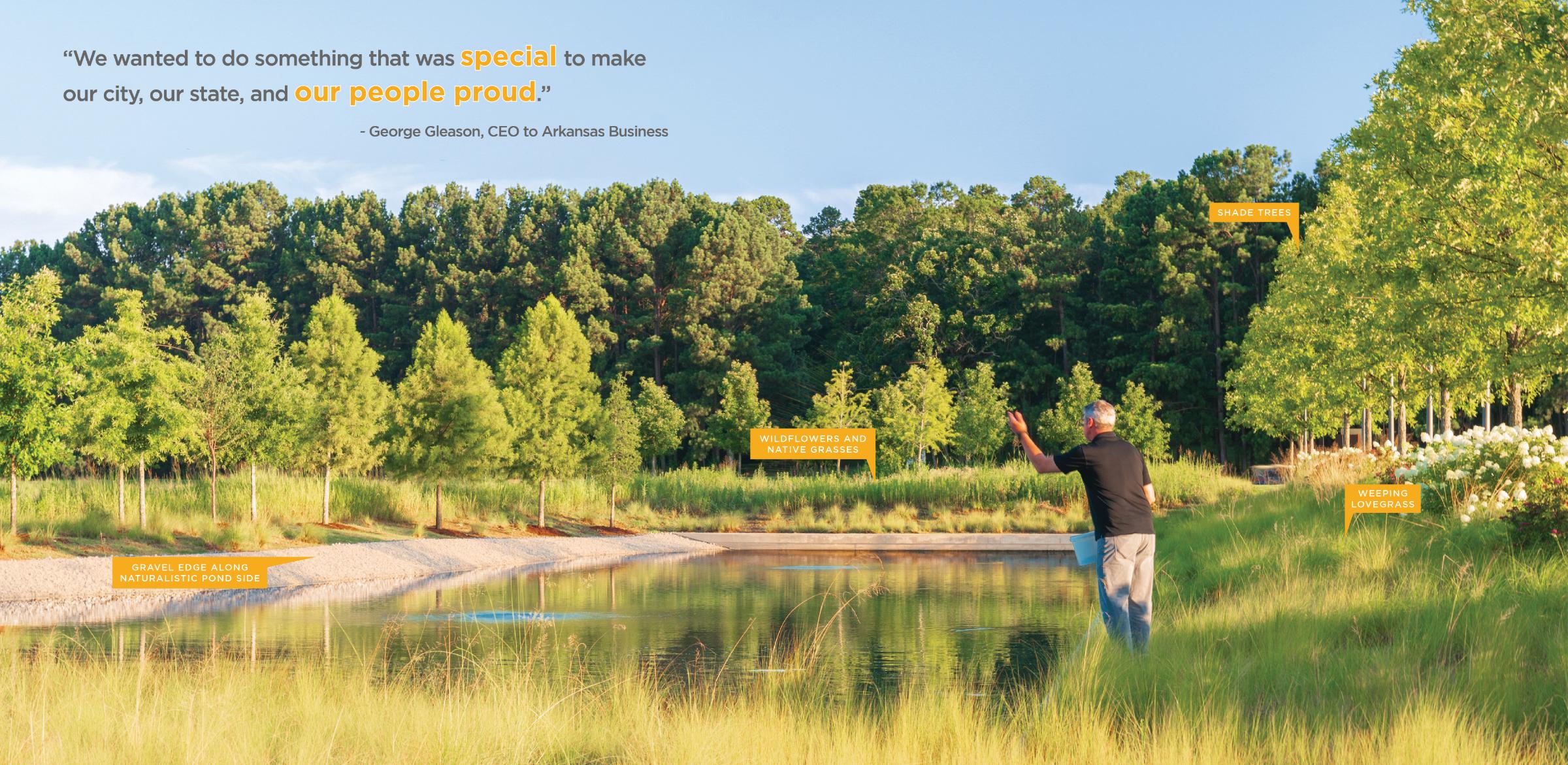
Cultivating Connection: Bank OZK’s New Campus for Next Generation Worker and Community // Studio Outside
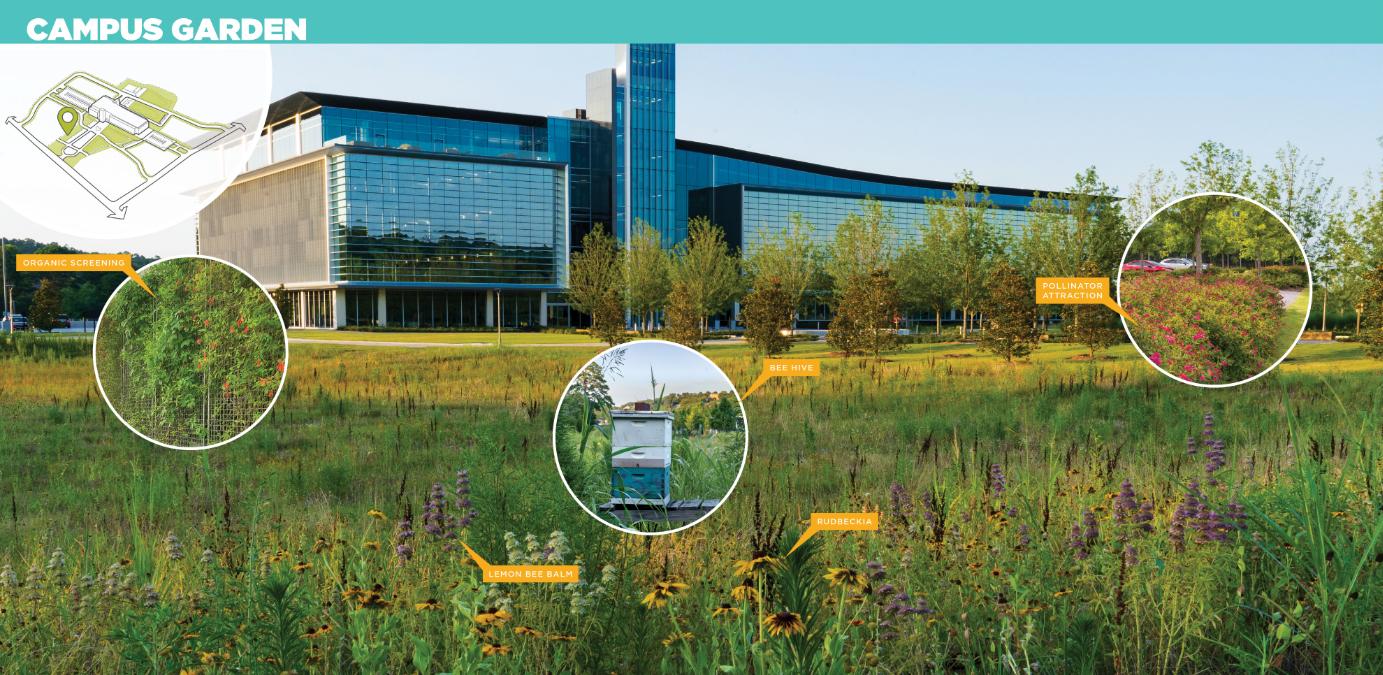
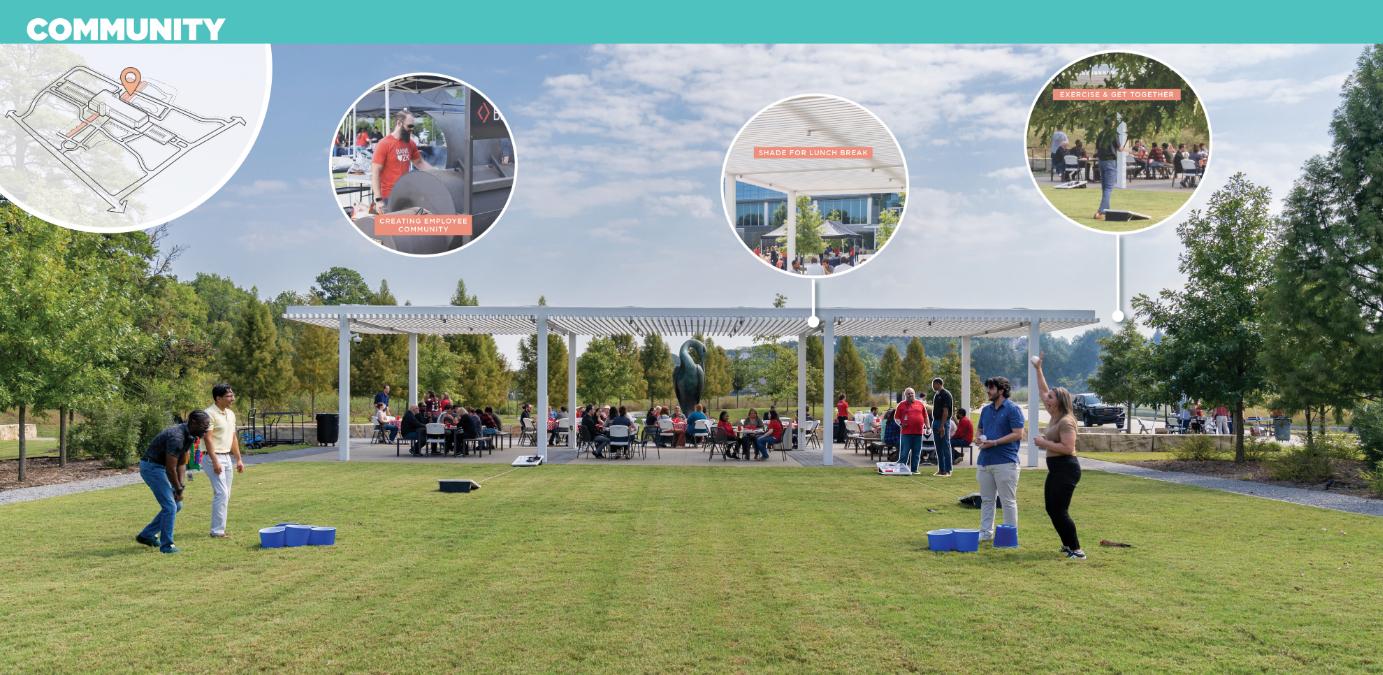
The 44-acre Bank OZK campus showcases community and contemplative art in a garden setting to support the CEO’s vision of establishing an attractive campus with park-like amenities to bring together local employees and those visiting for training. The main axis aligns with the building’s atrium and guides visitors and employees from the lush, formal south entry with several alleles to the more relaxed pedestrian promenade in the north. Art anchors the campus design including Pro Terra et Natura, the second tallest sculpture in Arkansas. Wildflowers and native grasses throughout the site support on-site beehives.
MERIT AWARD
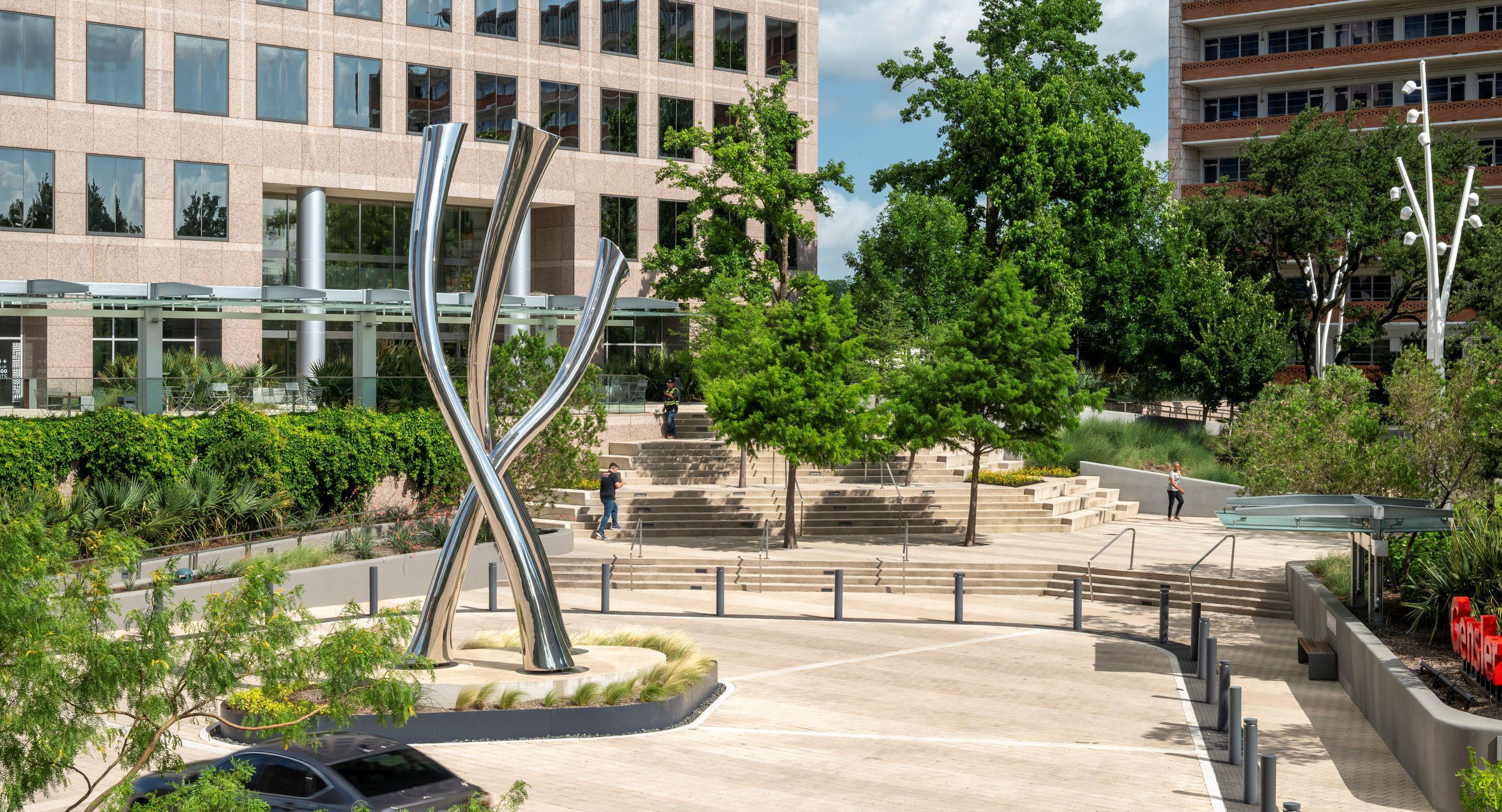
Energy Square // Studio Outside
The Energy Square campus redesign transforms a fragmented, multi-era office complex into a cohesive pedestrian-oriented environment anchored by the historic Meadows Building. Through landscape architecture, the project unifies four disparate buildings, resolves complex structural constraints, and creates a clear campus identity. Inspired by midcentury modern principles, the design integrates native and naturalized planting, preserves mature trees, and balances vehicular access with walkability, establishing a resilient, peoplecentered landscape that supports contemporary workplace life in North Texas.
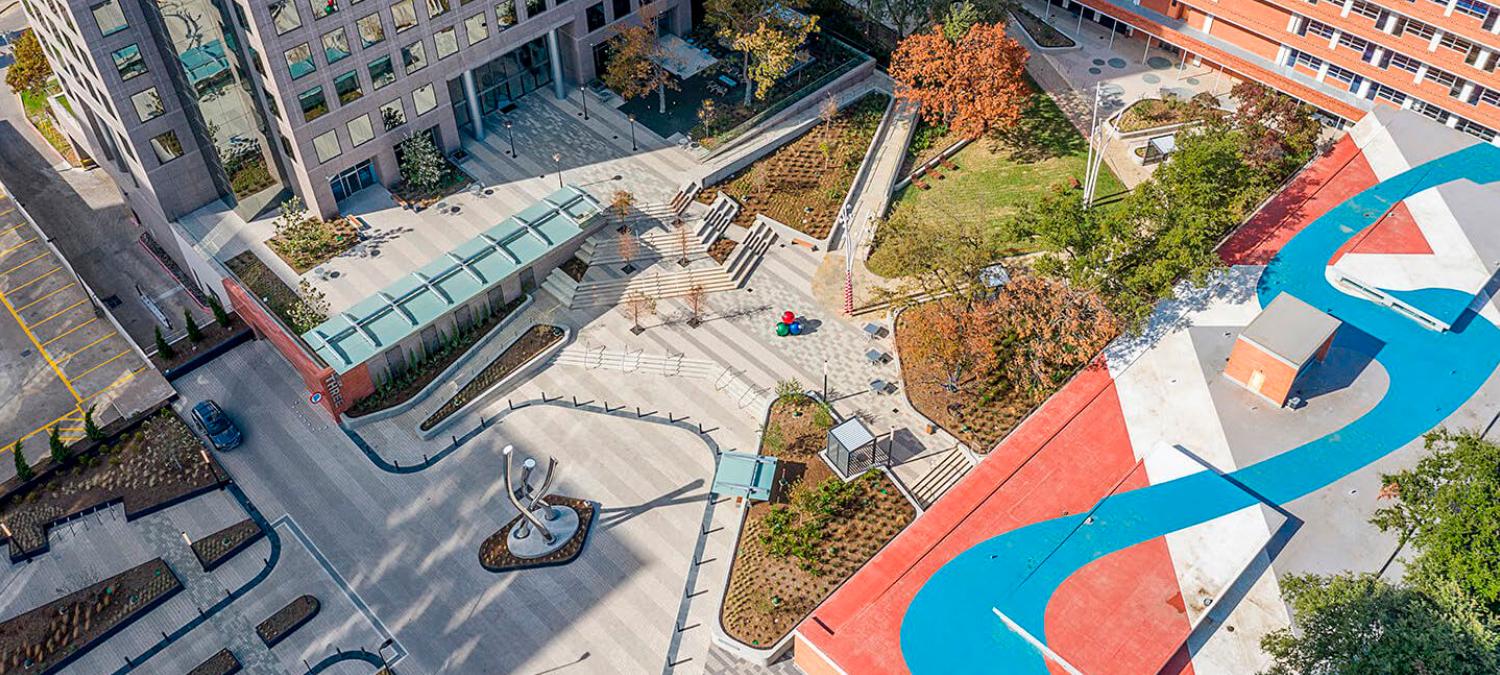
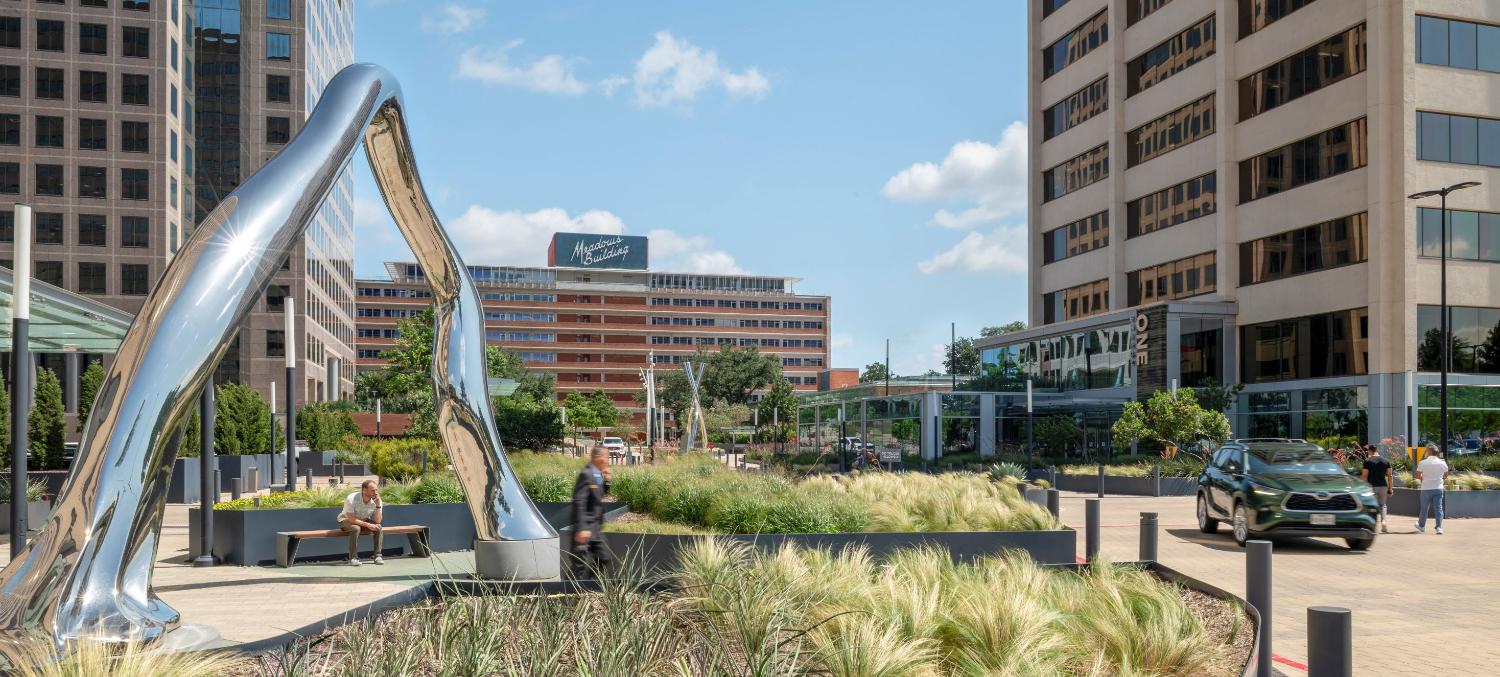
MERIT AWARD
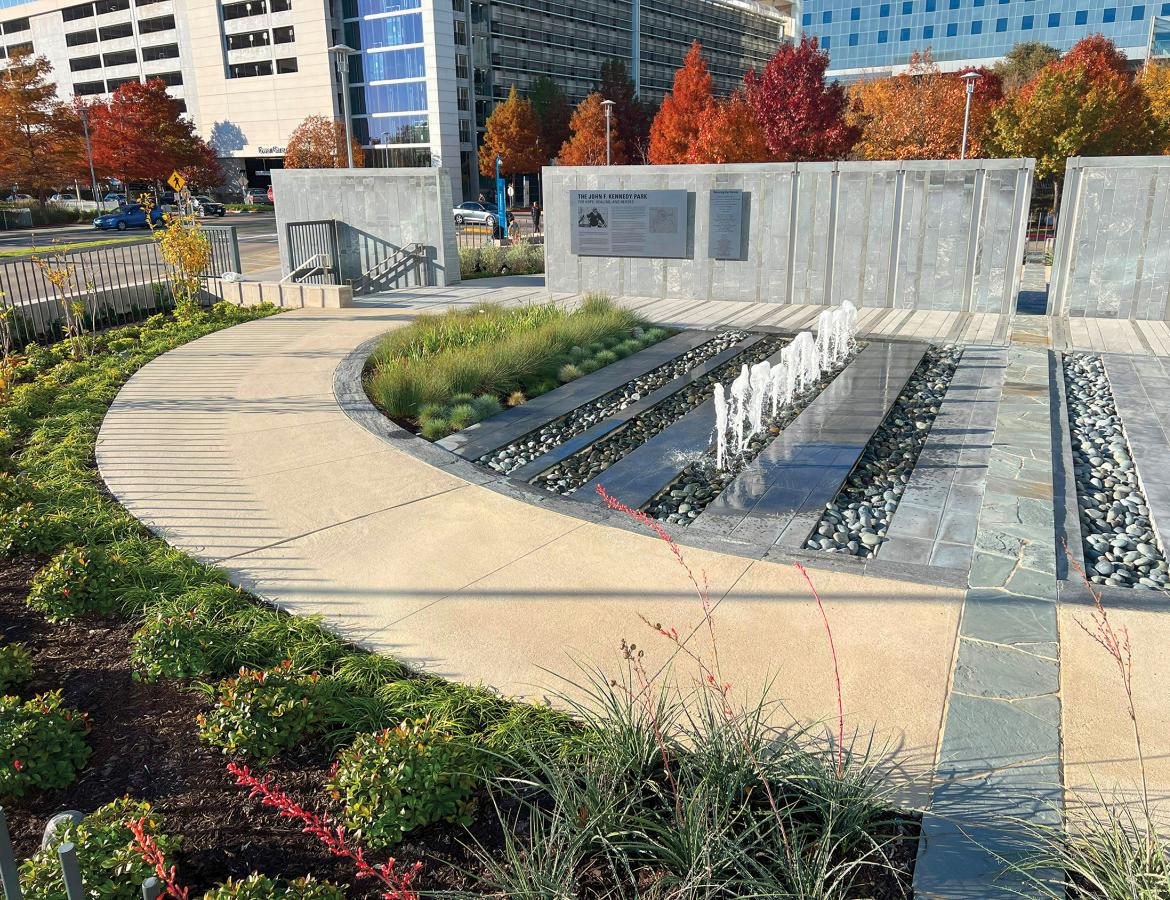
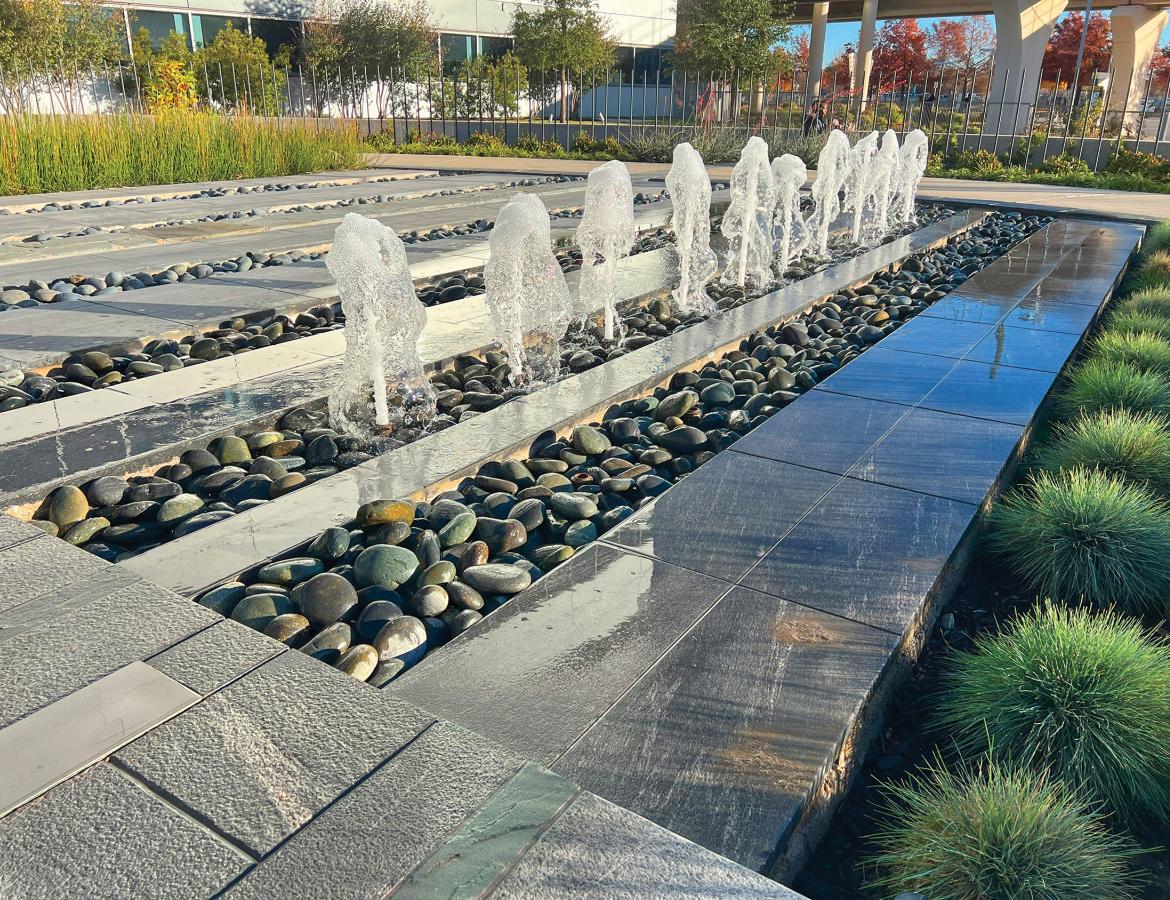
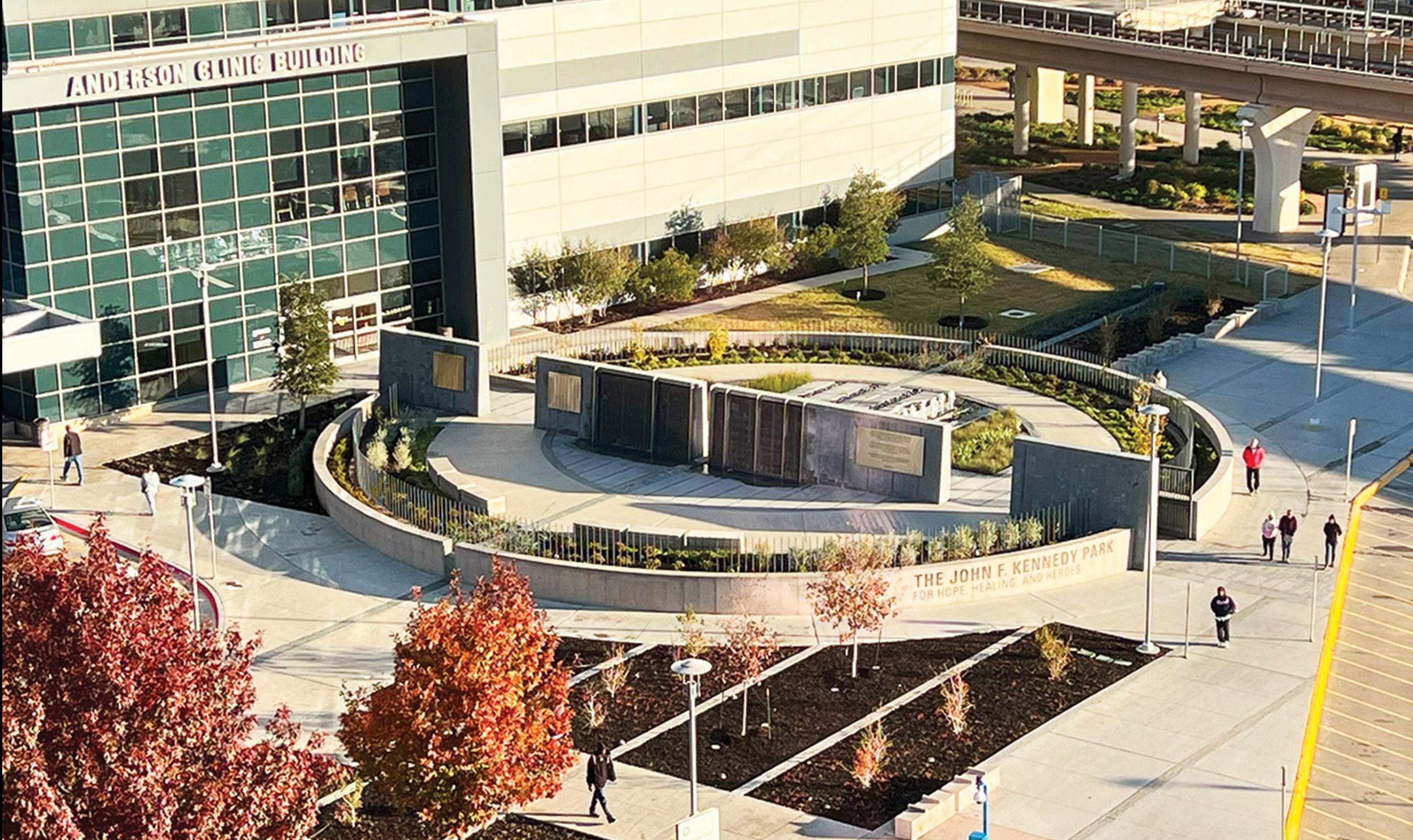
The assassination of President John F. Kennedy disrupted not only Dallas but the nation. President Kennedy’s time in office, although shortened, was one marked by peace and justice, with the establishment of the Peace Corps and the acceleration of the Civil Rights Movement. On Kennedy’s final day, in Trauma Room One, Parkland Hospital fought tirelessly to try to keep the assassinated president alive. 60 years later, this project was commissioned by the Parkland Foundation to commemorate the anniversary of President Kennedy’s death and to honor the chronology of his final day in Dallas.
The John F. Kennedy Park for Hope, Healing and Heroes // Kimley-Horn
MERIT AWARD
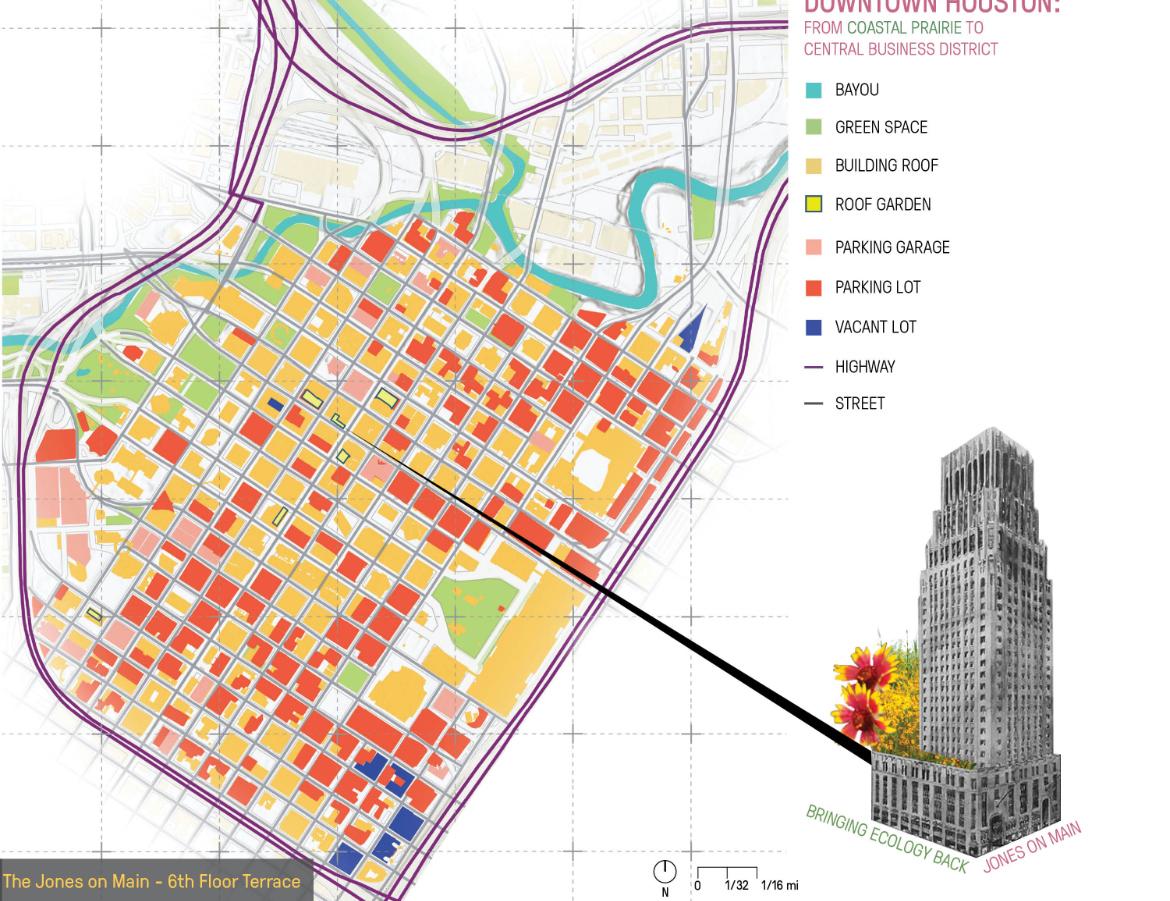
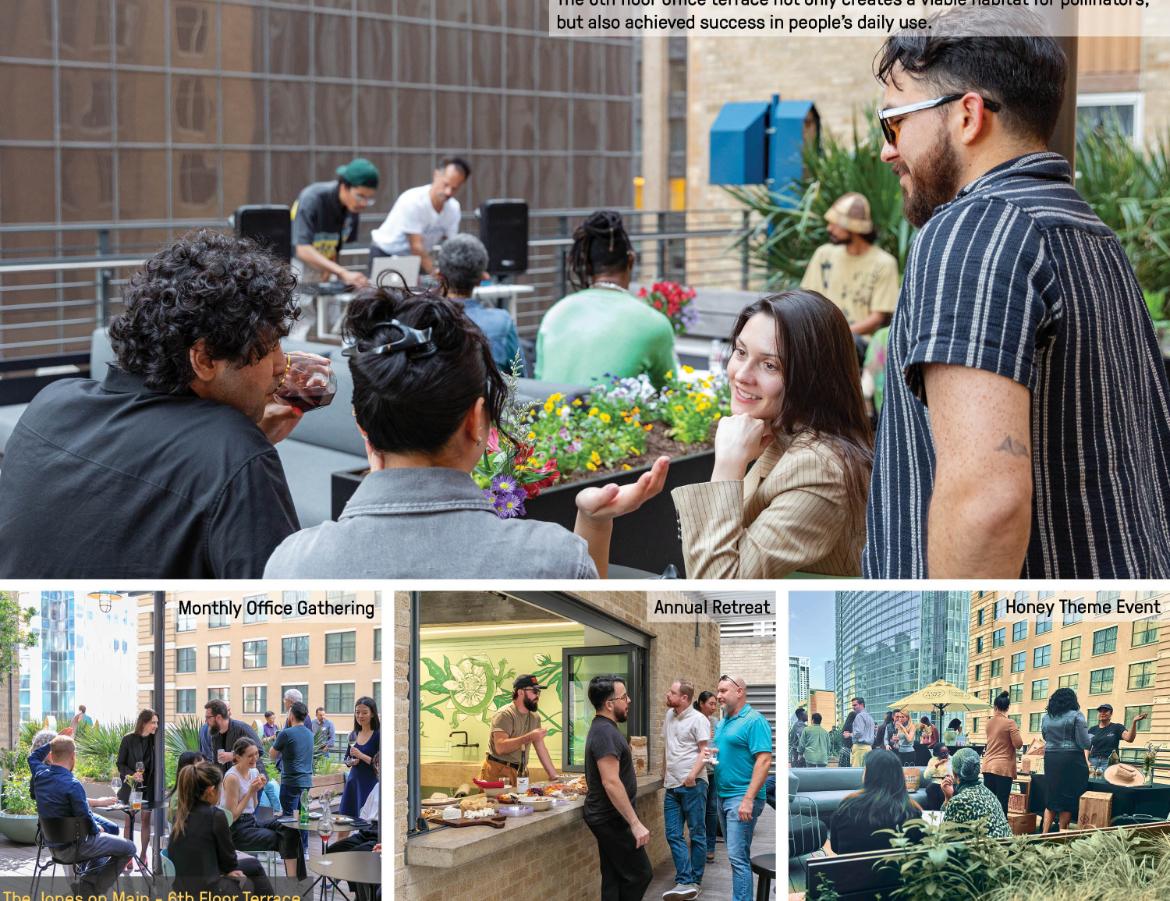
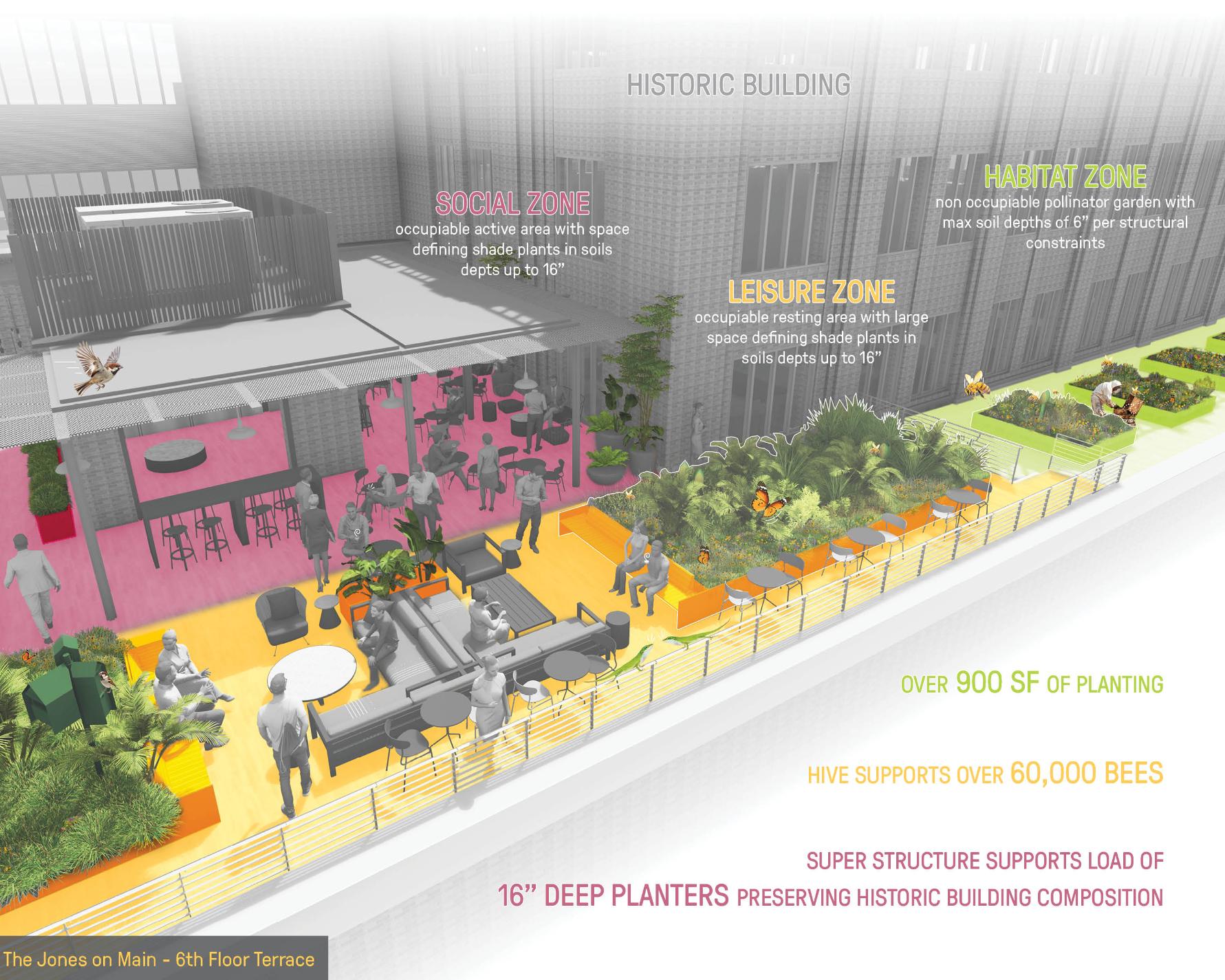
Jones on Main 6th floor terrace retrofit transforms an inaccessible 1929 mechanical roof atop Houston's historic JPMorgan Chase Building into a 3,750-square-foot rooftop terrace serving the entire building community. Through innovative structural engineering that distributes loads without compromising the Art Deco landmark's integrity, the design creates a floating superstructure above the original roof. Plantings adapted to extreme microclimate conditions, active beehives integrated with ground-floor food operations, and flexible gathering spaces establish urban habitat while fostering daily tenant connection.
Jones on Main - 6th Floor Terrace // SWA Group
MERIT AWARD
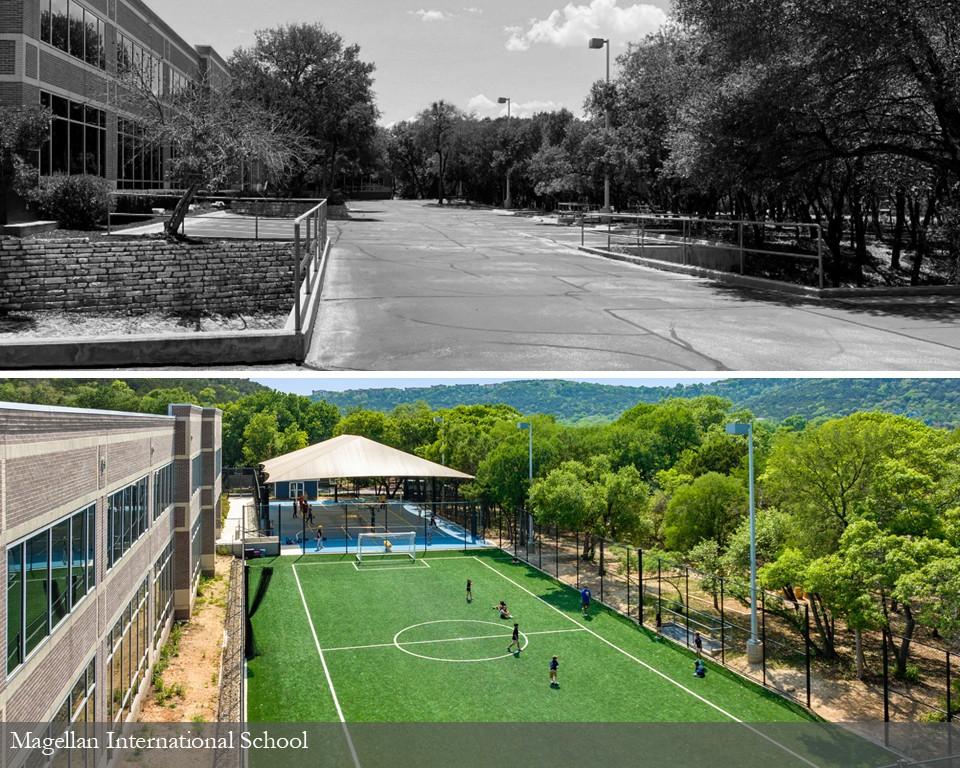
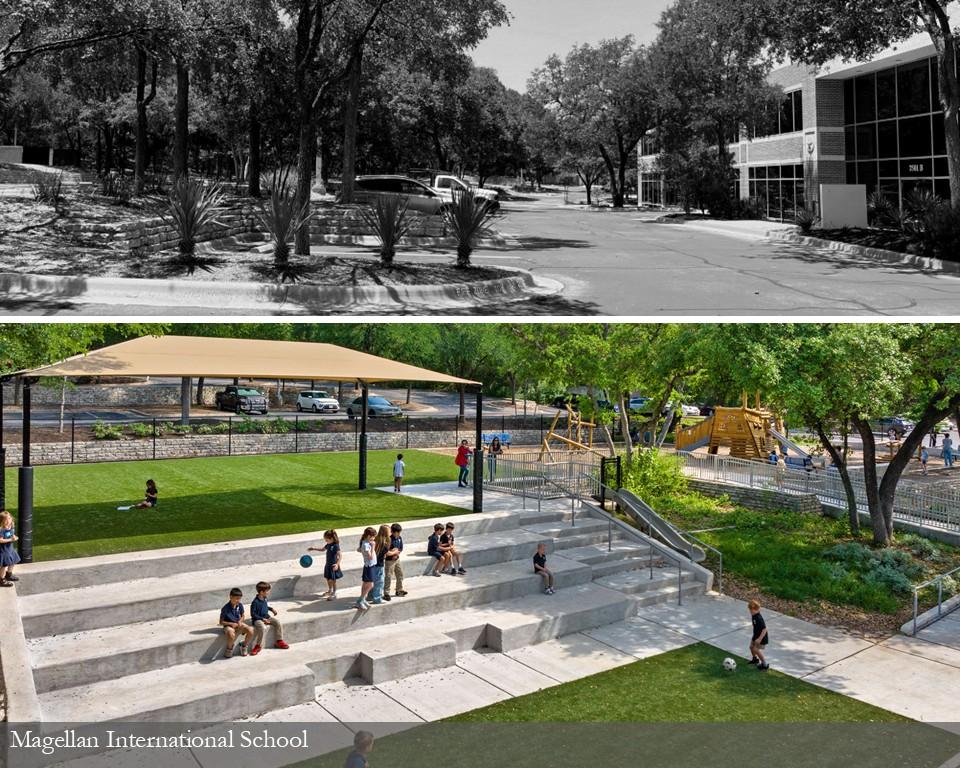
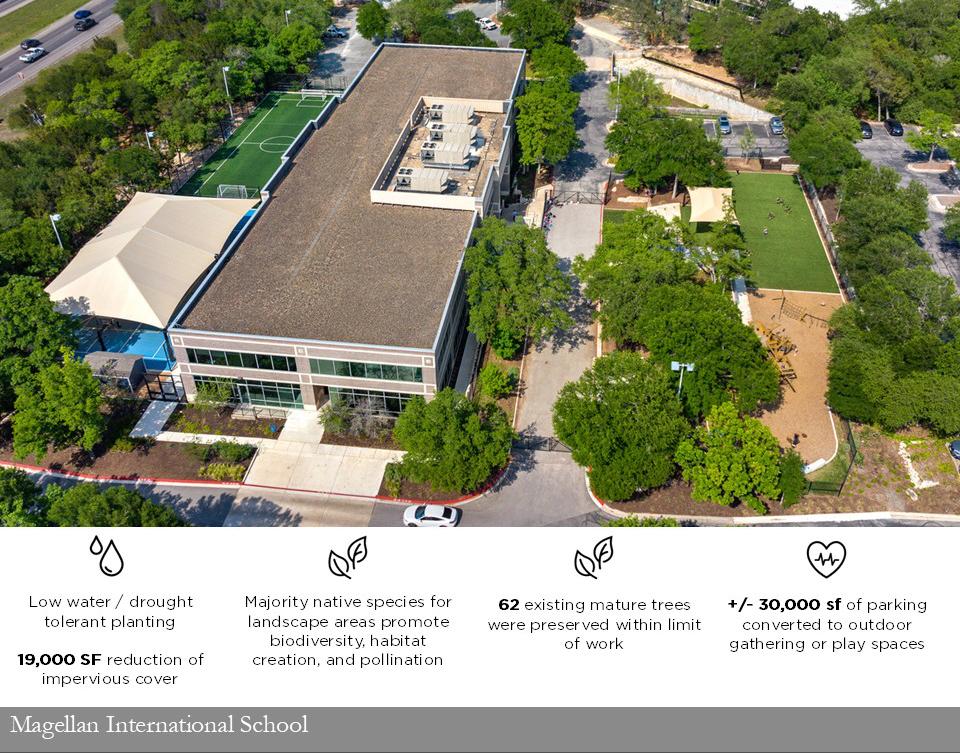
From an office complex to an International Baccalaureate School for K-12th students, the Magellan International School is re-purposing a site to serve the surrounding community in a unique way. The design team transformed an existing asphalt parking lot into an outdoor learning environment that allows for discovery, exploration, play and connection to form a new identity for the school. Playgrounds, various learning spaces, a multi-purpose field for athletics, hard courts for PE and recess enrich the daily curriculum and student experience all guided by a design approach centered on overall student wellness..
International School // LPA Inc.
Magellan
MERIT AWARD
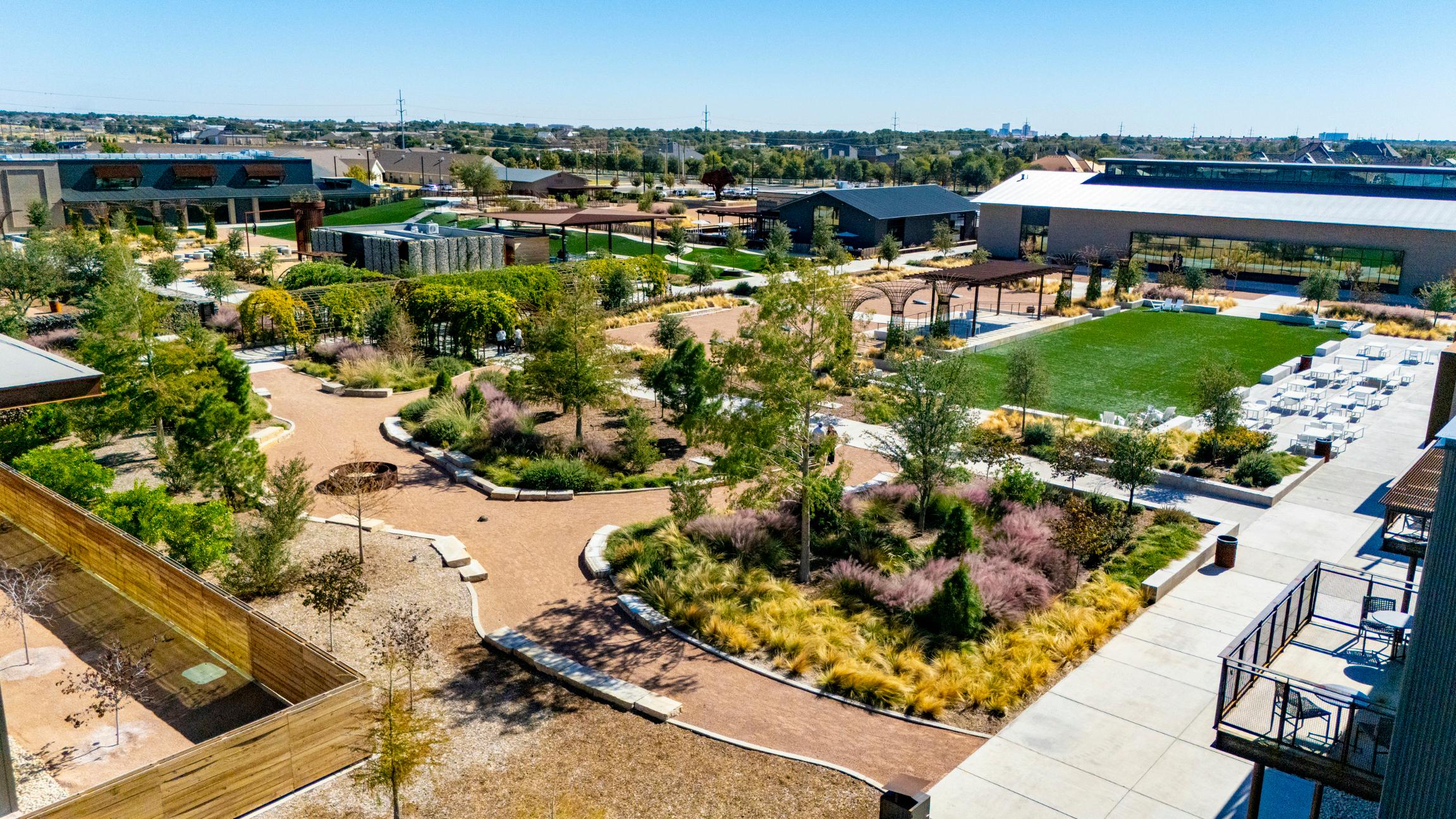
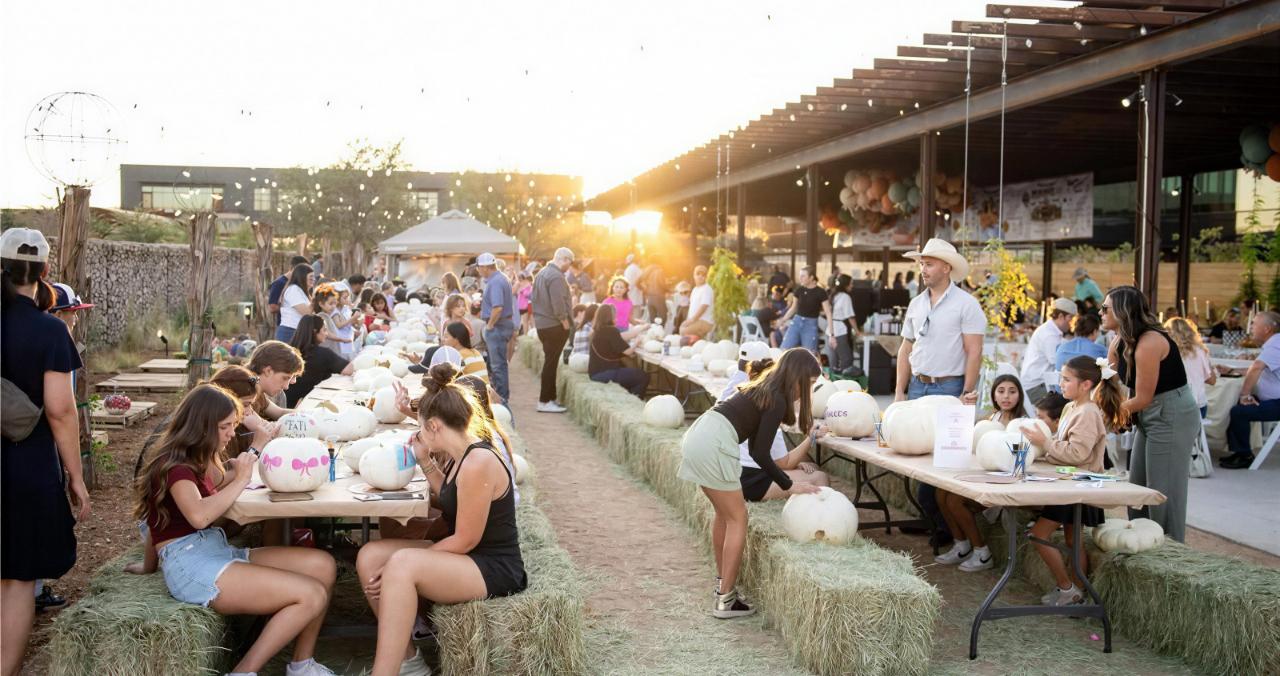
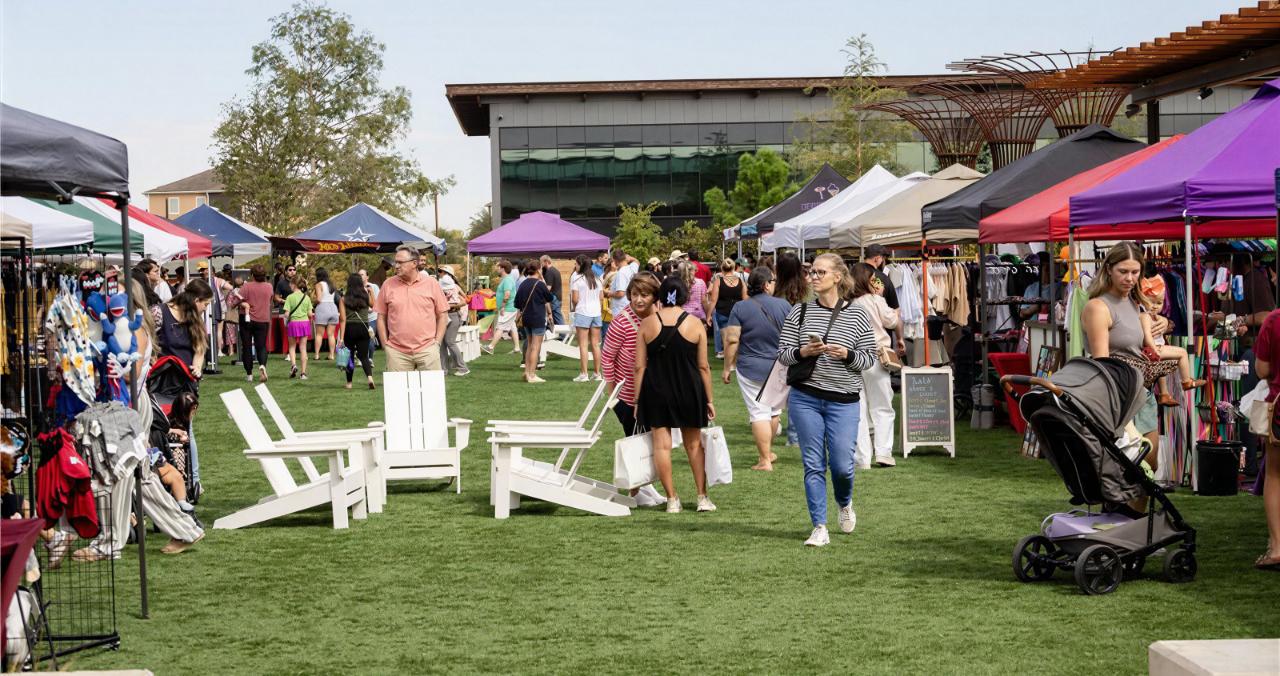
Summit Center is a premier commercial development anchored by a four-acre destination park surrounded by office, retail, and dining facilities. For Summit Petroleum, the opportunity to build a new headquarters also meant setting a precedent for quality outdoor public space in Midland, Texas. With parking and vehicular access located at the development perimeter, pedestrian experience is the priority. The central park includes multiple high points, an event lawn, fire pit grove, active play areas, and a central snack shack. Since opening in late 2024, the development has hosted numerous public events.
MERIT AWARD
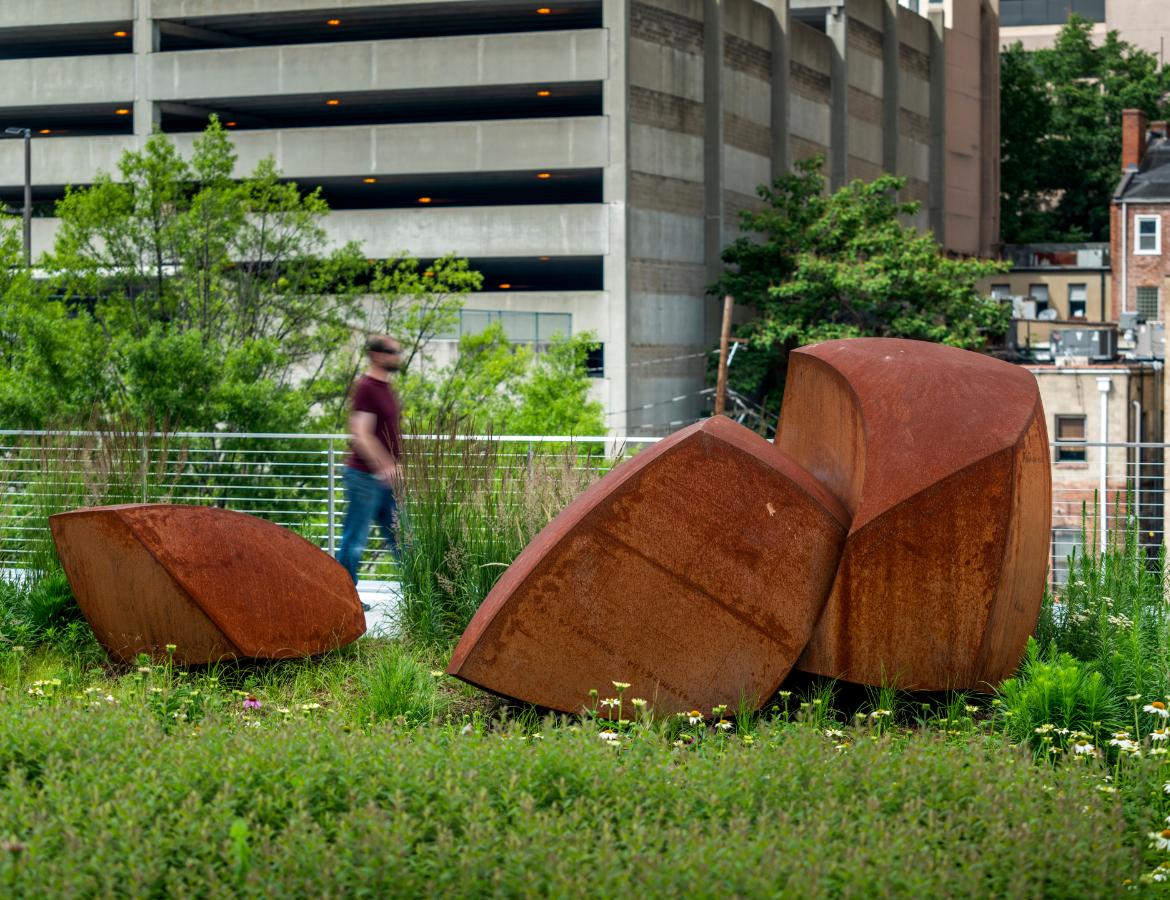
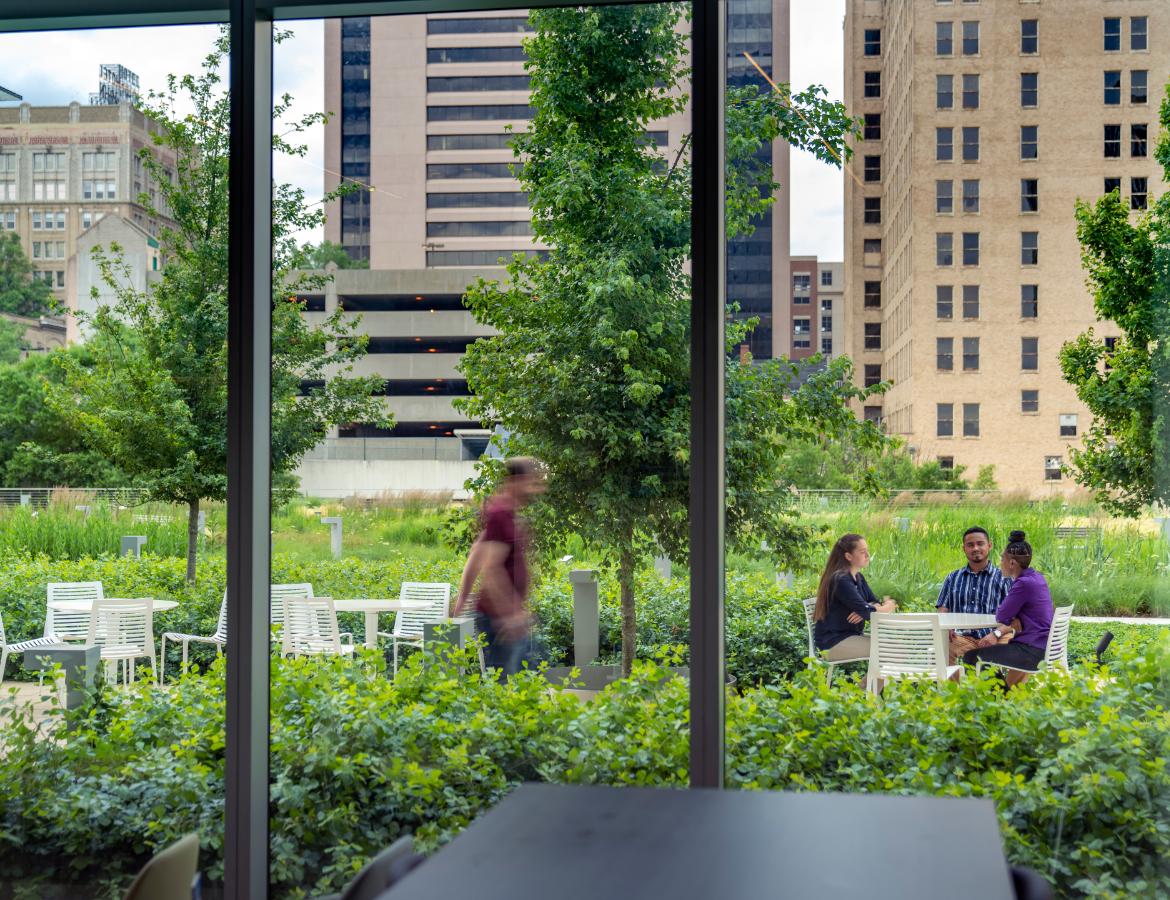
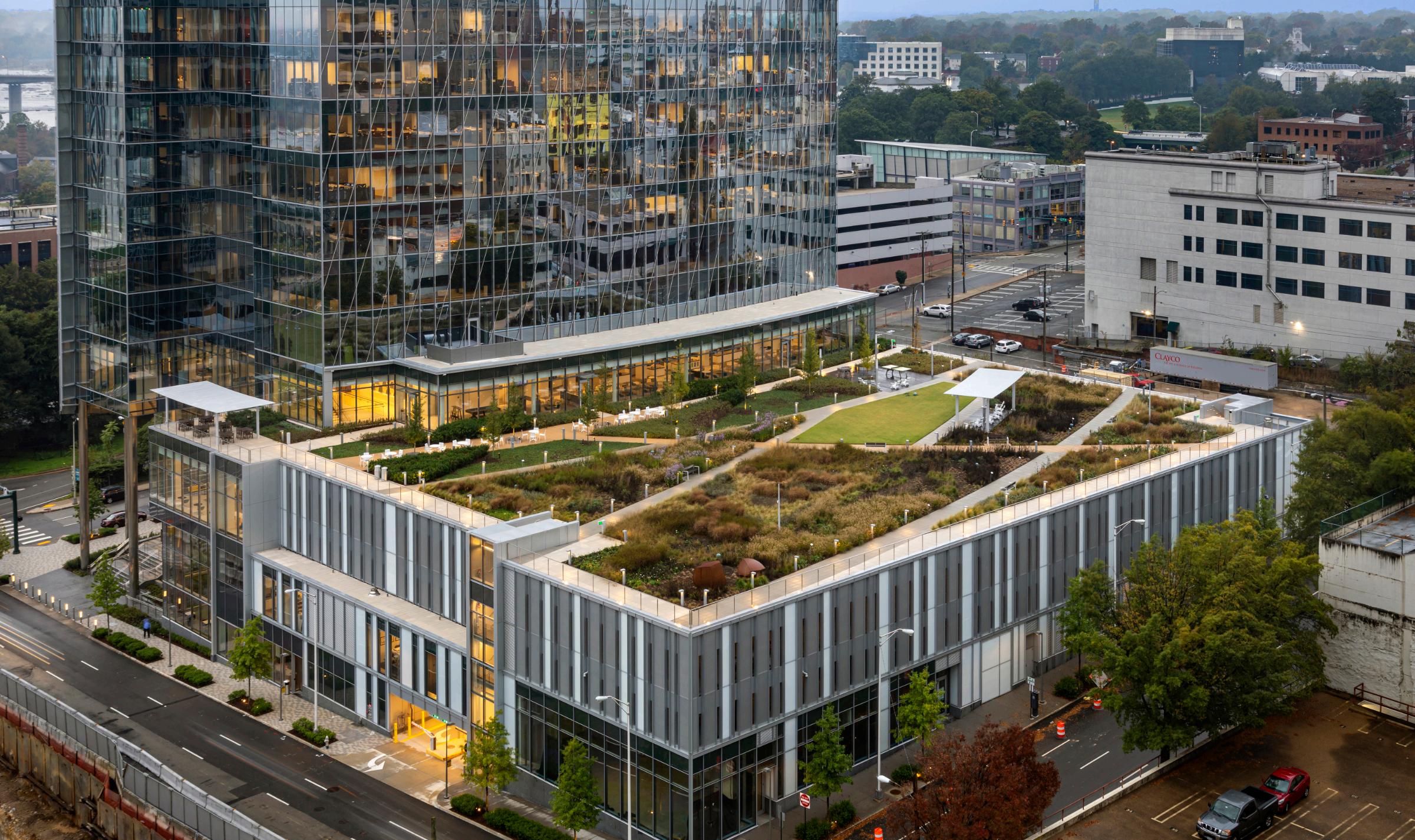
Comprising a full city block in a bustling urban center, this new company headquarters reflects a contemporary vision for an engaged workplace focused on health and wellness. The 20-story office tower is a striking addition to the skyline, mediated by a lush, elevated sky garden that connects the ground plane with the office tower. The garden terrace brings together art, native and adaptive planting from the region, and people-focused amenities in a composition designed to bring people together for connection, respite and recreation.
Thomas F. Farrell II Building // OJB Landscape Architecture
MERIT AWARD
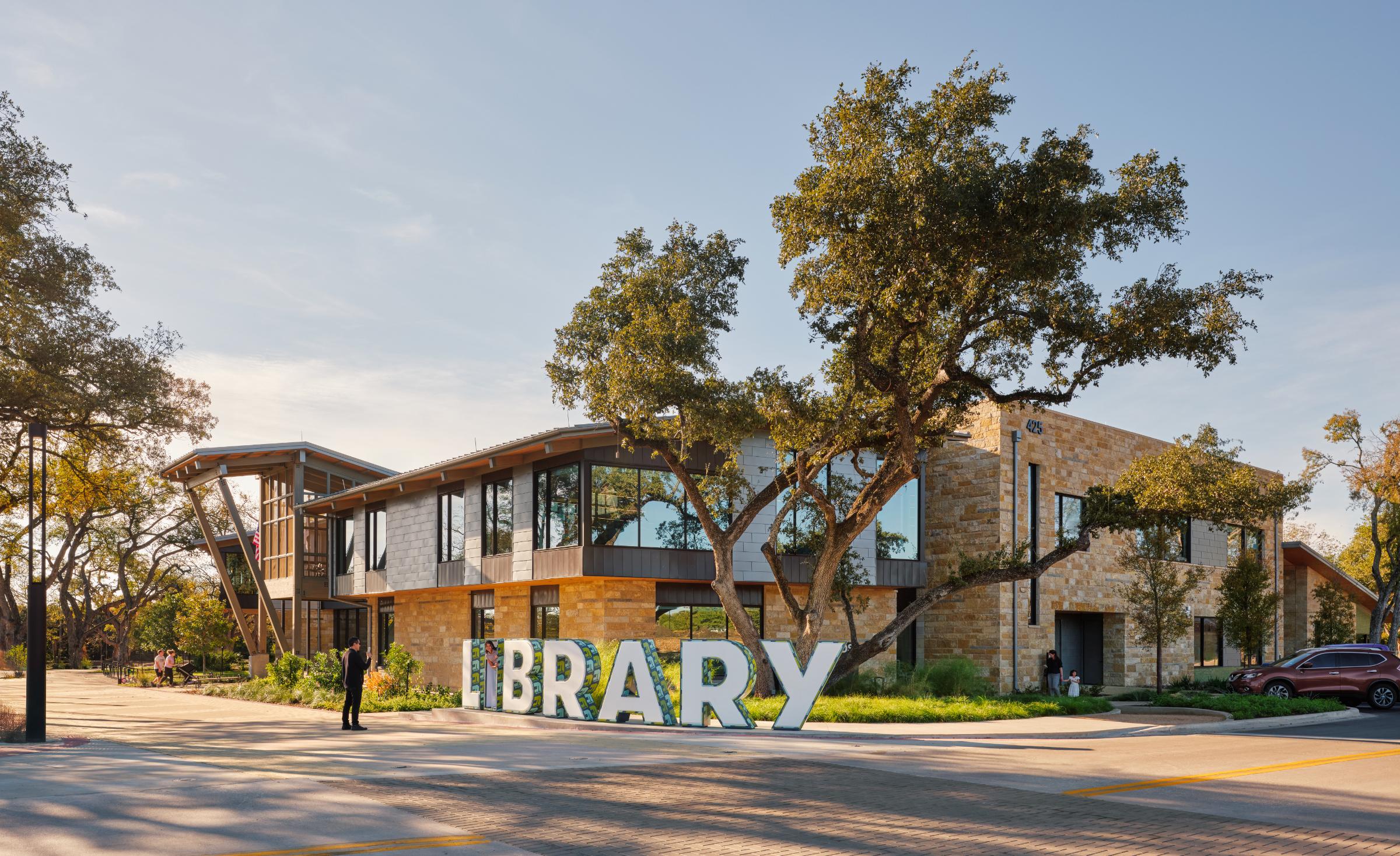
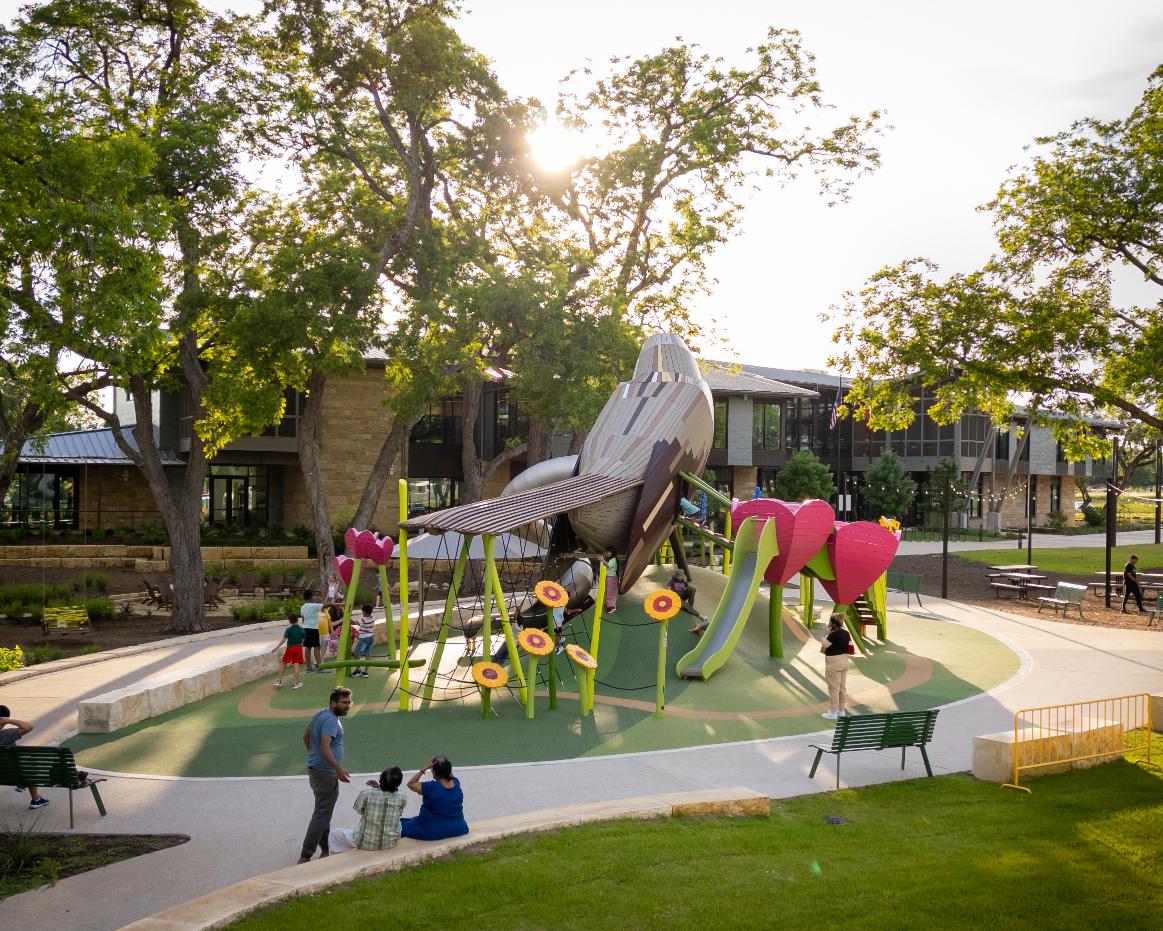
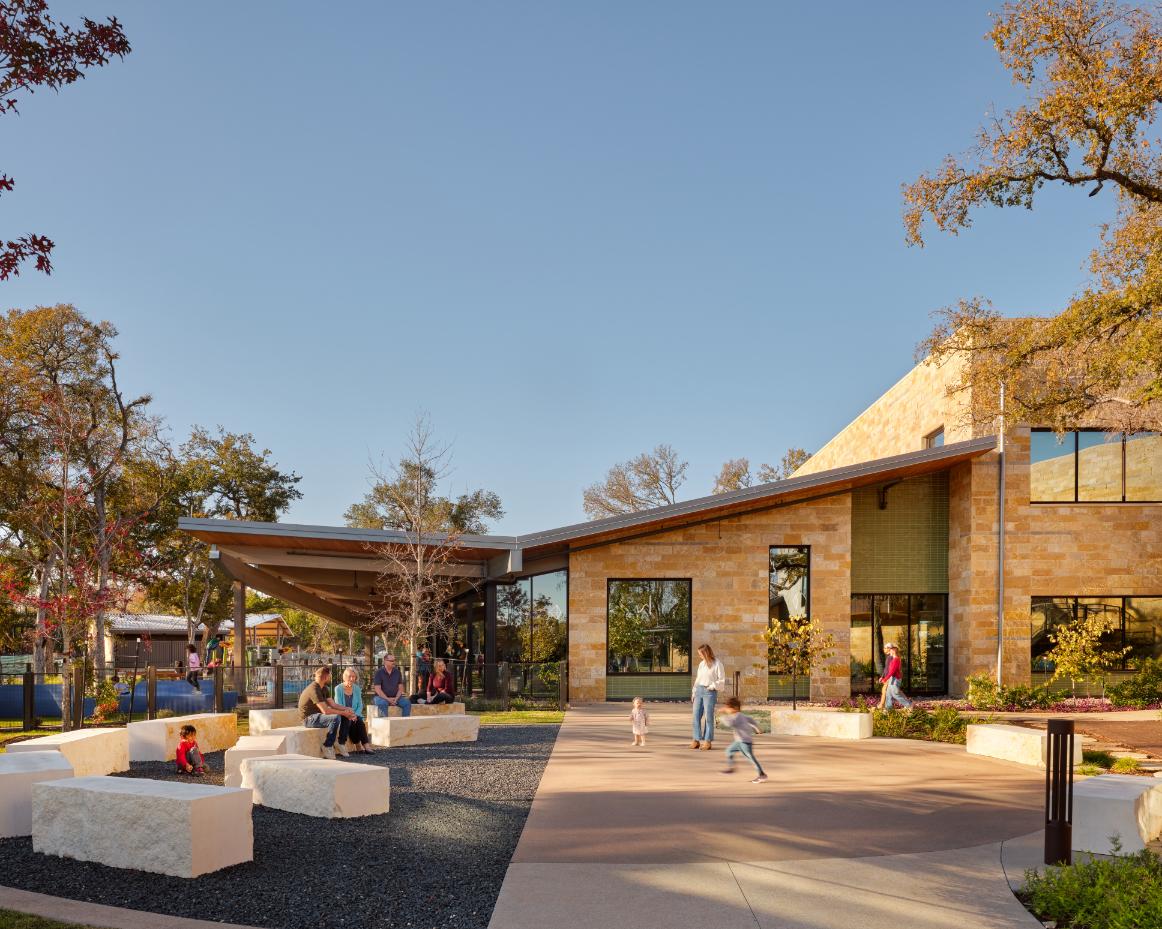
The Bell District Master Plan establishes a new civic heart for Cedar Park, repairing a long-standing divide caused by highway infrastructure and restoring walkability, connectivity, and civic identity. The district’s inaugural projects, a new Public Library and Bell Park, were intentionally conceived as a unified civic landscape to serve as a catalyst for social, economic, and environmental revitalization. Designed as a community living room, the library extends learning, gathering, and discovery into the outdoors through integrated green space and trails. Together, the park and library foster inclusion, ecological resilience, and a vibrant, pedestrian-focused town center.
Bell District Master Plan // studio 16:19 and Coleman & Associates
MERIT AWARD
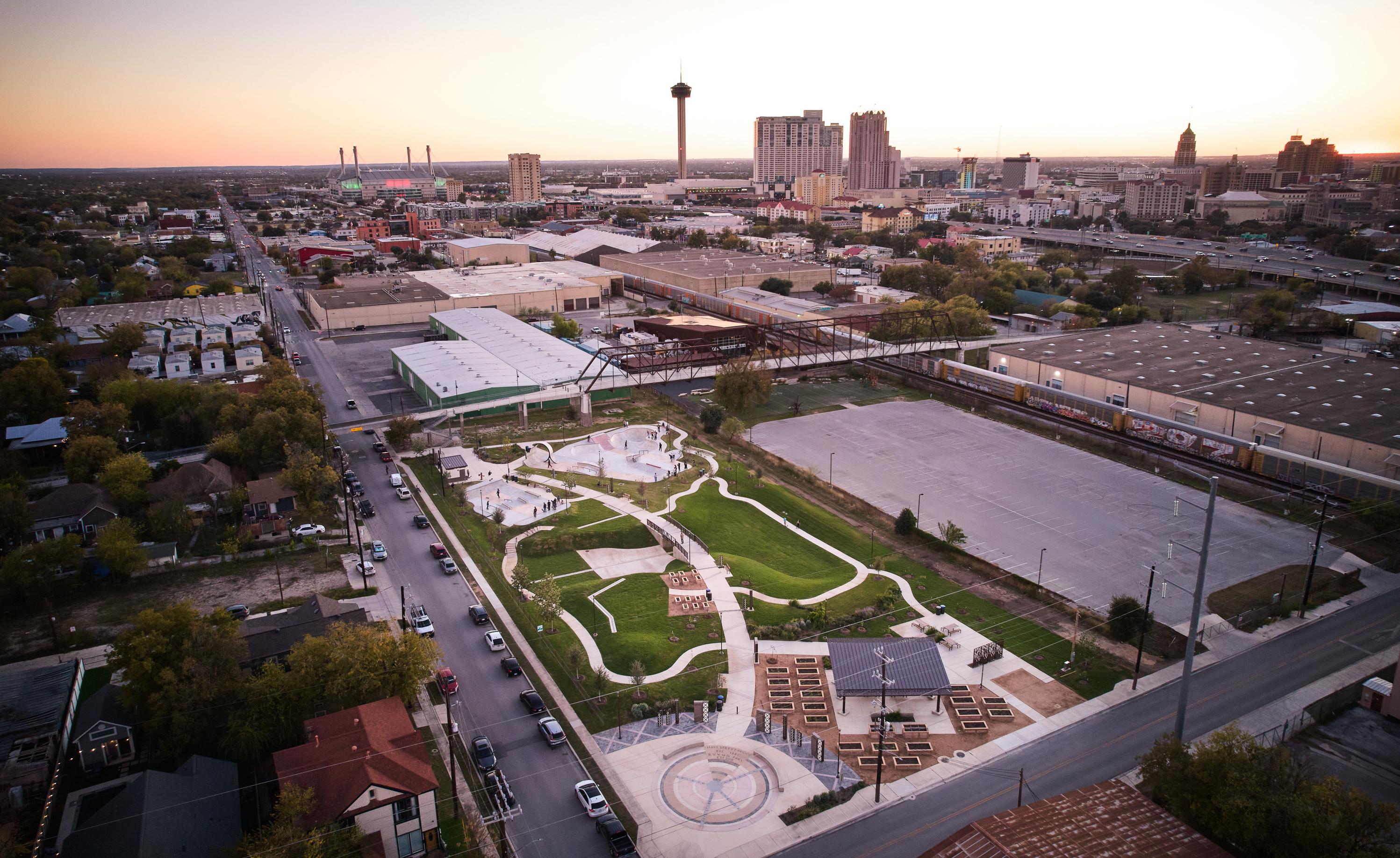
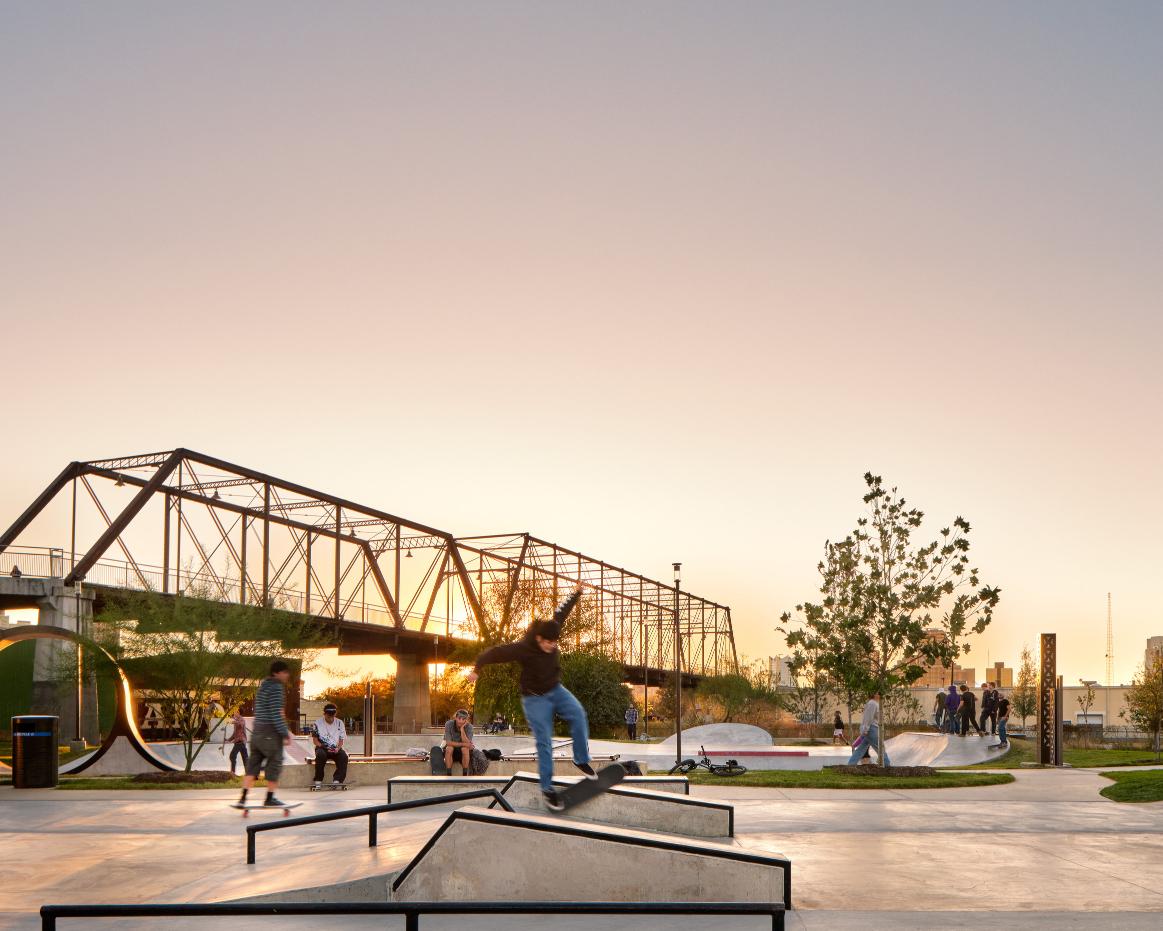
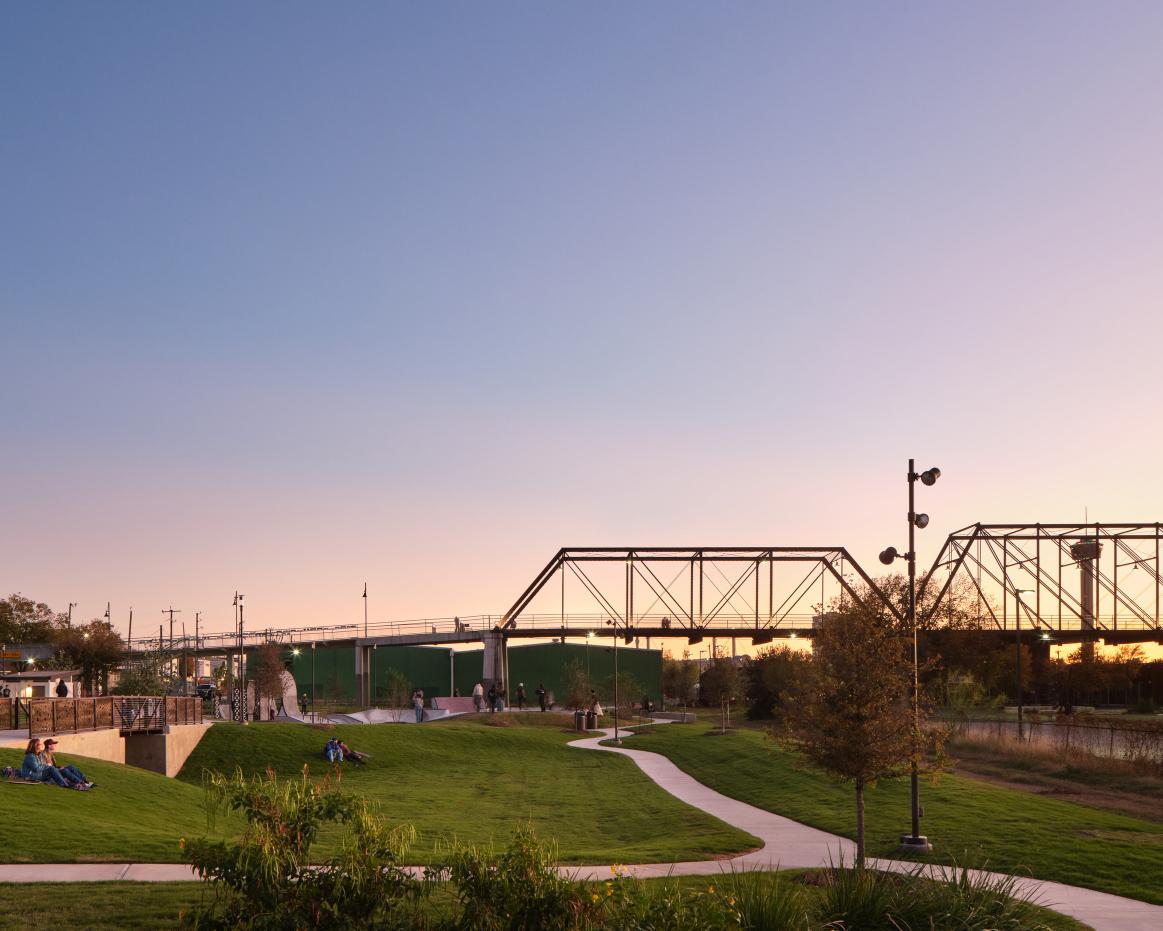
Berkley V. and Vincent M. Dawson Park transforms a community-driven vision into a cohesive, built public space that balances recreation, history, and neighborhood identity. Shaped through extensive public engagement, the park reflects local priorities while integrating diverse programs within a unified design language. Inspired by the nearby, historic Hays Street Bridge, custom materials, patterns, and detailing establish a strong sense of place. Signature features—including the skatepark, and urban garden—are seamlessly woven into an accessible landscape that supports gathering, play, and stewardship for users of all ages and abilities.
Berkley V. and Vincent M. Dawson Park // Dunaway Associates, LLC
MERIT AWARD
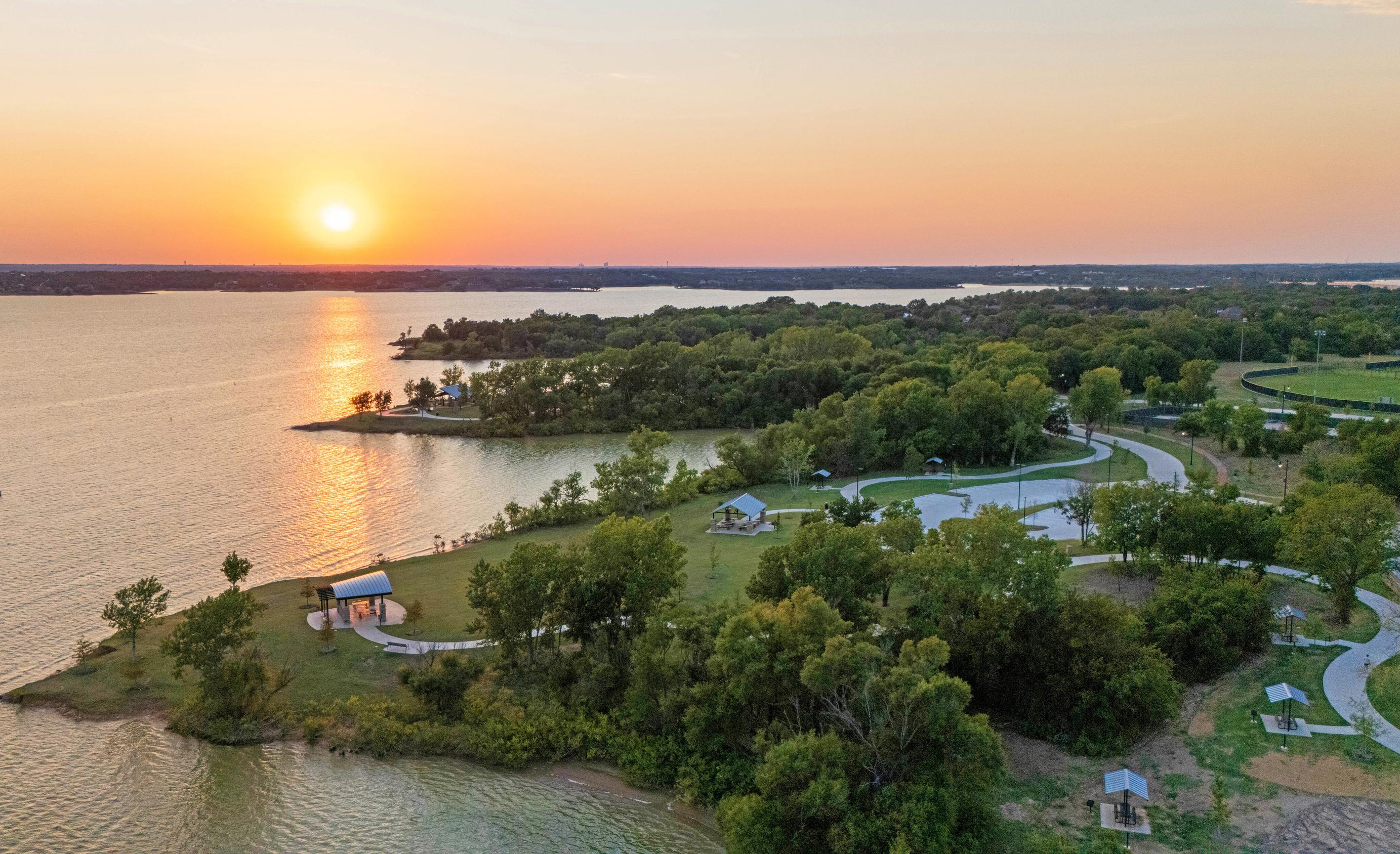
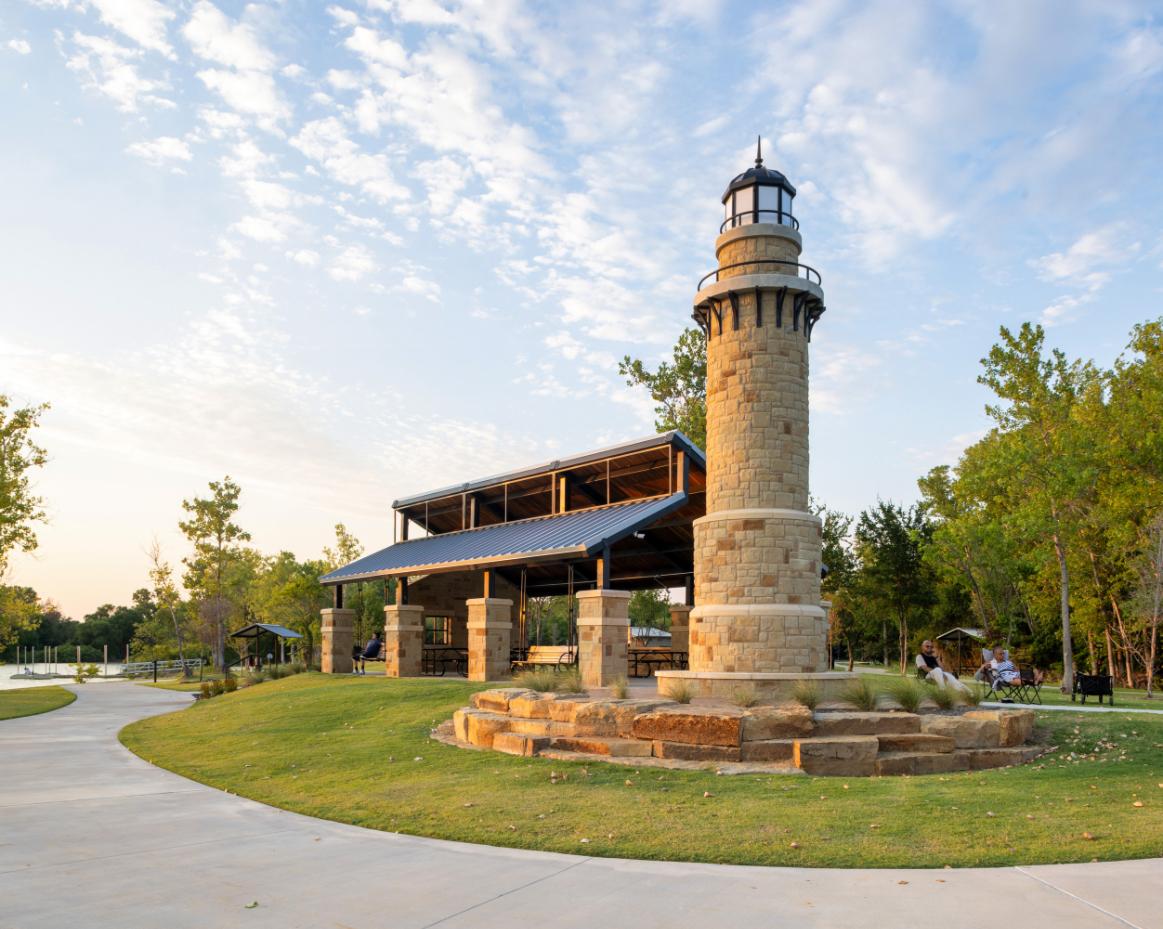
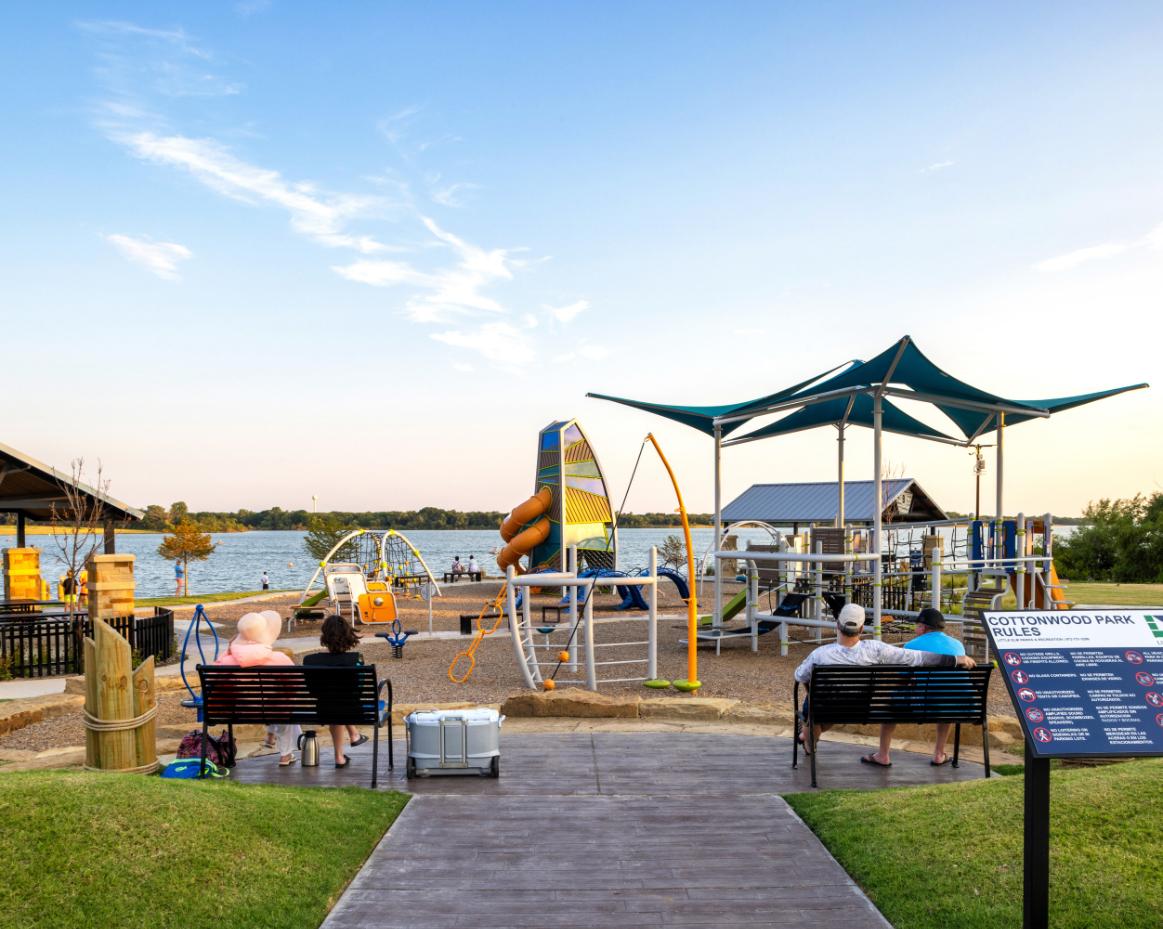
Cottonwood Park transforms 162 acres of Lewisville Lake shoreline into an inclusive, flood-resilient destination that celebrates community and ecology. The design integrates native habitat restoration, sustainable grading, and durable materials to ensure year-round usability while protecting water quality and biodiversity. Signature features include a working lighthouse, accessible playground, kayak launch, and multi-use pavilion for concerts and gatherings. Through strong partnerships and environmental stewardship, the park redefines Little Elm’s lakefront identity, providing equitable access, cultural connection, and a model for resilient waterfront development.
Cottonwood Park // Dunaway Associates,
MERIT AWARD
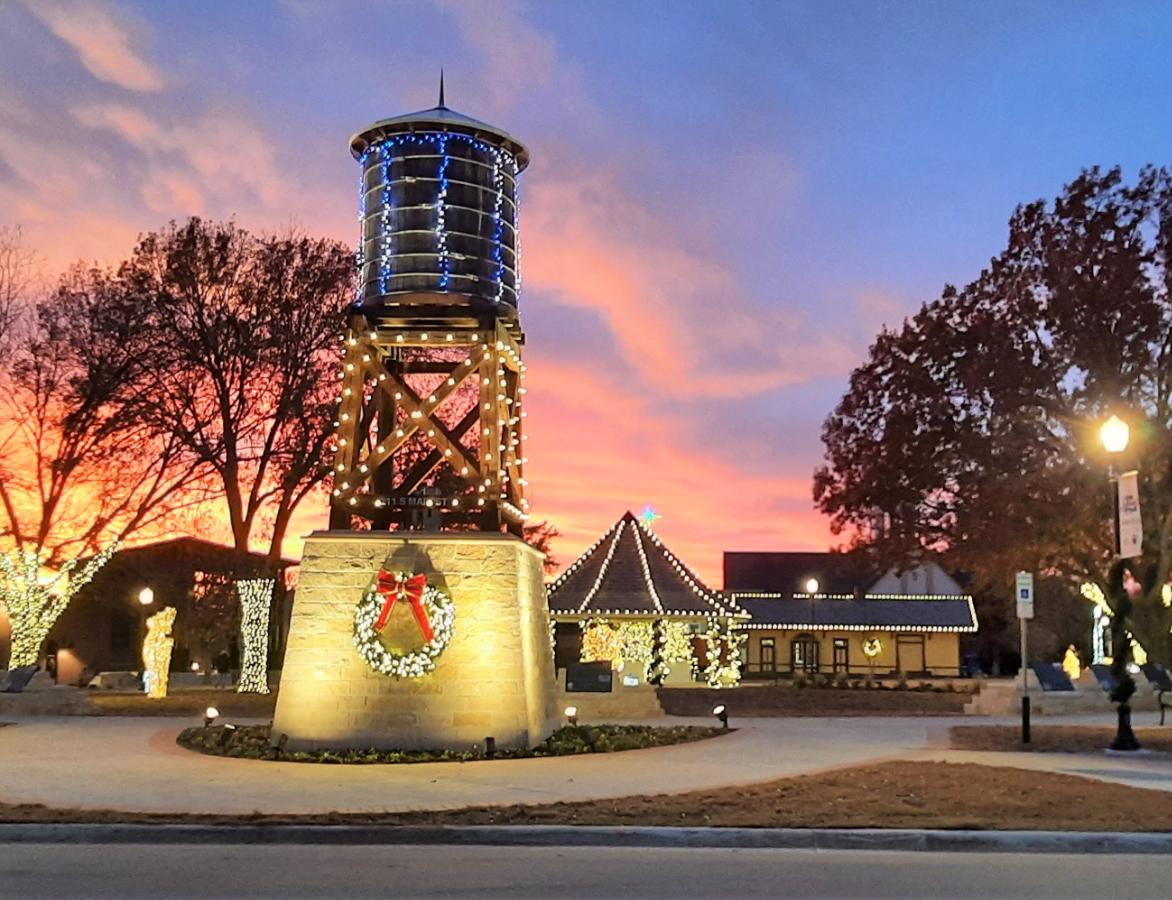
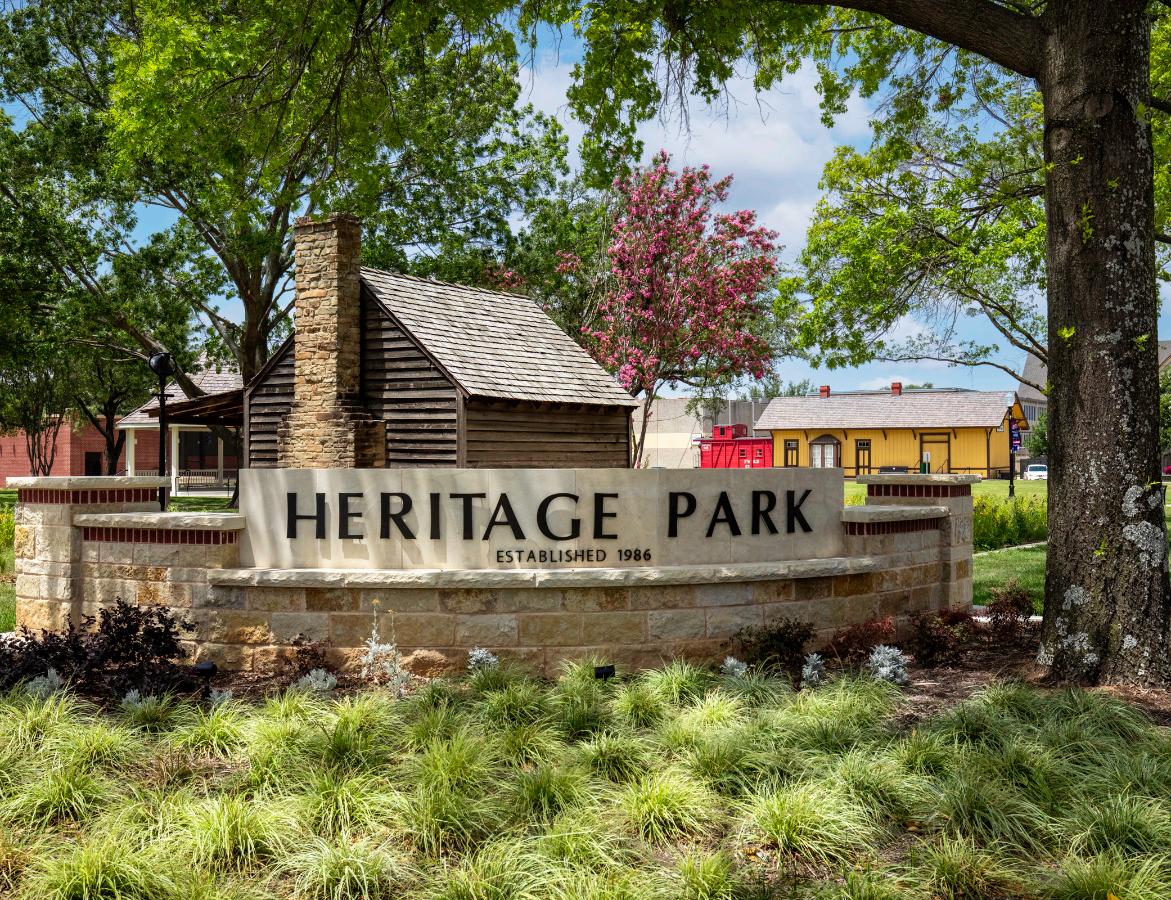
Heritage Park is a 2.9-acre urban green space that honors Irving’s founding communities while catalyzing revitalization of the Heritage District. Through inclusive community engagement and vision, the park blends historical interpretation with sustainable design. Native plantings, energy-efficient lighting, and flexible programming spaces foster connectivity and cultural celebration. The park’s transformation spurred streetscape improvements along Irving Boulevard and attracted residential redevelopment, reinforcing its role as a cornerstone of civic identity and urban renewal.
Heritage Park Redevelopment // Studio Outside and the City of Irving
MERIT AWARD
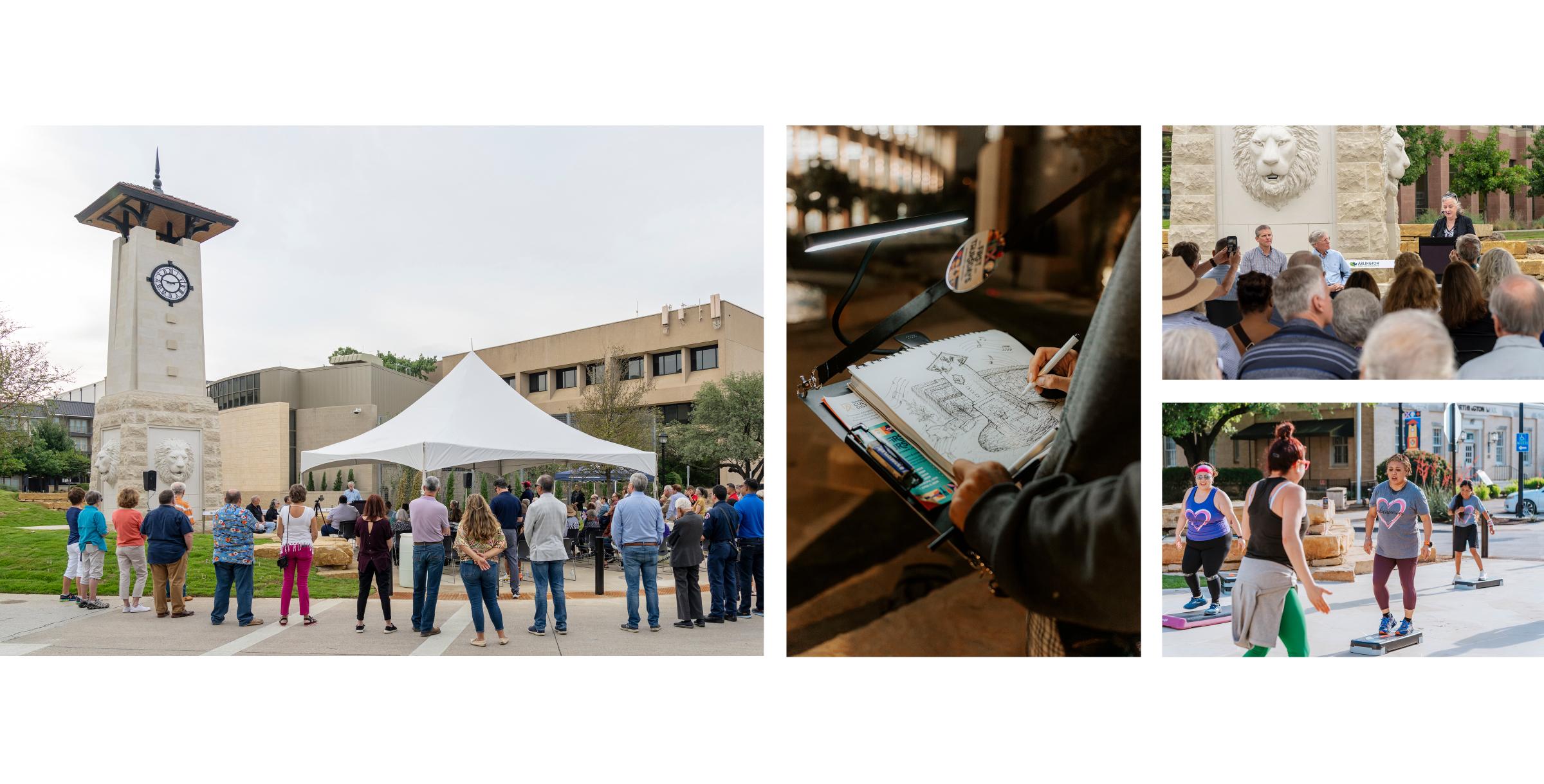
Mineral Well Plaza // MESA Design Group
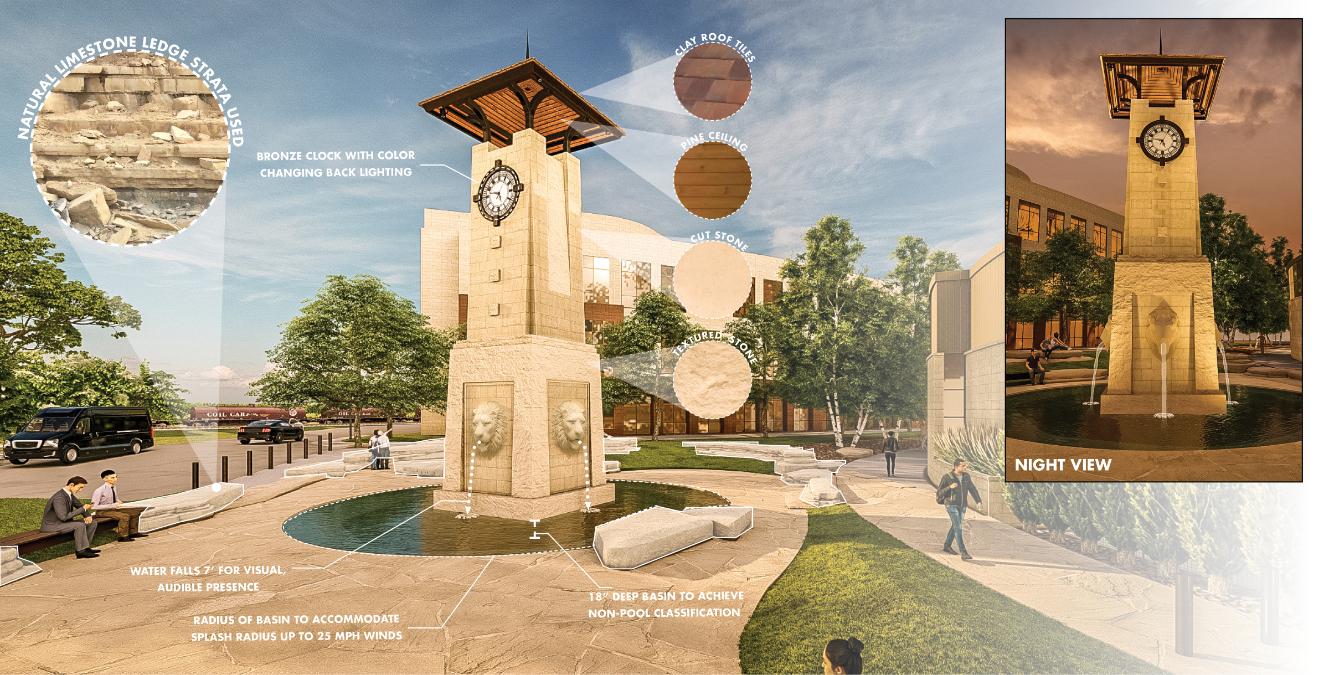
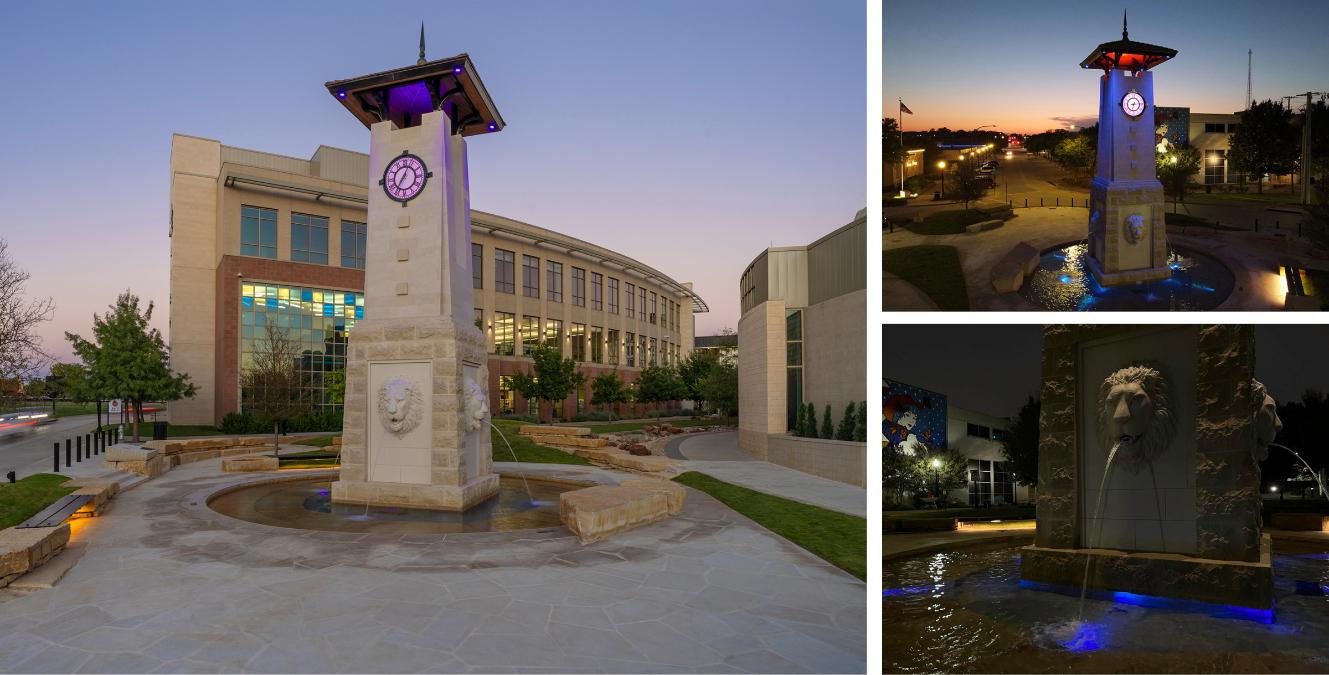
Mineral Well Public Plaza transforms an underutilized downtown civic space into a landmark urban node honoring Arlington’s historic Mineral Well. Anchored by a sculptural clock tower and fountain, the plaza unifies surrounding civic buildings and infrastructure into an inviting public place for everyday use and civic gatherings. Through thoughtful placemaking, material expression, and interpretive design, the project strengthens downtown identity, supports heritage tourism, and reestablishes the Mineral Well as an enduring symbol of Arlington’s cultural legacy.
MERIT AWARD
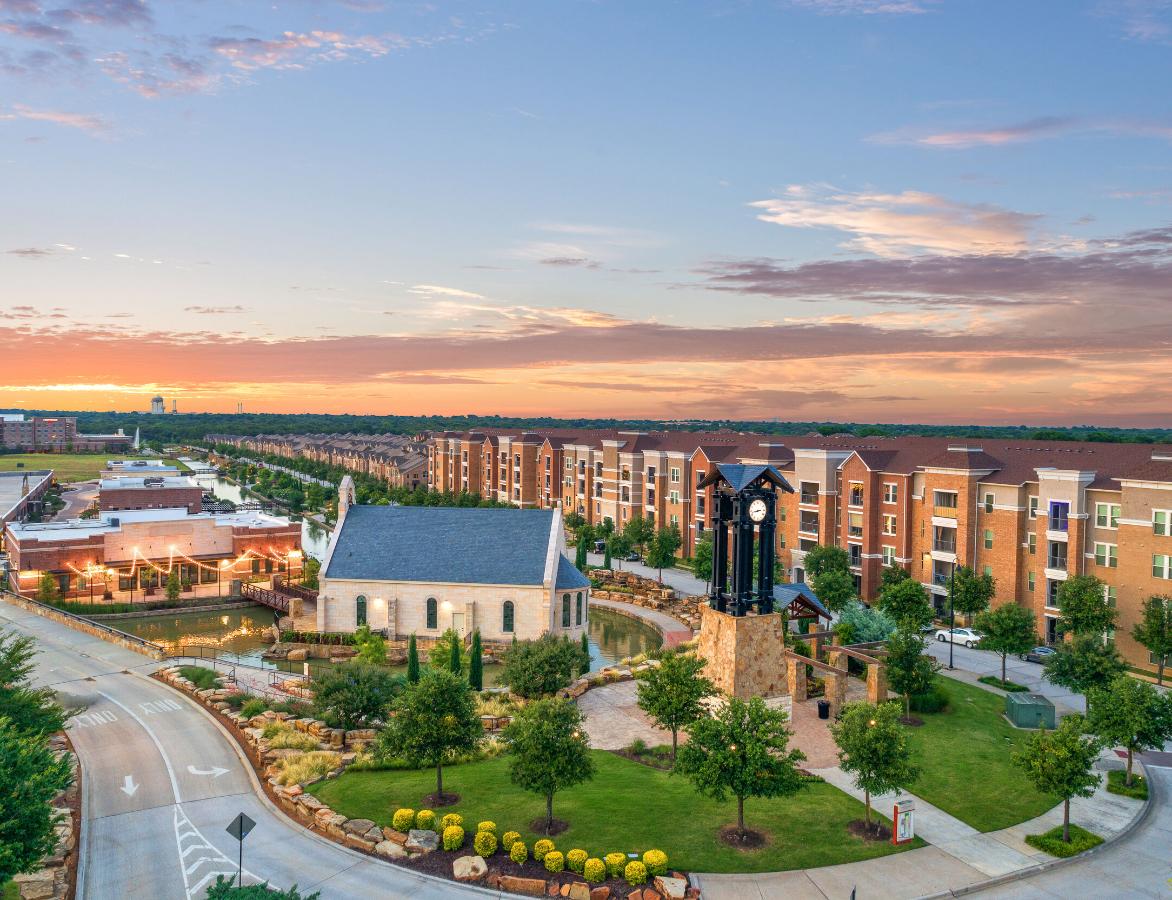
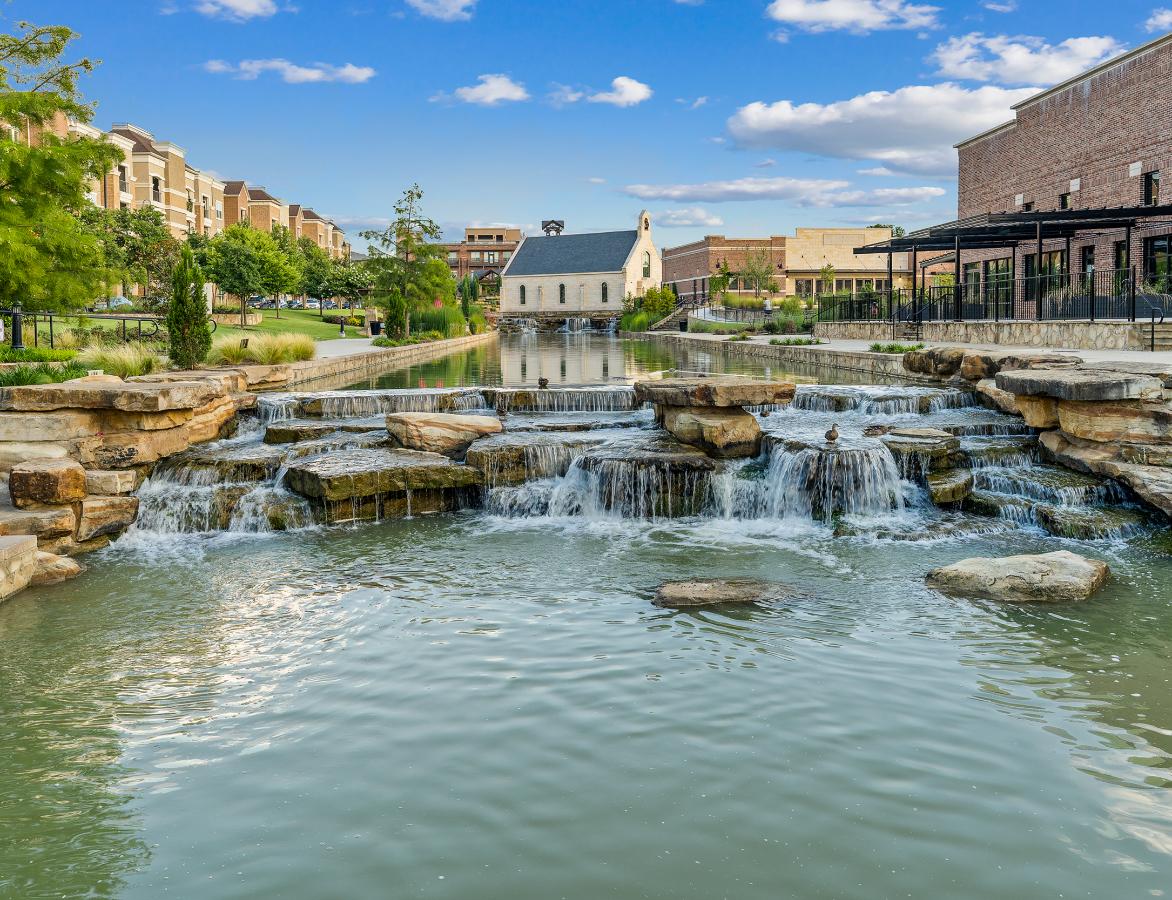
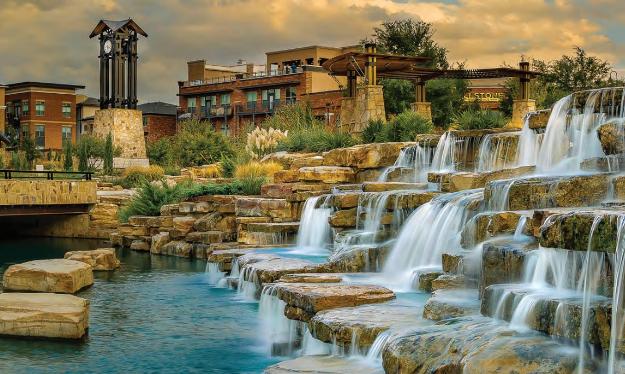
The River Walk at Central Park transforms 159 acres in the heart of Flower Mound, Texas into a vibrant, pedestrianfocused destination. Designed to connect commercial, office, retail, residential, hospitality, and medical spaces, the development is woven together by open spaces and parks. At its core, the River Walk channel flows alongside a linear park that links gathering areas and event spaces. Natural and created features, pedestrian-oriented streetscapes, and inviting amenities create a dynamic environment that supports residents and visitors while blending community life with thoughtful design.
The River Walk at Central Park // McAdams
MERIT AWARD
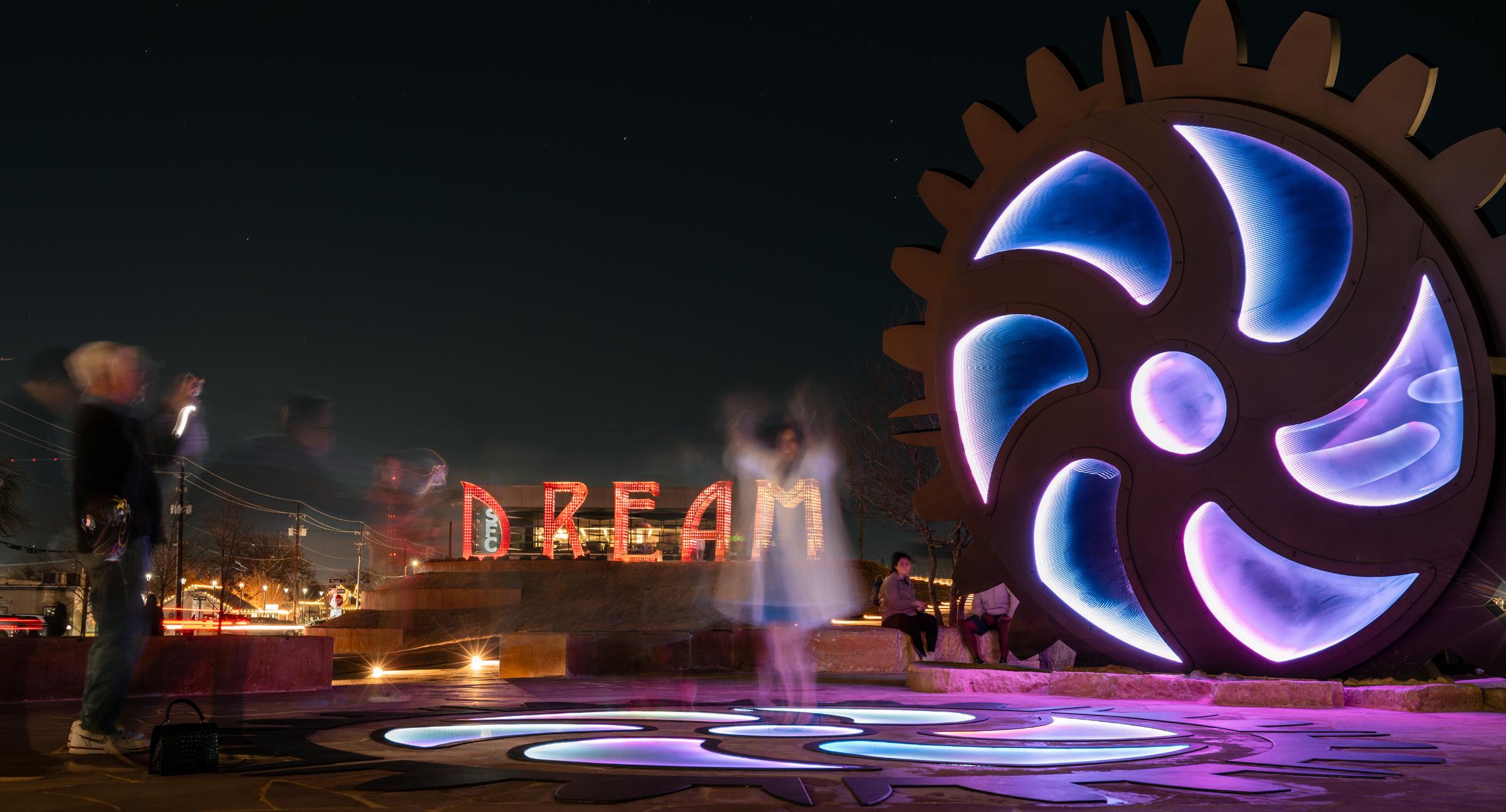
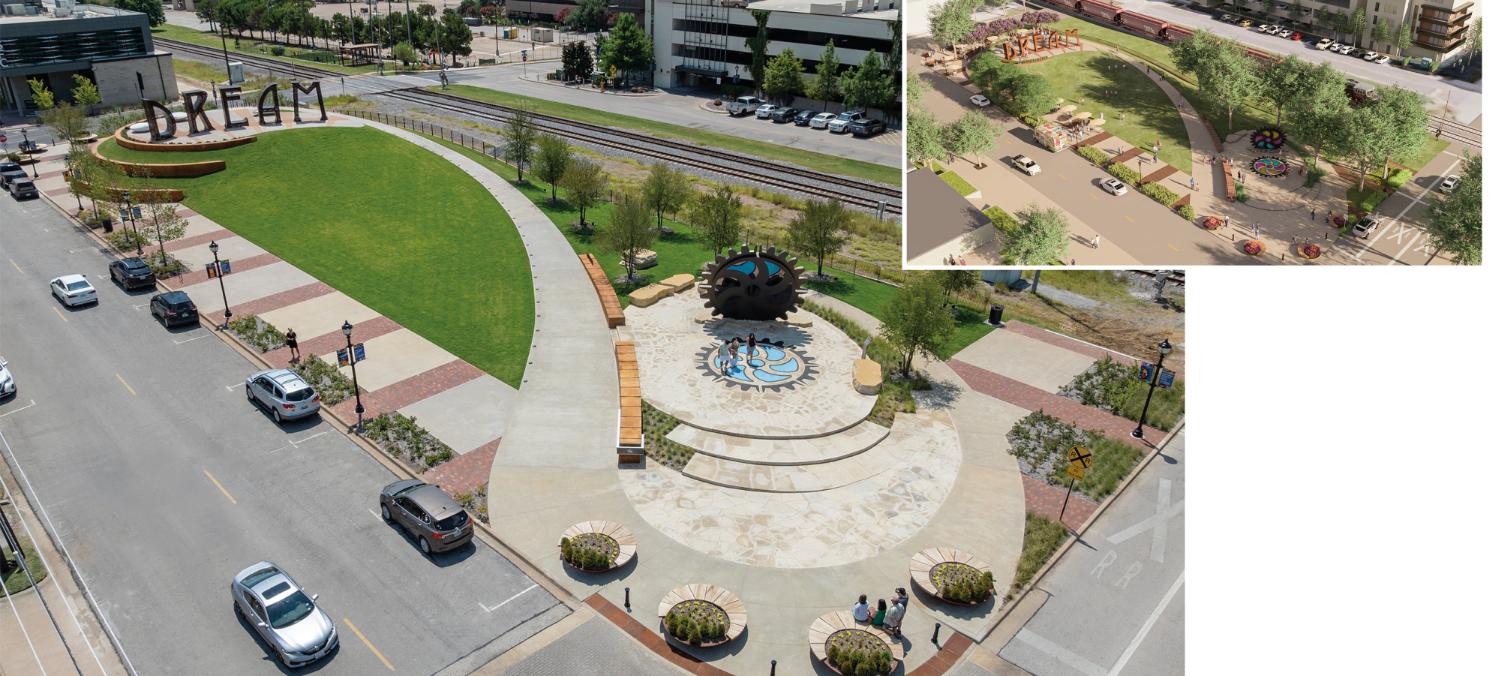
Rotary Dream Park // MESA Design Group
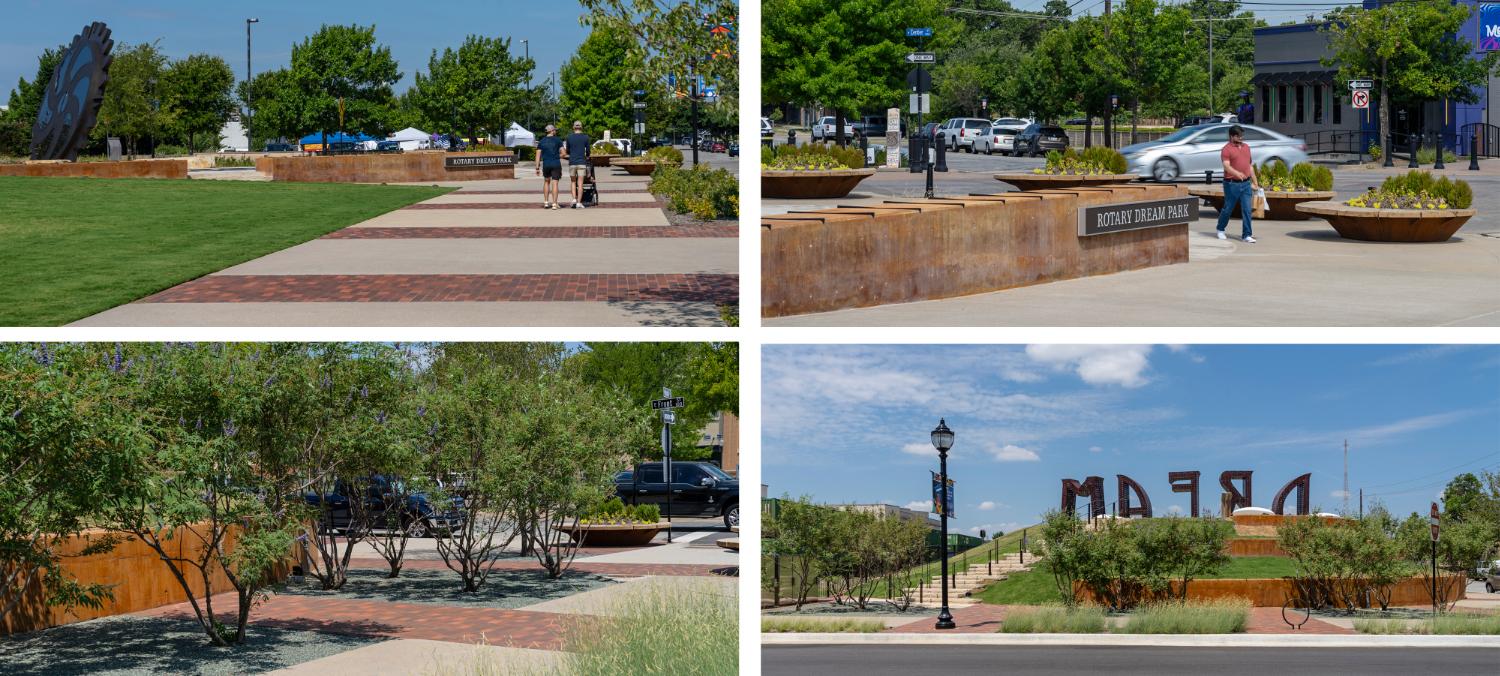
Rotary Dream Park transforms an underutilized downtown site into a vibrant civic destination that unites monumental public art, green space, and community identity. Anchored by the iconic DREAM and BOUNDLESS sculptures, the park blends art, recreation, and placemaking to create an inviting gathering space for all users. Sustainable design strategies— including native landscaping and pedestrian-focused amenities— enhance walkability and long-term performance. The park has catalyzed downtown activation, increased foot traffic, and strengthened Arlington’s cultural and economic vitality.
MERIT AWARD
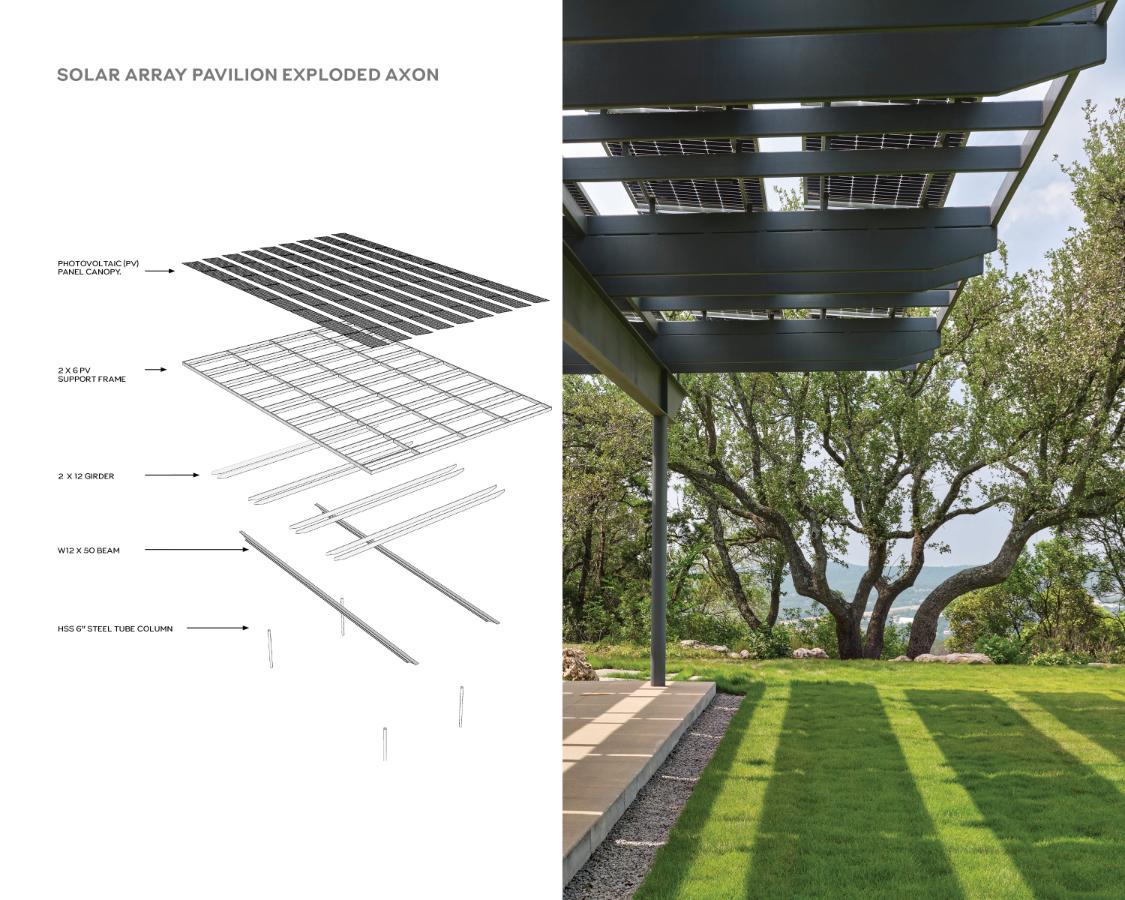
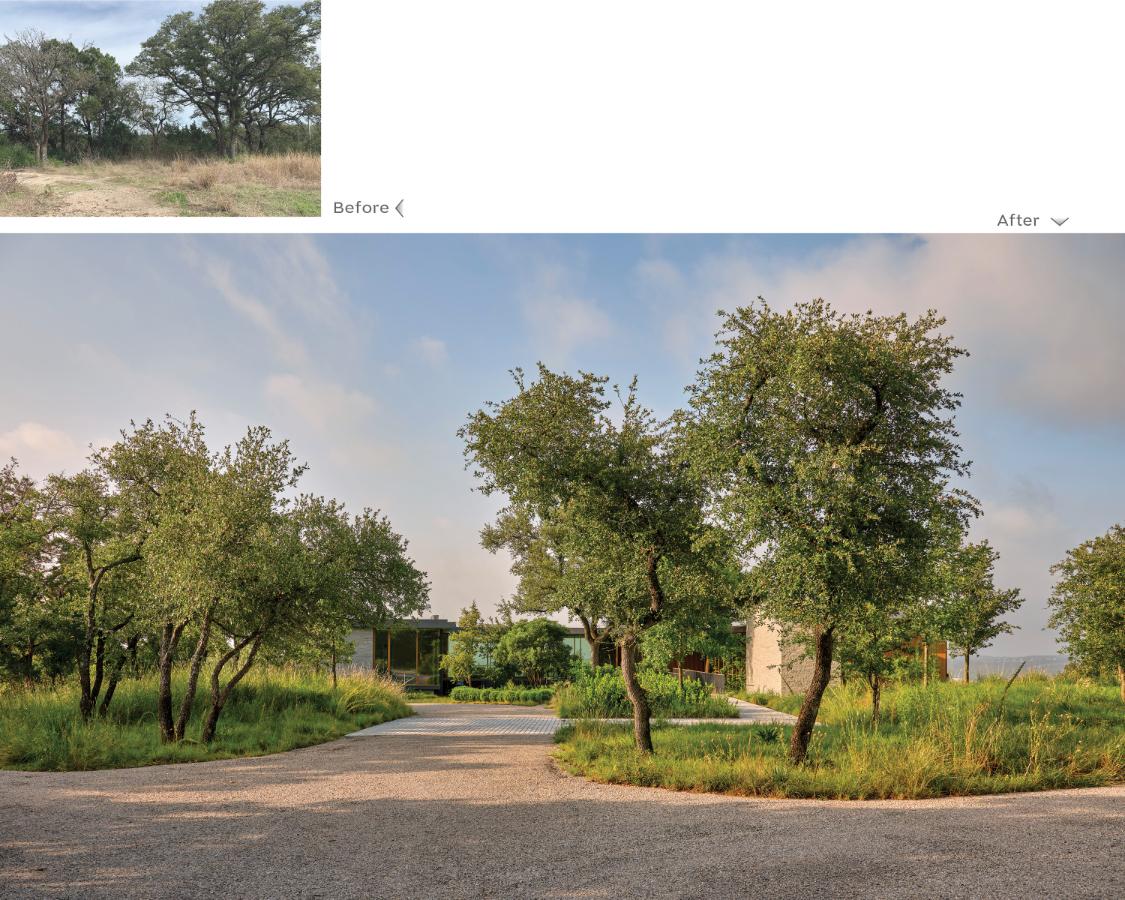
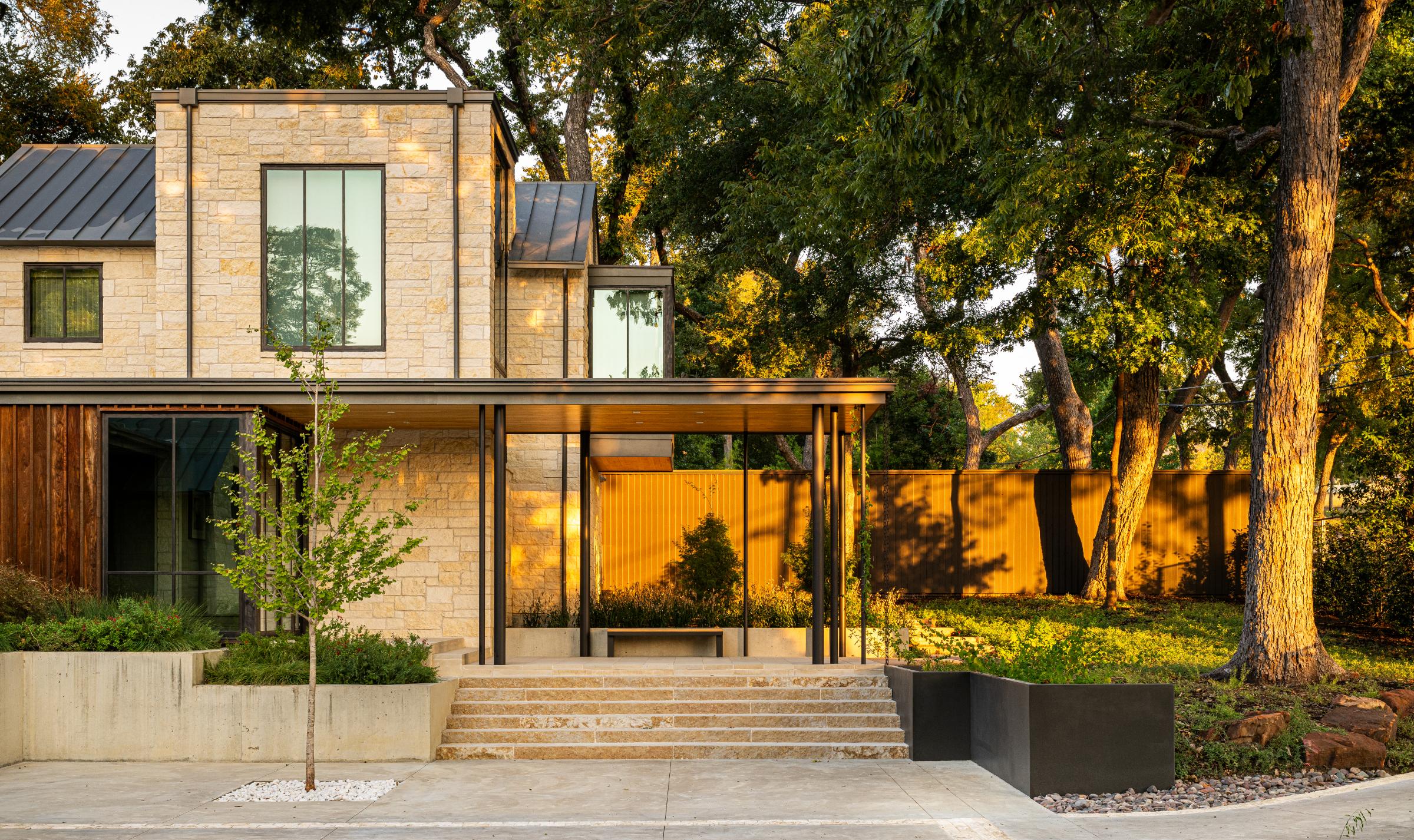
The City Park residence is a 4.2-acre property located in northwest Austin. Sited on a southerly exposed hillside in the Balcones Escarpment, the property has dramatic views overlooking the Pennybacker Bridge and downtown skyline beyond. The landscape design focuses on ensuring the architecture feels anchored in the existing “shelf” where the prior home resided. Native plantings serve to heal disturbed land post construction. A generational residence for the Owner, the exterior spaces provide joy for all age groups. A sense of escape and discovery are instilled whenever you have an opportunity to walk the property.
City Park Residence
// Hocker
MERIT AWARD
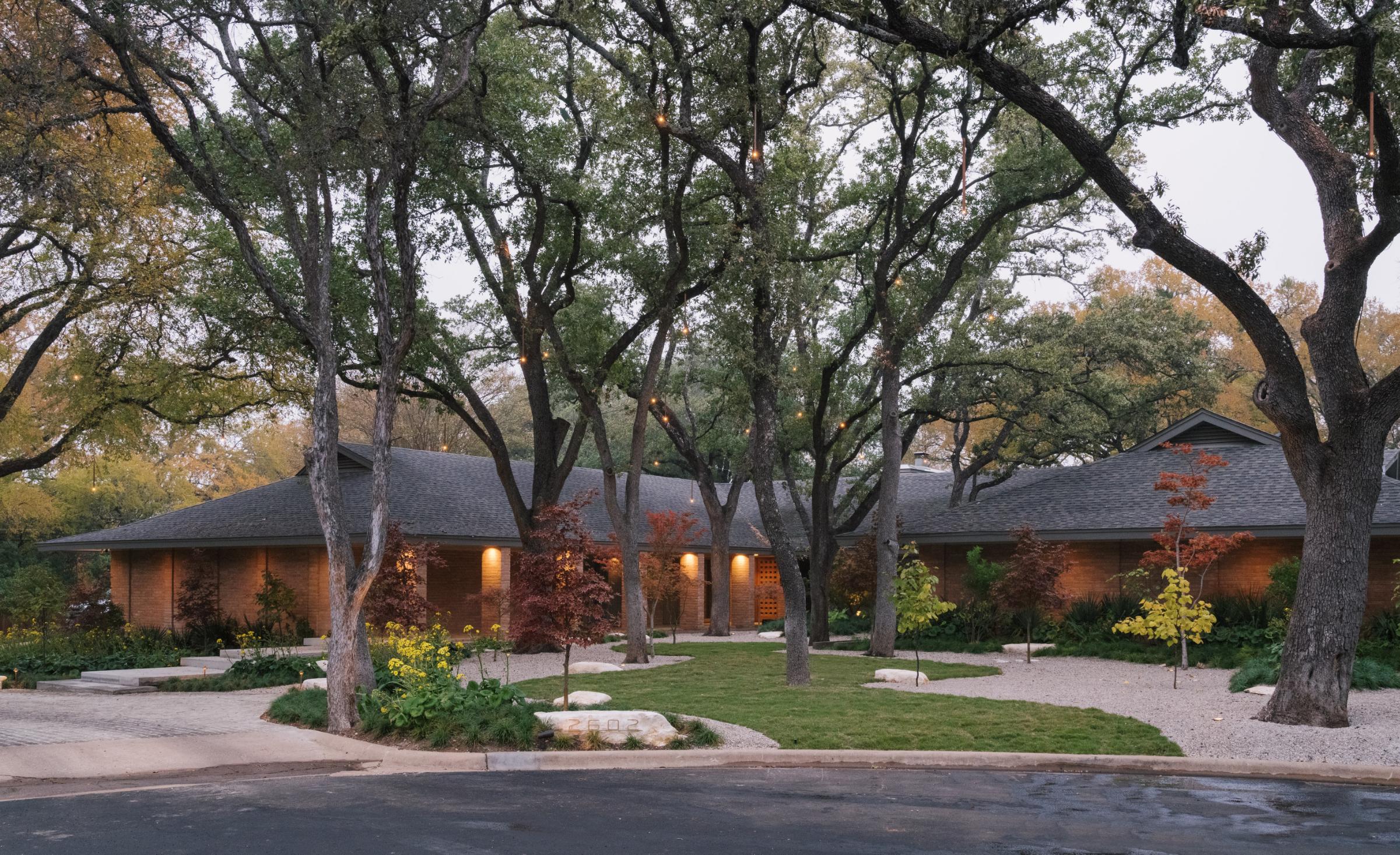
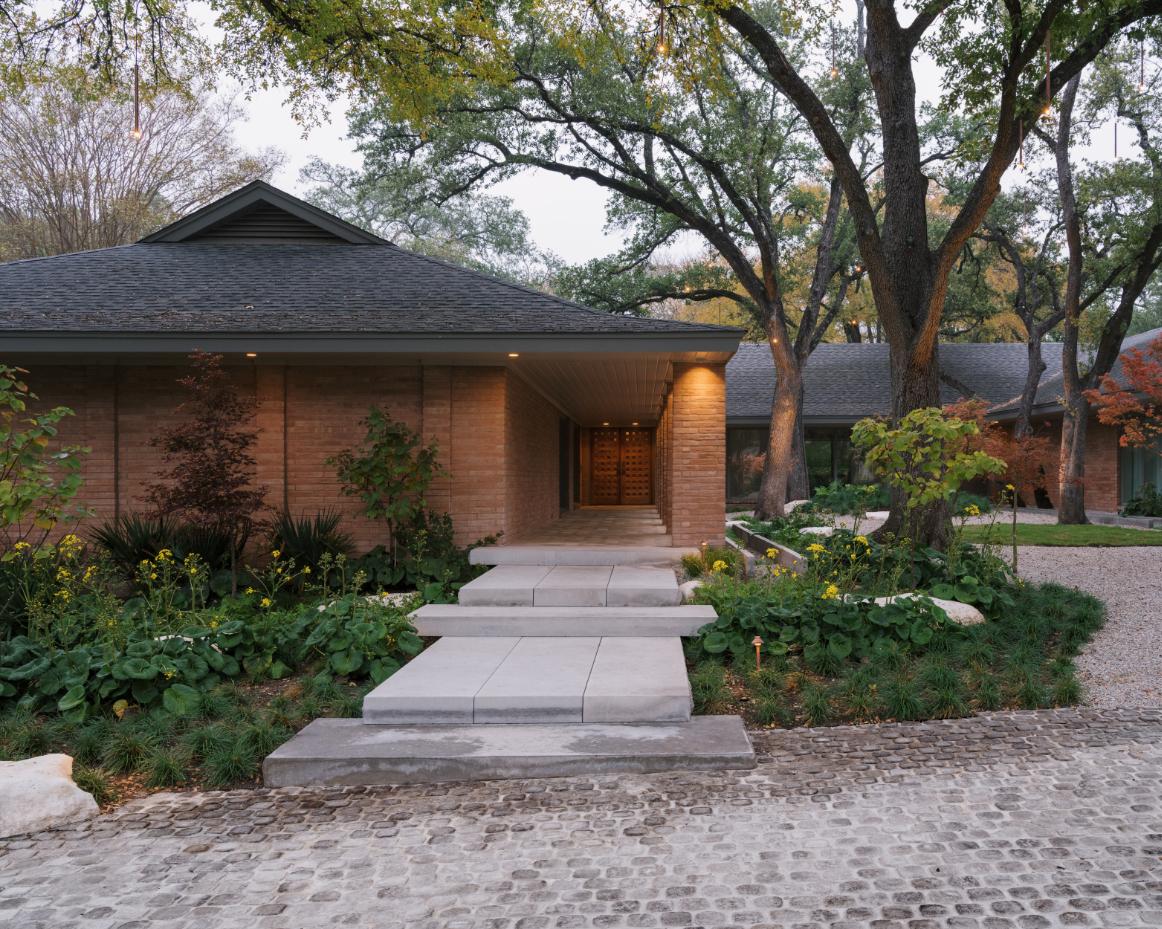
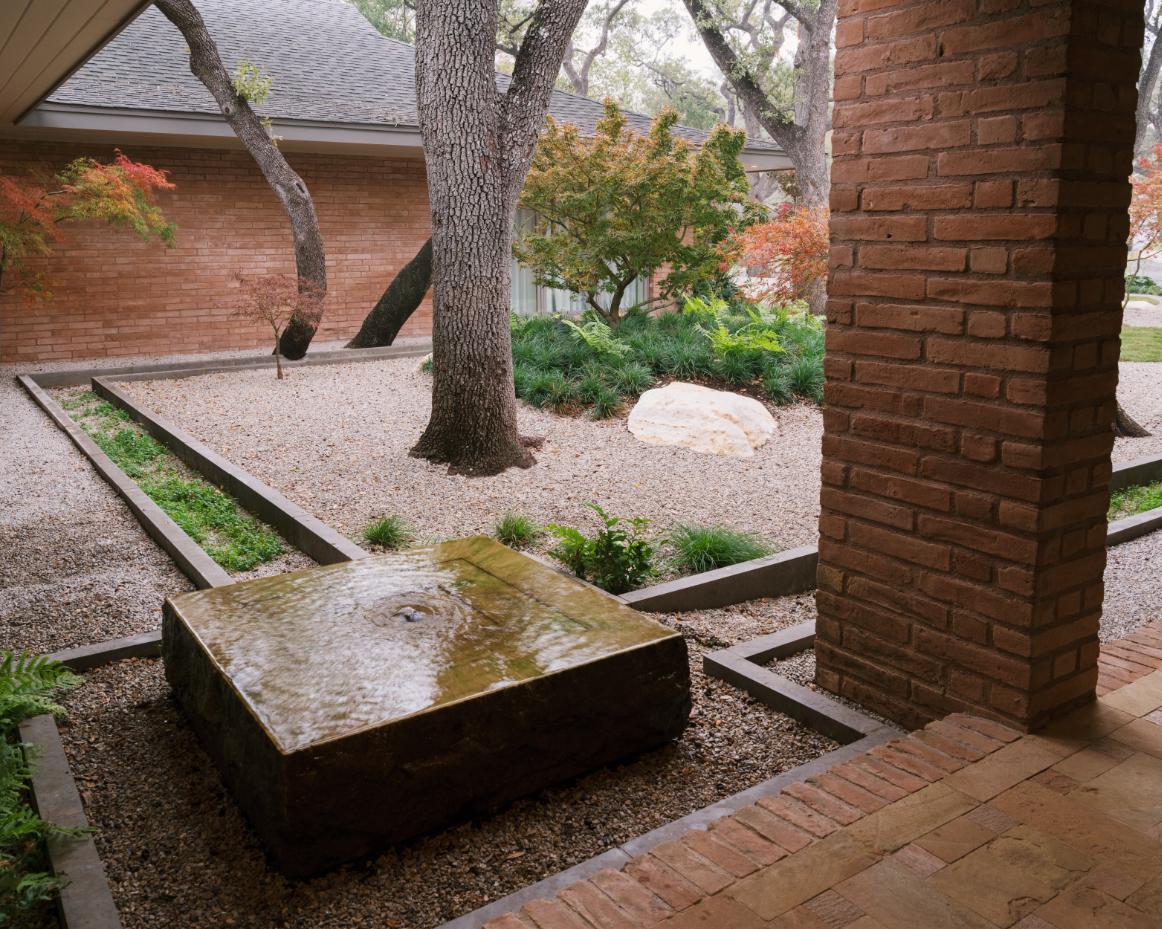
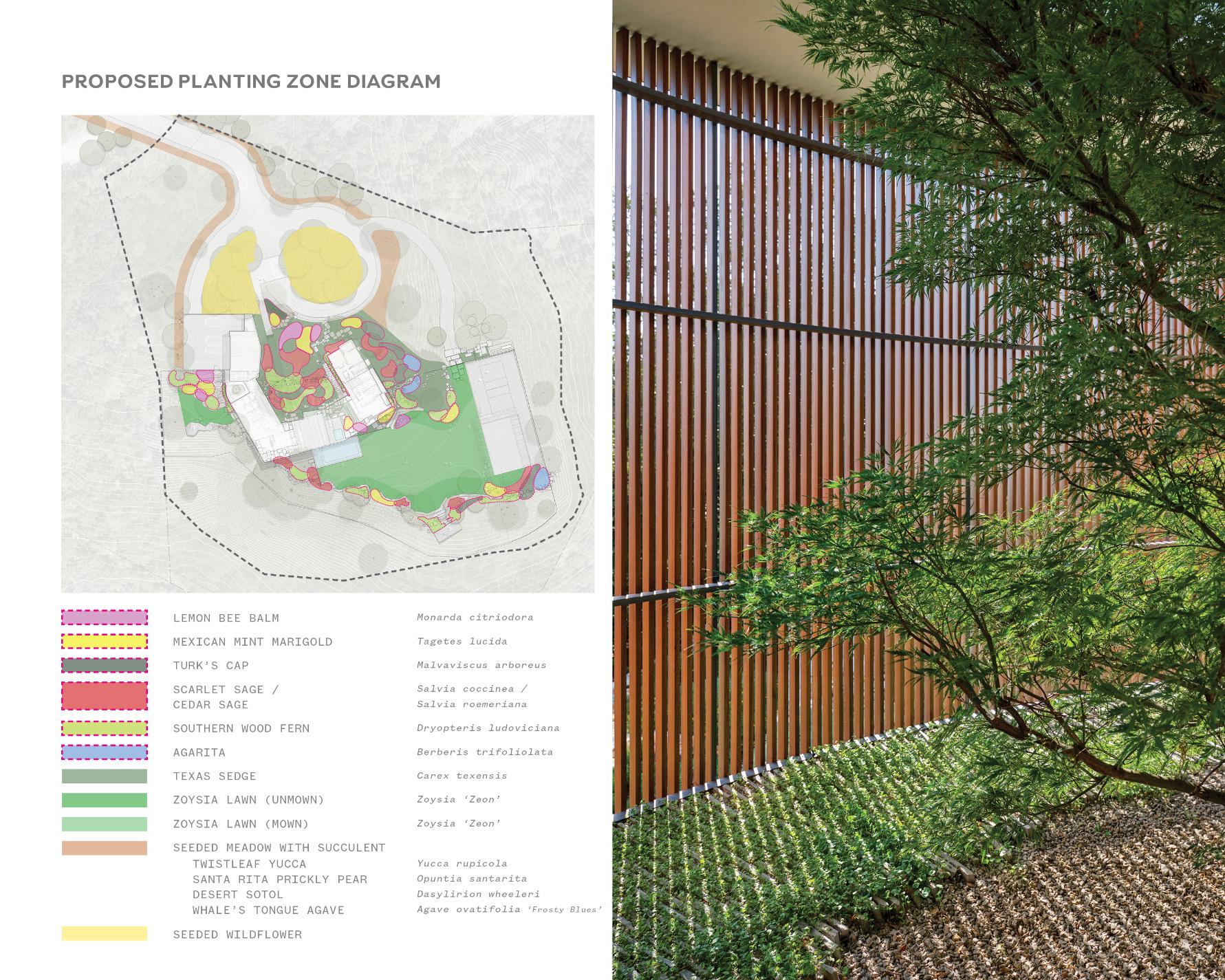
Built in 1961, this reimagined mid-century engawa style entry garden honors its modernist and Japanese-inspired roots while integrating contemporary stormwater and compositional landscape strategies. The design interprets the original work of C.C. Pinkney by restoring ceremonial arrival, layered thresholds, and circulation through a bridgecentered entry sequence. Limestone runnels and swales transform water into a visible design element, while restrained planting and authentic materials create a calm, immersive garden. The renewed landscape reconnects the home to its architectural legacy while supporting resilient, contemporary living.
Engawa Garden // Campbell Landscape Architecture
MERIT AWARD
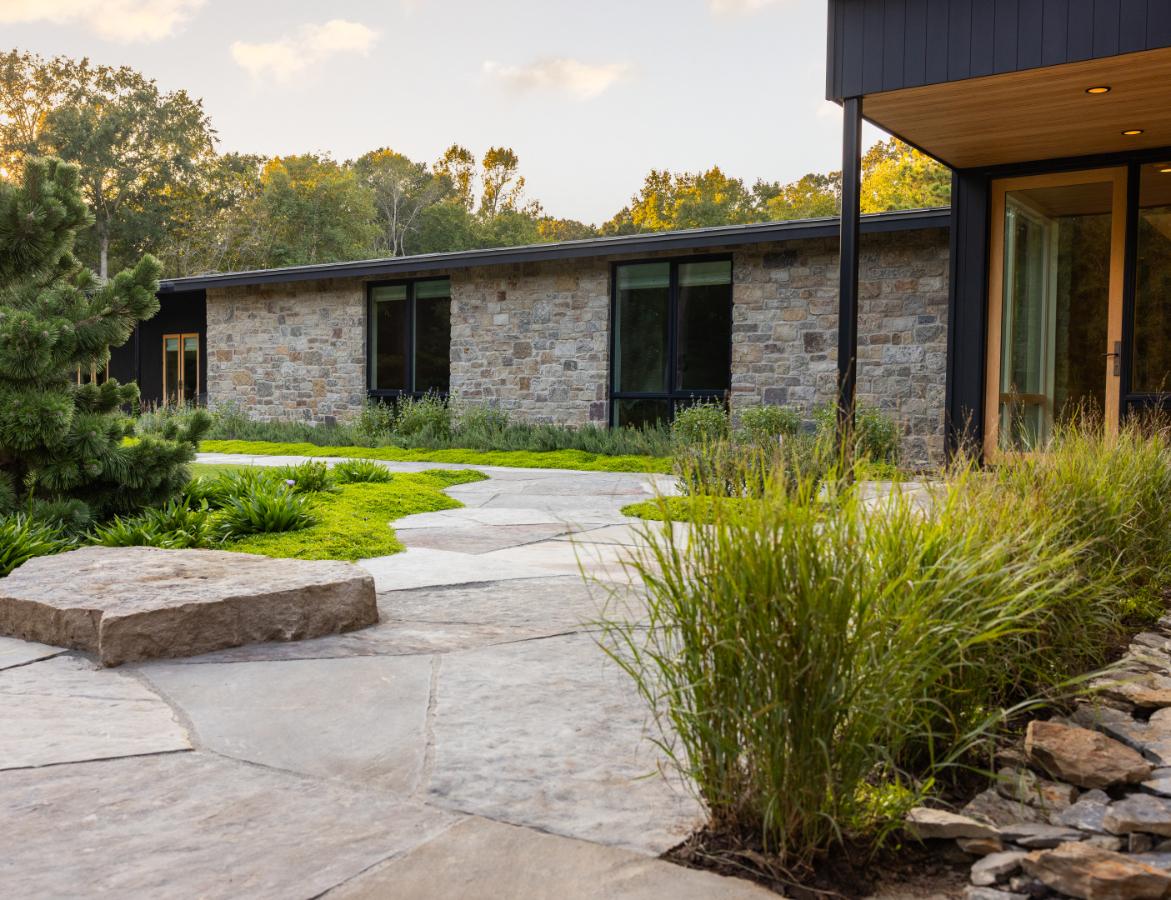
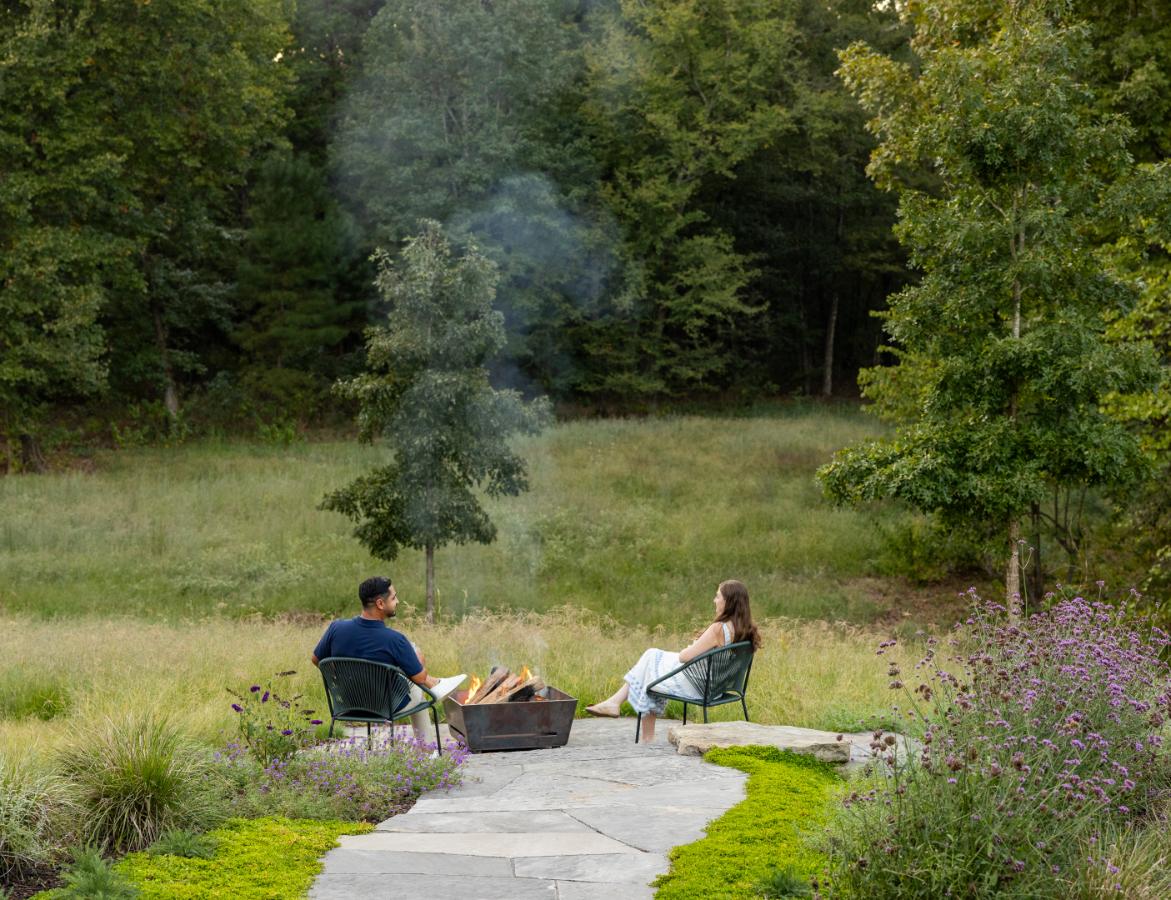
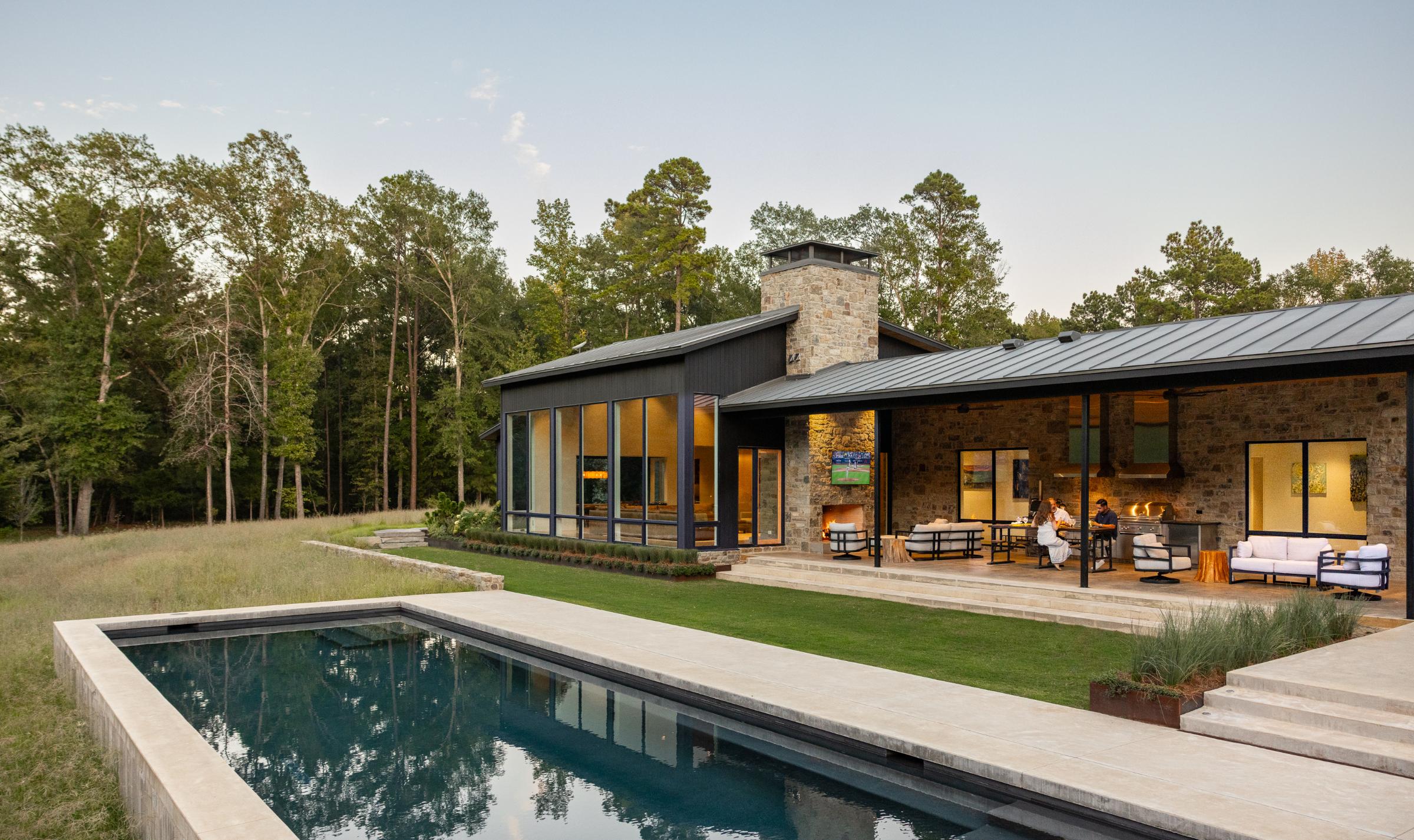
At Rose Branch, the landscape establishes the framework for living within the East Texas woods. The design prioritizes topography, views, connection to the native landscape, and seasonal changes to shape outdoor spaces that feel both purposeful and seamless with the architecture. Native grass meadows, locally sourced stone, and carefully scaled interventions create a strong relationship between architecture and land. Rather than competing with the surrounding environment, the landscape reinforces it, offering low-maintenance systems, meaningful outdoor rooms, and a refined material palette that supports daily use while preserving the site’s natural character.
Rose Branch // Landvisions
MERIT AWARD
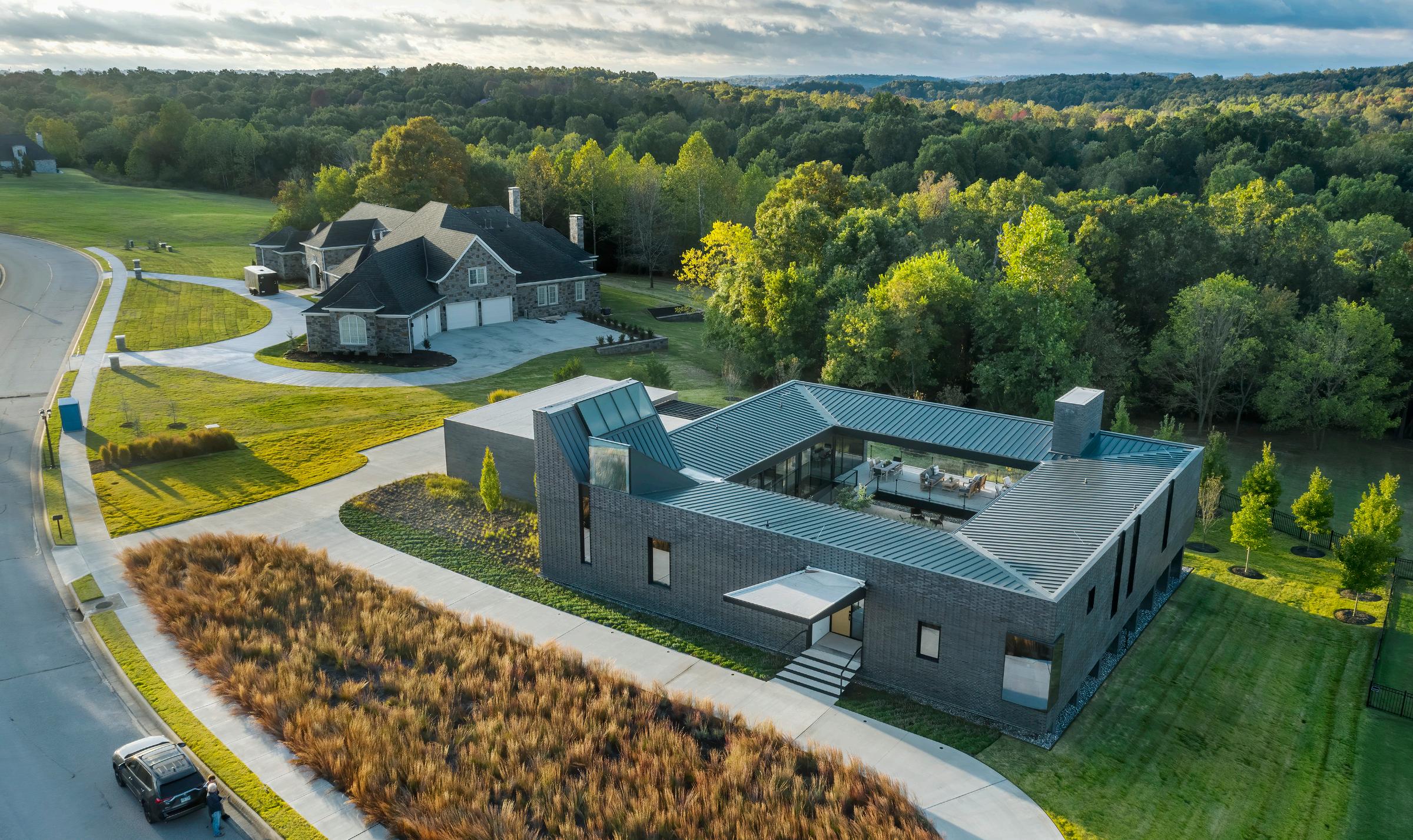
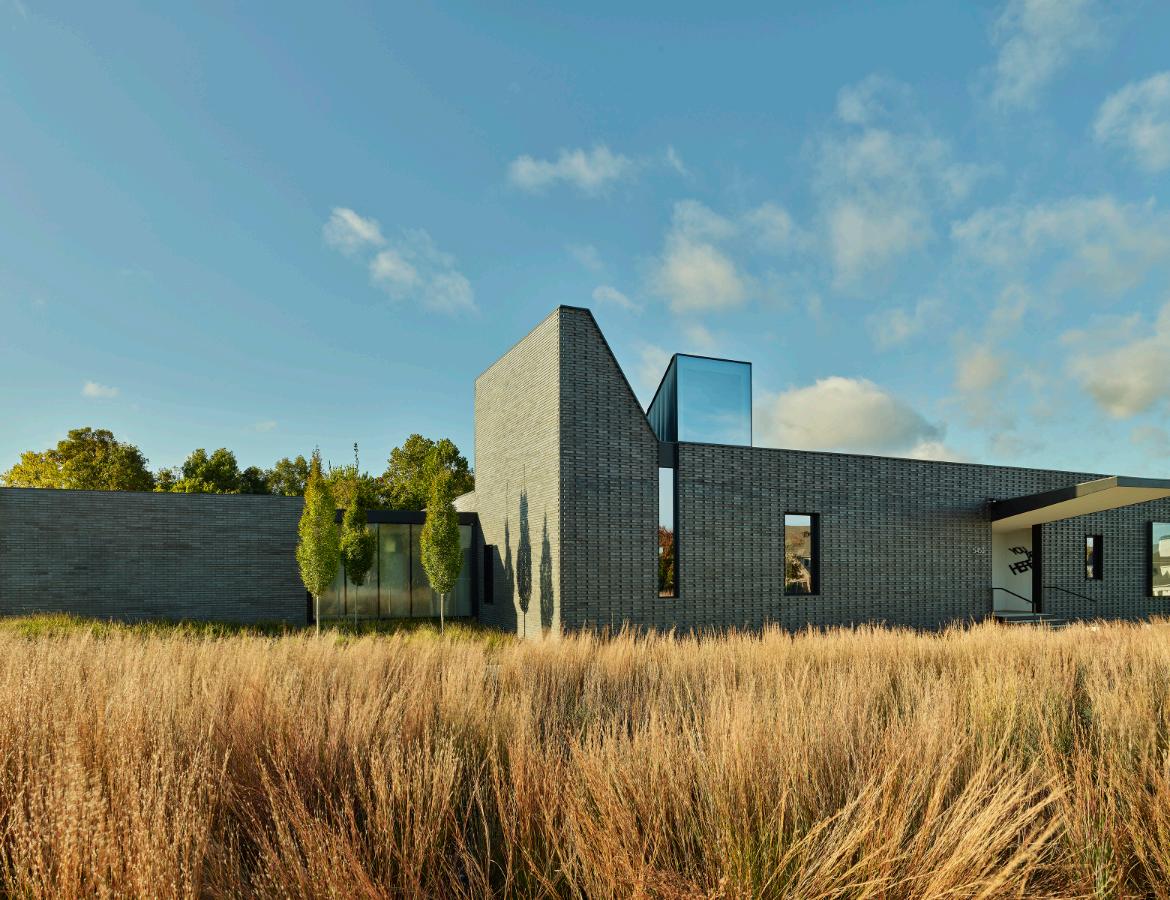
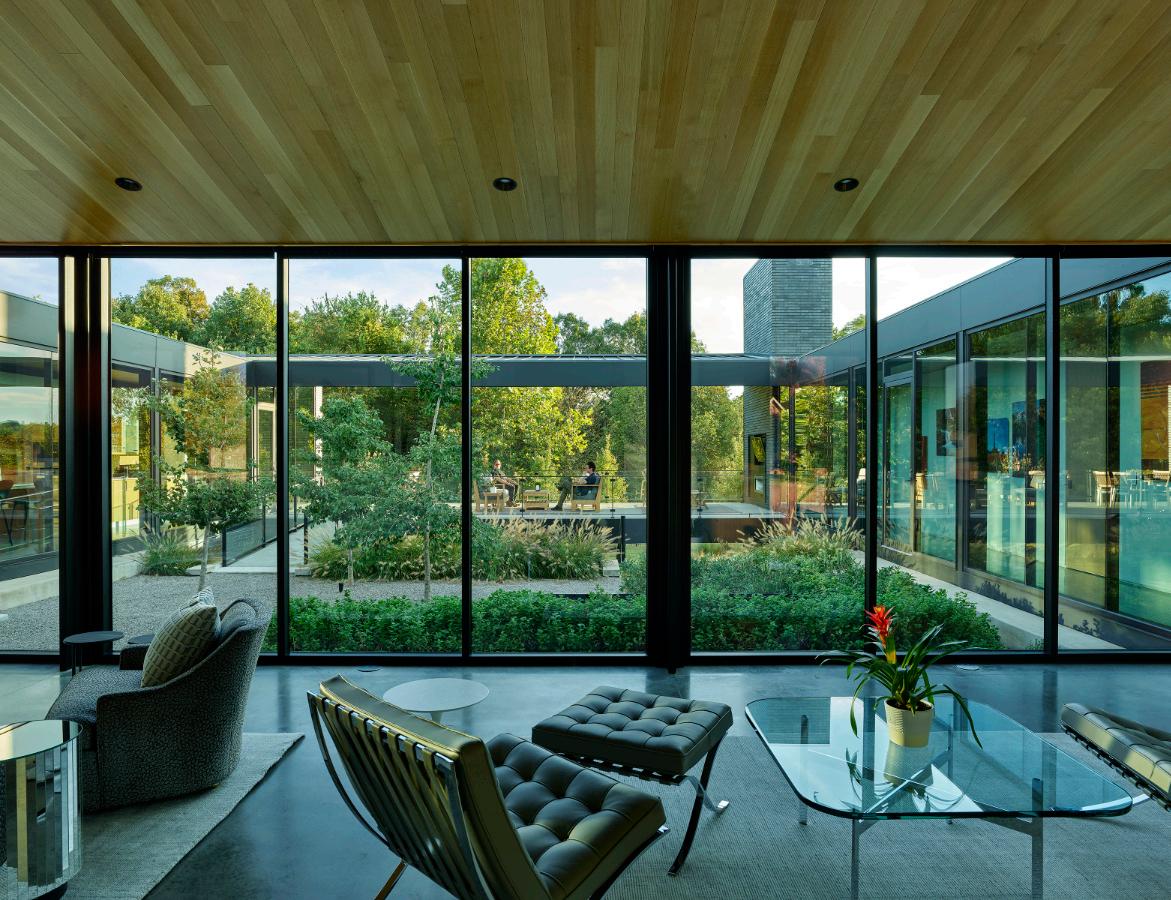
This residential landscape draws inspiration from the grassland ecology of Northwest Arkansas, a stark departure from the unsustainable lawns of the surrounding golf course community. Plantings of native grasses provide a dynamic setting that changes dramatically through the seasons, while also reducing water consumption and sinking carbon deep into the soil. Based on a Roman courtyard house, the building faces inward, privileging the central landscape that lies at the heart of the project. A series of terraced plantings lead from the courtyard down to a garden of switchgrass bounded by an existing woodland.
MERIT AWARD
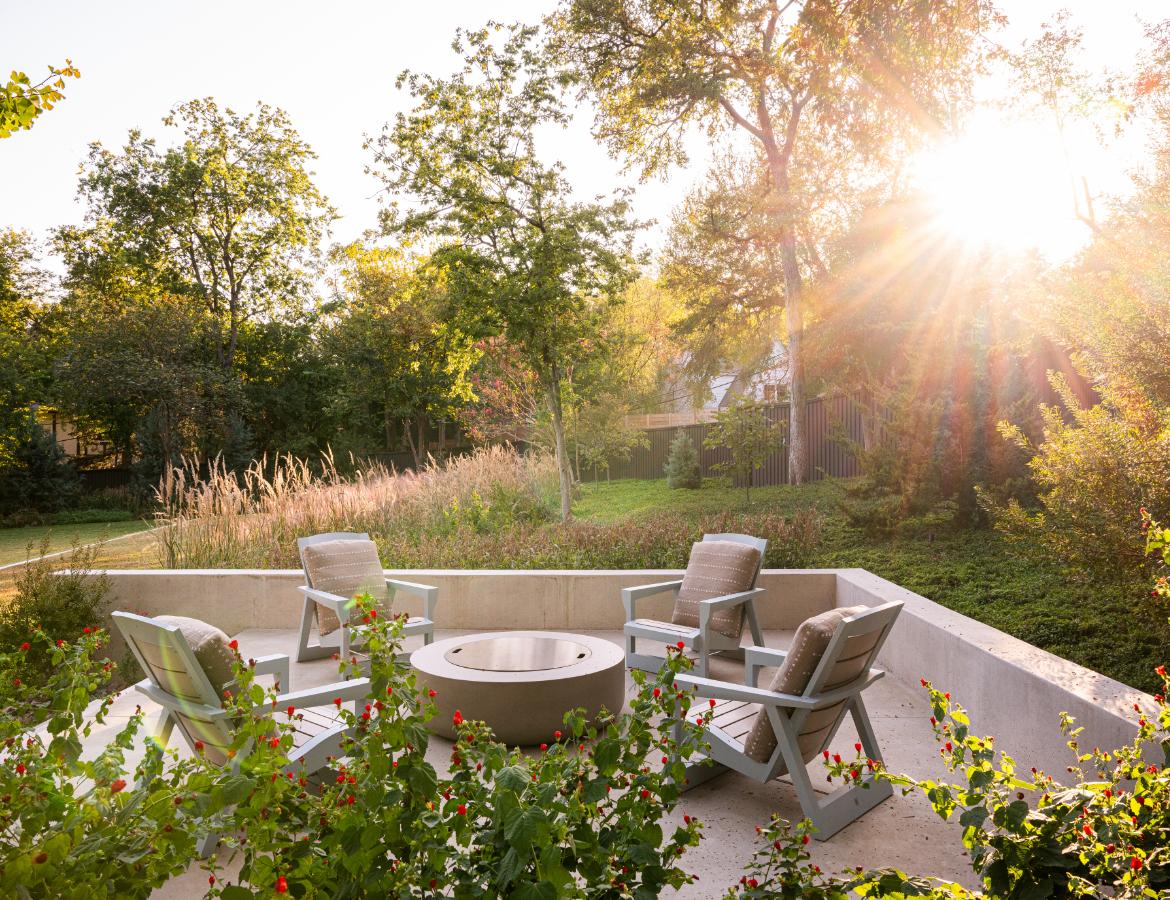
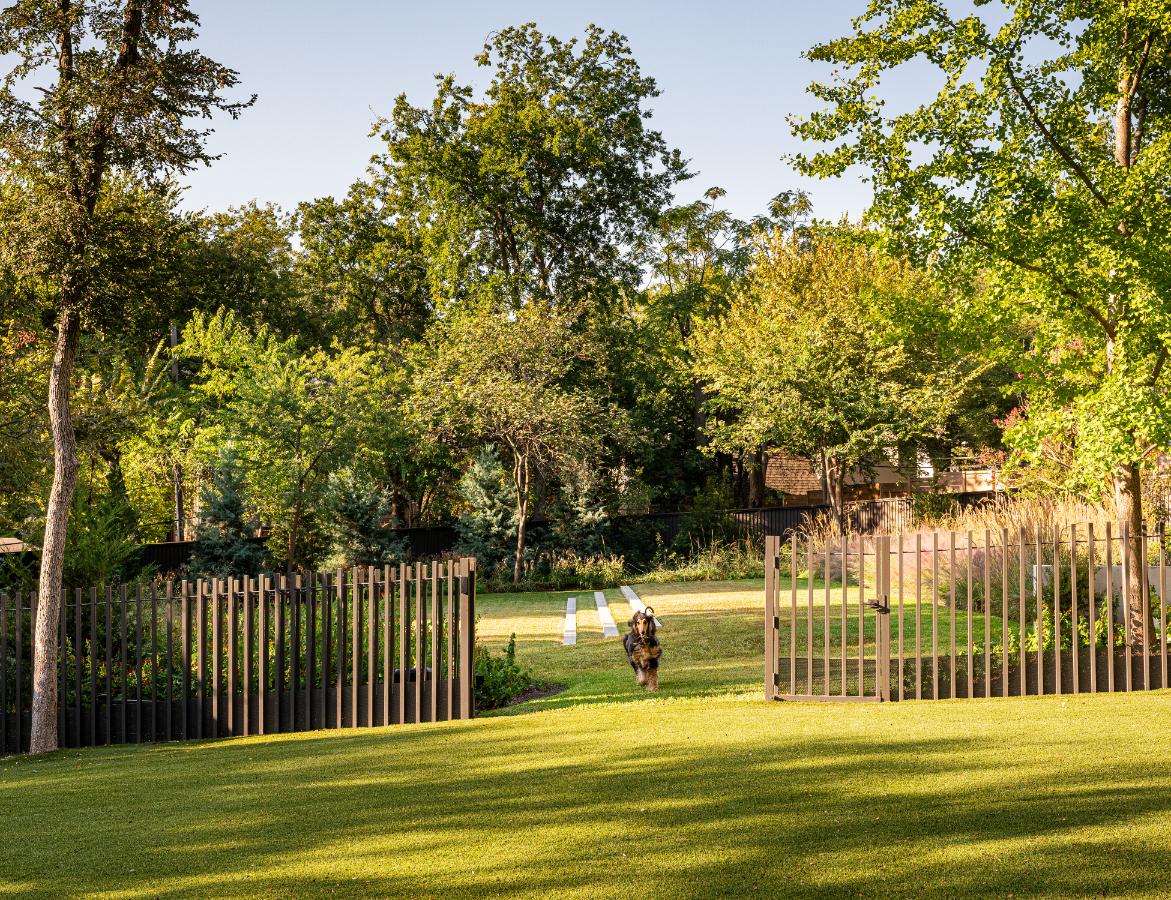
Developed through close collaboration with the architect and homeowners, this urban ranch landscape is organized to support dog training, circulation, and outdoor use within a wooded Texas site. The site-responsive design frames two buildings within a mature woodland, using native plantings, steel retaining walls, and salvaged stone to structure a sequence of outdoor rooms. Curated woodland gardens transition to larger training and gathering spaces, including a puppy garden with terraced lawn and a fire garden. Grading, terracing, and fencing organize movement and access, while seasonal change and material durability define a resilient, adaptable landscape.
Urban Ranch // Paper Kites Studio
MERIT AWARD
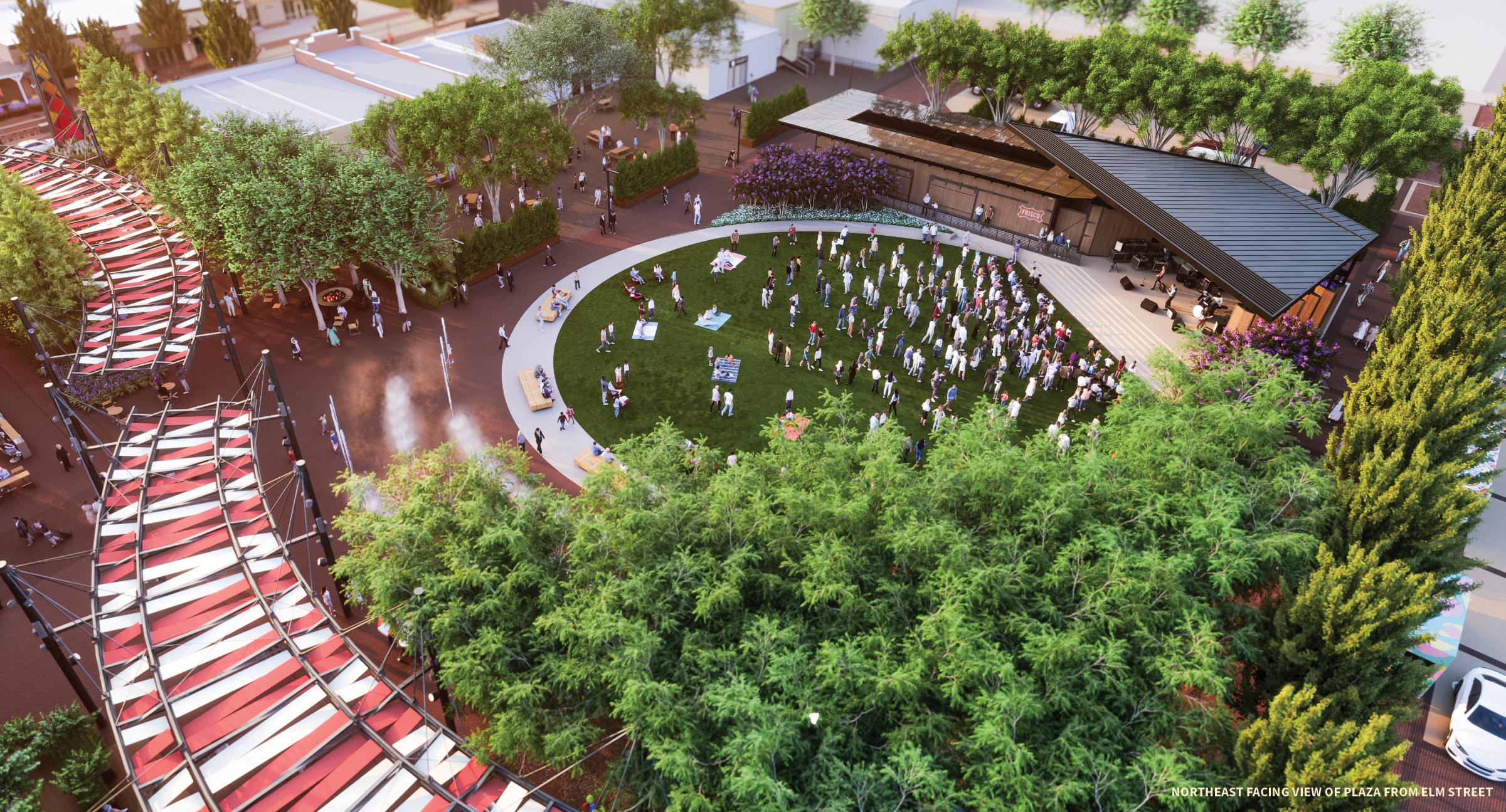
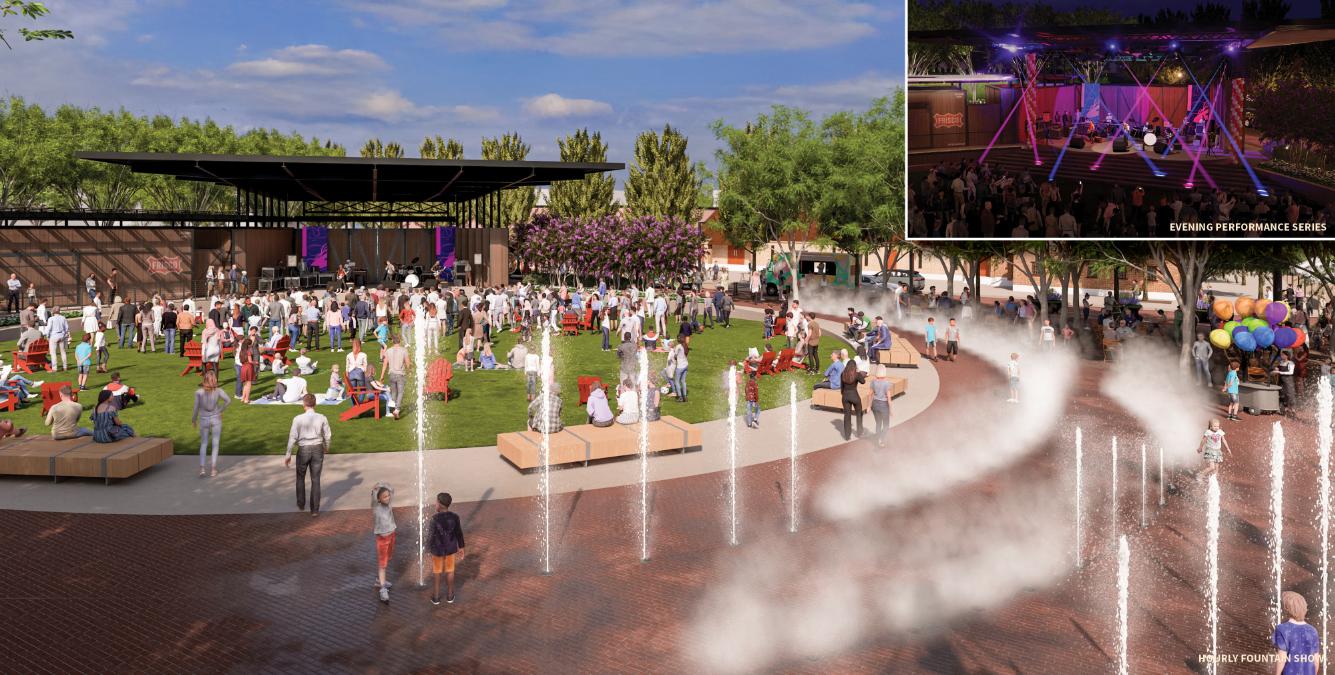
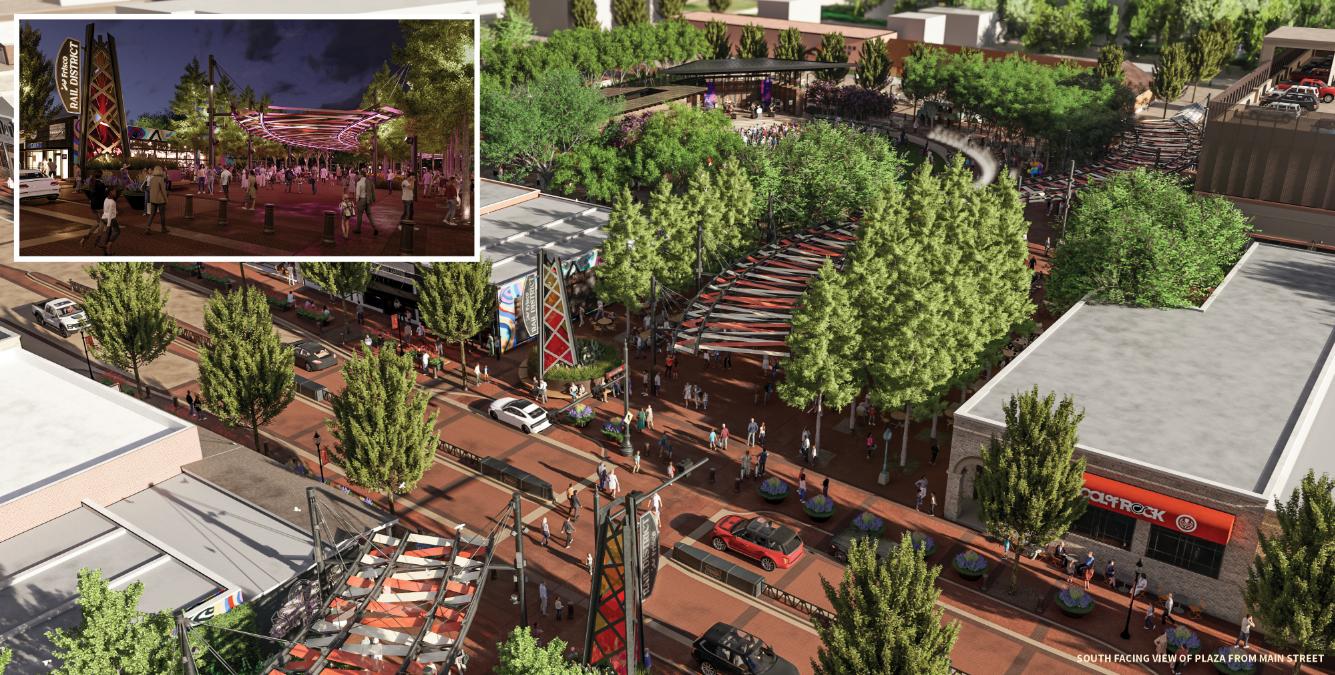
4th Street Plaza // MESA Design Group
The 4th Street Plaza is the crown jewel of Frisco’s historic Rail District renaissance, anchoring downtown’s transformation ahead of the City’s hosting of the 2026 World Cup. Rooted in the legacy of rail commerce and civic exchange, the plaza reclaims a former roadway as a people-first cultural landscape. Climate-responsive design, native planting, water-conscious infrastructure, and inclusive community engagement converge to create a vibrant civic heart that celebrates heritage, fosters health and connection, and positions downtown Frisco as a resilient and welcoming destination on a global stage.
MERIT AWARD
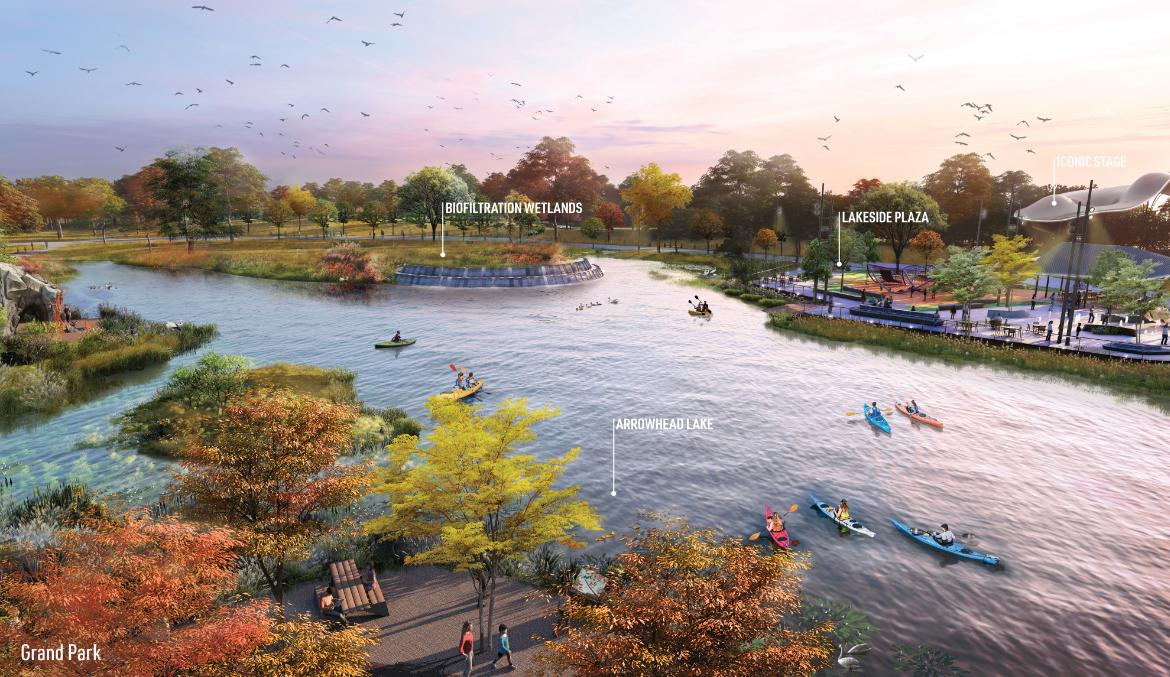
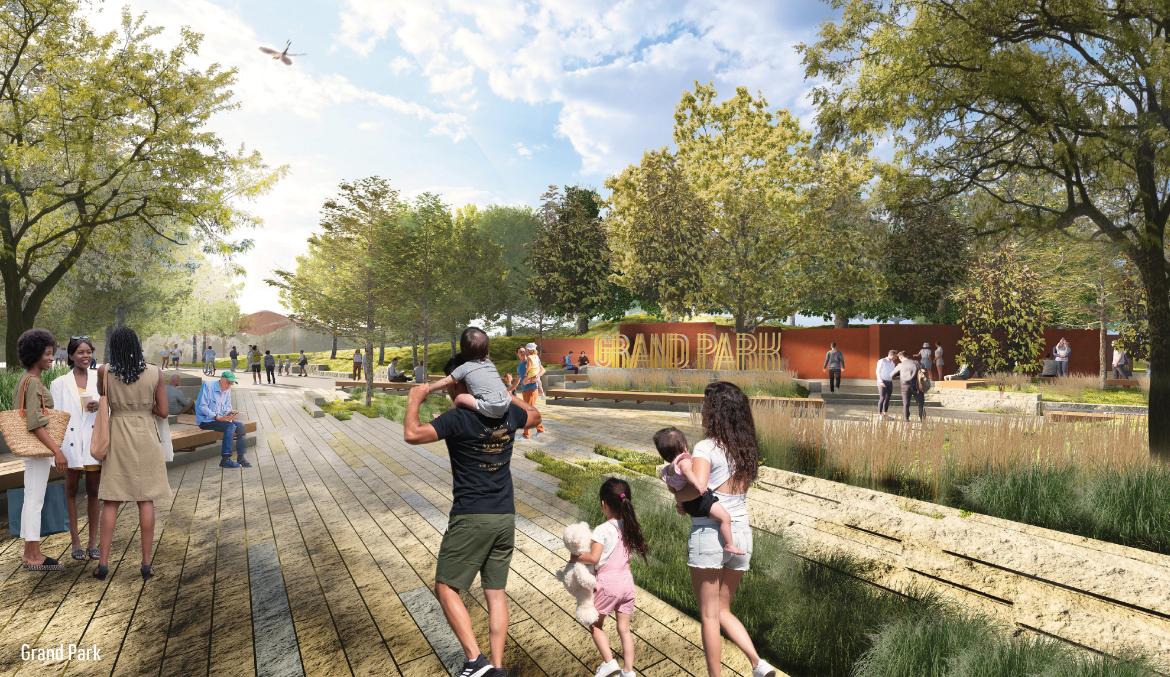
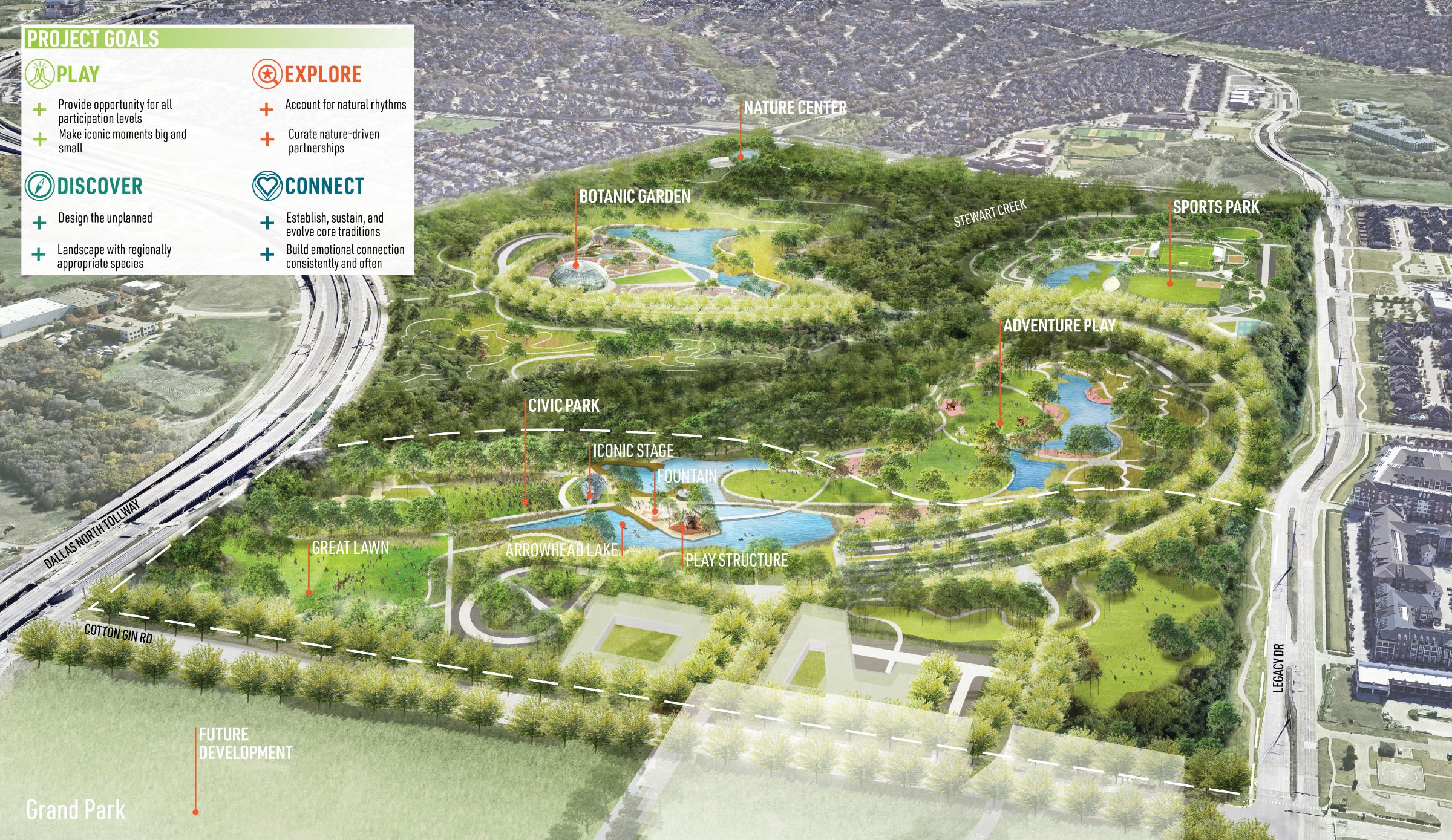
Grand Park reimagines 320 acres of ecologically diverse land, transforming Frisco’s most strategic remaining open space into a regional destination where recreation and natural systems are inseparably linked. Civic Park, the 40-acre first phase, serves as the park’s primary gateway, introducing a living, biofiltered recreational lake, an iconic performance stage, and multi-generational gathering spaces that invite exploration, discovery, play, and connection while establishing a resilient framework that marries civic life with ecological function.
Grand
Park // Design Workshop
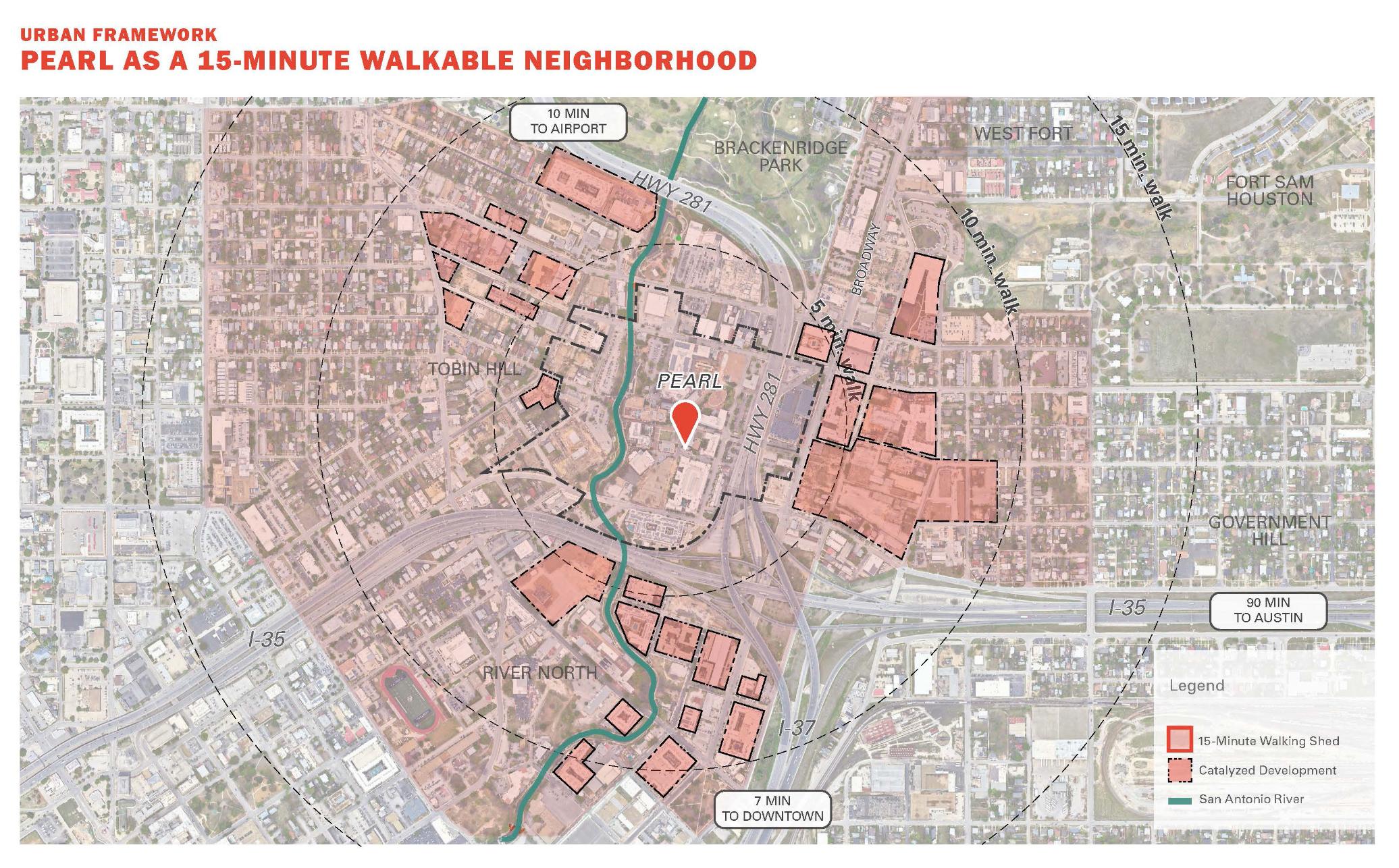
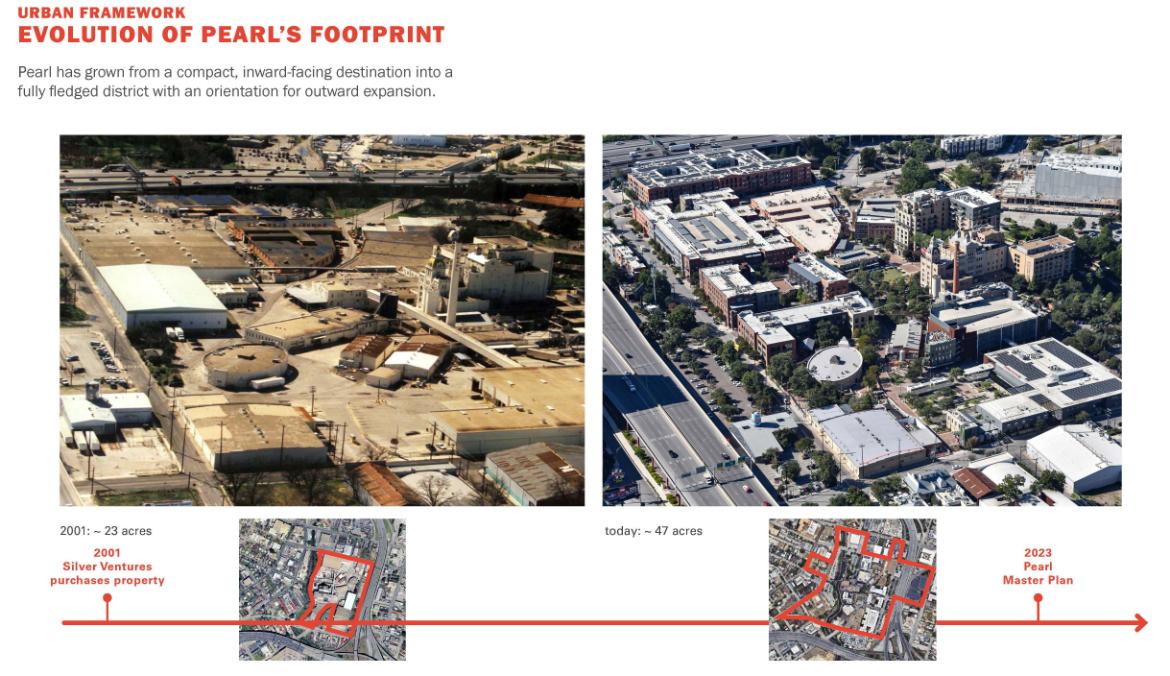
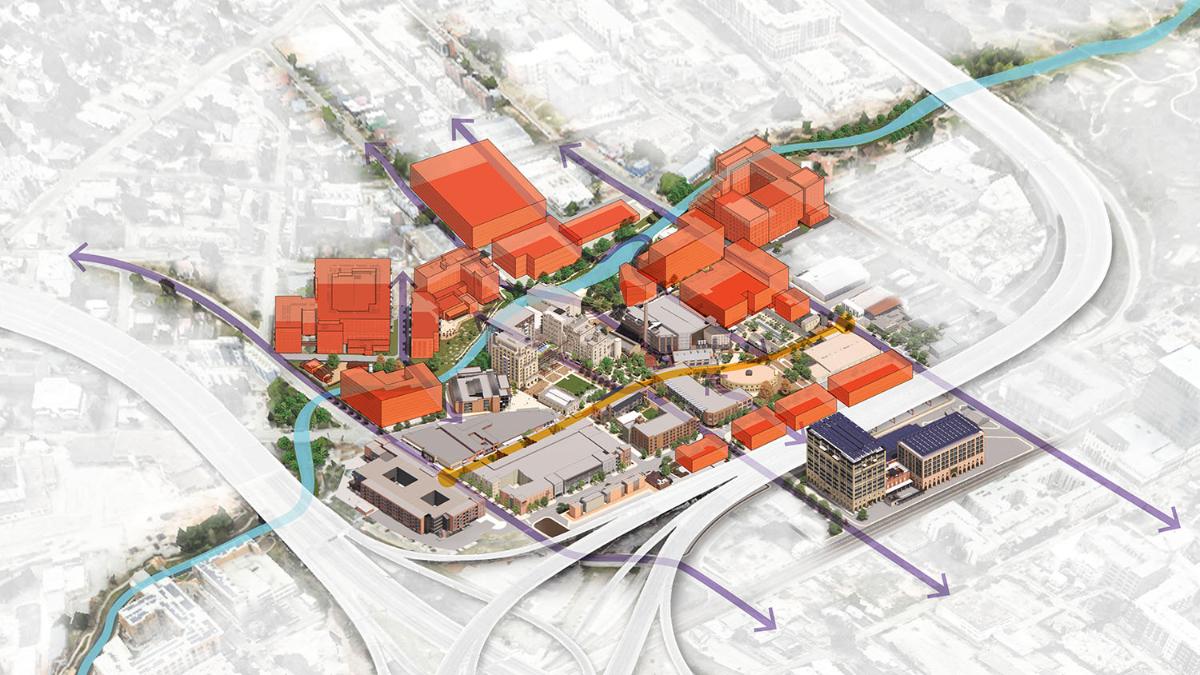
Over the past decade, Pearl has served as a living-breathing case study of successful mixed-use development both locally and globally. As Pearl plans for its future, strategies for expanding its footprint to further engage the San Antonio River, the Broadway corridor, and surrounding neighborhoods will extend Pearl’s reach and relevance with the intention of creating a more connected, walkable, socially inclusive, and economically diverse environment. The master plan serves as a north star for achieving the next phase of ambitions with innovative vertical mixed-use, missing middle housing, shared parking and multi-modal mobility.
MERIT AWARD
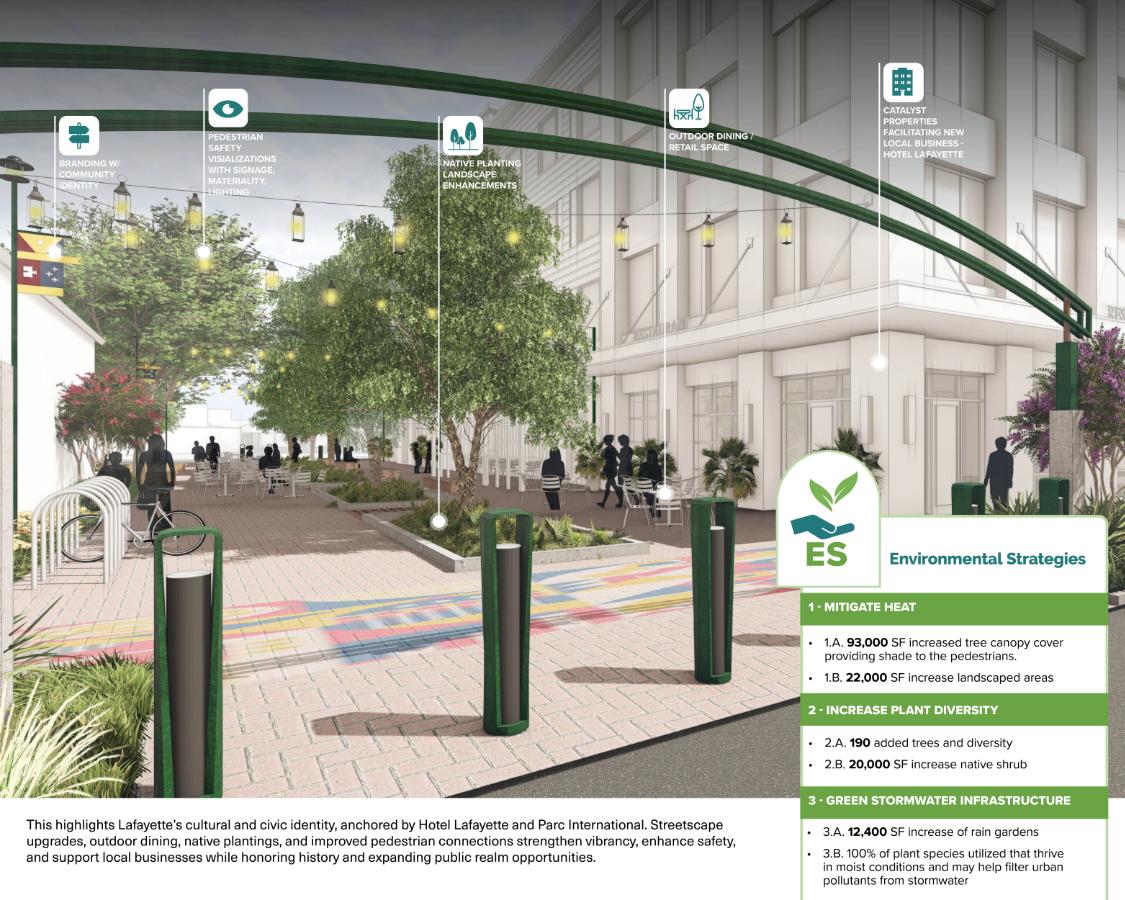
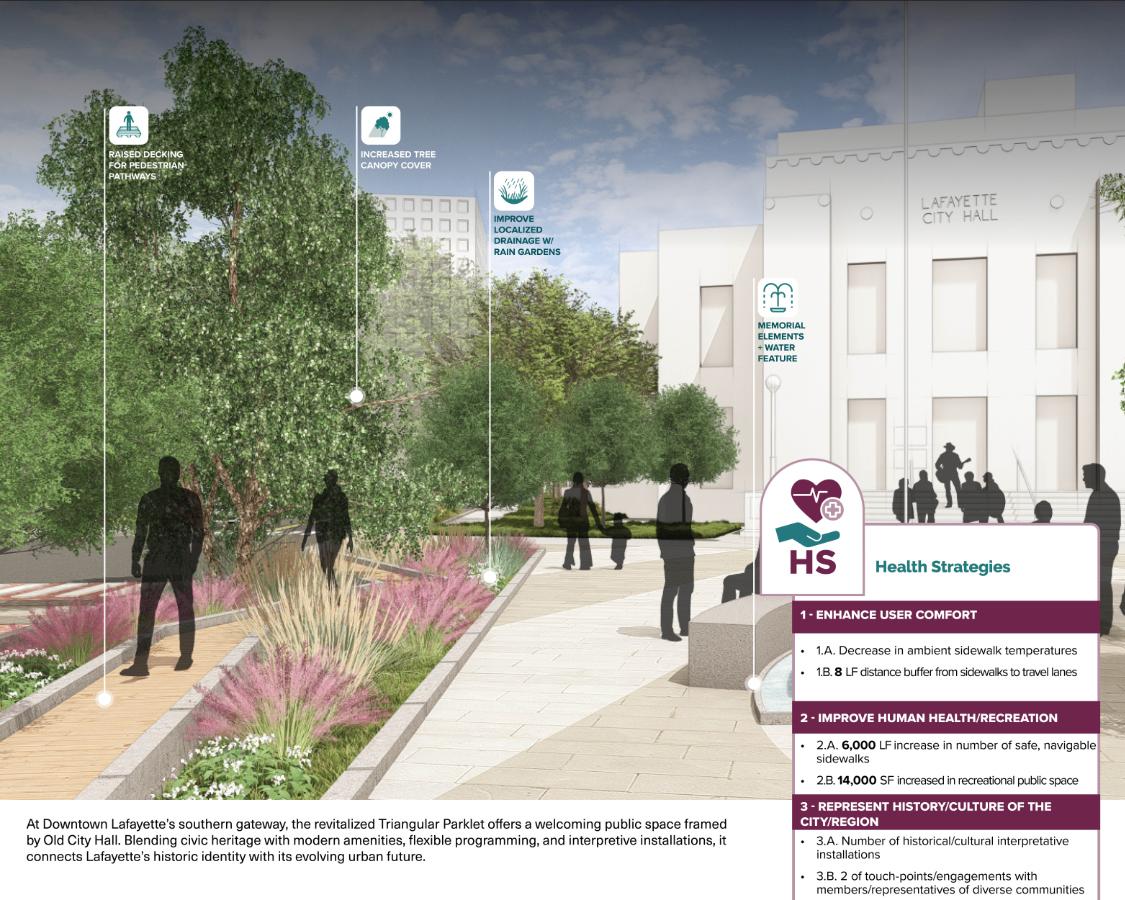
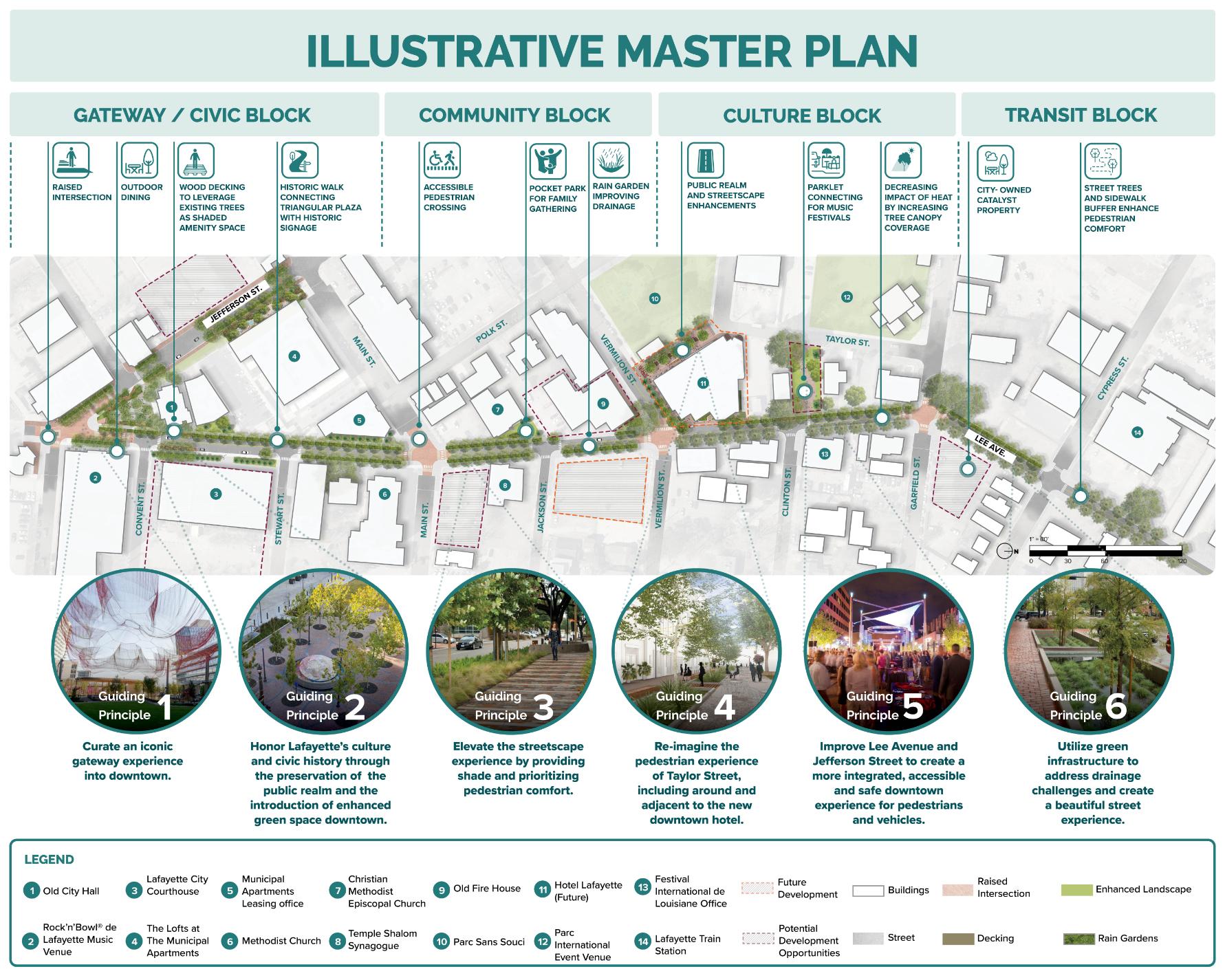
The Downtown Lafayette Corridor Revitalization Plan transforms Jefferson Street and Lee Avenue from overlooked backstreets into vibrant, pedestrian corridors that celebrate Lafayette’s cultural legacy while addressing historic flooding. Corridors are envisioned as welcoming gateways; weaving green infrastructure, public art, and cultural spaces into a framework that supports local businesses, events, and community life. Lafayette’s first inclusive, transparent engagement process was central to shaping a shared vision for revitalization and long-term stewardship. Rooted in history and firmly focused on the future, the plan balances preservation with innovation through sustainable strategies that enhance comfort, accessibility, and resilience.
Downtown
Lafayette Corridor Revitalization Master Plan // Design Workshop
MERIT AWARD
GREENprint Fort Worth: Parks, Recreation, Open Space and Public Realm
Master Plan // Urban Alchemy Collective, Stantec, Project for Public Spaces, National Service Research
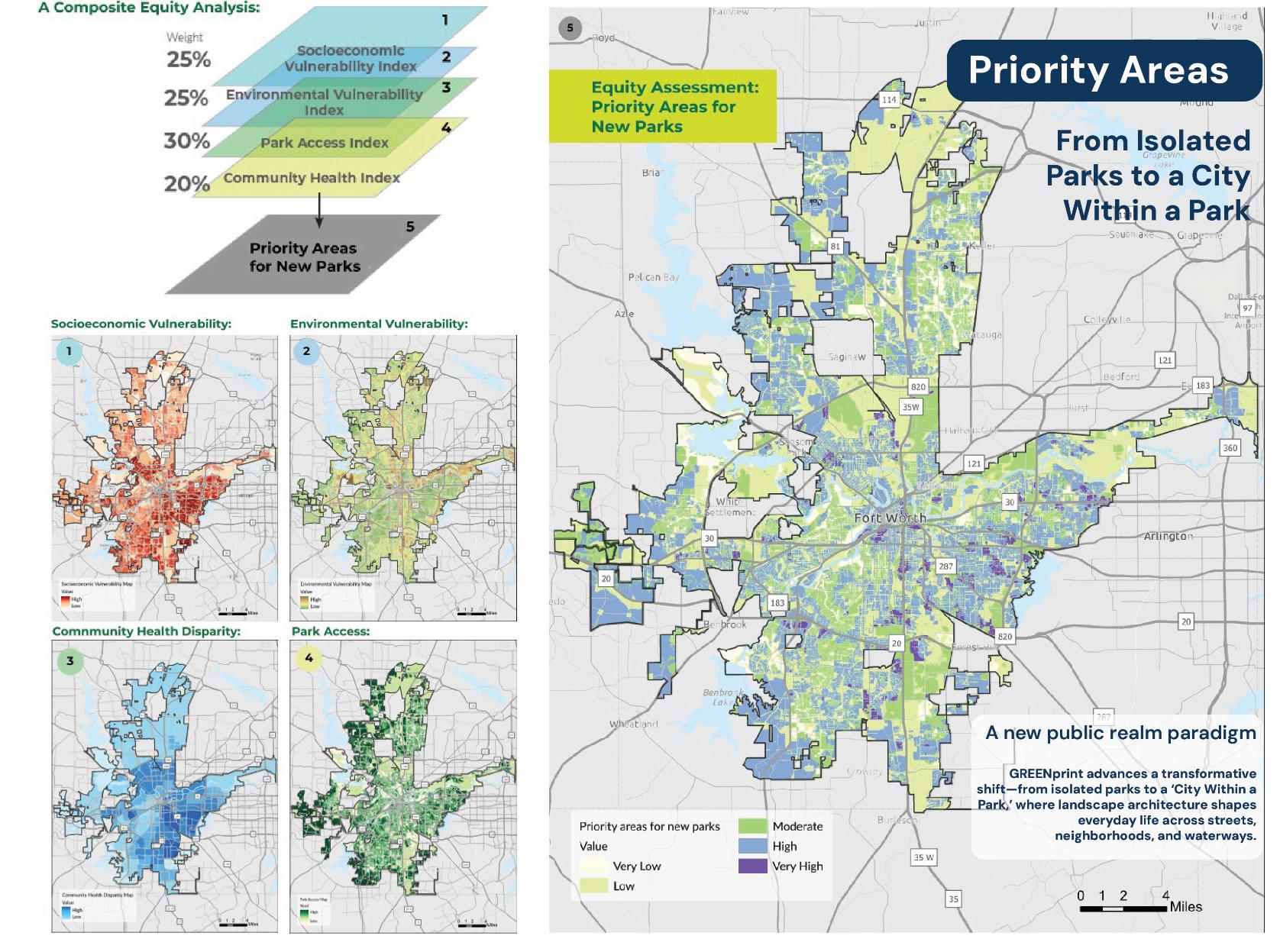
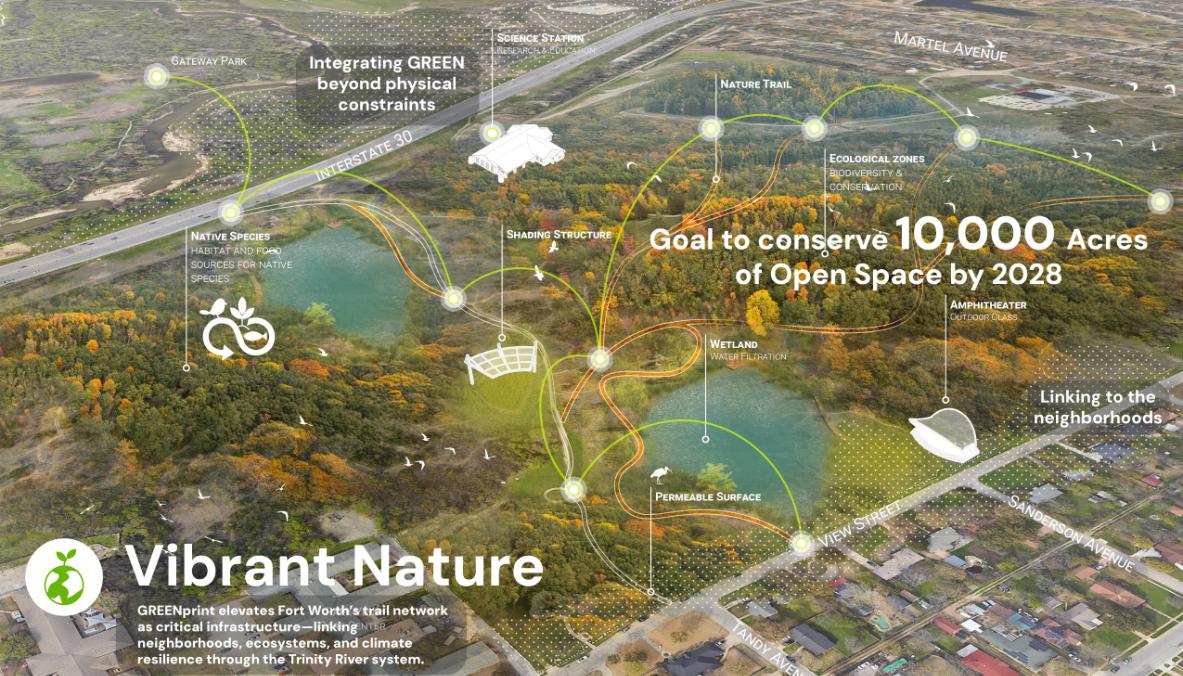
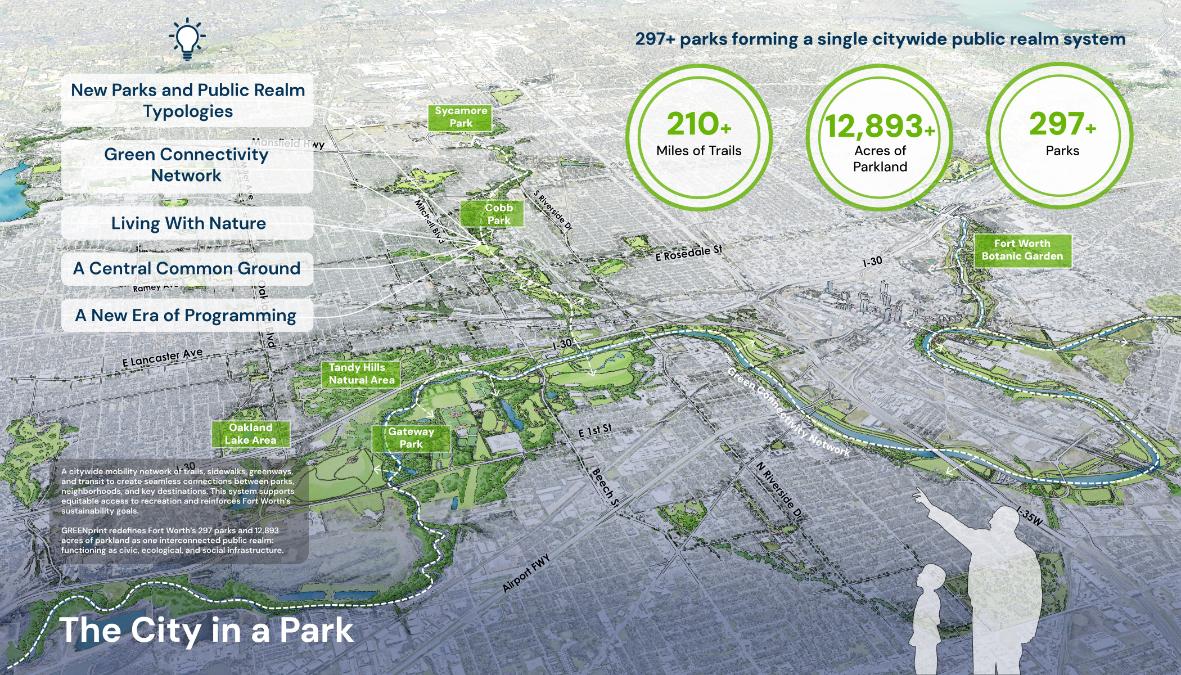
GREENprint Fort Worth charts a bold transformation of a fastgrowing city into a “City within a Park,” where daily life unfolds within a connected public landscape. Moving beyond traditional park boundaries and a traditional parks system master plan, the plan weaves nature, streets, waterways, and civic spaces into a continuous public realm that shapes how residents move, gather, and thrive. Through data-informed strategy and community co-authorship, GREENprint reimagines everyday places—neighborhood streets, corridors, and riverfronts—as shared civic assets, creating a living framework where equity, resilience, and public life are embedded into the fabric of the city.
MERIT AWARD
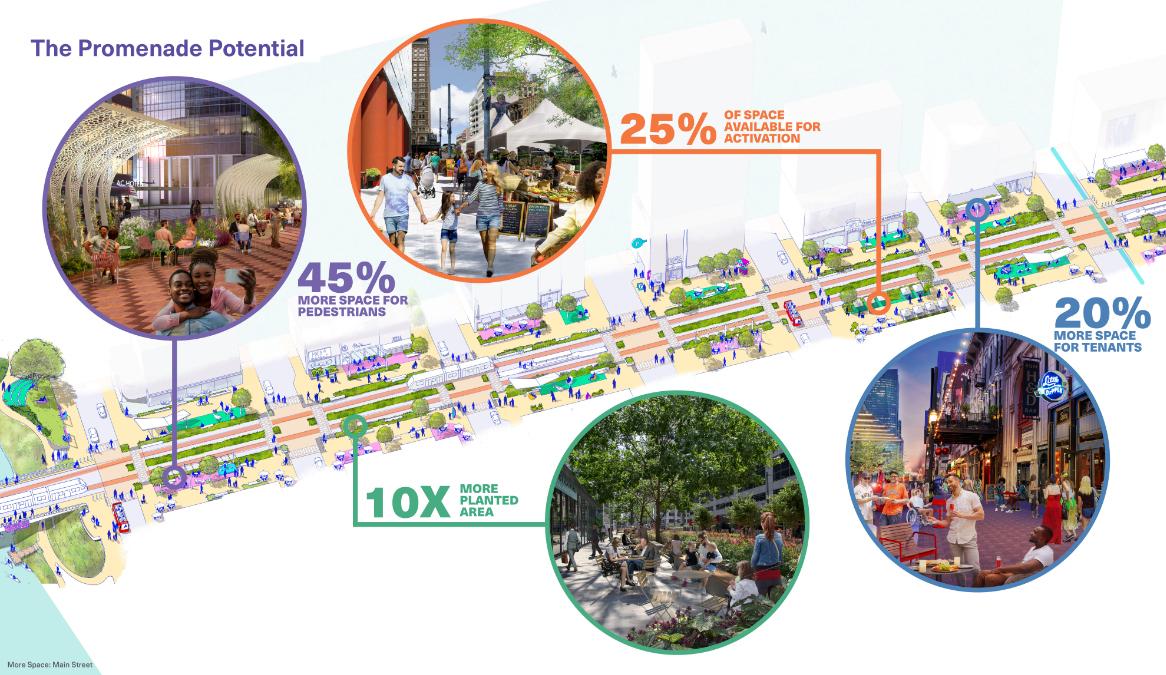
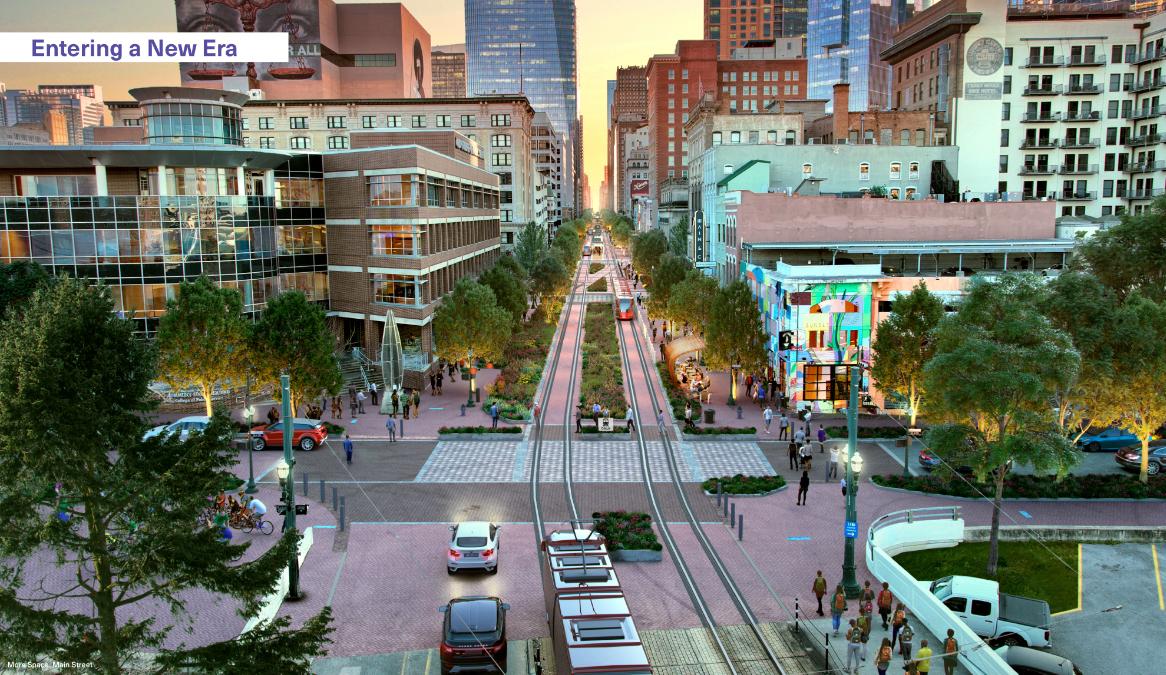
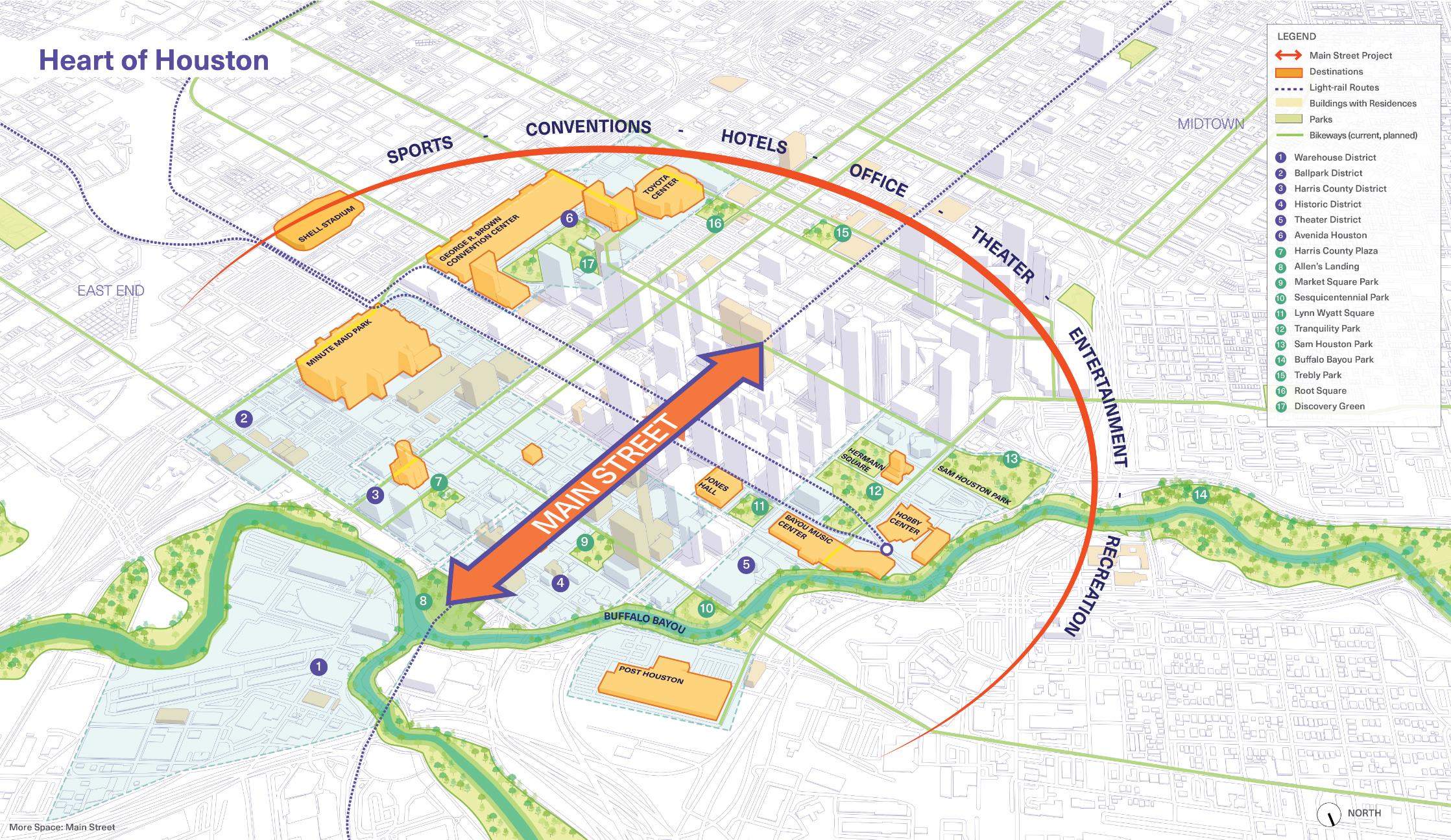
More Space: Main Street began as a temporary road closure that evolved into a permanent, stakeholder-supported public realm transformation. The project united public agencies, businesses, property owners, and community members to reimagine a critical downtown corridor. By reclaiming a vehicle-dominated street as a pedestrian-focused civic space, the project elevated and prioritized safety, economic vitality, accessibility, and climate comfort. Integrating historic and cultural identity with modern, multimodal, climate-responsive-infrastructure, the Main Street promenade established a replicable foundation for long-term stewardship, inclusive activation, civic identity, and sustainable growth at the heart of downtown Houston.
MERIT AWARD
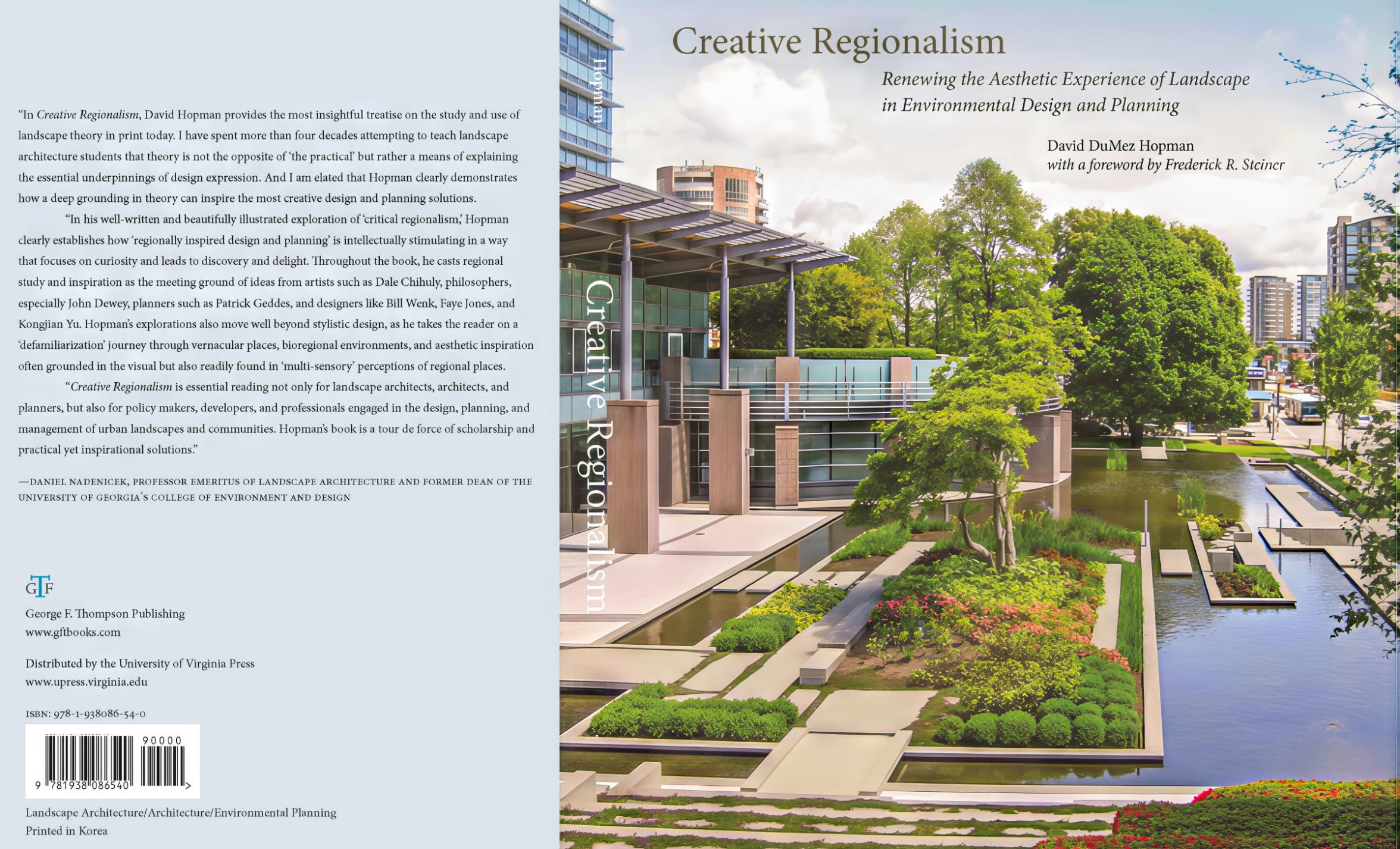
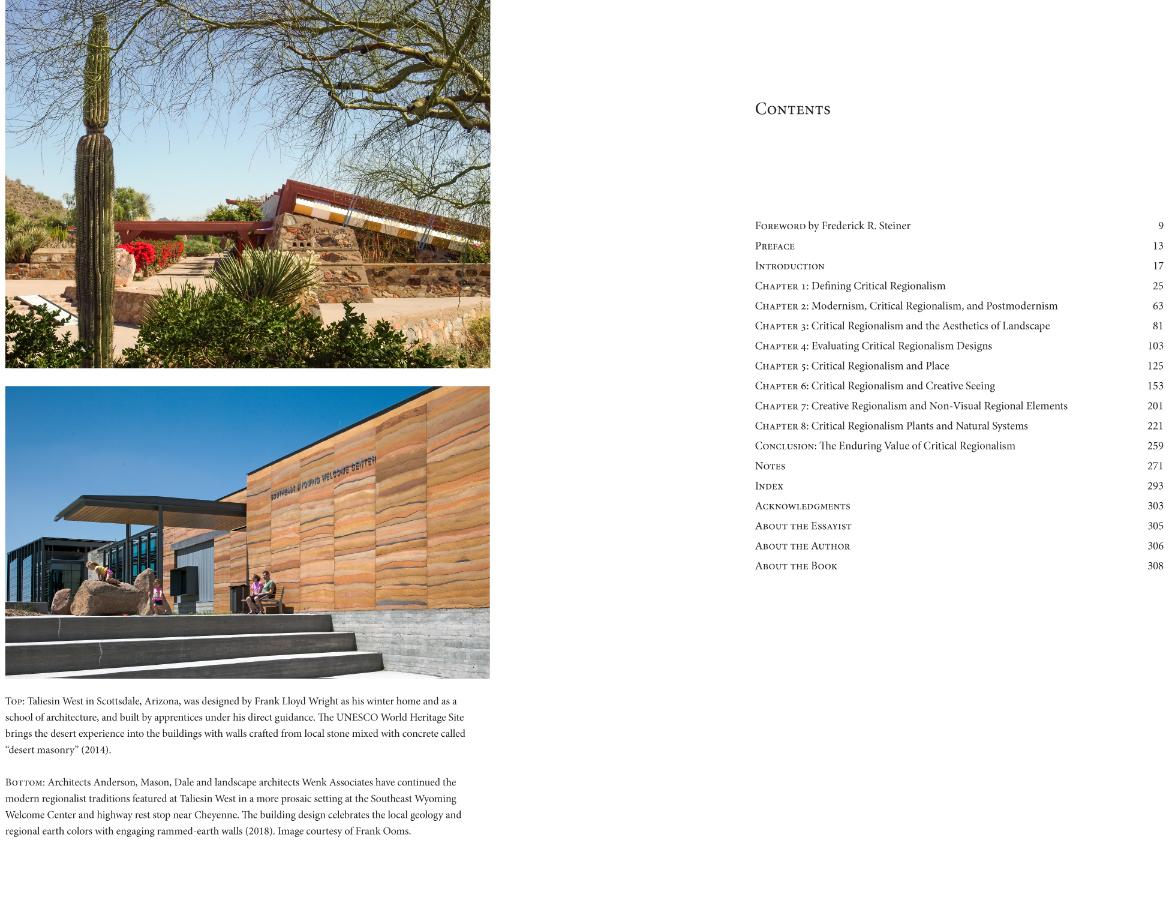
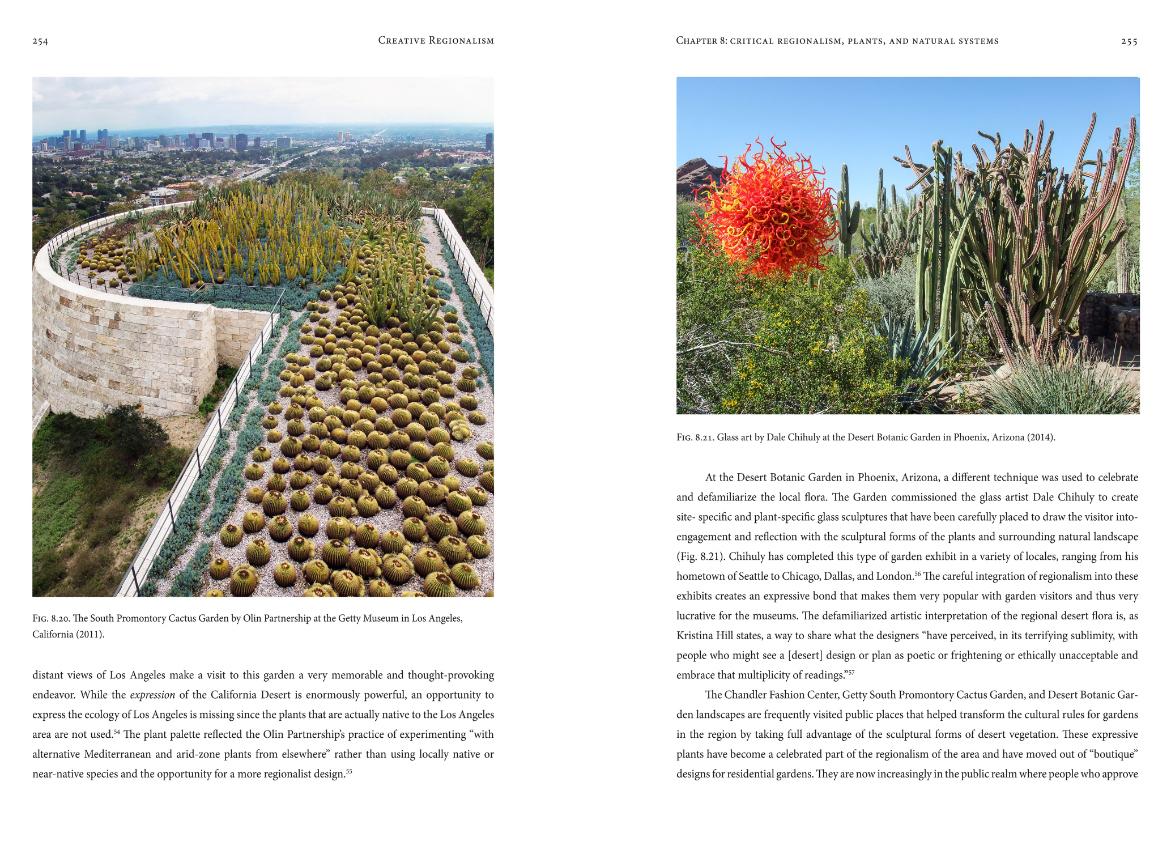
This book presents a regionalism that is creative, cosmopolitan, and critical. It brings to landscape architects everywhere the best regionalist thinking from the last 150 years, with a rare focus on combining this thinking with the priorities of contemporary landscape designers. The historical and theoretical expositions are grounded in written descriptions and compelling photographs of scores of 20th- and 21st-century designs from around the world that demonstrate how the regional experience of place is generated by environmental psychology, cultural values, personal creativity, and the poetics of the natural environment where we live, work, and play.
Creative Regionalism: Renewing the Aesthetics of Landscape
Environmental Design and Planning
// David Hopman, ASLA PLA,
The University of Texas at Arlington
MERIT AWARD

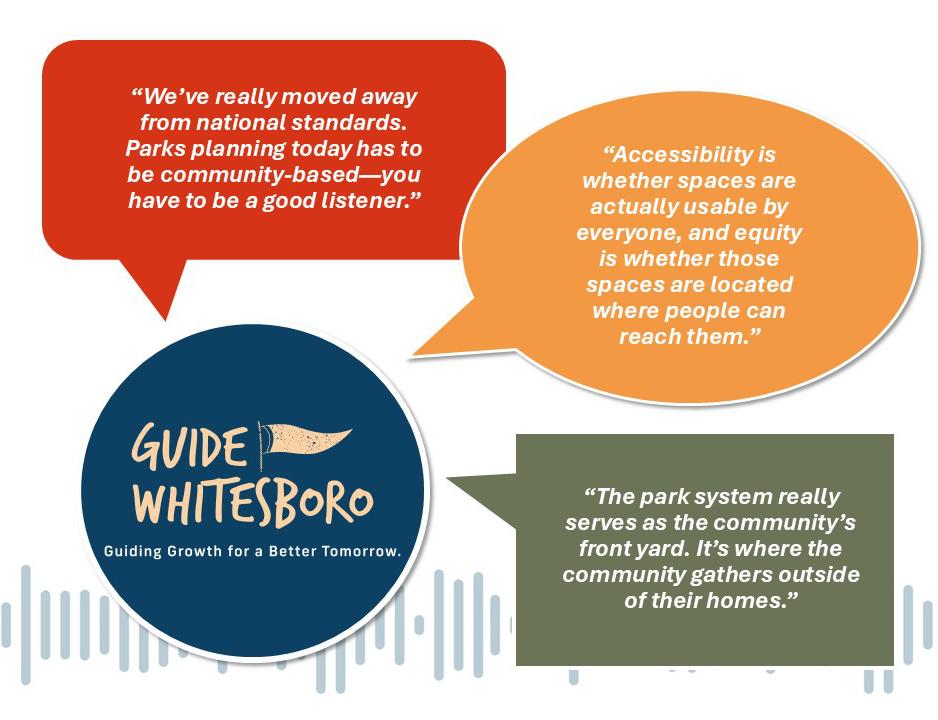
As part of the City of Whitesboro’s 2045 Comprehensive Plan, the Guide Whitesboro Podcast was created to expand public understanding beyond traditional public meetings. This Parks and Recreation episode translates landscape architecture and park planning concepts into accessible, non-technical language for a broad audience. Through dialogue with city staff and planning professionals, the episode explains how parks, trails, and open spaces support health, equity, connectivity, and long-term community identity. Delivered through an on-demand audio format, the project broadens participation, increases transparency, and empowers residents to engage meaningfully in shaping Whitesboro’s future.
Whitesboro Comprehensive Plan - Guide Whitesboro Podcast // Dunaway Associates, LLC

MERIT AWARD
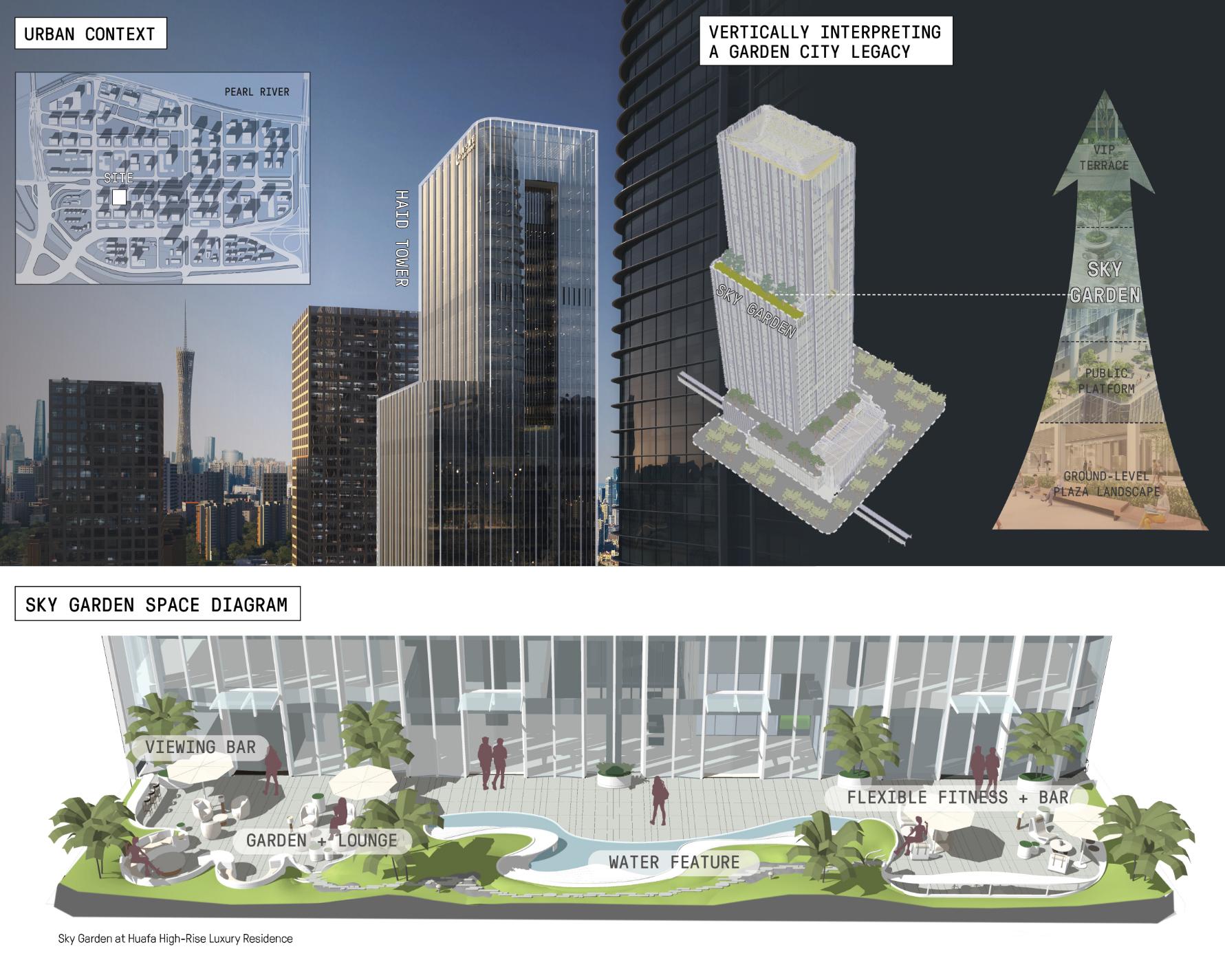
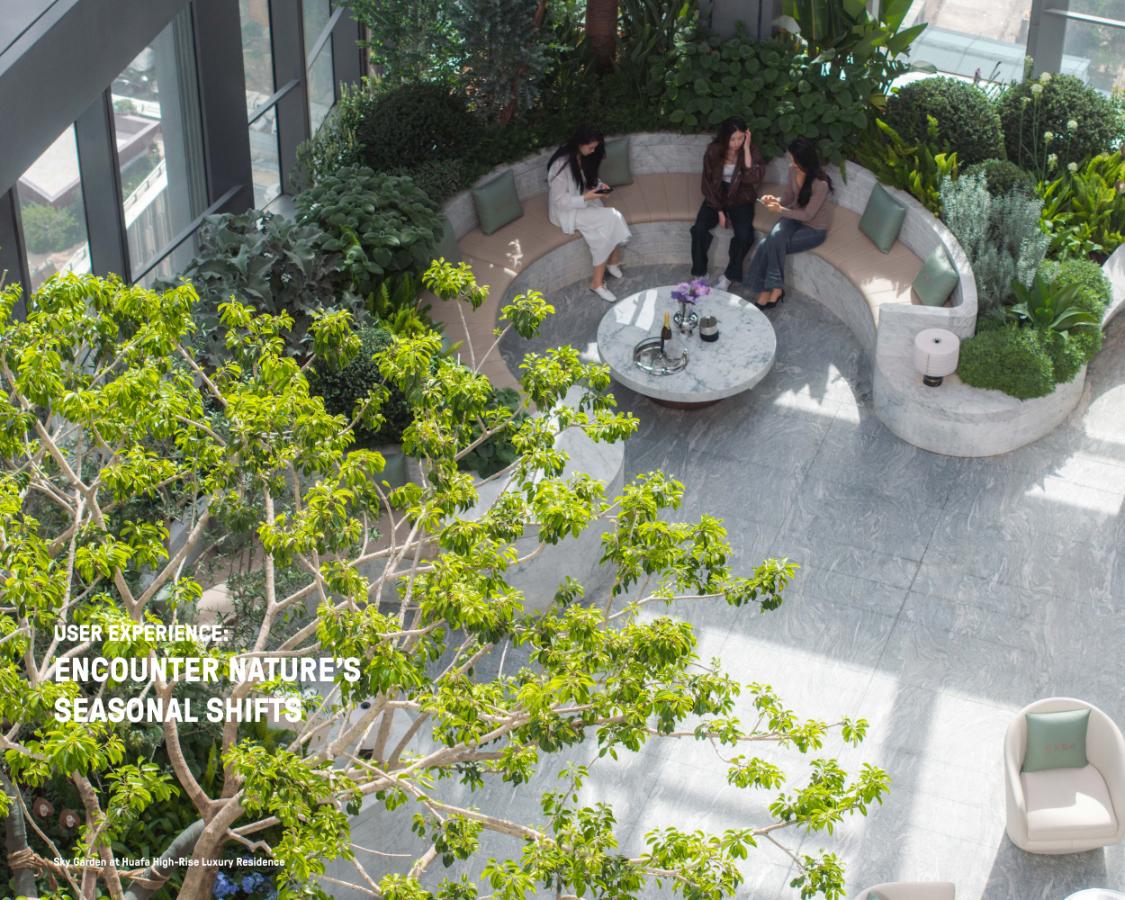
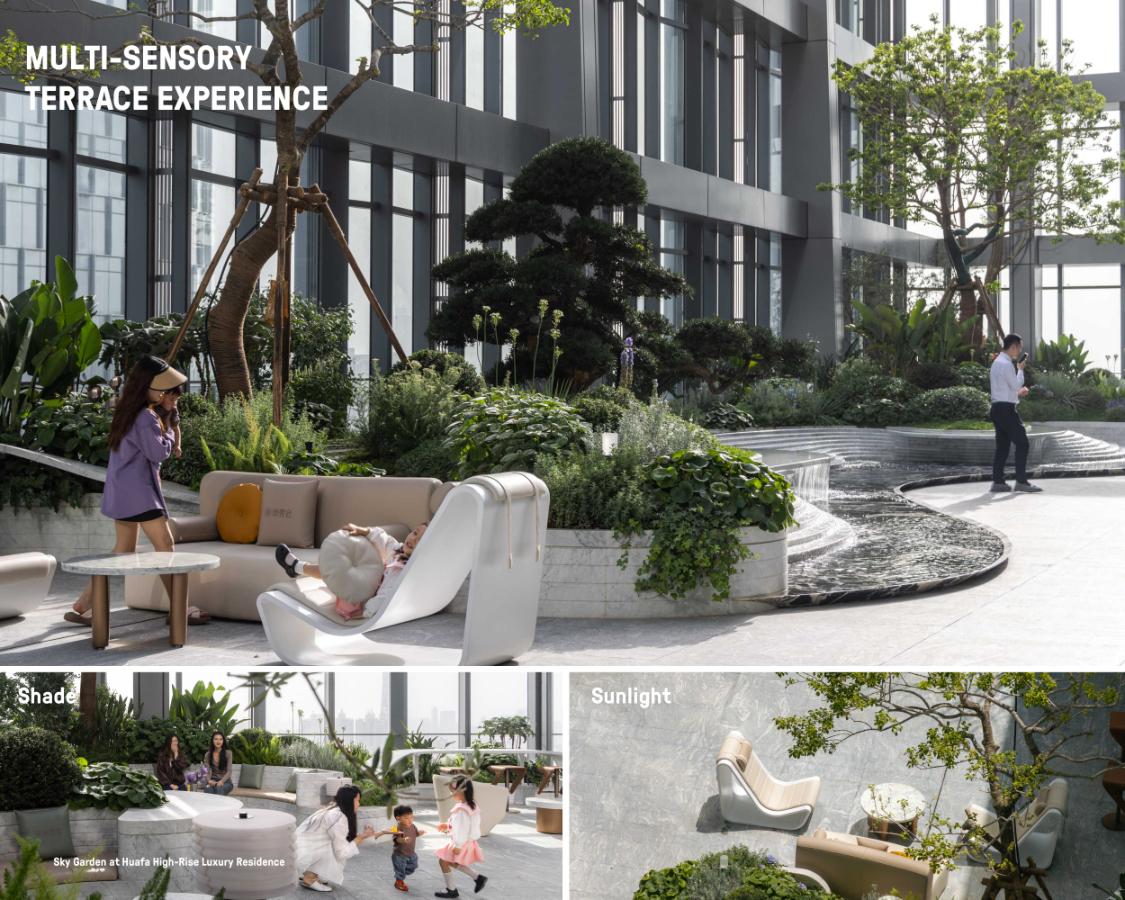
Perched 22 stories above Guangzhou's tech-driven Pazhou district, the Sky Garden transforms a scarce 12-meterwide rooftop into a thriving vertical ecosystem in a city where green roof infrastructure is limited. Native plantings create layered habitats that support pollinators and reconnect tower residents with nature. Curved seating, flowing water features, and terraces shape intimate gathering spaces linking the gym, tea room, and lounge, while cascading water help to cool the microclimate by 6°F. Warm circadian lighting extends evening use, demonstrating that ecologically sophisticated landscapes can thrive under extreme vertical constraints.
Sky Garden at Huafa High-Rise Luxury Residence // SWA Group
AWARDS PROFESSIONAL HONOR

HONOR AWARD
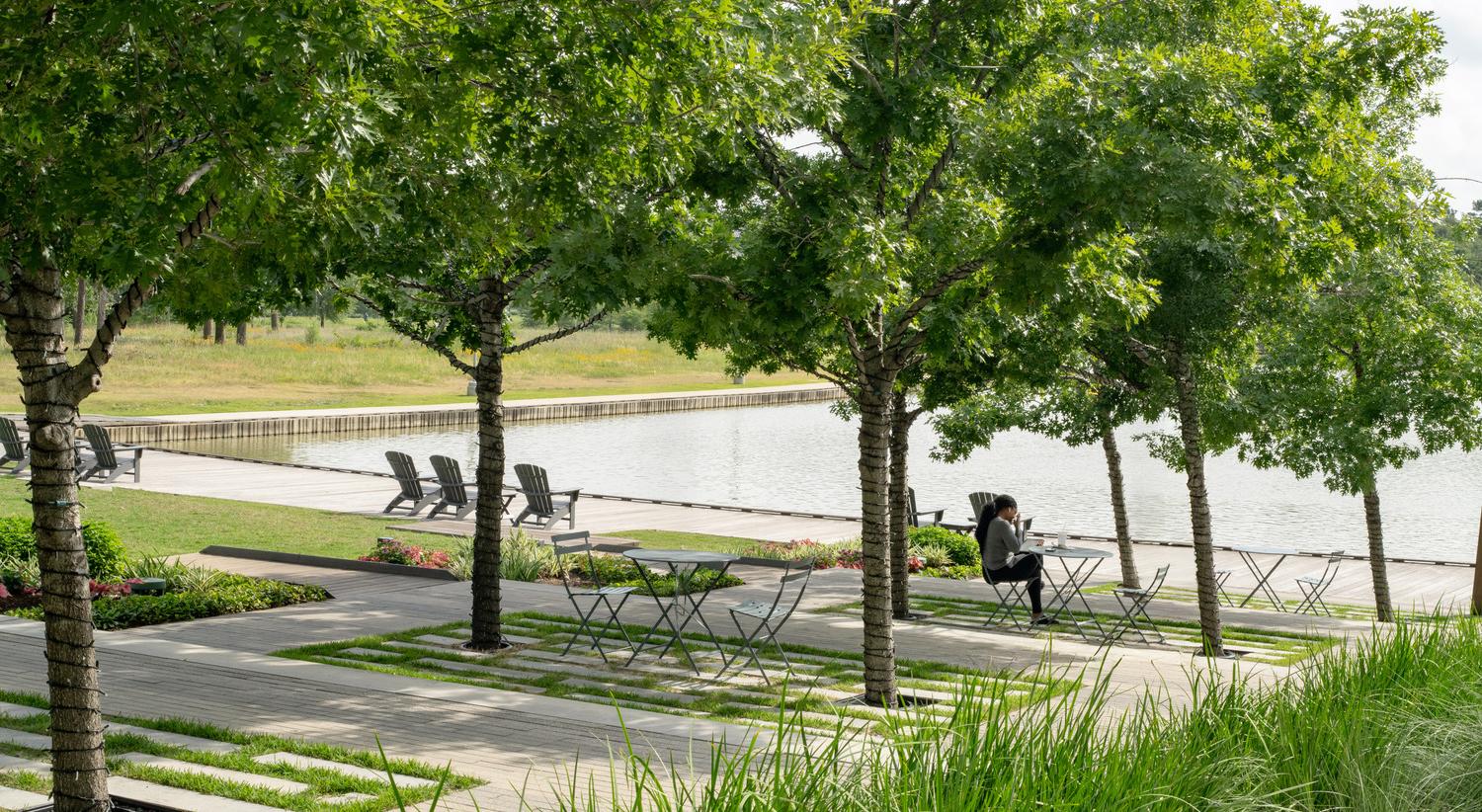
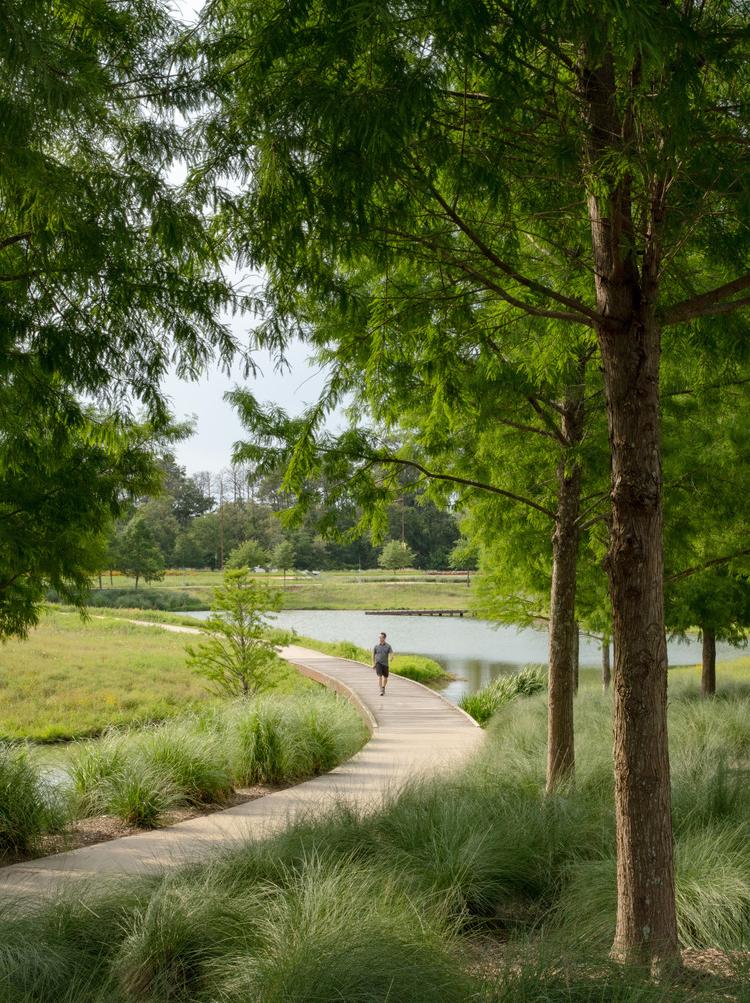
CityPlace reveals the beauty of utility through an expressive green infrastructure that makes water management visible. Spanning 1,800 acres, the plan integrates mixed use districts, corporate and healthcare campuses, neighborhoods, and extensive parks and trails. A Low Impact Development approach unites water supply, storm drainage, and wastewater treatment, preserving over 290 acres for recreation while protecting forest habitats and the Spring Creek watershed. At its heart, a 60 acre pedestrian focused district features eight interconnected ponds engineered for 100 year flood events, transforming stormwater detention into lakes, waterfalls, boardwalks, and diverse public spaces.
City Place // OJB Landscape Architecture
HONOR AWARD
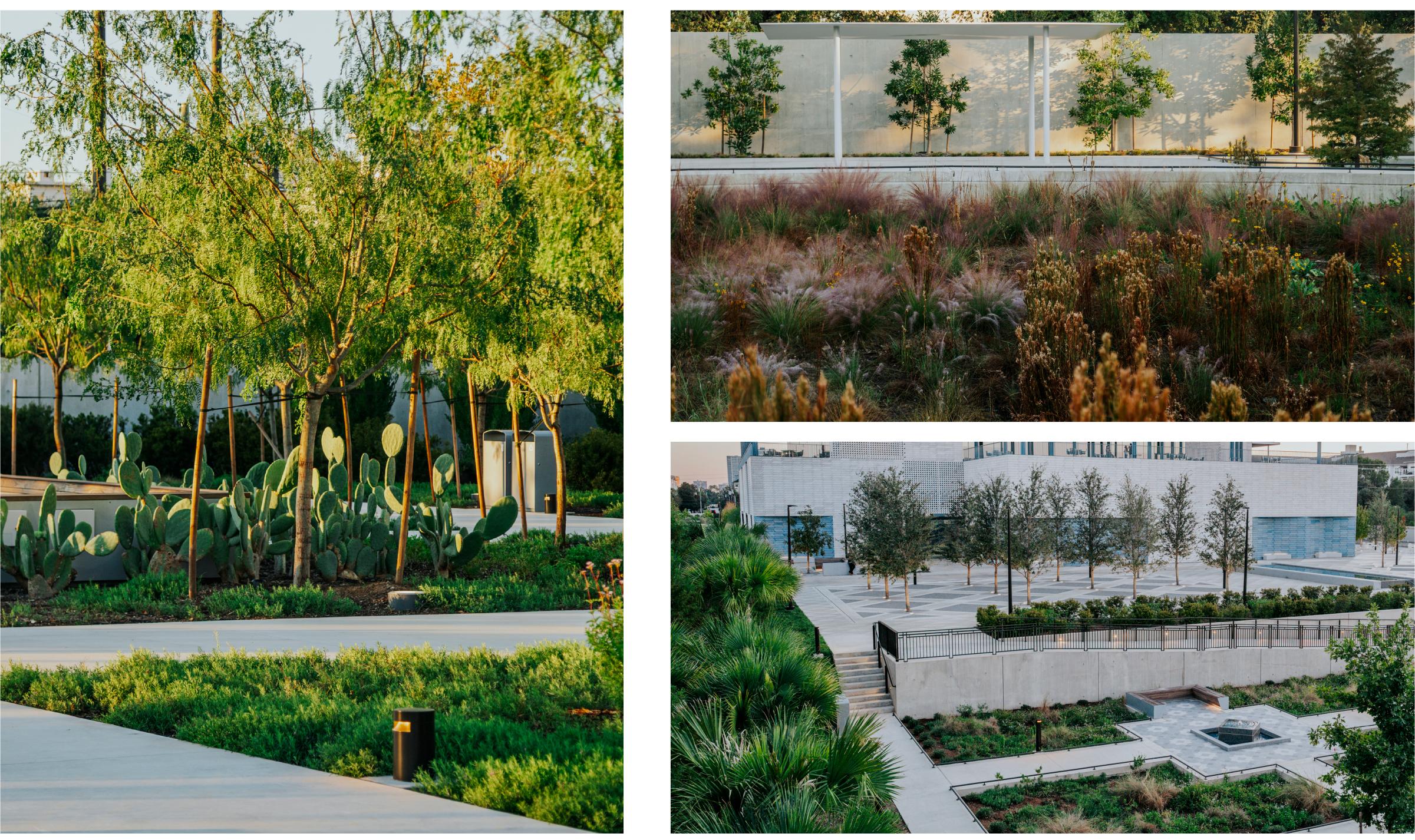
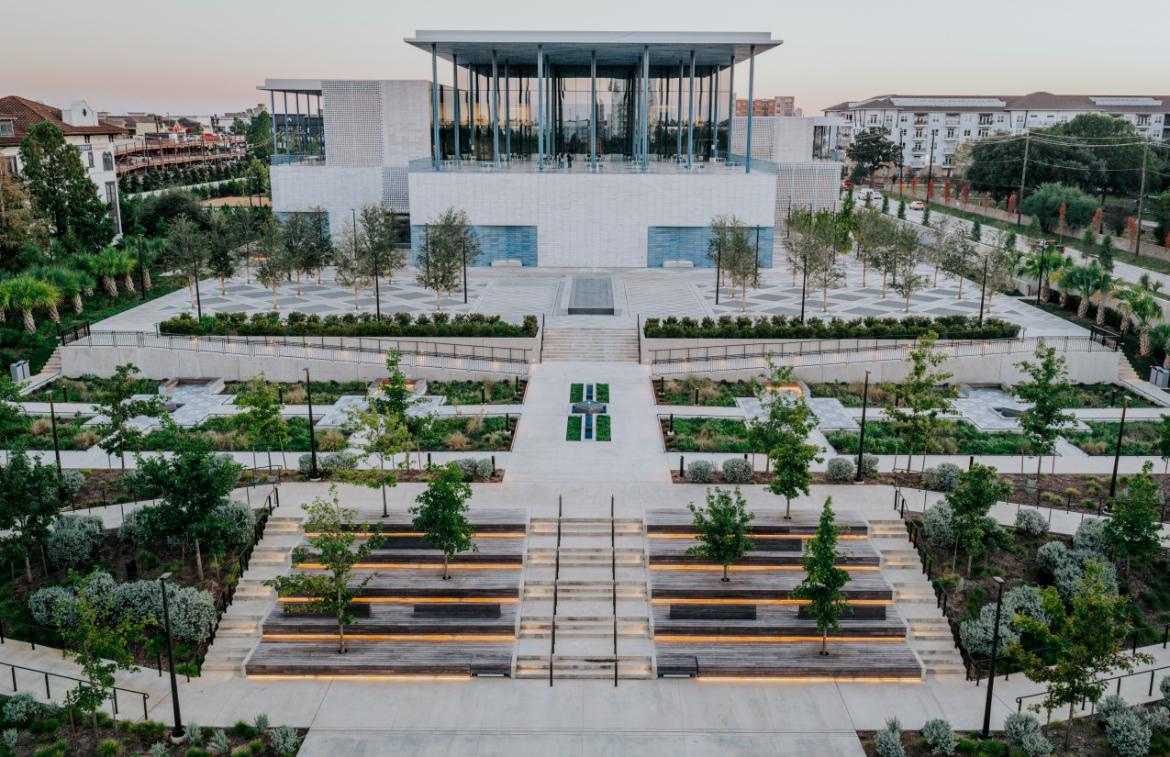
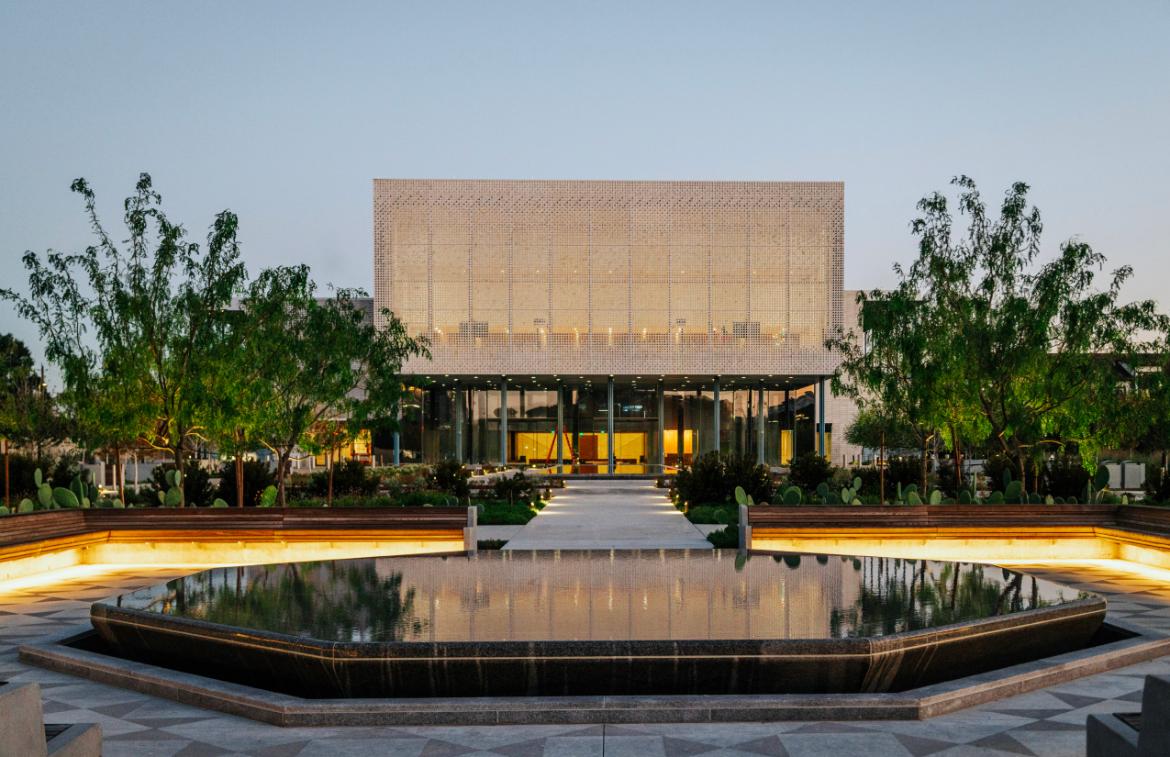
Near Buffalo Bayou, in the heart of Houston, a meticulously crafted landscape seamlessly weaves monumental architecture with terraced gardens, fountains, shaded courtyards, and immersive horticulture. The Ismaili Center Landscape reinterprets Islamic Garden traditions through the lens of six Texas eco-regions over 11 acres spanning 30 feet of elevation. The design blends cultural symbolism and ecological resilience to create a profound sense of place. The Gardens reflect the Ismaili community’s mission for promoting pluralism while demonstrating the universal potential for landscape architecture to perform as natural infrastructure, community asset, and cultural Emissary.
Ismaili Center, Houston // Nelson Byrd Woltz Landscape Architects
HONOR AWARD
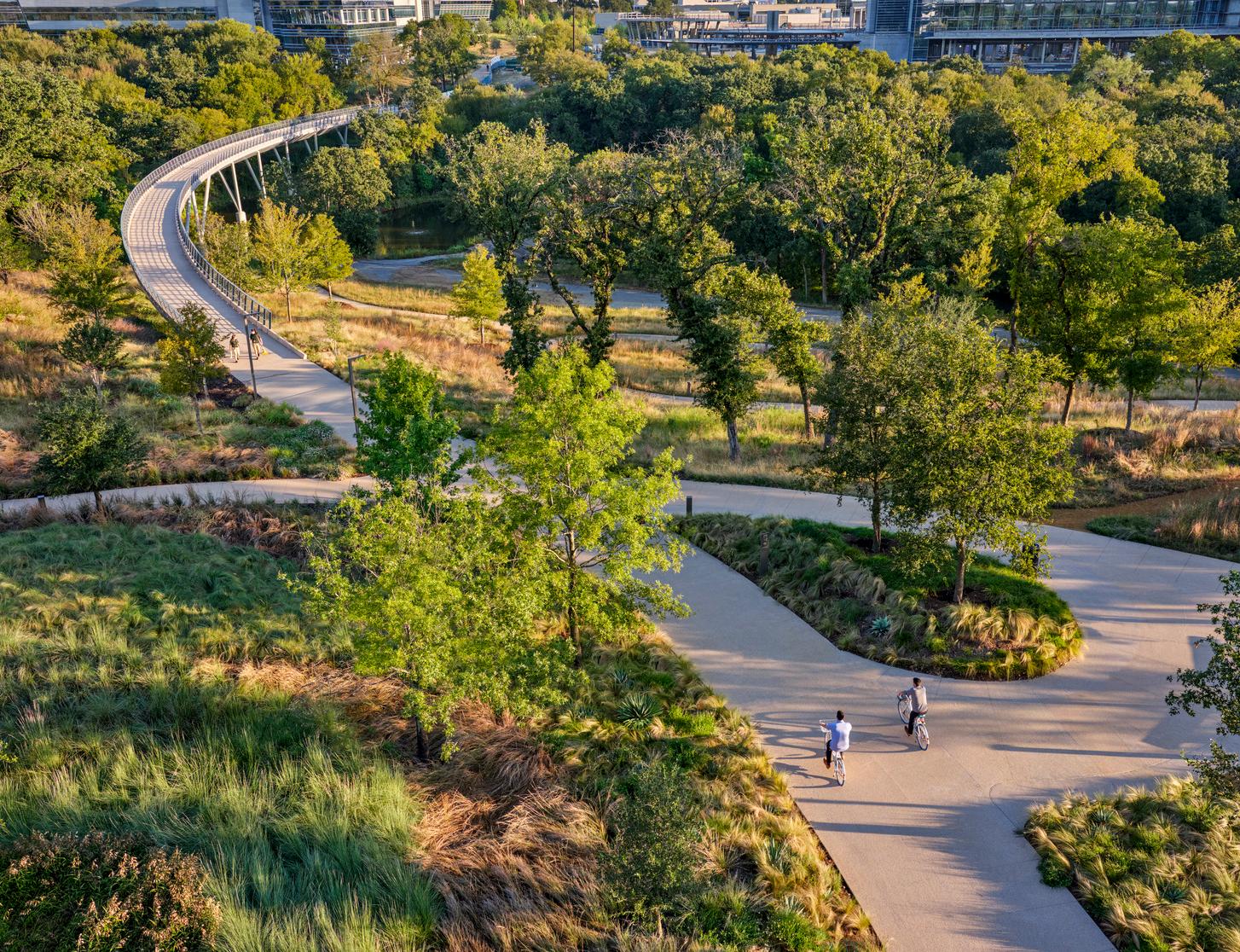
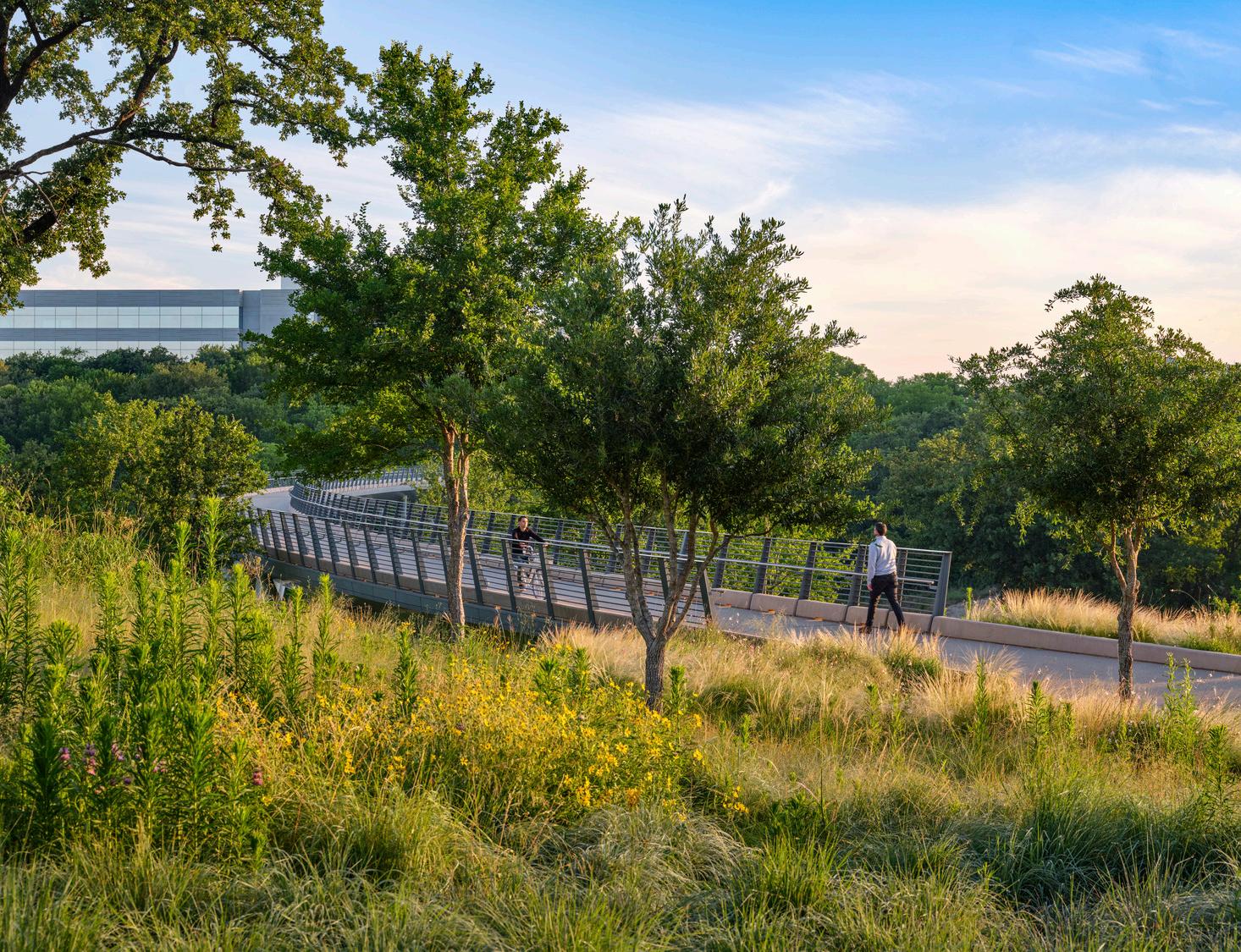
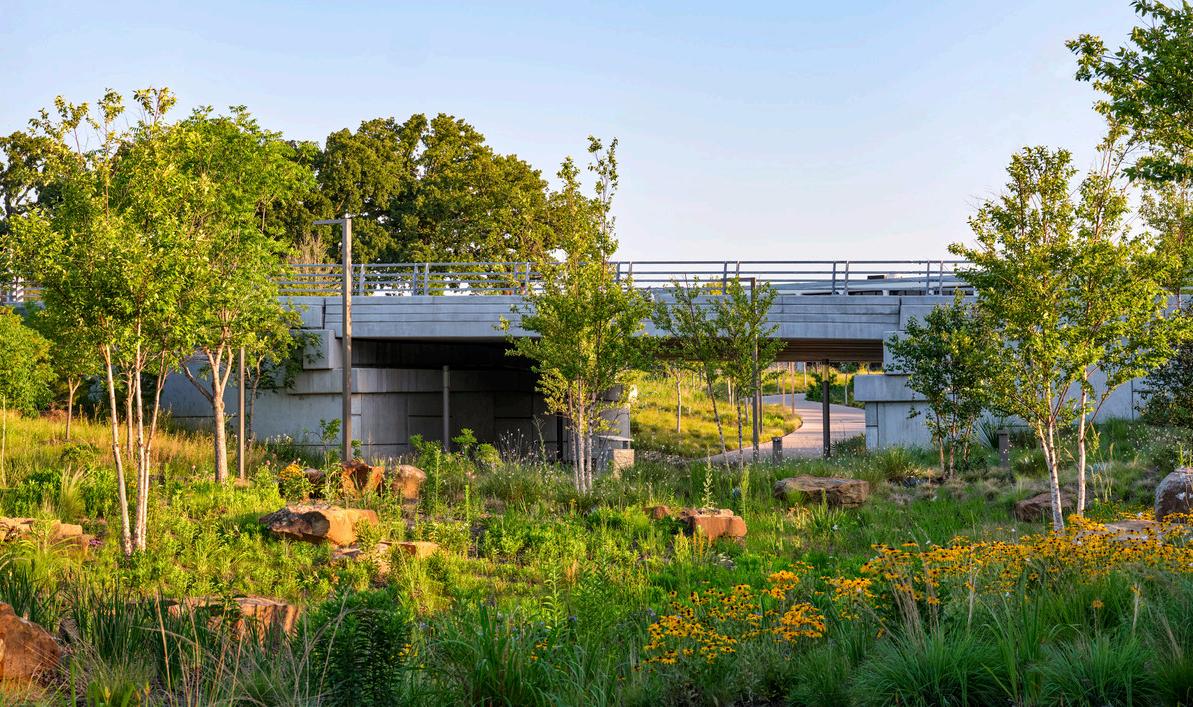
This258-acrecampusreclaimsthevanishingTexasBlacklandPrairiewithasustainabledesignthatfusesnative ecologywithworkplaceinnovation.Twodistinctdistrictsareunitedbyamulti-modalspinewithwalkingtrails,bike paths,andelectricshuttlesthatinvitemovementandwellness.Restorativeoutdoorspacesblurboundaries betweenindoorsandout,whilepondsanddrycreekschoreographstormwaterandcoolthesite.Byshiftingfrom car-centricplanningtoapedestrian-firstexperience,thecampusbecomesalivingecosystemwherepeople, wildlife,andtheTexaslandscapethrivetogetherinaresilient,regenerativeenvironment.

Robert L. Crandall Campus, American Airlines //
HONOR AWARD
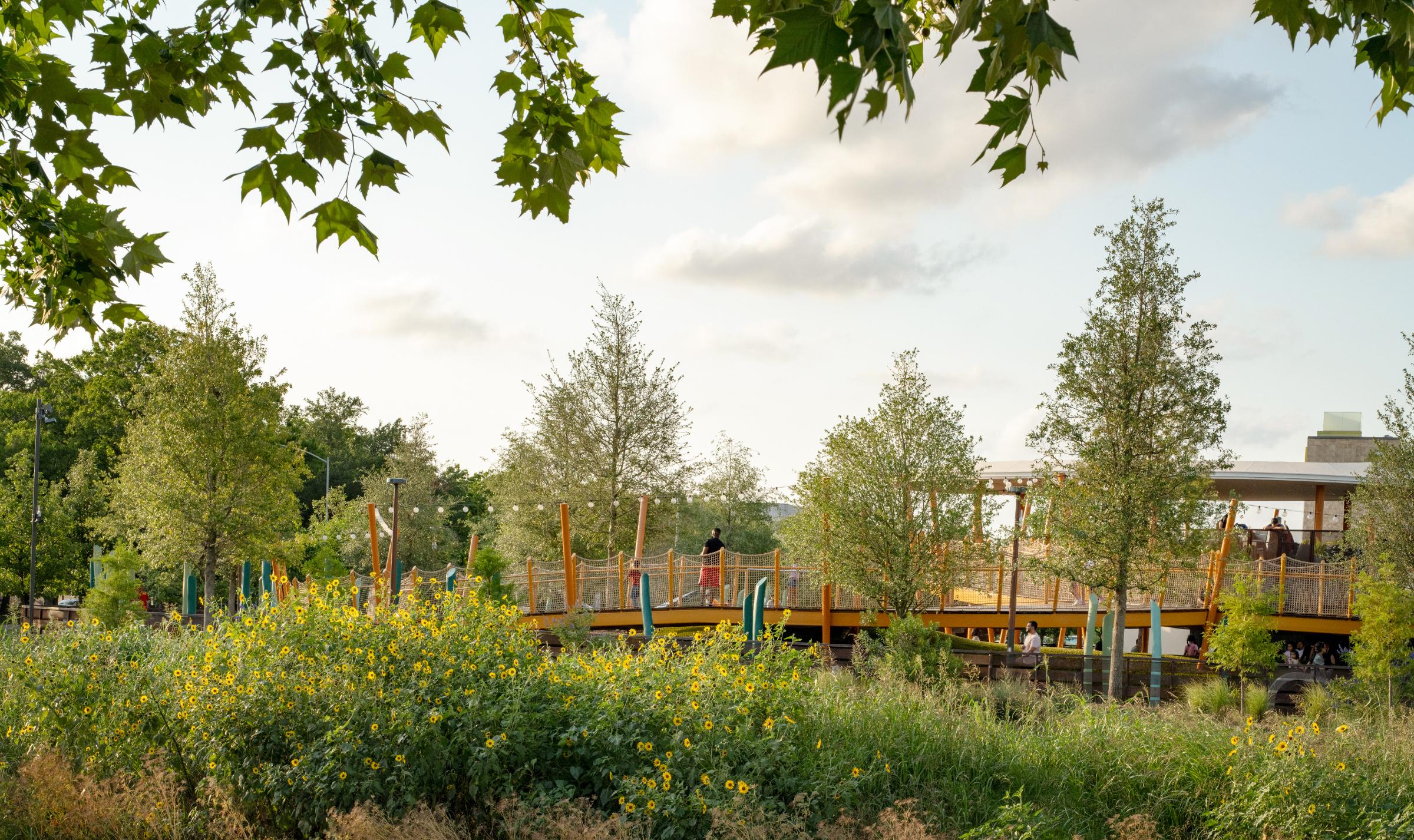
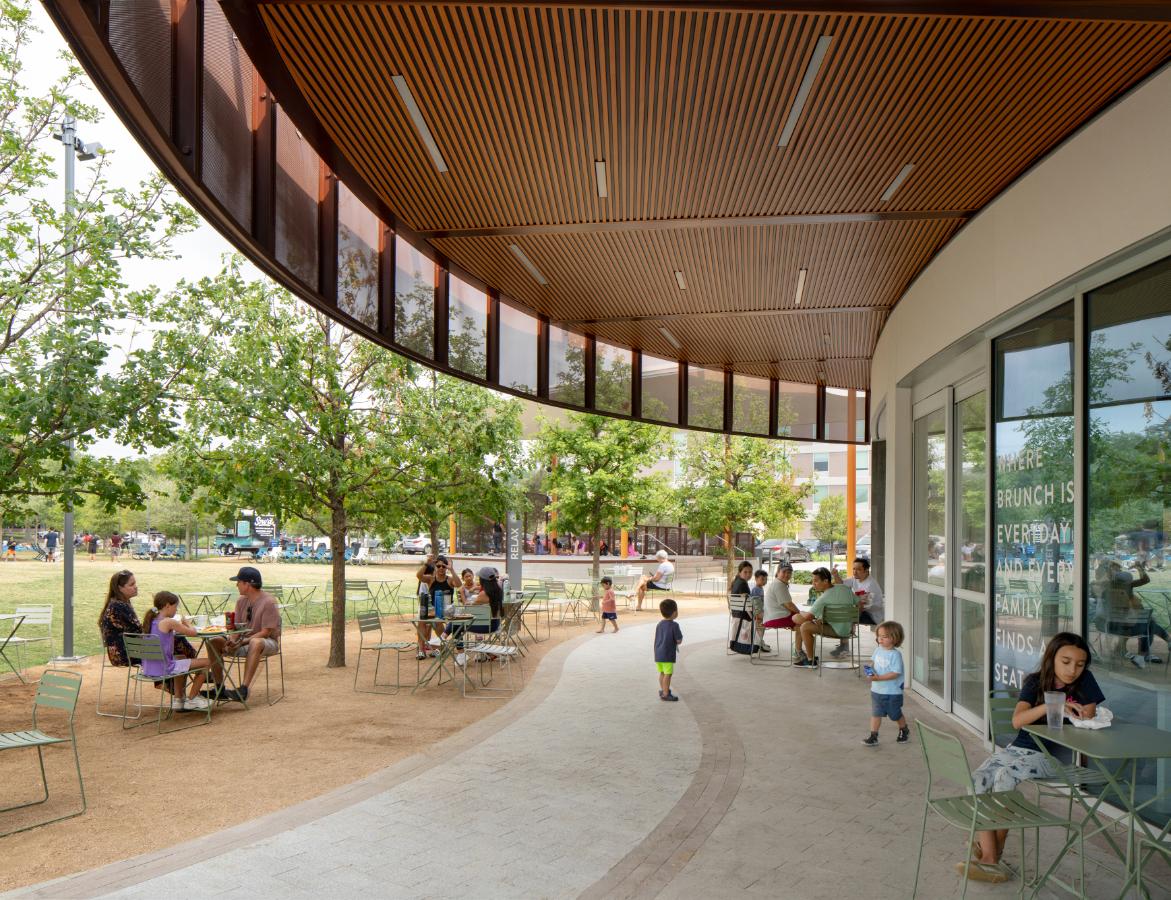
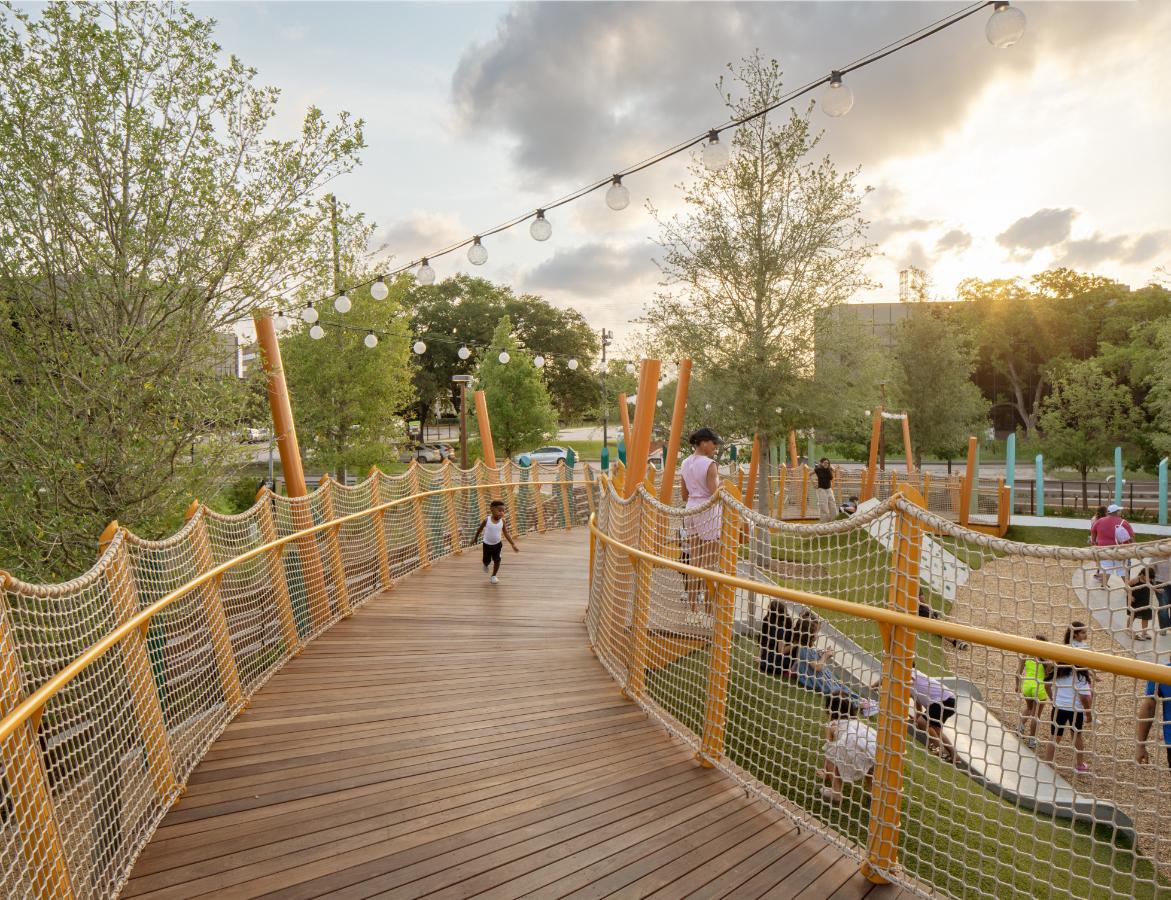
Located in West Houston, this 3.8-acre park delivers essential open space to a neighborhood long under served by parks. Funded through a Chapter 380 economic development agreement, the park’s resilient design integrates stormwater management and native planting strategies for a sustainable landscape that responds to local environmental challenges. Conceived as a flexible framework for active urban life, the park offers diverse recreation opportunities and community-based programming. Beyond addressing park scarcity, it has already catalyzed reinvestment in the Westchase District, underscoring its impact on neighborhood revitalization.
Camden Park // OJB Landscape Architecture
HONOR AWARD
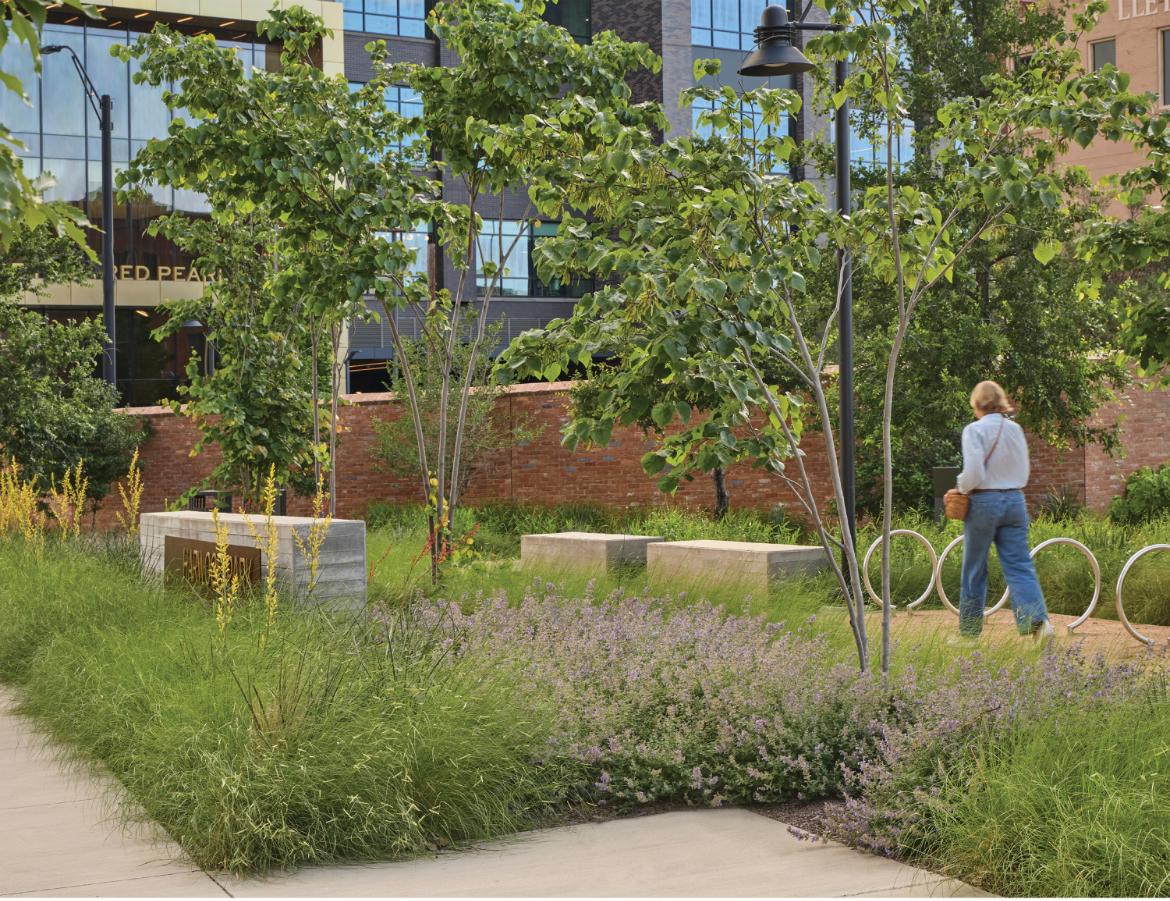
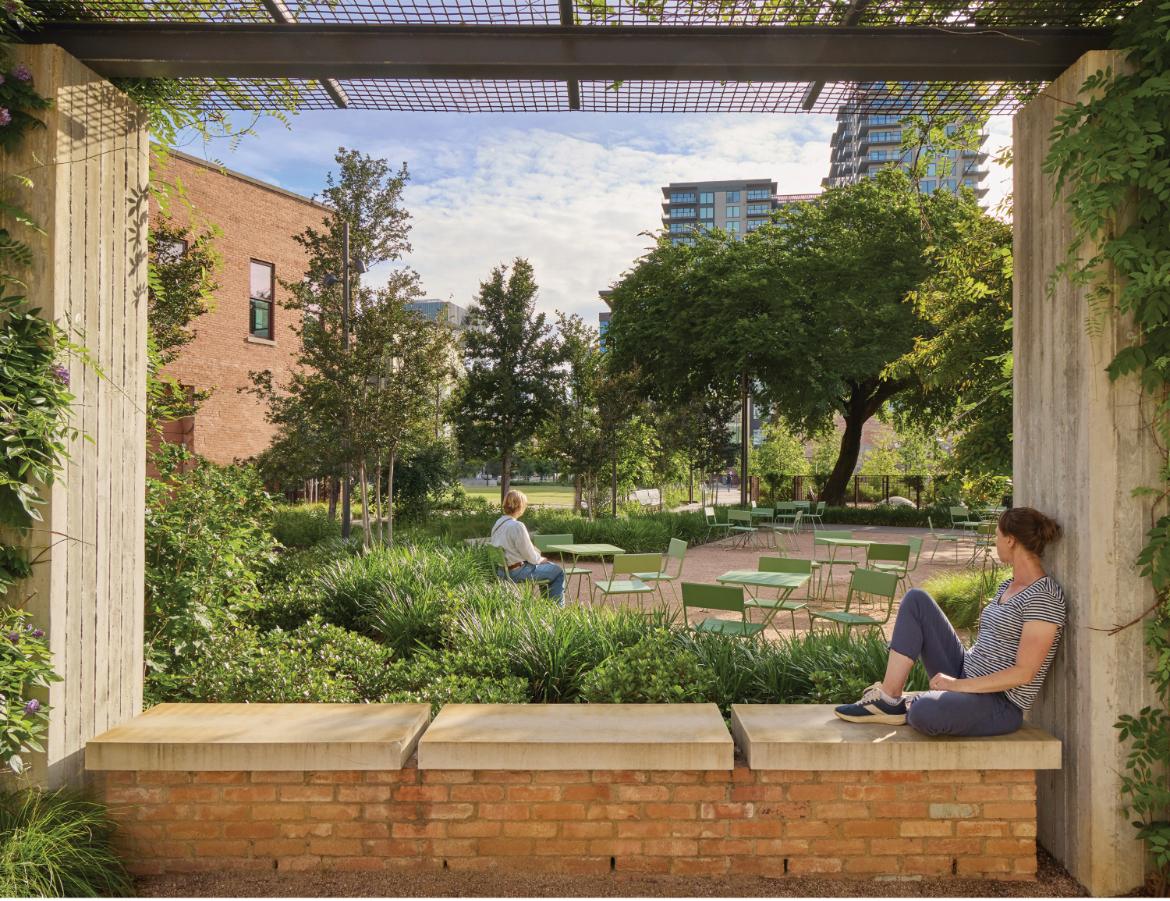
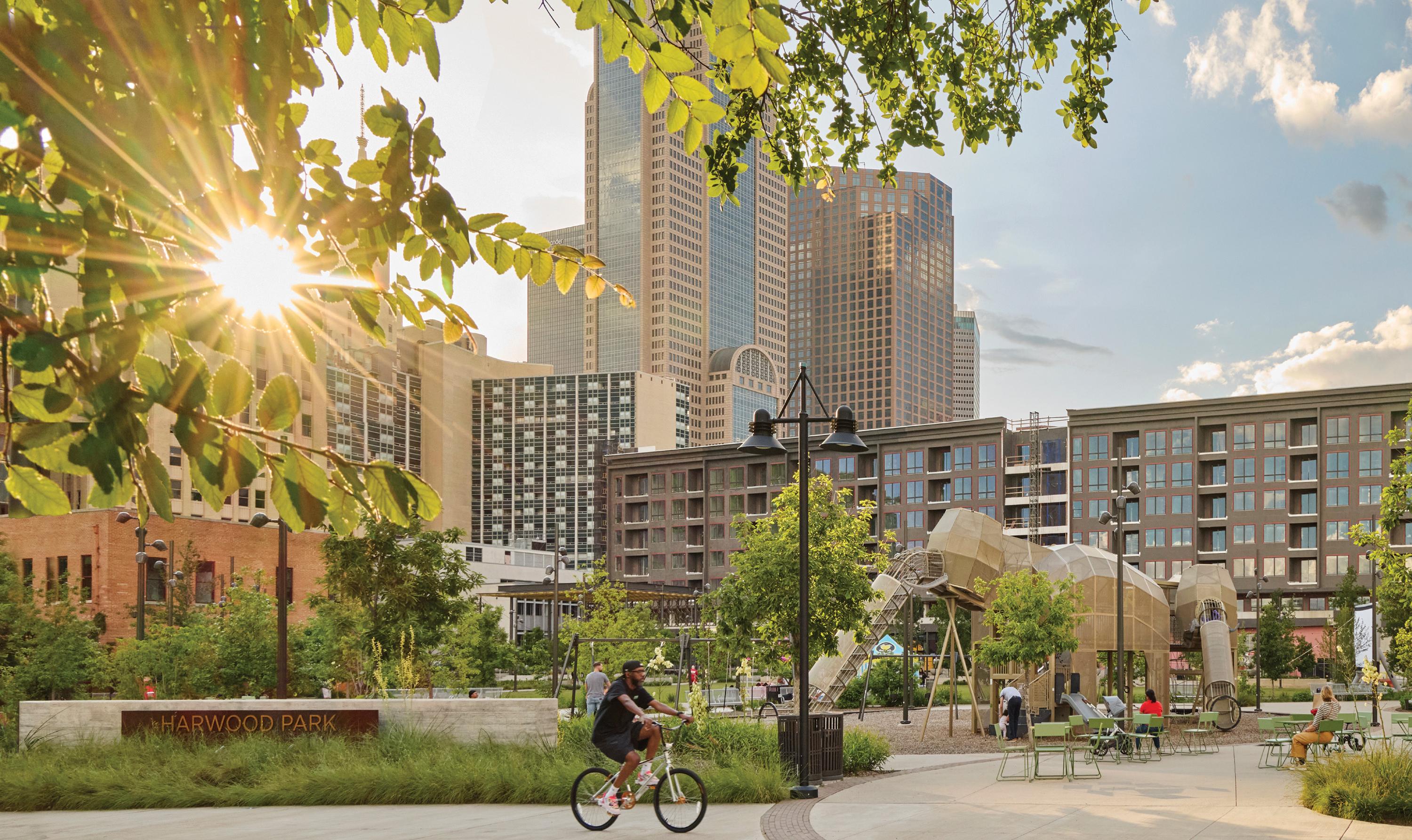
A unique addition to the Downtown Dallas park network, Harwood Park unites and transforms two city blocks into a community resource where natural systems, architectural history, and urban life converge. A variety of exterior spaces promote relaxation and recreation, while repurposed historic buildings provide the potential for activation with event, retail, and office spaces. The ecologically sensitive design integrates salvaged materials, maximizes pervious and planted areas, and showcases historic Trinity River vegetation through a central bioswale, allowing visitors to connect with history, nature, and their community all within sight of the stunning downtown skyline.
Harwood Park // Ten Eyck Landscape Architects
HONOR AWARD
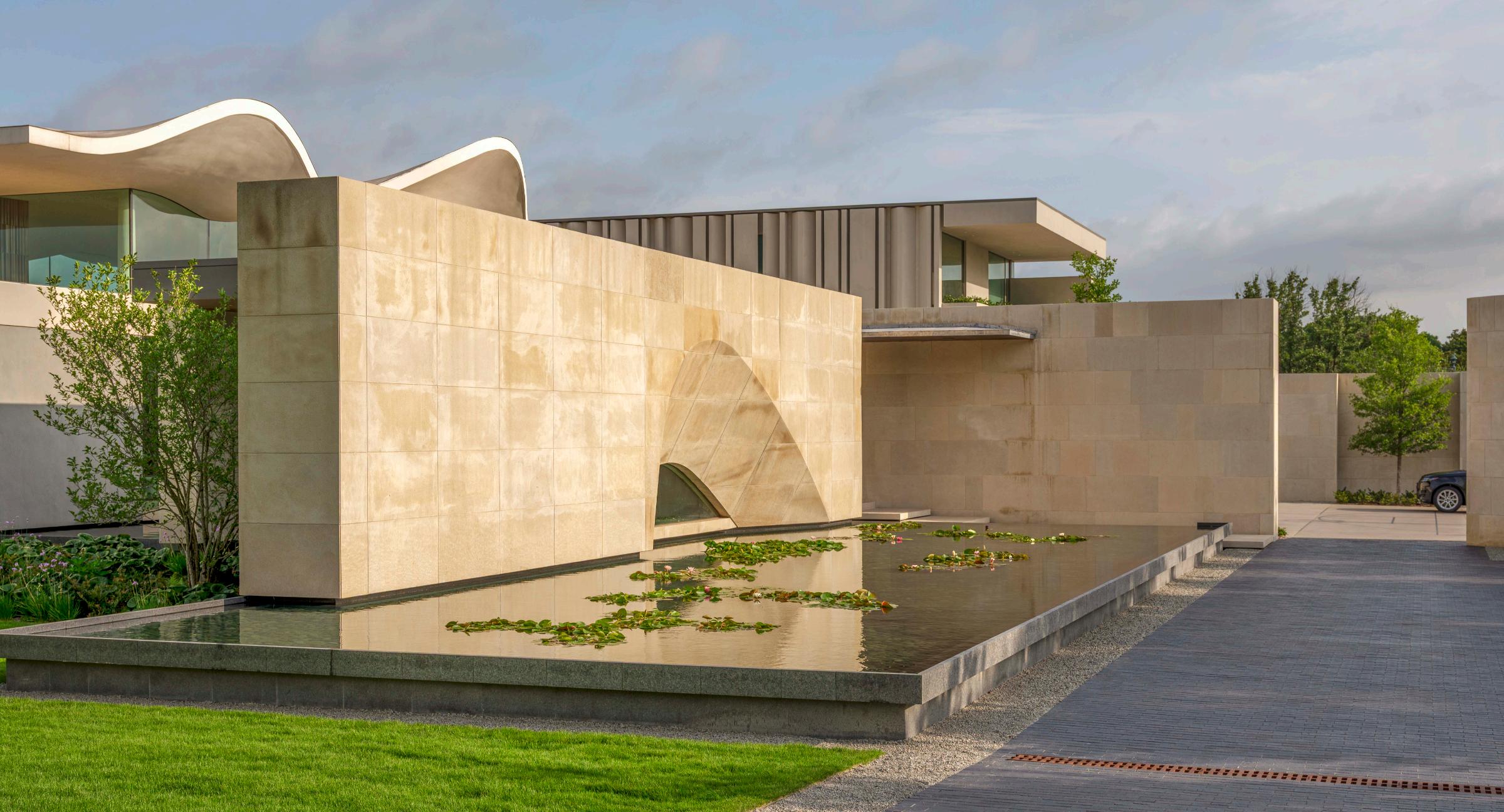
Casa de Ondas // Hocker
The Casa de Ondas project was conceived for a 2-acre parcel of what was formerly a portion of the famed Crespi Estate in Dallas, Texas. The name, conceived from the home’s wave form roof, also applies to the significant biological reflection pool that hugs the front of the home and swimming pool on the back side of the primary living spaces. The stately contemporary home is uniquely sited to maintain a large heritage live oak, orienting the primary interior and exterior living spaces towards a western grove of more heritage trees along the property line.
HONOR AWARD
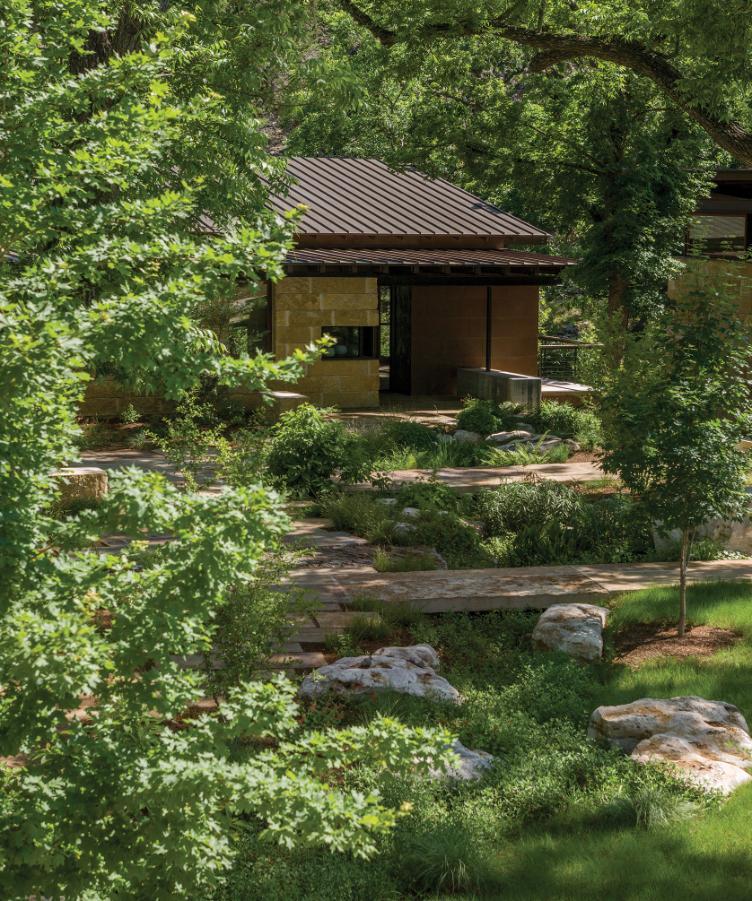
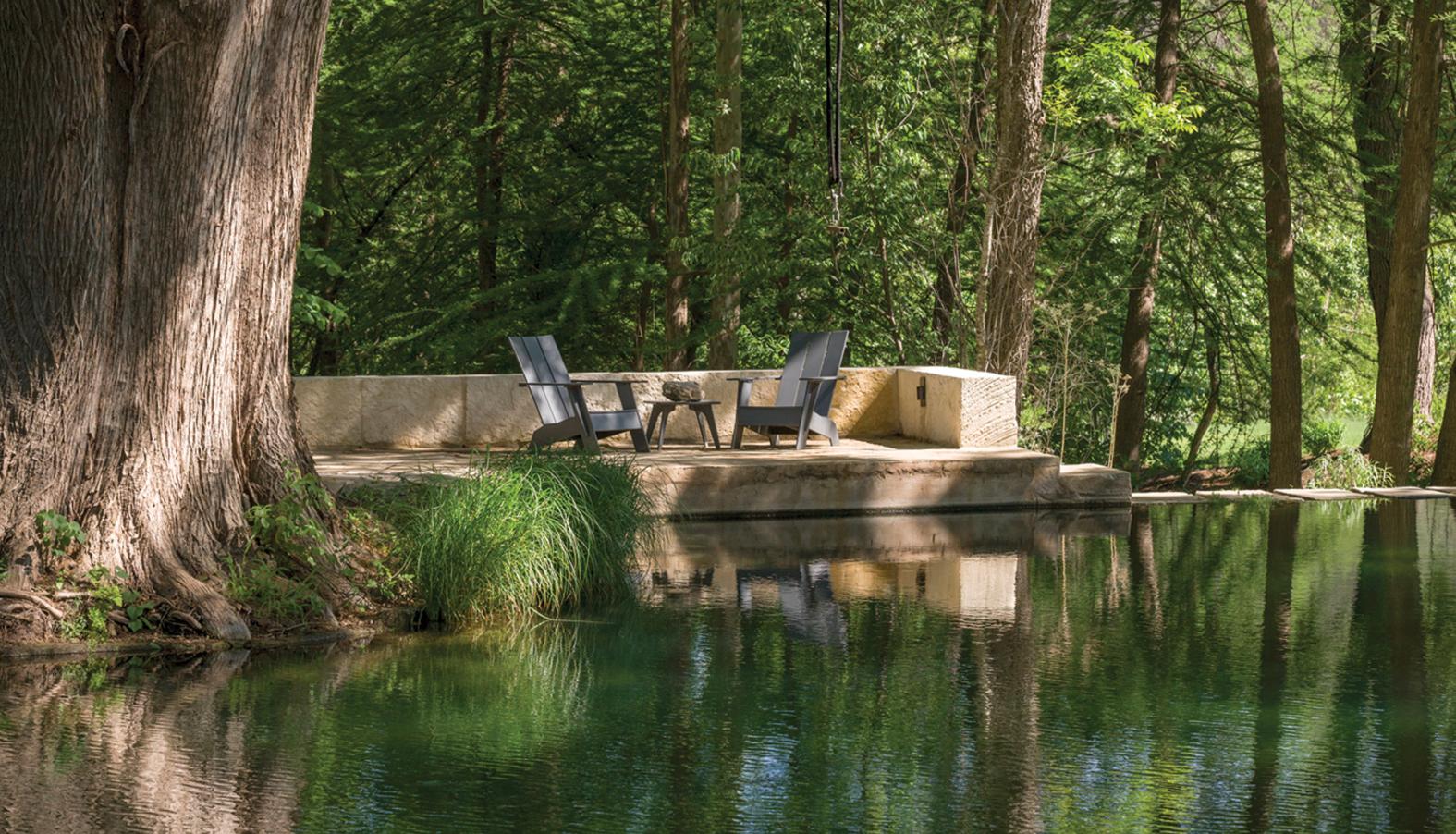
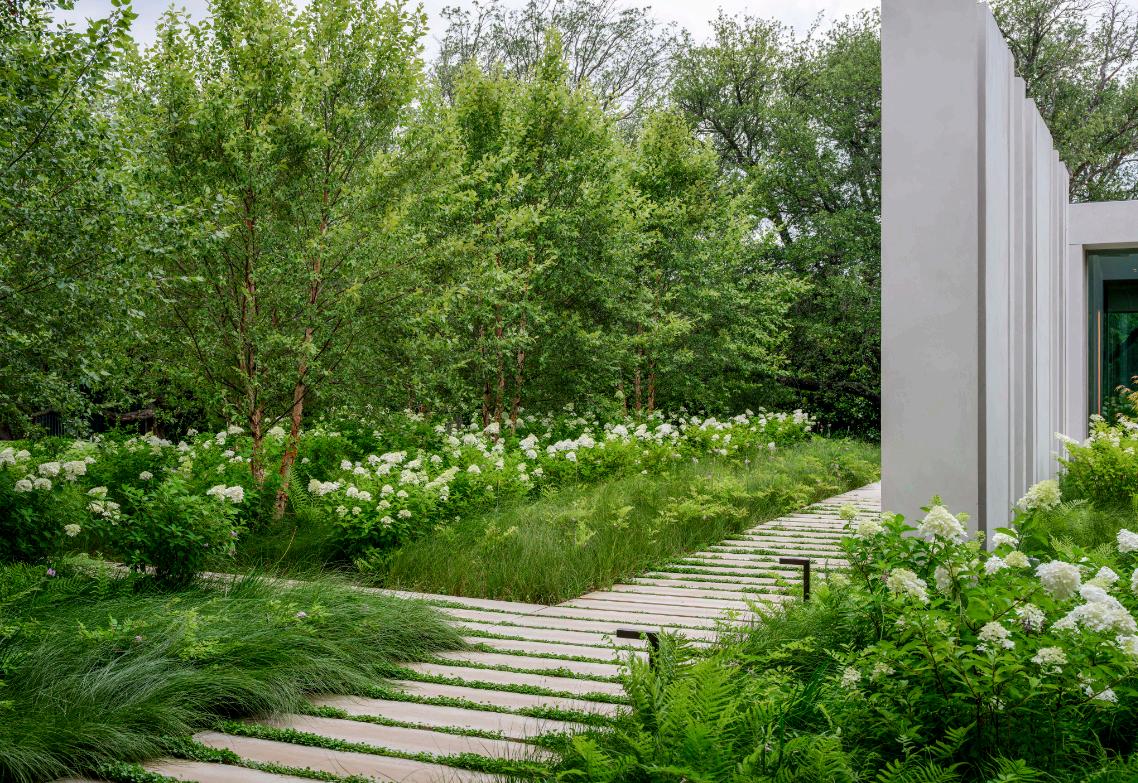
The revitalization of this historic ranch creates an active, verdant landscape integrates and showcases the site’s existing hydrologic systems. Situated at the convergence of a natural spring and creek, the landscape design was born out of the efficient direction and capture of water, reestablishing vital riparian habitat and reducing vehicular activity on property. Old ranch roads and footprints of former barns now give rise to native vegetation that cleanses rainwater, protecting waterways while immersing users in the natural beauty of Texas Hill Country ecology.
Mill Spring Ranch // Ten Eyck Landscape Architects
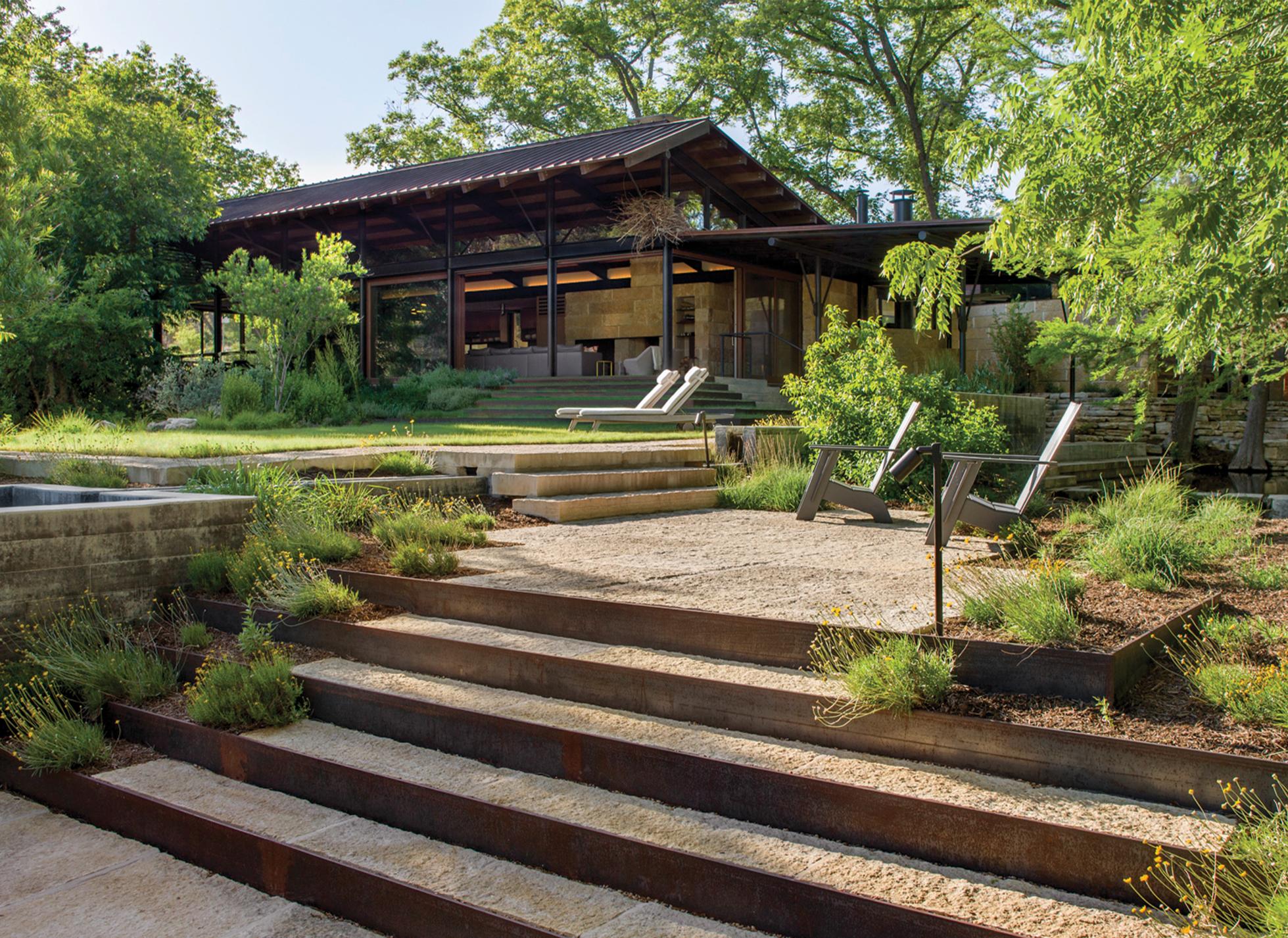
HONOR AWARD
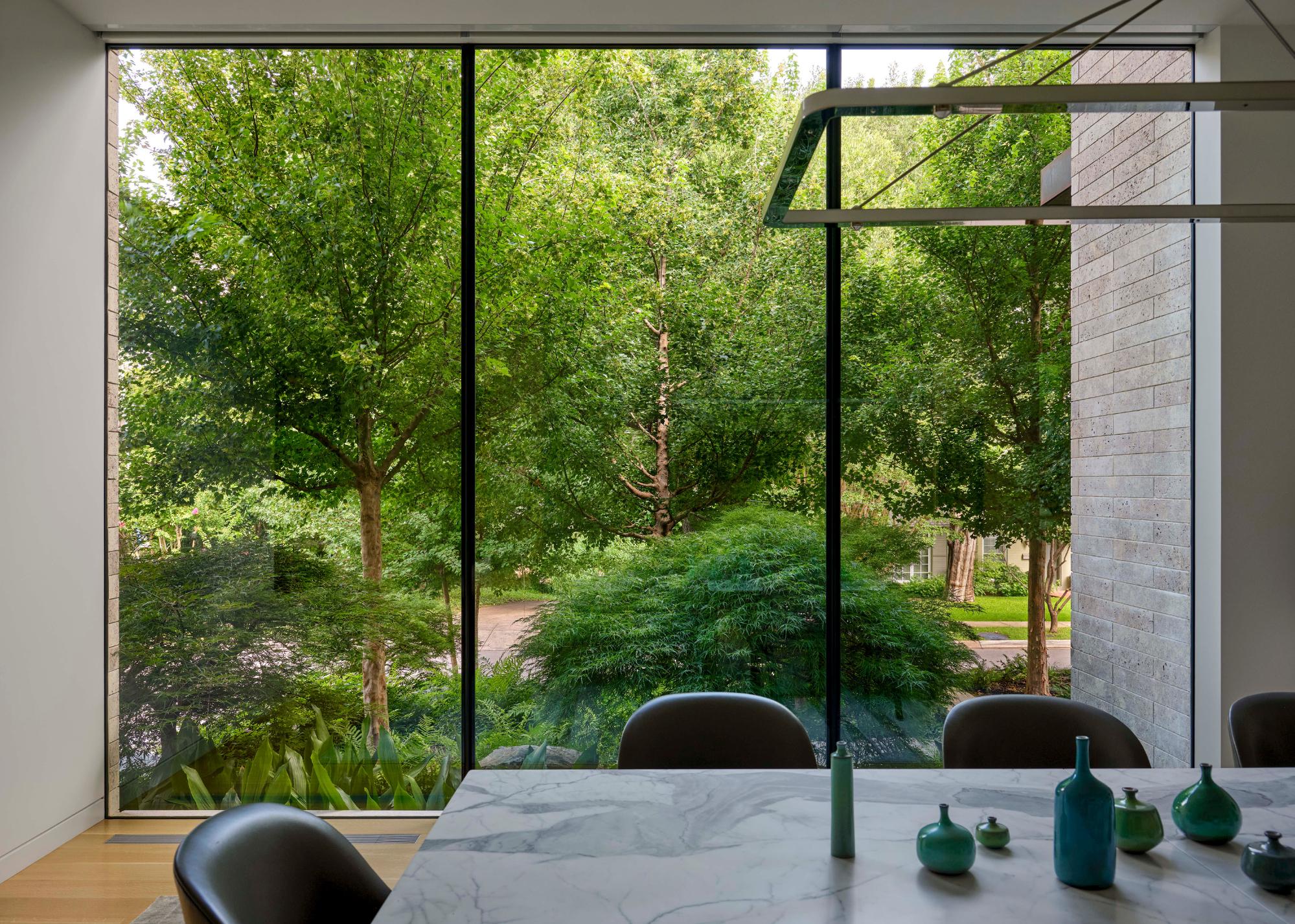
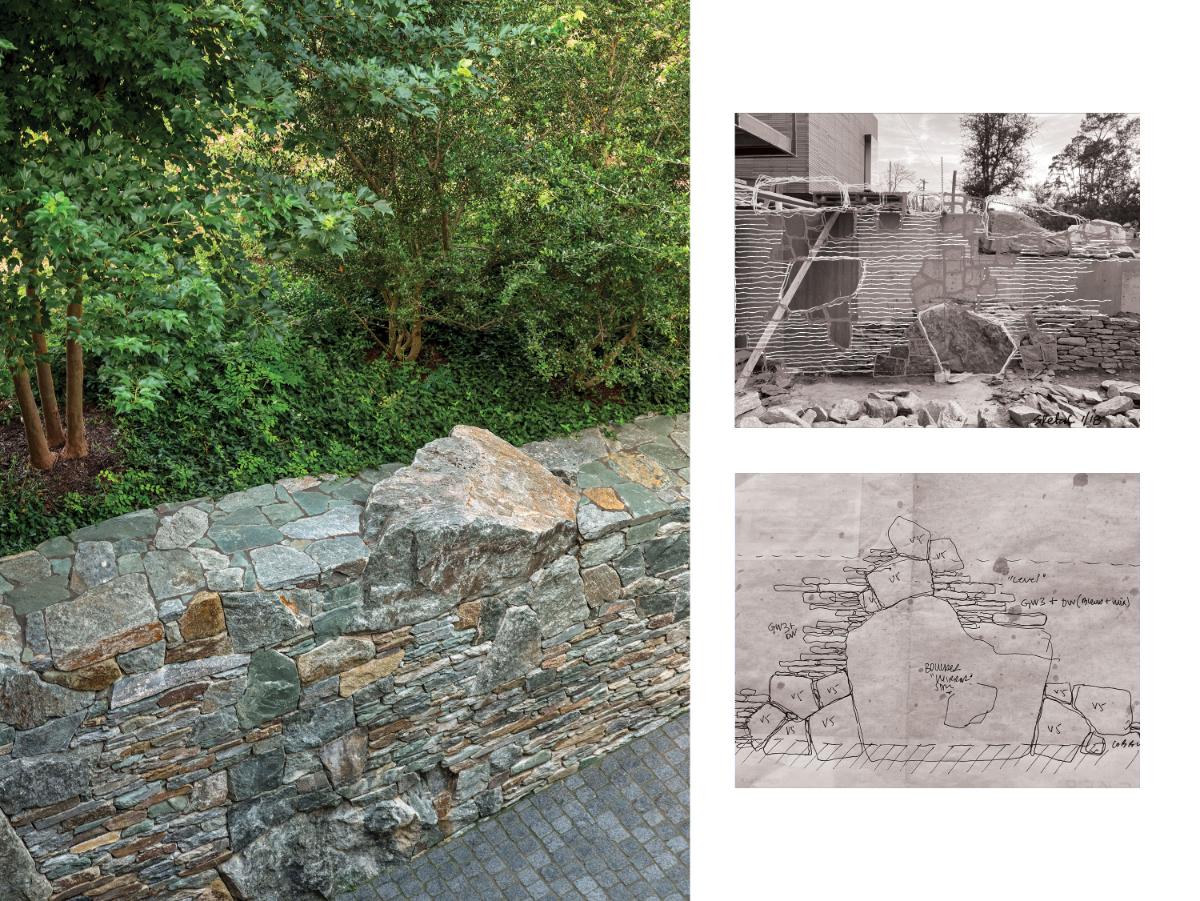
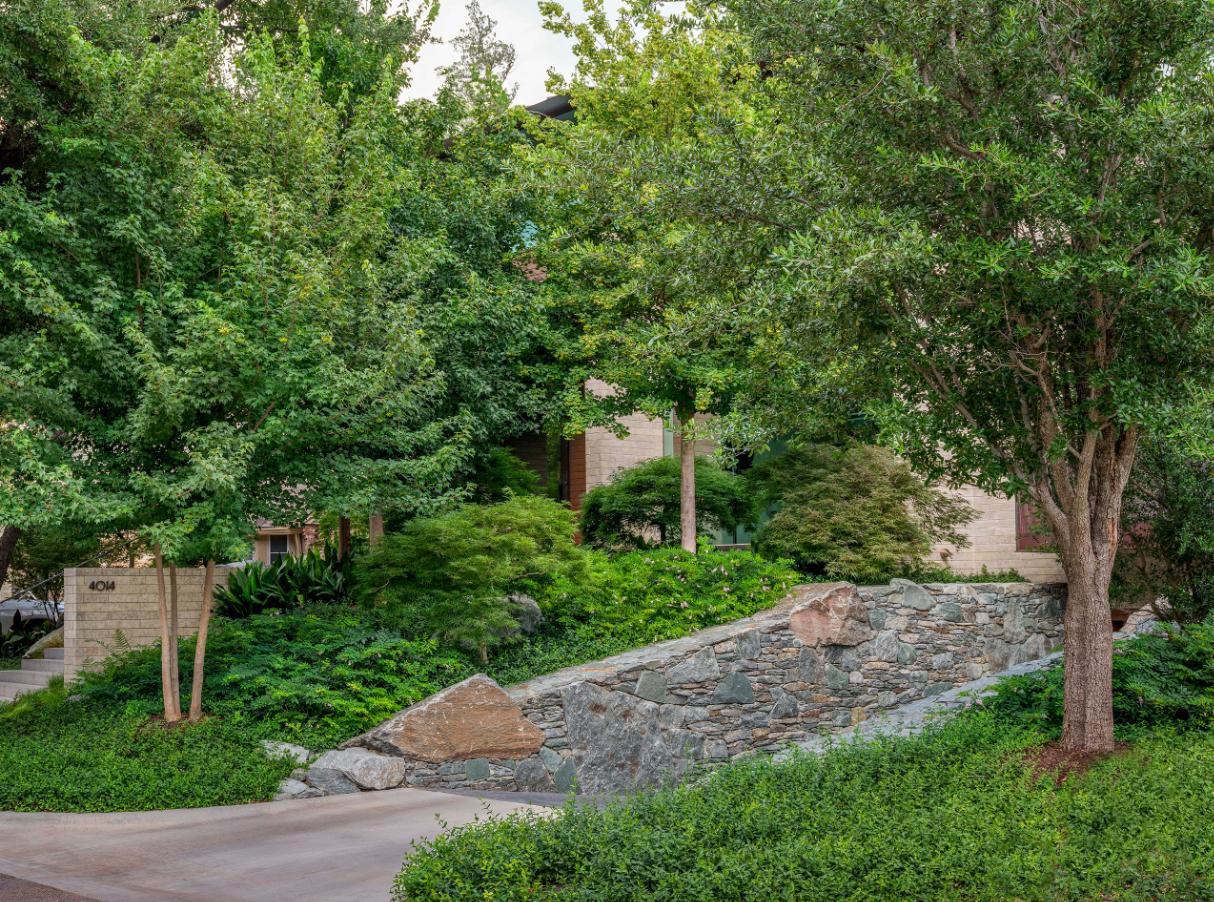
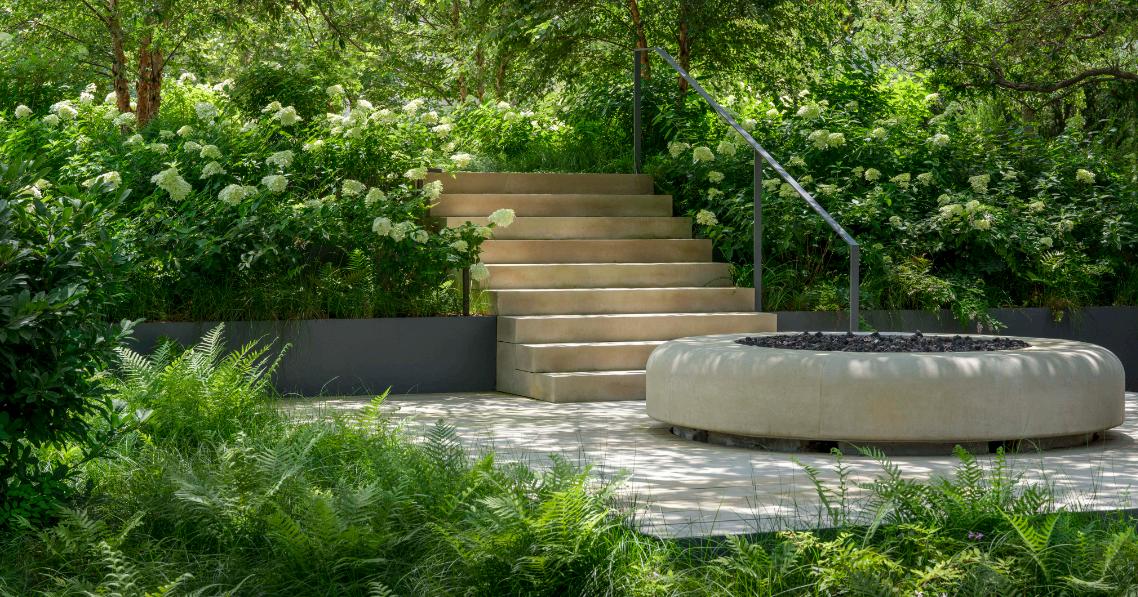
Stonebridge is a new, single-family residence in the Turtle Creek Neighborhood of Dallas. As a 0.19-acre “micro-site”, the landscape design is an exercise of precision craftsmanship. The home and garden holistically intertwine to make the limited space feel much more expansive. The design evokes an aesthetic of a modern Japanese garden. Sharp, verdant textures contrast the cool gray stonework utilized for walls, boulders, and paving. The house feels tuck-away compared to its neighbors while hiding intricate details as if they are easter eggs purposely camouflaged until a passerby stumbles upon.
Stonebridge // Hocker
HONOR AWARD
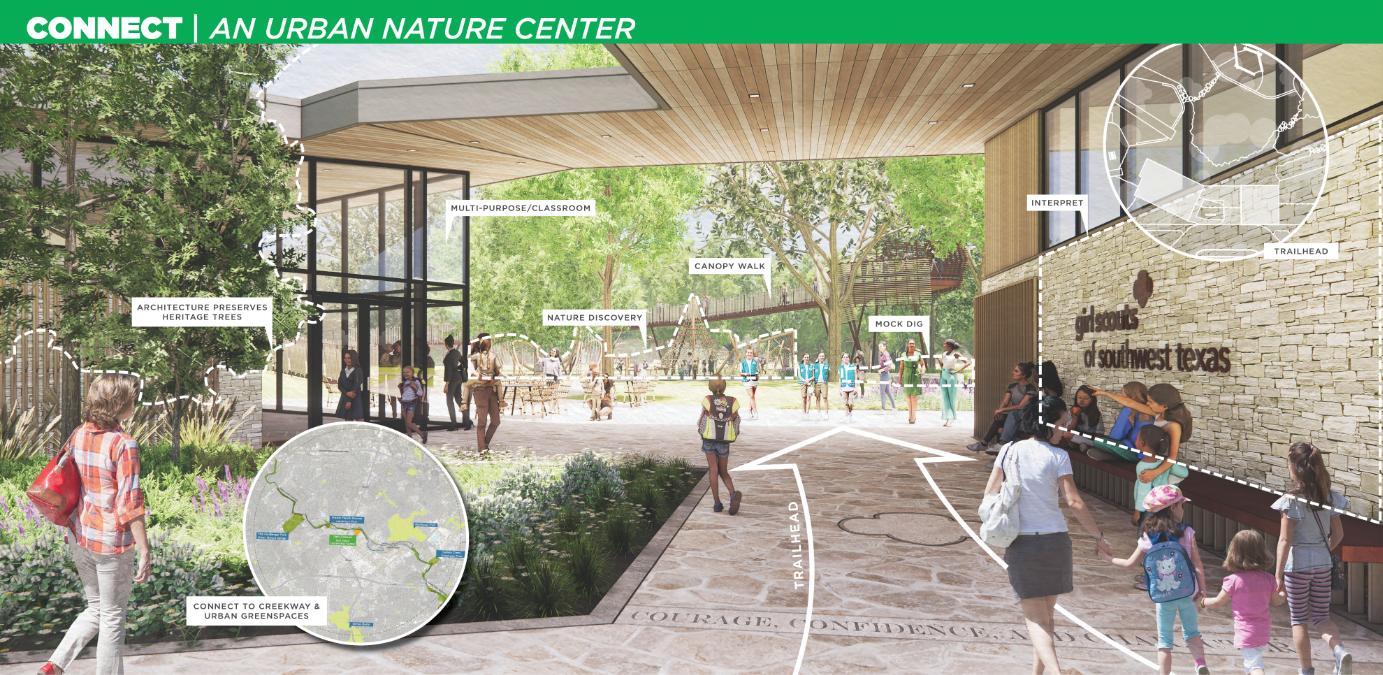
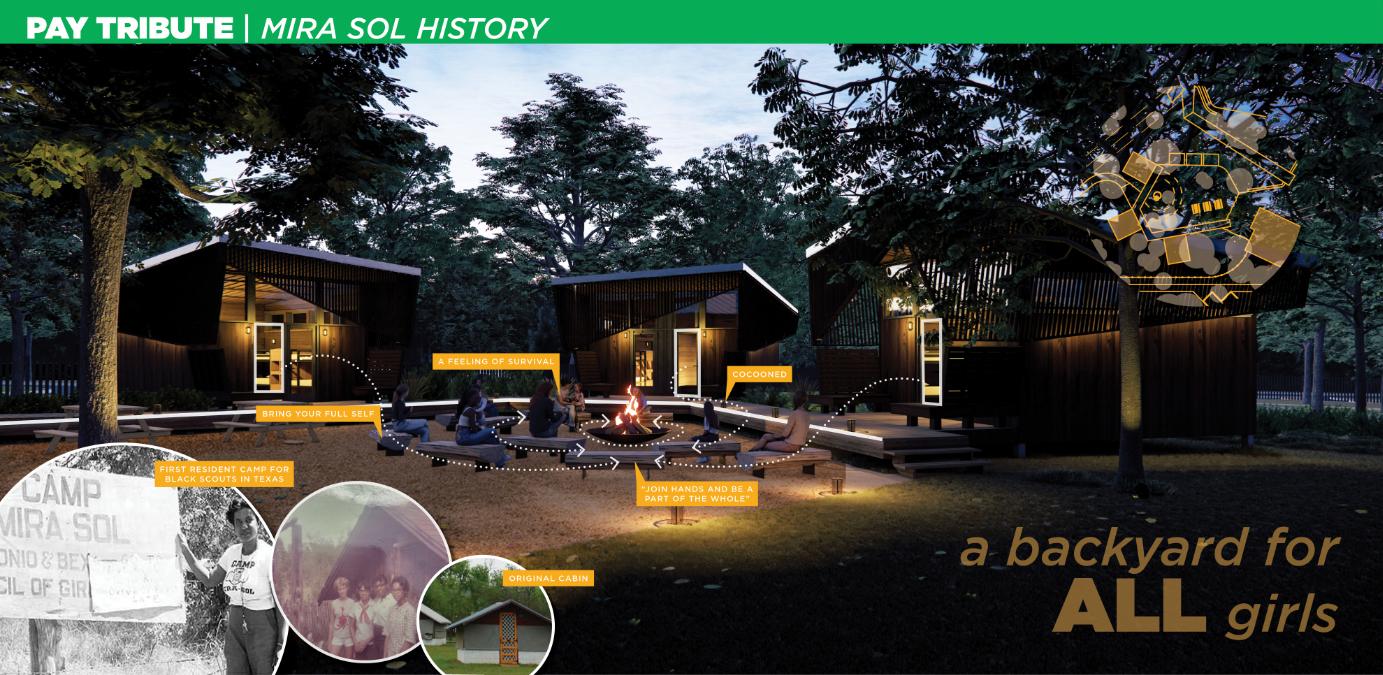
The master plan of the nearly 7-acre corporate campus of Girls Scouts of Southwest Texas reveals a new dual use of its headquarters as an immersive mini-camp. A central campfire recognizes the history of Mira Sol, the first resident camp for Black Girl Scouts in Texas. New multi-purpose ‘trailhead’ buildings and cabins support both donor events and overnight camping for troops within an urban natural setting. Nestled under heritage oaks, programming centered around archery, archaeology, and a ropes course gives a foretaste of the broader portfolio of experiences at “big camp” in the Hill Country.
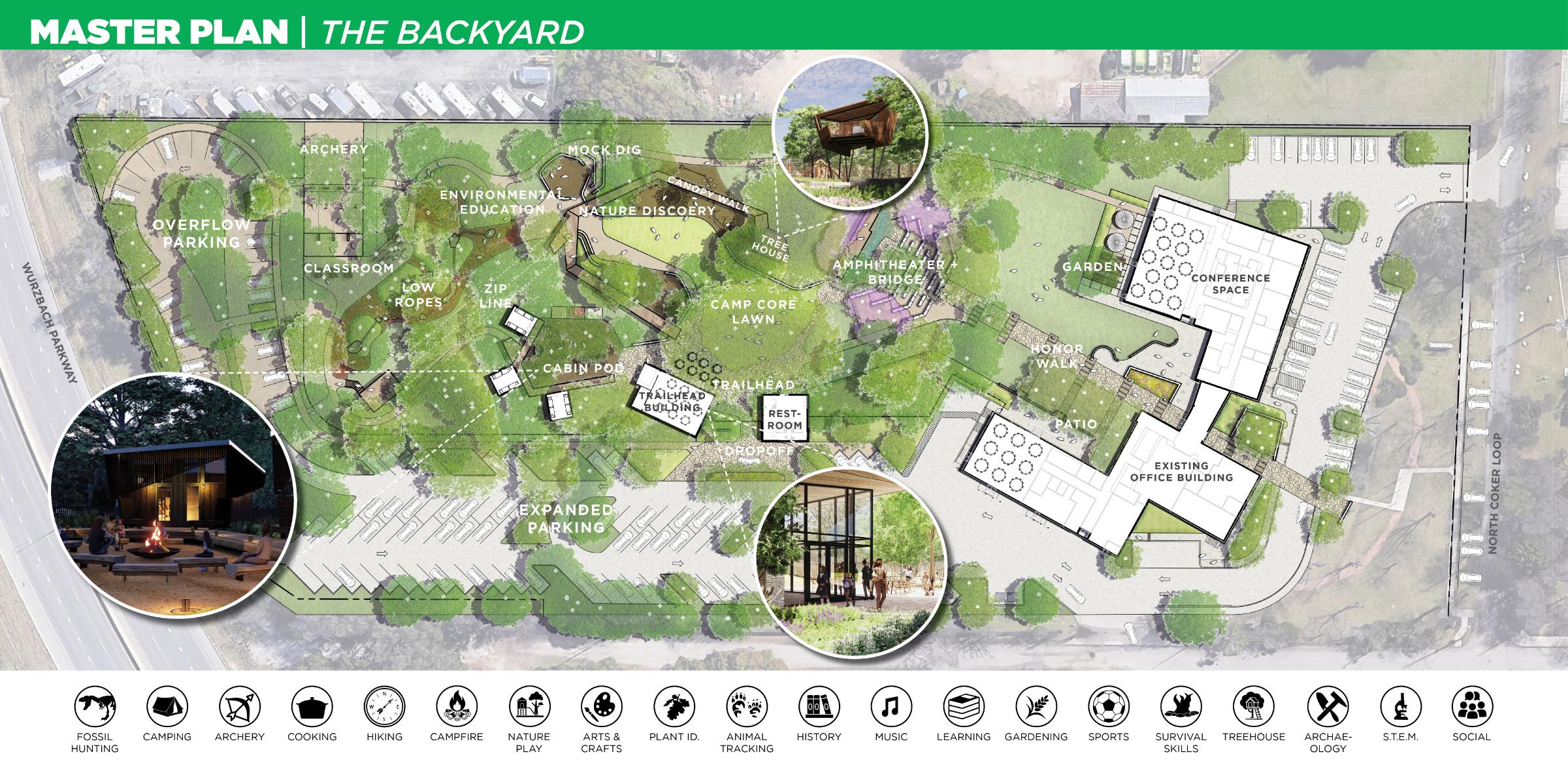
A New Backyard for Girl Scouts of Southwest Texas: Pivot with Urban Nature Center in Central San Antonio // Studio Outside
HONOR AWARD
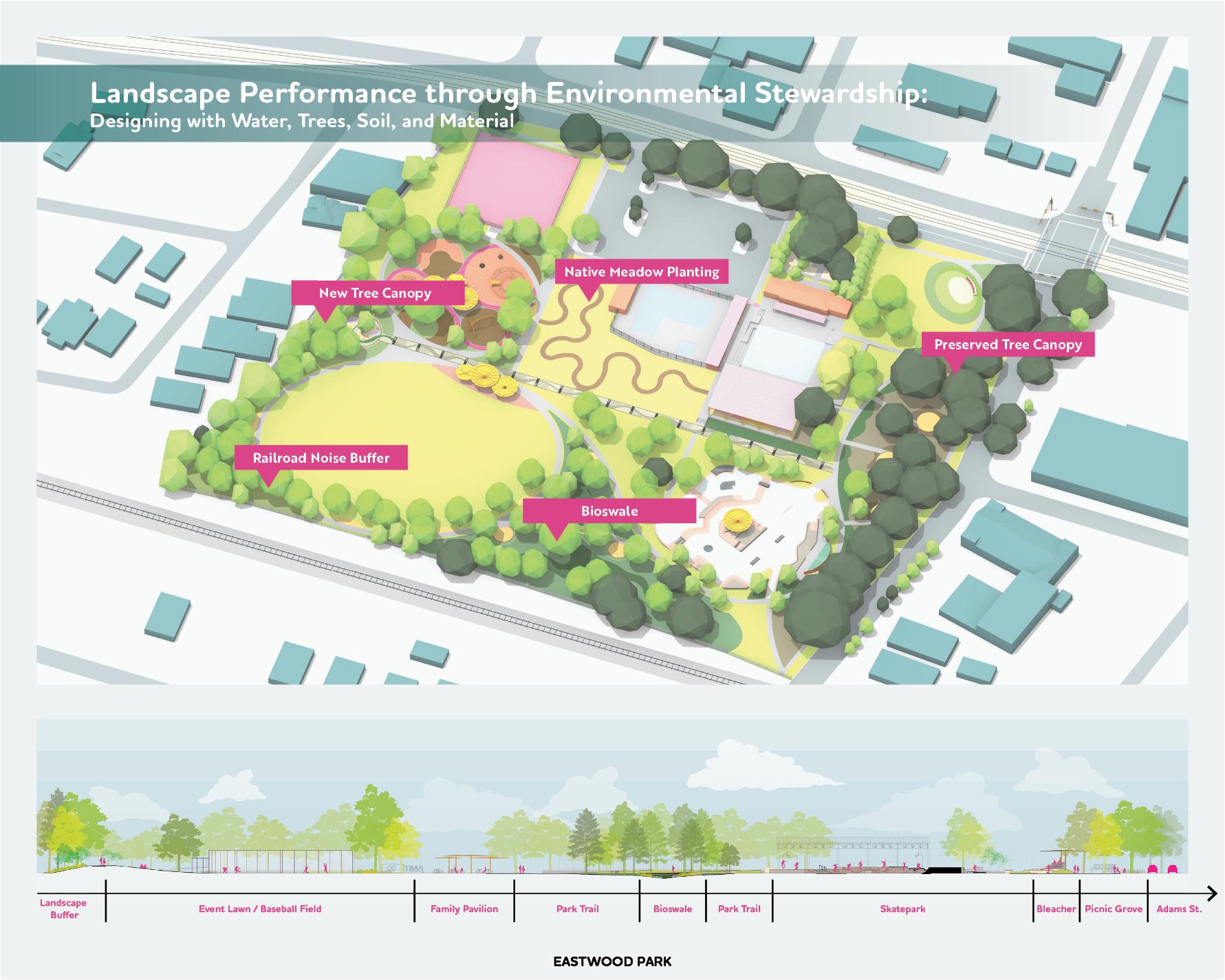
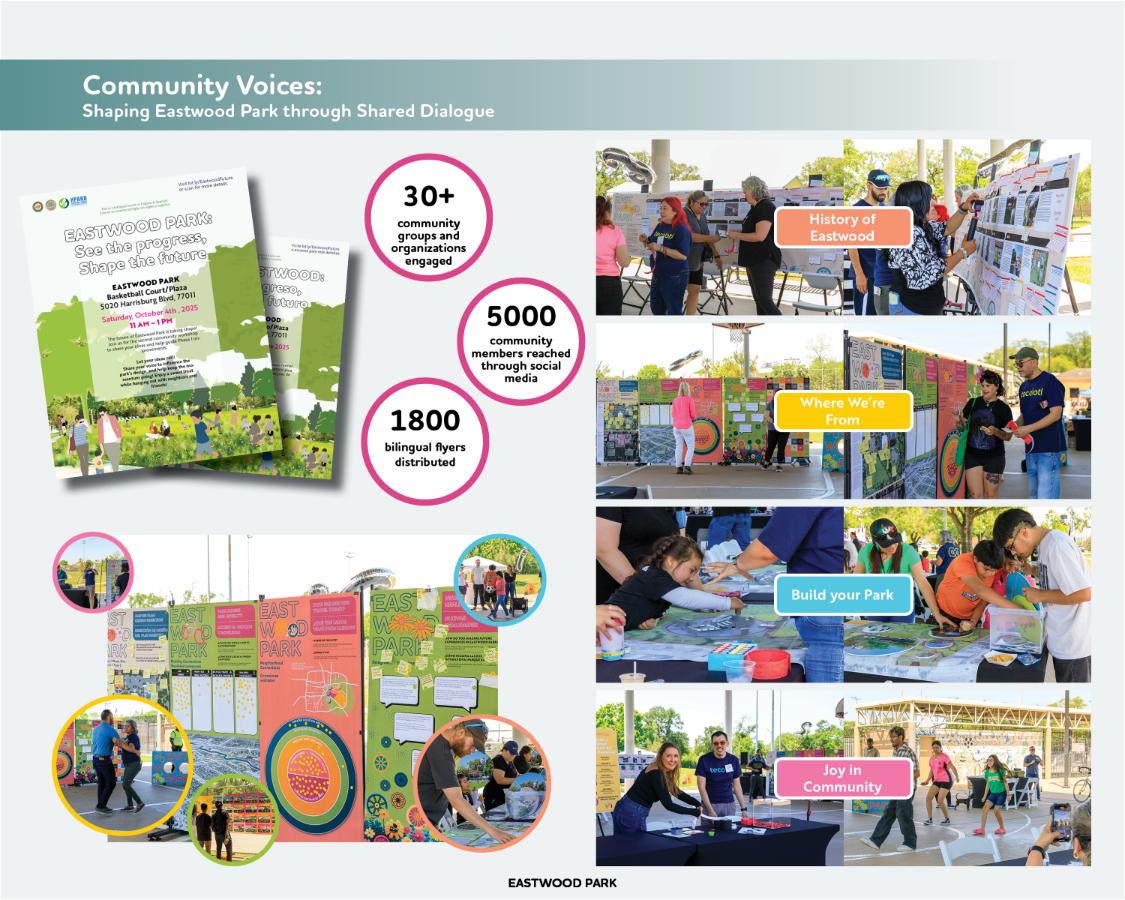
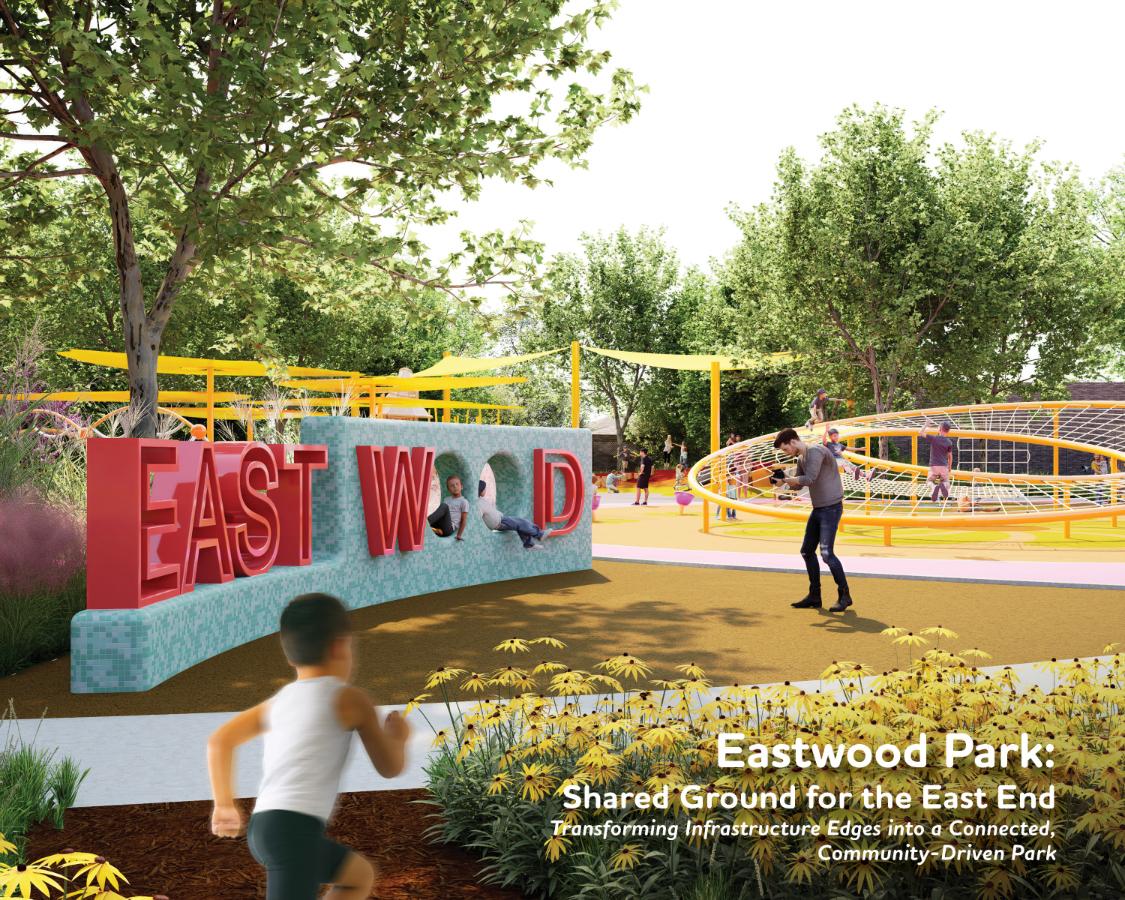
Eastwood Park transforms infrastructure-adjacent land into civic ground for Houston’s East End. The 9-acre neighborhood park, bordered by active freight rail and light rail corridors, serves a predominantly Latino, historically under-served community. Rather than screening infrastructure, the design embraces visibility and movement to connect community life with its urban context. Community listening shaped program priorities, including an expanded skate park, culturally expressive basketball court, accessible playground, and flexible athletic fields. The 540-foot Timeline Boulevard anchors the park with engraved text, mosaic paving, and a gathering plaza. Bioswales, on-site cut-and-fill, and native planting support resilient performance.
Eastwood Park // SWA Group
HONOR AWARD
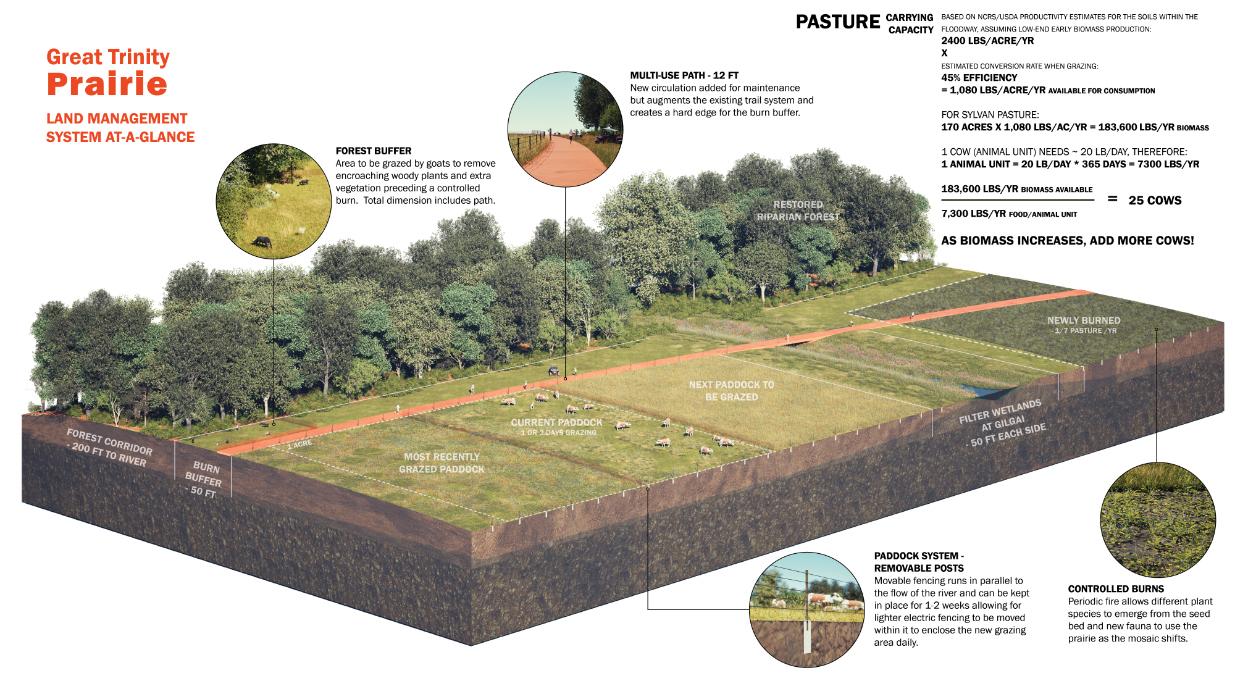
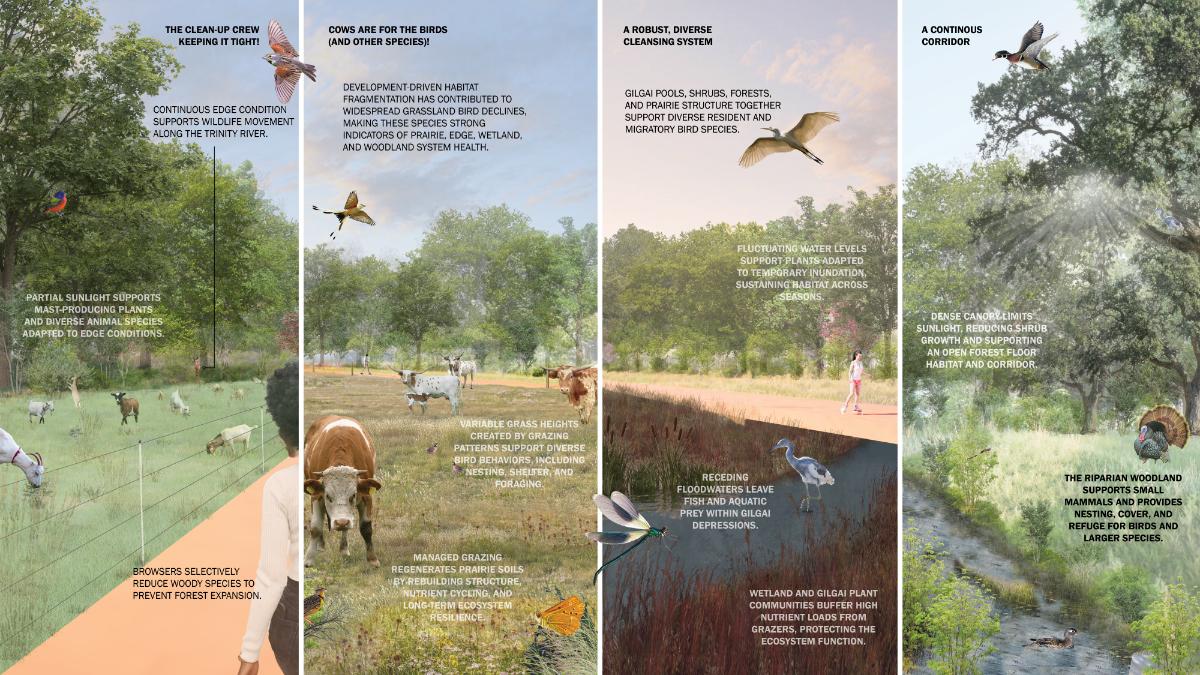
The Great Trinity Prairie is a vision for Dallas that recreates historic management regimes of the Blackland Prairie to reconnect the city to the river by leveraging its cultural identity to increase biodiversity and habitat connectivity while addressing the flood conveyance concerns. The proposal is a framework based on contemporary land management practices that simulate historic disturbance mechanisms of the Blackland Prairie to provide access to nature for historically underserved neighborhoods within Dallas and remind people that the community and culture of North Texas are integrally connected to this critically threatened ecosystem.
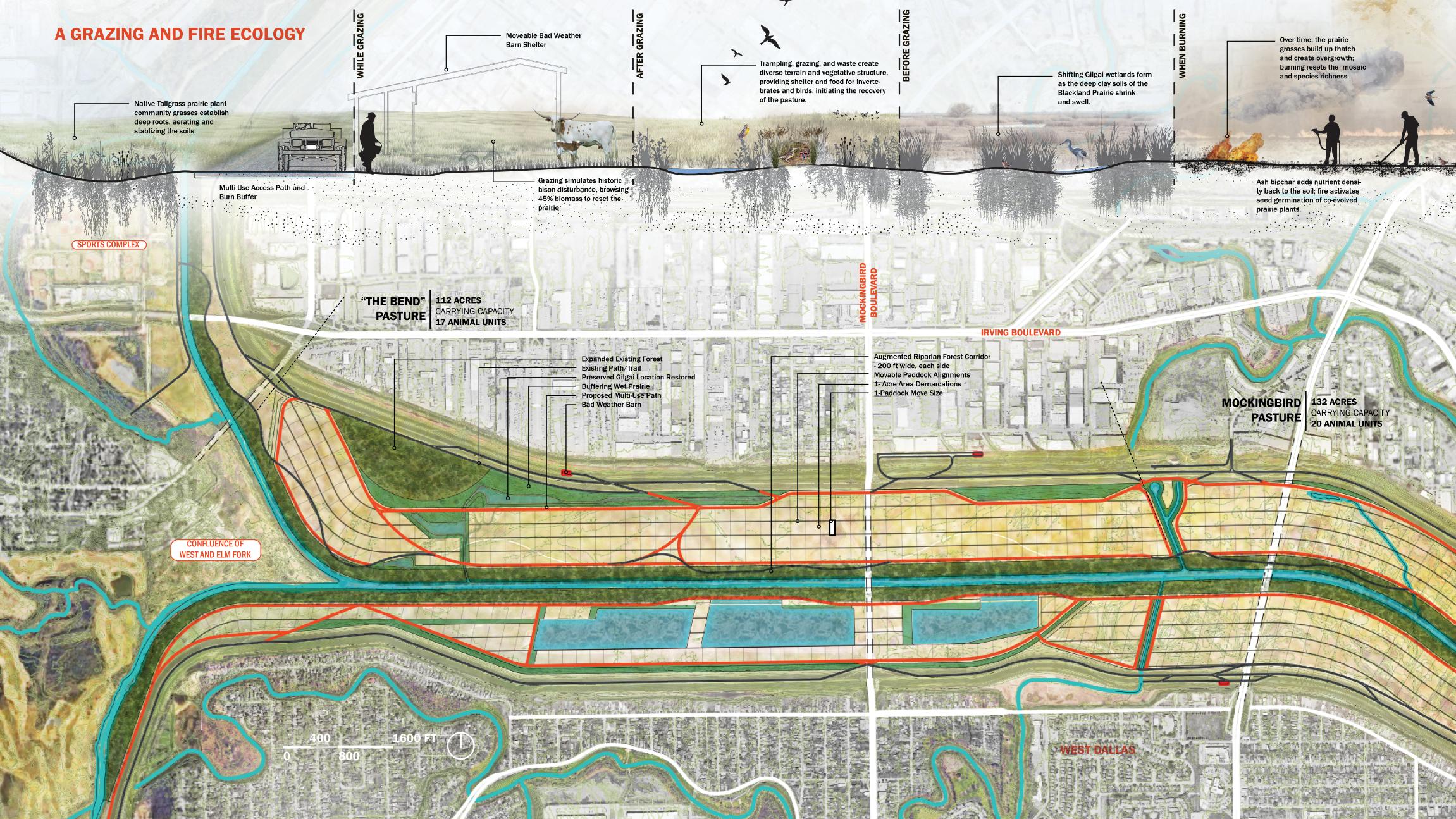
The Great Trinity Prairie // Site Agency
HONOR AWARD
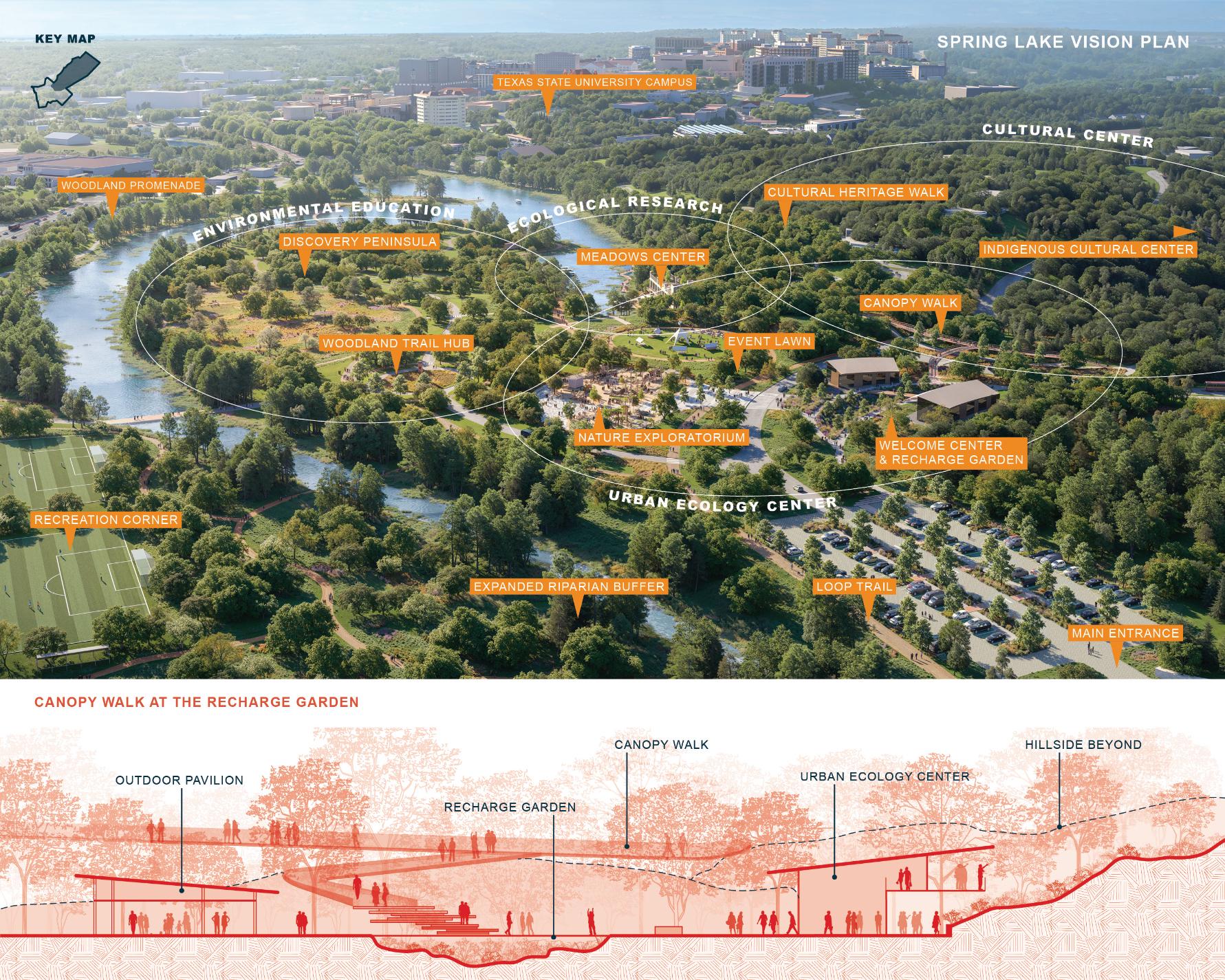
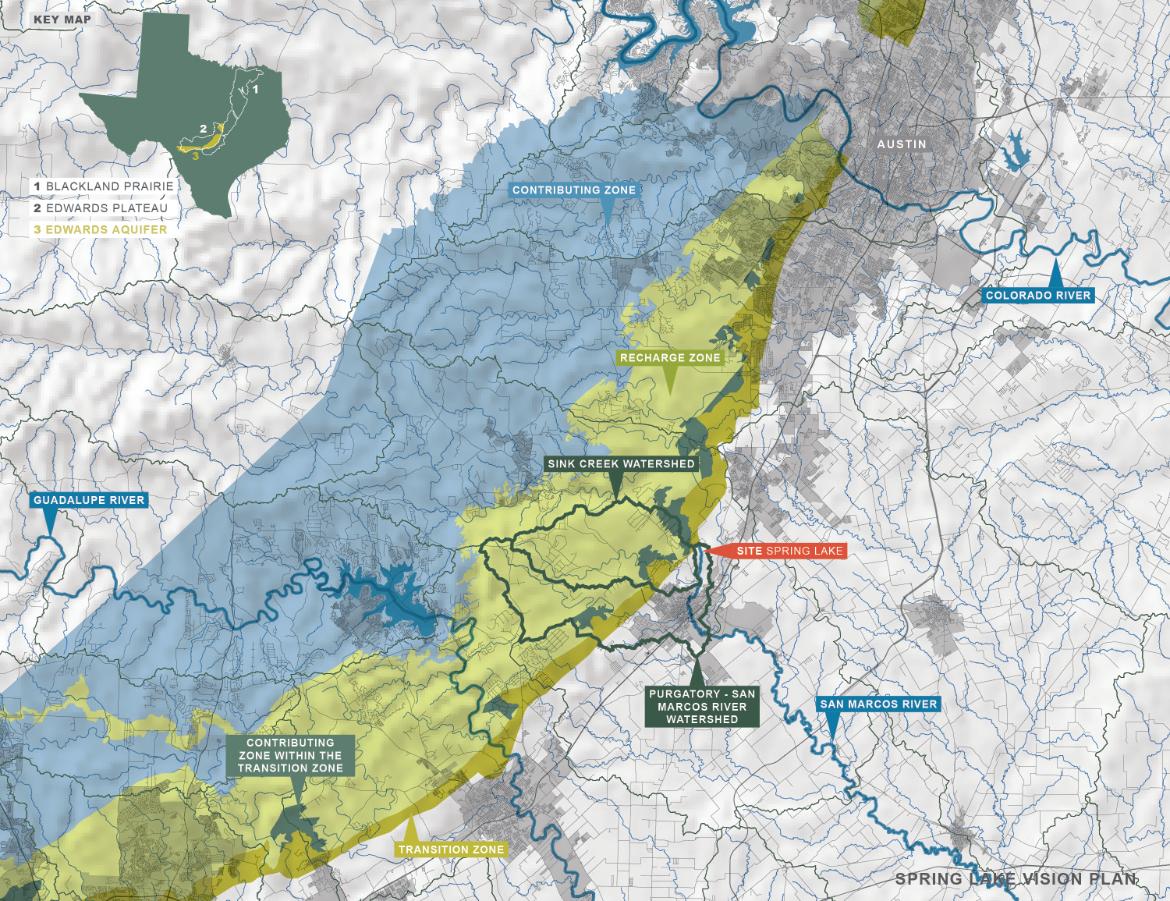
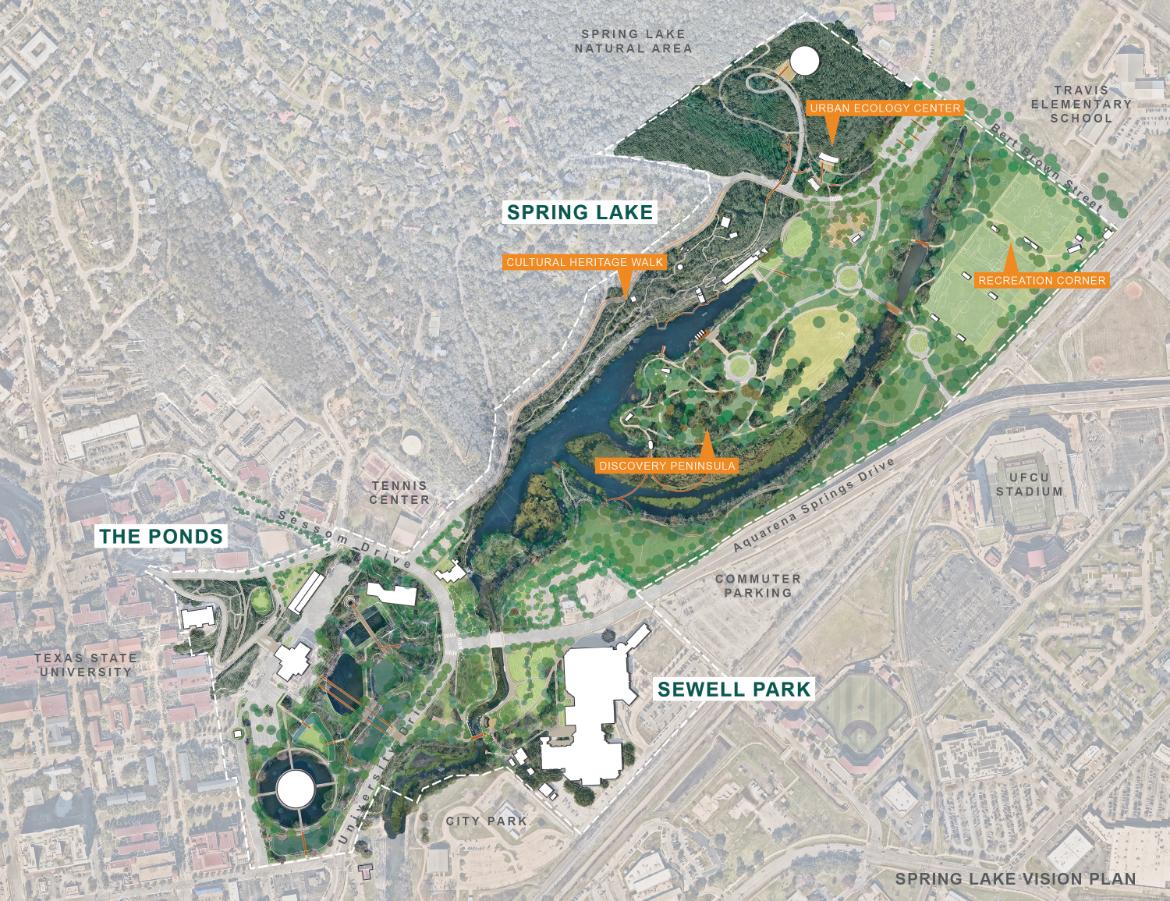
The Spring Lake Vision Plan celebrates and safeguards the cultural, historical, and ecological significance of this extraordinary site while bolstering relationships between the Texas State University community, the City of San Marcos, and the public. By honoring the site’s legacy and integrating thoughtful design, the plan ensures all three sites remain vibrant hubs for education, research, and recreation. The vision plan addresses solutions for water quality, habitat creation and preservation, and improved circulation. The plan invites all visitors to immerse themselves in the site’s rich history, fostering a deeper appreciation for its enduring importance.
Texas State Spring Lake Vision Plan // Ten Eyck Landscape Architects
HONOR AWARD
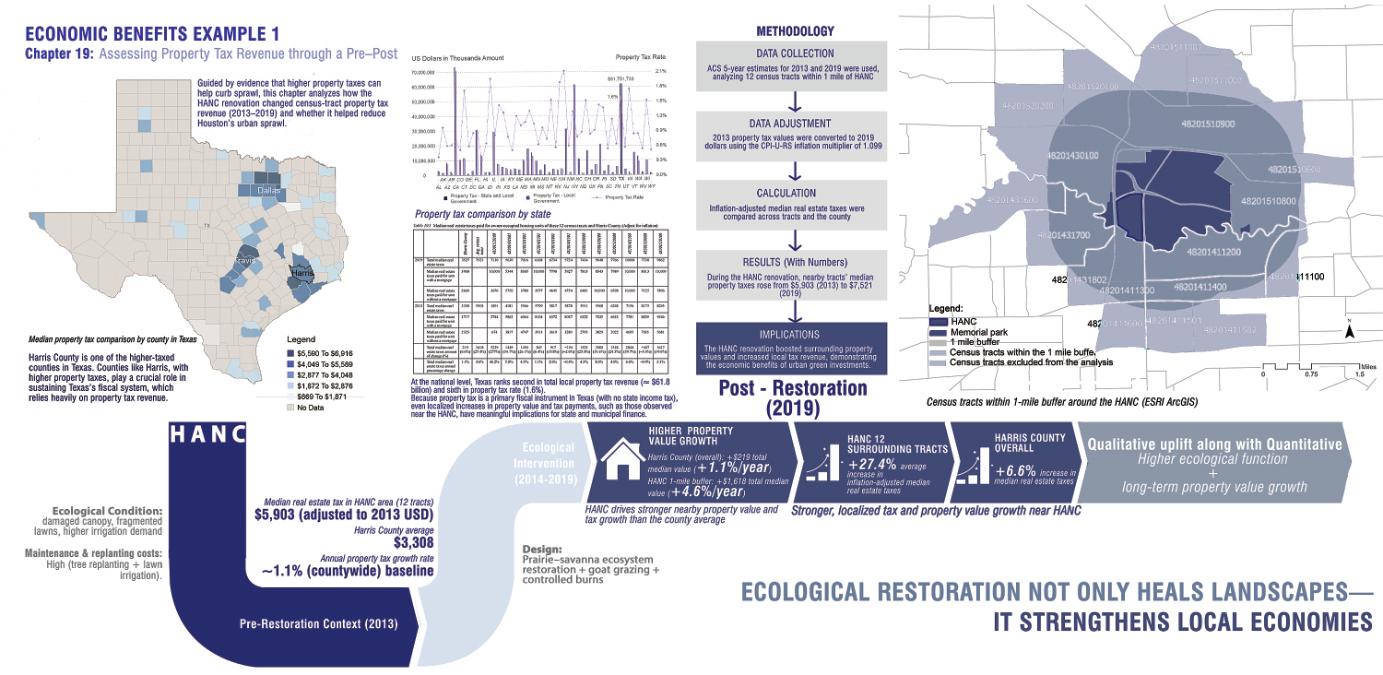
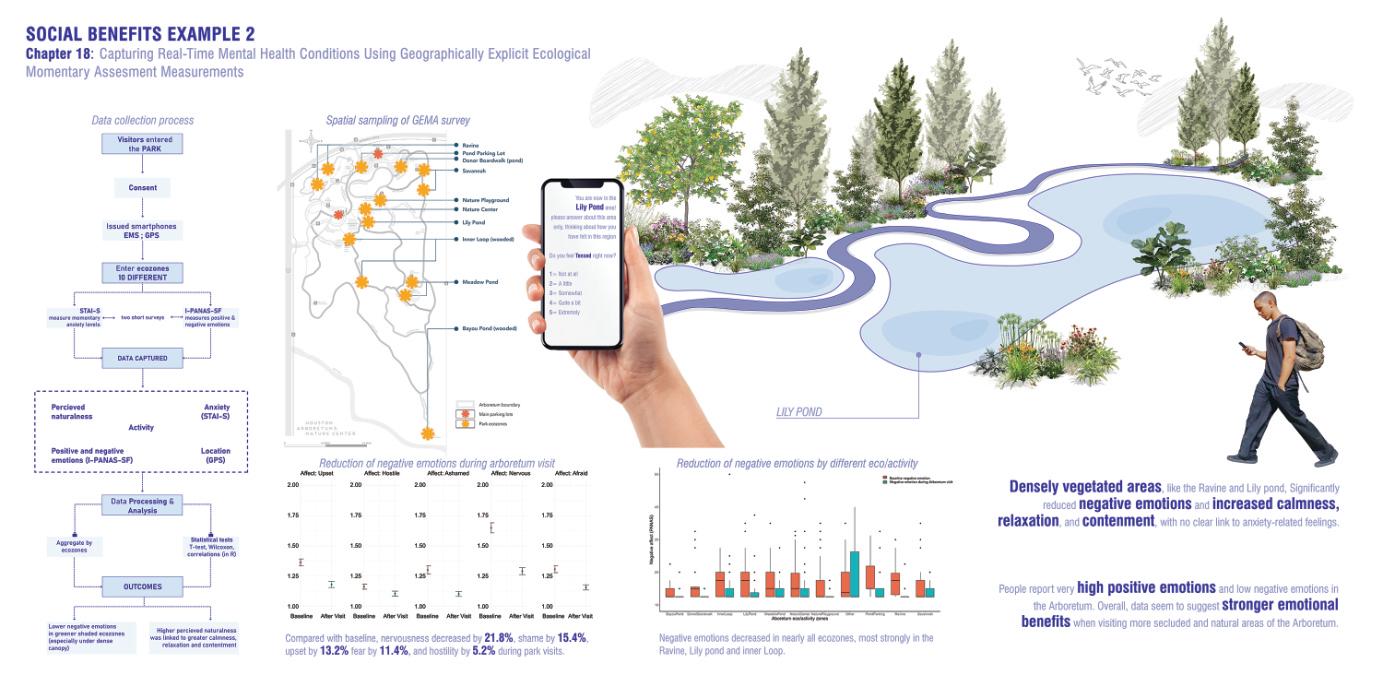
Nature Center Contemporary Landscape Performance Methods and Techniques: Lessons from the Houston Arboretum and Nature Center (HANC), emphasizes landscape performance as a critical method for integrating science into the design process. Focusing on the Phase 1 of the redesign of the HANC's 65-acre core, this work creates new methodologies, blends innovative performance techniques, and showcases proven quantitative and qualitative evaluation tools to measure the environmental, social, and economic impacts of the design. By providing step-by-step guidance on applying these tools, the book offers a replicable framework for future projects, advancing evidence-based practices through innovative landscape performance methods.
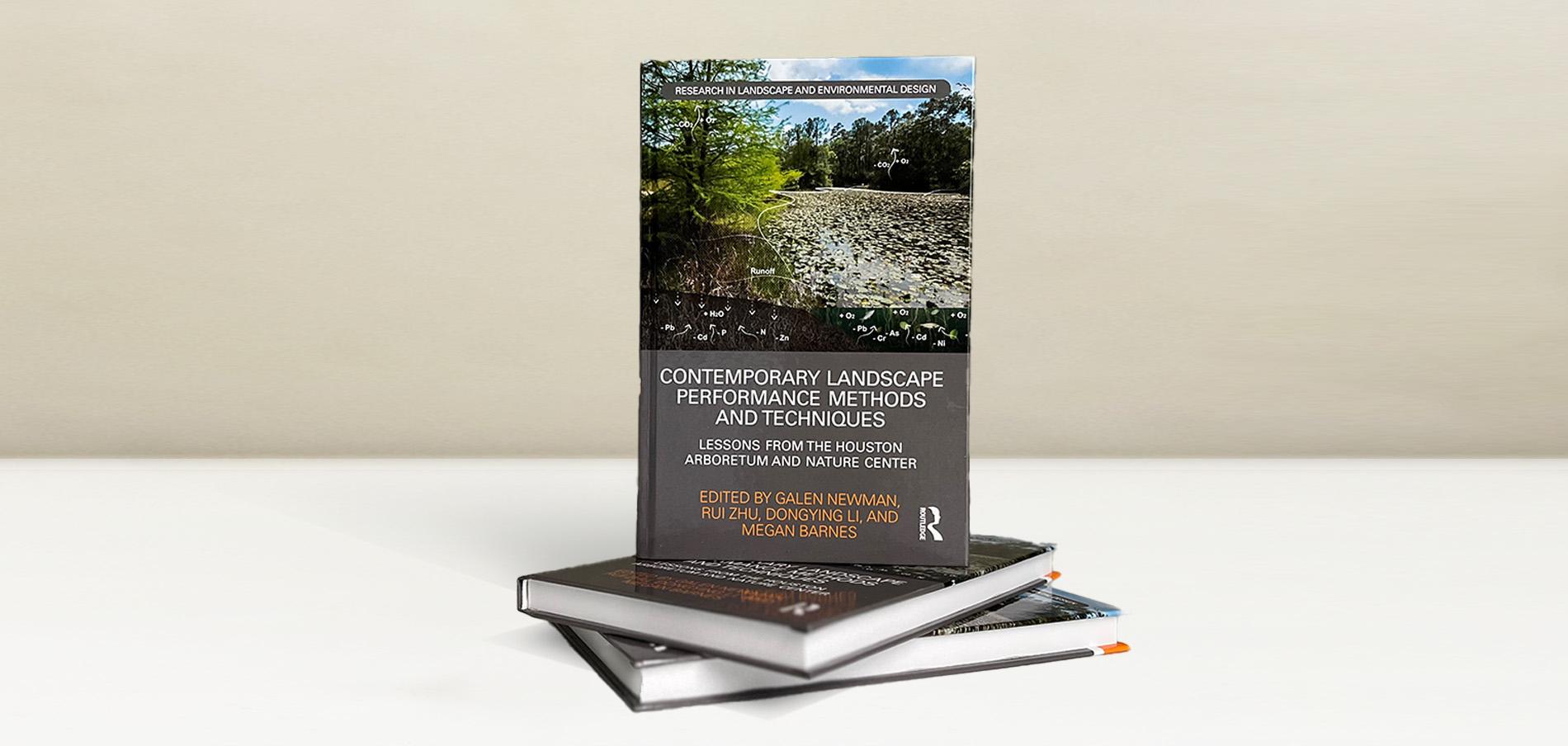
Contemporary Landscape Performance Methods and Techniques: Lessons from the Houston Arboretum and Nature Center Book // Design Workshop/Reed Hilderbrand/Texas A&M University
HONOR AWARD
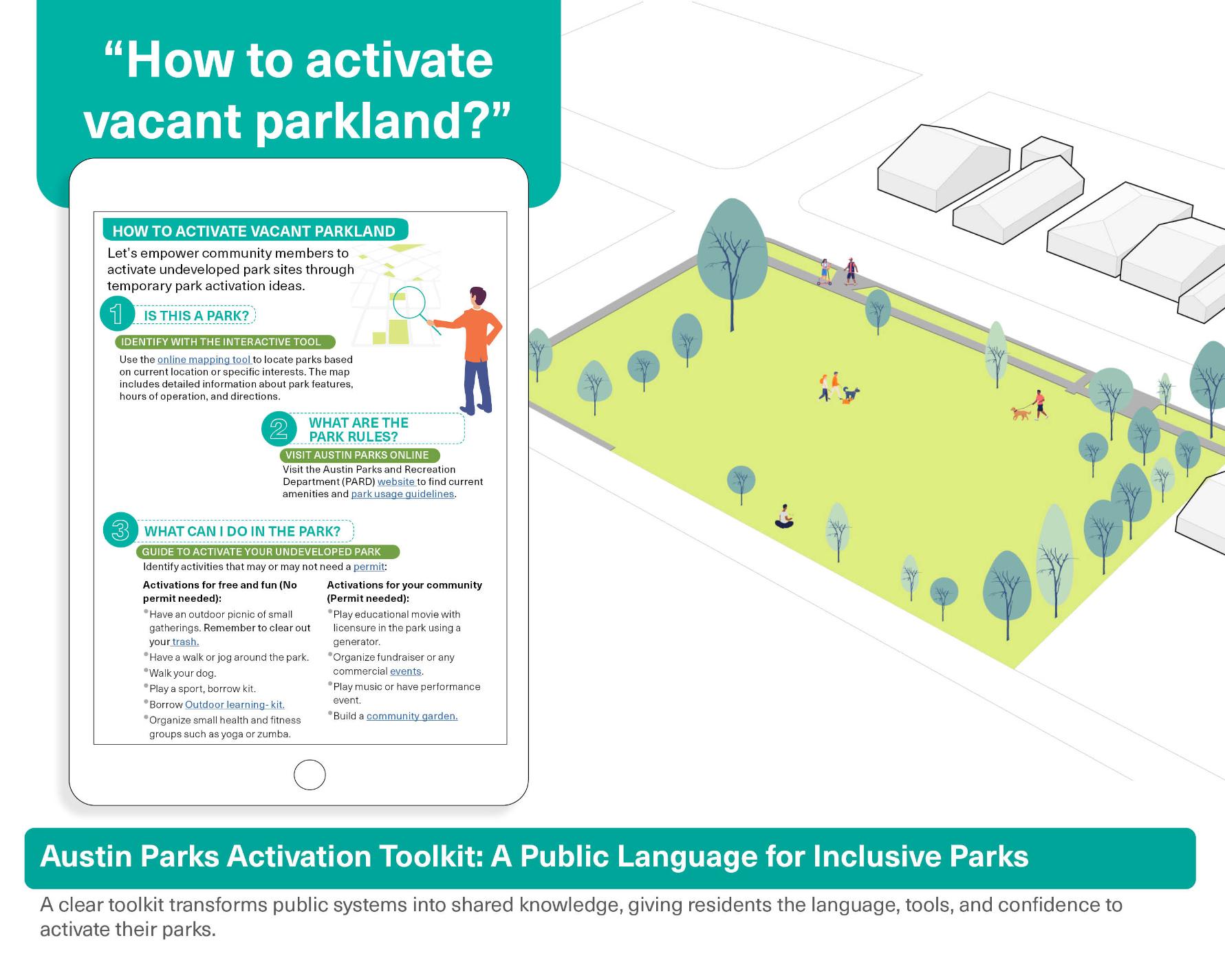
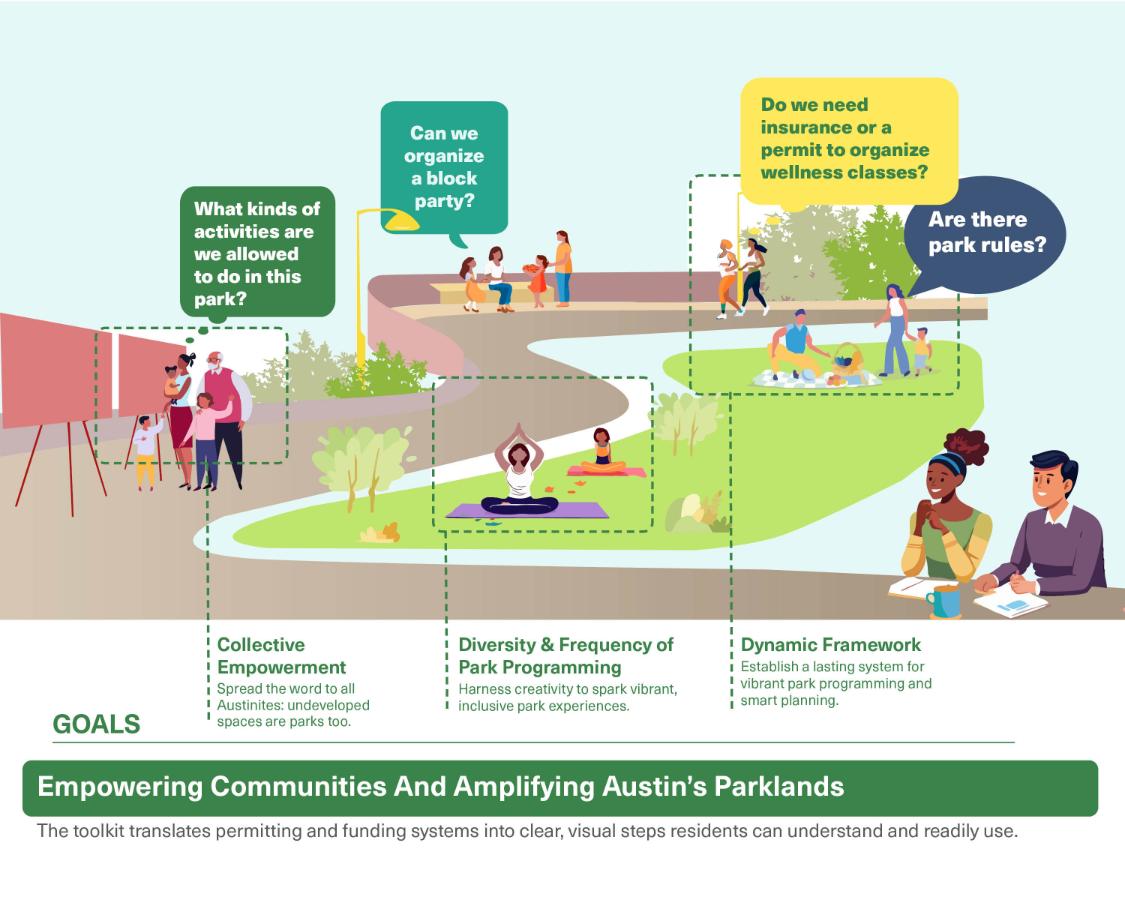
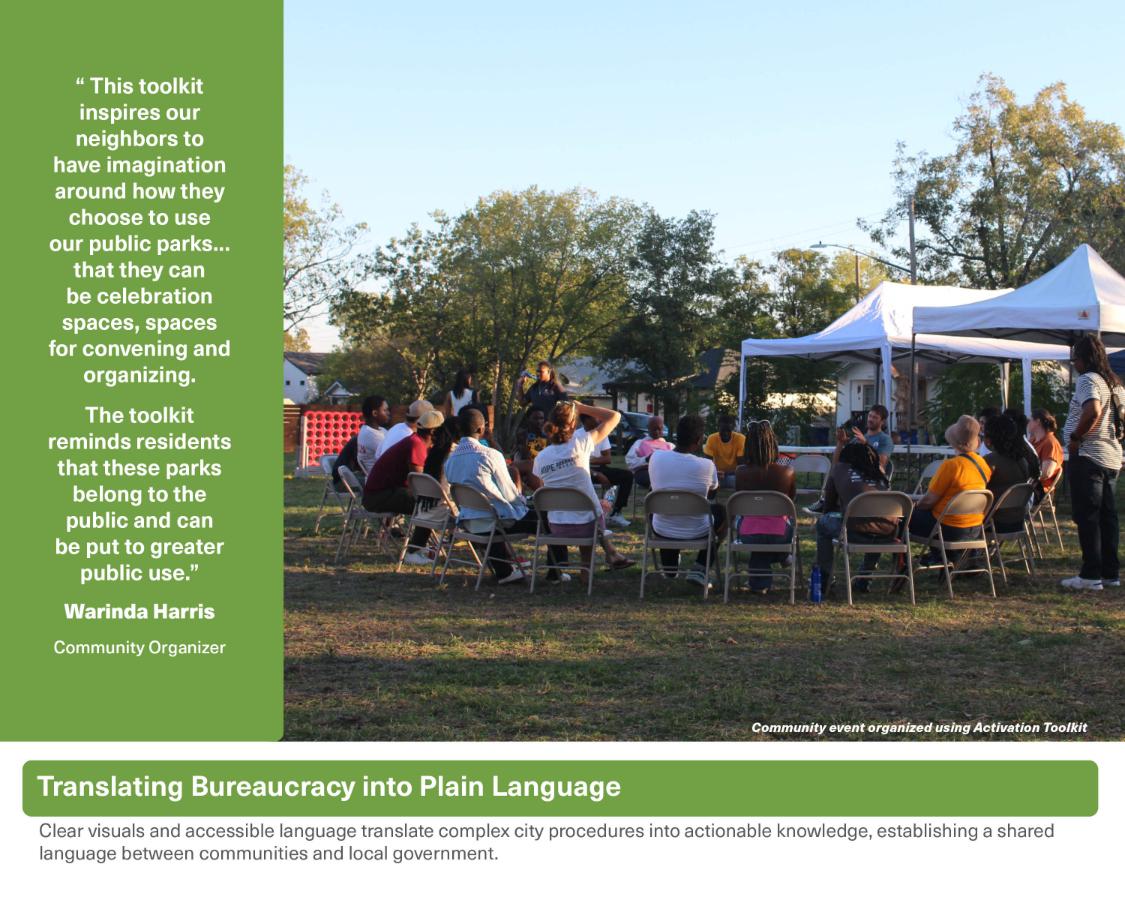
The Austin Parks Activation Toolkit is a publicly accessible digital and printable guide that simplifies Austin’s park permitting and funding systems. Created for grassroots outreach and resident training, it translates complex processes into clear, visual steps, empowering communities to plan safe, legal activations and speak the same procedural language as local government. By turning bureaucracy into actionable strategies, the toolkit fosters equity, collaboration, and place-making. This innovative, replicable model enables communities nationwide to reclaim vacant parkland and transform it into vibrant, inclusive spaces.
Austin Parks Activation Toolkit // Design Workshop
AWARDS PROFESSIONAL EXCELLENCE
EXCELLENCE AWARD
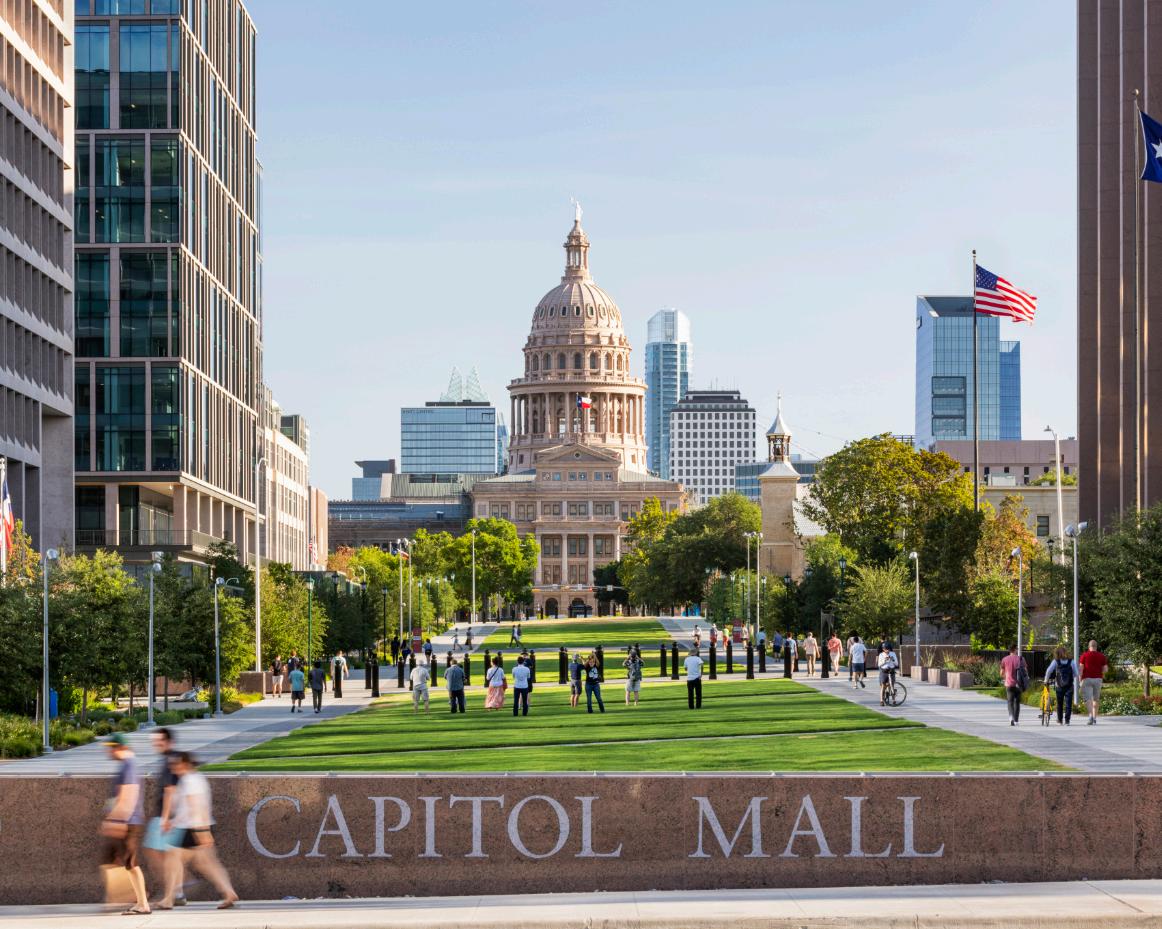
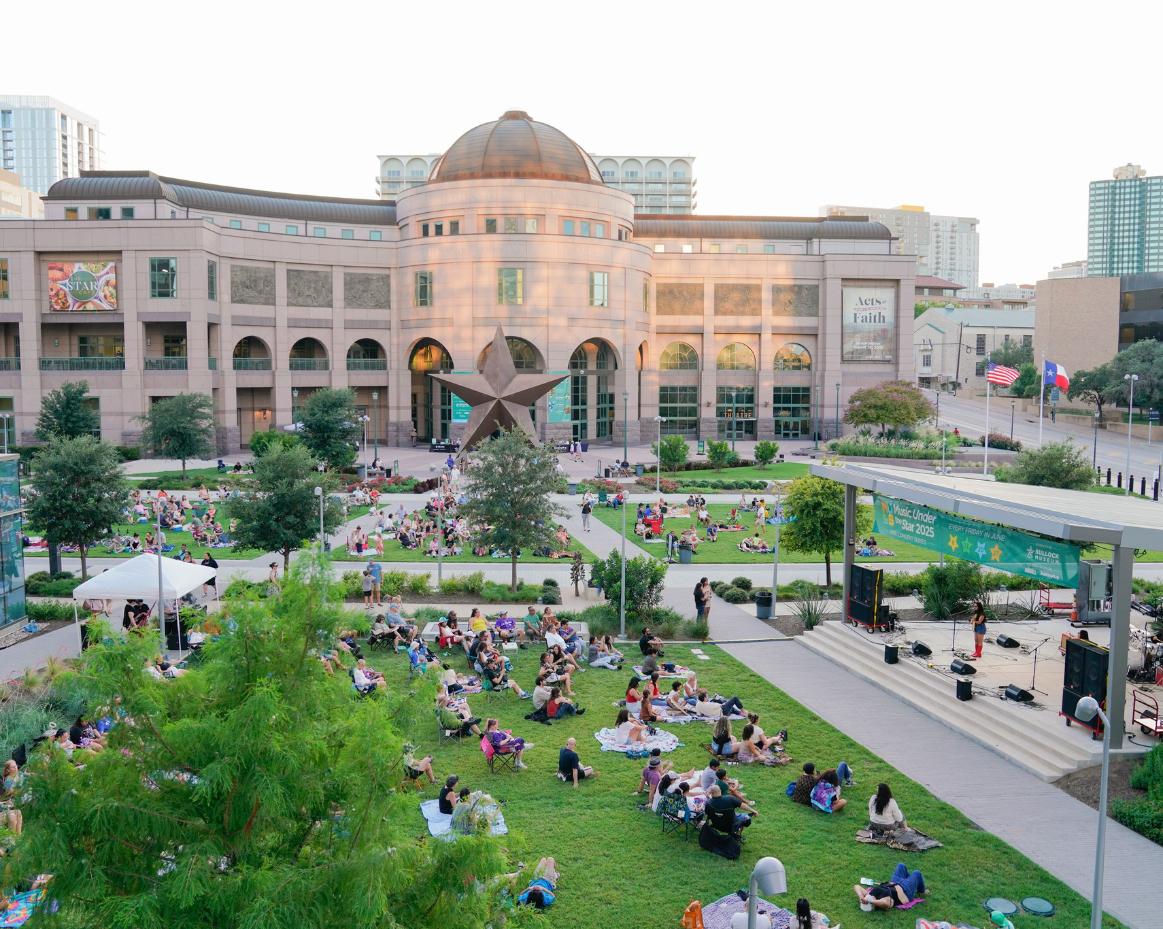
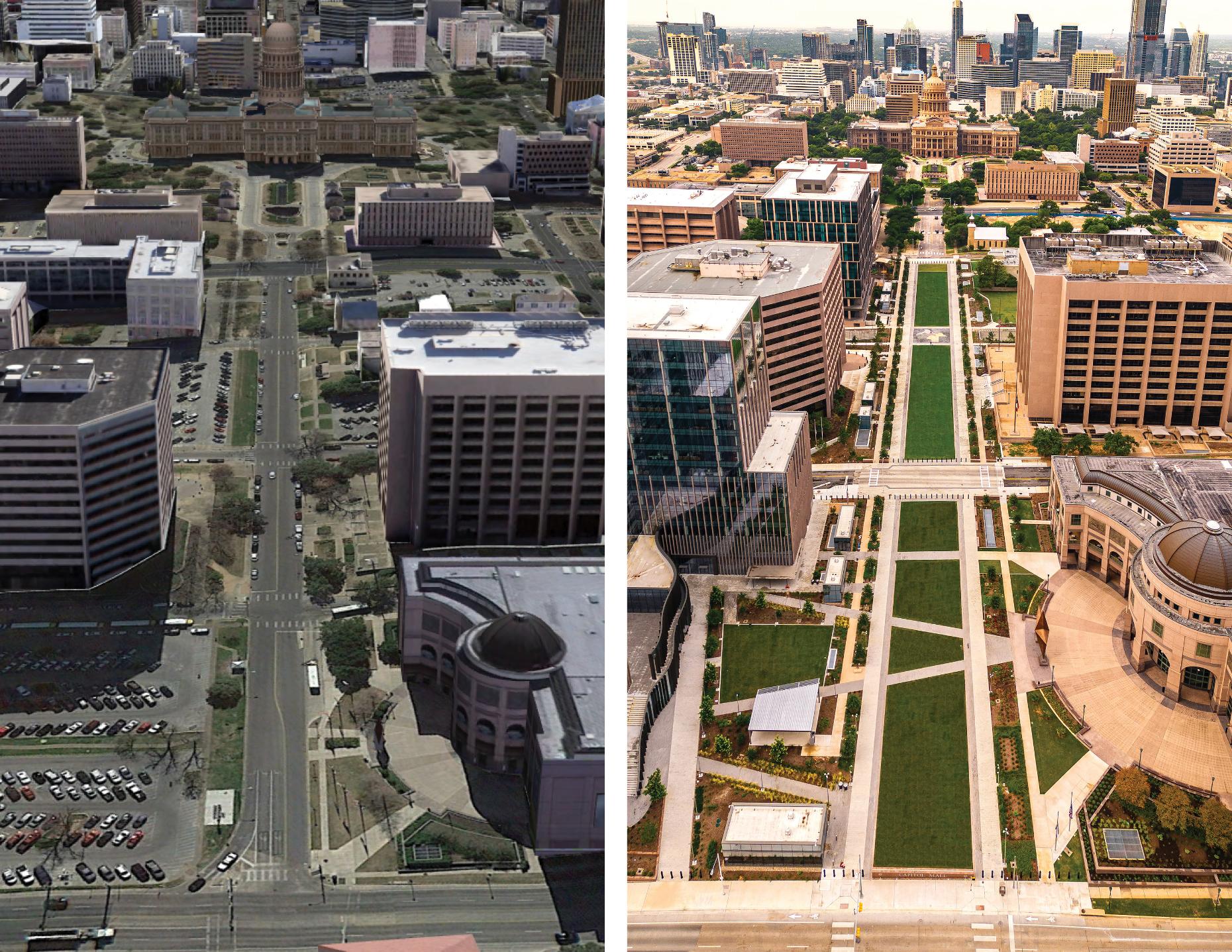
The new Texas Capitol Mall transformed a street between the Capitol and The University of Texas campus into a pedestrian-only destination above a subsurface garage, creating the largest rooftop garden in Central Texas. This new destination includes several state office buildings replacing scattered lease spaces around Austin, thus reducing automobile commutes and operating costs while creating cohesion and community. The Mall eliminates vehicle use, reduces heat island effect, and provides stormwater management and biofiltration, with the ultimate result being a significant open space serving as a healthy and vibrant destination for employees and visitors.
Texas Capitol Complex Mall &Garage // Coleman & Associates
EXCELLENCE AWARD
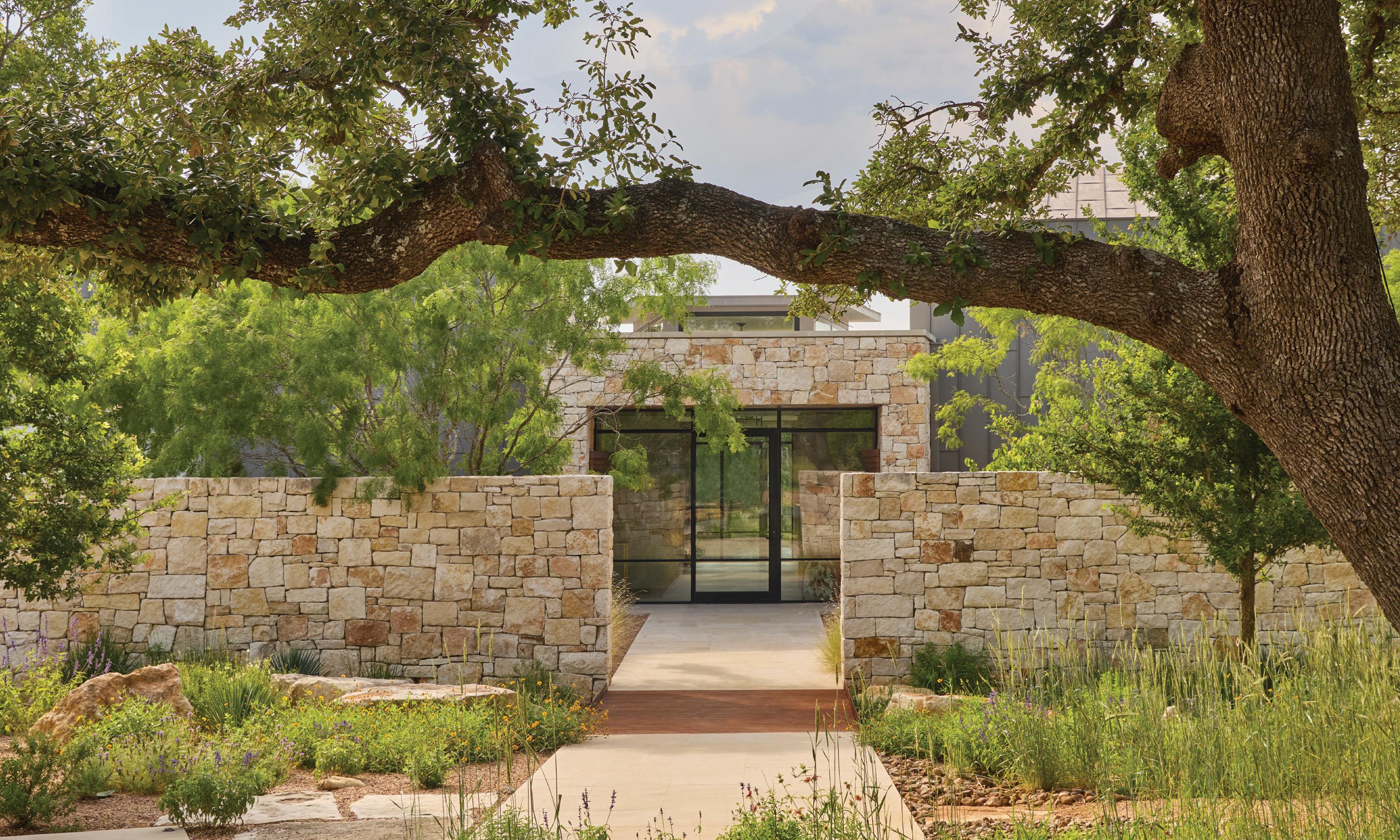
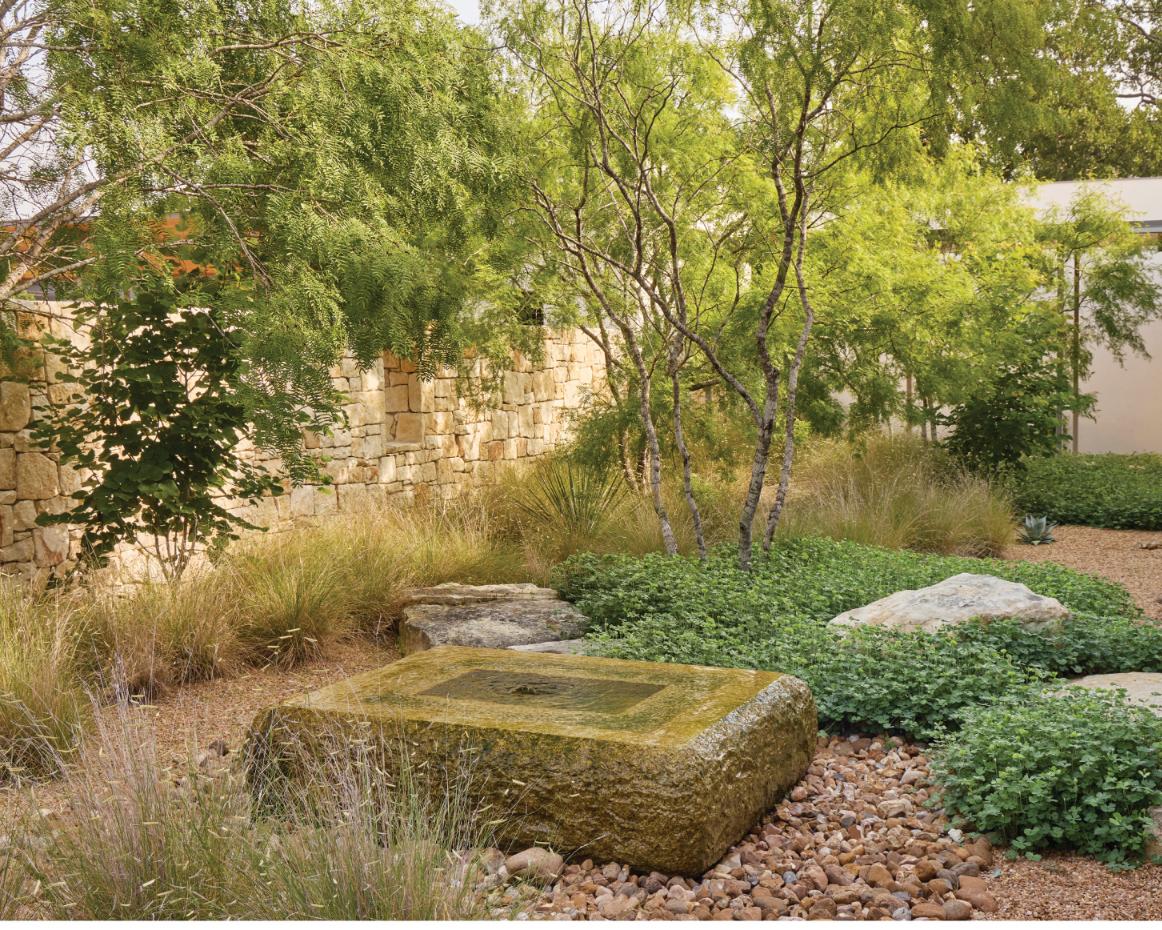
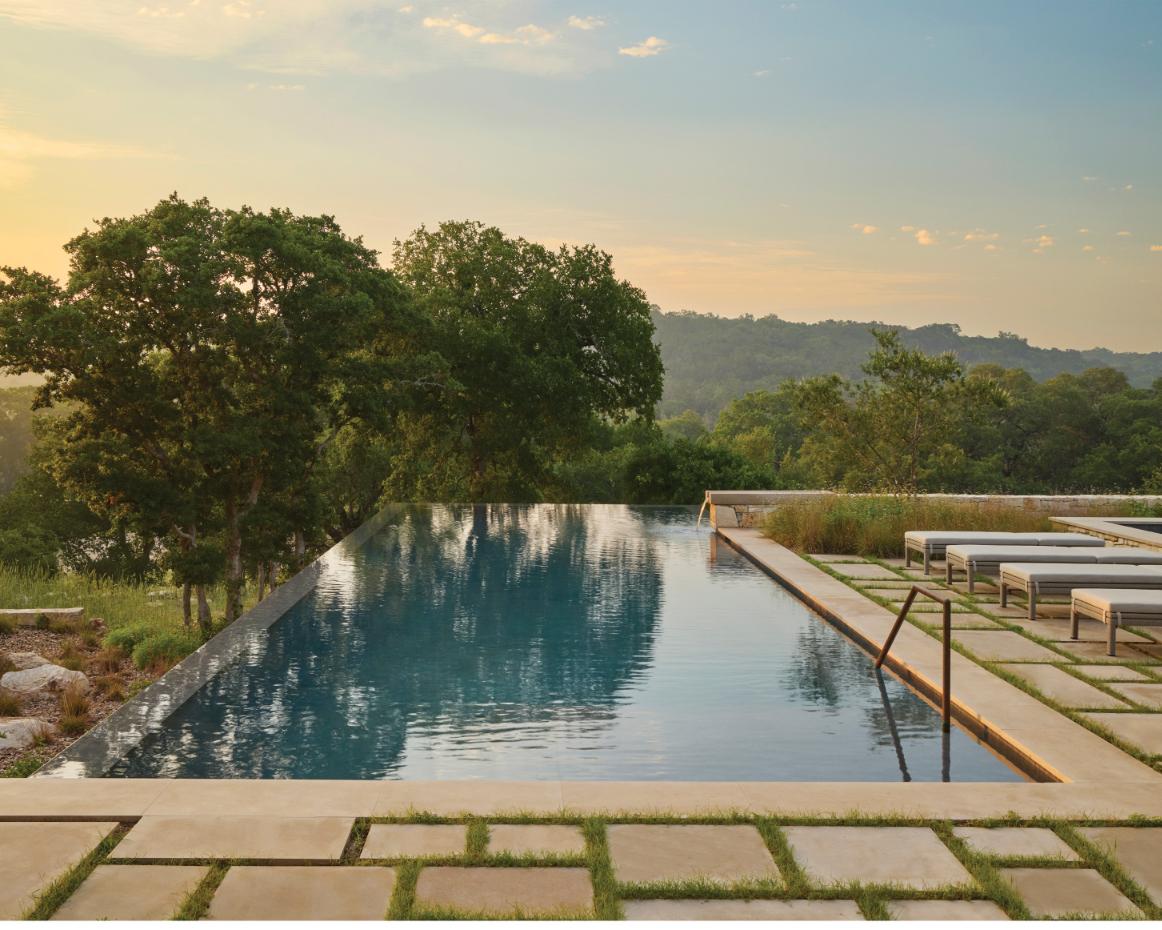
Point Breeze Ranch was conceived as a forever home for our client and their grown children’s families. The linear geometry of the primary house takes advantage of expansive views of the stunning Texas hill country. Structures were sited to preserve the mature tree canopy, with jewel-box courtyards providing intimate private spaces that stand in contrast to the open vistas to the east. Stone perimeter walls cut through the terrain and define the pool deck and outdoor rooms. Each gesture celebrates the land’s character and creates a timeless sanctuary rooted in ecology and family connection.
Point Breeze Ranch // Ten Eyck Landscape Architects
EXCELLENCE AWARD
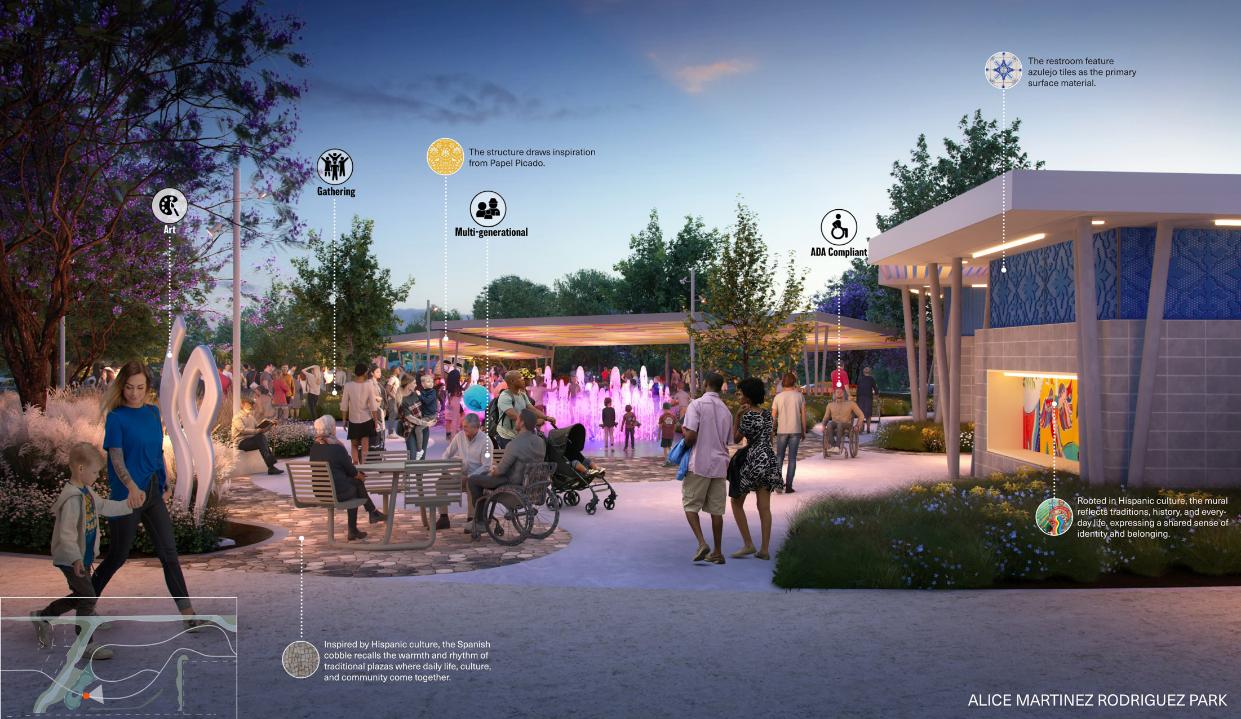
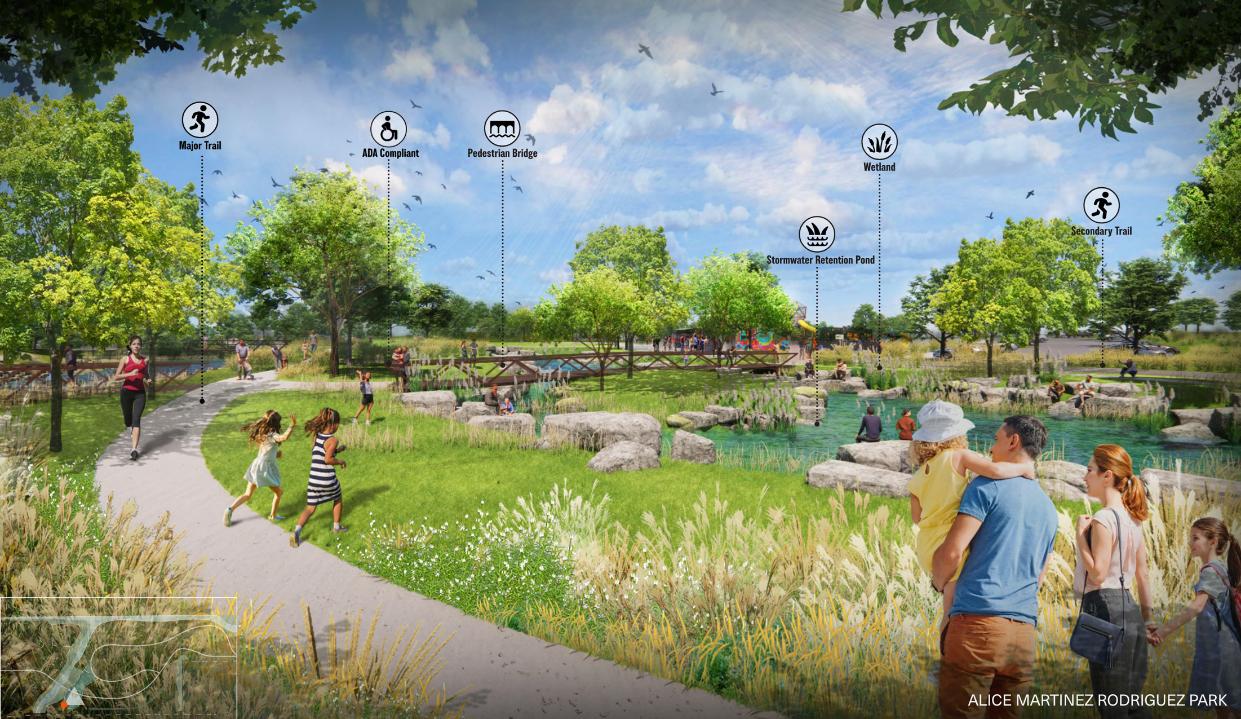
Alice Martinez Rodriguez Park transforms a former stadium site into a culturally affirming and inclusive civic landscape for South Waco. Cultural storytelling and bilingual interpretation anchor the park’s identity, while multi-use trails connect surrounding neighborhoods to Waco’s expanding trail network. Ecological restoration along Waco Creek improves flood resilience and habitat while shaping immersive public spaces. Guided by robust community engagement and collaboration with disability advocates, the park integrates all-abilities play and accessible amenities throughout. The project demonstrates how landscape architecture can elevate cultural visibility, reconnect communities, and create equitable access to nature.
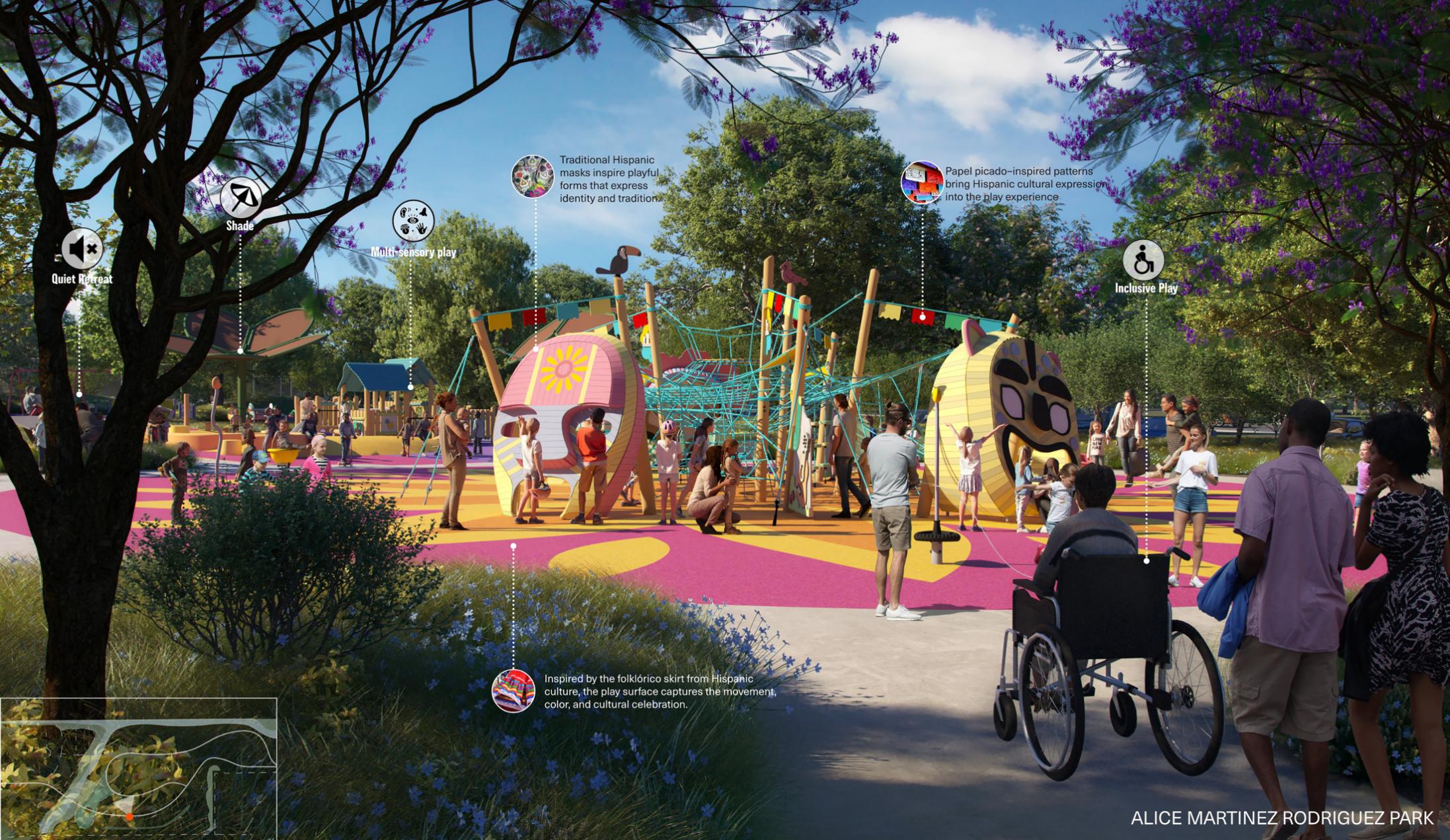
Alice Martinez Rodriguez Park// Design Workshop
EXCELLENCE AWARD
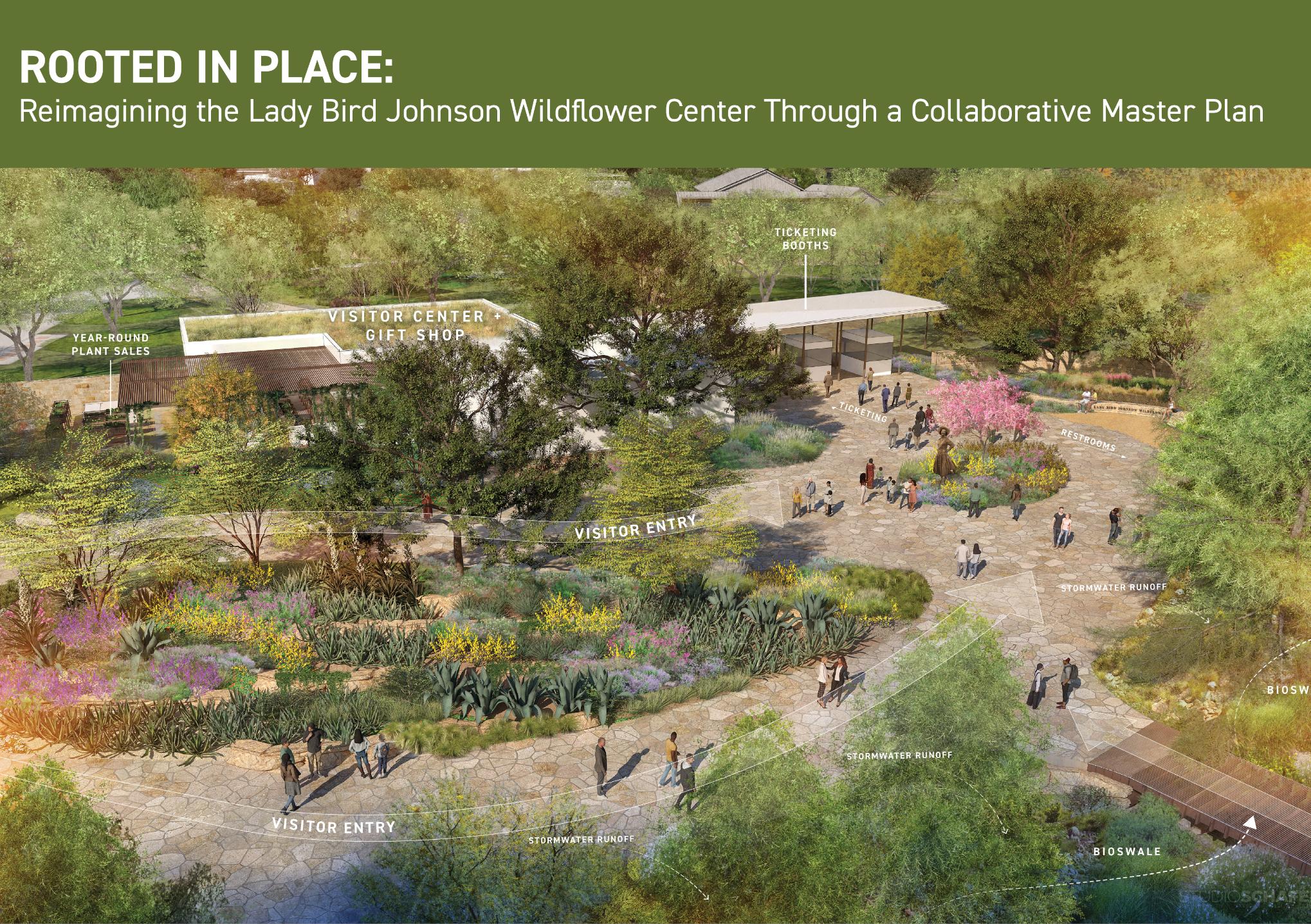
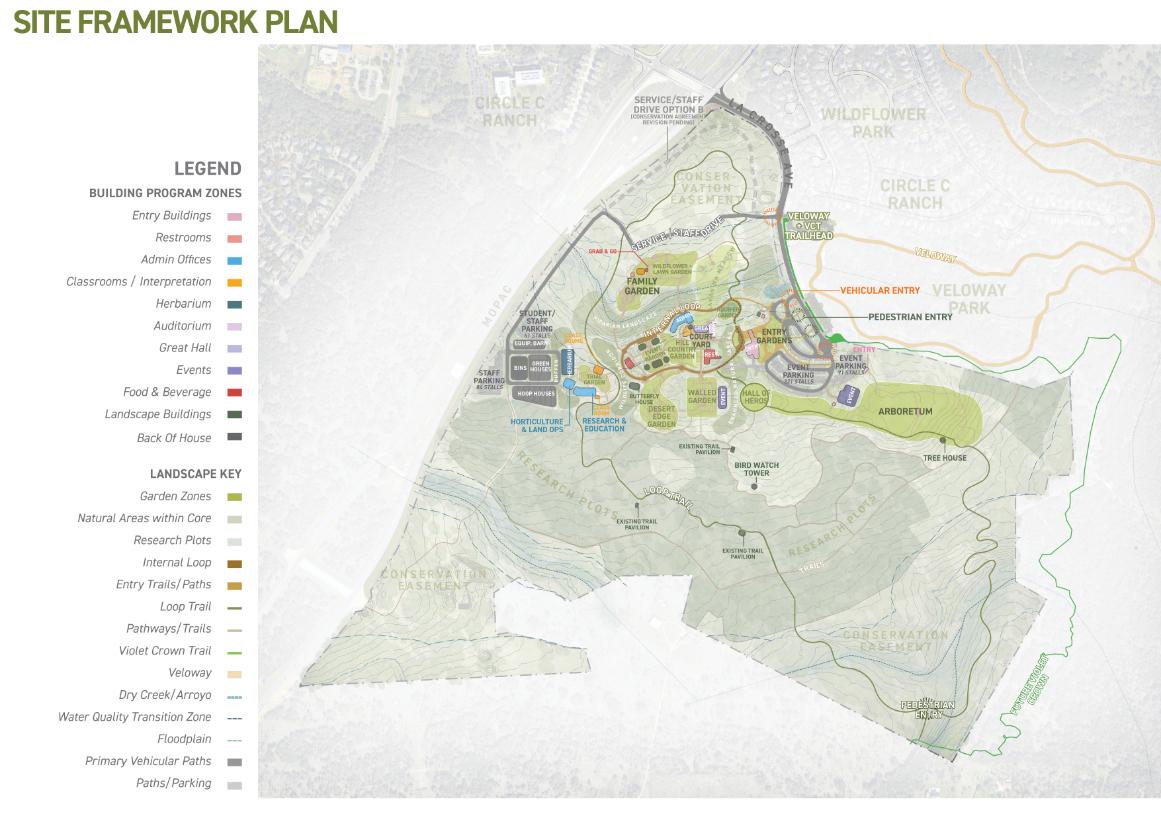
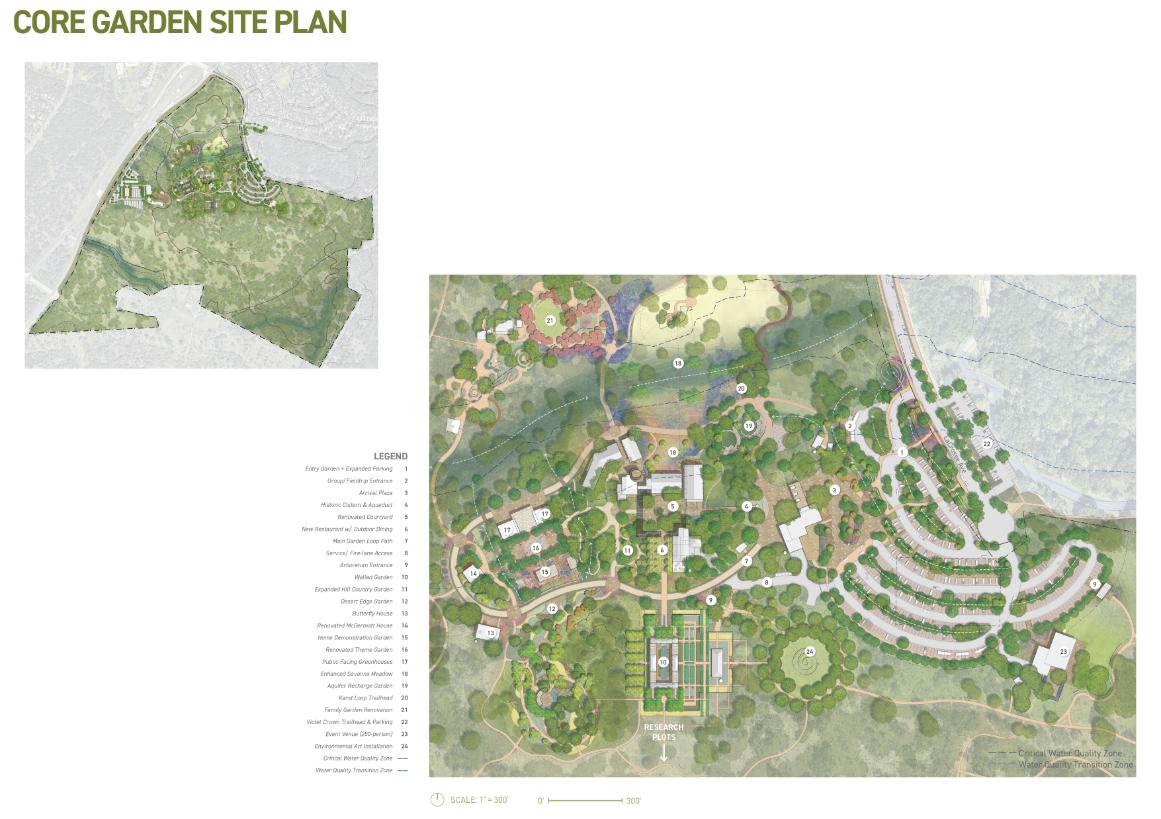
In a place where ecological stewardship, public education, and institutional growth converge, the Lady Bird Johnson Wildflower Center set out to reimagine its future without compromising its founding mission: to inspire the conservation of native plants. This Master Plan establishes a long-term framework that strengthens native plant advocacy, enhances visitor experience, and improves ecological and financial resilience. Shaped through an inclusive, interdisciplinary process, the plan balances legacy and innovation—guiding thoughtful investment while ensuring the Center remains a living model of place-based, mission-driven landscape architecture.
Rooted in Place: Reimagining the Lady Bird Johnson Wildflower Center Through a Collaborative Master Plan // Studio Outside
EXCELLENCE AWARD
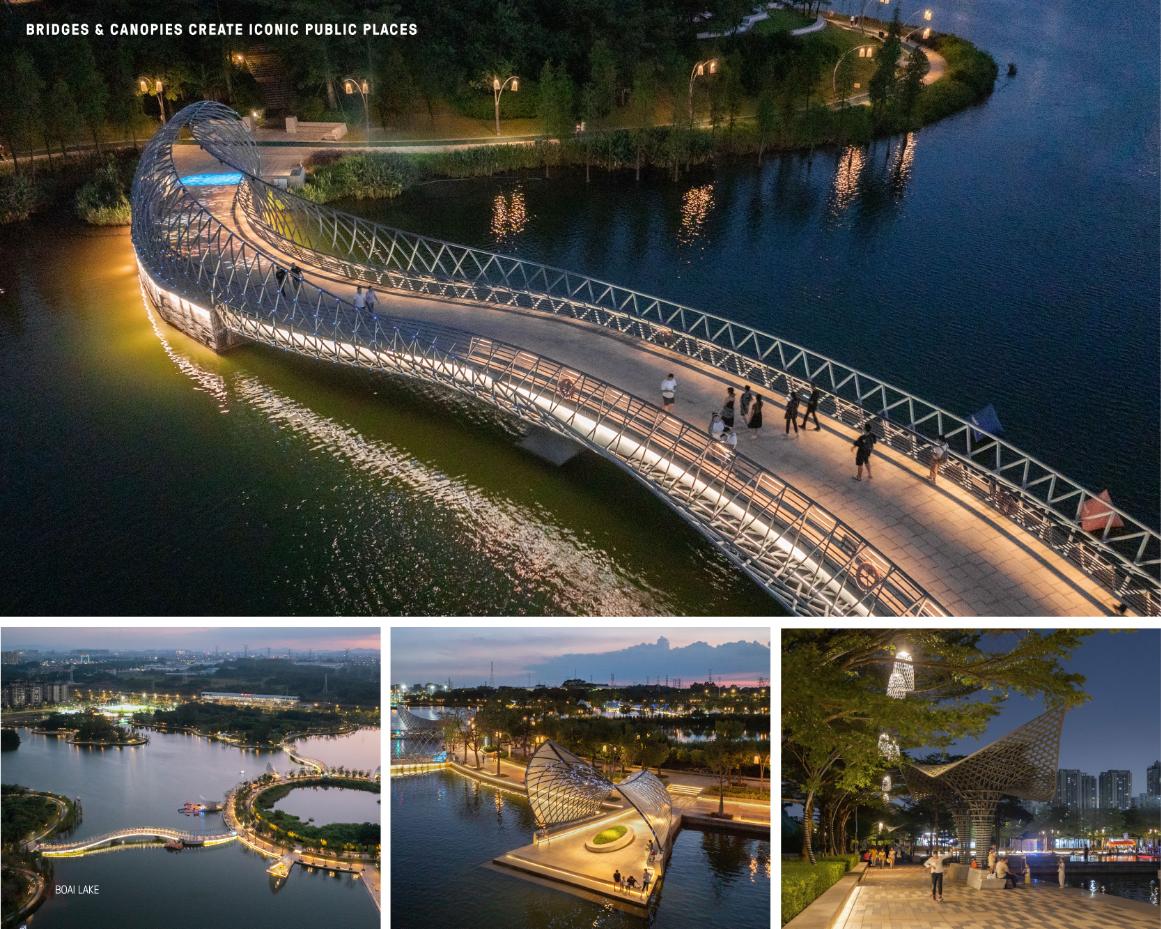
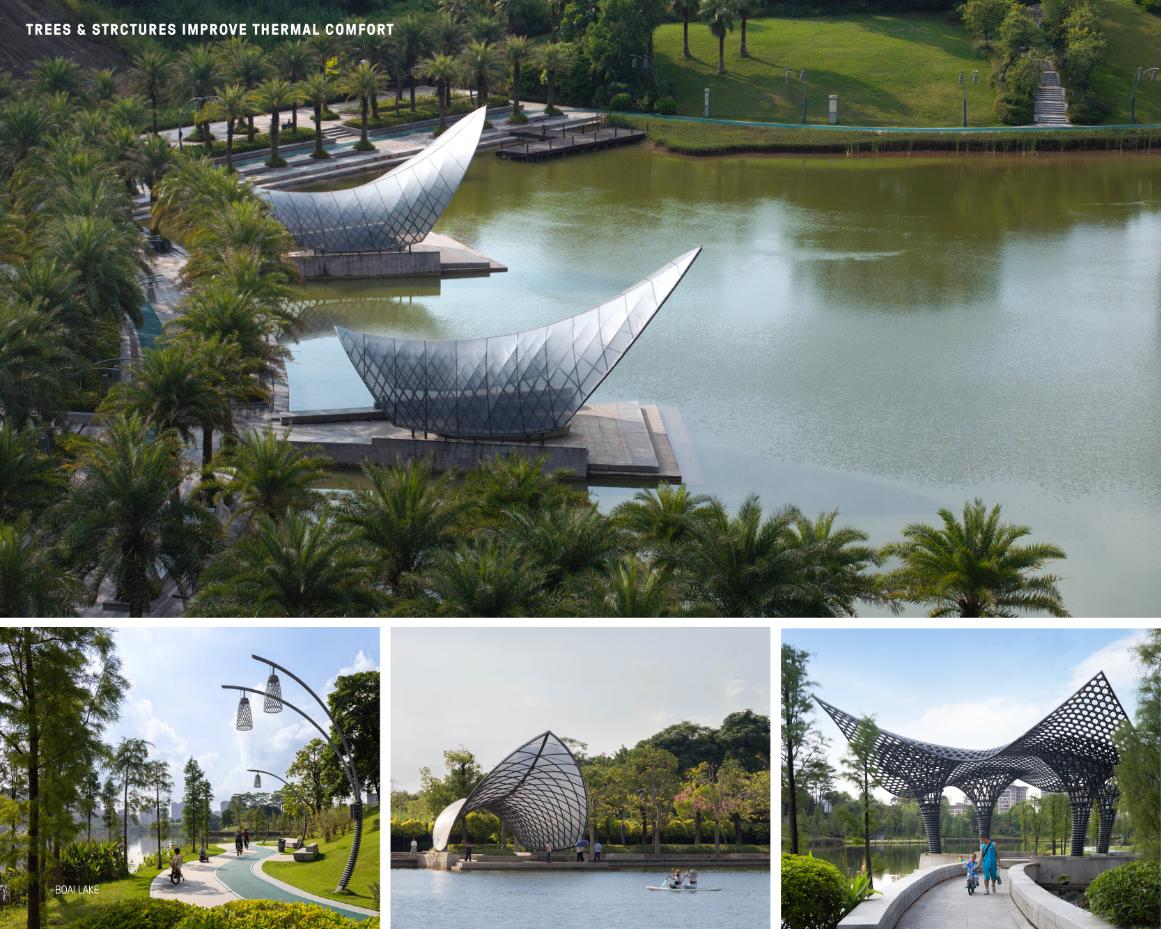
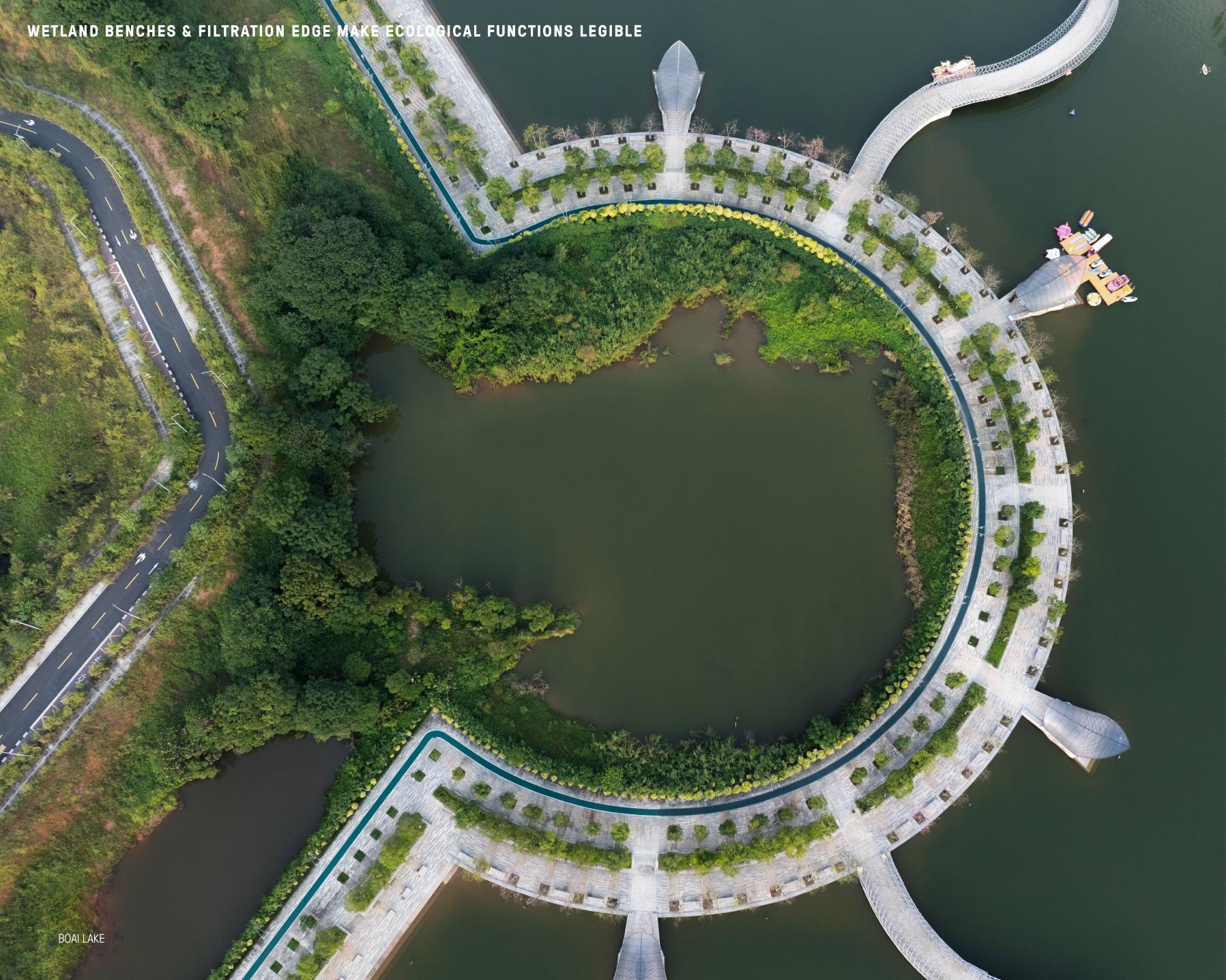
BoAi Lake reconfigures a fragmented landscape of disconnected fish ponds into a contiguous urban lake and civic waterfront. The project restructures former aquaculture infrastructure as climate-adaptive landscape infrastructure that integrates flood resilience, ecological restoration, and continuous public access. Through stabilized water levels, reconstructed shorelines, wetlands, and a layered network of promenades and public spaces, the lake functions simultaneously as a hydrologic system and a vibrant civic landscape. Today, BoAi Lake serves as a shared environmental, cultural, and recreational centerpiece for the surrounding community.
Boai Lake // SWA Group
ANDPROFESSIONAL AWARDSSTUDENT
ANDPROFESSIONAL AWARDSSTUDENT
ARCHITECTSLANDSCAPEOFSOCIETYAMERICANCHAPTERTEXAS
ARCHITECTSLANDSCAPEOFSOCIETYAMERICANCHAPTERTEXAS