
GLOBAL SUSTAINABILITY TRENDS AND INSIGHTS
EXPERT-LED, SCIENCE-DRIVEN, IMPACT-FOCUSED
CLIMATE ACTION
UK's Sustainable Aviation Fuel Mandate Takes Off
As of January 1, 2025, the UK's Sustainable Aviation Fuel (SAF) Mandate came into effect, requiring that 2% of all jet fuel used in flights departing from the UK be derived from sustainable sources. This initiative aims to reduce the aviation sector's carbon emissions, with plans to incrementally increase the SAF proportion to 10% by 2030 and 22% by 2040. It is part of the UK's broader strategy to achieve net zero emissions by 2050.
2% of all jet fuel

Used for flights departing the UK must be from sustainable sources
The UK Submits Emissions Cutting Plans to UN Climate Body
The UK submitted its emissions cutting plans to the United Nations climate body, outlining its strategies to achieve its ambitious emissions reduction targets. This submission aligns with the UKs commitment to an 81% reduction in greenhouse gas emissions by 2035, an increase from the previous target of 78% below 1990 levels.
No New Increases on Carbon Emissions From China
Research from the Centre for Research on Energy and Clean Air (CREA) suggests that China’s carbon emissions may have already peaked, marking a potential turning point in the world’s largest emitter’s climate trajectory. The analysis finds that China’s emissions have not increased for 18 consecutive months, even as its economy has continued to grow modestly. This plateau is largely attributed to record renewable energy deployment, slower construction activity, and a decline in coal power generation. However, experts caution that a true peak can only be confirmed if emissions continue to decline through 2026, especially as coal remains a dominant energy source.
Google Map Promotes Sustainable Travel Features
Google Maps expanded its suite of sustainable travel features across Europe in a push to support more eco-conscious transport decisions. The latest rollout includes fuelefficient routing, now available in nearly 40 European countries, which allows users to choose routes based on lower fuel or energy consumption depending on their vehicle type (petrol, diesel, hybrid, or electric). Additionally, users can compare travel modes, such as walking, biking, or public transit, alongside estimated carbon emissions.
Sources: Edie.Net , Reuters, Euro News, ESG News
GLOBAL WARMING
Global Warming on Course to Hit 1.8 °C Even With Climate Action
A new United Nations analysis warns that the world is still heading for at least 1.8°C of global warming, even under the most optimistic scenarios of rapid climate action. The findings show that while current national commitments and corporate pledges have narrowed the gap since the Paris Agreement, they remain far from sufficient to meet the 1.5°C limit scientists say is critical to avoid the worst climate impacts.
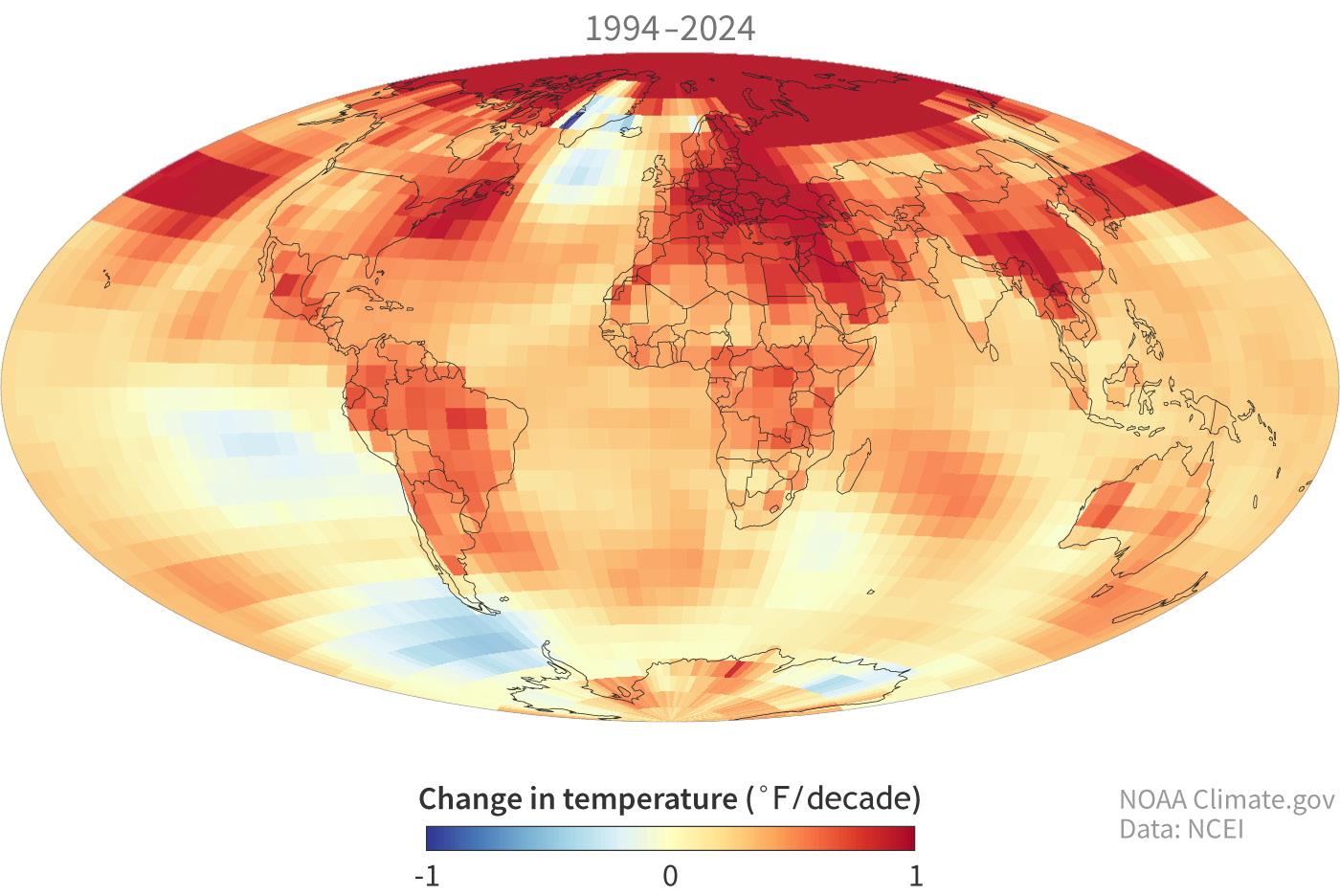
Source Credit: Climate.gov | Source Data: NCEI
UK CCC Warns That The Nation Should Prepare for 2 °C
The UK’s Climate Change Committee (CCC) has warned that the country should prepare for a minimum of 2°C of global warming by 2050, even if global efforts to cut emissions succeed. The report urges the government to pivot from focusing solely on mitigation to investing in robust adaptation measures, including improved flood defences, drought resilience and heatwave preparedness. It highlights that current policies leave infrastructure, public health, and food supply chains highly vulnerable.
2025 To Rank Amongst Three Hottest Years Ever Recorded
New data from the EU’s Copernicus Climate Change Service (C3S) shows that 2025 is almost certain to rank among the three hottest years ever recorded, with global average temperatures running around 1.6°C above pre-industrial levels for much of the year. The report highlighted that October 2025 was the warmest October on record, marking the 17th consecutive month of record-breaking heat.
BIODIVERSITY AND ENVIRONMENT
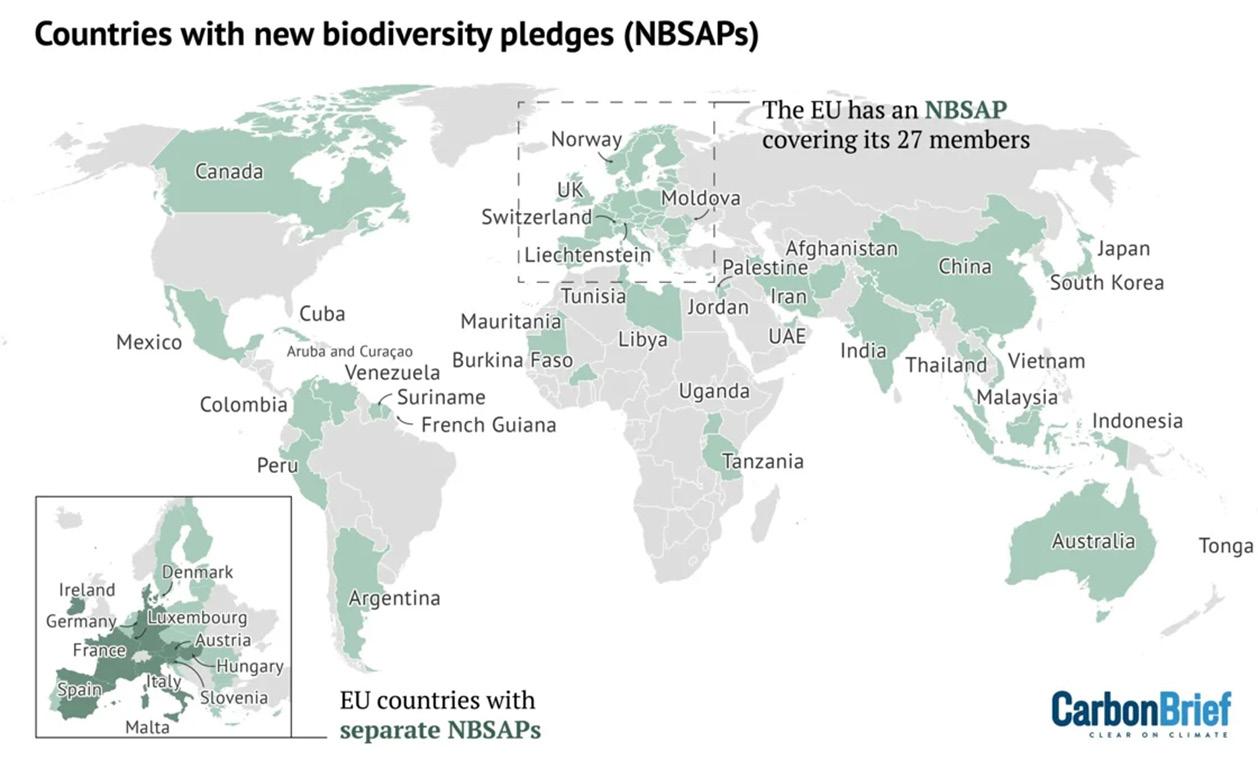
UK Released Delayed Biodiversity Pledge at COP16
The UK unveiled a delayed nature pledge at COP16 in Rome, aiming to position itself as a global leader in biodiversity and environmental protection. The pledge outlines ambitious goals for enhancing nature conservation but has faced criticism for lacking specific targets and actions.
The International Union for Conservation of Nature (IUCN) launched a collaborative project funded by the European Commission to improve biodiversity financing in Belgium, Finland, Luxembourg and the Netherlands. This initiative focuses on identifying and reforming Environmentally Harmful Subsidies (EHS) that negatively impact biodiversity. It aims to redirect financial flows towards biodiversity conservation, aligning with the EU Biodiversity Strategy for 2030.
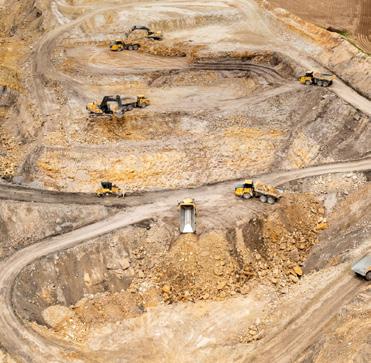
The Taskforce on Nature-related Financial Disclosures (TNFD) released sector-specific guidance to enhance corporate nature reporting. This guidance covers sectors such as food and drink, pharmaceuticals, forestry and paper, metals and mining and oil and gas. The TNFD's recommendations aim to mitigate industrial impacts on nature by encouraging comprehensive reporting on businesses' environmental footprints and integrating nature-related considerations into their strategies.




Ecosia Broadens Climate Investment Strategy
After planting over 230 million trees, Ecosia, the search engine renowned for planting trees with its ad revenue, is broadening its climate investment strategy. Moving away from the "one search, one tree" model, Ecosia will now allocate funds to various climate-positive initiatives, including renewable energy projects, regenerative agriculture and biodiversity conservation. This shift aims to address the multifaceted nature of the climate crisis more effectively.
UK Launched Ambitious Plan to Plant 20 Million Trees
The UK Government unveiled plans to establish the Western Forest, England's first new national forest in 30 years, aiming to plant approximately 20 million trees across at least 6,000 acres in Gloucestershire, Wiltshire, and Somerset. This initiative seeks to increase tree cover in targeted areas from 11% to 30% by 2050, enhancing biodiversity, improving soil health, reducing flood risks and creating habitats for wildlife such as dormice and pine martens.
to 30% by 2050