VISION TULSA 2026

Page 1


ROUTE 66 ARTS CULTURE BUSINESS GOVERNMENT LIVING AND MORE

The power of local connections At Bank of America, we have leading capabilities across all our businesses and a strategy that is focused on connecting our capabilities to deliver for our customers and clients. In every situation, we’re committed to growing responsibly and sustainably — ensuring everything we do aligns to our purpose of helping people live better financial lives.

· Families can have the tools and support they need to live more successful financial lives.

· Neighborhoods can be built on a solid foundation of responsible home lending and economic development.

· Businesses, small and large, can benefit from our financial and intellectual capital.

· And the organizations, nonprofits and companies addressing society’s toughest problems can have the resources and expertise of the company and the efforts of our over 200,000 employees behind them.

In each market, we strive to connect everything our company offers to our clients’ personal and financial goals so we can provide tailored solutions to fit their needs. It’s how we make this large company personal and how we help our customers, clients and communities thrive.

Find a location

Whether you have everyday financial needs or more complex ones, our experienced specialists can help at locations around Tulsa.

Visit bankofamerica.com/tulsa to learn more, find a location and make an appointment to talk with us.

Tulsa is your home. It’s ours, too.

We are committed to helping our communities thrive — dedicating our resources to address the issues that matter most in each community where we live and work.

Taking action to support our communities, clients and teammates

Now as always, our commitment to help strengthen the communities we serve is unwavering. We’re partnering with local leaders

and organizations to address critical needs, and to advance racial equality and economic opportunity. We’re collaborating with partners who support diverse entrepreneurs, build job skills and create opportunities to help people succeed in todays and tomorrow’s economy. And we’re doing our part to help people stay healthy — including investing in benefits and resources for our employees who serve our clients in their communities.

Let’s build something together

By partnering with nonprofits and other organizations, Bank of America stepped up to support Tulsa on every level, from racial justice to reskilling and fighting hunger. We’re a major contributor to Greenwood Rising, a history center that tells the important story of the original “Black Wall Street” and the 1921 Tulsa Race Massacre.

And with the third-largest Native American population in the country, we’re contributing funds to initiatives in the community. Helping people find rewarding work is a key focus, especially in communities of color, and we support a range of programs, including our signature Student Leader program. To help improve health outcomes, we partner with nonprofits to feed over 500 families a week, support mental health initiatives and ensure schools and nonprofits get the help they need.

Tulsa is an extraordinary philanthropic city, and being part of so many efforts to reach all of our diverse communities is truly rewarding. It’s gratifying to have tremendous teammates and community partners working together to make a positive impact on so many people’s lives.

CULTURE

Publisher: Jim Langdon

Editor: Lauren Rogers

Contributing Editors: Tiffany Howard

Madison Walters

Creative Director: Madeline Crawford

Graphic Designer: Allyssa Reeder

Photographers: Greg Bollinger

Michelle Pollard

VP Community Relations:

Susie Miller

Controller: Mary McKisick

Sales Executives:

Andrea Canada

Melissa Givens

Josh Kampf

Research and Analysis:

Research Center, Tulsa City-County Library/ Allison Embry-Saenz, Heather Farris, Aubrey Naiman

Vision Tulsa 2026 is published for the Tulsa City Council, City of Tulsa, by Langdon Publishing.

Copyright © 2026 All rights reserved.

Reproduction in whole or part of information contained herein without prior written approval is prohibited. Vision Tulsa Magazine trademark copyright is registered with the State of Oklahoma.

For additional copies of Vision Tulsa 2026 ($9.95 each plus tax and shipping costs) or for additional information about the City of Tulsa, please contact the Tulsa City Council Offi ce, 175 E. Second St., Fourth Floor, Tulsa, Oklahoma 74103; by calling 918-596-1990; or at the Council’s website at tulsacouncil.org . Or, you may also contact the Director of Economic Development, City of Tulsa, 175 E. Second St., Tulsa, Oklahoma 74103, 918-596-5141, cityoftulsa.org

For information about relocating to Tulsa, write to Tulsa Regional Chamber, Economic Development Division, 1 W. Third St., Suite 100, Tulsa, Oklahoma 74103; or by calling 918-585-1201.

Information contained in this publication is produced for the Tulsa City Council by Langdon Publishing. All reasonable care has been executed to ensure the accuracy of information. All data is current as of December 2025 Publisher recognizes that printed material is subject to error and does not warrant or guarantee information contained herein. The Tulsa City Council and Langdon Publishing assume no liability for errors or omissions.

The views and opinions expressed in this publication are those of the authors and do not necessarily refl ect the offi cial policy or position of the Tulsa City Council or the City of Tulsa.

TULSA REGIONAL CHAMBER

In 2026, Tulsa, The Capital of Route 66®, will take a lead role in celebrating the Mother Road’s Centennial. More than ever, as the nation and world focus on our region, we are here to declare: This is Tulsa time.

With recent initiatives, Tulsans came together to invest in our future through improving and developing world-class museums and venues. Major traveling art exhibitions will be able to come to our state through an expanded Gilcrease Museum. People of all ages can enjoy more Arkansas River area activities via Zink Lake, Tulsa Wave Park, Williams Crossing pedestrian bridge and Gathering Place’s riverfront expansion.

Through the years, Tulsa’s marquee events are also becoming annual traditions for the active (Tulsa Tough, Tulsa Run, Route 66 Marathon) and the cultural (Festival Americas, Tulsa Juneteenth, Oktoberfest). Our region’s attractions are familyfriendly (Tulsa Zoo, Discovery Lab), embrace our history (Greenwood Rising Black Wall St. History Center, Philbrook Museum of Art) and encourage exploring the great outdoors (Turkey Mountain Urban Wilderness Area, Guthrie Green, River Parks).

Tulsa welcomes ideas, innovation, investment and engagement from all people of all ages and backgrounds, and organizations and businesses of all sizes. Tulsa’s creative thinkers are busy today imagining the jobs of tomorrow in fi elds such as computer science, aerospace, health care and the arts. The region’s numerous career tech and higher education institutions, as well as the Chamber’s own Tulsa Small Business Connection, bolster northeast Oklahoma’s robust network for connecting small businesses with the tools to grow in a competitive global market.

Whether you’re a longtime local, recent resident or an outsider visiting, Tulsa will inspire you to be active, creative, social, curious and engaged. Time after time, the more you discover in Tulsa, the more you will want to explore.

Welcome to Tulsa time. Our best days are livin’ ahead.

Regional Chamber

MAYOR OF TULSA

As Tulsa’s 41st mayor, it continues to be my honor to serve this city and my fellow Tulsans. Every day, I am reminded of what makes Tulsa special — our resilience, our compassion, and our shared belief that this city can and should work for everyone. My message to Tulsans remains clear: No matter what part of the city you call home, we are committed to creating better outcomes for all.

Over the past year, we have turned vision into action. Across city government, we are delivering real progress that refl ects both the needs of today and the promise of tomorrow.

Ending homelessness as we currently know it remains one of our most important priorities. Over the last year, Tulsa has strengthened a more coordinated and compassionate approach that helps people move off the streets and into stable housing. We are bringing together outreach teams, housing providers, and support services to help people get back on their feet. This work is guided by a simple belief. Everyone deserves a safe place to call home and a real chance to thrive. At the same time, we are confronting Tulsa’s housing shortage head on and moving toward our goal of creating 6,000 new affordable housing units by 2028, expanding housing options in neighborhoods across the city.

Public safety is essential to a strong community. Over the past year, we have continued investing in our police, fi re, and emergency response teams while also strengthening prevention efforts and community-based solutions. By focusing on both safety and trust, we are working to make Tulsa a city where people feel protected, supported, and proud of the neighborhoods they live in.

Tulsa’s future depends on how well we support our children and families today. This past year brought meaningful progress in aligning City efforts around student success and family stability. Through the work of the Offi ce of Children, Youth and Families and strong partnerships with schools, nonprofi ts,

and tribal governments, we are making it easier for families to access help and ensuring young people have the support they need to succeed in school and in life.

Equitable opportunities remain at the heart of our work in north Tulsa and the Historic Greenwood District, where we are making focused investments shaped by community voices. Through continued work on the Greenwood Trust, support for locally owned businesses, and long-term reinvestment, we are honoring the legacy of Black Wall Street while helping build a future rooted in opportunity, ownership, and growth.

These priorities are deeply connected. Stable housing supports public safety. Strong schools lead to greater opportunities. When we invest in ourselves, our entire city is stronger.

Together, these efforts refl ect a clear vision for Tulsa’s future. One that celebrates who we are, recognizes where we have been, and looks ahead with confi dence and hope. Tulsa is a city on the move, guided by its people and powered by possibility.

It is a privilege to serve this great city, and I look forward to continuing this important work together.

Sincerely,

CITY COUNCIL COUNCIL CHAIR

CITY COUNCIL STAFF

Sarah Davis Council Administrator

Lori Doring Secretary to the Council/Internal Affairs Manager

Megan Boyd Director of External Affairs

Marissa Gomez Project Manager

Andrea Guyton Council Communications Officer

Taylor Finley Council Communications Officer

Simone Smith Council Support Assistant

Jennifer Karbowski Council Support Assistant

Chris Baughman Council Aide

Elizabeth Tankard Council Aide

Brandon Worley Council Aide

Bailee Rogers Council Aide

Kathryn Aung Council Aide

Welcome to our vibrant city of Tulsa, a place I proudly call home. Whether you’re here for business, family, entertainment or just exploring, we’re delighted to have you! As you navigate our city, I encourage you to enjoy its unique sections and interact with our warm and welcoming residents.

Tulsa is known for its generous spirit. Our charitable and nonprofit organizations work tirelessly to serve those in need, supported by our residents who volunteer — helping children, serving meals to the hungry and fostering neighborhood growth.

Growth and improvement are at the heart of our community.

The founders of Tulsa placed great value on making rich cultural experiences accessible to all, including exceptional visual and performing arts, diverse architecture, historical landmarks and beautiful parks. As you explore, you’ll encounter walking tours, visual displays and many other meaningful experiences that await you.

This year, we proudly celebrate the 100th anniversary of Route 66! We invite you to take a tour of the 28 miles that stretch across Tulsa from east to west. The founder of Route 66, Cyrus Avery, incorporated the pride of being a Tulsan into the Mother Road. To mark this centennial milestone, we are excited to announce the Route 66 Capital Cruise, set for May 30, 2026. Join us for a record-setting classic car parade and plenty of family-friendly activities at our beloved Gathering Place.

Welcome to my favorite place. I am excited for you to start your journey through our great city. I hope you get to experience all that Tulsa has to offer. We sure are glad you are here. When you’re ready to move your family or business here, please give me a call. I would love to help.

Karen Gilbert Chair, Tulsa City Council

Vanessa Hall-Harper Councilor District 1
Anthony Archie Councilor District 2
Jackie Dutton Councilor District 3
Laura Bellis Councilor District 4
Lori Decter Wright Councilor District 7
Karen Gilbert Councilor District 5
Phil Lakin, Jr. Councilor District 8
Christian Bengel Councilor District 6
Carol Bush Councilor District 9

TULSA GLOBAL ALLIANCE

As the international arm of the City of Tulsa since 1976, we know firsthand how Tulsans come together to think, act and connect globally. Tulsa Global Alliance (TGA) was formed when Sister Cities International of Tulsa and the International Council of Tulsa merged into a single entity to support the City of Tulsa’s broader educational, cultural and economic goals.

Now an award-winning nonprofi t focused on building global community, TGA facilitates Tulsa’s nine Sister City partnerships, hosts international professionals and students, supports global education and exchanges, and promotes international business development.

Each Tulsa City Councilor serves as an Honorary Ambassador for one of our Sister Cities. Alongside TGA staff and a volunteer chairperson for each partnership, they support educational exchanges, cultural enrichment, dignitary visits and economic development opportunities.

Tulsa’s Sister Cities are Amiens, France; Beihai, China; Celle, Germany; Kaohsiung, Taiwan; Mwanza, Tanzania; San Luis Potosí, Mexico; Tiberias, Israel; Utsunomiya, Japan; and Zelenograd, Russia.

Our programs focus on connecting Tulsa to the world while promoting the concept and principles of citizen diplomacy. Through mutual respect and understanding, open dialogue, cultural exchange, collaboration, volunteerism, service and education, all Tulsans share a responsibility to help shape our global community and promote global goodwill.

Alongside our fellow Tulsans — who are known and regarded worldwide for their kindness, hospitality, and generosity — TGA celebrated the following programming highlights in 2025:

• 2025 marked the 45th anniversary of Tulsa’s Sister Cities program, which has been awarded “Best Overall Program” three times by Sister Cities International.

• In October, Tulsa Global Alliance, the City of Tulsa and Tulsa Botanic Garden completed construction on a new landmark of international friendship: the Caja de Agua fountain, a gift from Tulsa’s first Sister City, San Luis Potosí, Mexico. Hosted by Tulsa Botanic Garden, this monument celebrates 45 years of partnership, cultural exchange and community collaboration between Tulsa and San Luis Potosí.

• Tulsa welcomed its first delegation from Mwanza, Tanzania. Mwanza is Tulsa’s first new Sister City in nearly 20 years and our first located on the continent of Africa. The delegation met with community leaders and partners from several sectors to build bridges between our communities.

• TGA facilitated programming for nearly 300 visiting international professionals and students representing 55 different countries. This includes program participants from the U.S. State Department and the Congressional Offi ce of International Leadership. Through professional meetings, home hospitality with local families, cultural activities and volunteer opportunities, these future leaders learn about the American way of life while sharing their business practices and culture with the people of northeastern Oklahoma. Many go on to become leaders in their community and even heads of state.

• Our global education programs engaged over 1,500 students and their families, inspiring curiosity and connection. These immersive experiences captivate students as they take virtual trips around the world to enjoy crafts, artifacts, cuisine and entertainment from several different cultures.

• With TGA’s support, over 50 Tulsa Public Schools students expanded their worldview and sense of global connection by visiting partner schools in Costa Rica, France and Spain.

As we celebrate our 50th anniversary in 2026, it’s our pleasure to welcome you to our globally engaged city. We invite you to join us as fellow citizen diplomats as we work together to build global community between Tulsa and our friends around the world!

To learn more, stay connected, get involved or support our work, visit TulsaGlobalAlliance.org.

Micah Keyan
Executive Director
Tulsa Global Alliance

TULSA CITY AUDITOR

Welcome to Tulsa!

As Tulsa’s elected City Auditor, I’m honored to welcome you to our city. My offi ce’s mission is to ensure our local government is effective, accountable and transparent. I believe real positive change starts at the grassroots level. It begins in neighborhoods, schools, small businesses and community spaces across Tulsa.

Every audit we undertake is rooted in one guiding question: Is the City of Tulsa meeting the needs of the people? Therefore, our work is guided by four core priorities:

• Community-Driven Audits — We listen first. Through outreach and engagement, we shape audits that reflect the hopes and concerns of Tulsans.

• Integrity and Independence — We operate with fairness, facts and a commitment to doing what’s right — not just as a watchdog, but as a partner in good governance.

• Government that Works — We identify what’s working and what’s not, helping city systems deliver real value to residents.

• Transparency that Builds Trust — We built an independent website to ensure that all public reports, data and findings are easily accessible to all.

While big projects often get the spotlight, it’s the everyday experiences of residents that truly define our city and shape its future. That’s why my offi ce is committed to uplifting community

voices and ensuring city services reach everyone they’re meant to serve.

By ensuring that the City of Tulsa is meeting the needs of its people, we’re not just holding government accountable, we’re helping build a more resilient Tulsa from the ground up. We hope you’ll use this letter as the start of a conversation, and we look forward to serving you and working together to build a stronger city.

Blue Sky Bank

Blue Sky Bank, a 100% Oklahoma-owned institution with assets exceeding $1 billion, has supported Tulsa businesses and individuals since 1905. President and CEO Brian Schneider emphasizes the bank’s commitment to building strong relationships and serving the local community. Gentner Drummond is the principal owner of Blue Sky Bank and its 15-branch network across Oklahoma and Texas, where each local branch’s team is ready to serve and support customers with a commitment to excellence.

Tulsa locations include 320 S. Boulder Ave. and 3353 E. 41st St. Call 833-712-4700 or visit bluesky.bank to learn more.

Nathan Pickard
Tulsa City Auditor

Route 66

Tulsa has offi cially claimed the title The Capital of Route 66®. There is a long history of communities along the famous Mother Road calling attention to themselves with various nicknames and landmarks, notably Springfi eld, Missouri, as the “Birthplace of Route 66.” After all, that’s where the road received its famous number on April 30th, 1926. But what inspired Tulsa to give itself such a prestigious title as “The Capital”? Well, we didn’t just pull it out of thin air. For the last century, Tulsa has often been in the driver’s seat when it comes to old Route 66.

When the federal government realized that this new automobile fad wasn’t going away, they decided to put a group of 21 people together to designate an organized, numbered system

of highways that covered the entire country. Cyrus Avery, a Tulsan, was one of those people. For years, Avery had been a state leader in the Good Roads Movement and was an outspoken advocate for improving transportation. As Tulsa County Commissioner, he oversaw the construction of the 11th Street Bridge, a stateof-the-art concrete arch bridge that replaced an older wagon bridge in 1917. It was heralded as a monumental achievement in engineering and construction.

When the 21 individuals met to lay out the routes that connected the United States from east to west and from north to south, it was Avery that touted a link between Chicago and Los Angeles as the connection that had the greatest potential to be a strong commercial corridor that worked hand-in-hand with touristic destinations. He also lobbied for the road to dip south through Missouri, Oklahoma and the Texas panhandle. It had to cross the Arkansas River somewhere, after all, so why not use the best crossing in the country for that endeavor? Thus, when Highway 66 was established on November 11, 1926, it came right through Tulsa and across the 11th Street Bridge. Avery was involved in a number of other civic projects over his lifetime (including the completion of the Spavinaw pipeline, which brought fresh water to the city) but it’s Route 66 that he is most associated with today. In fact, Avery has his own title: “Father of Route 66.”

A year later, it was Avery again that ushered in the founding of the national US 66 Highway Association right here in Tulsa. The organization promoted the road in places like the Saturday Evening Post and helped publicize the Bunion Derby, a trans-continental footrace from Los Angeles to Chicago and on to New York City that kept Highway 66 in the newspapers for months. Their efforts to encourage paving paid off: in 1938, the patchwork of local and regional roads that unifi ed under the US 66 shield celebrated the completion of end-to-end paving. It was one of the fi rst major highways in the country to achieve this important milestone.

Tulsa had already been known as the Oil Capital of the World, and as the country entered World War II, it continued to serve as a hub of transportation-related activity thanks to the Douglas bomber plant at the airport. Douglas was headquartered in Santa Monica, California — by then the western terminus of US 66. Since the road was the best link from east to west, it was that highway that served as a major conduit for men and materials preparing to deploy and supplying the war effort.

Nat King Cole’s voice on the radio made Route 66 a household symbol of freedom and the open road via “(Get Your Kicks on) Route 66.”

The CBS TV series “Route 66” tickled the imagination of families that dreamed of a trip on the two-lane highway. The US 66 Highway Association continued to distribute materials making sure that Americans knew which road was the “shortest, fastest, year-round best.” But as the popularity of the highway grew, so did its challenges and, eventually, its replacement.

The Turner Turnpike opened to great fanfare in 1953, connecting Tulsa and Oklahoma City with four lanes of straightened, flat concrete. The 88-mile roadway boasted a speed limit of 70 miles per hour and limited access points. Reporter Bob Foresman tested the new road out by taking US 66 to Oklahoma City and the new Turner Turnpike back home. “The old highway was virtually empty,” he wrote in the Tulsa Tribune. “Somehow, old 66 looked different. She had a sort of retired look.” Of course, many know what came next. Anyone that has seen Disney Pixar’s 2006 film “Cars” knows that the fi ve interstate highways that bypassed Route 66 all had the same effect: reduced traffi c, shuttered businesses and an economic standstill.

Route 66 was literally removed from maps in 1985; all towns had been bypassed and the Interstate system had taken over. But that was not the end of the story for the Mother Road, especially in Tulsa.

A statewide Route 66 Association was formed in 1989 to promote the beloved highway, much

like the national association once had. One of the fi rst chapter meetings took place right in Tulsa at the Route 66 Diner on 11th Street. Tulsa-based author and historian Michael Wallis published his book “Route 66: The Mother Road” in 1990, which served as a love letter to the highway and let the world know it was still there and still worth traveling. It started a larger conversation that caught on like wildfi re.

Throughout the 1990s, all eight states that carried a piece of Historic Route 66 organized statewide preservation associations and made efforts to revitalize the road. In 1999, the National Park Service formed a Corridor

Preservation Program to bring resources to communities that were looking to preserve buildings and landmarks that told the story of the road’s journey through the 20th century.

As this movement grew, the City of Tulsa realized they weren’t fully leveraging the road’s history and potential properly. In 2006, the city’s planning offi ce put forth a Route 66 Master Plan. It recognized the growing international appeal of Route 66 and the generational gap that existed between older folks that remembered when Route 66 was the “best way west” and younger generations that didn’t understand what the big deal was.

Owner Len Wade outside Ike’s Chili, a beloved favorite and a must-stop for Route 66 travelers looking for a taste of Tulsa history. The menu has stayed remarkably consistent since 1908. The made-from-scratch chili is still served three ways — straight, with beans or over spaghetti — just like it was in 1913, when a bowl cost 15 cents. Like all other things, it may cost a bit more now, but the recipe hasn’t changed.

Through that Master Plan, a series of improvements were funded and the Tulsa Route 66 Commission was created to help guide the city in a targeted effort to return its 28 miles of Historic Route 66 to its former glory.

Capital projects were unveiled across the city’s Route 66 corridor in the 2000s. Gateway monuments were installed to the east and west to let travelers know the road they were on was something special. Cyrus Avery Plaza was built on the east end of the original 11th Street bridge that was crucial to the road’s development. A large, colorful Route 66 shield sculpture called “Route 66 Rising” symbolizes the road’s rebirth; it depicts a shield coming out of the ground right at the site that once housed Avery’s Old English Inn restaurant, gas station and tourist cabin court. Other installations beautifi ed the corridor and encouraged local entrepreneurs to come back to The Main Street of America.

One of the most successful projects made possible by this concerted effort was the salvation and restoration of the iconic Meadow Gold neon sign. It had stood on the southwest corner of Eleventh and Lewis since the 1930s and had been dark for many years. When the building it stood on was threatened with demolition an outcry of local support led to multiple groups coming together to save the sign. It was rebuilt near Eleventh and Peoria in 2009 and served as a catalyst for development in a district that is now named after the gigantic neon beacon.

Additionally, the work to save the Meadow Gold sign inspired the most successful program that the Tulsa Route 66 Commission created: the Tulsa Route 66 Neon Sign Grant. By the end of 2025, more than 80 signs had been approved through the program that provides up to $10,000 in matching funds to restore old neon or install a new neon sign along the Route 66 corridor. Driving Route 66 at night in the road’s 100th birthday year isn’t such a far cry from the so-called heyday of the road’s popularity.

Businesses have, indeed, come back to Route 66. Long-time institutions like Ike’s Chili have found a home on the Mother Road. Creative entrepreneurs have brought literal giants to the side of the road. Buck Atom, a giant space cowboy muffler man mascot created by Mary Beth Babcock, has been joined by several friends in recent years — Stella Atom, Meadow Gold Mack, Cowboy Bob and Rosie the Riveter now tower alongside 11th Street. William Franklin has expanded from a small space downtown to a sprawling store called Decopolis near the Meadow Gold sign and a new location at 5717 E. 11th St. to anchor the eastern side of the

corridor. Restauranteur Elliot Nelson has opened several eateries on the Mother Road, and out in Howard Park there are plans to build a giant dinosaur statue — a reminder of what led to Tulsa’s first golden era. And Oklahoma’s only nonprofi t food hall, Mother Road Market, takes the spirit of the road and infuses it with resources to help people achieve their dreams. Just ask anyone at Doctor Kustom, the James Beard award semifinalist that recently moved to a larger space on the corner of Eleventh and Lewis.

Development continues along all 28 miles of Route 66 in Tulsa, including the original alignment of the highway on Admiral. Travelers are spending more time in Tulsa as the kitschy fun of Route 66 leads them to the rest of the wonders the city has to offer, from museums like The Woody Guthrie Center to unmatched outdoor experiences like Gathering Place. Events are

being organized to take advantage of the road’s fun factor and the Centennial of Route 66 in 2026 — none bigger than the Capital Cruise on May 30, which aims to break a world record for the largest classic car parade.

Route 66 has always been a road of the future. In the early days, that meant changing from dirt and gravel to hard pavement. Today, it’s a reminder that Route 66 is a connector: not just of states and communities, but of people and stories. When you’re out on the road and you encounter someone that doesn’t seem to be from around here, ask them about their story. They’ll probably want to know yours, too. And maybe you’ll wonder what else is out there on the old two-lane and take a trip yourself.

As Route 66 turns 100, its future has never been brighter — and Tulsa is leading the way.

Buck Atom — one of ve giants on Route 66 — outside Buck Atom’s Cosmic Curios.

The Arts

The 2024 Tony Award-winning Broadway musical “The Outsiders” made its North American touring debut in Tulsa with one week of sold-out shows. Author S.E. Hinton’s comingof-age novel, fi rst made into a movie and then a musical, wowed Tulsa Performing Arts Center theatregoers with a cast that absolutely loved experiencing Tulsa, the setting for this classic novel. And this production set boxoffi ce records for Tulsa-based entertainment company Celebrity Attractions with 19,210 patrons coming through the doors. Those patrons helped make “The Outsiders” the most successful one-week engagement in the almost 50-year history of the Tulsa PAC in terms of gross ticket sales.

The Tulsa Performing Arts Center (TPAC) also announced ambitious plans for a $130 million renovation and expansion of the PAC with the voter-approved $79.7 million for renovations including better ADA access throughout the facility and a center aisle in Chapman Hall, and

$50 million in private funding for the expansion. Work is slated to begin in January 2028. The expansion will add a new lobby connecting all four theatres, a new ticket offi ce, a restaurant and additional restrooms.

In 2025, the TPAC continued to present its own professional theater productions with “Ragtime.” Set in the volatile melting pot of turn-of-the-century New York, three distinctly American tales are woven together — that of a stifl ed upper-class wife, a determined Jewish immigrant and a daring young Harlem musician — united by their courage, compassion and belief in the promise of the future. Together, they confront history’s timeless contradictions of wealth and poverty, freedom and prejudice, hope and despair, and what it means to live in America.

The Tulsa Symphony (TSO) had an exciting year as it celebrated its 20th Anniversary season with legendary Italian Tenor, Andrea Bocelli, fi lling the BOK Center for a special summer

concert. This was followed by TSO’s opening night at the Tulsa Performing Arts Center featuring internationally acclaimed pianist Emanual Ax and Columbian-born conductor Lina Gonzales-Granados. TSO also announced a new principal conductor for the 2026-2027 season with Maestro James Bagwell, associate conductor of The Orchestra Now and principal guest conductor of the American Symphony Orchestra. TSO continued its education efforts by serving more than 18,000 students with its “Any Given Child” music education program in partnership with the John F. Kennedy Center for the Performing Arts in Washington, D.C.

Gilcrease Museum completed construction and announced plans for the reinstallation of its collection with an opening to the public slated for early 2027. With the building completed, the museum began offering onsite public programming starting with “Scrollathon.” Acclaimed artist duo, the Ladd Brothers, led a nationally organized, participatory art

Photographed in July at the Tulsa Performing Arts Center are “The Outsiders” North American tour cast and crew. Back row from left: Director Danya Taymor, Tyler Jordan Wesley (Dallas Winston), Travis Roy Rogers (Darrel Curtis), Corbin Drew Ross (Sodapop Curtis), Jaydon Nget (Two-Bit), Emma Hearn (Cherry Valance), Mark Doyle (Bob), Jackson Reagin (Paul), choreographer Rick Kuperman. Front row from left: Nolan White (Ponyboy Curtis), Bonale Fambrini (Johnny Cade), Jordan DeAndre Williams (Ponyboy Curtis, understudy) and choreographer Jeff Kuperman.

“The

“Last year Tulsa Opera engaged with almost 52,000 patrons at over 400 performances and events throughout the city,” says Cindy Sadler, Tulsa Opera director of marketing and communications. “We’re not just at the performing arts centers, we’re all over the place. You can invite us into your home for a customized Salon Concert. You can nd us at the Guthrie Green, in libraries and brew pubs, in your second grader’s classroom, at First Friday, and the list goes on. We also have community programs that are not performance-centered, like our Opera Echoes community conversation series.”

project in which 500 Tulsans co-created a large-scale installation of fabric scrolls. The fi nal collaborative scrolls were featured in a culminating exhibition at the Kennedy Center, offering a chance for Tulsa voices to be part of a national dialogue through creativity.

Across town, Philbrook Museum of Art presented a very special exhibition highlighting the work of nationally acclaimed local artist Patrick Gordon in his first museum retrospective, which featured over fi fty paintings that span a career of more than fi fty years. The exhibition included pieces from his earliest experiments in watercolor to his very recent huge, saturated fl orals. These hung alongside stirring portraits, still lifes that highlighted Gordon’s deep commitment to the Tulsa community and a selection of his lesser known politically engaged works. Philbrook also named Megan Nesbit as its new President and CEO.

The Oklahoma Museum of Popular Culture — OKPOP — hosted several events benefi ting numerous cultural institutions around town. It also completed fundraising for an $18 million matching grant from the State of Oklahoma that will allow it to complete exhibit design and installation of its collection, with a projected opening in 2027.

And speaking of popular culture, Route 66 continues to raise its profi le across Oklahoma as excitement builds for its 100th birthday. Two exciting centennial events will take place in Tulsa: A Guinness Book of World Records attempt for the most classic cars on Route 66 at one time on May 30, and a Route 66 birthday celebration on Nov. 11 with a Route 66-themed Veterans Day Parade, an afternoon culture crawl in the Tulsa Arts District and an evening concert at Cain’s Ballroom.

Michael Wallis, noted author, historian and the Voice of The Sheriff in Disney/Pixar’s “Cars” released his 20th book to wide acclaim, this time highlighting the life of Belle Starr. He also announced that a 100th Anniversary Edition of his seminal 1990 “Route 66: The Mother Road” — the book largely credited with fueling the resurgence of interest in Route 66 — will hit shelves in May 2026.

Tulsa Ballet has made a name for itself on both the national and international stage. With 40 world-class dancers from countries around the world, Tulsa Ballet shows the breadth and depth of the performing arts. Tulsa Ballet wowed audiences with a brand-new production of “Alice in Wonderland,” something Artistic Director Marcello Angelini had been wanting to create for years. And “The Three Musketeers” graced the Tulsa stage for the fi rst time in a decade. The traditional holiday family favorite, “The Nutcracker,” returned to the spotlight

Megan Nesbit, Philbrook Museum of Art’s new president and CEO
Tulsa Ballet’s
Nutcracker”

much to the delight of children and adults alike. This version originally premiered in 2021 and features exciting choreography, colorful costumes, larger-than-life moving sets and live accompaniment by the Tulsa Symphony Orchestra. The exciting choreography by Val Caniparoli and Ma Cong includes nods to the original story, with a setting in 19th century Germany, and special elements designed specifi cally for Tulsa audiences including the beloved Golden Driller.

Also in 2025, the fi fth temporary public art installation by Urban Core Art Project brought life to a seldom used Plaza of the Americas public park downtown. “Assembly” is a temporary installation by interdisciplinary artist Richard Zimmerman, consisting of twenty-one sculptures and three benches. The sculptural forms are built from thousands of discarded and recycled plastic and metal objects affi xed to metal armatures. All materials were sourced locally around Tulsa. Each sculpture is wrapped in fi berglass cast tape — the kind typically used to mend broken bones. The resulting works suggest organic shapes like plantings, weeds and shrubs.

The Urban Core Art Project was established with a mission to develop site-inspired temporary public art in the heart of historic downtown Tulsa. The goal of the program is to animate downtown with ongoing temporary public art designed to activate pedestrian space, encourage a lively urban core and foster economic development.

Being adaptable has become a watchword for performing arts organizations, and no better example of this can be found than with Tulsa Opera, which presented some incredible opportunities to engage with audiences in new and exciting ways. Among the highlights for 2025 was the presentation of Renée Fleming’s “Voice of Nature: The Anthropocene.” The international superstar soprano brought her acclaimed recital of romantic and contemporary songs accompanied by the Tulsa Symphony with a backdrop of a beautiful fi lm from the National Geographic Society. The program explored our evolving relationship with nature and the world we live in via classical song.

Argentine-American author Hernan Diaz received the 2025 Peggy V. Helmerich Distinguished Author Award, given by the Tulsa City-County Library and Tulsa Library Trust. Diaz is the

Pulitzer Prize-winning and New York Times bestselling author of two novels, published in 37 languages. He was the recipient of the 2023 John Updike Award from the American Academy of Arts and Letters, which is given to “a writer whose contributions to American literature have demonstrated consistent excellence.” His second novel, “Trust,” is being developed as a limited series for HBO starring Kate Winslet.

The Anne V. Zarrow Award for Young Readers’ Literature gives formal recognition to a nationally acclaimed author who has made a signifi cant contribution to the field of literature for young adults. The 2025 award was presented to Kwame Alexander, a poet, educator, publisher, producer and New York Times bestselling author of more than 40 books for all ages, from picture books to nonfi ction for adults. His children’s book “The Crossover” received accolades including the Newbery Medal and the Coretta Scott King Honor Award, and is now an Emmy Award-winning Disney+ series.

Tulsa has always been a culturally rich city, and 2025 was a perfect example of this. When you visit Tulsa, you will experience a full range of arts and culture where creativity is celebrated every day.

Richard Zimmerman is the artist behind “Assembly,” an Urban Core Art Project installation on display until September.

Tulsa City-County Library

Tulsa City-County Library (TCCL) is composed of 25 public locations throughout Tulsa County — including a 24/7 self-service vending kiosk at the Tulsa Premium Outlets in Jenks — and provides informational, educational, and recreational resources and services to more than 380,000 registered library cardholders.

The library is a learning center for all ages and backgrounds; a safe place to explore information and ideas; employment and business centers for all to use, including underserved populations. Every day, TCCL helps change someone’s life for the better — whether by providing free online tutoring for a student, connecting an entrepreneur to resources for starting a small business, or helping parents improve their child’s or their own reading skills to better share stories with their family. Hundreds of monthly community-led events in more than 40 meeting rooms across the library system bring community members together by giving local groups and thinkers the chance to convene. From the Seed Library to the Ruth G. Hardman Adult Literacy Service’s long-running Conversation Circles series for English language learners, TCCL offers itself up as a communal

haven for anyone trying to discover and grow.

TCCL’s Resource Centers, which include the African American Resource Center, American Indian Resource Center, Hispanic Resource Center and Genealogy Resource Center, provide an array of free resources — from books, music and DVDs to microfiche, vertical files and events. The Digital Literacy Lab and Maker Space, both at Central Library, feature classes and specialized equipment such as 3D printers, an audio lab, digitization tools and more.

TCCL also offers a multitude of resources, programs and services to promote lifelong learning and help children grow up able to compete globally. Free examples include an online homework assistance service in English and Spanish; the After-School Homework Club; Build A Reader storytimes; Dolly Parton’s Imagination Library; the annual Young People’s Creative Writing Contest; and an annual Summer Reading Program, to name just a few.

To connect Tulsa County with internationally and nationally acclaimed authors and individuals who represent the diversity of the community, TCCL hosts programs such as: the biennial American

Indian Writers Award; the annual Anne V. Zarrow Award for Young Readers’ Literature; the annual Books To Treasure program; the annual Peggy V. Helmerich Distinguished Author Award; the biennial Sankofa Freedom Award; and the biennial Hummingbird Award in Literary Arts. Learn more about each award at www.tulsalibrary.org/ programs-and-services.

In 2025, as part of the MY Library, OUR Future capital campaign, TCCL opened the new Bronson Brookside Library and broke ground on the Eddy Gibbs Library in Owasso. This year, TCCL will open the new Rudisill Regional Library. These new buildings will allow TCCL to expand critical public resources and better connect library users with the opportunity to reach higher and dream bigger. Learn more about this exciting project at MYlibraryOURfuture.org.

To learn more about TCCL and all the great resources, services and programs it has to offer the community, visit TulsaLibrary.org or call 918-549-7323.

Live Music

From a world-class arena and a timeless honkytonk to the corner bar, music is everywhere in Tulsa. If oil built this city, steel guitars, fi ddles and horns were the soundtrack. Seated at the geographical crossroads of the nation, Tulsa has produced talent as diverse as the funky ’70s rhythm and blues innovators the GAP Band (acronym for Greenwood Archer Pine) to the perennially pleasing pop of the Hanson brothers and everything in between. On any given night, music is just around the corner.

BOK CENTER

Designed by world-renowned architect César Pelli, BOK Center opened in 2008 with a sold-out show from legendary California rock band The Eagles. The arena’s stark, modern silhouette is a striking addition to the skyline of downtown Tulsa. The 19,000-plusseat, multipurpose facility has hosted Sir Paul McCartney, seven consecutive soldout performances with Oklahoma country superstar Garth Brooks, farewell tour stops from megastars Elton John and Bob Seger, and blockbuster events with Metallica, Zach Bryan and Bruno Mars. Recipient of numerous accolades, including its ninth nomination for “Arena of the Year” by the Academy of Country Music, the venue is ranked one of the world’s busiest concert destinations. bokcenter.com

CAIN’S BALLROOM

Built in 1924, Cain’s Ballroom served as a garage and a dance academy before becoming a top performance venue beloved by musicians and fans alike. From 1935-1942, Bob Wills and his Texas Playboys hosted weekly dances, a midnight radio show and a daily noon hour radio program from the Cain’s stage, popularizing a new sound called Western swing, a form of country and Western music that combines jazz, hillbilly, blues and big band swing.

Today, Cain’s still boasts its wooden dance fl oor and oversized photographs of country music icons like Ernest Tubb, Hank Williams and Tennessee Ernie Ford remain on the walls. While Cain’s is proud of its legacy as the “Home of Western Swing,” it continues to make history with acts from every music genre. cainsballroom.com

Paul McCartney at BOK Center
Bono and The Edge at Cain’s Ballroom

THE CHURCH STUDIO

A historic church, which was converted to a recording studio and home offi ce for Leon Russell and Denny Cordell’s Shelter Records in the early 1970s, has been lovingly restored and now boasts an intimate theater. It has hosted concerts with legacy artists like Kenny Loggins and Jimmy Webb. Artists as diverse as Tom Petty and the GAP Band once recorded here, and the venue is still making history today. thechurchstudio.com

TULSA THEATER

Originally Tulsa’s municipal auditorium and convention hall, the 1914 art deco structure was redesigned by architect Bruce Goff in 1930. The historic stage has hosted everyone from The Cars and Roy Clark to Al Green, Emmylou Harris and Eddie Vedder. tulsatheater.com

CASINOS

For those who like a side of gambling with their music, Tulsa is home to several casinos housing excellent music venues. Hard Rock Live in Hard Rock Hotel and Casino is a state-of-theart 2,600-seat theater with an intimate feel. hardrockcasinotulsa.com.

On the banks of the Arkansas River, River Spirit Casino Resort features the Cove, a music destination booking nationally touring acts. riverspirittulsa.com

Set in the Osage Hills in north Tulsa, the 45,000-square-foot Skyline Event Center at the Osage Casino Hotel always boasts an impressive lineup of entertainment. osagecasino.com

GATHERING PLACE

Tulsa’s $465 million park has free, familyfriendly programming with outdoor concerts, featuring everything from wandering drum corps to full-blown festivals celebrating Latin, Caribbean and Native American cultures. gatheringplace.org

GUTHRIE GREEN

Located in the heart of Tulsa Arts District, Guthrie Green is an urban park that regularly features free, live music. From national acts to festivals and musical food truck Wednesdays, this outdoor venue is a Tulsa favorite. guthriegreen.com

ICONIC CLUBS

Mercury Lounge showcases the best in local music, but this neighborhood bar is also adept at capturing rising stars. Weekly performances from Tulsa’s best and brightest, as well as eclectic regional and national acts populate this venue’s calendar, attracting a loyal, diverse and interesting clientele. mercuryloungetulsa.com

For those wanting a taste of Tulsa’s original music, The Colony is a favorite of local musicians. Don’t be surprised to fi nd an occasional special guest sitting in with one of the Tulsa bands. This bar is home to many after-hour jams and a frequent stop for nationally touring performers after their own concerts have concluded. colonytulsa.com

The Dull Drums at The Colony
Ben Rector at Tulsa Theater
Broncho at Guthrie Green
Terri Clark at Osage Casino

Downtown

Downtown constitutes less than 1% of Tulsa’s geographic footprint but generates roughly 20% of the city’s sales tax revenue.

That perhaps surprising statistic is exactly why Tulsans see so much emphasis on downtown development and revitalization, according to Brian Kurtz, the former president and CEO of Downtown Tulsa Partnership. Established in 2021 by property and business representatives and civic leaders, Downtown Tulsa Partnership (DTP) is a nonprofit that advocates for the area’s continued improvement.

“We need greater and larger numbers of people living, working and visiting downtown,” he said, noting that the roughly 1.6-square-mile geographic area “is supporting other parts of the city. And, frankly, that (20% sales tax) number should be higher, and it’s not, largely because of the significant seas of parking lots downtown.” These bring in some sales tax revenue, Kurtz said, but not as much as could be obtained with other uses.

“The more that we can drive (an increase of) people who are living in downtown, working in downtown, visiting downtown, that means that there are more footsteps and people walking down our sidewalks,” Kurtz said.

But like any urban center around the country, downtown Tulsa must focus on public safety and support for housing and mental health services to promote vitality and quality of life. Part and parcel of getting more footsteps downtown involves ensuring that the area feels like a safe and welcoming place for everyone.

To that end, DTP announced the creation of a new coalition last fall, called Safer Together, that brings law enforcement, first responders, business and civic leaders and social service agencies together with DTP to address public safety priorities and resources downtown.

DTP said in a press release in September that Safer Together “presents a comprehensive framework to address community safety through a balance of visible presence, improved coordination among partners, advocacy for resource allocation, and enforcement when necessary.”

Named for Bank of Oklahoma, the BOK Tower is the second-largest building in the state and stands next to City Hall (right).

Downtown Tulsa Partnership is leading a comprehensive rehabilitation effort for the Center of the Universe pedestrian bridge and plaza at 1 S. Boston Ave. In 2025, the organization revealed renderings for the project and announced it is anticipated to be nished in fall 2026.

The Safer Together initiative outlines five priorities:

• Increase the presence, visibility and response of safety personnel.

• Improve coordination between public and private safety groups.

• Update and inform stakeholders with data-driven information and resources.

• Advocate for policy and funding appropriations that increase rehousing and mental health resources.

• Achieve a clean and active public environment.

DOWNTOWN DISTRICTS

There is much to see and do within Downtown Tulsa’s distinct districts.

BOK Center, which anchors the Arena District, has consistently received high-ranking numbers compared to numerous venues in the United States and overseas. Every season, BOK Center and neighboring event space Arvest Convention Center promise phenomenal experiences for Tulsa.

Blue Dome District is one of Tulsa’s favorite entertainment districts. People of all ages fl ock to the bars, restaurants and venues found among its several blocks.

Downtown Tulsa’s Cathedral District is home to many beautiful and historic churches, cathedrals and chapels, some of which are on the National Register of Historic Places. The district also is home to Tulsa Community College’s Metro Campus where Tulsans can seek affordable higher education. Public Service Co. of Oklahoma is a cornerstone of the district, and a neighboring community partner.

Combined, these priorities will help foster a downtown where all people feel safe, welcome and supported, whether they live, visit or do business in the area, according to DTP.

The Safer Together initiative comes just one year after DTP introduced a strategic investment plan intended to bring at least $30 million in improvements in streets, lighting, sidewalks, parks and other public amenities to downtown.

Kurtz said the far-reaching proposal, called Downtown Tulsa Forward, is focused on investing financial resources — the funding comes from the public side of the master TIF, or tax increment finance, district that already existed downtown — into public realm infrastructure projects.

Downtown Tulsa’s Deco District has some of the greatest examples of art deco architecture in the nation. These cultural treasures bring people from all over to marvel at what some locals may take for granted. Tours led by the Tulsa Foundation for Architecture range from exploring architectural history, Tulsa’s underground tunnel system and the beauty of some of Oklahoma’s most notable skyscrapers — and they regularly sell out.

East Village District, centered at Third Street and Kenosha Avenue, offers a variety of exciting new residential and commercial opportunities, as well as dining and entertainment experiences.

A mix of family homes, smaller-scale apartment buildings and local businesses call the Gunboat Park District home. Earning its name from the street pattern that resembles a naval vessel, residents and visitors can find downtown’s only public dog park on its north end.

Dubbed America’s Black Wall Street, the 35-block Historic Greenwood District became a prosperous center for commerce in the early 1900s. When the Tulsa Race Massacre of 1921 destroyed

“Downtown Tulsa Forward is a visionary document that is guiding where we as a community want to see downtown evolve over the next 20 to 30 years,” he said.

The proposal was created from input gathered at a series of public roundtable discussions, focus groups and open houses. The “wish list” was then prioritized and organized into a document that details annual project proposals and allocations for the next five to eight years.

Each fall, after refining its annual project recommendations, DTP presents the list to PartnerTulsa, the city’s economic development arm, for approval.

The list for 2025 totaled about $3.8 million in projects that PartnerTulsa approved, Kurtz said. They included converting Legacy Park near Archer and Main streets into the Brush Arbor Grove Dog Park; improvements to the Center of the Universe pedestrian bridge and plaza; and Chapman Green improvements at Sixth Street and Boston Avenue.

Proposals for 2026, approved by PartnerTulsa at a total of about $3.7 million, include an array of amenities and improvements:

• Streetscaping on Denver Avenue from First to Eighth streets, ultimately extending to 12th Street with additional funding later.

• Implementation of a comprehensive wayfinding system — primarily signage — to direct downtown visitors to points of interest.

much of the district, the community rebuilt from the ashes. Today, the district showcases its heritage through the Greenwood Cultural Center, the Mabel B. Little Heritage House, the John Hope Franklin Reconciliation Park and numerous memorials and murals depicting reconciliation and resilience. Greenwood Rising history center opened in 2021 on the 100-year commemoration of the Tulsa Race Massacre.

Tulsa Arts District has morphed into an eclectic collection of entertainment, restaurants, offi ces, retail, residential and arts establishments. Home to the popular Guthrie Green, Cain’s Ballroom, Tulsa Theater, Bob Dylan Center, Woody Guthrie Center and more, the Tulsa Arts District continues to grow and transform.

On the west side of downtown Tulsa, the Academic Medical District is taking shape with the construction of the James Mountain Inhofe VA Medical Center and the Oklahoma Psychiatric Care Center, along with the expansion of OSU Medical Center. The district spans multiple city blocks from Eleventh and Third streets along Houston Avenue.

• Pedestrian improvements at the atgrade railroad crossing at Elgin Avenue, including sidewalks and streetscaping for safer pedestrian passage.

• A public space amenities package to include lighting, trees and landscaping, as well as continuation of a decorative trash can initiative that Kurtz said was piloted in the Deco District to great reception.

• An Art Alley project that got underway late last year next to the Mayo Hotel. The project consists mostly of lighting, but it’s lighting that is artistically driven, not just utilitarian in nature. A second Art Alley project is expected in 2026.

• Continued support of a downtown pop-up retail program. Kurtz said that “about 97% of our ground-fl oor spaces are small-business owners — these are Tulsans who have made intentional decisions to invest their money, their resources, their time in creating a venture of some sort.”

• A proposal to create two funding sources that private developers could leverage for their projects — a matching microgrant fund for facade renovation and storefront activation, and a predevelopment

assistance fund to try to encourage more downtown housing development. Besides revenue, Kurtz said those projects will bring something else to downtown — people. And having more people downtown creates greater safety, he said.

“There is an inherent need to focus on safety — community safety and public safety — downtown ... to ensure that these projects are successful in the long run,” he said. “Safer Together is looking at all safety. Safety from the view of one property owner or stakeholder in the Deco District could be vastly different than that of a business or property owner in the Blue Dome District.”

The day after Mayor Monroe Nichols was sworn in, DTP officials met with the mayor and other civic leaders to stress the “need for a significant change in resource focus and prioritization of downtown,” Kurtz said. “And we have seen that happen in, frankly, ways that I never anticipated a year ago.”

Editor’s Note: Downtown Tulsa Partnership President and CEO Brian Kurtz transitioned from his role to pursue a new professional opportunity at the end of December 2025. Emily Scott, the organization’s vice president of urban development, is acting as interim president and CEO while the organization’s board searches for a future president and CEO.

CONSTRUCTION HASSLES BRING OPPORTUNITY

With all of the development underway downtown, it’s no surprise that construction equipment and orange traffi c cones are ubiquitous. Nowhere is that more true than on the western edge of downtown, where three medical facilities are rising toward the sky.

The largest piece is the 58-bed, $176.4 million James Mountain Inhofe VA Medical Center, which is being built from the bones of two former state offi ce buildings at Seventh Street and Houston Avenue.

The hospital will be affiliated with the neighboring Oklahoma State University Medical Center, which is building a new emergency room and medical offi ce space, and is part of a larger, $450 million project that will include a 100-bed inpatient mental health facility and OSU Pharmaceutical Research Lab and Clinical Center.

The medical complex is the largest construction project downtown since the 1970s. But all of those orange cones just look like opportunity to Brian Kurtz, the former president and CEO of Downtown Tulsa Partnership. When completed, the medical campus will bring thousands of workers, patients and visitors to downtown each day.

“Those visitors and workers are going to require places to eat. The visitors are definitely going to require places to stay,” Kurtz said. “It means that there’s opportunity for hotels, there’s opportunity for housing, and hopefully opportunity for more retail experiences.”

But those construction hassles between now and then don’t trouble Kurtz.

“These are temporary inconveniences, in most cases, for long-term visionary projects –transformational projects that are going to differentiate Tulsa from our peer markets,” he said. “I am confident that the direction that we as a community are moving is going to continue to transform downtown.”

Beyond the loop!

If a downtown area is considered the heart of a city, then the unique pockets and places that surround it become the arteries that help keep everything in a dynamic fl ow. One could easily say Brookside, Cherry Street, the Pearl District, SoBo and Kendall Whittier represent an eclectic mix of everything from boho to Rodeo Drive, with each having a unique soul of its very own. They, too, are seeing their fair share of revitalization and new construction.

Brookside, dubbed “The Place to Be,” has storefronts featuring both local and national chains that blend together to create a sense of sophistication while shopping, dining or visiting.

Cherry Street is another staple for those who frequent or live in midtown Tulsa. New construction mingles amid historic structures with boutiques, restaurants and bars ready to welcome guests.

The Pearl District has seen a true polishing. Its bohemian feel is a huge attraction, and renovation of existing buildings seems to be the key. Additionally, numerous brewery headquarters reside in the area.

South Boston (SoBo) is alive with completed projects like the Brut Hotel, plus a recent surge in amenities like Tails and Ales, an off-leash dog park and beer pub. In SoBo residents and offi ce-dwellers mix with visitors at district mainstays PonyCoffee and Tacos x Mezcal (TXMZ) before a night out at Mercury Lounge.

The Kendall Whittier District is home to nonprofi t movie theater Circle Cinema, a vibrant artist community and the home of the Tulsa Farmers’ Market. Abutting the district is Mother Road Market, a nonprofi t development featuring more than 20 restaurant and retail business concepts.

A band performs at Soma on the rooftop of Brut Hotel in the SoBo District.

Destination Districts

In 2019 the City of Tulsa launched Destination Districts, a commercial revitalization program intended to increase economic growth, highlight diversity, support cultural representation and create a deep sense of community in selected areas of Tulsa with historical and cultural importance. Four districts have been identified so far: Kendall Whittier Main Street, Tulsa Global District, the Historic Greenwood District and Tulsa Route 66 Main Street.

There are plans to expand the program, with emerging districts including the Meadow Gold District, Studio Row, SoBo, the Phoenix District and the Pearl District.

KENDALL WHITTIER MAIN STREET

Kendall Whittier, headquartered at 2205 E. Admiral Blvd., is primarily an arts district. As vibrant as the papel picado hanging in Latinos Mexican Grill, this neighborhood artery includes art studios, restaurants, the Las Americas grocery store and a lot of unique, eclectic retail. It’s also home to the Tulsa Farmers’ Market, the near-100year-old Circle Cinema and several breweries.

In 2025, the district began distributing funds from a $260,000 Oklahoma Main Street Incentive program (which was matched by various sources from the community) to support beautification projects including wayfinding signage, sculpture, gateway markers and upgrades to uplift the district. Kendall Whittier will continue the incentive program this year with $300,000 identified to further enhance the district.

TULSA GLOBAL DISTRICT

As its name suggests, Tulsa Global District is the city’s most culturally diverse community. Located near the intersection of 21st Street and Garnett Road, there are over 80 languages spoken and 25 countries represented.

The district’s 2025 calendar included the Night Market celebrating Asian American and Pacific Islander cultures, the Muertitos Family Fest inspired by the traditions of Día de los Muertos (Day of the Dead) and the district’s first-ever parade — La Fiesta de Tulsa. Also new last year was The Entrepreneurial Show — a free event showcasing tools, programs and resources for those with culinary interests to grow their businesses.

Fans sold at Plaza Santa Cecilia

In June 2025 community organizers closed on a space within Plaza Santa Cecilia at 2160 S. Garnett Rd. to house the East Tulsa Incubator project, an effort designed to support the district’s enterprising community of multicultural businesses. Construction is anticipated to begin in 2026, with the incubator opening in 2027.

HISTORIC GREENWOOD DISTRICT MAIN STREET

Located at Greenwood Avenue and Archer Street, the Historic Greenwood District is also known as “Black Wall Street” and was the epicenter of the 1921 Tulsa Race Massacre. This resilient community includes a hub of successful Black-owned businesses, as well as historic tributes to the many people affected by the race massacre.

One of the main district redevelopment projects in the works is the Kirkpatrick Heights/Greenwood Master Plan led by PartnerTulsa, City of Tulsa and the community itself. In redeveloping the 56-acre area, the plan seeks to build a more prosperous and inclusive future for the Black community through mixed-use development, local entrepreneurship and more.

In May 2025, the U.S. Senate approved the district to house a national monument in a bipartisan effort sponsored by Senator James Lankford (R-OK) and Senator Cory Booker (D-NJ). The legislation is awaiting consideration by the U.S. House of Representatives. If passed by the House and signed into law by the president, this legislation would authorize the National Park Service to map the monument’s boundaries in the Greenwood area.

TULSA ROUTE 66 MAIN STREET

Tulsa Route 66 Main Street is Tulsa’s largest Destination District. It spans 4 miles, reaching from the Arkansas River to Southwest Boulevard and 33rd West Avenue. You’ll find a mix of industrial businesses and manufacturing, a quirky assortment of Route 66 businesses, tourism landmarks, retail and restaurants.

In addition to events celebrating the Route 66 centennial in 2026, there are also plans to begin construction on a 66-foot-tall dinosaur roadside attraction in Howard Park made possible through a $225,000 award from Oklahoma’s Route 66 Revitalization Grant Program.

Parks

Parks reflect who we are as a community. They are places where kids laugh on playgrounds, neighbors walk together and families celebrate. In 2025, Tulsa Parks made tremendous progress in ensuring these spaces remain beautiful, accessible and welcoming for everyone.

2025: UNPRECEDENTED IMPROVEMENTS

With over 135 parks, 60 miles of trails and 10 recreation and specialty centers, Tulsa Parks completed the largest single-year slate of park improvements in recent memory, investing across more than two dozen sites.

REVITALIZING PLAY CITYWIDE

Last year, Tulsa’s youngest residents saw the most significant changes. By the third quarter of 2025, new playgrounds opened at Aaronson, Boeing, Lakeview, Newblock, Rose Dew and Manion Parks with modern equipment, accessible play features and safety surfacing. The unprecedented citywide renewal continued with 16 more playground projects transforming Hicks, Boots Adams, Benton, Challenger 7, Dawson, Graham, Lantz, Loving, Norberg, Riggs, Skelly, Terrace, Terwilliger, Turner, Ziegler and Bales Parks.

RIVER PARKS

Along the Arkansas River are 26 miles of asphaltsurfaced trails, perfect for pedestrians and cyclists. River Parks has varied landscapes, from the manicured lawns by the water to the rocky terrain of Turkey Mountain. One of the trails runs through the western perimeter of Gathering Place, linking the two parks.

River West Festival Park is home to the Folds of Honor FreedomFest — Tulsa’s July 4th celebration — and Zeeco Oktoberfest Tulsa.

Turkey Mountain has seen numerous recent improvements, from new trails and benches to signage. The wilderness, which sees an estimated 250,000-plus annual visitors, aded 88 acres to its footprint with its most recent expansion — The Sanctuary.

Fishing, rowing and kayaking are some of the other activities available on the river itself. The hundreds of acres that make up River Parks are reserved

for wildlife habitation and land preservation. Multiple wildlife sculptures dot the area, along with playgrounds and fountains. riverparks.org

TULSA COUNTY PARKS

Ten sites make up the County-led parks system. On a summer day, Tulsans can be found at Chandler Park grilling hot dogs, sharing picnics, and hiking and rock climbing in the scenic westside park that sits on 192 acres of wooded land with panoramic views of the city. It houses a community center, splash park, two disc golf courses, two playgrounds and outdoor basketball courts.

In the heart of Tulsa sits LaFortune Park, a 270acre site that hosts more than 100,000 visitors a year with an 18-hole championship golf course and lighted driving range, the nationally recognized Case Tennis Center with 24 courts and a 5K trail. During pleasant weather, the many picnic shelters, baseball fi elds, playgrounds and fi shing ponds are abuzz with activity. tulsacounty.org/parks

GATHERING PLACE

Gathering Place is Tulsa’s $465 million riverfront park. In its nearly 70 acres, guests can traverse the Chapman Adventure Playground to fi nd towers, slides, climbing features and numerous play gardens. The ONEOK Boathouse holds the Cabinet of Wonder, a collection of eclectic curiosities and thought-provoking displays. Grab a seat on the east-facing deck to catch a view of Peggy’s Pond. Sit with an ice cream inside the Williams Lodge. A robust calendar of events includes everything from children’s storytime under the trees to cultural celebrations and seasonal festivals. gatheringplace.org

DISCOVERY LAB

Discovery Lab, a 57,000-square-foot educational center, sits next door to Gathering Place and boasts numerous exhibits and science-based learning opportunities for children of all ages. discoverylab.org

The Sancturary at Turkey Mountain

Hicks and Bales Parks will feature fully inclusive playgrounds with ramps, transfer stations, and sensory-friendly features so children of all abilities can play together. In total, more than 20 playgrounds were replaced in 2025, serving approximately 25,000 children and families.

MAKING OUR PARKS ACCESSIBLE TO EVERYONE

Accessibility was central in 2025. We completed ADA improvements at every recreation center, from door hardware to accessible restrooms. Universal changing tables were added at Hicks, Hunter and Woodward Parks. Woodward received a new accessible path connecting swings to facilities, while Pratt Park gained an accessible picnic area. Sports court gates were widened at Manion, Whiteside, Hicks and McClure Parks, and restrooms at Woodward and Hunter were converted to single-user, all-access facilities.

MAJOR FACILITY UPDATES

Beyond playgrounds, 2025 brought a wave of major facility improvements citywide. The Swan Lake Fountain was reconstructed entirely with new lighting and fencing. Chamberlain Park Pool and Pool House opened on July 3, bringing north Tulsa a new public pool with beach entry and family-friendly design. McClure Park Pool received a turf lounge area with shade sails, transforming the former defunct plunge pool space into a comfortable community hangout. Sports courts

were resurfaced at 19 parks, including West Highland, Graham, and Kendal Whittier. Additional court work will resume this spring, with all Tulsa Parks courts receiving surfacing improvements by the end of the year. Page Belcher Golf Course received bunker restorations, and aging HVAC units were replaced at Woodward Barn, Oxley Nature Center and Centennial Center.

LOOKING AHEAD: 2026 AND BEYOND

If 2025 was about renewal, 2026 will be about transformation.

Fred Johnson Park will undergo a full-scale renovation with $8.1 million budgeted for design and construction. Improvements include adding walking trails, lighted pickleball courts, a covered basketball court, dog parks, skate features, upgraded lighting, restrooms and landscaping.

Woodward Park Restoration, partnering with Public Works, began in mid-2025 to replace drainage systems, reconstruct ponds, and add terraced landscaping and paved paths. The expected completion is late summer 2026.

Chamberlain Park Community Center, partnering with the George Kaiser Family Foundation, will break ground in early 2026 on the Jane A. Malone Recreation Center, complete with new playgrounds, trails and gardens. The existing rec center will remain open during construction.

Berry Park, also in partnership with GKFF, will receive a complete renovation, including a splash pad, playground, shelters and a walking loop.

Ben Hill Park is in early design stages for a full park renovation featuring updated sports courts, a new playground, new walking paths, upgraded landscaping and other outdoor amenities. Design will be completed later in 2026, with construction beginning in early 2027.

Legacy Park will transform into a vibrant urban green space with turf dog parks, seating, lighting and refreshed public art.

Additional projects include the Reed Park roof and Hicks Park parking reconstruction with improved drainage.

INVESTING IN TULSA’S FUTURE

These projects represent more than construction; they are investments in quality of life, health and community pride. Every playground rebuilt is a promise kept to families who deserve a place to belong.

The momentum continues. With major projects breaking ground and partnerships strengthening citywide, 2026 promises to be our most transformative year yet. Every trail, playground and recreation center we improve invites everyone to play, gather, and call Tulsa home. Together, we’re building a park system reflecting the vibrant, inclusive, forward-looking city we are and aspire to be.

The Swan Lake Fountain was reconstructed entirely, and the park was enhanced with new lighting and fencing.

Our Neighbors

BIXBY Nicknamed the “Garden Spot of Oklahoma,” Bixby melds the best of both worlds as a lush oasis that’s also booming with exciting commercial, business and housing developments.

Over the past decade, major revitalization of the Downtown River District has led to the area becoming a bustling locus of restaurants, retail shopping, multifamily housing, festivals, youth sport offerings, bike trail access and more. Residents are now moving in to the recently completed $30 million Iconik Bixby development project, which includes luxury apartments and retail space. Additionally, the River District recently welcomed Scratch Indoor Golf to the scene, which offers patrons top-of-the-line golf simulators along with snack options and a full bar.

Bixby Public Schools is one of the fastest growing school districts in the state. In 2025, Bixby High School cut the ribbon on a $70 million, 200,000 square foot expansion which added 55 new classrooms, a TV studio, two tornado shelters, a garden space, and a college and career center. Since 2014, the Bixby football team has won eight consecutive state championships, making the Spartans the most dominant team in the state.

BROKEN ARROW

Broken Arrow, Tulsa County’s second largest city, was recognized as one of the “Best Places to Live in the South” by Consumer Affairs in 2025. Additionally, the city ranked 12th on the U.S. News and World Report 2025-2026 list of the Best Places to Live in the U.S. One of Broken Arrow’s major draws is the Rose District — a charming collection of shops, restaurants, museums and luxury apartments.

The 1,500-seat Broken Arrow Performing Arts Center hosts local professional shows and touring performers, and in 2026 The Sunset Amphitheater at Broken Arrow will be completed. The 12,500-seat outdoor venue will host major musical acts and is projected to generate nearly $4 million in city sales tax and $934,000 in ad valorem tax revenues annually.

Broken Arrow Senior High School is the largest in-person high school in Oklahoma and home to one of the foremost competitive marching bands in the country.

Elam Park, a $4.3 million 53-acre property designed to be inclusive for all children, recently completed its first phase of development, featuring adaptive equipment for a variety of physical, sensory and developmental needs.

JENKS Though Jenks is full of the personable charm, hospitality and a quaint atmosphere typical in small town U.S.A., it’s also become a hotbed of ambitious city projects and commercial development. In 2024, Jenks welcomed Tulsa Premium Outlets — over 330,000 square feet of sleek amenities, children’s play areas and popular retailers such as Tory Burch, Vineyard Vines and a Nike Factory Store.

Jenks Public Schools is known for offering rigorous educational opportunities and has an impressive athletics legacy. Other city amenities include Riverwalk — an attractive esplanade of dining and entertainment options along the Arkansas River — and South Lakes Golf Course, as well as a booming housing market. Last year, Jenks City Council unanimously approved a $55 million public infrastructure project to bring condos, retail space, sports facilities and ballfields just a few blocks south of the downtown Ten District.

OWASSO Northeast of Tulsa is the friendly and thriving city of Owasso. American Airlines, Macy’s Distribution Center and Whirlpool Corp. are Owasso’s largest employers. The downtown Redbud District is a growing destination for dining, shopping, entertainment and more — with plans announced last year to add a development in partnership with Tulsa City-County Library called Library Lofts. This project will include a brand-new library, double the size of the city’s current library, and nearly 60 apartments above it.

Nearby Redbud Festival Park offers a robust calendar of community-centric events, and Owasso High School teams — especially baseball and the cheerleading squad — regularly secure state championship trophies.

With its halcyon expanses of acreage, Owasso is a golfer’s paradise. The Patriot Golf Club is recognized by Golf Digest as the fourth best golf course in the state.

SAND SPRINGS

A bustling community of more than 20,000, Sand Springs boasts an idyllic downtown dotted with thriving small businesses. But the city is also home to Webco Industries, one of North America’s largest suppliers of industrial tubing products.

Located near the waters of both Shell Lake and Keystone Lake, Sand Springs is a great location for those who love to fish or spend a day out on the water. Keystone Ancient Forest offers an everexpanding trail system through 300-year-old oak trees and 500-year-old cedars.

Sand Springs is currently undergoing a swell of revitalization, with millions in bond-approved funding going toward the city’s parks and recreational facilities.

SAPULPA

Sapulpa was founded as a trading post in 1850 by Chief Sapulpa of the Kasihta tribe. Fifty-five years later, oil was discovered just six miles away, and the resulting economic boom put the town on the map.

In recent years $35 million in private and public funds have been invested into city projects, resulting in a picturesque downtown, thriving with life and enterprise. The city is currently completing a $5 million streetscape project designed to transform downtown Sapulpa into a more pedestrian-friendly destination.

Meanwhile, Sapulpa Public Schools is in the process of building a new high school campus along the city’s stretch of Route 66 thanks to a $276 million bond package approved in 2023. The new facility will include a fabrication lab, performing arts center and a FEMA-rated storm shelter.

Tulsa Zoo

In 2025, Tulsa Zoo opened The Mary K. and John T. Oxley Family Elephant Experience, as well as its highly anticipated 10-acre preserve yard. Altogether, the Tulsa Zoo has dedicated 17 of its 124 acres to Asian Elephants.

“Seeing our elephants enjoy the 10-acre preserve yard is something we’ve dreamed about for years. It was truly a transformational moment for our zoo. As a Vision Tulsa project, we’re so thankful to the Tulsa taxpayers, as well as our donors, for making this dream come true for our elephants, our staff and our guests,” President and CEO Lindsay Hutchison said.

These projects, along with the new preserve barn, allowed Tulsa Zoo to expand its role as a leader in elephant care. The facility is one of the largest of its kind in North America. The complexity and flexibility of the spaces allow the zoo to meet the individual physical, mental and social needs of a larger herd. This allowed the zoo to welcome Billy and Tina from the Los Angeles Zoo earlier this year.

Tulsa Zoo is the region’s largest paid daily attraction, welcoming about 700,000 guests annually. The

zoo is preparing to expand its position as a tourism driver by moving forward with construction on the new William S. Smith African Wilds project, which will transform the back eight acres of the grounds. The project will provide a much-needed new home for its lions, painted dogs, meerkats and other African animals. In addition, it will introduce pygmy hippos and bring back zebras. The new facility is set to open in 2027.

Tulsa Zoo opened in 1928 with approximately 35 animals. Today, it cares for approximately 1,500 animals across 300 species. Tulsa Zoo is owned by the City of Tulsa and managed by Tulsa Zoo Management Inc., a nonprofit governed by a volunteer board of directors.

Visit tulsazoo.org and buildingbeyond.org for more information.

OKLAHOMA DISASTER RESTORATION

Oklahoma Disaster Restoration Oklahoma Disaster Restoration (ODR) is a family-owned and operated business in Tulsa. Founded in 1988, ODR employs technicians who are certified in disaster restoration and reconstruction services.

“Our company utilizes state-of-the-art technology and equipment, and a highly trained staff for perils such as fire, water, sewer, mold and biohazard,” says Jay Stokes, co-owner of ODR with his wife, Tammy Stokes, who is president and general manager. “We do personal property restoration and reconstruction on homes that have been through those perils.”

OKLAHOMA DISASTER RESTORATION OFFERS:

RAPID RESPONSE DISASTER MITIGATION: The ODR team responds to calls within an hour, 24 hours a day. Callers talk to a live person with the experience to guide them through what can otherwise be a traumatic situation. We are a first responder for your disaster!

QUALITY WORKMANSHIP: ODR’s team is highly skilled in treating water and smoke damaged items, and offers a commitment to satisfaction and happiness with the outcome.

THE RIGHT CONTRACTOR: ODR can work as the general contractor to assume clients receive quality repairs to their home or and less down time for their business. It is a second-generation owned company that adheres to these core values: perseverance, integrity, compassion, urgency, and stewardship.

COMMERCIAL RESTORATION: ODR is the one to call for your business property needs, too. Our seasoned project managers have the experience to put a business back together quickly with less down time. ODR also helps small and medium businesses plan ahead by setting up Emergency Response Plans (using its app ODR Zero Hour) to prepare for unexpected disasters. ODR helps you keep your business open.

“The difference is in our people and company culture. ODR is a great company for our employees. We invest in our team making our members more valuable to us, their families, and our customers,” notes Tammy Stokes. 6565 E. 42ND ST. | 918-992-4ODR | OKDISASTER.COM

Demographics

Population Density

The Tulsa Metropolitan Statistical Area (MSA) is made up of Tulsa County and six surrounding counties: Creek, Okmulgee, Osage, Pawnee, Rogers and Wagoner. According to the Census Bureau, the 2024 population estimate for the Tulsa MSA was 1,059,803, an increase of over 122,000 people since 2010, achieving the one million person count necessary for the designation as one of the nation’s major metropolitan areas. Tulsa County’s population claims over 65% of the MSA population, with a population estimate of 693,514 in 2024.

The city of Tulsa’s 2010 population was reported by the Census Bureau to be 391,906. The 2024 population estimate for Tulsa shows the city growing by over 23,000 people to a total of 415,154. Many of Tulsa’s neighboring communities have continued to grow as well. Reports for surrounding communities, based on 2024 Census estimates list population in Bixby, 31,728; Broken Arrow, 122,756; Collinsville 9,757; Glenpool 14,567; Jenks, 27,869; Owasso, 42,821; Sand Springs, 20,330; and Sapulpa 23,297.

The most recent data from the American Community Survey 2024 1-year estimates report that the city of Tulsa’s population has grown by 5.5% since 2010. The development in the diversity of the city’s race groups continues to evolve. Tulsans who identify as white have declined by more than 17% over the past 10 years as a percent of the total city population. The population of African-American Tulsans has also seen a decline over the decade while those who identify as American Indian, Asian, Native Hawaiian, Other Races and Two or More Races have had increases in the 10-year time span. These shifts in the racial makeup of the city’s population are partially due to the way in which people identifi ed with the change in the race categories when fi lling out their census forms. All minority groups together represent over 46% of the city of Tulsa population. The Hispanic community accounts for 20% of the city’s population and an increase of 55.5% since 2010.

The number of housing units in the city has increased by more than 5,700 units over the past 10 years with 91% of those being occupied today. Just over 50% of Tulsa’s population is between 25-64 years of age and children

Tulsa County Block Groups

(those less than 18 years of age) comprise 23% of the population. Tulsa’s fastest growing age group are those between 67-69 years of age, growing by more than 77% since 2010. Older adult groups continue to mature with those 62-79 years of age growing by 43% and the 65 years and older group growing by 30% since 2010.

Tribal Policy and Partnership

Before he was elected in 2024, Tulsa Mayor Monroe Nichols announced that his administration would appoint a new position, the Director of Tribal Policy and Partnerships, which would oversee co-governing strategy with the Muscogee, Cherokee and Osage Nations — as Tulsa falls entirely within their Tribal reservation boundaries. Oklahoma legislator Amanda Swope was selected to take on this role following Nichols’ inauguration, but she had to give up her seat representing District 71 at the Oklahoma House of Representatives.

Being the fi rst person to hold this title, she says, is a “special opportunity to really set the tone, the standard and the foundation for how we move forward in these relationships.”

To Swope’s knowledge, there are no other major cities in the country that have this kind of position. Being a Muscogee citizen and having worked for the tribe in previous positions, including as tribal juvenile justice program director, Swope brought an informed perspective to City Hall.

“Over the last fi ve years, there’s been a lot of rulings that have not only adjusted the need to work with Tribal nations, but I think also that it’s pretty undeniable how much of a contributor they are to the state of Oklahoma as a whole, and to this area,” Swope says. “Not only is there a historical responsibility, but there’s also a recognition that they are just as legitimate of a government as any other government we work with, and that we have a real responsibility to work with them.”

Building a position at the City dedicated to thinking of the Nations in conversation, and in the spirit of opportunity, has made foundational repairs that advance community and collaboration. Tribes are well known for their contributions and impact on the state of Oklahoma, and this step forward requires the understanding of how to communicate with awareness, historical context and the willingness to include the Nations in conversations that affect their communities.

Muscogee Nation Press Secretary Jason Salsman describes the new working relationship with the mayor’s office as “seamless,” and that Swope fits the characteristics that Muscogee Nation leaders discussed with Nichols before he was elected.

“When Mayor Nichols approached us first to just talk and see what we could do if he was elected, one of the things he did that stuck in our minds the most was he just asked questions and listened,” Salsman says. “We talked about how important it was to not only have a position ... that would specifically work in tribal partnerships. But the hiring of the individual in that position would be incredibly important, because there needed to be somebody ... that completely gets what tribal governments are about, what tribal sovereignty is about, what our limitations are, what our expectations are, and what our opportunities are.”

Salsman explained that the Muscogee Nation has recently been working in partnership with the City on several initiatives, including continued development near River Spirit Casino Resort at 81st and Lewis Ave.

“We’re trying to come up with those little unique ways where we can do this co-governance ... That’s just one specifi c example, but there are many other things in the works, and we’re really, really excited about what we’ve been able to do in such a short time of the mayor’s administration.”

The Tulsa Indian Club Singers performing at Tulsa Mayor Monroe Nichols’ 2024 inauguration.

Utilities

By City of Tulsa Water and Sewer Department, Public Service Co. of Oklahoma and Oklahoma Natural Gas Staff

NATURAL GAS

Serving Tulsa since 1906, Oklahoma Natural Gas provides safe, reliable natural gas to over 924,000 residential, commercial and industrial customers. Committed to delivering natural gas for a better tomorrow, Oklahoma Natural Gas is focused on helping local communities and economies thrive. The company is a division of Tulsa-based ONE Gas Inc. (NYSE: OGS), a 100% regulated natural gas utility serving more than 2.3 million customers in Kansas, Oklahoma and Texas.

ELECTRICITY

Public Service Company of Oklahoma (PSO) provides safe, reliable and affordable electricity to more than 580,000 customers in 232 communities across the state. As part of American Electric Power (Nasdaq: AEP), PSO employs nearly 1,800 Oklahomans, including over 1,100 in the Tulsa area, who work daily to serve their neighbors.

In 2025, PSO expanded its ability to deliver dependable power by acquiring the Green Country Power Plant in Jenks. This addition helps ensure consistent electricity for homes, schools and businesses, especially during peak usage times.

PSO also continued its support for education and youth development. The PSO Foundation awarded over $40,000 in STEM grants to 28 FFA chapters across Oklahoma, giving students hands-on experience in science and technology. Robotics programs and classroom projects also received funding through Teacher Vision Grants.

In Tulsa, PSO remains focused on strengthening the community through local partnerships and investments. Whether upgrading equipment, improving service response times, or supporting workforce development, PSO is committed to helping Tulsa families and businesses thrive now and in the future.

WATER

The City of Tulsa supplies safe drinking water to approximately 145,000 accounts in Tulsa and serves over 600,000 residents in Tulsa and eastern Oklahoma. Treatment plants, distribution lines and other infrastructure have been built and upgraded over the years to keep pace with Tulsa’s growing population and need for high quality water. With several water sources including Lakes Spavinaw, Eucha, Oologah and Hudson, Tulsa has an abundant water supply with the ability to treat 220 million gallons per day.

TULSA UTILITY COSTS / TYPICAL MONTHLY BILL

WATER AND SEWER SINGLE FAMILY

* 2025 AVERAGE THROUGH AUG. FROM EIA

2 WATER AND SEWER RATES ARE BASED ON COST PER THOUSAND GALLONS. ADDITIONAL CHARGES MAY APPLY. RATES DO NOT INCLUDE MONTHLY METER CHARGES, WHICH DEPEND ON THE SIZE OF THE METER RATES AS OF NOVEMBER 1, 2025.

SOURCES: US ENERGY INFORMATION ADMINISTRATION AND CITY OF TULSA WATER AND SEWER REPORT PREPARED BY RESEARCH CENTER, TULSA CITY-COUNTY LIBRARY.

Public Service Company of Oklahoma

Public Service Company of Oklahoma (PSO) is a trusted energy partner for homes and businesses across our state.

Headquartered in Tulsa and serving Oklahomans since 1913, PSO provides safe, dependable, and affordable electricity to more than 580,000 customers in 232 communities. As part of the American Electric Power system, PSO combines local service with the resources of one of the nation’s largest electric utilities.

Powering Reliability and Safety

Reliability is one of PSO’s top priorities. The company maintains an extensive network of transmission and distribution lines designed to deliver consistent power, whether you live in a metro area or a rural community. More than 1,700 PSO employees focus daily on strengthening and modernizing the electric grid to reduce outages and keep electricity flowing when customers need it most.

A strong safety culture guides every part of the company’s work. Employees routinely complete advanced training and follow strict safety protocols to protect customers, coworkers, and communities. PSO also invests in public safety outreach, helping Oklahomans stay informed about how to use and live around electricity safely.

Delivering Smarter Energy Solutions

PSO continues to adopt new technologies that make Oklahoma’s electric system stronger and more efficient.

With a diverse energy portfolio and ongoing investments in smart grid tools and energy storage, the company is improving grid performance and enhancing the customer experience. These advancements help PSO respond more quickly to outages, manage energy resources better, and support a growing, modern economy.

Focused on Customers

Meeting customer needs is central to PSO’s mission. The company offers programs that help customers manage their energy use, lower monthly costs, and find support during challenging times. Flexible payment plans, billassistance options, and clear, responsive customer service ensure that help is only a call or click away.

PSO continues to expand digital tools as well, offering convenient online account management, outage reporting, and real-time service updates so customers can stay informed wherever they are.

Invested in Our Communities

PSO is proud to support the communities it serves. The company partners with local organizations, invests in community development, and encourages employees to volunteer their time and expertise. In 2025, the PSO Foundation contributed to numerous local initiatives, including raising $400,000 for the Tulsa Area United Way.

PSO employees also took part in the United Way’s Day of Caring, volunteering across the Tulsa region by planting gardens, organizing donations, and assisting nonprofit partners.

Learn more at psoklahoma.com.

The City of Tulsa is dedicated to supplying residents with the highest quality of water every day. When water leaves a treatment plant and fl ows toward Tulsa’s homes and businesses, it not only meets, but exceeds all federal requirements for public health standards. Customers can be confident the water they use daily is safe to drink and free of bacteria and other harmful substances.

Every day, Tulsans use, on average, 102 million gallons of water. While a reliable water supply is crucial to the success of a city, wastewater removal and treatment is equally important. Currently, Tulsa can treat 104 million gallons per day of wastewater, which runs through 2,000 miles of collection system sewer lines to reach one of four major treatment plants. Wastewater is treated at the highest level of standards to ensure that as it is returned to a water source, no pollutants or chemicals remain that would impact local water systems and ecology.

The City also has a robust stormwater management system. In response to significant flooding events in the 1980s, Tulsa developed a national model for mitigating the risk and reducing the loss of properties to flooding. The City has participated in the National Flood Insurance

Program’s Community Rating System since 1991 and achieved the Class 1 ranking in 2022.

Safe, dependable water, sewer and stormwater services are the foundation of protecting public health, public welfare and the environment for

any community. The City of Tulsa continues to prioritize these services for residents through ongoing investment and growth to ensure that all current and future Tulsans have access to safe, clean, reliable water, sewer and stormwater services.

American Waste Control

American Waste Control’s Mr. Murph: Oklahoma’s Recycling Hero

Tulsa’s recycling champion, Mr. Murph, was born from Oklahoma’s first Materials Recovery Facility (MRF)—a place where mixed recyclables are separated and sent to manufacturers for use in everyday products and packaging. A pioneer in automation, Mr. Murph relies on conveyor belts, AI-powered robots, and dedicated Quality Control teams to remove contaminants, ensuring 95% of recyclables stay right here in Oklahoma.

Now upgraded to Mr. Murph 2.0, this high-tech system processes 53,000 pounds of recyclables per hour—33% more than before—thanks to advanced AI Robotics and Optical Sorters.

American Waste Control, the company behind Mr. Murph, continues to invest in education with its “Feed Mr. Murph” mobile game, already topping 1,000 downloads.

Adding even more excitement, Hot Toast Music Company recently recorded a fun new anthem,

“Feed Murph,” at Tulsa’s historic Church Studio. This lively tune will soon make its way to classrooms and festivals, inspiring young minds to recycle and protect the environment. By combining technological innovation with creative outreach, American Waste Control is making recycling both accessible and impactful.

To see Mr. Murph 2.0 in action, book a tour, or learn what you can recycle, visit FeedMrMurph.com. Together, we’re keeping Oklahoma clean and green—one aluminum can at a time.

Zink Lake is a man-made reservoir on the Arkansas River that offers a variety of recreational activities such as boating, shing and wildlife watching. The lake is situated between the Williams Crossing Pedestrian Bridge and the Southwest Boulevard Bridge and has four formal entry points.
Symon Hajjar of Hot Toast Music Company jams with young musicians on instruments crafted from recycled materials — joined by Mr. Murph at The Church Studio.

Transportation

In 2025, the Indian Nations Council of Governments (INCOG) was busy with the development of the Local Roads Safety Action Plan (LRSAP) and the regional bicycle, pedestrian and trails master plan, known as the GO! Plan. In 2026, INCOG will kick off the Congestion Management Process (CMP) Plan.

LOCAL ROADS SAFETY ACTION PLAN

In October, the INCOG Board of Directors adopted the LRSAP, which guides grant funding through INCOG programs to address safety concerns across the region. Every city street and county road in the fi ve-county region (Creek, Osage, Rogers, Tulsa and Wagoner) was studied to identify a High-Injury Network (HIN). The resulting HIN comprises 1.5% of the centerline mileage in the fi ve-county region but has over 50% of the serious traffi c injuries and nearly 60% of the traffi c fatalities. Another result of the LRSAP process is the identifi cation of new safety targets. The plan specifi cally includes a goal of reducing the number of fatalities and serious injuries by 50% by 2035.

GO! PLAN

The GO! Plan guides the development of the region’s bicycle and pedestrian networks and is divided between a regional plan and 12 local plans. INCOG is developing the plan recommendations based on dozens of community meetings, meetings with City offi cials, and countless hours biking and walking around the region. Recommendations will include what type

of infrastructure is appropriate in a given context, whether that is a multi-use trail, on-street bike lanes or safe crossings of busy streets. This plan is important because 50% of all trips taken in the Tulsa region are shorter than 3 miles and 25% are shorter than 1 mile; trips of these lengths are perfectly scaled for walking and bicycling. This plan recommends improvements that make those modes of transportation safer, more convenient and more comfortable. The plan is anticipated to be completed by late spring 2026.

CONGESTION MANAGEMENT PROCESS PLAN

Finally, INCOG has begun the development of a CMP Plan. All urban regions in the United States with more than 200,000 residents are required by the Federal Highway Administration (FHWA) to have a CMP. This planning process will begin in early 2026 and continue until the next year, at which point the CMP will be adopted by the INCOG Board of Directors and utilized by INCOG Transportation staff to inform grant funding awards to communities in the region that seek to implement congestion management projects.

SOURCE: CENSUS BUREAU. COMPILED BY RESEARCH CENTER, TULSA CITY-COUNTY LIBRARY

Education

New policies, investments and community partnerships are shaping classrooms across the state. In Tulsa, these changes come with a renewed focus on teacher support, student success and expanded pathways from pre-K through college.

A major change this year is in teacher compensation, providing a much-needed lifeline in the wake of an ongoing teacher shortage. To date, 3,261 emergency certified teachers have been approved for the 2025-26 school year, so retention efforts are crucial. The state extended annual step raises from 25 years to 40, giving veteran teachers financial incentives to remain in the profession. Teachers who earn advanced, lead or master certificates now receive annual stipends, rewarding professional expertise without permanently raising base salaries. Special education remains a high-need area; to address shortages, the state offers signing bonuses of up to $20,000 for out-of-state-certified special education teachers and $10,000 for new special education teachers. Retention bonuses are also available for continued service. These measures build on last year’s historic funding package and demonstrate Oklahoma legislators’ ongoing commitment to attracting and retaining highquality educators.

Tulsa County serves 129,439 students across 14 districts: Berryhill, Bixby, Broken Arrow, Collinsville, Glenpool, Jenks, Keystone, Liberty, Owasso, Sand Springs, Skiatook, Sperry, Tulsa Public Schools and Union Public Schools. In 2025, 89 local high school seniors were named National Merit Semifinalists.

With more than 33,000 students, Tulsa Public Schools is Oklahoma’s largest district. TPS offers free, full-day pre-K in 45 schools and duallanguage instruction in 11 schools. Language immersion tracks are available in Spanish and French, and since 2019, more than 580 graduates have earned the district’s Seal of Biliteracy, demonstrating proficiency in two or more languages. A new Family Resource Guide simplifies district processes and school choice, while the Xello platform supports Individual Career Academic Planning (ICAP) for students, aligning student strengths and interests to their postsecondary goals.

CONTINUED ON P. 32

MAJOR PRIVATE SCHOOLS

GRADES

Transition Program Teacher Addison Tipton, students Adrienne Edwards and Ariana Castro, and Transition Coordinator Emily O’Shaughnessy at the Redhawk R.I.S.E. coffee cart, an endeavor of the Union Public Schools program.

Tulsa Tech

Tulsa Tech stands at the center of workforce training, economic development, and career and technical education in Northeast Oklahoma. As part of Oklahoma’s nationally recognized CareerTech system, we deliver hands-on, industry-driven training to thousands of high school and adult learners each year. More than 1,400 companies and organizations rely on us as a trusted partner, drawing on our customized training solutions offered across six campuses and multiple satellite sites.

Training Your Team

For more than six decades, our Workforce Training and Economic Development team has helped businesses strengthen their operations through customized training solutions. Every company faces unique challenges, so we design instruction that aligns directly with your goals and work environment. Matt Litterell, Executive Director of Workforce Training and Economic Development, notes that the flexibility of our approach sets us apart.

“We can come to you. Our knowledgeable trainers bring their experience to your location, ensuring your employees receive training in their familiar work environment.”

Our support reaches far beyond technical programs. We offer adaptable training and consulting in safety, leadership development, and entrepreneurial skill building. This focus helps companies cultivate skilled professionals who also grow into confident, effective leaders, ultimately contributing to the vitality of the region’s economy.

Top Tier Talent

Companies seeking strong talent will find a deep pipeline here. We prepare students across more than 80 career fields, from manufacturing and aviation to health care and I.T., giving them the expertise to deliver immediate value in their workplaces. Students earn industry-recognized certifications and sharpen the professional skills needed to thrive in today’s multi-generational workforce.

Their involvement in CareerTech student organizations strengthens leadership, teamwork, and communication skills that set them apart on any team.

Recruiting the Best

Finding the right talent can be challenging, so we created HireTulsaTechGrads.com as a streamlined resource for both students and employers. It functions as a direct connection to skilled candidates who are trained right here in Tulsa and ready to step into roles across a wide range of industries.

Training for the Future

Tulsa Tech continues to evolve with industry needs. Work is underway on our new state-of-the-art Career Education Center at our flagship Lemley Memorial Campus. This addition will expand access to modern labs, upgraded equipment, and innovative learning spaces, opening doors for even more students to gain the skills employers across the region are searching for.

For more information, visit tulsatech.edu.

2 out of 3 Tulsa area residents have had some connection with TCC 77% of graduating students complete TCC debt-free 90% of students remain in the Tulsa MSA after finishing their time at TCC

The 2025 graduating class from Crossover Preparatory Academy — which focuses on building students up through spiritual growth, knowledge and brotherhood —  tossing their caps at their May 2025 ceremony.

HIGHER EDUCATION IN TULSA COUNTY

INSTITUTION NAME ENROLLMENT BUDGET OSU Center for Health Sciences

*BUDGET FOR 24-25

COMPILED BY RESEARCH CENTER, TULSA CITY-COUNTY LIBRARY.

Summer enrichment opportunities are growing as well. Highlights include the Future Leaders Academy for grades 6–11, extended school year services for special education students, and summer arts camps and Indian Education programs. TPS also hosts an Early Childhood Transition Fair for incoming pre-K and kindergarten students. The district continues to offer specialized magnet programs, with seven lottery-based magnet schools and five academically criteria-based schools, providing students with unique learning environments in STEM, arts and international studies. TPS also has a variety of alternative schools serving students with different academic or socialemotional needs, ensuring that all learners have pathways to success.

Union Public Schools serves over 15,000 students in southeast Tulsa and Broken Arrow. The district’s Construction Academy was recently expanded to include electrical construction and HVAC programs by partnering with OSU Institute of Technology and the Hardesty Family Foundation. Students can earn industry credentials and up to 15 college credits before graduation. A newly created aerospace program, Redhawks Take Flight, is helping students explore future career pathways in aviation. Beginning in the 9th grade, students can take courses in aviation technology, maintenance, and flight systems for aircraft and drones — and earn certifications. Graduates have directto-employment and transfer credit opportunities, with pathways to further FAA certification.

Holland Hall

Now in it’s 104th year, Holland Hall’s mission remains the same as it was when it began — to provide a school “where each student may receive individual attention, within reach of any citizen of Tulsa.”

Holland Hall’s intentionally small-scale approach assures teachers truly know who their students are and where their strengths and passions lie. “Students find it all at Holland Hall, and every student can find a place to excel,” says Assistant Head for Enrollment Management Justin Butler ‘O4.

Historically, 100% of graduates who apply are accepted to a four-year college and 90% of graduates receive some form of college scholarship.Holland Hall students have opportunities beyond the classroom. The Upper School offers 56 different art courses, 20 individual and team sports, and more than 20 clubs. A Holland Hall education may be more affordable than expected. More than 31% of all students receive tuition assistance.

“The best way to learn what makes Holland Hall different is to visit our 167-acre campus and see for yourself,” Butler says. In addition to private tours, the school offers open houses on “Welcome Wednesdays.”

To learn more, visit hollandhall.org/admission or email admission@hollandhall.org.

Class of 2025

Last year’s senior class went to 51 colleges or universities across the United States and internationally.

Students were admitted to Arizona State University, Baylor University, Boston University, Case Western Reserve University, Claremont McKenna College, Colorado State University, Concordia College, Connors State College, Cornell University, George Washington University, Johnson County Community College, Langston University, Lewis University, Loyola Marymount University, Loyola University Chicago, Michigan State University, Missouri

Southern State University, Missouri University of Science & Technology, Monmouth University, Northwestern University, Oklahoma Christian University, Olin College of Engineering, Oklahoma State University, Saint Mary’s College, St. Olaf College, Southern Methodist University, Texas A&M University, Texas Christian University, Trinity University, Tufts University, Tulane University, Tulsa Community College, Villanova University, Webster University, Wheaton College, Williams College, University of Arizona, University of Arkansas, University of California at Los Angeles, University of Florida, University of Kansas, University of Michigan, University of Minnesota, University of Missouri, University of Missouri-Kansas City, University of North Carolina, University of Notre Dame, University of Oklahoma, University of Pennsylvania, University of Tennessee, and University of Tulsa.

The Admission Office can answer questions about admission and tuition assistance. To register for an open house or to take a private tour, call 918-4811111 or visit hollandhall.org/admission

OSU-Tulsa

Oklahoma State University-Tulsa is the metropolitan branch campus of Oklahoma State University. Tulsa-area students can earn an OSU bachelor’s, master’s or doctoral degree while staying close to home.

OSU-Tulsa offers degree programs that prepare students for professional careers and support continued advancement. Flexible class formats work well for busy students and working adults, with most classes offered one night a week on campus, online or in a hybrid format.

As a branch campus of an R1 research university, OSU-Tulsa provides access to the academic strength, faculty expertise and opportunities of Oklahoma State University while remaining closely connected to the region it serves. Academic programs are aligned with the needs of northeastern Oklahoma’s economy and informed by input from employers and community partners.

Students can participate in research, internships and mentorship programs that apply learning locally, strengthening Tulsa’s professional workforce by educating and upskilling talent already here.

COMPILED BY RESEARCH CENTER, TULSA CITY-COUNTY LIBRARY.

Union also participates in EDGE (Earn a Degree, Graduate Early), a partnership with Tulsa Community College (TCC) that allows students to complete an associate degree while still in high school. In the first five years of the program, 137 students have earned an associate degree.

Higher education in Tulsa is anchored by The University of Tulsa, OU-Tulsa, OSU-Tulsa, the Northeastern State University Broken Arrow campus, Langston University, Oral Roberts University and TCC, which offers the Tulsa Achieves program providing free associate degrees for eligible residents. Tulsa Tech, with six metro campuses, is a leader in career and technical training for high school and adult learners alike. The OU Polytechnic Institute, located on the OU-Tulsa campus, recently launched a bachelor’s program in cybersecurity and is positioning itself as a hub for workforce innovation.

Tulsa is also home to a wide variety of private and specialty schools. Catholic institutions such as

Bishop Kelley, Cascia Hall and St. Pius X continue strong traditions, alongside several Montessori and Christian academies. Specialty schools include the Little Light House, serving children with significant developmental and physical challenges, and Town and Country School, which supports students with ADHD, autism spectrum disorders and other learning differences. Charter options include Dove Science Academy, emphasizing math and science with accelerated academic tracks.

From expanded early childhood resources to dual credit opportunities, specialized academies and enhanced teacher support, Tulsa’s educational landscape continues to broaden. Students have access to innovative programs, rigorous academics, and pathways that prepare them for both higher education and careers. Combined with state and district initiatives designed to retain quality teachers, these developments demonstrate Tulsa’s ongoing commitment to providing an education that meets the needs of every learner.

2025 Catoosa High School graduate Hailey Scribner participated in Tulsa Tech’s Nursing Transitions program.
HIGHER EDUCATION DEGREES BY FIELD

The James Mountain Inhofe VA Medical Center

A collaborative healthcare project years in the making, The James Mountain Inhofe VA Medical Center is set to open in 2026. The facility will have enormous economic impact on Tulsa and has already begun to transform the west side of downtown Tulsa, now known as Tulsa’s Academic Medical District.

The project itself has been a three-way, publicprivate partnership among VHiT (Veterans Hospital in Tulsa) LLC, the U.S. Department of Veterans Affairs and several Oklahoma State University entities including: the Oklahoma A&M Board of Regents, the Oklahoma State University Center for Health Sciences, and the Oklahoma State University Medical Authority and Trust. VHiT LLC is a wholly owned subsidiary of The Anne and Henry Zarrow Foundation, who in the spirit of expanding and improving Oklahoma’s healthcare, served as the nonprofit community development vehicle for Tulsa’s first Veteran’s Affairs Hospital.

This joint endeavor, allowing local private partners to accelerate federal VA healthcare construction, was made possible through the federal government’s Communities Helping Invest through Property and Improvements Needed for Veterans Act of 2016 (CHIP IN) and the exceptional

generosity of Oklahoma’s civic supporters. Oklahoma’s United States congressional delegation championed the federal approval and funding of this new Veterans hospital unequivocally, with the late Senator James Inhofe and Senator James Lankford leading the campaign.

“I want you to understand as Oklahomans that we have set in front of the nation a new way of doing things for our nation and our veterans,” Lankford said at the recent turnover event for the facility.

“What if we had nonprofits, our state government, our city, (and) the county all engage together to do something significant, not just for Tulsa, for our veterans and for our nation?”

The Inhofe Medical Center property and construction, a renovation of the former KerrEdmondson State Office Complex, cost under $230 million and includes a free new parking garage access. The community contribution to support this facility totaled more than $70 million. The most compelling factor in advancing the VA approval of this hospital, only the second CHIP IN project in the nation to be awarded by VA, was the impressive level of community support as well as partnerships with OSU Medical Center offering many collaborative efficiencies to the VA. Community

backing for the project includes The Anne and Henry Zarrow Foundation, the Sanford and Irene Burnstein Foundation, The Helmerich Trust, The Ruth Kaiser Nelson Trust, Sarah and John Graves Trust, Tulsa County and the City of Tulsa.

The hospital was approved for admission as a CHIP IN construction project with funding in 2019, a final design agreement in 2021, and construction started in 2022. This remarkable community gift to our veterans and the medical field was transferred from the community to the Department of Veterans Affairs in September 2025, and the first patient will be admitted this summer. The 300,000-squarefoot hospital will open with 58 Beds (+34 additional bed headwalls), an emergency room, an intensive care unit, a post-op unit and a 500-car parking structure.

After the achievement of developing the James Mountain Inhofe VA Medical Center, officials with Oklahoma State University’s Medical Center and Center for Health Sciences, along with The Anne and Henry Zarrow Foundation and their partners, continue looking to the future for ways to support the Tulsa community.

The James Mountain Inhofe VA Medical Center is set to begin accepting patients this summer. Once the hospital is complete, the skybridge will connect the facility to the OSU Medical Center.

Health Care

Tulsa has long been known for its rich tapestry of health care, which serves the diverse needs of its community. The health care landscape has evolved over the past few years, marked by technological advancements, policy changes and a renewed focus on equitable health access. With a diverse array of medical facilities, physicians and the health care workforce, innovations are shaping patient care and responding to local needs and broader trends in health and medicine.

Physicians play a critical role in the health care landscape of Tulsa, providing personalized, accessible and high-quality care to the community. With various specialties, these physicians serve extensive health concerns, from primary care to specialized treatments. This preventative emphasis not only enhances individual health outcomes but also alleviates pressure on emergency services and hospitals, ultimately benefi ting the overall health care system in Tulsa. As vital contributors to the community, independent, small practice and medical group physicians ensure quality care remains within reach for all residents.

Tulsa is home to several prominent health care institutions, each playing a vital role in the community. Saint Francis Health System continues to grow with an expansion project at Saint Francis Hospital South, scheduled to be finished in early 2026. OU Health is collaborating with Hillcrest HealthCare System to bring research-driven cancer care to Tulsa and the surrounding region, the OU Health Stephenson Cancer Center at Hillcrest. Additionally, OU broke ground on a new 176,000-square-foot Stephenson Cancer Center facility on the University of Oklahoma’s Schusterman Center campus, marking a transformative step forward in expanding access to National Cancer Institute-designated cancer care for thousands of residents in northeast Oklahoma. This expansion is scheduled to open in 2028.

A partnership between the Oklahoma State University, the United States Department of Veterans Affairs and Veterans Hospital in Tulsa LLC, a wholly owned subsidiary of the Anne and Henry Zarrow Foundation, are building a new Oklahoma Psychiatric Care Center in downtown Tulsa projected to open in spring 2026. The new James Mountain Inhofe VA Medical Center was funded through the Communities Helping Invest through Property and Improvements Needed for Veterans Act of 2016, or CHIP IN, as well as $70 million in community and donor support.

HEALTH SERVICES MARKET ANALYSIS

SOURCE: D&B HOOVERS, RETRIEVED 11/25

COMPILED BY RESEARCH CENTER, TULSA CITY-COUNTY LIBRARY

Drew Dozier, a nurse technician at Saint Francis, participates in a live trauma drill with a high- delity simulation robot patient.

Both St. John and Saint Francis Health System achieved Level 1 Trauma Center status from the American College of Surgeons/Committee on Trauma in 2025, which signify noteworthy technical and educational achievements in the medical community and represent the gold standard in comprehensive trauma care. Saint Francis’ designation was in part made possible by a unique public-private partnership with the OSU Medical Authority, which is designed to support the education of future physicians and ensure the sustainability of their trauma program.

As health care demands grow, including an aging population and health policy changes, so does the need for qualifi ed health care professionals in Tulsa. The emergence of new and growing medical training programs at institutions such as Tulsa Community College, OSU College of Osteopathic Medicine and OU-TU School of Community Medicine refl ects a commitment to addressing workforce shortages. The focus is to educate, attract and retain talent in nursing, physician assistants and specialized medical fi elds. Scholarships, residency programs and partnerships between health care organizations and educational institutions have been strengthened to ensure the workforce is prepared to meet the complexities of modern health care delivery.

LOCAL HEALTH GROUPS

ASCENSION ST. JOHN

Ascension St. John was founded in 1926 with the opening of St. John Medical Center near downtown Tulsa. Owned by one of the nation’s leading non-profi t and Catholic health systems, St. John is committed to delivering compassionate, personalized care to all, especially those living in poverty and who are most vulnerable. St. John operates hospitals in Tulsa, Owasso, Broken Arrow, Sapulpa, Jenks, Bartlesville and Nowata, along with multiple urgent care locations and physician offi ces throughout northeastern Oklahoma and southeastern Kansas. Ascension St. John was recently verifi ed as a Level 1 Trauma Center through the American College of Surgeons/Committee on Trauma.

COMMUNITY HEALTH CONNECTION/ LA CONEXIÓN MÉDICA

Community Health Connection is a Federally Qualifi ed Health Center committed to meeting the lifelong health care needs of the northeast Oklahoma community, particularly catering to the Hispanic population. The medical clinic is designed to provide high quality, affordable and accessible primary health care services in a culturally effective, language-appropriate and compassionate manner.

COUNCIL OAK COMPREHENSIVE HEALTHCARE

This facility was purchased by the Muscogee Nation Department of Health in September 2021. It provides several specialty clinics, including neurology, pulmonology and diabetes care to Native Americans and community members. A minor emergency clinic, primary care clinic and pharmacy services also are available. General surgery services are provided through a collaboration with the OU-TU School of Community Medicine.

HILLCREST HEALTHCARE SYSTEM

Hillcrest Medical Center is the city’s oldest medical facility, opening more than a century ago in 1918. Today, Hillcrest HealthCare System is recognized as a leader in health care, committed to “changing lives for the better, together.” HHS is comprised of Hillcrest Medical Center, Hillcrest Hospital South and Tulsa Spine and Specialty Hospital in Tulsa, as well as fi ve regional hospitals in Claremore, Cushing, Henryetta, Pryor and Owasso. HHC also provides primary and specialty care services through Oklahoma Heart Institute and Utica Park Clinic.

MORTON COMPREHENSIVE

HEALTH SERVICES

Morton Comprehensive Health Services is a Federally Qualifi ed Health Center offering medical services to patients regardless of ability to pay. Morton serves patients throughout northeastern Oklahoma. Its mission is to provide quality, affordable health services to all people — along with dignity and respect — without regard to finances, culture or lifestyle.

OKLAHOMA STATE UNIVERSITY CENTER FOR HEALTH SCIENCES

The OSU Center for Health Sciences houses the OSU College of Osteopathic Medicine in addition to other health care programs. OSU-COM trains physicians for Oklahoma while providing vital health care services in underserved areas of Tulsa and to patients across the state.

OSU MEDICAL CENTER

OSU Medical Center is one of the nation’s largest osteopathic teaching hospitals with 11 residency programs and nine fellowship programs. The hospital trains more than 150 residents in primary care and subspecialties each year. With full accreditation from the American Osteopathic Association, OSU Medical Center works to deliver high-quality care with compassion for patients and their families.

The health care landscape of Tulsa continues to be an interchange of innovation, policy reform and a commitment to community well-being. As our community navigates workforce shortages and mental health challenges, stakeholders increasingly focus on building a more resilient and adaptive healthcare system. Groups like the Tulsa County Medical Society work with private physicians and hospital systems to improve community health and wellness, address public health issues, and advocate for patients, physicians and health care in Tulsa.

OKLAHOMA SURGICAL HOSPITAL

Founded in 2001 by a group of physicians, Oklahoma Surgical Hospital provides a wide variety of surgical services including orthopedics, neurosurgery, joint replacement, general surgery, colorectal, breast, gynecology, urology, ear nose and throat, cardiology and plastic surgery. OSH maintains its focus on providing premier medical expertise and technological resources to the provision of superior personalized health care.

OU-TU SCHOOL OF COMMUNITY MEDICINE

The OU-TU School of Community Medicine is a joint project between the University of Oklahoma and The University of Tulsa. Community medicine is focused on population-based health outcomes, with curriculum on the promotion of public health by education, early diagnosis and disease prevention. The OU-TU School of Community Medicine offers all four years of the Doctor of Medicine program and a 30-month physician assistant program on the OUTulsa Schusterman Campus.

SAINT FRANCIS HEALTH SYSTEM

Founded in 1960, Saint Francis Health System is a nonprofi t Catholic organization committed to excellence, dignity, justice, integrity and stewardship. As Tulsa County’s largest private employer with more than 10,000 employees, Saint Francis remains the only locally owned and operated health care system in the area. The System includes Saint Francis Hospital, the Children’s Hospital at Saint Francis, Warren Clinic, the Heart Hospital at Saint Francis, Saint Francis Hospital South and Laureate Psychiatric Clinic and Hospital, along with community hospitals in Muskogee, Vinita and Glenpool, as well as multiple outpatient specialty centers. The Saint Francis Health System was recently verifi ed as a Level 1 Trauma Center through the American College of Surgeons/Committee on Trauma.

Faith

Religious institutions play a visible, vibrant role in Tulsa’s public life and offer a remarkable variety of options and opportunities for their members. Faith communities primarily serve the spiritual and social needs of their members. But many engage in one or more community outreach ministries such as: public school partnerships, childcare/preschools, feeding programs and providing aid for the unsheltered.

The most numerically prominent and culturally infl uential religious organizations identify as evangelical, charismatic or Pentecostal Christian. There are megachurches (with 2,000 or more weekly attendees) and hundreds of small membership congregations. There are allied educational institutions known globally. Evidence of this prominence is visible everywhere from Christian-named businesses, to political debates, to “I’m blessed” as the response to “How are you?”

In addition, the religious ecology includes:

• Roman Catholic congregations and charities, which are increasingly populated with Hispanic members, and which minister to immigrants and refugees.

• Antiochian and Greek Orthodox churches.

• Mainline/ecumenical Protestant congregations (e.g., United Methodist, Presbyterian, Episcopal, Disciples, ELCA Lutheran), a few large and many small in membership.

• Dozens of African American congregations — Baptists, Catholic, mainline, charismatics and Pentecostals. Generally, these congregations embrace evangelical theologies but differ markedly from white evangelical churches in matters of politics and social justice. Their role in addressing racism, reparations, mass incarceration, health care access, economic development and fair policing is powerful in shaping Tulsa’s moral consciousness.

• Protestant Spanish-speaking congregations and ministries

• Native American religious communities including both Christian and those centered on traditional ceremonies.

• Buddhist and Hindu communities.

• One of the world’s largest UnitarianUniversalist congregations.

The small Jewish population is powerfully represented through Reform and Conservative congregations, as well as a Hasidic community. In addition, Jewish philanthropists, who contribute mightily to civic enterprises in Tulsa, enact Judaism’s commitments to social justice and to tikkun olam — healing the world. The diverse Muslim community is comprised of persons speaking dozens of languages and has built several institutions: mosques, a first-rate school, an interfaith dialogue institute, and several social service organizations that extend the reach of compassion, mercy, justice and love far beyond their community.

There are progressive Protestant congregations, an independent Anglican-Catholic congregation, and Jewish and Unitarian congregations that value social justice, science, honest local and national histories, multicultural inclusion, hospitality for immigrants, and full inclusion of LGBTQ+ persons in religion and society.

A key element of Tulsa’s faith communities is warm interreligious relationships. Practicing the Golden Rule in public unites adherents from many religious traditions. Interfaith relationships manifest in ongoing dialogue groups, in times of celebration, and in collective action such as public education and refugee resettlement.

Anyone longing for a religious community that fosters development of spirit, community and service to the common good will find a welcome home in a Tulsa faith community.

Valerie Otero and Janet Dundee are Mizel Jewish Community Day School 50th anniversary committee members. What began as a school for 18 students from primarily Jewish families has grown to a robust school of 61 students, preschool through fth grade, with the recent addition of a child-care program. At Mizel, students from all different faith traditions and backgrounds enjoy small classes with access to a community garden, monthly interactions with senior residents of Zarrow Pointe, a kitchen to provide culinary enrichment, Hebrew lessons and more.

Your partner in prosperity

The mission of the Tulsa Regional Chamber is to transform the region by attracting and retaining employers, talent and tourism for long-term prosperity. Essentially, it means we strive to help businesses of all shapes and sizes succeed, because we are stronger together

In our 120+ years and counting, the Chamber plays a central role in making the Tulsa area a great place to live, learn, work and play. We are passionate about our community, representing 2,150 member organizations and more than 178,000 area workers to promote northeast Oklahoma as a global destination for individual and community prosperity. Through year-round programs and services focused on economic and community development, government affairs and tourism, the Chamber is a local leader providing essential resources for businesses of all shapes and sizes — from large corporations to small startups. These include:

• Tulsa Small Business Connection , northeast Oklahoma’s premier organization for companies with 100 or fewer employees, where fi rms can gain valuable insights at education events and be listed by the Chamber’s online member directory for valuable business referrals.

• Collaboration through participation in the Chamber’s Manufacturers’ Council, Aerospace Council, Technology Council or Workforce and Talent Council: These will offer the opportunity to gain insights and collaborate with industry peers.

• Recognition through our Chamber award programs, including the Tulsa Small Business Awards and Mosaic’s Top Inclusive Workplaces

• Advocacy for the area to state and national government through the OneVoice Regional Legislative Agenda — northeast Oklahoma’s unifi ed business-driven policy platform — and the Chamber’s Board of Advisors, who infl uence the organization’s strategic priorities and, by extension, the future prosperity of the entire region.

Just as we embrace new and established businesses alike, the Tulsa Regional Chamber also encourages the next generation of workers

making a difference in the community through TYPROS, our young professionals organization that celebrated its 20th anniversary in 2025. Also in 2025, the Chamber launched its Women’s Programming Initiative to uplift and empower women across Tulsa’s business and leadership community.

Those looking to enhance regional economic prosperity can invest in Tulsa’s Future, the Chamber-led regional economic development partnership of public and private investors. There are also opportunities to support our “four pillars” of Tulsa Regional Tourism: Visit Tulsa, the Tulsa Convention and Visitors Bureau, the Tulsa Sports Commission and the Tulsa Of ce of Film, Music, Arts and Culture

Signature events throughout the year attended by hundreds of business and community leaders feature noteworthy guest speakers addressing important issues. They are:

• Annual Meeting and Inauguration: The Chamber’s showcase event kicks off the year by inaugurating the incoming board chair.

• State of the State: Prominent Oklahoma elected offi cials discuss economic development, legislative priorities and the outlook for the year ahead.

• State of the City: Tulsa’s mayor highlights key priorities and emphasizes collaboration in addressing community challenges.

• State of Workforce and Talent: Area education institutions and workforce training partners to hear about current and future trends, innovation and opportunities.

• State of Inclusion: Leaders elevate efforts to cultivate diverse, equitable and inclusive best practices.

• State of the Economy and Tulsa’s Future Annual Meeting: Business and industry leaders learn about economic indicators that could impact business performance in the upcoming year. Offi cials also recap the wins from Tulsa’s Future.

• State of the Tribal Nations: Representatives from Cherokee, Muscogee and Osage nations showcase their signifi cant contributions to Oklahoma’s economic prosperity.

Accountability is also key as we strive for excellence and seek continuous improvement in our work and ourselves: The Tulsa Regional Chamber is a four-time recipient of the Association of Chamber of Commerce Executives best chamber award (2005, 2008, 2010, 2020) and the Chamber and its Tulsa Regional Tourism initiatives also hold accreditations from the U.S. Chamber of Commerce (fi ve-stars), the International Economic Development Council, Destinations International, the Association of Film Commissioners International and Sports ETA.

As epitomized by the Tulsa Regional Chamber tagline, “Your Partner in Prosperity,” every strategy, program and service of the Chamber is created specifi cally to increase prosperity — together.

Malayna Hasmanis, 2025 TYPROS Diversity Crew leader / 2026 Leadership and Service Crew leader, speaks during a Pub Club gathering at New Story Brewing.

City of Tulsa Authorities, Boards and Commissions

The City of Tulsa has dozens of citizen committees that cover a wide range of topics and appeal to a variety of interests. Arts, parks, economic development, historic preservation and demographic-specifi c interests are just some of the subjects. Mayor Monroe Nichols and the City Council rely on these volunteer citizen groups for thoughtful advice to create policies and develop programs.

The City of Tulsa Department of Resilience and Equity supports six Title V commissions including the Asian Affairs Commission. On Jan 31, the Asian Affairs Commission will host its inaugural Tulsa Asia Fest at the Arvest Convention Center. The festival will be the fi rst major citywide celebration of Asian cultures in Tulsa.

“Building on the success of our community Lunar New Year event, the Asian Affairs Commission is excited to kickstart a new community tradition with the Tulsa Asia Fest,” Asian Affairs Commission Chair Sarah Gilpin said in a press release. “Tulsans will be able to take part in the citywide lunar new year celebrations and experience the vibrant cultures of our Asian community.”

2026 is also a signifi cant year for the Tulsa Route 66 Commission, which was established in 2016 to implement specifi c strategies and plans to encourage economic development and promotion for Route 66. The historic highway turns 100 this year, and Tulsa — recently recognized as The Capital of Route 66® — will celebrate with several initiatives including the Route 66 Capital Cruise: Classic Car Centennial Parade May 30.

“I cannot wait for Capital Cruise in Tulsa,” Tulsa Route 66 Commission Chair and Tulsa City Council Vice Chair Christian Bengel said in a press release. “Setting an offi cial GUINNESS WORLD RECORDS™ title at the biggest Route 66 Centennial celebration in America is exactly how The Capital of Route 66® should honor the Mother Road. This will be a citywide celebration that pays tribute to the important history of Route 66. The Capital Cruise refl ects Tulsa’s bold, collaborative spirit in bringing this momentous occasion to life and showcasing our unique contributions to the Mother Road.”

Additionally, the Tulsa Route 66 Commission has been driving infrastructure improvements and beautifi cation along the city’s 28-mile stretch of the historic highway. In addition to the Commission’s Tulsa Route 66 Neon Sign Grant (read more about this on p. 6), the organization has facilitated a Façade Matching Grant Program which offers matching reimbursements between $10,000-$40,000 for eligible restoration expenses to businesses in historic buildings along Route 66.

Another project coming to Route 66 in 2026 thanks to the Tulsa Route 66 Commission is Oklahoma’s first musical road — a stretch of road engineered to produce specific musical notes when vehicles pass over it at a certain speed. The effect is achieved by creating grooves or rumble strips into the pavement at varying intervals. When a vehicle’s tires hit these grooves, vibrations generate sound waves that translate into a recognizable melody inside the car.

The musical road was made possible by a $90,000 grant from the Oklahoma Route 66 Revitalization Grant Program, which the City of Tulsa secured with help from the Tulsa Route 66 Commission. The attraction will be installed on the Southwest Boulevard Bridge, which runs parallel to the Cyrus Avery Memorial Bridge — an important landmark that helped cement Tulsa’s status as The Capital of Route 66®. The site is near several other roadside attractions, namely Cyrus Avery Centennial Plaza, the East Meets West sculpture, the Route 66 skybridge and the neon sign park.

To learn more about City of Tulsa authorities, boards and commissions, visit cityoftulsa. org/government/authorities-boards-andcommissions.

The Oil Capital Motel sign was the rst of three recreated signs to be installed at the Cyrus Avery Plaza Southwest Neon Sign Park.

Energy

Fortunes in the Tulsa energy sector can vary wildly over time. Some years are boom periods, with higher prices resulting in bolder drilling and expansion. Other years see contraction, as lower prices drive consolidation and urgent attempts to find new effi ciencies.

But 2025 was neither of those extremes, says Rick Payne, director of the Center for Energy Studies at the University of Tulsa.

“Energy is not terribly hot or cold, it’s just okay,” he says.

Though oil prices trended somewhat downward during 2025, it wasn’t enough to trigger a major reaction from companies that work directly or indirectly in the field. Natural gas fared somewhat better, but not enough to dislodge companies in the industry from the doldrums, Payne says.

As a result, state and local petroleum companies didn’t make many big changes over the past year, with the burst of mergers and acquisitions from earlier this decade long over.

In fact, Payne says the only major move by a local company was Williams’ steps to engage in some new upstream operations — that is, finding and extracting natural gas. Most Tulsa natural gas companies now specialize in

midstream operations, which transport natural gas from the source. In October, Williams sold its minority interest in the South Mansfield upstream operations in Wyoming for $398 million to JERA.

Though Payne’s prediction is for natural gas to trend downward and oil to trend upward this year, overseas issues remain a concern.

“The Ukraine war is a big wild card, more than anything,” Payne says. “I can see a real case for other steps to put the squeeze on Russia’s oil revenues.”

If efforts to end the war result in restrictions on energy purchases, even just on the other side of the globe, that could raise oil prices for everyone. Higher oil would improve the fortunes of local energy companies, though they would also make things more painful for consumers.

Though oil and natural gas remain the majority of Tulsa’s energy business, Payne says alternative sources of energy are springing up in the area — and not just wind and solar. For example, Tulsa’s Ten-Nine Technologies now produces TENIX — a material that improves the performance of batteries — and continues to expand as they explore new sustainable technologies.

And Zeeco, a developer of combustion and energy solutions, has partnered with Tobe Energy to develop a hydrogen electrolysis system that could make hydrogen power widely available and affordable.

“I never cease to be amazed at what’s happening in Tulsa in terms of energy,” says Payne.

The future of large wind and solar farm development has become cloudy, as enthusiasm for these renewable means have cooled under the Trump administration, and subsidies for electric vehicles and solar panels are ending.

However, Payne sees these moves not as an end to renewable energy, but a challenge that could spark innovation for Tulsa-area companies.

“In my oil and gas experiences, when prices are low, you find out how to get your prices under control and look into new technology,” he says. “The removal of subsidies could be a good thing for renewables.”

Payne also has his eye on data centers, as large numbers of these power-hungry facilities are under development everywhere. Though he said they have not yet impacted power prices, they have the potential to in the future.

Founder and CEO Paige Johnson of Ten-Nine Technologies, which produces TENIX, a material that improves the performance of batteries. The company engages with leading manufacturers across the global energy storage landscape while operating in Johnson’s hometown of Tulsa.

Aviation and Aerospace

As someone who was born and raised in Tulsa, and a proud graduate of Booker T. Washington High School and The University of Tulsa, it’s incredibly rewarding to see the momentum building in our aerospace and aviation sector. Tulsa’s aviation and aerospace industry continues to thrive by fueling innovation, attracting global investment, and enhancing our city’s position as a hub for both commercial and defense-related aviation activity. At Tulsa International Airport, we are not only facilitating air travel but also laying the foundation, quite literally, for the next era of excellence in the industry.

One of the most transformative projects currently underway is the construction of a new Federal Inspection Services (FIS) facility. This International Customs facility will allow Tulsa International Airport to process international commercial flights locally for the first time. Scheduled for completion in early 2026, the facility will then be outfi tted by U.S. Customs and Border Protection (CBP) and prepared for operational readiness. This milestone will enable air carriers to launch nonstop international routes, beginning with a twice-weekly seasonal flight to Cancun by Sun Country Airlines that

kicks off May 21. This project represents a critical step in connecting Tulsa to the world, and the world to Tulsa.

Another project reshaping the skyline at TUL is the Senator James M. Inhofe Air Traffic Control Tower Complex, the largest infrastructure investment in the airport’s 98-year history. Standing 255 feet tall when completed, the new tower will not only be one of Tulsa’s tallest structures, but it will also resolve longstanding line-of-sight limitations. This improvement will unlock previously restricted areas of airport-owned land for future hangar development. The project is slated for construction completion in summer 2026, with FAA equipment installation continuing into spring 2027. In addition to the tower, the complex will include a new TRACON (Terminal Radar Approach Control) facility to support more efficient regional air traffic management.

Tulsa is also experiencing exciting growth among our airport tenants. U.S. Aviation recently opened a striking new $6.8 million, 44,000-square-foot hangar that supports the growing demand for private and business aviation. While many know Tulsa International for its commercial service, nearly 40% of our runway activity is from general aviation, an area that continues to expand.

AIR TRANSPORTATION

AIR FREIGHT IN TONS. *11/1/24-10/31/25 SOURCE: TULSA AIRPORT AUTHORITY. COMPILED BY RESEARCH CENTER, TULSA CITY-COUNTY LIBRARY

Meanwhile, Lufthansa Technik Component Services is finalizing a major expansion that will grow its footprint to 140,000 square feet, add 90 new workstations and introduce advanced component repair capabilities. This investment further strengthens Tulsa’s reputation as a trusted home for aviation maintenance, repair and overhaul services.

Beyond the airport fence, Tulsa is also making headlines with the arrival of cutting-edge companies. For example, WindShape, a Swiss drone testing company, has opened the world’s first dedicated environmental flight-testing lab for unmanned aerial systems. Located in the Skyway Range on the Osage Nation reservation, this facility allows drone developers to simulate real-world conditions, including wind, rain, and snow for rigorous certifi cation testing used in public safety and defense applications. It marks a major leap forward for Tulsa’s role in the fast-evolving drone technology sector.

Looking ahead, Colorado-based Agile Space Industries will soon break ground on their Tulsa Space Test Center, a $20 million, state-of-the-art rocket engine testing facility adjacent to Tulsa International Airport. The TSTC will support propulsion systems for NASA, commercial space companies, and the Department of Defense, making Tulsa a vital location for space testing in the United States. This development is expected to bring high-paying, skilled jobs to the region while solidifying our community’s role in next-generation space technology.

Every groundbreaking, every investment, and every new partnership helps to write the next chapter of Tulsa’s story — one that’s globally connected, technologically advanced, and full of opportunity. I’m proud of the work our airport and our industry partners are doing, and I can’t wait to welcome the community to experience these exciting new developments firsthand in the year ahead.

Airport Ambassadors volunteer program celebrated its 30th anniversary at the Tulsa International Airport in 2025. The program has more than 150 volunteers age 55-plus who greet guests, provide directions and answer questions. At any given time between the hours of 6 a.m. to 6 p.m., there are 10 volunteers working four-hour shifts. TUL partners with LIFE Senior Services for recruitment.

Manufacturing

Global giants are landing in Tulsa while homegrown companies scale up with equal determination. A billion-dollar solar factory, a next-generation smelter and dozens of smaller expansions now set the course for manufacturing in Oklahoma. It’s a story where world-class investments and local ingenuity share the same shop fl oor.

“The strength of manufacturing in our region is the diversity of industries represented here, spanning traditional sectors and emerging technologies alike,” says Jessica Mugg, who works in strategy development for the Oklahoma Manufacturing Alliance (OMA). “Tulsa is proving it can adapt to change while continuing to create wealth-generating jobs.”

The economic impact of a strong manufacturing base remains extraordinary. In the Tulsa metro, manufacturers employ roughly 54,800 people as of July 2025 — up about 2.6% from a year earlier. Manufacturing paychecks remain competitive with production employees averaging more than $82,000 annually. The spillovers are powerful: For every $1 spent in manufacturing, an estimated $2.64 in total economic activity is generated, and each direct manufacturing job supports roughly 4.8 additional jobs economy-wide.

That footprint is growing with a series of headline-making announcements. At the Tulsa Port of Inola, Emirates Global Aluminium will build the nation’s first new primary aluminum smelter in more than four decades, producing 600,000 tons annually and employing 1,000 people. Nearby, Italy-based Enel is advancing its $1 billion solar panel plant, which will eventually create nearly 2,000 high-wage jobs, while Norwegian firm NorSun is constructing a $620 million solar wafer facility near Tulsa International Airport. Together, these projects highlight northeastern Oklahoma’s rise as a center of advanced manufacturing with global reach.

Other sectors are also hitting their mark. Ammunition giant CBC Global recently announced a $300 million investment at MidAmerica Industrial Park in Pryor. The factory will produce millions of rounds of small-caliber ammunition annually for law enforcement and military markets, bringing hundreds of skilled jobs to northeastern Oklahoma. Gov. Kevin Stitt calls it “another signal that Oklahoma is the place where manufacturers want to invest and grow.”

Aerospace and defense remain equally robust. The Osage Nation announced a $500 million aerospace initiative that includes a drone innovation hub in Tulsa. The facility will accelerate

development of unmanned aerial systems while creating new opportunities for Tribal citizens and regional manufacturers. “This project helps position Tulsa at the center of aerospace technology, opening doors for Tribal partnerships in manufacturing and defense,” says Osage Nation Principal Chief Geoffrey Standing Bear.

Local firms continue to expand as well. Zeeco is adding 200,000 square feet at its Global Technology Center in Broken Arrow, boosting capacity and creating nearly 200 new jobs in energy technology. The project includes advanced testing facilities and engineering space to support next-generation combustion and emissions-control technologies. It also marks one of the largest private investments ever in Broken Arrow.

Across town, longtime Tulsa manufacturer Cortrol opened a second fiberglass pipe fabrication facility in 2025. Additionally, Lufthansa Technik Component Services is expanding its Tulsa campus with a new administrative building and upgraded avionics workshop. AXH Air-Coolers is investing in a Sapulpa site and is expected to create about 250 jobs. “These expansions illustrate that momentum is not limited to global megaprojects,” Mugg says. “Local and midsized firms are building capacity and adding value across the supply chain.” BARGE TONNAGE

Sam McWethy

The backbone of local growth remains Tulsa Ports. At the Port of Catoosa, more than 50 companies employ 4,000 Oklahomans, with annual economic activity topping $3 billion. Major infrastructure improvements — from new rail connections to wastewater upgrades at Inola — are ensuring sites remain ready to accommodate tenants of all sizes and across a wide range of industries. Meanwhile, new industrial districts like Broken Arrow’s Arrow Forge are carving out space for advanced manufacturing and aerospace clusters.

It’s that kind of progress driving demand for stronger supply chains to support manufacturers at every level. The Oklahoma Manufacturing Alliance’s Strategic Sourcing initiative is playing a key role in helping firms, both large and small, benefi t from this activity. Designed to strengthen local supply chains and ensure compliance with federal requirements, the program connects Oklahoma-based suppliers with the growing needs of aerospace, energy and industrial firms.

“Every new factory needs a strong supply chain behind it,” says OMA’s Joe Edmondson. “Our job is to make sure Oklahoma suppliers are the first call when global companies come looking. That way, the investments landing here don’t just bring big headlines — they create lasting opportunities for local manufacturers and communities.”

Workforce continues to be challenging, yet it’s also an area where real progress is being made. Apprenticeships in welding, machining and automation are equipping workers with indemand skills and preparing the next generation of industry professionals. Tulsa’s McElroy Manufacturing has leaned into these programs, showing how companies can develop their own talent pipelines while raising the bar for advanced manufacturing across the region.

“Apprenticeships give us a way to grow the skills we need right here at home,” says Michael Grant, vice president of operations and supply chain at McElroy. “They help us develop careers, not just fill jobs — and that strengthens both our company and our community.”

Tulsa’s designation as a federal “Tech Hub” and ongoing investments in higher education and training further reinforce the region’s competitive edge. Institutions like Tulsa Tech, Tulsa Community College and NSU-Broken Arrow are aligning programs to meet the needs of expanding employers.

“Tulsa’s manufacturing future is being built right now,” Grant concludes. “The momentum we’re seeing today isn’t just about the investments coming in. It’s about how those investments connect with the people, companies and the communities that make this state strong.”

MIX

SECTORS ARE BASED ON SIC (STANDARD INDUSTRIAL CLASSIFICATION) CODES 20-39.

GEOGRAPHIC REGION: TULSA METROPOLITAN STATISTICAL AREA.

SOURCE: D&B HOOVERS AS OF 11/26/2025

COMPILED BY RESEARCH CENTER, TULSA CITY-COUNTY LIBRARY.

Dave Rowland is president of

Caleb Laird, a student in the HVAC Technician program based at Tulsa Tech’s Lemley Memorial Campus.
TULSA MANUFACTURING

Commercial Construction

Commercial construction in Tulsa and throughout Oklahoma remains a robust industry. General contractors and specialty trades have seen almost no slowdowns in recent years and backlogs look strong through 2026.

Leading the demand in this sector of the economy are mission critical projects such as telecom, financial services and defense. In particular, health care remains one of the top areas for new construction.

Elevated interest rates seen through much of 2025 have slowed some multi-family and mixed-use projects, along with other residential developments. However, recent cuts by the Federal Reserve indicate that housing starts may bounce back in 2026.

Oklahoma is unique in having Tribal Nations with resources to serve their members. Contractors have noticed a subtle shift away from hospitality and casinos to a sharper focus on health care and Tribal government projects.

CHALLENGES

Associated Builders and Contractors (ABC) estimates the construction industry will need to attract 499,000 new workers across the U.S. in 2026 to meet anticipated demand. A big chunk of those will be needed in our state.

With the proliferation of data centers in our region, electricians are in high demand. However, other trades such as plumbers, HVAC, carpenters

and others are seeing shortages. General contractors are always on the hunt for more project managers.

Tulsa is blessed with an abundance of technical education institutions including ABC’s apprenticeship school. Workforce development will require an “all hands on deck” approach to keep up with the vast array of projects on the horizon.

A rendering of a proposed, privately-funded addition to the Tulsa Performing Arts Center, which would be built while the facility undergoes its publicly-funded renovation.
Of cials gathered in October 2025 to break ground on the new data center in Cherokee Industrial Park.

UPCOMING PROJECTS

The biggest project planned for 2026 in the Tulsa area will undoubtedly be the new data center located in the Cherokee Industrial Park just north of the city. Valued at over $4 billion dollars and spanning across a 500-acre campus, this multi-phase project will include as many as four separate 200,000 square foot facilities.

Another major project taking off will be a brand new 650-room hotel that will connect directly to Tulsa’s downtown Arvest Convention Center. Tulsa’s GH2 Architects will serve as the architect of record on the $350 million development, with Wallace Design Creative also working on the effort. Tulsa Vision Builders, a joint venture between Flintco and Manhattan Construction, will be the general contractor.

The City of Tulsa has its own list of facilities to build and maintain. BKL is serving as architect, civil engineer and structural engineer for the City of Tulsa’s new Stormwater Maintenance and Operations Building. The $7.1 million project, awarded to Voy Construction, will deliver a 19,678-square-foot facility designed to accommodate the department’s growing workforce and service demands. The building will feature 172 offi ces along with expanded operational areas to improve effi ciency and support long-term growth. Construction is scheduled to begin in late 2025 with completion expected by the end of 2026. Once finished, the facility will provide a centralized home for stormwater operations, giving the department the space and resources needed to better serve the community.

Tulsa residents recently approved a sales tax extension to fund over $800 million of improvements to city facilities, equipment and street infrastructure. Future projects include renovating the Tulsa Performing Arts Center, along with improvements to the Tulsa Zoo, BOK Center, Arvest Convention Center and a new Public Safety Center.

All of this investment reflects a city on the rise. The commercial construction industry is excited to build it all.

GH2 ARCHITECTS, LLC

GH2 ARCHITECTS, LLC (GH2) began its pursuit of design excellence in 1973. Fifty-three years later, the firm has 120 professionals and is recognized for delivering transformative design through exceptional client service. GH2 is proudly headquartered in Tulsa and has provided design services for hundreds of projects in the community, including numerous projects for the City of Tulsa, Tulsa County, the YMCA of Greater Tulsa, area school districts, community colleges and universities.

In addition to Tulsa, GH2 has offices in Oklahoma City, Phoenix and Denver. GH2’s national team of dedicated professionals provides in-house architecture, interior design and landscape architecture services. The firm has completed thousands of projects across more than 17 practice areas and has internationally recognized specialty practices in hospitality, equine and historic preservation architecture. GH2 was the architect for the new James Mountain Inhofe VA Medical Center and, in 2025, GH2 was selected to provide architecture and interior design services for the planned Tulsa Convention Center Hotel.

The firm’s Tulsa office recently relocated to the 21 North Greenwood Office Building. Developed by the Hille Foundation and designed by GH2, the building is located in the heart of the historic Greenwood District. The firm’s new office occupies the entire second floor of the building and offers enhanced space for collaboration, client meetings and community engagement — reflecting GH2’s continued investment in a client-centered, people-focused practice.

Alongside its clients, GH2 has been recognized with hundreds of industry and design awards, including multiple merit and honor awards from the American Institute of Architects and American Society of Landscape Architects, awards for historic preservation projects, awards for technical specifications and multiple awards from construction industry groups. GH2 is a threetime recipient of the AIA Eastern Oklahoma Firm of the Year Award, and it also received the Firm of the Year Award from AIA Central Oklahoma. Interior Design Magazine has included GH2 on its Rising Giants List for the past seven consecutive years, and in 2025, the firm was added to the publication’s list of Healthcare Giants. These awards recognize GH2’s contributions to the community and the profession through leadership, vision and design.

In every project the firm undertakes, three principles drive every decision: Design. Service. Solutions.

Visit GH2.com or call 918-587-6158 to schedule a meeting with our design team.

Commercial Real Estate

Tulsa’s commercial real estate market entered the second half of 2025 with steady confidence and forward momentum, despite a backdrop of U.S. economic uncertainty marked by shifting tariffs, moderate inflation and changing interest rates. Strong regional fundamentals — resilient local demand, expanding corporate relocations and disciplined development — support an optimistic outlook. Across offi ce, retail and industrial sectors, consistent leasing activity, controlled supply pipelines and targeted suburban growth point to a market wellpositioned for sustained performance into 2026.

OFFICE

Tulsa’s office market in the first half of 2025 mirrored late 2024 stability, with vacancy holding near 10.1% across approximately 53 million square feet, and multi-tenant vacancy at 22.7%.

Class A buildings continued to outperform, benefiting from modern amenities and enhanced tenant improvement packages sought by hybrid workforces. Although absorption dipped modestly, average rents rose 2% year-over-year, led by 4.6% growth in top-tier properties, while concessions tempered net effective rents. New construction remains minimal — only 37,500

square feet underway — helping preserve market equilibrium. Investment activity was selective but notable, including Fenway Capital Advisors’ $69 million acquisition of 222 N. Detroit and the City of Tulsa’s $25.5 million purchase of the former State Farm campus for municipal use. Overall, the office sector remains resilient, sustained by disciplined supply and high-quality space catering to evolving workplace preferences.

RETAIL

Retail conditions softened in early 2025 as consumer spending cooled, yet the sector remains fundamentally healthy. Retail sales grew 5% year-over-year — down from 15% growth in 2024 — and city sales tax receipts came in just below projections. Development activity has concentrated in high-demand suburban areas, with major projects such as Aspen Ridge (200,000 square feet) and Adams Creek Town Center (135,000 square feet) in Broken Arrow progressing. Rising operating expenses — up roughly 18% year-over-year — pose greater challenges for independent retailers than for national chains. Investment activity remains robust, with 341 transactions over the past year averaging $127-$137 per square foot and cap

rates around 7.4%, underscoring strong investor confidence in Tulsa’s constrained retail inventory.

INDUSTRIAL

The industrial sector continues to be one of Tulsa’s most stable commercial segments, maintaining exceptionally low vacancy at 3.3% through the first half of 2025. Steady tenant demand has driven moderate rent gains of 1.1%-1.5%, with limited speculative construction keeping conditions owner-favorable. Most new projects are build-to-suit, including SGC Foodservice’s 544,765-square-foot cold storage facility and RUPE’s 89,160-square-foot Midtown Industrial Park, set for completion later this year. Investment activity reached $170 million across 227 sales — above 2024 levels but still below historic peaks — with average pricing at $65 per square foot and cap rates near 8.4%. Rental rates typically fall between $7-$8 per square foot for standard distribution space, rising above $10 for newer or flex properties, particularly in Broken Arrow and along the Highway 169 corridor. The combination of tight vacancy, targeted development, and increasing demand from logistics and manufacturing continues to enhance Tulsa’s status as a strategic regional hub.

Opened in 2025, Santa Fe Square is a two-block redevelopment of a former railyard bounded by Greenwood and Elgin avenues and First and Second streets. The property features apartment homes, retail and of ce space.

McGraw REALTORS®

Since 1938, McGraw REALTORS® has been simplifying real estate for our local communities. What began as a small, independent real estate company in Tulsa is now one of the nation’s top ten fastest-growing real estate companies with over 750 skilled associates across Oklahoma and Arkansas. We’re proud to innovate, collaborate, and dominate our markets by obsessing over the experience of our internal and external customers. When you need tailored real estate solutions, McGraw REALTORS® is your trusted full-service brokerage.

Residential Real Estate

McGraw REALTORS® is dedicated to simplifying real estate for the communities we serve. We combine decades of experience, industry-leading technology, and a collaborative network of passionate professionals to guide clients through one of life’s biggest decisions with confidence. Visit mcgrawrealtors.com to learn how we make the process seamless and stress-free.

Relocation & Referral Services

Through our Relocation & Referral division, McGraw REALTORS® simplifies moves into or

out of the Tulsa metro area! Whether relocating locally or across the country, our experienced team supports seamless corporate transitions by connecting companies and their employees with our network of agents in Tulsa and connections to firms across the country.

Property Management & Leasing

Through our Property Management & Leasing division, McGraw REALTORS® supports property owners and investors by placing qualified tenants and overseeing the day-to-day responsibilities of rental ownership. With more than 1,800 units under management, our team manages leasing and maintenance while helping renters find quality long-term housing solutions. Visit mcgrawpropertymanagement.com to learn more.

Commercial Real Estate

Founded in Tulsa, Oklahoma in 2008, McGraw Commercial Properties (MCP) is a privately owned, full-service firm dedicated exclusively to commercial buildings and land. Known for unmatched local market expertise and a hightouch approach, our team is deeply invested in

every client relationship. With the experience and resources to navigate market trends, MCP helps clients achieve even their most complex business objectives. Visit mcgrawcp.com to find the place for your next business venture.

Winfield Property management with McGraw REALTORS®

Winfield Property Management has been dedicated to serving multifamily investors and their tenants with excellence for over 20 years. In 2019, Winfield partnered with McGraw REALTORS®, combining their expertise to deliver top-tier management services while expanding into new markets. Investors entering Tulsa looking for new properties now benefit from an integrated management and brokerage team. Visit winfieldliving.com for more information.

Heidi Williams, Oklahoma State Broker; Bill McCollough, President & CEO; Lindsey Schlomann, Executive Vice President & Oklahoma Principal Broker

Commerce

As Tulsa’s economy continues to evolve, its cornerstone industries such as energy, banking, aviation and aerospace, and tech are shaping the city’s current outlook and setting the stage for what’s ahead in 2026. These anchor institutions provide stable employment, attract investment, and stimulate growth by supporting local businesses, fostering innovation and strengthening community infrastructure.

“There are many positive trends working in Tulsa’s favor,” says TTCU Federal Credit Union President and CEO Shelby Beil. “Our economy continues to become more diversifi ed, including aerospace, manufacturing, cybersecurity, health care and energy.”

That diversifi cation is paying off. The numbers reveal a city on the rise, with job growth and national rankings both moving sharply upward. Tulsa reported a 3.3% increase in 2023 as compared to the year before. In addition, according to the Milken Institute’s 2025 BestPerforming Cities report, Tulsa made the largest leap among major U.S. metros, soaring from 185th in 2024 to 86th place out of 200 cities for overall economic growth. Each of Tulsa’s anchor industries helped contribute toward this healthy economy.

CONTINUED ON P. 54

Central Bank of Oklahoma

Central Bank in Oklahoma is local community market of Central Bancompany, which has over $20 billion in assets. Our local bank management is empowered to ensure we meet the needs of businesses and consumers in Oklahoma. Being a part of Central Bancompany expands the products and services we provide at the highest level of current technology. Central Bancompany serves more than 250 communities in Oklahoma, Missouri, Kansas, Illinois, Colorado, and Florida. Central Bank in Oklahoma currently has nine locations, including the communities of Tulsa, Sapulpa, Owasso, OKC and Edmond.

Secure. 2024 was our 17th year to be named one of Forbes Magazine’s “Best Banks in America”. Also in 2024, Newsweek awarded us with the “Best Customer Service Bank in America” designation.

Central Bank is safe and secure because of our strong roots and commitment to prudent banking practices. We are committed to being a leading financial services provider in the communities we serve by continuing to provide customers with quality financial solutions and exceptional customer service.

Community. Integrally involved in our communities, you will find Central Bank employees out in the community serving students in the class room through several outreach programs, including Junior Achievement. Employees are also involved as members and leaders in local organizations, chamber of commerce, and local charities. Central Bank in Oklahoma is proud part of each of our communities.

Your Business. Our Resources. We understand your business challenges which is why we offer diverse lending options and deposit accounts to help you manage the day-to-day finances, as effortlessly as possible. Trust our experienced lenders to evaluate your needs and custom fit lending options. Local lenders. Local decisions. Discover deposit products and services to fit your company size, account balances, spending habits and technology preferences, we’ll assist you in finding the perfect fit for your business.

Your Business. Your Rewards. Central Bank will help you automate your Accounts Payable and turn your payments process into a time saving, automatic process that adds incremental revenue to your bottom line; you earn cash when you

pay your vendors electronically. Earn even more when you optimize your business travel expenses, purchasing, and fleet management with just one card.

Personal Banking. Banking YOUR Way. Take your personal checking to the next level with our outstanding package of technology products that will help you manage your money on your terms with our package of financial tools that allow you to access your accounts, transfer funds, create budgets, and make deposits virtually anywhere, at any time. Our Mortgage Lenders have a wide array of programs to assist with securing new or refinancing existing home loans.

Let Central Bank be your financial resource. Contact Central Bank at (918) 477-7400 for the financial tools and expertise you need to grow your business or handle your personal financial needs. More information is available on our website centralbank.net

“Within the energy space we are seeing continued consolidation and producers remaining disciplined and measured,” says Parker Dooly, senior vice president and corporate banking director at BOK Financial.

“On the utility front, there continues to be announcements for future projects — largely within the data center and AI space — that come with some signifi cant energy needs. Many utility providers around the region are contemplating material capital expenditure projects in an attempt to meet the anticipated growth. Lastly, within the banking space, despite some recent national headlines of credit losses due to fraud, the overall credit environment continues to look very healthy.”

Tulsa’s economic momentum provides a solid foundation as the community adapts to and overcomes wider national issues. The landscape in 2025 was anything but predictable, as local businesses contended with elevated interest rates, worldwide tensions, rapid tariff changes and decisions about integrating AI. These changes contributed to a culture of uncertainty, despite Tulsa’s growth.

“We seemed to see a collective pause earlier in (2025) as businesses worked to understand what changes they might need to implement in their businesses, particularly around tariffs,” Dooly says.

However, businesses began to rebound toward the latter half of 2025, plus programs such as Tulsa Remote continue to have a signifi cant impact on the city’s growth and national visibility. Since its launch in 2018, Tulsa Remote has attracted thousands of remote workers from across the country, bringing new talent, ideas, and income into the local economy. Participants not only contribute through their professional work but also by buying homes, supporting local businesses and engaging in the community. The program’s success has helped redefi ne Tulsa’s image.

“Tulsa is building a strong culture of entrepreneurship and innovation,” Beil says.

In addition, Tulsa’s low cost of living remains a big factor in continuing to attract new talent and industry, with Tulsa earning a spot in the U.S. News and World Report’s list of the top 25 best and most affordable places to live in 202425. The city’s blend of affordability, cultural vibrancy, and career opportunity has made it an increasingly attractive destination for remote workers and startups alike.

“We remain optimistic about 2026,” Dooly says. “We are continuing to benefi t from net migration of both individuals and businesses due to the great quality of life and ease of doing business here in Tulsa.”

COMMERCIAL BANKS IN TULSA COUNTY

BANK NAME ASSETS 1 All Capital Bank*

American Bank and Trust Company

First Oklahoma Bank

In Tulsa’s dynamic financial landscape, First Oklahoma Bank stands out as a model of modern community banking, where personal relationships and advanced financial solutions converge.

An entrepreneurial spirit drives First Oklahoma Bank. The bank was founded in 2009 when a group of veteran bankers led by Tom Bennett III and his family set out to create a bank that would combine the best of traditional values with forward-thinking service. They envisioned building a bank where clients are known by name, relationships matter, and every interaction is guided by integrity and trust.

Since its founding, First Oklahoma Bank has continually exceeded goals, growing to over $1.25 billion in assets. Today, the bank serves clients from offices in Jenks, midtown Tulsa, Glencoe, and a loan production office in Oklahoma City.

In addition to offering competitive CD rates and concierge-level services, the full-service bank is a leader in local deposits, Treasury services, and secure digital banking tools. First Oklahoma Bank offers a full spectrum of lending solutions for individuals and small- and medium-sized businesses, including commercial, mortgage, agricultural, and SBA loans.

“What truly sets us apart is our people and our exceptional service,” said President and CEO Thomas Bennett III. “We’re grateful for the trust our customers place in us, and we work every day to earn it, by offering secure, technologically advanced products and personalized solutions. We aim to build relationships that last. When our customers succeed, our community grows stronger, and that’s what drives us.”

First Oklahoma Bank’s spirit of service is complemented by cutting-edge technology, including secure online and mobile platforms, robust fraud prevention, and 24/7 account access.

Business clients find a strategic ally in First Oklahoma Bank. The bank’s business banking portfolio is designed to optimize cash flow, streamline payment processing, and mitigate risk. The dedicated Treasury team in Jenks provides hands-on support, leveraging advanced tools such as lockbox services, fraud prevention, and sophisticated financial tracking.

Recognizing that timely decisions are critical, First Oklahoma bankers understand the local economy and can quickly adapt to customers’ needs without the bureaucracy of big banks. All lending decisions are made locally, ensuring clients receive prompt, informed responses tailored to their unique goals.

First Oklahoma Bank also cares about the communities it serves and is actively involved in making a difference. Team members serve on local boards, support charitable initiatives, and lead efforts that strengthen Tulsa and its surrounding areas. First Oklahoma helped found Jenks CarePoint, which provides free clothing and shoes to families in need. The bank also has been recognized as a “Best of the Best” company by the Tulsa Area United Way for its 16 years of fundraising. To learn more, call 918-392-2500 or visit

President and CEO Tom Bennett III

High Tech

Tulsa is redefining what a tech-forward city can be. Through collaboration among higher education institutions, industry partners, Tribal Nations and community organizations, the region is building an innovation ecosystem rooted in opportunity and inclusivity. Rather than simply adopting new technologies, Tulsa is shaping how they improve lives, strengthen the workforce and support sustainable careers across Oklahoma.

At a recent Tulsa Innovation Labs event, Managing Director Jennifer Hankins encourages the community to shift from a defi cit mindset to an asset-based approach. “Rather than focusing on what our community lacks, let’s highlight the great assets we do have — and how they are meeting people where they are,” she says. “It takes an all-of-the-above approach that focuses on delivering outcomes for students and employers, rather than being prescriptive with any one approach.” This philosophy aligns with Tulsa’s commitment to being student-ready and producing industry-ready graduates.

The OU Polytechnic Institute (OUPI) at OU-Tulsa embodies this mindset. Guided by a philosophy of being student-ready while producing industry-ready graduates, OUPI prepares learners for Oklahoma’s rapidly evolving technology and health care sectors. With degrees in cybersecurity, applied artifi cial intelligence, health care information systems and software development, plus an online program in cybersecurity leadership, the institute equips students with hands-on experience using the tools shaping Tulsa’s future.

Tulsa’s momentum accelerated in 2024 when the region was designated a U.S. Economic Development Administration Tech Hub, bringing $51 million in federal investment. With its focus on autonomous systems, the initiative places AI at the center of regional innovation and positions Tulsa as a growing national leader.

The intersection of AI and health care is one of Tulsa’s most promising areas. AI modules donated by Google have supported statewide efforts to build foundational AI literacy. OUPI and the OU School of Community Medicine are collaborating on applied projects that bring AI directly into real clinical settings.

OUPI teams are developing predictive psychosocial models that identify patient risks earlier, as well as tools that use radiology imaging to improve transplant matching and

support more equitable decisions. The institute is also home to emerging student-led research, including a project by OUPI’s first McNair Scholar developing an AI system that analyzes cough sounds to help diagnose respiratory illnesses such as COVID-19.

Other projects aim to strengthen medical training. Students recently built an AI tool to evaluate communication skills in simulated doctor-patient encounters, and faculty are designing assessors for standardized patient interactions and models that predict next-day pain levels. Additional projects in computer vision, natural language understanding and

data sovereignty prepare students to support health systems as they modernize and expand the use of AI.

As AI evolves, Tulsa is positioning itself as a hub for thoughtful, human-centered innovation. Educational institutions are preparing graduates who are both technically skilled and community minded. Industries are integrating AI into real workfl ows. And leaders across the region are expanding pathways into sustainable, upwardmobility careers.

In Tulsa, AI is not abstract; it is practical, collaborative and rooted in the people who call this region home.

Teri K. Reed, Ph.D. is the inaugural director of the OU Polytechnic Institute at OU-Tulsa.

Arvest Bank - Commercial Lending

Arvest has been a dedicated financial partner to downtown Tulsa since 1991, embodying its mission of “People helping people find financial solutions for life.” As one of the largest privately-owned banks in the U.S., Arvest is committed to fostering community and supporting the businesses that drive the local economy, from individuals and families to small businesses and entrepreneurs. Arvest offers a wide range of financial services, including equipment finance solutions and term loans for capital expenditures and investments. The bank is also an approved and experienced Small Business Administration lender, providing 504 and 7A loans to those making a difference in the community. Arvest deeply believes in the value of community and in the value of downtown Tulsa. Member FDIC.

For more information, visit arvest.com or call 918-631-1154.

Security Bank

For over 25 years, Security Bank has been a trusted partner in Tulsa’s business community, serving businesses, families and individuals with local, reliable banking. As a locally owned bank, we grow with our customers by building lasting relationships.

“Being local means we are close by and know our customers,” says Personal Banker Lisa Rogers. “We look out for them.”

Our commitment to personal attention means customers can count on real people to answer the phone, familiar faces to greet them in the lobby and responsive bankers who take the time to help customers make decisions that benefit their business and financial well-being.

“With a long-term relationship, there is a comfort level to talk openly about what our customers are trying to accomplish, to ask the tough questions or offer a different perspective,” says Executive Vice President and Commercial Lender Gil Eacret. “Just as many times as

customers have been happy with a deal, they have also expressed appreciation that our questions or comments kept them out of a bad deal.”

Security Bank offers a complete range of commercial lending, treasury management, and business and personal banking services, with customized

solutions to fit individual customer needs.

Experience the difference at Security Bank, conveniently located at 51st Street and Highway 169. Call us at 918.664.6100 or visit us online at sbtulsa.bank

Member FDIC and Equal Housing Lender.

Pictured above: Arvest Commercial Lending, Credit, and Private Banking teams.
Local, Reliable, Relationship Banking
Pictured left to right: Universal Teller Shelby Peters, Senior Vice President, Senior Vice President Commercial Lending Joshua Cole, Teller Deana Hicks, Executive Assistant Staci Barrett, Personal Banker Lisa Rogers, Receptionist Marilyn Boone, and Executive Vice President, Commercial Lender Gil Eacret.

ImageNet Consulting and Youth Scoreboards

ImageNet Consulting was founded in Oklahoma in 1956 as Southwest Typewriter Company. As times and technology changed, so did the name. Southwest Typewriter Company began a legacy of providing superior solutions, products, and service. Over the years, the company experienced constant innovations in office equipment and communication technology. As the copy machine revolution began in the 1970’s, ImageNet supplied clients with the products that met their budgets and provided the best solution. Through the generations, the company continues to utilize the platforms of leading technology companies to maximize efficiency and lower costs for clients.

Today, ImageNet Consulting is an industryleading and award-winning Managed Services powerhouse. “With over 60 years of experience in the technology and business consulting industry, we have built a reputation for providing cutting edge technology to our clients with dependable expertise and strategic guidance along the way,”

says Alan Webb, Oklahoma Market president. ImageNet works with companies of all shapes and sizes and from every industry.

ImageNet is an Oklahoma based company, and has a presence in 7 States with 19 locations. “While Managed Print is one of our core business offerings, we have evolved to a true IT Solutions company,” notes Webb. “Our customers now additionally rely on us for Enterprise Content Services, Audio Visual Solutions, 3D Printers and Managed IT Services” says Ben Berghall, Director of Managed IT Services

ImageNet’s Managed IT solutions team of over 40 individuals provide small and medium size clients across multiple verticals essential IT services from 24/7 help desk support, network and server management, data backup, disaster recovery to critical cyber security. “It is difficult for small and medium businesses to keep up with all the cyber security threats,” says Berghall. That’s

why ImageNet has invested heavily in people and technology to help businesses secure their networks, computers and end-users. ImageNet Managed Security Services includes: Automated server and workstation protection tools backed by 24/7 threat hunting teams, cybersecurity end-user awareness training, and email protection and threat monitoring.

As Webb and Berghall reflect on their 15 years with ImageNet, they have seen the company grow from a few hundred employees to almost 500 in seven states. “Tulsa is very important to us, and we are proud to have been part of growing our Tulsa team from 12 employees to over 50 today. We were originally downtown in the Blue Dome district, but we quickly outgrew that location and moved to our current location on 41st Street between Sheridan and Memorial. We welcome you to stop by and see our showroom” says Webb, “and learn more about the products and services we offer our business clients.”

ImageNet’s Ben Berghall, manager of IT services; Andrew Newell, Tulsa Branch sales manager; and Alan Webb, Oklahoma Market president
ImageNet’s front window on their office building on 41st Street between Sheridan and Memorial.

Youth Scoreboards: A big hit for baseball fields...

ImageNet’s partnership with Youth Scoreboards is changing the game at baseball fields in Oklahoma and surrounding states. Founded in Tulsa by Mike Henry and Coach Barry Switzer, Youth Scoreboards provides interactive, LED scoreboards to baseball and softball complexes around Oklahoma and in neighboring states.

“The partnership with ImageNet has been a true game-changer,” says Switzer. “The screens are now bigger and brighter, even in the daylight. Now when you want to know the score, you can see it for yourself, and the kids feel like they are playing in a stadium.”

The scoreboards brilliantly light up the ballfields, but also grow the local community.

A revenue-share program helps local businesses grow their brand with affordable advertising options on the scoreboards that ultimately gives back to the participating sports complex.

“At ImageNet, we are excited to provide the technology to Youth Scoreboards to fulfill their desire and needs to create such a dynamic product for ballparks being utilized by youth in Oklahoma and surrounding states...for both players and fans,” says Webb.

7231 East 41st St. South, Tulsa OK 74145 imagenetconsulting.com

ImageNet Market President Alan Webb with Coach Barry Switzer
Switzer with youth baseball players standing in front of a Youth Scoreboard at a playing field

City Government

The City of Tulsa serves more than 415,000 residents in our community, and it is the 48th largest city in the United States. The City strongly pursues an organization-wide commitment to continuous improvement, but our deeper commitment is to bring all Tulsans along on our journey to excellence.

Incorporated nine years before Oklahoma statehood, the City operates under a homerule charter, amended by Tulsans in 1989 to establish a mayor-council form of government.

With a total annual budget of more than $1 billion, the City manages over $4 billion in capital assets — from a complex network of underground water, sewer and stormwater infrastructure to the world’s most comprehensive collection of art and artifacts of the American West at Gilcrease Museum.

Mission, vision and values

We rally around a clear mission, share an ambitious vision for our future and resolve to live and work by unwavering organizational and community values.

Our values refl ect what unites us. We excel at representing different (even competing) interests across our diverse community and bringing people together — in a spirit of high expectations — to address critical challenges.

Public service

The City establishes local laws and public policies, builds and maintains the basic infrastructure that enables commerce and quality of life, and delivers a variety of services and programs. These operations are managed through administrative and operating departments in addition to public trusts and public-private partnerships. We work every day across silos to provide quality services to all those who live, work and play in Tulsa.

Organizational relationships and structure

Tulsa has a strong-mayor form of government. Responsible governance is ensured through checks and balances among three separate

elected offi ces: Mayor, City Council and City Auditor. The Mayor executes municipal laws and administers City operations. The City Council adopts municipal laws and policies and appropriates City funds. The City Auditor provides government oversight and ensures adequate protections are in place to manage risk.

The City’s Authorities, Boards and Commissions are empowered in different ways to achieve City-wide objectives. The ABCs assist in oversight and management of City operations, but also provide a citizen perspective. This ensures residents have a voice in the prioritization of resources and delivery of services and products.

Citizens hold the leaders of all three branches of City government accountable through the election process. Elections are non-partisan, which gives Tulsa’s citizens a strong voice in each election. This power, along with the rights of initiative and referendum, provides citizens a strong governance role. The Mayor is elected for a four-year term; City Councilors and the City Auditor are elected for two-year terms.

Tulsa City Hall is at
the building was designed by Hellmuth, Obata and Kassabaum to serve

The City of Tulsa also goes to great lengths to protect its financial health. In its September 2025 report, Moody’s Investors Service assigned and affirmed the City of Tulsa an Aa1 rating with a stable outlook. Standard and Poor’s assigned and affirmed an AA rating with a stable outlook for the City’s general obligation bonds in its September 2025 report. Reports of internal audit findings and financial reports, such as City Budgets and Comprehensive Annual Financial Reports, are published on the City website.

Transparency in operations is achieved through open records and open meetings. The City maintains records for public inspection and agendas with all items of business to be conducted are posted 24 hours in advance of public meetings. The City’s television channel, TGOV, broadcasts all City Council meetings and select ABCs to give interested parties a window into decision-making processes. Meetings are broadcast live, and once recorded, can be viewed anytime on the TGOV website. City Council meetings are also broadcast live via Facebook and YouTube.

Workforce pro le

The City is one of the largest employers in our community, with 3,750 full-time public servants who are as diverse as the community they serve. In addition to a paid workforce, the City engages hundreds of citizen volunteers as well as unpaid interns to assist with special assignments and initiatives.

We have a vigorous commitment to safety. We require all employees to renew safety promises annually, carefully analyze and communicate injury data trends and provide a robust health and safety-training program with specifi c courses offered for different business functions.

Assets

Providing excellent services to citizens, visitors and businesses depend on reliable facilities, fl eet, equipment and technology. Major facilities include:

• One Technology Center (including City Hall)

• 4,348 lane miles of city streets and 546 signalized intersections

• Lake Yahola, Unruh Reservoir, Lake Spavinaw, Lake Eucha and associated dam and transmission infrastructure

• Mohawk and A.B. Jewell water treatment plants, with the capacity to treat 220 million gallons of raw water per day, to be distributed through 2,463 miles of water lines

• 2,113 miles of underground sewer lines and 63 lift stations, moving wastewater to the Northside, Southside, Haikey Creek and Lower Bird Creek treatment plants

• 122 stormwater detention facilities and 64 miles of improved drainage channels

• 135 parks covering roughly 6,553 acres, including 60 miles of walking trails, 227 sports fi elds and 99 playgrounds

• 27 police facilities, including a municipal courthouse and jail

• 35 fi re stations and related facilities

• Tulsa Performing Arts Center with fi ve performance spaces, designed by Minoru Yamasaki, architect of the former World Trade Center towers

• Gilcrease Museum and its world-class collection

• Tulsa Zoo

• Arvest Convention Center

• BOK Center, designed by César Pelli

• Tulsa International Airport and Air Force Plant No. 3.

The City of Tulsa owns a fl eet of 4,496 including on-road vehicles, off-road equipment and fi re engines, ladders and other apparatus. The Fleet Management Steering Committee and Equipment Management team utilize national standards to schedule preventative maintenance and replacement of fl eet vehicles and equipment.

Customers and stakeholders

The City has the privilege of serving residents, businesses, visitors and even our surrounding communities. One single person can be a City customer for many different services, each with different methods of delivery, providers and expectations.

ORGANIZATIONAL STRUCTURE OVERVIEW

ENTITY

Mayor (elected at large)

City Council (9 members; elected by district)

MAJOR RESPONSIBILITY

Execute municipal laws. Administer City operations.

Adopt municipal laws and policies. Appropriate City funds.

City Auditor (elected at large)

Provide government oversight. Ensure adequate protections are in place to manage risk.

City Department (directors hired by Mayor)

Authority (appointed)

Board or Commission (appointed)

Manage personnel. Execute strategies and plans.

Acquire and manage or oversee management of assets.

Review and recommend policy changes to Mayor and City Council.

To serve these many needs, businesses expect excellent City services and a high qualityof-life for their employees, including safety, well-maintained infrastructure and low taxes. Feedback from customers is a key part of the City’s strategy for continuous improvement, and we employ multiple methods to receive and respond to customers’ input, such as our consolidated 311 system.

For more information, visit cityoftulsa.org and tulsacouncil.org, or call 918-596-2100.

tulsacouncil.org | VISION TULSA

Economic Profile

TULSA ECONOMIC INDICATORS

LABOR MARKET / TULSA MSA

REGIONAL PRICE DEFLATOR (IRPD) / TULSA MSA

TRANSPORTATION: *AS OF OCTOBER 31, TULSA AIRPORT AUTHORITY

CONSUMER PRICE INDEX AS OF SEPTEMBER 2025

SOURCES: TULSA REGIONAL CHAMBER, CITY OF TULSA, AND US DEPARTMENT OF COMMERCE BUREAU

Acknowledgments

Principal Contributors

Heather Farris and Aubrey Naiman, Research Center, Tulsa City-County Library, have been instrumental in gathering information for Vision Tulsa. Without their able, insightful assistance, the publication would not have been possible.

Very Special Thanks

Anna America, City of Tulsa

Kelly Bostian

Michelle Brooks, City of Tulsa

Ken Busby, Route 66 Alliance

Tim Chambers, Tulsa Regional Chamber

Laura Dennis

Thomas Dow, Indian Nations Council of Governments (INCOG)

Robert Evatt

Samantha Extance, Tulsa Planning Office

Marnie Fernandez

Barbara Gibson, INCOG

Leah Harper, Oklahoma Natural Gas

Alexis Higgins, Tulsa Airports Improvement Trust

Micah Keyan, Tulsa Global Alliance

Rhys Martin, Oklahoma Route 66 Association

Renee McKenney, Tulsa Regional Tourism

Christopher Payne, Union Public Schools

Gary Peluso-Verdend, Ph.D., Phillips Theological Seminary

Matt Rahn, Public Service Company of Oklahoma

Teri Reed, Ph.D., University of Oklahoma-Tulsa

Dave Rowland, Oklahoma Manufacturing Alliance

Abigail Singrey

John Smaligo, Associated Builders and Contractors of Oklahoma

Amanda Swope, City of Tulsa

John Tankard, INCOG

Lee Wallis, McGraw Commercial Properties

Julie Wenger Watson

A CELEBRATION OF SERVING OUR COMMUNITY

Tulsa Community Foundation unleashes the power of directed philanthropic investments in our community and beyond.

Tulsa Community Foundation (TCF) connects nonprofits, corporations, individuals, and families with opportunities for benevolence, catalyzing investment in all sectors of our community.

Established in 1998, TCF catapulted Tulsa into the stratosphere of charitable giving We rank among the most generously endowed community foundations nationwide.

We manage and invest hundreds of funds of all sizes, linking philanthropists with nonprofits attuned to community needs Each fund maintains the identity and charitable purpose set by its donor. Collectively, the funds create a vast and ongoing reservoir of resources dedicated to enhancing our community.

Tulsa Community Foundation We are about more than simply good intentions. We are about service. We are about security. We are about stewardship.

We facilitate community investment We help changemakers improve lives. We make our world better.

C O N T A C T T C F

TCF s taff is dedicated to suppor ting and sus taining the charitable effor ts of its donors and programs. Visit w w w.tulsacf.org to learn more. To reque s t a meeting with a program off icer, please contact our off ice s at 918 494 8823 Fund contributions are tax-deductible to the extent allowed by law.

Should you like to learn more about operating a Donor Advised Fund to assist in your charitable endeavors, please scan the QR code.

Turn static files into dynamic content formats.
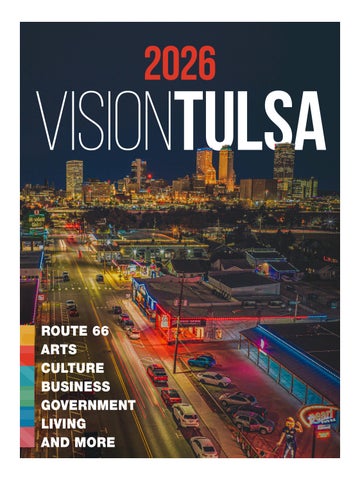
Create a flipbook
Issuu converts static files into: digital portfolios, online yearbooks, online catalogs, digital photo albums and more. Sign up and create your flipbook.