
Engaging Public Policy
this academic year has been an exceptional one. Not only did the Murphy Institute host numerous conferences and academic lectures that garnered significant attention from the public and the media, but our staff and students had unique experiences engaging in various political matters as well. While the Murphy Institute has always been an academic center for political economy research and teaching, this year those affiliated with the Institute were drawn into the political realm by becoming more personally involved in civic affairs.
I was appointed by the New Orleans City Council to chair the Quality Assurance Review Committee for the New Orleans Inspector General, which is responsible for reviewing all of the written material of the Office of the Inspector General (OIG) and making comments and recommendations on its work. As chair, I wrote the final report and convened public hearings for both 2011 and 2012. In reviewing the work completed by the OIG I was impressed by the scope and detail of the reports and reminded of the importance of checks and balances in reducing corruption, a persistent local issue.
continued on page 2
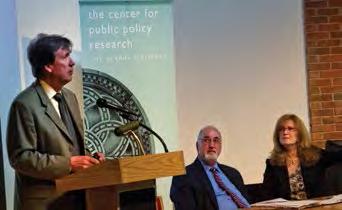
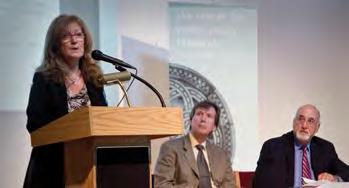
James Alm speaking at the Tulane Tax Roundtable. Pictured with Steven Sheffrin (centered) and Nora Lustig (right).
THE MURPHY INSTITUTE
Core Faculty and Staff
Steven M. Sheffrin, Executive Director, Department of Economics
Bruce Brower, Department of Philosophy
Alison Denham, Department of Philosophy
Eric Mack, Department of Philosophy
Douglas R. Nelson, Department of Economics
Mary K. Olson, Department of Economics
Jonathan M. Riley, Department of Philosophy
David Shoemaker, Department of Philosophy
Richard F. Teichgraeber III, Department of History
Martyn P. Thompson, Department of Political Science
Mark Vail, Department of Political Science
John Louis Howard, Associate Director
Ruth A. Carter, Program Manager
Margaret M. Keenan, Assistant Director, Center for Ethics and Public Affairs
Maureen Long, Public Policy Program Manager
THE CENTER FOR ETHICS AND PUBLIC A FFAIRS
Faculty Committee
Bruce Brower, Department of Philosophy
Ronna Burger, Department of Philosophy
Richard Culbertson, School of Public Health and Tropical Medicine
Alison Denham, Department of Philosophy
Stephen Griffin, School of Law
Mary K. Olson, Department of Economics
Graham Owen, School of Architecture
ENGAGING PUBLIC POLICY
(continued from page 1)
Through my work as the chair of this committee I gained unique insight into the workings of New Orleans city government.
Furthermore, due to my expertise as a tax specialist, this fall I was also asked to participate in the Public Affairs Research Council’s Tax Advisory Group to develop a tax reform agenda and address Governor Jindal’s plan to eliminate the state income tax. I have been an active participant in this endeavor and worked closely with the co-chairs, Robert Travis Scott and James Richardson, as well as the other committee members in preparing our recommendations and conveying them to policy makers and the public. I co-authored an editorial printed in the Times Picayune that outlined the potential pitfalls related to Governor Jindal’s original tax reform plan. The work of PAR’s tax committee and other civic think tanks was highlighted by lawmakers as being crucial to informing their decision to postpone any discussion of tax reform until after this legislative session.
The Murphy Institute’s students have also been involved in civic affairs this year, earning high-level internships at prestigious organizations. Charles Crosby, co-recipient of the 2013 Charles H. Murphy Prize, served as an intern at The Cowen Institute for Public Education Initiatives. Morgan Franklin was an intern on The Melissa Harris-Perry Show on MSNBC. Michael Lewis, the Tulane USG Student Body President, worked as a lobbying intern for Public Citizen in Washington, D.C., an organization that advocates for a healthier and more equitable world by making government work for the people and by defending democracy from corporate greed. As always our students continue to soar to new heights, excelling in the professional and academic realms.

Eric Mack, Department of Philosophy
Jonathan M. Riley, Department of Philosophy
Oliver Sensen, Department of Philosophy
David Shoemaker, Department of Philosophy
Richard F. Teichgraeber III, Department of History
Martyn P. Thompson, Department of Political Science
Richard Velkley, Department of Philosophy
T his newsletter offers the Murphy Institute a platform to review the extraordinary work of our students and faculty throughout the past year. But it also provides an opportunity to look forward. In 2013 we kick off the fall with our annual Yates lecture given by Arthur C. Brooks, the president of the American Enterprise Institute. Upcoming conferences include the New Orleans Workshop on Agency and Responsibility and one focusing on education reform. As always, we aim to continue the Murphy Institute’s tradition of providing intellectual programming for our students and faculty to engage in learning, research, and debate, with the objective of advancing human prosperity and well-being.

Steven M. Sheffrin, Executive Director August 2013
2013 UNDERGRADUATE PROGRAM OVERVIEW
POLITICS FRONT AND CENTER FOR MURPHY INSTITUTE STUDENTS AND ALUMNI
The undergraduate program continues to produce political professionals and political activists, covering the widest possible range of public service and civic engagement. From the halls of Congress to the streets of New Orleans, our students and alumni can be found playing significant roles in the process of government and the administration of social justice.
Murphy Institute alumni can be found all over Capitol Hill. ADRIENNE ERBACH LUCAS ’89 is a Program Examiner at the Office of Management and Budget, and formerly was Chief of the Agriculture Branch of OMB. MARTA DEHMLOW HERNANDEZ ’08 is Communications Assistant and New Media Director for the United States House of Representatives. PABLO E. CARRILLO ’92 is Chief of Staff for Sen. John McCain (R-AZ).
MORGAN FRANKLIN ’13 was named as one of only 20 undergraduate women selected for recognition for the College Women’s Leadership Award, a national leadership award for social activism and political engagement. Morgan’s senior honors thesis concerned voting rights for minorities and the continuing challenges and obstacles that threaten the democratic rights of minority voters. Her thesis advisor was Professor Melissa Harris-Perry and Morgan also worked as an intern for Professor Harris-Perry’s show on MSNBC. Morgan is featured in two forthcoming publications, The Future of Politics and Social Change: Young Leaders to Watch and the book 51%: Women and the Future of Politics . Morgan writes of her experience in the Political Economy program, “Being a part of this program has given me unparalleled resources, from outstanding advising, to a brilliant community of classmates and scholars, to financial assistance for my pursuits. I have felt supported and encouraged to achieve the highest levels of academic and personal success.”
MICHAEL F. LEWIS ’13 served as the president of Undergraduate Student Government at Tulane and had a tremendously positive impact on the school and the community through his leadership and service. He received the Isoline Rodd Kendall and John Smith Kendall Award from Newcomb-Tulane College in recognition of his contributions. Michael has experienced the governmental process from many different angles and his work as a lobbyist intern for Public Citizen was made possible by a Judith K. Schafer Summer Internship Grant from the Murphy Institute. According to Michael, “I am so grateful and thankful that I attended this university with such a unique educational program. Political Economy taught me how to think about Political Science, History, Economics, and Philosophy in a more thorough, integrated fashion that does a significant job of explaining how the world works and how to meet future challenges. Overall, I could not be happier with the program.”
CENTER FOR PUBLIC POLICY RESEARCH
Program Directors
James Alm, Department of Economics, Public Finance
Mary Olson, Department of Economics, Health Policy
Jay Shimshack, Department of Economics, Responsible Regulation
Douglas Harris, Department of Economics, Education Policy
EXTERNAL ADVISORY BOARD
Michael McPherson (Chair), President, Spencer Foundation
John Ferejohn, Samuel Tilden Professor of Law, New York University
Geoffrey Galt Harpham, Director, National Humanities Center
Bonnie Honig, Sarah Rebecca Roland Professor of Political Science, Northwestern University
Stephen Macedo, Laurance S. Rockefeller Professor of Politics and the University Center for Human Values, Princeton University

THE EXCHANGE
Line 58, Communications Consultant
Zack Smith, Photographer
Send editorial correspondence to The Murphy Institute, 108 Tilton Hall, Tulane University, New Orleans LA 70118 Telephone: (504) 865-5317 Facsimile: (504) 862-8755
For questions and comments pertaining to The Murphy Institute, contact jhoward2 @ tulane.edu; for those pertaining to The Center for Ethics and Public Affairs, contact mkeenan @ tulane.edu; for those pertaining to the Center for Public Policy Research, contact mlong2@tulane.edu Web site: www.murphy.tulane.edu
TWENTY-TWO NEWCOMB-TULANE COLLEGE
SENIORS were awarded B.A. degrees in political economy at the May 2013 University Commencement. Several received high academic honors with two students graduating summa cum laude and three students graduating magna cum laude . Those graduating summa cum laude are HILLARY DONNELL and BRENNAN FOXMAN . The magna cum laude graduates are MORGAN FRANKLIN , MICHAEL F. LEWIS , and JESSICA WASSERMAN .
Other members of the class of 2013 are JON CORNFIELD, CHARLES CROSBY, ASHLEY FOX, CHLOE FRANK, MATHEW FREIMUTH, HENRY GITMAN, ALEXANDER GLASER, MIRANDA HEATER, ROYCE KIM, EMILY K. LATIMER, PETER S. MARTIN, SEAN M. MOORE, TAKUMA OHASHI, JARRET RUTSTEIN, ALEXANDRA SCHWARTZER, ERIN E. TURNER, and ALI WALENDZIAK. NINA HELFMAN graduated in fall 2012.
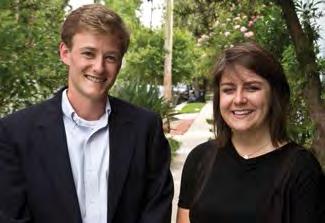
The Charles H. Murphy Prize in Political Economy was awarded to CHARLES CROSBY and HILLARY DONNELL . The Murphy Institute Public Service Award was presented to MATHEW FREIMUTH. The Senior Honors Scholar for Political Economy was HILLARY DONNELL.
HILLARY DONNELL was the Senior Honors Scholar for Political Economy, a member of Oak Wreath, and the co-recipient of the Charles H. Murphy Prize in Political Economy. Her honors thesis was “A Neoliberal Education: Schooling in the Crescent City”. Hillary was the president of Women in Politics, and a founding member of the Tulane chapter of Students for Justice in Palestine. In her junior year she completed the year-long general course at the London School of Economics. She also hosts the Souljazz Express show for WTUL as DJ Ruby. Hillary will work with the artist Jackie Sumell on the Herman’s House Project.
CHARLES CROSBY was inducted into Phi Beta Kappa and won the Charles H. Murphy Prize in Political Economy. Charles was a double major in English and Political Economy and a member of Sigma Alpha Epsilon. He was a research intern at the Cowen Institute for Public Education Initiatives and the Chief of Staff Intern at the Recovery School District in Orleans Parish. Charles was also a volunteer with Hollygrove Market and Farm, a volunteer teacher with Junior Achievement of Greater New Orleans, and a volunteer tutor with Roots of Music. He will be a corps member in Teach for America’s 2013 cohort in Greater New Orleans, teaching secondary English (grades 6-12) in a middle or high school serving predominantly low-income students.
[ UNDERGRADUATE
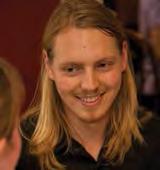
MATHEW FREIMUTH won the Murphy Institute Public Service Award, for outstanding contributions to the university and the community by a Political Economy major. Mathew was a member of the Tulane University Peace Action Committee (TUPAC), which worked with subcontracted workers at Tulane and labor organizers locally and nationally to create better working conditions and improved treatment of workers. He was also a member of Students Organizing Against Racism (SOAR), engaging the Tulane community in conversations on race and racism. Mathew also worked in Europe, teaching English with Builders for Peace and partaking in rebuilding and ethnic reconciliation efforts in Sarajevo and Gra č anica, Bosnia and Herzegovina. He interned for Artfully AWARE and New Orleans-based social justice nonprofit Voice of the Ex-Offender. Mathew will continue his work as an organizer and activist for social justice in New Orleans.
JARRET RUTSTEIN was the treasurer for Alpha Epsilon Pi. He was accepted to graduate programs in Economics at Duke, Michigan, NYU, and the London School of Economics. Jarret was accepted to and will attend the Master of Finance graduate program at the Sloan School of Management at MIT.
ALEXANDER GLASER was the president of the Tulane club soccer team. He will attend medical school at the University of South Florida.
2013 Charles H. Murphy Award winners Charles Crosby (left) and Hillary Donnell (right)
2013 Murphy Institute Public Service Award winner Mathew Freimuth
THE JUDITH KELLEHER SCHAFER SUMMER INTERNSHIP GRANT PROGRAM
Funds from the Judith Kelleher Schafer Summer Internship Grant Program were used to endow five fellowships in the amount of $2,000 each for summer 2013. The students receiving the funds, along with their graduating class, hometown and internship placements are as follows:
ARIEL JACOBY ’14 from Issaquah, Washington, will intern at Pricing Nation in Chappaqua, New York.
MWENDE KATWIWA ’14 from Amherst, Massachusetts, will intern at the World Trade Center in New Orleans, Louisiana.
SAM KING ’14 from Pasadena, California, will intern at the Orleans Public Defenders Office in New Orleans, Louisiana.
FREDERICK SCHAEFER ’14 from Montclair, New Jersey, will intern as a research assistant with Prof. Keith Finlay in the Tulane Department of Economics.
ALYSSA ZEUTZIUS ’14 from Pasadena, California, will intern at the Orleans Public Defenders Office in New Orleans, Louisiana .
POLITICAL ECONOMY PROGRAM ’13 ]
MICHAEL F. LEWIS received a Tulane 34 Award and the Isoline Rodd Kendall and John Smith Kendall Award, given annually by Newcomb-Tulane College to a student who excels in both academic and extracurricular accomplishments. He was a double major in Political Science and Political Economy. Michael was the president of Undergraduate Student Government, a member of Green Wave Ambassadors, the Direction Chair for Tulane University Campus Programming, and the NOLA Experience Orientation Coordinator. He also served as Project Coordinator for Outreach Tulane and as a Steering Committee Member for the National Campus Leadership Council. Michael interned in the college counseling office for Joseph C. Clark Prep School and he worked as a governmental affairs lobbyist intern for Public Citizen in Washington, DC. He will be working with Rep. Jackie Speier (D-CA) as an intern and staff assistant.
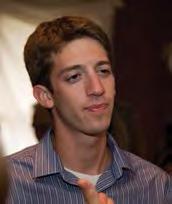
Michael F. Lewis
JESSICA WASSERMAN was a member of Phi Eta Sigma, Alpha Lambda Delta, and the club lacrosse team. She was accepted to law school at George Washington, Northeastern, and Tulane. She will work with Teach for America as a middle school math teacher in Charlotte, North Carolina.
ALEXANDRA SCHWARTZER will work for TeachNOLA, teaching at an elementary school in New Orleans.
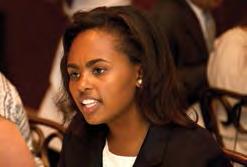
MORGAN FRANKLIN received a Tulane 34 Award and a Newcomb-Tulane College Dean’s Service Award. Morgan was a double major in Political Science and Political Economy. She was the Head Research Fellow for the Anna Julia Cooper Project and the president of Sigma Delta Theta. She served in Undergraduate Student Government as a Senator and as Academic Organizations Council Chair. Morgan was a member of the Black Student Union and Tulane Democrats. Over the course of her career at Tulane, Morgan was an intern for Senator Mary Landrieu (D-LA), a public service intern for the Ellis Marsalis Center for Music, and a production intern for The Melissa HarrisPerry Show on MSNBC. Morgan was accepted to law school at Duke, Georgetown, and Vanderbilt, and she is currently wait-listed for Harvard Law School.
EMILY K. LATIMER was a member of Oak Wreath and will work as a legislative intern for Sen. Brian Schatz (D-HI).
PETER S. MARTIN will attend law school at LSU.
TAKUMA OHASHI will pursue a master’s degree in accounting at the Freeman School of Business at Tulane. b
Morgan Franklin
ALUMNI NEWS
Class of 1987
TONY DAVLIN is the owner of T. Davlin Glass, an architectural tile and glass company in Cambridge, Massachusetts. Tony holds more than fifteen United States and foreign patents for glass processes covering everything from precious metals and packaging to pizza ovens. He has produced architectural installations and created fine art objects, including some for the Smithsonian Institution.
Class of 1988
WILLIAM ETHEREDGE is Regional Sales and Export Manager at Kent Quality Foods in Tampa/St. Petersburg, Florida. LARRY MANEKIN is an independent Hyperion systems consultant and Hyperion Architect at KPI Partners in Fort Myers, Florida.
Class of 1991
KEVIN MCKEOUGH is Executive Vice President and Chief Operating Officer at NOLA Lending Group in New Orleans.
Class of 1999
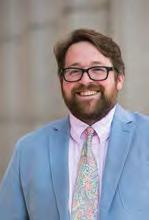
MELVIN ALBRITTON was promoted to Partner this year at Lowe, Stein, Hoffman, Allweiss & Hauver LLP in New Orleans.
Melvin Albritton ’99 is a partner at Lowe, Stein, Hoffman, Allweiss & Hauver. >
Class of 2000
NORA RIGBY lives in Washington, DC and is Counsel in the Office of Regulations of the Consumer Financial Protection Bureau.
Class of 2004
BEN CARYL is an international trade associate at Kelley Drye & Warren’s Washington, DC office. He advises domestic industries on international trade issues, including the WTO, free trade agreements and negotiations, foreign trade zones, export controls, and economic sanctions. He is Vice Chair of the District of Columbia Bar’s International Trade Committee, and he moderates the annual debate by the DC Bar on international trade law and policy. MOLLY ELGIN-COSSART continues with New York University's Center on International Cooperation, but spent the past year working for the United Nations Secretary-General's High-level Panel on the Post-2015 Development agenda, a panel chaired by the leaders of Indonesia, Liberia, and the UK. She served as the Chief of Staff, working closely with the Lead Author of the report, the panelists and the co-Chair teams to make proposals to the United Nations SecretaryGeneral on the shape and vision of the global development agenda after the Millennium Development Goals expire.
EVAN HERMAN is Executive Search Consultant for Finance and Accounting Practice with the Lucas Group in Chicago.
Class of 2006
MICHAEL SHEERIN received his JD degree, magna cum laude from Georgetown University Law Center in 2012, where he was a member of the Order of the Coif. He is an Associate practicing Antitrust Law with Skadden, Arps, Slate, Meagher, & Flom LLP in New York.
Class of 2007
RACHAEL HUSSER STEGMAN
DEPAUW is the owner and artist of Rachael DePauw Pottery and Rachael Therese Ceramics. She also teaches high school and adult pottery classes at Isidore Newman School in New Orleans.
JAMES MARUNA received his JD degree from the DePaul University College of Law where he was president of the Moot Court Team in his final year.
CURRY SMITH lives in New Orleans and is Executive Director of the Young Leadership Council.
Class of 2008
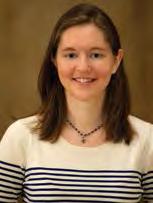
NICOLE ARCHAMBAULT has enrolled in the Public and Nonprofit MBA Program at Boston University. KATHRYN DAHLBERG completed her Master of Public Administration degree from Columbia University's School of International and Public Affairs (SIPA). She is the director of school operations at Achievement First Brownsville Elementary School in Brooklyn, New York.
Class of 2009
Class of 2010
EILEEN COLLINS received a master’s degree in Urban Affairs and Public Policy from the University of Delaware. PATRICK ESTILL is beginning his third year in law school at the University of Kentucky. SARA SANDS graduated with an M.Phil. from Cambridge University and now lives in London where she works for IBM as a Business and Technology Consultant. She is currently specializing in project management for complex systems integration projects in the public sector and is working as a financial management consultant on a longrunning project for the UK government's Driver and Vehicle Licensing Agency (DVLA).
Class of 2011
GREG AUGARTEN lives in New Orleans and is the co-founder and co-owner of Pizza Delicious, which began as a pop-up restaurant in a shared kitchen at 3334 North Rampart Street and now operates a few blocks away in its own building at 617 Piety Street. Pizza Delicious has been profiled in numerous media outlets including an appearance on NPR’s Morning Edition
JACQUELINE
MABRY is now Senior Advancement Officer for the School of Public Affairs at American University in Washington, DC. DANIEL STRATTON is Press Assistant for the United States Department of Justice in Washington, DC. MATT THOMAS is a Financial Analyst for Mainstream Energy in San Luis Obispo, California.
JORDAN KABBANI lives in San Francisco and is an Associate for the Concord Group, a national real estate strategy firm with offices in New York, Newport Beach and San Francisco. ASHLEY MOTTA has one year left in the Masters of City and Regional Planning program at Rutgers University. She is currently living and working in Philadelphia as the transportation planning intern for the Office of Transit, Bicycle, and Pedestrian Planning at the Delaware Valley Regional Planning Commission.
Class of 2012
MICHAEL B. GREENBERG attends law school at the University of Florida and is a Judicial Intern, Juvenile, Family, Criminal, and Civil Divisions at 19th Judicial Circuit Court in Florida. b
Kathryn Dahlberg, ’08, is the director of school operations at Achievement First Brownsville Elementary School in Brooklyn, New York.
b JAMES ALM, Professor and Chair of Economics and Program Director for Public Finance at the Murphy Institute’s Center for Public Policy Research, gave the keynote address, “Individual Versus Group Motivations in Tax Compliance Decisions” at the Italian Society of Public Economics Conference at the University of Pavia in September 2012. He published, with T. Cherry, M. Jones, and M. McKee, “Social Programs as Positive Inducements for Tax Participation” Journal of Economic Behavior and Organization 84 (2012) and, with A. El-Ganainy, “Value-added Taxation and Consumption” International Tax and Public Finance 20 (2013).
b ALISON DENHAM, Associate Professor of Philosophy, was invited to Beijing by the Chinese Academy of Social Sciences to present a series of lectures on philosophy and contemporary art as a Visiting Professor in the summer of 2013. Professor Denham is the author of “Celan’s Psalm: Poetry and Ethical Estrangement” in J. Gibson (ed.) Philosophy of Poetry , forthcoming from Oxford University Press and the co-author, with F. Worrell, of “Identity, Agency & Tragedy” in Z. Giannopoulos (ed.) The Philosophy of Film: David Lynch , forthcoming from Routledge.
b RONNA BURGER, Professor of Philosophy and Catherine & Henry J. Gaisman Chair, published “Maimonides on Knowledge of Good and Evil: The Guide of the Perplexed I.2” in J. Lomax and T. Pangle (eds.) Political Philosophy Cross-Examined (Palgrave Macmillan, 2013) and “Socrates’ Odyssean Return: On Plato’s Charmides” in D. Schaeffer and C. Dustin (eds.) Strange Fellows: Socratic Philosophy and Its Others (Rowman & Littlefield, 2013). As an invited speaker at an international conference at the Shalem Center in Jerusalem in July, she presented “In the Wilderness: Moses as Lawgiver and Founder.”
b RICHARD F. TEICHGRAEBER III, Professor of History, presented a paper, “Haskell Moments” at “Values in History: A Conference Honoring Thomas Haskell” at Rice University in March of 2013.
b DOUGLAS NELSON , Professor of Economics, spent the summer of 2013 as the Adam Smith Professor of Economics and Philosophy at the University of Bayreuth in Germany. With S. J. Silva he is the author of “Does Aid Cause Trade?: Evidence from an Asymmetric Gravity Model” World Economy 35 (2012) and with N. Gasto he is the author of “Bridging Trade Theory and Labour Econometrics: The Effects of International Migration” Journal of Economic Surveys 27 (2013).
b ERIC MACK, Professor of Philosophy, was a Visiting Scholar at the Liberty Fund for the 2012-2013 academic year. His essays published this past year include “Locke” in G. Gaus and F. D’Agostino (eds.) The Routledge Companion to Social and Political Philosophy (Routledge, 2013) and “Inside Public Reason” Criminal Law and Philosophy 7 (2013). In addition, the paperback edition of his book, John Locke , was brought out by Bloomsbury Academic in January of 2013.
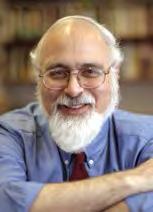
b MARK VAIL, Associate Professor of Political Science, was awarded a Frederick Burkhardt Residential Fellowship for Recently Tenured Scholars from the American Council of Learned Societies and spent the year as a Fellow at the Center for Advanced Study in the Behavioral Sciences (CASBS) at Stanford University. In addition, he had a major article accepted, “Varieties of Liberalism: Keynesian Responses to the Great Recession in France and Germany,” which is forthcoming from Governance in January of 2014.
For complete information on research published by Murphy Institute faculty in 2012-2013, please visit our website at murphy.tulane.edu/people/.
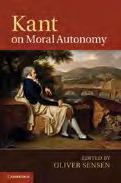
b OLIVER SENSEN , Associate Professor of Philosophy, edited Kant on Moral Autonomy (Cambridge University Press, 2013) and coedited Kant’s Tugendlehre (de Gruyter, 2013). He is the author of “The Role of Feelings in Kant’s Moral Philosophy” Studi-Kantiani XXV (2012) and “Kant” in G. Gaus and F. D’Agostino (eds.) The Routledge Companion to Social and Political Philosophy (Routledge, 2013). Professor Sensen also gave two keynote addresses for conferences on his book Kant on Human Dignity ; one was in Groningen, Netherlands for “Human Dignity in Kant and Kantianism,” the other for the KantSymposium in Mainz, Germany.
b DOUGLAS HARRIS, Associate Professor of Economics and Education Policy Program Director for Murphy Institute’s Center for Public Policy Research, published, with S. Goldrick-Rab, “Improving the Productivity of Educational Experiments: Lessons from a Randomized Trial of Need-based Financial Aid” Education Finance and Policy 7 (2012) and, with C. Thorn, “The Accidental Revolution: Teacher Accountability, Value Added, and the Restructuring of the American School System” in D. Anagnostopoulos, S.A. Rutledge, and R. Jacobsen (eds.) The Infrastructure of Accountability (Harvard Education Press, 2013). Professor Harris was also appointed to the Carnegie Foundation’s Expert Panel on Assessing Teaching to Improve Learning.
b JAY SHIMSHACK is the coauthor, with M. Kitzmueller, of “Economic Perspectives on Corporate Social Responsibility,” Journal of Economic Literature 50 (2012) and, with T. Lyon, “Environmental Disclosure: Evidence from Newsweek’s Green Companies Ranking,” forthcoming from Business & Society . During the academic year Professor Shimshack presented research at nine different venues, including the University of Heidelberg, the US Environmental Protection Agency, and the National Bureau of Economic Research.
b JONATHAN RILEY , Professor of Philosophy, spent the spring and summer terms of 2013 as the Visiting John Stuart Mill Chair in Social Philosophy at the University of Hamburg, giving a series of lectures and seminars on Mill’s unusual liberal utilitarian philosophy. He also wrote a number of papers, including “Isaiah Berlin’s ‘Minimum of Common Moral Ground’” Political Theory 43 (2013) and “Mill’s Greek Ideal of Individuality” in K. Demetriou and A. Loizides, eds. John Stuart Mill: A British Socrates (Palgrave, 2013).
b STEVEN SHEFFRIN, Professor of Economics and Executive Director of the Murphy Institute, published, with A. O’Sullivan and S. Perez, Economics: Principles, Tools, and Applications ( 8th edition, Pearson 2013) and, with J. Alm, “Can Tax Reform Solve the ‘Fiscal Trilemma’?” Public Finance Review, forthcoming in 2013.
b MARTYN THOMPSON , Associate Professor of Political Science, published “The Logic of the History of Ideas” Journal of the History of Ideas 4 (2012) and “Michael Oakeshott: Konservativismus und politische Bildung ” in M. Henkel and O.W. Lembcke (eds.), Praxis und Politik −Michael Oakeshott im Dialog (Mohr Siebeck, 2013), and co-edited Politisches Denken Jahrbuch 2012 (Duncker & Humblot, 2012).
b MARY OLSON , Associate Professor of Economics and Program Director for Health Policy at the Murphy Institute’s Center for Public Policy Research, had a paper, “Eliminating the U.S. Drug Lag: Implications for Drug Safety” accepted for publication in the Journal of Risk and Uncertainty. It will be the lead article in the August 2013 issue of the journal. She also contributed a chapter, “Regulation of Safety, Efficacy, and Quality” to the Elsevier Encyclopedia of Health Economics (in press).
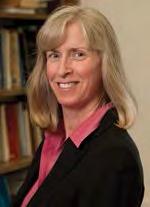
b DAVID SHOEMAKER is the author of “Responsibility without Identity,” Harvard Review of Philosophy 18 (2012) and “Blame and Punishment” in D.J. Coates and N.A. Tognazzini (eds.) Blame: Its Nature and Norms (Oxford University Press, 2012).
Congratulations to MELISSA BESKE , former Center for Ethics and Public Affairs Graduate Fellow and Murphy Institute graduate student assistant, who earned a Ph.D. in Anthropology in December of 2012. At the Tulane 2013 commencement ceremony, Dr. Beske was presented with a “Tulane 34” Award, for exemplary leadership, service and academic excellence.
YATES LECTURE 2013
GEORGE LOEWENSTEIN
“This Is Your Brain on Emotion: Implications of an Evolutionary Account of Affect”
WHY DO WE RESPOND TO EMOTIONS THE WAY WE DO? That was the focus of George Loewenstein’s presentation at this year’s Yates lecture. Loewenstein, one of the pioneers of behavioral economics, highlighted a variety of research projects demonstrating the implications of an evolutionary account of emotion. According to this approach, emotions are all-encompassing ‘programs’ that prepare us to react to recurring situations of evolutionary significance. When we are in different emotional states, the evolutionary account suggests we are so profoundly transformed that we are, in effect, ‘different people’. This hypothesis makes sense of research findings which show how profoundly emotions affect judgment and decision-making, and how little insight we have into our own (and others’) behavior in emotional states different from those that we are currently experiencing. Loewenstein also noted that emotional insufficiency is as big a problem as excessive emotion. He argues we should concern ourselves as much with those who seem to have no emotional reaction to significant issues (e.g. climate change) as those who emotionally over-react. His research highlights key discoveries about how individuals react emotionally and how we can think about and modify behavior accordingly.
George Loewenstein is the Herbert A. Simon Professor of Economics and Psychology at Carnegie Mellon University. He is one of the founders of the fields of behavioral economics and neuroeconomics, and one of the leading thinkers examining the relationship between economics and psychology. The author of more than 100 peer-reviewed journal articles, he has written or edited six books on topics ranging from intertemporal choice to behavioral economics to emotions. His most recent book is Exotic Preferences: Behavioral Economics and Human Motivation (Oxford University Press, 2007).
The Mary C. Parker Yates Lecture, endowed in 1996 by Murphy Institute alumna Rebecca Yates (’89) Velander in memory of her mother, is the Murphy Institute’s major public academic event. Designed to promote university-wide discussion of issues of current concern, the annual Yates Lecture brings leading thinkers and public figures to the Tulane campus.
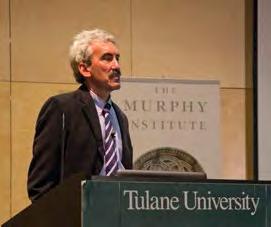
2013 YATES LECTURE: “This Is Your Brain on Emotion: Implications of an Evolutionary Account of Affect" by George Loewenstein
GRANTS FOR EXTRAMURAL RESEARCH
IN AN EFFORT to promote extramural research in either political economy or public policy, the Murphy Institute provides seed funding to assist faculty in cultivating a base of external funding that will support their work over the long term. Over the past four years we have granted twenty seed grants. In 2013, we awarded seed grants to four faculty members: Alan Barreca, Michael Darden, and Keith Finlay from the Department of Economics, and Patrick Rafail from the Department of Sociology.
In addition, The Center for Public Policy Research works with Murphy-affiliated faculty to pursue larger extramural funding opportunities. Below is a description of two major projects that were awarded this year to Center for Public Policy Research affiliates:
AN EVALUATION OF METHAMPHETAMINE PRECURSOR CONTROLS
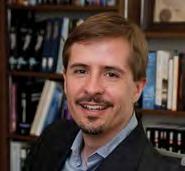
The Robert Wood Johnson Foundation’s Public Health Law Research Program awarded KEITH FINLAY , Tulane Assistant Professor of Economics, a grant to study the impact of methamphetamine regulation. The rise of methamphetamine is a massive public health problem. Among major illicit drugs, methamphetamine has particularly large public health costs for users and non-users; including child maltreatment, foster care admissions, environmental damage, hospitalization and other long-term health effects. Lawmakers across the country have designed legislation aimed at stemming access to the drug, but how useful are these measures in lowering the production and use of methamphetamine? That is the question that Finlay and his co-investigator from Baylor University, Scott Cunningham, aim to answer with their research. The grant for $116,462 will enable the investigators to evaluate the cost effectiveness of legislation requiring a doctor’s prescription for the purchase of pseudoephedrine and the electronic tracking of pseudoephedrine purchases. Their research will give policymakers the tools to understand how long the effects of restricting the supply of pseudoephedrine last.
TESTING THE PROMISE: A RANDOMIZED TRIAL OF A PROMISE COLLEGE SCHOLARSHIP
FOR URBAN PUBLIC SCHOOL STUDENTS
Tulane Associate Professor of Economics DOUGLAS
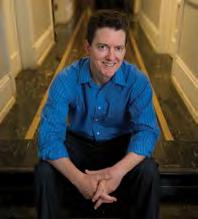
HARRIS won a grant for $3 million from the Institute of Education Sciences, a branch of the U.S. Department of Education (USDOE), to evaluate the efficacy of The Degree Project, a program that commits college funding to high school students in Milwaukee, Wisconsin. Traditional grant and loan programs such as Pell grants wait to inform students about grants and loans until after they are leaving high school—when many are already off track. Compared to these “late commitment” aid programs, the objective of The Degree Project and other “early commitment” programs is to encourage students to improve their academic preparation and social capital during high school, so they are better prepared for all the social and financial challenges that college poses. While many small promise scholarships have been instituted nationwide have received broad attention in the New York Times and other national media, this will be the first randomized trial of the program in the United States to test their effects. With this USDOE grant, and with the support of the Great Lakes Higher Education Corporation and Affiliates that has committed up to $30 million to fund the scholarships, Harris and his team will test the program’s efficacy in influencing students during high school and into college and seek to understand how and why the program works. Given that traditional late commitment aid programs spend more than $100 billion annually, the results of this experiment could have a significant impact on the policy landscape for promise programs and financial aid more generally.
Keith Finlay Assistant Professor of Economics
Doug Harris Associate Professor of Economics
FISCAL TRILEMMA CONFERENCE
A FISCAL TRILEMMA?
The Fiscal Trilemma Conference, sponsored by the Murphy Institute and the Department of Economics, aimed to address our national need for a tax system that will provide sufficient revenue to deal with long-run budget challenges, promote long-run economic growth, and provide progressivity in the face of increasing inequality. The conference highlighted the tensions between these three goals of tax policy by posing the question: Do we face a “fiscal trilemma”? Specifically, can we meet only two of three desirable goals for tax policy? Must a progressive tax system that meets our revenue needs hamper economic growth? Do pro-growth systems that generate needed revenues come at the expense of progressivity? Would a progressive income tax system that encouraged growth provide insufficient revenues? The conference brought together researchers working on these issues to explore recent advances in public finance and to increase awareness of the different dimensions of taxation. Selected papers presented at the conference will be published in an upcoming special issue of Public Finance Review.
WILLIAM G. GALE & SAMUEL BROWN
The Arjay and Frances Miller Chair in Federal Economic Policy in the Economic Studies Program, Brookings Institution & Research Associate, Brookings Institution Tax Reform for Growth, Equity, and Revenue
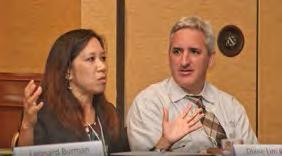
DIANE LIM ROGERS
Chief Economist, The Pew Charitable Trusts Leaving the Bush Tax Cuts for Better Tax Policy
ALAN D. VIARD
Resident Scholar, American Enterprise Institute
Addressing the Fiscal Trilemma through Progressive Consumption Taxation: The Choice of Tax Design
SØREN BO NIELSEN
Professor, Department of Economics, Copenhagen Business School
The Fiscal Trilemma in a Danish Perspective, written with Rasmus Højbjerg Jacobsen and Anders Sørensen
JOHN W. DIAMOND & GEORGE R. ZODROW
Edward A. and Hermena Hancock Kelly Fellow in Public Finance at the Baker Institute, Adjunct Professor of Economics at Rice University & Allyn R. and Gladys M. Cline Chair of Economics, Rice University
Promoting Growth, Maintaining Progressivity, and Dealing with the Debt: Lessons from CGE Models and Simulations of a Debt-Reducing VAT
LAURENCE SEIDMAN
Chaplin Tyler Professor of Economics, University of Delaware
Overcoming the Fiscal Trilemma with Two Progressive Consumption Tax Supplements
JAMES R. HINES, JR.
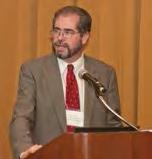
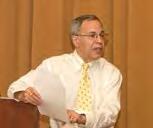
L. Hart Wright Collegiate Professor of Law and Co-director of the Law and Economics Program, University of Michigan Law School
The Redistributive Potential of Wealth Transfer Taxes
JAMES ALM & STEVEN M. SHEFFRIN

LEONARD E. BURMAN
Daniel Patrick Moynihan Professor of Public Affairs, Syracuse University, The Maxwell School Pathways to Tax Reform Revisited
Professor and Chair, Tulane University, Department of Economics & Director of the Murphy Institute and Professor, Tulane University, Department of Economics Can Tax Reform Solve the “Fiscal Trilemma”?
DIANE LIM ROGERS & WILLIAM GALE
ALAN
D. VIARD
LAURENCE SEIDMAN
REGULATION CONFERENCE
REFLECTIONS ON RESPONSIBLE REGULATION
This conference, organized by Regulation Program Director JAY SHIMSHACK and Tulane Law Professor ADAM FEIBELMAN , brought together scholars from across the country to address the nature and complexities of ‘responsible regulation’ or regulation that is sensitive to both economic efficiency and desirable social outcomes. The goals of the conference were two-fold. First, it aimed to develop insights relevant to regulation in general, regardless of policy area; and second, it aimed to facilitate a dialogue among scholars interested in regulation that transcended disciplinary boundaries. The conference linked the theory and practice of regulation, with the understanding that effective, efficient, and politically stable regulation requires balanced social, legal, and economic objectives. Topics discussed included rapidly growing alternative regulatory tactics such as voluntary, informational, and cooperative policies. Many of the ideas discussed at this conference were compiled into a White Paper series. These works-in-progress were intended to help facilitate conference conversation, and are currently available on our website.
JAMES ALM
Professor and Chair, Tulane University, Department of Economics
Designing Responsible Regulatory Policies to Encourage Tax Compliance
KIMBERLY KRAWIEC
Kathrine Robinson Everett Professor of Law, Duke University Law School Toward Responsible Financial Reform
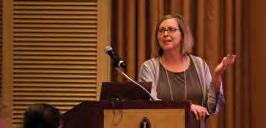
DAVID WEIL
Professor of Economics and Everett W.
Lord Distinguished Faculty Scholar at Boston University School of Management
Co-director of the Transparency Policy Project at the Ash Institute at Harvard Kennedy School
Promise and Pitfalls of Targeted
Transparency: A Light-handed Approach to Social Policy, written with Archon Fung and Mary Graham
NACI MOCAN
Ourso Distinguished Chair of Economics, Louisiana State University, E.J. Ourso College of Business
Alcohol Consumption, Deterrence and Crime in New York City, written with Hope Corman
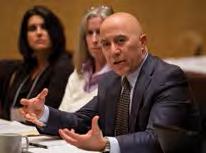
WALLACE OATES
Professor Emeritus, University of Maryland, Department of Economics
Regulatory Federalism: Regulation in a Setting of Multi-level Government
DAVID ZARING
Assistant Professor of Legal Studies and Business Ethics, University of Pennsylvania, Wharton School of Business
Post-Crisis International Financial Regulation
STEVEN M. SHEFFRIN & MAGGIE MULLANE
Director of the Murphy Institute and Professor, Tulane University, Department of Economics & Graduate Student, Tulane University, Department of Economics Regulatory Nudges in Practice
THOMAS LYON
Dow Professor of Sustainable Science, Technology and Commerce; Professor of Business Economics; Professor of Natural Resources, University of Michigan, Ross School of Business
The Pros and Cons of Voluntary Approaches to Environmental Regulation
PAIGE MARTA SKIBA
Associate Professor of Law, Vanderbilt University Law School
The Role of Individual Behavior in Regulatory Design
JAY SHIMSHACK
Associate Professor, Tulane University, Department of Economics
Welcome and Introduction
SAULE OMAROVA
Assistant Professor of Law, University of North Carolina Law School
Operation as Regulation: On ‘Public’ Action in ‘Private’ Markets, written with Robert C. Hocket
ROBERT HOCKETT
Professor of Law, Cornell University Law School
The Macroprudential Turn: From ‘Safety and Soundness’ to ‘Systemic Stability’ in Financial Supervision
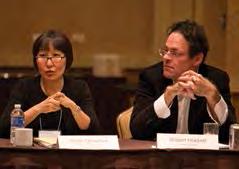
NACI MOCAN
SAULE
OMAROVA & ROBERT HOCKETT
tulane tax roundtable
The 3rd Annual Tulane Tax Roundtable brought together tax scholars from around the country, resident Tulane faculty, and Tulane students for discussion and debate about important tax policy issues. The roundtable showcased the drafts and works-in-progress of its participants and subjected these works to rigorous analysis in a discussantdriven workshop format. This roundtable was co-sponsored by Tulane’s Murphy Institute and Tulane Law School.
STEVEN SHEFFRIN
Professor of Economics & Director of the Murphy Institute, Tulane University
What Role Can Desert Play in Designing Tax Policies?
LORI MCMILLAN
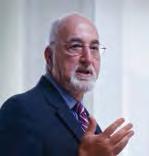
Associate Professor of Law, Washburn University School of Law
Noncharitable Nonprofit Organizations in Canada: An Empirical Examination
TERRENCE CHORVAT
Professor of Law,
George Mason University School of Law
The Failure of the Facebook IPO and a Justification for Debt-Equity Tax Distinction
JAMES ALM ( with JAY A. SOLED)
Professor and Chair, Department of Economics, Tulane University
The Internal Revenue Code and Automobiles: A Case Study of Taxpayer Noncompliance
SHU-YI OEI
Associate Professor, Tulane Law School
Taxing in the Shadow of Bankruptcy Law: The Collections Case for Tax Priority
NANCY STAUDT ( with VICTOR FLEISCHER)
Edward G. Lewis Chair in Law and Public Policy, Academic Director, The Schwarzenegger Institute for State and Global Policy, USC Gould School of Law
The Supercharged IPO
AJAY MEHROTRA
Associate Dean for Research, Professor of Law, and Louis F. Niezer Faculty Fellow; Adjunct Associate Professor of History, Indiana University
Maurer School of Law
Sharing the Burden: Law, Politics, and the Making of the Modern American Fiscal State, 1880-1930
TESSA DAVIS
Visiting Assistant Professor of Law, Tulane Law School
Two Households Both Alike in Dignity: Family as Status and Family as Contract in the Tax Code
Perspectives on Louisiana’s Tax Debate: A Roundtable Discussion
The Murphy Institute at Tulane University hosted a roundtable discussion to address Louisiana Governor Bobby Jindal’s call to legislators to eliminate the personal income tax and corporate income and franchise taxes. While Governor Jindal retreated from his original tax plan to replace the state income tax by raising the sales tax rate, extending the sales tax to services, and increasing the tax on cigarettes, his top priority was still to “overhaul the tax code and eliminate income taxes.” Tulane Economics professors James Alm, Nora Lustig, and Steven Sheffrin provided an overview of what eliminating the state income tax would mean for Louisianans, highlighting the key issues and controversies. These scholars addressed state tax structures, economic competitiveness, and the consequences of shifting tax bases on inequality and income distribution. Brief presentations were followed by an informative question-and-answer session.
NORA LUSTIG
STEVEN SHEFFRIN
next steps
The first round of post-doctoral Fellows from The Center for Public Policy Research have completed their two-year appointments and are taking the next steps in their careers. We congratulate them on their accomplishments while here at Tulane. We are pleased to announce their plans for the coming year.
NANTAPORN PLURPHANSWAT will be working at the University of Louisville, James Graham Brown Cancer Center as a research economist. She will be working on research projects related to tobacco harm reduction with Dr. Brad Rodu, Professor of Medicine, Division of Medical Oncology/Hematology.
SEBASTIAN LEGUIZAMON will be a Senior Lecturer in the Department of Economics at Vanderbilt University in Nashville, Tennessee. He will be teaching courses in Statistics and a seminar in Microeconomic Policy.
LOPAMUDRA CHAKRABORTI accepted a tenure track position as Assistant Professor at the prestigious Centro de Investigación y Docencia Económicas in Aguascalientes, Mexico. She will be teaching in their new master’s program in Environmental, Resource, and Regional Economics.
working groups
PUBLIC POLICY WORKING GROUP
TESSA DAVIS
Visiting Assistant Professor, Tulane Law School
Reproducing Value: How Tax Law Differentially Values Fertility, Sexuality & Marriage
LOPAMUDRA CHAKRABORTI
Post-Doctoral Fellow, Murphy Institute
Are Polluters Concerned with Environmental Quality? Explaining Excellent Environmental Performance of Water Pollution Dischargers
MATTHEW LARSEN
Post-Doctoral Fellow, Murphy Institute
Out of Work and into College? The Effect of Local Labor Markets on Colleges and College Enrollment
SEBASTIAN LEGUIZAMON
Post-Doctoral Fellow, Murphy Institute
On the Influence of Political Parties on Strategic Fiscal Competition in the U.S.
JAY SHIMSHACK
Associate Professor of Economics
The Accuracy of Self-reported Pollution Data: Evidence from the Clean Water Act
LOPAMUDRA
Murphy Institute Post-Doctoral Teaching Fellow
HEALTH POLICY WORKING GROUP TALKS
JANET SCHWARTZ
Assistant Professor, Freeman School of Business
Healthier by Precommitment
NANTAPORN PLURPHANSWAT
Post-Doctoral Fellow, Murphy Institute
Genetic Influences and Tobacco Policies: Adolescent Smoking Behavior
MICHAEL DARDEN
Associate Professor of Economics
The Star Treatment: Estimating the Impact of Star Ratings on Medicare Advantage
The Working Groups of The Center for Public Policy Research bring together faculty from numerous disciplines across Tulane’s campuses to establish a network of professionals and produce interdisciplinary research that will address critical policy issues.
JANET SCHWARTZ
CHAKRABORTI
MATTHEW LARSEN
lectures & seminars
Organized by Bruce Brower, Center for Ethics and Public Affairs lectures and seminars draw eminent scholars and renowned speakers to Tulane.
JOHN DORIS
Professor in the Philosophy-Neuroscience-Psychology Program and Philosophy Department, Washington University in St. Louis What Is Reason For?
MICHAEL DAVIS
Center Faculty Fellow and Associate Professor of Philosophy, University of Kansas
The Essence of Babel: Rousseau on the Origin of Languages
DALE DORSEY
James E. Rogers Professor of Philosophy, University of Arizona How Not to Argue against Consequentialism
RUTH CHANG
Associate Professor of Philosophy, Rutgers University Grounding Practical Normativity: Going Hybrid
SARAH STROUD
Associate Vice-Principal and Associate Professor of Philosophy, McGill University
They Can’t Take That Away from Me: Restricting the Reach of Morality’s Demands
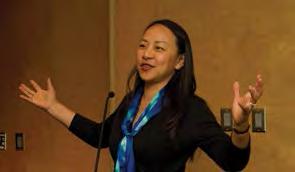
LI ZHANG
Professor of Anthropology, UC Davis
The Rise of Therapeutic Governing in Post-Socialist China
PETER RAILTON
John Stephenson Perrin Professor and Arthur F. Thurnau Professor of Philosophy, University of Michigan
The Affective Dog and Its Rational Tale
VICTORIA MCGEER
Research Scholar, University Center for Human Values, and Lecturer of Philosophy, Princeton University Civilizing Blame
MONIKA BETZLER
Center Faculty Fellow and Professor of Philosophy, University of Berne Why Should We Value Personal Projects?
MARY CLAYTON COLEMAN
Center Faculty Fellow and Assistant Professor of Philosophy, Illinois Wesleyan University A Coherent Constitutivism
SHARON STREET
Associate Professor of Philosophy, New York University
Nothing Really Matters, but That’s Not What Matters
RUSS SHAFER-LANDAU
Professor of Philosophy, University of Wisconsin-Madison
The Moral Fixed Points: New Directions for Moral Nonnaturalism
BRUCE BROWER & SARAH STROUD
LI ZHANG
conferences
PPE 2013: ON CLIMATE CHANGE
The PPE CONFERENCE is an annual event organized by the editors of Politics, Philosophy, and Economics . Papers presented at the conference are targeted for subsequent publication in this toprated academic journal.
ROBERT KEOHANE
Professor of International Affairs, Princeton University
The Ethics of Scientific Communication under Uncertainty
JOHN ROEMER
Elizabeth S. and A. Varick Stout Professor of Political Science and Economics, Yale University
How the North and South Can Share the Global Commons: A Proposal for Meeting the Climate-change Challenge
PARTHA DASGUPTA
Frank Ramsey Professor Emeritus of Economics, University of Cambridge Pricing Carbon
SIMON CANEY
Professor of Political Theory and Director of the Center for the Study of Social Justice, University of Oxford (United Kingdom)
Climate Change and Intergeneration Equity: Assessing Four Arguments for Discounting
LUKAS MEYER
Professor of Philosophy, University of Graz (Germany) How Legitimate Expectations Matter in Climate Justice
NOISE 2013: NEW ORLEANS

INVITATIONAL SEMINAR IN ETHICS
NOISE is an annual one-day conference led by David Shoemaker which features new papers by leading ethicists from across the country.
ELIZABETH BRAKE
Associate Professor of Philosophy, Arizona State University
Rebuilding and Restoration after Disaster: A Case for Disaster Rights?
JANICE DOWELL AND DAVID SOBEL
Associate Professor of Philosophy and Robert R. Chambers Distinguished Professor of Philosophy and the Moral Sciences, University of Nebraska-Lincoln Advice for the Non-Analytic Naturalist
ERIC MACK
Professor of Philosophy, Tulane University Moral Elbow Room for Rights
DOUGLAS PORTMORE
Associate Professor of Philosophy, Arizona State University Parfit on Reasons and Rule Consequentialism
STEVE WALL
Professor of Philosophy, University of Arizona Enforcing Morality
CONFERENCE ON MORAL AUTONOMY
Organized by OLIVER SENSEN , this conference brought ten prominent moral philosophers from five countries to Tulane. A selection of the papers formed the basis of the volume Kant on Moral Autonomy which was edited by Professor Sensen and published by Cambridge University Press in 2013.
The participants were Andrew Reath ( University of California, Riverside), Eric Watkins ( University of California, San Diego),
Pauline Kleingeld (University of Groningen), Marcus Willashek (Goethe University Frankfurt), Heiner Klemme (University of Mainz), Jens Timmermann (University of St. Andrews), Pierre Keller (University of California, Riverside), Georg Mohr (University of Bremen), Susan Shell ( Boston College), Stefano Bacin (Goethe University Frankfurt) and Oliver Sensen ( Tulane University ).
interview with faculty fellows

MONIKA BETZLER ON “PERSONAL
PROJECTS”
Meg Keenan (MK): You are writing a book on personal projects, and defending them. Can you give us some examples of what a personal project might be?
Monika Betzler (MB): Personal projects could be any number of things: preserving a neighborhood, saving the rainforest, becoming a gardener, or even spending time on a friendship.
MK : It seems to me that you are saying that it is perfectly acceptable for us to devote time to our family or friends, or to spend the weekend gardening or writing a novel, or hearing jazz, or what have you. To a New Orleanian, the idea we would have to defend such things seems strange. Why do we need to defend personal projects?
MB : This is because personal projects need not be moral, so I am looking at what reasons we have to engage in them. And I am exploring the reasons why once we have personal projects, we feel impelled to continue – even if there are moral reasons against doing so, or if it would simply be unwise to continue.
MK : I could see how spending the weekend gardening or reading novels could be unwise. What about a moral reason against this?
MB : Well, suppose a friend asked you to help her move. I am saying it is perfectly acceptable to say no this one time, and attend to your own project. On the other hand, if your friend were dying, then yes, it would be wrong to not help her. Moreover, there IS a moral obligation to help others. But you are not obligated to help every time someone asks for your help. If you do, then you will have no time for your own project. You couldn’t pursue it any longer, and you would do harm to yourself.
MK : So you are saying personal projects can have value, even though they are not necessarily moral.
MB : Exactly.
MK : Your own personal project that you pursued in New Orleans was, of course, to work on your book. And another was to learn as much as you could about New Orleans culture. Did your fellowship afford you time to do both?
MB : Absolutely. It was such a luxury to not have to teach and to have so much peace and quiet in order to write. And participating in the Center for Ethics Faculty Seminar, which was so well run by Bruce Brower, and which featured such great speakers, galvanized my own work. As did getting a chance to discuss my work with Steve Sheffrin, Mary Coleman, Oliver Sensen, and Alison Denham, and to hear about their own projects.
MK : And what about your secondary project: that of discovering New Orleans?
MB : The southern, Caribbean feel of the city grows on you. The way people dance and become physically connected to each other is very different from Switzerland, where I live. I was very taken with the energy of New Orleans, with the Mardi Gras Indians, with the music, with the parades. One highlight of my year was traveling to the Lower Ninth Ward to see the House of Dance and Feathers, the museum that Ronald Lewis built in his backyard to preserve and celebrate the artifacts of New Orleans African American parading culture. The museum is fantastic, but the best part of my trip was Mr. Lewis himself. He and I discussed some very serious topics, including the history of segregation in New Orleans as well as the process of post-Katrina recovery in the city, but he also gave me advice on the best places to go to see parades. He is a fascinating man and I recommend that everyone who comes to New Orleans make an appointment to see his museum and to meet him.
DALE DORSEY ON “THE LIMITS OF MORAL AUTHORITY”
Meg Keenan (MK): You are working on a project, The Limits of Moral Authority. The idea that moral authority should have limits might surprise some people. Tell me more about this.
Dale Dorsey (DD): My project investigates the extent to which morality should tell us what to do, as opposed to self-interest, or etiquette or professional ethics.
MK : It seems to me that morality should trump those. Right?
DD : Well, people believe we have a moral obligation to help others. But what is not clear is where this obligation ends. Should we donate all of our money to help a village in sub-Saharan Africa? Most of us don’t think we have to, even though morality requires that we help others. But there are other moral rules we follow. We shouldn’t go on shooting rampages, for example, because it is wrong to kill people. So the question I am asking is this: Is there a difference between how morality requires us to live and how we ought to live?
2013-2014 FACULTY FELLOWS DALE DORSEY, MONIKA BETZLER and MARY COLEMAN
FELLOWS 2012–2013
FACULTY FELLOWS
MONIKA BETZLER
Professor of Philosophy University of Berne (Switzerland)
MARY CLAYTON COLEMAN
Assistant Professor of Philosophy Illinois Wesleyan University
DALE DORSEY
Associate Professor of Philosophy University of Kansas
GRADUATE FELLOWS
MARC BLAINEY Department of Anthropology
ALEXANDER PRIOU Department of Philosophy
WALTER STERN Department of History
SAMUEL STONER Department of Philosophy

MK: It’s a big question. Did spending your fellowship year here help you answer it?
DD: Just to have the time to work was really valuable. But it was also good to be in a new physical environment because it helps me think in different ways. And the seminars were terrific. Getting to talk to the other Fellows and reading the seminar papers was helpful to me. Getting a chance to invite Peter Railton to give a seminar was great.
MK: It’s one of the nice perks of the Fellowship – getting to invite such accomplished guest speakers that work squarely in your field. And our Fellows help us in turn by bringing such noted scholars to campus.
DD: And the city plays a huge role in attracting Fellows and guest speakers too.
MK: We like to think so. I know you’ve been to New Orleans several times before. But was it different actually getting to live here?
DD: One of the things that surprised me is the number of young people who continue to come New Orleans, and who drive such a vibrant culture here. Chefs, artists, and musicians are drawn here, but aren’t recreating New Orleans art, or food, or music. They are coming here with detailed artistic and culinary knowledge and creating something new. It’s a great place to spend a fellowship year.
MARY COLEMAN ON "HOW TO ACT"
Meg Keenan (MK): You are a newly minted Associate Professor at Illinois Wesleyan University, and have just been elected chair of your department. Congratulations!
Mary Coleman (MC) [laughing]: Thank you. I think.
MK: Yes, well, I suspect you will be an amazingly busy woman in the coming year. But this past year, you spent a year in residence at Tulane working on your book, How to Act . It’s a great title. How does your book address this subject?
Mary Coleman: I start with the question: “Is there some standard independent of us that tells us what right and wrong action is?”
MK : Many of us think so.
FELLOWS 2013–2014
FACULTY FELLOWS
GWEN BRADFORD
Assistant Professor of Philosophy Rice University
CHRISTIAN COONS
Assistant Professor of Philosophy Bowling Green State University
BAS van der VOSSEN
Assistant Professor of Philosophy UNC Greensboro
GRADUATE FELLOWS
ALEX McMANUS Department of History
NATHAN STOUT Department of Philosophy
PAUL WILFORD Department of Philosophy
FRANKLIN WORRELL Department of Philosophy
MC: Well, I don’t think so. I think the standards involved in judging good and bad acts are internal to the nature of the action. I’ll give you an analogy. What makes something a good chair? A chair is something for a person to sit on. That’s part of the nature of being a chair. So a good chair has a seat that is flat enough to sit on and strong enough to not collapse. When we try to figure out the internal standards that apply to actions, one of the things we come up with is effectiveness. To act is do something on purpose with some end in mind. If your action is one that is hopeless at achieving that end, it is an action that is badly done, just as a chair that is too weak to hold a person’s weight would be poorly made. My book also addresses just what it is for an action to be right or wrong.
If an action is right, does that mean that it has the property of “being right”? And if so, what kind of property is this? It doesn’t seem to be a physical property like “being three feet long,” so what kind of property is it?”
MK : You’ve picked a fascinating and complicated topic. I imagine time off from teaching and administration is crucial when writing about such a complex subject.
MC : It’s not just the amount of time, it’s the amount of time uninterrupted which was so valuable to me this year. Uninterrupted time is rare in academia, and it is crucial to research and writing. Being able to work for eight hours at a stretch, for example, is much more productive than working for two-hour blocks of time over four different days. Having uninterrupted time means you don’t have to waste time remembering what you were thinking the day before. And getting feedback on my work from experts in my field like Ruth Chang – who came to give a talk here – was fantastic.
MK : That’s really good to hear, as it’s been our goal all along to strike a balance between giving our Fellows enough time to write and providing an intellectual community enhanced by guest speakers. I hope you had a bit of time to explore our town as well.
MC : Within two weeks, I was up on stage dancing with Kermit Ruffins. Back in Illinois, I usually listen to rather esoteric, postbop jazz at home on the stereo, so getting to experience New Orleans jazz, which is a communal, participatory experience, is as good as it gets.