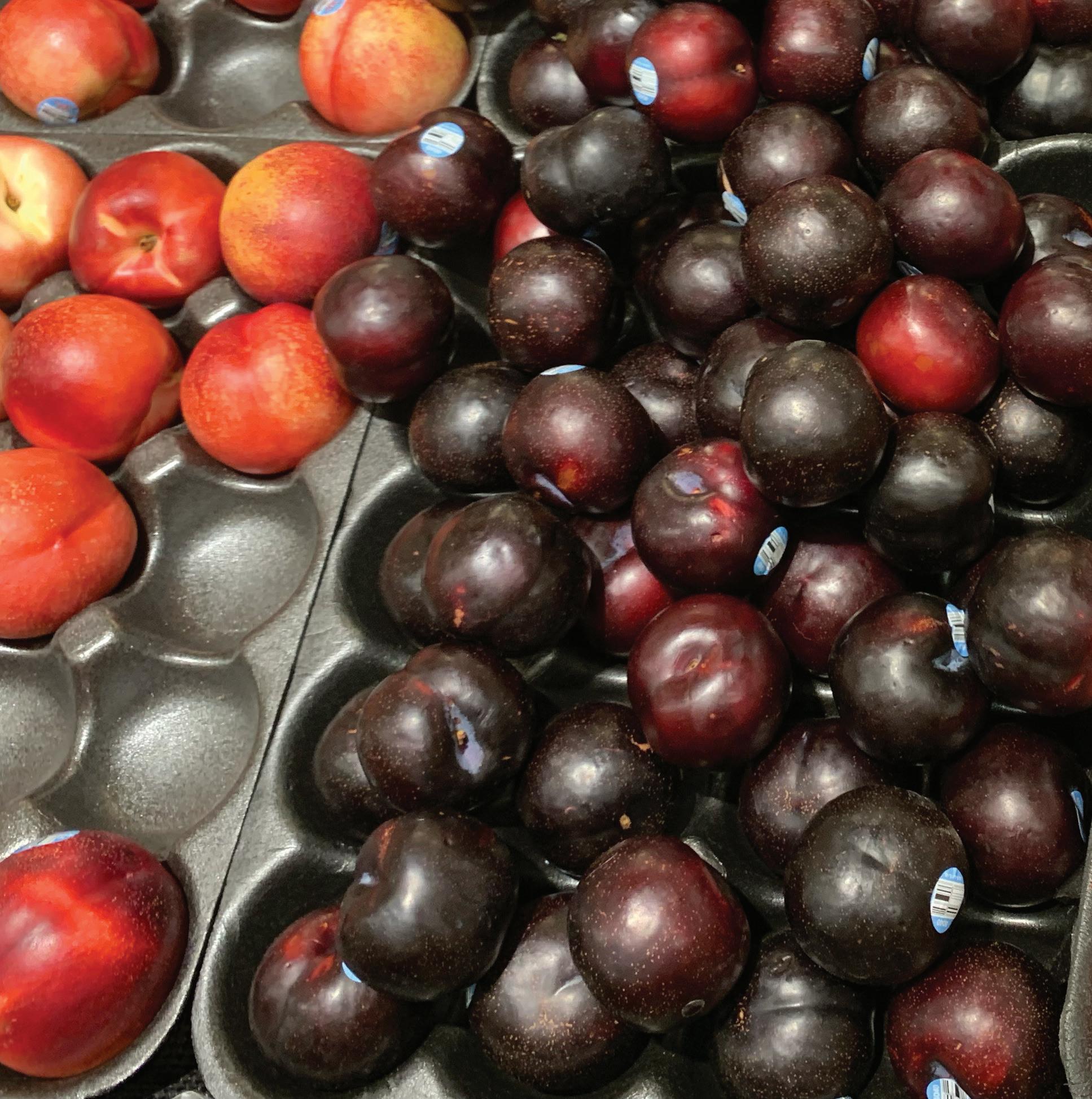
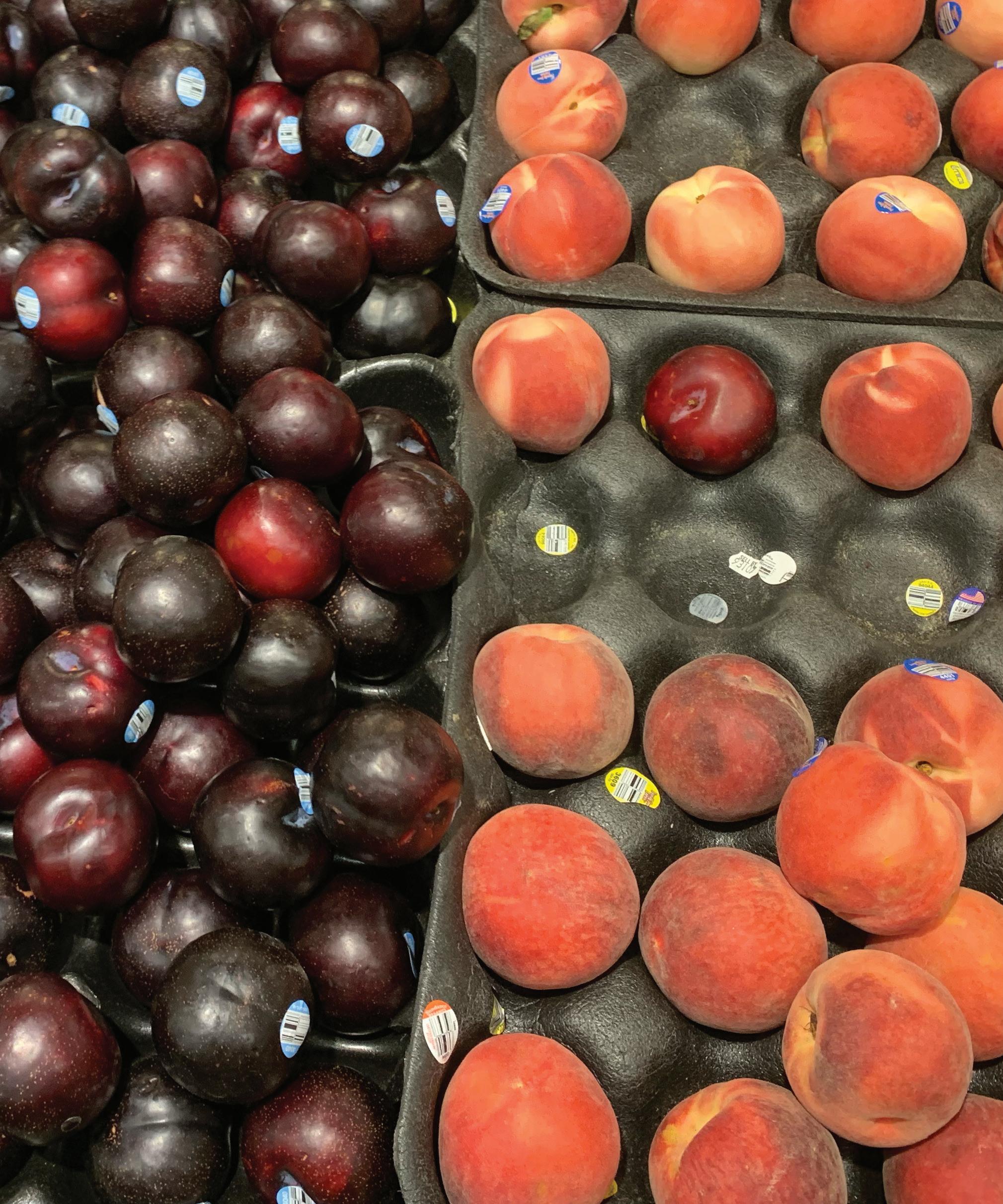
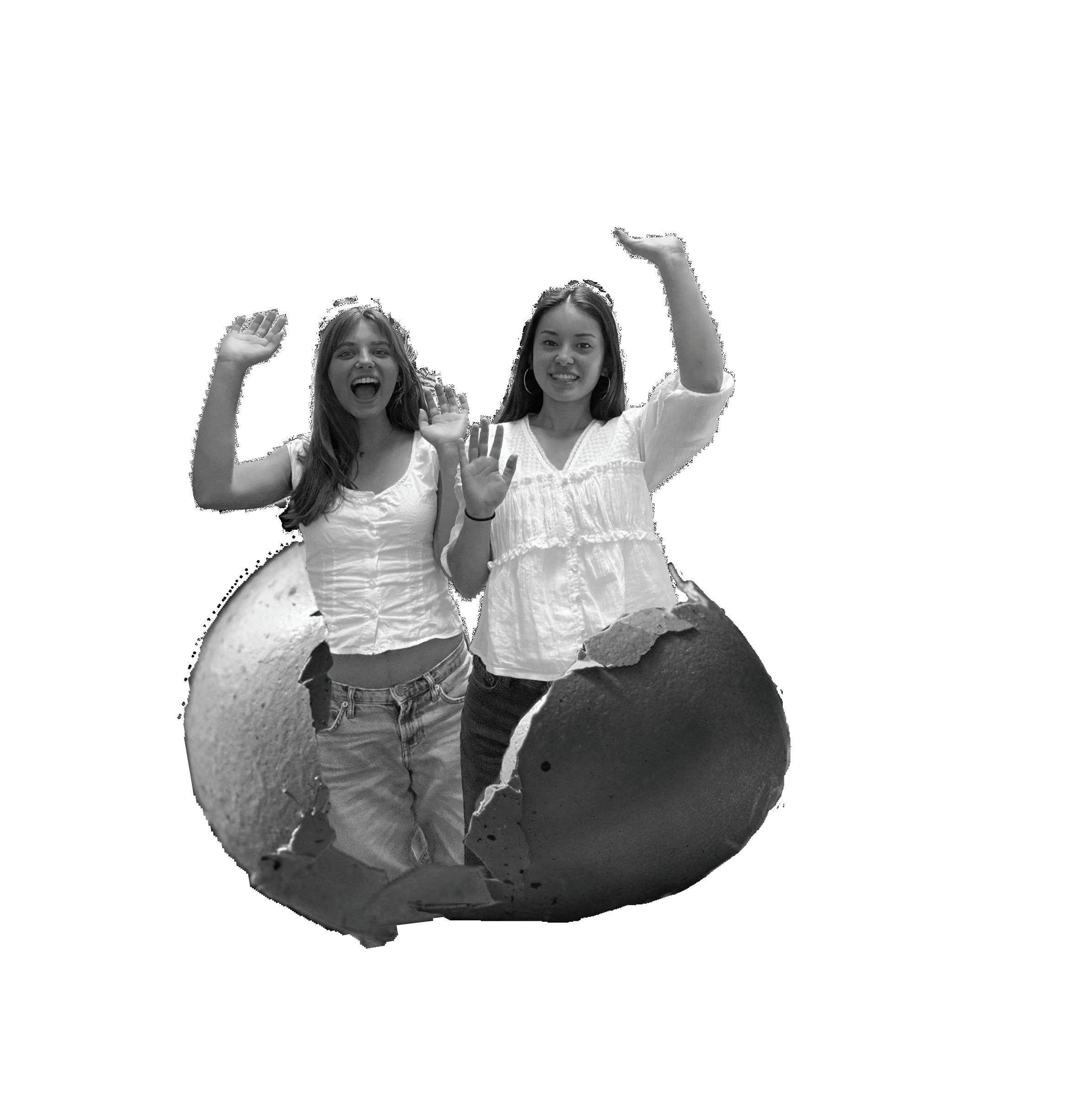
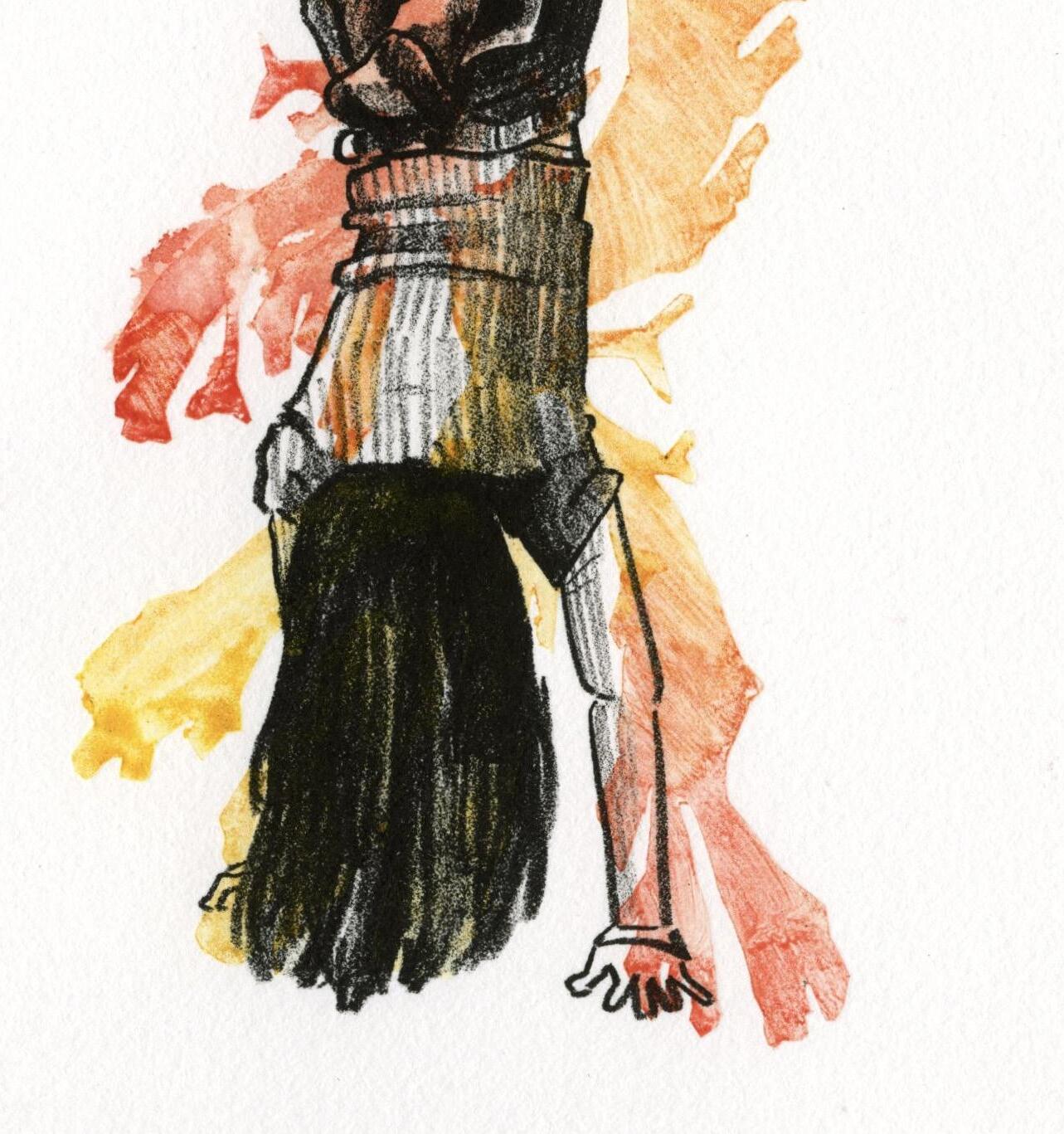
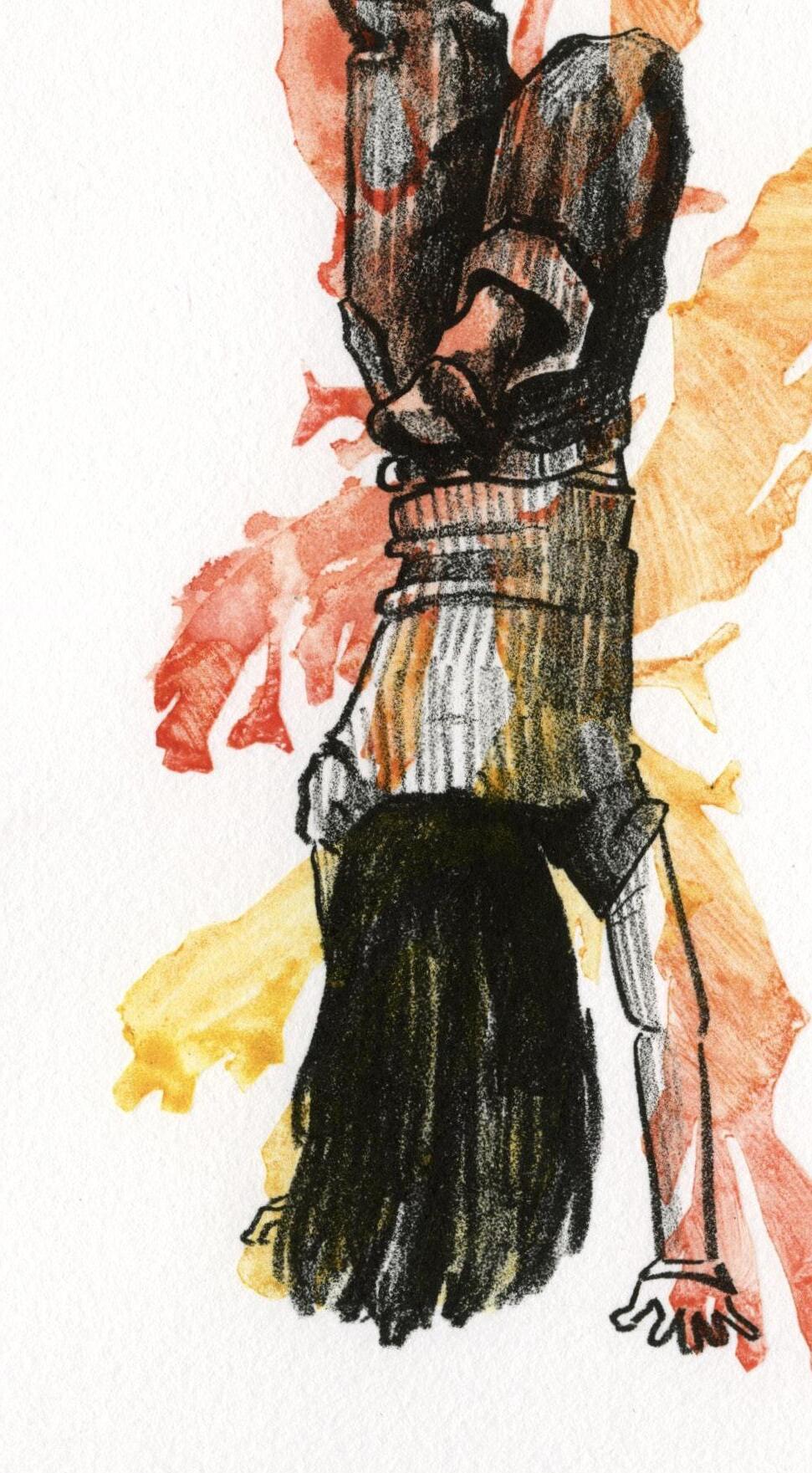
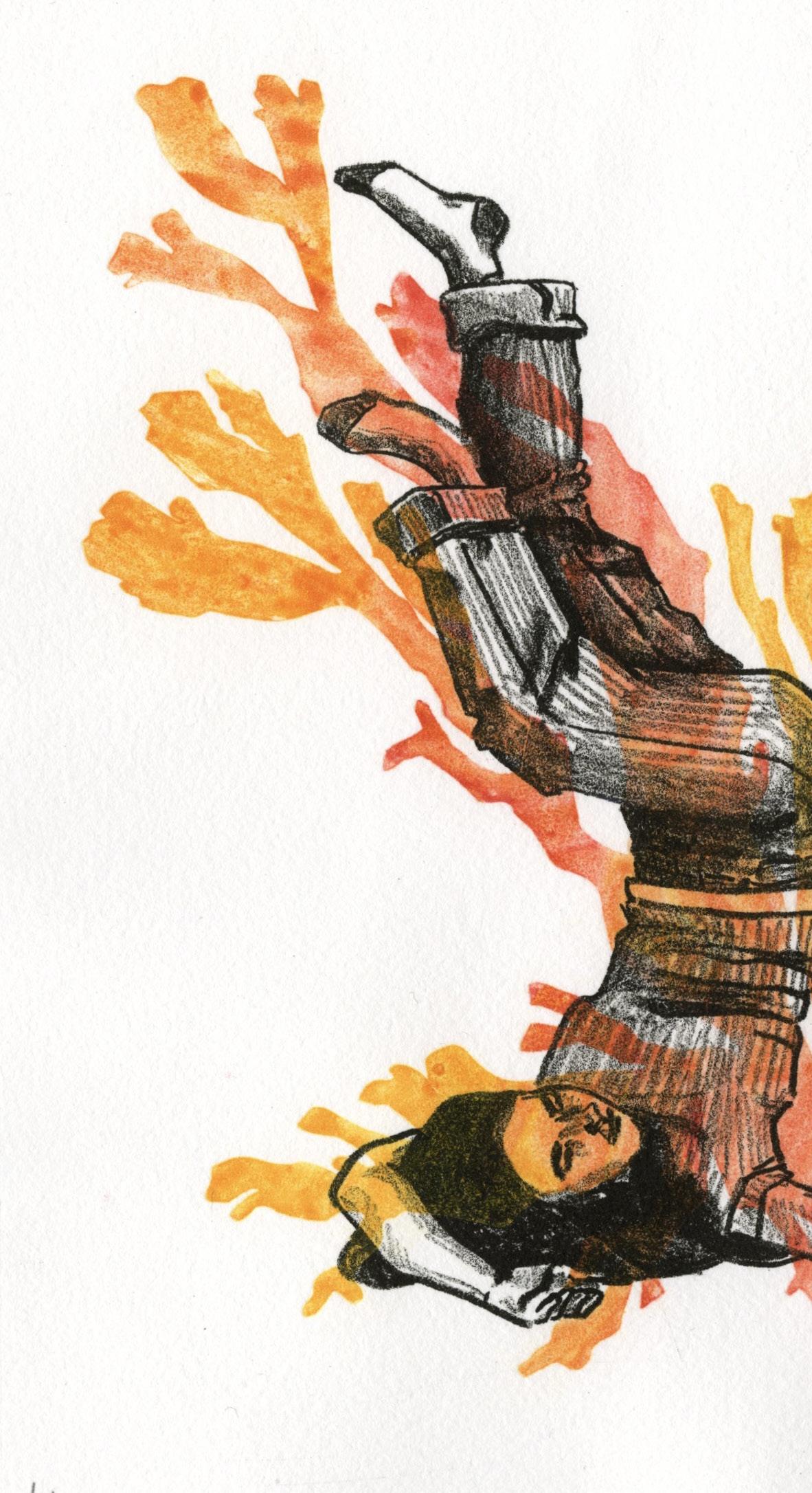
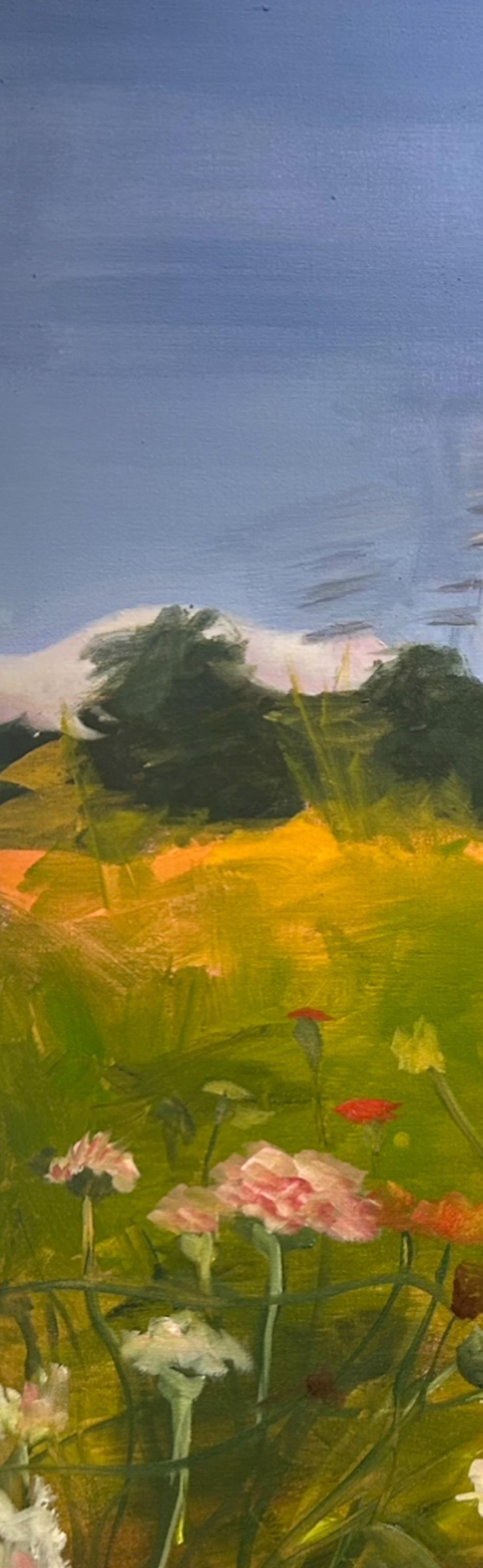
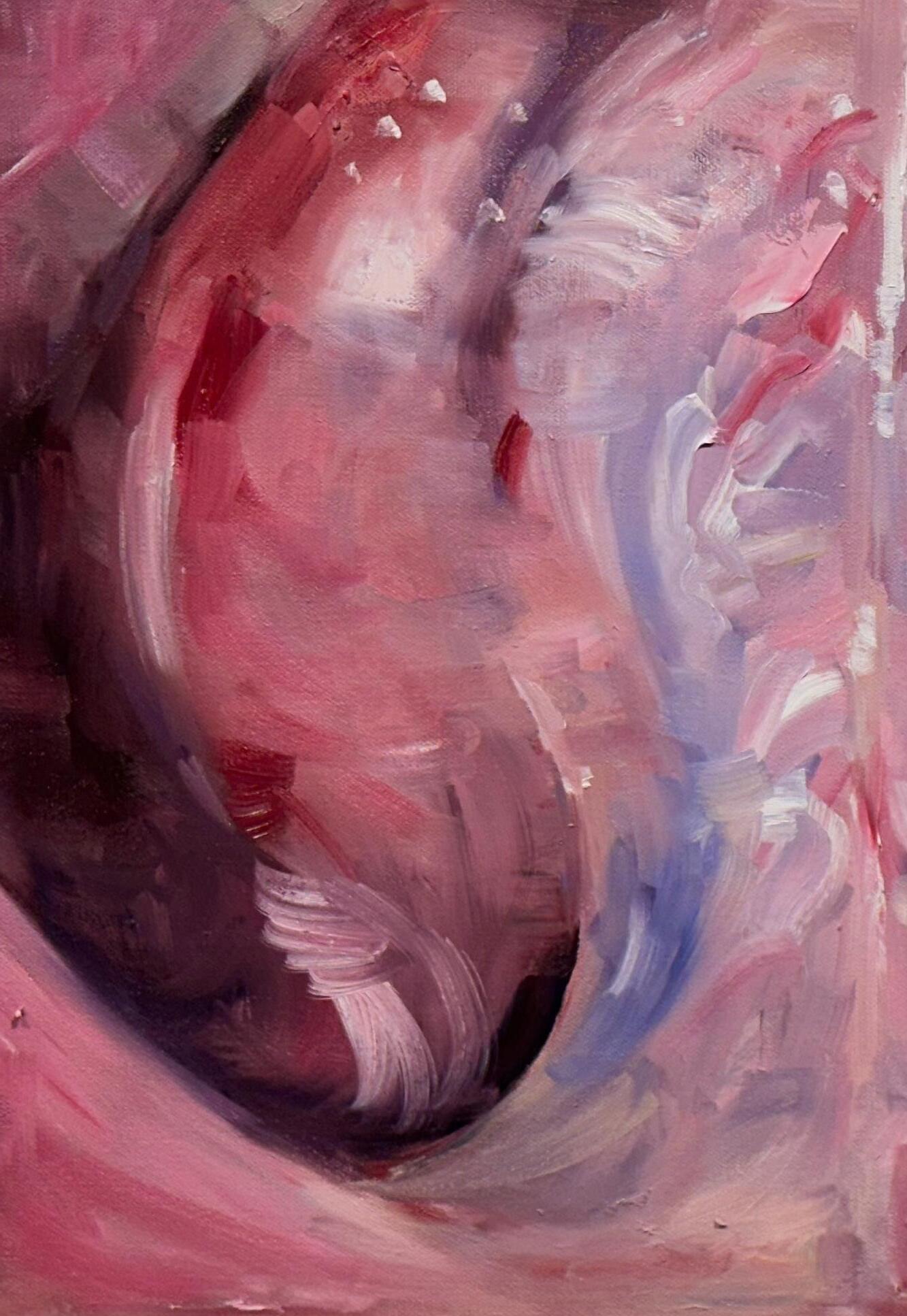
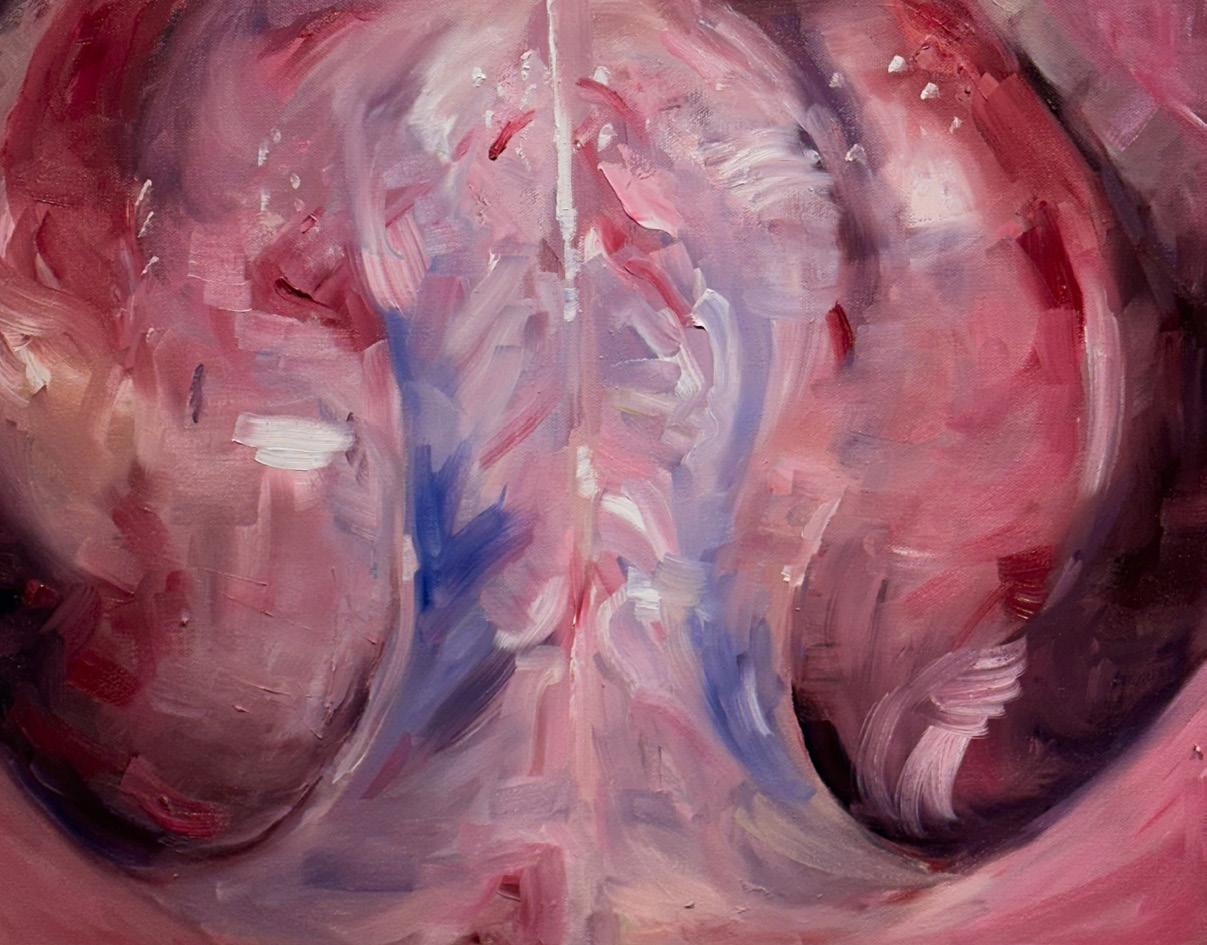
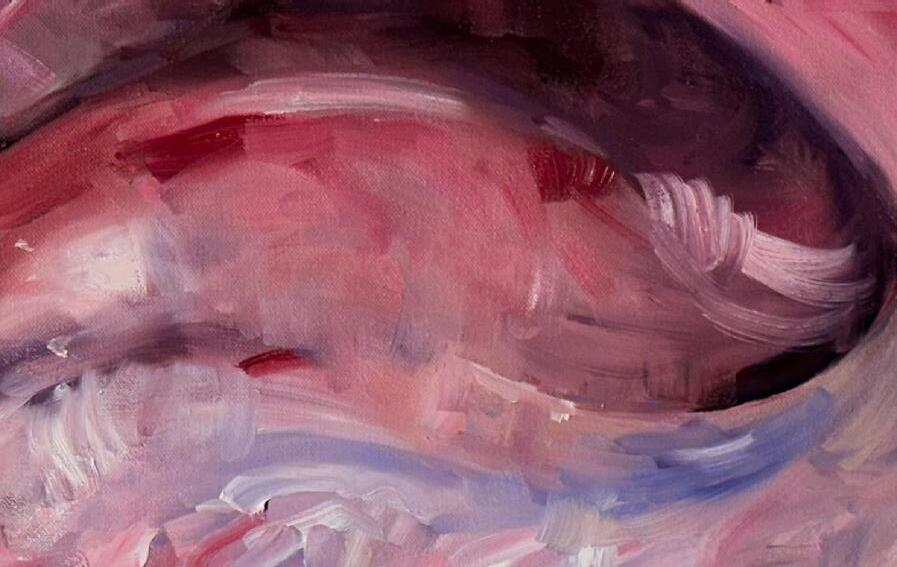
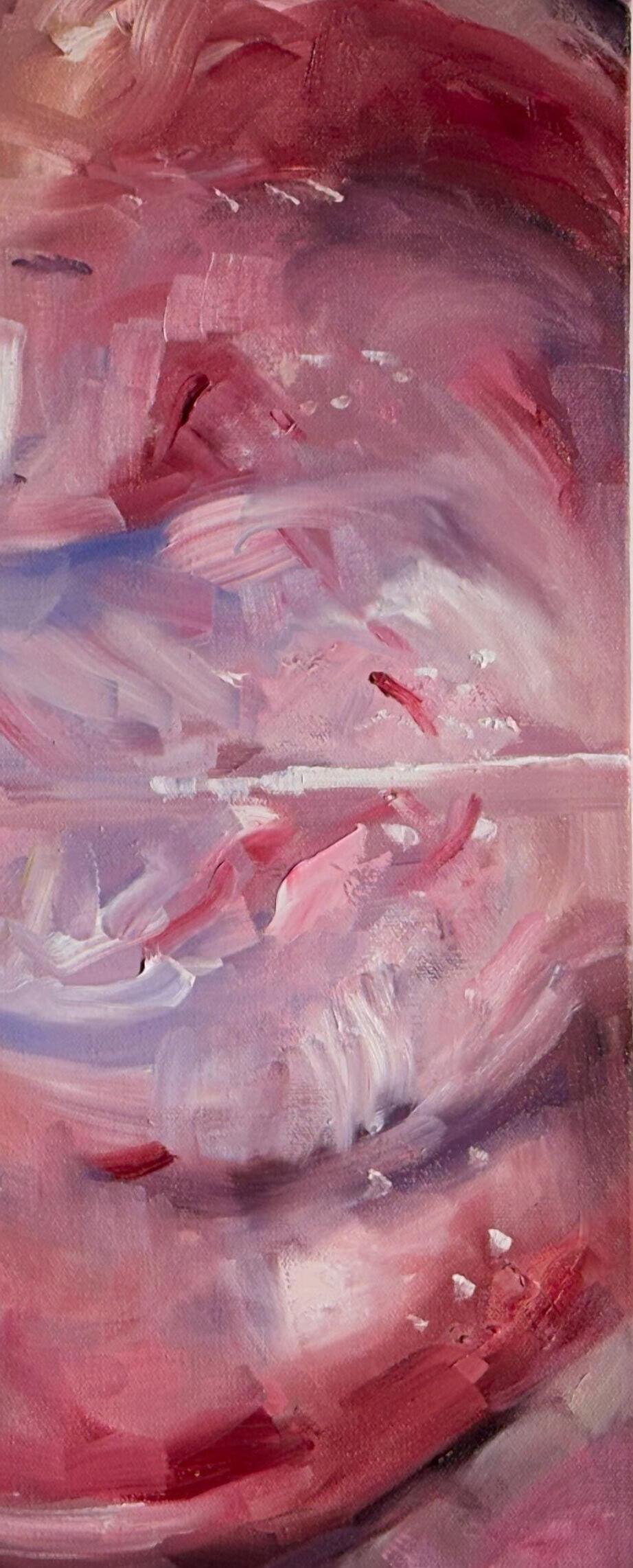
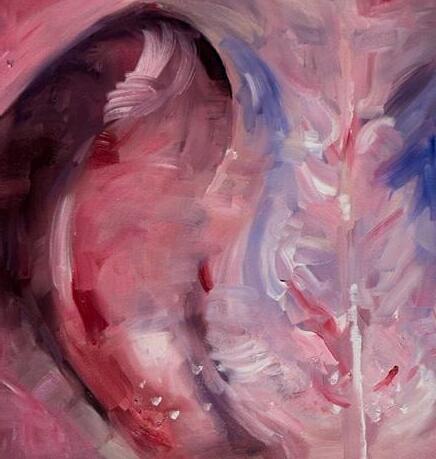
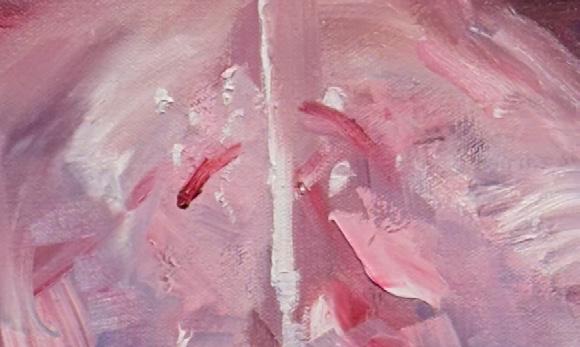
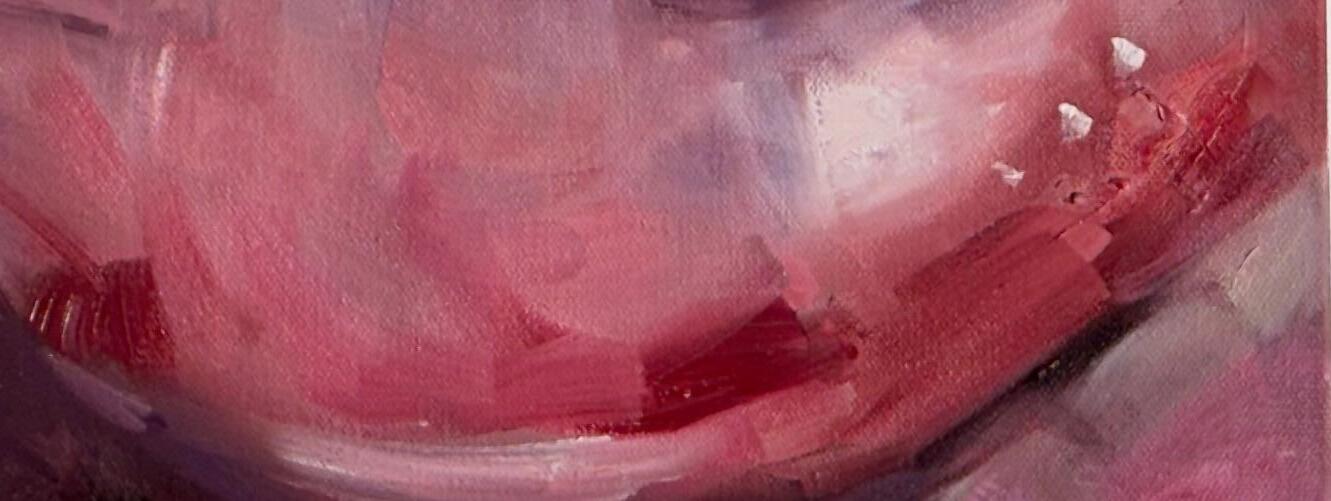
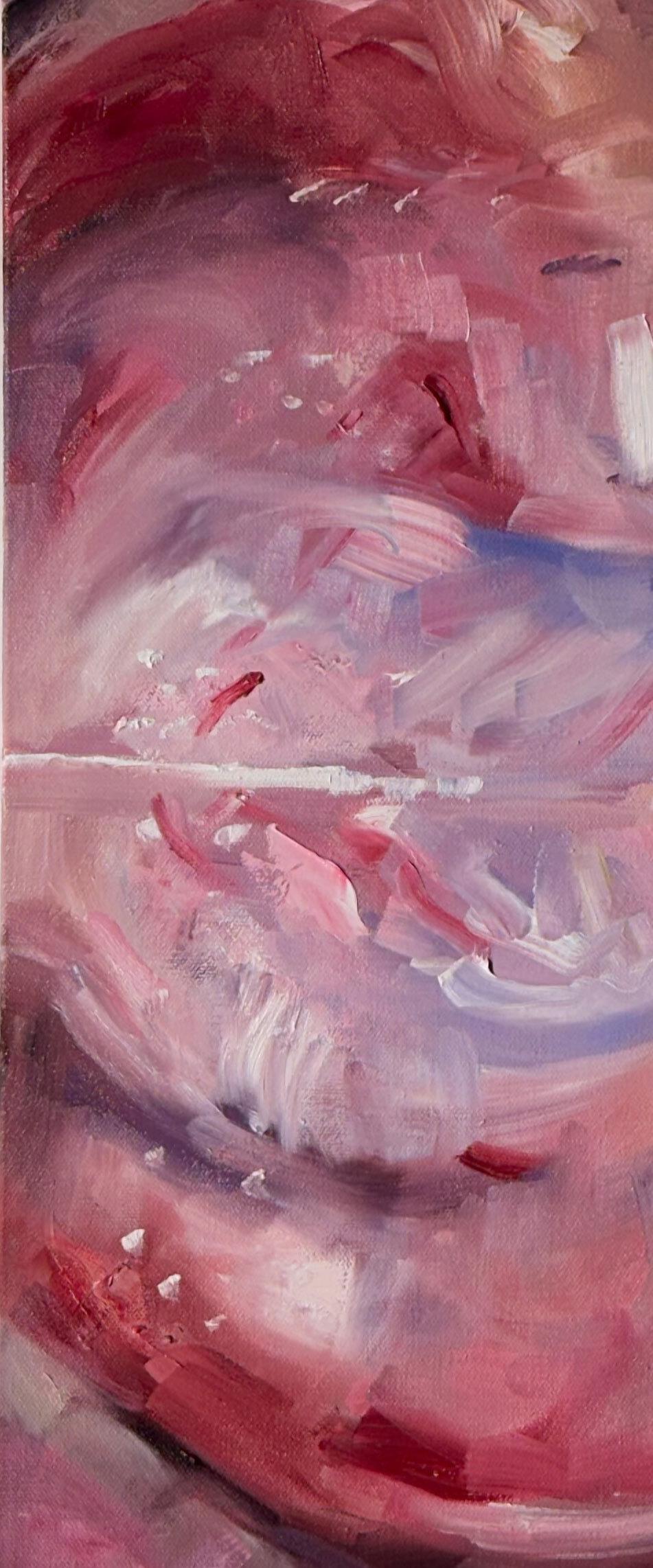
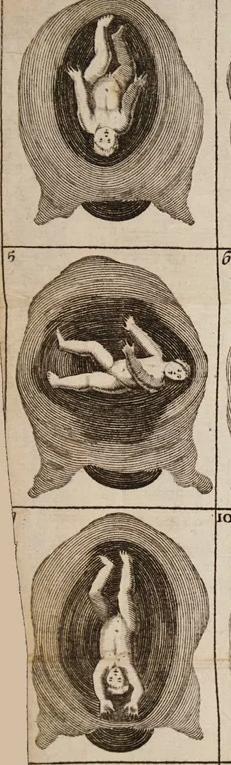
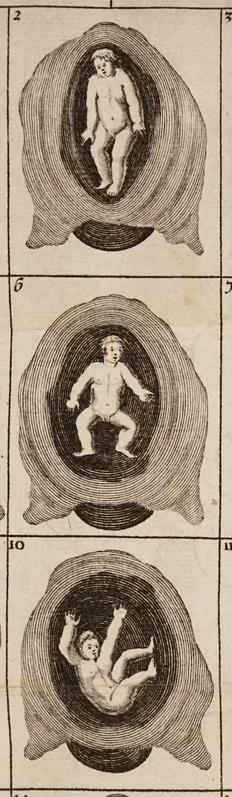
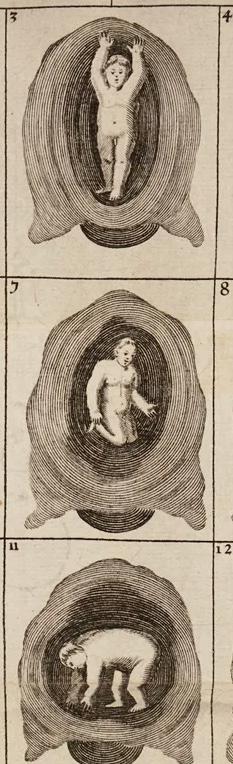
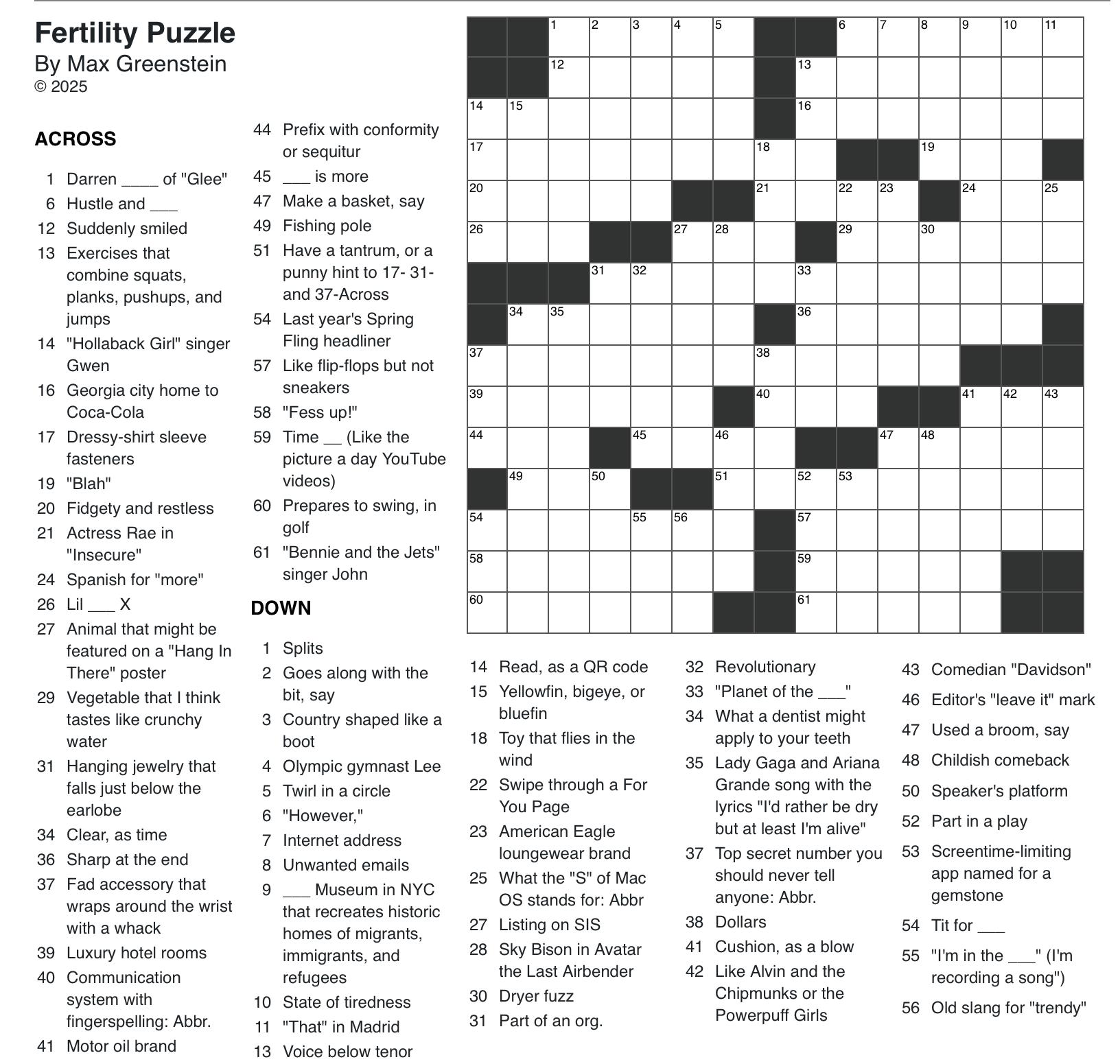
We’re kind of nervous … this is our first leditor, so bear with us through any issues with the delivery. We are writing this on the first 60 degree day of spring, signaling to all the Jumbos the start of a new season. With the shift in weather comes a flurry of creative energy coinciding with the Observer’s creative issue. Spring signals a rebirth of sorts, reminding us of the fertility of the world around us. Our abilities as artists connect us to this larger network of life on Earth. Art evokes a visceral reaction just like the joy and relief we feel with the coming of spring after a hard Massachusetts winter. We are proud to share the incredible work of the many artists who contributed to this issue and how they illustrated the essence of fertility from their own unique perspectives. The labor was long and hard but we are so excited to wel come Fertility!
Creatively yours,
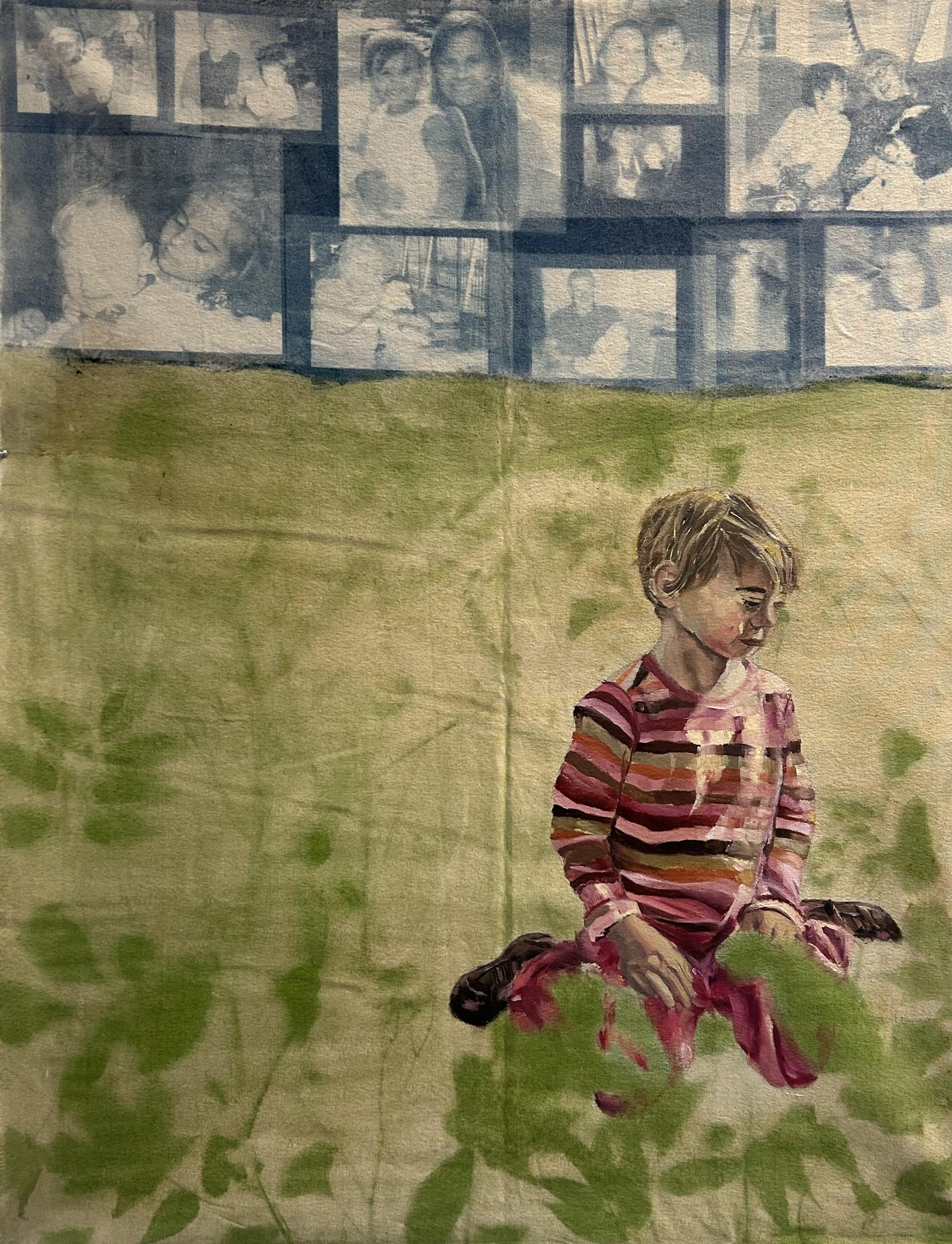
Machine with Boy with
By James Urquhart
tracks that used to be vital in the expansion of the old Empire in sending corundum and receiving crude oil, archways that foster lightless hideaways, hideaways that worked to shadow lawless citizens from gleaming nights, nights which came and passed until the machine of change worked to revolutionize, revolutionizing those nights with gas lamps, gas lamps that were forgotten and replaced by high pressure sodium street lights, street lights which allowed the brightness of dusk to claw into the hideaways, hideaways that then became pathways, pathways that have beer halls and brick ovens and notice boards, notice boards that display posters, posters such as requests for individuals to undergo scientific procedures, individuals (such as myself) who become passersby of notice boards, individuals with desires to be active instruments in the melding of a newer world, so say the notice boards in the pathways under the archways beneath the outof-use tracks. So I can make a change, the poster told me, I thought to myself. The corner, the sharp corner, made of what I’ve postulated over time to be 6061 aluminum alloy, has been poking into my epigastric region ever since the fourth month of its stay. Truthfully, the miniature automaton has grown more than large enough inside me to be overbearing on my trapezii. On the other hand, the exoskeletal device that now surrounds my body hasn’t been especially bothersome—besides the loud and semi-irregular beeping when my vitals are being checked every 22.15 minutes—but troubles from the whole affair have truthfully begun to make me a little
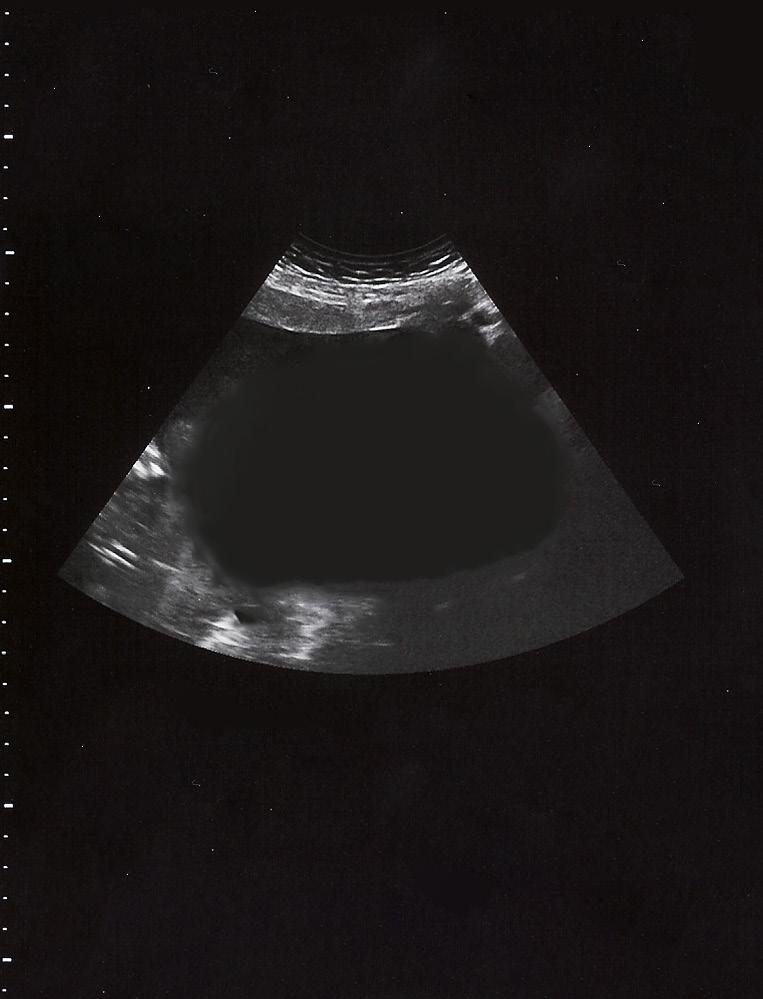
drowsier and given me a slight limp on my right side. It’s difficult now to describe in totality the components that make up the less-than-miniature “Cooperative Robot,” Cobot. When I first swallowed the plasmatic concoction of metals and fabrics, the doctors at the laboratory allowed me to view the ultrasound as it rapidly began to take shape, settling into my midsection like an oyster, gathering nutrients that I have been ingesting daily via pill and bevel gear stew. I have gathered data on the creature growing inside of me through the scientific method of inductive reasoning to learn that, besides the shoulder-like aluminium protrusion, there is also a torso of PVC, concrete-like digits, and sinews of woven threads that form a machine allegedly capable, in conjunction with the other 7,011 Cobots, of finding suitable evidence for the existence of the Higgs Boson energy field. It will be a little while longer until the “birthing,” as the scientists at the facility prefer to call it, takes my life due to the unexpected inflexibility of the automaton’s rotator cuff. It took two months post “immaculate conception” for the exoskeletal device to be deemed necessary for the continuation of my daily operations, such as getting coffee, meal-prepping, and working on my memoir. The mammoth vessel has four wide steel handcuffs permanently attached to my ankles and wrists, flux-core welded together for optimum dependability. The body of the machine that sits some feet above me holds loose twine that helps to send signals from the small microneedle patches littered all over my body to the
above all else, guar antees that my daily intake of prenatals is satisfac tory for the maintenance of the random access memory storage system beginning to develop in the Cobot around this time. This computer, situated on the roof of the “External Robot,” Exobot, operates through a series of colored nodes that light up in different patterns in order to signal my daily activities to the security cameras that hold me under constant surveillance.
To be perfectly honest, I understated the effects on my day-to-day life after the procedure. In addition to the fact that the in-vitro conception will eventually result in my untimely death, complications regarding the agency of the Cobot as well as with the Exobot have given rise to intense arguments and slight physical violence between us all. Before the operation, I would often enjoy a nice flat white at 8:25 a.m. at the local bakery, which is located a short six-minute walk from my apartment complex. One can hardly imagine my surprise upon finding that one day, I ordered a cappuccino. Had I ever envisioned myself straying from the finest specialty beverage, I would have conceivably reconsidered this whole ordeal, and yet it seems as if, over time, I have learned to prefer the Italian over the Australian. Communicating via courier pigeon in order to avoid the security devices which only monitor my local pathways and working areas, I have found a means to get into contact with one individual of the other 7,011 that underwent the procedure and was surprised to learn that they, too,
Machine
once preferred the fine taste of a flat white in the mid-morning, have switched their preferences to some irregular type of matcha drink.
In addition to the new and admittedly preferable choice of beverage, I discovered that the exoskeletal device will, on a biweekly basis, divert the usual calculated path of my morning walk and instead take me to an analyst’s office. The steel handcuffs, which used to loosely pinch my skin, seem to have tightened into a grip so firm that the vessel is able to forcibly position my joints in such a manner that my legs contort, an effective means of changing my walking direction with the minor side-effect of aubergine bruises and brittler bones. Beyond the obvious fact that this new route extends into the time designated for my typical noon lunch of tinned anchovies on a lightly buttered Aberdeen roll, this process has been most disturbing as I have found myself, clearly by the complex mechanisms of my interior machinery, revealing to the analyst my innermost thoughts about sociology, humanitarianism, and my father, who is the main subject of my incomplete memoir. I can only assume that this psychiatrist is hatching a devious plan to turn my memoir from an auto into a bio, no doubt with the help of the Cobot after problems with the operation develop.
I’ve perhaps been talking a little too sheepishly about my inconvenient passing, whereas in reality, the situation will be quite complicated and somewhat gory. If all goes according to the extensive plan laid out by the doctors at the facility, the machine is supposed to exit through
consciousness will abandon me, but such an ordeal will be outlined in the papers the next day and mothers will hide the story from their children.
I have begun to wonder, and quickly turned wonder into examination, and examination into theory, and theory into proof, about the exact intentions behind my own choice to participate in this experiment, the Cobot’s choice to rupture through my midsection, the Exobot’s choice to keep me imprisoned throughout, and the doctor’s choice (if one could call it that) to stand and gawk instead of having the wherewithal to help me. Am I simply an instrument, a cog in the theoretical physics machine destined to run ad-infinitum?
Perhaps I make this realization early on in the process, and on sensing my doubts about the progress of humankind, the Exobot signals to the security cameras through its LED nodes, which signal my incoming rebellion to the thousand-sided machine for which the cameras themselves work as a minor instrument, which sends an encoded message to the Cobot instructing it to hatch at 3:46 p.m. instead of the scheduled 4:05 p.m.. My murder is a necessary postscript in this grand history of the sciences, the cause solely my interior housing being apt for the machinations developed as byproducts of infinite regressions of nonlinear systems whose own power structures have become intertwined, much like the pile of loose strings that connects the microneedle patches to my captor.
My gashed body will be thrown into a poplar coffin—it seems as if my final request for cherry wood is out of
ing me for my bravery. My epitaph will read “Excuse my Dust,” the same as writer Dorothy Parker, seemingly chosen by my analyst to match the title of ‘my’ memoir “Excuse my Dust, and my Dad!” a strange choice given their knowledge of my disdain for wit. And so I will come and go, my footprint on the world being a miniature robotic humanoid whose likeness is a grotesque contortion of my own. Soon, like me, the Cobot will lie underground, performing immense calculations, thumbs twiddling in the pale darkness of a particle accelerator.
DESIGN
And What About Leprosy? Or Elfsickness? Or Scurvy?
By Lucie Babcock
I’m keeping a list of Items of Fear and Dread and it starts with and it goes all the way until
#1 Lice
#197 The World is a Mass of Sound and Fury Signifying Nothing (and You Have Lice).
Scattered around in between are things like or #18 No One Likes Your Shirt Today and #5, #10, #15, and #20 are all Various Deep Sea Creatures with Teeth There’s also #27 You Have a UTI(!)
#42 Going Blind Because You Showered While Wearing Your Contacts You Idiot
I think this thought approximately four to seven times a week, which is perhaps Not Good. If this was 1294 I’d just ask Arnau de Vilanova what he thinks is wrong with me, but I’d have to give him a vial of my urine first. I can feel something sending tendrils out from my liver, or maybe my spleen. Something with leaves is curling next to my stomach. What does that mean, Arnau de Vilanova? What? You need another
vial of pee to diagnose it? Watch out, maybe I’ve replaced it with old wine.
And #65 Accidentally Watching A Weird Movie in the Library Without Headphones
This is a valid concern. I’ve been assigned a lot of weird movies to watch in the library. Inevitably the sound will blare and someone will peer over my shoulder right in the middle of Naked Woman Close Up even when I swore the Bluetooth was working and there are like .09 seconds of nakedness in this movie from 1956.
And #106 The Play Started Without You
Or more so this is the worry that it Already Happened and I missed it. I was drunk in the bathroom and I couldn’t get the paper towel dispenser to work and then I took three mirror selfies and I missed it, the curtain went Up and then Down without me. The most important part of the Plot is already over.
And #45 You Will Die in Childbirth
I think I read too many old books as a child, with one too many traumatic, too-late summonings of the village doctor. It’s a fear in the same way that Suffocation of the Womb was a fear, which is what Trota of Salerno called hysteria in 1198 before there was a name for hysteria. It meant you didn’t have enough heat in your body and the womb just shriveled up to your throat and choked you in all its burningscalding-stench-consumption. Maybe that’s another Fear:
#45.5 Pulling a King Lear, that is to say, Going Mad in the Face of the Sulphurous Pit, that is to say, Giving Up on Being A Mother.
Not everything is so dire. Even a List of Fear and Dread needs some levity. There’s #12 That’s Actually Black Ice
And that already happened to me, check! and I survived the slip. I had my laptop and a full glass bottle of vodka in my bag and my laptop ended up Smashed to Bits beyond repair but the Tito’s came through just fine. Is that what they call a silver lining?
And also #39 Waving at the Wrong Person
This happens all the time when I wear my glasses, because they are old and out of date so everything blurs a little bit at the edges, like I’m a horse wearing blinders. It’s actually kind of nice, the way that Old Man in Flip-Flops can be Girl From Mrs. Zebold’s Fifth Grade, just for a second. It would be worse to never see anything but real life, all day every day. “No live organism can continue for long to exist sanely under conditions of absolute reality,” right?
And then #83 This is All There Will Ever Be
That’s not so terrible, either. I want there to be no Curtain Going Up, ever. I want to drink something I found under the pool table without wondering who put it there. I want to get a cramp and maybe not be concerned that my uterus is about to Spontaneously Eject itself from my body and I’m going to have to call my pre-med roommate. If a loaf of bread appears next to my sleeping body, I want to eat it. I want to. I want to throw my arms out to both sides and spin in the dark without touching the edges.
#1
#42
playing
By Olivia Kim
sweet seventeen, your hair was so long then and i clutched it,
when i met you at the back of that never-ending strip mall. it was inside of
my car where i discovered that your name sounded so much like mine through labored breath, through each other’s hair, reverberating between our bodies
like a song. the night was slippery, soothing, milky like cloudy pools of calamine.
i folded myself neatly into a pile in the corner and let you untangle me,
unkempt nail beds and all. at first, you kept yourself all together, shut tight. your stiff lapels keeping your neck from being kissed all over, all under.
and then, out of nowhere, you grazed the top of my lip with your tongue, and i gasped.
heat rose up from our bodies and clung to the glass windows.
ribbons of orange break lights cut through the fog and refracted quietly off your skin.
in between stories of your ex-girlfriend, the one with the hair,
you took off your slinky black sports bra like marrow slipping out from the bone,
and i knew what it was to know you. under the streetlights, under the half-moon, you became shapeless, watery. i tried to gather you all in my arms, but it was
useless. back then, your hands were nothing but your own.
Walt Whitman
I move closer to you in our bridegroom-night, Our apartment, our soft feathery bed, layers and layers of covers, I move towards you, asking you, please, to hold me, Or hold me down, Give me all the warmth you have left! hold me! I love you! Taking you at once in my arms, Rolling up and folding in,
While Walt Whitman watches through a window.
I kiss you! and kiss you! and kiss you!—
And am very aware that Walt Whitman is also kissing you, At the same time as he is also kissing me, Just as he is thinking about doing both, at the same time, And smiling very big, well he must be,
His rough salt-and-pepper beard tickled with moonglow, His fingers shaking, gripping the grooves in the brick, cold outside, So I stop, for a moment, kissing you, And I stop unbuckling my belt, And you ask me what’s wrong— And I do not say Walt Whitman is writing poetry, And it’s freaking me the fuck out, But I do say something about a glass of water.
Panopticon Stearns
By Sam
All the shades in the hallway are down, So how could Walt Whitman see me let cold water fill a metal cup; How could he watch it run down my throat, How could he know what room I’m in, is he listening? Ear to the glass—can he hear me? Can he tell what I’m thinking? Is he reading this?
But you are waiting in bed very patiently, And all your clothes are off, and it is cold, And the soft wanting has taken root again in my head, So I forget about the water, and the windows, and the poet, I let my belt loose, I crawl beneath the covers, I submit, And it’s a while in there, shaking, speaking, spinning, Or it’s just a moment, A rush of movement, Something out-of-sight, Obscured by your head, Obscured by the deafening quiet, Obscured by Walt Whitman’s shadow, Something I do not have a name for—something cosmic— Something that will be worshipped here for decades— But I do not have decades, I only have right now, So I come easily, all at once, rise, look to the window, and he’s gone
To Hold a Word
By Rohaan Iyer
Scents both stale and fresh. A sweep off of a sheer cliff, of sand in a fresh spot, in a place it’s never been (or at least hasn’t been in a millennium). A gust of wind whips my hair, each strand splaying out in a different direction. And my not-so-pearly-whites show. Alive with the desert.
I shuffle up and down through rocks and sand, granite scratching my palms and stomach as I hug boulders; they hug me back. Their heat and my heart are in sync as we escalate, ascend, plateau.
Vibrations of road and foot hit, hit, hit my head, rattle my skull, fill it through with helium, until my voice, high and raw, screams out to the cacti. Their not-blooms yell in unison back at me. I believe what they say, though their tongue is foreign. My voice tries to echo back the emotion in their chorus, but I can’t dig into my diaphragm the way they can. I grab a shovel like the old miners, and I tunnel through my mind, tunnel through my desert. Where did my words go? Did my words go?
Above me rests an umbrella of blue, though the horizon fades to clouded sky. And my view is monochromatic, gray-scaled for the reader. Out there in the faded ether, someone watches, internalizing my blueto-gray-matter. Though I do stand alone in this desert. Is there anybody out there? Can they feel what I feel? See what I see? The words surfaced from the sand’s abyss, blended into emotion and colors. But can they see?
A whisper off my lips into the cliff-scuffing Wind. She carries my words to the desert mountaintops and lies them there in the fertile ground. Lush grass and moss reach up to envelop these sounds in earth. Maybe one day I’ll discover how long words have been here. They certainly were here before me. Certainly before you.
And that’s it. It lives there (“it” being either a word or words). Swept into desert sands from desert winds.
Think of a time when there were no words. At least as we know them. Maybe the cacti spoke back then as they do today. A parched terra knows the rain better than the forest. How many lizards have leaped from rock to rock, sunbathing until a bird picked them off? Taking flight even in death. Up into heaven or whatever lies above the desert. Maybe just more clouded skies.
I pick up a handful of sand, red ants and sediment, the essence of a land in my fingers. Maybe I’m holding words, too.
It was like the sky fell down on me when I met you. Or I was falling upwards towards the sky. Either way we were both falling and the grass wasn’t where it was supposed to be. Gravity was gone and I wondered if this was how you had spent the last eighteen years of your life. We danced for a year straight and later swam like mermaids—you redefined fun for me. You watched me laugh and flirt and fall in love through the glass window. I watched you laugh and flirt and fall in love through an open door. I ridiculed them for talking without knowing and you said let them talk. I felt you hurt me and then I felt you hurt for me. When the world stopped, I was still pocketing everything shared between us like the clothes, the nail polish, and the promises kept and unkept because we are all human and—why would we let something rot when we could help it grow? And when you waved down from every tree you climbed, I saw someone who couldn’t be stopped. Someone guided by a kindness not always returned, but could see the earth from high up enough that it didn’t matter. You jumped down to me in the water and there we were again, swimming in “hows” and “whys” and “what ifs.” We were sure of ourselves and then we weren’t, but your hand is still in mine. We were eight doors down, then two, then six streets, and now a couple thousand miles, but you will always be my neighbor. So thank god for the water fountain where we met and thank god for you.
I know that you can hold your own but that doesn’t mean you should have to
You Will Always Be My Neighbor
By Claire Ng Stromseth For Izzy
On Growing a Daughter Inside Your Husband’s Chest
By: Lily Rogers
This story reclaims the “Birth of Athena” myth. While popular versions often depict Athena as springing solely from Zeus’s mind, Hellenistic mythology reveals a suppressed mother figure: Metis, the goddess of wisdom and planning. To prevent a prophecy, Zeus swallowed a pregnant Metis whole, effectively erasing her from the lineage of his most famous daughter.
I. THE SWALLOWING
I believed him, even as his teeth closed over my face. I thought: Surely he will stop. Surely this is a test. Surely—
put me inside it like a fig. And I went, be cause the only future I had ever let myself imagine began and ended with him. He had heard a prophecy from Gaia that after I had his daughter, I would bear him a son. That boy would overthrow him, just as he did his father. I remember his hand on my swollen belly the night before he swallowed me, his touch tender, saying: “Our daughter is going to be extraordinary.”
His throat was hot and miry like a snake’s bowels. As I slid down, each muscle slithered over to caress me, choke me, blanket me with the reverb of the heart that had once pounded in sync beside mine. I tried to stop myself. I embedded my fingers into the rubbery walls of his throat, but there was little to grip, and his saliva was already trying to
Then came the hailstorms of nectar, ambrosia, and grapes. With every added gulp of honey-like liquid, each chunk of half-chewed cellulose, I slipped and drowned a little more than the last.
One wave of thick, dark wine swept my hands out from under me. I tumbled, weight-
less and screaming through the churning liquor, until— Splash.
Burning. Everything was burning, bubbling, suffocating. There was no air to breathe. Just a crimson tide and fire.
My legs kicked wildly, searching for solid ground—somewhere to duck and hide and stop this flaming feeling from licking up my entire body. I found nothing, only the gummy shift of stomach lining. I tried to close my eyes, only to realize there
was nothing left to shut; my eyelids had already melted away.
It wasn’t dark in Zeus’ stomach. It was blood-red, a constant churn of muscle and
acid pressing in on all sides.
My hands grabbed at my stomach. I curled around our daughter—our because I had wanted her, had chosen her, had let him fill me with her—wishing I were a mustard seed, though I knew I could never germinate.
The acid ate through my palms first, then my knuckles, then the long bones in my forearms. The reach of my fingers shortened, the flesh sloughing off. I told myself I would bear it—I would let the acid corrode me if it meant I could keep her whole.
But Zeus’ stomach took its fill. My torso gave way in molten shreds, the walls of muscle and tissue melting, and I watched, helpless as what remained of my organs sagged and flopped despite my desperate embrace.
My womb was last to go. It resisted the acid’s bite, a sac of luminous light drifting through the stomach’s walls, drawn upward by something I could not yet name— even as my ribs began to spread open like a moonflower’s petals, even as my spine softened, even as I was just a skeleton in Zeus’ stomach.
At last, in the heat, my eyes ruptured like two squished grapes—their juice running down my cheekbones, mixing with the wine already swirling around me. I waited for the welcoming gold of Elysian
Fields, where the dead go to forget in blissful ignorance.
Instead, I felt him. Not the fiery churn of Zeus’ stomach, but the expanding of his lungs, his heart pumping, his blood rushing past what used to be my hands, my arms, my chest. It was worse than the burn—this certainty that I would never be separate again. My bones, my sinews, my consciousness were all melded to him, as though I were both inside and outside myself, and the knowledge that I could never leave seared hotter than any acid.
Then, I was aware of another heartbeat. Smaller. Faster. Nestled somewhere above me—somewhere in the cavity of Zeus’ chest.
II. THE GROWING
My legs had married the bottomless sac of Zeus’ stomach; my arms had married his lungs; my eyes had married his fourth rib, right beside the heart. Every part of my body had been betrothed to some part of him. I was no longer Metis, but an unwilling extension of my husband’s property.
I was thin and flaccid as vellum, adhered so tightly to the lining of his flesh— cut deep enough into my husband, and you will see the pearly sheet of my soul wrapped inside—that the only way for him to get rid of me would be to carve me away with a knife.
Her.
I shifted my awareness upward, the way you might turn your head without thinking. I was his tissue now, his ribs, the spaces between. I followed the sound of our daughter’s pulse until I found where she had curled beside his heart. Of course. She had gone searching for the one thing I could no longer give her.
Our daughter turned in the womb, and I swear I felt it. I had no hands to touch her. All I could do was think: so, this is all that’s left of me.
I watched as our daughter inflated in the space between his lungs, and I sang to her with a voice her father couldn’t hear.
Grow, I told her. Grow so large he cannot contain you.
But then I would kick myself—his stomach cramps up and remember: Zeus is just like his father; the thing that swallows and keeps swallowing; a man who counts his reign in eras and eons, while I count mine in the way our daughter’s fingernails harden against the walls of her father’s prison. To the world, I am forgotten, but my nerves are still remembering the first shock of Zeus’ teeth, his saliva ebbing and flowing over me like the River Styx.
Throughout our daughter’s gestation, when she turned in that viscous bath of milky fluid and laid her spine parallel to his, Zeus would call her, “gas.”
But as our daughter’s little feet—rosepink, each with five tiny toes—kicked against his ribs for the first time, Zeus pressed a hand over his stomach. My rib shook with the rumble of his chuckle. He was saying, to one brother or another, that our daughter’s quickening was, “indigestion.”
Quickening. That is what it was. My husband could call it wind and rot all he wanted. I knew the difference, and that was all that mattered.
The first spark of our daughter’s consciousness caused my form to ripple like a nest of silken, violet ribbons. I shook in both pain and admiration. She was a wandering, divine entity finally coming home; my star.
Around me, I felt Zeus suck in a breath, go still. He was feeling it too—that sudden rush of intelligence. Perhaps it was clearing his head. I wouldn’t know. That cursed brain is one of the only places in his body I never married.
Then, the echo of Zeus’ voice called out, “How wise I am!”
I wanted to scream: that is my wisdom she inherited! How else do you think she lives on in this sulfurous red darkness?
All I could do was feel Zeus’ breath shudder around me. I was familiar with the rhythm, but I still pretended it was my own breath, heaving in anger. My husband was melting into another woman. Hera.
She didn’t even know my name, but I hoped that one day, my husband would let it slip. “There was once a mother I had eaten, and then forgotten.”
III. THE BIRTH
I felt the pressure before he did. I had watched her drift up, higher and higher, until she entered the cavity of his skull. I had never been up there. I didn’t want to know what was lurking inside those elastic tunnels, whatever shadows his thoughts chased around.
Still, as she left my line of sight, I knew she was ready; she had grown into too much. I had watched her drink in that lily-white liquid, watched her fingers poke into the walls of her gelatinous prison. She could not stay inside him any more than the sun can stay swaddled inside the night. She needed to be born.
IV. MY WISDOM
violence of bringing life into a world that did not ask for it—
Crack.
My rib jumped with the split of the sky father’s skull, the rush of frosty air into a space that had never been nipped at by cold before. Hephaestus must have come with his axe.
Then, there was light.
So much light I thought I would die. So much light I wanted to die. Light pouring into the red dark, into the wet dark, into the place where I had lived for a thousand years. Light burning through me, past me, from me—
My daughter tore out of her father with an unyielding war cry. My Athena. Fully grown. Armed from neck to knee. Her eyes—my eyes, she has my eyes, grey and sharp—blazing with the shock of first breath.
She could not see me. I pondered if she was wondering where her mother was, if she had one. Perhaps she was more concerned with the silvershock of her birth and the damnation that is eternity.
I had no tears, no eyes. But I had the urge to reach out to my Athena all the same; the urge to hold, to comfort, to rip off my own flesh if she were hungry. The urge met nothing, and so it skinned me from non-existent nape to non-existent knee.
Sometimes, my daughter stands beside her father.
Sometimes, she leans her head against Zeus’ shoulder, and I feel the warmth of her through the bone, through the tissue, through the thousand layers of silence between us.
Sometimes, Athena will laugh. The vibration shakes me loose from where I cling, and I float for a moment in the dark, thinking: I made that laugh. I grew those vocal cords in the only womb she ever knew—a mother’s grave.
And sometimes—rarely, so rarely I think I imagine it—Athena pauses. Midsentence. Mid-thought. Her eyes go distant. Her hand drifts to her own belly.
Are you there? I hope she’s asking. Is someone there? I feel like I forgot something. Like I left someone behind. Like there was a voice, once, in the dark before the light. Singing.
Much like the rest of the women who orbit my husband—like Hera, who punishes his mistresses instead of him; daughters, like Artemis who owe him their power; and mortals, like Io and Europa who exist only as footnotes in his appetite—to Athena I am nothing. I am not a person. I am just the place she came from, and her father will never tell her the truth.
But I will.
He began to scream. Zeus, the king of gods, the thunder, the father of Olympus screamed far more than any woman ever would. He clutched his head as if it were being crushed like a quail’s egg, begging for someone to make it stop. For one satisfying, bloody second, Zeus was no better than a pitiful mortal.
I laughed at him with what was left of my mouth and the shredded pulp of my throat—his abdominal wall. I laughed with such force that his ribs shuddered around me like a flock of birds breaking formation.
Yes, I thought. Feel it. Feel what every mother feels. The splitting. The tearing. The
I am still here, I thought. And she will never know.
One day, daughter, even if you pass my rib on your way to war and never know it, you will be wise enough to ask the right questions. You will look at your father and see the lie cracking beneath the thunder.
And you will begin to wonder why your wisdom sounds like a woman’s voice.
ART
TOUBIA
metamorphosis
by Sundari von Wentzel
in the beginning, your body cradled my lithe and delicate form, thrusting me outwards into harsh lights, a complexity of ventricles and arteries and sound, each feature a vestige of a thousand loving faces, mirroring your creation overture to my calloused feet and tan skin, an unveiling
mirrors reveal my proportions, still send me scrambling for records of when i was underweight and miserable. nostagic, i admire and pity that slim and medicated adolescent who thought if she curled into herself, flipped underwater til breath escaped her lungs in frantic gasps, let her medication starve her, eventually she might find herself beautiful
but if there is blood there should be pain—it should not slip from me unannounced like a runaway child, make my cheeks flare red as i rustle plastic in a bathroom and openly announce the not-human flowing out of me, my newfound ability to originate and harbor another body a weight, a definitive indication of my womanhood
sigh out and trace fingertips lightly over where we meet; let gasps break free and easy from my eager mouth, thinking that if i am transformed, in the aftermath i am most beautiful, tainted and glistening, tangled, intertwined
in the morning, i breathe in, barefoot on sandstone, and launch the remains of yesterday’s lobster into the sea. examined from overhead, we are only an ensemble of organisms, all ovaries and scars knitted over, speckled and weathered from moments in our vast spectrum of existence. and though our branch-like limbs are ephemeral and insignificant against the yellow-toned sky, as carcasses sprawl slowly over tidepools and rocks, gulls swooping low towards the blue-veined corpses tumbling under eroding cliffs, we are here.
i don’t know you // i barely know your mother // but i know your arrival // fifteen hours we waited // then you hurried into the world // and our hello was the end
What good is the start of anything if you don’t get to see how it ends?
Do kids still use those pencil grips, the ones that so easily ripped between fingers? Do they buy jumbo packs of erasers shaped like dolphins and ice cream and flowers?
Is it as important to them // as it is no longer important to me? And when did that happen? When did Polly Pockets and marble runs make their debut at the yard sale without devastation?
i didn’t know your name // until two weeks later // when i came to see how your mother was doing // and you were asleep // so i’ll never know what your eyes look like // the way you laugh // you know i can’t remember whether you were alert // or in dreams that first hour
What good are beginnings if you don’t get to remember them?
When is the right time for forgetting? There’s a little boy who forgets, when he’s six, the person who heard every newly formed word when he was two // because they are not family and knowing is temporary and I’m not sure why it has to hurt so much.
i won’t see if you get along with your sister // if your mother must keep trying in hopes that next time // it’ll be a boy // i miss things i would never possess // the future of someone else’s child // but doesn’t it mean something that i witnessed it // your birth // right at the opening of your universe
What good is a universe if you have to leave it?
How many colors did she see that made her smile so? A little girl, Me, cresting four, still free of the big decision of what to wear in the morning. I am the beginning I couldn’t see // the only thing I will see all the way through.