Conversion of the “Hristo Botev” school, village of Srednogorovo, into a hospice.
diploma project
supervisor Architect Nikolay Davidkov department of history and theory
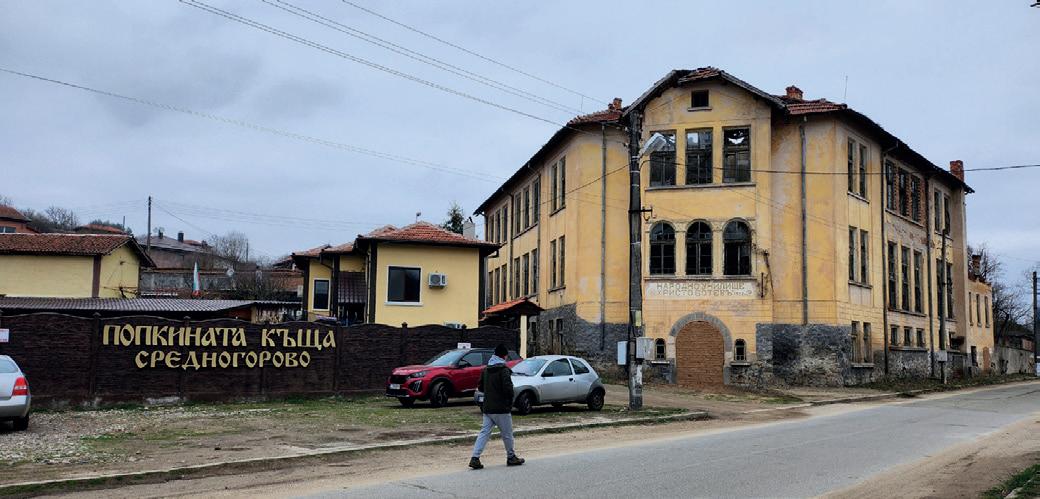
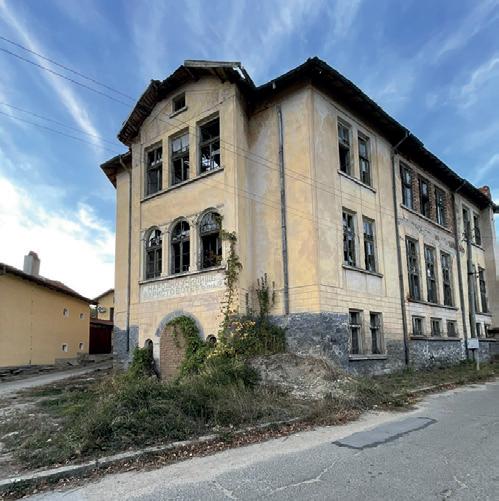
The subject of this project is the conversion of the school building (1923) with its additions from the 1960s, located in the village of Srednogorovo, Kazanlak.
After the completion of the summer internship with POV Architects, a fault in the system of the Ministry of Education and Science was identified. Specifically, there is a lack of data on schools closed before the fall of the communist party in 1989, including the subject of this project - the school in the village of Srednogorovo.
Srednogorovo is located at the foot of the Sredna Gora mountain range It is best known for its beautiful panoramic views of the mountain, the rock formations and the forests in the area. Currently the village has a population of 248 people. The biggest source of pride for the villagers is their ancestors’ active involvement in the relovutionary and educational endeavors during the 19th and 20th century, as we learn from the book “Srednogorovo - Past and Present”.
The educational activity in the village dates back to 1834, when the first school was established in Srednogorovo. The educational activity evolved as the number of children grew - from the first school to a single-story building with two rooms, later expanding to four rooms. Eventually the locals raised funds and Hristo Dimov (a renowned architect in the region, who designed most of the schools in the area) was appointed in to design the current school building and the construction begins in 1923.
Two years later the school opens. However, during World War II, the population of Srednogorovo decreased, and the school was downgraded from middle to primary school. 20 years later it was transformed into a sanatorium school for children with raspitory diseases and the village was declared “green zone”. The sanatorium school remained functional until 1985, after which the village doesn’t have an activve school, and the building of Hristo Botev school began deteriorating. Currently, it has been purchased from the municipality of Kazanlak, with plans to be converted into a hospice for the elderly.
LOCATION AND SITING
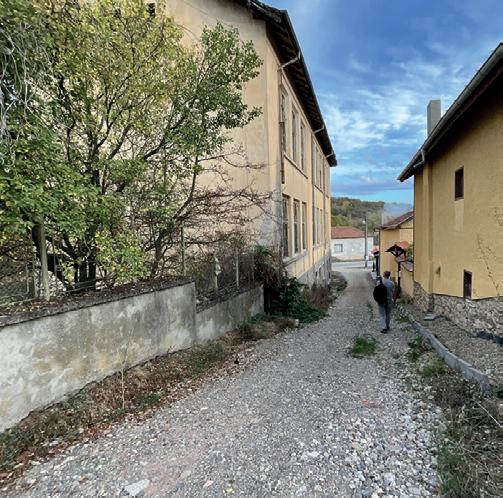
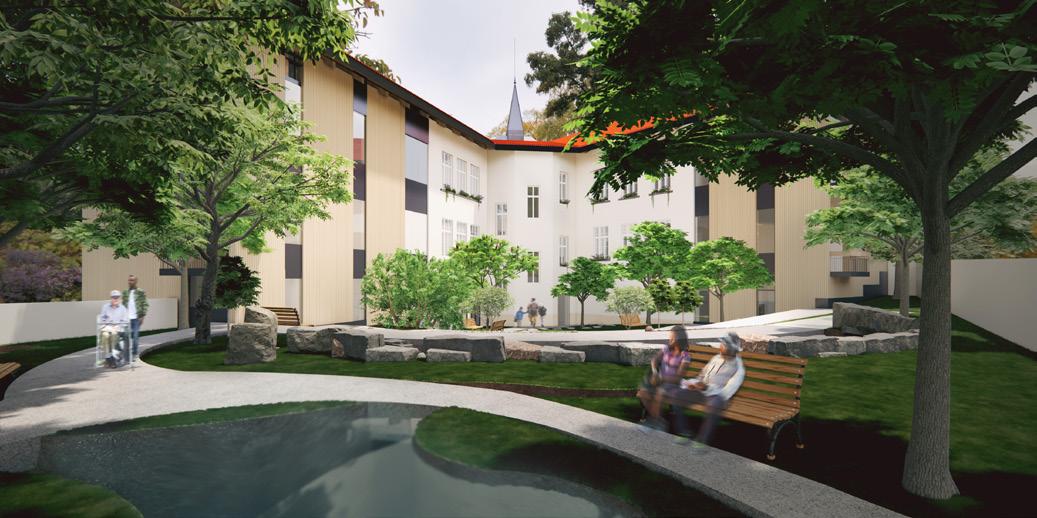
The property of the school is located to the south of the village square. It borders the main road to Kazanlak, and the church, where the educational work in Srednogorovo began. The property has access to three streets. The building is situated in the southern part of the property, taking advantage of the corner formed between two of the streets. The main entrance is located there, from which the two wings of the building extend. To fulfill the project requirements, new construction on the property is necessary, continuing the wings and providing a “completion” of the original concept by architect Hristo Dimov.
LEGEND: preserved existing construction demolished existing construction
school's property
VALUE CHARACTERISTICS
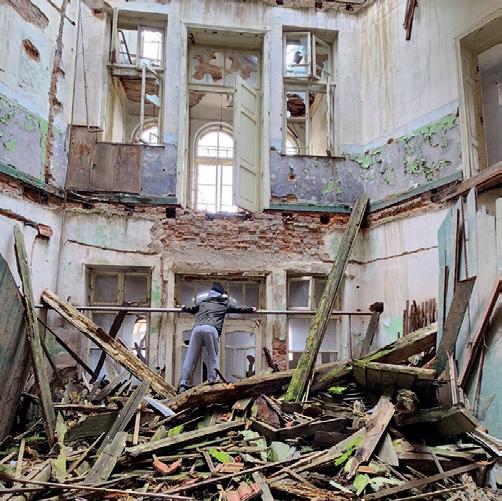
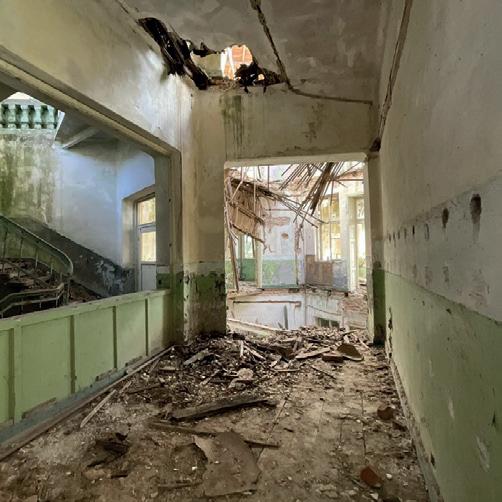
During the survey, the metal tower had fallen, almost completely destroying the building‘s roof structure, but archival photographs were found showing its appearance.
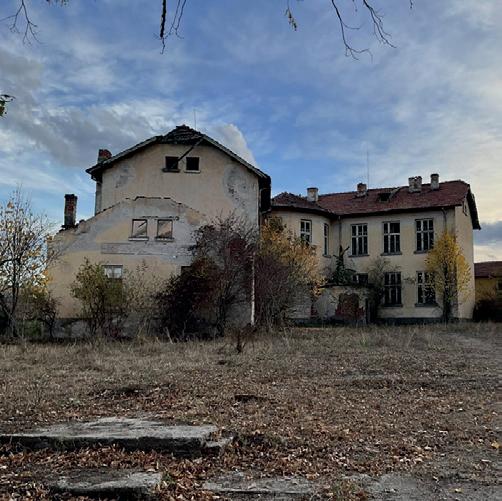
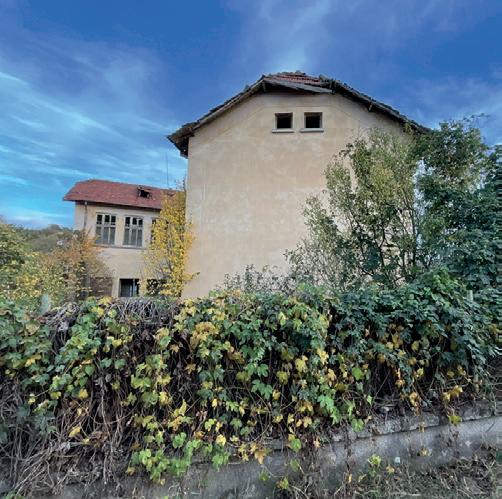
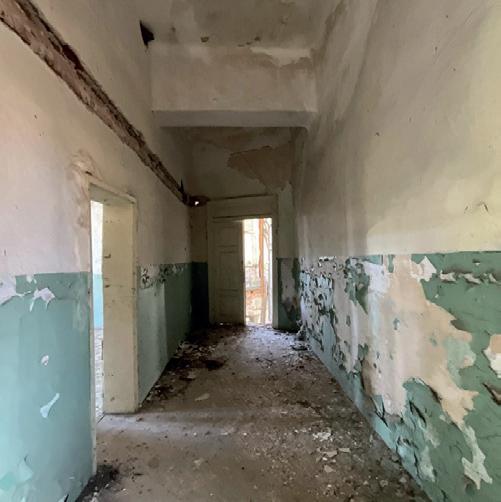
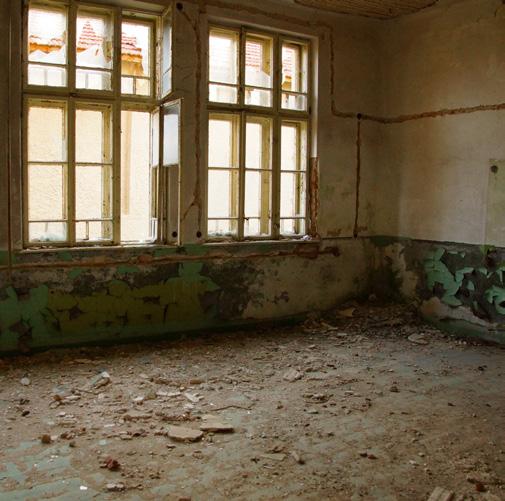
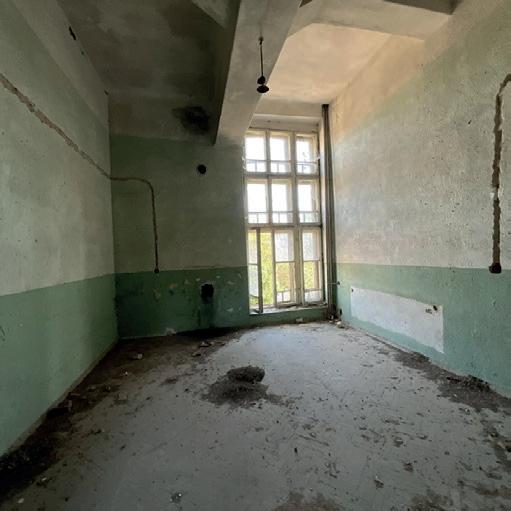
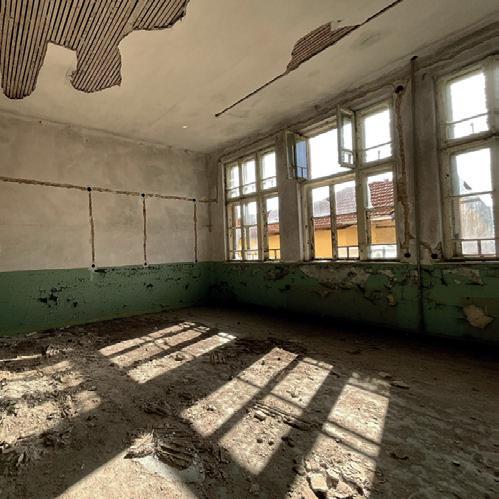
In 2017, an inspection of the building was carried out by experts from the Municipality of Kazanlak. They identified destructive processes in the roof (wooden) structure and the interfloor beam structure. However, the building’s massive structure remains uncompromised. The condition of the additions from the 1960s was assessed as poor.
All the research conducted so far justifies the preservation of the school building’s material environment to the greatest extent possible, and the demolition of the other buildings (additions from the 60s) in the regulated land plot. This is in line with the design brief, which aims for the building to be sustainably revitalized and put into operation as a hospice for elderly people.
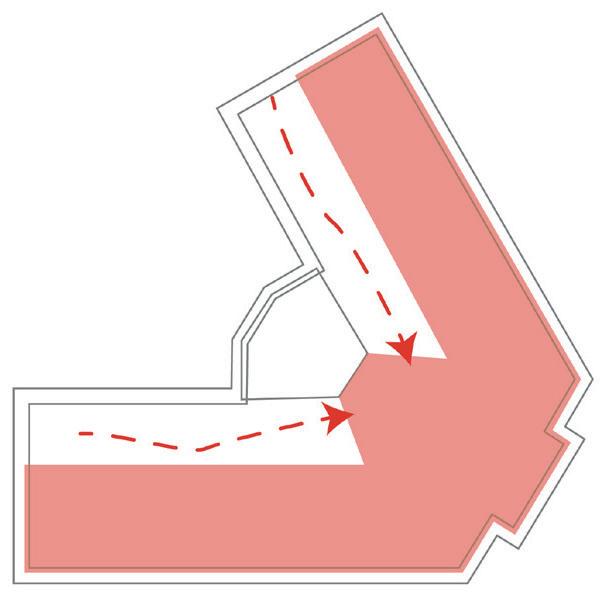
functional diagram
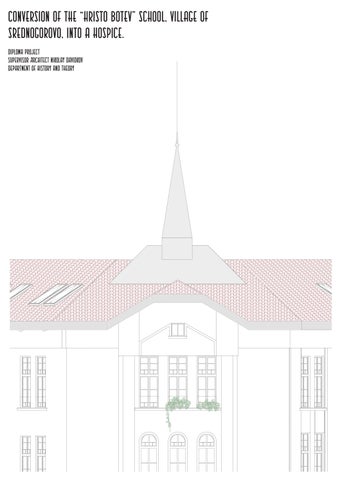
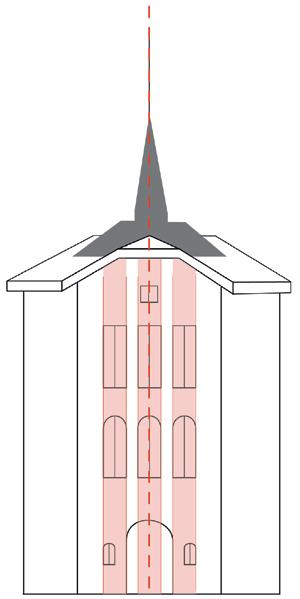
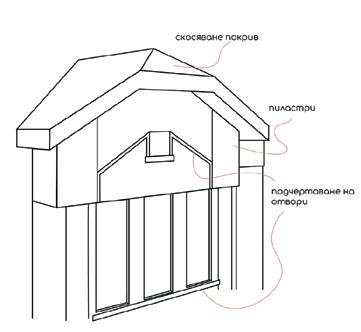
The most valuable architectural feature is the facade of the central entrance. It clearly displays the building‘s main characteristics, namely axial symmetry and a tripartite division, with the tower serving as the focal point. The architectural design also employs characteristic techniques, such as playing with the thickness of the facade plaster to highlight the openings and pilasters, as well as the sloping of the roof. Each facade adheres to these principles in shaping the building‘s image.
Functionally, the building is defined by a corridor system with a central core.
compositional principles
characteristic elements
PATHOLOGIES
LEGEND:
destructed roof construction
broken glass
chipped paint
damaged plaster bricked-up opening
LEGEND: moisture/mold
missing floor construction
missing plaster
painted hardwood floor
painted parquet
cement mosaic
SOUTHWEST FACADE
KEY PRINCIPLES OF THE MODEL FOR A MODERN HOSPICE
1st Principle: Dignity
The purpose of a hospice is not to provide treatment, but to offer peace until the very end. A person should never feel, even for a moment, that their dignity is compromised, which often happens to terminally ill patients in the final stages of their illness. This is achieved by allowing the patient to choose the level of independence they wish to have.
2nd Principle: Accessibility
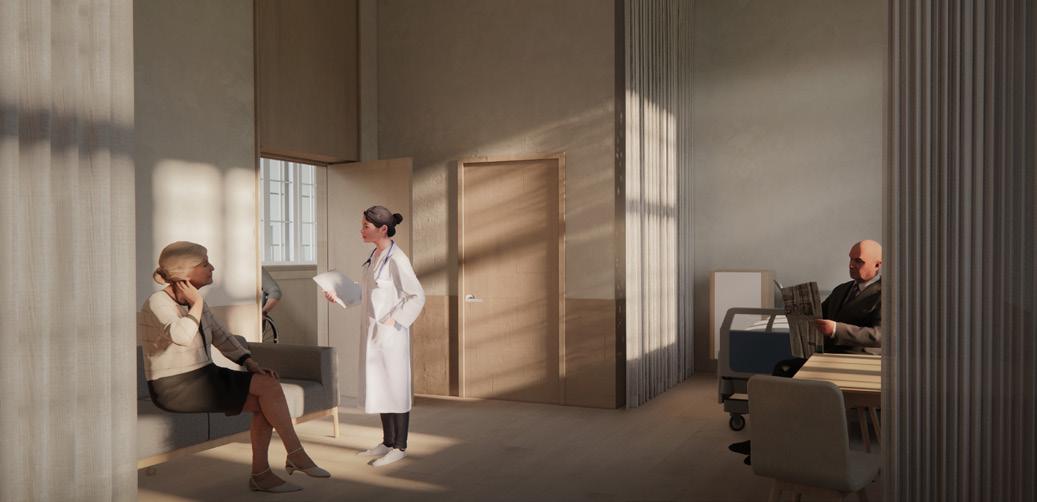
The accessibility of such a building largely defines its quality. It must have a universal design, suitable for people in beds and/or wheelchairs, but also accessible for visitors and volunteers who can help lift the spirits of the patients. The building should be located in a calm area, yet easily accessible from the city center.
3rd Principle: Security
In order to be effective, this type of institution must provide a healthy environment that reduces stress, calms, and supports overall mental health. The first two principles help create a therapeutic environment.
REQUIRED SPACES
1. Day area 230m 2
1.1. Living room for pacients and their family* 150m 2
1.2. Toilet*
1.3. Cleaning room*
1.4. Quiet zone/room
1.5. Manipulation room*
2. Hospice Ward 550-650m 2
2.1. Patients‘ rooms* single and double en-suite rooms
2.2. Visitors‘ rooms for overnightstays 100 m2
2.3. Living area 50m 2
2.4. Kitchen 20m2
2.5. Rest spaces
2.6. Contemplation room 10m2
2.7. Conversation room 10-15 m 2
2.8. Children Daycare 12m2 (as part of the living room)
2.9. Desinfection room* 5m 2
2.10. Storage for clean laundry*
2.11. Storage for dirty laundry* 10m2
2.12. Mortuary 10-15m 2
3. Service rooms 315m 2
3.1. Local small storage rooms* 15 m2
3.2. Big storage room* 30 m2
3.3. Kitchen 50 m2
3.4. Manager 15 m2
3.5. Changing room men* 20 m2
3.6. Changing room women* 30-40 m2
3.7. Garage with storage 20 m2
3.8. Parking* 13 places
4. Therapeutic spaces 140 m2
4.1. Hydrotherapy* 20 m2
4.2. Rehabilitation* 15 m2
3.3. Consultating room* 12 m2
3.4. Waiting room* 12 m2
3.5. Spaces for group therapy 25 m2 *- required
MASTERPLAN
2 2 2 2 2 2 2 2
existing situation
demolished volumes
FUNCTIONAL ORGANIZATION OF THE SCHOOL AND THE HOSPICE
LEGEND:
Classrooms
Service spaces
Shared spaces
Original build
Addition from 1967
From the on-site survey, archival photos, and conversations with residents of the village of Srednogorovo, it is clear that the school was developed on three levels as follows:
First level – the ground floor at elevation 0.00, with an entrance to the main street, featuring a vestibule, foyer, dining hall, and service rooms, all entirely below the level of the adjacent terrain at the back of the property.
Second level – the first floor at elevation +3.95, consisting of a reception foyer leading to a teachers‘ room, service rooms, and two corridors with classrooms.
Third level – the second floor at elevation +8.59, consisting of a reception foyer leading to service rooms and two corridors with classrooms.
Unused attic space
The connection between the different levels is made via a staircase with a width of 150 cm and steps measuring 17/29 cm, starting from the ground floor at elevation 0.00 and reaching the second floor at elevation +8.59, which indicates that the attic space was unused.
LEGEND:
Patients' spaces
Service spaces
Shared spaces
Spaces for patients' close ones
+3.95, +8.54
=MKMM hospice ground floor
hospice first and second floor
hospice third floor
GROUND FLOOR AT ELEVATION 0,00
LEGEND:
preserved existing elements demolished elements new build elements
The ground floor retains its function as a gathering place for all occupants of the building, with service rooms in the southern wing and towards the foyer. This is achieved by maintaining the location of the sanitary facilities and placing a hospital elevator leading to the foyer. The dining hall and kitchen are converted into the day area and kitchen area, respectively, with a reception and administrative offices placed in the rooms near the building’s main entrance. From there, within the existing rooms to the west, a guest room for patients’ relatives is developed, along with a storage room, a contemplation room, and the room for the deceased. In the new volume, sanitary and hygiene facilities for the staff (volunteers, medical personnel, and service staff) and a technical room are included. The extended volume in the northern part of the school building includes a staircase and a passenger elevator, serving this section of the building.
FIRST AND SECOND FLOOR AT ELEVATION
+3,95 and +8,54
LEGEND:
preserved existing elements
new build elements
demolished elements
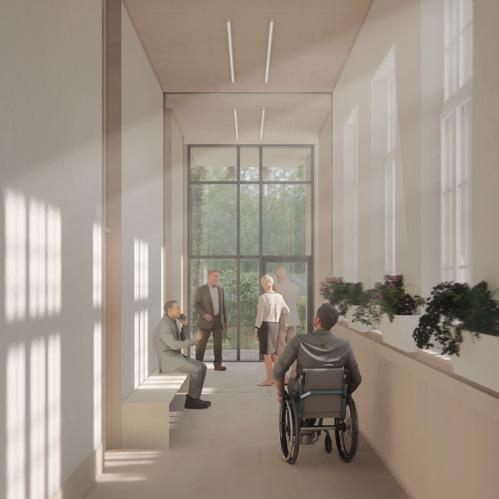
On the first and second floors, the classrooms have been converted into patient rooms. The central area retains its function as a gathering place, with service rooms along its periphery (a manipulation room in the center, cleaning and kitchen areas to the south, and to the north, an accessible sanitary facility and a storage room for dirty laundry). The corridors open up to the garden, with the creation of loggias offering a view of the courtyard.
THIRD FLOOR AT ELEVATION +12,10
LEGEND:
preserved existing elements demolished elements new build elements
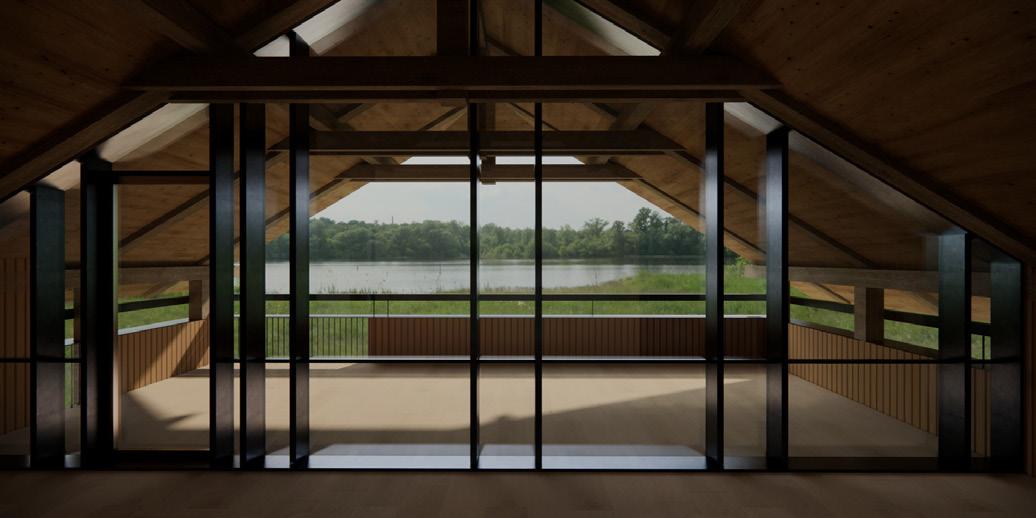
The attic space is fully utilized as a floor for staff and relatives of terminally ill patients, with the one-sided corridor system being maintained. The central foyer serves as a meeting space for staff and patients’ relatives, with service rooms arranged along its periphery. Above the double patient rooms in the existing building, rooms for overnight stays for relatives are created. Above those in the northern part, there is a training room (for staff, volunteers, and caregivers in the homes of terminally ill people), an office for the hospice manager, and a psychotherapy room, primarily focused on helping those affected by the trauma left by terminal illness in a loved one. In the newly constructed volumes, shared spaces are arranged to the south and north for patients’ relatives and for staff, both of which have access to large terraces.
The structure of the existing building is massive, with load-bearing walls and an intermediate floor structure – timber beam construction. The load-bearing structure of the extensions to it is monolithic, made of reinforced concrete.
The surrounding walls of the school are made of brick and stone with walls 65 cm thick. The surrounding walls of the new volumes are made of brick with a thickness of 25 cm. It is planned to insulate all areas where the load-bearing and/or enclosing structure of the building will change, as well as in the newly designed parts, with thermal insulation material installed externally on the reinforced concrete structure.
The internal partition walls are made of 12 cm brick, and in some sections, the wall thickness is 25 cm. The intermediate floor structure in the newly designed parts is monolithic and made of reinforced concrete, while in the existing part, the timber beam construction is being reconstructed, as the structure is compromised.
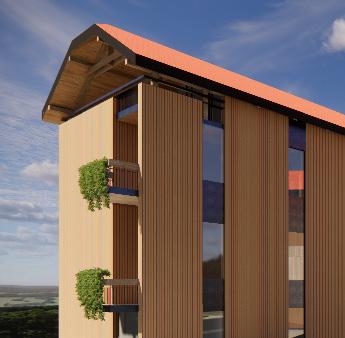
The roof of the building is in very poor condition and is being reconstructed with a suspended wooden structure. A cladding of OSB boards, vapor and waterproofing is installed over the rafters. The thermal insulation, 10 cm of stone wool, is placed between the rafters. The entire wooden structure is anchored to the existing structure, making it resistant to wind gusts and other loads. The roof continues over the newly created volumes, thus acting as a unifying element between the old and the new parts of the building.
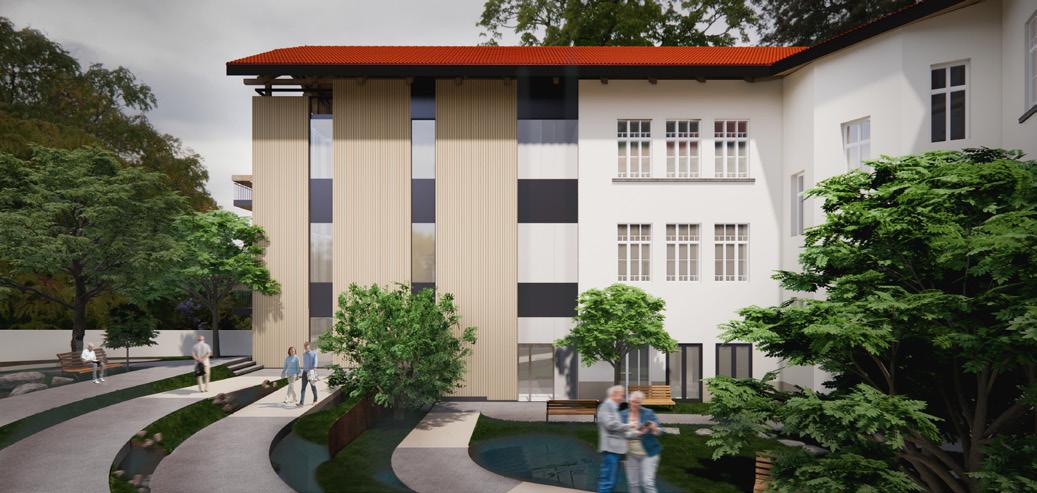
The facades of the school are preserved as much as possible, with minimal interventions. The most valuable architectural feature is the facade of the central entrance. The only intervention there is the addition of a plinth made of travertine, as the plaster in this area is severely damaged. The interventions in the other facades involve removing the stone window sill at the windows of the patient rooms and installing powder-coated steel frames around the windows, which will allow the construction of a handrail at a height of 105 cm from the finished floor level, as well as providing additional space for placing plant pots. All existing facades will be repainted in a lighter color to create a better contrast between the new and old parts, and in areas with damaged plaster, it will be restored to its original form.
FACADES
The new volumes are designed as extensions of the old wings, following the grid of their facades, but they are clad with wooden panels, which add warmth to the appearance and create a contrast between the old and the new construction.