Rehabilitation: Centre for working with children in contact with the law
pre-diploma project
supervisor Architect Nikolay Davidkov department of history and theory
pre-diploma project
supervisor Architect Nikolay Davidkov department of history and theory
The presence of minors and juveniles exhibiting antisocial behavior is a nationwide issue in Bulgaria, addressed by the Law on Combating Antisocial Behavior of Minors and Juveniles (in effect since 1958). This law is based on criminal law and mandates the practical deprivation of liberty for children in conflict with the law, isolating them from society through labor-educational schools (referred to as correctional schools since 1996), juvenile detention centers, and social-pedagogical boarding schools (SPBs).
The current model has faced criticism from numerous national and international organizations (including the State Agency for Child Protection, the Bulgarian Helsinki Committee, the Committee of Ministers, and others) for its failure to align with the 1989 UN Convention on the Rights of the Child, as well as for the lack of qualified personnel and outdated facilities. The need for reform is further supported by the official position of the Ministry of Education on the matter. However, to date, the only measure taken has been the complete closure of the aforementioned institutions.
Contemporary approaches to addressing the rehabilitation of children in conflict with the law are grounded in restorative justice principles and recent scientific research, which clearly demonstrates that isolation leads to recidivism and exacerbates the problem. As a result, juvenile offenders are increasingly integrated into social programs aimed at corrective education and reintegration within their own communities. To support this, centers for working with children in conflict with the law are being established.
PROBLEM: Unsatisfactory effectiveness of the current approaches for rehabilitating children with antisocial behavior in Bulgaria.
CURRENT APPROACH based on Criminal justice
ARCHITECTURAL ENVIRONMENT condition and characteristics
PHILOSOPHY Penalty
GOOD APPROACHES based on Restorative justice
ARCHITECTURAL ENVIRONMENT international examples
PHILOSOPHY Rehabilitation
SOLUTION: A NEW MODEL Centre for working with children in contact with the law
ARCHITECTURAL ENVIRONMENT based on scientifically proven
PHILOSOPHY Rehabilitation and
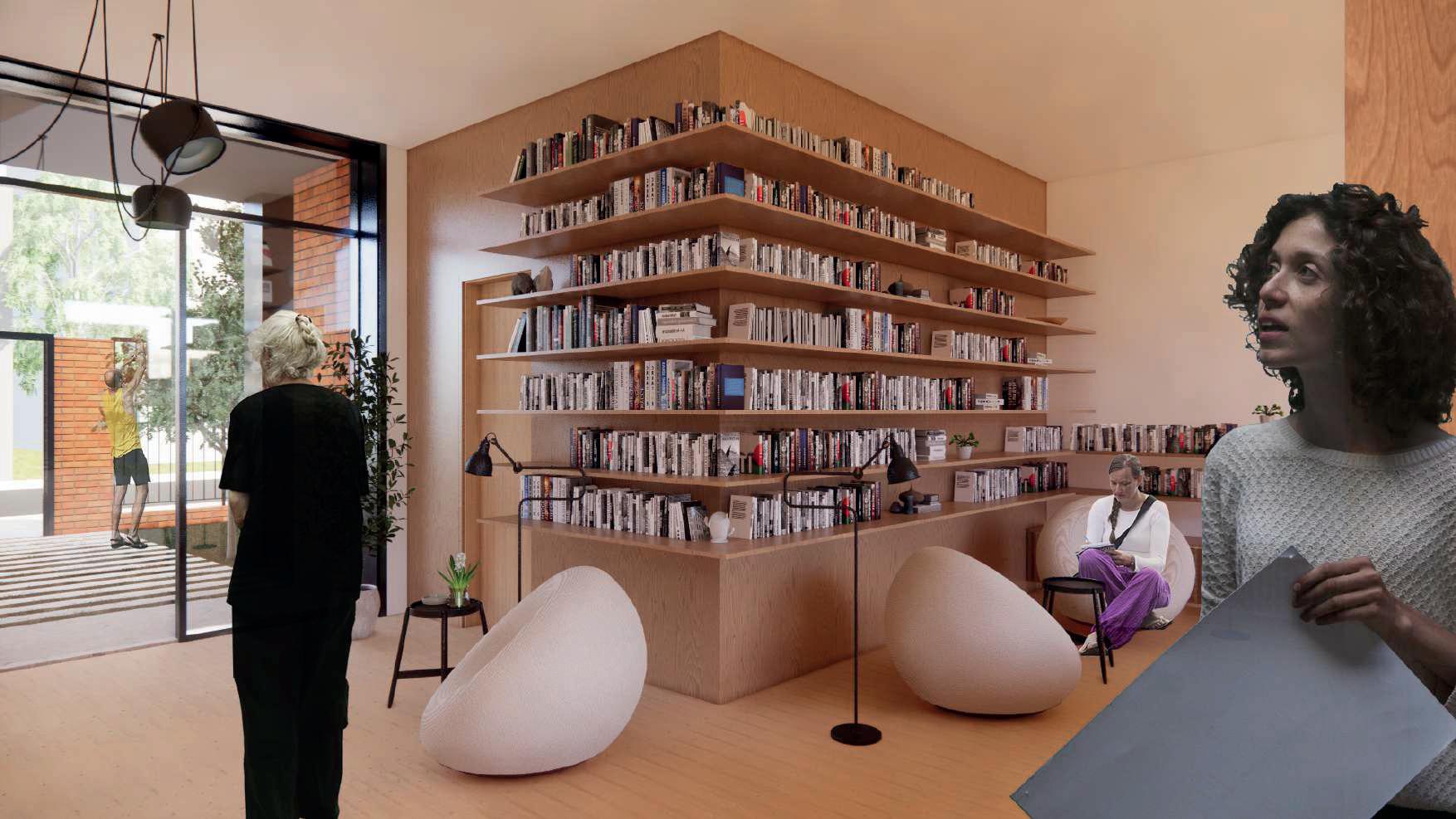
The building should be of a small scale to foster meaningful relationships between the children and the educators. This includes understanding and recognizing each child’s individual needs, risks, and motivations, allowing the educators to adjust their roles and behavior accordingly. The capacity should be approximately 8 individuals, with a maximum of 20. The exact number will depend on local needs and context.
Studies show that one of the factors in preventing recidivism is social contact, connection with society, school activities, and engagement with key elements that facilitate the young people‘s reintegration into society. The building should be designed to meet local needs and be located in an area that is widely used by the community.
The primary focus in designing the building is to support the development of relationships between the staff and the children. These relationships form the basis of relational security, which relies on understanding each individual and their potential intentions. The physical security elements should not negatively impact the relational security.
For such institutions to be effective, they must provide a healthy environment that reduces s tress, aggressive behavior, and promotes overall mental well-being. The first three principles mentioned here contribute to the creation of a therapeutic environment.
Minors who are offenders in solved crimes in Bulgaria (2012-2021) 52 people/year 1039 people/year
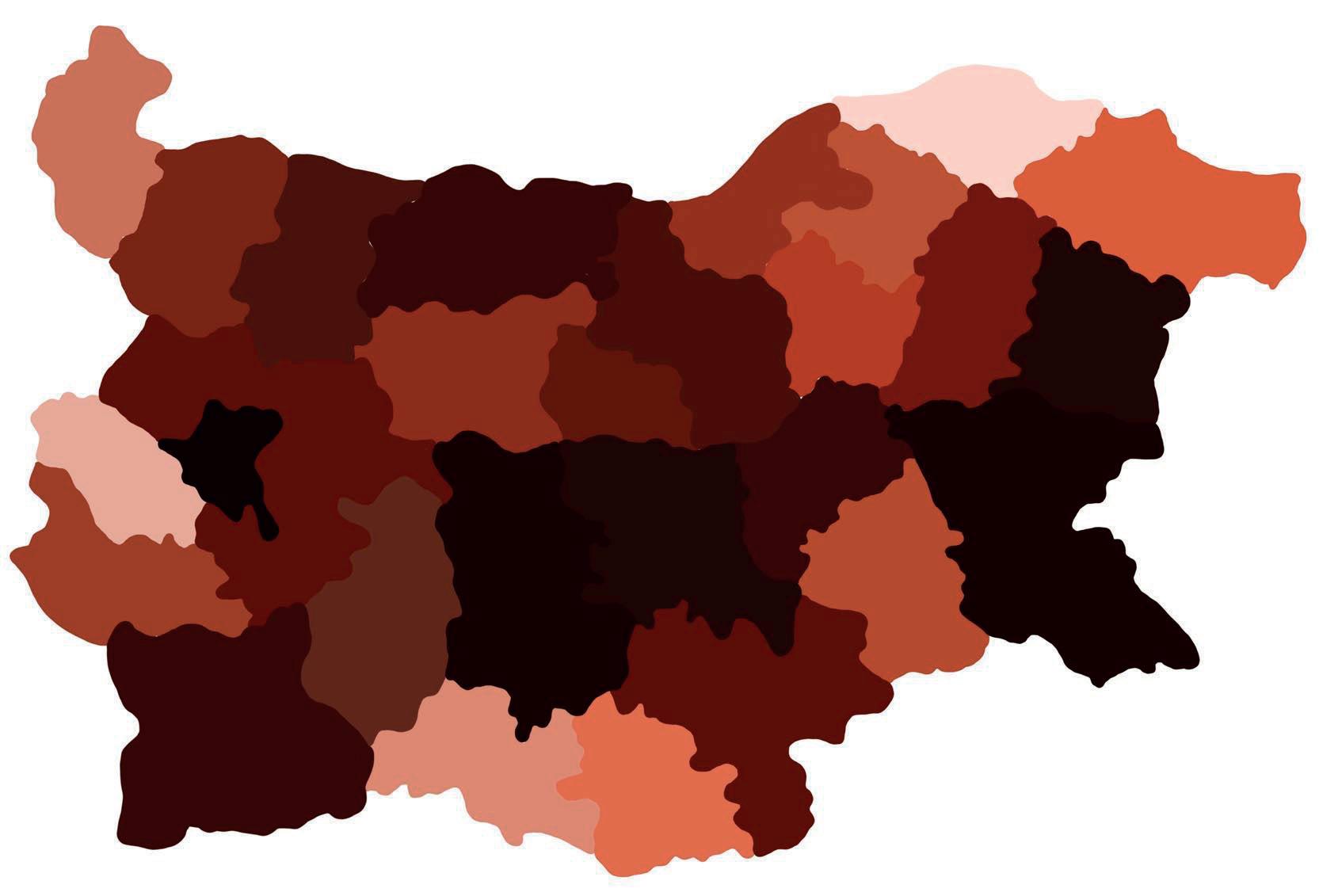
The Sofia City District has the highest number of minors who have committed crimes, as recorded over the last 10 years. The highest number of offenders are registered at the 3rd Police Station of the Sofia Directorate of Internal Affairs (SDVR), closely followed by the neighboring 5th Police Station.
The 3rd Police Station covers the areas of Vazrazhdane, Krasna Polyana, and Ilinden, while the 5th covers Oborishte, Poduene, and Kremikovtsi. This leads to the conclusion that the most suitable location, considering the proximity to the environment of the children who have committed crimes, would be at the border between the areas serviced by the 5th and 3rd Police Stations of
the SDVR. Following this condition and taking into account the need for easy communication with the city center and transportation hubs (bus and railway stations), a property in the Vazrazhdane district proves to be the most favorable for establishing a Center for working with children in conflict with the law.
The provided statistics were used to make the decision regarding the location of the Center for working with children in contact with the law, but they do not guarantee that the offenders live in these areas.
47 people/year
95 people/year
A property in Vazrazhdane District has been selected that meets the principles of the developed model. The criteria for selection are: area (between 350-400 sq.m), surrounding environment (mainly residential function with low to medium-high buildings), and ownership – municipal.
Functional organization in the vertical Porosity
Legend:
Common area
Private spaces
Greenery
From a functional point of view, the building could be divided into two main types of spaces – common areas (living zones, terraces, etc.) and independent intimate spaces (the children‘s rooms) with clear separation.
The distribution of living areas vertically helps to form distinct spaces, as suggested by the model.
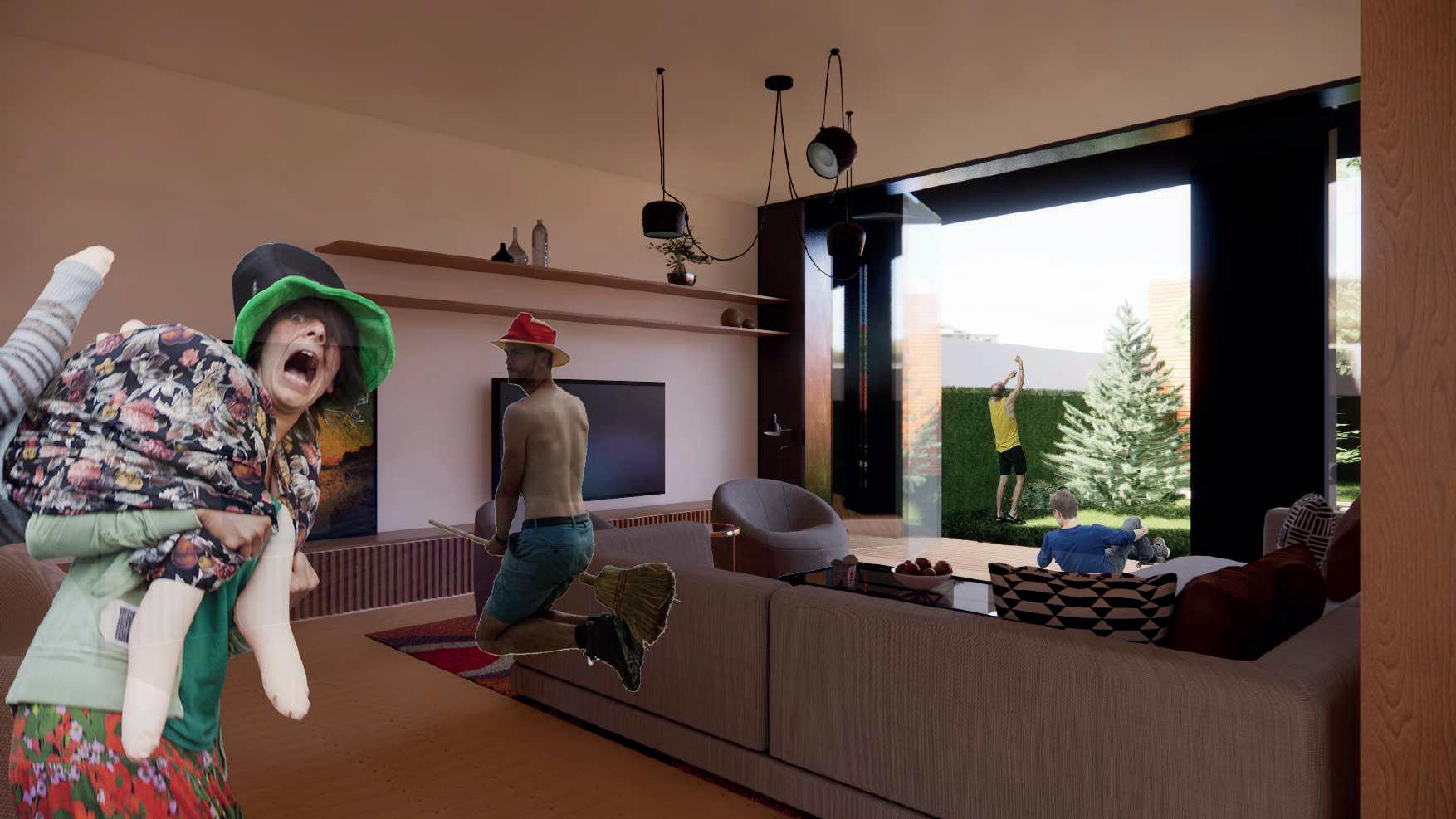
Since greenery is a key element of the atmosphere in the good design of this type of building, it is included at every level and permeates all the common areas of the building. This adds a porous quality to the volume and contributes to the therapeutic atmosphere.
Separation of volumes
Inside space
In-between space
Outside space
Inside-Outside Spaces
Opening towards nature
The placement of the building on the plot is strongly constrained by the Detailed Development Plan (DDP), which defines clear boundaries.
The design features a single entry/ exit point for security and access control purposes, which shapes the spatial organization.
The goal was to maximize the outdoor area while fulfilling the design requirements, with the model emphasizing the separation of intimate zones and the creation of distinct spatial experiences. This approach leads to the creation of transitional spaces between ‚inside and outside‘ and, as a result, the facades open up towards the courtyards.
1:50