






















































© The South Florida Community Voice Magazine. All rights reserved. Reproduction in printed or digital form in whole or in part in any form without prior written permission is prohibited. The publisher reserves all right to edit all articles for clarity, space and editorial sensitivities. Submissions cannot be returned to sender. The South Florida Weekly Magazine is not responsible for the cash flow of any advertised product or service that appears in these pages. The South Florida Community Voice Magazine assumes no responsibility for the content of articles or advertisements in this publication, nor for the content of books that are referred to or excerpted herein.
Community Voice magazine is not responsible for the Kashrut or services provided by the advertisements. It is up to the consumer to verify the information.






By Sivan Rahav Meir
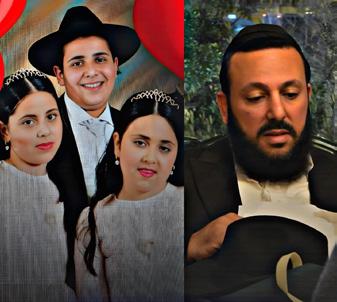
Rabbi Yitzchak Biton and his wife Tamar lost three of their children in last week’s missile strike in Beit Shemesh: Yaakov, Sarah, and Avigail, of blessed memory.
Yesterday I was at the Grand Court Hotel in Jerusalem, where hundreds of people came to comfort the family. Most of them had never met the Bitons personally. Many words of encouragement were shared there. I would like to share one thought from the bereaved father, Rav Yitzhak Bitton:
“People speak to me about Akeidat Yitzchak. Chazal teach that this is what gives us strength. All of our patriarchs and matriarchs endured trials. And because they are the foundation of our nation, and we are continuing their path, each one of us has inherited their strength. We have received from them faith, love, joy, kindness as well as their self-sacrifice and the ability to overcome adversity.
“I heard a fitting analogy: A train cannot travel without tracks. The patriarchs of our nation are the tracks. We are the train moving along the path they already laid.
Every Jew carries an inheritance from our holy Avot. Knowing that they faced difficulties and tests, and succeeded in standing strong, gives us strength as well.”
The test facing the Biton family is unimaginable. Yet many people in the room yesterday nodded in agreement. Each person drew strength for the challenges in his or her own life.
This past Purim, I received a message from Shimon Elkabetz, the former commander of Army Radio, and his wife Anat: “Yes, this year, too, we are celebrating Purim in Kfar Aza.”
Their daughter Sivan was murdered in the kibbutz on October 7, while they were sheltering in the safe room of their nearby home. Thousands have already visited “Sivan’s House,” the powerful memorial site they established there.
On the first Purim after the massacre, they decided to celebrate right there, inside the ruins. Since then, it has become a tradition.
“This is our third Purim here,” Anat began, surrounded by other bereaved families, friends, and guests who had come to hear the
reading of Megillat Esther precisely in that place. “In the first year, we stood here and mostly heard explosions from Gaza. In the second year, we heard our heroes fighting in Gaza; and this year Iran is about to fall, sending missiles even here. But they will not defeat us.”
Anat continued: “On October 7 they came to murder us because we are Jews. We must never forget that. Yotam Chaim, who was kidnapped from here—he wasn’t kidnapped because he was Yotam. It’s not about ‘the residents of the Gaza border communities.’ It’s not about who we are personally. It’s about who we are nationally. We were chosen. And that means we have a responsibility.
“We are responsible for choosing correctly, every day. We are Jews, and we have so much to do in this world.
“Only if we understand the bigger story will we win it. In every generation they try to destroy us, and we stand strong and determined. There is no cure for the pain; our daughter was murdered here. But there is clarity. A clear feeling that we are messengers.”
Then Rabbi Moshe Shachor began reading the Megillah. Last week it sounded like the most up-to-date commentary on the current situation.
The 20th of Adar marked 31 years since the passing of Rabbi Shlomo Zalman Auerbach, zt”l, one of the great Torah scholars and halachic authorities of his generation, widely known not only for his brilliance but also for his warmth and humility. Here are two of the most beau-
tiful stories I’ve heard about him. Each of us can learn from his example:
Rabbi Yonatan Bilt shared: “As a child growing up in the Shaarei Chesed neighborhood of Jerusalem, we had the privilege of living near Rav Shlomo Zalman. One time I came to ask him whether a certain game was permitted on Shabbat. The Rav didn’t say ‘permitted’ or ‘forbidden’ right away. First, he played the new game with us and enjoyed it together with the children. He always gave you a sense of partnership, and a sense that you mattered. A small child asking a question about a game deserved to be taken seriously.”
Rav Shlomo Zalman would say that acts of kindness should not be left to chance; we should actually set aside dedicated time for them. Just as prayer and Torah study have fixed times that we allocate for them, so too should helping others: studying with someone who is struggling, visiting the sick, and similar acts. He himself devoted much time to this, and also thought carefully about how to help each person in the most appropriate way.
Next Wednesday evening we will welcome Rosh Chodesh Nissan. With pre-Pesach cleaning in full swing, here are a few encouraging words from Rabbi Menachem Brod:
“The Hebrew name for Pesach comes from the word pesicha which means skipping or jumping. Among all the technical preparations for this holiday, let’s not forget its secret message: that we have the power to leap over every obstacle, to save ourselves and be redeemed. So it was at the time of redemption from Egypt. Right before our deliverance, we were slaves with no idea how our situation could ever change, and a moment later we had left slavery for freedom.
Sometimes history moves forward gradually, ever so slowly, and sometimes — as happened on Pesach — there is a sudden thrust that leaves the old reality behind as we leap ahead. Everything surprises us in the best possible way. We break through and step forward into a completely new reality.
The month of Nissan and the holiday of Pesach give us the strength to make this leap. God helps the Jewish people, both on the individual level and on the national level, to rise to the loftiest spiritual heights and to truly change.
To paraphrase words from the Gemara: Just as we were redeemed in the past, so may we be redeemed in the days immediately ahead.
Translated by Yehoshua Siskin and Janine Muller Sherr
Want to read more by Sivan Rahav Meir? Google The Daily Thought or visit sivanrahavmeir.com
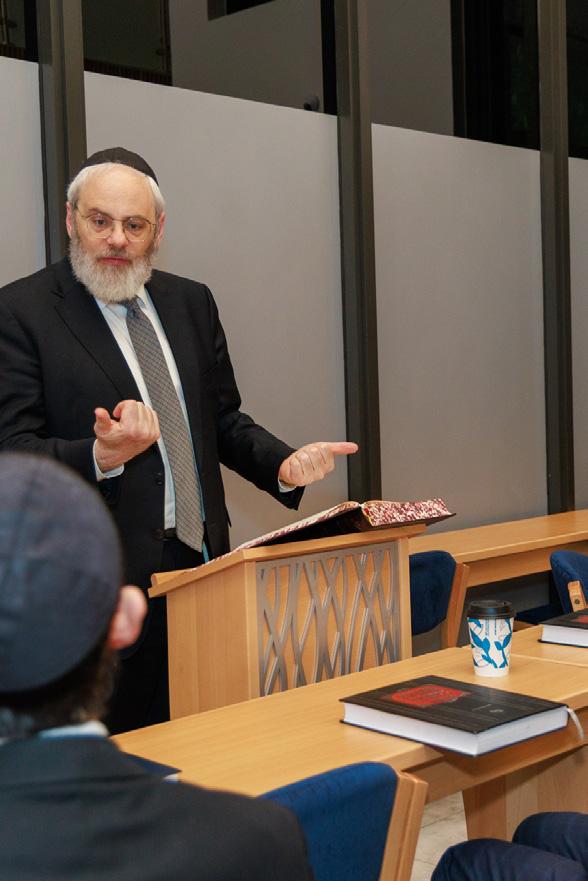


Torah Academy of Boca Raton recently strengthened its commitment to student safety and wellbeing with a Professional Development Day dedicated to equipping faculty with essential tools to nurture students’ emotional safety, confidence, and growth. The centerpiece of the day was a comprehensive training led by Dr. Shani Verschleiser, LCSW, representing MagenU, a respected organization dedicated to preventative personal-safety education. Her session focused on helping educators recognize warning signs of abuse, reinforce healthy boundaries, provide chizuk, and guide children in identifying appropriate norms and responses when someone in their lives makes them feel uncomfortable.
Dr. Verschleiser emphasized that the strongest protective factor for children is a network of safe, trusted adults. When students experience consistent, healthy relationships with teachers and caregivers, they are far more likely to disclose concerns or seek guidance. As she noted, “Healthy boundaries taught by example become lifelong protection.” Staff explored how everyday classroom interactions can foster that trust and learned practical strategies for responding sensitively if a child hints at distress or shares something concerning.
Faculty also reviewed key elements of the MagenU curriculum, which Torah Academy is implementing across divisions from preschool through the Mesila program. The curriculum teaches age-appropriate concepts such
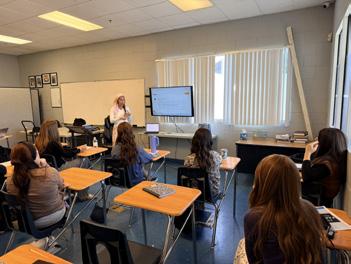
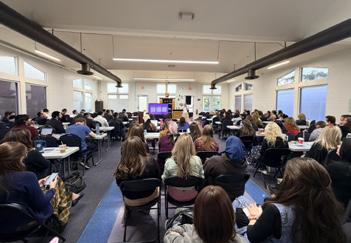
as self-esteem as a foundation for safety, understanding confusing emotions, distinguishing between healthy and unhealthy boundaries, and recognizing the difference between surprises and secrets. Teachers learned how students are guided to identify trusted adults, understand safe versus unsafe touch, and recognize “tricky people” behaviors such as secrecy requests or manipulative language. These lessons give children both vocabulary and confidence to protect themselves and speak up when something feels wrong.
The importance of introducing this curriculum throughout every developmental stage was a central theme. By building knowledge gradually over time, students internalize lifelong skills that strengthen personal safety, self-respect, and emotional awareness.
The day concluded with an up-
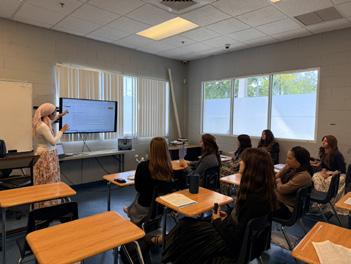
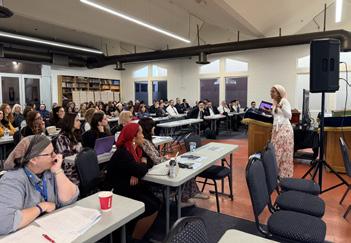
lifting session from Rabbi Yosef Bondi, Head of the Boys Division, who spoke passionately about the sacred responsibility of truly seeing each student, recognizing every child as a unique individual, and appreciating the profound impact an educator carries. Emphasizing that chinuch is a service profession, he underscored that when educators and parents genuinely value each child’s distinct strengths, they cultivate an atmosphere of respect, trust, and dignity—the very foundation that allows children to feel secure enough to grow, learn, and share openly. Together, these sessions made the day a powerful investment in both staff growth and student well-being.
Torah Academy of Boca Raton is a Yeshiva with preschool, elementary, and separate boys’ and girls’ middle school divisions, serving 900 students this year. For more information, visit www.torahacademybr.org or call 561-465-2200

Over the past several years, the conversation around antisemitism has intensified across the United States and around the world. College campuses, social media, political discourse, and even local neighborhoods have become arenas where Jewish communities face growing challenges. In Palm Beach, however, one community has chosen not only to respond to these challenges—but to create a platform for education, dialogue, and action.
Now in its fifth year, the Palm Beach Synagogue Antisemitism Summit has become an important gathering point for leaders, activists, and organizations working to confront antisemitism from many different angles. What began as a small local initiative has evolved into a unique forum bringing together diverse voices, perspectives, and strategies in the fight against hate.
The idea for the summit emerged five years ago following several disturbing antisemitic incidents in the Palm Beach area. According to organizers, members of the community discovered plastic bags filled with rat poison and antisemitic pamphlets being thrown onto people’s front lawns in Wellington and Palm Beach Island. The flyers promoted conspiracy theories claiming that Jews were responsible for the COVID-19 agenda.
At the time, the act itself was not technically illegal, but the message behind it was alarming. A synagogue member, Michael Greenfield, and his wife Nolan ap-
proached community leaders with an idea: instead of simply reacting to these incidents, why not create a platform that would educate people about antisemitism and highlight the organizations working to combat it? Palm Beach, after all, is an unusually influential community.
Many residents are deeply involved in philanthropy, politics, and international diplomacy. The synagogue itself counts more than fifteen former ambassadors among its members, along with individuals who have worked closely with presidents, policymakers, and major global organizations. The thinking was simple: if this community understood the challenges facing Jews around the world, it could help make a meaningful difference.
The first summit was modest. About 100 people attended. But the concept immediately resonated. The following year attendance grew to 150 people. The year after that it reached 200. Each year the summit expanded, bringing more speakers and inviting a broader range of organizations.
Today, the summit has become a major annual event that draws participants from across South Florida and beyond. One of the most distinctive aspects of the Palm Beach summit is that it intentionally avoids promoting a single ideological approach.
Instead, the goal is to present multiple viewpoints and allow attendees to hear directly from the people doing the work. Organizers invite organizations across the
political and strategic spectrum— right-leaning groups, left-leaning groups, and those somewhere in the middle. Some organizations focus on advocacy and legislation, while others focus on campus support, legal action, education, or community outreach.
In one previous summit, for example, both the Anti-Defamation League (ADL) and the Zionist Organization of America (ZOA) participated, despite their often differing approaches to combating antisemitism. By presenting contrasting perspectives in the same forum, the summit encourages open dialogue and thoughtful discussion.
Attendees can listen, ask questions, challenge ideas, and ultimately decide which strategies resonate most with them. For many participants, the experience is both educational and empowering.
Palm Beach is known for its vibrant Jewish life and strong philanthropic culture. But organizers say that the summit serves another important purpose: connecting a comfortable local community with the broader challenges facing Jews elsewhere. South Florida can sometimes feel far removed from the tensions seen on college campuses or in European cities. The summit helps bridge that gap.
Through panels, presentations, and conversations, attendees hear firsthand about what Jewish students are experiencing at universities, how antisemitic rhetoric spreads online, and what organizations are doing to counter it.
The goal is not simply aware-

ness, but engagement. Many attendees arrive already active in charitable giving. The summit introduces them to new organizations and initiatives they may never have encountered before.
Sometimes the impact is immediate. Organizers note that several smaller grassroots groups have gained significant support after presenting at the summit. For some organizations, gaining just a handful of new donors from the Palm Beach community can dramatically change their trajectory.
The summit highlights that fighting antisemitism takes many different forms. Some organizations focus on legal battles, helping Jewish students pursue lawsuits against universities that fail to protect them from discrimination. Others work on strengthening Jewish identity on campus, creating programs and events where Jewish students can connect with Israel and with each other.
One organization invited to this year’s summit, Student Support for Israel, focuses specifically on creating pro-Israel programming on college campuses. Their goal is to build positive Jewish and Israeli engagement rather than focusing solely on responding to antisemitism.
Another group, MEMRI (Middle East Media Research Institute), monitors extremist rhetoric from religious leaders and political figures around the world. By translating and exposing statements made by radical clerics and activists— including some in Western countries—they provide critical insight into how antisemitic narratives spread.
The summit also includes organizations outside the Jewish
community that are working to strengthen alliances. One such group is Passages, which brings young Christian pastors to Israel to experience the country firsthand. The program aims to foster long-term support for Israel within the next generation of Christian leadership.
Organizers believe this outreach is essential. The future relationship between Jews and Christian communities in the United States will play an important role in shaping the broader cultural and political environment. Programs like Passages help ensure that young Christian leaders develop informed and supportive perspectives on Israel and the Jewish people.
In addition, there are discussions about including emerging Muslim organizations that are working within their own communities to counter extremism and reduce antisemitic rhetoric. These types of partnerships reflect the summit’s broader philosophy: combating antisemitism requires cooperation across communities and perspectives.
Palm Beach’s Jewish community is known for its generosity, and the summit reflects that spirit. In recent years, the synagogue community has raised more than $1.5 million to support Israeli hostages, their families, and kibbutzim in southern Israel that were devastated during recent conflicts.
But organizers emphasize that Jewish values call for supporting not only one’s immediate community but also Jews around the world who may be facing greater hardships. The summit embodies that principle. It allows people in South Florida to hear directly from activists, educators, legal advo-
cates, and community leaders confronting antisemitism in places far beyond Palm Beach.
And each year, attendees ask for more. They want updates. They want to hear how organizations have grown and what impact their support has had. Some speakers return in later years to share how their work has evolved.
Ultimately, the summit is about more than fundraising. It is about relationship building. For many organizations, the opportunity to present their work in front of such an engaged and influential audience is invaluable. The conversations that begin during the summit often continue long afterward— leading to partnerships, collaborations, and new initiatives.
Instead of competing for attention, organizations share the same stage. Each has the opportunity to explain its mission, describe its approach, and connect with people who want to make a difference. The decision about where to give, where to volunteer, and where to advocate is left entirely to the attendees.
By creating an open platform rather than pushing a single agenda, the Palm Beach Synagogue Antisemitism Summit has become something rare: a place where ideas can be exchanged freely and where community members can find the causes that inspire them most.
Five years after its humble beginnings, the summit continues to grow—not only in size but in impact. And as antisemitism continues to evolve in new and complex ways, the Palm Beach community is making sure that the conversation—and the action—continues as well.

For Rabbi Philip Moskowitz and his family, the mission of Chai Lifeline’s I-Shine program is deeply personal. After the illness and passing of their daughter Esti Moskowitz (A”H), the Moskowitz family sought a meaningful way to honor her memory—one that reflected who she truly was. Known for her kindness, warmth, and remarkable ability to make every child feel included, Esti left a lasting impression on everyone she met. Today, through the I-Shine program, which supports siblings of families facing serious illness, her legacy of compassion, friendship, and positivity continues to shine in the lives of children who need it most.
In a conversation with South Florida Community Voice, Rabbi Moskowitz reflected on Esti’s life, the inspiration behind the program, and the powerful impact I-Shine continues to have on families navigating difficult times.
“When a parent or child gets sick,” Rabbi Moskowitz explains, “one hundred percent of your effort and attention naturally goes into that child.” Medical treatments, hospital visits, and the emotional strain of illness can consume the entire family. But while parents focus on caring for the family member who is ill, another group often quietly carries its own burden.“Very often the other siblings become what we call the unsung heroes,” he says.
Siblings may feel the shift in family dynamics deeply, even while they try to be understanding and supportive. “It’s not because parents don’t care about them,” Rabbi Moskowitz explains. “It’s simply the reality of the situation when a family is dealing with a serious illness.”
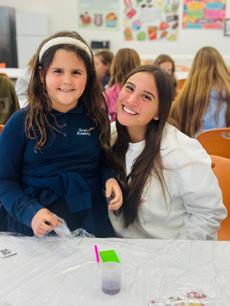
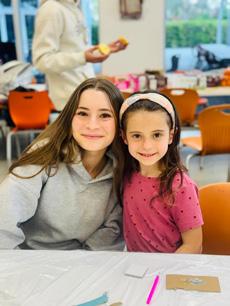
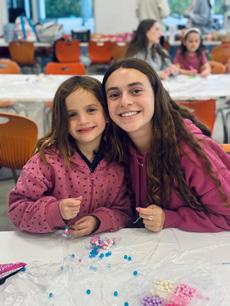
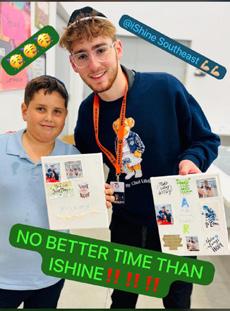
That reality is exactly what Chai Lifeline’s I-Shine program seeks to address. I-Shine is an after-school program designed specifically for siblings of children whose families are facing serious medical challenges. The program operates in several communities, including Miami and Hollywood, and provides children with a dedicated space where they can feel supported, understood, and uplifted.
“For one night a week, the kids are showered with love, attention, and care,” Rabbi Moskowitz says. “They have dinner, they get help with their homework, and they participate in fun activities.” More than anything, the program gives these children the chance to simply be kids again. “The other six nights of the week might
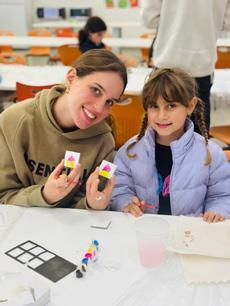
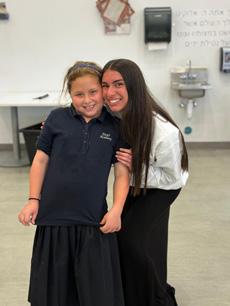
be heavy at home,” he says. “But the kids know that one night a week is theirs. They come home with huge smiles on their faces.”
That small window of joy can have ripple effects that extend throughout the entire family.When the Moskowitz family had the opportunity to partner with Chai Lifeline and support a program in Esti’s memory, the inspiration for its name came from within the organization.
“We were sitting around a table with members of the Chai Lifeline staff, and Henni Halberstam suggested the name I-Shine Like Esti” Rabbi Moskowitz recalls. “The moment she suggested that name, it just felt like a natural fit.” The name reflected something essential about Esti. “She was an enormously posi-

Tomchei Shabbos Florida provides essential food packages to families throughout our community every week, ensuring they can enter Shabbos and Yom Tov with dignity and peace of mind.
Dedicated volunteers come together to pack and distribute food for hundreds of families who rely on this support. Because of the generosity of our donors and volunteers, families across South Florida are able to sit down to their Shabbos meals knowing their table is full.
But as Pesach approaches, the need grows significantly.
Pesach should be a time when families focus on preparing for the Seder,

spending time together, and planning Chol Hamoed trips. No family should have to worry about how they will afford food for their Seder table.
This year, Tomchei Shabbos will be helping over 600 families across South Florida prepare for Pesach, ensuring families can focus on the Yom Tov instead of worrying about how they will afford it.
Our Pesach campaign officially begins March 14, but pre-donations can already be made now to help us prepare and ensure every family has what they need before Pesach arrives.



tive kid,” he says. “She always wanted to make sure everyone was included. She always had a smile on her face.”
Rabbi Moskowitz describes his daughter as someone who had a remarkable ability to connect with people from all backgrounds. “Esti was an incredible child,” he says. “She had a unique ability to connect with all different types of children and to make sure everyone felt included.”
Her personality left a lasting impression on everyone she encountered.“She was happy, smart, inquisitive, sensitive, fun, funny, strong, resilient, and caring,” he recalls. “She had this incredible laugh and a contagious smile that could light up a room.”
But perhaps what defined Esti most was her kindness. After shiva, the Moskowitz family received a letter from one of the Child Life Specialists at St. Jude, the compassionate professionals who helped guide Esti through many of her treatments during her illness.
“These amazing and sensitive young women helped distract Esti, helped her understand procedures, and guided her through many of her experiences,” Rabbi Moskowitz says. “They were a constant and loving presence for Esti and for our family throughout the year.”
One of those specialists, Claudia, shared a memory that deeply moved the family. “I’ll never forget when we played a question game and I found out so much about her,” Claudia wrote. “One of the questions was, ‘What do you want a stranger to know about you?’ Esti answered, ‘I want a stranger to know that I am a kind person.”
Rabbi Moskowitz says that response has stayed with him ever since. “I’ve read and reread Esti’s answer dozens of times,” he says. “So many children want to be known for what they can do, for being smart, talented, athletic, or successful. Esti
didn’t want to be known for what she could do. She wanted to be known for who she was. She just wanted to be kind.”
And that simple answer reflected exactly how she lived.“She always put others before herself. She always said please and thank you. She had impeccable middos. She was polite, caring, considerate—just a truly good person.”
During shiva, the Moskowitz family heard many stories that revealed just how deeply Esti had impacted the people around her. Morah Shira Sharp, her first grade teacher at KHDS, shared a conversation she overheard between two students. “One student said, ‘Esti was my best friend,’” Rabbi Moskowitz recalls. “Now Esti wasn’t actually her best friend, so Morah Shira asked why she felt that way.”The student’s answer was simple and heartfelt. “She said, ‘Esti always made me feel included on the playground. Since she’s been gone, recess just isn’t the same.’”
Another mother shared a story from when her family first moved to Boca Raton. “They came to our home for a Friday night dinner,” Rabbi Moskowitz says. “Their daughter was having a difficult time adjusting to the new community and didn’t even want to come.” But within minutes of arriving, Esti took the girl to play.“ We didn’t see them the rest of the night,” he recalls. “When they left, the daughter turned to her mother and said, ‘Okay, now I see that I can make new friends in Boca.’”
Another parent later wrote about a moment when Esti had stood up for her daughter when other children were being unkind.“ My daughter told me about a girl who stood up for her and made sure she was included,” the parent wrote. “She asked to have a playdate with that girl. It was Esti. Her kindness is changing lives.”
For Rabbi Moskowitz, the I-Shine
program reflects the very qualities that defined Esti’s life. “It’s all about positivity,” he says. “It’s about happiness. It’s about making sure every child feels included and connected.”
For the Moskowitz family, it was important that Esti’s legacy be associated with those values.
“There was obviously so much sadness surrounding her illness and her passing,” he says. “But we wanted her memory to always be connected to happiness, inclusion, and friendship. I-Shine represents that.”
The Moskowitz family remains deeply involved with Chai Lifeline, supporting its programs through volunteering and fundraising efforts. The impact of I-Shine is also felt within their own home.
“My daughter Rena attends I-Shine and benefits from it,” Rabbi Moskowitz shares. “In our house, Tuesday night is the best night of the week. She comes home happy, fed, and in a great mood.”
One of the most inspiring aspects of the program, he says, is the dedication of the teenage volunteers who make it possible.“ The program is only as good as the staff who run it,” he explains. “Chana Gibber does an incredible job running this program. And the teenagers who volunteer for I-Shine are truly the best of the best.”
Despite demanding school schedules, many high school students eagerly volunteer their time.“ There’s actually a waiting list to volunteer,” he says. “They rotate students by semester because so many want to participate.”
For Rabbi Moskowitz, that commitment says something powerful about the community. “These kids aren’t doing it for money or recognition,” he says. “They simply want to give back.”
And through their kindness and dedication, Esti’s light continues to shine—bringing joy, inclusion, and friendship to families who need it most.

8:30am:
Friday, Erev
• Parsha Shiur Kollel (Senders
• Davening with • Friday Night 8:45am:
• Davening in Kaha followed by
• Shalosh Seudos Shabbos D

A D MU R O F F O R SH A Y
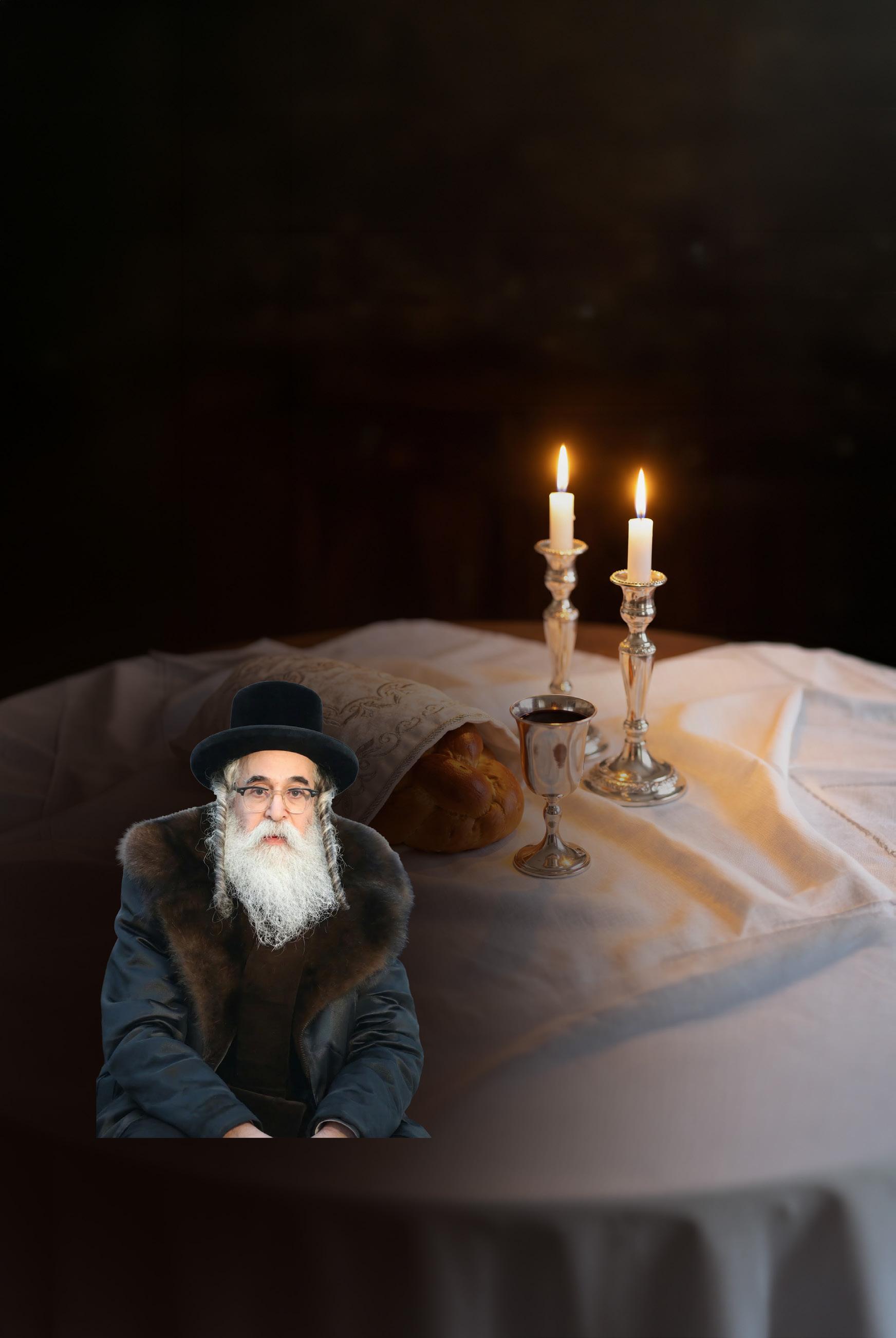
Rabbi Rottenberg is a descendant of R’ Shayele of Kerestir and continues his legacy of chesed. Through the organization Rav L’Hoshia , he has helped provide essential support to thousands of hungry Jewish children and struggling families
TO SCHEDULE A PERSONAL APPOINTMENT WITH THE RABBI PLEASE CALL 845-376-2699
Friday, Erev Shabbos
8:30am:
• Parsha Shiur at the Erev Shabbos Kollel (Senders Library)
• Davening with Khal Chassidim
• Friday Night Tisch 8:45am:
• Davening in Kahal Chassidim followed by Kiddush & Divrei Chizuk
• Shalosh Seudos Shabbos Day

Yakov leaned back in the hospital chair and looked down at the tiny bundle in his arms. His daughter’s eyes were closed, her breathing soft and peaceful. Just a few hours earlier, on Friday morning, she had entered the world. Now he and his wife sat quietly in their maternity room, soaking in the bliss of becoming parents.
The room was calm for the moment. A soft hospital light glowed above them, and the quiet hum of medical machines could be heard in the background.
“Mazel tov,” nurses kept saying as they passed through the room.
Each time Yakov heard the words, he smiled. It still felt new. His wife gently rocked the baby in her arms. For a few minutes they sat in silence, just admiring their daughter. Then suddenly Yakov’s smile faded slightly.
“Uh oh,” he said. His wife looked up. “What happened?”
Yakov glanced around the room.
“This is going to be my first time in a hospital for Shabbos.”
He looked at the automatic doors down the hallway, the blinking machines, and the plastic hospital bracelet on his wrist. “There must be a hundred halachic issues here,” he said. His wife smiled. “So, call someone who knows.” Yakov snapped his fingers.
“Of course! The Refuah B’Halacha Center hotline!”
Help is on the way
He quickly dialed the number. After a short ring, a warm voice answered.

“Hello.”
“Hi… um… first of all,” Yakov began a little shyly, “my wife and I just had a baby girl this morning.”
“Mazel tov!” the rav on the line said warmly. “Thank you!” Yakov said, smiling again. “We’ll be staying in the hospital over Shabbos, and I have… well… quite a few questions.”
The rav chuckled kindly. “Don’t worry,” he said reassuringly. “Fridays are mostly calls from people who just had babies and will be in the hospital over Shabbos.”
Yakov felt himself relax.
Halacha crash course
“Okay, first question. What should my wife do about lighting Shabbos candles?”
“Is there a Bikur Cholim room in your hospital?” the rav asked.
“Yes, there is.”
“That’s wonderful,” the rav replied. “Many hospitals provide electric candles there. Your wife can light those, and there are poskim who allow making a bracha on them.”
“Great,” Yakov said with relief. “Next question. I’ll be able to walk to a shul on Shabbos, but I’m wearing this hospital bracelet. Can I wear it outside if there’s no eruv?”
“No,” the rav answered. “You should remove it before Shabbos and give it to the security guard, explain to him that you cannot wear it outside on Shabbos.”
“Okay,” Yakov said, making a mental note.
“What about the automatic doors when I leave the hospital?”
“Try to find a regular door,” the rav said. “Hospitals often have one available for Shabbos observers. If you can’t find one, wait for a nonJew to walk in and then walk behind him.”
“Got it,” Yakov said.
“Can I take the elevator and ask a non-Jew to press the button for me?”
“No,” the rav replied gently. “Take the stairs.”
Yakov looked down the hallway and imagined the stairwell.
“Okay, next one,” Yakov continued. “The maternity ward door is locked with a buzzer system. How do I get in?”
“Same idea,” the rav explained. “Wait until a non-Jew enters and then go in after them.”
“What if my wife needs something from the nurse, does she have to hint at it?”
“No,” the rav answered clearly. “Since she just gave birth, she may tell the nurses directly what she needs.”
“That’s good to know,” Yakov said with relief.






“And the kosher meals they bring her—if the staff warms them up on Shabbos, is that okay?”
“Yes,” the rav replied. “Your wife may eat it. But if they warm up a meal for you as well, you should not eat that one.”
“Understood.”
Yakov looked around the room again.
“There’s a recliner here that opens into a bed,” he said. “Can I open it on Shabbos so I can take a nap?”
“Yes,” the rav said.
“Excellent,” Yakov replied with a smile.
“One more question,” Yakov said. “When I make Havdalah in the hospital, what should I do for the bracha of borei me’orei ha’eish?”
“If there is a non-frosted incan-
descent bulb, where you can see the filament, you may make the bracha on that light,” the rav explained. “If there isn’t one, make Havdalah without the bracha on the fire and say it later at home.”
“Thank you so much,” Yakov said gratefully. “You were incredibly helpful.”
“No problem at all,” the rav replied warmly. “If you have any more questions, feel free to call back. We’re here until ten minutes before licht benchting.”
“Wow,” Yakov said, impressed.
“Okay,” the rav added with a friendly laugh, “let me go now. The next call is already coming in.”
Back to the Shabbos bliss Yakov hung up the phone and looked again at the tiny baby in his arms.

His first Shabbos as a father. And thanks to the Refuah B’Halacha Center, he knew exactly how to keep it —full of the kedushah of Shabbos, even in a hospital room.
Refuah B’Halacha Hotline: 732 755 0851 or email us at www.refuahbhalacha.org
Our Rabbanim;
R’ Yaakov Forchheimer shlit”a
R’ Noach Isaac Oelbuam shlit”a
R’ Shmuel Fuerst shlit”a
R’ Uri Deutch shlit”a
R’ Micha Cohen shlit”a
R’ Moshe Zev Feldman shlit”a
R’ Baruch Hirshfeld shlit”a
R’ Daniel Neustadt shlit”a
R’ Avrohom Yaged shlit”a
We specialize in: Mental health, Shabbos, Treatment issues, Hospital stays, Fertility, Kashrus
We are here Sunday through Friday 8:00 am till 10:00 pm and erev Shabbos 10 minutes before candle lighting.


This Purim, I shared a rather unpopular idea at my Purim Seudah. I referred to the well-known and oft-quoted words of the Shulchan Aruch that a person is obligated to imbibe on Purim until he doesn’t know the difference between Arur Haman and Baruch Mordechai. People use this as a pass to get wasted, which is a very appropriate term for what happens to them.
I’d heard from several sources that in this case, the word “until” is precise, meaning “up until that point, but not crossing the line.” In Hebrew, the phrase is, “ad, v’lo ad b’chlal.” Especially since the Gemara shares stories of terrible things when they got so drunk they didn’t know what they were doing, this explanation of stopping before you get to the drunkenness of Lot makes a lot of sense. So say a number of commentaries.
Some will tell you I’m just being a party-pooper, but the truth is that if you’re meant to praise Hashem, why would it be OK to get yourself into a state where you aren’t able to do so? If you’re barfing and passed out and singing the praises of alcohol, I think you’ve wasted an opportunity. So why the call to drink if you’re not supposed to get drunk? Therein lies to beauty and power of this concept.
Have you ever heard of “breaking the seal”? It refers to several things, but one example is if you’re watching your weight, you won’t even have a single cookie or potato chip, because once you start, it’s hard to stop. If you keep the “seal” intact, meaning you
By Rabbi Jonathan Gewirtz
don’t open your mouth, it’s easier to avoid overeating.
Yom Kippur is compared to Purim, but Purim is considered to be a higher level. One aspect in which this is true is that on Yom Kippur you don’t eat or drink at all, so you remain pure and holy. On Purim, though, we are asked to begin drinking, and then stop at the right time! It’s much harder, but that’s also why it works better. It’s like doing a sit-up with a fifty-pound weight in your arms, or doing a push-up with one hand. Because it’s harder, the resulting
growth is greater.
And this resistance can be practiced all the time. I’m not recommending starting a bad habit and then stopping, but when you are in shul and someone comes in late, or if you’re at a wedding and someone drops a plate, you can avert your eyes so as not to see who it is.
Why would you want to do that? First of all, to avoid embarrassing them, but second of all, to grow in your self-control. Nobody will blame you for satisfying your curiosity, so you don’t have to be embarrassed to look. That makes it an even better chance to exercise control over your desires and choose not to.
We recently stayed in someone’s home for Shabbos. The guest area had a refrigerator/freezer and stove, as they use it for a Pesach kitchen. I was happy about this, and put some water in the fridge on Erev Shabbis. The next afternoon, as I was waiting for my wife to head to the Sheva Brachos we were attending, I wondered what














Israel, March 9, 2026 – A Magen David Adom (MDA) Mobile Intensive Care Unit team delivered a 23-year-old woman last night during her evacuation to the hospital, inside the ambulance near the Nevatim Interchange. Seconds after the birth, immediately after the newborn’s first cry was heard, the team members received an alert on their mobile phones about a missile launch from Iran toward southern Israel.
MDA paramedic Elad Pas, who was part of the Mobile Intensive Care Unit team, instructed the driver to pull over to the side of the road in a safe location. The team members put on helmets and protective vests, protected the mother and the escort who was traveling with her, and also protected the newborn. Pas held the baby and shielded him with his body until the threat had passed.
After the siren ended and the threat had passed, the MDA team continued evacuating the mother and the newborn to the hospital in good condition.
MDA noted that even under security threats and in complex conditions, the organization’s teams continue to operate to save lives at all times and in every place.
About Magen David Adom: MDA is Israel’s emergency services system. A leader in mass-casualty response and in
had passed.
EMS technology, Magen David Adom treats and transports more than 1 million people to hospitals every year; collects, safety tests, and distributes nearly all the blood to Israel’s hospitals; and,
through its affiliation with the Red Cross movement, responds to disasters around the world.
For more information, visit afmda.org.




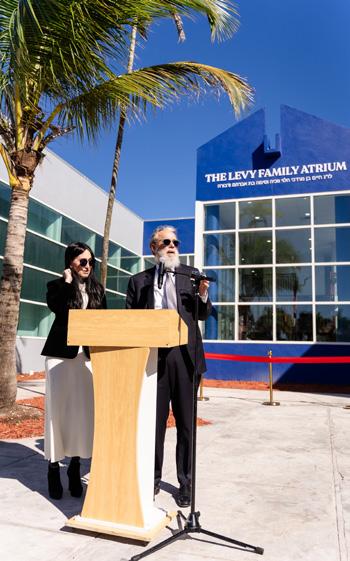
Hundreds of happy students and supporters of Mesivta Lubavitch Miami gathered earlier this month to cut the ribbon on the yeshiva’s brand new, 3-acre, $10 million campus!
Centrally located in Miami Gardens, just minutes away from Lubavitch Educational Center’s boys and girls schools, the new facility will provide much-needed space for the rapidly growing Mesivta to thrive.
“Our mesivta has seen tremendous growth since LEC first purchased the property five years ago,” says Rabbi Motti Schurder, menahel. “This year we have over ninety bochurim, ka”h, and we’re bursting at the seams. This new campus, coupled with recent new hires of additional maggidei shiurim and mashpi’im, allows us to continue growing and be equipped to meet the needs of our students.”
The state-of-the-art facilities spare no finishes with spacious classrooms, a 180-bed dormitory, a beautiful on-site mikvah, and an ample dining hall. A grand wooden aron kodesh, handcrafted by Nissim Boaron and donated by Yaakov and Ita Brafman, graces the well-lit beis medrash. Wide windows cover the entirety of the outward-facing walls, welcoming in the bright Florida sunshine. Coffee stations, recreation rooms, and future sports fields promote the bochurim’s physical wellbeing. Nothing is lacking.
After hearing from Rabbi Leib Schapiro, Rosh Yeshiva of Miami’s Yeshiva Gedolah, and cutting the ribbon, the assembled filed into the hall to complete a new sefer Torah sponsored by Motti and Miri Levi and their children, Yaniv and

Taryn Levi, in loving memory of their mother and grandmother, Sima, on her first yahrzeit. Amid joyous song and dance, the new Torah was then welcomed to its new home via the imposing atrium entrance, also dedicated by the Levi family.
“Our community really rallied to make this happen,” says Rabbi Benjy Korf, LEC’s Head of School. “We are incredibly grateful to our generous donors for their ongoing support and for always pushing us to reach higher.”
The campus is a testament to the generosity of dozens of kind supporters and their faith in the mesivta’s vision. Many chose to dedicate their contributions to loved ones who serve as an inspiration to those around them.
Continuing a proud family tradi-
tion of supporting LEC, David and Eda Schottenstein gave the first donation toward the acquisition of the property. During the event, they formally dedicated the modern dormitory residence in honor of David’s grandparents, Jerome and Geraldine Schottenstein.
The educational building was named for Dovi Fellig, of blessed memory, by his parents, Zalman and Mimi Fellig. “A building is not defined by its walls but by its foundation,” said Mr. Fellig. “Looking at this beautiful new Dovi Fellig campus, we remember that the true foundation is not concrete or steel but the neshama of a young man whose name it now carries. We are not only opening a building, we are establishing a home where Dovi’s light will continue to shine, guiding the next generation of bochurim.”
The cafeteria, fittingly named for Reb Avrohom Aharon and Rivka Rubashkin, known for their unparalleled hachnasas orchim, was generously sponsored by their daughter Mrs. Guttal Goldman and family. As for the Meir and Chyena Avtzon Beis Medrash: “My grandparents fought for a proper, Chassidishe chinuch with mesiras nefesh in Russia and here in the United States,” says Chyena Friedman who donated the Beis Medrash with her husband Velvel. “They would be amazed to see how far we’ve come, where what was once underground is now proudly and openly housed in such a beautiful, big building.”
Additional major support came from Mendy and Chanie Fischer who sponsored Mikvah Mei Menachem, Yechezkel and Yehudis Srulevitch (a level of classrooms), Chaim and Rochel Schochet and Yossi and Ayelet Bortunk (classrooms), and Eyal and Leah Anavim (coffee corner). The campus’s future sports fields were sponsored by Zalman and Pessie Schochet.
Architecture notwithstanding, the yeshivah prides itself primarily on its soul. Eda Schottenstein pointed to the chinuch found at LEC as the reason for its success. “You can always buy an education but you can’t buy yiras shomayim. I can tell you from experience that
LEC provides an excellent academic education but more importantly, the ability to build a true relationship with Hashem.”
The Mesivta’s growth in size and space has come alongside the bo-

churim’s continuous growth in learning and chassidishe hanhaga. Daily shiurim in nigleh and chassidus are complemented by ongoing farbrengens, mivtzoyim, and special programs and initiatives run by the bochurim shluchim.
“Every bochur has different strengths and abilities and it’s up to us as mechanchim to develop them,” says Rosh Mesivta Rabbi Eily Smith. To that end, the yeshiva implements a unique four-tier class placement system with defined academic goals for each level. “At the end of the day, we want every bochur to feel challenged and be empowered to progress according to his capabilities.”
“With Hashem’s help we will fill this beautiful campus with bochurim eager to learn and grow into true Chassidim, who will reach their fullest potential in a Chassidishe environment,” says Rabbi Korf.
LEC thanks all those who worked tirelessly on this project, including Rabbi Mencham Kozlovsky, Rabbi Mendy Korf, architect Jaime Shapiro, Rabbi Mendy Katz, Rabbi Yossi Zavdi, Boruch Sandhaus, Yossi Rudd, and Menachem Mendel Korf; and those who organized this beautiful event including Ms. Shayna Bortunk, Mrs. Dvora Brand, and Mrs. Tzivi Schurder.

OU Kosher Rabbanim Field Thousands of Consumer
On any given day, Rabbi Zvi Nussbaum, the rabbinic coordinator responsible for managing OU Kosher’s year-round consumer hotline, fields about 150 kashrus-related phone calls. With less than a month until Pesach — OU Kosher’s busiest season — that number will double in the coming weeks, as Yom Tov-based shaylos stream in from Jews worldwide. Along with Rabbi Nussbaum, OU Kosher Rabbinic Coordinator Rabbi Chanoch Sofer, also known as the Webbe Rebbe, is poised to address over 3,000 Pesach-themed questions expected to arrive via email.
“We’re the only hashgacha with a live hotline, and it’s our pleasure to serve the tzibbur,” says OU Kosher Managing Director of Marketing and Community Relations Rabbi Eli Eleff. “Each year, to meet the high demand for Pesach support, an additional 30 rabbanim join our team in the week before Yom Tov, and hotline hours are greatly extended. For more detailed guidance, consumers are also encouraged to consult our OU Guide to Pesach, our dedicated Pesach website, oupassover. org, and the OU Kosher app.”
We asked Rabbi Eleff to share some frequently asked Pesach questions posed by consumers, and OU Kosher’s teshuvos:
May I buy any kosher raw fish for Pesach, or does it need to be labeled with an OU-P?
OU Kosher-certified raw frozen fish is acceptable for Pesach, as
Pesach-Related Shaylos
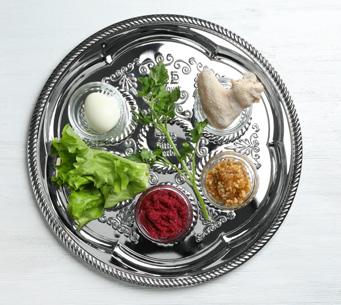
long as it is plain, additive-free, and neither smoked, spiced nor seasoned. A detailed list of acceptable brands is available at https://oukosher.org/passover/ food-items/#fish.
What are the guidelines for purchasing meat and poultry?
While OU Kosher-certified factories always pack unprocessed raw meat and poultry on equipment that is chametz-free year-round, ground, cooked, or broiled meat and poultry may be processed on equipment that also handles chametz products. Accordingly, the following guidelines should be observed:
• Raw meat and poultry sold in original, factory-sealed packages may be used for Pesach when bearing an OU (even without an OU-P).
• Meat and poultry that are repackaged by a local supermarket or butcher should not be used for Pesach, unless there is a special Pesach program in place. For information regarding specific venues, contact your local supervising agency.
• Ground, cooked, or broiled meat and poultry (including liver) are only kosher for Pesach when bearing an OU-P or another reliable supervision. Exceptions to this rule are listed in our OU Guide to Pesach.
My pet’s food contains chametz. What should I do for Pesach?
Since it is forbidden to own or benefit from chametz during Pesach, food that contains chametz may not be fed to pets. However, it is permitted to give pets food that contains kitniyot.
If one is unable to procure pet food that does not contain chametz, some rabbinical authorities allow for a sale, which would transfer the ownership and responsibility of caring for your pet to a non-Jew. Consult your rabbi for guidance.
May I buy Kirkland brand bottled water for Pesach?
Kirkland Purified Water with minerals is approved for use on Pesach, but only when purchased prior to the start of Pesach.
I take vitamin C (ascorbic acid) daily. May I take it on Pesach?
Non-chewable, unflavored OU Kosher-certified vitamin C tablets or pills are acceptable for Pesach, since non-chewable pills are inedible, and swallowing pills for medicinal purposes is not considered eating chametz. Moreover, since most ascorbic acid manufacturers do not produce it from wheat

glucose, one can generally assume that the vitamin C pill being consumed is from that majority.
In cases when an OU Kosher-certified vitamin C tablet is unavailable, any unflavored tablet, pill, or vegetarian capsule of vitamin C is acceptable during Pesach.
Chewable vitamin C tablets or other flavored vitamin C supplements should be avoided for Pesach. In addition to the issue of the ascorbic acid, a number of other ingredients used to compose these products can be chametz as well.
As the primary resource for
consumers seeking halachic guidance both throughout the year and during Pesach, Rabbi Eleff says OU Kosher takes its role very seriously.
“Questions come in from individuals, caterers and rabbanim from around the world,” says Rabbi Eleff. “We understand that sometimes issues come up at the last minute. We once got a call from Lubavitch shluchim in Poland right before Pesach, and we were able to provide the information they needed in time. OU Kosher is happy to be there for Klal Yisrael when they need it most.”
OU Kosher Chief Operating Of-
ficer Rabbi Moshe Elefant adds, “The OU Kosher team finds nothing more rewarding than connecting with the community through kashrus questions. Seeing people eager to learn and do what’s right for Pesach fills us with joy, and we look forward to repeating the experience next year, im yirtze Hashem.”
OU Kosher’s hotline (212-613-8241) will be open for extended hours in the week before Pesach (9:00 a.m. to 6:00 p.m.), including on Sunday (10:00 a.m. to 1:00 p.m.) and erev Yom Tov (10:00 a.m. to 1:00 p.m.). It will also be open on Chol Hamoed. Contact OU Kosher’s Webbe Rebbe at kosherq@ou.org, and download the OU Guide to Passover at oukosher.org/passover/ download-passover-guide-signup.








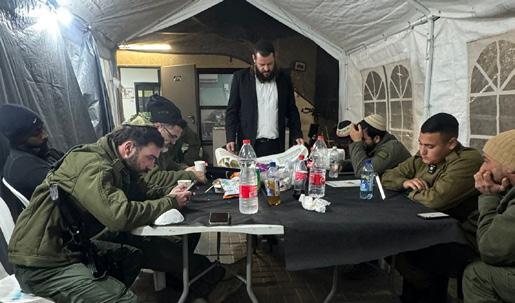
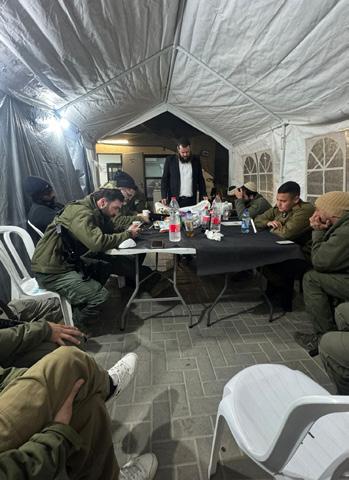
As Israel marked Purim this year, the holiday of resilience and survival unfolded against the backdrop of war. While families gathered to read the Megillah, YATAR’s fighters did the same - inside a forward outpost near Gaza, in full combat gear, between operational briefings. In the photographs, our soldiers can be seen reading the Megillah at a military position on the Gaza border, embodying the same message that has carried the Jewish people for generations: even under threat, we stand firm.
YATAR is Israel’s fifth national rescue organization and the country’s only compact tactical ATV unit operating as a rapid response force. Established in 2016 following a series of deadly terror attacks, the unit serves as a first responder to a wide range of threats, from terrorist infiltration and weapons smuggling to battlefield evacuation and emergency medical rescue. Since October 7, YATAR has evacuated and saved over 260 wounded soldiers from active combat zones.
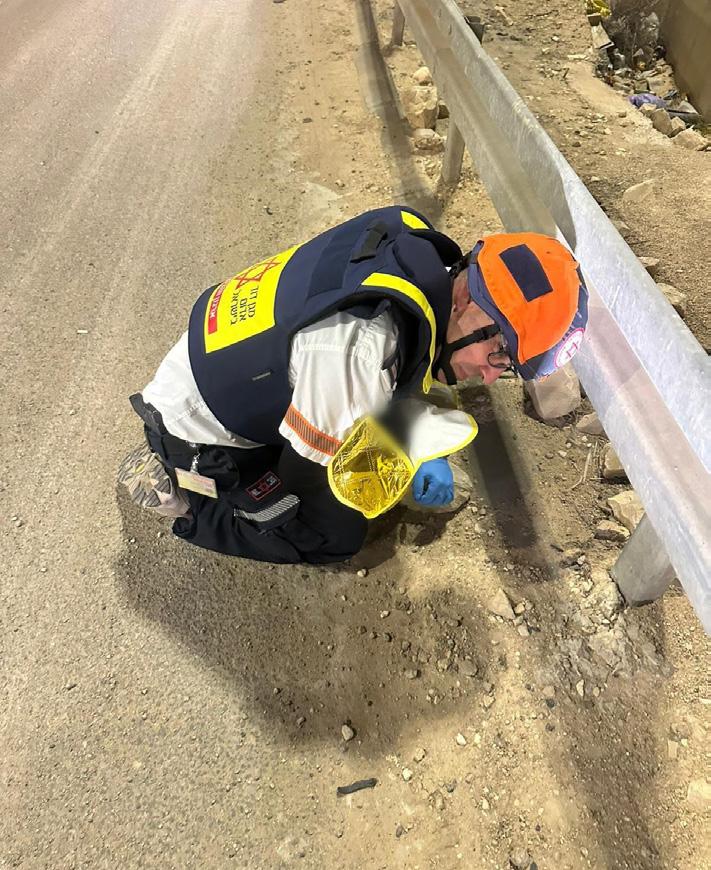
This Purim, our fighters were deployed across multiple arenas as part of Operation “Lion’s Roar.” In one image, YATAR personnel are seen at the scene of a missile strike in the Judean Desert, caught during routine operational activity without the ability to take cover. In another, they are working at the site of a direct missile impact in Beit Shemesh, assisting emergency forces and securing the area. These are not staged moments. They are real time responses to real threats.


YATAR operates in some of Israel’s most challenging terrains, using agile all terrain vehicles that allow rapid access to off road and hard to reach locations where conventional vehicles cannot operate. Several of these vehicles have been converted into field ambulances, enabling immediate evacuation and life saving medical intervention under fire.
The reality on the ground is clear. The threats are increasing. The operational demand is con-

stant. To continue saving lives, YATAR urgently requires additional vehicles, protective equipment and medical gear. Every tool directly translates into response time. Every response time can mean the difference between life and death.
For media inquiries, partnerships, or to support YATAR’s life saving mission: Staff sgt. (res.) Rom Cohen WhatsApp: +1 212 444 1709 romcohen@yatarisrael.org

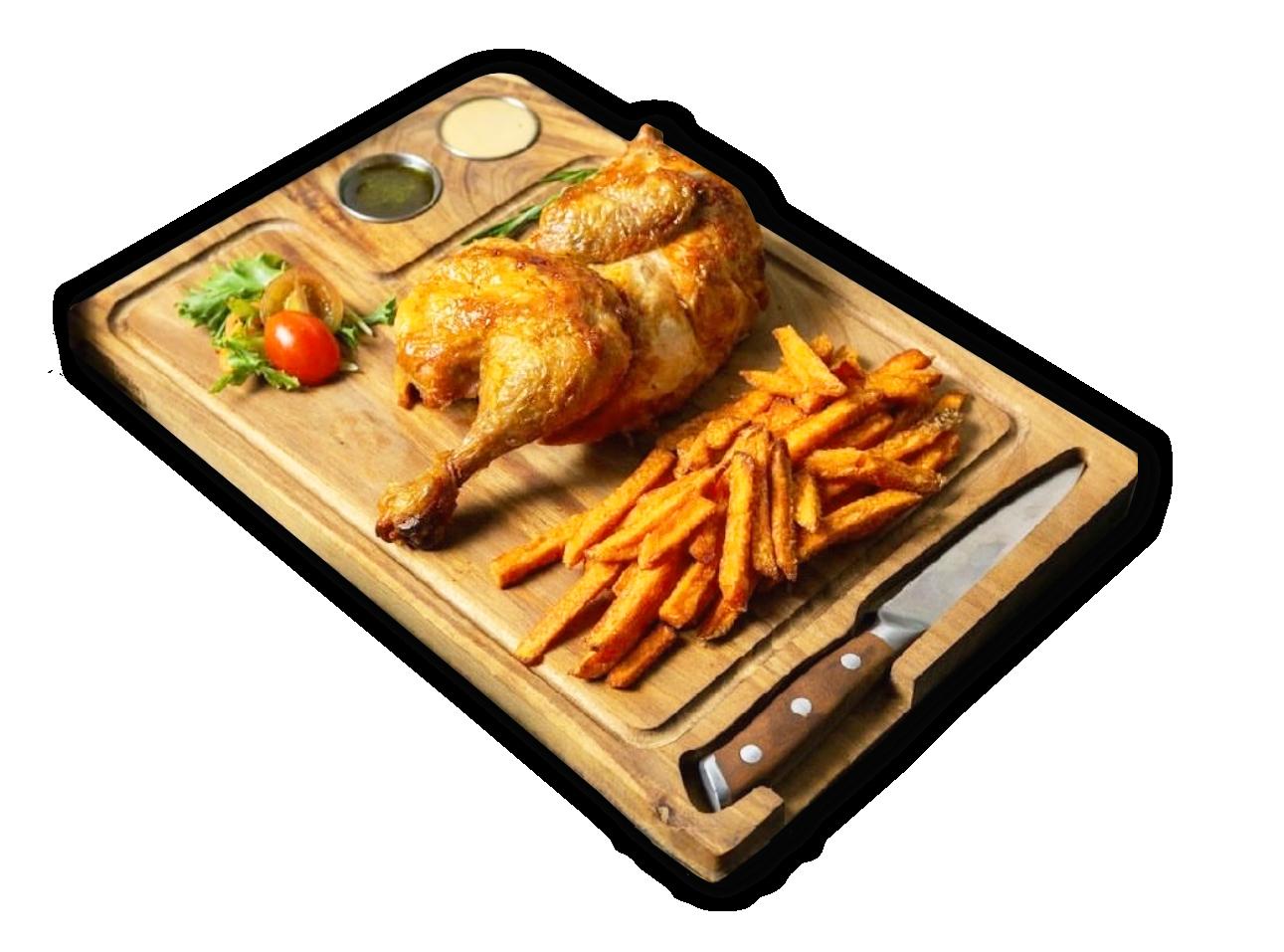
Sunday to Thursday: 12pm - 10pm Friday: 11am - 3:30pm OPENING HOURS Scan the code to order!


By Dr. Chaim Y. Botwinick
Throughout this past Shabbat Zachor we were hearing rumors of an impressive pre-emptive strike against the Republic of Iran.
Not knowing the full extent of the rumor, we anxiously waited until after Shabbat to hear more specific details.
When Shabbat concluded, we heard about lethal attacks against the leadership of the Iranian Republic and that the United States Army together with Israel’s IDF successfully eliminated the top leadership regime of Tehran.
That Motzei Shabbat, we all felt a bit more secure when we actually heard that the head of the snake of the Iranian regime was finally severed, and that we were on the eve of a new reality in our perpetual battle against Iranian inspired global terrorism.
When we awoke the next morning, we were shocked to hear the devastating news about a direct ballistic missile hit on a Beit Shemesh shul and an adjacent bomb shelter with numerous civilians killed and many more severely injured, many of whom were children (HaShem Yerachem).
Since that horrifying moment, hundreds of ballistic missiles rained down on Israeli population centers, as the United States and Israel intercepted as many missiles
as possible while striking strategic military installations and missile launchers throughout Iran.
While writing this post, we are hearing and seeing in real time (via cable news and social media feeds) that many communities throughout Israel are experiencing significant injuries and physical/ structural damage resulting from a continuous barrage of missiles on Israel.
In response to these horrific events, we were mitpallel with special tefillot and tehillim that acheinu bnai yisrael will be shielded and protected from these relentless deadly missile barrages.
As I now watch and observe the terrifying exchange between the United States military, the IDF and the Iranian regime, from 6,000 miles away, I cannot help but think about the hundreds of thousands of achienu bnai yisrael who have sacrificed so much to live and settle in Eretz Yisrael. They are indeed our first-line responders who are now living and protecting our nation in ways unimaginable,
With many of our children, grandchildren, relatives and friends currently living or studying in Israel, every time we hear about an Iranian missile landing into an Israeli city or neighborhood, our hearts pound, our nerves rattle and our thoughts begin to race uncontrollably as we pray to HaShem that there were no casualties.
Today (March 4th) as I write this blog, is Shushan Purim.
Although the number of Irani-
an ballistic missile hits on Israeli population centers have Baruch HaShem diminished over the past twenty-four hours, Israel is still in the line of fire and in significant danger, especially as Hezbollah in Southern Lebanon began an offensive against Israel.
This offensive is now requiring the introduction of IDF “boots on the ground” in Lebanon – placing our IDF soldiers in heightened danger. We pray for their continued safety.
What makes the current matzav in Israel even more intense are the thousands of Israelis who are trying desperately to return home to Israel and many Americans who are unable to return home to the States. This reality becomes even more dramatic as the US State Department is urging American citizens to leave Israel and other Gulf States.
It is interesting to note that Israelis unlike other people trapped in the fog of war are desperately seeking to return home to Israel as opposed to staying away,out of danger.
The worry, fear and angst we all feel in the States during this trying defining moment in Israel is complemented by our special tefillot, and the continous texts and cell phone calls we make to family and to friends in Israel.
We make these calls in order to help us cope with the uncertainty of what achienu are experiencing in Israel and to let our families, and friends know that we are

thinking about them 24/7. These Chizuk Calls are beyond essential for Israelis and for us living in the States.
So, what else could or should our community in the States be doing in response to the crisis?
Impact of the War on our Jewish Community and the Role of our Day Schools and Yeshivot
Throughout Jewish history, our people have always paid a very high price for peace, safety and survival. In fact, it is through these significant trials and tribulations that we as a nation fought our enemies and against those who were committed to our complete annihilation.
Friends, the war with Iran which we are now experiencing in real time is no acceptation.
It may not a coincidence that this war with Iran broke out during Shabbat Zachor. In fact, the story of Purim as repeated in Megillat Esther occurred in Persia and parallels many similarities with today’s reality with Iran – especially our battle against the evil hatred of Haman a direct decedent of Amalek.
As Jewish day school and yeshiva educators and teachers we are obligated to respond to this matzav. In fact, our educational community has a very special role, obligation and responsibility embedded in bitachon, emuna and acts of chesed.
Not unlike other crises which our people have confronted over the centuries, the one response which is in our control is the power of tefilla, and the performance of mitzvot and acts of chesed.
These are activities which our community and schools should undertake during today’s crisis, During today’s existential strug-
gle, it is imperative that we ensure that we strengthen our tefillot, expand our mitzvot, and deepen our acts of chesed.
We must also redouble our efforts to perform the mitzvah of ben adam lchavero and to continuously strive for increased ahavat chesed and ahavat chinam.
It is imperative that our yeshivot and Jewish day schools confront this defining moment by teaching our students about the centrality of eretz yisrael in the Torah, about bitachon and about our resilience and hope anchored in our emuna.
Many of our students, teachers and administrators have families living in Israel. The stress, strain and daily uncertainty takes its toll on these families, at home, in our communities and in our classrooms.
Not unlike other significant crises, this reality impacts our schools and their students in a variety of ways. It is therefore imperative that our yeshivot and day schools engage specially trained counselors in order to help students, teachers and staff unpack their feelings, fears and emotional concerns about the war and its impact.
In addition, our schools must redouble their efforts in providing their student body and faculty with divrei chizuk. The engagement of outside speakers to engage students and faculty in this process goes a long way and can be very powerful in order to help our students and faculty.
The provision of professional development training opportunities for teachers and rabbeim is also essential. To be sure, not all faculty or staff are trained to help students deal and cope with this crisis. Their ongoing training will
be paramount.
Finally, all of our yeshivot and day schools must motivate and encourage their students to redouble their efforts in performing chesed projects and mitzvot. These may include, special assemblies to recite tehillim, greater emphasis on tefila and kavana, more volunteering in the community, and the dedication of Torah learning and shiurim to the millions of people of Israel who are now, as we speak, sacrificing so much in order to defend our country, homeland and birthright.
This would also be a wonderful opportunity to teach our students about the significance and centrality of Israel to our lives.
Each one of us has a very unique and special role. We must seize this opportunity and turn this crisis into teachable moments for our students and for our community.
As we do so, we pray to HaShem that the war and hostilities will end soon and that we will all be sitting together as family in peace and harmony at our upcoming Pesach sedarim.
May HaShem continue to bless, protect and watch over acheinu bnai yisrael and keep them secure and safe.
About the Author:
Dr. Chaim Botwinick is a senior executive coach and an organizational consultant. He served as president and ceo of the central agency for Jewish education in Baltimore and Miami; in addition to head of school and principal for several Jewish day schools and yeshivot. As an Influence, he has published and lectured extensively on topics relating to education, resource development, strategic planning and leadership development. Dr. Botwinick is co-founder of LEV Consulting Associates and producer/host of the Chinuch Horizons podcast series. He is author of “think Excellence”, Brown Books, 2011



1. Vinegar is a natural cleaner. Its acidity helps break down grease, soap scum, and mineral deposits.
2. Baking soda removes odors. It absorbs smells instead of just covering them up, which is why people keep it in the fridge.
3. Lemons can disinfect surfaces. The citric acid in lemons helps kill some bacteria and leaves a fresh smell.
4. Microfiber cloths clean better than regular cloths. Their tiny fibers trap dust and dirt without needing a lot of cleaning chemicals.
5. Hot water helps dissolve grease faster. Heat breaks down oils so they can be washed away more easily.
6. Salt can act as a scrubber. It’s a gentle abrasive that helps
remove stains from pots, pans, and cutting boards.
7. Toothpaste can clean more than teeth. Non-gel toothpaste can polish silver, remove small stains, and clean sneakers.

8. Steam is a powerful cleaner. Steam can loosen dirt and kill many germs without using chemicals.
9. Dryer sheets can remove dust. Their anti-static properties help pick up dust from surfaces like baseboards and blinds.
10. Regular cleaning can improve indoor air quality. Removing dust and allergens helps keep the air inside your home healthier.



















There’s something timeless about a hot corned beef sandwich. Piled high with tender, flavorful beef and served on fresh rye bread with mustard, it’s the kind of comforting deli classic that never goes out of style. Perfect for lunch, Shabbat leftovers, or a quick family dinner, this recipe brings the authentic deli experience right into your kitchen.
Ingredients
• 1 lb cooked corned beef, thinly sliced
• 4 slices rye bread
• 2 tablespoons yellow or deli mustard
• 2 tablespoons margarine
• ½ cup sauerkraut (optional but traditional)
• 4 slices pickle (for serving)

1. Warm the Corned Beef
Place the sliced corned beef in a skillet over medium heat. Add a splash of water and cover for 2–3 minutes until heated through and tender.
2. Toast the Bread
Spread butter or margarine on one side of each slice of rye bread. Toast in a pan until golden and crispy.
3. Build the Sandwich
Spread mustard on the inside of the toasted bread. Pile the hot corned beef generously onto one slice. Add sauerkraut if desired.
4. Press and Heat
Close the sandwich and place it back in the skillet for 1–2 minutes, gently pressing so everything warms together.
5. Serve Slice in half and serve hot with pickles and chips.
Chef’s Tip
For an authentic deli flavor, steam the corned beef instead of pan-heating it. Place the slices in a steamer basket for 3–5 minutes until soft and juicy.
Anxiety ~ Confusion ~ Grief ~ Trauma ~ Stress ~ Self-esteem
Your struggle is not the essence of who you are.
Let’s discuss & explore Narrative Exploration for women of all ages.
Julie Bernstein, MSW Trained & Supervised (929) 344-2535
UptownGirlHeadwear.com
Sweat In Style!!
Quality Headscarves • Sun Visor Scarves • Cotton Caps • Snoods • Pre Tied Bandanas & Tichels For Fashion • For Frum • For Hair Loss
Made in USA (718) 614 9604
The new ‘Noble Wines’ catalog has arrived, featuring our latest selection of premium wines. Request your free copy by mail. Just text or email your address and we’ll deliver it straight to your door.
Text: (845) 716-8306 or email: news@noblewinesinc.com
Seeking 5–10k SF warehouse within one hour of Miami port. Must have 1–2 loading docks. Please call Nathan at 845-764-1755.
DIRECTORY & CLASSIFIED
List your local business, services available, real estate opportunities, Help Wanted, & more!
Basic listing: $10/weekName, number and email address
Enhanced listing: $25/weekUp to 25 words
(additional words $1/each)
Deadline:
Tuesday at 4pm for next week's issue
Contact: andrea@tsfcommunityvoice.com
In-Home Private Pilates for women to strengthen, realign, and ease pain. Personalized sessions and private events + Kosher Healthy Meal Prep. WellnessRena.com 305-404-3904 | WellnessRena@gmail.com
Computer, Laptop, iPad & iPhone Repair 954-367-3215 Free-Pickup-in-Aventura.FL
Coolstar Air Service llc A/C Install & Repair (954) 200-1369 | coolstarair@yahoo.com
IT Tech Support & Low Voltage Services 561-331-1680 | barry@navonpro.com
MOVE TO NORTH FLORIDA
Most affordable housing in the entire state Esformes Hebrew Academy of Ormond Beach
NOW HIRING
• Elementary teacher • Office manager • School Event Coordinator • Drama & Music, Coach Part-time and full-time positions
Quiet suburb School and shul community EsformesHebrewAcademy.org Email resume to chanidaytona@gmail.com
Bringing Sensitivity To The Mental Health Needs Of The Jewish Community RAFAEL JAMES LCSW PSYCHOTHERAPIST (561) 903-2950
EMAIL: centerforempathyandhealing@gmail.com Florida Medicare & Florida Blue accepted
Top Handyman & Construction 848-318-6976, nikabrmv711@gmail.com
To place a Business Directory/Classified Listing contact: andrea@tsfcommunityvoice.com







By Glen R. Golish
Last week we discussed how real estate can build tremendous wealth but requires thoughtful planning to preserve it across generations. For many families, apartment buildings, commercial properties and development projects represent decades of hard work and disciplined investment.
Yet there is a challenge that many real estate families overlook until it is too late: liquidity at death.
Real estate portfolios often create significant wealth on paper. But when a family’s assets are heavily concentrated in property, that wealth may be difficult to access at the moment it is needed most.
This becomes particularly important when estate taxes enter the picture.
When a patriarch or matriarch passes away, the estate does not only transfer assets. It may also trigger tax obligations, debts and administrative costs that must be paid within a relatively short time frame.
The problem for many real estate families is simple.
Buildings cannot be divided like bank accounts.
If most of the estate is tied up in properties, the family may face a difficult choice. Either they must find liquidity elsewhere or they may be forced to sell assets to satisfy estate obligations.

Selling under pressure rarely produces the best outcome. Properties that were meant to remain in the family for generations may need to be sold simply to create cash.
In some cases, heirs may even need to sell properties at unfavorable market conditions.
Real estate is powerful because it appreciates and generates income over time. But that same strength can become a weakness during estate transitions.
Rental income may provide long-term stability but it does not always create immediate liquidity. Loans may exist on properties, refinancing may take time and markets may not cooperate when a quick sale is required.
Without planning, families can find themselves in a situation where their greatest asset also becomes their greatest limitation.
The families who preserve real estate portfolios across generations rarely rely on property value alone. They plan ahead for liquidity events.
This may include structuring ownership properly, coordinating estate documents and introducing strategies that provide immediate cash when needed.
Life insurance is often one of the most effective tools in these situations. When properly structured, it can create liquidity at the exact moment estate obligations arise. Instead of selling a building to cover taxes or expenses, the family has access to cash that allows them to maintain control of the portfolio.
The goal is simple: preserve the properties while meeting financial obligations.
Real estate portfolios are rarely just investments. They represent family history, legacy and identity. Many families want the next generation to inherit not just the wealth but the business itself.
But preserving that legacy requires planning beyond appreciation and rental income.
Liquidity planning ensures that

heirs are not forced into rushed decisions. It allows families to navigate estate transitions calmly and strategically.
Real estate can create extraordinary multigenerational wealth. But when estates become heavily concentrated in property, the risk of illiquidity grows.
Estate taxes and administrative obligations do not wait for market conditions to improve.
Families who prepare for these moments protect not only their wealth but also the legacy attached to it.
Because the goal is not simply to build real estate wealth.
At G Wealth Strategies we ensure that the properties a family worked decades to acquire remain in the family for generations to come.
About the Author
Glen R. Golish is the Founder and CEO of G Wealth Strategies and a Forbes-recognized Top Financial Security Professional. He works closely with families on comprehensive financial and estate planning, including cross-border considerations for those navigating U.S. and Israeli planning needs.
Important Disclaimer
Please seek qualified legal and tax advice before implementing any planning strategies, in conjunction with guidance from G Wealth Strategies.
Contact Information
3010 N. Military Trail, Suite 318, Boca Raton, FL 33431
Office: 561-869-4600 | Cell: 561-239-9400 www.gwealthstrategies.com
Investment Advisory Contact: Yosef Benson yosef@gwealthstrategies.com, 786-376-3548
Property & Casualty Insurance Contact Rafi Benzaquen rafi@gwealthstrategies.com, 516-476-6742


















By Shmuel Shayowitz
A few weeks ago, a client called me from the middle of a renovation project. He was very frustrated, to say the least. The property looked like a war zone. His expenses were rising by the day, and for the first time since he began this investment venture, he was doubting whether the property would ever pan out as he envisioned.
I told him, “You’re in the messy middle. Every great outcome experiences this part… Just keep going!”
We often glamorize success. The gleaming new construction home, the thriving business with company merch everywhere you look, and the extravagant jet-setting lifestyle of your friend or neighbor. People see what they want to see, but the messy middle is where life really exists. It’s where you’re balancing decisions that feel impossible. It’s where your effort feels endless, and the outcome is still uncertain.
It’s the same in personal finance and your day-to-day money mindset.
For the average person, it’s about getting started with any money-making venture you imagine, even though you have no idea what the result will be. It’s about trimming small expenses without any immediate gratification. It’s about investing consistently during slow markets, or
chipping away at debt without seeing any gains. Or maybe it’s about investing in a real estate market that feels sluggish or still.
The key is knowing that this period of unseen effort is where your future gains are born.
So wherever you are up to in your endeavour… embrace the process. Stick to your plan, knowing that today’s discipline leads to tomorrow’s versatility.
You need to know that in most cases, you won’t see the outcome immediately, and your diligence today is setting you up for the future. When the revealed success comes, whether it’s a major return on an investment or simply the peace of mind of financial freedom, it will be the result of all the “messy middle” steps you took in the dark.
So, if you’re in the thick of it right now - whether it’s a renovation, a financial plan, or a life transition - trust that it’s part of the journey. The redemption moment will come. And when it does, you’ll know you earned it through patience and persistence.
We’ve just passed the holiday of Purim, where the obstacles were overwhelming, and the miracles were hidden until the very end. Now, we are heading toward Pesach, where the final redemption had opened miracles for all to see along the way to our freedom.
The lesson between these two
holidays is simple but powerful. Salvation rarely begins with explosives. It starts quietly, behind the scenes, through effort that often feels unnoticed and uncertain. Only later do we recognize that those small decisions, disciplined choices, and patient steps were building something far greater than we could see at the time.
The open miracles of Pesach don’t replace the hidden ones of Purim, they grow out of them. And the same is true in life, in money, and in investing. What feels like the messy middle today may very well be the groundwork for the breakthrough you recognize tomorrow.
Shmuel Shayowitz (NMLS#19871) is a highly regarded Real Estate & Finance Executive, Writer, Speaker, Coach, and Advisor. He is President and Chief Lending Officer of Approved Funding, a privately held national mortgage banker and direct lender that has facilitated over $3 billion in mortgage funding. Shmuel has over twenty years of industry experience and holds numerous licenses and accreditations, including certified mortgage underwriter, licensed real estate agent, residential review appraiser, and accredited investor, to name a few. Shmuel has successfully navigated through many changing markets and business landscapes, making his market insights and experience well-coveted within the real estate industry. He can be reached via email at Shmuel@ approvedfunding.com.







4 bedrooms, 3 baths, 1,851sf
$7,800/M

3 bdrms, 2 full baths, Pool, 1,905sf $4,750/M H O L L Y W O O D

The Olympus- 1-2 bdrms, 1.5-2 baths, 1000-1400sf Multiple Units available Starting at $199K
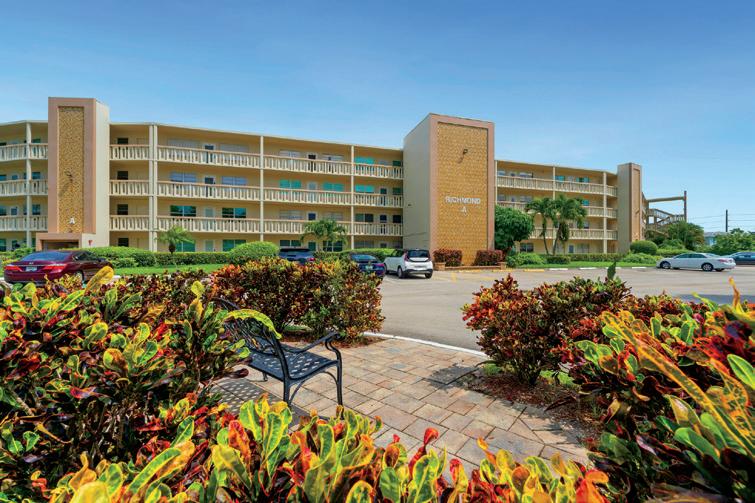
SOLD
6 bdrms, 3.5 baths, 4,200sf, lot size 14,736sf
$1.995M

2 bdrms, 2 full baths, 1,000sf $239K
RENTED
The Spiaggia- 1 bdrms, 2 full baths, 927sf

$3,500/M