Registered under the Co-operative & Community Benefit Societies Act 2014
Registered by the Scottish Housing Regulator HEP 143
Trust Housing Association Limited is a Registered Scottish Charity No. SC009086
Registered Office: 12 New Mart Road, Edinburgh EH14 1RL
Introduction from our Chair
This is my third year as Chair of Trust and, once again, it has been a busy and rewarding year. Despite ongoing economic challenges, we have continued to invest in our homes and services doing everything we can to support our customers through the persistent cost of living crisis. At the same time, we have remained focused on delivering our Time is Now strategy and growing Trust as an organisation.
For Our Customers
• In 2024/25 we had a Hardship Fund of £70k which was allocated in full throughout the course of the year. The Fund provides assistance with essentials such as food, utility bills, and household expenses and is an important support to those struggling with the cost of living crisis.
• Following investment into the Welfare Benefits Team in 2023/24 the team have continued to support the high number of referrals and increasing demand for this service. As a result of their continued efforts the total financial gain for customers in 2024/25 was an impressive £4m.
• Through our contractors we received £127k in financial contributions to our Hardship Fund and £1.5k in supermarket vouchers which were distributed to customers in our Later Living developments.
Digital Transformation
We continued on our digital journey and over the past year we have introduced a variety of new systems and applications.
• Our Customer Relationship Management (CRM) system was launched in January 2025 which improves the experience for customers contacting Trust.
• MyTrust, our customer portal, was launched in March 2025, giving customers the ability to access a number of services – such as reporting repairs, applying for housing and paying rent –digitally at a time that is convenient for them.
• A new Care & Support system continues to evolve and once implemented it will help to digitise and transform the way in which we provide personal care.
• We have implemented a new customer feedback and engagement application,
supporting the automation and digitisation of surveys and various communications.
• We implemented the recruitment and onboarding module of our new HR System with the final module – talent and performance management – on track to be implemented in the first half of this year.
Our People
At Trust our people are our greatest asset. We are proud to be an Investors in People Platinum employer.
We have many initiatives to help us look after and support our colleagues – such as a popular counselling service and our virtual ‘coffee and chat’ sessions.
We are also progressing with a Menopause Support Group and a Men’s Mental Health Group.
Our Mental Health Supporters and Employee Wellbeing Groups continue to support our colleagues and our Employee
Forum has expanded and completed its second successful year in helping to shape people-related initiatives and acting as the voice of our employees.
New Homes
Growth continues to be a strategic priority for Trust as we near the end of the “Time is Now” strategy and look ahead to developing a new strategy for 2026 onwards.
We were delighted when our Langlands development of 46 new homes in Govan won Small Social Housing Development of the year at the at the Scottish Home Awards.
With the aid of significant levels of Government grant we continue to acquire, either in small groups, or individual purchases, homes that are coming into the social rented sector. These are a combination of new build homes or second hand homes on the open market.
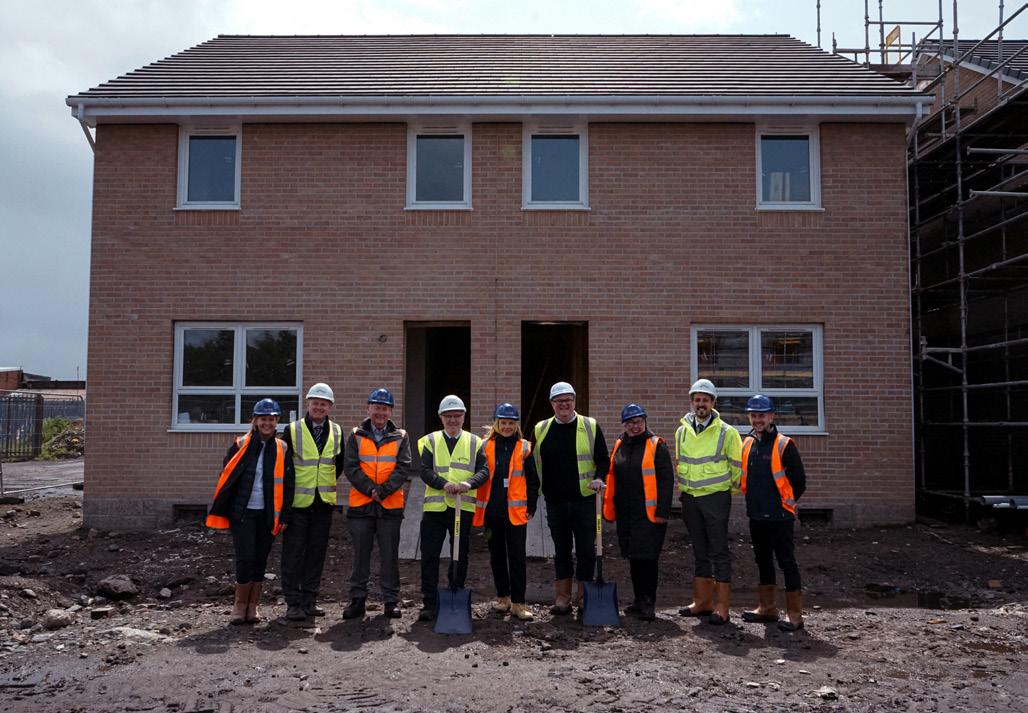
The Reema Road new build development in Bellshill is progressing well and will deliver 48 new homes for customers by February 2026.
We also continue to develop a pipeline of new build and other growth opportunities.
Improvements to Homes to Deliver Energy Efficiency
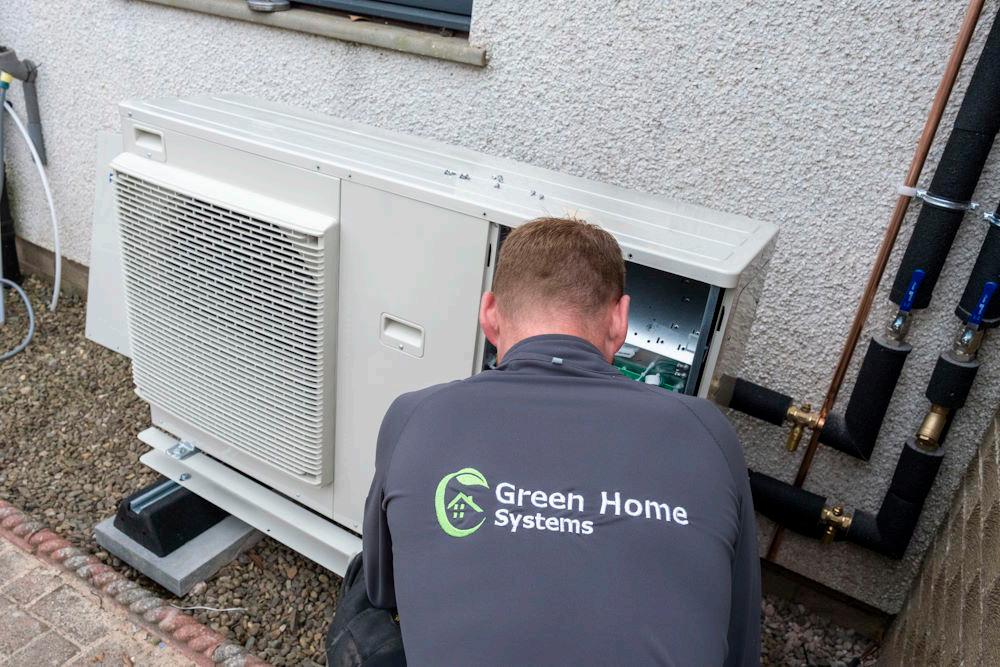
As the Isle of Arran’s largest social housing provider, with almost 300 homes, we have been making a significant impact on the island’s energy efficiency landscape over 2024/25.
In Summer 2024, a transformative retrofit programme was launched, with over £3m of investment upgrades across 252 homes on the Island, 60% of which were classified as ‘hard-to-treat’.
Delivered in partnership with Ayrshire-based ‘Green Home Systems’, and paid for with a significant contribution in the form of grant funding the projects multi-measure improvements included the following upgrades:
• Underfloor, loft, and roof insulation
• High heat retention storage heaters
• Solar PV systems
• External battery storage
• Air source heat pumps
• New ventilation systems
All 252 homes have been upgraded to EPC band B from starting bands of D-F helping us reduce our overall carbon footprint.
The works are already proving a benefit to customers, making their homes warmer, easier and cheaper to heat. The feedback has been incredible and, as a result, we are keen to extend the benefits to as many customers as possible.
Building on the success of the Arran project, plans for a further phase of works across 300 homes in the North and West of the country are underway.
Our Board and Senior Team
I want to express my sincere thanks to our Board members, senior team and all of our employees. Their dedication and expertise have made these achievements possible.
This year, we said farewell to Ian Gunning, who served on the Trust Board for over 3 years. We are grateful for his contributions and wish him well.
We also bid goodbye to Gordon Laurie, who has served on the Trust Board for 9 years, and has contributed greatly to the development of Trust throughout his time on
the Board. We are very grateful to Gordon for his significant contribution to Trust over that period.
Looking Ahead
Trust has accomplished a great deal over the past year. With a clear purpose, strong foundations, and a vibrant culture, we are well-positioned for the future. My heartfelt thanks to everyone who has contributed to our success.
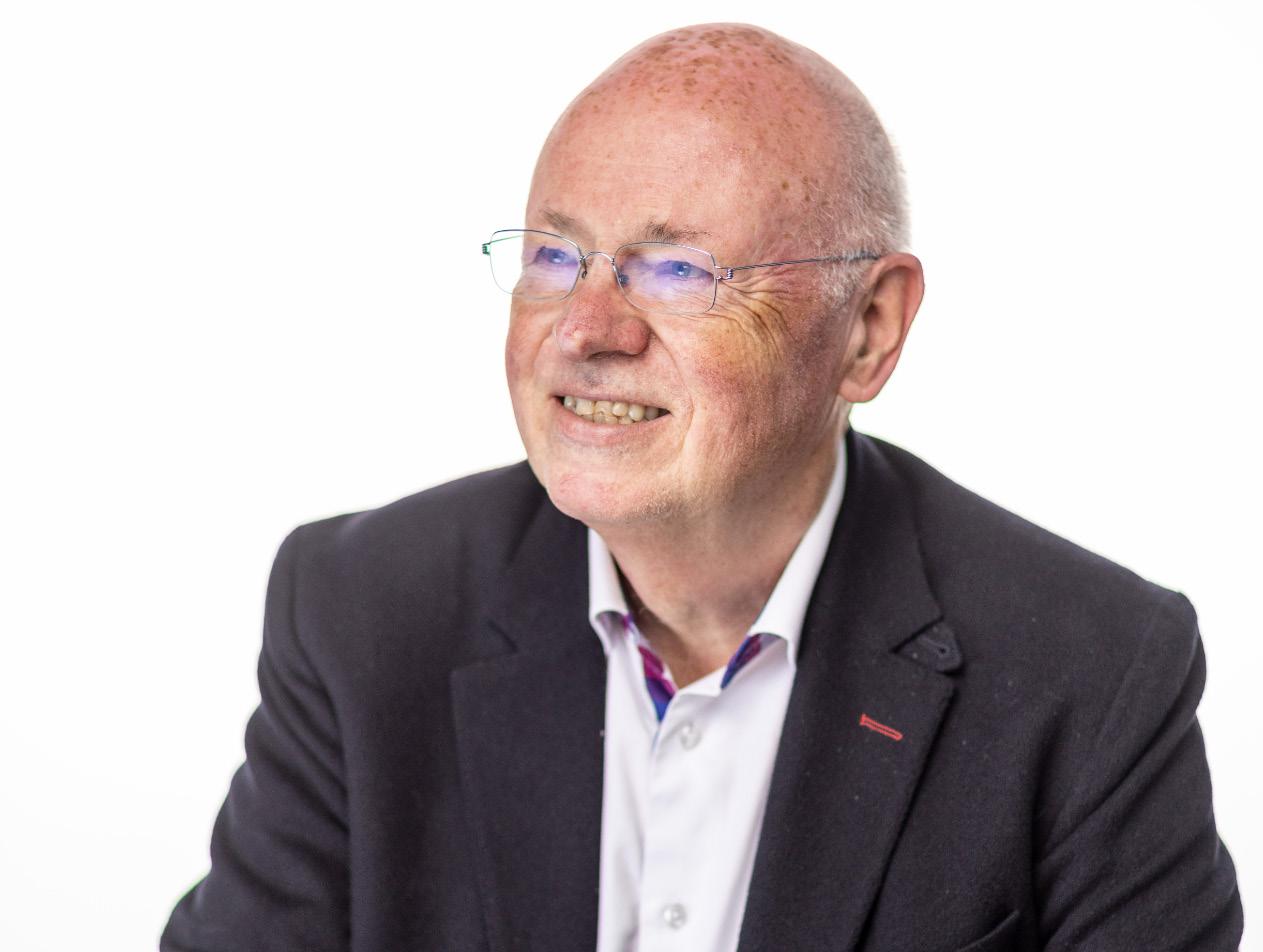
Dr Norval Bryson, Chair
Board of Management Report
Our Business Strategy: The Time is Now
The Time is Now is our five-year business strategy covering the planning period 2021 to 2026. The strategy sets out a bold vision for Trust and is an investment in a sustainable future for the organisation. The strategy is entering into the final year with further significant initiatives implemented over 2024/25 including:
Growth remains a key part of our strategy and we have grown from 2,500 homes to almost 4,000 homes over the last five years or so. This growth is providing homes for our customers of today and the future, and supporting us to keep rents affordable and to invest in our existing homes and services. While we continue to explore strategic partnership opportunities our focus over the last 12 months has been our new build and acquisition programme with 55 new social rented homes added to our portfolio:
• As reported last year, 46 new social rented and energy efficient homes were delivered in the centre of Govan, Glasgow, with our customers moving into their new homes at the beginning of the financial year in April 2024. The £9 million new build project was delivered in partnership with Glasgow City Council and CCG (Scotland) Ltd.
• We also acquired six new build homes from Lovell Homes and a further three second hand homes on the open market. In total bringing nine private homes into the social rented sector with the support of the Scottish Government’s national acquisition programme – aimed at supporting the supply of new affordable homes – and South Lanarkshire, North Ayrshire and Argyll & Bute Councils.
• In addition, we are on site at our current build development in Bellshill, North Lanarkshire and expect our first customers to move in from February 2026. The development will provide 48 new social rented and energy efficient homes - a mix of houses and cottage flats – and is being built in partnership with North Lanarkshire Council, the Scottish Government and Wilson Developments (Scotland) Limited. The £9.3 million project will transform a derelict site close to the town centre and will enhance housing choice in local area.
Our cloud and mobile digital strategy is a critical enabler to delivering the Time is Now and transforming how we work and deliver services to our customers. Our previous investment in modern SaaS applications and cloud infrastructure – replacing our on-
premise environment and legacy systems - has supported the delivery of a number of customer-facing technology initiatives over 2024/25, supporting automation, improved customer experiences and channel shift opportunities:
• Our Customer Relationship Management system went live in January 2025, improving the experience for customers contacting Trust.
• Our customer portal, MyTrust, was launched in March 2025, giving customers the ability to access a number of services – such as reporting repairs, applying for housing and paying rent – digitally at a time that is convenient for them.
• We are in the process of implementing our new Care & Support system, digitising and transforming the personal planning process. Eight developments are live with the programme ongoing through 2025/26.
• We have implemented a new customer feedback and engagement application, supporting the automation and digitisation of surveys and various communications.
• In addition, we implemented the recruitment and onboarding module of our new HR System with the final module – talent and performance management – on track to be implemented by Q1 2025/26.
The Time is Now is underpinned by a commitment to transition to net zero by 2045 at the latest. Our carbon footprint baseline study (for FY 2021/22) was
completed and approved by Board in April 2023 and we are committed to developing our Sustainability Strategy – Time to go Green – by March 2025, which will set out our proposed road map to net zero.
Governance
At Trust, we are governed by a dedicated voluntary Board who operate in accordance with the Scottish Federation of Housing Association’s Model Governing Rules. Our Board membership is drawn from a broad range of skills and experience, including a mix of professional backgrounds and customer service users which promotes equality, diversity and inclusion and further strengthens good governance. The skills mix on our Trust Board is regularly reviewed, with an annual training programme conducted alongside ‘strategy days’ delivered to help develop skills and expertise in areas which enables Board Members to fully execute their role.
The Board continues to work closely with the Scottish Housing Regulator to ensure we comply with all aspects of the regulatory requirements expected of us. During 2024/25 the Board undertook the annual self-assessment exercise which reviews the governance practices across Trust. This work contributed to Trust’s overall Annual Assurance Statement which was submitted to the Regulator in October 2024. This statement confirmed that Trust was fully compliant with all the requirements of the Regulatory Framework.
The key responsibilities of the Trust Board are:
• The overall leadership of Trust.
• Approval of Trust’s business strategy, annual budget and plans to achieve Trust’s objectives.
• Approving the Annual Report and Financial Statements.
• Establishing effective systems of good governance, implementing internal controls and the annual review of their effectiveness.
• Authorising material acquisitions, disposals, investments, capital projects and other significant transactions.
• Monitoring Trust’s overall performance in relation to its strategies, plans, budgets and decisions.
• Providing support and guidance to the Chief Executive and Executive Team and ensuring employees on the front-line are supported to deliver high quality procedures and services in keeping with Trust’s objectives.
Social Care and Cost of Living Crisis
Our care and support services operating environment continues to be challenging. Pressures on Local Authority funding has again impacted on some of our services in 24/25 and into 25/26, resulting in service changes to a number of our developments.
We have seen a positive trend in recruitment with more applicants for vacant care and support posts.
During this last year we have continued to respond to the Cost-of-Living Crisis that has impacted everyone.
During the year we exhausted our full internal Hardship Fund of 70k, demonstrating the continued need for such a fund across our customers. The fund was accessed via our Customer Partners and helped customers across a wide geographical spread and across all our stock types. This fund has been essential to helping customers struggling to keep up with rent payments or having trouble buying other essential household items.
Our Benefits Advice Service continues to be in high demand across our customer base. We now have a permanent additional half post to help our response to the continued high demand for this service. The service continues to assist our customers to maximise their income and ensure they are getting all the assistance they are entitled to, which is particularly important during the current cost-of-living challenges being faced by many of our customers.
We are very proud of all our colleagues, who have worked with compassion and great effort to continue to provide an excellent service and ensure the safety and well-being of our customers and each other.
Financial Performance 2024/25
Despite the continued challenging external operating environment, Trust remains in a stable financial position. A strong focus on key operational areas including voids, property spend and staffing costs helped to deliver a £0.2m surplus to budget (before pension gain). We reported a 8% growth in revenue and the operating surplus increased by 1.4% on the prior year. All bank covenants were met throughout the financial year 2024/25.
The £0.3m pension gain in the year (23/24 - £1.5m) reflects the non-cash accounting of defined benefit pension liabilities under FRS 102.
Managing Risk and Internal Control
At Trust, we have a comprehensive risk management policy in place. Risks and associated mitigation actions are actively managed through the Leadership Team, Audit & Performance Committee and at Board level.
Our strategic risk register identifies the following key risks to Trust and our associated mitigation via proactive interventions;
Our Audit & Performance Sub-Committee has delegated authority from Trust Board to regularly review the system of internal controls. On a quarterly basis, the Sub-Committee receives reports from our internal and external auditors, as well as the Executive Team which assess the efficiency of our internal controls and provide any relevant improvement recommendations. The Chair of the Audit & Performance SubCommittee reports the outcome of their meetings to the Trust Board and minutes of the meetings are provided to the governing body and published on the Trust website.
Treasury Management Policy
We have in place an effective Treasury Management Policy which follows the CIPFA standard, as recommended by the Scottish Housing Regulator. This policy is actively
Performance During the Year
The resilience of our business is demonstrated by performance levels across the organisation generally holding up very well over the last couple of years during an extremely challenging period for both the business and our customers. We expect the year ahead to continue to be equally as challenging.
Our Trust Board also regularly reviews budgets, the 30-year rolling business plan and challenges actuals against budget variances. The Board has reviewed the effectiveness of the system of internal financial controls for the year ended 31 March 2025 and is reasonably satisfied that the existing controls and the resources in place to improve these controls are sufficient to safeguard the assets and prevent material loss. If weaknesses are found in the system of internal financial controls, then appropriate action is put in place.
followed during the year and is reviewed regularly as an integral part of the financial planning and budgeting process.
We undertook our organisation-wide customer satisfaction survey during 2022/23, and our survey results show 81% of customers satisfied with the overall service provided by Trust and 75% satisfied that their rent represents good value for money.
The table below provides a summary of our satisfaction results and operational performance across 2024/25:
Customer Satisfaction
81% of our customers are satisfied with the overall service provided by Trust.
74% of our customers agree that living with Trust has improved their quality of life.
84% of our customers are satisfied with the quality of their homes.
Operational Performance
Complaints
We responded in full and in time-scale to 96.8% of frontline (stage 1) and 94.87% investigative (stage 2) complaints during the reporting year.
We took on average 3.3 days to resolve frontline complaints and 19.9 days to resolve investigative complaints.
External Accreditation
We are a Disability Confident Employer.
86% of our customers who had repairs or maintenance carried out in the last 12 months are satisfied with the repairs and maintenance service.
75% of customers think the rent they pay is good value for money.
Housing Quality & Repairs
89.7% of our homes achieved the Scottish Housing Quality Standard.
We took on average 2.1 hours to complete emergency repairs, 5.5 days to complete nonemergency repairs.
We completed 93.3% of our repairs ‘right first time’.
Lettings & Rent
13.5% of our lettable homes became vacant during the year
We took on average 85.1 days to re-let our vacant homes
2.88% of rent due was lost as a result of vacant homes
Our gross rent arrears was 2.0% of rent due
We have the Investors in People ‘Platinum’ accreditation.
We are a Scottish Government Fair Work First employer.
Health, Safety and Well-being
Ensuring a high standard of health, safety and well-being for employees, service users and other external stakeholders remains a key priority for Trust, with a focus upon:
• Continuous review of health and safety policies, procedures, and processes.
• An ongoing program of general and fire risk assessments.
• Compliance with annual gas safety appliance inspection legislation.
• Frequent updates and reviews of continuity management plans at a both a local and business wide level.
• Ongoing health and safety training for employees including load management, first aid, hoists, fire safety along with role specific specialist training.
• A rolling program of EICRs within our properties, to ensure that we continue to meet requirements of the Scottish Housing Quality Standards.
• Development and evolution of enhanced procedures and processes to manage reports of damp and mould within customers’ homes. This includes two new performance KPIs which are reported to our Board for full visibility on this issue.
Employee well-being and mental health are key priorities for Trust. Trust provides a confidential external counselling service available to all employees. We have 32 employees who volunteer as mental health supporters and promote this service across the organization. The internal well-being group arranges events and awareness campaigns across all areas of well-being throughout the year.
Our New Build and Acquisition Programme
As outlined in the earlier Business Strategy section, and as reported last year, in April 2024 we handed over 46 new social rented and energy efficient homes at Langlands Road, Glasgow to new customers. The £9 million new build project, developed on a brownfield site in the heart of Govan town centre, was delivered in partnership with Glasgow City Council and CCG (Scotland) Ltd and has since been nominated in “Best Regeneration Project” and “Best Affordable Housing Development” categories at both the Chartered Institute of Housing and Scottish Home Awards.
In addition to Langlands Road, in 2024/25 we have also:
• acquired six new build family homes from Lovell Partnership Homes at their Glow Garren development, near Hamilton town centre. The purchase of these 6 x 3-bedroom general needs homes is in addition to 4 family homes previously
acquired in the same development in 2023/24. This has been a welcome opportunity to increase our housing stock in the area, with the homes proving to be very popular in a high demand location;
• purchased a further three second hand family homes on the open market in Lamlash, Arran (x2) and Strachur, Argyll & Bute. All were located in high-demand areas and were 3-bedroom homes.
In total, these acquisitions bring nine private homes into the social rented sector with the support of both the Scottish Government’s national acquisition programme and their rural and island key worker fund – both of which are aimed at supporting the supply of new affordable homes.
We are also currently on site at our new build development site at Reema Road in North Lanarkshire. The Reema Road development will provide 48 new social
rented and energy efficient homes - a mix of houses and cottage flats – and is being built in partnership with North Lanarkshire Council, the Scottish Government and Wilson Developments (Scotland) Limited. The £9.3 million project will transform another derelict site, in close proximity to the town centre, and will enhance housing choice in local Bellshill area. First handovers are expected in February 2026.
Through our existing key relationships with contractor and house builder partners we continue to maintain a strong pipeline of projects that will assist with our ambitious growth target of delivering 300 new homes by 2027, and more beyond. Our pipeline projects include developer-led opportunities across the central belt in Glasgow, North Lanarkshire, South Lanarkshire, East Dunbartonshire and North Ayrshire, on the Isle of Arran.
We continue to work closely with the respective Local Authority Housing Investment teams for each project to ensure strategic support in the respective Local Authority’s Strategic Housing Investment Plans.
People
At Trust, our people are our greatest asset. We aim to attract, develop, retain and support every one of our employees to be the best they can be, ensuring 10/10 employee experience and in turn helping to deliver 10/10 customer experience. Our People Strategy continues to deliver on a number of people related projects, particularly the implementation of our new HR system – PeopleXD, which we will complete in 2025 having launched our Recruitment module in 2024 and currently working on the Performance & Talent module. This system is enabling self-service and supporting efficiencies to allow the People team to focus on excellent delivery of HR operations and People Partnering.
Such initiatives will ensure that we remain competitive, continue to be a great place to work and provide excellent opportunities to those who work for us.
While the cost-of-living crisis has continued to define the realities for both our employees and our customers, we have worked hard to offer support to colleagues during these difficult times. We continue to offer a popular counselling service and our virtual ‘coffee
and chat’ sessions, and are progressing with a Menopause support group. The Mental Health Supporters and Employee Well-being groups continue to support our employees and our Employee Forum has expanded and completed its second successful year in helping to shape people-related initiatives and acting as the voice of our employees.
In 2024 we completed our second Employee Engagement Survey (EES) since the pandemic with most results increasing since 2023. 85% of respondents stated that they were happy and satisfied with their experience of working for Trust, an increase of 5% since 2023. The results were communicated across the organisation, including at Board level where a presentation was made by three of our employee representatives. The Employee Forum continues to work on insights from the report.
In March 2024, we were delighted to become a Fair Work First employer. This has not only enabled us to meet the Scottish Government’s requirements to access essential grant funding, but has provided an opportunity for us to align our EES actions with Fair Work First requirements
to demonstrate how our culture and values are at the heart of who we are. In addition to the success of the Employee Forum, Trust continues to pay all employees at least the Real Living Wage and has reinforced our ongoing commitment to flexible working by extending the right to make a flexible working request from day one of employment. Our alignment with Fair Work First is displayed on our Trust website signed by the CEO and Lead Employee Forum Representative.
A further key principle of Fair Work First is the investment in workforce development. We continue to do so by ensuring that we not only meet our mandatory training requirements - now fully delivered, managed and tracked through our online learning platform LearnPro. In Q4 2024 our Mandatory Training completion rate was 91%, an increase of 7% on the same quarter the previous year, allowing for turnover and new course additions. With the addition of the Accreditation and Evidence and Course Booking System functionalities, LearnPro now enables us to manage all employee training plans. We have also continued to
develop our approach to learning, focusing more on delivering solutions focusing on-thejob learning, including the roll out of care plan administration using tablets. This is proving exceptionally successful with teams learning by doing. All of these activities support career development and progression and enables us to provide the very best possible service to our customers and to support the growth of our organisation.
We continue to review our Talent & Succession Planning approach and are currently building this into our PeopleXD system.
Our values describe what matters most to us and what our colleagues should expect from each other. We are proud that these are not only articulated in our Time Is Now strategy but that they are predominant in everything we do, whether in more formal initiatives like our Values Awards or our learning frameworks, or whether brought to life in our culture through the acts of support and kindness our colleagues display towards each other and our customers.
Our values describe the principles behind our culture and collective behaviours:
We believe in better
We’re
proud of the incremental gains achieved everyday.
We’re here for each other
How we regard, respect and support each other is so important to us.
We love to learn
Open to new ideas, we try hard and fail fast in a culture of participation and trust.
As an ongoing Investors in People (IiP) Platinum employer we continue to see colleagues living our values. This can be seen no better when our teams come together. In addition to our office-based employee events and virtual town halls, we hosted 2 large employee road show events in 2024 which brought together office and on-site/ development based colleagues to mix, collaborate, workshop and catch up.
Finally, our Values Awards continue to attract regular nominations from across our organisation. Nominations are reviewed by employee representatives and quarterly winners and runners-up are celebrated on our internal website.
Audit and Performance Sub-Committee
Our Audit and Performance Sub-Committee, chaired by Ali Ross, met four times during 2024/25. In exercising its Audit function, the Committee has looked at key areas of potential risk for Trust and has commissioned reports from our appointed internal auditors as part of a three-year internal audit plan. The Regulator’s guidance for Housing Associations has helped in targeting the programme.
The areas audited by our internal auditors, TIAA, during 2024/25 were:
• Tenant Safety – Gas Safety
• Tenant Safety – Lift Maintenance
• Tenant Safety – Damp and Mould Management
• Finance – Creditor Payments
• Use of Agency Staff
• Follow-up audit of previous recommendations
The reports provided the Committee with reassurance of no serious weaknesses or issues.
During the year the committee approved reappointment of Anderson Anderson & Brown Audit LLP (‘AAB’) as Trust’s external auditor. AAB, in reviewing the Annual Accounts for 2024/25, has given Trust an unqualified audit report.
The Committee meets once a year with both internal and external auditors without senior officers attending and no issues have been raised.
Additionally, the Committee monitors performance against Key Performance Indicators. These remain favourable overall and the Committee is reassured that Trust continues to maintain high standards. This has been a year of significant change for Trust with the implementation of two major new IT systems, the Housing Management and HR Systems. The Committee has recognised colleagues commitment and effort, ensuring operational performance and internal control hasn’t been adversely impacted during this period of change.
Changes to Board Members and Officers
Office Bearers: in September 2024, Dr Norval Bryson was re-appointed as Chair of the Board for the third year.
Board Members: within the financial year of 20242/25 Ian Gunning stepped down from the Board.
Statement of Board Responsibilities
The Co-operative and Community Benefit Societies Act 2014 and Registered Social Housing legislation requires the Board to prepare Financial Statements for each financial year which give a true and fair view of the state of affairs of the Association and of the surplus or deficit of the Association for that period. In preparing those Financial Statements, the Board is required to:
• select suitable accounting policies and then apply them consistently;
• make judgments and estimates that are reasonable and prudent;
• state whether applicable accounting standards have been followed, subject to any material departures disclosed and explained in the Financial Statements;
• prepare the Financial Statements on the going concern basis unless it is inappropriate to presume that the Association will continue in business and
CEO & Directors: there were no CEO or Director changes in 2024/25.
• ensure a statement on Internal Financial Controls is prepared.
The Board is also responsible for ensuring adequate systems of internal control are in place to:
• safeguard the assets of the Association
• take reasonable steps for the prevention and detection of fraud and other irregularities
The Board is responsible for keeping proper accounting records which disclose with reasonable accuracy at any time the financial position of the Association and to enable them to: ensure that the Financial Statements comply with the Co-operative and Community Benefit Societies Act 2014, the Housing (Scotland) Act 2014 and the Determination of Accounting Requirements 2019.
The Board acknowledge its responsibility for ensuring that the Association has in place a system of controls that is appropriate for the business environment in which it operates. These controls are designed to give reasonable assurance with respect to:
• the reliability of financial information used within Trust, or for publication;
• the maintenance of proper accounting records;
• the safeguarding of assets against unauthorised use or disposition.
It is the Board’s responsibility to establish and maintain systems of Internal Financial Control. Such systems can only provide reasonable and not absolute assurance against material financial misstatement or loss. Key elements of Trust’s systems include ensuring that:
• an appropriate control environment has been created by careful recruitment of suitability qualified and experienced colleagues, who take responsibility for key business functions. Ongoing training and annual appraisal procedures are followed to maintain standards of performance;
• formal policies and procedures are in place, including the ongoing documentation of key systems and rules relating to the delegation of authority, which allow the monitoring of controls and restrict the unauthorised use of Trust’s assets;
• forecasts and budgets are prepared which allow the management team and the Board to monitor key business risks, financial objectives and the progress
being made towards achieving the financial objectives set for the current financial year and for the medium term;
• monthly financial management reports are prepared, providing relevant, reliable and up to date financial and other information, with significant variances from budget being investigated as appropriate;
• regulatory returns are prepared, authorised and submitted promptly to the relevant regulatory bodies;
• all significant new initiatives, major commitments and investment projects are subject to formal authorisation procedures, through the Board
• the Board receives reports from management and also from the external and internal auditors to provide reasonable assurance that control procedures are both in place and are being followed and that a general review of the major risks facing Trust is undertaken;
• the Board monitors the internal financial control system by considering regular reports from management, internal and external auditors and ensures that appropriate corrective action in taken to address any reported weaknesses.
The Board has reviewed the effectiveness of the system of internal financial control in existence within Trust for the year ended 31 March 2025. No weaknesses were found in the internal financial controls which resulted in material losses, contingencies or uncertainties which require disclosure in the financial statements or in the auditor’s report on the financial statements.
Going Concern
After making enquiries of the Executive Team, the Board has substantial expectation that Trust has adequate resources to continue in operational existence for the foreseeable future.
Risks have been considered, documented, mitigated and potential financial impact
projections prepared from best to worst case scenario. Additional undrawn funding together with financial projections have allowed the Board to conclude that the preparation of the financial statements on a going concern basis continues to be appropriate.
Disclosure of Information to the Auditor
Each person who is a Board Member at the date of approval of this report confirms that:
• so far as the Board Member is aware, there is no relevant audit information of which Trust’s auditors is unaware; and
Approved by the Board on 24 July 2025 and signed on its behalf by Dr Norval Bryson on 11 August 2025.
• each Board Member has taken all the steps that he/she ought to have taken as a Board Member to make himself/herself aware of any relevant audit information and to establish that Trust’s auditor is aware of that information.
Dr Norval Bryson, Chair
Independent Auditor’s Report
To the Members of Trust Housing Association Limited
Opinion
We have audited the financial statements of Trust Housing Association Limited (the Association) for the year ended 31 March 2024 which comprise the Statement of Comprehensive Income, Statement of Financial Position, Statement of Changes in Reserves, Statement of Cash Flows and notes to the financial statements, including a summary of significant accounting policies. The financial reporting framework that has been applied in their preparation is applicable law and United Kingdom Accounting Standards including FRS 102 “The Financial Reporting Standard applicable in the UK and Republic of Ireland”. (United Kingdom Generally Accepted Accounting Practice).
Basis for Opinion
We conducted our audit in accordance with International Standards on Auditing (UK) (ISAs (UK)) and applicable law. Our responsibilities under those standards are further described in the Auditor’s responsibilities for the audit of the financial statements section of our report. We are independent of the Association in accordance with the ethical requirements
In our opinion the financial statements:
• give a true and fair view of the state of the Association’s affairs as at 31 March 2025 and of its income and expenditure for the year then ended;
• have been properly prepared in accordance with United Kingdom Generally Accepted Accounting Practice; and
• have been properly prepared in accordance with the requirements of Co-operative and Community Benefits Societies Act 2014, the Housing (Scotland) Act 2010 and the Determination of Accounting Requirements – February 2019, the Charities and Trustee Investment (Scotland) Act 2005, and regulation 8 of the Charities Accounts (Scotland) regulation 2006 (as amended).
that are relevant to our audit of the financial statements in the UK, including the FRC’s Ethical Standard, and we have fulfilled our other ethical responsibilities in accordance with these requirements. We believe that the audit evidence we have obtained is sufficient and appropriate to provide a basis for our opinion.
Conclusions Relating to Going Concern
In auditing the financial statements, we have concluded that the Board’s use of the going concern basis of accounting in the preparation of the financial statements is appropriate.
Based on the work we have performed, we have not identified any material uncertainties relating to events or conditions that, individually or collectively, may cast
Other Information
The other information comprises the information included in the annual report, other than the financial statements and our auditor’s report thereon. The Board is responsible for the other information. Our opinion on the financial statements does not cover the other information and, we do not express any form of assurance conclusion thereon. In connection with our audit of the financial statements, our responsibility is to read the other information and, in doing so, consider whether the other information is materially inconsistent with the financial
significant doubt on the Association’s ability to continue as a going concern for a period of at least twelve months from when the financial statements are authorised for issue.
Our responsibilities and the responsibilities of the directors with respect to going concern are described in the relevant sections of this report.
statements, or our knowledge obtained in the audit or otherwise appears to be materially misstated. If we identify such material inconsistencies or apparent material misstatements, we are required to determine whether there is a material misstatement in the financial statements or a material misstatement of the other information. If, based on the work we have performed, we conclude that there is a material misstatement of this other information, we are required to report that fact. We have nothing to report in this regard.
Matters on Which We Are Required to Report by Exception
We have nothing to report in respect of the following matters where the Co-operative and Community Benefit Societies Act 2014 requires us to report to you if, in our opinion:
• a satisfactory system of control over transactions has not been maintained; or
• the Association has not kept proper accounting records; or
• the financial statements are not in agreement with the books of account of the Association; or
• we have not received all the information and explanations we require for our audit.
Responsibilities of the Board
As explained more fully in the Board’s Responsibilities Statement set out on page 23, the Board is responsible for the preparation of the financial statements and for being satisfied that they give a true and fair view, and for such internal control as the Board determines is necessary to enable the preparation of financial statements that are free from material misstatement, whether due to fraud or error.
In preparing the financial statements, the Board is responsible for assessing the Association’s ability to continue as a going concern, disclosing, as applicable, matters related to going concern and using the going concern basis of accounting unless the Board either intends to liquidate the Association or to cease operations, or have no realistic alternative but to do so.
Auditor’s Responsibilities for the Audit of the Financial Statements
Our objectives are to obtain reasonable assurance about whether the financial statements as a whole are free from material misstatement, whether due to fraud or error, and to issue an Auditors’ report that includes our opinion. Reasonable assurance is a high level of assurance but is not a guarantee that an audit conducted in accordance with ISAs (UK) will always detect a material misstatement when it exists. Misstatements can arise from fraud or error and are considered material if, individually or in the aggregate, they could reasonably be expected to influence the economic decisions of users taken on the basis of these financial statements.
Irregularities, including fraud, are instances of non-compliance with laws and regulations. We design procedures in line with our responsibilities, outlined above, to detect material misstatements in respect of irregularities, including fraud. The extent to which our procedures are capable of detecting irregularities, including fraud is detailed below:
We obtained an understanding of the legal and regulatory frameworks within which the Association operates, focusing on those laws and regulations that have a direct effect on the determination of material amounts and disclosures in the financial statements.
The laws and regulations we considered in this context were Co-operative and
Community Benefits Societies Act 2014, the Housing (Scotland) Act 2010 and the Determination of Accounting Requirements – February 2019, the Charities and Trustee Investment (Scotland) Act 2005, and regulation 8 of the Charities Accounts (Scotland) regulation 2006 (as amended).
We identified the greatest risk of material impact on the financial statements from irregularities including fraud to be:
• management override of controls to manipulate the Association’s key performance indicators to meet targets;
• compliance with relevant laws and regulations which directly impact the financial statements and those that the Association needs to comply with for the purpose of trading.
Our audit procedures to respond to these risks included:
• testing of journal entries and other adjustments for appropriateness;
• evaluating the business rationale of significant transactions outside the normal course of business;
• reviewing judgements made by management in their calculation of accounting estimates for potential management bias;
• enquiries of management about litigation and claims and inspection of relevant correspondence;
• reviewing legal and professional fees to identify indications of actual or potential litigation, claims and any noncompliance with laws and regulations;
• analytical procedures to identify any unusual or unexpected trends or relationship;
• reviewing minutes of meetings of those charged with governance to identify any matters indicating actual or potential fraud.
Because of the inherent limitations of an audit, there is a risk that we will not detect all irregularities, including those leading to a material misstatement in the financial statements or non-compliance with regulation. This risk increases the more that compliance with a law or regulation is
Use of Our Report
removed from the events and transactions reflected in the financial statements, as we will be less likely to become aware of instances of non-compliance. The risk is also greater regarding irregularities occurring due to fraud rather than error, as fraud involves intentional concealment, forgery, collusion, omission or misrepresentation.
A further description of our responsibilities for the audit of the financial statements is located on the Financial Reporting Council’s website at: https://www.frc.org. uk/auditorsresponsibilities
This description forms part of our auditor’s report.
This report is made solely to the Association’s members as a body, in accordance with Part 7 of the Co-operative and Community Benefit Societies Act 2014. Our audit work has been undertaken so that we might state to the Association’s members those matters we are required to state to them in an auditor’s report and for no other purpose. To the fullest extent permitted by law, we do not accept or assume responsibility to anyone other than the Association and the Association’s members as a body, for our audit work, for this report, or for the opinions we have formed.
Andrew Shaw
For and on behalf of Anderson Anderson & Brown Audit LLP, Statutory Auditor
Eligible to act as auditor in terms of section 1212 of the Companies Act 2006
Chartered Accountants
81 George Street
EDINBURGH
EH2 3ES
15 August 2025
Independent Auditor’s Report
To the Members of Trust Housing Association Limited On Corporate Governance Matters
In addition to our audit of the Financial Statements, we have reviewed your statement on page 24 concerning the Association’s compliance with the information required by Regulatory Advisory Notes which are issued by the Scottish Housing Regulator.
Basis of Opinion
We carried out our review having regard to the requirements to corporate governance matters within Bulletin 2006/5 issued by the Financial Reporting Council through enquiry of certain members of the Management Committee and Officers of the Association and examination of relevant documents. The Bulletin does not require us to review the effectiveness of the Association’s procedures for ensuring compliance with the guidance notes, nor to investigate the appropriateness of the reason given for non-compliance.
Opinion
In our opinion the Statement on Internal Financial Control on page 11 has provided the disclosures required by the relevant Regulatory Standards for systemically important RSLs within the publication “Our Regulatory Framework” and associated Regulatory Advisory Notes issued by the Scottish Housing Regulator in respect of internal financial controls and is consistent with the information which came to our attention as a result of our audit work on the Financial Statements.
For and on behalf of Anderson Anderson & Brown Audit LLP, Statutory Auditor
Chartered Accountants
81 George Street
EDINBURGH
EH2 3ES
15 August 2025
Andrew Shaw
Statement of Comprehensive Income
for the year ended 31 March 2025
All operations are continuing.
The only recognised gain/(loss) was the surplus for the year.
The notes on pages 35-57 form part of these Financial Statements.
Statement of Financial Position
as at 31 March 2025
Dr Norval Bryson, Chair
The notes on pages 35-57 form part of these Financial Statements.
Gordon Laurie, Vice Chair Annette Brown, Secretary
Statement of Changes in Equity
as at March 31 2025
Statement of Cash Flows
for the year ended March 31 2025
Notes to the Financial Statements
for the year ended March 31 2025
1. Legal status and principal activities
Trust Housing Association Limited is registered under the Cooperative and Community Benefit Society Act 2014 with the Financial Conduct Authority and is registered with the Scottish Housing Regulator under the Housing (Scotland) Act 2010. The Association’s registered office and principal office is 12 New Mart Road, Edinburgh, EH14 1RL.
Trust Housing Association is a Public Benefit Entity (PBE) and its principal activity is the provision of social housing.
2. Accounting Policies
2.1 Basis of Accounting
The financial statements of the group and association are prepared in accordance with UK Generally Accepted Accounting Practice (UK GAAP) including Financial Reporting Standard 102 (FRS 102), the Housing SORP 2018: Statement of Recommended Practice for Registered Social Housing Providers and comply with the Determination of Accounting Requirements 2019.
The financial statements are prepared in Sterling (£’000) unless otherwise stated.
The principal accounting policies that have been applied consistently to all periods presented in these financial statements are set out below.
2.2 Going Concern
The Board of Management considers on an annual basis the appropriateness of preparing the Company’s Financial Statements on a going concern basis. Matters which are taken into account in this process include:
• the prevailing economic climate, both internationally and locally and its impact, if any, on the Association’s viability;
• the financial position of the Association and the impact, if any, of perceived weaknesses on the Association’s viability;
• the short, medium and long term financial prospects resulting from the modelling exercise carried out annually in updating the Association’s 30 year Business Plan including sensitivity analyses and independent verification of key underlying assumptions.
Risks have been considered, documented, mitigated and potential financial impact projections prepared from best to worst case scenarios. Undrawn funds in the revolving credit facility, together with the aforementioned financial projections, have allowed the Board to conclude that the preparation of the financial statements on a going concern basis continues to be appropriate.
2.3 Judgements in applying accounting policies and key sources of estimation uncertainty
In the application of Trust’s accounting policies, management is required to make judgements, estimates and assumptions about the carrying values of assets and liabilities that are not readily apparent from other sources. The estimates and underlying assumptions are based on historical experience and other factors that are considered to be relevant. Actual results may differ from these estimates. The estimates and underlying assumptions are reviewed on an ongoing basis. Revisions to accounting estimates are recognised in the period in which the estimate is revised if the revision affects only that period, or in the period of the revision and future periods if the revision affects both current and future periods.
Useful Lives of Properties
Management reviews its estimate of the useful lives of depreciable assets at each reporting date based on industry averages and review of current housing stock. Uncertainties in these estimates relate to the length of time certain components in our homes will last, with varying levels of use potentially lengthening or shortening the lives of these components.
Recoverability of Debtors
Management considers the reasonable likelihood of rent arrears and debtors being recoverable based on past experience. While every effort is made not to over-estimate the amounts which will be recovered by the Association in the future, the actual amounts which might be received are often out with the Association’s control.
Present Value of Pension Scheme
The present value of the SHAPS Defined Benefit Pension Scheme defined benefit liability depends on a number of factors that are determined on an actuarial basis. The actuarial valuation involves making assumptions about discount rates, future salary increases, mortality rates and future pension increases. Any changes in these assumptions, which are disclosed in note 24 will impact the carrying amount of the pension liability. GMP equalisation has also been considered within the current year valuation however this has not made a significant impact to the net pension deficit. The latest full actuarial valuation was dated 30 September 2024.
Provision for Property Remediation
Management considers there to be a probable obligation arising for property remediation and has therefore made provisions within the financial statements. The provision has been based on the number of properties affected and the organisations best estimate of the costs that will be required to for the remediation works and associated costs.
2.4 Turnover
Turnover comprises rental and service charge income receivable from tenants and owner occupiers, fees and revenue-based grants receivable from local authorities and the Scottish Government’s Housing and Investment Division. Rental income is recognised from the point properties become available for letting, net of any voids. Revenue-based grants are receivable when the conditions for receipt of agreed grant funding have been met. Other income is recognised when the Association is entitled to the benefit.
2.5 Housing Properties
Housing properties are held for the provision of social housing, principally being available for rent. They are stated at cost less accumulated depreciation and impairment losses. Expenditure to existing properties is capitalised when it is considered it will materially enhance the economic life of the asset, its income generating capacity or will result in a material reduction in annual operating costs. Components such as kitchens, windows, doors and bathroom replacement programme are capitalised and depreciated over their expected useful lives. Cost includes the cost of acquiring land and development costs incurred during the development.
2.6 Life cycle of components
Works to existing properties which replace a component that has been treated separately for depreciation purposes, along with those works that result in an increase in net rental income over the lives of the properties, hereby enhancing the economic benefits, are capitalised as improvements.
2.7 Categorisation of housing properties
In the judgement of the Board of Directors the entirety of the Association’s housing stock is held for social benefit and is therefore classified as Property Plant and equipment in accordance with FRS 102.
2.8 Housing Association Grant
Housing Association Grants received from The Scottish Government are initially stated at fair value and are amortised as income over the life of the component elements of properties.
2.9 Sales of Housing Properties
First tranche Shared Ownership disposals are credited to turnover on completion and the costs of property sales are recognised within operating costs. Subsequent tranches are treated as non- current assets disposals with the gain or loss on disposal recognised in the Statement of Comprehensive Income.
2.10 Depreciation
Housing Properties
Depreciation is charged on the original cost of properties (after deducting land costs) on a straight-line basis over the expected useful life of the property.
Impairment
Annual reviews are undertaken to confirm that no financial impairment has arisen to reduce the value of any class of property to an amount less than the carrying value in the financial statements.
Other Fixed Assets
Other Fixed Assets include office properties, office equipment, furniture and computer hardware and software. Depreciation is charged over the expected useful life of the assets.
2.11 Identification of cash generating units
The Association considers its cashgenerating units to be the developments in which it manages its housing property for asset management purposes.
2.12 Costs of Shared Ownership
The Association allocates costs to shared ownership properties on a percentage split across the number of properties the Association owns where actual costs are not available.
2.13 Contribution to Pension
The Association has the following arrangements in place:
• SHAPS DC scheme – employer contributions of 6% of salary and employee contributions of 5.5%.
• A small number of personal pensions where the contributions are of 6% of salary and employee contributions of 5.5%.
• Auto-enrolment scheme with the Peoples Pension which is an entry level scheme with 5% employee contribution and 3% employer contribution.
None of the schemes create any liability to Trust beyond the contribution payments outlined above.
The Association also has obligations with respect to the former SHAPS Defined Benefit Pension Scheme which is a multi-employer defined benefit scheme but which was closed to Trust employees in June 2013 and Wishaw employees in October 2022. Retirement benefits to employees of the Association are funded by contributions from all participating employers and employees in the Scheme.
The cost of the defined benefit pension plan is determined using actuarial valuations. The actuarial valuation involves making assumptions about discount rates, future salary increases, mortality rates and future pension increases.
For SHAPs, the association has been able to identify its share of the scheme assets and scheme liabilities from 1 April 2018 and has applied defined benefit accounting from this date onwards.
The scheme assets are measured at fair value. Scheme liabilities are measured on an actuarial basis using the projected unit credit method and are discount at appropriate high quality corporate bond rates. The net surplus or deficit is presented separately from other net assets on the statement of financial
position. This has been recognised within the defined benefit pension liability on the face of the statement of financial position. As at the year ended 31 March 2025, the net defined benefit pension liability was £2,640k (2024: £2,761k).
The current service cost and costs from settlements and curtailments are charged against operating surplus. Past service costs are recognised in the current reporting period within the income and expenditure account. Interest is calculated on the net defined benefit liability. Refer to Note 24 for more details.
For the defined contribution schemes, the income and expenditure account is charged as payments are made or accrued.
2.14 Interest Payable
All interest payable in the year in connection with the development, construction or acquisition of housing properties is charged to the income and expenditure account in the period in which it falls due for payment. The basis of the interest payable is by using the effective interest rate over the life of the loan.
2.15 Shared Ownership Properties
All properties are split between fixed and current assets in line with the expectation relating to the first tranche sale percentage. The expected first tranche proportion is classified as a current asset until the point of the first tranche sale. The current asset is then transferred to cost of sales and matched against sales proceeds within the operating surplus in the Statement of Comprehensive. Income. Any operating surplus is restricted to the overall surplus which takes account of the Existing Use Value – Social Housing (EUV-SH) of the remaining fixed asset element. The remaining element of the asset is classified as a fixed asset and included in housing properties at cost less any provision for depreciation or impairment.
2.16 Trade and other receivables
Short-term debtors are measured at transaction price, less any impairment. Loans receivable are measured initially at fair value, net of transaction costs, and are measured subsequently at amortised cost using the effective interest method, less any impairment.
2.17 Trade and other payables
Short-term payables are measured at the transaction price. Other financial liabilities, including bank loans, are measured initially at fair value, net of transaction costs and are measured subsequently at amortised cost using the effective interest method.
2.18 Financial Instruments
The Association only enters into basic financial instrument transactions that result in the recognition of financial assets and liabilities like trade and other accounts receivable and payable, loans from banks and other third parties, loans to related parties and investments in non-puttable ordinary shares. Debt instruments, like loans and other accounts receivable and payable, are initially measured at present value of the future payments and subsequently at amortised cost using the effective interest method. Debt instruments that are payable or receivable within one year, typically trade payables or receivables are measured initially and subsequently, at the undiscounted amount of the cash or other consideration, expected to be paid or received. However, if the arrangements of a short-term instrument constitute a financing transaction, like the payment of a trade debt deferred beyond normal business terms or financed at a rate of interest that is not a market rate or in case of an outright shortterm loan not at market rate, the financial asset or liability is measured, initially and subsequently, at the present value of the future payment discounted at a market rate of interest for a similar debt instrument.
Financial assets that are measured at cost and amortised cost are assessed at the end of each reporting period for objective evidence of impairment. If objective evidence of impairment is found, an impairment loss is recognised in the Statement of Comprehensive Income. For financial assets measured at amortised cost, the impairment loss is measured as the difference between an asset’s carrying amount and the present value of estimated cash flows discounted at the asset’s original effective interest rate. If a financial asset has a variable interest rate, the discount rate for measuring any impairment loss is the current effective interest rate determined under the contract. For financial assets measured at cost less impairment, the impairment loss is measured as the difference between an asset’s carrying amount and the best estimate, which is an approximation of the amount that the Association would receive for the asset if it were to be sold at the date of the Statement of Financial Position.
Financial assets and liabilities are offset, and the net amount reported in the Statement of Financial Position when there is an enforceable right to set off the recognised amounts and there is an intention to settle on a net basis or to realise the asset and settle the liability simultaneously.
2.19 Provisions
Provisions are recognised when the Association has a present obligation as a result of a past event, it is probable that the Association will need to settle the obligation and a reliable estimate of the amount can be made.
2.20 Operating and finance leases
Costs in respect of operating leases are charged to the Statement of Comprehensive Income on a straight line basis over the lease term. Assets held under finance leases and hire purchase contracts are capitalised in the Statement of Financial Position and are depreciated over their useful lives.
2.21 Taxation
Trust Housing Association is a Registered Charity and is therefore exempt from Corporation Tax on its charitable activities.
2.22 Restricted reserves
Restricted reserves comprise donations and bequests received at a development level, less amounts utilised. Amounts utilised are allocated to restricted reserves as incurred.
2.23 VAT
The Association is registered for VAT. A large portion of its income, including rental receipts, is exempt for VAT purposes, giving rise to a partial exemption calculation. Expenditure with recoverable VAT is shown net of VAT and expenditure with irrecoverable VAT is shown inclusive of VAT.
3. Particulars of turnover, operating costs and operating surplus or deficit
4b. Lettings and Other Related Information
Particulars of turnover, operating costs and surplus before taxation.
12 officers (2024:12) are accruing pension benefits. Officers are considered to be key management personnel of the association.
9. Tangible Fixed Assets
Total expenditure on existing properties amounted to £10,021k (2024: £9,724k).
Total capitalised expenditure on existing properties in the year amounted to £3,755k (2024: £4,538k) with the balance charged to the Statement of Comprehensive Income.
During the year Trust purchased two properties on Arran (£452k), six turnkey properties in Hamilton (£1,420k) and one second hand property in Strachur (£141k).
The carrying value of land included in tangible fixed assets is £33.5m (2024: £32m).
The percentage of housing stock, by number of properties, pledged as security for funding is 66% (2024: 69%).
Additions to housing properties held for letting in the year includes stage 3 medical adaptations of £334k (2024 £601k).
10. Trade and other receivables
12. Creditors due within one year
13. Creditors due after more than one year
14. Housing Loans
As at 31 March the percentage of housing loans arranged at fixed interest rate was 49% (2024: 54%).
Variable rate loans accrue interest at rates between 6.0% and 6.15% per annum. The repayment terms vary between 1 to 10 years.
Fixed rate loans accrue interest at rates between 2.92% and 5.15% per annum. The repayment terms vary between 5 and 29 years.
Deferred capital grants
Called Up Share Capital
Each member of the Association holds one share of £1 in the Association. These shares carry no rights to dividend or distributions on a winding up. When a shareholder ceases to be a member, that person’s share is cancelled, and the amount paid thereon becomes the property of the Association. Each member has a right to vote a members’ meetings.
18. Accommodation Managed by Others
In both of the above arrangements there is no cost to Trust Housing Association Limited for leasing properties to the respective lessors.
19. Investment in Subsidiary
Trust Housing Association Limited has a wholly-owned trading subsidiary Trust Enterprises Limited; the subsidiary is used to separate our core charitable activities from those likely to generate commercial trading income and incur related expenditure. Any profits generated through the subsidiary will be gift-aided back to Trust Housing Association Limited.
On 13 June 2008, Trust Housing Association Limited purchased 1 Ordinary Share of £1 at par. The subsidiary has not been consolidated in these results. In accordance with section 13 of the Co-Operative & Community Benefit Societies Act 2014 the consent of the regulator has been obtained on the basis that it would be of no real value to members of the society in view of the insignificant amounts involved.
During the year £168k was charged by the Association to its Subsidiary by way of a management charge, £396k in rent was collected by the Association on behalf of its Subsidiary and the Subsidiary provided for a £110k distribution to the Association.
Financial statements in compliance with the Companies Act 2006 will be prepared and submitted to Companies House. At the year end, an amount of £110k was due from Trust Enterprises Limited by Trust Housing Association.
21. Analysis of changes in net debt
22. Operating lease commitments
As at 31 March 2025 the association had no future minimum lease payments under noncancellable operating leases.
Provisions
23. Provisions
The redundancy provision is in relation to employees in two local authority areas who have been placed at risk of redundancy as a result of Trust receiving notification of potential funding withdrawal. All potentially impacted employees and customers have been notified and consultation is in process.
The onerous contract is in relation to one local authority for which a service change was undertaken during the year. There has been a delay in care services being transferred to Trust however the organisation continues to incur all costs associated with delivering the service. The provision represents the net loss for 10 weeks.
The property provision is for disposal costs of properties expected during the upcoming financial year. It includes 5 vacant properties which have been identified as not safe for habitation and are likely to be demolished and replaced; a development under full remodelling for which all components will be disposed; 2 properties which as part of remodelling have been merged into other properties and for which all components will be disposed. These works were in place at year end but not yet complete.
24. Pensions
Defined contribution pension scheme
The Association maintains a SHAPS defined contribution pension scheme and an autoenrolment pension scheme through the Peoples Pension. The schemes provide benefits directly determined by the value of the contributions paid in respect of each member. Employer contributions to these schemes during the year under review totalled £886k (2024: £682k) and were charged to the Statement of Comprehensive Income. At the end of the year £96K was payable in respect of contributions for 2024/25.
Defined benefit pension scheme
The Association also has obligations with respect to the former SHAPS Defined Benefit Pension Scheme which is a multi-employer defined benefit scheme but which is no longer open to applicants. The scheme is a defined benefit scheme in the UK.
The scheme is subject to the funding legislation outlined in the Pensions Act 2004 which came into force on 30 December 2005. This, together with documents issued by the Pensions Regulator and Technical Actuarial Standards issued by the Financial Reporting Council, set out the framework for funding defined benefit occupational pension schemes in the UK.
The triennial valuation of the scheme for funding purposes was carried out as at 30 September 2018. This valuation revealed a deficit of £121m. A Recovery Plan has been put in place to eliminate the deficit which will run to September 2022. A triennial valuation was carried out in September 2024, the result of which are due imminently.
The scheme is classified as a ‘last-man standing arrangement’. Therefore, Trust is potentially liable for other participating employers’ obligations if those employers are unable to meet their share of the scheme deficit following withdrawal from the scheme. Participating employers are legally required to meet their share of the scheme deficit on an annuity purchase basis on withdrawal from the scheme.
24. Pensions (continued)
For accounting purposes, a valuation of the scheme was carried out with an effective date of 30 September each year. The liability figures from this valuation were rolled forward to the relevant accounting dates, allowing for the different financial assumptions required under FRS102 by a qualified independent actuary, and are used in conjunction with the Association’s share of the scheme’s total assets to calculate the Association’s net deficit at the accounting period start and end dates. The SHAPS net deficit as at 31 March 2025 is £2,640k (2024: £2,761k).
There were no contributions made during the year under review to the SHAPS scheme.
Fair value of plan assets, present value of defined benefit obligation, and defined benefit asset (liability)
Reconciliation of opening and closing balances of the defined benefit obligation
Defined benefit costs recognised in Statement of Comprehensive Income (SoCI) Reconciliation of opening and closing balances of the fair
The actual return on plan assets (including any changes in share of assets) over the period from 31 March 2024 to 31 March 2025 was (£667,000).
A gain of £256k is recognised in other comprehensive income.
The mortality assumptions adopted at 31 March 2025 imply the following life expectancies: 25. Financial Instruments
Financial assets measured at amortised cost comprise of trade and other debtors. Financial liabilities measured at amortised cost comprise of trade and other creditors, accruals and deferred income and housing loans.
26. Controlling Party
In the opinion of the Board of Management there is no individual controlling party.
27. Related Parties
One member of the Board remained a tenant of the Housing Association during the year. The transactions with the Housing Association are all on standard terms, as applicable to all tenants. During the year £9,721 (2024: £9,339) of rent was receivable from this tenant member. At the year- end there was £151 (2024: £280) of rent paid in advance. There are also board members that hold positions with other councils and Housing Associations. Any transactions with these related parties are made at arm’s length, on normal commercial terms and these Board members cannot use their position on the Board to the related party’s advantage.