Impact Update
The
sobering reality of UK poverty today and a hopeful reminder that change is happening
Today, more than 1 in 5 people in the UK are living in poverty - including 4.5 million children¹. Concerningly, almost half of people living in poverty are facing very deep poverty, where households have an income far below the poverty line.
With so many people unable to afford life’s essentials, food banks provide a lifeline. But they weren’t set up to respond to this level of need. They’re stretched to breaking point trying to help people on the lowest incomes access the help they need.
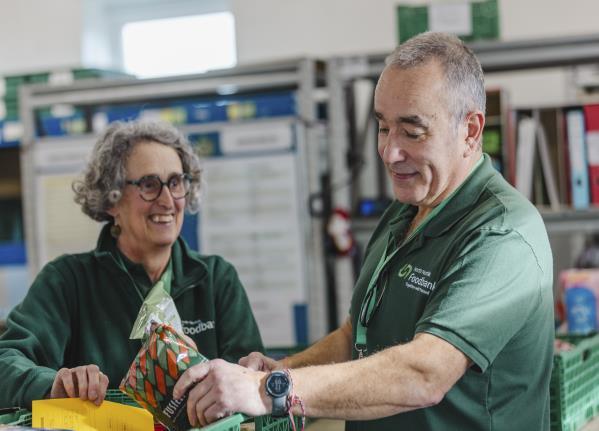
Thanks to your support, food banks can continue to provide this vital help: an emergency food parcel, a warm, welcoming space, a listening ear, and access to quality advice to help in the longer term.
Levels of need remain historically high and the complexity of need is deepening. Whilst we continue to work to end hunger today, we are committed to our vision of a UK without the need for food banks. A future where our society has the appropriate structures and support in place to ensure communities can thrive. Change can happen and shifts forward are a source of hope.

Positive action from the UK government
Lifting the two -child limit
We’re delighted that joint campaigning efforts brought an end to the two -child limit on social security payments. From April 2026 this policy will be gone, lifting 670,000 people out of severe hardship, including 470,000 children.
Increase in the Universal Credit standard allowance
For the first time since it was introduced, basic rates of Universal Credit will see a higher than inflation increase in every year of this parliament. By 2029/30 this will be a 5% real -terms rise, lifting 95,000 people out of severe hardship.
A Fair Repayment Rate in Universal Credit
Debt deductions from Universal Credit payments are now limited to 15% . This was our first major policy shift, after years of work, and came in the government’s first budget in 2024.
A new era for crisis support in England?
The government has committed to three years of funding for a new Crisis and Resilience Fund that will be provided by all English local authorities.
It is encouraging that we not only achieved the commitment and funding we campaigned for but were able to work closely with the Department for Work and Pensions to design the Fund.
This meant we could shape it according to evidence of what will be most effective, with a focus on tackling the drivers of hardship with cashfirst support and connecting people with local services.