
Mass Timber Parking
Analyzing the costs and benefits of building structured parking out of wood

Analyzing the costs and benefits of building structured parking out of wood
Autonomous vehicles sit in a strange in-between: no longer speculative, not yet fully resolved. While cities debate how autonomy will shape the future of mobility, far less attention is paid to the quieter question beneath it all: Where do these vehicles go when they stop moving?
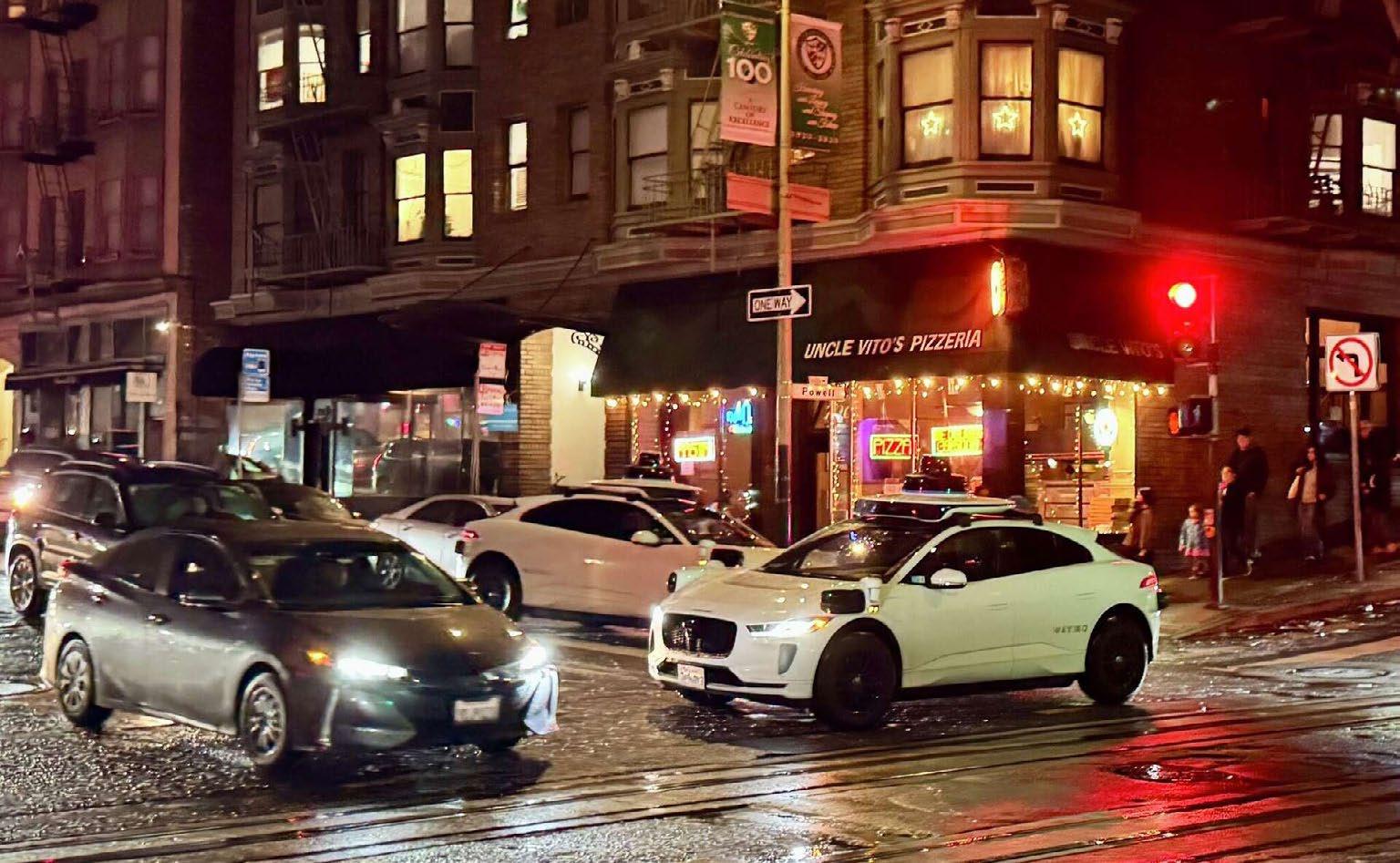
In 2025, the question surfaced abruptly when, during a system failure in the San Francisco Bay Area, autonomous vehicles lost coordination and simply stopped—stranded mid-street, stacked along curbs, frozen in intersections. In that moment, the city resembled a paused simulation. The disruption was brief, but the implications were not: even self-driving cars require places to wait, to fail, to retreat. When autonomy collapses, space—not technology—becomes the constraint. Distributed automonous vehicles storage and charging will become a new category of parking needs in cities and suburbs—one well-suited to dense, structured parking.
Parking structures have long been treated as expendable infrastructure: optimized for efficiency, built almost exclusively of concrete, and rarely designed with a future beyond vehicle storage in mind. They are among the most carbon-intensive building types we construct and simultaneously, among the most spatially adaptable. As mobility evolves, these structures may disappear, persist, or transform into something else entirely. The only certainty is that their role will change.
Beginning from this moment of uncertainty, the study reframes parking structures—not as background infrastructure, but as an architectural question—asking how they might be built today with climate, material impact, and adaptability in mind, even as vehicles drive themselves.
As mobility evolves, parking structures may disappear, persist, or transform into something else entirely. The only certainty is that their role will change.
An image from the San Francisco Chronicle in December 2025 shows a traffic jam in downtown San Francisco caused by an autonomous vehicle that lost power in the middle of an intersection.
Mass timber adoption is evident in so many building types today— multifamily housing blocks, office complexes, civic buildings, even some labs and healthcare structures. Some of these typologies already have a relatively low average embodied carbon because they already utilize steel or light wood framing in their construction, in lieu of structural concrete. By contrast, most parking structures built today are almost entirely concrete and, accordingly, have some of the highest level of embodied carbon per square foot of any building typology, with precast having the highest embodied carbon due to the early concrete strengths required.
As the industry explores lower-carbon construction materials, certain typologies present opportunities for innovation through the use of mass timber. While conventional concrete and
steel systems dominate parking construction, advances in engineered wood products such as cross-laminated timber (CLT) and glue-laminated beams (glulam) make hybrid or fulltimber systems increasingly viable. For stand-alone above-grade garages in particular, repetitive bay spacing, open floor plates, and modular design lend themselves to prefabricated timber systems. Evaluating the structural performance, durability, and fire resistance of mass timber in these applications could redefine the environmental profile of the most common parking typology while informing its integration into mixed-use and podium designs.
North America now hosts 22+ mass timber plants. As the domestic supply chain grows increasingly robust, the marginal cost of this construction material is likely to decrease.
2 1
Significant reduction in embodied carbon when compared to concrete systems
3 4
An adaptable alternative to concrete systems, with growing attention toward adaptive reuse
5
An innovative assembly system receiving global attention and being newly adopted in the United States
A significantly lighter material, reducing overall foundation costs while offering similar spans to concrete
A naturally fire-resistive material, able to be expressed without an architectural screen
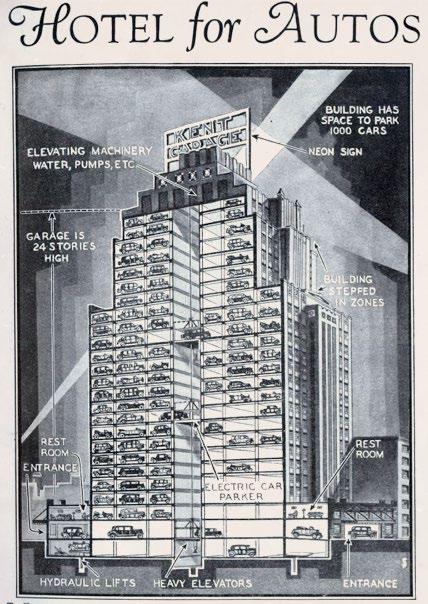
An archival image from Modern Mechanix magazine in May 1929 depicts the New York Kent Garage Hotel for Autos, not a cartoon but a reality from the 1930s. It has since been converted to a warehouse in 1943 and subsequently, it is now an apartment building.
To measure the maximum parking structure size possible under the current code.
+ What construction types make sense?
+ How many parking stalls could be built?
+ What percentage of parking structures being built today could be mass timber, and what would be the environmental impact of that switch?
4
To research the durability and fire-resistance of a concrete-free parking deck assembly and compare viable traffic coatings to protect the wood slab.
+ How can we protect the timber from water damage?
+ Which coatings have the physical flexibility to work with timber?
+ What is the impact of coating application on cost and schedule?
To quantify the environmental benefit of building mass timber parking structures versus concrete.
+ How much embodied carbon can be saved?
+ What building elements have the greatest impact on the carbon load of a parking structure?
3 2 1
To optimize the structural configuration of mass timber to minimize wood volume and associated embodied carbon.
+ How deep do the beams get?
+ Is long span viable and efficient?
+ How would lateral support work in seismic areas?
+ What is the effect on parking efficiency?
To explore the downstream adaptability of a mass timber parking structure for other uses.
+ Is adaptive reuse for housing more viable with mass timber versus post-tensioned concrete?
+ What is the impact on parking structure floor-to-floor heights?
+ What other uses could be adapted from a mass timber parking structure?
6 5
To evaluate the cost and construction duration of a mass timber parking structure versus cast-in-place concrete.
+ What is the cost premium for mass timber?
+ Does it save time?
+ Could we save on architectural treatments?

By the mid-to-late 1800s, American cities were broadly unpleasant places to live. Mass immigration from Europe led to overcrowding; the widespread burning of coal and wood drastically worsened air quality; and the horse, the primary mode of urban transport, faced declining populations due to disease. By the 1870s, epidemics among horses significantly reduced their numbers, disrupting essential services such as fire response and exacerbating already precarious urban conditions. Alongside industrialization and increasing congestion, these pressures accelerated interest in mechanized modes of transport, giving rise to the automobile.
By the beginning of the 20th century, more than 8 million automobiles and over 1 million trucks were registered in the United States. The question of where to store them quickly became urgent. While European cities, including France, explored creative early solutions, such as the Garage Rue Ponthieu (since demolished), it was the parking garage typology developed in the United States, shaped by private ownership, land availability, and rapid urban expansion, that became the most familiar and widely replicated model.
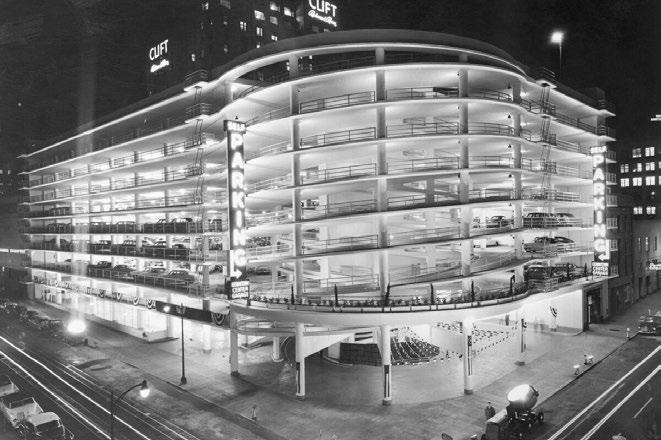

As the parking garage emerged as a distinct building type in the early 20th century, other transportation typologies— most notably the train station—were simultaneously reaching architectural maturity. Where train stations emphasized collective movement, public gathering, and civic identity, the parking garage served an individualized mode of transport. Its architecture prioritized efficiency, independence, and throughput rather than monumentality, causing its form and logic to diverge sharply from that of rail infrastructure.
There may have been moments early in its development when the parking garage was imagined as a more civic building type, but the automobile’s association with private ownership and autonomy pushed the typology toward functional neutrality. Over time, parking structures became background architecture, necessary, but rarely expressive. More than a century after the automobile’s introduction, this raises the question of whether the role of the parking garage might again be reconsidered within contemporary urban, material, and construction economies.
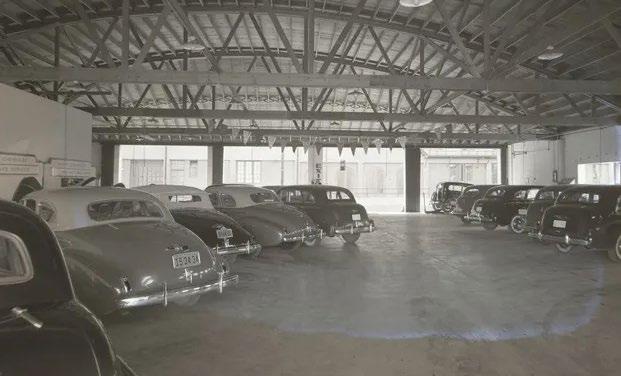
As the automobile became a consumer good in the early 20th century, urban vehicular density increased rapidly. Early vehicles— often soft-top, mechanically fragile, and prone to failure—favored covered storage. Many early garages were created through the reuse of carriage houses, warehouses, and industrial buildings, employing prevailing construction techniques that blended with their surroundings while accommodating large, open floor plates. As a result, early parking and service buildings frequently utilized light timber framing with long-span trusses, sometimes concealed behind ornamented facades to disguise their utilitarian function.
While flexible and economical, light timber construction proved vulnerable to fire. Early automobiles were particularly prone to engine fires, and as building codes, insurance requirements, and liability concerns evolved, timber construction was increasingly viewed as a risk. By the mid-20th century, and especially in the United States, cast-in-place and post-tensioned concrete supplanted wood as the dominant parking structure material. Concrete offered long, uninterrupted spans, non-combustibility, low floor-to-floor heights, and compatibility with rapidly expanding postwar zoning codes and parking minimums. Purpose-built garages became optimized containers for vehicle storage, prioritizing efficiency and volume over adaptability.
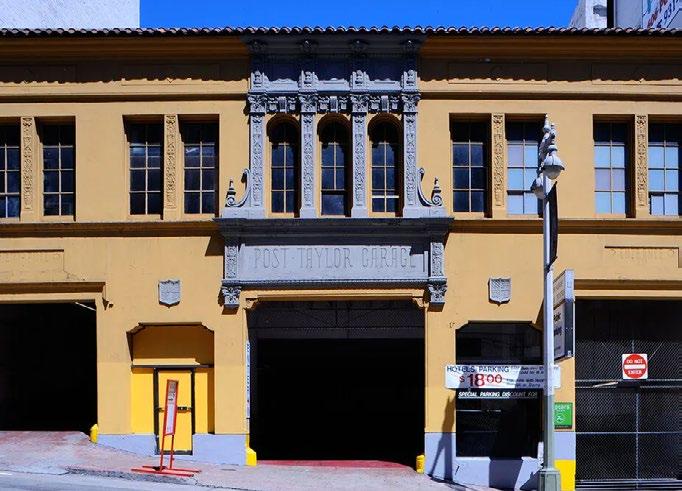
A 1928 directory of San Francisco buildings identifies over 300 structures dedicated to automobile parking, storage, or service. Many of these buildings remain today, exhibiting a high degree of ornamentation and aperture articulation consistent with their Victorian and Edwardian urban contexts. Often constructed with long-span timber trusses, these buildings have proven remarkably adaptable, finding second lives as gyms, residences, schools, pharmacies, churches, retail spaces, and offices.
While similar early parking structures existed in cities across the United States, including in Chicago, New York, and Los Angeles, San Francisco’s dense prewar fabric and strong reuse culture have preserved a notable concentration of these examples. Their continued relevance underscores the latent adaptability of parking structures when conceived as buildings rather than single-purpose infrastructure.
Stand-alone, above-grade parking structures are a common building type across North America, especially in the denser or more compact portions of cities and suburbs where the parking demand cannot be reasonably filled by surface lots. They are purpose-built facilities dedicated primarily to vehicle storage. Typically consisting of multiple levels of cast-inplace or precast concrete framed decks, their prevalence is driven by efficiency, ease of construction, and functional flexibility. They are also easier to ventilate and maintain than below-grade alternatives, which reduces long-term operating costs. Stand-alone parking structures typically range from a few hundred to several thousand parking stalls, depending on the size and complexity of the structure and the type of use they serve. Those with adequate dimensions utilize park-on ramps which increase parking efficiency per square foot of construction. Parking structures that experience high peak-hour traffic volumes may opt for speed ramps or helical ramps to better facilitate vehicles movement in and around the structure.
Mixed-use parking structures and podium parking structures represent alternative typologies that integrate parking with other building functions. In mixed-use configurations, the parking component is combined with retail, residential, or other uses, often supporting compact urban development and active street frontages. Podium structures place parking at the base of a larger development, typically supporting residential, hospitality, or office towers above. This mix of uses enhances land-use efficiency but adds complexity in terms of load transfer, fire separation, and vibration control.
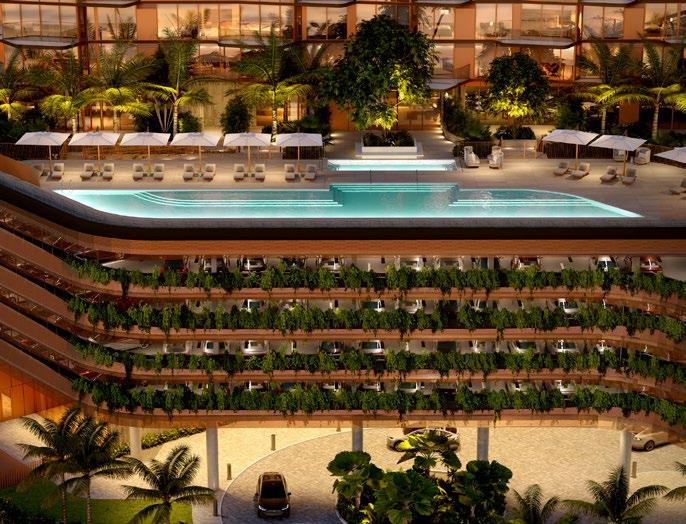
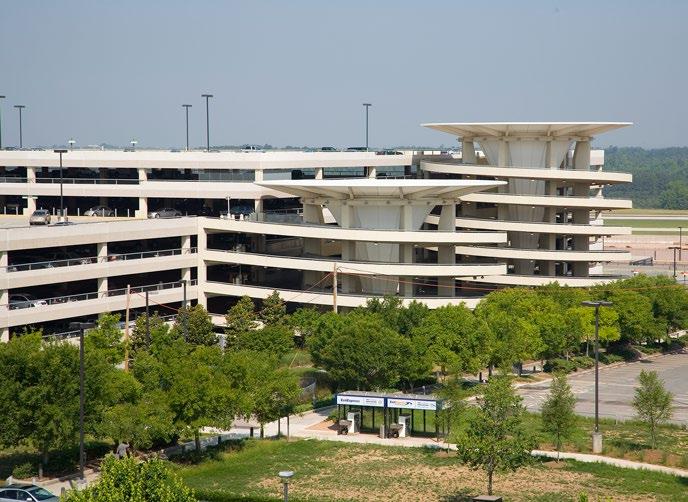
Parking garage efficiency, measured in square feet per stall, depends on both structural layout and circulation design. Longspan garages are the most efficient, typically ranging from 310 to 330 square feet per stall (sf/stall), because they minimize interior columns allowing for uninterrupted parking stall layouts and clear
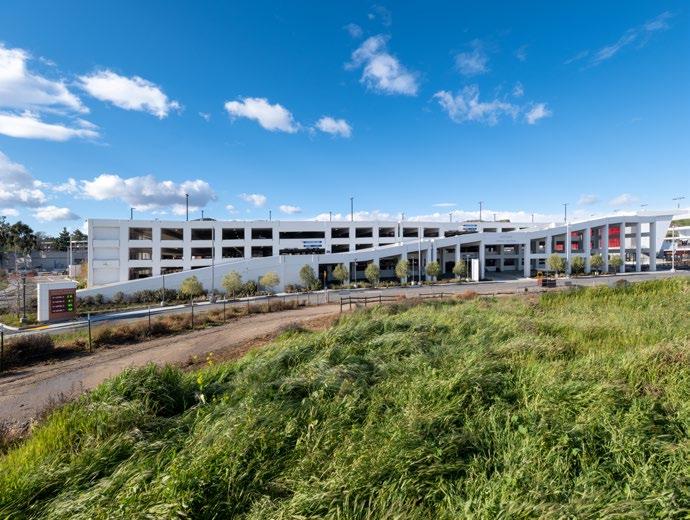
lines of sight. Designs with speed ramps or helical ramps improve traffic flow but require additional ramp area, decreasing efficiencies to approximately 350–450 sf/stall. Short-span garages, which have more structural obstructions, average 350–400 sf/stall, while mixeduse garages can exceed 450 sf/stall due to additional complexity. Structures with favorable floor aspect ratios, few obstructions, and simple circulation patterns result in better overall space utilization.
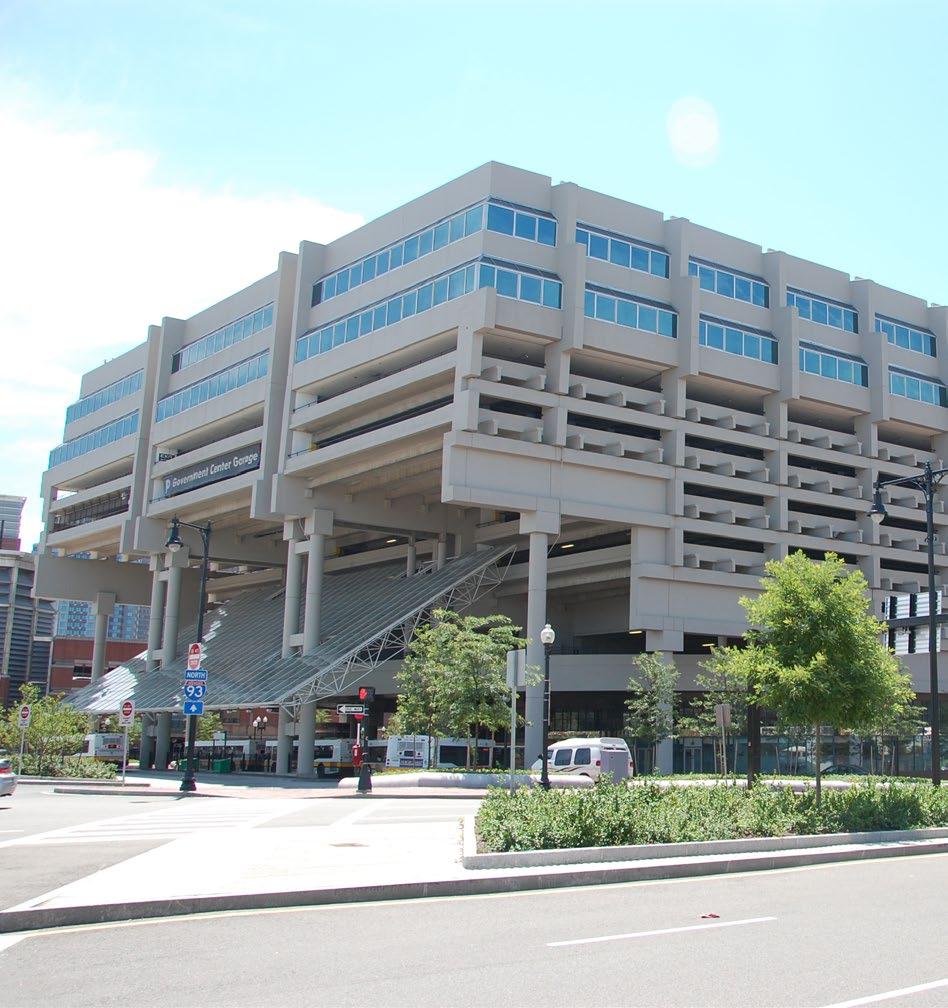
The structural systems used in parking garages are driven by the need for long spans, durability, fire resistance, and rapid construction while maintaining low floor-to-floor heights to maximize parking yield. In North America, these requirements have historically favored concrete-based systems, with steel used more selectively where speed or construction or weight reduction is prioritized. Each system carries distinct implications for construction logistics, spatial efficiency, long-term performance, and embodied carbon, making structural choice a critical variable in evaluating contemporary parking design.
Around half of new stand-alone parking structures are precast versus cast-in-place concrete.
Precast concrete is one of the two most widely used structural systems for multi-story parking structures, valued for its speed of construction, factory-controlled quality, and predictable performance. Standardized precast components, such as double tees, beams, and columns, allow garages to be erected quickly, making the system particularly attractive for large, stand-alone facilities. Precast parking structures are often more prevalent in colder regions because they can be erected year-round and can, if detailed and constructed properly, can offer some limited initial durability advantages in freeze-thaw and deicing-salt exposure. However, the reliance on repetitive elements and early-strength concrete contributes to higher embodied carbon and limits adaptability over time.
Cast-in-place (post-tensioned) concrete is the other most common system and is often selected where greater design flexibility, tighter site constraints, or high seismic resistance is required. Monolithic construction allows for fewer joints, improved crack control, and more adaptable
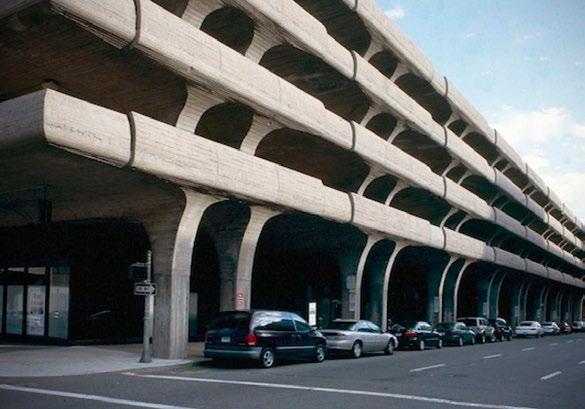
bay layouts, which can enhance lighting, wayfinding, and long-term maintenance performance. These systems are commonly used in mixed-use and podium garages, where integration with adjacent occupancies and irregular grids are required. While typically slower to construct than precast systems, post-tensioned concrete remains a dominant choice due to structural efficiency and familiarity within the U.S. construction market.
Steel parking structures are used far less frequently than concrete but offer advantages in speed of erection and reduced structural weight. Steel framing can provide longer spans with lighter foundations and may result in cost savings in certain contexts. However, steel systems typically require additional fireproofing, are more susceptible to corrosion—particularly in exposed environments—and can introduce vibration and acoustic challenges. These factors, combined with increased maintenance considerations, have limited steel’s broader adoption in parking construction.

Understanding the spatial, economic, and environmental trade offs of the prevailing structural and material applications in modern parking structures establishes a baseline against which alternative systems can be evaluated in terms of embodied carbon. Embodied carbon refers to the carbon released during the extraction, manufacturing, transportation, construction, and end-of-life phases of buildings. Expressed as an exchange rate, embodied carbon represents how many kg of carbon dioxide emissions warm the climate equally to another greenhouse gas (kilograms of carbon dioxide equivalent (kgCO2e) and pounds of carbon dioxide equivalent (lbsCO2e), whereby the potency of other greenhouse gases may translate.

"Buildings
currently comprise 39% of global energy related to carbon: 28% from operational emissions, from energy needed to heat, cool, and power them, and the remaining 11% from materials and construction (also known as embodied carbon)."
-International Code Council (ICC), “Embodied Carbon in Buildings and Building Materials,” as quoted by the World Green Building Council
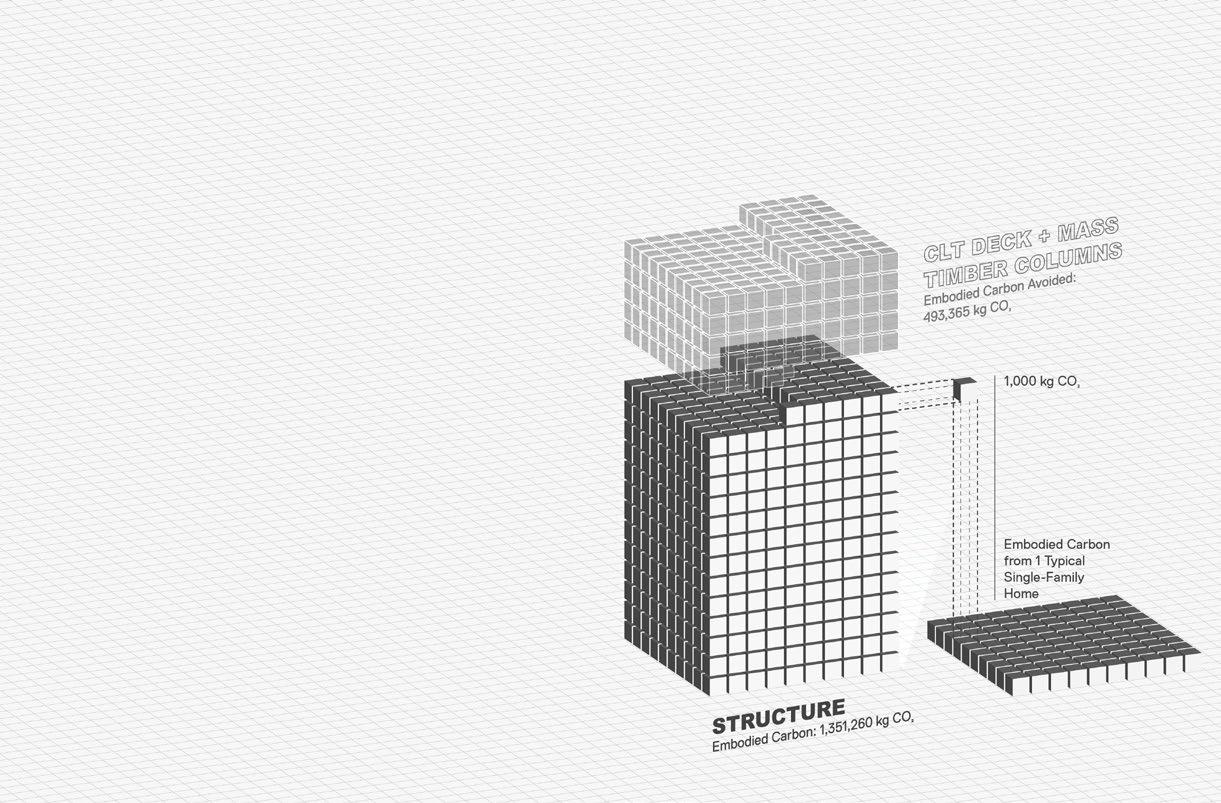
In July of 2024, California became the first state to mandate embodied carbon reductions within it's building code for commercial buildings over 100,000 sf and schools over 50,000 sf. This is being followed by states like Colorado, mandating public construction projects to meet environmental criteria for concrete, glass, and steel - and Maryland, passing legislation encouraging the use of
low-embodied carbon materials. Beyond the code, 13 states are participating in the Federal-State Buy Clean Partnership (publicly sharing information addressing embodied carbon emissions, and committing to sets of best practices, including advancing the green market, supporting evidence-based approaches, and exploring opportunities to incentivize low-carbon manufacturing.
As of January 2026, there are 2,500+ multifamily, institutional, & commercial mass timber projects in the U.S., with the global industry projected to reach $1.54 billion in 2031.
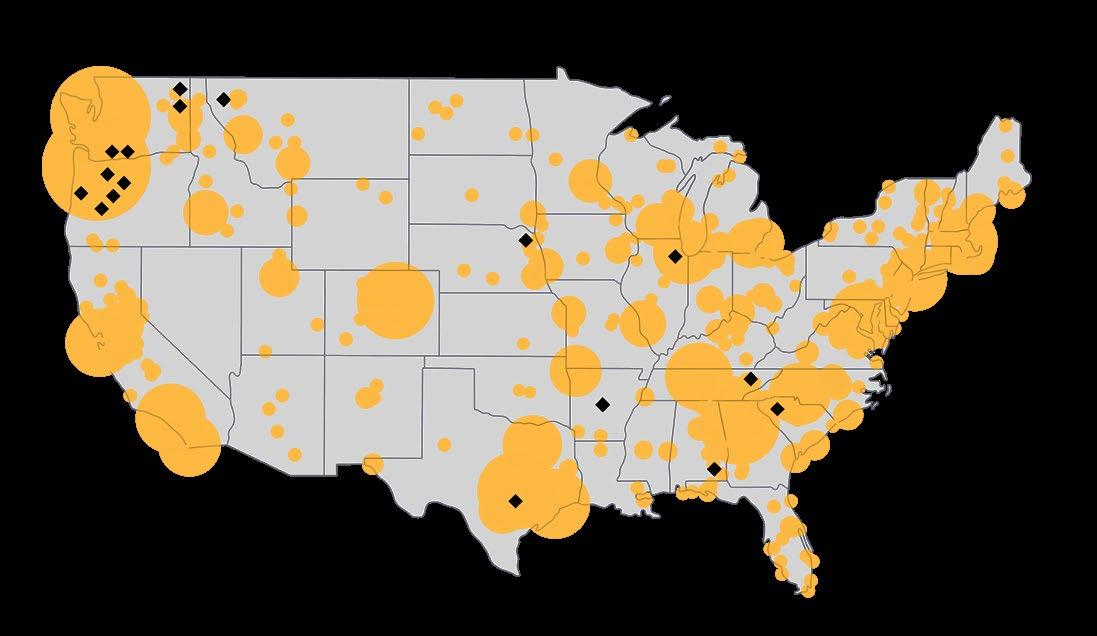
Mass Timber Manufacturer
Built/In-progress
Mass Timber Construction
With growing awareness of concrete and steel construction’s carbon footprint, mass timber has steadily emerged as a durable, cost-effective alternative, with staggering potential growth. When the construction method entered its pilot phase in 2013, there were 20 mass timber buildings in the United States, with early adoption facing concerning supply chain limitations, limited manufacturing competition, restrictive building codes, and a general lack of industry education. However, the landscape is changing, and the industry's growth remains steadfast.
In 2021, the global mass timber market generated $857.1 million in revenue and is projected to reach $1.54 billion by 2031. Alongside Europe and Australia, the United States stands as an industry leader, continuing to face unique challenges related to cost, restrictive codes, and lack of federal and state incentives. Nevertheless, industry associations, nonprofits, and continuing education platforms—such as Wood Works, Architecture 2030, and the International Mass Timber Conference—aim to bridge these gaps by advocating for broader inclusion of mass timber in building codes and educating professionals, authorities, and stakeholders on its benefits.
The industry shows strong momentum with its rising demand and expanding technical expertise—looking toward policymakers, industry stakeholders, and researchers to help integrate mass timber into the built environment and its governing codes. From only four manufacturers in 2016, North America now hosts more than 22 mass timber plants, supported by recent updates to the International Building Code (IBC) that introduced new Type IV construction categories - permitting mass timber buildings up to 18 stories. These advances have contributed to the 2,500+ mass timber buildings now standing across the U.S.—including building's such as the Ascent, the nation’s tallest mass timber tower to date. Simply put, the industry is at a tipping point and on a path toward exponential growth.
Mass timber only makes up 0.4% of the softwood industry. But growth is on track, over the next decade, to account for the removal of 10–16.5 million tons of CO2 from the atmosphere, approximately 20% of the United States’ total carbon sequestration from harvested wood products.
55%
Total global mass timber revenue comprised of residential construction
66%
Total global mass timber revenue comprised of low to mid-rise construction
With the global rise in mass timber adoption, mass timber parking garages have entered a pilot phase worldwide, with several of the earliest publicized examples built in Sweden, Germany, France, and Belgium. Greater experimentation in the European market can be attributed to a combination of factors, including earlier policy support for low-carbon construction, a longer tradition of timber engineering, more permissive building codes for exposed wood systems, and public-sector investment models that prioritize lifecycle carbon performance over first cost. In many European contexts,
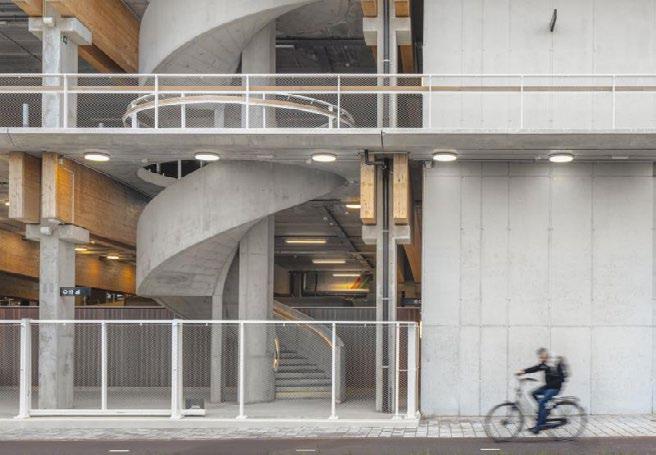
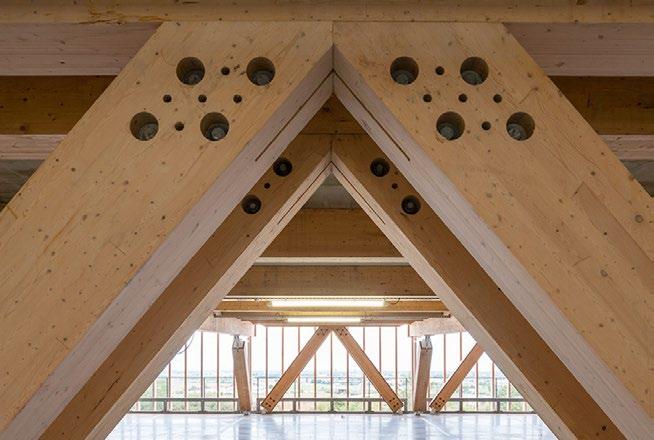
parking structures are also more commonly treated as permanent urban buildings rather than expendable infrastructure, creating fertile ground for material innovation.
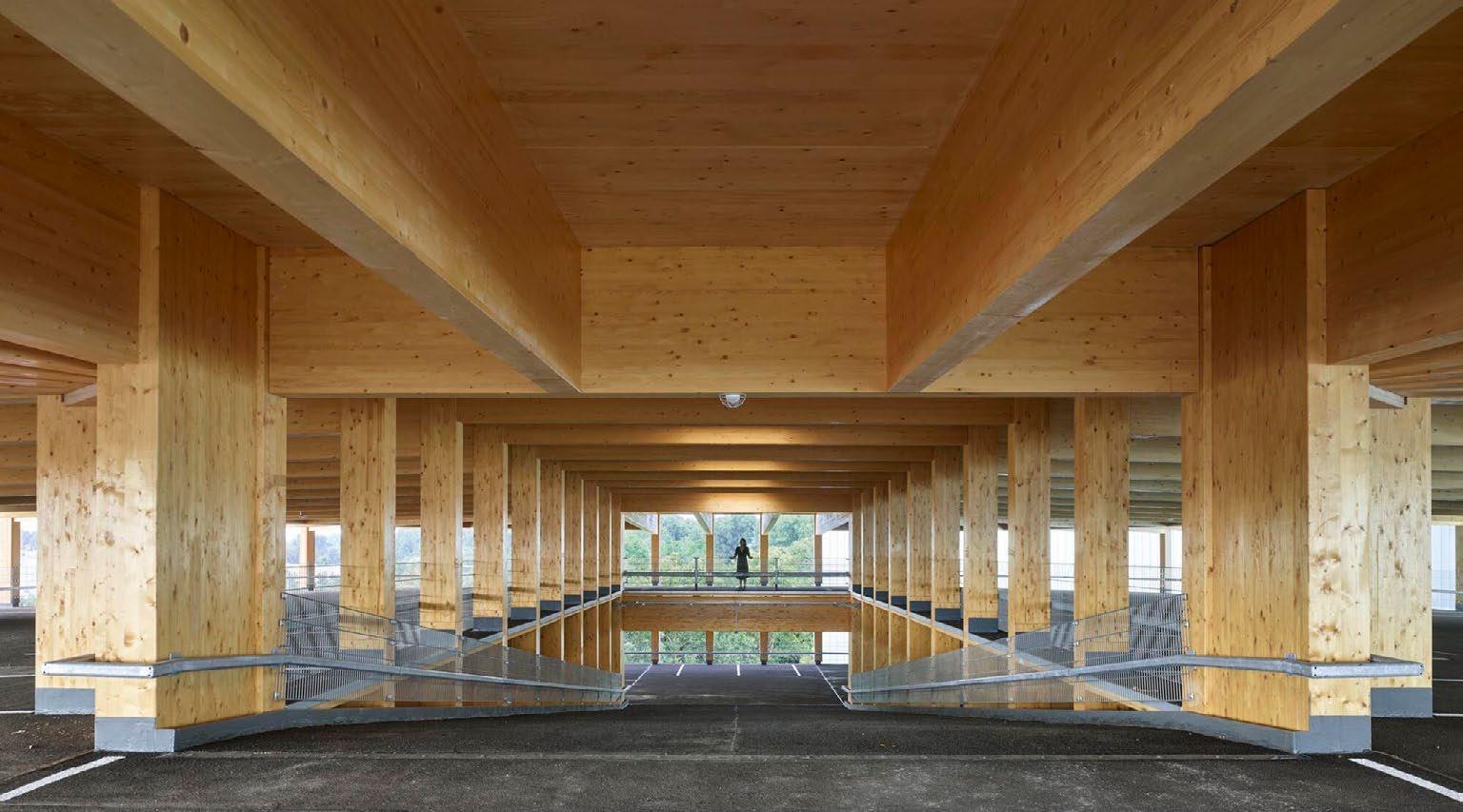
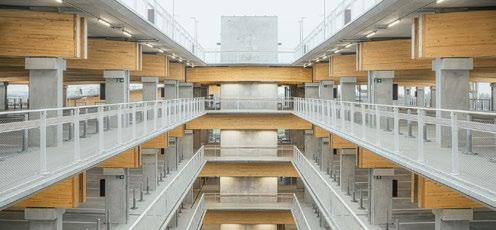
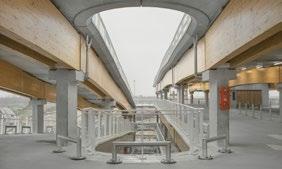
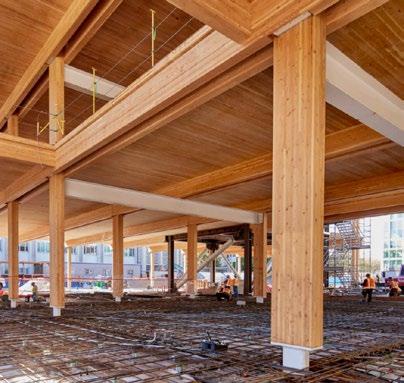
Evolving from the early use of light wood framing, mass timber systems have overcome historical challenges related to durability, fire safety, and span length—establishing their viability within parking design while introducing a warmer, more natural interior environment. Because wood is both structural and expressive, these garages may omit applied facades, allowing the structure itself to define the building’s visual character and sense of warmth.
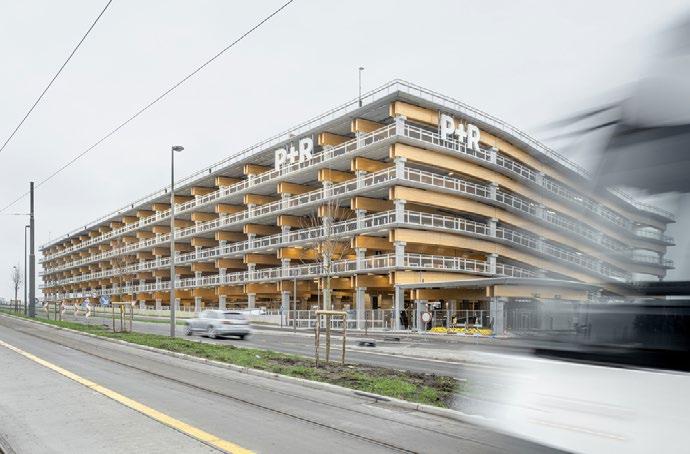
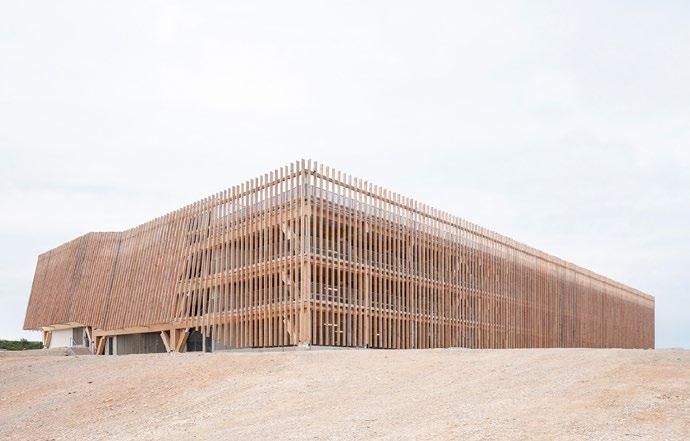
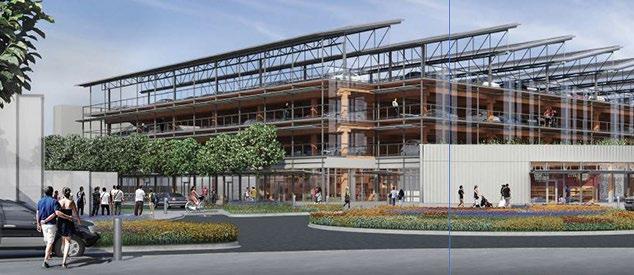
In 2018, SRG was commissioned by the City of Springfield, Oregon to explore mass timber alternatives for parking garage construction, addressing high embodied carbon while emphasizing mass timber waterproofing strategies. While mass timber has advanced considerably as a substitute for prestressed or post-tensioned concrete, key challenges still hinder its broader adoption:
+ Beam Depth & Floor Heights
+ Waterproofing & Weathering
+ Durability
+ Fire Safety
+ Cost
+ Supply Chain
+ Construction Trade Familiarity
+ Regulatory Roadblocks
+ Constructability
This study seeks to conduct a comprehensive review of the benefits and limitations of mass timber within
the parking garage typology.
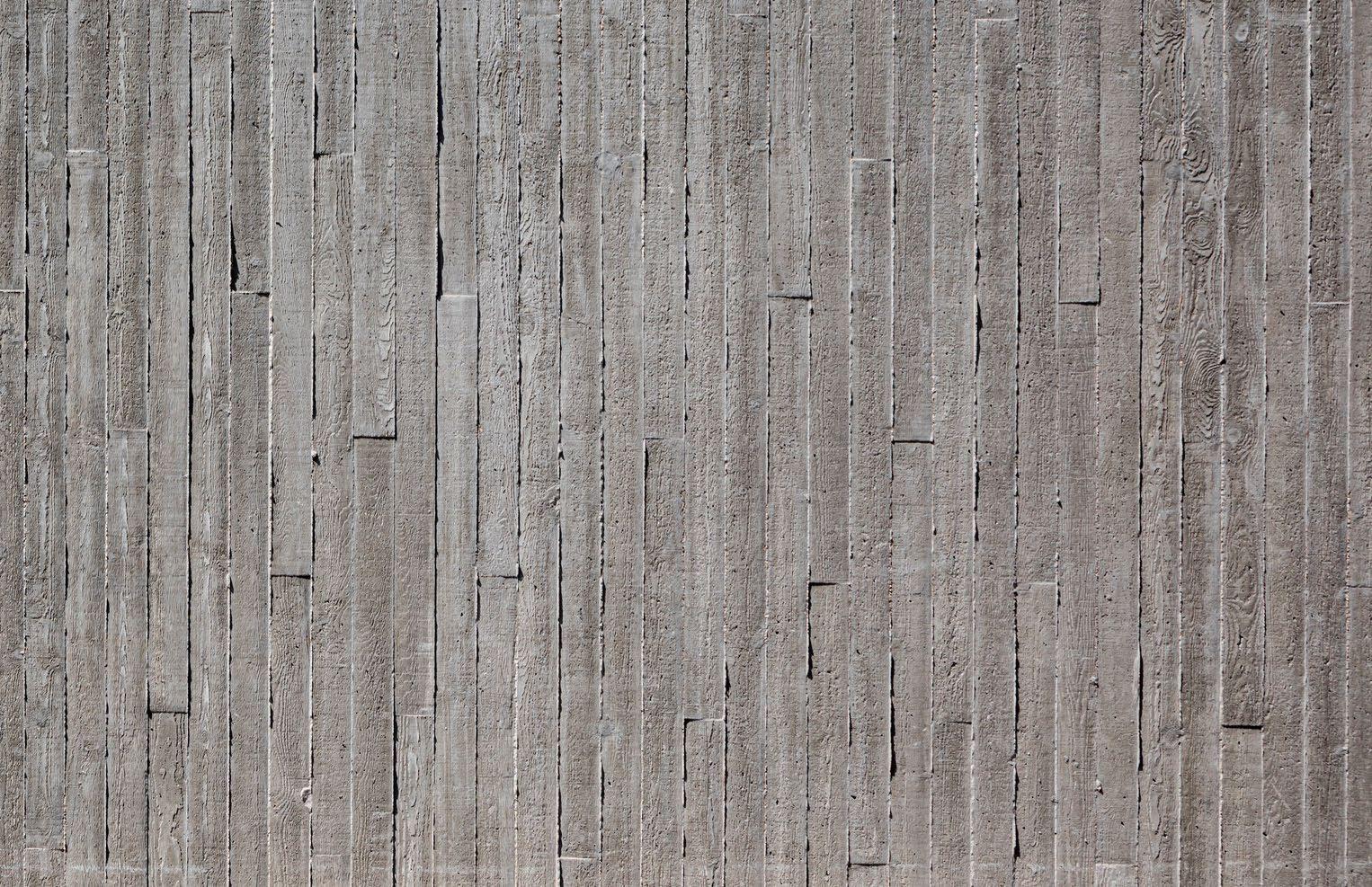
Parking garages traditionally have been designed to accommodate both humans and vehicles, balancing functionality, safety, and efficiency. As conversations around autonomous and semi-autonomous vehicles increasingly shape expectations of future mobility, these fundamental requirements do not disappear; rather, they become more consequential.
Accordingly, when evaluating alternatives to conventional structural materials, it is essential to begin from this functional baseline as nonnegotiable performance criteria, regardless of how vehicles arrive or depart.
Within an uncertain mobility future, any proposed material or structural system must therefore meet these requirements while addressing broader questions of adaptability, durability, and environmental impact.
1

Fire safety is a fundamental concern in parking structures due to open floor plates, limited compartmentalization, and concentrated fuel loads. Traditionally addressed through non-combustible concrete construction, mass timber relies on controlled charring to preserve structural capacity, raising the question: can mass timber parking structures be detailed, protected, and approved to perform at a equivalent level?
4
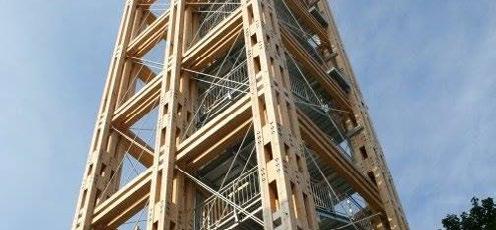
The lateral force-resisting elements of tradition cast-in-place concrete, post-tensioned concrete, and steel structures are well-defined. Shear walls, brace frames, and moment frames afford various limitations and efficiencies. How can mass timber performance compare under the various vibration, earthquake, and live loads experienced within a parking structure?
2
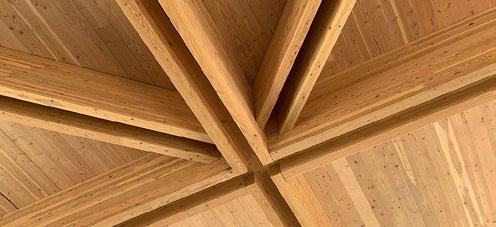
With its high strength-to-weight ratio and fire-resistive behavior, mass timber has demonstrated long-term durability, with some wooden structures standing for centuries. In parking structures, where outdoor exposure and limited maintenance are common, durability depends as much on material as on the detailing. How can mass timber be detailed to achieve durability performance comparable to the current structures?
5

Weather exposure, to precipitation and sun in particular, is a constant concern in parking structures, traditionally managed in concrete garages through sloped decks, drainage, and protective coatings. As mass timber is naturally absorptive, while remaining exposed and expressive, can it be detailed and sealed to manage moisture at acceptable levels?
3
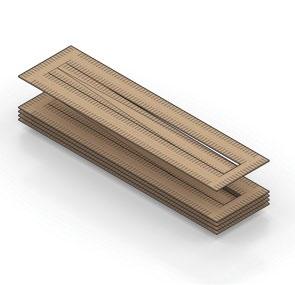
Parking layouts, floor-to-floor heights, column spacing, and usable square footage intersect to control the number of parking stalls that can fit inside a parking structure. Contemporary parking structures house approximately 1 car/300-350 sf of floor area. How will long-span timber effect parking ratios and efficiencies?
6
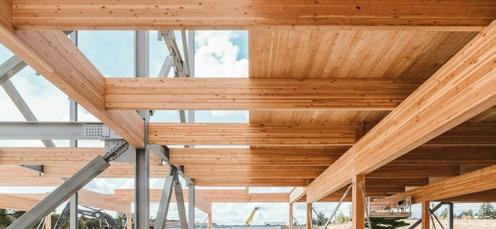
Adaptability is an increasing concern for parking structures as longterm demand becomes less certain. While post-tensioned concrete systems are difficult and hazardous to modify, mass timber’s kit-of-parts construction enables disassembly and reconfiguration. Can mass timber structures adapt more readily to future uses than concrete systems?
This study employs a comparative, performance-based methodology to evaluate mass timber parking structures against current U.S. practice. A recently completed post-tensioned concrete parking garage is used as a real-world baseline, allowing alternative structural systems to be tested against a familiar, code-compliant typology. By holding key parameters constant and systematically varying material and structural strategies, the analysis isolates how design decisions affect embodied carbon, cost, efficiency, durability, safety, and adaptability.
We took an recently-built, standalone, 600-stall concrete parking garage and asked, "What if we built this in mass timber?"
To ensure direct and meaningful comparison, the following parameters are held constant across all scenarios:
+ Program, use, and target parking capacity
+ Circulation logic and configuration
+ Code and regulatory context applicable to contemporary U.S. parking structures
+ Analytical framework for embodied carbon, focused on structural systems and assemblies
The study intentionally varies elements that directly influence performance and long-term viability:
+ Primary structural system
+ Structural grid and span strategy
+ Floor assemblies and coatings
+ Lateral load-resisting systems appropriate to each material strategy
+ Resulting floor-to-floor heights, material quantities, and structural efficiency
Several assumptions are made to maintain analytical clarity and reflect common practice:
+ Embodied carbon is assessed on a cradle-to-gate basis (A1–A3) using industry-standard datasets (see Carbon Accounting for more information)
+ Structural systems are assumed to meet current fire and lifesafety requirements, including sprinklered conditions
+ Cost comparisons exclude optional systems such as photovoltaic arrays or EV charging infrastructure unless noted
The methodology is designed not to speculate on idealized futures, but to test whether mass timber can perform credibly, technically, economically, and environmentally, within the constraints that shape how parking structures are designed and built today.
+ Code Survey: The 2021 IBC introduced three new construction types: IV-A, IV-B, and IV-C, which generally allow larger buildings than the construction type typically used for heavy timber: IV-HT. For a parking structure, Type IV-C would allow the largest total floor area and yield of parking stalls. But IV-C requires a two-hour fire rating on structural members, whereas IV-HT only requires the timbers meet a minimum member size, the equivalent of a one-hour fire rating. This greatly reduces the volume of timber required to maintain fire resistance, and the associated embodied carbon. Additionally, Type IV-HT has lower fire ratings for connections.
+ Allowable Maximum Size: The number of parking stalls is directly proportional to the overall floor area regulated by the building code. Industrystandard efficiencies for parking structures hover between 300-350 square feet per parking stall. Therefore, the largest feasible mass timber parking structure would have approximately 2400 parking stalls up to five stories high in construction Type IV-C. The more environmental-friendly Type IV-HT construction could hold almost 2000 stalls up to 6 stores high. These option assume that all the mass timber elements are exposed without additional layers of fire protection.
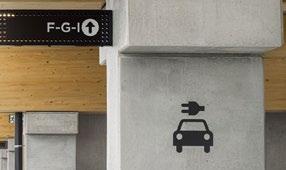
+ Sprinklers: While the IBC does not always explicitly require a fire suppression system in parking structures, many fire marshals and jurisdictional authorities have come to expect a sprinkler system, especially with the advent of electrical vehicles. This prototype assumes an automatic sprinkler system throughout, with additional sprinkler coverage and surface protection at vehicular charging stations.
*Assumed full sprinkler system **per 2022 CBC (Based on IBC)
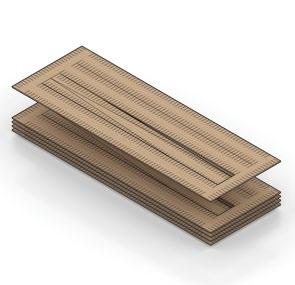
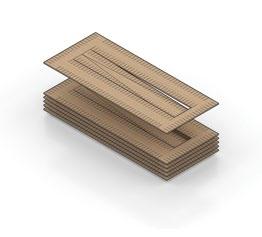
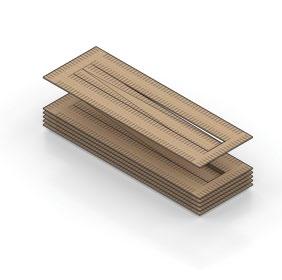
Recent updates to the IBC introduced new Type IV construction categories. While Type IV-C yields the largest allowable floorplates, Type IV-HT combines a high stall count with lower timber volume and associated carbon impact.
Typical parking structures (with 90-degree stalls) have parking bays approximately 62' wide. A "long span" structure uses a deep beam to span the entire bay, including two stalls and a drive aisle. These are the most efficient garages with the highest level of service due to the lack of columns
to interrupt the striping and driving patterns. What we call a "medium span" approach places a column on one side of the drive aisle to reduce the span. A "short span" garage has columns on both sides of the drive aisle, a common case for garages below other uses or below ground.
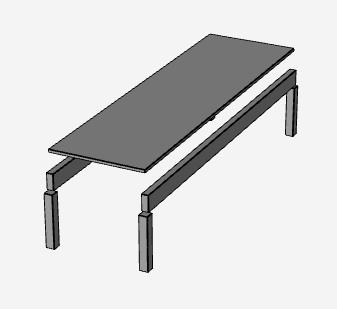
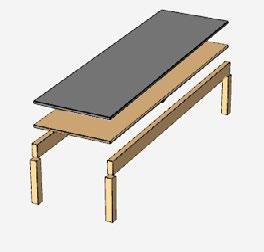
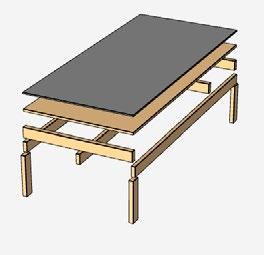
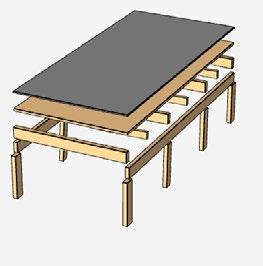
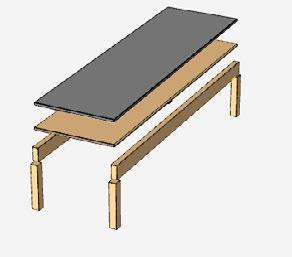
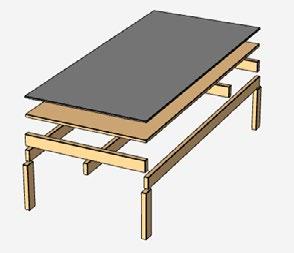
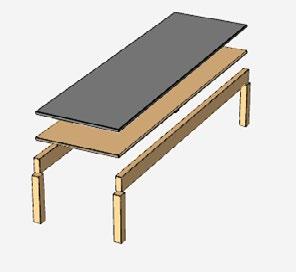
The Medium Span, TwoWay produced the best balance of floor-to-floor height, parking efficiency, and volume of timber.
Structural Notes:
1) Left comparison assumes all Type IV-HT Construction with 1-hour equivalent fire resistance rating
2) CLT slabs generally account for over 50% of the wood volume, beams up to 40%, and columns less than 5%.
For the mass timber parking structure prototype options, a consideration of clear spans at differing dimensions were considered with respect to balancing efficiency, material volume, and member sizing. With these considerations, the Medium Span solution was concluded as optimal.
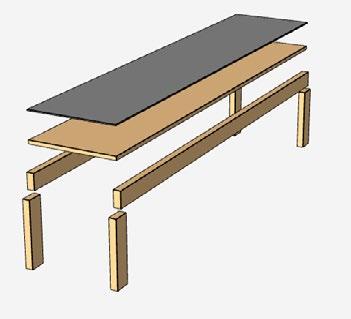
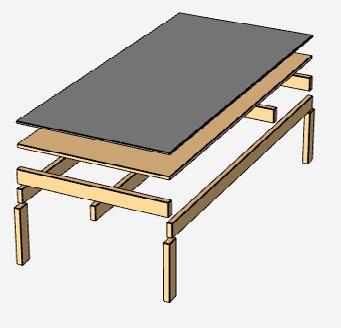
The prototypes consider two floor solutions: + 3-ply (4.125" thick) CLT slab + 3.25" concrete topping slab + 3-ply (4.125" thick) CLT slab with a traffic coating applied
The floor-to-floor heights are the sum of the CLT slab thickness, topping thickness (if any), beam depth, and clear height under beam, assuming 7'-0" clear for typical floors and 8'-2" clear for accessible floors (plus an extra 2" for tolerance).
Note: the scheme with "kickers" is not included in the table above.
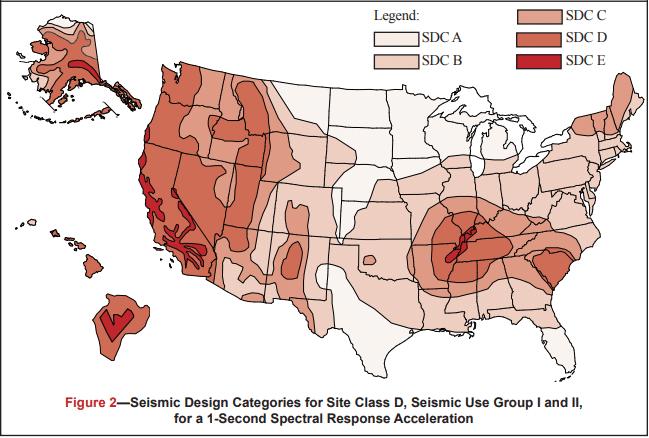
The lateral load resisting requirements for building structures can vary considerably depending on where in the country the project is located and whether wind loading or seismic loading govern the design.
In higher seismic regions, particularly Seismic Design Categories C, D & E, the lateral load resisting system requirements are more stringent. The prescriptive Seismic Force-Resisting Systems permitted, along with their respective requirements and limitations, are outlined in ASCE 7, Table 12.2-1. Currently, there are only two prescriptive mass timber systems included in the table (A.20 & A.21), which are both Cross-Laminated Timber Shear Wall systems with restrictions making them unlikely to be compatible with this project typology. The use of alternate non-prescriptive timber lateral load resisting systems could still be justified through a Performance Based Design (PDB), using the Alternate Means & Methods (AM&M) approach outlined in IBC Section 104.11.
The prescriptive lateral load resisting systems options available to designers are greater in lower seismic regions, particularly Seismic Design Categories A & B, where wind loading often governs and system restrictions are relaxed. In these portions of the country, it would be much easier to justify the use of a greater range of mass timber lateral load resisting systems.
While timber lateral load resisting systems are included in this case study as an aspirational outcome, they could be substituted with traditional steel braced frame or concrete shear wall systems with minimal impact on the remaining timber framed structure. This may be the more pragmatic solution, particularly in the portions of the country with the greatest seismic demands.
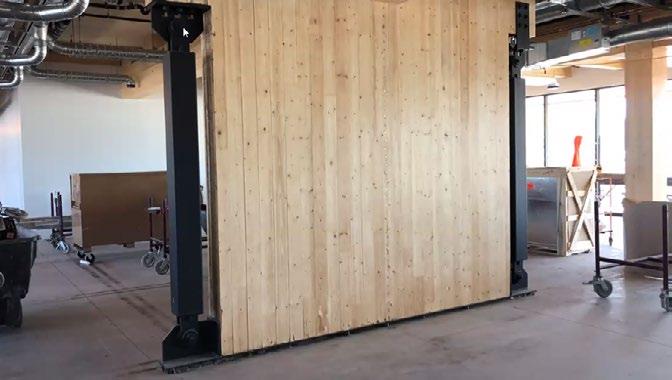
Mass timber shear walls are a viable option without the accessibility issues of diagonal braces.
CLT shear walls are likely the most efficient and economical mass timber solution. They provide greater stiffness and shear capacity per length than the other mass timber options and can be highly ductile systems if detailed properly. One solution includes the use of Buckling Restrained Braces (BRB’s) as ductile high capacity holdowns, as implemented on the Catalyst Building in Spokane Washington. Resilient Post-Tensioned Timber Rocking Walls are another solution validated through extensive testing, including the NHERI Tall Wood Project. This system is currently working through the code approvals process and is likely to be included by reference in the 2027 IBC. The downside to any shear wall system is the potential impact on site lines which can impact driver and pedestrian safety.
While not a prescriptive system included in the building code, discrete timber braced frames can be a valid lateral load resisting system in areas of the country with lower seismicity, particularly where the project is governed by wind loading. There are also moderately ductile systems under development which can be justified in higher seismic regions through an AM&M path. The biggest challenge with this system is often the capacity / ductility of a timber brace to steel gusset plate and the connection of the gusset plate to the timber beams and columns. The timber brace can be replaced with a ductile element (such as a BRB) but the connection challenge to the surrounding timber frame remains.
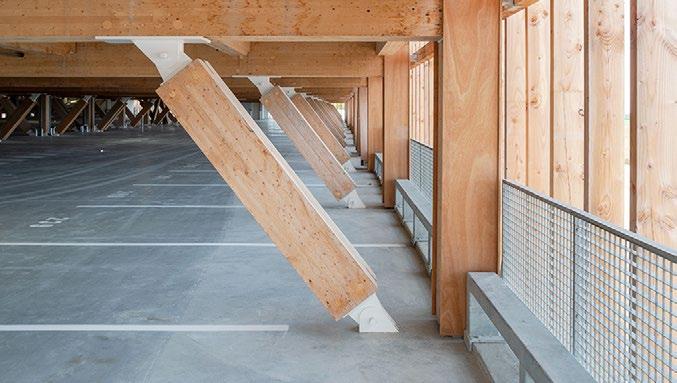
One non-prescriptive solution explored for the study was to use propped timber frames in the transverse direction of the building. This reduces the span of the long span timber beams, allowing the beam depth to be reduced. Under the right conditions the propped timber frames could be used as a lateral load resisting system, as they were for the Wooden Parking Garage in Wendlingen, Germany. The extensive number of bracing lines in the design direction reduces the demands on each individual frame. Downsides with the system include the detailing complexity, along with the restrictions on parking and pedestrian movement.

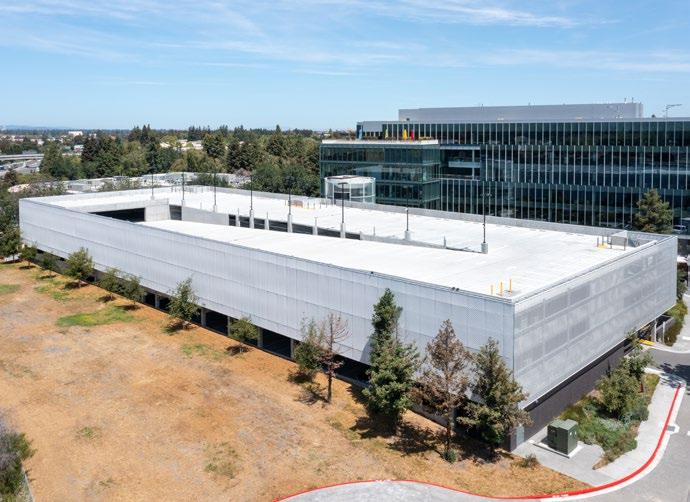
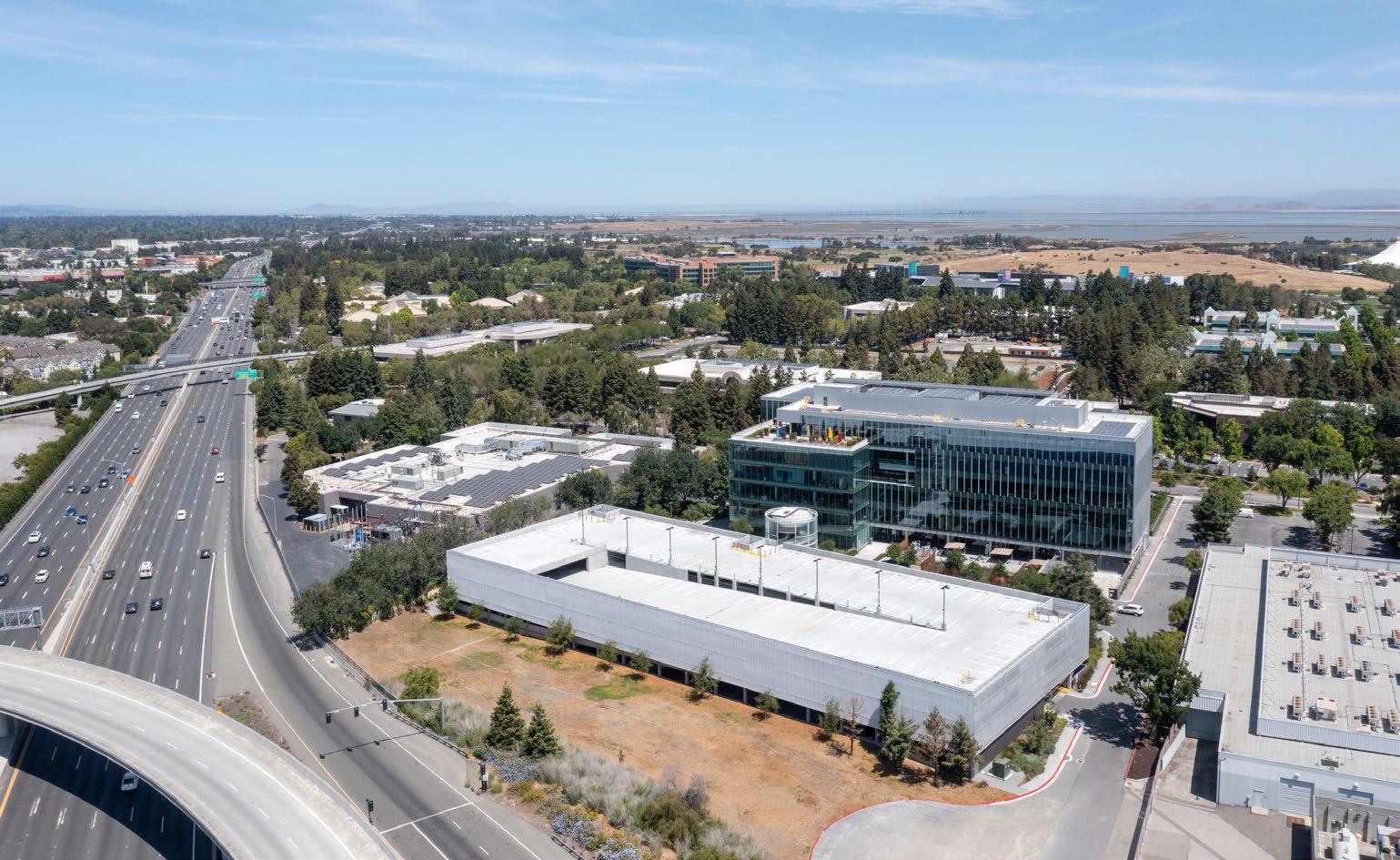
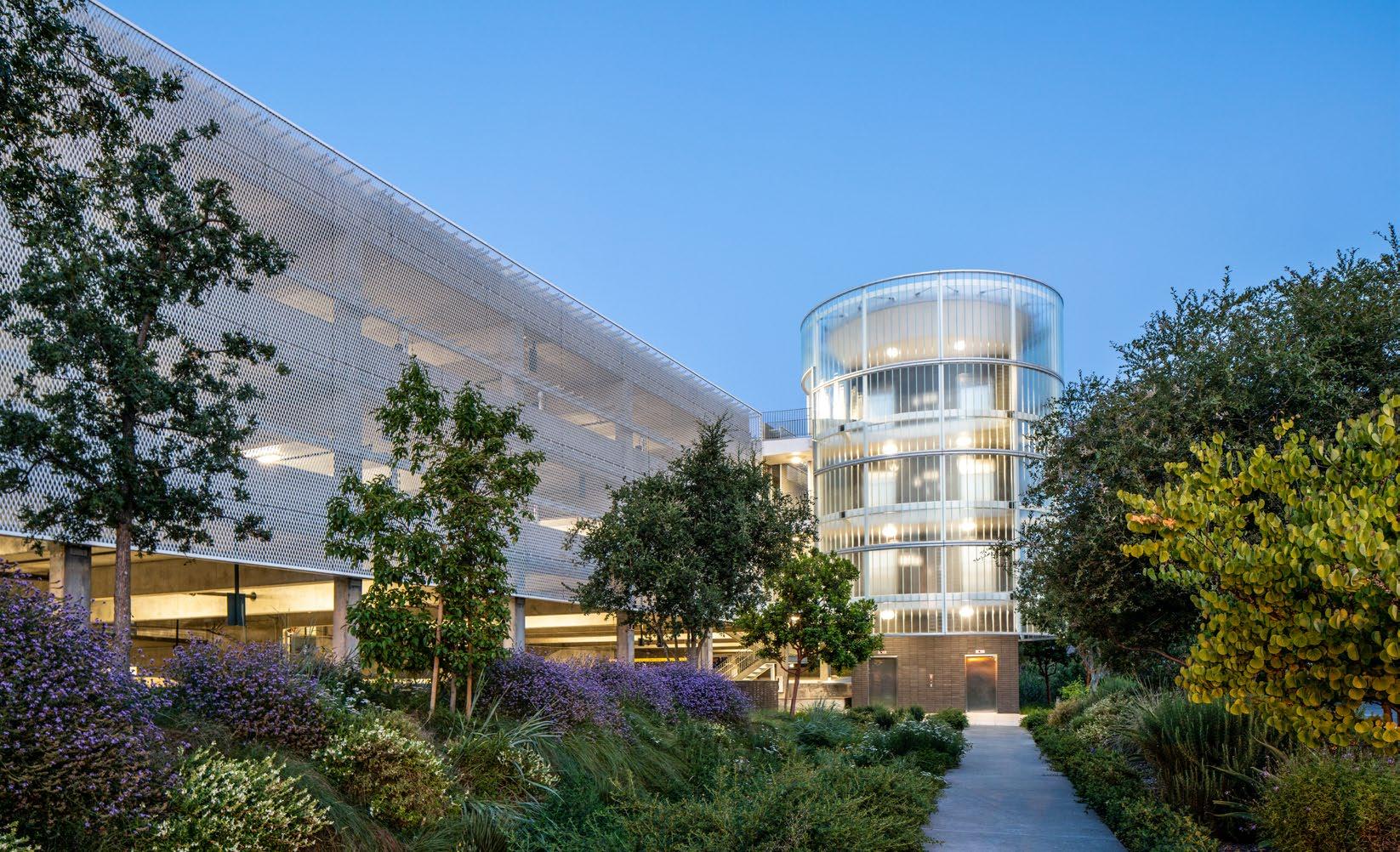
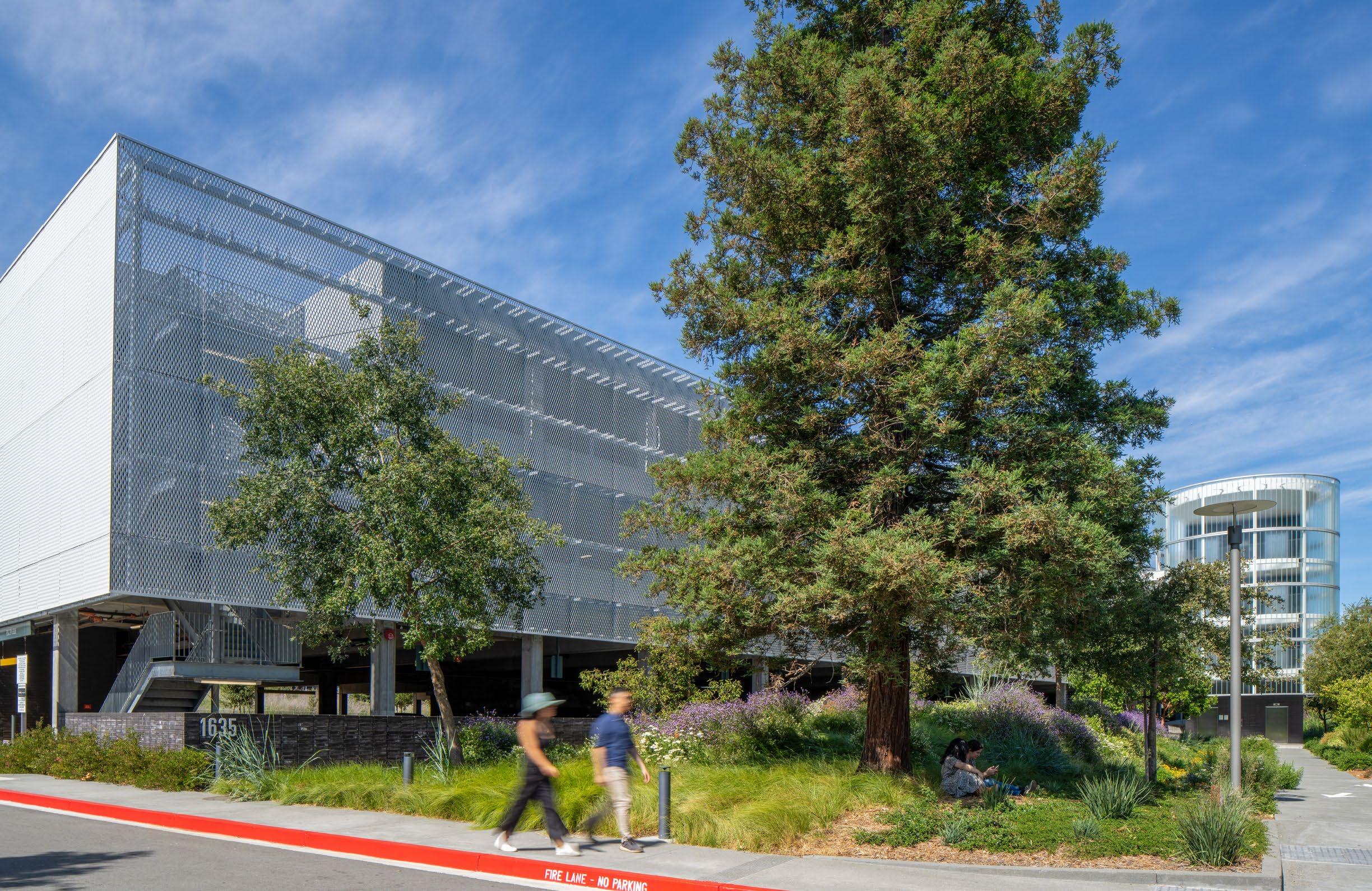
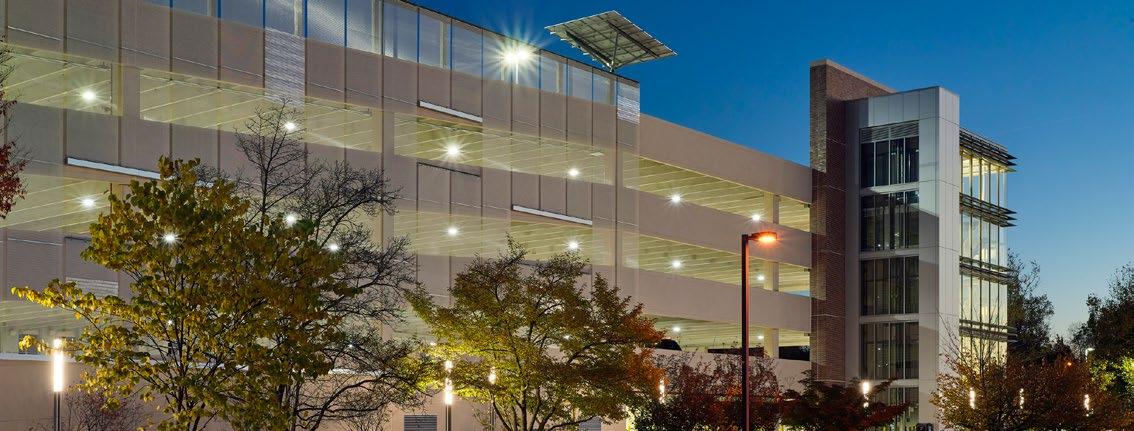
Our approach begins with the selection of a baseline option representative of a typical post-tensioned concrete parking structure: Plymouth Street Parking Structure, completed in 2019 by WRNS Studio in Mountain View, California. Part of a speculative office development, the structure represents a common, multi-story garage in materiality and metrics. With two bays, 606 parking stalls, and a park-on ramp, the garage has an efficiency of 315sf/stall, forming an average baseline for comparison against mass timber alternatives in categories related to embodied carbon, cost, structure, and efficiency.
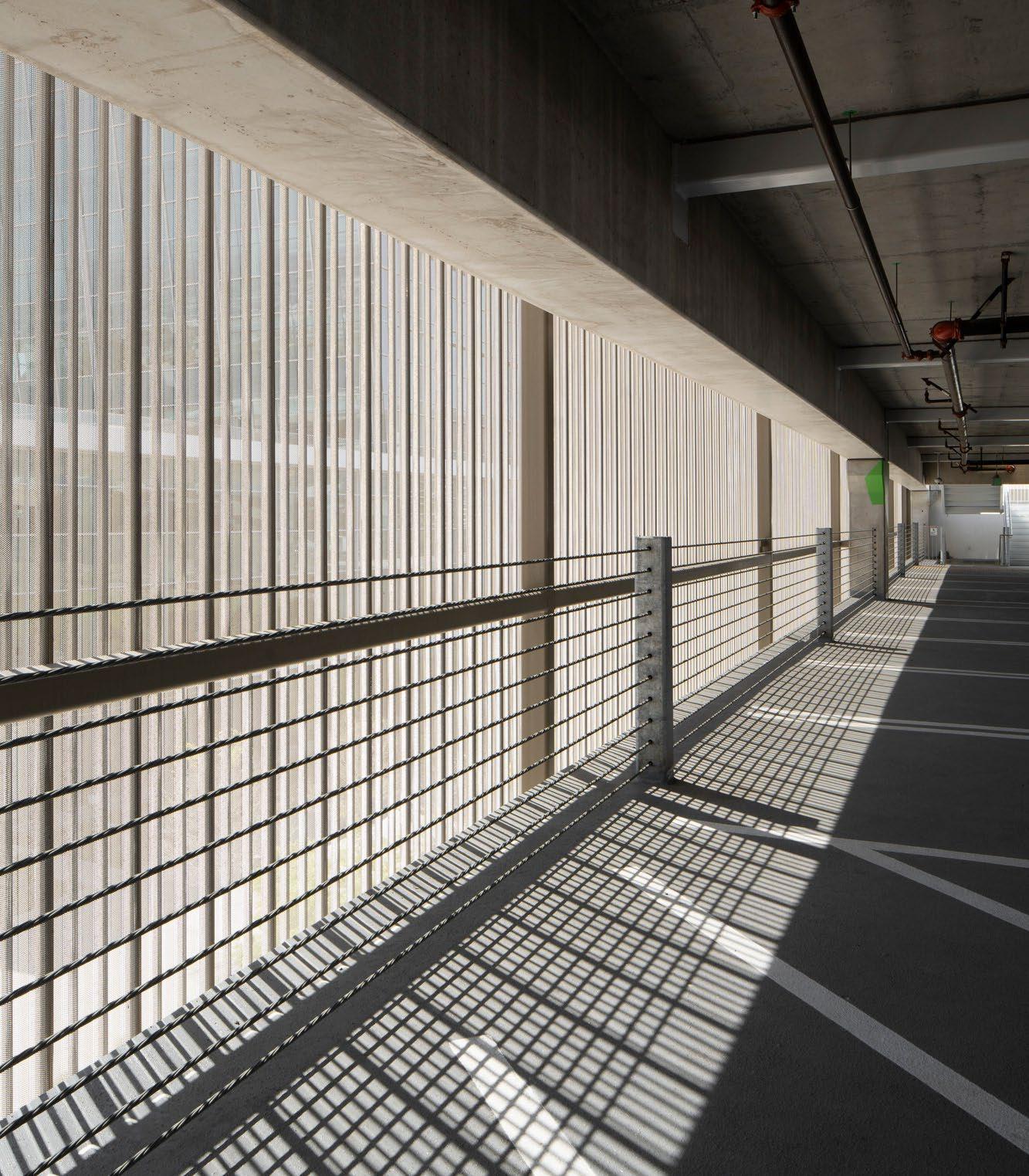
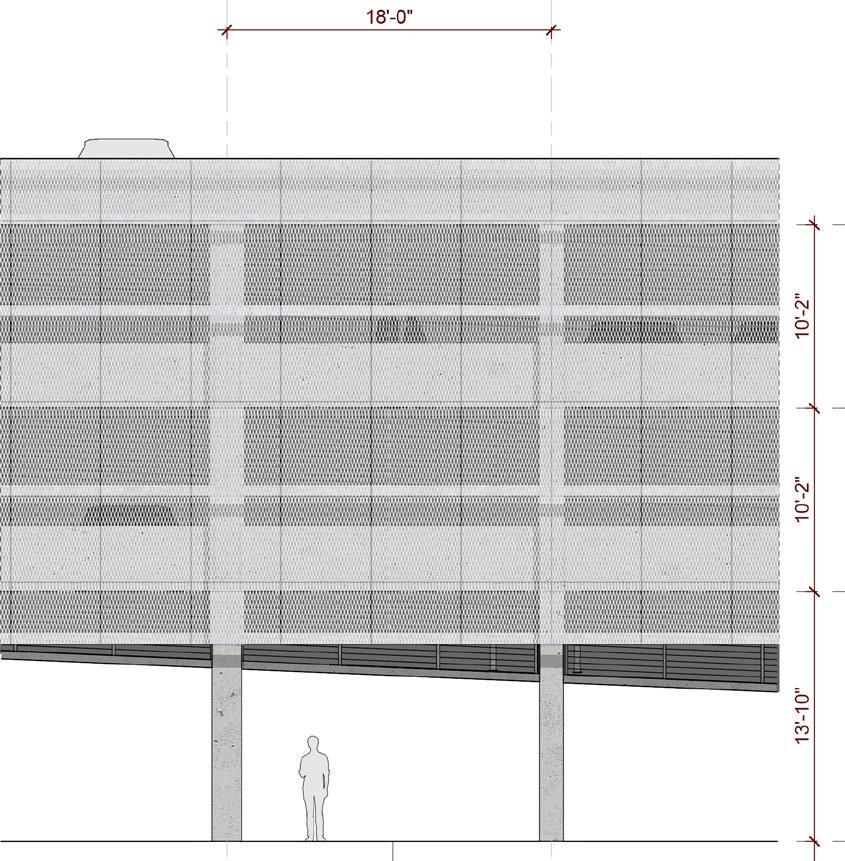
Parking structures are often understood as necessary eyesores with limited budget available for architectural treatments. The Plymouth Garage employs a diaphanous scrim, in this case a modular expanded aluminum mesh panel system, to unify the massing and create a layered appearance of material and light within the surrounding landscape. As with any architectural treatment, there are costs associated with facade screening.
How would the design of a garage change if less energy and money were expended to clad and disguise the concrete structure?
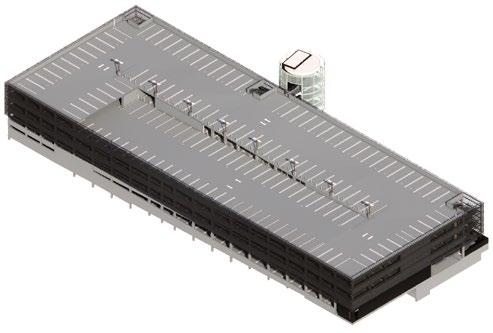
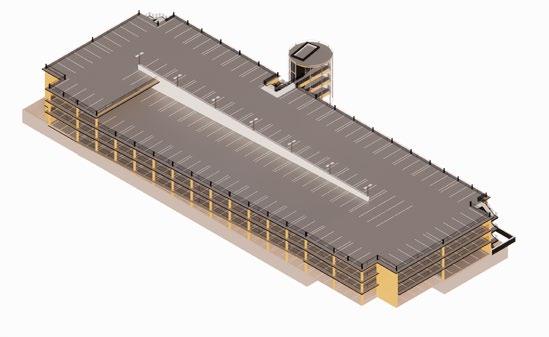
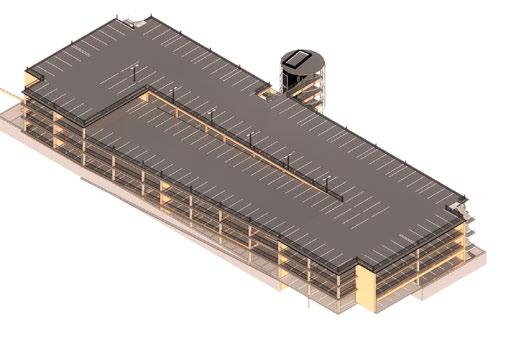
This concrete, two-aisle, 606-stall garage is a mid-size parking structure with ramping and parking efficiencies typical of many parking structures built today. Comprised of 36”x14” post-tensioned concrete beams spanning between 18”x18” reinforced concrete columns, the garage has a typical structural bay of 18’x62’. The floor slab is 5 1/2” posttensioned concrete. Reinforced concrete shear walls ranging from 16” to 24” in thickness stiffen the structure laterally. The embodied carbon analysis for the structural elements includes the volume of steel rebar within the concrete structural elements. The calculated embodied carbon forms the baseline to which the mass timber prototypes are compared against as a percentage delta from the baseline result.
Construction Schedule 14.2 months
Construction
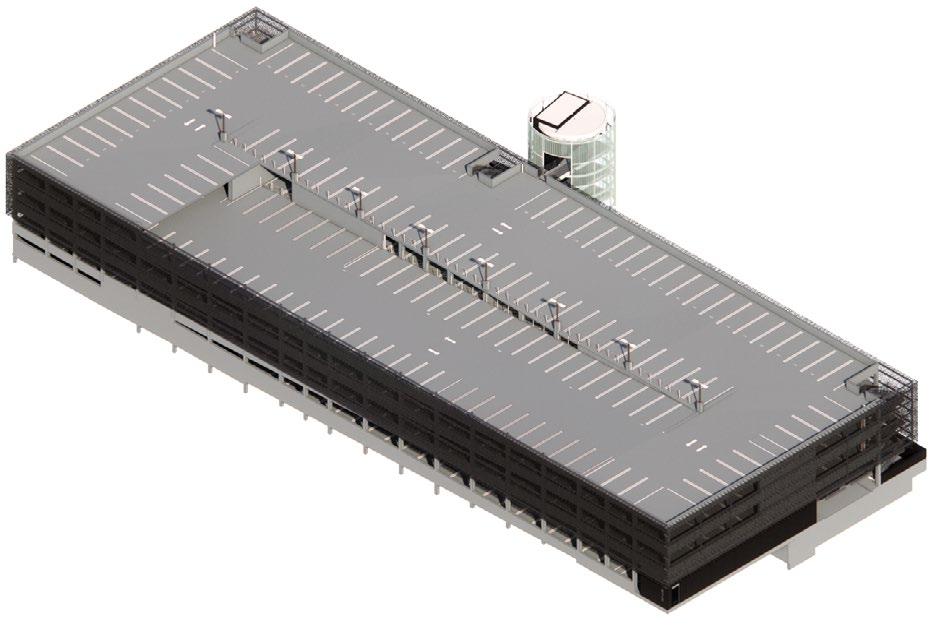
The typical floor plan represents a repeated layout across four levels of parking above ground and a basement amassing to a total yield of 606 parking spaces and a total square footage of 186,400 sf.
The mass timber long span prototypes utilize CLT shear walls to form the lateral load system Both options are comprised of 27"x12.5" glulam columns, glulam beams, and a 6.3" thick CLT floor slab with the only difference between the options being their waterproofing solutions and the consequential sizing of the mass timber structural elements. One option has a concrete topping slab, the other has a 1 1/2" max traffic coating layer (see waterproofing discussion for options). The use of a concrete topping slab is in greater congruence with current construction norms. But where concrete is used, along with up-sized beam required, the result is a significant jump in embodied carbon.
Construction Schedule 14.2 months Construction
186,400 sf
slab
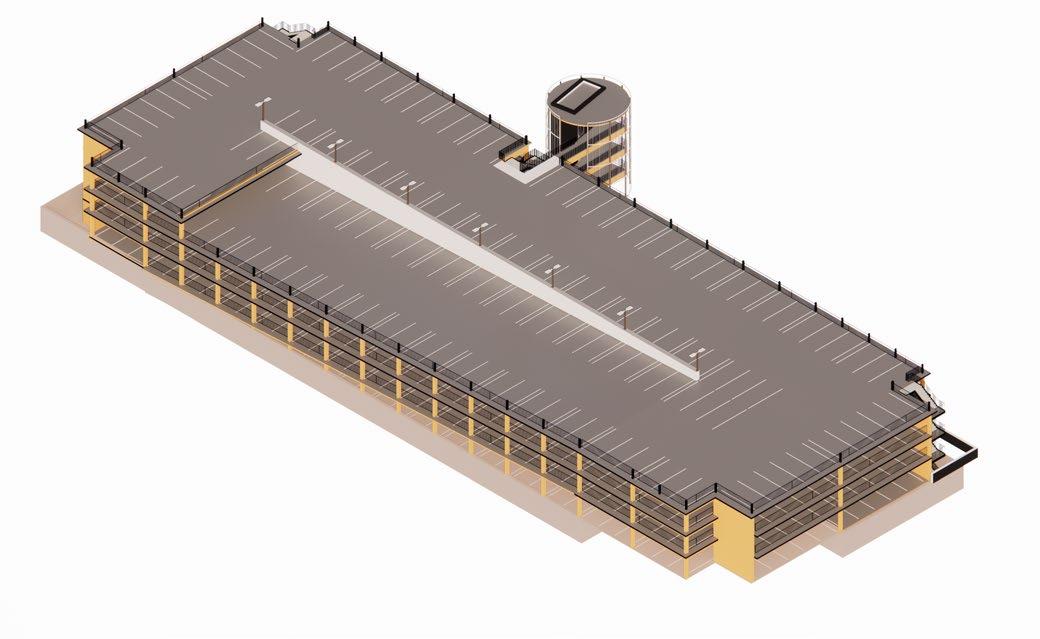
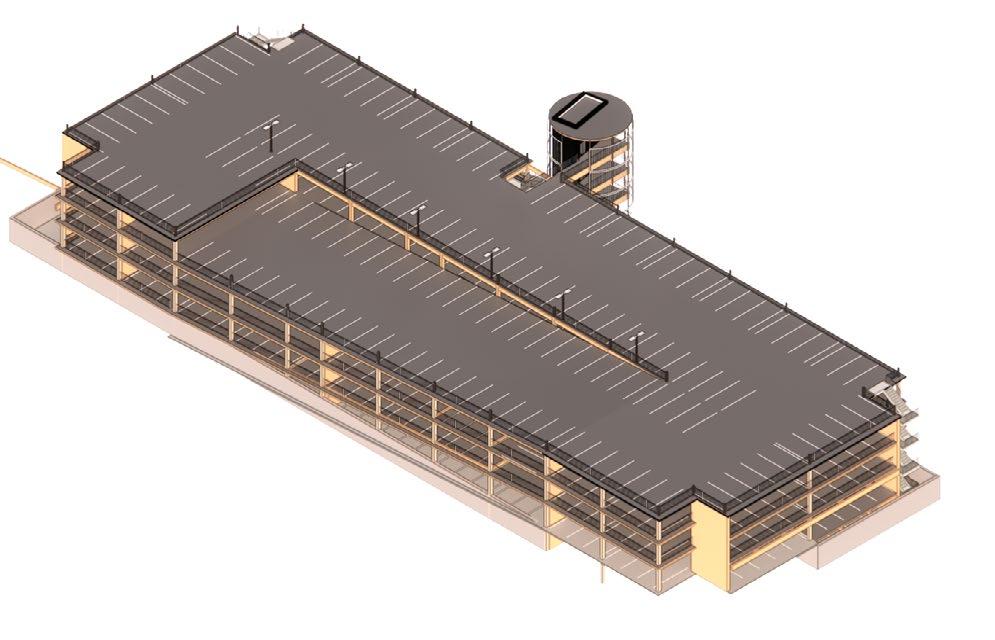
The typical floor plan represents a repeated layout across four levels of parking above ground and a basement amassing to a total yield of 606 parking spaces and a total square footage of 201,600 sq ft. The structural beams slope for drainage with the 3-ply CLT slab accommodating some dimensional "warp" from beam to beam; see "Deck Drainage System" in the Durability & Safety section.

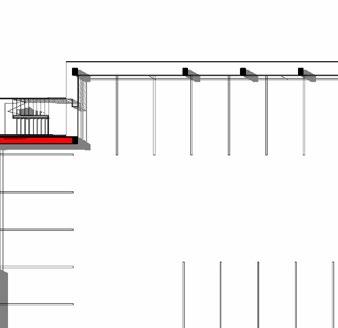
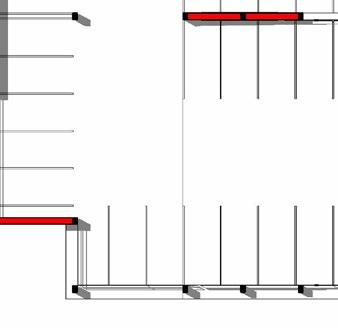
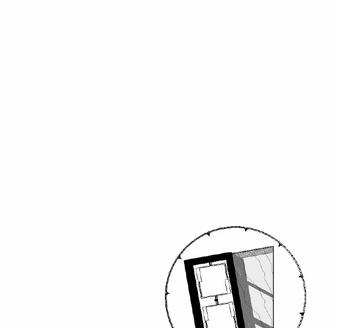
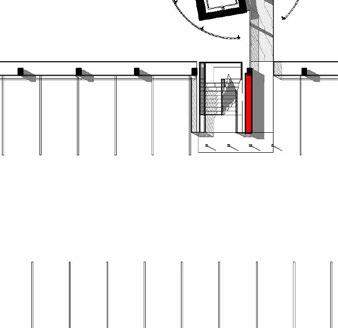
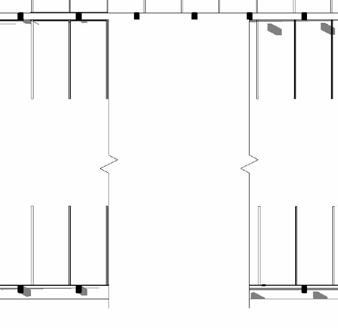
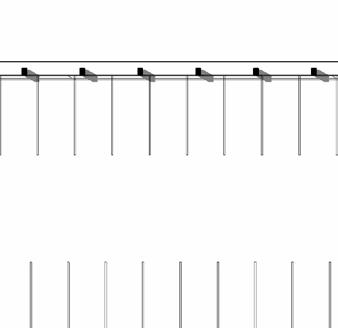
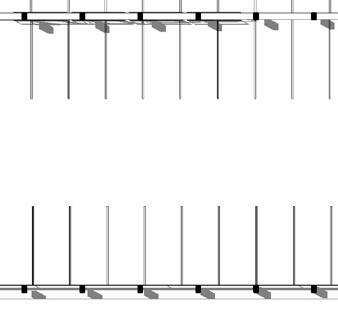
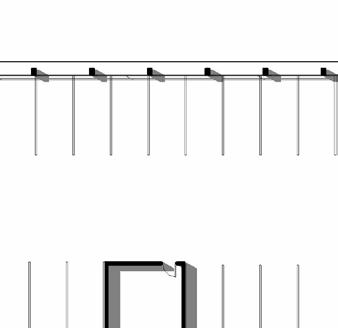
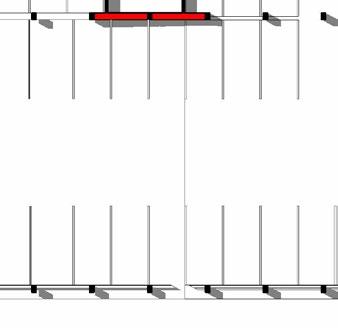
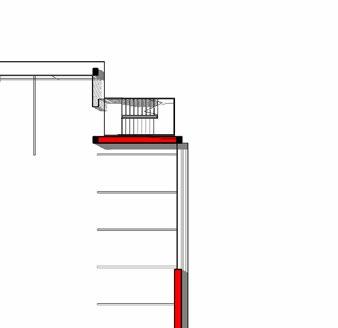
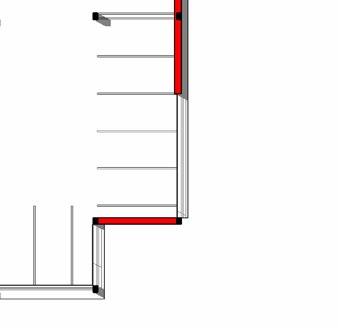
Section and Elevation: Prototype 1, Mass Timber Long Span
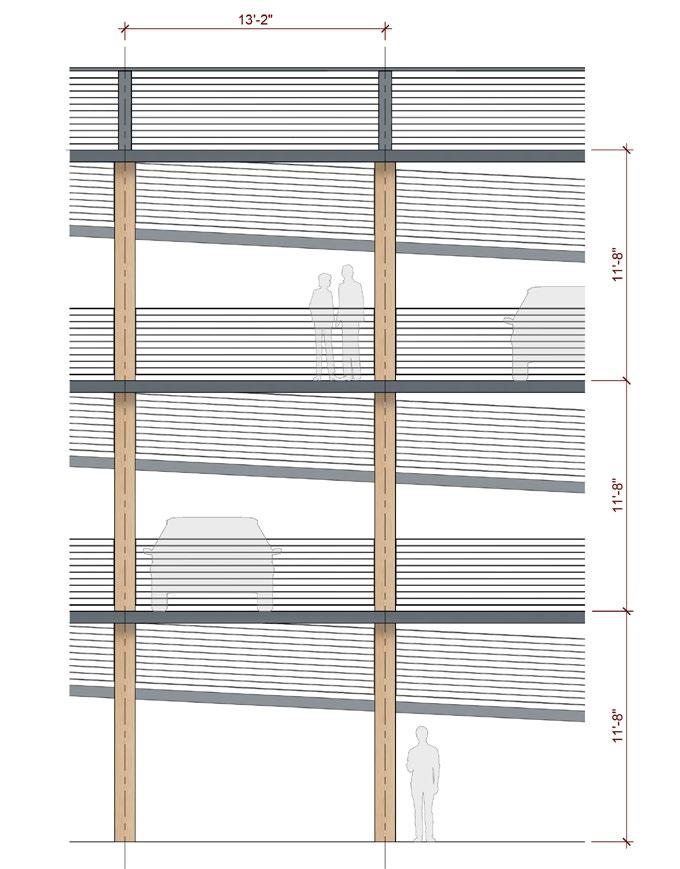
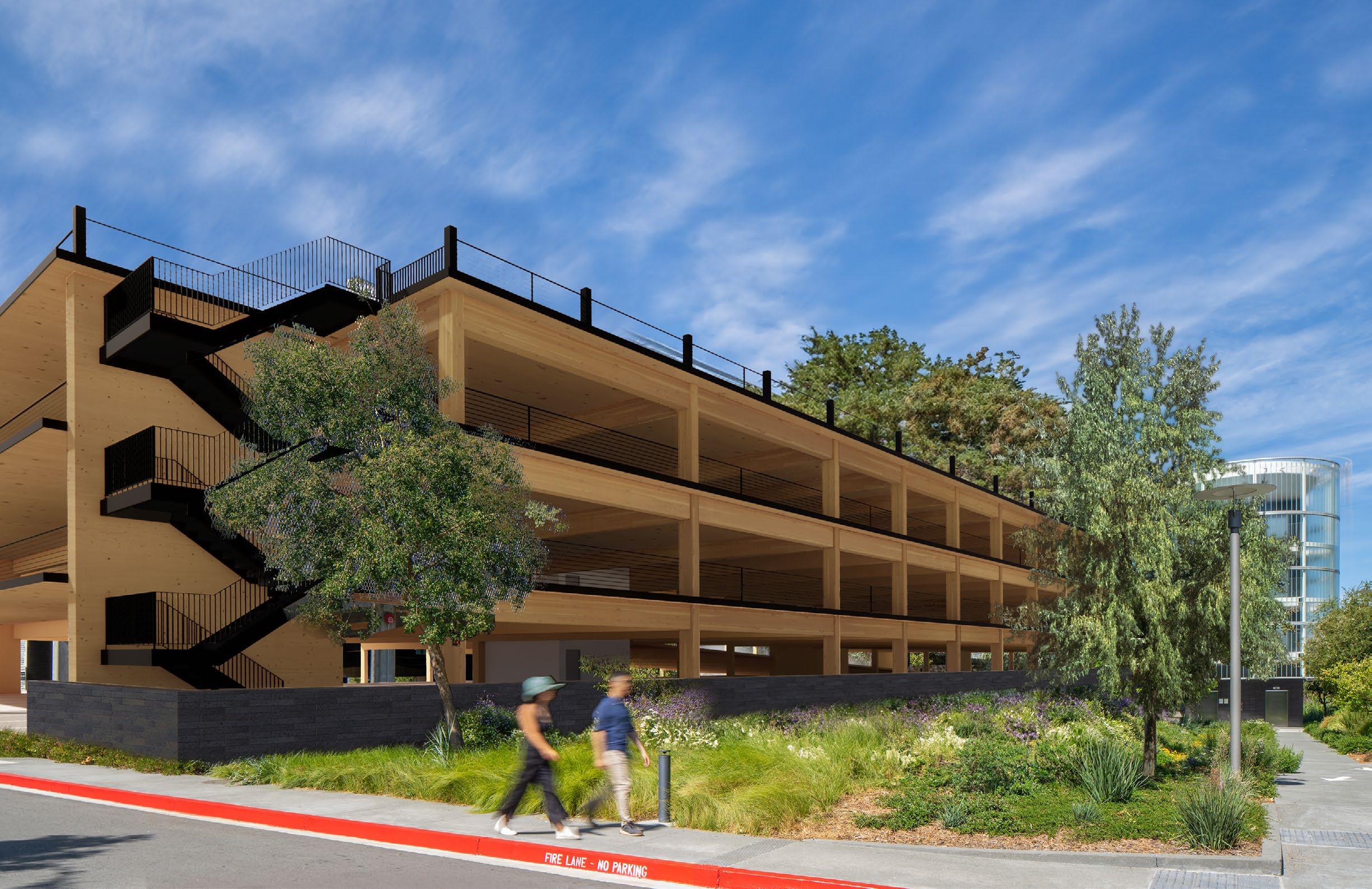
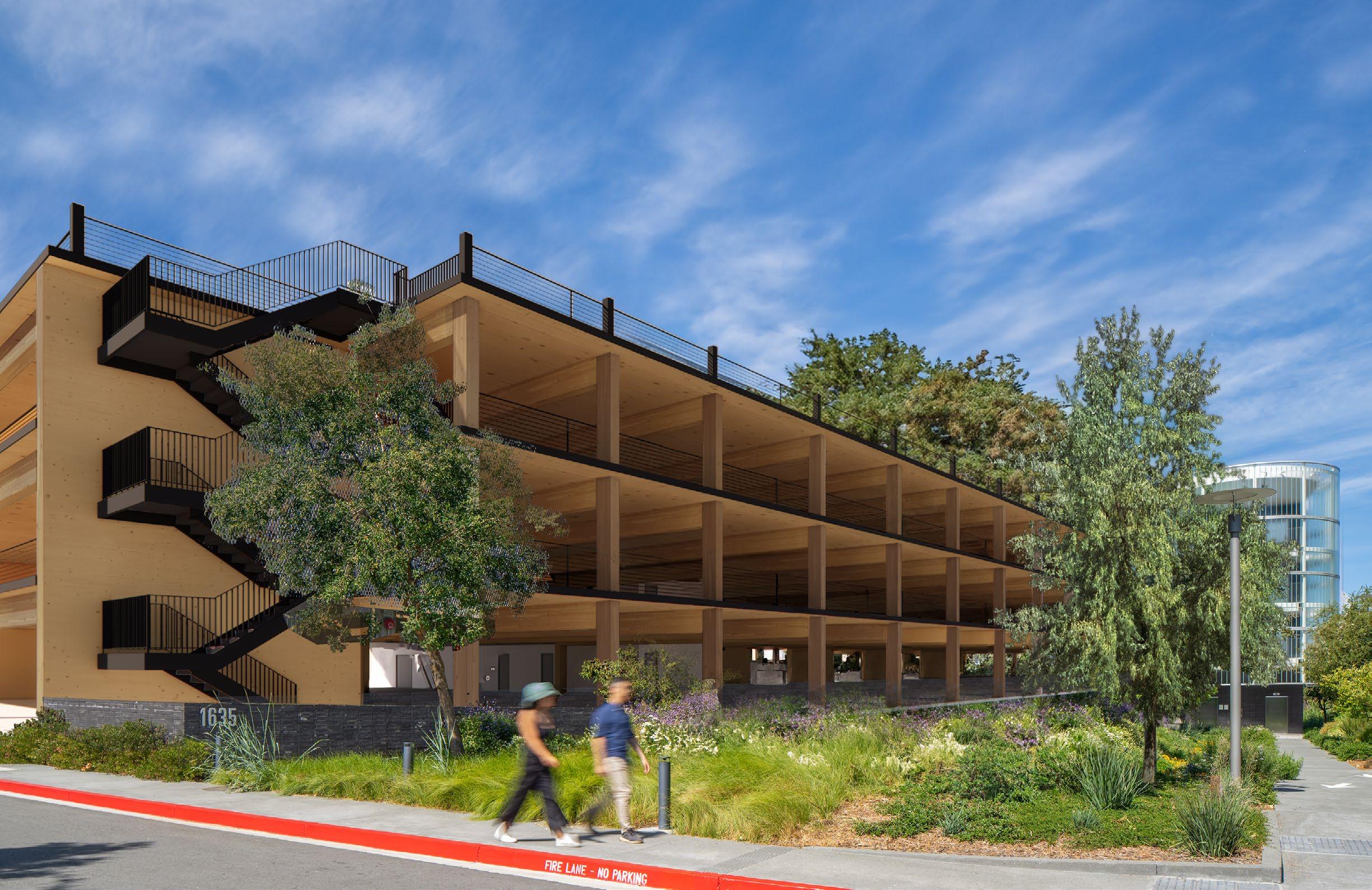
The mass timber medium span prototypes utilize CLT shear walls to form the lateral load system. One option has a 3.25" thick concrete topping slab, the other has a 1 1/2" max traffic coating layer (see waterproofing discussion for options). The use of a concrete topping slab is in greater congruence with current construction norms. But where concrete is used, along with up-sized beam required, the result is a significant jump in embodied carbon. Both options are comprised of 12 1/4" x 13 1/2" glulam columns, glulam beams, and a 3-ply (4.13") thick CLT floor slab with the only difference between the options being their waterproofing solutions and the consequential sizing of the mass timber structural elements.
Construction Schedule 14.8 months
201,564
w/ topping slab
/stall
w/o topping slab $72,783 /stall
The typical floor plan represents a repeated layout across four levels of parking above ground and a partial basement amassing to a total yield of 606 parking spaces and a total square footage of 201,600 sq ft. The structural beams slope for drainage with the 3-ply CLT slab accommodating some dimensional "warp" from beam to beam; see "Deck Drainage System" in the Durability & Safety section.
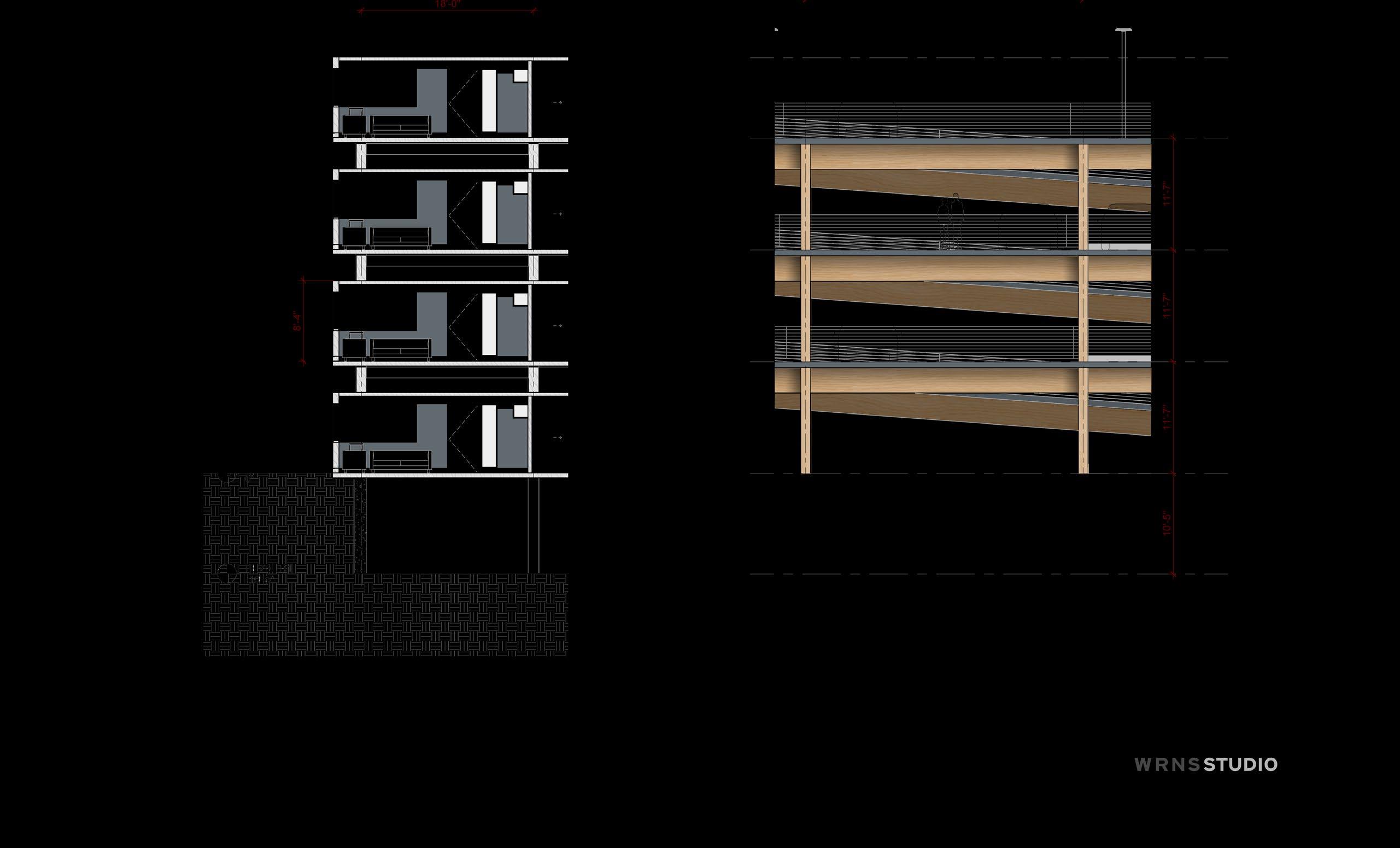
Section and Elevation: Prototype 2, Mass Timber Medium Span
1 Shallow foundations assumed. Foundations roughly 30% smaller by volume in mass timber options.
2 No PV system or EV chargers included
3 Architectural aluminum screening included, but optional. A naturally beautiful mass timber parking structure would require little to no architectural screening on the facade. Removing screening significantly reduces or eliminates the cost delta compared to a screened concrete garage.
BIM models of each option were analyzed using Tally to produce a total Global Warming Potential (GWP) result expressed in metric tons of embodied CO2 (MTCO2e). Every option compared has a consistent number of parking stalls. To provide for approximate scalability of these findings to larger or smaller parking structures, embodied carbon is expressed in MTCO2e per parking stall The results were validated using Feather, a tool for calculation based on a typical structural bay. The full data set is included in the appendix. Results are derived from cradle-to-gate life cycle analysis (stages A1-A3). Concrete and rebar GWP are based on 2023 CLF North American Material Baselines Report
Elements included: columns, beams (including edge beams and purlins), floor slabs (including waterproofing, lateral systems (cross bracing and/or shear walls
Elements excluded: non-structural elements, railings, elevators or other equipment, piping or wiring
CO2 sequestered in the wood itself during growth of the trees is not included in these calculation. In line with IPCC and Carbon Leadership Forum, biogenic carbon is here treated as approximately neutral (the "zero burden" assumption) rather than a positive credit, to avoid double-counting with national forest carbon inventories. However, assuming that the wood is harvested from sustainably managed forests and the elements of a mass timber parking structure are built for disassembly and re-use, the carbon footprint reductions could be significantly more than shown here.

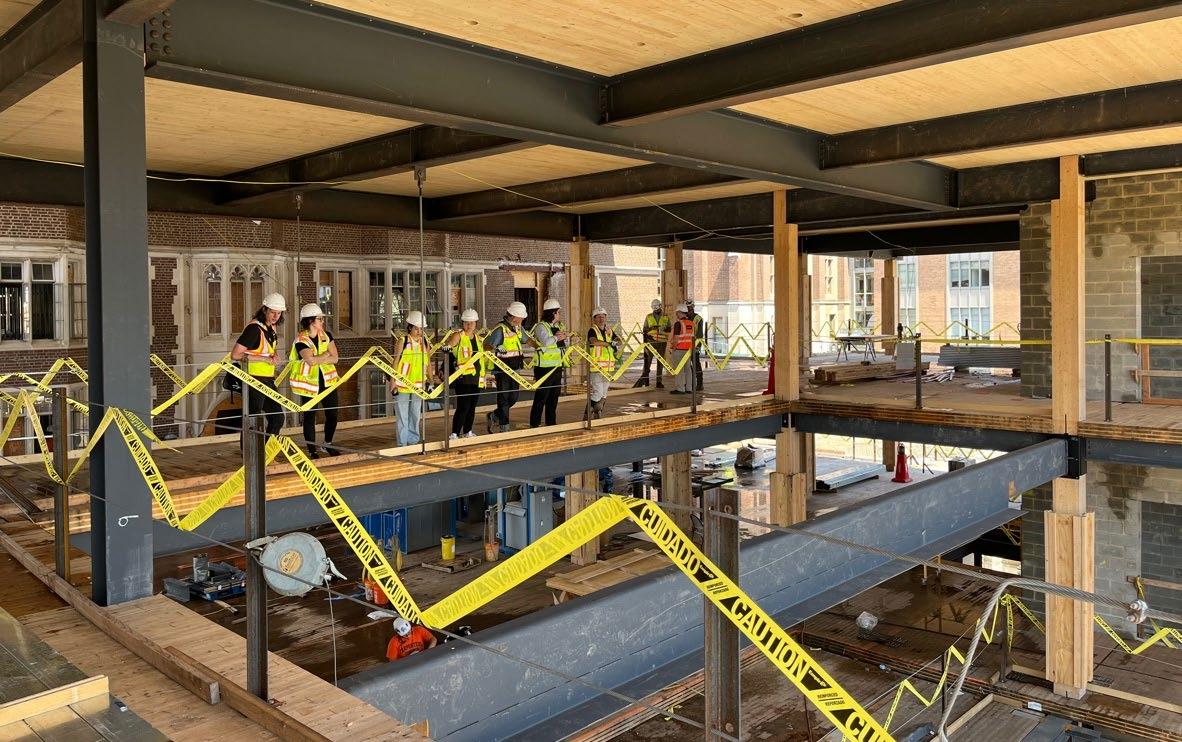
Beyond typology, efficiency, structural feasibility, and embodied carbon, the viability of mass timber parking structures depends on a broader set of performance considerations that define how these buildings function, endure, and are experienced over time. Several of these—safety, durability, waterproofing, and adaptability—are inherent concerns in all parking structures
and were introduced earlier as baseline criteria for evaluation. Through the specific lens of mass timber, the inquiry is expanded to include architectural expression and interior environment. These considerations frame the key questions that follow, testing whether mass timber can meet or exceed the performance expectations established by conventional concrete systems while offering additional environmental and experiential value.
2 1 3 4 5
Safety: Can mass timber parking structures be detailed, protected, and approved to perform at a equivalent level?
Durability: How can mass timber be detailed to achieve durability performance comparable to the current structures?
Waterproofing: As mass timber is naturally absorptive, can it be detailed and sealed to manage moisture with performance comparable to concrete systems?
6
Aesthetics: Can mass timber parking structures be detailed, protected, and approved to perform at a equivalent level?
Interior Environment : How can mass timber be detailed to achieve durability performance comparable to the current structures?
Adaptability : Can mass timber structures adapt more readily to future uses than concrete systems?
The inherent fire-resistive behavior of large solid framing has partially permitted several U.S. buildings to be left exposed while still achieving a fire-resistance rating. The other part is due to the International Building Code (Sections 602.4.1 and 602.4.2), permitting the use of Fire Resistive Treated Wood (FRTW) framing, or CLT covered with FRTW sheathing/Noncombustible material in Mass timber design, acknowledging the assembly's ability to structurally perform under potential fire conditions.
Ultimately, the fire resistance of an exposed heavy timber member is based on it's cross sectional size, whereby larger members retain their structural capacity via a char layer which insulates the remaining core. Effective char depths differ by member type (CLT, NLT, Glulam, etc), yet are ultimately
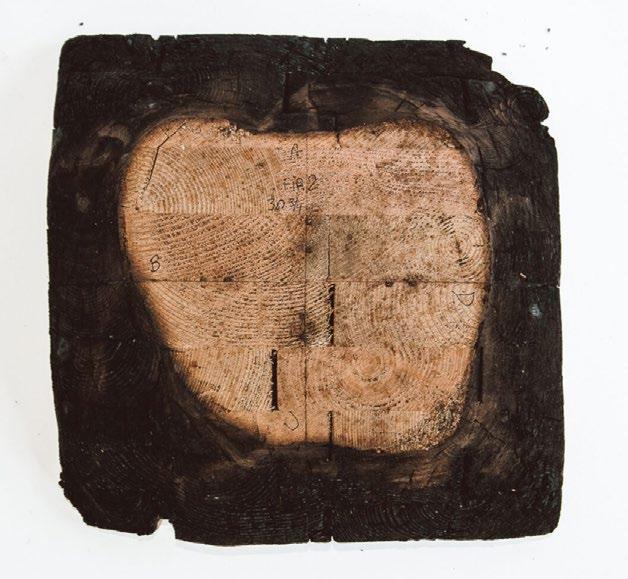
determined via a prescriptive or calculated approach to ensure the effective char depth retains a required structural capacity. For example, a 2-hr fire rated glulam beam would require an effective char depth of 3.2 inches to all exposed sides, whereby the remaining cross section would be tested to determine it's structural performance under fire conditions.
Concerning parking garages, special attention must be dedicated to electric vehicles and their required infrastructure. Unlike gas-powered vehicles, EV alternatives, once ignited, produce extremely toxic fires, burning at twice the temperature for significantly longer time spans, caused by the battery and chemicals within the vehicle.
Electric car batteries, their parking areas, and charging stationsgenerating extreme heat during combustion - would requires a high level of care during the design of a mass timber parking structure. Some measure to be contemplated in concert with the local fire marshal:
+ Building locations on lower floors and away from the building core
+ Additional sprinkler coverage in these areas to cool the fire
+ A 1.5 - 2 inch layer of high density gypcrete applied to a slab depression in the area of the parking stalls
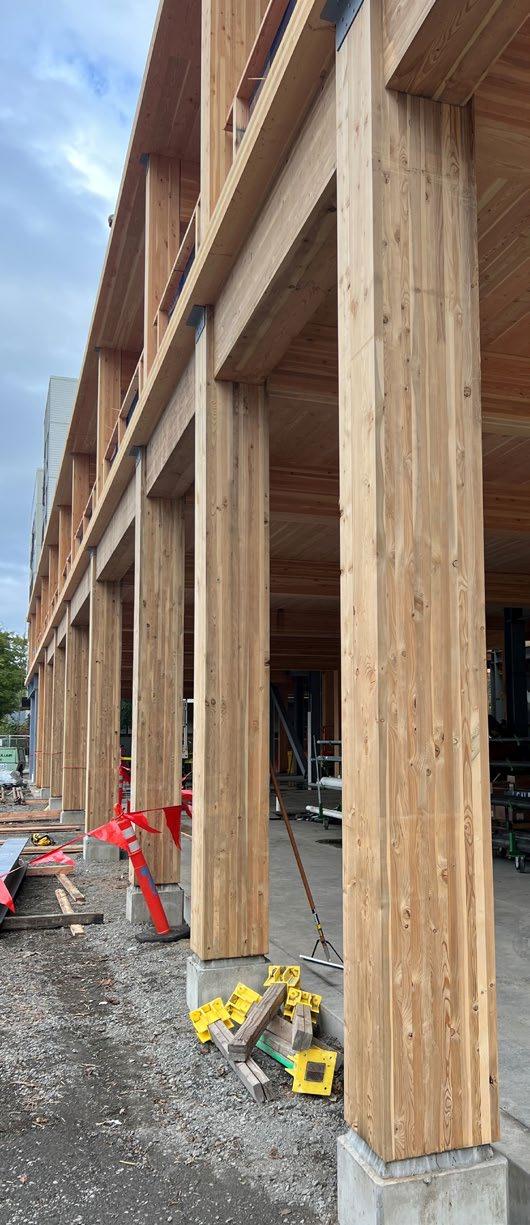
Exposed wood structure can be a beautiful feature of a mass timber structure. Parking structures are unique in having some structural members that are totally weather-protected (in enclosed rooms), some structural members that exposed to direct sun and rain (perimeter columns and beams), and many structural members that are relatively protected from the elements but still subject to large swings in temperature and humidity (slabs and beams). Typically, parking structures receive little or no maintenance. Wood treatments should be carefully selected to safeguard structural integrity, reduce maintenance, and provide for beautiful weathering over time.
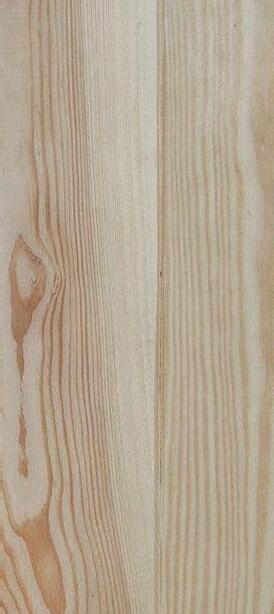
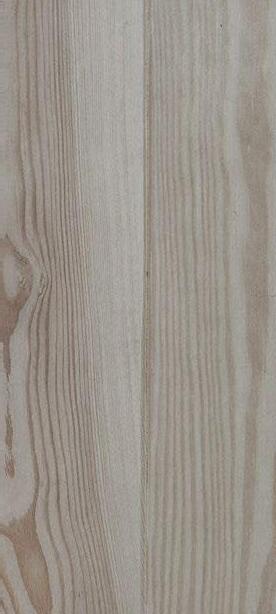
Wood is a natural material with an appearance that will change as the building ages. Film-forming wood finishes provide protection from water and UV rays also require regular maintenance. When not maintained, these coatings crack and peel while the underlying material weathers unevenly. This prototype assumes the application of an exterior-grade sealant to absorb into wood members and increase cleanability over time. The perimeter members exposed to water and sun will evenly weather to a light gray while the beams and soffit remain warm and woodsy. This "Cape Cod house" approach will result in a more uniform, naturalistic, and distinguished result. Additionally, a modest slab extension can provide significant protection to perimeter beams while a formed metal fascia protects the absorbent ends of the CLT wood slab.
The perimeter columns are most subject to direct sun and rain. For these members, we propose a pressure treatment such as Permapost KlearGard, which lacksthe green discoloration of tradition metallic pressure-treating.

12 months 6 months O months
Mass timber panels are flexible enough to warp and conform to beams sloping to drain at 1.5-2% slopes. Our prototype assumes a sloping substructure with uniform thickness CLT panel and no concrete topping slab, only a layers of flexible traffic coating. Typical area drains are utilized between drive aisles. The mass timbers columns should be held up off the floor surface by welded steel connectors to prevent capillary action from bringing floor moisture up into the end-grain. Panel connections should be designed to breathe and dry out.
Typical parking structures allow for parking on the uppermost deck where there is no protection from sun or inclement weather. These are often the least utilized stalls in a parking structure. Increasingly, photovoltaics panels (PV)are being deployed as part of steel shade structures to provide both power and a modicum of shade and shelter to those who need to park on the upper level.
On a mass timber parking structure, the uppermost parking deck, if left exposed, may require a higher grade traffic coating, one designed to withstand years of services fully exposed to sun and weather. Building an unparked light mass timber roof level would be an alternative that would weatherproof the structure with a traditional roofing system while also providing a substrate for PV panels and providing shade to the entire upper level of parking. This would allow for application of a uniform traffic coating system on each of the parking decks below.
A mass timber parking structure constructed in a climate zone with regular heavy snowfall would require careful design including:
+ Extra structural weight to withstand the loads of plowed and piled snow
+ Metal or concrete column protection
+ Concrete topping slab at the upper level to withstand plow blades
+ Possible roof structure to protect upper level of parking
+ Possible radiant slab system to avoid snow build-up
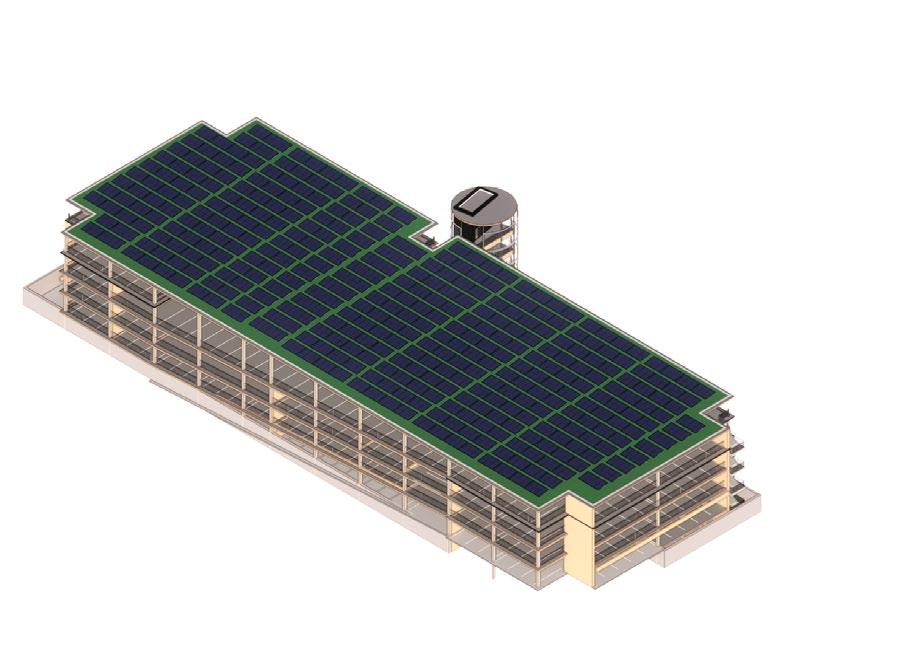
In an effort to minimize embodied carbon, this prototype sought to waterproof the parking decks with a flexible layer of traffic coating on top combined with sheet metal or extruded flashing at the deck edge. Multiple traffic coating systems were explored (lower right). While Polyurea provides the best protection, we were unable to find qualified subcontractor to apply the system in California. Polyurethane requires extra layers for durability, with is flexible enough to be compatible with CLT panels. We recommend a performance mock-up prior to construction for any system that has not had a proven installation with a mass timber substrate.
The following polyurethane assembly was recommended by Sika and assumed for pricing purposes:
+ Primer: Sikalastic EP Primer
+ Base Coat: Sikalastic 644 Lo-VOC at 45-50 mils WFT with Sika
Reemat Premium embedded into the wet base coat.
+ Top Coat: Sikalastic 644 Lo-VOC at 30 mils WFT
+ Consider adding sand or other grit into the top coat to reduce tire squeal.
Protecting CLT panels on-site during construction involves preventing moisture damage through measures like using temporary weather barriers, applying breathable membranes, and ensuring proper drainage. Other essential steps include using insect and fungicide treatments, protecting exposed edges and connections, and managing exposure to elements through careful planning and coordination of material drop-off and erection schedule.
Architectural screening can help to modulate the scale of a parking structure, connect to context, or reinforce public space or pedestrian experience. But often, the screening is simply the most cost effective way of masking the visual defects inherent in PT concrete construction, or to camouflage the concrete material itself. By contrast, a mass timber parking structure has an inherent warmth and material appeal that may require little or no architectural screening on the facade. Removing the metal screening significantly reduces or eliminates the cost delta of a mass timber garage compared to a screened concrete garage.
Structural railings are a requirement on a parking structure to keep an errant driver from soaring off the edge (in the style of Thelma and Louise). In some cases, these take the form of tensioned steel cabling or a concrete crash wall. The steel cable approach translates easily into a mass timber parking structure. In order to prevent car headlights from shining into adjacent building windows, a solid crash wall is often a functional requirement for a new parking structure. A engineered glulam beam spanning column-to-column would provide the headlightblocking function while also allowing an uninterrupted flow of water on the parking deck.
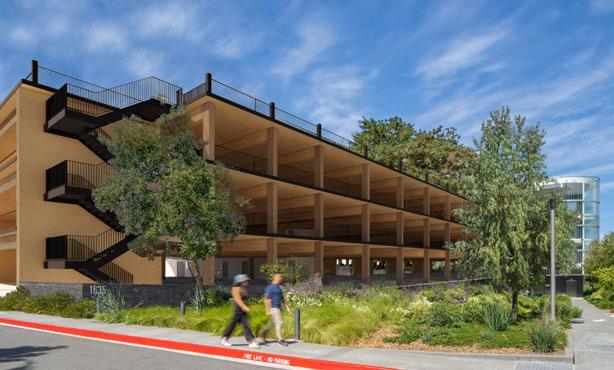
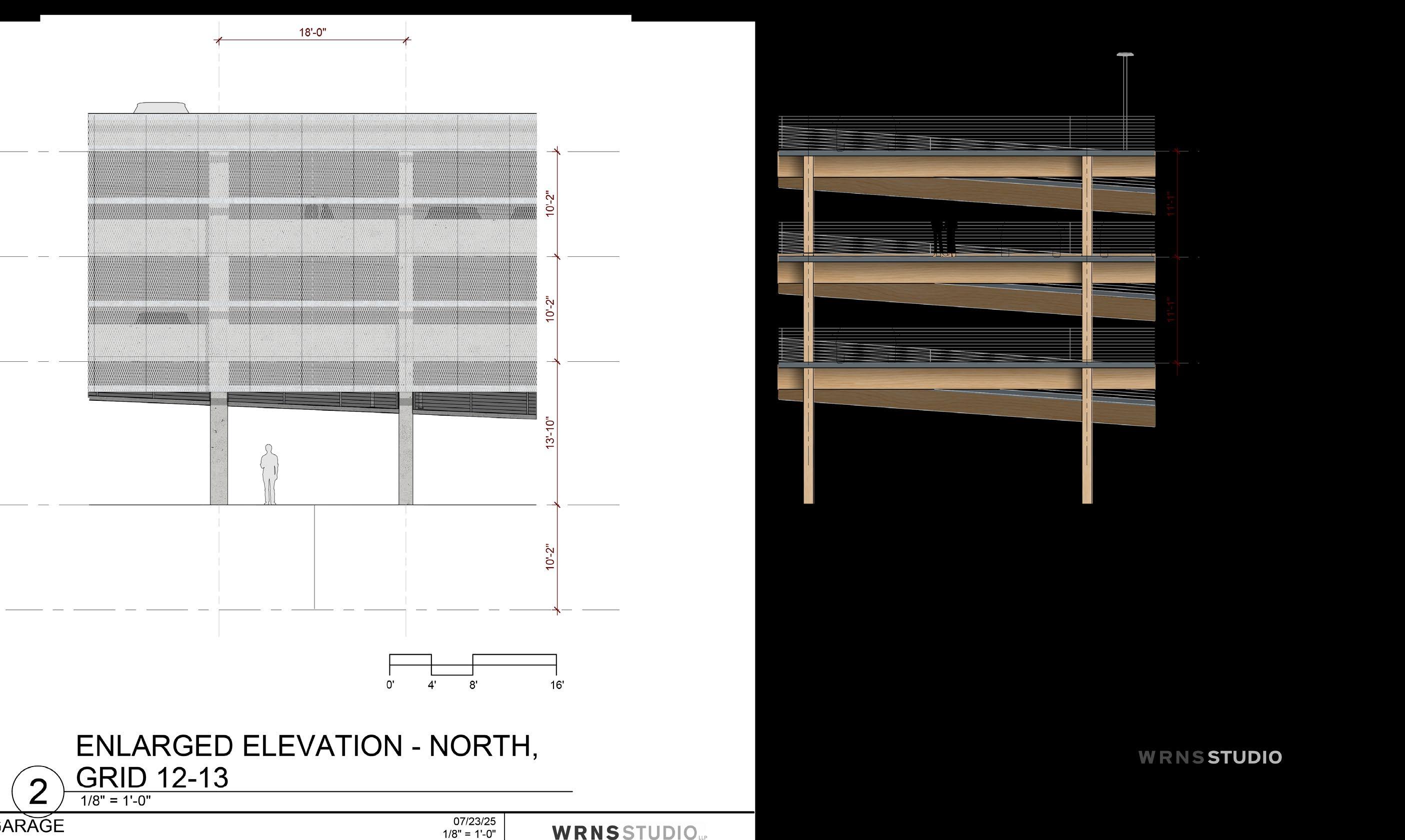
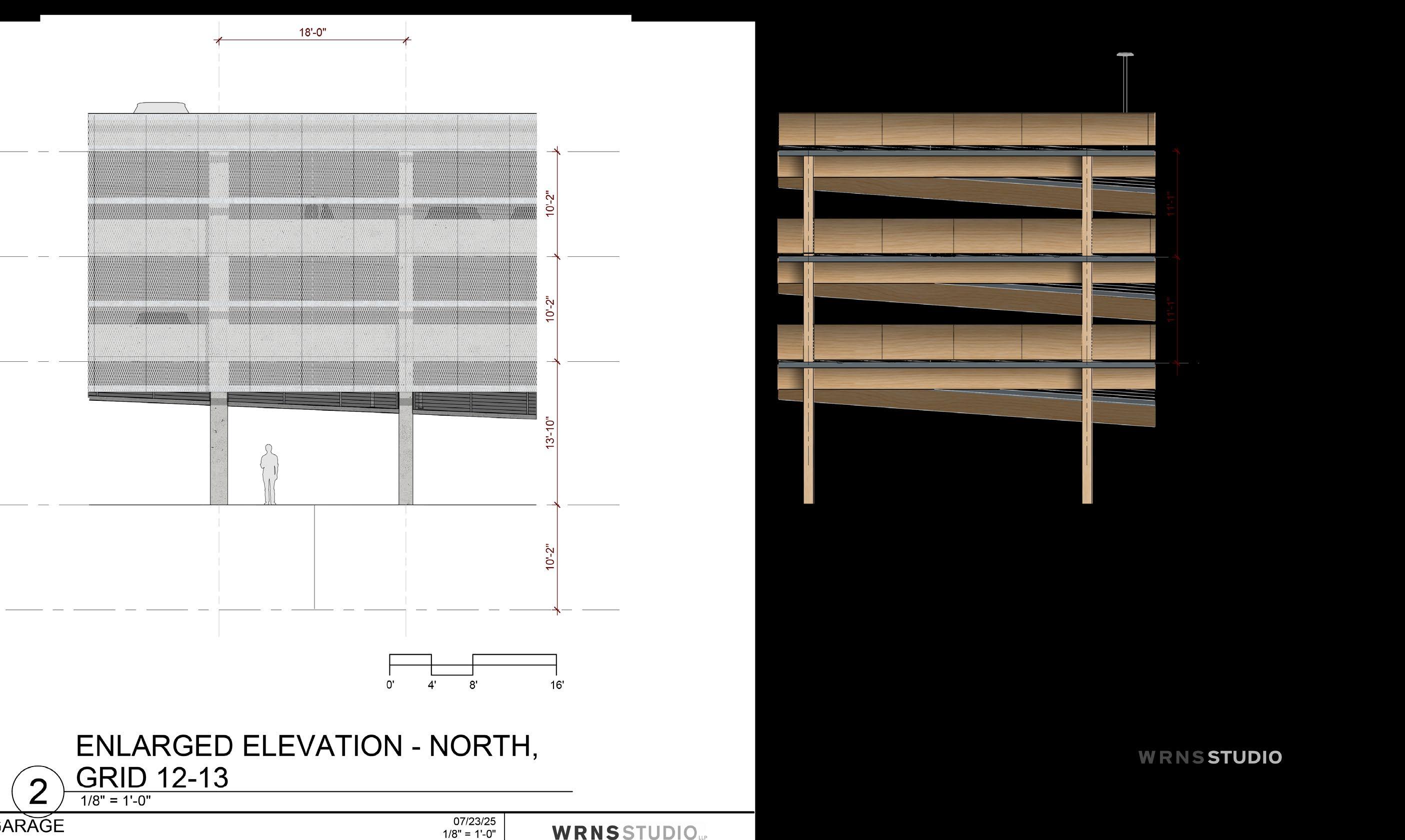
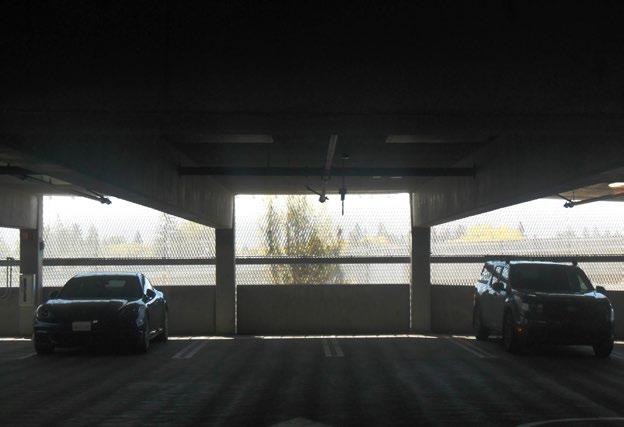
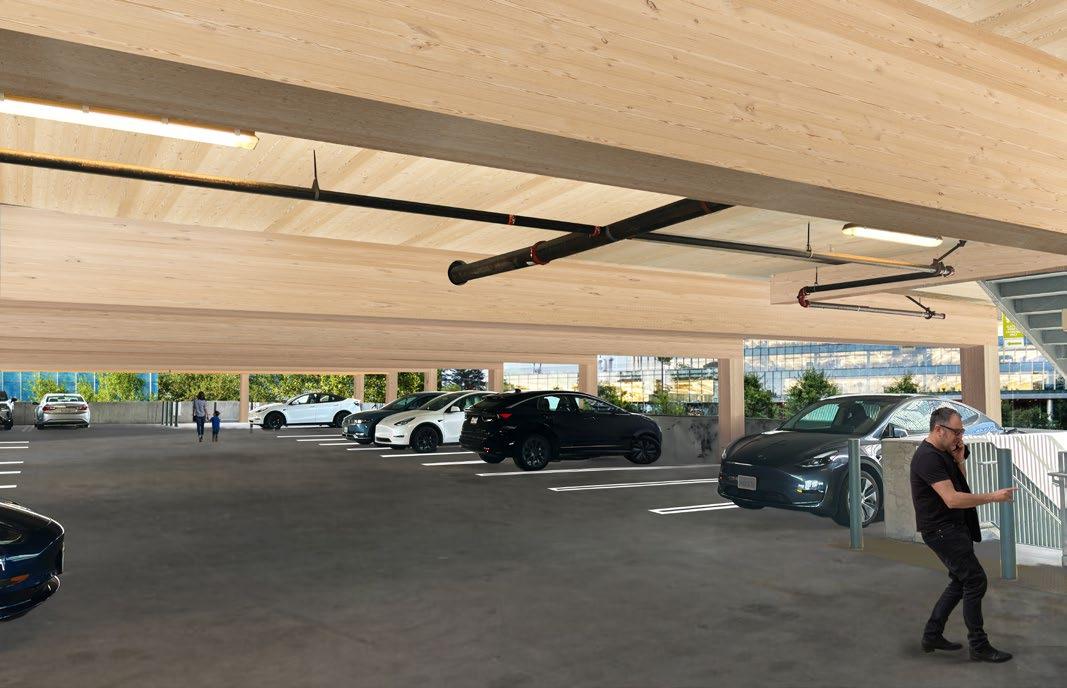
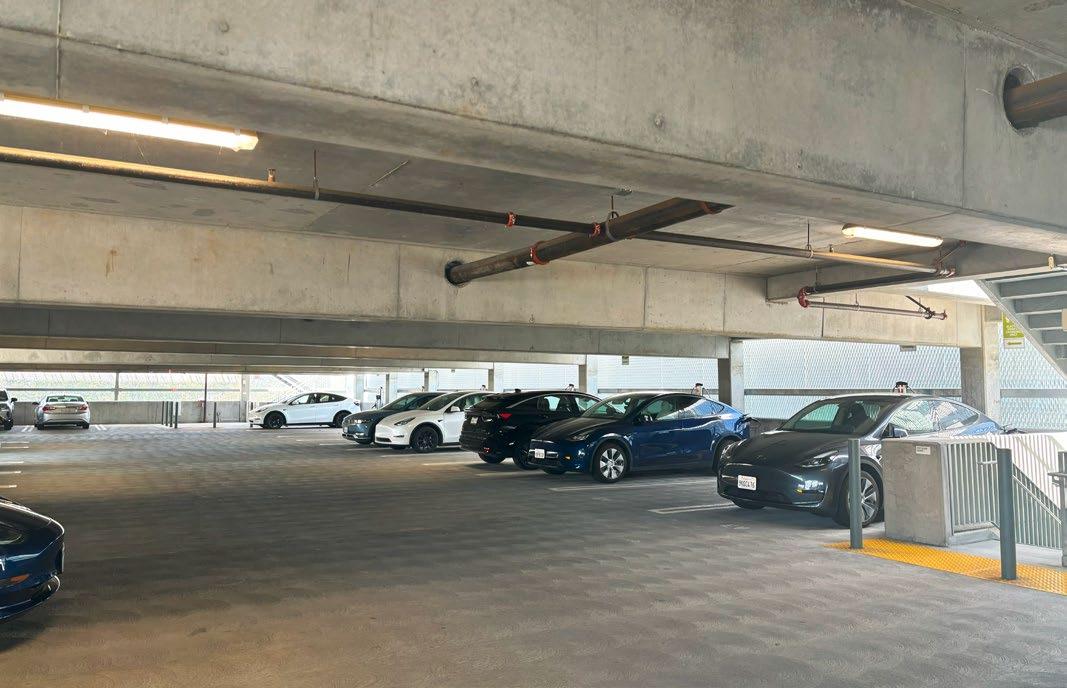
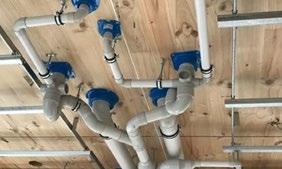
Parking structures are generally not nice places for humans: dark, low ceilinged, difficult to navigate, with every surface made of concrete. Mass timber, especially is wood species such as Spruce or Larch, has a higher light reflectance than concrete resulting in a brighter environment with a lower light power density. Penetrations for plumbing are easier to manage in the field, resulting in a cleaner and more organized ceiling plane. The elimination of architectural screening provides clear views to the adjacent context, resulting in better wayfinding. And psychologically, the wood feel less heavy and ominous overhead, resulting in better user satisfaction.



There are an estimated 2 billion parking spots in the US, or 3-6 parking stalls per vehicle. Taken together, all the parking within the United States adds up to the size of Connecticut and Vermont combined. In Jackson, Wyoming, parking spaces outnumber homes 27:1, in Des Moines, Iowa, 19:1, in Philadelphia, 4:1. As a whole, there is an inefficiency regarding the surplus of parking spaces compared to vehicles and people.
At same time, a growing contigent of Americans report a desire for walkable, interconnected cities that could allow for less time spent driving. In 2023, The National Association of Realtors reported that 56% of those surveyed would accept a smaller yard for a more walkable neighborhood. This has begun to manifest in the amount of time spent behind the wheel. For 50 years, the total miles driven in America had increased by each year by more than 7,000,000 miles. Since 2005, that growth rate has fallen by half.
The shift to hybrid work, the increased use of ride sharing, and the rise of self-driving cars will continue to affect driving rates, parking demand, and parking geography. Demand for parking in some areas may decrease while demand increases elsewhere. For example, autonomous vehicles in some urban areas may require distributed parking structures near to the customer they serve. Mass timber provides an opportunity for rapid construction of a parking structure that, in the future, can be more easily adapted to other uses by a prevailing labor force that is adept at work with wood and light framing.
With 2 billion parking spots in the United States, there are more cars per household than people . . .
2.0 Billion Stalls
Billion Households
Typical floor-to-floor heights of ~10'-0" have potential for conversion to housing. Most other uses (office, classroom, retail) require greater ceiling heights, unless portions of the deck are removed to create doubleheight ground floor retail suites, for example. Easier beam penetrations in the field expand the possible reuse conditions of a mass timber structure.
Generally, parking garages (especially long-span garages) have a relaxed vibration criteria compared to other building types. If such a garage were converted into housing or office space, occupants might experience discomfort around unexpected vibrations. In the best case, a garage should be designed with sufficient stiffness for most alternate occupancies.
Parking ramps are a formally constraining element, often too steep to serve as accessible pedestrian routes or to accommodating non-parking programs. In an adaptive reuse scenario, a ramp may need to be removed or infilled with a flat floor. With its "kit-of-parts" assembly, a mass timber garage would more easily allows for such large-scale retrofits.
As opposed to post-tensioned concrete systems, which rupture if a cable is cut, mass timber systems allow for penetrations, whereby wet and dry utilities have a flexible selection as to their placement in regards to newly implemented program or units.
The structure would need sufficient capacity in assumed dead loading, lateral resistance, and vibration control to accommodate the envisioned future use. Alternatively, an existing structure could be strengthened. Retrofit strengthening would be easier to accomplish on a mass timber garage due the flexibility of making new connections.
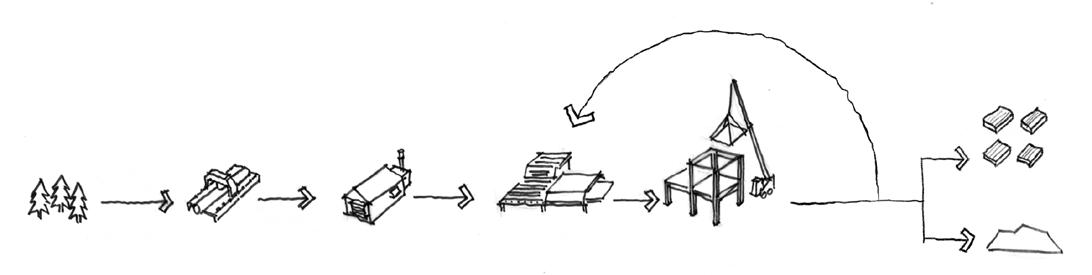
Constructed as a kit-of-parts, mass timber parking structures could be disassembled without compromising the remaining structure. If an entire parking structure (or the upper floors only) were to be converted into housing as in the examples of following pages, the ramping system could be selectively removed and the timber, repurposed.
Column, Beams, and Slab Panels disassembled for reuse or up-cycling Ramp Removed
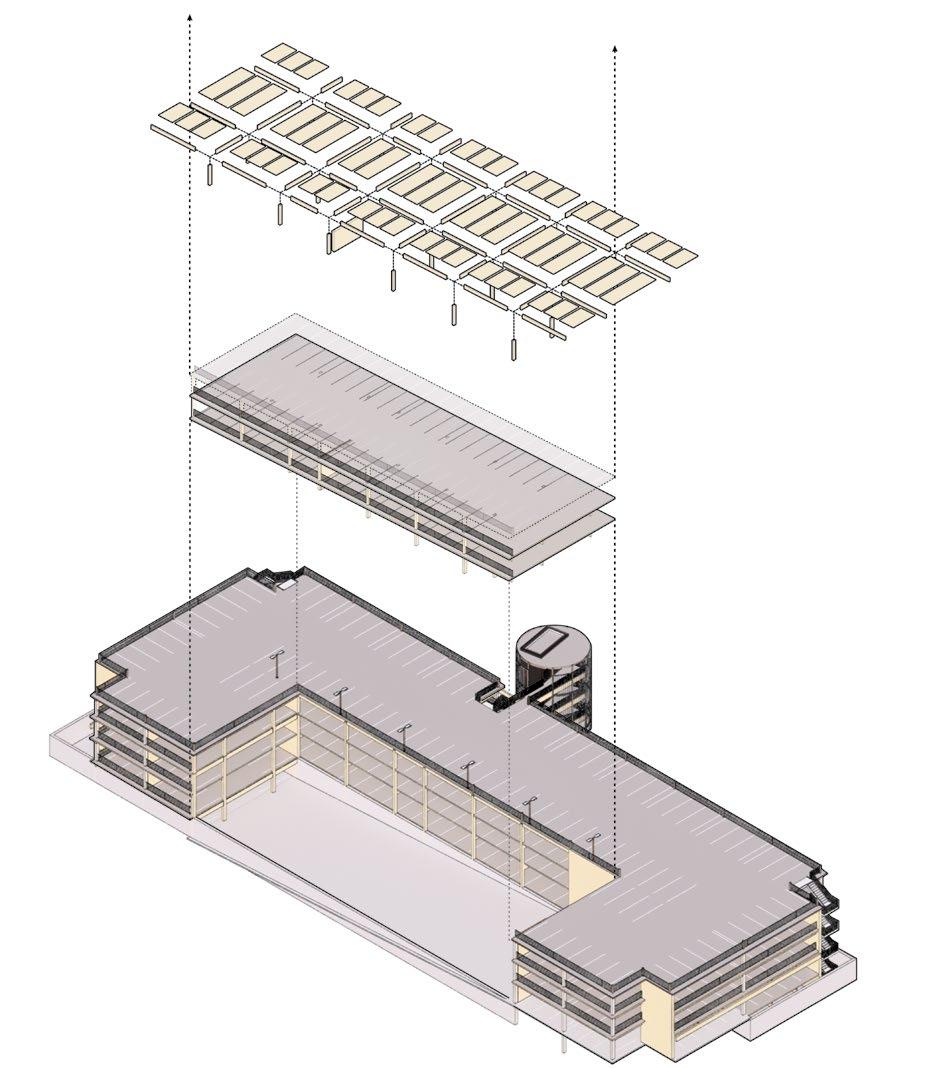
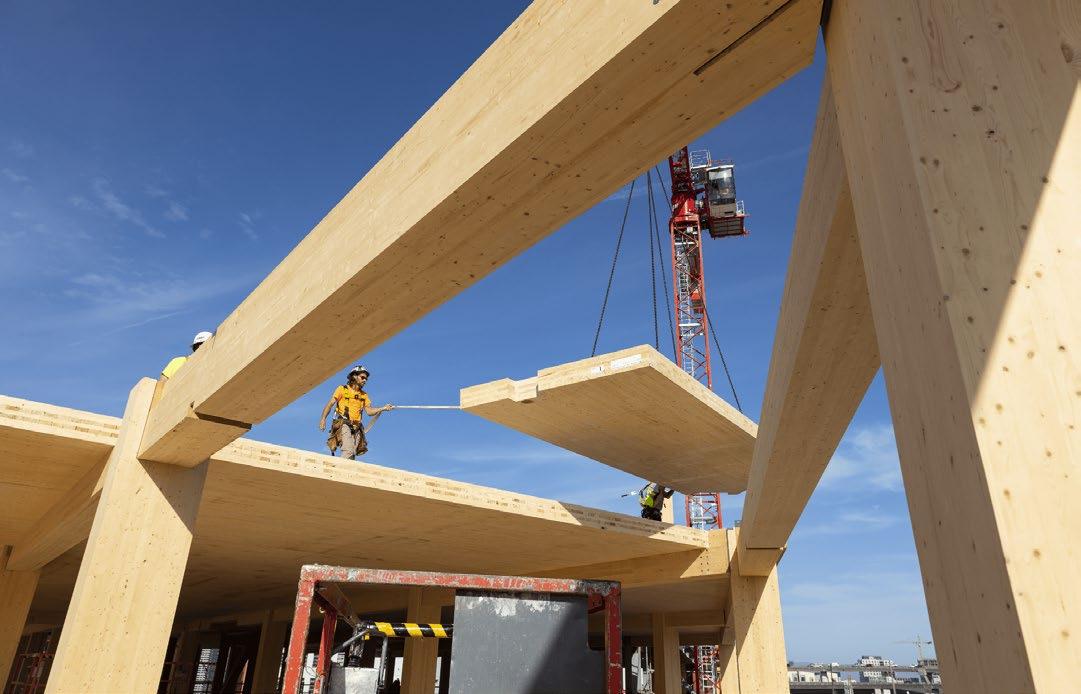
A mass timber parking structure would be built for disassembly, with discreet "kit of parts" elements connected with easy-to-remove steel connection plates. Just a steel building elements can directly reused or melted down and reconstituted into new building components, mass timber building elements—columns, beams, slabs panels—could be reused or returned to a fabricator for milling, cutting, chipping, or glue-up into new components.
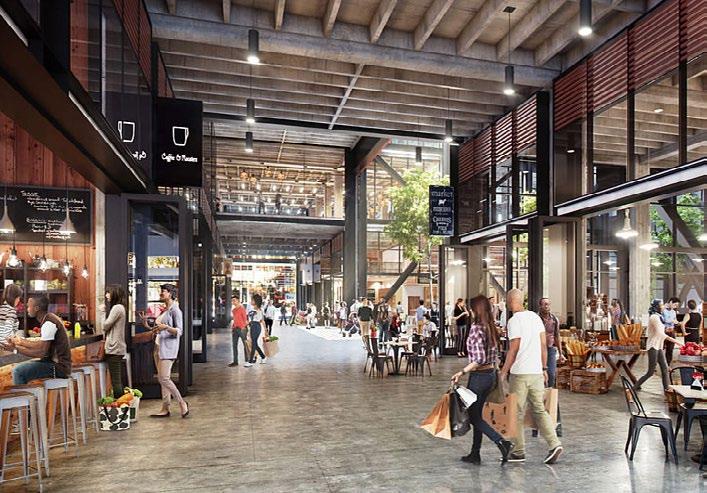
Adaptive reuse has created seemingly mundane works, especially viewed within the warehouse typology, into a wide breadth of rich program. From mixed use hubs for office, retail, sporting complexes, and creative works, to residences, museums, and headquarters. Adaptive reuse projects allow for entire structures to enter the circular economy, allowing for a building's flexibility to serve as an asset for changing demands within our shifting context.
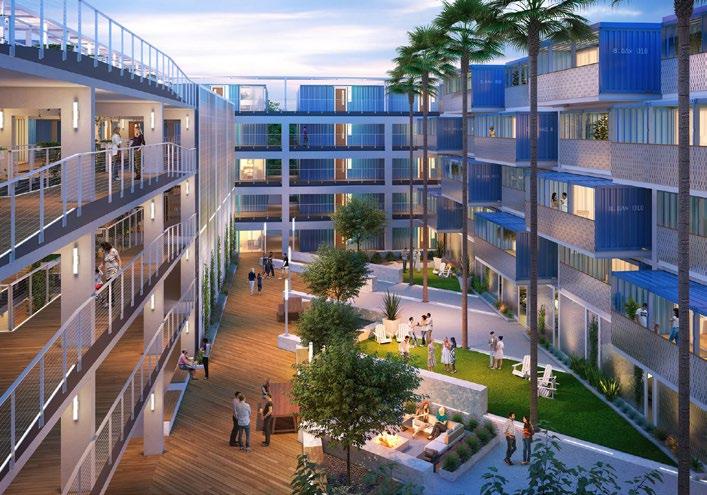
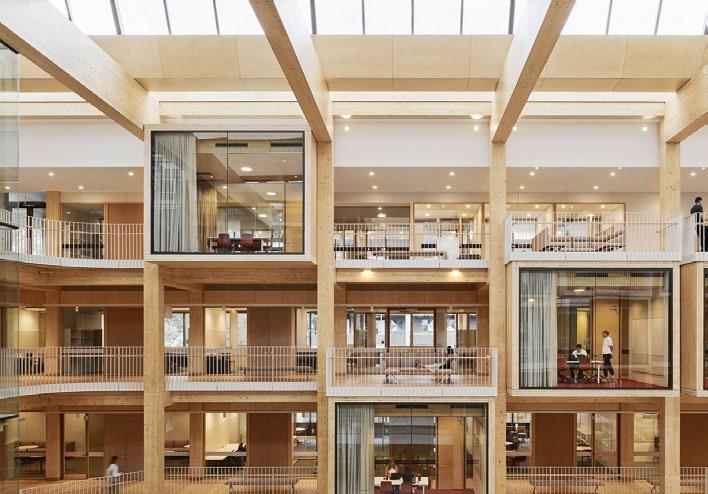
By far, the most active market relies in housing. Close to 25,000 apartments were completed in 2024 from adaptive reuse projects across the U.S., up a staggering 50% compared to 2023. Today, 55,300 units are underway with 25,000 completed.
"It will take at least 4.3 million more housing units by 2035 to meet the demand for rental housing" noting the NAIOP, requiring that spaces begin to be viewed with a shifted lens. Rather than thinking how development may revitalize place, how could development shift with a places future needs. Through the lens of adaptive reuse construction, one may be able to restore economic viability and social engagement while increasing the supply of needed program.
With the rise of e-commerce, the retail development market has taken a hit, but it has also shifted to require unique, character rich spaces that are able to pull costumers from their competitors, and engage other developments in creating community-centered retail hubs.
One example of strong growing community hubs are food halls. With 340 in the US and 127 under development, these pedestrian destinations have become centers for gathering of their own right, whereby 2 of every 5 Americans reporting to have eaten at one and vendors reporting a 15-20% increase in margins.
Post-pandemic market shifts have lead to a downsizing of the workplace market, whereby most employees are working at-home or hybrid, requiring less investment into a shared workspace.
Today, with the increased use of AI, the need for a physical workplace is further diminished. So what is to happen with the left over office buildings scattered about our cities? Adaptive reuse requires the proper candidates. A decreased need for office space leads to a greater pool of candidates for office-to-residential or retail conversions. With the larger floor to floor heights inherent in office design, the bones of such buildings adjust well to multifamily's individually thermally controlled zones. And the older the adaptivereuse candidate, the less need to replace facades, given their original character may be utilized for residential conditions and perform as relics of a city's culture.
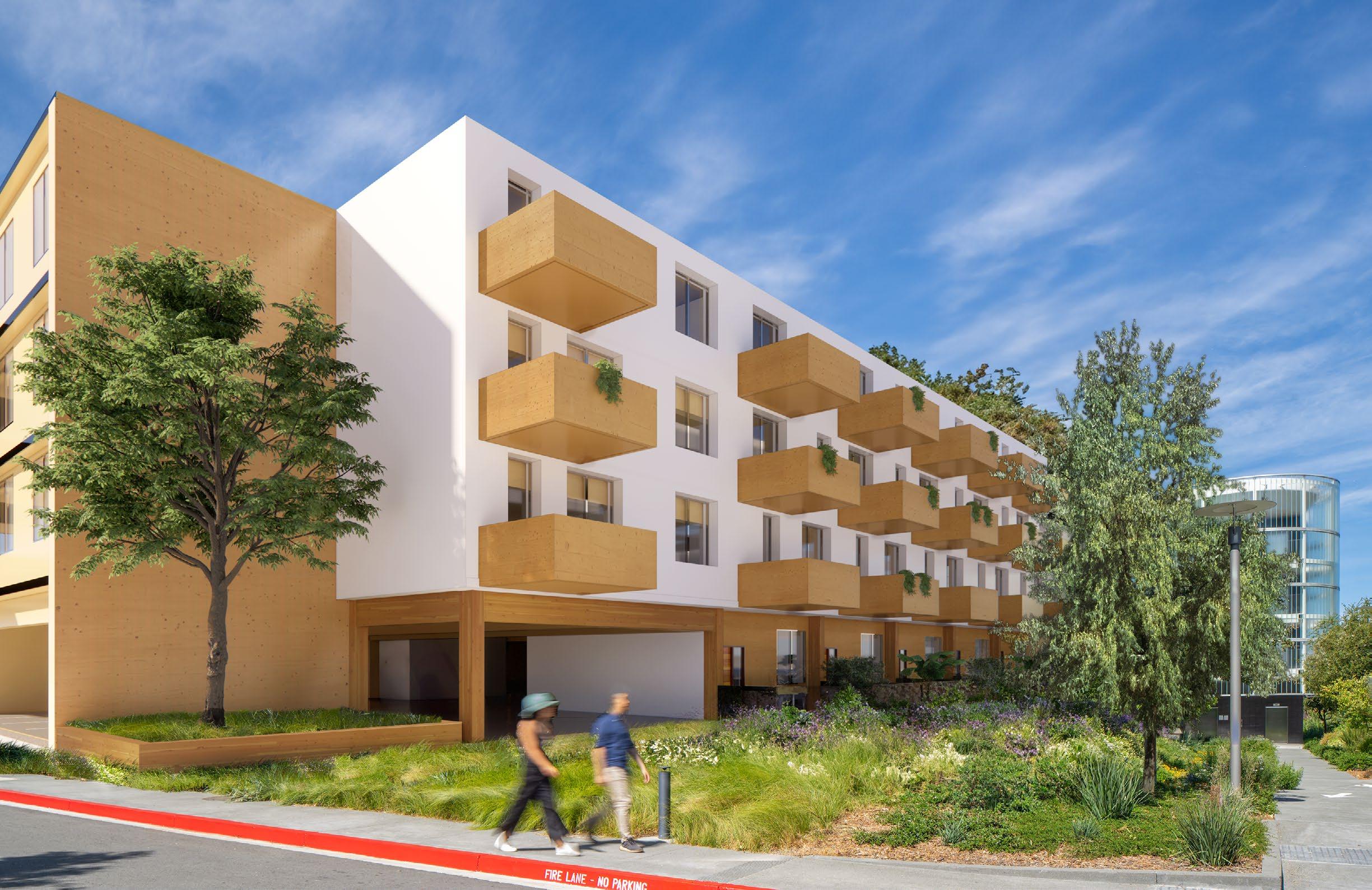
concept
In this scenario, the ramp is deconstructed to create a light well and a podium garden/amenity space. The mass timber beams and floor deck of the ramp could be removed intact, sold, or stockpiled for reuse as demising walls between units. The balance of the residential units are subdivided with regular light wood stick wall framing. On the upper levels, a double loaded corridor provides access to a market-ready mix of one and two bedroom units with garden level town homes surrounding 1.5 levels of parking. In this example, the stairs are relocated from the original garage to create a more efficient residential layout. The facade, clad with cement plaster or rainscreen facade panels, is animated by modular projecting balconies.
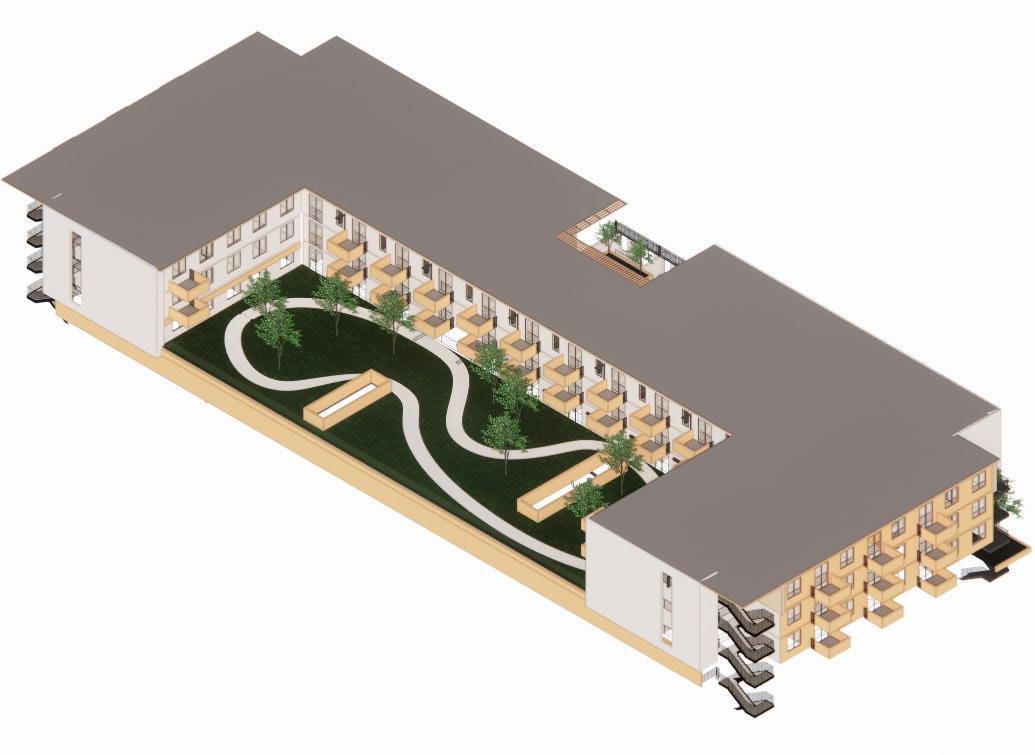
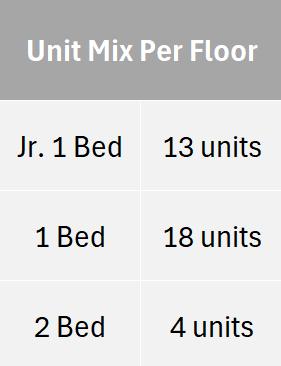
Note: The following drawings utilize the "Short Span, One way Grid" bay dimensions, yet is feasible using other proposed bay sizings
Section and Elevation: Housing Concept 1, Stick-Built
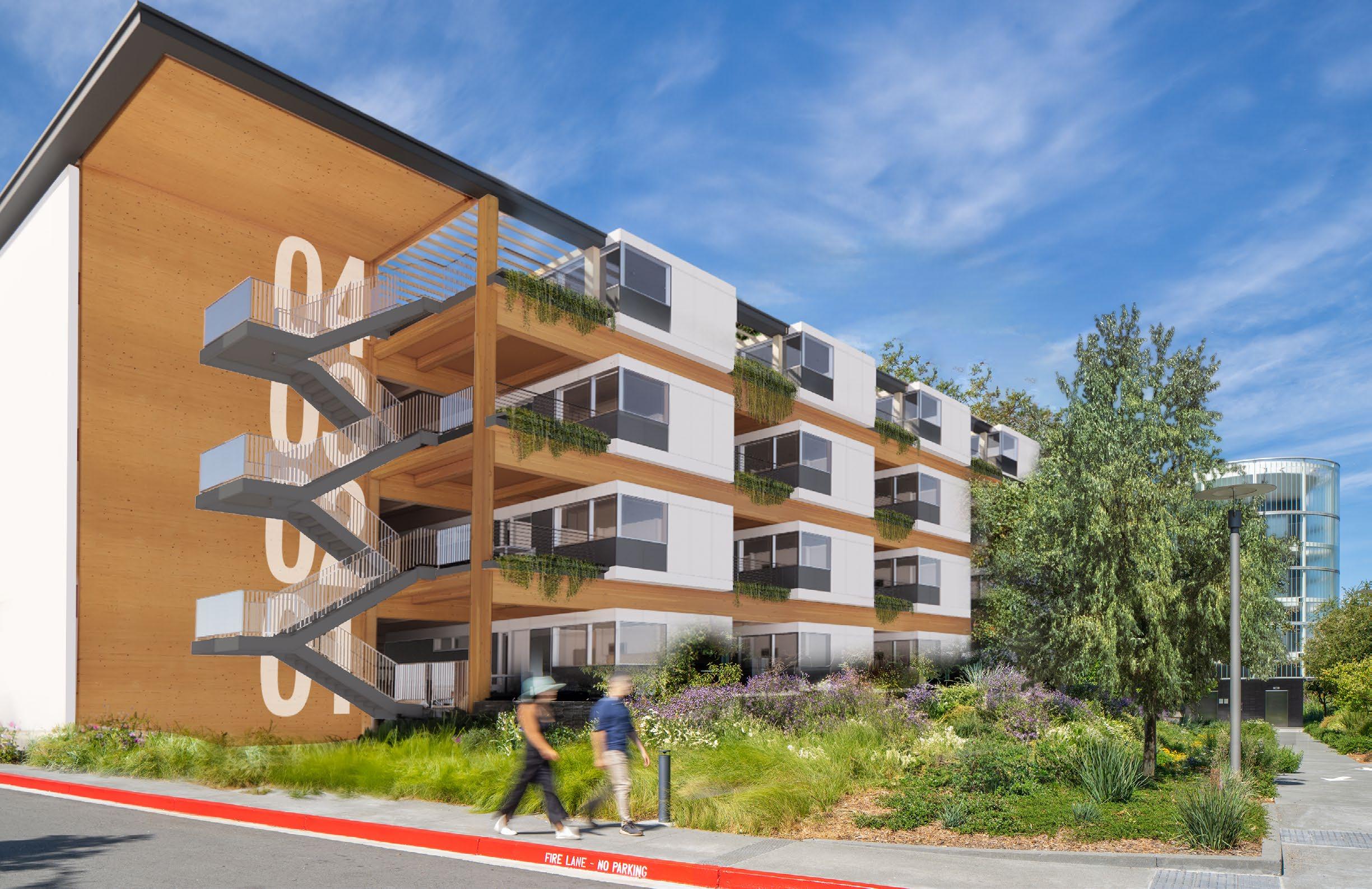
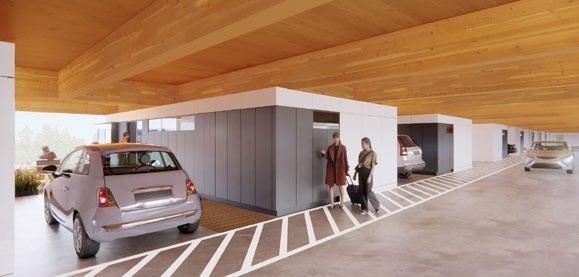
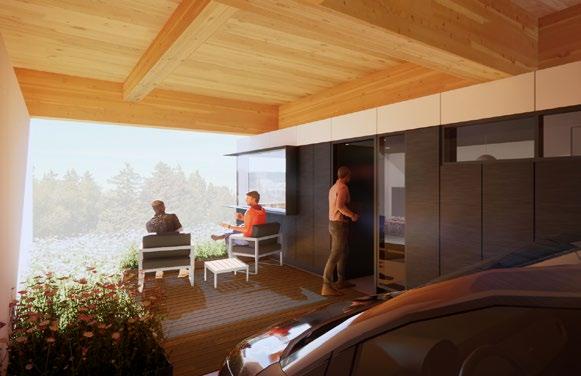
In this conceptual scenario, the mass timber parking garage is left intact including the ramp, stairs, drainage, and shear walls. Factory-built prefab apartments— including a flooring, plumbing, walls and HVAC—are inserted into the structure at each floor, leveled, connected to infrastructure, and sealed at the head to be weather-tight and acoustically isolated. Each driveup apartment has a "side yard" with deck, garden and parking stall. The ramp is outfitted with signals to control ascending and descending traffic.
The lack of a structural concrete "crash wall" in the base parking structure makes these insertions possible, and the ease of adding penetrations and anchorage to the CLT floor slabs means that almost any contractor with a crane could perform this construction. This concept underlines the flexibility that mass timber construction affords for future adaptation in many modes.
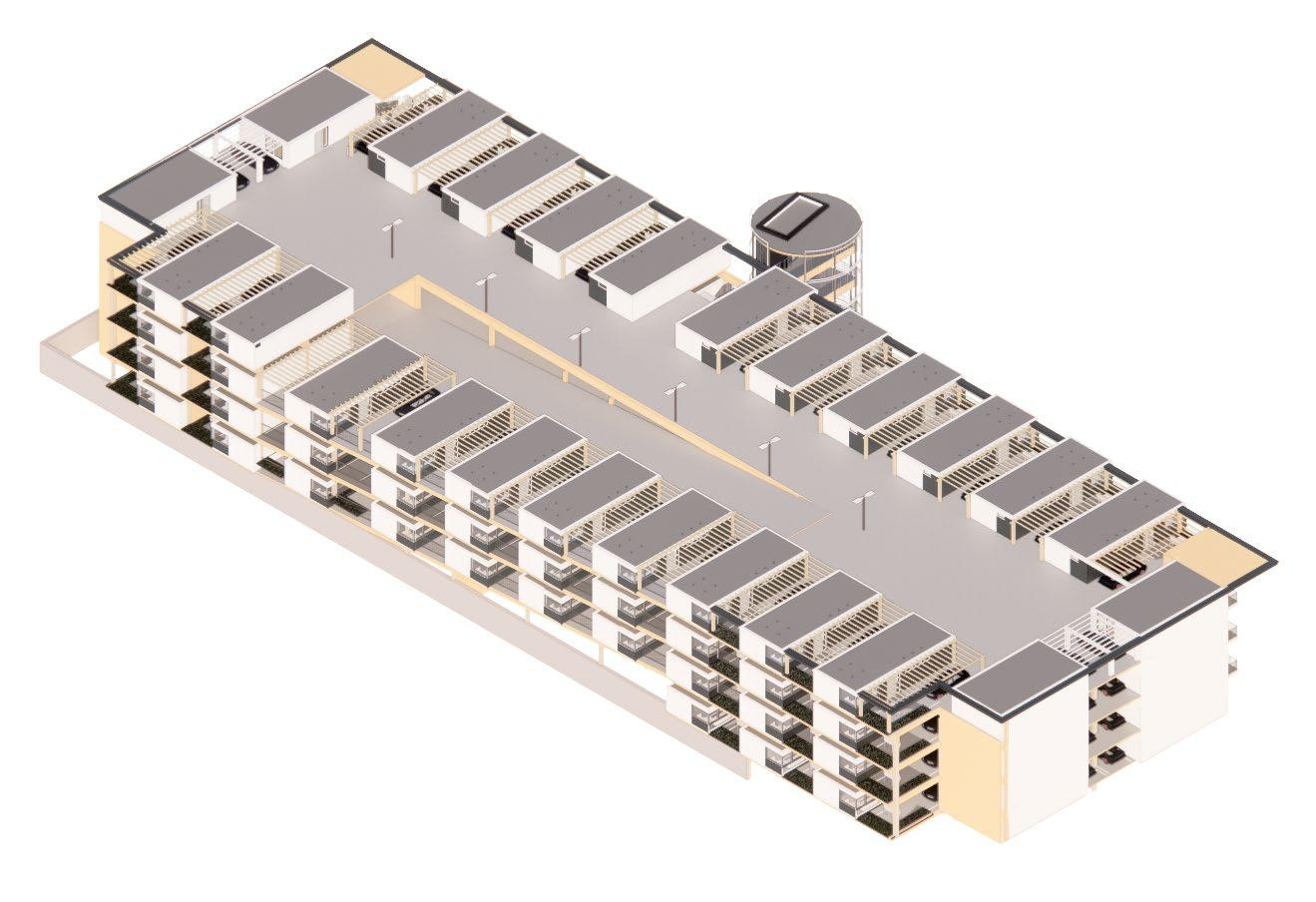
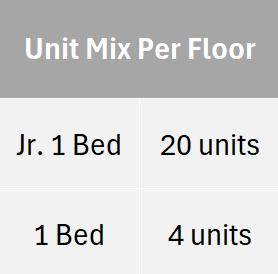
Typical Floor Plan: Housing Concept 2, Modular Units
Note: The following drawings utilize the "Short Span, One way Grid" bay dimensions, yet is feasible using other proposed bay sizings
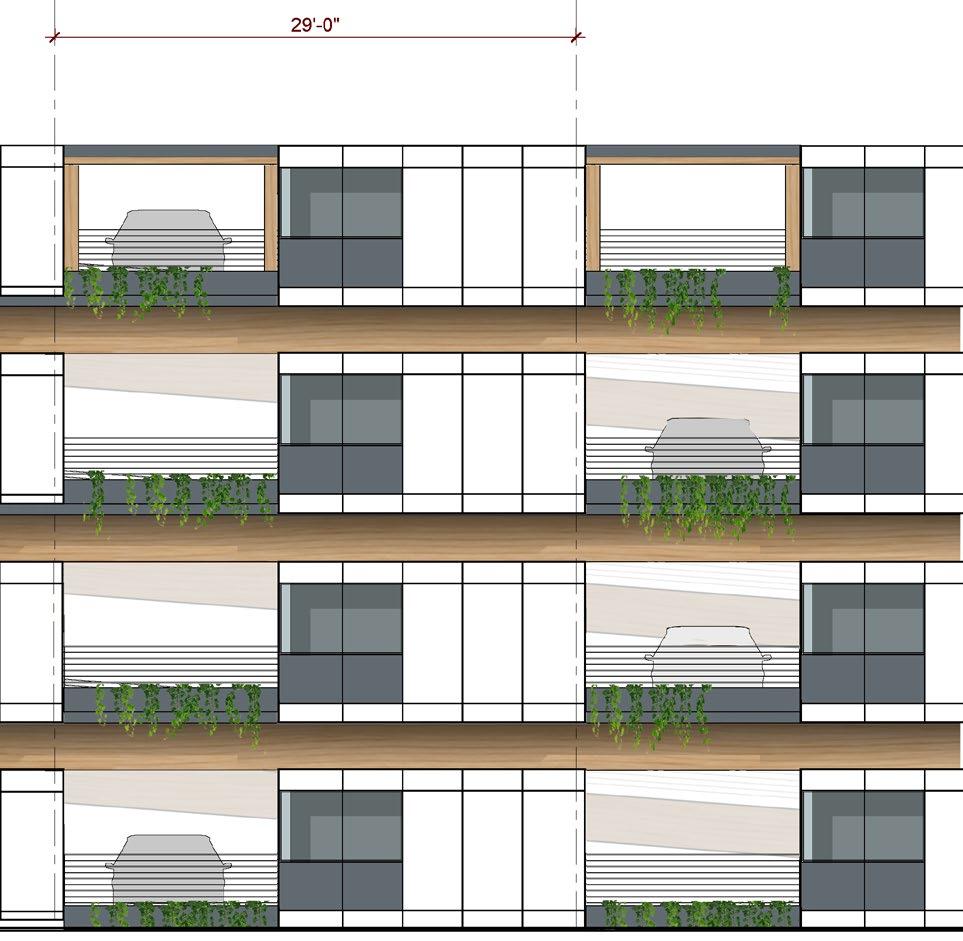
Section and Elevation: Housing Concept 2, Modular Units
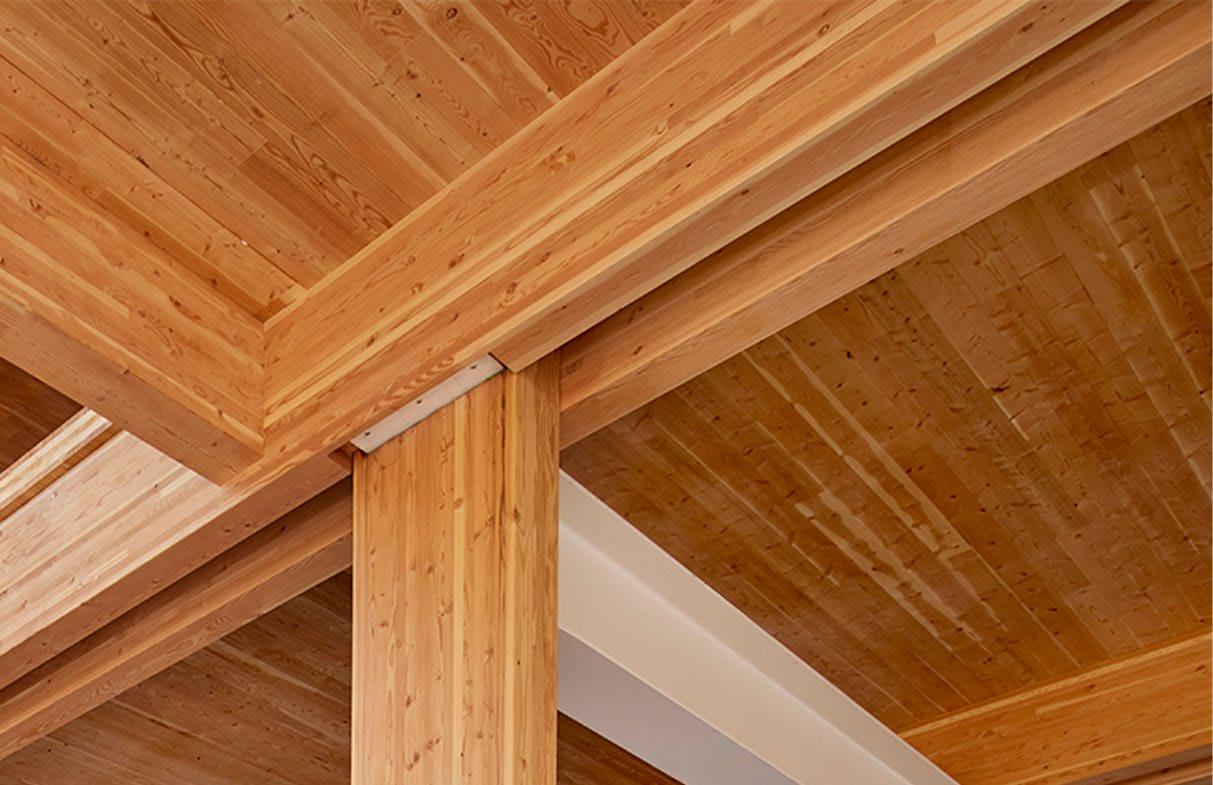
This study demonstrates that mass timber is not a speculative alternative, but a technically viable structural system for a wide range of contemporary parking structures in the United States. Through direct comparison with a recently constructed post-tensioned concrete garage, the findings show that mass timber can meet core performance requirements, including capacity, efficiency, safety, durability, and constructibility, while delivering meaningful reductions in embodied carbon and improved adaptability for future reuse.
In the United States, the majority of parking structures being built today could feasibly be constructed with mass timber.
1 2
A mass timber parking structure could be built to accommodate up to approximately 2,000 parking stalls.
+ Type IV-HT construction type is recommended for maximum bulk and minimum fire ratings requirements.
+ 6 stories maximum
+ 144,000 maximum sf per level
The environmental benefit of a building mass timber parking structure versus concrete is significant.
+ Overall embodied carbon can be reduced by half (50.7%) from 2.5 MTCO2/stall down to 2.10.
+ The greatest impact comes from replacing the concrete slab with mass timber. The columns and beams account for less than half of the overall embodied carbon.
+ The mass timber elements could be reused or reprocessed after building disassembly.
4 5
A concrete-free mass timber parking deck assembly is possible with the correct coating.
+ A polyurethane traffic coating provides the best combination or performance and availability. Joints should be taped and reinforced. PolyUrea provides the best overall technical solution, but contractor availability in the US is very low.
+ Add sand or other grit to the top coat to reduce tire squeal
+ Flashing at slab perimeters protects for end-grain infiltration.
+ A low VOC pressure-treating system protects perimeter columns without distorting their natural color.
+ It is recommended to let the exposed wood weather, as the coatings required to maintain a new wood color wear poorly and require regular maintenance.
Adaptive reuse for housing is more viable with mass timber versus posttensioned concrete.
+ Mass timber elements are relatively easy of deconstruct, penetrate, modify and add-onto by a range of contractors including solely versed in the Type-V light wood frame structures that typically comprise low-rise housing.
+ Depending of floor-to-floor dimension, a mass timber parking structure could be converted to housing, retail, office uses, or classrooms.
3
The structural configuration strongly influences the overall wood volume required and the minimum floor-to-floor dimension of the structure.
+ A long span, one-way beam structure results in good parking efficiency (315 sf/stall) and low wood volume but beam depths result in a higher floor-to-floor (11'-7").
+ A medium span, two-way beam structure with columns on one side of the parking aisle offers the best combination of efficiency (332 sf/stall) and standard floor-to-floor (10'-0").
+ Mass timber shear walls are a viable alternative to concrete shear walls without the ADA head clearance issues of lateral cross bracing.
6
A mass timber parking structure could be built on a similar schedule to concrete, but the cost is significantly higher.
+ The cost of a 600 stall garage would be approximately 1419% higher than a concrete baseline.
+ A well-designed mass timber parking structure would require little to no architectural screening on the facade. Removing screening reduces the cost delta compared to a screened concrete garage to almost nothing.
+ The 14.8 week construction schedule for mass timber is similar but slightly longer than cast-in-place concrete, about a two week premium, depending on waterproofing system.

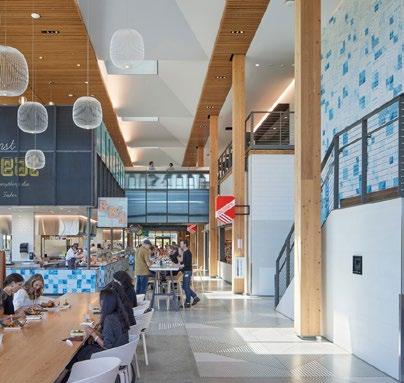
WRNS Studio works with today’s most transformative organizations to advance their missions through exceptional architecture, planning, and interior design. Their diverse portfolio—spanning education, workplace, science, health, housing, community, and transportation—brings fresh insight, leading them to have designed the largest mass timber project in North America at the time of it's construction. WRNS approaches design as a process of discovery, fostering curiosity and exploration. The result is timeless, inspiring places where people want to be. With offices in San Francisco, Seattle, Honolulu, and New York, they serve an international clientele.



Truebeck is a top 10 general contractor defined by safety, quality, partnership, and values.
Founded by Sean Truesdale and David Becker in 2007 and born in the Bay Area, Truebeck has grown to 500+ employees and four offices dedicated to serving clients throughout the West coast. Truebeck specializes in building award-winning projects wand has established themselves as a leader in the delivery of CLT buildings throughout the West Coast.
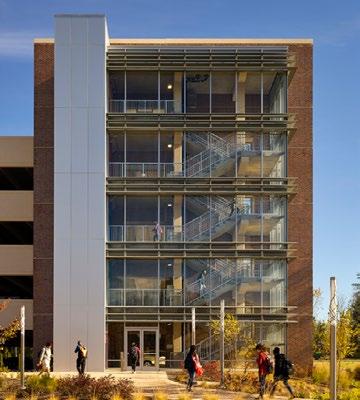
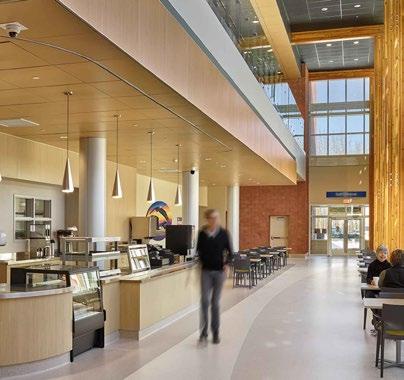
The Universities at Shady Grove is a collaboration among nine public degree-granting institutions in the State of Maryland. This suburban campus developed through the 1990s and early 2000s as buildings surrounded by free surface parking. As more buildings were added- and the campus attracted more students, staff, and faculty- a parking garage was built in 2009. By 2015, USG required a second garage to meet the growing demand.
Holmes has consulted on 130+ mass timber projects worldwide with 85+ in the US— including the largest mass timber building in North America at completion. Meeting architectural and performance objectives from structural, fire, and life safety standpoints - their in-house fire engineers study the performance of mass timber construction, helping project teams identify applicable mass timber construction types in relation to building massing and local code requirements.
100% employee-owned, Walker Consultants takes pride in their work and culture, defined by integrity, honesty, and high standards.
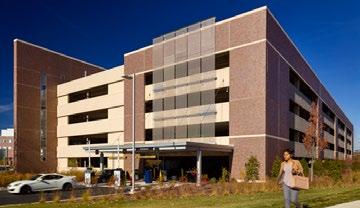
• 5-level, 700-space, precast, pre-stressed parking structure
• Design-build project delivery
Holmes also contributes to product development, having built proprietary software to identify a project’s best fit with emerging wood products. Layering supplier pricing, fire ratings, required stories, floor-to-floor heights, depths of members - their optimizer outputs framing options, pointing to the most
Established in 1965 as a structural engineering firm, Walker Consultants began to specialize in parking design and consulting, and by the 1980s became the leading parking consulting firm in the United States. Backed by over 60 years of experience, Walker is now consistently included in Engineering News-Record’s list of Top 500 design firms for more than 40 years.
Stantec empowers clients, people, and communities to rise to the world’s greatest challenges at a time when the world faces more unprecedented concerns than ever before. We are a global leader in sustainable architecture, engineering and environmental consulting. Our professionals deliver the expertise, technology, and innovation communities need to manage aging infrastructure, demographic and population changes, the energy transition, and more.
• Architectural stainless steel screening, thin brick, and a large LED screen
• Parksmart Green Garage Certification
• PV Panels
• Cistern/water collection in future
• EV Charging
• Bike Station
- Bike repair tools
- Tire inflation station
The diverse perspectives of our partners and interested parties drive us to think beyond what’s previously been done on critical issues like climate change, digital transformation, and future-proofing our cities and infrastructure. We innovate at the intersection of community, creativity, and client relationships to advance communities everywhere, so that together we can redefine what’s possible.
WRNS Studio
Imani Bailey
Chad Garrety
Arman Hadilou
Jason Halaby
Yushu Kong
Kayleen Kulesza
Sharon Lam
Yibo Lin
Brian Milman
Tim Morshead*
Jeremy Shiman
Pauline Souza
Tomás Stankiewicz
Hanqin Tang
Moses Vaughan
Wesley Wong
Truebeck
Bob Hostetler
Edward Kim
Jim Murphy
Grayson Shepard
Lauren Tetrev
Holmes
Morgan Martinelli
Eric McDonnell
Megan Stringer
Walker Consultants
Justin Chang
Stantec
David Markman
Eric Wood
*point of contact for inquiries
ASPECT. "District 56 Terminus." 2021, ASPECT structural Engineers. aspectengineers.com/portfolio/terminus/
Badun, Anastasiya. "Parking Garage" 25 April, 2023. www. pexels.com
Bettmann. "Exterior View of a Parking Garage." 21 Aug 2024, Getty Images. www.fineartstorehouse.com/bettmann-archive/ exterior-view-parking-garage-39147999.html
Bettmann. "Exterior View of a Parking Garage." 21 Aug, 2024, Getty Images. www.fineartstorehouse.com/bettmann-archive/ exterior-view-parking-garage-39152573.html
DeSousa, Joe. "Gridlock." 13 Sep, 2018, Flickr. www.flickr. com/photos/mustangjoe/43736553175/
Halbe, Roland. "Wooden Parking Garage Wendlingen." 2022, Hermann+Bosch Architekten. www.archdaily.com/1026856/ wooden-parking-garage-wendlingen-herrmann-plus-boscharchitekten
Hassell. "Michael Kirby building." 2023. Hassell Studio. www. hassellstudio.com/project/michael-kirby-building
Hochmal, Karel. "Vienna Tower Transfer." in.pinterest.com/ pin/303430093668900324/
KTGY. "Park house." 2018, Architizer. archinect.com/ktgy/ project/ktgy-r-d-studio-park-house-a-housing-solution-forrepurposed-parking-structures
McCulloch Brothers Inc. Photography/Arizona State University Library. www.azcentral.com/picture-gallery/news/ local/phoenix-history/2018/12/11/historical-look-parkingdowntown-phoenix/2282509002/
MTC Solutions. "Concealed Fire rated Beam Hanger Systems." 2022, MTC Colustions. mtcsolutions.com/ resources/tech-blogs/concealed-fire-rated-beam-hangersystems/
NAIOP. "Life Cycle Stages." 2024, NAIOP. blog.naiop. org/2025/08/the-fundamentals-of-embodied-carbon/
Ota, Takumi. "Yushura Wooden Bridge Museum." 2011, Divisare. divisare.com/projects/310486-kengo-kuma-andassociates-takumi-ota-yusuhara-wooden-bridge-museum
Promat. "Otago Polytechnic student Village CLT construction." 2017, Promat. https://www.promat.com/en-au/construction/ projects/reference-cases/otago-polytechnic-student-villageclt-construction/
Quebec Wood Expo Bureau. "1 De Haro." 2021, Perkins & Will. perkinswill.com/project/1-de-haro/
Risendorph, Sharon. "530-544 Taylor Street." 1922, Natinonal Trust for Historic Preservation. savingplaces.org/stories/earlysan-francisco-parking-garages
Risendorph, Sharon. "265 Eddy Street." 1924, Natinonal Trust for Historic Preservation. savingplaces.org/stories/early-sanfrancisco-parking-garages
Risendorph, Sharon. "1565 Bush Street." 1924, Natinonal Trust for Historic Preservation. savingplaces.org/stories/early-sanfrancisco-parking-garages
Scrimshaw, Samuel. "Aerial Photo of Forest." March 23, 2016, Unsplash. unsplash.com/photos/aerial-photo-of-forestDMcI0cmYJYk
SRG Partnership. "Clenwood CLT Parking Garage." 2018, Architizer. architizer.com/projects/glenwood-clt-parking-garage/
SteelBlue. "Uptown Station." 2015, Gensler. www.gensler.com/ projects/uptown-station
Timberlab. https://timberlab.com/
UBC. 2015, Woodworking Network.
Unknown. "Ford assembly line - 1913." 1913, Wikimedia. Commons. commons.wikimedia.org/wiki/File:Ford_assembly_ line_-_1913_(restored).jpg
Vaproshield. “VaproShield Mass Timber Capabilities.” YouTube, YouTube, 20 Mar. 2025, www.youtube.com/ watch?v=KOiXfdTkf6I.
Verrecht, Jereon. "P+R Antwerp." 2022, HB Architecten. www. hubarchitecten.eu/en/projects/park-and-ride
Waltefaugle, Nicolas. "Silo." 2022, GRAAM. graamarchitecture. fr/projets/silo
Woodworks. "Mass Timber Projects in Design and constructed in the US (September 2025)." Sep 2025, Woodworks. www. woodworks.org/wp-content/uploads/WoodWorks-Mass-TimberProjects-Sept-2025.png
Woodworks. "Market trends Map." 2025, Woodworks. www. woodworks.org/resources/mapping-mass-timber/
Adams, Larry. "Mass timber construction to reach $1.5 billion by 2031." 27 Jun 2025. https://www.woodworkingnetwork.com/news/woodworking-industry-news/ mass-timber-construction-reach-15-billion-2031#:~:text=Architectural%20 Products,report%20by%20Allied%20Market%20Research.
Brown, Garrick. "State of food Halls." 2023. https://cdn.flowcode. com/prodassets/2023-03-06_-_FOOD_HALLS_2023-DOWNLOAD. pdf?ts=1678157368877017487
Both, Alexandra. " Adaptive reuse surges to record 25K apartments, Chicago overtakes Manhattan as top city for conversions." 4 Nov 2025. https://www. rentcafe.com/blog/rental-market/market-snapshots/adaptive-reuse-apartments/
“Embodied Carbon.” ICC, 28 Oct. 2024, www.iccsafe.org/advocacy/embodiedcarbon/.
FEMA, NEHRP Recommended Provisions for Seismic Regulations for New Buildings and Other Structures (based on USGS Seismic Hazard Data).
Kessler, Mark. “The Beautiful Facades of San Francisco’s Historic Parking Garages” National Trust for Historic Preservationv, 13 Oct. 2015, savingplaces. org/stories/early-san-francisco-parking-garages.
McLain, Richard. "Fire Design of Mass Timber Members." 2021
NAIOP. "Adaptive Reuse." 2024. https://www.naiop.org/globalassets/advocate/ naiop_ga_fed-issues_adaptive-reuse-2024.pdf
NAR. "NAR Community and Transportation Preferences Surveys." 2023. htwww. nar.realtor/reports/nar-community-and-transportation-preferences-surveys
Orr, John, Gibbons, Arnold. "A Brief Guide to Calculating Embodied Carbon." July 2020. www.istructe.org/IStructE/media/Public/TSE-Archive/2020/A-brief-guideto-calculating-embodied-carbon.pdf
Scharnhorst, Eric. "Quantified Parking: Comprehensive Parking Inventories for Five U.S. Cities." 2018. https://www.mba.org/docs/default-source/research---rihareports/18806-research-riha-parking-report.pdf
Villagomez, Erick. "Rising High, Falling Short: Construction-Related Carbon Emissions." 5 Feb, 2025. https://spacing.ca/vancouver/2025/02/05/rising-highfalling-short-construction-related-carbon-emissions/
Woodworks. "Mapping Mass Timber." 2025. https://www.woodworks. org/resources/mapping-mass-timber/#:~:text=Mapping%20Mass%20 Timber,projects%20from%20design%20to%20completion.
Yan, Libo, Raoul Klingner, Ahmad Al-Qudsi, Haoze Chen, and Junaid Ajaz Dand. 2025. "Current Market Landscape and Industry Voices in Key Timber Construction Markets" Buildings 15, no. 18: 3381. https://doi.org/10.3390/buildings15183381
Zaleski, Andrew. “A Brief History of the Great American Parking Garage.” Bloomberg, 10 Dec. 2022, www.bloomberg.com/news/features/2022-12-10/abrief-history-of-the-great-american-parking-garage.