
Unlocking the Mysteries of Life
Dive into the dynamic world of Eco Evolve magazine. Discover cutting-edge insights and inspiring stories that illuminate the path towards a sustainable future. Join us in exploring the ever-evolving tapestry of life on Earth.

Biology illuminates the workings of life, benefiting human health, the environment, and technology
S C I E N C E + T E C H N O L O G Y + L I F E May 21/ $7.00
from this year's Biology Convention
A M A Z I N G I D E A S 50 PLUS
T A B L E O F C O N T E N T S 01 02 Editor’s Note Letters to the Editor 03 Exploring Diverse Ecosytems Exploring Wonders of the Biosphere 04
T A B L E O F
N T E N T S 05 06 07 08
Fascinating World of Populations
Unveiling Ecosystem Dynamics
Humanity’s Global Impact
Measuring/Responding to Change
C
O
Editor’s Note ReflectionofMagazine
The biosphere encompasses all of Earths ecosystems acting as the birthplace of life. It showcases the variety of living beings and the interconnected relationships that support them.
It showcases the variety of living beings and the interconnected relationships that support them Thinking about the biosphere inspires a feeling of amazement, at the intricacy and strength of life, on our planet It serves as a reminderofthedutywehaveascaretakersofthisyetrobust environment encouraging us to be mindful and protect the delicateharmonyoflife
Ecosystems form the foundation of the world each a blend of life influenced by its surroundings
Contemplating ecosystems showcases the ability of living beings to adapt and rely on one another It highlights the significance of safeguarding biodiversity and maintaining the balance of these ecosystems to support life on our planet Ecosystems stand as a symbol of how all living creatures connected stressing the importance of comprehensive strategies, for conservation and preservation

In ecosystems the populations are always adjusting to their environment showcasing the evolving nature of life.
Thinking about populations leads us to ponder the complexities of how they grow, compete and decline over time It emphasizes the importance of maintaining a relationship, between species and their surroundings while also considering how external factors can impact population patterns Having a grasp of population dynamics is crucial for developing conservation and management plans that safeguard thesustainabilityofspeciesandecosystems,intherun.

Ecosystem communities are the result of species interacting with one another to develop complex webs of relationships The complex nature of these relationships, from symbiotic alliances to competitive battles, become clear when communities and ecosystem dynamics are considered It emphasizes how susceptible species are to perturbations and how resilient ecosystems are to change Through the study of ecosystem dynamics, we may better understand the mechanisms underlying ecological resilience and stability, which helps to direct efforts to reduce risks and advance sustainability.
The surprise and curiosity generated by the complex structure and beauty of the natural world serve as the inspiration for these ideas Observation, experimentation, and study of theory have been the methods used by scientists and intellectuals throughout history to try and solve the secrets of nature. The comprehension of particular habitats sustaining distinct ecosystems and populations, as well as the recognition of Earth as a complex, linked biosphere, all demonstrate a curiosity with the diversity and complexity of life. They include an innate curiosity about the patterns and mechanisms governing life on Earth, as well as a desire to comprehend the elements that form ecological communities and the mechanisms underlying ecosystem dynamics.
Eco Evolve Biology Insight Ta’KeyiaRichards
01
Letters to the Editor
Dear Editor :
The biosphere, the dynamic source of life on Earth, is an incredible work of natural architecture. The different ecosystems of the area create a tapestry of resilience and beauty that stretches from the whispering woodlands to the booming waves. It is our responsibility to protect this precious treasure for upcoming generations. As guardians of the ecosystem, let us preserve its wonders so that life on Earth might flourish. I understand better now that I have your magazine to thank.
Sincerely, Jonah.
Dear Editor :
I'm writing to thank you for your magazine's significant contribution to the advancement of a more thorough understanding of ecosystems. The magazine you published has guided readers on a journey of discovery through the complex workings of ecosystems through engaging articles, breathtaking pictures, and thought-provoking features.
Sincerely, Austin.
Dear Editor :

I wanted to express my sincere appreciation for your magazine's informative pieces about populations. Your magazine's captivating stories, striking images, and thought-provoking features have played a key role in revealing the complexity of communities. We have investigated the many processes influencing populations and their surroundings, from distant settlements to metropolitan areas.
Sincerely, Katherine.
Dear Editor :
I write to express my sincere appreciation for the invaluable insights our magazine has provided regarding community and ecosystem dynamics. Through compelling narratives, captivating visuals, and insightful analyses, our magazine has served as a beacon of enlightenment, guiding readers on a journey to better understand the intricate interplay between communities and ecosystems.
Sincerely, Ava.
02
HarmonyofLife:ExploringtheWondersoftheBiosphere
The scientific study of interactions between populations, groups, and organisms as well as thoseinteractionswiththeenvironmentisknown asecology.

Three primary methods that are all a component of scientific methodology are typically used by ecologists: modeling, experimentation, and observation Tools used by ecologists might include data collected from satellites and DNA analysis
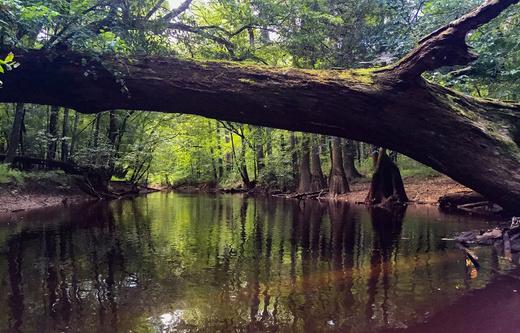
Anylivingcomponentoftheenvironmentthatan organism may come into contact with, such as bacteria, plants, animals, or mushrooms, is referred to as a biotic factor. Any element of the environment that is not alive, such as heat, sunshine, precipitation, humidity, wind or water currents, and soil type, is referred to as an abiotic factor
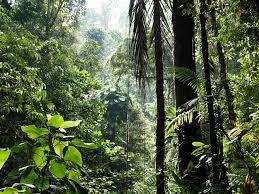
UnlockingNature's Symphony
The long-term patterns and averages of temperature, precipitation, wind, and clouds make up the climate, whereastheshort-termvariationsintheseparametersare referred to as weather. The whole amount of solar radiation that is stored as heat and its unequal distribution between the equator and poles are what drivetheglobalclimatesystem
The Earth's global system processes, or howtheEarthsystemfunctions,thecauses of global change, and the quantifiable changes in the Earth system comprise the three main parts of the global systems model
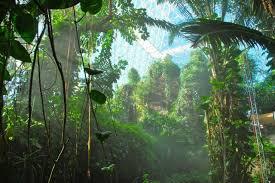
Biomes are defined by abiotic factors like climateandsoil,andbioticfactorssuchas plant and animal life Aquatic ecosystems are characterized by salinity, depth, temperature, flow rate, and nutrient concentrations. Freshwater ecosystems include rivers and streams, lakes and ponds, and wetlands Estuaries act as spawning and nursery grounds for many importantfishandshellfish
Thebalancebetweenheatlosttospaceandheatretainedin the atmosphere determines the average temperature of Earth Winds, geographical locations, and patterns of warmingandcoolingallaffectoceancurrents Latitude,the movement of heat and moisture via winds and ocean currents, and topographical elements like mountains and vastbodiesofwaterallinfluenceregionalclimates.
BIOLOGYMAGAZINE ECOEVOLVE BIOSPHERE 3
03
Nature’s Canvas: Exploring Diverse Ecosystems
Energy Flow in Ecosystem
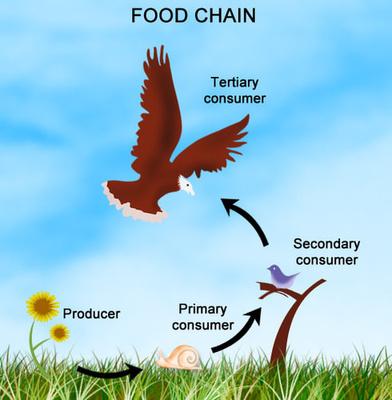
Energy moves from primary producers to different consumers in an ecosystem in a one-way stream. An organism transfers energy via eating and being eaten, creating a food chain. An ecosystem's complicated web of feeding links is called a food web The appropriate amount of matter or energy contained in each trophic level within a particular food chain or food web is displayed using ecological pyramids. Energy pyramids illustrate the quantity of energy accessible at every trophic level. The proportional quantities of live organic matter and the proportionate numbers of individual organisms at each trophic level are displayed, respectively, in biomass and number pyramids.
Energy, Producers, and Consumers
The sun is ultimately the source of energy for life, with very few exceptions. The initial manufacturers of energy-dense molecules that are subsequently utilized by other organisms are known as primary producers
Another name for primary producers is autotrophs. Heterotrophs, or consumers, are creatures that get their energy and nutrients from other species. Customers can be further categorized based on the kinds of food they consume.
Carnivores consume vegetation. Carnivores consume and murder other creatures Animal and plant stuff are consumed by omnivores Animal corpses are consumed by scavengers. Organic matter is chemically broken down by decomposers to produce debris. Detritivores consume debris
Cycles of Matter
Ecosystems recycle matter both inside and between themselves, unlike energy which flows one direction only
Via biogeochemical cycles, matter moves through organisms and the environment. In addition to human activity, biological, geological, chemical, and physical processes can all be involved in the movement of matter Matter is cycled across global systems by these global processes
The land, atmosphere, and oceans all exchange water. Living things both influence and are impacted by the water cycle.
For survival, all organisms require nutrition. For life to exist, the carbon, nitrogen, and phosphorus cycles are particularly crucial The long-term survival of organisms can be impacted by the availability of nutrients. The availability of nutrients may still be a limiting factor in an ecosystem's primary productivity, even in situations when there is sufficient sunshine and water.
4 BIOLOGY MAGAZINE
ECO EVOLVE
ECOSYSTEMS 04

LIVINGNUMBERS:THEFASCINATINGWORLDOF HUMANPOPULATION
When studying populations, ecologists look at factors including age structure, density and distribution, growth rate, and geographic range. A greater number of births than deaths is required for a population to grow Immigration and emigration are two other elements influencing population increase Under perfect circumstances and with limitless resources, a population will increase exponentially. However, this exponential expansion will ultimately slow down and come to an end. It is seen in the logistic S-shaped growth curve A species' carrying capacity is the greatest number of individuals that it can support in its natural habitat.
LIMITSTOGROWTH POPULATIONS GROWTH
Limiting variables can be density independent or density dependent, and they define a species' carrying capacity in a given habitat. Once the population density hits a certain point, density-dependent limiting factors come into play. The elements include illness, parasitism, herbivory, competition, predation, and stress brought on by crowding. At all population densities and sizes, there are limiting constraints that are independent of density. Natural calamities like wildfires and weather extremes like storms, droughts, or floods are examples of density-independent causes that have the potential to crash populations Populations can be stressed by human activities like hunting and harm to the environment, which can occasionally result in their extinction
Similar to other populations, human populations tend to grow Over time, the rate at which the human population is growing has varied. Our population has grown modestly for the majority of human history During the 1800s, advances in public health, medicine, nutrition, and sanitation brought to an exponential growth phase that lasted until the middle of the 20th century The world population is still increasing even if the growth rate has been gradually declining since then
The study of human populations and how they are expected to vary throughout time is known as demography While some nations grow faster than others, some grow more slowly. Population growth rates may be predicted using a population's age distribution, birthrate, and mortality rate. A significant shift from high birthrates and death rates to low birthrates and death rates has occurred in certain nations, resulting in a demographic transition.

05
COMMUNITY CHRONICLES: UNVEILING ECOSYSTEM DYNAMICS
HABITATS, NICHES, AND SPECIES INTERACTIONS
A habitat encompasses the physical and biological factors shaping an ecosystem, influencing resident organisms. Each species has its tolerance range for survival and reproduction. Within a habitat, species occupy specific niches, adapted to varying conditions.
Competition among species impacts community structure and niche occupation. Predator-prey dynamics and herbivore-plant interactions drive population fluctuations. Symbiosis describes interdependent relationships: commensalism benefits one without harming the other, mutualism benefits both, while parasitism involves one living off another.
Biodiversity, Ecosystems, and Resilience
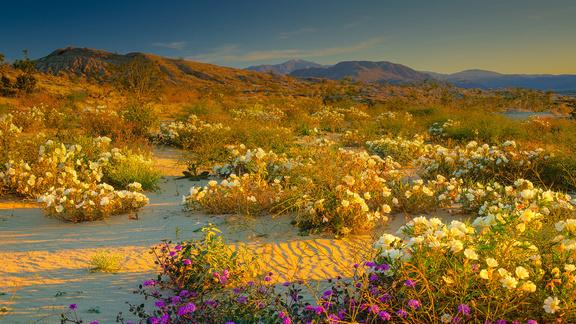
All genetic variety found in the biosphere, including species, ecosystems, and genetic diversity, is referred to as biodiversity. Variety in habitats is referred to as ecosystem diversity, the number of species is referred to as species diversity, and all gene variants within a species are referred to as genetic diversity.
Biodiversity is essential for agriculture, medicine, and change adaption. Ecosystems with higher diversity are more resilient to shocks.
The advantages that ecosystems provide to humans include pollination, insect control, food production, water purification, carbon storage, and weather resistance.
Succession
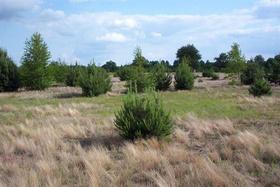
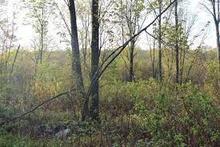
A community's ecological succession is a sequence of largely predictable changes that occur over time. On bare rock, where there are no traces of an earlier settlement, primary succession takes place. Pioneer species are those that are the first to appear in a desolate region. When some elder community members continue to live there, secondary succession takes place. It frequently follows human endeavors like logging and farming. Older communities are replaced by a number of new ones in both forms of succession.
In a healthy ecosystem, secondary succession frequently, but not always, replicates the original peak community following a natural disruption. Secondary succession, however, can also result in distinct communities and follow different routes.
06

EcologicalFootprints
The usage of resources like energy, food, water, and shelter as well as the creation of wastes like sewage and greenhouse gases make up humanity's measurable ecological footprint According to some estimates, the typical American leaves four times more ecological trace than the average person worldwide
CHANGING TIDES: HUMANITY'S GLOBAL IMPACT
The Age of Humans, or the Anthropocene, began with the onset of the Industrial Revolution in the 1800s and accelerated beginning in the 1950s with technological developments in mining, farming, and medicine Today, human activities are the single most powerful force for global change People live in anthromes, or anthropogenic biomes, of their own creation
Cause&Effectof GlobalChange
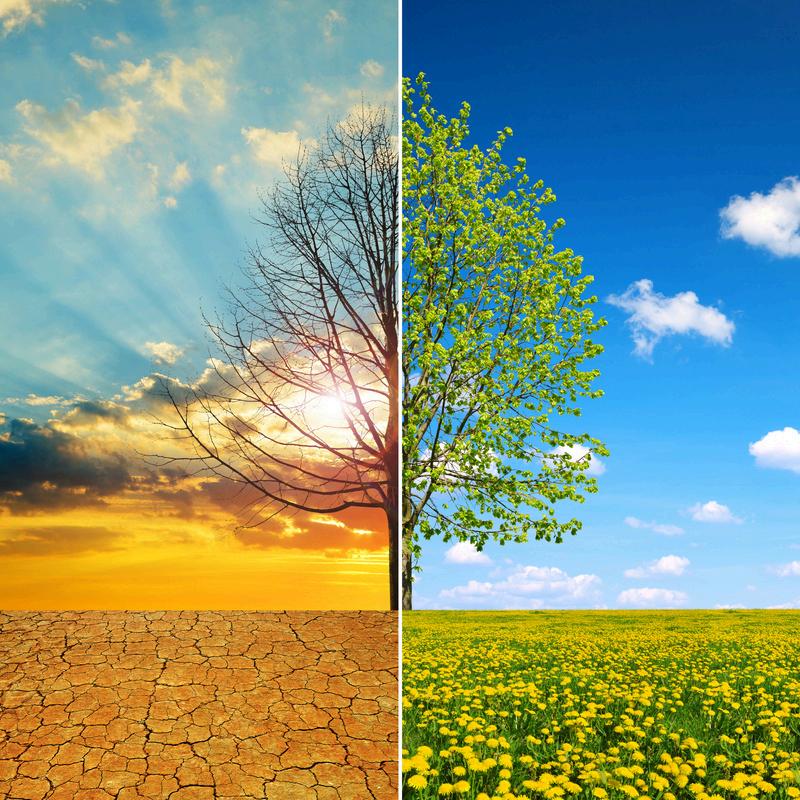
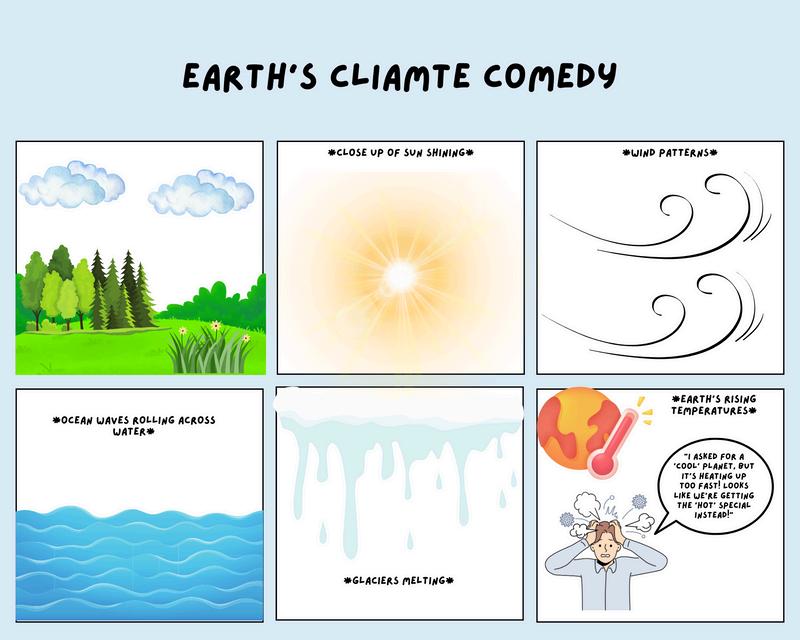
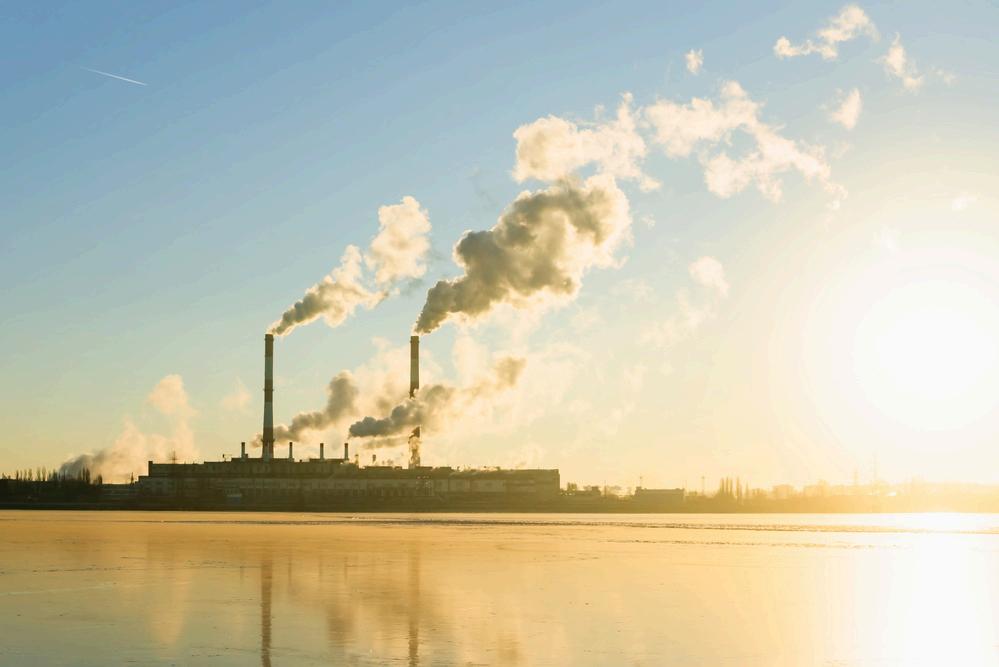
By interacting with other species, using land, and causing pollution, human activity has an impact on global habitats and systems. Global variations in average temperatures and air quality are caused by pollutants, which are dangerous substances produced by human activities and discharged into the environment The burning of fossil fuels raises greenhouse gas concentrations,which exacerbate global warming Climate change is a result of this warming
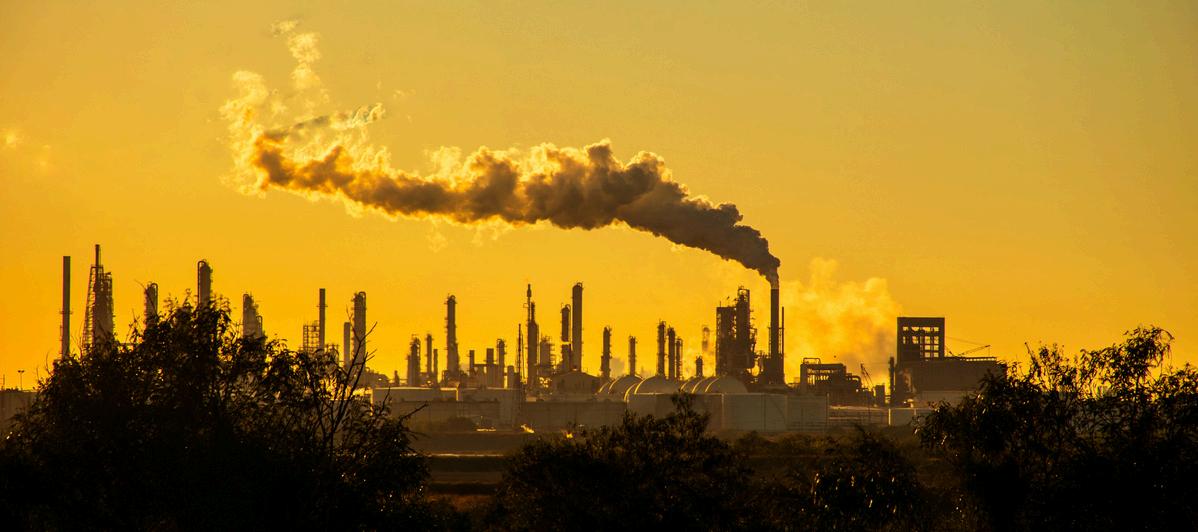
Pollutants like lead, mercury, PCBs, and DDT have biologically magnified and caused major harmful impacts on both human and animal populations. The loss of biodiversity in the population of animals and plants has also been attributed to other detrimental behaviors such habitat fragmentation and deforestation
07
Measuring and Responding to Change
By identifying an issue, investigating its root cause, and then recommending solutions, scientific research can improve the state of the environment globally
One example would be repairing the ozone layer damage caused by the usage of chlorofluorocarbons
Although there are many moving parts to the complex topic of climate change, evidence that has been collected, examined, and evaluated show that Earth is warming more quickly than it has in recorded history Among the consequences that need to be addressed are changes in temperate zones and increasing sea levels Alterations in precipitation patterns in agricultural regions have an immediate impact on food production and a longer-term impact on entire ecosystems
Sustainability
Using resources in a way that preserves environmental resources is called sustainable development Scientific, economic, and political action must intertwine to support the needs of sustainability. The focus is on careful use of renewable resources in innovative ways to replace older technologies based on the consumption of nonrenewable resources
Addressing unpredictable events, such as devastation from fires or floods, requires



08
EcoEvolve
M A Y 2 0 2 4 " B I O L O G Y : E X P L O R I N G T H E S C I E N C E O F L I F E ' S D I V E R S I T Y , A D A P T A T I O N , A N D E V O L U T I O N I N A C H A N G I N G W O R L D . " I N S I G H T S A L L A B O U T B I O L O G Y