WE LOOK BACK ON 2025 AND FORECAST THE MOOD IN 2026


WE LOOK BACK ON 2025 AND FORECAST THE MOOD IN 2026
Feedback
Australian Conveyancer welcomes feedback about any aspect of its activities and appreciates suggestions for future editorial coverage.
Contact the team: editorial@australianconveyancer.com.au
Contact the publisher: tony.gillies@australianconveyancer.com.au +61 414 320 487
LinkedIn: linkedin.com/australiancoveyancer
What does Powered by triSearch really mean?
Australian Conveyancer strenuously preserves its editorial independence. We engage experienced editors, journalists and freelancers not afraid to ask the difficult questions and report without fear or favour. Our editorial charter of independence is formulated in the spirit of balance, fairness and accuracy. We think we owe that to the industry.
The involvement of triSearch allows this privilege by providing the resources needed – the financial and technical infrastructure. It does not expect or receive editorial favouritism in return. If it matters to the industry and if it promotes a constructive conversation, then we will report it.

Australian Conveyancer incorporates paid advertising in its publication and other media entities as a part of its business model. Advertisements from all parts of the sector are welcomed into this environment. Advertising and editorial in this publication are separate functions, meaning an advertiser is not given preferential editorial considerations because it has a separate commercial arrangement. Editorial content is treated solely on news value and public interest. Scan QR
When setting up our cover story with tech titan Christian Beck, we were mindful of the commitment required: time away from his busy schedule for the interview. This is a guy with widespread global interests, so I was surprised not to be working through an intermediary or a gatekeeper managing his diary. And given that I was specific about a photoshoot, I also had it in my head that we’d be seeing him dressed formally on the day: a man in a suit with an EA in tow. Instead, in the foyer of his Sydney CBD office, Christian emerged from the lifts on his own, dressed in a faded polo shirt, baggy shorts and running shoes, carrying a couple of coffees for the crew he’d made himself. He’d obviously clocked the expression on my face: “Sorry, Tony, this is just me. This is what you get.” Softly spoken and humble. It was not an act either. I bumped into one of his staff members later. “Yeah, that’s Christian,” she said with a smile. “And was he wearing those bloody shoes?” It’s hard not to like the bloke, and admire what he has achieved. It’s also fascinating to get his take on how technology –and specifically AI - is shaping legal workflows. It’s clearly his sweet spot and he’s driven to see where it can go while maintaining the rigour required. Christian’s story starts on page 10.
Since the last edition of the Australian Conveyancer, we’ve hosted our first video podcast. Called Settlement Day, the show focused on a subject matter that clearly touched a nerve with our audience. AUSTRAC CEO Brendan Thomas sat down with Institute of Conveyancers presidents Shakila Maclean (Victoria) and Jennie Tonner (NSW) to offer clarity to the impending rollout of new AML/CTF law reforms. Moderated by TV presenter and property editor Angelique Opie on our behalf, Settlement Day racked up impressive viewing numbers online and on social media. Some 57,870 watched the 40-minute program, and a further 225,564 views came from shorter clips posted afterwards. You can still see it here: www.australianconveyancer.com. au/podcasts We’re now working on episode two, which is a high-level review of property, conveyancing and technology in 2025 and a look ahead for 2026. Big topics, big talent. Stay tuned for more.
Tony Gillies, Publisher
Your Australian Conveyancer team: Contributors:

Tony Gillies Publisher
tony.gillies@australianconveyancer.com.au

Richard
Cunningham Associate Editor
richard.cunningham@australianconveyancer.com.au

James Dore
Marketing Manager
james.dore@australianconveyancer.com.au
Sam McKeith
Business journalist for 17 years
Leigh Reinhold
Business owner and journalist for 40 years
Jenni Gilbert
Writer and editor with 50 years’ experience
Melissa Iaria
Journalist with two decades of newsroom experience
Jacob Shteyman
Reporter, Australian Associated Press, Canberra
IMAGES
Neil Bennett
Senior photographer and manager with 36 years’ experience
Alana Landsberry
Renowned portrait and fashion photographer
Australian Associated Press
National provider of images

By RICHARD CUNNINGHAM
Photos NEIL BENNETT
Building relationships with different people will put you ahead of the game, says Sydney property lawyer
Ask any property professional the secret of success and most will mention a good education, hard work, varied experience and maybe a dose of luck.
Sydney property lawyer Sam Saad adds another: networking. “For me, when I started my focus was building networks,” he says. “Doing law was one thing, but building relationships with different people along the way is what I found most exciting.”
It certainly worked for Saad . Fresh out of university, he spent a year at PwC, joined what is now Long Saad Woodbridge in 2013 and had his name on the door within six years. The firm was founded in 1994 and handles business and property, estate planning and family law. “I was a junior lawyer, worked my way up and became a partner just before age 30,” he says.
Founder partner Clayton Long noted Saad’s “tireless efforts in our property, commercial and pharmacy teams.”
Saad agrees pharmacy transactions, compliance and regulatory law including PBS approvals are a “very tight-knit space”. But he started at LSW working with a partner who was the son of a pharmacist
“I was a junior lawyer, worked my way up and became a partner just before age 30.”
– Sam Saad
and specialised in the business. When he retired, Saad carried on and “I guess I just fell into it.” He also handles commercial sales and leasing, and although Sydney faces a glut of office space, Saad says industrial property is booming. “The Sydney market is the hottest,” he adds, “but there are lots of opportunities in other states, especially Queensland, Tasmania and WA.”
Saad is the Sydney-born son of Lebanese migrants, his father working in the “rag trade” manufacturing garments for big brands. They worked hard to send him to Sydney’s prestigious Newington College, then Sydney University and UTS. “All credit goes to them for where I am today.”
His advice to today’s law students is to get hip to artificial intelligence. “AI is something that’s going to be very assistive in improving efficiencies,” Saad says. “I think that if you upskill enough, it will be a tool that will help you, as opposed to one that takes over your job.”
Another challenge is the looming AML/CTF regime for conveyancers and lawyers. Saad feels LSW will likely appoint a compliance manager from within. They’re waiting until AUSTRAC’s requirements become clear. “We’ve been doing our research but not actioning anything yet.”
Long Saad Woodbridge had about 30 staff when Saad started; it now has about 80. Saad sees it expanding to 100 or 120.
“We’re bursting at the seams here,” he says, “so we have to think about more office space.”
Happily, Saad has friends in the business. That’s networking for you.

By RICHARD CUNNINGHAM
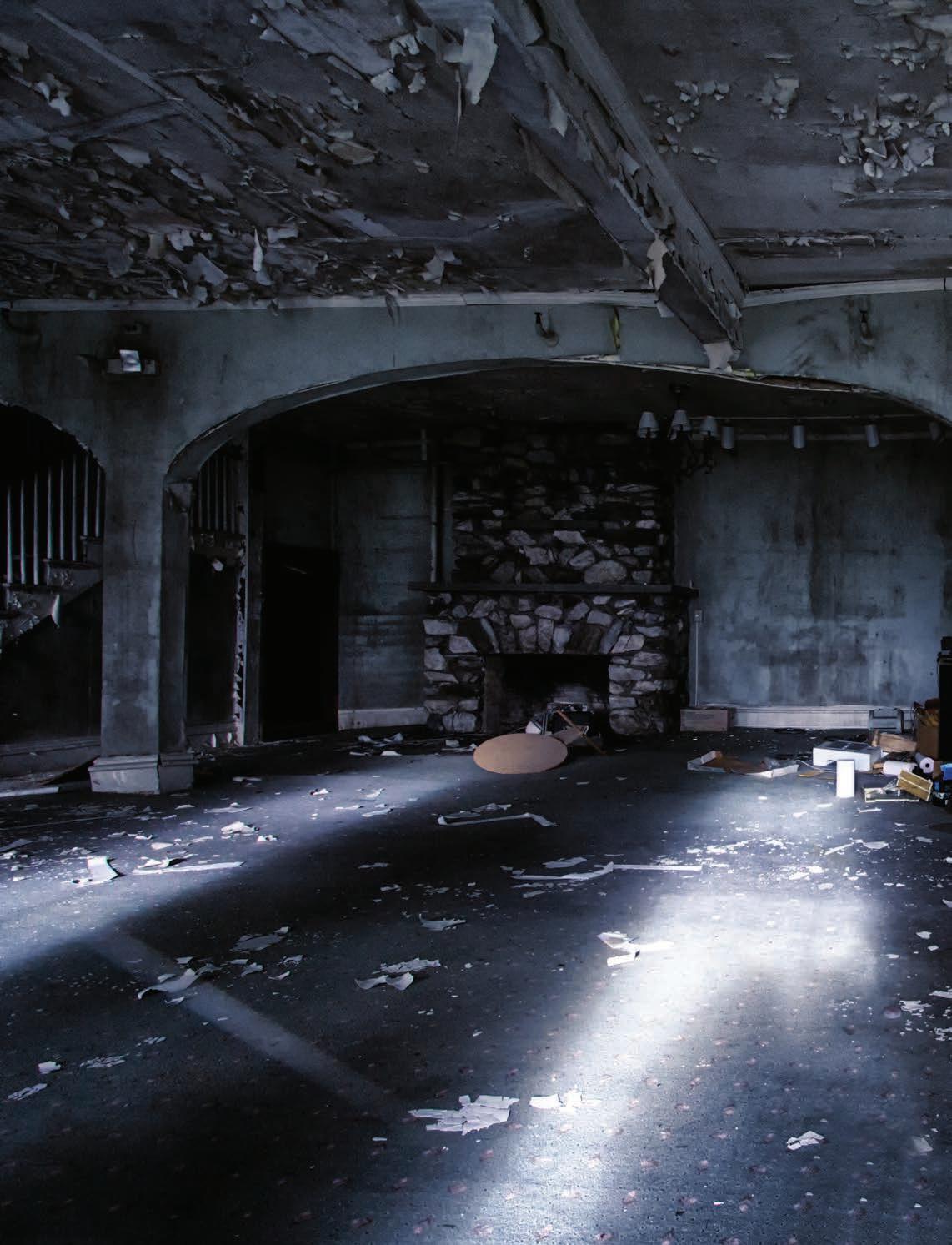
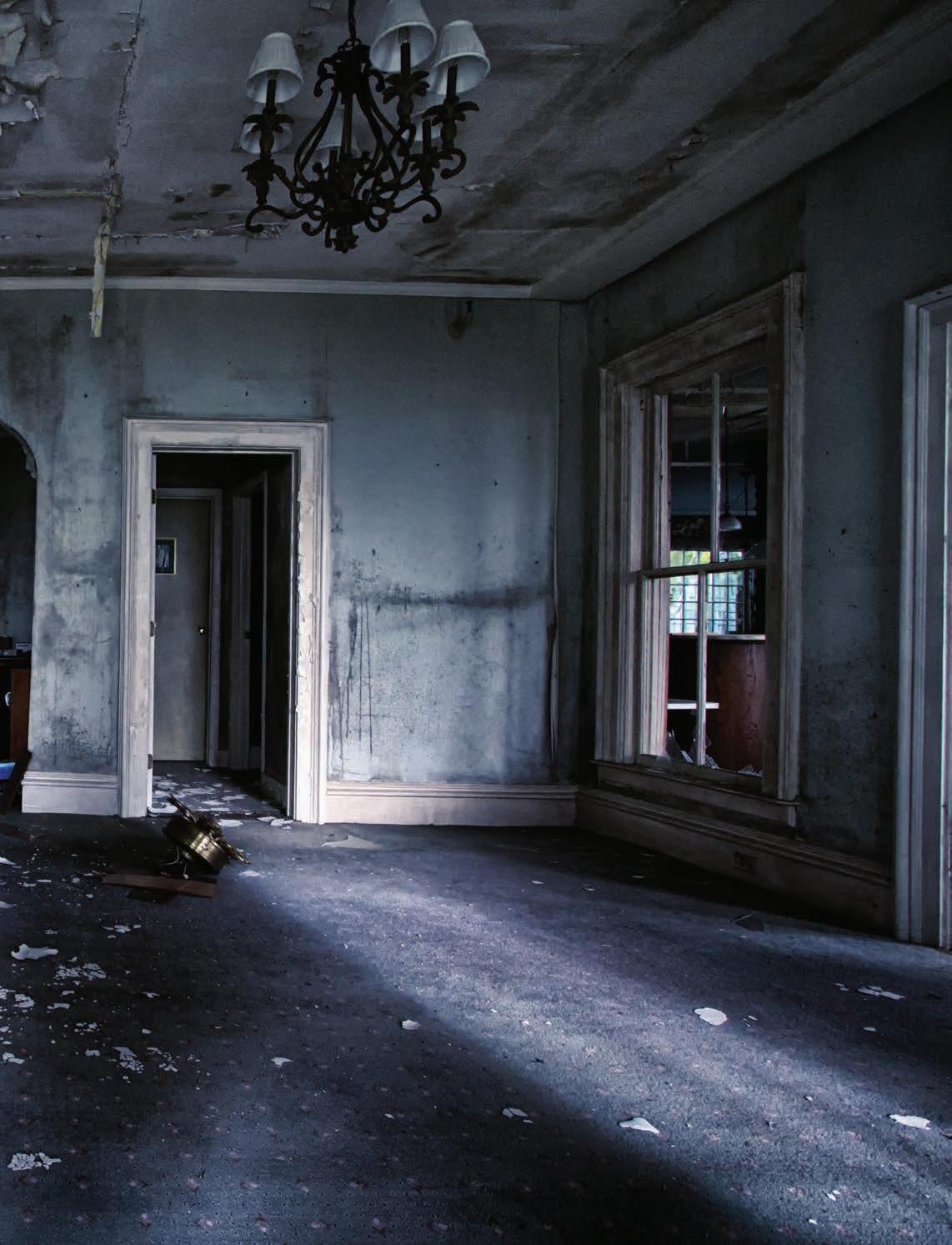
By their very name, homes tend to be thought of as warm, inviting, comfortable and safe places. That’s not always the case
Some come with horrible histories: the scenes of violent, traumatic and criminal acts. Murders, drive-by shootings, use as drug labs.
Or with nasty neighbours, even the paranormal: things that go bump in the night.
It’s what’s known as “stigmatised property”. Selling one can prove a minefield for conveyancers, lawyers and real estate agents.
There’s no general rule that says you must reveal a property’s negative reputation.
But under federal consumer law, vendors and agents are barred from engaging in misleading or deceptive conduct.
And agents must disclose what is considered a “material fact” that could influence a buyer’s decision.

“It’s not limited to structural or environmental issues – it extends to anything that could influence a buyer’s or tenant’s decision.”
– Stewart Bunn, of First National Real Estate
“Material fact is one of the most misunderstood concepts in real estate,” says Stewart Bunn, of First National Real Estate.
“It’s not limited to structural or environmental issues – it extends to anything that could influence a buyer’s or tenant’s decision.
“Agents who fail to recognise that can expose themselves and their vendors to unnecessary risk.”
In some states, agents must reveal if there has been a murder or manslaughter in the home within the past five years.
In Sydney, the prospective buyers of a house where Sef Gonzales murdered his parents and sister in 2001 recovered an $80,000 deposit, saying they hadn’t been told about it. The agents were fined $21,000.
However, suicide and death from old
age are not generally considered material facts.
Disclosure is also required if the property has been used to process an illegal drug or plant within the past two years: i.e. it’s been a meth lab or grow house.
If a buyer asks a direct question about the property’s history, they deserve an honest answer.
“Openness ensures fairness for all parties,” adds Bunn.
But an agent should not disclose information about a property’s dark history without the vendor’s permission, which could be a breach of trust.
It’s not just criminality or violence within the dwelling that need to be considered.
It might have been home to a notorious character, have “the neighbour from
One “haunted house” famed in the United States is a five-bed riverside Victorian in Nyack, New York, about 40km north of Manhattan.
It became the focus of the 1991 Stambovsky v Ackley case, known as the “Ghostbusters” ruling.
Owner Helen Ackley had publicised the home as being haunted, citing paranormal activity such as a shaking bed.
When she sold to Jeffrey Stambovsky in 1989, she failed to disclose its reputation.
Stambovsky sought to cancel the contract and retrieve his deposit.
A judge sided with him, finding Ackley had a duty to disclose the reputation she’d created, stating: “As a matter of law, the house is haunted.”
The New York Supreme Court ruling is still cited in US property cases and debated at law schools.
The tastefully renovated home has since had several owners including a filmmaker, a songwriter and a musician.
None have complained of poltergeists. “They’ve just said it’s a very special home: warm, cosy and safe,” says local agent Nancy Blaker Weber.
hell”, a known sex offender or a loud rock band living nearby.
Less likely but still important to some buyers will be feng shui or harmonious design – and any suggestion of a “haunted house”.
Several agents have convincing stories about strange apparitions, voices, a giggling girl and the face of an elderly woman looming inside a deceased estate.
“On asking the buyer whether they had ever felt a presence,” one Victorian agent reported, “she replied, ‘Oh, you mean the old lady?’”
Another had a tenant who quit because of a ghostly cat.
“Whether you believe in ghosts or not, there’s nothing supernatural about an agent’s duty to disclose,” says Bunn.
“What matters is whether a reasonable person would see the property’s history as material to their decision.
“Agents who understand that principle protect not just their clients but their own professional standing.”

By RICHARD CUNNINGHAM Photos NEIL BENNETT
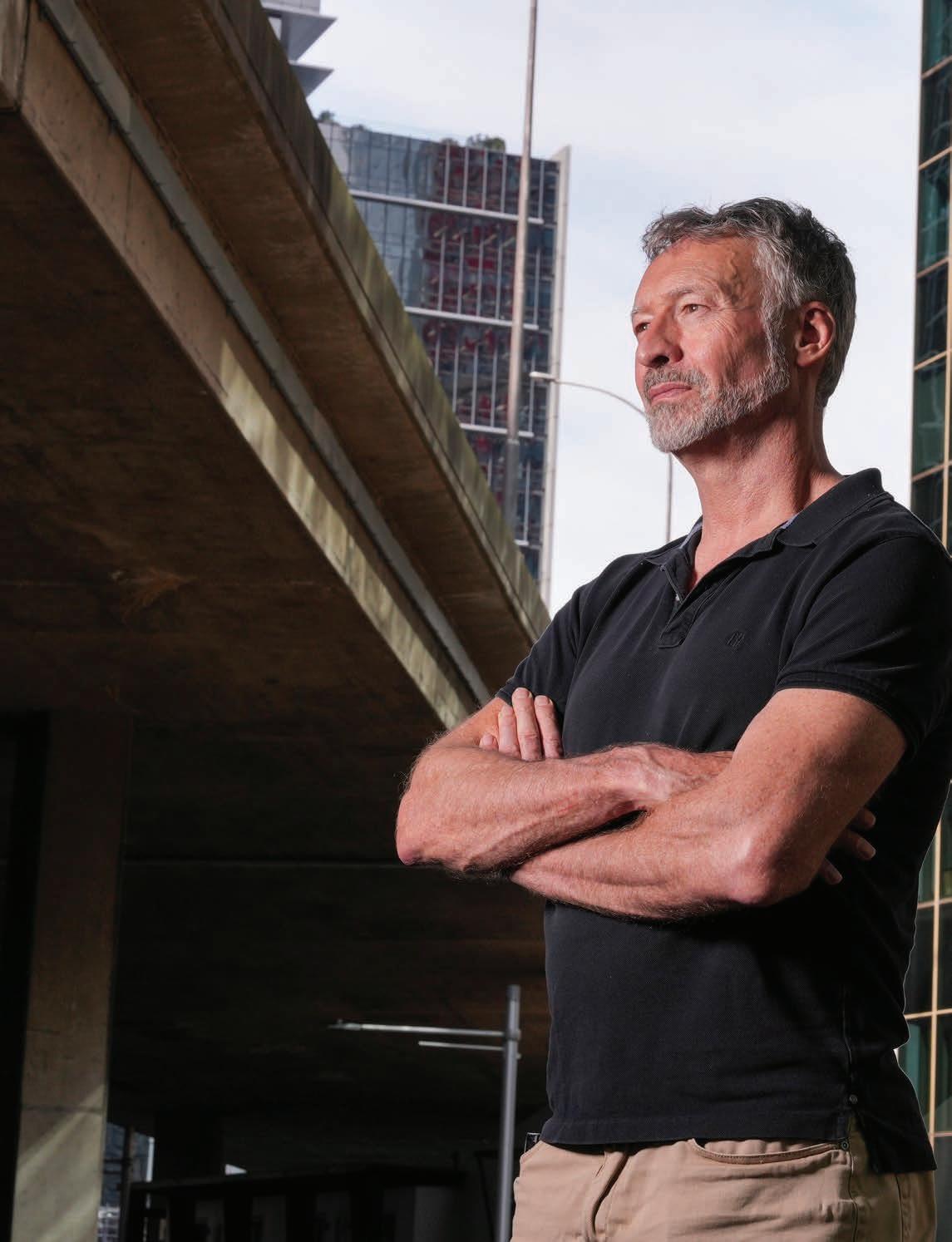
From self-confessed geek in his father’s law office to AFR Rich Lister and champion yachtsman, Christian Beck is a giant of the legal and conveyancing software world. In this month’s AC profile, the innovator tells us how he’s risen to the top, and what’s next
Christian Beck doesn’t look or act quite as you’d expect of a tech guru commanding a global empire comprising at least 16 companies with about $1 billion in annual revenues.
The shaggy-haired, grey-bearded bloke who steps out of the lift at his Sydney office wears a faded polo shirt, khaki shorts, black socks and boots.
“Hi, I’m Christian,” he says, shaking hands, before hustling away to make us coffee. No PA or receptionist in sight.
Beck looks a touch dusty, having ridden his bicycle across Sydney Harbour Bridge on what was to be a 38-degree day. “It’s what I am,” he says, almost apologetically.
He’s also the 1992 founder and CEO of LEAP Legal Software and sister company InfoTrack, which followed in 2000.
His other companies or subsidiaries include Sympli, Groundsure, triSearch, LawConnect, LawY and Corto, all under the umbrella of ATI Global.
Basically, they’re business tools designed to save users time and add value
to their work. Beck’s extraordinary drive saw him named Ernst & Young’s 2017 Entrepreneur of the Year and a regular Financial Review Rich Lister with a net worth last year estimated at $785 million.
“He shows no signs of stopping,” remarked the chair of the EY judging panel.
Now 56, his start came as an offsider to his father, a suburban solicitor whose business was 90 per cent conveyancing.
“My father had a practice in Parramatta and that’s how I got into this,” Beck tells the Australian Conveyancer
“He set up his own system to do conveyancing and he had a person employed to look after that.
“When she left, he firstly rang my brother and offered him the job. He said ‘no’ and then Dad rang me.”
Although he hadn’t been to university, Beck was a self-taught programmer who’d been using his father’s workplace computers at night.
Stepping in as the office junior, doing settlements on Fridays, he found the system had good functionality but poor technology.

“People perceive me to be a big sailor, but I’m actually not, all I really do is get on board on Boxing Day and get off two days later.”
– Christian Beck
“It did some things very well but was very unreliable and expensive to operate,” he says. “I rewrote the system to make it more robust and reliable, and then I was able to sell it to lawyers and conveyancers.”
So began LEAP, practice management software that took 15 years to refine but is now used by more than 67,000 legal professionals in Australia, the UK, US, Canada, New Zealand and Ireland.
Beck’s other mainstay InfoTrack is a leader in due diligence searching, e-conveyancing and litigation workflow.
You might have read about or seen him in the financial news – but also in the sport section, as owner of Rolex Sydney Hobart champion LawConnect.
Beck sailed as a youngster and always wanted to compete in the Sydney to Hobart.
He earned the money to indulge his dream, and when 2016 winner Perpetual Loyal became available, he snapped it up.
The price was $1.6 million, relatively cheap for a world-class supermaxi but, says Beck, “Ï didn’t realise how expensive the maintenance was!”
Renamed InfoTrack and now LawConnect, it finished second in 2019,
won in 2023 and ’24 and backs up again this Boxing Day. Beck’s wife and 18-yearold son – one of his six children – will be aboard. Beck, while nominally the skipper, says he’s also just a passenger.
“People perceive me to be a big sailor, but I’m actually not,” he laughs. “All I really do is get on board on Boxing Day and get off two days later.”
If the weather turns nasty, he and his guests will go below.
“If you stay on deck the crew has to worry about you, which makes it more dangerous for them,” he says.
On the first night last year, LawConnect executed four gybes – turning the boat while reaching downwind – in a 35 to 40-knot gale.
That’s sailing at the outer limits. The enormous forces involved with a supermaxi mean even a flick from a rope’s end can be deadly as a gunshot.
Beck sensibly defers to his crack team of 16, headed by sailing master Tony Mutter and tactician Chris Nicholson.
“The kind of guys that do like, the Round the World Race, and regard the Sydney-Hobart as an overnighter… they’re
the kind of people you want,” he says.
It’s a philosophy he also applies to business management: engage the best people and let them get on with the job.
“If you have good leadership, the best thing you can do, is do nothing,” he says.
“In the case of Tony Mutter there is minimal oversight from me. I trust him extensively. He’s been great.”
Beck counts himself fortunate to have great people running great companies, which leaves him free to dream big, or bigger.
One area that excites him is artificial intelligence, poised to dramatically boost productivity for conveyancers.
Beck says AI is here to stay, and while it’s “not perfect”, it will only get better. The imperative for practitioners is not to resist AI, but to harness it.
“You’ve got to make the best of it,” he says. “A lot of people look at AI and go, ‘Oh, it’s doing stuff I used to do, therefore I’m going to be out of work’.
“But the power of AI is to do lots of things at very low cost, allowing your service to be a lot better.”
For example, it could consider risks
“It could enhance the conveyancer’s ability to look at
contaminated land, flood risk, strata issues, building defects, boundary issues, surrounding developments and planning changes. Research and investigation into all that is a lot more affordable with AI.”
– Christian Beck that a client might not otherwise order because of the expense.
“It could enhance the conveyancer’s ability to look at contaminated land, flood risk, strata issues, building defects, boundary issues, surrounding developments and planning changes. Research and investigation into all that is a lot more affordable with AI,” he says.
Beck says AI could go beyond official records. For example, trawling for adverse mentions in local media or Facebook groups.
It’s a bit like having a robot quiz the neighbours about rezoning rumours or the bikie clubhouse in the next street.
Beck also sees AI transforming family law, by making it cheaper and more accessible.
He says that while Australia’s family court system is fair, “there is a lot of injustice created by the fact that it’s an expensive process.”
Away from the office, Beck enjoys twilight sailing with family, friends, staff and clients.
It might seem odd for a tech guru, but one reason he likes the sport is it distracts people – especially children – from their devices.
“I’m not opposed to computer games,” he says. “But not to excess. Sailing is a good way to get people out and doing things that are different.”
If LawConnect crosses the line first in Hobart this year, keep an eye out for Beck.
He’ll likely be the one chucked overboard – in celebration.

By RICHARD CUNNINGHAM
We reflect on the impact of the past 12 months on the economy, housing, innovation and legislation, before taking a look at 2026
In the Chinese zodiac, 2025 was the Year of the Snake, traditionally associated with wisdom, diligence and strategy.
Conveyancers and other property professionals certainly had to call on those characteristics and more, in the past 12 months. The most pressing topic for many was the looming Tranche 2 AML/CTF regime.
The Australian Conveyancer assigned many pages to the subject, including interviews and a podcast with AUSTRAC chief executive Brendan Thomas. Take it easy Thomas promised industry-specific starter packs by the end of January, and says the focus is on
money-laundering criminals, not small businesses trying to do the right thing.
“We want to make this transition as easy as possible,” Thomas told the AC. “We don’t expect you to do it alone.”
Other hot issues included fees, indemnity insurance, interoperability of e-conveyancing, Senate hearings, the roles of ARNECC and PEXA, training for junior conveyancers and Queensland’s new seller disclosure rules.
Of wider interest were government housing targets, state and federal help for first-home buyers, the house price boom, interest rates, climate change and global economic instability.

That last concern appears to have eased somewhat, in part thanks to US President Donald Trump’s removal of tariffs on Australian beef and other agricultural exports to the United States.
But the US still dictates a 50% tariff on Australian steel and aluminium imports.
The US still dictates a 50% tariff on Australian steel and aluminium imports.
Prime Minister Anthony Albanese said his government would continue “to advocate for genuine reciprocal tariffs, which would be zero.”
Last month’s Westpac-Melbourne Institute Consumer Sentiment Index showed a 12.8% surge to 103.8. (A number above 100 means optimists outnumber pessimists). That
Last month’s Westpac-
Melbourne Institute Consumer
Sentiment Index showed a 12.8% surge in optimists.
was its first positive result since February 2022 and a seven-year high, excluding the COVID period.
“This is an extraordinary and somewhat surprising result,” commented Westpac’s Head of Australian MacroForecasting, Matthew Hassan.
“Domestically, there are clearer signs that a recovery is gaining momentum, especially around consumer demand and housing markets.
“External threats also appear to have eased with a de-escalation of US–China trade tensions and recent meetings between Australia and the US resulting in a new deal on the supply of critical minerals and rare earths. The real surprise, though, is how much these positives have outweighed renewed concerns about inflation and the outlook for interest rates.”
For retailers, ‘tis the season to be jolly, maybe. Westpac found just over 35% of consumers plan to spend less on gifts than last year – a similar share to 2024. But 15% planned to spend more, up from 11.6% last year. That’s the “least restrained” spending intention since 2016, apart from the post-COVID boom of 2021.
It’s been another bullish year in real estate, with housing values steaming ahead, especially in the three months to October.
Cotality’s November report noted that residential real estate underpins Australia’s wealth, with dwellings valued at $12 trillion, more than double the value seen a decade ago. That compares to $4.3 trillion in superannuation and $3.6 trillion in listed stocks.
Nationally, dwelling values were up 6.1% for the year, combined capitals up 5.6% and combined regionals 7.5%. Although they stand out in dollar terms,
the annual increases in Sydney and Melbourne were lower at 4.0% and 3.3% respectively. The stars were Darwin, up 15.4% to a record high, Brisbane up 10.8%, Perth 9.4%, and Adelaide 6.7%
real estate underpins Australia’s wealth, with dwellings valued at $12 trillion.

Cotality also reported that the house price premium in Australia’s combined capitals has surged to a record $363,000, nearly 50% above median unit values. That’s good news for downsizers, bad for apartment dwellers hoping to upgrade to a house.
“We’re ushering a generation of first home buyers into apartments, but the data shows they won’t get the same capital gain,” Cotality’s Eliza Owen told domain.com.au.
“It makes it very hard for them to upgrade into a house. Over the past five years, total growth in house values has been 52%, and in units, cumulative growth was less than half of that at 23%.”
By the way, 2026 is the Year of the Horse: an animal associated with enthusiasm and energy.
By SAM McKEITH
The RBA’s decision to cut interest rates three times in 2025 may have been premature and risks prompting a surge in inflation, an expert warns

The Reserve Bank of Australia’s delivery of three interest rate cuts in 2025 could prompt inflation to accelerate in 2026, an academic says.
The central bank in August handed down its third interest rate cut of the year, with a 0.25 percentage point reduction taking the cash rate to 3.6 per cent. The move, which came after cuts in May and February, took the cash rate to its lowest level since April 2023.
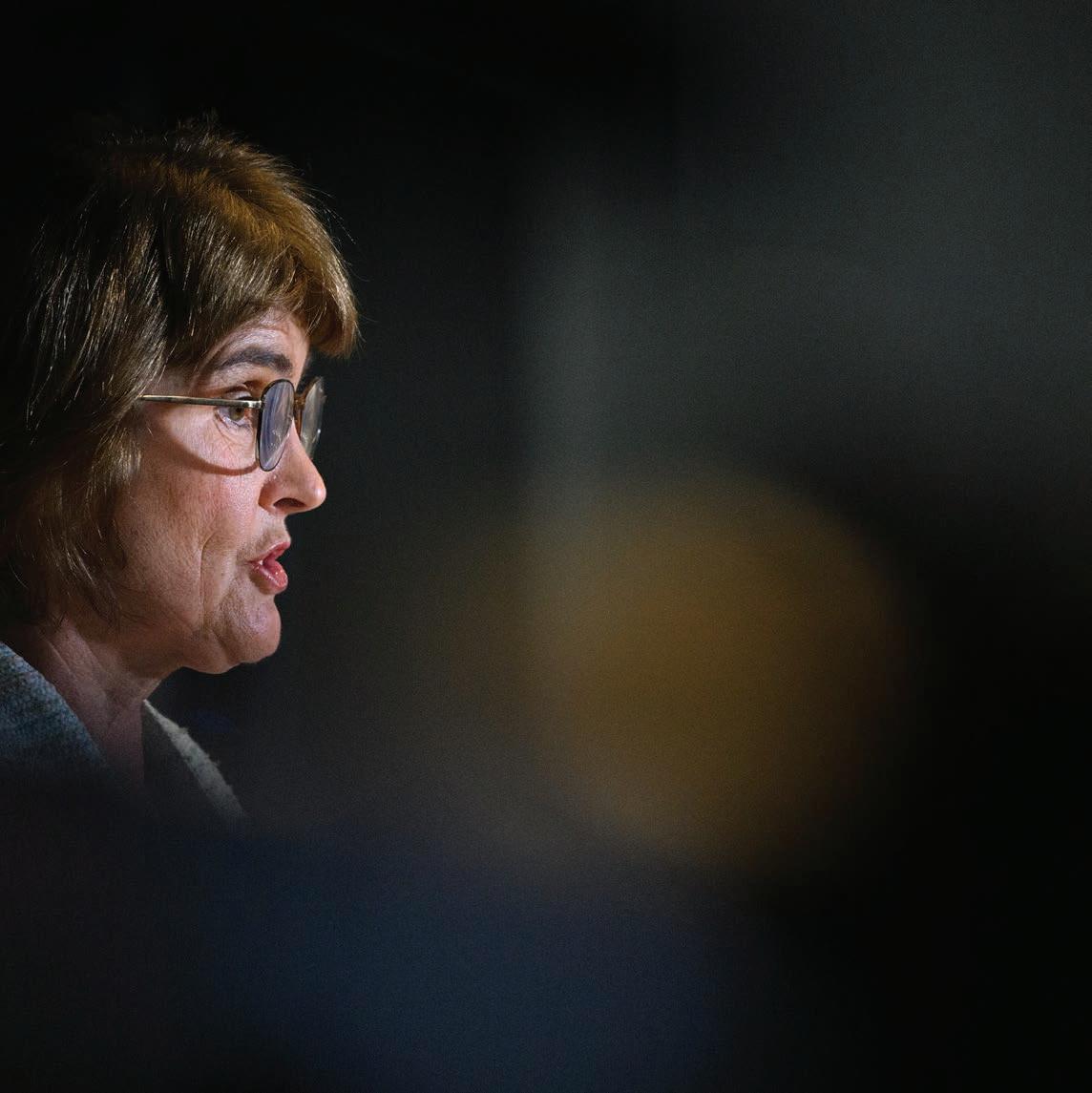
Robert Bianchi, from Griffith University Business School, said the RBA appeared confident that inflation was under control

“As we head into 2026, I think we should buckle up for more of the same. It’ll be a bit of a rollercoaster - good news one week, bad news the nextdepending on inflation numbers.”
– Tony Xia
by mid-2025, but the outlook shifted unexpectedly over the past four weeks as latest inflation data exceeded the RBA’s 2–3% target range.
“History reminds us that taming inflation is rarely a quick process,” Bianchi said.
“When the RBA opted to ease monetary policy earlier this year, it was responding to a soft domestic economy and mounting cost-of-living pressures on households.
“At the time, reducing the cash rate by 75 basis points appeared to strike an
appropriate balance, that is, supporting economic activity without reigniting excessive property market growth. As we close out the year, the outlook has shifted.”
He said with inflation now above target, the probability of near-term rate cuts was “effectively zero”, with the RBA to hold off easing until inflation returned to the 2-3% range.
According to Bianchi, criticism that the central bank acted too late in cutting rates this year is unwarranted. He points to political pressure on the RBA to move on rates before the May federal election,
which he says may have influenced the timing of the cuts.
Rather, recent inflation data suggested the decisions to ease policy in 2025 may have been premature, potentially setting the stage for inflation to re-accelerate in 2026, he said.
Official data showed monthly consumer price index (CPI) in October jumped 3.8% from a year earlier, the highest in 10 months and exceeding median forecasts of 3.6%.
“Current market pricing reflects this CONTINUED ON PAGE 18
risk, with expectations now pointing to a possible cash rate increase by the end of 2026, an outcome that policymakers and markets alike would prefer to avoid.”
In Bianchi’s view, Australia would continue to continues to face challenges in bringing inflation under control, particularly in areas such as residential rents, electricity costs, and governmentadministered prices.
“While progress has been made, it is clear that inflationary pressures persist, and we are not yet fully out of the woods,” he said.
MLC senior economist Bob Cunneen echoed the comments, saying Australian consumers were still being squeezed by inflation, high mortgage interest rates and rising rents. Australia’s lacklustre economy is confirmed by the subdued GDP result for the March quarter of 2025 that shows the economy expanded by barely 0.2% for the quarter and 1.3% for the past year.
“Essentially economic activity is only just registering a pulse,” he said, adding that the RBA’s rate cuts this year was “a silver lining in this dark cloud”.
“The RBA’s February and May 2025 interest rate cuts and expectations for more later in 2025 is giving some solace to consumers amongst these difficult times,” Cunneen said.
“More encouraging and remarkable is that Australia is recording strong jobs growth even with subdued economic activity. In the year to May 2025, circa 362,000 new jobs were generated in Australia,” he added.
Tony Xia, principal of national mortgage broker firm The Mortgage Agency, said conditions had been challenging for thousands of Australians with mortgages.
“Looking back at how 2025 played out, it’s been a tough year for anyone with a home loan. We all had high hopes when the banks forecasted up to six rate cuts, so landing on only three has been disappointing,” Xia said.
“The reality is that stubborn inflation is really hurting households, and it’s the single biggest factor driving the RBA’s decisions. As we head into 2026, I think we should buckle up for more of the same. It’ll be a bit of a rollercoaster - good news one week, bad news the next - depending on inflation numbers.”
Xia predicted the property market “to really steam up across the country”.
“We’re going to see a wave of activity from the First Home Guarantee Scheme early next year, alongside investors eager to build wealth and are willing to spend more to do it,” he said.
By SAM McKEITH
The
federal government maintains a key affordable housing initiative will be open for applications by the end of
the year, amid reports of a review of the scheme
The launch of the federal government’s much-anticipated shared equity housing scheme is on track for 2025, the housing minister says, amid a reported review of the scheme.
Under the initiative, announced in March, the government will contribute up to 40 per cent of the purchase price for new homes or 30 per cent of existing homes for eligible borrowers.
The scheme, which will have 10,000 places available per year over four years, caps property prices in capital cities, with Sydney offering the highest cap at $1.3 million.
Applicants must have an annual taxable income of less than $100,000 or $160,000 for joint applicants, and contribute at least a 2 per cent deposit of the home purchase price.
An official review of scheme was launched in September with lenders expected to commence on the scheme’s panel from March 2026, according to local media reports, prompting speculation online that the initiative’s rollout may be delayed.
In a statement, a spokesperson for Housing Minister Clare O’Neil insisted that the scheme, expanded as a key preelection pledge, “will open later this year.”
“Help to Buy is a modest but meaningful program to help 10,000 working Australians each year get into a home of their own with a smaller deposit and lower repayments,” the spokesperson told Australian Conveyancer Cameron Kusher, director of property consultancy Kusher Consulting, said irrespective of when the scheme commenced, its popularity would probably take a hit from would-be buyers preferring the government’s 5 per cent deposit scheme.
That scheme, launched in October and formerly known as the Home Guarantee Scheme, enables most first home buyers to purchase a home with a deposit as low as 5 per cent, without the need to pay Lenders Mortgage Insurance.
“It has no caps on spaces, it has no income caps and the price caps are actually higher than the Help to Buy scheme,” Kusher said. “If you had this scheme in place first before the Home Guarantee Scheme then you would probably get more people using this.
“I think for many the preference would be to try to get into the Home Guarantee Scheme rather than the Help to Buy scheme because it’s your own property. ”
“Help to Buy is a modest but meaningful program to help 10,000 working Australians each year get into a home of their own with a smaller deposit and lower repayments.”
– A spokesperson for Housing Minister Clare O’Neil

Both schemes were flawed, he said, as they “basically assist or enable people to enter the market at higher prices rather than addressing the fact that housing is expensive and that’s the underlying issue”.
“To make it easier for first home buyers we need to make housing more affordable.”
According to Kusher, the success of the Help to Buy scheme “is going to be about how comfortable people are about sharing the upside and the downside of the market with the government, and probably it also comes back to their desperation to get into housing”.
“With the Help to Buy scheme, assuming that prices continue to rise, you’re going to have to give some of that profit away when you do sell that property,” he said. “If property prices fell obviously the government does wear some of that cost as well.”
Joseph Daoud, an independent economist and It’s Simple Finance founder, expected the scheme to be popular on launch given property prices across Australia continued to rise.
“There will be interest from some firsthome buyers,” he said.
Housing Minister Clare O’Neil.
Australia’s housing market continued its upswing in October, with national home prices rising 1.1 per cent, the strongest monthly lift since June 2023, according to Commonwealth Bank data released earlier this month.
However, Daoud said there would likely be caution from some in the cohort about sharing equity with the government.
“Co-owning a home with the government raises questions about future decision-making and exit strategies, so I’d want anyone considering the scheme to think carefully about those implications,” he said.
In his view, the scheme was a “negative fix born out of years of red tape and a shortage of new housing”.
“It’s an intervention, but not one that tackles the root problem. My concern is that using taxpayer funds to co-purchase homes boosts buying power without increasing supply, which can push prices higher,” he said.
“Instead of concentrating on increasing housing supply, they’re rolling out band-aid fixes to help people purchase property. Australia’s housing affordability problem isn’t just about the cost of living; it’s also about a severe shortage of homes.
“I’d like to see a bolder approach that tackles supply head-on: streamline planning approvals, review restrictive zoning, invest in infrastructure and accelerate construction.”
By MELISSA IARIA
There’s
a cultural
shift away from the traditional “Aussie dream” of owning your own home towards valuing travel and life experiences instead
The rising cost of buying a home is leading many younger Aussies to ditch the dream of home ownership in favour of travel and lifestyle perks.
Over the past decade, the average home loan nationally has soared from $390,000 in June 2015 to $678,000 in June 2025, Australian Bureau of Statistics figures show. At the same time, home ownership rates among younger generations are declining: in 1971, the rate for 25 to 29-year-olds was 50 per cent, but by 2021 this fell to 36 per cent. For 30 to 34-year-olds, the rate fell from 64 per cent in 1971 to 50 per cent in 2021, according to a 2024 Senate report.
Younger Australians appear to be shelving their aspirations to buy, with a survey earlier this year revealing 45 per cent of Australian adults aged 18 to 44 were prioritising spending on travel over home ownership, according to Southern Cross Travel Insurance.
With Cotality data showing capital city dwelling values up by 5.9 per cent or around $53,700 since February, house price inflation appears to be hampering first-home buyers from entering the market.
“Younger generations seem to be embodying the ‘she’ll be right’ attitude, comfortable to cut their losses when it comes to the housing market in order to seek adventure,” the insurer’s CEO Jo McCauley said of the findings. The trend was reinforced by a 2025 money.com.au survey that found most Aussies - 25 per cent - were saving for travel over the 12 per cent saving for a house.
With Cotality data showing capital city dwelling values up by 5.9 per cent or around $53,700 since February, house price inflation appears to be hampering first home buyers from entering the market. Yet at the same time Aussies are splashing more on overseas travel, splurging $78.4 billion in 2023-24, up $22.7 billion on the previous year, according to Tourism Research Australia.
We’re also travelling more. The number of Australians returning from short-term overseas trips rose 6 per cent year-on-year to 972,070 in August 2025, the Australian Bureau of Statistics says.
ING reports the average Aussie spends about $7,385 on a two-week trip - higher than the average initial monthly loan repayment of $3961 over 30 years according to money.com.au. Looking ahead, the trend of priced-out young Aussies choosing adventure over home ownership does not appear to be waning.
According to the Southern Cross Travel Insurance survey, 91 per cent of Australians planned to travel in the next 12 months, with Gen Z and Millennials leading the charge at 59 per cent and 61 per cent respectively, compared to Gen X at 43 per cent and Baby Boomers, 41 per cent.


By JACOB SHTEYMAN
A slowdown in the bellwether housing markets of Sydney and Melbourne suggests that sentiment is starting to sour as hopes of more interest rate cuts dissipate
Surging home prices have wiped away the benefits of three interest rate cuts to new buyers, new data reveals.
Across Australia, home values grew by one per cent in November with the median dwelling now worth $888,941, property analytics firm Cotality reported on Monday.
That follows a blistering result in October, when prices rose at 1.1 per cent rise, and 0.8 per cent in September.
However, Cotality research director Tim Lawless said the slightly reduced November figure could signal a shift in momentum.
“It really looks to be a very mixed result, two-speed market that’s starting to emerge once again,” Cotality research director Tim Lawless said.
On a monthly basis, growth in Sydney slowed from 0.7 per cent to 0.5 per cent, while Melbourne fell from 0.9 per cent in October to 0.3 per cent in November.
Meanwhile, the mid-sized capitals picked up.
Brisbane became the second Australian city to break the $1 million median home price barrier, up 1.9 per cent to $1,015,767, with Adelaide up by the same amount and Perth accelerating to 2.4 per cent.
Price growth in Canberra, Hobart and Darwin also grew up by one per cent, 1.2 per cent and 1.9 per cent respectively.
The housing price rises come at the same time as a resurgence in inflation, dashing hopes the Reserve Bank will cut interest rates again.
Economists and bonds traders are increasingly predicting that the central bank could even hike rates next year.
“You’d have to argue Sydney’s affordability and serviceability challenges will be shining through here and probably putting a natural ceiling on how high prices can go,” Lawless said.
“This may be the first sign that the markets are starting to respond to this renewed acceptance that interest rates aren’t likely to fall further from here, at least over the next six months.”
Already, the impact of 75 basis
“It’s definitely bad news for renters, and it comes at a time when vacancy rates are just holding around that 1.5 per cent mark, which is virtually at record lows”
– Cotality research director Tim Lawless
points of cash rate cuts since February are wearing out.
Lawless calculated the cuts increased the borrowing capacity of a median income household by $55,000, but home
values have since risen by $60,000.
For renters, the outlook continues to be one of worsening affordability. Rents are rising across every capital city, with the national rental index 5 per cent higher over the past 12 months - the highest annual rate of growth in a year.
“It’s definitely bad news for renters, and it comes at a time when vacancy rates are just holding around that 1.5 per cent mark, which is virtually at record lows,” Lawless said.
Australia faces an ongoing supply shortfall and feasibility constraints for developers are hampering government policies to boost the stocks of social and affordable housing and build-to-rent.
Demand is expected to soften somewhat as migration levels normalise and renters increasingly form larger household sizes or stay in the family home longer to accommodate higher rents.
By SAM McKEITH
The RBA is unlikely to cut interest rates until late in 2026 on inflation worries, experts say, presenting new challenges and opportunities in the nation’s squeezed housing market
Inflation concerns are on the rise in Australia, prompting experts to push back their expectations for the Reserve Bank to cut interest rate cuts in 2026, as the nation looks set to endure a continued shortfall of affordable housing.
Some economists now even tip the central bank to hike rates by mid next year, following official data showing inflation lifted to 3.8% in October, above a market consensus of 3.6%.
The forecast come after the RBA trimmed the cash rate three times in 2025 to 3.6%, but indicated in November that persistent inflationary pressures could end the easing cycle.
AMP Deputy Chief Economist Diana Mousina said that forward-looking price indicators and business surveys were
“a little softer” on inflation looking ahead.
“An elevated, and increasing, unemployment rate will put downward pressure on wages growth and should help to ease services inflation. We expect trimmed mean inflation to be around 2.5% by the second half of 2026,” Mousina said.
She said inflation pressures added to existing RBA bias to keep interest rates on hold.
“The components in the figures show that pockets of services inflation are still too high,” Mousina said.
“Our view has been that further interest rate relief is likely in Australia because of our expectation that inflation will slow from here and the unemployment rate will remain at 4.5% or a touch above.
“We had been expecting another

rate cut in May 2026 but it may occur later as the inflation figures seem to keep surprising higher.”
Meanwhile, the Commonwealth Bank said in recent guidance that it expected rates to hold at 3.6% in 2026. It said that result, if it occurred, would mean mortgage holders missed out on near-term repayment relief, but gained interest rate stability to help them plan ahead.
The RBA, in its November statement on monetary policy, said it decided to leave rates unchanged due to evidence of inflationary pressure in the economy, pointing to prices back above its 2-3% target range and “where we expect it to stay for a while”.
“We expect inflation to be above 3% for much of next year before declining to around the middle of our target range by late 2027,” the RBA statement said.
“Our view has been that further interest rate relief is likely in Australia because of our expectation that inflation will slow from here and the unemployment rate will remain at 4.5% or a touch above.”
– AMP Deputy Chief Economist Diana Mousina.
In Melbourne, Rocky Rana, founder of property buyers agency The Realta, said he expected the cash rate to “remain broadly anchored in the mid-3% range in 2026, with limited room for cuts unless the labour market weakens materially”.
“Rather than a rapid easing cycle, the RBA is likely to hold a ‘higher for longer’ stance to avoid reigniting inflation through housing and services demand,” Rana said.
CONTINUED ON PAGE 24
Diana Sarcasmo,

CONTINUED FROM PAGE 23
“The first-home owner policies are expected to serve a complementary role in meeting housing goals for the government. This key stat can be worked around from the fixed-rate home loans on offer at present in the market.”
Despite increasing inflationary concerns and revisions to cash rate forecasts, Rana expected the real estate market, especially in Melbourne, to remain buoyant through next year.
He said population growth continued to outpace new construction and vacancy rates remained low, meaning that housing pressures would last into 2026.
“Next year won’t deliver a big rate-cut party, however, we expect further rate cuts whenever we see the inflation numbers in control and the property market is expected to grind higher because of chronic undersupply and tight rentals,” he said.
“In Melbourne especially, quality family homes and townhouses will outperform and properties which are priced in the entry level for first-home

“Rather than a rapid easing cycle, the RBA is likely to hold a ‘higher for longer’ stance to avoid reigniting inflation through housing and services demand.”
– Rocky Rana, founder of property buyers agency The Realta
owners will continue to see more activity than 2025 across the region.”
Diana Sarcasmo, managing director of residential at Colliers, also downplayed monetary policy, saying affordability challenges and supply constraints would shape the property market in 2026.
She said the market presented different opportunities, depending on location.
“Melbourne and Canberra are entering a recovery phase, offering compelling value and strong rental yields for investors,” Sarcasmo said.
“Brisbane’s growth story continues, underpinned by infrastructure and
Olympic-driven demand, though supply will remain a key challenge. In Sydney, apartment stock, priced to take advantage of government incentives, particularly one- and two-bedroom options, will outperform, while growth corridors in the west and south-west will attract buyers seeking affordability.”
“With rental pressures persisting, we expect more Australians to embrace ‘rent-vesting’ as a strategy to balance lifestyle and investment goals.”

By RICHARD CUNNINGHAM
User-friendly guides to help newly regulated small businesses establish compliance programs with minimal fuss
They didn’t make it in time for Santa’s sack, but financial regulator AUSTRAC does have some belated Christmas presents for conveyancers: the AML/CTF Starter Packs, gift-wrapped guides to the Tranche 2 Anti-Money Laundering regime.
As he indicated in the AC’s inaugural Settlement Day podcast, AUSTRAC chief Brendan Thomas says they’ll be released at the end of January.
“The starter programs will outline what a typical low-risk, low-complexity conveyancing practice needs to do,” Thomas said.
Practitioners don’t have to be rocket scientists: the kits are “technology neutral” and designed to be as user-friendly as possible.
Nor will they need new staff or engage a third-party provider to write their compliance program.
All they need, is to download the relevant form from AUSTRAC’s website and customise it to suit their practice. If help is needed, there’ll be a dedicated contact centre.
And it’s not just conveyancers who can breathe easier. Accountants, lawyers, real estate agents and jewellers will all get customised packs.
Thomas says AUSTRAC consulted with hundreds of stakeholders, and most of the feedback from conveyancers has been incorporated.
That includes:
Removal of the need to conduct beneficial ownership checks on low-risk entities, like publicly listed companies.
Narrowing the scope of domestic “politically exposed persons,” making the requirement easier to implement.
Greater clarity on the Know Your Customer (KYC) information to be
collected, broken down by customer type.
The aim, said Thomas, is to “minimise the work that a typical small practice needs to do.”
That doesn’t mean you can kick back and relax until March 31, when AML/CTF enrolment begins.
“Firstly, you can read what you can do to get ready,” Thomas said.
“Next, you can register for our webinars. You can also speak to your peak bodies about what to expect from the changes.”
There’ll be a stream of educational material on the AUSTRAC site. Not only webinars, but e-learning modules, fact sheets, videos and animations.
You can also enrol via the website. As noted, that starts from March 31 but must be done by July 29 at the latest.
If you provide a designated service after July 29 without being enrolled, you breach the law. Financial penalties apply and will accrue each day you remain in breach.
But as Thomas has stressed in these pages and on the Settlement Day podcast, AUSTRAC doesn’t seek to punish hardworking conveyancers.
“The AML/CTF laws do not require perfection,” he said. “They require businesses to mitigate and manage risks.
“Does the practice understand the risks it faces and have an appropriate AML/CTF program?
“Has it followed the program? Has it reported where it needs to? Does it have records to show that?”
Those records - and any reports of suspicious activity submitted to AUSTRAC – will remain strictly confidential.
For more details, visit www.austrac. gov.au/about-us/amlctf-reform
What will 2026 bring for the Australian property market? Expect pain and gain, but also lots of new business – and new responsibilities - for conveyancers. The AC unpacks what’s in store
ANZ was tipping one 25 basis point cut in March, taking the cash rate to
3.35%
The Reserve Bank didn’t cut the official cash rate in November, leaving it at 3.60%
At time of writing there is the expectation of up to two cuts in 2026. ANZ was tipping one 25 basis point cut in March, taking the cash rate to 3.35%
CBA did not predict any cuts, NAB predicts a 25-point cut in May, while Westpac saw 25-point cuts in May and August, taking the rate to 3.10%
CAPITAL GROWTH
INTEREST RATES
Sydney, Melbourne and Brisbane are expected to dominate price growth in dollar terms, with Sydney’s median house price expected to be more than $1.92 million by the end of 2026, and Melbourne to top the milliondollar mark.
According to Westpac, Sydney house prices could increase by 8% in 2026, Melbourne by 10%, Brisbane and Perth by 8%, Adelaide by 6% and Hobart by 4%
“For those already in the market, it’s great news for their equity.” says Canstar’s Sally Tindall. “But for buyers, the deposit hurdle is getting higher.”
Sydney’s median house price expected to be more than
$1.9m by the end of 2026
AUSTRAC’s Tranche 2 regime comes into force from July 1, with conveyancers, property lawyers, real estate agents and accountants obliged to comply with anti-money laundering and counter terrorism financing regulations.
These include the appointment of a compliance manager, staff training, due diligence on clients, and reporting of suspicious transactions.
Preparation should begin earlier. AUSTRAC intends to issue sectorspecific guidance from the end of January, and enrolment for Tranche 2 entities opens from March 31.
Keep an eye on the AUSTRAC website for updates.
Expect a continuing property price boom, fuelled by lower interest rates, supply shortages and first home buyer incentives.
The Westpac-Melbourne Institute House Price Expectation Index - a strong predictor of consumer confidence - was sitting at 172 in November.
That was up 12.2% in the year, and 34% in the year.
Back in 2021, the indicator reached a high of 164. In the year that followed, prices rose 16%
The housing affordability crisis could worsen, but some economists predict the market might peak in 2026, followed by a downturn.
Australia’s population is aging.
The ABS predicts that by 2050, over one-third of Australians will be 55 or older. Just 40 years ago, only one-sixth were in this age group. “As our demographic makeup changes, so too will the types of housing we need,”
commented realestate.com.au’s Angus Moore.
Real estate tycoon John McGrath has released the 2026 McGrath Report detailing his hot property tips for 2026. They include:
NSW: Tennyson Point, Ashbury, Newport, Sans Souci, Haberfield, Norah Head.
VIC: Northcote, Essendon West, West Melbourne, Box Hill, Carisbrook.
QLD: Redcliffe, Coorparoo, Clear Island Waters, Peregian Beach.
TAS: Battery Point, Midway Point, West Launceston, Miandetta, Acton.
“Older households are smaller, with four in five having just one or two people. But much of our housing is still large, detached homes… with many living in homes larger than they need.” There is a growing need for retirement or agedcare living, and smaller, low maintenance homes.
However, barriers to downsizing include the hassle of moving, emotional attachment, and cost concerns.
By RICHARD CUNNINGHAM
Photos HAVENWOOD TINY HOMES
Not quite a caravan, not quite a modular home… mobile tiny homes could be one answer to Australia’s rental squeeze
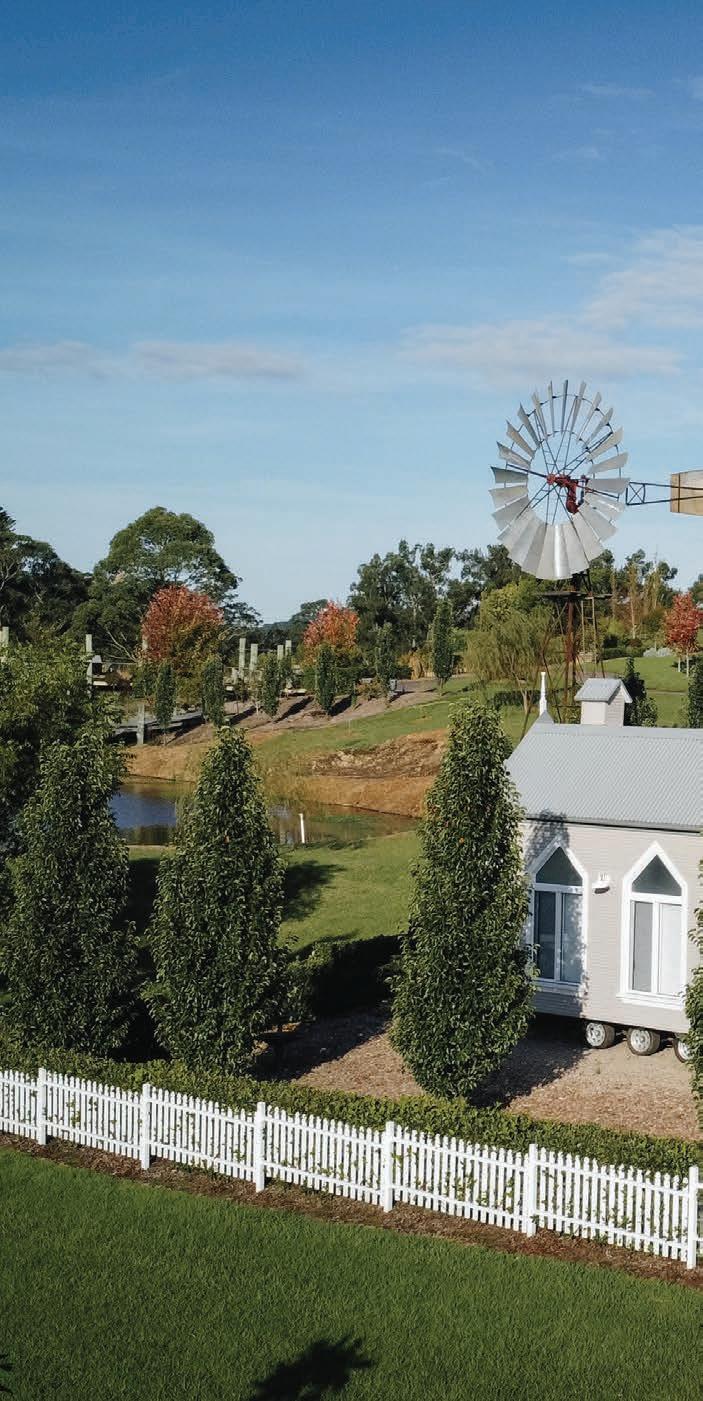
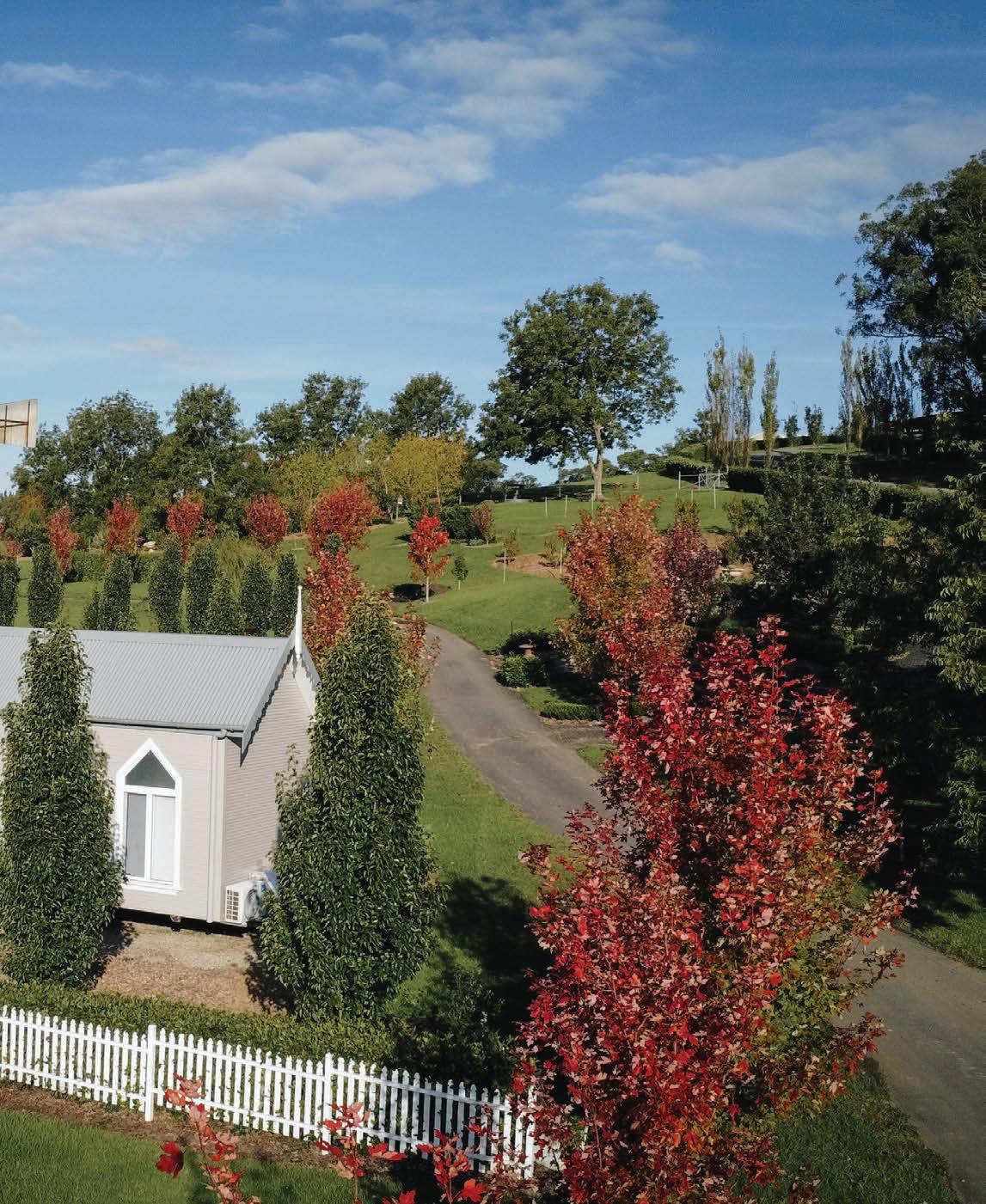
Little houses on wheels are set for a two-year trial in the City of Shellharbour, on the NSW coast about 100km south of Sydney.
Mayor Chris Homer says they aim to offer locals more affordable, yet safe and well-managed rental options.
“Tiny homes offer a flexible and lower cost option,” he says. “This trial will help us see how well they work in our area.”
Shellharbour has a vacancy rate below 1 per cent, rents soaring on demand from essential workers, students and retirees.
“The housing crisis has gotten deeper and more severe,” Homer adds.
“We have a brand-new hospital being built in Shellharbour. Where are the key workers going to live?”
The small, moveable dwellings are built on trailers and can be registered like a vehicle under the Road Transport Act.

trisearch.com.au
By JENNI GILBERT
Regarded as the go-to buyer’s agent for prestige property in Sydney, Simon Cohen has always had a passion for property
As a child growing up in Sydney’s leafy St Ives on the North Shore, Simon Cohen’s dream weekend was looking at houses.
He’d convince his father to drive him around to marvel at the spectrum of the Emerald City’s real estate, fuelling dreams.
“It was an absolute passion of mine from a very young age,” Cohen says.
“I also loved looking at glossy photos in the paper of properties for sale and seeing who the top agents were.
“My grandmother was a real estate agent in South Africa and whenever we visited I’d spend Sunday open homes with her, interacting with people and seeing how it all unfolded.”
Today, at 40, Cohen is one of the nation’s biggest real estate dealmakers, regarded as the go-to buyer’s agent for prestige property in Sydney and with a reputation for unrivalled access to exclusive off-market listings.
Cohen Handler, the firm he co-founded in 2009 from a room above a pub in Paddington, has grown into Australia’s leading property buyer’s agency with eight offices (in Sydney, Melbourne, Brisbane and Perth) and circa 120 staff. This, as well as a commercial property arm, investment advisory, leasing management service and an interior design studio.


“My grandmother was a real estate agent in South Africa and whenever we visited I’d spend Sunday open homes with her, interacting with people and seeing how it all unfolded.”
– Simon Cohen
Cohen describes the early days of Cohen Handler as electric… “constantly marketing, screaming and begging. There were days when people told me I should give up but I never wanted to.”
Cohen Handler to date has assisted clients to purchase more than $10 billion worth of property.
Last year, Cohen was personally involved in some of the nation’s biggest house deals, including the estimated $80 million sale of Spanish Mission-style Bellevue Hill residence Alcooringa.
However, it’s not necessarily the most prestigious sales that bring him the most satisfaction.
“Alcooringa is the most expensive I’ve dealt with but there have been a lot of sales that were very tough at lower levels to get across the line,” he says. “It’s the tough ones that give me the greatest joy.”
Cohen began his career nearly 20 years ago as a “pavement pounding” sales agent with Ray White Double Bay, ultimately becoming one of Ray White’s top 3 per cent of agents nationally.
“I approached specific houses for buyers that everyone said were untouchable,” he recalls. “Only the ‘kings’ of the industry back then could get in the door and list those properties.
“But I got the listings and created relationships. I’m very proud to say many of those vendors and buyers are still my clients today.”
In 2009, Cohen and former colleague Ben Handler (they parted ways in 2018) founded their own business as buyer’s agents.
Many thought they were crazy, as a buyer’s agent was still rather a foreign concept in Australia. Further, the market was coming off the back of the global financial crisis. “But I’m a believer,” Cohen says. “I saw an opportunity in that buyers were not being represented properly.
“There was all this emphasis on sellers and as a selling agent I was only able to help with the stock my firm had.
“I’d see people missing out on great opportunities every single day – all the other stock in the off-market.”
Cohen describes the early days of Cohen Handler as electric… “constantly marketing, screaming and begging. There were days when people told me I should give up but I never wanted to.”
He stresses that the relationship with conveyancers has been all-important over the years to his and Cohen Handler’s success.
“I have a go-to network of people who are a) extremely confident and b) are available to get things done when they need to be done,” he says.
“For example, I might need to call a conveyancer late on a Friday night to get a deal over the line.
“If they are available at short notice to make things happen quickly and efficiently it can save clients a lot of money – also entire deals.”
While Cohen’s reputation has been forged in the luxury sphere, he gets as much pleasure from the “everyday” market.
“The vast majority of our deals so far this year have been for mum and dad buyers,” he explains. “We’re working with a lot of small investors, first-home buyers, young family types … that’s what’s been really nice.”
While Cohen maintains the Sydney prestige market has no ceiling, he says the everyday market fluctuates a lot more and first-home buyers shouldn’t be disheartened.
His advice: “You don’t have to buy where you live. You can find affordable
property in areas outside main cities where research and analytics show there’s going to be reasons for growth.
“What’s really sad is that many young people in Australia have convinced themselves it’s impossible to buy property and decide they’ll rent. By the time they’re in their 30s, perhaps with a few kids, they’re still renting and have no capital. Getting into the market will be even tougher, if not impossible.”
While snapping up properties for buyers big and small, Cohen made a very

special purchase of his own last year, the five-bedroom Paddington mansion Brompton, estimated to have set him back between $12-13 million. Actually two Victorian terraces that have been combined, Cohen is in the process of renovating the property while he remains in his current abode, a two-storey apartment in Potts Point.
“Construction is going well but I’m always adding, adding, adding,” he laughs.
While he enjoys the finer things in life he has worked so hard for, Cohen is grounded and takes nothing for granted.
“I have the kind of lifestyle that kid from the suburbs – whose family wasn’t wealthy or well-connected, who only had things ‘because my parents went without’ –used to dream about,” he says.
“But fundamentally I’m happy just surrounding myself with people I love. I have the best friends in the world, a great family and my health.”
Travel is another of Cohen’s passions and it was on a recent trip he discovered that he’d also become something of a global name after his starring role on
Amazon Prime’s reality series Luxe Listings Sydney (2021-22).
“The show was an incredible highlight for me and something I’m very proud of but I could never have expected this,” Cohen says.
“I was in this little village in the Puglia region of southern Italy, like the last place you’d think people would be watching a show about Sydney real estate.
“This guy recognised me from Luxe and literally chased me down the street! That was definitely a career highlight!”
Game-changing words and numbers that impacted the industry this month
“People should still feel safe, but the crime stats are up. That puts doubt in the minds of investors and even first-home buyers. It creates caution when it comes to spending a lot of money on a home.”
– Louis Christopher’s SQM Research Boom and Bust Report
“The power of AI is to do lots of things at very low cost.”
– Christian Beck, CEO of LEAP Legal Software
“Australian home values have climbed roughly 47.3% since March 2020, an extraordinary rise that added about $280,000 to the median dwelling value.”
– Cotatlity Head of Research Eliza Owen
$1.3 trillion
The pre-tax personal income during 2022-23, based on latest ABS personal income figures released on November 14.

47.3%
The percentage increase in Australian home values since March 2020, adding approximately $280,000 to the median dwelling value according to a Cotality report.
3.8%
Rate wait
A higher-than-expected inflation rate in the 12 months to October has analysts anticipating the Reserve Bank will raise the mortgage cash rates rather than cut them in 2026.
$1,924,439
The eye-watering median Sydney house price forecast in 2026 - a 7% jump putting it on track to eclipse $2 million in 2027.

“AI WILL BE A TOOL THAT WILL HELP YOU, AS OPPOSED TO ONE THAT TAKES OVER YOUR JOB.”
– Sam Saad, property lawyer at Long
Saad Woodbridge
The amount consumers would save if the Reserve Bank enforces a ban on credit card surcharges.
$1 billion p.a.
Reaching for the sky
The number of storeys in a residential tower approved on the Gold Coast, making it the largest and tallest in the country, at 393.5 metres high. Australia’s second largest is Q1, also on the Gold Coast, at 322 metres high.
17,019
Housing action
The number of dwelling approvals granted in Australia during September (the latest figures available).
110
The number of inspections in an hour Perth realtors are reporting as eager home buyers seize on home prices more favourable than those in the eastern states.
4.4%
Business as usual
The Australian unemployment rate for October, remaining the same as the month prior. 14,678,400 have a job and they worked 1.993 billion hours in October.
5.6%
Spending surge
Australians’ household spending rose 5.6% to $74.4 billion in the year October 2024 to October 2025, according to the Australian Bureau of Statistics.

“I BELIEVE THE MAIN REASON FOR AUSTRALIA’S HOUSING CONTRADICTION IS ACCESSIBILITY – AND NOT LAND SCARCITY. WE NEED TO FOCUS ON SUPPLY BOTTLENECKS. WE NEED TO FREE UP PEOPLE’S OPTIONS OF WHERE THEY CAN LIVE.”
– Real Estate leader John McGrath reports on the nation’s housing crisis.
By LEIGH REINHOLD
With soaring land prices and growing demand for modern homes in established suburbs, knockdown rebuilds (KDRs) now account for almost 20 per cent of new approvals. More than 214,000 KDRs were approved between July 2019 and June 2025, according to Australian Bureau of Statistics figures
Pre-COVID, when the greenfield space in Melbourne’s southeastern suburbs was becoming scarce and prices for any vacant lots were quickly rising, builder Steve Harris realised the knockdown rebuild (KDR) market was going to take off.
“Knockdown rebuild has become popular in recent years because there has been a lot of push for urban redevelopment and recycling of land – which the government supports – to reduce urban sprawl and to reduce the cost of infrastructure needed for the urban sprawl,” says Harris, the Director of custom home builder Oak Living, based in Seaford.
“In the early days of our business we did a lot of greenfield development but now it is predominantly knockdown rebuild.
“Percentage-wise we are doing between 60 to 65 per cent of our work as KDR and, moving forward, our business will be 90 per cent KDR.”
In the past five years, more than 60,000 approvals have been given by councils for KDR in Melbourne and Sydney.
The trend is city-wide and concentrated in established suburbs with high property values, such as Balwyn North and Glen Waverley East in Melbourne.
Ermington, Rydalmere, and North and East Ryde in Sydney have also seen KDR’s sprout up, driven by people’s desire to build a modern home in a familiar location.
“The fact is people love where they live and, when they do the analysis of should they sell, they realise they’ll be paying some $70,000 in stamp duty, and all the agents fees and other charges that go with it,” says Oak Living’s sales manager Paul Martino.
“All of a sudden the thought of a KDR in the suburb where their kids are going to school and where they have ties

“The fact is people love where they live and, when they do the analysis of should they sell, they realise they’ll be paying some $70,000 in stamp duty, and all the agents fees and other charges that go with it.”
– Paul Martino
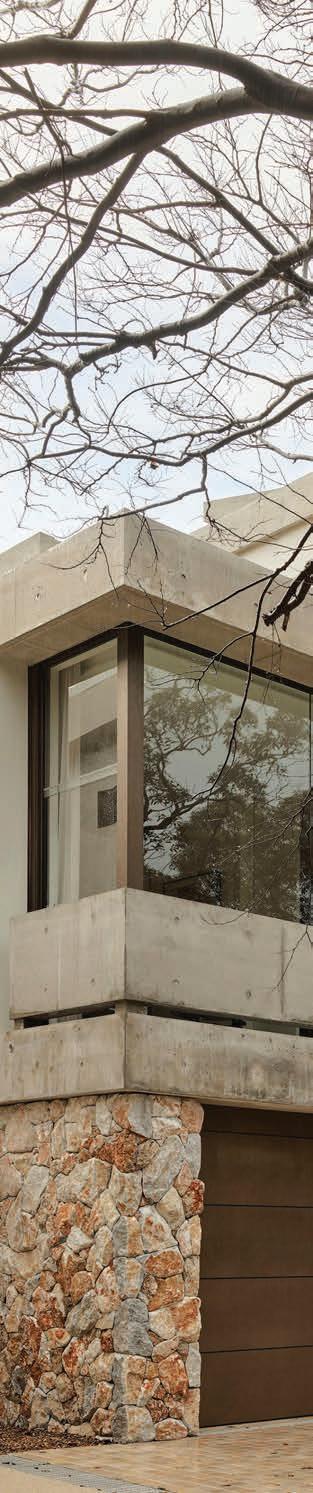
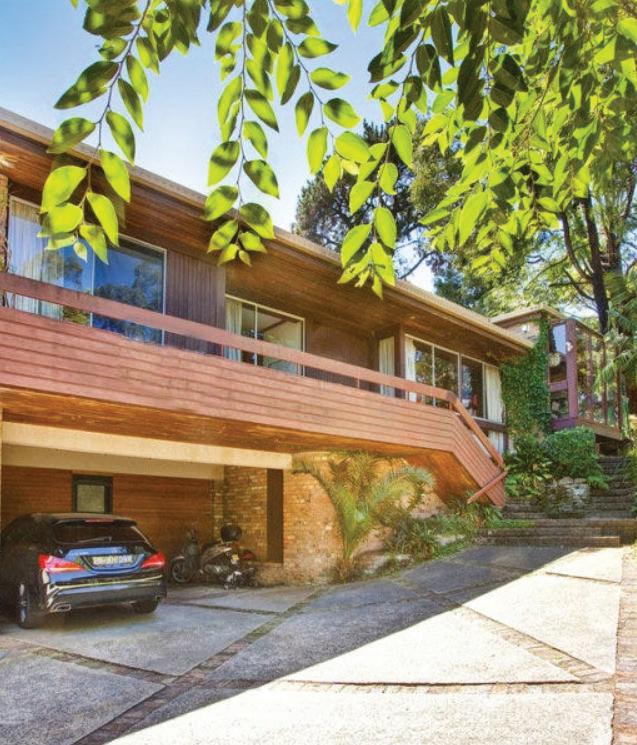
This new three-storey mid-century-inspired home in Sydney’s eastern suburbs is set amid a natural bushland backdrop. Stafford Architecture used Buildability Constructions for this stunning transformation. It replaced the original mid-century home seen on page 42.
and familiarity, starts to become a really attractive opportunity.”
The team at Oak Living identified and started targeting the KDR and recycled land market pre-COVID giving them an early jump on their competitors and the ability to adjust their business to meet the red tape requirements of councils.
“I don’t think anyone anticipated the difficulty associated with the KDR market
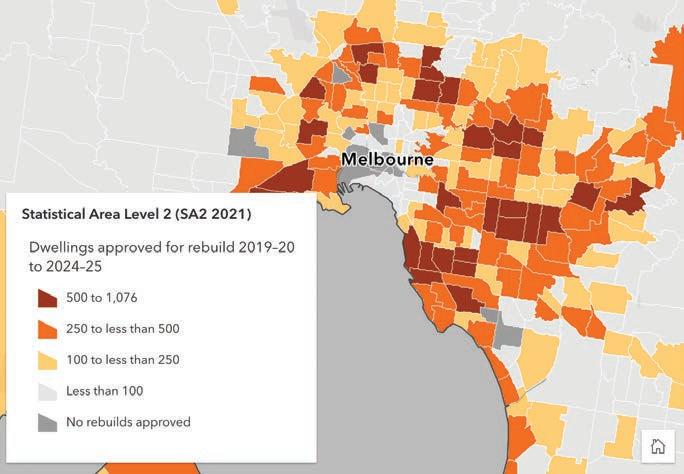
Between July 2019 and June 2025, there were 1,120,139 new residential dwellings approved to be built across Australia, according to the Australian Bureau of Statistics.
Of that number, 19.2 per cent of these were approved on the same site as a dwelling demolition approval that occurred within the three years prior.
This equates to 35,914 dwellings per year approved in KDRs, replacing an annual average of 16,753 dwellings approved to be demolished for a rebuild.
As such, the net gain from KDRs has been an average of 19,161 dwellings per year. Most were in New South Wales and Victoria.
Source: Australian Bureau of Statistics, Approvals of Knockdown Rebuilds 14/08/2025
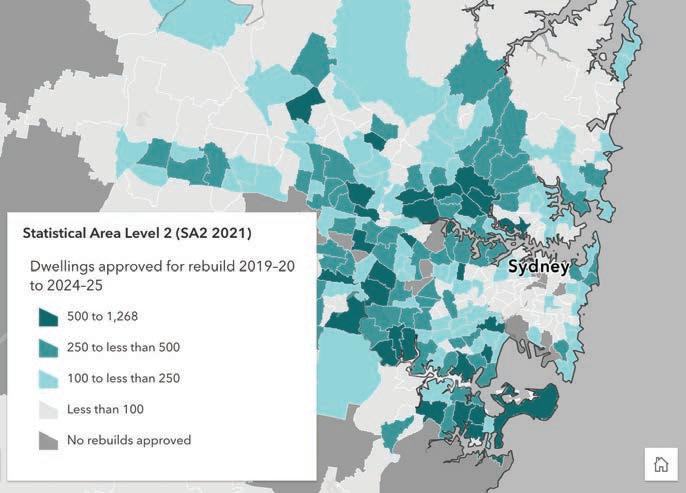
and the ability to commence jobs,” says Harris, adding it can take nine months for the paperwork to be completed.
“The constraints imposed by councils with planning departments, the rules and regulations about being able to progress efficiently, in a lot of locations you need to tick a box completely before you can move to the next box.
“And that’s why we definitely like to be on the ground floor of any KDR so we can massage things along. We are well-prepared and armed with systems and processes so we can deal with the KDR process probably a bit better than most.”
Houses most suitable for a knockdown rebuild in Australia are mainly built in the 1950s and ’60s as they have fewer restrictions than older period homes.
“It’s that kind of architecture which has outlived its usefulness which is prime
“It’s that kind of architecture which has outlived its usefulness which is prime for KDR because anything older than that can be restrained by heritage overlays.”
– Steve Harris
for KDR because anything older than that can be restrained by heritage overlays,” says Harris. And a knockdown rebuild can also
Nineteen years ago, paramedic Chris Breen and his graphic designer wife Tanya bought a rundown 1960s single-storey deceased estate in Melbourne’s bayside Aspendale.
“We had been renting in the suburb and loved the area and we originally saw this house as a stepping stone,” says Breen.
Fifteen years later, with two growing teenage sons, and as the close quarters of the pandemic closed in on them, the couple decided their family had outgrown their stepping stone and it was time to move.
“We tried to buy a new house but we kept getting outbid at auction and we were running out of options,” says Breen, who started researching knockdown rebuild solutions, signing on with builders Oak Living after visiting their Cranbourne display home.
With a build budget of $500,000, the couple designed their doublestorey, four-bedroom Hamptons coastal weatherboard dream home.
Six months later, with the plans approved, the family moved around the corner to a rental home so demolition and construction could begin.
“Everything went really smoothly,” says Breen, who was back in his new home 10 months later.
“Other friends of ours had done a knock down rebuild with other builders and found the process was extremely stressful. But that wasn’t the case for us. We love the result and are so happy with what we have achieved. As an experience I would build with Oak Living again because it was actually fun.”
be more cost-effective than the alternatives with upfront pricing and the lack of uncertainty a renovation can entail.
“I had a potential client contact me the other day and he had some plans for a very small, single storey renovation as an add-on to his house,” says Martino.
“And I had to tell him that, for what the price of his renovation would cost he could probably do a knockdown rebuild for the same amount.”
Date range 12 months to October 31, 2025
According to Cotality, national housing values were up 6.1% for the year to October 31. The monthly gain was the fastest in more than two years, up 1.1% in October. Brisbane was up 1.8% for the month, Perth +1.9%, Darwin +1.6%, Adelaide +1.4%, Melbourne +0.9%, Sydney +0.7%, Canberra +0.6% and Hobart +0.3%.
Sydney’s most expensive sale of the year was $82.5 million for an eight-bedroom waterfront at 14 Tivoli Avenue, Rose Bay.
Melbourne’s top sale was $68.5 million for a palatial six-bedroom, eightbathroom mansion at 2 Macquarie Road, Toorak.
Brisbane’s highest price of the year was $18.5 million for a new five-bedroom at 26 Elystan Road, New Farm, a suburb record.
Adelaide’s top price was $11.17 million for a newish four-bed, four-bath mansion at 8 Edwin Terrace, Gilberton.
Perth’s top price for 2025 was $22.75 million for 24 Saunders Street, Mosman Park, a four-bed with river views.
Hobart’s best for the year was $6.5 million for a four-bedroom house at 91 Salamanca Place, Battery Point.
Darwin’s top single-dwelling price was $4.5 million for 4 Emery Court, Larrakeyah. A 50-room city hostel sold for $13 million.
Canberra’s priciest sale for the year was an 8-bed, 6-bathroom house at 28 Mugga Way, Red Hill, which fetched $6.2 million.



IN MARCH 2026, WE’LL HONOUR THE WOMEN WHO GIVE BACK
In conjunction with International Women’s Day, we celebrate those who contribute to others and help them grow. The Australian Conveyancer is seeking your nomination of your peers.




MARCH 4 EVEN BETTER & STRONGER
• Professional development
• Business growth
• AML/CTF learnings

Venue: Pier One, Sydney Harbour REGISTER INTEREST


2026: WHAT’S AHEAD OUR EXCLUSIVE PODCAST THAT HAS EVERYONE TALKING
Episode 2: December 15
The sharpest minds share insights on what lies ahead in 2026.
