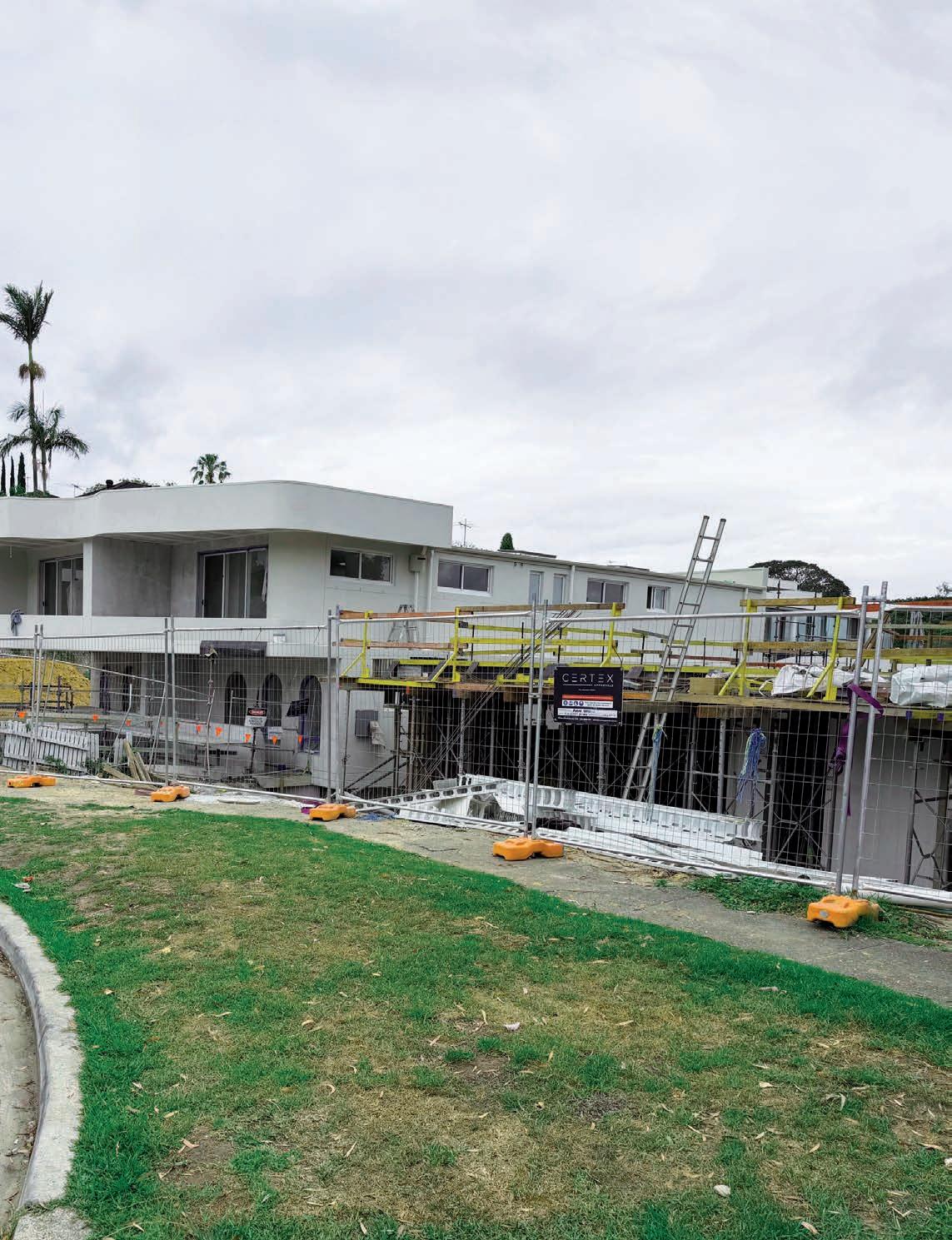
DOUBLING DOWN ON DUPLEXES TO MAKE THE MOST OF LAND LOTS
20 WHERE STATE GOVERNMENTS ARE LANDING ON HOUSING TARGETS
Feedback
Australian Conveyancer welcomes feedback about any aspect of its activities and appreciates suggestions for future editorial coverage.
Contact the team: editorial@australianconveyancer.com.au
Contact the publisher: tony.gillies@australianconveyancer.com.au +61 414 320 487
LinkedIn: linkedin.com/australiancoveyancer
What does Powered by triSearch really mean?
Australian Conveyancer strenuously preserves its editorial independence. We engage experienced editors, journalists and freelancers not afraid to ask the difficult questions and report without fear or favour. Our editorial charter of independence is formulated in the spirit of balance, fairness and accuracy. We think we owe that to the industry.
The involvement of triSearch allows this privilege by providing the resources needed – the financial and technical infrastructure. It does not expect or receive editorial favouritism in return. If it matters to the industry and if it promotes a constructive conversation, then we will report it.
Advertising
Australian Conveyancer incorporates paid advertising in its publication and other media entities as a part of its business model. Advertisements from all parts of the sector are welcomed into this environment. Advertising and editorial in this publication are separate functions, meaning an advertiser is not given preferential editorial considerations because it has a separate commercial arrangement. Editorial content is treated solely on news value and public interest.
Scan QR
Come what May (12)
WHILE there is little doubt we will get a few hints beforehand, there will be intense interest in what goes down at 7.30pm on Tuesday, May 12.
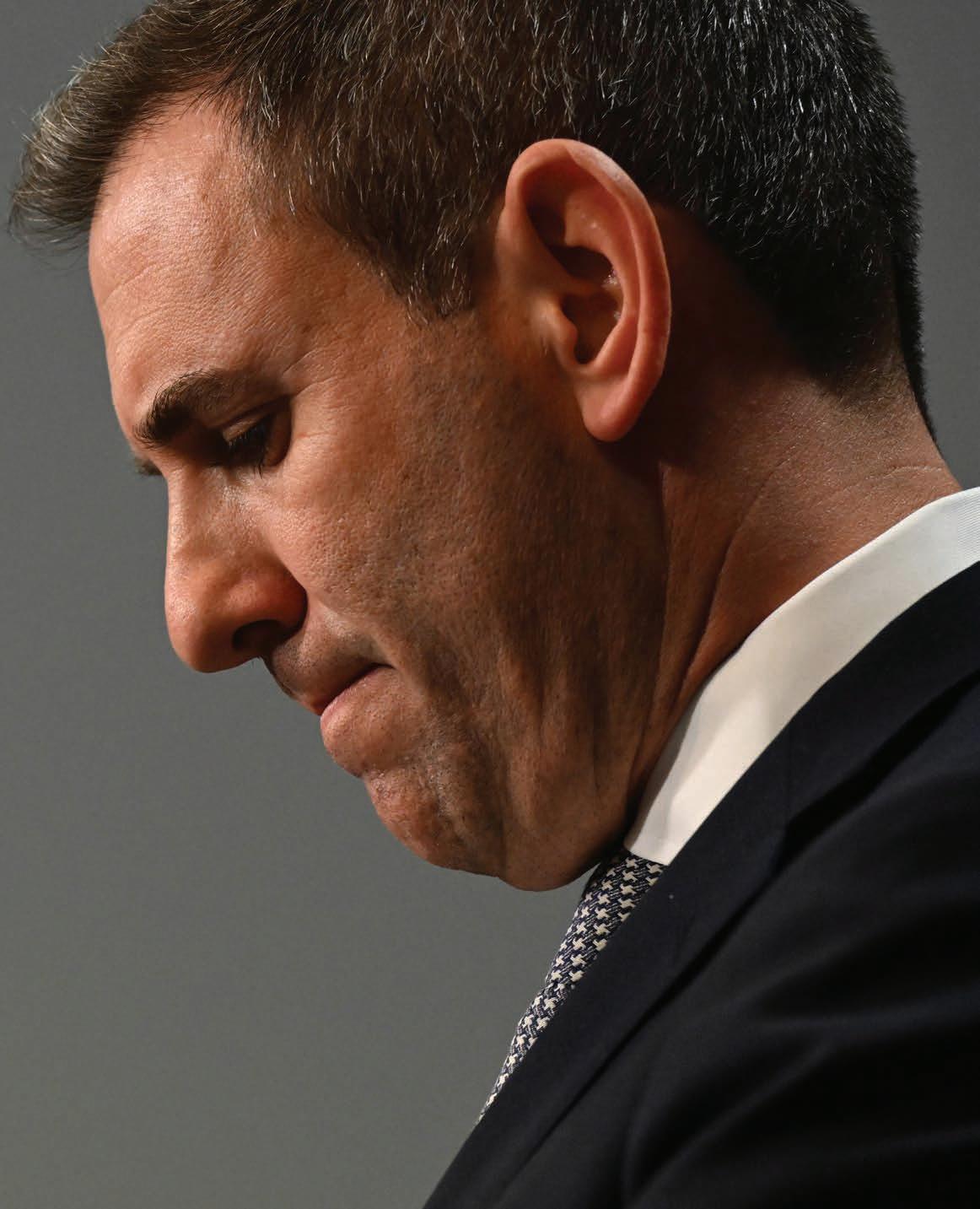
That’s when Federal Treasurer Jim Chalmers will deliver his much-anticipated Budget 2026-27 address to the House of Representatives at Parliament House.
This is quite a moment.
Australia’s debt is bordering on a trillion dollars, the cost of living is hitting everyone, we’re amidst a fuel crisis, house supply is critically low, housing prices are critically high … and fears are growing we are heading towards a recession.
Oh yeah, and there’s a war going on.
Right across the property industry – where residential real estate was valued at $12.6 trillion in March – professionals in this space fear the perfect storm.
Every Aussie will have a wish list that will promise relief come May 12.
In this edition, Australian Conveyancer digs into what practitioners, agents and industry bodies are looking for from Chalmers: initiatives that will breed confidence in the housing market, enable a reduction in construction and give people across multiple generations the capacity to invest.
With a massive national debt hanging over our heads, we get that there is a fine balancing act between providing handouts to those in need and imposing more taxes.
However, the government needs to show extreme caution when it comes to property-related taxes, such as capital gains tax discounts. Anything that hinders property investment will push ownership dreams and rental affordability a long way down the road.
There’s a lot of thoughtful commentary around all of this from every corner of the sector in a special Budget wish list report from pages 10 to 17.
Tony Gillies, Publisher
Tony Gillies Publisher
Richard Cunningham Associate Editor
Tony Thomas Production Editor
James
Dore Marketing Manager
Sam McKeith
Alana
Neil Bennett
Luke Marsden
Australian Associated Press
Greener pastures
Tasmania’s rural heritage runs deep through Debbie Hutton’s life story
The war on property
How the Iran conflict is reshaping Australia’s real estate market
2026 Federal Budget wish list
Property leaders spell out the key issues they want the government to address
Doubling down on duplexes
How home investors are making the most of their land lot in a housing crisis
Promised land: Housing target
Where governments are landing in bid to build 1.2 million new homes
Dual-occupancy takes off
A developer couple haven’t looked back since pivoting to focus on the market
Figures that moved the dial Game-changing words and numbers that impacted the industry this month
Conveyancing in the colony
AC goes back to 1770 to unpack the beginnings of our profession in Australia
Dawn Barry still a driving force
The Skilled Conveyancing founder reflects on her four-decade career
Devonport
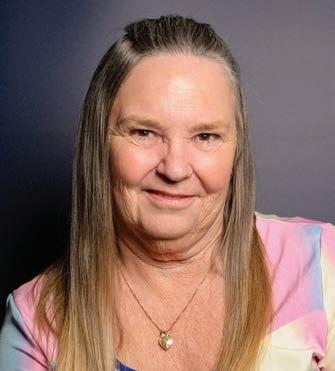
conveyancer Debbie Hutton.
By RICHARD CUNNINGHAM
Photos SIMON STURZAKER
Greener pastures
Tasmania’s rural heritage runs deep through Devonport conveyancer Debbie Hutton’s life story
As a girl growing up on a family farm, Debbie Hutton regularly rode her horse Gypsy 12km to the shops – just for a milkshake.
That was in Wynyard, a town of about 6,000 souls on the north coast of Tasmania, about 17km west of Burnie.
Debbie’s parents had a dairy property that remained in the family for 54 years, milking cows, morning and night.
“My father taught me to nail a roof on a barn, same as he did my brother,” she said.
Practical folk. Traits she applies to her firm, Debbie Hutton Conveyancing. And since late last year, to her role as President of the AIC Tasmania, following several years as secretary.
The conveyancing business has been going for some 15 years and, with 13 employees, is among Tasmania’s biggest. But Debbie came to that success in a roundabout way.
“When I was a teenager you left school, did a couple of years’ work, then wandered off to the mainland because there were more opportunities there,” Debbie said.
She crossed Bass Strait at 19, on a working holiday that stretched to 24 years.
Debbie took jobs as a legal secretary/ paralegal in Sydney and in Victoria, gaining her Advanced Diploma of Conveyancing part-time at NSW TAFE. “I worked in Bankstown, lived in Granville, took the train into Ultimo TAFE after work, two or three nights a week,” she said.
She moved home in 2009 to find the Apple Isle in a regional employment slump.
Her partner urged her to “hang out
“When I was a teenager you left school, did a couple of years’ work, then wandered off to the mainland because there were more opportunities there.”
– Debbie Hutton
my own shingle” and go into business. “It was quite frightening at the time,” she said, “but it’s worked.”
One advantage over the competition was online advertising, a novelty in Tasmania at the time.
Tassie houses now sit at a median of about $700,000 in Hobart and $520,000 in Devonport.
Compared to east coast capitals, those prices are bargains that have prompted an influx of mainlanders, as well as locals, to relocate or downsize.
Debbie said buyers are generally better informed about values and regulations than they were five or 10 years ago.
That can be a problem for vendors. Tasmanians have been resourceful for 200 years with do-it-yourself builds and renovations quite common, particularly in country areas where DIYers didn’t necessarily worry about building codes.
Now, those savvy buyers are
demanding certificates. “I’ve had clients who’ve had to go back and fix things up to code,” said Debbie, “and it’s been quite expensive for them.”
She believes this complex issue requires further investigation on how to protect the consumer – both outgoing and incoming – particularly with the current direction the building code is taking.
It’s also been challenging for conveyancers as Tasmania upgrades from paperbased systems.
The past couple of years have brought ARNECC, PEXA, changes to FIRB and FRCGW, and next, AML/CTF.
“We’ve had all these things come to us one after another,” Debbie said. “Like a train where every carriage has something different in it.”
VOI or KYC? “But you’ve known us all your life,” small-town customers might complain. “We went to school together!”
Although she’s seen no evidence of money-laundering in her area, Debbie is on AUSTRAC’s working group and appreciates the need for vigilance.
She has also adjusted her fee structure to take into consideration the additional workload. “There’s a lot of compliance work, and unfortunately, I need to pay my staff and myself to do that.”
Debbie’s parents, now in their 80s, sold the farm a couple of years ago and moved into town. She’s considered easing up, too. “I don’t know that I could retire full-time... but maybe spend another day in my garden.”
Or she could always saddle up and mosey into town for a milkshake.
WAR ON
The PROPERTY
How the Iran conflict is reshaping Australia’s real estate market
By SAM McKEITH
PROPERTY
As the Iran war rages, petrol stations have emerged as critical infrastructure, prompting a pick-up in buyer interest in the low-profile property class
COMMERCIAL property buyers are increasingly eyeing Australian petrol stations as the Iran war puts the low-key asset class in the spotlight as critical infrastructure.
That’s the view of Ray White Group head of research Vanessa Rader, who said soaring fuel costs – since the Iran conflict erupted in February – have sparked more interest in petrol stations.
They are now “essential charging infrastructure” in Australia’s energy transition, she said.
The assessment comes amid claims the US military action in Iran may have unintentionally hastened a permanent global shift away from internal combustion engines to electric vehicles.
Rader echoed the conclusion, saying with the wholesale price of petrol jumping from 194 cents to 229 cents per litre in a week, many Australians are looking to get off petrol.
“For the average Australian motorist, that is not an abstraction, it is felt immediately at the bowser, and it is the single biggest driver of EV enquiry we are seeing reflected in wait times stretching to three months for new vehicles,” Rader told AC.
Rapid EV take-up and residential charging constraints are also playing a part in fundamentally altering the service station investment thesis, Rader said.
“Far from facing obsolescence in an electric future, these properties have emerged as critical dual-purpose infrastructure, and
the transaction market reflected that confidence,” she said.
According to the economist, total transaction volumes in the market hit $867.9 million in 2025 across 175 petrol stations, representing a 16.5 per cent increase on 2024. This marked a “continuation of the recovery from the trough recorded in 2023, when tighter lending conditions weighed on activity across most commercial property sectors”.
Also positive is more types of buyers getting into the market, with private investors now accounting for 85.1 per cent of acquisitions alongside listed funds and private syndicates, she said.
On the most valuable transactions in the market, she said they tend to be “integrated quick service restaurant offerings”.
“Investors increasingly value service stations not merely as fuel retail sites but as strategically located properties anchored by quality QSR [quick service restaurant] tenants,” Rader said.
“Quick service restaurants have emerged as an asset class in their own right, with investors attracted to their predictable cash flows, strong tenant covenants and proven performance through economic cycles. When combined with fuel retail on high-traffic sites, these properties create diversified income streams less dependent on any single revenue source.”
Queensland-based commercial finance broker Nadine Connell agrees with the view that petrol stations with “diversified income streams” are on buyers’ radars.
The Smart Business Plans founder says the most attractive assets have convenience retail, car wash, fast-food tenants and now, EV charging infrastructure alongside the bowsers.
“The days of a single-purpose fuel site commanding easy terms are largely behind us,” Connell told AC. “But a well-configured, income-diversified service station is one of the more bankable commercial assets I see cross my desk.”
According to the broker, some lenders are already stress-testing fuel volume trajectory in serviceability modelling, particularly for metro sites where EV penetration is highest.
Ray White Group head of research Vanessa Rader.
In her opinion, operators who invest now in rapid charger infrastructure, expanded convenience retail and alternative income streams will be in a stronger position when it comes time to refinance or sell.
“Long term, the sites that will hold value are the ones with the physical footprint and the tenant mix to function as something broader than a fuel stop,” Connell said.
“The essential service nature of the asset, particularly in regional areas, does give certain sites a defensiveness that appeals to some lenders. But that advantage disappears quickly if the site is single-purpose, has contamination history or sits in a market where fuel volume is already declining.”
While the Iran war has put the petrol station market in the spotlight, consolidation has been happening out of the headlines since 2010. That was when larger operators such as Ampol, Caltex and 7-Eleven started acquiring smaller players to boost their market share.
Opteon, an independent provider of valuation, advisory and property services, says a notable example is Ampol’s acquisition of the Caltex brand in 2020, which allowed it to expand its footprint, streamline operations and improve efficiency.
“This consolidation often leads to the closure of smaller operators who struggle to compete with their scale and resources,” Opteon said in a statement, adding the market concentration also worked to lift the value of the assets by 20-30 per cent, making them more attractive to buyers.
The asset class was also buoyed by the COVID-19 pandemic, which shuttered public transport and saw many people hit the road for getaways.
There was also the rise in convenience retailing while coronavirus restrictions were in place, which lifted demand.
Scott O’Neill, from Rethink Investing, a buyer’s agency for high cash-flow commercial properties, is upbeat on petrol stations in the current geopolitical climate.
He describes the real estate class as “a genuinely interesting asset class and one we are paying closer attention to”.
“They sit in an interesting middle ground in our investment hierarchy,” O’Neill said.
“We see stronger and more consistent demand for industrial, medical and essential retail assets, but petrol stations are meaningfully ahead of office in terms of investor appetite and income reliability right now.”
O’Neill described them as “worth serious consideration, particularly for investors who understand the nuances”.
With the Iran war leading to fuel shortages at Australian petrol stations and claims of fuel stockpiling by motorists,
“Petrol stations are meaningfully ahead of office in terms of investor appetite and income reliability.”
– Scott O’Neill
O’Neill points to solid near-term demand for fuel.
“Fuel consumption remains strong despite the EV narrative and these assets are performing well for investors who bought well located sites with quality tenants. Long term the story is more nuanced,” he told AC
“The EV transition is real, even if it is slower than the headlines suggest, and investors need to be thinking about how these sites evolve over a 15 to 20-year horizon.
“The good news is that well-located petrol stations are the natural home for EV charging infrastructure, so the land retains its strategic value even as the use case shifts.”
On a state-by-state basis, O’Neill points to robust investment fundamentals, especially in Queensland and Western Australia.
He described those two states as the most attractive markets for the property type at present given high population growth, elevated vehicle dependency and lower entry prices.
“Sydney and Melbourne have seen significant yield compression and the risk reward is less compelling at current prices,” he said. “Highway service centres and arterial road locations in growth corridors are where we see the best long-term fundamentals.”
Rader adds there has also been strong buyer activity in Brisbane and Adelaide “demonstrating that well-located suburban nodes can attract institutional-quality capital regardless of market size”.
Petrol stations in these areas tend to “occupy prominent main road sites,
generate diversified income streams and are structurally positioned to capture the growing EV charging market as residential solutions remain years away for much of the apartment-dwelling population,” she said.
Even so, O’Neill urges an appreciation of downside risks.
He points to “tenancy concentration” as the one big risk for investors getting into the area.
“If your single tenant exits you have a specialised asset that is not easy to repurpose in the short term,” he said.
“Environmental contamination liability from underground fuel storage requires careful due diligence and can be costly.
“And while we see the EV transition as a long-term opportunity rather than a threat, the pace and capital requirements of that transition introduce real uncertainty.
“These are not set-and-forget assets in the way a well-located industrial or medical property can be.”
The themes at work are similar overseas, including the UK where the Iran war has sparked higher fuel prices and highlighted the importance of petrol stations for EV charging.
Christie & Co, a specialist UK-based business and property adviser, said more diversification of income streams and adoption of EVs has also “served to support the demand for these types of businesses from both existing and new operators”.
Private investors looking for relatively high yields in comparison with traditional savings rates, as well as operators with prior knowledge of the sector, have become increasingly active, the firm said.
Deepak Shukla, CEO of UK-based Pearl Lemon Properties, said investors in the space are winning from the Iran war fallout on fuel and EV take-up.
“EV adoption is real and, yes, fuel demand will shift but that doesn’t mean the underlying real estate suddenly becomes irrelevant overnight,” Shukla told AC
“In fact, as charging times increase dwell time, the economics of what you can layer on to those sites becomes far more interesting than the fuel itself.”
Shukla said the revenue mix is already changing.
“It’s just happening unevenly, which creates pricing inefficiencies in the market,” he said. “If you’re underwriting these assets purely on fuel throughput, you’re missing half the story and maybe more, which is a bit of a dangerous game in today’s environment.”
Scott O’Neill, from Rethink Investing.
Queensland Law Society CEO Matt Dunn.
OPENthe D OOR for HOMEBUYERS
By MELISSA IARIA
From housing supply to affordability, property leaders spell out the key issues they hope the government will address in next month’s Federal Budget
BREEDING more confidence in the housing market and a big push to reduce costs should be key measures in the Federal Budget next month.
Conveyancers from around the country were unanimous in their calls for the government to be more proactive when it comes to housing.
AC canvassed the opinion of key conveyancing experts from around the country and found a consensus that the Budget needs to attack housing supply and affordability issues for all Australians.
MATT DUNN
Queensland Law Society CEO Matt Dunn would like to see a more targeted approach to foreign sellers, saying current tax rules are creating a burden during property sales.
Capital gains tax rules for foreign residents changed in 2025, to reduce the risk of them failing to pay the tax when they sell
property in Australia. Before then, the tax withholding rules only applied to property valued over $750,000.
The broadening of the tax means all vendors – including Australian residents – must obtain a clearance certificate from the tax office proving they are not foreign, adding extra time and cost to all involved in property sales, according to Dunn.
“There’s an additional cost and time impost on everybody in order to help the tax office deal with foreign residents selling property,” he said.
“It would be really good if they set a threshold for the Foreign Resident Capital Gains Withholding clearance certificates again, like they had done.”
Dunn also championed a more sophisticated approach to deal with inflation, saying the property sector was carrying an unfair share of the burden created by overspending in other parts of the economy.
SHAKILA MACLEAN
AIC VIC President
WITH interest rates rising and investor costs increasing, Shakila Maclean hopes for Federal Budget measures to support confidence in the property market.
With two official interest rate hikes this year, and another possible in May, Maclean hopes cost-of-living pressures are addressed.
“There’s a lot of financial burden on homeowners, investors and purchasers trying to navigate the high interest rates and holding costs of property,” she said.
“A thoughtful support measure to maintain confidence within the property market and ensure people are able to make sustainable long-term housing decisions would be welcomed.
“From a Victorian standpoint, obviously new housing developments need a bit more support with transport and community services to create liveable, connected communities.”
Maclean said support for infrastructure will be critical to assist new housing, particularly given Victoria’s strong population growth.
Boosting housing supply is critical but it must be accompanied by targeted measures to improve affordability and support investors facing rising holding costs.
“Land tax is really a killer in Victoria at the moment for anyone that’s got property. It’d be great to see reforms around that but
our state’s in too much debt to see any of it – that’s just a wish list.”
Maclean said any further reforms will need to be carefully balanced to avoid unintended pressure on transaction activity, as well as rents, which are “very high” in Victoria.
“They need to make thoughtful and measured reforms essential to a stable market in Victoria,” she said.
Maclean said greater federal support for ARNECC [Australian Registrars’ National Electronic Conveyancing Council] is needed, so the regulator is properly equipped to remove interoperability barriers and enable real competition in e-conveyancing.
“From a Victorian standpoint, obviously new housing developments need a bit more support with transport and community services to create liveable, connected communities.”
– Shakila Maclean
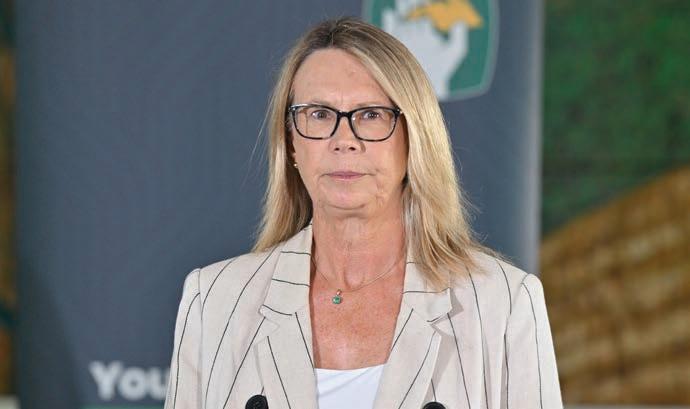
CHRISTINE BRADBURY AICWA President
REDUCING housing costs, lifting supply and securing the workforce needed to build homes are on the Budget wish list for Christine Bradbury.
Bradbury said measures to cut red tape in the state planning system will lead to faster building approvals and help address housing supply.
She is also hoping the Budget tackles rising living costs and contains enticements for older generations to downsize, freeing up homes for young families.
“It costs so much to sell. If you’ve got a couple in their 60s coming to retirement age and they want to get out of their 4x2 home, they’re not going to do it,” Bradbury said.
“You’re looking at probably $80,000 in fees just to get from one house to another, which puts a lot of people off. But it’s not helping the supply of housing for new families.”
On the conveyancing front, Bradbury wants to see support for practitioners to deal with expanded Anti-Money Laundering and Counter-Terrorism Financing laws effective from July.
“We’re going through huge changes in the next 12 months with the AML coming out, which is going to cost us a lot more to manage,” she said.
“It’s not just conveyancers – all Tranche 2 eligible companies now need to do more work. It’s not so much out-ofpocket costs, it’s a time cost. We’re just timepoor in our industry, having all these new requirements on us.”
Additionally, support for cybercrime prevention in e-conveyancing would be welcomed.
“Our state regulator says it’s our problem,” Bradbury said. “It’d be nice for the government to take on some of this and maybe help out financially with some form of platform to assist with preventing email compromise.”
JENNIE
TONNER
AICNSW President
HOMEBUYERS must have strong legal protections amidst the push to meet the 1.2 million home target, according to Jennie Tonner.
Tonner is worried corners will be cut in the rush to meet the mid-2029 national housing deadline and wants stronger legislative protection for consumers.
“Our biggest concern is that this rush to build homes for people will attract the budget developer and corners will be cut to get them up and ready for people to occupy,” she said.
“We’re concerned we’re going to be left with a whole bunch of Opal Tower or Mascot building unit blocks where people are buying into strata and left with all the defects to fix themselves.
“We want to see real legislation at both federal and state level that protects the consumer because it’s still not there.”
Tonner is also concerned the Federal Budget will include potential changes to the capital gains tax discount.
Currently, a 50 per cent CGT discount applies for residents who own an asset for at least 12 months.
“They’re being very short-sighted and
“Our biggest concern is that this rush to build homes for people will attract the budget developer and corners will be cut to get them up and ready for people to occupy.”
– Jennie Tonner
very ignorant as to who the landlords are and who owns these investment properties,” she said.
“I think change the tax for those that own three or four investment propertiesbut most people own one investment property as part of their retirement plan, either in their own name or through a self-managed super fund.
“For those that own one or two investment properties, they’re your average Australian middle class, and they should not be penalised for trying to build wealth to be self-funded as a retiree.”
MATTHEW
KELLY AICSA President
SOUTH Australian conveyancers want to see a Federal Budget that prioritises housing supply, affordability and supporting infrastructure.
Matthew Kelly said the Budget should prioritise measures that increase housing supply and reduce friction for developers. That means building more homes, better assistance for first-home buyers and low- to middle-income households and investment in enabling infrastructure including water, sewers and roads.
The Housing Accord target of 1.2 million homes is welcomed but the issue is now implementation, Kelly said.
“We need the Budget, with the State Government on the implementation of the Great Adelaide Regional Plan, to help unlock land, accelerate delivery and ensure housing projects are serviced so that conveyancers, developers and buyers are not dealing with delays caused by infrastructure bottlenecks,” he said.
The biggest priority is boosting supply of well-located homes across different price points, with more greenfield growth and infill sites with sufficient infrastructure.
“Housing cannot be delivered at scale unless the enabling infrastructure is there first or, at least, delivered alongside development,” Kelly said.
“There is land that cannot be unlocked due to infrastructure constraints, with existing landowners and developers bearing significant infrastructure development costs.”
More social and affordable housing, and diverse housing types, will also help people find the right house for their stage of life.
Kelly also called for measures to reduce cost pressures without inflating prices.
This included targeted support for first-home buyers, assistance helping people into homes they can sustain, and investment that increases supply rather than just boosting demand.
By SAM McKEITH
DON’T SHUT THE GATE: Fears tax reforms will lock down housing supply
Real estate agents are calling on the Federal Budget to retain existing capital gains tax rules and take action to increase housing supply
AS the Federal Budget looms, the real estate sector is urging the Albanese government to retain existing tax arrangements and ramp up action to boost housing supply.
The Real Estate Institute of Australia (REIA), the peak body for 85 per cent of real estate firms, has put proposed changes to capital gains tax on its Budget agenda, warning that any changes risk denting already-squeezed housing supply.
It cautions that there is an increased chance of policy change coming in the May 12 Budget.
“In a market already facing chronic undersupply, any policy changes must be considered in the context of their impact on private investment and the delivery of new housing,” REIA President Jacob Caine said.
“The result of reducing the CGT discount or negative gearing will be a reduction in rental property investment.
“This will lead to a contraction in the supply of rental properties putting upward pressure on rents, as fewer investors enter or remain in the market.”
In March, the government confirmed
there would be tax changes announced in the Budget, but refused to be drawn on whether reform to the CGT discount was among them.
Chances of Budget action lifted when a parliamentary inquiry last month found the Howard-era settings were helping fuel intergenerational inequality in the property market.
Caine said the proposals, led by the Greens, would worsen housing affordability against a backdrop of more rate rises likely on the way from the Reserve Bank of Australia.
“All four major banks are now expecting further rate increases through to at least May, particularly if underlying inflation remains elevated,” he said.
An increasing number of economists predict the central bank to raise rates at least twice more this year after hiking by 25 basis points in March, taking the cash rate to 4.10 per cent.
More rate hikes are expected to add to a slowdown in housing market activity, especially in Melbourne and Sydney.
Real Estate Institute of Victoria CEO Toby Balazs said the big hope was that
the Budget would deliver tax reform so property investors would want to invest in properties to add to the rental supply and then maintain the investments over the long term.
“We’ve seen a significant decline. If you look at the number of rental bonds held in terms of the number of rental providers in Victoria – and as we know vacancy rates are low,” Balazs said.
“So we’re really calling for there to be incentives to add to the rental stock rather than at the moment a tax setting that is often viewed as being a disincentive.”
A freeze on new taxes, and any legislation enabling tax changes, was urgently needed given “in the past five years there has been over 130 distinct new reforms in place”.
“The burden on rental providers, on property managers to keep up with all that, is making the situation particularly problematic,” he said.
On the west coast, Real Estate Institute of Western Australia (REIWA) Deputy President Rob Mandanici said national housing issues were amplified in WA due to its unique market dynamics.
He pointed to the state’s large size, reliance on migration and the dominant mining sector.
“It is essential the federal government is mindful that broad policy settings can have a more acute impact in WA than on other states or territories,” Mandanici said, highlighting investor taxation settings as a notable example.
Like the national body, the REIWA urged the Labor government to retain existing capital gains tax settings in order to safeguard property investment.
“Stable tax settings are essential to maintain investor confidence. Any changes, even relatively modest ones, risk pushing investors out of the market at a time when we remain heavily reliant on them for rental supply,” Mandanici said.
“We know investors are sensitive to change. We know they will leave the market if the legislative environment does not support investment.”
Ramping up supply was also high on the state’s wish list, with Mandanici describing bolstering the pipeline as the “greatest challenge facing the WA property market”.
After several years of completions below 20,000, new home completions in WA increased 15.6 per cent in the year to September 2025 to 22,049, according to the REIWA. However, “it remains below the 26,000 required under the National Housing Accord,” Mandanici said, adding that WA had seen several years of strong population growth meaning there was
Real Estate Institute of Australia
President Jacob Caine.
still a lot of “pent-up-demand” in the new homes market due to undersupply.
Real Estate Institute of Tasmania President Russell Yaxley also put a focus on increasing supply.
He urged the federal government to not just look at purchaser side assistance but also to place emphasis on “supply of actual homes being built”.
“We hear a lot about affordability in political debate, but affordability follows supply,” Yaxley told AC
“The burden on rental providers, on property managers to keep up with all that, is making the situation particularly problematic.”
– Toby Balazs
“If you make it easier for people to buy without making it easier to build, you just push prices up another notch, which is what we have seen.
“The Budget needs to back new housing delivery, fund the infrastructure that unlocks land, reward downsizing and maintain the settings that keep private investors engaged.”
The issue of capital gains tax was also high on the state agenda.
Yaxley cited the possibility of CGT changes as a risk that would make private investment less attractive but without a credible plan to replace it.
“Blunt changes to negative gearing or capital gains tax might sound appealing in a headline. But the modelling is consistent, pull back investors and you get fewer rental homes, fewer new homes and higher rents,” he said.
“Real Tasmanians wear that cost, that’s not a trade-off I’m willing to accept without a fight. We now need a Budget that enables us to assist the supply side.
“While the buyer side assistance has been well received, we can’t just answer one side of the story. We must fund both sides to ensure growth in both supply and demand.”
By MELISSA IARIA
Hands off housing taxes, property experts warn ahead of Federal Budget
AS Australia grapples with a housing crisis, property industry leaders are urging the federal government to prioritise housing supply and avoid tax changes that could deter investment in new homes.
Ahead of the Budget, experts say boosting housing construction must remain the focus as demand continues to outpace supply across the country.
The federal government has flagged potential tax reform as a way to address intergenerational inequity, particularly the growing difficulty younger Australians face in entering the housing market.
However, the industry is on alert amidst speculation Treasurer Jim Chalmers may reduce the capital gains tax discount or change negative gearing settings in his upcoming Budget.
Housing leaders warn that, with supply already constrained, the change risks undermining supply at a critical time.
“We want to ensure we’re working on removing barriers to housing supply and certainly not introducing any regulation that gets in the way of that,” Housing Industry Association (HIA) managing director Jocelyn Martin said.
This includes any changes to the capital gains tax discount and negative gearing rules.
“That’s not because we have any kind of philosophical support for investors per se, but investors are 42 per cent of the market of new homes,” Martin added.
“If you take investors out of the market, you’re going to affect demand for new homes and also reduce homes made available to renters.”
Real Estate Institute of Victoria CEO Toby Balazs.
“We need the government to put its hand in its pocket, which is swollen in terms of revenue through the large numbers of immigration intake.”
– Urban Taskforce CEO Tom Forrest
The Property Council of Australia also cautions against adding new costs or complexity at a time when construction and financing pressures are high.
“The Budget should focus squarely on improving the conditions to deliver more housing,” said Matthew Kandelaars, Property Council group executive of policy and advocacy.
“That means stable, competitive tax and investment settings, faster planning and post-permit delivery and targeted investment in housing-enabling infrastructure like transport, utilities and services.”
To improve affordability and lift supply, Kandelaars said governments must clear bottlenecks and support productivity in construction, including through skills and migration settings, so approved projects can actually get built.
Last month, Real Estate Institute of Australia President Jacob Caine told a conference that raising taxes on housing would reduce supply.
“What that translates into is fewer homes being built, fewer jobs in construction and, most significantly, an increase in rents,” Caine said.
A key priority is more federal funding for infrastructure. The HIA is calling for an extra $5 billion to support states in delivering critical “last mile” infrastructure - including water, sewerage and powerto unlock housing developments.
“That might be an incentivised system, a bit like they have now, but nevertheless, it’s something that’s really needed to boost new housing in the states,” Martin said.
“We have housing estates that can’t either get started or finished because they’re missing services.
“The states, who are providers of
infrastructure, just don’t seem to have enough funds to do enough of that work.”
Despite a Housing Accord target to build 1.2 million homes by mid-2029, Australia is falling short, even after initiatives to boost supply and affordability.
Only 219,000 new homes were built in the first five quarters of the agreement, less than the required 280,000 new homes, the National Housing Supply and Affordability Council revealed last month.
While the nation is below the required pace, Martin said the target had been valuable in exposing the factors holding back building.
One reason for the shortfall is the apartment market, which won’t be helped by rising interest rates and fuel squeezes.
“Apartments, at the moment, are not
passing the feasibility test to even get out of the ground,” she said.
“We’re short of (the target) but still supportive of it. We reckon by about 2030 we’ll probably be building the right amount of homes per year.”
Workforce shortages must be addressed, Martin said, highlighting that permanent support for employers hiring apprenticeships for housing construction would help create the skilled labour needed.
Overall, though, states have improved their planning systems to prioritise housing supply, leading to greater confidence from the private sector, according to Urban Taskforce CEO Tom Forrest.
However, he points out the high cost of building remains an issue, particularly
“We want to ensure we’re working on removing barriers to housing supply and certainly not introducing any regulation that gets in the way.”
– Housing Industry Association managing director Jocelyn Martin
for apartments. “In large parts of greater Sydney, areas like Newcastle and Wollongong as well, also in Melbourne and to a lesser extent in Brisbane, it costs you more to build than you can possibly sell it for,” Forrest said.
“People aren’t prepared to pay for it, or can’t pay for it, particularly with increased interest rates and now construction costs are increasing further because fuel prices have gone up associated with the war - that leads to real constraint.”
Forrest is calling on the federal government to fund significant housingrelated infrastructure, as infrastructure - along with fees, taxes and charges - is killing project feasibility. “We need the government to put its hand in its pocket,
which is swollen in terms of revenue through the large numbers of immigration intake,” he said.
“Immigrants are great. They’re producing more revenue than they’re taking by a long, long way - they’re net contributors to the economic benefit of the society.
“The government, though, isn’t using that to help the states build the infrastructure necessary to house them. That’s why we’ve got a housing supply crisis.”
Phasing out stamp duty in favour of a broad-based land tax would encourage empty nesters to downsize and lead to more efficient use of housing stock, he pointed out.
But Forrest said the transition would
need federal support to help states manage the temporary loss of revenue.
In addition, easing Foreign Investment Review Board barriers and removing foreign investment surcharges would encourage more investment in housing supply.
“The more foreign investment we have in solving the housing supply crisis, the more opportunities developers have to be able to access that finance to build more housing,” Forrest said.
“Why would you take something that’s funding the solution to a crisis - that you’ve acknowledged as a crisis, and you’ve set up a whole national Housing Accord to fix it - and you’re still placing extra taxes on the people who are seeking to solve it?”
Clockwise from far left, Urban Taskforce CEO Tom Forrest; Matthew Kandelaars, Property Council group executive of policy and advocacy; and Housing Industry Association managing director Jocelyn Martin.
By LEIGH REINHOLD
DOUBLING DOWN: How home investors are making the most of their land lot while helping the housing supply crisis
Constructing duplexes and townhomes to implement ‘gentle density’ in existing suburbs could add one million new homes to the nation’s housing reserves and significantly ease our housing shortage
In an effort to alleviate the country’s housing crisis, some state governments are implementing sweeping housing reforms, actively encouraging dual-occupancy redevelopment, especially in middle-ring suburbs.
The ‘missing middle’ suburbs in major cities and regions – home to ageing building stock, built on oversized blocks which are ripe for duplex or townhouse redevelopment – are on the radar because of their proximity to transport, schools and services.
Public policy think tank CEDA, the Committee for Economic Development of Australia, recently released the report A middle path: How gentle density can help solve Australia’s housing crisis.
The report shows that if just one in four standalone homes in major cities were developed into dual occupancies, Australia could increase its current housing stock by nine per cent, roughly equating to one million new homes.
And with major cities likely to bear the brunt of Australia’s population growth –estimated at an extra 14 million people over the next four decades – the report predicts cities and major centres will grow at twice the pace of regional areas.
Currently our major cities are
Number of knock-down rebuild projects, by project type
low-density in comparison with other world cities. Sydney ranks 104th for population and 803rd for density and Melbourne ranks 100th for population and 858th for density.
“When we see what’s happening with our population growth, with our continued economic development, we can’t keep building further and further out,” said CEDA chief economist Cassandra Winzar.
“Middle-ring suburbs and this ‘gentle density’ is kind of the best of both worlds.”
According to the Australian Bureau of Statistics, in the five years to June 2025, two-for-one knock-down rebuild (KDR) projects – which add one dwelling to net dwelling stock – currently symbolise 26.7 per cent of all knock-down rebuilds, representing 25,480 new builds nationwide.
Knocking down the family home and rebuilding two homes on the block can offer many benefits including the chance to cater for generational living, update living quarters, help owners to stay in a neighbourhood they know, have a steady rental income from the second home or to live in one home and sell the other to be mortgage free. However, some builders and developers are questioning whether the sums which traditionally seemed so lucrative to mum and dad developers as little as five years ago still add up today.
Escalating expenses are significantly
narrowing margins and, according to ABS figures, building costs have gone up 30 per cent over the past five years.
Nationwide in 2025, duplex build costs ranged from $2000 to $3800 per square metre, with Sydney and Melbourne at the higher end of the scale.
Total turnkey projects for a standard three-bedroom duplex – excluding land –can range from $650,000 to $1.45 million, with high prices driven by material
shortages, labour demands and council fees.
“If you choose a reputable builder for a dual-occupancy build in Sydney, these days you would be lucky to see a profit, the margins are just too close,” a spokesperson for Sydney building company Phase Projects told AC.
Veteran dual-occupancy developer Susan Davis* is also sceptical about the motives of family members when generational dual occupancy is being considered by a family unit.
“A really big issue is people doing a dual-occupancy build with extended family,” Davis said.
“When we see what’s happening with our population growth, with our continued economic development, we can’t keep building further and further out.”
– CEDA chief economist Cassandra Winzar
“I know someone in this predicament at the moment where they’ve got a big block they have had for years. They’re older and the next generation is saying ‘we could do a deal here’.
“I feel that anything like this has to be done very, very carefully for the older person, especially, to not be ripped off on what they already have and the value of it as it is.
“Because they are not necessarily going to get the value they would’ve had if they just sold the whole big block in the first place and let someone else develop it.”
* Not her real name.
According to new data from the Australian Bureau of Statistics, however, only about half – or 58.2 per cent – of the homes that are demolished in Australia for new housing are replaced by another single occupancy home. The rest make way for two or more homes to be built. Between July 2019 and June 2025, a total of 55,692 homes were demolished in order to build another single-family dwelling.
Source: ABS, Approvals of Knock-Down Rebuilds, August 2025
THE PROMISED LAND: Where state governments are landing on their housing targets
NSW, Victoria and Western Australia have shown the strongest progress in the bid to build 1.2 million new homes by mid-2029
By LEIGH REINHOLD
The Federal Government’s National Housing Accord has set a revised goal of building 1.2 million new, well-located homes nationally within the next five years.
And state governments are being offered incentives to help meet the ambitious target, with the Government committing $3 billion, under the New Homes
Bonus, for states and territories that achieve more than their share of the Accord’s initial one million well-located homes goal.
NSW, Victoria and Western Australia are leading the charge for more dualoccupancy dwellings to fill the gaps between single-occupancy housing, greenfield housing on urban fringes and multi-storey developments.
The NSW Government’s Low and Mid-Rise policy took effect in February last
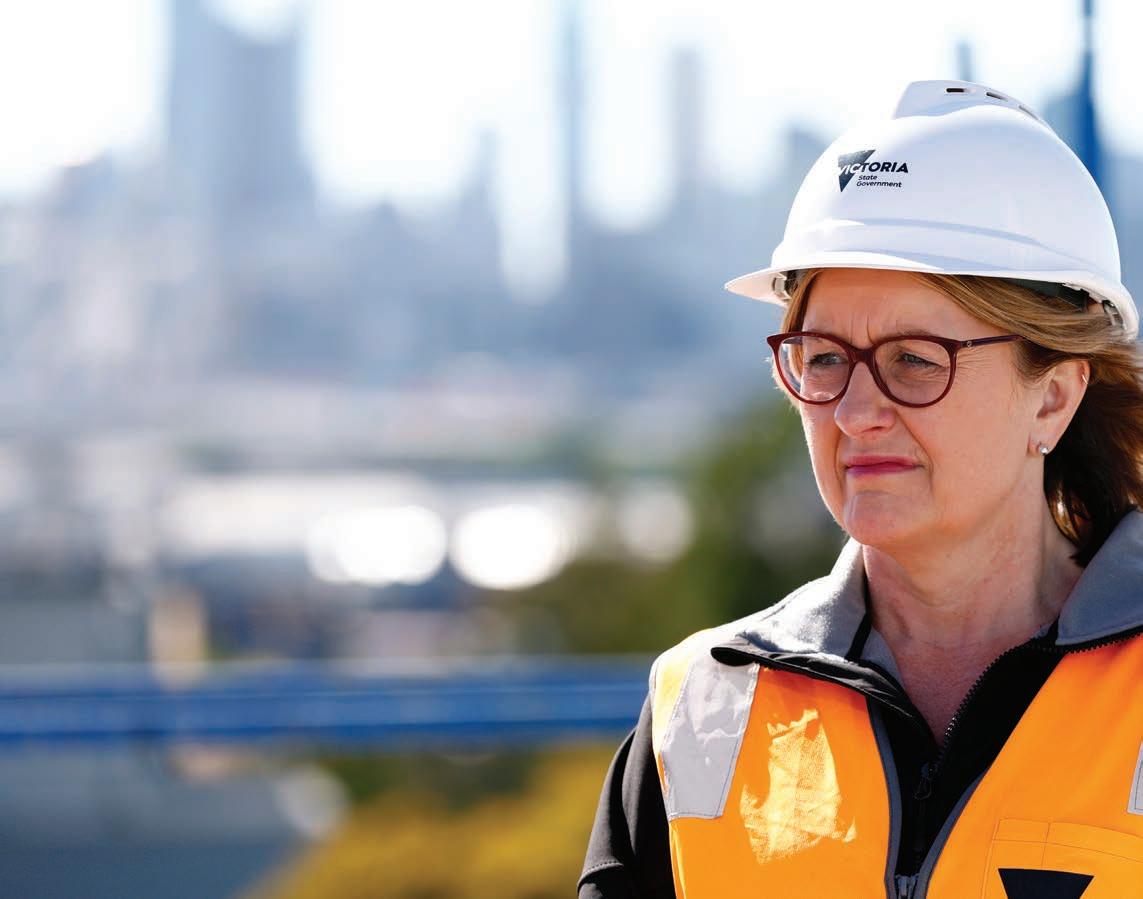
Victorian Premier Jacinta Allan.
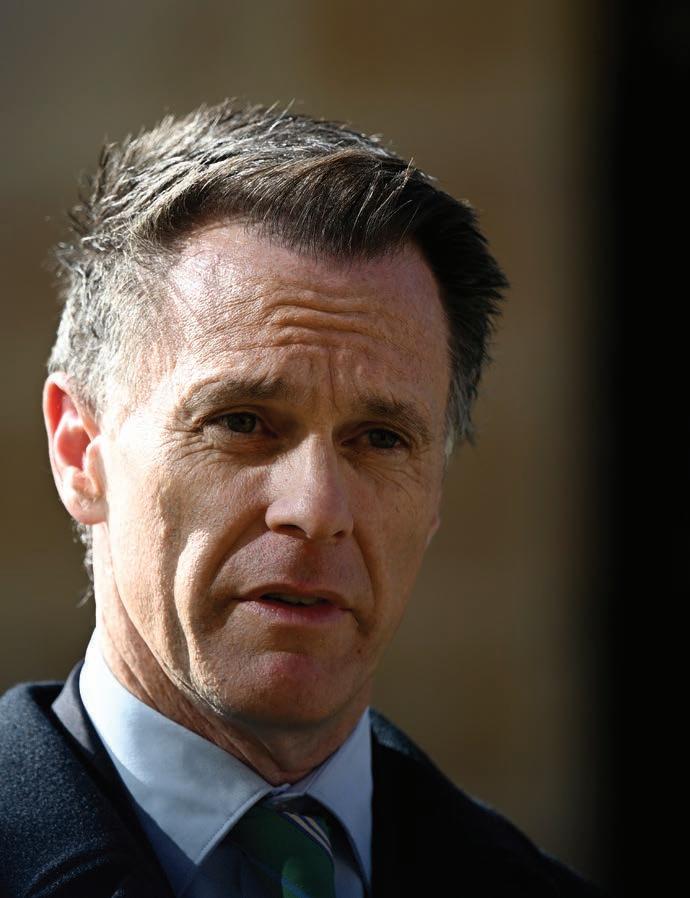
“These types of homes have played a really important part in delivering houses over the last century.”
– NSW Premier Chris Minns
year, removing restrictions on developing dual occupancies, terraces and townhomes on R1 and R2 zoned land.
The focus in NSW is on developing land within 800m of 171 town centres and transport hubs, mainly across metropolitan Sydney, the Central Coast, Illawarra-Shoalhaven and Hunter regions.
“These types of homes have played a really important part in delivering houses over the last century,” NSW Premier Chris Minns said, “but recently councils have effectively banned them; this reform changes that.”
In Victoria, the Townhouse and LowRise Code (Clause 55), approved in March last year, provides a “deemed to comply assessment pathway” to support smoother approvals for townhomes and apartment buildings up to three storeys.
“Unlocking the potential in and around our major transport projects in Melbourne’s inner and middle suburbs is a key focus of our Housing Statement, which
“Unlocking the potential in and around our major transport projects in Melbourne’s inner and middle suburbs is a key focus of our Housing Statement.”
– Victorian Premier Jacinta Allan
will deliver more homes, more jobs and better-connected services,” Victorian Premier Jacinta Allan said.
In Western Australia, a development corridor was established in November surrounding 10 suburban Perth train stations, with the government rezoning land within
800m of the stations to include mediumto-high rise buildings intended to deliver 35,000 new homes.
“We are stepping in to ensure a consistent and streamlined approach to deliver vibrant, mixed-use precincts within walking distance to train stations,” WA’s Planning and Lands Minister John Carey said.
“This initiative is one way we are streamlining and simplifying the planning system to accelerate housing supply.”
Peak bodies see these planning reforms actively encouraging dual-occupancy builds as essential to provide for Australia’s growing population and housing affordability.
“The reforms will boost housing supply where it is needed most,” Property Council NSW executive director Katie Stevenson said.
“It will increase density in areas well-connected to transport and close to existing services, to ease housing pressures and provide more affordable housing options.”
By LEIGH REINHOLD
Photos NEIL BENNETT
BUILDING DREAMS
A decade after pivoting to focus on dual-occupancy dwellings, developers Emily and Mark Ainley are now specialists in the booming space
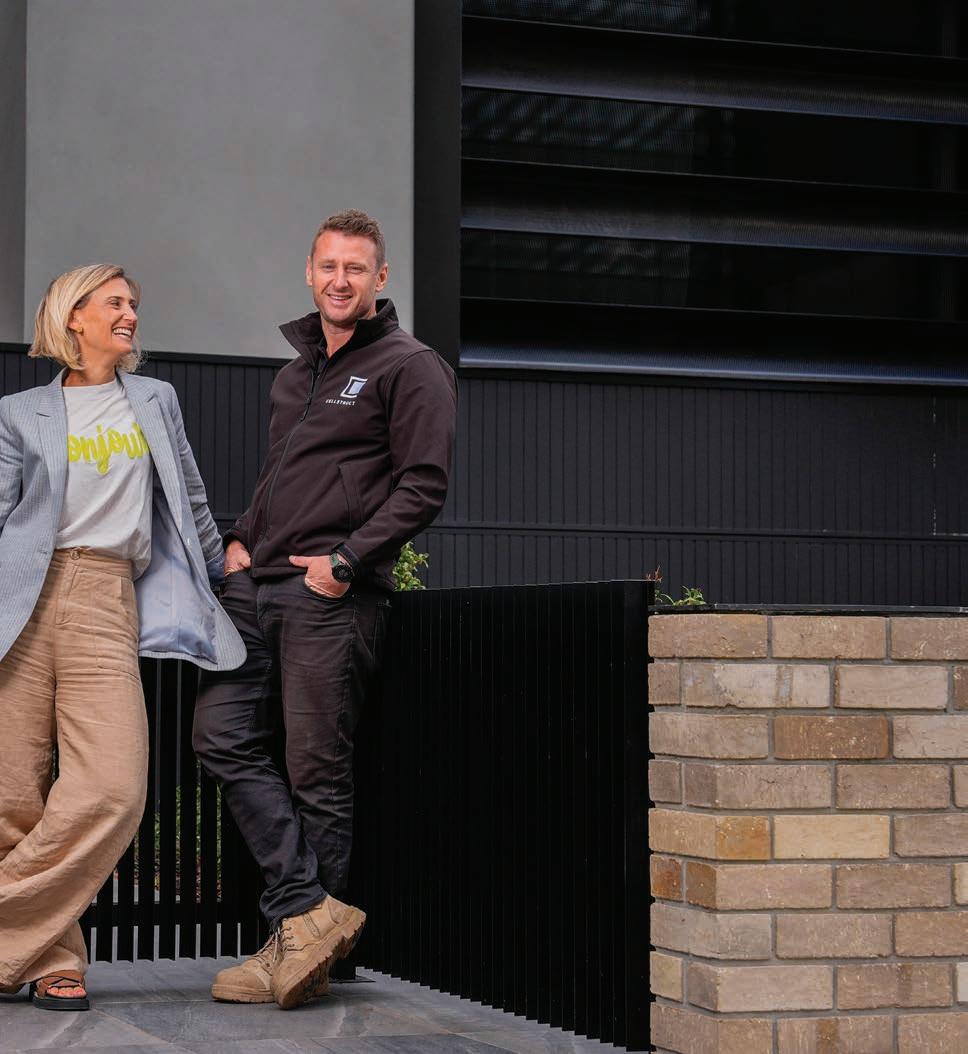
Ten years ago, building company owners Emily and Mark Ainley could foresee a boom market emerging for dual-occupancy developments in their Melbourne Bayside community.
And they wanted in on the ground floor from both a business and a family perspective.
“The way that we got into the Bayside area ourselves was we bought a big block, subdivided it, put two houses up, kept one and sold one,” said Emily, who works alongside Mark at Cellstruct, their second-generation family-owned building company.
“That strategy made it a much more affordable process for a young family to enter the Bayside market.”
After completing a few more successful dual-occupancy builds for themselves, the couple could foresee there was going to be a “real boom” in duplex and townhome construction in their area because of the number of rundown houses on big blocks with premium land values.
They decided to switch their company focus away from industrial commercial building work to specialise in dual-occupancy dwellings.
“We got the word out there amongst local architects and the local real estate agents who might be selling these blocks and dealing with developers,” Emily said.
“And that was how we became specialists in this space.”
Now, with five personal dual-occupancy builds under their tool belts, the Ainleys are also managing between four and six projects for their clients at any one time, with 80 per cent of their work dual occupancy.
The Cellstruct team of 10 offer their
“We got the word out there amongst local architects and the local real estate agents who might be selling these blocks and dealing with developers.”
– Emily Ainley
clients a bespoke, fixed-price service, including budgeting, permitting, designing and sub-division, charging a management fee for the turnkey results.
“A lot of our clients have no idea how to go about the process so they come to us,” Emily said.
“We help them engage one of our preferred designers and work with them depending on budgets.”
In the past 10 years, Emily said she has noticed developers moving away from the dual-occupancy space and now most of their clients are established homeowners, who have lived in the Melbourne Bayside
area for many years. “The area used to be very much a developer market,” she said.
“But the expectation of homeowners and the value of their land in our area have gone too high. And then combine that with the increased costs of construction and the developers can’t make it add up anymore.
“There are just not the margins in there at the end for a developer to take any interest.
“So now the client that is looking to develop dual-occupancy dwellings is very much the homeowner, who has generally lived in the area for a long time.
“They’ve got their community, they know the area, they’re comfortable and they typically don’t owe a lot on the land anymore.
“They know that they need to do their house up or renovate it or fix it. And they’re generally at a later stage of life, empty nesters, who don’t need so much room.
“They also don’t really want to have a mortgage. So they borrow for the dualoccupancy construction. They get a new home. They sell the other one and that pays off their construction.
“And, depending on the size of their mortgage, they might pay that off, too.”
Emily and Mark Ainley, of building company Cellstruct, at a duplex development on Marriage Road in the Melbourne suburb of Brighton East.
By LEIGH REINHOLD
DIARY OF A DYNAMIC DUO
Do your sums and make sure it’s worth the effort: After completing four dual-occupancy projects and a three-home build, one couple offer their advice
Mum and dad property developers Susan and Greg Davis* started their dual-occupancy journey 25 years ago when they bought a rundown house on a big block in the Melbourne suburb of Hampton with plans to subdivide.
“It was our only option to get into the market at the time,” Susan said.
“It was hard. Coming from New Zealand, we had a small budget and it was a pretty horrible house, but it was on a 1000 square metre block, so we decided, OK, we can subdivide at some point.”
The couple also saw the project as an opportunity for Susan to look after their family, while keeping an eye on the build.
“The kids were tiny and it was a way for me to be at home but still doing something that in the end would be like a salary,” she said.
“When you sell up, that’s when you get the payoff. And then you move on to the next project.”
Before they had finished their first dual-occupancy project, the couple bought another sizeable and sub-dividable block in Sandringham.
They employed the same principal of building a dual-occupancy and selling one home while living in the other for a few years as they grew their equity.
Now, having completed four dual-occupancy projects and one more complicated build comprising three homes, Susan and Greg, who have a portfolio of tenancies,
have just one more dual-occupancy build to complete before they can retire.
Susan said they have learnt all the pitfalls dual-occupancy builds can throw at an owner/builder and admits it is becoming harder to turn a decent profit from the venture.
“It’s definitely more difficult to make a buck out of it,” she said.
“For a start, land prices are through the roof and the build costs since Covid have just skyrocketed too.”
Other costs can include council fees and the cost to subdivide, land tax, extra pits for power, water connections, stamp duty, demolition costs, draftsman or architect costs, capital gains tax, driveways, landscaping and rental costs while you build.
“I’ve done it enough times to look at a property and just go, ‘Yeah, no, that’s not for me’,” Susan said.
“But some people go into dual occupancies not understanding the actual extra costs on top of what the builder says it might cost to build.
“So, I think people need to do their homework and be very careful because it can be a lot more expensive than they expect. It can be a black hole.
“My advice to people considering a dual-occupancy build is to do all their sums – or employ someone who can do all the sums for you – and divide it by two, and ask themselves is this really worth it?”
* Not their real names.
“My advice to people considering a dual-occupancy build is to do all their sums – or employ someone who can do all the sums for you – and divide it by two, and ask themselves is this really worth it?”
– Susan Davis*
Moving the dial
Game-changing words and numbers that impacted the
Australia’s residential real estate total market value as of March, according to property data company Cotality.
$12.6
“I AM PROPOSING AN AUSTRALIAN ECONOMIC REVOLUTION, NOT A REPLAY OR A RESET. WE WON’T GET REVIVAL BY TINKERING AROUND THE EDGES. SOME OF THIS WILL REQUIRE THE LONG-OVERDUE SLAYING OF SACRED COWS.”
– National Party leader Matt Canavan
$12.6 trillion
3.7%
Australia’s current inflation rate. The next CPI release is April 29. 0.3%
Household spending rose 0.3 per cent in February 2026, according to seasonally adjusted figures released today by the Australian Bureau of Statistics (ABS).
29.7%
The total number of dwellings approved rose 29.7 per cent in February to 19,022, according to seasonally adjusted data released today by the Australian Bureau of Statistics (ABS).
$20.43 billion
The value of total building approvals in February 2026, up 14.4 per cent on January.
“Some of the members of the property sector don’t particularly help our own reputation. But the fact of the matter is, 95 per cent plus of the property developers in Australia are high-quality, reputable organisations.”
– Urban Taskforce CEO Tom Forrest goes into bat for property developers
Home listings (SQM Research)
3.5%
Total national property listings rose 3.5 per cent month-on-month in March to 234,734 dwellings.
“In a dual cost-of-living and housing crisis, we are pulling every lever to support the delivery of desperately needed new homes.”
– A White House spokesperson on the third iteration of the No Kings rallies, a series of mass protests against the second administration of US President Donald Trump
3.8%
New listings increased 3.8 per cent nationally and are 5.4 per cent higher year-on-year.
The number of Australian dwellings approved in the year to March, up 9 per cent on the previous year (ABS)
195,434
“VICTORIA DOESN’T HAVE A GROWTH PROBLEM, IT HAS A PRODUCTIVITY PROBLEM, AND GOVERNMENT POLICY IS AT THE CENTRE OF IT.”
– Property Council Victoria executive director Cath Evans
The job front (February figures)
64.0%
4.2% Unemployment rate decreased to 4.2 per cent.
66.8%
Participation rate remained at 66.8 per cent.
Employment increased to
14,721,400
“AUSTRALIA HAS AN ACUTE SHORTAGE OF RENTAL HOUSING. ANY POLICY THAT DISCOURAGES INVESTMENT IN RENTAL HOMES WILL ONLY MAKE CONDITIONS WORSE FOR RENTERS.”
– Housing Industry Association managing director Jocelyn Martin
Dwelling values
Date range 12 months to March 2026
According to Cotality, Australia’s residential real estate total market value rose to $12.6 trillion in March. National dwelling values rose 2.1 per cent over the quarter, and accelerated to 9.9 per cent annually in March, the fastest 12-month pace of growth since June 2022. Sydney, Melbourne, Hobart and Canberra are off their record highs, while Brisbane, Adelaide, Perth and Darwin are at record highs. The median dwelling price for Australia now sits at $933,137.
Sydney’s median house price is now $1,601,782. The city’s most expensive property sale in March is believed to be a harbourfront mansion at 12 Dumaresq Road, Rose Bay, for $45-$48 million.
Melbourne residential property values are -1.3% below their March 2022 peak. The median price of a house is now $982,876, a unit median is $644,074.
The median price for a Brisbane house is now $982,876, while a unit is $865,548. Brisbane dwelling values were up 1.8 per cent in March and are now at a record high.
Adelaide property is also seeing a record high, with dwelling values up 1.1 per cent in March. A house there sells for a median $998,933, a unit for $684,698.
Perth is the strongest market in the country for monthly and annual home price growth. The median house price is $1,062,538, up 2.5 per cent in March, while a unit is $746,779, up 2.9 per cent.
After a five-year boom, Hobart dwelling values have fallen and are almost 3.0 per cent below their March 2022 peak. The median house price is $790,566, while a unit is $570,428.
Darwin has enjoyed price growth second only to Perth in the past year but remains the most affordable capital city. The median house price is $732,035 while a unit is $451,147.
Home prices in the nation’s capital are rising month-on-month but somewhat subdued compared with their May 2022 peak. The median house price is $1,048,285 while a unit is $598,702.
Conveyancers, convicts and criminals: Dark deeds indeed
Adapted from the book Early Deeds, Convict Attorneys and Certified Conveyancers by DALE TURNER
From as far back as the early penal colony, there has been a long-standing power struggle between different classes of legal practitioners in Australia
Conveyancers have been part of Australia’s legal landscape from almost the beginning of the colony.
Arguably, the first act of conveyancing in Australia came on April 29, 1770, when James Cook conveyed a Union Jack from HMS Endeavour and planted it at Botany Bay.
His landing was challenged by two men from the local Gweagal clan, one of whom was shot.
“I thought that they beckon’d to us to come ashore,” Captain Cook wrote in his journal. He was sorely mistaken but so began our contentious system of land ownership.
Britain moved swiftly to formalise its claim. The second appointment to public office in NSW, after Governor Arthur Phillip, was Surveyor General Augustus Theodore Alt.
Alt arrived with the First Fleet in 1788 and was instructed to “make survey of and mark out lots upon the said territory…”
By 1800, land dealings were in full swing, with grants and deeds of property, and the civil court adjudicating on disputes.
Much of the early conveyancing was done by convict attorneys who as “stained men” were barred from appearing at the
bench. They hung out their shingles regardless, in breach of The Stamp Act 44 Geo III c98 s14, which restricted the practise of conveyancing to “members of the Inn of Court,” and provided punishment for “any non-professional person who drew a deed of conveyance… in expectation of reward.”
At one point, convicts who operated illegally as conveyancers were liable “to be worked in irons on the public roads or other public works… for any period not exceeding one year.”
Attorneys fought to maintain their hold on the practice, but by the mid-1800s demand and costs were such that the legislature created a regulatory scheme for conveyancing. It characterised the work that new
certified conveyancers could perform, how they were examined, and made them subject to the jurisdiction of the court.
Conveyancers became an important subgroup of the legal profession, employed as specialists in the Crown Solicitor’s Office, the Registrar General’s Department, the Rural Bank, the Public Trustee’s Office, the Department of Public Works, and the Department of Transport.
They even assisted the Master of Lunacy – an official who dealt with estates for those deemed incapable of managing their own affairs.
Exams were said to be very difficult. Candidates were required to demonstrate legal knowledge, their experience of conveyancing, and that they were a fit and
proper person to be enrolled by the court.
Barrister W. J. McKell (later Governor General Sir William) stated “their characters are beyond reproach” and “they are honoured in the legal profession.”
But not by all in the legal profession. At the height of the Great Depression, Kerrigan’s Case saw pitched battle between The Law Institute and Institute of Conveyancers over the legal work permitted to a conveyancer.
The conveyancers won, but in the same year the 1935 Legal Practitioners (Amendment) Bill was introduced in the NSW Parliament, calling for no more granting of conveyancer’s certificates.
Opposition Leader Jack Lang accused solicitors of seeking a monopoly, saying
“I thought that they beckon’d to us to come ashore but in this we were mistaken for as soon as we put the boat in they again came to oppose us.”
– Captain James Cook
“Some of the finest men I have met have been Conveyancers, and this Bill will wipe them out. I do not like the Bill.”
But it passed on March 11, 1935. In 1967, a further amendment provided that the last remaining conveyancers were to be enrolled as solicitors.
It appeared that the conveyancer’s profession, a brook of legal practitioner, had run into the sea and completely absorbed by the solicitor practitioner. Or had they?
Two decades later, public disquiet at solicitors’ conveyancing costs brought a NSW government review, and eventually the Conveyancers Licensing Act 1992 and subsequent 1995 and current 2003 Acts.
The occupation of conveyancer as a class of legal service provider had been restored.
This article focuses on NSW history. Specialist conveyancers in other jurisdictions have different “scope of works”. In Western Australia, they’re known as settlement agents, and conveyancers are currently not permitted to operate in Queensland or the Australian Capital Territory.
A painting by E. Phillips Fox depicts Captain James Cook landing at Botany Bay on April 29, 1770.
After decades of dedication, Dawn remains a driving force
Dawn Barry is the founder and a director of Victoria’s Skilled Conveyancing. Originally a law clerk, she began her conveyancing career in 1984 and became a licensed conveyancer in 2008 with a Diploma of Financial Services (Conveyancing) from Swinburne University
For me, the conveyancing industry was never meant to be a lifelong career, yet 42 years later I’m still part of it.
When I first entered the industry, everything was done manually. There were no emails, no online searches and every document had to be carefully prepared by hand.
It was a very different time and the work required patience, accuracy and a real understanding of the process.
The biggest change over the years has undoubtedly been technology. What once took days can now be completed in a matter of hours.
While this has improved efficiency, it has also increased the workload and pressure placed on those working in the industry. Technology has made the process faster but it has not made it simpler.
My greatest concern today is the lack of education provided to those entering the profession. Many new conveyancers are expected to begin working with very little practical knowledge or experience.
In the past, classroom teaching provided a solid foundation that focused more on conveyancing.
Today, the online learning system
simply does not provide the same depth or understanding and too many people are entering the industry without being properly prepared for it.
Over the years, I’ve also been fortunate to build strong relationships with my clients.
Many return to me time and time again and, in some cases, I’ve assisted different generations of the same family.
Their trust and loyalty have played a major role in helping me build a successful and long-running conveyancing business in Victoria.
I get great satisfaction from developing deep knowledge within the conveyancing industry, which has enabled me to solve complex problems more efficiently and to build valuable networks with trusted colleagues and mentors.
However, what has kept me engaged for more than four decades is my genuine passion for helping clients and others, and the deep sense of fulfilment I still feel from being part of this profession.
Remaining in the industry for more than four decades is something I look back on with great pride.