stăteam aşa cu degetele bine întinse era o lumină gălbuie ceva între fulger şi gheaţă respiraţia noastră acoperea vuietele totul se legăna liniştit mă speria ferocea mea luciditate
- Gellu Naum, “Zenobia”
stăteam aşa cu degetele bine întinse era o lumină gălbuie ceva între fulger şi gheaţă respiraţia noastră acoperea vuietele totul se legăna liniştit mă speria ferocea mea luciditate
- Gellu Naum, “Zenobia”

This publication is funded by the DU Trinity Publications Committee.
The publication claims no special rights or privileges.
All serious complaints may be directed towards chair@trinitypublications. ie or Chair, Trinity Publications, House 6, Trinity College Dublin, Dublin 2. Appeals may be directed to the Press Council of Ireland.
Get involved with Trinity Publications through Facebook, Twitter and Instagram or email secretary@trinitypublications.ie
The term ‘devotion’ has its roots in religious practice, describing the reverence towards a deity and the acts of worship through which it is expressed. It wasn’t until the sixteenth century that its secular use was introduced to the English language via French and Italian: stemming from the Latin dēvoveō, dēvovēre (to vow, to promise), devotion now calls to mind many different forms of loyalty and attachment, powerful enough to elicit an all-encompassing sense of awe.
In the novel Les Misérables, Victor Hugo writes, ‘God is behind everything, but everything hides God. Things are black, beings are opaque. To love someone is to make them transparent.’ Perhaps this ideal of transparency is what bridges the gap between the two connotations: any act of devotion opens up a way of seeing beyond the surface of things and of people, beyond the boundaries of the self; it points towards the transcendent.
The translations featured in the pages that follow invite us to explore devotion in its various guises: romantic love contending with the constraints of space and time, inquiries into our relationship with the divine, familial and communal bonds, dedication to a craft or an ideal. While some of the texts find a sense of purpose and contentment in it, others grapple with the fact that where there is devotion there is also the potential for grief, longing, disillusionment; that devotion makes us vulnerable. Across texts and languages, this issue acknowledges the forces that drive us to love intensely, to care for one another, to do things with passion and commitment, but also to remain curious and questioning through it all.
As always, JoLT is the product of many people’s work. First and foremost, I am grateful to the editorial team for the enthusiasm and skill they have brought to the journal throughout the past few months. To Monica, for your patience, painstaking attention to detail, and, most importantly, your constant encouragement. To Nina and Jes, for lending your good advice and being the journal’s ideal first readers. To Hanna, for going above and beyond to make sure JoLT looks beautiful, even when it meant putting up with my all too frequent changes of heart. To Odhran, for making the process of designing each issue smooth and enjoyable. To Helena, Jules, Maike, Ruairí, Douce, Nell, and Luka, for the care with which you approached each translation. Thank you for being by my side. I am glad to have met and worked with you.
I wish to thank all the translators and visual artists, both published and unpublished, who trusted us with their work. In its initial stages, each of these three issues felt like a timid step into the unknown; it is only when we read your creative, surprising, sometimes deeply personal submissions that everything begins to take shape. Thank you for answering our call and contributing to the neverending dialogue that is literary translation.
The three years I have spent working with JoLT are drawing to a close. Farewells have never been my forte, so all I will say is that I hope the journal continues to be a space where everyone—from experienced translators to people who are trying their hand at it for the first time—can feel welcome; a space for community and conversation. I once again extend my deepest gratitude to all who have helped create it.
Ioana Răducu
Editor-in-Chief
Ioana Răducu
Deputy Editor
Monica Elena Grigoraș
General Assistant Editors
Nina Stremersch
Jes Paluchowska
Layout and Design Editor
Odhran Killally
Art Editor
Hanna Lujza Molnár
Language Editors
Helena Gelman
Jules Nati
Maike Bergfeld
Ruairí Goodwin
Douce d’Andlau
Nell Gardiner
Lukian Pudliak
Faculty Advisor
Dr Peter Arnds
Cover Art by Hanna Lujza Molnár
Editorial
Untitled
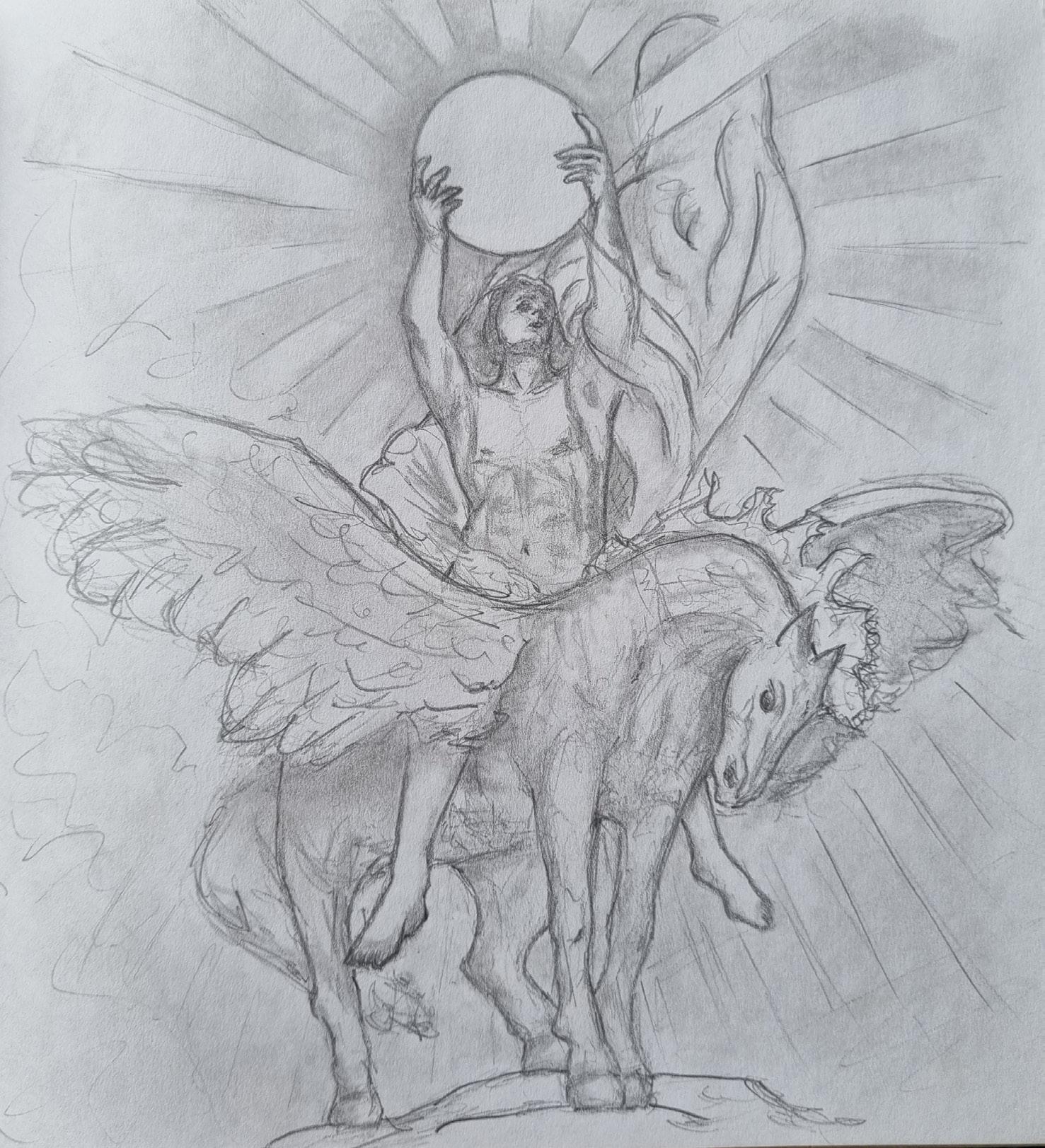
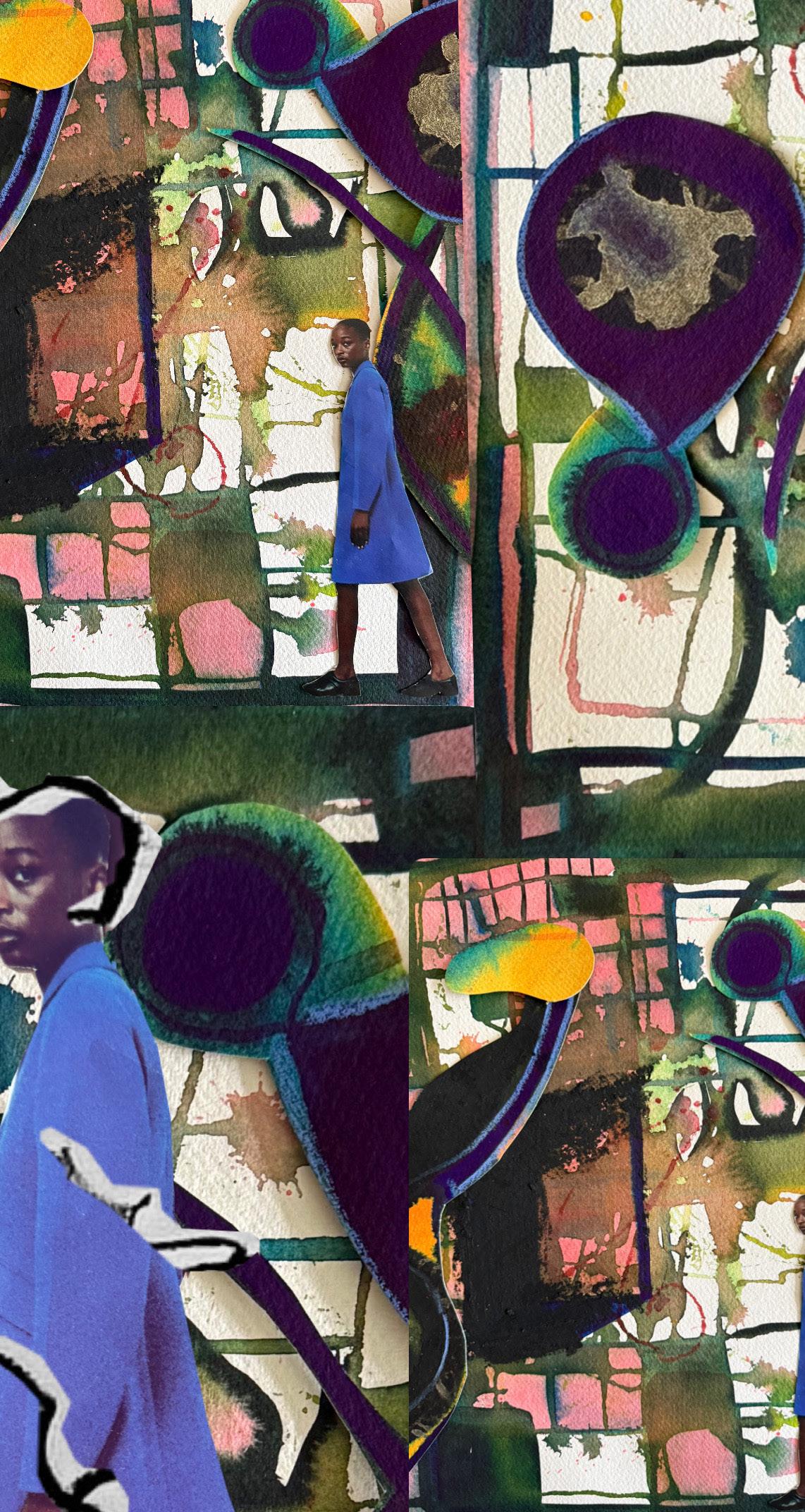
Art by Sofiia Dymova
Selection of Poems from the Grico
Grico-English Translation by Claudio Sansone
‘Ho sceso dandoti il braccio’
Italian-English Translation by Ray G. La Paglia
‘Les Séparés’
French-English Translation by Fanny Haushalter
‘Todas as Cartas de Amor são Ridículas’
Portuguese-English Translation by Rita Palavra
‘El poeta le pide a su amor que le escriba’
Spanish-English Translation by Anna Cairo Signorelli
Das Fliessende Licht der Gottheit
German-English Translation by Lorelei Moore O’Brien
‘Déu company’
Catalan-English Translation by Richard Huddleson
The gods are probably pleased either way
Photograph by Simon Harshman-Earley
Persian-Irish Translation by Ruairí Goodwin
‘Widziałem Go’
Polish-English Translation by Weronika Brzechffa
‘Крылья’
Russian-English Translation by Zoe Koeninger
‘Enivrez-vous’
French-English Translation by Kevin Kiely
Devoted to the Pint Art by Penny Stuart
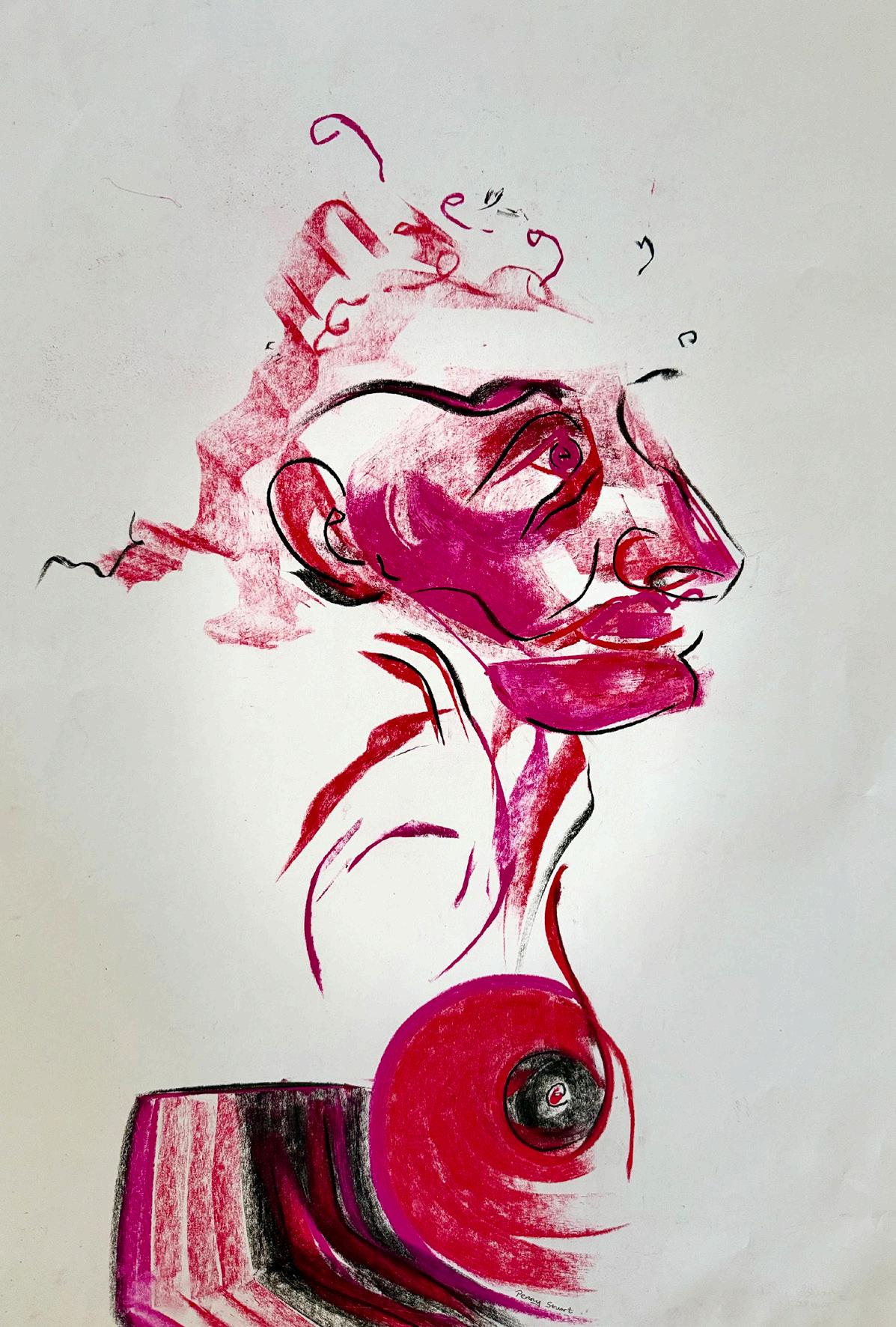
Gabriel (gazing up at his wife) Art by Penny Stuart
Carmen 64, ll. 116–187
Latin-English Translation by Lily Forrest
‘Gorhoffedd Hywel ab Owain
Gwynedd’
Middle Welsh-English Translation by Marit Lestabel
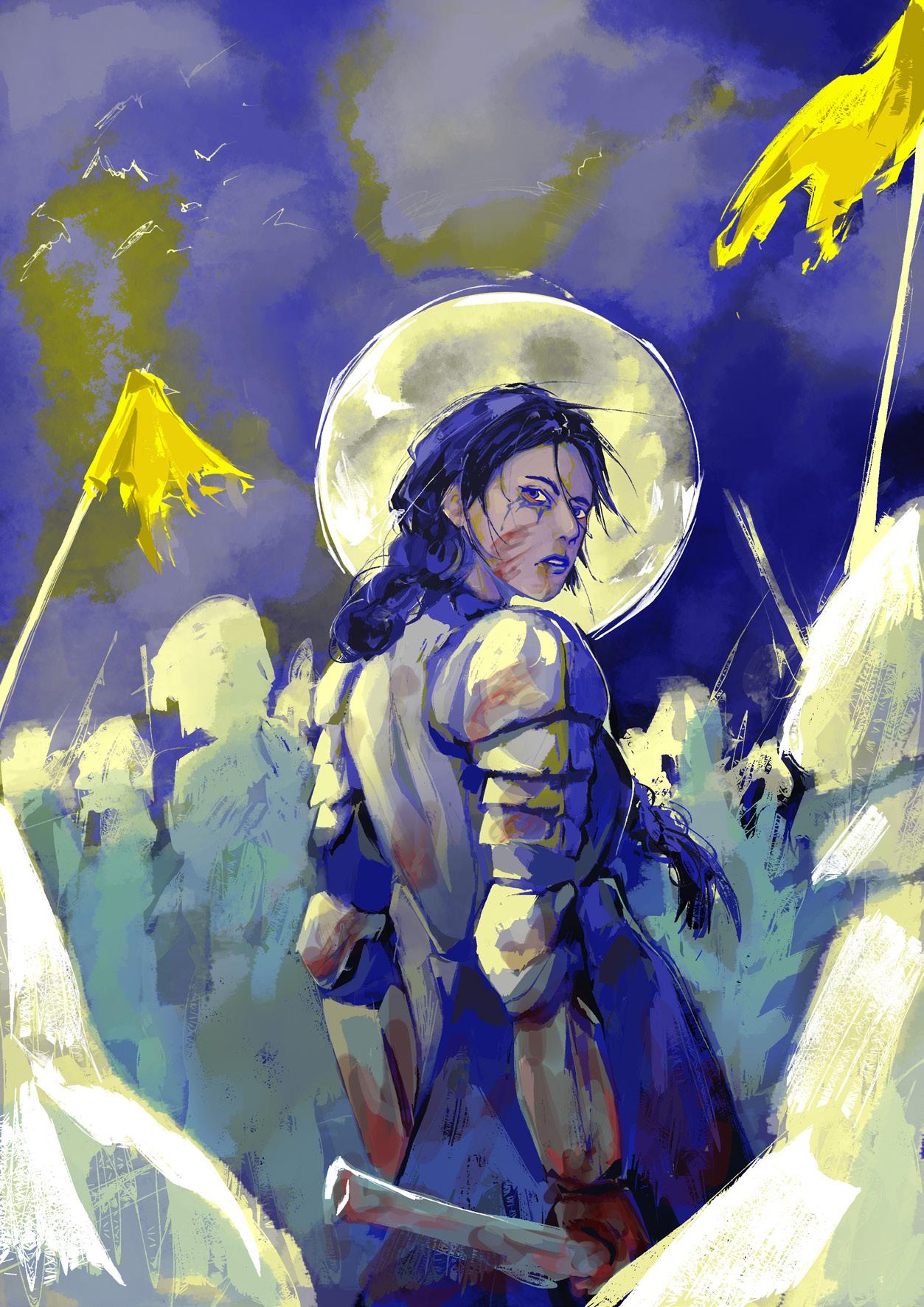
One Last Dance Art by Réka Hárnási
Red Lie
Art by Réka Hárnási
Old Chinese-English Translation by Ami
Arabic-English Translation by Nooran Al-Rubaiee
‘Se desprendió mi sangre’
Spanish-English Translation by Rachel Duddy
游子吟
Chinese-English Translation by Maria McChrystal
Pearl (ll. 1153-1188)
Middle English-English Translation by Eavan O’Keeffe
‘Przyjaciele’
Polish-English Translation by Jes Paluchowska
若き日の思い出
Japanese-English Translation by Mac B. Gill
‘Ciàula scopre la Luna’
Italian-English Translation by Jules Nati
ア、秋
Japanese-English Translation by Sarah Sherweedy
Devoted to Ben Enwonwu
Art by Penny Stuart
Contributors
by Claudio Sansone
There still exists a continuum of Italiot Greek dialects in southern Italy, variously labeled Grico, Griko, and Grecanico. I use the term “Grico” here because it is used in the last of the poems translated, although in that context it may very well simply be translated as “Greek.” Indeed, the speaker conceives of himself as speaking Greek in contrast to the speakers of Latin (i.e., Italian and the Neo-Latin dialects of the peninsula). The texts are taken from an anthology of poems from the area of Salento (Montinaro, B. 2009. Il tesoro delle parole morte: la poesia greca del Salento. Lecce: Argo).
The number of speakers of these dialects has been declining for quite some time, and many of the dialects are extinct or on the verge of being so. Over the last century, scholars from Italy and abroad have made an effort to collect texts from these regions—sometimes translating collections into Italian, French, and German. More recently, attempts at reviving the languages and producing new poems have continued to play a role in sustaining local and international academic interests in these dialects and their corpora. While the poems translated here derive principally from Salento, their diachronic spread is difficult to determine. All the texts chosen here have some relatively archaic features, but we cannot always know whether we are dealing with true archaism or an archaizing tendency.
This literary corpus might be of interest today as an often-overlooked inheritor of aspects of both Hellenistic and Byzantine Greek, as well as of Italic traditions of poetry—something reflected in both theme and form of these poems. For instance, readers of the Greek epigrammatic tradition will find many echoes in the Grico corpus, partly because several authors collected in the Palatine Anthology are said to come from regions in the south of Italy associated with Grico.
Although I have here collected some love poems, the other great genre of Grico poetry is that of the funerary lament—a genre in which scholars have also found deep-rooted connections between the religious practices of the Greek mainland and the Italian south. Similar poetic devices are deployed across the genres, suggesting the end of love is felt to be as difficult and important to versify as the end of mourning. Note, then, the heavy use of hyperbole and adynaton, as well as the emphasis on devices of comparison. Finally, the two genres are commonly (but not exclusively) gendered in terms of the lyric speakers of the poems. Men tend to sing the love songs, women the laments.
Unknown
2.
9.
En iftàźune ola ta χartìa, ja possa càmane i antichi Romani, de’ pinne ja posse eχu’ tta puḍḍìa, de’ to nerò a tti tàlassa velani, na stampefsu ta òriasu maḍḍìa pu jalizu’ sa scudi veneziani.
43.
‘Su m’èdese m’a mmodo ti cardia ti ros ti zíso panta pao demeno me ena lazzon a tti ferratia ce olo afse metallo jenomeno. Ion’oli càrvuna ce oli fotia c’irta na ‘nghiso isèa na pao cammeno! ce mali piaga ipèrno is ti cardia ia t’agapi oli lèune ti peseno.
Translated
by Claudio
Sansone
2.
Who was the painter that painted your white face, who made the sky and the stars turn and look?
9.
All the paper would not suffice, as much as the ancient Romans made, nor feathers, as many as birds may have, ] feathers ≈ quills nor the water from a sea of ink, to praise your beautiful hair, which shines like Venetian shields. ] shields ≈ scudi, coins
43.
You’ve bound my heart in such a way that as long as I live, I shall go on so bound to a leash from an ironworks, made entirely of well-forged metal. You were all coal and you were wholly flame— I came to touch you and was burned! I bear a deep wound in my heart— Everyone’s saying I am dying of love.
87.
Clàfsete ola t’ astèria anu ‘s emena, ti e agàpimu aḍḍo servo eχi vrimmena: anu ‘s emena clàfsete, lisària, sventurato pu ‘en eχo pleo calò! Motti apucàu ‘s ti ttàlassa t’afsària torite na’rtu apanu ‘s to nnerò, motti torite a sasso na cafnisi, forse is varesci c’ ei na me ‘gapisi.
89.
Fsunna, fsunna, na cusi ena sonetto grico, na min to matun’ i Latini: en’ asteri vastà mesa ‘s to petto, ce mian grastan afse petrosini, apànusu en ei canèan defetto, ce tuti pàssisu i poḍḍì civili, apànusu en ei canèan afallo: ise mia caraffina afse cristallo.
87.
Cry, stars, for me, since my love has found another servant. Cry, stones, for me, an unfortunate man with no good prospects. When you see the fish from the depths of the sea rise above the water— when you see a stone catch fire, perhaps she’ll feel remorse and she’ll have to love me.
89.
Wake up! Wake up! Listen to a song in Grico, which Latin speakers won’t understand: you have a star in the middle of your breast and (you have) a vase of parsley. Upon you is no defect and your gait is very elegant, Upon you is no fault: You are a crystal pitcher
Eugenio Montale
This poem by Eugenio Montale was written following the death of his wife Drusilla Tanzi, who had complications with her eyesight. The piece portrays how devotion is not limited to living bonds, and how emptiness prevails as you can only pour it in the absence of someone.
Ho sceso, dandoti il braccio, almeno un milione di scale e ora che non ci sei è il vuoto ad ogni gradino. Anche così è stato breve il nostro lungo viaggio. Il mio dura tuttora, nè più mi occorrono le coincidenze, le prenotazioni, le trappole, gli scorni di chi crede che la realtà sia quella che si vede.
Ho sceso milioni di scale dandoti il braccio non già perché con quattr’occhi forse si vede di più. Con te le ho scese perché sapevo che di noi due le sole vere pupille, sebbene tanto offuscate, erano le tue.
© Arnoldo Mondadori Editore
Translated by Ray G. La Paglia
I descended, with you on my arm, at least a million stairs, and now that you are no longer here, void awaits me at every step. After all, our long journey was too brief. Mine still goes on, no longer in need of coincidences, reservations, of ruses, of scorns of those who believe that reality is only what we see.
I descended a million stairs with you on my arm, not because four eyes perhaps see more. With you I descended those stairs as I knew, between us the only real pupils, for all terribly blurred, were yours.
Marceline Desbordes-Valmore
The poet portrays the pain of lovers being separated by outside forces. She begs her lover not to write, as it hurts her to think about him. Paradoxically, as she cannot stay apart, she keeps writing to him. This highlights her deep love, devotion and loyalty to their bond.
N’écris pas. Je suis triste, et je voudrais m’éteindre.
Les beaux étés sans toi, c’est la nuit sans flambeau.
J’ai refermé mes bras qui ne peuvent t’atteindre, Et frapper à mon cœur, c’est frapper au tombeau.
N’écris pas !
N’écris pas. N’apprenons qu’à mourir à nous-mêmes.
Ne demande qu’à Dieu... qu’à toi, si je t’aimais !
Au fond de ton absence écouter que tu m’aimes,
C’est entendre le ciel sans y monter jamais.
N’écris pas !
N’écris pas. Je te crains ; j’ai peur de ma mémoire ; Elle a gardé ta voix qui m’appelle souvent.
Ne montre pas l’eau vive à qui ne peut la boire.
Une chère écriture est un portrait vivant.
N’écris pas !
N’écris pas ces doux mots que je n’ose plus lire : Il semble que ta voix les répand sur mon coeur ; Que je les vois briller à travers ton sourire
Et qu’ils vont me tuer à force de bonheur :
N’écris pas … N’écris pas!
Translated by Fanny Haushalter
Do not write. I am sad and would like to fade away. Lovely summers without you are nights without a torch. I have closed my arms that can no longer reach your way; And knocking at my heart is knocking at the church. Do not write!
Do not write. Let us learn to die only to ourselves. Only ask God…only to yourself whether I loved you! In the abyss of your absence; I hear you love me above all else; I hear the heavens without ever reaching through. Do not write!
Do not write. I fear you; I am afraid to remember; For your voice calls for me here. To those who cannot drink; do not show the living water. A cherished letter is a portrait held dear. Do not write!
Do not write those tender words I can no longer bear: It appears your voice is spreading them into my heart; I see them shining through the smile you wear And the joy they bring threatens to tear me apart: Do not write… Do not write!
Fernando Pessoa (Álvaro de Campos)
‘Todas as Cartas de Amor São Ridículas’ reflects on love through irony and tenderness. My translation preserves the poem’s playful repetition and reflective tone, emphasizing the vulnerability that comes with loving deeply enough to risk sounding foolish. The poem frames devotion as a deeply human act, an honest and nostalgic recognition that those awkward expressions of love were once sincere offerings of the heart.
Todas as cartas de amor são Ridículas.
Não seriam cartas de amor se não fossem Ridículas.
Também escrevi em meu tempo cartas de amor, Como as outras, Ridículas.
As cartas de amor, se há amor, Têm de ser Ridículas.
Mas, afinal, Só as criaturas que nunca escreveram Cartas de amor
É que são Ridículas.
Quem me dera no tempo em que escrevia Sem dar por isso Cartas de amor Ridículas.
Translated by Rita Palavra
All love letters are Ridiculous. They wouldn’t be love letters were they not Ridiculous.
In my time I’ve also written love letters, Like all others, Ridiculous.
Love letters, if there’s love, Have to be Ridiculous. After all, Only the creatures who have never written Love letters End up being Ridiculous.
I wish back the time when I wrote, Not meaning to, Ridiculous Love letters.
A verdade é que hoje As minhas memórias Dessas cartas de amor É que são Ridículas.
(Todas as palavras esdrúxulas, Como os sentimentos esdrúxulos, São naturalmente Ridículas.)
The truth is, today My memories Of those love letters are the Ridiculous Ones.
(Every odd word, As all odd feelings, Are naturally Ridiculous.)
Federico García Lorca
Federico García Lorca was a Spanish poet and playwright. In this poem he refers to his lover, a man, in a time when it was forbidden, showing his devotion to such an impossible love.
Amor de mis entrañas, viva muerte, en vano espero tu palabra escrita y pienso, con la flor que se marchita, que si vivo sin mí quiero perderte.
El aire es inmortal. La piedra inerte ni conoce la sombra ni la evita.
Corazón interior no necesita la miel helada que la luna vierte.
Pero yo te sufrí. Rasgué mis venas, tigre y paloma, sobre tu cintura en duelo de mordiscos y azucenas.
Llena pues de palabras mi locura o déjame vivir en mi serena noche del alma para siempre oscura.
Translated by Anna Cairo Signorelli
Love of my insides, living death, in vain I wait for your written words and I think, with the rotting flower, that if I live without myself, I’d want to lose you.
The air is immortal. The lifeless stone does not know shadow nor avoid it. My interior heart does not need the frozen honey pouring from the moon.
But I suffered through you. I tore up my veins, tiger and dove, upon your waist in a duel of nibbles and lilies.
Extinguish my madness with your words or let me live one peaceful night for my soul forever dark.
Mechthild von Magdeburg
Mechthild von Magdeburg was a Christian mystic from Germany, born in the year 1207. Dedicating her life to religion, she began writing about her all-encompassing and erotic relationship with the lord at the age of 43. Mechthild experienced God as purveyor of total love and justice, and despite threats against her writing, she persisted.
VI. Ein widersang gottes in der sele an funf dingen
Herre, so beite ich dene mit hunger und mit durste, Mit jagen und mit luste, Vnz an die spilenden stunde
De vs dinem goͤ tlichen munde
Vliessen die erwelten wort,
Die von nieman sin gehort, Mere von der sele alleine, Die sich von der erde enkleidet
Und leit ir ore fu̇r dinen munt;Ja die beǵriffet der mine funt.
XVI. Got gelichet die sele vier dingen
Du smekest als ein wintrubel, du ruchest als ein balsam, du luhtest als du sune, du bist ein zůnemunge miner hoͤ chsten mine.
Translated by Lorelei Moore O’Brien
VI. A contradiction by God in the soul (of 5 things)
God, I await with hunger and thirst, With hunt and desire, Until the decisive hour When out of your holy mouth Will fly the chosen words, That nobody may hear, Except my soul alone, There I undress myself before the world And lay my ear silently before your mouth;And fully comprehend the treasure of love.
XVI. God’s four beloved parts of my soul
You taste of sweet grapes, you smell like a balsam, you shine like the sun, you are the realization of my greatest love.
Blai Bonet i Rigo
Blai Bonet i Rigo (1926-1997) was a prolific Mallorcan poet, writer, and playwright, producing a large body of work in Catalan despite censorship and linguistic oppression by the Franco regime. The poem, ‘Déu company’, reflects Bonet’s deep religiosity and recognises the limitations of his own body, afflicted by childhood tuberculosis.
Jo som el vostre ca que bava, el meu clamor és una saliva amarga. Des del llim de la terra, la meva veu com un colomí, com un colom de mar ferit pels caçadors.
Les meves mans no han cantat, estic a la fosca com un munt de baleigs, i la meva memòria cruix com una garba d’aritges.
Jo no he tret espiga; només herba, Senyor.
Te cant com un marge ple d’escanya-rossins.
Però en la meva soca desficiosa pel banyarriquer, de cada aurora, de cada dia, de cada lluna, és més alta la flama vibran del vostre amor, que ara és el meu amor, Senyor.
Les meves malures brillen com a rams fosforescents de civada, i és l’amor damunt el meu front com un batall joveníssim. I Vós, Senyor, vora els meus ossos incendiats, vora la meva carn agra com un pa florit, estau com un ca fidel, llepant-me aquestes nafres que, amb la seva claror, canten la misericòrdia de la vostra saliva.
© Centre de Poesia Contemporània Blai Bonet
Translated by Richard Huddleson
I am your dog that sputters and slobbers, my blaring baying is bitter saliva. From the silt of the earth, my voice is like a squab, like an ocean dove, hurt by hunters. My hands are yet to sing, I am in the darkness like a heap of chaff, and my memory rustles like a bundle of briar.
The grain’s bristles I’ve not touched, just the leaf, my Lord. I serenade you like a bank bursting with bullwort. But in my stump, rendered restless by the capricorn beetle, every dawn, every day, under every moon, rising higher is the florid flame of your love, which is now my love, Oh Lord. My sickness sparkles like shimmering oat sheaves, and it is love that hangs above my forehead like a freshly born bell clapper. And you, Oh Lord, close to my bones aflame, close to my flesh, bitter like mouldy bread, you are like a loyal dog, licking these wounds which, with your brightness, sing the mercy of your saliva.
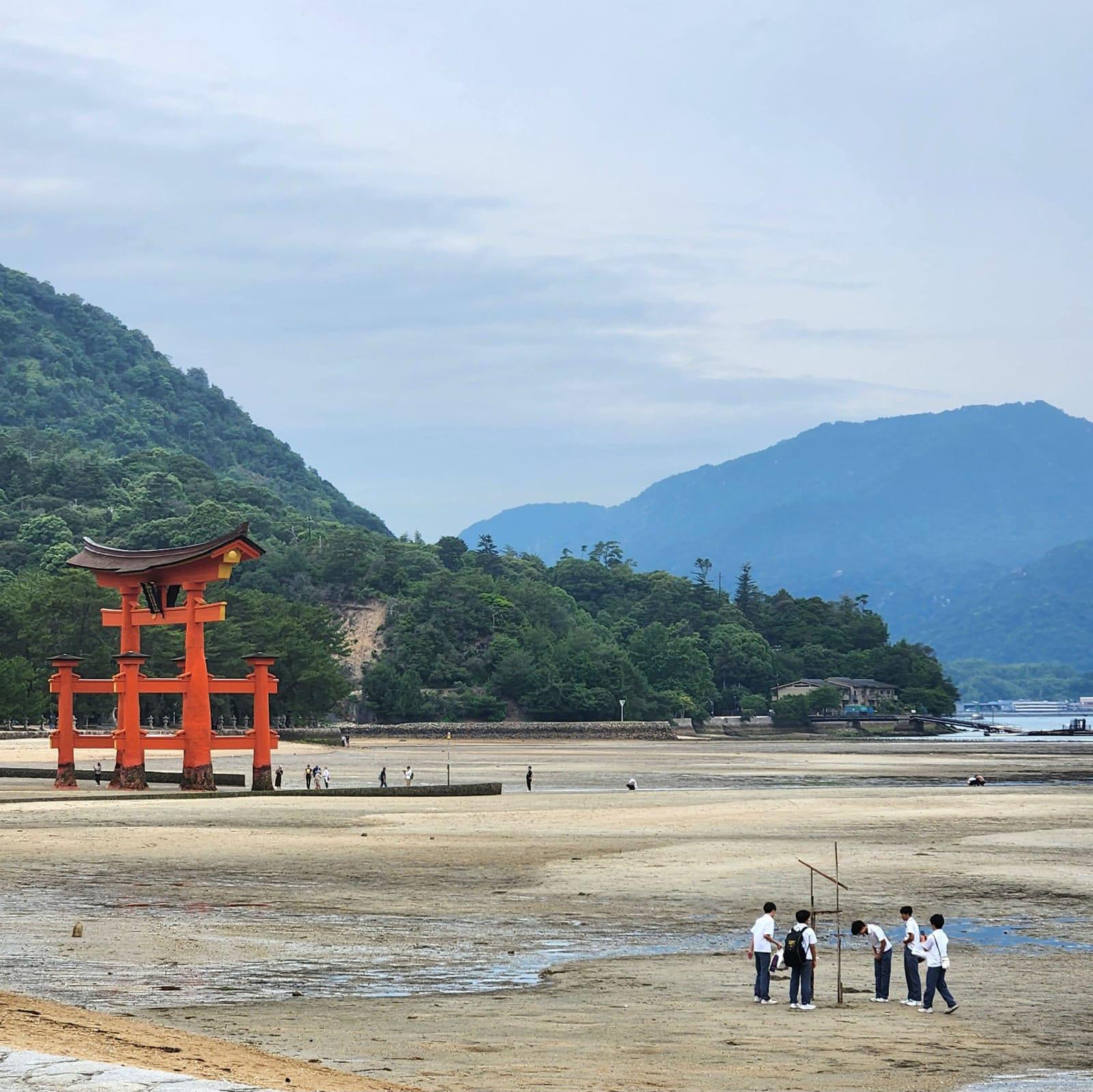
Simon Harshman-Earley, The gods are probably pleased either way
Omar Khayyam
Tugann an rann seo léargas ar an radharc Súfaíoch ar an dúthracht, ina cuirtear béim ar creidiúint inmheanach, in ionad ar rialacha nó deasghnátha reiligiúnda. Tugtar íomhá de rógaire, duine nach féidir a rangú de réir creidiúntaí ná cleachtais, ach atá dúthrach ina slí féin.
Irish
Aistrithe ag Ruairí Goodwin
Chonaic mé rógaire suite ar thalamh nocht
Ní eiriceach ná muslamach, uilíoch ná creidmheach
Ní ceart ná cóir, ní cinnte ná múinte
Cé sa dhá ríocht a mbeadh an misneach sin acu
Tadeusz Różewicz
Written after World War II, ‘I Saw Him’ is Różewicz’s response to the struggle of finding faith in a ‘post-God’ world. His speaker’s devotion shines through in the idle efforts to reconcile his reality with the existence of the divine. The poem’s raw, minimalist style resembles the numbness which follows the crumbling of faith.
spał na ławce z głowa złożoną na plastykowej torbie
płaszcz na nim był purpurowy podobny do starej wycieraczki
na głowie miał czapkę uszatkę na dłoniach fioletowe rękawiczki z których wychodził palec wskazujący i ten drugi (zapomniałem jak się nazywa)
zobaczyłem go w parku
między nagim drzewkiem przywiązanym do palika blaszaną puszkę po piwie i podpaską zawieszoną na krzaku dzikiej róży
ubrany w trzy swetry czarny biały i zielony (a wszystkie straciły kolor) spał spokojnie jak dziecko
he was sleeping on a bench head resting upon a plastic bag
the coat on him was purple not unlike an old doormat
an ushanka on his head purple gloves on his hands a finger peeking out of them the index and the other one (i forgot the name)
i saw him in a park between a naked tree tied to a stake an empty beer can and a pad dangling from a wild rose bush
dressed in three sweaters black white and green (all of them washed out) he slept peacefully like a baby
Translated by Weronika Brzechffa
poczułem w sercu swoim (nie pomyślałem lecz poczułem)
że to jest Namiestnik Jezusa na ziemi
a może sam Syn Człowieczy
chciałbym go dotknąć i zapytać czy ty jesteś Piotr?
ale ogarnęło mnie wielkie onieśmielenie i oniemiałem
twarz miał zanurzoną w kłakach rudej brody
chciałem go obudzić i spytać raz jeszcze co to jest prawda
pochyliłem się nad nim i poczułem zepsuty oddech z jamy ustnej
a jednak coś mi mówiło że to jest Syn Człowieczy
otworzył oczy i spojrzał na mnie
zrozumiałem że wie wszystko
odchodziłem pomieszany oddalałem się uciekałem w domu umyłem ręce
© Julia Różewicz
i felt in my heart (not thought but felt) that this is the Vicar of Christ on earth
or maybe the Son of Man himself
i wanted to touch him and ask are you Peter?
but i was overcome with awe so great i was speechless
the face of his was buried in tufts of red beard
i wished to wake him and ask once more what truth is
i leaned over him and felt the rotten breath from the mouth
and yet something was telling me that this is the Son of Man
he opened his eyes and looked at me
i realised he knows everything
i was leaving confused i was walking away i was running away at home i washed my hands
Mikhail Kuzmin
In this monologue, the speaker, a gay man, offers a passionate subversion of the Christian idea that homosexuality goes against the laws of nature by arguing that it is Christian teachings that are unnatural. Inspired by the Ancient Greeks, he endorses a life devoted to oneself and one’s own pleasure.
Translated by Zoe Koeninger
“We are Hellenes: the intolerant monotheism of the Israelites is alien to us, and their rejection of the visual arts too, as well as their attachment to flesh, to offspring, to seed. There is no rule in the entire Bible dictating belief in a blissful afterlife, and the only reward mentioned in the commandments (and only in respect to life given), is a long life on this earth. A fruitless marriage is a stain and a curse, depriving one even of the happiness of piety. It is as if they have forgotten that in Jewish legend, childbirth and labor are punishment for one’s sins, not the purpose of life. And the further people are from sin, the further they are from procreation and physical labor. Christians vaguely understand this; for them, a woman is purified through prayer after giving birth, but not after marriage, and a man is not subject to anything of the sort. Love has no purpose other than itself; nature is also exempt from the great shadow of finality. The laws of nature are of a completely different sort than the so-called laws of God, or man. The laws of nature are not that a tree must bear fruit, but that under certain circumstances it may bear fruit, and under others, it may not, and it may even die barren just as rightly and justly as if it had borne fruit. The introduction of a knife into a heart can stop it from beating, but that is not finality, nor good or evil. Only those who can kiss their own eyes without tearing them from their sockets or view the nape of their neck without a mirror can defy the laws of nature. And when they say to you, ‘Unnatural!’ only glance at the blind man speaking and then walk on by, without becoming like the sparrow that flies away from the scarecrow. People move about the world as if blind or dead when they could build for themselves the most blazing life, with the most intense pleasure. It is as if they were just born and now, they will die. It is with this exact greed that one must take it all in. There are miracles
Тангейзера в гроте Венеры, как ясновиденье
праотчизна, залитая солнцем и свободой, с
смелыми людьми, и туда, через моря, через туман
мы идем, аргонавты! И в самой неслыханной новизне мы узнаем древнейшие корни, и в самых невиданных сияньях мы чуем отчизну!
around us at every step, there are muscles, ligaments inside the human body that we cannot see without trembling! And this binding the concept of beauty to a man’s appreciation of a woman’s beauty is only base lust and further, further than anything from the true idea of beauty. We are Hellenes, lovers of the exceptional, bacchans1 of the thunderous life. Like Tannhäuser’s2 vision in the grotto of Venus, like the clairvoyance of Klinger3 and Tom,4 we have our forefathers, flooded with sunlight and freedom, exceptional and brave people, and there, across the sea, through the fog and gloom we set forth, Argonauts!5 And in the most unheard-of novelty we will discover our ancient roots, and in the most unprecedented radiance we will find our homeland!”
1 Followers of the Roman god Bacchus whose religious rites included ecstatic, sexual rituals.
2 Titular protagonist of an opera by Richard Wagner; Tannhäuser is a knight who worships carnal desire in the form of the Roman goddess of love and beauty, Venus.
3 Friedrich von Klinger, 18th-century German dramatist who helped create Sturm und Drang [Storm and Stress], a German literary movement with a focus on subjectivity and passionate emotion.
4 Thomas Chatterton, 18th-century English poet whose medieval-inspired works influenced later English Romantic-era poetry.
5 Band of Greek mythological figures who sailed on the hero Jason’s iconic ship, Argo.
Charles Baudelaire
Baudelaire’s prose poem ‘Enivrez-Vous’ (XXXIII) by the infamous poet of Les Fleurs du mal (1857) was first published in Le Figaro (1864) and is his crazed plea that reaches levels of devotion in praising inebriation. The reckless impulsive lines devoted to alcohol, mark him down as decadent bohemian.
Il faut être toujours ivre, tout est là; c’est l’unique question. Pour ne pas sentir l’horrible fardeau du temps qui brise vos épaules et vous penche vers la terre, il faut vous enivrer sans trêve.
Mais de quoi? De vin, de poésie, ou de vertu à votre guise, mais enivrez-vous!
Et si quelquefois, sur les marches d’un palais, sur l’herbe verte d’un fossé, vous vous réveillez, l’ivresse déjà diminuée ou disparue, demandez au vent, à la vague, à l’étoile, à l’oiseau, à l’horloge; à tout ce qui fuit, à tout ce qui gémit, à tout ce qui roule, à tout ce qui chante, à tout ce qui parle, demandez quelle heure il est. Et le vent, la vague, l’étoile, l’oiseau, l’horloge, vous répondront, il est l’heure de s’enivrer; pour ne pas être les esclaves martyrisés du temps, enivrez-vous, enivrez-vous sans cesse de vin, de poésie, de vertu, à votre guise.
Translated by Kevin Kiely
Devote your life to alcohol. Give it everything without question. Devotees of drink are outside time. There’s no schedule wrecking your head so grab every beautiful binge.
Hold on! What’s your drink? Wine, poetry, and sousing fairly safely on the liquor.
Well, if sometimes stepping up to the Gin Palace, or the park bench near bushes, not to mention solo at the apartment, waking in a stupor, beg the aether, the ocean, the tides, pick a star, a seagull, the broken clock, everything that moves, tinkles, rumbles. Singing, speaking, and ask these for the time. They will reply opening time break out the booze. Not bound by any timeline. Instead, devote yourself to getting hammered on vino, the poems, and total devotion to it.
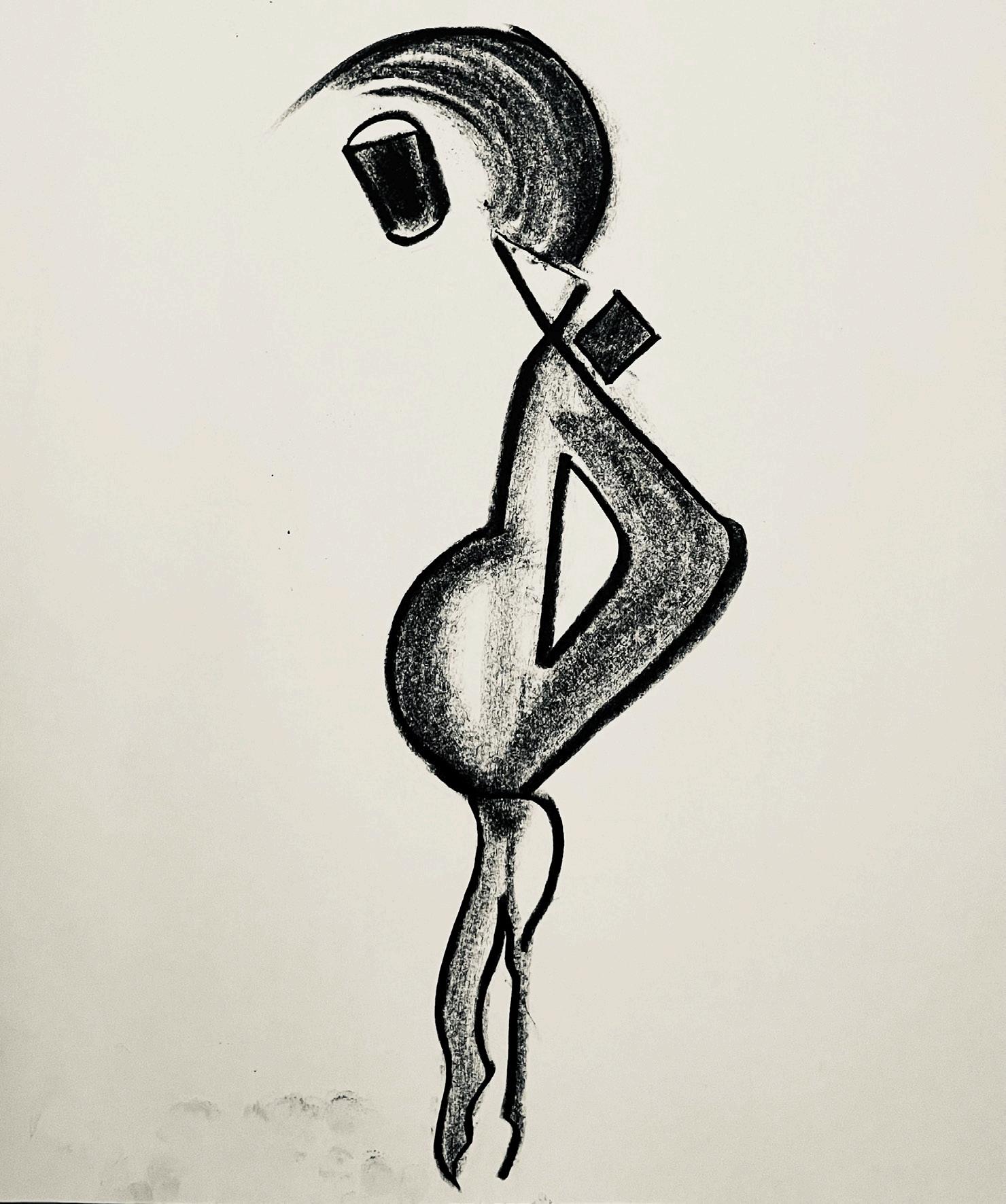
Penny Stuart, Devoted to the Pint
Catullus
Catullus’ epyllion sees devotion manifest in many forms: patriot to country, hero to glory, lover to beloved, poet to craft. As the hero Theseus devotes himself to a more heroic cause, his abandoned lover seeks to redirect her own devotion. In and beyond this fragmented tale, Catullan devotion finds itself frequently lost, misguided, and confronted with sacrifice, treachery, violence, and heartbreak.
sed quid ego a primo digressus carmine plura commemorem, ut linquens genitoris filia uultum, ut consanguineae complexum, ut denique matris, quae misera in nata deperdita lamentata est, omnibus his Thesei dulcem praeoptarit amorem: aut ut uecta rati spumosa ad litora Diae, uenerit, aut ut eam deuinctam lumina somno liquerit immemori discedens pectore coniunx? saepe illam perhibent ardenti corde furentem clarisonas imo fudisse ex pectore uoces, ac tum praeruptos tristem conscendere montes, unde aciem in pelagi uastos protenderet aestus, tum tremuli salis aduersas procurrere in undas mollia nudatae tollentem tegmina surae, atque haec extremis maestam dixisse querelis, frigidulos udo singultus ore cientem: “sicine me patriis auectam, perfide, ab aris, perfide, deserto liquisti in litore, Theseu? sicine discedens neglecto numine diuum immemor – a! – deuota domum periuria portas? nullane res potuit crudelis flectere mentis consilium? tibi nulla fuit clementia praesto immite ut nostri uellet miserescere pectus? at non haec quondam blanda promissa dedisti uoce: mihi non haec miserae sperare iubebas,
Translated by Lily Forrest
Yet why do I, having strayed from my first song, recount more?
How the girl, leaving behind the face of her father, the embrace of her sister and then of her mother, her mother who lamented, grief-sick for her lost daughter, chose, over all these things, the sweet love of Theseus. Or how she came borne by ship to the foamy shores of Dia or how her eyes were bound by sleep when her groom left her, departing with an uncaring heart.
Often, they say, she, raging with a blazing heart, poured out piercing cries from the well of her breast and then, sorrowful, climbed the steep mountains. From there she extended her gaze over the vast frenzy of open sea, and ran out into the incoming waves of quivering brine, lifting her soft garbs up to her bare knee. These words the wretched girl said in her final laments, rousing chilling sobs from her dampened face:
‘Is it so, then, traitor, having carried me away from my father’s home —traitor!—that you have forsaken me, Theseus, on this lonely shore? Is it so, then, that, departing with the will of the gods ignored, heedless—ah!—you carry back home your accursed perjuries? Is it that nothing could sway your cruel mind’s plan? Was there no mercy there at all that might pull
sed conubia laeta, sed optatos hymenaeos, quae cuncta aerii discerpunt irrita uenti. tum iam nulla uiro iuranti femina credat, nulla uiri speret sermones esse fideles; quis dum aliquid cupiens animus praegestit apisci, nil metuunt iurare, nihil promittere parcunt: sed simul ac cupidae mentis satiata libido est, dicta nihil metuere, nihil periuria curant. certe ego te in medio uersantem turbine leti eripui, et potius germanum amittere creui quam tibi fallaci supremo in tempore dessem. pro quo dilaceranda feris dabor alitibusque praeda, neque iniacta tumulabor mortua terra. quaenam te genuit sola sub rupe leaena, quod mare conceptum spumantibus exspuit undis, quae Syrtis, quae Scylla rapax, quae uasta Charybdis, talia qui reddis pro dulci praemia uita? si tibi non cordi fuerant conubia nostra, saeua quod horrebas prisci praecepta parentis, at tamen in uestras potuisti ducere sedes, quae tibi iucundo famularer serua labore, candida permulcens liquidis uestigia lymphis, purpureaue tuum consternens ueste cubile. sed quid ego ignaris nequiquam conquerar auris, externata malo, quae nullis sensibus auctae nec missas audire queunt nec reddere uoces? ille autem prope iam mediis uersatur in undis, nec quisquam apparet uacua mortalis in alga. sic nimis insultans extremo tempore saeua fors etiam nostris inuidit questibus auris. Iuppiter omnipotens, utinam ne tempore primo Gnosia Cecropiae tetigissent litora puppes, indomito nec dira ferens stipendia tauro, perfidus in Creta religasset nauita funem, nec malus hic celans dulci crudelia forma consilia in nostris requiesset sedibus hospes! nam quo me referam? quali spe perdita nitor? Idaeosne petam montes? at gurgite lato discernens ponti truculentum diuidit aequor.
upon your cruel heart for you to make it pity me?
These were not the promises that once you made me with your beguiling voice: you did not command me, wretched as I am, to hope for such things, but rather for joyful marriage, those wished-for wedding-songs, all hollow things, which the soaring winds tear apart.
From now on, let no woman believe the oaths of man, let none hope for man’s talk to be true. While their desiring mind is eager to obtain something, there is nothing they fear swearing, nothing they withhold from promising; then, as soon as their greedy mind’s lusting is satiated, they fear nothing said, they care nothing for their perjuries.
Yes, I rescued you when you were whirling in the middle of death’s tornado, and I chose to lose my brother rather than to fail treacherous you in your final hours. For that I will be given to the beasts and the birds to be torn apart as prey, and I, dead, will not even be buried, nor earth cast upon me. What lioness birthed you beneath a lonely crag? What sea conceived you and spat you out from its foaming waves? What Syrtis, what raging Scylla, what monstrous Charybdis, you who render such rewards for your sweet life?
If your heart was not for our marriage, because you shied from the harsh orders of a strict, old father, still you could have led me into your palace to serve you as a slave in joyful labour, soothing your pale-white feet with clear purewater, covering your bed with a crimson blanket.
But why do I, maddened by this evil, lament in vain to ignorant winds, to those winds blessed with no feelings, neither able to hear nor to return the words I send? Meanwhile, already, that man is almost being tossed about in the midst of the tides,
and not a single soul appears on this deserted wrack. Thus savage fortune, most insulting in my final hour, has even begrudged me ears to hear my laments.
an patris auxilium sperem? quemne ipsa reliqui respersum iuuenem fraterna caede secuta? coniugis an fido consoler memet amore? quine fugit lentos incuruans gurgite remos? praeterea nullo colitur sola insula tecto, nec patet egressus pelagi cingentibus undis: nulla fugae ratio, nulla spes: omnia muta, omnia sunt deserta, ostentant omnia letum.
O omnipotent Jupiter, if only in the first place Athenian ships had never touched the Cretan shore, nor ever that, bringing dreadful tribute to the wild bull, the treacherous sailor had tied his line in Crete, nor that this evil man hiding cruel intentions beneath his sweet appearance had ever rested in our home as a guest!
For where shall I return to? Wretched, what hope do I lean on? Shall I make for the Idaean mountains?
No, the ocean’s ferocious expanse divides with a wide, severing sea-rage. Or am I to hope for my father’s help? When I myself left him and followed the young man spattered with my brother’s blood?
Or am I to console myself with the faithful love of my husband who flees, bending his tough oars into the raging abyss? What is more, this lonely island is inhabited by no one; no way out lies open with these encircling waves of sea— no plan of escape, no hope: all is mute, all is desolate, all points to ruin.’
Attributed to Hywel ab Owain Gwynedd
Commonly translated as a poem of ‘self-praise,’ this extract describes Hywel’s deep, detailed love for his homeland Gwynedd, its landscapes and its people. He praises himself for defending them during the tumultuous time of (internal) war in Wales between the Welsh (Powys and Gwynedd) and Norman and English invaders.
Tonn wenn orewyn a orwlych bet. Gwytua ruuavn bebyr benn teyrnet.
Caraf trachas lloegyr lleudir goglet hediw.
Ac yn amgant y lliw lliaws callet.
Caraf am rotes rybuched met.
Myn y dyhaet myr meith gywrysset.
Caraf y theilu ae thew anhet yndi.
Ac wrth uot y ri rwyfav dyhet.
Caraf y morfa ae mynytet.
Ae chaer ger y choed ae chein diret.
A dolyt ae dwuyr ae dyffrynnet.
Ae gwylein gwynnyon ae gwymp wraget.
Caraf y milwyr ae meirch hywet.
Ae choed ae chedyrn ae chyuannet
Caraf y meusyt ae man veillyon arnaw
Myn yd gauas/ganas faw fyryf oruolet.
Caraf y brooet breint hywret
Ae diffeith mawrueith ae marannet.
Translated by Marit Lestabel
A fair foaming wave washes over a grave, The mound of Rhufawn Bebyr, chief over kings. Today, I love what England hates, the open land of North-Wales. And the banks of the Lliw, with its abundance of growth.
I love those who gave me gifts of mead, Where land and sea bide long strife.
I love her people and her restless hearths, And to be near her king, who journeys to war.
I love her marshes and her mountains, And her forts near the forest, and her fair lands; And her downs and her deeps and her dales; And her white sea-gulls, and her fair women.
I love her warriors and her stallions, And her hills and her heroes and her homes.
I love her open plains covered in clover, Where praise always gains secure fame.
I love her honourable and hardy lands And her wide and wild plains, with riches plenty.
Wy a un mab duw mawr a ryuet
Mor yw eilon mygyr meint y reuet. gwneuthum a gwth gwaew gweith ar derchet. Y rwg glyw Powys a glwys wynet.
Ac y ar welw gann gynnif rysset. Gorpwyf ollygdawd o alltudet.
Ny dalyaf diheu yny del ymplaid Breutwyd ae dyweid a duw ae met.
Tonn wenn orewyn a orwlych bet.
Oh great son of God, with bountiful blessings. How wonderful the stags, stellar their possessions. I did great work with a thrust of a spear, between The warriors of Powys and winsome Gwynedd.
And on a light grey horse, I seek glory To break the bonds of my exiled story.
Without my companions I shall know defeat, As by a dream declared and by God decreed.
A fair foaming wave washes over a grave.
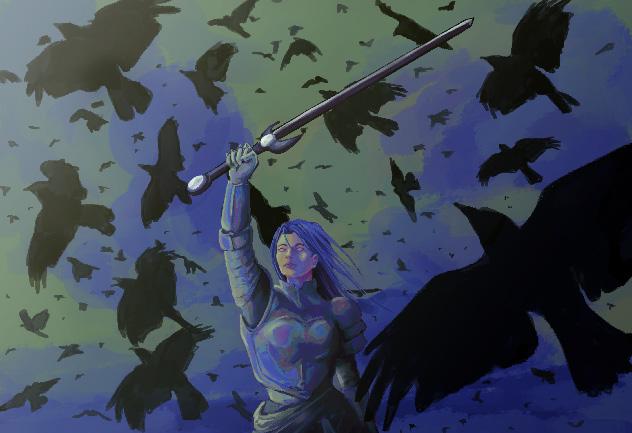
Réka Hárnási, One Last Dance
Perhaps you’re reading the oldest surviving Chinese poem with a recorded author. The Duchess was originally a princess of Wey, married off to Hsu, at a time when there were hundreds of states in Central China vying for existence. Wey was destroyed by nomadic peoples in 661 B.C.; Hsu was too tiny to help. The Duchess attempted to lobby for aid from bigger states, but was obstructed before even reaching Wey. Distraught, she wrote the poem. Her determination to save her people, and to assert her voice despite being treated with contempt for being a woman, was made very clear.
Duchess Mu of Hsu 許穆夫人 載馳載驅
既不我嘉 不能旋反
視爾不臧 我思不遠
既不我嘉 不能旋濟
視爾不臧
我思不閟
陟彼阿丘
衆穉且狂
Translated by Ami
The wagons raced & the horses galloped
To bid my brother’s spirit farewell
We went through a long long journey
120 miles to the town of Tsao
Hsu’s ministers scrambled to chase me back
My worries engulfed my weary heart
You’ve barred me from going further
I cannot return to console my people
I’m baffled by your indifference
My plans might not get anywhere
You’ve barred me from going further
I cannot return to wade my rivers
I’m baffled by your indifference
Yet my cause is not to be braked
I climb over a tall hill
To pluck up some sacred herbs
A woman is to reminisce about her past & She has her own laws and rationales
The men running Hsu blame me for these
All of you so naive and self-assured
I traverse the wild fields
Too lush are the summer wheats
If the case is made at the bigger state
Who’s to trust? Who will really care?
Yet ministers and gentlemen Stop treating me with scorn
You debated about one hundred plans While I stepped up and hit the road
Mahmoud Darwish
‘On This Land’ explores the emotional longing for a homeland that carries more than nostalgia—the desire to remain connected to one’s home. Mahmoud Darwish, famous Palestinian poet, portrays devotion as a deep and enduring love for one’s land through memory and hope.
© Mahmoud Darwish Foundation
Translated by Nooran Al-Rubaiee
On this land, there is what deserves life: the return of April, the smell of bread at dawn, a woman’s opinions about men, the writings of Aeschylus, the beginnings of love, moss on stone, mothers standing on the string of a flute, and the invaders’ fear of memories.
On this land, there is what deserves life: the end of September, a lady leaving her forties with all its apricots, the hour of sun in prison, a cloud becoming a swarm of creatures, chants of a nation that smiles as it faces its passing, and the tyrants’ fear of songs.
On this land, there is what deserves life: on this land is the lady of the land, the mother of beginnings, the mother of endings. She was named Palestine. Still now named Palestine. My lady: I deserve, because you are my lady, I deserve life.
Concha Méndez
This poem, from Concha Méndez’s collection Niño y sombras (1936), movingly describes the death of her first baby in infancy. This work is often studied as a depiction of maternal grief and Méndez’s words about her son show the devotion she felt towards him.
Se desprendió mi sangre para formar tu cuerpo. Se repartió mi alma para formar tu alma. Y fueron nueve lunas y fue toda una angustia de días sin reposo y noches desveladas.
Y fue en la hora de verte que te perdí sin verte. ¿De qué color tus ojos, tu cabello, tu sombra?
Mi corazón que es cuna que en secreto te guarda, porque sabe que fuiste y te llevó en la vida, te seguirá meciendo hasta el fin de mis horas.
© Ediciones Hiperión
Translated by Rachel Duddy
My blood gave itself to form your body. My soul shared itself to form yours. And nine moons passed, and it was all an anguish of days without rest, and sleepless nights.
And it was the moment of seeing you, that I lost you, unseen. What colour are your eyes, your hair, your shadow? My heart is a cradle that secretly holds you, For it knows you existed and held you in my life, It will keep rocking you until the end of my days.
Mèng Jiāo 孟郊
In this Tang dynasty Chinese poem, the author describes the devotion of a mother who lovingly sews clothes for her son before he leaves on a journey. Even though the wandering son cannot repay her, she remains unwavering in her devoted attentiveness to his needs.
慈母手中线,
游子身上衣。
临行密密缝,
意恐迟迟归。
谁言寸草心,
报得三春晖。
With her hands, a mother sews; clothes for her travelling son. She sews them carefully For he will leave when she is done. She dreads the parting But how can a blade of grass repay A radiance which shines three times as warm as a spring day?
Translated by Maria McChrystal
The Gawain Poet
A dream vision, Pearl recounts a mourning father’s encounter with his lost daughter in a heavenscape. When, yearning, he tries to ford the expanse of river that divides them, he wakes up. Paradise and his ‘Perle’ are lost. His piety is selfless, but a painful remorse lingers.
Delyt me drof in yghe & ere; My manez mynde to maddyng malte; Quen I saw my frely, I wolde be there, Beyonde the water thagh ho were walte. I thoght that nothyng myght me dere To fech me bur & take me halte; & to start in the strem schulde non me stere, To swymme the remnaunt, thagh I ther swalte. Bot of that munt I watz bitalt; When I schulde start in the strem astraye, Out of that caste I watz bycalt; Hit watz not at my Pryncez paye.
Hit payed hym not that I so flonc Over mervelous merez, so mad arayde; Of raas thagh I were rasch & ronk, Yet rapely therinne I watz restayd. For, ryght as I sparred unto the bonc, That brath the out of my drem me brayde. Then wakned I in that erber wlonk, My hede upon that hylle watz layde Ther as my perle to grounde strayd. I raxled & fel in gret affray, &, sykyng, to myself I sayd, ‘Now al be to that Pryncez paye.’
Translated by Eavan O’Keeffe
Delight drowned in my eyes and ears and in the madness of seeing her, my little noble girl, I went all out of sorts in wanting to be on the ground that she stood on beyond the waterway. I thought, who would actually dare hold me back and put a stop to my kicking off of some mammoth swim across that stream—regardless of whether I died or not? But I was shaken up from this thought just at that moment I had resolved to strike out and launch myself in because it wasn’t, I realised, going to much please my Prince.
He wasn’t much satisfied that I deigned to fling myself over the gushing floods—it was a bit of a mad notion, there I was, racing on with such rash and sweaty abandon— so I was restrained.
Right as I reached that other bank, I fell out of the dream. Back to that haughty shining arboretum, my head laying on the very hill where she, my pretty pearl, had gotten lost in the ground. I ruffled myself awake and then the grief came back again and sinking into it I sighed ‘Now it’ll all suit my Prince and he’ll be pleased’.
Me payed ful ille to be outfleme
So sodenly of that fayre regioun, Fro alle tho syghtez so quyke & queme.
A longeyng hevy me strok in swone, & rewfully thenne I con to reme:
‘O perle, quod I, ‘of rych renoun, So watz hit me dere that thou con deme In thys veray avysyoun!
If hit be veray & soth sermoun, That thou so strykez in garlande gay, So wel is me in thys doel-doungoun, That thou art to that Prynsez paye.’
Much ill will it paid me to be exiled without warning from that gorgeous place, outcasted from all those sights so alive and agreeable (to me, at least). A hefty longing struck me down and made me swoon and I rued that I could remember her as if she were here: ‘Oh, Pearl,’ I said, ‘held in such high regard, it was so sweet and dear to hear all that you said to me in that dream song and, if what you’re saying is true, that you’re here happily cutting about wearing some fine white crown, then I’ll keep to this dour dungeon knowing that you are there, pleasing the Prince.’
Jarosław Iwaszkiewicz
Jarosław Iwaszkiewicz was an early 20th century Polish poet, academic and politician, born in Warsaw but receiving the majority of his education in Kyiv. He was part of the Skamander poetical group, before joining Polish Underground during World War II and later becoming a member of the Sejm. He was open about his bisexuality in his poetry, including at times when homosexual behaviour was illegal in Poland.
Kim ty jesteś? Kim jesteś?
Jesteś kosiarz radosny o wschodzie słońca.
Zamach twej kosy od zachodniej strony zielonego pola aż do wschodniej.
Jesteś rybak zdążający o zmierzchu czółnem wzdłuż rzeki. Śpiewasz jakąś pieśń dźwięczną o zmroku mglistym. Wśród iw nadbrzeżnych wzlatuje ptak zbudzony. A woda gładka. A ja jestem smutny zabłąkaniec. Mieszkaniec małego miasta.
Kim ty jesteś? Kim jesteś?
Jesteś żołnierzem z wargą zaciętą. Śnieg, topniejąc, znaczy ślad twych butów. Karabin połyska.
Jesteś soldier-boy, bezczelny i uśmiechnięty. Obdarzy cię ktoś miłością. Jedwab ciała miększy będzie od kotary.
A ja jestem smutny zabłąkaniec. Rycerz, który się lęka.
Kim ty jesteś? Kim jesteś?
Idziesz oto z odkrytą głową. W oczach ci się lśni pęd podsłoneczny, Depcesz twardą stopą gruz stary wszelaki. Słońce cię pozdrawia i księżyc pozdrawia. Księżycowi jesteś bratem, a słońcu synaczkiem.
A ja jestem smutny zabłąkaniec, poeta bez talentu.
Translated by Jes Paluchowska
Who are you? Just who?
You are a gleeful reaper at dawn. Your scythe arches from the green field’s western end till the east. You are a fisherman advancing at dusk down the river in canoe. You sing the ringing song of foggy twilight. Among Coastal sallows flies out a waken bird. The water is smooth. And I am a sad, lost thing. A citizen of a small town.
Who are you? Just who?
You are a soldier with pursed lips. Snow, melting, marks the prints of your shoes. A rifle glisters. You are soldier-boy, shameless and grinning. Someone will gift you with love. Softer than a shroud will be the silk of body. And I am a sad, lost thing. A knight, afraid.
Who are you? Just who?
You walk, your head uncovered. In your eyes shines subsolar momentum. With your hard foot you stomp old rubble of all kinds. Sun blesses you. And the moon blesses you. To the moon you are a brother. To the sun, a son.
And I am a sad, lost thing. A poet without talent.
Makino Tomitaro 牧野富太郎
Makino Tomitaro is considered the ‘Father of Japanese Botany.’ But he was, first, a selftaught botanist, and his devotion for his vocation shines through in these excerpts. His clear passion for his work seems barely contained within his recollections, adding an extra layer of intensity to the way he writes.
一、雨の深山で採集
私は自分の学問に対してあまり苦労したことはなかった。今日 まで何十年にわたる長い年月の間実に愉快に学問を続けてきて、つい に今日に及んだのであるが、平素その学問を特に勉強したようにも感 じていないのは不思議である。
これは結局生まれつき植物が好きであったため、その学問があ えて私に苦痛を与えなかったのであろう。
私は少年時代からたえず山野に出て植物を採集した。それが今 日もなおやはり続いてその採集がとてもたのしい。
今から七十余年前、明治十三年の夏、私が十九歳の時、友人と 二人で土予の国境近くにそびえる四国第一の高山、石槌山に採集に出 かけた。まだその時分は洋服などなく日本着物であった。まず郷里佐 川町の宅を出て数里先の黒森を越え、池川村で国境近くの山奥椿山の 農家でとまった。それから国境の深山を通じる山道にさしかかるのだ が、あいにく雨天であったため傘なしのずぶぬれで、遂に雨の石槌山 にたどりつき、その絶頂に登った。さてそれからその山腹下の山村、 黒川村でとまり、はじめてジャガイモを味わった。これは古くから同 地でつくられてあったものでカウバウイモといっており形の小さい薯 であった。翌日また雨をついて帰途についたが、山中で日が暮れ、人 里遠き深林の中で野宿をしたが、夜半に雷が鳴ったり、雷光が光った りとてもすごかった。夜明けにやっと前の椿山に帰りつき、遂に郷里 に帰ってきたが、行きから帰りまで雨天で着物はぬれ大いに困った。 それでもそのおかげでいろいろの植物を見たが、上の黒森では初めて オホナンバンギセルを採って、これを写生してきた。何といっても案 内人もつれず、二人ではじめて国境の深山へ分け入ったが、よく道に
Translated by Mac B. Gill
1: Gathering Deep in the Rainy Mountains
My studies were never terribly difficult for me. I find it rather strange that it never felt like I was actually studying. I’ve continued my work quite happily over the long months and years that have led me to today—so much so in fact that reaching this point seems rather sudden.
Perhaps it’s inevitable that my studies never caused me any torment, given that I was born with this love of plants.
I’ve ventured into the mountains to gather plants ever since I was a boy. I still continue those trips and I enjoy them even now.
Seventy years ago, in the summer of 1880, when I was nineteen, a friend and I set out for the Toyo border, where nearby rises Shikoku’s tallest mountain, Mount Ishizuchi, to gather plants. At that time we didn’t have Western clothes, so we were in kimono. First we set out from our homes in Sakawa. Before we’d gone too many ri, we passed over Mount Kuromori, then, near the border of Ikegawa village, we stayed at a farmhouse in Tsubayama, deep in the mountains. After that, as we began our approach to the mountain path at the border between provinces, rain began to fall. We had no umbrellas and thus ended up soaking wet by the time we finally reached Mount Ishizuchi and made our ascent to the peak. Then, after that, we headed down the mountainside to the village of Kurokawa, where I tasted potato for the first time. It was a small tuber, locally called kōbōimo, and had been cultivated in the area since ancient times. The next day was rainy again as we headed for home, but it grew sunny as we made our way through the mountains, so we elected to sleep outside, deep in the woods and far from civilization. However, thunder sounded in the middle of the night, followed soon by incredible flashes of lightning. At dawn we finally made it back to Tsubayama and then ultimately back home, but it rained the whole
あくる年の明治十四年、私の二十歳の時、人足を一人つれて土 佐幡多郡を広くまわって、植物の採集をした。その間、ほとんど一カ 月を費した。土佐の西南端の柏島、沖の島へも行き、また土佐の西の 岬と称する足摺岬(蹉跎の岬)へも行った。途中行く行く植物を採集 したからその種類も多かったが、これが非常に私の植物知識をふやす に役立った。何といっても植物は採集するほど、いろいろな種類を覚 えるので植物の分類をやる人々は、ぜひとも各地を歩きまわらねばウ ソである。家にたてこもっている人ではとてもこの学問はできっこな い。日に照らされ、風に吹かれ、雨に濡れそんな苦業を積んで初めて いろいろの植物を覚えるのである。
私が植物採集に出かける時、その採集品を始末するために、道 具をたずさえて行った。吸水紙は無論のこと、押板、圧搾用の鉄の螺 旋器また無論大形の採集胴乱根掘り器などいろいろな必要器を持って 行った。
三河の国、高師ガ原を採集した時などは昼間は野天で一日採集 して、胴乱一杯につめ、その晩、豊橋の宿屋でその採集品を始末する のについに夜が明けてしまった。夜中何度も宿の女中が床を取りに来 た。けれどいつも起きて仕事をしているので女中はむなしく帰ったこ とがあった。
今からだいぶ前のことであるが肥前の五島列島中の最西端にあ る福江島へ単身で行ったことがある。それはその島の西端荒川村の玉 ノ浦にヘゴがあるというのでそれを見、そして採集するために行って 十分に検分し、採集してきた。その時の石のヘゴの幹が今私の宅にあ る。そこに日本の一番西端に位置する巨大な灯台がある。これがバル チック艦隊をまっ先に見つけたので記念となっている。この灯台に対 して大きな岩が海中にある。私はその一端に腰掛け、足をブランブラ ンさせていたが、もう灯台を見あきたので、そこを去りヒョイとその 一方から今腰かけたところを望んだら私の腰かけた所が薄い岩のふち だったのでゾッとした。よく体の重みでその岩が割れて下に落ちなか ったものだと。もし岩がかけたら私は数丈下の海中へおちるのであっ た。まず仕合せであった。――帰途にイツク山という在所を通ったとこ ろ、そこの宮林の巨大なタズノキを木こりが切り倒していた。見上げ ると、その高い枝の股に巨大なオホタニワタイが数株あった。さあそ れが採りたくてたまらず、ソマに頼んでその中の最も巨大な一株を地
way, drenching our kimono and causing numerous problems. However, thanks to all that, I was able to see many different plants and I was able to pick my first Aeginetia sinensis at the above mentioned Kuromori, which I was then able to sketch. After all was said and done, the two of us were able to make our way through the mountains at the provincial border for the first time, without a guide, and without losing our way overly much.
The following year was 1881. I was twenty. Myself and a porter traveled widely around Tosa’s Hata District collecting plants. We spent about a month out there. We went to Kashiwajima and Okinoshima at Tosa’s south-western tip, as well as to the cape on Tosa’s western side, called Cape Ashizuri (also called Cape Sada). I gathered plants as we went along, so I ended up with quite the variety, and it was extremely useful for deepening my knowledge of plants. After all, the more plants you collect the more varieties you learn, so it is most important that those who classify plants actually walk around each place—otherwise it’s just a lie. People who shut themselves up in their houses can never partake in this discipline. Scorched by the sun, buffeted by the wind, and drenched by the rain— it is only through such arduous toil that one can come to know the myriad of plants that exist.
When I went out collecting plants, I always brought along the tools I needed to manage my gathering. Water absorbing paper was a must, but I also carried pressing boards, iron screw presses, and, of course a large vasculum and root-digging tools, among other necessary equipment.
At times, like when I was gathering plants at Tagashihara in Mikawa Province, I would spend the whole day outside gathering, filling up my vasculum. Then, at night, at my inn in Toyohashi, I would spend all night organizing my specimens, working until dawn. Over and over during the night the inn’s maid would come to lay out my bedding. However it was often in vain and I would send her away, since I was always awake and working.
It was a long time ago now, but I once had the opportunity to travel alone to Fukue Island, located in the westernmost part of Hizen Province’s Gotō Archipelago. I traveled there because I’d heard that the Cyathea spinulosa could be found on the west side of the island, in Arakawa Village’s Tamano Inlet. I wanted to collect a specimen and examine it for myself. That became the jewel of my search back then, and I still have one of their trunks in my house. Also out there, on the westernmost point, stands a huge lighthouse, sitting on a giant rock in the ocean. It now serves as a memorial, as it was first to spot the Baltic Fleet. I sat on the edge of a cliff, dangling my legs over the side. Growing tired of gazing at the lighthouse, I left the spot and happened to glance back over my
に落してもらった。その葉をひろげたら直径が約五尺ほどもあった。 これを遂に船着き場所の富江まで運び、汽船と汽車とで東京へ持っ てきて、上野公園内の博物館にうえたが、その後遂に枯死してしまっ た。こういうことをしたのも一心に採集へ馬力をかけたわけだ。
右のことはほんの一部の植物採集談であるが、これはただの 遊びごとにしたことでなく、たとえ楽しかったとはいえ、全く汗水流 しての積極的採集で自分の学問のために努力したのである。それがた め、私は植物の地理分布、種類などを自分から学ぶことができたので ある。
私は一日もその学問から離れたことはなく次から次へと楽しく 勉強を積んだわけだ。私ほど一生苦しまずに愉快に研究を続けて来た 人間は世間にかなり少ないようだ。それゆえ私は少年の時と今日老年 になった時と、その学問のぐあいは少しも違っていなく、ただ一直線 に学問の道を脇目もふらず通ってきたのである。
こんな数十年にわたる努力が遂に私の植物知識の集積になった わけだ。今年九十三年に達した私はこれから先、体のきく間、手足の 丈夫な間、また頭のボケヌ間は、いままで通り勉強を続けて、この学 問に貢献したいと不断に決心している。
もうこの年になったとて決して学問を放棄してはいない。
shoulder. Seeing that the place I’d just been sitting was merely a thin lip of a rock, I shuddered. It was a wonder the rock hadn’t cracked and fallen under the weight of my body. If it had, I would’ve been sent plummeting who knows how many jyō down into the ocean. It was, in any case, a good bit of luck. On my way home I passed through a place called Mount Itsuku and I came across a woodcutter taking down a large tazunoki tree in a shrine grove. Looking up, I saw several giant ōtaniwatari plants clinging to the high branches. I couldn’t resist the urge to collect them, so I asked the man if he might cut off the largest one for me. I found the leaves to be almost five shaku in diameter when I spread them out. I carried it first to Tomie Harbor, then, by steamship and train, all the way to Tokyo, where I planted it in the museum at Ueno Park. Ultimately, though, it withered. Yet I keep doing things like that because I am single-mindedly invested in my work.
The accounts above are merely one small part of my plant gathering experiences. It isn’t merely a hobby for me. While it was enjoyable, it also involved active, sweat-drenched work undertaken for the sake of my studies. It enabled me to learn about geographical distribution and plant varieties on my own.
I never once strayed from that field of study, joyfully accumulating knowledge one subject after another. Few people in this world seem to have pursued research as pleasantly and without hardship as I have throughout my life. Therefore, my approach to scholarship remains unchanged from my youth to my present old age. I’ve simply followed the path of learning in a straight line, wholeheartedly and single-mindedly.
These decades of effort have culminated in my accumulated botanical knowledge. Having reached ninety-three this year, I remain steadfastly resolved to continue studying as before, contributing to this field for as long as my body holds out, my limbs remain strong, and my mind stays sharp.
Even at this age, I will never abandon my work.
Luigi Pirandello
Ciàula is a 19th-century Sicilian miner who begins working before sunset and gets back out only in the morning. But one night he needs to get out of the mine before sunrise, seeing the Moon for the first time. He contemplates it, ecstatic and amazed, and cannot comprehend anything else.
Curvo, quasi toccando con la fronte lo scalino che gli stava di sopra, e su la cui lubricità la lumierina vacillante rifletteva appena un fioco lume sanguigno, egli veniva su, su, su, dal ventre della montagna, senza piacere, anzi pauroso della prossima liberazione. E non vedeva ancora la buca, che lassù lassù si apriva come un occhio chiaro, d’una deliziosa chiarità d’argento.
Se ne accorse solo quando fu agli ultimi scalini. Dapprima, quantunque gli paresse strano, pensò che fossero gli estremi barlumi del giorno. Ma la chiaria cresceva, cresceva sempre più, come se il sole, che egli aveva pur visto tramontare, fosse rispuntato.
Possibile?
Restò ‐ appena sbucato all’aperto ‐ sbalordito. Il carico gli cadde dalle spalle.
Sollevò un poco le braccia; aprì le mani nere in quella chiarità d’argento.
Grande, placida, come in un fresco luminoso oceano di silenzio, gli stava di faccia la Luna.
Sì, egli sapeva, sapeva che cos’era; ma come tante cose si sanno, a cui non si è dato mai importanza. E che poteva importare a Ciàula, che in cielo ci fosse la Luna? Ora, ora soltanto, così sbucato, di notte, dal ventre della terra, egli la scopriva.
Translated by Jules Nati
Hunched over, almost touching with his forehead the rung ahead of him, over whose lubricity the wavering lamp reflected a feeble blood-like light, he came up, up, from the heart of the mountain, without any delight, but rather afraid of the nearing freedom. And he still could not see the tunnel-end, that right up there was opening like a bright eye, with a wonderful silvery brightness.
He only noticed when he reached the last rungs. Beforehand, as much as it seemed odd, he thought that it merely was the earliest light of daybreak. But the brightness grew, grew more and more, as if the sun, that he had just seen setting, had risen up again.
Could it be?
Popped out in the open, he was stunned. His burden fell from his back. He raised his arms; he opened his black hands in that silver brightness.
Great, placid, as in a fresh luminous ocean of silence, the Moon was facing him.
Of course, he knew what it was; as one knows many things, without caring for them. Why should have Ciàula cared about the Moon in the sky? Now, only now, popped out, at night, from the heart of the earth, he discovered her.
Estatico, cadde a sedere sul suo carico, davanti alla buca. Eccola, eccola là, eccola là, la Luna... C’era la Luna! la Luna!
E Ciàula si mise a piangere, senza saperlo, senza volerlo, dal gran conforto, dalla grande dolcezza che sentiva, nell’averla scoperta, là, mentr’ella saliva pel cielo, la Luna, col suo ampio velo di luce, ignara dei monti, dei piani, delle valli che rischiarava, ignara di lui, che pure per lei non aveva più paura, né si sentiva più stanco, nella notte ora piena del suo stupore.
Ecstatic, he sat, falling on his burden, in front of the dip. There she was, right there, there, the Moon… there, she was, the Moon! The Moon!
And Ciàula started crying, without knowing it, without wanting it, from the great comfort, the great sweetness he felt from having discovered her, while she rose in the sky, the Moon, with her wide veil of light, oblivious to the mountains, the plains, the valleys that she brightened, oblivious to him, who thanks to her was not scared anymore, nor was he tired, in the night now filled with his amazement.
Dazai Osamu 太宰治
Written during wartime Japan, Dazai Osamu’s ‘A, Autumn’ blends prose with Renku, a form of linked-verse poetry. It follows a poet who gathers scattered images and fragments, ready for any poetic task. Through these notes, devotion emerges not only to poetry’s craft but to the fragile, overlooked lives it preserves.
本職の詩人ともなれば、いつどんな注文があるか、わからないか ら、常に詩材の準備をして置くのである。
「秋について」という注文が来れば、よし来た、と「ア」の部の引き 出しを開いて、愛、青、赤、アキ、いろいろのノオトがあって、その うちの、あきの部のノオトを選び出し、落ちついてそのノオトを調べ るのである。
トンボ。スキトオル。と書いてある。
秋になると、蜻蛉も、ひ弱く、肉体は死んで、精神だけがふらふら 飛んでいる様子を指して言っている言葉らしい。蜻蛉のからだが、秋 の日ざしに、透きとおって見える。
秋ハ夏ノ焼ケ残リサ。と書いてある。焦土である。
夏ハ、シャンデリヤ。秋ハ、燈籠。とも書いてある。
コスモス、無残。と書いてある。
いつか郊外のおそばやで、ざるそば待っている間に、食卓の上の古 いグラフを開いて見て、そのなかに大震災の写真があった。一面の焼 野原、市松の浴衣着た女が、たったひとり、疲れてしゃがんでいた。
私は、胸が焼き焦げるほどにそのみじめな女を恋した。おそろしい情 慾をさえ感じました。悲惨と情慾とはうらはらのものらしい。息がと まるほどに、苦しかった。枯野のコスモスに行き逢うと、私は、それ と同じ痛苦を感じます。秋の朝顔も、コスモスと同じくらいに私を瞬 時窒息させます。
Translated by Sarah Sherweedy
A poet must always be prepared. One never knows what kind of request may arrive, and so the materials for poetry must be kept ready at all times. If I were to be asked for a poem about autumn, I say, “Very well,” and pull open the drawer marked A. Inside are various index cards labeled Affection, Amber, Autumn, Azure, and many others. I choose the one for autumn, settle down ,and read through what I had written in it.
Dragonflies. Radiant.
These scattered words must refer to the way dragonflies grow frail in autumn, as though their bodies had already died and only their spirits drift faintly through the air, while the autumn sunlight dissolves their translucent forms into radiance.
Autumn. The charred remains of summer. A scorched earth.
Summer. A chandelier in a great hall. Autumn. A lantern burning in the dusk.
Cosmos flowers, in ruins.
Once, while waiting for cold soba at a noodle shop in the suburbs, I idly opened an old pictorial magazine lying on the table. Inside were photographs of the 1923 Great Kanto Earthquake. A vast wasteland of ashes. In the middle
秋ハ夏ト同時ニヤッテ来ル。と書いてある。
夏の中に、秋がこっそり隠れて、もはや来ているのであるが、人 は、炎熱にだまされて、それを見破ることが出来ぬ。耳を澄まして注 意をしていると、夏になると同時に、虫が鳴いているのだし、庭に気 をくばって見ていると、桔梗の花も、夏になるとすぐ咲いているのを 発見するし、蜻蛉だって、もともと夏の虫なんだし、柿も夏のうちに ちゃんと実を結んでいるのだ。
秋は、ずるい悪魔だ。夏のうちに全部、身支度をととのえて、せせ ら笑ってしゃがんでいる。僕くらいの炯眼の詩人になると、それを見 破ることができる。家の者が、夏をよろこび海へ行こうか、山へ行こ うかなど、はしゃいで言っているのを見ると、ふびんに思う。もう秋 が夏と一緒に忍び込んで来ているのに。秋は、根強い曲者である。
怪談ヨロシ。アンマ。モシ、モシ。
マネク、ススキ。アノ裏ニハキット墓地ガアリマス。
路問エバ、オンナ唖ナリ、枯野原。
よく意味のわからぬことが、いろいろ書いてある。何かのメモのつ もりであろうが、僕自身にも書いた動機が、よくわからぬ。
窓外、庭ノ黒土ヲバサバサ這イズリマワッテイル醜キ秋ノ蝶ヲ見 ル。並ハズレテ、タクマシキガ故ニ、死ナズ在リヌル。決シテ、ハカ ナキ態ニハ非ズ。と書かれてある。
これを書きこんだときは、私は大へん苦しかった。いつ書きこんだ か、私は決して忘れない。けれども、今は言わない。
捨テラレタ海。と書かれてある。
秋の海水浴場に行ってみたことがありますか。なぎさに破れた絵日 傘が打ち寄せられ、歓楽の跡、日の丸の提灯も捨てられ、かんざし、 紙屑、レコオドの破片、牛乳の空瓶、海は薄赤く濁って、どたりどた りと浪打っていた。
緒方サンニハ、子供サンガアッタネ。
秋ニナルト、肌ガカワイテ、ナツカシイワネ。
飛行機ハ、秋ガ一バンイイノデスヨ。
of it, a woman in a checkered yukata crouched alone, exhausted. I fell in love with that miserable woman so fiercely it felt as though my chest were burning. A dreadful desire stirred in me. Misery and desire, it seems, are bound together. I could hardly breathe.
Whenever I come upon cosmos flowers blooming in a withered field, I feel that same anguish. Autumn morning glories suffocate me just as intensely.
Autumn walks beneath summer’s shadow.
Autumn is already hidden within summer, quietly present, yet people, deceived by the blazing heat, fail to see it through the disguise. If you listen closely, the insects begin to sing the very moment summer arrives. If you pay attention to the gardens, you will see the bellflowers blooming as soon as summer begins. Dragonflies, after all, are insects of summer too. Even persimmons are already forming their fruit while summer still reigns.
Autumn is a cunning devil. While summer still laughs and sparkles, autumn has already made its preparations, sneaking in and chuckling quietly. A poet with keen eyes, like myself, can see through its tricks. When I see my wife happily talking about summer, wondering whether to go to the sea or to the mountains, I cannot help but feel sorry for her giddiness. Autumn has already slipped in with summer. Autumn is a stubborn trickster.
Ghost stories would do.
Ah, well.
Hello? Hello?
The pampas grass beckons. Behind it, surely a graveyard. Ask the road — a mute woman answers. A withered field.
All sorts of things are written here, though I hardly know what they mean. They must have been intended as notes of some sort, yet even I cannot remember why I wrote them.
Outside the window— over the garden’s black soil an unsightly autumn butterfly scrapes and flutters clumsily.
Unusually robust— and for that reason it refuses to die.
これもなんだか意味がよくわからぬが、秋の会話を盗み聞きして、 そのまま書きとめて置いたものらしい。
また、こんなのも、ある。
芸術家ハ、イツモ、弱者ノ友デアッタ筈ナノニ。
ちっとも秋に関係ない、そんな言葉まで、書かれてあるが、或いは これも、「季節の思想」といったようなわけのものかも知れない。
その他、
農家。絵本。秋ト兵隊。秋ノ蚕。火事。ケムリ。オ寺。
ごたごた一ぱい書かれてある。
Not delicate. Not fragile.
Not in the least.
When I wrote that down I was in great distress. I will never forget when I wrote it. But I will not speak of it now.
An abandoned sea.
Have you ever been to the beach in autumn? Torn parasols wash ashore. The traces of summer pleasure remain — discarded lanterns with the rising sun, hairpins, scraps of paper, fragments of records, empty milk bottles. The sea itself grows faintly reddish and breaks against the shore with a dull, heavy sound.
Ms Ogata had a child, didn’t she.
When autumn comes, the skin dries. It feels nostalgic. Airplanes are best in autumn.
These too make little sense. I must have overheard them somewhere— fragments of conversation drifting on the autumn wind—and scribbled them down. There are several more.
Artists were always meant to stand with the weak.
Yet even words with nothing to do with autumn appear here. Perhaps these too belong, in some way, to what might be called the spirit of a season. And there are others still.
Farmhouses. Picture books. Autumn and soldiers. Autumn silkworms. Fires. Smoke. Temples.
A great muddle of things scribbled down. The fragments continue.
Claudio Sansone teaches in the Department of English at National Central University, Taiwan. He specializes in labor and affect in premodern works, primarily from the Greco-Roman, Near Eastern, and Indo-Iranian traditions. He also works on the politics of literary reception of premodern literature in the twentieth and twenty-first centuries. He founded T-JoLT in 2013.
Ray G. La Paglia is a third-year English Literature and Sociology student, coming all the way from southern Italy to share the love for the Italian arts.
Fanny Haushalter is currently studying Literary Translation. She loves to write and to explore the complexity of human emotions through her characters. She enjoys the challenges that come with translating poetry. In the past few years, some of her original short stories and poems have been published.
Rita Palavra is a 21-year-old translator from Portugal. In 2025/2026, she is completing the M.Phil in Literary Translation at Trinity College Dublin. She is especially drawn to pieces with heart, texts that move readers and leave a lasting emotional impression across languages.
Anna Cairo Signorelli is a third-year student in Political Science and Social Policy from Italy. Her interest for translation comes from years of language studies and love for different literatures and cultures.
Lorelei Moore O’Brien is pursuing a Joint Honors Degree in Geography and German. Realizing that spending 6 years learning one language is too many, she is now attempting to learn Spanish. She is devoted to many things, including freezing to death in the Boland Library.
Richard Huddleson is Assistant Professor at the National University of Ireland, Maynooth, where he specialises in Catalan and Translation Studies.
Ruairí Goodwin is not related to Matt.
Weronika Brzechffa is a second-year English Literature and History student. She prides herself on maintaining a New York Times Crossword streak of over 100 days.
Zoe Koeninger is a student in the M.Phil for Literary Translation at Trinity College. They specialize in Russian and German, and are dedicated to showing that despite all efforts to the contrary, queer voices have always existed in Russian literature.
Kevin Kiely. Poet, Critic, Author; PhD (UCD) in the Patronage of Poetry at the Edward Woodberry Poetry Room, Harvard University; W. J. Fulbright Scholar in Poetry, Washington (DC); M. Phil., in Poetry, Trinity College (Dublin); Hon. Fellow in Writing., University of Iowa; Patrick Kavanagh Fellowship Award in Poetry; Bisto Award Winner.
Lily Forrest is a Classics and French graduate from the University of Galway, where her research focused on Latin, French, and mixed-language texts. Beyond her studies, Forrest has nurtured a passion for poetry, translation, and ancient and modern literature. She currently teaches English language and literature at the Université de Lille.
Marit Lestabel is a current student of the M.Phil. Literary Translation at Trinity College Dublin, and holds an undergraduate degree in Celtic Languages and Culture from Utrecht University. She will use every opportunity to translate and talk about medieval Welsh and Irish literature, especially poetry.
Ami is studying Creative Writing in English at Trinity College Dublin. His native language, however, often comes back to haunt him like a ghost.
Nooran Al-Rubaiee is a third-year Political Science and Economics student. She enjoys the arts, especially reading Arabic poetry as it is a way for her to reconnect with her Iraqi roots.
Rachel Duddy is a final-year Spanish and Italian student. She has a keen interest in translation which is the focus of her Capstone Project.
Maria McChrystal is a graduate of the M.Phil in Literary Translation. Having studied abroad in both Spain and Czechia, she has produced extensive volumes of poetry in both Czech and Spanish. She’s almost finished her second Master’s degree, an M.Phil in Chinese Studies, and is planning her PhD.
Eavan O’Keeffe is learning the tin whistle, again. He translates Old and Middle English.
Originally from Poland, Jes Paluchowska is a final-year English Major in Trinity. For their recent work, check out Abyss, Midnight and Village magazines, as well as the Delicate Migration anthology. They hold editorial positions in University Times and the Trinity Journal of Literary Translation.
Mac B. Gill is a freelance translator based in Minnesota, USA. Their focus rests on translating authors who write with passion and have fun with their work, whether that comes as poetry, prose, or literary non-fiction.
Jules Nati is in her third year of English Studies, and in her third year of enforcing Italian culture to anybody who would listen. Do you want any recommendations?
Sarah Sherweedy is a scholar of modern and contemporary Japanese literature. Her research examines narrative performativity, translation, and the representation of invisible disabilities. She lectures on Japanese literature and culture and translates works into Arabic and English while pursuing projects on literary voices and cross-lingual interpretation.
Sofiia Dymova is a Trinity alumnus turned local TA, having previously studied BA Mathematics and M.Sc FRM, whatever that means. Despite this technicalish background, she likes to draw in her free time (in the rare cases when inspiration emerges from its hiding place and presents itself to her).
Simon Harshman-Earley: Sent from my iPhone
Penny Stuart is a Dublin-based mixed-media artist exploring memory, embodiment, and literary resonance through experimental practice. Rooted in large-scale charcoal drawing, her work engages deeply with James Joyce’s ‘The Dead’, expanding into collage and painting. She had a solo exhibition for two weeks in the Joyce Tower in Sandycove in 2024. She is currently preparing for a solo show in the Joyce Centre in Dublin City centre in October 2026.
Réka Hárnási is a psychology student with a strong passion for visual storytelling. Art has been an important part of her life, mostly focusing on characters and atmospheric scenes reflecting an interest in narrative and the complexity of human experience.
we lay there, fingers outstretched in a yellowish glow, something between lightning and ice our breathing drowned out the rumble everything swayed sweetly the fierceness of my lucidity frightened me
- Gellu Naum, “Zenobia”
Translated by Ioana Răducu