Anton von Maron (Vienna 1731 – Rome 1808)
The Education of Cupid
Oil on canvas, 200 x 153.1 cm
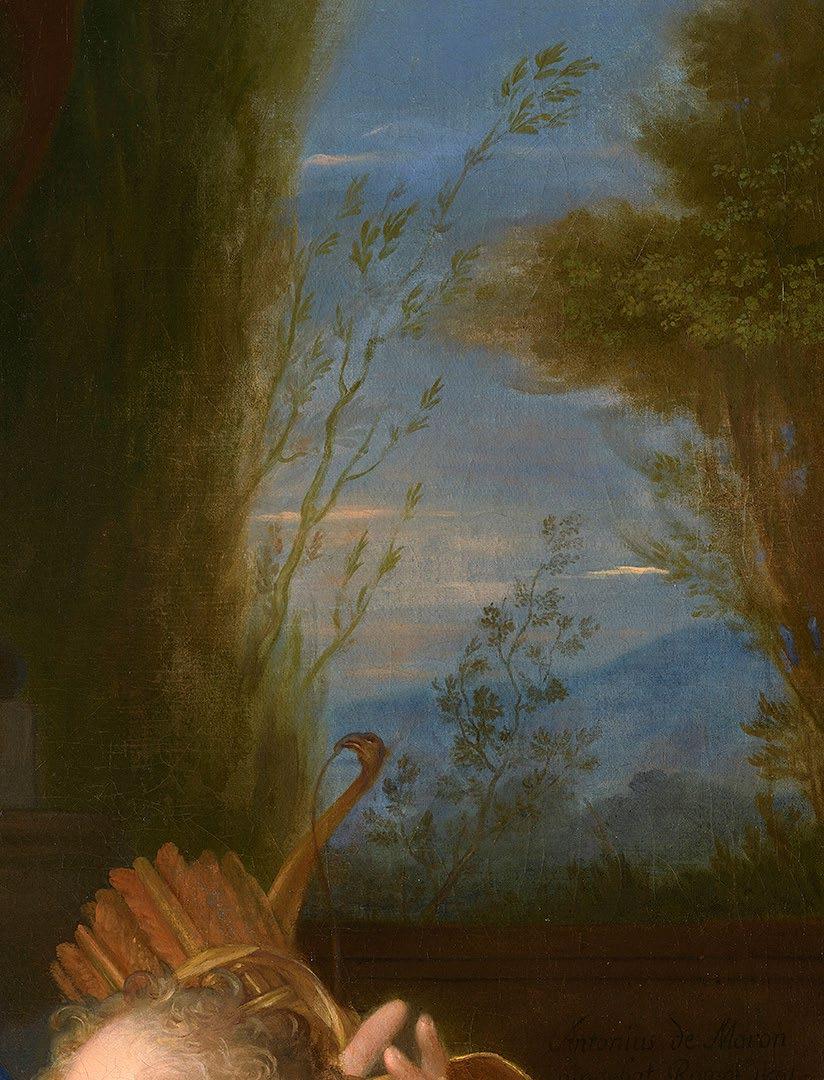
Signed and dated bottom left: Antonius de Maron pingebat. Romae Anno. 1801 and in the middle of right margin (below the balustrade): Antonius de Maron/ pingebat. Romae 1801
Provenance:
The artist's estate, Rome 1808
Archival Documents:
Inventarium bonorum hereditariorum bonae memoriae Antonii de Maron, Rome, Archivio di Stato di Roma, 30 Notai Capitolini, uff. 4, G. B. Sacchi, vol. 567 (8th March 1808), fol. 126r –171v, n. 74: “Un quadro senza cornice di Altezza p. 8 per 5 rappresentante Venere e Mercurio con amorino che insegna a scrivere a Cupido” [“A frameless painting of a height of 8 ft. by 5 representing Venus and Mercury with a cherub teaching Cupid to write”].
Literature:
Michel 1971, 1996
O. Michel, Peintres autrichiens a Rome dans la seconde moitié du XVIIIème siècle, in "Römische Historische Mitteilungen" 13, 1971, p. 309, n. 74,
reprinted in Id., Vivre et peindre à Rome au XVIIIe Siècle, Rome 1996, p. 409, n. 74.
Schmittmann 2013
I. Schmittmann, Anton von Maron (17311808), Leben und Werk, Munich 2013, pp. 365-367, cat. 113. Prosperi Valenti Rodinò 2026
S. Prosperi Valenti Rodinò, Anton von Maron: Figure Drawings, in "Master Drawings" 64, n.1, 2026, pp. 1-10 (6-7).
Related Literature:
Azara 1780
J.N. de Azara, Opere di Antonio Raffaello Mengs. Primo Pittore della Maestá di Carlo III. Re di Spagna, 2 vols, Parma (Stamperia Reale, Torchi del Bodoni) 1780.
Azara/ Fea 1787
J.N. de Azara, C. Fea, Opere di Antonio Raffaello Mengs, primo Pittore del
Re cattolico Carlo III. Publicate dal Cavaliere D. Giuseppe Niccola d’Azara e in questa edizione corrette ed aumentate dall’avvocato Carlo Fea, Rome (Pagliarini) 1787.
Cartari 1647
V. Cartari, Imagini delli Dei de gl’antichi (1571), Venice 1647, ed. W. Koschatzky, Graz 1963.
Cesareo 2010
A. Cesareo, Anton von Maron e l’Accademia di San Luca, in E. Debenedetti (ed.), Collezionisti, disegnatori e pittori dall’Arcadia al Purismo, Rome 2010, pp. 201-234.
Peters Bowron 2016
E. Peters Bowron, Pompeo Batoni. A complete Catalogue of His Paintings, New Haven and London 2016.
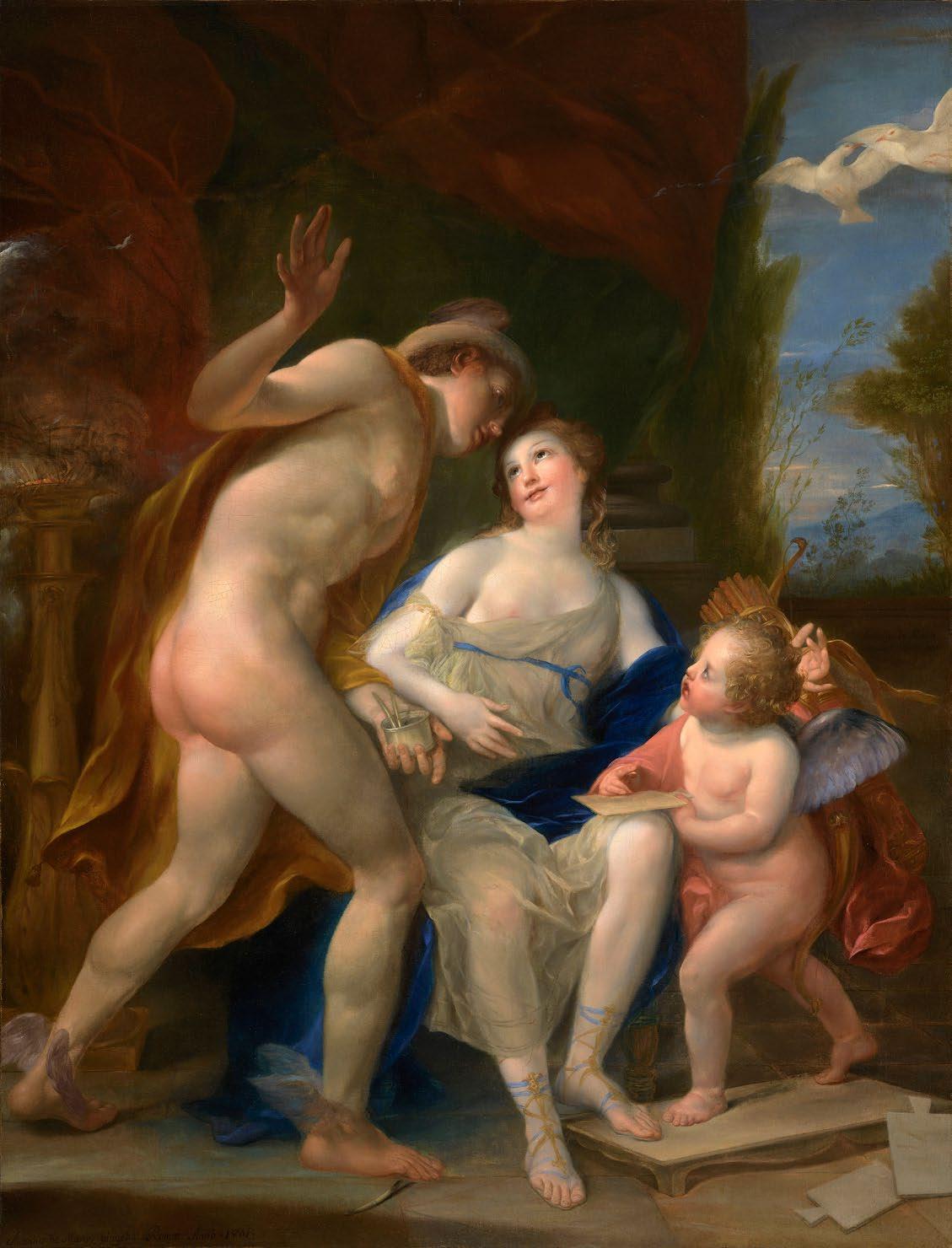
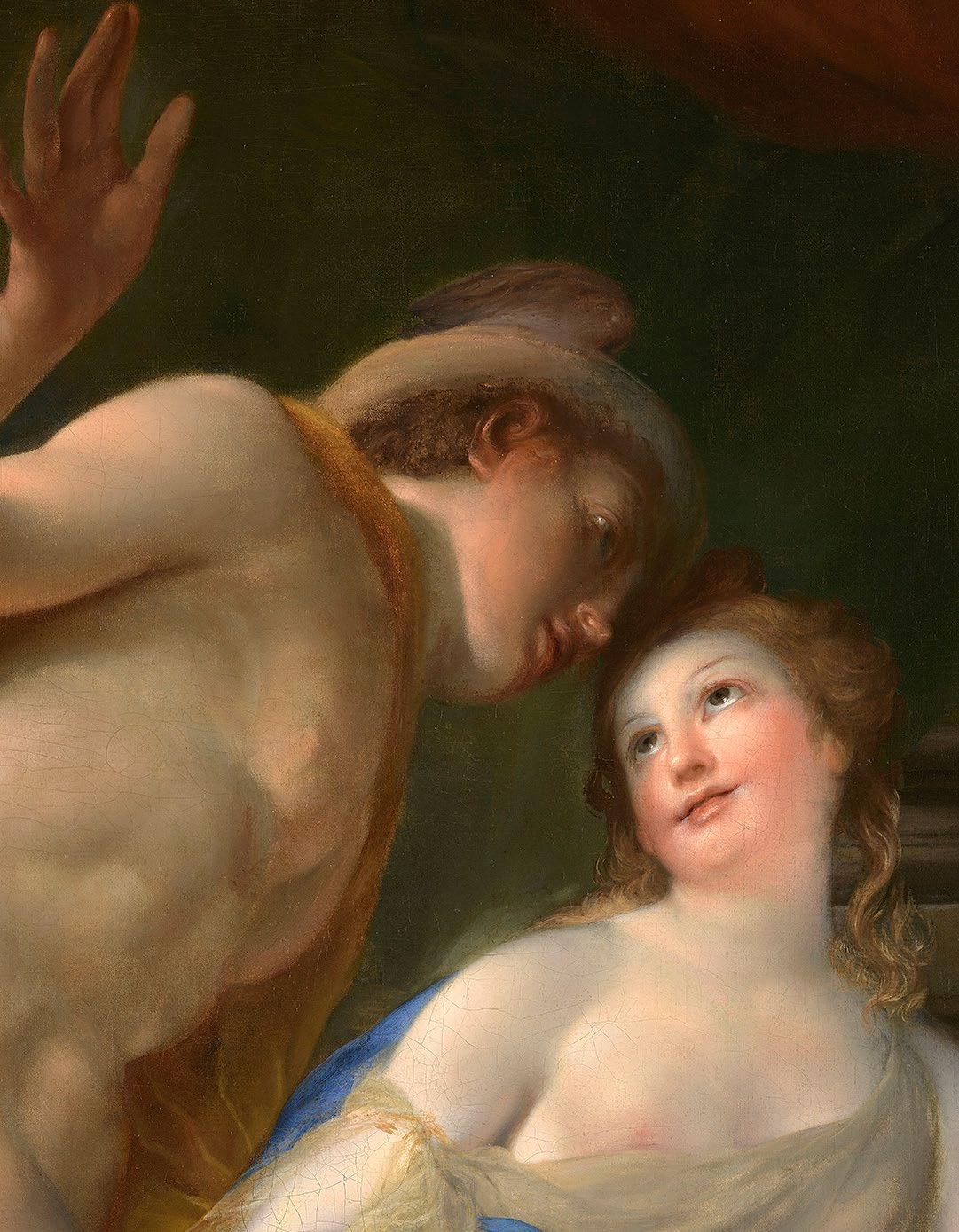
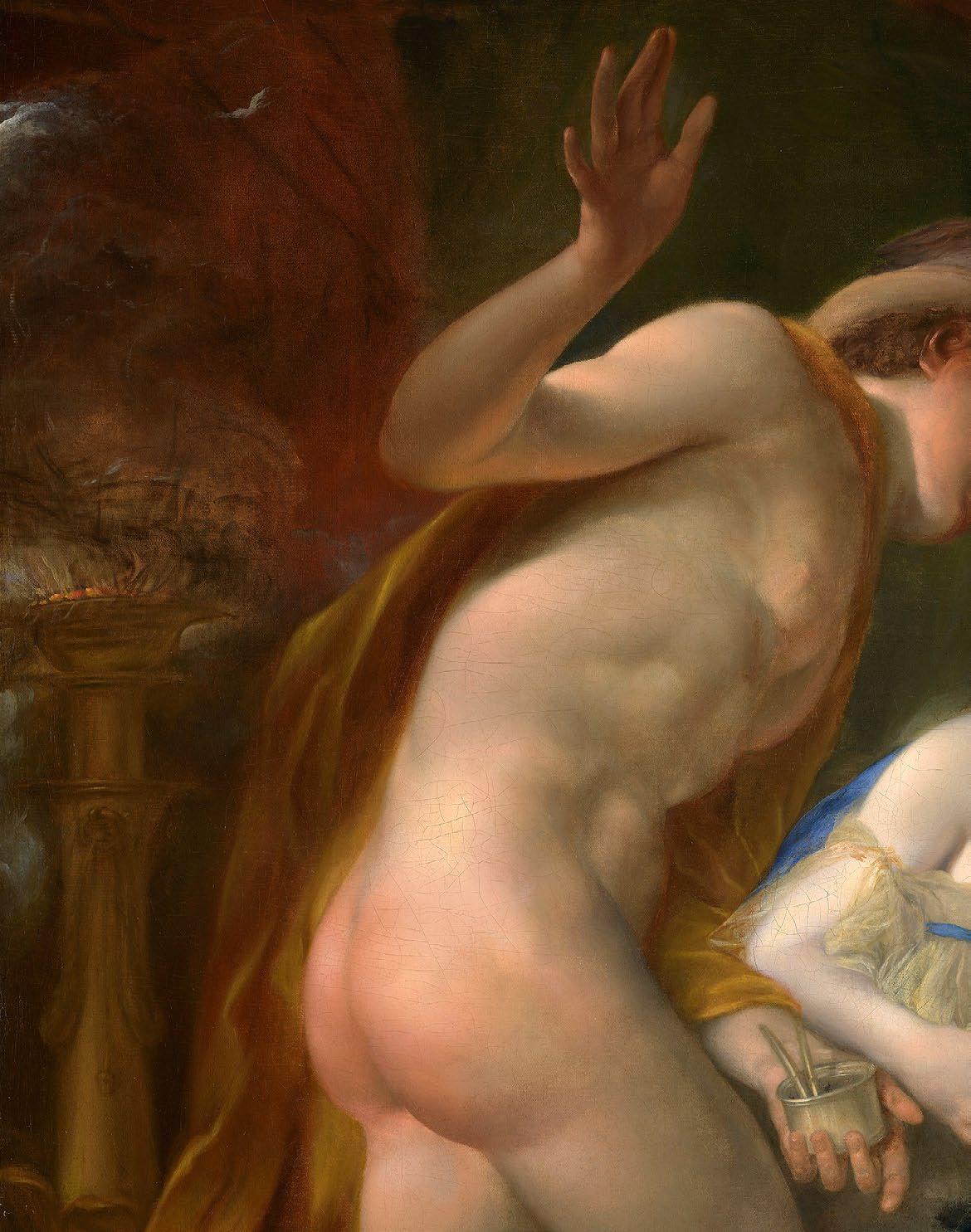
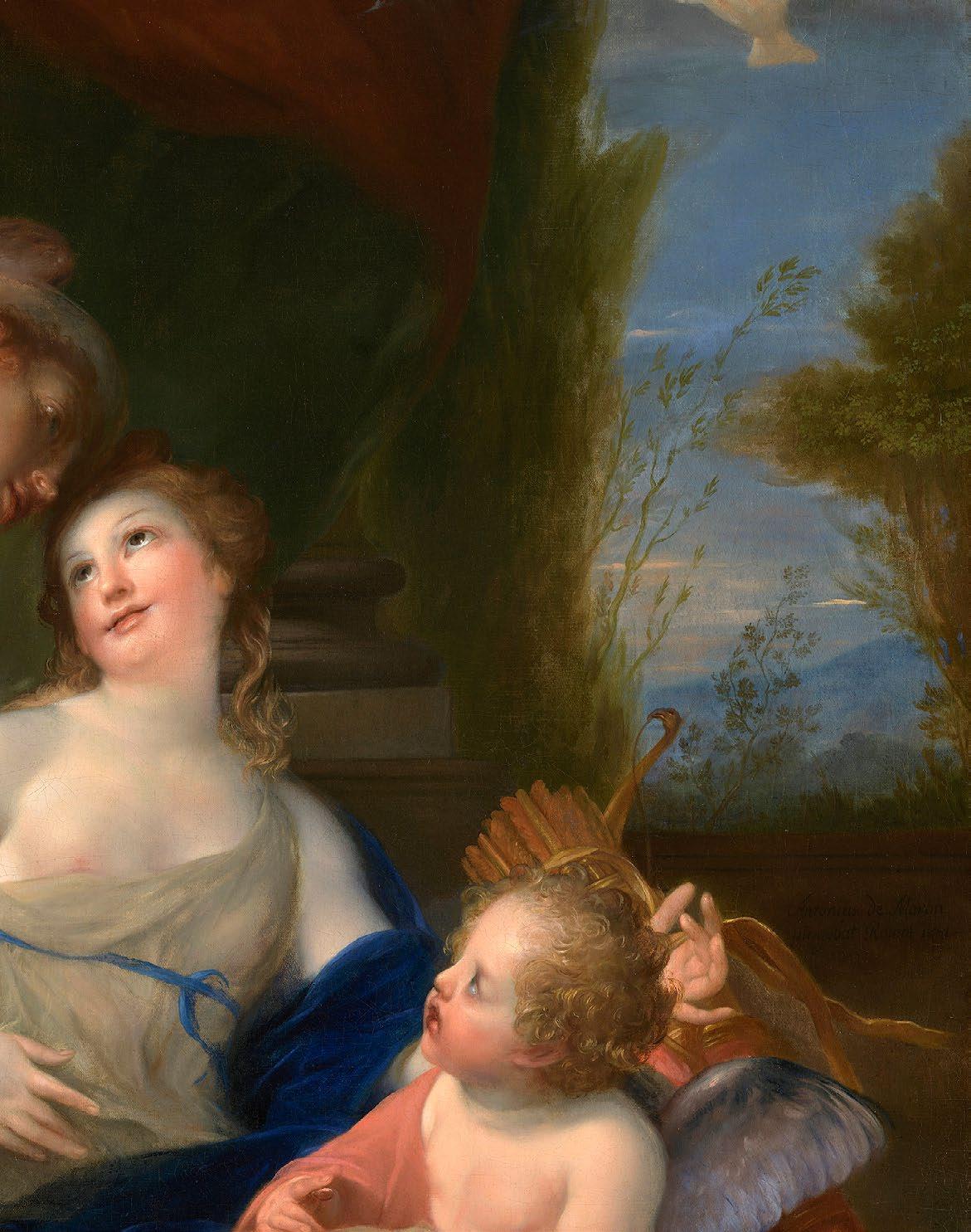
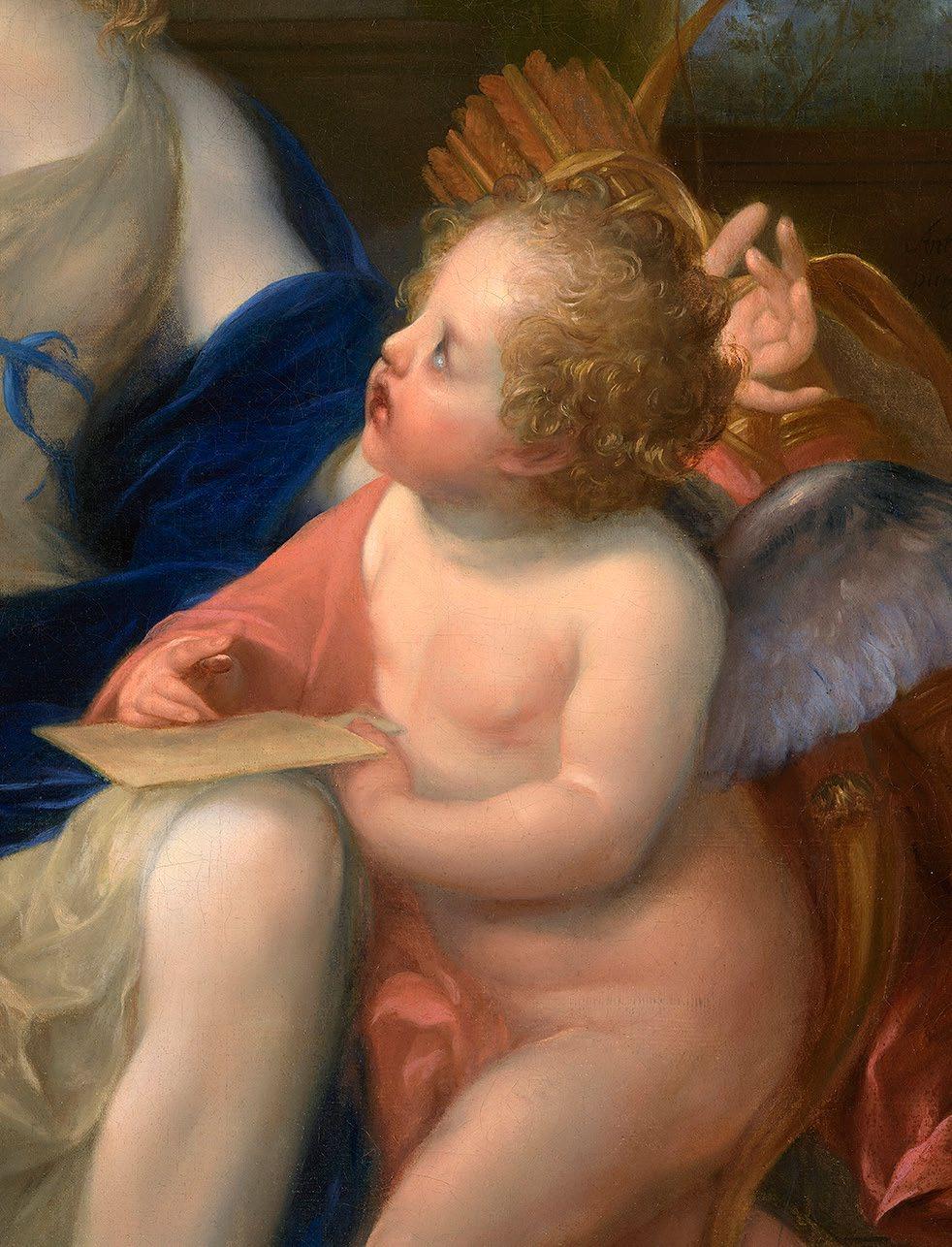
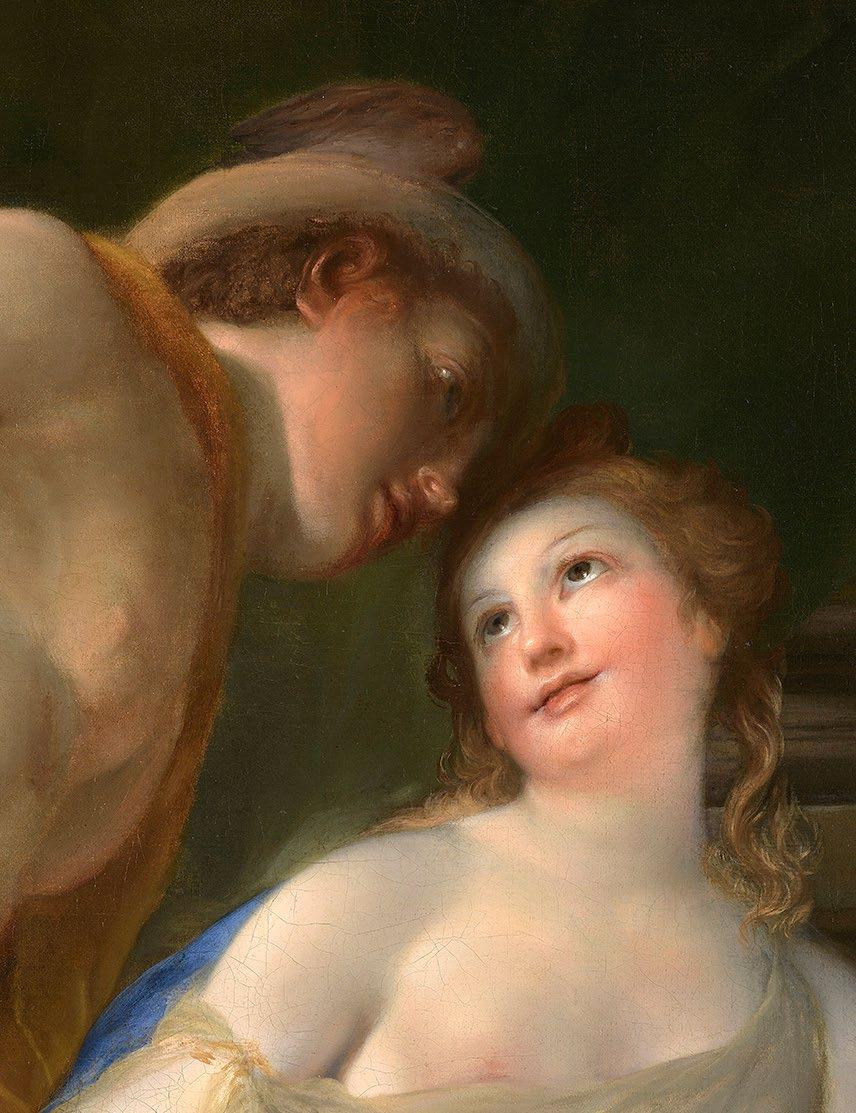
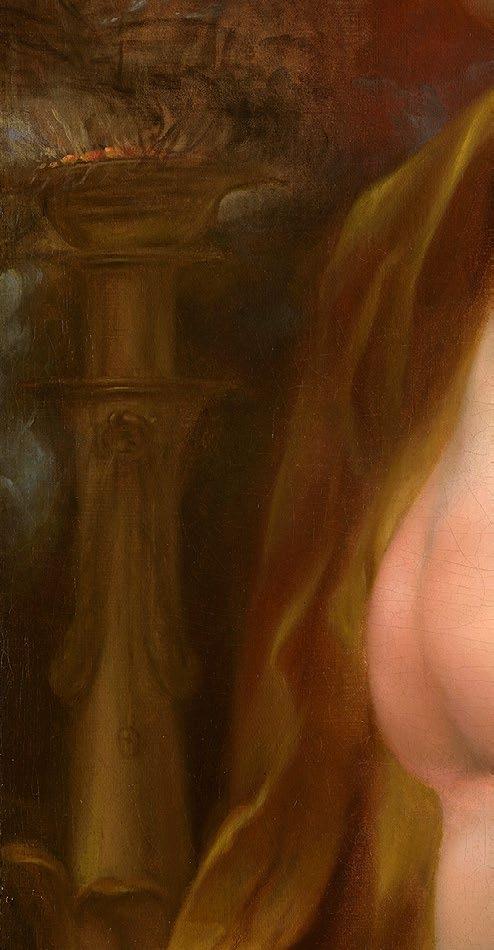
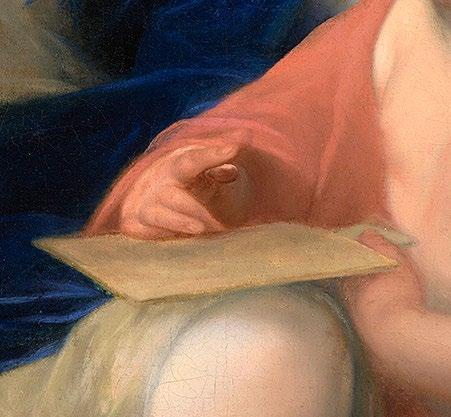
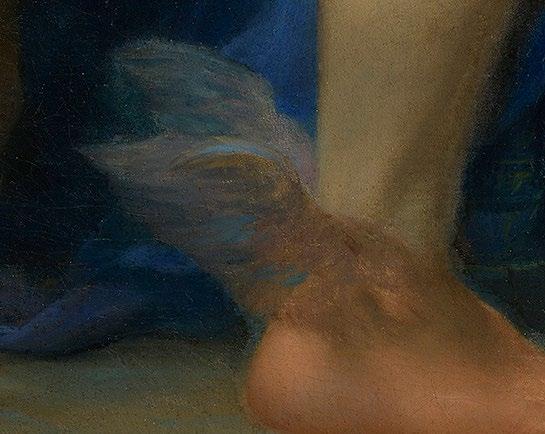
The story of this picture, which was listed in the inventory of the artist’s estate, without its frame in the studio next to his bedroom, remains obscure. The two inscriptions, the second of which was only just uncovered during recent restoration, bring the date forward to 1801 from 1806 (Schmittmann 2013). Despite being signed, the painting is missing some finishing details as can be seen in several places, for example to the left around the stand upon which the flaming brazier rests, the contour of Mercury’s back or Cupid’s hand. The wings on Mercury’s right foot which let through the shape of the anklebone and the blue of Venus’ robe seem rather sketched (figs. 2,3,4). Unlike these secondary areas, the figures of the three protagonists are perfectly formed and it is here, other than in the compositional structure, that Mengs’ teachings are most keenly felt, especially in the modelling and the extremely delicate veiling of Venus’s clothing.
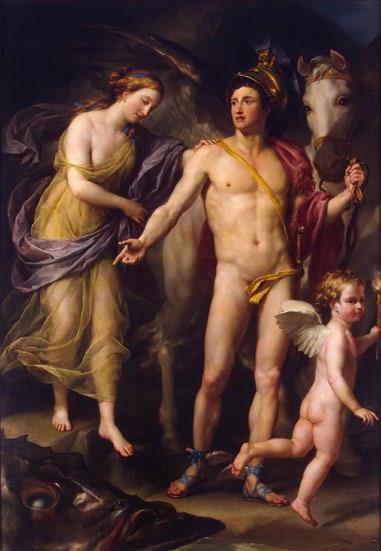
The pictorial range in which luminous and brilliant colours dominate is typical of works from the artist’s late maturity when he had chosen a differing path from the classical and monumental manner of his master and brother-in-law Mengs (fig.1). The compositional structure and the fluidity of the ductus bring him closer, in fact, to Cristoforo Unterperger (1732-98), his peer and friend whom he had known since his childhood in Vienna, but also to the late works of Pompeo Batoni (1708-87), both the last protagonists of the Arcadian taste shared by the cultured Roman society of the Ancien Régime, but which went out of fashion at the beginning of the new century.
Such circumstances support the hypothesis that the work – because of its theme and ambitious format – was born from a prestigious commission which did not come to fruition, probably due to the adverse political circumstances which had upset the Roman cultural world during the French Occupation (1798-1800). The idea, however, that from the start Von Maron had intended the work for the free art market which was growing in those years in Rome, but which favoured another type of picture at that point, one more fitting with the tastes of the postrevolutionary public, cannot be excluded. It may well be for this reason that the work stayed in its ‘state of execution’, but it could also be that the artist was unable to finish it because of old-age or failing health, which would also explain the two signatures. In fact, there is very little news of him in cultural newspapers after 1798 and even his activities at the Accademia di San Luca, which for so many years had been intense and continuous, lessened. Von Maron’s final attendance at an academic congregation was on 5th January 1800 (Cesareo 2010, p. 204).
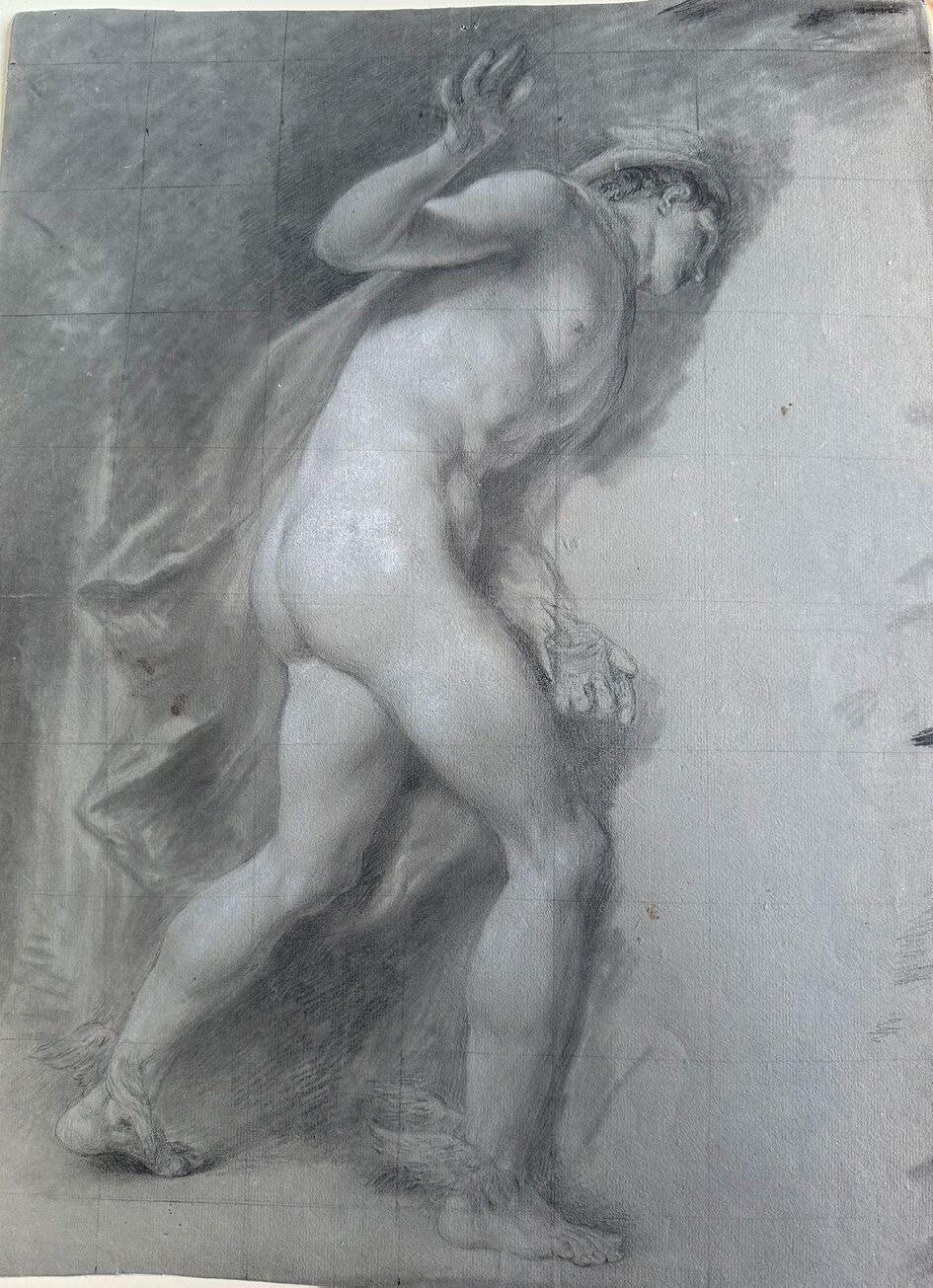
We can reconstruct the origin of the painting through a study for the figure of Mercury (fig. 5) recently identified by Simonetta Prosperi Valenti Rodinò at the Fondo Duranti of the Biblioteca Romano Spezioli in Fermo (Marche), where other drawings by Von Maron, likely from his bequest, which show the accurate and detailed elaborations made by the artist in preparation for his compositions, are kept. Except for the drapery of the cloak, the study, currently the only one known but surely originally accompanied by studies of the same type for the other figures, corresponds exactly to the final figure. Behind his back, the stand with the flaming brazier can be seen closer than in the painting. His pose is reminiscent of an important context in Von Maron’s
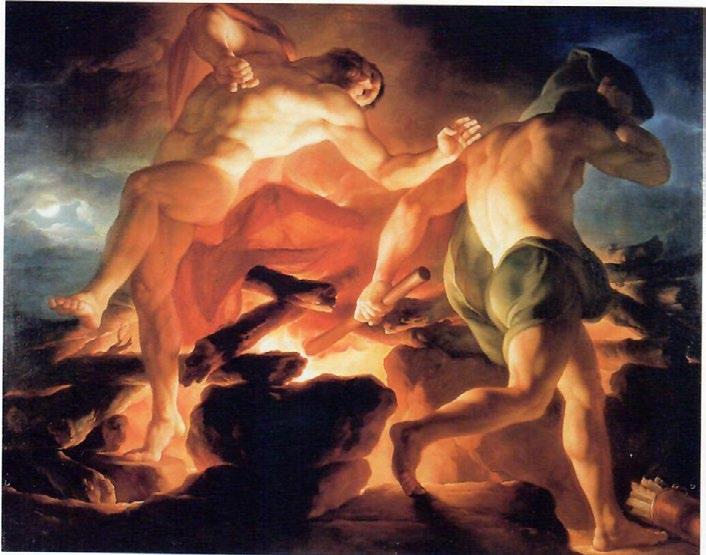
career in that it is derived from the walking figure of Philoctetes in the panel of the Death of Hercules by Unterperger in the ceiling showing the Story of Hercules in the Villa Borghese, painted between 1783 and 1785 (fig. 7). Von Maron was at the time working in the room next to the ceiling painting the Story of Dido and Aeneas in which one of the panels features Mercury in flight, but in a rather awkward position (fig. 8). Nevertheless, his head seen in profile and his bent arm turned upwards recall the Mercury in the painting here in question, a comparison which clearly favours the latter and demonstrates the progress Von Maron made in figurative painting which was never his true craft. He was undoubtedly able to make the most of his academic exercises which increased thanks to his educational activities at the Accademia di San Luca in his older age. In fact, Mercury’s pose derives from the repertory of academic poses used in
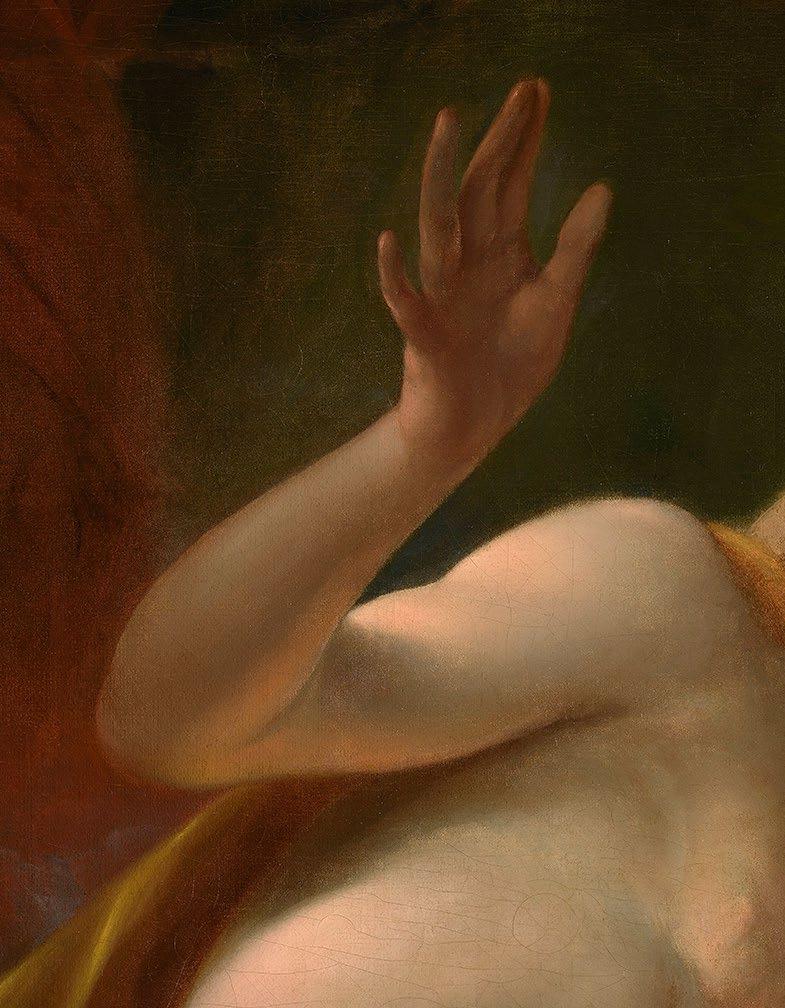
Rome and familiar to Von Maron from his early Roman years (figs 10,11). The composition emphasises the figure of Mercury who appears in the act of a brusque movement raising his hand as if he wanted to reprimand the young Cupid who has a tablet leaning against his mother’s knee, while she looks at Mercury (according to one ancient tradition, Cupid’s father) with an expression somewhere between amorous rapture and gratitude. Another two blank tablets have been thrown to the ground, indicating the young boy’s so far failed attempts at writing. Already equipped with wings, a quiver and arrows, he is missing the required instrument to complete such a task – a pencil. In his left hand, Mercury is actually holding a
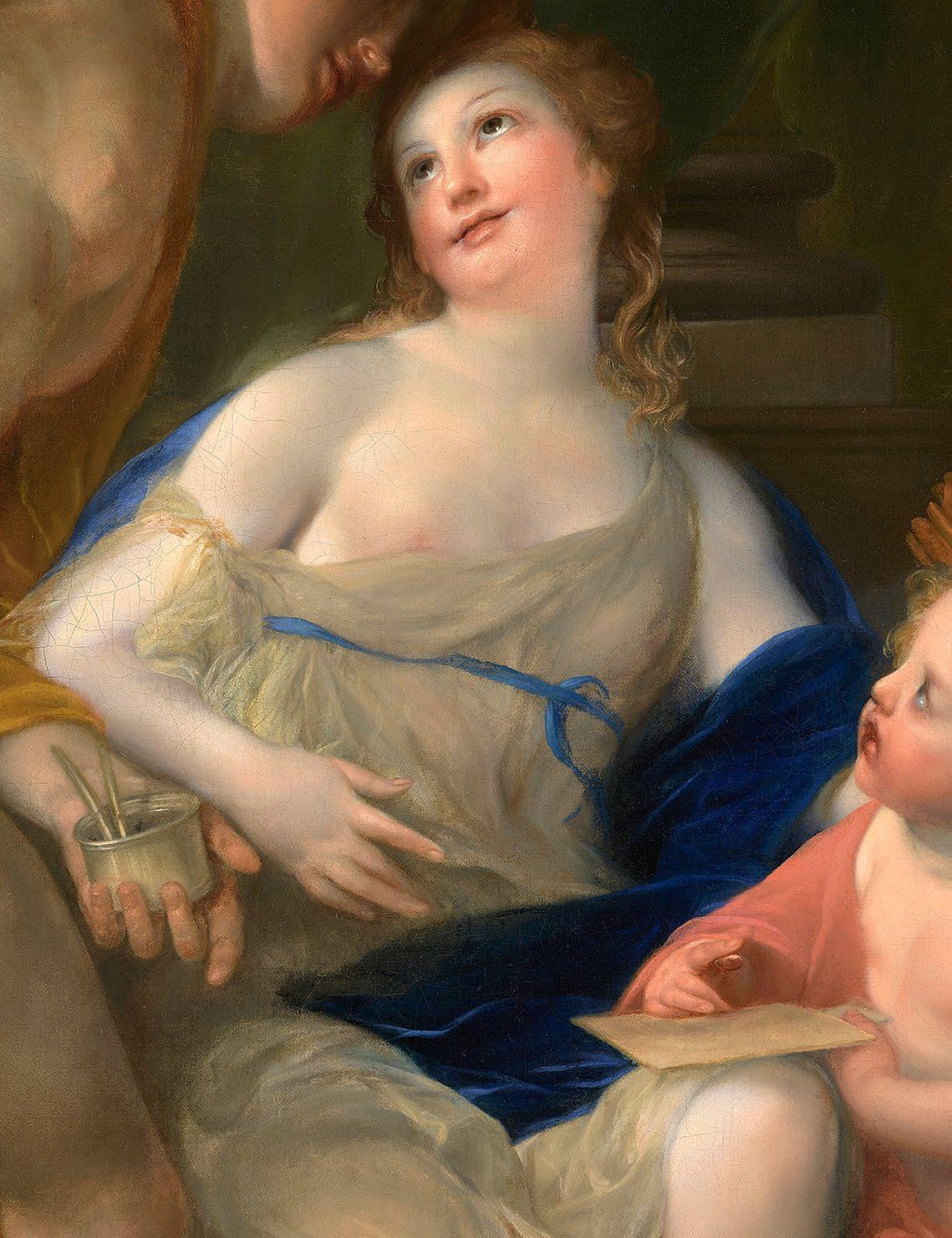
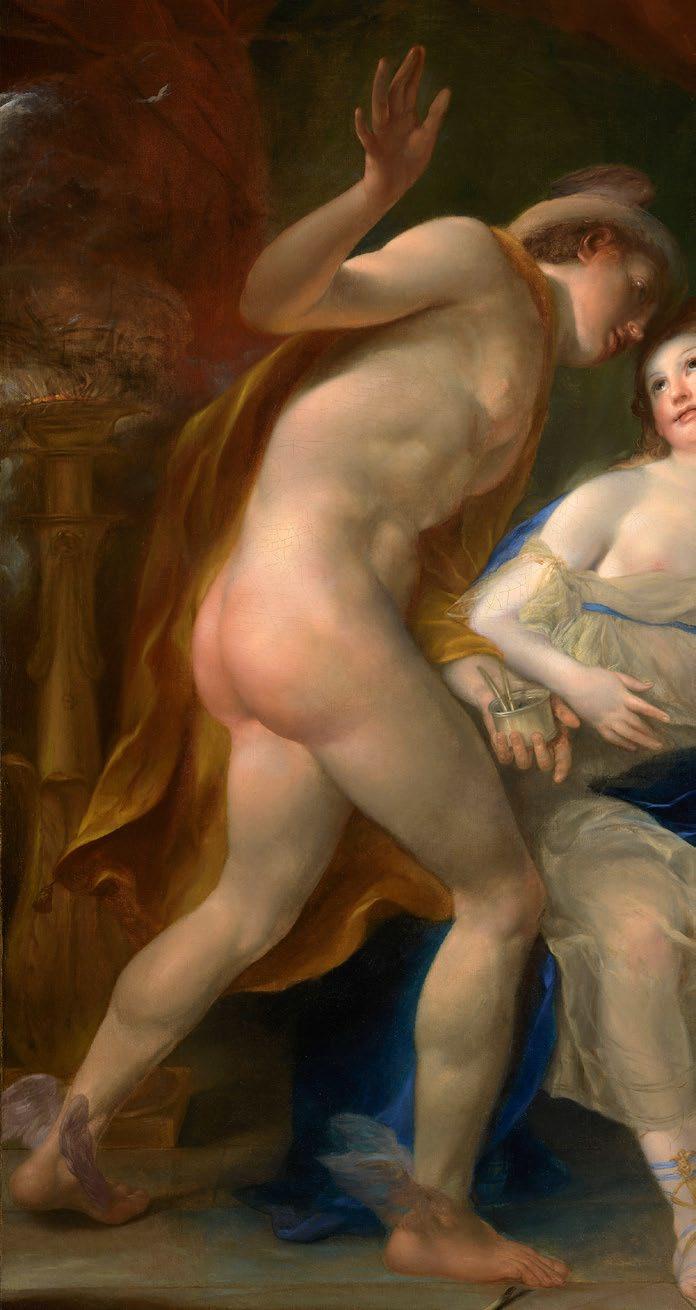
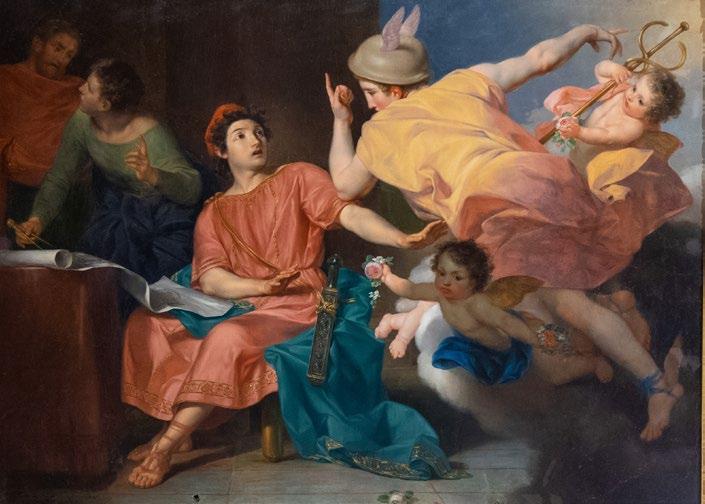
small cup containing two pencils, while a third has fallen to the ground and lies at his feet. Told in this sentimental and slightly burlesque way, the episode does not convey the highly symbolic significance of the subject as a representation of Celestial Love which has boasted an important iconographic tradition since the Italian Renaissance. Absent in ancient literature on Greek mythology, the scene is drawn from the
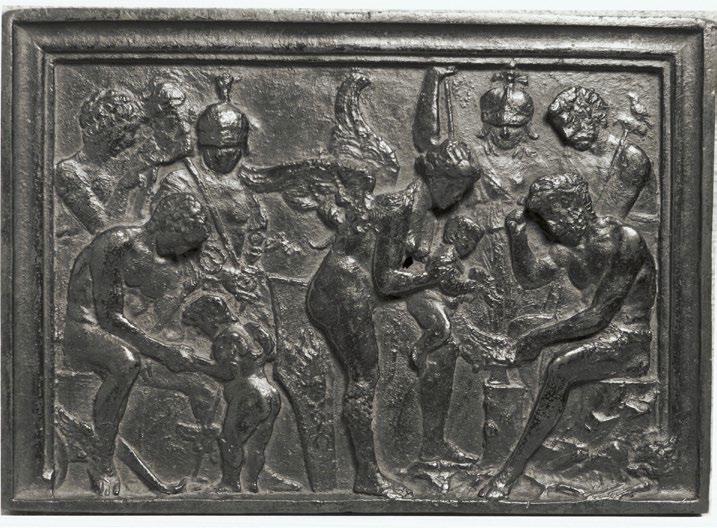
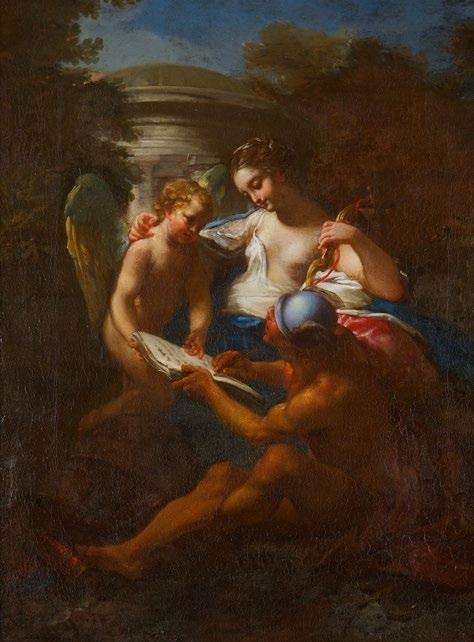
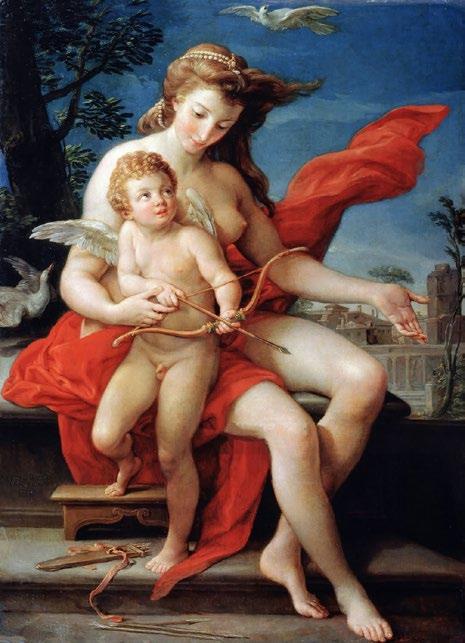
famous Hypnerotomachia Poliphilij by Francesco Colonna, a utopian novel published in 1499 in Venice. A Venetian relief from the late 15th century enhances its allegorical and emblematic significance, combining it with Vulcan about to forge wings for Cupid, held up by Venus (fig. 9). 16thcentury iconography also emphasises the allegorical and emblematic significance of Celestial Love and Terrestrial Love as a pair, while during the 17th and 18th centuries, the arcadian aspect of the tale came to have more meaning, referring to Mercury as the inventor of letters, a reason for which the god became a key figure in Arcadia (Cantari 1647, pp. 172-3). The painting, known in several versions, by Benedetto Luti (1666-1724) (fig. 12), a protagonist par excellence of the Arcadian taste in Rome from which Pompeo Batoni drew inspiration for his variant without the figure of Mercury, confirms this (fig. 13). Von Maron was certainly aware of this painting commissioned from Batoni in 1785 by the Prince Nicolai Borisovich Yusupov during his Roman sojourn (Peters Bowron 2016, II, pp. 197-8, cat. 469). In the same year, Von Maron also painted a mythological subject for the Russian prince, Leda and the Swan (Schmittmann 2013, cat. 107).
His ‘ideal model’, however, was another painting, that by Antonio Allegri, known as Correggio, now the most famous of the subject but at the time rather unknown (fig. 14). Von Maron was undoubtedly one of the few
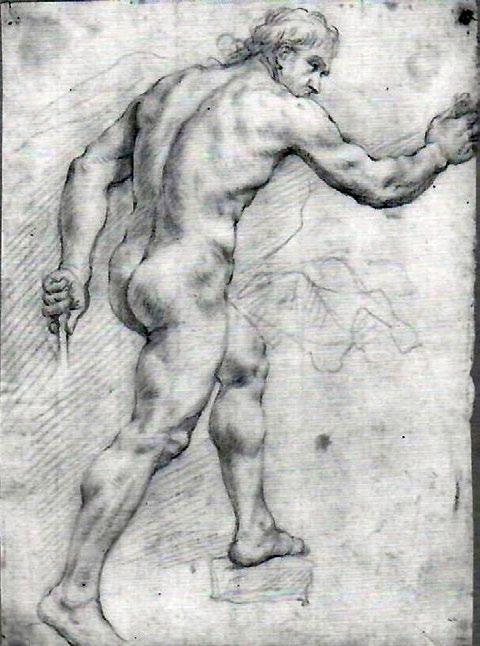
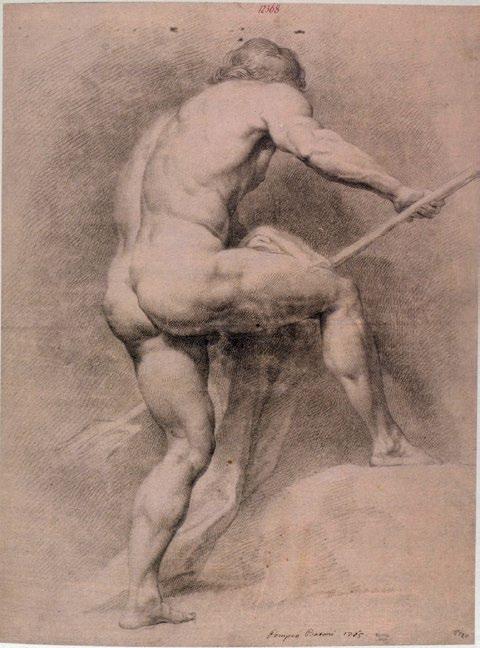
Figs 10,11: Anonymous, Roman, first half of the 18th century, Male nude seen from behind, Salzburg, University Library, inv. H 355/4, red graphite on white paper, 272-275 x 200-202 mm; Pompeo Batoni, Male nude seen from behind, 1765, Vienna, Akademie der bildenden Künste, Kupferstichkabinett, inv. HZ 12 406, black and white graphite, 519 x 397 mm
people who was aware of it, considering that Anton Raphael Mengs had described it in his Memorie sopra il Correggio published amongst his writings edited by José Nicolás d’Azara, a book to which Von Maron had contributed several letters and which was amongst those listed in the inventory of his estate in 1808 (Michel 1996, p. 412, n. 138).
Mengs provides a vivacious and enthusiastic description of the painting, at the time in the collection of the Duke of Alba:
“The Duke of Alba keeps a painting by Correggio with figures slightly smaller than life, painted on canvas, representing Mercury who is teaching Cupid to read in the presence of Venus. In the figure of the latter there is a peculiarity, that Correggio has painted her with wings on her shoulders, and with a bow proportionate to herself in her left hand. She is most beautiful, and it seems that the artist thought of the legs and movement of the Apollino from the Villa Medici, now in Florence. Cupid expresses all the innocence of boyhood; and his hair is all curled, but worked so marvellously, that part of the scalp can be seen under the
hairline, and without a trace of dryness. His little wings are represented in the same way as seen on young birds, which still show the skin, and budding feathers; and in the painting as on all other occasions upon which Correggio painted wings, he has attached them so well, not in the way of other painters, who make them harshly detached; but he has placed them immediately after the shoulder, in a way that they attach so well to the flesh, that they appear to actually be a member attached to the upper part of the acromion, and as the owner of the painting once said so well; that these wings of Cupid’s appear so well placed that if it were possible for a child to be born with wings, he would be born so. Mercury too is represented young with a simple character, but not fully grown-up. The painting is undoubtedly original; as beyond all its qualities, which the superiority of Correggio’s excellence brings with it, there is a notable ‘pentimento’ which is visible by having taken the colour from Mercury’s arm, where a blue cloth has passed. This is mentioned, because there exists another similar painting in France, which must be a replica by Correggio himself, as he did several times. That of the Duke
Figs 12,13: Benedetto Luti, Education of Cupid, c. 1717, Burghley House, England, 42 x 32.5 cm;
Pompeo Batoni, Venus Teaching Cupid, Arkangelskoye State Museum, Russian Federation, 134 x 98 cm
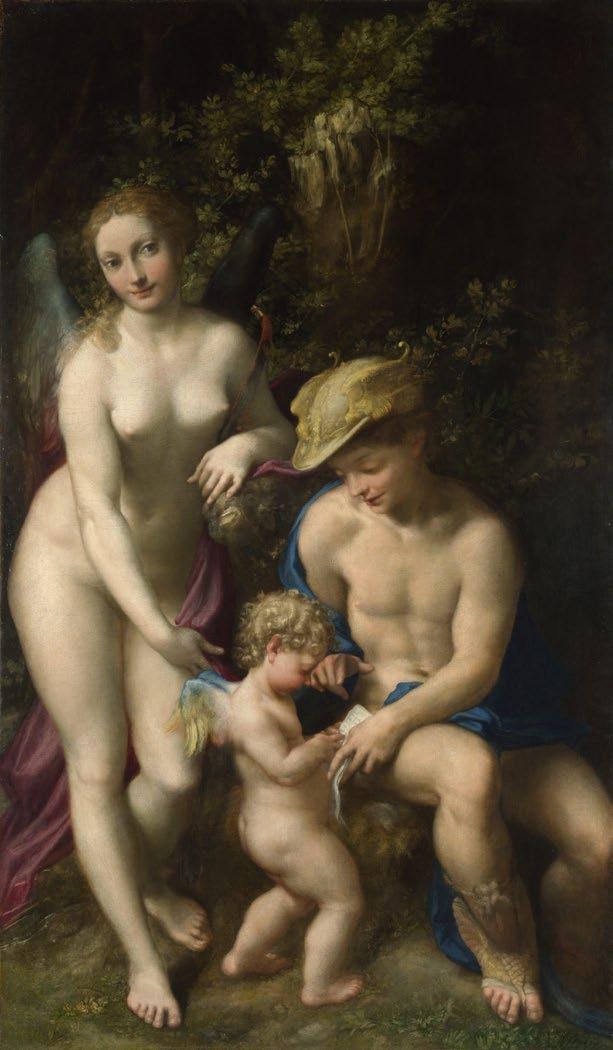
of Alba was acquired by one of his ancestors.” (Azara-Fea 1787, pp. 190-1).
Naturally, the ‘comparison’ between Von Maron and Correggio does not concern the compositional details which for obvious reasons he could not have known, but refers mostly to his way of colouring, defined by Mengs as “delicate and fine” (quot. Azara-Fea 1787, p. 128), to his manner of composing considered by Mengs to be well executed in the “affection of love” (ibid.), to the “gracious” subjects or to his preference for “curved and straight lines” and “the union between drawing and chiaroscuro” equally brought up by Mengs. It would really seem that with his choice of this subject, Von Maron intended to engage in a more profound dialogue with the manner of the great painter so admired by Mengs. This is demonstrated above all by the colour palette, rich in nuances, and the chiaroscuro effects, unseen in his other works with religious or mythological themes. For this reason, the painting of the Education of Cupid, one of his most ambitious compositions, holds a position of both prominence and eminence.