



With Christmas just around the corner, we’re in the gift season. Now’s the time to buy for your favorite golfers. Wind shirts, tech pants, polos, caps, towels, ball markers, and umbrellas make great gifts. So do golf balls, if you know the recipient’s preferred brand and model. Good players won’t hit Pinnacles or Top Flites as anything other than practice balls. High handicappers, who lose a lot of balls, don’t need to feed $5 Pro V1s into ponds and woods. Maybe get them a ball retriever instead.
But clubs? Don’t do it! OK, maybe for small kids. Golfers need to choose their own equipment. Clubs should be tried and fitted.
I learned the hard way. My dad never liked that set of Confidence (they’re still around) golf clubs my mom and I picked out for him at the national golf retailer when I was a kid. He suffered with them for several years to spare our feelings.
But gift certificates are a great option for rounds, simulator time, equipment and gear, lessons, annual memberships, or tabs at the 19th hole.
I went out to check the hot gift ideas for golfers this holiday season (page 10) and came up with a few to share.
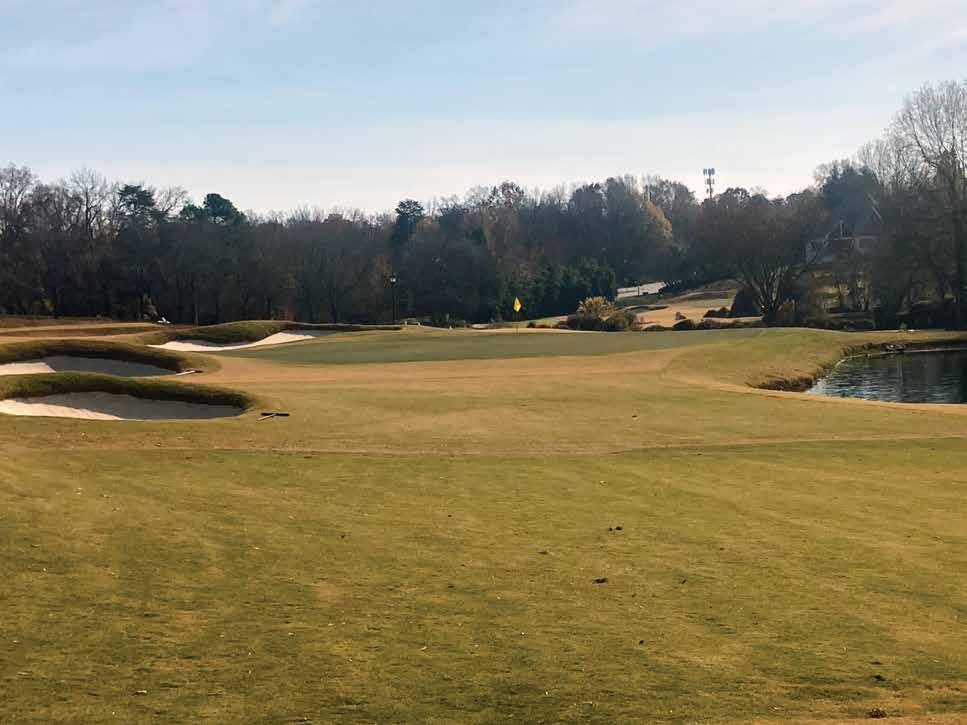
It should be an especially happy holiday season for members at Starmount Forest Country Club, where the course reopened this fall after an extensive renovation by Greensboro-based architect Kris Spence.
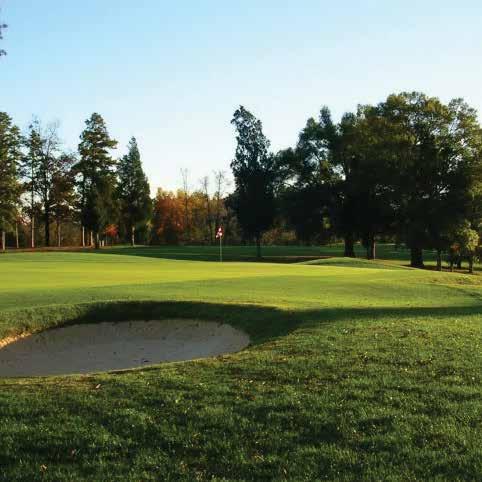
I came away impressed with the changes after a tour of the course. Our report includes photos showing some of the improvements.
Planning your golf trips for next year? Our destination stories feature The Omni Homestead Resort in Hot Springs, Virginia, and Wild Dunes Resort on Isle of Palms near Charleston, South Carolina.
The Homestead is one of the nation’s historic full-service resorts, tucked away in the Allegheny Mountains. The place where Sam Snead learned the game, the resort offers two great courses — The Old Course and Cascades.
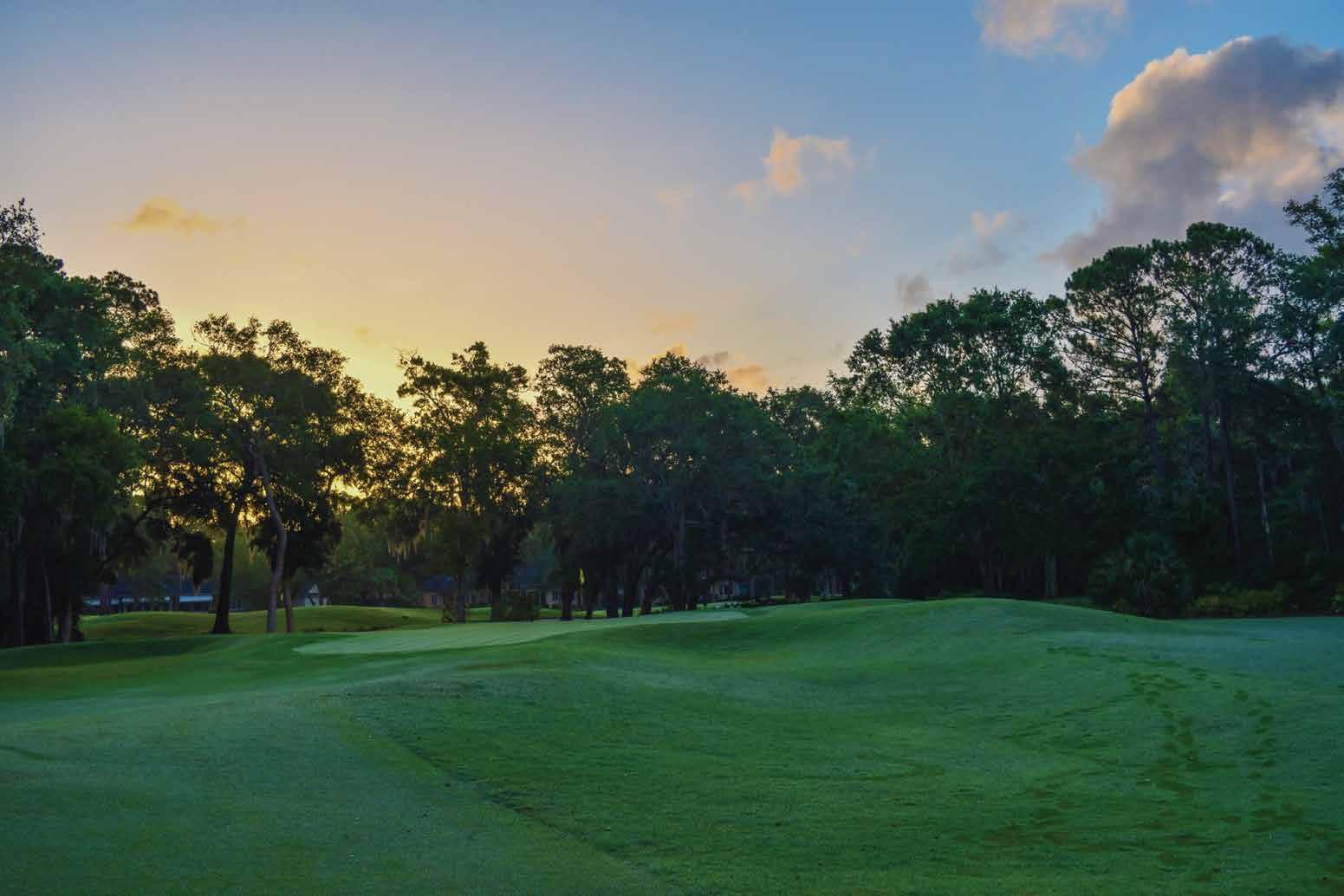
from the editor ON THE COVER Hole 7 at Starmount Forest.
Wild Dunes put Charleston on the golf travel map when its Links Course opened in 1980 as Tom Fazio’s first solo design. Fazio’s team recently completed a $9.5 million renovation of its Harbor Course that included raising some of its fairways along the Intracoastal Waterway to expand the landing areas.
I want to thank our 2025 advertisers. It’s been a fun year. We’ll be back with a print issue in March. Until then, go to TriadGolf.com for the latest area golf news.
John Brasier
JOHN BRASIER Editor + Publisher | john@triadgolf.com
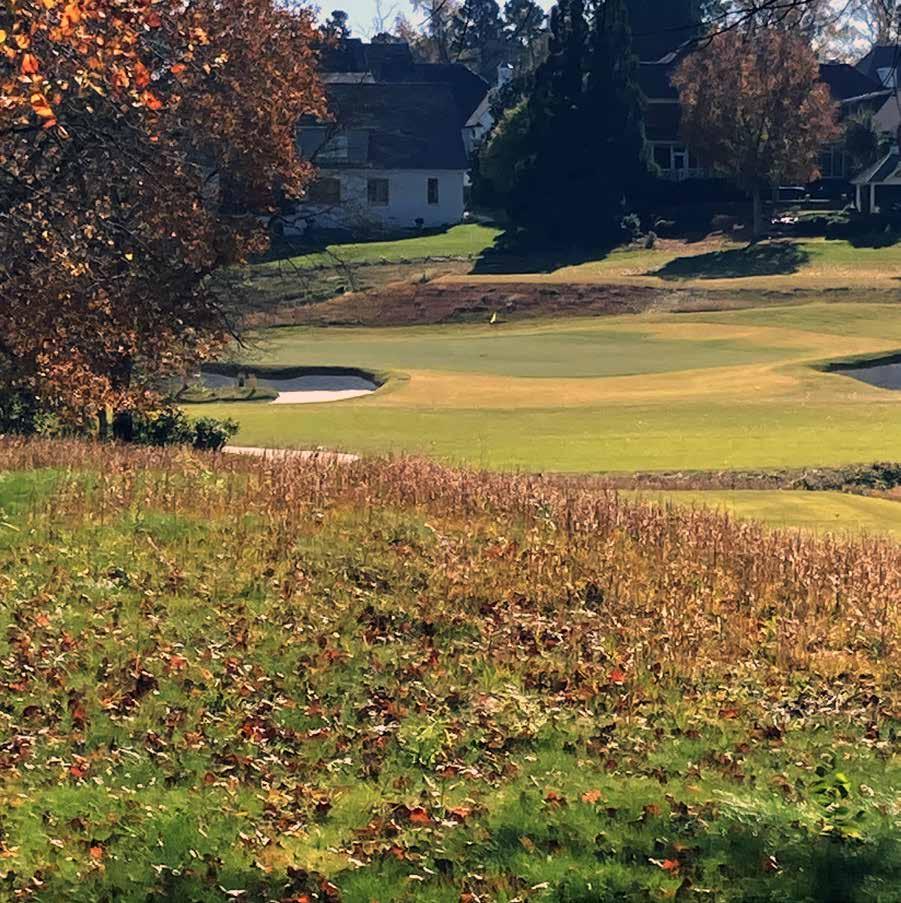
Call it a restoration. Or call it an update. Both would be accurate descriptions of Kris Spence’s recent work at Starmount Forest Country Club.
Either way, Spence and Starmount Forest president John Barbee agree that the finished product has a more consistent flow, offering a greater challenge to good players while giving more options to highhandicappers and shorter hitters.
The most obvious changes are in bunkering and green complexes.
“It’s a new day at Starmount, for sure,” said Spence, the Greensborobased architect who has specialized in restoring many of the characteristics of classic layouts, especially the designs of legendary architect Donald Ross. “There’s more change than what you can initially see.”
“The changes are spectacular in the way that the golf course looks and how it feels,” said Starmount president John Barbee. “It’s a new golf course for each and every member.”
The multi-million-dollar project, which closed the course for more than a year, opened to members on October 18. The wet summer caused delays in grassing the fairways and resulted in sodding about 20 acres. Spence credits superintendent Brooks Turner and his staff with getting the course ready despite the wet weather.
Common to many classic courses, Starmount had changed over the years with normal shifts in maintenance and periodic updates.
Wayne Stiles and John Van Kleek designed the west Greensboro course in 1930. In 1947, Starmount played host to the U.S. Women’s Open.
George Cobb, the architect of Quail Hollow and the Augusta National par-3 course, made renovations and tweaks in 1970. Lester George, whose original designs include Ballyhack in Roanoke, Virginia, made changes—many that improved drainage—in 1999.
Spence wanted to restore the old-style feel, though not build a replica.
“Both changes took it away from an older, classic style,” Spence said. “We wanted to make it look like the course was built in 1930s.”
Spence tweaked each hole in multiple ways. Bunkers were added, eliminated, and moved.
Zoysia tee boxes were leveled, widened, and lowered. Some were moved. A few new back tees were added. Some trees were removed — the par-3 eighth hole is more visible from Holden Road — to open sight lines.
Many bunkers were repositioned to coincide with the increased distances of today’s players. The new capillary concrete bunkers drain quickly and play consistently.
Spence removed much of the mounding around greens, providing shaved areas around the putting surface for greater chipping options. Areas behind greens, where mounds had served as backstops, now filter away from the green.
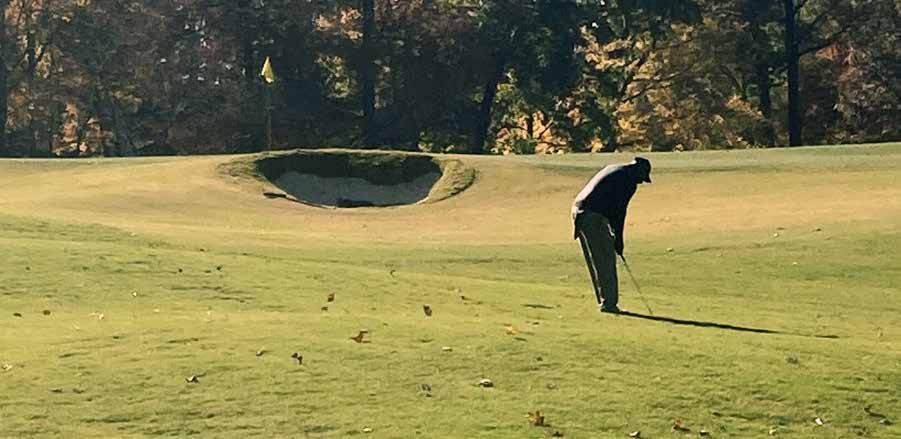
Areas around the front of greens were firmed up with a sand base to allow approaches to roll on to the new TifEagle surfaces, which were recontoured to accommodate the faster speeds. The Tahoma 31 collars are durable and resist encroaching on TifEagle.
“The biggest change is the change in the greens, the subtle breaks and challenges added to the greens,” Barbee said. “I’m surprised how well they are putting after only a few weeks.”
About 15 acres surrounding the TifTuf fairways were planted in fescue for a new natural look.
A few new back tees add about 150 yards, making the par-72 layout play to about 6,700 yards from the tips. Course rating and slope were not yet available.
Keeping the course in pristine condition will be much easier thanks to a new irrigation system with 1,000 sprinkler heads, each of which can be controlled separately. The old sprinkler system was three decades old.
Spence made significant changes on the par-5 seventh, the course’s most visible and arguably its signature hole, which stretches along Starmount Drive near Holden.
Spence eliminated three bunkers on the left side of the fairway while placing a new bunker to the left that is reachable for long hitters. Another two bunkers tighten the second landing area.
A bunker right of the green was removed, allowing the green to move closer to the lagoon that extends down the length of the right side, with a roll-off toward the hazard.
The bunkering on No. 8 features a new bunker with a grassy island on
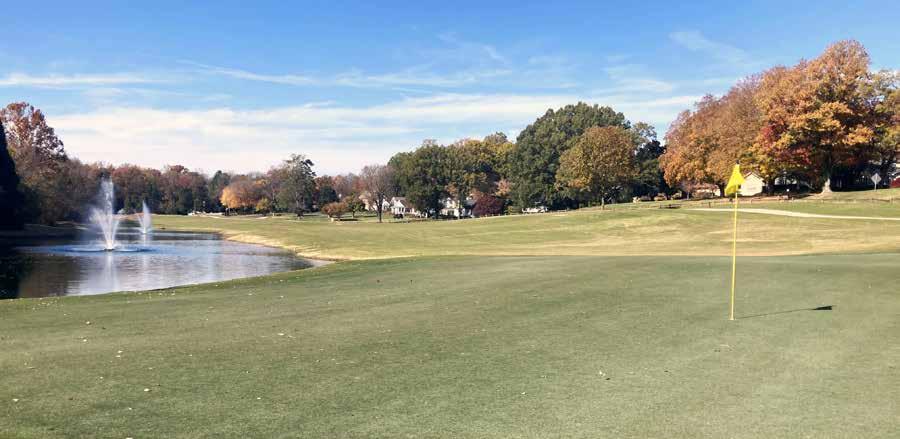
the front left and a small pot bunker on the back left. The right bunker was repositioned, leaving a small corridor open to the green, though shots to the right can filter off the surface.
At the short par-4 ninth, a half-dozen bunkers were tweaked and moved, opening up part of the fairway but tightening the shot for bigger hitters trying to drive the green. A back bunker was removed and replaced by a slope.
“To drive the green, you have to thread the needle,” Spence said.
The 12th green was moved back to a new spot. A new back tee, shared with 18, can extend the hole from 384 yards to more than 450 yards. The slope on the uphill approach was softened to prevent shots that come up short from rolling back down the hill.
A new back tee at 18 was extended back adjacent to the 17th green. The new bunkering design adds difficulty to a long-iron approach into the short par-5 finishing hole.
As pleased as the members are with the improvements, Barbee said the results of the renovations will be even more impressive when warm weather returns.
“It’s been an overwhelming success to the membership of Starmount Forest,” Barbee said. “We can’t wait until springtime comes around, we get a full growth season and everything turns green.”
Ø starmountforest.com

Winston-Salem and Forsyth County are home to several of the most prestigious golf courses in the state and the country.
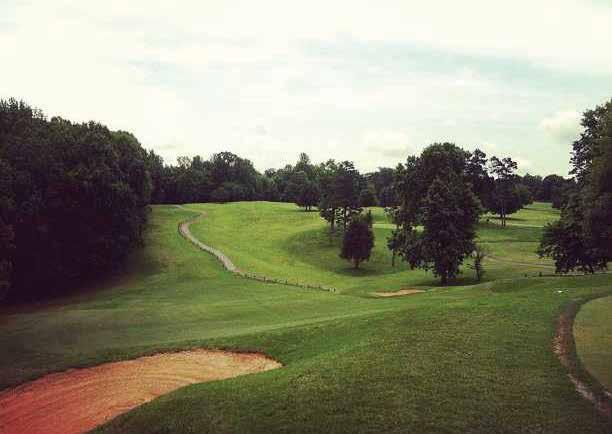
But there’s likely no more important facility than the city of Winston-Salem’s Reynolds Park Golf Course, which has been introducing new players to the game for more than eight decades.
Originally designed by world-renowned architect Perry Maxwell, who completed the acclaimed Old Town Club layout the year before, Reynolds Park has long provided the public with a quality, well-maintained layout at an affordable price. Much of the construction labor came through the Works Progress Administration.
For many golfers, Reynolds Park has been more than an introduction. It has been their regular venue for honing skills and enjoying steady play.
“A lot of people come out and say it’s where they played their first round of golf,” said general manager Harold Kincaid, whose company has leased and operated the course since 2008. “It’s amazing when you look back at a lot of the old guys who learned to play out here.”
In 2025, Reynolds Park, built as a muni course with land donated by the Reynolds family, observes its 85th anniversary.
Just a mile from downtown, the course reflects a rich history from its Maxwell design to updates by Ellis Maples in the mid1960s. Kincaid said he would like to restore more of the original characteristics of the seven altered Maxwell greens, though today’s faster speeds require modifications.
A decade ago, the Bermuda greens were converted to Diamond Zoysia, a durable surface that requires only one aerification treatment each year.
“We were able to sod the Diamond Zoysia and get it open the fastest,” Kincaid said. “We had some events with 600 rounds in three days, and they looked the same after as they did before. What gives the course its teeth are the up-and-down and sidehill shots.”
Built on rolling, wooded terrain, Reynolds Park isn’t intimidating on the scorecard. From the tips, the par-71 layout plays a modest 6,379 yards with a 69.5 rating and 121 slope. The other tees measure 5,934, 5,283, and 4,475 yards.
The undulating greens are typically maintained at a moderately fast 9 or 10 on the Stimpmeter. Fairways are generous, and the green complexes feature a variety of bunkers. Though not a pushover, the course remains highly playable for beginners and highhandicappers.
Reynolds Park typically hosts more than 30,000 annual rounds. With weekday fees of $35 (walking discount available) and weekend fees of $40, it is one of the Triad’s most affordable options. Facilities include a pro shop, snack bar, driving range, and putting green.
“I bet we have as many walkers as anybody,” Kincaid said.
The layout includes a mix of straight and dogleg holes with water on only three. Walkers make up a large portion of play thanks to minimal distances between greens and tees.
“It’s a fun course,” said Kincaid. “We go more for rounds for people to have a good time. I hate for people to have to stop and look for balls.”
The course is bisected by Reynolds Road. The opening holes near the clubhouse run along the road before the routing crosses over to the remainder of the front nine, which includes notable elevation changes at Nos. 4 and 7. The back nine returns to the north side of the road, finishing at the clubhouse.
During Maples’ renovations, routing was adjusted. Nos. 10, 11, and 12, which had been south of the road, were moved north. No. 1 changed from a par-5 to a par-4. The par-3 second hole was relocated. The original holes 13 through 18 were swapped with holes 4 through 9. Since then, some green slopes have been softened to accommodate modern green speeds.
No. 4, a 516-yard par-5, features a downhill drive toward a creek that bisects the fairway. No. 8, a 393-yard dogleg right, climbs back toward No. 9, a straight-ahead par-4.

No. 11 is a challenge but offers a drivable par-4 opportunity. At only 288 yards from the tips, drives land into a steep hill in front of the hilltop green. Right of the fairway, a rough area drops into woods. Bunkers in front of the green on both sides must be negotiated to reach the putting surface.
The par-3s on the back nine require mid- or long-iron approaches. Nos. 12 and 16 each measure 196 yards from the back markers.
The course finishes with its toughest hole. The drive at the 416-yard 18th is blind and uphill, making a long tee shot necessary to reach the green. Drives hit from the right side of the fairway are often left with approaches blocked by trees.
“The 18th is a hard hole,” Kincaid said. “You have to accurate on the tee ball so you have a second shot. If you hit a good tee ball, you can still hit it in bunker. It’s a blind tee shot and you have to favor the left side to get a kick to the right.”
This summer, several trees were removed to open up the 10th fairway.
While major renovations are planned at Winston Lake, Reynolds Park continues to stand the test of time as a quality, affordable option for players of all skill levels.
“The bones here are so good,” said Kincaid. Ø (336) 650-7660


Whatdo you buy a golfer for Christmas? That is a question giftgivers, especially non-golfers, struggle with every year.
Though zero-torque putters, super-sized putting grips and soon-to-be 2025 driver models are currently the biggest sellers at retailers I surveyed, they are usually purchased by the player, not given as gifts.
Still, there are many options. Is your favorite golfer a golf ball beater, someone who loves the practice range? Gift certificates to a nearby practice range are a great option and probably not something a golfer would buy themselves.
A related gift appearing on various websites are devices that tee up practice balls via a chute from a ball container. Getting balls teed up by an instructor is one of the overlooked benefits of private lessons. Many surprise, golf-related gifts should be appreciated.
Some of the best golf gifts I have received include golf art, such as paintings or portraits of great courses. My ex-wife threw out my photo of the Three Stooges in knickers. Logo golf ball displays are popular too.
I have an awesome wooden truck ball holder from a friend of my father. I once won a fancy wood cabinet with a glass door at a long-ago RJR Senior Tour Championship outing for closest to the hole on No. 3 on the Champions Course. My shot finished inside one hit by playing partner and Senior Tour member Walter Hall, and I made the putt.
There is always apparel. Every golfer needs golf shirts. Some of the best options are polos, wind shirts, jackets and caps bearing the logo of a favorite course that the recipient has played.
While you might think a Quail Hollow shirt (if you can get one) or a Wade Hampton cap would make a great gift, a logo from a place where the recipient has actually played is typically much better. Wear a Wade Hampton cap and people are bound to ask if you have played there, requiring either a little embarrassment or a lie.
Instead, buy something with the logo of a resort or upscale public course, or one that has a nice or unusual logo, where the recipient has played.
Range finders or watches, or anything that provides distances on the course, make excellent gifts.
Gift certificates for rounds of golf are widely available. Just about every public course sells them. Ask to purchase a set number of rounds. Do not buy foursomes. Allow the recipient the option of playing all the rounds purchased.
It is probably too late for this year, but many charitable organizations are donated rounds at private or upscale public courses to raffle. It is a great way to play an otherwise inaccessible course.
Gift certificates for simulators are great too. Holly Ridge has six simulators in a lounge with food, drink and TVs. Tee It Up Indoors offers PGA instruction and a bar for a casual beer.
How about out-of-town tournament tickets? There is a new PGA Tour event near Asheville. The world’s best players play in May at Quail Hollow. Myrtle Beach and Hilton Head also have spring PGA Tour events.
Want to swing for the fences? Masters practice rounds are available through lottery and third-party dealers.
Accessories such as ball markers, towels, head covers and logo balls for display are easy options.


Golf balls are a great, affordable gift as long as you know the exact brand and model. In fact, one Triad retail owner told me that most of the spouses who come to his shop are there to buy golf balls as a present.
For a high-handicapper or budget-conscious player, give a box of new Titleist Pro V1 balls. They will appreciate it, though they might ration them for holes without hazards. Ø

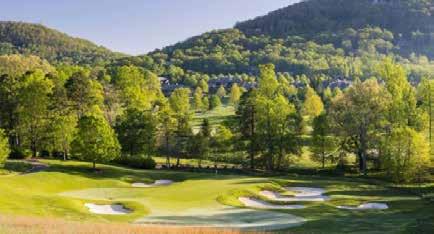
North Carolina will have a new PGA Tour event beginning in 2026.
The Biltmore Championship will be played September 17 through 20 at The Cliffs at Walnut Cove, near Asheville. Biltmore Estate and the Explore Asheville tourism nonprofit will serve as co-title sponsors.
Though Asheville has not hosted a major professional golf championship in more than eight decades, Walnut Cove, a Jack Nicklaus design, previously served as a venue for the Korn Ferry Tour’s BMW Charity Pro-Am, which originally was played at three Cliffs courses.
The new tournament will be played after the FedExCup Tour Championship during the FedExCup Fall. The tournament has a fouryear agreement, according to Monday’s announcement.
The Biltmore Championship will be broadcast on Golf Channel as well as three PGA Tour digital properties. The PGA Tour did not release the amount of the purse.
According to a report in the Jackson (Miss.) Clarion Ledger, Sanderson Farms’ sponsorship of a PGA Tour event in early October ended this year, and the tournament’s future is in doubt.
The event will give North Carolina three PGA Tour tournaments, joining the ones in Greensboro and Charlotte. Ø
Goodyear Golf Club will be put up for sale.
Reporting from the Chatham Star Tribune indicates that the Danville, Virginia, course, a longtime destination for many Triad golfers, is expected to go on the market.
“We can confirm that Goodyear will be offering for sale up to 500 acres of excess property surrounding its Danville plant, including the golf course. This land is not currently being used for plant operations,” said Kylie Ulanski, senior director of global manufacturing and supply chain communications for Goodyear. “The marketing of the property will begin in October. No asking price will be disclosed. The property’s fair market value will be determined through the process. Goodyear will be represented by Coldwell Banker Richard Ellis in the transaction.”
The newspaper also noted that Caesars Virginia denied social media claims that the casino had already purchased the course, calling those posts “untrue.”
The newspaper reported that the 222.61-acre golf facility at 245 Jenny Lane, about a mile from the North Carolina border, is valued at approximately 1.69 million dollars. Ø
Davis Womble
Visitors to Boone, Blowing Rock and the rest of Watauga County may soon lose their best public golf option.
Reports from the High Country indicate that at least one of the owners of Boone Golf Club would like to explore a sale of the property. A sale likely would lead to residential or resort development with only a nine-hole layout.
Supporters of the course have launched an online petition urging the town council to deny zoning changes that could allow development. Some residents hope Appalachian State University, which does not have a golf course, might consider purchasing it.
Boone Golf Club is an exceptional public layout set mostly in a valley surrounded by mountains. Designed by Ellis Maples, it is known for strong conditioning and challenging greens.
The nearest public championship courses are more than 30 minutes away, including Mountain Glen in Newland and Mountain Aire in West Jefferson.
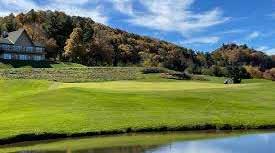
Golf Club’s full tee sheets, want to play golf.
The course does have its critics, many who cite the course’s higher-thanaverage golf fees that range from $74 to $99, depending on the day and season. Some non-golfers argue that golf courses aren’t ecologically friendly.


The First Responders of the Triad Tournament attracted a record 128 players for the seventh annual benefit golf outing hosted by Greensboro National Golf Club.
The tournament was created by Byron Development partners Herb Parks and Patrick Donnelly, majority owners of Greensboro National.
This year’s goal was to raise $200,000 for local first responders, with at least $25,000 committed to the Tunnel to Towers Foundation, which pays off mortgages for families who lose first responders in the line of duty.
Though accounting had not been completed when Triad Golf Magazine went to print, Donnelly said the amount raised should be around $200,000. A silent auction later in October added to the figures.
“We had the best turnout we ever had,” Donnelly said. “Best weather day we ever had. The largest commitment we have had to date.”
Recipients of the awards from the top two teams had yet to be chosen.
Family members of Greensboro Police Sgt. Dale Nix attended the postround dinner and awards ceremony. Tunnel to Towers paid off the Nix family mortgage only two days after Sgt. Nix was killed on December 30, 2023.
Belinda Beatty of Statesville, a 2019 recipient after her husband, Army Sgt. Dale Beatty, died from massive injuries suffered in Iraq, also attended. Wayne Player, son of golf legend Gary Player, represented Tunnel to Towers at Greensboro National.
The McPherson Grading Co. team of Russell McPherson, Josh Alexander, Greg Gibson and Ricky Craig was one of three to shoot a gross 59 under ideal conditions in a best-ball format and won a scorecard match against the teams of Jason Hutchins, Ricky Draper, Ronnie Hayes and Isaiah Hayes of the Rockingham County Sheriff’s

Office, and Mike Murphy, Arron Jones, Jon Gourley and Brent Gregory of Nestle Purina.
McPherson will donate $15,000 to the E.M. Holt Volunteer Fire Department in Burlington. The Rockingham County Sheriff’s Office, the second-place team in the card match, allocated its $5,000 to their department.
Nestle Purina, 3rd place, split its $2,500 prize between the Eden Police Department and the Eden Rescue Squad.
Alley Williams Carmen and King, a team drawn at random from teams that scored near the bottom of the tournament, chose the Gibsonville Fire Department for its $2,500 gift.
The seventh First Responders of the Triad Tournament continues to grow in participation and community impact. Ø
At the final major Carolinas Golf Association junior event of the season, two Forsyth Country Day teammates delivered strong finishes at the Jimmy Anderson Boys Invitational, held October 25 and 26 at Greenville Country Club. Freshman Andrew Jenkins tied for fifth with a 2-under-par 208, finishing only two shots behind winner David Quinones of Hampstead, who closed with 69. Junior Griffin Huckabee tied for 15th at 2-over 212.
A Triad junior golfer was represented on the national stage as well. Pennson Badgett of Pilot Mountain was named to the 2025 Rolex Junior All-America Second Team by the American Junior Golf Association. Badgett, a senior at East Surry High who is committed to Tennessee, earned first-team honors in 2024.
He gained international attention this past summer by advancing to match play at the U.S. Amateur and competing in the final group with Charlie Woods at the Junior PGA Championship. Ø
Old Field, the six-hole par-3 course under construction beside Colin Creek in Mocksville, will not open this fall as previously hoped. Twilight Golf founder Stephen Edwards, who has assisted with the project, told TriadGolf.com that the new target is a spring 2026 grand opening. Ø
Rain shortened most of the girls state golf championships, but several area teams and players still delivered strong finishes. In 7A, Reagan placed third and Ellie Acrey finished sixth. In 8A, Pinecrest claimed the title with Northwest Guilford runner-up and Emery Lewis tied for fourth. East Surry placed second in 3A, with Colby Badgett runner-up; Mt. Airy’s Madison Akers was third. In 4A, North Surry’s Emerson Puckett earned medalist honors while Central Davidson finished third; Bethany Myers tied for fourth. Western Alamance’s Ashtyn Whitfield placed fifth in 5A, and in 6A, Burlington Williams finished third with Gabriella Moorehead sixth. In 1A-2A, Bishop McGuinness took third and Millennium Charter’s Morgan Shipley finished second individually. Ø


Ø 18 holes w/ cart $39 SENIORS (60+) Ø Monday-Friday 18 holes w/ cart $27
JUNIORS (15 & UNDER) PLAY FOR FREE w/ 1 paying adult daily after 12:00 pm

Changes are nothing new at Wild Dunes Resort’s Harbor Course, which was hit hard by Hurricane Hugo only four years after its opening. But the latest changes, courtesy of a $9.5 million renovation project, are intentional and positive.
Forty years after its original completion on Isle of Palms near Charleston, Fazio Design returned for the extensive update.
The result is a more playable layout for average golfers, with reconfigured hazards and landing areas that still challenge more skilled players.
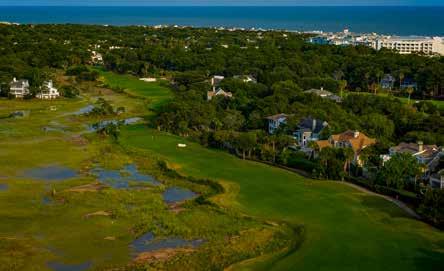
The enlargement of landing areas on the par-5 ninth and par-4 10th along the Intracoastal Waterway, along with vastly expanded TifEagle greens, are among the most notable improvements. Other landing areas have been widened, beginning with the par-5 opening hole, through techniques that include rearranging bunkers.
Longtime Fazio associate Bryan Bowers oversaw the project. With several holes stretching along the Intracoastal Waterway, and others weaving through dunes, saltwater marsh, and lagoons, Harbor remains a shot-making challenge.
Yes, the course maxes out at about 6,500 yards. Yet, with par at only 70, it features four long par-4s and back-to-back par-5s totaling more than 1,100 yards. Strong ocean breezes must be navigated on the mostly exposed fairways. Live oaks also come into play at times.
“For a good player, you can make it a pretty good test,” said Wild Dunes director of golf Jeff Minton.
A new irrigation system, shifted cart paths, expanded landing areas, and new bunkers lined with capillary concrete may be subtle to vacationing golfers. But return players will notice that the greens have nearly doubled in size after years of collar encroachment.
Bowers said putting surfaces, which previously totaled about 60,000 square feet, now total roughly 110,000 square feet. Contours were softened to accommodate the quicker, firmer TifEagle surfaces.
Nos. 9, 10, and 11 form a memorable stretch with the waterway running down the left side of each hole, requiring accurate shots in typically windy conditions. Formerly as narrow as 20 to 25 yards on Nos. 10 and 11, the terrain on those holes was raised to widen the landing areas.
“There are no more issues with high tides,” Bowers said.
The ninth is the second of consecutive par-5 holes. No. 10, a short par-4, and No. 11, a short par-3, continue in a straight line along the waterway.
The 16th is a unique par-3, requiring a 165-yard approach over the
waterway from a tee located between homes and docks on the left and the road bridge on the right. A sprawling live oak stands to the right of the green.
It was Wild Dunes that put Tom Fazio on the map when the resort’s Links Course opened as his first solo project to national acclaim in 1980. Links, also hit hard by Hugo, remains a classic, finishing with two holes along the Atlantic Ocean.
The par-4 17th, one of the best holes in the Charleston area, runs beside dunes and beach on the left. When played into the breeze, the second shot often requires a long iron or fairway wood.
The 18th hole, formerly a dogleg right par-5, is now a scenic par-3 due to erosion that washed away parts of the fairway.
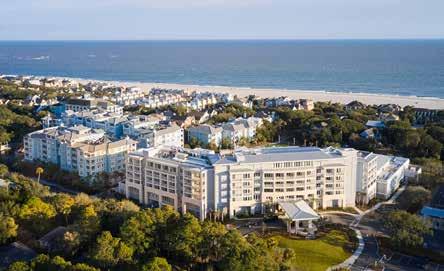
Wild Dunes has two modern hotels, Boardwalk Inn and Sweetgrass Inn, along with a variety of restaurants and shops. Amenities include pools, a spa, pickleball courts, and world-class tennis facilities.
Golf packages are available, and the courses are open to non-resort guests. Ø wilddunesresort.com

Weekday $35
Senior Weekday $30
Weekends $40
9-hole rates (weekdays + weekend afternoons)
Walking Allowed Anytime
Have you ever been to The Omni Homestead, one of the nation’s finest golf resorts?
Maybe not, despite its location in the remote Allegheny Mountains of southwestern Virginia, only three and a half hours or so from Winston-Salem.
After all, many Triad golfers find no reason to leave the state for a golf trip. There is spectacular mountain golf in the Roaring Gap, Linville and Cashiers areas. Wilmington and the Outer Banks offer fantastic coastal layouts. And, of course, there is Pinehurst only an hour or two away.
In many ways, The Omni Homestead Resort is the Pinehurst Resort of Virginia, though the similarities decrease each year. Or perhaps it is somewhat like Roaring Gap with a palatial, full-service hotel. In the 1990s, Pinehurst, The Homestead and The Greenbrier, a similar grand hotel with an acclaimed golf course in nearby White Sulphur Springs, West Virginia, were each owned by Club Corp.
Imagine Pinehurst 60 years ago, offering scenic mountains and cool summers instead of its tall pines, mild winters and rolling sandhills.
That is a rough description of Hot Springs, Virginia, where the two-lane sides of the twisting roads remain free of chain restaurants and hotels or much local business. There is one place to get gas and basic groceries. That is it.
An important tip: stay on U.S. 220 all the way from Roanoke. Ignore Siri if she tells you to veer off at Clifton Forge. That shortcut, with more than nine miles on a twisting, narrow and rough road, can be harrowing, especially at night.
The Homestead, whose developers included J. P. Morgan in the late nineteenth century, and Pinehurst share the allure of grand destination hotels from the gilded age, complete with world-famous golf courses and world-class amenities, including spas.
Not as centered around golf as Pinehurst, The Homestead also offers hot springs baths, hiking and fishing, and a variety of restaurants and specialty shops.
While the Homestead and Carolina hotels are similar, the historic settings are very different. Imagine Pinehurst 60 years ago, offering scenic mountains, babbling streams and cool summers instead of tall pines, mild winters and rolling sandhills.
While Pinehurst was home to Donald Ross and now the USGA, The Homestead can claim Ross as an architect and Sam Snead as a legend.
The Homestead has two courses, both ranked among the top 10 in Virginia, dating back to 1892 with what is considered the nation’s oldest continuously used first tee. The soothing feel of the bucolic setting is a welcome change from the bustle at many other golf resorts.
A third course, Lower Cascades, a Robert Trent Jones design that opened in 1961, was closed in 2013.
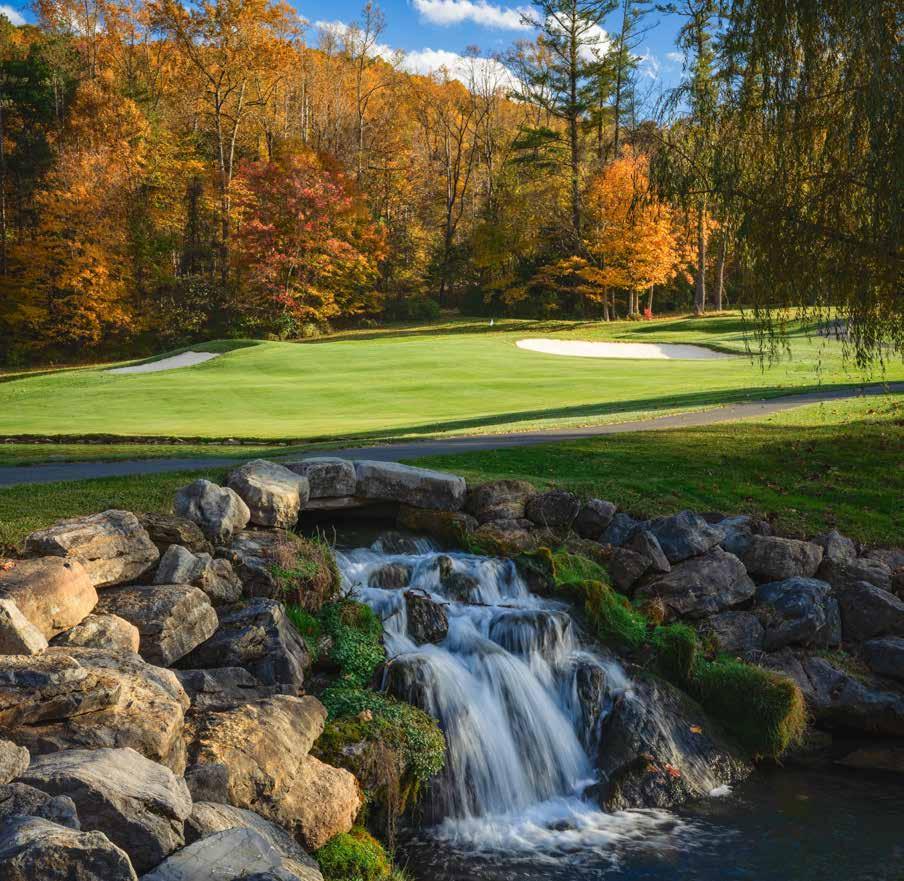
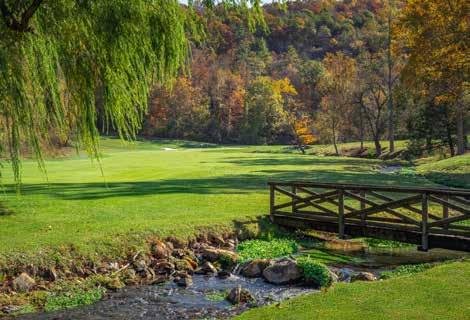
Both Homestead courses have bluegrass fairways and bent greens. Placement within the landing areas can be especially important because sloping fairways often filter drives toward gnarly rough, the primary cause of lost balls. Streams come into play on a few holes.
The Old Course is an enjoyable, historic treasure. President William McKinley played it in 1899. Several other presidents followed. Like at
Pinehurst No. 2, Ross tinkered with the course during its early years. William S. Flynn and Rees Jones later contributed updates.
The Cascades, designed by Flynn in 1923, ranked as high as No. 39 on Golf Digest’s national list in 2004 and has hosted nine USGA championships, including the 2025 U.S. Senior Women’s Amateur. The U.S. Senior Men’s Amateur is scheduled there in 2029.
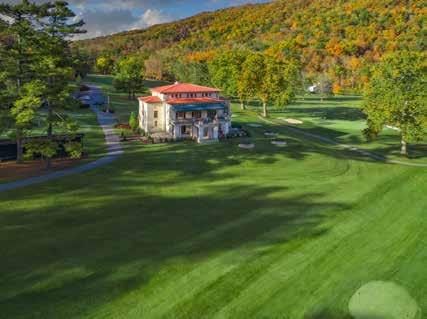
After navigating the hotel’s long hallways, resort guests have just a short walk outside to reach the Old Course clubhouse and first tee.
Only 6,099 yards from the tips, the Old Course is an enjoyable, often testing layout that made Golf Digest’s most recent list of the top 15 public-access courses in Virginia.Ross expanded an original six-hole routing to 18 in 1901. Several holes run adjacent to U.S. 220 and are visible to passing motorists. The layout, with an equal distribution of par3, par-4 and par-5 holes, is a fun assortment that includes short but hilly par-5s, moderately long par-3s and par-4s under 400 yards.
There is no water to worry about, but the undulating terrain and moderate-sized greens offer challenge. The final two holes, a reachable par-4 with a blind tee shot over a hill and a par-3 framed by the hotel, provide an ideal finish.
Cascades, located a few miles south of the hotel off U.S. 220, is a destination course. Flynn designed a subtle classic that winds through streams and over rolling terrain with minimal need for alteration. From
the tips, it plays more than 6,900 yards with a 72.8 rating and 135 slope. Golf Digest ranks Cascades No. 6 in Virginia.
Golf fees in fall 2025 were 203 dollars at the Old Course and 303 dollars at Cascades.
The front nine features significant elevation changes, including No. 4, a downhill, 210-yard par-3 with a gaping bunker guarding most of the front and left side of the green.
Like the Old Course, Cascades features a distinctive group of finishing holes, capped by a 203-yard par-3 requiring an approach over a pond to a small, well-defended green.
Cascades’ four-hole homestretch starts and ends with par-5s, with long par-3s in between.
At No. 17, a flowing stream runs along the right side of the dogleg left and empties into a pond beside the green, with a bunker guarding the left.
The 19th hole is Rubino’s, located on the upper floor of the historic white brick home that houses the pro shop on the first floor. Rubino’s has a dual personality, with a simple yet elegant dining room leading to a deck ideal for lunch or drinks on mild mountain afternoons. Ø
omnihotels.com