
February 20 deadline for Wyoming RCPP
The U.S. Department of Agriculture’s Natural Resources Conservation Service (NRCS) Wyoming announces a Feb. 20, 2026, batching deadline for the Regional Conservation Partnership Program (RCPP). This batching date ensures producers have a clear, consistent timeline for participating in RCPP.
“The NRCS team continues its commitment to Wyoming’ producers — advancing conservation, strengthening service delivery, and keeping our promise to the men and women who feed and fuel our nation,” said Wyoming NRCS State Conservationist Jackie Byam.
NRCS programs are continuous sign-up programs, but due to the government shutdown, the agency is implementing a batching period to ensure producers have access to funding and support.
Sign up includes the following opportunities: RCPP
Bear River Watershed Agriculture and Habitat Connectivity
Land Management Agreements
For more information, please visit nrcs.usda.gov or contact your local USDA Service Center.
PRODUCTION SALES
Feb 16, Big Sky Salers, Dickinson, ND A2
Feb 16, Bulls of the Big Sky Simmental, Angus, SimAngus, Billings MT A4
Feb 16 - 18, Lazy D Red Angus, Online A5
Feb 21, Sparks & 7C Herefords, Plevna MT A13
Feb 23 - 24, Little Bitterroot Ranch Simmental & SimAngus, Online A10
Feb 24, Connelly Angus, Valier MT A7
Feb 25, EF1 Cattle Co., Annual Production Sale, Online .............................. A8
Mar 2 , Clear Creek Angus & Weaver Herefords, Chinook MT A9
Mar 3, Apex Angus, Valier MT ..................................................................... A11
Mar 3, O’Hara Land & Cattle Maine-Anjou, Maine Angus & Maine Tainer, Online ........................................................................................................ A14
Mar 5, Split Diamond Ranch Angus, Dillon MT A15
Mar 5, Hill’s Ranch Simmentals, Stanford MT ........................................... A17
Mar 6, Sutherlin Farms Red Angus, Stevensville MT A19
Mar 7, 3C Cattle, Black Angus, Stevensville MT ........................................ A12
Mar 7, Redland Red Angus & Gelbvieh, Hysham MT A10
Mar 9, Veseth Cattle Co., Red Angus, Glasgow MT .................................... A20
Mar 9, Holden Herefords, Valier MT A21
Mar 10, Cooper Hereford Ranch, Willow Creek MT ................................... A21
Mar 10, Veltkamp Angus, Manhattan MT A23
Mar 12, Fritz Red Angus, Brady MT ............................................................ A27
Mar 16, Whistling Winds Angus, Inc, Hingham MT A26
Mar 21, Gnerer Angus, Olive MT ................................................................. A28
Mar 24, Open Gate Ranch, Black, Red, Simmental, SimAngus, Fairfield MT .................................................................................................................. A29
Mar 25, Westphal Registered Red Angus, Grass Range MT A30
Apr 2, Arntzen Angus Ranch, Hilger MT ..................................................... A37
May 7, Koenig Ranch Reds, Glasgow MT A47
Workshop focuses on fire prevention
A Far Out and Waiting: Fire Prevention and Preparedness workshop will be in Grass Range from 5:30-7:30 p.m., Tuesday, February 17, at the Fire Hall located at 602 West Main Street.
During the free, public workshop, local rural firefighters will present information about what to do while waiting for emergency fire serves to arrive, including: things to do before fires start, evacuation preparation and process, home hardening, and what to expect when you call 9-1-1. The Fergus Sheriff also will share safety information,
Workshops aim to boost crop yields by improving manure management
By Nebraska Extension
Manure isn’t just a byproduct of livestock — it’s a powerful fertilizer that can improve soil health, increase crop yields and save farmers money. This February and March, Nebraska Extension is hosting seven hands-on workshops across the state to help producers get the most value out of manure while protecting water and soil resources.
“Our workshops focus on choosing the best possible field for manure application and therefore are useful for any crop farmer utilizing manure, even though they have traditionally been attended by livestock producers,” said Leslie Johnson, Nebraska Extension’s Animal Manure Management Extension Educator.
“The workshops will still meet the educational requirements for permitted livestock operations laid out by the Nebraska Department of Water, Energy and Environment’s Title 130.”
CONTINUED ON PAGE A2
Angus, Fallon MT ............................... A36

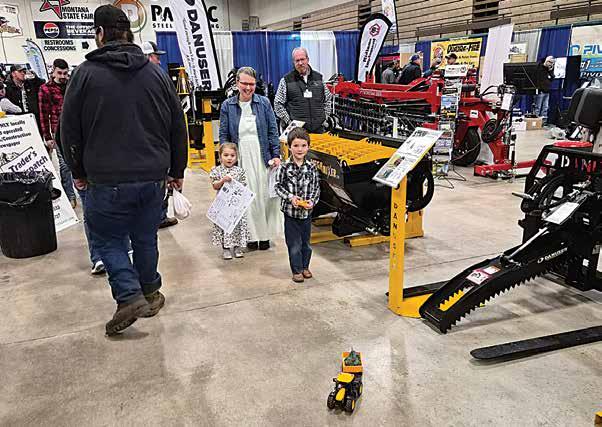
This little guy REALLY ENJOYED M.A.G.I.E. in Great Falls. With Mom and sister following he put a lot of miles on his remote controlled tractor.

Family Owned & Operated in Montana for over 50 Years!
• Verified subscribers in 8 Central/Western States
• No out-sourcing of ad creation and design
• Sales & Circulation departments located in MT Call today to place an ad or to subscribe! Office - (406) 271-5533
20 BLACK ANGUS HEIFERS FOR SALE
Bred by Vermillion Ranch Bulls. Start calving March 6 for 52 days. Heifers have had all vaccinations and poured with Ivamic. Call Open Spear Ranch, Melville, Montana
A MT Heritage 52 year breeder (406) 537-2333 office. Leave message. Can Deliver - Price negotiable! Dennis McDonald, Breeder/Owner will return your call.

Big Sky Salers
Bill and Floreta Helm Family Box
• Angela, MT 59312 (406) 557-6259 • (406) 853-0344
CONTINUED
The day-long sessions, held from 9 a.m. to 4 p.m. local time, provide DWEE Land Application Training certification. Participants must attend the full program, which includes lunch, to earn certification. Sessions will cover regulatory updates and strategies for using manure effectively on cropland. While certification is available, anyone may attend, including crop farmers and smaller livestock operators seeking practical guidance for their operations.



Hands-on activities will help participants evaluate which fields are best suited for manure application. Each session will present a scenario in which attendees assess potential fields and determine whether manure use would be beneficial or if certain limitations make the site less desirable. Participants will then rank fields by priority based on factors such as nutrient value, transportation cost, soil health, water quality, neighbor proximity, and odor concerns. Regulations and record-keeping requirements for manure storage and application will also be covered.
Workshop Dates and Locations:
Ainsworth — Tuesday, February 24
Broken Bow — Wednesday, February 25
Bridgeport — Friday, February 27
Norfolk — Wednesday, March 4
West Point — Thursday, March 5
Aurora — Tuesday, March 17
Because seating is limited and meals are provided, advance registration is required at least one week before each event. Additional sessions may be added if demand is high. Registration is available online.
The cost is $100 per operation requiring certification — typically larger livestock facilities — or $25 per person for attendees not seeking certification, including smaller livestock producers, crop farmers, NRCS staff, and landlords.
The workshops are sponsored by Nebraska Extension’s Animal Manure Management Team. For more information, visit the Animal Manure Management site or contact Leslie Johnson, 402-584-3818.
along with the DNRC sharing information on free fire risk assessments and how to engage youth in fire emergencies. The workshop is sponsored by Montana Farmers Union and is an extension of the grassroots organization’s popular Far Out & Waiting workshops focused on teaching skills that help save lives in common medical emergencies.
The fire preparedness workshop in Grass Range kicks off with a free will fundraiser dinner of a taco bar and dessert from the Grass Range FFA Chapter, with programming following. Learn more by contacting MFU Membership Ambassador Mary Jenni at mjenni@montanafarmersunion.com or 406380-0051. Register by February 15 at www.montanafarmersunion.com.








Registration open for 2026 Field to Fork webinar series
North Dakota State University Extension will again host the Field to Fork webinar series starting in February 2026.
Experts from across the region will provide information about growing, preserving and preparing specialty-crop fruits and vegetables safely in this 11th annual webinar series.
The Field to Fork Wednesday webinars will begin February 11. The webinars will be held online from 2 to 3 p.m. CDT through April 15. The webinars are archived for later viewing, but participating in the live webinar allows participants to interact with the presenter.
The webinars are free of charge, but registration is required. Register at ag.ndsu. edu/fieldtofork. The webinars will be held on Zoom. Participants will receive reminders and a link to participate, along with a link to the recording if they are unable to attend.
Julie Garden-Robinson, NDSU Extension food and nutrition specialist, says that when the first Field to Fork webinar series started 11 years ago, online webinars were still relatively new. Now the series reaches


thousands of people annually, both live and through the recordings.
Topics that will be covered:
February 11: Planting techniques make all the difference: From tomatoes to apple trees – Don Kinzler, NDSU Extension horticulture agent
February 18: New and promising vegetable varieties for 2026 – Tom Kalb, NDSU Extension area horticulture specialist
February 25: The prepared consumer: From grocery aisle to emergency plan – Cindy Brison, University of Nebraska Extension educator
March 4: Food preservation all yearFruit leathers, apple chips, jerky and more! – Julie Garden-Robinson, NDSU Extension food and nutrition specialist and professor
March 11: Debunking common vegetable gardening myths – Esther McGinnis, NDSU Extension horticulturist and associate professor

March 18: To sous vide or not sour vide: Safety of long-term, low-temperature cooking for vegetables – Byron Chaves, Rutgers University (New Jersey) associate professor March 25: Roots, fruits, and shoots: Edible plant parts – Susie Thompson, NDSU Department of Plant Sciences associate professor and potato breeder


April 1: Safe home canning: Start with the recipe, finish with confidence –Karen Blakeslee, Kansas State University Extension associate
April 8: Safer solutions: Natural insecticides to manage garden insects – Janet Knodel, NDSU professor and entomologist
April 15: Does soil health make a difference in producing healthy food? – Carlos Pires, NDSU Extension soil health specialist and assistant professor


























“Our Field to Fork website has a wealth of information from growing, preparing and preserving foods from apples to zucchini, plus all the archived Field to Fork webinars from 2016 to present,” says GardenRobinson, NDSU Extension food and nutrition specialist and coordinator of the program.
This project is made possible with funding from the U.S. Department of Agriculture’s Agricultural Marketing Service.
To register, visit NDSU Extension’s website at ag.ndsu.edu/fieldtofork or contact Garden-Robinson at 701-231-7187 or julie. garden-robinson@ndsu.edu.
#####
To prevent “watering down” of tall summer drinks, make ice cubes of lemonade. Adds extra flavor to lemon drinks as well as to iced tea or fruit punch.
#####
Season half an avocado with lemon juice and salt for lovely flavor.
Suicide prevention training webinars
Addressing the wellness needs of those working in agriculture or related areas will be the focus of the upcoming Question, Persuade, Refer suicide prevention webinars sponsored by North Dakota State University Extension. Two sessions were scheduled: January 21 from 11 a.m. to 12:30 p.m., and February 23 from 1 to 2:30 p.m.
The 90-minute webinars will address concerns of high stress levels in agriculture-related jobs and the toll they take on mental and emotional well-being.
Research indicates the suicide rate is significantly higher for those working in agriculture. The QPR training will provide participants with skills to recognize warning signs of a mental health crisis or suicidal thinking and to respond in an appropriate and supportive way.
“Ongoing farm and ranch stress takes a toll on health, including mental and emotional well-being,” says Sean Brotherson, NDSU Extension family science specialist. “We say, ‘Sometimes you need help, and sometimes you are help.’”
NDSU Extension agents, Katie Henry (Cavalier County) and Jill Sokness (Cass County), and Madeleine Smith, NDSU Extension pesticide specialist, will facilitate the webinars.
Although the training will focus on people working in and around agriculture, anyone interested in the topic can register. There is no cost for the training, which is supported by a U.S. Department of Agriculture grant.
Registration is limited to the first 30 participants per webinar. Register at ndsu.ag/QPR-NDSU-Jan2026 for the January session and ndsu.ag/QPR-NDSU-Feb2026 for the February session.
For additional information, contact Adriana Drusini at adriana.drusini@ndsu.edu or Sean Brotherson at sean. brotherson@ndsu.edu. #####
To remove burned food from oven, place small cloth saturated with ammonia in oven over night, and food can be easily wipe up.



Perspectives of ranchers in the Wind River Basin
The University of Wyoming Extension has published a new interview-based report identifying key changes, challenges and opportunities encountered by ranchers in Wyoming’s Upper Wind River Basin.
The goal of the study was to “understand how Wyoming ranchers experience and perceive environmental and social changes and how those changes may impact their operation, management decisions and, ultimately, their livelihoods,” explains UW Extension educator Callie Surber, co-author of the new publication.
Surber’s report, released last month, is based on 38 interviews with local ranchers in summer 2024. Discussion topics ranged from drought and water availability to beef market volatility and grazing policies.
“While we conducted the research in the Wind River Basin, there are broader applications across the state and the West,” Surber comments. “Anyone who works with livestock producers in Wyoming or has an interest in challenges facing the ranching industry might be interested in the findings.”
Most of Surber’s interviewees agreed that economic viability was one of the most
important considerations when making management decisions. Citing factors like unprecedented inflation, some ranchers expressed concerns about reaching a tipping point at which they would be “priced out.”
Interviewees reported using various diversification strategies to improve their bottom line. Some, for example, were already leveraging the state’s growing outdoor recreation and tourism industry.
Many ranchers voiced concerns about absentee landowners purchasing former agricultural land. They observed that this trend has driven up property values and taxes, reduced local agricultural outputs, and prevented younger operators from entering the industry.
Drought was another top concern. Some interviewees noted hotter and longer summers in the Wind River Basin as well as increased storm severity. Many reported efforts to increase irrigation efficiency.
Other concerns included invasive weeds, especially cheatgrass, as well as wolf depredation, feral horse populations and increasing land fragmentation.

Interviewees emphasized that managing challenging environmental and economic conditions often requires timely action. For ranchers holding grazing permits for public or tribal lands, that means seeking approval to carry out changes. In nearly every interview, agency policies were discussed. Many interviewees expressed frustration with wait times for approval of changes like adjusting grazing timing, altering fencing or installing solar wells.
Surber and co-author Corrine Knapp, associate professor in UW’s Haub School of Environment and Natural Resources, concluded that “it is increasingly important for resources to be focused on federal, state and tribal rangeland management. Increasing personnel and focusing on staff retention can expand the capacity of local land managers and enable them to work alongside ranchers to facilitate effective grazing under fluctuating year-toyear forage conditions, for instance.”





Despite the many challenges they articulated, most ranchers expressed no interest in selling out. Most also conveyed a strong commitment to environmental stewardship.
“Interviews reinforced that ranching facilitates purposeful land stewardship and is a critical conservation tool,” Surber and Knapp wrote. “In almost every interaction, ranchers discussed their reciprocal relationship with and deep connection to rangelands.”
To view the full text, visit https://bit.ly/wind-riverrancher-perspectives.
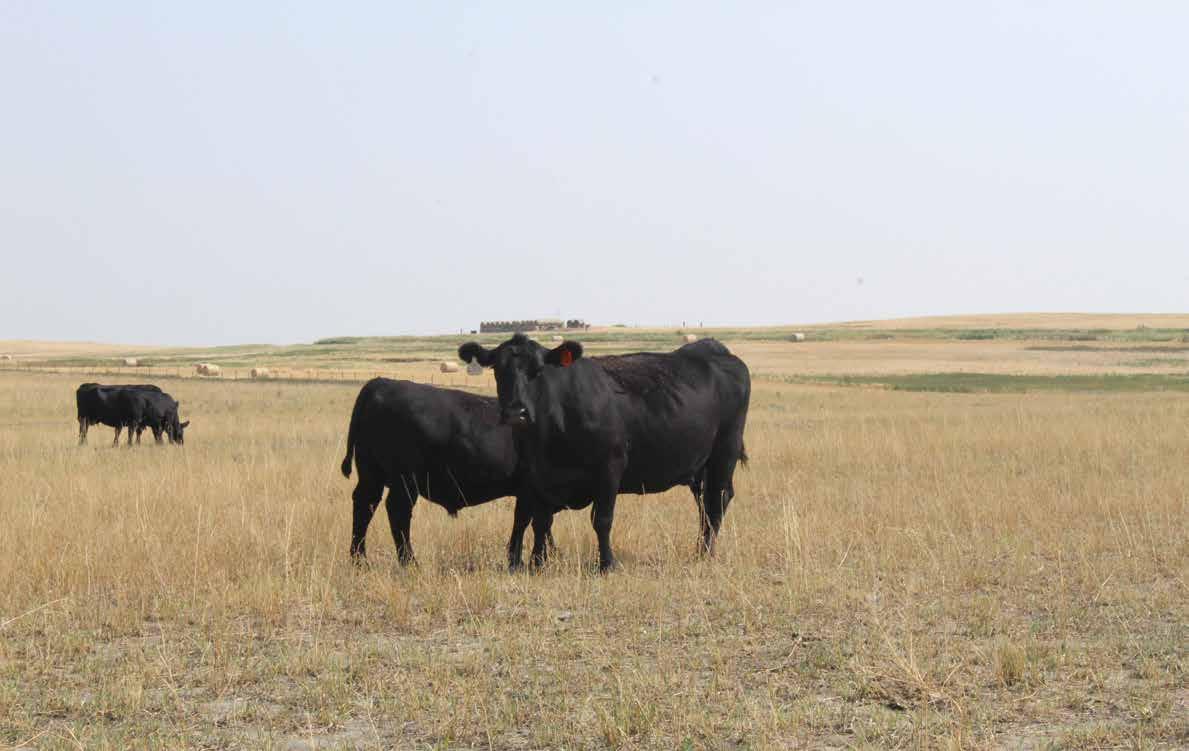
Connelly Angus Ranch 35th Annual




Forage Matters: Resolutions
By James Rogers, Forage crops production specialist, NDSU Extension
I am not much on New Year’s resolutions. I have tried making some in the past and failed. I think the big reason they don’t work out for me is that they never become a habit. Nevertheless, it is a new year, and it is resolution season, so here goes.
My resolution this year is for us to look at forages as a valued commodity and feedstuff, not just as a source of bulk in a total mixed ration. Many already do this. They value forages as a source of nutrients that can meet animal nutritional demand and rumen function. They value growing, harvesting and preserving good-quality forage and how it can contribute to lowering cow herd production costs. To those folks out there, resolve to keep up the good work!
What led me down this path was when I received a call from someone with livestock. Their problem was refusal by the livestock to consume the hay on offer. There can be myriad reasons as to why this might be happening, and I started down the path of asking what class of livestock, what type of hay, feeding method, livestock condition, etc. Finally, I requested that hay samples and any available forage tests be sent to me.
A few days later, a pillow-shaped pack-

age arrived with three bulk hay samples. I opened the first one and was met with the odor of dust and mold. It contained grasses that were mature, coarse and dark colored. There was a forage test, and, looking at the numbers, the first thing that caught my eye was a crude protein content of 5%. There was an adjusted percentage of crude protein value of 4.6%, indicating that not only was this “forage” baled mature, it was probably also baled too wet, resulting in heating that bound some of the protein to carbohydrates (through the Maillard reaction) and a lower available protein value. A crude protein content of 7%-8% is needed for complete rumen fiber digestion. The reasoning for livestock refusal became pretty evident with the visual inspection and hay test results. From there, I thought it would be a good idea to compile all the forage test results I have received over the last couple of years and get a feel for where we are in producing quality hay. These data included samples of alfalfa, alfalfa mixes, cereal grain and warm-season annuals. The average percentage of crude protein and total digestible nutrients (TDN) was 8.9% and 54.8%, respectively. The average relative feed value (RFV) was 98, and the estimated percentage of body weight intake was 2.0%.

Initially, these numbers, on average, will meet nutritional requirements of second- and third-trimester mature cows, but they will need supplementation postcalving to support milk production and rebreeding. However, we know that an average can be deceiving. Looking a little closer at the numbers, 51% of the samples had a crude protein content of 8% or less, and 44% had a TDN value of less than 54. This tells me that these samples came from forage that was harvested too mature. On the other side of the scale, the alfalfa and alfalfa mixes had consistently higher nutrient content values.
On another producer call, they had four forage tests with crude protein values above 11% and TDN values above 54%. This was an easy call. Their forage tests’ values were high enough to meet livestock nutrient requirements with no additional supplementation, and we just slightly adjusted what they are feeding to match their feed inventory. Don’t overlook the value that forages can contribute to your feeding program. Make it a resolution to always produce high-quality forage and keep feed costs low. If you need assistance in interpreting forage test results and producing highquality forage, don’t hesitate to reach out.
#####
Squeeze a few drops of lemon juice into the pan while fish poaches. Keep the fish white and firm.
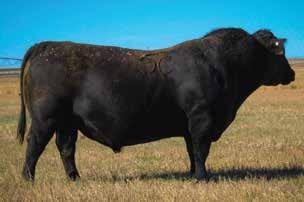
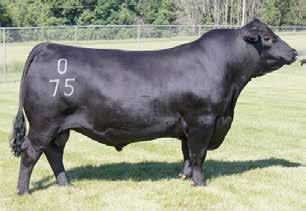
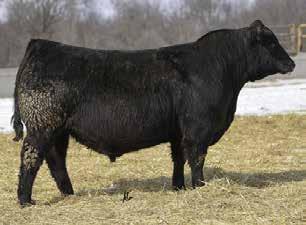
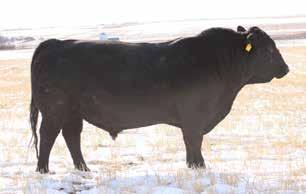
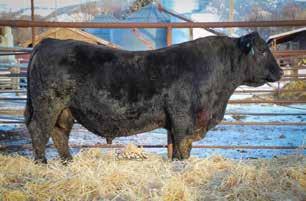
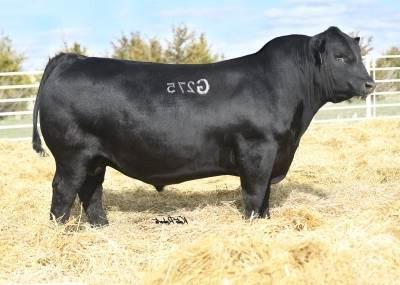
Clear Creek Angus

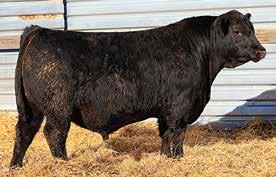
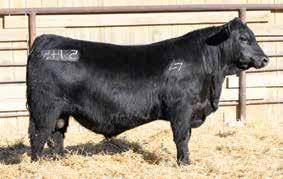
Lot 1 Clear Creek Jameson 581
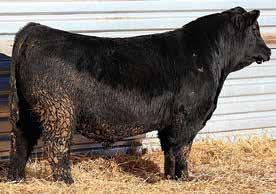
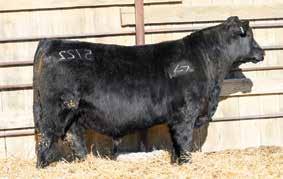
Lot 4 Clear Creek Pacific 547
Reg. # 21452008
BW: 83, Adjusted 205 Day WT: 701,
WR: 106, Adjusted 365 Day wt: 1407, YR: 106
CED: +10, BW: -0.6, WW: +56, YW: +98, SC: +.71, M: +16, $M: +60, $C: +243
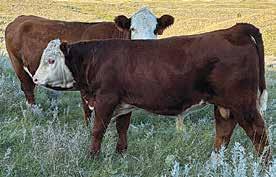
Lot 81
Sire: RV Valor LAD 899K
BW: 97, Adjusted 205 Day WT: 803, WR: 123, YW: 1291, ADJ YR: 113
EPD’s: CED: 0.7, BW: 3.2, WW: 74, YW: 122, M: 35, MCE: 2.4, SC: 1.6, FAT: 0.084, REA: 0.80, MARB: 0.37, BMI: 485, CHB: 154

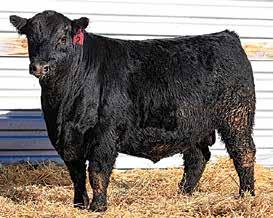
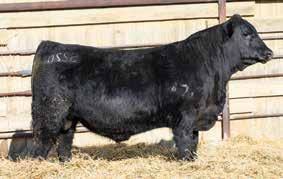
Lot 2 Clear Creek Jameson 566 Reg. # 21452386
BW: 77, Adjusted 205 Day WT: 726,
WR: 110, Adjusted 365 Day wt: 1406, YR: 106
CED: +13, BW: +0.3, WW: +94, YW: +152, SC: +.77, M: +27, $M: +103, $C: +336
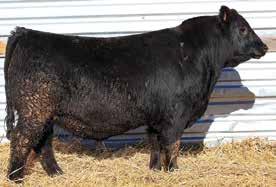
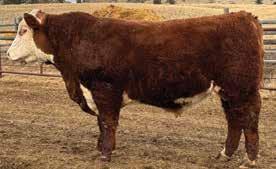
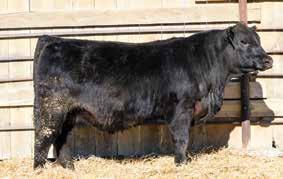
Lot 7 Clear Creek Exclusive 565

Reg. # 21417732
BW: 96, Adjusted 205 Day WT: 715, WR: 108, Adjusted 365 Day wt: 1363, YR: 103
CED: -1, BW: +2.8, WW: +74, YW: +125, SC: +.91, M: +36, $M: +73, $C: +239
Lot 83
Sire: RV Valor LAD 899K
BW: 89, Adjusted 205 Day WT: 751, WR: 115, ADJ YW: 1288, YR: 113
EPD’s: CE: 7.3, BW: 1.5, WW: 67, YW: 101, SC: 1.4, M: 36, MCE: 12.1, FAT: 0.044, REA: 0.93, MARB: 0.18, BMI: 532, CHB: 128
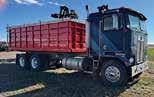
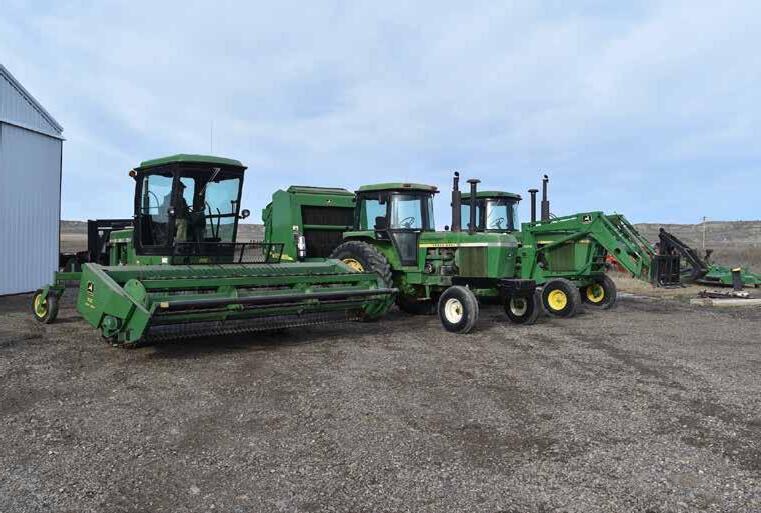
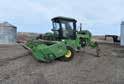
TRUCK, PUMP & SWATHER FOR SALE
1976 Kenworth 900A truck with 400 S.C. Cummins, 4x4 trans., torsion bar suspension $10,000 30 horsepower electric irrigation pump, 3-phase. International 8830 14-ft. hay header, Cummins diesel. Please call for pricing. Phone (406) 799-6605 or (406) 357-4168


Dakota Gardener: The only constant is change … and powdery mildew
By Emily How, Horticulture agent, NDSU Extension – Ward County
While cleaning out a cabinet at my house, I stumbled across an old newspaper from the 1990s. I love finding things like this because it shows a glimpse of what was happening in the community at the time. As I paged through this paper, I found a Hortiscope column written by Ronald Smith, a former NDSU horticulturist. Seeing the contrast between then and now is one of the most interesting things about looking back at those old columns.
In the early 1990s, a submitted question like “I sent you this leaf with weird dots — what is it?” would be a one-on-one diagnostic. The value lives entirely with the person who mailed in the leaf. Without a photo archive, searchable database or instant image sharing, that exchange could not easily help anyone else who was facing similar problems. Today, that same interaction would look completely different. A single photo could be shared online, tagged and reused by thousands of gardeners dealing with identical symptoms. What used to be a private answer has become a public, reusable reference.
By contrast, questions like “How do I get rid of creeping jenny in my tree row?” have aged much better. The question describes a recurring problem rather than a single mystery leaf. The answer depends on things that still matter now — the tree species, the age of the planting, soil disturbance, herbicide tolerance, mulch, mowing and how much labor someone can invest. Those kinds of questions do not go stale because they’re really about management decisions, not just identification.
All of this led me down a rabbit trail, wondering what other kinds of horticul-
ture questions were published in the past and what advice was given. The way we seek answers has changed, and we see that gardening practices have also changed over time. New research and technologies change the advice offered. This can include something as basic as innovations in water practices, like drip irrigation, or something more complex, like soil sciences and no-till practices.
While meandering down the rabbit trail, I also discovered that some changes come out of pure necessity. In the ‘90s, green ash was a recommended tree variety in North Dakota as an excellent replacement tree for the elm trees plagued by Dutch elm disease. Today, neither of these trees are recommended because both are linked to the spread of a serious disease and invasive insects. Practices also change due to new varieties being introduced into the market. Tomato varieties, for instance, change frequently. Advancements in disease research have led to more resistance, so varieties like the Big Beef Plus tomato is resistant to 10 different diseases, whereas the popular ‘90s tomato variety Fantastic is only resistant to three diseases. With these advancements, gardeners will often have better yields, fewer diseases and hopefully less need for pesticides, which is an all-around win, saving gardeners both time and money. Some things never change, though. Take powdery mildew, for example. It is handled in the same way now as it was in the ‘90s. Also, the likelihood of someone over- or underwatering a houseplant is the same now as it was back then. Most (and best) of all, the connections we make with others through gardening remain constant.








Looking to 2026
By Ben Beckman, UNL
As we enter the new year, it’s a good time to look back on how 2025 treated our forage and grazing systems, and begin planning ahead for the 2026 growing season.
Much of Nebraska saw variable moisture in 2025. The year started off dry, rebounded nicely in many places with summer moisture and then turned dry again later in the fall. Those differences reminded us how important spring moisture is for early forage production and pasture turnout. Fall-planted forages without irrigation tended to start slowly, and pastures pushed hard the last few years without time to recover did too. While we saw things rebound, spring moisture this year is going to again be key and stocking flexibility will be important for many operations.
Looking toward 2026, it pays to have more than one grazing plan in your pocket. If spring moisture falls short, plan for delayed turnout or early rotational strategies to stretch available forage. On the other hand, if moisture improves, be ready to take advantage and rebuild pasture condition.

Fertility is also another factor to watch. When budgets are tight or conditions are uncertain, fertilizer decisions often get pushed back. Small nutrient gaps can still impact yield and forage quality, especially in established pastures and hayfields. If it has been several years since your last soil test, consider sampling this spring to fine-tune where fertility dollars work best.
Finally, in pasture ground, continue to keep an eye on cedar encroachment. Catching small saplings early is far cheaper than addressing large trees later. A simple monitoring pass each year can pay off.
With 2026 to look forward to, early planning and flexible expectations will be key to keeping forage systems productive and resilient.





#####


The leaves and petals of mums are edible. Eat them raw or cooked. Try them in salads and soups.
#####
The Chrysanthemum plant repels most insects. A chemical from the plant is used in insecticides.




EMPLOYEE NEEDED
Irrigation District is in need of a person to maintain and distribute water. Contact tid@mt.net or Call 406-949-0208, Leonard
Hemp roots offer new opportunities for farmers and cancer research
By Maribel Alonso USDA ARS
In a groundbreaking study, scientists at the U.S. Department of Agriculture, Agricultural Research Service (ARS) redefined the value of roots in industrial hemp, providing new opportunities for industrial hemp growers and opening new avenues for pediatric cancer research.
While the above ground part of Cannabis sativa L. plants, or industrial hemp, is widely recognized for its broad range of uses, including fiber production and grain (as a source of protein and oil), its roots have often been unutilized. This is because, until now, they were not considered to hold significant value.
Dr. Korey Brownstein, a research chemist with the National Center for Agricultural Utilization Research in Peoria, IL, noticed a strange substance showing up in his analysis as he was studying the chemical composition of hemp roots. Intrigued by these findings, Brownstein led a team of researchers to further investigate and analyze this chemical substance to determine its precise structure.
The analysis showed the substance was multiple compounds (four in total) that
researchers predicted through structural modeling to be neolignans – natural products with similar structures formed during the plant’s biological processes. Although molecules with similar properties have also been found in other plants, such as paper mulberries and a tree native to Sumatra and the Malay Peninsula, this is the first time such molecules have been isolated from hemp roots.
The research team spent three years isolating and purifying these compounds—a process they described as ‘complex and increasingly difficult.’ Due to potential activities of the molecules, the researchers were determined to understand their nature and uncover the complete narrative behind them.
The team also collaborated with scientists at the Pediatric Oncology Laboratory at the University of Illinois College of Medicine Peoria, where a team of researchers found that these molecules showed moderate activity in killing pediatric cancer cells (cytotoxic effect) in the laboratory setting. Refining and understanding the effect of this molecule on pediatric cancers will open new alternatives for children’s cancers that are unresponsive to current therapies.

“We believe this new discovery offers industrial hemp growers a potential new revenue stream from a part of the plant that was previously overlooked,” said Brownstein. “Unlike crops such as corn or soybeans, which have multiple uses, hemp has been limited in scope. But if we treat hemp as a multi-use crop, we can expand its applications and market—paper, grain, fiber, and now, potentially, pharmaceutical compounds from the roots. The discovery of these compounds adds value to this commodity.”
The findings, published in a peer-reviewed journal, marks the first time these specific neolignans have been isolated from hemp and linked to possessing cytotoxic effects on pediatric cancer cell lines.
The team’s next steps include scaling up compound extraction for larger, more controlled functional studies. They aim to explore a broad array of cancer cell lines to assess the therapeutic potential of these neolignans in greater depth.
“This is about opening new doors,” Brownstein emphasized. “We’re expanding the possibilities for using the whole industrial hemp plant. By adding value to the roots, we’re giving farmers more stability and more reasons to invest in this emerging crop.”
#####
A few drops of lemon juice sprinkled on dried fruit before working fruit through a grinder prevents grinder from clogging.
Barry named State Conservationist for NRCS in Montana
Gayle Norman Barry has been selected as the state conservationist for USDA’s Natural Resources Conservation Service (NRCS) in Montana. Barry began serving as the temporary, acting state conservationist in July. She is responsible for NRCS operations that support private land managers statewide. These duties include the implementation of voluntary conservation through technical and financial assistance, the Natural Resources Inventory, water supply forecasting, soil survey mapping, and the Plant Materials Center in Bridger.
“I am committed to leading NRCS in the state with a Montana spirit of adventure, purpose, innovation, and community to best support ag producers and conservation partners,” said Barry. “NRCS has the important role of providing free, science-based conservation assistance to farmers, ranchers, and foresters that work to care for the natural resources our rural economy is based on.”
Most recently, Barry has served as the Western Conservation Liaison for NRCS’s Western Regional Office. She has held senior leadership roles with NRCS since 2012. Her leadership has spanned major


conservation initiatives, including overseeing implementation of the largest-ever investment in private working lands conservation—through NRCS voluntary programs.
As a lifelong Bobcat, she holds a degree from Montana State University and brings a passion for conservation and the farmers, ranchers, foresters, and tribal nations that care for the land, rooted in her family’s small grain and cattle ranch in Springhill, Montana.
Barry may be reached at the NRCS state office in Bozeman at 406-587-6811.









#####
Live hack - To help remove deodorant stains on your shirt, rub a dryer sheet on the stain before washing it.


Dakota Gardener: Crocus — The plant of the year
By Kelsey Deckert, Horticulture agent, NDSU Extension – Burleigh County
The Lunar New Year starts on February 17, and this coming year is the year of the fire horse. The horse represents energy, independence and adventure. The element of fire represents passion and intensity. Sounds like 2026 could be a fast-paced journey!
For the past few years, I have started my New Year’s Dakota Gardener column off with National Garden Bureau’s Plant of the Year. This year, one of the Plants of the Year is the crocus. The crocus symbolizes fresh beginnings, joy, hope and rebirth in many cultures. For many, crocuses are the first sign of spring, bringing joy for the change of seasons! Don’t confuse it with the prairie crocus, which is commonly found in pastures and hilltops in early spring.
Crocus is a genus of the iris family and is hardy in zones 3-8. They are one of the first flowering plants in the spring, and they even push through snow. There are many varieties of crocus that can be added to the garden if you enjoy varying hues of purple and yellow. You can even find different varieties of white crocuses.
Growing crocuses is quite simple. Choose a site that receives several hours of direct sunlight. Plant crocus bulbs in the fall, about six to eight weeks before the first frost. This will give the plants enough time to establish roots before winter sets in. You will want to plant them 3-4 inches deep with the pointed tip facing upward. Make sure to space each bulb 3-4 inches apart. Water thoroughly once planted, and after that, they don’t require much care unless an extended drought occurs.
Crocuses generally are resistant to pests, but occasionally, a rodent may dig up the bulb. Consider planting in an undisturbed area, as the crocuses will self-seed and gradually spread to create beautiful clusters of color every year.
Being a horse owner myself, I must say that I believe that crocus is an excellent choice for Plant of the Year! Just like horses, crocuses offer natural beauty, and they are resilient and dependable.
For more information about crocuses, contact your local NDSU Extension agent. Find the Extension office for your county at www.ndsu.edu/agriculture/extension/extensioncounty-offices.
#####
The first Allied bomb dropped in Berlin in WWII killed the only elephant in the Berlin Zoo.












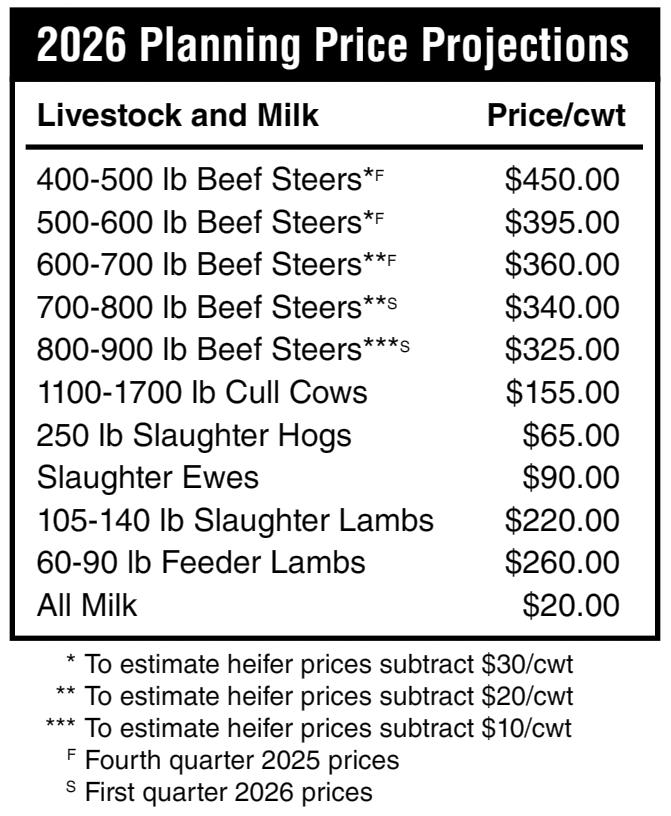
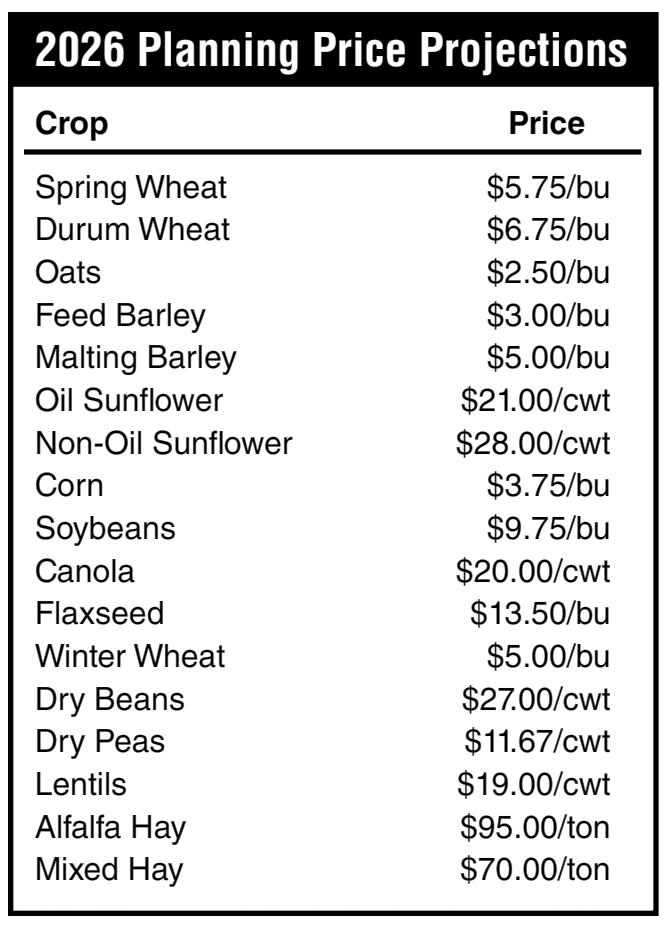
NDSU Extension projects 2026 commodity prices
Planning for the future can be a very frustrating process, especially in times of market volatility. Planning typically pays high dividends. For most farm and ranch managers, developing realistic commodity price expectations is one of the most difficult and complex tasks of the planning process.
To make the planning process easier, North Dakota State University Extension has released its 2026 short- and long-term agricultural planning price projections for North Dakota.
“Estimating short-term planning crop prices is more important than ever,” says Ron Haugen, NDSU Extension farm economist. “Price projections should be used as a guide in setting expectations for the 2026 production.”








These planning prices can be used for preparing annual enterprise budgets and annual whole-farm cash flow projections.
“Cash flow projections are very critical with today’s tight margins,” adds Haugen.
Livestock price projections are hitting new highs, but crop price projections are lower than a year ago.
The publication shows 2026 price projections for crops and livestock produced in the state as well as price estimates for future years. Price projections are given for the major crop commodities, including wheat, durum, oats, feed barley, malting barley, oil sunflowers, non-oil sunflowers, corn, soybeans, canola, flaxseed, winter wheat, dry beans, dry peas, lentils, alfalfa hay and mixed hay.
Price projections for livestock and livestock products include beef steers and heifers at various weights, cull cows, slaughter steers, slaughter hogs, slaughter ewes, slaughter lambs, feeder lambs and milk. The publication also provides historical prices as a reference.
Haugen cautions against using short-term prices for planning capital purchases or expansion alternatives that would extend beyond the next production year.
The “Plotting a Course 2026” publication is available online at ndsu.ag/plotacourse26 or by contacting an NDSU Extension county office.
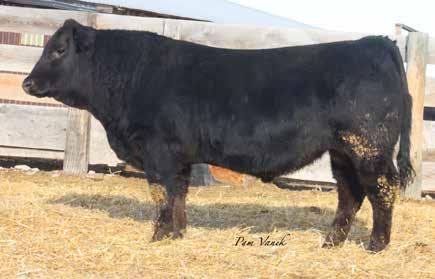
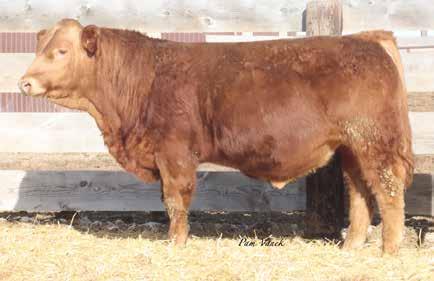
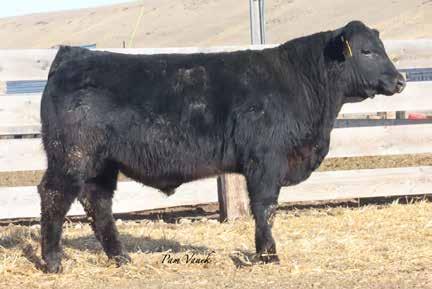
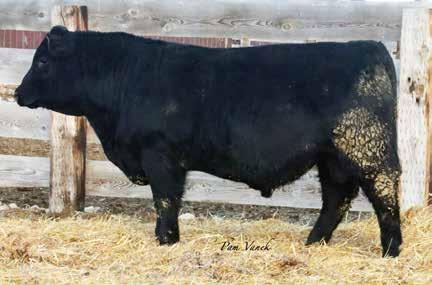
Purebred Simmental bulls offer great opportunity for commercial producers. We have focused on calving ease, growth and carcass data for the benefit of our customers. Each sire we use is expected to produce sound udders, feet and high reproductivity. This approach guarantees you a bull with the performance you need and the longevity you should expect. We use AI bulls from top quality Angus sires.
All bulls purchased from Hill’s Ranch come with a 100% Guarantee for the 1st breeding season.


from
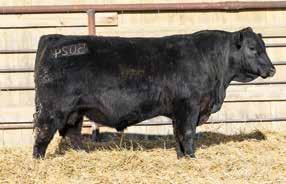
Son of LBR Armour L774
Homozygous Black / Homozygous Polled
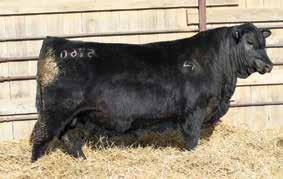
Son of Connealy Liberty 837A


Saturday, May 9th, 2026
Keith Litrell
504 5th Street S, Shelby, MT
Vehicle and Collectibles REDUCTION
SALE
1973 Cadillac Eldorado 2 door rag top, very nice car, low miles, Taxidermy, Collectibles, Toys, Knives and so much more. Keith worked for the railroad and is an avid collector and has emassed a large collection of one of a kind antiques and just hard to find collectibles.
Check next months Trader’s Dispatch for a more complete listing. Put this Sale on your calendar, you don’t want to miss this opportunity.
Flying D Auction
Call cell 406-289-0514
Zane Drishinski Auctioneer, Conrad, MT
Endangered Species Act in Nebraska: Crop Protection Program Requirements, Part 1
By Milos Zaric - Department of Agronomy and Horticulture Assistant Professor, Greg Puckett - Extension Assistant, Craig Romary - Environmental Programs Specialist
What Growers Should Know
ESA label requirements now apply to several commonly used herbicides in Nebraska, including Enlist One®, Enlist Duo® and Liberty® ULTRA.
These ESA directions are enforceable and are designed to prevent off-target movement that could affect federally listed species and their habitats.
When labels reference ESA mitigation, BLT checks are required to determine whether a field falls within a PULA and to follow the bulletin for the month of application.
In tank mixes, the most restrictive requirements apply, including spray drift, runoff and erosion mitigation from either product.
Mitigation measures use point systems and adjustable buffers: runoff/erosion practices must meet minimum points, and spray drift credits can reduce required buffer distances, sometimes to 0 feet.
More products may receive ESA language as registrations are updated, so applicators should expect evolving compliance requirements.
As federal pesticide regulations continue to evolve, growers and applicators (both private and commercial) in Nebraska are facing changes that affect how, when and where certain products can be applied, along with additional documentation requirements.
Helpful product label resources:
1.Enlist One® (manufacturer label)
EPA Reg. No. 62719-695
2,4-D Choline Salt, Corteva Agriscience LLC.
2. Liberty® ULTRA (manufacturer label and supplemental label — expires March 19, 2027)
EPA Reg. No. 7969-500
Glufosinate-P-Ammonium, BASF Corporation.
Both Enlist One® and Liberty® ULTRA include ESA compliance requirements on their labels. These are not optional; they are enforceable use directions intended to protect federally listed species and their habitats (as well as other non-target plants and animals) from potential exposure due to off-target pesticide movement.
Before applying any listed product with ESA compliance requirements, applicators must consult the EPA BLT map web tool (a step-by-step tutorial for accessing and using the BLT) to determine whether any application restrictions apply to the time and location of their planned application. A valid bulletin must be obtained within six months of the application, and the version specific to the planned month of application must be followed.

The Endangered Species Act (ESA), enacted in the early 1970s, is a federal law designed to protect endangered and threatened species (collectively referred to as ‘listed species’), as well as the habitats critical to their survival. Administered by the U.S. Fish and Wildlife Service and National Marine Fisheries Service, the ESA ensures that actions taken by federal agencies, including the registration of pesticide products, do not negatively impact listed species or their habitats. Therefore, all pesticide products entering the market or undergoing registration review may be required to include ESA-specific language, which adds new compliance responsibilities for applicators.
When applying multiple pesticide products as a tank mix, applicators must follow the most restrictive label requirements, including any ecological spray drift, runoff and erosion mitigation measures associated with either product. This added responsibility means users must verify compliance before making applications, particularly when operating in areas designated as vulnerable under the EPA’s mitigation framework.
The runoff and erosion mitigation measures will have a point system: each mitigation measure carries a point value, and to comply, the points for each site must meet the points for the product. Ecological spray drift mitigation will have a starting distance for a buffer or setback. Each mitigation measure allowed by the label will reduce that starting distance by a specific percentage. Depending on the level of mitigation implemented, buffer distances may be reduced — and in some cases to 0 feet — if the cumulative mitigation credits meet or exceed the required threshold.



The U.S. Environmental Protection Agency (EPA) evaluates the potential impact of each pesticide individually and, if necessary for the intended application, may require mitigation for runoff, erosion and ecological spray drift through ecological mitigation label statements. Whenever referenced by a pesticide label, applicators must consult Bulletins Live! Two (BLT) to determine whether their fields fall within a Pesticide Use Limitation Area (PULA) and follow specified restrictions. Only federally listed species are addressed by the BLT statements; however, the ecological mitigation portion should help reduce exposures to all non-target species, including state-listed threatened and endangered species.

Currently in Nebraska, several herbicide products — including Enlist One®, Enlist Duo®, and Liberty® ULTRA and/or associated alternate brand names — carry ESA compliance requirements on their labels. For the Enlist® product line, which is labeled for use in Enlist® soybean and corn systems, these requirements apply specifically to the 2,4-D choline salt component of the products. While Enlist Duo® — a premix of 2,4-D and glyphosate — is also subject to ESA restrictions, this article focuses on Enlist One®, as the same ESA compliance rules apply to both.
To help navigate these changes, we will be publishing additional articles that highlight two key mitigation strategies from the ESA Mitigation Menu that are relevant for most field operations using Enlist One® or Liberty® Ultra:
Ecological Mitigation: Runoff and Erosion Measures (Part 2) — coming Dec. 10
Ecological Mitigation: Spray Drift Measures (Part 3) — coming Dec. 17
Understanding and implementing these practices helps maintain compliance, reduce off-target movement, protect threatened and endangered species, their habitats, and other non-target plants and animals, and ensures continued access to essential row-crop protection products. This list is not exhaustive, and as new products are introduced or reevaluated during registration renewal, they may include updated ESA-specific language and additional mitigation requirements. Helpful Resources:
Nebraska Department of Agriculture
Supplemental Materials
CropLife America’s Adapting to ESA: Mitigation Overview Instructional Video
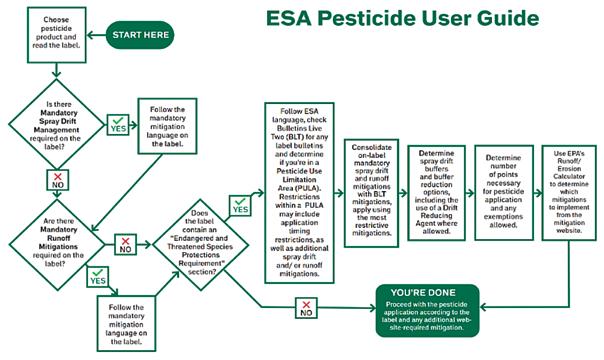

Species Act (ESA) Pesticide User Guide. Step-by-step flowchart
tors review labels, determine mitigation needs, and follow ESA requirements. As regulations evolve, growers and applicators must also meet new expectations for documenting when, where and how products are applied. Source: CropLife America. (Accessed: November 19, 2025).
Endangered Species Act in Nebraska: Part 1
CONTINUED FROM PAGE A18
CropLife America’s Adapting to ESA: Bulletins Live! Two Instructional Video
To the best of our knowledge, and based on the available information, this summary accurately reflects the current regulations, mitigation requirements, and product label guidance as of Nov. 17, 2025. Regulations and label instructions continue to evolve, and amendments will be made as necessary to incorporate the most upto-date information as it becomes available. Tools such as hardcopy worksheets, spreadsheet calculators, and the Pesticide App for Label Mitigations (PALM) webapp are available to assist applicators in documenting runoff and drift mitigation requirements. However, their applicability depends on the specific directions and limitations provided on each product label.
All referenced materials are cited and provided either as hyperlinks or as supplemental resources for the convenience of end users. These resources have been compiled strictly for educational and informational purposes. No proprietary content is claimed, and all materials remain the property of their respective owners.
Thank you to the Nebraska Corn Board for supporting this series of articles (Project #88-R-2526-10) and to CropLife America for granting permission to repurpose select educational materials.


Figure 1. Endangered
showing how applica-
Preventing fog fever
By
Chevy-Lynn Vaske, K-State Extension news service
Fog fever, a rapid-onset respiratory disease in cattle, is most commonly associated with sudden forage changes during the grazing season. In a recent Cattle Chat podcast episode, K-State beef cattle experts discussed how producers can recognize risk factors early and implement management strategies to reduce losses due to fog fever.
Also known as acute bovine pulmonary emphysema and edema (ABPEE), fog fever typically affects adult cattle within days of being moved from dry or low-quality forage to lush, high-protein pastures — particularly in the spring and fall.
The sudden dietary change triggers bacterial production of a compound that damages lung tissue, leading to severe breathing difficulties, frothing at the mouth, anxiety, and, in many cases, death. The experts suggested there is no specific cure once clinical signs develop, placing emphasis on prevention.
“Understanding how cattle adapt to forage changes is key,” said K-State toxicologist Todd Gunderson. “If producers gradually introduce cattle to lush pasture — starting with only a few hours of access per day — it gives the rumen microbes time to adjust, which can significantly reduce the risk of fog fever.”
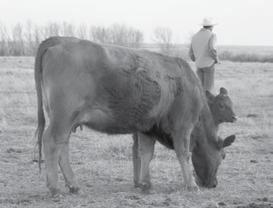
Veseth bred steers won the rate of gain for both the MSGF Cattle Drive and the MSU Steer-A-Year program. They completed against 110+ of Montana’s best steers.
Genetics. Veseth Cattle Co. has an exhaustive Artificial Insemination (AI) program to improve their cattle. We have AI’ed 9000 females in the last 27 years.
Selection. Veseth Cattle Co tests and verifies all production inputs and that is why only 10% of the AI sires sampled in our program are used 4 or more years.
Cost. Veseth Cattle Co. is affordable. Our bulls average $4500 at auction. This is a 50% savings per bull under the industry average bull. Only 1 in 2 bulls saved at the ranch makes the cut for our bull sale.
Efficiency. Cows are grazed year-round on native range. Most of our range is 7 acres per animal unit in the Missouri Breaks. These cows must raise good calves, rebreed, and maintain their body condition on minimal inputs.
Focused on the Female. This is where we can make our customers the most money. Our high bred females will produce over 30% more in lifetime production compared to her industry average straight bred counterparts.
Experts also highlighted nutritional practices that help support rumen adaptation prior to turnout. “Feeding quality dry hay for several days before grazing lush growth gives cattle a fuller rumen and slows the abrupt shift in diet that often triggers fog fever,” Gunderson said.
Prevention suggestions from the team include:
Introduce lush forage gradually. Begin with limited grazing hours and increase exposure over 10–14 days to allow rumen microbes to adapt.
Provide dry hay ahead of turnout. A full rumen at pasture entry helps prevent overeating high-protein grasses that can lead to toxin formation.
Consider ionophores when appropriate. Technologies such as monensin can moderate ruminal fermentation patterns, potentially lowering risk during transitions, but should be used in consultation with a veterinarian.
Manage pasture timing. Delaying grazing of lush regrowth until after frost or cutting it for hay first can lessen exposure to high tryptophan levels.
Fog fever’s rapid onset and high mortality rate mean producers must be proactive. Although there is no proven effective treatment once severe signs develop, careful management strategies can drastically reduce the likelihood of outbreaks.
To learn more about this topic or others, check out the BCI Cattle Chat podcast. For questions, reach out on social media or send an email to bci@ksu.edu.



If





Dakota Gardener: Winter insulation
By Carrie Knutson, Horticulture agent, NDSU Extension – Grand Forks County
Winter so far has been a rollercoaster of weather, with snowy and cold conditions in early December, followed by 40-degree Fahrenheit temperatures, the loss of snow cover, a return of snow, strong winds and then a repeat of the cycle. As a gardener, I’ve learned to appreciate snow cover during the winter, even when it means extra shoveling, because it plays an important role in protecting our plants.
How does snow protect plants during the winter? The answer lies below ground, in the roots and soil, and in the steps that we can take to help plants survive cold conditions.
Plants with shallow root systems are more susceptible to winter injury than those with deeper roots. Much of this damage occurs during cycles of thawing and freezing known as frost heaving. These cycles cause cracks to form in the soil, allowing cold air to penetrate and lower the soil’s temperature. In some cases, roots are pushed closer to the soil surface, where they are exposed to extreme cold. Roots can be injured or killed when soil temperatures drop below 10 degrees.
Snow cover acts as an excellent insulator. It traps heat, helps the soil retain moisture and limits how deeply the frost penetrates the ground. Early snow cover is especially beneficial because it helps the soil hold warmth and moisture before the coldest temperatures arrive.

Even in winter, soil temperatures are typically warmer than the air above ground. For example, according to the Grand Forks NDAWN site, the soil temperature at the 12inch depth today is 31 degrees, while the air temperature is just 4 degrees. This difference highlights the importance of insulation from the soil and snow in protecting plant roots.
Root injury is more likely during winters with little snow cover and extended cold, particularly when soils are dry. Moist soil retains heat more effectively than dry soil. So, when snow is absent, the cold can penetrate deeper into the soil profile, increasing the risk of damage.
Gardeners can take several steps to help plants survive the winter. One of the most important things is choosing plants that are suited to the USDA Plant Hardiness Zone for our area. The USDA Hardiness Zone Map was updated in 2023, and most of North Dakota falls within zones 3b to 4b. If you enjoy experimenting with plants outside their recommended zone, be prepared to give them extra protection, and keep in mind that one especially cold winter might be their last. Mulching around plants is another effective strategy. Mulch helps insulate the soil, keeps temperatures more consistent and conserves soil moisture. Even something as simple as moving snow around your landscape to cover exposed plants during the winter can provide added protection.
I have mulch around several of my plants, and thanks to the blizzard a couple of weeks ago, I’ve accumulated enough snow in my backyard to help protect them this winter. Here’s hoping your gardens are well insulated, too. Happy gardening!
2026 Summer Field Days
Join us this summer for our annual field day series! These events are designed to provide research updates, answer questions and continue to strengthen relationships with our stakeholders, communities and partners all across Montana. We hope to see you there!
June 17, 2026, Wednesday - 2:00 p.m.
Northern Agricultural Research Center- Havre
June 30, 2026, Tues. (July 1, DRC Conf.) - 9:00 a.m.
Southern Agricultural Research Center - Huntley
July 7, 2026, Tuesday - 8:30 a.m.
Western Triangle Agricultural Research Center - Conrad
July 8, 2026, Wednesday - 8:30 a.m.
Central Agricultural Research Center - Moccasin
July 09, 2026, Thursday - 9:00 a.m.
Northwestern Agricultural Research Center - Creston
July 15, 2026, Wednesday - 8:00 a.m.
Eastern Agricultural Research Center - Sidney
July 16, 2026, Thursday - 8:00 a.m.
Post Farm - Bozeman
July 16, 2026, Thursday - 4:30 p.m.
Western Agricultural Research Center - Corvallis
July 16, 2026, Thursday - 5:00 p.m.
BART & Horticulture Farm - Bozeman
Cattle Chat: Getting accurate results from pregnancy checking your cows
By Chevy-Lynn Vaske, K-State Extension news service
Pregnancy checking is often circled on the calendar months in advance, but for cattle producers, knowing when to check can be just as important as knowing how.
On a recent episode of the Beef Cattle Institute’s Cattle Chat podcast, experts answered a listener’s question about pregnancy checking, offering guidance on timing, available methods and why early pregnancy loss can complicate results.
The group explained that pregnancy checking serves as more than a headcount of bred cows — it is a management tool that influences nutrition plans, marketing decisions and culling strategies. However, checking too early can lead to uncertainty.
“Timing really matters when it comes to pregnancy diagnosis,” K-State veterinarian Bob Larson said. “If you check too early, you may identify pregnancies that won’t be maintained or miss pregnancies that occur later.”
Experts discussed common pregnancy-checking methods, including palpation, ultrasound and bloodbased tests, noting that each option varies in accuracy depending on how far along a cow is in gestation. While early detection can be appealing, it also increases the likelihood of misinterpreting results due to natural biological processes.
Early embryonic loss was highlighted as a normal but often misunderstood factor in reproductive management. Losses that occur early in gestation frequently go unnoticed but can affect pregnancy-check outcomes, especially when cows are evaluated soon after breeding.
“Early pregnancy loss is part of normal biology,” Larson said. “Understanding that helps producers make better sense of pregnancy-check results and avoid frustration when numbers don’t look the way they expect.”
The team encouraged producers to align pregnancy-checking timing with

their herd goals, labor availability and management plans. Selecting the appropriate method and understanding its limitations can help ensure pregnancy data is both accurate and useful.
To learn more about pregnancy checking or learn more from the beef cattle experts, check out the BCI Cattle Chat podcast. For questions, reach out on social media or send an email to bci@ksu.edu.



2025 North Dakota 4-H Ambassador program gains 10 members
The North Dakota 4-H Ambassador program welcomed 10 new members in 2025. The new team members are the following: Lily D., Dakota Prairie High School, Nelson County
Faith K., Thompson Public School, Grand Forks County
Leo L., Mother of Divine Grace Homeschool, LaMoure County
Joseph L., Bismarck State College, Adams County
Ambrea M., Grand Forks Central High School, Grand Forks County
Marisa M., Wahpeton Senior High School, Richland County
Ingrid M., Valley-Edinburg High School, Walsh County
Brittyn S., Devil’s Lake High School, Ramsey County
Madalynn S., Cavalier High School, Pembina County
Brooklyn S., Homeschool, Grand Forks County
The North Dakota 4-H Ambassador pro-
gram is a leadership program open to 4-H’ers aged 16-22. Ambassadors plan and assist at 4-H events and help promote 4-H across the state. They serve the state of North Dakota through service projects, assist at the North Dakota State Fair and volunteer at county events.
The process includes a rigorous application and a series of interviews, team-building experiences and leadership
The gypsy moth
In 1869 Leopold Trouvelot, a French entomologist, imported some gypsy moth caterpillars to Massachusetts. It was part of a get-rich-quick scheme: He figured that since the caterpillars thrive on oak tree leaves, which are plentiful there, he could crossbreed them with silkworm moths, and create a self-sustaining, silk-producing caterpillar. He’d make a fortune!
Unfortunately, the cross breeding didn’t work. Then one day, a strong wind knocked over a cage filled with the gypsy moth caterpillars. They escaped through an open window and survived.
At first, the moths spread slowly. But by 1950, gypsy moths could be found in every New England state and in eastern New York. They’ve since spread to Virginia and Maryland –and beyond. Populations have become established as far away as Minnesota and California, probably due to eggs unknowingly transported by cars driven from the Northeast to those regions. They’re not a major threat, but can cause severe problems: in 1981, for example, they were reported to have stripped leaves from 13 million trees.
tests.
“Those running for the ambassador program must attend in person, and we truly seek to make the best better, living out the 4-H motto,” says Kelly Parker, North Dakota State University Extension 4-H youth development specialist and ambassador program advisor.
There are two opportunities to become an ambassador each year: members can be elected during the Extension Youth Conference, typically in June at NDSU; or members can be selected during the ambassadors’ fall retreat at 4-H Camp in Washburn, North Dakota.
To be selected, candidates participate in various events, including formal and informal interviews, a problem-solving event and a group project. The judges’ panel for each event includes North Dakota 4-H Ambassador alumni and North Dakota 4-H Foundation members.
Information on how to become a North Dakota 4-H Ambassador is available at ndsu. ag/4-H-ambassador.



Deadline for advertising in the March 2026 issue is Wednesday, February 25th.

WANT TO BUY: New Holland bale wagons. Model 1032, 1033, 1036, or 1037.
Midwest FEEDS Practicum
Beef producers and industry professionals looking to sharpen their management skills and decision-making tools are invited to participate in the Midwest FEEDS (Forage, Education and Efficiency in Diversified Systems) Practicum, a hands-on, multisession educational program hosted by the University of Nebraska–Lincoln.
Designed to strengthen beef production systems across the Midwest, the practicum leverages the region’s competitive advantages — including perennial pastures, annual forages, cover crops, crop residues and harvested feeds — while emphasizing practical application throughout the production year.
Held across five sessions in 2026 at the Eastern Nebraska Research and Extension Center near Mead, the program blends infield experiences with in-depth discussions led by University of Nebraska–Lincoln faculty and Extension specialists.
A Season-Long, Systems-Based Approach
Participants will engage in hands-on learning tied directly to key decision points in beef cattle production, with sessions
scheduled to align with seasonal management needs. In addition to practical instruction, the practicum emphasizes peer-to-peer learning, networking and idea exchange among producers and industry professionals.
Participants will also receive high-quality educational resources, including decisionsupport software, notebooks and curated University of Nebraska–Lincoln publications to support continued learning beyond the classroom.
Skills and Topics Covered
The Midwest FEEDS Practicum is designed to help participants build confidence and capability in areas such as:
Decision-making with advanced tools — Using decision support tools and NRC software to analyze diets, match forage availability with animal requirements and optimize beef production.
Forage and grazing strategy — Developing effective grazing and pasture management plans, including weed control and fertility strategies tailored to individual operations.
Breeding, calving and weaning management — Applying best practices for breeding, calving, weaning, cattle handling and facility design.
Evaluating cattle performance — Assessing cow and calf performance, estimating body condition scores and determining nutritional needs across the reproductive cycle.
Participants will also experience cutting-edge research at ENREEC, with a focus on integrating cropland for forage and cow-calf systems.
It is common knowledge that you can cut heavier 1st and heavier 3rd or 4th cuts with a class 5 alfalfa, but they usually die out in colder areas. Not so with 360-V!!
of 1!!
“I’m phasing out all my varieties, including 2 Nexgro, 2 croplan, and R.R. varieties in favor of 360-V. The regrowth speed is just right. Two years in a row we have cut 6.25 ton with four cuts. 1st cut is always 2.5 ton! The variety is somewhat shorter but stacked with leaves. Always makes dairy quality.”
Levi Umbel - Torrington, WY
“360-V is my favorite variety! Quick recovery, heavy producer and a heavy 3rd cut!”
Andy Dobson, past president - Natl. Hay Growers - Mud Lake, ID
“360-V has leaves at every inch of the stem and the stem is very ne. Best alfalfa we have ever planted!”
“360-V will take heavy tra c.”
John Fierera - Stockton, CA
Greg Ball, Rexburg, ID

*When we run out we will sunbstitute with
2026 Session Dates
All sessions will be held at the Eastern Nebraska Research and Extension Center, 1071 County Road G, Ithaca, Nebraska: February 28, 2026 — Health, Nutrition and Systems Thinking March 28, 2026 — Forage Systems and Breeding June 20, 2026 — Facilities and Pasture Management
August 29, 2026 — Weaning, Culling and Winter Feeding
December 5, 2026 — Stalk Grazing and Preparing for Calving
Cost and Registration
$750 per individual
$1,300 for two participants
$500 for each additional participant
More information and registration details are available at:
https://enreec.unl.edu/ extension-education-engagement/midwest-feedspracticum/
#####
1500 BC - Bacon is invented. As one of the oldest cuts of meat in history, bacon during this time may be from the back of the animal or from the belly. It is salted to preserve freshness and is probably very fatty.
HERE’S WHAT GROWERS ARE SAYING: (More testimonials available on our website)



The data story of the cow starts at birth
Purina Animal Nutrition
Turn early records into decisions that build healthier calves and higher-performing cows.
A cow’s life is a story. Like any good book, the opening chapters set the foundation for what comes next. Birth weight, colostrum quality, early health events and growth trends may seem like small, isolated moments, but together they influence her lifetime performance.
“When we don’t record calf data consistently, we just don’t get the same follow-through toward health or production goals,” says Craig Walter, senior educator for VAS. “We can move toward improvement, but we can’t prove our progress without data.”
The story of a productive cow begins long before she enters the milking parlor, and we build that foundation with the data we track early in her life.
Set the foundation at birth
What happens in those first hours sets the tone for everything that follows. Consistently recording calf data gives you the clarity to spot opportunities, make improvements and eliminate guesswork later on
Key newborn metrics, such as birth weight, weaning weight, serum total protein, colostrum quality, navel health, vaccination records and treatments given, help you determine whether a calf is getting the start she needs.
“It can feel like a lot of information to track, so begin by focusing on respiratory cases, navel infections and growth rates,” says Connie Walters, D.V.M., calf and heifer specialist for Purina Animal Nutrition. “Trends in these areas often explain later health or performance challenges.”
Recognizing these early patterns can help prevent small issues from becoming larger problems. For example, a farm Walters works with tracks serum total protein on every calf. Their numbers were still above industry averages, but a slight downward trend signaled something wasn’t right.
“Their pasteurizer had a small burn spot that was denaturing proteins, and it was only caught because we had the data. When we did our weekly analysis, we noticed a slight drop CONTINUED ON PAGE A28

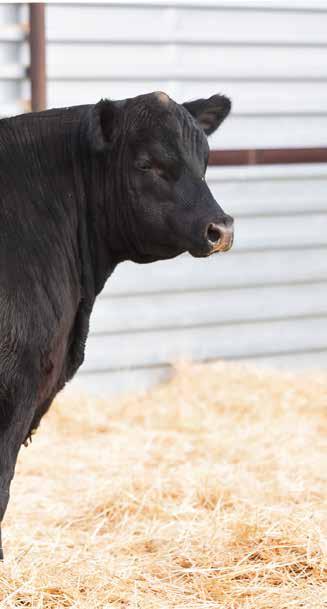
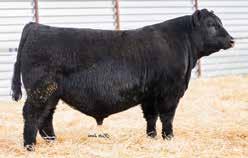
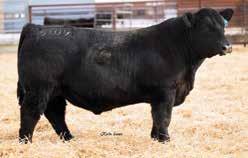
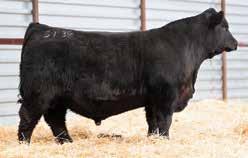
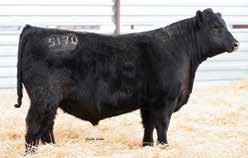
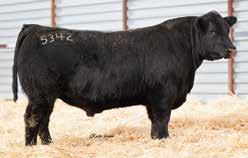
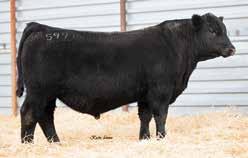

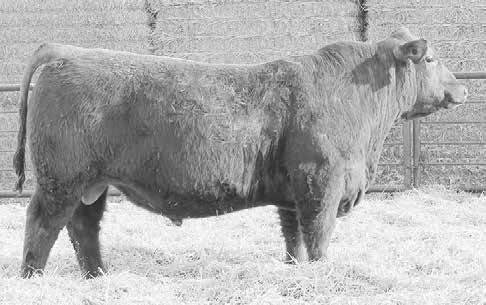
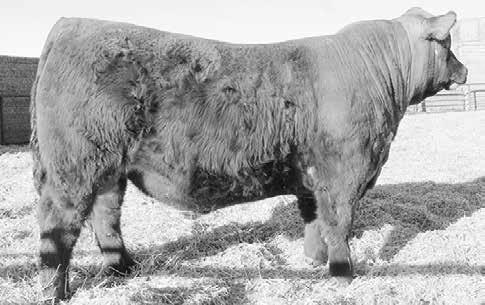
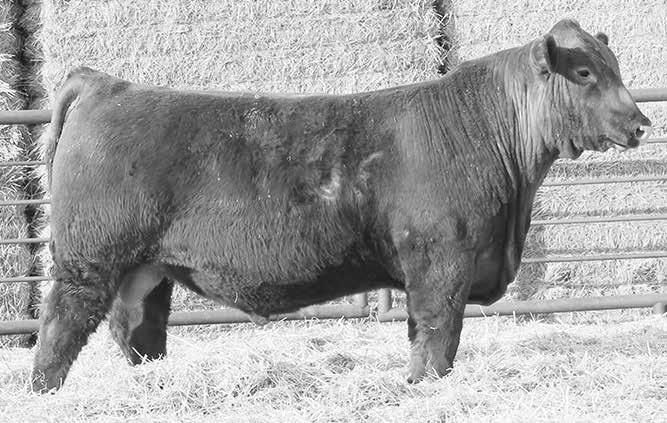
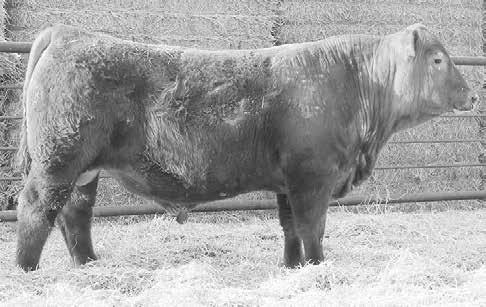
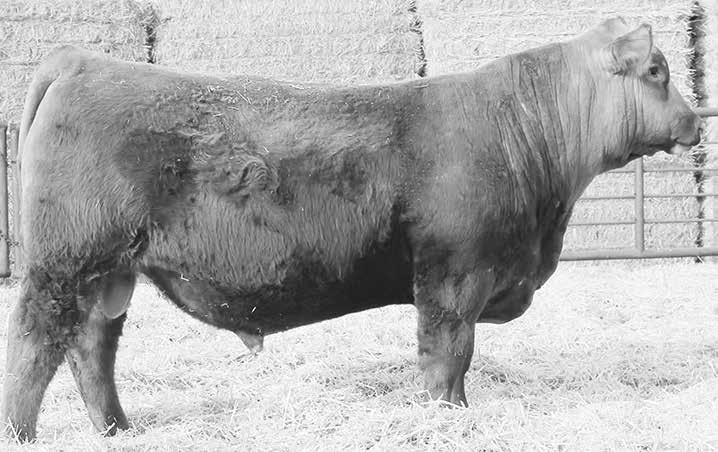
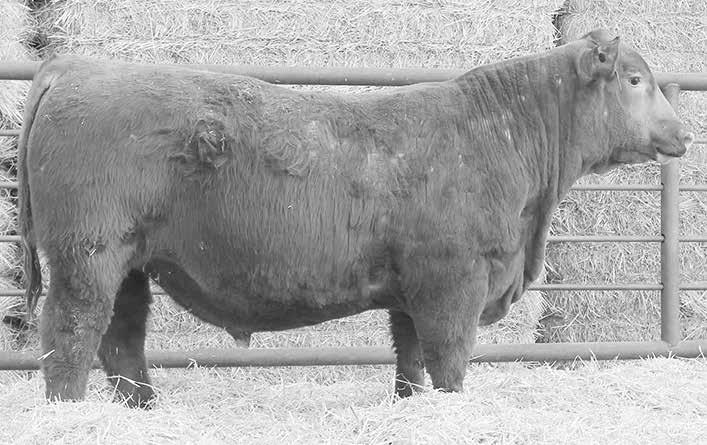
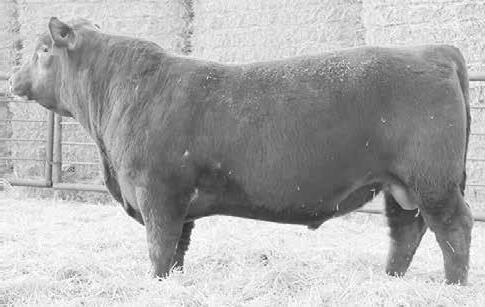
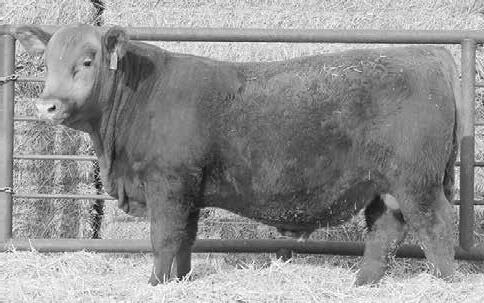
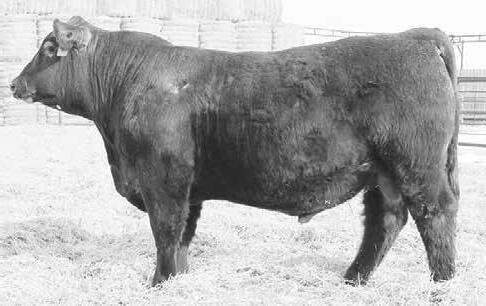
Fritz Monarch 1180, Fritz Summit 605G, Fritz Monument 618G, Fritz Coming in Hot 2020, Red SSS Tempo 778K, Fritz Stampede 219, Fritz Magitude 3019, Fritz Anchor 3112, Fritz Cash 3029, Fritz Summit 3195, VGW Rattler 908, Wheel Stark 67G, Reputation 0094 & Pie Long Haul 1344


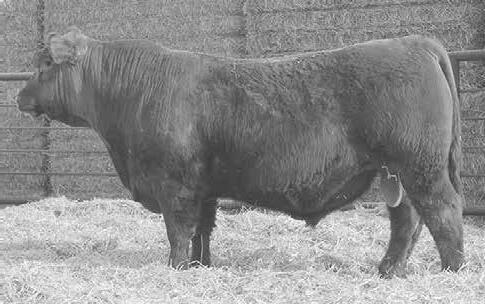
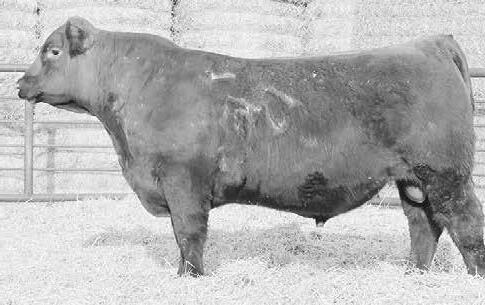
Sod Buster Sales, Inc.’s
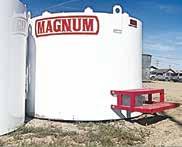
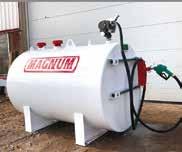
TC SINGLE WALL TANKS
Each T.C. Single Wall tank includes Extreme Duty Tie Down Lugs, 3/16” Steel (up to 660 gallon), 1/4” Steel (for 1000 gallon), a 2” fusible plug, innovated baffel system, premium powder coating, and sandblasting.
Our tanks are heavier built than standard tanks, and rated for both gasoline and diesel.





#####
The Mason-Dixon line had nothing to do with slavery. It was surveyed in 1767 to settle a border dispute between British colonies.
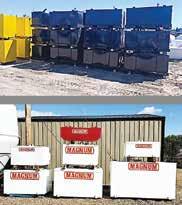
Magnum Fabricating Ltd.


CONTINUED FROM PAGE A26
in serum total protein,” says Dr. Walters. “Once it was fixed, serum total protein, health and growth rates climbed back up.”
Later in life, this early data becomes even more valuable as you work to understand why a cow may be underperforming or why a group isn’t meeting expectations.
How early data shapes long-term development
Tracking early-life nutrition and health data can act as a roadmap for understanding a calf’s trajectory. Colostrum quality, treatment patterns and weight gain all signal whether she’s on track to become a healthy heifer and, eventually, a productive cow.
Decades of research point to the same conclusion: early growth pays off. Even a 0.1-pound increase in average daily gain before weaning can translate to hundreds of pounds of milk in the first lactation.
“Calf growth rate always shows up somewhere in milk production,” says Dr. Walters. “I’ve never seen a negative result.”
Post-weaning management matters too, yet it’s often the least documented. Group changes, diet adjustments and respiratory challenges can quietly shape performance and these trends can go unnoticed if they aren’t tracked.
One example Walters recalls involves calves that developed respiratory disease around three months of age following nutritional inconsistencies at weaning. Those challenges didn’t affect calf performance immediately but surfaced during their first lactation.
“We couldn’t pinpoint a single cause of the drop in production in early cows,” says Dr. Walters. “But year-overyear trends helped us understand what level of production was normal for the farm and what was not. We reviewed the calf data and identified trends in respiratory disease and inconsistent nutrition, both of which can affect first-lactation milk production. This data helped explain a possible cause of that drop.
Motivating your calf team
Calf data isn’t only about tracking and improving animal performance — it can also help strengthen teamwork and communication.
Walters often translates key metrics into Spanish and shares simple dashboards during monthly team meetings so everyone can see how their work affects calf outcomes. When employees understand the why behind protocols, compliance and consistency improve.
“When teams see how their care shows up in the data, it motivates them,” says Dr. Walters. “People want to do good work and showing the impact helps them do it.”
Linking calf data with later heifer or lactation performance also helps connect teams who don’t typically overlap. Maternity staff can see how colostrum handling affects passive transfer weeks later, and calf managers can see how early treatments or growth trends show up again at breeding. This helps everyone see how their role fits into the bigger picture.
Make data entry simple and useful


Recording calf data can feel time-consuming, but if there’s one thing we’ve learned, it’s that the payoff is worth it. Today’s herd management tools, like mobile apps that allow for calfside data entry, make the process faster, easier and part of your team’s daily routine.
“The more data you enter, the more value you get from it,” says Walter. “The right tools help make that process simpler and help drive better decision-making.”
With herd management software like DairyComp from VAS, you can record birth weights, serum total protein, treatments and growth events. This makes it easier to:
Track trends across groups or seasons
Compare healthy calves with those that experienced respiratory or scours events
Monitor growth and weaning metrics
Build lifetime records that connect calfhood to future reproduction and health
Every calf record is a piece of a larger story. When those pieces are easy to capture and connect, you can improve calf health and the trajectory of your entire herd for years to come.
#####
John was leaving work early again to play golf, and his boss had had enough. “You’re leaving early again to go to the course?” the frustrated boss asked. “I’m just following my doctor’s orders,” John replied. “Do you think I’m an idiot?” the boss shot back. “No, it’s true. My doctor told me to get some iron every day.”


2026 SHOWCASE SIRES -


CLEMSON ELITE 41J:
PB SIMMENTAL Beautiful muscle expression and movement, with surprisingly consistent calving ease. Solid Simmental structure in a moderate frame.
OMF EPIC E27:



PB SIMMENTAL A highly proven, rst-class package of fertility, sensible calving ease and performance. Long, strong and Simmental!
CONNEALY COMMERCE:
PB ANGUS An impressive combination of awesome phenotype and impeccable structure, with inherent maternal excellence. Last year’s sale o ering of sons was well received, with consistently impressive carcass balance and eye appeal.


DEER VALLEY WALL
STREET: PB ANGUS A classic Angus pro le boasting easy eshing, beautifully uddered daughters with good feet and moderate mature size. Fancy! With all the carcass the industry needs. AKA a “cow maker.”
CCR POUNDER 2045F:
1/2 SM 1/2 AN Extra length, capacity and frame, exceptional docility, and a long running reputation for consistency. These calves smoke down the middle of the road all day long.














Prairie Fare: Food allergies and gluten safety — What every cook should know
By Julie Garden-Robinson, NDSU
“Let’s move the flour to the basement pantry,” I said to my husband.
Since one of our family members has celiac disease, food storage and preparation are special safety considerations.
My husband has been a grain miller in the food industry, and I have a cereal chemistry doctorate. We are fans of grains. However, loose flour can easily spread through the kitchen and contaminate food surfaces
Celiac disease is not an “allergy” to gluten, a complex group of proteins found in wheat, barley and rye. This autoimmune disorder can greatly harm the intestinal tract because the body mistakenly recognizes the protein as an invader, triggering inflammation and internal damage.
Technically, “gluten” is the elastic protein mixture formed when bread is kneaded. It includes several proteins – most notably glutenin and gliadin.
Managing celiac disease requires lifelong avoidance of any foods with these particular proteins.
Fortunately, when you see “gluten-free” on the label, you can trust it. “Gluten-free” labeling is voluntary, but strict limits for using the claim exist. When I prepare food for our family, I take
Extension food and nutrition specialist special precautions to avoid cross-contact with gluten-containing ingredients, just as I avoid spreading chicken juice around the kitchen. Utensils, bowls and equipment must be carefully cleaned
How common are food allergies and celiac disease? The information is courtesy of the Food Allergy Research and Education organization and the Celiac Disease Foundation.
If 100 adults were gathered, about 10 would have a food allergy.
If 100 children were gathered, about 13 would have a food allergy.
If 100 people were gathered, one would have celiac disease.
Allergies to more than 170 foods have been reported. Allergic reactions were estimated to cost the U.S. $33 billion in 2024.
If you are planning a gathering, be sure to find out if any of your guests have food allergies so you can plan appropriately.
Currently, nine food ingredients are recognized on food labels as being allergenic: eggs, fish, milk, peanuts, sesame, shellfish, soy, tree nuts and wheat. They are listed right after the ingredients and noted by “Contains” (followed by the allergen).
Celebrating 50Years Of Breeding Red Angus


Companies often produce more than one type of product using the same machinery or other equipment. You may note that some products also include “Processed in a facility that also processes …”. Pay attention to that information if you are very sensitive to certain ingredients. Allergies can be life-threatening if the symptoms progress to anaphylaxis. For example, symptoms of a shellfish allergy may include tingling in the mouth; abdominal pain; nausea; diarrhea; vomiting; congestion; trouble breathing; wheezing; skin reactions; swelling of the face, lips, tongue, throat, ears or hands; dizziness; or fainting. If you are preparing food for people with any type of allergy, avoid cross-contamination by using separate serving utensils. Be sure to label your menu items, or place the food package nearby.
See more allergen information from North Dakota State University Extension at www. ag.ndsu.edu/food (click on “Food Safety”).
Here’s a wheat-free recipe, but it could not be consumed by someone with an allergy to peanuts.
Honey-Peanut Cereal Bars (Wheat-free)
¼ cup granulated sugar
½ cup honey
½ cup peanut butter
3 cups wheat-free cereal (Cheerios, Rice Chex, etc.)
½ cup salted peanuts
In a 3-quart saucepan over medium heat, heat sugar and honey just to a boil, stirring occasionally. Remove from heat. Stir in peanut butter until smooth. Stir in cereal and peanuts until evenly coated. Press evenly in a 9-by-9-inch buttered pan, using the buttered back of a spoon. Cool 1 hour. Cut into 4 rows by 3 rows.


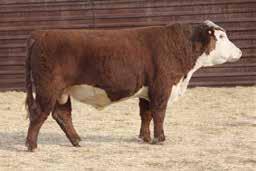
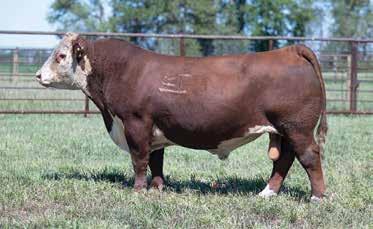
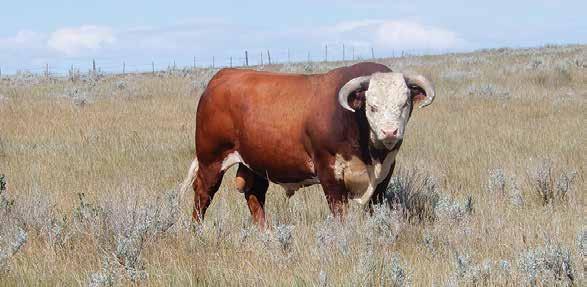
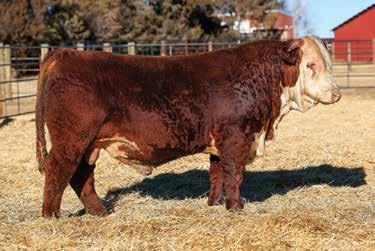
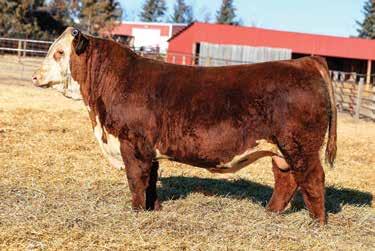
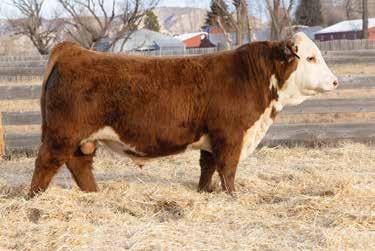
YEARLING POLLED HEREFORD BULLS
8210 Little Prickly Pear Rd., Canyon Creek, MT 59633 Don Dallas (406) 410-0406


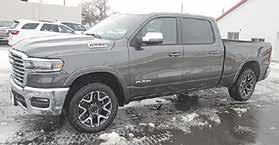
NEW 2026 Ram 3500
LARAMIE SPORT, CUMMINS, AUTO, 4X4, CREW CAB, LONG BOX, POWER HEATED/COOLED LEATHER SEATS, AUTO START.

NEW 2026 Ram 3500
LARAMIE SPORT, CUMMINS, AUTO, 4X4, CREW CAB, LONG BOX, POWER HEATED/COOLED LEATHER SEATS, SUNROOF, AUTO START.

NEW 2026 Ram 3500
TRADESMAN, CUMMINS, 4X4, AUTO, CREW CAB, LONG BOX, CLOTH INTERIOR, SXM, BACK UP CAMERA.

NEW 2026 Ram 1500
BIG HORN, 3.0L, AUTO, 4X4, CREW CAB, SHORT BOX, HEATED CLOTH INTERIOR, AUTO START.
NEW 2026 Ram 1500
LARAMIE, 3.0L, AUTO, 4X4, CREW CAB, SHORT BOX, POWER HEATED/COOLED LEATHER SEATS, SXM, NAV.

NEW 2026 Ram 1500
RHO, 3.0L HURRICANE TWIN TURBO V-6, AUTO, 4X4, CREW CAB, SHORT BOX, 500 HP!
2026 NDSU Soybean Symposium set
Researchers, Extension professionals, students and industry partners are invited to participate in the 2026 North Dakota State University Soybean Symposium on March 5 at NDSU’s Memorial Union in Fargo, North Dakota. The symposium is a forum dedicated to advancing soybean research, management and innovation across the Midwest.
The event will feature research presentations, student competitions and networking opportunities, and it is supported by the North Dakota Soybean Council and industry partners.
The symposium will include oral and poster presentations spanning three major focus areas: agronomy, plant pathology and new-uses research. Graduate students, postdoctoral researchers and research staff are encouraged to submit abstracts for a chance to present their work and compete for cash prizes.
“This symposium is an important venue for connecting research with real-world soybean production challenges,” says Ana Carcedo, NDSU Extension broadleaf crops agronomist and symposium organizer. “It provides an opportunity to share new findings, foster collaboration across disciplines and support student professional development.”
The 2026 program will feature keynote presentations from Shawn Conley, University of Wisconsin–Madison state soybean and small grain specialist; Dylan Mangel, University of Nebraska–Lincoln Extension plant pathologist; and Ignacio Ciampitti, co-director of Purdue University’s Institute for Digital and Advanced Agricultural Systems. Speakers will share perspectives on translating cutting-edge soybean science into practical, field-level applications.
In addition to technical sessions, the symposium will provide opportunities for attendees to network with researchers, Extension professionals, farmers and industry representatives.
AMBA releases recommended variety list
The American Malting Barley Association (AMBA) Board of Directors annually develops a list of recommended malting barley varieties for U.S. growers for the upcoming crop year. AMBA is a nonprofit trade organization, which represents the interests of end users of malting barley, including maltsters, brewers, distillers, and food processors. Their work seeks to maintain a stable and high quality supply of malting barley for their nearly 50 members throughout the U.S.
The AMBA Recommended List is intended to provide U.S. growers with guidance as to what varieties the industry may be contracting or purchasing in the coming year. It is not intended as a list of approved or certified malting varieties for the use by brewers, distillers, food companies, or maltsters. There may be many suitable malting barley varieties grown domestically or internationally that are not on the list, yet have quality characteristics desired by the industry. Some varieties will be used in large quantities and many others are only utilized in niche markets, so producers are encouraged to contact their local elevator, grain handler, or processor to gauge market demand for any variety grown in their region prior to seeding.
The only addition to the 2026 list is ABI Montana, brought forth for recommendation from ABInBev. ABI Montana is a spring, two-row malting barley variety intended for adjunct brewing. It is primarily adapted to dryland and low irrigation production systems in northwest Montana. It has competitive yield, test weight, and kernel plumpness with earlier harvest maturity and improved malting characteristics compared to other varieties grown in the target region. Notably, ABI Montana carries the high thermostability form of β-amylase. Three varieties were removed from the list due to their declining acreage, all released by ABInBev: spring six-row Celebration and two spring two-rows, Conrad and Merit 57. To access the entire list and the full press release, visit the AMBA website.
#####


A golfer called his friend and was very upset. “I can’t believe it,” the despondent man said, “my wife of 30 years left me for my golf partner.” His sympathetic friend replied, “Oh no, that’s terrible. But don’t worry, there are a lot of other women out there. You’ll surely find love again.” “Who’s worried about her?” said the scorned man. “I was talking about my playing partner. He was the only guy I could ever beat.”




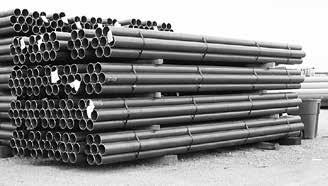





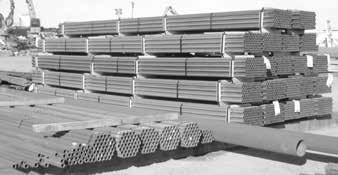


If you have items you want advertised in the March 2026 issue THE VERY LATEST WE CAN ACCEPT THEM is February 25th.
TRACTOR FOR SALE
2008 New Holland TD5050 95-hp, 5200 hours, with Bush Hog loader/bucket, 540 PTO Asking $24,900 Phone (406) 899-4979, Cascade, MT
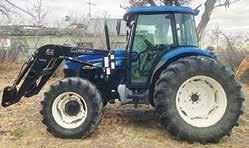
CLAY CREEK ANGUS
224
Yearling
& Two Year-Old Bulls
Nice selection of low birth weight heifer bulls
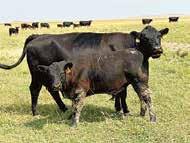
Idaho SEED podcast using AI technology to highlight research
In the pilot episode of University of Idaho Extension’s new agriculture-themed podcast, the cohosts liken ravenous rodents known as voles to a “crop-destroying army of stealthy, little ninjas.”
“Those voles are really putting us to the test lately,” the male podcast host explains. “It seems like they’re munching on our crops like it’s an all-you-can-eat buffet.”
The cohosts are never identified, but they demonstrate a thorough knowledge of Idaho agriculture and voice personal frustrations regarding the damage wrought by voles. The twist is the cohosts aren’t real people. The Idaho Short Educational Extension Discussions (SEED) Podcast is created using artificial intelligence (AI), generated from research-based publications and scientific papers authored by UI Extension scientists.
Unique format
130 replacement heifers
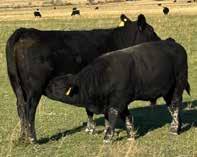
We’ve removed the guess work, let our proven sire program add uniformity to your calf crop!
Jim & Lori French 3334 Rd. 14 • Greybull, Wyoming 82426 • 307-762-3541 www.claycreek.net • bulls@claycreek.net

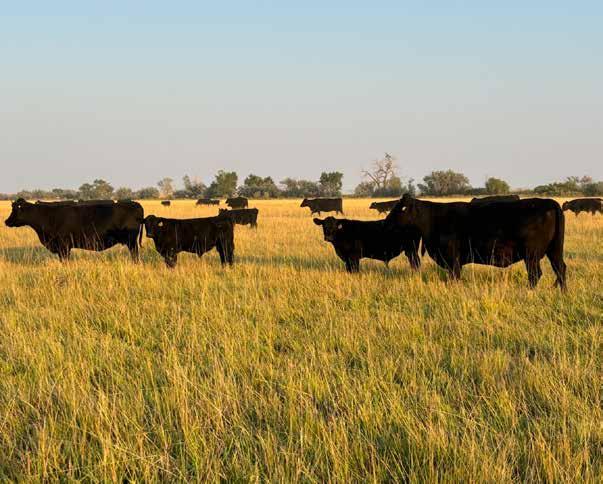
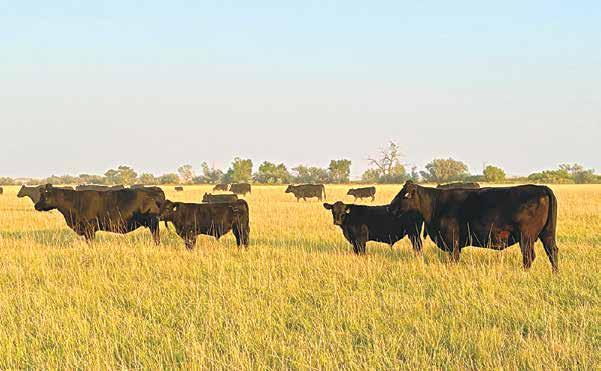
Sires include: Clay Creek Countdown, Clay Creek Rito, Ideal Encore, Pathfinder, Resilient Providing quality seed stock through proven genetics Private Treaty Sales - Volume Discounts 3334 Rd. 14 • Greybull, WY 82426 307-762-3541



Listeners are told at the beginning of each episode that AI was used to create dialogue, but the science is sound and has been carefully vetted by U of I subject-matter experts.
Episodes will be posted every three weeks and can be accessed by searching for Idaho SEED Podcast on major podcast platforms. The author of the featured publication will introduce each 20-minute episode, paired with a link to the full text of the research. Idaho SEED will showcase UI Extension’s diverse research portfolio for a general audience, without jargon or technical analysis.
Jason Thomas, a UI Extension educator based in Minidoka County who specializes in integrated pest management of insects and rodents, launched Idaho SEED on June 27, using USDA grant funding. He envisions farmers will tune in while driving their tractors to glean ways to improve their bottom lines. Other stakeholders may marvel at UI Extension’s scientific breakthroughs during morning walks.
Thomas believes he’s among the early adopters of using AI to make a formal podcast, especially for Extension purposes. Researchers have busy schedules, and AI makes the production process quick and efficient, while distilling complex papers into simple terms. Spanish-language podcasts can also be made with a click of a button.
“I haven’t seen people take it to the scale of actually paying for a podcast hosting and doing some professional additions to it,” Thomas said of Idaho SEED. “We’ve got to find every way possible to reach more people and make our content more relevant.”
Highlighting Extension
The pilot episode, “The Vole Patrol,” is based on Thomas’ 2020 bulletin “Utilizing Barn Owl Boxes for Management of Vole Populations” and offers guidance and designs for making houses for barn owls as a strategy to control voles.
Thomas also used AI technology to generate the podcast’s catchy country and western theme song — “UI experts; the knowledge you need. Right here, right now, it’s Idaho SEED!”
UI Extension educators Grant Loomis, Blaine County, and Jared Gibbons, Madison County, will assist Thomas in producing the podcast. Several episodes poised for future release have already been produced. For example, an episode will cover “Livestock Care for Beginning and Small-scale Producers,” which is a bulletin by Extension educator Rebecca Mills, Gem County. Another episode will delve into “Answers to Common Questions about Greenhouse Gases,” a 2022 bulletin by Extension educator Mario de Haro Martí, Gooding County, Lide Chen, a professor in the Department of Soil and Water Systems, and Eric Winford, associate director of the Rangeland Center.
Technophile
Thomas has a long history of experimenting with new computer technologies. His production process entails entering scientific literature into Google Notebook LM to create multiple podcast versions, sometimes piecing together the best parts from different ones. The AI software occasionally hallucinates, producing false or misleading information from nonexistent patterns. For example, AI once incorrectly referenced spraying rodenticides on fields, when in actuality they are applied as solid bait. Fortunately, errors are limited and are easily corrected in editing. Occasional AI tangents surface and can also be deleted.
Thomas finds that his AI podcast hosts are prone to telling jokes that usually land flat. He prefers to leave them in the final product, as a humorous reminder that AI still has its shortcomings.


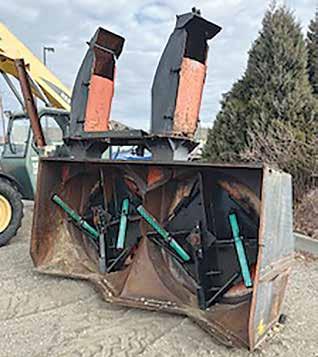

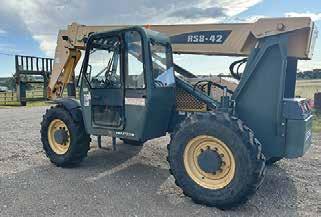
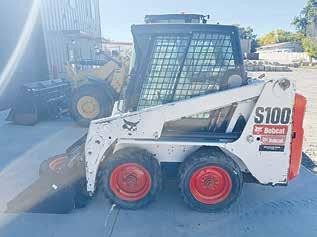
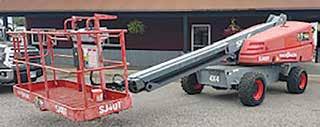
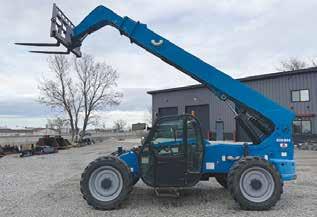

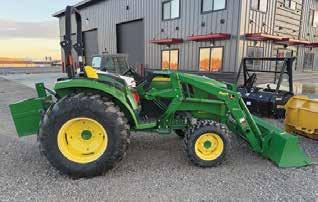
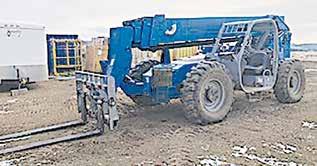
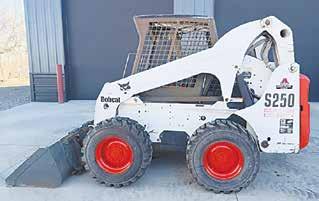



~ ~ Private Treaty ~ ~
Black and Red Angus Bulls - Yearling and 2-year-olds
These cattle are bred for long lasting maternal traits and moderate birth weights since 1981.
Fertility tested and delivered.
Contact Browning Angus (406) 486-5040 or (406) 429-7371, Fallon, MT


National Eat Ice Cream for Breakfast Day
Date celebrated: Every February 18th
“Life is short, eat dessert first” is a phrase that has been bandied about by a lot of people for reasons both flippant and serious. Although it probably sounds like all fun and games, Eat Ice Cream for Breakfast Day is one of the more serious embodiments of this phrase, serving to increase awareness about childhood cancer.

For children whose lives may be cut short and who see every day as a blessing, it only makes sense to indulge in life’s little pleasures. And Eat Ice Cream for Breakfast Day brings that opportunity to everyone in support of this important cause!
History of Eat Ice Cream for Breakfast Day
Eat Ice Cream for Breakfast Day was created to commemorate the nine wonderful years of the bright soul that was Malia Grace, born on February 18, 2001. Malia, who passed away after a long fight with cancer on Dec 7, 2010, was an inspiration to everyone around her.
Those who knew her saw that she glowed with the kind of enthusiasm for life that childhood is made of. She embraced knowledge and learning every day, getting outside whenever possible and drinking in her short life with a passion that made each day a new and exciting adventure of its own.
First celebrated on her birthday in 2013 by a group of close friends of Malia to commemorate her life and creativity, the event started out small and was shared with just a few folks on social media. In 2014, the event went public and opened up to include 55 other families of children with cancer.
Eat Ice Cream for Breakfast Day went on to become a day to honor all of the children who have battled or are battling childhood cancer. It didn’t take long for the day to explode onto the scene, with thousands of people from all over the world taking part and spreading the message to thousands more.
Learn Facts About Childhood Cancer
Most people don’t think a great deal about childhood cancer until it happens to them or someone they know and love. But the reality is that it is more prevalent than most people realize. Here are some important things to know and stay informed about childhood cancer:
• Globally, more than 300,000 children are diagnosed with cancer every year. Worldwide, this equals a cancer diagnosis for a child every three minutes.
• Childhood cancer causes approximately 90,000 deaths each year all over the planet.
• 70% of childhood cancers are curable, assuming they are caught early and have access to appropriate treatment protocols.
But isn’t this the wrong date!?
There are actually two events that are very similar in name but founded for very different reasons. Today is not to be confused with Ice Cream for Breakfast Day which takes place on the first Saturday of February, and was created in the 1960s by housewife Florence Rappaport from New York.
Idaho SEED podcast using AI technology to highlight research
Reaching farmers
To gauge receptiveness to an AI-generated podcast about Extension research, Thomas surveyed farmers attending Extension pest-management forums. Most respondents were interested and indicated that they’d likely download it.
“What we do as Extension educators is often not easy for farmers to understand,” Thomas said. “Large documents can be intimidating for someone who doesn’t know what they’re looking for. We want to drive people to our publications, and if you understand the ‘why’ and the ‘how,’ you are going to get more out of it.”
National Muffin Day
Date celebrated: Every February 20th

Who doesn’t like a big, tasty muffin to start their day in the morning?
Muffins are an essential morning staple for many people (and great in the afternoons and evenings too). Today is an opportunity for people everywhere to celebrate everything they might love about muffins.
Most people would agree that muffins are fantastic! They come in a variety of flavors, they’re super easy to make, and they’re fun to eat. Some people think they are pretty much like a delicious cupcake without frosting–but eaten for breakfast. But the traditional muffin batter is a bit more dense and they often include fruit in them.
History of National Muffin Day
National Muffin Day might be a big celebration on this day in modern times, but the concept has humble beginnings. It all started with the work of tech company employee Jacob Kaufman. One morning on the way to work, Kaufman took a bag of muffins with him and handed them out to homeless people in the city in which he worked. It was such a success that he started doing it regularly and making more muffins to meet the demand. Some people even began affectionately referring to him as “The Muffin Man”.
By his own admission, Kaufman says that his eyes were originally trained to be averted to homeless and needy people. But when he started delighting in giving muffins away, he began looking for them wherever he could find them. His awareness of these people as not just “needy”, but as humans who deserved a bit of attention, changed his entire perspective. He wasn’t just doing charity work, but he was excited to connect with them every day over a muffin.
For years, Kaufman was a source of giving and inspiration to those who were less fortunate than him, providing them with delicious food that they could enjoy. For many, it was a highlight and changed the trajectory of the rest of their day.
Kaufman continued doing his work under the radar until blogger Julia Levy picked up on his story. She reported about what he was doing in a blog post on the theme of ordinary philanthropists. After talking with one another, the duo soon realized that they could use the appeal of Kaufman’s muffin experience to help more homeless people who were living in other places.
The result of the conversation was the inception of National Muffin Day back in 2015, an opportunity for people to bake muffins and raise money for homeless shelters. Muffins would go from something that served consumers to a vehicle for helping less fortunate people who were struggling on the streets.
The need for the donations and goodwill that go along with National Muffin Day is enormous. There are thousands of people living on the streets who need warm, delicious muffins (and many other resources) that are made and served with love.









EMPLOYEE NEEDED

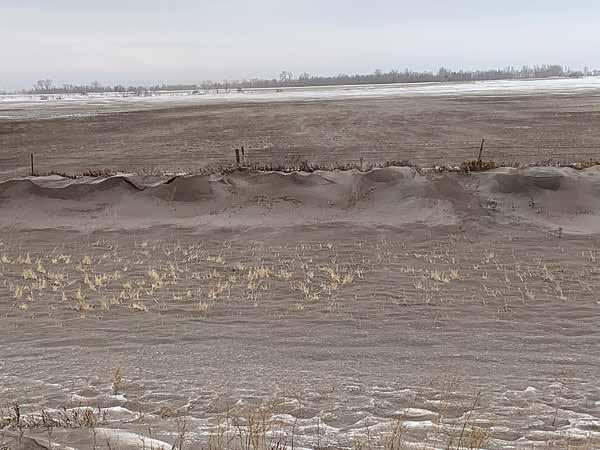
NDSU study reveals cost of losing six inches of topsoil
Losing six inches of topsoil could cost farmers more than $6,600 in nutrients and organic matter, according to a new analysis by North Dakota State University researchers.



Topsoil is the most fertile layer of a soil, rich in microbial activity and essential for crop production. When it erodes, thousands of dollars’ worth of nutrients and organic matter erode with it.
NDSU researchers’ findings showed that the cost of direct nutrient loss and nutrient loss due to organic matter loss totals over $1,100 for every inch of lost topsoil, or $6,600 for a 6-inch layer.
These numbers show that soil erosion is an economic issue, not just an environmental one, says Naeem Kalwar, NDSU soil health specialist at the Langdon Research Extension Center. “Protecting topsoil from erosion is crucial. That layer is where farmers plant seed, and it is responsible for feeding the world.”
Soil erosion, which is the loss of soil sediments or material, can happen due to wind, water and tillage. Tillage can worsen windand water-related erosion by loosening the soil. When topsoil erodes into roadside ditches, it pollutes the drinking water for humans and livestock.
“Farmers, ranchers and landowners will eventually have to pay to replace those nutrients,” says Kalwar.
Kalwar set out to determine the value of an inch of topsoil in terms of replacing lost crop nutrients and organic matter. Researchers collected a 6-inch-deep sample of
topsoil that had eroded into a roadside ditch from an adjoining field and sent it to a soil testing laboratory for a comprehensive fertility analysis. Results showed appreciable quantities of essential plant nutrients and a significant amount of soil organic matter.
After calculating the cost of replacing the nitrogen, phosphorus, potash, sulfate-sulfur and iron present in the lost 6 inches of soil through commercial fertilizers, researchers determined the replacement cost to be $2,541.22, or $423.54 for every inch of lost topsoil. In addition, replacing nutrients associated with organic matter loss added another $4,141.73, or $690.28 per inch. Combined, the total cost is $1,113.82 per inch, or $6,682.95 for six inches
While fertilizers can replace nutrients, rebuilding soil organic matter could take decades, even with the adoption of best management practices. A study at the NDSU Carrington Research Extension Center determined that soil organic matter increases by 1% after 27 years of consistent livestock manure applications. Based on that rate, replacing the 5.7% of organic matter lost from six inches of topsoil could take approximately 154 years, or nearly two lifetimes.
“Preventing erosion is far more costeffective than trying to rebuild the soil,” says Kalwar. “Simple practices like reduced tillage and cover crops can save thousands over time.”
The full research report is available at ndsu.ag/erosion-cost. For research-based strategies to protect soil health and prevent erosion, visit ag.ndsu.edu/soilhealth.
Sentence Grants from MFU now open for applications from 4-H clubs
Montana Farmers Union is proud to once again offer Sentence Grants for Montana 4-H clubs.
Clubs can apply for the $100 mini-grants by submitting one sentence project proposals. If clubs publicly thank MFU for the funding, they receive an additional $50. MFU has awarded more than $20,000 to clubs since the program’s inception two years ago for projects ranging from barn supplies to community beautification projects to supplies for club activities. The
Sentence Grant program is just one of the ways MFU supports Montana 4-H, including sponsorships, free MFU memberships for 4-Hers, and more.
Learn more and apply at https://montanafarmersunion.com/education/scholarshipsgrants/.
Questions? Contact your regional Membership Ambassador. Find them at https:// montanafarmersunion.com/about-us/mfuboard-staff/.
A roadside ditch along Highway 2, about 5 miles west of Grand Forks, North Dakota, full of top soil from the adjoining field that was tilled in the fall. (NDSU Photo)





PANELS FOR SALE


SIZES OF INDUSTRIAS





National Tell A Fairy Tale Day
Date celebrated: Every February 26th
What is a Fairy Tale?
Also called wonder tales, magic tales or fairy stories, Fairy Tales are a genre of fiction originating in European folklore. These tales often feature mythical creatures such as elves, dwarves, giants, fairies, gnomes, mermaids and more.
History of National Tell A Fairy Tale Day
The sharing of magical, otherworldly stories is a tale as old as time. While the term ‘fairy tale’ was coined in 1697 by Madame d’Aulnoy (conte de fées in her native French), it’s likely that some fairy tales originated as early as the bronze age over 6,000 years ago. And for most of history, fairy tales have been passed on not in written form but via the oral tradition, with each generation telling and dramatizing stories to the next.

The fairy tale’s ancient roots can be traced all over the world, from Vikram-Betaal in India and Aesop’s Fables in Ancient Greece to Arabian Nights in the Middle East. It was during the late 17th to 19th centuries that fairy tale collectors emerged, most famously Charles Perrault and the Brothers Grimm. While the Brothers Grimm aimed to preserve folktales in their pure form, documenting them in the way they were told by rural peasants unable to read or write, Perrault and others reworked fairy tales for literary and artistic effect, with some writers such as Hans Christian Andersen dreaming up their own new stories.
As the fairy tale’s history emerges into the modern day, it’s clear that the genre is still as popular as ever – look no further than the success of Disney movies to see how these stories continue to capture our hearts and imaginations. In fact, the famous Disney castle is inspired by Neuschwanstein Castle in Germany, built by none other than the Märchenkönig (fairy-tale king), Ludwig II of Bavaria, himself. Perched on a rocky hill and with horse-drawn carriage rides up to the front door, Neuschwanstein and its elaborate interior abound in myths and legends – the castle is even home to an artificial grotto!
How Fairy Tales Changed Over Time
Perhaps one of the most interesting aspects of fairy tales is how they change over time. Simple plot structures, motifs and archetypal characters recurring across many cultures make these stories rife for adaptation and reinterpretation. Although nowadays we usually associate fairy tales with children’s literature, you may be surprised to learn that many of today’s beloved stories have rather dark and disturbing origins. Imagine a world in which no woodcutter comes to save Little Red Riding Hood from the wolf’s belly, or in which one of the ugly stepsisters cuts off her own toes so that her foot fits in the slipper!
From the 18th century onwards, many fairy tales were toned down and reworked so that they were more suitable for children.
These stories and the genre itself have also been adapted and reinvented for different time periods and cultures. Alongside original modern-day fairy tales, there are also various retellings, for example in urban settings or different countries.
One particularly common type of retelling comes from women writers. Authors such as Angela Carter and Margaret Atwood have taken what are often seen as outdated tropes about women and reinvented them – the damsel in distress becomes the plucky heroine, and the trapped bride leaves her ogre husband for her happily ever after.
Why Fairy Tales are Important
As it is often claimed Albert Einstein once said, “If you want your children to be intelligent, read them fairy tales. If you want them to be more intelligent, read them more fairy tales.” We might not expect such high praise for fairy tales from a world-famous theoretical physicist, but Einstein recognized the importance of the imagination.

Fairy tales are incredibly valuable for both children and adults when it comes to learning about the world in which we live and developing our capacity for creativity.
Fairy tales have also been considered fertile ground by psychoanalysts. With their twists and turns, age-old themes and familiar characters, our favorite stories may reveal not only the workings of our personal subconscious but also the fundamental elements of our collective psyche.
whiten laces, wash them in sour milk.



John Deere R4045

2024 John Deere 616R
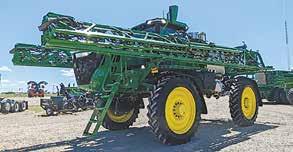
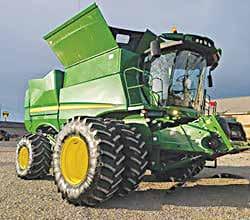
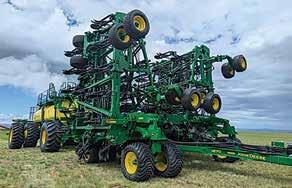

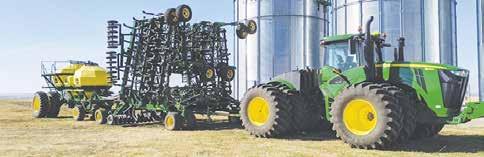

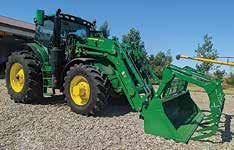

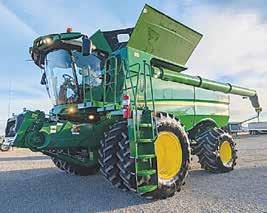
JOHN DEERE TRACTOR FOR SALE
LIMOUSIN BULLS FOR SALE
Purebred,
Registered, Fall Born
Polled bulls & females available private treaty
Range raised, athletic, great disposition, efficient and economical
Let’s visit about how a Limousin continental cross can give you that “HETEROSIS” Free Lunch” that you may need. Increase calving ease, vigor, weaning weight, milking ability, and longevity.
Real world honest cattle. Backed with customer service. Semen tested and guaranteed. Delivery, semen, and leasing options available.
Ferrat Ranch Limousin - John & Samantha Ferrat
Please call (406) 949-7911 for more information

OSU Extension leads national youth agriculture workforce initiative
Oregon State University Extension Service is leading a national effort to prepare the next generation of agriculture and natural resources professionals, using a five-year, $10 million grant from the U.S. Department of Agriculture to coordinate projects across the country.
Through this work, OSU Extension brings together universities, educators, youth leaders and community partners to expand access to learning, strengthen workforce pathways and support long-term success in food and agricultural sciences.
Together for Innovating Youth in Agriculture, housed at Oregon State University and designating OSU Extension as a National Center of Excellence for Youth Development, emphasizes collaboration, technology and shared learning to strengthen youth agriculture initiatives nationwide.
Oregon State is the sole institution maintaining the Youth Innovators Empowering Agriculture Across America Coordination Network, or YEA-CN.
“We are building a strong national community of educators, youth leaders and partners who are shaping the future of agriculture together,” said Kristopher Elliott, vice provost for the Division of Extension and Engagement and director of OSU Extension Service, and the grant’s principal investigator.
“In just a few years, our partners across the country have moved from planning to action — developing new learning tools, strengthening collaboration across regions and creating opportunities for young people to explore careers and leadership in food, agriculture and natural resources,” Elliott said. That progress was on display in March 2024 at the inaugural Youth Innovators Empowering Agriculture Across America conference at the OSU Portland Center, which brought together representatives from six land-grant universities to share outcomes and strengthen collaboration across institutions.
As the designated coordinating network home, YEA-CN supports individual projects through:
The development of a national online clearinghouse and website.
Hosting regular professional development sessions and YEA project meetings.
Hosting community of practice workgroups, facilitating translation of all learning and marketing materials and producing an annual observations brief.
Organizing a YEA National Youth Leadership In Agriculture Program, which includes youth membership from all the YEA projects.
What the YEA grant supports
Youth Innovators Empowering Agriculture Across America (YEA) cultivates interest in STEM, climate-smart agriculture, nutrition security and the many career pathways that connect science and food systems.
The initiative supports the development of youth-centered learning resources that connect agriculture, natural resources and community well-being through the Flourishing Agriculture, Communities, and Ecologies (ACE) project.
This project, hosted by Oregon State University, aims to develop and has already advanced a culturally and ecologically responsive curriculum that supports youth and educators in building deeper understanding and relationships with interconnected ecological systems, agriculture and forestry, and community well-being.
The curriculum is designed to serve youth across the United States. Previous curricula in this area have not included the evolving knowledge and practices of Indigenous, Pacific Islander and U.S. insular communities impacted by multiple and intersecting socio-ecological challenges.
As a result, this curriculum incorporates these vital perspectives to strengthen learning and growth opportunities for youth of all backgrounds and cultures. Partners from across the United States, U.S. insular territories and tribal nations are collaborating toward these goals.
For youth and learners, the curriculum offers a multidisciplinary learning journey that builds technical knowledge, collaborative purpose, skills for complex discussions and pathways for practical action and career development.
At its core, the curriculum is student-centered, cultivating youth leadership and agency while nourishing creativity, kinship, wonder and joy. Lessons are designed to be highly relevant and interactive.

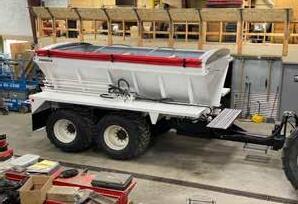
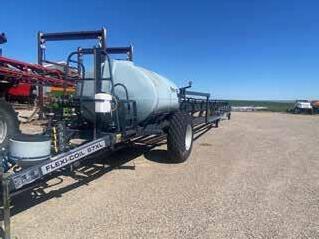
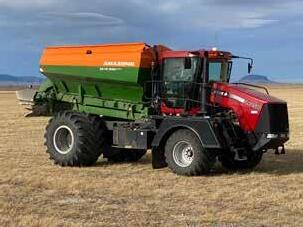

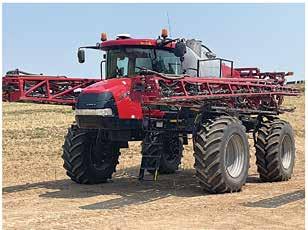
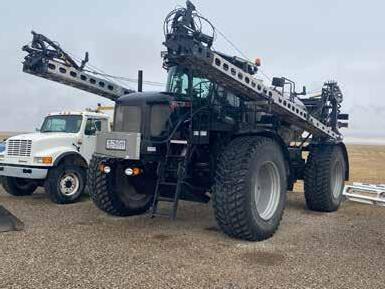
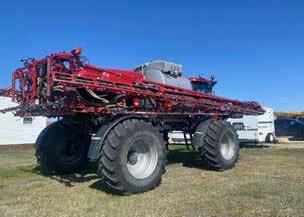

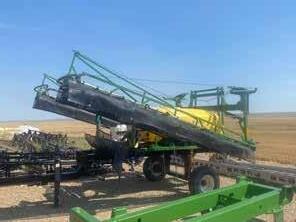



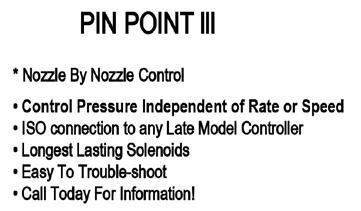
WW BUCKING CHUTES FOR SALE
Sheridan WYO Rodeo bucking chutes, (red), 4 left, 4 right, middle out gates, lead ups and platforms. Photos and more details available: www.sheridancountyfairgrounds.com. Please submit a bid no later than 3 pm March 2, 2026. Send to Sheridan County Fairgrounds Director, 1753 Victoria Street, Sheridan, WY 82801 or email ksolberg@sherfair.com
All written bids will be considered by the Sheridan County Fair Association Board at their meeting on March 12, 2026. SCFA reserves the right to refuse sale.
On-Farm Research Results meeting scheduled
By John Thomas and Gary Stone, Nebraska Extension Educators
The 2026 Nebraska Extension On-Farm Research Results meeting for the Panhandle is scheduled from 8:30 a.m. to 1:30 p.m., Thursday, February 26, at the Knight Museum, 908 Yellowstone Ave., Alliance.
NEW LOCATION:
333 S. FRONTAGE ROAD, GREAT FALLS, MT





Please
Topics for this year’s meeting include results from the 2025 on-farm grower research projects in the Panhandle. These include a dry bean variety trial, three years results on dry bean inoculant studies, three years results on Pod Ceal® dry bean harvest aid studies, a black-eyed pea population study, and two studies with compost tea on winter wheat. The meeting will also include a Palmer Amaranth management presentation by Dr. Nevin Lawrence from the Panhandle Research and Extension Center.
The On-Farm Research Results publication will be given to attendees, and studies concerning cover crops, crop production, fertility and soil management, equipment, and crop protection from across the state will be reviewed as they pertain to the Panhandle.
The meeting is free of charge and includes lunch. Register by calling 308-762-5616.
The Nebraska Extension On-Farm Research Network (NOFRN) is a robust research program by farmers, for farmers. In collaboration between UNL Extension faculty and local Nebraska farmers, answering questions and current pressing concerns, and also pushing for research for potential problems that may become issues in the future. The focus of the NOFRN is to provide replicated, tangible research for Nebraska farmers that can be translated to our state.
Applications sought for positions on WHIP advisory council
Montana Fish, Wildlife & Parks is looking to fill three positions on the Wildlife Habitat Improvement Program (WHIP) advisory council. The open positions are for a wildlife biologist, a member of an Indian Tribe within Montana, and a livestock producer or a representative of a livestock producer organization in Montana.
WHIP advisory council members are responsible for advising the department on WHIP administration and for reviewing, ranking and recommending proposed projects for funding. FWP completes the final review and determines the distribution of funding.
After the Montana Legislature passed House Bill 932 in last year’s session, WHIP will no longer focus solely on noxious weed projects. Montana’s newly established Habitat Legacy Account will fund projects that focus on restoring, rehabilitating, improving or managing land or waters as wildlife or aquatic habitat through habitat improvement and conservation. More about WHIP can be found on the website fwp.mt.gov/aboutfwp/grant-programs/wildlifehabitat-improvement.
For the first year, WHIP council meeting frequency and dates will be determined as the program develops to align with HB 932. Council members are appointed by FWP Director Christy Clark.
National youth agriculture workforce initiative
CONTINUED FROM PAGE A42
The project also supports youth, educators and communities in multigenerational learning, helping them build meaningful connections with one another and grow resilience that seeds hope and opportunity for future generations.
Across the YEA national network, participating universities advance shared priorities that include youth leadership development, community resource building, curriculum addressing current agricultural and food science issues and tools that support youth participation.
Universities leading this work include Oregon State, North Carolina A&T State University, North Carolina State University, The Ohio State University and the University of Maine. YEA is supported by the USDA National Institute of Food and Agriculture through its Agriculture and Food Research Initiative’s Education and Workforce Development Program.




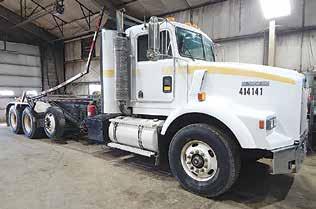
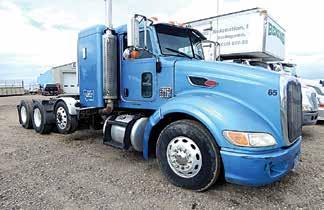






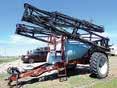
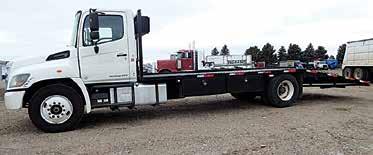




Recipe Patch by Geri
Juicy chicken breast
3 boneless, skinless chicken breasts
1 teaspoon salt, to taste lemon pepper seasoning, to taste avocado oil for cooking
Instructions
If using refrigerated chicken, let it come to room temperature for 30 minutes.
Place the chicken breast between two pieces of plastic wrap or parchment paper. Using a meat mallet (aka tenderizer), gently pound the meat, making sure you flatten it to an even thickness throughout.
Remove the wrap or paper and season the chicken on both sides with salt and seasoning of choice. Add a bit of oil and massage it really well into the chicken.
Heat up a skillet or grill pan over medium-high heat and add a touch of oil. Place the seasoned chicken in the pan and make sure it sizzles. Reduce the heat to medium and cook the chicken for 3 to 4 minutes on each side, until it reaches an internal temperature of 165F (74C).
Remove the chicken from the pan and let it rest, loosely covered with foil, for at least 5 minutes.
Sheet-Pan Cajun Chicken and
Corn
Ingredients
5 Tbsp. olive oil, plus more for the pans
6 ears of corn, shucked and cut into 4 pieces
5 stalks celery, sliced on an angle
2 8-ounce bags baby bell peppers, halved and seeded
1 tsp. fresh thyme
4 tsp. Cajun seasoning
1 tsp. kosher salt, plus more to taste
Black pepper, to taste
6 skinless, boneless chicken breasts (about 8 ounces each)
2 garlic cloves, grated
2 Tbsp. salted butter
1/4 cup fresh parsley, chopped
Hot sauce, for serving
Preheat the oven to 425˚. Brush 2 rimmed baking sheets with olive oil. Toss the corn, celery and bell peppers with the thyme, 3 tablespoons olive oil, 1 teaspoon each Cajun seasoning and salt and a few grinds of pepper in a large bowl until well coated. Divide between the baking sheets and spread in a single layer.
Add the chicken to the same bowl. Add the garlic and remaining 2 tablespoons olive oil and 1 tablespoon Cajun seasoning. Toss well to coat.
Add 3 chicken breasts to each baking sheet, nestling them in the vegetables. Season with salt and pepper. Bake, rotating the baking sheets halfway through, until the chicken is just cooked through and the vegetables are tender, about 25 minutes. Transfer the chicken to a platter.
Add 1 tablespoon butter to each tray of vegetables and toss until the butter melts and the vegetables are glazed; add to the platter with the chicken. Top with the parsley and serve with hot sauce.
Air-Fryer Avocado Fries
1 large egg, beaten
1/4 cup cornmeal
1/2 tsp salt
1/2 tsp garlic powder
1/2 tsp ground chipotle pepper
2 medium avocados, peeled and sliced
Cooking spray
Preheat air fryer to 400°. Place egg in a shallow bowl. In another shallow bowl, mix cornmeal, salt, garlic powder and chipotle pepper. Dip avocado slices in egg, then into cornmeal mixture, gently patting to help adhere. In batches, place avocado slices in a single layer on greased tray in airfryer basket; spritz with cooking spray. Cook until golden brown, about 4 minutes. Turn; spritz with cooking spray. Cook until golden brown, 3-4 minutes longer.
#####
A hiccup occurs when a stimulus causes an involuntary contraction of the diaphragm, the muscle separating the lungs from the abdomen. The contraction makes the sufferer take a quick breath, causing the glotti (located in the voice box) to close, which make the “hic” sound.
National Flannel Day

This holiday is always celebrated on February 10th
There’s still plenty of winter weather to come. And, spring can have its share of chilly days. too. So, what shall we wear on this cold day? The best choice is warm and comfortable flannel clothing. Anything made of this durable and versatile fabric will keep you warm and make a fashion statement, too. In addition to clothing, many other things are made of flannel. So, we encourage you to celebrate this holiday by finding all of the flannel things you own. Then, use them today. If you don’t have a lot of clothing or other flannel items to choose from, then head off to the store and buy a new flannel shirt or pajamas.
Flannel material has been around for over 400 years. It is the clothing fabric of choice for farmers, outdoor workers, skiers, hunters, and ice fishermen, to name a few. They are among the many sports and outdoorsmen to make flannel the material of choice to keep them warm. Originally created and designed for outerwear in cold weather, people find all sorts of uses for it. Most applications are intended to keep you warm on cold days. But, it has also become a bit of a fashion statement.
How We Use Flannel
More often than not, flannel is made into a plaid pattern. As a result, many people think of flannel as a plaid pattern. However, it is not a pattern. Rather, it is a fabric.
Over the centuries people around the world found many uses for flannel. Among the uses are: Shirts are by far the most popular use of flannel. It is used for jackets, coats, and other outerwear. It is the lining for many outdoor clothing; gloves and mittens; robes; underwear and bras; other clothing items; blankets, sheets and bedding; quilts; pajamas and other sleepwear. A flannel sleeping bag will keep you warm while camping outdoors on a cold night. Believe it or not, it was also in common use for diapers!
Did You Know? The world record for the largest flannel shirt is 282’1” tall and 201’8” wide.
History and Origin of National Flannel Day
This holiday was created in 2013. The objective is to celebrate the cultural and historical significance of flannel. Another objective is to bring awareness about the value of this warm fabric.
Thanks to the Grunge Movement, flannel became fashionable in the 1990s. Singers, bands, actors, and others made it a popular attire.
#####
At 3:10 am on June 7, 1917, British soldiers detonated 19 underground mines containing more than 900,000 pounds of explosives in a 19-second attack on German positions near the town of Messines, Belgium, The explosions were so loud they were heard in London - 140 miles away, across the English Channel.
The deadline for advertising in the March 2026 issue of the Trader's





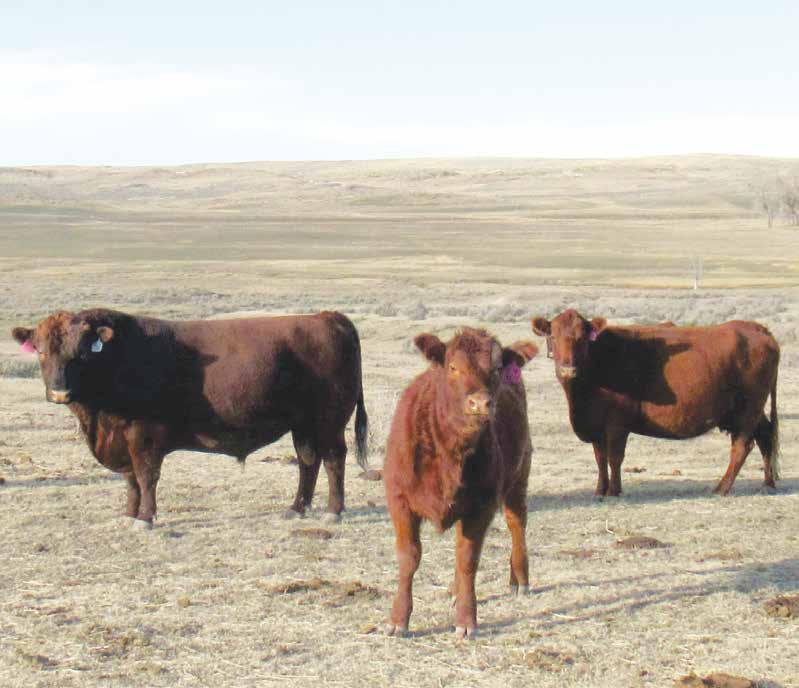

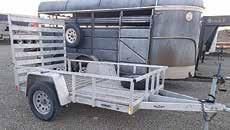

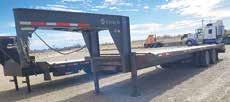
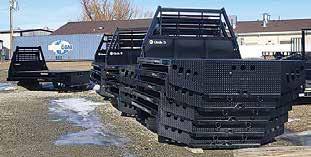



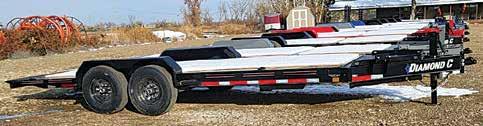

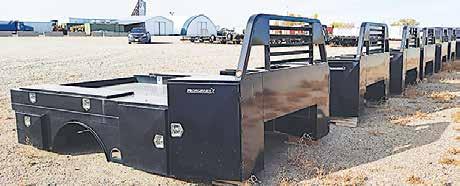
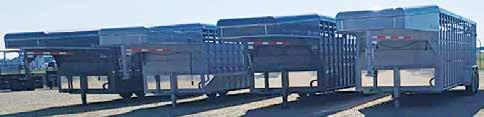

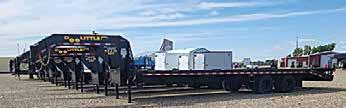


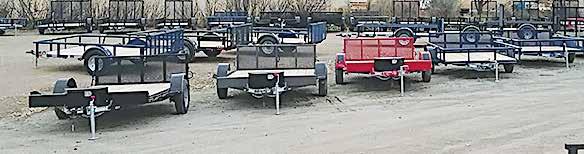
2 W Spreading, Choteau MT B10
3V Distributing, Conrad MT C41
5 Gen, Great Falls, MT B5
7 W Enterprises, Inverness MT C44
A-Plus Auto, Great Falls MT B2
Abilene Machine Inc, Abilene KS A36
Acciacca Agriculture Repair, Fairfield MT C38, C34
Acciacca Sales and Service, Fairfield MT C24
Action Toys, Billings MT C40
Affordable Construction Equipment, Billings & Bozeman MT A35
Ag Trucks & Equipment, Great Falls MT A43
Ag Wise, Kremlin MT C3
AgriVance, Kremilin, MT B23
ASH Supply, St. Ignatius, MT C18
Badland Truck Sales, Glendive MT C29
BC Trucking & Livestock, Milt Hartman, Highwood MT A18
Ben Taylor, Valier & Shelby MT C11
Big Brown Barn Trading, Co, Billings MT B4
Big Equipment Co., Havre MT C47
Big Sky Equipment, Conrad MT C5
Big Sky Mahindra, Great Falls MT C6
Big Sky Pipe, Great Falls MT B14
Big Sky Sawmill & Wood Products, Vaughn MT B14
Big Sky Wholesale Seeds, Shelby MT B17
Billings Farm & Ranch Supply, Billings MT A36
Bjorn Johnson Construction, Missoula MT B4
BTI Feeds, Cut Bank MT C11
Bull Mountain Fencing, Yoder, Dan, Roundup MT C1
Bullseye Breeding, Valier MT A38
Cahill Seeds, Scobey MT A37
Cascade Machine & Supply, Great Falls MT B7
Central Heating & Air Conditioning, Billings, MT C31
Centrol Crop Consulting LLC, Brady & Conrad MT B18
Churchill Trailer, Co., Belgrade MT C15
Circle S Seeds of Montana, Three Forks MT A38
Crown Agro, Dust Helmet, Center ND C15
Crown Agro, Graham Seed Treating, Center ND C32
Cut Bank Tire, Cut Bank MT C6
Dakota Truck & Farm, Minot ND A36
DBL Sales & Service, Coffee Creek MT C20
Doane Western of Montana, Bozeman MT C23
Double Diamond Truck & Equipment Sales, Missoula
MT C42
Dry Fork Ag, Ledger MT C35
Dutch Openers C30
Equipment Share, Billings, MT C30
Exchange Services, Inc, Whitefish MT B4
Flaman Rentals, Power MT B14, C40
Fort Benton Realty, Fort Benton MT C28
Fox Ford, Wolf Point MT C2
Fraser’s Oil Inc., Inverness MT C26
Frieling’s Agricultural Equipment, Great Falls MT A41, B15, C14, C37
Frontline Ag Solutions Dillon, Dillon MT B3
Frontline Ag Solutions, Multiple locations MT B10, B11
Glass Trucking, Denton MT C38
Gordon Repair, LLC, Miles City MT C36
Graham Seed Treating, Crown Agro, Center ND C32
Greenway Seeds, Caldwell ID A24, A25, A40, C12, C28, C38, C39
Greyn Fertilizer, Choteau, Dutton, Valier MT C7
Grossenburg Equipment, Multiple Locations SD, Multiple Locations NE, Sundance WY C9
Halter, MT, Northern ID, Nationwide A31
Hamilton Systems, Inc. Hamilton ND B17
Heartland Cabin Co., Moore MT B6
Hedman, Inc, Grass Range MT B12
Helfert’s Helena Farm Supply, East Helena MT....B16
Henke Enterprises, SprayFlex & Big Dog Mowers, Chester MT A40
Highland Specialty Grain, Inc. (McKay Seed Co.), Moses Lake WA C44
Holst Truck Parts, Ucon, ID C17
Hotsy Wy-Mont, Great Falls & Billings MT C2
Hoven Equipment Co., Great Falls & Lewistown MT C19
Hwy 12 Equipment & Repair, Baker MT C36
I-State Truck Center, Missoula C31
Irvine’s Trailers, Conrad MT, Crossfield AB Canada C4
J & M Truck Sales, Inc., Fargo ND C48
J & T Equipment Sales, Stevensville MT C16
J Carter Trucking, Conrad MT C15
Jamie Fuson, LLC, Floweree MT C14
Jamieson Motors, Inc., Chinook MT A32, C12
Jim Nielsen Trucks & Parts, Butte MT B10
Johnsen Trailer Sales, Inc., Bismarck & Fargo ND A34
Keith Kessel Construction, Chinook MT C13
Krogmann Mfg. C8
Lakeland Feed & Supply, Dillon & Hamilton MT C8
Larry’s Tractor & More, LLC, Missoula, Columbia Falls, Hamilton MT A16
Rowse
Lattin & Sons, Power MT B14, C40
Laurel Trading Post, Laurel MT C34
M & M Auto, Trailers, & Welding, Stevensville MT B18
M & W Machine, Three Forks MT B4
Magnum Fabrications, LTD, Maple Creek SK Canada A28
Mahindra, Big Sky Harley, Great Falls MT C6
Marks Lumber, Clancy MT C4
Meridian Seeds, Casselton ND A30
Meyers Yellowstone Appraisal, Missoula MT C14
Montana Ag Safety Program C22
Montana Automation, Cut Bank MT C20
Montana Lockbox Great Falls MT A46, B20, C42
Montana Metal Fabrications, Great Falls MT C40
Montana Wool, Fort Shaw MT A26
Montech Seed Group, MT B6
Mountain View Canvas, Fairfield MT A19
Mountain View Metalworks, Wilsall MT C25
MT Tractors, Matt Pendergast, Stevensville MT....B18
Muggli Bros, Inc., Miles City, MT C27
Musselshell Valley Equipment, Roundup MT B20, B21, C23
Neal Hay Sales, Augusta MT C18
North Star Equipment, Great Falls MT C21
Northern Ford, Cut Bank MT C33
Northern Prairie Auto Sales, Wolf Point MT A42
Oxbow Engineering LLC, Randy Pierce PE Three Forks MT B14
Pedigree Truck & Trailer Sales, New Salem, ND...B5
Pete’s Auto Sales, Great Falls MT B19
PhoSul, Great Falls, MT C27
Precision Truck & Trailer, Havre MT A45
Price Truck & Equipment Sales, Missoula MT B21
Pro-Tech Steel LLC, Great Falls MT B1
Quality Custom Sheds, Moore MT C32
Quality Sales, Great Falls MT B24
R & L Seed & Machine LLC, Geyser MT C36



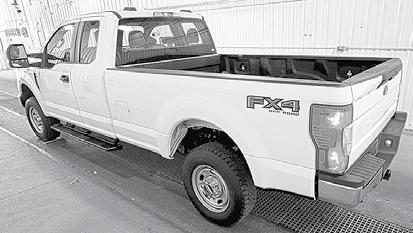


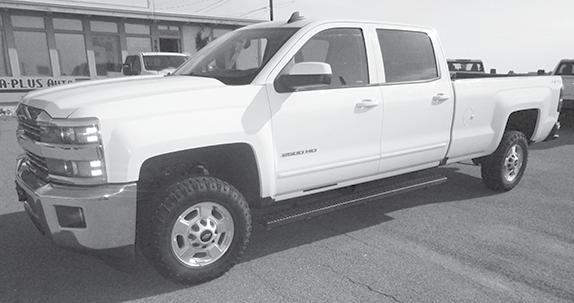









Modern dry-off success: Four trends driving better cow care
From Boehringer Ingelheim
Today’s dry-off challenges look different than those of the past. More cows are entering the dry period at higher production levels — a sign of progress, but one that brings added considerations for cow comfort and mastitis risk.
“It’s time to ask ourselves, ‘What can we do better at dryoff?’” said Linda Tikofsky, DVM, Boehringer Ingelheim. “We’re more attuned to animal well-being today, and that’s reshaping our approach.”
Dr. Tikofsky works with dairies across the country and sees consistent trends among those with the most success. Here are four practices she sees shaping today’s most effective dry-off protocols:
1. Prioritizing cow comfort as nonnegotiable
An increased focus on cow comfort has been one of the more significant dry-off protocol shifts in the past few decades, according to Dr. Tikofsky.
“Cows dried off while giving large amounts of milk may experience serious discomfort,” she explained. “They vocalize more and are less likely to lie down. From a well-being standpoint, we’re addressing those concerns more these days.”
High-producing cows are also more likely to leak milk, even when using a teat sealant, and are at higher risk for mastitis post-calving.
Progressive producers like Ben Smith, owner of Cool Lawn Farm in Bealeton, Virginia, are prioritizing cow comfort by improving dry cow facilities, enhancing cooling and implementing new protocols to reduce milk production at dry-off.
“Cow comfort is the most important part of dry-off,” said Smith. “Antibiotics and treatments can help, but I don’t think any of it matters if you don’t make cow comfort a priority.”
2. Emphasizing collaborative decision-making Decision-making on the dairy is no longer a one-person job. Many of the most successful farms rely on their team of experts with specialized knowledge to enhance performance.
“Farms today have different departments, with experts heading up each one: calf specialists, parlor manager, feeding personnel,” stated Dr. Tikofsky. “They are the best of the best in their specific area. And we’re bringing a bigger think tank to the table with outside consultants.”
This collaborative decision-making is driving better dryoff performance for many farms. “The farms I see doing the best job are collaborating with their veterinarian to review records, monitor disease incidences and tweak dry-off protocols,” noted Dr. Tikofsky.
At Larson Acres in Evansville, Wisconsin, their veterinarian was integral in their decision-making when they were looking to improve cow comfort at dry-off. “We select products if they are recommended by our veterinarian,” said Jim Trustem, the farm’s herd manager. “We go to our vet for the final answer and ask, ‘Is this worth doing?’ and our vet says, ‘Yes.’”
3. Monitoring metrics that matter
Success isn’t anecdotal — it’s measured. Dr. Tikofsky said many of her customers are measuring their dry-off success by evaluating mastitis incidence and somatic cell counts (SCC) post-freshening.
“Start by looking at your data to see where you are now and where you want to go,” she recommended. “What’s the weak point you can address?”
Dr. Tikofsky suggested aiming for less than 2% of any disease incidence post-freshening and monitoring SCC before and after the dry period. If SCC increases during that time, look for ways to improve your dry-off protocols to prevent bacteria from entering the udder.
Using data to monitor lying time and rumination can also give an indication of how comfortable cows are at dry-off.
Corinne Banker, who operates Blue Hill Farm LLC in Morrisville, New York, with her husband, says data helped them make important changes to their dry-off program. “We had always known dry-off was a difficult transition, especially at our level of milk production,” said Banker. “We would try to do our best to slow down late lactation production, but there were always some cows that just wouldn’t stop. The data from our [ear] tags helped us realize just how much our cows were struggling at dry-off. After that, we CONTINUED ON PAGE B4

2024 Stinger 6500, poly rails, 1500 hours, 1/4 turn, self stacking Stock #95115 $340,000
MISCELLANEOUS
2023 Kawasaki Teryx 1000 2 seater, 1395 miles, roof windshield, turn signals, horn & back up lights. Stock #91709. $22,700
2021 Haybuster 2800 round and square bale processor, right hand discharge. Stock #95740. $25,000
2017 Haybuster 2660 round bale processor, right hand discharge, hydraulic deflector chute, grain tank, new flotation tires. Stock #95472 $21,250
2019 Vermeer BPX9010 round bale processor, 2 bale, right hand discharge, floatation tires, 1000 PTO. Stock #95741 $20,000
1998 Highline 7000 bale processor, left hand discharge, 1000 PTO. Stock #95737 $8500

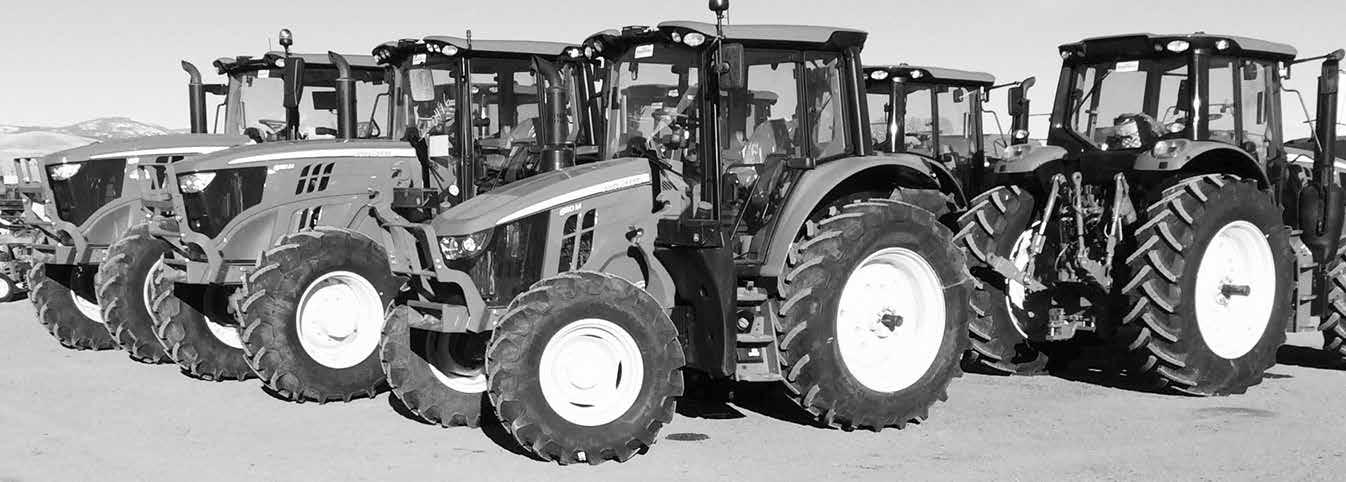
2023 John Deere 8RX 370 IVT transmission with right hand reverser, 24” tracks, 85 GPM hydraulic pump, 6 SCVs, Ultimate cab with air seat and cab suspension, 954 hours. PowrTrain Warranty. Good till January 2027 or 2500 hours. Stock #92170.$440,000
2024 John Deere 8R 370 tractor, IVT transmission, ILS, dual hydraulic pump 85 GPM, 6 SCVs, autonomy prep package, cab suspension, 480/95/50 rear tires with duals, 480/70/34 front tires with duals, 1800# rear weights, 22 front weights, 604 hours. Stock #94392
$445,000
2023 John Deere 5090E cab tractor, MFWD, 12/12 transmission with left hand reverser, loader ready, air seat, 3 SCVs, approximately 700 hours. Factory warranty good till 10-2025, Powertrain good till 10-2028 or 3500 hours. Stock #91752. $68,500
John Deere 7830 15,608 hours, front 710/60R30, rear 800/55R46, PowrQuad Plus 16/16, AutoTrac ready. Stock #95877. $46,500
John Deere 7130 3922 hours, no loader, 2WD, 16 speed PowrQuad. Stock #95223. $52,500
John Deere 6430 with 673 self leveling loader with bucket and grapple, 16 speed transmission, 3 SCVs, 4800 hours. Stock #95146 $67,500
John Deere 4440 9000 hours, loader & grapple bucket, 2WD transmission. Stock #95746. $29,000
$385,000
2024 John Deere 8R 340 with IVT transmission, right hand reverser, air seat, cab suspension, autonomy prep package, 6 SCVs, 84 GPM hydraulic pump, 420/85/34 front tires with duals, 480/80/50 rear tires with duals, 1500# each side rear, 22 front weights, 1300 hours. Stock #94391
2023 John Deere 8R 340 Signature Edition, IVT with RHR, ILS, full GPS, 6 SCVs, 380/90R54 rear tires with duals, 380/80R38 front tires with duals, 291 hours. 6 year/4000 hour extended PowrGard Warranty. Stock #90254
2008 John Deere 2305 25 hp, MFWD, open station, front end loader with bucket, plus 260 backhoe, 1622 hours. Stock #94974. $12,000
$433,000
$160,500
2024 John Deere 344-P compact loader, 2.0 yard bucket, high lift, hydro with 2 speed transmission, Halogen work lights, Iso coupler.
2023 John Deere 320P backhoe, cab with heat/AC, MFWD, Extendahoe, thumb, auxiliary hydraulics, front quick attach, 783 hours.
$139,200
John Deere 595 backhoe, 5M Series mounting brackets, 14” bucket, like new. Stock #89958
$13,000
2019 John Deere 260B backhoe 12” bucket, fits 1025R tractor. Stock #90942. $7500
2023 John Deere R500 16-ft. header, steel conditioner. Stock #91200.
(2) 2024 Twin Star 2030 G3-7 hydraulic V rakes. Each.
$52,500
$37,500
(2) 2018 New Holland 216 hydraulic rake. Stock #88660 & Stock #91171. Each.
$19,500
2023 Kinze 1121 grain cart, 1100 bushel, double auger, scale with GT 400 display, manual tarp, used very little. Stock #87888. $128,000
2023 John Deere Z-530M zero turn lawn mower, 54” deck with power flow & bagger, complete service and new blades, 315 hours. Stock #95878. $5400
2021 John Deere Z-530M zero turn lawn mower, 54” deck, complete service and new blades, 311 hours. Stock #95879. $4000
Woods SB74C snowblower with manual discharge
Woods BO72RC 72” rotary cutter
$4949
$4290
Woods TK72 72” finish mower. Stock #84419 $4600
2023 Frontier AF11E 6-ft. front snow blade, manual angle, John Deere 300, 400, 500 mount. Like new. Stock #92095. $2800
2023 Frontier BB 5084 7-ft. box blade with scarifier teeth. Stock #94863. $1600
Worksaver 2-spear bale spear with JD 600/700 mount. Stock #95312 $700
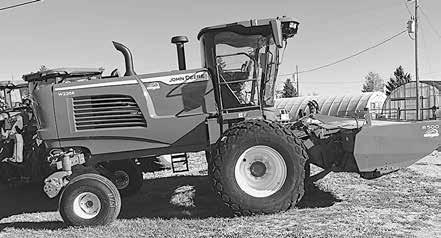
2025 John Deere 6R195 tractor, IVT transmission with left hand reverser, AutoTrac ready, Ultimate cab, loader prep package, hydraulic cab suspension, 5 SCVs, MFWD with triple link suspension, approximately 615 hours.
2019 Massey-Ferguson 6715S MFWD, cab, partial power shift, 540/1000 Singles loader, bucket, grapple, 4 SCVs, 540/1000 PTO, 5365 hours. $76,000
$295,000
2024 John Deere 6R165 cab tractor, MFWD, IVT transmission, premium cab, premium seat, loader ready, triple line suspension, Panorama roof, 5 SCVs, rear weights, 480/80/46 rear tires, 420/90/30 front tires, 227 hours. Stock #93636.
$222,500
2024 John Deere 6155M cab tractor MFWD with 640R loader & grapple, 20 speed PowrQuad with left hand reverser, AutoTrac ready less receiver, 3 SCV, beacon and work lights, triple link front suspension, mechanical cab suspension, Panorama roof, 2-450# weights each side, liquid ballast. Factory Warranty good till 7-25-2026 or 2000 hours, PowrGard Warranty good till 7-23-2030 or 4000 hours. Stock #93779, 233 hours.
Deere 561M round balers,
$215,000
2024 John Deere 6155M cab tractor MFWD with 640R loader and grapple, 20 speed PowrQuad with left hand reverser, AutoTrac ready less receiver, 3 SCV, beacon and work lights, triple link front suspension, mechanical cab suspension, Panorama roof, 2-450# weights each side and liquid ballast. Factory Warranty good till 7-25-2026 or 2000 hours, PowrGard Warranty good till 7-23-2030 or 4000 hours. Stock #93780, 403 hours.$215,000
4
with Grease Banks, net wrap, moisture sensor, Cam clutch, approximately 6000 bales. Each. $62,000
2024 John Deere 561M round balers, heavy duty with Grease Banks, net wrap, scale & moisture sensor, Cam clutch, variable core valve. Stock #94158, 5132 bales, Stock #94159, 6130 bales. Each. $62,000 2019 New Holland RollBelt 560 round baler, MegaWide, net wrap, 1000 PTO, 10,915 bales. Stock #92963. $34,000
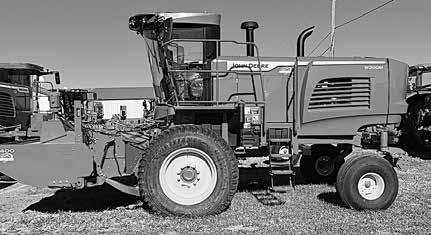
February 2026
EQUIPMENT FOR SALE
Older 20-ft. gooseneck stock trailer, rebuilt and repainted. Yield Way wagon. 3) snowblowers - one 6-ft. and two 71/2-ft.
Big Valley squeeze chute with head gate. Heavy duty 10-ft. box blade with tilt. New Holland hay inverter. Several gravity-feed wagons. 8-12 ton running gears. Melroe Spra-Coupe $1000 John Deere 750 no-till drill........Coming in Phone Paul at (406) 702-3436, or (307) 272-6506 Billings, MT



Do you want to reinvest in another like-kind property? Determine
Are you selling an investment property?
Are you seeking tax deferral?
Can you meet the strict deadlines?







4. Cultivating a culture of continuous improvement
An innovative mindset and embracing new tools have led the way in helping producers solve the modern problems of dry-off on their operations.
“We have a relatively high herd average when it comes to milk production, and slowing cows down for dry-off has always been a challenge,” asserted Trustem. “We tried changing their diet, but we thought there might be a better option out there.”
Trustem, along with Smith and Banker, has turned to acidogenic boluses as part of their dry-off protocols to address these challenges and continually improve the performance of their herds.
Their approach reflects a larger shift in the industry — one that prioritizes continuous improvement and practical solutions to meet the evolving demands of today’s high-performing herds.
Start with your veterinarian to identify the changes that will make the biggest difference in your herd.
More Hollywood physics
Fiction: Falls from great heights are easy to walk away from.
Science: Stunt players seem to do it all the time but falls from as “high” as three feet (like falling out of bed) can cause serious injuries. Just remember that the farther a body falls the harder it lands.
Fiction: A spaceship needs to bank when turning to compensate for the effects or centrifugal force.
Science: In Earth’s atmosphere, aircraft have to bank to create a pressure difference on the two wings in order to produce the turning force. Despite what you’ve seen small spacecraft do in the Star Wars movies, the only forces necessary for them to change direction in the vacuum of space are the rockets that propel them.
Fiction: When a space station explodes, it makes a deafening noise.
Science: There’s no air in outer space to transmit sound waves, so those big explo
sions you hear in Star Wars are pure fiction.
Fiction: Laser beams are visible.
Science: Though the end point is visible, the beam
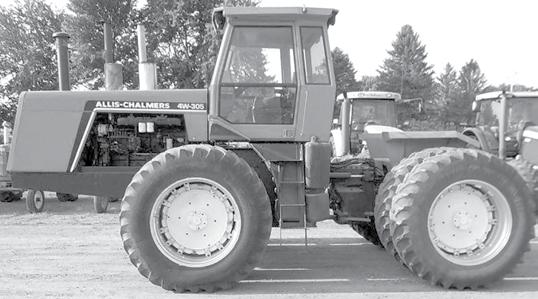





February is Barley Month
Barley Month is a vibrant celebration that highlights the importance of barley in agricultural and cultural traditions. This month-long event marks the first grain harvest of the year, symbolizing renewal and abundance. It brings communities together to honor the early spring’s bounty and the hard work of farmers!
History of Barley Month

Barley Month began as a way to honor and celebrate barley, one of the world’s oldest grains. This observance highlights its historical significance and modernday uses.
Barley has been cultivated for over 10,000 years, originally grown in the Fertile Crescent. It was one of the first grains to be farmed, playing a crucial role in the development of early agriculture
Farmers and agricultural communities initiated Barley Month to acknowledge the importance of this versatile grain. The celebration includes activities like farm visits, educational workshops, and special barley-based menus in restaurants. This helps raise awareness about barley’s nutritional benefits and its role in sustainable farming practices
Barley Month also connects people to their cultural and agricultural roots. It emphasizes the grain’s role in food security and its various uses, from food and beverages to livestock feed.
Why Celebrate Barley Month?
People celebrate Barley Month for several reasons. First, it acknowledges the critical role barley plays in food production, especially in bread and beer. Additionally, the celebration ties into historical and religious traditions, where barley harvests were significant in various rituals and offerings. It also emphasizes sustainable farming practices and the benefits of consuming whole grains.
Barley Month is not just about agriculture; it also fosters a sense of community and continuity. Festivals, local fairs, and educational events during this time help people connect with their heritage and appreciate the land’s productivity.



The deadline for advertising in the March 2026 issue of the Trader's Dispatch will be February 25th. Phone (406) 271-5533 or email: advertising @tradersdispatch.com


PentaGro contains, in addition to the NPK base, the following:
• Sea Plant Extracts from Ascophyllum nodosum
• Proteins in the form of Amino acids
• Carbohydrates from Natural Plants sources
• Multi-vitamin Complement
crops to improve plant vigor and to promote crop production.
Nutrient demand is greatest during development and reproductive stages (rooting, flowering, fruit set, crop development, and ripening). Even if your plants look healthy, hidden stress, both nutritional and abiotic, may be severly impacting crop yield and quality. PentaGro is used as a foliar application to supplement normal soil fertility during plant physiological peak demand periods.
• Miller’s Transcuticular Delivery System® “TDS” designed to ensure the maximum absorption and translocation of the product into the plant with minimal loss from the leaf surface. “Express







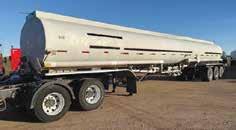



The deadline for advertising in the March 2026 issue of the
will be February 25th. Phone (406) 271-5533.




Manufacturing pre-built homes
Prairie Fare: The wild side of the menu — Safe cooking with wild game
By Julie Garden-Robinson, NDSU Extension food and nutrition
“If it were up to you, all the deer would be living in our garage,” my dad said to me.
I squinted at him sideways and grinned. He knew me well. My dad was tracking the deer tags from local hunters. I was looking at the animals in the back of pickup trucks. We lived in an area where herds of deer were less than a mile from our town. I once counted 150 deer studying me from a corn field.
Driving was a little treacherous, especially at dusk. Sometimes we’d stop our vehicle and let the herd travel around us on the highway.
“Watch out for deer!” was the usual farewell when I drove back to college.
Unfortunately, a deer recently jumped into the side of my car in Minnesota Lakes county. My daughter was borrowing my car. The entire driver side was smashed, but thankfully, my daughter and her husband were unharmed.
I forgot to give them the Midwestern warning.




Bruce Seed Farm Townsend, MT 406-266-3103
Big Sky Wholesale Seeds Shelby, MT 406-434-5011
Cahill Seeds Scobey, MT 406-783-5510 Circle S Seeds of Montana
Forks, MT 406-285-3269
MT 406-378-2112
Triangle Seed Rudyard, MT 406-355-4333
Seed Company Moccasin, MT 406-423-5600
Seeds Choteau, MT 406-466-5553
State Seed Fairfield, MT 406-467-2557 Westland Seeds Ronan, MT 406-676-4100
Seeds Havre, MT 406265-5443
“It could have been worse,” my parents would have said. Although I have never been a hunter, I understand that deer hunting season provides several benefits. It helps with wildlife management by preventing overpopulation, provides healthful food and offers a recreational opportunity. Some food pantries accept donations of wild game.
Hunting stimulates the economy through equipment purchases, lodging and meals.
When I first began in my role as a North Dakota State University Extension specialist, my first assignment was to create some pocket guides about deer, elk and game birds that took into account nutrition and food safety.
Sadly, my original coauthors, Marty Marchello and Pat Beck, have both passed away. I learned a lot from their mentorship, and I do my best to keep the content up to date many years after we wrote the original “Wild Side of the Menu” and pocket guide handouts.
Venison — deer, elk, antelope or moose meat — can add variety to your menu. The word “venison” is derived from the word “venari,” which is the Latin word meaning “to hunt.” A 3-ounce portion of venison has about 130 calories and 3 grams of fat. Game meats have a characteristic flavor, depending on the species, the age of the animals and the animals’ feeding practices.
As with other types of meat, wild game may become contaminated with bacteria anywhere from field to table. If you’re field dressing your own animals, take precautions to avoid contamination and to keep the carcass cool in unseasonably warm autumn weather.
In fact, wild game is typically so lean that we need to add fat or sauces to prevent it from having a dry texture.
Like other high-protein foods, wild game must be handled carefully in the kitchen. Depending on the skill of the person doing the butchering, wild game could become contaminated from the animal’s gastrointestinal tract.
Follow these food safety rules for game meats or nearly any high-protein food.
Wash your hands for at least 20 seconds with soap and
CONTINUED ON PAGE B7
“Scientific” Theory:
How to build a scorpion
For thousands of years, people believed that living things could grow out of nonliving things. Aristotle, for example, believed that oysters grew out of slime, and eels out of mud. Known as spontaneous generation, this was treated as fact for ages–and even persisted until fairly modern times. In the 17th century, for example, Flemish chemist Jan Baptista van Helmont, one of the most respected scientists of any era (he was the first to show that air was composed of different substances, and even coined the word “gas”), believed that you could create animals by following simple recipes. Van Helmont’s notes, for example, contain a recipe for making mice: Put some wheat on a dirty cloth inside an open container, let it sit for 21 days and–voila!–mice will be created. Another: Put some basil between two bricks in sunlight. Then…scorpions. It wasn’t until the mid-1800s that scientific progress finally saw spontaneous generation spontaneously combusted for good.
The wild side of the menu
water before beginning to work and changing tasks.
Start with clean equipment, including knives and cutting boards. After using, wash thoroughly with hot soapy water. Rinse thoroughly and sanitize with a solution of 1 tablespoon chlorine bleach per gallon of water, then allow the equipment to air-dry.
Check out the best practices for freezing game meat to avoid freezer burn. When thawing frozen meat, place it in the refrigerator at 40 degrees Fahrenheit or below on the lowest shelf to prevent juices from dripping onto ready-to-eat foods.
Consider marinating the meat, but do so in the refrigerator. Don’t reuse marinade. If you want to use the marinade as a sauce, save some marinade separately.
Cook game meats to an internal temperature, as measured with a food thermometer, to 160 degrees F for ground venison. Game birds should reach 165 degrees F.
Promptly refrigerate in shallow pans and reheat within a few days or freeze.
Do you want to learn more? See the nine wild game publications at ndsu. ag/wildgame25 for recipes and many tips.
Try this recipe with venison or beef.
Venison or Beef Stroganoff
1 ½ pounds ground venison or ground beef
1 to 2 tablespoons cooking oil (if using venison)
1 medium onion, chopped
1 (10.25-ounce) can reduced-fat cream of mushroom soup
1 (4-ounce) can mushrooms, drained
½ cup light sour cream
3 cups cooked noodles or rice
Brown ground venison and onion in oil. If using beef, omit oil and drain after browning. Stir in soup, sour cream and mushrooms. Heat to an internal temperature of 160 degrees. Serve over cooked noodles or rice.
PICKUP FOR SALE



Glenn Hege 406-399-0966
mineral pack Family owned and operated Delivery available Reasonably priced Elevator trailer, Bulk or 1-ton tote bags. 2986 HWY 363 Malta, Montana

IRRIGATION PUMP FOR SALE
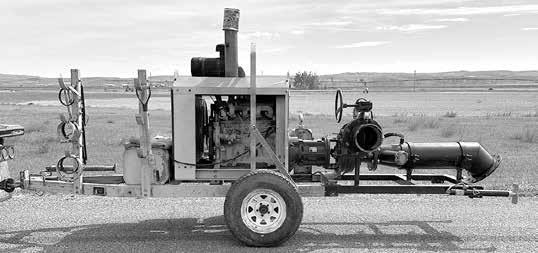
John Deere (5 inch) 4.5L, 4 cylinder diesel engine, 4345 hours, Cornell 5WBQ pump, Max Curve - 21.3 hp @ 1338 gpm. Suction and discharge hose with fittings included. Call (406) 672-8904 Huntley, MT
UW Extension Documents Perspectives of Ranchers in the Wind River Basin
By Brooke Ortel
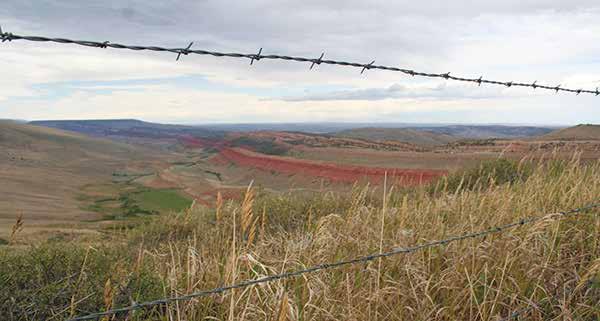
The University of Wyoming Extension has published a new interview-based report identifying key changes, challenges, and opportunities encountered by ranchers in Wyoming’s Upper Wind River Basin.
The goal of the study was to “understand how Wyoming ranchers experience and perceive environmental and social changes and how those changes may impact their operation, management decisions and, ultimately, their livelihoods,” explains UW Extension educator Callie Surber, co-author of the new publication.
Surber’s report, released last month, is based on 38 interviews with local ranchers in summer 2024. Discussion topics ranged from drought and water availability to beef market volatility and grazing policies.
“While we conducted the research in the Wind River Basin, there are broader applications across the state and the West,” Surber comments. “Anyone who works with livestock producers in Wyoming or has an interest in challenges facing the ranching industry might be interested in the findings.”
Most of Surber’s interviewees agreed that economic viability was one of the most important considerations when making management decisions. Citing factors like unprecedented inflation, some ranchers expressed concerns about reaching a tipping point at which they would be “priced out.”
Drought was another top concern. Some interviewees noted hotter and longer summers in the Wind River Basin as well as increased storm severity. Many reported efforts to increase irrigation efficiency.
Other concerns included invasive weeds, especially cheatgrass, as well as wolf depredation, feral horse populations, and increasing land fragmentation.
Interviewees emphasized that managing challenging environmental and economic conditions often requires timely action. For ranchers holding grazing permits for public or tribal lands, that means seeking approval to carry out changes. In nearly every interview, agency policies were discussed. Many interviewees expressed frustration with wait times for approval of changes like adjusting grazing timing, altering fencing, or installing solar wells.
Surber and co-author Corrine Knapp, associate professor in UW’s Haub School of Environment and Natural Resources, concluded that “it is increasingly important for resources to be focused on federal, state, and tribal rangeland management. Increasing personnel and focusing on staff retention can expand the capacity of local land managers and enable them to work alongside ranchers to facilitate effective grazing under fluctuating year-to-year forage conditions, for instance.”
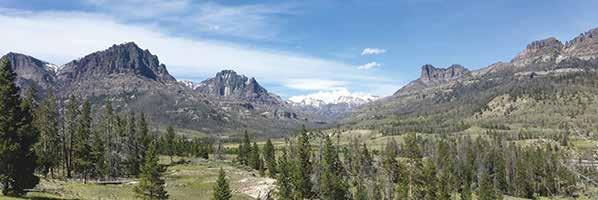
Interviewees reported using various diversification strategies to improve their bottom line. Some, for example, were already leveraging the state’s growing outdoor recreation and tourism industry.

Many ranchers voiced concerns about absentee landowners purchasing former agricultural land. They observed that this trend has driven up property values and taxes, reduced local agricultural outputs, and prevented younger operators from entering the industry.
#####
My wife tripped and dropped the basket of clothes she had just ironed. I watched it all unfold.
Despite the many challenges they articulated, most ranchers expressed no interest in selling out. Most also conveyed a strong commitment to environmental stewardship.
“Interviews reinforced that ranching facilitates purposeful land stewardship and is a critical conservation tool,” Surber and Knapp wrote. “In almost every interaction, ranchers discussed their reciprocal relationship with and deep connection to rangelands.”
To view the full text, visit https://bit.ly/ wind-river-rancher-perspectives.
#####
How did the giant know that Jack was coming?
She heard Jack and the beans talk.
Red Canyon Ranch, as seen from an overlook on South Pass near Lander, Wyoming. Photo by Callie Surber.
Absaroka Mountains north of Dubois, Wyoming. Photo by Callie Surber.
Beef Feedlot Roundtable
Nebraska Extension invites feedlot owners, managers, employees, and allied industry professionals to attend the 2026 Beef Feedlot Roundtable Series. The roundtable will be held on Tuesday, February 17, from 10 a.m. to 3 p.m. at the Prairie Winds Community Center in Bridgeport.
The Beef Feedlot Roundtable Series will feature timely, research-based discussions focused on feedlot management, cattle health, nutrition, and market outlooks, providing practical information participants can apply directly to their operations.
The 2026 Beef Feedlot Roundtable Series will include presentations on:
Maximizing calf gain in the backgrounding phase Dr. Jim MacDonald, University of Nebraska–Lincoln
Managing cattle health from feedlot arrival to finish Dr. Dan Thomson and Dr. Jacob Hagenmaier, Production Animal Consultation
University of Nebraska–Lincoln research highlights Dr. Galen Erickson, University of Nebraska–Lincoln New World screwworm: What feedlots need to know Dr. Matt Hille, University of Nebraska–Lincoln Beef cattle market outlook Dave Weaber, Terrain (Farm Credit)
The cost to attend is $20, payable at the door via cash or check. Lunch will be provided. Pre-registration is requested to assist with meal planning at https://go.unl. edu/2026roundtable
For more information, contact Dr. Galen Erickson at gerickson4@nebraska.edu.
A man and his wife entered a dentist’s office. The man said, “I’m in a hurry. I have a tee time in 30 minutes. There’s no time for anesthesia. Just pull the tooth so I can make my golf game.” The dentist looked at the man with awe and said,” “Are you sure? It’s really going to hurt without an anesthetic.” “I don’t care,” the man snapped “We’re talking about golf here” “Ok,” said the dentist, “which tooth is it?” The man turned to his wife and said, “Open your mouth, sweetheart, and show the dentist which tooth hurts.”










4-H PARENTS & LEADERS
We are always looking for pictures of 4-H kids and their projects. E-mail them to info@tradersdispatch.com along with captions and we will print what we have room for.





JIM NIELSEN TRUCK & PARTS, INC.
& heavy truck doors.
(4) Used hoist assemblies, scissor & center post.
Large selection, medium duty truck hoods.
(30) Steel wheels, hub, pilot and Budd.
(36) Transport chains and binders, 3/8 through 3/4 hi tensile.




Planning for spring annual forages
By Jerry Volesky, UNL
While we are still early in the new year, it is time to start thinking about any spring annual forages that we might plant. Part of the process may be anticipating a need for extra feed or booking seed early for possible discounts.
For spring or cool-season annual forages, the planting period is typically mid to late March to early April, or when soil temperatures are in the 42 to 45 degree range. Oats is probably the most common cool-season annual forage planted in Nebraska. However, spring triticale or spring barley are two other small grain options that have been found to perform similarly to oats in terms of forage yield and quality.
Also similar is the number of days until ready to begin grazing or hay; so, the different species could be mixed if desired. One could look at seed cost of the different species before making a decision. With the early spring planting date of the cool-season annuals, grazing can typically begin around the 3rd or 4th week of May and last into early July. Haying usually take place around the 3rd week of June.
If grazing is a primary goal, Italian ryegrass could be included in a mix with the cereal grains and this will result in a longer grazing period. Field peas are another species that could be included to enhance forage quality and provide some nitrogen fixation.
Remember to consider the herbicides that may have been used on a field the previous year. Some herbicides may have long residuals that could hinder establishment even into this spring.
#####
Charles Osborne of Anthon, Iowa, hold the title of “World’s Longest Hiccuper.” It started in 1922, hiccuping as often as 40 times per minute. Sometime he hiccuped so hard his false teeth fell out. In 1990 - nearly 70 years later - the hiccups stopped.
#####
I thought at least a couple of my puns would make you laugh… but no pun in 10 did.
2022 John Deere X9 1100, Signature Edition, Ultimate cab/lights, Gen 4 display w/ extended monitor, 31-ft. unloading auger, fixed speed/cm/fore & aft feederhouse, extended wear grain handling, Kondex all crop concaves, advance tailboard w/extra fine cut, adjustable knife bank & auger spout, 650/85R38 duals & VF750/65R26 rear tires, Combine Advisor/ActiveYield. Stock #91880 $540,000 (14)
2023 John Deere S770 w/variable speed feederhouse w/Contour Master w/fore & aft, TriStream rotor (bullet), ProDrive transmission, ActiveYield, Premium Tech (Active Terrain adjustment & Harvest Smart), manual grain tank covers, 22.-ft. unloading, manual vane tailboard, VF900/60R32, 600/70R28. Stock #94238 $425,000 (15)
2014 John Deere S680 w/single LSW1100, lateral tilt, fixed speed feederhouse (w/ fore & aft tilt), ProDrive, advanced powercast tailboard, TriStream rotor (extended wear), power fold GT covers, 26-ft. unloading auger, 2630 SF1 at activation. Stock #94172
$147,500 (1)
2014 John Deere S670 w/ProDrive trans, chopper w/manual tailboard, 26-ft. auger, TriStream rotor, fixed speed feederhouse w/ cm, no fore & aft, manual fold tops, 2630 display w/AutoTrac & SF3000 receiver. Stock #94301 $127,000 (14)
2023 John Deere S780 w/singles, chopper, yield monitor, Contour Master (lateral tilt feeder house), power folding bin extension, Premium Technology pkg:, Starfire 6000 SF1, premium residue, advanced powercast tailboard: 28.5-ft. unloading auger. Stock #94025 $450,000 (12)
2023 John Deere S780 w/chopper, yield monitor, Contour Master (lateral tilt feeder house) fore/aft, ActiveYield, powercast tailboard, power folding bin extension, 580/85R42 dual tires, 750/65rR6 rear, ProDrive trans, 28.5 unloading auger, Starfire 6000. Stock #93058 $455,000 (12)
2023 John Deere S780 w/Command Touch feederhouse w/fore & aft, ProDrive, 520/85R42 duals, 600/70R28 rear, TriStream (bullet rotor), premium fine-cut advanced powercast tailboard, 28.5-ft. unloading auger, power folding grain tank covers, ActiveYield, Combine Advisor, premium lighting (led), Gen 4 display, 6000 receiver. Stock #95423
2023 John Deere S780 w/580/85r42 duals, 750/65R26 rear, Contour Master w/fore & aft, Combine Advisor, ActiveYield, premium fine cut advanced tailboard, small wire concave, Gen 4 command center, 6000 receiver, premium visibility, power folding covers, sidehill performance kit, 28.5-ft. unloading auger. Stock #95415 $425,000 (14) 2021 John Deere S780 w/TriStream (bullet) rotor, IF520/85R42 duals 750/65R26 rear, Gen 4 command center w/premium 3.0 activation & extended monitor, 6000 receiver w/SF1, Combine Advisor, ActiveYield, advanced powercast tailboard, premium cab w/leather seat, premium radio, premium led lights w/extremity, 28.8-ft. unloading auger,
performance kit.
$415,000 (14)

covers,
#94253
(14) 2022 John Deere S780 w/1100 single drives,
rear, Contour
(ultimate
w/fore &
power folding grain tank covers, 28.5-ft. unloading auger, premium fine cut advanced powercast tailboard, premium cab, guidance. Stock #95219
$360,000 (14)
2020 John Deere S780 w/premium cab, singles, chopper, yield monitor, Contour Master (lateral tilt feederhouse) fore/aft, ActiveYield, advisor package, fine cut chopper w/powercast tailboard, 28.5 ft. unload auger, power folding bin extension. Stock #94352 $295,000 (12)
Now is the best time to upgrade your equipment. Don’t wait until you’re in the thick of the busy season to realize that your equipment isn’t going to get the job done! Call or stop in today!
4WD, ROW CROP AND UTILITY TRACTORS
Let’s get ready for spring planting season with that tractor you need to get the job done quickly. Also a good selection of loader tractors available.
2023 John Deere 9RX640 w/30” track, 6 SCVs, dual hydraulic pump, Active Command steering, Intelligent power management, Ultimate cab, 1000 PTO, 20 front weights. Stock #91048 $635,000 (12)
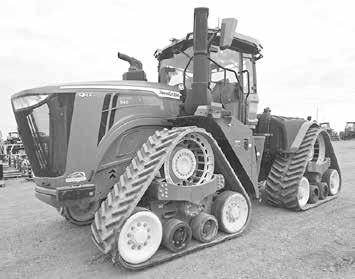
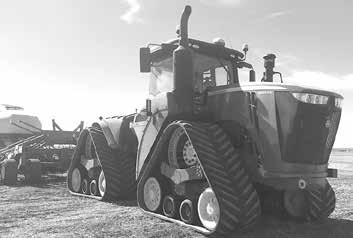
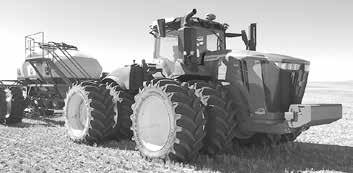
2023 John Deere 9R540 w/LSW800 duals w/ HydraCushion suspension, E18 transmission, PTO, 5 remotes (standard flow 55 gpm), Ultimate cab, ActiveSeat II, Ultimate lighting, dual 4600 displays w/Automation 4.0 activation, 7000 receiver (SF1), Cat 5 drawbar, 1/2” Power Beyond coupler, 36 front weights. Stock #95459 $487,500 (14)
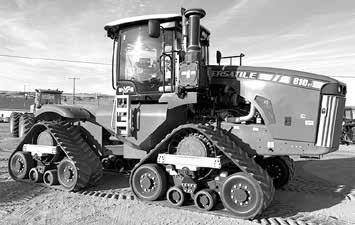
2018 Versatile 610DT w/605 hp, 16 speed power shift transmission, 36” track, deluxe cab, led lights, guidance ready w/receiver and 10” display, diff lock , 6 SCVs, 2 sets of low pressure couplers. Stock #91193 $400,000 (12)
2023 John Deere 9RX540 w/E18 transmission, 30” tracks on 87” spacing, PTO, Ultimate cab, cab suspension, Ultimate visibility, 7000 receiver, 4600 display w/extended monitor, premium 3.0 activation, 5 remotes, 55 gpm hyd. pump, Cat 5 drawbar. Stock #92139
$540,000 (14)
2012 John Deere 9510R w/high flow dual pumps = 78gpm, 5 SCVs, Power Beyond & case drain, PowerShift-18/6, 1000 PTO, dual 800/70R38, Premium cab, radio, & lights, radar, greaseable steering pins 4-1400#, 6-450#, 2-165# weights, 7” Command Arm display. Stock #95407 $230,000 (14)
SOLD
2018 John Deere 9620RX w/E18 transmission, Premium Command View III cab w/ suspension, premium lighting, 4600 w/ extended monitor w/premium activation, 6000 receiver w/SF1, premium radio, hi flow pump w/6 remotes 1000 PTO, 36” 3500 DuraDrive tracks, 87” spacing, Power Beyond. Stock #94255
$390,000 (14)
2021 John Deere 9520RX w/18/6 Power Shift, high flow hyd, 5 SCVSs, 1000 PTO, 36” 3500 tracks, 87” track spacing, ACS steering, leather trim, dual radar, refrigerator, 1/2” Power Beyond & case drain, hydraulic trailer brake, 4600 Command Arm display with AutoTrac, no receiver. Stock #95378
$345,000 (14)
2004 John Deere 9420 4WD with 425/302 hp, cab, 18/6 PowerShift, 5 SCVs, no PTO, no 3 pt, Premium cab, standard flow hyd (48 gpm), 480/80R50 triples (90%), big weight package. Stock #93194 $115,000 (1)
SELF PROPELLED SPREADERS & SPRAYERS
Several used John Deere and competitive self-propelled sprayers and applicators in stock! Variety of boom and widths available. Several units are ready to roll with turnkey GPS!

2012 John Deere 9560RT w/18/6 Power Shift transmission, 5 SCVs w/hi-flow hydraulics, PTO, 2630 display w/AutoTrac, 3000 receiver, Command View II cab, electric RH & LH mirrors, 36” DuraBuilt 5500 series tracks, premium lighting, front weight bracket w/27 weights, 4-450 lbs front idler weights, tow cable. Stock #95203 $185,000 (14)
2016 John Deere 9570R w/high flow dual pumps @115gpm, 1000 PTO, 5 SVCs, 14.9I Cummins engine, E18 PowerShift trans, 800/70R38 duals premium cab/radio/ lighting, ActiveSeat, radar, greaseable pins, 8500# weight package, Gen4 4600 command arm display w/AutoTrac activation. Stock #95406 $349,000 (14)
DRILLS & SEEDERS
Spring seeding will be here before we know it. Please see our line of good used air seeders for your spring planting needs
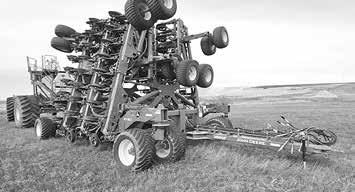
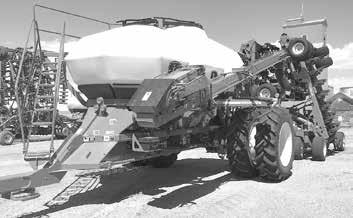
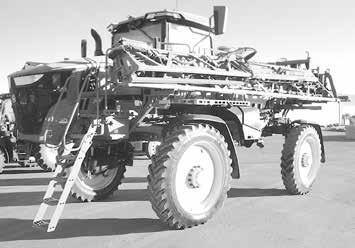
2024 John Deere N560F, 60-ft width, 10” spacing, double shoot, All Run blkg, cast serrated closing wheel, spoked narrow gauge wheels, dry fert delivery tube, tow behind C850 cart w/section command, (4) IF850/75R42 tires, (2) IF900/75R32 tires, tank scales C850. Stock #92736
$685,000 (1)
2023 John Deere N560F w/60-ft, double shoot, cast serrated closing wheels, spoked narrow gauge wheels, All Run blkg, tow behind C850 cart. Stock #93529 $595,000 (1)
$325,000 (14)
2023 John Deere 616R w/Signature Edition, less See and Spray, 1600 gal. stainless steel tank, guidance, ActiveSeat, VF420/95R50 tires, hi flow solution pump, less eductor, less front fill, 120 ft. steel boom, 20” nozzle spacing w/Exact Apply nozzle control, air purge, fenders. Stock #92779..
$520,000 (2)
2024 John Deere 616R w/120-ft. steel boom, 20” spacing, CVIII cab, Exact Apply, Auto Solution Control, hi-flow pump, front fill, 5 sensor boom level, boom air purge, Ultimate vis lights, eductor, Ultimate Comfort package, Cat 1 cab filtration, fence row nozzles, 420 skinny tires, 4.0 at act, 4600 armrest display, section control, SF6000. Stock #91437
$545,000 (1)
2023 John Deere 616R w/132-ft. carbon fiber, 20”, CVIII cab, Exact Apply, Premium radio, Auto Solution Control, hi-flow pump, 5 sensor boom level, boom air purge, Ultimate vis lights, eductor, Ultimate Comfort package, Cat 1 cab filtration, fence row nozzles, skinny tires, includes 4.0 at act, 4600 armrest display, section control, SF6000. Stock #89331
$495,000 (12)
2025 John Deere 412R w/120 ft. boom w/leveling, stainless steel tank, narrow tires, hydraulic tread adjust, guidance-ready, guidance receiver, guidance display, traction control, nozzle spacing 20”. Stock #95231
$549,000 (12)
John Deere 410R w/100-ft. boom, boom leveling, stainless tank, narrow tires, hydraulic tread adjust, guidance-ready, guidance display, traction control, nozzle spacing: 20”, no See and Spray™. Stock #95207
2022 John Deere N560 60-ft air drill, 7.5” spacing, single shoot, serrated closing wheel, All Run blkg, ProSeries openers, spoked narrow gauge wheels, 550 bu tow behind 1910 cart. Stock #93319
$410,000 (1)
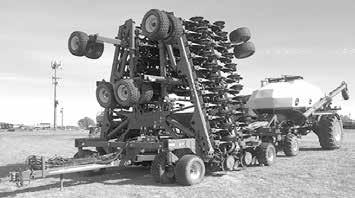
$270,000 (15)
2015 John Deere R4045 w/Command View II plus cab, guidance, section control, 120 ft. boom w/auto boom leveling, stainless steel tank, foam markers, RH and LH fence row nozzles, no eductor, 420/95R50 tires. Stock #86591
$155,000 (12)
2012 John Deere 4940 w/120-ft, 15” spacing, 380/105R50 tires, hi-flo solution pump, stainless steel plumbing, BoomTrac Pro-5 leveling, SF3000 receiver, AutoTrac & section control activations. Stock #88812
$118,000 (1)
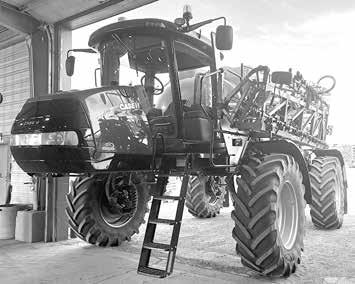
2018 Case IH 4440 w/120-ft booms, 20” nozzle spacing, AccuBoom section control, AutoBoom height control, 620/70R38 tires, luxury cab, AccuGuide NAVII controller, AFS 372 receiver, AFS Pro 700 display, stainless tank, hyd tread adjust. Stock #93280
$222,500 (12)
2015 John Deere 1890 w/60-ft 10” spacing, 90 Series openers, mix of spoked and unspoked gauge wheels, mix of smooth and serrated closing wheels, All Run blockage (John Deere), 430 tow between w/Intelligent Ag section control, 12” conveyor w/standard hopper. Stock #88790
2015 John Deere 1890 60-ft, 7.5” spacing, stainless steel, All Run blockage, solid gauge wheel, 430 bu. tow behind, 3 tank, 8 run, hydraulic drive (Section Command), 10” fill auger. Stock #90868 $157,500 (12)
$162,500 (4)
2014 John Deere 1890 42-ft air drill, 7.5” spacing, single shoot, All Run blkg, dual 31 x13.5-15 hi-float tires, spoked gauge wheels, has 1910 tow behind 430 bu. cart, non Section Command. Stock #92797
$162,500 (1)
2012 John Deere 1890 60 ft no till drill, 10” spacing, single shoot air package for tow-between cart, All Run blockage system for seed, 430 bu. cart, UniForce down pressure system. Stock #86592
$142,500 (12)
2012 John Deere 1890 60-ft. 7.5” spacing, 8 run, single shoot, primary blockage, 350 bu. tow behind cart, 12” conveyor, rear duals, ground drive, & variable rate. Stock #90382 $132,000 (12)
2023 John Deere N560 60-ft. 10” spacing, ProSeries opener, spoked narrow gauge wheels, crumbler closing wheel, All Run (Deere) blockage, TruSet pressure control, 430 tow between cart w/section control, 12” conveyor w/low profile hopper, dual 520 cart tires. Stock #95463
2022









CATTLE HANDLING & LIVESTOCK EQUIPMENT





















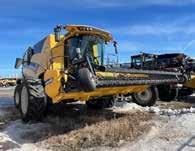
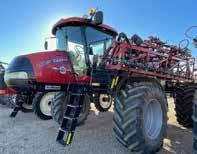
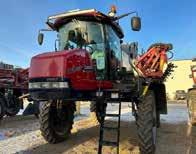
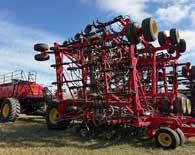





B-TRAIN FOR SALE
Western aluminum flat beds. Lead trailer is 32-ft. long, rear trailer is 28-ft. long.
Nice tires, brakes and drums
$20,000/set
Phone Bill at (208) 651-8698. Phone calls only, NO TEXT
HAY FOR SALE
220 bales - 2nd cutting Alfalfa/Grass mix, cow hay. $135/Ton
171 bales - 1st cutting Alfalfa/Grass mix, 90/10%. $150/Ton
115 bales - 2nd cutting Alfalfa/Grass mix, 90/10%. $150/Ton
(3x3 Squares – All Stacks Tarped)
Call (406) 490-7600 Hay located south of Whitehall, MT.

NEW HDPE PIPE
– IN STOCK –1” – 11/4” – 11/2” – 2” – 3” & 4” x 200 psi
Use for irrigation, stock water or drinking water. Red stripe for electrical use. Yellow stripe for natural gas use.
Also available 3/4” to 2” SIDR TURF/IRRIGATION HDPE pipe
3/4” - 4” orange smooth wall HDPE conduit HDPE pipe available in 20 to 50-ft. lengths from 6” to 66” diameter
Pipe is available by the stick - coil - reel - truckload
Call Ed at Big Sky Pipe – Great Falls, MT
Delivery available 406-453-7299 Veteran Owned or Email: ed.bigskypipe64@hotmail.com – www.bigskypipeandsupply.com
TRACTOR FOR SALE

John Deere 6110 2788 hours, 16 speed, Power Quad transmission, pre-DEF, very clean, includes pallet forks, good working condition.
$35,000 OBO
Also Available: 2002 John Deere 6420 115 hp, loader/bucket $50,000 OBO
Call 406-380-0776 • Moore, MT
Do you have an NRCS Contract?
If you need a stockwater pipeline or an irrigation pivot, but haven’t received assistance yet, consider signing up with a Technical Service Provider (TSP) at your local NRCS office. The NRCS will reimburse you for hiring a TSP, so your project can be completed at no cost to you. TSPs often finish projects more quickly than NRCS itself, and I am one of the TSPs available in Montana. Typically, I can complete a design that meets NRCS approval within 30 days after a field visit.
projects will meet USDA-NRCS specifications.
• Licensed Professional Engineer
• Registered Technical Service Provider for USDA-NRCS
• Life time member of the Irrigation Association
• 40 years design and field experience.
Amazing amber
Amber has been valued as a precious gem since ancient times but today jewelers have to fight off paleontologists to get their hands on these precious gems. Because of how it is formed, amber droplets can hold a wealth of information for paleontologists. Amber starts out as tree resin; when exposed to the air, tree resin usually dries out and crumbles. If the resin is protected from oxygen (like if it is buried under clay and silt), it will over millions of years, fossilize into amber.
Before it hardens, the sticky resin sometimes traps bits from its environment. Feathers, animal hairs, plants, and insects become fossilized along with the resin. Called inclusions, these remnants of ancient life, so fragile that they might not leave a fossil trace, are perfectly preserved inside bulbs of amber.
Fast-forward to the 1800s, when clay was mined in Sayreville, New Jersey. Large pits were dug to harvest the clay, and amber was found. But serious interest in Sayreville’s amber didn’t take off until the 1990’s, when a fossil hunter dug into an abandoned pit and discovered amber that held an insect.
While New Jersey doesn’t have the largest deposits of amber in the United States, it has the only substantial North American deposits that date back to the Cretaceous period (65-135 million years ago). At that time, dinosaurs were still around, and flowering plants and modern insects began to emerge. Sayreville’s amber and its inclusions contain perfectly preserved specimens of life from the Cretaceous. Paleontologists have found New Jersey amber with inclusions that date back as far as 95 million years, and discovered more than 100 species of insects and plants trapped inside the petrified resin. Sayreville’s amber has housed the world’s oldest:
• Ant–the first proof that ants lived during the Cretaceous.
• Mosquito with a mouth tough enough to bite a dinosaur!
• Mushroom, Archaeomarasmius leggetti. It’s 90 to 94 million years old.
• Bee, Trigona prisca. It flew for the last time about 65 to 80 million years ago.

If
#####
The trouble with trouble is that it always starts out like fun.









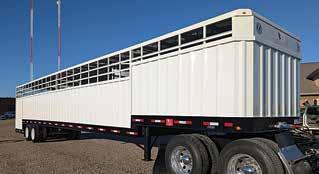
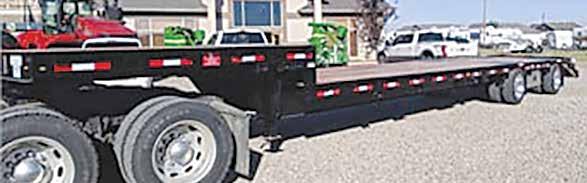

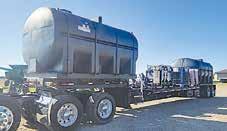



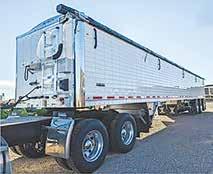


Feed efficiency starts with the right protein source
Protein plays a critical role in milk production and cow health, growth and reproduction. For years, the industry has aimed to meet dairy cow needs by including more protein in rations than needed to ensure an adequate supply. However, ongoing research suggests that feeding more protein doesn’t necessarily correlate with better performance.
Feeding excess protein can have unintended consequences, including wasted energy and reduced efficiency. By looking closer at the amino acid balance of a ration and optimizing it rather than focusing on total protein level, you can help reduce nutrient waste, conserve energy and improve overall feed efficiency.
How is protein used by a dairy cow?
True protein consists of amino acids, which are composed of nitrogen and carbon. Crude protein, on the other hand, includes both amino acids and non-protein nitrogen sources.
“When we talk about protein in dairy diets, we need to consider what the rumen microbes can use,” says Essi Evans, Ph.D., E+E Technical Advisory Services. “The microbes are not particular about whether nitrogen comes from a true protein or non-protein source as long as it’s accessible to them.”

wood splitters,

We have chippers log grapples available.
KIOTI TRACTORS
Kioti RX7320PC tractor with KL7320 loader, cab, heat, A/C, power shuttle transmission, 4WD, Cat II 3-point, 540 PTO. 1 in stock
Kioti DK4720SEHC tractor with KL5521 loader, cab, heat, A/C, HST transmission, Cat I 3-point, 540 PTO, 47 hp. 1 in stock
Kioti CK3520SSHC tractor with KL4030 loader, cab, heat, A/C, HST transmission, 4WD, Cat I 3-point, 540 PTO, 35 hp. 1 in stock
Kioti DK4720SEH tractor, KL5521 loader, 4WD, HST transmission, Cat I 3-point, 540 PTO. 1 in stock
Kioti CK3520H tractor with KL4030 loader, 4WD, HST transmission, Cat I 3-point, 540 PTO. 1 in stock
Kioti CK2610H tractor with KL4030 loader, 25 hp, 4WD, Cat I 3-point, 540 PTO, HST transmission. 1 in stock
Kioti CX2510H tractor with KL5510 loader, 25 hp, 4WD, Cat I 3-point, 540 PTO, HST transmission 1 in stock
Kioti CS2210H tractor with SL2410 loader 2 in stock
mower $1250
Herd 3-point seeder, 9.5 bushels, PTO driven $950
Leinbach 4-ft. rock rake $400 3-point bale spear $300
John Deere 6600 combine, gas, pickup header $2000
Massey-Ferguson 510 combine, Perkins diesel $3250
Ford Major tractor. $1250
New Holland 855 round baler.$3850
New Holland 1033 balewagon
New Holland 1032 balewagon. $6000



Kioti CK27H tractor with KL130 loader, 27 hp, 4WD, 540 PTO, Cat I 3-point, good rubber, runs great. One owner 226 hours.
$15,000
In order for nitrogen to be used by rumen microbes, it needs to be both soluble and degradable. The microbes use this nitrogen to grow and digest fiber and other nutrients, which supplies energy to the cow and supports microbial growth. The microbes help supply the majority of the protein that is needed by the cow. They also provide amino acids in the proportions that the cow needs for all her proteinrequiring functions.
Solving the protein puzzle
$13,500
Kioti CS2210H with pre-installed backhoe subframe, 22 hp, 4WD, Cat I three point, 5 years remaining warranty, 18 hours.
Farmall 504 tractor with Ford HD post pounder. $5500
John Deere S100 lawn tractor with snowblower. Like new $4500 Ford 860 tractor, good condition
Oliver 88 project tractor.
$3500
$1000
In general terms, about 8 to 10% of ration dry matter is converted into microbial protein. The remainder of the cow’s diet needs to supply the rest of the amino acids she requires to thrive. The closer this balance of amino acids aligns with the cow’s requirements, the less energy she spends synthesizing the proteins she needs.
Think of amino acid balance as a puzzle: about half of the pieces are provided by the microbial protein. If the rest of the dietary pieces are readily available and fit properly, the cow completes the puzzle efficiently. If pieces are missing or there are too many, energy will be diverted from milk production to managing the imbalance, either by compensating or disposing of the excess.
“Every gram of excess protein that a cow doesn’t use is a gram she must eliminate,” says Dr. Evans. “That disposal costs energy which could otherwise be used to support milk production.”
In one beef cattle study, feeding excess protein from corn byproducts (poorly balanced proteins) increased maintenance energy use by more than 5%. This energy was spent breaking down the excess protein, converting it into urea via the liver and then sending the urea to the kidneys to be excreted.
Another study determined that excess dietary protein directly impacts milk gross energy output, which means the disposal of any protein overage has a direct effect on milk yield.
What is the “ideal” protein for dairy cows?


To help farmers visualize amino acid balancing, Danish researchers explored the concept of an “ideal” protein for dairy. An ideal protein may be from a single source, or it can be formed from mixtures of protein ingredients that collectively meet the ideal amino acid requirements, while minimizing excess that must be disposed of through the liver and kidneys.
The researchers presented an example where they calculated amino acid needs for a cow producing 66 pounds of milk and evaluated how well different feed ingredients –barley, corn, soybean meal, canola meal and fishmeal – filled the gap left after microbial contribution (Table 1).
Using estimates for how much each amino acid would be available from rumen microbes, they calculated the deficit by subtracting the microbial supply from the total needs and then determined how much protein from each of the ingredients would be needed to fulfill the deficit.
For each ingredient, the protein inclusion rate stopped when the limiting amino acid was met. To demonstrate the excess, the deficit was subtracted from the amount of the ingredient provided after the first limiting amino acid was met. The values are zero for the limiting amino acid. The total overage is the amount that must be processed by the cow.
“This research demonstrates that some proteins are better aligned with the cow’s amino acid requirements,” says CONTINUED ON PAGE B18
Frost seeding or interseeding legumes
By Jerry Volesky, UNL
Are you looking to increase production from pastures or hay fields? Frost seeding or interseeding legumes might just work in your operation.
Nitrogen is one of the key ingredients for productive pastures. A way to get more nitrogen in a pasture is to plant legumes. Alfalfa, red or white clovers, birdsfoot trefoil, and other legumes all fix atmospheric nitrogen and can reduce nitrogen costs. These legumes are also very high in forage quality.
Not all pastures are good candidates for adding legumes, however. First, legumes need adequate phosphorus and a pH usually above 6 while some prefer a pH closer to 7. Frost seeding is a method where legume seed is simply broadcast in winter to allow the natural freezing and thawing of the ground to plant the seed for you. Because frost seeding requires seed to be close to the soil surface after broadcasting, snow-free or very little snow is preferred. Frost seeding success can vary and while frost seeding is easier to do, drilling is almost always a better option if the pasture conditions allow it. Interseeding with a no-till drill better ensures seed placement and seed to soil contact.
Lastly, heavy flash grazing several times in the spring will reduce the competition from existing grasses and help establishment of legume seedlings. Once the grass is 3 to 4 inches taller than the seedlings, graze quickly until the grass is grazed down to the height of the legume seedlings. Legumes can help reduce fertilizer cost and create higher quality pastures and hay. Frost seeding or no-till drill interseeding are two approaches that might work to establish legumes in your operation.

G03 GATHERING SYSTEM

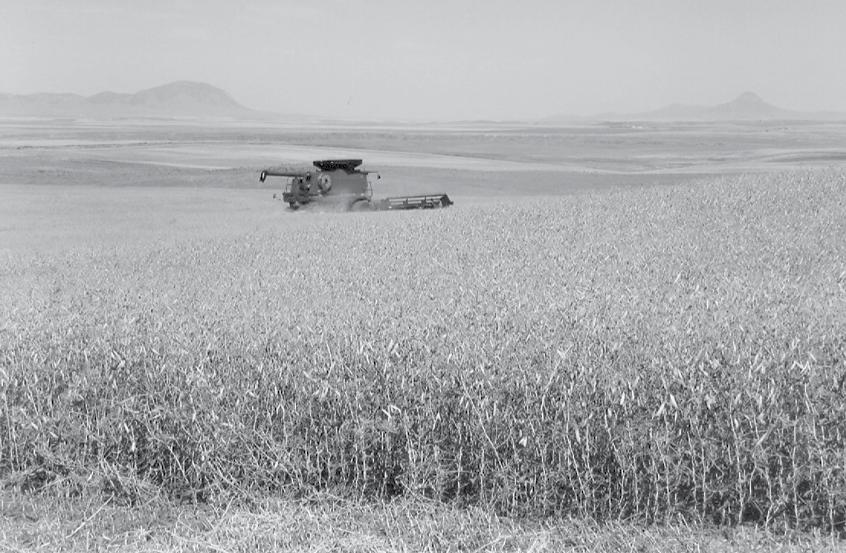
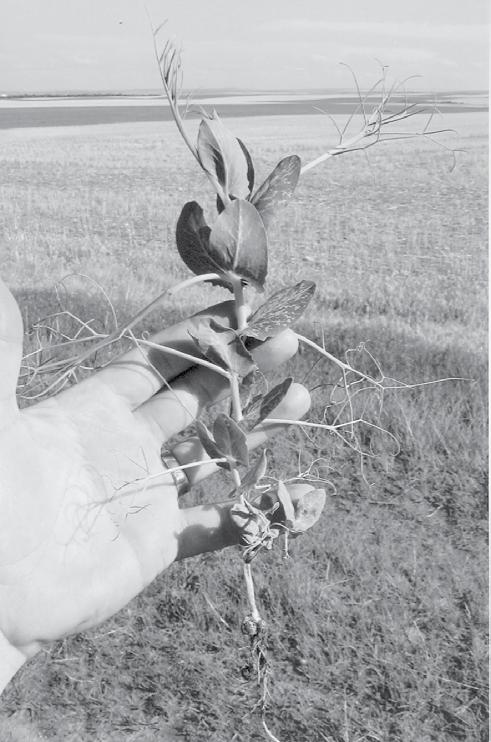

www.centrol-llc.com
Budgets tight? Did you sign up for a fertility ehnhancement program? Contact us today!
Know exactly what nutrients are in your soil and where with soil sampling from Centrol.
0-6 inch, 6-24 inch & 24-42 inch depths Composite or Zone Sampling with prescription writing. 3 GPS guided trucks available.
Standard Analysis, Complete Analysis, Soil Health and more
Independently owned, serving the Golden Triangle since 1985.
Jeff Farkell CPAg/CCA 406-788-4875 Joel Farkell CCA 406-581-6243 centrol_llc@outlook.com
Dr. Evans. “For this example, canola meal stands out as a highly efficient source. This example found that canola meal and fishmeal were the proteins that best meet the needs of the cow. Corn protein is
a poor source of amino acids when it comes to meeting the needs of cows for milk production. The amino acids from barley and soybean meal are intermediate sources.
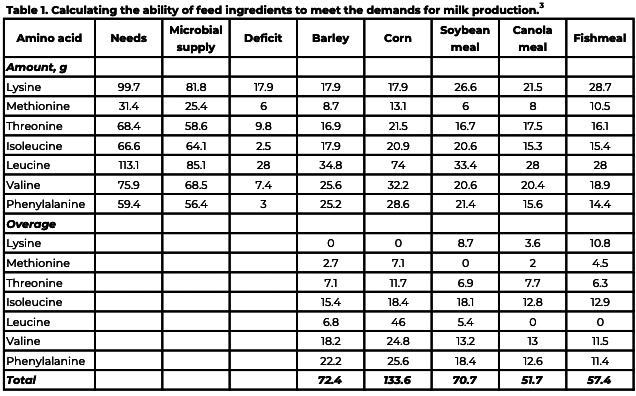
Precise feeding pays off
While meeting the amino acid needs of cows is essential for milk production, doing so conservatively is more important as it’s the cow’s energy use that determines how she performs. By meeting the amino acid needs of cows and avoiding overage, less energy is wasted.
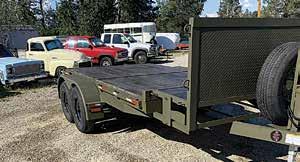
However, these energy losses may not be considered by ration formulation programs and consequently, an opportunity for greater milk production and improved feed efficiency can be lost.
“When formulating rations, it’s important to go beyond just meeting crude protein levels,” explains Dr. Evans. “Targeting the right amino acid profile helps you reduce energy waste and optimize protein utilization and milk production.”
By focusing on the quality of protein sources, particularly those like canola meal that deliver amino acids more efficiently, you can improve milk yield, reduce energy waste and support long-term performance. Visit canolamazing. com to learn more.
About Canolamazing
Canola meal is a coproduct of canola processing and is approximately 36% crude protein, with a high bypass protein value and amino acid profile well-suited for milk production. Because of its high protein content, canola meal is often used as a protein supplement for animal feeds, including dairy rations. Visit canolamazing.com to learn more.

Play Tennis Day
This holiday is always celebrated on February 23
Play Tennis Day is a great day to play. After all, it’s the objective of this February 23 holiday. Millions of us, young and old, play this high-energy game. Because it is mid-winter, you may be limited to an indoor court if available. Or, perhaps you will play table tennis.
Millions of Americans enjoy playing tennis. In addition to being a good sport, it’s good exercise, too.
Most Famous Table Tennis Player: Forrest Gump in the classic mega-movie Forrest Gump.
Types of Tennis
The creator of this day is unknown and there is a lack of documentation about this holiday. As a result, we can’t be certain what type of tennis we should celebrate. So, let’s celebrate them all. They include:
Tennis – as played on a full-sized court.
Table Tennis
Lawn Tennis
How to Celebrate Play Tennis Day
Play a round or two with friends.
Watch the movie, Forrest Gump.
If it’s snowing outside, play table tennis.
Learn more about your favorite famous male and female players.































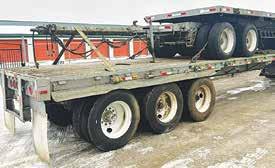
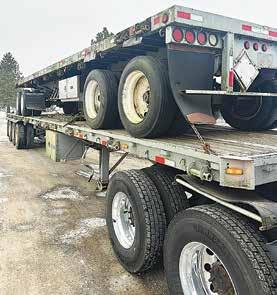

Trade mission to Vietnam highlights expanding opportunities for Idaho ag
The Idaho State Department of Agriculture (ISDA) recently led an agricultural trade mission to Vietnam, accompanied by Lieutenant Governor Scott Bedke and 12 Idaho businesses and organizations.
The mission took place in November and focused on strengthening relationships and identifying new opportunities for Idaho farmers, ranchers and food processors. Vietnam continues to be a growing market for U.S. food and agriculture, and Idaho’s agriculture and food processing industries are well positioned to meet that demand.
“With Vietnam opening its market to U.S. exports under the recent deal negotiated by President Trump, Idaho agriculture is positioned for expansion like never before,” said Lt. Gov. Bedke. “Idaho’s reputation for high-quality products opened doors throughout the trip, and the conversations we had made clear that Vietnam sees Idaho as a trusted source.”
“We are proud to provide a valuable, agriculture-focused trade mission that supports an industry producing some of the highest-quality products in the world,” said ISDA Director Chanel Tewalt. “This mission gave our ag companies meaningful opportunities to strengthen relationships in the region. The Lt. Governor’s leadership helped open doors at the highest levels, and the conversations we had will support long-term growth for Idaho farmers, ranchers and food processors.”
Idaho exported $10.5 million in goods to Vietnam in 2024, including $8.3 million in food and agriculture products. Dairy products and hay are Idaho’s leading agricultural exports to Vietnam in 2025. The state also sees strong potential for expanding exports of cattle genetics, dairy ingredients, wheat, hops and pulses.
Vietnam and the broader Southeast Asia region hold immense potential for future Idaho agricultural trade. With an established Idaho trade office in Taiwan supporting longterm growth in the region, the state remains committed to building partnerships that strengthen market access and drive continued success for Idaho producers.
The following businesses and organizations joined Lt. Gov. Bedke and ISDA on the trade mission:
Brocke & Sons
Commercial Creamery
Dairy West
Driscoll TopHay
Glanbia Nutritionals
High Desert Milk
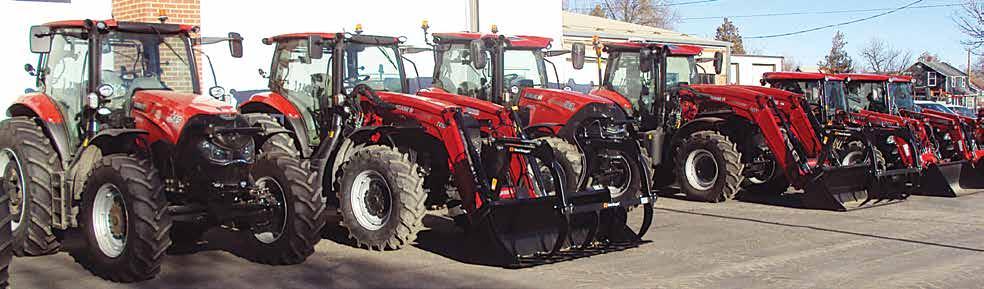



Trade mission to Vietnam highlights expanding opportunities for Idaho ag
Idaho Hop Growers Commission
Idaho Potato Commission
Idaho Wheat Commission
Redox Bio-Nutrients
Sage Hill Northwest
Simplot Animal Science
Delegation Quotes:
“I had a great trip with the ISDA team. They put together a great schedule with legitimate companies in my sector. I am currently working with several of these companies to start doing business together. The structure of the meetings and introductions were such that I believe it will lead to long term relationships and many years of business.” - Berton Brocke, President, Brocke & Sons
“The recent trade mission proved to be a resounding success for our organization. During the mission, we engaged with influential decision-makers from leading businesses and government entities, fostering valuable connections and strategic partnerships. These discussions have positioned us to advance several key business agreements, marking an important step toward future growth and collaboration.”
- Jeremy Howard, Senior S ales and Marketing Manager, Simplot Animal Sciences
“I would like to extend my sincere thanks to Lt. Governor Scott Bedke and Director Chanel Tewalt for their leadership in hosting a trade mission to Vietnam. This provided us with a unique opportunity to reevaluate the Vietnamese market for the export of fresh and frozen Idaho potatoes, paving the way for future growth and collaboration. The state of Idaho’s commitment to fostering international trade is truly appreciated.” – Jamey Higham, CEO, Idaho Potato Commission
“This being Redox Bio-Nutrients’ second trade mission with Lt. Governor Bedke, Director Tewalt, and their staff, Redox finds tremendous value in these trade missions. We
Price Truck & equiPmenT


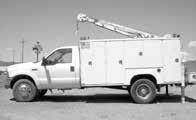



1996 Ford





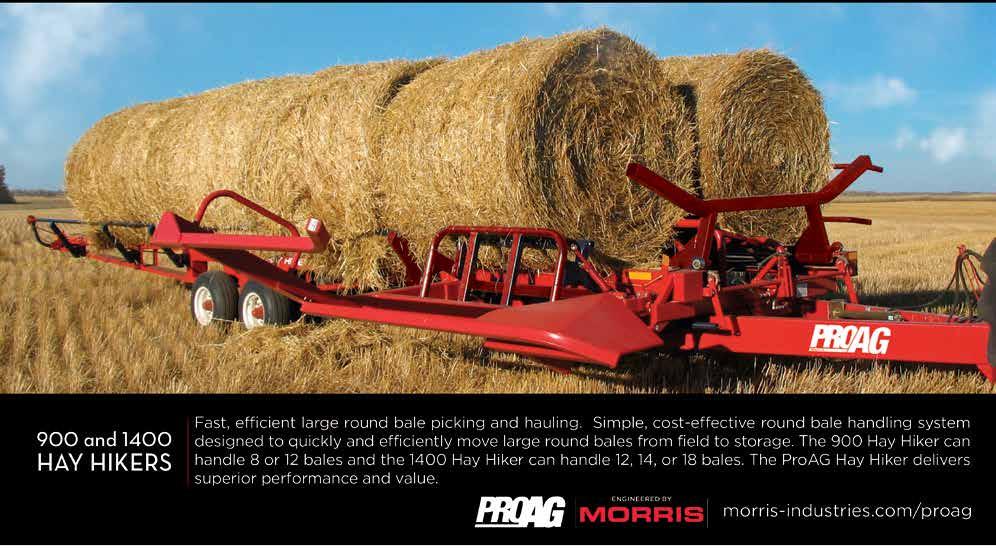
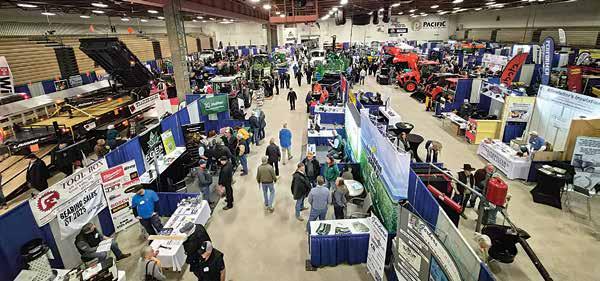
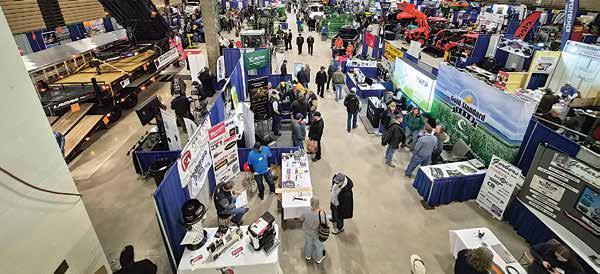
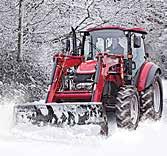






Trade mission to Vietnam highlights expanding opportunities for Idaho ag
CONTINUED FROM PAGE B21
ing off 2-3 years of the market development process. The Lt. Governor showcased the trading power that Idaho brings to Vietnam and across the world, and Redox was excited to be a part of it. I am looking forward to the next trip and the success that it can bring to Redox and to Idaho.” - Colton Moon, President, Redox Bio-Nutrients LLC
“The trade mission to Vietnam was a very successful experience for High Desert Milk. The meetings that were arranged were of the highest level, with a lot of support from Lieutenant Governor Bedke and the staff. We were warmly received and had some amazing dialogue as we learned about their business and needs in Vietnam. We were also made aware of their barriers. We made some very promising connections to start the process to export to Vietnam.” - Karla Robinson, Controller, High Desert Milk
“As a representative of Idaho’s dairy farmers, I was grateful for the opportunity to participate in the trade mission to Vietnam. The effort and execution demonstrated by Lieutenant Governor Bedke and the entire ISDA staff were greatly appreciated. I believe the relationships we built throughout the week in Vietnam will lead to significant growth in exports for Idaho’s dairy processors.” - Scott Snelders, Director of Business Development, Dairy West

“It’s always a valuable opportunity to participate in Idaho trade missions and the recent trade mission to Vietnam was no different. Idaho wheat farmers rely on export markets to move more than 50% of the wheat produced each year. Continually fostering relationships with our overseas customers is key to maintaining and growing trade opportunities. In Vietnam, we were able to participate in facility tours and meetings where we discussed the business needs and opportunities of our customers. Customers also appreciated the honor of meeting Lt. Gov. Bedke and the Idaho State Department of Agriculture delegation. Most importantly, the visits deepened our personal relationships - connecting the end user on the other side of the world, back to the Idaho farmer where the wheat journey begins.” - Cory Kress, Chairman, Idaho Wheat Commission















“We are grateful to have participated in the Idaho Agriculture Trade Mission to Vietnam. The experience allowed us to deepen our understanding of the Vietnamese agricultural market, build strong connections and even receive new orders during the trip. We look forward to growing these relationships and creating more opportunities together.” - Robert Li, Deputy General Manager of Sales, Driscoll Top Hay
“We were grateful for the opportunity to join the delegation. Vietnam presents meaningful opportunities for Idaho agriculture, and with creativity and collaboration, we believe producers can continue expanding into this market. We appreciate ISDA and Lt. Gov. Bedke for championing Idaho farmers and ranchers and helping ensure our agricultural heritage remains strong for generations to come.” - Oliver Schroeder, Chairman, Idaho Hop Growers Commission
Exhibitors filled the Expo Park Exhibition



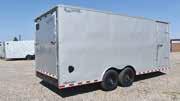
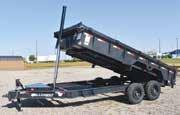

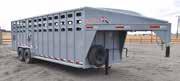




Trust I Put in You
This rose is for you, the reason
Well, I’ll just let you choose
Maybe it’s cause I love you
And you are the best
Maybe it’s the things you say
Or that you don’t put people down
Maybe it’s just to thank you
You’re someone to talk to when I come to town
Maybe I like you more than I should
But just never let you know
Maybe it’s the way at “ten to two”
You kindly say you have to go
Maybe it’s the sparkly eyes
Or smile that makes you look so sweet
Maybe it’s the almost quiet little laugh
That makes the last two so complete
Maybe it’s the way you do your job
Of serving beer and food to us
Maybe it’s because you’ll say this is cheaper
And we can save some “In God We Trust”
No matter which one of the above
You might choose
This rose says, “Thanks, You’re someone I don’t want to lose”
Copyright Robert Lee Ridgway, Vaughn, Mt

































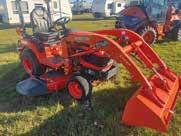










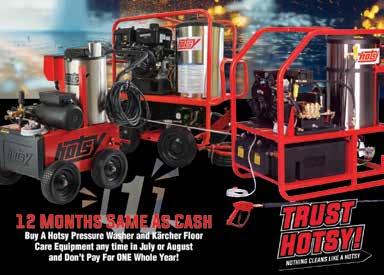



Before licking the spoon, consider facts about flour and oatmeal
By Julie Garden-Robinson, NDSU Extension food and nutrition specialist
“I thought that eggs were the problem in raw cookie dough!” someone exclaimed to me after a webinar. “Now the flour can make us sick?”
“Yes, we have to be careful with flour,” I replied.
“Flour is a raw commodity, and some outbreaks have occurred due to Salmonella and E. coli bacteria in uncooked food containing flour,” I noted.
Eating raw cookie dough is not advised for safety reasons, with an exception.
If you love commercially made cookie dough ice cream, you can safely eat it. The cookie dough has been made with pasteurized eggs and heat-treated flour.
You will notice food safety labels on ready-to-bake cookies. These cookies are not meant to be eaten out of the container, unless it is “edible cookie dough.”
“Should I be heating the oatmeal before I make unbaked cookies?” my colleague inquired.
“That’s a great question. Oatmeal is handled differently from flour. Oats are cleaned, dehulled and then toasted or steamed before being rolled or cut. This heating step extends shelf life, prevents spoilage and destroys harmful bacteria,” I said.
“That’s why you don’t see warning labels on oatmeal containers, and why it’s safe to use oats in no-bake snacks. There are no warning labels on oatmeal cannisters about cooking it,” I added.
We had just gotten off a call where flour and oatmeal were being discussed, and the discussion had an immediate effect on my colleague.
Flour
In 2023, 14 illnesses with three hospitalizations in 13 states were linked to eating undercooked or uncooked products containing wheat flour. Most were associated with consuming raw dough, cake mix or batter.
Wheat is cleaned to remove stones, soil and other contaminants. It is tempered (or moistened) to toughen the bran, then it goes through roller mills or stone mills.
The flour is separated by sifting out the white starchy part (endosperm) that we buy as flour. The bran (outer layer) and germ (fat-containing part) are removed and can be sold as animal feed or as individual ingredients.
If the grain is ground to include all parts of the grain, then it is whole-wheat flour. The components can be blended to meet the needs of the end user, such as a baker.
Flour is not heated during the milling process, so it is “raw.”
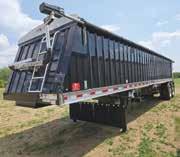


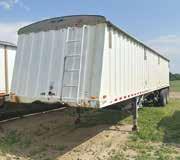


A tested method for heat-treating flour at home has not been developed. If flour or other foods are recalled due to safety issues, throw them away or request a refund.
Be sure to wash your hands before and after handling raw flour. A food as powdery as flour can contaminate other surfaces in your kitchen. Avoid cross-contamination by cleaning work surfaces and utensils.
Do not taste raw dough or batter. Do not make raw play doughs containing flour for children’s crafts.
Oats
Like wheat, oats are grown in fields, but the processing of oats is a little different. Oat kernels are cleaned and dehulled, and then the product is “aspirated” to separate any remaining hulls.
The groats (whole kernels without the hull) are then heated to extend their shelf life. The toasting process inactivates enzymes and reduces moisture that can cause off-flavors or spoiling. The heating process also makes the oats safe to use for uncooked products such as overnight oats (made in the refrigerator) and energy bites that are not baked.
Next, the oats are rolled or cut. Quick oats, which cook in one to three minutes, are steamed as well as cut. Steelcut oats are cut, while old-fashioned oats are cut and rolled. Oats are good for you. They provide a soluble fiber called beta-glucans that are heart-healthy. This fiber type may help reduce our blood cholesterol. You might see a heart health claim on some oat-based foods.
CONTINUED ON PAGE C3
Before licking the spoon, consider facts
about flour and oatmeal
If you’re craving something sweet with the same chewy texture as cookie dough, here’s a safe and simple option you can make at home.
Peanut Butter Oat Bites
3/4 cup peanut butter (or other nut butter)
1 1/2 cups oats (quick or old-fashioned)
1/3 cup honey
1/3 cup mini chocolate chips
2 tablespoons ground flax seed*
*Substitute coconut, dried cranberries, raisins or chia seeds if desired for the flax seed.
Place peanut butter in a microwave-safe bowl and microwave for about 20 seconds until soft. Add remaining ingredients and mix well. Use a 1-tablespoon measuring scoop or spoon to measure portions. Roll into balls. Store in an airtight container in the refrigerator. Makes 16 bites. Each bite has 100 calories, 5.5 grams (g) fat, 2.5 g protein, 10.5 g carbohydrate and 35 milligrams sodium.
Chocolate can help stop tooth decay. Specifically, parts of the cocoa bean can thwart mouth bacteria even more.
Learn how to help save a life
February 17 in Havre, MT
Learn how to help save a life while waiting for emergency medical services to arrive in rural areas during a free, public Far Out & Waiting workshop with Montana Farmers Union and Havre EMS, from 6-8 p.m., Tuesday, February 17, at the 4-H Chuckwagon on the Hill County Fairgrounds in Havre.
On average, rural communities experience a 30plus minute wait for EMS to arrive at remote farms and ranches. Far Out & Waiting workshops provide an interactive environment in which to learn critical skills and gain confidence in knowing what to do to help while waiting for EMS to arrive.
Attendees can expect an interactive learning environment with local EMS professionals to learn about:
First Aid and tourniquet application
EMS response time and logistics
Next steps and certification options
Additionally, those holding a private or commercial pesticide applicator license will receive one credit for attending the workshop when they bring their applicator ID number. Complimentary food and drink are provided.
Registration is required at: https://montanafarmersunion. com/news-events/calendar/.
Questions to Jodi Koterba at jkoterba@montanafarmersunion.com or 406-788-8816.
powershift transmission with front and rear differential locks. Field Ready $199,000 obo Phone (406) 390-6477

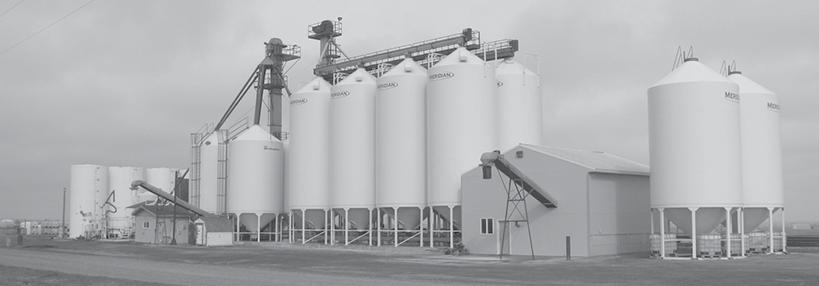


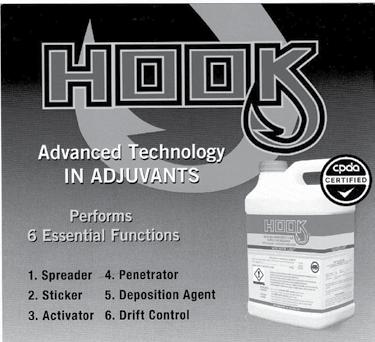

Wagyu/Akaushi



4-Star
full width rear door with half slider, tapered wheel wells, tie rail, trailer ties inside and out, full
HSG A or B soils — “4” points
Endangered Species Act in Nebraska: Runoff and Erosion Mitigation, Part 2
HSG C or D soils — “6” points
Most eastern Nebraska fields fall into the higher-requirement group.
Enlist One® mitigation options are listed directly on the product label, allowing applicators to meet requirements using familiar conservation practices such as no-till, cover crops, terraces or vegetative bu!ers.
By Milos Zaric - Department of Agronomy and Horticulture Assistant Professor, Greg Puckett - Extension Assistant, Craig Romary - Environmental Programs Specialist, Nebraska Department of Agriculture
This article is the second in a three-part series explaining how Endangered Species Act (ESA) requirements affect pesticide applications in Nebraska. Part 1 introduces the regulatory background and outlines current label requirements for products such as Enlist One® and Liberty® ULTRA. Part 2 focuses on runoff and erosion mitigation strategies. Part 3 addresses ecological spray drift mitigation.
Liberty ULTRA mitigation requirements are not listed on the label and require checking EPA’s Mitigation Menu and Bulletins Live! Two. Mitigation applies statewide unless field-specific exemptions are met.
Common Nebraska practices often meet mitigation thresholds, including no-till, reduced tillage, terraces, vegetative filter strips and cover crops — many operations may already have su"cient points in place.
label and supplemental label – expires March 19, 2027), implementing runoff and erosion mitigation practices based on their fields’ characteristics and cropping practices is necessary to comply with the label and the Endangered Species Act (ESA) requirements.
County-level runo! vulnerability may reduce point requirements in some regions, but eastern Nebraska generally receives fewer mitigation relief points.
What Applicators Should Know
Runoff and erosion mitigation is required when applying Enlist One® or Liberty® ULTRA, and applicators must earn a minimum number of mitigation points before spraying.
Soil type determines the point requirement for Enlist One®:
For users of Enlist One (manufacturer label ) or Liberty ULTRA (manufacturer label and supplemental label – expires March 19, 2027), implementing runo! and erosion mitigation practices based on their fields’ characteristics and cropping practices is necessary to comply with the label and the Endangered Species Act (ESA) requirements.
HSG A or B soils — “4” points
HSG C or D soils — “6” points
Most eastern Nebraska fields fall into the higher-requirement group.
For Enlist One , Nebraska currently has no designated Pesticide Use Limitation Areas (PULA), but users should check Bulletins Live! Two (BLT) per the label requirement. The Nebraska Department of Agriculture recommends saving or printing the bulletin for an application site, even if there are no restrictions for the location, product and month combination. The number of runo!/erosion mitigation points required depends on the Hydrologic Soil Group (HSG).
Enlist One® mitigation options are listed directly on the product label, allowing applicators to meet requirements using familiar conservation practices such as no-till, cover crops, terraces or vegetative buffers.
Fields with HSG A or B (sand, loamy sand or sandy clay loam) must achieve a minimum of “4” points, while fields with HSG C or D (loam, clay loam, or silty clay soils, typical in eastern Nebraska) must meet a “6”-point threshold.
Liberty® ULTRA mitigation requirements are not listed on the label and require checking EPA’s Mitigation Menu and Bulletins Live! Two. Mitigation applies statewide unless field-specific exemptions are met.
Applicators should confirm soil groups using the Natural Resources Conservation Service (NRCS) soil maps for the location where the application will occur or by consulting local technical resources. The Nebraska Department of Agriculture developed guidance for using the Web Soil Survey to find soil groups for your fields (access guidance materials ).
Common Nebraska practices often meet mitigation thresholds, including no-till, reduced tillage, terraces, vegetative filter strips and cover crops — many operations may already have sufficient points in place.
County-level runoff vulnerability may reduce point requirements in some regions, but eastern Nebraska generally receives fewer mitigation relief points.
For Enlist One®, Nebraska currently has no designated Pesticide Use Limitation Areas (PULA), but users should check Bulletins Live! Two (BLT) per the label requirement. The Nebraska Department of Agriculture recommends saving or printing the bulletin for an application site, even if there are no restrictions for the location, product and month combination. The number of runoff/erosion mitigation points required depends on the Hydrologic Soil Group (HSG). Fields with HSG A or B (sand, loamy sand or sandy clay loam) must achieve a minimum of “4” points, while fields with HSG C or D (loam, clay loam, or silty clay soils, typical in eastern Nebraska) must meet a “6”-point threshold. Applicators should confirm soil groups using the Natural Resources Conservation Service (NRCS) soil maps for the location where the application will occur or by consulting local technical resources. The Nebraska Department of Agriculture developed guidance for using the Web Soil Survey to find soil groups for your fields (access guidance materials).
An important exception to note is that runo! and erosion mitigation requirements were implemented for the Enlist products before the U.S. Environmental Protection Agency’s (EPA) o"cial ESA strategies were finalized; therefore, all currently available mitigation measures are listed on the product label for Enlist One (Table 1) instead of directing users to the online Mitigation Menu.
For users of Enlist One® (manufacturer label) or Liberty® ULTRA (manufacturer
An important exception to note is that runoff and erosion mitigation requirements were implemented for the Enlist® products before the U.S. Environmental Protection Agency’s (EPA) official ESA strategies were finalized; therefore, all currently available mitigation measures are listed on the product label for Enlist One® (Table 1) instead of directing users to the online Mitigation Menu.
Table 1. Adapted from the Enlist One (EPA Reg. No. 62719-695) herbicide label. Mitigation measures and corresponding credits reflect runoff and erosion management practices implemented before the official Endangered Species Act (ESA) strategies were finalized. Therefore, all currently available mitigation measures are listed on the product label. Source: Enlist One (manufacturer label ). Corteva Agriscience LLC. Accessed Nov. 10, 2025.

USED TRACTORS

2022 New Holland T.9565 SmartTrax tractor, 500 hp, 6 remotes, 57 gpm hydraulics, full auto guidance, 1000 PTO, tow cable. $409,900
2015 New Holland T7.210 with loader, powershift transmission, 10,860 hours, reconditioned. Just Traded
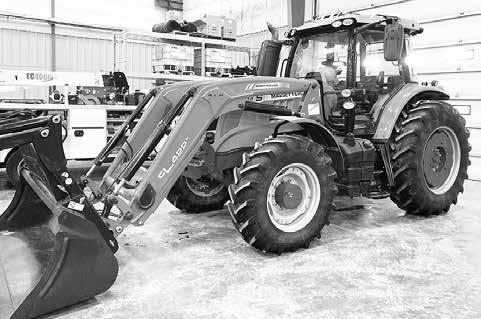
2020 Massey Ferguson 7718S loader tractor with grapple, 1977 hours, Powershift, 4 remotes, 180 hp, 135 PTO hp. $138,900
2011 Case IH Steiger 485 4WD, duals, 55 gpm, guidance, PTO, luxury cab. $179,900
2009 Case IH Maxxum 125 with loader, powershift transmission, fixed hydraulics. Just Traded

USED AIR DRILLS
Sunnybrook concaves, 605 sep. hours. $439,900
2019 New Holland CR8.90 combine, full guidance, chopper and spreader, electric folding tank cover, DFR rock trap, twin pitch rotors, 500 sep. hours
$349,900
2006 Case IH 2388 combine with 2042-30 header (or 1010-30) low hour machine, rock trap, AFX rotor. Just Traded
USED HEADERS
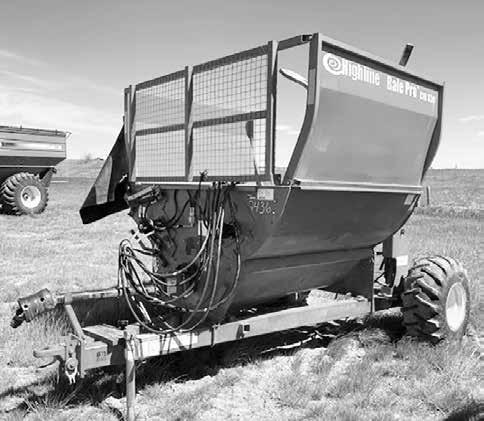
2018 Highline CRF650 bale processor. $19,900
2021 Bourgault 3720 disc drill, 50-ft., 7.5” spacing with mid-row banders, Tow Between configuration, Intelligant Ag blockage.
Just Traded
Case IH Flex Hoe 700 air drill with Precision Air 3430 TBT cart, 70-ft., 10” spacing single shoot, walking beam rubber tire packers, 4” spread carbide opener.
$109,900
Morris Contour II drill with tow between 8450 cart, 61-ft., 10” spacing, precision (independent hydraulic trips), single shoot, 3 tank, 450 bushel, variable rate, TopCon X35 monitor.
$89,900
2014 John Deere 1890 disk drill (no tank), TBT configuration, 60-ft. 10” spacing, Needham spoked closing wheel, Needham packing wheels, John Deere all-run blockage sensors, hydraulic down pressure. Just In
2008 New Holland SD550 drill with SC430 tow-between cart, 12” spacing, 60 ft., single shoot, 4.5” steel packers.
$39,900
2001 Flexi-Coil 5000 57-ft., 12” spacing, 3.5 inch steel packers, single shoot, 3450 tow between tank, variable rate
MacDon D65D 35-ft. draper header, double knife drive, triple delivery (deck shift).
$47,900
2010 MacDon D60 45 ft. draper header with pickup reel, transport. Reduced $39,900
2009 MacDon D60-45 draper header, slow speed transport, upper cross auger. Let’s Deal

$38,900 2021 New Holland SP310F self-propelled front boom sprayer, Augmenta variable rate application, 120ft. steel mono boom, 1200 gallon stainless steel tank, 650 tires, Intellispray individual nozzle control, Raven Viper 4 display, stainless




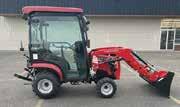
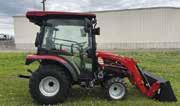








By Julie Garden-Robinson, NDSU Extension
food and nutrition
specialist
I must have unplugged the vacuum, I thought to myself when it suddenly stopped working.
I walked over to check. The vacuum was still connected. Maybe I blew a fuse.
I flipped on a light switch to go to the basement. The lights didn’t work, either.
We were in the middle of our first winter storm of the year. Since my cell phone worked, I learned our home was among about 4,500 homes without power.
I really didn’t feel like vacuuming, anyway. I also wasn’t looking forward to resetting all the digital clocks in our home.
I hoped the power outage would be brief because I had just shopped for a lot of perishable foods in the refrigerator.
The weather was frigid, so our home would be cooling down. I found our battery-operated lanterns and some candles in case the outage lasted a while. I grabbed a blanket and held a warm dog on my lap.
Unfortunately, my vacuum resumed working within a half hour.
What should you do during power outages, anyway? Let’s try a few questions based on U.S. Department of Agriculture (USDA) recommendations.
How long will a full freezer hold a safe temperature?
How long will a half-full freezer hold a safe temperature?
How much dry ice would you need to keep an 18-cubicfoot freezer cold.
What are the indications that you can refreeze meat, poultry and seafood?
During a power outage, how long will a refrigerator keep food at a safe temperature?
Should you taste the food to determine its safety? Why or why not?
Which commonly refrigerated foods are safe beyond a four-hour power outage?
What “tools” would be good to have available to help prevent food safety issues and having to throw away food.
Here are the USDA recommendations:
A full freezer will hold its temperature for about 48 hours. A half-full freezer will maintain its temperature for 24 hours.
Fifty pounds of dry ice will keep an 18-cubic-foot freezer at a safe temperature for two days; however, be sure to wear heavy gloves to protect your hands and avoid putting the dry ice next to food.
Meat, poultry and seafood with visible ice crystals are safe to refreeze. You may want to use these foods first, and be sure to fully cook.
A closed refrigerator will hold food at a cold temperature up to four hours during a power outage.
Tasting food that may be unsafe is not a good plan. When in doubt, throw it out.
High-acid foods such as ketchup, mustard, pickles, jams and jellies are typically safe, but they might spoil sooner. Foods such as cut fruit, creamy salad dressing and raw or leftover meat are not considered safe if left in a refrigerator without power for more than four hours.
Keep appliance thermometers in your refrigerator and freezer to monitor temperatures, and keep a digital food thermometer to check foods as needed.
When the power returned, I was ready for some comforting soup, but not more vacuuming.
Smoky Sweet Potato Soup with Bacon
3 slices smoked bacon, chopped
1 medium red onion, chopped
2 cloves garlic, minced
1/2 teaspoon smoked paprika
1/2 teaspoon kosher salt (or substitute table salt)
1/2 teaspoon black pepper
1/8 teaspoon cayenne (or to taste)
Pinch of red pepper flakes (optional)
3 sweet potatoes, peeled and diced*
4 cups low-sodium chicken broth
In a large pot over medium heat, cook bacon. Transfer to a paper towel-lined plate and set aside. In the pot, sauté onions and cook until slightly softened, about 5 minutes. Add garlic and cook until soft and fragrant, around 2 minutes. Season with salt, pepper, smoked paprika, red pepper flakes (if using) and cayenne. Add sweet potatoes and broth. Bring to a boil, then reduce heat to low and simmer until sweet potatoes are tender, 27 to 30 minutes. Blend with immersion blender or transfer to a blender in batches and blend until smooth. Crumble bacon and garnish each bowl.
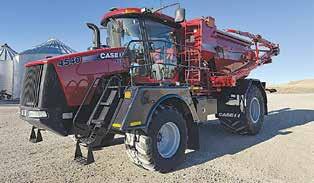
2020 Case Titan 4540 floater, diesel engine, automatic transmission, FLX 810 triple bin air bed, 70-ft. boom, VRT, Viper 4 section control, auto steer, tip top bed extensions, electric roll tarp, 2770 hours. $189,000
2020 Case IH Titan 4540 810 Flex air, 70-ft. boom, electric roll tarp, Viper 4, Auto Steer, 2511 hours.........$173,000 $189,500
2014 Case IH Titan 3530 Litter Bed, diesel engine, Raven Viper Pro Smartrax Autosteer, Chandler CL fertilizer, litter, compost, shavings spreader, 16-ft. length, twin hydraulic spinners, 3255 hours. Cracked front windshield. $142,000
2015 RBR Venturi 350, 8.9L Cummins diesel engine, Pre DEF, Allison automatic transmission, Case 810 70-ft. air boom, triple bin, 4WD, Viper 4, auto steer, 3211 hours. $132,500

1996 Silver Wheels
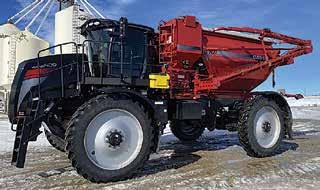
boom, Raven Viper 4, adjustable axles, 4 wheel steer, 4 wheel drive, electric roll tarp, 1890 hours....$199,500 $249,500 2016 Case IH


2021 TerraGator TG8400C diesel, CVT trans., Raven Viper, 4+ controller,RS1-SBAS GPS, electric roll tarp, LED light pkg., New Leader NL4500G4 Edge -14-ft. with 4 bin Multibin Applier. Ask about converting to a single bin with tailgate, to spread lime & fertilizer, 1847 hours. 2 to choose from $175,000

1966 Flint Steel, 18,000 gallon NH3 anhydrous storage tank, 42’ 2” long. National Board Number 53876. Located in Prescott, WA. Ask about other tanks and transports that are available $36,000 2014 B-B pintle hitch sprayer trailer, tandem axle dual wheeled, air brakes, manual outriggers, rear fold down ramps, winch boxes............... $15,000
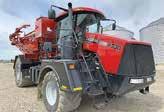
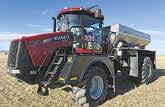
2015 Case IH 4030, CNH diesel engine, Allison automatic trans, New Leader L4000 G4 spinner bed, belt over chain, multi applicator insert, Raven Viper 4 controller, SmartTrax auto steer, 2913 hours $134,500

2018 TerraGator 8400B, diesel, CVT trans, AirMax Precision, 70-ft. stainless steel boom, electric tarp, Viper IV, 3973 hrs..........$118,000 $138,000




2018 Timpte dry trailer, 40-ft. aluminum hopper trailer, hydraulic dry tender belt can be run off truck hydraulic wet kit or self contained gas engine, electric roll over tarp, sight glass windows, tandem axle, air ride suspension. $63,000
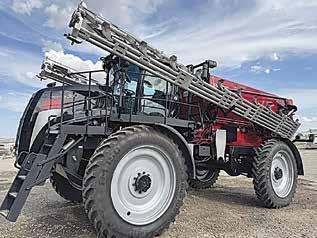
2019 RBR Venturi
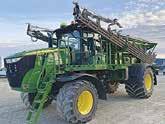
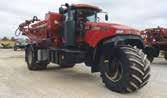
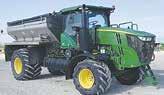
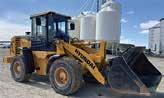
Hyundai HL730-9A

1997 CAT IT28G loader, diesel engine, 3 speed shuttle shift transmission, enclosed cab, 100” quick attach front bucket, 2.7 cubic yard. Auxiliary hydraulics outlets, 20.5-25 tires, 12,169 hours. $46,500

1999 IHC 9400 tender truck, Detroit diesel, 10 speed, Simonsen BFT6318STA Flow-Max dry tender box 18 ton, overhead side discharge auger, all hydraulic, electric roll over tarp, catwalk, 530,745 miles. $36,500
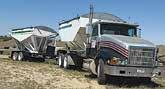
$23,000 16-ton Wilmar self contained trailer $21,000 Sold separately or together


2003 Freightliner Columbia Day cab, twin screw, 10 speed, 12.7L Detroit Series 60 diesel, 430hp, odometer reads 629,746 but doesn’t work. $12,000
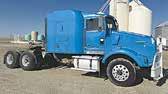
2000 Kenworth T800 LP truck, Detroit diesel engine, 430 hp, manual transmission, New Steer tires, 150,000 on overhaul. $24,500


1992 Featherlite flatbed trailer, 45-ft. aluminum bed, side winches, tandem axle, air ride suspension. $9800
Titan 3540 3 wheel, 810 air delivery box, Viper 4, Agri-Cover roll tarp,
floater truck/ spreader, DT466 diesel, Allison automatic trans, low hours - 2898, New Leader G4 spinner bed, slatted chain conveyor, twin 4 blade spinner disks. $48,000

Endangered Species Act in Nebraska: Runoff and Erosion Mitigation, Part 2

*Reduced number of applications of Enlist products per year. Applications may be made at any time during crop development but must maintain a minimum 12-day retreatment interval.
Hydrologic Soil Group (HSG) definitions:
A = Sand, loamy sand, or sandy loam
B = Sandy clay loam
*Reduced number of applications of Enlist products per year. Applications may be made at any time during
C = Silt loam or loam
but must maintain a minimum 12-day retreatment interval.
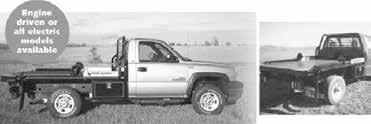
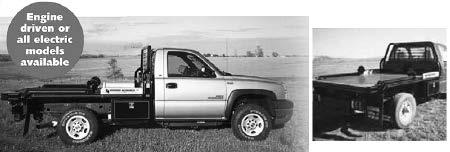
D = Clay loam, silty clay loam, sandy clay, silty clay, or clay
Hydrologic Soil Group (HSG) definitions:
A = Sand, loamy sand, or sandy loam
B = Sandy clay loam
C = Silt loam or loam
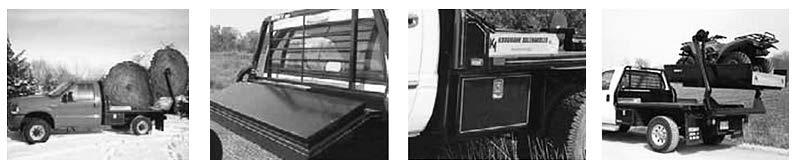
D = Clay loam, silty clay loam, sandy clay, silty clay, or clay




For Liberty ULTRA or associated alternate brand names in Nebraska, there are currently no designated PULA, but users should still check Bulletins Live! Two (BLT) per the label requirement. The Nebraska Department of Agriculture recommends saving or printing the bulletin for an application site, even if there are no restrictions for the location, product and month combination. Label-required runo! and erosion mitigation applies statewide unless field-specific exemptions are met. Unlike Enlist One , where mitigation options are listed directly on the label, the Liberty ULTRA label requires applicators to use EPA’s Mitigation Menu to determine applicable measures. Applicators must earn a minimum of “3” points using EPA-approved practices.
For Liberty® ULTRA or associated alternate brand names in Nebraska, there are currently no designated PULA, but users should still check Bulletins Live! Two (BLT) per the label requirement. The Nebraska Department of Agriculture recommends saving or printing the bulletin for an application site, even if there are no restrictions for the location, product and month combination. Label-required runoff and erosion mitigation applies statewide unless field-specific exemptions are met. Unlike
Enlist One®, where mitigation options are listed directly on the label, the Liberty® ULTRA label requires applicators to use EPA’s Mitigation Menu to determine applicable measures. Applicators must earn a minimum of “3” points using EPA-approved practices.
For Liberty ULTRA or associated alternate brand names in Nebraska, there are currently no designated PULA, but users should still check Bulletins Live! Two (BLT) per the label requirement. The Nebraska Department of Agriculture recommends saving or printing the bulletin for an application site, even if there are no restrictions for the location, product and month combination. Label-required runo! and erosion mitigation applies statewide unless field-specific exemptions are met. Unlike Enlist One , where mitigation options are listed directly on the label, the Liberty ULTRA label requires applicators to use EPA’s Mitigation Menu to determine applicable measures. Applicators must earn a minimum of “3” points using EPA-approved practices.
Table 2 summarizes feasible practices suited to Nebraska’s field conditions and available equipment to meet requirements where mitigation remains mandatory.
Table 2 summarizes feasible practices suited to Nebraska’s field conditions and available equipment to meet requirements where mitigation remains mandatory.
Table 2. Available mitigation measures for runoff and erosion mitigation. Adapted from the U.S. Environmental Protection Agency Mitigation Menu. The list below is not comprehensive, and additional mitigation measures or updated options may be available on the U.S. EPA’s Mitigation Menu website (accessed Nov. 10, 2025).
Table 2 summarizes feasible practices suited to Nebraska’s field conditions and available equipment to meet requirements where mitigation remains mandatory.
Mitigation Measure Points Adoption Level Notes
Table 2. Available mitigation measures for runoff and erosion mitigation. Adapted from the U.S. Environmental Protection Agency Mitigation Menu. The list below is not comprehensive, and additional mitigation measures or updated options may be available on the U.S. EPA’s Mitigation Menu website (accessed Nov. 10, 2025).
Planning and Documentation Measures
Plan from Technical Specialist
Plan from Certified Technical Specialist
Mitigation Tracking (Field-level documentation)
Mitigation Tracking
1 Available through NRCS and private consultants
Mitigation Measure Points Adoption Level Notes
Requires a credentialed advisor with runo! mitigation training.
Planning and Documentation Measures
1 Available through NRCS and private consultants
Requires a credentialed advisor with runo! mitigation training.
1 Widely qualifying Easy to implement with paper or electronic field records (e.g., spray logs, apps).
1 Widely qualifying Easy to implement with paper or electronic field records (e.g., spray logs, apps).
Field Characteristics and Soil-Based Measures
(Field-level documentation)
Mitigation Relief Based on Runo! Vulnerability (Figure 1)
0 to 6 Field- and regiondependent
Points assigned based on mapped runo! vulnerability (very low = 6; low = 3; medium = 2; high = 0).
Field Characteristics and Soil-Based Measures
Field Slope ≤3% 2
Mitigation Relief Based on Runo! Vulnerability (Figure 1)
Sandy Soils (HSG A/B)
0 to 6
2 to 3
Widely qualifying
Field- and regiondependent
Many fields in Nebraska meet slope requirements naturally and/or with leveling.
Points assigned based on mapped runo! vulnerability (very low = 6; low = 3; medium = 2; high = 0).
Region dependent (west/central NE)
Sandy Soils (HSG A/B) 2 to 3 Region dependent (west/central NE)
No-till (including perennial crops such as orchards that are not tilled)
Reduced tillage, strip tillage, ridge tillage, or mulch tillage
Based on NRCS soil classification. 2 pts = HSG B (10–20% clay); 3 pts = HSG A (≤ 10% clay, ≥ 90% sand); cannot be used if label prohibits applications on sandy soils.
Field Slope ≤3% 2 Widely qualifying Many fields in Nebraska meet slope requirements naturally and/or with leveling.
In-field and Field-adjacent Mitigation Measures
3 Widely adopted
Based on NRCS soil classification. 2 pts = HSG B (10–20% clay); 3 pts = HSG A (≤ 10% clay, ≥ 90% sand); cannot be used if label prohibits applications on sandy soils.
Common practice across most Nebraska rowcrop systems; maximizes residue cover and minimizes erosion.
In-field and Field-adjacent Mitigation Measures
2 Widely adopted
Frequently used in central and western Nebraska; supports soil conservation while accommodating planting needs.



CHARLIE GROSSENBURG’S HIT LIST UNITS
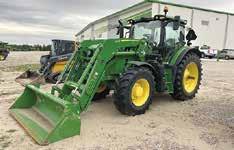
2022 John Deere 6R 145 (HA), Stk #79500, 1,173 Hours, Includes 640R NSL Loader, Bucket Only, 20 Speed PowerQuad Transmission, Electronic Joystick with Reverser On Joystick, 1 Set Of 450 lb Weights $169,900 $162,500
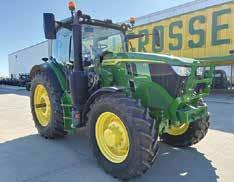
2023 John Deere 6R 145 (WI), Stk #73646, Only 223 Hours, Price Includes 640R NSL with Bucket & Grapple, AutoTrac Ready, Direct Drive, TLS Front Axle, Premium Cab, 480/80R42 Rears, 2 Sets Of 450 lb Weights
$207,900 $164,500
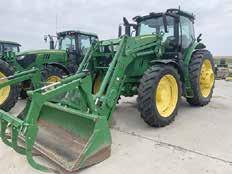
2018 John Deere 6175R (PI), Stk #84089, 2,714 Hours, 660R Loader with Electronic Joystick, 4 Rear SCV’s, IVT Transmission, TLS, Premium Cab with Suspension, 4100 Display, AutoTrac Ready $169,900
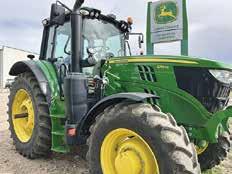
2023 John Deere 6155M (WI), Stk #78881, Only 245 Hours!, Comp Warranty Til Jan 2028 OR 2,000 Hours, 20 Speed AutoQuad Transmission, Loader Ready, Electronic Joystick, 3 SCV’s $161,000
2019 NDE FS700 (WA), Stk #88490, If You Are Wanting A Good Used Unit Over New, This May Be For You! Knives Still Have Life, Will Come with New LED Readout, Walking Tandems, RH Dogleg $29,900

2019 John Deere S780 (BL), Stk #84504, 1,616 Engine/1,239 Sep Hours, 1 Owner Unit, High Wear Rotor Concaves & Unload System, 3.0 Activation On Armrest, 4600 Display, 26-ft. Unload Auger $219,000
HAY GRINDERS & FEED WAGONS
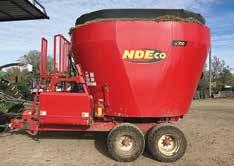
2023 NDE S600 (BF), Stk #89198, Sold New In Nov 2024, Customer Just Going To Upgrade To Larger Machine $42,900 $39,900 2023 Kuhn RC270 (HA), Stk #88631, 700 Cu Ft Wagon with Scale, HD Drive System, 4 Auger Discharge, Oil Bath Wheel Hubs, Large 1000 CV PTO $49,500 2021 NDE FS700 (BF), Stk #90985, Single Screw, Scale Readout On Ladder, Front Mounted Conveyor with 3-ft. Dog Leg, Dual Agitation Paddles In Tank, Tandem Axle $45,900 $43,900
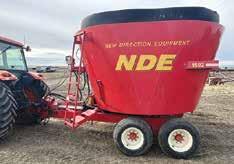
2019 Kuhn Knight RC260 (HA), Stk #79327, Single Axle, LED Side Remote Display, Nice Commercial Wagon $38,900 NDE 1502 (BF), Stk #90983, 495 CuFt Capacity, Side Delivery 3-ft. Dog Leg, Mounted Weigh Bar System & Readout, 1 Agitation Paddle, Tandem Axle $21,900 2011 NDE 1652 (BF), Stk #91437, Local 1 Owner Unit, RH Discharge, 1000 PTO, Walking Tandem, Well Cared For $22,900 2009 NDE 804 (WI), Stk #91042, Older Wagon, Not The Prettiest, But Had Some Money Stuck Into It In Recent Years $18,500
LOADER TRACTORS
2025 John Deere 6175M (PI), Stk #84649, 205 Hours, State Tractor Return, Like New Unit, Loader Ready with Electric Joystick, 3 SCV’s $205,900
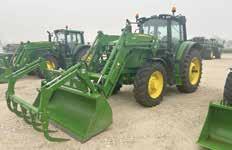
2024 John Deere 6155M (WA), Stk #84788, 272 Hrs, SL 640R with 8-ft. Bucket & 5 Tine Trapple, Extended Warranty Til 5-27 OR 1,500 Hours, 4 SCV’s, Large Hydraulic Pump, 4 Rear 450 lb. Weights, Cold Start Package $207,500 $189,500
2024 John Deere 6R 140 (WA), Stk #84570, 100 Hours, 620R Loader with 85” HD Bucket, 5 Tine Grapple, Extended Warranty Til 7-27 OR 1,500 Hours, AutoTrac Ready, 4 SCV’s, Large Hydraulic Pump, 24/24 AutoQuad Plus Transmission $202,500 $185,000
2024 John Deere 6R 130 (BE), Stk #80708, 234 Hours, 620R Loader with 8ft. Bucket & 5 Tine Grapple, Extended Warranty Til 5-28, AutoTrac Ready, Rack & Pinion Rear Axles, 480/70R38 Rears, TLS Front Suspension, 4 SCV’s $187,500
2023 John Deere 6R 195 (HA), Stk #89802, 200 Hours, Direct Drive Transmission, AutoTrac Ready, TLS, Premium Cab, Duals, Loader Mounts $245,500


2023 John Deere 6R 130 (BE), Stk #89897, 850 Hours, 620R SL Loader, 480/70R38 Rears, 24F/24R AutoQuad Plus Electric Joystick, LH Reverser, AutoTrac Ready, Comp Warranty 5-27 OR 2,000 Hours $174,500
2023 John Deere 6R 155 (BE), Stk #80240, 152 Hours, 640R MSL Loader with 5 Tine Grapple, Extended Warranty Til 5-28 OR 2,000 Hours, 3 SCV’s, 4 Rear 450 lb. Weights, AutoTrac Ready $226,500 $199,000 2021 John Deere 6130R (WI), Stk #84877, 877 Hours, Barely Used Tractor with Like New 620R Loader, 8-ft. Bucket, 5 Tine Grapple, 24 Speed AutoQuad Transmission withLH Reverser $158,500 2025 John Deere 6R 165 (PI), Stk #84655, 242 Hours, County Rental Return! Loader Ready, Electric Joystick, 3 Rear SCV’s, IVT Transmission with Left Hand Reverser
$237,900 2015 John Deere 6175R (WI), Stk #88638, 4,800 Hours, 4 SCV’s,

2012 John Deere 6190R (WI), Stk #90137, 9,650 Hours, 2 Owner & Well Maintained, Just Had $20K In Work Done This Spring, 20 Speed AutoQuad Transmission, Front Suspension, H380 SL Loader with 8-ft. Bucket & 5 Tine Grapple $99,900
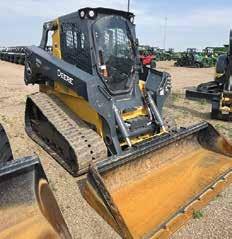
Bucket with Bolt-On Cutting Edge, Cab with HVAC, Hi-Flow Hydraulics, 2 Speed, Air Ride Seat with Heat
2020 John Deere 333G (BE), Stk #82153, 1,112 Hours, Good 1 Owner Machine, Runs & Drives Great, Tracks 70%, Great For Soft Conditions, Interior & Exterior Are Clean Cab with HVAC $61,900
2020 John Deere 333G (BE), Stk #87444, 1,363 Hours, Only 200 Hours On Tracks, Hi Flow, 3 Counterweights Per Side, Cab with HVAC, Rear View Camera, Radio, ISO Controls, Power Quick Tach, Severe Duty Door, Air Seat with Heat, Deluxe Lights $60,900
(605) 763-5020
2018 John Deere 331G (WI), Stk #91527, 2,476 Hours, Highly Optioned, Hi-Flow, Cab with HVAC, Air Seat, 84” Bucket, Reversible Fan, Rear Camera $43,900
2017 John Deere 331G (BF), Stk #88041, 893 Hours, New OEM Zig Zag Tracks, Cab with HVAC, Air Ride Seat with Heat, Ride Control & Self-Leveling Up, Power Quick Tach, Deluxe Lighting, Cold Start, 3 Sets Of Weights, 84” Bucket with Bolt On Edge $64,900 2017 John Deere 333G (HA), Stk #87845, 1,201 Hours, Nice Looking Unit, Has Air/ Heat, ISO Switchable Controls, Hi-Flow Hydraulics, Ride Control, Air Ride Heated Seat, Backup Camera, Pre-Cleaner, Radio, 3 Sets Of Counterweights, Reversing Fan $59,900 Wheel Units:
2023 John Deere 330G (HA), Stk #90476, 1,054 Hours, 2 Speed, High Flow Hydraulics, Rear View Camera, Air Ride Seat, Full Cab with HVAC, 3 Counter Weights Per Side, 84” High Volume Bucket, Power Quick Attach, Heavy Duty Rear Grill $59,000 2020 John Deere 330G (BE), Stk #86798, 1,027 Hours, Serviced & Ready To Go, 84” Heavy Duty Bucket, 2 Speed, Hi-Flow Hydraulics, ISO Switchable Controls, Air Ride Seat, Rear View Camera, Pre-Cleaner $59,500
The North American Manure Expo in July
TRACTOR FOR SALE
John Deere 4430 tractor, 125 hp, 3-point hitch, 2 new batteries, 2818 hours. Real good shape, always shedded when not in use. Used last season to bale....$18,000

Available. Call for details..
By CropWatch
Nebraska Extension and partners will host the national event July 28–30, 2026, at the Wayne County Fairgrounds in Wayne, Nebraska. The North American Manure Expo brings together producers, ag professionals, educators and industry leaders from across North America to focus on professionalism in nutrient management, with an emphasis on manure application, technology, research and practical management strategies.
The event will feature live demonstrations, educational sessions and extensive networking opportunities centered on agronomic, environmental and economic considerations of manure management. Hosting the Manure Expo in Nebraska highlights the state’s leadership in nutrient management education and applied research and offers a unique opportunity for local producers and professionals to engage with national experts and innovations.
Exhibitor, sponsorship and demonstration opportunities are available. For more information, contact Sharon Kauk, 519-410-4854. Additional event details will be announced as planning continues.
Application window open for MFU scholarships
Montana Farmers Union Foundation is pleased to again offer scholarships, with applications now open through April 3.
“With education being a founding pillar of Montana Farmers Union, these scholarships help further the mission of our Foundation by supporting the next generation of Montana’s agricultural producers, leaders, and changemakers,” MFU’s Executive Director Rachel Prevost said. “Investing in the next generation will help us continue to build strong rural communities and ensure the future of family farm agriculture.”
The scholarships are one of the ways MFU supports family farmers and ranchers through education, with the grassroots organization awarding $15,000 in scholarships in 2025 alone. Scholarships available this year include the Bud Daniels Memorial Scholarship ($1,000), the John Korsbeck Memorial Scholarship ($1,000), and the Cascade County-wide Farmers Union Local ($1,000) Chouteau County Farmers Union Local ($500), Montana Farmers Union Scholarships ($1,000), and Flathead County-wide Farmers Union Local ($500) scholarships.

High school seniors, current college students, and nontraditional students are encouraged to apply by April 3. Applicants must be MFU members; Montana FFA and 4-H members receive free MFU memberships upon request. MFU members also are eligible for several National Farmers Union scholarships. Learn more at nfu.org.
More information and the applications are available at https://montanafarmersunion.com/education/scholarships-grants/.
National Margarita Day
This holiday is always celebrated on February 22nd
This very special day falls smack dab in the middle of winter. Many people think of Margaritas as a summer cooler. You can enjoy them any time of the year. So, selecting a date in February for this holiday is appropriate. They are made frozen or unfrozen. Although most people say frozen Margaritas are the best. There are all kinds of flavors, from strawberry and peach to mango and berry, and much more. Almost any fruit you can imagine can be used to make the perfect Mexican Margarita. Margaritas are comprised of tequila, citrus or other fruits, and sugar. It is the most popular alcoholic beverage that uses Tequila. Margaritas are poured over ice or can be put through a blender to make frozen margaritas.

Historically, Margaritas have been around since the 1930s and 1940s. The actual origin and creator are unknown. Frozen Margaritas came onto the scene in the 1970s. Todd McCalla, the creator of this day, started it to “celebrate Margaritas, plain and simple”.
Did You Know? Tequila is made from Agave plants, a succulent.


Maintain gut health and stability for profitability. In Crystalyx & Dry

CRYSTALYX Blueprint 30 with Bio-Mos 2 contains 30% crude protein from vegetable based ingredients, as well as non-protein nitrogen (NPN). It is designed to be fed to beef cattle on medium to lower quality forages to help improve forage utilization. Blueprint 30 is uniquely fortified with all highly bioavailable organic trace minerals and contains no inorganic trace mineral forms.
Benefits of BIO-MOS 2:
• Promotes performance at all stages
• Supports colostrum quality and newborn calf performance

thus plays a critical role in animal nutrition and production.
Feeds
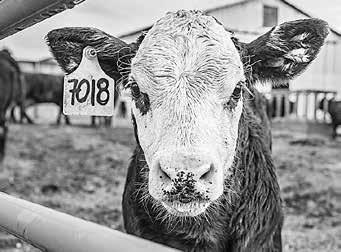
• Contributes to gastrointestinal integrity and stability to aid in nutrient utilization
• Supports average daily gain
• Reinforces the health status of receiving cattle in the feedlot
• Supports economic returns
CRYSTALYX Blueprint 30 with BIO-MOS 2 supplement is designed for self-feeding to grazing beef cattle health.
Taylor’s Farm Store

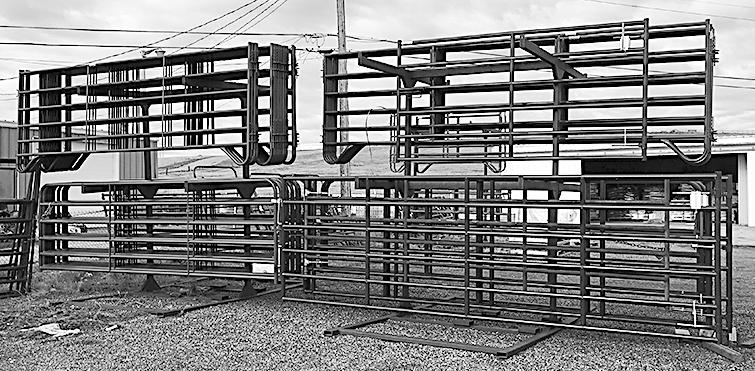
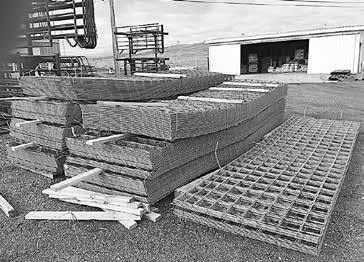

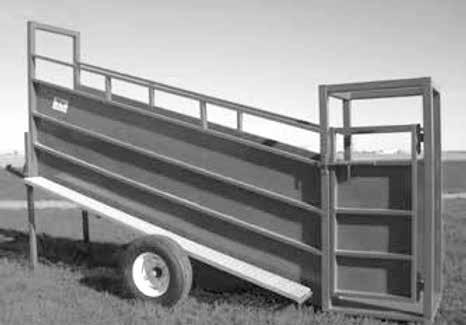



Grain hoppers — Scoop Shovels.
low boy service
40-ton RGN trailer for hire to transport combines, tractors, sprayers, floaters, construction equipment, etc. Within Montana & surrounding states. We also have 48-ft. step deck trailers available. Pilot car service available. Insured & experienced. Call Roger at Roger Rader Inc., Sun River, MT 406-264-5475 or 406-799-5162 (Roger’s Cell) (MC# 170263 US DOT# 128029)
#####
It is important when and how you add salt in cooking. To blend with soups and sauces, put it in early, but add it to meats just before taking from the stove. In cake ingredients, salt can be mixed with the eggs. When cooking vegetables always salt the water in which they are cooked. Put salt in the pan when frying fish.
Does goal setting for health really work?
By Julie Garden-Robinson, NDSU Extension food and nutrition specialist
I walked by my shiny guitar in our music room. My previous goal was to learn how to play it. I had several guitar books neatly stacked on a nearby table.
In the last year, I learned about seven chords, but then life became wildly busy with graduations, a wedding, work travel and the day-to-day activities that come with my work and home life.
I met those goals, and I occasionally dusted my guitar. My daughter and son-in-law liked to play it.
I picked it up to see if I remembered the chords. My hands were cold from being outside. When I set my guitar back in its stand, my left hand cramped like a claw.
This new development was certainly a deterrent to my guitar playing.
My husband offered to bend my hand back in place, and I practically ran away. After soaking my hand in warm water, I was good as new. I also found my arctic-level mittens.
Sometimes you reach goals, and sometimes you don’t. Trying again is always an option.
At this time of year, many people set nutrition, fitness and/ or finance goals for the year.
Researchers in fields such as nutrition or psychology have studied whether setting goals helps you meet them.
A 24-week weight loss study with nearly 37,000 participants was reported by the National Institutes of Health. The researchers studied whether the size of their weight loss goals affected the success in achieving the goal.
Many studies have shown that modest weight loss goals can improve health outcomes, including risk for diabetes and other chronic diseases.
The researchers reported that people who set higher weight-loss goals were less likely to drop out of the study compared with those who set smaller weight-loss goals of 5% to 10%. Some people were motivated by appearance improvement, but they were more likely to drop out of the study than those who were motivated by health.
Through the years, psychologists have studied the neuroscience of goal setting. Yes, our brain plays a major role in determining our success in meeting goals. The psychologists acknowledged that setting goals is straightforward, but achieving goals is difficult.












What is a goal anyway? Goals can be defined as a detour in your path toward something you desire to happen. I’m not a psychologist, but that seems to capture the idea. Is there something you want to have happen in your life? Maybe you want a new job with less stress or a higher salary or in a different climate.
You may have learned you have high blood pressure or prediabetes, and a lifestyle change, such as improved nutrition or more exercise, will help avoid the long-term consequences of your diagnosis.
Are you motivated to make a change? What is the reward? Can you make your desired behavior a habit? Habits make the process easier because you don’t have to think too hard about each decision.
For example, I grew up in an era where hardly anyone wore a seatbelt. Eventually, laws changed, and we learned that wearing seatbelts can save lives.
Now, I can’t even drive unless I am buckled up, because I feel “loose” in the seat.
Consider setting SMART goals. That’s an acronym for specific, measurable, achievable, relevant and time-bound. “I will get healthier” is not specific enough, but “I will take a 15-minute brisk walk at 10 a.m. and 3 p.m. five days a week starting today” would be a smart goal.
Thirty minutes of moderate activity on “most” days of the week is the overall recommendation.
Set one goal at a time, and post it on your fridge or mirror, schedule it on your calendar or set a reminder on your phone
As my goal, I will start with picking up my guitar for 5 to 10 minutes right after dinner three days a week. I hope my fingertips get tougher and my hand won’t cramp.
Fuel your body, set your goals and take the next small step. Even one bite — or one strum — can move you forward. Explore our health and nutrition resources at www.ag.ndsu. edu/food, including recipes like this one.
No-bake Strawberry Almond Energy Bites
1 cup dates, such as Medjool dates
1 cup strawberries, sliced
¾ cup sliced almonds
1 cup rolled oats
1 tablespoon chia seeds, ground flaxseed or sesame seeds
1 tablespoon honey
1 cup shredded coconut flakes
Remove pits from dates, and slice each date in half or smaller. Remove stems from strawberries, rinse and slice into quarters. Combine all ingredients, except the coconut flakes, in a food processor. Pulse until the almonds are mostly broken up. Avoid making a paste. Cover and chill in the refrigerator for an hour. After an hour, remove from the refrigerator and roll into ping-pong-sized balls. Place the coconut in a small bowl. Roll the balls in the shredded coconut to coat. Store in the refrigerator. Makes 14 bites. Each bite has 150 calories, 5 grams (g) fat, 2 g protein, 25 g carbohydrate, 4 g fiber and 10 milligrams sodium.
Who’s the rarest of them all?
A circumhorizontal arc (aks, “fire rainbow”) is the world’s least common natural atmospheric condition, but it’s actually neither a rainbow nor a fire. Although the phenomenon appears as rainbow-colored clouds sporting wisps that look like flames, it is produced ice crystals, not warmth, and conditions have to be perfect for one to form. Start with cirrus clouds more than 20,000 feet high. Then add the Sun also high in the sky, at least 58 degrees above the horizon. The clouds must contain hexagonal ice crystals just the right thickness and aligned horizontally with a flat face pointed at the ground. Similar to a prism light enters through the vertical side face and exits through the flat bottom, producing an arc of colors that lights up the cloud. Some of these anomalies cover hundreds of square miles and last for more than an hour. However, due to the specific conditions they require, the arcs are impossible to view in latitudes below 55 degrees south or above 55 degrees north. Sorry Canada!

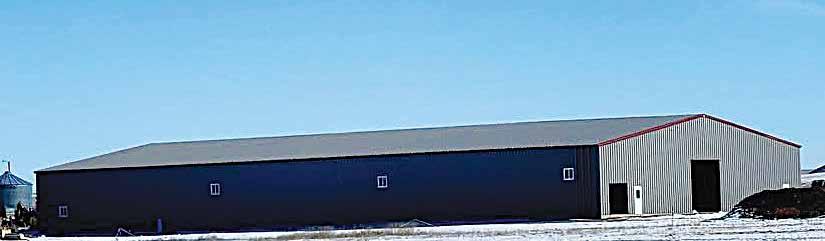
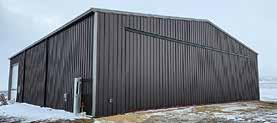
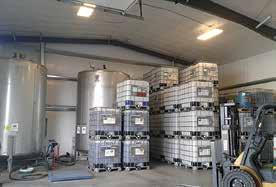



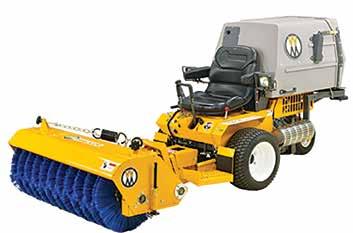
The deadline for advertising for the March 2026 issue of the Trader's Dispatch will be February 25th.
HAY & GRASS SEED FOR SALE
Alfalfa hay in 3x4 square bales. Manska intermediate wheat grass seed. Phone (605) 891-0355, Winner, SD Also see chucknoblefarm.com
DIRT RELOCATION SPECIALIST
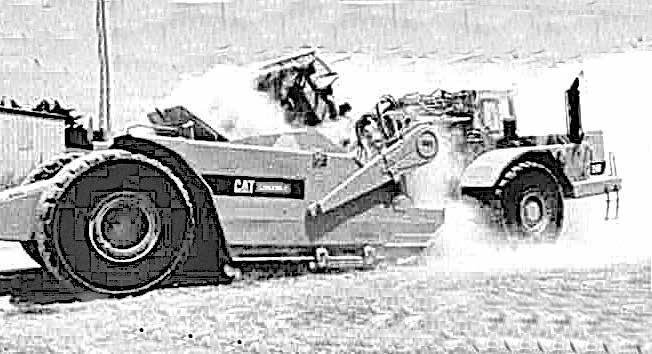
Jamie Fuson LLC 406-289-0210 Will move by the hour, yard or
Meyers Yellowstone Appraisal & Equipment Sales
MAINLINE WITH RISERS
89 - 8”x30-ft. hook and latch 32 - 10”x30-ft. ring lock Laterals every 60-ft.
MAINLINE TRANSFER PIPE
41 - 6”x30-ft. transfer pipe 19 - 5”x30-ft. transfer pipe Ball & knots.
New Holland 1033 balewagon $5500
International 315 culti-mulcher, 14-ft., front crows feet and back packers $5500
John Deere cultivator, 5-bottom, rollover plow $4500
2016 HR 32671037363C, 50 hp irrigation pump 8” in - 6” out, 230/460 volt, 1765 rpm, 40 max amp. Ran 5 lines $5000
30 hp irrigation pump, 4” in - 5” out ........... $2500
Call for info on estate. Montana area. Phone (406) 360-2121
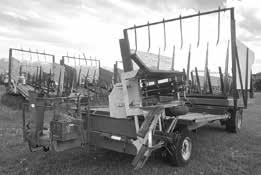
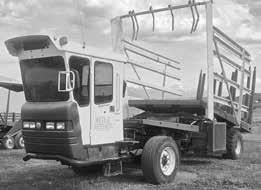
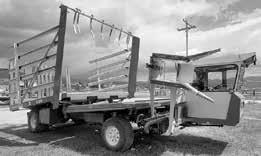
Endangered Species Act in Nebraska: Runoff and Erosion Mitigation, Part 2
CONTINUED FROM PAGE C8
Terrace Farming 2 Common on sloped fields
Contour Farming 2
Cover Crop or Continuous Ground Cover 1 to 3
Soil-moisture or evapotranspiration sensors, microsprinklers, or surface drip systems
Subsurface drip, dry farming, or non-irrigated lands
Grassed Waterway

33505 Gingras Springs Rd, Polson, MT 59860 406-249-8565 or 406-883-2118
Direct Parts Line 406-309-1453 sodbustersales.com newhollandbalewagonparts.com
Common on sloped land
Moderate to growing adoption
Terrace or field terracing reduces water velocity and erosion; often permanent infrastructure.
Contour farming, contour tillage, or contour perennial crop systems reduce slope length and runo!
Points vary by intensity and duration: 1 pt = with tillage, 2 pts = short-term no-till, 3 pts = long-term no-till. Provides surface protection, reduces erosion, and improves soil organic matter and structure. Adoption is expanding in irrigated and eastern systems but remains limited in dryland rotations due to moisture and establishment challenges.
Irrigation
2 Widely feasible
Water Management
Improves water-use e"ciency and minimizes surface runo! in irrigated systems.
Regionally feasible
Regionally used
Vegetated Ditch 1 Regionally used
Vegetative Filter Strips or Field Border Adjacent to Field 20 to 30 ft 1
Annual Application Rate Reduction 1 to 3
Reduction in field treated (banded, partial area treated, precision sprayers, smart (targeted) sprayers) 2 to 4
Using Mitigation Measures from Multiple Categories
Fieldspecific
Fieldspecific
Eliminates or reduces surface runo!; applicable where precipitation limits water availability
Established along drainage paths; reduces gully formation and promotes sediment settling.
Reduces transport of sediment and runo!; typically constructed along field drainage outlets.
Provides limited filtering; feasible along field edges where space is constrained.
Moderately e!ective at capturing sediment and nutrients.
Site-specific Highest performance; permanent vegetation downslope of treated area required.
Application Mitigation Measures
Feasible with planning
Viable in fields with reduced weed pressure or integrated control programs. Rate reduction of 10 to <30% (1 pt), 30 to <60% (2 pts), and ≥60% (3 pts).
Growing adoption Requires mapping and technology; conventional or pulse width modulation applied fields qualify with a treated area reduction. Reduction in area 10 to <30% (2 pts), 30 to <60% (3 pts), and ≥60% (4 pts).
Cross-Category Mitigation Coordination
1 Widely qualifying
Applicators may combine practices from at least two categories: in-field, field-adjacent, or systems capturing runo! and discharge. Examples include (1) one in-field + one fieldadjacent measure, (2) one in-field + one runo!-capture system, or (3) one fieldadjacent + one runo!-capture system. Encourages integrated planning that enhances cumulative mitigation e!ectiveness.
Endangered Species Act
In Nebraska: Runoff and Erosion Mitigation: Part 2
In most cases, achieving the required runoff mitigation threshold is attainable, with the current maximum worst-case scenario requiring a total of “9” points. However, ensuring adequate consideration of measure integration within existing farm operations remains essential. Where program constraints or label requirements differ, less restrictive mitigation crop protection programs may be substituted, provided they meet EPA performance expectations.
Helpful Resources
Nebraska Department of Agriculture Supplemental Materials
CropLife America’s Adapting to ESA: Runoff Instructional Video
To the best of our knowledge, and based on the available information, this summary accurately reflects the current regulations, mitigation requirements and product label guidance as of Nov. 17, 2025. Regulations and label instructions continue to evolve, and amendments will be made as necessary to incorporate the most up-to-date information as it becomes available. Tools such as hardcopy worksheets, spreadsheet calculators and the Pesticide App for Label Mitigations (PALM) web-app are available to assist applicators in documenting runoff and drift mitigation requirements. However, their applicability depends on the specific directions and limitations provided on each product label.
All referenced materials are cited and provided either as hyperlinks or as supplemental resources for the convenience of end users. These resources have been compiled strictly for educational and informational purposes. No proprietary content is claimed, and all materials remain the property of their respective owners.
Thank you to the Nebraska Corn Board for supporting this series of articles (Project #88-R-2526-10) and to CropLife America for granting permission to repurpose select educational materials.

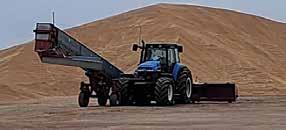






ALUMA SNOWMOBILE | UTILITY | OTHER TRAILERS
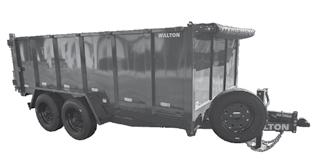
86”x12’ 2pl. snowmobile, ramp, drive on/off, 15” al.wheels, 2,200 gvw, 650 dry......$6,122
86”x12’ 2pl. snowmobile, tilt, drive on/off, 13” al.wheels 2,200 gvw, 650 dry...........$5,992
86”x14’ 3pl. snowmobile, ramp, drive on/off, 14” al.wheels, 4,400 gvw, 850 dry.....$7,614
88”x12’, atv 3pl., ramps, side load, deck over, 2,990 gvw, 650 dry, 14” wheels.........$4,890
54”x8’, utility, tailgate, 2k gvw, 375 dry, 13” steel wheels, 12” front/sides................$2,375
63”x10’, single axle, tailgate, 2k gvw, 480 dry, 13” al.wheels........................................$3,285
63”x12’, utility, tailgate, 2,200 gvw, 552 dry, 13” st.wheels, ez lube hubs..................$3,425
68”x12’ utility, 1 axle, tailgate, 2,990 gvw, 640 dry, st. wheels......................................$4,575
78”x12’, utility, esa, tailgate, 12” sides, 2,990 gvw, 675 dry, 14” st.wheels.................$4,200
78”x16’, 2 brakes, 7k gvw, 1,160 dry, 14” al.wheels, spare tire, carrier.........................$9,300 82”x16’, car/utility, 7k gvw, 1,350 dry, ramps, spare, rtd’s, 14”al. wh...........................$9,990 82”x20’, hd 2 axle, tilt, 9,990 gvw, 1,950 dry, 15” al.wheels, brakes tie downs.........$14,615
ENCLOSED TRAILERS
6’x10’, 18”v.nose, 1 axle, ramp door, 2,990 gvw, 1,310 dry, 15” wh................................$5,890
6’x12’, 18”v.nose, ramp, 1 axle, 2,990 gvw, 1,420 dry.........................................................$6,485
7’x14’, 2 axle, 18”v.nose, 7l gvw, 1,970 dry, rear barn door, 15”wh.................................$9,180
7’x16’, 2 axle, 18”v.nose, ramp, 7k gvw, 1,995 dry, 15” wheels......................................$10,400 8’x16’, 2 axle, 18”v.nose, ramp, 7k gvw, 2,800 dry, 15” wheels.....................................$10,800
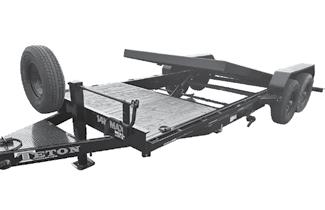
83”x20’ Teton tilt, 5’ stationary, 14k gvw, lock-out valve, spare tire......................................$10,400
83”x22’ Teton tilt, 6’ stationary, 14k gvw, lock-out valve, spare tire......................................$10,500
8’x22’ Walton, 16’ tilt/6’ stat., 14k gvw, 3,950 dry, toolbox, brakes (USED)...........................$7,750
85”x21’ SR tilt, 15.4k gvw, 4k dry, low deck, brakes, rubrail, 16” wh.......................................$12,350
FLATBED TRAILERS | DECKOVER
8’x26 Walton gooseneck, 14k gvw, pullout ramps, spare tire..................................................$12,990
8x28’ Walton gooseneck, supersingles, 23.9k gvw, 6.2k dry, mega ramps, spare tire.......$17,950
8.5’x20’ SR flatbed, bumperpull, slideout ramps, 14k gvw, 3,490 dry, 16” wh......................$9,350
8.5’x18’ SR form trailer, slide out ramps, rubrail & stake pockets, 9.9k gvw, 3,390 dry.....$7,700
8.5’x20’ SR form trailer, slide out ramps, rubrail & stake pockets, 9.9k gvw, 3,060 dry....$8,090
8x25’, Teton, gooseneck, 14k gvw, mega ramps, spare tire....................................................$15,400
UTILITY / CAR HAULER
82”x16’ C&B car hauler, 7k gvw, 1,980 dry, slide out ramps, brakes, 15” wheels.................$5,100
80”x20’ C&B car hauler, 9.9k gvw, dove tail, ramps, brakes, 15” wheels...............................$6,495
80”x12’ C&B utility, 2 axle, tailgate, brakes, steel rail, 5k gvw, 1,450 dry, 15” wheels.......$4,295
70”x12’ C&B utility, 32” sides, 1 axle, ez. lube hubs, 2,990 gvw, 1,150 dry, 15” wh..............$3,490
82”x18’ Walton car hauler, 7k gvw, 1537 dry, slide out ramps, brakes, 15” wheels.............$5,950
83”x14’ Walton utv trailer, 3.5k gvw, 1,240 dry, 1 axle, tailgate, side ramps, 15” wh.........$4,450
5.5’x10’ Adams atv/utility, tailgate, rail, ez. lube hub, 2.2k gvw, 550 dry, 14” wh., spare..$2,650
5’x8’ Ad. atv/utility, wood deck, tailgate w/mesh, rail, 2k gvw, 400 dry, 13” wheels..........$2,280 6.5’x14’ Ad. sxs/utility, tailgate, rail, 1 axle, 2,990 gvw, 950 dry, 14” wheels, spare............$3,375







1998 Freightliner FL70
4x4 Bucket Truck
210hp 12v 5.9 Cummins, Allison 5spd AT, AB, PS, 45-ft. Altec Bucket, winch, two outriggers, last certified in 2016, runs and drives great, 60% 11r22.5’s, 31K gvw. $19,500
1994 Ford F700 5yd Dump
Under CDL, 190hp 12v 5.9 Cummins, Allison 4spd AT, AB, PS, 10-ft. dump, scissor hoist, Pintle hitch, 50% 11r22.5’s, 110K miles, runs and drives great, 24.5K gvw. $19,500
2013 Ford F750 Service Truck
240hp, 6.7 Cummins, 5spd Allison, AC, PS, AB, dif. lock, exh. brake, 172K miles, 8400# Autocrane, wireless remote, hyd. outriggers, 13-ft. bed, 70% 22.5 tires, 33K gvw $32,500
1992 Ford LST9000 Water Truck
2200 gal. tank, pto pump, front, rear & side spray, 350hp Cat 3406B, 7spd, AC, PS, Locker, 50% 11r24.5’s runs and sprays great. $23,500
2005 International 7600 Flatbed Dump
350hp ISM, 10spd, Jake, Locker, AC, PS, 260” w.b., scissor hoist, 2’ stationary + 22’ dump, Q/C 34’ Conveyor, 240k miles. $26,500
2008 Ford F350 4x4 Service Truck
6.4L Powerstroke, AT, PS, PB, AC, one owner, tow package, enclosed service body with drawers on both sides, 60% tires, 189K miles, runs and drives great. $16,500
2002 ASV R50 Tracked Skid Steer
65” bucket, forks, 50% tracks, 3800 hrs. rebuilt engine @ 1550hr., pre-emissions, weights 6200#, joystick controls, runs and works great. $23,500
2005 Mack CL733 Tractor
500hp ISX Cummins, Eaton 18spd. Autoshift, 14,6K front, 44K rears, air ride, Jake, AC, Dual PS, wet kit, 350K miles, 70% 11r24.5’s, lift axle, runs and drives great. $31,500
1987 Freightliner FLC112 Tractor
350hp Cummins BC, Jake, 9spd, AC, PS, 60% 11r22.5’s, 38K rears, spring suspension, 160” W.B., air slide 5th, cab guard. $16,500
1992 Volvo WG Tractor
330hp N14, 9spd, Jake, AC, PS, 60% 11r22.5’s, 40K rears, spring suspension, 160” W.B., air slide 5th, cab guard.$17,500
1992 Ford L9000 Water Truck
2500 gal. tank, PTO pump, front and rear spray, hose reel, 350hp ser. 60, 9spd., Locker, PS, AB, 50% 11r24.5’s, runs and sprays great. $25,500
1999 International 8100
305hp C10 Cat, 10spd., PS, AB, PTO, 18K front, 40K rears, air ride, 17-ft. double frame, 90% 22.5 tires, 345K miles $15,500
2005 JLG G6-42A
4x4x4 telehandler
6600 lbs. lift cap, 42-ft. lift height, JD 4045 turbo, 5600 hours, 4WD, Crab-Steering, 4 spd, powershift transmission, 48” Forks, 60% foam flled tires, weights 20K#, runs and works great $29,500
Endangered Species Act in Nebraska: Ecological Spray Drift Buffers, Part 3
By Milos Zaric - Department of Agronomy and Horticulture Assistant Professor, Greg Puckett - Extension Assistant, Craig Romary - Environmental Programs Specialist
This article is the third in a three-part series explaining how Endangered Species Act (ESA) requirements affect pesticide applications in Nebraska. Part 1 introduces the regulatory background and outlines current label requirements for products such as Enlist One® and Liberty® ULTRA. Part 2 focuses on runoff and erosion mitigation strategies. Part 3 addresses ecological spray drift mitigation.
What Applicators Should Know Ecological spray drift buffers are mandatory when required by the pesticide label.
Follow the product label — not the EPA Mitigation Menu or calculator — for spray drift mitigation requirements for Enlist One® and Liberty® ULTRA.
Enlist One® buffer requirements are label-based only, with required buffers of 30 ft or 0 ft, depending on label conditions.
Do not apply Enlist One® if wind is blowing toward a sensitive area, even when a 30-foot buffer is present.
Spray drift contacting food, forage or desirable broadleaf plants may cause injury, even at low or non-visible levels.
Check FieldCheck® (FieldWatch) before spraying to identify nearby specialty or organic crops.
Liberty® ULTRA requires a minimum 10-foot buffer for ground applications using medium or coarser droplets, with boom height no more than 24 in. above the canopy. Liberty® ULTRA buffers may be reduced to 0 ft only when label-approved driftreduction practices are used, as specified on the product label or supplemental label.
When applying Enlist One® or Liberty® ULTRA, applicators must follow mandatory ecological spray drift buffer requirements when directed by the U.S. Environmental Protection Agency (EPA).
See the first two parts of this series for an introduction of Bulletins Live! Two (BLT) and label-required runoff/erosion measures. These buffers are designed to protect nearby sensitive areas and are legally enforceable as part of the pesticide labeling.
Enlist One® spray drift mitigation options were implemented before the EPA’s official Endangered Species Act (ESA) strategies were finalized. Therefore, no Mitigation Menu or calculator applies; only the label-specified buffer distances (30 ft or 0 ft, as listed) are required. Similarly, for Liberty® ULTRA, spray drift mitigation options are defined exclusively on the product label. The EPA Mitigation Menu should not be used, as doing so may result in inaccurate or noncompliant calculations.
For Enlist One® (manufacturer label), an important notice on qualified nozzles and operating pressures (hyperlink access), and tank-mix products (hyperlink access) is also included on the label. The listed products and nozzle configurations were tested as part of the registration requirements for Enlist One® and have been confirmed not to affect the spray drift properties adversely. Applicators must follow these specifications exactly as listed to ensure compliant and effective applications.
If applicable, the applicator must leave a 30-foot downwind buffer between the spray swath and any sensitive area, unless that area is a road, a planted crop field (excluding crops labeled as susceptible), a
#####
field prepared for planting, or a permanent structure. Spraying is not permitted if wind is blowing toward a sensitive area, even when a 30-foot buffer is established.
According to the product label, applications must not occur under conditions where spray drift could contact food, forage or other desirable plantings, as even small, non-visible amounts may cause injury to susceptible broadleaf species. Applicators should review their state’s sensitive crop registry (Nebraska DriftWatch) before spraying to identify nearby specialty or organic crops. At the time of application, wind must not be blowing toward adjacent crops, such as tomatoes, other fruiting vegetables, cucurbits (including pumpkins, melons and cucumbers), grapes, tobacco, or non-Enlist cotton. In such cases, delaying the application is necessary to prevent off-target movement and ensure the safe and compliant use of applications.
For Liberty® ULTRA (manufacturer label and supplemental label — expires March 19, 2027), the standard spray drift buffer is a minimum of 10 feet when using medium or coarser droplets for ground applications, and boom height must not exceed 24 inches above the ground or target canopy.
The buffer distance may be reduced to 0 feet when specific drift-reducing practices are used (2.5 % v v-1 on the product label; amended to 0.3% v v-1 on the supplemental label), hooded (over-the-top or row-middle) or drop-nozzle systems, or a qualified windbreak or shelterbelt that meets label criteria. Maximum aerial buffer distances differ from ground requirements and must be taken directly from the product label. Any allowable aerial spray-drift bufferreduction options must be confirmed on the product label.
Helpful Resources
Nebraska Department of Agriculture
Supplemental Materials
CropLife America’s Adapting to ESA: Spray Drift Instructional Video
To the best of our knowledge, and based on the available information, this summary accurately reflects the current regulations, mitigation requirements, and product label guidance as of Nov. 17, 2025. Regulations and label instructions continue to evolve, and amendments will be made as necessary to incorporate the most up-to-date information as it becomes available. Tools such as hardcopy worksheets, spreadsheet calculators, and the Pesticide App for Label Mitigations (PALM) web-app are available to assist applicators in documenting runoff and drift mitigation requirements. However, their applicability depends on the specific directions and limitations provided on each product label.
All referenced materials are cited and provided either as hyperlinks or as supplemental resources for the convenience of end users. These resources have been compiled strictly for educational and informational purposes. No proprietary content is claimed, and all materials remain the property of their respective owners.
Thank you to the Nebraska Corn Board for supporting this series of articles (Project #88-R-2526-10) and to CropLife America for granting permission to repurpose select educational materials.
#####
My children accuse me of liking courtroom puns too much.
I’m guilty as charged.
Dakota Gardener: Great new varieties for Dakota gardeners
By Tom Kalb, Horticulturist, NDSU Extension
The New Year is here. The days are starting to get longer, and spring is coming.
It’s time to begin thinking about our 2026 gardens. The first step in growing a great garden is to start with great seeds.
How can you find great seeds? When reading a seed catalog, it seems that every variety is great.
That’s why we started the North Dakota Home Garden Variety Trials. The best way to identify the best varieties for gardeners in the Dakotas is to test the varieties in the gardens of the Dakotas.
Our program works with over 200 families every summer to test promising vegetable and flower varieties in their gardens. In 2025, 313 families tested 102 different varieties.
A few of these varieties were terrible. For example, we identified a new variety of sweet corn that was tasteless, and a watermelon variety whose melons would not ripen until Halloween. That won’t work in the Dakotas.
We also found some tremendous varieties that I would like to share with you today.
Last summer was warmer than usual. Many lettuce varieties struggled and went to seed early. We identified several varieties of lettuce that tolerated the heat and produced crisp, delicious lettuce all summer. Gardeners were especially
impressed with Gatsbi bibb, Sunland romaine and Chrystal red lettuce.
Gardeners had a fun time growing Gizmo gourds. Its gourds had unique, star shapes with winged edges. They were great for decorating. Best of all, Gizmo vines were compact and did not overrun the garden.
A new butternut squash called Block Party had some of the highest ratings we’ve ever seen for a squash. The yields of Block Party were early and impressive. Its fruits were blocky and attractive with bright orange, flavorful flesh.
We discovered a group of pumpkin varieties that produced beautiful, bright orange fruits that weighed 20 pounds or more. Large Marge, Big Doris and Big Loretta ripened early and were easy to grow. These varieties differed in the sizes and shapes of their pumpkins, but the fruits of all three sisters were gorgeous in their own way.
North Dakota is fortunate to be the home of Prairie Road Organic Seed Company. This company develops varieties that thrive in the Dakotas. In 2025, Sweet Dakota Rose proved once again that it is one of the best-tasting and most reliable watermelon varieties. Previous winners from Prairie Road have included Sweet Dakota Bliss beet as well as Uncle David’s Dakota Dessert buttercup squash, a most delicious squash. Bengala carrot was a remarkable performer in 2025. Gardeners raved over its straight, long and crunchy roots. Awaken is a new super sweet corn that produced delicious ears that ripened very early in the season, the most profitable time for commercial growers.
Summer Dance burpless cucumbers received the most positive ratings. Its slender, glossy fruits ripened early and
abundantly.
Among cut flowers, the most popular variety was Lava Lamp zinnia, which features a bold mix of red, orange and yellow blooms.
Our gardeners continue to be impressed with the Dessert Menu mixes of zinnias. These flowers are easy to grow and extremely appealing to butterflies, bees and hummingbirds.
The highest-rated of the Dessert Menu zinnia mixes in 2025 was Berry Tart, which features an eye-catching blend of cherry, scarlet and coral zinnias. Fruity Beauty (orange, lemon and cherry) and Blueberry Cheesecake (purple, lavender and white) received high ratings in previous trials.
Over the past 18 years, over 1,000 families have tested over 1,000 varieties. Our research reports and the list of recommended varieties for 2026 are available at the North Dakota Home Garden Variety Trials website: ndsu.ag/ gardentrials.
We will be conducting tests in 2026, and you are welcome to join our team. All gardeners, including beginners and commercial growers, are welcome to participate in these trials. The trials are fun and simple to conduct. After participating in our program, over 99% of gardeners say they would recommend it to other gardeners.



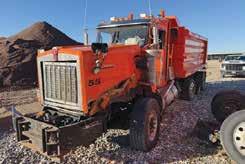

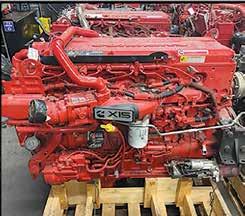
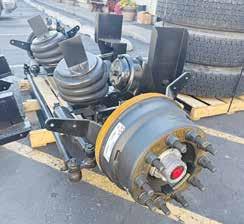
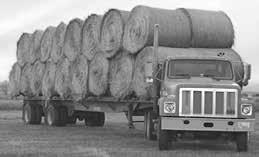



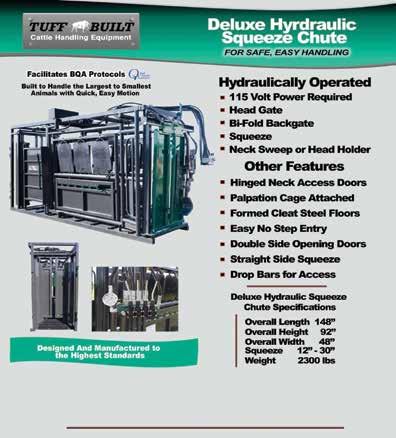


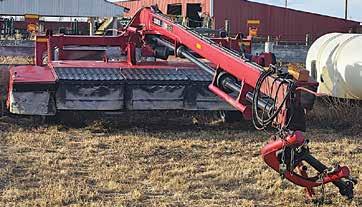

Tool developed at Montana State aims to help farmers implement new technologies
By Reagan Cotton, MSU News Service
In the constantly changing environment of precision agriculture, it can be difficult to winnow through the array of available tools and technologies becoming available for use by farmers and ranchers. To help guide those decisions, two faculty members in the Montana State University College of Agriculture have developed a tool for estimating the return on investment associated with one of the most high-impact precision ag resources.
Ricardo Pinto, an assistant professor at MSU’s Northern Agricultural Research Center in Havre, heard from producers that herbicide resistance in weeds was becoming an increasingly intractable problem. New technology such as precision smart sprayers can detect individual weeds in a field and selectively spray them, as well as enable producers to apply specific herbicide blends that are more likely to kill herbicide-resistant plants. But tools like smart sprayers can be expensive, totaling up to $150,000 in some cases.
“Depending on your operation, it makes sense,” said Pinto. “You can have your payback period in one, maybe two years depending on the acres in your weed infestation. We had an opportunity to develop a platform where producers can say, ‘Does this precise spray technology work in my situation or not?’”
To make those questions easier to answer, Pinto and Kelsey Larson developed the Smart Spray Annual ROI Calculator, a free and easy-to-use digital tool where producers can plug in numbers relevant to their own operations and determine how much time it would take for them to save enough money to justify the cost of new tools. Users plug in values such as their current herbicide application rate and frequency, the estimated weed coverage in their field, the price of a smart spray system and their field acreage. The tool then calculates savings in both dollars and reduced chemical application.
For Pinto and Larson, who both conduct outreach through MSU Extension in addition to their research, the opportunity to develop resources that producers can use on their farms was motivating.
“Many of these environmental or precision agriculture practices are going to make sense on some operations for some people, but they’re not going to make sense everywhere. There are no cut-and-paste solutions,” said Larson, who grew up in Bozeman and received her doctorate in economics from the Massachusetts Institute of Technology before joining the faculty in the Department of Agricultural Economics and Economics in January. “It was exciting to have a concrete way to help Montana

Ricardo Pinto, an assistant professor at the Montana State University Northern Agricultural Research Center. Photo courtesy Ricardo Pinto.
Kelsey Larson, an assitant professor in
photo by Kelly Gorham.





CONSTRUCTION & ATTACHMENTS

2020 Bobcat L28 SAL bucket, cab, heat/air, suspension seat, radio, trst assist, 1324 hours. stk# 26171. $38,000 (L)

2023 Bobcat S66 Skidsteer SJC, HVAC, vinyl suspension seat, auto ride control, reversing fan, PWR BOB, 7-pin, 2 sp, dual bucket position. stk# 29382. CALL (G)
2023 Bobcat S66 Skidsteer CLR side, HVAC, heat cloth air ride seat, auto ride control, reversing fan, PWR BOB, 7-pin, 2 sp, dual bucket position. stk# 29381 CALL (G) 2023 Bobcat E20 Mini Excavator. stk# 30610. $42,500 (G)
2018 John Deere 3206 skidsteer, two speed, cab, heat. stk# 33326.. $29,000 (L)

2009 Case 7120 combine, standard chopper, cloth seat, HID lights, standard rotor, small grain, 5170 hours. stk# 32233. $38,000 (G)
HEADERS

2019 MacDon FD140D 1000 PTO shaft, Contour Buddy, 40-ft., double knife, split reel, upper cross auger, CNH adapter, slow speed transport. stk# 31005 $99,500 (G)
MacDon D140 40-ft., draper header, single knife, pickup reel, upper cross auger, JD adapter, 1000 PTO, sold with Stud King trailer, swather kit, poly skid on sickle bar, skid plates. stk# 33168. $70,000 (G)
MacDon D140 40-ft., draper header, single knife, pickup reel, upper cross auger, JD adapter, 1000 PTO, sold with Stud King trailer, swather kit, poly skid on sickle bar, skid plates. stk# 33169. $70,000 (G)
MacDon 216 16-ft. rotary header, skidshoe, M205 adapter. stk# 30590. $39,900 (L)
2015 MacDon PW8 pickup header, 16-ft. wide. stk# 31025. $27,900 (G)
Case IH 2142 35-ft. header, pea auger, CNH adapter, slow speed transport, 540 PTO. stk# 33193, $21,000 (G)
Case IH 2142 35-ft. header, CNH adapter, slow speed transport, 540 PTO. stk# 33194
$18,500 (G)
New Holland 1116H pushframe only.$1500 (L)
2022 Bobcat E35 Mini Excavator, 33 hp, 414 engine hours. stk# 29371. $59,900 (G)
2022 Bobcat E35 Mini Excavator, 25 hp, 403 engine hours. stk# 29373. $55,900 (G)
2023 Bobcat T64 Compact Track Loader. stk# 30714. $69,900 (G)





BALE PROCESSORS
Kramer processor. stk# 33083. $29,000 (L)
2021 Vermeer BPX9010 round only, three remotes, 1000 PTO, hydraulic deflector, large flotation tires. stk# 29008. $26,000 (L)


TRACTORS
2006 New Holland TS130A 4622 hours, cab, 3 rear mounts, rear wheel weights, loader, grapple, 540/1000 PTO, semi powershift. stk# 31403. $93,000 (L)
2022 Bobcat T64 Compact Track Loader, cab AC/heat, Bobtach-bucket positioning, Touch display-rear cam, heat seat, auto ride-high flow-rev fan. stk# 29311
$83,775 (G)
2022 Bobcat MT100 Track Loader. stk# 29374. Call (G)
Wac ST28 compact track loader, cab, heat & A/C, radio, 10 gpm standard flow, 74 hp Kohler engine. stk# 33213. $38,900 (G)
2021 Bobcat 5600 Toolcat, Brand-new engine with 0 hours and warranty! Deluxe cab & high flow. stk# 32095. $69,000 (G)
2017 New Holland LM7.42 Elite telehandler, 460/70R24 Mich., reverse fan, rear hydraulic coupler, exterior tool box, continuous flow auxiliary hydraulic, bluetooth and auxiliary radio work, SO station. stk# 22833
$65,000 (L)
Bobcat HB980 breaker. stk# 24408.$10,036 (G)
Quick Attach 68” angle blade. stk# 32129. (G)
Bobcat 68” angle broom. Good bristles. stk# 32128. (G)
Bobcat 68” angle broom for skidsteer. stk# 32384 (L)
Manitou 96” grapple bucket. stk# 22839. $5888 (G)
Bobcat 74” bucket. stk# 29864. $1800 (G)
High Volume 66” bucket, skid steer attachment. stk# 29035. $650 (G)
Bobcat 18” bucket for excavator with bolt on teeth. stk# 22333. $399 (G) 2014 Bobcat drop hammer. stk# 17553. $5900 (G)
Bobcat 15C auger. stk# 23364. $2750 (G)
2022 Salt Dogg SHPE0750 Sand/Salt spreader, stainless steel auger and frame. stk# 32348. $2850 (G)
Bobcat 6B landrake. stk# 29484. $11,800 (G)
Bobcat 72” root grapple. stk# 29486.$5800 (G)
John Deere LX spear, skidsteer mount. stk# 32925. $499 (G)
Pal 60” broom, Grasshopper attachment. stk# 32378. $2100 (G)
ES 42” tiller for skidsteer. stk# 32873. (G)
Ignite 68” snowpush. stk# 32040. $2800 (G)
SQUARE BALERS
2014 New Holland 340 square baler, density control, tandem axle, ISO INTELLVIEW, large 1000 PTO, 500/50 Alliance, roller chute, roller windguard. stk# 30935. $89,900 (G)
New Holland 340 P 3x4, roller chute, tandem axle, ISO, color monitor, work lights, density control, packer. stk# 28453. $43,000 (L)
2020 Haybuster 2665 scale, fihe cut, wide deflector belt, hydraulic deflector, 14x16.1 10 ply knobby tires, CV 1000 PTO. stk# 26064. $27,000 (L)
2013 Haybuster 2650 round only, RH discharge, 1000 PTO, scales, 14x16.1 flotation tires. stk# 33101. $18,000 (G)
ROUND BALERS TILLAGE & HARROWS
2018 Gates 84-ft. Magnum 5 bar harrow, 26x9/16 teeth with carbides, hyd tine adjust., excellent condition. stk# 31435.$59,900 (G)
McFarlan 36 36-ft. harrow, 16 bar spike tooth, hydraulic fold & lift. stk# 32307. $44,500 (L)
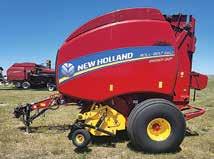
New Holland RB560 laced belt, net/twine, 1000 PTO, caster, standard density, manual hydraulic pickup, 21.5LX16.1, roller windguard, extra wide pickup, declutcher, deluxe wrap monitor. stk# 29809. $35,200 (L)
2018 New Holland RB560 laced belts, ISO monitor, net only, hydraulic ramp, 1000 PTO with cut out clutch, bale count of 10,479. stk# 22242. $34,900 (L)
John Deere 568 shed kept, great condition, laced belts, monitor included, single axle, wrap/twine, 1000 PTO, wide pickup, tires 21.5L-16.1 SL. stk# 32789. $13,900 (G)
2010 John Deere 568 baler, twine, 1000 PTO, roller windguard, large float tires, 19,886 bales. stk# 31510. $9900 (G)
Vermeer 605SM tires 21.5-16.1SL, net only, 1000 PTO, ramp, lights. stk# 17287. $11,900 (G)
RAKES
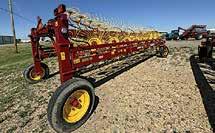
2022 NEW New Holland 1631 rake, 16 wheel high capacity, single side opening, 60”, rear tandems, rear hydraulic opening. stk# 28671. Call (G)
New Holland 1428 Procart without center kicker. stk# 30248. Call
2022 New Holland 230 7 bar, hydraulic rake. stk# 28667. $49,900 (L)
2014 Vermeer R2300 23-ft. hydraulic rake. stk# 33149. $24,000 (L)
New Holland TV140 6840 hours, 7614 loader, cab and engine end hydraulics, cab & engine end PTO, cab end 3-point, air seat, wheel weights, flange with differential lock, 16.9 x 38 tires. stk# 33399. $38,000 (L) 1995 Ford 9680 duals, 12 speed manual, no PTO, suitcase weights, 3395 hours. stk# 30044. $40,000 (G)
2006 Case IH JX95 MFD, loader with bucket, cab, A/C & heat, flange axle, 540/1000 PTO, 12x12 shuttle, 1502 hours. stk# 23397. $32,000 (L)
Steiger PT225 tractor. stk# 20554.$25,000 (G) 2023 Bobcat CT5550E HST compact tractor. stk# 32344. CALL (G)
2022 Bobcat CT2025 HST tractor, 56 engine hours. stk# 29350. $24,000 (L)
Mavrick CanAm turbo engine, Smart Lok, harness, 200 hp, Piggyback shocks, Trac Force tires. stk# 32272. $21,900 (G)
SWATHERS
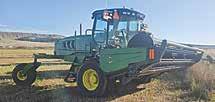
2015 John Deere W150 16-ft. sickle head, steerlconditioner, non draper, deluxe cab, 1500 hours. stk# 33310 $97,000 (L)
(L)
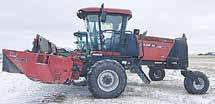
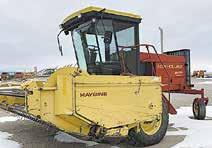
MISCELLANEOUS
Haybuster CMF-830 vertical mixer, small 1000 PTO, monitor with remote, right hand dogleg update, magnet, large display, scales. stk# 29236. $78,900 (L)
McFarlan 32 32-ft. drag harrow, 16 bar spike tooth harrow, hydraulic wing & fold. stk# 32308.
2013 Vermeer R2300 hydraulic 23-ft. rake. stk# 25560. $19,000 (L)
$42,000 (L)
Maybridge 26 26-ft. chain harrow with cart hydraulic lift, manual lift. stk# 31172.
$16,895 (G)
Maybridge 26 26-ft. chain harrow with cart hydraulic lift, manual lift . stk# 31173.
$16,895 (G)
Maybridge 24 includes bars 5/8 chain 2X blue and white 4-ft. stk# 29012. $4000 (L)
2023 NEW Kirchner 8-ft plow, Cat II, 3-pt. unit with 16” sweeps. stk# 30802. $7090 (L) John Deere 18-in. planer, 14 pin control, carbide teeth, high flow. stk# 31623. $9900 (G)

2011 Vermeer R2300 rake, hydraulic basket. stk# 32831. $23,000 (L)
2008 Vermeer R2300 hydraulic basket rake. stk# 31803. $19,000 (L)
2023 Sitrex MKE-12-60 12 wheel, high capacity, 60”, hydraulic width adjust. stk# 31405. $22,000 (L)
2022 Morris 1400 Hayhiker 14 bale. stk# 29416 $36,000 (G)
2011 Haybuster 3104 rock picker. $25,400 (L)
2019 Toro spreader, stand on spinner, hydro, sprayer handgun, 25 gallon tank. stk# 25200. $5000 (G)
2014 Danuser F8 3-pt. post hole digger with 12” bit. stk# 18366. $1200 (G)
2019 Danuser 200173 18” rock auger bit with 2” hex head. stk# 29016 $1800 (G)
Danuser 48” pallet forks. stk# 29525.$1400 (G)
Woods 72” cutter. stk# 33057. $1500 (L)
Miscellaneous 72” bucket. stk# 26358. $700 (G) Toro 20” snowblower. stk# 32166. $170 (G)
2022 Bobcat E42 Mini Excavator, 403 engine hours. stk# 29370. $69,900 (G)
cab, 16-ft. disc header, rear suspension, rubber conditioner, 1163 hours. stk# 33323. $67,000 (L)
1993 New Holland 2450 4209 hours, 16-ft. header. stk# 31023. $18,000 (L) MacDon M205 swather. stk# 33173.$60,000 (G)

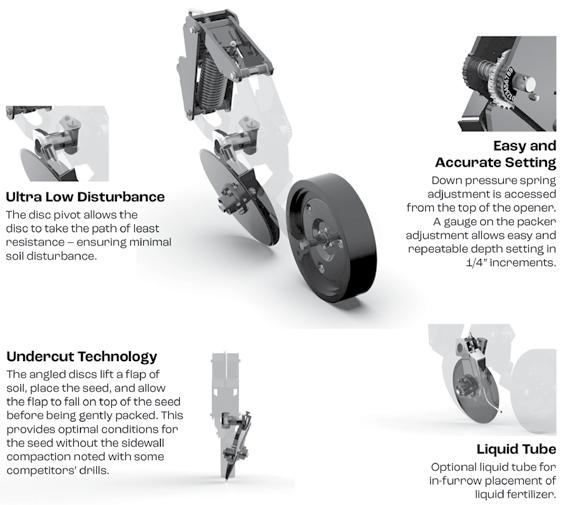
Nebraska Ranch Practicum
Ranchers and cattle producers interested in learning about the latest cutting-edge research in range livestock production from the University of Nebraska–Lincoln are encouraged to register for the 2026 Nebraska Ranch Practicum offered by Nebraska Extension. Master ‘Ranch Ready’ principles designed for immediate use on your ranch.
The practicum will be held during eight sessions over the course of three seasons in order to cover the production cycle of livestock and forage resources. Participants will have the opportunity to learn about a variety of topics, including the effective use of decision support tools to evaluate management and marketing alternatives, plant identification, range condition and grazing strategies, wildlife management, evaluation of cow body condition scores, and beef cattle production systems. Ranch ready principles will be taught that can be applied to participant’s ranching operations.
The practicum will be held June 2 and 3, July 1, September 9 and 10, and November 5, 2026; and January 6 and 7, 2027. Classroom activities will open and close the practicum in North Platte with the remainder of the classes conducted at the University of Nebraska’s Gudmundsen Sandhills Laboratory, a working ranch with education and research facilities, near Whitman.
The practicum can count for college or continuing education credit.
The registration fee is $750. The fee for a spouse is an additional $400. Registration covers educational materials, noon meals and breaks. Participants are responsible for travel and lodging expenses. The practicum can count for college or continuing education credit.
To register, submit a completed application and registration fee by May 5. Applications will not be accepted after that date. Enrollment is limited to 35 participants. Applicants will be notified of their status no later than May 18. Refunds will be issued if space is not available.
To learn more or register, visit https://nebraskaranchpracticum.unl.edu/ or contact Troy Walz at 308-872-6831 or troy.walz@unl.edu.
National Chili Day
Date celebrated: February 26th

Some like it hot, some like it mild, some like it on top of a baked potato and some prefer it with or without beans – but however it is most appreciated, National Chili Day is the perfect excuse for millions of spicy food fans all around the world to chow down on a bowl of this delicious fiery favorite.
History of National Chili Day
The inaugural celebration of National Chili Day was in 2006 when it was founded by restaurant owner, Rich Kelly, of the Hard Times Cafe in Arlington, Virginia. But the background of the dish obviously goes back much further than that!
Though many people believe chili originated purely in Mexico, modern thinking suggests that it was probably truly created in Texas and is a blend of Native American, Spanish, and Mexican cuisines. This claim is supported by the fact that the first-ever written reference to chili occurred in the city of San Antonio, Texas in 1828. This is just one of the many delicious varieties of food that fall into the category of Tex-Mex.
However, one legend dates chili back a little further, stating that some immigrants who came from the Canary Islands brought the recipe with them to San Antonio when they settled there in the 1700s. This was before the name “chili” came to be and it was simply referred to as “Spanish stew”.
Eventually, by the 1880s, a popular way to eat the dish in San Antonio was by picking up a “bowl o’ red” at a chili stand in an open-air stall, usually run by a “chili queen”. The popularity of chili began to spread throughout the US, and it was given a huge boost when it was featured at the 1893 World’s Fair which took place in Chicago, Illinois.
The dish that is now known as simply “chili” has, in the past, often been referred to as “chili con carne”, which just means chili with meat. Of course, today, many people make it without meat, and it can easily even be made into a vegan dish with no animal products of any kind.

Some people do tend to spell it differently, depending on where they are from. Most Americans will include only one “l” in the word, while some British folks and people from other parts of the world may add an additional letter to spell it “chilli”. But no matter how it is spelled, this is certainly a tasty dish that is worthy of celebration!






















































www.mtagrisafety.com | (406) 850-9978
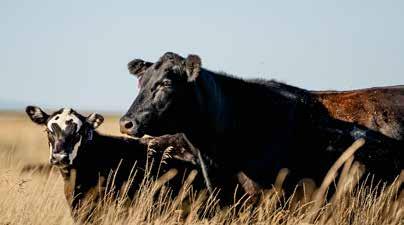

Scott Schmiedeke (406) 240-2572 Victor, MT
Henry Kallis (605) 639-1904
Spearfish, SD
See us on the web: www.tte-inc.com
2022 Cat 272D3 452 hours, enclosed cab with heat and A/C, 98 horsepower, 9500 pound operating weight, 3690 pound operating capacity, 6900 pound tipping load capacity, 23 gpm auxiliary hydraulic flow, auxiliary electrics, 86” bucket with BOE, hydraulic quick coupler, extra counterweights, 2-speed
Tool developed at Montana State aims to help farmers implement new technologies
producers to figure out what makes sense for them.”
Smart spray technologies use sensors that can identify a single weed among crop plants, turning nozzles on and off automatically to apply herbicides and pesticides only where they are necessary. When properly implemented, they can save time and money, vastly decreasing the amount of input necessary to manage weeds.
Because farmers can plug in the specific values for their operation, the new calculator can provide tailored information based on the variations across Montana’s ecosystems and geography. Less herbicide and pesticide application positively impacts soil health and saves water as well as costly herbicides.
An example calculation in the online tool estimates that for a 1,000-acre farm applying 10 gallons of herbicide per acre three times per year, savings could total nearly $60,000 per year. Those savings could cover the cost of a $75,000 smart spray system in less than a year and a half.
There is also potential, Pinto said, for increased yield when herbicides are applied more sparingly, because plants don’t have to metabolize chemicals that are broadcast over an entire field. Exploring that question is part of his future research plan.
“In pulse crops, for example, we have a really important disease called root rot
that is associated with the level of stress of the plant,” Pinto said. “If the plant is more stressed because of herbicide application, it would be more susceptible to that disease. This is one thing that we are advancing, to better understand the impact of those products in terms of yield and plant fitness in general.”
The calculator, Larson said, is designed to be “a living tool.” More metrics will be added over time to further tailor the information producers can get from it, and both she and Pinto welcome feedback from MSU Extension agents and farmers who have made use of it. The two wrote a guide on how to use the tool, and since the its unveiling in May, the calculator has had users in not only several U.S. states, but also in Australia, Argentina, Brazil, Canada and China.
Pinto himself is originally from Brazil and did part of his graduate studies at MSU. Returning to Montana and doing work that can tangibly help growers is extremely rewarding, he said.
“I always had Montana in my heart, so when the position opened in Havre, it was a perfect opportunity for me to continue my effort to help producers understand how they can take advantage of different technologies that we have in the market and most importantly, how we can optimize the use of our inputs,” he said.
travel, Caterpillar XD tires, creep speed, ride control, heated air ride cloth seat. This machine is in like new condition with a fresh service and job site ready. Located in Victor, MT
$67,500
1991 John Deere 4255 9213 hours, 148 hp, 15-speed transmission, mechanical front wheel drive, enclosed cab with heat and A/C, A/C blows cold, GB 760 quick attach loader, new rear tires, front tires in excellent condition, very nice tractor overall. Located in Victor, MT.
$48,000
2015 Gehl RS1055 2160 hours, frame tilt, 3-way steering, 55” reach, 10K pound lift capacity, auxiliary hydraulics, nice foam filled tires, 68” carriage, 72” forks, has been through the shop, recent service, extremely clean, low-hour telehandler. Located in Spearfish, SD.

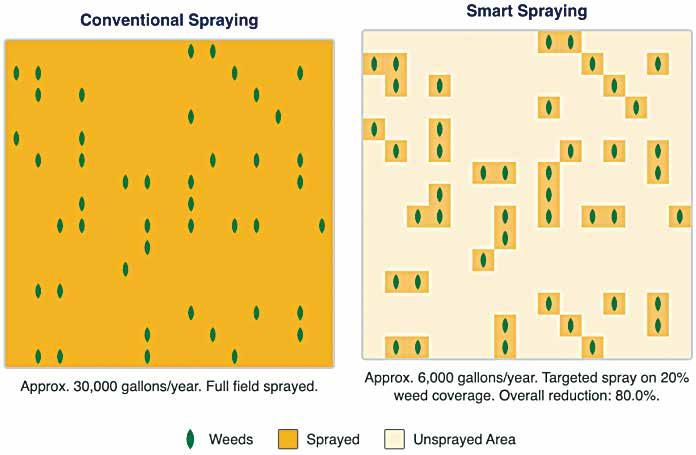
$67,500
2014 SkyTrak 6042 3225 hours, enclosed cab with heat, auxiliary hydraulics, manual coupler, 48” forks, 74” carriage, nice foam filled tires, 3-way steering, hydraulic frame tilt, 6000 lb lift, 42-ft. reach, has been through the shop all repairs have been made, just serviced, telehandler is in excellent condition. Located in Spearfish, SD
$44,500
2012 SkyTrak 10054 telehandler, 3785+- hours, 72” carriage, 60” forks, 3-way steering, stabilizers, frame tilt, foam filled tires, 10,000 pound lift capacity, 54-ft. reach, recent service, excellent condition, job site ready. Located in Spearfish, SD $62,900 $46,500

2019 Kubota SVL75-2, 1640 hours, enclosed cab heat and AC, hydraulic coupler, 78” bucket with bolt on edge, 75 hp, 6570 pound tip load. Very nice condition. Located in Spearfish, SD $59,000 $49,500
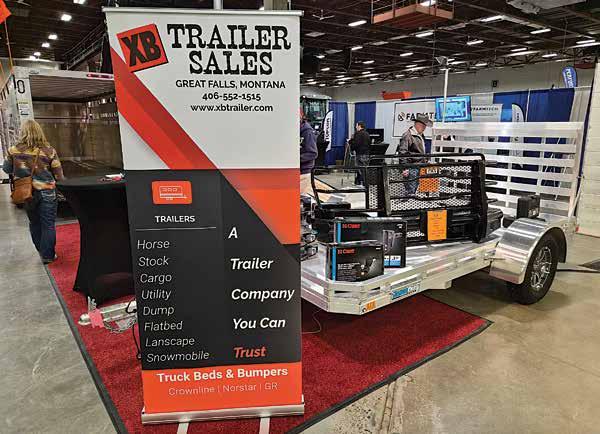
An example chart illustrating smart spray technology for weed management.
Winter brush control
By Ben Beckman, UNL
With leaves off and grasses dormant, late fall and winter can be an effective time to get ahead of brush in pasture and rangeland. However, it’s important to recognize that control options are more limited right with plants not actively growing. That means foliar herbicide treatments aren’t an option.
For evergreens like eastern red cedar, mechanical control is one of the best options right now. Cutting trees off at ground level is highly effective, and once a cedar is cut, it will not regrow. With grasses dormant, it’s easier to spot small trees and access infested areas before they become bigger problems.
For woody shrubs like buckbrush and smooth sumac, winter basal bark treatments can still be effective. Applying a labeled herbicide mixed with oil around the lower portion of the stem targets the plant directly and avoids damage to surrounding forage. This works best on individual plants or smaller patches, and good coverage is critical.
Yucca can be more challenging. Mowing alone usually doesn’t solve the problem, but targeted herbicide treatments or repeated pressure can help. In some cases, winter grazing can reduce patches over time, especially where cattle have learned to disturb and uproot plants.
Even when treatment options are limited, winter is a valuable time to identify and map problem patches, flag areas for future treatment, and think through which tools—mechanical control, grazing, fire, or herbicide—will fit best once plants are actively growing again.
A little planning now can save grazing acres, time, and money down the road.
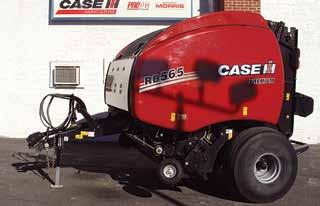
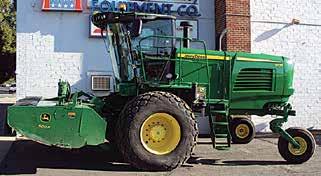


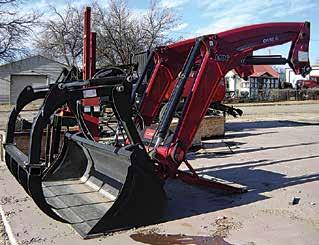
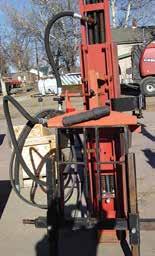
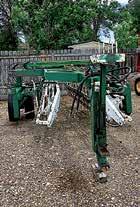
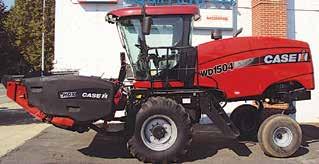
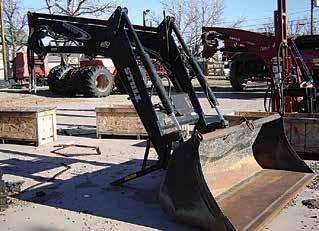

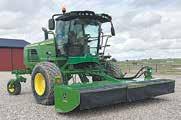
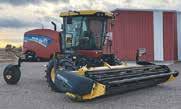
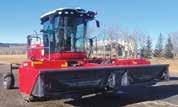
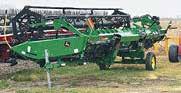

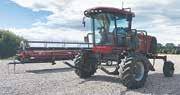


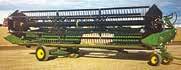

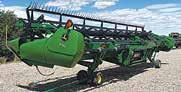
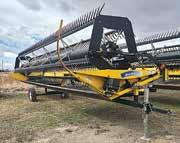


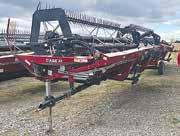

Are plastics harming our health?
By Julie Garden-Robinson, NDSU Extension food and nutrition specialist
“Have you been hearing about plastics, especially microplastics, lately?” I asked my husband.
He spends a lot of time reading online, so he is often my gauge for column topics. I wondered what he had been seeing.
“Yes. Plastics are everywhere,” he said when he briefly looked up from his phone. He obviously was not very chatty that evening.
What he said was true. I continued reading for this column. I looked around our house, and plastics certainly are everywhere.
As I explored research articles, I was getting a bit alarmed about “microplastics” and “nanoplastics” in our environment.
Let’s take a step back in time and then consider what we can do to reduce the amount of microplastics in our food and environment.
I enjoy combing through antique stores. The implements from our ancestors’ era were made from natural materials. Decades ago, materials were made of wood, metal, glass and other nonplastic items.
However, I do not think we will ever give up the convenience of plastics.
Plastic has a long history dating back to 1869 when John Wesley Wyatt invented a substitute for ivory from elephants by combining natural cellulose (cotton fiber) with camphor to make a shapeable material. Interestingly, the popularity of billiards prompted the discovery, according to the Science History Institute.
Later, another inventor, Leo Baekeland, created “Bakelite” in 1907 as the first synthetic “plastic” insulator for use in the electrical industry. Plastics then became part of the war effort in the 1940s.
Look around your space. Are you drinking from a plastic water bottle or wearing shoes that are part plastic? You might have a part-plastic cell phone at your side. Perhaps you drove a vehicle with plastic components. You might have a body or facial scrub with “microbeads” (plastic) in your shower. Plastic is part of tires and even clothing.
Most likely, if you are like me, you might have a plastic bag full of plastic bags in a closet. Everything from milk to laundry detergent is sold in plastic containers. We might bring our lunch in plastic containers or wrap our food in plastic wrap. Toys are often plastic.
As time has progressed, plastics have become pollutants, with plastic chairs showing up at the bottom of the oceans.
Researchers have been studying the potential detrimental effects of us inhaling or consuming microplastics. Microplastics are small particles (less than 5 millimeters) that are released as plastics break down. Nanoplastics are extremely small — about 1/70 the width of a human hair.
Pick up a ruler or examine a strand of hair to visualize how small that is.
Unfortunately, these tiny plastics are in our environment. Many plastics do not break down easily. When found in the ocean, microplastics can be consumed by fish and shellfish and, potentially, later consumed by humans.
According to the Food and Drug Administration, microplastics and nanoplastics have been detected in salt, seafood, bottled water, honey, milk, tea and other foods.
The good news is that the FDA states that “current scientific evidence does not demonstrate the levels of microplastics or nanoplastics detected in foods pose a risk to human health.”
The researchers and regulators acknowledge that we do not have all the scientific information we need. What are some practical tips a savvy consumer can do until more research about microplastics is published and disseminated?
Avoid heating food in plastic containers, especially in take-out containers or plastic wrap. Use glass containers to warm foods in a microwave.
Use stainless steel or glass containers for your water, coffee or other beverages. Cook in stainless steel or cast iron pots and pans and other cookware without plastic-based coating.
Use wood or stainless steel cooking utensils. “Black” cooking and eating utensils have been particularly problematic.
Use glass or bamboo cutting boards instead of plastic. If you care for a baby, do not heat formula or breastmilk in a plastic bottle.
swathers. $10,000
You do WHAT in your car?
These unique inventions will allow you to multitask while you drive.
Invention: Integrated Passenger Seat and Toilet apparatus (1988; patent no. 4,785,483)
Inventor: Paul H. Wise; Tucson, AZ
Details: This inventor figured that when you’ve got to go, you’ve got to go, so he designed a way to conceal a toilet under a passenger seat with a swiveling chair. It includes a built-in privacy curtain, a foot pedal flush system, a holding tank beneath the car, and an electric water pump.
Invention: Flushable Vehicle Spittoon (1991; patent no. 4,989,275)
Inventor: Dan L. Fain; Chancellor, AL
Details: Some drivers love to chew tobacco or munch sunflower seeds as they head down the road–but there’s always the problem of where to spit. The Flushable Vehicle Spittoon attaches by Velcro to your door or dashboard, to be ready wherever and whenever you need it. Gravity drains the waste through a funnel into a tube that empties into the great outdoors. A separate line attaches to the windshield wiper fluid container, providing an extra flush should gravity fail to do the job. Unfortunate pedestrians walking nearby will just have to step lively to avoid being sprayed by any discharge.
Are plastics harming our health?
CONTINUED FROM PAGE C24
Eat a simpler diet rich in natural antioxidants. Enjoy more “whole foods” instead of heavily processed foods. Stay well hydrated with filtered water from your tap. Water can help flush out toxins.
Use reusable bags or paper bags instead of plastic bags. Look for plastic that is safe for food storage. Items labeled 1, 2, 4 and 5 are usually considered to be the safest. If your city has a recycling program, find out the codes that can be recycled.
Instead of a recipe this week, I am providing a resource for gardening and food preparation. Try growing your own food, helping in a community garden or visiting a farmers market.

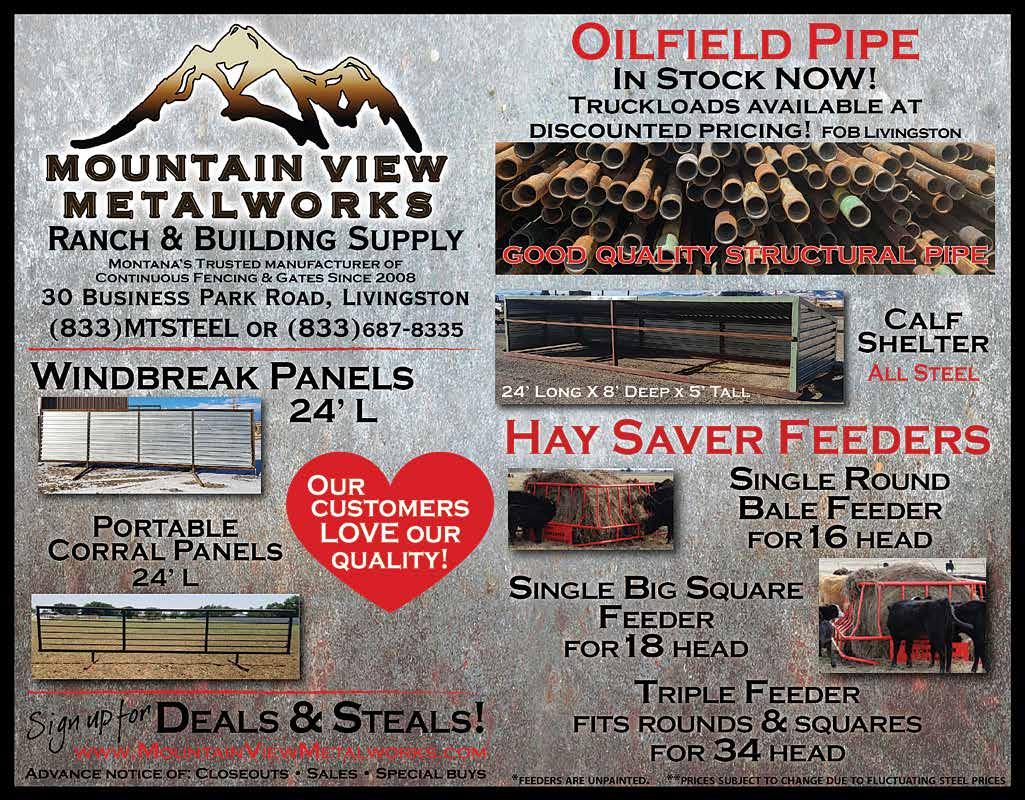
Fraser’s Oil Inc.
Taking the Itch Out of Sorghum
Brent Bean, Sorghum Checkoff Director of Agronomy

• Increased early season vigor
• Phosphorus and Zinc to drive rooting & cold start the crop.
• Zinc to help with early season hormone production, ie. Auxin for root and shoot growth.
• Convey Technology to help with early season stresses, such as cool soils and excess moisture. It also improves nutrient use efficiency.
• Other essential nutrients target at each specific crop, ie. Boron for cell wall strength; Manganese for efficient photosynthesis.

• Second chance for a starter fertilizer
• Formulations are targeted at early season root growth (more root = more efficient moisture and nutrient uptake).
• Proactive way of managing the crops nutritional requirement.
• Convey Technology helps with early season stresses such as cool soils, excess moisture, and drought. Also improves nutrient use efficiency.
• Speeds up recovery from herbicide hangover - the correct supply of nutrients helps the crop metabolize the herbicide more quickly.

• Contains novel Phosphorus nutrition, providing increased nutrient uptake and movement within the plant.
• Targeted at the reproductive phse of the plant.
• Proactive way of managing the crops utritional requirement
• Contains other essential nutrients targeted for each specific crop, ie. Boron to aid pollen tube growth, Zinc to help produce Auxin, to ensure healthy pollen tube growth.



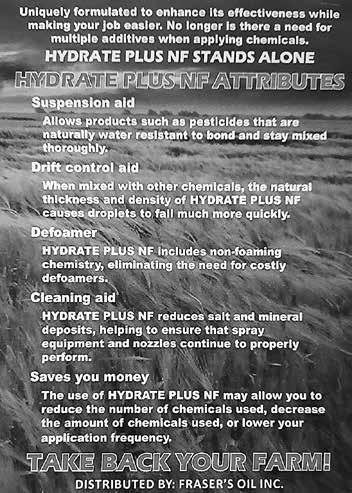



Anyone who has ever read one of my articles or heard one of my presentations knows I am a strong advocate for the attributes of grain sorghum. However, one characteristic of sorghum grain that I could certainly do without is the skin irritation, or itchiness, caused by its grain dust at harvest. Dust from other grains can cause itchiness, but few would argue to the extent caused by grain sorghum. So, what causes sorghum grain dust to itch and is there anything we can do about it?
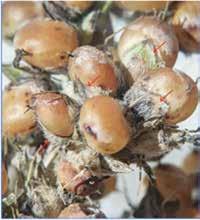
Researchers at Kansas State University asked this question and hypothesize that much of the itchiness is related to the structure of the glumes that surround each grain in the grain head. Grain sorghum glumes are covered by tiny, rigid, hair-like appendages called trichomes (figure 1). These trichomes are known to be a primary contributor to the total dust produced by cereal grains at harvest.
Interestingly, dust from rice grown in the U.S. in the early 1900s was known to cause itchiness. The rice varieties grown at that time had “hairy” glumes like sorghum. In the 1920s, rice varieties with “hairless” glumes gained popularity and, as a result, the dust produced at rice harvest was greatly reduced! Currently, all U.S. rice varieties have hairless glumes. The technical term for “hairless” is “glabrous.”
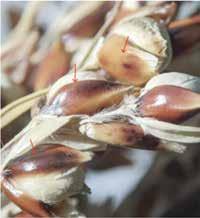
The researchers at Kansas State theorize that if sorghum glumes were hairless, then like rice, the reduction of dust produced at harvest would address the source of irritation, leading to less itchiness. The problem is that all commercial sorghum hybrids grown in the U.S. have hairy glumes! This led to the search for hairless sorghum glume germplasm that could be introduced into U.S. sorghum hybrids. Following the screening of hundreds of diverse sorghum lines, representing all the major sorghum races, a few hairless glume lines were identified (figure 2). Dust production from thrashed sorghum heads of a U.S. hybrid was then compared to one of the hairless glume lines. Dust production was found to be greatly reduced from the hairless glume line!
Armed with this discovery, the next step will be to use modern breeding techniques to insert the hairless glume trait into elite U.S. breeding lines to develop what will hopefully be low-dust, itch-free sorghum!
The sorghum molecular breeding program at K-State is positioned to make this a reality. They specialize in identifying novel sorghum genetics, such as glabrous sorghum, and devising strategies to rapidly translate into commercial sorghums with molecular breeding strategies and publicprivate partnerships.
Although taking the itch out of sorghum will likely not add any additional profit in growing sorghum, the relief from skin irritation will be much appreciated by sorghum growers!
You can hear me now
Scientists are hard at work making a universal translator a reality. Microsoft’s Skype Translator provides real-time translation between languages as people speak and went live in 2016. The app was demonstrated at a conference in 2014: An English-speaking man in California chatted with a German-speaking colleague via Skype, with verbal and textlike translations appearing on-screen. The app still has some bugs to work out (it is Microsoft, after all) but expect universal translators to be a common sight before the end of the decade.
Figure 1. U.S. Hybrid with Hairy Glumes
Figure 2. Sorghum Donor Line with Hairless Glumes
11th annual Beef Cattle Update
Livestock producers in Nelson, Griggs, Grand Forks and Steele counties are invited to the 11th annual Beef Cattle Update hosted by North Dakota State University Extension on Friday, February 20, 2026, at the McVille Auditorium in McVille, North Dakota.
The event begins with a free lunch at noon provided by sponsors and served by Sissy’s Bakery, followed by an afternoon of timely, producer-focused sessions.
“Every year we try to bring topics producers can put to work right away,” said Traci Trostad, NDSU Extension agriculture and natural resources agent in Nelson County. “Whether it’s herd health, market outlook or planning for what’s next in the operation and the family, this update is about practical information you can take home and use.”
The agenda and presenters for the program are as follows:
12:30 – Meet the new Extension Veterinarian: Dr. Jake Galbreath, NDSU Extension veterinarian
1:00 – Veterinary Diagnostic Lab: Megan Vig, NDSU Extension agriculture and natural resources agent in Steele County, and Traci Trostad
1:20 – Livestock Marketing Outlook: Tim Petry, NDSU livestock economist
2:30 – Succession Planning 101: Kelly Swenseth, attorney at Swenseth Law Office
This event is made possible with support from First United Bank, Haugen Cattle Company, Lakota Feed Inc., Ressler Land & Cattle, Ressler Ranch, Steele County Soil Conservation District, North Dakota Livestock Alliance, Grassy Meadows Ranch and Cooperstown Veterinary Clinic.
Event information can be found at ndsu.ag/BCU-26.
For more information, contact Trostad at 701-2472521 or traci.trostad@ndsu. edu or Vig at 701-524-2253 or megan.vig@ndsu.edu.
#####
According to scientists, octopuses do not have eight legs. They have six arms and two legs.
#####
Most-common trash items found on the beach: cigarette butts, bottle caps, and plastic bags.
#####
Life hack - Throw wrinkled shirts in the dryer with a few ice cubes for 10 minutes on high to steam away the wrinkles.



MOBILE AG REPAIR
• John Deere and Case/New Holland Computer Diagnostics
• Pre-Harvest / Hay / Winter Inspection
• General Mechanical Hydraulic Repair
• A/C Repair • General Maintenance Serving Teton, Cascade and surrounding counties
Acciacca Agriculture Fairfield, MT
Phone Brad - (406) 799-2042 or Tom - (406) 799-8323
Fort Benton Realty LLC
of possibility: Herbs that thrive indoors
By Allison Kosto, MSU Extension Agent, Broadwater County
There is something satisfying about using fresh herbs in the middle of winter when the landscape is brown and bare. To be able to pick the herbs from your own plants is even more gratifying. As our Montana growing season is ending, consider starting a winter herb garden inside to enjoy fresh herbs year-round. Although it is slightly more challenging than growing them outdoors, many herbs can successfully be grown indoors.


For the purpose of this article, herbs are defined as plant parts, often leaves, that are used to flavor or season food. In addition to being a food source, indoor herbs also provide fragrant foliage and visual interest. Like other houseplants, they can absorb carbon dioxide, increase oxygen levels, increase positive feelings, reduce sound levels, and reduce stress levels.
SELECTING THE RIGHT HERBS

1426 Front Street, Fort Benton, Montana 59442 www.fbrealty.com • fbrealtyl@gmail.com BEST of Montana's COUNTRY! of real estate experience!''
515 ACRES PIVOT IRRIGATED FARM: Located in Pondera County about 1/2 mile N of Conrad, MT & W of I-15. 584 total acres, 502 water shares from Pondera County Canal Company. Older farm house, shop & barn. Reasonably priced at $2,931,000.
Contact: Fort Benton Realty LLC, Mark Pyrak 406-788-9280 or Shane Ophus at 406-788-6662
Equestrian & Horse Properties, Land, Commercial & Residential, Auctions and Real Estate Consulting. Valerie Morger 406-750-2866
Reach out to one of our real estate experts TODAY! Mark Pyrak: 406-788-9280 • Valerie Morger: 406-750-2866
Shane Ophus: 406-788-6662 • Roger Axtman: 406-899-4098
Dennis Franz: 406-788-1163 • Katie Schuler-Richter: 406-788-8370
Mark Pyrak 406-788-9280
Fort Benton Realty LLC 1426 Front Street, Fort Benton, Montana 59422 www.fbrealty.com • markpyrak@gmail.com YOUR MONTANA FARM & RANCH REAL ESTATE BROKERS OVER 45 YEARS EXPERIENCE
Specialing in Listing and Sales, Land Auctions and Real Estate Consulting

Shane Ophus 406-788-6662
SALTON SUPREME
SALT TOLERANT ALFALFA
Some herbs grow well in containers while others struggle. Easy-to-grow herbs include parsley, mint, chives, basil, oregano, cilantro and thyme. Other options that are a little harder to grow indoors are rosemary, sage, lemon balm and marjoram. Avoid herbs with large root systems like horseradish and fennel. If you have indoor cats and dogs, consider avoiding toxic plants such tarragon.
Perennial herbs that were grown outside during the summer can be brought in for the winter. Examples are rosemary, chives, thyme and mint. Some herbs, such as mint and chives, benefit from a light frost before they are moved indoors, which will induce a rest period and stimulate growth. Annual or biennial herbs such as basil, parsley, cilantro and caraway can be successfully started from seed indoors.
CREATING THE RIGHT ENVIRONMENT
It’s important to choose the right container with welldrained potting soil and a pot that has sufficient drainage holes in the bottom. Clay or terracotta containers work well for herbs because they are porous, which allows the soil to dry more easily between watering. However, there are a variety of other container options too. Grouping plants with similar growing requirements together can be helpful for creating a favorable microclimate and can also simplify care practices such as watering.
Most home temperatures are perfect for herbs. Lighting is a much bigger issue. Many herbs are Mediterranean plants, so they need a significant amount of sunlight. At minimum, they need a window space that will allow them to receive at least six hours of direct sunlight each day. However, some species such as rosemary, thyme and bay laurel (bay leaves) need 12 to 16 hours a day and it will be necessary to supplement light with a full-spectrum LED or florescent grow light. If plants are long and lanky, that is often a sign that they are not getting enough light.
CARE
Watering depends on the species, but in general water when the soil is dry to the touch. Overwatering is the most common issue with houseplants, and can lead to increased disease issues, most commonly root rot. Generally, herbs don’t need much fertilizer but could benefit from diluted fertilizer, used sparingly as needed throughout the winter.
Lack of humidity can be a concern in our arid environment but is generally not a major problem for herbs. Wood stove use may cause more of an issue. If humidity is an issue, then grouping plants together, spraying or misting the leaves with a water bottle on a regular basis, or placing a humidifier nearby can help.
HARVESTING
Harvest the same as outdoor herbs. Most herbs can handle periodic snipping and often have the best flavor right before flowering. Some leafy herbs like basil, chervil (a type of parsley) and parsley can even be cut back significantly. For herbs in the mint family, such as basil, cut on the stem right above a set of leaves. This will promote growth and result in a bushier plant. For perennial herbs such as chives, oregano and thyme, only remove one-third of the top growth if you plan to move them outdoors for the summer.

Perennial plants can be moved outdoors when the threat of frost has passed. Slowly acclimate them back to the outdoors to more intense light and wind. Start by placing the pots in a protected outdoor location with partial shade for a few hours a day. Gradually increase the duration outside and the amount of sunlight until they are fully acclimated. This process generally takes about two weeks until the plants are ready to be outdoors full-time.
Pots of possibility:
Once annual plants have flowered, they are usually coming to the end of their life. The flavor may change, and is often less favorable. If you have a significant harvest, drying herbs is a good way to preserve them. Air drying is the best option as it results in the best flavor. Hang four to five stems together upside down with a clean string in a dark, warm, dry, well-ventilated room. It typically takes 7-14 days to dry most herbs completely. Other methods for drying herbs include the microwave or oven, but this takes specific techniques to avoid overcooking and to preserve the flavor. Once dry, store in an airtight container. Stored correctly, herbs can be used up to a year.
Anatomy of a hiccup
• A hiccup occurs when a stimulus causes and involuntary contraction of the diaphragm, the muscle separating the lungs from the abdomen. The contraction makes the sufferer take a quick breath, causing the glottis (located in the voice box) to close, which makes the “hic” sound.
• Most common causes: too much alcohol, spicy food, cold water, carbonated drinks, indigestion, or asthma. They can also be caused by liver or kidney problems, abdominal surgery, or a brain tumor.
• Fetuses hiccup in the womb.
• Folk cures: eat peanuts butter eat wasabi, drink vinegar, eat lingonberry jam, drink a glass of water while urinating.
• Unlike other body reflexes (coughs, sneezes, vomiting), hiccups serve no useful purpose.
• The word “hiccup” may come from the French hocquet, which was used to describe the sound of a hiccup. The earliest known version in English is hicket, dating from the 1500s.
• Hiccup lore: In ancient Greece, a bad case of the hiccups meant an enemy was talking about you. To get rid of them one had to guess the enemy’s name. The Scots thought holding your left thumb (or your chin) with our right hand while listening to someone singing a hymn would stop the hiccups.
• Some forms of encephalitis (swelling of the brain) can cause hiccupping. During the encephalitis pandemics of the 1920s, several cities reported cases of mass hiccupping.
• Technical term for hiccups: a diaphragmatic spasm, or singultus



2001 Cat 924GZ front end wheel loader, factory 3rd & 4th valve hydraulics, full cab, air/heat, all original paint, very tight, clean, ex-municipal, one ownerr loader. Very, very nice, 8100 hours, (grapple forks available) Call

2013 Cat 938K front end wheel loader, high reach, quick attach, factory 3rd & 4th valve auxilliary hydraulics, ride control, GP bucket or 4 & 1 multi-purpose bucket available. Very nice, tight, clean, one owner, ex-municipal machine. (Grapple forks on hand and ready for installation) Call

2008 Cat 914G frontend wheel loader, factory 3rd valve hydraulics, GP bucket, full cab, Air/Heat, one owner, ex-city machine from southern California, 6,400

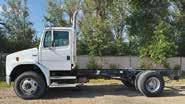


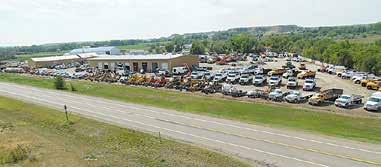

high lift reach, quick attach, large general purpose bucket, factory 3rd & 4th valve hydraulics, air/heat, Autoshift, clean, tight, one owner ex-municipal machine, 8900 hours. Grapple forks available Call
















one operator, ex-municipal machine, tight, clean and affordable machine, without DEF and no emissions Call






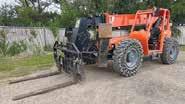

hours Call
2010 John Deere 544K loader, grapple fork, 3rd valve, quick attach, air, heat, ride control, excellent rubber, higher hour very nice one owner
2001 John Deere 770CH motor grader, front lift group, complete snowplow wing, 14-ft. mold board, Powershift, lots of documented work, one owner, ex-municipal machine.Call
2004 Case 721D front end wheel loader, high lift machine, quick attach, general purpose bucket with Grabtech grapple fork, factory 3rd & 4th valve hydraulics, ride control, full cab, air/ heat, autoshift, above average clean machine, original paint, no rust or element, tight, clean, low hour ex-municip[al machine, only 3800 hours Call
2005 John Deere 624J front end wheel loader, quick attach, general purpose bucket or 4+1 bucket, factory 3rd & 4th valve hydraulics, no rust, clean, tight, original machine, lots of documented work, new Grabtech grapple fork, will not find a nicer pre-emissions machine, one owner, ex-municipal, 5500 hours Call
If you have items you want advertised in the March 2026 issue THE VERY LATEST WE CAN ACCEPT THEM is February 25th.




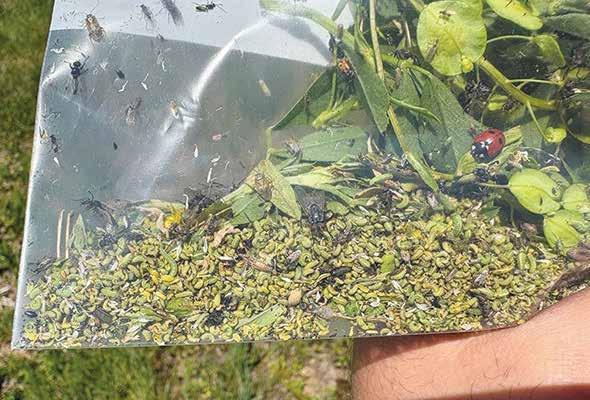
South Dakota State University Extension is encouraging forage producers to participate in a survey about managing alfalfa insects.

ANDY SWENSON
RETAIL SALES MANAGER - MONTANA (406) 598-2149 andy.swenson@equipmentshare.com
*See dealer for details THE ONLY SALES REP YOU WILL EVER NEED HUGE selection of Mini and Mid-Size Excavators in stock and ready to go today! STOP BY BOOTH #36 AT THE MATE SHOW FEB 12-14 IN BILLINGS, AND REGISTER TO WIN SOME GREAT PRIZES!
Call Andy and ask about our large selection of reliable new & used equipment for sale, including utility vehicles, skid steers, excavators, forklifts, aerial lifts, and more. We have the new & used equipment you need to complete your fleet. FINANCE OPTIONS UP TO 60 MONTHS AND 3 YEARS OR 3000 HOUR WARRANTY
SDSU Extension is collaborating with Anthony Hanson from the University of Minnesota Extension program to host the short, 22-question online survey. To take the survey, visit https://z.umn.edu/alfalfapestsurvey.
Philip Rozeboom, SDSU Extension Integrated Pest Management Coordinator, and Adam Varenhorst, associate professor and SDSU Extension Field Crop Entomologist, said there have been reports of pesticides not being as effective against alfalfa weevil in recent years. They noted that alfalfa weevil populations were larger than usual in 2025.
The purpose of the survey is to gather alfalfa grower perspectives and needs for alfalfa weevil management and other related insects. The information gathered will help the Extension programs within the Midwest develop better educational programming and research.
For more information, contact Anthony Hanson, UM Extension Integrated Pest Management Educator; Philip Rozeboom, SDSU Extension Integrated Pest Management Coordinator, or Adam Varenhorst, associate professor and SDSU Extension Field Crop Entomologist.
Winter hay worries
By Ben Beckman


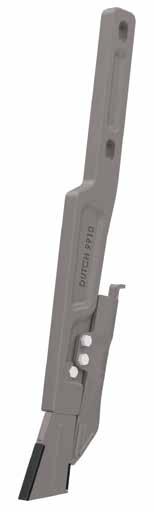
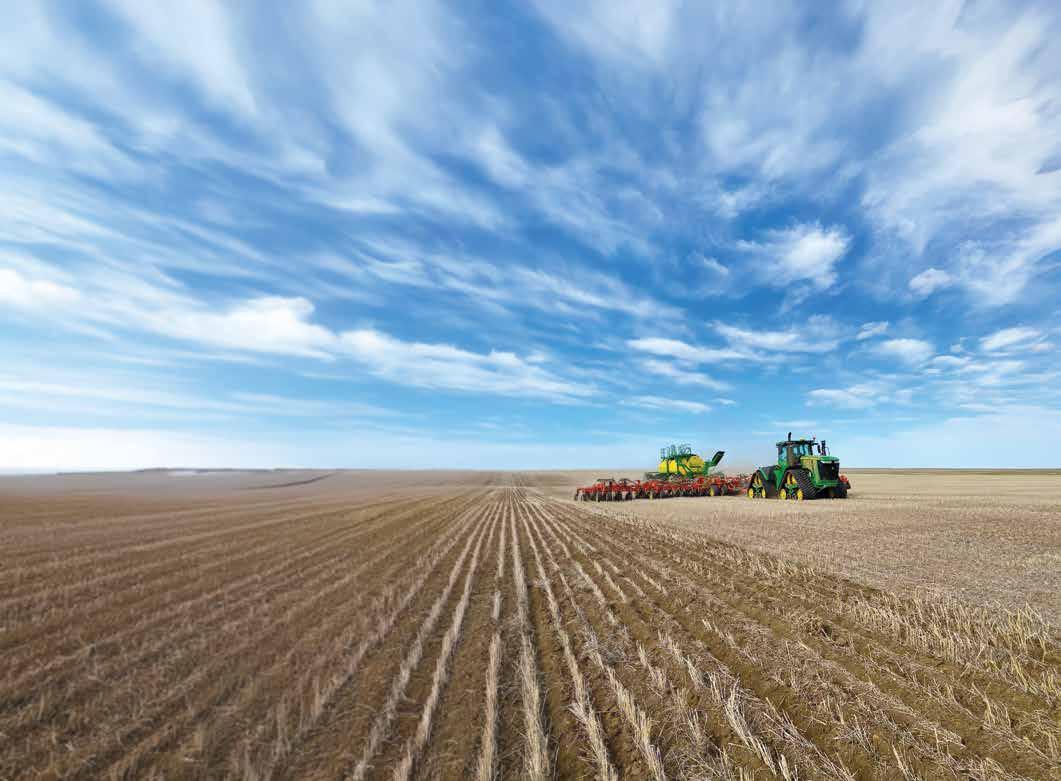
Grass tetany and nitrate poisoning are issues that we typically associate with animals grazing. However, both issues can be a problem in winter when animal diets are limited by what they are fed. Is your herd safe from possible hay worries?
Tetany occurs when an animal’s diet doesn’t have enough magnesium to meet nutritional needs. Complications with milk production and increased magnesium demand can make this imbalance even worse during lactation.
Grass, alfalfa, and cereal grains harvested for hay can all be low in magnesium. Getting a hay test with mineral analysis can easily show if this is an issue we need to worry about. If tests come back showing less than 0.15% magnesium, the hay is deficient. Other mineral interactions that can worsen tetany are low calcium (<0.40%) and high in potassium (>2.5%).
If your test comes back with issues, consider switching over to a high calcium and magnesium mineral. Most options use magnesium oxide, which is bitter tasting and can reduce animal consumption. Consider mixing with a protein or energy supplement or mixing with distillers grain or soybean meal to improve consumption if it’s not at target levels (for a 10-13% Magnesium mix, this is 4 oz. per head).
Another concern to keep an eye on is nitrates. Forages high in nitrate that were harvested for hay will not see a significant reduction in nitrate levels after curing. Any hay that we suspect being high in nitrate should be tested and if high, fed as a reduced portion of the diet to prevent an issue with toxicity.
Tetany and nitrates in the winter aren’t problems that often jump right to a producer’s mind, but they can be a serious issue, especially when an animal’s diet is limited to what they are fed. Properly testing hay and adjusting mineral and diets to minimize risk can keep your winter hay worries at bay.
Figure 1. Alfalfa weevil larvae sample collected via sweep net indicating the presence of a large population. (Credit: Patrick Wagner, SDSU Extension
Helping cattle producers grow bigger, better beef
Warren Rusche would contend that some of the best cattle in North America are born in South Dakota. That gives Rusche and the rest of the applied feedlot research group at SDSU a unique opportunity, and they are making the most of it.
“We consider ourselves very fortunate that we have access to exceptionally highquality cattle to do this research with,” said Rusche, Assistant Professor and SDSU Extension Feedlot Management Specialist. “We think our niche is exploring the upper limits of beef productivity and performance.”
Rusche and Zach Smith, associate professor of Animal Science, lead the active research team, which includes 10 graduate students and utilizes several different locations. On campus, there is the Ruminant Nutrition Center, which can hold up to 400 head, and the Cow-Calf Education and Research Facility, which has fluctuating numbers.
The team also typically does one to two studies per year at the Southeast Research Farm by Beresford, which has 24 outdoor pens and eight partially covered pens that usually hold 200-280 head. Rusche said because the research farm has crop production and livestock facilities, it allows them to do unique studies – this spring, for instance, they will test different silage options.
Cattle are an important part of agriculture in South Dakota, and SDSU Extension’s research looks at region-specific ways producers can improve their operations. One of those is by analyzing feeds that are commonly grown and available in the area. Earlage, for example, is a high-moisture, fermented feed that is unique to the Midwest. Rusche said the team is close to publishing their results on their latest study about earlage uses, which will be available to cattle producers.
“In my opinion, livestock feeding, cattle in particular, is one of the more effective rural development tools available for us in rural America,” Rusche said. “This is another way for us to try to help create those opportunities for the citizens of South Dakota.”
Other research includes using processed soybean feedstuffs in growing and finishing cattle, which Rusche said has yielded interesting results. The team has looked at feeding rye to cattle – an area of research where SDSU has led the nation.
They are working on different feeding strategies, and how that affects overall performance; and another current study is looking at growth implants and how they work during the dry-lot phase of production to see how it affects final feeding performance and the meat quality.
Every study, Rusche said, aims at helping cattle producers in and around South Dakota.
“We’re asking questions that apply to beef producers’ daily lives,” Rusche said. “That’s the part of the job I really love. Look at all this new knowledge that’s being generated and think – what are the ways we can use that to make people’s lives and businesses better?”
The team also recently partnered with the North American Limousin Foundation to compare how different sire types fare with extended days on feed to increase the cattle’s final weight.
“We are feeding cattle longer and heavier, and we needed some better data on what that looks like,” Rusche said.
Occasionally, their research yields unexpected spin-offs – while researching feeding rye at the Southeast Research Farm, the team ended up addressing how to keep cattle comfortable during extreme heat.
“We didn’t necessarily intend to do heat stress research,” Rusche said. “Sometimes we have happy accidents where we weren’t
CONTINUED ON PAGE C32

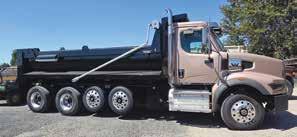
2026 Western Star 49X dump truck, Cummins, 605 hp, 18 speed, 255” wheelbase, 14,600 lb. fronmt axles, 46,000 lb. rear axles, 2 LIFT AXLES! FULL LOCKERS! 20-ft. Workman boulder box, 8” rear spreader apron, rear 90K pintle hitch, automatic tarp system. Stock #832604 Call for Pricing
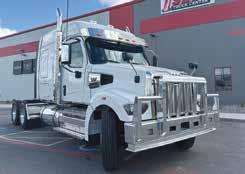

2026 Western Star 49X Detroit DD15, 505 hp, DT12, air ride, all aluminum wheels, 246” wheelbase, 13,300 lb. front axles, 46,000 lb. rear axles, 100 miles, FULL LOCKERS! Stock #840996 $214,990
2026 Western Star 49X Detroit DD15, 505 hp, DT12, air ride, all aluminum, 250” wheelbase, 13,000 lb. front axles, 46,000 lb. rear axles, 100 miles, FULL LOCKERS! Stock #840991 $199,900



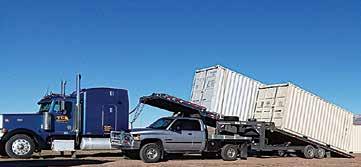
2025 Freightliner Cascadia 126 Detriot, DD15, 455 hp, DT12, air ride, all aluminum wheels, 229” wheelbase, 13,300 lb. front axles, 40,000 lb. rear axles, 7 miles.
Stock #82765
$184,900 $173,900
2025 Freightliner Cascadia
126 Detriot, DD15, 455 hp, DT12, air ride, all aluminum wheels, 229” wheelbase, 13,300 lb. front axles, 40,000 lb. rear axles, 2108 miles. Stock #827654
$184,900 $173,900
2025 Freightliner Cascadia 126 Detriot, DD15, 455 hp, DT12, air ride, all aluminum wheels, 229” wheelbase, 13,300 lb. front axles, 40,000 lb. rear axles, 184 miles. Stock #827658 $184,900 $173,900
&



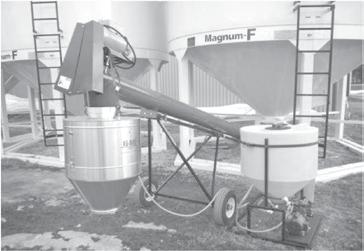


necessarily looking to answer that question, and we learned some things along the way.”
The results of that research were posted on extension. sdstate.edu for producers to access. In addition to publishing their results online, the team shares their findings through various events, programs and presentations. Rusche has also been featured on Cattle HQ Live, the SDSU Extension beef team’s podcast.
One of their biggest events is the Siouxland Feedlot Forum, co-hosted with the University of Nebraska-Lincoln and allied industry partners. The annual event brings together experts and industry professionals to present information on industry trends, new research and recommendations in feeding cattle.
Field days, like the Southeast Research Farm Field Day, provide producers another opportunity to see SDSU Extension’s research. Occasionally, Rusche said if enough people are interested in a particular topic, they’ll host a field day specific to that.
Rusche also works one-on-one with both producers and industry professionals – he’s as apt to visit with a nutritionist who works with dozens of producers as an individual cattle feeder.
“I look at the allied industry as an important audience for us, because they’re the ones working with producers on a one-on-one basis,” Rusche said. “We think that’s important for the industry to have some unbiased data. When we provide them with knowledge, then they can apply that to what their customers are doing.”
Genius school
There’s a school in New Jersey that has no classes, no tests, no degree programs, and…it’s free. The catch? You have to be a genius to get in. The school was started in 1930 by noted educator Dr. Abraham Flexner. He wanted to give genius types a place to lose themselves in the world of ideas, a place where they would not have to worry about things like cooking or cleaning. The school is called the Institute for Advanced Study, and it’s located at 1 Einstein Drive in Princeton. At first, it was just a school for mathematics. Later other departments were added: Historical Studies, Natural Sciences, and Social Sciences.
The genius invited to stretch their brains at IAS have included Albert Einstein, John von Neumann (father of game theory), J. Robert Oppenheimer (father of the atomic bomb), Kurt Godel (called “ the most important logician of our times”), and Hetty Goldman (archaeologist and the first female genius at IAS).







































#####
What did the janitor say when he jumped out of the closet?
“Supplies!” #####
“Doctor, I’ve broken my arm in several place.”
Doctor: “Well, don’t go to those places.”



Dakota Gardener: Take another look at ficus trees
By Esther E. McGinnis, NDSU Extension
The National Garden Bureau designated 2026 as the “Year of the Ficus.” Your first thought might be the weeping fig (Ficus benjamina), the most commonly grown indoor ficus tree. Truth be told, the weeping fig can be persnickety, turning yellow and dropping its leaves. However, the Ficus genus encompasses many lesser-known species and cultivars that are easier to grow.




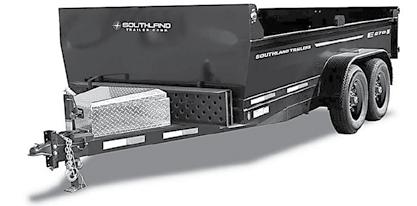

The rubber tree (Ficus elastica), with its shiny, ovalshaped leaves, is enjoying a resurgence. I am old enough to remember rubber trees being the trendy 1970s plant in the era of avocado-green appliances. New generations are rediscovering this beautiful tropical plant. Recent cultivars feature multicolored leaves with creamy margins, multiple shades of green on the interior, and red new growth.
To keep a rubber tree healthy, place it in bright, indirect light away from vents. In northern states, we can grow it in direct light in an east window. If you notice sunscald on the leaves, either move the plant towards the room’s interior or behind a sheer curtain in a south- or west-facing window. Water the plant thoroughly until water trickles out the pot’s bottom. Empty any water sitting in the saucer to prevent root rot. Allow the top inch or two of soil to dry between waterings. To keep the plant looking sensational and healthy, wipe the dust off the glossy leaves.
In indoor environments, rubber tree has a tendency to grow vertically without branching. Encourage branching by pruning above a node in spring or summer.
Fiddle leaf fig (Ficus lyrata) is another popular ficus. With its violin-shaped leaves, it is like the fashion model of the houseplant world and graces the pages of many interior design magazines. From personal experience, this ficus requires an experienced plant parent. It is tough to grow in low-light environments and is finicky about watering. If you have struggled with fiddle leaf fig, give Ficus Audrey a try.
Ficus Audrey (Ficus benghalensis) is more forgiving than fiddle leaf and less likely to drop its leaves. Audrey’s leaves look like a cross between those of rubber tree and fiddle leaf fig. The green oval leaves are shaped more like rubber trees’, and the white leaf veins are reminiscent of fiddle leaf fig. While Audrey is more tolerant of watering mistakes, it is best to adhere to the watering advice mentioned for rubber tree. Finally, a word of advice for those struggling with weeping fig trees mentioned at the beginning of this article. Treat this common houseplant like a drama queen. Understanding that the tree doesn’t like change is the not-so-secret formula for being a successful ficus parent. If your tree is happy in its current location, don’t move it. Otherwise, it will throw a tantrum and drop its leaves. Try and maintain a consistently warm temperature. In the winter, add a room humidifier to boost humidity, keep your ficus away from drafts and don’t over-water.
All kidding aside, you can find a ficus tree to meet your needs and gardening level.
Even in winter, gardens need water
By K-State Extension news service
Yards may need another shot of moisture even after recent rain and snow to alleviate stress in lawns and gardens, said Kansas State University horticulture expert Cynthia Domenghini.
“A good, deep watering with moisture reaching at least a foot down into the soil is much better than several light sprinklings that just wet the top portions of the soil,” Domenghini said. “A deep watering will ensure that the majority of roots have access to water.”
Domenghini urged homeowners to test the moisture content in their yard’s soil by pushing a metal rod or wooden dowel into the ground. “Dry soil is much harder to push through than wet,” she said. Measure how far down the implement goes to determine the amount of moisture is in the soil.
“Although all perennial plants benefit from moist soils before winter, it is especially important for newly planted or overseeded lawns, as well as newly transplanted trees and shrubs due to their limited root systems,” Domenghini said.
“Even trees and shrubs planted within the last 2-3 years are more sensitive to drought than a well-established plant. Evergreens are more at risk because moisture is lost from the foliage.”
Domenghini shared a few tips for watering common areas of the yard:
Trees and shrubs planted within the last year. Drill a small hole in a five-gallon bucket near the bottom, then fill the bucket and let the water dribble out slowly next to the tree. Refill the bucket once so that you apply 10 gallons. Slow release bags with micropores can be purchased as an alternative to using a bucket. Larger trees planted 2-3 years prior may require more water.
Large trees. Using a soaker hose, circle the trunk onehalf the distance to the dripline, or the outermost reach of branches. On smaller trees, you may need to circle the tree several times so that tree roots will be watered. Newly established bed or foundation plantings. Hook the beginning and end of a soaker hose to a Y-adapter to equalize pressure, which encourages more uniform watering.
Fall planted or overseeded lawns. Use an overhead sprinkler. Watering to a depth of 12 inches is more difficult; try to reach at least six inches deep.
Domenghini said watering once a month if conditions are dry and warm should be enough to help landscapes through the winter.
##### In Loving, Mexico, a woman divorced her husbank because he made her salute him and address him as “Major” whenever he walked by. #####
Doctors in the 1700s prescribed ladybugs as a cure for measles; they were to be grounded up and eaten.




Severinsen Irrigation LLC 2231 HWY 89 Fairfield, MT 59436
406-467-3999
Brett’s Cell 406-590-5003





Be a Sweetie, buy a pivot for your Honey this Valentines Day!
High
elevation snowpack on track for January 1
Montana’s snowpack accumulation season began with a stark elevational contrast. At lower elevations, winter started slowly, with warm temperatures and most precipitation falling as rain. At higher elevations, abundant precipitation accumulated as snow despite above average temperatures.
“Statewide, snow water equivalent (SWE) is looking deceptively positive,” said Florence Miller, USDA Natural Resources Conservation Service (NRCS) hydrologist.
NEW & USED EQUIPMENT
‘26 Vermeer 605S baler ............... COMING IN Vermeer 605N, In-Monitor Moisture Sensor, Auto Greaser, pickup clutch, 540 or 1000 PTO .....NEW
2-Vermeer 605M net/twine
$10,000
THANK YOU FOR YOUR BUSINESS IN 2025 WE LOOK FORWARD TO SUPPORTING OUR PRODUCERS IN 2026
See you at MATE FEBRUARY 12-14, 2026
$10,000
Vermeer R2300 & R2800 rakes NEW Vermeer TM1410 21-ft cut width.. NEW Bale King 5100
Snowpack is near to above normal across most of the state. Most major basins have 90-100% of median SWE, with some higher elevation drainages in the northwest, Yellowstone and Bighorn basins reaching 110-120% of median. The Powder, Tongue, and Lower Clark Fork basins have lagged behind on snowpack accumulation and are reporting 70-90% of median SWE. Lower elevation snow monitoring stations are generally reporting less than 80% of median SWE, around a 1- to 3-inch deficit. Upper elevation stations are faring better, reporting 100-150% of median SWE, a 3- to 7-inch surplus for January 1.
Wichman Ag Supply, LLC
$60,000
2-Vermeer R2800 updated pivots $28,000 Massey-Ferguson 9635 swather, 1865 hours, new cutter bar
406-538-5686 • Hilger, MT www.wichmanagsupply.com
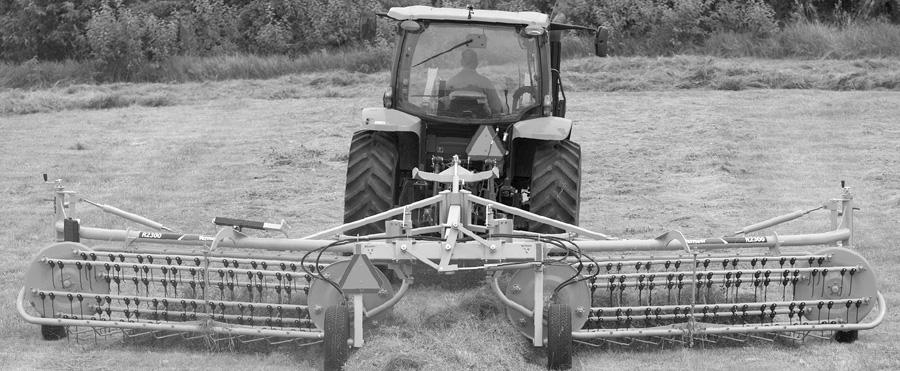
$11,000
3-Highline CFR650 with feed chopper. $24,000 Hustler LX105 UNROLLA
See new inventory on our Facebook page
and transport easily. What’s more, these machines are proven on the millions of acres they have worked and the tremendous resale values they maintain.
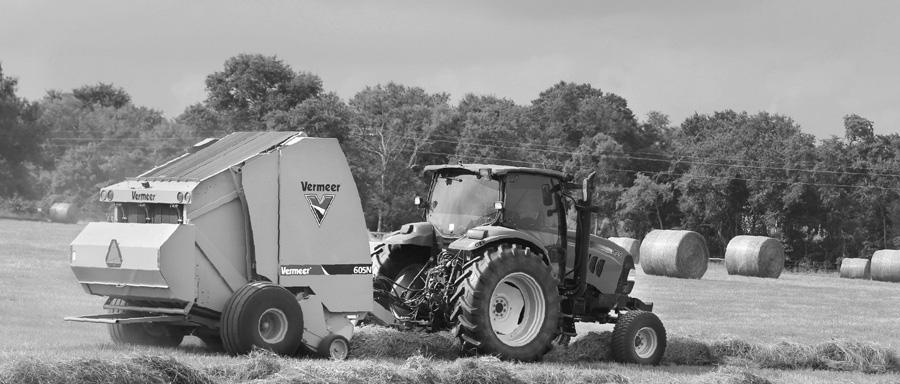

Vermeer
“Lower elevation deficits could catch up in a few storms, similarly the higher elevation surplus could dwindle with a dry January. Mid to high elevation snowpack is the main contributor to summer streamflow” explains Miller. “This early in the snowpack accumulation season, snow conditions can change significantly, and official streamflow forecasts aren’t yet available. Summer streamflow will depend on how the rest of the winter and spring unfold. For now, the snowpack in the mountains is on track, despite the unseasonable absence of snow in the valleys.”
“December brought record breaking precipitation,” said Miller. “Of the 96 SNOTEL stations within the state of Montana, 70 recorded their highest or second highest December precipitation on record.” Poorman Creek SNOTEL in the Cabinet Mountains, recorded its highest precipitation on record (28 years), totaling 46.3 inches since October, over half of the median annual precipitation of 75.5 inches. In December alone, the site recorded 22.8 inches of precipitation. Statewide, December precipitation ranged from 170-300% of median. The atmospheric river accentuated December precipitation. At many lower and mid elevation SNOTEL sites, this precipitation fell as rain that spurred unseasonable snowmelt and elevated river levels, contributing to the historic flooding near Libby. Warm temperatures and heavy precipitation consolidated the snowpack in a manner normally reserved for spring snowmelt. Snowpack density is high across the state, resulting in lower snow depths than usual for the current SWE.
Water year to date precipitation is above normal statewide, around 115-150% of median. The abundant precipitation has helped soil moisture and drought conditions statewide. Soil moisture across much of the state exceeds the 70th90th percentile, though some pockets of below normal soil moisture remain in central and southwest Montana. Drought conditions have improved, with around 51% of the state experiencing abnormally dry to extreme drought conditions. This is a significant decrease from the start of the water year, where 78% of the state was experiencing drought conditions, and one year ago where 93% of the state was experiencing drought conditions. Despite these improvements, mountain snowpack and water year precipitation remain the primary drivers of runoff and summer streamflow.
A full report of conditions on January 1 can be found in the monthly Water Supply Outlook Report available on the Montana Snow Survey website. In addition, real-time snow survey data can be found at nrcs.usda.gov/montana/ snow-survey.
Edison the executioner
By the early 20th century, electricity was spreading to homes and businesses across America. The preferred method was AC, or alternating current, electricity being promoted by George Westinghouse. One guy not too happy about that: Thomas Edision, who came up with DC, or direct current electricity. Edison staged publicity stunts to prove that his method was superior.
Edison went about promoting DC power, and showing that it was safe and effective, in a bizarre way–he’d use AC power to publicly electrocute animals. Edison killed cats, horses, an orangutan and once helped the state of New York execute a convicted ax murderer. Did Edison prove once and for all the greatness of DC power by using it to kill a slew of powerful beasts? Not exactly–AC remained the industry standard.
Vermeer, the Vermeer logo and Equipped to Do More are trademarks of Vermeer Manufacturing Company in the U.S. and/or

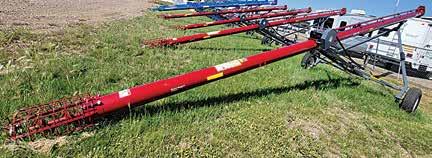









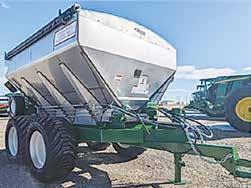



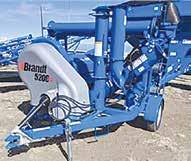

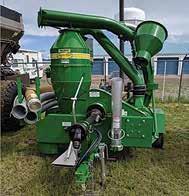
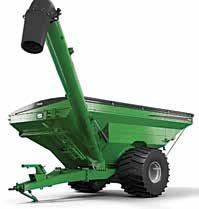

By Pat Melgares, K-State Extension news service
Raccoons living in America’s cities may be showing subtle physical changes that suggest the earliest stages of what scientists call “domestication syndrome,” but a Kansas State University wildlife expert cautions that the masked mammals remain very much wild animals.
Drew Ricketts, a wildlife specialist with K-State Extension, said recent research comparing raccoon populations across the United States found measurable differences between animals living in highly urban areas and those in rural regions.
“When we think about animals becoming domesticated from the wild species that they started out as there are a number of traits that they can develop that basically are adaptations to allow them to be less fearful of humans — or to allow humans to be less fearful of them — that facilitate the process of those critters living in close proximity to humans,” Ricketts said.
The study examined raccoons from
ence,” Ricketts said. “It’s some evidence that raccoons that live in urban environments are developing some adaptations that might facilitate them living closer to humans.”
However, Ricketts stressed that these findings do not mean raccoons are becoming pets.
“Raccoons should still be viewed as wild animals,” he said. “It doesn’t make sense for us to go try and pet them or capture them or anything like that.”
He also warned against intentionally feeding raccoons, noting it increases the risk of aggressive or negative encounters.
“Some researchers have found traits associated with domestication,” Ricketts said, “but that doesn’t mean that raccoons that we see in urban environments are domesticated.”
More information on managing common wildlife animals in Kansas is available online from K-State Extension. counties classified along a gradient of human population density, ranging from highly urban to deeply rural. Counties were ranked on a scale of one to nine, with nine representing areas with 5,000 or fewer people that are not adjacent to a large metropolitan area.
“What they considered to be urban counties was a class one through three,” Ricketts said. “That sort of lines up with what we would expect to be a metropolitan zone, and these are the most urban areas, and so we’re talking about having a quarter of a million people or more living in a county.”
Researchers focused on one specific physical trait: rostrum length, or the length of the snout.
“The researchers wanted to control for some adaptations that might be associated with animals living in warmer or colder places,” he said. “So they included Plant Hardiness Zone,” a measure commonly used to describe regional climate.
After accounting for climate, the results showed that raccoons in the most urban areas had snouts about 4% shorter than those in rural environments.
“That’s a small percentage of a difference, but it was a significant differ -
#####
It takes an estimated 40,000 years for a photon to travel from the core of the Sun to its surface...and then only about 8 minutes to travel to Earth.
#####
In Hazard, Kentucky, a man divorced his wife because she “beat him whenever he removed onions from his hamburger without first asking for permission.”
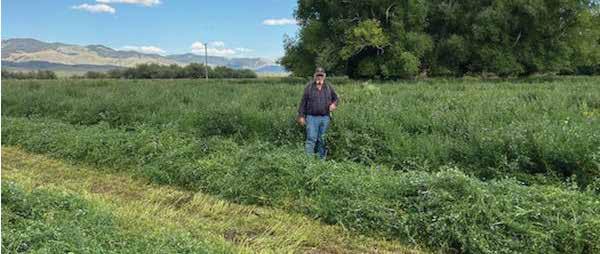

WANTED:
Ford Model A in good condition
Phone Gene Harris, (406) 563-6781
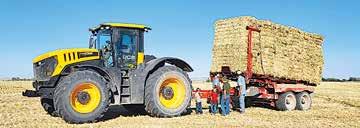
Zimmerman Manure & Silage Hauling
• Any job big or small
•
• Loader and skid steer available.
Arnold Zimmerman, 661 4th Rd NE, Fairfield, MT 59436
NDSU Extension and SDSU Extension to host free aging well webinar series
North Dakota State University Extension and South Dakota State University Extension are hosting a three-part webinar series designed to help older adults, families and professionals navigate key issues in aging. These workshops are offered as live Zoom webinars.
There will be three presentations: February 18, March 18 and April 15. All presentations start at 10 a.m. CST. They are free to attend, and participants can sign up as an individual viewer or as a watch party host and invite a group to participate. Ideal watch party hosts include Extension county offices, senior centers, libraries and community centers. The webinars are archived for later viewing, but participating in the live webinar allows participants to interact with the presenter.
“Aging well is about being proactive, and this webinar series reflects feedback from the community on topics that matter most while offering timely information that supports health and well-being,” says Philip
SHORT ON WATER ?


Estepp, NDSU Extension gerontology specialist in Fargo, North Dakota.
On February 18, Estepp will kick off the 2026 aging well series by presenting “Navigating Family Estrangement in Older Adulthood.” This webinar will explore what family estrangement is, why it happens, its impact on emotional health and caregiving, and ways to offer support and strengthen community connections for adults.
On March 18, Teri Undem will present “Polypharmacy and Deprescribing: Managing Medications for Health and Safety as We Age.” This webinar offers an overview of polypharmacy, the risks of taking multiple medications and how planned deprescribing can improve safety and quality of life for older adults. Undem is the director of Advanced Pharmacy Practice Experiences and a faculty member in the School of Pharmacy within NDSU’s College of Health and Human Sciences.
For the final presentation on April 15, Bobbi Thury will present “Beyond the Will: The Decisions, Documents, and People that Shape Your Estate Plan.” This webinar explains key estate planning documents and decisionmakers, clarifies fiduciary roles and offers strategies to avoid common mistakes and protect assets. Thury is an attorney at law who practices in Sioux Falls, South Dakota.

HERE’S WHAT GROWERS ARE SAYING: (More testimonials available on our website)
“The largest leaves we've ever seen on any alfalfa variety. In a year of no rain and only slight irrigation, 360 D yielded.”
Travis Olsen - Glasgow, MT
“ Ten years ago we planted 5lbs/per acre of 360-D mixed with some grasses The pivot was so short on water, we had to plug some nozzles in order to water parts of the piovt. Over the years the grasses died out due to lack of water, but the 360-D kept increasing. Today, 10 years later, the pivot is solid 360-D and producing well, and still very short on water.”
Cade Davis Spring Valley Ranch - 30 miles east of Ely, NV
“The best dryland alfalfa ever raised. The leafiness was surprising.”
Fred Walters - 40 Mile Colony / Lodge Grass, MT
“We planted 2200 lbs of 360-D. Considering the ‘not so good’ soil we planted 360-D on, and our high altitude, and less than needed rainfall, the 360-D did well enough that we will definitely plant it again”
Marlin Geier - Osage, WY

Register as either an individual or a watch party host at ndsu.ag/aging-well-26. For more information about this workshop or hosting a watch party, contact Estepp at 701-231-6003 or philip.estepp@ndsu.edu.
Manimals!
Piggy Bloody Piggy
Jeffery Platt, director of the Mayo Clinic Transplantation Biology Program in Minnesota, performed human stem cell injections into fetal pigs, and now has a group of pigs that have pig blood cells and human blood cells running through their veins. But it gets weirder: Some of the blood cells are both. Their DNA contains both human and pig genes. Platt hopes the work might lead to pigs being raised for their human blood and organs, but there are several hurdles, including the fact that some pig viruses can be passed on to humans.
##### Were there any non-human dangers for Pony Exprerss riders? Riders faced risks beyond weather and bandits, including encounters with wild animals. Wolves and bears could attack at night, especially on remote stretches of the trail. To stay safe, riders often carried firearms, though the limited space on horseback meant they had to pack light.
HAY FOR SALE

(406) 750-3071
(406) 268-9614
mtmtlfab@gmail.com




Artificial intelligence model to study heart failure in cattle
Chase Markel, a University of Wyoming Ph.D. student from Wheatland, is harnessing artificial intelligence to transform how animal scientists study risk factors for congestive heart failure in cattle.
His AI model, the first of its kind, has been trained to predict the risk of congestive heart failure based on images of a cow’s heart.
Markel, who grew up in the cattle industry, hopes that this new tool can ultimately help alleviate financial losses associated with the condition.
Markel completed both his undergraduate and master’s degrees in the UW Department of Animal Science. He is currently pursuing a doctorate in the same department under the guidance of faculty advisers Hannah Cunningham-Hollinger and Cody Gifford.
As a master’s student, Markel studied pulmonary hypertension, also known as high-altitude disease or brisket disease, in cattle. He didn’t anticipate that this animal science research would eventually lead to a fellowship in the UW School of Computing and the development of a “computer vision” model with the potential to revolutionize his field.
“I’m not a computer scientist, I’m not an AI guy,” Markel says. “I’m someone who is studying heart failure [in cattle] and just happened to have the right conversation and made the connection in order to build something that I think can be useful. It all started with just trying to better understand pulmonary hypertension and heart failure.”
His master’s research indicated that subclinical cases of pulmonary hypertension, in which an animal is affected by high-altitude disease but survives, may have larger economic impacts than direct profit losses incurred when an animal dies before harvest.
Pulmonary hypertension has been linked to congestive heart failure, the focus of Markel’s doctoral research. The size and shape of a cow’s right ventricle are key risk indicators for both conditions. As pressure builds in the right ventricle, the heart becomes thick and misshapen, increasing the severity of pulmonary hypertension and risk of congestive heart failure.
Markel knew that detecting these abnormalities, especially in subclinical cases of congestive heart failure, could potentially provide valuable data for plants and producers.
“Anything we can do to improve traceability and individual animal identification back as far as we can go in the production cycle to try to prevent these things is a net benefit for the industry,” he comments.
As a School of Computing fellow, Markel developed an image classification model calibrated with thousands of heart images taken in commercial processing plants in Nebraska and Colorado. He used a 1-5 scoring system developed by Tim Holt, a close collaborator and professor at Colorado State University, to train the model to correctly categorize images by score.
To date, Markel’s dataset includes nearly 7,000 images, each of them scored by hand, then used to train the model. The new tool has already achieved a startling degree of accuracy. Given an image it’s never encountered before, the AI model assigns the correct score 92% of the time.
Although he continues to refine the model, Markel has provided proof of concept for a novel approach to identifying economically relevant risk factors in individual animals. In fact, he’s currently developing a similar model to evaluate liver images for the presence and severity of liver abscesses, another common affliction in feedlot cattle.
“As researchers, we need to start incorporating these tools into our research and…build that technology so producers and people out in the industry can actually utilize those tools and help improve their bottom line,” he says.
While Markel’s current models are best suited for application in processing plants, he hopes that future iterations will benefit Wyoming producers more directly.
“Chase Markel’s research exemplifies our college’s commitment to conducting Wyoming-relevant research, which integrates emerging technologies, producer experiences and UW faculty expertise to address some of Wyoming agriculture’s most vexing challenges,” comments Kelly Crane, Farm Credit Services of America dean in the College of Agriculture, Life Sciences and Natural Resources.
Markel submitted a provisional patent application to the U.S. Patent and Trademark Office (USPTO) through UW in 2025. He hopes to obtain full patent protection in 2026.
For questions about Markel’s research, contact him at cmarkel1@uwyo.edu.
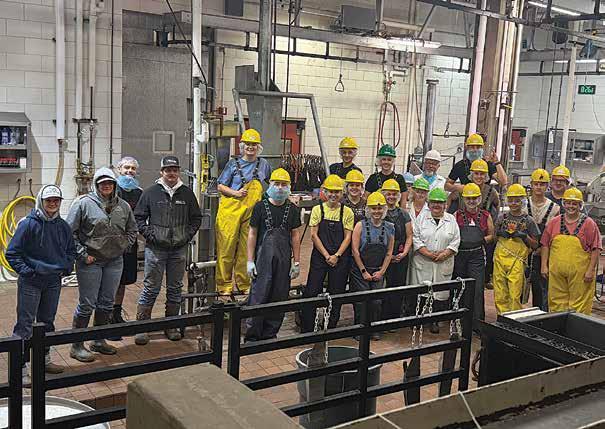
Members of the Cunningham-Hollinger lab, Gifford lab and UW Meat Lab after a beef harvest and data collection session at the UW Meat Lab in September 2025. Ph.D. student Chase Markel, third from left, has created an artificial intelligence model to predict the risk of congestive heart failure in cattle.

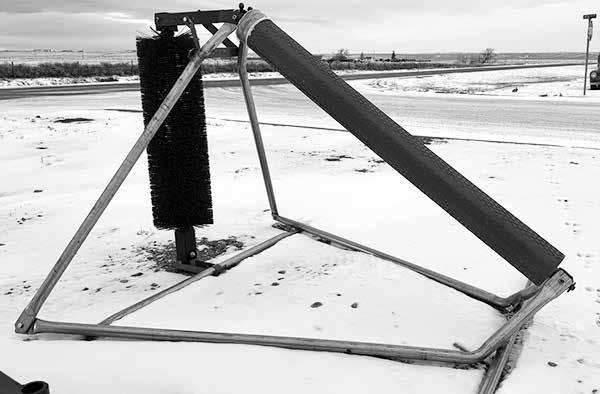
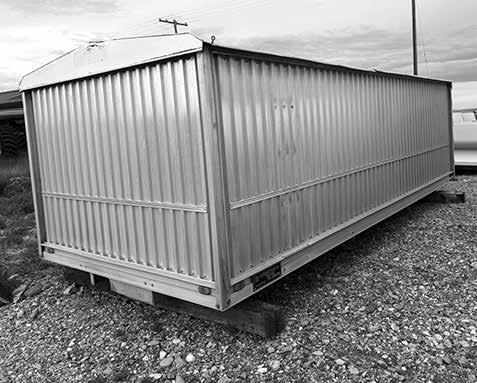
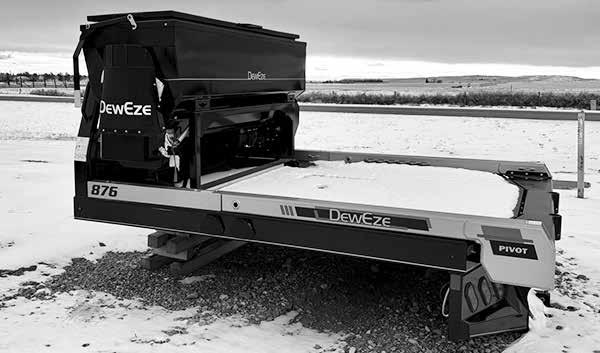
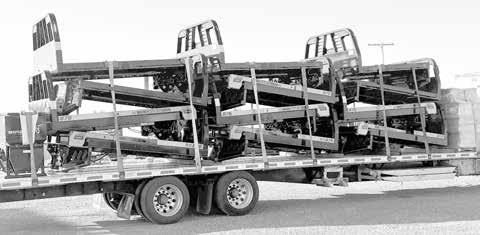
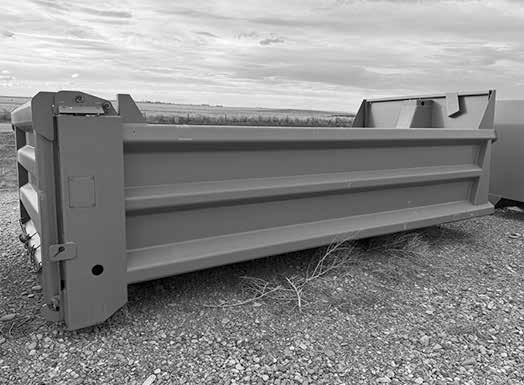

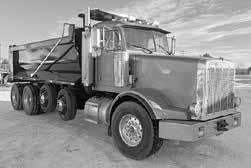
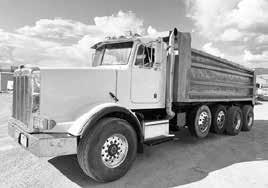
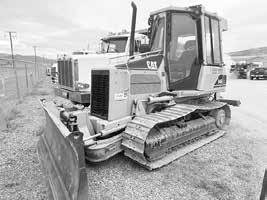
Sizzling science of tallow: Cooking and health
By Brianna Routh, PhD, RDN Associate Professor and MSU Extension Food and Family Specialist; Mikena Ruth, student
in the Montana Dietetic Internship and the Dietetic Systems Leadership Graduate Program
Beef tallow is making a comeback in the kitchen. Once a staple in households, it fell out of favor as vegetable oils grew in popularity. Today, cooks, bakers, and even skincare enthusiasts are rediscovering beef tallow’s unique properties. Tallow is rendered fat that has been gently melted down and purified, most often coming from beef or mutton. Beyond tradition, tallow offers distinct cooking qualities, possible health benefits, and practical household uses. This article explains how to consume and use beef tallow safely and effectively, backed by modern research and food science.
WHAT IS TALLOW?
At its core, tallow is rendered or melted animal fat, made mostly of triglycerides, which are combinations of fatty acids and glycerol, according to Food Science Australia. Beef tallow is primarily saturated and monounsaturated fat, with only small amounts of polyunsaturated fat. The proportion of unsaturated and saturated fatty acids in beef fat is dependent on fat storage location as well as the diet and breed of the animal. Naturally, it appears white to pale yellow, but its color can vary depending on the animal’s diet and the processing method.
Historically, tallow had many roles beyond the frying pan; it was used in soap-making, as a lubricant, and even as livestock feed. Today, its culinary value is driving its renewed popularity, though many still enjoy its versatility in skincare and craft products.
PROCESSING FACTORS
The way tallow is made greatly affects its quality. Two common rendering methods are used to remove moisture and impurities, such as protein and bone, from animal fat. Wet rendering (using steam or added water) typically produces a lighter, more stable fat, since the color impurities are often removed during the boiling process.
Dry rendering (direct heating without added water) may lead to darker color due to concentrated, heat-induced impurity reactions that cannot be bleached out.
Food safety is also a key consideration. Recent research showed that Salmonella can re-enter tallow if it comes into contact with contaminated surfaces or water during handling. To reduce risk, tallow should be rendered slowly, stored dry, and always reheated to frying temperatures before safe reuse.
NUTRITION AND HIGH-HEAT PERFORMANCE:
TALLOW VS. OTHER FATS
Nutritionally, beef tallow is made up of about 58% saturated fat, 35% monounsaturated fat, and 2% polyunsaturated fat. This composition makes it highly stable for high-heat cooking such as frying, because it resists formation of oxidation as fats breakdown. Tallow also contains fat-soluble vitamins such as D and E, as well as choline.

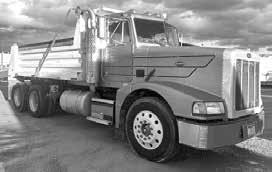

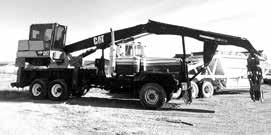
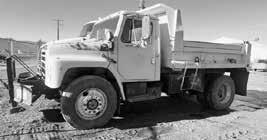

The downside is its saturated fat content. Diets high in saturated fats may raise LDL (“bad”) cholesterol levels, increasing heart disease risk. The American Heart Association recommends keeping saturated fats to no more than 6% of daily calories, while the Dietary Guidelines for Americans suggest staying below 10%.
In contrast, seed oils like canola, soybean, sunflower, and safflower are higher in unsaturated fats, which are linked to heart health benefits. They also provide omega-3 and omega-6 fatty acids. However, modern diets often supply too much omega-6 relative to omega-3, which may contribute to inflammation when coupled with calorie-dense processed foods. Compared with tallow, many seed oils undergo faster oxidation that may damage cells or contribute to inflammation.
The takeaway: Tallow is excellent for high-heat cooking, but like all fats, it should be consumed in balance with healthier, unsaturated fat sources such as olive oil, nuts, and fish.
CULINARY USES: HOW TO COOK WITH BEEF TALLOW
In the kitchen, tallow shines as a frying fat. Its high smoke point (400-420F) and heat retention make it ideal for crispy French fries, golden fried chicken, stovetop popcorn, or sautéed vegetables. Because of its stability, fried foods cooked in tallow may even absorb less fat compared to those fried in some vegetable oils.
Bakers also appreciate tallow for its flavor and texture. It lends a rich, savory note to biscuits, pie crusts, and gravies. When reusing tallow for frying, strain it through cheesecloth
CONTINUED ON PAGE C43
Sizzling science of tallow: Cooking and health
to remove food particles. However, replace it after several uses, especially when frying protein-rich foods like chicken, which accelerates fat breakdown.
Finally, while tallow is biodegradable, it should not be poured directly into drains or waterways. Allow it to harden before disposing it in the trash or repurpose it in household projects like soap-making.
BEYOND COOKING: SKINCARE
Beef tallow has also found a niche in natural skincare. A 2024 review noted that it contains vitamins A, D, E, K, and B12, and its fatty acid structure closely resembles that of human skin lipids. The report suggests this similarity may support hydration and even aid in wound healing.
That said, tallow is not for everyone. Some people may experience skin irritation, especially those with sensitive skin. A patch test is recommended before regular use. For those who tolerate it, tallow-based balms and lotions can provide a natural alternative to commercial moisturizers.
TIPS FOR BUYING, RENDERING, AND STORING
If you’d like to try tallow at home, here are a few practical tips:
Buying: Look for grassfed beef tallow, which may have a slightly different nutrient profile, or render your own suet from a USDAinspected processor.
Rendering: Use low heat and strain out impurities for the cleanest product. Water boils at a lower temperature, so watch your thermometer. While boiling, if your temperature starts to increase, this indicates that your tallow is now dry.
Consumption: Use in moderation, balancing with plant-based oils and fish for a healthier fat intake.
Storage: Keep tallow in an airtight container. It lasts weeks at room temperature, months in the fridge, and up to a year in the freezer. Discard if it develops an off smell, discoloration, or rancid taste.
With renewed interest in traditional fats, beef tallow is reappearing in kitchens and some store shelves. When rendered and stored properly, it provides a reliable, flavorful option for high-heat cooking and even skincare. As with all foods, balance and moderation are key. Before making changes to the fats in your diet, consult a registered dietitian or healthcare provider to ensure your choices support your individual health goals.



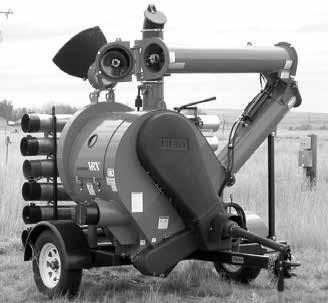
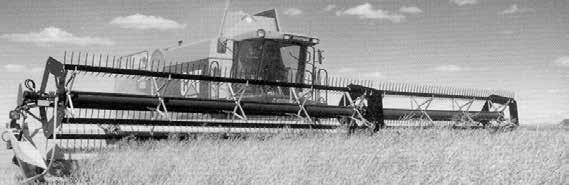
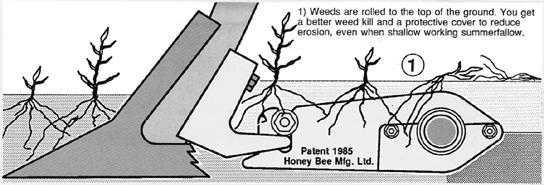
PANELS FOR SALE
150 new 12-ft. light weight “economy” corral panels $90 each (minimum of 50 panel purchase) Phone Bill at (208) 651-8698. Phone calls only, NO TEXT
V aquero

Why cropland grazing now?
By Parker Witt SDSU Extension Crop-Livestock Systems Field Specialist

Forage Barley
Forage Barley
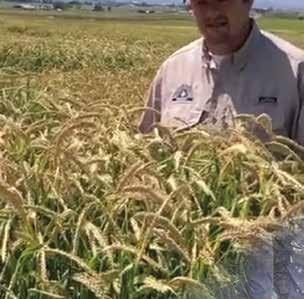






Highland Specialty Grains
Cropland grazing, or ‘integrated crop-livestock systems’ (ICLS), is not a new concept in South Dakota. At its core, cropland grazing occurs whenever livestock graze on cropland acres, allowing the byproducts of one system to become inputs for another. The most common example is crop residue grazing after harvest. But, cropland grazing can also strengthen operational resiliency when paired with precision grazing, interseeding forages, cover crops, and diversified rotations.
Announces
Announces
V aquero Announces Forage Barley
the release and availability of ‘Vaquero’ forage barley. ‘Vaquero’ is a hooded, spring-planted barley to produce forage for livestock.
the release and availability of ‘Vaquero’ forage barley. ‘Vaquero’ is a hooded, spring-planted barley developed specifically to produce forage for livestock.
The central question for many producers is not what cropland grazing is, but whether now is the right time to initiate the practice in the management of the farm or ranch. It is best understood through an investment lens: the upfront costs are the principal, while the return comes from new revenue streams, reduced reliance on purchased inputs, and improved long-term productivity. Let’s break this down a bit further.
Soil Health and Agricultural Resilience
Vaquero is a nutritious, palatable, and economical alone or in blends with harvested as hay or silage.
Vaquero is a nutritious, palatable, and economical forage that can be grown alone or in blends with other species. It is generally
as
Cropland grazing is more than just an investment; it is a management tool that builds value in the land itself. Livestock integration is one of the five principles of soil health; driving nutrient cycling, water infiltration, and organic matter accumulation. These processes build ‘soil capital’ within cropped acres that typically rely on purchased nutrients to maintain yield goals.




‘Vaquero’ yields more forage, stands better, and is taller than Stockford. ‘Vaquero’ also produces well when compared to other forage barley varieties.
Highland Specialty Grains, Inc., is the premier breeder of proprietary barley varieties in the western UnitedStates.
‘Vaquero’ yields more forage, stands ‘Vaquero’ also produces well when of proprietary barley varieties in the western UnitedStates.
SDSU research found that when conventional corn-soybean rotations were expanded to include small grains, cover crops, and cropland grazing, researchers observed significant increases in soil organic matter, infiltration, and pore space. Such gains represent long-term value in the land, helping producers weather market swings and climate extremes by stabilizing yields and reducing input needs.
For more information see the Highland Specialty Grains website: highlandspecialtygrains.com
For more information see the Highland Specialty Grains website: highlandspecialtygrains.com



Concerns about compaction are valid, but research from USDA-NRCS in South Dakota indicates that grazing on dry or frozen ground does not increase compaction or reduce yields. Instead, the real risk comes during wet periods, making careful timing and stocking adjustments essential for protecting soil health.
Current Use Across South Dakota
SDSU surveys in 2018 and 2021 found that more than half of South Dakota farmers already use cropland grazing within their operations. The top benefits reported were reduced feed costs, improved soil fertility, and increased yields. While challenges such as infrastructure costs, water access, and compaction risk remain, over 75% of respondents reported equal or improved crop yields and overall profitability when integrating cropland grazing into their operations.
Turning Acres Into Income
Beyond soil health improvement, cropland grazing allows producers to “do more with less” by capturing value from forage that would otherwise go unused. For livestock producers, this is especially important as South Dakota hay prices increase, with reports above $100/ton at the time of this article.
Forage quantity and quality vary by cropland grazing practice:
Corn residue grazing often provides 2,000-10,000 lbs./ac of forage, with 3–11% crude protein, but at a diminishing energy return as cattle select higher energy grain and leaf residue before grazing stalks, husk and cob.






Cool-season annual mixes (brassicas, rye, oats, camelina) yield about 250 lbs./ac per inch of plant height.
Warm-season annual mixes (sorghum, sudangrass, millet) average 200 lbs./ac per inch.
Annual forage mixes and cover crops can reach crude protein levels of 10–30%, depending on species and maturity. Economic studies confirm these opportunities. At SDSU’s Southeast Research Farm, grazing cover crop blends after small grains returned $17.23/ac in the first year and $43.61/ac in the second year, even after accounting for seed, planting, termination, fencing, and water costs. With infrastructure lasting a decade or more, profitability continues to increase each year. Notably, no reductions in crop yields were observed, meaning that soil health gains documented in other studies would further increase the return.
Cropland also carries value as a leased forage resource. Pastureland in South Dakota increased more than 7% in value over the past year, with grazing rental rates generally ranging from $1.50 to $3.50/head/day in some regions, depending on class of livestock and other contract parameters. Cropland grazing lease rates typically begin at $0.50-2.00/head/day for residue and rise with forage quality and quantity. It is CONTINUED
Highland Specialty Grains
Why cropland grazing now?
CONTINUED FROM PAGE C44
recommended to develop grazing leases on a head-per-day basis to protect everyone involved and to prevent over or underutilization of the forage resource. These opportunities provide strong economic incentives at a time when fertilizer and agrochemical prices continue to rise, as livestock grazing suppresses weeds and recycles nutrients to the betterment of future crop years.
The Bottom Line
The evidence is consistent: cropland
grazing delivers measurable economic returns, proven soil health benefits, and growing adoption in South Dakota. While infrastructure and management remain challenges, producers have shown that when done right, cropland grazing builds both financial and ecological resilience.
The question is not whether cropland grazing works, but whether now is the time to invest. For many South Dakota farms and ranches, the answer is yes.

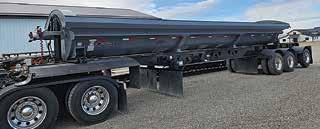










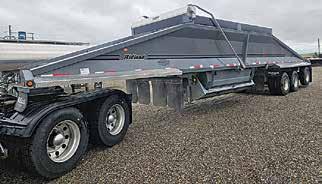
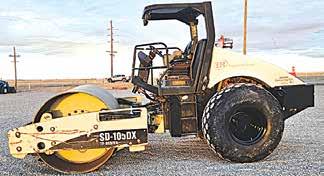

The deadline for advertising in the March 2026 issue of the Trader's Dispatch will be February 25th. Phone (406) 271-5533.
SPRAYER & TRACTOR FOR SALE
2013 Case IH Patriot 3330 sprayer, 1270 hours, luxury cab, Pro 700 receiver, 100ft. AccuBoom section control, wide and narrow tires, chemical eductor, no DEF, excellent condition.
Case IH 500 HD tractor, 1939 hours, 520/85R46 tires, 6 hydraulics, high flow pump, one owner, excellent condition.
Phone (701) 974-3846, Richardton, North Dakota







Dakota Gardener: The days are getting longer
By Joe Zeleznik, Forester, NDSU Extension
It’s been a tough winter on my spruce trees, and we’re only in December!
The heavy snow and high winds have pulled a lot of needles and smaller twigs from the trees. It doesn’t help that, when I clear the driveway with the snowblower, the spruce trees are right where I aim the chute.
But these trees will endure, as they do every winter.
Evergreens are powerful symbols of renewal and rebirth. The tradition of bringing an evergreen tree or boughs into the home has been around for thousands of years. During the darkest — that is, shortest — days of winter, evergreens are a reminder that spring will eventually come and that nature will begin its cycle of growth once again.
So, I’m not too worried about those spruce trees. Most of those fallen needles were dead or dying anyway. The wind and snow just hastened their fall. Unfortunately, a few healthy twigs were lost in the process.
It’s like brushing the dog’s coat — we pull out the extra hairs that have served their purpose and are not needed anymore. Mostly. A few of the newer and younger hairs can get pulled out in the process, but not enough to harm the dog.
And the tree trees will go on.
And it’s not just the evergreens that remind us of growth in mid-winter. Some trees and shrubs still have fruit on them, sustaining birds and other wildlife through the lean times.
Last weekend, I watched a bunch of chickadees at my daughter’s house, working their way through the brush in her backyard. They were searching for food to sustain themselves, and they were successful.
The birds — and the trees — will not only endure winter, but they’ll also persevere. What’s the difference?
Endurance is more passive and involves outlasting the tough times. Perseverance involves growing through the tough times, changing and becoming stronger.
Endurance is easy to understand with the trees. They’re pretty passive in winter when they’re dormant. We don’t see any growth, nor will we see any until the buds begin to swell in spring.
It’s harder to observe perseverance in the trees right now. As far as we can see, there’s nothing active happening. But inside the trees, in their smallest cells, they’re slowly active. Very, very slowly.
Dormancy in trees reminds me of hibernating bears. The bears are alive and breathing. They’re making energy from their fat to stay warm, but everything is slowed down.
In the trees, those cells are slowly burning the sugar they made in their leaves last summer. They’re processing the hormones that keep them dormant, and ever so slowly, they create other ones that will signal the timing for budbreak in the spring.
The trees’ persistence and perseverance give me hope. The darkest days are here right now, but spring will come again. It does every year.
National Pizza Day

This holiday is always celebrated on February 9th Today is just one of several pizza holidays. That’s because the vast majority of people, in America and around the world, love pizza and eat it regularly. So, we need more than one pizza-related holiday.
Pizza pies are very versatile, with a huge assortment of things you can put on them, including meats, vegetables, and fruits. And, don’t forget the fish. Anchovies! With all this variety, there is a pizza for just about everybody. Pizza is eaten for breakfast (often cold), lunch, dinner, and as a late-night snack. It is a very popular food for parties and events. On the go? Pizza is a great selection and it’s perfect for moving day.
Pizza Trivia
• Pepperoni is the most popular, preferred by 36% of the people.
• Over 3 Billion pizzas are sold in the U.S. each year.
• More pizzas are sold on Super Bowl Sunday, than any other day of the year.
• Halloween is the second most popular day for eating pizzas.
• Over 17% of restaurants are pizzerias or serve pizza.
• The first pizza was sold in Naples Italy in 1738.
• Pizzas most likely evolved as a variation of flatbreads.
• Americans consume over 23 pounds of pizza per year.