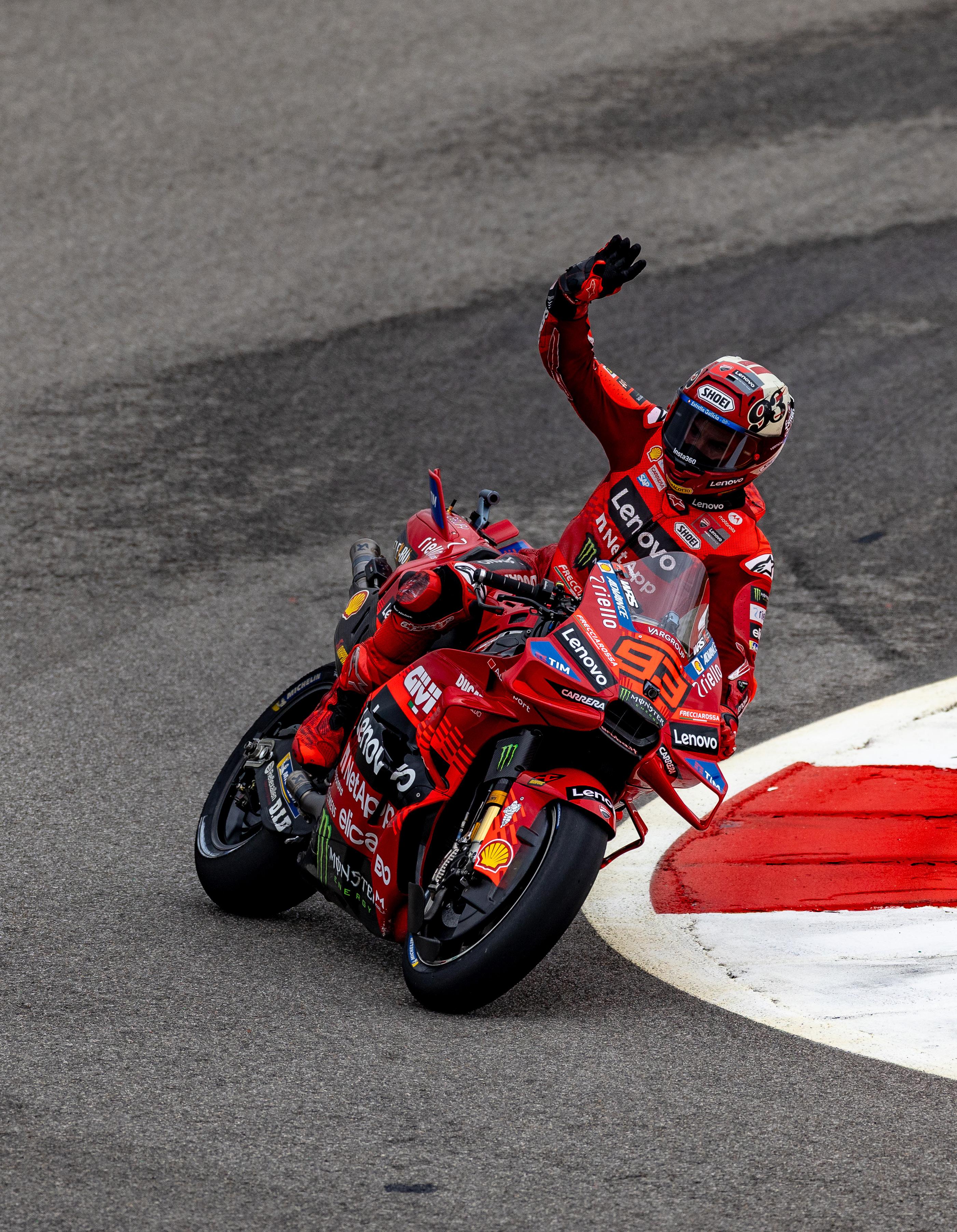
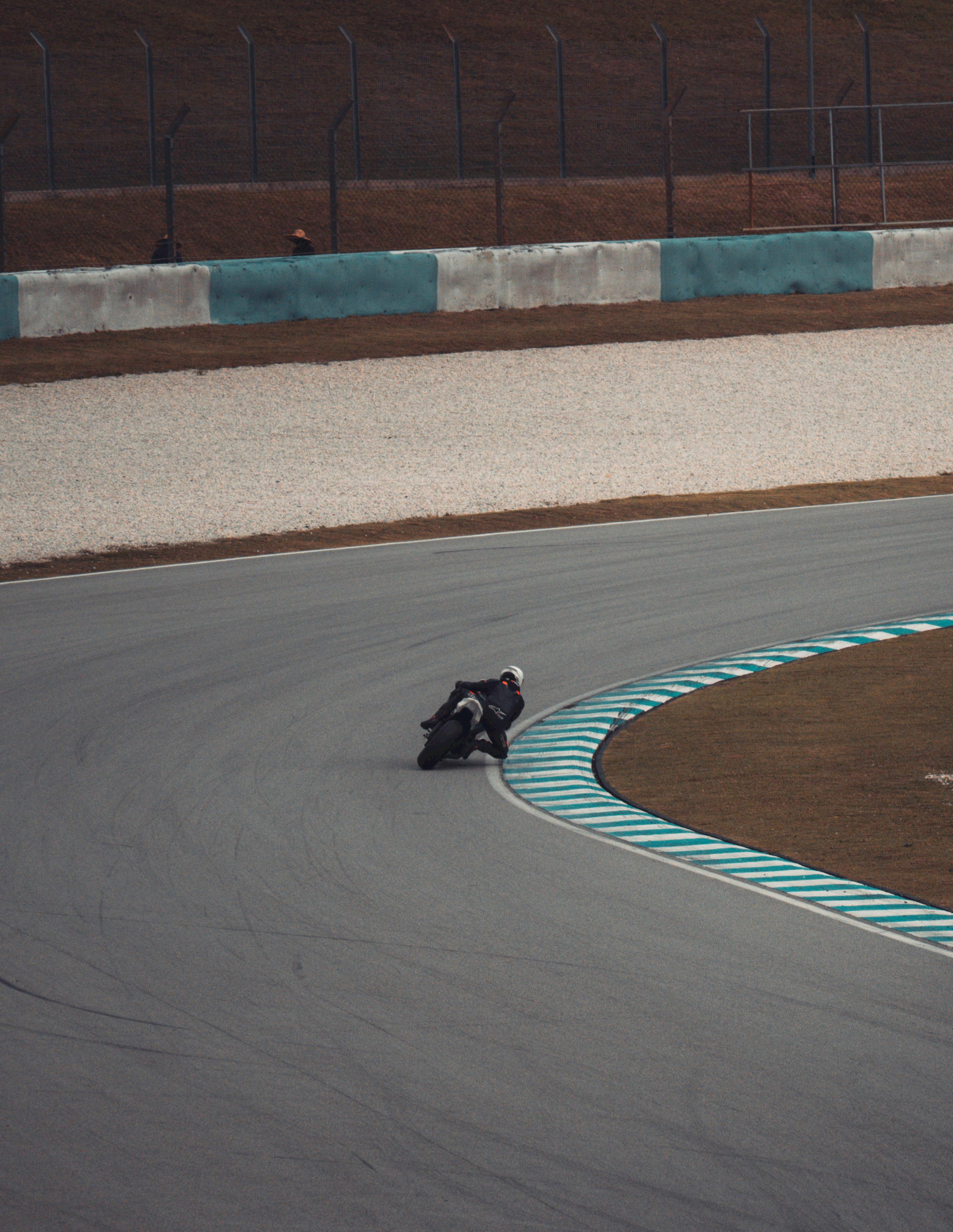
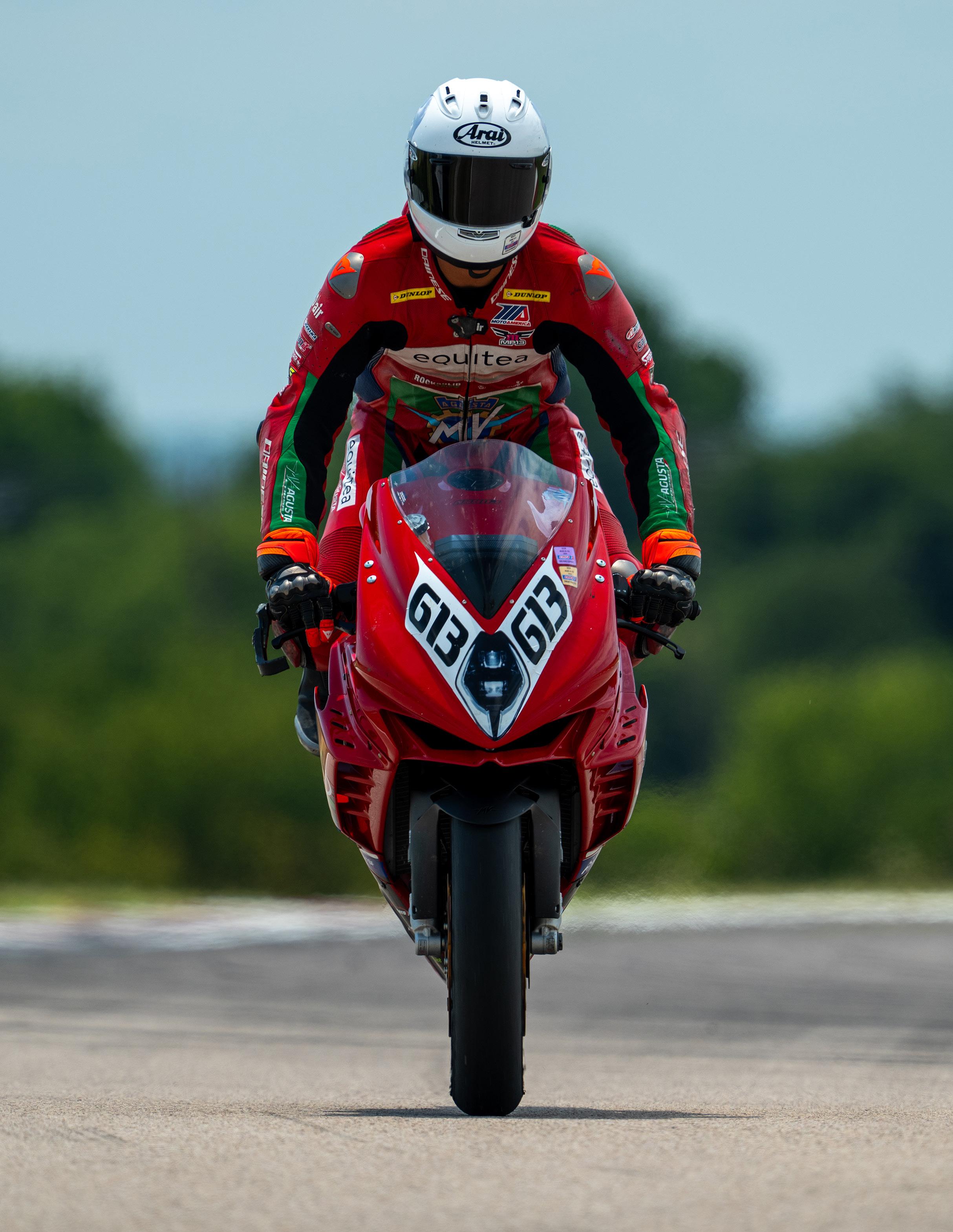
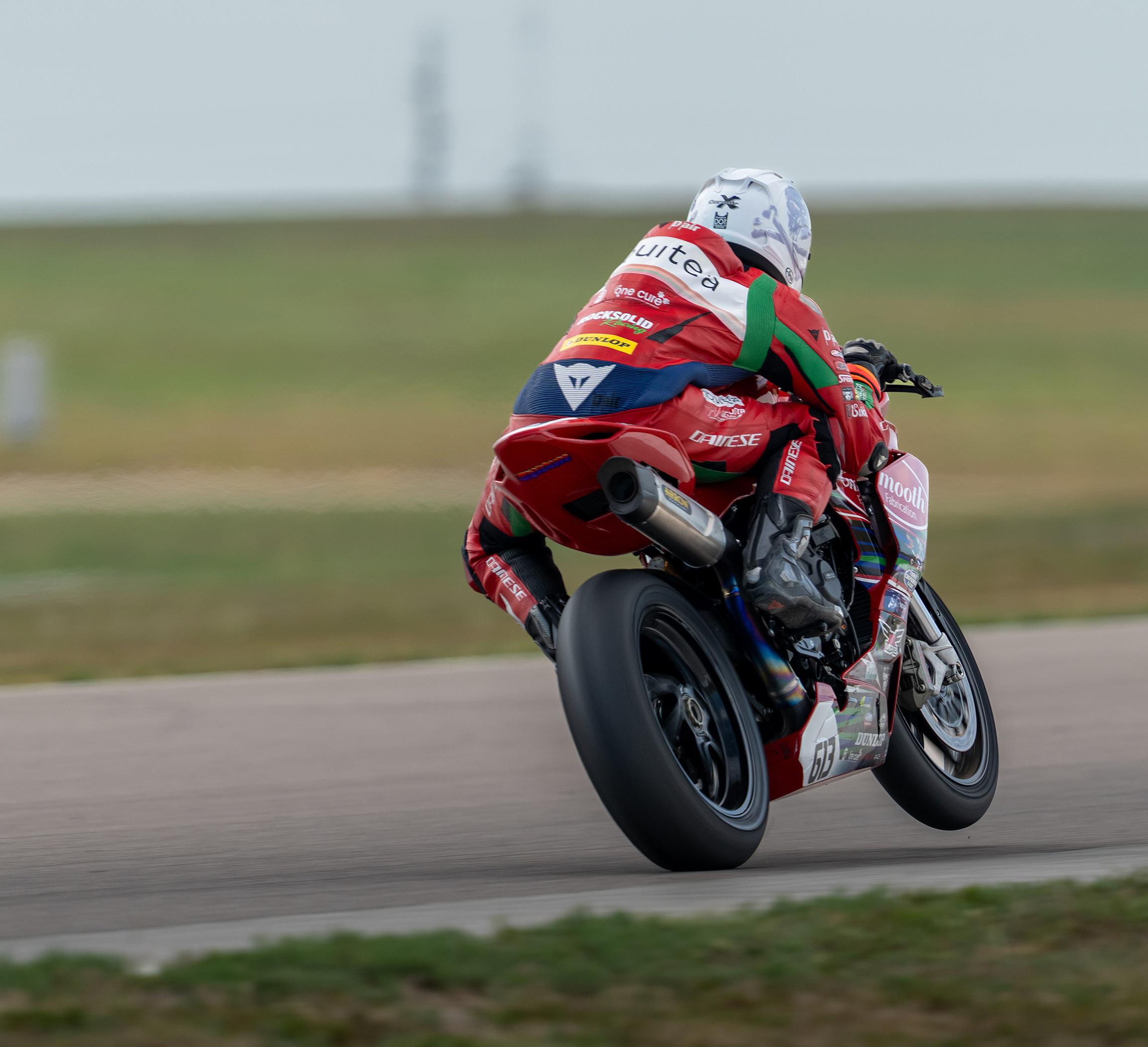
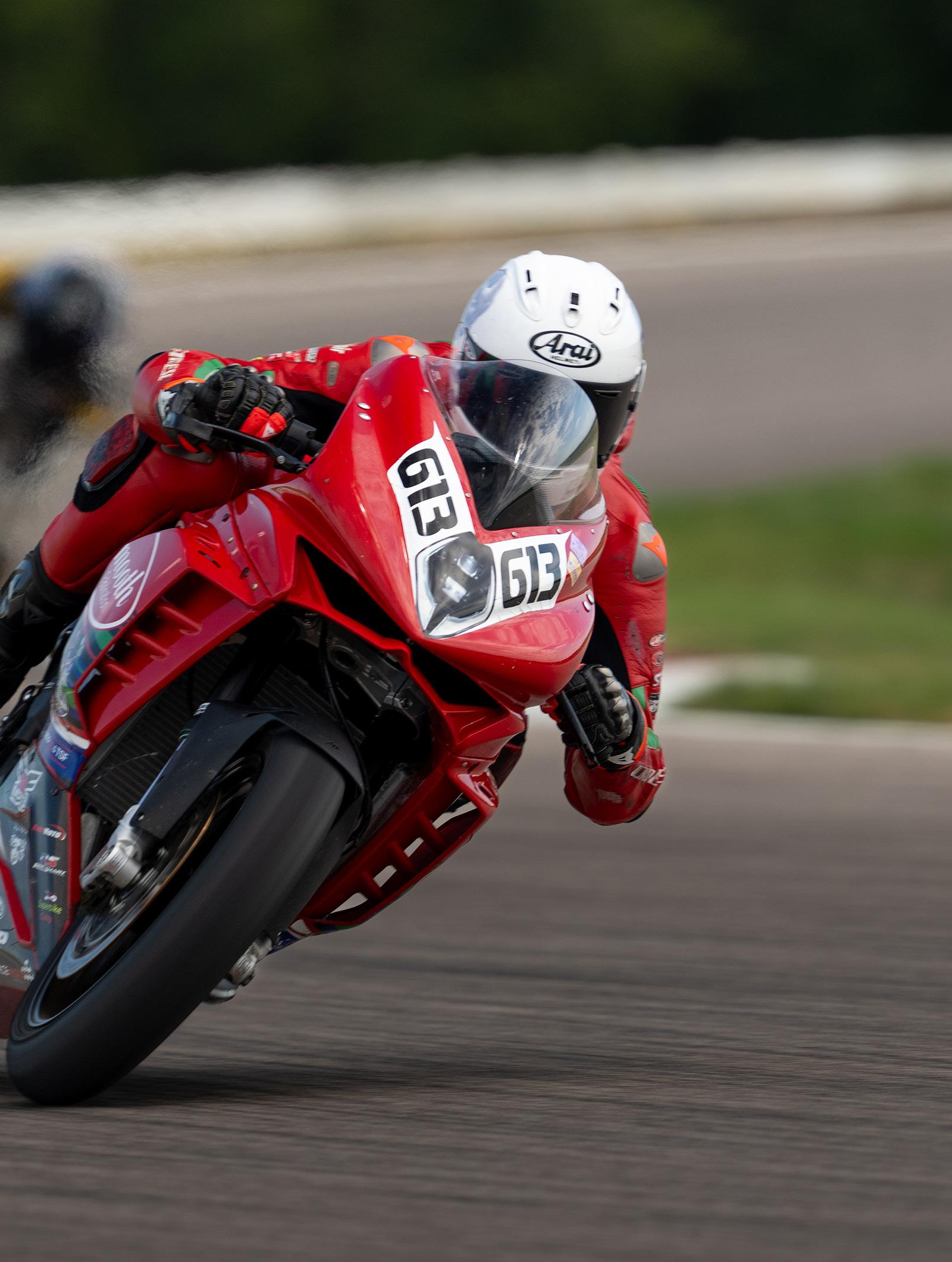
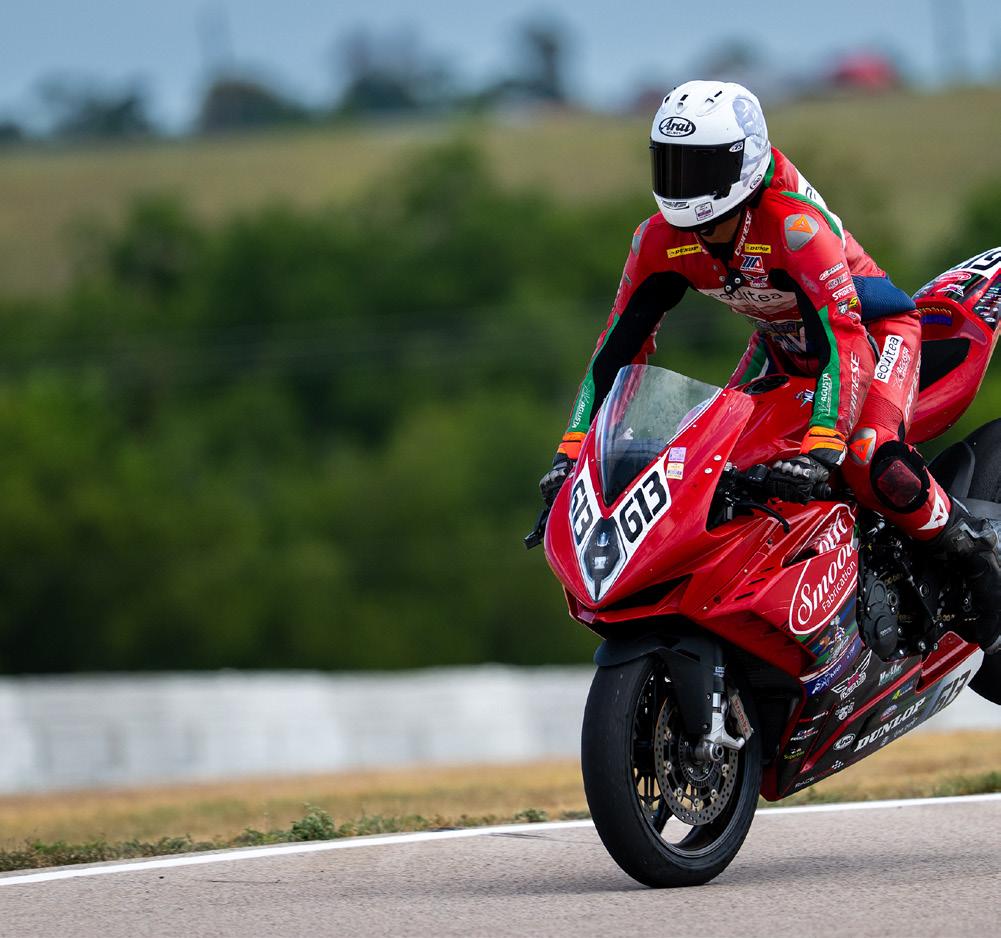
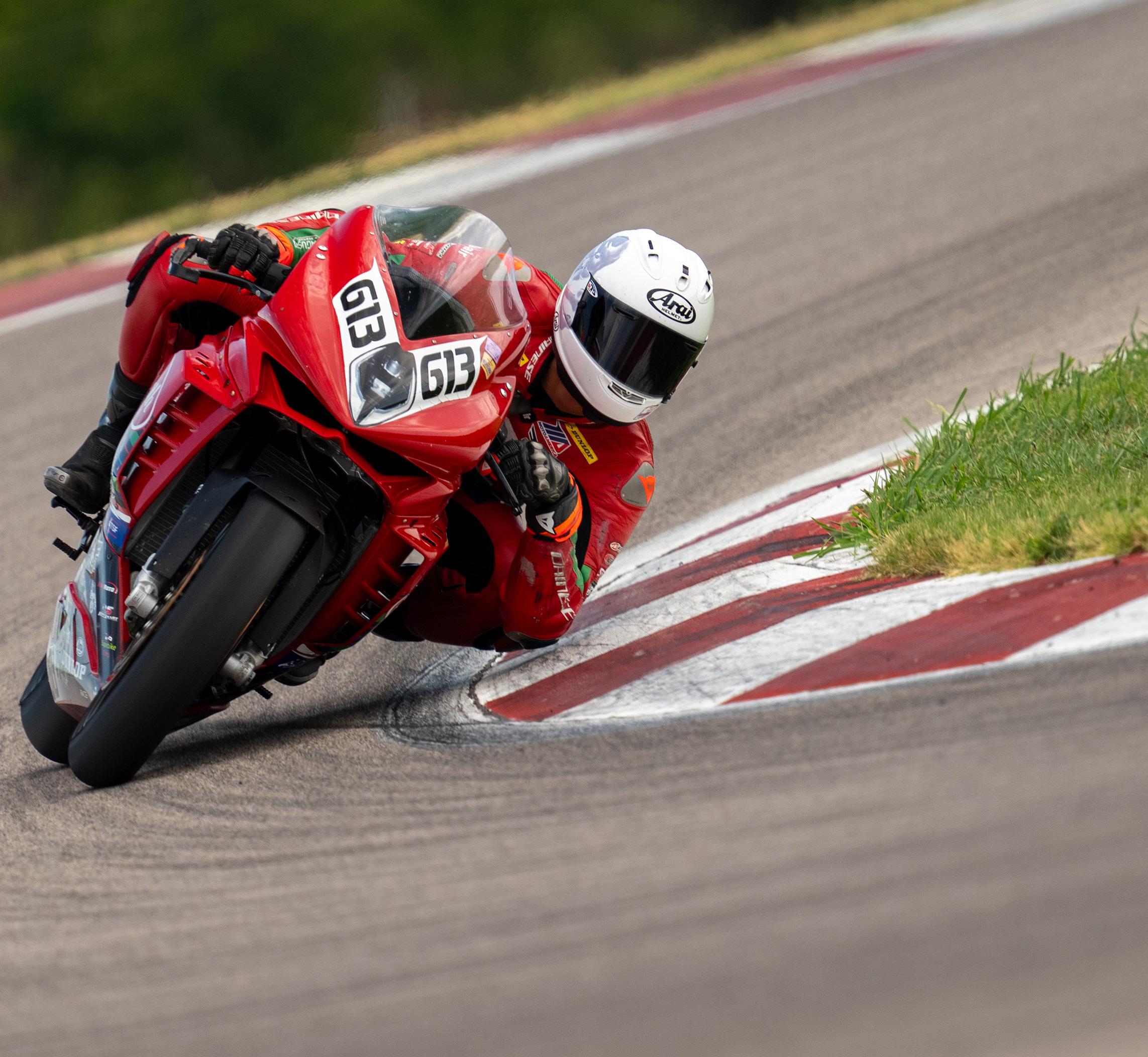
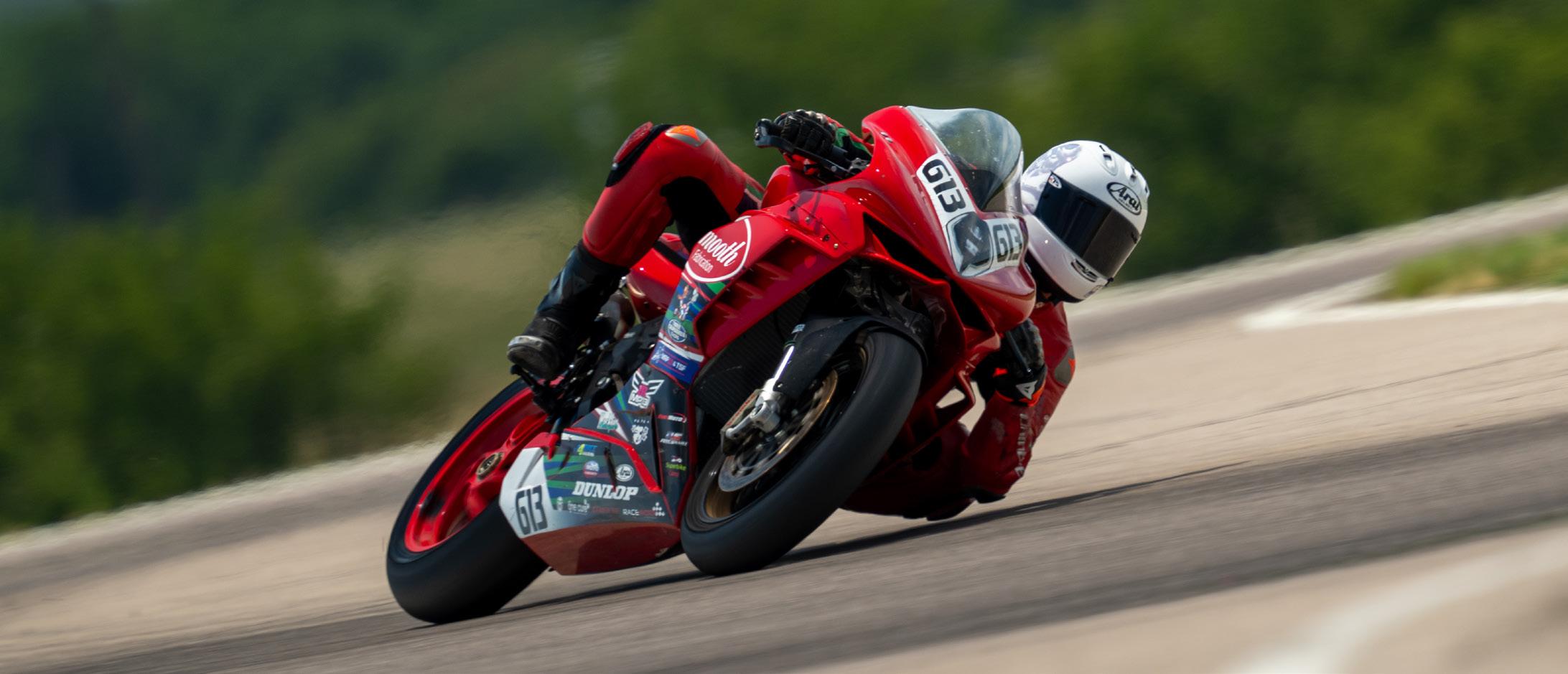
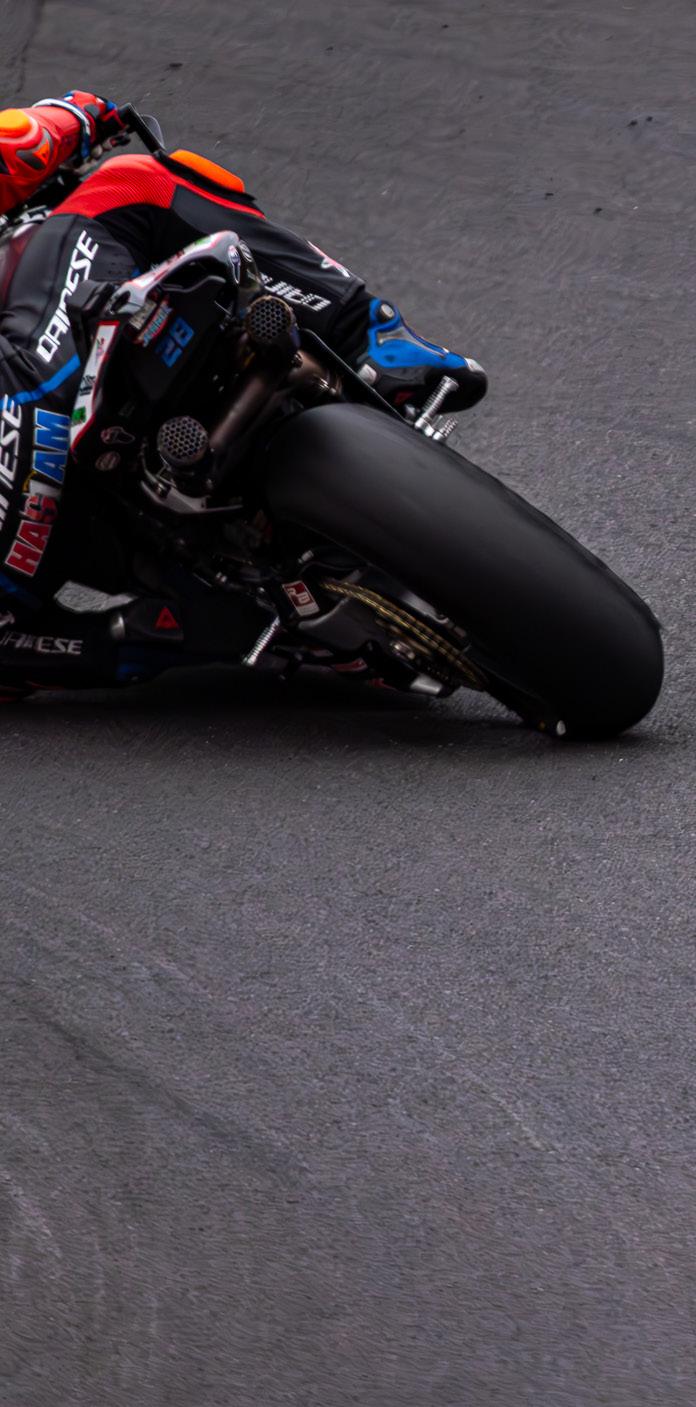
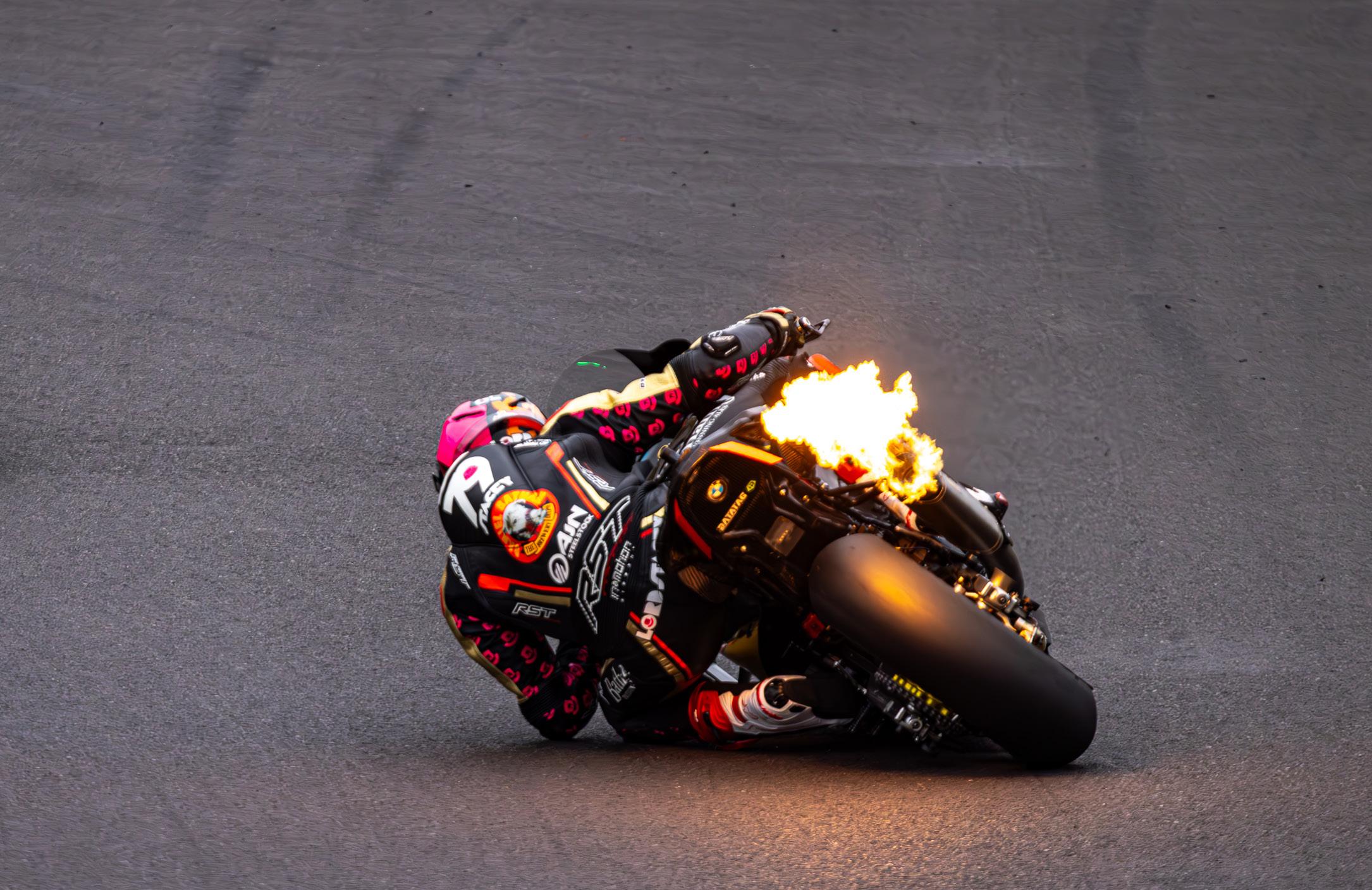
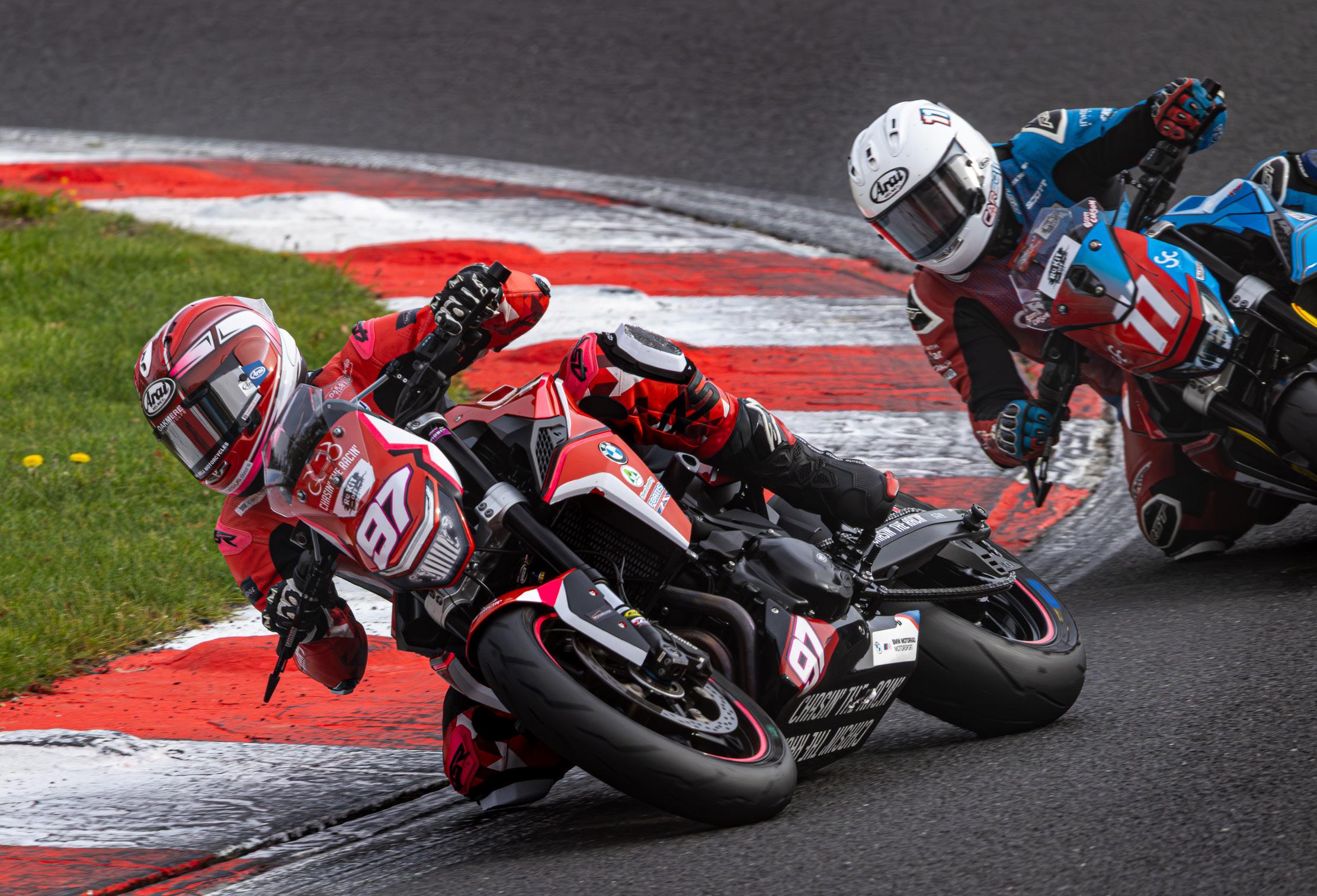
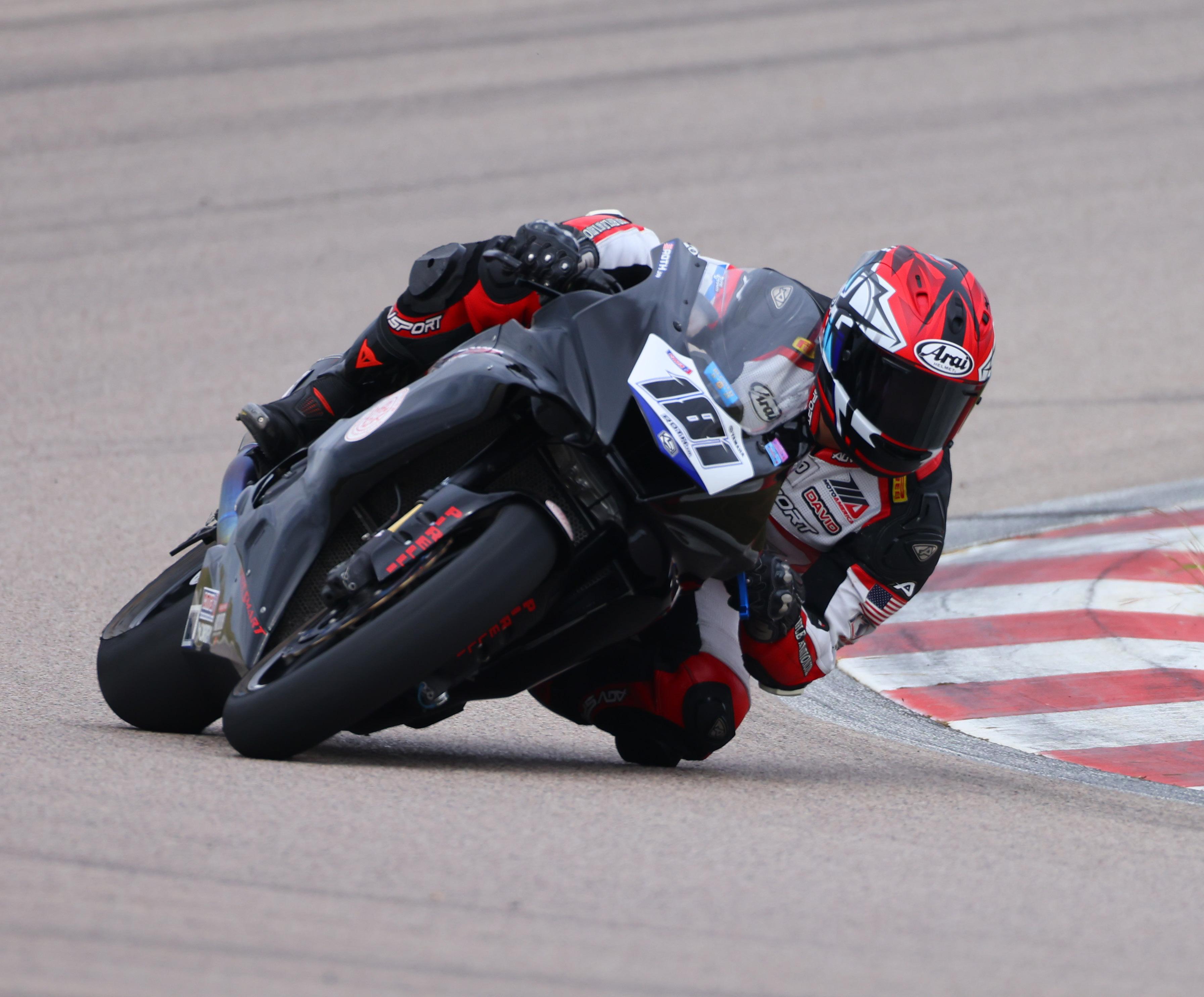
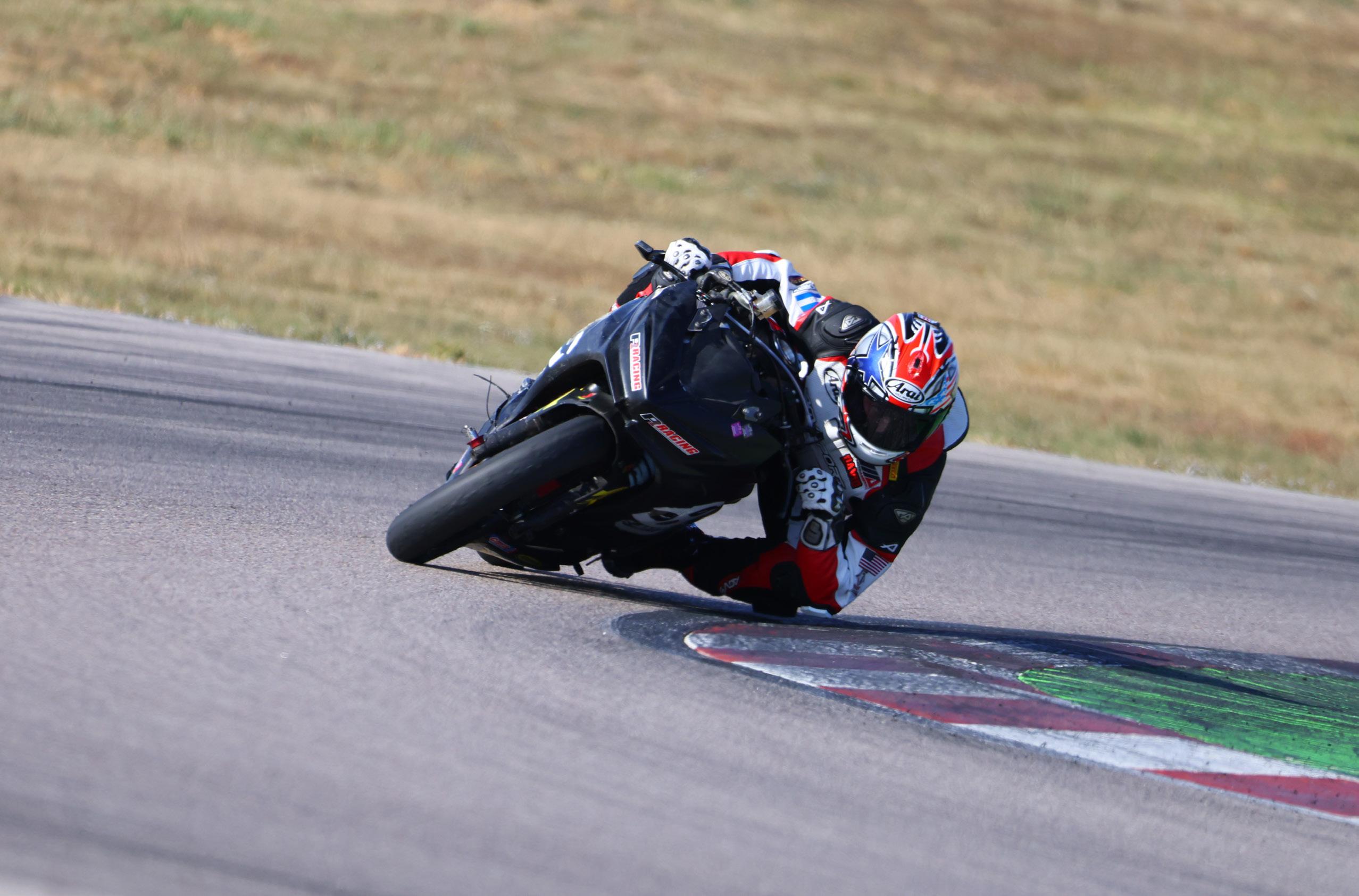
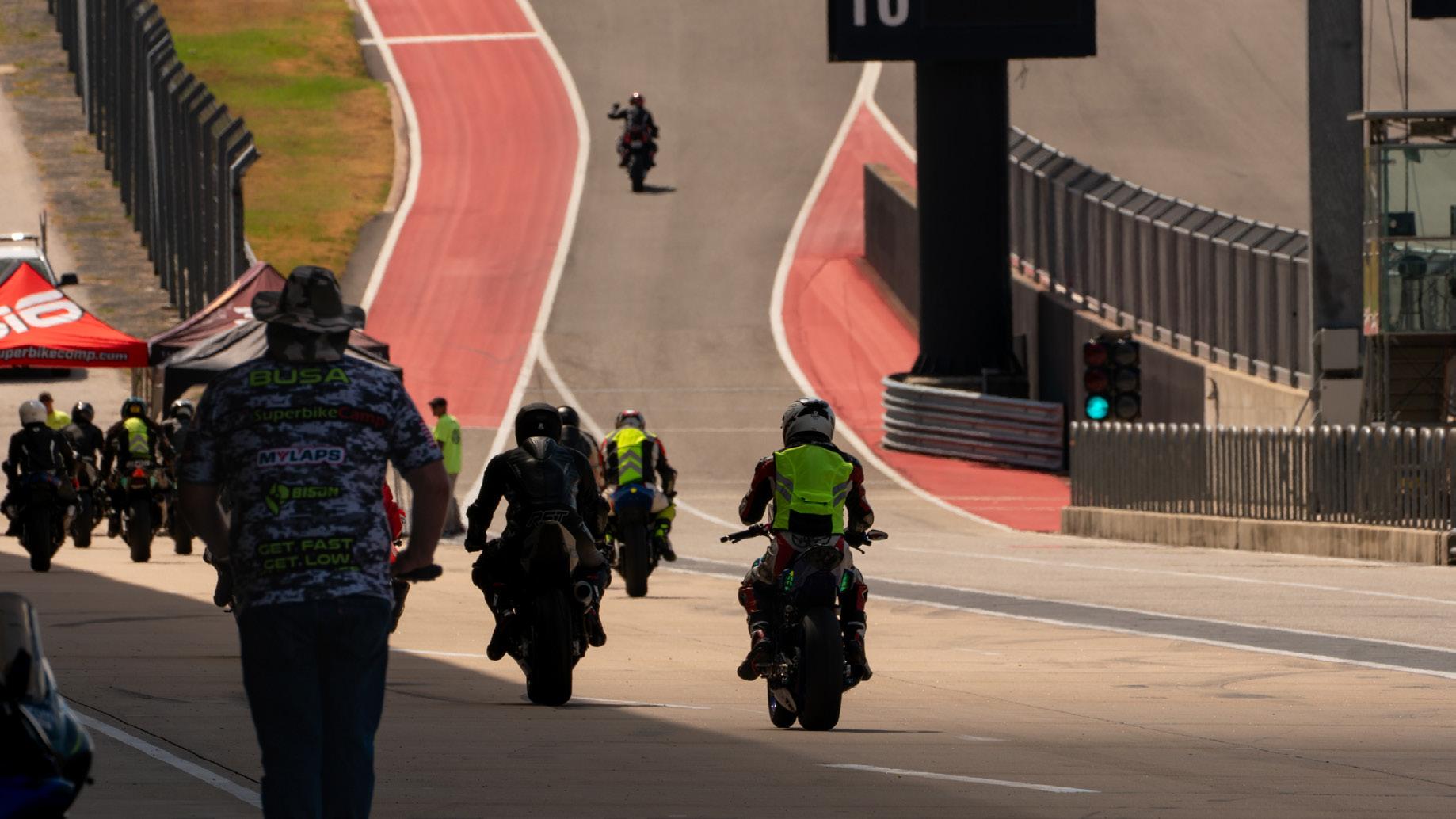
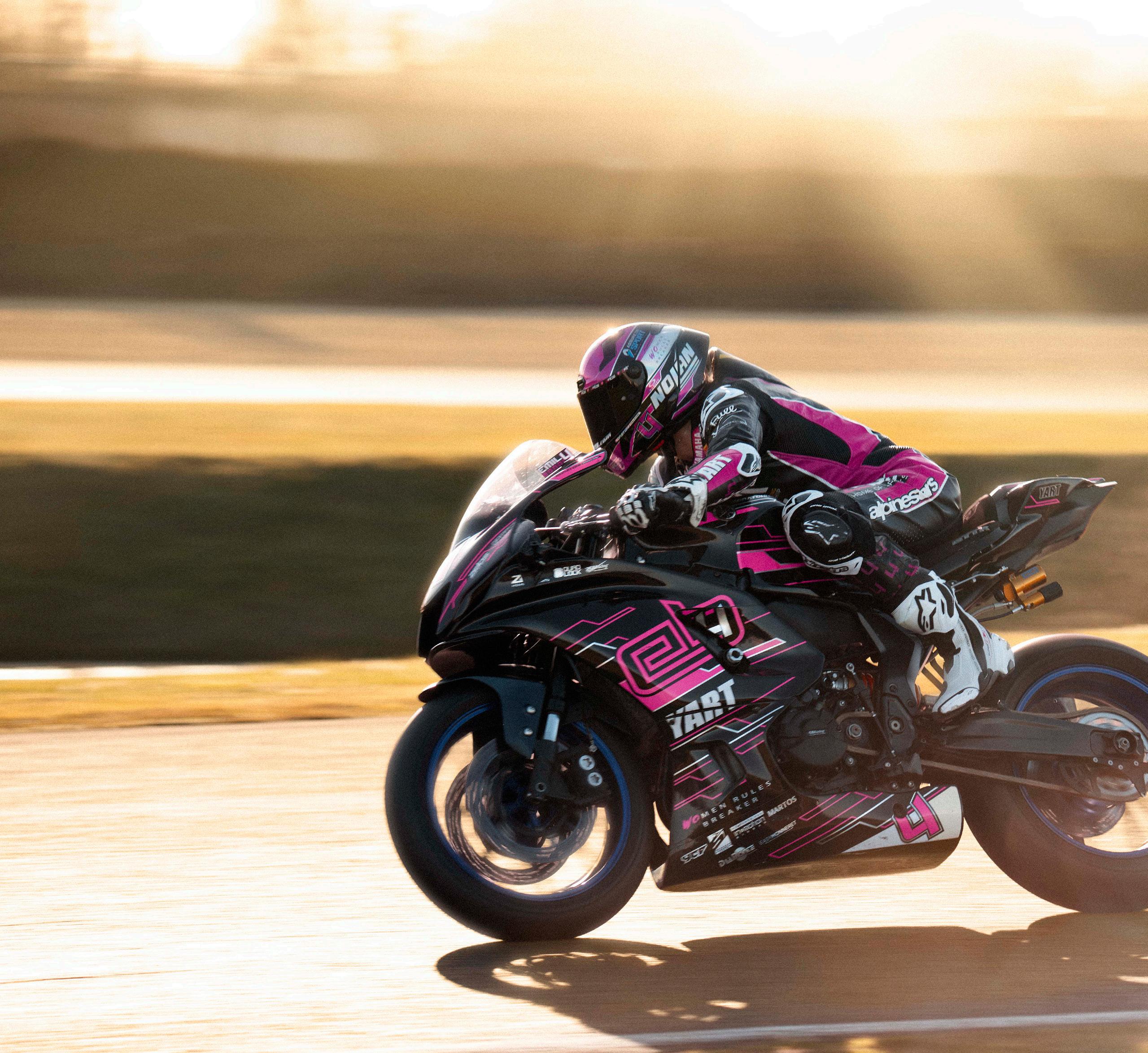
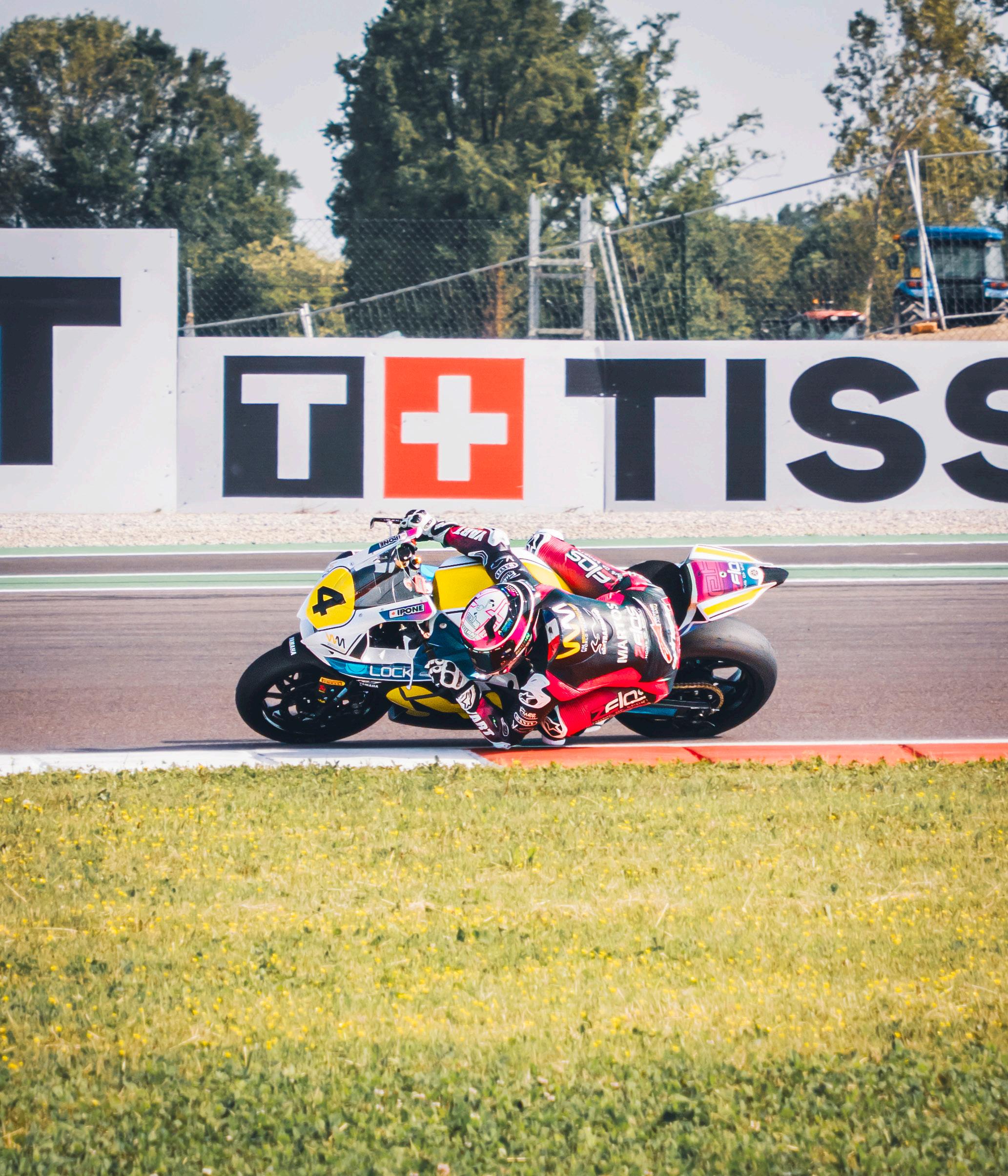
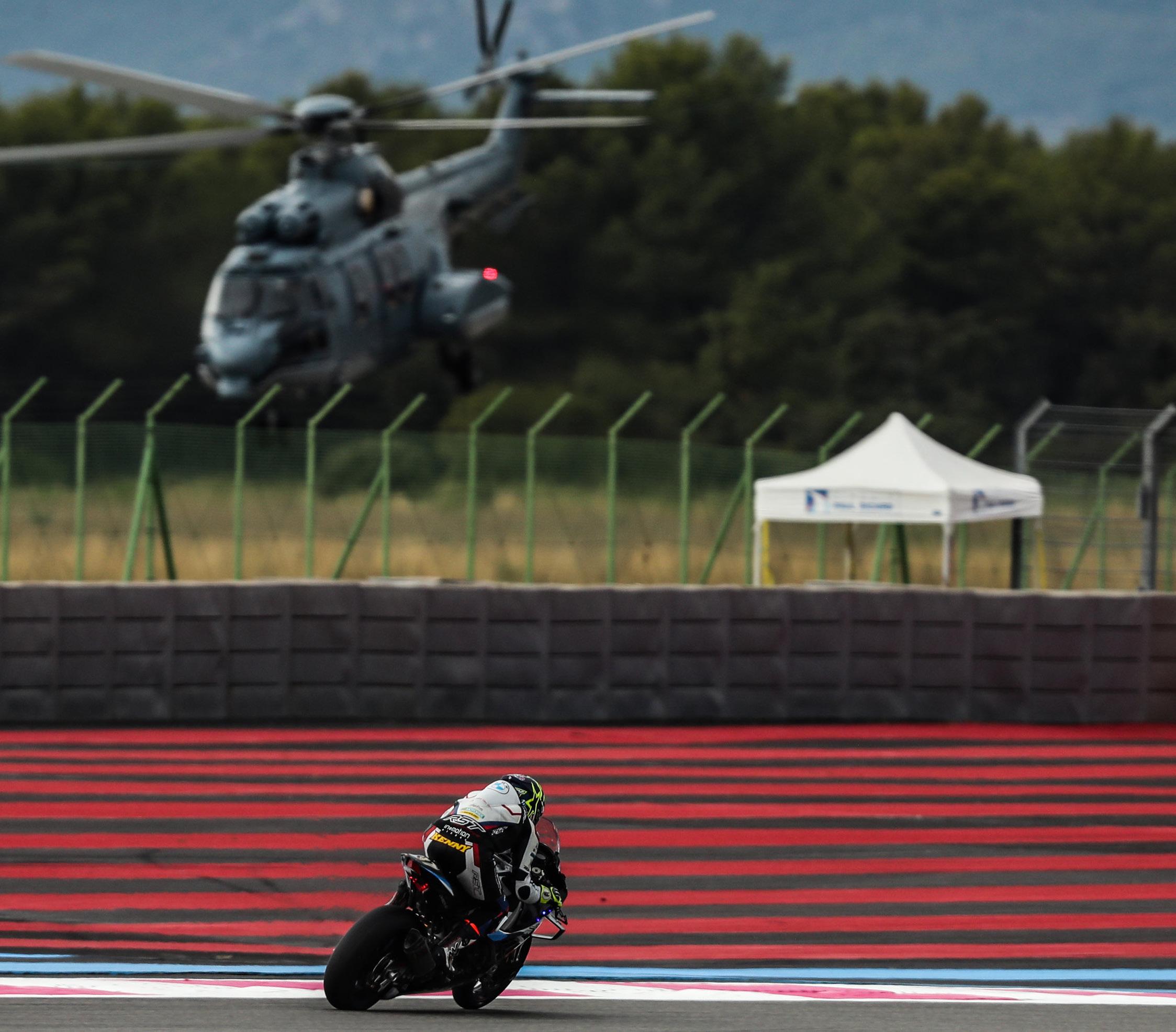
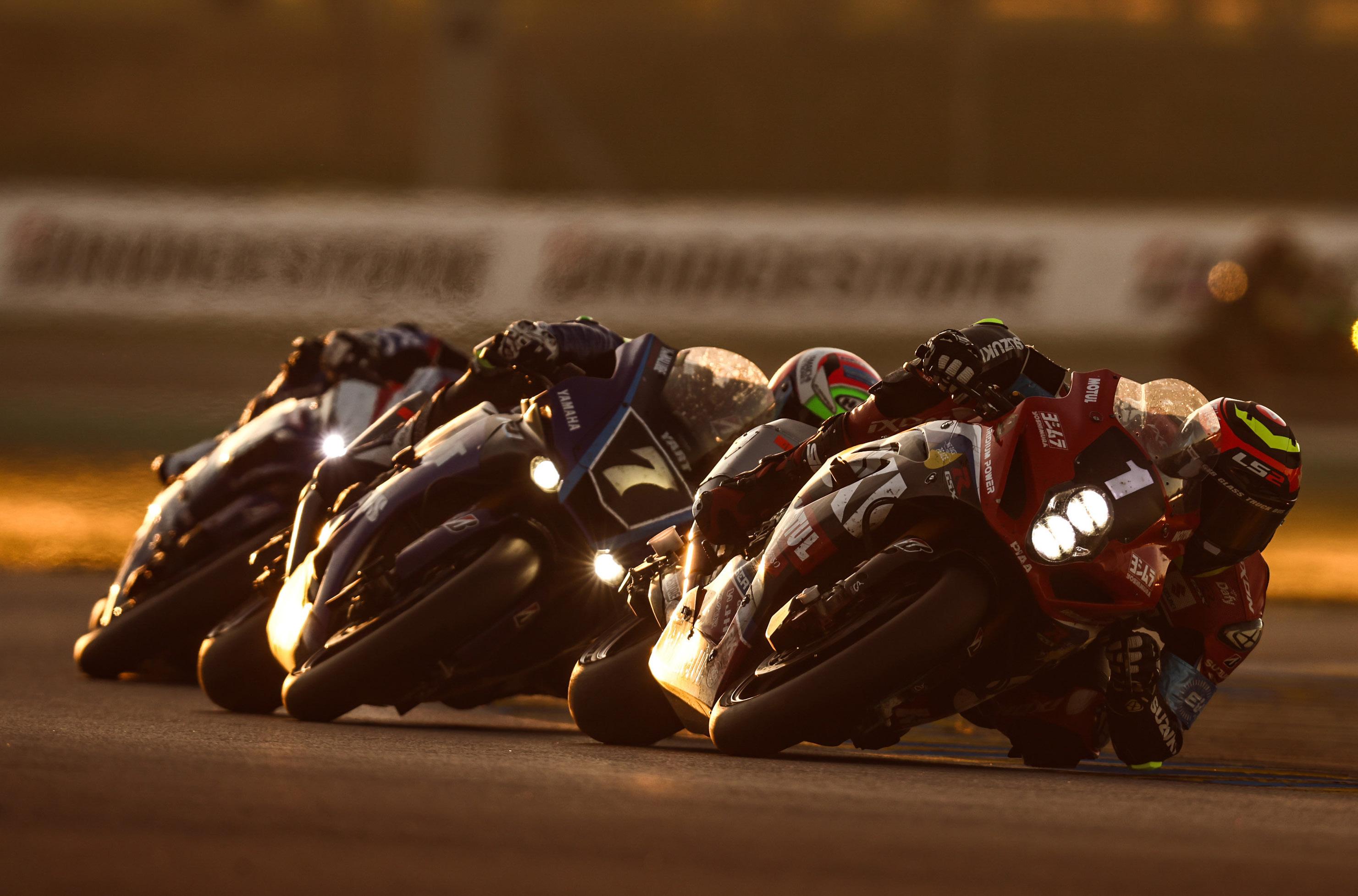
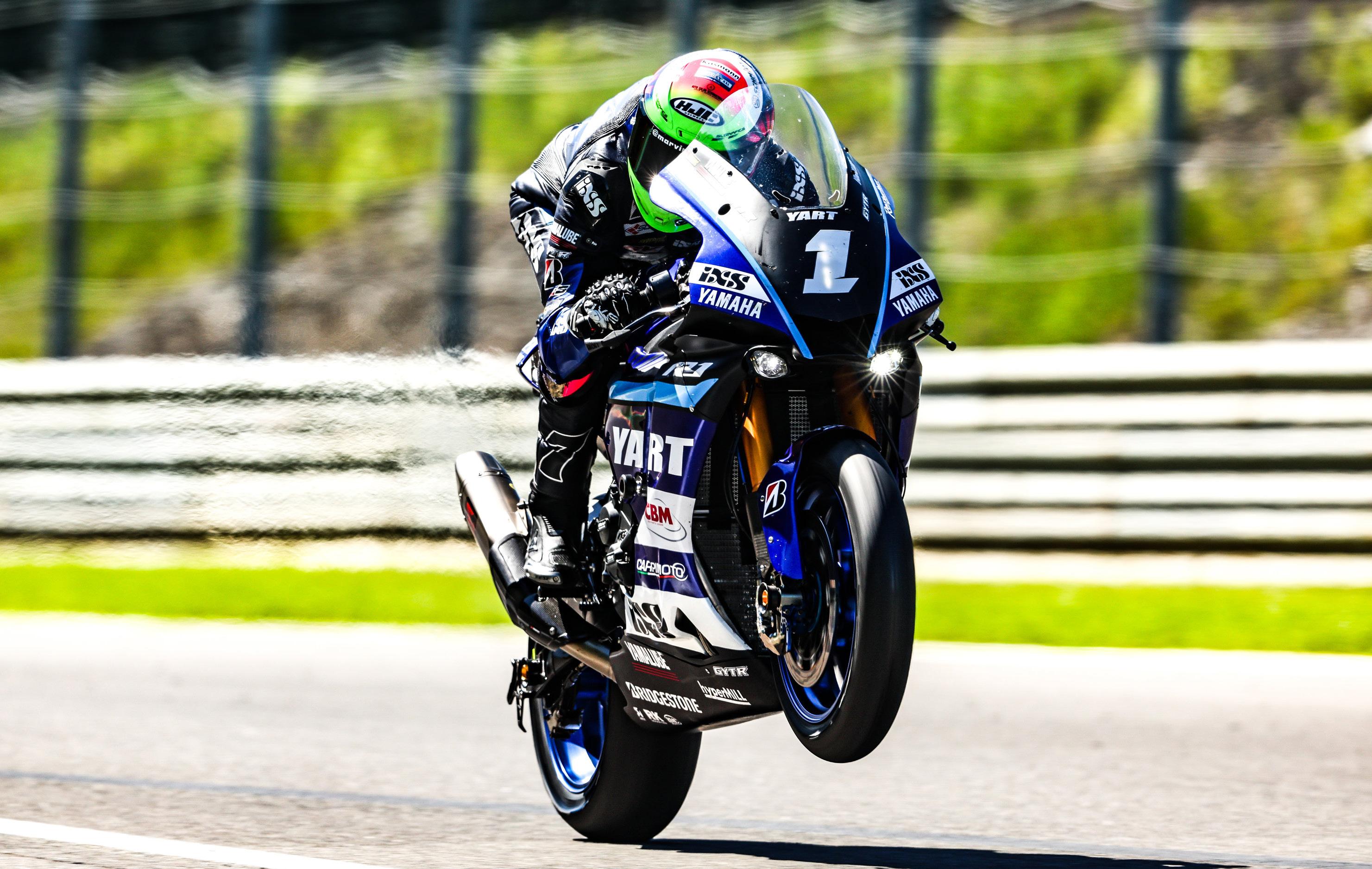
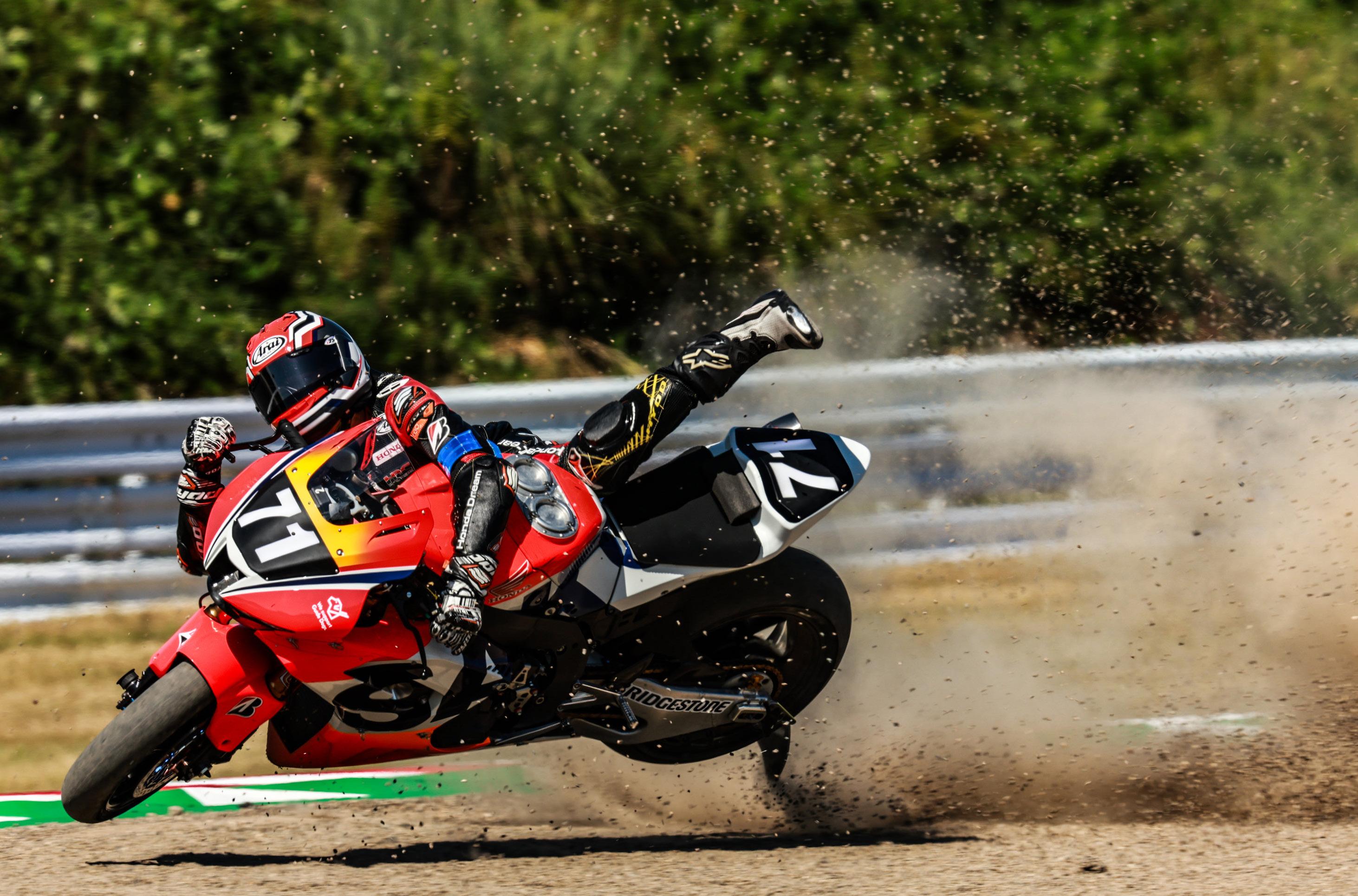
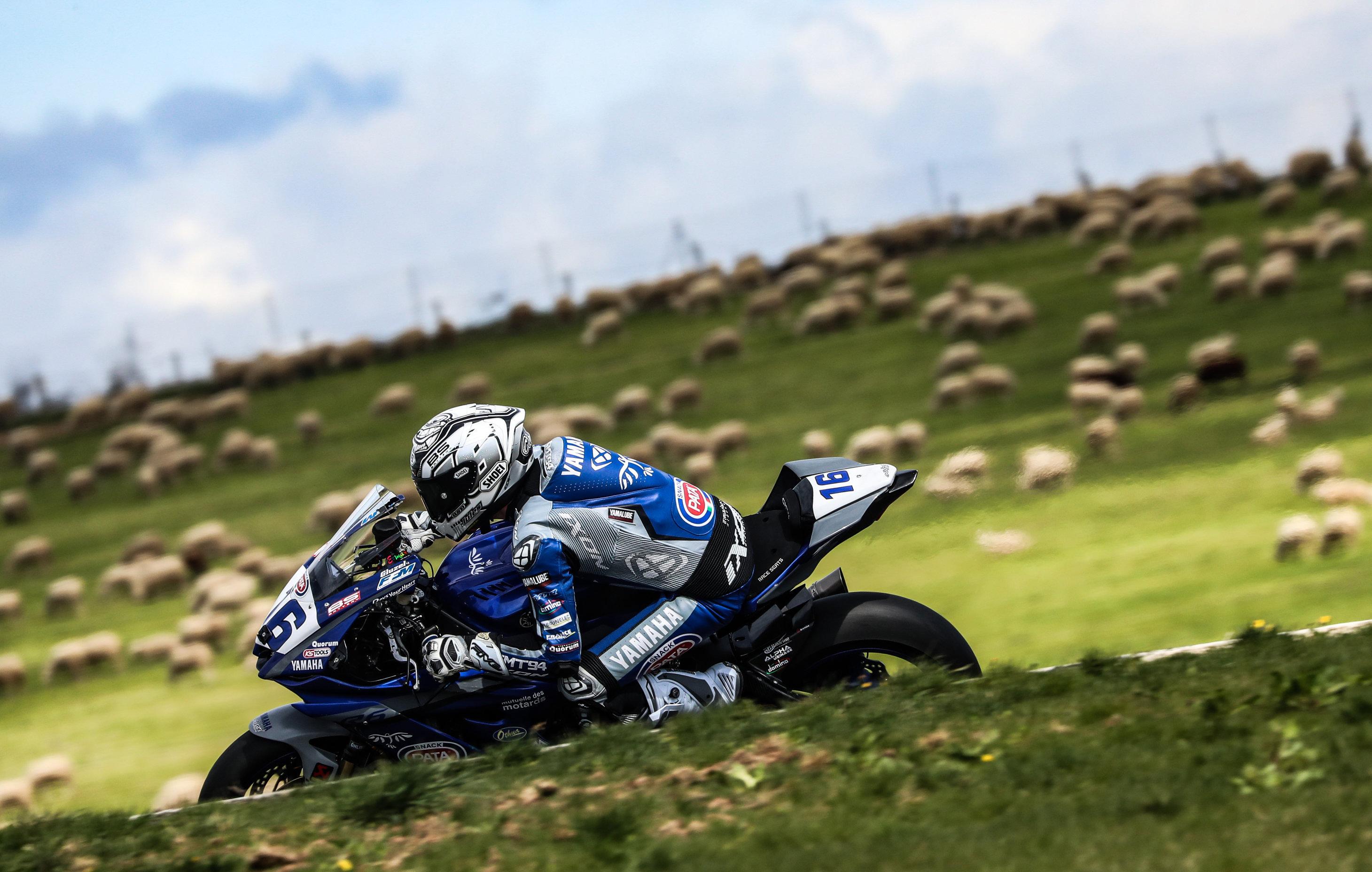
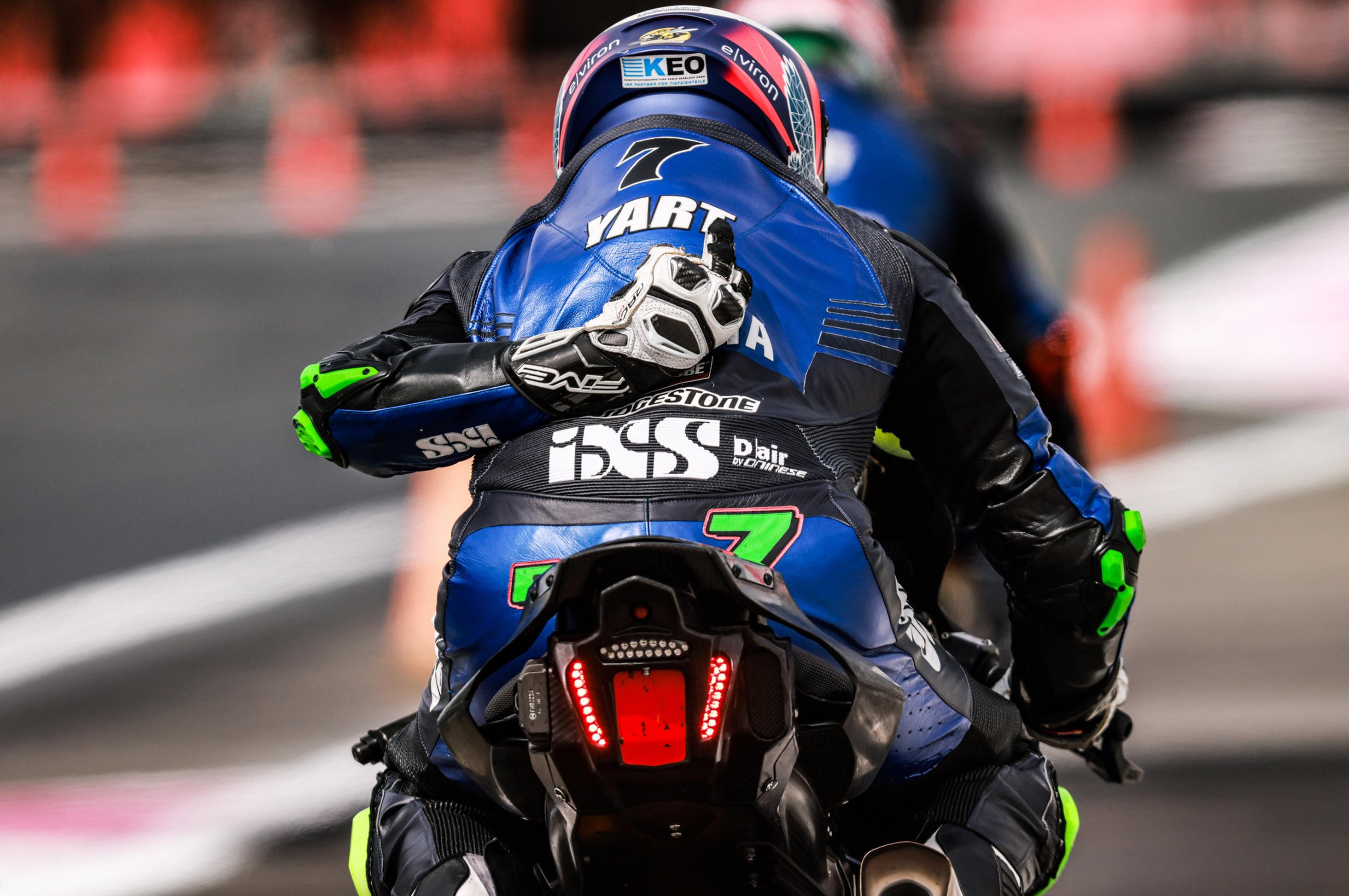
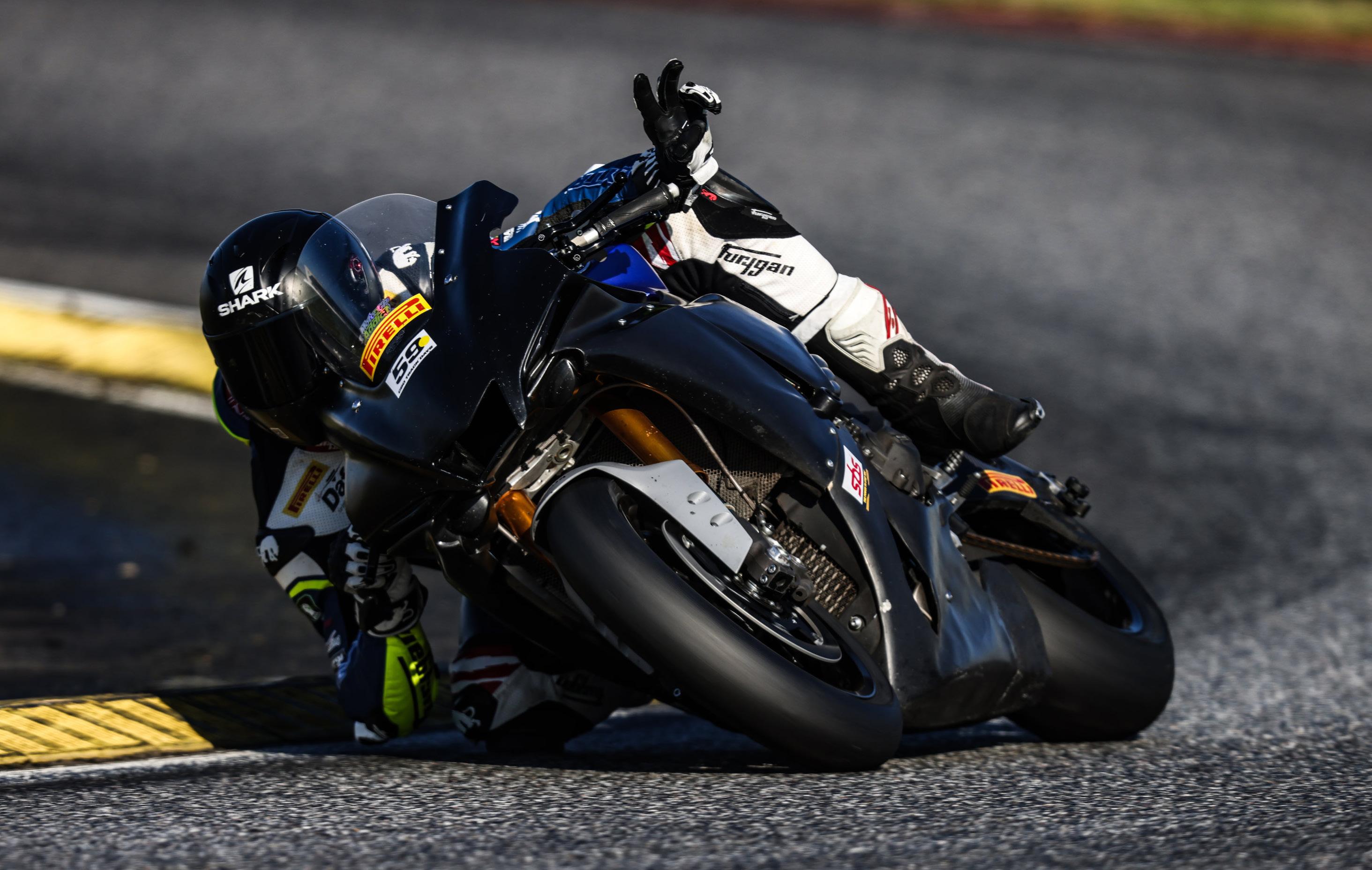
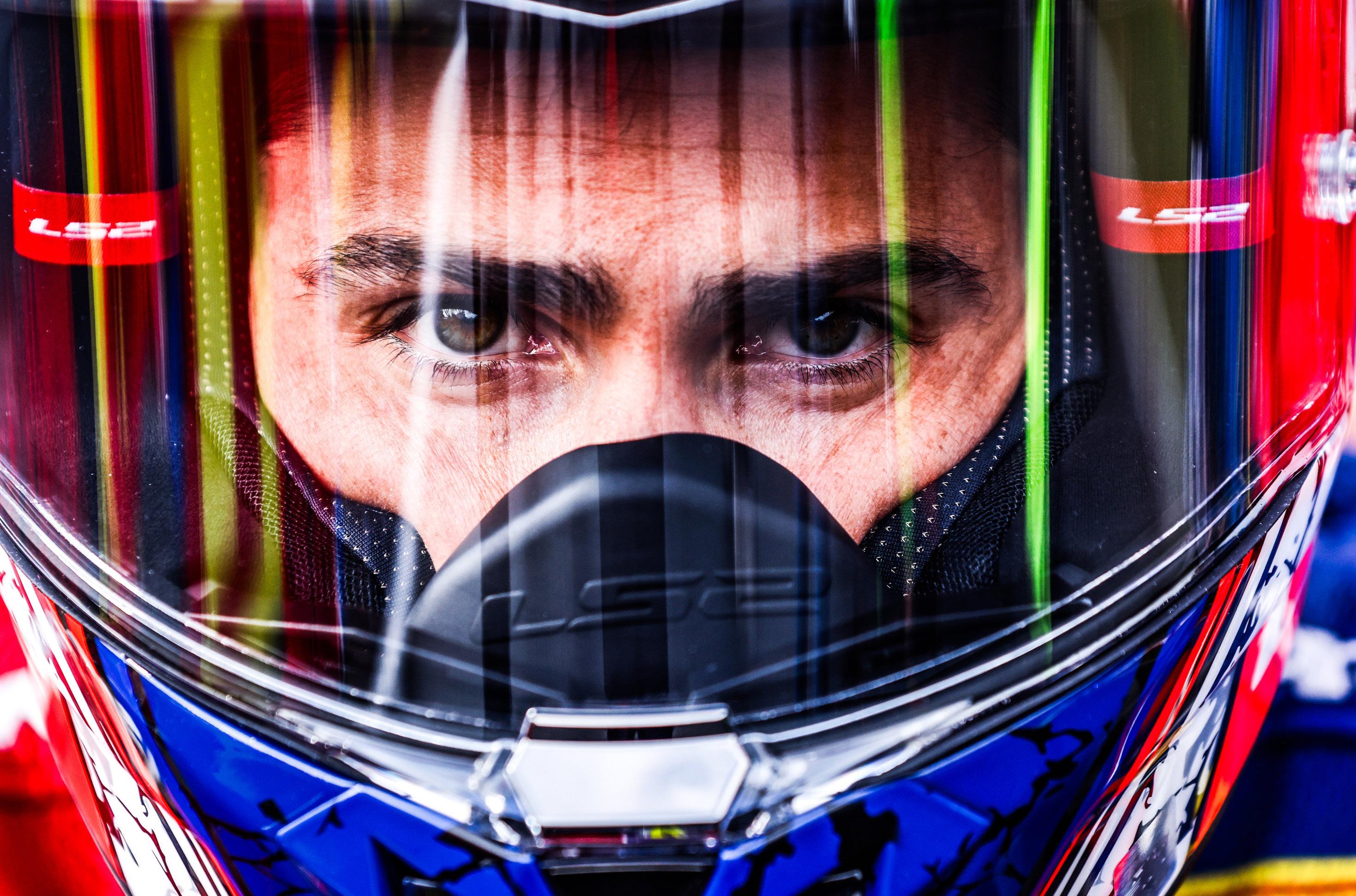
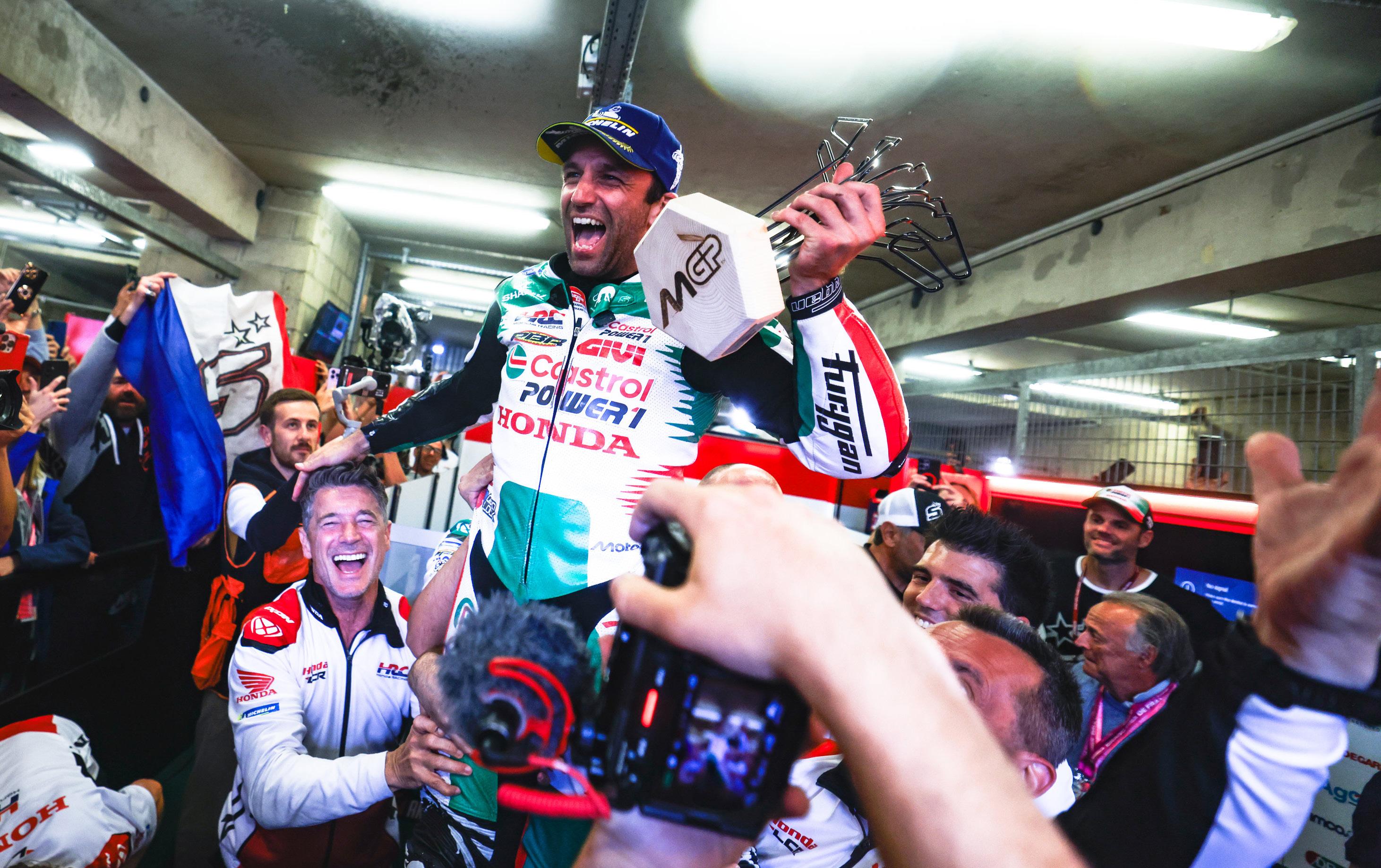
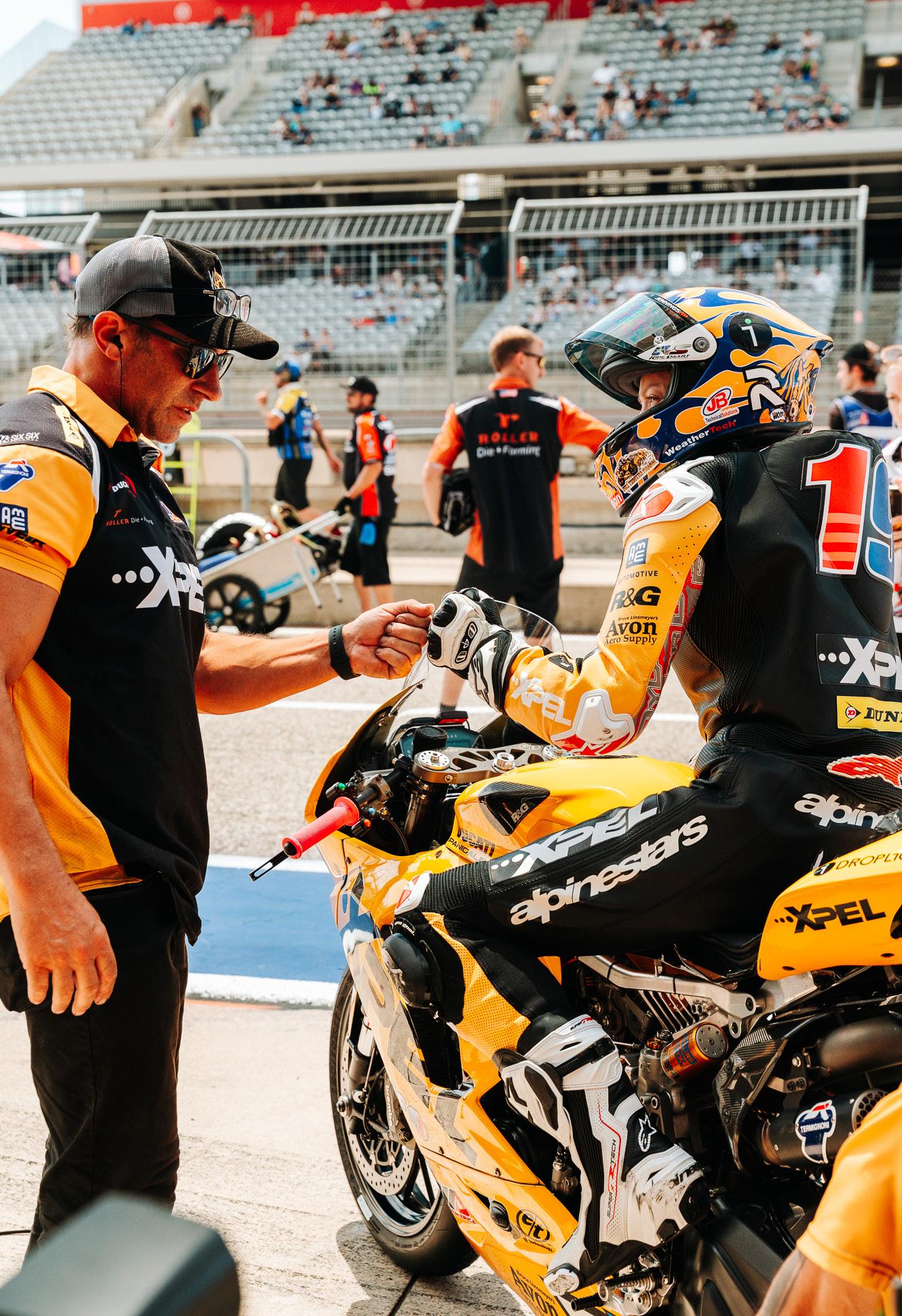
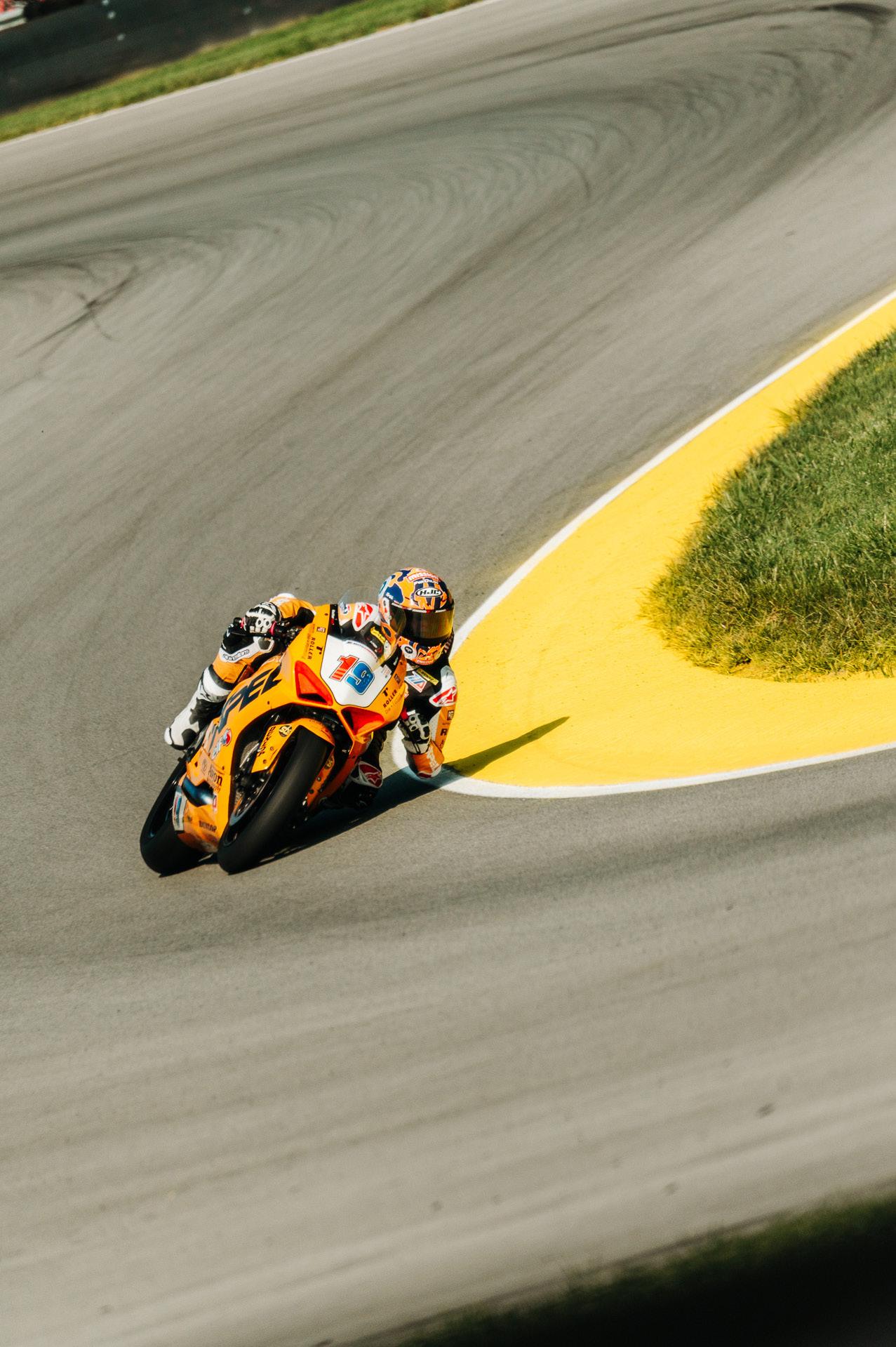
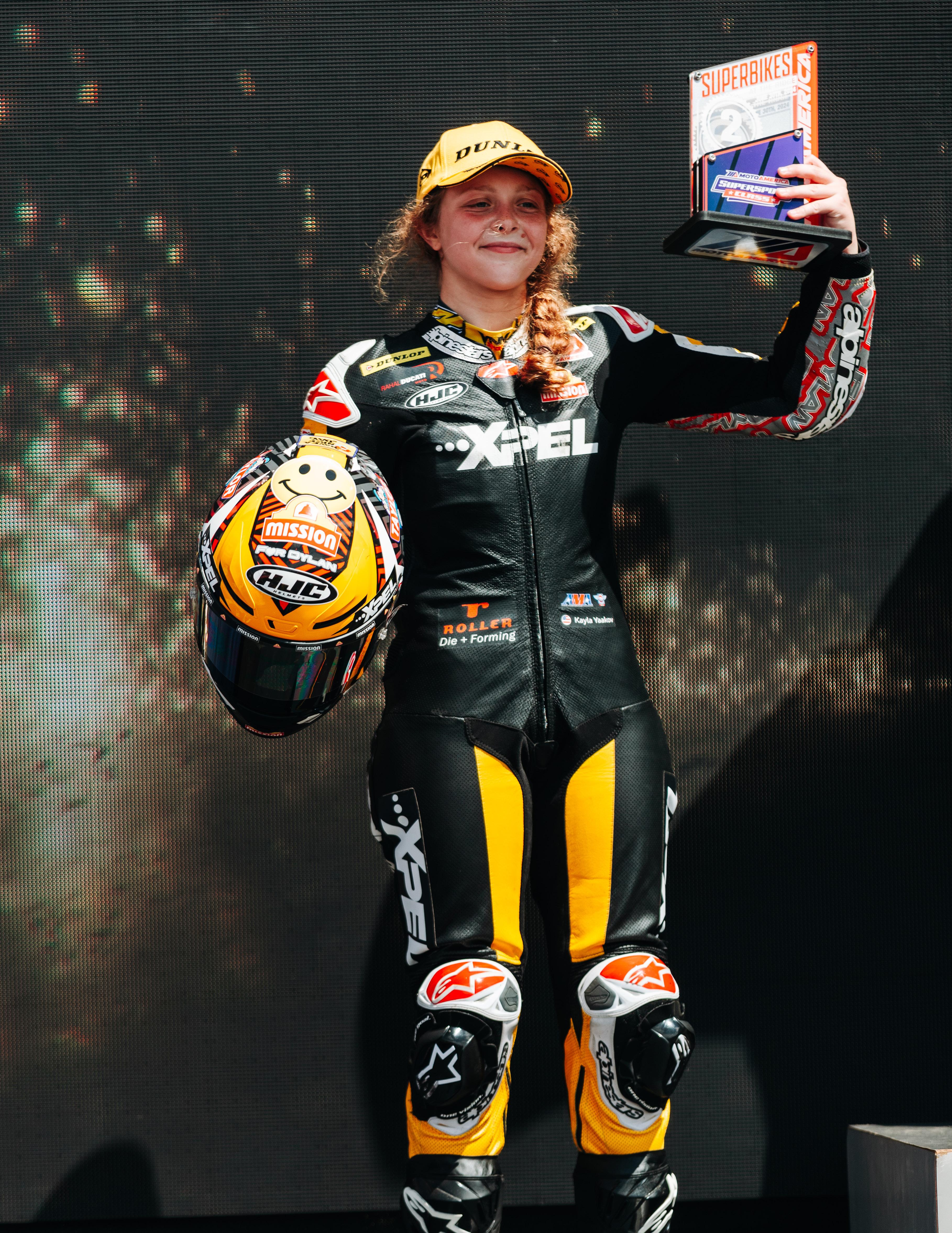
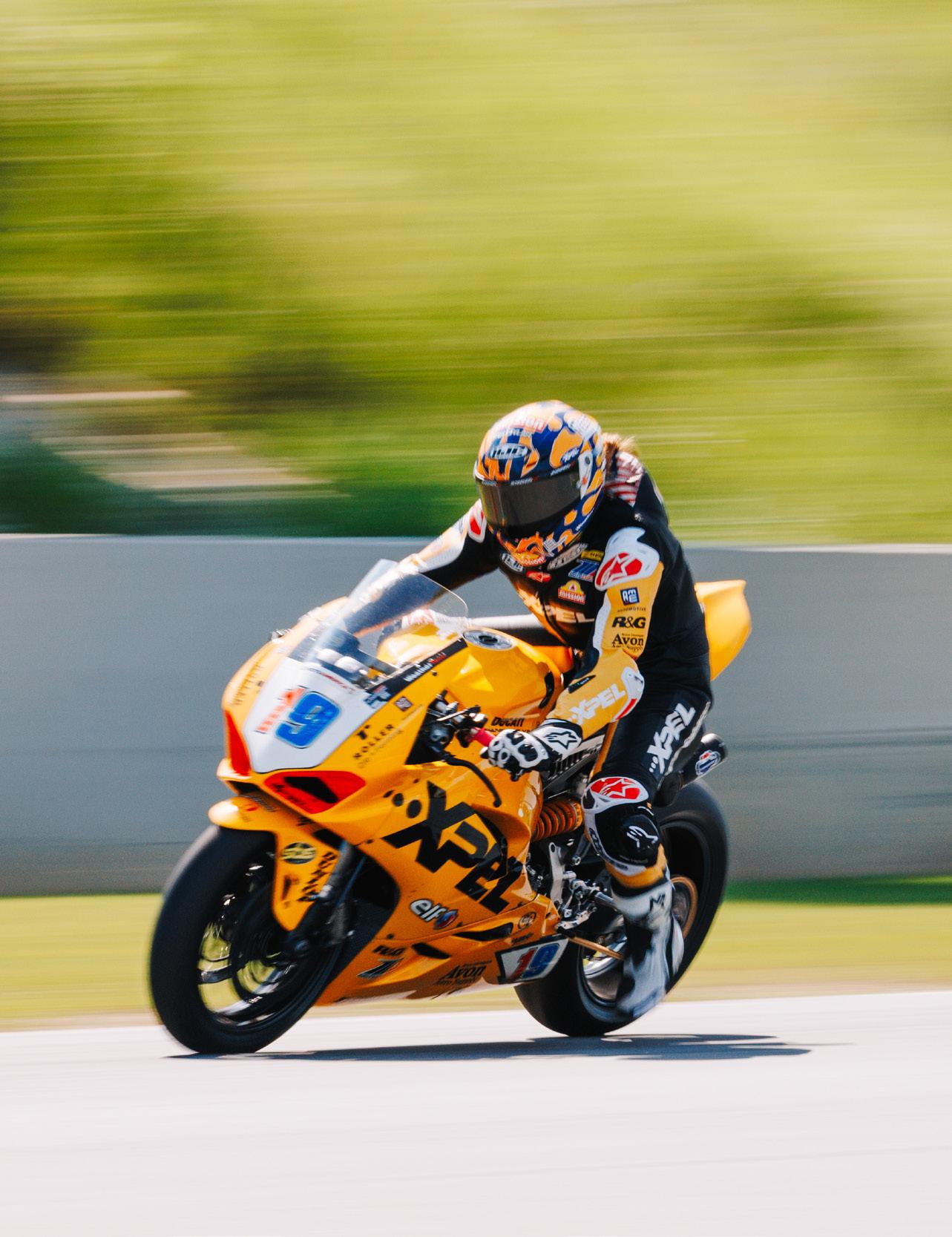
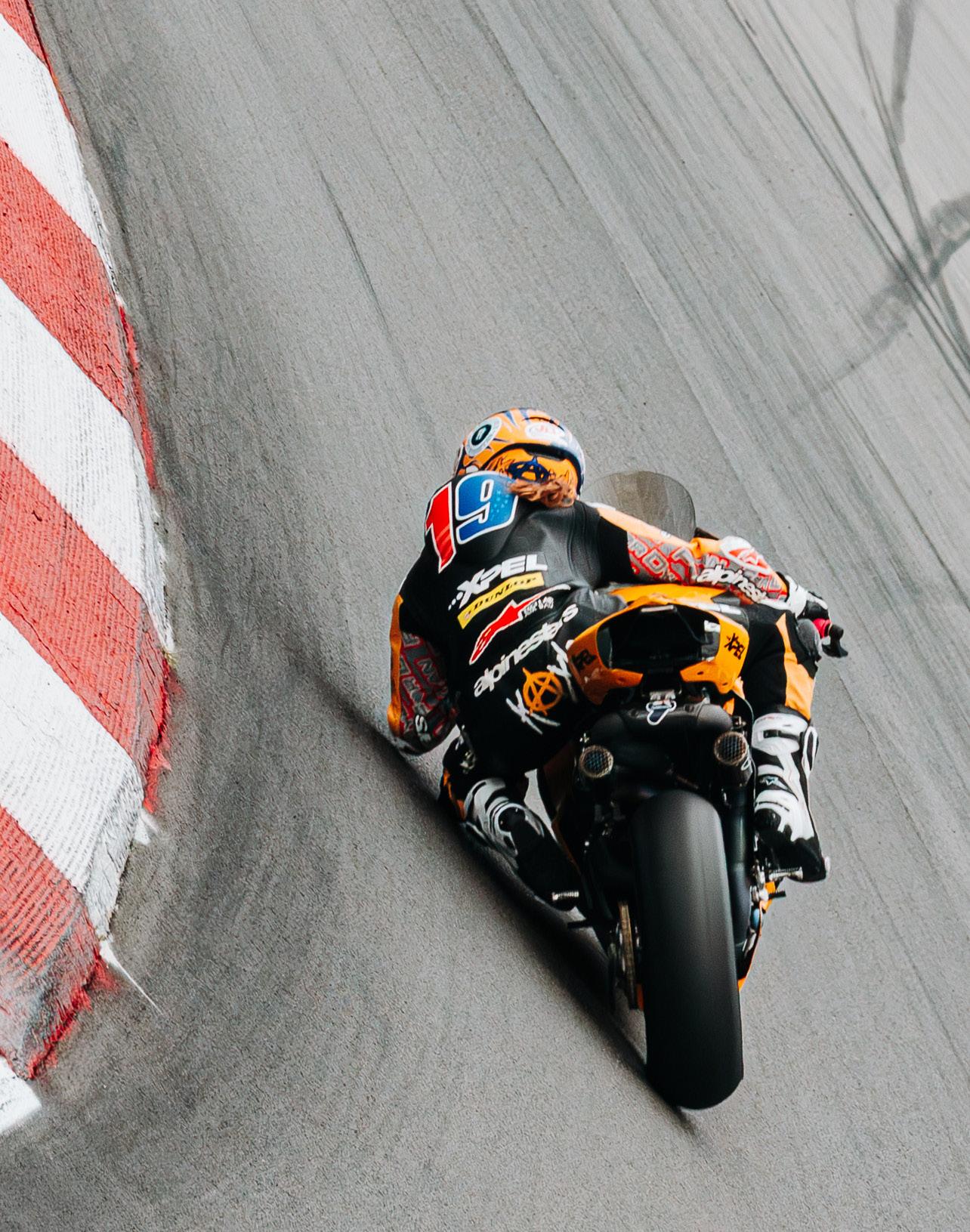
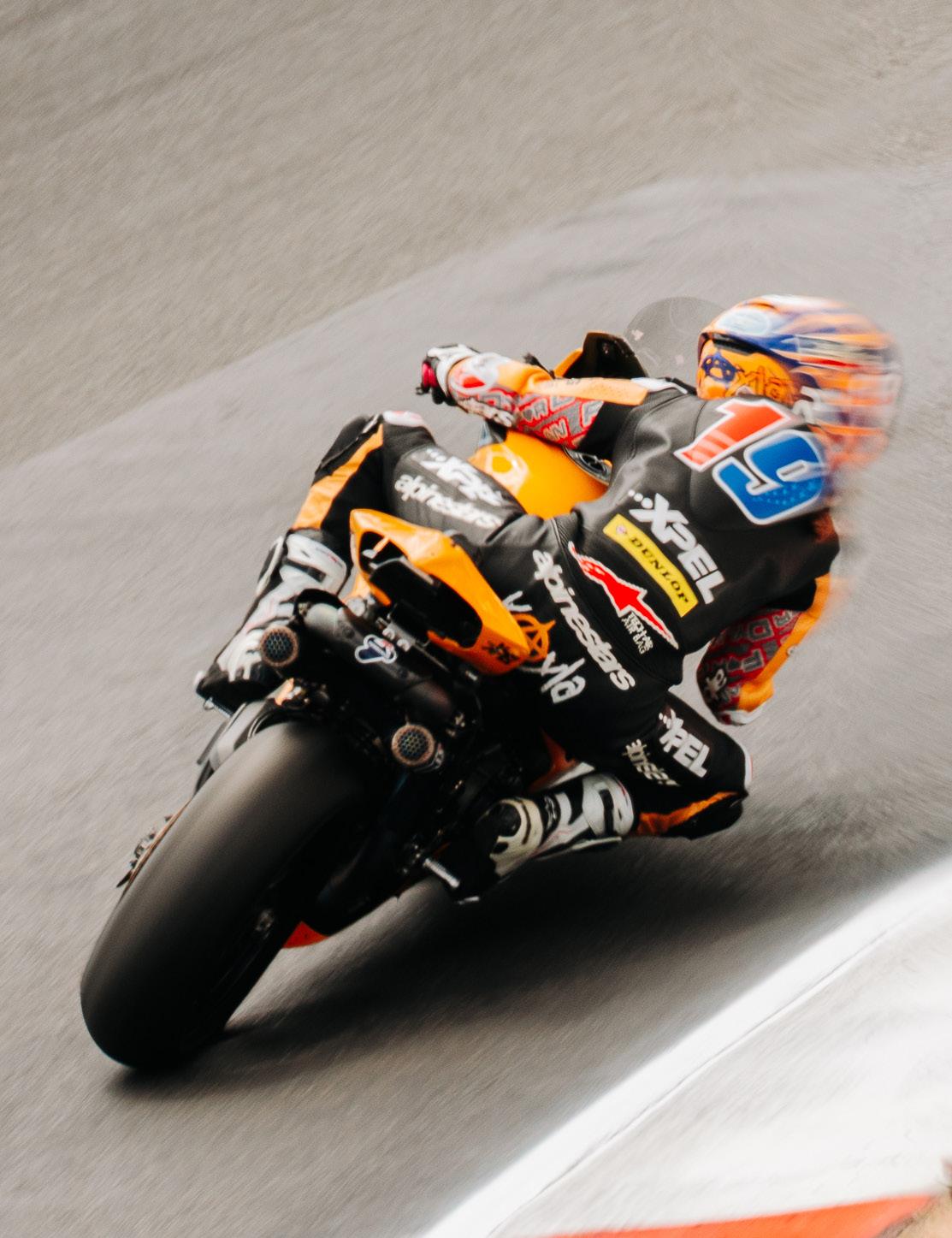
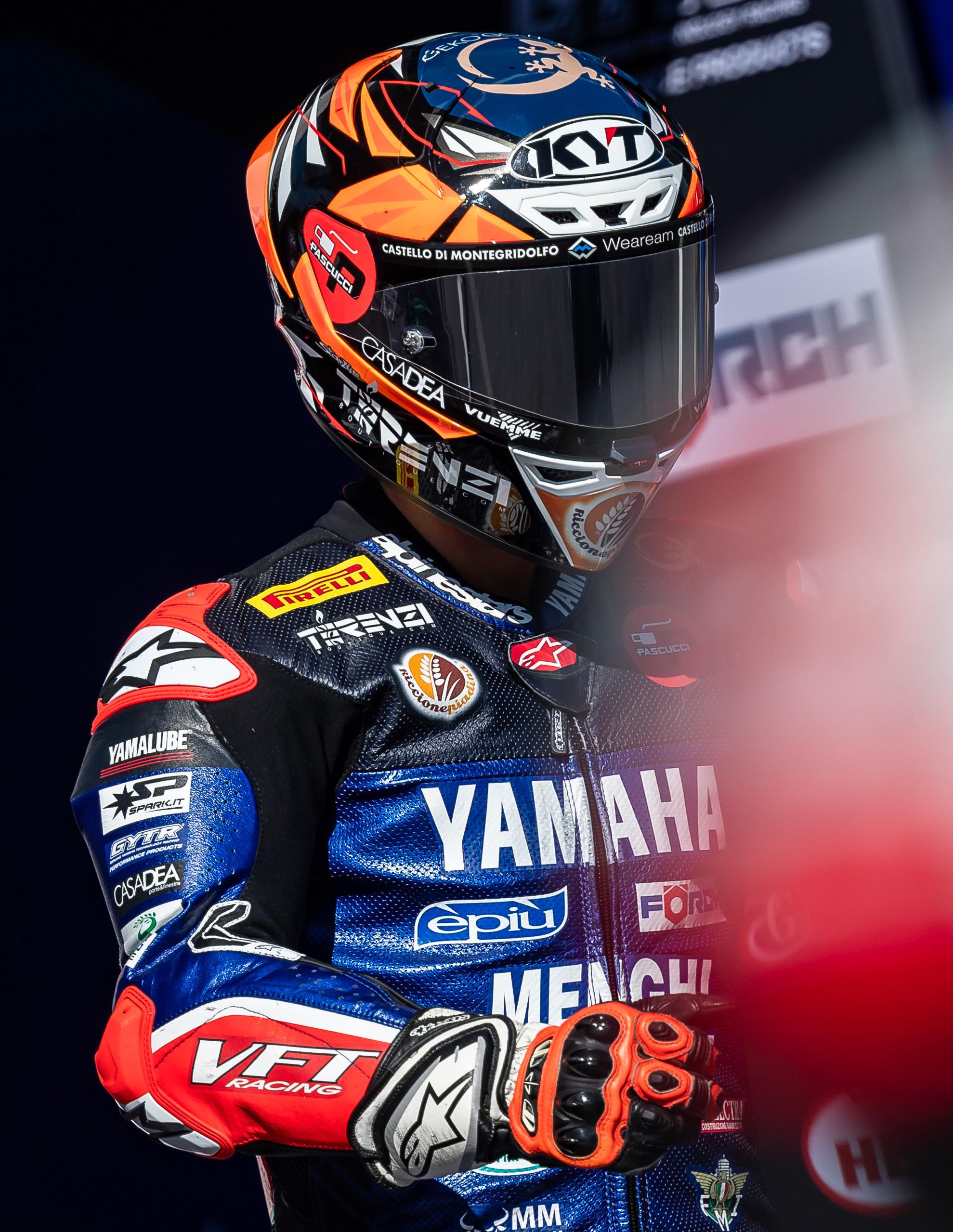
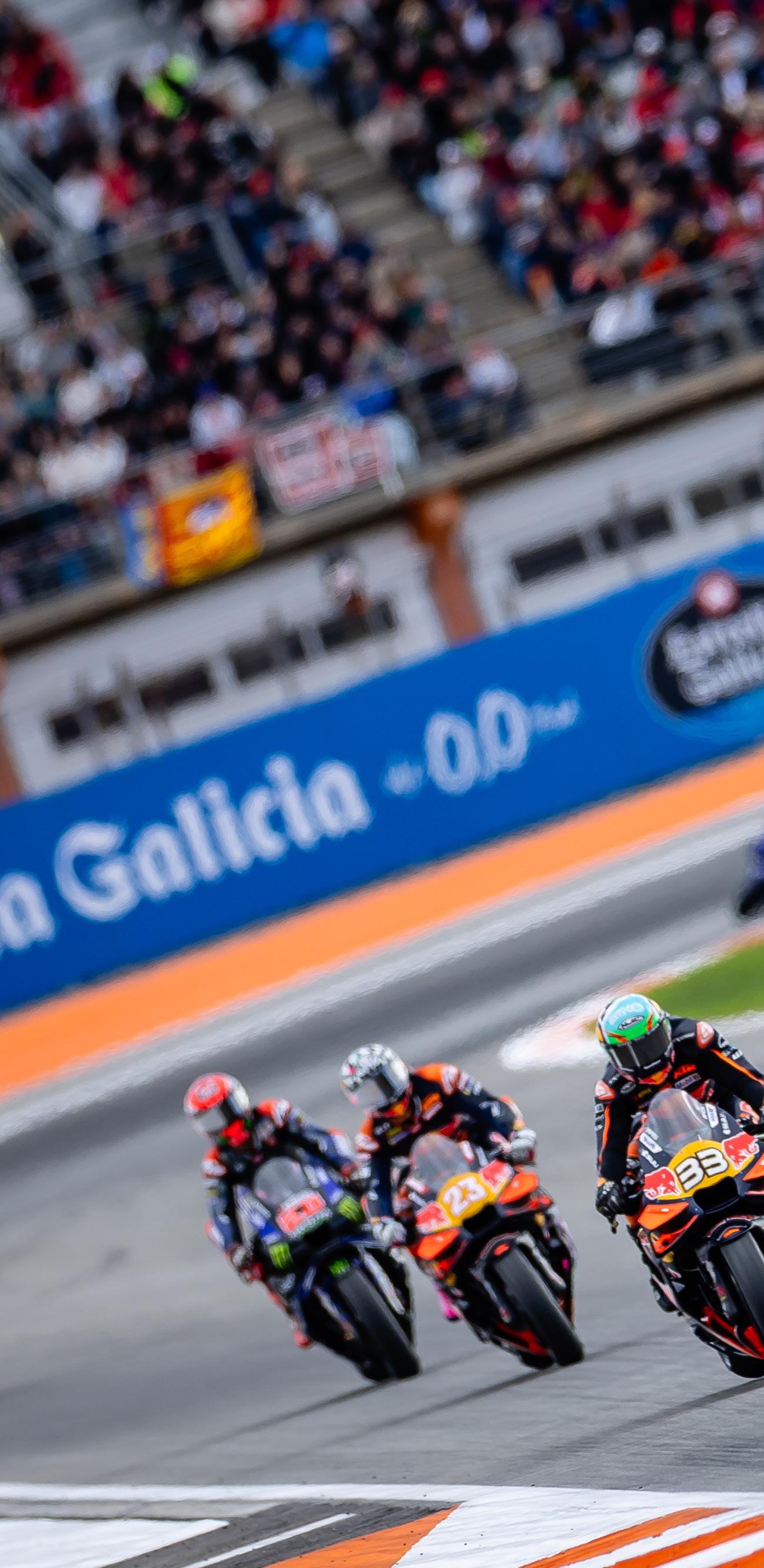
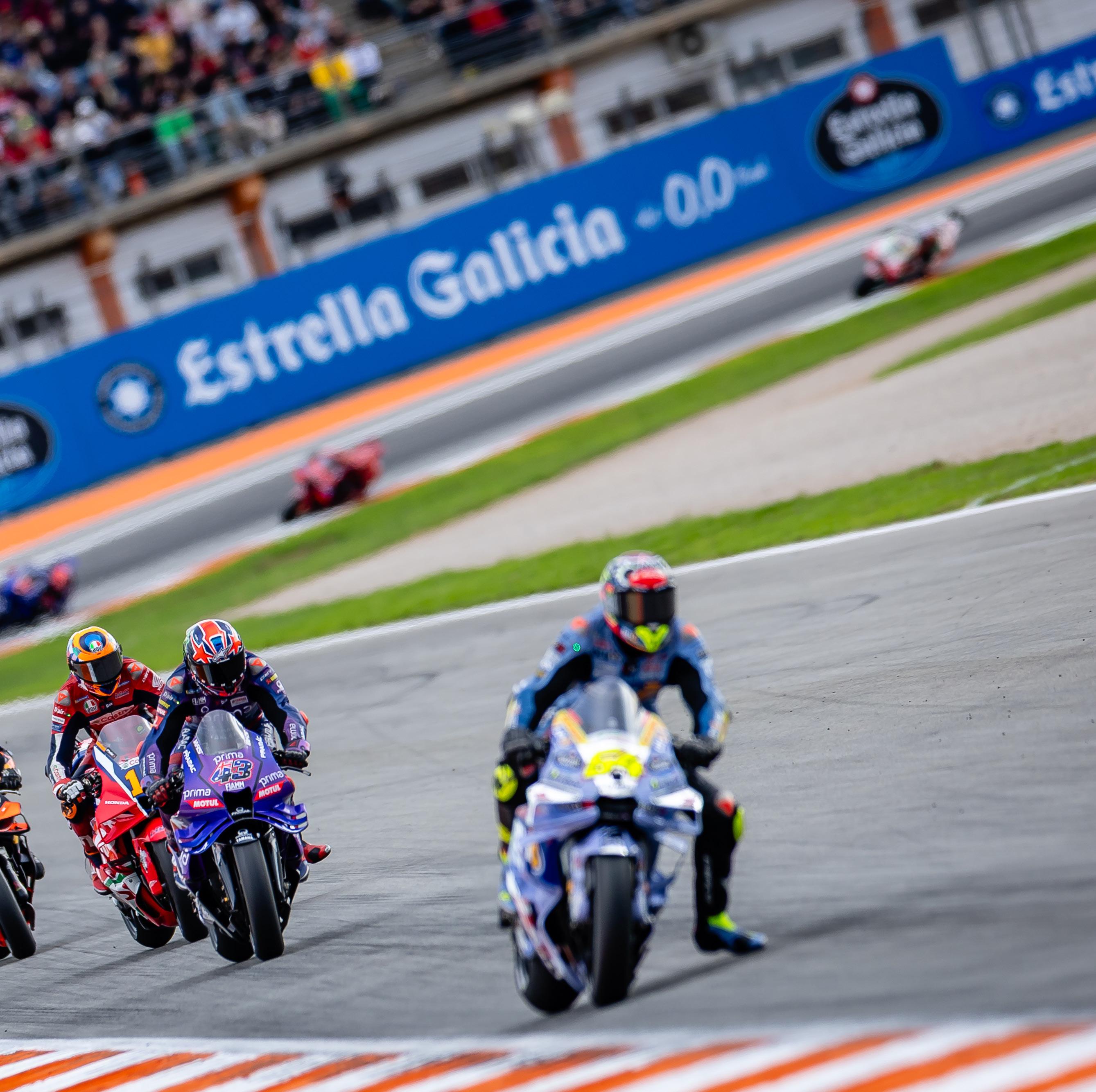
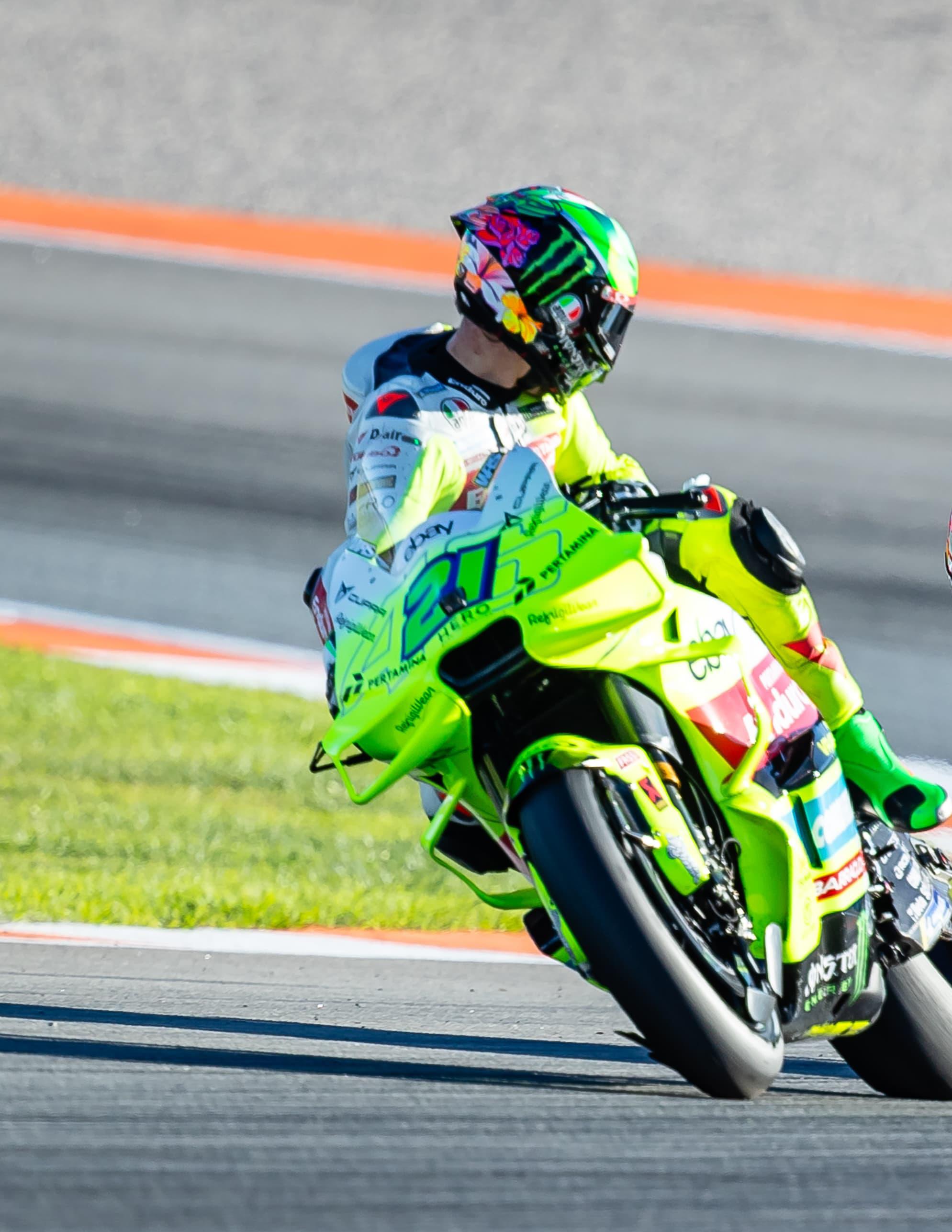
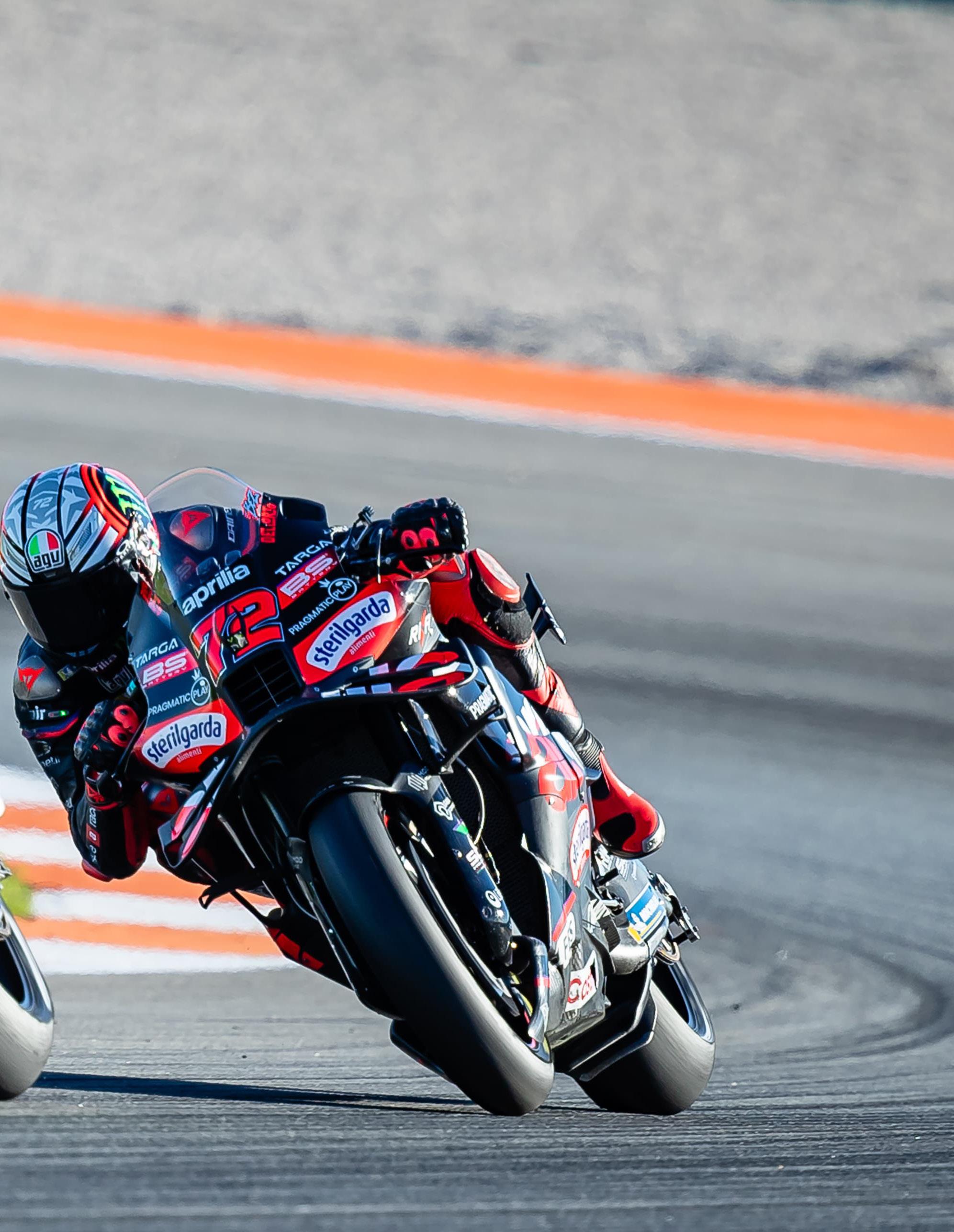
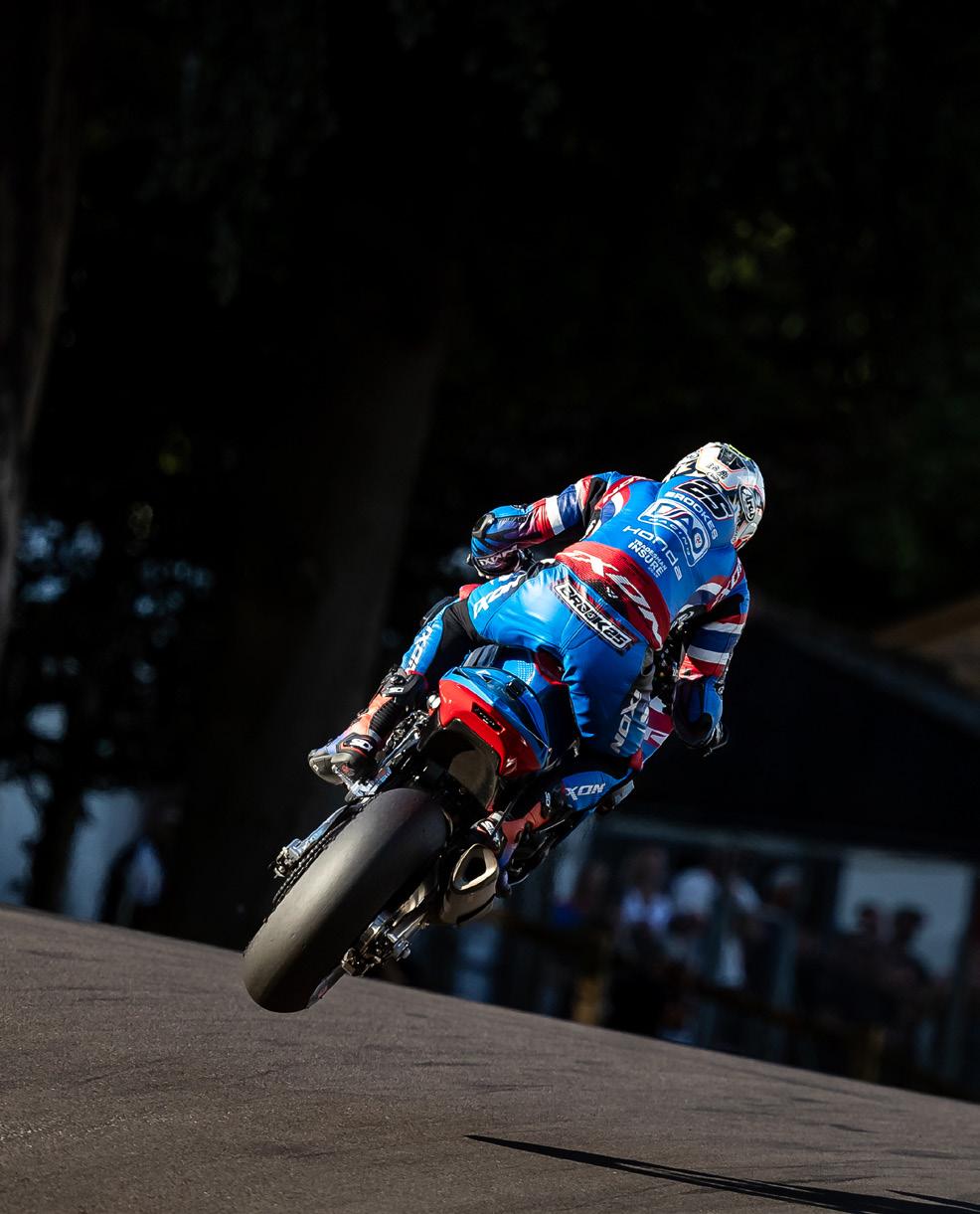
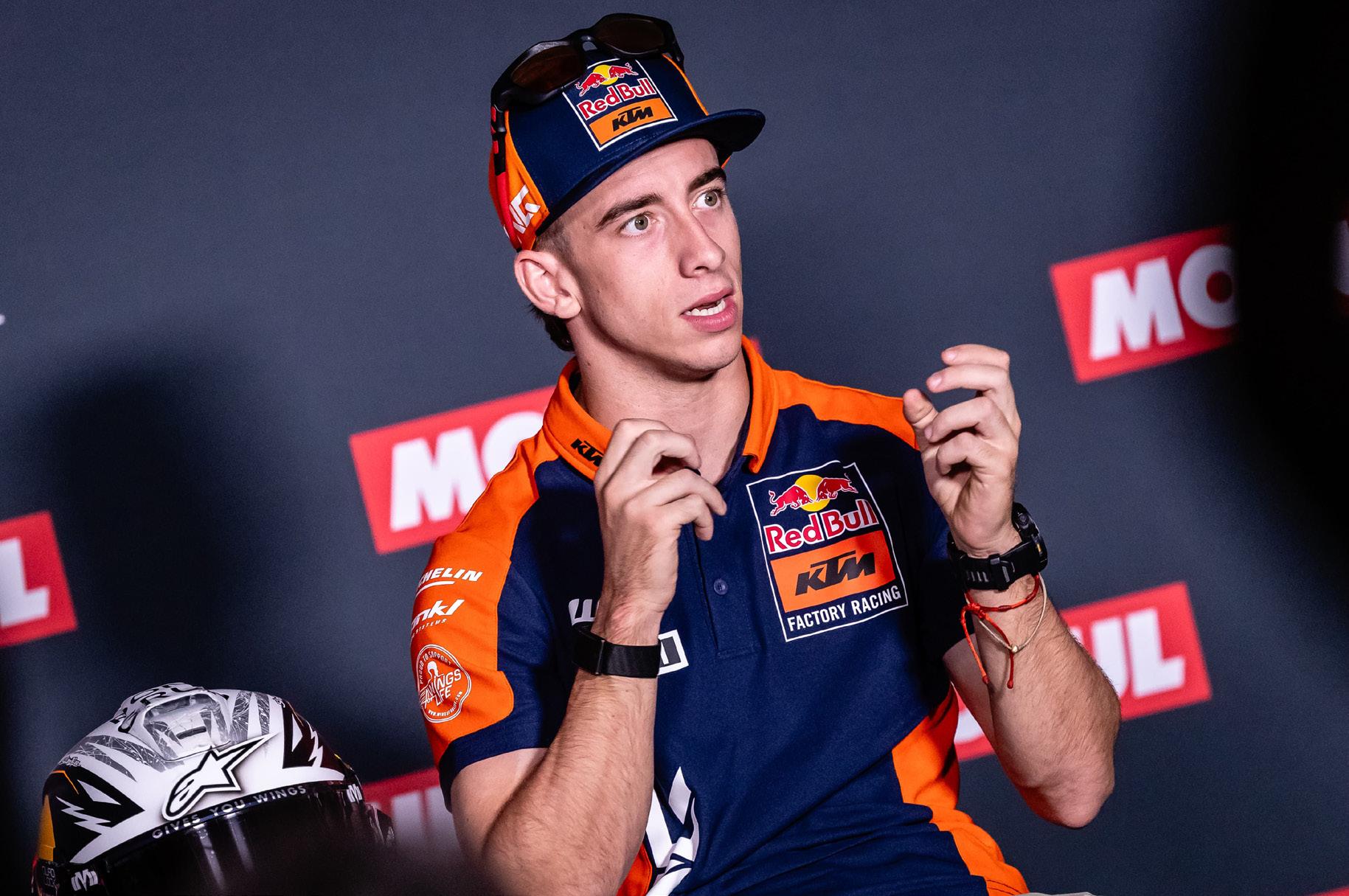
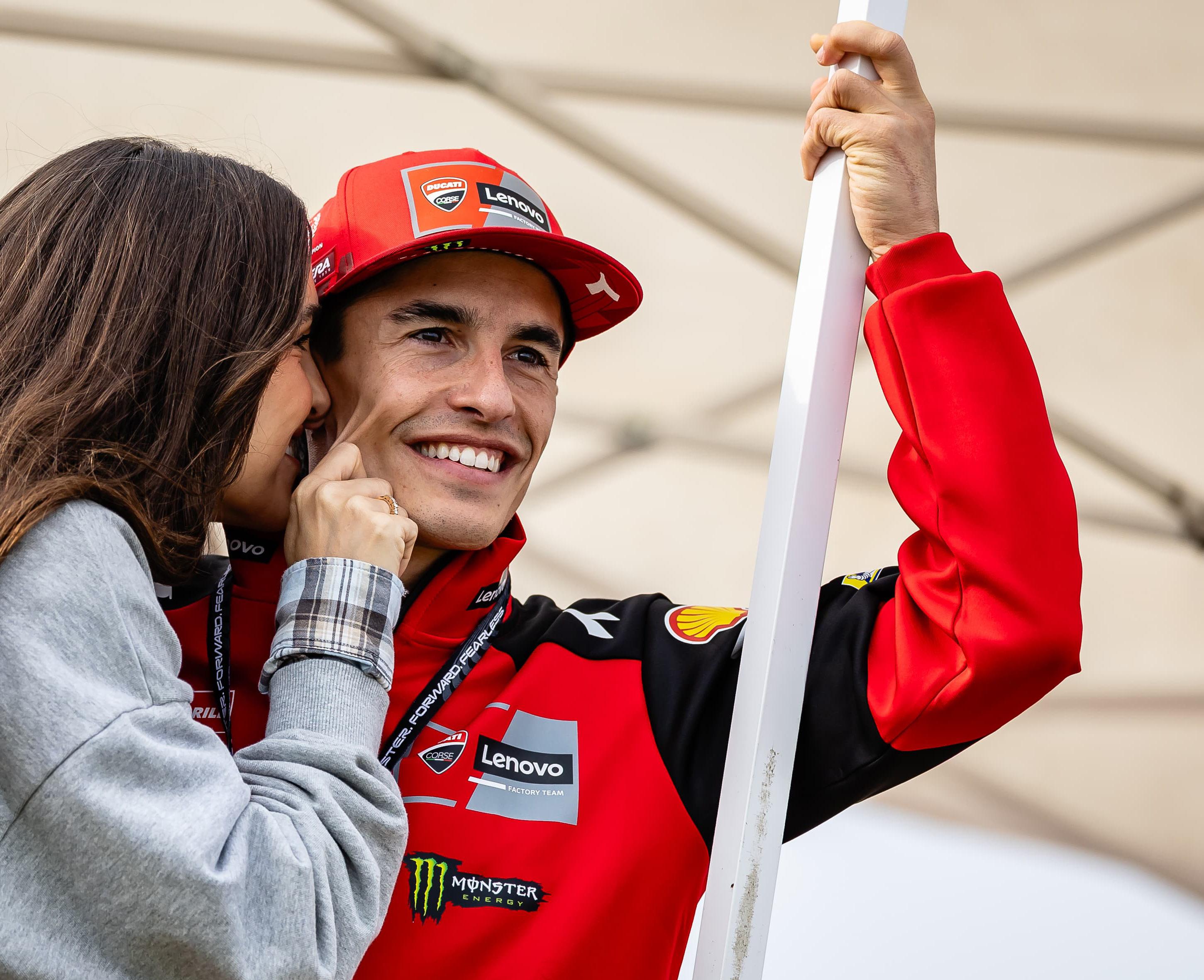
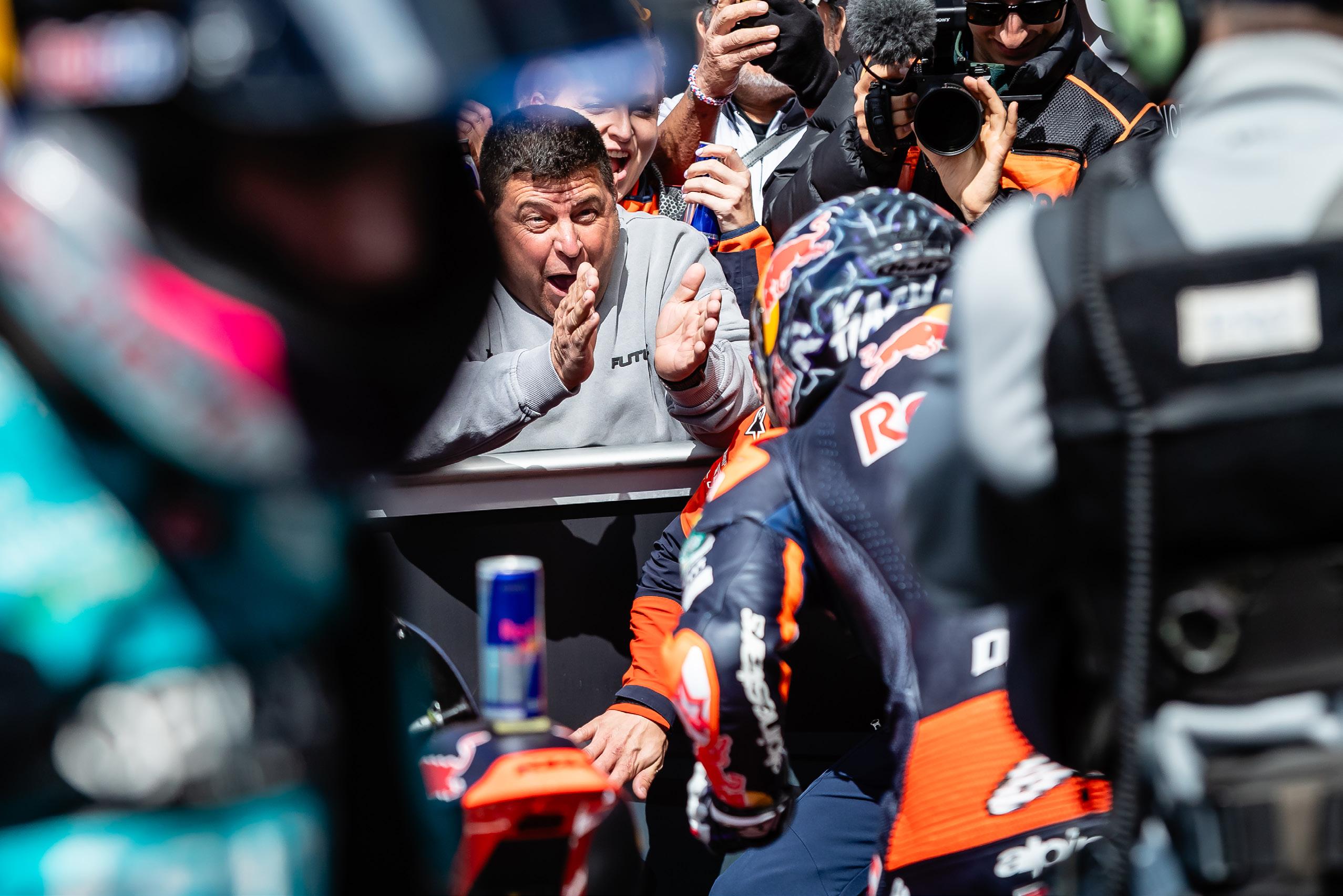
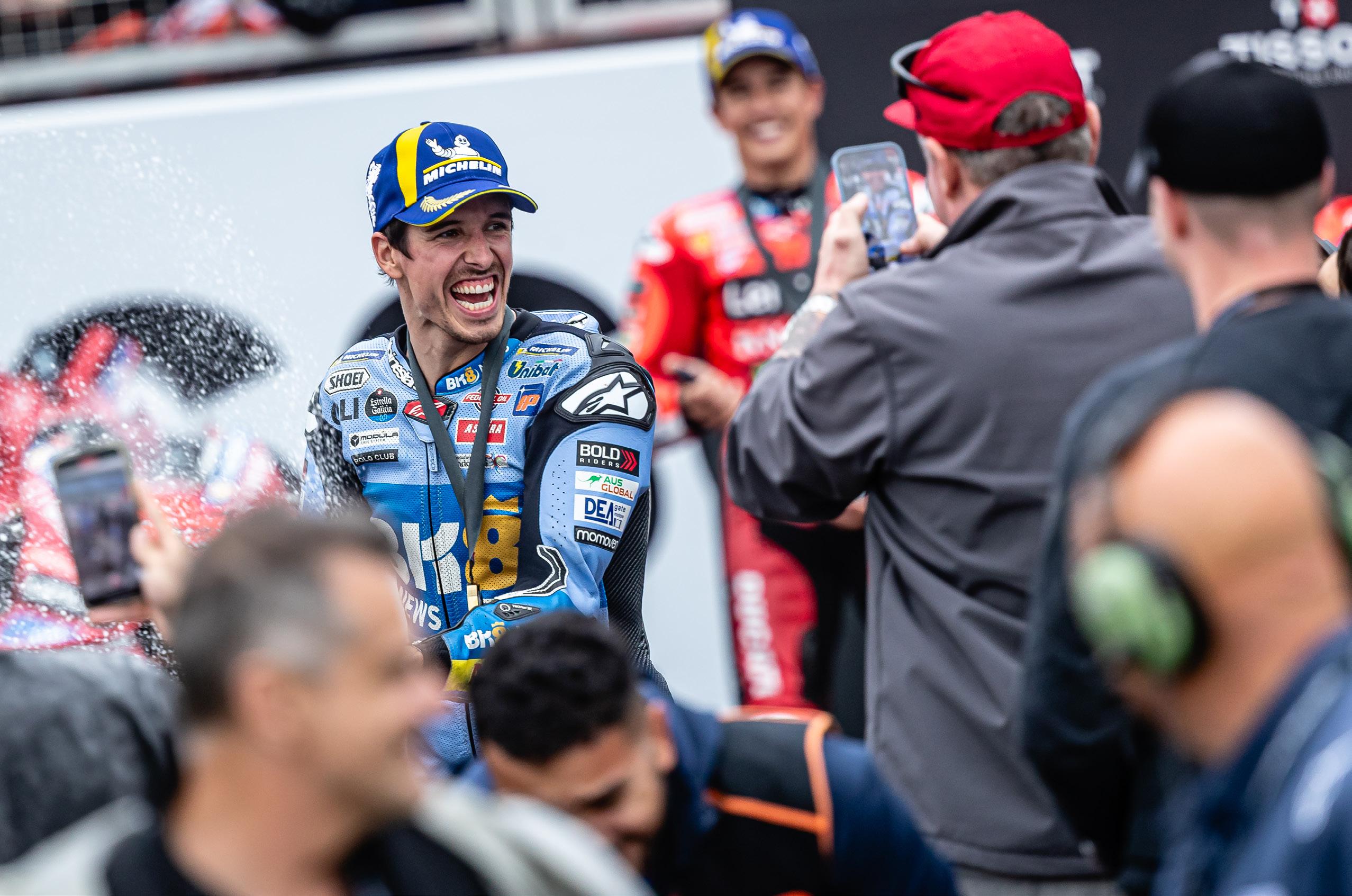
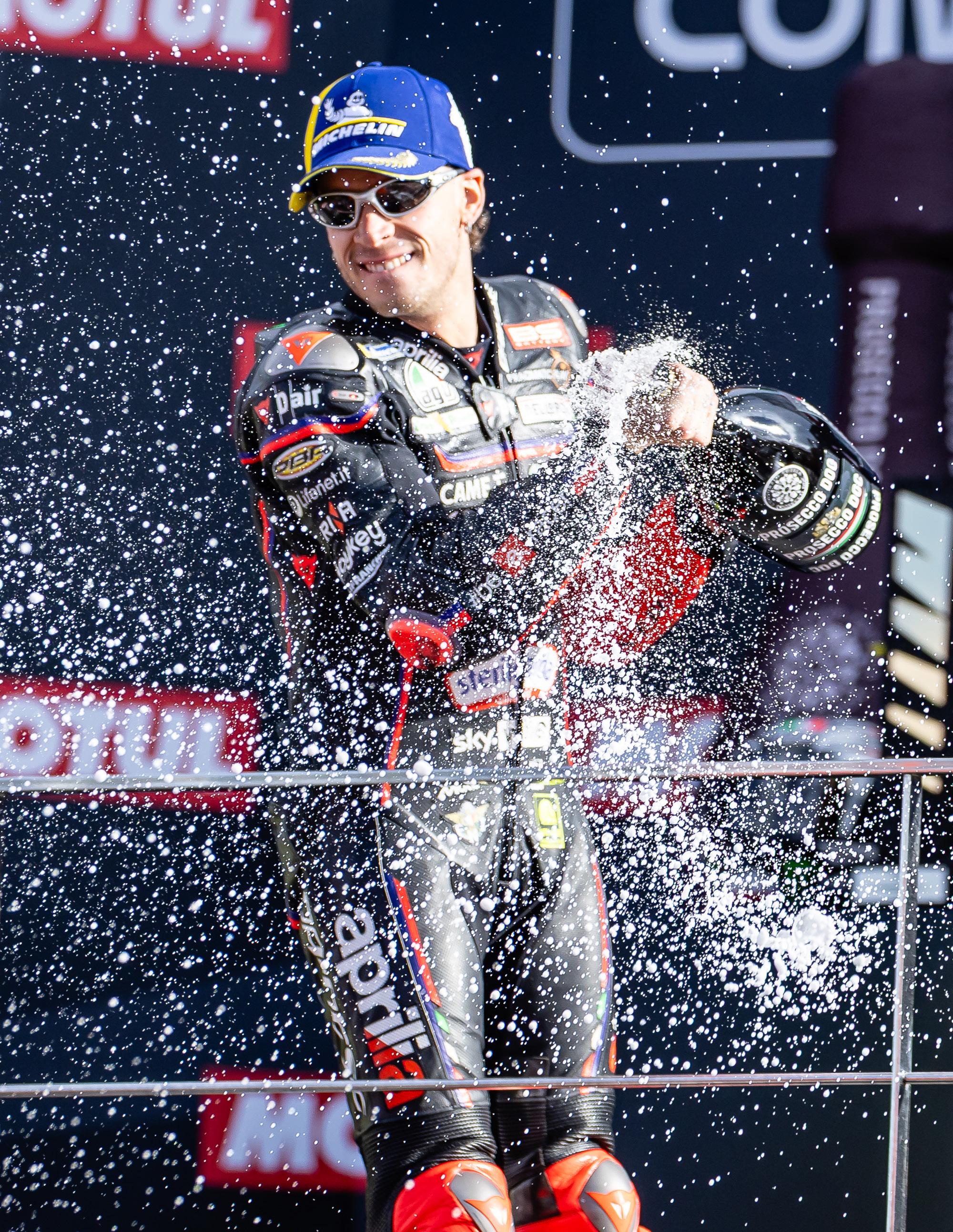
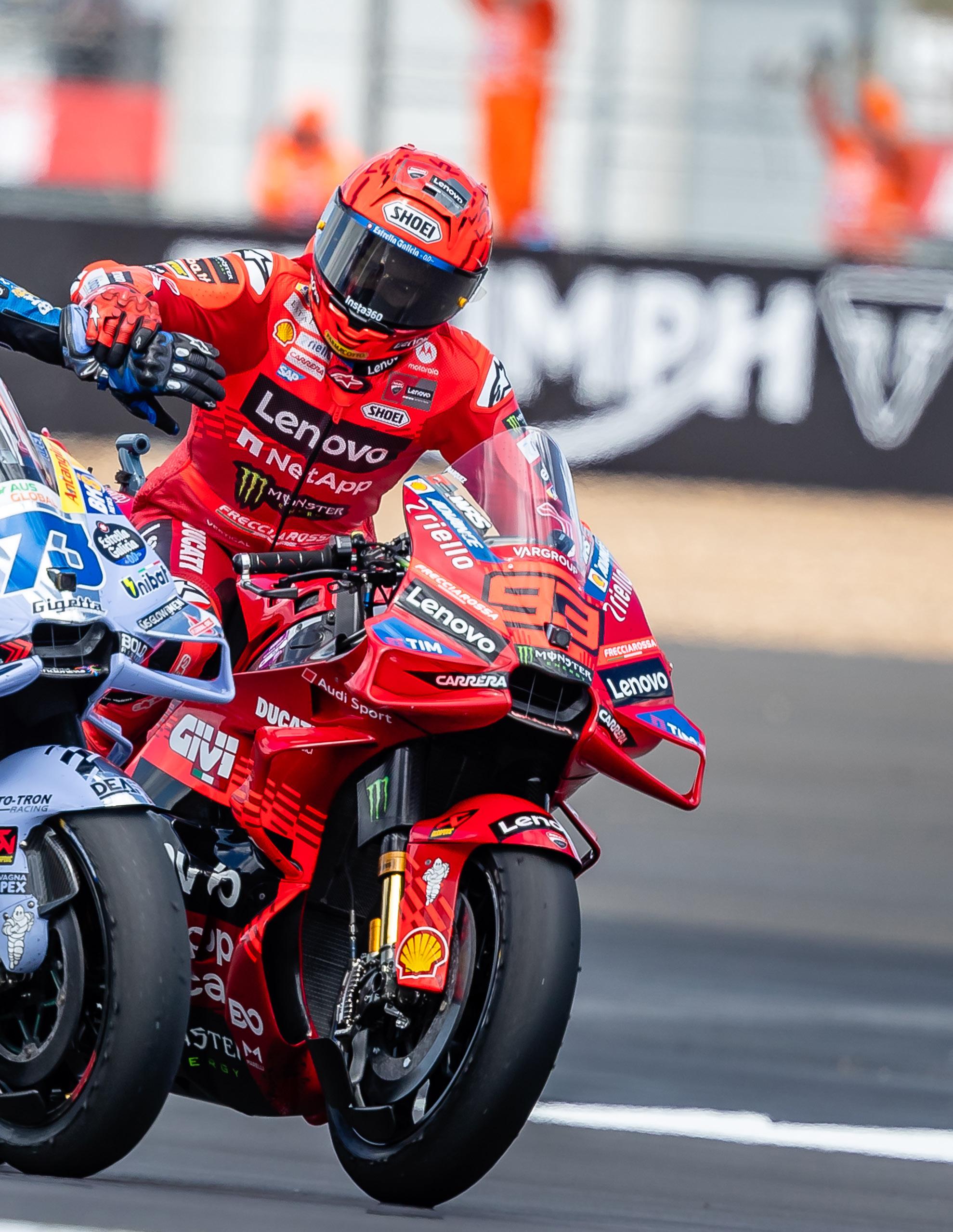
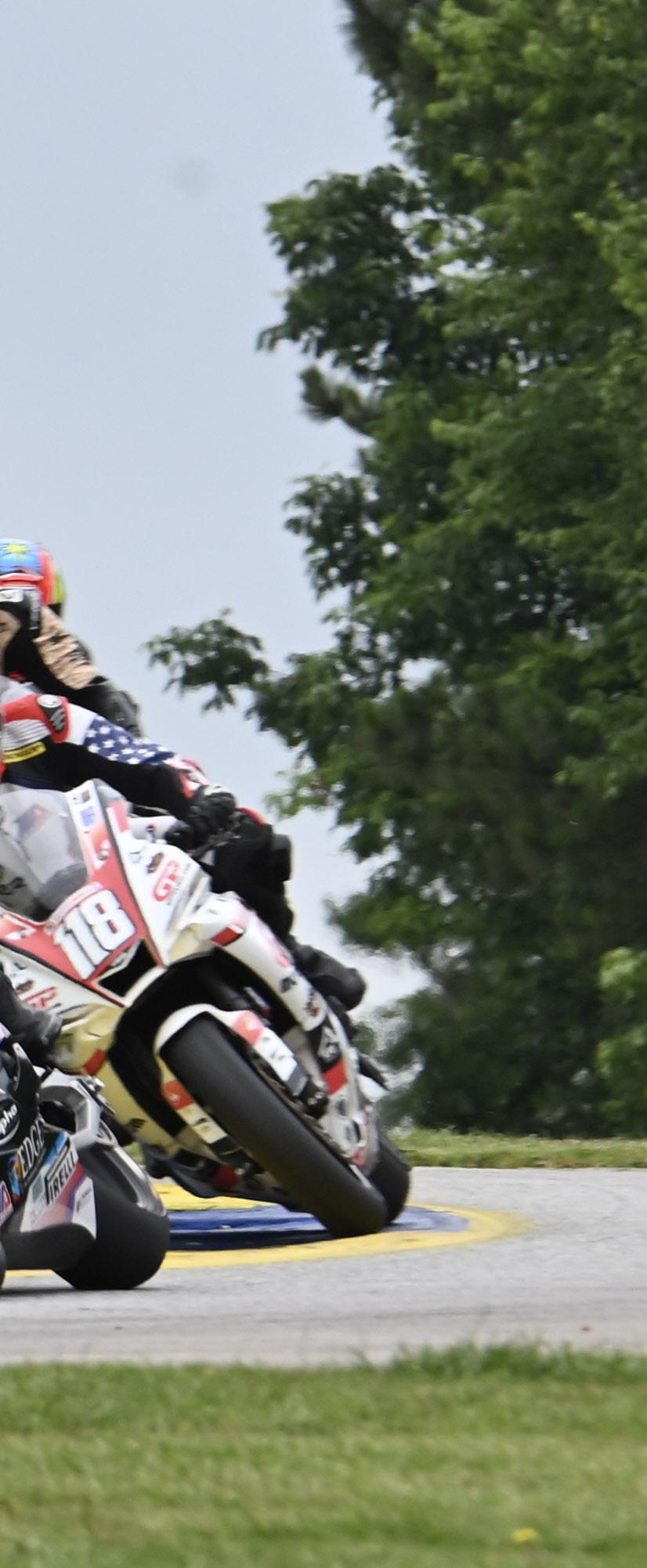
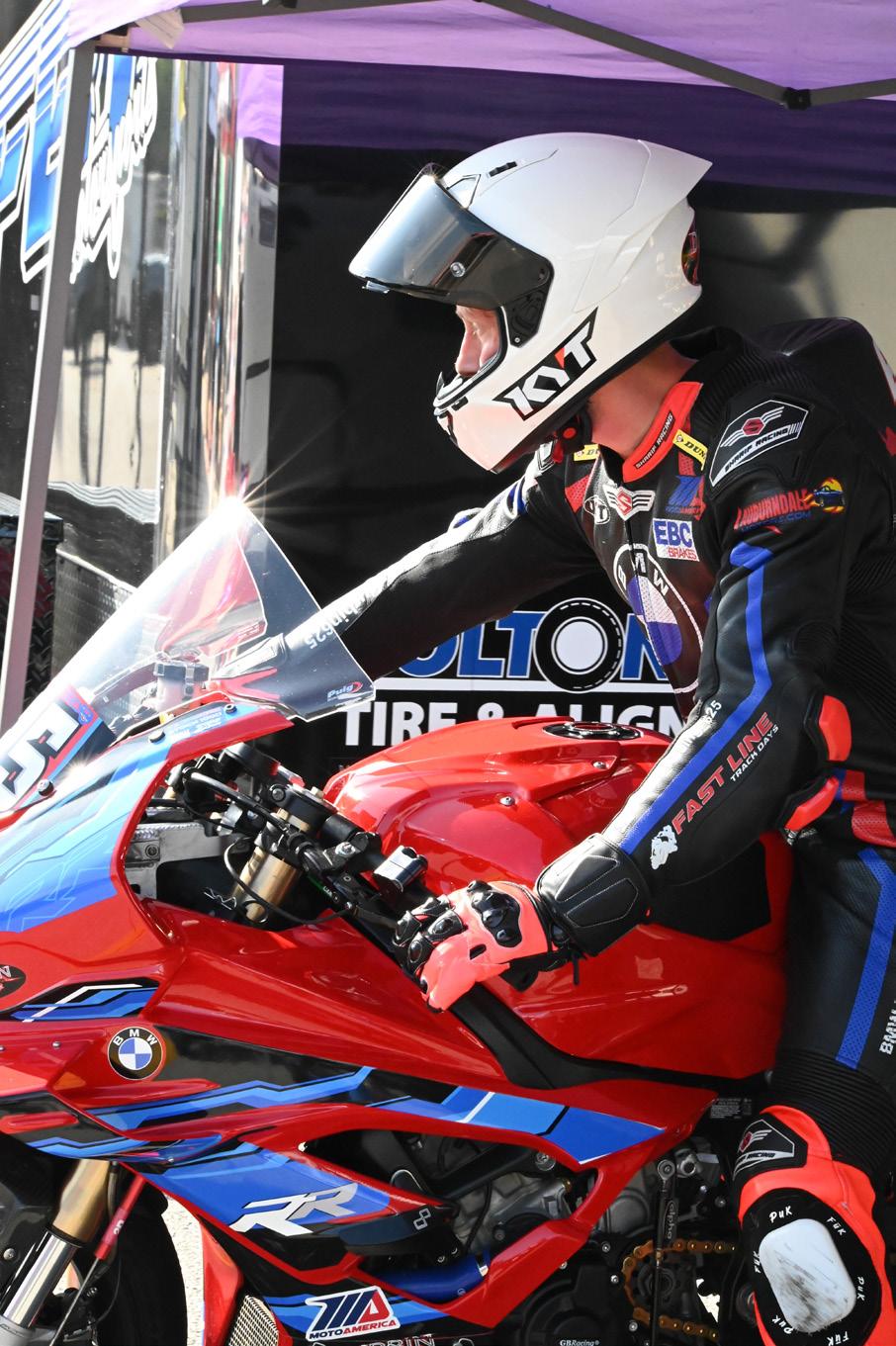
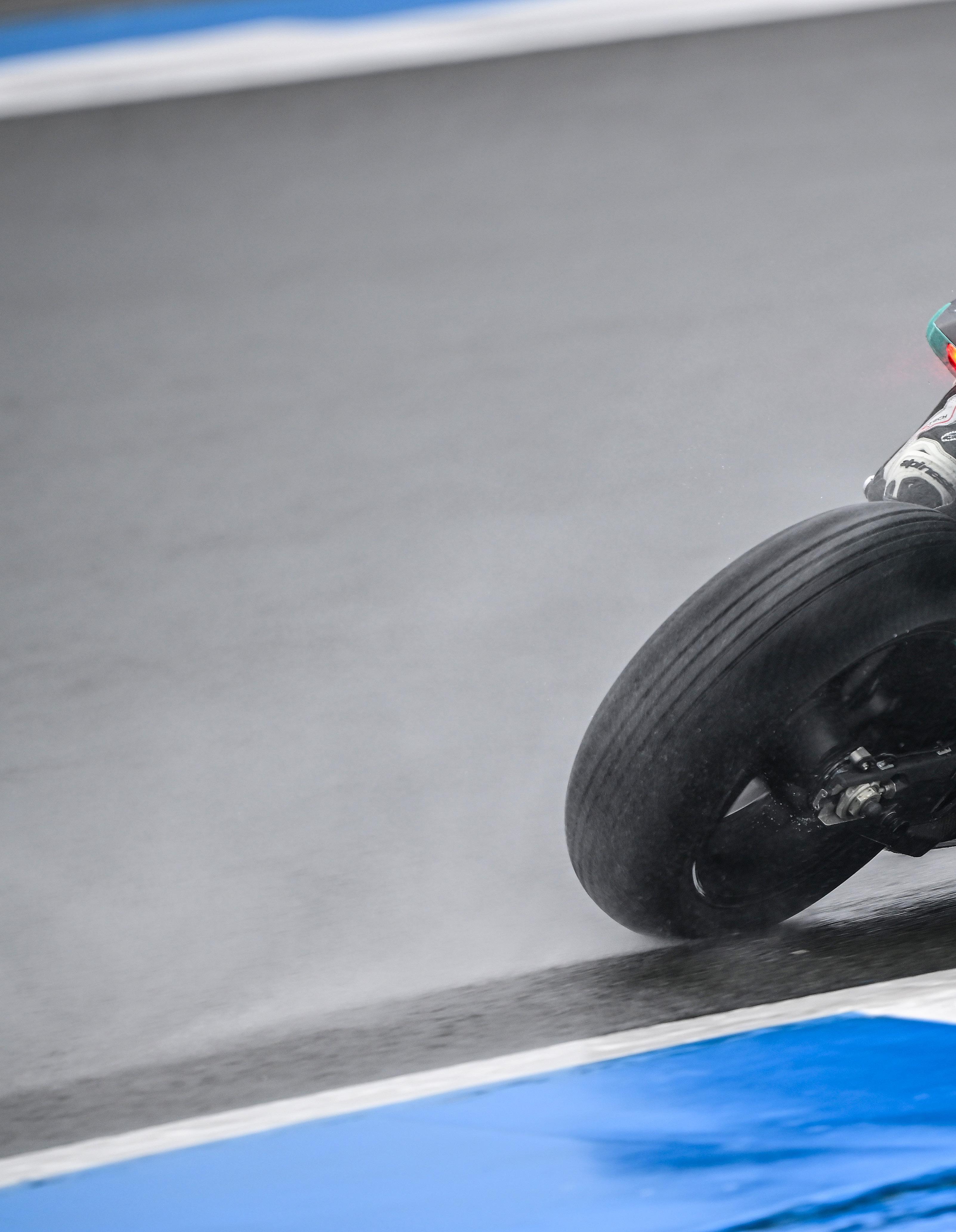
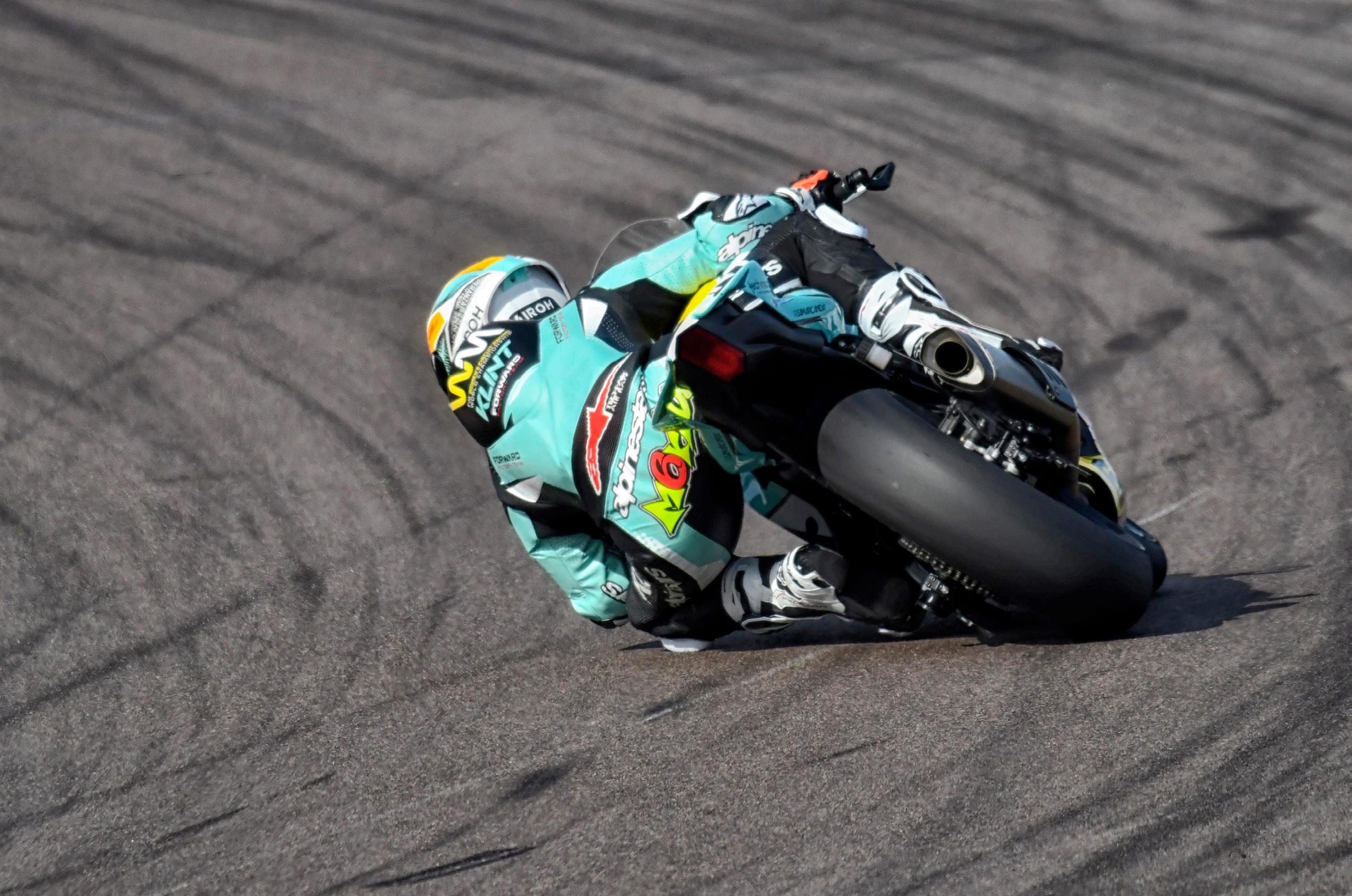
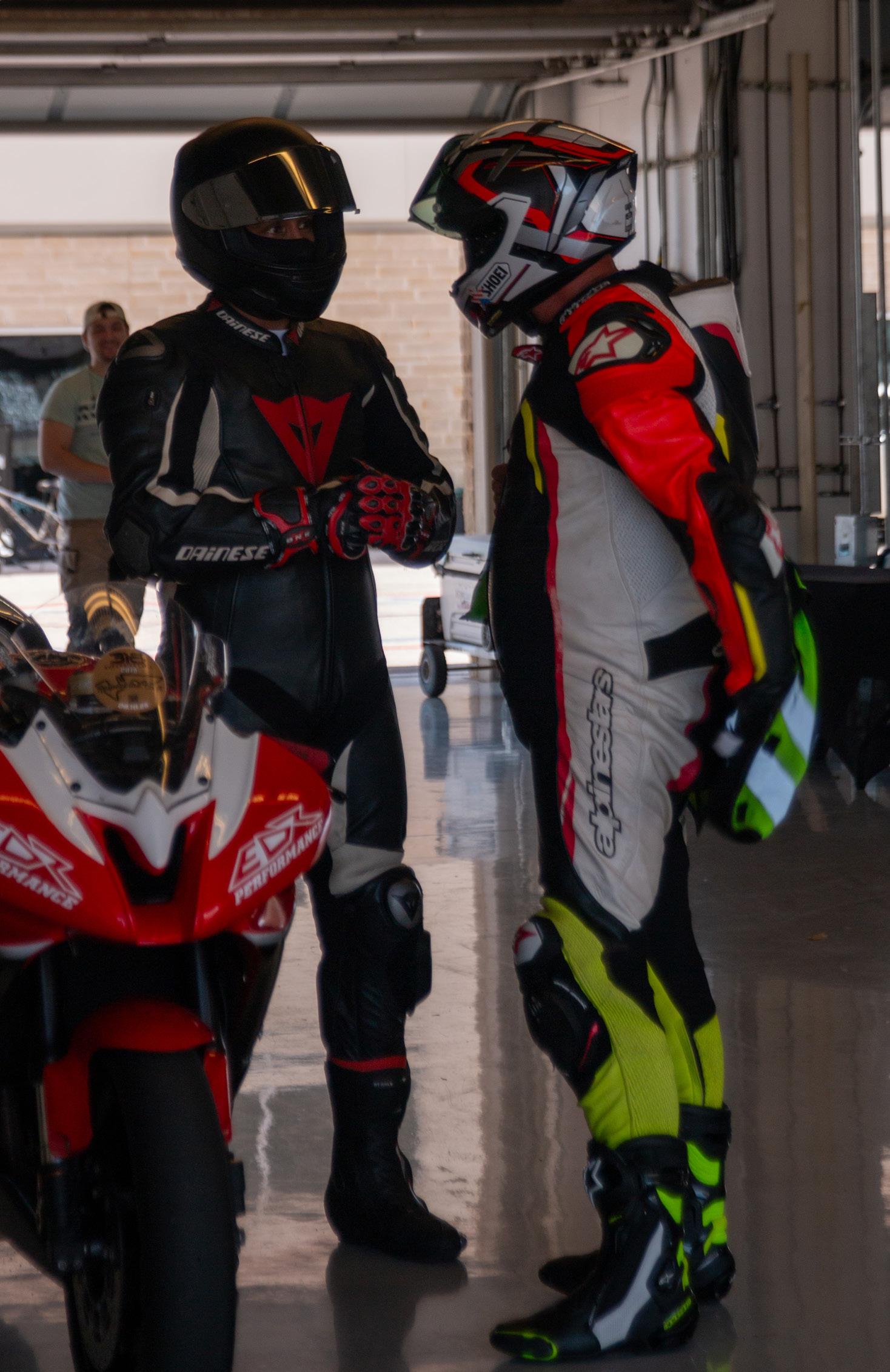
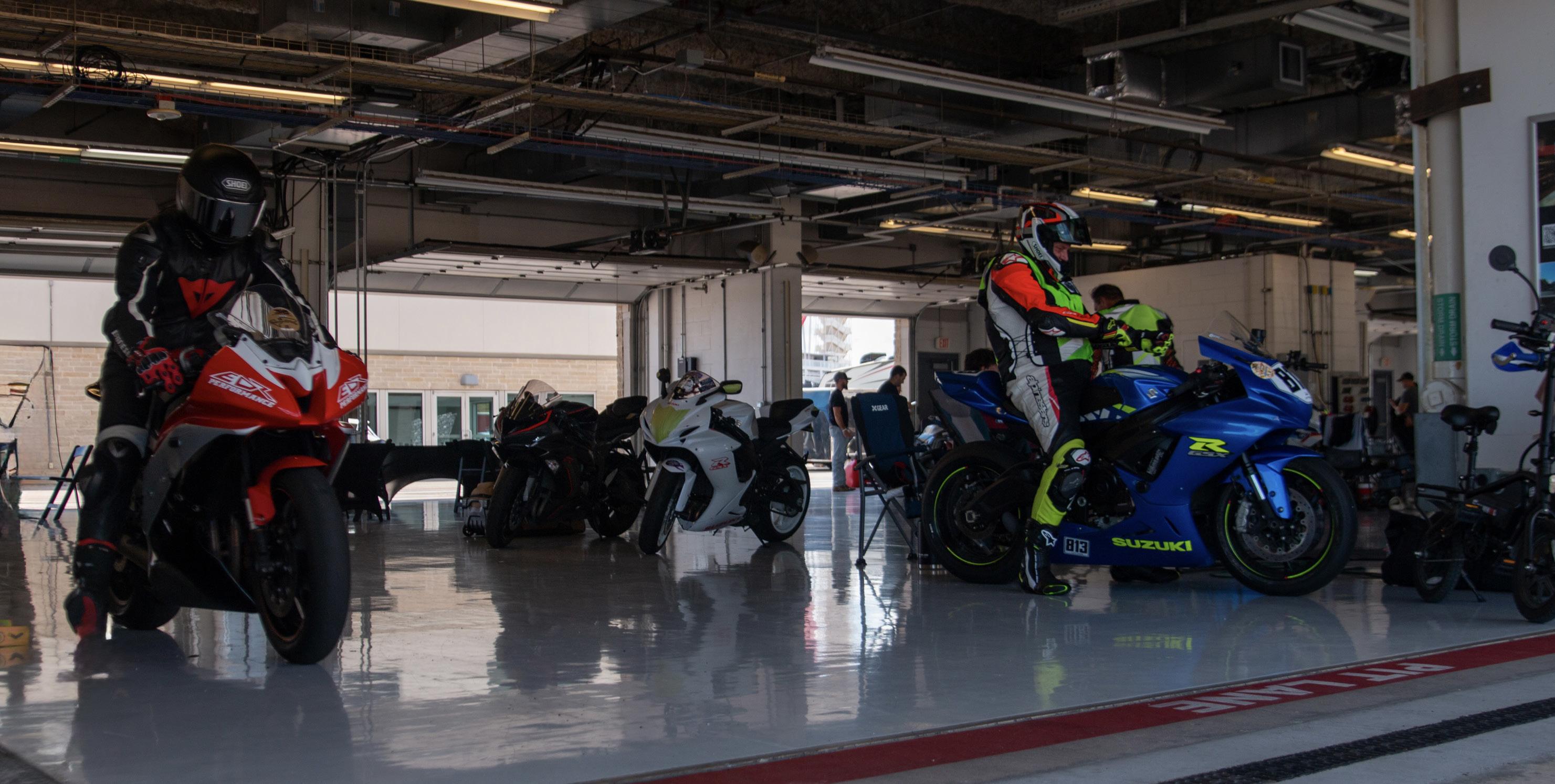
Marc Márquez - COTA 2025 Moments after his Sprint Race win.
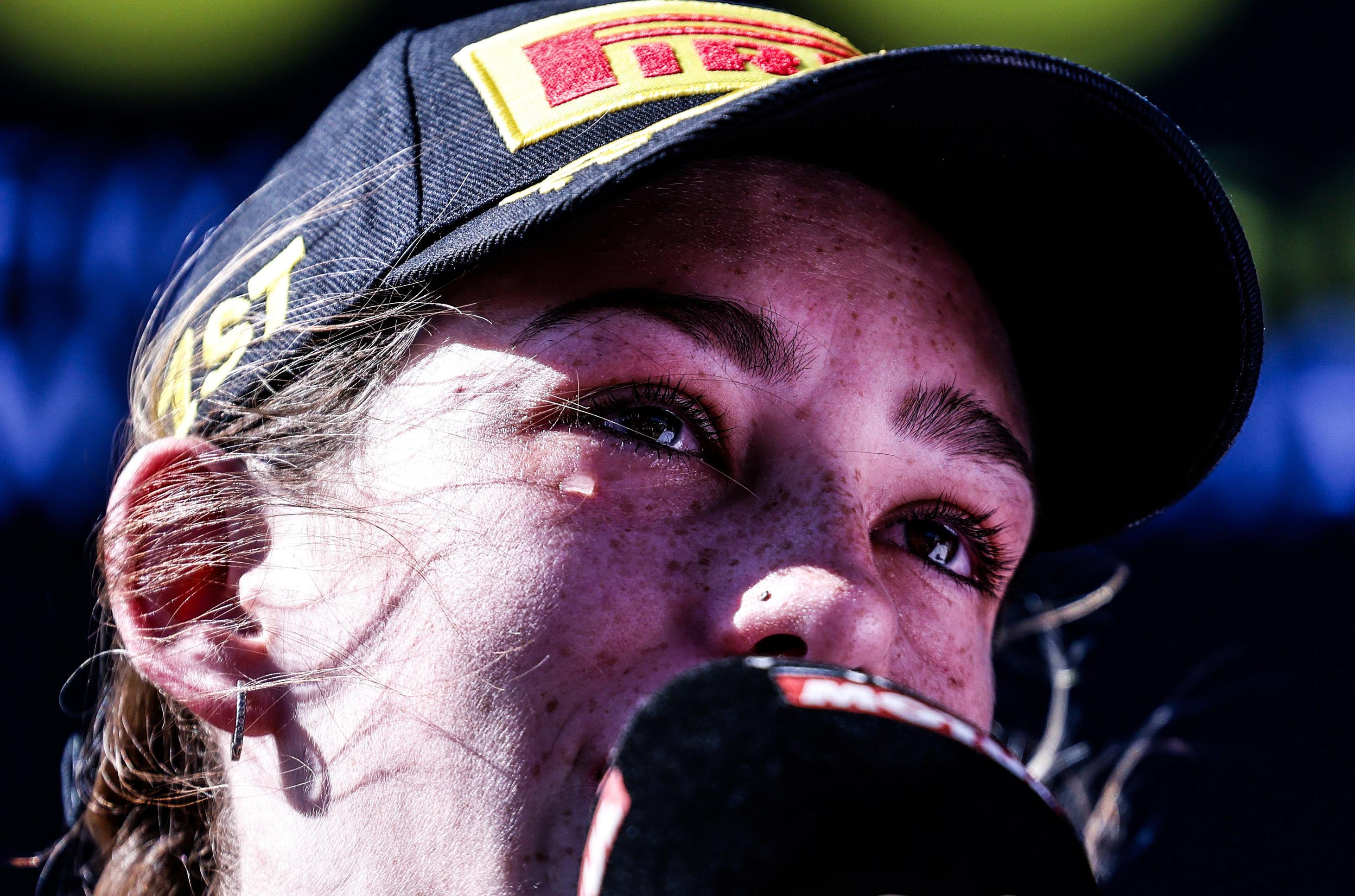
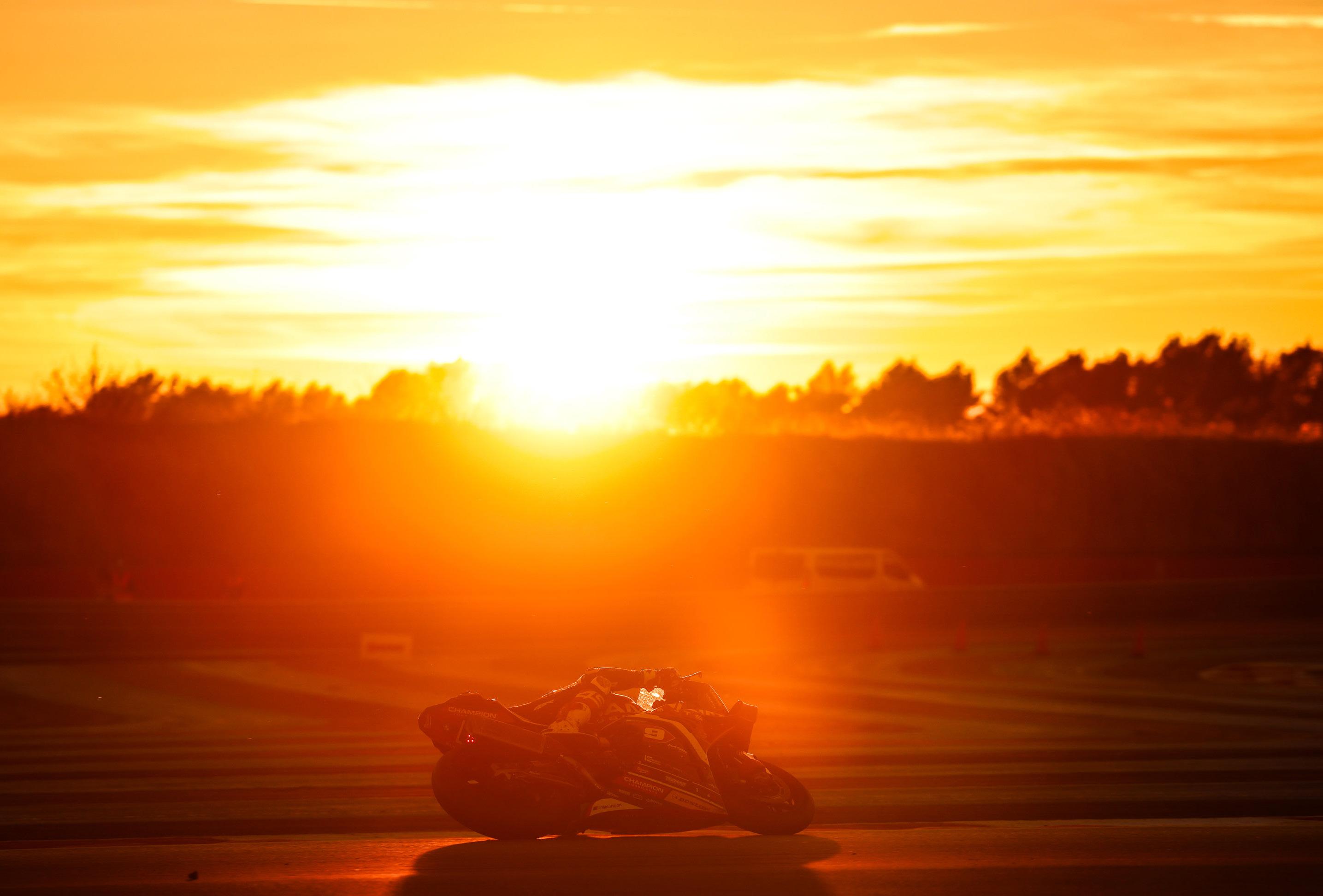
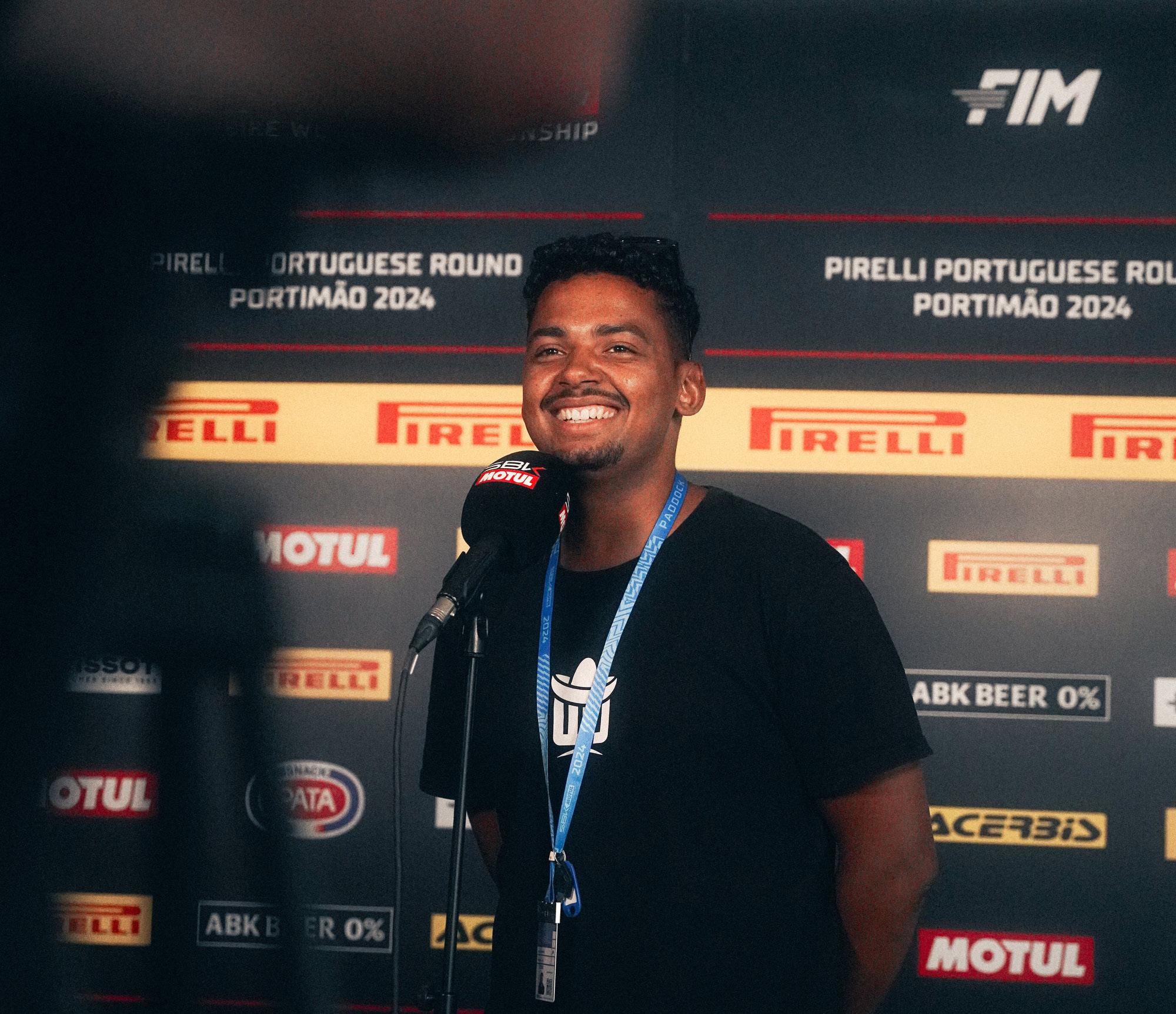
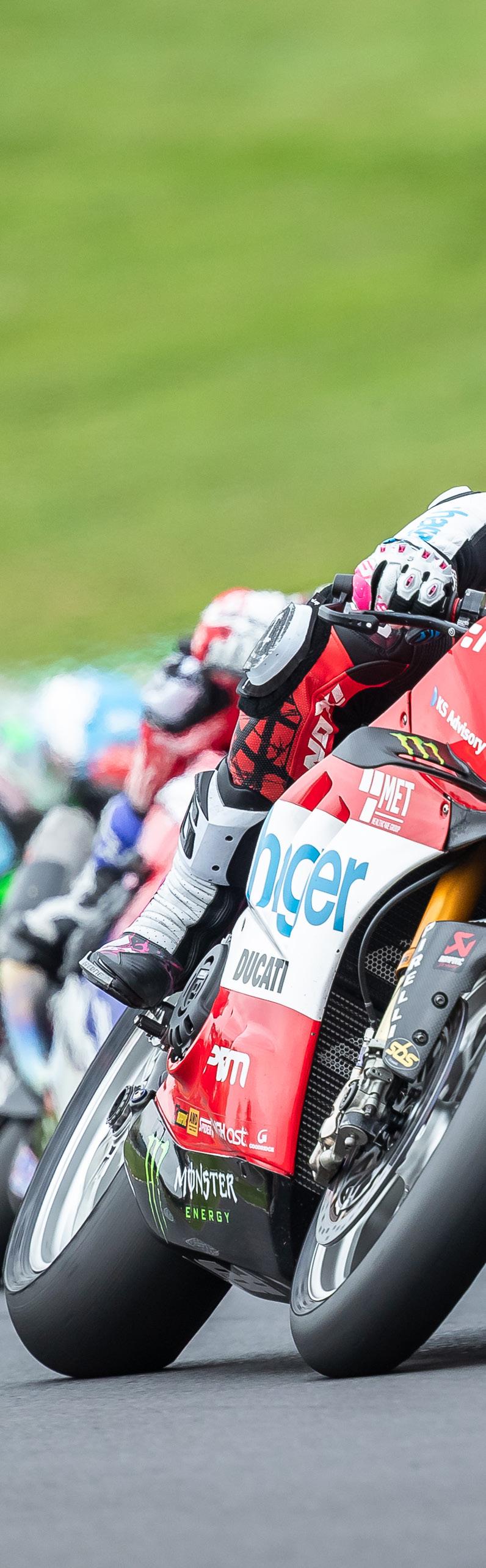
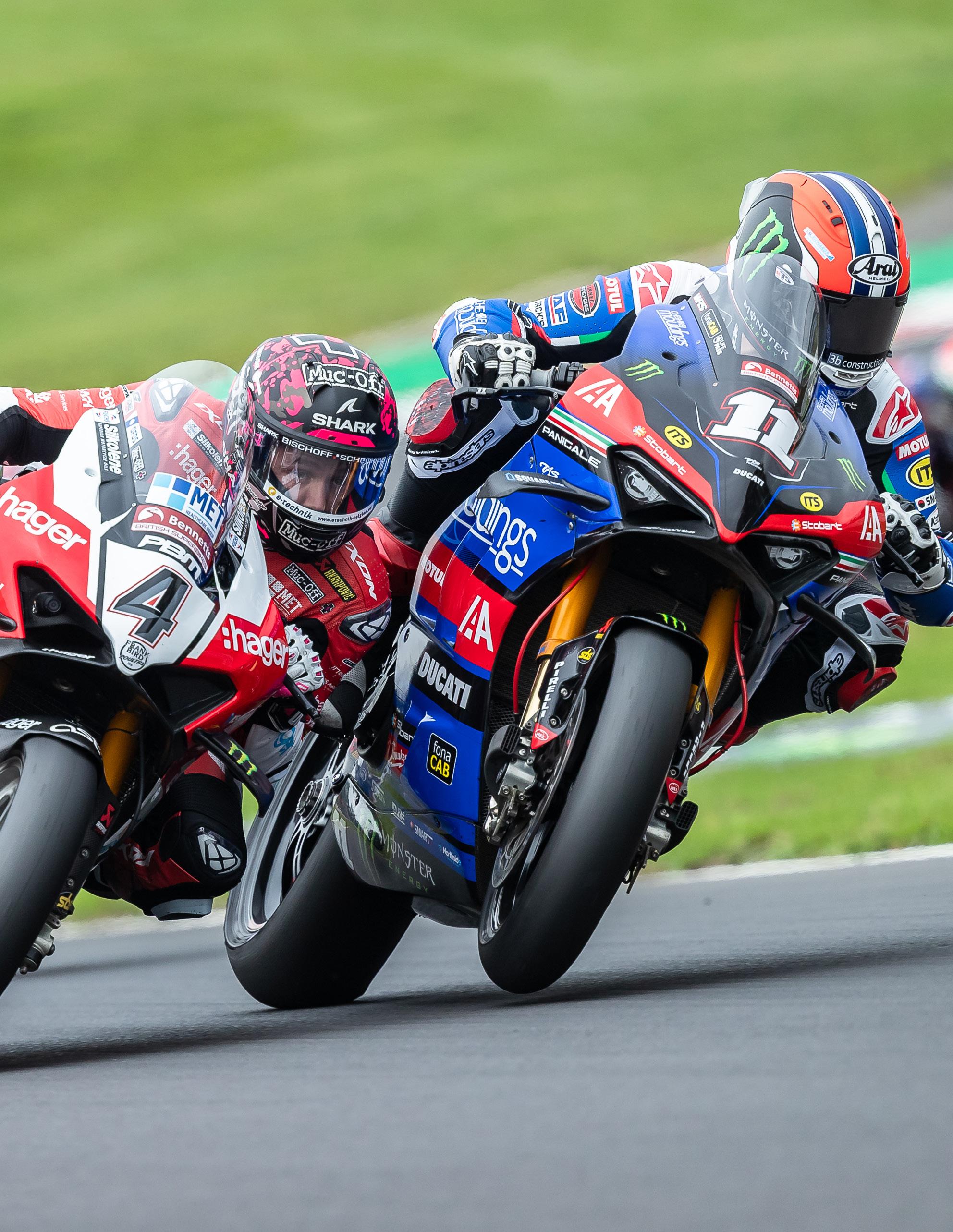
Photographs: Jason Farias
We built TrackDNA to feel like the paddock itselfwelcoming, unfiltered, and alive with the honest connection you only get between sessions when someone leans on a tire warmer and tells the truth about their weekend.
Like the magazines that captured the golden eras of motorsport, we’re building something for today’s track culture. We’re not chasing algorithms or trying to be another powersports outlet; we’re chasing that feeling - Track Life, Unfiltered. It’s rider-first, story-first, and experience-first - less about spec sheets, more about what the bike pulls out of you, and what the people around you teach you. Inside these pages you’ll find paddock stories, craft, builds and gear without the hype, and the mind-body side that decides whether you grow or plateau.
This first issue is a snapshot of where we’re standing right now - learning, building, and showing up anyway. Some of these stories are polished, some are a little dusty at the edges, but they’re real, and they come from people who actually live this. If something in here makes you rethink a corner, text a buddy to ride, or walk over and introduce yourself to someone new in the pits, then the magazine is doing its job.
If you’re holding this issue, you’re already part of it. Read it like you’d walk the paddock: stop where it pulls you in, meet the people, steal a lesson, and carry it into your next session.
See you in the paddock, Sean Beenaam, Editor
DISCLAIMER
Motorcycle riding, track days, racing, and performance driving are inherently dangerous activities that can result in serious injury, permanent disability, death, and property damage. Track conditions change, machines fail, other riders make mistakes, and small decisions can have big consequences. By reading this magazine and using any information referenced in it, you acknowledge and accept that you are solely responsible for your decisions, your preparation, your actions, and your safety.
TrackDNA content is provided for general information, storytelling, and entertainment purposes only. Nothing in this publication should be considered riding instruction, coaching, medical advice, legal advice, mechanical advice, or a substitute for training by qualified professionals. Reading TrackDNA does not create any instructor-student, coach-athlete, doctor-patient, mechanic-client, or any other professional relationship with TrackDNA, its editors, contributors, photographers, partners, or affiliates.
Riders, racers, and contributors may describe techniques, approaches, setups, speeds, risks taken, or personal routines based on their own experience, context, equipment, and support systems. Those experiences may not be appropriate or safe for you. Always follow the rules and requirements of your track organization, sanctioning body, local laws, and venue officials. If in doubt, prioritize safety, slow down, ask a qualified coach, and make conservative choices.
To the maximum extent permitted by law, TrackDNA and its owners, editors, contributors, contractors, and partners are not liable for any direct, indirect, incidental, consequential, special, or punitive damages arising from your use of this publication or any actions taken based on it, including but not limited to injury, death, property damage, lost profits, or lost opportunities.
All content is copyrighted by TrackDNA or used with permission. Unauthorized reproduction, distribution, or commercial use is prohibited. All trademarks and brand names are the property of their respective owners and are used for identification purposes only.
For questions, corrections, or rights requests, contact: Press@trackdnamag.com
Art
Paddock
Kim
CONTRIBUTORS
Aiden Sneed
Zach MacKay
Earl Roloff
Eric paradis
Michael Wincott
Dave Moss
PHOTOGRAPHERS
Vishal Chokkala
Joseph Sveum
Zach MacKay
Hart photography
Karen E. Ott
Lori Tyson Richwine
Thoma’s Prod
Guillaume Cardiet
William Joly
Jason Farias
Nicole Paulich
COVER SHOT
Rahal Ducati Moto
TRACKDNA ONLINE
website: TrackDNAmag.com
IG: TrackDNA_magazine
FB: TrackDNA magazine
Between The Passes
What a Young MotoAmerica Racer Sees That The Rest of Us Don’t
Words:
Sean Beenaam & Aiden Sneed
Photographs:
Joseph Sveum
Iremember the moment he passed me. I remember it because it was so ordinary on the surface. Same session, same corner, that heavy heat coming off the pavement where everything looks a little blurry in your peripheral, and I was on what felt like a solid lap for where I am right now - smooth enough, focused enough, not chasing anything heroic.
Then Aiden went by. There was no dive bomb, no last-second jab at the brakes, no drama that makes you sit up and think, what was that. He just appeared on the line that made sense, gave me room, and was gone - quiet and clean - and it didn’t feel unsafe or unpredictable so much as inevitable, like he’d made the decision earlier than I even realized there was a decision to make.
That’s the whole reason I wanted to write this. I asked Aiden if he’d be willing to co-write it with me because I didn’t want my best guess about what fast riders do; I wanted the other side of the pass, straight from the guy who just made me feel like I was standing still without ever making it weird.
What shook me wasn’t speed. When a faster rider comes through, the part that messes with your head usually isn’t the pace. It’s how calm it looks, how settled the bike stays, how sharp the timing is, and how the rider doesn’t seem to be negotiating with the motorcycle in real time like
the rest of us sometimes are when the session gets busy.
I was riding my lap, trying to keep the little things tidy and consistent. Aiden was reading the entire session, and that’s when it clicked for me: he wasn’t just doing the same thing faster, he was processing more information, earlier, with less noise in his head, which is why it looked effortless from the outside and felt so deliberate from where I was sitting.
I asked him what he’s actually looking at when he comes up on a rider mid-corner, because from the slower rider seat it can feel like you’re juggling a lot at once. His answer wasn’t glamorous, and that was the point, because it was the kind of practical that makes you realize you’ve been missing something obvious.
“When I’m passing riders, I watch their body position and how tense they are,” Aiden told me. “Tense riders make sudden moves, so I pass carefully. I also study their lines so I can predict what they’ll do.” That was a gut check, mostly because that corner felt busy in my headsomething I had to manage - while for him it was information. He wasn’t guessing, and he wasn’t hoping. He was collecting clues, reading tension, reading line choice, reading predictability, and then making a pass that didn’t require either of us to panic.
From the outside, a quick pass can look like
“talent,” like a magic trick that only certain riders get to do. From the seat, it’s usually a short chain of decisions that starts early enough to look effortless by the time it happens, and the earlier it starts, the less it needs to be forced.
Aiden described it in a way that made the difference between track day passing and racing feel clear without turning it into some sacred
pro-only knowledge. “For a clean pass, I look for space and timing,” he said. “At track days I give riders room, and in MotoAmerica I think about the outcome - sometimes a pass can pull you away from the group.”
That’s the part most of us don’t really consider when we’re just trying to survive our own lap. At a track day, the priority is predictability and
“A lot of newer riders coast, but for speed you need to be on one or the other.” - Aiden Sneed
margin, because everyone’s there to learn and go home in one piece. In a race, the context changes because strategy shows up, and the pass has consequences beyond the corner, but the foundation is still the same: read the rider, choose the moment, leave room, and don’t pretend you can out-talent physics.
What newer riders often misread about fast riders
There’s a story we tell ourselves when we get passed hard, especially if it catches us off guard: that guy is reckless. Sometimes that’s true, and everyone in the paddock can name the rider who rides like the track owes him money, but most of the time it isn’t what’s happening when the pass is clean. Fast riders who last tend to be the opposite of emotional. They don’t need chaos to feel fast, and they don’t need to force a gap just to prove they can, which means their passes often feel “sudden” to the rider being passed even though they were set up for a few seconds before you ever noticed them. “Slower riders don’t realize how much faster riders think ahead,” Aiden said. “We’re already predicting their next move before it happens.”
That line stung a little, in a good way, because it reframes the moment. On the receiving end, a pass can feel like it came out of nowhere. From the passer’s seat, it’s usually been in motion long enough that the actual overtake is just the last step, not the first. One of the reasons I like talking to pros who are willing to be honest is that they don’t pretend it’s solved. Aiden didn’t either, and that matters because it gives regular riders permission to be human without making excuses.
“Something I’m working on is getting up to speed quicker in the first couple laps,” he told me. “It takes me a bit to settle in, but I’m improving.” If you’ve ever had that first session where your brain feels a half-second behind your hands, you already know why this matters. Even at that lev-
el, the first laps aren’t always perfect, and there’s still a process of getting timing online, which is a reassuring reminder that “fast” isn’t a switch you flip, it’s something you build, lap after lap, with less rushing and more clarity.
What he notices in developing riders
This hit me because it’s so simple - once you see it, you can’t unsee it. When Aiden follows developing riders, he’s not judging “bravery” or raw speed. He’s watching choices, and whether they’re consistent. “When I follow developing riders, I notice their line choices and if they’re on the gas or brakes,” he said. “A lot of newer riders coast, but for speed you need to be on one or the other.”
Coasting can feel safe because you’re not committing, but the bike often feels vague in that middle zone. This doesn’t mean hammering the throttle or grabbing brake everywhere - sometimes “on the gas” is just a light maintenance throttle that keeps the chassis settled. It does mean being deliberate instead of drifting through the corner waiting for confidence to show up. If you want to work on it, do it progressively - one corner, one session, one clear intention - and ideally with a coach watching. The goal isn’t to force a new habit in one go. And the takeaway isn’t “ride like a MotoAmerica guy.” It’s simpler: be more predictable, make earlier decisions, and cut down the moments where you’re doing nothing and hoping the bike sorts it out. That’s where confidence shows up, and it’s also how you look calmer to the next rider coming through.
Words /
Photographs:
Zach MacKay
By the time I arrive at a British Superbike round, the weekend has already started. Most people think race photography begins when the bikes roll out of the pit lane. For me, it starts earlier, and it has very little to do with pressing the shutter.
I’m Zach, a UK-based freelance photographer working in the British Superbike paddock, spending weekends moving between riders, teams, and classes across an insanely wide grid. A race weekend, from my side of the fence, is logistics first, awareness second, and photography somewhere after that.
Before I even hit the gate, I already know who I’m covering, which classes they’re in, what they’re trying to get out of the weekend, and where I need to be at different points as things unfold. If you just turn up and “see what happens,” you miss half the story before it even starts - and you feel that gap in the work later.
Packing With Movement In Mind
Thursday night is usually spent packing and repacking the car. Batteries charged. Cards for-
matted. Long lenses wrapped so they don’t get knocked around. Wet-weather gear kept within reach, because British circuits have a habit of ignoring whatever forecast you checked. Everything gets packed with movement in mind, because the day isn’t built around comfort - it’s
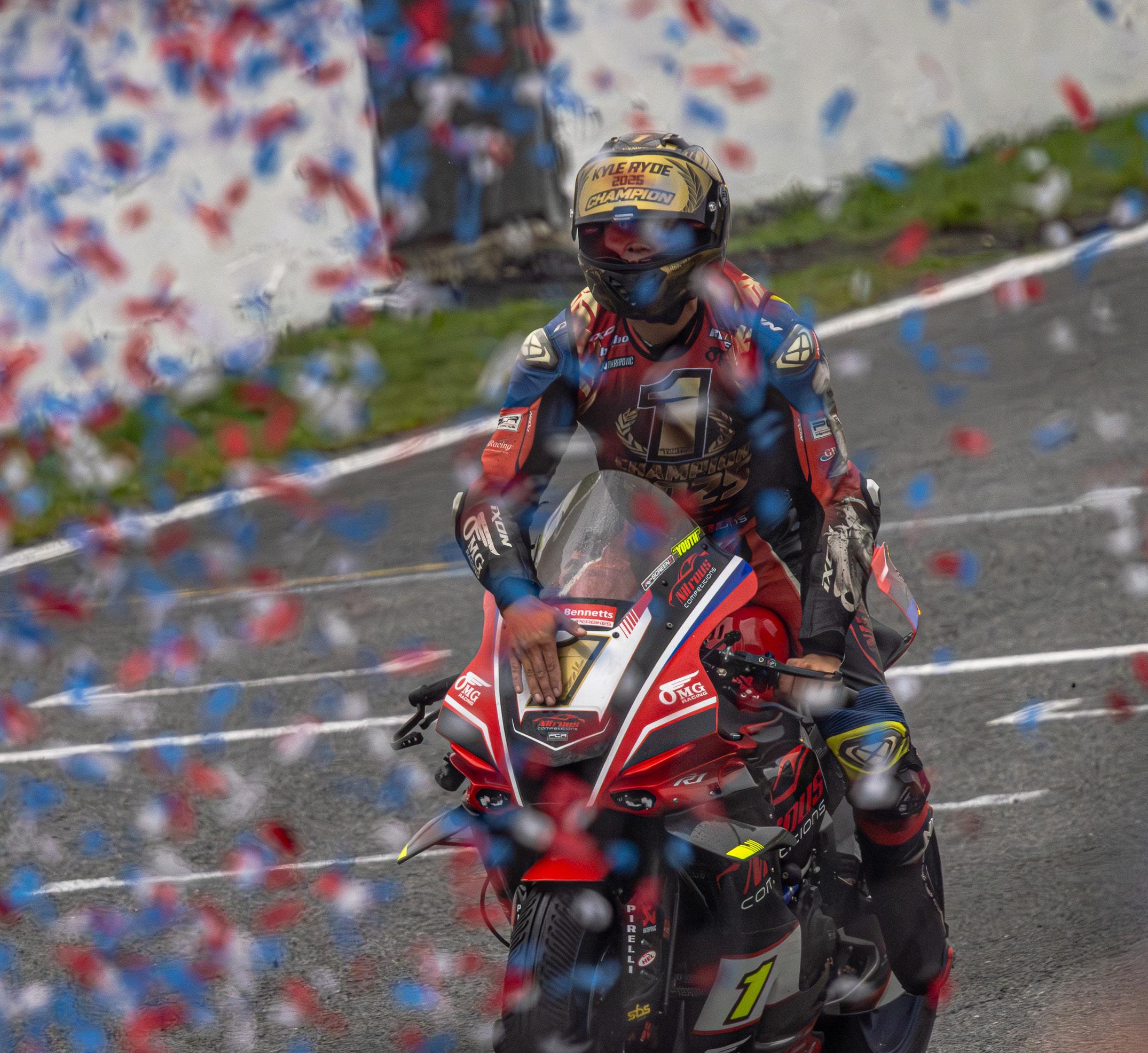
Kyle Ryde on the Brands Hatch straight in the season finale – champion
built around getting there, getting access, and staying mobile.
I know I’ll walk miles, often in the rain, and the kit has to move with me rather than fight me. If something slows you down, you feel it by mid-afternoon. If it breaks, you’ve just taken
yourself out of the story.
Becoming Part of the Paddock
When I arrive at the circuit, the first thing I do is not pick up a camera. I make a point of
going to say hello first - riders I’m working with, mechanics already elbows-deep in a bike, team managers juggling ten things at once, and other media I’ll end up sharing corners and grid space with all weekend. You stop feeling like someone with a pass pretty quickly and start feeling like part of the paddock. And that matters more than people think. When the teams are comfortable with you being there, they stop performing for the camera. That’s when the honest moments start to show up, the ones you can’t stage and you can’t force.
Friday: Reading the Garage
There’s a particular kind of quiet you only notice when you’re close enough to hear it. One Friday afternoon, a rider rolled back into the garage after a fairly scrappy lap - visor still down, shoulders slumped. Nobody said anything. A mechanic leaned on the bench, looking a little gloomy, nodded once, and went back to work. You didn’t need lap times to know how that session had gone. Observations and images, in this sense, tell stories before anybody gives you the headline. By Saturday, I’ve usually got a clearer read on where I need to be and when. Qualifying is the first time the pressure really shows. Mechanics move quicker. Riders go quieter. Body language tightens up. Being inside the garages matters here because you’re not guessing what the weekend feels like - you’re seeing it from arm’s length, in real time. At this point I spend a lot of time shooting off the bike. Gloves going on. Helmets being pulled down. A mechanic leaning into the fairing for one last adjustment. A rider staring into nothing for a few seconds longer than normal. Those moments often say more than another panning shot at speed, because they carry the weight behind the lap.
Finding the Right Places Trackside
When I do move trackside, I’m not chasing
the obvious angles. Everyone shoots the first corner and the last chicane. I look for the places people ignore - the braking zones where the rear wheel starts to skip, the crests where the front goes light, the spots where you can see effort in the rider and not just the bike. The goal isn’t “a photo of a bike.” The goal is a frame that shows what the rider is doing to make that bike behave. That’s where the story lives, and it’s usually not in the most popular spot on the fence.
Sunday: Race Day Chaos
Race day has a different feel again. Sunday is less about planning and more about reacting, because the weekend starts throwing punches. Weather changes. Bikes break. Riders crash. A plan that looked solid on Friday suddenly becomes useless, and you have to move quickly without getting in anyone’s way. You spend as much time in and around the garages as you do trackside - watching final adjustments, quiet conversations, last-minute decisions, and the sort of tension that doesn’t need explaining if you’ve been around it long enough. It’s controlled chaos, but it’s still chaos. Some of my favourite images come after the chequered flag rather than during the race itself. Relief. Frustration. Exhaustion. A rider sitting quietly on a tyre stack. A mechanic smiling to himself when nobody is watching. Those moments show what the weekend actually meant, not just what it looked like from the grandstand.
The Work Doesn’t Stop at the Chequered Flag
Throughout all of this, I’m also thinking about delivery. Teams want images quickly. Riders want something they can post that evening. Media want storytelling shots, not just action. So you’re constantly balancing shooting with backing up cards, culling wherever you can in the paddock - sometimes on a laptop, sometimes on
Danny Kent & Tommy Birdewell, BSB Finals 2025
a tablet, sometimes on a phone - and sending selects out before the next session starts.
It becomes a loop: shoot, move, edit, deliver, repeat. And then, once the track goes quiet, the proper edit begins. Sorting, refining, building larger selections for riders and teams, and putting together the more considered edits that end up on my Instagram, my website, and in shared galleries. Then you’re already preparing for the next round, because a race weekend isn’t a single event. It’s part of a season-long story you’re documenting one chapter at a time.
Inside the Weekend, Not Just Watching It
I’m not there to take photos of bikes going fast. I’m there to document what it feels like to be inside that world for three days - the pressure, the personalities, and the small details most people never see from the spectator bank. If I’ve done my job properly, someone looking at the images should feel like they were in the garage, on the pit wall, and stood trackside with me. Not watching the racing - inside it.
And at the end of it all, it really isn’t just photos. It’s art.
Storm Stacey, a fan favorite, spittin flames at Cooper Straight / Surtees
Josh Corner form chasin the racin podcast
Wrods: Sean Beenaam
Photographs: Hart photography Karen E. Ott
When I talked with David Roth Jr. about endurance racing, he didn’t lead with lap times or a magic strategy. He went straight to the part that decides whether you’re still useful deep into a stint, when the bike feels a little different, your eyes aren’t as sharp, and the track starts asking harder questions.
David is a Houston-based racer with rangehe’s lined up everywhere from local club grids to endurance stints, and he spent time in the MotoAmerica paddock with A.I.R. Onze Moto Racing in 2023. He’s also been a consistent front-runner in Texas Mini Cup, earning multiple 450 Supermoto podiums, including a close second in the 2025 season finale. He’s seen enough racing environments to know what holds up when the pace gets long, the margin gets thin, and the easy confidence wears off.
The first thing he brought up was simple and blunt: “Hard work beats talent every time.” He’s lined up against riders with more raw pace and still finished ahead because his cardio and consistency carried him, and endurance doesn’t let you hide from that.
Sprint racing can cover up sloppiness for a few laps. Endurance brings it out. Early on, everyone looks decent and the bike still feels fresh, but later it’s the little drifts that separate riders -
missing marks, rushing corner entry, letting traffic pull you out of your own rhythm, and making small mistakes that don’t feel like much until they stack up. Endurance isn’t just about being fast. It’s about being steady when the ride gets noisy and you’re still expected to be clean.
“Smart pace” is one of those phrases everybody throws around, so I wanted his definition in real terms, not the motivational-poster version. He told me, “I like to push around 90% - fast enough to be efficient, but still conserve energy for my team and the bike.” That number isn’t about being timid. It’s about choosing a pace you can repeat without your riding quality falling apart.
His trigger to back it down isn’t complicated either. “If I start missing marks, I back it down until I’m comfortable again.” Comfortable can sound soft if you don’t race endurance, but he didn’t mean easy - he meant controlled and repeatable. If the ride stops being clean, the pace isn’t smart anymore, even if the lap time looks good for a minute.
The biggest mistake he sees sprint racers make when they jump into endurance is overpushing early in a long stint. It drains energy and burns tires fast. He also pointed out a real-world wrinkle: endurance often means you’re on a bike
that’s not yours, or on smaller displacement machines where being smooth matters more than trying to overpower the situation. You can’t bully a long stint into working. You have to ride what’s there. In sprint racing, you can override a lot with adrenaline, but endurance exposes your mindset first. Tire wear, energy levels, and changing track conditions keep coming at you, and staying calm is what keeps you focused and comfortable on the bike when things stop feeling perfect.
He shared one moment where that mindset wasn’t theory - it was the whole race. A teammate pitted right before a red flag, leaving them almost out of fuel. When the race restarted, they had to put the same lap back on the bike, which put them a lap down. David pushed as hard as he could for over an hour, eventually catching and winning. In that decision point, he focused on the bigger picture - the comeback and the result - not a single lap or a single frustration. That’s endurance in one sentence: you don’t win every moment, but you can still win the day. The “comeback” part isn’t one heroic lap - it’s a long stretch of doing the same things right while your brain tries to pull you into the drama.
When you’re a lap down, ego gets expensive, and the temptation is to earn it back in one corner with late brakes and forced entries. David’s approach reads more like a budget than a bet: spend your speed where it matters, protect the bike, protect your energy, and don’t take a shortcut that turns into a crash or a penalty. The other thing people miss is how physical the mental mistake becomes. When you’re frustrated, you ride tense. You breathe high, your hands grip harder, your vision narrows, and suddenly you’re not just tired - you’re inefficient.
His passing approach comes from the same place. “I keep my pace constant and pass cleanly,” he said. “I don’t like aggressive passes because they put me at risk.” He still wants to get around someone safely and efficiently so he can settle back into his own ride. In endurance, one sketchy move can follow you for a while - not just
in time lost, but in how tense you ride afterward. The pass is over, but your shoulders stay tight for three laps, and now you’re paying interest.
The mental side matters too. Mid-stint, when he’s tired or annoyed, he goes back to the people. He reminds himself of the dedication his team puts in, because without them none of this happens. Finishing a tough stint gives a reward he says you can’t really describe, and that’s what keeps him motivated when he’s worn down and the easy fun has already left the building.
That team-first mindset also shapes how he thinks about setup. He’s flexible with it. Most of the time they tune the bike for the fastest rider to maximize hot laps, and he rides what he gets and focuses on riding well rather than stressing every detail. It’s a very endurance thing to admit out loud: you don’t always get the perfect tool, so you get better at using the tool you have.
If a track-day rider asked David for one endurance lesson they can apply right away at their next track day, his answer was simple: every moment counts. Not in a dramatic way - in a quiet, lap-after-lap way. And you don’t need an endurance pit wall to practice it. The track-day version is choosing repeatability over spikes. When your session has one hero lap and five messy ones, it feels satisfying, but it’s not building anything you can lean on. The real win is a session where the laps look boring on paper because they’re all within a tight window.
Instead of chasing hero moves, focus on clean, consistent laps. Keep your lap times tight, minimize mistakes, and stay smooth as the session goes on. If you want a simple way to measure it, look at your lap-time spread across a session and see what happens once you’re a little fatigued or a little annoyed. When you feel yourself getting greedy, treat that as your cue to reset your breathing, soften your grip, and go back to your marks. The goal isn’t perfection. It’s finding out whether you can keep the ride calm and repeatable when the easy part is over.
After his teammate’s crash, the team rebuilt the bike and still put David back on track. He left it all out there and pushed harder than he ever had at Eagles Canyon Raceway. Photo credit: Hart Photography
“If
here for a
After a rough qualifying, I went numbthe only thing I wanted was to make my father proud. I chased down the lead pack and held fastest lap for most of the race at Eagles Canyon Raceway. Photo credit: Karen E. Ott.
you’re racing MotoAmerica, there’s no reason to be worried – you’re
reason.” – David Roth Sr. Photo credit: Karen E. Ott.
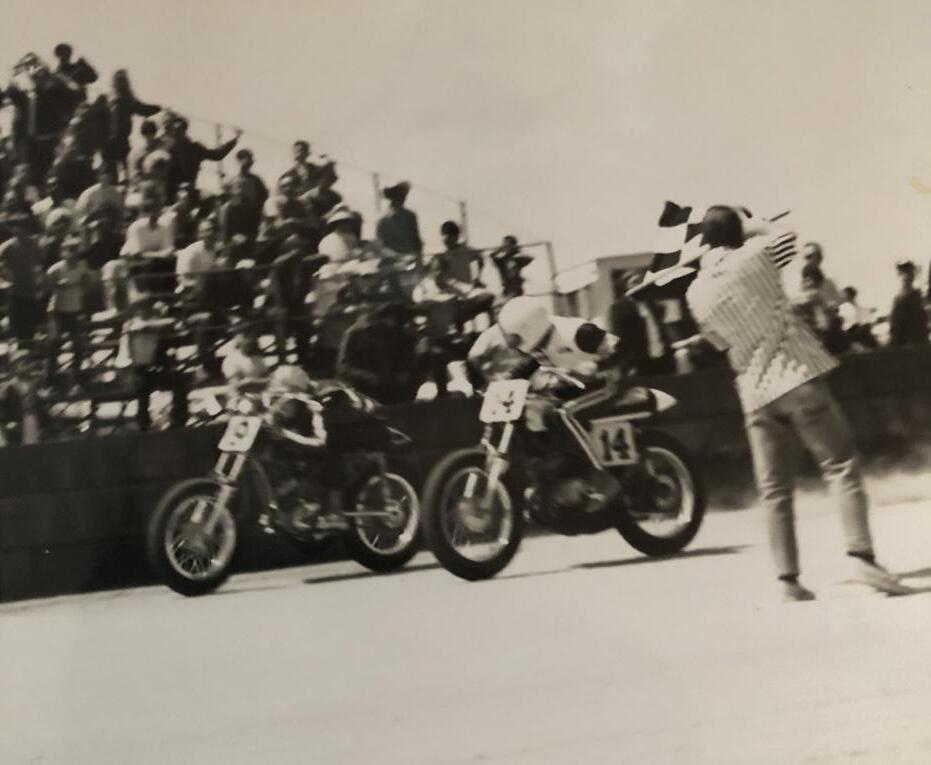
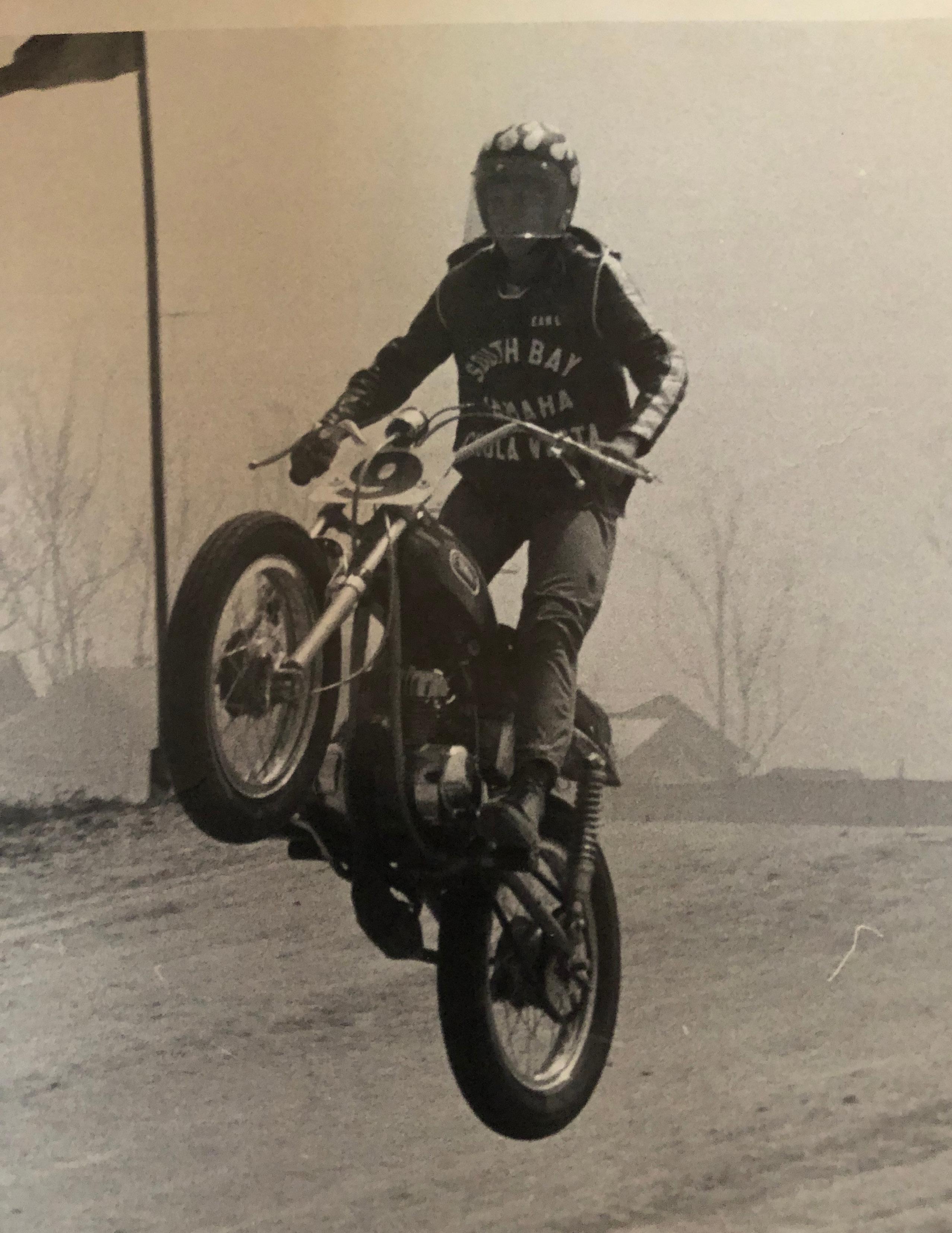
After a seventeen-year stint as a dirt track racer - short track, half mile, and milemy late father asked if I’d be interested in trying road racing in 1982. I’d already spent a lot of time riding the backroads of San Diego County, and with my background I figured, why not. History has shown ex-dirt trackers can convert to asphalt pretty well, and a few names immediately come to mind: Kenny Roberts, Wayne Rainey, Eddie Lawson, Freddie Spencer. I’d actually raced a couple of those guys in the dirt, and Steve Wise - a talented motocrosser back in the 80s - made the transition to road racing with solid results too.
My first road race was early in 1982 at Riverside International Raceway on a Box Stock 750 GPZ Kawasaki. As a newbie, I had to do the New Riders School on Saturday to get approved to race on Sunday, so we started in the classroom going over the track layout, lines, and all the basics. Then we finally went out on the road course for the first time, and there were all kinds of bikes and riders out there. Technically, I wasn’t a newbie in the pure sense because my dirt track experience helped me adapt pretty quickly as I followed the instructors.
I was pretty much at my limit. We had some fun for a few laps before the checkered flew and we pulled in for the day, and the instructor rolled up next to me and gave me a thumbs up.
During the final session of the day, the instructors waved us by to see how we were doing. I ended up in a little back-and-forth with one of them on an RD400 with slicks, rearsets, and chambers, and as the pace picked up my much bigger and heavier GPZ750 on Dunlop K291s started dragging pegs. Then it actually tapped the undercarriage and mufflers, which made the 19-inch front wheel a bit light and let me know
Sunday was my first real road race, and I started on the back row of a 30-plus-rider field with my open-face helmet, dirt track leathers, and a white patch on the back to mark me as a new rider. Definitely not a fashion statement. I was entered in the 750 Box Stock class, where you were only allowed gearing and suspension changes to keep the playing field somewhat level. When the green flag flew for the 10-lap sprint on the 2.6-mile course, I got a solid start. By the time we got through the famous esses on the opening lap, I’d already passed almost half the field, and around the 180-degree turn six heading toward the blind turn seven I picked off another six or seven guys on the brakes, taking a low, unconventional entry line. Exiting turn eight onto the back straight, still on lap one, I was already in the top ten. Over the next nine laps I kept working my way forward. Starting the white-flag lap, I was up to second place chasing a guy named Kerry Bryant, who I later learned was a regular front-runner at AFM events. On the last lap I drafted him down the back straight, pulled out just before the fast, long, and fun turn nine, took the lead, and held on for my first win. It was an exciting and rewarding day, and it was the start of a long and fairly successful road racing run that would last about six years.
To me, a good paddock was full - riders, mechanics, sponsors, spectators. In the early 80s, the paddock was pretty much always “good,” be-
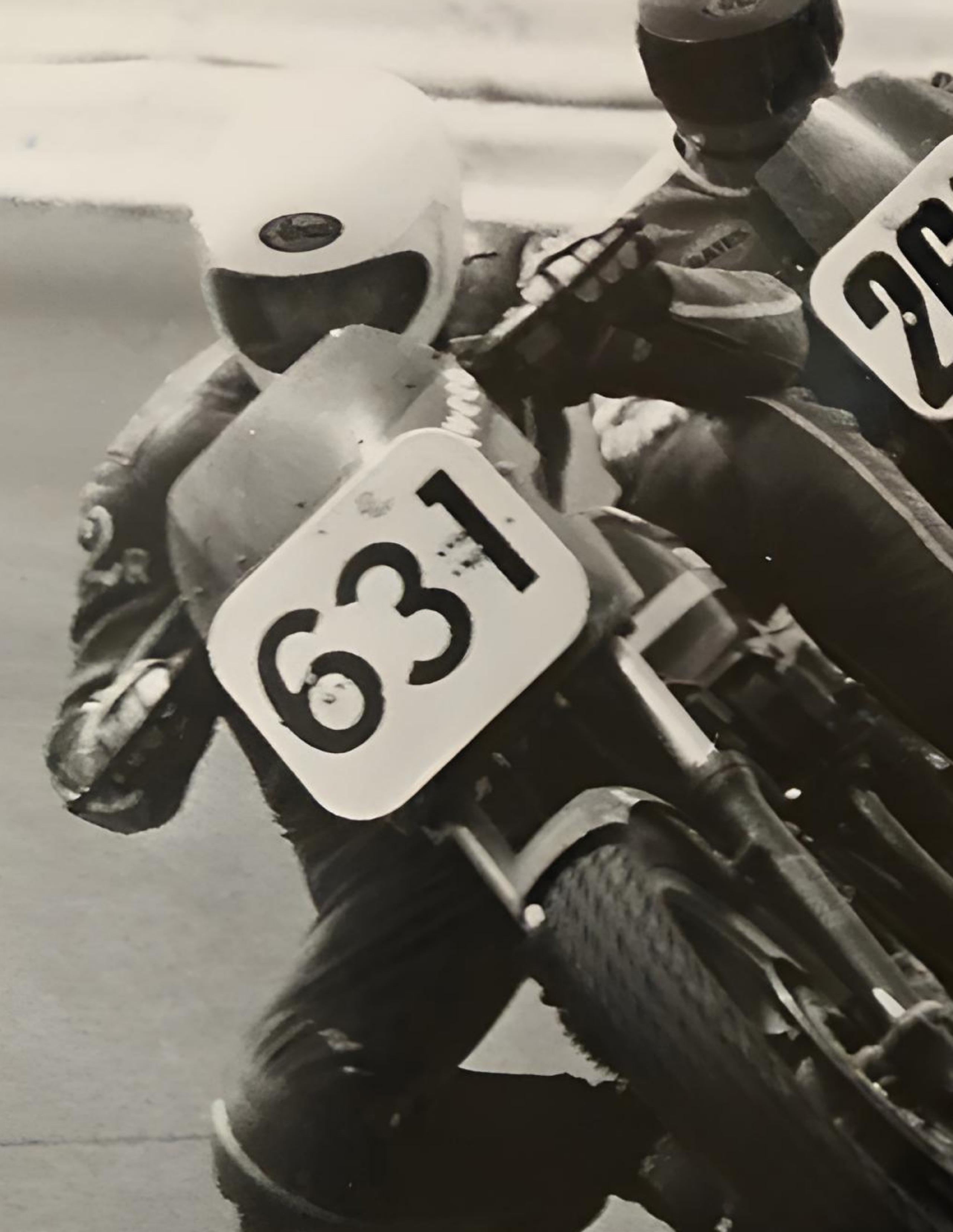
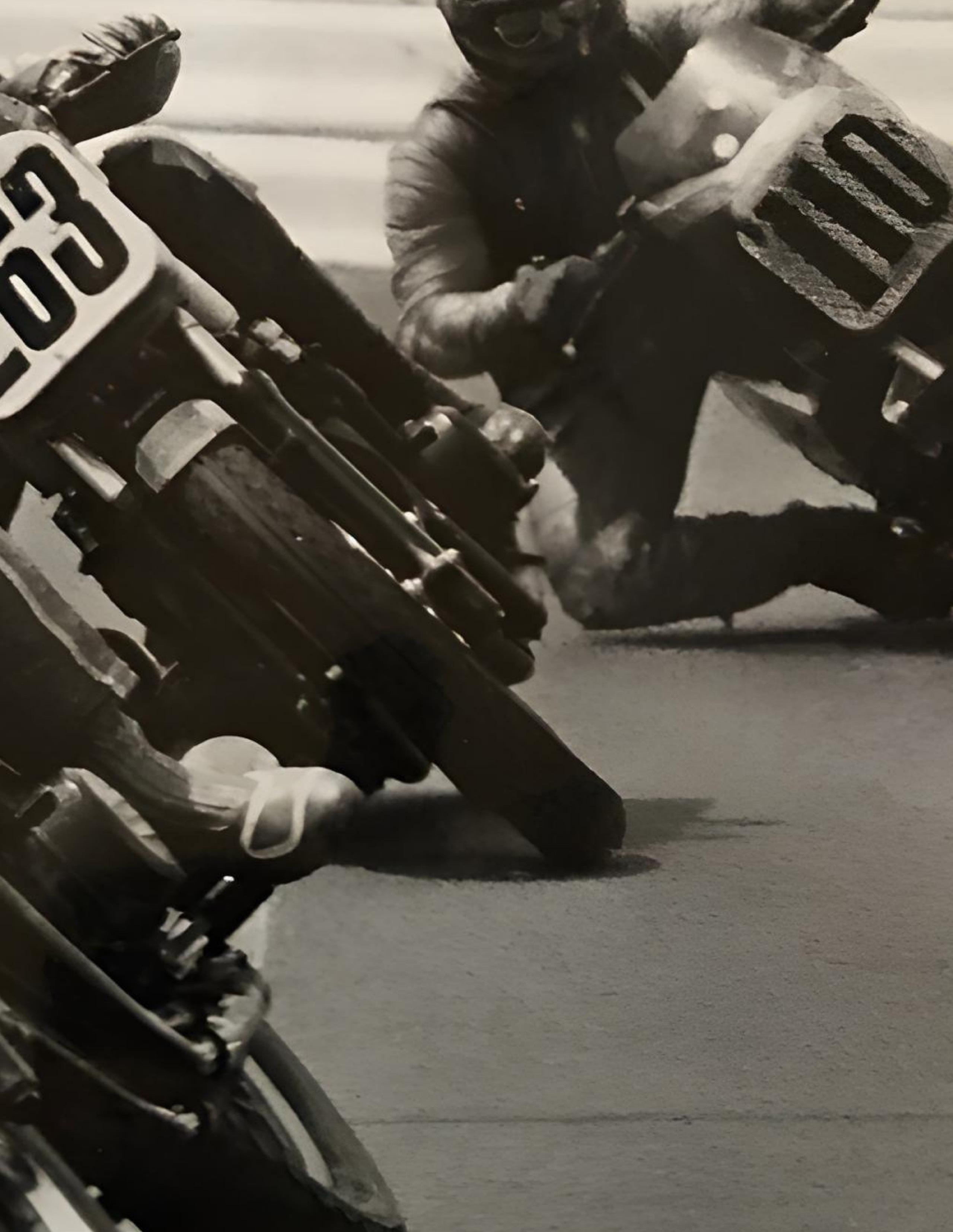
Exiting Turn 6 at Riverside Raceway –#631 on my GPZ550, “Timebomb,” for its high-strung, modified attitude. Battling production racing standouts Jim Vreeke #263 and Jim Poet #110.
Photo credit: Lori Tyson Richwine
cause production road racing was in full swing and the manufacturers were offering competitive bikes to test the waters.
Keep in mind, back then the only real way to get on a racetrack was to race. There were a couple of schools - Keith Code and Reg Pridmore come to mind - but if you wanted to see what it was like, you basically had to buy a bike, show up, and line up. Track days weren’t a thing like they are now, and the downside was that new riders were often thrown in with the sharks. There wasn’t much class structure for ability, so road racing was more like, “Here’s the grid, good luck.”
Over time, a few clubs added a Novice class, which, frankly, was one of the better ideas our sport ever had. It gave new riders a chance to gain experience racing with people at a similar level, build some points, learn some skills, and then move into the regular classes where you had fast locals and often pro riders mixed in. It also improved safety for the fast guys who were lapping people in a 10-lap sprint, which in my opinion is pretty dangerous.
The manufacturers - Honda, Kawasaki, Yamaha, Suzuki - were involved too, offering contingency programs to promote the sport. The pits were full of everything: GPZs, GSs, Secas, Ninjas, Interceptors, FJs, FZs, Ducatis, TZs, SRs, GSX-Rs. You get the picture. It was a great time to be road racing, and what I remember most was the camaraderie. Even the fiercest rivals would stop for a moment to chat, shake hands, or loan a competitor a part if they had it.
The racing was intense no matter what your talent level was, and the real joy is going wheel to wheel for a position, preferably a win. But that mindset existed all the way down the results sheet. Edging out a guy for fifteenth could be just as exciting for him as me drafting a rival for a win. Well, maybe not quite as exciting - but close enough.
At the same time, there was an unwritten rule: we all had to work on Monday. Most of
us weren’t making a living racing motorcycles, and very few ever do. Some riders could pay for tires and entries and maybe have a little left over, while others were spending a lot of money racing for a trophy or simply because they loved to race. The unfortunate ones crashed and turned a race weekend into a very expensive one, even if they were lucky enough not to get hurt. There’s an old racing saying: “You never know how fast you can go until you crash.” I had my own version, and it served me pretty well: ride as fast as possible without crashing.
In Southern California, most tracks ran a Saturday practice day before Sunday’s races. Owning our motorcycle businesses in San Diego meant I couldn’t take advantage of those very often, so race weekends usually started when the shops closed on Saturday. We’d have the bikes prepped with fresh tires, load the van at closing time, and hit the road, and most of this was a family program - my dad running the show and my younger brother Craig turning the wrenches.
Where we were headed determined when we left. For Riverside, we’d get up early Sunday morning for the short 90-minute drive. For Willow Springs, we’d leave straight from the shop for the three-and-a-half-hour drive to Lancaster, which at the time had a reputation for being one of the rougher cities around, and we’d stay at either the Easy 8 or Motel 6. Back then those rooms were about twenty bucks a night. Times have definitely changed.
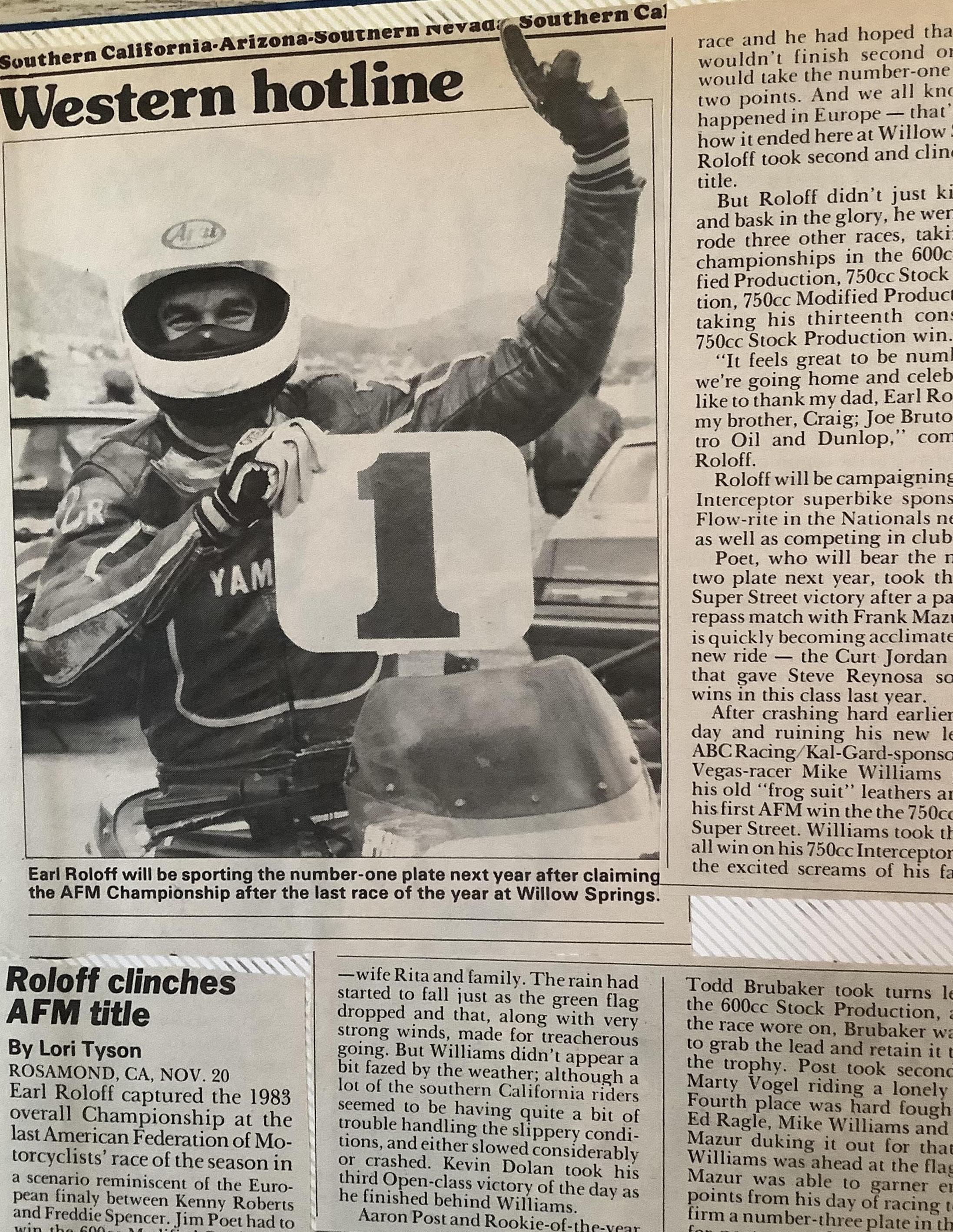
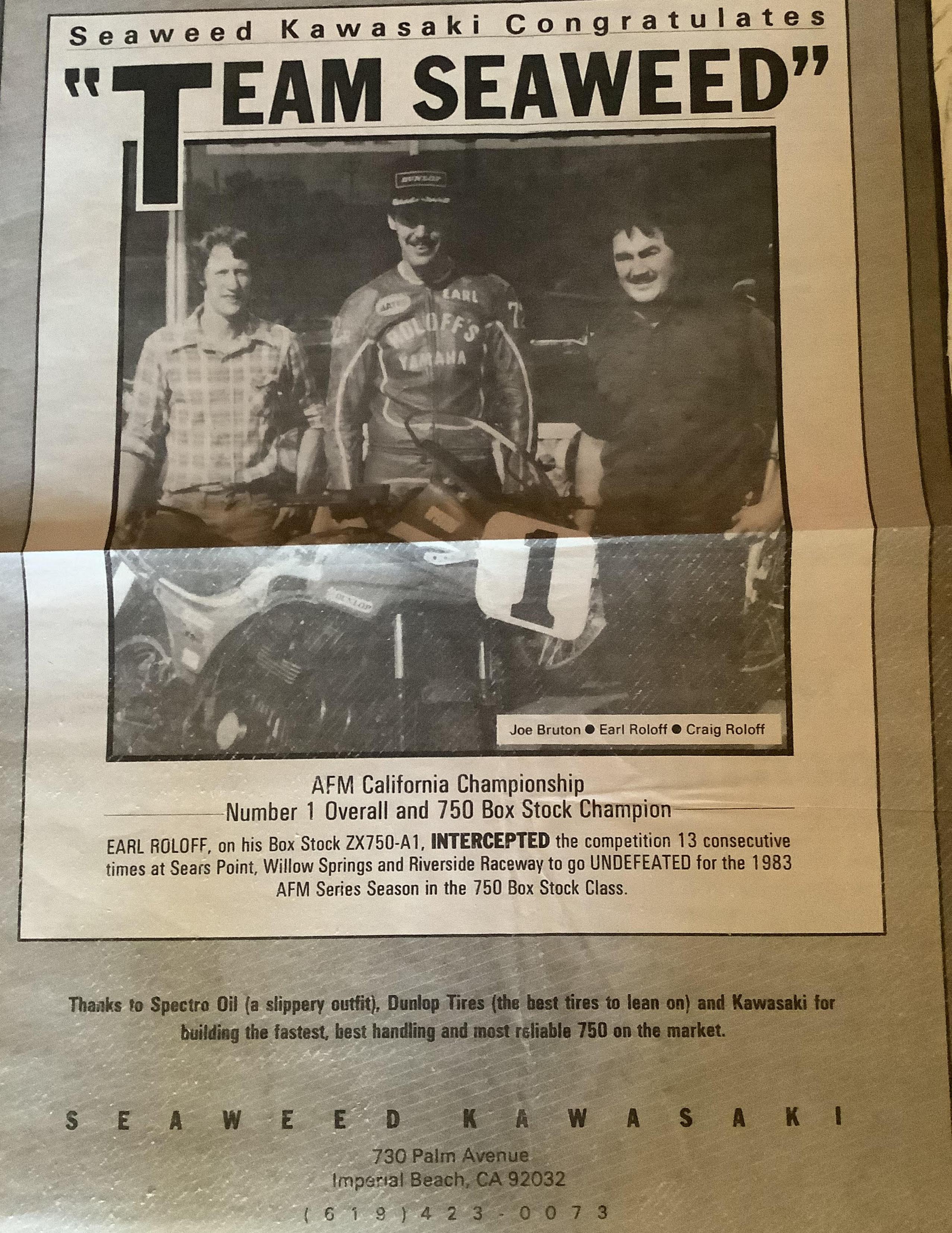
In 1983, when we decided to chase the AFM #1 plate, we realized we’d have to make Sears Point at least four times. For us, that was about a ten-hour drive, and we’d roll in at two or three in the morning, catch a few hours of sleep in the van, then get up and race. When the races were over, we’d point the van south, drive home, and open the shops Monday at 9 a.m. Tough weekends - but in the end it paid off, and we secured the AFM #1 plate that year. Mission accomplished.
On race days themselves, I’d usually take the
13 years old – launching into his racing future.
Seaweed Kawasaki shop ad ran in Cycle News after the 1983 season - Pictured: The shop mechanic Joe Bruton (left), Earl (middle), and his younger brother Craig (right) - mechanic extraordinaire.
bikes out for a short practice session in the morning, scrub in the new rubber, and blast down the straights to make sure everything was running right. Starting on sticker tires is probably better on paper, but I always felt more confident if they were scuffed in, especially on cold days, and back then tire warmers weren’t around in the paddock like they are today.
After that, we’d confirm which races I was entered in and check grid positions. I’d watch a few starts to see if the starter had a tell, stay hydrated, and try to relax. Maybe it was my imagination, but I think I was one of the more casual guys in the pits, and I always had time to talk to spectators or other riders, even right before my races. Some people asked how I could be so relaxed and laughing before a race, and for me that was how I managed the pre-race jitters. Once you’re prepared, until they wave the green flag, nothing else really matters.
When they called our race, I’d put my gear on and head to pre-grid. After they waved us onto the track, I’d do a moderate warm-up lap to get some heat in the tires and look over the surface, then you line up on your grid spot and hear Michael Buffer’s famous line in your head - “Let’s get ready to rumble” - and wait for the starter to flip the board. You look for the tell, the flag moves, and the battle begins. From the beginning, tires were the biggest expense and maybe the most important thing if you had the talent to run up front. We went with Dunlop early, which turned out to be a great choice, and after my first season in 1982 I’d had some solid results and Dunlop approached me with a deal. I accepted quickly.
My first two seasons were mainly production-based racing, and we won the AFM #1 overall championship in 1983. Around that time, Whitney Blakeslee from Champion Motorcycles in Costa Mesa gave me a chance to ride a “real” Superbike - a 1000cc Moriwaki-motored Kawasaki - at the end of the 82 season, and it was scary and fast. In my first Superbike race on it I finished second overall in the two-leg format to the
always-fast Harry Klinzmann, who was also on a Moriwaki Kawasaki.
People might not believe it, but my production bikes were amazingly stock, including the suspension. Guys would spend a fortune on suspension and wander over to my pits to see what trick components I was running, and to their surprise my 1983 GPZ750 that went undefeated in 750 Box Stock that year - thirteen wins at Riverside, Willow, and Sears Point - had stock forks with 30-weight oil and 1.5-inch spacers, and a stock rear shock.
That pattern continued through the mid-80s with my Ninja 600, which I won over sixty races on, and my Ninja 900, which took more than thirty wins, both with stock shocks in the production classes. The truth is we didn’t know any better, and I was able to ride around it, so spending more on suspension didn’t make sense at the time, at least in production racing.
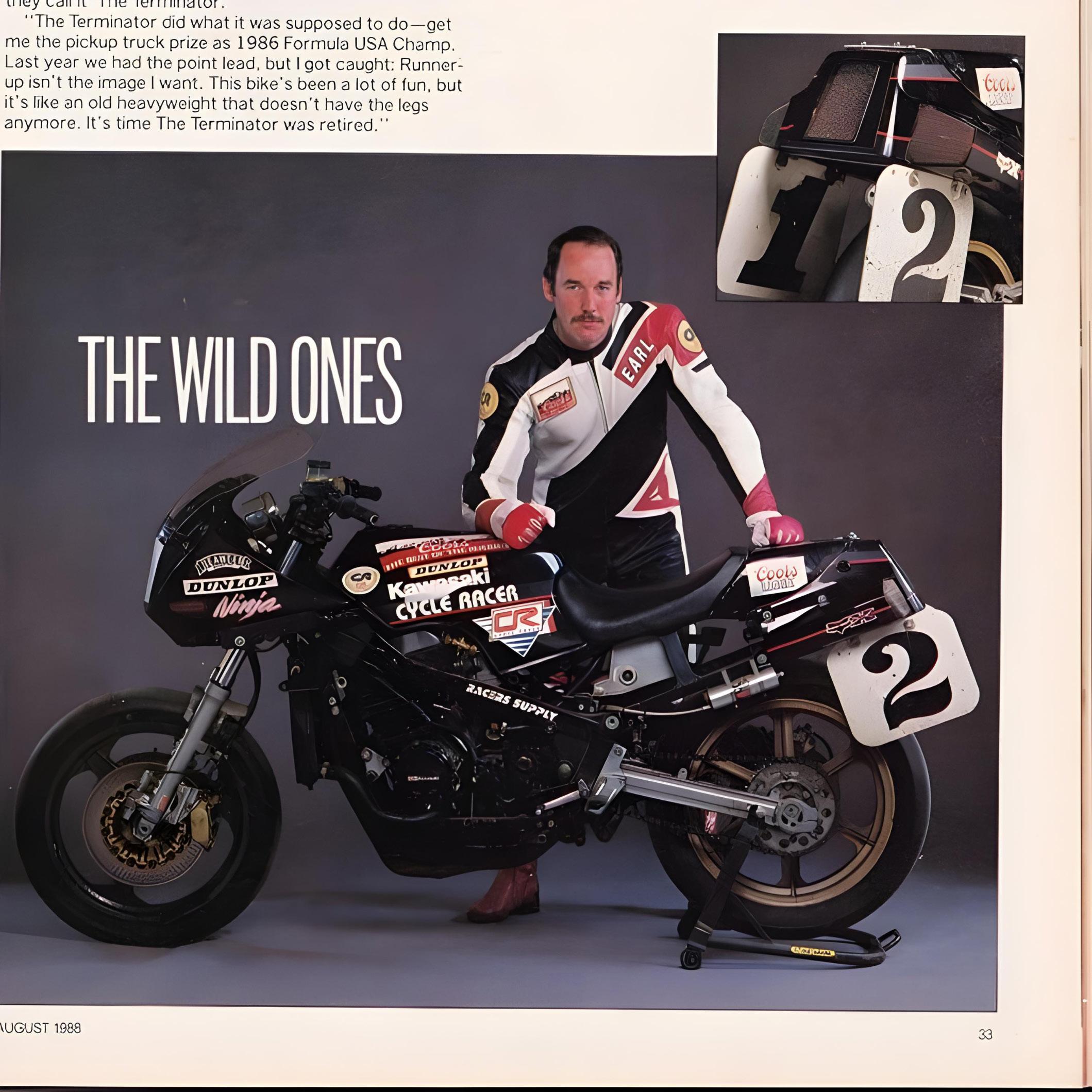
My not-so-Superbike “Ole Red,” an updated version of that 83 GPZ750, needed better suspension to cope with the power and lap times, and so did “The Terminator.” The late, great Jim Lindemann, formerly with Fox Shox, built a one-off shock for that bike that worked amazingly well.
Sometimes a fifteen-dollar countershaft sprocket was worth more lap time than a three-hundred-dollar exhaust. Can money buy speed? Absolutely. That’s why factories dominate racing, but for club racers and local pros, polishing your riding skills and spending money wisely can get you to the front - if you have the talent.
My younger brother Craig was a talented mechanic, and this next story is probably the best example of that. To this day I’m not even sure if his solution actually worked, but I believe it did.
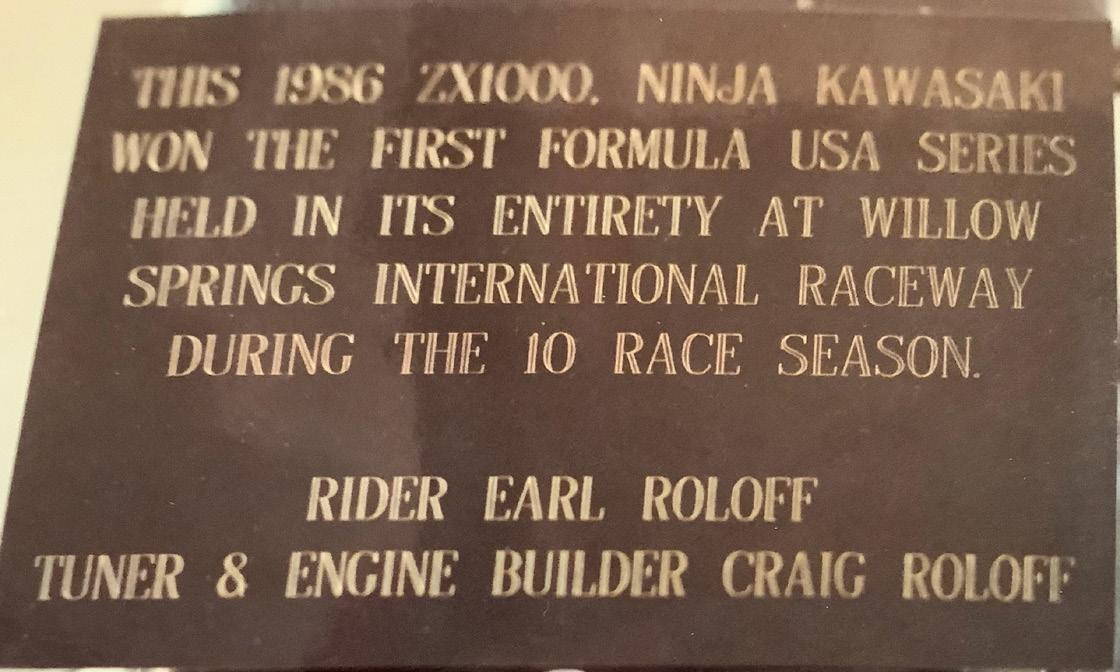
In 1986 I won the inaugural Formula USA (FUSA) series at Willow Springs Raceway. It was a ten-race, unlimited, run-what-you-brung championship, and our weapon was a 1986 Kawasaki Ninja 1000 we nicknamed “The Terminator.” It was a strange choice from my late father, because the bike was heavy, had good horsepower in stock
trim, and he thought we could make it work. No one in their right mind - and I’m sure no one else in the U.S. - was road racing one of those.
Late in 85 we rolled it out at a couple of club races, and people walked over and asked what in the hell we were going to do with that thing. When we told them it was our FUSA bike, most laughed. Some shook their heads. There were a lot of “no ways” and a few “well, good luck” comments, but in its very first ARRA Formula 1
club race, I won on it. That was just a club race, but it told us we weren’t completely crazy. We’d mounted lighter 18-inch wheels to help ground clearance, stripped as much weight as we could, but it was still a barge. A friend made us some reverse-cone megaphones we bolted on, and the thing sounded like a NASCAR.
The opening round of the Formula USA series at Willow Springs ran in February and the field was strong - some AMA pros, some very
fast locals. After ten laps I managed to win, just ahead of my longtime friend and rival Jim Vreeke on his beautifully prepared FZ750 Superbike, and the talented Rich Oliver on a 1280cc Kosman-tuned air-cooled Kawasaki. Future Canadian Superbike champ Steve Crevier and a bunch of quick Willow regulars were in that series too, so it was a great start and the season looked promising.
By late summer, it had turned into a season full of challenges. Doug Toland, another top SoCal rider, showed up, and future two-time world champion Doug Polen and Northern California fast guy Scott Gray were involved in various rounds. But my main rival for the title was still Jim Vreeke, a multi-time Kerker Superbike Series winner at Willow.
In the scorching summer months - June, July, August, September - Willow Springs, “The Fastest Road in the West,” exposed The Terminator’s kryptonite: tires. The big black beast blistered rear tires every round, and I’d be up front fighting for podiums, feel that familiar vibration, and know the rear was going. Then I’d have to back off just to finish.
In the September round, Dunlop even flew in a special tire from England they said wouldn’t blister. It didn’t, but it didn’t have any grip either, and by then Jim had built a good points lead. Not out of reach, but close, and that leads to what might be the most incredible race of my life: round nine on October 26, 1986. At that point, the best I could hope for was to keep the title fight alive to the final round.
Craig came up with an odd idea. Even though temperatures were cooling, the weight and torque of The Terminator always punished the rear tire, especially on the right side thanks to all the fast right-handers at Willow. He built a long radiator-type hose and mounted it on the right side of the bike, open under the fairing, pointed at the right side of the rear tire. The idea was to use ram air - which wasn’t really a thing in club racing back then - to cool that side of the
tire.
On race day, the opening laps were hectic. Doug Toland grabbed the lead, Vreeke was second, I was third, and coming down the front straight at the end of lap one I dove inside and took the lead. Not long after, midway through lap four, I was still leading when Jim tucked the front of his FZ coming down the hill into turn five and had a big end-over-end crash, which brought out the red flag. I didn’t know it was him until I rolled back into the pits and Craig told me, and I couldn’t believe it. Later I found out it ended his season. The race was restarted, and on the restart Doug took off and built a pretty big lead. After a few laps I ran him down, passed him, and started to pull away, and then I started thinking about that tire again and backed the pace down to save it.
Doug and I had gapped the rest of the field, so it was just us for the win. He had nothing to lose and was all-in, and I had a championship on the line. Second place would tie me for the point lead going into the final round, while a win would give me a four-point cushion. On the white-flag lap, Doug came by on the inside at start/finish. I stalked him the whole lap knowing I had a little more horsepower that day, and out of turn nine I lined him up for a draft pass and got him at the line, winning by less than a bike length. It was an amazing day. As for Craig’s ram-air hose idea, I’ll say this: I did my fastest lap ever on The Terminator that day, a 1:28.7, and the rear tire didn’t blister in the first four laps before the red flag or in the six laps after. His idea may have saved our season, and my only regret is that he didn’t think of it in June.
Walking away in mid-1988 wasn’t as hard as it might sound. We’d had an incredible run from my first season in 1982 through the end of 1987, and we’d done just about everything we could with the resources we had: over 200 race wins, a Formula USA championship in 1986, overall AFM #1 in 1983, overall ARRA #1 in 1985, 86, and 87, some solid AMA national finishes, and
multiple class titles. The racing was special, but the people were just as important. The camaraderie, sportsmanship, and sense of family in motorcycle racing has always felt like the best of any sport I know, and sitting here typing this, that feeling hasn’t changed.
Our shops were struggling, I had a beautiful wife and two kids, and my body was still intact. Like all good things, it had to end at some point, and the memories haven’t. If a young racer pulled me aside and asked what keeps people in this sport, I’d tell them this: the hard part isn’t just beating another rider. It’s getting you and the motorcycle to work as one, no matter what your skill level is. Finding that balance where you feel comfortable enough to brake a little later, open the throttle a tenth sooner, or nail the apex in search of the perfect corner never gets old - even if we do. Even just riding at a fun, comfortable, safe pace, on the street or the track, can be addicting, and the carrot keeps moving just as you think you’re at your limit.
motorcycle shop owner, I’ve always wanted people to enjoy the sport safely. There are enough landmines out there without going looking for them, and we all ride at our own risk because we believe the reward outweighs the risk. When that pendulum swings the other way, it might be time to stop, whether that’s on the street or at the track.
At the MotoGP level, that carrot might be a thousandth of a second. For the rest of us, seat time is still the best tool, and that means laps on the track, understanding braking and entry points, setting up apexes and exits, choosing the right gear for a corner or a sequence. Trying to latch on to someone a bit faster is another good tool too, because if you’re within about a second a lap, they can drag you up to their speed. Any bigger gap than that and you can get yourself in trouble. I’ve seen too many videos of guys running triple digits on the street. That’s a bad idea in my opinion, and being an ex-racer and
These days I still ride with my 82-year-old father-in-law, Steve. About a month ago he bought a brand new 2025 MT-10 Yamaha and he’s already put more than 2,000 miles on it, and I’m out there with him on a 10-year-old BMW S1000R - my first non-Japanese street bike - and it’s been pretty impressive so far. When we roll back in after a 150-200 mile ride and I see the smile on Steve’s face, it’s a pretty good reminder of what keeps people in this sport. If I had to finish the sentence “The paddock doesn’t reward _. It rewards _,” I’d say the paddock doesn’t reward bravery. It rewards tenacity. I once looked up a definition of tenacity that stuck with me: someone who is persistent, determined, and doesn’t give up easily. Strong willpower to stick with a goal despite difficulties, setbacks, or opposition, with grit, resolve, and a stubborn refusal to admit defeat, staying focused and resilient.
Whether you’re one of the best in the world or just a weekend track-day rider, tenacity will make you better. At the same time, I’d remind you of Clint Eastwood’s famous Dirty Harry line from Magnum Force: “A man’s got to know his limitations.” Or in Marc Marquez’s case… does he?
316 Superbike Camp Day 1 Priorities
What Coaches Teach New Track Riders First
Wrods: Sean Beenaam
Photographs: David Schwartz
Beginners show up with the same two things in their helmet - a head full of highlight reels, and hands tight enough to bend the clip-ons. I’ve watched it over and over: the bike is fine, the tires are fine, the weather’s fine, but the rider is wound up like it’s a qualifying lap. During the recent 316 coaches clinic, I asked six of our coaches a simple question: if you only had half a day with a brand-new track rider, what do you prioritize first - and why? Nobody went straight to fancy techniques. The answers kept circling the same idea: calm the rider down, give them a simple plan, and make it repeatable enough that coaching can actually stick.
TrackDNA safety note
This isn’t personal coaching or medical advice. It’s a snapshot of what these coaches prioritize for most new riders on Day 1. Your pace, your bike, your track, and your track organization’s rules matter. When in doubt, ride within your limits and follow your track organization’s protocols.
The real Day 1 goal - safe, calm, coachable
If you strip all six answers down, Day 1 isn’t
about lap times. It’s about building a rider who can function inside the system without turning every lap into chaos, because chaos is what makes everybody’s day sketchy - the rider, the coaches, and the people sharing the track with them. The early win is simple and unglamorous: they can get on and off track cleanly, they understand basic signals, they’re not death-gripping the bars, and they’re riding a line you can predict from half a lap away. Once that base exists, the day stops feeling like survival and starts feeling like learning.
You can see it when it clicks. Shoulders drop, breathing slows down, the bike settles underneath them, and suddenly the rider has enough spare attention to actually notice what’s happening instead of reacting to everything late. That “extra attention” is the currency on Day 1 - without it, even good coaching bounces right off.
What each coach prioritizes first
Damien Kimbrough - relaxation first, because it unlocks vision
Damien starts with comfort on the motorcycle. Not “perfect body position,” not “hang off harder,” not any of the stuff people bring from
watching fast riders online. He wants the rider comfortable enough that they stop riding like the bike is trying to throw them off, because tension makes everything smaller - your breathing, your range of motion, and especially your vision.
He sees a lot of street riders show up tight and restrictive. As they relax lap by lap, their vision improves without anyone barking “look farther.” They finally have the bandwidth to observe what’s around them, and that’s where safety starts to improve fast. For Damien, the early focus is calm body, calm breathing, and eyes that can finally do their job.
Paul Carter - race line, relax, vision, repeat until it lands
Paul wants Day 1 clean and uncluttered. Give the rider a simple race line they can repeat, then layer in relaxation and vision without turning it into a mental pile-up where they’re trying to fix ten things at once and doing none of them well. His point is practical: if the rider can’t re-
peat a line, every other cue becomes guesswork because the context keeps changing.
He calls out something that’s painfully common with newer track riders coming from the streetthey don’t look far enough ahead, and even when they try, they “forget everything in between.”
Paul is coaching continuity. He wants them to see the corner as a connected sequence instead of fixating on one point, getting surprised, and then throwing in a late correction. And he’s big on repetition: same message, over and over, until it becomes usable at speed.
Marquis Davis - body position, but only if it passes the SCCF test
Marquis is the outlier because he starts with body position, but not in a “copy MotoGP” way. He uses a filter he calls SCCF: Safe, Comfortable, Cool, Fast. Safe is non-negotiable. Comfortable comes next, because discomfort turns into tension, and tension turns into bad inputs. Cool is the hook because riders care how they look,
even if they pretend they don’t. Fast comes last, because speed shows up when the first three are true.
He ties line choice and track position back to making an early decision. Pick your position early, then commit to it. Don’t realize mid-corner you should’ve been somewhere else and try to fix it late, because late fixes are where riders get unpredictable, and unpredictability is what puts everyone on edge. He also stresses reference points - learn the track so it stops feeling like a blur, and your choices start making sense instead of being guesses.
Robert Franklin (Sarge) - calm the nerves, fix the death grip, lock in the line
Sarge starts with the emotional side, because Day 1 anxiety is real. Especially for riders who grew up watching MotoGP and show up feeling like they’re about to go do that, even if their actual pace and comfort level say otherwise. His first job is to calm them down, because a nervous rider can’t listen, and a rider who can’t listen can’t build anything consistent.
Then he goes straight for the death grip. Light hands. Stop strangling the bars. Let the bike do what it’s built to do instead of muscling it through every input. From there he goes to the line - not because it’s “the fastest,” but because it makes the rider predictable. He adds a nuance that matters in mixed groups: it’s not only the beginner’s responsibility to manage traffic, but predictability still matters. It’s part of being safe, and it helps everybody relax.
Chris DeLanghe - signals and predictability create something you can coach
Chris starts with communication: signals and track procedures, the basic language that keeps everyone working together out there. It’s the
kind of stuff nobody brags about, but it’s also what keeps the day from turning into confusion the moment a rider gets flustered or something changes on track.
Then he leans hard on predictability. He says something new riders don’t always want to hear, but coaches love it because it’s true: even if you’re “wrong,” if you’re wrong in the same place every lap, you’ve given a coach something to work with. Consistency is the foundation. Without it, every correction is just a guess. Once there’s consistency, he can use video, show “where you were vs where you need to be,” send the rider back out, and let them feel the difference. Once a rider feels it once, the rest of the day gets easier - and a lot more fun.
Robert Bernal - pit flow and track orientation before anything else
Robert goes straight to the stuff nobody makes a cool reel about: pit-out, pit-in, track entry and exit, and orientation. His point is blunt - if you don’t know where you’re going, you can’t be safe. A lost rider gets unpredictable fast, and unpredictability is what turns normal traffic into close calls that make everybody’s stomach drop.
He also builds in a check by noon. See where the rider really is, adjust the plan, and keep the focus on fundamentals that prevent messes. It’s not glamorous, but it’s the difference between a rider having a “busy” day and a rider having a productive one.
The shared 316 Day 1 blueprint
Across all six coaches, the overlap is pretty loud once you lay it out. Relaxation shows up firstcalm brain, calm hands, calm breathing. Then the “system” pieces show up: signals, pit flow, knowing where you are and where you’re going.
After that comes a simple line and basic track position you can repeat without second-guessing every corner.
Body position is in there too, but mostly in the practical sense - loose upper body, light hands, don’t fight the bike - not as a hanging-off contest. The through-line is repeatability. If a rider can do the same thing every lap, the coach can help them do a better version of it, and the rider can actually feel what changed.
A half-day plan that matches how these coaches think
Session 1 - remove chaos
Start with pit procedures, on/off track basics, and signals, then give the rider one riding goal they can actually hold onto: relaxed hands and eyes up. No experimenting, no “sending it,” no trying to prove anything in the first session. The target is stable laps where the rider isn’t overwhelmed and the coach can see what’s real instead of what’s panic.
Session 2 - orientation and reference points
Pick a small number of reference points - usually a turn-in point and an exit point - and commit to looking far enough ahead to connect the “in-between.” If the rider is consistent but not perfect, that’s a win. Perfect isn’t the goal yet. The goal is getting the track to feel familiar enough that the rider stops riding on surprise and starts riding on intent.
Session 3 - lock a simple line and make it repeatable
Establish a basic line that’s appropriate for their group and pace, then stick to it long enough that it becomes real. The coach picks one correction, not ten, and the rider’s job is to apply one change
and feel what it does instead of collecting a pile of advice they can’t use at speed. When this works, the rider stops “chasing” the corner and starts arriving with time.
By noon - quick reset check
By noon, the check is straightforward: are they calmer than they were this morning, do they understand signals and pit flow, and are they riding a repeatable line? If yes, they’ve earned the right to add one more layer in the afternoon. If no, the fix usually isn’t “more technique,” it’s going back to what removes tension and confusion.
What Day 1 is not
Day 1 usually isn’t the day to overload a brandnew rider with advanced body position, deep trail braking, or lap-time chasing. Those things matter later, and a good coach will absolutely build toward them, but when a rider is still tense, still getting lost, and still inconsistent, “more technique” just becomes noise. The real win is building the rider you can actually teach on Day 2 - the one who can breathe, follow the system, hold a line, and stay predictable enough that everyone around them can relax and ride.
Making Space
How Emily Bondi Is Redefining Where She Belongs
Words: Sean Beenaam . Photographs: Thoma’s Prod Guillaume Cardiet
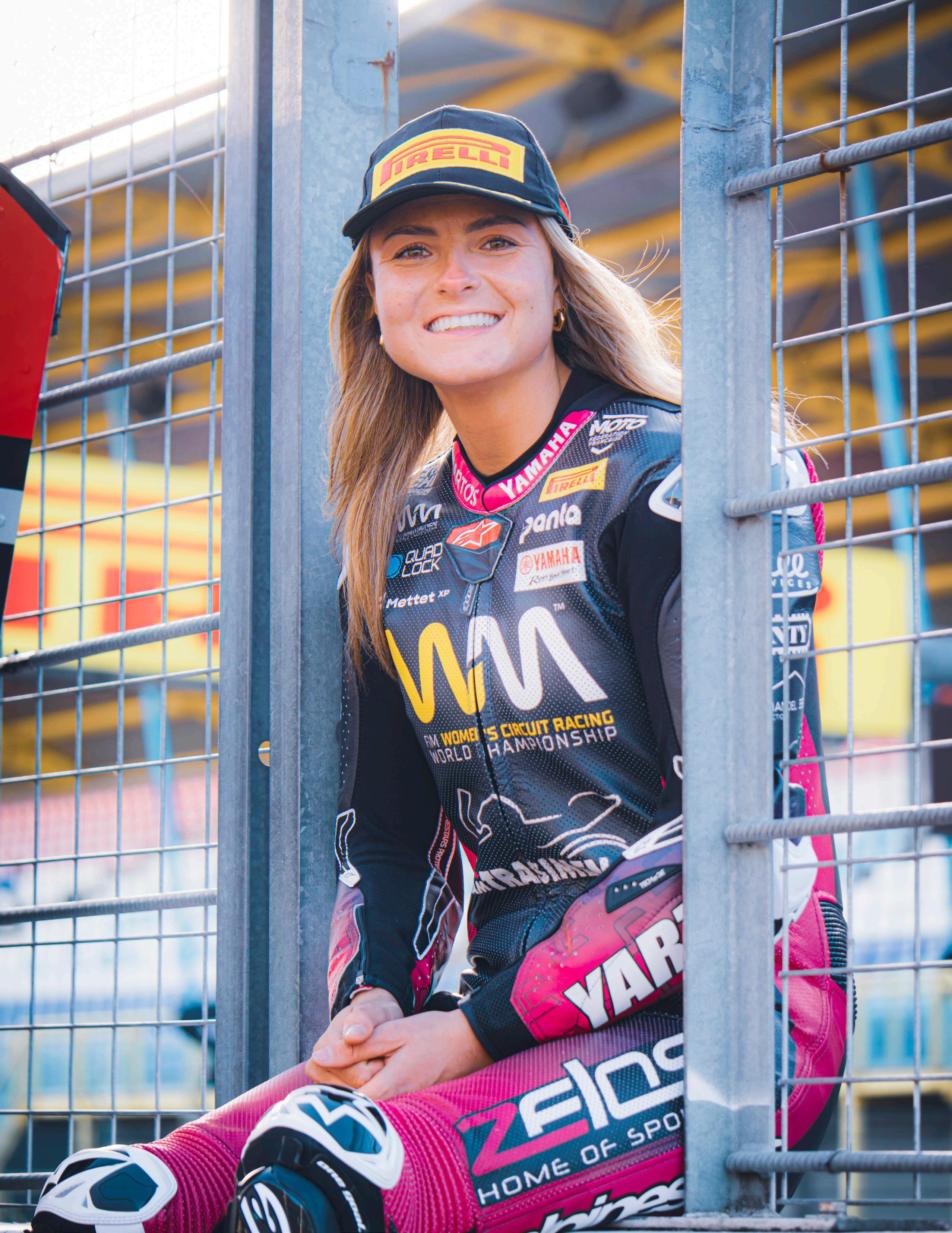
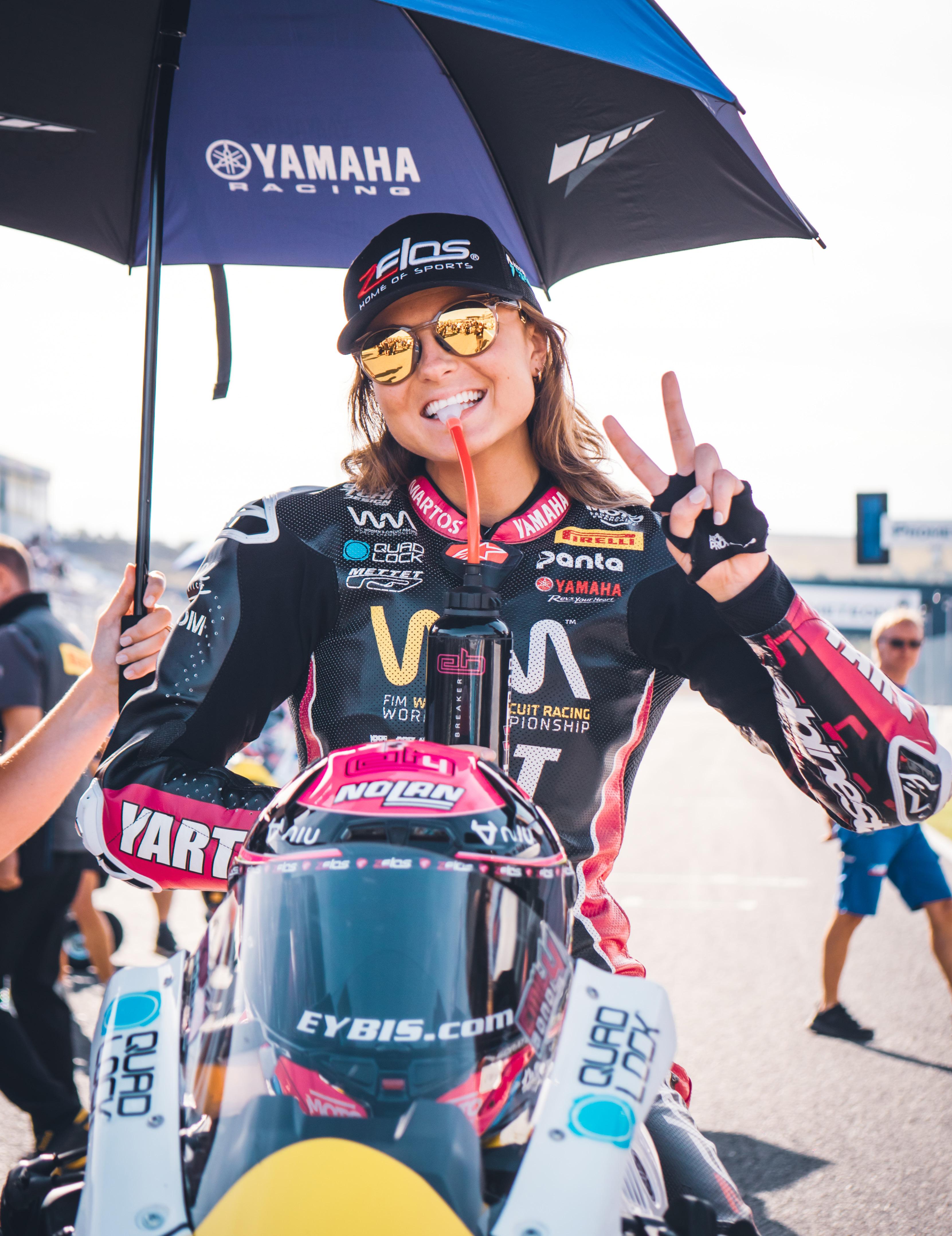
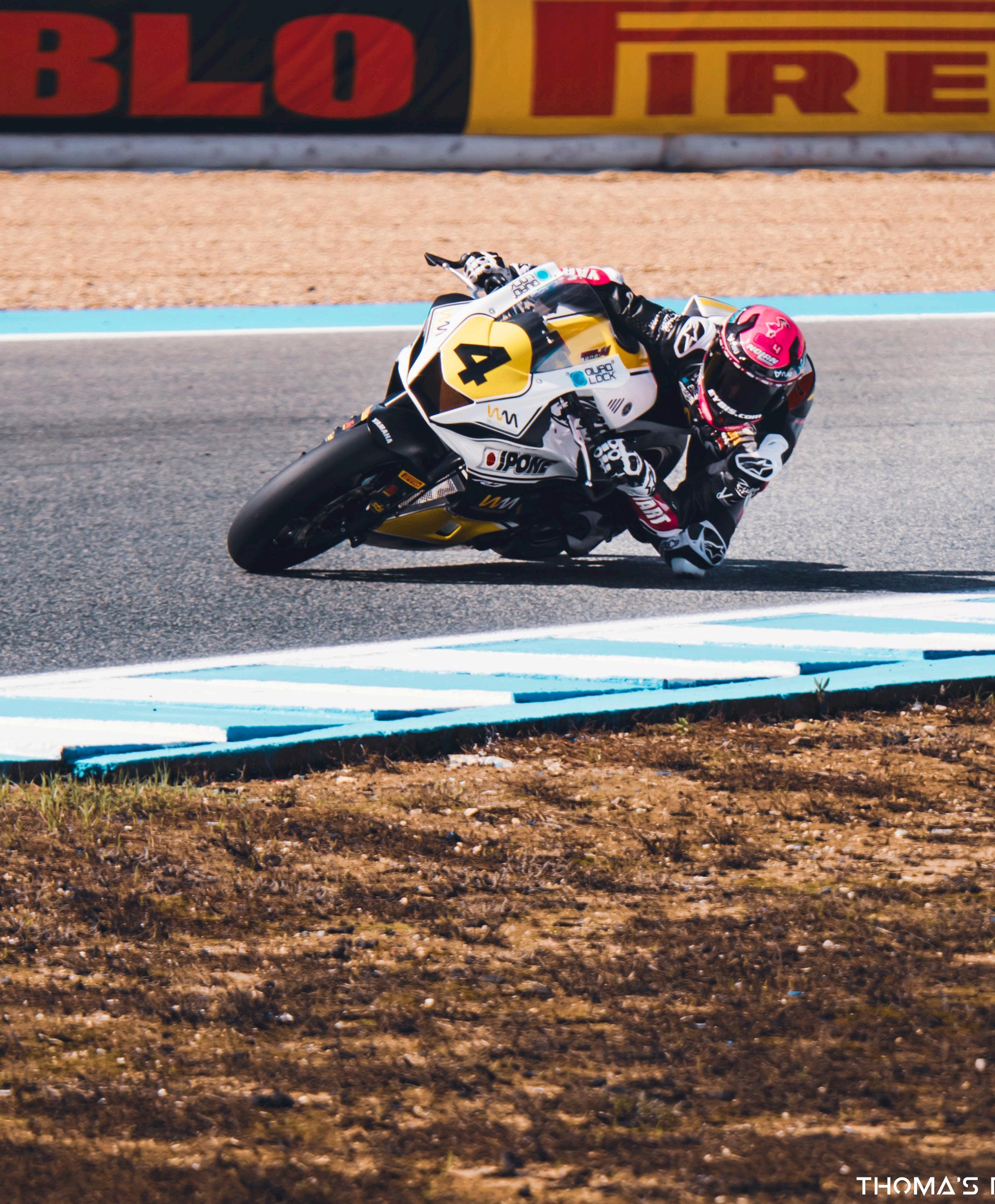
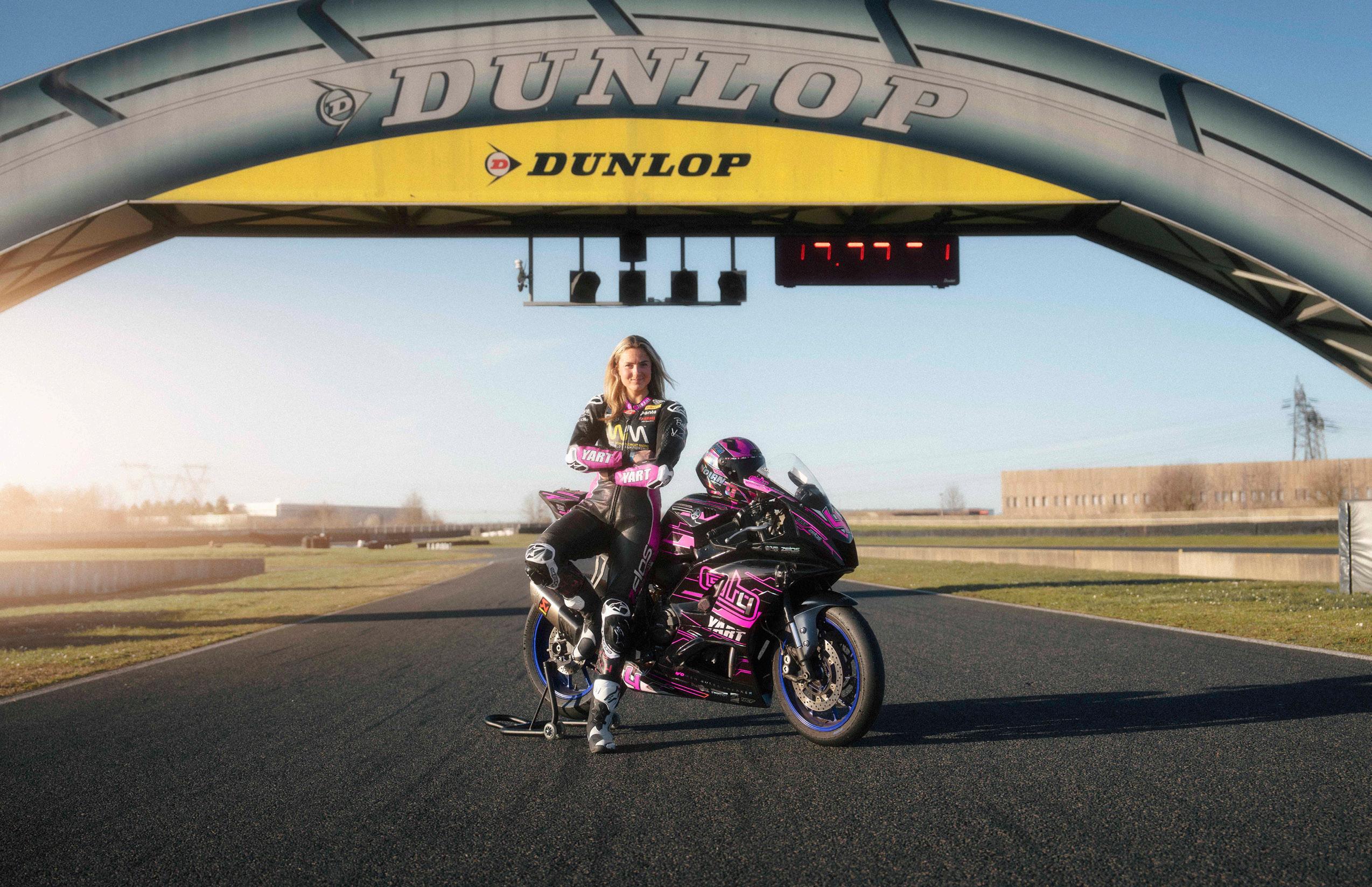
Emily Bondi — Top 15 world rider, FIM Women’s Circuit Racing World Championship
There’s a version of Emily Bondi’s story that reads like a clean climb. Title in France, step up to a world championship, polished presence on the grid. The kind of arc that fits neatly into a caption and disappears as soon as the next weekend loads in. But the version that actually matters - the one that sticks past a single seasonis messier, more human, and a lot more useful. When you talk to Emily, you don’t get a highlight reel. You get a rider building something sustainable: a process that holds up when confidence wobbles, when results don’t match the work, when the paddock gets loud, and when your body starts yelling “stress” before your brain has time to translate it. She’s not trying to become someone else to fit the space. She’s learning how to make space - for her riding, her values, and the creative side of the sport she genuinely loves.
Emily’s whole journey as a rider isn’t actually that long, which is part of what makes it so disorienting from the outside. “I started three years ago,” she says. “My first year of racing was 2023, in France, in the national Women’s Cup. I
finished the season as French champion in the 600cc category and overall, in the scratch classification.” That first title didn’t just validate her. It changed the meaning of everything around her. Until then, riding still lived in the “just a hobby” lane. Then the results arrived, and with them came doors - and expectations. Emily was already working with Zelos and Xavier Siméon at the time, and they’d been clear from the beginning: win in France and bigger opportunities appear. The FIM Women’s Circuit Racing World Championship becomes real, not theoretical.
“I didn’t really know where I wanted to go,” she admits. “I just knew I loved riding. But when I signed with my first partner, everything changed. Before I signed, it was my hobby. When I signed, it became my job.” The contract wasn’t just paperwork. It was an agreement with the next level: more pressure, more eyes, more responsibility, and a new kind of loneliness people don’t always see from outside the fence. “When you put your signature, you’re engaged,” she says. “You’re not just playing anymore.” If you want an honest entry point into Emily’s mind, it isn’t the podium. It’s the hour before a race. “The hardest moment for me is from one hour before the race until the lights go out,” she says. “Every time I try to work mentally to skip this part, but it’s hard.”
Her body reacts before the story catches up. “My body reacts before my brain catches up,” she says. “I feel it in my stomach, in my breathing - the whole system goes loud.” It’s one of those truths that helps more than any motivational poster ever will: confidence isn’t always a feeling you get before you ride. Sometimes it’s something you build through repetition and routine, by treating nerves like information instead of a verdict.
And then the lights go out, and everything changes. “I feel most myself when I’m at the pace I’m supposed to be,” she says. She gives a simple example: a conversation with her mechanics, a realistic target, a plan with boundaries. “If we say, ‘Okay, it would be good to finish between P8
and P10,’ and during the race I am there, in that group, fighting for those places - that’s where I feel happy.” You don’t see it on TV, but under the helmet there’s a grin. “I love the game of being passed, passing back, fighting,” she says. “That’s where I feel like Emily.”
Emily doesn’t romanticize mindset. She operationalizes it, the same way you’d set tire pressure or check a chain. “I have a playlist called ‘Warm-Up Races,’” she says. “One of the tracks is ‘Transition’ by TRYM. It has a really high BPM. It puts me in the right condition.” Her process is simple, but it’s intentional. Back to the tent. Leathers on. The same white headphonesstained from long days at the track - then glasses on. It’s a signal to the world, sure, but mostly to herself. “When I put my glasses and headphones on, it means, ‘Don’t talk to me. I’m in race mode now.’”
She sits, drinks her sports drink, and rides the track in her head. She pictures overtakes and replayable choices, like she’s rehearsing the version of herself she wants to be when things get chaotic. On the grid, after the warm-up lap, there’s one more moment. “I shout inside my helmet,” she says. “Like I’m turning a light on. Then the start lights go on, then off, and that’s ittime to work.” Not mystical. Not dramatic. Just a switch. One of the strangest parts of Emily’s story is the order of it. She didn’t get the slow build most racers get - years of fundamentals before the pressure of results. She won early, and then had to learn the foundations under a spotlight. “I never had the beginning stages that many riders have,” she says. “I didn’t start at five years old. I started and almost immediately became French champion. So I missed all the small steps - why the bike turns, how braking really works at speed, the fundamentals most riders learn over years.
I’m only learning those now.” After last season, she made a decision that reads very “pro” once you zoom out: don’t push harder on a shaky foundation. Change the environment. Change the structure. Learn from zero where you need
Assen 2025 – before the first race weekend of the year in WorldWCR
Photo credit: Thoma’s Prod
Jerez 2024 – before Race 2, surrounded by her family and friends
Photo by Thoma’s Prod
Jerez – final round, October 2024, during WorldWCR qualifying
Photo credit: Thoma’s Prod
to - even if your résumé says you shouldn’t have to. “So I changed my environment,” she says. “I joined FT Racing Académie. I have a French teammate I like and respect - Line Vieillard. I hope we can grow up together and help each other.” She’s also working closely with a coach who raced at a high level and is now integrated into her daily training. “He told me, ‘With this training program, it’s impossible you don’t grow as a rider,’” she says. “So my priority now is to trust him, to follow the plan, and to let myself learn from zero in some areas.”
One of those areas is braking and body position. “Braking was one of my strengths before,” she says, “but my position on the bike changed and started to work against me.” The way she describes it is blunt and practical: it stopped helping her turn and carry speed into the corners, which meant the thing that used to be a strength started charging interest. So now they’re rebuilding the basics - almost like she finally gets the “beginner” years she never had, just compressed into a professional program. It’s a rare kind of confidence, the willingness to rebuild when it would be easier to protect the image. There’s a section of Emily’s story that could easily become the headline - the hard season, the injury - but she doesn’t treat it like her whole identity. She treats it like a turning point, the kind you either learn from or drag around for the next year.
Last year, she says, was difficult mentally. At Donington Park, she found herself fighting further back than she expected, and what bothered her wasn’t just the position - it was the confusion. “I found myself fighting further back than I expected,” she says. “And I couldn’t understand why.” She’s honest about how that lands internally. “You don’t show up to fight at the back,” she adds. “I couldn’t understand what had changed - the bike, the setup, my approach - or why I couldn’t access my pace.” Later in the season, at Magny-Cours, her home race, there was contact and she got injured. “I broke a lot of bones in my hand,” she says. “Even now this finger doesn’t
bend like the other one. On the bike it’s okay, I already tested that.” Then she says the uncomfortable part, the part most riders won’t say out loud because it feels like it indicts them.
“When I crashed and realized I was injured, a part of me was… relieved,” she says quietly. “Relieved that the season could stop. That scared me - not because it was dramatic, but because it told me I was depleted. I took it as a signal to rebuild my process, not abandon the sport.” That line is the difference between a bad year and a growth year. She didn’t frame it as failure. She framed it as information, and then she did something about it. “It was a hard year - and very instructive,” she says. “But it also showed me what needed to change.”
Emily’s relationship with paddocks is honest, but it isn’t cynical. It’s selective. She’s learned she performs better when she protects her energy, stays close to the people who keep it human, and doesn’t feed the noise just because the noise is available. “I’ve learned how to protect my headspace,” she says. “To stay close to the people who keep it human.” It’s also why she often leaves quickly once the job is done. “When I finish a race, I often go straight back to my hotel,” she says. “It’s not me rejecting people - it’s recovery. It’s how I protect my energy so I can show up again tomorrow.” Anyone who’s done a long weekend at the track understands that, even if they haven’t put words to it. Sometimes the most “pro” move is simply going quiet before you say something dumb in the heat.
She talks warmly about the people who do the unseen work, especially marshals. “Without them, we don’t even ride,” she says. “They’re incredible.” And she’s clear about what she wants her presence to feel like. “I like things that feel more classic - a bit more classy, like Formula 1,” she says. “Moto can feel more blunt, more rough around the edges. So I bring my own style into it - classic, calm, intentional - because that’s who I am.”
Photo credit: Guillaume Cardiet
If a young rider came to her and said, “I don’t think I belong here,” Emily wouldn’t sell them a fantasy. “I would say, ‘Me too. I also don’t always feel like I belong here. But I like it. And I’m trying to change my small part of it.’” She doesn’t pitch belonging as a prerequisite. She pitches it as something you build. “If you don’t feel like you fit, you can still make your own place,” she says. “You don’t have to become like everyone else.” Emily doesn’t hide the part a lot of racers keep quiet: she genuinely enjoys the professional side. “I love the professional side,” she says. “The brands, the marketing, the social media, the creation. I love making content.” The way she frames it matters, though. It’s not “posting.” It’s building, and it’s intentional.
She can see a future where her racing and her creativity live side by side - campaigns, storytelling, travel, production - work that feels stylish and high-effort, not forced and frantic. “Even if my time on that grid ends one day, I’ll still ride,” she says. “And I’ll still create - for brands, for the sport, for the parts of this life I genuinely love.” In a world where riders are expected to be athletes and media teams at the same time, her honesty reads less like a distraction and more like a skill set she’s actively sharpening. At the end of a long day - helmet off, suit half unzipped, bike cooling next to her - how does Emily decide if it was a good day? She doesn’t dodge it. “At the moment, the only thing that tells me if it was a good day is the lap time,” she says. “And I know that’s not good. I know I need to change this.” So she’s doing what she does best: building structure around the problem instead of pretending it isn’t one.
“I want someone outside me who can say, ‘Yes, this was good work today,’ even if the lap time is not perfect yet,” she says. “If my coach is happy with the work, I want to learn to be happy too - based on the effort, not just the number on the dash.” It isn’t a soft goal. It’s a performance
goal. Riders who can only measure themselves by the dash are easy to break, and Emily knows it.
Emily isn’t chasing a perfect image. She’s chasing a better process. This season, her priorities are clear in the way real priorities are clear: not flashy, not complicated, just honest about what moves the needle. She wants to rebuild fundamentals with structure, especially around braking and body position, so she isn’t trying to ride fast on a foundation that keeps shifting under load. She wants to turn pre-race nerves into a repeatable routine she can trust, not something she “hopes” feels better on Sunday. She wants to keep her circle strong and her energy protected so the work stays clean, because depleted riders make sloppy decisions. And she wants to create with partners in a way that feels intentional, classic, and high-effort, because that’s not a side quest for her - it’s part of the life she’s building.
It’s the kind of plan that makes sponsors exhale. Not because it’s flashy, but because it sounds sustainable. Emily isn’t trying to be a perfect hero in her own story. She’s trying to be honest, to grow, and to make space in the paddock for a different kind of presence - one that’s classic, thoughtful, and built on real work. Whatever the results sheet says next season, there will be one constant: a white-headphoned French rider on the grid, flipping the switch, and making a little more room for anyone who’s ever loved this sport and wondered if they truly belong.
The Time You Lose Is the Work You Never See
An opinion piece built from a Q&A with Eric Paradis
Words: SEAN BEENAAM
Riders complain about “lost track time” every weekend. I get it. We all do that mental math the second we roll in - green flag equals value, anything else feels like waste. If you paid for a day and you’re staring at your bike on stands while the schedule keeps slipping, it’s hard not to take it personally.
But after talking with Eric Paradis - a guy who lives on the operator side of the fence - I walked away with a different framing. The track only looks “simple” when everything is going right. The second conditions shift, it stops being a playground and turns into a safety and liability machine. And that machine has to work correctly every time, even when the day is going sideways. That’s the part most riders don’t see - but we absolutely feel.
“Lost time” isn’t binary
From the rider side, it’s easy to treat the day like a light switch. Green flag is progress. Red flag is failure. You either got your laps or you
didn’t. From the operator side, every interruption triggers a chain reaction that isn’t optional. Medical readiness. Incident clearance. Surface verification. Marshal reset. Restart discipline. All the boring stuff nobody wants to talk about until it’s the only thing that matters.
Eric put it bluntly: the track looks easy when everything is going right. When it isn’t, it becomes a system designed to keep the venue defensible and people alive. That system doesn’t get to “kind of” work. It has to work the same way, every time, under pressure.
The first decision happens before you hear anything
When a day starts to unravel - delays, incidents, weather - the first decision isn’t “how do we catch up.” “It comes down to one call: are we still inside safe margins, or are we starting to run
Eric Paradis is a senior motorsports and automotive strategy advisor with 25+ years across professional racing, business development, and venue-focused consulting. He began as a professional driver and team owner, independently securing sponsorship and managing operations to compete in Canada, the United States, and Europe, with race experience including FF1600, Firestone Indy Lights, the VLN and RCN Series, and the KTM X-Bow Battle. After racing, he built an independent consulting practice supporting performance brands and manufacturer programs - including product launch strategy, customer driving experiences, and sales/executive training for names like Audi, BMW, Mercedes-Benz, Porsche, Jaguar Land Rover, Volvo, Lamborghini, and Ferrari.
On the venue side, Eric served as a Senior Executive Consultant for Business Development at Circuit of The Americas (COTA) for nearly a decade, working with senior leadership on commercial partnerships, event programming, and operational strategy tied to long-range planning and business growth. He also contributed to the early development of a large-scale motorsports facility in Tennessee with Flatrock Entertainment Group (2022-2024), focused on foundational strategy, stakeholder engagement, and facility planning. Today he operates under the Ignition Advisory Group banner - and he’s worked both sides of the fence, which is why his view on how track weekends actually function is worth hearing.
out of buffer?”
That one call drives everything else. Pause. Shorten. Re-group. Re-sequence. Stop. Riders feel the outcome, but the inputs are happening behind the scenes: weather trajectory, how the surface is behaving, the pattern of incidents, staffing fatigue, response time, and whether you can relaunch the day without compounding risk.
And the priority order stays the same, even when everyone’s frustrated: protect emergency response capacity first, restore safe operating conditions second, then protect the integrity of the schedule as much as reality allows. If you’re wondering why your org didn’t “just send us back out,” it’s probably because the math behind that decision isn’t about vibes. It’s about whether the day can continue without stacking risk on top of risk.
What “rider-first” actually looks like
Most riders can feel a well-run venue within an hour. The question is why. Eric’s answer wasn’t fancy. It starts with communication that’s timely, specific, and consistent. Not a vague “stand by.” Not a shrug. Real updates: what changed, why it changed, and what the restart window looks like. Even if the news sucks, clarity reduces frustration more than most people realize.
Then it’s basic flow discipline - the stuff that prevents wasted motion. Signage. Lane markings. Grid organization. Staff who can answer simple questions quickly. When those things are dialed, the whole day feels calmer and more professional without anybody needing to put on a show.
And finally, the small comforts that signal respect: restrooms that aren’t a scavenger hunt, water that’s actually accessible, shade that isn’t reserved only for people who bought a garage. Riders can tolerate inconvenience when they feel respected. Small comforts are part of that respect.
Why schedules slip, even when nobody “messed up”
There are two main reasons riders don’t see clearly. The first is incident reality. Clearing an incident isn’t “drag the bike off and go.” It’s removing the bike, verifying the surface, confirming station readiness, and restarting safely. That last part is the one people underestimate. A sloppy restart is where you buy your next red flag.
The second is compounding operational friction. Late grids. Slow staging. Unclear group organization. Rider-meeting gaps. Tech issues. One small delay is nothing. Four small delays in a row becomes an hour, and nobody can “hustle” their way out of it without trading away safety steps.
Eric also called out the one piece riders almost never factor in: human limits. Staff fatigue matters. When days go sideways, the correct decision often looks slower because it’s trying to prevent the second and third incident that come from rushed restarts and burned-out crews.
The bottleneck that steals the most time
If you want a hot take that will annoy some of us, here it is: a lot of “lost time” isn’t management. It’s staging. Eric’s first fix would be grid and staging discipline, because most of the track time riders lose comes from preventable friction: groups not ready, bikes not staged correctly, last-minute mechanical issues, unclear direction, inconsistent enforcement of procedures.
A tight staging system protects safety and increases green-flag time without asking anyone to accept more risk. That’s one of the few true win-wins out here. If you’re the rider who’s always ready, this is where it’s fair to be irritated - not at the staff, but at the chaos that becomes everyone’s problem.
What you’re actually paying for
Riders like to say, “I paid for track access.” True, but incomplete. Eric’s view is more accurate: you’re paying for a controlled, defensible environment. That’s the product. The laps are the part you notice.
The money goes into staffing (control, marshals, safety crews, grid teams, parking, communications, facility ops), emergency readiness (ambulance capability and rescue standards), facility readiness (surface work, barriers, runoff upkeep, utilities and wear), and risk/compliance (insurance, permitting, inspections, documentation, contractors, admin load).
It’s not glamorous. It’s not the part anyone posts. But it’s the difference between a venue that runs for a decade and a venue that becomes a memory.
The safety tradeoff nobody wants to admit
Here’s the part that’ll feel uncomfortable because it hits close to home: there’s a real tradeoff between maximizing run time and preserving safety margins as conditions evolve. Riders naturally want the day to keep moving. Operators have to manage compounding risk - fatigue, frustration, surface changes, and restart pressure.
Eric’s point that stuck with me: the most dangerous moment is often the restart after disruption, when adrenaline is high and patience is low. That’s when riders force passes, override their own pacing, and try to “get it all back in one session.”
A venue that protects safety margins may feel conservative in the moment. It’s usually the venue that stays open long-term and avoids catastrophic outcomes. That’s not an emotional argument. It’s how venues stay open.
The “corporate” rules that keep the lights on
Wristbands. Mandatory rider briefings. Pit speed enforcement. Tech compliance. Staging rules. It’s easy to label that stuff as corporate nonsense when you’re trying to ride. Eric’s counter is simple: those controls exist because the facility operates under standards that get tested the moment something serious happens. Riders experience them as inconvenience. Operators experience them as continuity - insurance defensibility, incident accountability, and the ability to keep the venue alive next season.
You don’t have to love the rules. But it helps to understand what they’re protecting.
Partnerships that don’t feel like an ad
From the brand side, Eric’s filter for a “good” partnership was refreshingly practical: it should fund real improvements riders feel, without stealing time or attention from riding. The best partnerships support safety and facility readiness, add useful rider value (water, shade, on-site support, clear signage, education resources), and stay operationally invisible. No forced interruptions. No intrusive messaging. No congestion in critical flow areas.
Riders accept branding when the exchange is fair. The day runs better because the brand is involved. That’s the only version that works longterm.
What the best orgs will do next
Eric’s prediction for the next five years isn’t about turning track days into theater. It’s about professionalizing the experience without losing the soul. That means stronger communication systems (real-time updates, predictable decision protocols, consistent messaging), better opera-
tional flow (staging discipline, training, procedures that reduce wasted time without skipping safety steps), targeted capital improvements (drainage, surface consistency, safety hardware where it changes outcomes), and a clearer value proposition.
Riders come back when execution is consistent, safety culture is credible, and the facility feels stable - like it’s invested in staying open.
That last part matters more than people admit. Stability is a feature - you can feel it in how clean the resets are and how predictable the day stays.
Where I Actually Have Control
This interview had me looking hard at my own track-day habits - especially how quickly I can slip into scoreboard thinking when something doesn’t go to plan. It’s easy to treat delays like time being taken from you, then carry that frustration into the next session. What I’m taking from it is simpler: when the day gets choppy, that’s my cue to slow my brain down, reset, and ride the next session like a rebuild, not a rescue mission.
It also pushed me toward the parts I actually control: preparation and mechanical discipline. If I show up staged and ready - fuel, pressures, transponder, gear, and a plan - I’m less likely to rush when the call goes out. And if I stick to a quick morning check, I’m not donating track time to preventable problems.
Most tracks see motorcycles as higher liability than cars, and I get why. The margin is thinner, the consequences stack faster, and one rough restart can turn into a long report. The way we keep the sport safer is taking more ownership of how we show up and how we respond when the day gets disrupted - staying prepared, keeping our bikes tight, riding within our comfort zone, and not letting frustration turn into sketchy decisions.
Words: Sean Beenaam
Photographs: William Joly
Bol d’Or – Kenny Foray in his element.
24H Le Mans 2022 – Sunday morning, SERT, YART, and FCC.
There are photographers who roll into a race weekend and start solving the puzzle on Friday morning. Then there are the ones who grew up at the fence, watching the same corner year after year, quietly learning how speed and light move together. William Joly is firmly in that second group. He didn’t “get into content.” He got into racing first, then spent years figuring out how to freeze what racing feels like when it’s real - full lean, last light, and all the little moments you don’t notice until someone hands you the photo later. William is a French motorcycle and motorsport photographer whose work now stretches across MotoGP, WorldSBK, FSBK, endurance racing, and national championships. If you’ve ever scrolled through paddock photos and felt like you were standing inside the moment instead of looking at it from the outside, you already understand the intent he brings to the job. “Nice” is easy. Intent takes obsession, patience, and an eye for the background details riders never have time to think about.
grid, the quiet moment in the box before a night stint when everyone’s moving fast but nobody’s talking.
“The difference between a nice photo and a photo with intent is what is happening behind the subject.”
-William Joly
For this TrackDNA feature, we wanted to understand how William chooses his spots, what separates a clean shot from a shot that actually says something, and the small things riders and teams do - often without realizing it - that can either help a photographer make the frame or accidentally stomp on it at the worst possible second. William didn’t arrive in the paddock through a marketing agency, a media internship, or a perfectly planned career ladder. His path is simpler, and honestly more familiar to anyone who’s ever gotten hooked on track life: one circuit, one race, and a kid who couldn’t stop coming back. Over time, watching wasn’t enough. He wanted to capture it - the feeling of a bike at full lean, the tension of the
That origin story matters because you can hear it in the way he talks about the work. He’s not chasing volume. He’s chasing the one frame that will still mean something ten years from now. The kind of photo that doesn’t just show a bike - it shows a moment in a rider’s life. That’s the difference between someone who is “covering an event” and someone who understands why people keep coming back to the track in the first place. When William nails a frame, the reaction comes in two layers. In the instant the shutter clicks, he feels it - that internal hit of “yes” - but he doesn’t let it pull him out of the work. He stays locked in, because the weekend keeps moving and the next moment is already coming. Then, when he finally has a second to actually check the image, the restraint drops and the grin shows up full volume. As he puts it, “When I’m finally free to check the picture, that’s when the smile goes almost to my ears, ahah.”
After that, he’s already thinking like a working photographer again, itching to get back to the media center, edit, and send it off to the client.
That tension between emotion and discipline is part of what separates a “nice” photo from one with intent. For William, the tell is rarely just the subject. The real difference is what’s happening behind the subject, and whether the scene adds meaning instead of just filling space. He’s the kind of guy who can remember a sunrise or sunset shot not because the bike looked fast, but because the whole world behind it made the frame feel alive - like the time he found a field full of sheep sitting behind a bike in the foreground. It’s a reminder that sometimes the most “racing”
When I asked William for a photo that really captures the intent, he pointed me to this one.
The relationship isn’t just in the paddock – it carries onto the track too. Here’s William’s friend Marvin
Fritz, EWC World Champion (2023).
Top: Xavi Vierge – WSBK Assen 2025, moments before the race.
MotoGP Le Mans 2025 – Zarco victory.
photo isn’t the most aggressive lean angle, it’s the one that captures where you are, what the day felt like, and why that corner mattered.
Of course, he still loves the moments that scream pace. A bike gets truly impressive in a photograph when a rider is right on the limit, saving the front, or laying down a serious time-attack lap. Even then, he’s watching more than speed. He’s watching style, because riding style can make a photographer’s life easier or harder. A clean line and stable body position give him something solid to build around, especially when he’s trying to show motion instead of freezing it like a statue. Before a session even starts, William’s first decision is light. He looks at what the morning is offering and makes a call: if the light is good early, he’s going trackside for action. If the pit lane light is doing something special, he’ll grab the box exit first, then move quickly out to the circuit. The day becomes a constant adjustment, not because he’s chasing variety for its own sake, but because the light changes and the best frame moves with it. It’s less “pick a corner and camp” and more “follow the conditions until they give you something worth keeping.”
pletely unpredictable that turns into the photo everyone remembers.
“On the out-lap you see small details you don’t always catch in a time attack.”
-William Joly
Some of the best story moments, he says, live where people don’t think to look. The outlap is a big one. Riders aren’t at full push yetthey’re warming up, scanning, settling, and you can catch small details that don’t show up when everyone is in full time-attack mode. At the same time, William doesn’t romanticize it into a single “magic moment” you can hunt like a checklist item. The honest truth, according to him, is you have to be focused the entire time bikes are on track because you never know what’s coming. It might be a client making a quick sign to you, a small mistake, a big wheelie, or something com-
Working with teams adds another layer: the photo can be won or lost by the unsexy stuff. When he knows a team well, he can ask them to remove something from the bike or the background if it distracts, and the good teams start doing it before he even has to say it. That’s the kind of relationship you build over time - a mutual understanding that the race is the priority, but the story matters too. And yes, teams can absolutely kill a shot by accident, especially during grid walk when everyone is stressed and moving fast. Someone steps in front of the lens at the worst possible moment and the frame is gone. William laughs about it, but he’s clear on the reality: nobody’s trying to ruin your photo, and you have to respect that their job is to get the bike and rider to the start line, not to hold a perfect lane for the camera. Even with experience, he still thinks about images he missed. The one that sticks in his mind is the kind every photographer wants and hates at the same time - a historic shot of a massive title fight, two riders battling in a moment that would live forever. Missing something like that teaches timing, sure, but it also teaches patience and acceptance. Sometimes you’re in the right place and it doesn’t happen. Sometimes it happens and you’re not. That’s racing, and that’s the trackside life too.
Balancing the “safe shot” with the riskier frame is where the job gets spicy. William admits it’s difficult, and he’s not pretending otherwise. He’ll chase the more artistic, riskier frames during practice or qualifying, when missing an overtake doesn’t mean missing the whole story. During a race, it gets tighter, because if you commit to something experimental you can ab-
Paola Ramos – First race as a wildcard and a win. WCR Jerez 2025.
Paola Ramos – First race as a wildcard and a win. WCR Jerez 2025.
William Joly - Photo by Lilian at LSRDDesign | Media day and track walk done – see you tomorrow for FP1. – as William jokingly puts it.
solutely miss a decisive pass. Still, he says sometimes you see something you’ve never seen before, and you can’t let it go. In those moments, you take the risk, because the whole point is to make something that says more than “bike on track.”
If he had to give riders one simple habit that makes them look better in photos at speed, he doesn’t overcomplicate it. His answer is pure trackside shorthand: “Slow shutter, my friend!” He repeats it again when he talks about myths, because it’s the one he wishes more riders understood. Slow shutter is not some gimmick for photographers - it’s a way to show speed and make a rider look fast in a way a frozen shot can’t. When a rider holds a clean line and stable body position, slow shutter turns the background into motion and makes the whole image feel like it’s moving forward, which is the entire point. Most riders don’t have the bandwidth to think about background, light, or what their
body language looks like from the outside. You’re trying to hit reference points, keep the bike settled, manage fatigue, and keep your head where it needs to be. That’s the whole job. But photographers like William are part of why track life stays vivid later, when the weekend is over and you’re back in regular life pretending you don’t miss it.
A slow-shutter pan can make your line look as clean as it felt in the moment. A quiet shot in the box can show the nerves you didn’t admit you had. A mid-race frame can capture exactly how hard you were fighting, even when the lap chart doesn’t tell that story. William is watching many of the same details your coach cares about - commitment, consistency, style - but he’s doing it through a different lens. Literally. And if you’ve ever had one photo from a weekend stick to your brain longer than any lap time, you already know why that matters.
A Messy Recording, a Clear Message
I showed up for a partnership conversation and left with an interview - Keith Hertell on why “sweet numbers” aren’t the point, why fast bikes can feel weird, and why the front tire is the whole conversation.
Words: Sean Beenaam . Photographs: Jason Farias
Iwasn’t ready for this interview, which is probably why it worked. I’ve known Keith for about a year, and he’s also the guy who helped me get my CMRA license, so our relationship has never been random paddock small talk. A couple weeks earlier we crossed paths at the local track and I told him about TrackDNAhow it started, where it’s headed, what I’m trying to build. He didn’t hesitate. He offered to back the magazine with a one-page sponsor ad, and we set a time to sit down and talk details.
That’s what I showed up for: partnership, a page ad, the boring-but-necessary stuff that keeps the lights on. About half an hour in, the business talk fell away and the conversation turned into something else. Keith started telling stories the way paddock people do - straight, specific, and full of hard-earned lessons - and I realized I had a choice. I could steer it back to rates and deliverables, or I could hit record and let it be what it clearly wanted to be, even if the audio was going to be messy and the takes weren’t going to be clean. I hit record.
Keith’s story isn’t polished, which is part of
why riders listen when he talks. He started racing an RD350, then moved up to a GSX-R750, and the first time he raced the 750 at Oak Hill the bike was sliding around so much he took it as a compliment. “Man, I must be badass, sliding everywhere,” he told me, and then he highsided and crashed, which is the part of the story every racer recognizes.
Afterward, Joe Prussiano walked over and gave him a simple fix: raise the back of the bike. The GSX-R had been lowered, too much weight living on the rear, the front end light, the bike acting like a chopper when it needed to be a scalpel. Keith raised it and went back out, and the next ride the sliding was gone. So was the illusion. “I’m not sliding at all anymore. I’m not awesome anymore. But I was definitely going faster,” he said, and that’s the moment he described when suspension stopped being a thing on the bike and became the thing.
If you hang around racers long enough, you hear the same request on repeat: “Just give me the numbers.” Trail, swingarm angle, ride height, the secret setup off the fast guy’s bike, the magic
recipe that’s supposed to shortcut the whole process. Keith’s take was blunt, and it wasn’t said to be edgy - it was said because he’s watched that mindset waste too many weekends. “There is a sweet - there’s sweet numbers… It’s not that simple.”
What matters most in his world is riding the bike, changing something, riding it again, and letting reality argue back. He told me he used to start with measurements and work from a baseline, but these days he’s more direct about it: go ride, observe what it’s doing, fix that. “It’s doing this, I’ll fix that… and all of a sudden you’re like, God, this thing is awesome.” The point he kept returning to was simple and annoyingly true: a setup isn’t “correct” because it matches a spec sheet. It’s correct because it solves your problem at your pace, on your track, with your inputs.
A bike that’s set up to go fast can feel strange when you’re riding it easy, not because something is wrong but because you’re not loading the chassis the same way. At a calmer pace you may not be using the same part of the suspension stroke, and the bike can feel busy, firm, or a little uncooperative, like it’s impatient with you.
ner speed, more consistent inputs - so the setup “makes sense” sooner. The trick is how you judge it: don’t evaluate a speed-focused setup while you’re still tiptoeing, and don’t force pace just to prove a point either. Build progressively, give it a few sessions, and use simple baselines so you’re not chasing feelings that change every lap.
Keith kept circling back to one theme, and it wasn’t subtle: the front tire. Get weight on it, feel it, trust it, make it work. He compared it to dirttrack riders who charge corners without flinching, the guys who are comfortable being up over the bars because they can feel what’s happening at the front contact patch - that small area of tire actually touching the pavement.
“The front doesn’t matter what the back’s doing. But you want the front to work,” he said.
I’ve heard good coaches say the same thing in different language, and it still lands the same way every time. When the front feels vague, everything feels like a problem. When the front feels planted and readable, confidence goes up and half your mystery handling issues disappear, because you finally have something you can believe.
This is where track days and race weekends can feel like two different sports. On a track day, a lot of us build speed gradually, sometimes with a wide range of pace from session to session. On a race weekend, the bike is usually being ridden closer to the load and intensity it was set up around - harder braking, more cor-
Keith dropped a line that’ll irritate some people, which usually means it’s worth sitting with. “When everybody says less rebound damping is more traction… that’s not true.” He wasn’t saying rebound damping doesn’t affect grip, and he wasn’t trying to win an argument on the internet. He was calling out the way people repeat that phrase like it’s always true, in every situation, on every bike, for every rider.
His point was about control. If the suspension returns too fast, it can top out hard and get unstable, and he tied it to his background around race cars - when a car pops up too quickly it can get squirty, and that same weirdness can show up on a bike, especially when the chassis is trying to settle during transitions or on corner exit. Like most suspension truths, it’s situational, and that was the part I cared about: bumper-sticker rules don’t tune motorcycles.
I expected this conversation to be all springs and valving, but one of the most practical things he gave me was a way to learn a track - and learn your own pace - using gearing and repeatable reference points. Once you can see the exit and the bike is pointed, he wants you focused on rolling on clean. Then, into the next corner, you brake and count your downshifts, because as your speed builds that downshift count usually drops. Your brain starts filing it away as a reference: if I’m in this gear here, the corner makes
sense.
He also said beginners get stuck obsessing over body position and what gear they’re in. Body position matters, and gearing matters, but early on the priority is comfort, vision, and a repeatable process you can do the same way every lap. Then he zoomed out into race-world thinking: gearing changes can unlock speed, but they also change your whole mental map. Swap sprockets and your downshift pattern changes, which means you’ve got to rebuild that safety net from scratch.
Keith didn’t romanticize any of it. He talked about learning through trial and error - and yes, crashing. “I’ve crashed probably more than anybody, but that’s how you learn,” he told me, and there’s truth in it, but it comes with a price that doesn’t always show up on a parts invoice.
The best feel usually comes from getting close enough to the limit to understand what wrong feels like and what right feels like. That
kind of learning can get expensive fast, and not always in money. If you’re reading this and thinking, cool, I’ll just go test everything, don’t miss the obvious: do it progressively, do it with coaching if you can, and don’t confuse bravery with growth.
Near the end, the conversation shifted in a way I didn’t expect. Keith told me he’d had a heart attack, and two weeks later he was back riding on track. He said the medication hit him hardest, and then he said something that landed heavy mostly because it wasn’t dramatic. It was calm. “I could die right now, and I’m happy.”
The way I heard it wasn’t reckless, it was resolved, like the proving stage was over. He spent years feeling like he had to validate himself, especially starting out in San Antonio, away from the usual Texas racing hubs and the default suspension names riders follow. Now he doesn’t feel that pressure. “I’ve proved it over and over again,” he said, and in classic Keith fashion he didn’t list trophies. He talked about the work: the weird solutions, the stuff nobody sees unless you’re standing right there with him, building Franken-shocks, tearing things down and revalving instead of guessing with clickers and hoping for the best.
If you want a clean, polished masterclass, this wasn’t that. This was a real paddock talk with a guy who learned by riding, breaking, fixing, and repeating, and who doesn’t worship numbers or hand out magic recipes. He trusts feel, but only the kind you earn when you’re actually pushing, paying attention, and changing one thing at a time.
The clearest thread I walked away with was also the least glamorous: stop hunting someone else’s “sweet numbers” and start building your own process. Ride it, change one thing, ride it again, and let the bike tell you the truth. Then, if you’re doing it right, you still make time to sit under the canopy with your friends afterward, because none of this is guaranteed and that part is the whole reason we keep coming back.
Words: Sean Beenaam
Photos courtesy of Rahal Ducati Moto
The win that didn’t count
By the time a rider stands on a MotoAmerica podium, most people only see the result. The points, the trophy, the photo. What you don’t see is the moment before all of that, when something in your head shifts and you quietly decide, “I can actually do this.”
For Kayla Yaakov, one of those moments came at Road Atlanta in 2022, and it didn’t even stand in the record books. She crossed the line first, felt that shock of “this is real,” and then watched the result disappear after a controversial yellow-flag call she still remembers clearly: where the flags were, where the lights were, how the race played out.
When you jump from amateur racing to professional racing that young, you bring big expectations with you. If the first few races don’t go the way you pictured, it hits hard. For Kayla, Road Atlanta is where the big mental shifts live in her memory: on a Kawasaki Ninja 400, and crossing the line first in the Sunday race, race 2.
Rituals, superstition, and building a base without a blueprint
If you walk past her pit before a race, you’ll see a rider who looks calm and wired into her routine. Same brand of socks, same order when she’s getting ready, music on in the background. People around her know not to mess with the sequence too much. “I’m a little bit superstitious,” she admitted. “Some people around me say overly superstitious.” Before a session, she leans on small anchors: a mental checklist, some quiet, and hard rock in her ears. Linkin Park, Korn, Paramore, Killswitch Engage. The goal isn’t rage; it’s controlled aggression. Enough edge to be sharp when she rolls onto the track, not so much that it spills over. Underneath that is something bigger: she came up without a clear blueprint at this level in MotoAmerica. She knew of riders
like Elena Myers and what she’d done on a 600, but she wasn’t actually in those paddocks, seeing someone like herself lining up in the exact spot she wanted to be.
“A lot of my early unsureness came from not really seeing someone like me doing what I’m doing now,” Kayla said. She had already made a big jump from motocross and flat track into professional road racing earlier than most. There was no neat example to mirror, and that made the whole thing feel more fragile. Would it last? Would it still work when the bikes got bigger and the stakes went up? That question sat in the background for years. She kept riding anyway.
The COTA lap she
won’t let go of
Every racer has a lap that lives rent-free in their head. For Kayla, it’s the last lap of race two at Circuit of the Americas. The weekend had started messy. She crashed early in FP1, the bike wasn’t right when she went back out, and she basically lost that whole session. From the outside, that’s the kind of Friday that can turn into a throwaway round. Instead, she reset. By the time qualifying and racing rolled around, she was back at the front, putting in serious laps.
Race one had its own problems, but race two felt like the one. Even with oil dry down on the track, she was one of the most confident riders pushing through it. She was in the fight with her teammate PJ and with Matthew, then went to work managing a scrap with the two riders behind her as the group started to stretch and split. She was still in the podium battle. Still doing the things she’d been trying to do in Supersport –not just clinging onto a podium fight, but genuinely racing to be up front. In the past, getting on the box in this class meant digging through a war just to hang onto third. COTA felt like a more complete shot.
On the last lap, she got drafted and passed at the end of the back straight. She braked deep, took it back into the braking zone, and found
herself behind Tyler Scott. He ran wide; she cut under him. Now she was where she wanted to be: ahead, heading into a last sector where she knew she was strong. Into the final corner, she went defensive. Tyler tried to roll around the outside and outbrake her. They tipped in side by side. In that split second, she stopped riding her own corner and started thinking about his line.
“I saw him next to me and I knew he was going to try to cut in on me,” she said. “So I released the brake and grabbed it again. As soon as I re-grabbed the brake, I tucked the front.” She saved the crash but ran off. Tyler had outbraked himself by a long way too. The podium went to the other rider in their battle, the one who stayed on the track while both of them pushed past the limit. She still finished fourth and ahead of Tyler, but that’s not the point. That last corner plays back because she knows what could have been if she’d trusted her own plan and ridden the corner her way – and because it showed her exactly how close she already is.
Training, studying, and the boring work
If you want the shiny part of the job, you don’t get to skip the boring part. Running has become a non-negotiable for her. No matter where she goes, the running shoes come along. It’s simple, portable work that keeps the engine turning when she’s away from the bike. The other half is race homework. In other sports, Kayla said, people talk about watching tape. For her, that means watching races and qualifying sessions, studying as much footage as she can get her hands on so she shows up with fewer surprises and more solutions.
The same mindset shows up in how she talks about the Ducatis in Supersport. She’ll be the first to say the bikes are great, and also the first to admit they’re intricate. Limited testing, lots of parts, and a narrow window to line everything up. The fun word for that is development. The
real work is learning how to diagnose issues quickly and give feedback that lets the crew make good changes. “It’s maybe not the most exciting part of what we do,” she said. “But feedback has been super important in just trying to nail it and get on with the weekend fast.”
When the bike feels wrong
When the bike doesn’t feel right, a lot of riders point at the setup sheet first. Kayla starts in the helmet. The jump from a 400 to a Ducati V2 was big, and a lot of her early struggles on the bigger bike came from old habits sticking around. In the middle of a race, when you’re in a fight and pushing past your comfort zone, the body will grab whatever pattern it trusts most. For her, that was still the smaller-bike style she’d built on the way up.
So the first question she asks now is simple: what am I doing? Can she adjust her timing, her lines, her inputs, and clean up part of the problem herself? Then, once she’s done that, she looks at the bike. And when she does, she’s clear about what she needs. “I need a good front end,” she said. “If I can’t feel what the front is doing, everything else becomes guesswork.”
Throttle, impatience, and the highside trap
Every track-day rider has tried, at some point, to ride like the fast people. The copy-paste version usually looks the same: brake heroically late, tip in with a ton of lean angle, coast a bit, then whack the throttle and hope the bike digs itself out of the corner. From where Kayla sits, that pattern is exactly what fills the crash truck. She sees it a lot: riders who overslow on corner entry, then feel like they have to make back all their speed on the side of the tire. They get impatient mid-corner, ask too much of the rear grip too quickly, and either trust electronics to save it or simply hope it works out.
“I feel like that’s why we see a lot of highsides and lowsides at track days,” she said. “It’s actually on the throttle for both of those.” She’s not saying don’t brake late or don’t drive hard off the corner; she’s saying the space in between matters more than most people think. That’s where patience lives. TrackDNA safety note: This article shares Kayla’s personal experience at the professional level. It is not individualized coaching or a howto guide. Riding on track carries real risk. Always ride within your limits, listen to your coaches and control riders, and follow your track-day organization’s rules, flags, and procedures. Learning patience the hard way
Ask her what belief about going fast she had to unlearn, and she doesn’t hesitate: it was the idea that you can fix everything with late braking and big throttle. Coming into bigger categories, that was the picture in her head. Deep on the brakes, charge the corner, fire it out. It took a full season in Supersport, her first real year in the class in 2024, to realize that her biggest enemy wasn’t outright speed. It was impatience.
She had to learn to respect mid-corner time. The approach into the turn, the transition from braking to lean, the moment where she first picks up the throttle – that window is where the lap really forms. To go faster, she actually had to slow down in the right places and hold herself back when every instinct wanted to rush. “Patience was something I battled my entire 2024 season,” she said. “I just wanted to try to go fast and I thought braking as late as possible and rushing into corners was the way. It wasn’t.” One of her targets has become more specific: be sharp from the very first lap. She knows she tends to need a couple of laps to lock into her rhythm. She’s been working on going out in the first laps of a session, and the first laps of a race, and putting down strong laps immediately so she can stay with the group or even break away while other riders are still waking up.
Pressure when the paddock goes quiet
On TV, pressure looks like a starting grid, a pit board, or a last-lap pass. The kind that bites hardest usually shows up later, when the paddock is quiet and the cameras are gone. Kayla is open about where her pressure comes from, and most of it is self-driven. She wants to keep raising the bar for herself, her team, her sponsors, and the people who’ve believed in her from the beginning. She’s already proved she can run with the guys she races against, and she’s hungry to keep building on that level rather than settling for “good enough.”
Her family’s commitment, especially her dad’s, is part of what fuels that mindset. Every lap is a chance to honor the time and sacrifice that got her here, so when a weekend doesn’t quite land, it doesn’t crush her – it just sharpens her focus for the next one. That shift is a big part of how she handles bad sessions now. Younger-Kayla would spiral off one rough run and write off the whole weekend in her mind. Now, she leans more on what she’s already proven to herself.
“I know where I can be,” she said. “Even if the bike isn’t 100%, I know I can make a difference. I know I can produce a good lap.” Her reset is simple: remind herself it’s one session, not the whole story, and then go back out to do the job she’s prepared for.
Just a racer, and also something more
Inside the MotoAmerica paddock, the riders she races with see her as exactly what she is: another racer. That part has been solid for a while. Outside that bubble, things are more complicated. She likes being one of the few women doing this at this level. She likes the idea that some younger rider might see her on the grid and feel
a little less alone than she did. She’s comfortable being the role model she didn’t have.
At the same time, she knows how easy it is to get put in a box. When people only talk about her as the girl in the field, it can take energy away from the thing that actually matters to her most: the racing itself. “I want to show people what I’m doing,” she said. “But I also don’t want to draw so much attention to it that I get stuck in that box and people don’t just see the racing. I want them to see the work and the results first.” She’s still working out that balance in real time.
What makes a weekend easier
Underneath all the pressure and grind, the race weekend still has to feel like something you want to show up for. For Kayla, the paddock relationships matter as much as the data traces. She has a tight group of friends who help her unplug when the track goes cold. With her team, that has built into a rhythm where they go out to dinner, go do something together, and let the intensity drop a few notches after the work is done.
Her teammates have been a big part of that. Racing alongside PJ gave her someone in the same garage who could both push her and calm things down when the sport started to feel too heavy. As he moved up to Superbikes but stayed on the same team, she shifted into sharing the Supersport box with riders like Josh Herrin and Alessandro Di Mario, soaking up the experience in that garage while adding her own energy to the team. It sounds simple, but her favorite part of a MotoAmerica weekend isn’t always the obvious stuff. Sometimes it’s hearing the bikes warming up on Friday morning. Sometimes it’s something as mundane as the smell of Moroccan Oil shampoo in the shower, a smell she now associates with race weekends so strongly that it’s become its own little switch.
And then there are the fans. The best part of being recognized at the track, for her, is seeing how many people are truly passionate about rac-
ing and getting to share that with them. She still shows up as someone who loves this sport first, everything else second, so when people come up who’ve been following her journey, it feels like meeting her own people. The hardest part is when that happens right after a bad session or a rough race. The helmet comes off, the frustration is still fresh, and people are already lining up for photos. She always takes the picture. She’s pleasant. But inside, she’s still working through whatever just happened on track. That’s the collision point most people never see.
Europe, Barber, and where it feels like
racing lives
Ask her where racing feels biggest, and her mind goes to Europe. In Spain and in Italy, she remembers fans who live and breathe this stuff. Over there, motorcycles sit a lot closer to the center of sports culture than they do in the U.S.
Coming from a country where football and baseball sit higher on the food chain, it was a shock in a good way. She went into World Superbike-level paddocks and national championships and saw just how high the standard is, how quick the field is top to bottom. Back home, she’s honest about where MotoAmerica started and where it is now. The series isn’t perfect; none of them are. But from her first year to today, she feels like it’s heading in the right direction. Her team principal, Ben Spies, has told her stories about what American road racing used to be, and you can tell she’d like to see it get back there. If you want a more personal marker of where her heart is, though, ask her about tracks. In the U.S., she lights up talking about Barber Motorsports Park. The surface, the curbs, the flow, the elevation changes – the whole place just feels right to her. Some circuits you wrestle with; some feel like they meet you halfway. Barber is firmly in the second group.
Passing it on
Underneath all of this, Kayla is still in it first and foremost because she loves racing. That shows up in how she talks about younger riders more than anything else. She gets questions from kids in Mini Cup or from riders heading into Talent Cup. As she’s stepped into more coaching, she’s moved into a position she didn’t have growing up: she can actually be the person someone else points to as a reference.
She doesn’t pretend there’s one perfect piece of advice that fits everyone. What she gives back depends on what they ask. But there’s a theme that runs through all of it: you’re going to make mistakes, and those mistakes are part of the process, not proof that you don’t belong. “With your experience, you just try to pass on some knowledge and help racing,” she said. “At the end of the day, I’m a race fan. I want to see Americans do well, but also the people I know and support do well wherever they go. Obviously I want to win, but I want to help where I can.”
She says that last part while sitting at PJ’s place in Florida, in the middle of training, with her dad still working hard behind the scenes and the next season already looming. It’s an odd in-between moment: she’s already done more than most riders ever will, and yet she still talks like someone who’s just getting started. Somewhere in there is the real story: a rider who’s still replaying the tough laps, still fighting her own impatience, still learning how to carry pressure without being crushed by it, and still showing up, day after day, because she loves this enough to do the boring parts too, and she hasn’t come close to her ceiling yet.
Editor’s note (March 2026): As this issue heads to print, Kayla Yaakov just made Daytona 200 history - becoming the first woman ever to stand on the Daytona 200 podium with a third-place finish on March 7, 2026.
Indy Superbikes
Partner Spotlight
Around Midwest track days, Indy Superbikes gets talked about like the shops you trust - the place riders lean on when they want to show up prepared, keep the bike predictable, and avoid donating a weekend to preventable problems.
Adam puts their mission in one clean line: “The home base for Indy’s track day and club racing community - where riders across the Midwest get real advice, real prep, and real support from people who actually race.” That’s the separator. Indy Superbikes is a service-first race shop, not a franchise showroom, which means the priority is track prep and service, and the advice comes from people who’ve actually done laps.
A lot of what they fix isn’t exotic - it’s the basics riders skip until the track makes it obvious. For first-timers, or riders visiting a new circuit or organization, Indy Superbikes walks them through preparation with checklists and straight talk so they arrive staged and ready, not scrambling in the paddock. They also push the unglamorous stuff that keeps riders sharp all day: hydration, shade, and simple routines that keep decision-making clean when the pace and temperature rise.
Suspension is the next big lever. They start with rider sag because it’s learnable and it can transform how a bike feels fast. From there, they help riders spend money in the right order - tires, suspension, and maintenance before chasing parts that look good but don’t solve the real problem.
When a rider says the bike feels sketchy, their first move is diagnosis, not adjustments. They
want to know where it happens - entry, mid-corner, exit - what the bike is doing, and what the rider is doing. Then they check the usual culprit: tire pressure. A couple PSI can turn a bike from calm to nervous, and Indy Superbikes sees more weekends saved by pressure checks than by any clicker change.
They’re equally blunt about upgrades. Overrated is the high-dollar titanium exhaust, and often slicks for riders who can’t keep heat in them or don’t want to run warmers. Underrated is safety gear, especially airbag systems, plus small control parts like quality levers and grips that keep feel consistent instead of crunchy and vague.
Indy Superbikes has also been building the Midwest scene off track with offseason seminars and shop nights, aiming to make the step from street to track less intimidating. In 2026 they’re moving into a larger facility, and riders will feel it in practical ways: more service bays, faster turnaround, fewer projects turned away, and a bigger parts and gear selection. They’ll carry full-size runs across multiple lines of track gear, with a changing area to try everything on - no buying blind, no online return roulette - and a showroom that finally gives their inventory a proper home.
At the core, Indy Superbikes is building something rare: a race-first shop that treats preparation like a skill, not an upsell. The result is a home base for Midwest riders who want real support, real advice, and a bike that feels predictable when the track starts asking hard questions. If you’re in the Midwest and you care about doing it rightstop in and see Adam, Chuck and the team.
There’s a moment I’m always waiting for when I’m shooting motorcycles - the instant where the bike, the rider, and the track all line up and you can feel the effort in one frame.
At the top level - MotoGP, WorldSBK - it starts with body language. You can tell when someone’s on a proper lap because nothing looks casual. The rider is forcing the bike to do exactly what they want, even when the surface isn’t giving them much back. If the visor’s clear and you can see their eyes, it adds another layer. That concentration is the story. The best shots aren’t just “nice lean angle.” They show control under pressure.
Sometimes the bike does something dramatic - a rear step on exit, a small wheelie down the straight while the rider keeps it from getting away. Those are the frames people remember because they look wild, but what I’m really chasing is the same thing every time: effort that’s visible. Commitment you can see without needing an explanation.
Working in the paddock surprised me, mostly because of how busy the grid is when you’re standing in it. Through a lens, you notice this strange contrast: TV crews, VIP guests, mechanics, photographers, team staff - everyone moving around fast - while the rider is trying to get quiet inside their own helmet. It looks like a mess, but it’s a functional mess. A rider’s job is to block out ninety percent of what’s happening and keep only what matters. When you’re photographing them, you see that switch happen in real time.
As a rider, you feel the energy. As a photographer, you see how hard it is to protect your focus when the whole world is inches from your shoulder. Riders don’t always realize how much a photographer reads body language. After watching lap
Jack Miller - Circuit Ricardo TormoSunday MotoGP race - Nov 2025
What makes this shot stand out is the story it tells: Miller hunting down the rider ahead while keeping a gap to the pack behind. The crowd and the circuit in the frame anchor it in a real place, not just a moment.
Circuit Ricardo Tormo - Friday free practice, Nov 2025.
Right before I hit the shutter, I thought the rider ahead was about to get in Bezzecchi’s way - Bezzecchi was clearly on a much faster lap. In that split second, the rider glanced over his shoulder and locked eyes with him. One look, and you could feel the tension in the whole frame.
after lap, you can tell when someone is confident on corner entry, and you can tell when they’re fighting the bike - sometimes before they admit it to themselves. It’s not judgment. It’s repetition. You see the small changes: a late turn-in because the brake release wasn’t clean, a pickup that happens a beat early because the front didn’t feel settled, a line that keeps wandering because the rider doesn’t fully trust the reference points yet.
People assume photographers are only hunting for the “big” moments - knee down, sparks, huge slides. Those frames are fun, but what stands out the most is repeatability. The quickest riders often look almost calm through a lens because their laps are so consistent. Same braking marker. Same body position. Same pickup point. It doesn’t mean they aren’t pushing - it means they’re doing it in a way they can repeat. That’s what makes photos look clean. Consistency makes the bike look planted, even when it’s right on the edge.
Some corners teach you a lot about how a rider rides, and they do it fast. I’ve always loved watching the final corner at Estoril because you’re close enough to see the details. You can watch how different riders pick the bike up and apply power, and you realize there isn’t one “correct” way to do it. Some stay hung off longer. Some stand the bike up earlier. Some carry a touch more lean on exit. The lap times can be separated by tiny margins, but the styles can look completely different.
Cadwell Park is another one - especially the Mountain. How a rider approaches that crest tells you a lot about confidence, control, and risk tolerance. In practice, some riders jump higher because it looks incredible, but it can cost lap time and it can raise the stakes if the landing goes wrong. Other riders keep it lower and cleaner. On a superbike, landing isn’t casual, especially when you can’t see the landing point until you’re already committed.
One moment that stuck with me happened at Portimão during the penultimate round of the 2025 Moto3 season. I was photographing Cormac Buchanan and watching his laps stack up. You
Brookes - Cadwell Park, BSB Race 2, August 2025. Golden-hour light, a low angle over the Mountain, and fans in the background made the shot pop.
Josh
During the press conference, riders are questioned about their race sessions and expectations for the round ahead. In these moments, it’s important to focus on their reactions and facial expressions, as they often reveal the real story behind the answers.
Pedro Acosta, Press Conference, Circuit Ricardo Tormo
Everything happens quickly in parc fermé, so it’s crucial to have your camera settings ready before the riders arrive. It’s a fantastic opportunity to capture the reactions of family, friends, and the team as the rider enters, then follow the celebrations with their crew. When multiple riders are present, listening for cues of excitement from others can help anticipate the next moment worth capturing.
Sometimes great photos come from improvisation. With no access to the podium, I shot from a higher bank with a 400mm lens. When Alex Marquez sprayed champagne in my direction, I captured the perfect combination of action and emotion, including his brothers reaction in the background.
Mechanics reaction, Silverston, MotoGP, Moto3 post race, Sunday, May 2025
Alex Marquez, Silverstone, MotoGP, Sprint Race, Saturday, May 2025
Celebration shots are an essential part of telling the story of a race weekend. They capture the rider’s true emotions and reactions, especially after a win, adding a personal and human element to the narrative.
Marco Bezzecchi, Circuit Ricardo Tormo, Sunday, MotoGP Race, Nov 2025
could see him getting more aggressive each time around - not reckless, just sharper. Faster. More willing to ask the bike for something. There’s a point where you stop “waiting for a moment” and you start feeling one coming.
Near the end of the session, I followed him through a corner and watched him pick the bike up and go to power a touch too early. The rear didn’t forgive it. He lost control and crashed. I didn’t feel good about being right, but that instinct - that sense that something was about to happen - is part of trackside photography. You’re constantly reading small signals and making a bet on what the next two seconds might look like. Sometimes that gut feeling pays off. Sometimes it just reminds you how thin the line is.
Motorcycles at speed are difficult to shoot in a way that still feels alive, but one of the hardest situations is a blind crest. You have to react instantly: spot the bike, let autofocus lock, and fire in a tiny window. Cadwell’s Mountain is the best example. You watch riders approach the base, then they disappear, and then they reappear over the top - and every rider is a little different. Slight line changes. Slight timing differences. Slight speed differences. Anticipation matters as much as the camera settings. It’s not just “point and shoot.” You’re moving, planning, chasing light, and trying to put yourself in the right place before the session ends.
When I look back through the photos, I know I’ve had a good day when the racing has a natural flow to it. Close battles help, obviously. Aggressive overtakes, a decisive move, the emotion right after the checkered flag. But it isn’t only the passes. It’s the moments that show what the day felt like - the push, the pressure, the release when it’s over. And a lot of the best frames aren’t on track at all. Photographers see the track day happening in the gaps between sessions.
The quiet interactions. A rider and mechanic talking without words. A family moment before heading out. The celebration that lasts ten seconds. The consoling moment after disappoint-
This image highlights just how hard the rider is working on the bike, fighting to keep the front wheel down while forcing the machine to turn. The body position and effort show the physical demands required to control the bike at the limit.
Scott Redding, Assen, World Superbikes, Saturday, Superpole, April 2025
Marc and Alex Marquez Silverstone, MotoGP race Sunday, May 2025
That slow-down lap after a tight fight says a lot without trying. Respect between brothers, even after they’ve been going at it for real. Fierce on track, solid off it - that’s the human side of racing.
ment. Those things go by fast, but they’re often the most human part of the weekend. That’s the side of the sport that sticks with me. The racing is the headline. The people are the story.
Most riders don’t realize how far photographers walk in a day to get variety. We’re constantly planning around light, track position, and session timing. If you stay in one corner all day, the whole gallery starts to look the same. So you move. A lot. You take a gamble on where the best action will be, then you commit to it and hope the session delivers. There’s strategy behind it, and it’s physical work. The end result might look effortless on Instagram, but it rarely feels effortless when you’re hauling gear from corner to corner.
I want my work with TrackDNA to feel like trackside, not like marketing. A distinctive style matters, sure, but what I really want is to share the perspective you only get when you’re living near the edge of the circuit - the way a weekend actually feels when you’re watching riders, teams, and moments stack up in real time. I got introduced to racing early. I was six or seven when my dad started taking me to British Superbike rounds, and by 14 I was bringing a camera to the track - back when most rolls of film came back blank. I studied photography the traditional way first, learning black-and-white techniques, then went through a BA in Photojournalism and an MA in Photography. After university I traveled, spent eight years living in New Zealand, and worked as a manager for a photographic hospitality company while shooting the New Zealand Superbike Championship in my spare time.
I moved back to the UK and have spent the last four years covering the British Superbike Championship. One of the best parts of it is watching riders progress - from the British Talent Cup to the Moto3 World Championshipand realizing you’ve been there to capture pieces of that climb along the way.
That’s what keeps me coming back. The speed is addictive, but the story is why I stay.
This image captures the intensity of the British Superbike Championship, with both riders pushing to the limit and fully committed through the corner. It highlights the skill, speed, and competitive spirit of the race.
Scott Redding and Rory Skinner, Brands Hatch, British Superbikes, Sunday, Sprint Race, Nov 2025
Test-Day Protocol
Words: Dave Moss
Use this as a baseline, not a script
Day one doesn’t have to follow a perfect session-by-session recipe. This framework comes from decades of testing - both solo and with riders - but it only works if you build it around what you actually have in front of you: available track time, tires, the bike’s setup state, the temperature swing, and how familiar you are with the machine. The point is to create repeatable inputs and clean feedback, not to prove anything to the timer on session two.
Session 1 - Settle in and re-learn the track
When you throw your leg over for the first time, take a breath and center your mind on the job. Roll out and ride at a comfortable “about 85%” pace, using your track-walk notes from the night before as your map, not your marching orders. That pace buys you space - space to notice what changed since last season, space to bring your timing back online, and space to feel what the surface is doing to the chassis on entry, mid-corner, and exit.
Your first priority is getting your eyes and brain reacclimated to speed so awareness comes back, then keeping your input timing calm and stress-free so you’re not rushing the bike. At that same pace, start reading the track like a mechanic reads a used part: where winter moved bumps, where cracks grew, where repairs grabbed the tire, and how those details feed into the fork and shock through the whole corner. As you settle,
start reconfirming your timing markers in order - brake on, brake off, turn-in, apex, throttle initiation, and roll-on - because when those are consistent, your exit line and exit apex start to define themselves without you forcing it.
If you need another session at the same pace to gather more information, take it and don’t apologize for it. Building the foundation over two or even three early sessions is often what decides whether the rest of the day is productive or just busy, and nobody gets a trophy for “rushed the warm-up and learned nothing.”
Debrief 1 - Write it down while it’s fresh
Once you’re fully comfortable circulating again, stop and debrief yourself while the sensations are still sharp. Pay attention to how you moved on the bike - what felt easy, what felt awkward, what made you work - and note what changed on the track since last season. Even if you’re in a team environment, sit down and write it out, because ergonomic notes and track notes are the currency of a test day. Skip them and you’ll feel it later as inconsistency, fading attention, and that creeping sense that your time is turning into diminishing returns.
Session 2 - Ergonomics first, then raise pace
On the next session, use the first three laps to evaluate any ergonomic changes and how they
feel at speed. If the changes are positive, continue into your riding goals for the session; if they’re not, adjust and retest without rushing the pace upward just to “get serious.” That said, at some point you do need to raise the pace enough to generate usable data, because you’re leveraging how your eyes and brain behave at speed and you’re evaluating how the motorcycle carries load when it’s closer to reality, not parking-lot smooth.
Before you roll out, set two or three clear goals that include both you as the rider and at least one aspect of the motorcycle. Be honest about whether you’re shortening your time on track to focus on precision, or whether you need more seat time because the bike is new to you and you’re still building a mental model of its habits. This is the part where a little paddock discipline pays off - you don’t need ten goals, you need two that you can actually execute and remember.
Temperature matters - especially early laps
Suspension oil temperature affects flow rate, so a cold morning and a hot afternoon can make the same settings feel like two different motorcycles. Rear shocks often sit behind the engine and come up to temperature quickly, while forks live out in the air and typically take longer. On cold days, give yourself three to four laps of extra margin on corner entry while everything comes in, because chasing last season’s braking point on cold oil is how you get a handful of drama before you’ve earned it.
When you’re close to last season’s pace, expect changes to matter more
When you’re within roughly two seconds of your prior personal best at that facility (with comparable conditions), it’s normal for testing to start touching bigger variables like geometry,
springs, damping, gearing, and tire size or compound. That becomes even more true on a newto-you motorcycle, or when the same bike has seen major changes like engine work, suspension work, swingarm pivot changes, or steering head offset adjustments. It may not all happen on day one, but if you’re building toward a real setup, that’s the direction the process tends to go.
Session at about 90% - Threshold braking stability
At around 90%, the rider needs to be focused and present, but relaxed enough to multitask. You’re looking for track-surface awareness, consistent lines, and precise timing that repeats lap after lap. Make the primary job threshold braking stability in straight up-and-down braking, paying attention to whether your pressure and duration are consistent and whether your brake-on and brake-off points are repeatable. Then confirm it with something objective: check your fork travel via the o-ring or cable tie, and get a sense of where you’re living in the usable range for preload and compression rather than chasing extremes.
Debrief - Threshold braking
Write your thoughts down while they’re clear, then be blunt with yourself about what belongs to setup and what belongs to your hands. If the fork dived, was it truly setup, or did your initial application come in clumsy and spiky. If your brake points moved, was it the chassis, or was your pressure varying corner to corner. If the fork bottomed, do the o-ring or tie confirm it, and if the rear got light early, did it stop you from braking harder at the same lever effort. The goal here is to decide whether you’re operating inside a sensible middle range of settings or if you’re chasing something far outside it, and to identify any fork changes you’ll make and why,
along with any timing changes you’ll make and why.
When braking instability shows up, it usually stretches braking zones and lowers usable brake pressure. That costs lap time, reduces confidence, and burns rider energy managing the chassis, and lap by lap that turns into fatigue, sloppy timing, and a steady performance slide.
Session at about 95% - Trail braking and line control
For the next session, focus on corners that require trail braking, meaning any time you’re leaning while still carrying brake pressure, even lightly. Watch whether brake pressure is consistent during trail, whether you release the brake the same way each lap for each corner, and whether light pressure used as a speed correction while leaned makes the bike easy to place at the apex or makes it fight you. Pay attention to the pattern: maybe it hits the apex effortlessly in slower corners, but as the corners get faster you have to force it; maybe you feel understeer where it runs wide, or oversteer where it tightens and rotates more than expected. That’s not just “feel” - it’s a clue about balance, transfer, and how the bike responds to load.
Debrief - Trail braking
Make notes on where the bike steers well and where it doesn’t, where the chassis feels stable and where it doesn’t, and what brake pressure seems to trigger instability or a line change. Then visually confirm travel used on both fork and shock so your notes aren’t floating in midair. If the bike struggles to get to apex as speed increases, note fork travel used because you may be too high in preload and/or compression; if you’re getting understeer or oversteer, note how rebound on the fork and shock may be contributing to the behavior you’re fighting.
Second 95% session - Long radius
corners and maintenance throttle
Now shift attention to longer radius corners that reward neutral or maintenance throttle and punish a busy rider. Look for whether brake pressure reduction or release causes the bike to stand up, whether you need constant inside bar pressure to keep it on line, and whether you’re subconsciously modifying body position just to keep the chassis calm mid-corner. In longer, faster corners, the question gets simple: can you relax and hold a constant position, or are you managing the motorcycle every second it’s leaned over.
“Write it down while it’s fresh - ergonomic notes and track notes are the currency of a test day.”
Debrief - Long radius stability
Note what corners - and what phase of the corner - require you to manage line via brakes, body position, or throttle. If the chassis isn’t stable, your notes should point you toward weight transfer and rebound balance, because that’s usually where the truth is hiding. The smaller the bike, the more critical chassis balance tends to be, and if your riding style is more “point and shoot” with minimal time leaned over, that balance may feel less dominant, but it’s still there shaping your day.
Third 95% session - Throttle roll-on timing and exit line
Finish your higher-effort work by focusing on roll-on timing and the motorcycle’s behavior
on exit. Pay attention to whether a quick roll-on causes the bike to stand up, whether aggressive throttle makes it choose a wider exit line, and whether you have to delay roll-on to avoid running wide. Notice if you’re changing body position to keep it on line, and whether you can roll on and hold the intended exit consistently without extra management. Exit behavior is where a setup can feel “fine” until you ask for real drive, and then it tells you what it actually thinks about your weight balance.
Debrief - Exit behavior
Make notes on what corners require extra management on roll-on at your current pace. If the bike runs wide easily, the notes often point toward camber, geometry and weight balance, or rear shock support through spring rate, preload, and compression, with shock rebound that’s too slow sometimes contributing as well. At this point, evaluate transfer using travel so you can see whether one end is near the limit while the other has plenty left; if transfer is uneven, it’s usually worth addressing unless the rider needs that geometry to feel comfortable and repeatable.
End-of-day - A short race simulation
Close the day with a defined number of laps as a short race simulation. At a regional club level, that’s often roughly six to twelve laps; at a national level, roughly sixteen to twenty-four. Choose a pace that makes sense for you and the conditions, because the goal isn’t hero laps - it’s repeatability and notes you can trust.
As you run it, pay attention to where the motorcycle feels confidence-inspiring and where it requires deliberate effort to comply. Notice whether the suspension feels smoother as laps go by or harsher as heat builds, and be honest about when fatigue shows up and what it does to your timing. If there’s a handling problem in a given
“Building the foundation over two or three early sessions usually decides how productive the rest of the day is.”
part of the track, the test is whether it repeats the same way under the same conditions, because repeatability is what turns a feeling into a fix.
Debrief - Priorities
At the end of the day, notes and paddock conversation usually tighten around a short list of priorities. A common order is threshold braking stability first, then trail braking inconsistency tied to line, then excessive physical management at turn-in, then chassis instability mid-corner, then exit line inconsistency tied to throttle application, and finally any gearing mismatch where rpm doesn’t align with what your dyno chart says the motor wants. One blunt but useful reminder belongs here too: if an issue isn’t repeatable, the rider has to consider their own inputs as part of the problem, own it, and then test again with cleaner execution.
Back-to-back days help more than people expect
If you can schedule testing on back-to-back days, do it, and then try to repeat that format at the next test. The progress can be surprising because day two builds directly on day one instead of spending half the morning warming back up to pace and re-learning what you already paid for yesterday.
Factory Job, Superbike Dreams
Chris
Durbin’s
$20 Name-On-The-Bike Season
Words: Sean Beenaam . Photographs: Nicole Paulich
On paper, Chris Durbin does not read like a MotoAmerica Superbike headline. He lives in Taylorsville, Kentucky - about half an hour outside Louisville - and he and his dad both clock full-time hours at Ford’s Kentucky Truck Plant, building trucks all week and trying to build a superbike program on the edges of that schedule. Some weekends he is towing a camper with the bike in the back, burning close to a grand in fuel, then turning right around to make sure he is back on the line Monday morning.
But if you catch him in the paddock, the story stops feeling like a spreadsheet. You see the BMW prepped for the Superbike Cup, his dad flying in just to make race day, and a friend who crossed the country with him last season because the whole thing only works if somebody else believes in it too. Then you notice the line on the bodywork that tells you everything about how this season is getting funded and why it has a pulse at all.
Twenty dollars is twenty dollars. For 2026, that phrase turned into an invitation. Not a big corporate sponsorship pitch, not a “support my dream” poster, but a simple ask for everyday riders and fans to put their name on the bike and help a factory worker chase a superbike program. Racing showed up early for Chris, and it showed up rough. He started on dirt bikes at five years old, stacked wins and injuries through his teen-
age years, then stepped away around eighteen when life got serious and work took over. Somewhere in that gap he bought his first streetbike - a Suzuki Hayabusa - which is about as subtle as a sledgehammer for someone trying to learn the basics.
The learning curve was steep enough that he eventually blew it up, but it also woke something up that never really went away. Not long after, he stumbled into an incredible deal on a BMW S1000RR, and that bike changed the direction of everything. He started riding with intent, chasing lap time instead of speed limits, and every ride turned into a lesson that carried straight into the next.
His first track day was only about five years ago. He spent one year doing track days, then jumped into racing, and now he has four seasons of racing experience with the kind of momentum you usually associate with someone who has been around forever. As of 2025 he is the reigning WERA Superbike and Superstock National Champion, and he just wrapped his first full MotoAmerica season with consistent 6th to 11th place finishes and only one DNF.
The 2026 plan was clean on the whiteboard. Run MotoAmerica’s Stock 1000 class, build from there, and keep scaling the program the same way he has been doing it - one round, one paycheck, one small upgrade at a time. Then the class disappeared.
“We had to shake things up when they got rid of Stock 1000,” he says. “The goal was to race that this year, then that disappeared. Now we’re doing Superbike - the Superbike Cup specifically.” Superbike Cup means lining up a Stock 1000spec BMW inside the Superbike class, in a field where the budgets, bikes, and teams are all a level up. “The budgets are bigger, the bikes are built out more, the teams are stronger, and everyone’s talent is a notch above,” Chris says. “I’m shooting for top tens. That’s the target.”
Fans see a few laps on a live stream and maybe a highlight clip later, and that is fair because it is all most people have time for. What they do not see is the week that gets bent around those laps, and how much of a season is decided before the bike even rolls out. For Chris, a typical MotoAmerica round looks like this. He finishes a shift at the plant, leaves Wednesday night, drives through the dark, rolls into the track Thursday morning, unloads, sets up the paddock, gets through tech, and races all weekend. When the last race is done, it is another overnight haul back to Kentucky so he can clock in by 6:00 a.m. Monday, and when his dad makes the trip they trade driving shifts like it is a pit stop routine because sleep becomes its own kind of strategy.
“The big thing people don’t see is time,” he says. “You’re usually getting to the track two days before racing even starts. You can end up missing a week of work for one round.” The money side is not romantic either, and he does not pretend it is. A typical WERA club weekend for his program lands around $3,000 to $3,500, and fuel alone can hit about $1,000 if they are traveling far. Tires add roughly $2,000, and food and everything else lives in the last few hundred dollars if nothing breaks, which is the kind of “if” racers learn to respect.
MotoAmerica weekends run closer to $6,000, and tires are a huge part of that. Whatever tire deals you might have at the club level do not apply there, because you buy the spec tires, every set, and each one is stickered and scanned
to your team. “The top teams will do half a qualifying session, come in, put a new set on, and chase a lap time,” he says. “They’ll burn through a few sets just in qualifying. Me? I get one set, learn the feel, and make it work.” He also tries to stay on the East Coast as much as possible, because driving across the country and still being on the line at 6:00 a.m. Monday is not a grind, it is a countdown to burnout. That is the part people miss when they say, “Just go for the full season,” because sometimes “full season” is not a motivation problem, it is a calendar problem.
The idea that is carrying his season started as a throwaway line. “You know how people say, ‘Twenty dollars is twenty dollars?’” Chris says. “That line stuck in my head.” He kept turning it over, and it landed in a place that makes sense if you have ever wanted to support a racer but did not have “sponsor money.” Most fans cannot write a big check, but a lot of them would love to feel like they are actually part of a program. At some point he caught himself thinking, I’d pay $20 to put my name on Toprak’s bike, and the next thought came right behind it.
Maybe someone would feel that way about his. So he made it simple. For twenty bucks, you can put a name on Chris’s bike. Your name, your kid’s name, a friend’s name, whatever matters to you, and enough of those small commitments start covering real line items like fuel, tires, and entries. It is not just numbers either, because he cares about how it looks and what it means in the paddock.
“I’d love to have all those names ghosted into the background of the fairings with the main sponsor logos over the top,” he says. “I think it would look awesome. And for everybody whose name is on the bike, they feel like they’re part of it. They’re more likely to make time to watch the live stream and follow along because they’re literally on the bike.” Underneath it is a kind of honesty you do not always get in racing. He is not trying to cosplay a big-budget operation, and he is not hiding the fact that this is a factory worker
trying to run a Superbike Cup program on factory money. “I want people to feel inspired - like they’re helping someone chase a dream that feels almost out of reach for an average person,” he says. “It takes a lot of hours and hard work just to make it to the track. So if someone’s name is on my bike, I want them to feel like they’re part of the team.”
When the spreadsheet goes red, something has to give, and Chris is clear about what does not move. “We’re not cutting safety, and we’re not cutting maintenance,” he says. “Those two go together. You don’t want something breaking at 190 miles an hour. That’s non-negotiable.” So he cuts somewhere else, and he says it without acting like it is a hack or a life lesson. “What I’ll cut is the tire budget. I’ll run tires longer than I’d like and use them for practice,” he says, and then he gives the reasoning that fits his brain as a racer. “If you can go fast on a tire that’s moving around and sliding, then you put a fresh tire on
and make it do the same thing, you’re going to be going a lot faster.” That is his line, for his experience level, inside his support structure.
Chris is describing his personal approach as an experienced racer working with his team and the requirements of his organizations. TrackDNA is not telling riders to run tires past what their organization, tire vendor, or coach considers safe, because that is where people get hurt and where weekends go sideways fast. Always follow your track org’s rules, tire guidelines, and your coach’s a dvice, and when you are not sure, you choose safety and you change the tire.
Nobody pulls this off alone, but in Chris’s case “crew” is literally family. “My dad is number one,” he says. “He goes to everything with me. If I have to leave before he can, he’ll fly in and meet me at the track. He’s flown in just to make it by race day and help.” Every racebike in their program started life as a newer wrecked street bike bought at auction, and father and son strip them,
rebuild them, and turn them into race bikes in the garage. They handle maintenance, fabrication, and setup themselves - gearing, wheelbase, ride height, springs, basic chassis changes - with no semi and no big staff, just two people learning from the paddock and turning that into small gains that add up.
There is help where it matters, and Chris is quick to give credit instead of acting like it is all grit and late nights. One of the quiet pillars is BMW engineer Steve Weir, who supports them through the BMW program, and Chris gets fullspec setups and custom engine tuning for each track with a map and baseline ready before he even rolls out of the pits. They also work closely with ALPHA Racing, trading data and setup notes with other BMW riders chasing the same last tenths, and Fast Line Track Days has helped keep the wheels turning with track time and a paddock that feels like home. 2026 will be their third season together.
Away from the track, Chris is a father of two, and he has no doubt his kids will end up around racing in one form or another. The obstacle that never stops being an obstacle is still logistics, because a Superbike Cup program can mean more rounds than a Stock 1000 season and more miles between them. “Logistics is the hardest part,” he says. “I think we’re looking at twenty races total. That’s the hardest part - figuring out how to get to every round and still make it back to work.”
Last season, three of the tracks on Chris’s calendar were completely new to him, and there is no private test day where you get to figure it out quietly. You learn at race pace, in traffic, with everybody else trying to take the same inch of asphalt from you. “For me, one of the most important things is brake markers and reference points,” he says. “When you’re learning a new track and trying to get faster, you’ve got to push your braking deeper and deeper - but you need a system.”
His system is simple and it is the kind of thing that makes sense whether you are chasing a podium or just trying to stop scaring yourself on corner entry. Pick a clear reference point, brake there until it is comfortable, then move it a little at a time. “You find a reference point, then move it maybe ten feet at a time as you build comfort,” he says. “You don’t suddenly brake a hundred feet later - that’s bad news. Just keep it controlled and keep your eyes locked onto your markers.” It matches how he is approaching this season too, because he is not talking like someone who expects a miracle. He is talking like someone who believes in repeatable steps and letting the results stack up.
If you work a full-time factory job and chase a national series on the side, your body becomes part of the program whether you like it or not. “I’m in the gym four to five days a week, usually multiple times a day,” he says. “We’ve got a gym at my job, so instead of taking normal breaks, I go train. Then after work, I’ll hit the gym again for an hour or two.” The goal is not “fitness” as a vibe, it is durability so he can keep showing up and keep making good decisions when he is tired. Mentally, he does not overcomplicate it either, which is sometimes the most honest answer a racer can give. “I enjoy the adrenaline, the feeling of being locked in, and the level of challenge,” he says. “I don’t spend much time thinking about the negative things that could happen. I focus on doing what I know I should do to keep those things from happening. If I do my job - hit my markers, ride clean, respect the limits - that’s my mental prep.”
Ask him about routine and he gives you something every track rider recognizes, even if the delivery makes you laugh a little. “You’ve got to drink a Red Bull and you’ve got to check tire pressures,” he says. “Those two go hand in hand.” Chris is not trying to sell a flawless story, which
is part of why the whole thing is easy to root for. “I jump-started twice this year,” he says. “On live TV.” The first time a clutch cable broke, and the second time was on him, because nerves and a restart can scramble your timing in a way that feels obvious only after the flag drops. He says it plainly and moves on, because racing does not care how embarrassed you are. “So yeah. No more jump starts.”
It is the mix of honesty and self-awareness that makes him sound less like a press release and more like the guy pitted three spots down from you, the one who will tell you what actually happened instead of what would sound better online. When you ask why he keeps doing this, his answer is not complicated, and it does not try to be inspirational for the sake of it.
he is backed by KYT Helmets, Fast Line Track Days, EBC Brakes, Steve Weir, ALPHA Racing, Auburndale Motors, Wolfpack Hardscaping, and Pirelli Tires, and he is the first to point out that none of this happens in a vacuum.
What he wants, more than anything, is for people who put their name on the bike to feel like they are actually in it with him. “When someone’s name is on the bike, I want them to feel like they’re on the grid with us,” he says. “They’re the reason we can buy fuel, pay for tires, take the time off work. It’s not just my program at that point - it’s ours. It really does take a village to keep it rolling.”
“Things are always hard,” he says. “That part isn’t new for me. You just keep pushing and see what tomorrow brings.”
The full MotoAmerica calendar might not happen, because West Coast rounds are brutal on both budget and vacation days, and he is realistic about that. The plan is to hit as many as the money and schedule allow, keep the program healthy, and keep taking steps forward instead of making one desperate leap. For 2026
Chris laughs that the best part is watching it turn into a little traveling neighborhood. Somebody messages him a screenshot from the live stream, somebody else shows up at the fence with their kid pointing at a decal, and suddenly the weekend feels less like a solo grind and more like a shared project. And if you see him in the paddock, he makes the invitation as plain as the idea itself. “If you see me at the track, feel free to walk up and say hi,” Chris says. “I’m not intimidating. I like talking to everybody. Come by, check out the bike, and find your name if it’s on there.” That is the whole point of the $20 line. It is not just a way to keep a superbike program alive, but a way to write the people who made it possible directly into the story, where they belong.
Maria Herrera
And the champion season that starts before the lights
Wrods: Sean Beenaam
Photographs: courtesy of Maria Herrera
Maria Herrera is walking into 2026 as the defending champ, and that changes the temperature of a race weekend before the bike even rolls. When I asked what the first small thing feels like now that she’s the one everyone is chasing, she didn’t reach for trophies or stats. She went straight to the part you can’t measure on a timing sheet - the eyes. “I feel like everyone is watching you when you’re the champion, but I feel good,” she said. “I think many other girls can be the main rivals this year, so I’m focused on myself and on improving some of the mistakes from last year.” That’s Maria in one answer - aware of the room, not controlled by it, and already back on the work.
Pressure is a funny thing in racing because everyone assumes it shows up at the obvious moments: the grid, lap one, the visor down, the
first big brake marker. Maria pointed to something more specific and more human, the window where your thoughts get loud if you let them. For her, it hits in the 30 minutes before the race starts. “In the 30 minutes before the race starts, I focus on positive things,” she told me. “If you’re in a good mood all weekend, you don’t feel bad pressure - only the pressure that comes from wanting to win or do a good job. Training your calm beforehand is also very important.”
The phrase “training your calm” lands because it’s not a vibe - it’s preparation, like anything else, and she treats it like part of the job.
What keeps that calm from being fragile is the boring stuff - the work that never looks cool on camera but shows up on Sunday like a receipt. Maria didn’t pretend her weekly foundation was exciting. “Probably stretching and mobil-
ity work,” she said. “It’s not exciting, but doing it every week means I feel loose and ready on Sunday.” There’s something quietly serious about that answer, because it’s the opposite of a highlight-reel mindset. It’s a reminder that at this level, your body isn’t a passenger - it’s a tool you maintain, and the maintenance is what lets you ride like yourself when the weekend gets tight. Her “ready” also has a clear shape, and she talks about it like a set of non-negotiables rather than a mood you hope shows up. “Mental calm, physical readiness, and a clear plan with the team,” she said. “Those are non-negotiable for me on a race weekend.” It sounds simple until you’ve watched how quickly a weekend turns into damage control when one of those pieces is missing, especially the team plan. Championships don’t happen alone, and Maria kept com-
ing back to that rider-team connection - the data work, the calls made under pressure, and the trust it takes to pivot fast when the track starts rewriting your script. Even when we got onto the topic of Yamaha, her answer wasn’t a marketing line - it was about confidence that comes from familiarity. “I’ve tried different Yamahas - the R6, R7, and R1 - and I’ve always felt comfortable on this bike,” she said. “So it’s something special being an ambassador for the brand in this championship. If I’m honest, it’s simple: you know you’ve got a good bike underneath you.”
Every season has a moment where the weekend stops cooperating, and the plan you showed up with gets ripped in half. Maria went straight to Jerez - the last race, the final title battle - because that’s when “process” stops being a concept and becomes survival. “In the first practice I felt good
with the bike, but I couldn’t use the gears the way I wanted, so I knew I had to do something,” she said. “We spent a couple of hours analyzing the data and trying a different strategy.” Then came the pivot, the kind that looks clean in hindsight but feels risky in the moment. “I told my team we needed to change our approach: use fewer gears, carry more corner speed, and stop braking the bike so much,” Maria said. She didn’t pretend it fixed everything either, which is the most champion part of the story. “I felt it could work for Superpole, even if it wasn’t ideal for a full race battle,” she explained, and later she added the line that tells you exactly how her brain works under pressure: “The problem didn’t disappear, but it was about surviving and making the most of what I had.” That’s not romance - that’s race craft with the ego turned down.
She’s also clear-eyed about the trap a lot of
riders fall into when the weekend is still young and everyone’s chest-puffing on Friday. “Chasing lap time instead of building a race,” she said. “It looks fast on Friday, but it doesn’t win on Sunday. The replacement is patience and strategy.” That same mindset shows up in how she talks about pack racing, too. She doesn’t describe it like chaos, she describes it like pressure you can apply on purpose. “I like to push hard and apply pressure until the others start taking risks or making mistakes,” she told me. “I enjoy the battle.” And then, because this is still motorcycle racing and not a board meeting, she drops the most Maria detail of all with a straight face: “Wheelie queen. Always doing wheelies with the bike. It’s my thing.” Even with a title to defend, she’s still keeping the weekend light - the kind of light that keeps you loose instead of locked up.
When I asked what brings her back to neu-
tral between sessions, her answer wasn’t complicated, which is probably why it works. “Talking with people, laughing with my family for a while, or just being calm doing something else,” she said. “Sometimes I also like watching the practice sessions. That helps reset me.” That reset matters because racing drains attention and mood as much as it drains your body, and the riders who last are the ones who can come back to center without turning every hour into a performance. If you want a real read on her 2026 season, you’ll see it in the stuff fans can actually watch: how she converts qualifying into race results once the pack tightens and the slipstream turns everything into a knife fight, where she makes time on track when circuits reward horsepower, and what happens on the weekends that don’t cooperate. When practice goes sideways or a start isn’t clean, does she steady the ship and bank
“Mental calm, physical readiness, and a clear plan with the team - those are non-negotiable for me on a race weekend.”
points? A champion isn’t the rider who’s fastest on Friday - it’s the rider who stays calm when the weekend gets messy, adjusts without drama, and keeps building a race that holds up on Sunday.
Maria doesn’t talk like someone defending a title; she talks like someone defending her process, and that’s why 2026 will be worth watching. And if you see a wheelie on the way back to the box, that’s just her reminding everyone she’s still having fun.
Finding My Line
A Rider’s Turning Point with a Track Coach at COTA
Wrods: Sean Beenaam Jason Litton
Photographs: David Schwartz
Author’s note:
My gratitude to Jason Litton - not just for stepping in and coaching me through that COTA weekend, but for taking the time afterward to walk back through it with me, lap by lap, so this story could be told the right way. The lessons in here come from two places: what I felt from the saddle, and what he saw as a coach.
Most people rolled into COTA the night before, already tucked into their pit spots, sipping coffee and swapping stories under the glow of trailer lights. I wasn’t one of them. I loaded the bike, went to bed early, woke up at 3 a.m., and by 5 a.m. I was rolling into the tunnel at Circuit of the Americas, half awake and fully convinced I was ready.
If you’ve ever been to COTA, you know it isn’t just a racetrack. MotoGP has left fingerprints in the pavement - where Marc Márquez became the youngest MotoGP race winner during the first Grand Prix of the Americas in 2013, where Maverick Viñales broke the lap record on pole in 2024 with a 2:00.864, and where a stray dog ran onto the circuit during practice in 2015, got nicknamed “Moto,” and ended up adopted. COTA is full of stories written by speed, chaos, and the people chasing both, and even before the first riders’ meeting you can feel the scale of it.
Coach Jason Litton says the first shock for new riders is simple: COTA is big. Wider, longer, faster, with more line options and more ways to get yourself in trouble if you try to “figure it out” at pace. Those first laps are supposed to be learning laps, not lap-time auditions. I’d heard that advice before. I just didn’t respect it yet, not at this track.
Walking from the paddock to pit lane felt like stepping into a different dimension. The place has a kind of electricity you don’t get at smaller circuits, and you can almost feel the ghosts of late-brake heroics hanging around the garages. This was my first time at COTA - not just riding it, but being there at all - and I was about to learn that excitement and readiness are not the same thing.
I’d only ridden my R6 a few times on track before this weekend, but the bike felt sorted. Slicks I trusted, great Brembo brakes, suspension tuned right, and I was finally getting comfortable with GP-style shifting. Back home at Harris Hill Raceway I was already in intermediate and felt fine, so I signed up for intermediate at COTA
too, thinking the label would travel with me.
Before the first session even began, my coach clocked the issue: I was the only one in our 4:1 group who hadn’t been there before. The other riders already knew the lines and the rhythm, and COTA has rhythm - blind entries, fast transitions, and reference points that only make sense after you’ve been humbled by them. Session one proved it quickly. On lap one, I went wide in two corners - wide enough that whatever confidence I’d rolled in with evaporated instantly. I didn’t know the reference points, I didn’t know where the real apexes lived, and I didn’t even have the corner sequence in my head yet, so every time I tried to settle in, another corner showed up asking a question I couldn’t answer.
After the session, my coach pulled me aside. He wasn’t mad. He was concerned. He told me straight that I was a safety risk, to myself and to other riders, and he wasn’t wrong. Then he turned to the rest of the group and said, “Next session, you guys go ahead. I’m going to stick with him and show him the lines.” That stung,
because it’s the kind of moment your ego wants to turn into a story about “almost having it.” The truth was simpler: I didn’t have it. He showed me lines and watched me attempt them, but I had no landmarks, no corner memory, no rhythm. Every lap felt like starting from scratch.
By the third session he said it plainly. I might benefit from moving to the beginner group. Painful, but correct. The problem was logistical. 316 Superbike Camp runs a strict 4:1 studentto-coach ratio, and the beginner group was full, so there wasn’t an easy fix. I was stuck between groups with nowhere to go, and I had that ugly thought every rider recognizes when a weekend starts going sideways: I came all the way here just to get exposed. I wasn’t ready to be sidelined, but I was close to being done with the weekend. It felt like COTA had politely informed me I didn’t belong.
That’s when Jason Litton stepped in. He’s a retired CMRA racer, one of the partners at 316, and he carries that calm, matter-of-fact presence that makes you breathe slower just standing next
to him. He walked up like it was no big deal and told me he’d take me on for the rest of the weekend, one-on-one. I didn’t understand the value of that yet. I only understood relief.
Looking back, signing up for intermediate at a track I’d never ridden was my call. COTA isn’t the kind of place where you take guesses, and Jason sees the mismatch all the time: a rider might be brave on the throttle down the straight, but if their lines wander and their decisions aren’t predictable, it isn’t safe or enjoyable for anyone. For him, fast isn’t the early objective. Smooth and predictable is. At COTA, ego gets expensive fast, and honest group selection is the first act of respect in the paddock.
The first thing he picked up on was a habit I didn’t even realize I had. Coming into Turns 11 and 12, every time I downshifted, I glanced down at my gear indicator. I wasn’t confident in gear selection, and I was taking my eyes off the only place they needed to be. He didn’t sugarcoat it: you should never be looking down at your dash. Then he simplified the job. Slow the whole thing down, take the pressure off, and let the track come to you, even if that meant riding laps in a couple of gears so my brain could catch up.
The next correction was bigger. I wasn’t looking far enough ahead. I stared at apexes instead of looking through them. Jason led for a lap, then had me lead, watching where my eyes went and how early I committed. Little by little, I started collecting reference points and building a mental map, but he kept reminding me they’re tools, not idols. If you lock onto a tower or a sign, you drift toward it like a magnet instead of riding the line you actually want. By late day one, I felt smoother, more controlled, and less chaotic. I wasn’t “good,” but I was no longer a moving target.
The first session of day two felt strangely familiar, like my brain had finally filed the track away overnight. Coming into Turn 12 with Jason shadowing me, I hit my braking marker and suddenly realized my brakes were giving me only
half the force. Later, back at the shop, I found out a piston in the right caliper had seized - a quiet reminder that COTA exposes every weak link on your bike. In the split second where panic tries to take over, Jason’s voice cut through it: look where you want to go. Even wide, maybe a couple feet from running off, I forced my vision ahead and the bike followed, smooth and predictable, like it was willing to do its part as long as I did mine.
That was the click. Not a lap time, not a magic line, not a heroic save that turns into paddock bragging later. It was the realization that calm is a skill you can choose, and that vision and intention can pull you back from the edge when your margin disappears.
Session by session, Jason kept the lessons simple. He cleaned up my approach through the Esses, tightened my setup for the chicane, and made Turns 16 through 18 make sense as one flowing arc. After each session he’d draw lines, point out what changed, and recalibrate my mental map. When I asked him what really changes when a rider has a breakthrough, he didn’t start with lap times or body position. He started with calmness. Breakthroughs happen when a rider is relaxed enough to notice what went right, understand why it worked, and repeat it.
By the second afternoon, something surreal happened. We started catching the intermediate group I’d started with, and I even passed a few riders - not because I suddenly found speed, but because I stopped riding like a guy trying to survive every corner. Smooth is always faster than chaotic, and COTA makes that truth impossible to argue with. What could’ve ended my weekend turned into a pivot point. Jason didn’t just coach me. He saved that weekend, and he shifted how I think about learning this sport, because I’ve felt what it’s like to get overwhelmed, get reset, and come back with a better foundation instead of a bruised ego.
I’ve learned from every coach I’ve worked with, each shaping a part of me, but Jason stepped in when I was vulnerable, frustrated, and
one bad session away from packing up and calling it. He has a way of zooming out that keeps a big track in perspective. To him, it doesn’t matter whether it’s a small club circuit or a world-stage track like COTA, whether you’re a MotoGP pro or it’s your very first track day. We’re all doing the same thing: putting on our gear, going out to learn, trying to have fun, and trying to finish the day safe enough to wake up hungry for the next one.
If I ever see someone standing where I stood that afternoon, embarrassed and rattled and convinced they just blew it, I’d tell them the truth I needed to hear: be open, be patient, be willing to be wrong. Getting moved down isn’t failure. It’s an investment in your long game. The only real mistake is letting pride make the decision for you.
Editor’s note (March 2026): In October 2025, COTA unveiled plans for “The Circuit,” a private members club scheduled to open in 2027. As part of that plan, COTA indicated the Grand Prix track would be limited primarily to members, select races, and special events beginning in 2027. For many riders, that’s why 2026 is being treated as a key window for public motorcycle track days at COTA.
2nd day - Jason Litton and Ignacio Pedregon were kind enough to give me a spot in their garage so we could roll out together, then talk it through as soon as we got back to the paddock. Big thanks to May Pedregon for the support and love.