Toying with convenience These toy services bring fun by the boxful to subscribers. STEPHANIE CHAN
co-founder, Please and Carrots
With toy store shelves offering greater selection, and parents’ schedules being busier than ever, there is a growing demand for subscription-based services that take much of the stress out of buying toys. The companies behind these services curate toys and ship them to subscribers’ homes by mail. The Toy Book’s Phil Guie interviewed representatives of four subscription-based toy providers, who discussed their selection process, the challenges they face, and more. Where did you get the idea of offering a subscription-based toy service? Chan: We created Please and Carrots because we saw a real need for it in the marketplace. Busy parents rarely have the time to research and shop for the right products to enhance their baby’s early—and most important—milestones, so Please and Carrots does the work for them by delivering developmentally appropriate toys and books right to their doorstep.
RANAN LACHMAN
CEO, Pley
Lachman: My children are the biggest inspirations in my life. After spending thousands of dollars buying new Lego sets for them, I wanted to find a better way to build Lego creations without breaking the bank. When I discovered there was no service to rent and exchange Lego sets and toys, I decided to start my own, and now there’s Pley! Smaglick: We knew we wanted to create a service that helps busy parents have great moments with their kids. Toys and activity projects are a way for parent and child to explore the greater world together, share a common interest, and travel back to Mom or Dad’s childhood through nostalgic toys.
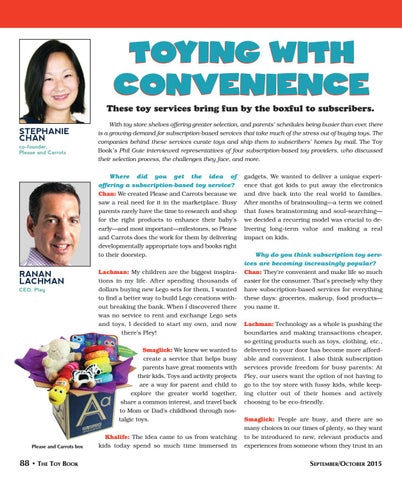
Please and Carrots box
88 • THE TOY BOOK
Khalife: The idea came to us from watching kids today spend so much time immersed in
gadgets. We wanted to deliver a unique experience that got kids to put away the electronics and dive back into the real world to families. After months of brainsouling—a term we coined that fuses brainstorming and soul-searching— we decided a recurring model was crucial to delivering long-term value and making a real impact on kids. Why do you think subscription toy services are becoming increasingly popular? Chan: They’re convenient and make life so much easier for the consumer. That’s precisely why they have subscription-based services for everything these days: groceries, makeup, food products— you name it. Lachman: Technology as a whole is pushing the boundaries and making transactions cheaper, so getting products such as toys, clothing, etc., delivered to your door has become more affordable and convenient. I also think subscription services provide freedom for busy parents: At Pley, our users want the option of not having to go to the toy store with fussy kids, while keeping clutter out of their homes and actively choosing to be eco-friendly. Smaglick: People are busy, and there are so many choices in our times of plenty, so they want to be introduced to new, relevant products and experiences from someone whom they trust in an
SEPTEMBER/OCTOBER 2015