The Tower Hill curriculum provides graduates the ability to thrive in courses at the world’s most demanding colleges and universities and the intellectual habits to live fulfilling lives of the mind. Students who show an exceptional interest and ability in one or more academic disciplines are encouraged to take honors and advanced level classes, upon being recommended to do so, which allow deeper exploration into the subject matter and enable our alumni to excel in similar coursework in college and graduate or professional school. We balance our core curriculum with a rich extra curricular life in the arts, athletics and student life. Beyond academics, our students are able to operate in a global world, are good citizens, engage in the democratic process, have a deep appreciation of the arts and literature, have the ability to evaluate quantitative and scientific information and have the ability to remake their profession and career to meet the demands of a rapidly changing world. We live by our motto Multa Bene Facta and believe a well-rounded secondary school experience is a necessity to prepare students for the 21st century.
The Upper School academic program is built around three content areas: Humanities, Sciences and Visual and Performing Arts. The Humanities program consists of courses offered in English, language, history and social science. The Sciences program consists of courses offered in science, technology and engineering and mathematics. The Visual and Performing Arts program consists of courses offered in music, theater, visual art and design and yearbook.
As outlined below, students take foundational courses in each of the content areas in grades nine and 10 and then move into more advanced work in grades 11 and 12. Students in grades 11 and 12 have minimum credit requirements for graduation that must be completed in each content area, but they also have the opportunity to focus on areas that are of greatest interest to them and to experience coursework that is interdisciplinary in nature. All Upper School students participate in Tower Term, which serves as the culminating experience of each academic year.
Humanities (English, history, social science, language)
Grade 9 – English 9, Modern World History, language
Grade 10 – English 10, U.S. History, language
Grades 11/12 – minimum of 18 total credits, which must include the following: English – two credits per semester
History and/or Social Science – minimum of four total credits
Language – any credits needed to complete a minimum of level 3 coursework in one language or three consecutive years of language study including level 2
Sciences (science, technology and engineering, mathematics)
Grade 9 – Biology, mathematics
Grade 10 – Chemistry, mathematics
Grade 11 – Physics (four credits unless the department recommends otherwise), mathematics
Grades 11/12 – minimum of 12 total credits
Visual and Performing Arts (music, theater, visual art and design, yearbook)
Grade 9 – minimum of one credit
Grades 9/10 – minimum cumulative total of two credits completed in grades 9 and 10
Grades 11/12 – any credits needed to reach a minimum cumulative total of four credits completed in grades 9-12
Additional requirements
Grade 9 – Ninth Grade SELF Seminar; minimum of 21 total credits
Grade 10 – Tenth Grade SELF Seminar; minimum of 21 total credits
Grade 11 – minimum of 20 total credits
Grade 12 – minimum of 19 total credits; at least four major courses each semester
Grades 9-12 – Tower Term
As you select your courses from the Academic Program guide below, please know you do not need to make selections alone. Your advisor, teachers, and college counselors are here to assist you in the selection of your academic plan of study. While your advisor and others are ready to help in making decisions concerning the number and difficulty of courses you might take, ultimately the decisions are up to you if you are deciding between recommended courses. You are responsible for your own program and performance.
We are committed to placing students in courses that are both sufficiently challenging and sufficiently supportive. We are likewise committed to avoiding “tracking” in any form or fashion; in keeping with our belief that adolescents are continually growing and developing, placement at a given level one year does not prevent placement at a different level in following years.
Provisional departmental placement recommendations for rising 10th through 12th grade students are made at parent-student-advisor conferences in February. These recommendations are based on factors that include, but are not limited to: classroom performance, ability to work independently, preparation for and participation in class, and standardized test scores, where appropriate. A recommendation means that a student may take that course, not that they must or should take it. Students interested in pursuing a course other than the one recommended may request review of that recommendation by discussing their interest first with their advisor and second with their classroom teacher in the given discipline. While no changes to recommended placements will occur at the time a review is requested, teachers will discuss with students what the student can do—and what the teacher and student can do together—to work toward placement in the desired class. At the April comment reporting period and in June following exams, the teacher will communicate whether a change in the initial, provisional placement is recommended.
All placements are entirely provisional until June after exams and may be changed in response to teachers’ and Chairs’ evaluation of students’ preparedness throughout the spring.
Rising ninth grade placements are made in the late spring and take into account a variety of factors including academic achievement in Middle School, standardized testing results and performance on placement assessments as appropriate for each discipline. All final placements are communicated to all students in early summer after graduation.
Honors and advanced courses are accelerated courses for qualified students who have shown exceptional ability and who work well independently. Honors and advanced designations indicate one or more of the following about a course as compared to a standard course or offerings at that grade level: it moves more quickly, covers more topics or delves more deeply into subject matter, and/or requires a greater level of inquiry and comfort with a greater degree of abstraction. Honors and advanced courses require students to produce more creative and extensive individual work, and students should expect to be asked to apply material to novel contexts in assessment circumstances. Placement in honors and advanced courses is not appropriate for all students, and a manageable course load is important.
If students or families have questions about or wish to request review of a final placement decision, they should contact the appropriate Department Chair, who will consider the placement again. In some cases, though it remains the opinion of the Department Chair that the teacher’s placement recommendation was in the student’s best interest, students or families may request to enroll in a course against that recommendation. In these cases, students and families will be asked to speak with the Assistant Head of Upper School and to sign a letter acknowledging the circumstances of the enrollment, the potential impact to student scheduling and academic progress if the enrollment should turn out to have been inappropriate, and similar.
Tower Hill uses numerical grading on a 100-point scale for report cards and transcript marks. Only major courses are calculated into the grade point average (GPA). Major courses are two-credit semester courses and four-credit year-long courses, including English, history, language, math, science and advanced studio art.
While our GPAs are based on a 100-point scale, honors and advanced courses receive additional weighting toward the GPA in the following manner:
• Grades earned in Honors and Advanced courses receive additional weighting of five points, e.g., a grade of 84 would be calculated as an 89 (84 + 5) in the GPA.
• Advanced Studio Art does not receive additional weighting.
Grades are calculated in the following way:
• First semester grade: 80% work completed during the semester + 20% semester exam/paper/project
• Second semester grade: 80% work completed during the semester + 20% semester exam/paper/project
• Final grade: 50% first semester grade + 50% second semester grade
• A GPA is calculated by multiplying each final mark by the number of credits for the course. The GPA is the sum of these values divided by the total number of credits taken.
Academic
- “Scholar” Recognition
Scholars are recognized for outstanding achievement at the end of each semester.
Scholar with Honors
Weighted GPA: 90-94.9
Scholar with Distinction
Weighted GPA: 95 and above
Letter Grade Number Equivalent
A+ 97-100
A 93-96
A- 90-92
B+ 87-89
B 83-86
B- 80-82
C+ 77-79
C 73-76
C- 70-72
D+ 67-69
D 63-66
D- 60-62
F 0-59
During the first three weeks of each semester, students may add a course. Students may drop a course (i.e., may have it removed from their list of courses with no notation on a transcript) up until the midpoint of a semester. After that time, students leaving a course will typically have a withdrawal (WP if the student is passing the course and WF if the student is not passing the course) noted on the transcript. Students intending to drop a course after the add/drop period concludes should remember that they may only drop a course thereafter if they otherwise carry the requisite number of credits outlined in the graduation requirements section of this handbook for the specific year.
Students wishing to drop or add a course should first have a conversation with the teacher to discuss this change. From there, students should then discuss this with their advisor. After approval has been given, students may then pick up an add/drop form from the Assistant Head of Upper School, the Upper School office, or any Department Chair and return the form after appropriate signatures have been obtained. Official registration occurs through the Assistant Head of Upper School, and a completed add/drop form is necessary to receive credit for a course. Any junior or senior dropping or adding a course must receive approval from the Director of College Counseling and the Assistant Head of Upper School. Students must continue to attend the original course until the change has been made in TowerNet.
Schedule changes will typically not be made after the add/drop period unless they are initiated by the school for extenuating reasons. Moving between levels of a course (i.e., from an honors section to a college preparatory section) may happen outside of the add/drop period with the approval of the Assistant Head of Upper School.
If a student moves from a college preparatory level of a course to an honors section of that course, the student’s grade in the new course is adjusted to reflect the increase in rigor; the student will begin with an average five points lower than the average they were carrying in the college preparatory level of the course. If a student moves from an honors level of a course to a college preparatory section of the same course, the student will begin in the new class with an average five points higher than the average they were carrying in the honors level of the course.
Founded in 1906, the Cum Laude Society is an international fellowship of scholars whose purpose is to recognize excellence in academic work. Membership in the Society is one of the highest academic honors at Tower Hill. The first 10% of the student members of Cum Laude are recognized at an assembly when they are selected in the fall of the twelfth grade year, and the full complement of Cum Laude Society members—up to 20% of the class— is formally inducted at the spring Awards Ceremony preceding graduation.
In keeping with the original purpose of the Cum Laude Society, selection is based primarily on a high standard of academic achievement, as reflected by a student’s weighted GPA and the relative academic rigor of the student’s course of study during the 10th, 11th and 12th grade years. Students who join the Upper School during their 11th or 12th grade years may be considered for membership; in these cases, the portion of the student’s academic record earned at Tower Hill is considered most closely.
The Cum Laude Society interprets its motto of “Excellence, Justice, Honor” in the broadest sense to include “good character, honor, and integrity in all aspects of school life.” A student’s honor and disciplinary records, including the timing and seriousness of any infraction(s), are considered during the selection process. Violations of the Honor Code typically preclude a student from consideration, and a serious disciplinary transgression may do the same. Further, honor and disciplinary violations after selection typically result in a student’s removal from the Cum Laude Society.
The Global Scholar Certificate Program is a way of systematically guiding and recognizing students who go above and beyond in the realm of global studies. By offering our students cross-cultural experiences and opportunities, we provide them with the necessary tools to engage in mutually beneficial interactions with people from around the world.
Tower Hill’s Global Scholar Certificate Program provides Upper School students with opportunities to explore global dynamics, leadership, and cultural growth. Participating students complete academic coursework related to language and global inquiry, educational travel, extra-curricular enrichment, and service with a global focus. Seniors in the program produce a research portfolio related to a global issue of personal interest.
In addition to the academic requirements, students:
• Participate in an independent study or enrichment opportunity, such as Model United Nations
• Contribute to a service learning project or organization, such as tutoring in another language, volunteering where language skills are a necessary component of the task, or volunteering with an organization that is global in nature; and
• Participate in an international exchange or travel experience sponsored by Tower Hill, with most recent offerings to Australia, France, Italy, Puerto Rico, and Uruguay.
Throughout their senior year, students complete a culminating portfolio focusing on a sustainable solution to a global development challenge that includes research, self-reflection, and an oral presentation. The Director of Global Initiatives, the Global Studies Coordinator, and a panel of faculty and staff evaluate each portfolio.
This is an application-based program. Interested students should contact Mr. Rapp, Director of Global Initiatives, or Ms. Pallant, Upper School Global Initiatives Coordinator, for more information.
Tower Term is a requirement for every Tower Hill student that must be completed for each year they attend the Upper School. It is a space where the Tower Hill community can explore learning together in an interdisciplinary, experiential way. This time allows for creative and dynamic programming that promotes deep engagement, critical thinking and real life application. This dedicated period allows students and teachers to explore ideas, take risks and run experiments. These courses will set the stage for collaborative, interdepartmental, studentdriven activities that provide diversified preparation for lifelong learning and personal growth. Tower Term will take place after Upper School exams.
Tower Term registration happens in the winter around first semester exam time. Students and families should check their calendars carefully before selecting a Tower Term that requires travel. Changes to course requests are often not possible. In the event that a student cannot travel and the school can accommodate the student in another course, the family will be responsible for any expense incurred by the school for any non-refundable trip purchases such as tickets, room reservations, etc. Participation in Tower Term is contingent upon students having completed all academic work in all classes prior to the first day of Tower Term. If students are still incomplete in any classes, those students will be expected to come to campus during Tower Term to complete outstanding work; once all academic work is completed, students must begin attending Tower Term.
Two major theater productions are held each year, and often there are additional opportunities to participate in the program. Tryouts for each production are held the semester prior. Each production offers students opportunities to participate on the stage, behind the scenes, or in stage management.
The Forum Speaker Series is a unique opportunity for you to interact with personalities of national prominence. We usually choose two speakers, one in the fall and one in the spring. These events occur after school, and semiformal attire is required (see Forum and Special event dress for specifics). Attendance at Forum is mandatory for all Upper School students; early, advanced arrangements should be made to secure transportation and account for other evening activities that will need to be missed.
Throughout your freshman and sophomore years, there will be several introductory programs from the College Counseling office for you and your parents, but you will not formally begin this process until winter of your junior year. At this point, you will begin meeting individually with your assigned college counselor and attending college counseling classes. Please visit the College Counseling page on TowerNet to learn more about programming, resources and timelines. If you have specific questions or would like to meet with a college counselor before the winter of your junior year, please contact Ms. Yuros (Class of 2028), or Mr. Yarnell (Class of 2029).
Tower Hill School is not an AP school but does offer AP testing for students enrolled in advanced coursework that corresponds to an AP exam. Students enrolled in advanced coursework can sign up for the corresponding AP tests with the support of their teacher in that course. For coursework in our curriculum that does not offer an advanced option (i.e., semester-long electives), students may choose the option to self-study for that exam after a conversation with the department chair of that subject and the AP coordinator. Students and families will need to review and sign a form outlining the expectations for self-study and return that form to the AP coordinator to receive the testing code. If you feel like your specific situation is not covered by the above policy, please contact the AP Coordinator.
Course titles are followed by credit units, prerequisites and/or eligible grades, and semester offered, if not a full-year course. Full-year courses that receive four credits and semester courses that receive two credits are considered major courses. A student’s GPA is determined by the marks earned in major courses.
Courses eligible to count towards the requirement for a Global Scholars Certificate are indicated with the notation (GS). A description of the program is included at the end of this guide.
English 9 – Becoming: World Literature of Transformation (GS), 4 CU, required of all students in grade 9
In English 9 students start their individual journeys in the Upper School by exploring world literature and universal human experiences. This foundational course establishes critical thinking skills that will support students’ navigation of societal conflicts and concerns, while engaging them in both rhetorical and creative expression. English 9 encourages students to grapple with complexity, reflect on their own thinking, and adapt strategies with intention. Along the way, ninth graders learn to craft compelling analytical essays, deliver persuasive speeches, and experiment with creative writing. Texts range from memoirs, which connect personal stories to world history, to allegories that challenge systems of oppression. By the end of English 9, students will have discovered their own voice as emerging writers and critical readers, preparing them for continued success in the classroom and beyond.
English 10 – American Literature, 4 CU, required of all students in grade 10
American Literature examines the multifaceted American stories and experiences that comprise the everevolving national character and aesthetic. In this course students question what is “American” about the country’s literature. As diverse as its geography and people, American literature confronts the constraints and possibilities of our shared history. Joining the conversation about history, literature, and culture asks students to step-up into the landscape of critical scholarship. Tenth graders learn to move fluidly in this intellectual space by writing analyses supported by literary criticism and essays that braid their personal experience with their analytical understanding. This is the year that students find their scholarly voice and build deep metacognition around the purpose of their own writing and reading practices. As part of our inclusive approach to American letters, students will explore a range of texts, including: The Book of Unknown Americans, When the Emperor Was Divine, The Great Gatsby, Sula, The Things They Carried, and Flight, and select short stories, along with units on the Harlem Renaissance and Transcendentalism.
After the two-year sequence of English 9 and 10, students have acquired the requisite skills, core knowledge, and independence of mind to explore their passions in their junior and senior years in the English Seminar program. This series of four college-preparatory courses gives students the opportunity to do intensive work in particular areas of interest with teachers who have unique expertise. Students select among 12 unique seminars offered each year by faculty members who originate, design, and develop curricula; every course requires deep reading, significant analysis and writing, and earnest engagement and participation. English Seminars represent a range of historical periods, literary genres, geographical locales, world issues, major authors, seminal periods, and crucial styles, and all are devoted to rigorous and deep study with an emphasis on critical writing.
First Semester English Seminar Courses
(each worth 2 CU)
Haunted Minds
Journalism: Introduction to News Media
What Does Poetry Do?
Novel Stories (GS)
Science and Ethics in Literature (GS)
Full-year Advanced English Course (worth 4 CU)
Reading the Apocalypse (GS)
Pursuit of Happiness (GS)
Second Semester English Seminar Courses (each worth 2 CU)
Criminal Pursuits: Detective Fiction (GS)
Dreamscapes and Borderlands
Rhetoric: the Art of Persuasion
Trauma and (Re)Memory
Often dismissed as merely sensational or gratuitously violent, horror writing is, in fact, one of literature’s most enduring and intellectually rich genres. This course invites students to explore the evolution of horror fiction— from its early literary roots to its modern reinventions. We will trace its trajectory through works by Bram Stoker, Shirley Jackson, and Victor LaValle, as well as emerging writers, allowing for an exploration of diverse narratives.
We will examine how horror engages with deep psychological, cultural, and societal fears—what frightens us, why, and how those fears reflect (or resist) the times. Students will develop their own critical frameworks to interpret themes such as the uncanny, the monstrous, the haunted, and the taboo, engaging in thoughtful dialogue and analytical writing. The course offers a variety of assessments including analytical papers and responses, Harkness discussions, and creative projects to allow students the opportunity to develop their own voices and perspectives as we explore the darker pathways of the human mind.
In today’s digital media climate, the principles and practices of journalism provide a critical framework to navigate our content driven culture. This course provides a foundation in journalism’s various facets, including: recognizing reliable stories, gathering facts through skillful interviewing and research, developing sources, crafting welcoming leads and satisfying endings, and creating news and feature articles that inform and engage readers.
Designed for students with an interest in professional and purpose-driven writing, a goal of this course is for students to become published contributors to the school newspaper, seeing their work engaged with and impacting the community. Students should expect to produce stories on deadline, providing critical context while using high standards of ethics, factual accuracy, grammar, and style. We will also consider the role podcasts, blogs, and social media outlets can have to inform, enlighten, and even move people in new and varied directions of thinking.
In this course, students will explore three influential novels—Frankenstein, A Tale of Two Cities, and Pride and Prejudice—to understand how they engaged 19th-century readers and why they continue to resonate today. We’ll read these works through a range of critical frameworks, including historical, feminist, and psychoanalytic lenses, to deepen our analysis and expand interpretive possibilities. To that end, students will engage with literary criticism, developing their ability to enter scholarly conversations, build arguments, and think critically about literature’s cultural impact. While these core texts anchor the course, students will also have opportunities to pursue questions and themes that align with their interests. Coursework includes reading three primary novels and selected short texts, engaging with 2–3 scholarly articles per unit, writing two analytical papers, and completing regular discussion-based and reflective assignments. Blending gothic horror, political upheaval, and sharp social critique, this course invites students to read deeply, think broadly, and explore why these novels still matter.
Scientific ethics, a set of moral obligations that advocate for integrity in all stages of scientific inquiry, not only direct scientific study but also shepherd society toward defining right and wrong. But sometimes this doesn’t hold true: “They were so preoccupied with whether or not they could, they didn’t stop to think if they should” (Jurassic Park). Are there cases in which science’s questions should not be answered? Or should science ignore humankind’s cultural tastes in favor of unbiased inquiry? In science, how do individuals’ rights hold up to those of the many? We will attempt to answer questions related to medical and experimental ethics through both nonfiction and fiction. The summer reading text is Skloot’s The Immortal Life of Henrietta Lacks. Course texts may include Fadiman’s The Spirit Catches You and You Fall Down, Ishiguro’s Never Let Me Go along with short stories, film, and poetry.
On the eve of the Second World War, the great poet and critic W. H. Auden famously wrote that “poetry makes nothing happen.” And while this is no doubt true in the large sense of stopping a war or changing history, it is also the case that people put poetry to use in all kinds of ways—for learning, for witnessing, for protesting, for gathering, and so on. This course will ask: “what can poetry do, and for whom?” In thinking through this problem and its many dimensions, we will encounter poets major and minor, poems familiar and forgotten, from across history and around the world, and we will explore the range of possible uses for writing, reading, and performing poetry.
This course is designed to provide students with a comprehensive understanding of the detective genre, its evolution, and its impact on literature and popular culture. We will study the role of the detective starting with some famous literary investigators, including C. Auguste Dupin, Sherlock Holmes, and Hercule Poirot, and then widen our inquiry to more modern sleuths from diverse backgrounds. The novels and stories will address a range of socio-political issues (both historical and contemporary) as well as frame a discussion about the detective genre. Through a combination of critical analysis, close reading, and engaging discussions, students will embark on a journey through the realms of mystery, crime, and the pursuit of justice.
In this literature course, students will explore rich and imaginative texts that blur the boundaries between reality and fantasy. Through encounters with faerie realms, alternate histories, and urban fantasies, students will examine how authors use the fantastical to reflect—and sometimes challenge—our understanding of time, identity, normality, and truth. Readings may include The Mabinogi, Alice in Wonderland, Thornhedge, and The Haunting of Tram Car 015, as well as a selection of short stories and some poetry. In addition to literary texts, the course includes analysis of the films Flow and Song of the Sea, which further explore speculative and mythic storytelling through visual narrative. These works, spanning centuries and genres, invite students to analyze complex themes through close reading, comparative analysis, and thoughtful discussion.
Designed for college-bound students, this course emphasizes critical thinking, interpretive writing, and literary analysis—core skills essential for success in higher education. At the same time, it encourages intellectual curiosity, creativity, and a deeper appreciation of literature’s power to illuminate the human experience through even the most unfamiliar worlds.
Language is a remarkable tool to inform, entertain, and most critically for this course—persuade. Whether you imagine your future self as a business mogul, lawyer, scientist, or author you will need to use rhetoric to convey a convincing message. Crafting and engaging in argumentation is foundational to our society. Fundamental disagreements on critical political and social issues make it essential to learn how to make an argument and analyze the arguments of others. This course is an introduction to the theory and practice of rhetoric, the art of persuasive writing and speech. In it, you will learn to construct and defend compelling arguments and use rhetorical structure and style to convince others to adopt your point of view. Our persuasive texts may include: Cultish: The Language of Fanaticism, The Coddling of the American Mind, and a selection of speeches, addresses, and popular essays.
Traumatic experiences often have a way of imprinting themselves on human consciousness, so much so that emotional distress, as well as physiological symptoms, such as insomnia or physical pain, often plague the victim for years following the event. How do writers represent this psychological phenomenon in American literature? This course will examine texts through the lens of trauma theory and explore the multitudinous ways that authors
attempt to represent or witness tragedy. We will consider these pieces of literature as products of their historical context as well as borrow extensively from contemporary psychological study. Texts may include Morrison’s Beloved, Talty’s Night of the Living Rez, and Kaufman’s The Laramie Project. Films may include Room and Shutter Island.
Tower Hill’s Advanced English seminars introduce the rigors of college-level reading and writing within the supportive environment of the high school classroom, offering students unique opportunities to sharpen their critical thinking through deep, independent work in the humanities. These year-long courses on major literary and cultural themes follow a two-part sequence, moving from deep teacher-guided study in the Fall to broad student-driven inquiry in the Spring. Reading classic and contemporary works of literature in conversation with rich secondary source materials, students learn what it means to work on problems in the field of literary studies, from the nature of the good life to the meaning of history. Advanced seminars combine literary and rhetorical analysis with ongoing reflective writing, inviting students to bring their whole selves into a writing practice that can grow and evolve with them. This work culminates in a capstone research project, in which each student develops a college-level research paper from conception to final revisions with the support and guidance of their teacher.
Reading the Apocalypse (GS), 4 CU, open to students in grade 11, with permission of the department
Our popular culture is full of depictions of the end times. Zombies, robot overlords, supervillains, rogue waves; in an age of dramatic social, ecological, and political upheaval, nothing seems to sell like “the end of the world.” The Greek root of the word “apocalypse,” however, means not catastrophe but “revelation.” This Advanced English course asks what our world-ending visions might reveal about our decidedly ongoing lives in uncertain times. How do literary and cultural engagements with apocalypse shape our understandings of humanity, art, history, politics, and more? Where and how have visions of world-altering change empowered people to speak, act, and even reimagine what a “world” is in the first place? Apocalyptic events and circumstances are rarely linear; the cyclical nature of destruction and creation will be a central concept for the generation of critical synthesis. Building on summer reading texts that engage broadly with the themes of revelation, catastrophe, and transformation, we will begin by studying the Biblical and mythological roots of our apocalyptic imagination before tracing its itinerary across the centuries and around the globe, including through literary reflections on the real-world catastrophes of, for instance, colonialism, racial slavery, and climate change. Our readings will take us across genres, time periods, and geographies.
Pursuit of Happiness (GS), 4 CU, open to students in grades 11-12, with permission of the department
Happiness is more than just a destination; it’s a journey of discovery, complexity, and connection. In The Pursuit of Happiness, we’ll explore the many ways people experience joy, fulfillment, and meaning across cultures, histories, and stories. Through an engaging mix of literature, philosophy, and cultural studies, this course invites you to reimagine happiness not as something to be achieved, but as something to be explored—a rich, evolving part of the human experience. What does happiness really look like? Is it a bright, carefree moment of bliss, or is it something more complicated—like the unexpected joy found in hardship or the bittersweet beauty that emerges after heartbreak? Is it something we get, or something we become over time? And is it even possible to feel happiness after an apocalypse? In The Pursuit of Happiness, we’re setting out to answer these messy and exhilarating questions by diving into a world of stories—from global literature to pop culture, from ancient philosophy to the emotional rollercoaster of memoir. Together, we’ll explore happiness in all its forms and hopefully create some in ourselves along the way—after all nothing makes us happier in the English department than a good book.
Modern World History (GS), 4 CU, required of all students in grade 9
In this course, students examine World History from the age of exploration to the present day. Topics regarding governance, culture, religion, intellectual thought, industrialization, nationalism, and globalization will steer our discussions of how the world has transformed significantly. Special attention is given to 20th century events that set the stage for the complexity of our present global world. There is a heavy emphasis on research, writing, and the analysis of primary documents, all to enhance the student experience of historical inquiry.
United States History (GS), 4 CU, this course or Advanced U.S. History required of all students in grade 10
This full-year survey course explores the development of the nation from the pre-Columbian period to the present day. Students will be exposed to the political, economic, diplomatic, social, and intellectual aspects of the development of the United States. These topics will be analyzed and investigated through chronologically and thematically-arranged units centered on American identity, evolution of the federal government, American democracy, and civil rights. In addition, students will master a broad body of historical knowledge and demonstrate understanding of historical chronology, use documents to support historical arguments, be exposed to different historical interpretations, and develop analytical skills to interpret the historical materials studied.
History Courses
Advanced United States History (GS), 4 CU, with permission of the department
In this advanced full-year survey course, students trace the development of American history from the preColumbian period to contemporary times and explore the political, economic, diplomatic, social, and intellectual aspects of the development of the United States. Students will master a broad body of historical knowledge and demonstrate understanding of historical chronology, use documents to support historical arguments, be exposed to different historical interpretations, and develop analytical skills to interpret the historical materials studied. The course will emphasize student-centered discussion, close reading of primary and secondary sources, and independent research and writing. The additional workload of this course, designed to aid students in further developing their historical thinking skills, should be attractive to students who have demonstrated strong ability and interest in prior history courses.
Advanced Modern European History (GS), 4 CU, open to students in grades 11-12, with permission of the department
This course provides a college-level introduction to European history since the Renaissance. Emphasis will be placed on refining writing skills and on independent, critical thinking. Great attention will be paid to the analysis of historical documents. A research paper will provide students with a chance to pursue a topic of special interest and complete their preparation for college work.
Advanced U.S. Government and Politics (GS), 4 CU, open to students in grades 11-12, with permission of the department
This course introduces students to the political culture of the United States. Topics include the three branches of government, political ideology, key legislation, and the creation and implementation of policy. The course investigates the underpinnings of the government and its impact on voter behavior and policy-making. Contemporary themes utilizing the latest primary and secondary sources will be used throughout the course.
Art of Protest (GS), 2 CU, open to students in grades 11-12, 1st semester
This interdisciplinary course examines the rich tradition of “protest literature” in the United States from the American Revolution to the present. The primary focus is on three enduring strands of protest: civil rights (beginning with the anti-slavery movement), women’s rights, and workers’ rights. Using a broad definition of protest literature, the course pays particular attention to the cultural production and consumption of dissent as a powerful “voice” of both individuals and movements. The course examines a wide range of print, visual, and oral forms of dissent. Reading primary sources from a range of materials, including pamphlets, essays to poetry, as well as photographs, music, sociology, and history.
Epidemics in Society: The Impact of Disease on Patterns in World History (GS), 2 CU, open to students in grades 11-12, 1st semester
This course will explore the impact of deadly illnesses in history as well as their far-reaching implications. Studying disease allows us to look at humans through the lens of a fight for survival while having vast political, cultural, and social implications. Religion, gender, race, socioeconomic status, migratory patterns as well as philanthropic gestures will factor into our study of various diseases, including tuberculosis, Ebola, and HIV/AIDS. We will end the course highlighting the deadly germs making their mark in the world of public health today. Much focus will be placed on forming independent and critical thinking skills.
Finding History in the Middle of It All: Learning Local History Through Oral History (GS), 2 CU, open to students in grades 11-12, 1st semester
“In the Middle of It All” has been Wilmington’s official motto since 2007. Though this motto defines the community by its proximity to major metropolitan centers such as Philadelphia, Baltimore, and D.C., the region itself has a unique history that has had a major impact on the lives of people living throughout the Brandywine Valley. Historic developments, both manmade and natural, have shaped the systems, structures, and ecologies that influence our lives every day. This course will provide an opportunity for students to engage in original research to unearth the stories that created a community. Students will be challenged to both learn the modern history of Wilmington and the surrounding region, while also developing historical research skills that will help them well beyond the classroom. The post-World War II era will be the focus of the class, as students will learn about their community’s history concerning labor, race, the environment, political activism, business, and much more. Through partnerships with community organizations and historical societies, students will be exposed to opportunities to conduct archival and oral history research and produce a public-facing project telling the history of our local community.
History of Feminism (GS), 2
What is feminism? How has feminism been understood over time, and what does it mean to people today? This course will explore the history of the feminist movement in the United States as well as its limitations. We will talk at length about feminism and the abolition and suffrage movements, feminist efforts toward bodily autonomy, intersectionality, and online feminist movements in our current moment. Students will explore these ideas through a variety of primary and secondary sources, including current articles, essays, and podcasts.
The World at War (GS), 2 CU, open to students in grades 11-12, 1st semester
The First and Second World Wars were catastrophes that engulfed the globe and killed millions of people, including tens of millions of civilians. Each war remade the global order in profound ways. Through participant accounts, documentaries, films, and more traditional modes of history, this course will seek to define and understand the World Wars as a continuous historical era whose aftershocks reverberate today and continue to shape global history and politics. This course will have a global view of the First and Second World Wars, building upon the discussion of this period in 9th and 10th grade courses to cover the experiences of people across the world in much more detail. Although this course will include military and operational information, it will also engage substantially with diplomatic, social, ideological, and colonial/post-colonial history in order to construct a diverse and nuanced understanding of events and historical forces.
American Environmental History (GS), 2 CU, open to students in grades 11-12, 2nd semester
Environmental history is a useful way to view our nation’s history. Not only has the evolution and development of the country impacted our national and global environments, but the natural and constructed world around us has shaped the course of American history. This course will use the topic of the environment to examine major themes in United States history. Students will gain a better understanding of how topics such as colonization, immigration, industrialization, conflict, and more interact with the environment and how our natural and built environments influence how we live, eat, and work. Additionally, students will understand how we have attempted to address the most significant issues facing our environment through politics and activism.
Current World Issues (GS), 2 CU, open to students in grades 11-12, 2nd semester
This course focuses primarily on 21st century international studies, including international relations theory, global conflict and international security, US foreign policy, macroeconomics and globalization, environmental issues, and humanitarian concerns and human rights.
Modern Black America (GS), 2 CU, open to students in grades 11-12, 2nd semester
This course explores African American history from Emancipation through to the present, including, but not limited to: Reconstruction, Jim Crow Segregation, the Great Migration, the Harlem Renaissance, the modern Civil Rights Movement and Black Power Movement, the Obama Administration, and Black Lives Matter.
The 1980s: A Political and Cultural History (GS), 2 CU, open to students in grades 11-12, 2nd semester
The 1980s was a decade of change. The United States and the Soviet Union were entering the last decade of the Cold War, the AIDS epidemic became recognized, and scientists started to first discuss what was then termed global warming. This decade also brought technological advancements that created a gaming culture and the MTV generation. Through the use of text, film, and primary documents, this course unpacks the political, economic, technological, and cultural developments that make this decade so distinct in history and memory.
The Global Cold War (GS), 2 CU, open to students in grades 11-12, 2nd semester
The Cold War was arguably the phenomenon with the greatest impact on the world in the 20th century. Global superpowers fought for control over the future of the Earth. How did this conflict begin? How did people experience the Cold War? What brought about its conclusion? What impact did it have on the modern world? After completing this course, students will be able to answer each of these questions. Beyond studying the impact of the Cold War on Americans and American society, this course will also address how people from around the world experienced this global and bloody conflict. A variety of primary and secondary sources, organized to represent an array of voices, will help students explore these important questions.
Introduction to Business and Microeconomics, 2 CU, open to students in grades 11-12, 1st semester
What makes a company like Apple or Amazon successful? How does McDonald’s use game theory to price its Big Mac meal? What is the best way to thwart ticket scalpers? This course will introduce students to the language of commerce and the world of economics on a micro level. Students will choose a public company to follow as they learn about markets, business structures, profit maximization, and competition. In addition to tackling supply and demand theory, students will learn how to read financial statements and perform a break-even analysis. Students will plan and develop their own “Undercover Boss” projects incorporating observational, analytical, and benchmarking data. In other projects, students will analyze current and historical events from an economic viewpoint and discern the qualities of effective leaders. Those interested in sitting for the AP Microeconomics exam will be provided supplemental materials.
Macroeconomics and Financial Markets (GS), 2 CU, open to students in grades 11-12, 2nd semester
Why do financial markets brace themselves when Elon Musk starts to tweet? How were the Great Depression and the Great Recession similar? Why are some countries rich and some countries poor? In this course, students will learn how banks work; how federal policies drive GDP, interest rates, and unemployment; and where U.S. tax dollars go. Not only will students be able to interpret the U.S. Jobs Report and the Consumer Price Index, but they will delve into the economics behind international treaties, such as the Paris Climate Accords. Students will work in teams on case studies with a global focus and complete a stock market project. In short, students will engage with the world and expand their thinking. Those interested in sitting for the AP Macroeconomics exam will be provided supplemental materials.
Psychology: Human Development and Society, 2 CU, open to students in grades 11-12, 2nd semester
Human Development and Society is the study of the mind and of human behavior in a social context. The course will use current research and foundational theories of psychology to gain an understanding of individual development across physical, cognitive, emotional, and social spheres. Students will analyze how biological, psychological, and sociocultural factors and their interactions influence individuals’ behavior and mental processes. This course will explore the history of psychological understanding and how the evolution of these theories has differently impacted marginalized and non-marginalized groups. Students can anticipate making connections to how human behavior has shaped history.
Students are required to complete language coursework up to Level 3 or take three consecutive years of language courses including Level 2. Please note that the latter option (three consecutive years of language study including Level 2) requires permission from the Department Chair and consultation with both the Assistant Head of Upper School and College Counseling.
French 1 (GS), 4 CU
Students acquire the skills necessary for listening, speaking, reading, and writing and learn to communicate thoughts, needs, wants, and reactions in spoken and written French. Special attention is given to vocabulary, syntax, and grammatical structure. Lessons will be explained progressively in French. Pattern drills and varied spoken exercises provide ample practice in each specific domain of language acquisition. French and francophone culture and civilization are presented in context.
French 2 (GS), 4 CU, French 1 or its equivalent is a prerequisite
Students continue to develop and build their communicative skills in listening, speaking, reading, and writing. The transition from concrete to abstract language is emphasized throughout the course, as French and francophone culture and civilization are presented in context. Students cover all the basic grammatical structures while also learning practical application of concepts. Students increase their knowledge of vocabulary and syntax through daily exercises, written and oral drills, and writing assignments, while also reinforcing and recycling learned grammatical structures.
French 3 (GS), 4 CU, French 2 is a prerequisite
A primary objective of this course is the consolidation of basics, particularly in the areas of vocabulary, verbal constructions through the past subjunctive, idioms, and additional grammar. Reading skills are improved through frequent readings on French and francophone cultures and history. Written compositions of varying length are an important part of the course, as students integrate and apply their language skills. The use of French in the classroom is expected. Listening comprehension is furthered by frequent auditory stimuli, both from textbook-based audio clips and authentic televised newscasts and cultural programs from the French-speaking world. References to French and francophone culture and civilization are an integral part of this course.
The upper level courses continue to build the core language skills while exposing students to authentic materials of increasing length and difficulty. Students who have completed French 3 have two options.
• Option 1 – Students who would benefit from further strengthening and refinement of their language skills should consider taking the regular seminar courses. Upon successful completion of these courses, students may, with permission of the Department Chair, choose to take the advanced seminar classes.
• Option 2 – Students who demonstrate particular excellence in French 3 may, with permission of the Department Chair, move directly into the advanced seminar courses. These courses focus on the discussion of ideas and concepts in French, with special attention given to producing longer written compositions and essays. Students will be expected not only to comprehend the content of written and spoken language, but also to conduct critical analysis of literature, film, and culture.
French Seminar: The Francophone World (GS), 2 CU, 1st Semester, French 3 is a prerequisite
The Francophone World introduces students to a large variety of regions in the francophone world through study of current events, geography, history, excerpted literature, music, and notable figures in the vast Frenchspeaking world. As students learn about Francophone regions of Africa, North America, Europe, and Asia, they will expand their knowledge of the regions while also honing their communicative skills (speaking, understanding, writing, and reading). Students will be expected to maintain the immersion environment, with an understanding that commitment to a French-only environment accelerates the development of fluency. Assessments will include presentations, in class essays, and recorded conversations. The course will culminate with a deep dive into a relevant topic of the student’s choosing and a final project that combines in class essay writing with peer-to-peer conversation on the chosen topic.
Advanced French Seminar: Graphic Novels and Animated Films in French (GS), 2 CU, 1st semester, French 3 is a prerequisite
Beginning with an exploration of the yearly Angoulême Bande Dessinée Festival and the Annecy Animated Film Festival, this advanced elective class will introduce the rich history of French language traditions in both forms. Themes will include the representation of historical events, the challenges of childhood or adolescent life, and imagined other worlds, both future and present. Students will further strengthen their language proficiency and refine their analytical skills by responding in writing and in discussion to the wide variety of works they engage with. The course will culminate in an individual final project in which students will create their own sequence of animated film or pages of a graphic novel in French, building on the themes and graphic styles they have learned about.
French Seminar: French Stories of Good and Evil (GS), 2 CU, 2nd semester, French 3 is a prerequisite
Moving away from direct daily study of French grammar, this course aims to strengthen the students’ communication skills in French (reading, speaking, listening, and writing) and to prepare them for the advanced conversation, film and literature courses. Through readings and discussions of accessible short stories, legends, fairy tales, condensed adaptations of literary classics, and a murder mystery, students will build their vocabulary and increase their fluency in French. Written vocabulary and grammar exercises will allow students to further practice their skills.
Advanced French Seminar: Café Français (GS), 2 CU, 2nd semester, French 3 or one semester elective is a prerequisite, with permission of the department
This upper level conversation course is designed for motivated French students interested in advancing their oral proficiency towards fluency in the language. The goal of the course, conducted strictly in French, is to improve the students’ listening and speaking skills so that they will be able to effectively communicate with native speakers in various settings. Great emphasis will be placed on students’ daily participation and effort in class. Students will lead discussions, make frequent oral presentations, engage in role-play exercises, and debate in French. Course themes include cultural concepts of friendship, gender equality, immigration, reality television, blogging and French slang, technology, and education. The semester will conclude with a group podcast project based on the themes explored during the semester.
Latin 1 (GS), 4 CU
The primary goal of this course is to acquire a clear understanding of the morphology (forms), syntax (grammar), and vocabulary (Latin words and their English meanings) of the Latin language presented in Units 1-2 Cambridge Latin Course in order to translate the stories presented in each stage (chapter). The secondary goal is to acquire an understanding and appreciation of Roman life and culture in the first century AD.
Latin 2 (GS), 4 CU, Latin 1 is a prerequisite
Using the reading/translation method, students complete their study of morphology and syntax, increase their vocabulary, and are exposed to all advanced grammatical structures. In addition, students sharpen their skills in analytical reading and sight translation. Foremost among the points of grammar are subordinate clauses in indirect statements and the subjunctive mood. Through a wide selection of readings, students also advance their knowledge of Roman culture.
Latin 3 (GS), 4 CU, Latin 2 is a prerequisite
After spending the first quarter finishing the Cambridge Latin Course, students begin formal exploration of Latin literature by translating selections from The Satyricon by Petronius Arbiter (A.D. 27-66), one of the first novels in Western literature. This course stresses the accuracy and quality of written and oral translation, for it requires the final acquisition of all the grammatical and syntactical fundamentals learned in Latin 1 and 2 as well as the capacity to retain and use them in their entirety. Course material will be supplemented with analysis of Roman culture in the first century.
The content of the advanced Latin seminar courses forms a foundation of an appreciation of Latin literature and Roman history and culture. Translation skills, both verbal and written, will be stressed, as well as the thorough identification and evaluation of syntax and rhetorical devices. Of equal importance will be literary analysis and discussion of the texts and their place in Western literature.
Advanced Seminar: Selected Letters of Pliny the Younger (GS), 2 CU, 1st semester, Latin 3 is a prerequisite, with permission of the department
In this advanced elective, students will translate and analyze selected letters of Pliny the Younger (AD 62-113) whose work belongs to the Silver Age of Latin literature. Pliny’s correspondence chronicles the fashionable, intellectual and civil life of his day, and deals with a wide variety of subjects, including the description of a Roman villa, a dinner party, the acquisition of a piece of statuary, Pliny’s love for his young wife, ghost stories, floating islands, and other marvels. By far, the best known and most important are two letters describing the famous eruption of Vesuvius, in which his uncle perished, and a letter to the emperor Trajan on his attempts to suppress Christianity. In addition to tests and quizzes, students will be expected to present two reports commenting on aspects of the letters.
Advanced Seminar: Selections from Ovid’s Metamorphoses (GS), 2 CU, 2nd semester, Latin 3 is a prerequisite, with permission of the department Students will translate selected readings from the Metamorphoses. A literal but polished verbal and written translation will be emphasized. Students will examine the syntax, rhetorical devices, meter, and style of Ovid’s poetry with a view toward a comprehensive literary analysis. Students will also consider how the myths told by Ovid symbolize the human condition. In addition, students will analyze Ovid’s influence on Western culture, with special attention to art and literature. As an enhancement to their learning, students will present a report in the form of an extended commentary of a literary, archaeological, or historical aspect of the text.
Mandarin 1 (GS), 4 CU
This course provides an introduction to Mandarin for students with no prior knowledge of the language. The instructor will provide an overview of pronunciation and the four tones and will lay a foundation for a study of Chinese characters. The main focus of the course is active communication, as students are expected to immerse themselves in the language by expressing daily thoughts, wants, and reactions in Mandarin. Special attention is given to vocabulary, which is introduced through definitions, illustrations, and short conversations. The use of basic grammatical structures and patterns is introduced, and listening comprehension skills are practiced daily. Geography, culture, history, and current events of China are presented in order to promote global awareness.
Mandarin 2 (GS), 4 CU, Mandarin 1 or its equivalent is a prerequisite
This course aims to further develop fundamental language skills—speaking, reading, listening, and writing—in a communicative context. The course materials introduce, through lively narratives, the basic core of China’s culture, history, legends, geography, ethical values, and modern transformation, while gradually exposing students to selected authentic texts of literary interest. Students will have the opportunity to explore a variety of online Mandarin learning tools and use them regularly for language practice and project creation. By the end of the course, students are expected to communicate basic information in personal and presentation formats, use learned grammar and Chinese radical knowledge to enhance their reading ability, and write a short paragraph on familiar topics.
Mandarin 3 (GS), 4 CU, Mandarin 2 is a prerequisite
Taught mainly in Mandarin, this course culminates in the study of the fundamental language skills—speaking, reading, listening, writing—in a communicative context. In keeping with the practice of exploring China’s culture, history, legends, geography, ethical values, and modern transformation through authentic narratives and resources, students will further progress in their written expression. Reading skills will also improve by analyzing more classical and traditional texts with an eye toward preparing students for advanced electives. As a culmination of the course, students will be able to communicate with a variety of complex structures in a variety of formats.
Advanced Seminar: Talking About the World Over Chinese Tea (GS), 2 CU, 1st semester, Mandarin 3 is a prerequisite, with permission of the department
This is an advanced seminar course designed for students who are interested in furthering their language proficiency in Mandarin through discussing and understanding current affairs in Chinese language media (newspaper, radio or TV broadcasting, online news and publication, e-communication, etc.). Mainly conducted in Mandarin, this course aims to help students advance their interpretive and analytical skills through discussions of various sources of China-related information or current affairs in written or audio/visual forms. Through the analyses of selected materials, students will learn the general format and major characters of news reporting and reading the news. As we do so, we also follow and work on understanding developing situations involving China and its relationships to other parts of the world. In addition, this course will briefly introduce Chinese tea culture since traditionally, tea houses are typical venues where people meet and talk about the news.
Advanced Seminar: Chinese Literature, Art, and Music Appreciation (GS), 2 CU, 2nd semester, Mandarin 3 is a prerequisite, with permission of the department
Chinese Literature, Art and Music Appreciation is an advanced course designed to broaden students’ view on Chinese language and culture, while also reinforcing their linguistic competency. Students in this course will go beyond vocabulary and grammar to develop an understanding and appreciation of authentic Chinese cultural production as they explore different forms of literature, art, and music. The course will include a combination of
lecture, discussion, assigned readings, as well as a variety of audiovisual sources for delivery of course content. Students’ achievement in this course will be evaluated through presentations, written essays, and projects. Finally, students will learn to perform at least one form of Chinese art studied in class (e.g., writing/reading a poem, painting, calligraphy, singing Chinese songs, playing Chinese music on a traditional Chinese instrument, or telling stories/jokes).
Spanish 1 (GS), 4 CU
Students are introduced to the Spanish language as they acquire proficiencies in speaking, listening, writing, and reading. The main focus is active communication, as students are expected to immerse themselves in the language by expressing daily thoughts, wants, and reactions in both spoken and written Spanish. Oral communication is emphasized through practical conversations and exercises that take place in class. Special attention is given to vocabulary, which is introduced through definitions, illustrations, and daily conversations. The use of basic grammatical rules, verb constructions, and pronunciation are also stressed. Basic geography, culture, history, and current events of the Spanish speaking world are presented to promote global awareness and break stereotypes.
Spanish 2 (GS), 4 CU, Spanish 1, or its equivalent is a prerequisite
Continuing the emphasis on the four skills of language learning established in Spanish 1, this course is designed to cover the basic grammatical structures of the language. Grammar is explained primarily in Spanish, while exercises and drills strengthen the concepts learned. Students develop vocabulary from various media and are encouraged to communicate in oral and written Spanish. Culture and history are presented through readings, video clips, films, and music.
Spanish 3 (GS), 4 CU, Spanish 2 is a prerequisite
The curriculum in Spanish 3 is designed to further develop all aspects of communication: listening, speaking, reading, and writing. Students will continue the study of grammatical patterns, verb forms, and thematic vocabulary and can expect regular practice of written and oral skills. Their listening comprehension is sharpened in an immersion environment, and cultural study is implemented by reading selected articles and excerpts of literature from authentic sources. In this way, students continue to familiarize themselves with different perspectives of the Spanish-speaking world.
The upper level courses promote proficiency in the language and an appreciation of the Spanish-speaking world while continually building the core skills necessary for communication: speaking, listening, writing, and reading. Students are expected to communicate thoughts, wants, needs, and reactions in Spanish. There are two options for students who have completed Spanish 3.
• Option 1 – Students who would benefit from further strengthening and refinement of their language skills should consider taking Spanish 4. This course reviews the more intricate aspects of Spanish grammar while also enriching other aspects of language study. Upon successful completion of this course, students may, with permission of the Department Chair, choose the next year to take Advanced Spanish Composition and Conversation.
• Option 2 – Students who demonstrate particular excellence in Spanish 3 may, with permission of the Department Chair, move directly into Advanced Spanish Composition and Conversation.
Spanish 4 (GS), 4 CU, Spanish 3 is a prerequisite
This course emphasizes a communicative approach to language learning through which students will grow in both linguistic and cultural competency. Through connections with multiple disciplines such as film, literature, art, and music, students will both engage in authentic communicative exchanges as well as expand their knowledge of and appreciation for the diverse cultural practices and perspectives of the 21 Spanish-speaking countries. Students will solidify and build upon the skills they have acquired in previous Spanish courses, and they will hone both their oral and written skills through a wide variety of creative tasks in which they will improve their ability to provide, obtain, and interpret information in Spanish.
Advanced Spanish Composition and Conversation (GS), 4 CU, Spanish 3 is a prerequisite, with permission of the department
This advanced course is designed to aid students on their path to fluency and cultural competency in Spanish. With the main focus being interpersonal communication, students will engage in activities to build their speaking, reading, writing, and listening skills, with the ultimate goal of becoming more confident and proficient communicators. While key grammar concepts from previous levels are reviewed, this is done at a deeper level to expose students to more advanced, subtle, and nuanced expression. The course revolves around six themes through which students will engage with authentic materials like film, podcasts, news articles, and literature. They will strengthen their ability to express opinions, make arguments, and critically evaluate in the target language. Finally, they will gain a greater appreciation for the diverse cultural products and practices that exist across the Spanish-speaking world.
Advanced Seminar: Dictatorship (GS), 2 CU, 1st semester, Spanish 3 or advanced coursework in Spanish is a prerequisite, with permission of the department
The past century has seen a startling number of oppressive governments in the Spanish-speaking world. This course will explore the complex realities of dictatorship in Latin America through the lens of those individuals who spoke out against injustice and fought to give voice to those whom the oppressive regimes tried to silence. Students will explore notions of geography, international relations, and colonialism through a variety of media including film, firsthand testimony, and photography. This advanced course will be conducted entirely in Spanish and is intended for seniors with a strong grasp of grammatical concepts reviewed in Spanish 1-3 in addition to comfort with and a desire to continue working on their verbal and written expression.
Advanced Seminar: Telenovela (GS), 2 CU, 2nd semester, Spanish 3 or advanced coursework in Spanish is a prerequisite, with permission of the department
The telenovela has become a centerpiece of Latin American culture, with hundreds of millions of viewers worldwide. In this advanced seminar course, students will explore the popular form of the telenovela by learning about its origins, formulations, archetypal characters, and cultural impact. This medium will be used as a lens through which to view the complex ways race, class, gender, socioeconomic status, and other elements of identity interact in Latin America. Students will also explore how the telenovela has created an intersection between television and other cultural fields such as literature, film, and theater. The course will culminate in a final project, for which students will write, produce, and film their own mini-telenovela. This advanced course will be conducted entirely in Spanish and is intended for students with a strong grasp of grammatical concepts as well as comfort with and a desire to continue working on their verbal and written expression and analysis.
Foundations of Algebra 2, 4 CU
This course provides a thorough review of the fundamental concepts, operations, and applications of algebra. In addition, students will study numerical, polynomial, absolute value, rational, radical, and exponential expressions. Further topics covered will include the complex number system, linear equations and inequalities, systems of equations, quadratic equations, and an introduction to functions. Applications will be stressed, and students will learn the fundamental uses of the graphing calculator.
Algebra 2, 4 CU
In this course, students continue their study of algebra beyond the introductory level. Topics covered will include the real and complex number systems, linear and absolute value equations and inequalities, systems of equations and inequalities, quadratic equations, rational expressions, radical expressions, and an introduction to functions, including linear, quadratic, exponential, and logarithmic. Applications will be included extensively.
Geometry, 4 CU, Algebra 2, or Foundations of Algebra 2 is a prerequisite
Geometry provides many opportunities for students to learn how to reason mathematically. With a spirit of exploration, students learn how to make conjectures and participate actively in the creation of the geometry they are learning. Students study the properties of various plane and solid figures, constructions, coordinate geometry and algebraic techniques are included throughout. Extensive work with Geometer’s Sketchpad and creative projects are also woven into the class so that students can appreciate and understand the value of geometry in their lives.
Precalculus I, 4 CU, Geometry is a prerequisite
In this course, students review operations with algebraic expressions and equation solving techniques and then study different types of functions, their properties, and applications. Functions covered include polynomial, rational, exponential, logarithmic, and trigonometric functions. Additional topics may include conic sections, sequences and series, and introductory probability.
Precalculus II and Introductory Calculus, 4 CU, Precalculus I is a prerequisite
This course provides students with an in depth study of those topics needed to be thoroughly prepared for firstyear college math courses. After a review of the major functions and their applications, the course provides a thorough study of circular functions and analytic trigonometry, sequences and series, and introductory statistics and data analysis. As time permits, students will be introduced to the basic concepts of differential and integral calculus.
Honors Integrated Math Systems, 4 CU, open to students in grade 9
In this advanced course, students explore the mathematical systems—numeric, algebraic, and geometric—that form the foundation for the study of functional analysis in Advanced Precalculus. The various properties are developed from an axiomatic perspective, and justifying results through formal proof is emphasized throughout the course. Students work toward mastery of the critical mathematical skills used in later courses, in addition to developing effective approaches to various applications. The demands and pace of the course require students to have a strong mathematical aptitude, the ability to process new information in an efficient and thorough manner, and a strong work ethic.
Honors Algebra 2, 4 CU
This course focuses on work in advanced algebra, with applications included extensively. Students study real and complex numbers, including decimal, radical, and exponential forms; equation solving, including polynomial, rational, and radical equations; systems of equations and matrices; properties of and operations with functions and graphs, including linear, quadratic, power, exponential, and logarithmic; conic sections; sequences and series; and introductory probability and statistics.
Honors Geometry, 4 CU, Algebra 2, or Honors Algebra 2 is a prerequisite
In this course, students study formal axiomatic (Euclidean) geometry, with an emphasis on techniques of logic, proof, and precision of mathematical language. Topics include parallelism and perpendicularity, congruence and similarity, properties of various plane figures, area and volume, constructions, and transformations. Coordinate geometry and algebraic techniques are included as well as additional units in logic, oblique triangle trigonometry, and applications of trigonometry. Extensive work with Geometer’s Sketchpad and creative projects are integrated into the class so that students can appreciate and understand the value of geometry in their lives.
Honors Precalculus, 4 CU, Honors Geometry is a prerequisite
Following a review of function operations and graphing techniques, the course covers polynomial and rational functions; circular, trigonometric, and inverse trigonometric functions; exponential and logarithmic functions; and conic sections. Students also study the concept of a limit using mathematical sequences and series, followed by an introduction to the definition of the derivative.
Honors Calculus, 4 CU, Honors Precalculus is a prerequisite
This course provides students with a thorough foundation of the material covered in a first semester college calculus course. Following a review of core precalculus topics, the concept of a limit is developed as well as its extension to the definitions of the derivative and definite integral. Techniques of differentiation and integration for polynomial, exponential, and trigonometric functions are covered extensively. Applications include graph analysis, optimization, and related rates, as well as problems pertaining to physics and business.
Advanced Precalculus, 4 CU, Honors Integrated Math Systems (or Honors Algebra 2 and Honors Geometry) is a prerequisite
This course provides students with an in depth study of mathematical functions and their application, preparing them for the study of calculus. In addition to a review of function operations and graphing techniques, topics covered include polynomial and rational functions; exponential and logarithmic functions; conic sections; circular, trigonometric, and inverse trigonometric functions; polar equations; sequences and series; and an introduction to the concepts and techniques of differential and integral calculus.
Advanced Calculus I, 4 CU, Advanced or Honors Precalculus is a prerequisite, with permission of the department
This course provides students with an in depth study of the concepts, techniques, and basic applications of differential and integral calculus. The concept of limit is developed rigorously, as well as its extension to the definitions of the derivative and definite integral. Techniques and applications of differentiation and integration are covered extensively, including an introduction to differential equations. Support will be provided for those students who wish to prepare for the AP Calculus AB exam in May.
Advanced Calculus II with Multivariable Calculus, 4 CU, Advanced Calculus I is a prerequisite, with permission of the department
In this course, students continue their study of single variable calculus, while also exploring the foundations of multivariable calculus. Topics covered will include advanced integration techniques, including improper integrals and numerical techniques; hyperbolic functions; infinite series, including Taylor series and numerical applications; parametric and polar curves; three-dimensional analytic geometry, vectors, and vector-valued functions; differential equations, including first and second order; and partial derivatives and multiple integrals. Students who wish to do so may take the AP Calculus BC exam in May.
Advanced Statistics, 4 CU, open to students in grades 11-12, with permission of the department This college level non-calculus based course blends the rigor, calculations, and reasoning of mathematics with examples from the social sciences, the decision-making of business, and the experimental procedures of the laboratory sciences. A major aim of the course is for students to develop a comprehensive grasp of the process behind statistical reasoning, including the design of a study, the collection of original data, and the reaching of conclusions by quantitatively supported inference. Students will use probability as a tool in data analysis and inference. Mastering the language of statistics and using it to develop written analysis and conclusions will be stressed. Support will be provided for those students who wish to prepare for the AP Statistics exam in May.
Advanced Linear Algebra, 4 CU, open to students in grades 11-12, with permission of the department
This Advanced Linear Algebra course is the equivalent of a college level Linear Algebra course. The course covers systems of linear equations, matrices, vector spaces, linear independence, and eigenvectors and eigenvalues. The course will introduce students to concepts necessary to succeed in higher-level branches of mathematics such as abstract reasoning and proofs. Part of the second semester will be spent researching and presenting applications of linear algebra based on students’ own interests, including anything from differential equations to machine learning to M. C. Escher’s artwork. Prerequisite: Both the completion of Advanced Calculus I and department approval. (This course may be taken concurrently with Advanced Calculus II.)
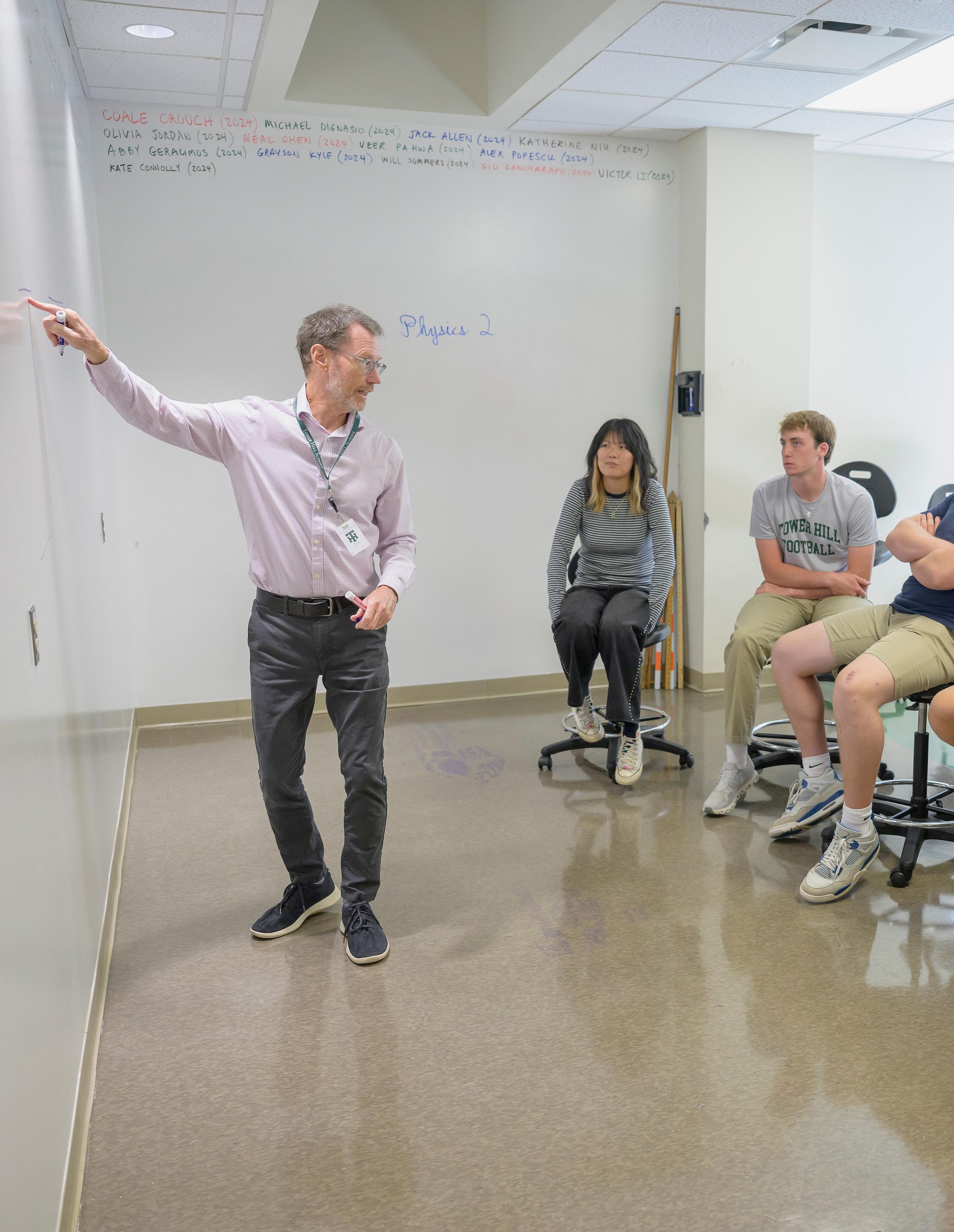
Biology, 4 CU, this course or Honors Biology is required for all students in grade 9
This introductory course focuses on the big ideas of biology and sets the stage for active inquiry and participation. Topics include basic biochemistry, cellular processes, heredity, evolution, and ecology. Traditional teaching and learning methods and lab activities will be combined with the latest technology to give students a strong background for further study in upper-level biology and environmental science courses. Throughout the year, students will learn to work independently and develop deeper analytical skills in order to demonstrate understanding of content on lab activities and assessments.
Chemistry, 4 CU, this course or Honors Chemistry is required for all students in grade 10, Biology or Honors Biology is a prerequisite Chemistry is the study of the structure and properties of matter. Throughout this course, students become familiar with scientific methods and laboratory techniques, as well as historical developments and current advances in the field. In the first semester, students explore modern atomic structure and periodicity, inorganic nomenclature, and chemical bonding. In the second semester, students explore all types of chemical reactions, the states of matter, and behavior of solutions. Students end the year with a unit on atmospheric chemistry and climate change, linking topics from the first and second semesters with current events and research in chemistry.
Physics, 4 CU, this course, Advanced Physics I, or four credits of Physics electives is required for all students in grade 11 unless the department recommends otherwise, Chemistry or Honors Chemistry is a prerequisite Physics is a full year course that introduces students to the underlying laws and concepts of the physical world. We cover a broad survey of topics to lay the foundation for science literacy and further study. Covered units include: Motion and Forces, Momentum, Energy, Gravitation and Orbital Motion, Electricity and Magnetism, Waves and Sound, Light and Optics, and Modern Physics. As a course, mathematical analysis is limited to algebra and right angle trigonometry. Students will also review ideas related to graphing, slope, direct, inverse, and inverse square relationships. The course uses an inquiry approach for each unit.
Honors Biology, 4 CU, with permission of the department
This accelerated course focuses on the big ideas of biology and sets the stage for active inquiry and participation. Topics include basic biochemistry, cellular processes, heredity, evolution, and ecology. In addition to the traditional teaching and learning methods, inquiry-based lab activities will give students a strong background for further study in upper-level biology courses. Assessments will largely center on application, analysis, and synthesis in order to demonstrate understanding of content. This course assumes a higher level of independent work from students that requires sufficient time to accomplish additional daily reading and homework assignments.
Honors Chemistry, 4 CU, Biology or Honors Biology is a prerequisite, with permission of the department
Students in this course explore the topics covered in Chemistry in more depth, with a focus on the use of algebraic and graphical interpretations of data. Through a variety of demonstrations, labs, and projects, students will explore topics ranging from atomic theory, chemical reactions, moles and stoichiometry, acid-base reactions, and chemical bonding. Additional topics include gases, thermochemistry, and nuclear chemistry. Lab work is highlighted, and students will learn to write a formal lab report and complete several inquiry-based projects over the course of the year. Due to the accelerated pace and increased emphasis on mathematical interpretation of data, students must allow sufficient time to complete homework assignments.
Each gives students the opportunity to take the corresponding AP exam.
Advanced Physics I, 4 CU, open to students in grades 11-12, with permission of the department This introductory course is equivalent to a first-semester college course in algebra-based physics. If you plan to be pre-med, nursing, OT, PT, or many other such majors, this course is for you. The course covers Newtonian mechanics, including rotational dynamics and angular momentum; work, energy, and power; and mechanical waves and sound. It also includes an introduction to electric circuits. This course will prepare students for the AP Physics I exam as well as the SAT Physics subject test.
Advanced Physics II, 4 CU, open to students in grades 11-12, Advanced Physics I or a comparable introductory physics course is a prerequisite, Precalculus is a corequisite. Advanced Physics II is a full-year algebra-based introductory college-level physics course. Students cultivate their understanding of physics through inquiry-based investigations as they explore these topics: fluids; thermodynamics; electrical force, field, and potential; electric circuits; magnetism and electromagnetic induction; geometric and physical optics; and quantum, atomic, and nuclear physics. This course requires that 25 percent of instructional time be spent in hands-on laboratory work, with an emphasis on inquiry-based investigations that provide students with opportunities to demonstrate the foundational physics principles and apply the science practices.
Advanced Biology, 4 CU, open to students in grades 11-12, Advanced Physics I or a comparable year of introductory physics is a corequisite for rising 11th graders, with permission of the department
This course is the equivalent of a first-year university level course in biology. Topics studied in detail include molecules and cells, heredity and evolution, and organisms and populations. Two main goals of the course are helping students develop a conceptual framework for modern biology and an appreciation of science as a process. The primary emphasis is the development of an understanding of concepts rather than memorizing terms and technical details. Essential to this conceptual understanding are a grasp of science as a process rather than as an accumulation of facts, personal experience in scientific inquiry, recognition of unifying themes that integrate the major topics of biology, and application of biological knowledge and critical thinking to environmental and social concerns. This course will prepare students for the AP exam as well as the SAT Biology subject test.
Advanced Chemistry, 4 CU, open to students in grades 11-12, Advanced Physics I or a comparable year of introductory physics is a corequisite for rising 11th graders, with permission of the department
This course is equivalent to a first-year general chemistry college course. Building on Honors Chemistry, students will study topics in greater depth and explore additional topics of equilibrium, acid-base chemistry, thermodynamics, electrochemistry, kinetics, and advanced models of chemical bonding. This course focuses heavily on laboratory exploration and introduces new lab techniques and data analysis tools. Students will continue to work on formal lab report writing and will produce graphical and mathematical analysis of data. Due to the advanced nature of the class, students should be prepared to spend considerable time outside of class on homework, problem sets, and lab reports.
Advanced Calculus-Based Physics, 4 CU, Advanced Calculus I, and Advanced Physics I are prerequisites, open to students in grade 12, with permission of the department
This course, which uses calculus throughout, is equivalent to a first-year college course in physics for scientists and engineers. The first half will focus on Newtonian mechanics (kinematics, energy, momentum, gravity, and oscillations), while the second half covers electricity and magnetism (Maxwell’s equations and some electric circuits). The course closely follows the AP Physics C curriculum in both mechanics and electricity and magnetism. More advanced topics will be covered after the AP exams.
Environmental Science (GS), 4 CU, open to students in grades 11-12
Environmental Science is a multidisciplinary class exploring topics from geology, biology, chemistry, geography, and ecology. It will focus on the current and past attitudes relating to the environment and natural resources and the interaction and complexities of humans’ interests. Students will discuss environmental issues such as climate change, natural resource use, and endangered species. Through identifying and analyzing natural and humanmade environmental problems, students will look for solutions to these issues through field projects, simulations, citizen science, and scholarly research.
Genetics, 2 CU, open to students in grades 11-12, 1st semester
Genetics is the scientific study of genes and heredity—of how certain qualities or traits are passed on as a result of changes in DNA sequence. Our genes carry information that affects our health, our appearance, and even our personality. Understanding genetics is increasingly important in our lives. This one-semester course will focus on heredity, DNA, and how it is passed on, populations, and how genetics can be applied to solving problems. Class activities will include lecture and discussion, the use of models, and hands-on experiments with biotechnology.
Marine Biology (GS), 2 CU, open to students in grades 11-12, 2nd semester
Marine Biology will introduce students to diverse marine environments, explore aquatic species’ adaptations, and discuss the impacts of humans on our oceans. This course discusses the chemical and physical properties of oceans, the ecological interactions between marine species, the evolution and diversity of marine life, and critical conservation issues. Emphasis will be placed on local conservation issues, but students will also explore global issues such as the effects of climate change on species migration patterns and coral reefs through citizen science and scholarly research.
Topics in Physics, 2 CU, open to students in grades 11-12, both semesters
The semester-long physics elective introduces students to fundamental physical principles that govern the behavior of matter and energy. Students build on prior knowledge of biology and chemistry to explore how physical laws apply across a range of systems and scales. Topics may include astrophysics, engineering challengings, robotics, and introductory modern physics concepts. Emphasis is placed on scientific inquiry, data analysis, problem-solving, and the use of models and evidence to explain physical phenomena. The course culminates in a student-designed investigation in which learners apply physics concepts to explore a question of interest.
Robotics, 2 CU, open to students in grades 11-12, 2nd semester
This course welcomes students to the world of robotics. Lessons will start with an understanding of basic robot build design, programming code, and electrical systems. Students will develop their skills with additional sensors and components to complete task challenges. The semester project challenges students to combine their lessons for a game of their own design. This course provides an introduction to the FIRST Robotics Tech Challenge competition.
Introduction to Computer Science, 1 CU, both semesters, this course is a prerequisite for the major computer science courses
Designed to appeal to a diverse audience, this semester course surveys several different areas of study in computer science. Demonstrations and hands-on assignments cover a wide variety of topics, including logic, binary numbers, hardware, operating systems, file management, programming, website development, internet protocols, information security, graphics, the limits of computing, and other current topics.
NOTE: Students who may be interested in taking the AP Computer Science Principles exam should take the following courses, preferably in this order: Introduction to Computer Science, Advanced Algorithms and Data Structures, and Advanced Computer Science.
Advanced Algorithms and Data Structures, 2 CU, 1st semester, Introduction to Computer Science or its equivalent is a prerequisite
The focus of this semester course will be on mastering the concepts introduced in Introduction to Computer Science. This course teaches students how to think algorithmically and solve problems efficiently. Topics include abstraction, algorithms, data structures, encapsulation, resource management, security, software engineering, and web programming. Students will learn by solving programming problems using C and JavaScript. Among the overarching goals of this course are to inspire students to explore unfamiliar waters, without fear of failure, create an intensive, shared experience, accessible to all students, and build community among students.
Advanced Computer Science, 2 CU, 2nd semester, Introduction to Computer Science or its equivalent is a prerequisite
Through a mix of technical instruction and discussion of case studies, this course empowers students to be informed contributors to technology-driven conversations. In addition, it prepares students to formulate technology-informed arguments and opinions about legal and ethical issues. Along the way, it equips students with hands-on experience with Python and SQL, languages via which they can mine data for answers themselves. Topics include algorithms, cloud computing, databases, networking, privacy, programming, scalability, security, and more, with a particular emphasis on understanding how the work programmers and developers do and the technological solutions they employ may impact business, legal, and ethical concerns. Students emerge from this course with first-hand appreciation of how it all works and all the more confident in the factors that should guide their decision-making. NOTE: Students with a strong background or interest in computer science would benefit from first taking Advanced Algorithms and Data Structures. Students who are not sure of their interest or aptitude may opt to take this course first.
Advanced Full-stack Web Development with Python and JavaScript, 2 CU, 1st semester, Advanced Algorithms and Data Structures, and Advanced Computer Science are prerequisites
This course picks up where the programming classes leave off, diving more deeply into the design and implementation of web apps with Python, JavaScript, and SQL, using frameworks like Django, React, and Bootstrap. Topics include database design, scalability, security, and user experience. Through hands-on projects, students learn to write and use APIs, create interactive UIs, and leverage cloud services like GitHub and Heroku. By semester’s end, students emerge with knowledge and experience in principles, languages, and tools that empower them to design and deploy applications on the Internet.
Advanced Artificial Intelligence with Python, 2 CU, 2nd semester, Advanced Algorithms and Data Structures, and Advanced Computer Science are prerequisites
This course explores the concepts and algorithms at the foundation of modern artificial intelligence, diving into the ideas that give rise to technologies like game-playing engines, handwriting recognition, and machine translation. Through hands-on projects, students gain exposure to the theory behind graph search algorithms, classification, optimization, reinforcement learning, and other topics in artificial intelligence and machine learning as they incorporate them into their own Python programs. By course’s end, students emerge with experience in libraries for machine learning as well as knowledge of artificial intelligence principles that enable them to design intelligent systems of their own.
Advanced Game Design, 2 CU, 1st semester, Advanced Algorithms and Data Structures, and Advanced Computer Science are prerequisites
This course picks up where the advanced programming course leaves off, focusing on the development of 2D and 3D interactive games. Students explore the design of such childhood games as Super Mario Bros., Legend of Zelda, and Portal in a quest to understand how video games themselves are implemented. Via lectures and hands-on projects, the course explores principles of 2D and 3D graphics, animation, sound, and collision detection using frameworks like Unity and LÖVE 2D, as well as languages like Lua and C#. By class’s end, students will have programmed several of their own games and gained a thorough understanding of the basics of game design and development.
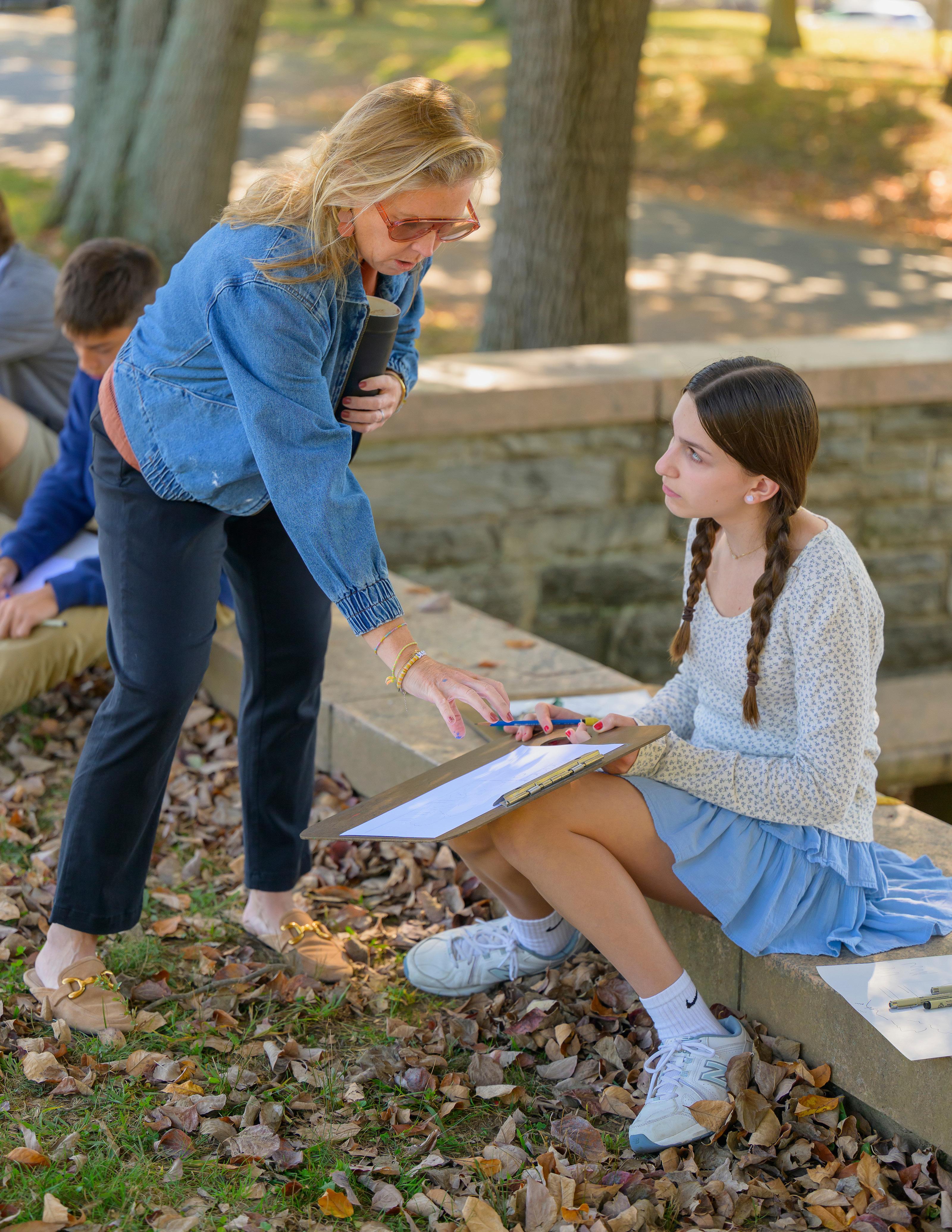
String Orchestra, 2 CU
Students explore various string ensemble literature appropriate to the instrumentation of the group. Students must have a string instrument in the violin family and have had three years experience or more. Attendance is required at all performances.
Chamber Ensemble, 1 CU, Open to orchestra and band members and qualifying pianists, with permission of the department
This group of accomplished instrumental musicians is chosen from the String Orchestra by the orchestra director. Other instrumentalists, particularly winds and piano, are invited to audition. Repertoire is selected from the vast array of advanced chamber music, including (but not limited to) string quartet, piano trio/quartet/quintet (piano with strings), and chamber orchestra. All students will be required to audition for membership in the class.
Concert Band, 2 CU
The concert band is a performing group comprised of wind and percussion instruments. The group performs music from a wide variety of styles and historical periods, from classical to contemporary, from show music to popular music. Attendance is required at all performances.
Jazz Band, 1 CU, open to Concert Band members only, with permission of the department
Students explore the music of American jazz standards from the early swing, big band, bebop, hard bop, and fusion eras. Students learn the building blocks of improvisation and appropriate approaches for each jazz style. Performances are scheduled for audiences during the year. Membership is contingent upon demonstrated musical success and positive citizenship in Concert Band, with approval of the band directors.
Concert Choir, 2 CU
In this course, designed for those who enjoy singing, students study choral music from classical to modern music, Broadway, and contemporary selections. Attendance is required at all performances.
Vocal Ensemble, 1 CU, open to Concert Choir members only, with permission of the department
This group of vocal musicians is chosen from the Concert Choir by the choral director and music department faculty. Chamber vocal compositions which require clarity for a few voices will comprise the repertoire. Students will be required to audition for membership in the class.
Guitar, 1 CU, students must provide their own guitar
This beginning course is structured to teach note reading, music theory, and guitar technique. Lessons incorporate both chord formations and strum patterns along with melody and picking techniques.
This course will explore the role that music has played in major social justice movements in America such as the Civil Rights, Anti-War, and Women’s Movements. We will also look into the role of music in the Me Too and Black Lives Matter Movements.
in
Historically, music has been a very male dominated field; however, there have always been women who have created and performed. This course will look at the role of female American musicians, across multiple genres from the 20th century to the present, and how they shaped and were shaped by the revolutionary change in the perception of women’s role in American society.
Music Theory, 2 CU, open to students in grades 11-12
The course is divided into the following units of study:
1. Basic harmonic theory: intervals, scales, chords, triads, root position and inversions, modes, four-part harmony, figured bass, linear harmonic continuity, non-harmonic tones, major and minor modes.
2. Ear training: development of basic ear training through audition and dictation studies.
3. Composition: basic harmonization of melody to bass, building to four-part writing.
4. Listening: form analysis and recognition for major forms through melodic and harmonic analysis.
5. Arranging: principles of transposition techniques, ranges of instruments, scoring for each instrument family, and arranging a piece for an entire band, jazz band, chorus, or orchestra.
Traditionally, Tower Hill students perform two major productions (fall and winter) during the school year.
Drama Foundations: Acting, 1 CU, 1st semester
Drama Foundations is designed to give the students an introduction to stage acting. Using the method of Practical Aesthetics, students will study monologues, open scenes, and scripted scene work, to develop character, continue to develop memorization skills, and grow in confidence on stage. This class will enhance a student’s appreciation for the art of theater.
Actors’ Workshop, 1 CU, 2nd semester, Drama Foundations: Acting is a prerequisite
This course is for students interested in fine tuning their acting skills. Focus is placed on ensemble scene work, body movement, and improvisation. By introducing different acting techniques, students are able to diversify their approach to the skills learned in Drama Foundations.
Continuing Studies in Acting, 1 CU, full year, Actors’ Workshop is a prerequisite, with permission of the department
The purpose of this class is to create a deeper dive into scene work, character development, and script analysis. Students will audition, rehearse, and perform a play by the end of the year. Providing a truly student-centered experience, curriculum will be motivated by ensemble interest and skill set. Emphasis will be placed on both collaborative and independent work outside of the classroom.
Production Design and Technology, 1 CU, 1st semester
This course trains students in the basic technical skills needed in theater and the entertainment industry. Students will gain knowledge of theatrical lighting, live audio, stagecraft, costuming, and woodworking. Students will help support productions in all three divisions and other school events during the semester they are enrolled in this class.
Theatrical Design and Technology Practicum, 1 CU, 2nd semester, Production Design and Technology is a prerequisite, with permission of the department
This course is for students interested in advancing their knowledge in the areas of scene design, lighting design, sound design, and costume design. Students will focus on the design process for shows that will be produced in the Upper School. All students, regardless of the theatrical discipline they choose to focus on, will meet in the same block, creating a ‘production meeting’ within every class period.
Movement for the Actor, 1 CU, 2nd semester
This class will introduce different styles of movement that are found in musical theater. Some numbers students will be exposed to are from legendary choreographers such as Gene Kelly (Singing in the Rain, An American in Paris), Jerome Robbins (West Side Story, On The Town), and Bob Fosse (Chicago, Pippin). Students will continue to grow as well rounded performers as they explore storytelling using their bodies in improvisation and choreographed movement.
Art Foundation, 1 CU, open to students in grade 9, pass/fail, both semesters
Art Foundations serves as an introductory “sampler” class that prepares students for the specialized visual arts electives available beginning in 10th grade. This fast-paced, hands-on course provides a unique workshop-feel experience in three distinct disciplines: Photography (2D), Ceramics, and Woodshop. Students explore essential skills, materials, and creative processes within each area while developing confidence and familiarity with the arts program as a whole.
Ceramics 1, 1 CU, open to students in grades 10-12, both semesters
Ceramics 1 is an introductory studio course in which students develop foundational skills in both hand-building and wheel-throwing. Through guided projects, students learn slab construction, introductory wheel techniques, surface design, and fundamental glazing processes while exploring the relationship between form, function, and creative expression. Emphasis is placed on safe studio practice, material exploration, and craftsmanship. By the end of the course, students will understand the full ceramic workflow—from wet clay to fired work—and will produce a portfolio that reflects technical growth and emerging personal style.
Ceramics 2, 1 CU, Ceramics 1 is a prerequisite, both semesters
Ceramics 2 builds on the skills developed in Ceramics 1, guiding students toward greater refinement and independence. Students expand their wheel-throwing skills through a wider range of vessel forms and more advanced trimming, while hand-building projects emphasize complex slab work and multipart construction. New surface design approaches—including sgraffito, underglazes, and overglaze techniques—deepen students’ capacity for detail and expression. This course strengthens technical skill, encourages individual problemsolving, and prepares students for advanced-level ceramic study.
Ceramics 3, 1 CU, Ceramics 2 is a prerequisite, both semesters
Ceramics 3 is an advanced studio course designed for students ready to refine their craftsmanship and develop a strong personal voice in ceramic art. Students continue to advance wheel-throwing and hand-building with a heightened focus on sculptural form, conceptual development, and expressive surface treatment. A key project requires students to produce a matching set of four vessels, demonstrating mastery of consistency in form, scale, and wall thickness. The course emphasizes independent project planning, thoughtful material choices, and sophisticated compositional decision-making.
Ceramics 4, 1 CU, Ceramics 3 is a prerequisite, both semesters
Ceramics 4 is the most advanced course in the ceramics sequence and supports students pursuing highly independent, complex, and ambitious ceramic work. Students propose, design, and execute projects that reflect individual artistic goals while refining advanced techniques such as fitted lids, functional attachments, multipart construction, and relief surfaces. Emphasis is placed on creative autonomy, technical excellence, and the development of a personal artistic direction. Students completing Ceramics 4 demonstrate readiness for portfolio development and professional-level studio practice.
and Painting, 1 CU, open to students in grades 10-12, 1st semester
Drawing & Painting invites students to develop foundational and intermediate 2D skills through a sequence of structured, skill-building projects. Students complete a monochromatic value painting that strengthens understanding of light and form, engage in a wide range of observational and expressive drawing challenges, and conclude with a color exploration in either watercolor or acrylic. Emphasis is placed on material control, visual decision-making, and the start of a cohesive portfolio. By the end of the semester, students demonstrate increased technical confidence and creative growth.
Introduction to Sculpture and Mixed Media, 1 CU, open to students in grades 10-12, 2nd semester
Introduction to Sculpture and Mixed Media is an entry-level course that introduces students to threedimensional thinking through traditional sculptural materials such as paper mâché, plaster, wire, and mixed media. Students explore the fundamentals of form, texture, and structure while producing both representational and abstract works. Key projects include portrait collagraphs that investigate relief and surface translation, as well as molded forms created through introductory plaster-casting processes. Emphasis is placed on safe studio practices, material experimentation, and the development of an emerging creative voice that prepares students for upper-level 3D coursework.
Woodworking 1, 1 CU, open to students in grades 10-12, both semesters
Woodworking 1 introduces students to foundational 3D design and woodworking practices through a series of structured projects using a range of traditional tools. Students learn the properties of wood as both a structural and expressive material while gaining proficiency with hand tools, the band saw, and the radial arm saw. Emphasis is placed on safe practices, craftsmanship, and understanding the design process from concept to final presentation. By the end of the course, students will have completed several teacher-guided projects that demonstrate increasing technical skill.
Woodworking 2, 1 CU, Woodworking 1 is a prerequisite, both semesters
Woodworking 2 expands upon the skills learned in Woodworking 1 and offers students greater autonomy in selecting and designing their projects. Students refine foundational techniques while being introduced to additional tools such as the router and table saw. The course places increased emphasis on personal expression, traditional joinery, thoughtful material selection, and the development of sound structural design. Students complete self-directed projects within course parameters, demonstrating both creativity and technical growth.
Woodworking 3, 1 CU, Woodworking 2 is a prerequisite, both semesters
Woodworking 3 is designed for students eager to explore the craft at a more advanced level. Students research contemporary and historical woodworking masters, applying this knowledge to independent studio work that challenges their technical and conceptual abilities. Past projects have included sculptural forms, furniture prototypes, and large-scale constructions such as canoes. The course supports individual exploration, sustained craftsmanship, and increasingly ambitious project planning.
Woodworking 4, 1 CU, Woodworking 3 is a prerequisite, both semesters
Woodworking 4 is intended for highly motivated students who have demonstrated commitment and skill across multiple levels of the woodworking sequence. Students pursue long-term, large-scale, or advanced collaborative projects that require substantial planning and precision. The course emphasizes mastery of technique, independent design, and professional standards of craftsmanship.
Photography 1, 1 CU, open to students in grades 10-12, both semesters
Photography 1 introduces students to both digital and analog photography through a series of structured technical and creative projects. Students learn DSLR camera operation, image editing in Photoshop, and foundational approaches to composition, lighting, and visual communication. They also work with 35mm blackand-white film, gaining experience in darkroom processes including developing negatives and making prints. Coursework incorporates graphic design, printmaking elements, historical and contemporary photographic practices, artist research, and a museum visit. The course builds essential visual literacy and establishes strong technical foundations in multiple photographic media.
Photography 2, 1 CU, Photography 1 is a prerequisite, both semesters
Photography 2 builds on the foundations of Photography 1 and encourages students to pursue increasingly independent, concept-driven projects. Through deeper engagement with digital editing, creative sequencing, and experimental processes, students explore topics such as graphic design, HDR photography, surrealist image layering, and narrative composition. Emphasis is placed on developing technical confidence, conceptual clarity, and personal artistic direction.
Photography 3, 1 CU, Photography 2 is a prerequisite, both semesters
Photography III supports students committed to sustained independent work. Students develop individualized projects rooted in research and inquiry while benefiting from the structure of the shared studio environment. Past work has included documentary photography, video production, and introductory 3D design explorations. The course emphasizes discipline, experimentation, and the development of a cohesive body of work.
Photography 4, 1 CU, Photography 3 is a prerequisite, both semesters
Photography 4 is designed for advanced students preparing a portfolio. Students engage in self-directed projects that demonstrate technical mastery, conceptual depth, and personal voice. This course supports pathways toward gallery exhibitions, publication, and real-world photographic opportunities.
2D Studio Art: Expression and Design, 1 CU, 1st Semester, open to students in grades 11-12, Drawing and Painting OR Introduction to Sculpture and Mixed Media are prerequisites; with permission of the department
2D Studio Art is an upper-level continuation of two-dimensional practice that deepens students’ expressive approaches to drawing and painting while reinforcing the elements and principles of design. Building on prior coursework, the class balances structured units with opportunities for independent artistic decision-making and personal voice. Students develop advanced spatial thinking through a deep-interior color composition and create choice-based personal works that reflect authentic artistic direction. Throughout the semester, students refine technical skill, experiment with media, and cultivate a mature visual vocabulary.
3D Studio Art: Exploring Form, 1 CU, 2nd Semester, open to students in grades 11-12, Drawing and Painting OR Introduction to Sculpture and Mixed Media are prerequisites; with permission of the department
3D Studio Art expands students’ sculptural skills beyond the introductory level through sustained work with plaster, wire, paper mâché, and mixed media. Students develop an advanced understanding of volume, structure, and contemporary form while engaging in technically and conceptually challenging projects. Structured units include abstract 3D line constructions and expressive paper mâché clay animal heads, emphasizing planning, modeling, and surface development. As the course progresses, students move toward increasingly independent choices in materials, process, and concept, preparing them for the autonomy required in Advanced Studio Art.
Advanced Studio Art, 4 CU, open to students in grade 12, full year. Prerequisites: Any combination of 3 total courses from Drawing and Painting, Introduction to Sculpture and Mixed Media, 2D Studio Art, or 3D Studio Art
Advanced Studio Art provides motivated seniors with substantial independence as they develop a personal artistic vision through sustained work in painting and sculpture. Students engage in rigorous self-directed projects, demonstrating advanced levels of focus, conceptual depth, and technical skill. The course emphasizes portfolio development, sophisticated material experimentation, and the cultivation of an individual artistic voice. Students also design and present a culminating installation for Evening of the Arts as a capstone to their yearlong studio experience.
Yearbook Production, 1 CU, 1st semester, pass/fail
Join this semester of the yearbook staff if you want to see your work professionally printed and put into the hands of your peers at the end of the school year.
This hands-on course will enable students to learn journalistic and graphic design skills to produce the Evergreen yearbook. The fall team will focus on the construction of the yearbook that will be published in the spring. Students will learn digital publishing by using a web-based platform to enhance photographs and create professional layouts. A willingness to engage with Hillers at every division level is critical in this course as we use interviewing and survey collection to enhance the personal focus of the book. Yearbook staff members will use time provided in class and will work independently on assignments online.
Yearbook Design, 1 CU, 2nd semester, pass/fail
Join this semester of the yearbook staff if you want to be responsible for the creative vision and aesthetics of the book that will be developed in the following fall semester. This course is for the student who wants to look ahead, particularly sophomores and juniors who want to shape the look of the yearbook for their upperclassmen years.
Spring semester yearbook students will also build design skills, similar to the Yearbook Production class; in addition, this group will take leading roles in planning and organizing the content of the upcoming school yearbook. Students will develop an eye for the aesthetics of layout design, and discover how the editing process plays a role in production decisions. Students will be graded on a portfolio of work they produce during the year.
Yearbook Editor, 2 CU, pass/fail
This full-year course will be taken by the student(s) chosen as the editor(s) for the yearbook. In this course, students assume production leadership for the yearbook and develop an in-depth understanding of the publication process. Editors focus on coordinating coverage of pages and content, leaving no aspect of Hiller life uncovered. The following potential editorial roles are available for students who are interested in taking on more responsibility and are capable of peer leadership: Chief Editor, Senior Editor, Junior Editor, Sports Editor, and Photo Editor.
The Social Emotional Learning (SEL) Department is dedicated to the teaching of core social and emotional competencies, including self-awareness, self management, social awareness, relationship skills, and responsible decision making. SELF courses equip students with the essential information necessary to achieve and maintain sound health and wellbeing, to move efficiently through the world, to maintain empathy and perspective in social interactions, and to make informed decisions as they grow.
SELF 9 - Ninth Grade Seminar: Introduction to the Upper School Experience, 1 CU, required of all students in grade 9, pass/fail
The purpose of Ninth Grade SELF Seminar is to help students acclimate to the Upper School community and to learn about themselves as they move through their first year of high school and beyond. It also provides students with a space to process their freshman year experiences as they occur. Students participate in large and small group lessons that allow them the opportunity to build community and foster individual relationships while being mentored by twelfth grade Peer Leaders. The course alternates between teacher directed lessons and sessions mediated by the peer leaders. Topics addressed include, but are not limited to, coping strategies, study skills, and drug and alcohol awareness, with certain sessions determined by the dynamic needs of the group.
SELF 10 - Tenth Grade SELF Seminar: Health & Decision Education, 1 CU, required of all students in grade 10, pass/fail
In this seminar, students focus on the many aspects of wellness, as they gain skills for healthy decision-making and learn how their choices intersect with their identities and values. Students are presented with research and factual content while they simultaneously practice open dialogue to deepen their understanding of others in the school community. The seminar features a combination of multiple teaching and learning modalities, which are leveraged to broaden students’ self- and social-awareness, improve their relationship skills, and inform their healthy decision making. Topics discussed include, but are not limited to, the following: conflict resolution, healthy bodies, technology use, addiction, substance use, peer pressure, and consent.
Peer Leadership, 1 CU, open to students in grade 12, pass/fail
Peer Leadership is a program in which 12th grade students teach and lead 9th grade students. The purpose of the program is to provide seniors with a leadership opportunity while serving as a support for freshmen as they navigate their early high school experience. Topics include, but are not limited to, social skills, time and stress management, friendships, social issues, resilience, self-care, goal setting, decision making (in general and around topics such as sexual activity and drug/alcohol use), and self-awareness. This full-year course meets twice per cycle. One class is a planning and learning period, while the other class involves meeting with the freshmen group to which each peer leader has been assigned. Juniors must apply for the program during the spring course selection process.
Delaware Driver Education, 1 CU, open to Delaware residents in grade 10, both semesters This semester course is a State of Delaware Department of Education approved driver’s education course. It consists of 30 hours of classroom instruction as well as 14 hours of separately scheduled driving instruction and observation. Semester placement is largely determined by the student’s birthday.
Social Innovators Program (GS), 1 CU, open to students in grades 10-12, both semesters, pass/ fail
The Social Innovators Program is a partnership program with Schoolyard Ventures and the University of Pennsylvania’s School of Social Policy and Practice. Schoolyard Ventures is an organization that develops university-level, real-world learning opportunities for ambitious high school students. It believes that developing an entrepreneurial mindset while in high school gives students substantive differentiation from their peers, better insight into their future educational and career opportunities, and more grit and resilience to accomplish their goals. The Social Innovators Program allows students to learn about entrepreneurship and experience it first-hand while earning a Certificate in Social Entrepreneurship from the University of Pennsylvania. During the program, students learn how to launch ventures of their own that create value and have a positive impact on society.
Definition of Independent Study: Occasionally a student will exhaust the curricular offerings in a given discipline or will wish to pursue an academic interest that falls outside of the curriculum. In these cases, the student may propose to conduct an independent study for credit. Such studies must be academic in nature and may include research, writing, reading, intensive study in performing or visual arts, and other similar endeavors. The studies are self-directed and self-motivated, but they occur under the guidance of a supervising teacher and the appropriate Department Chair. Supervising teachers and Chairs are responsible for assigning a grade (pass/fail) for the study and documenting the student’s progress toward the work that the student has proposed, especially whether the student has met expectations around approved meeting times per cycle. Independent studies may not replace courses offered in the Tower Hill curriculum.
Course Credit and Reporting:
Independent studies are semester-long, one-credit, pass/fail courses conducted during the school year and are reflected on a student’s transcript with the course title “Independent Study” followed by the department sponsoring the study (e.g., “Independent Study in History”). No additional titling, leveling, or credentialing is appended. Independent studies may not count toward graduation requirements, nor can they count toward a student’s total required number of credits or classes in a given semester. Independent studies may be dropped from a student’s schedule at any time at the discretion of the student without penalty or notation (i.e., without a WP or WF being marked on the transcript).
Proposal Process:
Students are encouraged to apply for independent study approval by the end of the semester that precedes the one for which the study is proposed; however, students may apply as late as two weeks after the start of the semester for which the study is proposed. The Department Chairs and Upper School Administration will consider the proposal. With this group’s approval, the Assistant Head of Upper School will add the course to the student’s schedule.
Proposal Content:
An independent study proposal must contain the following elements:
• a completed cover sheet;
• a timeline that specifies when student-supervising teacher meetings will occur and how they will be used;*
• a description of the work that the student will complete independently and the skills that the study will cultivate;
• a description of the product that the student will create and the methods that the student will use to create this product;
• a list of scholarly sources that the student will use while engaged in the project; and
• a proposal regarding how, when, and where the student will present the results, product, or completion of the project (i.e., at assembly, to the Upper School Programming Group, to a group of specific faculty and/or peers, or in another manner of the student’s design).
*Please note that most one-semester, one-credit courses at Tower Hill require a minimum of 30 hours of class time per semester; interested students should consider a minimum of two meetings per cycle and should be aiming to document how their independent work outside of those meetings combines with the meetings to approach 30 hours of work overall.
Ultimately, earning credit for the study relies upon completion of the study as proposed and approved, as determined by the Head of Upper School in consultation with the supervising teacher and appropriate Department Chair.
Tower Hill’s Global Scholar Certificate Program provides Upper School students with opportunities to explore global dynamics, leadership, and cultural growth. Participating students complete academic coursework related to global inquiry, educational travel, extra-curricular enrichment, and service with a global focus. Seniors in the program produce a research portfolio related to a global issue of personal interest.
In addition to the academic requirements, students:
• Participate in an independent study or enrichment opportunity, such as Model United Nations
• Contribute to a service learning project or organization, such as tutoring in another language, volunteering where language skills are a necessary component of the task, or volunteering with an organization that is global in nature; and
• Participate in an international exchange or travel experience sponsored by Tower Hill, with most recent offerings to Australia, France, Italy, Puerto Rico, and Uruguay.
Throughout their senior year, students complete a culminating portfolio focusing on a sustainable solution to a global development challenge that includes research, self-reflection, and an oral presentation. The Director of Global Initiatives, the Global Studies Coordinator, and a panel of faculty and staff evaluate each portfolio.
The senior year Global Scholars Research Portfolio now incorporates a course that aligns with Tower Hill’s strategic goal to prioritize the development of original research skills. Co-led by our Upper School Global Initiatives Coordinator and the Director of Academic Research, the course will focus on critical, college-level skills including inquiry development, information evaluation, and research ethics. Students in the course will also learn how to create and present a professional, academic poster that translates their research for a general audience at a formal symposium event. This course is only available to students in the class of 2027 who are already pursuing the Global Scholars Certificate. This is a two credit course that counts for a Humanities requirement. Please see the full description below.
Participating students receive a global scholar certificate and a notation on their transcripts. To apply, students must be interviewed and explain why they are interested in the program, what they hope to learn, and what in their opinion makes a person a global citizen. Interested students should contact Mr. Rapp, Director of Global Initiatives, or Ms. Pallant, Global Studies Coordinator, for more information.
We typically receive information about global issues primarily through the work of content creators, journalists, and researchers. This capstone course for senior Global Scholars puts students in the driver’s seat and supports them through the process of their own deep investigation of a global issue. Students will be supported through the creation of a unique research question, the process of identifying and interviewing experts on that topic, and in analyzing, synthesizing, and drawing evidence-based conclusions from their investigation. Students will have the opportunity to discuss research ethics and culturally responsive research practices, data management, and in situating one’s research within the body of existing knowledge. The course culminates in the production of a formal paper accompanied by a final, professional poster presentation.