T P L I FO OR
T O U S I B A H M E D
O SELECTED WORKS
CONTACT
+88 01624 941 942
ahmed.tousib.architect@ gmail.com
DATE OF BIRTH 01 09 1992
NATIONALITY
Bangladeshi
LANGUAGE
Bangla I English
SOFTWARE SKILLS
AutoCAD
Sketch up V
Adobe Photoshop
Capcut Pro
EDUCATION
M E
B.ARCH, Associate Member, I.A.B (AA-751)
Bachelor of Architecture (B.ARCH)
BRAC University, Dhaka
CGPA: 3.0
Higher Secondary Certificate (H.S.C.)
Dhaka Division
Dhaka College, Dhaka
GPA-5.00 (with 4th subject)
Secondary School Certificate (S.S.C)
Dhaka Division
St. Gregory’s High School & College, Dhaka GPA-5.00 (without 4th subject)
PROFESSIONAL EXPERIENCE
Jan 2019- Feb 2020
Jan 2021- July 2024
Mar 2020- Feb 2023 Oct 2024- Present
Project Architect
Chinton Architects Road 73, Gulshan-2, Dhaka
Head of Design
Studio Offbeat
Lead Architect
Subcontract Design and Construction Work (Bproperty-BestinBrands-Sundora)
Architect
Ventura Properties Ltd.
CWN(C)-8/B, Gulshan Ave, Dhaka 1212
Architecture cannot be neutral—it either liberates or it legitimizes.
Prototype for Intellectual Survival
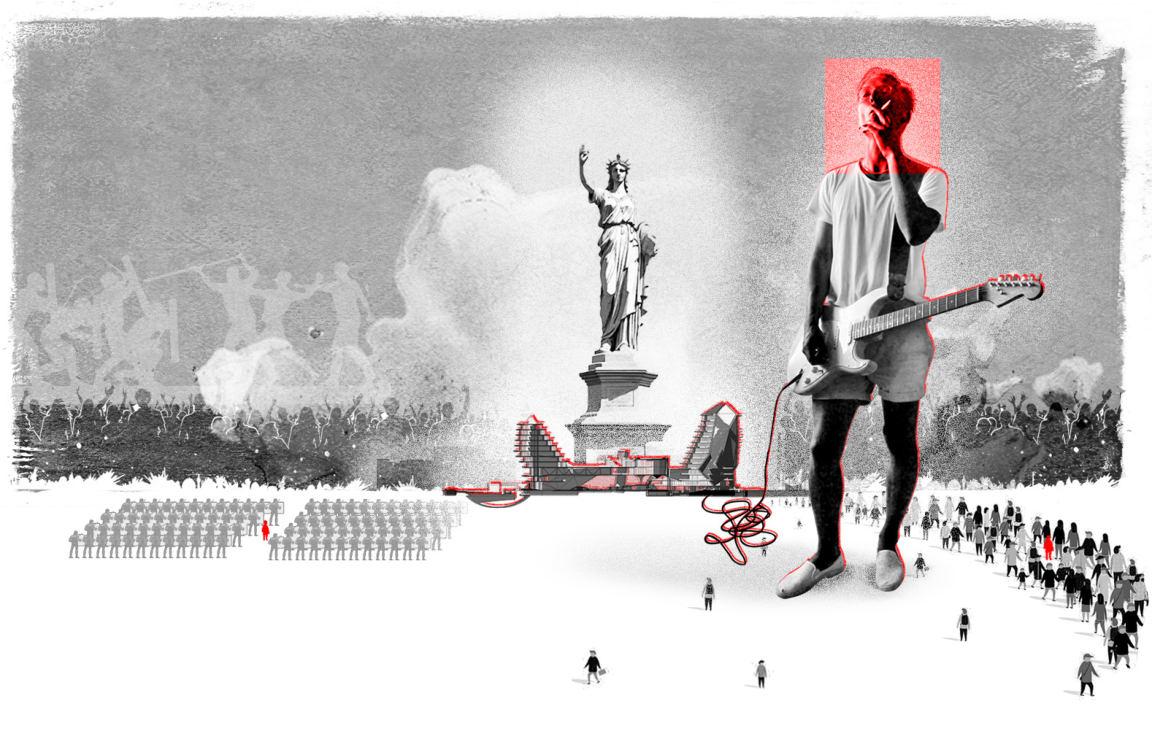
Architecture today is either complicit or critical. In Bangladesh, it had become complicit—decorating a democracy that no longer existed. The youth, once the engine of progress, were reduced to spectators of propaganda. The city became a landscape of fear, curated by the regime’s militia.
So what is the role of architecture when language collapses?
AMI-E-Bangladesh attempts an answer. It is not
a building—it’s a system, an interface between power and the powerless.
It uses spatial strategy as political encryption: openness as resistance, porosity as protest.
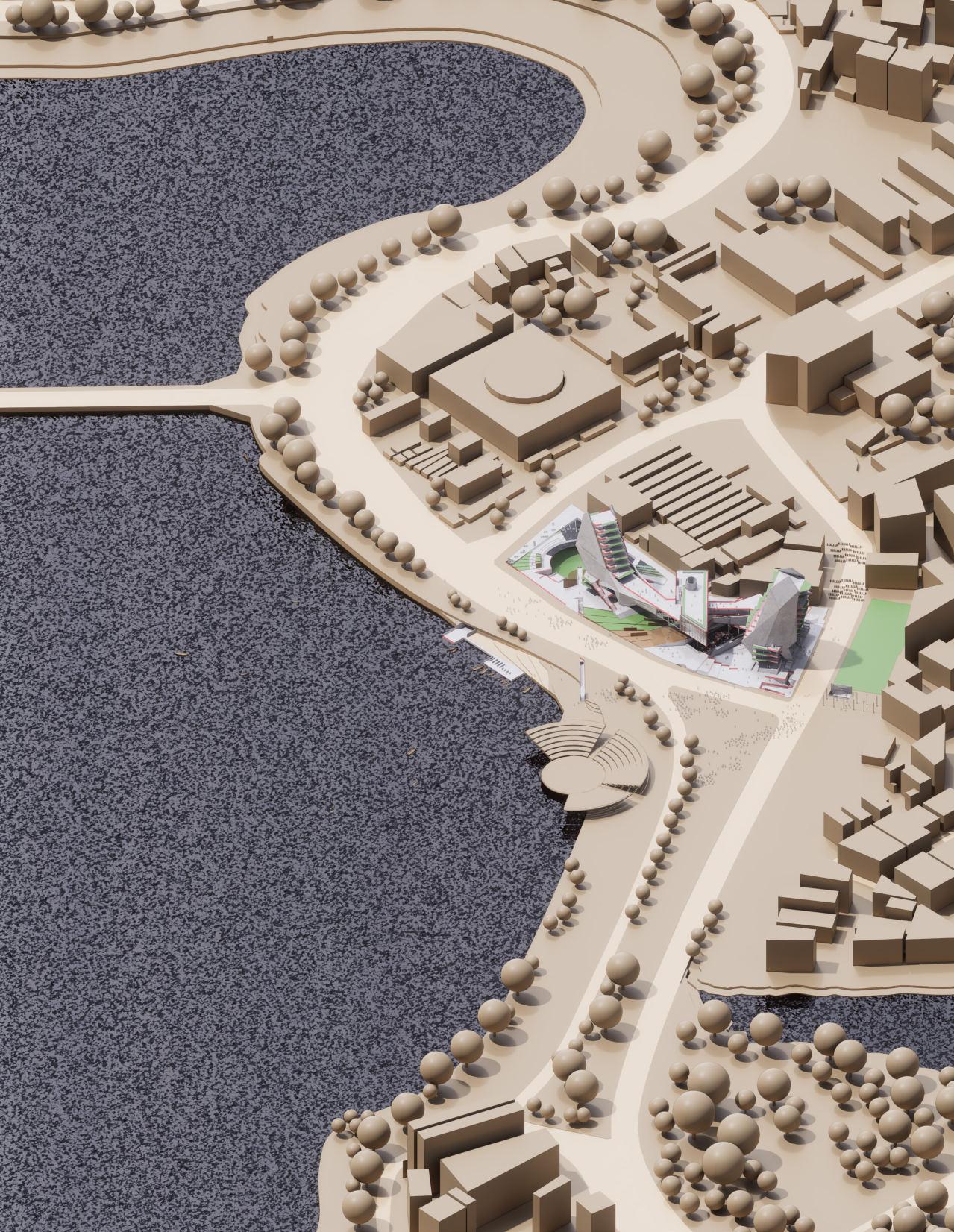
Placed in the urban core, it hijacks the logic of surveillance and turns it into a stage for visibility. It merges the language of monumentality with the informality of the street. Its plaza acts as a social motherboard—a platform where debates,
dissent, and digital dialogues converge.
This is not utopia; it is urban realism hacked by architecture.
If governments can weaponize space to silence the youth, architects can weaponize it back—to amplify them.
I’m not interested in beauty as decoration. I’m interested in beauty as a form of freedom.
Dhaka, Youth, and the Architecture of Agency
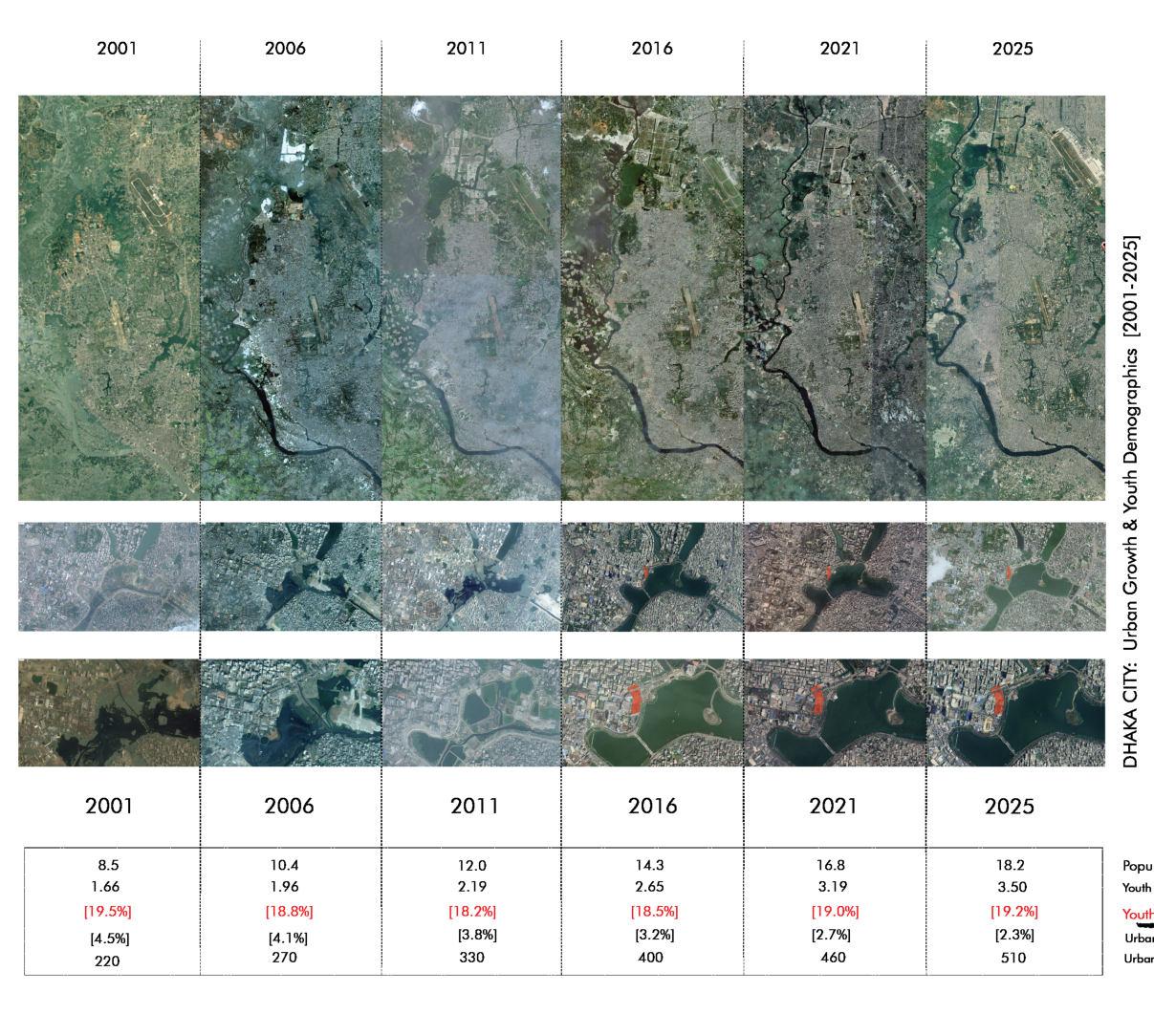
Dhaka’s twenty-first-century expansion is not only a spatial phenomenon but a socialreorientationdrivenbyoneofthe world’s most youth-dense urban populations. As the city accelerates along vectors of migration, digital globalization, and informal innovation, young people have emerged as Dhaka’s most
consequential civic actors—shaping cultural production, entrepreneurial ecosystems, and, increasingly, the sociopolitical climate. Their voices dominate electoral shifts, online discourse, and collective mobilizations, revealing a generation that is both empowered and precariously positioned.
Yet rapid urbanization has produced a paradox: while youth fuel the city’s momentum, the urban fabric seldom reciprocates with structures that support their emotional resilience, civic learning, and long-term purpose. Dense neighbourhoods, competitive academic pressures, economic uncertainty, and a
scarcity of restorative public space have intensified anxieties that manifest as burnout, alienation, and disconnection.
A Youth Enlightened Centre responds to this critical gap not as a building, but as urban infrastructure for empowerment. Conceived at the intersection of mental-healthscience,culturalprogramming,
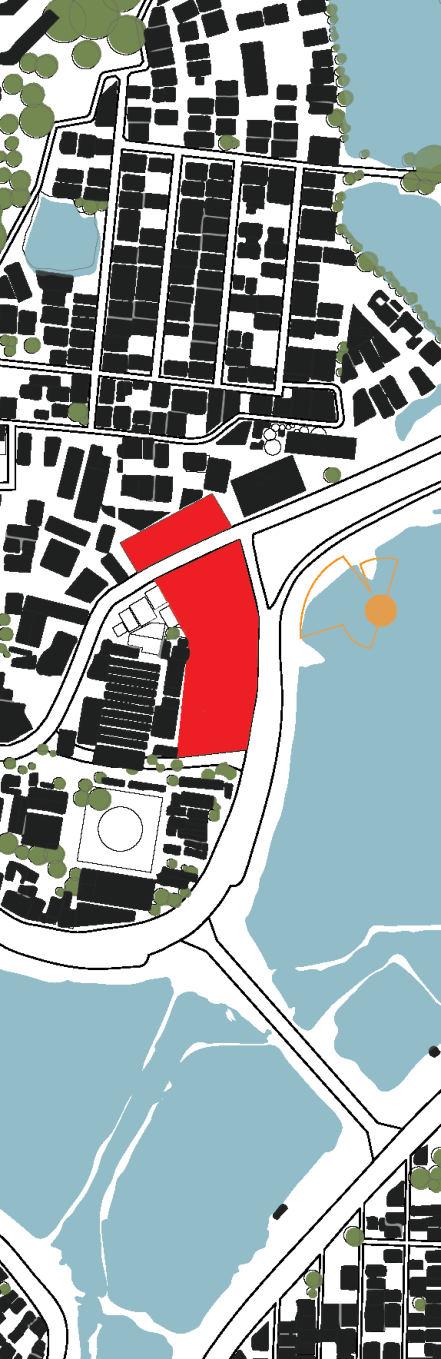
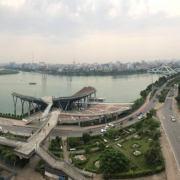
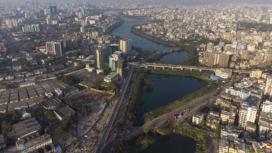
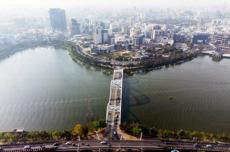
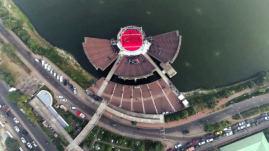
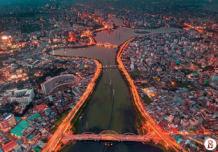
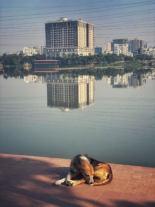
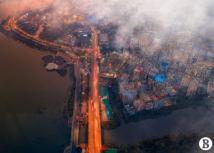
Hatirjheel, Dhaka
It’s 2016, For years now, the youth can’t practice their freedom of speech. In tea stalls or in some random gossips people became fearful to even express their mind, people feared to express their views on political decisions or everyday news in general. Because the government’s militia groups were ruling every streets. They were everywhere. Everywhere? Everywhere! The people, who were supposed to be the sole owner of the country felt like mere tenants who were being oppressed by a heinious landlord. We lost the right to vote cause all of it were rigged, the youths were losing their voices the one’s who dared to talk were terminated, kidnapped or jailedand were tagged as terrorists/ extremeists. They tracked everything!
The youth were very much devided and have become silent spectators of all the questionable actions of the fascist regime!
They needed a place, a platform and a piece of achitecture that protects them. A built form and a breathing space, so to speak, which is both iconic and instigates fear on the fascist ‘democratic government’ regime. A building no short of a sculpture. A place for practicing every way of thinking, for everbody, despite the adversities of belief systems, educationaal back-ground, income, social status and versatility of school of thoughts. A saaviour of an architectural form, so radical yet parrenting that it protects the rights of the youth,. Thus protecting the future of a nation.
Architecture to the rescue! Rescue the youth’s mind, Rescue the Future of the land! Make a free thinker’s paradise.
Where should the site be?
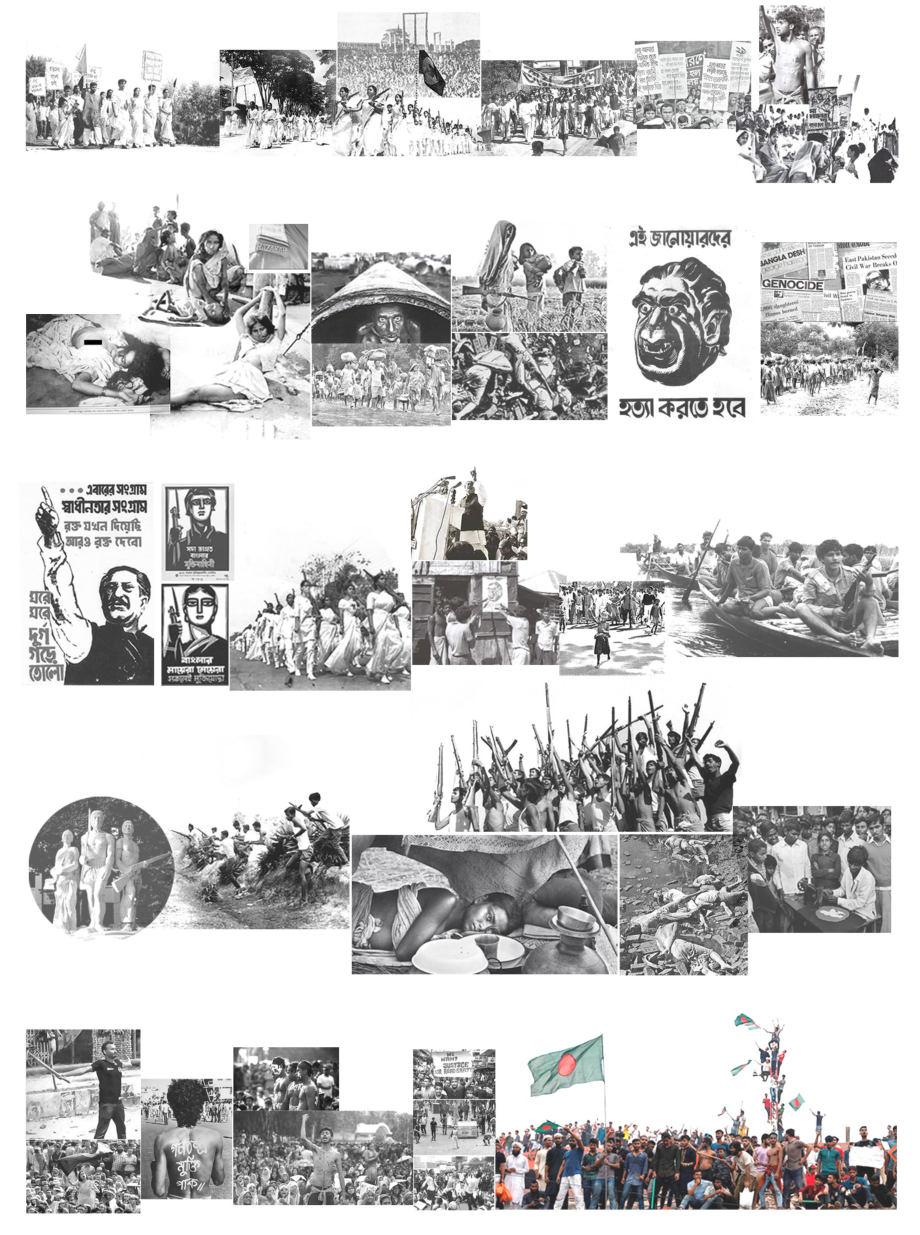
In a site which has political traction, frWom where the youth can propagate back, a space which allows everyone in and get enlightened in it’s plaza. A site which resembles the common culture of the streets, an aarchitecture which isn’t an alien standing in the city but a leader who screams for freedom in the city’s vertical lines. AA revolution freezed in time to commemorate the martyrs of the 1971, and now we have to type in sadly, The martyrs of 2024, thousands of students who had ousted the fascistat last but at the expense of their young lives!
A building ‘of the youth, for the youth and by the youth’. The antivirus of Fascism. In the plaza youths talk about spaace-time, quantum physics, about islam, about hinduism,jewism, atheism. A space where the youth can see, hear, touch, smell and taste every perspective of the man, the life aand the universe!
But will it have fire stairs? asked the jury! Do you know BNBC (Bangladesh Nationaal Building Code) ?
My mom always told me, this building is like a box of chocolates, you can never know what you gonna get in it!