Stephen Lewis (1937–2026): A global humanitarian, a local ally
TORONTOHYE—Stephen Henry Lewis, the former Ontario NDP leader and Canadian Ambassador to the United Nations (UN), died in Toronto on March 31, 2026, at the age of 88.
Lewis spent his final days at Kensington Hospice, ending a life defined by a relentless insistence on human dignity. While he is celebrated globally for his work as the UN Special Envoy for HIV/AIDS in Africa and his fight against apartheid, the Armenian-Canadian community remembers him as a rare political leader who chose truth over ‘diplomatic silence’ when it mattered most.
In 1980, the Armenian community in Toronto gathered to mark the 65th anniversary of the Armenian Genocide. At that time, the word 'Genocide' was often avoided in official circles to sidestep political friction. Stephen Lewis, having recently moved on from his role as leader of the Ontario New Democratic Party (NDP), chose a different path. He delivered a keynote that cut through the era's hesitation, asserting that the world's failure to recognize the events of 1915 was an ongoing injustice. In a stirring address, he argued that historical recognition is a prerequisite for collective healing, stating:
“Communities need an acknowledgment of what happened in the past. You can’t deny, you can’t impugn, you can’t eradicate the past... if it isn’t acknowledged, then it feels like a kind of psychological and cultural amputation. It was true for the Jews. It must be true for the Armenians.”
His advocacy was grounded in rigorous research and a refusal to compromise on historical facts. This principled stance made him the first recipient of the Outstanding Canadian Award in 1985, presented by the Armenian Community Centre of Toronto. Former Member of Provincial Parliament (MPP) and Speaker of the Legislative Assembly of Ontario, David Warner, who co-sponsored the resolution recognizing the Genocide in the Legislature, recalled the weight of Lewis’s influence back in 2020. Reflecting on the 1980 commemoration, Warner noted that Lewis’s “eloquence and passion” galvanized other politicians to act. “He had researched the topic even more thoroughly than I had,” Warner stated, crediting Lewis with providing the moral momentum needed to secure recognition for the cause of justice. Beyond the podium, Lewis’s commitment extended into the Canadian classroom. In 2008, he was a lead signatory on a high-profile call to action supporting the Toronto District School Board’s (TDSB) decision to establish a formal genocide curriculum. Rejecting “realpolitik expediency,” Lewis fought to ensure the Armenian Genocide was taught alongside the Holocaust and the Rwandan Genocide. His efforts were instrumental in the creation of the Grade 11 course Genocide: Historical and Contemporary Implications, ensuring that future generations would study the “horrendous consequences of racism, intolerance and prejudice” through a lens of historical truth.
Lewis’s political life began in 1963 when he was elected to the Ontario Legislature at age 26. He led the Ontario NDP from 1970 to 1978, elevating the party to Official Opposition status in 1975. After provincial politics, his influence expanded to the global stage. As Canada’s Ambassador to the UN (1984-1988), he worked with Prime Minister Brian Mulroney to denounce apartheid in South Africa. Later, as the UN Special Envoy for HIV/AIDS in Africa, he became a fierce critic of the World Bank and G8, accusing global powers of failing to meet their responsibilities to the continent.
His commitment to the Armenian people remained active throughout the years. During the 2020 Artsakh War, Lewis spoke out against the existential threat facing Armenians, once again demanding that the world confront history rather than merely observe it. The Armenian National Committee of Canada (ANCC) described Lewis as a “titan of Canadian public life” and a “cherished friend” whose role in Genocide recognition was pivotal.
Lewis’s death occurred just two days after his son, Avi Lewis, was elected leader of the federal New Democratic Party. He is survived by his wife, Michele Landsberg; his children, Ilana, Jenny, and Avi; his siblings, Janet, Michael, and Nina; and four grandsons. In a statement, his family noted that he battled his final illness with the same “indomitable energy” he brought to his lifelong work. For the Armenian community, that energy leaves a legacy of recognition and a reminder that silence is
never an option for a person of conscience.
A public memorial to honour the life and legacy of Stephen Lewis was held on Sunday, April 26, 2026, from 11 a.m. to 12:30 p.m. at the Chrysalis Theatre at Toronto Metropolitan University (43 Gerrard St. E, Toronto).
In honour of Lewis’s lifelong commitment to justice, his family suggests that donations be directed to the The Stephen Lewis Foundation. ֍
3. Աշխարհագրական, 4. Մամուլ եւ
5. Պարարուեստ եւ ձեռարուեստ, 6. Լեզու եւ գիր, 7. Գրականութիւն, 8. Երգ եւ երաժշտութիւն, 9. Կրօնական, 10.
• Համազգայինի գրադարան-գրատարածի յանձնախումբէն՝ Նայիրի
Համբարեան, Լիւսի Մանկասարեան, Սօսի Թաշճեան
• Համազգայինի «Գուսան» երգչախումբէն՝ Ռիթա Խանջարեան, Նարէ Մարտոյեան, Աննա Մխիթարեան
• ՀՅԴ ԳԵՄ «Ս. Զաւարեան» մասնաճիւղէն Մոսիկ Տանատեան, Րաֆֆի Աբէլ , Նարինէ Արթին
• ՀՕՄ-ի ամէնօրեայ վարժարանէն՝ Լարա Տէր Մինասեան, Անի Հրեշտակեան, Արաքսիա Թէլեան
• Համազգայինի «Էրեբունի» պարախումբէն՝ Հայկ Յարութիւնեան, Կապրիէլլա Պաթիկեան, Դաւիթ Գալստանեան
• Համազգայինի գրասէրներու խմբակէն՝ Լոռի Պէրպէրեան, Արազ Տանայեան, Էլենա Ֆարաճեան
• Ս. Աստուածածին Հայց. առաք. եկեղեցւոյ
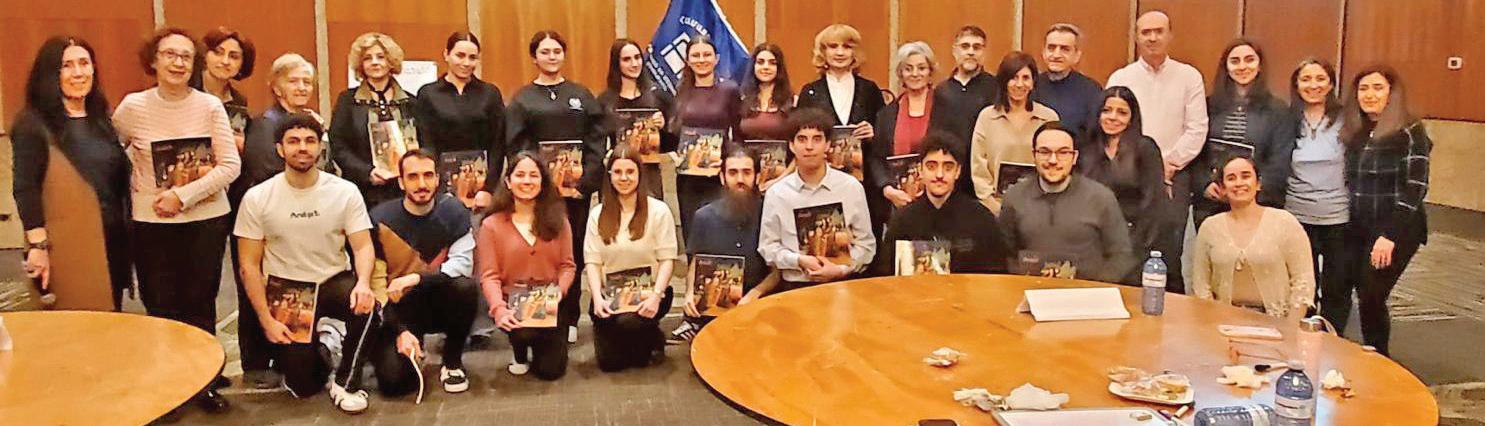
Անահիտ Աբրահամեանի նկարազարդ գիրքէն։ Երրորդ մրցանակին արժանացան Համազգայինի « «Գուսան» երգչախումբի մասնակցողները, երկրորդին՝ Ս. Աստուածածին Հայց. առաք. եկեղեցւոյ մասնակցողները, իսկ առաջինին՝ «Հին լաւ ընկերներ»-ը։
Մրցանակներու բաշխումէն յետոյ շնորհաւորանքի եւ գնահատանքի
բոլոր մասնակցողներուն
֍ ***
Ընդառաջելով
Inside the new third space for Toronto’s Armenian youth with Sourj founders Gaby and Asdghig
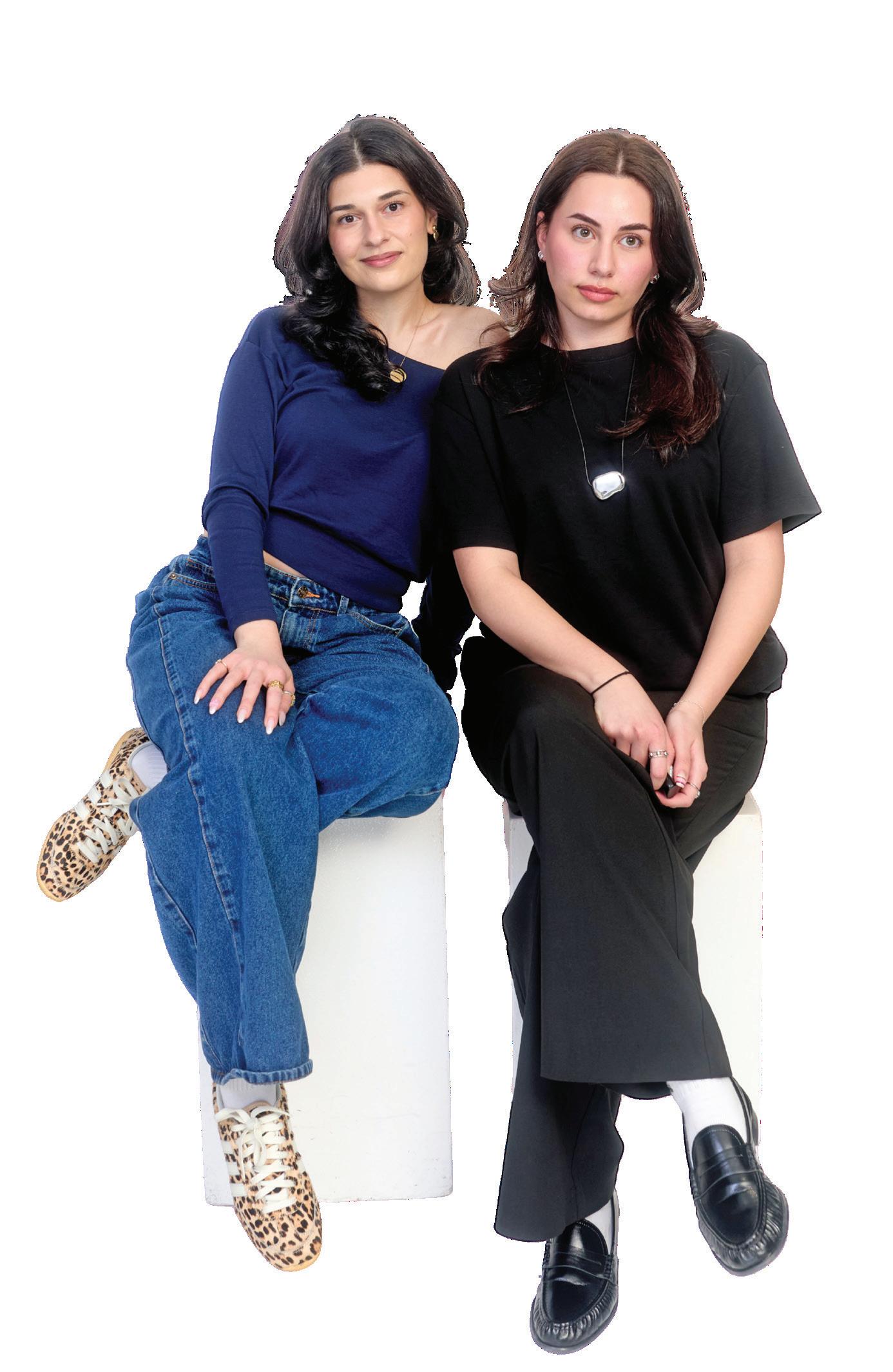
Within Toronto’s sprawling Armenian community, a new ritual is brewing. Founded by Gaby Batikian and Asdghig Ayntabli, Sourj is a community initiative born of a sim ple Saturday-morning coffee date and a shared realization: Young adults were craving a ‘third space.’ While the city boasts a vibrant network of formal Armenian institutions, many felt a gap between structured tradition and the desire for casual, modern connec tion.
Named after the Armenian word for coffee—a universal symbol of hospitality and slow conversation—Sourj provides an intentional, low-pressure environment where heritage is celebrated over lattes. Far from replacing established organizations, this initiative seeks to complement the community’s longstanding structures by offering a flexible doorway for those seeking cultural closeness. From exploring local cafes through their ‘Taste of Toronto’ series to hosting a book club, Gaby and Asdghig are proving that belonging can be both deeply rooted and effortlessly accessible. In this interview, the founders discuss the power of the coffee ritual and the joy of helping a new generation find their tribe. ***
Torontohye: Every great initiative starts with a ‘why.’ What specific gap did you notice in the Toronto Armenian community that inspired you to create Sourj Toron to?
Gaby: What inspired me to create Sourj was a gap I had felt myself for a long time, and I knew I was not the only one feeling it when talking about it with Asdghig last October at a local coffee shop. In Toronto, we are fortunate to have a large and vi brant Armenian community that I have been a part of for as long as I can remember. I graduated from ARS Armenian Private School and currently teach math there to grades 7 and 8. I actively contributed to the University of Toronto’s Armenian Stu dents’ Association (ASA) during my undergraduate years. I’m also an active member of the Hamazkayin Toronto Klatsor chapter—a longstanding cultural institution that has done — and continues to do—incredible work preserving our identity. But even with all of that, I felt there was still something missing for many young Arme nians, especially those in their early adulthood, who were looking for a more casual, intimate, and modern way to connect with one another and with their heritage.
Many existing community spaces are built around formal structures, family circles, or established networks. Those spaces are important, but not everyone enters them with ease. One of my biggest inspirations behind this initiative is my boyfriend, Emil. After moving here from Armenia at a young age, and before meeting me, he was unaware of the vibrant Armenian community in Toronto, and I kept asking myself why. He, like many others like him, wants to be part of an Armenian commu nity but doesn’t know where to start. Thus, they start to feel disconnected from their identity. Sourj also helps those Armenians find their community and regain a sense of belonging after leaving their homeland.
I wanted to create something warmer, softer, and more intentional. A space where being Armenian did not have to be performed in one rigid way, where people could simply come as they are, sit down over coffee, and feel that sense of familiarity, belonging, and cultural closeness that is often hard to describe but immediately felt. I wanted to build something that felt accessible and genuine.
Asdghig: Last October, Gaby and I fell into the habit of meeting at a local coffee shop on Saturday mornings. One of those mornings, our conversation drifted to the idea of ‘third spaces’ and how, the past couple of years, Toronto has seen a noticeable rise in community-driven events. Events and gatherings such as run clubs, book clubs, and more conversational, connection-focused gatherings have been gaining real momentum. Having been a part of the Armenian Community in Toronto, I felt there was a gap, more so a need for a more casual space where young adults could
come together, form connections and build meaningful relationships.
The Armenian Community Centre has been a cornerstone in fostering a sense of belonging among many Armenians in Toronto. I’m personally very grateful to have been a part of this active space. Being a part of the Homenetmen Scouts and the Armenian Youth Federation (AYF) of Toronto for several years, I met some of my closest friends and made long-lasting memories. However, now that I’m in my mid-twenties, I have been feeling a shift; I’ve found myself wanting a more casual, informal setting to meet up with friends, hang out and make connections while still staying rooted in our culture and heritage.
With Sourj, it felt like we had the opportunity to create exactly that: a space that was inviting, warm and intentionally casual, compared to the structured spaces and gatherings we’re used to. I personally enjoy bringing people together, and Sourj was something I myself needed just as much as anyone else. Starting this project felt like a natural and easy decision. As we continue with this journey, I hope that we can help fill up that gap that many others have been feeling as well—A space that is not only inviting and warm but a space that fosters a sense of belonging, where people can connect effortlessly, build meaningful relationships and feel fulfilled in both com munity and culture.
Torontohye: Choosing ‘Sourj’ (coffee) as your anchor is very symbolic. Beyond it being a daily staple, what does the ritual of coffee represent to you in terms of Armenian identity and community building?
Gaby: Choosing the name Sourj felt incredibly natural to me because Armenian coffee is so much more than a beverage. It is a ritual, a language of care, and a symbol of togetherness. It is what is placed in front of you when you enter someone’s home. It is what lingers through long conversations around the kitchen table. So for me, anchoring this initiative in coffee was about grounding it in some thing instantly familiar and deeply Armenian.
There is something very beautiful about the ritual of enjoying a sourj because it invites people to slow down. In a city like Toronto, and especially for young people balancing school, work, family expectations, and the pace of everyday life, it is very easy to feel rushed and fragmented. To me, coffee creates a moment of stillness. It says: sit, stay, talk a little longer. And in many ways, that is exactly what the community needs. It needs an environ ment where conversation can unfold naturally rather than being forced.
In terms of community building, coffee is powerful because it removes barriers. You do not need to arrive with a title, a perfect resume, a polished introduction, or even a social circle. You just need to come. A cup of coffee becomes the excuse, but the connection is the real purpose. That is what I love about it.
Over generations, Armenian coffee has created space for intimate conversation, reflection, and dialogue to foster. I have personally seen my family come together, make coffee, share stories, laugh, and create memories more times than I can count. Armenian coffee was the first thing I learned how to make, even before I was old enough to drink it. I remember sitting around and listening to family’s joyful conversations and feeling included by being there. And when my grandmothers would offer me a small sip from their cups, it felt like more than a taste but belonging.
Asdghig: With the objective of Sourj rooted in the idea of ‘third spaces’ and in building an inviting, intentional community, the name ‘Sourj’ felt very instinctive. In my opinion, ‘Sourj’ or coffee is more than just a drink; it is a perfect symbol for community and honest conversation.
For Armenians, especially, coffee holds a meaning far beyond the morning routine (or the several cups we have throughout the day!). It lives in the conversations we have with our grandparents, where their stories unfold. It’s the honest conversations you have with your mother in the kitchen, and it is the laughter and secrets you share with your friends during long drives. Coffee is togetherness, the thing that has connected communities and become the backdrop to life’s most intimate and meaningful moments.
For a lot of us, Armenian coffee is a symbol of home. It is a symbol of belonging. It represents warmth, familiarity and real conversation. That same feeling of comfort and connection is what Sourj aims to create. That’s why the name carries so much
In our conversation, you’ve described this as a ‘third space’ for young professionals. Why do you feel it is important for the younger generation to have a social environment that is separate from both the home and the workplace? Who are the folks attending your events/ members of the group? Do they take part in other initiatives within the Armenian community?
Many people lose their built-in communities after school. Connection often comes by default through classes and student groups. Once this structure disappears, people are left to actively build their social world. Places such as work or home make up for the gap; however, they come with responsibilities and expectations. At work, we are constantly striving to exceed expectations and advance to higher positions. At home, we face many daily responsibilities and chores that can accumulate and take up a lot of time and mental space. A ‘third space’ becomes essential as it helps fill up that gap, especially for many young adults in their twenties navigating this transition.
Friendships, too, require much more intentional effort to maintain amid everyone’s busy schedules and demanding careers. I graduated from university almost four years ago, and I’ve noticed this gap widen more and more as my friends and I have gotten older.
Even with the best intentions, it becomes harder to check in, catch up, and spend time together consistently.
Our Armenian community excels at fostering a sense of community and belonging. Organizations such as Homenetmen, AYF, Hamazkayin and AGBU play an incredibly vital role in keeping culture and identity. However, as I have gotten older, I have found it harder to commit to structured and more formal commitments within those spaces.
This is where Sourj comes in. Sourj exists as a ‘third space’ that can fulfill both of these gaps. ‘Third spaces’ are much more low-pressure. You can come whenever you’re free, engage at your own pace and stay as long as you want. At the same time, you can mingle and connect with others. There is no expectation beyond simply being present.
Many individuals who attend Sourj events or are part of our book club are active members of the community. Many are part of Homenetmen, AYF, Hamazkayin, and AGBU. It’s also been interesting to meet many individuals who have not been part of more structured communities but have always longed for a sense of belonging within our culture and heritage. With this, Sourj becomes a middle space between those experiences. It is not meant to replace formal organizations but exists alongside them. Sourj offers a more flexible, accessible and casual setting.
Gaby: A ‘third space’ offers people a place where they are not being evaluated or obligated in the same way. They can simply belong. For young Armenians, I think that kind of space matters even more. Many of us are navigating multiple identities
at once—ambition and tradition, independence and family closeness, Canadian life and Armenian heritage. It can sometimes feel like we are constantly moving between worlds. A ‘third space’ allows those worlds to meet, where people do not have to compartmentalize themselves.
What has also been really meaningful is that many of the people who come to Sourj are involved in other parts of the Armenian community as well. As Asdghig mentioned, many are active in church, ASA, Hamazkayin, Homenetmen, AYF, and other such community organizations. Others may not be formally involved anywhere yet, but Sourj can serve as a starting point that helps them feel more confident stepping into those spaces later. I love that, because it means Sourj is not trying to compete with home, work, or community institutions—it complements them. It is contributing to the larger ecosystem of Armenian community life in Toronto by offering a different kind of doorway in and by strengthening the community’s future.
Torontohye: Your events highlight local coffee shops and Canadian-owned businesses. What is your process for selecting these locations, and how have local business owners responded?
Asdghig: Sourj is all about community, and a big part of that is supporting your local businesses. We live in a city with an incredible selection of local spots that are perfect for fostering community and conversation. Something super important for me personally has been finding a space that resonates with Sourj’s purpose and goal. With Sourj’s main objective being conversation and connection, it has always been important for us to find a space that cultivates that.
Many coffee shop owners have been incredibly supportive of our objective and were very easy to coordinate with. They loved the idea and wanted to be a part of something really special. However, neither Gaby nor I had any experience planning anything on this scale. Finding sponsors, speaking with vendors, booking spaces and introducing ourselves to all these coffee shop owners was challenging at first. However, I am incredibly proud we were able to accomplish that.
To select the coffee shops we want to work with, we have launched ‘Taste of Toronto,’ which focuses on exploring many of the incredible coffee shops in the city. We have also collaborated with our friends Claudia and Arev of Spillthedish.to, who we met through Sourj events. It was an incredible opportunity not only to connect with fellow Armenians but also to explore some local spots through our combined initiative.
Gaby: From the beginning, I knew that where we gathered mattered just as much as the gathering itself. I wanted Sourj events to feel intentional, warm, aesthetically inviting, and rooted in a sense of care. Because of that, I am very thoughtful about the spaces we choose. We look for local, Canadian-owned coffee shops and businesses that feel aligned with the atmosphere we want to create: somewhere people can comfortably sit, talk, linger, and genuinely enjoy being there. Supporting local businesses allows our gatherings to contribute to the broader fabric of the city, while also creating opportunities to spotlight spaces that care about experience, hospitality, and community in their own way.
When selecting a location, I usually consider a few things. First, I think about the environment itself: Is it welcoming? Does it have the right atmosphere for conversation? Can it accommodate a group without making the interaction feel rushed or cramped? I also consider accessibility, location, and whether it feels like a place people would genuinely enjoy discovering.
What has been especially encouraging is the positive response from local business owners. Many of them have been genuinely excited by the concept. I think people recognize when something is being built with heart and intention. They understand that we are trying to create something that brings people together in a sincere way, and that enthusiasm has often been reflected in their openness to hosting and collaborating.
There is also something really rewarding about introducing members of our community to spaces they may not have discovered otherwise. In that sense, the relationship is reciprocal. We can support local businesses, and they, in turn, help provide the setting where connection and community can unfold. That is something I value deeply.
Torontohye: Your book club adds an interesting intellectual/literary layer to the group. How do you select your titles, and do you find that discussing Armenian-themed books in English helps bridge the gap for those who may not be fluent in
the language but are eager to engage with the culture? What about Armenian language books?
Asdghig: The Sourj book club has become an integral part of the Sourj initiative. For me, connecting with Armenian literary works has always been a way of staying close to my culture and heritage, especially as someone who has never lived or spent an extended amount of time in Armenia.
I have always been an avid reader, especially when it came to Armenian literature. But over the years, I have noticed that I slowly lost that part of myself that connected me so closely to my Armenian roots. When I began working more intentionally on Sourj, I knew I wanted to create a space dedicated to literary exploration, and Sourj felt like the natural foundation for that idea. When I shared it with Gaby, she immediately resonated with and loved the idea, and that’s when we decided to start this literary initiative.
Gaby: The book club brings together so many things I care about: conversation, reflection, culture, storytelling, and identity. When I select titles, I look for books that can open up meaningful discussion about stories that are rich enough to talk about from multiple angles, whether that is history, diaspora, memory, belonging, intergenerational relationships, grief, resilience, or the quieter, everyday textures of Armenian life.
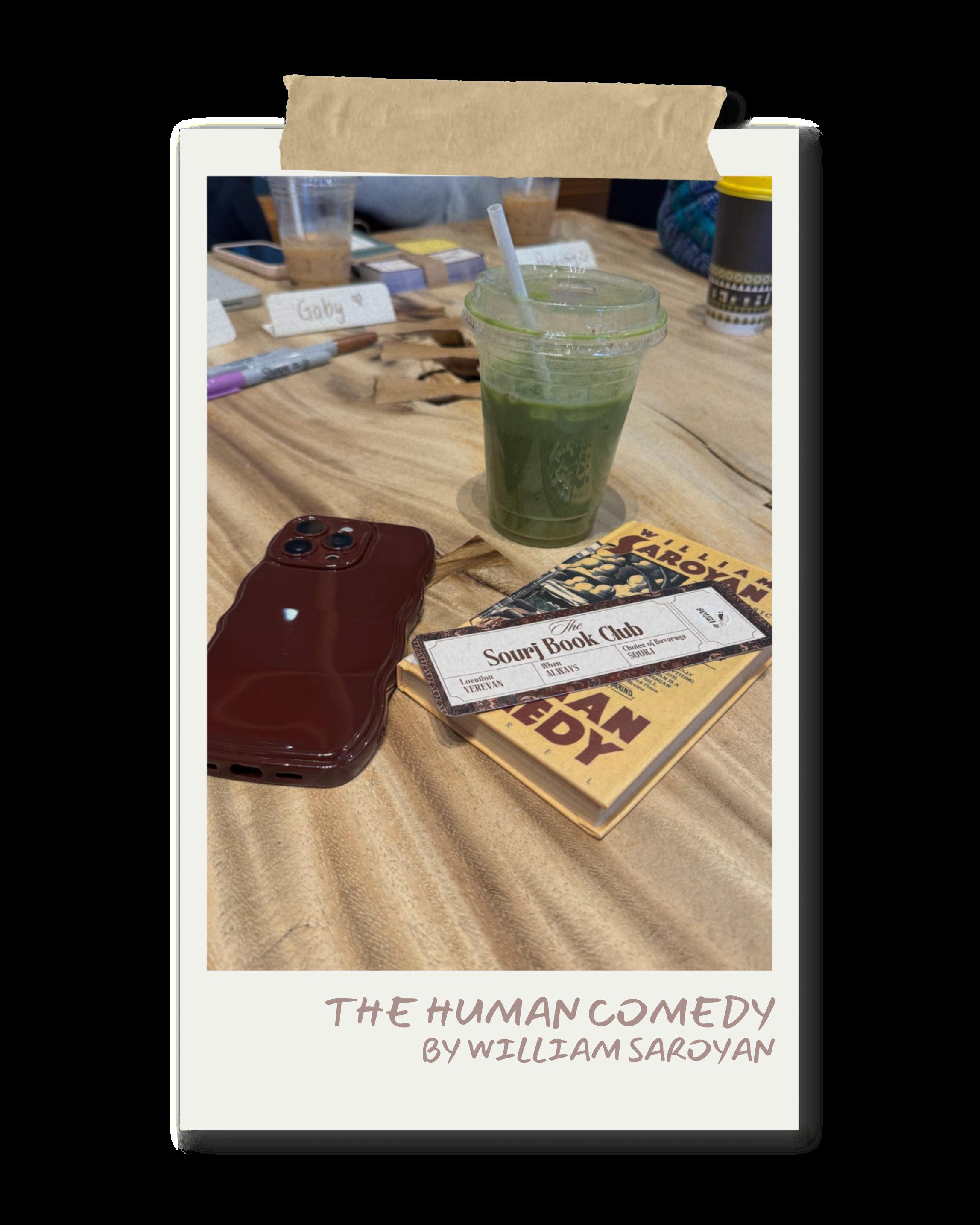
Asdghig: So far, we have selected books that are widely known and accessible within Armenian diaspora literature. Our first pick was The Human Comedy by William Saroyan. We’ve also read The Sandcastle Girls by Chris Bohjalian, and we recently read Three Apples Fell from the Sky by Narine Abgaryan. It’s been interesting reading books by members of the Armenian diaspora, as I have noticed how themes of longing, memory, and belonging have emerged in their writing. Our current read is Our Ex’s Wedding by Taleen Voskuni. I was particularly excited about this read as it offers a modern lens and an opportunity to engage with a more contemporary Armenian American voice, and it is a recent release. I am eager to see how identity and culture
will be expressed in this literary landscape.
Discussing Armenian-themed books in English has been a great way to engage with our culture and stay connected to our roots, in a language many of us are more comfortable with. However, during our recent book club gathering, I suggested something that feels like a next step in this initiative: Exploring a bilingual reading experience where half our group reads the Armenian work and the other half reads the English translation. I think this type of dialogue could be very interesting and could help us see how powerful language can be and how meaning can shift from one language to another.
Gaby: For many people in the diaspora, language can be a sensitive area. There is often deep love for Armenian culture, but not always fluency in Armenian. That should not disqualify anyone from meaningful engagement. In fact, one of the things I care about most is making sure people feel invited into the culture, not shut out of it. At the same time, Armenian-language books are deeply important. They carry a different kind of intimacy and cultural texture, and I do not see them as separate from this mission at all. If anything, I see them as part of where Sourj can continue to grow, whether that is through bilingual discussions, excerpts, shared readings, themed sessions, or creating more approachable entry points for those who may feel intimidated by a full Armenian-language text.
Torontohye: Since launching, what has been the most rewarding ‘success story’ you’ve witnessed, whether it’s a new friendship, a professional lead, or simply seeing a newcomer find their ‘tribe’?
Asdghig: It was both surprising and motivating to see the support we have experienced since launching Sourj in October. Even though I was very excited, I was hesitant about the response we would receive. However, the support our friends and community have shown has been incredibly rewarding to say the least. I am constantly taken aback by the encouraging messages we have received not only from people our age, but also from those much older. Our community has shown up to every single event, liked every single post, and
been incredibly present in every conversation. Seeing people bond over coffee, connect while discussing their careers and hobbies, has been so touching.
I don’t think there has been a single moment I can pinpoint as a ‘success story,’ but seeing people connect who otherwise wouldn’t have, has been very rewarding for sure. I have made many friends throughout our events and book club gatherings, and I have very much bonded with them. I look forward to making more connections and forming long-lasting friendships.
Gaby: What has been most rewarding for me has not been one flashy moment, but rather the quieter moments that show me Sourj is becoming what I hoped it could be. It is seeing people walk into a space a little hesitant, unsure of who they will talk to or whether they will fit in, and then watching them gradually relax, open up, and leave having made a real connection. Those are the moments that stay with me.
I have seen friendships begin through these gatherings - I myself have made new friendships with members who were completely unaware of Toronto’s vibrant Armenian community, but found their way in through Sourj and made meaningful connections with fellow Armenians in the city.
I also find it rewarding when people tell me that the space feels different, that it feels thoughtful, that it feels like something they did not realize they needed until they experienced it. That means a lot because Sourj was created with a great deal of love and intention.
If I had to describe the most rewarding success story, it would simply be this: seeing people find their tribe, sometimes when they least expected to. Seeing the community move from being an abstract idea to something tangible, warm, and alive right in front of them. That, to me, is the real success of Sourj. ֍
Photographs courtesy of Sourj Toronto.