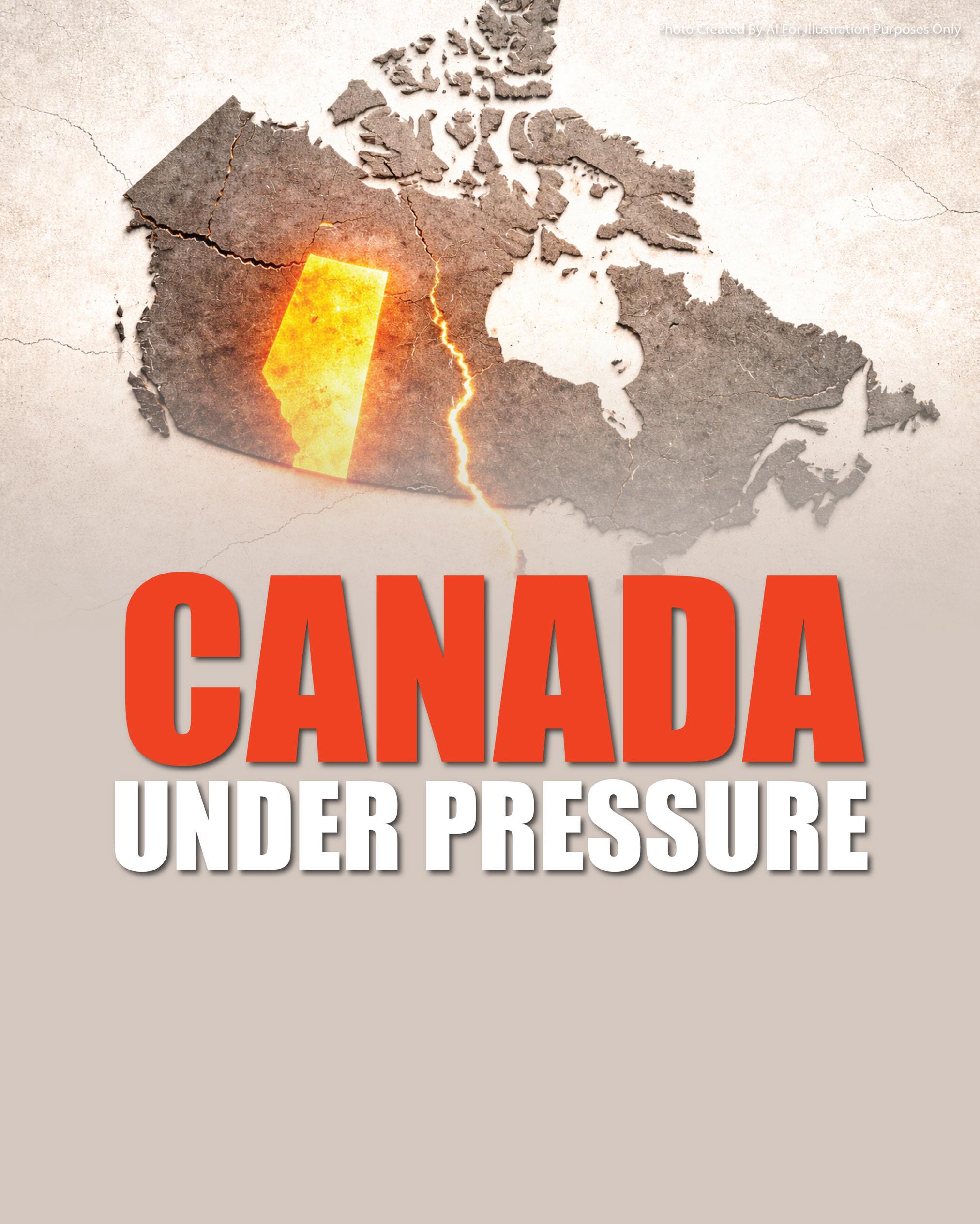
“Let’s be blunt: the U.S. interest in Alberta would be about resources. Alberta produces over 80% of Canada’s oil and about 60% of its natural gas. According to the Canadian Energy Regulator, roughly 87% of Canada’s crude oil (about 3.3 million barrels per day) goes to the U.S., and most of it comes from Alberta. ..”
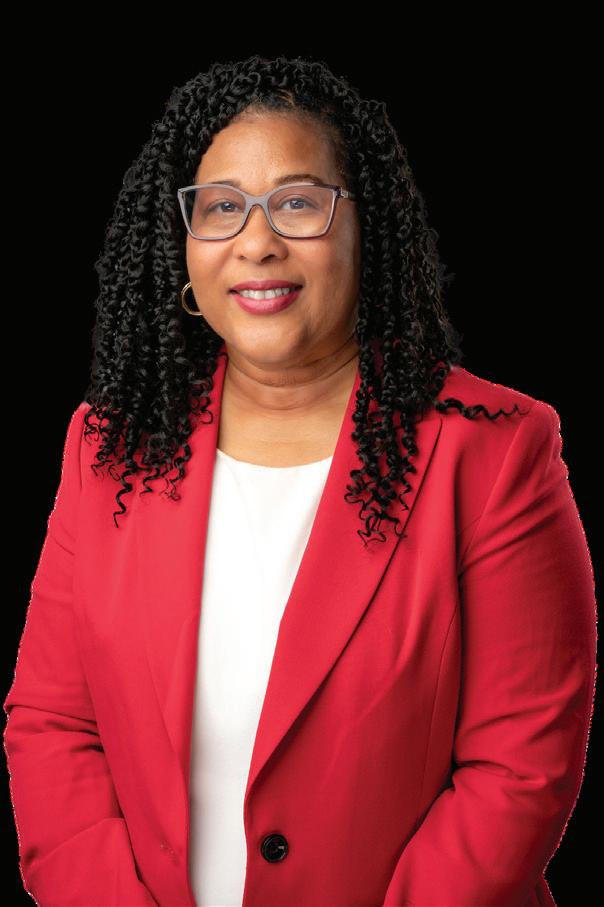
CHE MARVILLE
A sentinel for the human soul
The sun was blinding as it cut through the sterile glass of the Sick Kids Hospital operating room in Toronto. On the gurney, an eight-year-old girl named Che Marville lay trembling, her small hand clutched in her mother’s. This was a battle for a limb, a life, and a legacy.
The doctors in Trinidad had already delivered their verdict: amputate the right leg below the knee. They didn’t see a future for it, but Che’s mother, a nurse and midwife with a spine made of iron, had signed the papers against medical advice, flown her daughter through hallucinations and sweat-soaked nightmares on a plane back to Canada, and placed her in the hands of a leading orthopedic surgeon.
In those final seconds before the anesthesia took hold, Che didn’t just pray; she bargained with the Infinite. “Dear God,” she whispered, her eyes locked on the brilliant light, “I don’t want to walk tomorrow, but I want to walk again. I can’t leave my mom.” When she opened her eyes, she looked at her weeping mother and said the words that would define her existence, “Mommy, don’t worry. I talked to God and I’m going to be fine. I’m already healed.”
To understand the woman who now sits across from CEOs and community leaders, teaching them to decouple their worth from their bank accounts, you have to go back to a game of hide-and-seek in Guyana. Che was four years old. Her grandfather, a man who had made his mistakes early and lived his later years with a generous, golden heart, was her favorite playmate.
They were playing, a moment of pure childhood joy, when the music stopped. Her grandfather suffered a massive heart attack. Che was holding his hand when the light left his eyes. At four, you don’t understand “forever,” but you feel the fracture. That event was the first time Che realized that the people we love can vanish in a heartbeat, leaving us to navigate the
silence alone.
It was this early brush with the quiet collapse that turned her into a student of the unseen. By thirteen, the trauma had manifested as chronic insomnia. While other girls were obsessed with pop stars, Che was in the Thorncliffe Library, spending two cents on a discarded book about yoga and breathing. She was searching for a way to stay in her body when her mind wanted to flee. Under the guidance of Dr. Hutchinson, a rare physician who actually listened, Che learned that her nightmares were messengers. She began to write. She began to breathe. She began to build a first home within her own skin.
Che Marville portfolio reads like a resume of survival. She is a woman who has invited Angela Davis to Canada after a ban, worked at the intersection of scientific bias and racism at the Ontario Science Centre, and ran for provincial and federal office. The fire wasn’t just in her professional achievements. I recognize a fellow warrior when I see one. Che has felt the sting of the crabs in a barrel mentality. She recalls a woman in one of her political campaigns who wore a wig and a hat as a literal disguise, only to be caught throwing Che’s campaign pamphlets in the garbage.
“I have been punished by the community in some ways,” Che admits with a transparency that is as sharp as a blade. She has been told she is weird for her spiritual track, for her refusal to run as a Liberal or Conservative just to fit in. She has faced board members who ended her contracts because they feared her political edge. All of this brought her to an understanding… Real transformation happens when no one is watching, when you have a chance to sit with yourself, no outdoor noise, no opinions, just self. For Che, the ultimate test came six years ago when her mother, her closest friend and spiritual anchor, contracted COVID-19 and died in just eighteen days.
It was a stunning, life-alter
ing event that could have leveled a lesser soul, but Che had already learned the intelligence of healing. She understood that she was in the world but not of it. She pivoted her focus to WiseMindly, a platform designed to bridge the gap between clinical efficiency and human compassion in an age where AI threatens to dull our empathy.
She teaches a radical concept; your business is not you. She watches successful entrepreneurs burn out because they serve their ego instead of the enterprise. She tells them, “Take yourself out of the business framework.” It is a psychological decoupling that allows the professional to survive the storm.
When I met Che at a Black History event in Oakville, I saw a storyteller of our era, someone who understands that if we don’t write our own history, we will be erased. We sat and talked about the unspoken ache of loneliness, a public health crisis that no app can fix.
Che Marville has been in the game of life for some time, yet she speaks with the fire of someone who is just getting started. She is currently mentoring a group of young African men and women, teaching them a vocabulary for their emotions that their families never provided.
She isn’t interested in superficial wins or highlight reels. She has the ability to sit with the unpolished, complex parts of ourselves and refuse to look away. As the world hurtles toward automation, Che stands as a sentinel for the human soul. She is the outlier who stayed, the girl who walked when they said she wouldn’t, and the woman who reminds us that your breath is still yours.
As she moves forward, you can’t help but wonder: what miracles will she command next?
Photo Credit:
Megan Vincent
Written by Simone J. Smith Toronto Caribbean News
Imagine a grandmother in our community, let’s call her Mrs. Campbell. At 68, she should be resting, but instead, she is pulling a double shift in home care or standing for eight hours as a security guard. She isn’t working for extra travel money; she is working because her Canada Pension Plan (CPP) reflects a lifetime of interrupted, low-wage labour, the byproduct of a system that historically marginalized Caribbean workers.
Here is the psychological warfare: the moment Mrs. Campbell tries to pull herself above the poverty line, the state reaches into her pocket. This is what the Montreal Economic Institute (MEI) politely calls poor design, but let’s call it what it is: a structural trap. Our elders are being hit with a doublebarreled penalty of benefit clawbacks and steep taxation. For every dollar Mrs. Campbell earns past a meager $5,000, the Guaranteed Income Supplement (GIS) is slashed by 50 cents.
We must look at the power dynamics of economics. By keeping our seniors systemically constrained rather than vulnerable, the system ensures
Is poverty a policy choice?
they remain in a state of perpetual economic anxiety. The government is effectively charging our poorest elders participation tax rates that rival those of the highest-income earners in the country. This is an assault on the dignity of African Caribbean labour. When we penalize a senior for surviving, we are telling them their contribution has an expiration date, and their self-sufficiency is a threat to the state’s ledger. We don’t need tweaks; we need a radical realignment that recognizes economic justice as a human right.
Data-driven reality: The math of marginalization
The numbers reveal a staggering trend of elderly Canadians being pushed back into the workforce. Between 2014 and 2022, employment among GIS recipients, those already identified as lowincome, surged by 56%. Among the younger seniors (aged 65 to 69), that increase was even sharper at 64%.
The Participation Tax Rate (PTR) measures exactly how much of a paycheck is devoured by the state through taxes and lost benefits. The data presents a grim reality for the 600,000 seniors currently living below the poverty line:
• The minimum wage trap: A single senior working part-time for roughly $13,000 loses 17.5% of those earnings to the system.
• The necessity wage penalty: A se -
nior forced into full-time work to survive in an urban center faces a PTR of 48.3% to 50%.
• The GIS clawback: For many, the GIS reduction accounts for nearly 90% of the total penalty they face for working.
Currently, the system offers a modest $5,000 exemption, which is a drop in the bucket of today’s inflation. Experts suggest that raising this exemption to $30,000, aligning it with Statistics Canada’s low-income cut-offs, would cost
the government approximately $544 million annually. To put that in perspective, that is a mere 2.9% of the total GIS budget.
The data proves that the cost of providing relief is negligible, yet the cost of inaction is the continued economic strangulation of our community’s pillars. We must demand a shift from payroll taxes that offer no benefit to seniors, like Employment Insurance (EI) which they rarely use, to an opt-in system that respects their agency and their wallets
CELEBRATING
BLACK HISTORY MONTH
As we mark 30 Years of Black History Month under the theme “Honouring Black Brilliance Across Generations From Nation Builders to Tomorrow ’s Visionaries,” we celebrate the resilience and rich contributions of Black communities, past , present , and future.
This month is both a time to reflect and a call to action to remember, uplif t , and recommit to amplifying Black voices and stories that continue to inspire us all. Andrea
Hazell, MPP
Fifteen Years In — And Still Standing With Our Community
So here we are!! The first edition of our 15th year! As I mentioned in the last edition, it’s been an amazing journey— and one that still gives me pause when I really think about how far we’ve come.
Fifteen years ago, the Toronto Caribbean Newspaper began with a simple but powerful idea: to create a space where our community could see itself reflected honestly, proudly, and without apology. At the time, we weren’t thinking about milestones or anniversaries. We were focused on getting the paper out, telling stories that mattered, and making sure our voices weren’t lost or diluted in a media landscape that often overlooked us.
Back then, everything was hands-on. Printing smaller runs, delivering papers ourselves, learning as we went, and figuring things out one edition at a time. There was no grand blueprint—just commitment, long hours, and a belief that our community deserved a platform that spoke to its realities, achievements, struggles, and culture.
Over the years, a lot has changed. The media world today looks nothing like it did when we started. Print has been written off countless times. Advertising models shifted, digital platforms took over, and social media algorithms began deciding who gets seen and who gets buried. Independent media, especially communitybased publications, faced increasing pressure to conform, soften messages, or follow trends that didn’t always align with their values.
Yet through all of that, we’re still here. And the truth is, we are only still here because of you. Our readers who continue to pick up the paper. Our advertisers who believe in reaching people where trust still exists. Our writers and contributors who give their time, insight, and voices. Our distributors and supporters who help ensure the paper reaches the community.
Every edition that lands in someone’s hands is the result of collective support. This newspaper has never belonged to just one person—it belongs to the community it serves.
There have been moments over the years, particularly more recently, where continuing wasn’t easy. Standing firm in honest reporting and open dialogue—especially when it went against prevailing narratives— came with challenges. It wasn’t always comfortable, and it certainly wasn’t always popular. But integrity has always mattered more to us than convenience.
Looking back now, I can say with confidence that staying true to our values was the right choice. Growth doesn’t always come in loud, celebratory ways. Sometimes growth looks like endurance. Sometimes it looks like quietly showing up, edition after edition, even when the road feels uncertain.
As we step into our 15th year, my hope is simple and sincere: that the Toronto Caribbean Newspaper continues to be a trusted voice, a place for real conversations, and a reflection of the community it serves. A space where stories are told with care, where perspectives are respected, and where people feel seen.
Independent community media still matters—perhaps now more than ever. When stories are rooted in lived experience and genuine connection, they carry weight that no algorithm can replace.
To everyone who has supported us over the years—thank you. Whether you’ve been with us from the beginning or joined us along the way, your support has made this journey possible. You’ve helped shape what this paper has become, and you continue to give it purpose.
Here’s to fifteen years of resilience, community, and truth—and to the chapters still ahead.
simone@carib101.com
TC
The year was 1974. In the heart of Newtown, Black River, the air was once thick with the scent of fabric and the rhythmic, metallic song of sewing machines. Managed by the Sistren Theatre, the original Newtown Skills Training Centre was a sanctuary where young women transformed raw material into garment constructions destined for the freezone and local luxury hotels.
Fast forward to today. If you stand in the same spot in Lowers Works, the silence is deafening. The building, once a pillar of the community, is now skeletal remains, stripped of its dignity by twelve years of systemic neglect and the brutal, consecutive lashings of Hurricane Beryl and Hurricane Melissa. “Today, this once-thriving pillar of the Black River community stands in a state of absolute
Nation-building through action
devastation,” notes Chef Brian Lumley, Founder of Ubuntu Outreach and Jamaican Culinary Ambassador. “Following the passage of Hurricane Beryl, and the subsequent Hurricane Melissa, the building is completely destroyed; it has no roof, no doors, and the interior is rotted out.”
As a community, we are here to execute a strategic reclamation. This is why Hear 2 Help Jamaica, alongside ELMC, Steer2Home, and the Toronto Caribbean Newspaper, has aligned with Chef Brian and the Ubuntu Outreach team. This coalition is driven by a collective commitment to the belief that the future of our community is built on the lessons of our ancestors. Chef Brian reminds us, “In my journey as a chef, I have learned that a nation’s story is told through the strength of its communities. True excellence is built through discipline and driven by purpose.”
This rehabilitation project is a calculated move. We are not interested in the deficit-based language of generic charity. “We cannot allow a legacy of empowerment to be silenced by neglect,” Chef Brian asserts. “The need for monetary relief support is immediate and justified by the sheer scale of the ruins. However, we do not view this as a one-off
donation, but as a strategic investment in Jamaica’s infrastructure.”
To our brothers and sisters in the Toronto Diaspora, specifically those from St. Elizabeth, this is your “Homecoming” call. We are targeting high-leverage, durable assets that move us beyond the transactional. We are utilizing a RACI Matrix and detailed Monitoring & Evaluation protocols to ensure that every cent and every item is translated into high-impact action.
Our collective build
We are now working on garnering support for specific building materials and equipment to restore the “Learn to Earn” legacy. Collections will begin at the end of February. We will have a specific location and date ready shortly so the community can give back with precision. We are seeking the following highvalue assets:
• Electrical and infrastructure: Solar power systems (complete kits), commercial-grade wiring (THHN/THWN), and LED lighting fixtures to ensure a safe, sustainable “nucleus.”
• Construction materials: High-gauge, hurricane-resistant zinc/metal roofing sheets, lumber, plywood, and in-
dustrial sealants.
• Educational and industrial tech: Refurbished laptops or tablets for our new Homework Centre, and industrial sewing machines to revive the garment industry.
• Culinary and safety gear: Industrialgrade stoves and prep tables for hospitality training, alongside backup generators and large-scale trauma kits.
“Restoring this facility is about creating a community hub that facilitates the easier distribution of goods and services to those who need them most,” Chef Brian explains. Beyond the bricks, we are building Intellectual Infrastructure, and curating a library to ensure our youth can navigate international partnerships without exploitation.
We are building a framework where the New Town Family Centre becomes “Version 1.0” of a high-tech, high-intellect community model that makes poverty an obsolete choice. We are providing the strategy; the community provides the heart. Together, with the strength of Hear 2 Help Jamaica, we rebuild the nucleus. Together, we reclaim the power.
Hurricane Melissa and the Future of Caribbean Health
BY IKA WASHINGTON
TC REPORTER
Three months after Hurricane Melissa, a devastating Category 5 storm, carved a path of destruction across the Caribbean, the immediate emergency is subsiding. Yet, as a recent Pan American Health Organization (PAHO) report details, the storm’s aftermath reveals a far more complex and enduring challenge to the region’s health and stability. Beyond the tragic loss of 88 lives and the extensive damage to 785 health facilities, the hurricane has exposed the profound vulnerabilities that lie at the intersection of: climate change, infrastructure, and socioeconomic well-being, forcing a critical conversation about the resilience of our health systems.
The recovery is beyond simply rebuilding. It is a confrontation with a cascade of health crises that follow in a superstorm’s wake. In Jamaica, the flood-
TC
It was a powerful and affirming day on Tuesday, January 27th, 2026, at the library of the Ontario Institute for Studies in Education (OISE), on the University of Toronto campus. In the presence of preservice teachers, educational scholars, educators, researchers, students, professors, and community members,
ing left behind a deadly outbreak of leptospirosis, a bacterial disease spread through contaminated water, leading to 124 suspected cases and 14 deaths. This type of illness emerges when infrastructure, particularly for sanitation and safe water, is compromised.
Across the water in Cuba, the disruption created ideal conditions for vector-borne diseases to flourish. The nation is grappling with its first-ever major outbreak of chikungunya, with over 51,000 cases, alongside a surge in dengue fever. These incidents are a clear illustration of how a changing climate intensifies public health threats in a region already on the front lines.
These outbreaks are symptoms of deeper, pre-existing conditions. The PAHO report highlights that in Cuba, a strained economy and housing shortages, with over 215,000 homes damaged by the storm, have left hundreds of thousands of people in a precarious
state. Nearly half a million people in the eastern part of the island were still reliant on water tanker deliveries as of late December. When people lack secure housing and safe, reliable drinking water, their vulnerability to disease multiplies exponentially. This is the social determinant story of health, where a hurricane’s impact is not in wind speed alone, but also, in the societal fault lines that it exposes.
However, the story is also one of remarkable resilience and innovation.
The report notes that health facilities in Jamaica and elsewhere that were built or retrofitted to PAHO’s “Smart Hospital” standards sustained minimal damage. These facilities are designed to be both structurally sound against disasters and environmentally efficient, representing a crucial investment in future-proofing the region’s health infrastructure.
Furthermore, Jamaica’s success in containing the leptospirosis outbreak is a testament to its strong, pre-existing
Ubuntu Plaque honors Black educators
the Ubuntu Recognition Plaque was officially unveiled.
The Ubuntu Plaque Campaign was first introduced on December 1st, 2025, on the OISE website. It is grounded in the philosophy of Ubuntu: “I am because we are.” As the campaign explains, “This philosophy grounds our work and reminds us that our strengths come from our collective care, resilience, and solidarity.”
The plaque also centres the theme “Honouring Our Shared Strengths.” It states, “This Plaque will honour the generosity of those who chose to walk with us as co-conspirators in the path to empower Black educators, students, and researchers to thrive despite systemic inequities.”
As a token of gratitude, every donor’s name will be permanently inscribed on the plaque symbolizing community strength and collective commitment. The plaque will serve as a daily reminder that meaningful change is built together. There are three tiers of recognition on the Ubuntu Plaque, reflecting different levels of contribution:
• Seeds of Ubuntu – $500+
• Roots of Ubuntu – $1,000+
• Legacy of Ubuntu – $5,000+
The launch of the Ubuntu Recognition is a major initiative of the Centre for Black Studies in Education (CBSE). Under the leadership of Director Andrew
disease surveillance system, a capacity nurtured through years of investment and technical support. These successes provide a clear blueprint for a more resilient future.
As we move from response to recovery, the experience of Hurricane Melissa should serve as a catalyst for long, overdue transformative change. It has truly challenged us to look beyond the immediate needs of reconstruction and address the root causes of vulnerability. This requires sustained investment in public health infrastructure, from robust disease surveillance networks to climateresilient Smart Hospitals. It demands that we tackle the socioeconomic inequalities that leave so many exposed to the worst of a disaster’s impacts. The health of the Caribbean is inextricably linked to its social and economic fabric. By strengthening this fabric, we are building a healthier, more equitable future for all.
B. Campbell, this fundraising effort will help cultivate six spaces of Belonging, Healing, and Possibility within the OISE community.
The unveiling took place at the conclusion of CBSE’s 2nd Annual Educational Symposium and marked a historic moment of planting seeds for the future. As preservice teachers witnessed this event, it sparked inspiration, empowerment, and a renewed commitment to educational justice. Pembroke Publishers contributed $3,000 to the Ubuntu Fund. Those who support this initiative are helping ensure that the legacy and impact of Black excellence in education will continue beyond this generation.
Sacred healing, stolen history
SIMONE SMITH
simone@carib101.com
TC REPORTER
I have spoken in depth about the surgery that I had last year. My body was screaming, and the doctors handed me painkillers, but my body rejected them; I was feeling more pain from the cure than from the actual incision.
That’s when my friend Reena Rampersad (Infamous Cannabis Advocate) walked in with a cannabis care kit: salves, body oils, and edibles. That was the moment I realized that our healing comes from our roots.
Last week, I spoke to the founder of DiversityTalk, Ika Washington, and she helped me realize that my personal healing is tied to a much larger struggle. Our history with this plant has been deliberately fragmented. “I’ve sat in rooms where people trace cannabis from China to India to Europe,” Ika shared with me during our passionate discussion, “Completely skipping over the continent of Africa. I had to ask them, So, the wind doesn’t blow over Africa?”.
“The truth is, our ancestors were innovators,” Ika shares. “From
keepers of this medicine. During the transatlantic slave trade, hemp was a cash crop just like cotton or tobacco. We were exchanging knowledge about this plant long before the legal market decided it was refined enough for profit.”
Yet today, in Canada, only about 2% of the cannabis industry’s leadership and ownership is African. We see Women’s Month celebrated everywhere, but during Black History Month, there is a dead silence from the major cannabis companies. They ignore the fact that Black women and racialized communities are still systemically excluded and disproportionately impacted by the war on drugs. There is still no social equity built into the Cannabis Act, and no push for reparative justice from Health Canada.
“This is why I am launching Leaves of Legacy,” Ika continues. “This isn’t some clinical, sterile event where we just stare at posters of THC and CBD. This is a tactical intervention. We are using art, music, and culture to confront the unspoken costs our community has paid for a ritual the legal market is now profiting from.”
I see the stigma every day. I see it in my own mother, who suffers from arthritis, but refuses weed tea because she’s been indoctrinated to believe it’s a “ bad drug, even while the pharmaceuticals she takes make her sick. “We are hiding our use, and that shame is what’s hurting us,” Ika made clear when I shared the story about my mom. “When we hide, we
STEVEN KASZAB
steven@carib101.com
TC COLUMNIST
Global Women’s Rights
Liberation Movement: the courage, risk, and disruption that made their freedoms possible? In many places, activism has shifted from the streets to institutions, from protest to policy. That evolution matters, but something vital has faded with it: the urgency, the collective fire, the willingness to be uncomfortable for the sake of others.
In much of the Global South, the fight is far from symbolic. In parts of the world, women and girls still struggle for the most basic human rights. Some societies treat women as property bought, traded, or controlled. Practices such as dowry-related violence, forced marriage, and systemic gender abuse persist in regions of South Asia, the Middle East, parts of Africa, and Latin America. In these contexts, a girl’s value is measured in her perceived utility to others.
don’t have anyone to talk to about proper consumption or harm reduction. We need doctors to stop pushing pills and start being receptive to medical cannabis.”
“I want you to walk into Stackt Market and feel a mix of emotions; discontent with a broken system, but pure joy that our story is finally being told. This is about reclaiming our dignity. We are stronger in numbers, and it’s time we moved as a united front to lobby for the equity we deserve.”
Stop hiding. Stop the shame. Come reclaim your legacy. See you there!
Join the Movement
I am calling on our community to show up and stand for our history. This exhibition is free, but our presence is the ultimate statement.
• What: Leaves of Legacy — Black History Month Exhibition
• When: February 25th–27th, 2026
• Opening Night: February 25th, 6:30–10:00 PM (Featuring a guided tour, panel discussion, and film clips from Rasta’s Journey)
• Public Hours: February 26th–27th, 11:00 AM–9:00 PM
• Where: Stackt Market, 28 Bathurst Street, Toronto, ON
• Admission: Free (Registration is highly recommended due to limited capacity)
• Register Now: www.leavesoflegacy.eventbrite.com
science, and politics, but the deeper question remains: why do they push forward? Is it simply to survive, to pay the bills, to enjoy a few comforts and vacations? Or is something larger still driving them?
Do women today fully acknowledge the roots of the Women’s
Western women are not immune to inherited cultural pressures either. Colonial legacies and patriarchal traditions travel with families across borders. While many men support women’s advancement, others still view women’s independence as a
threat to their own authority or financial ambitions. Progress exists, but it is uneven, fragile, and often resisted.
Women today continue to pursue economic and political power, but most must do so inside institutions still largely designed and governed by men. Change from within is slow. That’s why the question lingers: is it time again for mass mobilization? For public, collective, unapologetic demands for equity?
The story of Malala Yousafzai still echoes for a reason. After surviving an assassination attempt for going to school, she said, “If one man can destroy everything, why can’t one girl change it?” Multiply that courage by tens of thousands, and you get a force to be reckoned with.
Women do not seek power over men. They seek power over their own lives: the power to decide, to earn, to speak, to lead, and to live without fear. As Annie Lennox once put it, “It’s not about being more powerful than men, it’s about equal rights with protection, support and justice. It’s about very basic things.” It still is.
Separatism, Trump, and Canada’s Breaking Point
MICHAEL THOMAS
michael@carib101.com
TC REPORTER
What do you mean, “Trump joins Alberta?” Isn’t Alberta a province of Canada?
The short answer is yes, on both counts, but the longer answer opens a much deeper political rabbit hole.
Canadians have seen this movie before. Quebec spent decades flirting with separation, holding referendums that nearly split the country in two. Now, it appears the separatist bug may have spread westward to Alberta.
How serious is Alberta about leaving Canada?
Alberta separatist groups have reportedly met several times with U.S. government officials to discuss the idea of independence. That alone set off alarms in Ottawa. Prime Minister Mark Carney responded by stressing sovereignty, “I expect the U.S. administration to respect Canadian sovereignty. I am always clear in my conversations with President Trump to that effect, and then move on to what we can do together.”
British Columbia Premier David Eby went further, calling the meetings dangerous and disloyal, “We’ve got free speech, that’s important, but to go to a foreign country and ask for assistance in breaking up Canada… there’s an old-fashioned word for that, and that word is treason.”
Separatists in oil-rich Alberta argue they are over-taxed and under-
SIMONE SMITH
simone@carib101.com
TC REPORTER
I remember the days when we had to hunt for our own voices. In the 1980s, the Canadian airwaves often felt like a gated community where the Caribbean cadence wasn’t invited. To hear a beat that matched the rhythm of our own hearts, we had to tilt our antennas toward American stations, or huddle around college radio in the dead of night. We were building a culture in two official languages: English and French, while the mainstream looked the other way, content to treat our contributions as a footnote.
Today, that journey has
represented in Confederation. While the White House has admitted meeting with civil society groups, officials refuse to say what was discussed.
Meanwhile, Alberta has approved a petition process for a potential independence referendum. Activists have until May to gather 178,000 signatures from eligible voters.
The Alberta Prosperity Project (APP), the main group pushing for a vote, has openly sought U.S. support. Its leader, Jeffrey Rath, says they plan to request a $500-billion U.S. credit line if a referendum moves forward.
Premier Danielle Smith says she does not support separation. Still, an Ipsos poll suggests about 28% of Albertans might vote “yes” in a referendum. “When you look at the polls, they suggest as many as 30% of Albertans have lost hope; that’s about a million people,” Smith said. “I’m not going to demonize or marginalize a million of my fellow citizens when they’ve got legitimate grievances.”
Why Alberta matters so much Let’s be blunt: the U.S. interest in Alberta would be about resources. Alberta produces over 80% of Canada’s oil and about 60% of its natural gas. According to the Canadian Energy Regulator, roughly 87% of Canada’s crude oil (about 3.3 million barrels per day) goes to the U.S., and most of it comes from Alberta. This is power, leverage, and money.
A country under strain Canada is already under pressure: tariffs, housing shortages, immigration system failures, and rising poverty. Now, with Quebec historically restless and Alberta openly flirting with separation, the federation itself feels fragile.
Many Albertans believe Ottawa takes more than it gives. When people
feel unheard long enough, the ground beneath the country starts to crack. What needs to change Canada cannot afford silence anymore, especially when the U.S. acts in ways that destabilize smaller nations and regions.
From Caribbean states being pressured into accepting deportees, to tourism blacklists, to economic coercion in the name of security, the pattern is familiar: pressure first, control later.
If Canada believes staying quiet will keep it safe, it’s mistaken. History shows that those who refuse to speak up eventually get spoken for. Alberta is the warning sign.
The legal and economic reality check
It is important to understand that separating from Canada is a constitutional earthquake. Under Canadian law, a province cannot unilaterally leave the federation. Any attempt at secession would require complex negotiations with Ottawa, the consent of Parliament, and likely a national constitutional process. In other words, even if a majority of Albertans voted “yes,” independence would not happen overnight.
There are also serious economic realities to confront. Alberta benefits enormously from being part of Canada’s internal market. It trades freely with other provinces, relies on federal infrastructure spending, and benefits from national regulatory frameworks that support energy exports. Independence would mean renegotiating trade access, currency systems, border controls, and defense arrangements, all from scratch.
An independent Alberta would also face immediate questions: What currency would it use? Would it
Stamps cement Black History Month 2026
reached its most permanent destination yet. The kids who once needed a signal from across the border to feel seen are now watching their own faces and their own Caribbean-inflected words travel across Canada on official postage. Canada Post’s 2026 Black History Month stamp set is a monumental recognition of three foundational figures who refused to be silenced: the “Godfather” Maestro Fresh Wes, the “Godmother” Michie Mee, and the Haitian-Montreal revolutionaries, Muzion.
This is a moment where three distinct, powerful paths converge on a single sheet of stamps in every post office in the country. It is proof that our Caribbean cadence, the Caribbean twang in Toronto and the Haitian Kreyol-inflected French in Montreal, is now understood as the authentic soundscape of Canada.
Take Maestro Fresh Wes. Long before he was a celebrated actor and a children’s music creator with five Juno nominations in five years, he was Wes-
keep the Canadian dollar, adopt the U.S. dollar, or create its own? Who would pay for pensions, healthcare, and federal transfers currently funded through national programs, and how would Alberta manage national debt obligations?
These concerns shape whether an independent Alberta would actually be stronger, or more vulnerable.
History shows that separatist movements often grow during moments of economic frustration and political alienation, but frustration alone does not build a country. Institutions, legal frameworks, and economic stability do.
That’s why Alberta’s separatist push is a stress test of Canada’s political maturity, its ability to listen to regional grievances, and its willingness to reform without breaking apart.
What a Trump - Alberta alliance would mean
At Davos, former U.S. President Donald Trump said, “Canada lives because of the United States. Remember that, Mark, the next time you make your statements.” Those words were not accidental. They reflect a worldview that sees neighbouring countries as dependents, not partners.
For Canada, an Alberta-Trump alignment would mean losing coherence, leverage, and the ability to act as a mid-sized power. For Caribbean nations and diasporas, it signals that the same forces (economic pressure, nationalism, and transactional politics) are tightening the squeeze from the north.
If smaller and mid-sized nations do not stand together, they will be picked apart, province by province, island by island. Canada is not immune. Alberta is not the disease. It’s a symptom, and symptoms, if ignored, become something far worse.
ley Williams, the catalyst of a movement. His 1989 debut, Symphony in Effect, was the first Canadian hip hop album to go platinum, and “Let Your Backbone Slide” was the first rap single to go gold. He forced an industry to grow, effectively creating the space for hip hop at the Junos in 1991.
When I spoke with him about this honour, the weight of it was clear. Despite having just received the Governor General’s Performing Arts Award, the stamp felt different. “I’ll be honest, I knew it was an honour, of course. Like, wow, I’m on a stamp... crazy,” he told me. He is one of the only hip hop artists ever to be selected for such a national honour, placing him alongside icons like Oscar Peterson. The unveiling on January 27th, was a masterclass in respect, featuring a display that opened like a radio to reveal the stamps. For Maestro, the honour was also deeply personal, “My father took the photograph that’s used on the stamp... in 1988,” he shared. His fa-
ther is now part of that national legacy, too.
Then there is Michie Mee. Born in Jamaica, she brought the heat of the islands to Toronto’s streets, fusing hip hop with dancehall rhythms. She broke into a male-dominated scene and stayed there, proving that an African Caribbean woman’s story belongs on national symbols. Beside her stands Muzion, the Haitian voice of Montreal, who used hip hop to speak truth to power regarding racism and marginalization. They planted a Haitian-Canadian flag on the national map, ensuring the African Caribbean francophone voices could no longer be sidelined. This win is a structural shift. We are moving from being vulnerable to being recognized as systemically essential. Our stories are no longer just basement tapes; they are part of the country’s cultural memory, archived in textbooks and collectors’ albums. We have been stamped into history, and we aren’t going anywhere.
Somalia’s abandoned children
simone@carib101.com
TC REPORTER
By the time the sun rises in Mogadishu, nine-year-old Ayaan has already decided what she won’t eat today. I see her in my mind: backpack empty, stomach a hollow ache, waiting outside a school that has been shuttered because hope is cheaper than food. As an African-Caribbean woman, I see a mirror. I see the same structural abandonment that has haunted our people across the diaspora for centuries.
We are taught to look at Somalia and see “tragedy,” but I see manufactured catastrophe. For decades, Somalia has endured conflict and climatic shocks, yet in 2025, when the northern regions faced a fourth consecutive season of failed rains, the world’s response was to withdraw aid. Somali authorities declared a drought emergency in November 2025, yet the international community’s 2025 Humanitarian Needs and Response Plan was only 23.6% funded by late in the year.
The humanitarian landscape in Somalia for 2025-2026 is defined by
a catastrophic intersection of climatic failure and systemic underfunding.
The Nutritional Crisis
• 4.4 million people were projected to face high levels of acute food insecurity (IPC Phase 3 or above) through December 2025.
• 1.85 million children under five are expected to suffer from acute malnutrition by mid-2026, with 421,000 projected to experience severe acute malnutrition (SAM).
• In regions like Benadir and Galgadud, 9 out of 10 households are experiencing “poor” food consumption, indicating a near-total exhaustion of reserves.
Displacement and Protection
• Internal displacement has reached nearly 4 million people, with 680,000 newly displaced in 2025 alone due to conflict and drought.
• 1.7 million vulnerable people have lost access to protection services following significant funding cuts.
• Human rights violations persist, including 648 verified cases of child recruitment and widespread gender-based violence.
of over 200 health and nutrition facilities nationwide. While the EU allocated €67.33 million in 2025, this reflects a downward trend from the €84.38 million provided in 2023.
The data reveals a clear reality: without an immediate and sustained increase in international funding and long-term resilience programming, the avoidable deaths the UN warns of will become a permanent stain on the global conscience
We are being conditioned to accept the inevitability of African suffering. When food assistance coverage drops from 1.1 million recipients to just 350,000 in three months, it is a betrayal. It is a systemic choice to let 1 in 8 children die before they turn five. In the Afro/Indo-Caribbean community, we know what it means to rebuild from nothing. We know that when global power fails Black and Brown children, it is our solidarity that moves the needle.
We must refuse to be spectators to this spectacle of neglect. Somalia’s children don’t need our pity; they need us to hold power accountable. They need us to recognize that their survival is inextricably linked to our own dignity. If we allow 4.4 million people to face acute food insecurity while the world looks away, we are consenting to our own marginalization. It is time to shift the narrative from deficit to power. SIMONE SMITH
The 2025 Humanitarian Needs and Response Plan (HNRP) requires €1.233 billion to meet the needs of 4.6 million targeted individuals. However, by late 2025, the plan remained critically underfunded, leading to the closure
Organized Crime Right in Front of our Faces
BY ADRIAN REECE
TC REPORTER
Crime has evolved from television to real life, and the phrase “Life imitates art” comes alive in the types of illegal activity that is surfacing in 2026.
Seven police officers were charged in crimes related to corrupting involving drug trafficking and even an attempt on the life of a prison official at his home. These are crimes that exist mainly in media, and many cinematic pieces entail stories of corrupt police officers and law men who toe the line of what is right and what is wrong.
Organized crime is something that typically goes unnoticed by the population at large and seeing it in full works in a city like Toronto displays how far the city has fallen in regard to hardship. Things began a few years ago during the Trudeau administration when prices and cost of living skyrocketed making it extremely difficult to afford the necessities, that couple with scarcity propaganda greatly exasperated people’s actions and pushed them into survival mode.
Audacious crimes have increased from screen to real life, 2023 saw bank robberies occurring in small towns like Bowmanville, Ontario due
to hardship and scarcity.
However, when law enforcement is implicated in crimes, we get a glimpse of how deep corruption really goes, If those who have sworn to protect us are participating in illegal activities, then who can be trusted to protect us? This opens a slew of questions about the system and how something like this has gone unnoticed for so long. The level of police officers involved is an important point to consider as well.
Police Chief Myron Demkiw is under scrutiny due to the corruption occurring under his leadership. While he has not been asked to step down, it is a situation that demands attention from himself, as well as internal and external auditing departments to ascertain how something like this occurred.
Police officers are typically well paid with their first-class constables earning as much as $110,000 or more in Ontario. This is a considerable factor in the officers’ decisions, whether they felt as though their salary was not enough, or they simply wanted to involve themselves in crime is unknown, however with the difficulty of the current economy these officers could have felt backed into a corner.
Ultimately Toronto is facing a crisis, as crime increases, and organized crime is pushed to the forefront of what we notice, the precariousness of our society is emphasized in all these actions, and the cost of living, immigration and societal restrictions and the housing crisis.
What does our current society look like? The worsening of crime and the prevalence of it is increasing in all capacities. The Canadian government needs to make necessary changes to drive things into a new direction. Organized crime right in front of our faces, public assassination attempts of law enforcement figures trigger fear and give rise to different types of expectations for how we are to continue living our lives in Toronto and Canada as a whole.
How we continue to navigate life in one of the traditionally safest countries in the world, and how we continue to put trust in law enforcement and the governing body of officials who put their resources and backing into the police service is largely in question. We must reconsider how we navigate these untrustworthy times.
SIMONE SMITH
simone@carib101.com
TC REPORTER
Look at your hands for a second. Truly look at them.
You have been grinding, haven’t you? You are building something from nothing in a system that wasn’t exactly designed to see you win. I know that weight. It’s the constant pressure of working in your business: answering the emails, fixing the glitches, chasing the next lead, instead of working on it.
Unlock your strategic scaling power
We are shifting the narrative today. We are moving from being systemically constrained to exercising self-determination. This is about power. It’s about positioning yourself, so you are no longer just a participant in the economy.
This is about why your thriving matters right now. You are being invited into a space where your hustle meets highlevel strategy, where your vision finally meets the tools to actually scale.
On February 22nd, 2026, at TOPAZ 1230 Sheppard Ave W, Brothers Who Care and Sundé Social are launching a Digital Renaissance.
Imagine walking into a room that feels like a private lab in the year 2030. You are handed a roadmap, your strategic plan, your weapon for the evening. The Wealth Hour has moved past the era of sitting through sterile panels where people talk at you for hours. They have ditched the fluff
for the Coach’s Corner.
These are immersive, art-driven spaces where you get 15 minutes of undivided, expert attention to fix your specific scaling pain points. No more guessing. No more maybe next year. We are solving problems in real-time.
This is for the Oracles. They are inviting the hungry, high-level entrepreneurs who are ready for rapid-fire scaling sessions, but why should you care, right now?
If you don’t own the technology and the narrative, they will be used to own you. Your community’s wealth is synonymous with our collective wellbeing. Brothers Who Care is using the Nkyinkyim symbol as their guide, symbolizing initiative, dynamism, and the soul-deep grit it takes to transform your financial future.
The Digital Renaissance starts sharp at 6:00 PM. This isn’t a show up when
You’re not failing, the market just changed
you feel like it, kind of night. It starts on time to protect the intimacy and the energy of the room. If you aren’t in the building by 6:00 PM, your seat goes to the waitlist. Your time is a premium asset, and they treat it as such.
This is the Sundé Social “BELOVED Edition.” It is rooted in wealth and grounded in love. It is a celebration of Black joy, but it is also the jump-off for the LEGUP Wealth Hour. Entrepreneurs will be selected because they have the heart, the push, and the motivation to do more.
Stop playing small. Stop accepting the vulnerable label the system tries to pin on you. You are a leader, a creator, and a builder. You are the legacy. Your transformation from entrepreneur to Oracle starts the moment you walk through those doors. Your future self is already there, waiting for you to catch up. See you at a Coach’s Corner. Let’s build!
BY JAY BRIJPAUL
TC REPORTER
I still remember chatting with David, a homeowner I’d met years earlier at one of my real estate seminars. Responsible and cautious, he’s the kind of guy who never misses a bill and always plans ahead. He sounded uneasy.
“Jay,” he had said softly, “I don’t know how people are supposed to do this.”
His mortgage renewal notice had arrived, and the figures no longer added up. What was once an affordable monthly payment had become a financial burden.
Currently, Ontario’s real estate market feels like a long, uneven journey. Prices have fallen in many areas, while the number of homes on the market has increased, and buyer activity has slowed. For many homeowners, financial pressure has never been greater.
For years, owning property seemed like a safe bet. Ultra-low interest rates, steady demand, and rising prices made nearly every decision seem wise in hindsight. Then interest rates increased rapidly, and inflation tightened household budgets.
I’ve spoken with homeowners like David who bought or refinanced between
paul@carib101.com TC REPORTER
2020 and 2021. They expected their mortgage payments to rise only slightly at renewal. Instead, they are facing higher bills because the figures have changed. That’s when panic starts, and mistakes often happen.
The most common mistake I notice is waiting, waiting to contact the lender, waiting to see if things work themselves out, or waiting until a payment is missed. It’s understandable; no one wants to make a big fuss over money stress, but lenders don’t like surprises, and despite what many fear, power-of-sale is the last thing they want. It’s messy, costly, and slow.
If you’re feeling pressure, the best thing to do is to speak up early. Contact your lender, inquire about extended amortization options, consider temporary interest-only payments, and see if restructuring is an option. The sooner you have that conversation, the more choices you will have.
Refinancing can help, but it’s not a magic fix. I’ve seen homeowners find that as property values decline, their equity is less than they expected. Appraisals can come in lower than anticipated, and loanto-value ratios can make lenders more cautious. Refinancing works best when approached realistically. Often, the goal isn’t to save money right away, it’s to buy time.
In tough markets, time is more valuable than net worth.
Cash flow becomes king. Now is the time to cut unnecessary spending, pay off high-interest debts, and build an emergency fund. I’ve seen families save their homes not by earning more, but by plugging the leaks they never realized were draining them. It’s not glamorous, but it works.
Some homeowners hesitate when they consider alternative, or private lending. The rates are higher, yes, but in certain situations, these loans serve one main purpose: to avoid a forced sale. When used carefully and temporarily, they can act as a bridge, not a permanent solution. The key is having a clear exit plan and seeking professional advice. Desperation can be costly; good planning is powerful.
Meanwhile, buyers are entering a very different market. Offers now often include conditions for financing and inspections. Bidding wars are uncommon. Buyers can negotiate with confidence, but affordability stays crucial. Stretching too far without considering future rate changes, or life events can turn today’s opportunity into tomorrow’s stress. My advice: buy with humility and keep a financial buffer.
Ontario’s real estate market isn’t
broken; it has matured. Easy money is gone, and risk is back in focus. Homeownership today requires planning, attention, and sometimes difficult decisions, not just optimism. I finished my call with David feeling a bit lighter than when I started. He wasn’t failing; he was going through a tougher chapter, and now he realized he wasn’t alone. Like every cycle before, this one will pass, but only for those who stay informed, act early, and refuse to panic. David’s story offers a quiet warning for everyone. For sellers, it’s a reminder that assuming equity can be risky, especially if your mortgage is variable, taken during the low-rate years of 2020–2022, or if you haven’t reviewed your amortization recently. Before selling your home, make sure you know exactly what you owe and how your payments are affecting your balance.
The truth is simple: the mortgage you can comfortably handle, without losing sleep, is far more important than the one that looks cheapest on paper. Plan, monitor your cash flow, and keep a buffer. Pay attention, and you’ll come through this chapter stronger than those who wait too long to act.
Black Education Symposium celebrates identity
through the Centre for Black Studies in Education. It is an honour to have worked with Pembroke Publishers and with an amazing team of contributors.”
According to the description on the OISE website, the book is “A highly anticipated must-read for K-12 teachers and anyone working with Black youth.” It offers practical, research-grounded strategies designed to:
It was a truly motivational, educational, and inspiring day at the 2nd Annual Black Education Symposium, marked by the launch of The ABCs of Blackness in Our Schools: Affirming Identity, Fostering Belonging, and Celebrating Learning. The book was edited by Dr. Andrew B. Campbell (Dr. ABC), Assistant Professor at the Ontario Institute for Studies in Education (OISE), Director of the Centre for Black Studies in Education (CBSE), and Coordinator of the Black Future Educators’ Pathway. In the program booklet, Dr. Campbell wrote that this was “The first book written
• Inspire students to affirm Black identity and joy
• Foster a true sense of belonging in the classroom
• Celebrate learners and culture through sound educational principles
Several contributors shared powerful reflections on what this project means to them.
Princess Edogiawerie writes, “Being part of this book affirms my commitment to claim space for Black truth in education. My chapter honours Black
women’s presence as living pedagogy that anchors belonging, excellence, and transformative possibility in schools.”
Doreen Bonsu adds, “Being part of this book is a tribute to what my inner child needed, a text that affirms Black identity and truly sees the dignity of Black children.”
Professor Darren Hamilton notes, “Black students deserve to have their identities affirmed across the curriculum. Engaging in Black music is one way to accomplish this.”
Professor Linda Iwenofu reflects, “It is an honour and a deep responsibility. I’m grateful to share tools that interrupt harm and help classrooms become places where Black students can heal and thrive.”
Rosemary Sadlier, former President of the Ontario Black History Society (OBHS), writes, “I am delighted to be part of this book, because my chapter on affirming will support the official work educators do, or can consider doing. It is more than encouragement; it is life-affirming
for students in how they see themselves and how they will be guided into the future.”
Anthonia Ikemeh shares, “As a Black female educator, my responsibility is to serve my community. I relish any opportunity to use my voice to support, advocate, and empower my village.”
On Wednesday, January 28th, 2026, Rosemary Sadlier also posted an appreciative message on Facebook, thanking Dr. Campbell for the opportunity to contribute and celebrating the affirming experience of connecting with fellow authors and Pembroke Publishing. This book is valuable. By amplifying the voices of diverse experts in equity, diversity, and inclusion, it serves as a powerful tool for transformation. Each chapter focuses on relevant, timely issues in education, making the book both practical and visionary in empowering students to rise to excellence and greatness.
Toronto’s Caribbean Community Highlights: Culture, Coffee & Connections: Everything you
can’t
miss this February
simone@carib101.com
Black History Month is a high-energy transformation of our present. This February, the GTA is alive with the “Sounds of Blackness” from the cinematic brilliance of the Toronto Black Film Festival to the deep-rooted advocacy of the Living in Colour symposium. Whether you are sipping excellence at the Black Grapes showcase, or uncovering legacy at Queen’s Park, our community is moving with purpose.
We have curated the ultimate roadmap of events that blend dignity, creativity, and collective action. Dive in, get inspired, and let’s build the future together.
Black History Month at Brampton Library Brampton Library is pleased to offer Black History Month programs and events throughout February. Celebrate the diverse voices and experiences of community members and honour the achievements, resilience, and contributions of Black Canadians.
• Enroute 2 Success Film Screening: Ninth Floor
• Saturday, February 21st at 2 – 5 p.m. | Cyril Clark Branch Library
In partnership with Enroute 2 Success, Brampton Library is pleased to present an enlightening event celebrating Black History in Canada. Informed by clips from the documentary film Ninth Floor, a panel will discuss the history of race relations in Canada; looking back to the 1969 student protests documented in the film with larger connections to the present day.
• Brampton Author Talk Series: Morgan Campbell
• Wednesday, February 25th at 7 – 8:15 p.m. | Cyril Clark Branch Library
Meet author Morgan Campbell, hear a reading from his latest book My Fighting Family, and enjoy a discussion about the inspirations behind his work. Registration required.
• Black History: Keeping Record
• Saturday, February 28th at 2 – 3:30 p.m. | PAMA
Enjoy a panel discussion featuring community members showcased in the PAMA exhibition the stories we share and the light we carry, guided by multidisciplinary artist Debbie Ebanks. Registration required.
In addition to these programs, the library has selected special Black History reads from its collection. Explore these curated titles on the Brampton Library website or visit its online catalogue to browse and borrow titles for adults and for kids.
Members who enjoy ebooks and audiobooks are invited to browse through Brampton Library’s Black History collection on Overdrive/Libby.
Living in Colour: Black life, law & belonging in Canada
In celebration of black history month, we invite you to our symposium Living in Colour: Black Life, Law and Belonging in Canada, hosted by the Black Legal Action Centre (BLAC). This is a hybrid event, with options to attend in person or online.
Join us for an engaging discussion on Black history, legal advocacy, and belonging in Canada.
• Date: February 18th, 2026
• Time: 2:00 pm – 5:00 pm
• Location: The Chestnut Conference Centre, 89 Chestnut Street Toronto
• Online via Zoom (link provided after registration)
• Register at Eventbrite under: Living in Colour: Black Life, Law and Belonging in Canada
time. It is carried through families and institutions, just as wealth and advantage are. Where some families were enabled to pass down property and security, many Black families were forced to pass down strategies for survival within unequal systems. This is not culture; it is adaptation to structure.
Inequity in housing, education, and employment did not simply end; it evolved into neutral-sounding policies that continue to produce unequal outcomes while avoiding explicit reference to race. Anti-racism scholarship teaches us that inequality is sustained less by individual bias and more by systems that deny their own racial impact.
This Black History Month, we are focusing on both what was endured and what is being built: on belonging with power, on legal recognition and accountability, and on Black futures shaped by dignity, creativity, and collective action.
Black history is not only something we remember. It is something we are still transforming.
KUUMBA 2026 – Harbourfront Centre
• www.harbourfrontcentre.com
• February 1st–28th, 2026
• Location: Harbourfront Centre, 235 Queens Quay W., Toronto
Toronto’s largest and longest-running Black Futures Month festival, focusing on Black creativity, music, visual arts and culture. 2026 theme “Sounds of Blackness,” including concerts, film, interdisciplinary art, talks, and KUUMBA Family Sundays with hands-on art activities. Mix of free, ticketed, and pay-what-you- can events.
Toronto Black Film Festival (TBFF) –14th Edition
• www.torontoblackfilm.com
• Dates: February 11th–16th, 2026
• Location: Various venues in Toronto (cinemas and cultural spaces)
and socioeconomic issues.
Black Futures at Hart House (University of Toronto)
• www.harthouse.ca
• Dates: Throughout February 2026 (month-long program)
• Location: Hart House, University of Toronto (downtown campus)
Programming around Black Canadian achievements with focus on art, wellness, and community dialogue. 2026 includes a Winter Talking Walls exhibition, Hip - Hop Masterclasses, storytelling, and visual arts. Most events are free and open to the public.
Bata Shoe Museum – Black History Exhibition Tours
• www.batashoemuseum.ca
• Dates: Select dates in February 2026 (museum’s Black History tours)
• Location: Bata Shoe Museum, 327 Bloor St. W., Toronto
Guided tours and programming on Black history themes connected to footwear, culture, and global histories. Suitable for families; check museum schedule for specific tour times and ticketing.
Black History Month Tribute Shows (Jazz Series)
• www.thepilot.ca
• Dates: Saturdays in February 2026
• Location: The Pilot – Stealth Lounge, 22 Cumberland St., Toronto
Fourth annual jazz tribute series spotlighting Black artists’ influence on jazz, from Afro - Cuban roots to fusion and bop. Intimate performances by local jazz ensembles with historical context from Toronto historians and cultural figures.
BLACK GRAPES – Black Winemakers & Wine Professionals Showcase
• Date: February 27th, 2026
Wine -tasting event spotlighting Black winemakers, grape growers, and agents from around the world. Curated by sommelier Beverly Crandon; tickets approximately $42 via the event’s website. SIMONE SMITH
Black History Month is often treated as a reflection on distant history, but many of the conditions shaping Black life today are not relics of the past; they are the afterlives of law and policy that were never fully repaired.
Trauma does not disappear with
Six days of 60+ feature, documentary and short films centring African, Caribbean, African American and Black Canadian narratives. Includes film screenings, concerts, panels, exhibits, workshops, live performances, and networking events. Designed to showcase Black voices and create space to debate cultural, social,
• Location: Waterworks Food Hall, 50 Brant St., Toronto
The architect of infinite possibilities SEAN MAURICETTE
The air in the gymnasium at St. Teresa of Avila in Meadowvale was thick with the scent of floor wax and the highpitched energy of a school assembly. It was Grade 4, a time when most kids are just trying to disappear into the beige-painted background, but Sean Mauricette was not most kids. On that stage, under the fluorescent lights, he stepped into the role of Washington for a school play.
Suddenly, the script became secondary. The music hit, and Sean dropped. A windmill, then a backflip—gravity seemed like a suggestion rather than a law. He felt the thunderous roar of the crowd, a sound that was validating. The applause was for the arrival of a force. “It wasn’t a feeling of nervousness,” Sean recalls. “It was a feeling of: I’m just getting started.” For Sean, artistry was as natural as breathing, as simple as opening a car door.
Growth is rarely a straight line; for Sean, it was a blueprint that kept being redrafted. He chose the safe path of architecture, but the stage was a jealous mistress. By day, he was pushed through AutoCAD drawings at the University of Toronto; by night, he was Subliminal, the beatboxer and lyricist, DJing for Infinite and opening for giants.
The friction of these two worlds created a heat that his parents couldn’t quite categorize. His mother, caught in the traditional Caribbean
desire for professional prestige, found herself unable to label her son to her friends. “I heard he’s rapping now,” they would say, and she would simply reply, “I can’t keep up.” This inability to be classified was Sean’s greatest strength, though he didn’t know it yet. He was building a strong foundation, a concept he took from architecture and applied to everything from barbering to DEI training.
The fire truly began to burn when the stakes moved from the stage to the boardroom. In 2019, Sean stood before the Prime Minister of Antigua, presenting a $450 million proposal for climate-resilient homes. He seamlessly integrated the meaning of the Antiguan flag into his presentation, captivating the room in what he describes as his first real stepping into himself.
Then, the floor fell out. The project collapsed. There it was again, the jagged edges of greed and politics. It was a $450 million heartbreak that promised financial freedom for his children and delivered only silence. It was followed by a season of absolute destruction: a separation, the death of his mother, the loss of his health, and even the sale of his cherished record collection.
During the last beautiful moments that Sean shared with his mother before her transition, his mother gave him the ultimate directive, “Never, ever, ever dim your light for anybody.”
It was hard for him to digest at the time. He was being broken down like a building slated for demolition, but as his Reiki healer told him, he was simply being prepared to rise like a phoenix.
The man who emerged from the ashes of that destruction no longer seeks approval, but commands space. This is what Sean calls his Boss Era. The imposter syndrome that once made him feel he wasn’t good enough has been replaced by a realization that he is a cyborg of experience.
He discovered a new definition of genius. It was not just a high IQ, but someone highly gifted in multiple areas with the ability to bridge them to create new opportunities. He is a “Wordsman,” a title bestowed by a close friend after reading a poem he wrote for Hydro One. He is a “Director of Possibilities,” a job title he carved out for himself with the very investor who saw him through the Antigua collapse.
Today, Sean moves through the world with a zest for life that some find intimidating. He will lip-sync to SWV in his car, unbothered by the gaze of the reserved world. He is protective of his energy, recognizing the succubuses and opportunists who once drained him.
His legacy is no longer tied to the immediate gratification of the entertainment industry. He is creating work meant to be decoded ten years
from now. More importantly, he is modeling a new kind of African Caribbean fatherhood for his two sons, one rooted in exposure, resilience, and the power of play. He wants them to see that you can love what you do so much that it never feels like work, but that such a life is earned through the willingness to fail.
Standing at the shoreline in Sandy Bay, St. Vincent, looking toward St. Lucia, where his ancestors once sailed, Sean Mauricette realized he is the culmination of a powerful bloodline: the Mauricettes and the Cadet’s, families that once held the oldest photography studios in the Caribbean. He is a man who builds bridges between the past and the future, between sound and space, between what is and what could be.
He is becoming exactly who he was always meant to be, and as he says with a smile that carries the weight of his journey, “Wait until you see what’s coming. Y’all don’t even know.”
Written by Simone J. Smith Toronto Caribbean News
Photo Credit:
Alonzo Edmond Media Group
Photo Credit: Sanj P Photography
DiversityTalk Launches Black History Month Exhibition on Cannabis and African Diaspora Heritage
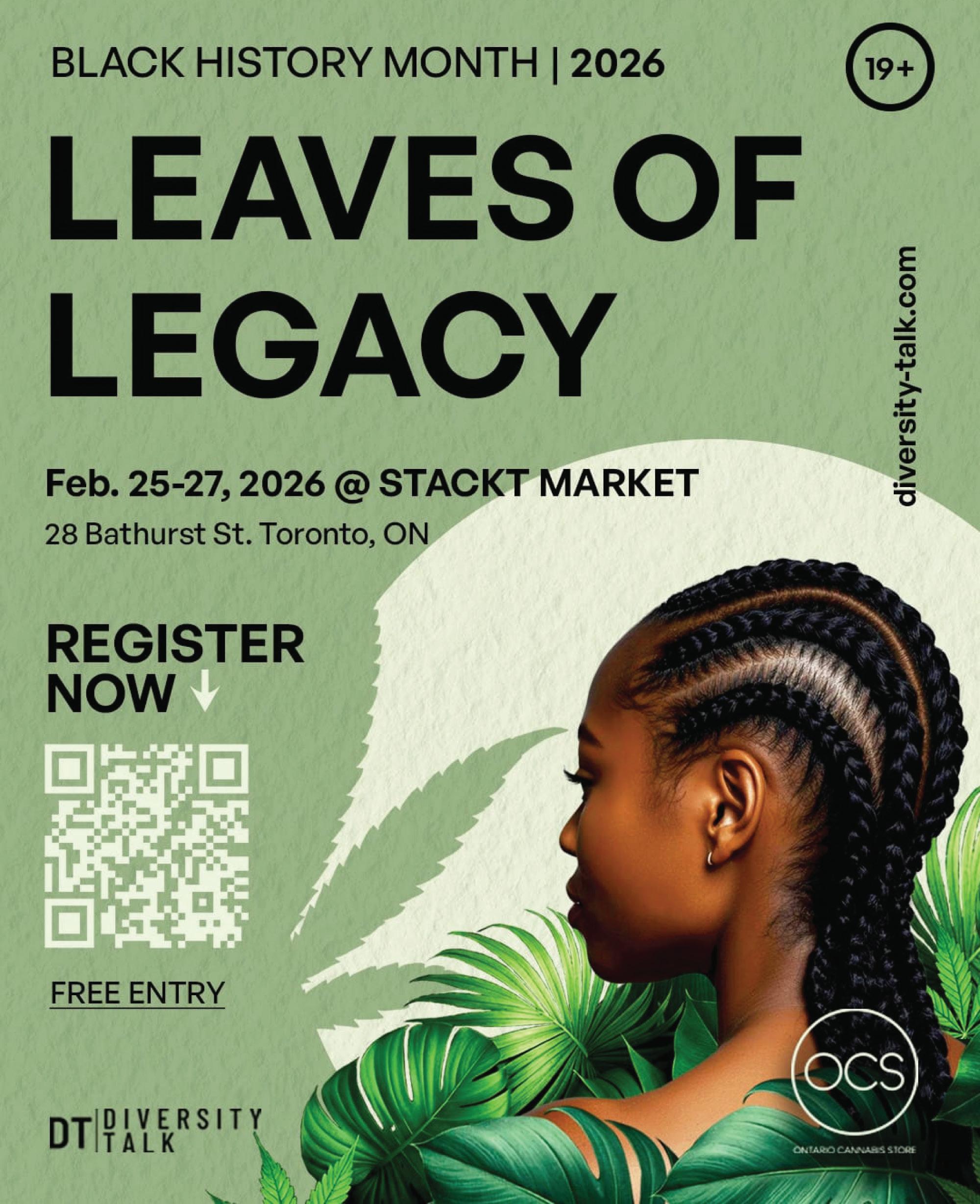
TORONTO, Ontario, February 9, 2026 — DiversityTalk, a public health and social development consultancy, will present Leaves of Legacy, a three-day exhibition exploring the historical relationship between cannabis and Black communities, from February 25–27, 2026 at Stackt Market in Toronto. Designed as a Black History Month public education initiative in partnership with the Ontario Cannabis Store, the exhibition highlights overlooked contributions, cultural traditions, and policy impacts tied to cannabis within the African diaspora.
Leaves of Legacy examines cannabis in Rastafarian spiritual practice, herbal medicine traditions across the Caribbean and Africa, and the disproportionate criminalization of Black communities under prohibition, situating these stories within ongoing debates on drug policy reform, health equity, and cultural recognition. “This exhibition is about restoring context to a story that has been deliberately fragmented,” said Ika Washington, Founder and Principal Consultant at DiversityTalk. “Black communities have carried knowledge, tradition, and consequence around cannabis for generations. During Black History Month, we are creating space for that narrative to be seen, understood, and treated with the seriousness it deserves.”
The Opening Night program on February 25, from 6:30–10:00 PM, will feature a guided curatorial tour, a
moderated panel on cannabis, culture, and mental health, and excerpts from Rasta’s Journey, a documentary by filmmaker Donisha Pendergast and cultural historian Patricia Scarlett, along with networking and interactive elements. Public access continues February 26–27, 11:00 AM–9:00 PM. The installation includes traditional chalices, historic photos, policy documents, a health promotion hub, video testimonies, and data visualizations on arrest disparities, health outcomes, and exclusion from legal cannabis markets.
Positioned within DiversityTalk’s broader mandate to advance culturally grounded health education, the exhibition challenges inequities embedded in policy and public discourse and bridges research, lived experience, and social change. “We are not romanticizing cannabis. We are examining its place in history, ritual, and survival, and the consequences of its criminalization,” Washington added. “We are asking visitors to think critically about whose stories are told, whose are suppressed, and what that costs us collectively in a legal cannabis landscape.”
Leaves of Legacy is free and open to the public, with advance registration recommended due to limited capacity. Additional programming details and panel participants will be announced on February 20.
Find the care
Pharmacy
Best for:
• Cold & u
• Minor infections
• Common ailments
Bene ts:
• No appointment
• Convenient
• Medication advice
Family Doctor / Nurse Practitioner
Don't have one? Visit AccessPrimaryCare.ca
Best for:
• Cold & u
• Minor illness
• Chronic conditions
Bene ts:
• Booked appointments
• Follow-up care
that’s right for you
Mississauga Paediatric Care Clinic
For children ages 6 months to 17 years. By appointment only.
Best for:
• Cough
• Cold & u
• Minor childhood illness
Bene ts:
• Same-day visits
• After-hours care
HealthPod / Virtual Care
Best for:
• Minor illness
• Prescriptions
• Follow-up questions
Bene ts:
• Same-day virtual care
• Private one-person clinic
Urgent Care Centre
At Queensway Health Centre. Open daily, 3 to 9 p.m.
Best for:
• Minor cuts & burns
• Sprains
• Infections & sore throat
Bene ts:
• Walk-in care
Best for:
• Chest pain
• Trouble breathing
• Severe bleeding
• Serious injury
Bene ts:
• Open 24/7
• Advanced diagnostics
• Open evenings Emergency Department
Even Angels Need Guardians
SATURDAY, FEBRUARY 14th, 2026
Woodbine Banquet Hall
30 Vice Regent Blvd, Etobicoke (Hwy 27, South Of Rexdale Blvd)
Doors Open @ 5:30 pm • Dinner 8:00 pm
Tickets $75.00
• Roses for the Ladies • Cash Bar • Formal Attire
FOR TICKETS AND INFO CONTACT: • Jay: 416-418-2745 • Ojha: 905-672-2287 • Vic: 647-280-6712
Vitamin D deficiency; Easy to detect and inexpensive to correct
BY DIANA GIFFORD-JONES COMMON SENSE HEALTH
In 1982, PubMed, a research database, indexed 740 papers with “vitamin D” in the title. In 2020, there were 5,566. Clearly interest has increased. Today, vitamin D is studied as a system-wide regulator and an essential component of skeletal, immune, metabolic, cardiovascular, neurological, and inflammatory processes.
Even a century ago, nutritionists feared the dangers of vitamin D deficiency. Warnings were dismissed as alternative thinking.
Vitamin D was discovered in the early 20th century, when researchers noticed that children deprived of sunlight developed rickets, a bone-softening disease that left them bow-legged and deformed.
In 1903, Niels Ryberg Finsen, a Danish physician with Icelandic roots, received a Nobel prize for pioneering the therapeutic use of concentrated light. Sanatoriums, which emphasized sunlight exposure, and cod liver oil, rich in D, were common treatments
for tuberculosis and other infections, but Finsen’s work explained it.
For decades afterward, vitamin D was viewed narrowly as a bone vitamin in spite of the success of sanatoriums. Once rickets was largely eliminated through supplementation of food, the medical profession lost interest. Blood levels were rarely tested. The assumption was that a normal diet and a bit of sunshine were enough.
More recent research has shown D is not just a vitamin, but a hormone, influencing hundreds of genes involved in immune function, inflammation, muscle strength, and brain health. Across the human lifespan, as much as 3-4% of the human genome is influenced by vitamin D. It’s confirmed what early advocates suspected; deficiency is the norm, not the exception.
With aging, skin becomes far less efficient at producing D from sunlight. An 80-year-old produces only a fraction that a 20-year-old can make with the same sun exposure, and if you live north of Atlanta, GA, you aren’t making enough D from sun-
light in winter, period. Vitamin D is vital for mothers and developing children too.
Diet alone often isn’t enough. Very few foods naturally contain meaningful amounts of vitamin D. Unless someone regularly eats fatty fish, or takes supplements, intake is usually inadequate. That means blood levels fall well below what researchers now associate with optimal health, 40 – 100 ng/ml.
Low vitamin D levels are strongly associated with increased risk of fractures and osteoporosis; loss of muscle strength and balance, leading to falls; impaired immune function and higher susceptibility to infections; chronic inflammation, which underlies heart disease, diabetes, and arthritis; and cognitive decline and mood disorders, including depression.
In other words, vitamin D deficiency worsens many of the conditions we attribute to normal aging. Perhaps the greatest irony is this: vitamin D deficiency is easy to detect and inexpensive to correct. A simple blood test can reveal deficiency. Sensible supplementation can restore healthy lev-
els. Yet many elderly patients are never tested, and when they are, the acceptable levels recommended by some authorities are likely too low to provide full protection. 2000 – 5000 IU or 50 – 125 mcg of D3 per day is a good start, guided by testing blood levels. Magnesium and Vitamin K2 are important companion nutrients to optimize vitamin D metabolism.
Medicine is very good at treating disease once it appears, but far less interested in preventing it. Vitamin D deficiency is a textbook example of this failure. No vitamin is a magic bullet, and vitamin D is no exception, but ignoring a widespread deficiency that affects bones, muscles, immunity, and brain health makes no sense. If there is a lesson here, it is one that’s been repeated in this column many times: when common sense, biology, and well-conducted research point in the same direction, it’s time to pay attention, no matter how long it takes conventional thinking to catch up.
Caribbean-Infused Chicken Wings Big Flavour, Deep Roots, and No Need for Apologies
There are foods you eat quietly, politely, with a knife and fork. Caribbean chicken wings are not one of those foods.
These are the wings you eat standing up in someone’s backyard. The kind you reach for while music is playing just a little too loud, the grill is throwing smoke into the air, and somebody is arguing over dominoes at a plastic table. Your fingers get sticky, your lips get hot, and halfway through you already know you’re going back for more.
In Caribbean culture, food is never just about eating. It’s about connection, memory, and expression. It’s about flavour that tells a story before a word is spoken. And chicken—especially chicken done right—has always been one of the great carriers of that story.
This article isn’t just about wings. It’s about why we cook the way we do, how flavour became our language, and what happens when you bring Caribbean thinking to a dish everyone thinks they already know.
Chicken, Culture, and the Caribbean Way of Cooking Chicken is one of the most widely used proteins across the Caribbean, not because it’s trendy, but because it’s accessible, versatile, and forgiving. Whether you’re talking about jerk chicken in Jamaica, stewed chicken in Trinidad, curry chicken in Guyana, or grilled chicken throughout the islands, chicken has always adapted to its surroundings.
But adaptation doesn’t mean compromise. Caribbean cooking is built on layering—layering heat with sweetness, smoke with freshness, richness with acidity. Nothing is accidental. Even when a recipe feels loose or improvised, there’s instinct behind it. Knowledge passed down without measurements, written instructions, or fancy names.
That same philosophy is what turns an ordinary chicken wing into something unforgettable.
Why Wings Work So Well for Caribbean Flavours
Chicken wings are the perfect canvas for Caribbean seasoning for one simple reason: surface area.
More skin means more seasoning. More seasoning means more opportunity for flavour to develop, caramelize, char, and bite back.
Wings also invite boldness. Nobody expects subtlety from a wing. They’re supposed to hit hard. They’re supposed to make you sweat a little, laugh a little, and
reach for a drink.
And that’s exactly where Caribbean flavour lives.
Heat Is Not the Point—Balance Is
One of the biggest misconceptions about Caribbean food is that it’s all about heat. Heat matters, yes—but heat without balance is lazy cooking.
True Caribbean flavour is about contrast:
• Fire from Scotch bonnet
• Sweetness from sugar or fruit
• Earthiness from thyme and allspice
• Sharpness from citrus
• Depth from smoke, browning, and time
When those elements come together properly, the heat doesn’t overwhelm—you feel it, respect it, and keep going back for it. That’s what these wings are built on.
The Foundation: Caribbean-Infused Marinade
This marinade isn’t jerk in the strict, traditional sense—but it’s absolutely inspired by jerk thinking. It borrows the same logic: bold aromatics, real heat, herbs, and a balance of sweet and savoury.
Ingredients (Serves 4–6)
For the Wings
• 3 lbs chicken wings, split and tips removed
• 1 tbsp baking powder (optional, for extra crispiness)
• 1½ tsp salt
• 1 tsp black pepper
For the Marinade
• 3–4 cloves garlic
• 2–3 scallions (green onions)
• 1 Scotch bonnet pepper
• 1 tbsp fresh ginger, grated
• 2 tbsp fresh thyme (or 2 tsp dried)
• 1 tsp ground allspice
• 1 tsp smoked paprika
• 2 tbsp brown sugar
• 1 tbsp soy sauce
• Juice of 1 lime
• 2 tbsp olive oil
• 2 tbsp dark rum (optional, but it adds depth)
Blend everything into a thick, fragrant marinade.
Marinating: Where Patience Pays Off
If there’s one mistake people make with Caribbean-style cooking, it’s rushing the marinade.
This is not a “30 minutes and hope
for the best” situation.
The marinade needs time to:
• Penetrate the meat
• Break down fibres
• Set the tone for how the wings cook and finish
Best Practice:
• Toss wings with salt, pepper, and baking powder first
• Coat generously with marinade
• Cover and refrigerate at least 4 hours
• Overnight is better
• 24 hours is best if you’re planning ahead
This is where flavour stops being surfacelevel and becomes part of the wing itself.
Cooking Methods: Choose Your Weapon Oven-Baked (Reliable and Consistent)
Perfect for home kitchens and batch cooking.
• Preheat oven to 425°F (220°C)
• Place wings on a wire rack over a baking sheet
• Bake 25 minutes
• Flip and bake another 20–25 minutes
• Broil 2–3 minutes for char and colour
You want bubbling skin, dark edges, and that slightly sticky finish.
Air Fryer (Fast and Crispy)
Ideal for smaller batches and quick cravings.
• Cook at 390°F for 18–22 minutes
• Shake halfway through
• Finish with a quick brush of glaze if using
The air fryer locks in juice while giving you that satisfying crunch.
Grill (The Real Backyard Experience)
This is where Caribbean flavour truly shines.
• Medium-high heat
• Grill wings 20–25 minutes
• Turn often to avoid burning
• Watch the sugar—it caramelizes fast
The smoke adds another layer you just can’t fake indoors.
The Optional—but Dangerous—Sticky Caribbean Glaze
These wings are great on their own. They’re next-level with glaze.
Sticky Glaze Ingredients
• ½ cup pineapple juice
• 2 tbsp honey
• 2 tbsp brown sugar
• 1 tbsp soy sauce
• Juice of ½ lime
• Pinch of cayenne (optional)
Simmer gently until thick enough to coat the back of a spoon. Toss wings in glaze while hot and finish with a quick blast of heat.
This is the moment people start asking questions.
What to Serve with Caribbean Wings
Caribbean food understands contrast, so your sides should cool things down or brighten the plate.
Good pairings:
• Mango or pineapple slaw
• Cucumber salad with lime and salt
• Fried plantain
• Rice and peas if you’re turning this into a meal
And yes—cold drinks are mandatory.
Why These Wings Matter
On the surface, this is just a chicken wing recipe.
But really, it’s an example of what Caribbean food has always done best: take something familiar and make it unforgettable.
It’s about respect for flavour. Respect for process. Respect for where these tastes come from.
You don’t rush Caribbean food. You don’t water it down. You don’t apologize for it. You let it speak.
Final Thoughts
These wings aren’t designed to impress food critics. They’re designed to bring people together.
They’re messy. They’re loud. They’re bold.
And they carry that unmistakable Caribbean energy—the kind that turns a simple meal into a moment, and a moment into a memory.
If food is culture, these wings say exactly who we are.
BY GEORGE SHEPPARD A DIFFERENT PERSPECTIVE
Grief does not arrive all at once. It seeps in, settles, and, years later, can still knock the wind out of you without warning. It changes shape over time, but it never truly loosens its grip.
My brother Barry was three years younger than me. We were very different, yet inseparable in the way only siblings can be, without discussion or declaration. We built entire worlds together in the snow, climbed trees with scraped knuckles and quiet courage, and shared a way of communicating that required no explanation. Oh, could we laugh, comments only we understood. I loved him fiercely. Some
Grief and loss never truly fade
bonds do not announce themselves; they simply exist, solid and unquestioned. Ours was one of those.
On an early June day in 1984, that world cracked. Barry slipped on wet grass and injured his leg. It seemed ordinary enough, an accident that would heal, a story that might later be retold with the signatures on a cast. Instead, it marked the beginning of something unspeakably cruel. In the days that followed, the diagnosis came: osteosarcoma. Bone cancer. A word none of us had reason to know, suddenly defining everything.
For my parents, the devastation was immediate and absolute. Their child had a disease they could neither negotiate with nor shield him from. There is a
Another social media couple calls it quits
BY SYDNEY WALCOTT VARIETY CORNER
We’ve seen many couples who have achieved fame through social media call it quits throughout the years. 2026 started with The Scotts becoming another social media couple to end their relationship.
On January 9th, 2026, the news broke that Kristy, 30, and Desmond Scott, 32, who go by “The Scotts” on social media, would be ending their marriage after 11 years. In court documents from Harris County, Texas, Kristy filed for divorce from Desmond on December 30th, 2025, citing alleged infidelity as the reason for their divorce. The paperwork also lists that there is no chance of reconciliation, a request for Kristy to restore her maiden name to Small and states the two will no longer live together. Outside of social media, the estranged pair also co-own a wedding videography company, Meant To Be Films. It is unclear what will become of the company.
The day after their divorce filing was made public, Desmond broke his silence in a post on Instagram Stories, apologizing to Kristy, revealing that the two had discussions where he revealed he wanted to separate and admitted he made choices he was not proud of.
“Kristy and I faced challenges and made sincere efforts to work through them. Toward the end of 2025, I wanted to separate, and I had conversations with Kristy regarding this. During this period, I made choices that I am not proud of. I took responsibility for those actions. I shared this with her directly and personally, and ultimately, we decided to divorce. I ask for privacy and compassion as we navigate this difficult chapter in our lives,” wrote Desmond in part of his statement.
Five days after posting his statement, TMZ shared a video of Desmond making out with a woman at a bar, leading to people speculating that Desmond was making out with the woman he was having an affair with. The woman in the video was later identified as Marissa Springer, a 24-year-old model and content creator who is in graduate school studying business at the University of Houston.
On January 18th, 2025, Springer took to TikTok to clear the air and denied being the woman Desmond cheated on Kristy with. She also stated the two did not know each other before their encounter at the bar.
“I’m pretty sure when you guys meet someone at a club, you don’t interrogate them about who or what their social media status is,” said Springer. “We were obviously many drinks in. The vibes were there.”
“Moral of the story, nobody knows what goes on behind closed doors,” Springer concluded in her video.
About three weeks after Desmond posted his statement, Kristy addressed their divorce in an Instagram video for the first time. “Thank you, guys, so much for being a good support system for me,” said Kristy while shopping for groceries for the first time in a new, unexpected chapter in her life. She also shared that she won’t be posting any comedic content for the time being while she navigates through a new chapter in her life but will return to entertaining viewers with videos of her dancing and doing cartwheels in heels in the future. The video ended with Kristy sharing that she wants to work towards having a better social life.
Two weeks before she addressed the divorce, Kristy posted a series of photos on an Instagram post wearing a red dress and sporting a new bob-length haircut, with the caption: “same address,” hinting she will be keeping the dream home the two built together.
With all that has come out, some have resorted to blaming Kristy for Desmond’s alleged infidelity due to the playful aggression she displayed towards Desmond in their videos. There might be a limit when it comes to playful aggression, but it doesn’t justify being unfaithful. Cheating hurts and can lead to trust issues.
The two met and started their relationship at the age of 14, tied the knot in 2014 at 19 and 20 years old and share two sons, Vance and Westin.
Along with mostly being known for their comedic content through Kristy and cooking content through Desmond, their relationship journey involving the sweetheart narrative has led to their fan base referring to them as a “fairytale” couple. With their divorce proceedings taking place, this situation is once again making viewers at home understand that no one’s relationship should be idolized because we are all on the outside looking in and don’t know what goes on once the cameras stop rolling.
particular helplessness in watching your child suffer; it settles deep and does not leave. After agonizing decisions, Barry underwent major reconstructive surgery at Mount Sinai Hospital in Toronto. Amputation was avoided, but what remained was a leg that was fragile, altered, and never quite his own again.
Hospitals became our second home. Long hallways, waiting rooms, the antiseptic smell that clung to clothes; these replaced ordinary routines. The rhythmic beep of IV machines and the squeak of carts rolling down the halls became familiar sounds. Nurses were no longer strangers, but constants, steady presences in a life that felt anything but steady. My parents lived in a state of permanent fear, bracing for news, managing fear, holding themselves together because there was no alternative. I tried to bring normalcy where I could, to keep conversations alive, to build bridges back to the life we remembered, to pretend, briefly, that we were not living in a world split cleanly into before and after. The shock was relentless.
Through it all, Barry was calm. Focused. Serious beyond his years, though not without flashes of irritation or boredom when the days stretched too long. He hated the waiting more than the procedures. While his friends drifted on with their lives: school dances, casual plans, futures assumed rather than questioned, Barry was quietly removed from his own. Chemotherapy. Radiation. Scans. Tests. Time measured not in seasons, but in results and recovery days.
An ominous routine took hold. My father went to sea for work, carrying his worry across the water. My mother became everything at once: caregiver, advocate, protector, anchor. Her world narrowed to medication schedules, appointments, and watching for signs no parent should ever have to look for. I was away at university, clinging to the outline of a normal life while knowing that nothing about our family was normal anymore. Trekking home every weekend to reconnect, to help where I could.
The cancer did not stay confined to his leg. Tumours appeared in his right lung, leading to major surgery and more chemotherapy. Then the left lung. Again surgery. Again treatment. Each time, we allowed ourselves to hope it was the last chapter. Each time, it was not. Hope became cautious, almost whispered, afraid to draw attention to itself.
In the end, the disease returned without mercy, multiple tumours in his lungs and along his back. Barry, once a solid two hundred pounds, grew frighteningly small, his body thinning while his resolve never did. He endured with a quiet strength that still humbles me. He did not rage against what was happening or ask why his life had been narrowed so unfairly. He met it with composure, with dignity, with a courage that asked nothing of anyone else. Now, decades later, when grief still arrives without warning, I understand this: I do not miss the boy he once was or the life he might have had—I miss my brother. I miss him dearly
BY SIMONE J. SMITH HUMAN SPECIALIST
Let’s have a real conversation, family. We look at the icons of our culture, the entertainers who command the stage and the moguls who build empires, and we often think they possess a mystical it factor. We call it manifesting or the law of attraction, but as someone who looks at the world through the lens of psychology and power, I want to pull back the curtain. Behind the glamour, there is a strategic tool that is available to every single one of us, yet so few use it to its full potential: the power of the pen.
The sources I have been analyzing confirm what the greats have always known. Writing your goals is a measurable psychological shift. Research shows that people who write their goals, break them into actions, and track them are substantially more likely to achieve them than those who
BY HERBERT HILDEBRANDT POLITICAL PARLEY
The real question Canadians should ask isn’t “Are Albertans being dramatic?” It’s “What is holding this confederation together?” When separatism shows up twice in 50 years, first in Quebec, now in Alberta, it stops looking like a tantrum and starts looking like a systems warning light.
Quebec ran the experiment first. Its sovereignty votes were stress tests that revealed how close Canada can get to the edge without deciding what it is: 50.6% NO and 49.4% YES. Alberta is now running the next one, and the timing isn’t random.
Alberta didn’t suddenly wake up cranky. It has spent years feeling like a resource engine expected to run quietly while other regions define “national interest”, often with a tone that treats oil as a moral stain and pipelines as civic heresy. You can debate policy details forever, but politics runs on perception, and Alberta’s perception is blunt: paid in, complied, scolded anyway, and still unable to point to a return that feels commensurate.
Equalization isn’t a direct invoice Alberta receives; it’s a federal
Write to heal your mind
keep them trapped in their heads. In fact, one study found that those who wrote down their goals and created action plans achieved them at a rate of 76%, compared to only 43% for those who didn’t. That is a 33% gap between wishing for a life and actually living it. Why does this happen? It’s not just about the universe responding, though it can feel that way. It’s about how you allocate your cognitive resources. When you put ink to paper, you are engaging in a form of selective attention and priming. You are telling your brain, “This matters.” This bias moves your focus toward cues and opportunities that align with your goals.
Beyond the strategy of achievement, there is the necessity of healing. As a community, we carry weight, stress, trauma, and the constant noise of a world that doesn’t always see our value. Writing is a tool for emotional regulation. James Pennebaker’s classic experiments revealed that expres-
sive writing (writing for 15–20 minutes about your deepest feelings) actually improves immune function and reduces physical symptoms. Participants in these studies had fewer doctor visits and lower levels of anxiety and depression. For my brothers and sisters navigating the high-pressure worlds of entertainment and education, this is a mental health intervention that helps you organize your memories and reduce the mental loop of rumination.
We have to be smarter than the narratives sold to us. The sources make it clear: while there’s no mainstream scientific evidence that the universe will drop money in your lap just because you wrote it down, the research proves that writing restructures your brain. It engages your prefrontal cortex, helping you reframe events and hold yourself accountable.
In a world designed to distract you, your attention is your greatest asset. People who actually still turn
Is Canada falling apart?
transfer program. but Alberta has long been a major net contributor to federal revenues relative to what it receives back. When people believe the deal is structurally one-way, they don’t become more patriotic, but increasingly transactional.
That’s why the current separatist push matters. Petitions, referendum chatter, and formal initiative processes aren’t just venting; they’re leverage, and separatism doesn’t need majority support to become a national crisis. A durable minority with momentum can dominate the agenda, force concessions, and keep the federation permanently negotiating. Sort of like living with a smoke alarm that never quite shuts off.
Then came the fuel on the fire in late January: reports of separatist outreach to U.S.-connected figures. That pulled the story out of provincial grievance and into foreign-policy territory. Once outside actors sniff an internal fracture, everything gets sharper. It’s no longer only, “What does Alberta want?” It becomes “Who is trying to use Alberta to get what they want?” That’s why B.C. Premier David Eby used the old, loaded word “treason,” and why other leaders reacted sharply.
Here’s the bigger point Ottawa and the Carney government keep missing: hating Donald Trump is not a national unity strategy. It’s a coping mechanism identity built out of opposition; a flag stitched from anti-flag. You can’t hold a country together by chanting, “At least we’re not those people,” especially when our economy and supply chains are tied to American decisions whether we like it or not.
If Canada forms a unifying narrative, it can’t be purely political, because politics is exactly why we’re splitting apart. Our population concentrates in a few gravitational zones: Vancouver, the Calgary–Edmonton corridor, the Golden Horseshoe, and the Ottawa–Montreal–Quebec corridor. Each has its own economic logic, news media ecosystem, and moral vocabulary. When a country can’t agree on the moral vocabulary, it can’t agree on the rules, and when rules feel like weapons used by one region against another, loyalty decays fast.
Legally, this is not vote and walk away. Canada’s framework doesn’t allow unilateral secession; a clear referendum would trigger negotiations and a complex constitutional process, with Indigenous rights and treaties in the
to the pen report an 88% increase in focus. Writing things down can even boost your memory recall by over 20%. Imagine what you could do with a 20% stronger memory and a sharper attention span in your next board meeting or creative session.
This is where the psychological meets the cultural. When we write our stories, we are healing divisions and reclaiming our power. Whether you are an entrepreneur, a wellness leader, or an artist, you must move beyond mentally intending your success.
I challenge you to stop leaving your dreams to chance. Grab a notebook. Write your intentions. Map your actions. By transforming your internal chaos into organized words, you move from being a spectator of your life to being a curator. Let’s stop just dreaming and start documenting. Your future is waiting for you to write it into existence.
room. This isn’t a clean breakup. It’s a messy divorce where everyone shows up with lawyers.
That’s why this moment feels like it is building up to an existential crisis. Not because separation is inevitable, but because the confederation is being forced to answer questions it has dodged for decades. Are we a shared project, or a negotiated ceasefire between regions? Are we a nation, or a redistribution mechanism with a passport? Do we still believe in one another enough to compromise, or only enough to invoice? If the answer is invoice, then separatism isn’t shocking. It’s the logical outcome.
The world is also drifting toward a more regional mindset. It’s less mega-identity, more sovereignty, more local preference. If that’s where the current is going, Canada doesn’t stay together by default, we will only stay together by design.
If our governing class cannot articulate a national story that treats every region as a co-owner rather than a stakeholder to be milked dry at every opportunity, the Alberta independence movement won’t be the end of Canada. It will just be the province that finally said the quiet part out loud.
BY DANIEL COLE PERSONAL DEVELOPMENT
So, you think you know yourself!
Human progress is inseparable from the revision of what we once called truth. Across history, ideas once defended with absolute certainty have been modified, refined, or abandoned altogether. Today, supported by extensive scientific evidence, we accept that the Earth is spherical. Yet this was not always universally held. The evolution of such beliefs does not merely reflect advances in knowledge; it reveals something deeper about the nature of truth itself, namely, that human understanding is provisional.
Knowledge grows, methods improve, and evidence accumulates. What seemed incontrovertible decades ago may no longer withstand scrutiny today. The problem, however, is not that truth evolves. The real danger lies in our tendency to treat current conclusions as final.
Psychology offers a useful concept here: metacognition, the ability to think about one’s own thinking. At its core, metacognition asks us to examine not only what we believe, but why we believe it and how those beliefs were formed. Few people routinely interrogate their assumptions. Even fewer examine the credibility of the sources that shaped them. Yet without this discipline, beliefs ossify into dogma, insulated from correction.
History provides sobering reminders of this fragility. For centuries, Isaac Newton’s laws of motion and gravity were regarded as definitive explanations of physical reality. They worked
extraordinarily well, until Albert Einstein demonstrated that they were incomplete. Newton was not simply wrong; his framework functioned within certain limits. Einstein revealed those limits and expanded our understanding. This pattern, of partial truths giving way to fuller ones, runs throughout intellectual history.
The same is true, beyond physics. Many assume Charles Darwin originated the idea of evolution. Darwin’s contribution was to rigorously articulate and empirically support the theory of natural selection. The underlying idea of evolution existed long before him, explored by ancient thinkers such as: Anaximander, Empedocles, and Lucretius. Intellectual breakthroughs rarely emerge in isolation; they are cumulative, shaped by centuries of inquiry, debate, and revision.
Even philosophy, humanity’s most sustained attempt to understand truth, has limits. Socrates, the archetype of rational inquiry, famously declared that wisdom begins with knowing one’s ignorance. Still, he was condemned to death by the very society whose assumptions he challenged. His fate reminds us that truth is not determined solely by logic or reason, but by power, consensus, and cultural comfort. Rationality does not guarantee acceptance, nor does brilliance confer immunity from error or tragedy.
In the modern world, truth is often filtered through institutions: universities, journals, governments, and increasingly, technology platforms. Social media companies routinely censor information they deem to be misinformation, especially during global crises. While such
measures may be motivated by public safety, they raise critical questions: Who decides what qualifies as truth? What criteria are used, and how accountable are those arbiters?
Similarly, students are discouraged from citing sources like Wikipedia, not because it is always inaccurate, but because it lacks formal scholarly oversight. This distinction matters. Credibility is not merely about content, but about methodology, transparency, and accountability. The implication is clear: no system of knowledge is immune to error.
This brings us to a deeply personal question: what principles govern your life? What version of truth shapes your decisions, your ethics, and your sense of meaning? These are not abstract concerns. They influence how we reason, whom we trust, and what we defend.
Is there such a thing as absolute truth? Philosophers, theologians, and scientists have debated this for centuries. While answers vary, one practical conclusion remains undeniable: before adopting any worldview, it must be examined. Intellectual inquiry is not rebellion; it is responsibility. Popularity does not guarantee accuracy, and consensus does not equate to correctness.
Franz Kafka once warned against editing one’s soul to fit prevailing fashions. To think independently, to question dominant narratives and inherited beliefs requires courage. As the poet Czesław Miłosz observed, in an environment of collective silence, a single honest statement can sound explosive. Truth unsettles. It disrupts comfort. That is precisely why it matters.
Healing starts with releasing what we carry
BY ANYA NICOLA
February has always felt like the month of reckoning to me. Not because of Valentine’s Day, or Black History Month (though both matters), but because February forces us to sit with ourselves in the dead of winter and ask the hard questions we’ve been avoiding since New Year’s resolutions failed.
This February, I’m asking myself: What am I still carrying that doesn’t belong to me?
Growing up Caribbean means inheriting more than recipes and accents. We inherit trauma wrapped in proverbs, pain disguised as protection, and survival strategies that once saved our ancestors, but now sabotage our peace. We carry our grandmothers’ fears of not being enough, our fathers’ anger at systems that diminished them, our mothers’ exhaustion from holding everyone together while falling apart inside.
The question isn’t whether we carry these things, but the question is whether we are ready to examine what we have been holding and decide what still serves us.
Last week, I sat in therapy talking about my relationship with money, and my therapist asked, “Where did you first learn that wanting more meant being ungrateful?” The answer hit me like a slap: Sunday dinner table, age seven, being told that “Wanting too much” was why slavery happened, why we had to
leave home, why we could never get comfortable anywhere.
That belief served my family when resources were scarce, and survival meant being grateful for scraps, but in 2026, it’s keeping me small when I should be expanding. It makes me apologize for success when I should be celebrating it.
This is the work of Caribbean healing; distinguishing between ancestral wisdom that still serves us and ancestral wounds that limit us. Our grandparents’ caution about trusting systems was survival wisdom. Their fear of taking up space was a trauma response. We need to keep the wisdom, heal the wounds.
February’s short days force this kind of reflection. When there’s nowhere to hide in endless winter light, we must face what we’ve been carrying in the darkness, and for many of us, what we find is forgiveness work that we’ve been avoiding, because forgiveness feels like betrayal.
Here’s what I am learning: forgiving the people who hurt us isn’t about them, it’s about us. Forgiving the systems that failed us isn’t about absolving them, it’s about freeing ourselves. Forgiving our parents for passing down their unhealed trauma isn’t about excusing their choices; it’s about choosing differently for our own children.
The Caribbean women in my healing circle understand this in ways that mainstream therapy sometimes misses. We know that forgiveness doesn’t mean reconciliation. We know
that setting boundaries with family can be an act of love. We know that breaking generational patterns requires grieving the family dynamics we’re choosing to let go of.
This February, I’m practicing what I call strategic forgiveness, releasing resentments that poison my peace while maintaining boundaries that protect my progress. I’m forgiving my parents for not knowing how to process their own trauma while refusing to inherit their coping mechanisms. I’m forgiving myself for repeating their patterns while committing to interrupting them.
February is also Black History Month, which means we’re celebrating our ancestors while acknowledging their struggles, but what if this year, instead of just honouring their resilience, we also honoured their need for healing? What if we celebrated not just their ability to survive, but also our ability to thrive by doing the emotional work they didn’t have time or tools for?
The healing happens when we realize that forgiveness is the ultimate act of revolution. When we forgive, strategically, we break cycles. When we release what doesn’t serve us, we make room for what does. When we stop carrying other people’s pain, we free up energy to have our own dreams.
February’s gift is its brevity; 28 days to practice forgiveness before spring demands growth. Use them wisely.
The condo collapse you won’t see on the front page
I still recall the first call. It came from a young investor I met a few years earlier at one of my real estate workshops. Back then, he was full of confidence, the kind that only a hot condo market can give you. He had purchased a pre-construction unit in downtown Toronto, put down a modest deposit, and thought he would flip it, or rent it out for a good profit.
“Jay,” he said, his voice noticeably different this time, “My unit is closing... and I don’t think I can afford it.”
That conversation has occurred more times than I can count in the past year.
What we’re seeing in Ontario’s condo market right now isn’t just a slowdown. It’s a reckoning, and the toughest part is happening at the closing table.
If you walk through downtown Toronto, Mississauga, Vaughan, or even parts of Hamilton, you can feel it: cranes everywhere, glass towers rising in every direction. For years, we celebrated this as progress: more housing, higher density, more opportunities.
Here’s what many people didn’t fully understand: many of those units were built for investors, not residents. Small one-bedroom and micro-units were made to flip or rent. Now that so many are finished, they are sitting on the market.
In rising markets, we often forget that the purchase price in your contract isn’t the amount a bank will use to determine your mortgage. At closing, the bank orders an appraisal, and in today’s market, these appraisals are often below the original contract price. That means buyers suddenly owe significantly more cash at closing than they expected.
I heard from another buyer who purchased a pre-construction unit in 2021. At that time, the hype was all about future growth and big returns. Fast forward to closing; the appraisal came in $400,000 below what he had
agreed to pay. The bank wouldn’t lend based on the higher price, and suddenly he faced a tough choice: find hundreds of thousands of extra cash or walk away and forfeit his deposit. Across the GTA, appraisal shortfalls of 10% to 30% are becoming common, especially for preconstruction condos bought at peak prices.
Developers rely on these deals to close. Pre-sales and scheduled closings often generate the cash flow that keeps cranes moving, workers paid, banks satisfied, and projects on track. Without enough buyers closing, developers face higher financing costs, stalled loans, or even default risk, all while construction expenses and interest payments continue to rise.
I’ve spoken with buyers who felt confident when they signed their agreement. They had income, savings, and trust in the market. If the bank refuses to finance the initial price and you can’t cover the difference, you might have to walk away and face a significant loss. When you default on a sales contract, the seller can sue for damages. As a result, some buyers are turning to higherinterest lenders just to close the deal. Every deal that falls through pushes another unit back onto the market at a lower price, which increases downward pressure on the entire segment.
Every market cycle offers lessons, sometimes the tough way. The condo market in Ontario didn’t crash with a big headline. It slowly grew, helped by years of cheap credit and rising prices. Today’s condo market shows us something important: a good contract doesn’t always mean a good investment, and an appraisal still counts.
For buyers and investors, it’s a reminder to always stress-test deals, understand how appraisals work, and prepare for the unexpected. For developers, it’s a warning that risk is shared, not just between builders and banks, but also between sellers and buyers.
For all of us watching Ontario’s housing story unfold, it’s another chapter in the real estate cycle, one that’s teaching a generation that math matters as much as the dream.
YOUR HOROSCOPE
YOUR HOROSCOPE
for the week of February 8 – February 14, 2026
THE LUCKIEST SIGNS THIS WEEK: SCORPIO • AQUARIUS • TAURUS
ARIES: Slow down just enough to avoid mistakes. A decision midweek brings clarity. Trust your gut, not the noise.
TAURUS: Comfort vs growth is the theme. A money or work conversation shifts your perspective. Small changes now pay off later.
GEMINI: Too many ideas, not enough focus. Say what needs to be said midweek. Stop overthinking—let it play out.
CANCER: Protect your energy. Something from the past resurfaces for closure, not chaos. Boundaries are key.
LEO: Attention comes naturally this week, but listen as much as you speak. A leadership moment defines your next move.
VIRGO: Details matter, but don’t get stuck in them. Progress beats perfection. Trust the process by the weekend.
LIBRA: Balance feels off early in the week. Make a clear choice instead of pleasing everyone. Peace follows decisiveness.
SCORPIO: You’re seeing through illusions. Trust what’s revealed, even if it’s uncomfortable. Power comes from honesty.
SAGITTARIUS: Restlessness creeps in. Channel it into planning, not impulsive moves. Patience pays off.
CAPRICORN: Responsibility weighs heavy, but results are forming. Stay consistent. Recognition comes quietly.
AQUARIUS: Your ideas are ahead of the curve. Not everyone will get it—yet. Stay authentic and keep building.
PISCES: Intuition is strong this week. Don’t ignore subtle signs. Quiet reflection brings answers.
CROSSWORDS
HOW TO PLAY :
Fill in the grid so that every row, every column, and every 3x3 box contains the numbers 1 through 9 only once.
Each 3x3 box is outlined with a darker line. You already have a few numbers to get you started. Remember: You must not repeat the numbers 1 through 9 in the same line, column, or 3x3 box.