In collaboration with Professor Sharron Hinchliff, University of Sheffield
“Society often sidelines conversations about confidence, desire, and joy as we get older, but these qualities never diminish.
I’m proud to support Together TV’s campaign to challenge outdated taboos and encourage more openness. And most importantly, help people embrace their sexuality, no matter the age!”
Podcaster and Female Empowerment Activist, Lou Featherstone, is a proud ambassador of the Silver Sex Guide Initiative.
Introduction
Sex in Our 50s and beyond
Let’s Talk About Pleasure
Finding Love and Romance - Dating Nowadays
Part 1 - Let’s Talk About Sex
Chapter 1: Get Your Mojo Back
Chapter 2: Express Yourself
Further Reading:
Chapter 3: Honesty is the Best Policy
Further Reading:
Part 2 – Let’s Get It On
Chapter 1 - Having A Ball
1. The Supportive Embrace 2. The Butterfly
3. Seated Intimacy
4. Modified Lotus Position
Key Tips for Exploring New Positions Further Reading:
Part 3 – Sexual Healing
Chapter 1: Health Issues
Let’s Talk About Women’s Health
Let’s Talk About Men’s Health
Chapter 2: Talking to your Doctor
Introduction
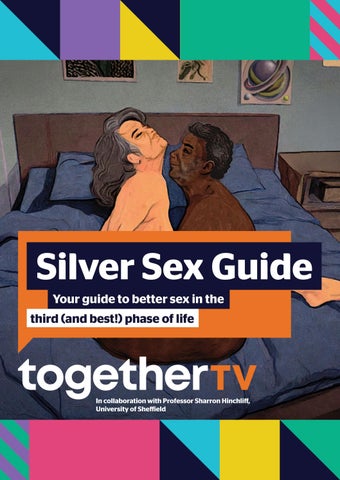
Welcome to Together TV’s Silver Sex Guide, your guide to better sex in the third (and best!) phase of life. In this guide you will find useful and friendly advice that can help your relationship, your health and add some hot sauce to the bedroom.
We know that good sex supports our health and wellbeing at all ages - it boosts our immune system, burns calories, lowers blood pressure and other health risks, keeps our partners close and can help us live longer. And it makes us happy!
And what younger people may not know is that a lot of research has found sex gets better with age. We get more comfortable in our bodies and are often more adventurous in trying new things. Plus, we have nearly as much sex as people in their thirties.
However, our wider society may still have outdated attitudes and misconceptions about sex that overlook the realities of intimacy for people aged 55 and over. Despite our active sex lives, we often feel overlooked. Nearly two-thirds (62%) of people over-55 feel the media fails to portray their relationships, pleasure and intimacy properly.
We’re here to bring some energy and positivity to counter this ageism!
In Part 1 of our Silver Sex Guide we dive into Let’s Talk About Sex, which focusses on understanding how we can improve our sex lives through better communication with your partner. This runs from getting a better understanding of each other’s needs through to being much more open about your desires.
In Part 2 we get into Let’s Get It On - getting down to all things amorous, intimate and erotic, alongside embracing our bodies and understanding the physical changes, limitations and freedoms that come with sex.
Finally in Part 3 we get into Sexual Healing - not another Marvin Gaye reference but rather all the benefits that a healthy sex life can bring - from better health, to enhanced sense of wellbeing and even to improved brainpower.
Each part is broken down into bite-sized step-by-step guides which should get you to expert level in no time. Plus, there are some handy Further Reading links along the way too.
So, without further delay - tantric or otherwise - let’s jump into the Silver Sex Guide.
Sex in our 50s and beyond
Let’s be honest - moving into midlife and beyond brings both challenges and wonderful new possibilities.
Yes, we might start to lose loved ones and feel we are getting older - these feelings are completely natural and it’s important to acknowledge them.
Our bodies change too, and managing health conditions or medications can feel like juggling sometimes! And while getting into midlife and beyond and heading into retirement might mean saying goodbye to the nine-to-five, it also opens doors to exciting new adventures and ways to reinvent ourselves. There are plenty of ways to live life to the full.
Keeping Your Spark Alive
Here are some straightforward ways to maintain your lust for life:
• Treat yourself to colourful, delicious and nutritious meals
• Find physical activities that bring you joy - whether it’s dancing, swimming, or yoga
• Keep your mind buzzing with new learning adventures
• Master the art of relaxation - you’ve earned it!
• Give your body a favour by quitting cigarettes
• Spice up your life (every boy and every girl) by trying something new and unexpected
• Build wonderful relationships with your neighbours and connect with people through community groups
Our later years can be some of our most fulfillingespecially when we take care of ourselves and stay open to life’s continuing adventures!
Let’s Talk About Pleasure
As we move through different life stages, our relationship with intimacy and pleasure might change - and that’s perfectly natural.
Some of us might find our interest in sex evolving, while others may have always preferred different forms of connection. There’s no ‘right’ way to feel, and every path is valid.
Various life changes can influence our intimate lives - whether it’s health challenges, becoming single, losing a beloved partner, or simply feeling that relationships need a fresh spark.
Remember though, intimacy is about so much more than sex - it’s about closeness, touch, excitement and wellbeing.
If you’re on your own or experiencing changes in your sex life, there are wonderful ways to keep that spark of sensuality and joy alive:
Embrace Your Sensual Side:
• Let your body move to music
• Treat yourself to delicious meals
• Wear clothes that make you feel confident
• Create moments that make you feel special
Explore What Brings You Joy:
• Watch romantic films with your favourite actors – even the NHS recommends a good sexy film
• Lose yourself in a romantic book - a bonkbuster, bodice-ripper or Mills and Boon!
• Take time to explore self-pleasure - it’s healthy and natural!
• Take up new hobbies you always dreamed of doing
• Surround yourself with loving friends and family
Finding Love and Romance
The excitement of new romance doesn’t come with an age limit. Whether you’re 17 or 70, butterflies in your stomach when meeting someone special are just as thrilling. Yes, putting yourself out there takes courage, but remember - your perfect match won’t simply appear by magic!
Dating at any age brings its wonderful highs and occasional lows, but that’s life. The key is to embrace this with an open heart.
Wonderful Ways to Meet New People:
• Join a community group for an activity you love - from book clubs to dance to walking groups
• Nurture your friendships - friends often make the best matchmakers!
• Let your social circle know you’re ready for romance
• Consider online dating apps and look at the dating columns in newspapers and magazines
• Try social clubs and afternoon gatherings
The Online Dating Scene
Online dating has become increasingly popular among our age group, with an impressive eight million British people now using dating websites . And here’s some good news - research shows it’s leading to many successful relationships and marriages!
Staying Safe While Having Fun
While dating should be enjoyable, it’s important to look after yourself. Here are some friendly tips for those first dates:
Meeting Up:
• Choose public places like cafés or restaurants for initial meetings
• Start with a simple coffee date - it’s easier to keep things brief
• Keep a trusted friend informed of your plans and whereabouts
• Maintain some privacy initially - no need to share too many personal details straight away
• Plan your journey home in advance.
• Take things at your own pace - there’s no rush to invite someone to your home
Taking Care:
• Keep your wits about you with alcohol - a glass of wine is fine, but stay clear-headed
• Listen to your instincts - they’re usually right!
• Share personal information gradually as trust builds
• Keep work details and contact information private until you feel completely comfortable
Good things often take time. Stay safe, trust your judgment, and enjoy the adventure of finding new companionship.
After all, some of life’s most wonderful relationships can begin at any age.
Part 1: Let’s Talk About Sex
Chapter 1: Get Your Mojo Back
The first thing we need to do is recognise that for some people we may not be having as much sex as we did in our twenties or thirties.
Sex evolves throughout life, and whatever our age, many of us continue to have needs and desires that remain just as important. Forget the stereotype of slowing down – intimacy remains a key part of life.
New Together TV research shows that nearly half (49%) of people aged 55 and over say emotional connection is the most important aspect of intimacy. 42% emphasise the importance of physical pleasure – a higher percentage than younger adults aged 18-34 (38%).
This highlights that sex and connection remain priorities, often increasing with age. And with an improved sex life there are many health benefits, as we set out in Part 3 below.
Now there are lots of reasons you may want to improve your life in the bedroom - sex may have petered out due to physical changes from aging, illnesses and a dimmed romantic spark for long-term couples (and needs relighting!).
Whatever your situation, improving communication can be a great start to a better sex life.
Chapter 2: Express Yourself
The British aren’t very comfortable when it comes to talking about sex. It seems that we can only handle it if it’s turned into a joke - from seaside postcards to Carry On movies - but this whole ‘No Sex Please We’re British’ attitude needs to be put out to pasture.
This is of course easier said than done - and it is very common for us to have some big barriers to contend with.
Many of us are embarrassed talking about our sexual needs and desires.
Our self-esteem may be down in the dumps due to being unhappy about how our aging bodies look (from spread and scarring to the effects of gravity).
Some of us may have a lower sex drive due to the drop in oestrogen, or bowl, bladder and other physical problems.
There may be difficulty becoming aroused, problems with erectile dysfunction, vaginal dryness, painful sex or a lack of mobility. Or there can be depression, anxiety, or trust issues when it comes to intimacy. It’s not easy.
So, we need to do what we can to get beyond these issues.
We need to push aside our coyness about sex, get over the embarrassment or the attitude that its best letting things remain unsaid. We won’t get anywhere like that.
While it can be difficult to talk to a partner about sexual difficulties due to the emotions involved, it is an important step in creating a better sex life. So be brave and make sure you talk to your partner honestly about your sex life.
Top Tip:
Make time to have an honest conversation with your partner.
Start small - for example, you might find it useful to start the conversation by mentioning an article you saw in a magazine, or a conversation you overheard on the bus, or an issue that is being talked about on social media.
Give them your full attention and listen to what they need as well as making it clear what your needs are. Be constructive, collaborative and respectful.
Further Reading:
10 Steps to Effective Couples Communication
A Psychology Today article on fostering good communication in a relationship.
How to Open Up Emotionally in a Relationship
An article on open, emotionally true conversations with your partner.
How to Have a Serious Conversation About Your Relationship
An article on having tougher talks, including how to keep your tone of voice neutral.
Chapter 3: Honesty is the Best Policy
Confidence in the bedroom often grows with age.
Those of us over 55 are twice as likely as younger generations to believe that sexual confidence isn’t tied to age (20% vs. 10% of 35-54s and 8% of 18-34s). More than a third (34%) feel confident exploring sexual pleasure, and 24% are more open about their desires with a partner than they were in the past. This shift demonstrates that embracing sexual expression is a lifelong journey.
For those who are single, in long-term relationships or new relationships, good communication is the bedrock of an open, honest approach to our sex lives. This could be about talking to your doctor, your friends or your partner or partners.
And as the starting point for expressing our sexual desires and defining our boundaries, we need to make sure we can speak feeling that we are in a safe and trusting relationship.
It can be about feeling confident to talk about our emotional and physical needs, perhaps health and physiological issues we may worried about, and our innermost and intimate desires.
To do this requires opening up and the vulnerability that comes with thisand that your partner may also share some of these anxieties.
Get going by finding a time and place that you can talk candidly and without pressure. Be relaxed and open-minded.
Top Tip:
Express what you need without hurting feelings by using “I” phrases:
“I’d like to”
“Things I don’t really like”
Also ask your partner questions about their needs - what do they like, what do they need to reach climax, what would they like to try?
Further Reading:
How much do we know about sex in life in our 50s and beyond
An Age UK article about sexual activity, issues and intimacy.
“An orgasm a day keeps the doctor away.”
– Mae West
Part 2: Let’s Get It On
Chapter 1 - Having A Ball
Sex after 50 can be as fulfilling as sex in our younger years - just now it’s all about embracing the changes our bodies are going through - and exploring new things.
Feeling positive about your body, even if that just means embracing your lumps and bumps as being part of what makes you, well you, is important.
Feeling comfortable in yourself can help you to feel comfortable during intimate moments. During sexual encounters we really need to focus more on intimacy, sensation and sensuality.
Developing stronger emotional connections and bonds with your partner is also important, and this can be achieved through communication, spending time doing things together, as well as spending more time on foreplaycaressing, kissing and touching - along with adding novelty and excitement through sex toys and trying new things. Getting aroused may take a little longer: be patient with yourself and your partner, remember there is no rush, you can be playful and to have fun.
And if you don’t have a partner, solo activity such as masturbation is a healthy way to reap the many benefits of sex.
Further Reading:
Body Image: How We Feel and Think
Resources from the Mental Health Foundation
Body Image as we Age
An article from Independent Age
Chapter 2 - Being Sex-Ready
In her book Great Sex Starts at 50, sex and relationship expert Tracey Cox lays down a simple but brilliant truth: “Use it or lose it.” And honestly, this idea isn’t just about sex —it applies to loads of things once you hit the big 5-0. But when it comes to your sex life, it’s a game-changer.
Regular sex has some serious perks. It can help to strengthen the pelvic floor and so reduce the risk of prolapse and incontinence. And by boosting blood flow to the area it can keep vaginal tissues healthy, and erections firmer. Bottom line: the more you’re getting, the healthier and happier your bits are likely to be.
For Gentlemen - Passing your Sexual MOT
Gents, we may have more grey hair, and gravity is taking its toll, but that’s no reason to stop the fires burning in the bedroom.
In this section we aim to take you from mild to wild, from vanilla to gorilla, from pub bore to sexual tyrannosaur.
And a big part of this is communicating with your partner about his or her pleasure as much as thinking about your own.
Good sex prep is useful - and this can include exercising and stretching to improve your cardiovascular fitness and flexibility, good nutrition and having a more active lifestyle in general.
Health screening for your prostate, testosterone levels and erectile functions are all helpful in getting you sex-ready (and in case you need some pills to help maintain erections).
For Women - A Sexual Glow-Up
Sex as you get in your 50s and beyond can help you to feel good and is often better than it was when you were younger. In fact, many postmenopausal women report they can reach arousal much faster than they could before.
Good sex prep is useful, and this can include pelvic floor exercises and use of lubricants and moisturisers to improve potential vaginal dryness.
If you have problems getting aroused, a vibrator can help get blood moving. Also, you can explore different times of day when your energy levels are highest.
Further Reading:
Pelvic floor exercises
Advice from the NHS
Gentle Yoga with Adriene
A set of gentle yoga exercises on YouTube
Yoga, Sex and Happiness by
Carolin-Marie Roth
A smart guide to better health
Please remember to seek medical advice ahead of starting a new exercise regime
Chapter 3 – The Silver Sutra: Sex Positions from Tame to Wild
Now for the good part.
This chapter suggests just a few sex positions that can inspire you, get you hot and horny, and hopefully bring you to orgasm.
They’re hopefully fun, pleasurable and can build a closer physical, emotional and perhaps even spiritual connection with your partner.
To limber up please consider regular exercise and stretching beforehand and introducing new positions gradually.
As arousal can take a little longer as we get older, make sure to take your time with foreplay; a few more minutes in the build-up can make the pay-off all the more sweeter.
We’re not going to give advice on that here - you know what you like, discuss what you each want, and then get to it.
Once you are both feeling ready to go, try these out:
1. The Supportive Embrace
This gentle position enables intimacy whilst being supported physically:
• Use pillows for added support and comfort
• Experiment with side-by-side positions that reduce physical strain
• Focus on full-body contact and emotional connection
2. The Butterfly
This position, also known as ‘Blossoming,’ enables deep penetration and intense pleasure:
• Allows for easy access and minimal strain on joints
• Use a pillow under the lower back to enhance comfort and support
• Concentrate on the emotional connection of making feel the partner
3. Seated Intimacy
This stance encourages emotional connection, whilst it needs less physical effort:
• Allows for eye contact and reduced physical exertion
• Excellent for partners with mobility challenges
• Promotes communication and mutual pleasure
4. Modified Lotus Position
A close cuddle of a position, improving flexibility, clarity and becoming one with each other:
• Sitting facing each other, legs intertwined
• Allows for gentle rocking and deep emotional connection
• Reduces physical stress on joints
• Emphasises breathing and synchronicity
Key Tips for Exploring New Positions:
• Communicate:
• Use Props:
• Take It Slow:
Talk to your partner about what you’d like to try and check in during the experience to ensure you’re both comfortable and enjoying it.
Pillows, cushions, and wedges can be your best friends in creating comfortable and exciting positions.
There’s no rush — explore at your own pace and focus on the journey rather than the destination.
• Laugh Together:
• Make sure it is safe:
Not every position will work perfectly the first time, and that’s okay! Laughter can ease any awkwardness and make the experience more enjoyable.
Sex is great but not worth an injury. Ensure the position you adopt isn’t likely to lead to slips falls.
Further Reading:
Joan Price on Second Sexual Revolution
For the Best Sex of Your Life Ask Old People
Articles by writer Joan Price
Practical sex tips for the over 60s
How to have good sex in your 40s, 50s, 60s, 70s and 80s
Two articles in The Telegraph
Age Sex & You
A free resource from the University of Sheffield on sex and the aging process, from our friend Professor Sharron Hinchliff
Sex over 60: What No One Will Tell You
An article on the benefits of sex in life in our 50s and beyond - including some candid tips on the physical aspects of sex, from erections to using lubricants.
Part 3: Sexual Healing
Chapter 1 - Health Issues
As we age, our bodies undergo changes that can affect our sex lives in various ways. While some of these changes might feel like obstacles, they’re simply part of the journey. The key is understanding our body, embracing its evolution, and seeking help when needed. A little knowledge, some proactive measures, and a dose of confidence can work wonders in overcoming health challenges that affect our sexual wellbeing.
Physiological changes can result in decreased sex drives for both men and women. Along with other changes, the menopause leads to reduced oestrogen and thinner, drier vaginal tissue for women. Reduced testosterone in men can make it harder to get and maintain erections.
Sexual challenges are a reality at every age, and those of us over 55 might experience differences between couples in their sex drives, lack of desire, erectile dysfunction in men, and menopause-related challenges for women.
However, many of us are adapting – focussing on strengthening emotional bonds and enhancing intimacy by improving communication with our partners.
As we know, the main sexual problems for women tend to be trouble getting to orgasm, lack of desire, and thinning vaginal tissues and dryness. Your vagina can shorten and narrow with age. It doesn’t moisten itself as easily as before. This can cause pain when you have sex.
Lubed condoms, water-based lubricating jelly, and vaginal moisturizers might do the trick. If relevant, your doctor might also prescribe vaginal oestrogen, which comes as a cream, a pill or tablet, or an insert. Vaginal oestrogen has been found to be very effective in reducing vaginal dryness, UTIs, and increasing pleasure during penetration.
Standing to Attention
The main age-related sexual problem for men is Erectile Dysfunction (ED). Your penis might not get as hard or big as before. ED drugs might be the answer - but they can have side effects and clash with existing medication, so always talk to your doctor before you try them.
Diabetes can cause ED for men and reduced vaginal sensitivity for women. Diabetes can also cause yeast infections which can make it unpleasant to have sex - but they’re easily treated. Other medical conditions that can affect your sex life include weight gain, arthritis, bladder control problems, high blood pressure or cholesterol, depression and stroke.
If you need to find sexual health services - including sexual health clinics and STI tests and treatments - you can find local service through the NHS website. Safe sex is still really important. STI rates amongst the over-50s have doubled in a decade - including cases of gonorrhoea, chlamydia and syphilis.
So be wary of sexual risk taking - and take preventative action by keep up with your check-ups and tests, use condoms and be honest with your partner.
There are very real dangers of undiagnosed and untreated STIs (such as HPV-related cancers), particularly for the over-50s who are more likely to have underlying conditions such as heart disease and stroke. There is also the risk of onwards transmission - don’t be that person who spreads STIs.
Let’s Talk About Women’s Health
A note to all readers - whether this section applies to you directly or to your partner, understanding each other’s health matters can really help strengthen relationships and intimacy so we recommend keep reading. After all, caring for each other is what partnership is all about!
Looking After Your Cervical Health
Your cervix deserves attention throughout life’s journey. Regular screening (also called smear test) is one of our best tools for staying healthy, as it can spot any changes early when they’re most treatable.
Here’s what you need to know:
• If you’re between 25 and 64, you’ll be invited for screening every 3-5 years
• After 65, if you’ve had three normal results in a row, you typically won’t need more
• Haven’t had a test before? You can still have one after 65
• Had a hysterectomy? Your screening needs will depend on the type of surgery you had
Breast Awareness - Getting to Know Your Body
Breast cancer becomes more common as we age, but there’s plenty we can do to stay healthy. The NHS offers free screening between 50 and 70, and after 70 you can still arrange appointments, but you need to book these yourself.
Looking after your breasts is simple and can become part of your daily routine:
• Get familiar with how your breasts normally look and feel
• Make checking a regular part of your bath or shower time
• Notice any unusual changes in shape, feel, or any new discomfort
• Keep up with your screening appointments
• Trust your instincts - if something feels different, talk to your GP
If you’re facing breast cancer, your feelings about intimacy might change, and that’s completely normal. Some days you might want extra closeness, other times you might prefer space. Open communication with your partner can really help during this time.
Understanding Ovarian Health
While ovarian cancer is less common than breast cancer, it’s important to know the signs, especially after 50. Early symptoms can be subtle - things like feeling bloated, changes in appetite, or discomfort in your tummy. If you notice persistent changes, talk to your doctor.
Embracing the Menopause
The menopause is a natural part of life, typically arriving around 51, though it can vary and the symptoms start to occur in our 40s.
Every woman’s experience is unique - some sail through, others find it more challenging, and some have symptoms that severely disrupt everyday life.
Common experiences include:
• Changes in intimate comfort (lubricants and/or vaginal oestrogen can help)
• Hot flushes and night sweats (layered clothing helps!)
• Changes in bladder habits
• Tiredness
• Mood changes
• Different levels of desire
Making Life More Comfortable
• Stay hydrated with plenty of water
• Eat a balanced diet with healthy fats
• Keep active in ways you enjoy
• Share your experiences with friends and partners
• Talk to your GP about options like HRT (hormone replacement therapy) if you’re interested
The menopause can be a time of positive change too. Many women find they become more confident about expressing their needs and desires, and without worries about periods or pregnancy, intimacy can take on a whole new freedom!
Above all, good health at any age is about feeling comfortable in your body and taking care of yourself in ways that work for you.
There’s no one-size-fitsall approach - it’s about finding what helps you feel your best!
Let’s Talk About Men’s Health
Life keeps evolving as we age, and that includes changes in our bodies and intimate relationships. Whether you’re experiencing these changes yourself or supporting a partner through them, understanding what’s happening can make all the difference in maintaining a fulfilling relationship.
Another friendly note - if you have a female partner, we encourage you to read both sections of this guide. Understanding each other’s health helps build stronger, more supportive relationships. After all, many health changes affect both partners, even if we don’t always find them easy to talk about.
Changes in Intimacy
As we mature, our bodies naturally respond differently to intimacy - affecting one in ten British men, and becoming more common as we age. These changes might include:
• Taking longer to become aroused
• Different levels of erection firmness than before
• Changes in maintaining arousal
There’s absolutely nothing embarrassing about these changes. However, they can affect how we feel about ourselves and our relationships. That’s why having open conversations with your partner is so important - it prevents misunderstandings and keeps that emotional connection strong.
Getting Help
If you’re noticing consistent changes, having a friendly chat with your GP is the best first step.
There are plenty of solutions available, and sometimes these changes can signal other health matters that are worth checking out. We know it can be difficult to raise the topic of sexual issues even with our GP.
If this is you, try using a prompt to start the conversation such as “I’ve heard that men can have difficulties as they get in their midlife and beyond” or “I have noticed some changes, could it be my meds?” GPs and primary care nurses are happy to help and been trained to deal with sensitive topics.
Making Positive Changes
There are many ways to improve things:
• Have that important chat with your GP
• Keep communication open with your partner
• Focus on general fitness and wellbeing
• Find ways to reduce stress
• Consider cutting back on smoking and alcohol
Looking After Your Prostate
Your prostate is a small but important gland about the size of a walnut. As we age, it often gets larger - usually this is completely natural and nothing to worry about.
However, it’s worth knowing the signs that need checking:
• Changes in your bathroom habits
• Needing to rush more often
• Night-time visits to the loo increasing
• Any unusual discomfort in the penis
If you experience any of the above, a check with your GP is always a good idea.
Further Reading:
Age Sex and You
Advice on health conditions, disability and STIs
You’re never too old to get an STI!
A MailOnline article on STI rates amongst the over-50s.
Chapter 2: Talking to your Doctor
So far, we mentioned a few times to have a chat with your GP if needed. It’s very common that people find it hard to talk about sex or sexual health issues with a doctor - irrespective of the nature of the issue - as it’s such a private subject matter.
Therefore, when discussing sexual health we need to prepare a list of all the questions we plan to ask, and then do so in a direct and specific way. This can reduce the awkwardness and embarrassment factor - and a prepared list of questions can help.
You can ask about how your medications can affect your sex life. You can ask if there are drugs which could help your sex life (such as Oestrogen pills or Viagra). Or maybe if other patients with a certain health condition (the one you have) also have sexual difficulties. Don’t worry, they’ve usually had similar discussions with other patients.
Your GP can guide you through the necessary tests to keep your health in check, and they can also refer you to sex therapist if they think this is appropriate.
However, the NHS may only offer a few sessions and you may need to pay for a private sex and relationship therapist instead.
There are nearly 800 sex and relationship therapists in the UK registered with COSRT (the College of Sexual and Relationship Therapists). These therapists can talk through your concerns with you and create ways that meet your needs.
Further Reading:
Chapter 3: Sex Is Good For You
After all the health talk, in this last chapter of the Silver Sex Guide, we want to remind you about all the benefits of having strong, healthy sex life.
We know there are both emotional and health benefits. Sex counts as moderate exercise (burning 150 calories an hour), it boosts our immune system, improves our cardiovascular health, reduces stress and even increases our brain functions!
Research has shown that sex can get better with age, as people become more comfortable in their bodies and more adventurous.
Improved Wellbeing:
Studies have shown that sexually active adults aged 55 and over are happier - reporting a higher quality of life and sense of well-being. According to the European Journal of Aging, sex paired with intimacy corresponded to increased well-being.
Improved Health:
Regular sex in adults in their 50s and beyond has been linked to lower rates of cancer, heart disease, and other chronic illnesses. With that said, being single and not having sex is fine as long as you are happy. What matters most is that you’re taking care of your physical and mental health irrespective of how much or how little sex you have.
Better Brains:
A year-long study found a direct link between sex frequency and brain function in people aged 55 and over. Researchers reported that the adults who had sex more often scored higher on verbal fluency and visual-spatial processing.
In summary, sex can make us happier, healthier and even smarter!
And so, on this uplifting note, we hope you have enjoyed the Silver Sex Guide - go do one tangible thing today that will lead to your better sex life!
The most important thing is to be kind to yourself and keep those lines of communication open with both your partner and healthcare providers.
After all, good health at any age is about feeling comfortable and confident in yourself!
The sex Guru All-Stars who inspire us:
From Britain:
Tracey Cox
Amazon.co.uk: Tracey Cox: books, biography
Sharron Hinchliff Sex lives in over 50s: Ending the stigma | Research | The University of Sheffield
From the USA:
Joan Price
Emily Nagoski
Pepper Schwartz
Amazon.co.uk: Joan Price: books, biography
Amazon.co.uk: Emily Nagoski: books, biography
Amazon.co.uk: Pepper Schwartz: books, biography
Regina Koepp Dr. Regina Koepp - YouTube
Sexuality in Older Adults: Why Sexual Liberation Matters
Further Reading:
Sex for older people in their later life
An Age UK resource focussed on sex in later life.
Sex After 60: How Intimacy Changes and Tips to Enhance It
An American website that references reliable sources and research. A useful article we’ve drawn on for this Guide
Health and Wellbeing - Centre for Aging Better
A UK centre for excellence, focussed on researching aging and in this case on the health and wellbeing of midlife and older groups.
Tell us all about it:
Here at Together TV we love to hear from our viewers, so do get in touch if you’d like more information on our programming, the charities and organisations involved on info@togethertv.com
You can also contact us on Facebook, Twitter or Instagram - but no pictures or videos please!
Get updates and new content by signing up for our newsletter.
The channel broadcasts on Freeview 83, Sky 170, Virgin 136 and Freesat 162
For more information about our channel, go to TogetherTV.com To watch our channel in your browser go to Watch Online You can find more of our content on our Youtube and Dailymotion channels
Want to help your community?
Turn on your telly to Together TV, the channel that helps you channel your inner good.
Together TV is the leading broadcaster for social change. We run a national TV channel and digital platform which help people find inspiration to do good in their lives and communities. We programme entertaining shows that focus on wellbeing, creativity and the quirky essence of British life, while highlighting the great work of the charitable and voluntary sector. In doing so, we open our audience’s eyes to the opportunities around them and motivate them to take part.
As a result of watching, our viewers do more in their local community, from volunteering for a charity to getting involved in a creative project or fundraising for a cause close to their heart. Our vision is a world where people and their communities thrive together.
Available 24-hours-a-day, we are the first supporter-owned national TV channel, born from the experience of Community Channel, the broadcaster operating since 2000.