
March 2026 to August 2027

We acknowledge the many nations of Tasmanian Aboriginal people across Lutruwita/Trouwerner (Tasmania), whose stories date back to time immemorial. Each had their own language, lore, lifestyle, and deep spiritual connection to land, sea, and sky.
From Kanamaluka (Tamar River) to Tebrakunna (Cape Portland), from Takayna (the Tarkine) to Lunawuni/Lunawanna Alonnah (Bruny Island), from Truwana (Cape Barren Island), to Flinders Island on Tayaritja (Bass Strait Islands) – this always was and always will be Aboriginal land. We recognise the Palawa people as the Traditional Owners and Custodians of Lutruwita/Trouwerner.
We also acknowledge the Gadigal people of the Eora Nation, the Traditional Owners of the land on which our Rozelle campus in New South Wales stands.
We honour the enduring cultural practices of Aboriginal and Torres Strait Islander peoples, which continue today with strength, pride, and resistance. We recognise that colonisation brought profound and ongoing harm, including dispossession, violence, and the suppression of cultures, languages and identities. The university sector, including student organisations like ours, has been complicit.
The Tasmanian University Student Association (TUSA) now commits to truth-telling, listening, and action. We acknowledge that Tasmanian Aboriginal people have always been here, with vibrant identities, thriving cultures, and unbroken connections to Country. We pay our deepest respects to Elders past and present and to emerging leaders who carry forward stories, connections, languages and renewal.
Mark Warrington Chair, RAP Working Group
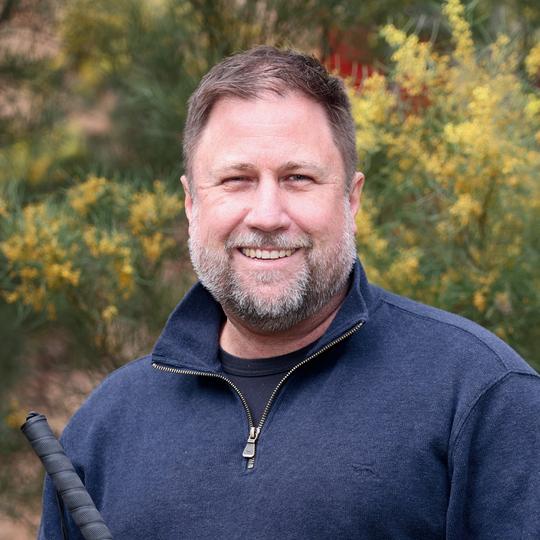
I believe leadership in reconciliation requires more than conviction. It is my experience that it demands courage, honesty, and a willingness to sit with what is excruciating and uncomfortable in that space where there are no words, just the long dark, awkward roar of silence.
As Chair of the TUSA Reconciliation Action Plan (RAP) Working Group, I’ve had the responsibility and privilege of guiding this first step in what we hope will become a longer journey. This plan was not built from perfect foundations, but from a deep student-led desire to change the way things are. It comes from a student community that is ready to do better. To learn, to reflect, and to act with purpose.
TUSA has not always stood where we should have. Our history includes silences, absences, and missed opportunities to support Aboriginal and Torres Strait Islander students and communities. We name this not to dwell in the past, but to take responsibility for it and to ensure we don’t repeat it. My experience is that it takes bold action, not performative statements. It takes humility and sustained effort.
Throughout this process, we’ve attempted to reach out to Aboriginal leaders, cultural educators, and students, but we also want to be transparent. That work has not always led to connection. We know that Aboriginal and Torres Strait Islander peoples in Lutruwita/Trouwerner have been asked to give their time, knowledge, and cultural labour over and over again. Fatigue is real. Trust takes time. And simply asking is not the same as building a meaningful and mutual relationship.
So instead of claiming consultation, I want to acknowledge something more grounded: this plan is our commitment to prepare the way forward. Not as colonisers would prepare it, but as students and staff learning how to create space. Space for curiosity and for discomfort. Space for fierce activism and qu reflection. Space for cultural strength and respectful questioning. Space for stepping forward and ste back. Space for story.
Because in many ways, this is about story. About adding our part, as TUSA, to the larger network of storylines that exist across Country. And not claiming authority, but showing where we travelled, what learned, and who we walked alongside so that you may take the bold steps needed to continue this journey.
We've even questioned the very name reconciliation. For many, it is a difficult word, one that implies relationship that was once whole. But what we are doing here is not returning to something. We are building something new: a future shaped by truth, justice, and deep listening.
To my fellow student representatives and to the TUSA staff and allies who have contributed to this wor thank you. Your thoughtfulness, patience, persistence and kindness are part of what makes this plan re
This RAP is not the final word. It is but one offering, in a long journey still ahead. Not a destinati checklist, but a commitment to continue showing up – year after year, decade after decade – to continu test the original intent of reconciliation so that the path remains effective and true.
To every student and every staff member: you are part of this too. Whether your role is quiet or publi visible or behind-the-scenes, reconciliation lives in how we listen, how we act, and how we hold each to account.
Because reconciliation isn’t something we delegate, it is something we share. It’s something we walk, together. And the next leading step belongs to you.
Shauna-Lee Ward General Manager
TUSA has a long history as the peak student body at the University of Tasmania (UTAS), but we recognise that our history includes silences – times when our organisation failed to stand alongside Tasmanian Aboriginal people or contri Aboriginal communities had disappeared from these lands. We cannot ignore this.
Through our RAP, we hope to take an honest step forward. This plan reflects our commitment to truth-telling and to action. It is our way of saying that we will do better - by building genuine partnerships with Aboriginal and Torres Strait Islander communities and organisations, by listening first, and by creating spaces where Aboriginal and Torres Strait Islander students can feel culturally safe, proud, and heard.
We know that reconciliation is more than words on paper. It lives in the ways we amplify Aboriginal and Torres Strait Islander voices in student leadership and decision-making; in the programs and events we support alongside the Riawunna Centre for Education (Riawunna) at UTAS; in the scholarships and supports that continue to grow; and in how every staff member, student leader and volunteer shows up for our community with respect and cultural humility.
We are grateful to the TUSA RAP Working Group for the thoughtful, often challenging conversations that have shaped this plan. I also acknowledge the guidance of Reconciliation Tasmania and the wisdom of community organisations and Elders who continue to share their knowledge with us.
We do not expect to get everything right immediately. But we do commit to staying the course - to learning, unlearning, and walking alongside Tasmanian Aboriginal people with openness and integrity. I encourage everyone across our student body, our staff, and our partners to read this plan carefully, to hold us accountable, and to join us as active participants in reconciliation.
This is work for all of us, for now and for the generations to come.
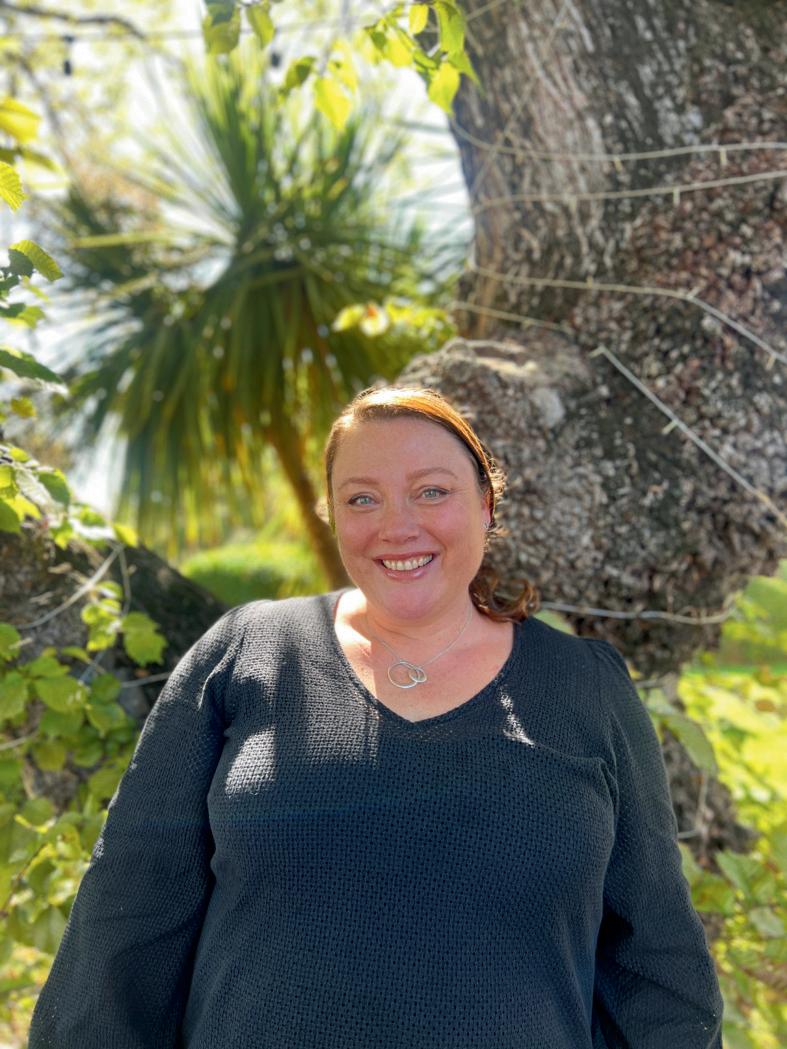
Karen Mundine Chief Executive Officer, Reconciliation Australia
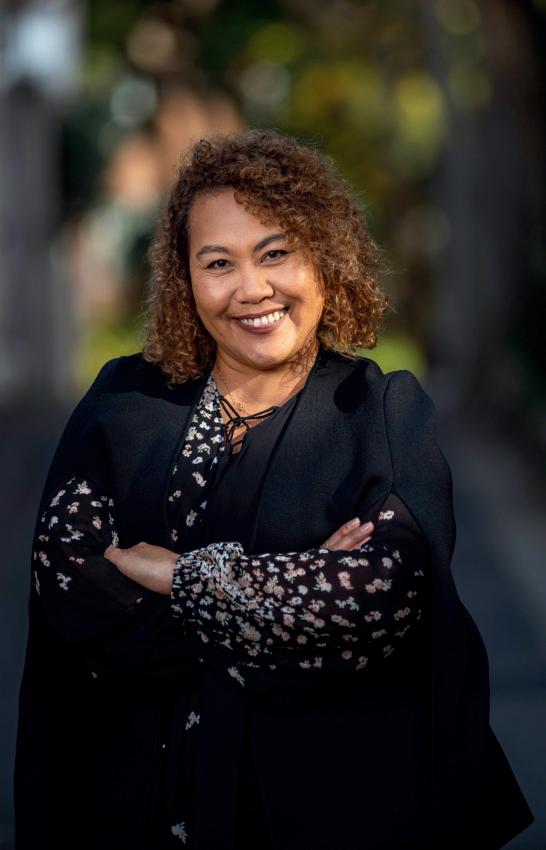
Reconciliation Australia welcomes Tasmanian University Student Association to the Reconciliation Action Plan (RAP) program with the formal endorsement of its inaugural Reflect RAP.
Tasmanian University Student Association joins a network of more than 3,000 corporate, government, and not-for-profit organisations that have made a formal commitment to reconciliation
Since 2006, RAPs have provided a framework for organisations to leverage their structures and diverse spheres of influence to support the national reconciliation movement. The program’s potential for impact is greater than ever, with over 5.5 million people now working or studying in an
The four RAP types — Reflect, Innovate, Stretch and Elevate — allow RAP partners to continuously develop and strengthen reconciliation commitments in new ways. This Reflect RAP will lay the foundations, priming the workplace for future RAPs and reconciliation initiatives.
The RAP program’s strength is its framework of relationships, respect, and opportunities, allowing an organisation to strategically set its reconciliation commitments in line with its own business objectives, for the most effective outcomes.
These outcomes contribute towards the five dimensions of reconciliation: race relations; equality and equity; institutional integrity; unity; and historical acceptance.
It is critical to not only uphold all five dimensions of reconciliation, but also increase awareness o Aboriginal and Torres Strait Islander cultures, histories, knowledge, and leadership across all sector of Australian society.
This Reflect RAP enables Tasmanian University Student Association to deepen its understanding of its sphere of influence and the unique contribution it can make to lead progress across the five dimensions. Getting these first steps right will ensure the sustainability of future RAPs and reconciliation initiatives, and provide meaningful impact toward Australia’s reconciliation journey.
Congratulations Tasmanian University Student Association, welcome to the RAP program, and I look forward to following your reconciliation journey in the years to come.
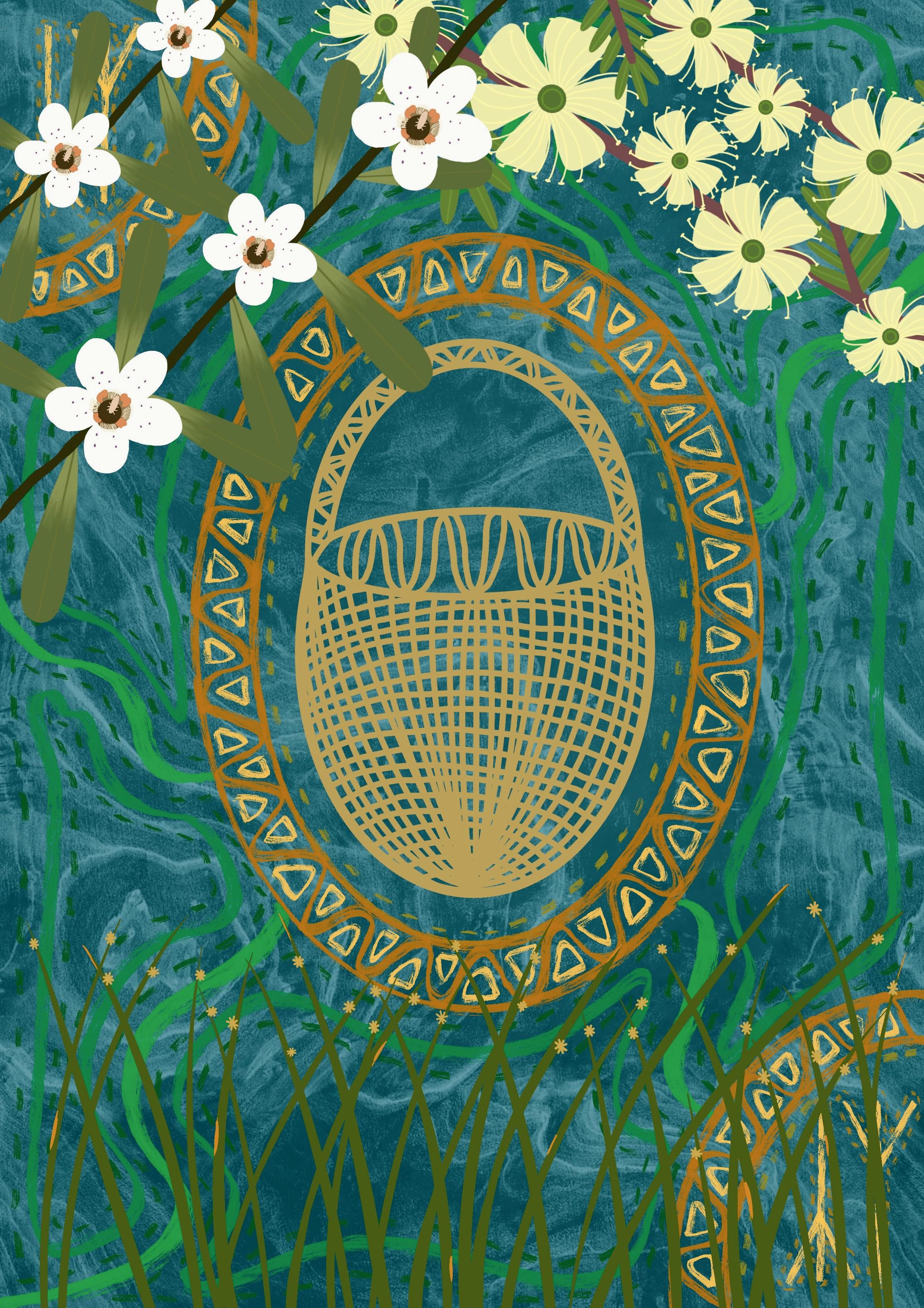
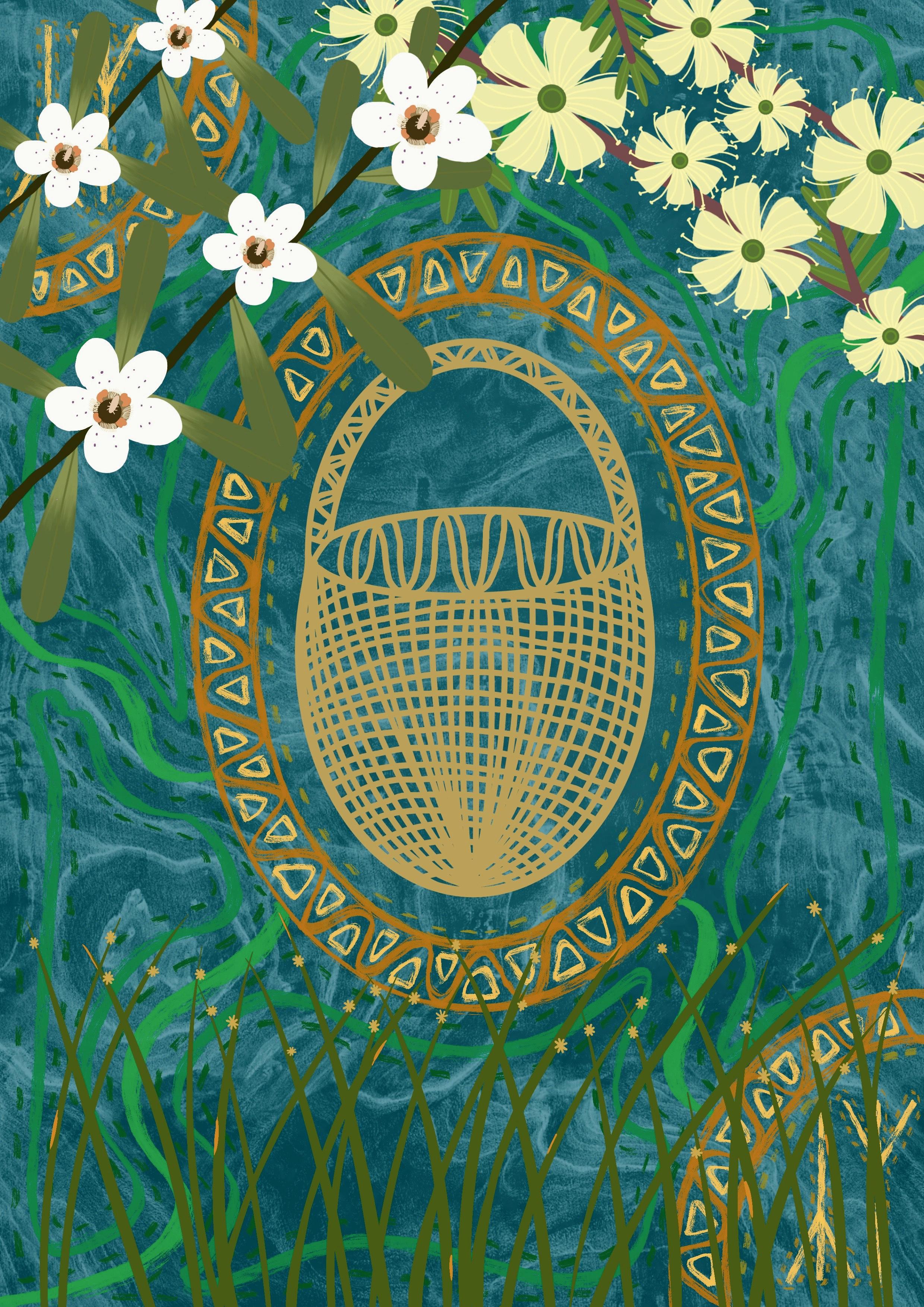
This design draws inspiration from native Tasmanian plants, corkwood for Launceston, kunzea for Nipaluna/Hobart, and boobialla for Pataway/Burnie, symbolising deep roots and regionalidentity.Atitsheartisthewovenbasket,a metaphor for strength and integrity: each strand must be placed with care, and mistakes corrected to preserve its structure. Just as weaving requires patience and precision, creating culturally safe spaces demands ongoing effort and accountability. This artwork represents TUSA’s commitment to repairing and reinforcing its “basket”—its community—so that all students feel safe,supported,andrespected.
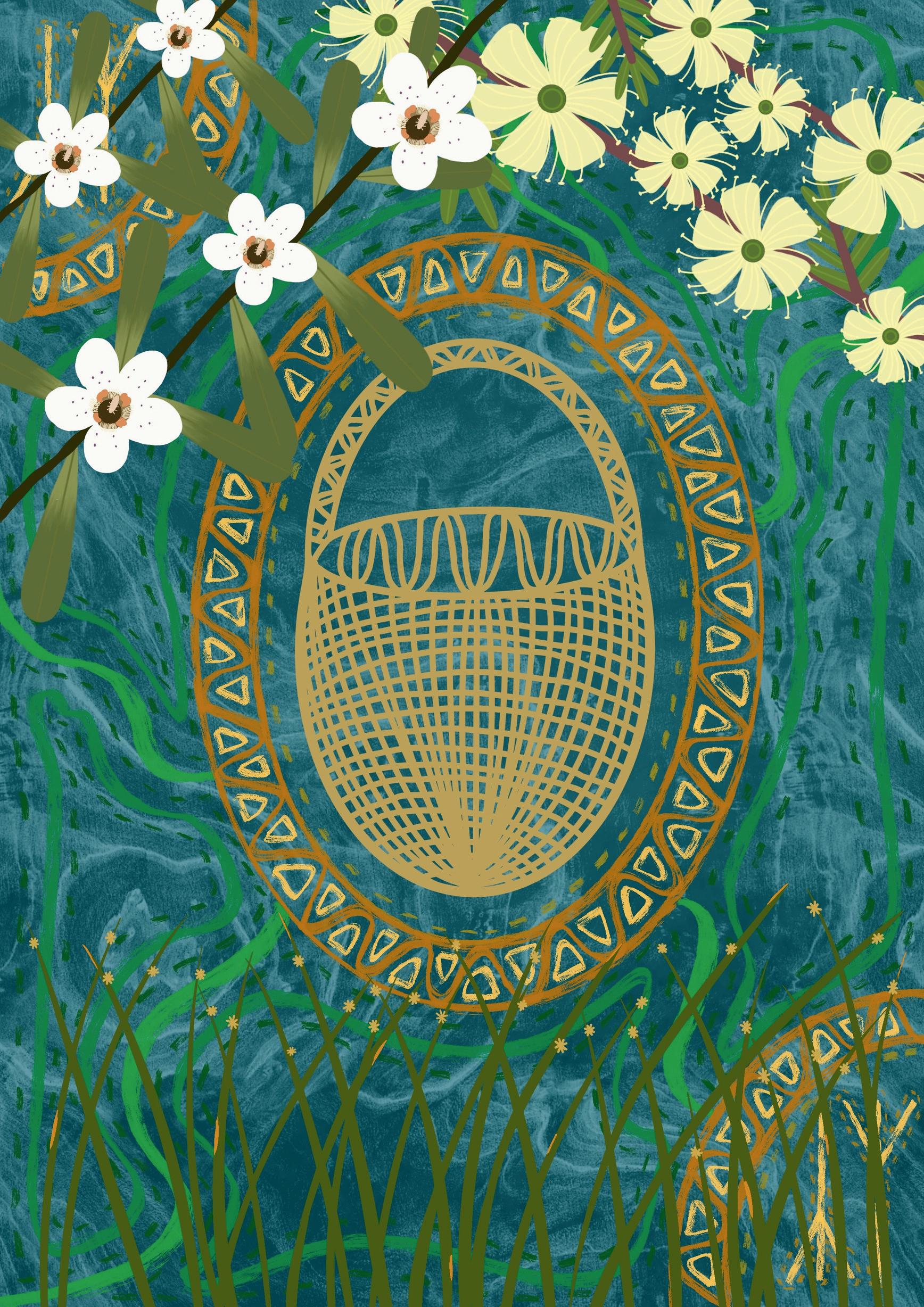
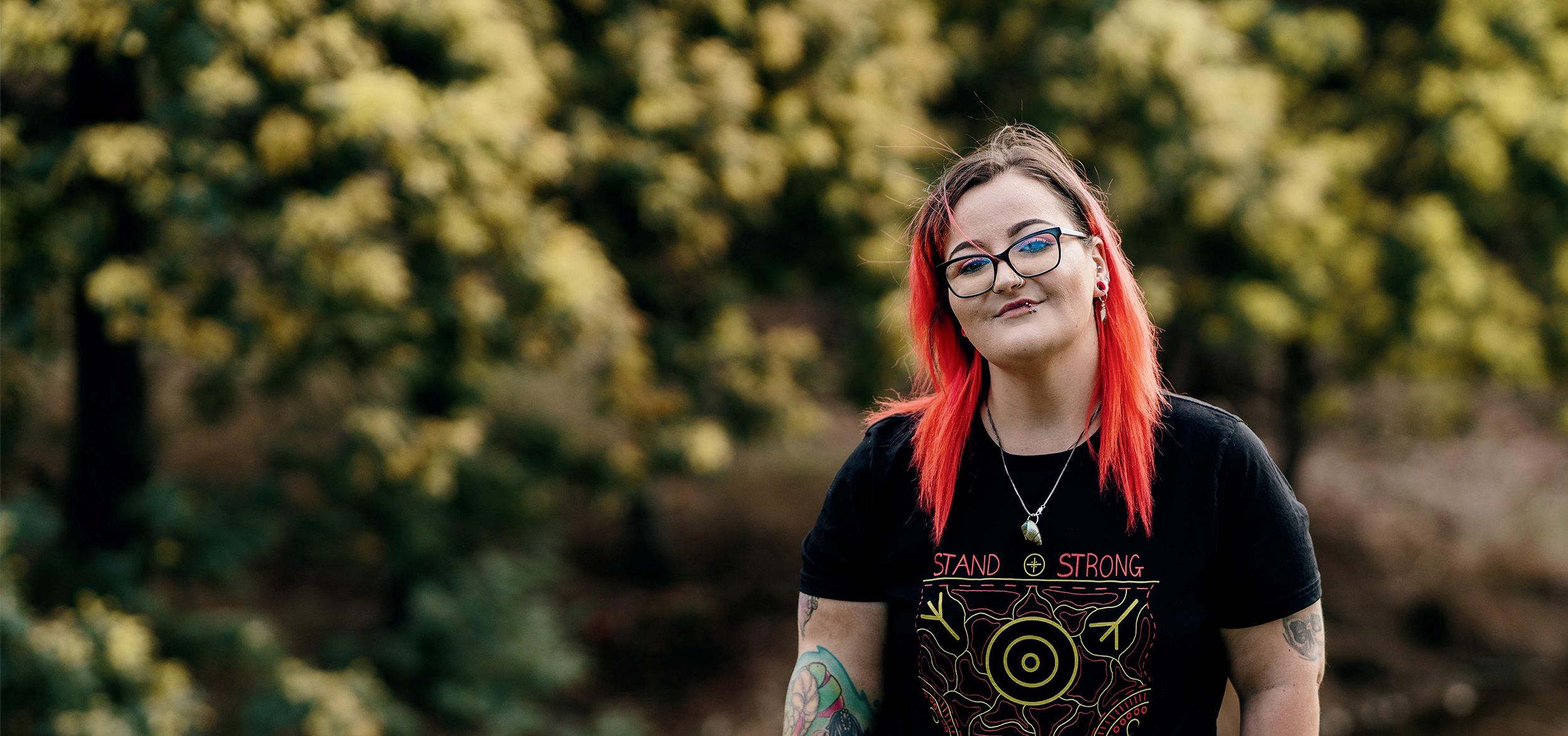
Bianca Templar is a proud Truwulway and Bunurong woman, Bianca Templar is a proud Truwulway and Bunurong woman, social worker, and artist living on the unceded banks of social worker, and artist living on the unceded banks of Kanamaluka/Tamar River. Through her practice and business, Kanamaluka/Tamar River. Through her practice and business, Bianca creates works that weave cultural heritage, healing, and Bianca creates works that weave cultural heritage, healing, and connection to Country. Her art spans traditional crafts such as connection to Country. Her art spans traditional crafts such as shell necklaces and basket weaving, alongside contemporary shell necklaces and basket weaving, alongside contemporary digital designs and public installations. Bianca’s work has digital designs and public installations. Bianca’s work has featured in major exhibitions and permanent installations featured in major exhibitions and permanent installations across Tasmania, reflecting resilience, cultural pride, and across Tasmania, reflecting resilience, cultural pride, and advocacyforsafe,inclusivespaces. advocacyforsafe,inclusivespaces. and




Student-Led Connected Bold
At the core of our organisation is the welfare, support and empowerment of our students. We’ve got your back and exist to honour our promises to your experiences at UTAS.
Together we sustain community through connection, with welcoming places- real and virtual, for all people to grow, flourish, influence, explore and evolve our whole selves and each other.
As an organisation we are courageous and vulnerable, embracing our ambition, pursuing innovation and the unknowable pathway to get there. We are edgy, charming, honest and always authentic.

Our actions are purposeful and dynamic. Our momentum is tempered by responsibility and accountability. We show up with integrity and get sh*t done.
Kindness, compassion and empathy are the common filters to all our words and actions.

We recognise that the term ‘reconciliation’ can feel uncomfortable, as it can suggest that Aboriginal and Torres Strait Islander peoples need to take on the responsibility of repairing relationships. We understand that the need for reconciliation exists because of the impacts of colonisation and ongoing injustices, and that it is not the role of Aboriginal and Torres Strait Islander peoples to reconcile. It is up to organisations and nonAboriginal and Torres Strait Islander peoples to take meaningful steps towards change. While we acknowledge these concerns, we are working within the Reconciliation Action Plan (RAP) framework, in partnership with Reconciliation Tasmania and supported by Reconciliation Australia, to use this process as a way of guiding our actions while continuing to reflect on the language we use and how we can walk alongside Aboriginal and Torres Strait Islander peoples in this work.


The development and implementation of our RAP is guided by the RAP Working Group (RWG), chaired by TUSA Equity President Mark Warrington. Our RAP Working Group members are:
Name Role within RAP Working Group Role within TUSA
Shauna-Lee Ward Project Sponsor, Deputy Chair
Mark Warrington Project Lead, Chair
Jack Oates Pryor
Belle Smith
Ruby Fox
Ranae Zollner
Stephen Nolan
General Manager
Equity President
Member President
Member
General Secretary
Member Southern Campus President
Member Disability Officer
Member
Student Advocate
Sarah Loewy Working Group Secretary Senior Solicitor (Student Legal Service)
Guleid Abdullahi
Member Student Experience and Systems (IT) Administrator
Liam McLaren Communications Lead
Marketing & Communications
All RAP Working Group members are individually responsible for providing leadership about the RAP within each member’s sphere of influence within the organisation and, where relevant, with external stakeholders.
The purpose of TUSA’s RAP is to begin the long but essential process of acknowledging and addressing the harm caused to Tasmanian Aboriginal people, past and present, and to take meaningful, sustained steps towards reconciliation. We recognise our role within a system that has historically excluded and marginalised Aboriginal and Torres Strait Islander voices, and we commit to changing that by building a student community that is inclusive, respectful, and culturally informed.
Through the RAP, we aim to strengthen our connections with Aboriginal communities, reduce colonial loads on Aboriginal and Torres Strait Islander staff and students, and help pave the way for a more culturally safe and just university environment.
This journey is also about learning: gaining knowledge of Tasmanian Aboriginal histories, cultures and laws, and amplifying the voices and leadership of Aboriginal and Torres Strait Islander peoples within our governance, decision-making, and student life. We do this because it is morally right, because it builds stronger communities, and because it leaves a legacy of equity, inclusion and understanding for the generations to come.
This work is about more than symbolism, it’s about truth-telling, walking together, and ensuring that all students, especially Aboriginal and Torres Strait Islander students, feel safe, supported and seen. By aligning our efforts with our values of being bold, kind, effective, connected and student-led, we hope to embed reconciliation into the very fabric of TUSA’s identity and actions.
This RAP is not a destination, but the beginning of an ongoing, evolving commitment, one that helps all of us, Aboriginal and non-Aboriginal, to come together in shared purpose and build something better, together.


TUSA has been the peak student representative body at UTAS since 1899. Yet, we remain at the very beginning of our reconciliation journey.
In December 2024, the TUSA RAP Working Group was formed. The RAP Working Group consists of the TUSA General Manager and the TUSA Equity President, and a cross-section of representation across all areas of our student representative council and business. Through participation in our RAP Working Group workshops, we came to understand that TUSA historically perpetuated the myth that there were no Aboriginal peoples left in Tasmania. That erasure is unacceptable. As an organisation, we must sit with the uncomfortable truth of our role in colonisation and make a deep and genuine commitment to reconciliation.
TUSA acknowledges the important role of Riawunna and the value of our past collaborations, including cultural awareness workshops, NAIDOC Week events, and student bursaries. We remain committed to strengthening our relationship with Riawunna in a respectful and purposeful way as part of our reconciliation journey.
In 2024, TUSA established a permanent State Council Equity Committee, including a First Nations Equity Officer, which is made up of dedicated students with lived experience in the equity demographics they represent. However, the Equity Committee has not been able to fill the First Nations Equity Officer position consistently since its inception. We need to examine the reasons for this and make change.

Developing a RAP is a critical step in our reconciliation journey and will build on the foundations we have started to amplify the voices of Aboriginal and Torres Strait Islander communities. TUSA has previously made public statements on issues affecting Aboriginal and Torres Strait Islander communities, including supporting the call to change the date of Australia Day celebrations in 2022, and endorsing the YES movement in the 2023 Voice to Parliament Referendum following consultation with Riawunna. But we know we need to do more. This RAP is our formal commitment to turning past lessons into present actions, guided by truth-telling, mutual respect and ensuring that the student voice is at our heart.
As the peak representative body for students at UTAS, it is our responsibility to acknowledge the history of colonisation within our community, protect the Country on which our campuses are based, and make sure that we are truly representative of Aboriginal and Torres Islander students. To do this, we seek to build upon our relationships within Tasmanian Aboriginal communities and engage in meaningful rather than tokenistic ways. We know this takes time.
Our approach in developing this RAP is to create a living document that reflects our TUSA values of student-led, connected, bold, effective and kind. As we begin this journey, we are committed to remaining accountable, providing regular updates to our community both on our failures and achievements, acknowledging that there are still many things for us to learn and we may not get it right the first time. We look forward to embracing uncertainty along this journey as we deliver on our first iteration of RAP commitments.

TUSA envisions a future where all students at UTAS have a deep, personal connection to the cultural heritage and living traditions of Aboriginal and Torres Strait Islander peoples. In this future:
Every graduate is culturally literate, informed by the truths of Tasmanian Aboriginal histories, and equipped with the selfdetermination and knowledge to be allies and advocates in their communities.
Our student body is supported by a strong, culturally safe network of peers, staff and community - where no one is burdened by colonial load, but where Aboriginal and Torres Strait Islander peoples are welcomed, valued, and supported to succeed on their own terms.
A university environment where Aboriginal and Torres Strait Islander students can shine which has been shaped through truth-telling, visible cultural recognition, inclusive education, and support systems that are interconnected and effective.
In ten years, we hope that TUSA is recognised as a national leader in supporting Aboriginal and Torres Strait Islander students and staff. To achieve this, we will:
Embed our governance structures and policy frameworks with Aboriginal and Torres Strait Islander knowledge systems, and we will ensure that cultural identity is not only safe but celebrated in our workplace.
Ensure that staff are well-informed “accomplices” in reconciliation, working alongside Aboriginal and Torres Strait Islander colleagues in a spirit of respect, pride and shared purpose.
Enable clubs like a student-led Blak Collective to thrive autonomously, supported by equitable policies, career development pathways, and meaningful relationships with broader Tasmanian Aboriginal communities.
Together, with a commitment to equity, truth, and transformation, we will support and advocate for the recognition of a treaty in Tasmania and ensure that our student association is truly representative, deeply connected to Country, and a driver of cultural safety, awareness, and pride for all.
In this RAP, TUSA will focus on the following strategic pillars of Relationships, Respect, Opportunities and Governance. Our RAP endeavours to deliver on these strategic pillars by:
Relationships: Embedding and practising meaningful cultural safety in our organisation and service delivery partnerships.
Respect: Providing employees and students with the opportunity to learn about Aboriginal and Torres Strait Islander histories and to engage in truth-telling through education and events.
Opportunities: Creating and facilitating opportunities for education, capacity-building and professional development of Aboriginal and Torres Strait Islander peoples within our organisation.
Governance: Ensuring the voices of Aboriginal and Torres Strait Islander peoples are heard in student representation and decision-making by co-designing processes that support inclusion.

Since December 2024, our RAP Working Group has been working with Reconciliation Tasmania to follow a process of learning and reflection that has helped us to understand: the historical and ongoing impacts of invasion and colonisation in Tasmania; the Uluru Statement and its core elements of sovereignty, voice, agreement-making, and truth-telling; and the priorities and concerns of Tasmanian Aboriginal communities that are recorded in the 2021 Pathway to Truth-telling and Treaty report and in the Closing the Gap framework.
During this process, we have done our own research into: the specific history and present-day context in Lutruwita/Trouwerner; previous and current interactions between TUSA and UTAS with Tasmanian Aboriginal people, communities and culturally significant sites; and publications by Tasmanian Aboriginal community organisations to understand their current priorities, needs and concerns.
We reflected on this learning to identify ways that our organisation might be able to support Aboriginal-led businesses, Aboriginal education and employment opportunities, recognise and protect Aboriginal rights, and promote greater awareness and understanding of Tasmanian Aboriginal cultures and lived experiences.

We are very grateful to Sadie Heckenberg, the Pro Vice Chancellor of Aboriginal Leadership at UTAS, who met with the TUSA General Manager, RAP Working Group Chair, and State Council President. Professor Heckenberg advised that she is currently leading a significant strategic process within UTAS. The timing of this review by UTAS aligns closely with TUSA’s work and we look forward to a continuing relationship with the Pro Vice Chancellor’s office.
Professor Heckenberg helpfully advised against using the term “First Nations”, as this typically refers to Indigenous peoples who have entered a treaty or who have otherwise ceded their sovereignty. This terminology is not appropriate in the Australian and Tasmanian context.
Professor Heckenberg also referred us to the UTAS Library, which has expertise in curating culturally appropriate items, and experience in commissioning and acquiring artworks, to support us in our artwork commissioning and our ongoing reconciliation work. We are grateful for their assistance in this work.
We also approached Riawunna, and the Tasmanian Aboriginal Centre. We look forward to building relationships with them as we progress our work.
In each of the sections below, we have mapped our commitments against three relevant frameworks:
[1]
The National Agreement on Closing the Gap (CTG). This includes four (4) Priority Reforms and 17 Targets;
The United Nations Sustainable Development Goals (SDG). There are 17 Goals, each of which comprises several Targets. The Goals are numbered, with Targets identified as sub-points (e.g. 17.1 means Goal 17, Target 1); and [2]
[3]
The United Nations Declaration on the Rights of Indigenous Peoples (UNDRIP), to which Australia is a signatory. The UNDRIP comprises 46 Articles, some of which have multiple clauses. Again, these are numbered (e.g. 31.2 means Article 31, clause (2)).
As per the TUSA’s governance arrangements (outlined in the Our Business section of this document), responsibility for most of the Deliverables in our RAP is shared between a TUSA staff member and an elected State Council student representative.
[1] https://www.closingthegap.gov.au/national-agreement
[2]https://sdgs.un.org/goals
[3]https://www.un.org/development/desa/indigenouspeoples/wp-content/uploads/sites/19/2018/11/UNDRIP_E_web.pdf

Building genuine, r Building genuine, respectful relationships with Tasmanian Aboriginal people, communities and organisations is at espectful relationships with Tasmanian Aboriginal people, communities and organisations is at the heart of the heart of TUSA’s commitment to reconciliation. We recognise that trust takes time and that it is our responsibility to listen first, walk TUSA’s commitment to reconciliation. We recognise that trust takes time and that it is our responsibility to listen first, walk alongside Aboriginal and Torres Strait Islander stakeholders, and ensure our actions alongside Aboriginal and Torres Strait Islander stakeholders, and ensure our actions reflect cultural safety and mutual respect. reflect cultural safety and mutual respect.
Through this RAP, we intend to create and sustain relationships that are meaningful, not tokenistic, supporting the voices, Through this RAP, we intend to create and sustain relationships that are meaningful, not tokenistic, supporting the voices, leadership and self-determination of Aboriginal and Torres Strait Islander students and communities in all that we do. leadership and self-determination of Aboriginal and Torres Strait Islander students and communities in all that we do.
1.Establish and strengthen mutually beneficial relationships with Aboriginal and Torres Strait Islander stakeholders and organisations.
In recognition of the continuing sovereignty of Tasmanian Aboriginal people, document our commitment to a rights-based approach to working with Tasmanian Aboriginal people, communities and custodians of Country.
Develop and strengthen relationships with Aboriginal and Torres Strait Islander stakeholders and organisations within our local area or sphere of influence.
Develop processes to ensure that Aboriginal and Torres Strait Islander stakeholders, and relevant literature, are identified and included at an early stage in all projects.
Research and develop guidance for our staff and student leaders about best practice and principles that support partnerships with Aboriginal and Torres Strait Islander partners and organisations (including Closing the Gap Priority Reforms 1 and 2).
Consistent with Closing the Gap Priority Reform 2 – Building the Community Controlled Sector, work with Aboriginal and Torres Strait Islander community partners to understand their needs, and identify appropriate opportunities (if any) to support capacity and/or capability-building within their organisation.
April 2026
April 2026 reviewed annually
June 2026
November 2026

2. Build relationships through celebrating National Reconciliation Week (NRW).
Circulate Reconciliation Australia’s NRW resources and reconciliation materials to our staff.
RAP Working Group members to participate in an external NRW event, such as Reconciliation Tasmania’s NRW Breakfast.
Encourage and support staff and student leaders to participate in at least one external event to recognise and celebrate NRW.
Explore opportunities to support TUSA Clubs and Societies to develop and deliver NRW events.
Annually in May
Annually from 27 May - 3 June
Annually from 27 May - 3 June
State Council President and General Manager
State Council President and General Manager
Annually in April
Student Engagement & Development Manager
3. Promote reconciliation through our sphere of influence.
Communicate our commitment to reconciliation to all staff, student leaders, and TUSA Clubs and Societies.
March 2026 and ongoing
Identify external stakeholders that our organisation can engage with on our reconciliation journey, particularly the University of Tasmania.
April 2026
Add a reconciliation page to TUSA’s website and social media.
March 2026
Identify Reconciliation Tasmania and other like-minded organisations that we could approach to collaborate with on our reconciliation journey.
April 2026 and ongoing
Lead: RWG
4. Promote positive race relations through antidiscrimination strategies.
Consistent with Closing the Gap Priority Reform 3 – Transforming Organisations, conduct a cultural safety audit which aims to: assess the extent to which our organisation is culturally safe and responsive to the needs of Aboriginal and Torres Strait Islander peoples, including through the services we provide; and understand the nature, prevalence, causes, and options to address direct, indirect and/or systemic racism that may exist within our organisation.
Research best practice and policies in the areas of race relations and antidiscrimination, including resources available from the Australian Human Rights Commission and the Diversity Council of Australia.
Conduct a review of HR policies and procedures to identify existing antidiscrimination provisions, and future needs.
January 2027
Lead: Governance Officer and Equity
President
Support: General Secretary
2, 9, 11, 12, 13, 14.2, 15, 21, 31, 34
Based on the best practice research, the outcomes of the cultural safety audit, and the outcomes of the HR policy review, develop an appropriate framework to support race relations and anti-discrimination within our organisation.
October 2026
November 2026
Lead: Equity President Support: Equity Committee & Governance Officer
Lead: Governance Officer Support: Equity President
Articles 2, 9
February 2027
General Manager

TUSA seeks to build a culture of deep r
TUSA seeks to build a culture of deep respect for Aboriginal and Torres Strait Islander peoples, cultures, histories and rights wi espect for Aboriginal and Torres Strait Islander peoples, cultures, histories and rights within thin our our student and broader community. We recognise that respect goes beyond symbolic gestures and requires student and broader community. We recognise that respect goes beyond symbolic gestures and requires truth-telling, truth-telling, cultural learning and consistent action. Through this RAP, we will create opportunities for students and staff to engage cultural learning and consistent action. Through this RAP, we will create opportunities for students and staff to engage meaningfully with Aboriginal and Torres Strait Islander knowledge systems and cultural protocols, ensuring our campuses are meaningfully with Aboriginal and Torres Strait Islander knowledge systems and cultural protocols, ensuring our campuses are places where Aboriginal and Torres Strait Islander identities are acknowledged, valued and celebrated. places where Aboriginal and Torres Strait Islander identities are acknowledged, valued and celebrated.
Develop a project proposal for increasing understanding, value and recognition of Aboriginal and Torres Strait Islander cultures, histories, knowledges and rights within our organisation.
Lead: RWG
March 2026
5. Increase understanding, value and recognition of Aboriginal and Torres Strait Islander cultures, histories, knowledge and rights through cultural learning.
Establish and implement meaningful opportunities for truth-telling through education, events, programs and services.
June 2026
Conduct a review of cultural learning needs within our organisation. July 2026
Using the work done by the RAP Working Group during the RAP development process, develop a RAP training and cultural safety module to include in the organisation’s induction process for incoming staff, State Council members, and other student representatives.
Lead: Student
July 2026
6. Demonstrate respect to Aboriginal and Torres Strait Islander peoples by observing cultural protocols.
Develop an understanding of the local Traditional Owners or Custodians of the lands and waters within our organisation’s operational area.
Increase staff and student leaders’ understanding of the purpose and significance behind cultural protocols, including an Acknowledgment of Country and/or Welcome to Country. Specifically, we will: update all meeting templates within our organisation to include an Acknowledgment of Country as the first agenda item; update our organisation’s website, email signature, and letterhead to include an Acknowledgment of Country; and obtain signage to provide Acknowledgment of Country and display the Aboriginal and Torres Strait Islander flags at our premises.
March 2026
March 2026
Lead: RAP Working Gro up Communications Officer Support: Equity President, and Student Advocate

TUSA recognises that creating opportuniti
TUSA recognises that creating opportunities for Aboriginal and Torres Strait Islander peoples is essential to advancing es for Aboriginal and Torres Strait Islander peoples is essential to advancing reconciliation wi reconciliation within our organi thin our organisation and the broader university community. We will work to increase employment, profess sation and the broader university community. We will work to increase employment, professional ional development and leadership pathways for Aboriginal and Torres Strait Islander students and staff, and will prioritise support for development and leadership pathways for Aboriginal and Torres Strait Islander students and staff, and will prioritise support for Aboriginal and Torres Strait Islander-owned businesses in our procurement practices. Through this RAP, we aim to contribute to a Aboriginal and Torres Strait Islander-owned businesses in our procurement practices. Through this RAP, we aim to contribute to a fairer, more culturally safe university environment where Aboriginal and Torres Strait Islander peoples can thrive on their own fairer, more culturally safe university environment where Aboriginal and Torres Strait Islander peoples can thrive on their own terms, and where opportunities for growth and participation are embedded in all that we do. terms, and where opportunities for growth and participation are embedded in all that we do.
8. Improve employment outcomes by increasing Aboriginal and Torres Strait Islander recruitment, retention and professional development.
Work with Aboriginal and Torres Strait Islander partners to develop an Aboriginal and Torres Strait Islander employment strategy for our organisation.
November 2026
9. Increase Aboriginal and Torres Strait Islander supplier diversity to support improved economic and social outcomes.
Build understanding of current Aboriginal and Torres Strait Islander staffing to inform future employment and professional development opportunities.
Review the Sustainable Procurement Policy, with a view to: including information about Supply Nation and/or other local Aboriginal and Torres Strait Islander business directories; and mechanisms to encourage procurement from Aboriginal and Torres Strait Islander-owned businesses.
Investigate membership with Supply Nation.
April 2026
November 2026
March 2026
Officer and TUSA General Manager
Articles 3, 5, 20, 21
8 8.3, 8.5, 8.6, 10.2 Articles 3, 4, 5, 20, 21, 23, 26, 32
TUSA General Manager

TUSA understands that reconciliati TUSA understands that reconciliation requires structural change, not just individual actions. T on requires structural change, not just individual actions. Through hrough this RAP, we are committed this RAP, we are committed to embedding the voices, kn to embedding the voices, knowledge and leadership of Aboriginal and Torres Strait Islander peoples within our governance, owledge and leadership of Aboriginal and Torres Strait Islander peoples within our governance, decision-making and reporting processes. We will build systems that ensure accountability, transparency and cultural safety decision-making and reporting processes. We will build systems that ensure accountability, transparency and cultural safety across our organisation, and will co-design pathways for Aboriginal and Torres Strait Islander students to shape the decisions that across our organisation, and will co-design pathways for Aboriginal and Torres Strait Islander students to shape the decisions that affect them. This work is essential to ensuring that reconciliation is part of TUSA’s identity and practice, now and into the future. affect them. This work is essential to ensuring that reconciliation is part of TUSA’s identity and practice, now and into the future.
10. Structural inclusion of Aboriginal and Torres Strait Islander voices
A. Work with Aboriginal and Torres Strait Islander community partners to review our existing approaches to integration of Aboriginal and Torres Strait Islander voices within our organisation.
October 2026
11. Establish and maintain an effective RAP Working Group to drive governance of the RAP.
B. Work with Aboriginal and Torres Strait Islander community partners to co-design appropriate, meaningful and authentic mechanisms to include Aboriginal and Torres Strait Islander voices in TUSA decision-making process. October 2026
Maintain an effective RAP Working Group to govern RAP implementation, including a handover process to incoming State Council members.
Establish Aboriginal and Torres Strait Islander representation on the RAP Working Group. March 2026
Lead: TUSA General Manager and Equity President Support: State Council President, General Secretary, and RAP
Lead: TUSA General Manager and Equity President Support: State Council President, General Secretary, and RAP Working Group members
12.Provide appropri ate support for effective implementation of RAP commitments.
Define resource needs for RAP implementation – develop a RAP implementation budget, and necessary approvals, within annual TUSA budget process.
Engage senior leaders in the delivery of RAP commitments.
13. Build accountability and transparency through reporting RAP achievements, challenges and learnings both internally and externally.
Maintain a senior leader to champion our RAP internally.
Define appropriate systems and capability to track, measure and report on RAP commitments – through TUSA bi-monthly Operational Reporting process.
Annually in March
RAP Working Group Chair and TUSA General Manager
March 2026 TUSA
March 2026
TUSA General Manager and State Council President
Bi-monthly RAP
Contact Reconciliation Australia to verify that our primary and secondary contact details are up to date, to ensure we do not miss out on important RAP correspondence. June annually
Contact Reconciliation Australia to request our unique link, to access the online RAP Impact Survey.
Complete and submit the annual RAP Impact Survey to Reconciliation Australia.
Provide specific reporting against our RAP commitments, including alignment to Closing the Gap where relevant: on our intranet; on our website; in our annual report; and directly to our Aboriginal community partners in an agreed format and at agreed intervals.
1 August annually
30 September, annually
1 August, annually
TUSA General Manager
TUSA General Manager
TUSA General Manager
Lead: RAP Working Gro up Communications Officer and TUSA Systems Administrator Support: TUSA staff
14. Continue our reconciliation journey by developing our next RAP.
Register via Reconciliation Australia’s website to begin developing our next RAP. March 2027
TUSA General Manager