
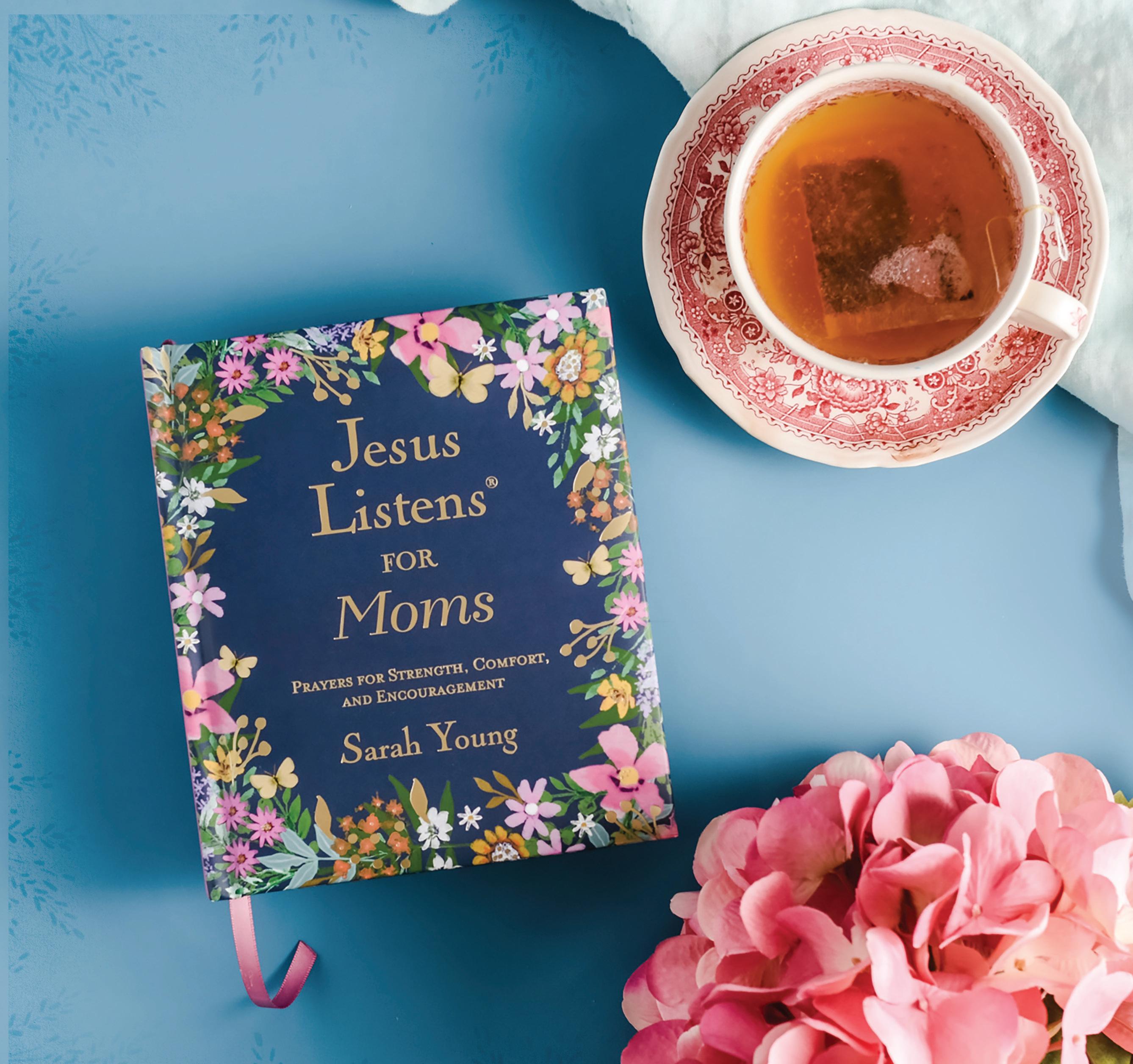
A collection of heartfelt prayers , scripture , and beautiful illustrations to help moms find peace in His love , and feel a renewed inspiration for each day.

See something you like in the magazine?
Most titles featured in this publication are available from your favorite bookstore.
with Jesus Calling Books!



Spring is the perfect time to pause, reflect, and refresh your spirit so you can move forward with joy and lightheartedness. Consider what areas of your life could use renewal, and ask God to help you along the journey.
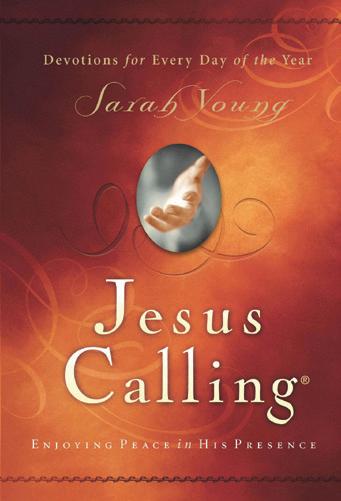
An exclusive excerpt from Sarah Young’s
COME TO ME, My weary one. Find rest in My refreshing Presence. I am always by your side, eager to help you—but sometimes you are forgetful of Me.
You are easily distracted by the demands of other people. Their expectations can be expressed in ways that are harsh or gentle, guiltinducing or kind. But if these demands are numerous and weighty, they eventually add up to a crushing load.
When you find yourself sinking under heavy burdens, turn to Me for help. Ask Me to lift those weights from your shoulders and carry them for you. Talk with Me about the matters that concern you. Let the Light of My Presence shine on them so you can see the way forward. This same Light soothes and strengthens you as it soaks into the depths of your being.
Open your heart to My healing, holy Presence. Lift up your hands in joyful adoration, letting My blessings flow freely into you. Take time to rest with Me, beloved; relax while I bless you with Peace.
MATTHEW 11:28 NLT · PSALM 134:2 · PSALM 29:11


Gifford
by Michael Overholt
Jesuscame to get us out of the chains. It's all about relationship, not religion.”
Kathie Lee Gifford pulls no punches by saying what she believes true Christianity is all about. And we shouldn’t be surprised. When she first sat for an interview with the Jesus Calling Magazine, she asserted that God cares far more about who we are becoming in Him than what we are doing for Him (Matthew 21:18-22 and Mark 11:12-14). And she wasn’t just sermonizing after some defining win. She was speaking from the middle of change and uncertainty. And it was 2020. It was a season when what remained mattered more than what had been built.
The throughline of relationship over religion is the tension Gifford identifies within Western Christianity, but it’s also the throughline of her life. What she noticed for herself, she began to recognize more broadly: systems of power, including religion, gravitate toward control instead of surrender, hierarchy instead of relationships, and the appearance of certainty instead of faith.
“It’s not the way it’s supposed to be,” says Gifford.

“So the greatest surrender is that first moment where we surrender to His Lordship. That’s called salvation, right? We receive this amazing gift of grace, of salvation. But what we don’t study enough in the West is the gift of sanctification that comes afterwards. That’s the hard part. When the Holy Spirit renews our hearts and our minds in Christ Jesus, that’s when it’s a surrender every single day.”
The conviction that surrender is relational and ongoing was present long before she had language for it. Gifford points to an intriguing story from her childhood that highlights her convictions about a relationship-centric vision. When her Sunday School teacher shared the story of Jesus cursing a fig tree, Gifford raised her hand and said, “Teacher, teacher, I don’t believe that.” Her teacher was dumbfounded and resorted to the point that they had “just read it in the Bible.” But Gifford persisted, and the teacher asked her why. “Because Jesus would never curse something that He created.”
Even though Kathie Lee was asked not to return to Sunday School, she never stopped searching for the meaning of the story.
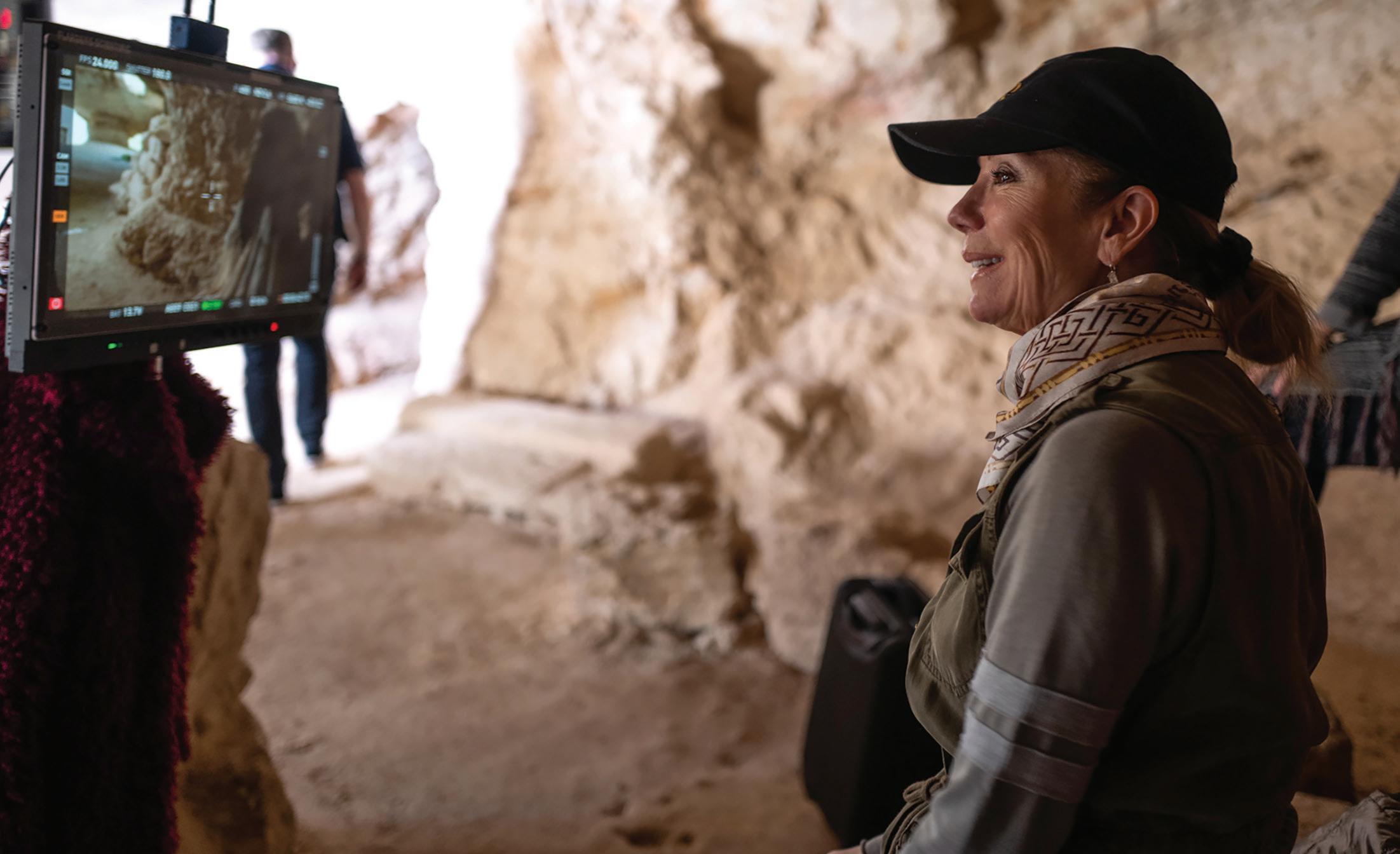
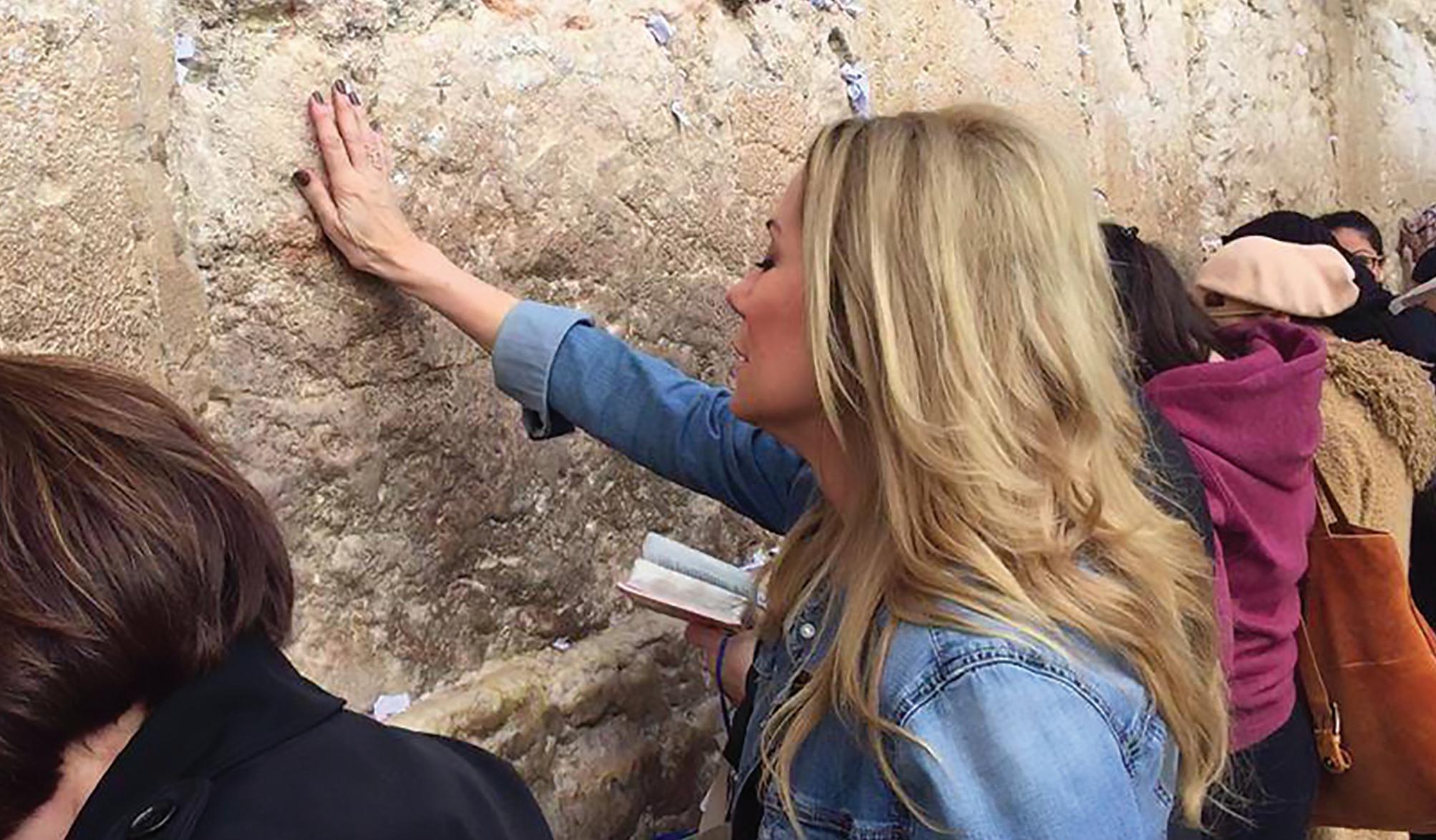
Years later while touring Israel, her friend Rabbi Jason Sobel helped her see the fig tree representing the religious leaders of the time. The people who were supposed to be the source of spiritual nourishment and strength—the Pharisees and Sadducees—were fruitless, lacking, just like the fig tree. As she tells it, “They were not feeding God’s people. They were lying to them. They were stealing from them. Jesus came to set them free from all of it.” And set free to do what? To Gifford, the answer is sanctification, the hard part.
“
It’s not about my faithfulness to God, it ’s about His faithfulness to me.
Gifford tells the story of several years ago when she was going through a particularly difficult season. She felt betrayed by people who had been close to her, and she knew she was right. But the Lord, she says, stopped her on her high horse and asked her if she wanted to be right or be righteous.
Her first response was a perfectly human

response: “But I’m right! You know I’m right!” She knew, however, that God wanted righteousness from her more than being right, and saw the process of sanctification in real-time.
That inward work changed how she stood within the world instead of leading her away from it.
“Never once in all the years that I did daytime television did anybody ever say, ‘You can’t talk about God. You can’t mention Jesus, Kathie. You can’t do this.’”
Which is not to say that her commitment to being open about her faith came without cost. There were times when staying attentive to her conscience meant quietly stepping away from opportunities others might have seized.
Over time, these personal convictions grew into a deeper fascination with how power shapes and exposes a life, which is the subject of a series of comparative biography thrillers she’s writing called Ancient Evil, Living Hope. The first, Herod and Mary, was published in 2024; her second, Nero and Paul, came out in March 2026.
She laughs as she shares how this series came about. She became so enthralled with Herod that her son, who was studying at Oxford, responded with
“Mom, you’re so obsessed with the ancient epic evil people in the Bible. You should start writing books about them, but juxtapose it against the living hope that’s always there.”
So she did, and she explains the source of this fascination with people like Herod and Nero that the history books love to show as purely evil characters without any human complexity.
“[No historically evil leader] starts out that way. But we talk about how it’s a seduction. And Jesus said in His Word: ‘You have to be in the world… but not of it.’”
For Gifford, that distinction between living in the world without being shaped by it is visible in Scripture with people like Jesus’ mother Mary and the apostle Paul, the counterparts to both Herod and Nero in her books. And she points to something her friend Sarah Young used to say frequently about this kind of faithfulness.
“I think the story of any great servant of God, and Sarah would be the first one to tell you, she said, ‘It’s not about my faithfulness to Him all these years. It’s about His faithfulness to me.’ And anybody who truly walks with God knows the difference.”
This article has been adapted from the Jesus Calling Podcast
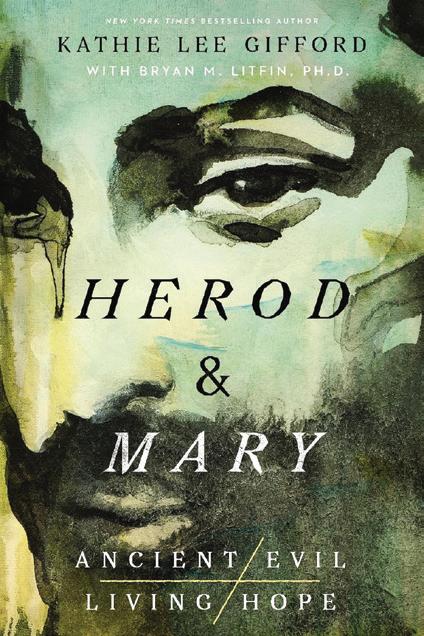
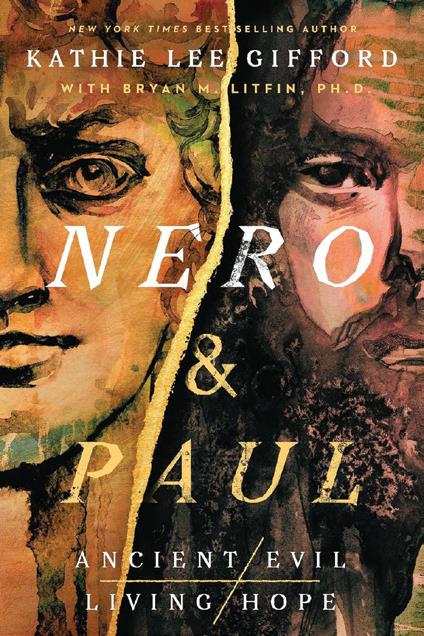
To learn more about Kathie Lee Gifford, check out her books, Herod & Mary and Nero & Paul, available at your favorite retailer.
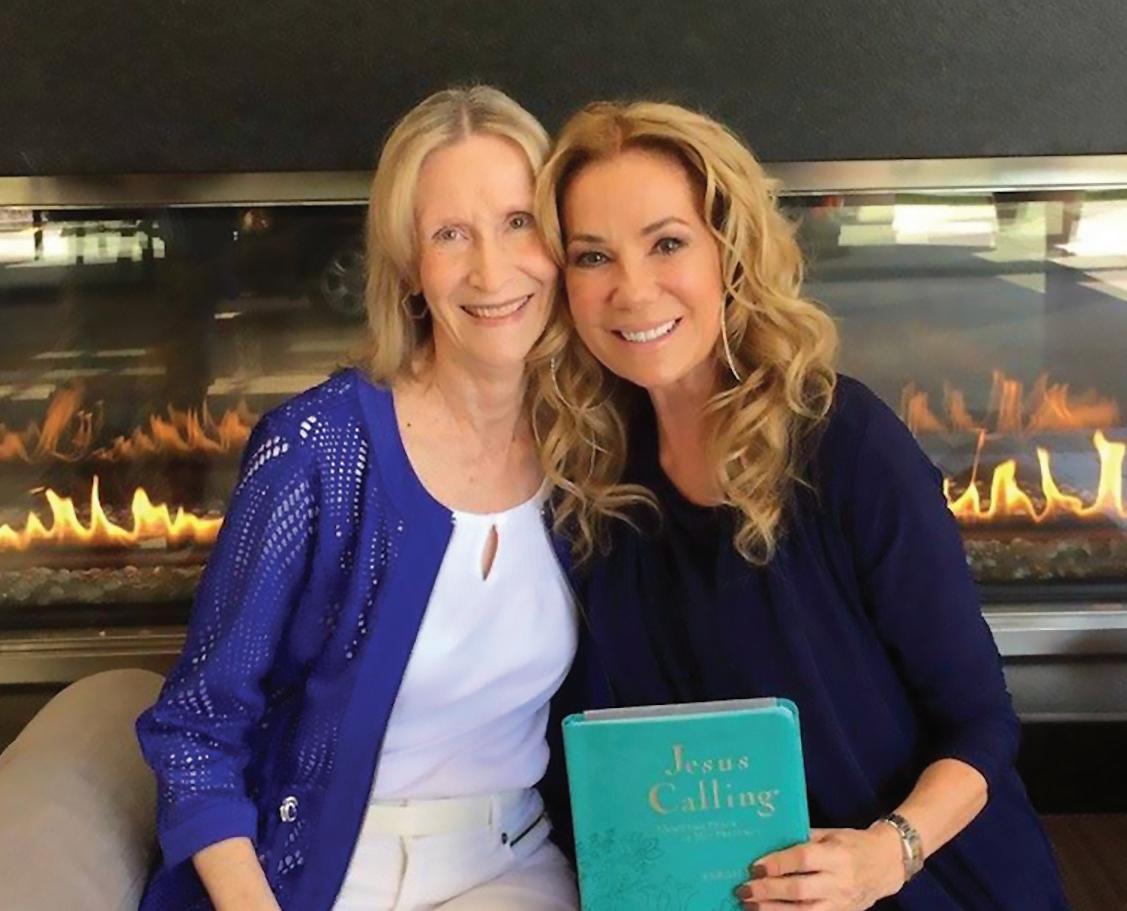
Kathie Lee Gifford and Sarah Young “became friends through the television” because Sarah would get on her treadmill and watch Kathie Lee with Regis Philbin, and later on with Hoda Kotb.
Meeting Sarah in person felt like a continuation, not an introduction.
“I treasure the memory I have of the day I spent with Sarah,” says Gifford. What stayed with her most, however, wasn’t the scale of Sarah Young’s ministry or the reach of Jesus Calling. It was the source of it.
“Sarah Young’s Jesus Calling and everything else that has come from her magnificent ministry is all based on Jesus.”
PERSONAL STORIES
FUN FACTS
FAMILY TRADITIONS
NEARLY 100 RECIPES
PHOTOS and MORE! NEARLY



AVAILABLE JULY 26



















































by Michael Overholt
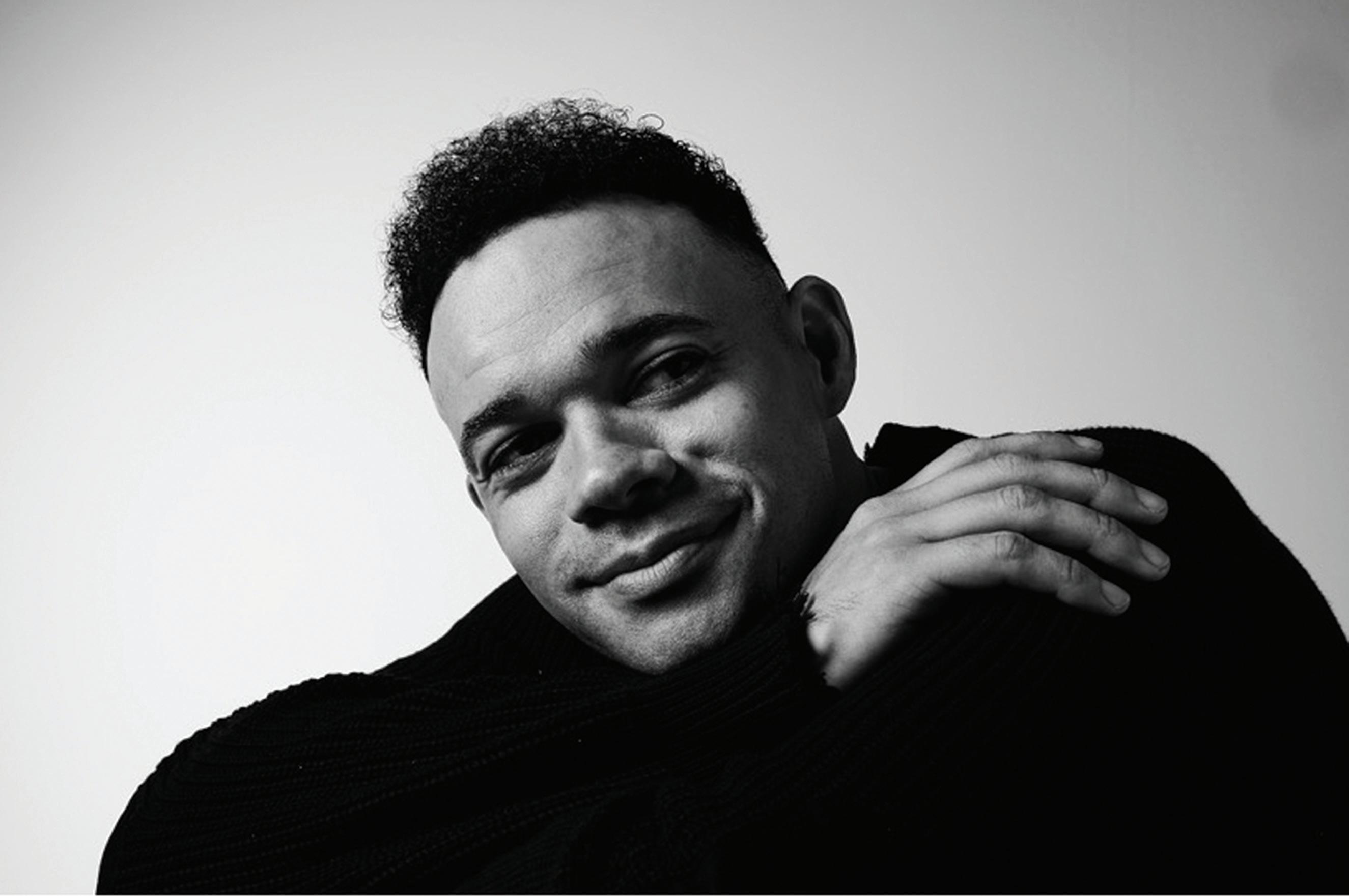
TAUREN WELLS, CONTEMPORARY CHRISTIAN SINGER AND SONGWRITER, gets especially excited digging into the nitty gritty of Jesus’ first recorded—and perhaps most famous— sermon known as “The Sermon on the Mount.”

“Aramis is the name of the hill that Jesus preached this message on. I looked it up, and Aramis means ‘desolate and isolated.’ I think He very intentionally chose a barren topography to illustrate the theology of joy.”
It’s a striking image. On a hill named for isolation and emptiness, Jesus doesn’t offer a lecture on survival or endurance, moral reform or religious respectability. He holds what amounts to a seminar on happiness. “The first thing Jesus says,” Wells notes, “is not how to be holy, not how to be reputable, not how to fulfill the law. The first word He says is ‘happy.’”
What Wells is pointing to is the Greek word makarioi that Matthew’s Gospel repeats nine times in as many verses and is often translated as “blessed” to follow the KJV tradition. The Greeks used this word to describe divine happiness in particular. Within the context of a hill named “desolation,” “happy” provides a terrific juxtaposition and implication that Wells sees as unmistakable: “Happiness and joy have nothing to do with what’s happening around you. It has everything to do with what’s happening inside of you.”
The challenge, of course, is access. Knowing that joy comes from within doesn’t automatically grant us the ability to live that way. Focus is fragile, and Wells is candid about that. “It’s not often the really, really, really devastating things throw us off track,” he says. “It’s the little distractions and the details that cause our focus to shift.”
Which is to say that even good things can become liabilities.
“There can become so much pressure around success,” he reflects, “always elevating, always trying to find the next good thing that it leaves our soul in a state of despair because we’ve been focusing on the wrong things.”
That observation carries credibility because Wells has lived it. His life has included reasons not to be joyful. His parents divorced when he was young. Growing up meant navigating two different spaces, two different realities. Yet even there, joy surfaced. Joy didn’t come because circumstances were ideal, but because certain things were accessible. A small church his father found. A youth pastor who paid attention. A house filled with instruments like drums, keyboards, and guitars that became both refuge and expression.
Joy was practiced with what was available.
Wells describes a simple but revealing exercise his counselor encouraged him to try: sit with God for ten minutes, not working on anything, just being present. Afterwards, the counselor asked a single question: “How did you perceive God in that moment?” Wells realized he held two competing images. One was the God he knew to be true: a loving Father, attentive and delighted. The other was more unsettling—a God busy, pacing, glancing over and saying, “Glad you finally showed up. We can get to work now.”
That tension, Wells suggests, is where joy often slips away. It’s not because God has changed, but because our focus has. Practices like stillness and attention recover joy by reorienting us toward what has been there all along.
Which is why, for Wells, the work of Jesus Calling resonates so deeply. “I feel like Jesus Calling gives us a beautiful picture of a loving Father who’s seated at the table with us,” he says, “sharing His heart toward us, gracefully correcting us, and redirecting our thoughts and our ambitions.”
On a desolate hill, Jesus spoke happiness into being. The invitation remains the same: not to control the world around us, but to learn—slowly, imperfectly—how to attend to what is within our care.

This article was adapted from the Jesus Calling Podcast.
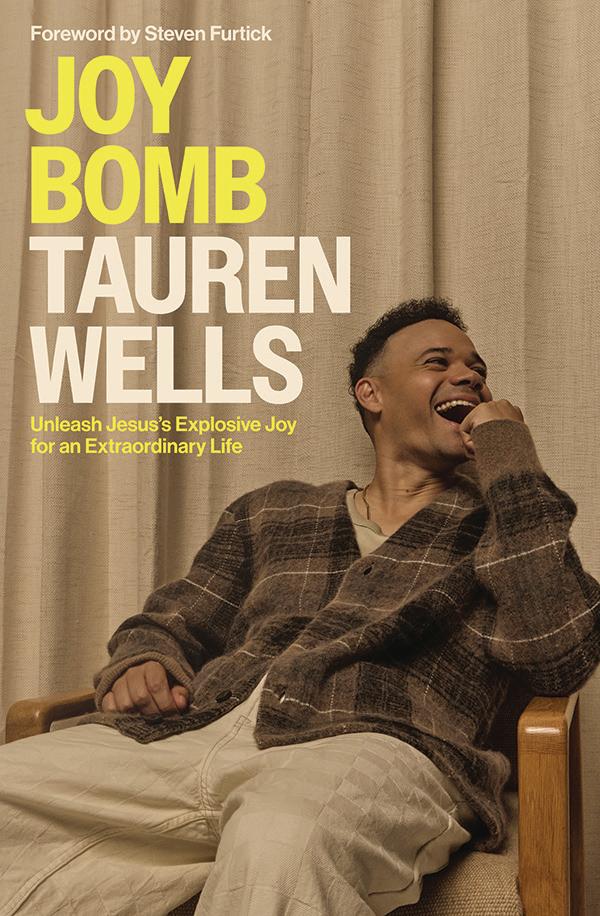
To learn more about Tauren Wells, check out his book, Joy Bomb, available at your favorite retailer.























































Tragedy has a way of knocking the wind out of you— leaving you stunned, heartbroken, and unsure how to move forward. As a mother, when the tragedy involves your child and the circumstances are out of your control, you are forced to trust God to hold both your child and your heart in ways you cannot.
This past summer, my family walked through an extremely difficult season. Our adult son was the driver in a fatal pedestrian accident that forever changed his life and others. When tragedy touches your child’s life, there is no roadmap, only the daily decision to show up with love, humility, and faith. During those days post-accident, I recalled a conversation I had for an episode of my podcast where I interviewed Mary Beth Chapman, wife of CCM artist Steven Curtis Chapman. Many years before, the couple had lost their five-year-old daughter in an accident involving a truck their son was driving. Mary Beth shared, “You have to just take one step at a time and ask the Lord for guidance on how to navigate. How do we help our son step forward in this story that he will now have to steward?”
Looking back, these are some of the ways God met our family in that season, and how we learned to support our son as he began to heal.
We prayed constantly, not polished prayers, but honest ones. We asked God to go where we could not: into the places of guilt, fear, and grief that our son was not yet able to name. When we stopped trying to be the savior and trusted the true Savior instead, it freed us to love more gently.
2. Create Space Without Pressure to Speak
Well-meaning people often encourage talking as the path to healing, but we learned that silence can be just as sacred.

There were days our son wanted to talk, but most days he didn’t. We learned not to force conversation or rush processing. Sitting together or simply being nearby became quiet acts of love that spoke louder than words.
3. Listen More Than You Speak
When our son did want to talk, our role was not to fix or explain, but to listen. Deep listening requires restraint and the willingness to resist offering answers, Scripture, or perspective too soon. It means allowing grief to exist without trying to tidy it up. We learned that listening with compassion mirrors the heart of Christ, who so often met people in their pain before offering direction or hope.
4. Surround Your Child with Safe, Faith-Filled Support
Healing was not meant to happen in isolation. God used a wonderful trauma therapist, trusted mentors, and a loving community—including Steven Curtis Chapman—to help carry what we could not. Friends who prayed, checked in, brought meals, and respected boundaries became extensions of God’s care. Community doesn’t fix tragedy. It reminds your child that their story is still held within a larger story—one marked by grace, mercy, and redemption.
5. Model Steady Faith, Even When Yours Feels Fragile
There were days when mine and my husband’s faith felt strong, and days it felt threadbare. Still, we made an effort to be consistent, continuing to pray and speak of God’s nearness even when answers were absent. Children, even adult children, draw strength from a parent’s quiet trust. Not a faith that pretends everything is fine, but one that says, “Look at the Lord’s faithfulness.”
Jennifer Vickery Smith is an entertainment journalist, host, and producer. She is a mom to rising country music artist Conner Smith, and Nashville-based director/videographer Cooper.