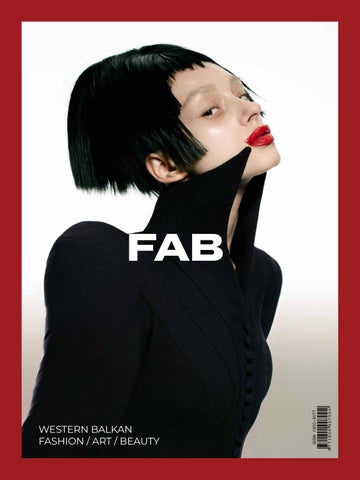
WESTERN BALKAN
FASHION / ART / BEAUTY
Shopping mall Big Fashion • Podgorica 31 Slobode • Podgorica • Porto Montenegro • Tivat
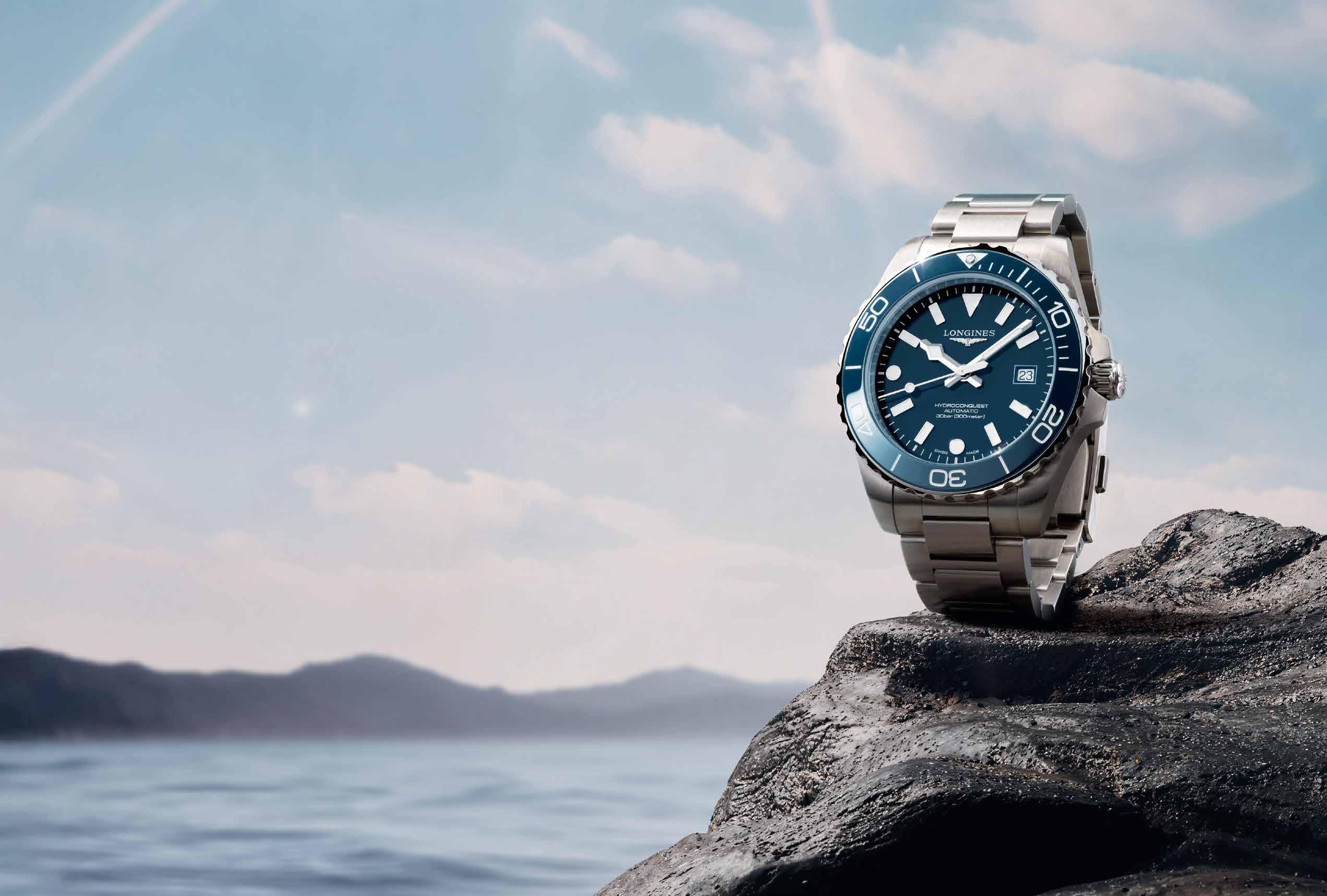
HYDROCONQUEST
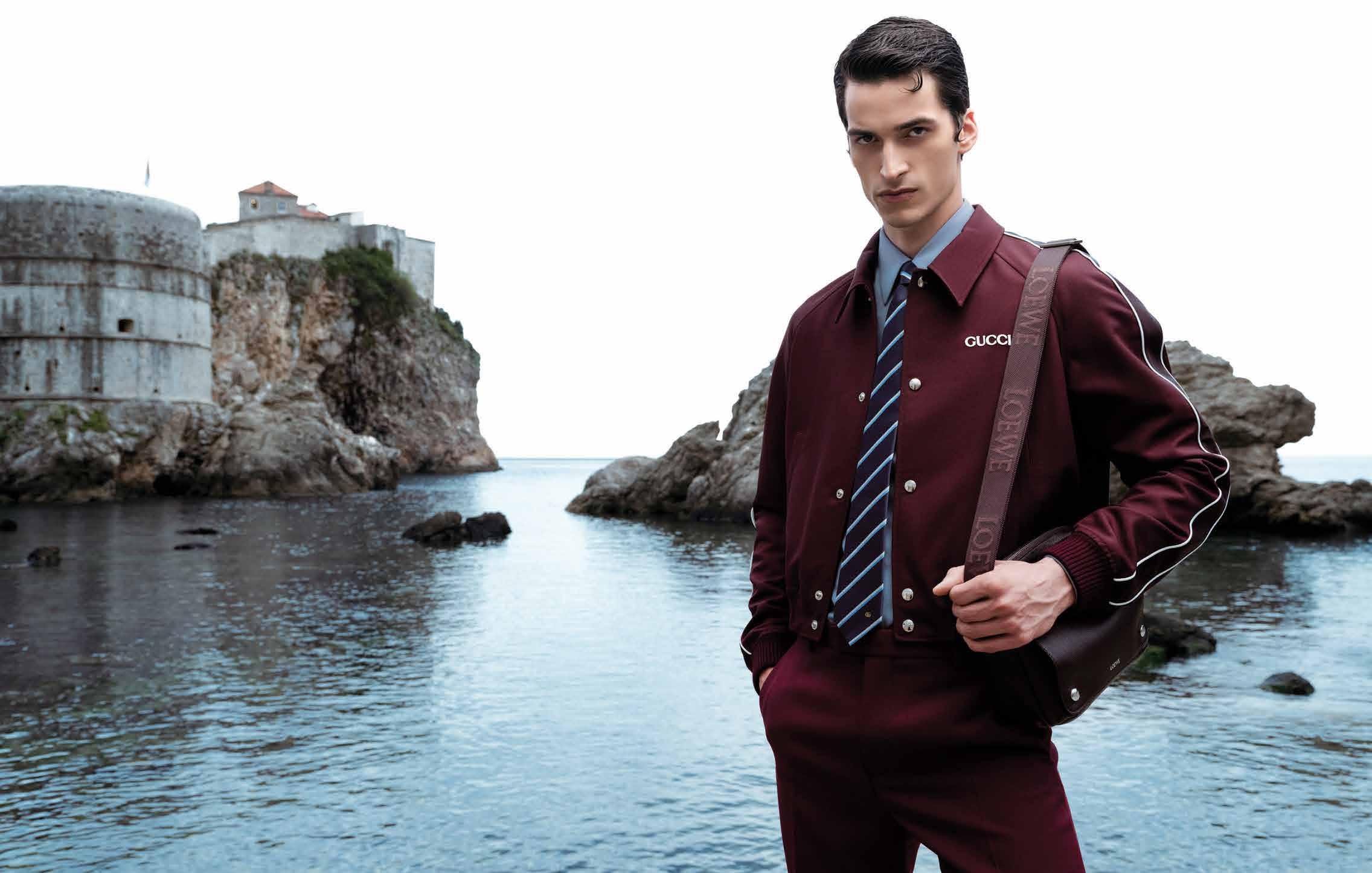
WOMAN: ALAIA CELINE THE ROW LOEWE GUCCI
SAINT LAURENT BOTTEGA VENETA KHAITE
CHLOE
Of everything that man erects and builds in his urge for living nothing is in my eyes better and more valuable than bridges.
Ivo Andrić
Editor-in-Chief & Creative Director
ZINA PUSEP
Graphic Design
JADRANKA SIMONOVIĆ
ZINA PUSEP
MIA BULATOVIĆ
Photography
BOJAN IVOVIĆ
GORAN V. POPOVSKI
EDVIN KALIĆ
DŽENAT DREKOVIĆ
JELENA ČEJOVIĆ VUKČEVIĆ
ZINA PUSEP
MIA BULATOVIĆ
The copyright of all images used in FAB are reserved by the magazine, advertiser’s or photographers and may not not be used without prior consent of the image owner.
Cover Photo (c) GORAN V. POPOVSKI
Contributors
Nadja Skaljić
Ana Krgović
Livia A.
Lisja Tershana
prof. Nikola Kolja Bozović
Goran V. Popovski
Milan Bauranov
Jelena Ivović
Sofija Stijović
Nevena Martinović
Spasoje Perović
Technical Editor
DOLORES ILIĆ
Printing by
DPC - GRAFOTISAK, Grude
Copies 4500 www.thecollectionfab.com
Powered & Published by THE COLLECTION
The Collection d.o.o. Podgorica Bulevar 21. maj, Podgorica 81000 Podgorica
Executive Director MIODRAG SPAHIĆ
DESIGN, PREPRESS DesignBox.me
ADVERTISING SALES
Miodrag Spahic sales@theluxurycollection.me
Ana Milojevic anakv@thecollectionmags.com
Zina Pusep zina@thecollectionmags.com
By decision of the Ministry of Culture and Media of Montenegro, the magazine was entered in the Media Registry under No. 037.
CIP - Cataloging in Publication Central National Library of Montenegro, Cetinje 338 48 (497. 16) (05)
Founders Rade Ljumović, Kieran Kelleher
ISSN 1800-9077 = The Collection, Montenegro (Podgorica) COBISS.CG-ID18421264
www.thecollectionmags.com
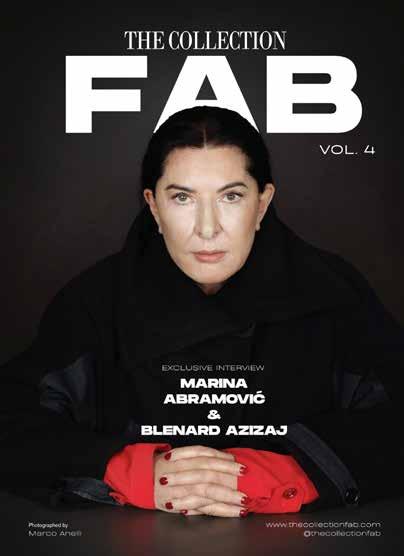



FAB is a multichannel platform and publication, powered by and distributed with The Collection magazine, dedicated to fashion, art and the creative industry in the Western Balkans. Through print, digital channels and creative production, FAB spotlights the best talents & businesses from the industries.
www.thecollectionfab.com | @thecollectionfab
The Collection magazine is a leading regional publication focused on luxury lifestyle sector for 13+ years, known for its premium distribution, clients and print.
www.thecollectionmags.com | @thecollectionmags
27k
50k

3 500
Printed copies annualy Readership per issue Issues per year VIP Private delivery addresses
All material is copyright, and all rights are reserved, and no parts of this publication may be reproduced in whole or in part without the written permission of the publisher. Opinions expressed are those of the authors and can not be related to publisher The publisher does not accent responsibility for advertising content.

In moments of uncertainty, the need for connection deepens.
This edition opens with the words of Ivo Andrić - a reminder that even through complexity, certain threads endure. For FAB, that thread is woven through fashion, art, and beauty. This marks the first standalone edition of FAB, powered and published by The Collection. What began as an excerpt has matured into its own identity. This is not a departure, but an evolution - a step forward built on the foundations and standards set by the previous four FAB excerpts within The Collection.
The journey of creating this issue has been nothing less but incredible and challenging, defined by both logistical feats and creative discovery. It was found in conversations with Siniša Radulović about the 9.5-ton weight of his work and the reality of transporting it from Montenegro to Venice; in uncovering art connections in Nensi Dojaka’s work; and in the deep research into regional talent and business visions. From initial research to final execution - the shoots, the editing, and the collaborations - the process has been both absolutely magical.
A vital part of this edition exists also in four editorials, each produced in a different country and shaped by different hands: Serbia, Montenegro, Bosnia & Herzegovina, and Croatia. From the cover editorial by Goran V. Popovski and Belgrade-based team, the streets of Zagreb, to the landscapes of Montenegro and the Bosniak Institute in Sarajevo, these stories offer essential perspectives.
FAB is designed to be as functional as it is aesthetic, offering a curated map of the businesses driving the regional economy. Our intention remains clear: to present the best of the Western Balkans to both a local and international stage. View this edition as a collectible encyclopedia, a guide, and a calling card for a region that continues to grow.
My deepest gratitude goes to The Collection magazine, to our dear partners and clients, to Samms and many many others. To my family. The execution of this vision relied on people who turn ambition into reality. To my dearest friend, Bojan Ivović, who truly made the impossible possible - thank you for your brilliance and for navigating every challenge along the way. To my creative “yacht sister,” Goran V. Popovski, and the entire Belgrade team. To the artists and visionaries who shared their stories and their challenges with us - thank you for your honesty and for allowing us to document your work.
This is our shared portrait.
ZINA PUSEP Editor-in-chief & Creative Director

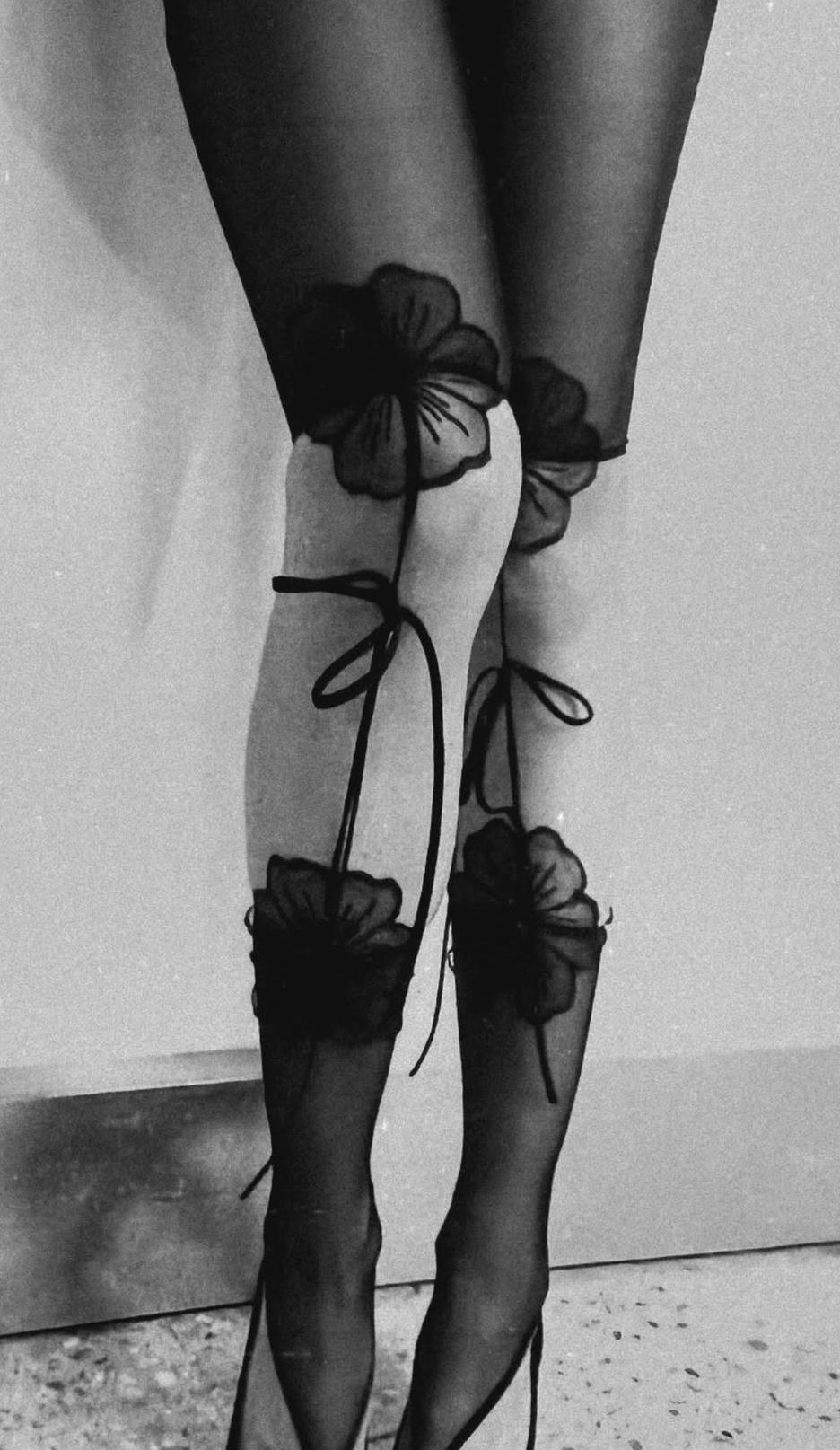
Tights
Detail
ALL FASHION IS PAGAN | SAMMS EDITORIAL
FASHION GALLERY | EFFETI CONCEPT STORE | CASHMERE & SILK |
SOMETHING THE BRAND | NENSI DOJAKA | EDITOR’S PICK PORTO MONTENEGRO - SHOPPING DESTINATION
CORE AND THE RETURN TO MYSTERY
BY LIVIA A. | BITTERPEACHX
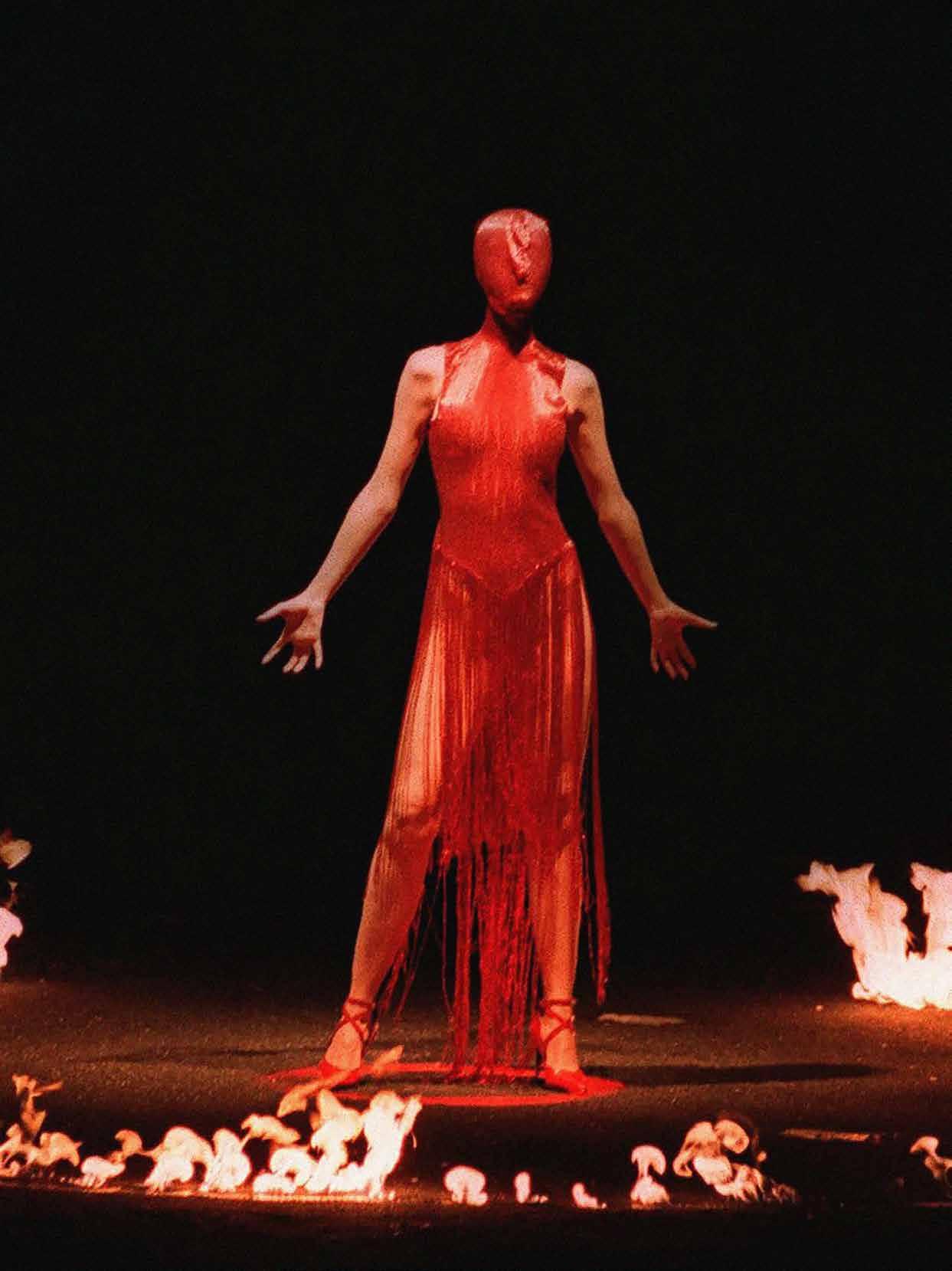
Balkan core will be the next big thing, not just as an aesthetic or travel trend, but as a return to mystery. These lands carry something elemental: an undercurrent of superstition, sensuality, and myth that never quite left, yet was never fully discovered.
Vesna Goldsworthy wrote in Inventing Ruritania – The Imperialism of the Imaginary that “Balkan settings make their first, rare appearances in British literature to signify all-purpose semi-mythical remoteness, an imaginative
‘end of the known world.’” The book dates back to the 1990s, but that line still feels true today.
That thought resurfaced when I heard about Marina Abramović’s new Balkan Erotic Epic tour, a performance built around fertility rituals, body symbolism, and inherited folk gestures. It reminded me of the rituals I grew up with in Albania, especially Dita e Verës (Summer Day), a festival older than Christianity, where people leap over bonfires to welcome
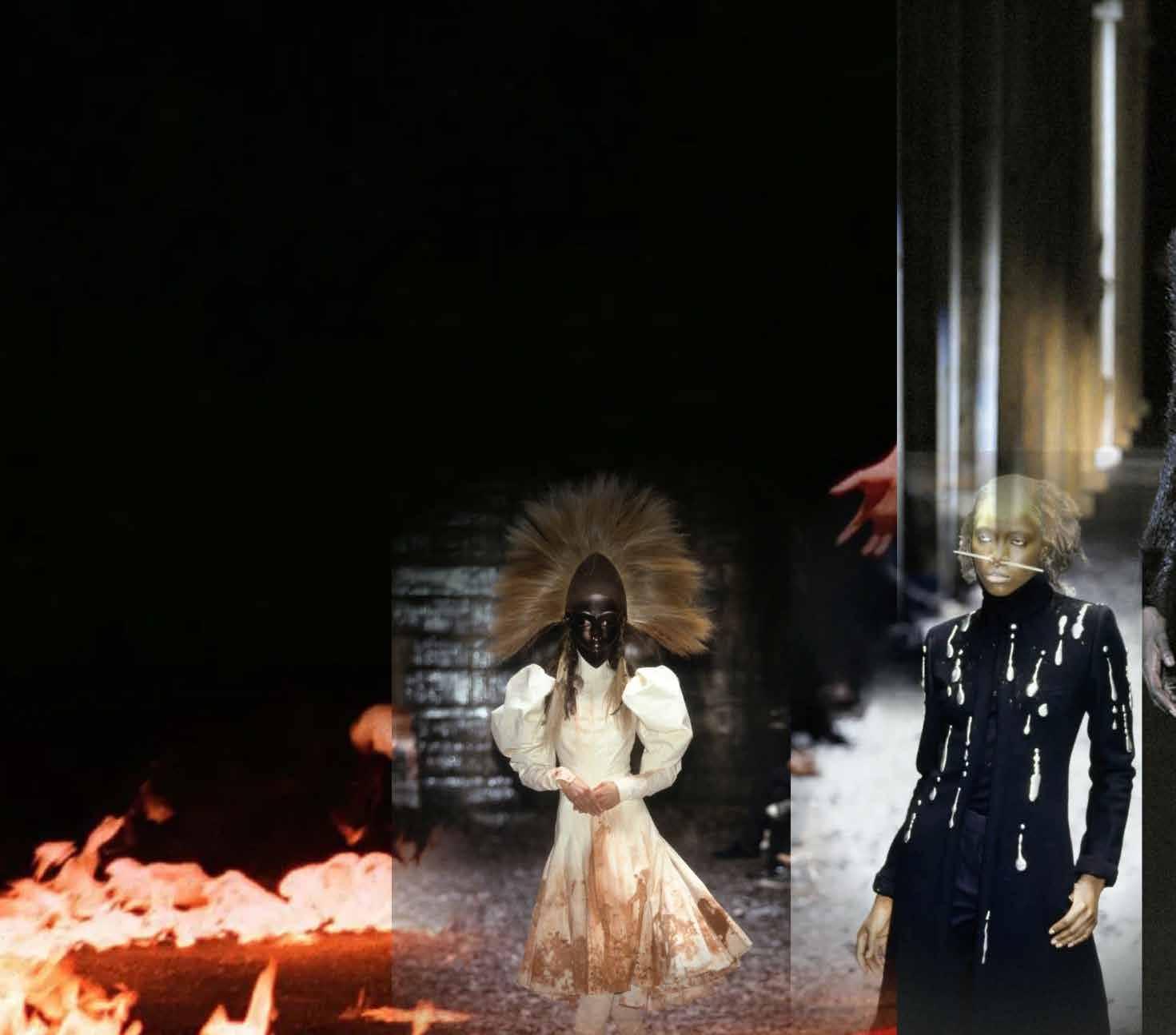
prosperity. In ancient times, the sun (Dielli) was worshipped as a deity; doors were painted with its symbol to attract fortune. I even have it tattooed on me: a pagan sun, inked as a reminder of abundance and rebirth.
This got me thinking how fashion is also inherently linked with these rituals and references. From my research on this topic, I have concluded that there are four main pillars of deity, belief and worship across most pagan cultures and how these are linked with fashion:
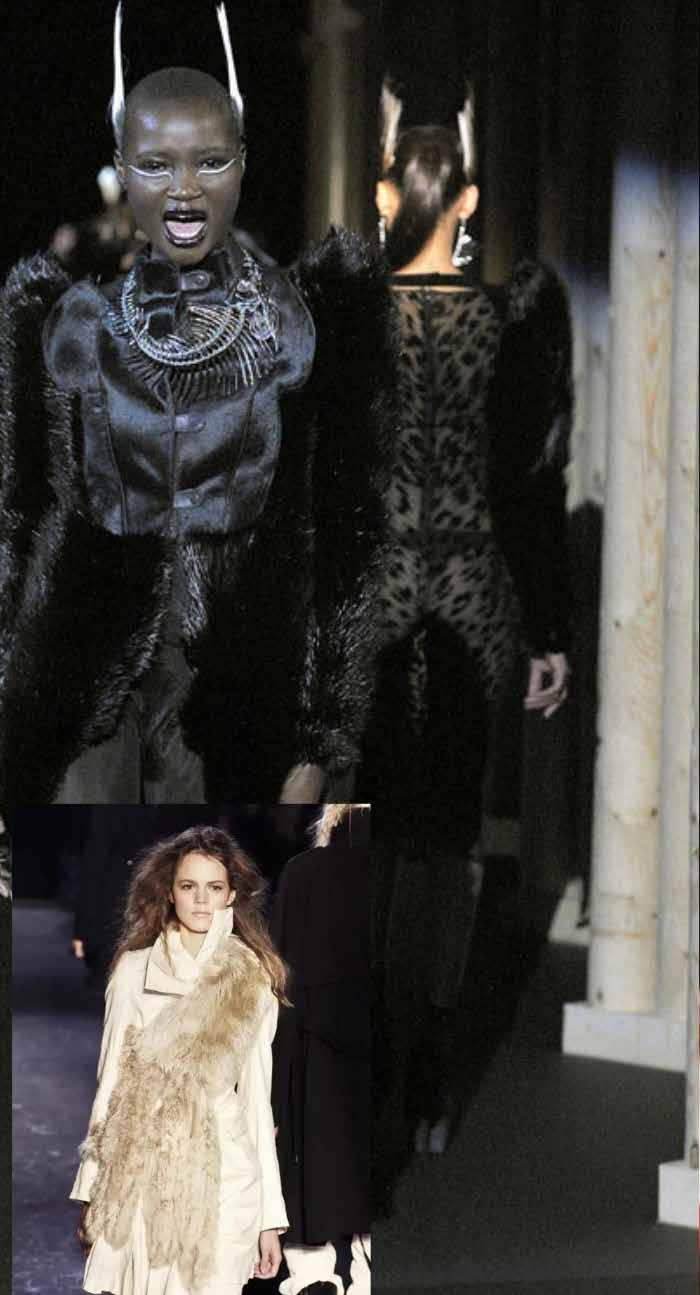
Fire has always been present in a way or another in fashion. It devours, purifies, hypnotises the perfect metaphor for an industry built on burning and rebirth. In Albania and neighbouring countries paganism, fire is more than warmth, it’s considered bloodline. Zjarri i Vatrës, the Fire of the Hearth, is said to descend from the sun itself and it was thought that the hearth linked the living and the dead, generation to generation. Far north, the same reverence burned brighter. In Viking-age blóts, the goði, priest-chieftains, wore red-dyed wool and animal hides, bronze sun pendants flashing in the flames.
The same symbolisms show up in fashion. Alexander McQueen’s “Joan of Arc” (AW 98) ends in a woman engulfed by flame, silver chainmail glowing like molten skin, not as entertainment but as sacrifice. He understood what the ancients did: that to destroy something beautifully is the highest act of belief. Two years later came “Eshu” (AW 00), McQueen’s tribute to the Yoruba deity who rules crossroads and chaos, the messenger between mortals and gods.
Similarly, I love Issey Miyake’s collection “Dragon”, (SS98), which showcases burnt looks with a gunpowder explosion in the shape of the dragon. It just goes to show that fire brings about something new and different and destruction is just a way of rebirthing something else.
Earth is the element fashion pretends to have outgrown, but it’s still everywhere: thread, needle, grain, soil.
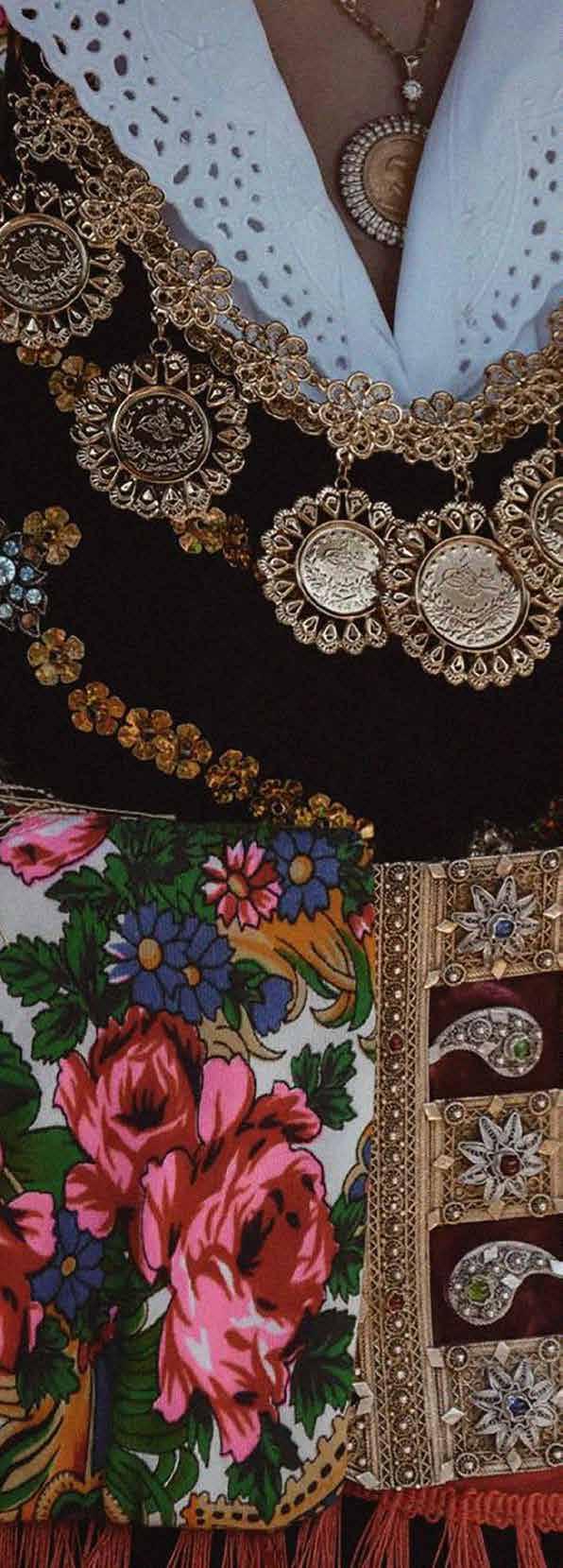
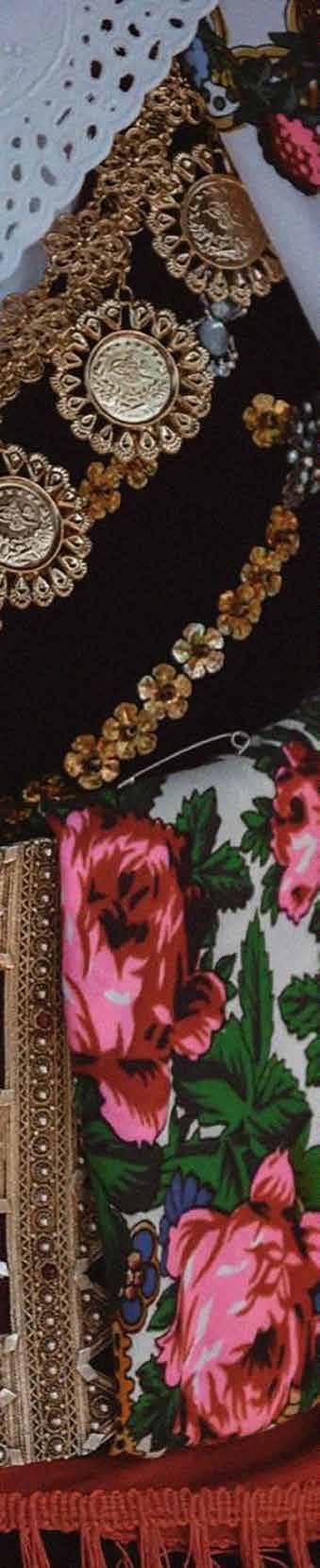
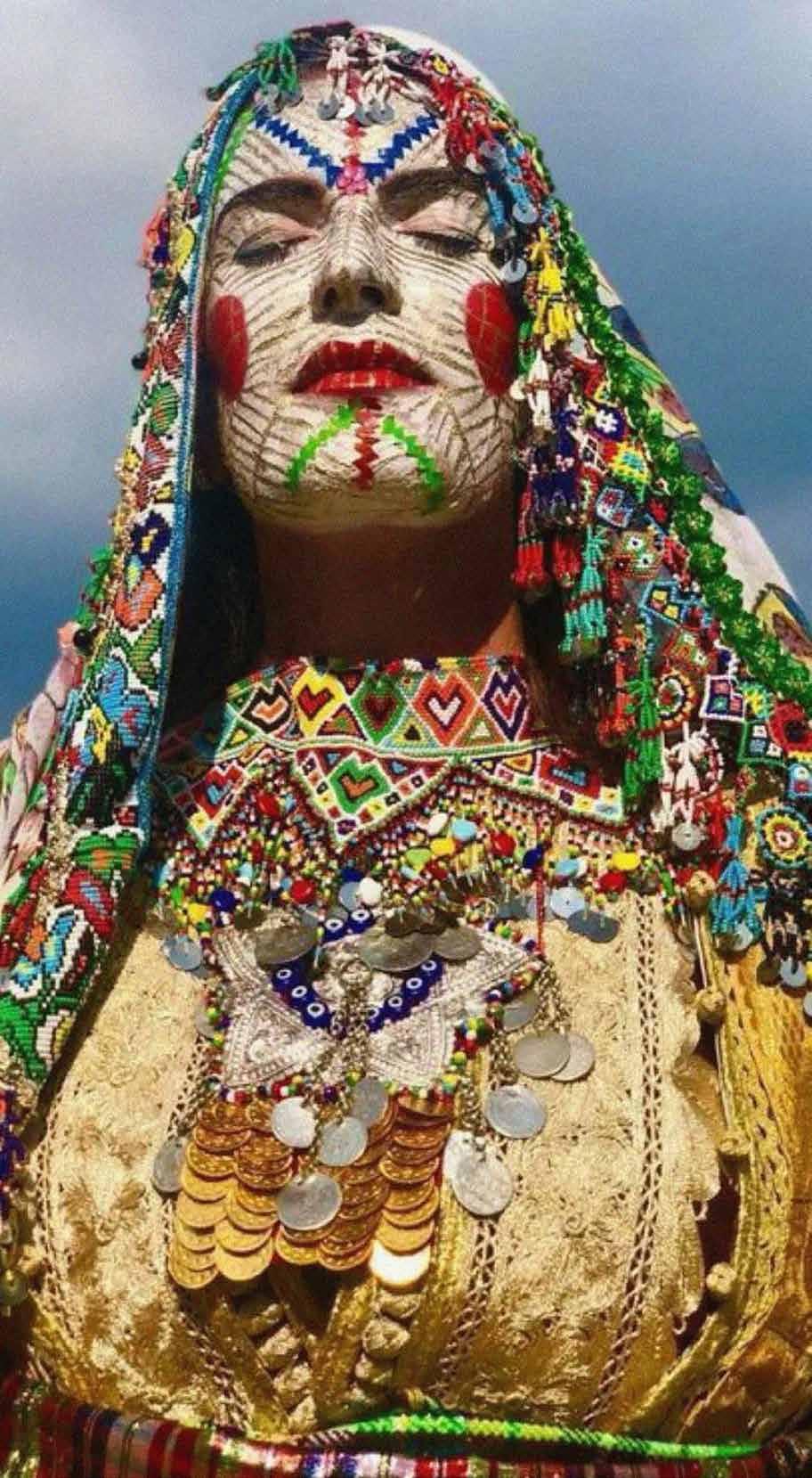
In the Balkans, every stitch used to carry intention. The xhubleta, a carved, bell-shaped Albanian skirt, is patterned with suns and spirals meant to protect the body. In Romania and Bulgaria, women still tie mărțișor bracelets to trees when the first swallows return, trading red and white thread for luck.
Elsa Schiaparelli’s 1938 collection, called “Pagan Collection” is one of the first references to paganism I saw in high fashion. The collection really encompassed the idea of metamorphoses and transformation (a big theme due to surrealism). Elsa loved the idea of women “blossoming” with her designs including earthly elements of leaves like wheat, flowers but also butterflies and insects which in many pagan cultures are talismans of good luck and protection.
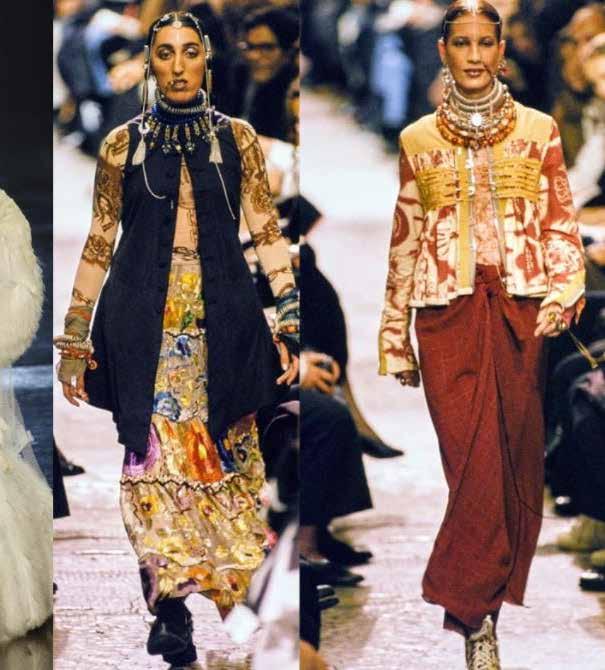
Jean Paul Gaultier’s “Les Tatouages” (SS 94), also comes to mind when discussing this connection of earthly elements and the body. The models are all wearing tribal elements; clothes adorned with images of fields, trees and bodices that mimic full body tattoos in addition, headpieces and piercings. These tattoos mapped across the body and corsetry stitched like veins transcend fashion and almost serve as protective elements, most of them rooted from the earth. In the Balkan region, predominantly women donned Sicjane tattoos, for protection but also cultural identity. Usually bracelet-like designs were sometimes tattooed around the women’s wrists, either with crosses or a fence-like motif, an element seen also in JPG’s runways.
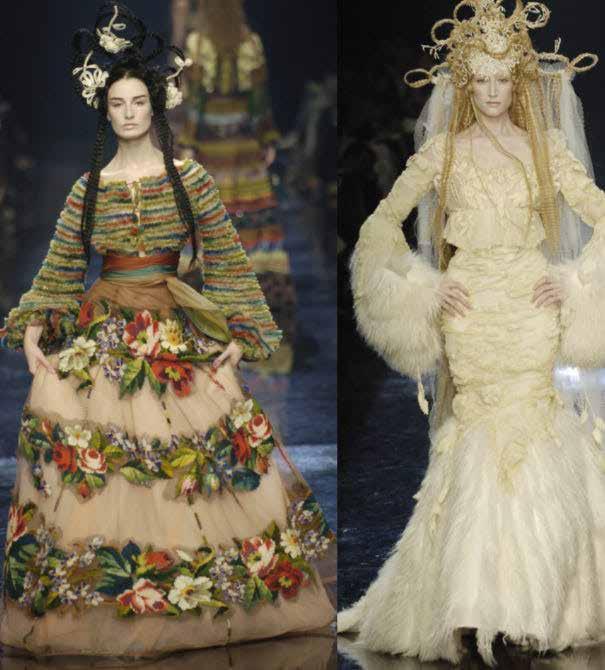
The JPG AW 05 catwalk was inspired by more Ukrainian and USSR folkloric motives (which are similar to some Balkan countries). The collection included beautiful furs but culminated with the last three final looks; Gaultier fuses eastern European embroidery, tapestry textures and almost priestess ceremonial opulence. To me this fully evokes past and ancient times, where folk lived in small villages and where townspeople, pagan priestesses and Tsarist brides all coexisted in harmony.
Sarah Burton’s AW 17 McQueen collection, inspired by a Cornish wishing tree, branches covered in ribbons, could have been pulled straight from our spring rituals. In both Cornwall and the Balkans, people still tie threads to bark, believing trees can hold hope better than we can. But even before this, the figure of the elm, long a symbol of the underworld in the Greek and Celtic Mythology can be seen recurring in the work of McQueen; in the prosthetic leg boots created for Aimeee Mullins in SS 99 and also in the fairy tail he created for “The Girl who Lived in a Tree” (AW 08).
In Balkan folklore, women washed their faces in rivers before spring for health, with specific waters holding specific attributes. In Slavic stories, rusalki, water spirits, seduced men only to drown them, proof that beauty and danger flow from the same source. Water was more than a resource, it was a sacred, living element imbued with mystery, emotion, and transformation.
John Galliano loves to play with these elements (repeatedly). For his AW 85, the models were doused with water and dresses were dragged through the mud, referring to the mythical “muslin disease.” Similarly, the 2020 and 2024 artisanal collections of Galliano for Margiela felt like a water ritual. The models emerged soaked and translucent, their makeup intentionally cracked, and hair matted to their faces, mimicking those who have just risen from a river or the sea. Fabric, particular-
ly lightweight silks and organza, clung to the body like a second, wet skin. The silhouettes dissolved, moving away from rigid structure and embodying renewal through letting go.
Iris van Herpen has built her own mythology around water for years, directly translating its physics into sculptural textiles. Van Herpen herself asks, “if dressing will become something non-material, something that is visible, but not tangible or touchable”, perfectly aligns with the pagan preoccupation with elemental spirits and the liminal space between worlds. Her “Sensory Seas2 (SS 20) collection, with its flowing, organic, marine-inspired forms, acts as a visual return to the primal source, transforming the wearer into a shape-shifting water deity.
Water in fashion is always about surrender and fluidity. The silhouettes loosen, the face mask “melts” and the body is surrendered.
Spirit is the invisible layer, the reason pagans reached for symbols even when they didnt believe in them.
In the Balkans, protection charms still hang above doorways (the nazar and garlic to protect from the “bad eye”) mothers still pin small coins on a child’s shirt so spirits won’t notice them. And our Oras and Shtojzovalle, mountain fairies who weave the fates of men, are everything fashion’s old muses weren’t: fierce, independent, not to be tamed.
This energy manifests when the clothing becomes a talisman:
I see the Shtojzovalle in Dilara Findikoglu’s world. This is clothing as spiritual armor, aligned with her newest SS26 collection “Caged Innocence”. There is much resemblance in Turkish folkloric and cultural systems, particularly around patriarchy, with those of the Balkans. Her newest collection speaks of this divine female liberation from societal norms. Her pieces often function like exoskeletons: corsets are constructed like rib cages and red ribbons are draped like exposed arteries. This aesthetic perfectly channels the Shtojzovalle’s dual nature: desirable yet dangerous, embodying a powerful feminine energy that is fiercely self-protected.
Daniel Roseberry’s Schiaparelli channels the same divinity. He often uses literal golden eyes, lungs, and hearts cast in metal and affixed directly to garments. By displaying internal organs externally, the wearer is not hiding but they are declaring the body’s fragility and power simultaneously. The gold organs act as religious and surreal armour for an overexposed world, turning the body into an untouchable, protected idol. Interestingly in Albanian mythology, the dragues, semi human worriers with extraordinary strength, were said to have golden hearts with a jewel in the middle. This fulfils the ultimate pagan impulse: to adorn the self not for beauty, but for protection and power.
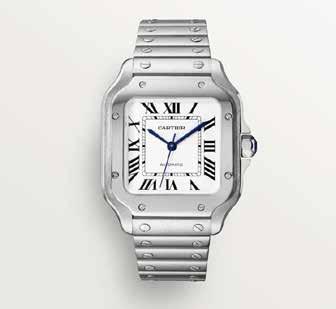
Excelsior Porto Montenegro is a refined watch and jewellery boutique, bringing together leading Swiss timepieces and fine jewellery, including brands like Omega, Cartier, Hublot and others.
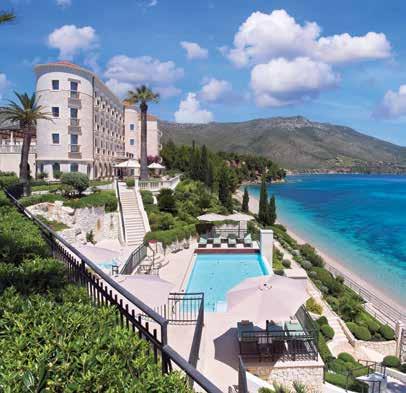
Residence Ozana
Porto Montenegro | Tivat Montenegro
Santos de Cartier
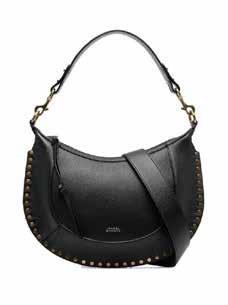
Nicolas Concept Store is defined by a quiet focus on timelessness, functionality, and quality. Every time I’m in Belgrade, I find myself returningnot just for the selection, but for the atmosphere: being welcomed with a coffee and a sense of ease that makes it feel instantly familiar, almost like home.
Galerija Shopping Mall
Uzun Mirkova 4
Belgrade | Serbia
Isabel Marant Purse
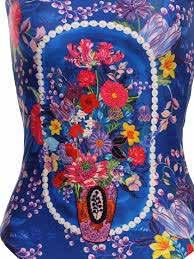
Tyche stands out for a selection that’s hard to define yet instantly recognizable - truly one of those rare places where you find pieces you won’t see anywhere else. Located in Portonovi, it’s somewhere you simply have to go to truly experience.
Portonovi
Kumbor | Montenegro
Agua Bendita Miller One-Piece Swimsuit

Recently, I discovered that beyond the iconic P50, Biologique Recherche also offers advanced skin treatments. As I approach my 30s, I came across Micro-Puncture Lab - a gentler, more refined alternative to microneedling.
Capital Plaza
Podgorica | Montenegro Micro-Puncture Lab
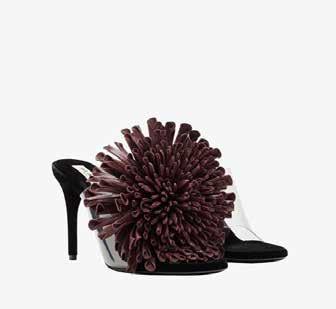
Maria Store brings together some of my favorite premium brands - from Saint Laurent and The Row to Gucci - with a selection that feels both considered and consistently strong. With three locations in Croatia, in Zagreb and Dubrovnik, it’s one of my favorite multi-brand destinations for premium fashion.
Ul. Svetog Dominika 3, Dubrovnik
Masarykova ul. 8, Zagreb
Dežmanova 1, Zagreb
Croatia
Alaïa Sandals
Address: Street Vista
Portonovi, Montenegro
WA: +39 327 785 46 17
IG: @cashmereandsilk_mne
Website: homecashmere.tilda.ws
Brands: Fabiana Filippi, Cividini, Panicale, Palm Angeles
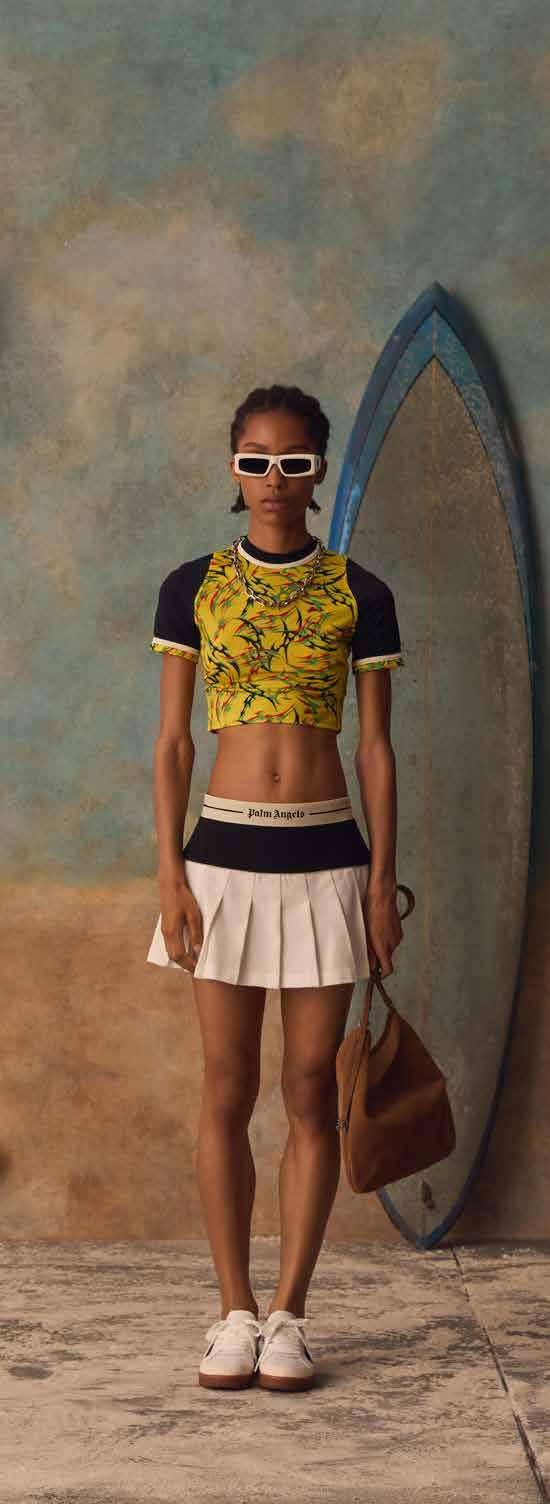
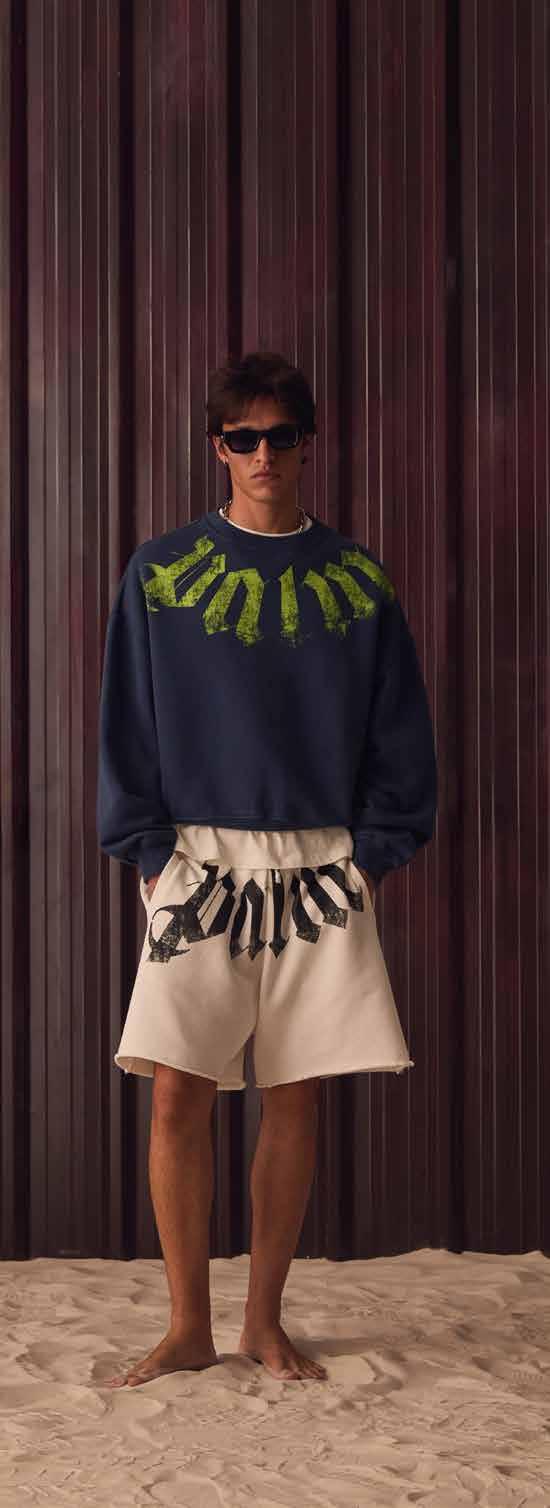
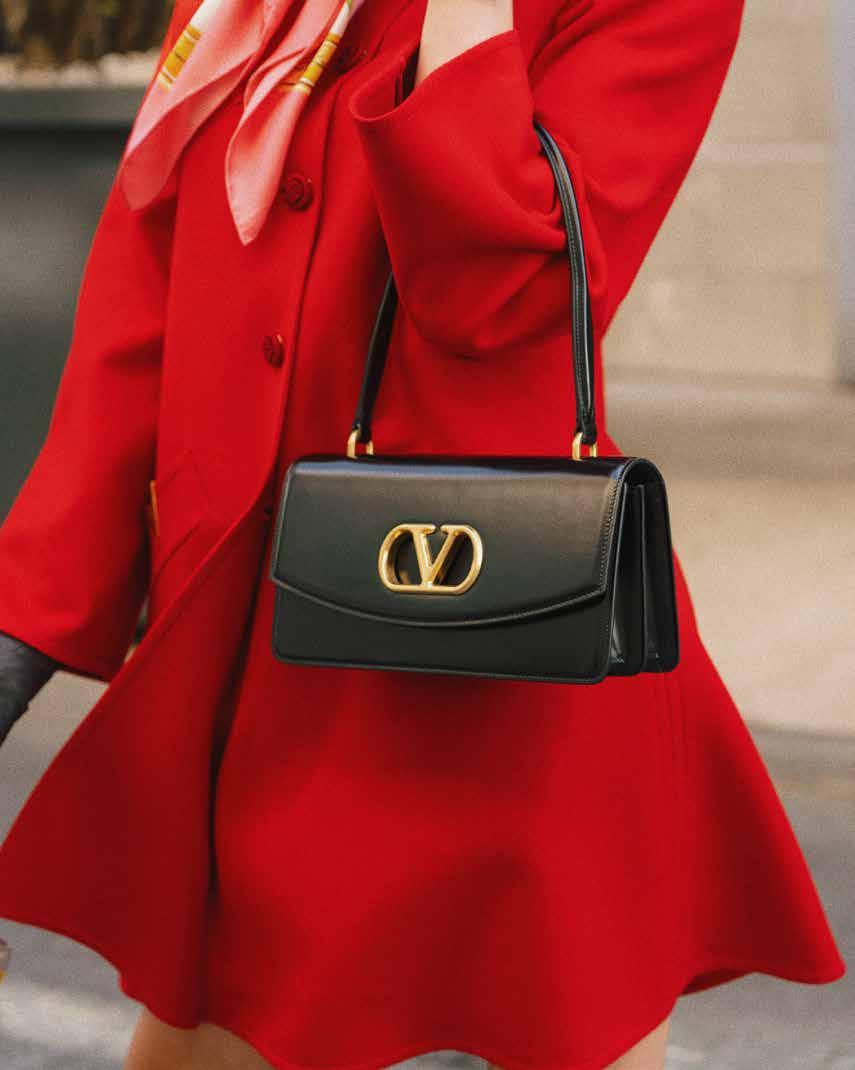
Fashion Gallery is the most renowned destination for luxury fashion in Montenegro. Located on the waterfront of Porto Montenegro yacht marina, this spacious, over-400-square-meter boutique offers a curated selection of the world’s leading fashion houses.
Fashion Gallery’s selection of brands encompasses globally recognized fashion houses, including Dolce & Gabbana, Balenciaga, Saint Laurent, Valentino, Alexander McQueen, Givenchy, Off-White, Zimmermann, Jacquemus, Versace, and Fendi. The boutique features both full seasonal collections, as well as standout pieces, giving customers access to the most relevant trends and iconic designs. The boutique is designed to offer comfort and an enjoyable shopping experience. Clean lines, natural light, and a seamless layout allow each brand to stand out. The contemporary,
elegant setting of the boutique with views of the yacht marina and personalized, attentive service ensure that the shopping experience there will be the one to remember. Over its more than 10-year history, Fashion Gallery has built a loyal customer base. Among the regular visitors are celebrities, political figures and affluent customers who arrive by yacht to spend quality time in Porto Montenegro. They choose Fashion Gallery not just for the brand list and collections but also for the tailored service, privacy and the ability to discover everything they need in one place. Combining a prime location with a one-ofa-kind brand portfolio and a deep understanding of the modern luxury fashion world, Fashion Gallery continues to set a high bar for fashion retail on the Adriatic coast.
Webshop: www.fashionporto.com | Boutique website: www.fashiongallery.me
Boutique address: Villa Tara, Obala bb., Porto Montenegro, 85320, Tivat, Montenegro Instagram: @fashiongallery.me | Phone: + 382 69 216 096
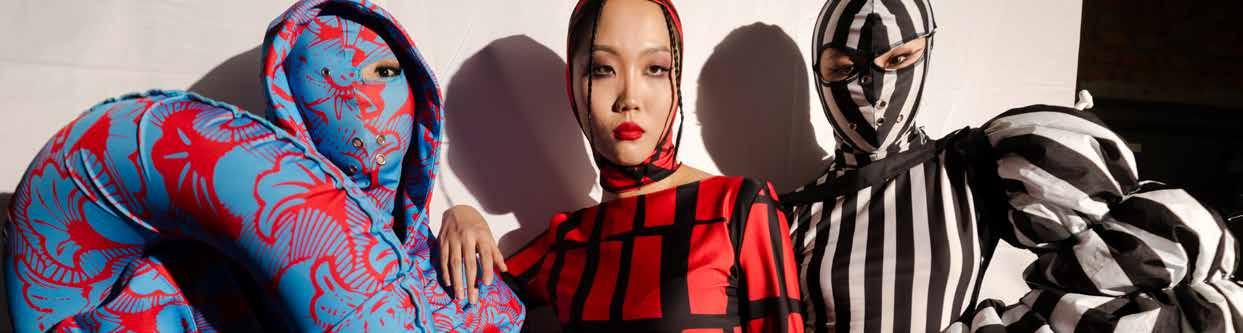
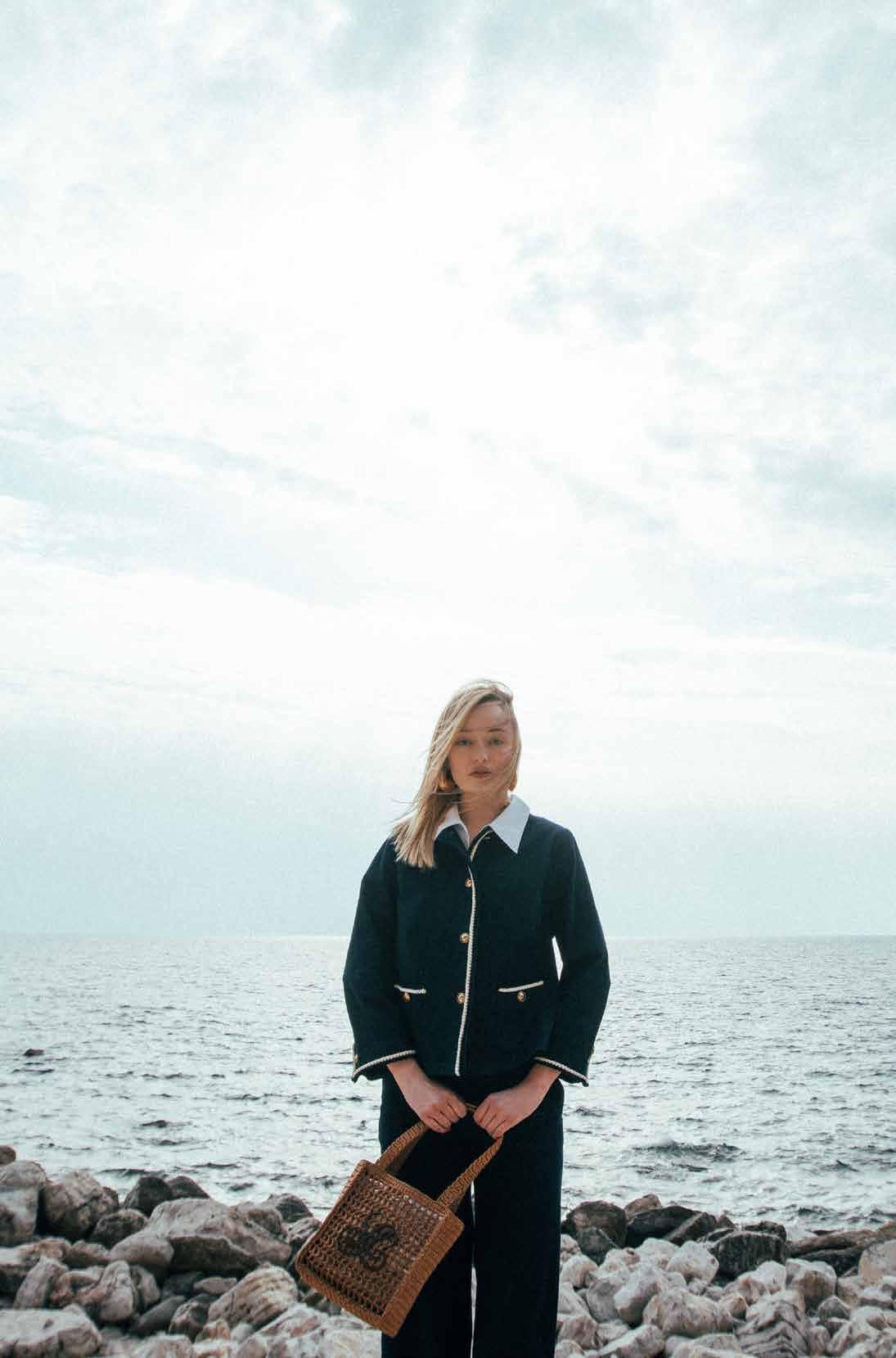
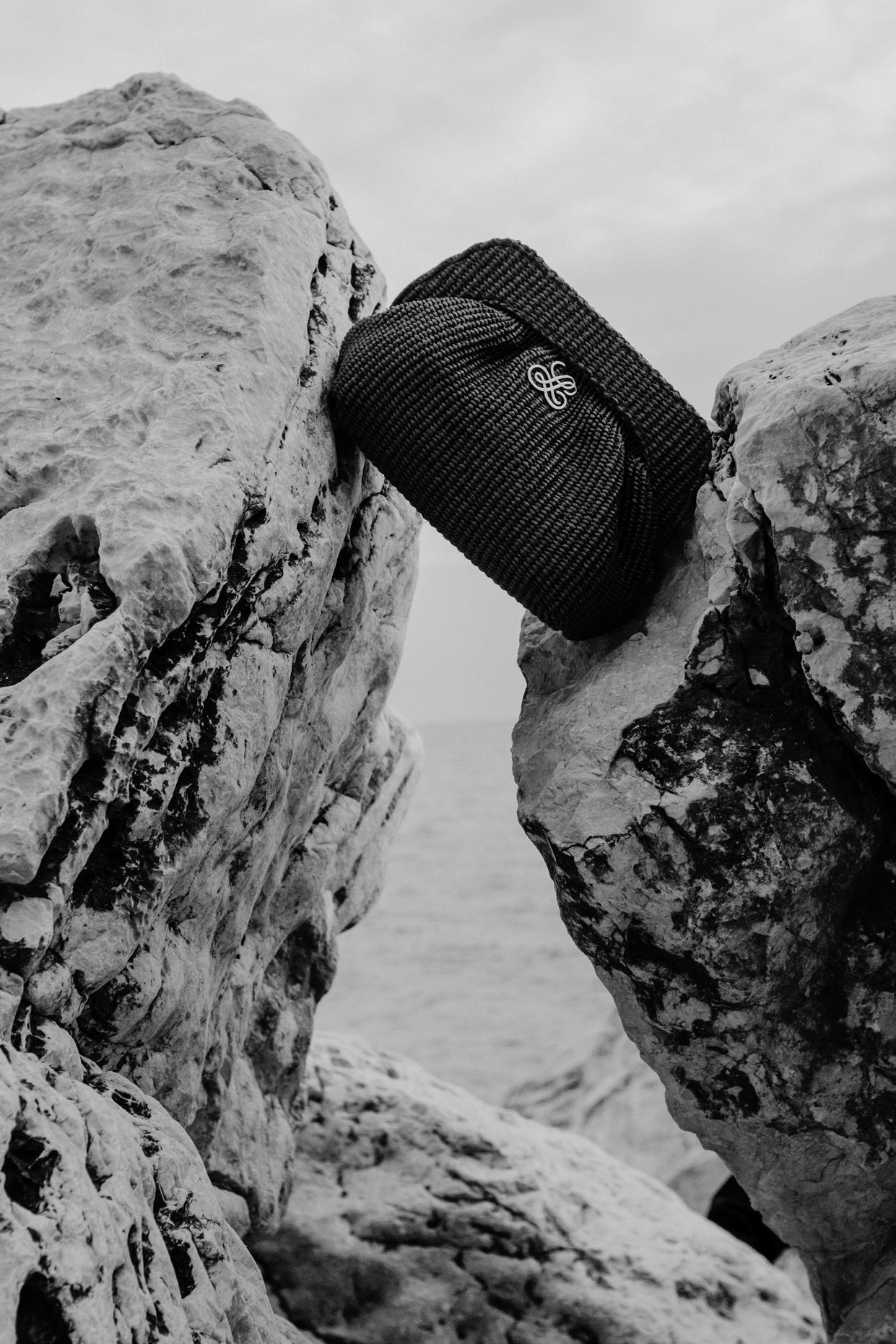
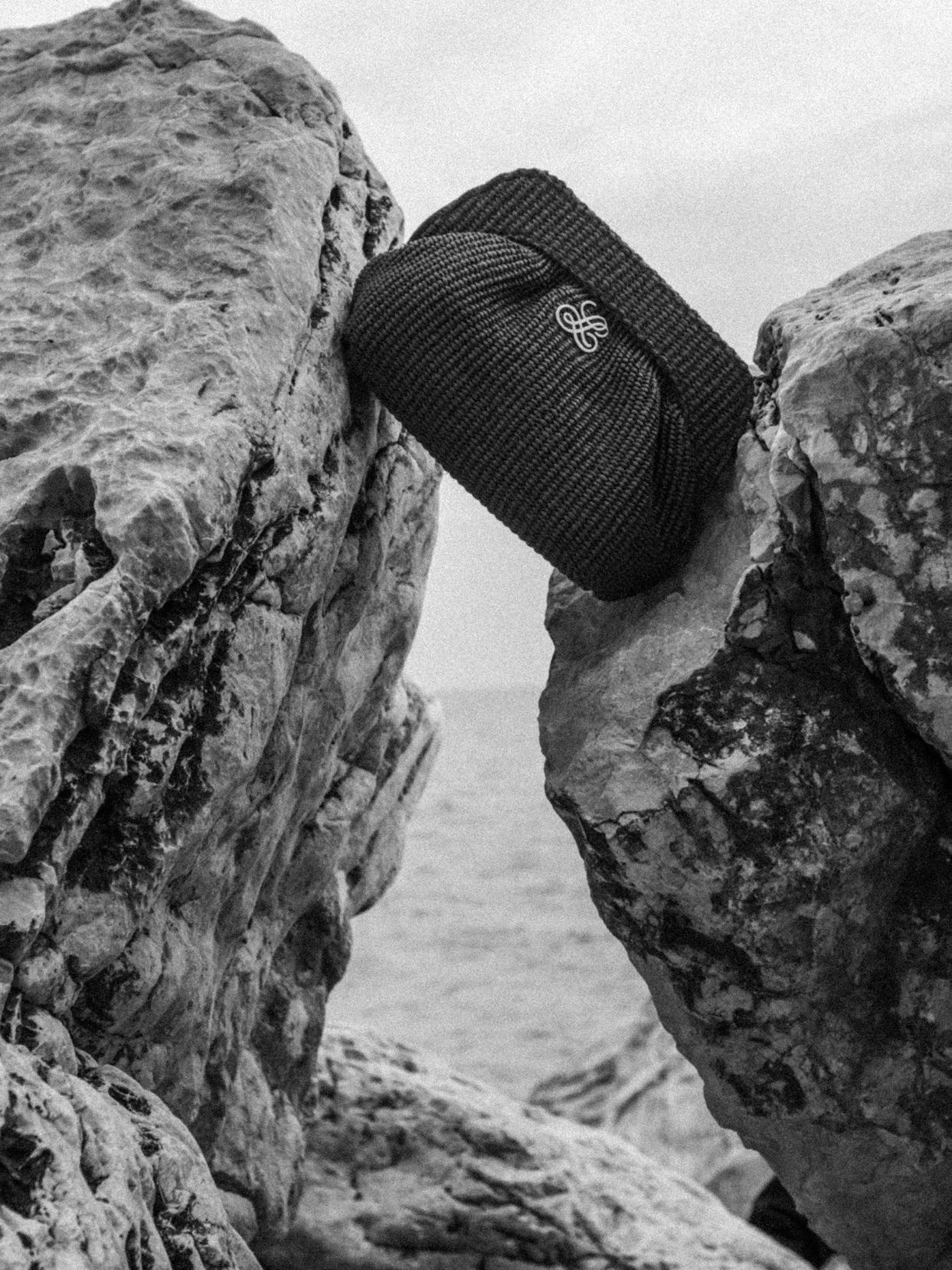
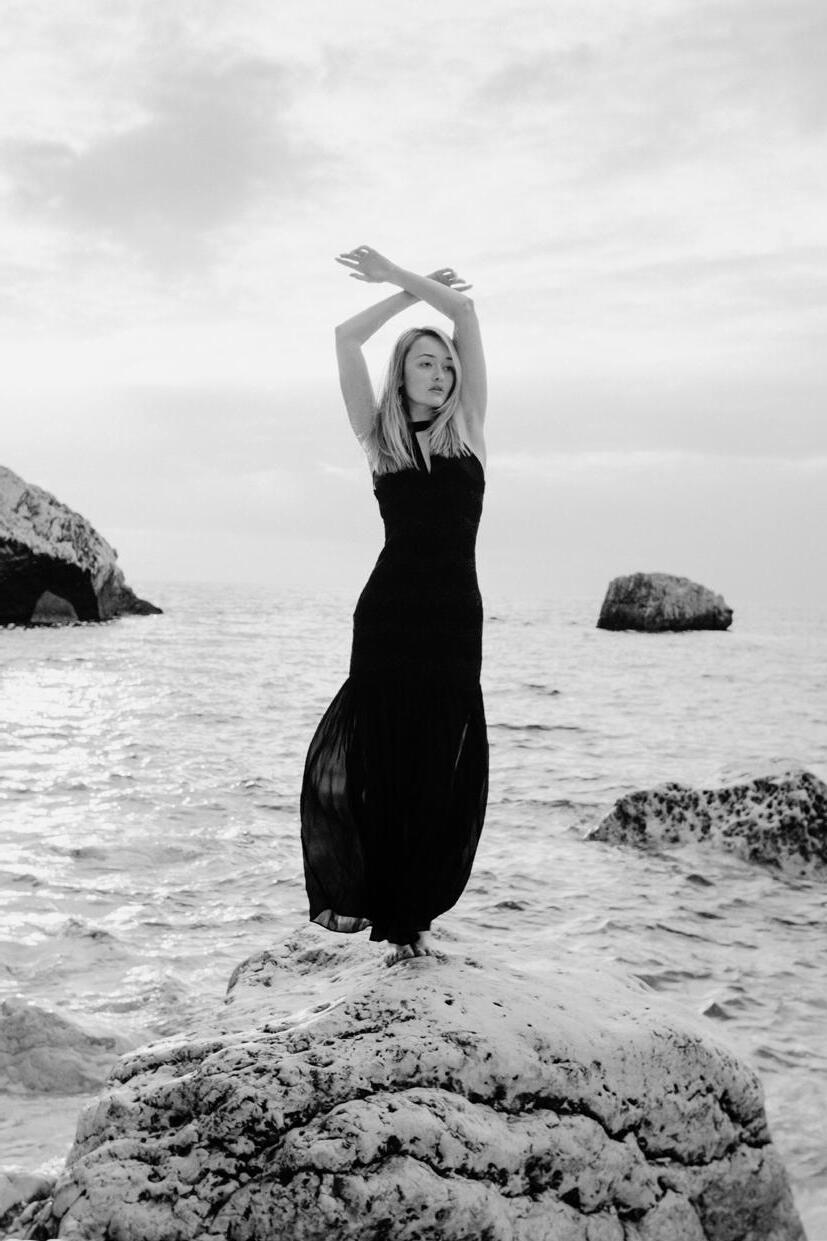
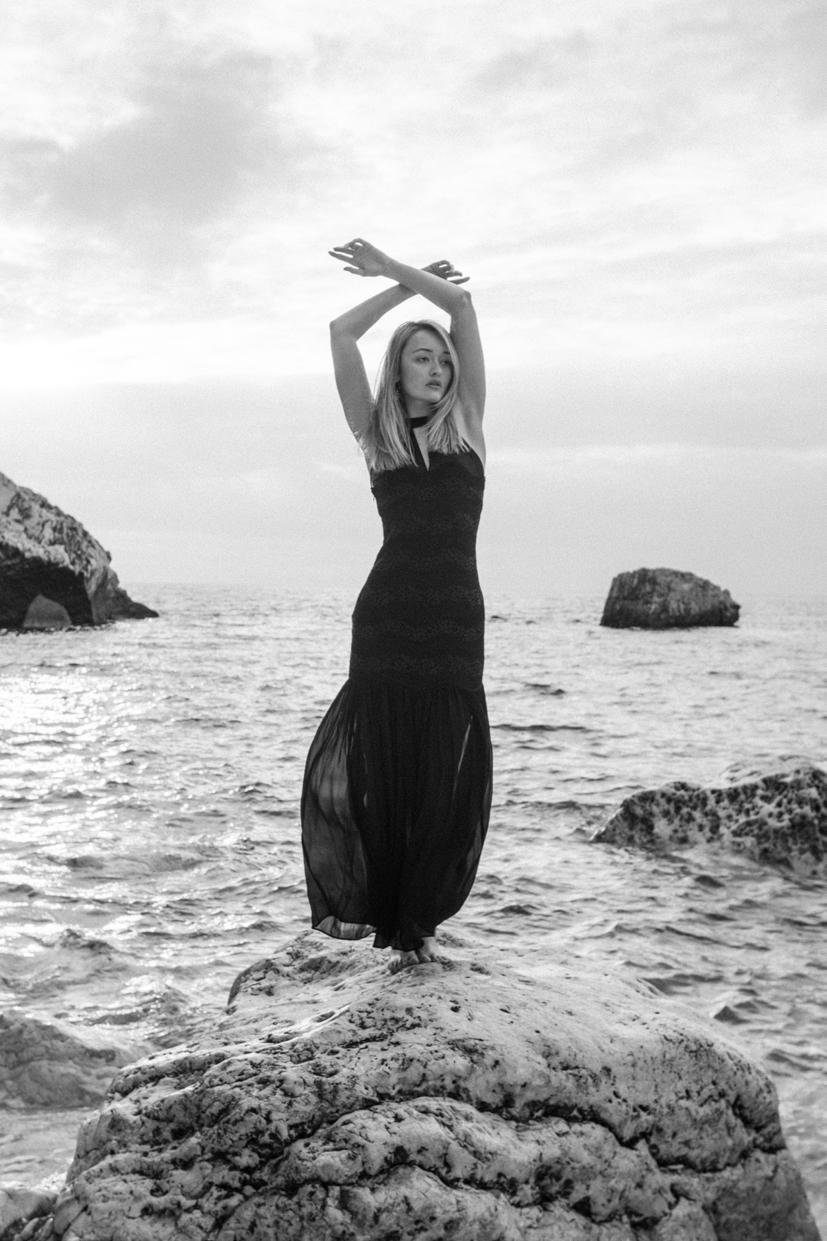
Photographed on the Montenegrin coast, this story unfolds through the Spring/Summer‘26 selection by Samms.
Creative Director: Zina Pusep
Photographer: Bojan Ivović
Technical Support: Spasoje Perović
Styling Assistant: Sofija Stijović
Set Assistant: Mia Bulatović
Post-production: Kakoto Lab
Model: Ivana Radoman
Hair: Sophie’s Beauty Line
Client: Samms
Brands: Luisa Spagnoli & Twinset
Vario
Novanta
Isolette
Luisa
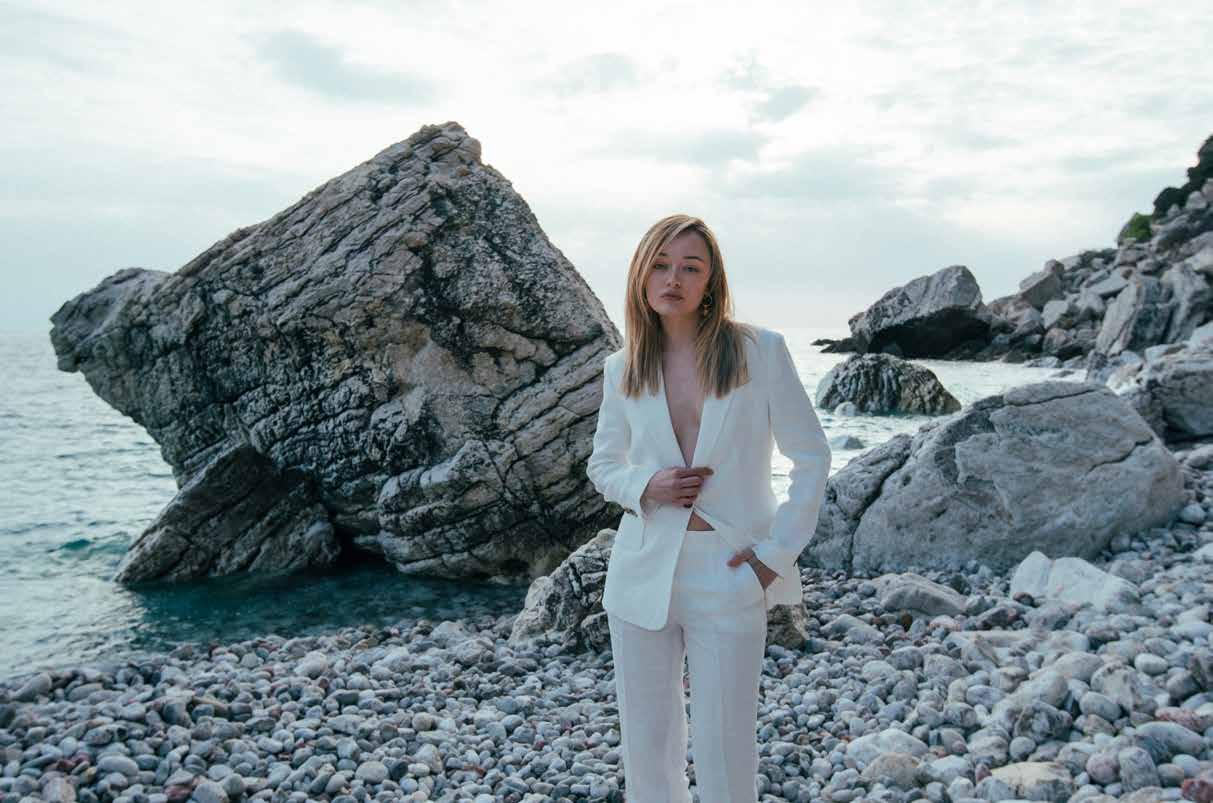
In Montenegrin folklore,“vile” (fairies)are nature spirits, deeply connected to forests, mountains, water, and wind.
They are not tied to a specific place, but to natural elements. Vila is quiet, strong, and inseparable from the nature itself.
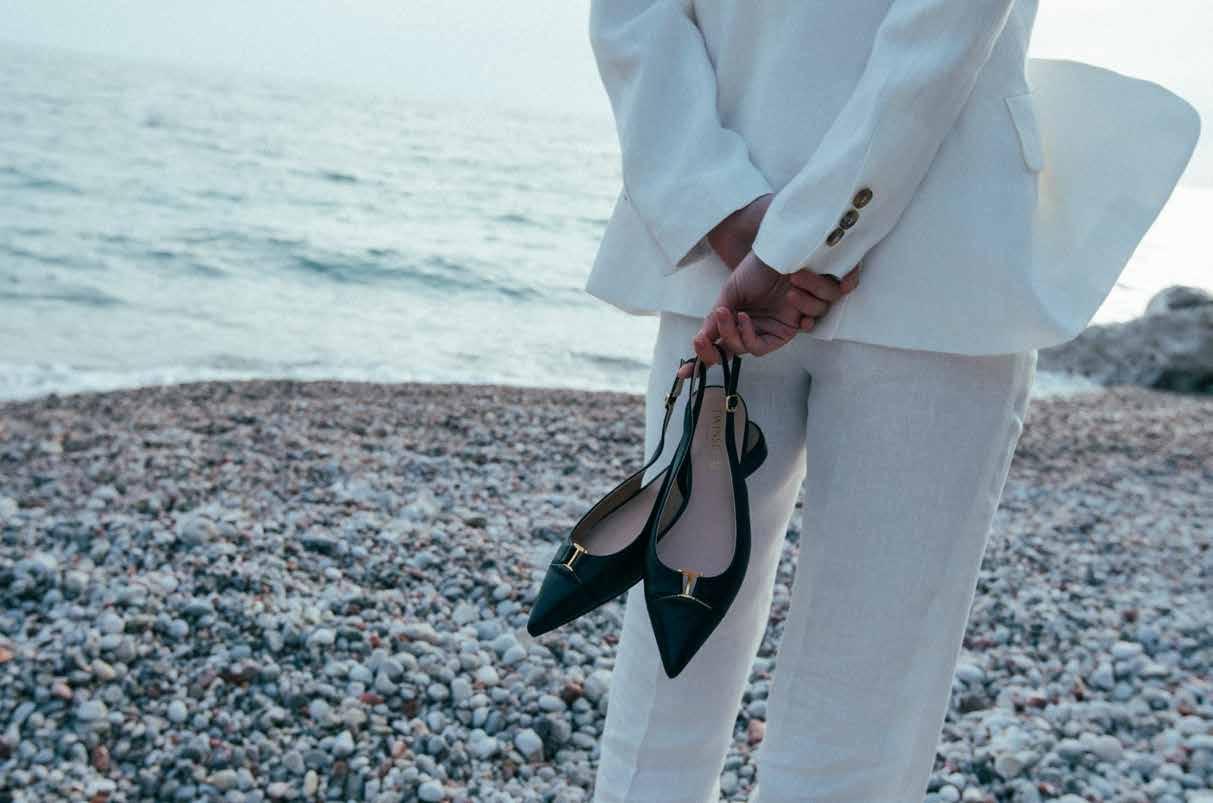
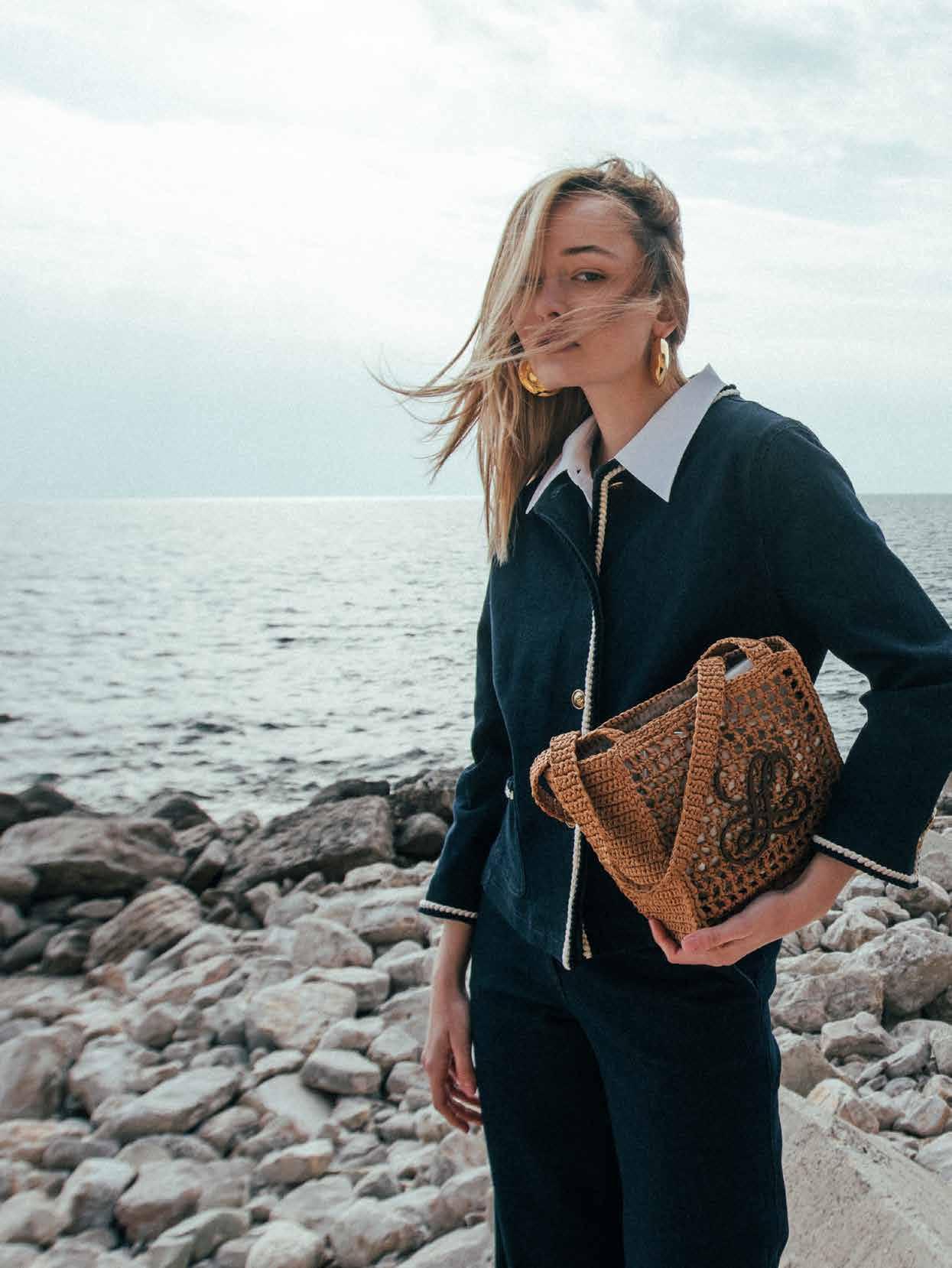
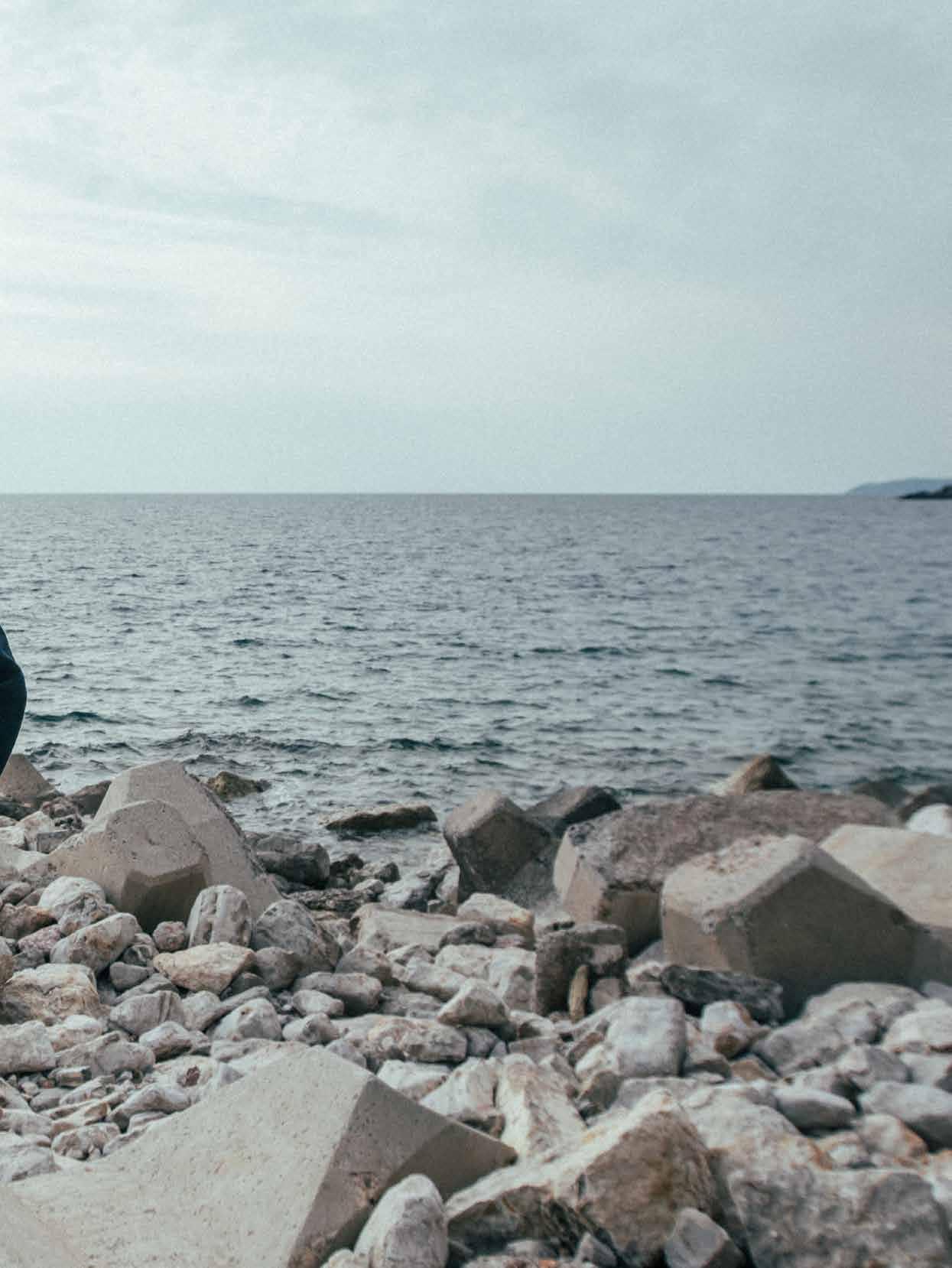
Fishermen used to say that just before the weather changes - when the air becomes heavier, when the surface of the water turns almost still - she appears.
Vila reveals herself in moments of transition - between seasons, between night and day, between stillness and movement.
Open knit-top with feather details
Attitude trousers
Twinset


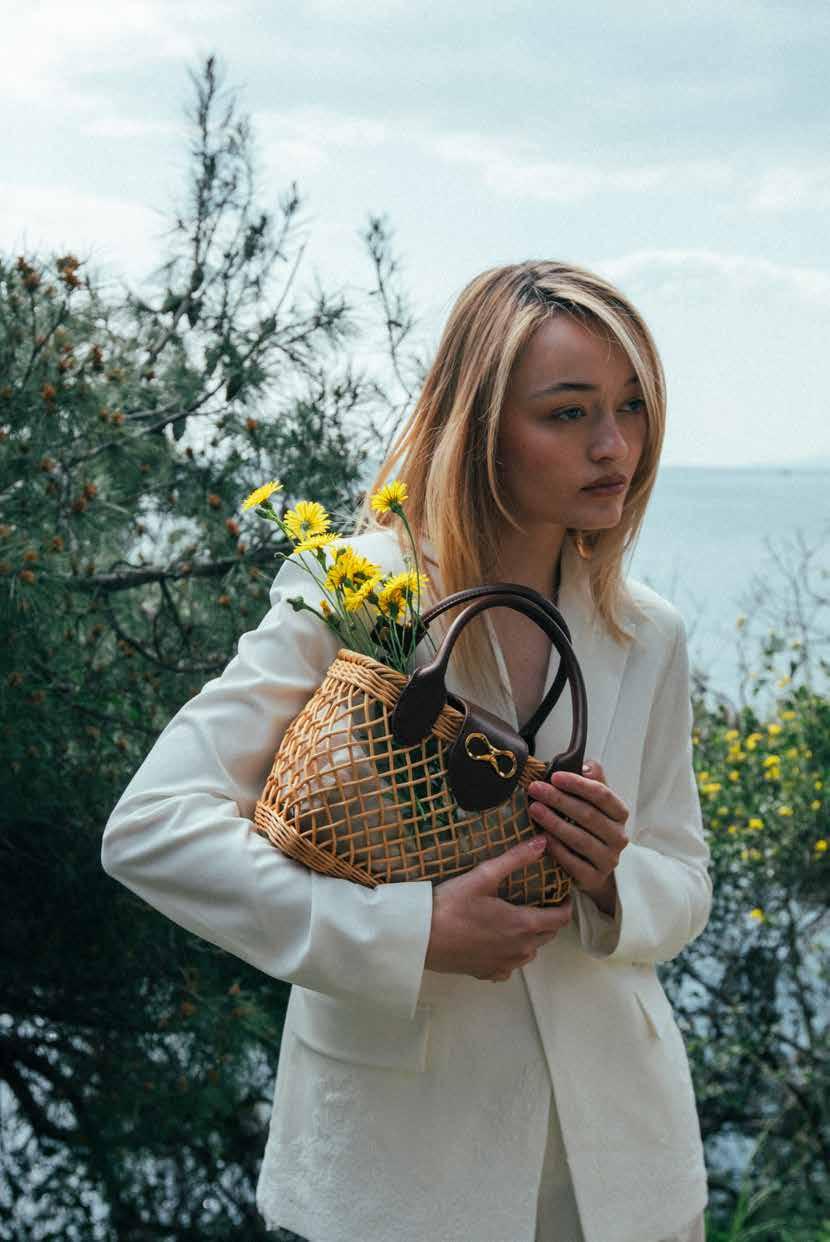
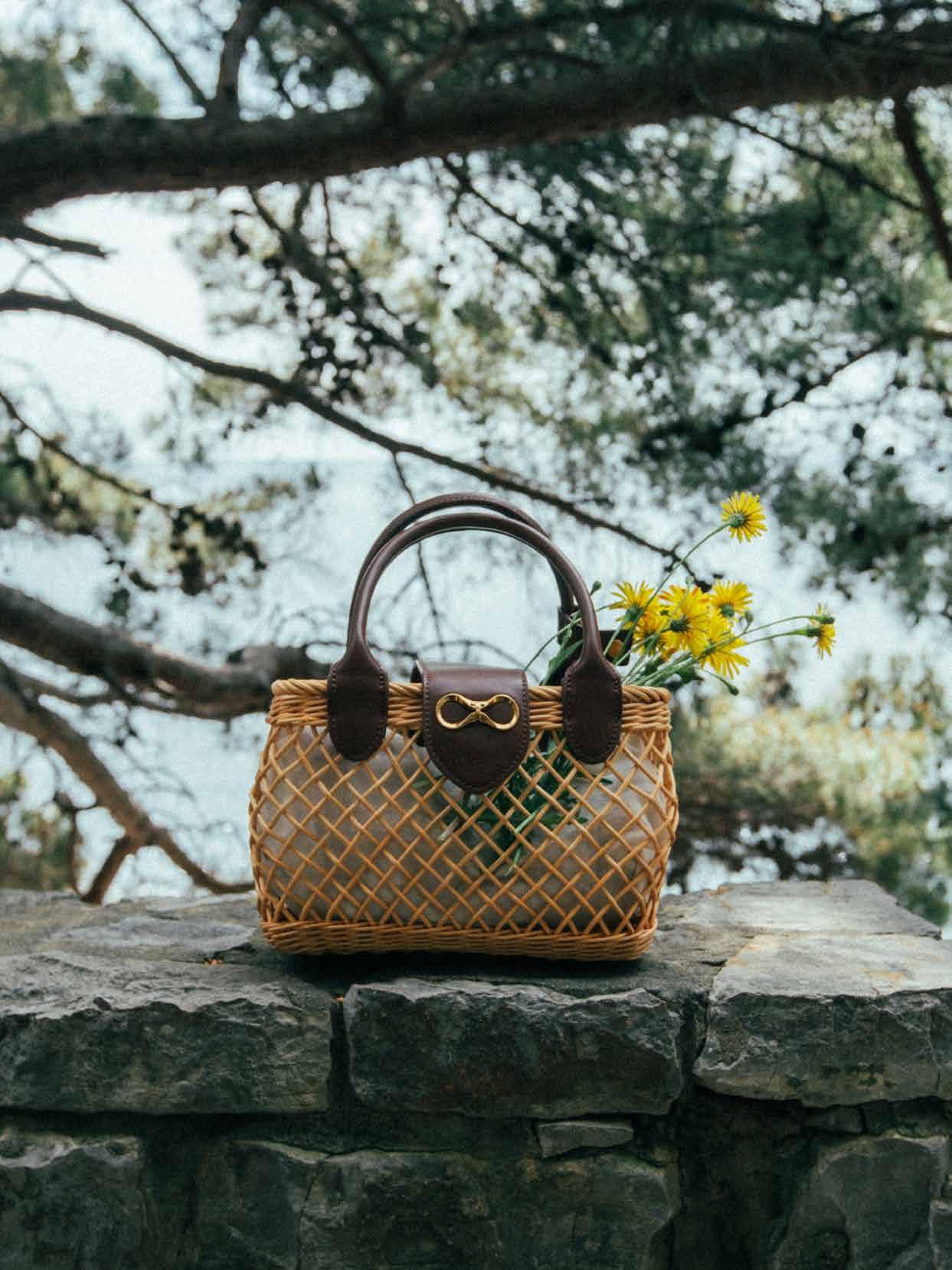
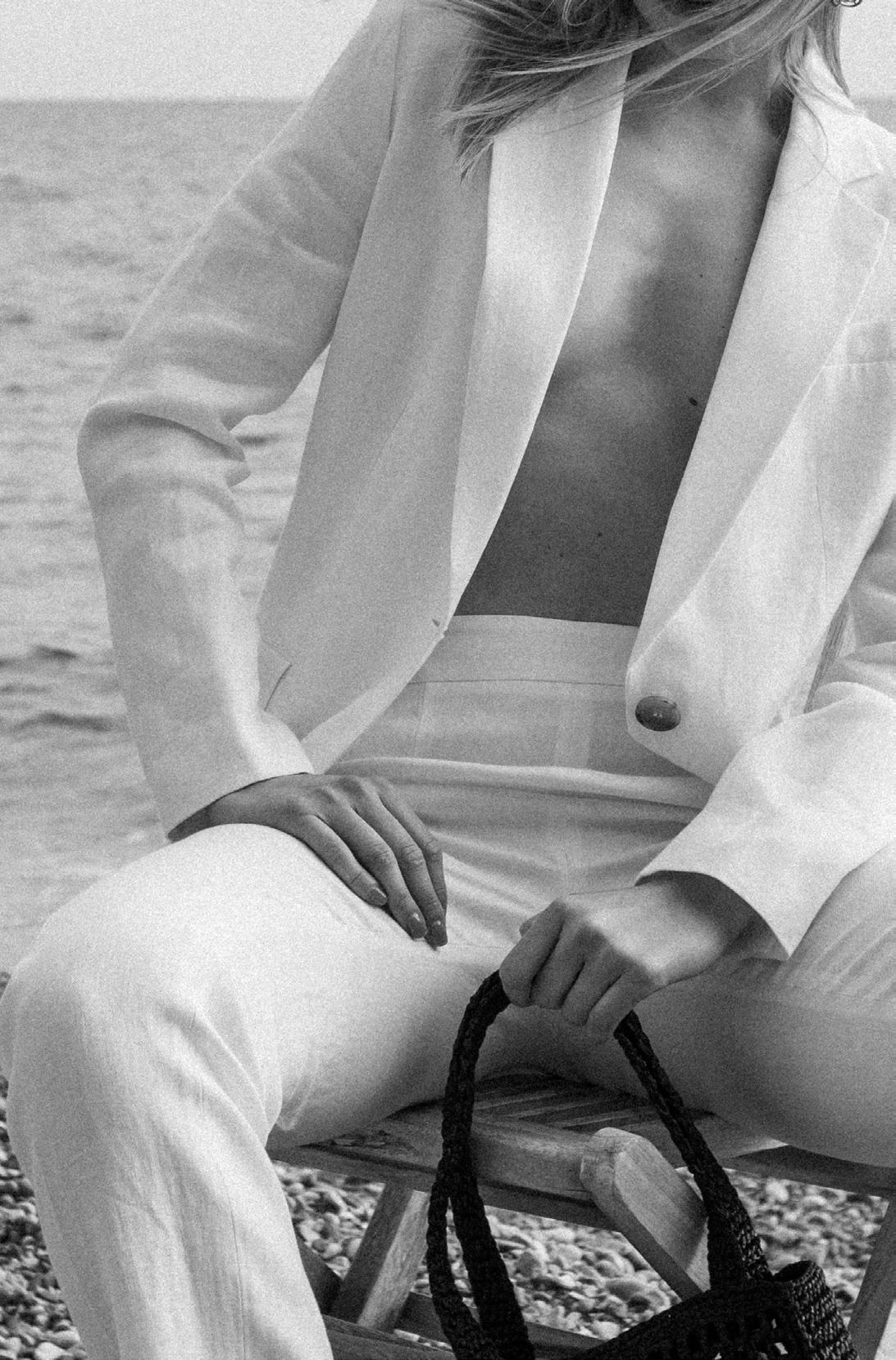

Samms is a Montenegrin fashion retail and distribution company representing international luxury and premium brands, with around 20+ retail locations across the country.
Stores in Podgorica, Budva, Tivat (Porto Montenegro), and Bar.
Brands: MaxMara, Weekend MaxMara, Max&Co., Luisa Spagnoli, Ganni, Paul & Shark, Boggi Milano, Elisabetta Franchi, Pinko, Self-Portrait, Rotate, Twinset.
www.samms.me @samms.me
AWAKE MODE
ANIYE BY VANDA NOVAK
SELMA CILEK
SODINI JEWELLERY
STICKYBESTIE
AMINA HASANBEGOVIĆ
THESHYGUY
JALIZE COUTURE AND OTHERS
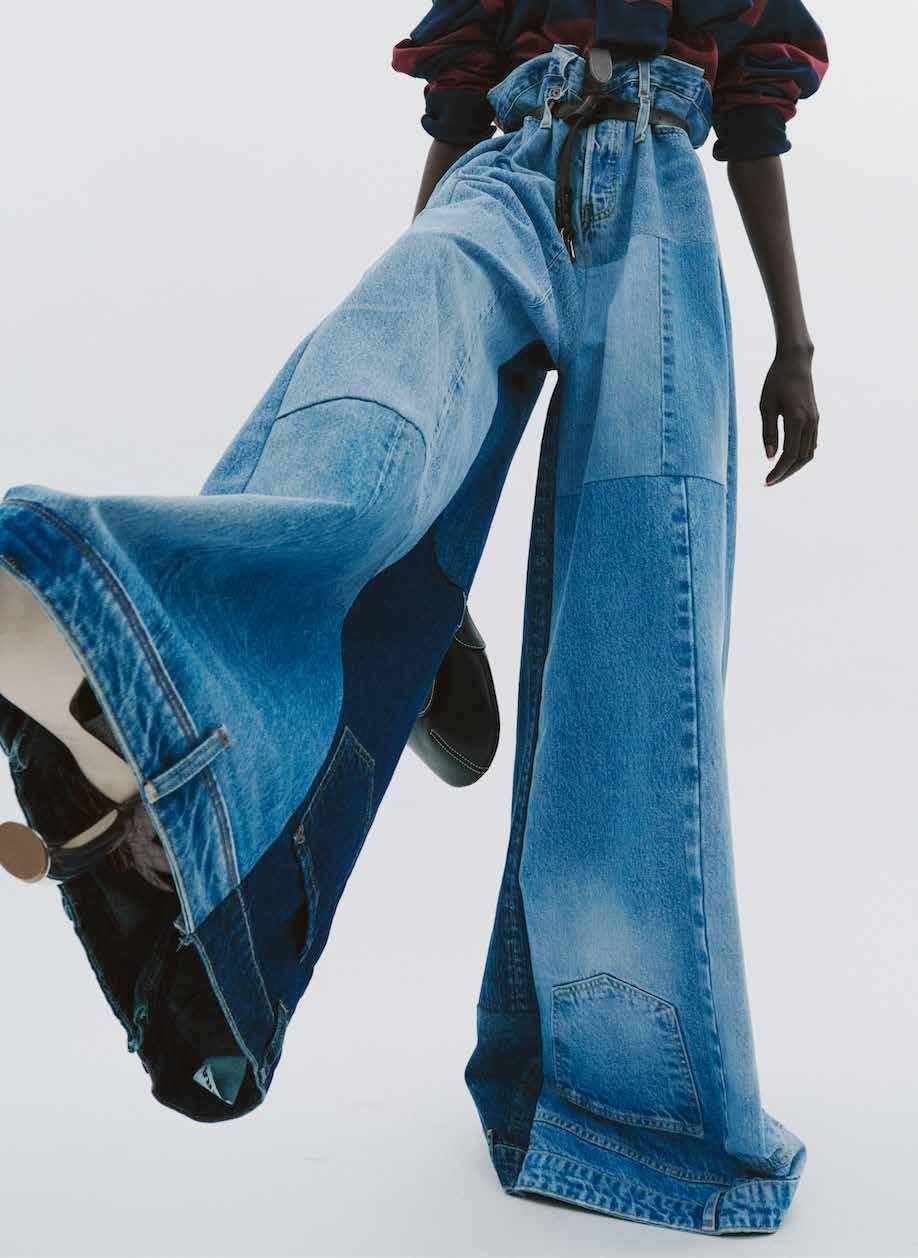
Central Point | Podgorica Hotel Splendid | Bečići @effeti_concept_store +382 67 008 106
Effeti concept store is a story built on the idea of two sisters who wanted to offer the Montenegrin market a space that brings together unique regional and international premium brands.
Initially, Effeti concept store was created as a predominantly male concept, offering custom-made footwear and other personalized accessories. However, what started as a small corner reserved for women gradually evolved into a fully dedicated women’s concept. Today, Effeti stands as a carefully curated retail space that seamlessly combines fashion, beauty, and lifestyle. It is not just about the products, but about how they are presented and experienced through a distinctive shopping experience.
From the very beginning, what guides us are inspiring combinations, limited collections, unique pieces, and a carefully selected mix of brands,” says Anđela Dautović, the co-founder.
After its first year of operation, Effeti concept store expanded its retail presence to the Montenegrin coast, opening a second location within Hotel Splendid. The target audience of Effeti store is the modern woman who values aesthetics, quality, authenticity, and seeks more than a conventional shopping experience.
“A particularly important aspect that we have nurtured from the start is a personalized approach to each customer, with a strong emphasis on creating a meaningful shopping experience. In a time when fast-paced lifestyles increasingly pull us toward online shopping— away from trying on pieces, feeling materials and cuts, stepping outside our comfort zones, and experimenting with colors—our focus remains on emotion and the experience of every item presented. Through personalized guidance (styling and product combinations), we build authenticity and a recognizable personal style together with our clients.”
Effeti store is also recognized as one of the few concept stores in the region that actively cultivates a sense of community—bringing clients together through various events such as pop-up collections, guest designers, custom-made sessions, visiting brands, and presentations of both designer drops and the store’s own curated drops.
Our vision for the future is to continue building trust by expanding our selection of internationally recognized brands, while preserving Effeti as a women’s concept store that is not just a point of sale, but a space of inspiration, identity, and connection with a contemporary lifestyle.
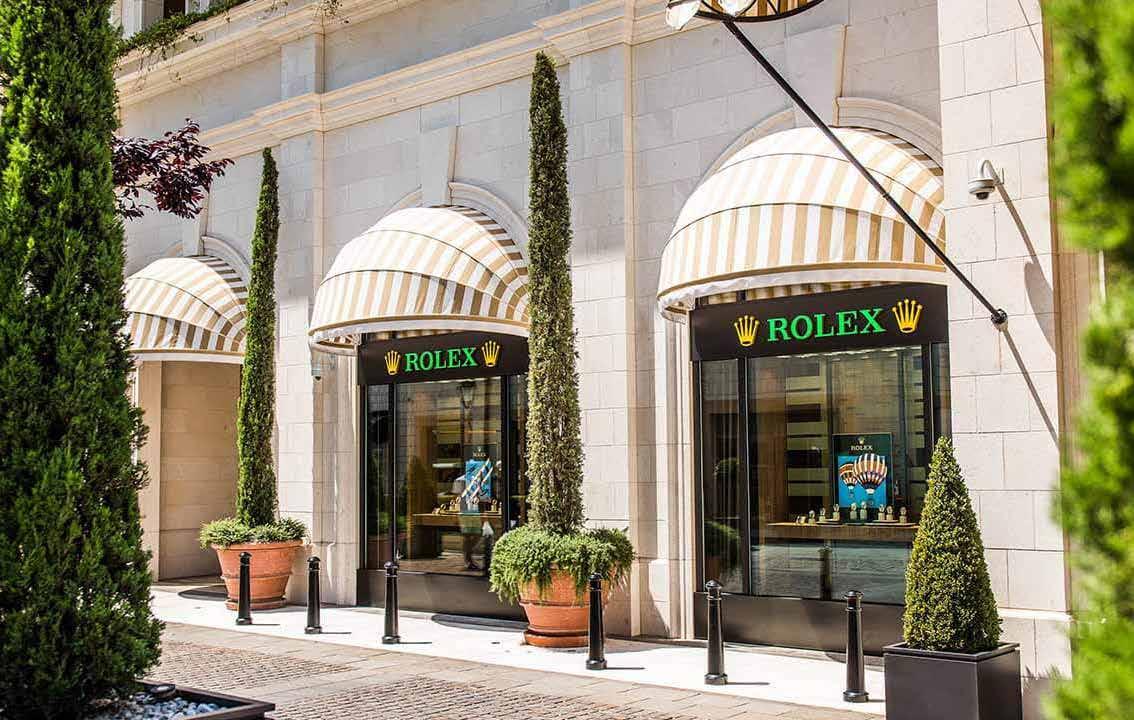
Set along the shores of Tivat, Porto Montenegro has established itself as one of the Adriatic’s most considered shopping destinations - where retail is less about volume and more about experience, curation, and context. Framed by a superyacht marina and Mediterranean architecture, shopping here unfolds at a slower, more deliberate pace. What truly distinguishes Porto Montenegro is its exceptional portfolio of luxury brands— the richest in the region. International fashion houses, fine jewellery, and high-end lifestyle boutiques are carefully curated into a compact, walkable setting, creating a level of exclusivity and coherence rarely found across Southeast Europe. The destination brings together names such as Rolex, Cartier, Hublot, Bulgari, Celine, Valentino, Yves Saint Laurent, Elisabeta Franchi, among others - positioning it as a true luxury benchmark in the region.
Boutiques open onto promenades lined with cafés, galleries, and restaurants, encouraging a fluid movement between browsing, socializing, and leisure. It is not uncommon for a visit to begin with a coffee, transition into discovering new collections, and end with an evening by the marina - retail becoming part of a full-day experience rather than a standalone activity.
Beyond retail, Porto Montenegro operates as a fully integrated lifestyle destination, where shopping is seamlessly intertwined with hospitality, culture, and seasonal events. From curated pop-ups and brand activations to the rhythm of summer gatherings along the waterfront, the experience extends far beyond the boutiques themselves. This layered approach - where luxury is not only purchased but lived - cements Porto Montenegro as a defining reference point for contemporary retail in the region.
Discover the full registry at the end of the magazine.
www.portomontenegro.com
Tivat | Montenegro
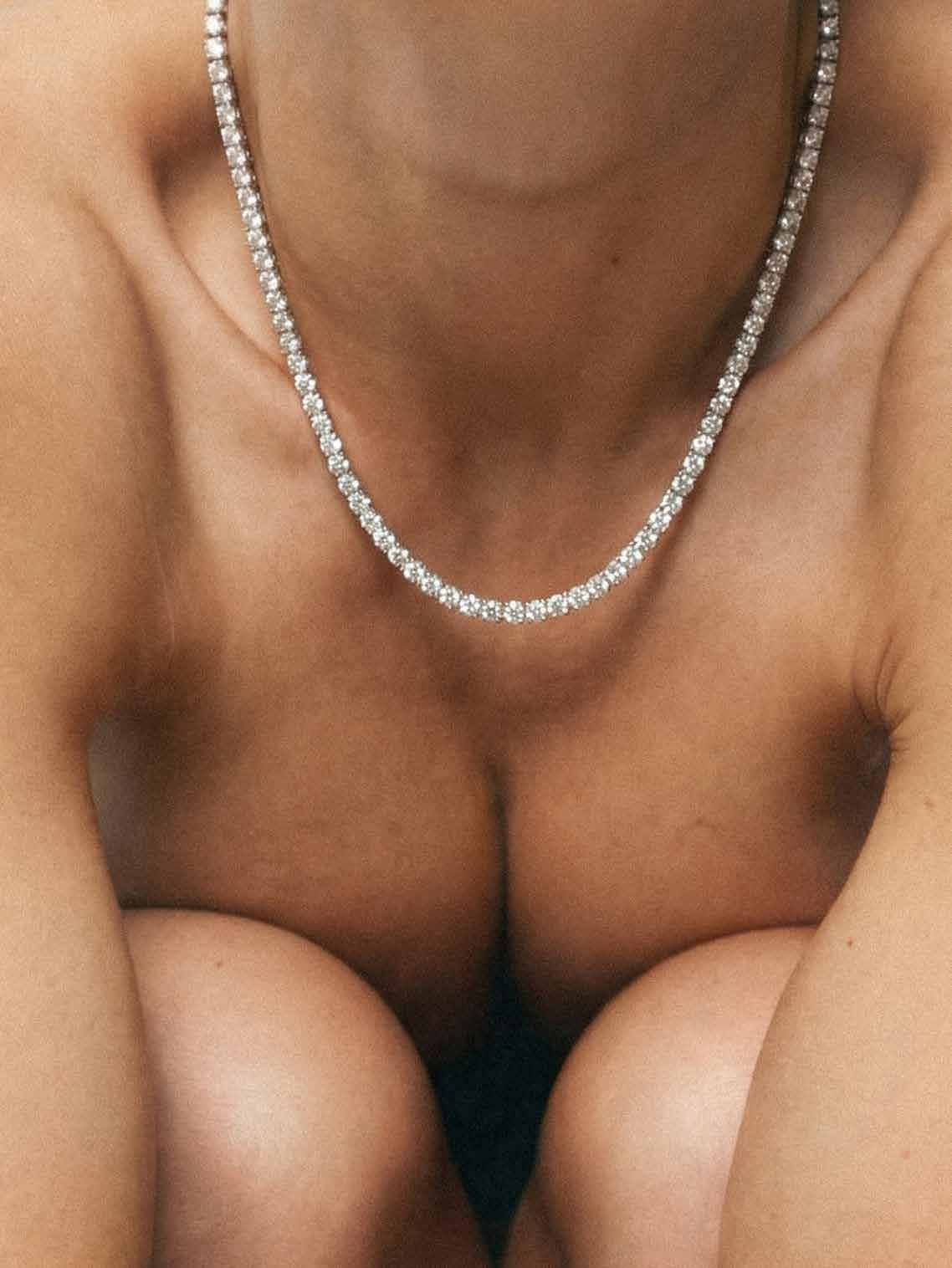
Rruga Vaso Pasha, 3/1, ish-blloku, Tirana, Albania. www.somethingthebrand.com | @something.thebrand

The idea was simple from the beginning: Something. that lives with you, not just decorates you. A piece that stays with you long enough to feel like it has always belonged there. Founded in Albania, the brand first introduced itself through jewelry, pieces designed not as statements, but as companions to everyday routines. Over time, the same thinking that shaped the jewelry began to guide the wardrobe as well. Clothing created with the same intention: simple, thoughtful pieces made to sit naturally within a person’s daily life. At its core, Something. remains rooted in Albania while embracing the influence of Italian
craftsmanship, growing from a place where artistry, simplicity, and personal expression meet. Jewelry and wardrobe are simply two parts of the same idea, something meant to be worn, lived in, and to slowly become part of someone’s story. The wardrobe collection focuses on quiet structure and natural materials. Garments that feel familiar from the first wear and remain relevant long after trends move on. Much like the jewelry, these pieces are not designed to compete for attention, but to accompany the person wearing them. Something that exists in two distinct categories, yet speaks the same evolving language.
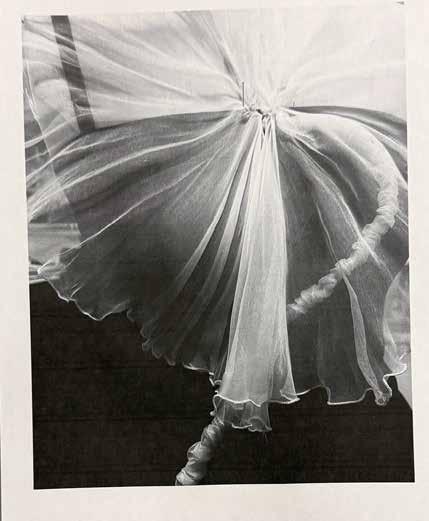
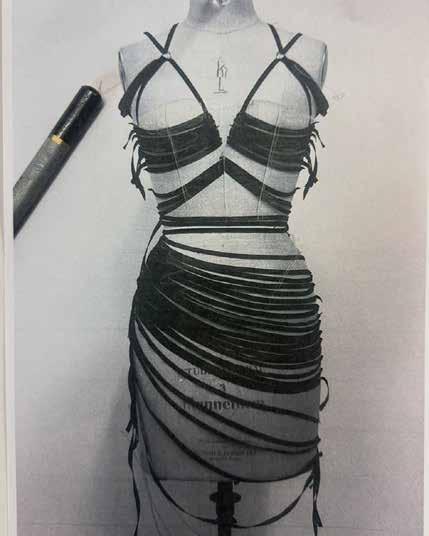
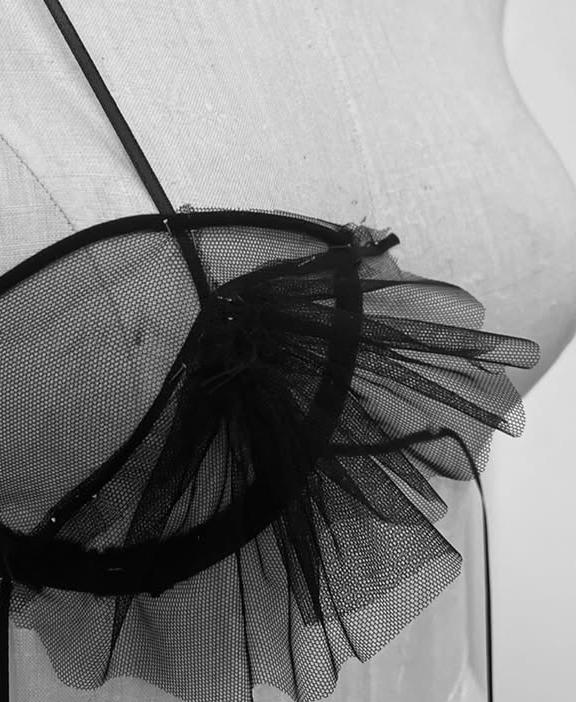

Nensi Dojaka is an Albanian-born, London-based fashion designer widely recognized as one of the leading voices of her generation and one of the most prominent figures to emerge from the Balkan region. A graduate of Central Saint Martins, she gained international attention early on and was awarded the prestigious LVMH Prize, marking her as a significant talent in contemporary fashion. Her work is defined by precision, restraint, and a distinct approach to femininity.
What follows is not a conventional interview. It is a conversation between two close friends. Through a shared language of art, Nensi Dojaka steps away from the language of fashion to reflect on the art that shapes her inner world - followed by photographs drawn directly from her personal camera roll.
Conducted by Lisja Tërshana
Edited by Zina Pusep
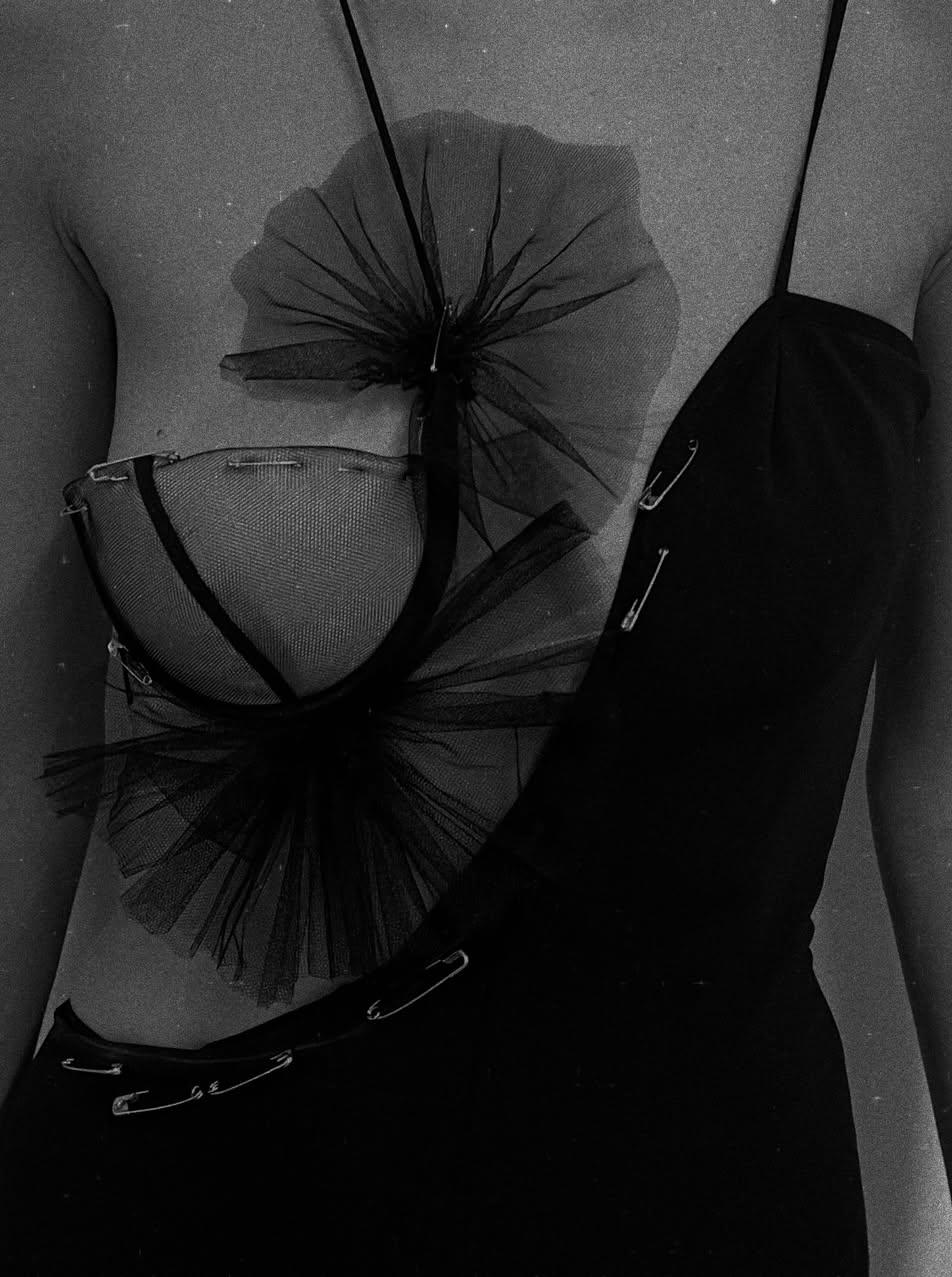

Lisja: What’s on the walls of your home or studio right now?
Nensi: On my wall at the moment, there’s a poster of one of my favourite paintings ever, called ‘Flaming June’ by Sir Leighton Frederick - a late 19th-century work that explores how a single dominant color can carry an entire composition, something quite experimental at the time. The figure is arranged in a near-perfect circular form, almost like a closed system. Then, there’s two smaller posters of paintings by Noah Davis and Ithell Colquhoun. I also have a beautiful painting by Albania’s prime minister, Edi Rama. Before politics, Edi Rama studied painting at the Academy of Fine Arts in Tirana and worked as an artist.
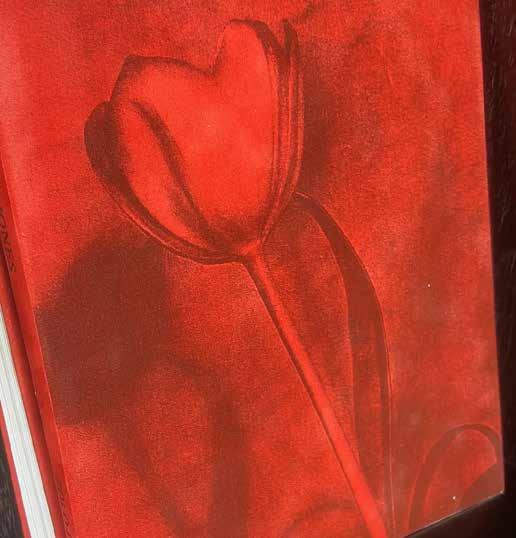
Lisja: Before coming to London, what were you looking at? What was available to you growing up in Albania, and what was absent?
Nensi: There was definitely an absence of exhibitions or any format of viewing art in Albania as I grew up. But I think there’s a beauty to that, as it allows a child’s brain to roam freely into fantasy without having an example/ a reference.
So I believe the lack of knowledge in this case was an advantage to a degree. I was however, seeing my art tutor’s own work quite often and a lot of it revolved around portraits which is why I probably developed an inclination towards analysing the human body and proportions.
Lisja: If you were to explain the way you see to someone, which book of images would you give them?
Nensi: The Poppy Jones book. Poppy Jones is a contemporary British artist who works with mono-printing creating deceptively simple images that blur the line between photography, painting, and still life. I love the exploration of florals that walks a fine line between painting and object. There’s a softness to it that i resonate with and there’s almost like a watercolor nature to it, which makes it very delicate and precious.
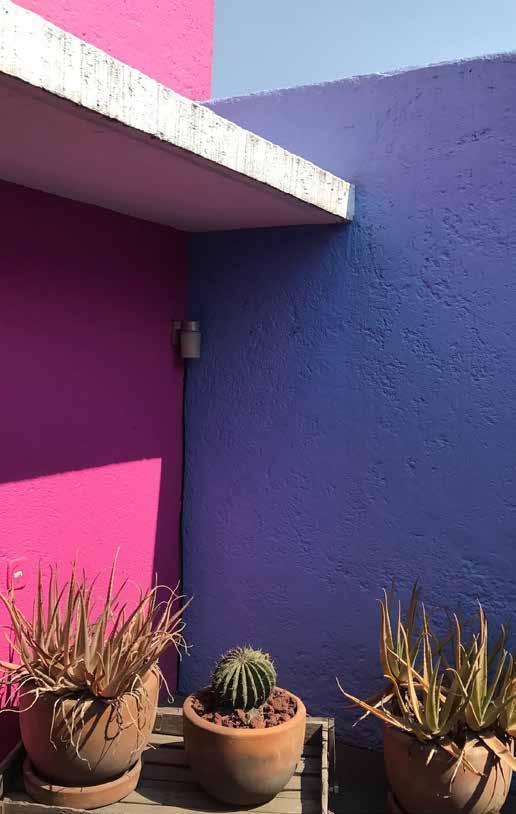
Lisja: We spent time in Mexico City together earlier this year. Is there something you saw there that has stayed with you or found its way into how you think about your work?
Nensi: Yes, definitely. Being in legendary Luis Barragán’s spaces was incredibly influential - the way he works with light and shapes it throughout the day. It reinforced the idea that design is about the details and how it makes a person, that interacts with it, feel.
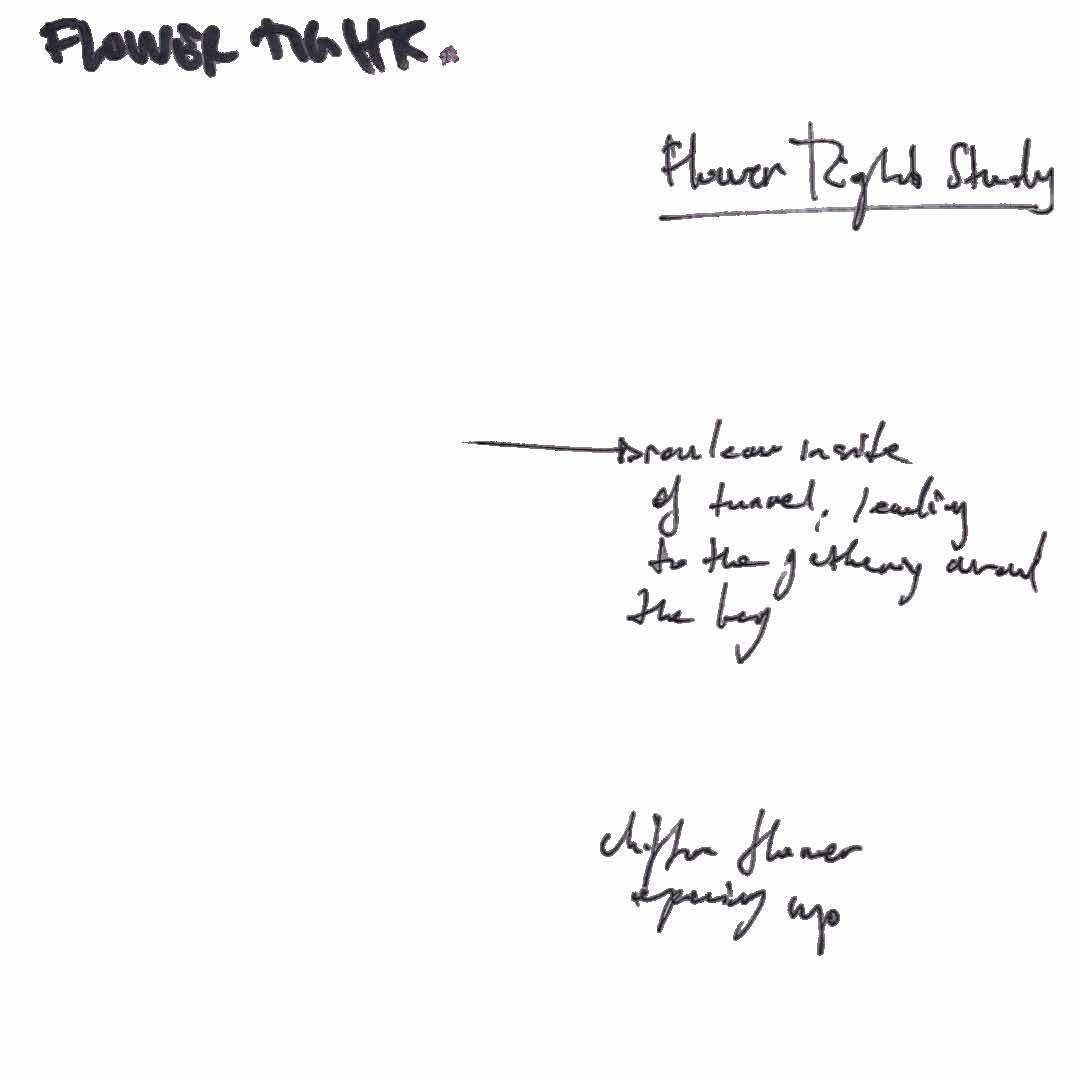
Lisja: Which artist, living or dead, emerging or established, are you paying attention to?
Nensi: I really fell in love with the work of Bianca Raffaella when I saw it for the first time in London. I love how poetic the paintings are and how she knows exactly when to stop with composition and colour. To me, her work is very romantic.
Lisja: You’ve previously referenced Goude’s images of Grace Jones as an inspiration for your SS23 collection. In these photographs that are distorting and reconstructing her body, what exactly is it you’re drawn to?
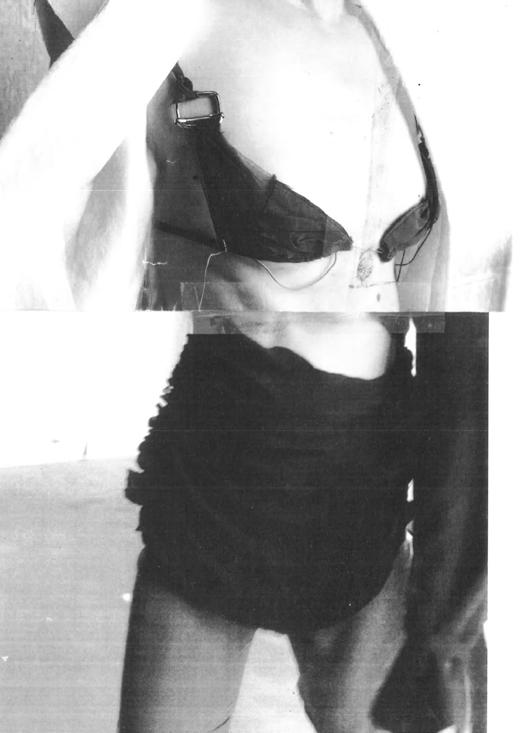
Nensi: It’s exactly that distortion that interested me. I feel like I do the same thing with my work. I believe that, for something to be modern, the traditional beauty of it needs to be distorted and disrupted. I play with lines in my work to distort the female figure, while emphasizing certain parts of the body to to elevate the fig ure while distorting it.
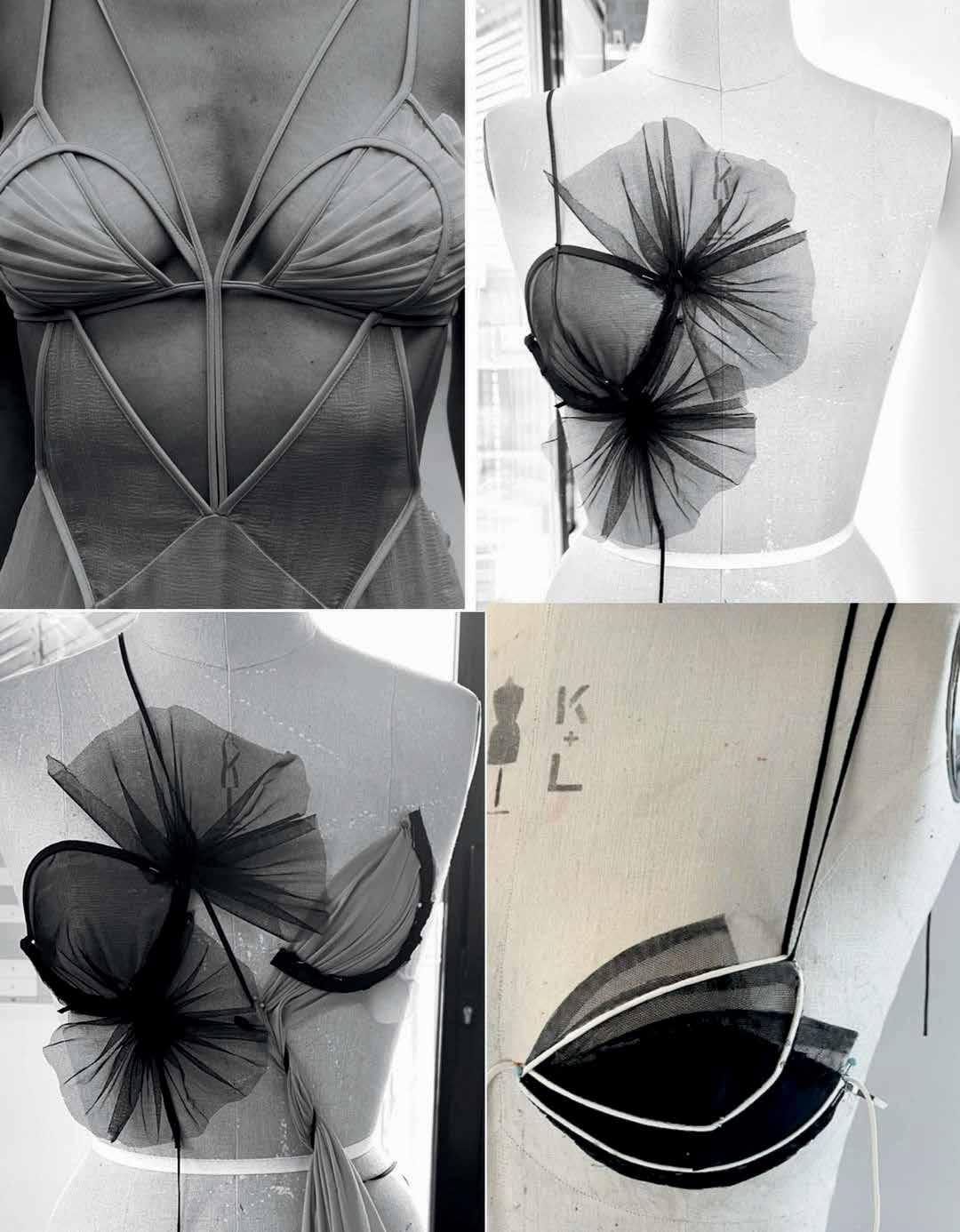
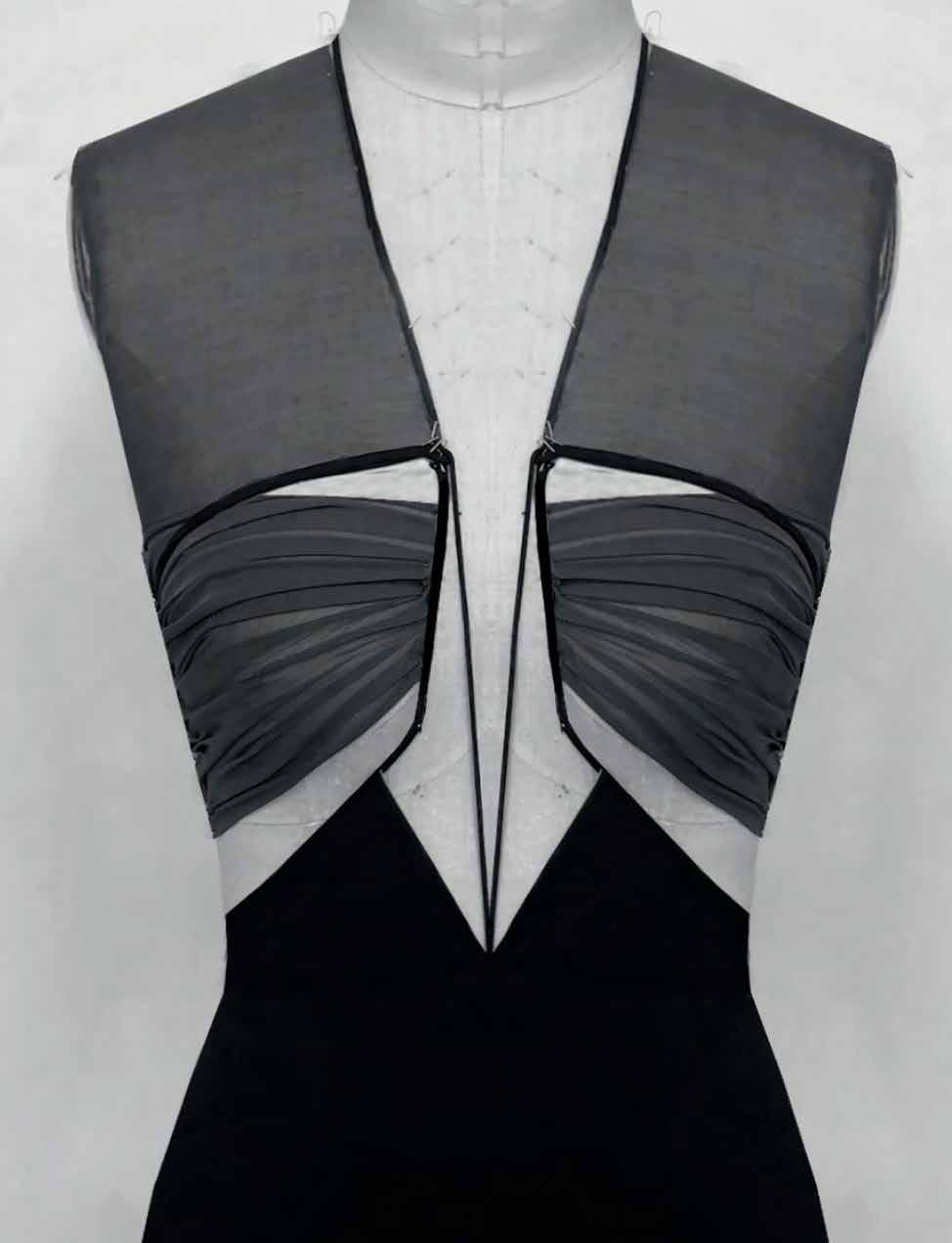
Lisja: Do you think of yourself as working within a tradition of visual artists who have depicted the female body?
Nensi: Yes, all my work is around the female body and how to celebrate it. The body serves as an anchor to all the pieces I make, putting that at the forefront.
Lisja: Outside of fashion, who do you think is doing the most interesting work with the female body right now?
Nensi: I really like Saskia Colwell and how she explores the female body and its sensuality in her paintings.
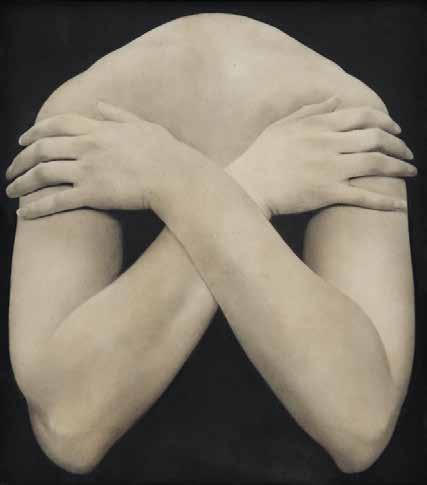
Lisja: What image do you think is the most honest depiction of a woman you’ve ever seen?
Nensi: There’s a painting by Shannon Cartier Lucy called ‘Noodle necklace’ that shows a female body in a fetal position, being embraced. Even though somehow vulnerable, I think owning that vulnerability brings about a strength that really touches me. It is possible that the painting for Shannon might hold another meaning, but the way i saw it, had an impact on me.
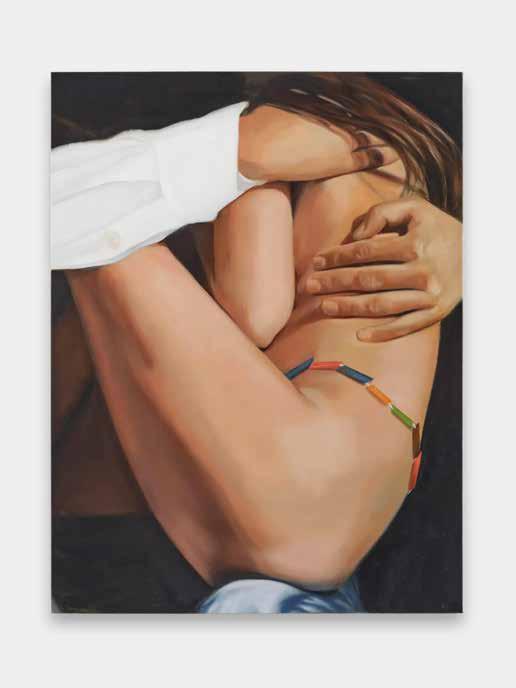
Woman with noodle necklace, 2025 Shannon Cartier Lucy Courtesy the artist and Soft Opening, London. Photography Eva Herzog
Lisja: If you could own any artwork, what would it be?
Nensi: Something by Tracey Emin for sure. Lisja: A question that recurs in contemporary art discourse is whether there can be art without an audience. Does a dress need a body?
Nensi: No, I think the audience is what gives it life and meaning. A dress doesn’t need to be worn necessarily, but it needs to have the eye of an admirer, the same as with any form of art.
Lisja Tershana is an Albanian curator, art dealer and founder of Mara Projects, a platform operating at the intersection of art, fashion, and contemporary culture.
DISCOVER MORE www.thecollectionfab.com
This section brings together creatives shaping the cultural landscape of the Western Balkans across fashion, art, and interdisciplinary practice.
Marko Feher
Jelena Čejović Vukčević
Mateyaneira | Mateja Dujić
Klisab | Marko Sabarić & Tomislav Kliskinić
Shift Studio | Ana Krgović
Marsten Studio | Ersialdo Nikolli
Maet | Alesia Zyla
Sanda Strugar
Albania | Bosnia & Herzegovina | Croatia | Montenegro | Serbia
Edited by Zina Pusep
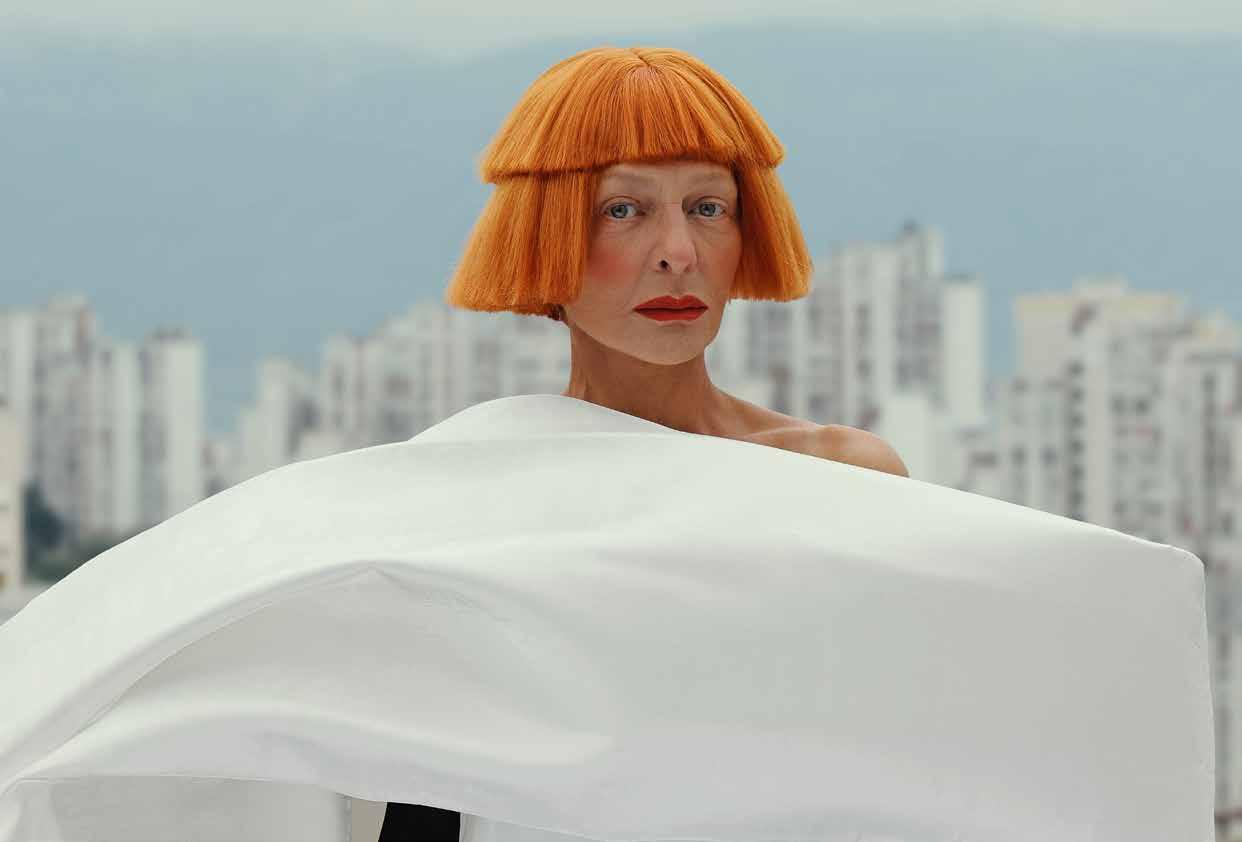
Marko Feher campaign “NO COMMENT”
Talent: Tatjana Šojić
Photography: Edvin Kalić
Hair: Ensar Dervišbegović
Makeup: Renata Ponjević
Supernumerary: Alaoui Ismail
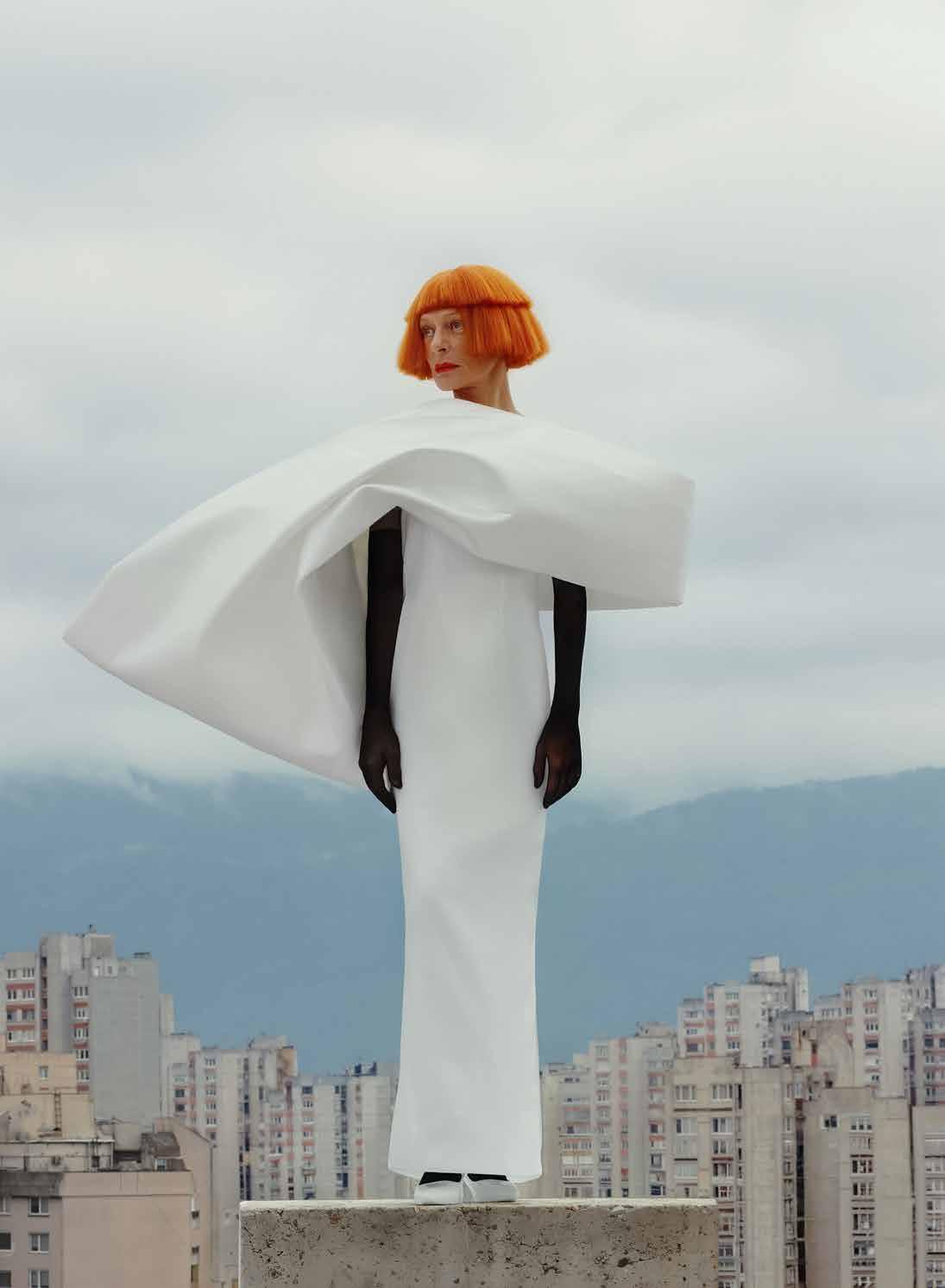
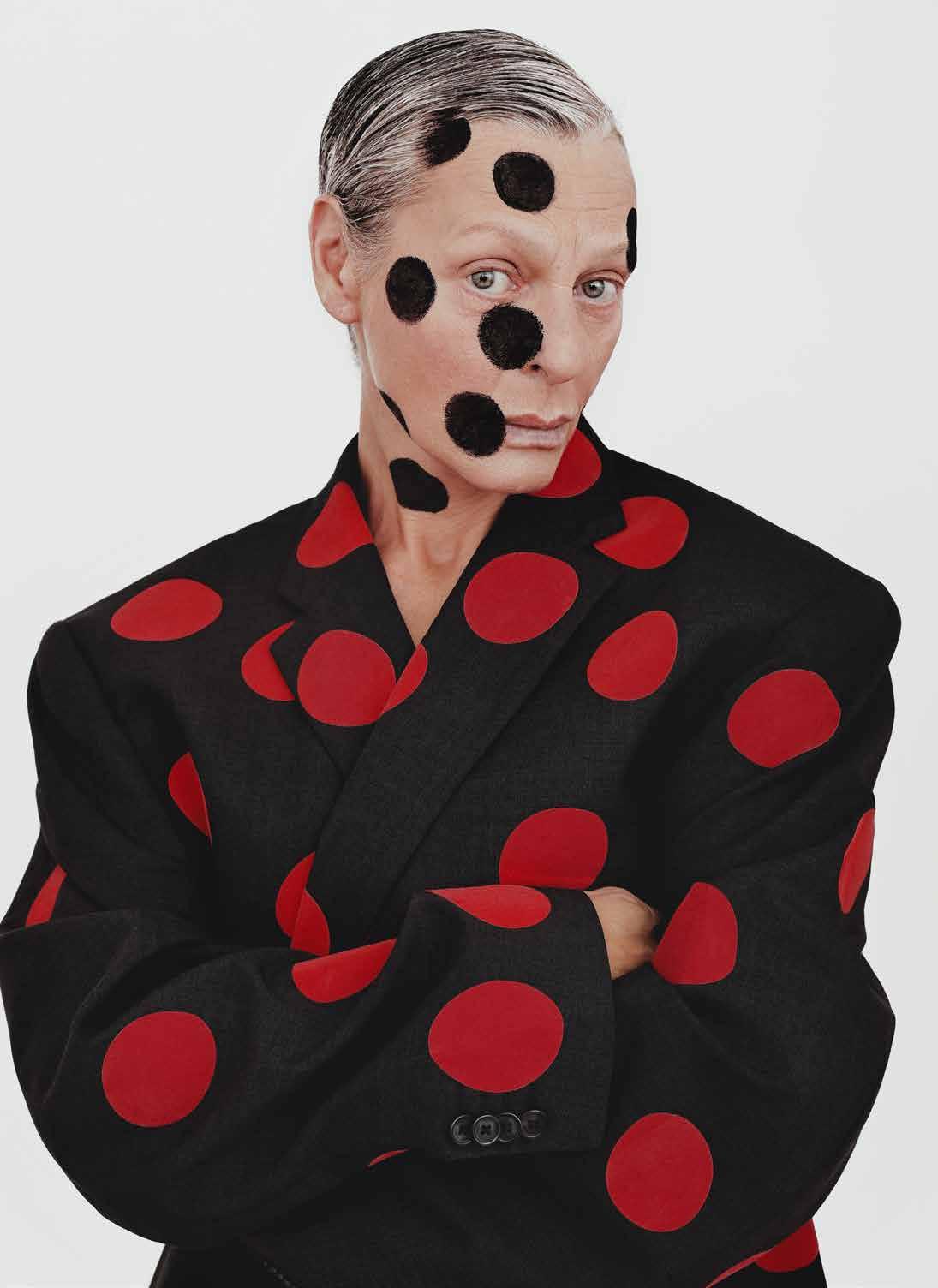
Marko Feher is a Bosnia and Herzegovina–based fashion designer whose work stands at the intersection of conceptual design, sustainability, and cultural commentary. Educated at Central Saint Martins, Feher has built a distinctive voice within contemporary fashion through collections that challenge traditional systems of production, consumption, and aesthetics. Recognized as the first designer from Bosnia and Herzegovina and region to have a collection fully published in British Vogue, Feher’s work has also appeared in international titles including Vogue Italia, Harper’s Bazaar UK, Harper’s Bazaar, Elle, Grazia and many more. His practice is defined by a commitment to genderless, seasonless, and timeless design, where garments are not driven by trends, but by ideas.
At the core of Feher’s work is sustainability, not as a trend, but as a philosophy. His award-winning collection My Grandfather’s Legacy, created from inherited garments, and the socially engaged project MY DIGITAL LEGACY, developed from donated clothing, reflect a deeply personal and environmental approach to fashion. Through these projects, Feher redefines value, transforming discarded materials into emotionally and culturally significant pieces. Feher’s work has been recognized internationally, earning awards such as the Fashion Makes Sense Award (Netherlands), Perwoll New Generation Award (Bosnia and Herzegovina), Fashion Grand PRIX (Slovenia), Dress to Protest (Netherlands), In 2023, he was named a winner of the “100 Excellence Actions for Global Youth Development” in Beijing (China), further solidifying his role as a voice of a new generation shaping global industries.
Feher’s work has been presented at prominent regional and international fashion platforms, including Budapest Central European Fashion Week, Belgrade Fashion Week, Vancouver FW, LSE London, White Show CSM, Fashionclash, Sarajevo FW, and others, where his collections have gained recognition for their strong conceptual narratives and distinctive visual language.
Beyond the runway, Feher has collaborated with leading names across fashion, music, and culture, including L’Oréal Paris, Stefano Seletti, as well as regional icons such as Dino Merlin, Marija Šerifović, Lepa Brena... His work often carries strong social narratives, addressing themes of identity, responsibility, and resistance to fast fashion culture.
Marko Feher represents a new direction for fashion in Southeast Europe, one that is unapologetically honest, intellectually driven, and rooted in sustainability. His work does not seek validation from global systems, but instead redefines them, positioning the region not as a follower, but as a source of innovation and critical thought.
MARKO: Honestly, it depends on whether we choose courage over comfort. I don’t see the future in chasing trends from Paris or Milan with a delay of six months. That game is already lost. The real potential of this region lies in something much stronger, authenticity, resourcefulness, and a kind of raw intelligence that comes from limitation. We come from a place where people had to create with almost nothing. Upcycling, zero-waste thinking, emotional value of clothing… for us, that’s not a trend, that’s lived experience. The future of fashion here should build on that, not imitate something else.
But there’s a problem: fear. If we don’t outgrow that, we stay stuck in “safe fashion” and safe fashion is invisible. The region maybe doesn’t need more designers, but It needs strongervoices. And the moment we stop asking “is this acceptable?” and start asking “is this honest?” that’s when the future actually begins.

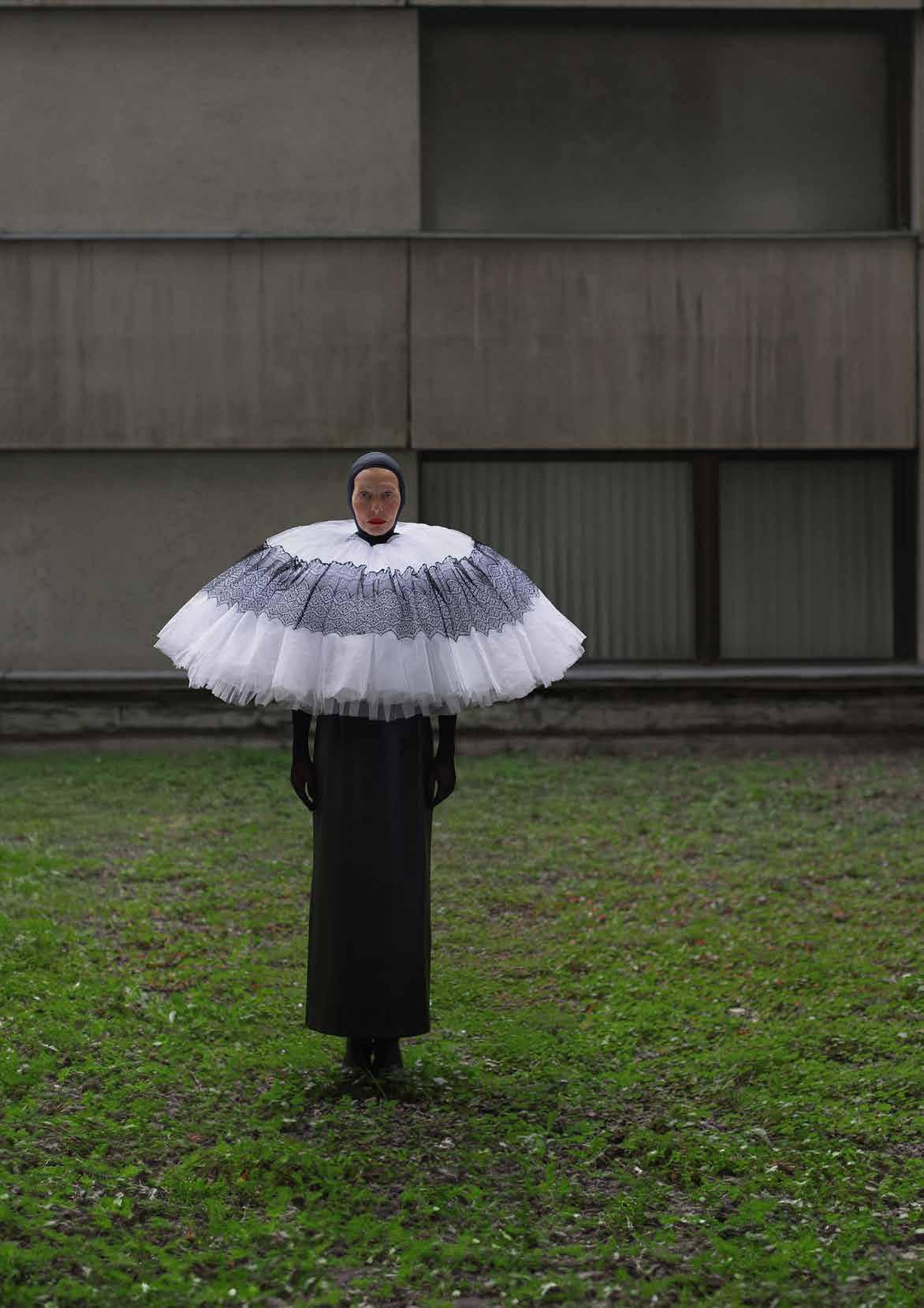
A contemporary expression of elegance, authenticity, and transformative design Mateyaneira is a Croatian brand led by a young designer Mateja Dujić, that brings together sophisticated design, minimalism, and a strong sense of identity. Focused on timeless pieces, it cultivates an aesthetic that goes beyond fleeting trends, placing emphasis on individuality, wearability, and the personal expression of every woman.
A defining signature of the brand lies in its transformative approach to design. At the core of my creative process is the idea of garments that can be altered, upgraded, and adapted to the person wearing them. For example, a single blazer, with detachable and repositionable elements, can take on an entirely new form, silhouette, and character. In the same way, formal pieces, through carefully considered details and accessories, can transition into more relaxed, everyday looks.
It is precisely in this capacity for transformation that one of the brand’s key values resides - the intention that the final touch of a design does not belong solely to the designer, but also to the wearer. Mateyaneira leaves space for the individual to infuse each piece with their own personality through styling and combination, allowing them to complete its story. In this way, clothing becomes more than an object - it becomes a means of expression, a play of identity, and a personal interpretation of style.
An important part of the brand’s design signature is also the exploration of materials and the combination of textures, structures, and cuts that may not initially seem expected within the same fashion narrative. I enjoy playing with contrasts and finding harmony within the unexpected, creating pieces that feel contemporary, considered, and visually striking. This approach adds depth to each garment, allowing it to take on multiple roles depending on the moment, the styling, and the energy of the person wearing it.
The brand also draws inspiration from geometric forms, clean lines, and precisely considered constructions. Geometry in my design is not rigid or cold, but rather serves as a tool to create balance between structure and softness, simplicity and expression. Through this approach, pieces emerge that embody contemporary elegance, architectural clarity, and a distinct sense of harmony.
Mateyaneira does not follow trends in their fleeting sense, but instead reflects on them, reinterprets them, and translates them into its own design language. Each piece is created with attention to detail, quality craftsmanship, and the idea that clothing should be at once aesthetically strong, functional, and open to personal interpretation. Every design is created with the intention of empowering the woman who wears it - confident, authentic, and fully aware of her own expression.
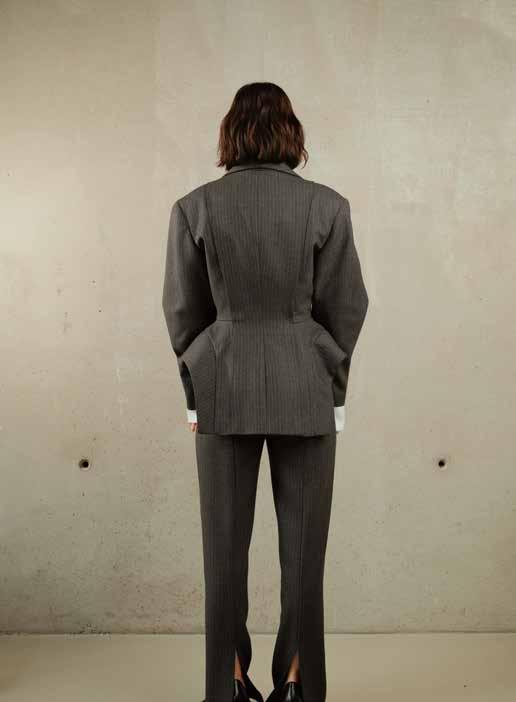
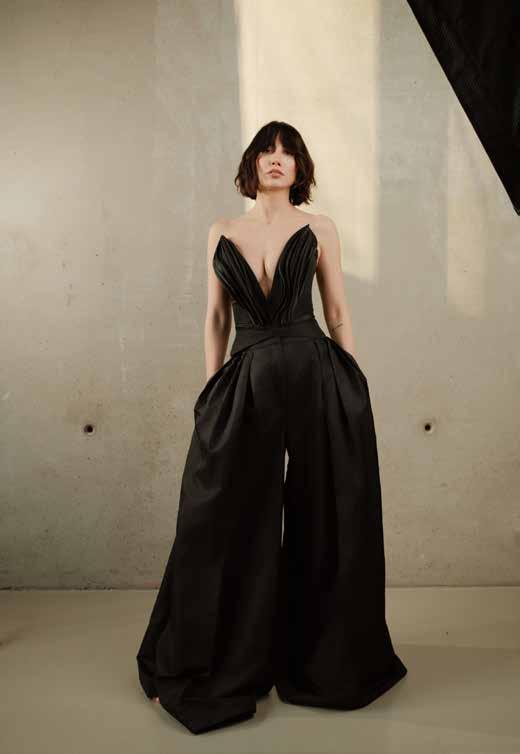
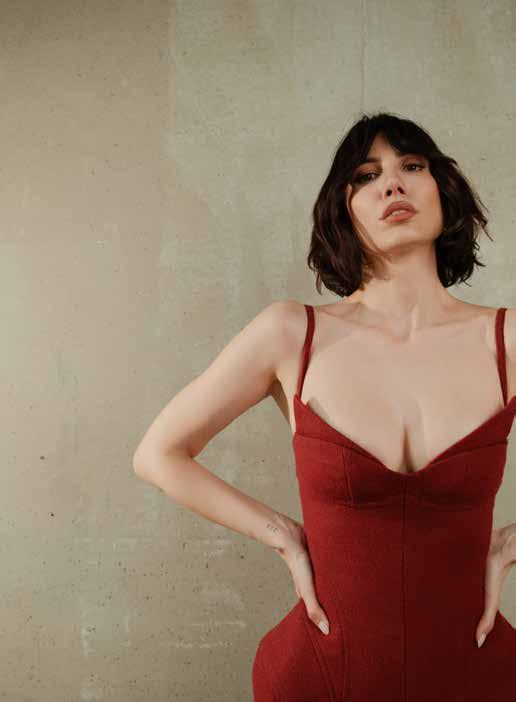
The future of the fashion industry in the region is a dynamic mix of creativity, adaptability, and growing professionalism. Despite limited resources and a smaller market, these conditions drive innovation and the development of distinct brand identities. There is a clear shift toward authenticity, originality, and consistency, alongside a rising focus on quality, sustainability, and longevity - moving away from fast, disposable fashion. At the same time, digital platforms and social media are increasing visibility, allowing regional designers to access international markets more easily. While challenges remain, collaboration and a stronger creative network offer significant potential for growth. Ultimately, the industry’s future will be shaped by stronger identities, greater visibility, and a more refined approach to design and production.
SHOWROOM
Črnomerec 63, Zagreb | Croatia www.mateyaneira.com | @mateyaneira
Models:
Ana Carević | Ana Dujam
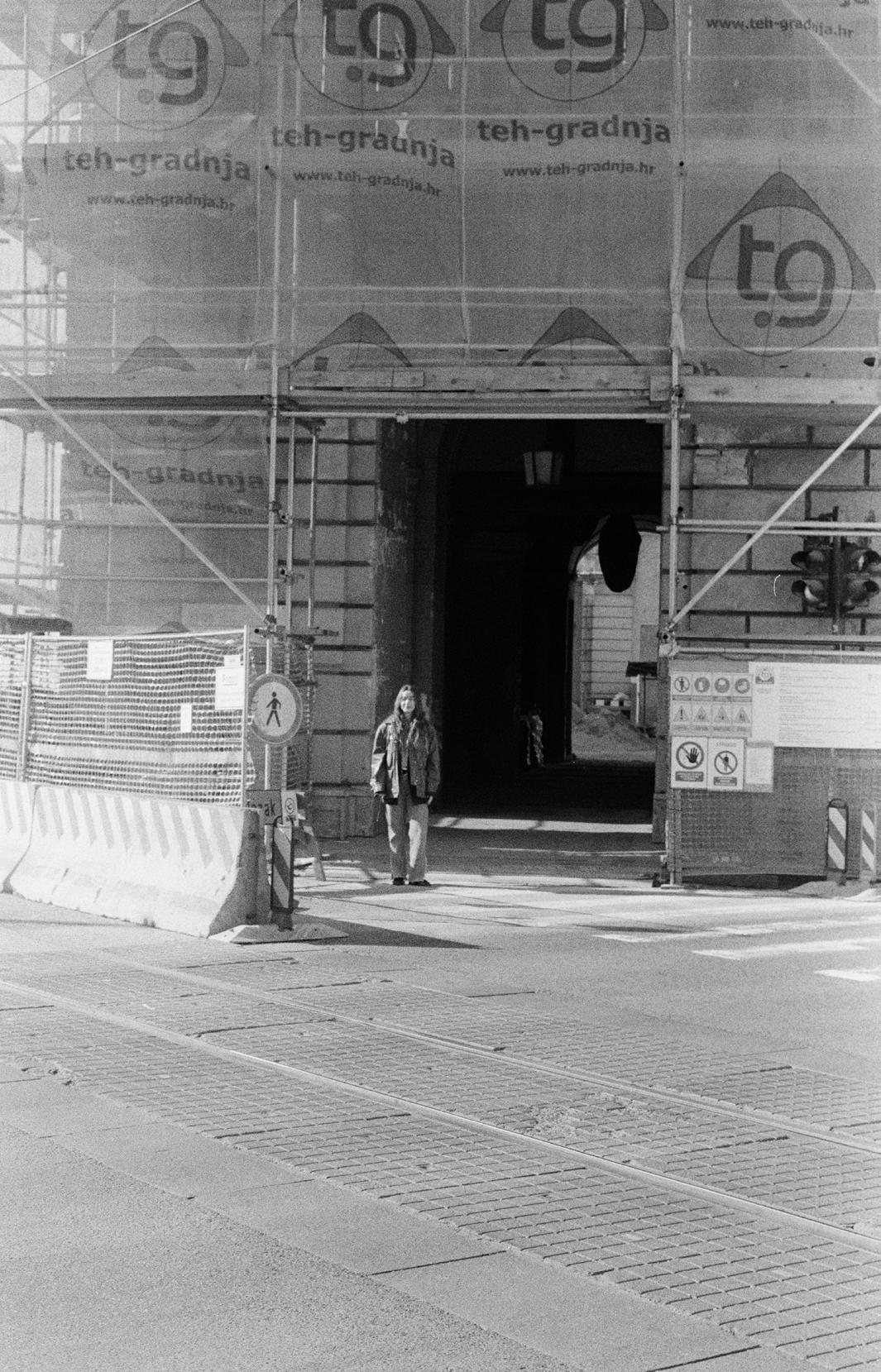
There are cities you arrive to, and cities you return to, even when it is your first time. For Jelena Čejović Vukčević, Zagreb has always been the latter. A photographer, creative entrepreneur and psychotherapist in training, Jelena works at the intersection of identity and image, using analogue film and portrait photography to surface what people rarely let be seen.
This series, shot with models Ana Carević and Ana Dujam, was born in a city that has shaped her quietly for three years. Not through monuments or maps, but through something harder to name, a rhythm she already knew, streets she moved through as if by memory, and people who met her with the kind of warmth that feels less like welcome and more like recognition.
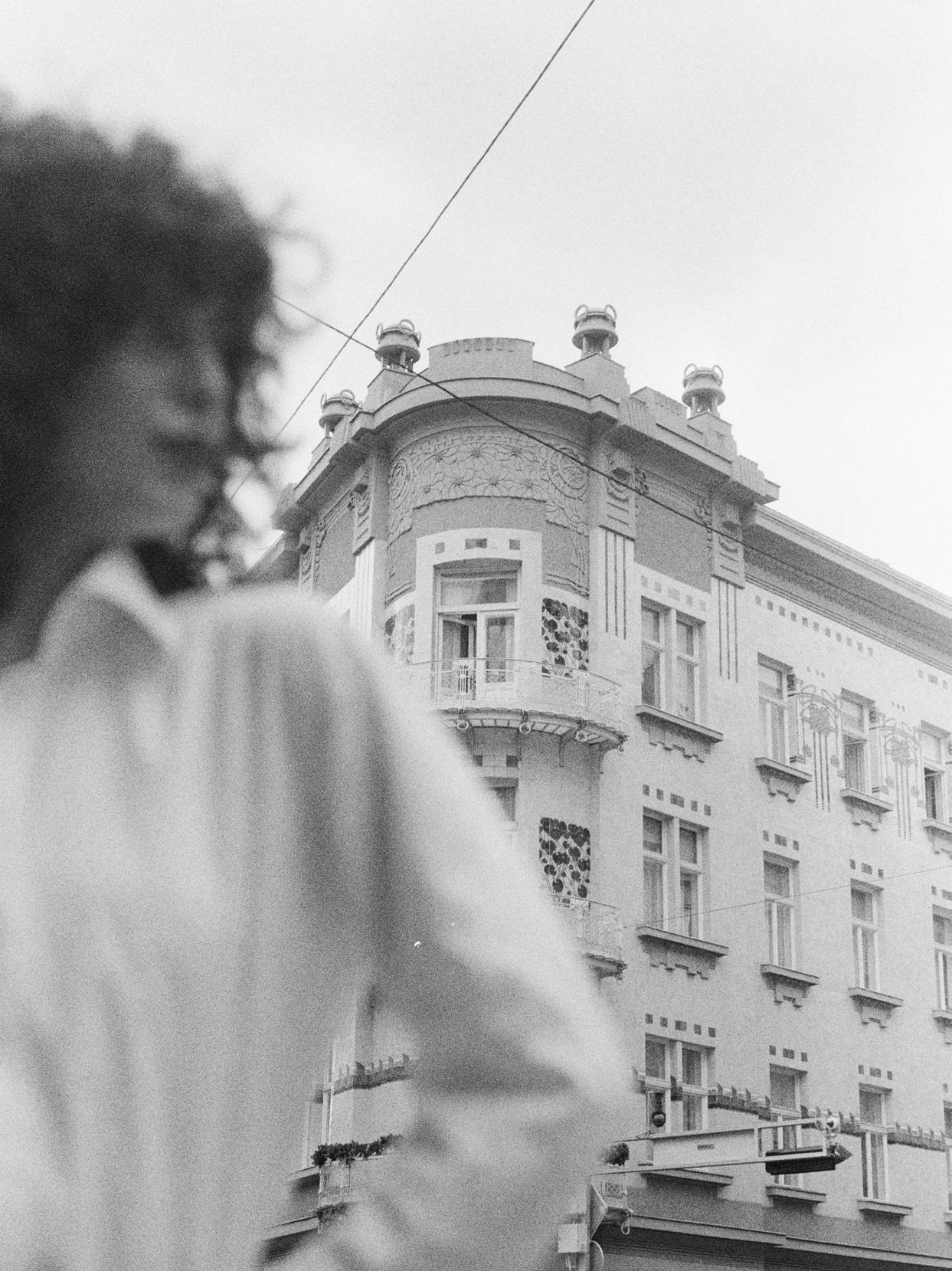
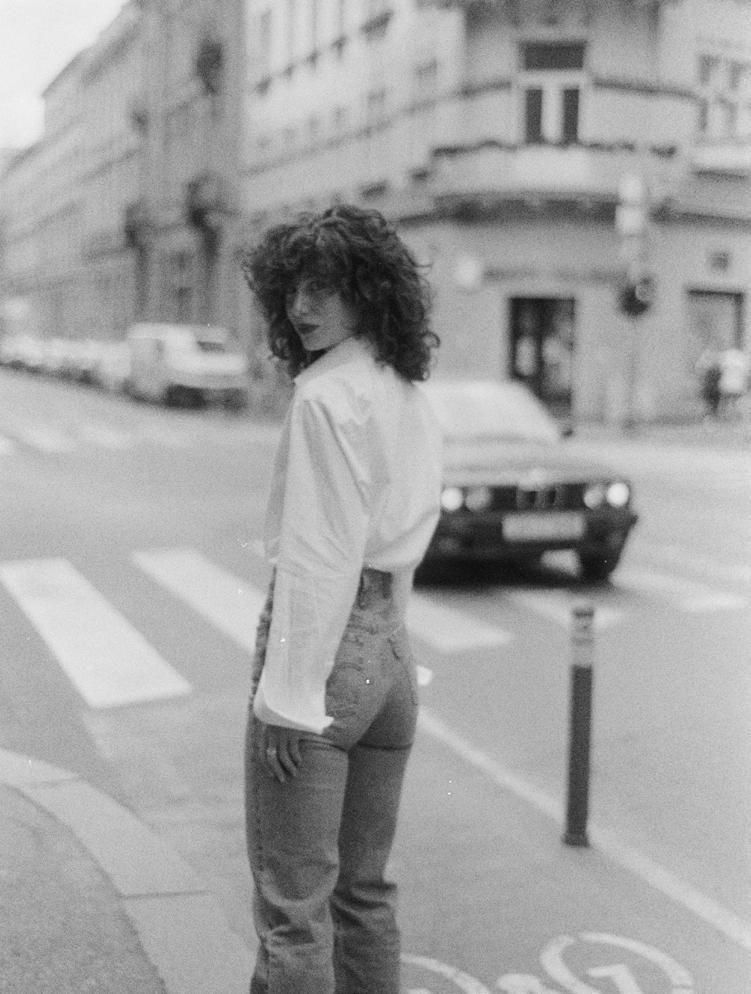
Some places don't need to be discovered. They simply wait, patient and familiar, until you find your way back to them.

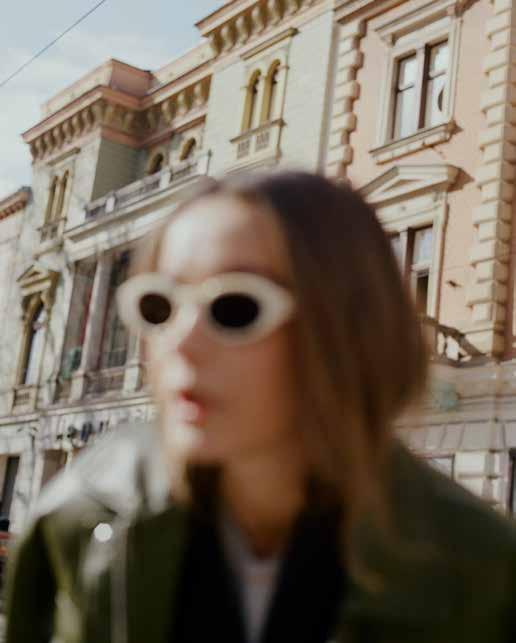
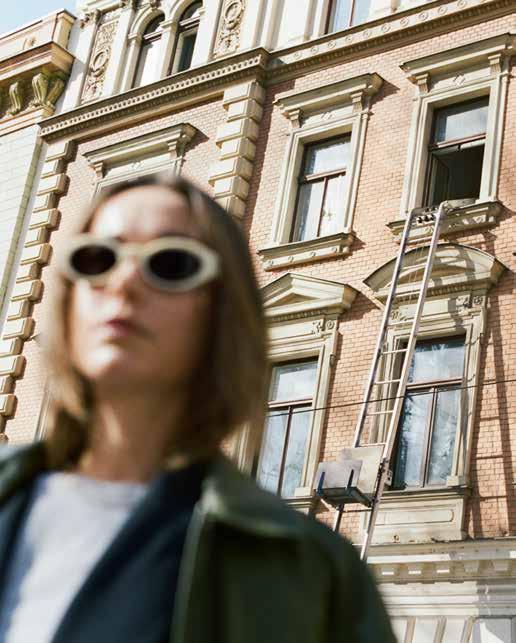
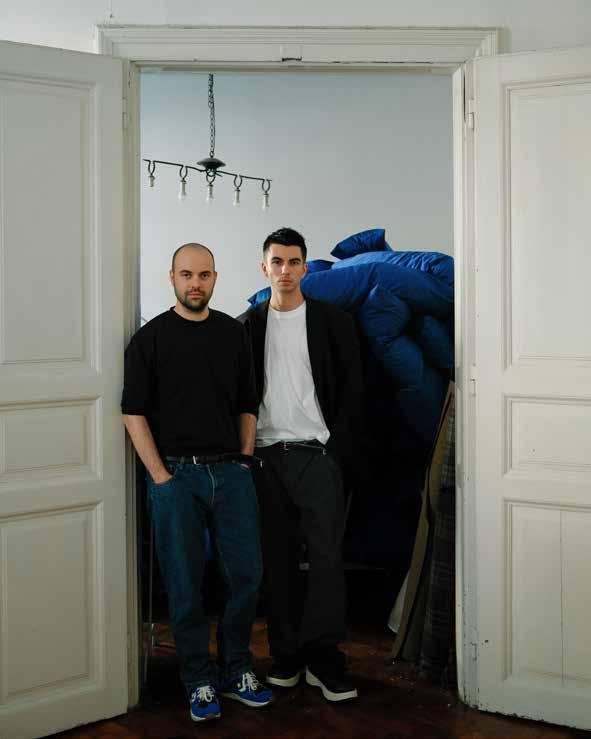
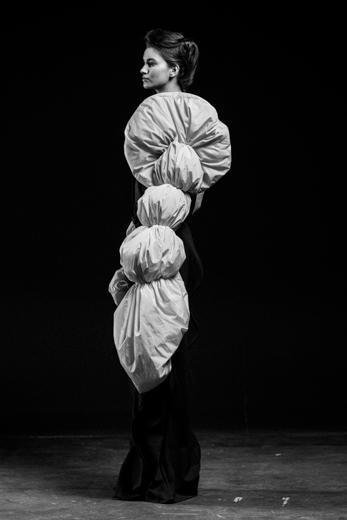
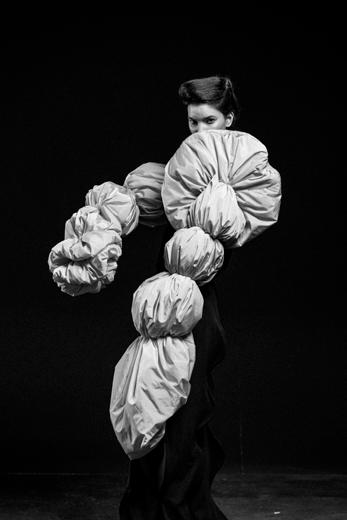
With its recognizable minimalism, a commitment to excellence in craftsmanship, and a close, personal relationship with clients, KLISAB is a new-generation Croatian fashion brand for clothing and accessories, founded and led by designers Tomislav Kliškinić and Marko Šabarić. The brand’s aesthetic paradigm is rooted in classic foundations, reinterpreted to shape contemporary pieces of strong character that reflect an authentic vision of beauty.
www.klisab.com
@klisab.official
Obrtnički prolaz 4
(Masarykova ulica 18)
Zagreb | Croatia
Photograpy: Mario Ilić
Styling: Aleksandra Lovrić
SHIFT STUDIO CREDITS
Shift Studio, founded by Ana Krgović, is a multidisciplinary fashion brand from Montenegro that transforms clothing into a platform for storytelling, artistic expression, and slow fashion design. Ana has presented her collections in over ten countries, including Poland, the Netherlands, China, Slovenia, Croatia, Belgium, North Macedonia, Bulgaria, and New Zealand.
Through her work, she seeks to showcase fashion as a form of artistic expression, creating garments for brave, powerful individuals who share the brand’s vision and embrace creativity, originality, and thoughtful design. Shift Studio was created with the goal of ensuring exclusivity and uniqueness for all who celebrate creativity and self-expression, while embracing unique collaborations. Each piece is carefully crafted as made-to-measure or in limited editions, reflecting a thoughtful and personal approach to fashion. Sustainability lies at the core of the brand’s philosophy, through a commitment to slow fashion, reduced waste, and the use of repurposed materials—encouraging a deeper connection between the wearer and the garment, and promoting fashion as both an artistic and responsible practice.
@shiftstudio__
Author: Livia A. | @bitterpeachx
Balkan fashion is having a moment, driven by a new wave of local and diaspora designers. Behind it are people building within a still-forming ecosystem - I spoke to two Albanian designers navigating both local and international markets, often as the first to do so.
Starring:
Makeup & Hair:
Styling:
Q1: Can you tell me a little bit about your journey as a brand/designer, and how did this start?
Alesia Zyla / Maet: My background is in business and economics, I dropped out of school, though I did attend evening classes for a while. I was accepted to Parsons but ultimately didn’t want to pursue formal study.Instead, I bought a business that had gone bankrupt. I had no idea what I was doing at first. I started by working with clients one-on-one, and honestly learned most of what I know from the staff I found along the way. At some point I reached out to an agency in Milan, and they were direct with me: you need to rebrand. So I did, and began working with them closely. Earlier on, I used to get frustrated when people questioned whether what I was doing was legitimate. But being on platforms dedicated to young designers helped with that.
Marsten Studio / Ersialdo Nikolli: The brand was built to be intelligent from the start rather than trend-driven. We’ve worked with drops and custom made since the beginning; couture logic applied to a contemporary context. The aesthetic has taken time to define itself, and we’re currently moving through a phase of firming up who we are as a brand and as designers.
Q2: How would you describe your work/most recent collection?
Maet / Alesia Zyla: My strongest skill, I believe, is pattern making, and the aesthetic developed gradually. In the beginning, the brand lacked cohesion: that first year was a bit of a mess aesthetically. The Milan agency helped me find the brand’s point of view, and the aesthetic has really defined itself over time, structured pieces, for instance. It wasn’t something I chose deliberately from the start; it emerged from the intersection of what worked and what I genuinely wanted to make.
Marsten Sutdio / Ersialdo Nikolli: The recent collection is based on the idea of Memory Archive: the idea of archiving memories as objects. It’s a more considered direction than what came before, and it reflects where we are right now: between identity and ambition.
Q3: How do you see the industry progressing in Albania? What do you think its future might look like?
Maet / Alesia Zyla: For it to work, we all need to work together. The aesthetic identity will be genuinely mixed: our weather, religion, people are all plural, there is no uniformity. But it needs external recognition first. Around 80% of Albanian designers are based abroad so there is a real talent drain and there are no real investors inside the country.
Marsten Sutdios/Ersialdo Nikolli: We’re building a new stage, but individually, not collectively yet. There’s still a lot of copying and not enough structure. People who work in this industry know it’s partly an illusion. Without networks, it’s incredibly hard to learn and then execute. Our products have found traction in Paris and Milan, but in Albania, we believe the artistic vision is still not fully developed yet, but it will be at some point.
Q4: What do you think needs to change to facilitate the progression of the industry in Albania?
Maet / Alesia Zyla: Nobody is building the industry from the inside. No showrooms, no proper websites, no infrastructure. The core problem is education. Everyone wants to sell direct to consumers, but there’s no B2B culture, and B2C has no real reach. That’s why I started my course (Alesia as part of her brand offers courses for new designers in patter making, creating lookbooks, contacting PRs, marketing etc). In the first year I had six students. Three years later, there are nearly seventy. I think this desire for further specific fashion education will create a shift in the country.
Marsten Sutdio / Ersialdo Nikolli: Community. There needs to be a collective of people who create, build, and sustain the fantasy together. I think this started with tailors creating bespoke pieces, then brands copying that concept, then community grew from that. Now we need to rebuild that ecosystem deliberately so it rewards creativity, rather than just copying international trends.
Q5: What are some of the challenges you’ve encountered in your journey?
Maet / Alesia Zyla: I find that Albanian consumers don’t yet fully understand or embrace this kind of work. People buy very specific things from very specific brands; there’s not much appetite for what we’re trying to do.
Marsten Sutdio / Ersialdo Nikolli: The brand is self-funded. Grants exist but they demand genuinely innovative output, which may not be commercially viable. There are potential investors, but no real community to help you find them or define your market. People here default to whatever is trending. That said, we’ve had strong support for the brand so we think there is an audience. We just have to be more aggressive about reaching it.
Q6: And whats next for you/the brand? Do you see your work being focused locally or internationally?
Maet/Alesia Zyla: Definitely more internationally for the reasons I mentioned. I am also done with smaller platforms. The next step is a platform of the Net-a-Porter level. I’m in conversations with investors and the goal is to get buyers in a showroom. Before, the path felt clear. Now I’m navigating something more open, which is both exciting and harder to map.
Marsten Sutdios/Ersialdo Nikolli: We’ve had proposals for concept stores in Paris and other fashion hub cities but right now we’re managing multiple projects simultaneously. As we grow financially, as a team, and in market recognition, the bigger moves become possible. And then, why not Paris?

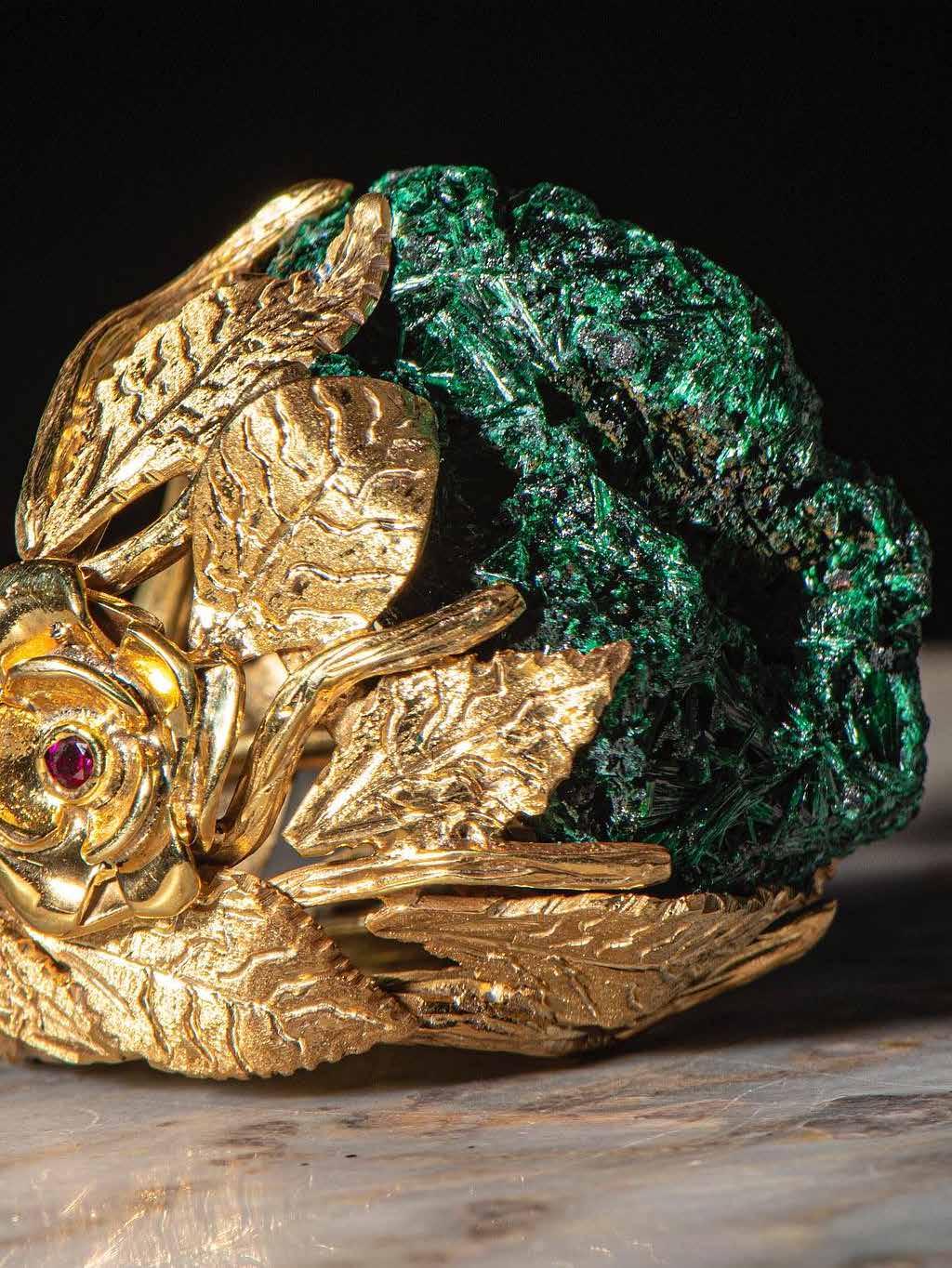
“For me, art and design are deeply connected to nature, poetry, and music. Through design, I find a way to translate elements of the natural world into something living, echoing the sense of harmony and balance found in the environment. Just as nature moves with its own rhythm, design carries a similar cadence - expressed through the interplay of form and color.” Montenegrin architect and designer Sanda Strugar, based in Belgrade, belongs to a generation of creatives who move fluidly between disciplines, translating architectural thinking into objects of a more intimate scale. Rather than treating jewelry as ornament alone, Strugar approaches each piece as a miniature sculpture, carefully constructed and always unique. Each piece is handcrafted using precious materials such as gold, silver, and platinum.
What distinguishes her work is a strong visual language defined by sharp, striking lines and a sense of precision that reflects her architectural training. At the same time, her inspiration is deeply rooted in nature, music, and artistic expression - elements that soften these structural forms and introduce a more emotional dimension. Her growing international presence, including presentations at fashion weeks and recognition such as the A’ Design Award, positions her among emerging designers from the region who are redefining contemporary jewelry through a more conceptual and thoughtful approach.
SANDA: Craftsmanship is on the edge of extinction. Finding collaborators skilled in handwork is becoming increasingly difficult. People are drawn to digital shortcuts, chasing faster paths to success.
Fortunately, AI cannot replace hands, and a 3D printer has no soul. It will never substitute human presence, organic ideas, or the intelligence of the hand. That value is permanent. In fact, the more digital the world becomes, the more valuable craftsmanship is.
The solution is awareness. There is no easy or fast path to quality. Handwork does not allow for speed - it gives you time and presence, allowing you to absorb the world around you. If, in the future, we return to tradition and craftsmanship - we will become far more fulfilled and at peace.
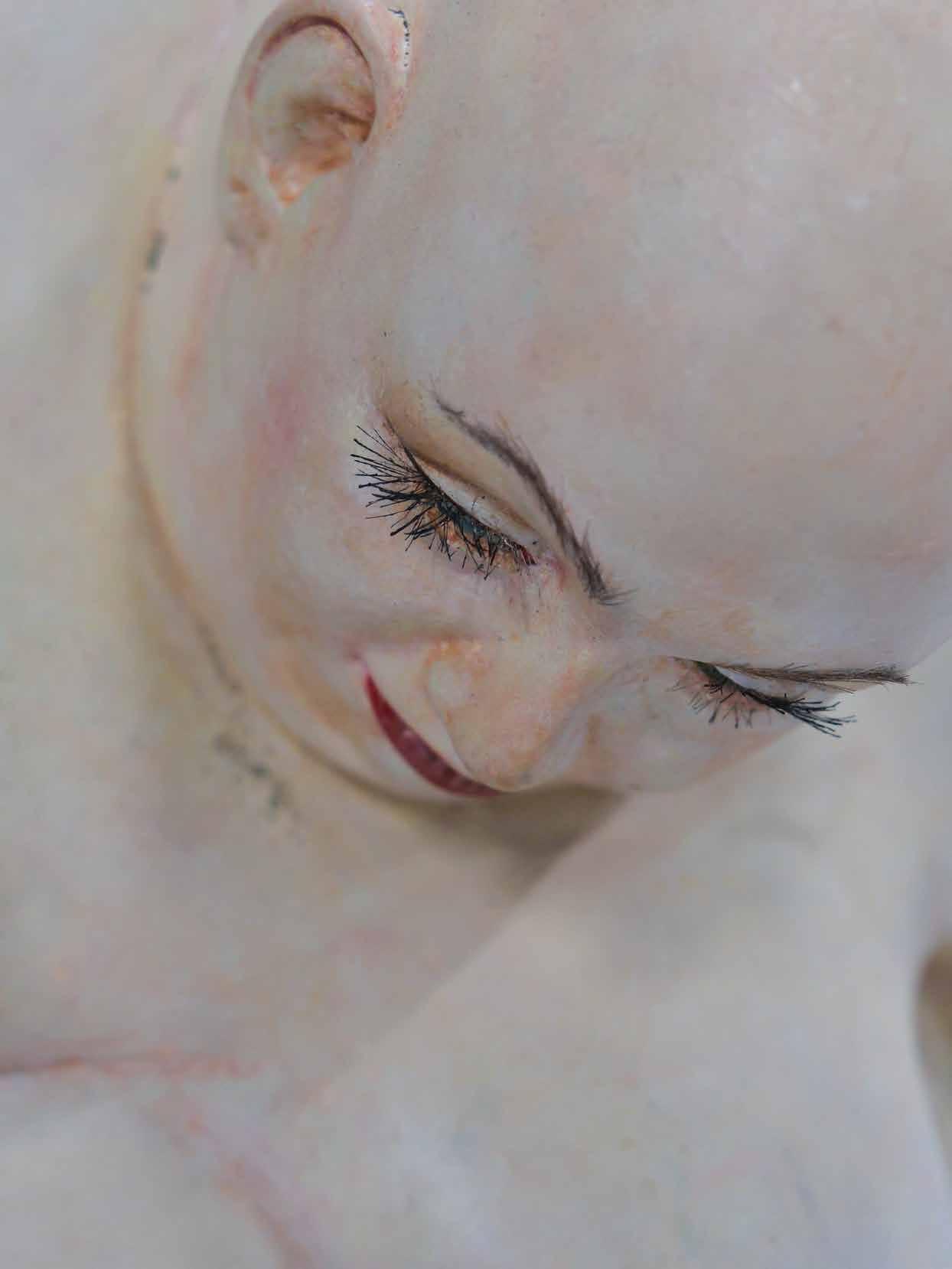
Žarko Bašeski
Detail
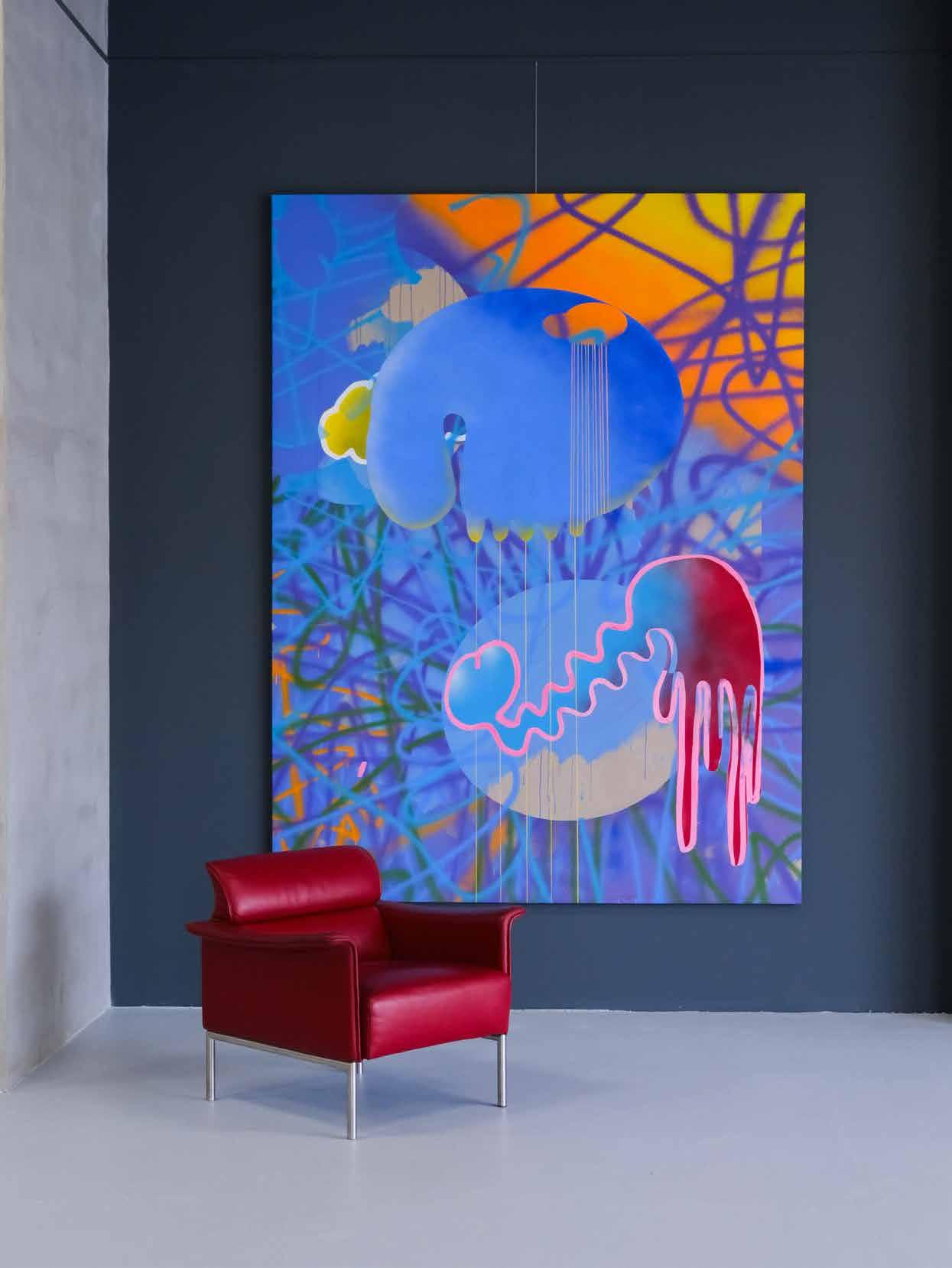


Brun & Brun, Gallery ŠTAB, and Art Dragstoran ecosystem of contemporary art for a new generation of collectors and visionaries. In today’s world of luxury, where space is no longer merely functional but an extension of personal and corporate identity, art takes center stage. It is no longer decoration - it is a statement, an attitude, and a long-term value. This philosophy lies at the core of Brun & Brun, one of the region’s leading art consulting firms, which for nearly two decades has been shaping the way art interacts with space, brand, and capital.
Founded by Marko Brun, Brun & Brun has evolved into a sophisticated platform connecting private collectors, corporations, hotels, and institutions with carefully curated works of contemporary, modern, and Art Brut art. Their approach is strategic, discreet, and highly curated - tailored to clients who understand that the true value of art lies in its longevity. “A well-chosen artwork is not an expense, but a smart investment and a mark of distinction among the most refined circles,” says Marko Brun. This philosophy guides every projectfrom private residences to luxury hotels and prestigious corporate environments.
Brun & Brun approaches every collection as a unique project. The process begins with a detailed analysis of the architectural space, brand identity, and the client’s value system. The result is not merely aesthetic harmony,
but a deeply considered artistic narrative that gives a space character and authenticity. Their work spans a full spectrum of servicesfrom art advisory, selection, and production, to installation and long-term collection management. A particular focus is placed on the corporate sector, where art becomes a powerful tool for strengthening brand reputation, market differentiation, and enhancing client experience. Collaborations with renowned global brands, as well as prestigious hotel chains and investors, confirm their ability to seamlessly integrate art into complex business systems - without compromising between aesthetics and strategy.
At the heart of this ecosystem is Gallery ŠTAB - one of the most significant contemporary art spaces in Serbia. Since its founding in 2014, during the transformation of Belgrade’s Savamala district into a cultural hub, ŠTAB has become a place of discovery, affirmation, and connection between artists, collectors, and a wider audience.
With over 400 exhibitions and events and several thousand artists from Serbia and abroad, the gallery has built a reputation as a platform that not only follows contemporary trends but actively shapes them. Today, as part of the Brun & Brun system, ŠTAB operates within modern gallery spaces in Belgrade, spanning over 700 square meters.
The exhibitions created here are not merely presentations of artworks - they are carefully orchestrated encounters between art, market, and ideas. It is within this dialogue that a new generation of collectors is formed.
Alongside its gallery and consulting practice, Brun & Brun has developed Art Dragstor — a contemporary sales platform redefining how art is acquired. Launched in 2015 as an experimental project, Art Dragstor has evolved into a refined system enabling direct interaction between artists and buyers, both online and through physical spaces. Its offering ranges from accessible prints to collectible and museum-quality works. However, the platform’s true value lies not only in accessibility, but in selection. Every artwork undergoes a curatorial filter, ensuring quality and long-term value potential for clients. In addition, Art Dragstor provides advisory services - from artwork selection to art investment planning and spatial placement - effectively dissolving the boundaries between gallery, market, and consulting practice.
The strength of Brun & Brun lies in the synergy of its three core segments - consulting, gallery, and sales platform. This integrated approach ensures full quality control, direct insight into the contemporary art scene, and access to some of the most relevant artists in the region and beyond.
At the same time, the company actively contributes to the development of the Serbian art market through institutional collaborations, international projects, and initiatives promoting transparency and sustainability.
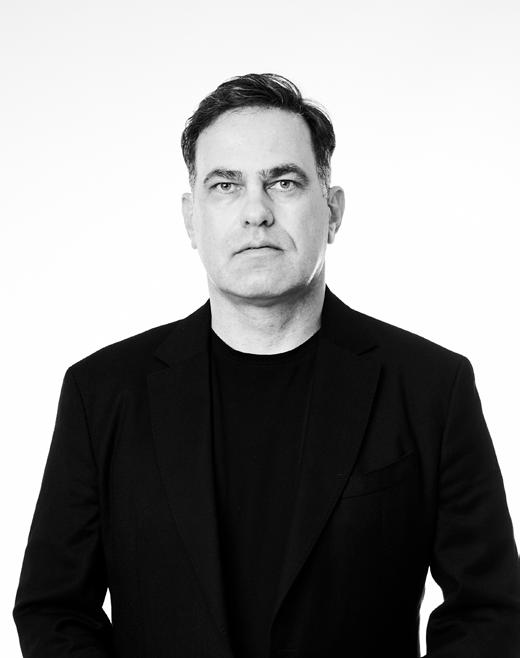
MARKO BRUN CEO & founder
In an era of global uniformity, true luxury is becoming synonymous with authenticity. Art, when carefully selected and strategically positioned, becomes the most sophisticated expression of that authenticity - whether in a private collection, a hotel interior, or a corporate space. Brun & Brun does not simply sell artworks. They create relationships between people, spaces, and ideas. They do not place art. They build collections, identities, and cultural legacy.
Painting by prof. Nikola Kolja Božović
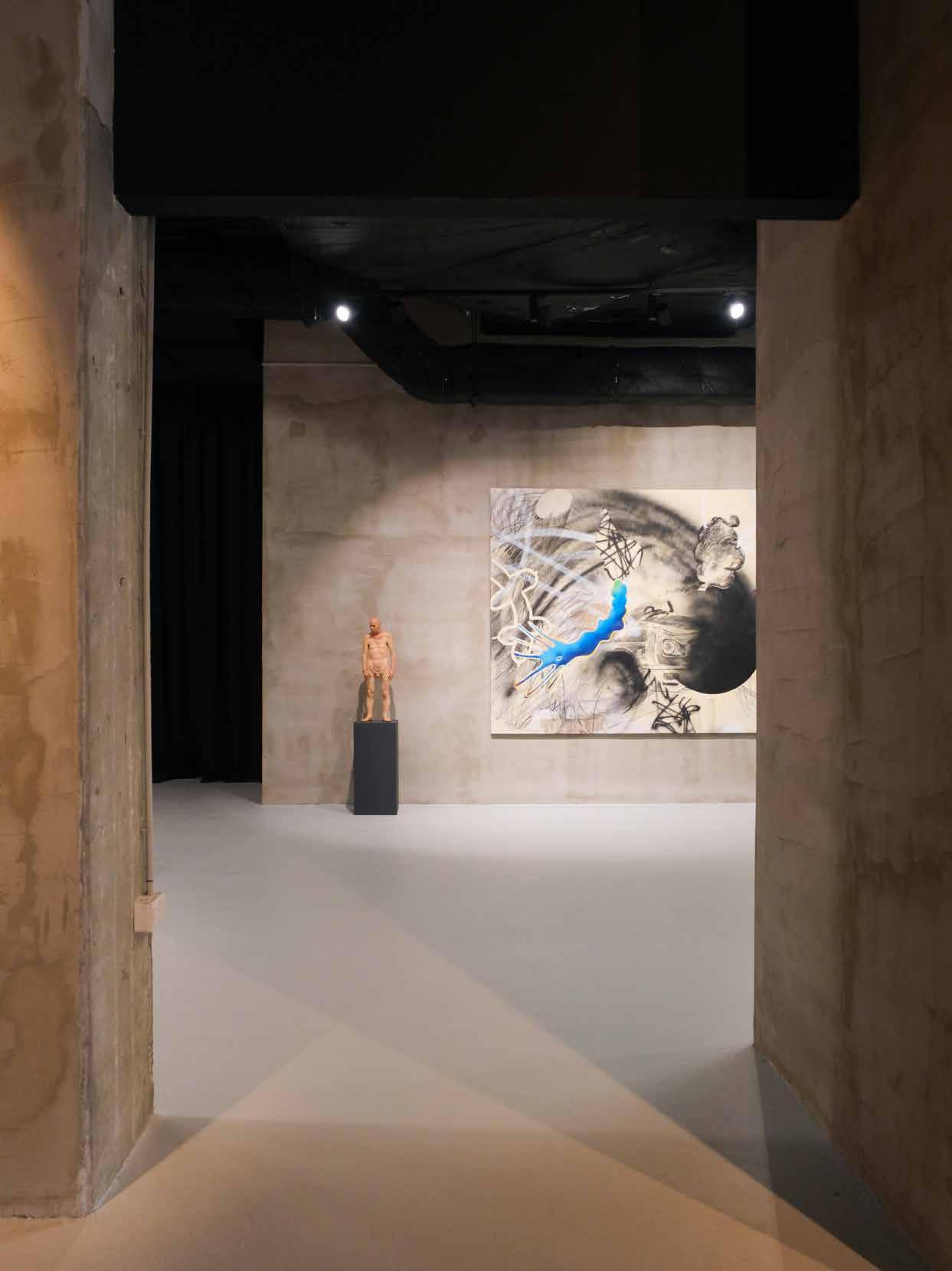
Brun&Brun / Galerija Štab
Galerija Shopping Mall, groundfloor info@galerijastab.com | www.brun.art | +381694411011 Art Dragstor
Galerija Shopping Mall, second floor info@dragstor.art | www.dragstor.art Belgrade | Serbia
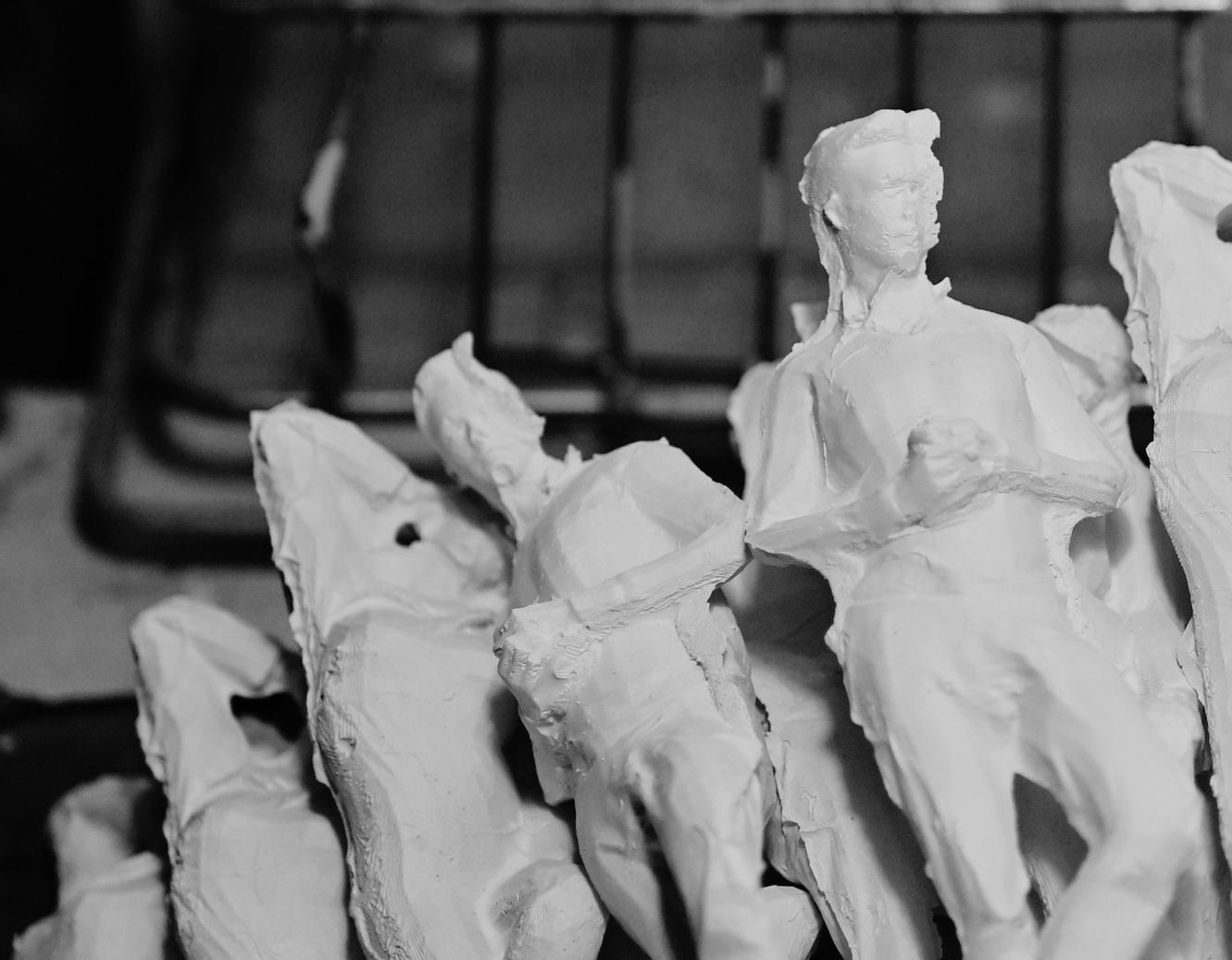
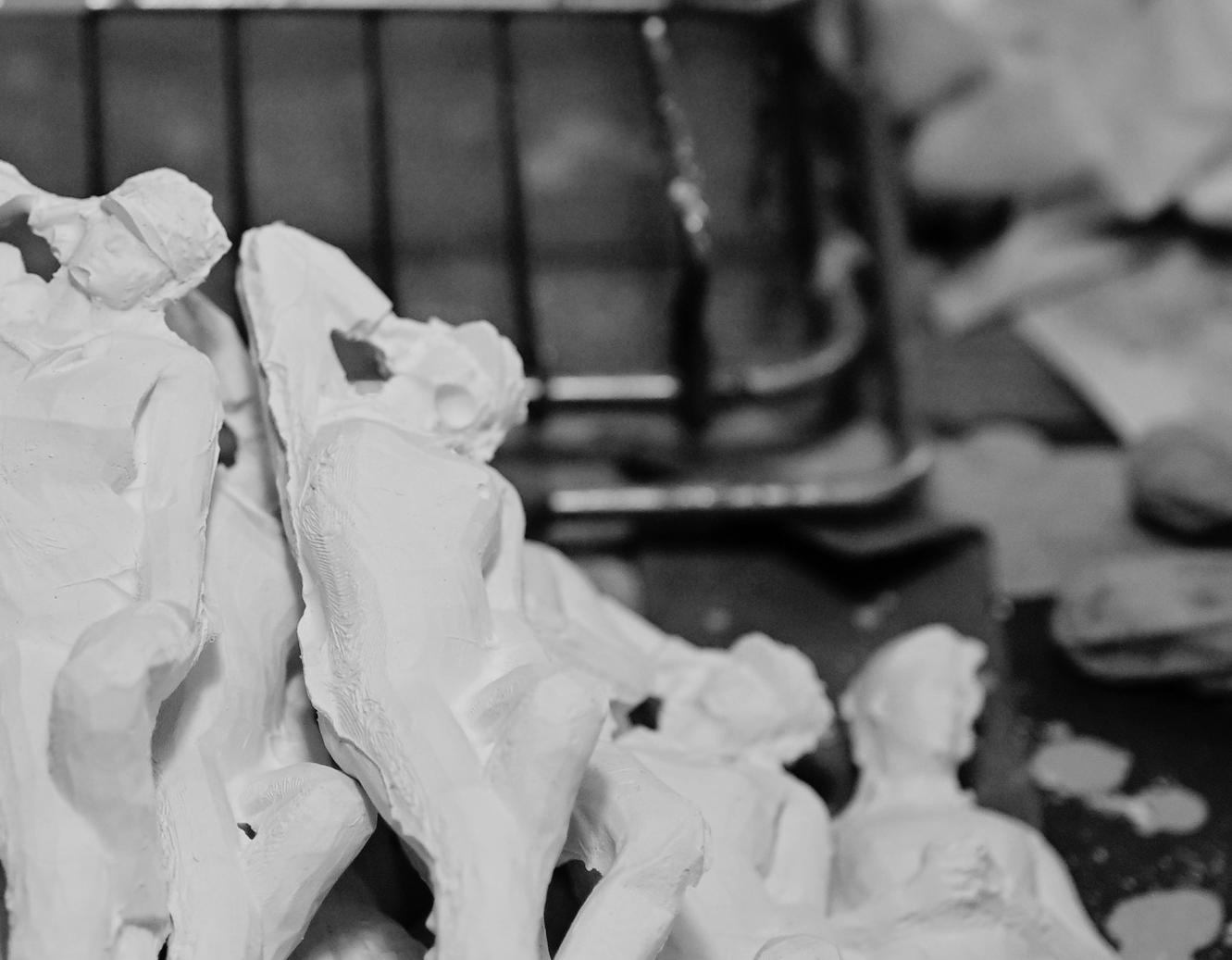
Siniša Radulović is a Montenegrin contemporary artist working across video, installation, and conceptual formats. Rooted in the context of post-socialist transition, he creates environments in which the boundaries between the real and the simulated begin to dissolve.
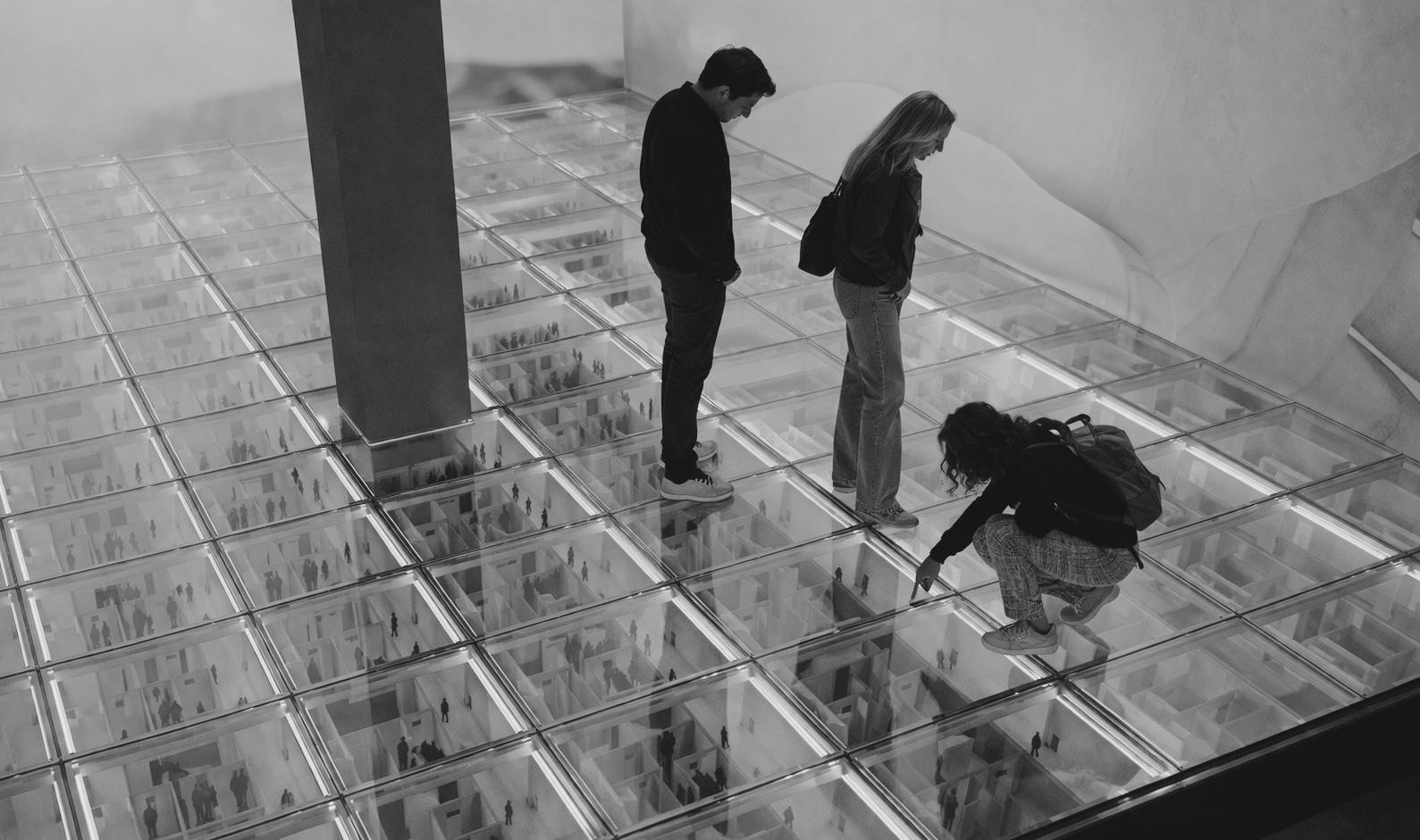
This year, Siniša represents Montenegro at the Venice Biennale 2026 with Out of The Blue, I’m Swept Away - a technically complex, multi-layered installation combining sculpture, video, sound, and photography into an immersive environment. Weighing over nine tons, the work stands as one of the most physically ambitious and logistically demanding presentations the country has brought to the Biennale to date.
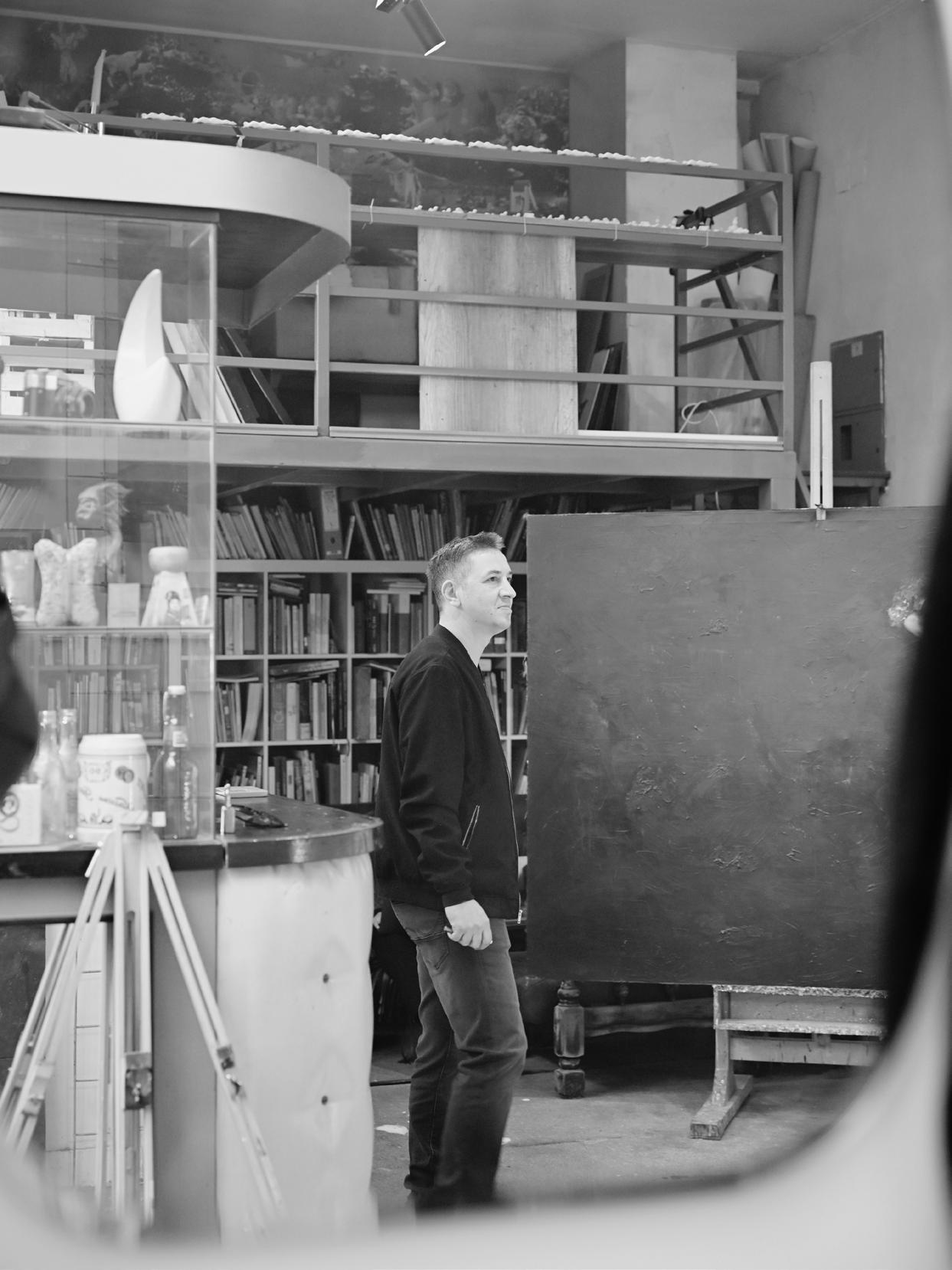
We meet him in his atelier in Podgorica - a space that once belonged to his father - legendary Dragan Radulović, tucked inside an old socialist building on a street that seems almost untouched by contemporary time. There is something unusually still about it. The facades, the textures, even the small grocery store next door - everything carries the persistence of another era.
The atelier feels like entering someone’s mind - where nothing is immediately clear, and everything exists at once. Živojin, a 12-year-old cat, lives here - unmistakably the studio’s mascot. Paintings, sketches, collages, and family photographs unfold across the room, layered among objects that read like fragments of memory. At first glance, everything suggests a world of antiques; but looking closer, that impression begins to fracture. Among the artifacts are dozens of figurines - some handformed in clay, others 3D printed - all part of the evolving work for the Biennale.
ZINA: What kind of environment shaped you, growing up in Podgorica in the 90s. How did you experience that time, how was your childhood?
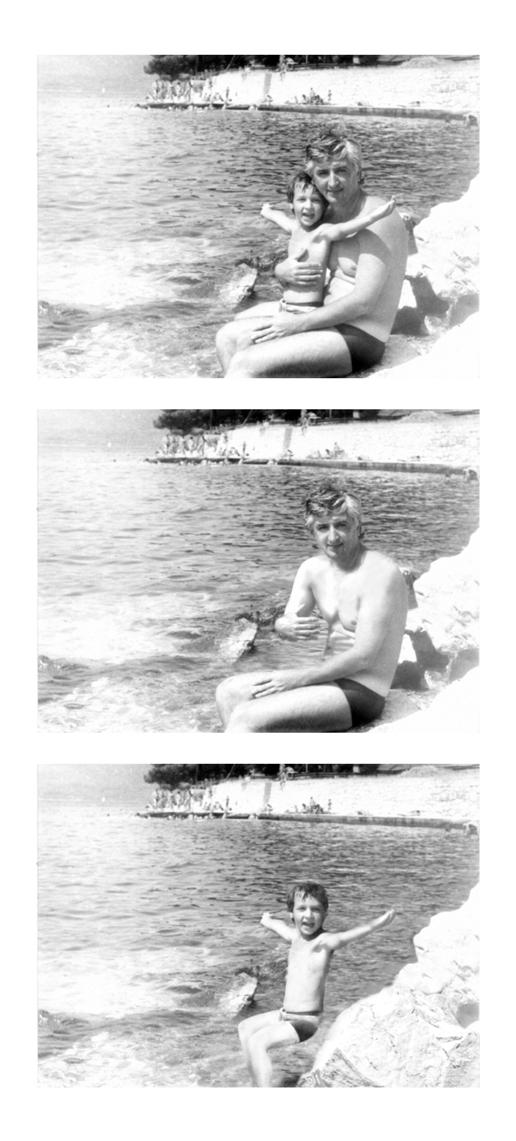
SINIŠA: It was nice. Growing up in the early ’80s and early ’90s was very different from today. For me it was a beautiful time, especially because of family. My parents were very involved in my childhood, my father knew how to connect with children and how to approach them. He was a children’s poet and a TV author of documentary programs for kids, and he also worked in painting and photography. It was a period when parents tried to protect their children from the impact of the crisis. We didn’t really feel it - it all passed through play. Looking back now, I realize those were quite difficult and sad years. Fortunately, Montenegro wasn’t directly affected by the war, but there were still consequences for society, people’s finances, and inflation. Life was much simpler than today. Technology wasn’t as widespread or advanced, kids would just go outside, find something to do, and play.
ZINA: In a country where everyday survival often takes precedence, where do you see the place for contemporary art - do you think there is enough space for it in Montenegro?
SINIŠA: We are in a very specific situation. Unlike our neighbours in the region, who experienced a breakthrough of contemporary art and avant-garde movements in the 1960s and 1970s, we didn’t have that. So we are still catching up - there’s a significant gap to overcome in moving from a conservative framework into new media. Efforts are being made by certain individuals, but it remains very challenging. Those “missing eight hours” from the communist system that were once dedicated to cultural development are gone - people today don’t have the time or the means to afford that kind of engagement. As a result, one generation produces another that grows up seeing art not as a natural part of life, but as something reserved only for a select few.
ZINA: Do you feel that working from Montenegro isolates you or gives you a specific perspective you wouldn’t have elsewhere?
SINIŠA: It comes down to choice - how much someone is committed to creating, and how much to building a career. Here, unfortunately, those two things often have to be separated, unless you’re working in commercial art. It’s difficult to break through from Montenegro, regardless of quality. When I was younger, I felt it isolated me. But it really depends on how you define success. For me, success is having the time, the freedom, and the will to create. About ten years ago, I stopped doing interviews. I wanted to see what happens when you remove publicity and focus only on the work. You lose a lot when you disconnect from the media, but you also gain a lot.
ZINA: You explore existential and anthropological themes, capitalism, as well as references such as George Orwell’s 1984 ( in a piece “Terraforming”).
Do you think our world is truly moving in the direction Orwell described - has it really become that dystopian, especially considering everything happening today?
SINIŠA: Experience shows that every generation tends to believe its time is the worst. We’re certainly not moving in a good direction, but that feels more like a constant than something new. When you think about the two world wars and the fact they’re called the First and Second - it implies the possibility of a third. I’ve always been drawn to fiction, especially dystopian narratives, so all of this feels interconnected to me.
What’s interesting in Terraforming is that it can be directly linked to Out of The Blue, I’m Swept Away through two very intimate contrasts. In the Biennale work, those are the models of my apartment and figurines of people I know. In Terraforming, it’s an image of my son that becomes a 3D landscape. It’s a shift from the intimate to the collective, and for me, the collective often carries a dystopian dimension.

Terraforming 2020. video, 6’02’’
ZINA: Your work briefly associated me with the movie Being John Malkovich, as well as Plato’s Allegory of the cave. Where is “Out of the blue I’m swept away” here? Is it closer to observing illusions or inhabiting them? Is the viewer the final piece of the puzzle in this piece?
SINIŠA: It sits somewhere between the two, but it’s not exactly either. In the end, it’s about inserting yourself into the work. The viewer is always part of the work, but here we make that more explicit by shifting viewer’s position - not just in terms of perspective, but also in relation to scale. Within the installation, the usual sense of proportion begins to dissolve.
ZINA: What was the starting point of this piece? How did you choose the medium?
SINIŠA: It began, as most of my work does, from something intimate. A few years ago, I was buying an apartment and entered its floor plan into a program to figure out furniture placement and dimensions. Moving those elements around started to resemble a Mondrian composition - I had dozens of variations, and that layout stayed with me.
When the Biennale open call was announced, the events in Palestine were unfolding, and I had a breakthrough connection between drone images of ruins and the floor plan of my apartment. Both were seen from a bird’s-eye view - that was the link. That is why it became an installation: the format had to be physical and real, so that I would literally have to walk over something reduced in scale. From there, I began thinking about who lives in those apartments, who those people are.
ZINA: Out of the Blue, I’m Swept Away is incredibly technically demanding, drawing on architecture and engineering. How much space does a piece like this leave for improvisation?
SINIŠA: I’m not someone who follows a fixed concept from the start. In this case, as with any work, the process begins creatively, develops to a peak, and then shifts into execution—where there’s less room for improvisation. What remains is a small space at the end, which here comes through the placement of
Out of the Blue, I’m Swept Away 2025/2026. © Siniša Radulović
the figurines within the model. It’s similar to painting: you begin freely, then enter a more structured phase, and finally arrive at a finishing moment.
Out of the Blue, I’m Swept Away is indeed highly complex on a technical level. It is conceived as a multi-layered spatial installation combining sculpture, video, sound, and photography into a single immersive environment. This complexity lies in the precise coordination of all elements - from spatial construction and modular structures to the synchronization of video and sound. The most demanding part is the glass floor, which required specialized materials and a carefully engineered support system to meet both aesthetic and safety standards. The entire process demanded a high level of precision, as well as close collaboration with engineers, structural specialists, and the team at the Museum of Contemporary Art of Montenegro, whose support was essential throughout the project.
ZINA: In this piece there are around 2,000 figurines, which are all hand-painted. The process sounds almost meditative - what kind of mental state do you enter while working on them?
SINIŠA: It’s something I’ve been mentioning a lot lately - I actually look forward to the days when I work on the figurines, because that’s the only moment of calm within the project. Everything else is organization and planning. But when I enter the phase of sanding and painting them, it becomes almost zen. That’s when I can think creatively - about future projects or something else entirely. This project is so large and intense that it requires a lot of non-creative energy as wellproduction, coordination - just to make everything work. There are many people involved, and what’s important to me is that everyone is from Montenegro. It was essential that this is truly our own production.
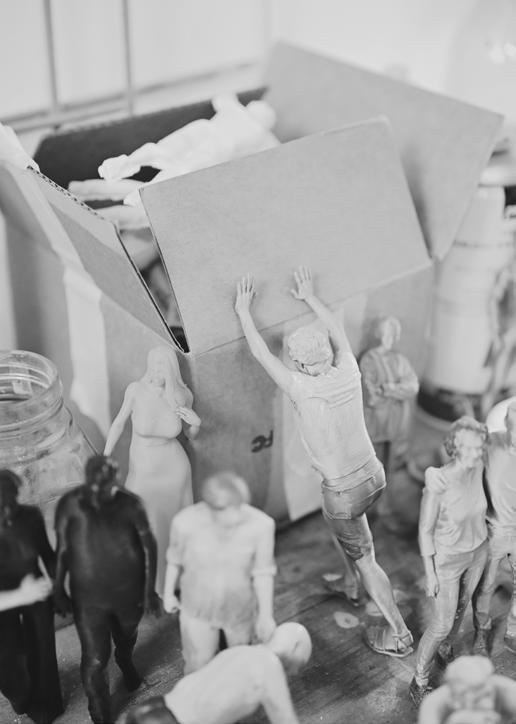
ZINA: What specific aspects of this piece are personal to you?
SINIŠA: Among other things, the figurines are very personal. A number of the 2,000 are custom-made and represent people from my life - friends, family, and those I know. There are also wet collodion photographs, personal objects, and stills from films that are important to me.
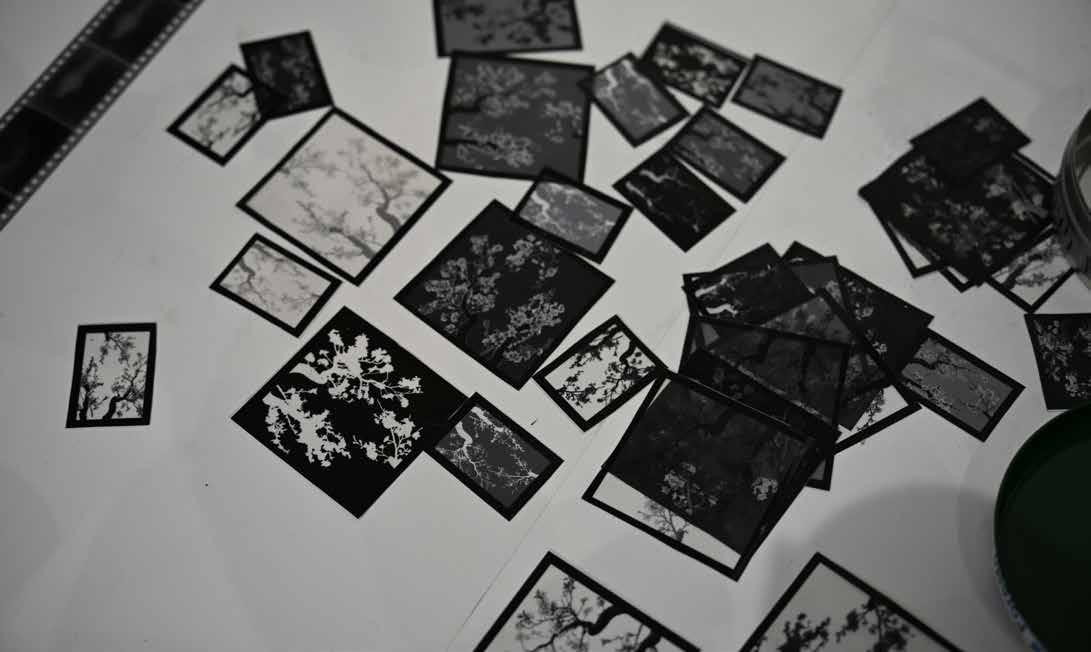
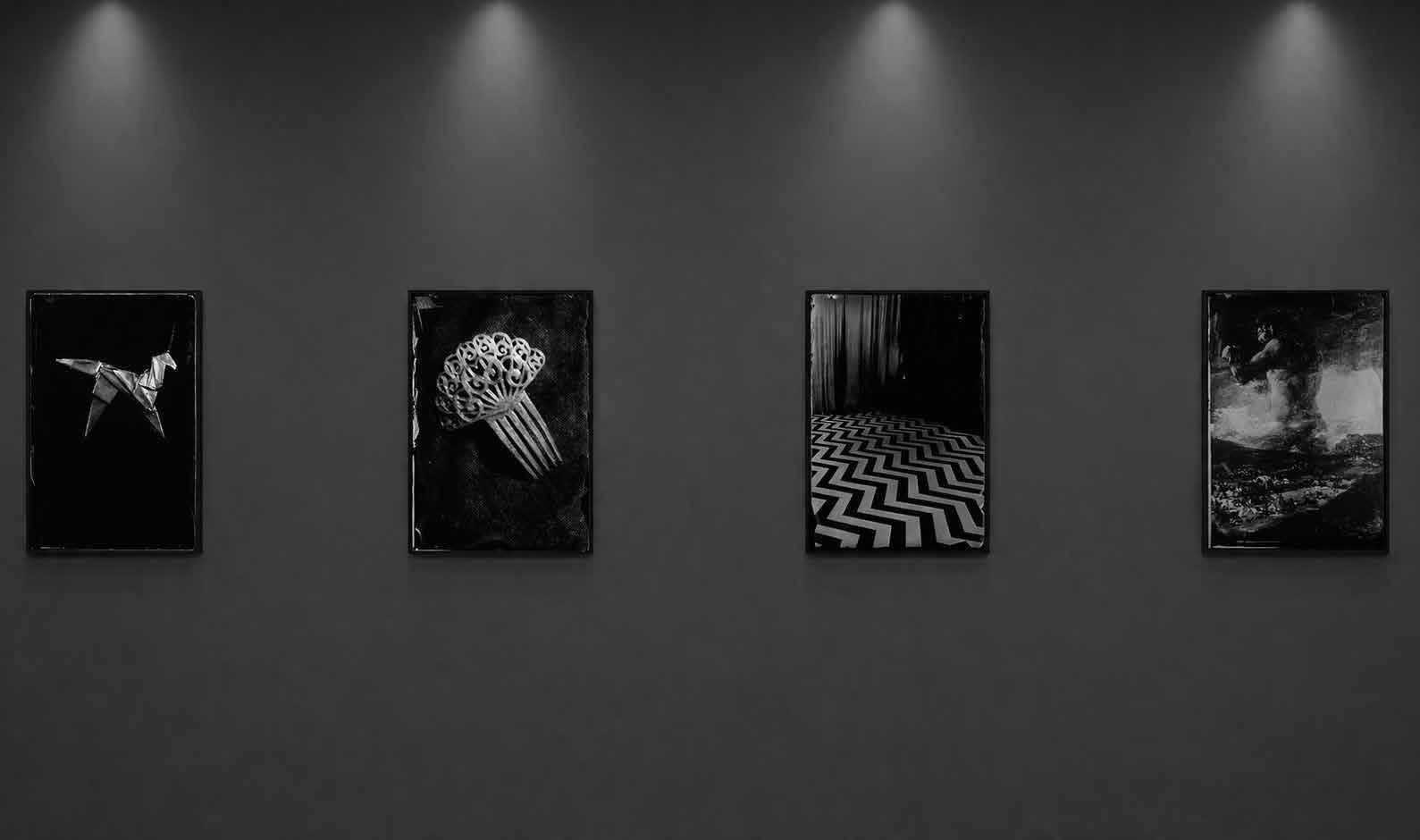
Out of the Blue, I’m Swept Away 2025/2026.
ZINA: Why did you choose this particular photographic medium?
SINIŠA: It was important that the photograph itself exists as a unique object—something that cannot be reproduced. It carries a certain presence on its own, and as an image on glass, it naturally connects to the installation. It’s essentially a piece of glass where nothing is visible until it’s placed against a surface. In that sense, it reflects the way memory workshow an image only becomes clear in relation to something else.
ZINA: Do you see the art world as inherently elitist? Events like the Biennale, which demand substantial resources, highlight a clear divide between those who can access them and those who cannot. How do you position your work within that dynamic?
SINIŠA: It’s a very complex issue, especially considering the wide range of approaches to art - from highly commercial to deeply elitist. What often happens is that art becomes hermetic, created primarily for other artists and a narrow circle of insiders, rather than for a broader public.
This is particularly visible in smaller environments like ours, where there are only a few defined audiences for contemporary art. What concerns me most is that truly good art often reaches very few people - those who already understand and follow it. Then the question arises: what is the purpose if a wider audience cannot engage with it?
Venice becomes a stage where everything is visible, but it also raises another questionwho can actually afford to be there? That’s the loop.
ZINA: How do you see the region today from an artistic perspective?
SINIŠA: The region has strong potential -it’s really a question of timing and momentum. It gained visibility after the war, which of course isn’t a good reason, but it created a moment where artists had something to respond to. Over time, that attention fades, the momentum declines, and shifts elsewhere.
This year’s Biennale is interesting in that context. “In Minor Keys,” curated by Koyo Kouoh, moves away from immediacy and current events, focusing instead on turning inward— toward more personal, emotional, and subtle voices. It’s an approach that is quite rare. In the end, this project should lead to a positive outcome - a kind of contrast that becomes clear once you step out of the installation.
DISCOVER MORE www.thecollectionfab.com
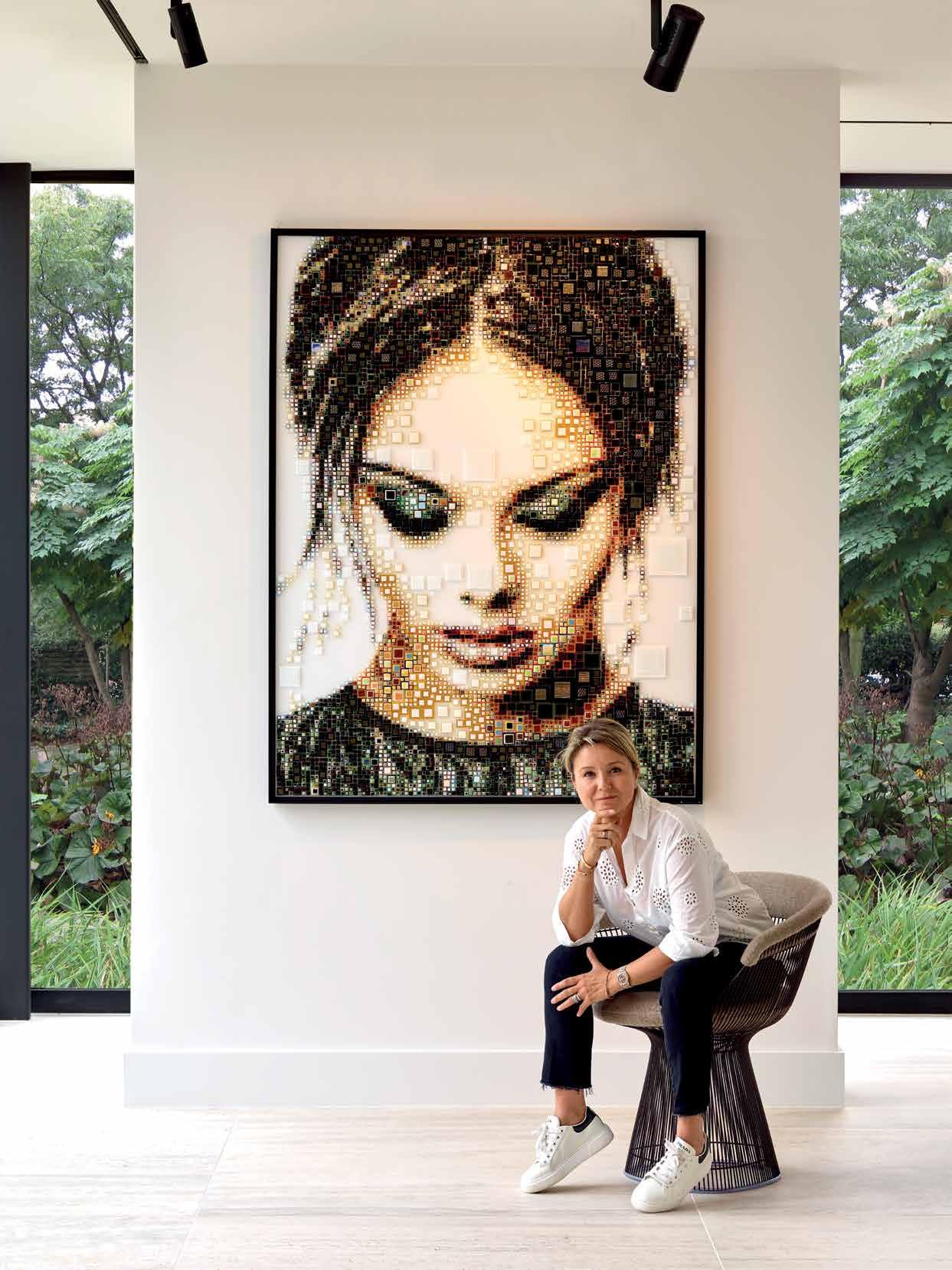
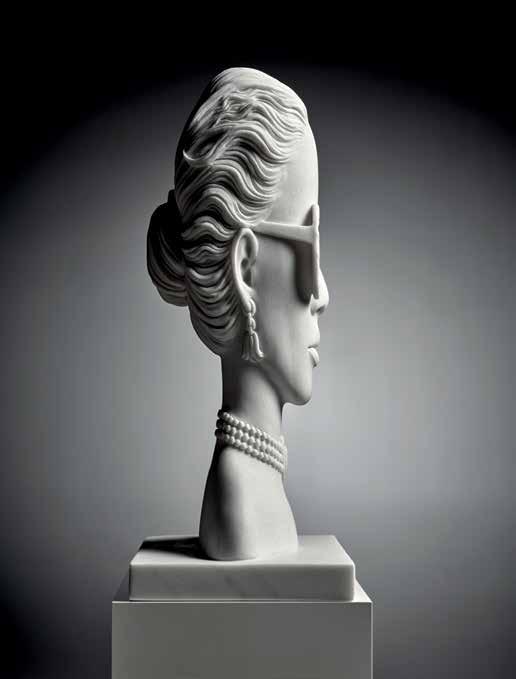
In the world of contemporary fine art, few creators manage to bridge the gap between raw material and ethereal emotion as seamlessly as Isabelle Scheltjens. This year, the scenic shores of Porto Montenegro welcome a significant cultural addition as Murano Art Gallery proudly announces the inclusion of Scheltjens’ work in its permanent collection. The gallery will feature two cornerstone pieces that define her current artistic trajectory: the expansive glass fusing masterwork "The Dreamcatcher" and the serene marble.
To stand before a work by Isabelle Scheltjens is to engage in a dialogue with the subjectivity of human vision. Her practice is rooted in the understanding that our perception of color and light is never truly objective. Instead, she harnesses this sensory variability to create portraits that shift and transform depending on the viewer’s perspective. Her two-dimensional works, such as "The Dreamcatcher" (200 cm x 150 cm), are marvels of technical precision. Utilizing crushed glass as her primary medium, Scheltjens meticulously layers and fuses fragments to capture and refract light. The process is deeply intuitive; it begins with a lingering memory of a face—the specific intensity of a gaze, the strength of a jawline, or a unique play of shadow. She relentlessly experiments
with glass compositions until the physical colors align perfectly with the "afterimage" held in her mind. The result is a vibrant, textured surface that reveals powerful, extraordinary subjects who seem to breathe through the glass.
While glass remains her signature medium, Scheltjens’ creative curiosity has led her toward the three-dimensional. This evolution was sparked during a visit to a marble workshop, where the Mediterranean sun revealed the possibilities of stone. The transition from the fragility of glass to the permanence of marble and bronze reflects a maturing of her aesthetic language. In “Fola,” a 40 cm sculpture carved from classic white marble, the artist achieves a distinct luminosity. Where glass refracts light, marble absorbs and softens it, lending the subject a timeless, monumental presence. The piece demonstrates her ability to translate human expression into stone, creating a “totem” of modern identity. By bringing The Dreamcatcher and Fola to Porto Montenegro, Murano Art Gallery offers collectors and art enthusiasts a glimpse of Belgian craftsmanship and universal emotion. Experience Isabelle Scheltjens’ world - where light is captured..
This season, Murano Art Gallery at Porto Montenegro invites discerning collectors, architects, and design visionaries to experience the pinnacle of authentic artisanal lighting. More than a presentation of exquisite objects, our gallery represents a gateway into a centuries-old tradition— where fire, breath, and artistry converge to create luminous works of enduring beauty.
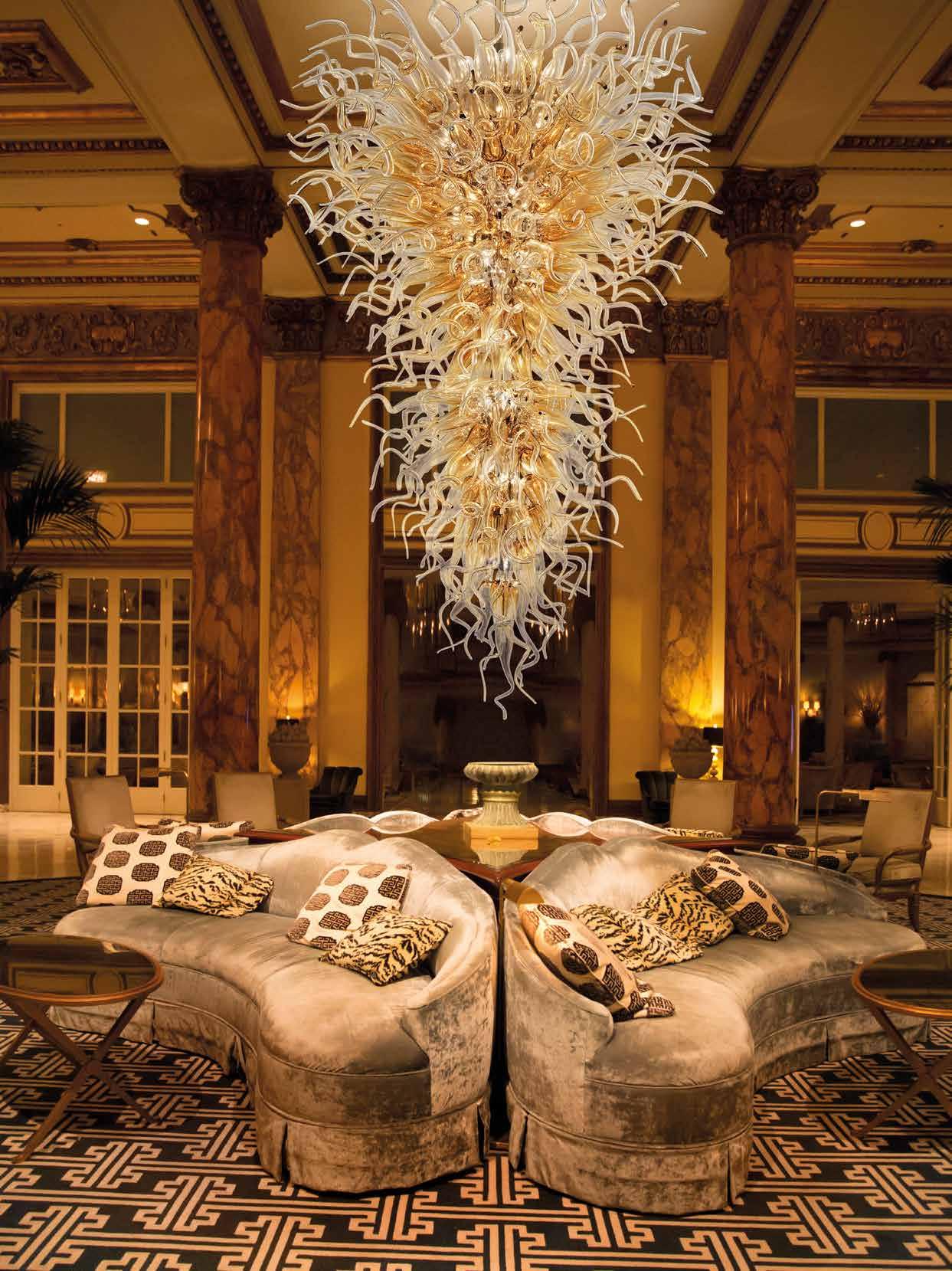
At the heart of our current exhibition stands a striking centerpiece: a cascading composition of clear and amber hand-blown glass, radiating both elegance and presence within our Tivat space. Yet this installation goes beyond a singular creation, illustrating the possibilities of a design process shaped entirely around your vision.
By bringing these masterworks from Murano to the Montenegrin coast, we are not merely importing décor; we are transplanting a living heritage. Each element is shaped by master artisans, ensuring that every piece carries the unmistakable soul of Venetian craftsmanship and remains truly unique.
The featured chandelier, measuring 110 cm in diameter and 200 cm in height, exemplifies the fluid, organic aesthetic that has made Murano glass synonymous with timeless luxury. Its flowing forms capture and refract light, creating a warm, atmospheric glow that elevates any space.
At Murano Art Gallery, we specialize in bespoke lighting, guiding you from initial concept to final installation. Whether working from detailed plans or a simple idea, our team develops each project in close collaboration with you, refining every element—from form and scale to color and finish.
We oversee the entire process, coordinating directly with master glassmakers in Murano and managing production, delivery, and installation with precision and care, ensuring a seamless and highly personalized experience. Whether for a superyacht, private residence, or luxury hospitality space, each piece is designed to be as distinctive as the environment it inhabits.
We invite you to visit our gallery in Tivat and begin creating your own Venetian masterpiece.
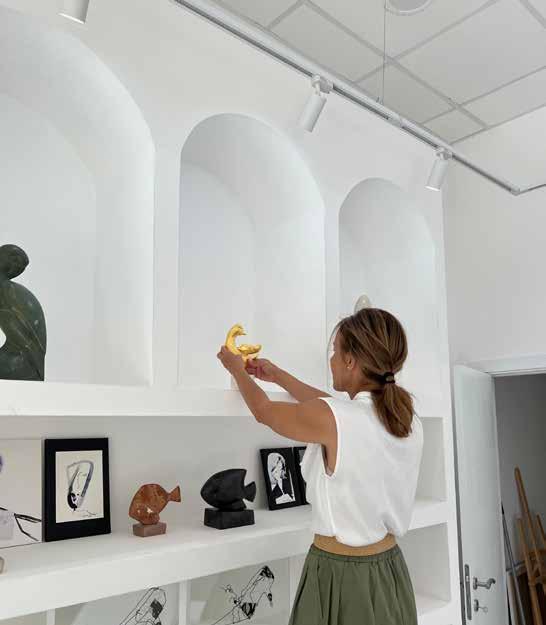
ARTRO is a contemporary gallery and workshop space in Luštica Bay, Montenegro.
At the very core of the ARTRO concept lies the thinking of creative director Kristina Kestner, whose vision is rooted in the idea that heritage—and the stories that shape it—must be deeply embedded in the spaces where new identities are formed. It is precisely in places such as Luštica Bay, a destination in the making where a new town and a new way of living are being constructed, that art assumes a particular responsibility: not to interrupt continuity, but to reinterpret it.
As a platform, ARTRO brings together contemporary Montenegrin artists as well as visiting authors, building a dialogue between different poetics, media, and sensibilities. Through workshops, encounters, and collaborative work, this space dissolves the boundaries between mentors and participants, transforming the process into exchange and learning into experience.
ARTRO’s mission is focused on affirming contemporary artistic practice through the connection of local and international contexts. Through its programs, ARTRO actively works to increase the visibility of visiting artists, present the Montenegrin art scene on an international level, and preserve and reinterpret traditional art as an essential component of cultural identity.
Luštica Bay | Montenegro @artro_me
The Montenegrin art scene, deeply rooted in the Mediterranean cultural sphere, carries a distinct sensibility reflected across various artistic media. According to the program framework of artistic director Kristina Kestner, the artistic process is conceived as a methodological exploration of the relationship between materiality, symbolism, and cultural memory. Workshop participants, working with authentic Montenegrin pigments, engaged in dialogue with the principles of sacred geometry, recognizing it as a universal language of structure and meaning deeply embedded in heritage. Different artistic techniques functioned as interpretative media: mosaic as a reference to ancient heritage and the layered narrative of Risan mosaics; ceramic painting as a contemporary articulation of Mediterranean flora motifs, carrying within them the continuity of place and identity; and the use of gold leaf, establishing a connection with the aesthetics and symbolism of museum medallions, where gold shifts from the decorative into a semantic field of meaning. A special segment included a demonstration of Dobrota lace-making—an authentic traditional craft protected as intangible cultural heritage of Montenegro—raising the question of knowledge transmission as a living, intergenerational process. Through these approaches, technique transcended its instrumental role and became a tool for the deconstruction and reinterpretation of heritage, positioning participants not only as creators, but as active carriers of cultural continuity.
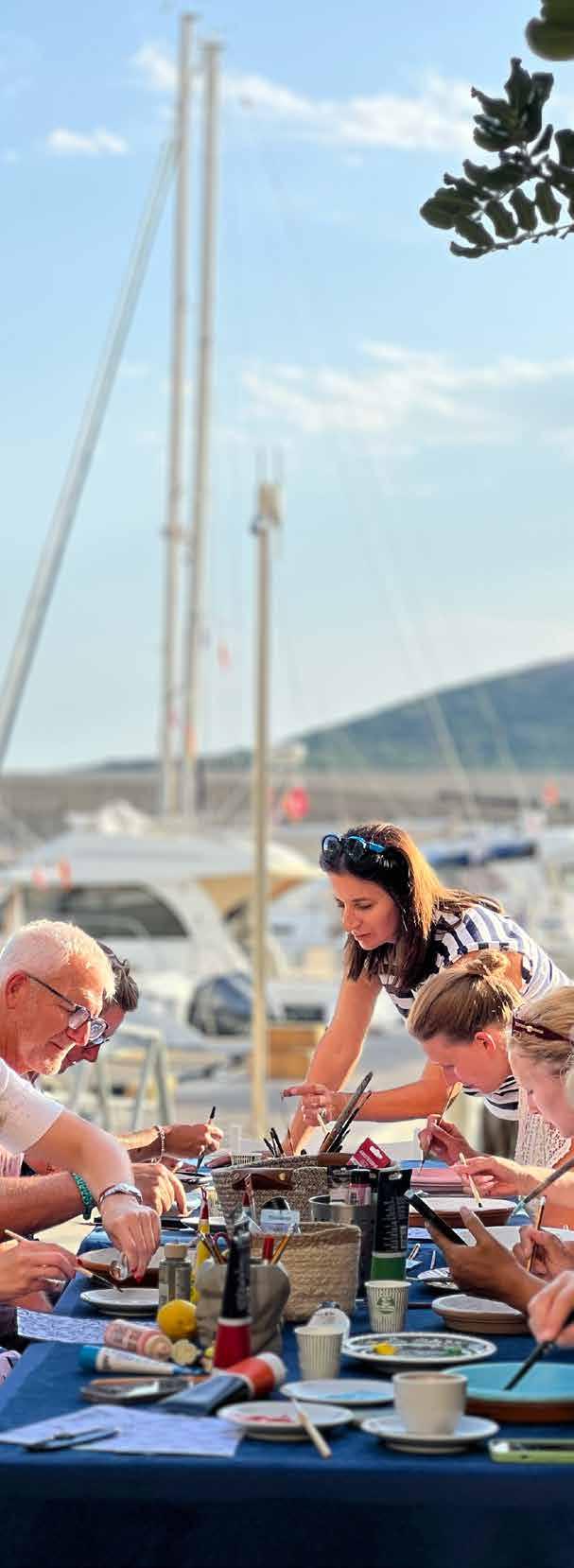

© Ivona Živulj
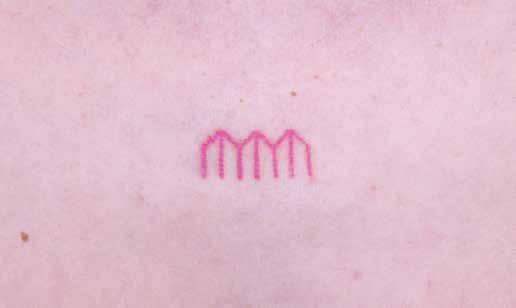
The Arrangement is an ongoing long-term performance project initiated by Marina Marković in 2020, probing the dynamics of power, autonomy, and institutional authority through the female body as a site of negotiation. Directly adapting the BDSM practice of the consensual agreement—a formal document outlining boundaries, consent, and power exchange—the project transforms these protocols into negotiated “arrangements” with institutions. Skin becomes a semi-permeable boundary for projection, inscription, and resistance, where social norms penetrate, shape, and are reconfigured by corporeal experience. The project unfolds across interconnected chapters, each layering new inscriptions through these consent-based contracts: Over 120 arrangements with galleries, museums, and institutions resulted in their logos permanently tattooed onto Marković’s skin, making visible the circulation of power between personal agency and external structures.This culminated in a 2024 solo exhibition at the Salon of the Museum of Contemporary Art in Belgrade, where five theorists—Jesha Denegri, Daniele Capra, Lucrezia Nardi, Matthieu Lelièvre, and ORLAN—contributed to a meta-text inscribed during a five-hour live performance by three tattooists. The “theoretical grid” overlaid prior logos, turning the body into a living archive.
At Paris’s Centre Wallonie Bruxelles during the Performissima Festival, eight curators—JeanMax Colard, Vittoria Matarrese, Jean-Christophe Arcos, Matthieu Lelièvre, Stéphanie Pécourt, Antoine Pickels, Olivia Voisin, and Lucrezia Nardi—added curatorial texts and signatures via arrangement, creating a “living contract” etched into flesh.
For the 60th October Salon in Belgrade, a site-specific installation featured the event logo tattooed under a new arrangement, with EKG, EMG, and sensors recording physiological responses—exploring skin as ambiguous territory where internal and external realities intersect.
Through these phases, The Arrangement positions the body as a palimpsest of biographical, theoretical, institutional, and physiological traces, revealing vulnerability as a strategy of resistance while challenging boundaries between self and Other, agency and submission.

Marina Marković (Yugoslavia, 1983) centres her practice on the body, moving from personal experience into broader social questions around gender, sexuality, and power. Shaped by her early experience with anorexia, her work examines the politics of the body and the tension between free will and coercion. Since 2006, she has exhibited internationally, with solo presentations across Belgrade, New York, Vienna, Paris, and Bern. Her long-term project The Arrangement culminated in a major exhibition at the Museum of Contemporary Art in Belgrade (2024). Her work has been included in institutions such as the Museum of Contemporary Art Lyon and Centre Wallonie-Bruxelles in Paris, and she has participated in residencies including ISCP New York and Q21 Vienna.
A recipient of the Dimitrije Bašičević Mangelos Award and the Vladimir Veličković Drawing Award, Marković’s work is held in public and private collections internationally. She is currently pursuing a PhD in New Media at the Faculty of Fine Arts in Belgrade and lives between Belgrade and Paris.
Located in the heart of Albania’s capital, Gallery of Contemporary Art Tirana - known by its English acronym GOCAT - stands as the country’s largest and most dynamic center dedicated to the exploration and presentation of contemporary visual culture. Since its opening in June 2024, GOCAT has become a key destination for artistic dialogue
and reflection. Through a diverse program of exhibitions and a wide range of media - from drawing, painting, and sculpture to printmaking, video, photography, installation, and performance art - GOCAT fosters aesthetic engagement and encourages critical thinking. GOCAT is a space where art is displayed and promoted, and where its present state is witnessed.
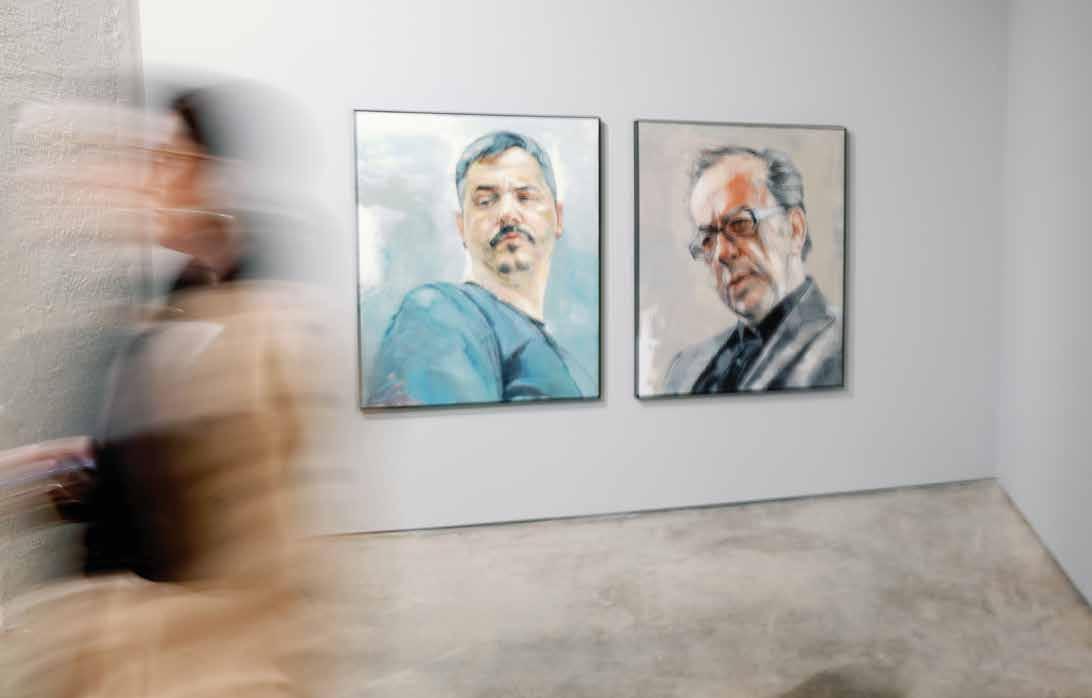
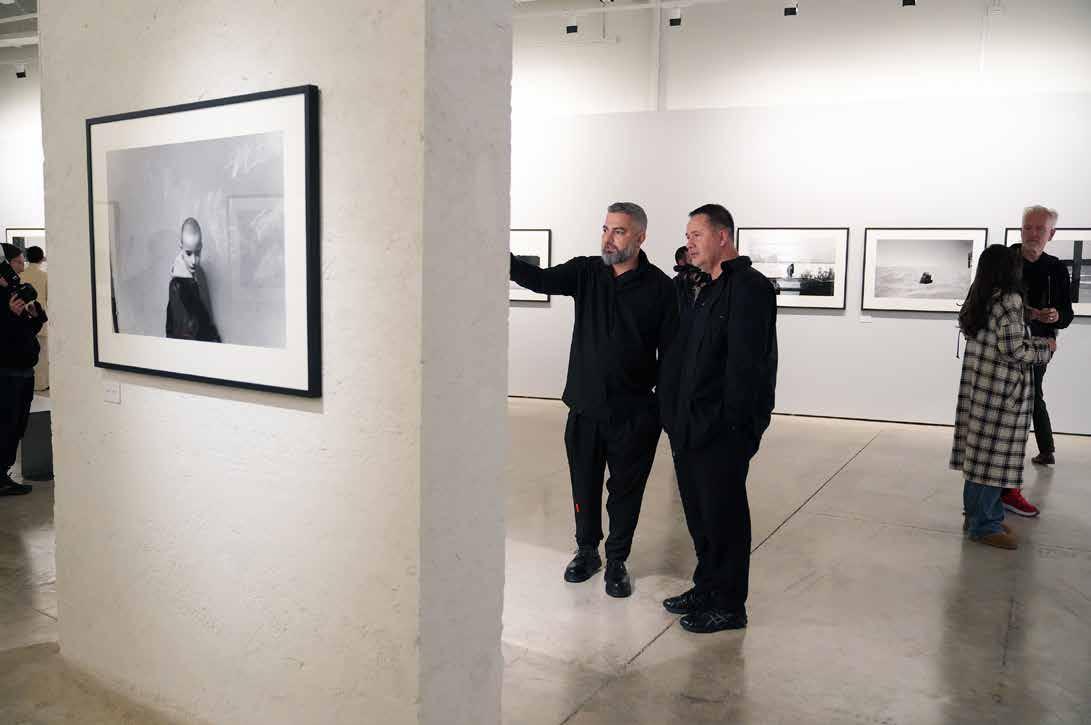
At the core of GOCAT’s activity are the artists themselves, and their ongoing call to provoke, challenge, and enrich the conversation around the role of art in society. GOCAT is, without a doubt, the space where contemporary art is valued and artists express their ideas, emotions, and their creative potential. The human experience, identity, societal dynamics, and historical imprints all feed into the artistic inquiry of the Gallery of Contemporary Art Tirana. Within this space, artists transcend both physical and imagined boundaries.
The gallery is a gift from Mane Foundation to all artists and art lovers, adding to other major projects that benefit the community. Culture belongs to society in the same way that business does and Samir Mane, the founder of the Foundation, believes that art should establish an active dialogue with business. He considers the Gallery of Contemporary Art Tirana a connection between people that share the same dreams and vision.
Opening Hours: Tuesday to Sunday 10:00 AM - 2:00 PM & 5:00 PM - 8:30 PM
Location: Pyramid Center, “Dëshmorët e Kombit” blvd. Tirana | Albania
Contact: info@manefoundation.org, info@gocat.al
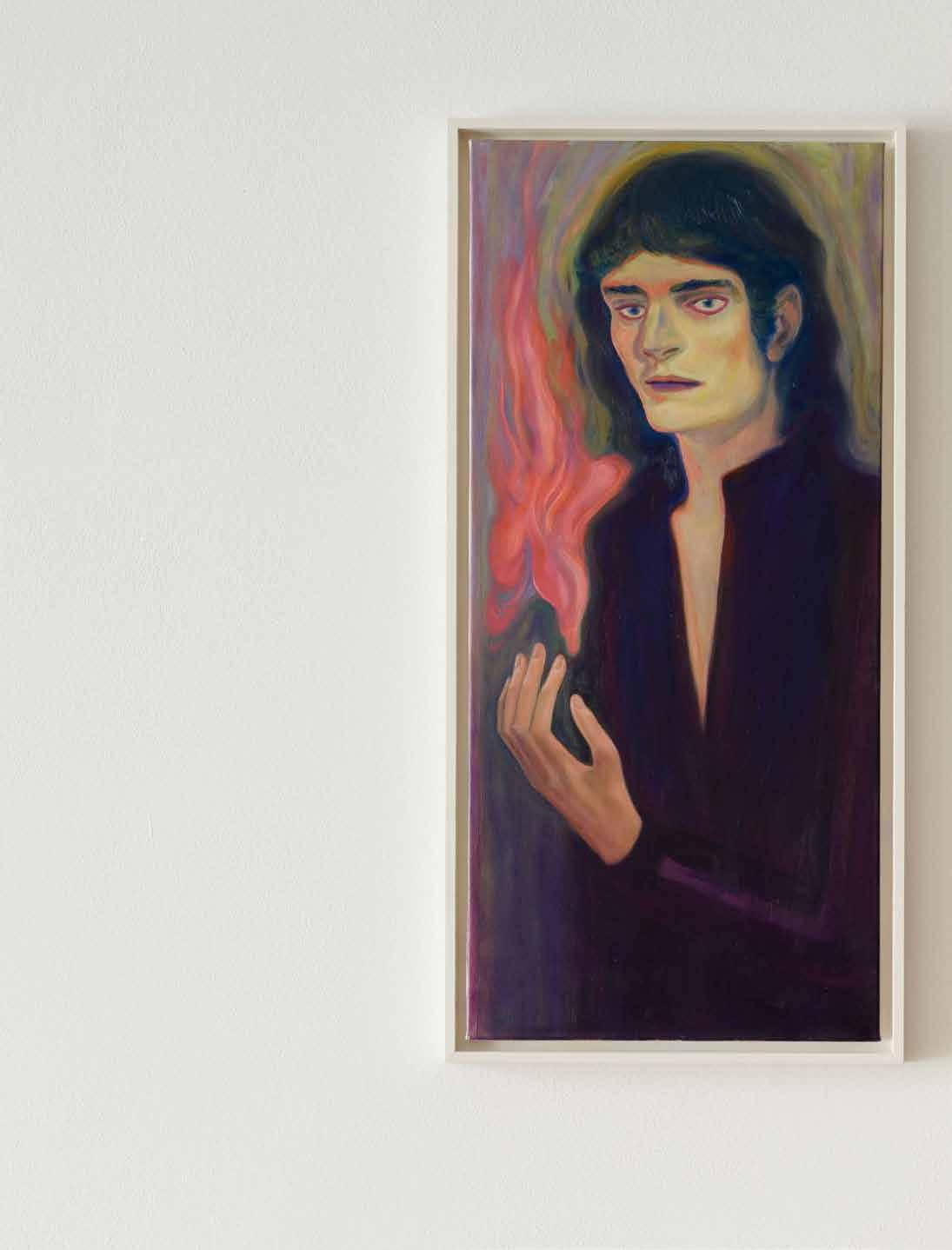


Mara Projects is a gallery founded and led by Lisja Tërshana, operating between London and Tirana. Without a fixed space, it develops exhibitions and projects in collaboration with galleries, institutions, and international art fairs - building both an international programme and the foundational commercial infrastructure for contemporary art in Albania.
Mara Projects launched in September 2025 at Vila 31 x Art Explora - the former private residence of communist dictator Enver Hoxha, only recently opened to the public. The launch included an art auction: a deliberate choice in a city without an established art market. Instead of a traditional exhibition, the format allowed works to be immediately placed into private collections, introducing a first group of local buyers to the process of acquiring contemporary art. It created direct transactions, set initial price expectations, and, importantly, established early relationships between artists and collectors - something that previously did not exist in a structured way.
Since then, Mara Projects has presented Crit Club Tirana at Tirana Art Weekend 2025, the group exhibition Bitter Spring in a former whisky shop in London, and participated in Art Cologne Palma Mallorca 2026.
Operating in a context where commercial gallery infrastructure is largely absent, Mara Projects extends beyond the conventional role of a gallery. Its work unfolds simultaneously across exhibition-making, market-building, and education - introducing collectors to contemporary art, establishing price frameworks, and creating the relationships necessary for artists to sustain long-term careers. Positioned between Tirana and the international art circuit, it functions as both a bridge and a catalyst, shaping the conditions in which contemporary art from the region can be produced, circulated, and collected.
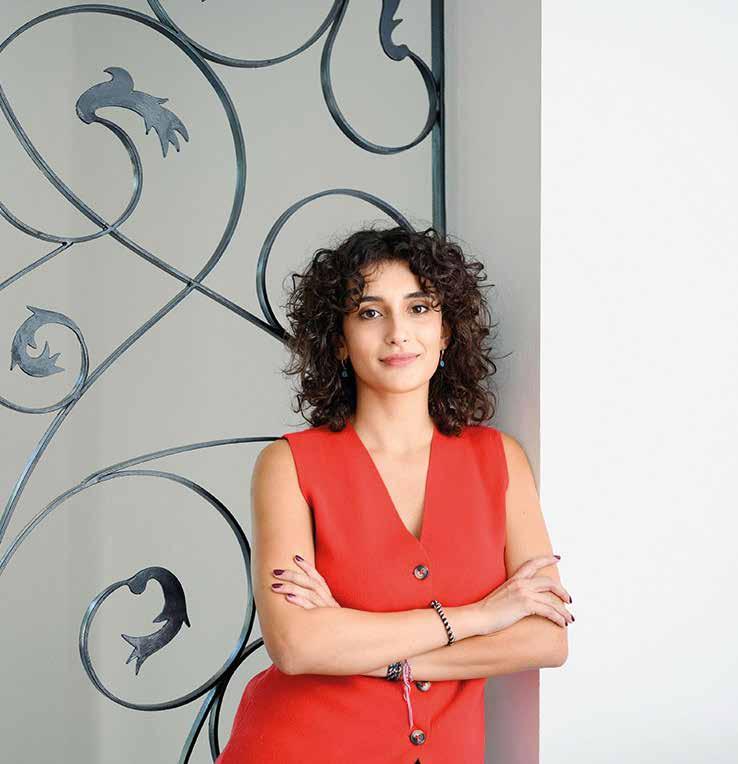
Lisja Tërshana Curator and co-founder of Mara Projects
Upcoming:
Exhibition at Galerie Filser & Graef Munich (May 15 - June 25) Basel Social Club (June 14-20).
lisja@maraprojects.com +447507714676
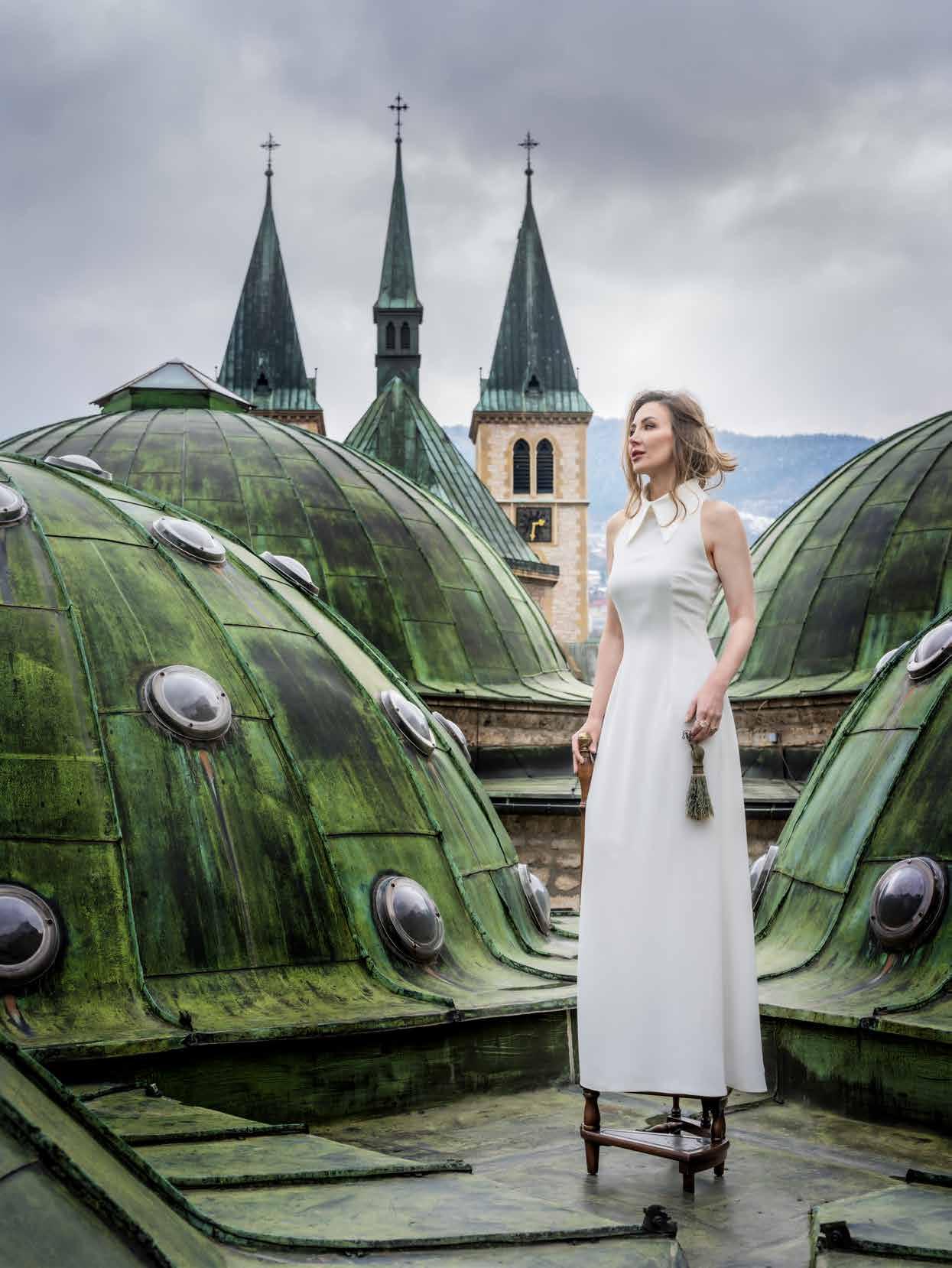
A new generation of forward-thinking professionals is actively shaping possible futures. Among them is Nadja Škaljić, a lawyer and systems thinker whose work spans international policy, sustainability, and technology, with a focus on developing solutions for people, nature, and the future. In this exclusive conversation, Škaljić—who lives and works in Switzerland—travels to Sarajevo to open the doors of the Bosniak Institute, a space closely tied to her family’s intellectual legacy. Set within a restored Ottoman hammam embedded in a contemporary architectural complex, the Institute reflects the layered histories that inform her worldview. Here, the discussion moves fluidly between geopolitics, technology, culture, and the evolving nature of intelligence itself. What emerges is less a portrait of a career than a reflection on plural identity, the shifting meaning of taste, and Europe’s place in a rapidly reordering world—alongside a growing conviction that culture and humanistic values are not peripheral, but foundational to resilience in the Intelligent Age.
Skaljic also reflects on her nascent contemporary art collection, shaped by ideas of pluriversality and regeneration, and its dialogue with emerging technologies.
You grew up visiting the Bosniak Institute, and its founder, Adil Zulfikarpašić, who you knew as family. How did that environment of shape your understanding of history, culture and your place within it?
Few figures embody the layered histories and shifting currents of late 20th-century as vividly as Adil Zulfikarpašić. He was shaped by a lineage spanning pre-Ottoman, Ottoman, and Austro-Hungarian history. This continuity was carried forward through his education in Austria, his business success across global markets, and his life in Switzerland. In him, legacy and reinvention coexisted naturally. To me, he embodied that balance with clarity and ease.
He loved French and German philosophy, Flemish art, always impeccably dressed in Savile Row suits, he wore elegance of both mind and appearance lightly. It was never performative, but felt entirely his own. Beneath that ease was a disciplined mind with a clear sense of purpose. He spoke to me in German, giving those moments a certain closeness. I still remember a childhood visit when he brought us a Kangal puppy—at once a generous, playful, and quietly instructive gift, in keeping with his character.
Throughout his life, Adil-bey remained committed to preventing conflict among the Balkans’ ethnic and religious communities. This conviction was shaped by the family’s long history at the center of Balkan public life, as well as his own experiences during the Second World War, when he witnessed unspeakable crimes. The family always understood coexistence not as an abstract ideal, but as a historically lived reality—rooted in long-standing traditions of neighbourly relations, mutual accommodation, and a shared social fabric that requires renewal over time.
He worked to sustain frameworks where difference could endure without becoming destructive, prioritizing long-term stability over short-term gain, always commitment to peace, cultural preservation, and scholarship. During the 1990s, including the siege of Sarajevo, his political engagement remained strong, while he also continued collecting art, commissioning works, and building a significant archive. Of particular interest to me was his focus on the émigré publications. Labelled Serbica, Croatica and Bosnica, they traced the intellectual and cultural trajectories of the region’s diaspora across continents—from Australia to Argentina, and even to early emigrants who left for Chicago aboard the Titanic. Together, they revealed a commitment to preserving thought, identity and memory beyond borders and disruption. At a time of destruction in the 90s, this became a parallel act of reconstruction.
In Adil-bey hands, this personal and the family’s history evolved into what is today the Bosniak Institute. More than a cultural institution, library, or foundation, it is a living space of identity, memory, and meaning across generations, supported by a collection of over 250,000 artefacts that continues to grow today. The Institute embodies a distinctly European sensibility: the ability to hold complexity without forcing resolution, moving between cultures, ideas, and contradictions while remaining anchored in broader civilizational continuity.
Is there an object or work within the Institute that left a lasting impression on you?
It is difficult to isolate a single piece. The Institute’s story began with the transformation of a 16th-century Ottoman hammam into a modern concert hall, later extended by a contemporary glass gallery and research building. It has always struck me as an act of quiet brilliance—distinctly Bosnian in spirit: adaptive, subversive, and expressive of both heritage and future. It is at once continuity and defiance. The collections form a treasury of voices: tens of thousands of manuscripts and rare books, in Latin, Greek, Arabic, Persian, Ottoman Turkish, and other scripts —each a glimpse of this region’s evolution over centuries, seen through others’ eyes. Among them is a 14th-century Papal bull designating Bosnia terra medialis, a “land in between,” which reads less as a classification than as a lasting philosophical condition. The document also reflects the enduring presence of the Franciscans as long-standing custodians of the country’s spiritual and historical continuity, whose service remains revered across all communities.
One artefact I return to often is Mak Dizdar’s epitaph Zapis o zemlji, rendered in Bosančica, a medieval Bosnian variant of Cyrillic. It appears on a tapestry by Sabiha Berber, mother of painter Mersad Berber and an accomplished artist known for weaving and embroidery. In it, she weaves together Bosnian Christian tradition, Islamic mysticism, and the spirit of the medieval Bosnian kingdom—echoing the poetic inscriptions of stećci, stone funerary monuments that often reflect interconfessional coexistence and a reverence for nature. And then there are the unexpected dialogues. A Louis XV-era Boulle marquetry clock by Renault of Paris, its gilded bronze and dark tortoiseshell catching the light, sits alongside a portrait of Tatjana Zulfikarpašić by maestro Safet Zec. It feels as though she keeps a quiet vigil over the passing hours and the collections. Such juxtapositions are everywhere throughout the Institute.
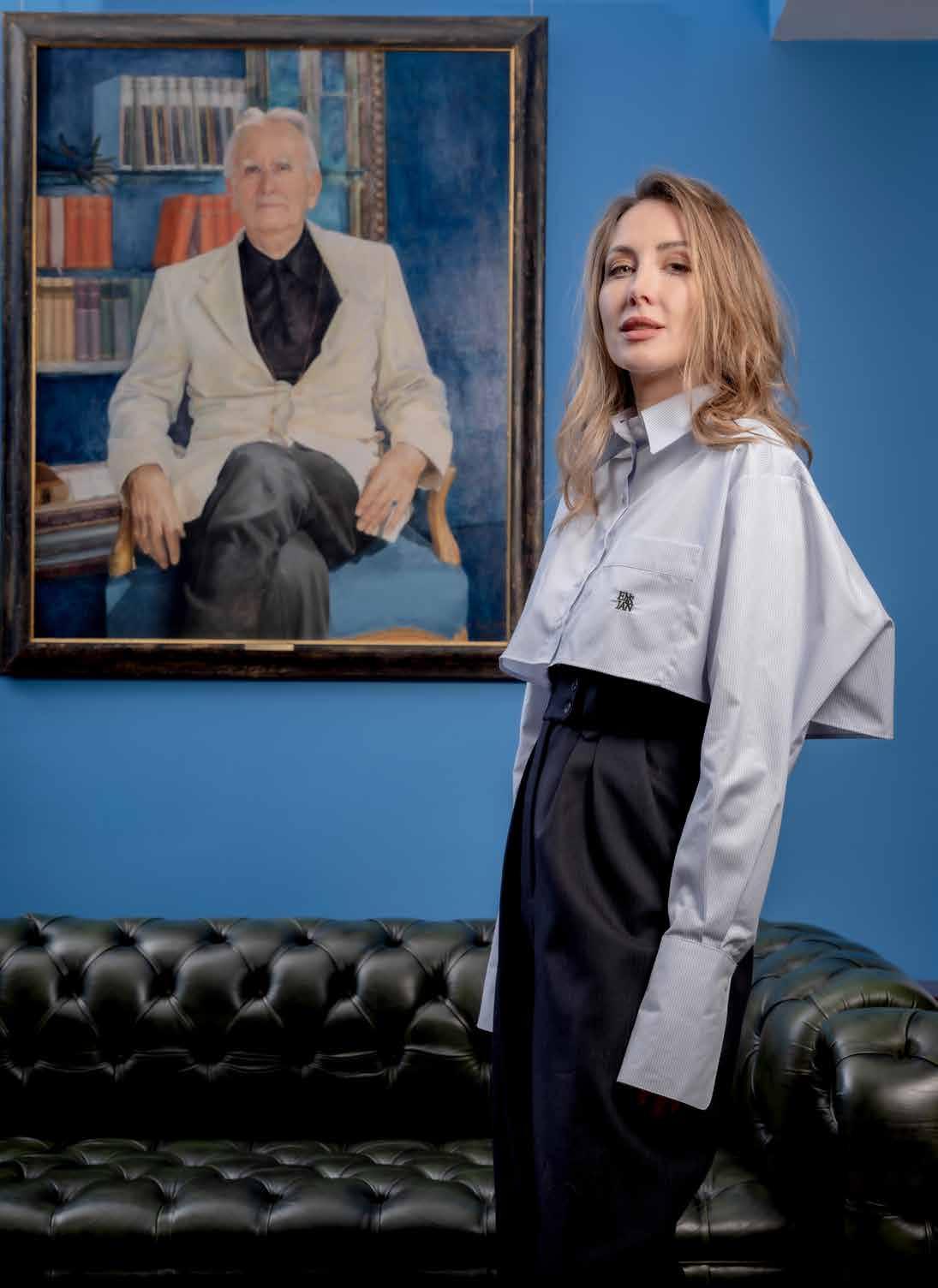
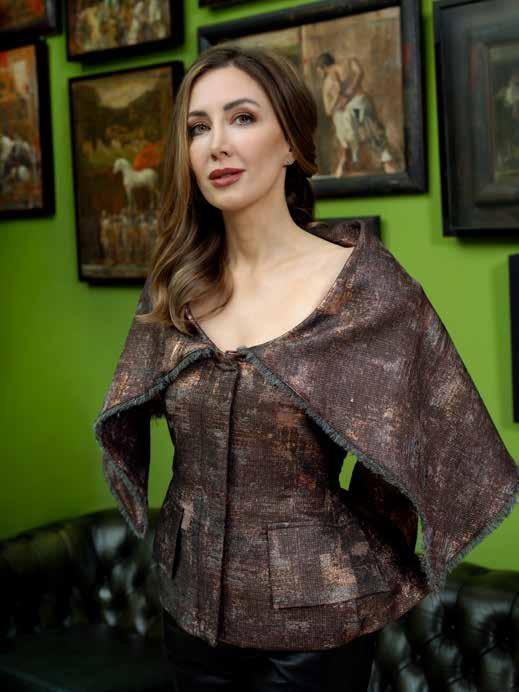
The Institute reflects the Balkans’ plural, multiethnic, multireligious heritage. Are such layered identities an enduring strength, or are they becoming too complex to be widely understood?
Plural, layered identities can be understood as a form of resilience. Regions like the Balkans have long existed at the intersection of cultures, languages, and faiths, producing a depth of experience that is both intellectually and socially rich. This layered Balkan pluralism has nurtured generations of original thinkers across disciplines, scientists, inventors, architects, artists, and writers, whose work has resonated far beyond Europe. Nikola Tesla remains one of its most emblematic figures. The Balkans remind us that plurality is not an anomaly to be managed, but a condition to be understood and cultivated. Its model of pluralism reflects a lived experience of coexistence, adaptation, and continuity—tested through periods of conflict and war, and repeatedly renewed through processes of reconciliation. It is a model not easily reduced to simple terms, yet one that stands as evidence of a complexi-
ty which, in practice, has proven workable even under repeated, immense historical tests. The future of Europe as a whole will depend on whether complexity is embraced, reinterpreted and adapted to the Intelligent Age, a new civilizational era shaped by AI, longer lifespans, and collective intelligence, as the world moves beyond the industrial age.
What drives a lawyer and systems thinker, active in WEF Davos and Silicon Valley boardrooms, to pursue art collecting—building a collection that explores pluriversality and regeneration in dialogue with technology?
I’m used to working with frameworks, negotiations, and governance, so engaging with art is a continuation in a different register. Where law deals with structured systems, art allows for ambiguity, intuition, and questions of meaning often set aside in policy contexts. The collection I’m building reflects this approach. It is not tied to a single location—though one exists in Switzerland where I live—but spans projects across Europe, the United States, and China. It is my way to think responsibly about the future while staying grounded in ecological and human realities.
The commitment to pluriversality stems from the belief that no single system or narrative can fully capture our reality. This view is rooted in my experience of growing up across religious contexts and witnessing war, where meaning emerged through overlapping ways of seeing. It embraces “many worlds, many ways of knowing,” moving beyond a singular model of progress to include Indigenous, local, and alternative epistemologies alongside scientific and technological ones. In this sense, collecting becomes a way of curating an ongoing conversation across geographies, voices, and time—an approach reflected in artists I admire, like Petrit Halilaj, whose work explores the interplay of personal and collective memory.
My interest in regenerative art grows out of my work in sustainability. I value practices that move beyond raising awareness to act as forms of intervention—often involving collaboration with scientists, ecologists, and communities, and treating art not just as an object but as a process engaging with ecosystems, material cycles, and society. Artists that
inspire me are veterans such as Agnes Denes, with works like Wheatfield — A Confrontation, where she transformed a Manhattan landfill into a wheat field, addressing food systems, land use, environmental ethics, and the relationship between urban development and nature. Similarly, John Sabraw collaborates with scientists to convert toxic waste into pigments used in paintings, turning environmental pollution into artistic material and making regeneration both conceptual and material. Technology adds another dimension. It functions both as a tool and as a force that reshapes how we perceive, relate, and create. Artists like Refik Anadol, Sougwen Chung, Ryoji Ikeda, and Casey Reas show how computational and generative approaches can expand artistic language while deepening our understanding of interdependence and complexity in increasingly interconnected technological and ecological networks.Ultimately, art is not separate from my systems-thinking mindset—it
extends it. It gives me another lens through which to examine how systems take shape, how meaning emerges, and how multiple realities can coexist without being reduced to a single narrative.
When machines generate art, images, and ideas at scale, what happens to taste—and does human judgment become secondary, or more valuable because it cannot be replicated?
When machines begin to generate art, taste does not disappear—it is redefined. If algorithms can anticipate patterns, recombine styles, and simulate originality, they can approximate many of the visible outcomes of taste. But what AI cannot fully inherit is the situated, lived dimension from which taste emerges: memory, cultural context, ethical intuition, and the subtle judgments that come from experience and accountability to the world rather than to a dataset.
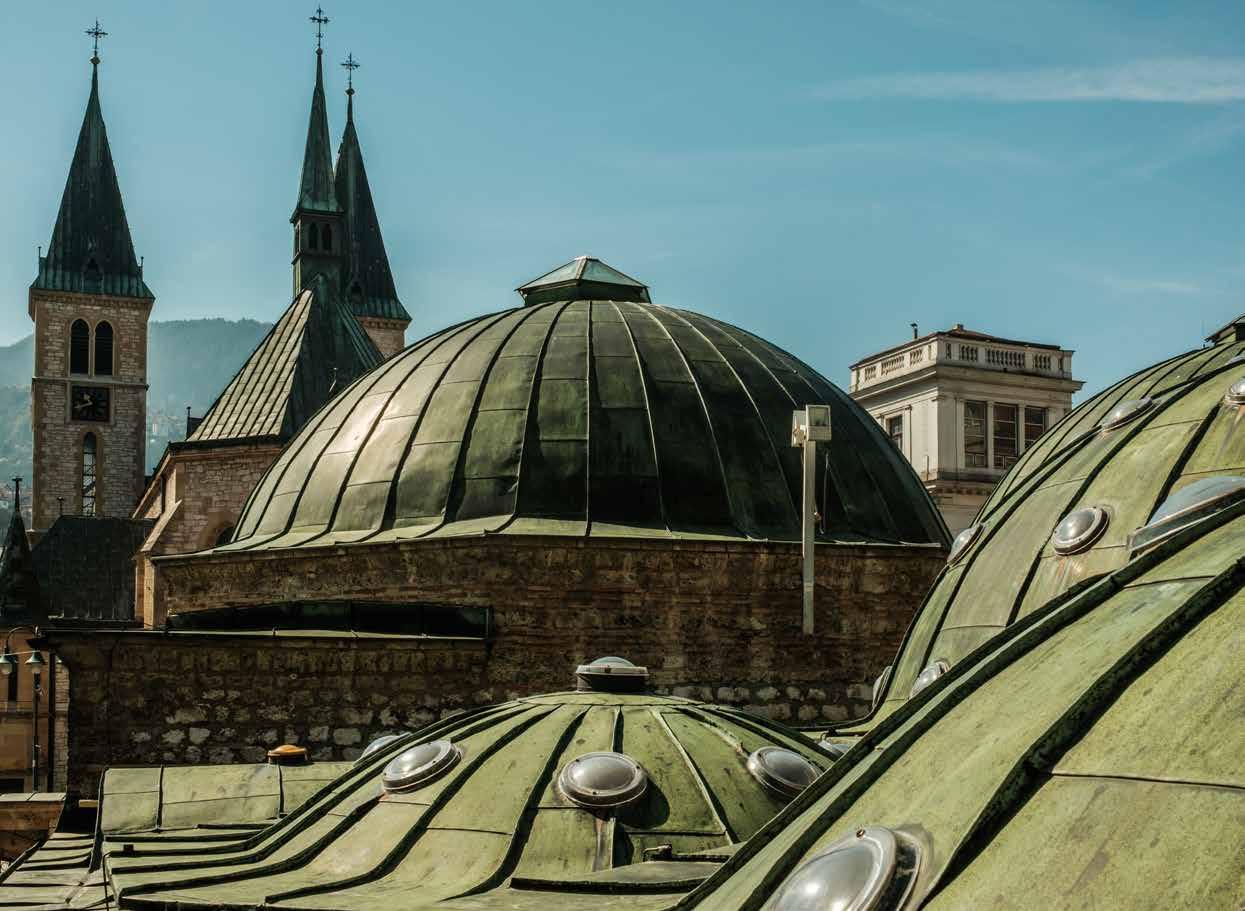
I have found this distinction particularly clear in moments where I’ve been exposed to large volumes of machine-generated or algorithmically curated content. Faced with abundance, what stands out is no longer simply what is well-made, but what feels meaningful in a deeper sense.
Paradoxically, the more machines can generate, the more important it becomes to ask not only whether something can be made, but why it should exist at all. In my own experience working across frameworks that require evaluation and decision-making, this question increasingly underpins meaningful judgment. Taste, in this sense, is not merely preference— it is interpretation, selection, and responsibility. It reflects values, not just patterns, and carries social, cultural, and sometimes political consequences.
So rather than becoming secondary, human judgment becomes more visible: it must now justify itself in a landscape where replication is easy, but meaning is not. In this context, taste
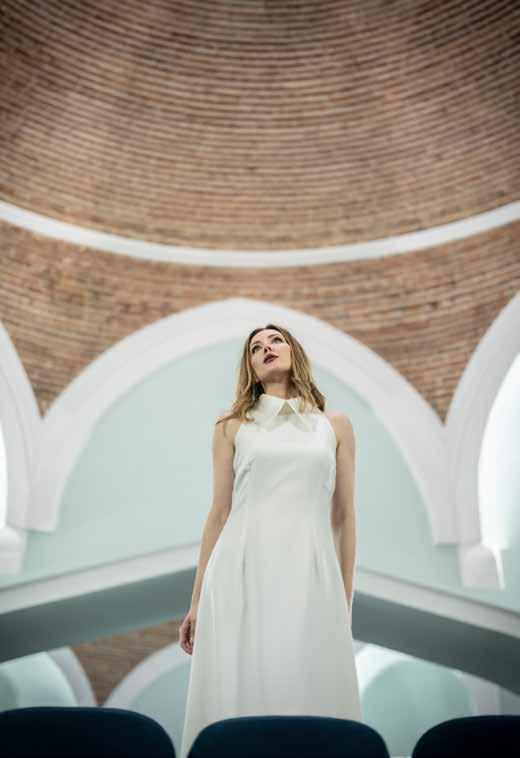
cannot be fully automated, it retains its value— not as a fixed authority, but as an evolving practice of attention, context, and responsibility.
If AI can replicate creativity, judgment, and even emotional tone, what remains uniquely human and does that distinction still matter?
Human experience is embodied, finite, and accountable. We do not just generate ideas— we inhabit their consequences over time. Our judgments are shaped by memory, by relationships, by vulnerability, by the awareness that our choices affect others and ultimately return to us in ways that are not abstract. Even when machines can simulate empathy, they do not carry the weight of having to live with misunderstanding, loss, responsibility, or care. There is also the dimension of intention—not as a technical parameter, but as something formed through biography, culture, and personal history. Human meaning is not only produced; it is discovered, revised, and sometimes contradicted by experience. That ongoing negotiation between what we believe, what we encounter, and what we become is difficult to reduce to pattern alone.
Does the distinction still matter? It matters less as a boundary to defend and more as a lens to clarify responsibility and meaning. In practical terms, AI may increasingly share the space of creation, interpretation, and decision support. But the question of who is accountable, who is affected, and what values guide the use of these systems remains fundamentally human. The presence of AI does not eliminate those questions—it amplifies them.
What is a position you hold about AI or technological development that might be unpopular in either policy or investment circles?
I’m comfortable taking positions that may be unpopular among colleagues, board members, and tech entrepreneurs, and this willingness to challenge consensus is often what adds value in those settings. A friend of mine, Javier Tordable, CEO of Pauling AI, refers to this as my “intellectual provocations.” One view I’ve found myself sharing frequently at board meetings over the past year is that efficiency and scale do not necessarily translate into sus-
tainable value, as broader externalities—such as erosion of trust, concentration of power, and misaligned incentives—are often underpriced in the short term. This is where engagement with diverse practices in technology becomes important. I have introduced foresight methodologies across the environments in which I work, as I consider them an essential tool for anticipating change.
As board members, our fiduciary duty is to act in the long-term interests of the business, its shareholders, and other stakeholders, considering society at large. In biotech, this responsibility is often more complex, as advances in science increasingly push the boundaries of what is possible and introduce difficult ethical trade-offs. This requires prioritizing the management of risk, accountability, and proportionality over a purely speed-driven model of innovation. In my recent work with a Swedish longevity company, I saw how an AI system introduced as a support tool gradually began shaping decisions and narrowing how options were evaluated. The issue wasn’t a single failure, but the slow accumulation of reliance. By the time this shift became visible, the system was already deeply embedded, and changing course required far more trade-offs than if these implications had been addressed earlier. That experience is why the “move fast and scale first” mindset feels unconvincing.
In moments of systemic transformation, what responsibility do cultural institutions carry? Should they simply preserve, or actively shape the direction of technological change?
Both—and neither exclusively. Cultural institutions are at their most relevant when they refuse the false choice between preservation and shaping. Preservation without interpretation risks turning culture into a museum of itself; shaping without memory risks novelty without depth. Their real responsibility lies in acting as translators across time. They hold continuity while allowing for experimentation, offering contexts in which technological and societal change can be absorbed, questioned, and sometimes redirected. In that sense, they don’t just safeguard what has been—they quietly influence what comes next, by deciding what is worth remember-
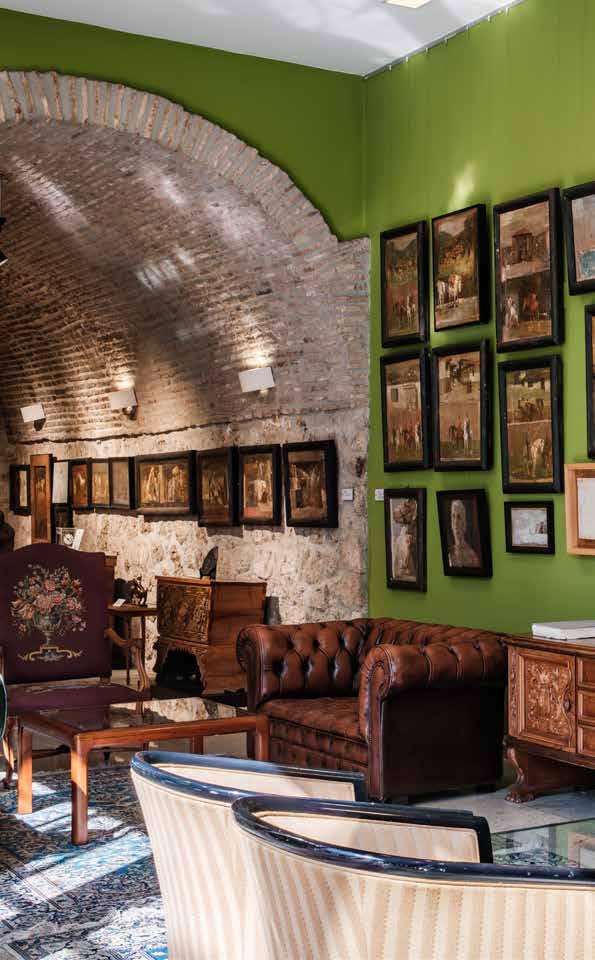
ing, what is worth testing, and what deserves to remain human in the process.
How would you like your art collection to evolve over time in the age of AI?
Less a collection in the traditional sense, and more a network of relationships—between works, ideas, and contexts. If it succeeds, it will not be defined by ownership, but by the conversations it enables and sustains over time. That tension, between building something lasting and ensuring it remains alive in meaning, is something I think about often. For me, the value of the collection lies not only in what is assembled, but in whether it continues to open up perspectives, connect people, and hold relevance beyond myself.
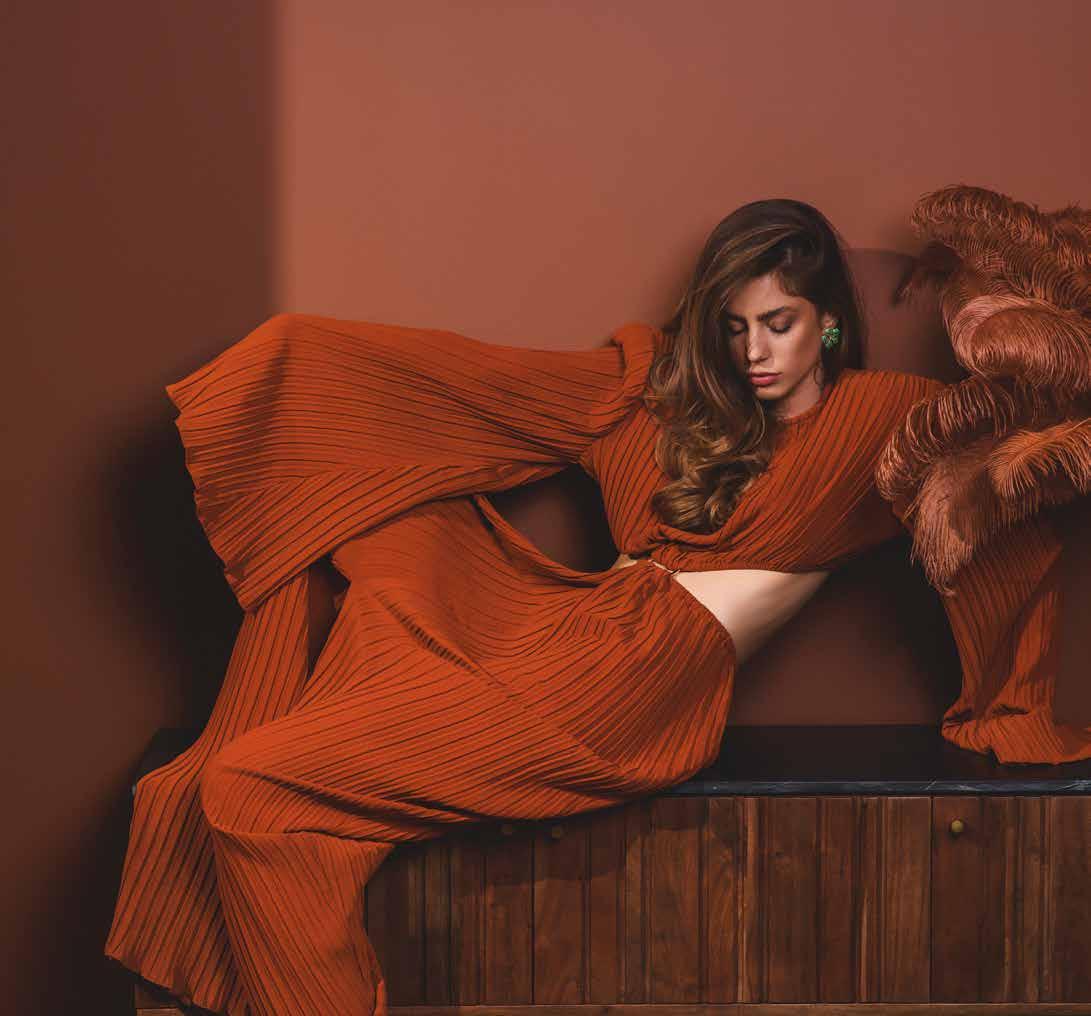
Designing a space means listening to the life that will unfold within it. It is a layered process of understanding people - their emotions and habits that shape everyday life. It was from this very understanding that Inside Design Studio came to life - shaped through years of shared experience, through the natural connection between me and my longtime friend and colleague, Isidora, and through a desire to create spaces with clarity and meaning. Our approach does not begin with form, but with a way of life. We shape each project through its context - creating spaces where natural elements are not decoration, but the foundation. Through carefully selected materials, light, and atmosphere, we create spaces that feel calm, balanced, and lasting.
I BELIEVE THAT EVERYTHING AROUND US CARRIES ENERGY - AND SO DOES SPACE. A SPACE IS NOT JUST A PHYSICAL STRUCTURE, BUT A LAYER OF EXPERIENCES, EMOTIONS, AND STORIES.
A truly good space balances function and atmosphere - it is quiet, natural, and human. It does not demand attention, but holds it. Inside Design Studio creates spaces that are timeless, authentic, and deeply personalspaces that connect people with their environment, with nature, and with themselves. For me, growth is essential - because the deeper we understand ourselves, the more meaningful the spaces we create become.
Boutique interior studio Instagram: inside__design_
Tel.: +382 67 241 562
Email: dsgn.inside@gmail.com
Global design studio, based in Montenegro
Photographer: Goran V. Popovski
Model: Vanja Dragojević
Styling: UROHS
Make Up: Milan Bauranov
Hair: Zvezdana Svetozarević
Nails: YANNA nails
Fashion: Sanda Simona, Studio NO-id, UROHS
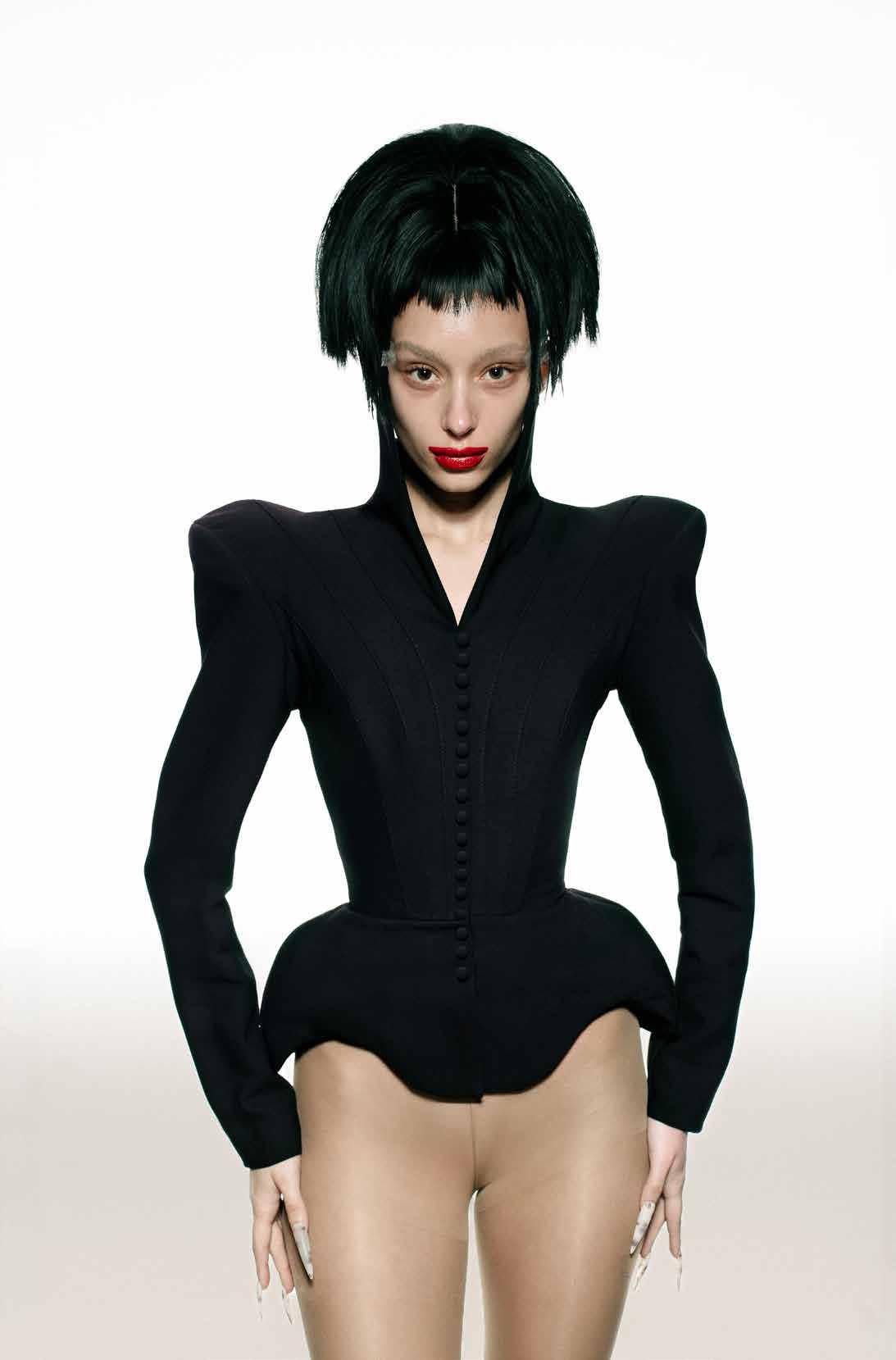
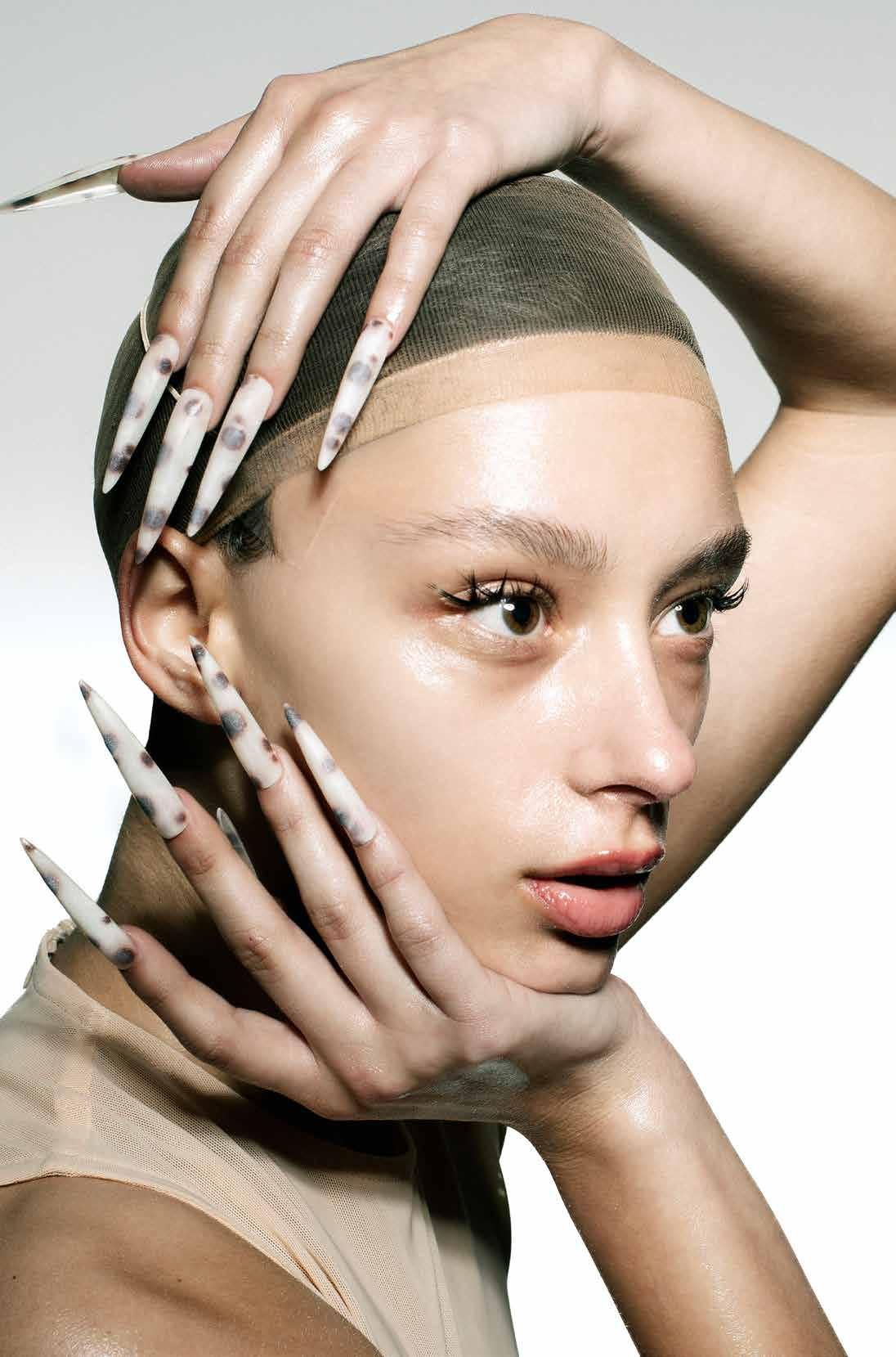
Schizophrenic Pathogenic Psychogenic Hallucinogenic Photogenic I been taking intelligent Manic depressive Aggressive Psycho wards are so possessive Attention deficit disorder Hand-held cassette recorder
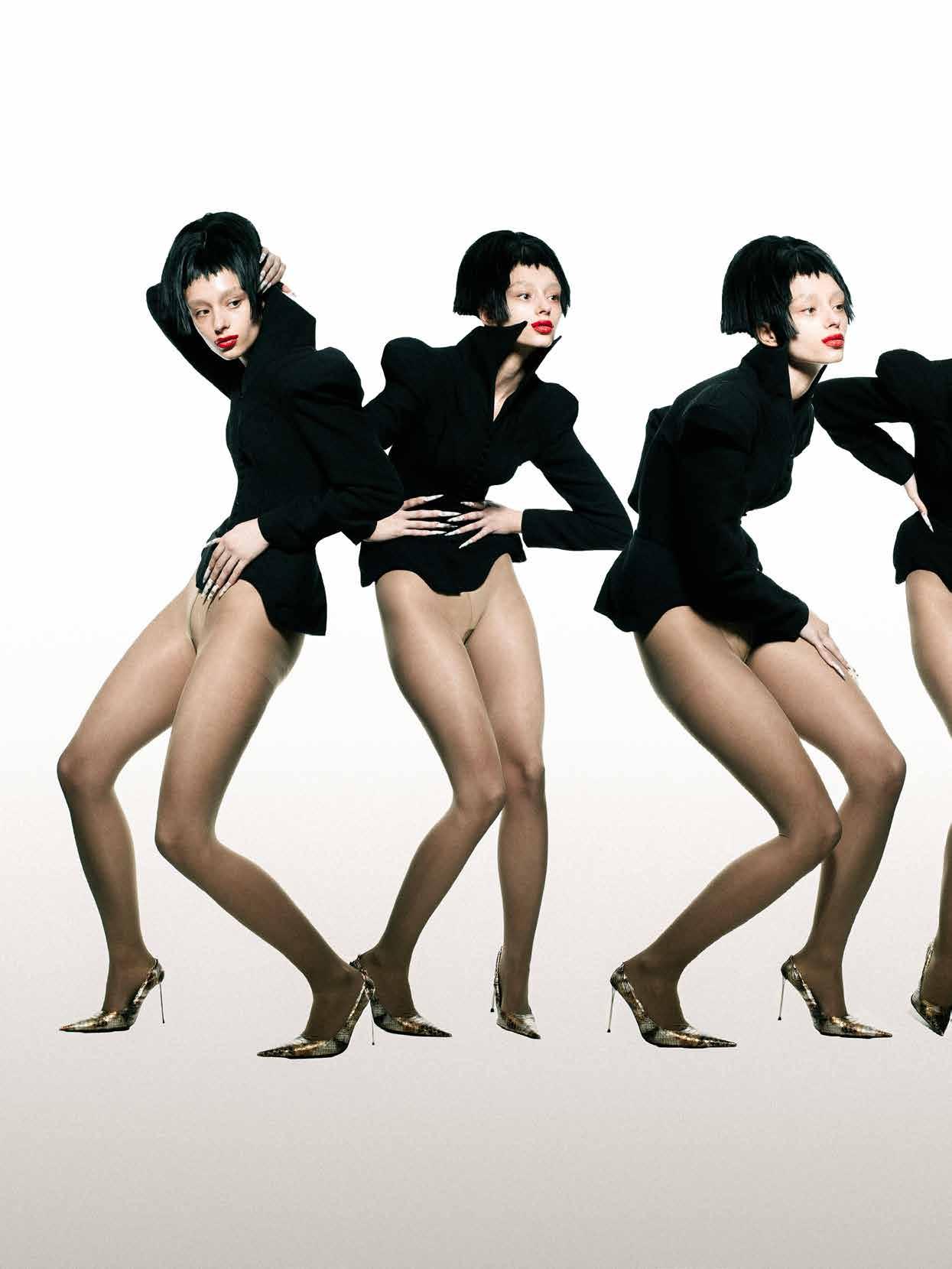
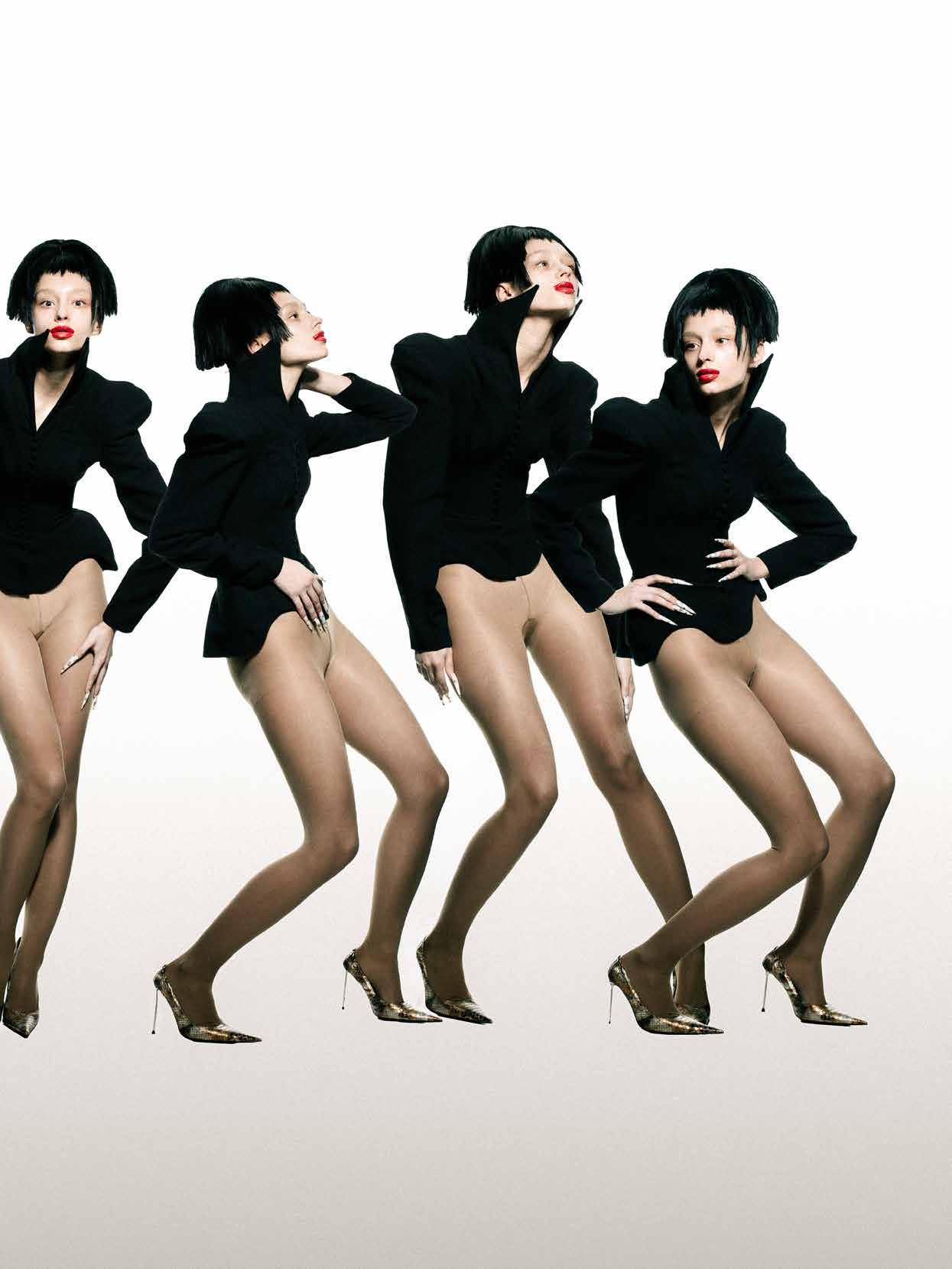
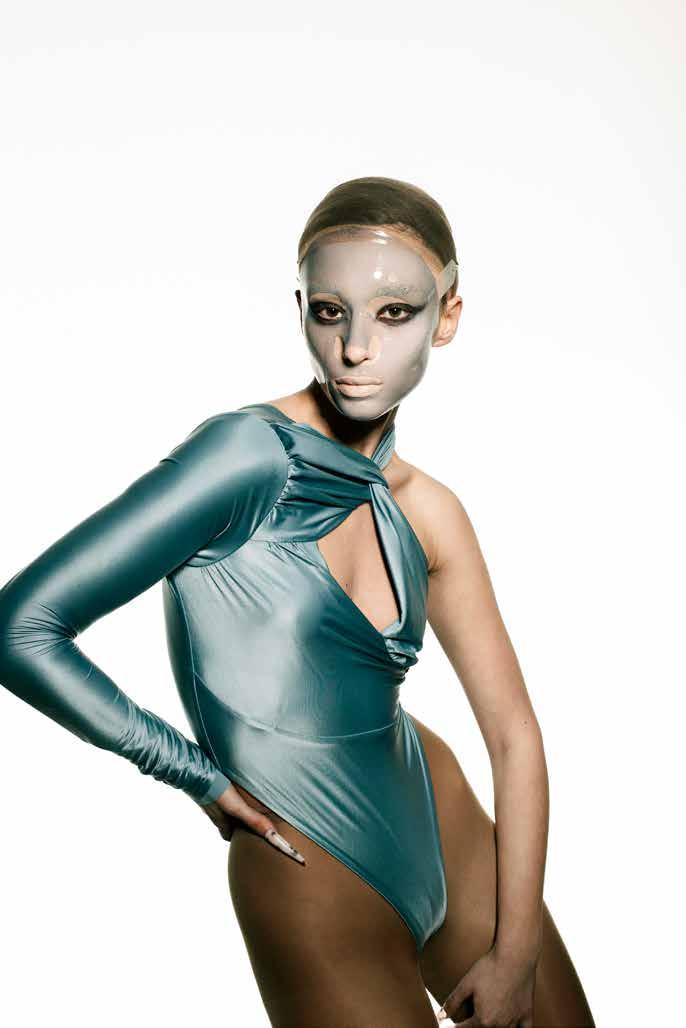

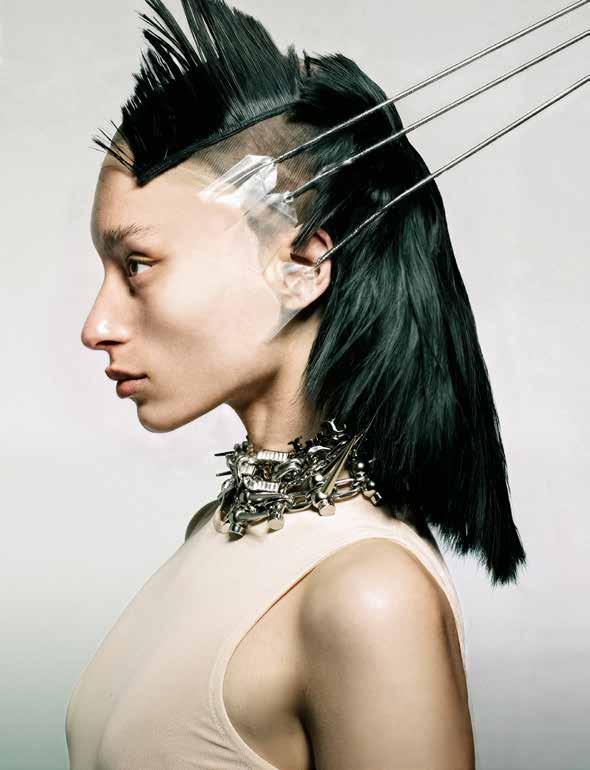
Latex, tall lights, Hollywood is paradise
Sunset Tower, treat me nice
Brand new face by Doctor Weiss
Hollywood, I never sleep
I look so heroin chic
It's not fashionable to eat
Kissing strangers on the street


This concept, developed in collaboration with Belodore, translates cities into fragrance through their bestselling scents
MONTENEGRO
Bokeška 37
GOLDFIELD & BANKS PACIFIC ROCK MOSS
An excellent choice for Podgorica’s heat, which we all know can be intense – this perfume is fresh, easy to wear, and very pleasant.
MONTENEGRO
Obala Tara bb
CREED MILLÉSIME IMPÉRIAL
Creed is extremely in demand there - it’s hard to even describe just how much people love it.
NORTH MACEDONIA
East Gate Mall

Fabu, Skopje Marriott Hotel
NEW NOTES COCKTAIL MARACUJA
A novelty worth highlighting. If you haven’t tried it, go and experience a fragrance that evokes taste.

SERBIA
Galerija Shopping Mall
Ušće Shopping Mall
West 65 Mall
Kralja Petra 67
Mercator Centar Beograd
GRITTI FENICE
A city rising from the ashes, like a phoenix. A perfume that is warm yet strong, gentle yet immortal.
BOSNIA AND HERZEGOVINA
Delta Planet Shopping Mall
BORNTOSTANDOUT GOLD JUICE
Different from others, modern, yet not too intense.

CROATIA
Arena Mall
Ilica 7
MATIERE PREMIERE NEROLI ORANGER Zagreb smells like Matiere Premiere, and for the summer, this is the one we highlight.
CROATIA Mall of Split
ACQUA DI PARMA BUONGIORNO
It fits perfectly with the summer atmosphere of Split. An Italian summer in Split.
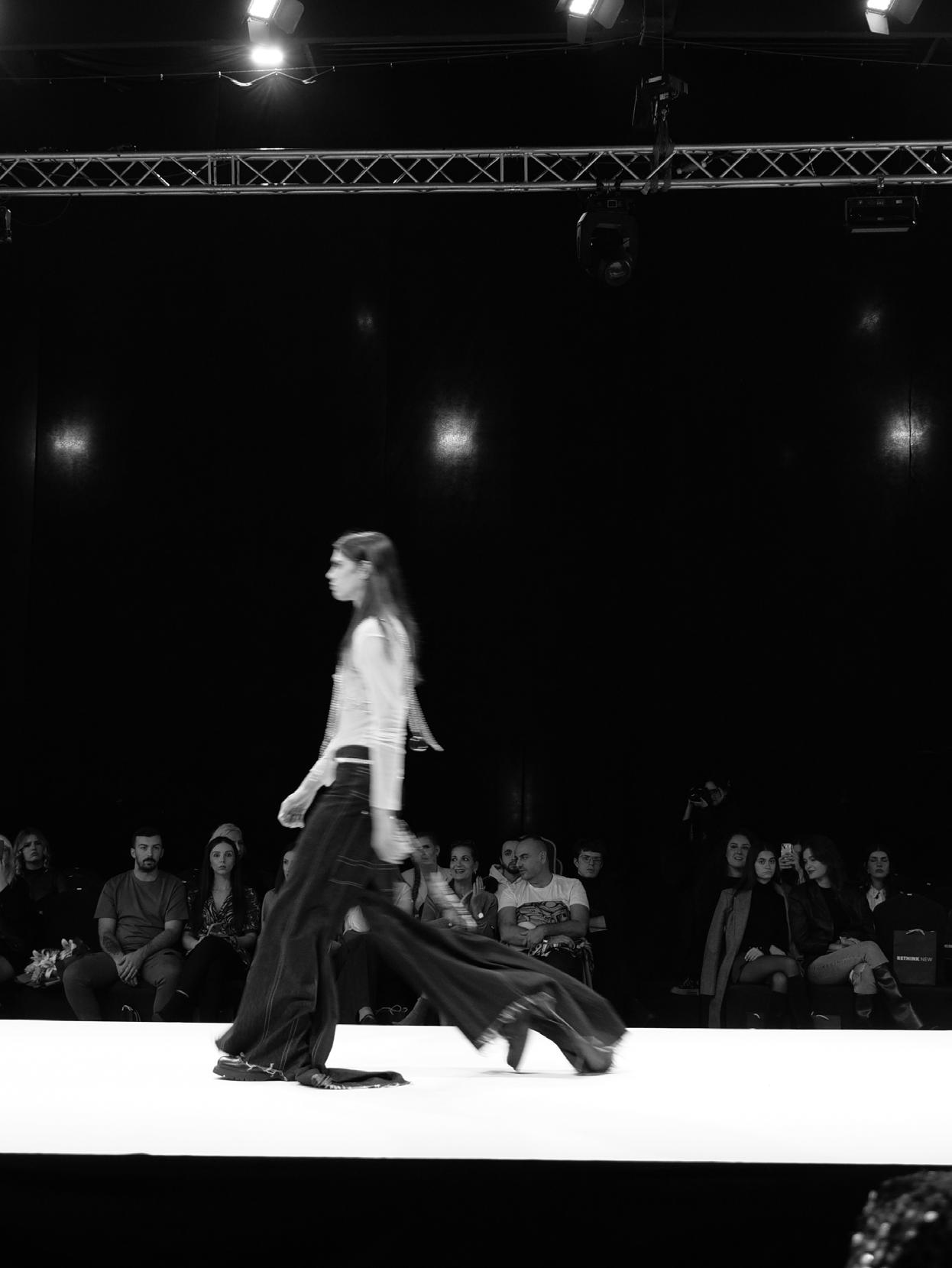
IFF PORTO MONTENEGRO | BELGRADE FASHION WEEK |
| INDUSTRY DAY | FLUID
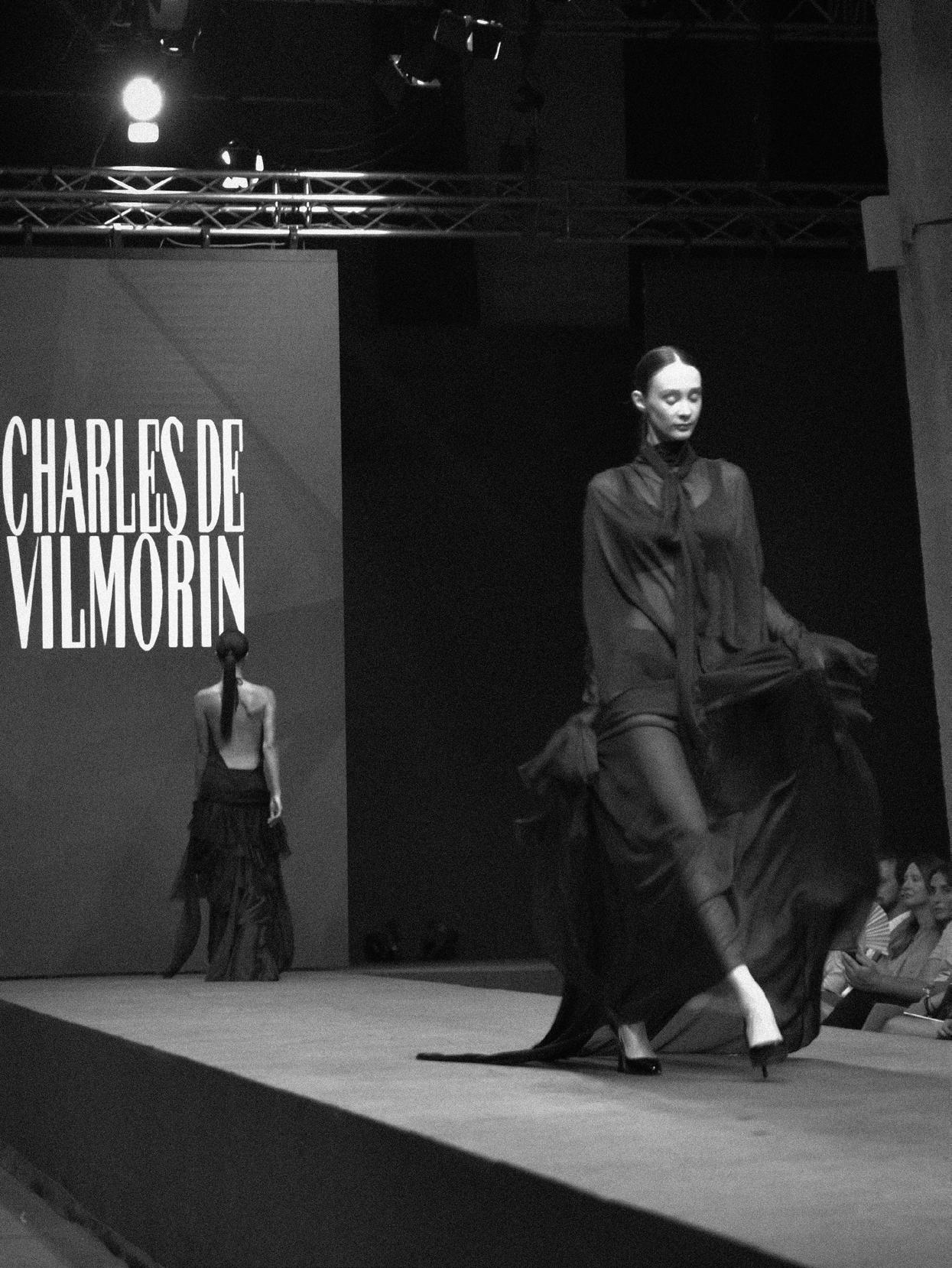
The International Fashion Festival Porto Montenegro (IFF) stands as one of the most prominent fashion events in Southeast Europe - an intersection of global fashion, luxury, and Mediterranean context, set within the distinctive environment of Porto Montenegro’s nautical village.
Founded in 2018 through a collaboration between Fabrika agency and Porto Montenegro, the festival brings together leading names in global fashion, from established couture houses to contemporary designers. Held each summer, IFF unfolds as a two-day programme gathering internationally renowned designers, emerging talents, media, and industry figures, positioning Montenegro within a broader global fashion landscape.
Over the years, the festival has hosted names such as Pierre Cardin, LaQuan Smith, Michael Cinco, Emanuel Ungaro, Charles de Vilmorin, Genny, Faith Connexion, and Tony Ward, among others.
This year marks a shift as the festival moves to Jetty 1, one of the most striking locations within the Porto Montenegro marina. Extending above the sea, the open platform reframes the runway - set against the Adriatic horizon, sunset light, and superyachts - creating a more intimate yet visually impactful experience.
A defining moment in its evolution was the introduction of the first virtual fashion show in the region, developed in collaboration with Faith Tribe. Through this project, collections were translated into digital garments and presented in a virtual format, expanding the traditional runway and opening new possibilities for how fashion can be experienced.
At the same time, the festival highlights key voices in sustainable fashion, including Tiziano Guardini, while actively supporting emerging designers by providing a platform for international visibility.
Behind the festival stands a structure led by Vesna Mandić, founder of Fabrika, whose experience in international event production shapes its identity. Additional perspective is brought by the festival’s President, Sara Sozzani Maino, Creative Director of Fondazione Sozzani, alongside Giorgia Virzi, founder of GV Studio Milan. This combination of local production and international expertise positions IFF Porto Montenegro as a platform that continues to evolve while contributing to the visibility and development of fashion in the region
www.iffportomontenegro.com @iffportomontenegro
July 2026 | Porto Montenegro
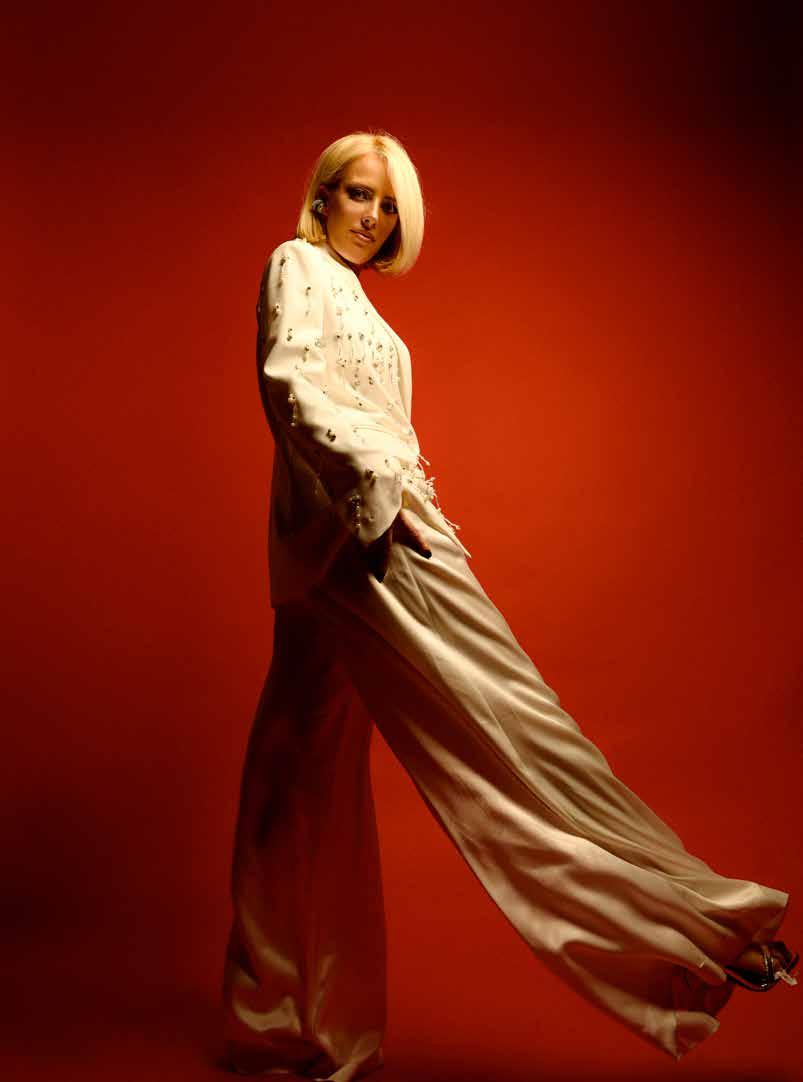
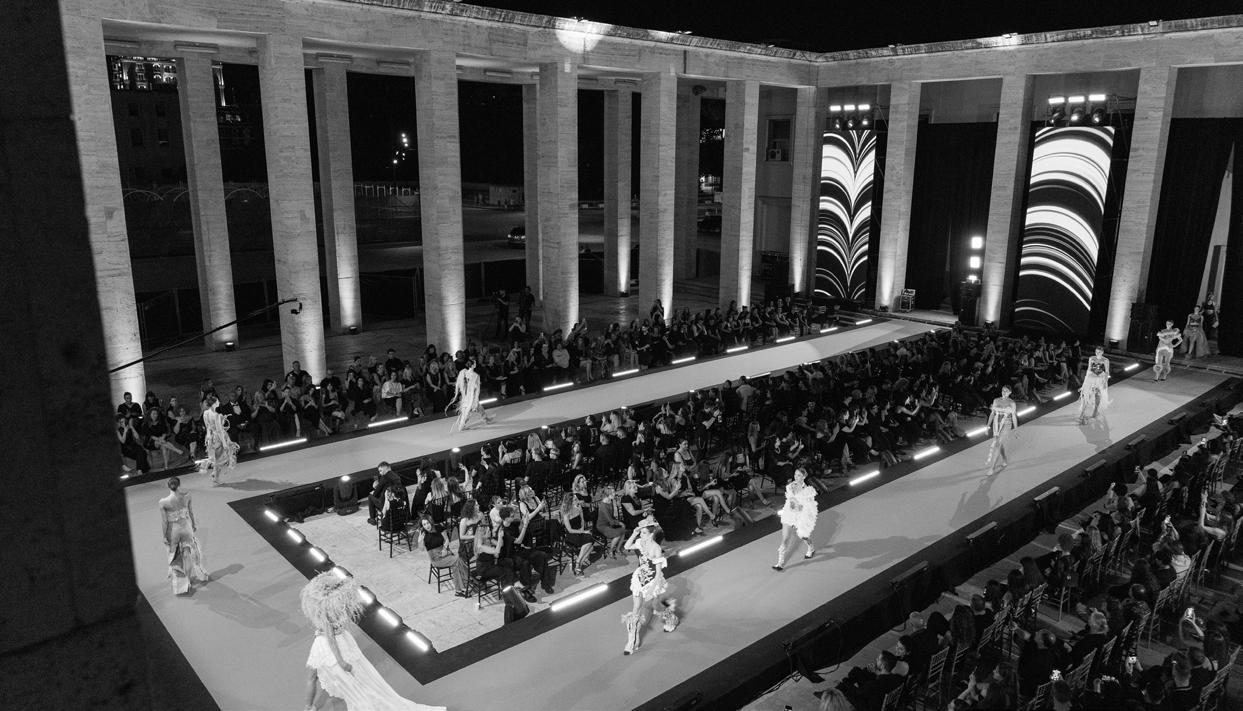
MUZA Fashion Fair is the first fashion and creative industries fair in Albania and one of the most significant initiatives in the Western Balkans region. The event is designed as a comprehensive platform that brings together fashion brands, designers, manufacturers, educational institutions, and industry professionals in a dynamic and collaborative environment.
Conceived as both a B2B and B2C event, MUZA Fashion Fair offers a space for exhibition, promotion, and networking, creating meaningful connections across the industry. Beyond showcasing collections and products, the fair highlights supporting sectors such as fashion brands, accessories, textiles, technology, logistics, retail design, and professional education. The first edition is expected to welcome over 22,000 visitors, including industry professionals, buyers, media representatives, investors, and a wider audience interested in fashion and lifestyle. The event program includes run-
way shows, presentations, panel discussions, and networking sessions designed to foster dialogue and collaboration.
Developed under the vision of Andriola Kambo, producer and author of MUZA Competition, the project builds on a platform that has engaged thousands of designers from Albania and the region. MUZA Fashion Fair aims to strengthen the regional fashion ecosystem and create connections between local businesses and international partners.
We invite all brands, businesses, and creatives to become part of MUZA Fashion Fair 2026.
Dates May 16–18 | 2026
Location Palace of Congresses | Tirana | Albania
www.muzafashionfair.com @muzafashionfair

Belgrade Fashion Week is the most long-standing fashion event in Serbia, founded in 1996. Over nearly three decades, it has grown into a key platform for both established and emerging designers from the region, playing a central role in shaping the Serbian and wider Balkan fashion scene.
Held twice a year in Belgrade Serbia - typically in March/April and October/November and produced by Click Fashion Studio, the event presents seasonal collections through runway shows, presentations, exhibitions, and industry programs. Beyond showcasing fashion, it functions as a meeting point for designers, buyers, media, and international guests, contributing to the professionalization and visibility of the regional industry.
Belgrade Fashion Week is particularly known for its strong support of young designers, often serving as a launch platform for new talents. Through various initiatives, competitions, and collaborations, it actively connects local creatives with international opportunities and networks.
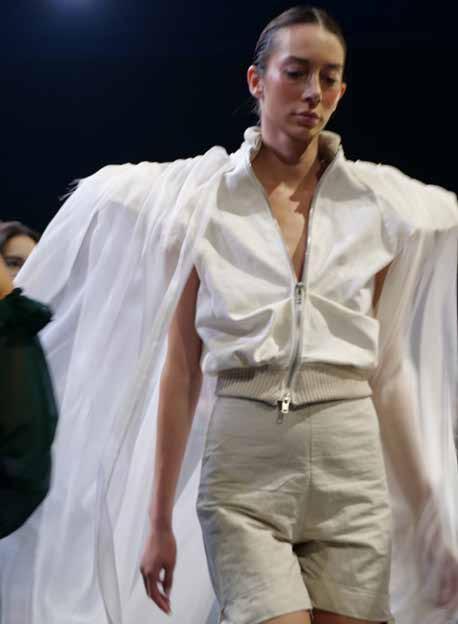
www.belgradefashionweek.com @belgradefashionweek
Fashion Studio Click
Karađorđev trg 34a 11080 Zemun, Beograd, Srbija
www.click.co.rs logfashionweek@click.co.rs +381 (0) 11362 99 11
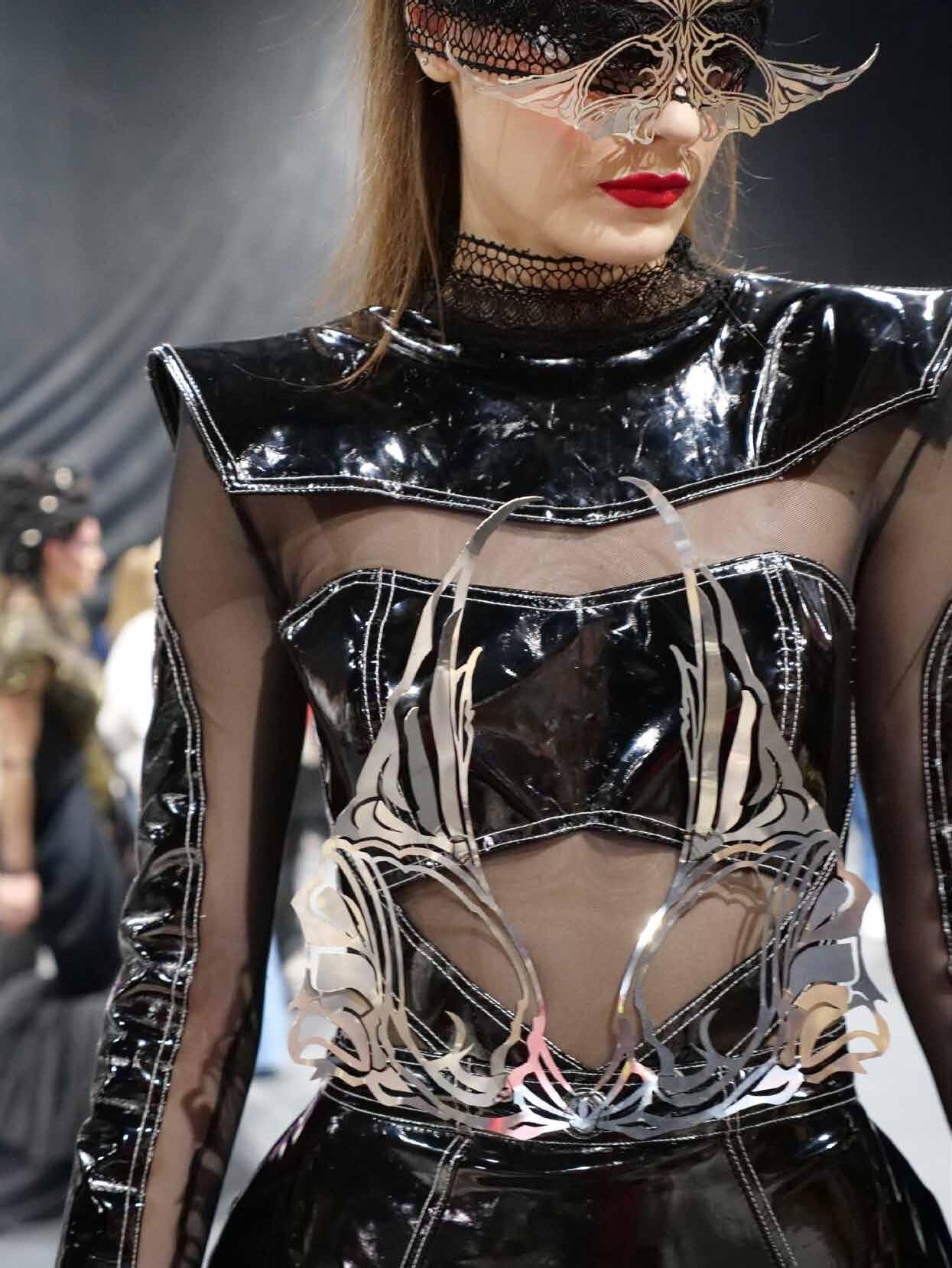
Alma Ras Industry Day is an industry-focused platform initiated by Alma Ras, one of the leading textile and apparel companies in Southeast Europe. Developed as part of the brand’s broader vision to strengthen the fashion and manufacturing sector, it is realized through a multi-day event that brings together professionals from across the industry - from designers and manufacturers to educators, suppliers, and business leaders.
Held in Olovo, where Alma Ras is headquartered, Industry Days are conceived as a space for knowledge exchange, education, and collaboration. The program includes panel discussions, factory visits, workshops, and presentations, offering insight into both the creative and production sides of fashion.
A key focus of the platform is sustainability, explored through the framework of the Green Deal - aligned with the European Green Deal - emphasizing design approaches that are long-lasting, recyclable, repairable, and developed with a reduced environmental impact. Through this lens, Alma Ras Industry Days addresses contemporary challenges of the industry, ecology, and society, positioning responsible design as a central value of future development.
At its core, Alma Ras Industry Days focuses on bridging the gap between design and manufacturing - highlighting the importance of local production, technical expertise, and longterm industry development. By opening its production facilities and sharing know-how, Alma Ras positions itself not only as a company, but as an active contributor to the growth of the regional fashion ecosystem. Through this initiative, the platform supports emerging talent, encourages innovation, and fosters stronger connections between local and international partners - reinforcing the Western Balkans as a region with both creative and industrial potential.
The open call is aimed at professional designers, architects, and creatives with developed prototypes. Through mentorship, evaluation, and industry connections, the program supports projects from concept to final presentation, offering financial, promotional, and procedural assistance along the way.
www.almarasindustryday.com @industryday_almaras
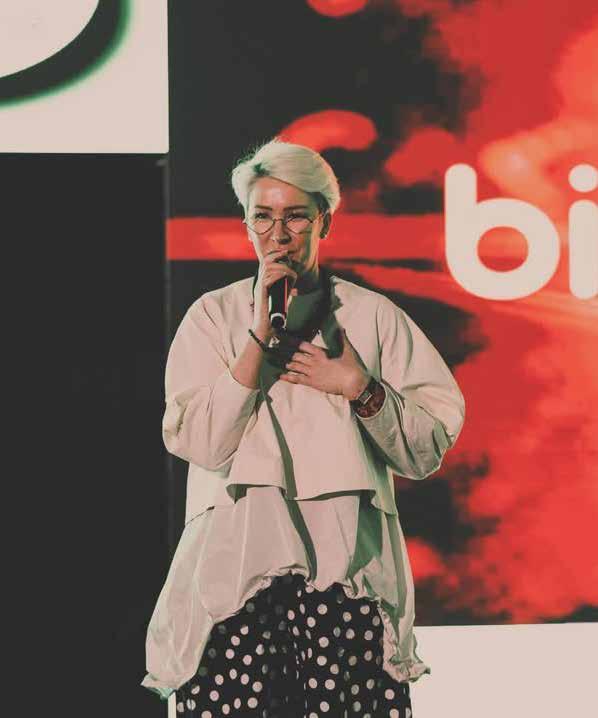
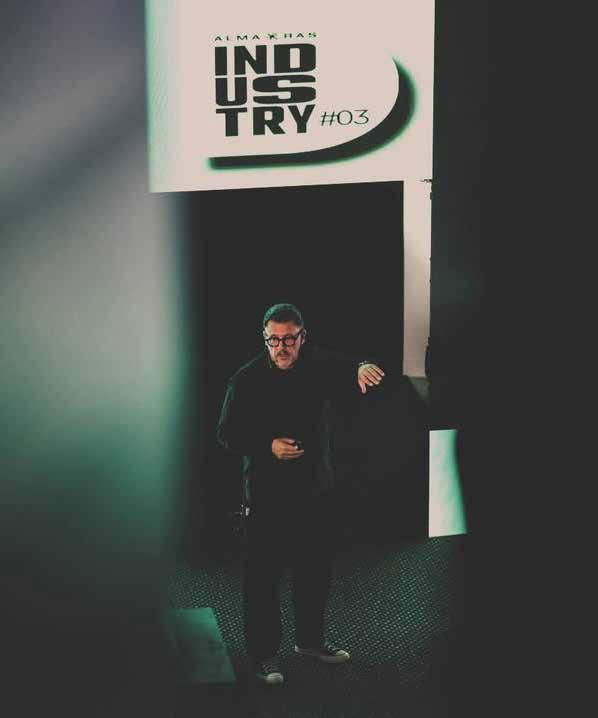
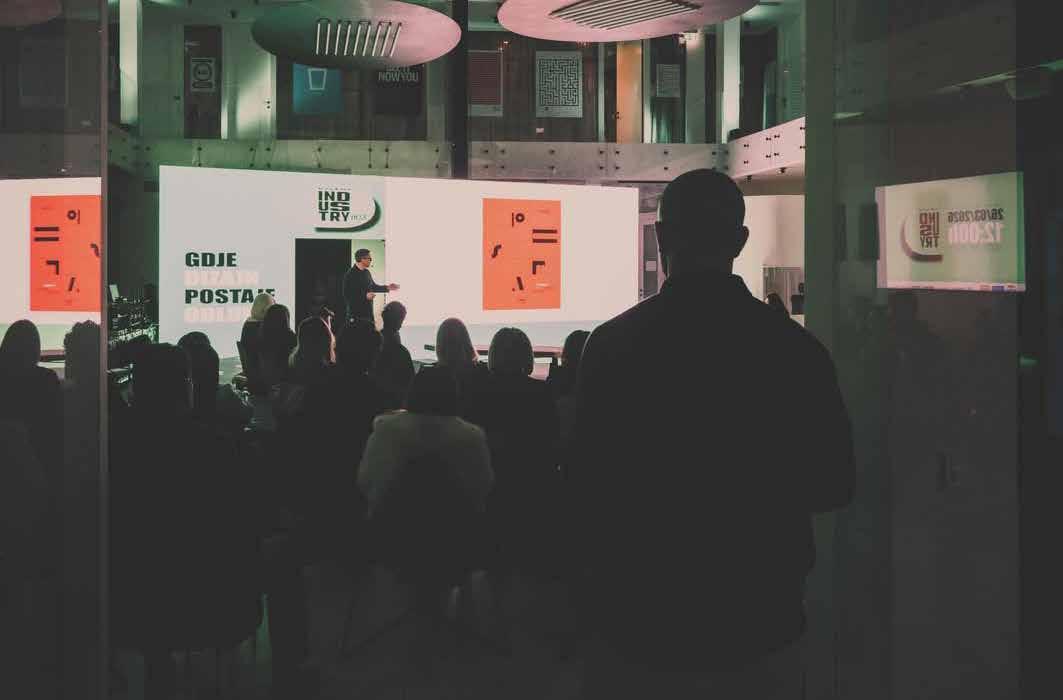
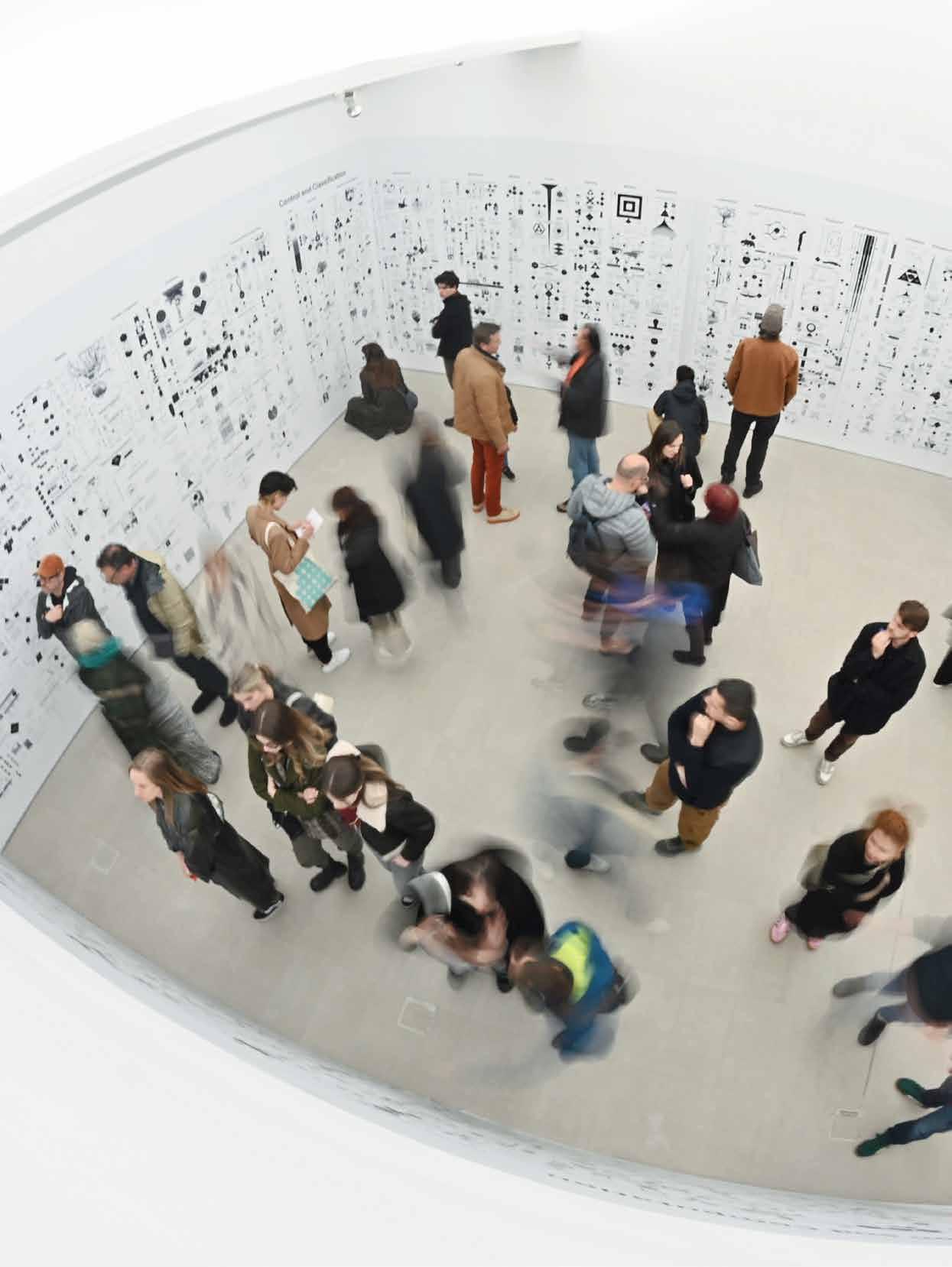
Fluid - design research project started in 2013, established to overcome institutional limitations of traditional education. It is organized by the Faculty of Fine Art Cetinje (University of Montenegro) and NGO FLUX. Executive producer is MAS Trade Cetinje. FLUID Design Forum is a set of design related events organized to complement regular teaching program for graphic design students and to support networking of design professionals. It consists of a series of lectures from prominent authors, design/architecture exhibitions, thematic workshops and discussion panels.
Attendees of FLUID are graphic design and architecture practitioners from around the world and design/architecture students from Montenegro, Western Balkan and abroad. Project includes participants from academic community, young creatives, design community, public institutions, cultural sector and local community. One of the projects goals is to apply contemporary design practices to local community public interests. Every year FLUID has specific topic and usually reflects on the role of the design/architecture in contemporary society. In the last 13 years, festival had gathered numerous regionally and internationally recognized designers, artists, architects and professionals from various fields as well as students from over 36 faculties.
FLUID # 1–13 in numbers
13 years / 24 sessions / 96 days / 1638 participants / 354 lecturers / 259 lectures & presentations / 62 exhibitions / 11 panels / 3 round tables / 1 book fair / 79 workshops / 999 workshop participants – students from 36 faculties
@fluid_dizajn
Faculty of Fine Art Cetinje, Montenegro


Author: Karla Miranović
Culturologist (Maastricht University) & Astrologer (Faculty of Astrological Studies in London)
Astrology can be engaged with in order to better understand the individual, but also the wider collective. In the context of applying astrology to the wider social setting, there is a lot that can be reflected upon when it comes to the field of creative expression, art and fashion. As with most magazines, we close with astrology, but from a different perspective. Rather than focusing on star signs and daily horoscopes, this piece approaches astrology as a layered system of insight, shifting the focus from the individual to the collective - illuminating the potential developments in the fields of art and fashion, relevant both on the global and regional level.
After fourteen years, Neptune, the planet of artistic expression and vision, has changed its zodiacal position from dreamy Pisces to the bold and fiery Aries. Having started in February, this change will be felt over the next fourteen years. At the end of April, Uranus, the disrupter of the status quo and indicator of major changes, will move from slow and steady Taurus to the change-loving Gemini, where it will stay for the next seven years.
These major “planetary players” are significant indicators of societal shifts in beliefs, collective dreams and aspirations, but also the emerging trends and developments in the area of creative expression, including art and fashion.
Neptune in Aries points to bold creative expression, emphasizing individuality and non-conformism. Historically, the last time Neptune was in Aries (1861-1875), the world of art was drastically transformed with the rise of Impressionism. Considering the radical shift this artistic movement brought about, it is quite possible that today’s art scene is beginning to write its own new chapter in the history of art.
Considering that one of the keywords of Aries is “I”, we may witness a desire to creatively channel the essence of personal identity and deeply subjective experience. Similarly to how the Impressionists brought light to subjective perception as the cornerstone of their art, we are being encouraged to re-consider the “I” and its place in the collective. Against the backdrop of influencers in all creative sectors, the sign of Aries calls for individuation and authenticity –even if it is raw and imperfect. In terms of fashion, Aries demonstrates a preference for an unfiltered and rough aesthetic. The sign of Aries being connected to the warrior archetype, it is unsurprising that we are witnessing references to military stylethe recent hype around the Napoleonic jacket being one of the good examples. Bold and maximalist forms are very much in line with the Aries visual identity, together with strong colors and rougher textures. On the other hand, the current Romantic revival, with lace, layers and soft fabrics may actually be one of the remaining stylistic forms of Neptune’s previous sign, the free-flowing and ethereal Pisces. It is very unlikely that any one/singular style will prevail. We are living in a time of a multitude of micro-trends existing simultaneously, emerging with tremendous speed.
Here we may turn our attention to another major planetary force, Uranus, the indicator of change (and trends), in the sign of Gemini. Being the sign of multiplicity, Gemini invites us to accept fluidity and a co-existence of various forms of expression. This signs’ preference for “and” over “or” seems very fitting in the contemporary fashion scene..
Given Gemini’s duality, which often includes a successful combining of the masculine and feminine, it is unsurprising that the last time Uranus was in Gemini, in the 1940s, traditionally masculine silhouettes with broad, padded shoulders, as well as a wider (although not yet mainstream) acceptance of trousers, came into focus in women’s fashion. Being open to a multitude of ways of being and visually presenting oneself is one of Gemini’s key strengths.
When considering Uranus in Gemini, it is impossible to skip over the ever-growing influence of AI on all segments of society and all forms of expression. Uranus is the signifier of change and trends, specifically linked to technology. Gemini is the sign of the mind and communication. Together, they indicate an even faster and more broad-reaching development in these areas.
In terms of all art forms, the question of what creativity is and whether it is only available to the human mind and soul will be impossible to avoid. Who is the artist and can technology ever be truly creative? Are we willing to incorporate AI into what was so far considered the solely human domain of artistic expression?
In various forms of art and in fashion, the initial Uranian disruption of status quo with the introduction of AI to creative domains, may make way for an acceptance of incorporating new technology into human creation in conscious (hopefully ethical), as well as playful and imaginative ways, that may add to, rather than diminish, the value of creative output.
When it comes to the cultural context of the Western Balkans, the discussed major planetary influences - Neptune in Aries and Uranus in Gemini, may often operate in ways that are compatible with some of our creative tendencies and ways of being. Neptune in Aries’ pronounced enthusiasm, courage and a passionate pursual of an idea, as well as Uranus in Gemini’s emphasized focus on diversity in its various forms, may strongly resonate with this region’s cultural identities.
The current “planetary weather” is inviting us to innovate with courage and enthusiasm, willing to be the pioneers of a new creative era.
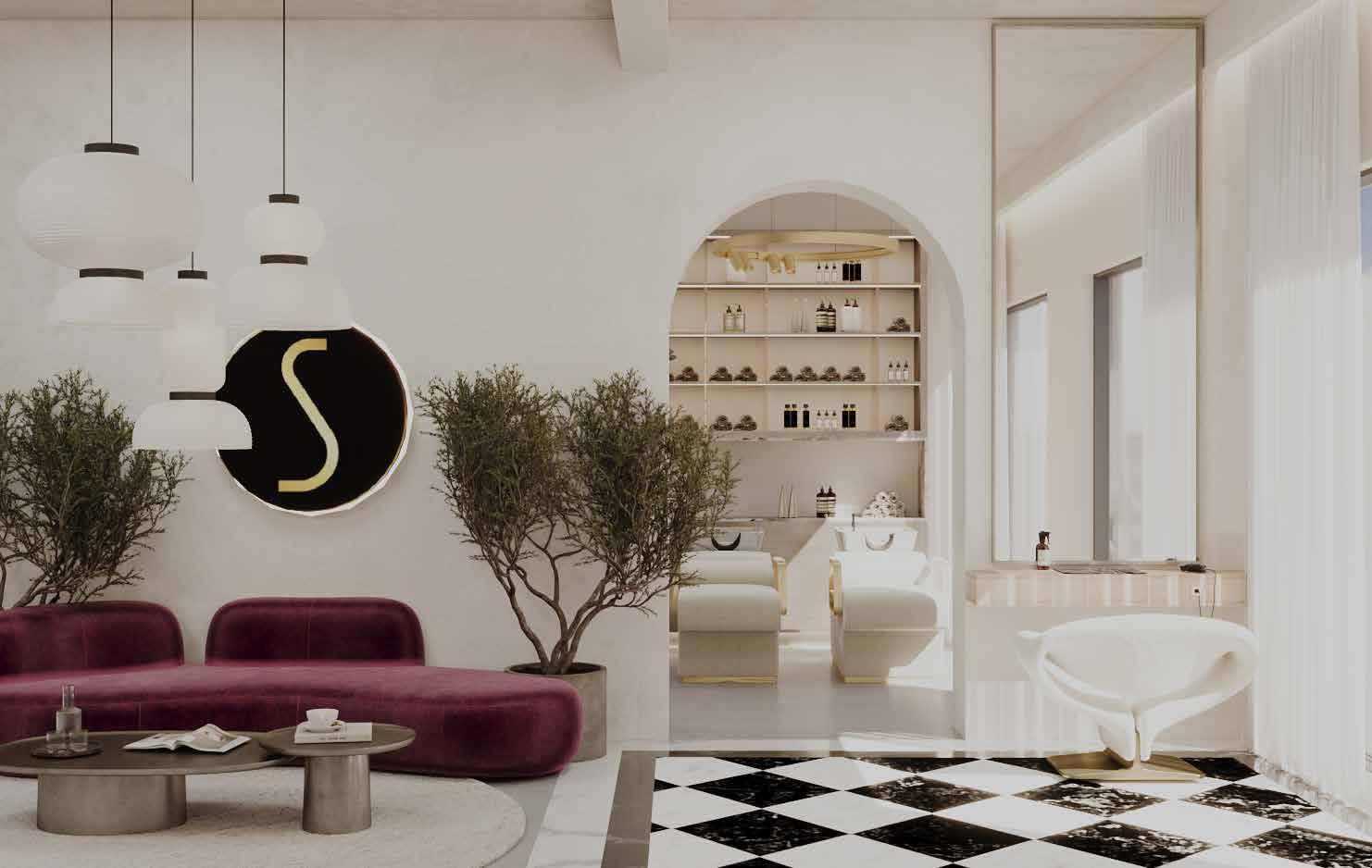
@sophiesbeautyline +382 67 115 500
TIMELESS INTERIORS. INSPIRED LIVING.
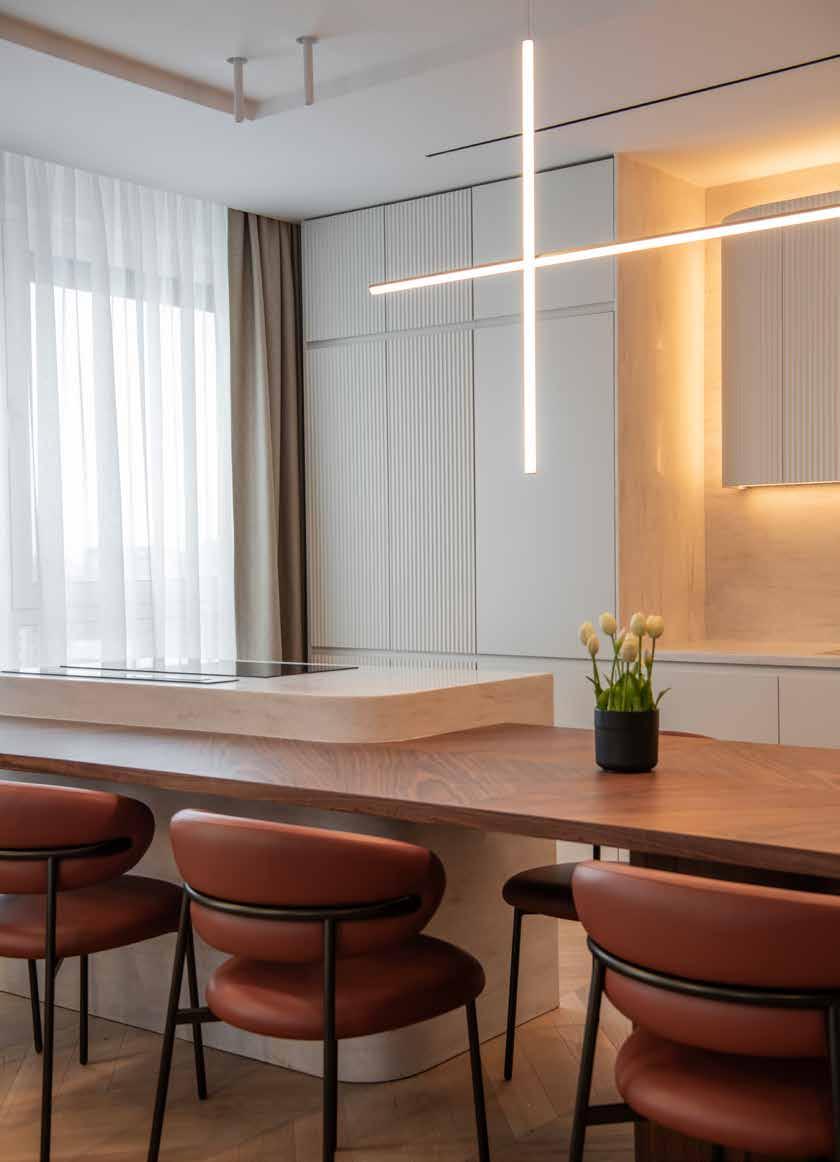
ARTRO Gallery
Luštica Bay, Tivat @artro_me
Boka Place Gallery
Porto Montenegro, Tivat @bokaplacegallery
Gallery of Solidarity
Palata Pima, Kotor www.muzejikotor.me
Galerija ART
Trg Republike, Podgorica www.muzeji.podgorica.me
Gayo Gallery
Porto Montenegro, Tivat www.gayogallery.com
Josip Bepo Benković Gallery
Marka Vojnoviića, Herceg Novi www.mighn.me
JU Muzeji & Galerije Podgorice
Marka Miljanova 4, Podgorica www.muzeji.podgorica.me
Miodrag Dado Đurić Art Gallery Njegoševa 89, Cetinje www.en.narodnimuzej.me
Modern Gallery Budva ul. Cara Dušana 19, Budva www.muzejiigalerijebd.me

Murano Art Gallery
Porto Montenegro, Tivat www.muranoartglass.dropmark. com
Photo Gallery F64
Đoka Miraševića 61, Podgorica www.photogalleryf64.me
Gallery Pizana Hercegovačka 60, Podgorica www.pizana.me
Gallery of Museum of Contemporary Art of Montenegro Njegoševa 2, Podgorica @msu_cg
Risto Stijovic Galerija Braće Zlatičanin, Podgorica www.muzeji.podgorica.me
Velimir A. Lekovic - Kulturni Centar Bar ul. Jovana Tomaševića bb, Bar www.kulturnicentarbar.me
Faculty of Dramatic Arts Ce-tinje University of Montenegro Cetinje, Montenegro www.ucg.ac.me
Faculty of Design and Multime-dia (University of Donna Gorica) Podgorica, Montenegro www.udg.edu.me
FLU Faculty of Fine Arts (University of Montenegro) Cetinje, Montenegro www.ucg.ac.me
Faculty of Visual Arts ( University Mediterranean ) Podgorica, Montenegro www.unimediteran.net
A&A Interior Porto Montenegro, Tivat www.aainterior.me
Eichholtz bul. Džordža Vašingtona 74, Podgorica Potonovi, Herceg Novi www.eichholtz.com

Las Capital Plaza, Podgorica www.lasconcept.me
Numen Gavrila Dožića 1, Podgorica www.numen3.me
Up Biro Bar, Montenegro www.upbiro.me
Budva City Museum
Petra I Petrovića 11, Budva www.muzejiigalerijebd.me
CANU - Montenegrin Academy of Sciences and Arts
Rista Stijovića 5, Podgorica www.canu.me
Museum of Contemporary Art Park Petrovića, Podgorica @msu_cg
National Museum of Montenegro
Novice Cerovića, Cetinje www.en.narodnimuzej.me
OJU Muzeji Kotor
Old Town, Kotor www.muzejikotor.me
Perast Town Museum
Bujović Palace, Perast www.muzejikotor.me
Marina Rinaldi
Bulevar Džordža Vašing-tona 64 | Podgorica www.marinarinaldi.com
Monologue Concept Store 23 Ankarski bulevar | Podgorica www.monologueconcept.com @monologueconcept
Olympus Fashion
Vojna kasarna, Portonovi | Kumbor www.olympusfashion.me @olympus.montenegro
Primigi
Marka Radovića 91 | Podgorica @primigi_montenegro
Rodasoleil
Boka Place | Tivat Dukley | Budva www.chersea.me @rodasoleil.cg
Bogner
Celine Zeta Building Porto Montenegro | Tivat www.celine.com
Effeti Concept Store
Marka Radovića 141 Central Point | Podgorica @effeti_concept_store
Elisabetta Franchi
Bulevar Džordža Vašing-tona 12 | Podgorica Porto Montenegro | Tivat www.samms.me @samms.me
Fashion Gallery

Villa Tara, Porto Montenegro | Tivat www.fashiongallery.me @fashiongallery.me
Tenero Fashion
Zgrada Linea | Podgorica Portonovi | Kumbor www.tenero.me @tenerofashion
Twinset
Bulevar Džordža Vašing-tona 22 | Podgorica www.samms.me @samms.me
Tyche
Portonovi Resort Vojna kasarna | Kumbor @tycheboutique_portonovi
Lardaux
Portonovi | Herceg Novi www.lardaux.com @lardauxofficial
Luisa Spagnoli
Bulevar Džordža Vašing-tona 86 | Podgorica www.samms.me @samms.me
MaxMara
Bulevar Džordža Vašing-tona | Podgorica www.samms.me @samms.me

Leandro Jewerly & Watches
Residence Milena, Porto Mon-tenegro | Tivat Boka Place | Tivat
BIG FASHION Mall | Podgori-ca www.leandro-stores.com @leandro.official_




Excelsior
Residence Ozana, Porto Mon-tenegro | Tivat www.excelsiormontenegro.com @excelsiorportomontenegro
Rolex Petite Genève Petrović
Hotel Regent, Porto Montenegro | Tivat www.petitegeneve.com @petitegeneve_ portomontenegro
Bulgari
Blaža Jovanovića 1, Porto Montenegro | Tivat www.bulgari.com @jewelry.portomontenegro
Aleksic Gallery
Karađorđeva 26 | Kragujevac @aleksic_galerija
Art Dragstor
Bul. Vudroa Vilsona 14 (TC Galerija) | Belgrade @art.dragstor
Arte Gallery
Kralja Milana 48
Andrićev venac 12
Svetogorska 29 | Belgrade www.artegalerija.rs
@galerija_arte
Brun & Brun | Gallery ŠTAB
Bul. Vudroa Vilsona 14 (TC Galerija) | Belgrade
@galerijastab
Eugster
Viline Vode BB www.eugster-belgrade.com
@eugster_belgrade
Galerija Novembar
Kursulina 22 | Belgrade www.novembargallery.com
@galerijanovembar
Belodore
Porto Montene-gro | Tivat
Bokeska 37 | Podgorica www.belodore.me
Biologique Re-cherche
Duro
Capital Plaza | Podgorica
Bule-var Džordža Vašingtona 68 | Podgorica www.parfimerija-duro.me @duro_montenegro
Sophie’s beauty line
Šeika Zaida | Podgorica
Porto Montenegro (Boka Place) | Tivat
Luštica Bay | Kumor
@sophiesbeautyline
+382 67 115 500
-National Museum of Serbia
-Museum of Contemporary Art Belgrade
-Museum of Applied Art Belgrade
-Zepter Museum
-Gallery of Matica Srpska
-Museum of Contemporary Art Vojvodina
-Pavle Beljanski Memorial Collection
-Niš Art Gallery
-Subotica Museum
EDUCATION:
University of Arts in Belgrade
Kosančićev venac 29 | Belgrade\ www.arts.bg.ac.rs @univerzitet.umetnosti
Academy of Arts Novi Sad
Đure Jakšića 7 | Novi Sad www.akademija.uns.ac.rs/
Distante
Galerija Mall | Belgrade
Uzun Mirkova 8 | Belgrade www.distante.rs @distante_store
Global Fashion
Galerija Mall | Belgrade www.globalfashion.rs @globalfashion.official
Koncept 45
Kralja Petra 45 | Belgrade www.koncept45.rs @koncept45
MiaMaya
Rajićeva Shopping Center | Belgrade
Galerija Mall | Belgrade www.miamaya.online @miamayabeograd
Nicolas Concept Store
Galerija Shopping Mall | Belgrade
Uzun Mirkova 4 | Belgrade www.nicolasconceptstore.com @nicolasconceptstore
Studio Portfolio
Kneginje Ljubice 17 | Belgrade @studio_portfolio_
Velvet Fashion
Konaci Sunčani Vrhovi | Kopaonik www.velvetfashion.rs @velvetfashioncompanyofficial
Bačva Gallery
Trg žrtava fašizma 16 | Zagreb www.hdlu.hr
@hdlu_zagreb
Galerija Kranjčar
Kaptol 26 | Zagreb www.galerijakranjcar.hr
@galerija_kranjcar
Kazimirowa
Galerija Mall | Belgrade West 65 Mall | Belgrade www.kazimirowa.rs @kazimirowa.belgrade
Maestro Jewellers
Nušićeva 12a | Belgrade www.meastro.rs @maestro_jewelers_
Belodore Galerija Mall | Belgrade
Kralja Petra 67 | Belgrade West 65 | Belgrade www.belodore.rs @belodore_srbija
Metropoliten
Njegoševa 72 | Belgrade @metropolotenbg
Noli
Bulevar Mihajla Pupina 10A/22 | Belgrade
Venizelosova 29u/8 | Belgrade www.noli.rs @noli.fragrances
Galerija Nova
Teslina 7 | Zagreb www.g-nova.hr @galerijanova
Lauba House for People and Art
Prilaz baruna Filipovića 23a | Zagreb www.lauba.hr @laubahouse
Museum of Contemporary Art Zagreb
Avenija Dubrovnik 17 | Zagreb
www.msu.hr
@msu_zagreb
Museum of Modern and Contemporary Art
Rijeka
Dolac 1 | Rijeka www.mmsu.hr
@mmsu_rijeka
Meštrović Gallery
Šetalište Ivana Meštrovića 46 | Split www.mdc.hr @mestrovicgallery
Dubrovnik Art Gallery
Frana Supila 23 | Dubrovnik
www.umjetnicka-galerija-dubrovnik.hr @ugdubrovnik
Academy of Applied Arts Rijeka
Slavka Krautzeka 83 | Rijeka
www.apuri.uniri.hr
@apuri_uniri
Academy of Dramatic Art Zagreb
Trg Republike Hrvatske 5 | Zagreb
www.adu.unizg.hr
@adu_zagreb
Academy of Fine Arts Zagreb
Ilica 85 | Zagreb
www.alu.unizg.hr
@alu_zagreb
Arts Academy in Split
Ul. kralja Tomislava 8 | Split
www.umas.unist.hr
@umas_split
Clan Concept Store
Frankopanska 4 | Zagreb www.clan-store.com @clanstore
Garderoba Store
Martićeva 17 | Zagreb www.garderobastore.hr @garderobastore
Magali Concept Store
Dežmanova 4 | Zagreb
No official website found @magaliconceptstore

Maria Store
Masarykova 8 | Zagreb
www.mariastore.hr @mariastorehr
Malalan
Augusta Cesarca 6–8 | Zagreb www.malalan.eu
@malalan.eu
LAB Store
Dežmanova 2 | Zagreb www.lab.hr @thelabstore
Belodore
Ilica 7 | Zagreb
Josipa Jovića 93 | Split
Vice Vukova 6 | Zagreb
www.belodore.hr @belodore.hrvatska
House of Leaves Museum
Rruga Ibrahim Rugova | Tirana www.muzeugjethi.gov.al @houseofleavesalbania
National Gallery of Arts Albania
Rruga Murat Toptani 2 | Tirana www.galeriakombetare.gov.al @nationalgalleryofartsalbania
National Museum of Medieval Art
Bulevardi Fan Noli 59 | Korçë www.muzeumesjetar.gov.al @muzeuartitmesjetar
Galleries
Bazament Art Space
Rruga Andon Zako Çajupi | Tirana www.bazament.art @bazament.artspace
GOCAT (Gallery of Contemporary Art Tirana)
Rruga Papa Gjon Pali II | Tirana www.gocat.al @gocat_tirana
Zeta Contemporary Art Center
Rruga Abdyl Frashëri | Tirana www.zetaartcenter.com @zeta.contemporary.art.center
Faculty of Fine Arts Tirana
Rruga Elbasanit | Tirana www.uart.edu.al @universiteti_i_arteve
University of Arts Tirana
Rruga Elbasanit | Tirana www.uart.edu.al @universiteti_i_arteve
Coin Shopping Mall
Rruga Ibrahim Rugova | Tirana www.coin.it @coinexcelsior
Obbu Concept Store
Rruga Mustafa Matohiti | Tirana www.obbu.al @obbuconceptstore
Pirro
Rruga Ibrahim Rugova | Tirana No official website @pirro_jewelry

Rocca 1794
Tirana East Gate (TEG) | Tirana www.rocca1794.com @rocca1794
Sisol
Rruga Ismail Qemali | Tirana www.sisolstore.com @sisolstore
Something the Brand
Rruga Abdyl Frashëri | Tirana www.somethingthebrand.com @somethingthebrand
Ivory Beauty (Ivory Skincare)
Rruga Gjon Buzuku, Selvia | Tirana @ivoryskncare
Ars Aevi Museum of Contemporary Art Zmaja od Bosne 2 | Sarajevo www.arsaevi.ba @arsaevi
Museum of Contemporary Art of Republika Srpska Trg srpskih junaka 2 | Banja Luka www.msurs.org @msu_rs
National Gallery of Bosnia and Herzegovina Zelenih beretki 8 | Sarajevo www.ugbih.ba @umjetnickagalerijabih
The Bosniak Institute
Mula Mustafe Bašeskije 21 | Sarajevo www.bosniakinstitute.org @bosniakinstitute
Charlama Depot Gallery
Skenderija 8 | Sarajevo @charlama_depot
Duplex100m2
Obala Kulina bana 22 | Sarajevo www.duplex100m2.com @duplex100m2
Manifesto Gallery Sarajevo
Maršala Tita 54 | Sarajevo www.manifestogallerysarajevo.com @manifestogallerysarajevo
Academy of Arts Banja Luka
Bulevar vojvode Petra Bojovića 1A | Banja Luka www.au.unibl.org @au_unibl
Academy of Fine Arts Sarajevo
Obala Maka Dizdara 3 | Sarajevo www.alu.unsa.ba @alu.unsa
Museum of Contemporary Art Skopje
National Gallery of North Macedonia Museum of Modern Art Skopje
Akanthus Gallery
Art Gallery Ostens Ko-Ra Gallery
Faculty of Fine Arts Skopje University Ss Cyril and Methodius
Youth Cultural Center Skopje
Ostens Center for Contemporary Art