Style Leaders of Montenegro International Fashion Festival Porto Montenegro Fashion Addresses
01 03 05 06 02 04
Meet the Creators FAB 2026
Regional Talents
Announcement
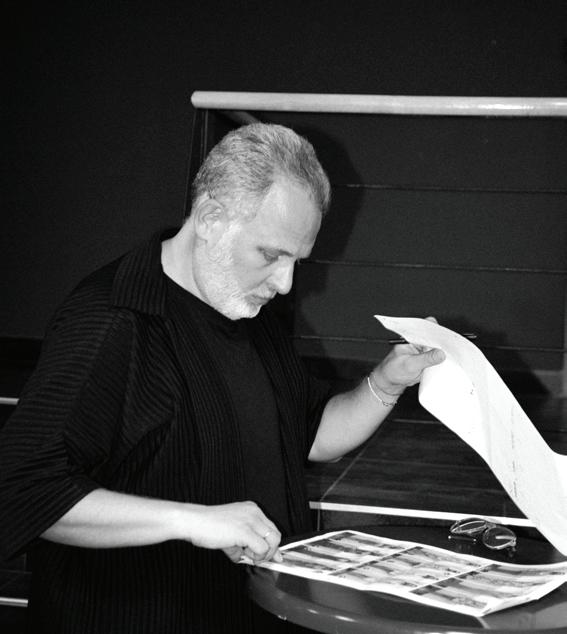
Editor-in-Chief & Creative Director
Zina Pusep
Graphic Design Assistant
Mia Bulatović
Photography
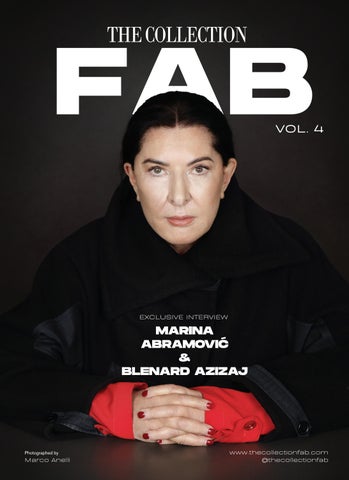
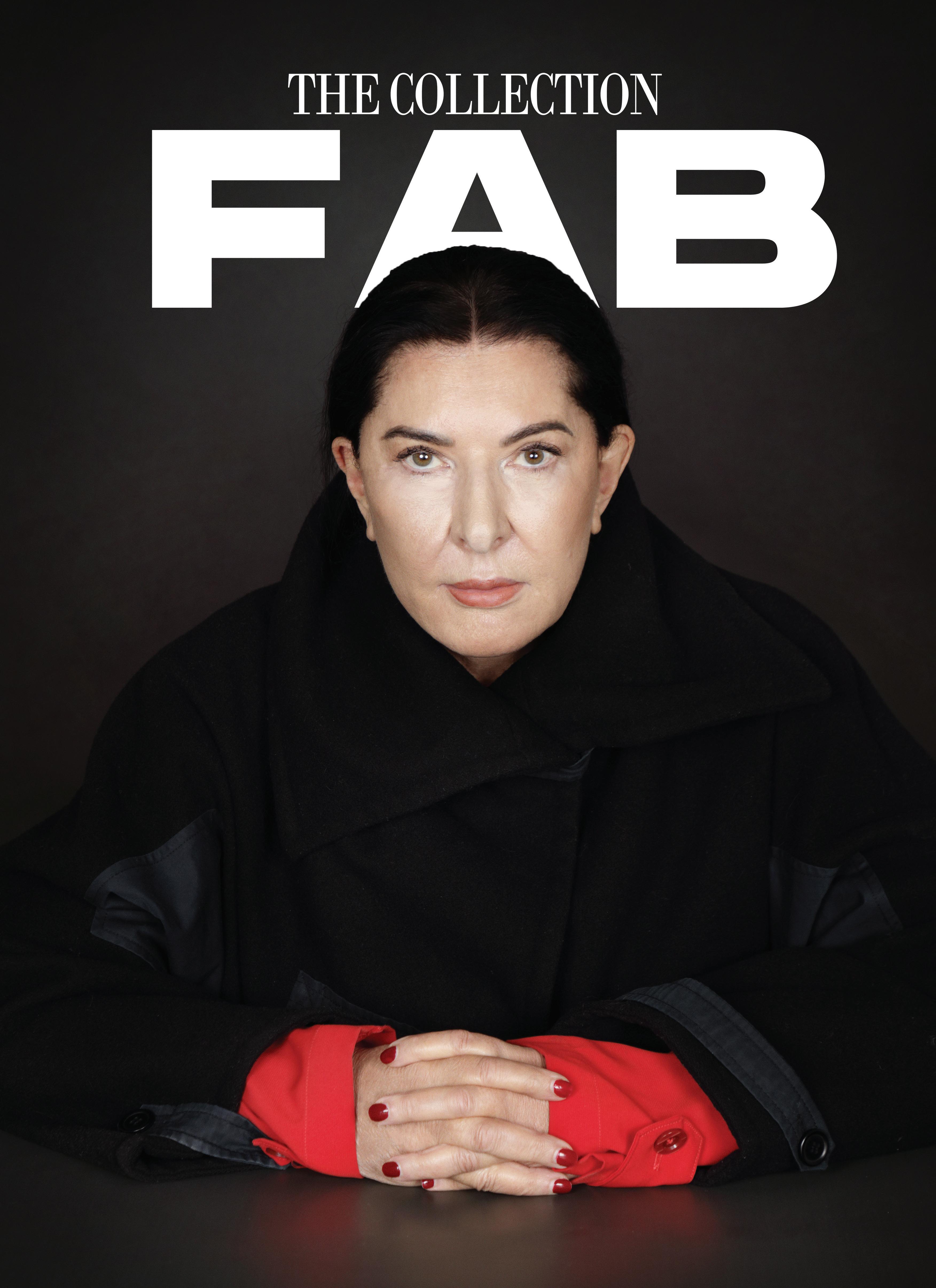
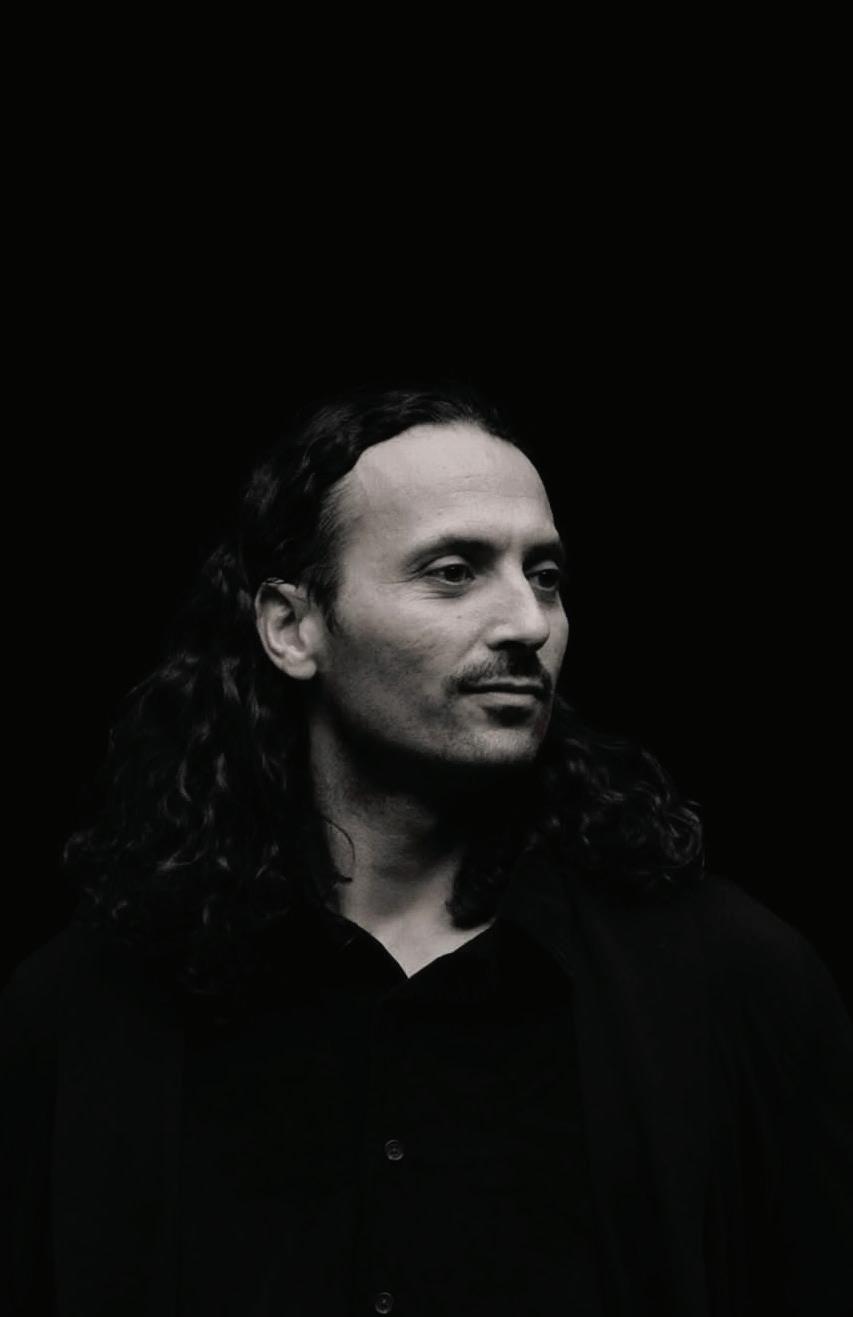
Marco Anelli ( Balkan Erotic Epic | Cover )
Mia Bulatović
Jelena Čejović Vukčević
Rowan Schratzberger
Printing by DPC - Grafotisak | Grude
FAB is a multichannel platform and publication dedicated to fashion, art and the creative industry in the region. Through print, digital content and creative production, FAB spotlights the people, stories and businesses that shape the industry.
Samms
Nicolas Concept Store Belgrade Tyche Portonovi
Photographed by Marco Anelli
FROM THE EDITOR
WITNESSING HISTORY
I often think about how future generations will look back at us. Years from now, the rituals we consider ordinary, the habits, gestures, and little systems that structure our days - may seem as strange, symbolic, or even humorous. What feels completely natural in the present can become unusual once enough time passes. Considering how quickly the world is moving, it could actually take only a decade. However, there are rare few extraordinary people, whose approach to life may always stay out of ordinary. For a reason.
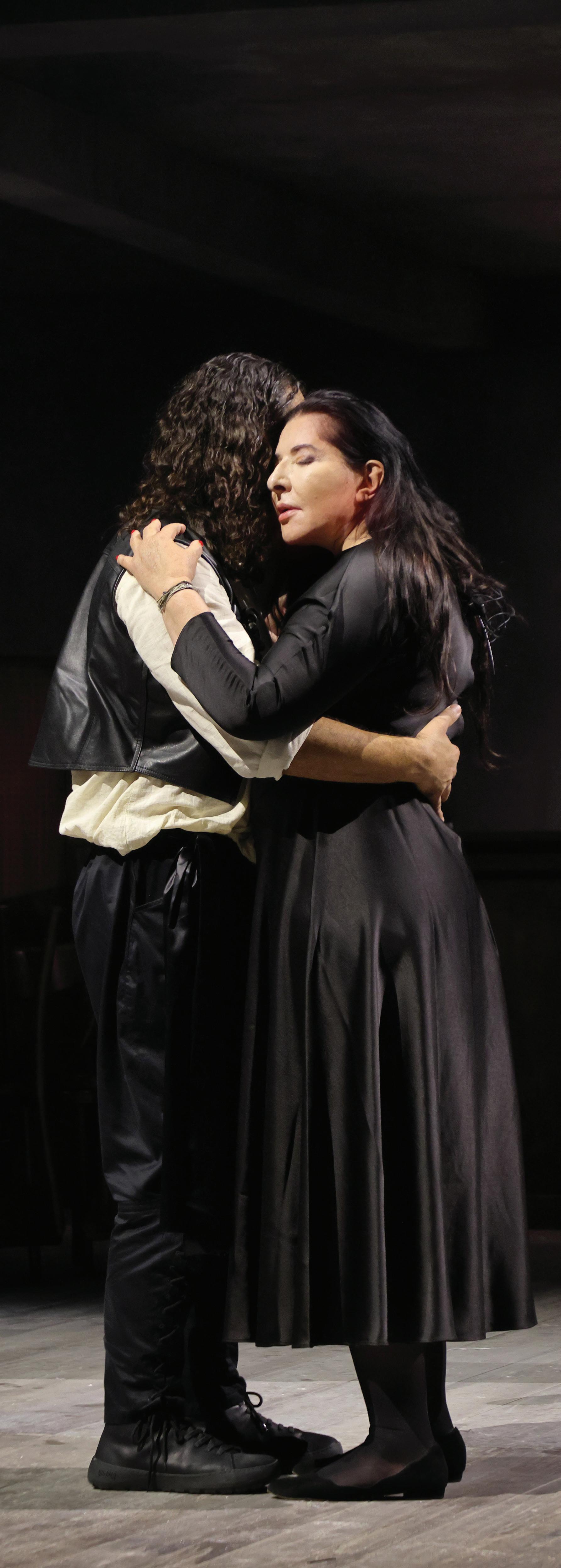
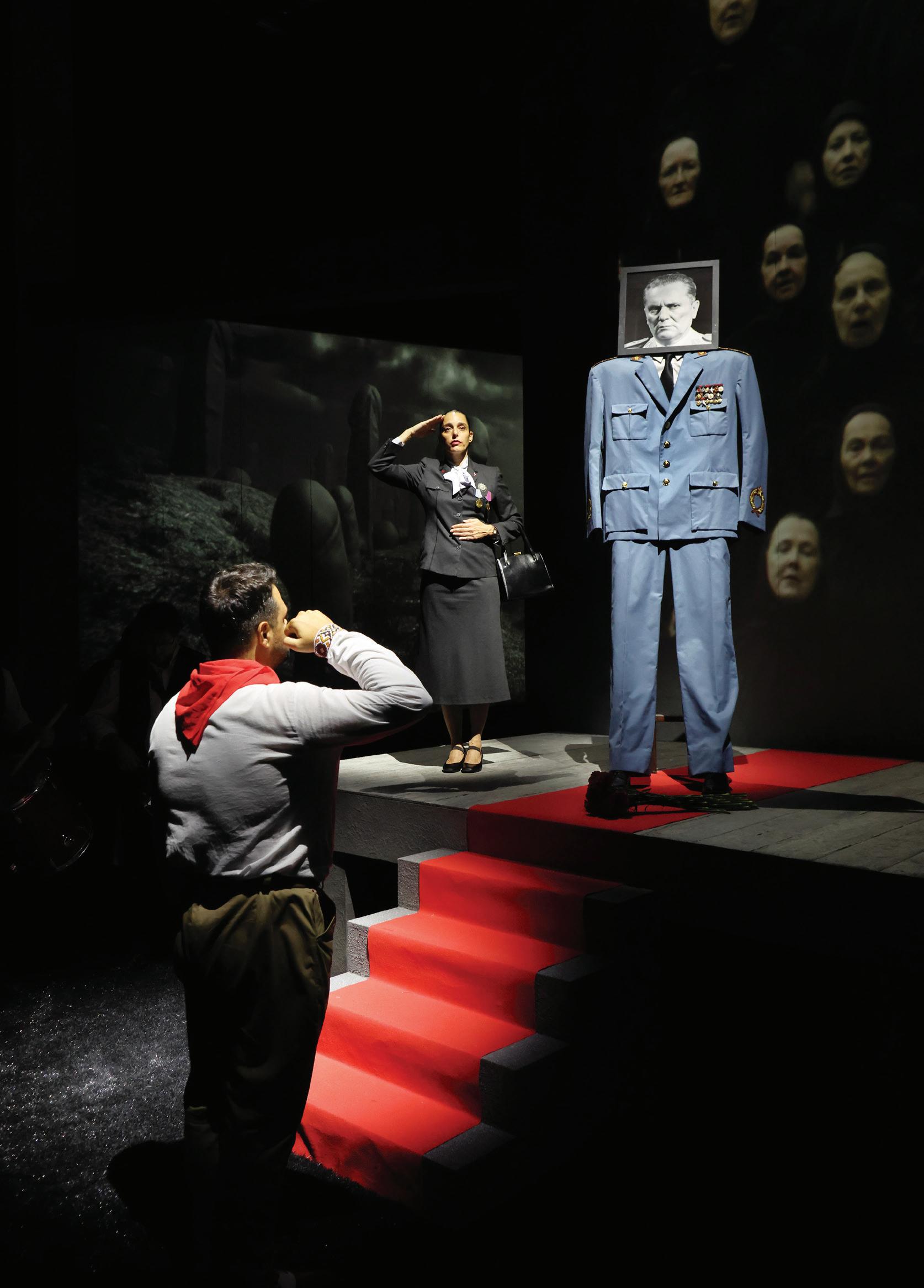
This season, I had the honor to sit down with Marina Abramović and choreographer Blenard Azizaj to speak about Balkan Erotic Epic 2025 - the piece which made history by ultimately becoming a unique form of art, frst of its kind.
Another key moment was the International Fashion Festival Porto Montenegro. We saw creativity that pushes boundaries and expands what the region can be known for - from celebrated names to the new generation we will soon all remember.
Inspired by these moments of reinvention, I am proud to announce the frst standalone edition of FAB - coming in 2026. A collectible publication, FAB standalone will focus on original editorial production, digital storytelling, and creative collaborations, mapping the talent, ideas, and businesses shaping the future of the Balkans.
My sincere gratitude to Marina Abramović, to Blenard Azizaj for his open heart, to Marco Anelli, to my father and to my dear friend Ana Somova who ignited the spark for this feature.
These are exciting times flled with momentum, dialogue, and a shared sense of purpose.
Creative Director Editor-in-Chief
Photographed by Jelena Čejović Vukčević
Balkan Erotic Epic
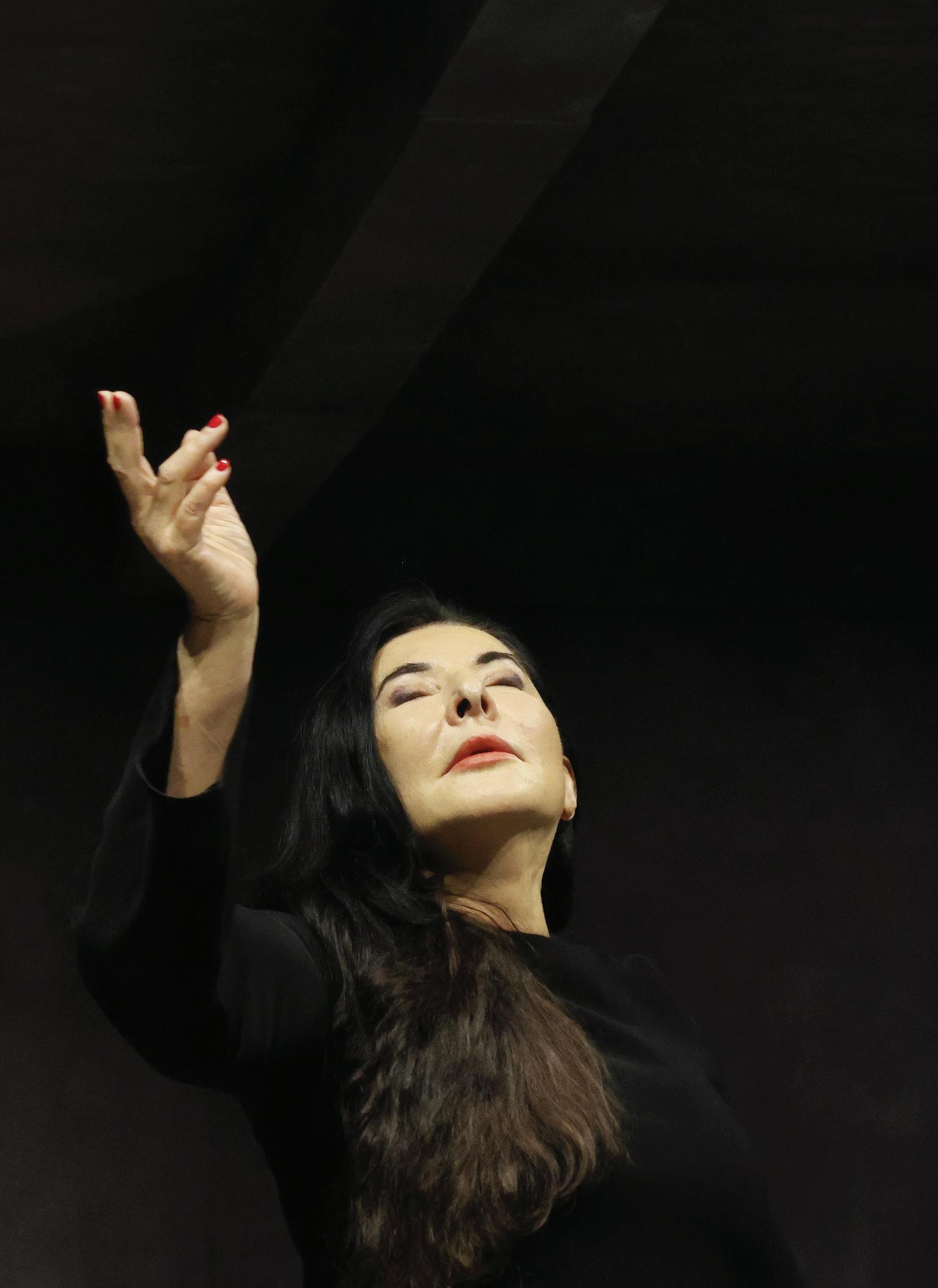
Photography by Marco Anelli
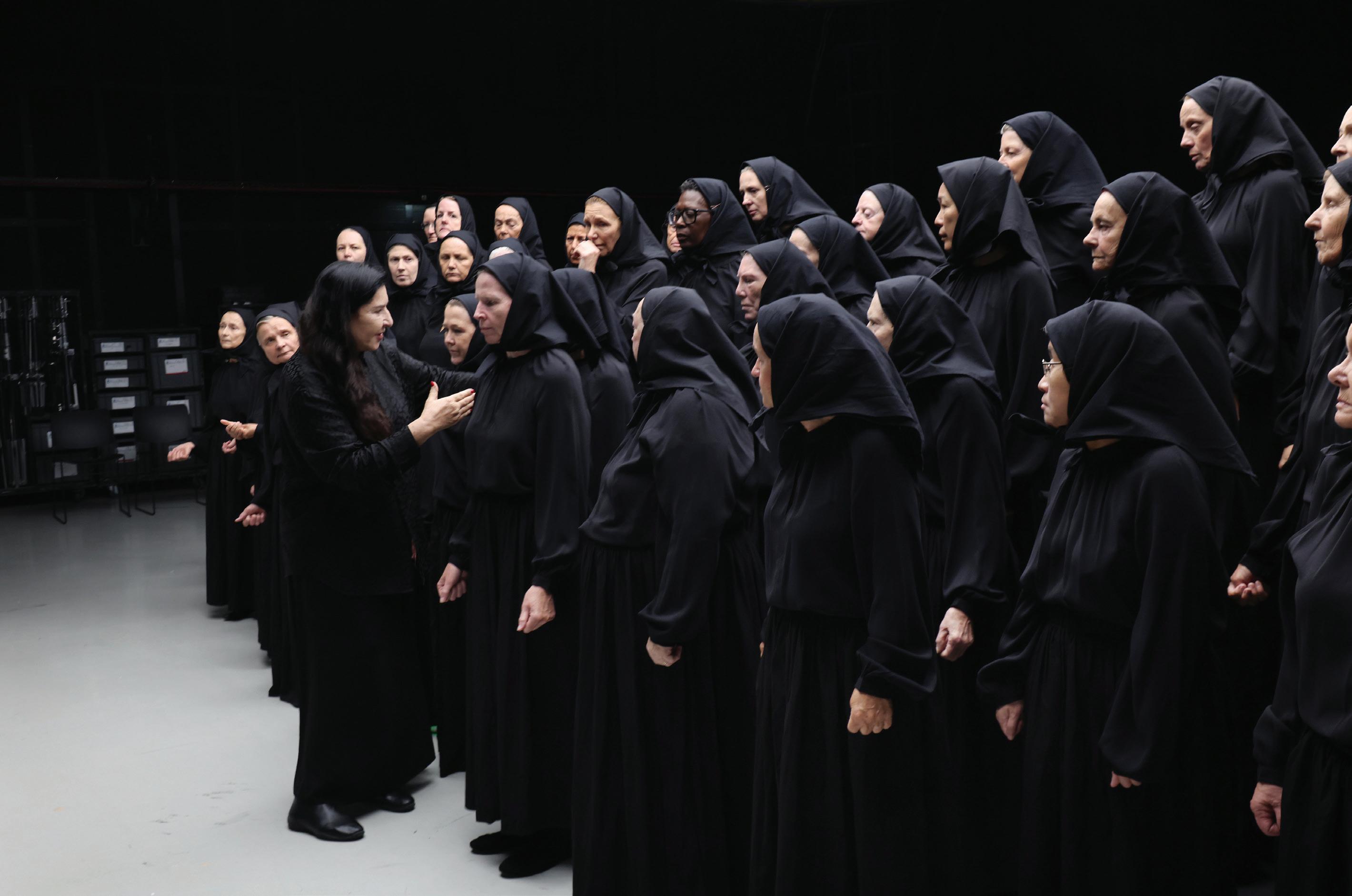
Balkan Erotic Epic is one of Marina Abramović’s most culturally rooted works, first presented in 2005 as a series of video performances that re-enacted traditional Balkan rituals dating back to pre-Christian folklore and rural customs. Now, two decades later, Abramović revisits the piece as a large-scale live performance created with choreographer Blenard Azizaj and durational performance director Billy Zhao - a collaboration she describes as the most ambitious production of her career so far.
In this exclusive conversation, Editor-in-Chief of The Collection FAB Zina Pusep speaks with Marina Abramović and Blenard Azizaj about the cultural roots of the work, the emotional language of the Balkans, and the collaboration that made it possible.
BLENARD AZIZAJ
MARINA ABRAMOVIĆ
Marina Abramović - one of the most groundbreaking artists of our time. Born in Belgrade, Former Yugoslavia, she is widely recognised for her extreme, often near-death and boundary pushing long-duration performances. Her early “Rhythm” works tested the limits of control and endurance - from repeatedly plunging a knife between her fngers, to performing inside a burning star structure until she collapsed from lack of oxygen. Throughout her practice, her homeland remained an ever-present reference: in Balkan Baroque (1997), awarded the Golden Lion at the Venice Biennale, she spent days scrubbing bloody cow bones while singing folk songs from her childhood - a haunting confrontation with the turmoil unfolding in the Balkans during that time.
While Marina was transforming the art world, some of us weren’t even born yet. That includes Blenard Azizaj - contemporary Albanian choreographer and dancer, known for his powerful presence and emotionally charged movement vocabulary.
Together, they revisited Balkan Erotic Epic.
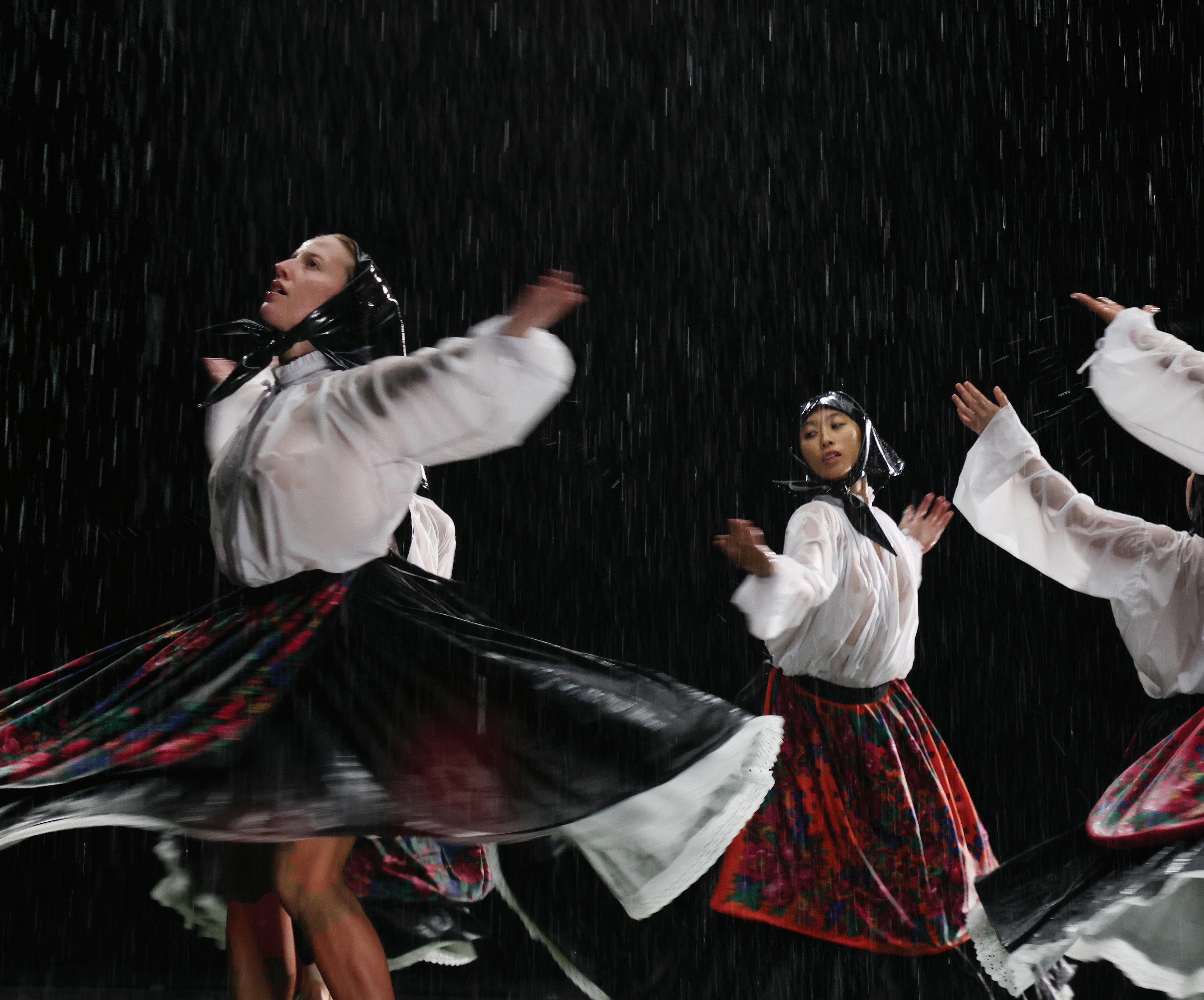
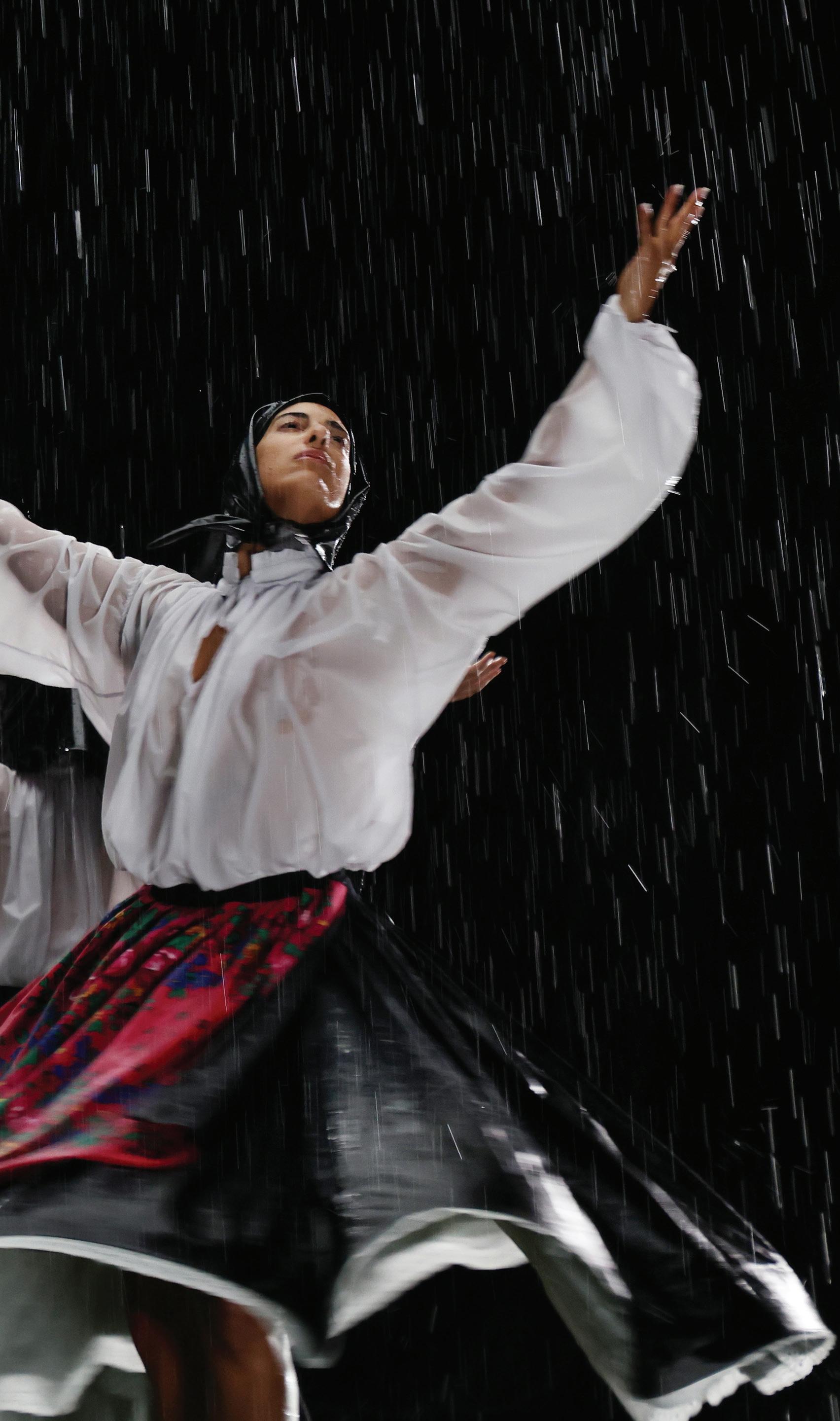
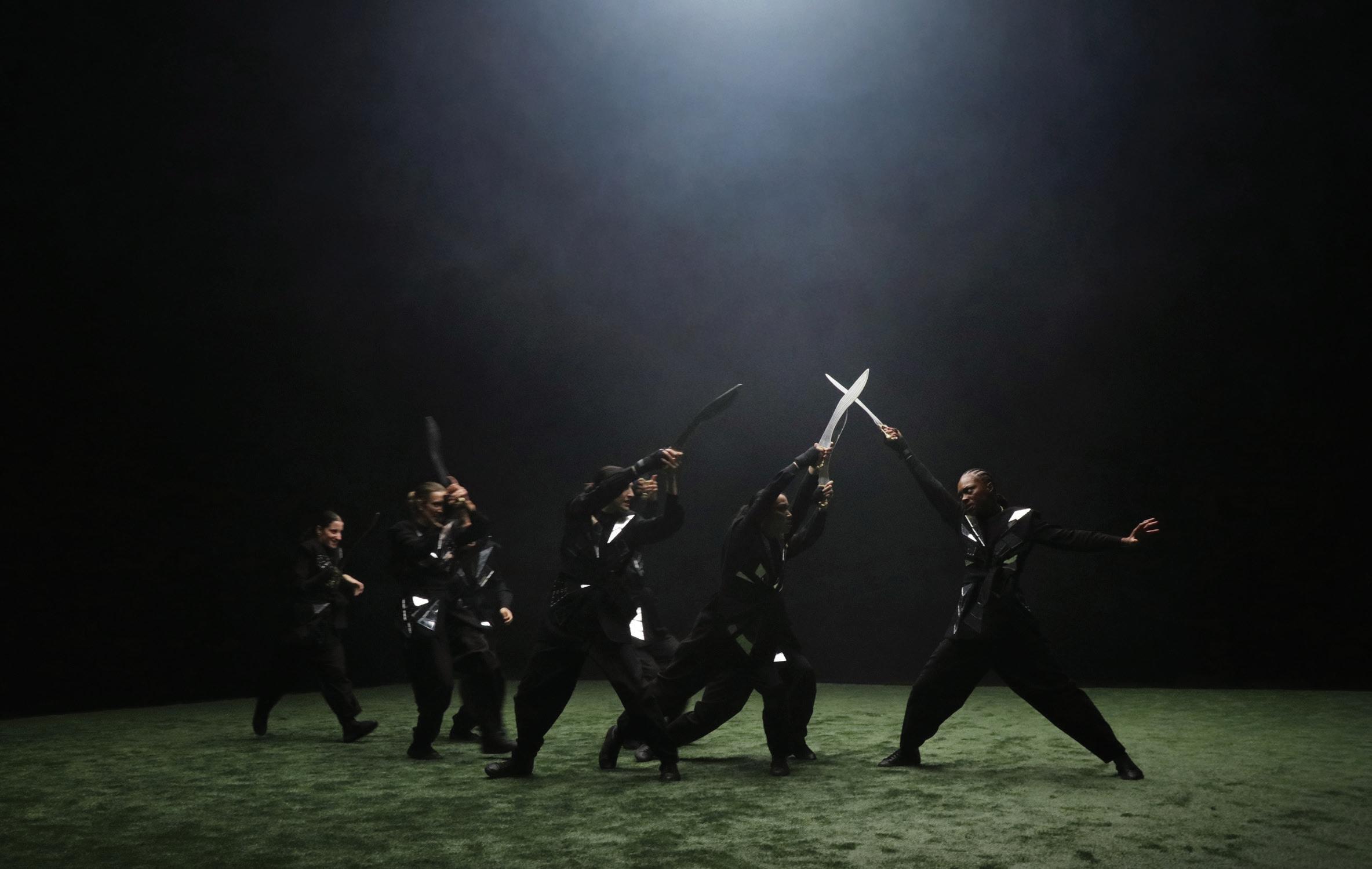
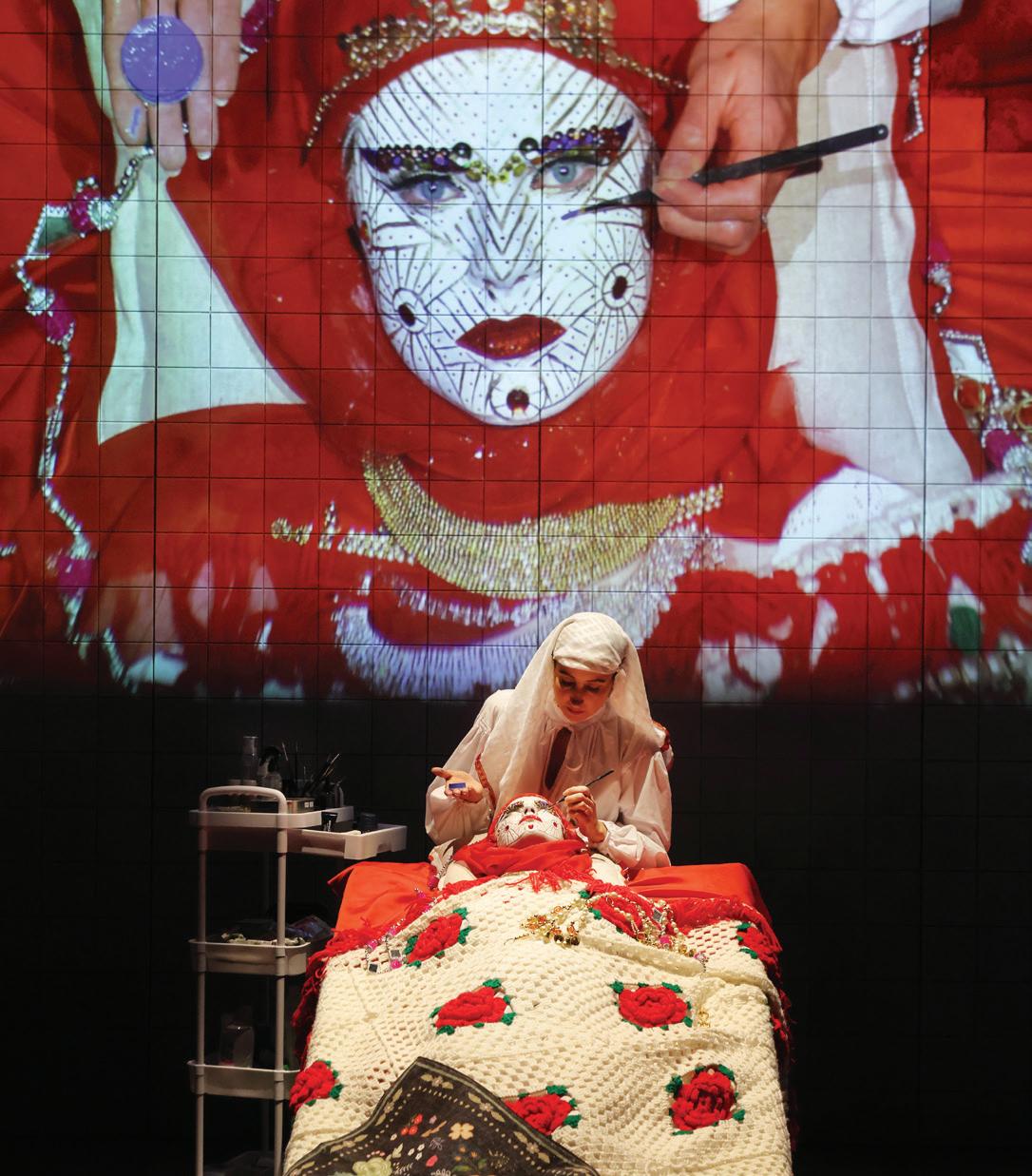
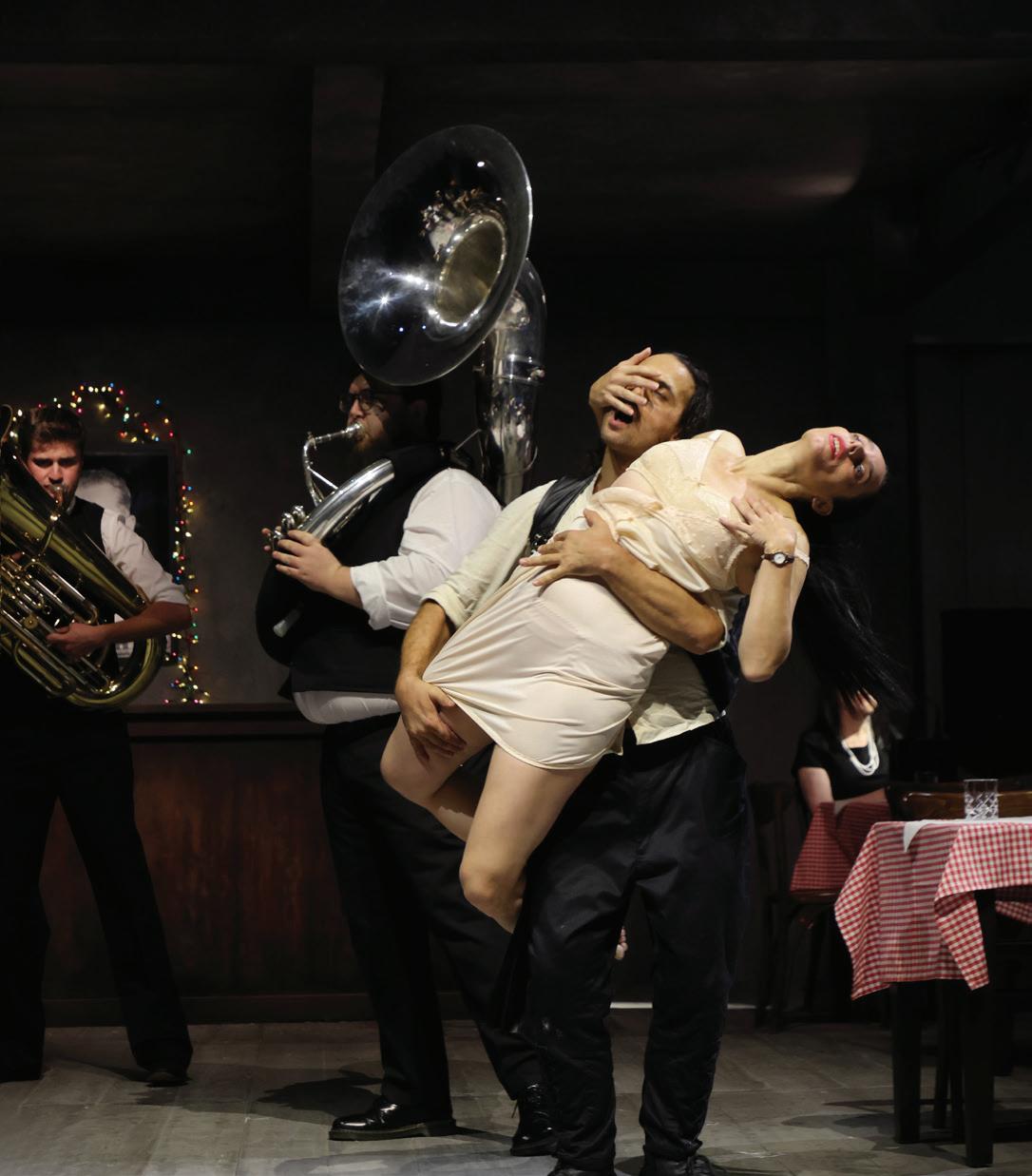
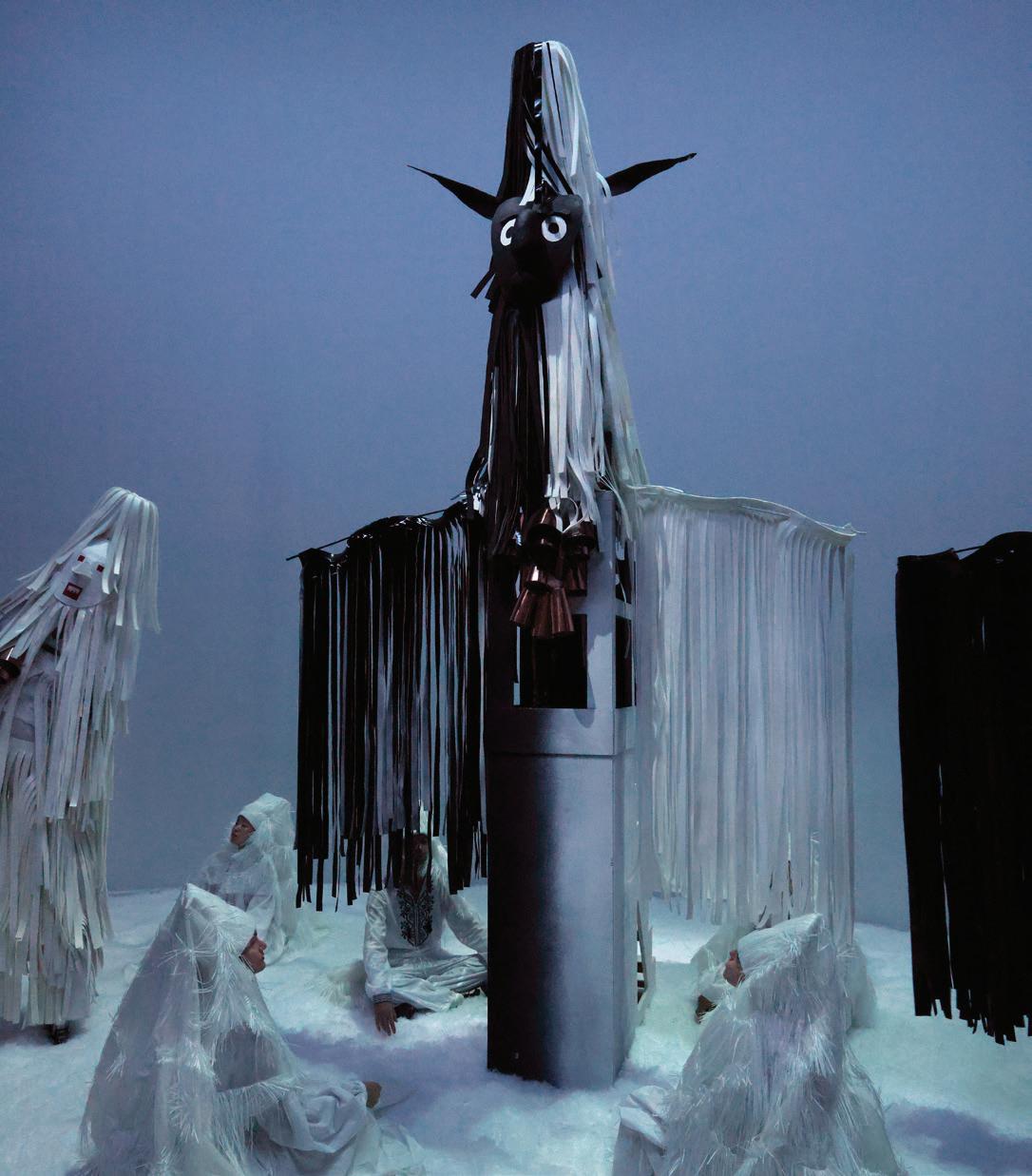
Originally presented in 2005, the piece re-enacted traditional Balkan rituals. In these traditions, the human body was believed to communicate directly with nature and infuence the forces, playing an active role in practices connected to fertility, protection of the household, seasonal cycles - such as the practice of women lifting their skirts toward the sky to stop the rain. In 2025, working alongside Blenard Azizaj and durational performance director Billy Zhao, Abramović reimagined the piece as a four-hour live performance structured across thirteen scenes and involving seventy performers.
The scenes include a wide range of unsettling practices. Black Wedding - a ritual when a young, unmarried deceased man is symbolically wedded to a living young woman, to ensure the soul has a partner in the afterlife. There are knife dances, pregnant woman being soaked in milk. There is a funeral of the former president of Yugoslavia - Tito. The list goes on. This collaboration marks a historic moment in art: for the frst time, long-duration performance was woven together with contemporary choreography, resulting in a new form of art.
Ten days before this interview took place, I didn’t know Blenard, nor did I know Marina. What was present, though, was a friend’s advice: write down thoughts on paper daily. One night, after writing a list ranging from ideas about spirituality to hair goals, I closed my notebook and went to sleep. Minutes after came one more line: “Marina Abramović.”. It wasn’t that deep, just a thought of her name, maybe a subconscious association with spirituality and luscious hair.
Balkan Erotic Epic (2005) was already familiar from my Fine Art studies in the Netherlands, being one of my favourite references. Seeing this piece taking a new form in 2025 brought a genuine spark of excitement. Around the same time, a conversation with my friend Ana led to a special introduction: Blenard, and the next thing I knew this conversation was taking shape. Sometimes we act without logic, and sometimes paths cross without planning - guided by instincts that feel older than reason.
Returning to Balkan Erotic Epic
Zina: It’s been twenty years since the original Balkan Erotic Epic. How did it begin, and why return to it now?
Marina: This idea started a long time ago, right after I made ‘House with the Ocean View’ - the performance where I spent twelve days not eating, not speaking and being fully exposed to the public. It was a very spiritual and demanding work. And right after that, one curator asked if I would like to do something about erotic and pornography. He asked twelve different artists including Matthew Barney, Sam Taylor-Wood, Marco Brambilla, and others. I am always interested in trying something new and after such a spiritual performance, this seemed like something completely different and contrasting. However, I found pornography incredibly boring. There are millions of flms and they all look the same. The only exception was Cicciolina, she made interesting video works out of it. I like Cicciolina. So I tried to understand what I could connect to and the only way I could approach this topic was through my own culture.
I went to the Balkans, worked with the production house Bas Celik, auditioned people, and made a twelve-minute video work based on Balkan erotic rituals. I enjoyed it so much. But it was a small team, a small format. For decades, I wanted to make it much bigger, but never got the right opportunity.
My works often take decades. ‘Seven Deaths of Maria Callas’ took 30 years. ‘The Lovers’, walking the Great Wall of China, took 8 years. And ‘Balkan Erotic Epic’ took about 20. Over time, I gained more wisdom and a broader perspective - not only toward ex-Yugoslavia, but the region as a whole: Albania, Bulgaria, Romania, North Macedonia. I became more interested in the larger map of the Balkans. So now was the moment to return.
THE ONLY WAY I COULD APPROACH THIS TOPIC WAS THROUGH MY OWN CULTURE.
COLLABORATION ONLY WORKS WHEN THERE IS NO EGO.
Blenard: It actually started in Berlin, at Funkhaus, after a concert by Teodor Currentzis. There was an afterparty where I met Luka Kozlovački and Marko Nikodijević - the composers of Balkan Erotic Epic. The music was mesmerizing. When something is truly authentic, I react immediately. I started dancing. I couldn’t stop. I was amazed like a child. I told them I am a choreographer, we exchanged Instagrams, and that was it. We didn’t meet again, no coffee, no plans.
Shortly after, Marina was looking for a choreographer from the Balkans. Luka mentioned me. Her executive producer called me, but I don’t answer unknown numbers, so I didn’t pick up. Can you imagine? I get a call to work with Marina Abramović, and I don’t pick up the phone. Then her executive producer emailed me and said that Marina had seen my work and wanted to talk.
Marina: I saw him on Zoom. I looked at what he was doing. And the fact that he is Albanian - and historically we have been positioned as “natural enemies” - made it even more interesting. I thought: Let’s put these two things together and make something incredibly interesting.
I didn’t want to work with someone outside the Balkans. That is not easy to fnd. When I saw Blenard’s energy, I thought, this is the right person. And I was right.
I have a long history with collaboration. My frst major collaboration was with Ulay - twelve years of love, hate, forgiveness, everything. After that I said I would never collaborate again. But of course we say something and then do something completely the opposite. So I did collaborate. With Jan Fabre. With Damien Jalet and Sidi Larbi. But collaboration only works when there is no ego. And very often, there is ego. With this piece, it was different.
First of all, Blenard is incredibly talented. And second, he does not have ego the size of the Himalayas.
For him, just like for me, it’s not important who is doing what, what’s important is the fnal result. We put all this together to create something unbelievable and special.
This work was created by the three of us: Blenard, Billy Zhao and myself. Without the three of us, it would not exist. Billy is Chinese, but Billy started working with me when he was 17. So he really understands the core of my method, what long-duration work means.
Blenard: Working with Marina in this production taught me patience. In dance, everything is about structure and constant movement. In long-duration performance, time expands. Stillness is part of the work. Marina helped me understand how to stay, how to hold space. We learned from each other. Looking back now, it feels like something you experience only once in a lifetime. We even expected negative criticism because Marina’s work is often misunderstood. And then there were none. It was a shock. In the best way.
Marina: In Balkan Erotic Epic we have a unique mix of long duration performance with dance. That has never happened. It is historically the frst form of its kind. And that’s where we have to be acknowledged really. It s a new form of art.
How the Collaboration Began
Research Behind the Work
Zina: The Balkans are a mosaic of traditions - from Orthodox Christianity to pagan layers and Ottoman infuences. In the piece we see funeral rituals, knife dances, interactions with skeletons. Many scenes in the performance reference rituals most of us have never encountered. What kind of research shaped this work?
Marina: The last 20 years I researched everything I could. I also asked others to research for me. I worked with an anthropologist in Montenegro, and with people in other regions. Everyone was collecting stories and knowledge about rituals, also in Greece and Turkey. I even asked Blenard about rituals from Albania.
I focused on rituals where the body was used symbolically in connection to agriculture, fertility, and protection. These practices were tied to survival - working the land, protecting the home, ensuring continuity. I read everything I could fndacademic studies, local stories, archival notes, oral histories. Some were interesting, some were boring, but together they formed a picture.
Zina: Among many symbols and references, there is the appearance of Tito - Former President of the Socialist Federal Republic of Yugoslavia. What does his presence represent in the piece?
Marina: Tito is everywhere in this piece. In photographs, in the small funeral part. The mourning of Tito to me marks something very ending of the one period of my childhood, in my memories - the end of the country I loved so much. It was such an important moment, everything changed. But also Tito was a possibility to put Orthodox religion together with the communism and with paganism. It is a phenomenon. You never see all of them simultaneously going on, and everyone was pretending the other thing doesn’t exist. And that was why for me Tito was such an important focus.
LOOKING BACK NOW, IT FEELS LIKE SOMETHING YOU EXPERIENCE ONLY ONCE IN A LIFETIME.
Photograped by Rowan Schratzberger
Body and Technology
Zina: For both of you, your primary medium has always been the body. If there comes a time when your body changes or can no longer endure performance in the same way, what happens then?
Marina: When you get to my age, you will understand. I am not a superwoman. I just had a knee transplant, and then Blenard says, “Let’s dance,” and I think, he’s trying to kill me. But you do what you can do. I share my knowledge with younger generations. I have sixty years of experience in performance and now I pass that on.
Every stage of life has its own function. When I performed ‘Seven Deaths of Maria Callas’, I did the whole second part, but in a way my body could handle. I can lie in bed, stand up, break a vase, open a window, leave the stage, return as a ghost of Maria Callas. I can do that even when I am 103. We must age gracefully.
Zina: And Blenard, a slightly different body-related question for you: what do you think of the technology and its relation to the performance, especially artifcial intelligence?
Blenard: We live in a completely different world now. AI can generate images, videos, even performance. It creates confusion about what is real and what isn’t. AI is powerful and offers creative possibilities, but it removes what is uniquely human - intuition, vulnerability, real emotional presence. A performer cannot be replaced. AI can assist, but it cannot replace the irreplaceable.
The creation of Balkan Erotic Epic in the studio itself took one month and ffteen days. It was one of those experiences you live only once - all the emotions were there: joy, exhaustion, love, frustration, grief, memory. You cannot artifcially replicate that.
IF ANYONE FOLLOWED ME FOR ONE WEEK TO SEE HOW MUCH I WORK THEY WOULD END UP IN A SANATORIUM.
Marina Abramović
Abramović continues to work with the same relentless energy, saying “If anyone followed me for one week to see how much I work they would end up in a sanatorium.” Most recently, she was awarded the 2025 Praemium Imperiale , often described as the “Nobel Prize for the Arts”, recognizing her enduring impact on contemporary art.
Blenard Azizaj is also developing new work of his own. Most recently debuting “Mbi Fjalë” - a performance bridging fragments of Albanian folk tradition, its rhythms, movements, costumes and instruments, with contemporary dance and electronic music. Balkan Erotic Epic is set to revisit the stage in Gran Teatre del Liceu Barcelona in January 2026.
As they both note, the collaboration that began with one piece is only at its beginning, evolving, and setting the stage for what comes next.
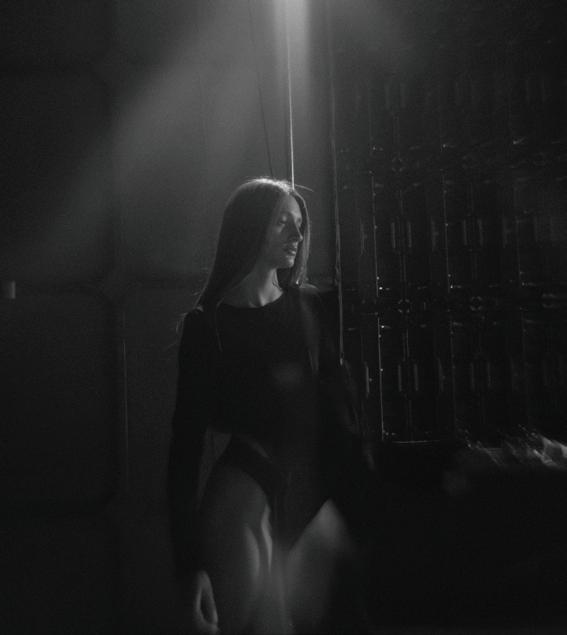
MONTENEGRO ON THE GLOBAL FASHION MAP
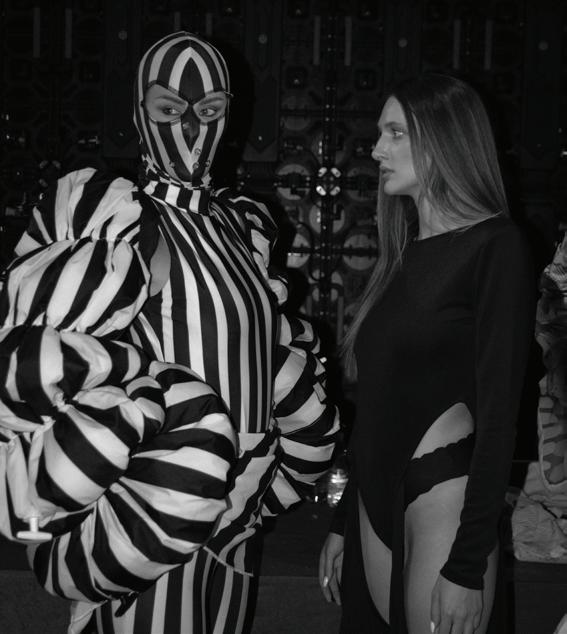
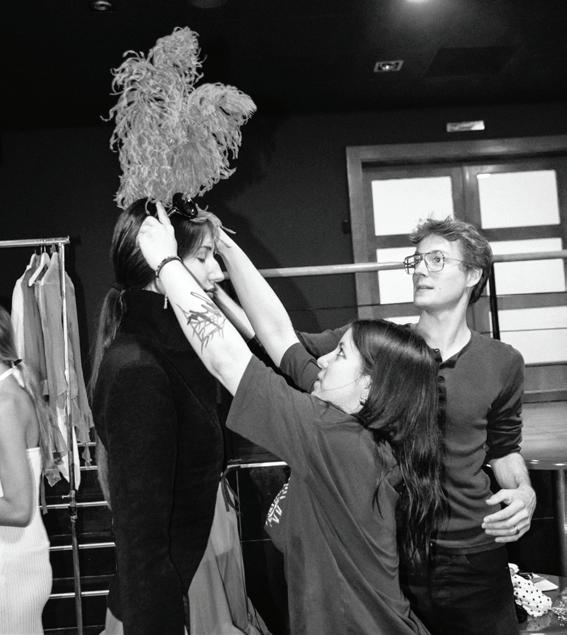
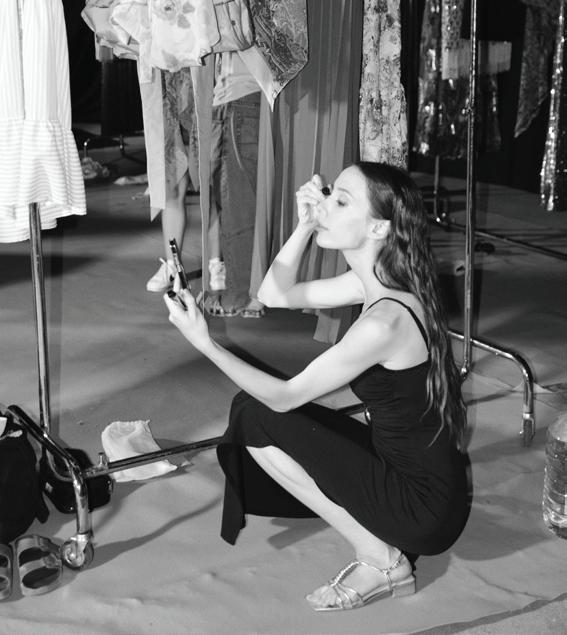
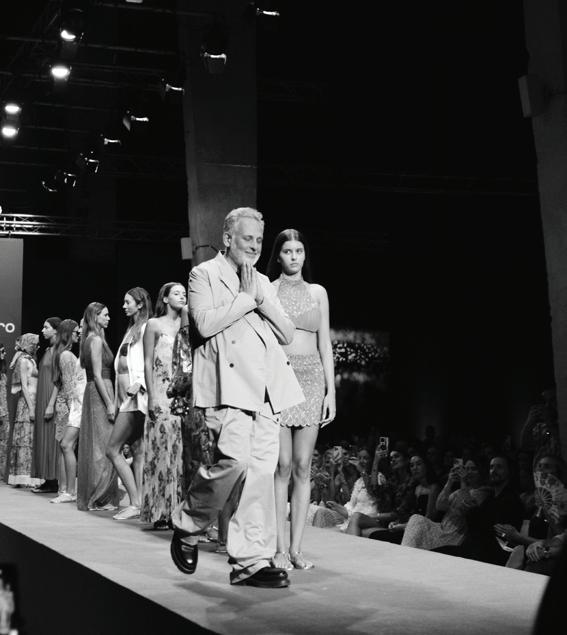
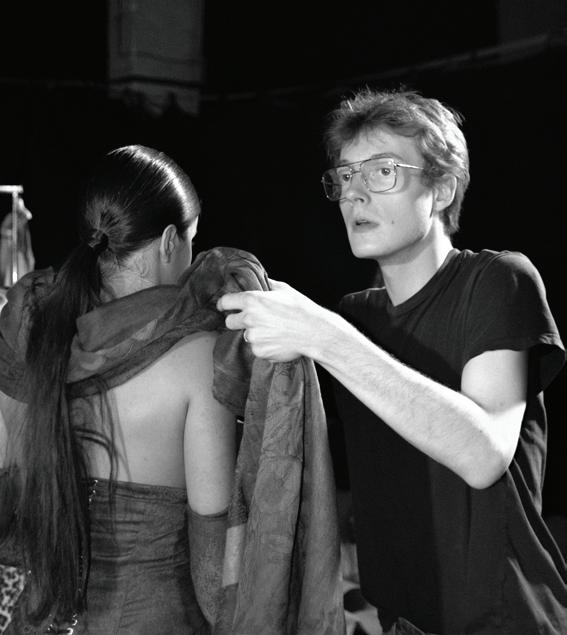
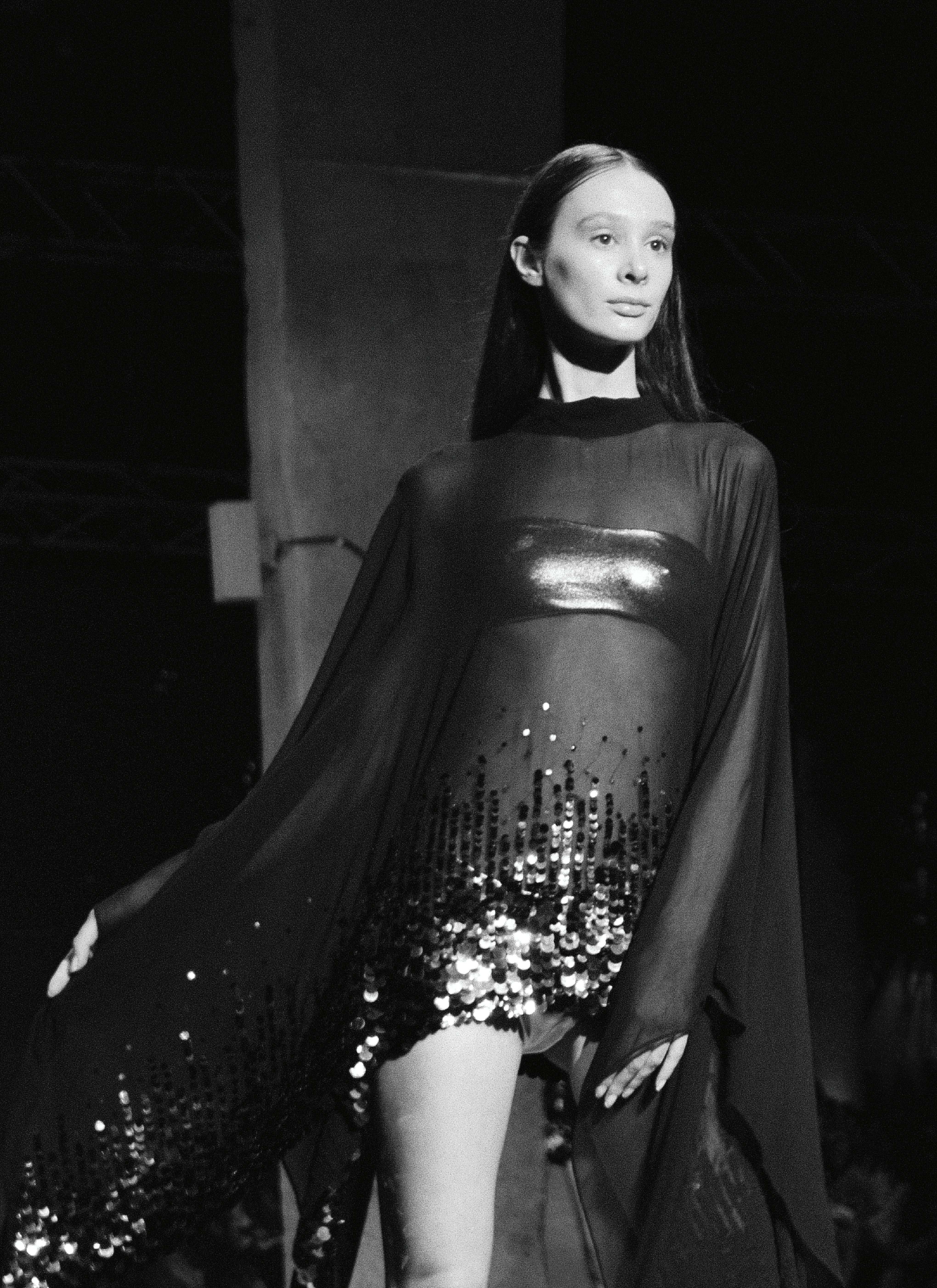
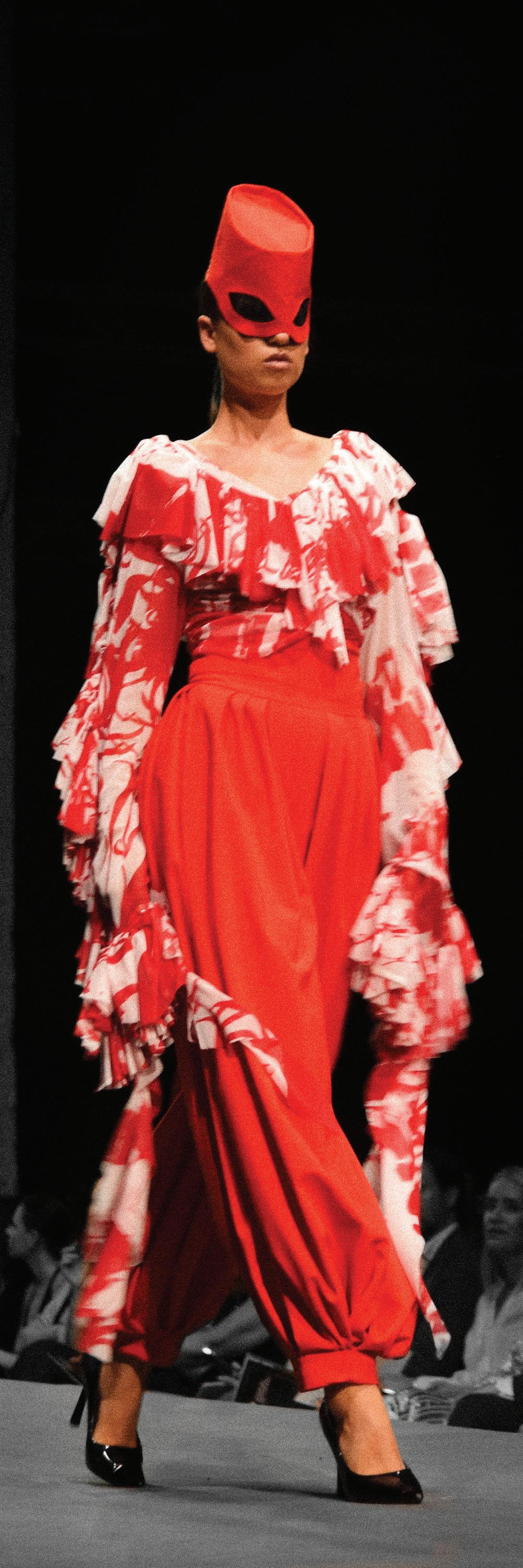
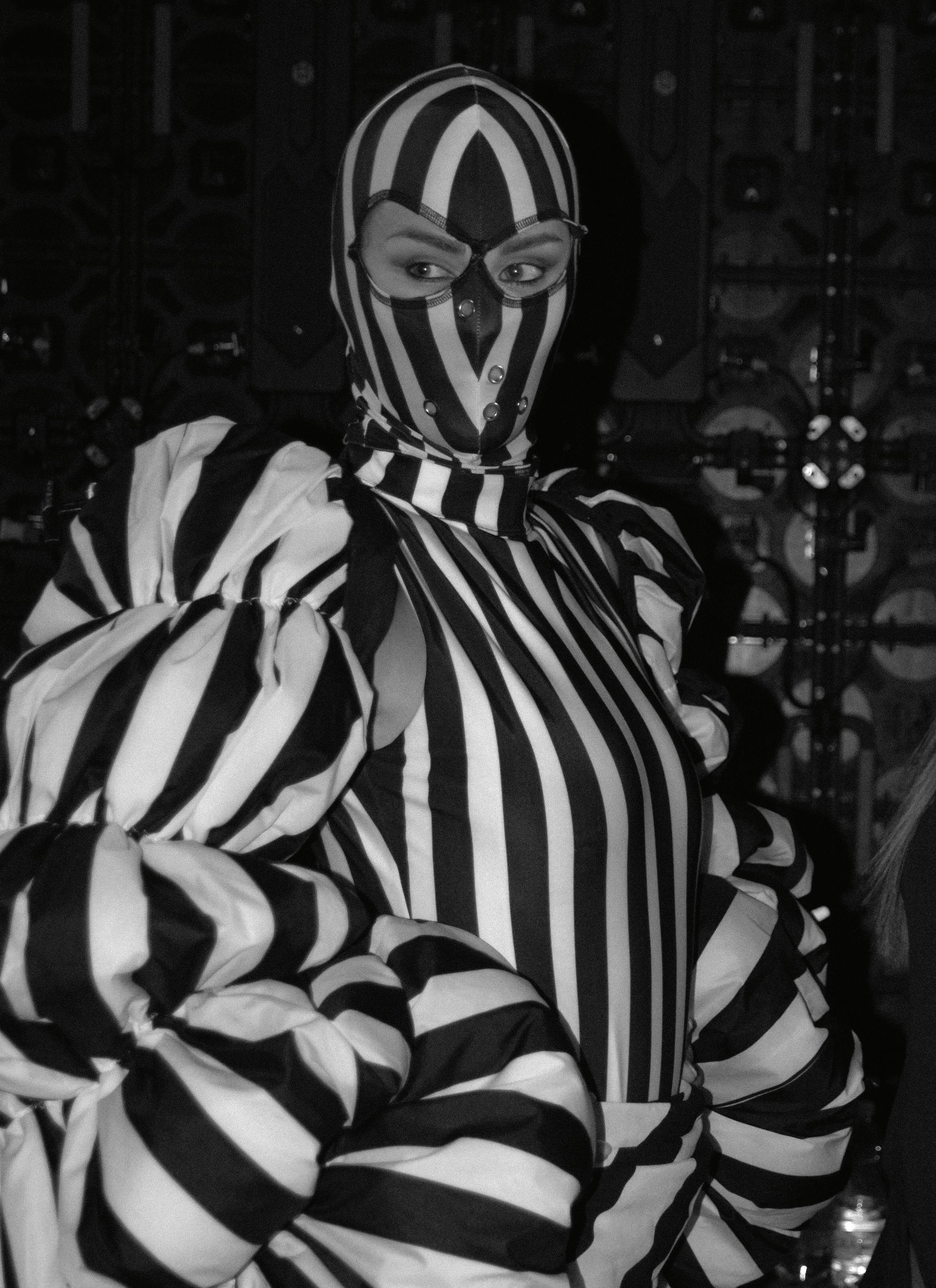
The International Fashion Festival (IFF) is a leading fashion event in the Adriatic region, bringing together global designers, rising talent, and forward-thinking ideas, each summer transforming Porto Montenegro into a global stage for the future of fashion.
The 7th edition of IFF welcomed new leadership voices, with Sara Sozzani Maino as President (Creative Director of Fondazione Sozzani) and Giorgia Virzi as advisor, joining forces with Vesna Mandić (Director of FABRIKA).
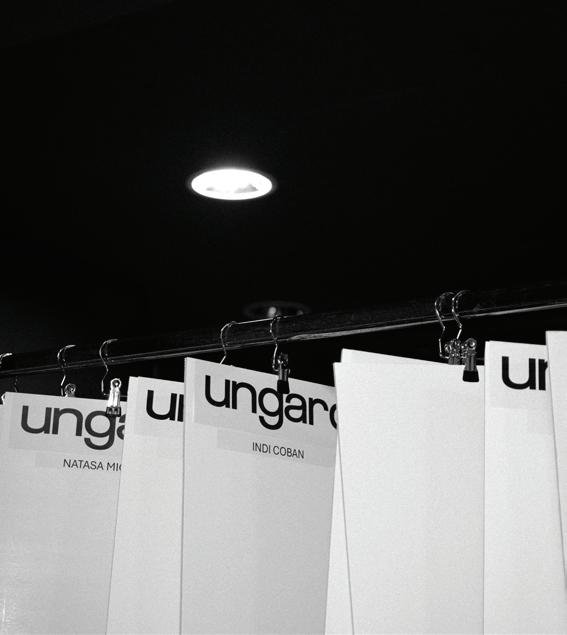
EMANUEL UNGARO
As the newly appointed President, Sara Sozzani Maino outlined the values guiding the future of IFF:
FASHION MUST BECOME ETHICAL, SUSTAINABLE, AND EDUCATIONAL
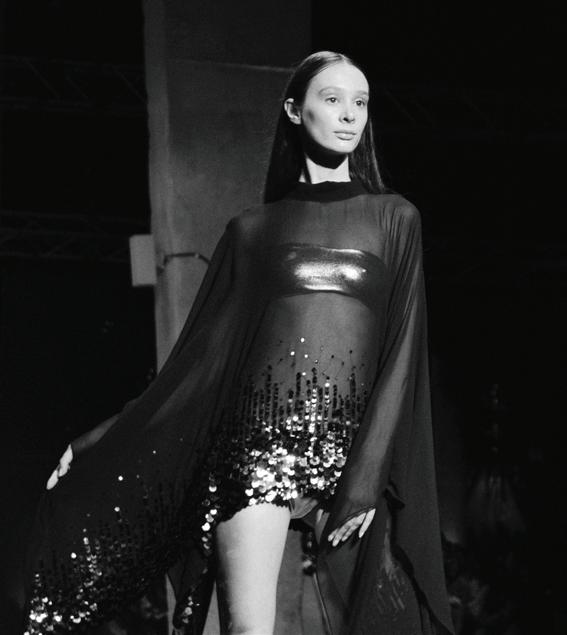
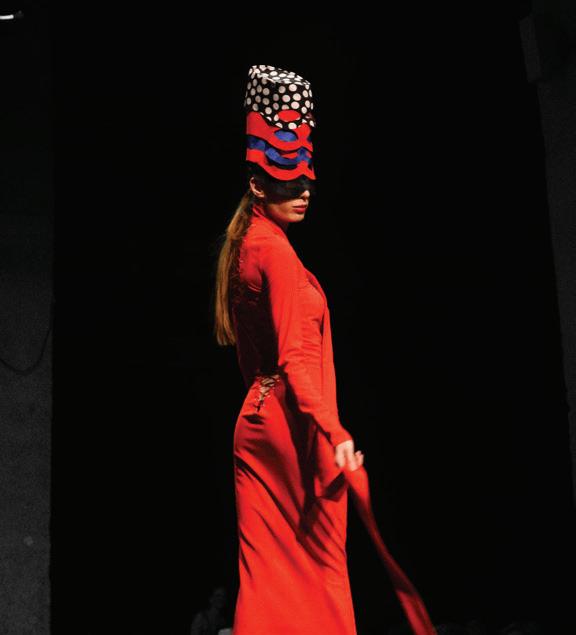
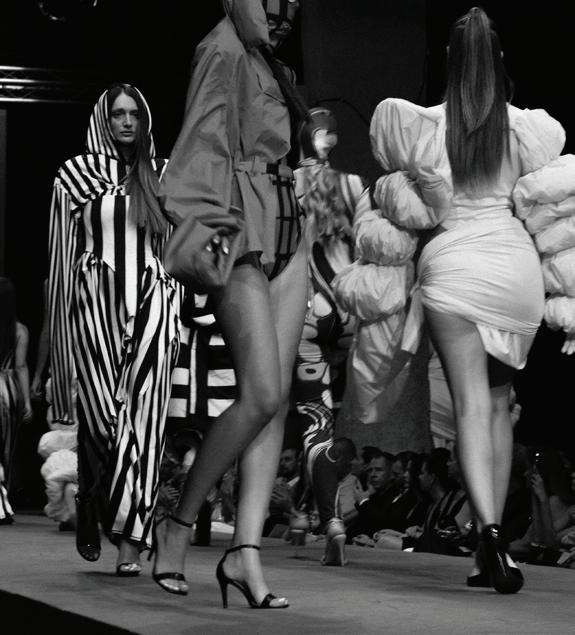
The runway program presented a bold look into the future of fashion.
It opened with a virtual fashion show powered by Faith Tribea global fashion tech platform that supports young designers through innovation and emerging digital tools. This frst-of-itskind presentation in Montenegro used AI technology to bring to life the designs of fashion students from Montenegro, Italy, and the United States, transforming their sketches into fully digital runway creations.
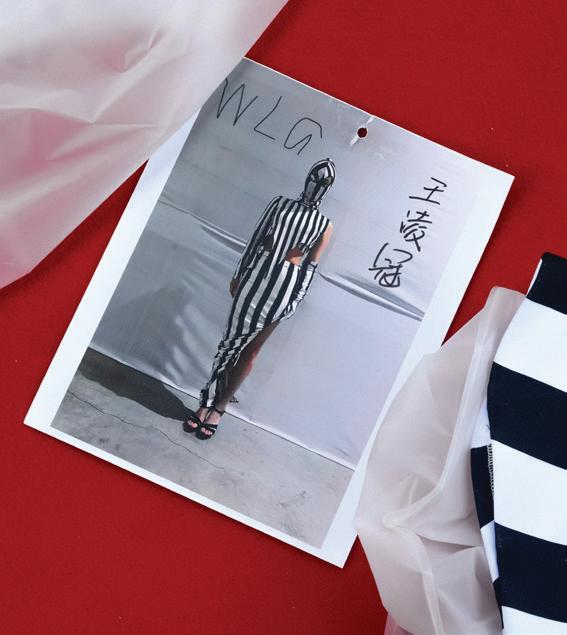
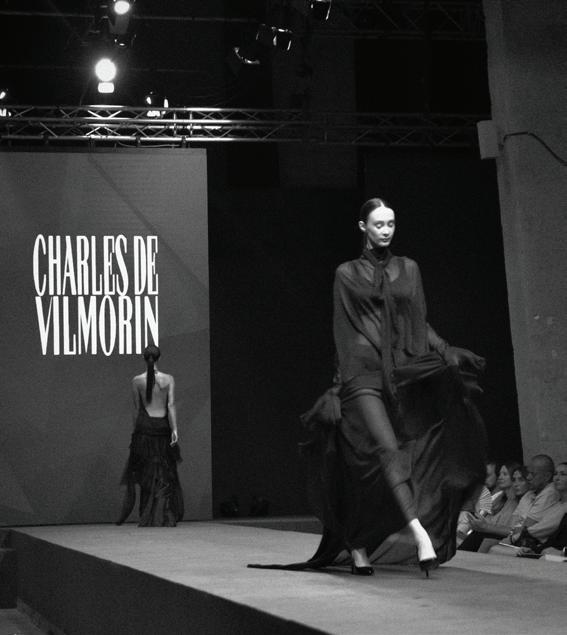
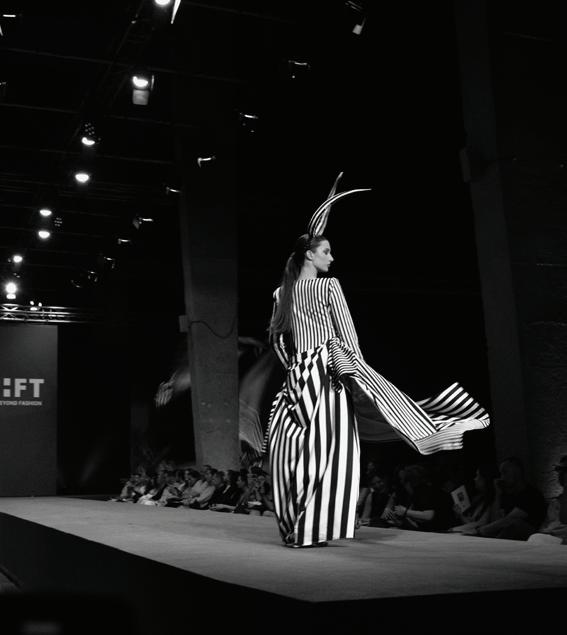
Fashion house Emanuel Ungaro presented its latest collection, while Shift Studio, a young Montenegrin label, introduced its distinctive experimental silhouettes. The spotlight also shone on Charles de Vilmorin, one of the most exciting young voices in fashion today, known for his colorful couture and for becoming the youngest designer to ever present at Louvre Couture.
The 8th edition of IFF Porto Montenegro is already on the horizon , set to challenge the boundaries between local and global, fashion and art, reality and virtual creativity.
CHARLES
STYLE LEADERS OF MONTENEGRO
In the early 1990s, fashion in Montenegro was a promise. A dream carried in suitcases from abroad, in glossy pages of foreign magazines, in a desire to belong to the world. This is the moment SAMMS story began - with one family deciding that Montenegro deserved access to fashion on its own terms.
For the past three decades, SAMMS has stood as one of Montenegro’s most influential fashion companies - shaping not only the retail landscape, but also the culture of how style and global fashion are understood and expressed in the country. What began as a small family business has evolved into a dynamic, multi-brand fashion company that continues to redefine what modern dressing looks like in Montenegro.
The business is rooted in strong family values - work, quality, and genuine connection with people. “For us, SAMMS is a family story,” the owners share. “Our father founded the company and built the foundations we stand on today. We continued his path and brought new energy, a more modern approach, and a women’s perspective to fashion - but the core values have never changed.”
That new perspective is led by a generation of young female entrepreneurs who combine intuition for style with a global point of view. Their leadership feels both natural and powerful. “For us, leading the company as women is something completely natural. We have always worked as a team, trusted one another, and made decisions together. We believe women carry a special sensitivity for beauty, emotion, and detail - and that is very visible in our work.”
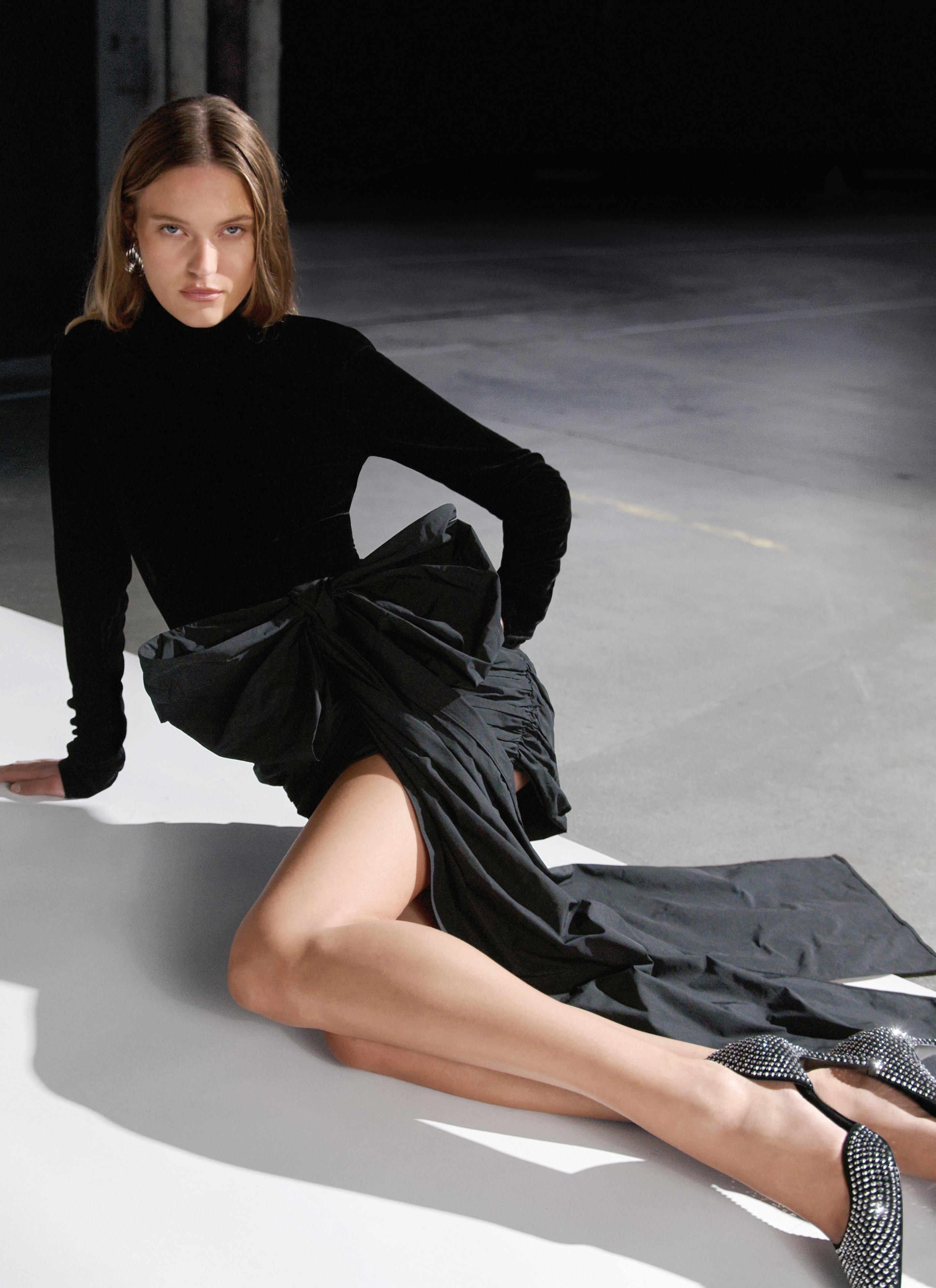
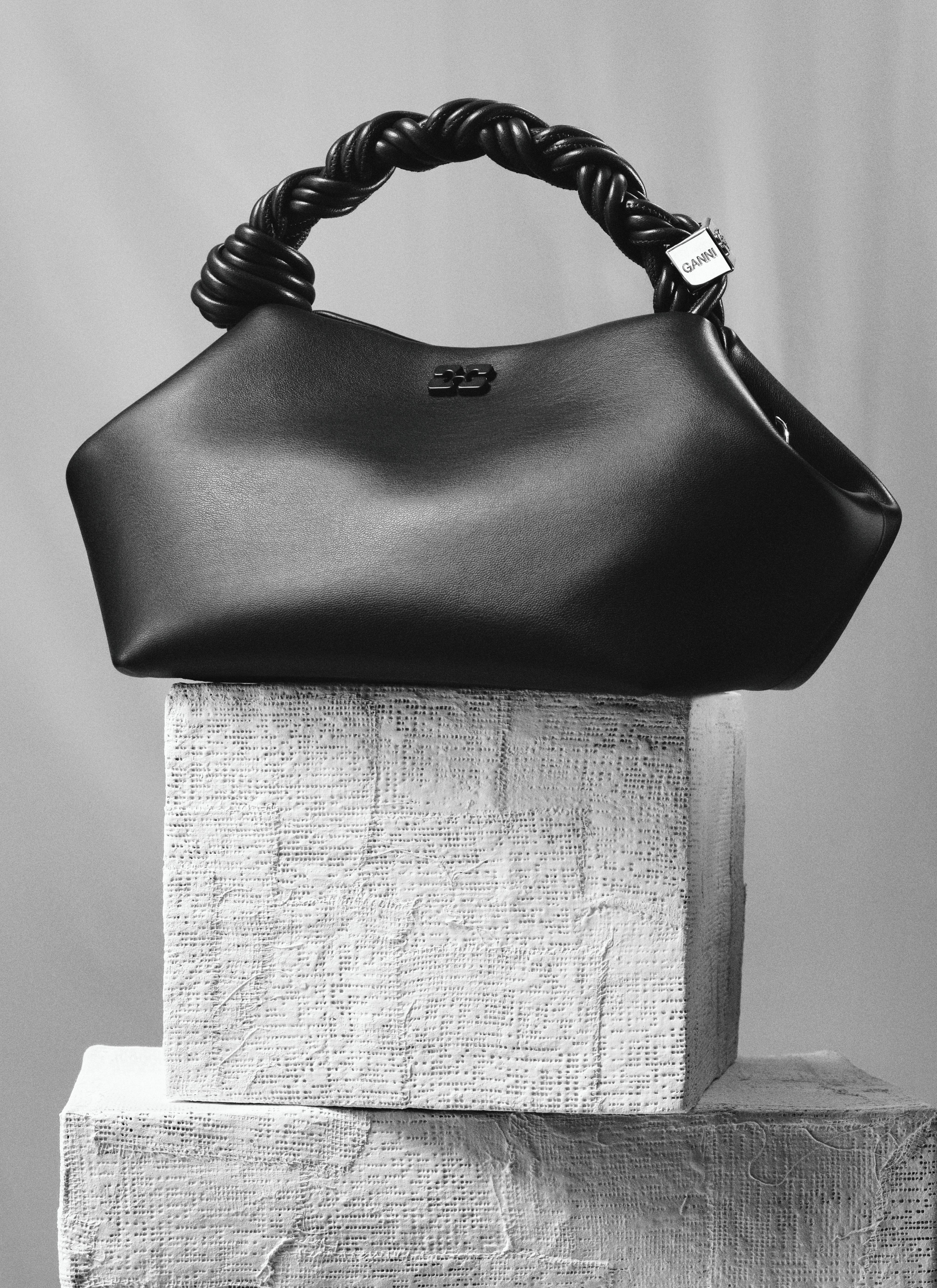
Over the years, SAMMS has intentionally grown its portfolio, representing globally respected fashion houses including MaxMara, Weekend MaxMara, Max&Co., Luisa Spagnoli, Ganni, Paul & Shark, Boggi Milano, Elisabetta Franchi, Pinko, Self-Portrait, Rotate, Twinset and more. Each brand selection refects both a fashion sensibility and a clear understanding of the Montenegrin customer.
“Inspiration comes from everywhere - travel, people, and of course online,” they explain. “Social media, especially Instagram, opens space for discovering new designers and fascinating styling directions daily.”
But selection goes far beyond trends. “We always chose brands with strong character, quality, and the right bal-
ance between modern and timeless. Every brand must match our aesthetic, but also the lifestyle of our customers. We look at the bigger picture: can this brand thrive here in Montenegro? Can it offer something new yet still feel relatable to our market?”
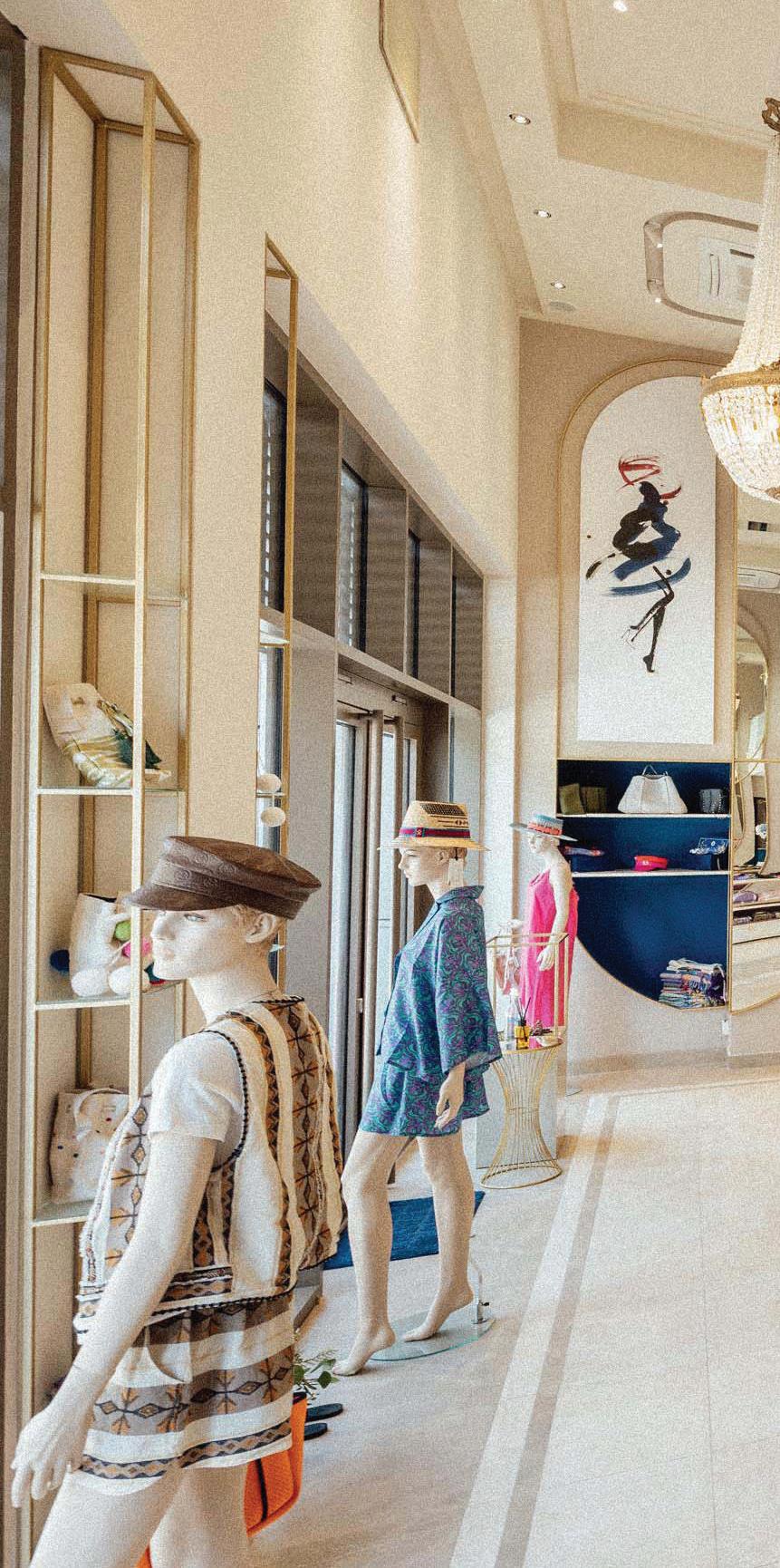
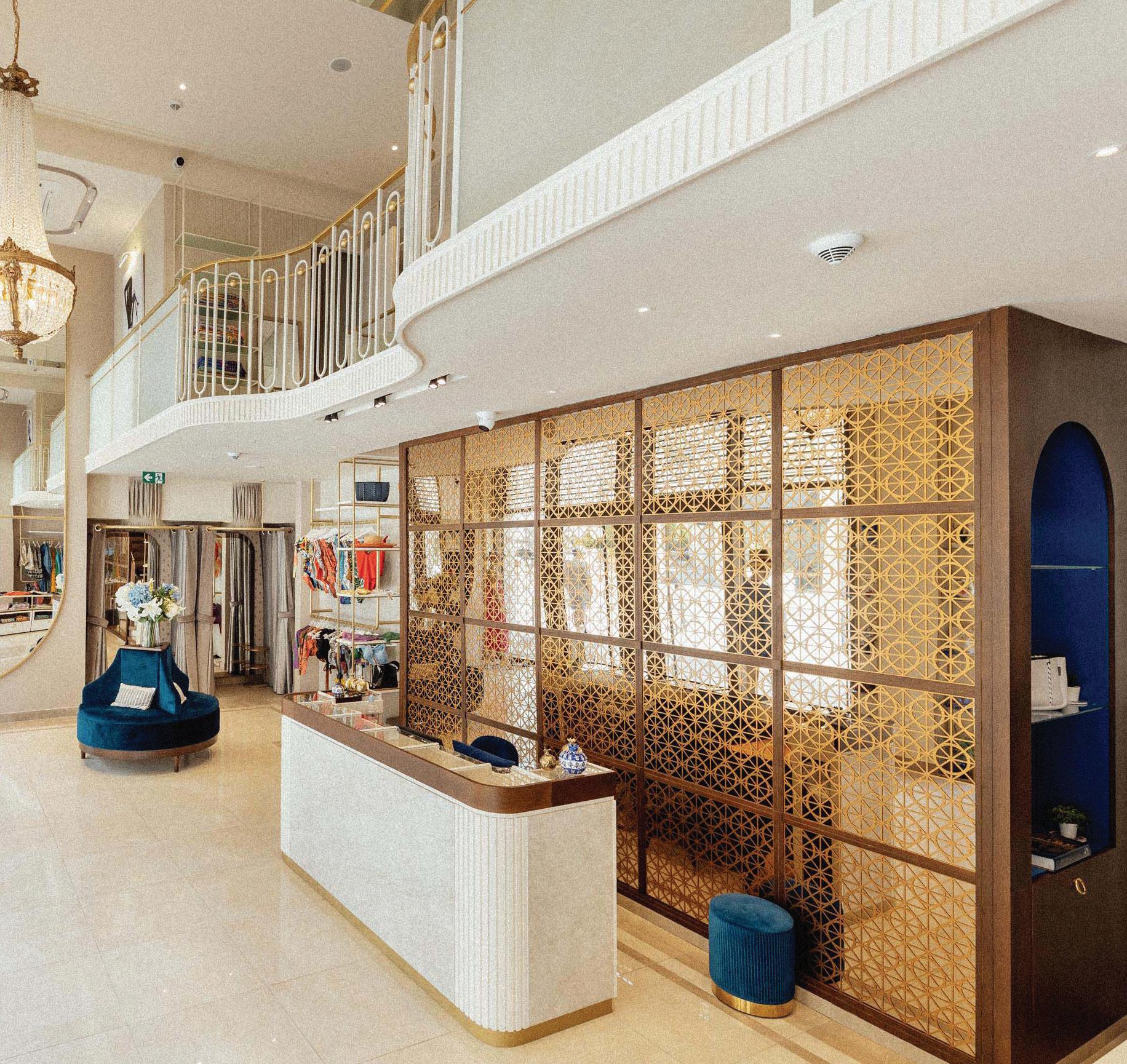
This thoughtful approach has positioned SAMMS as a key player in Montenegro’s cultural evolution. The country is changing - socially, aesthetically, and creatively, and SAMMS has become a driver of that change. Through carefully designed retail spaces and refned visual identities, has played a role in shaping a more modern Montenegro. Today, SAMMS operates in the key cities across the country - from the capital Podgorica to the luxury resort of Porto Montenegro, and the lively coastal settings of Bar and Budva.
Looking ahead, the focus remains on purposeful growth. Expansion is welcomed, but only when aligned with the brand’s DNA. “Our priority remains quality, a selective approach to brands, and a strong, honest relationship with our customers,” they say. “We want to grow gradually and stay true to our values. In the future, we would like to focus even more on sustainability, collaborating with brands that share similar philosophies and creating an experience that goes beyond clothing.”
SAMMS stands today as a symbol of Montenegro’s progress - proof that refnement, innovation, and tradition can coexist. And as the fashion landscape continues its forward movement, SAMMS will undoubtedly remain at the center of that story: a family legacy evolving with confdence toward the future.
Boggi Milano | Boss | ELEH | Elisabetta Franchi | Ganni | Liu Jo. Luisa Spagnoli | Max&Co. | MaxMara | Paul & Shark | Petit Bateau | Pinko Rotate | Self-Portrait | TwinSet | Weekend MaxMara
TYCHE
Some places feel meant to be
Some places feel meant to be. The ancient Greeks believed this was the work of Tyche - the goddess of chance and fortune. She shaped the unexpected moments that guide our lives. And perhaps it was Tyche herself who brought this boutique to the shores of Portonovi.
Tyche is a female-led, family business, created by a mother and her daughters after years of travelling the world and living between Athens, Mykonos, London and Montenegro. Their shared background shaped a sense of style that is relaxed, confdent and rooted in quality. Opening the boutique in Montenegro felt like a return home, while bringing with them the elegance of Greek island life and a warm coastal aesthetic that feels effortless year-round.
Tyche’s story started with Greek designers - the same cultural origin as its name. Over time, the boutique expanded to include a selection of international and local labels, each carefully chosen with intention. The emphasis is always the same: quality, comfort, distinctive style, and pieces that feel personal.
The boutique is located in Portonovi Resort, a destination known for its calm atmosphere, refned architecture and the One&Only hotel, making it one of the most prestigious marinas in the region. Stepping into Tyche feels like stepping into the rhythm of Mediterranean living - light fabrics, soft textures and silhouettes designed to move naturally with the body.
What makes Tyche unique is its edit. The boutique is known for offering pieces that are not easy to fnd elsewhere - clothing with character, jewellery with meaning, accessories that tell a story. These are items that stand out quietly: wearable, special, and memorable.
Tyche invites you to take your time, explore, and fnd something that feels yours.
Agua Bendita | Agua de Coco | Altra Volta | Arma | Atuttotondo | Beach Bunny | Birdini | Cobby | De Siena Di Gaia | Katia Panteli | Life Likes | Maria La Rosa | Masinka | Miss June | Nikkias | Pearl & Caviar | PCP | Pier St Barth PQ | Rdosol | Reina Olga | Ruslan Baginskiy | Signifcant Other | Solange Sandals | Sorbet Island |Ysabel Mora
Portonovi | Herceg Novi Montenegro
@tyche_portonovi
from morning to evening
NICOLAS
CONCEPT STORE
One of Belgrade’s most established multi-brand concept stores.
At the core of its philosophy is wearability. The vision is simple: clothes should work across real moments of life. Many clients are women who move quickly between work, meetings, and evening plans - and the goal is to offer pieces that transition effortlessly with just a change of accessories. A blazer that works in a boardroom should also feel right at dinner. A dress should feel natural, feminine, and comfortable - never stiff or overdone. The store prioritizes clothing that can be lived in and repeated, rather than worn once and forgotten. Every collection that arrives at Nicolas is chosen with this mindset, favoring pieces that balance practicality with style.
Nicolas Concept Store offers a focused selection of women’s ready-to-wear, shoes, and accessories. With two locations in the city - one in the center and one in Galerija Belgrade Waterfront, it has built its identity on quality and thoughtful curation.
Nicolas carries a refned edit of respected international brands, selected for their craftsmanship and longevity. Notably, the store is the exclusive retailer of Golden Goose for women in Serbia, which makes it a key destination for clients who follow global fashion.
What makes Nicolas stand out is its sense of consistency and trust. The team behind the brand understands their clientele deeply, offering personal guidance and an honest approach to styling. The focus is never on feeting trends but on pieces that build a wardrobe, evolve with time, and express individuality with ease.
More than a store, Nicolas Concept Store represents a way of dressing that feels effortless yet considered - from morning to evening, season after season.
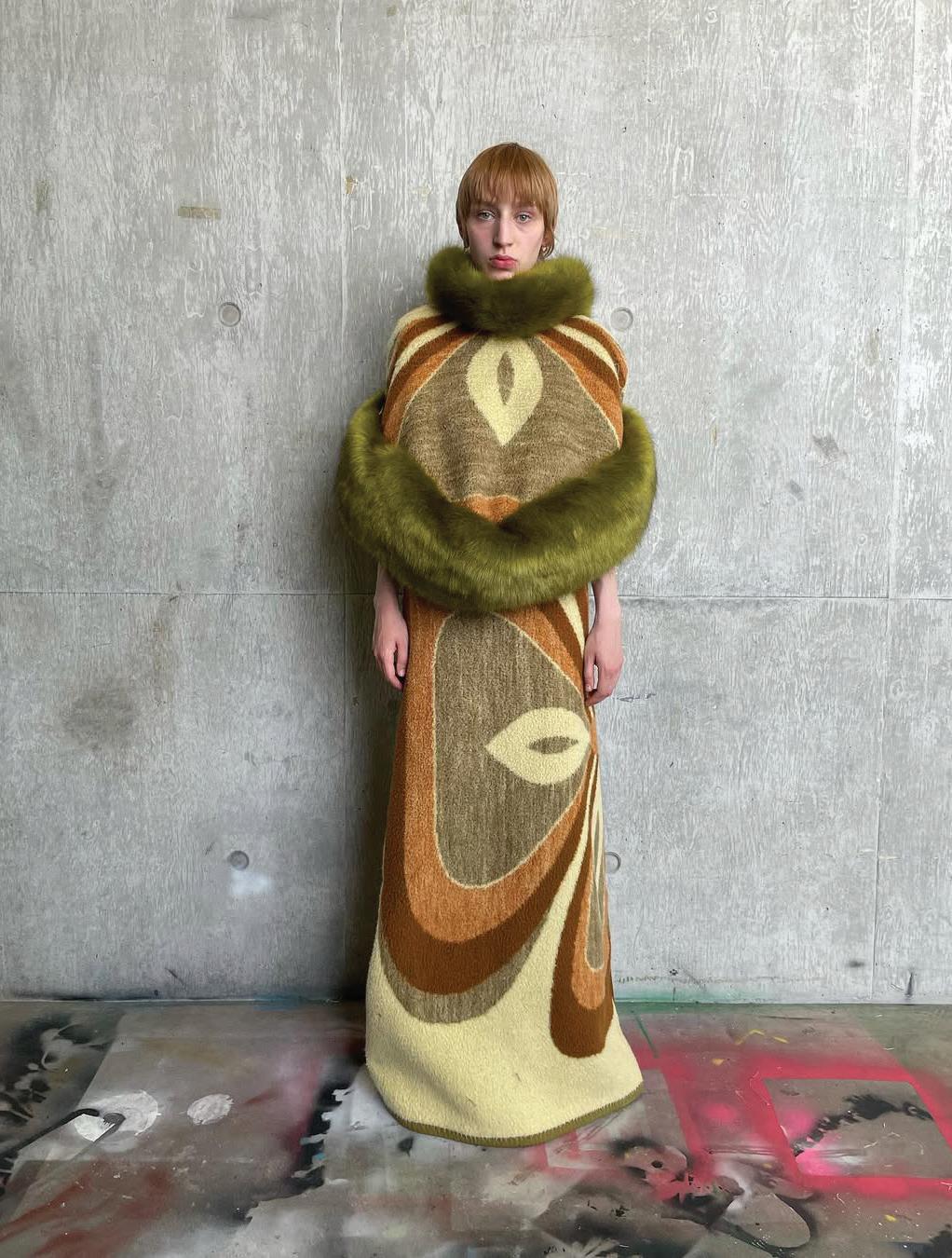
A young designer and graduate of Central Saint Martins, who draws inspiration from his regional background and nostalgic domestic textiles. Lovro is one of the winners of the LVMH Young graduate award 2024, which granted him opportunity to work at Loewe
@illovro
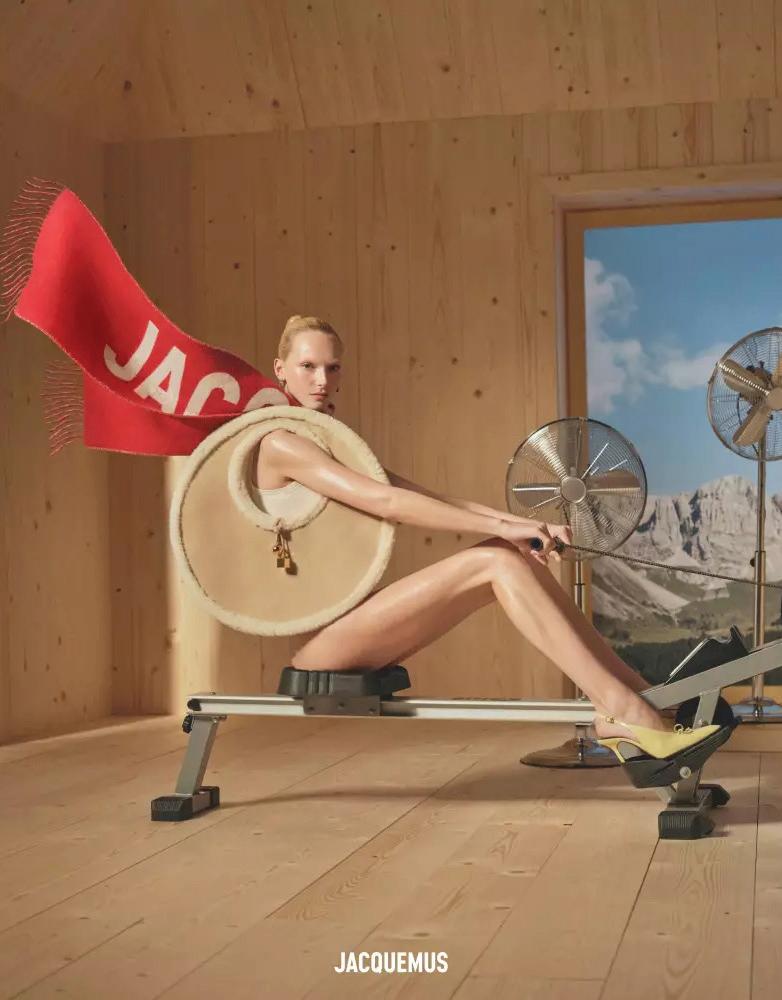
Artist whose work crosses fashion and fne art.
Her practice is inspired by the transformation of everyday objects and a poetic absurdity. She has collaborated with major fashion brands including Jacquemus, Hermès, Lanvin and Louis Vuitton.
@lisa_jahovic
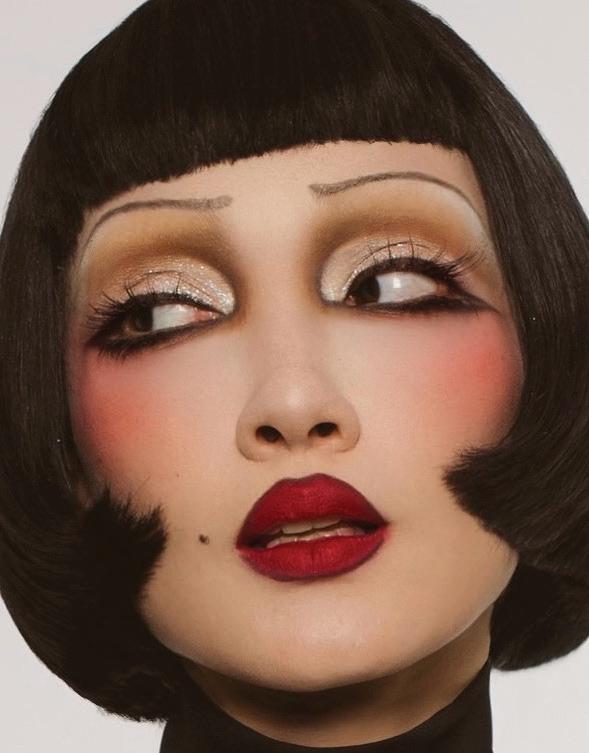
Milan’s expressive style blends fashion editorials with performance-driven styling, celebrating unconventional beauty and strong visual identities. His recent work includes collaborations with designer Sanda Simona, as well as features with Tomm¥ Cash.
@milan_bauranov
LOVRO LUKIĆ
LISA JAHOVIĆ
MILAN BAURANOV
Fashion Designer Multi-disciplinary Artist Make-up Artist
We are welcoming a new format for FAB: a standalone collectible edition.
The idea was born from a desire to create a deeper, more focused space for the creative landscape of the Balkans - from fashion and beauty, to art, businesses and emerging talent. The issue will combine original editorial production, creative collaborations and a strong digital presence, expanding our storytelling far beyond the printed page.
Designed as a collectible, it will serve as both a platform and an archive - capturing what is happening now, preserving it for the future, and amplifying Balkan narrative.