Tipton Poetry Journal, located in the heartland of the Midwest, publishes quality poetry from Indiana and around the world.
Statistics: This issue features 38 poets from the United States (20 unique states), and 1 poet from Ukraine.
Our Featured Poem this issue is “Outside the Gate” written by Joel Savishinsky. Savishinsky's poem, which also receives an award of $25, can be found on page 1. The featured poem was chosen by the Board of Directors of Brick Street Poetry, Inc., the Indiana nonprofit organization who publishes Tipton Poetry Journal.
Cover Photo Winter Horizon by Robert M. O'Brien
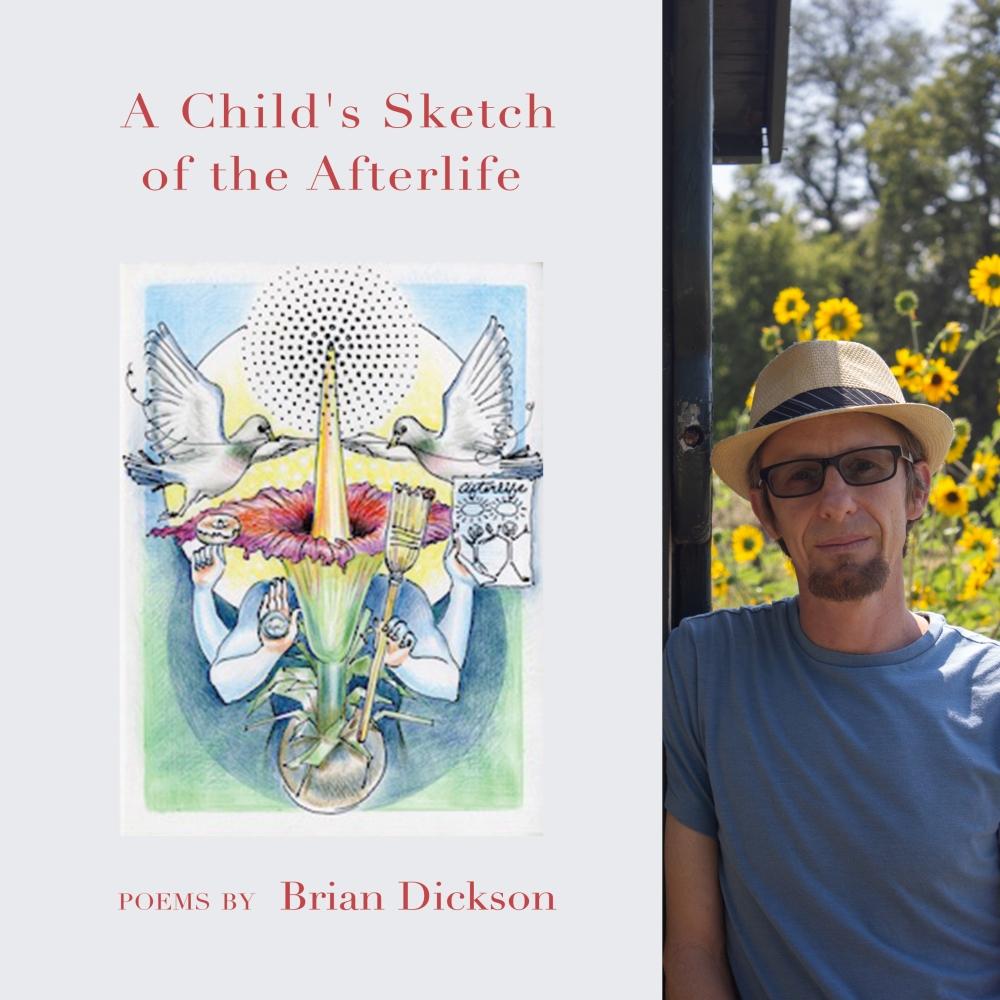
Book Review: Barry Harris reviews A Child's Sketch of the Afterlife by Brian Dickson
Barry Harris, Editor
Copyright 2026 by the Tipton Poetry Journal.
All rights remain the exclusive property of the individual contributors and may not be used without their permission.
Tipton Poetry Journal is published by Brick Street Poetry Inc., a tax-exempt non-profit organization under IRS Code 501(c)(3). Brick Street Poetry Inc. publishes the Tipton Poetry Journal, hosts the monthly poetry series Poetry on Brick Street and sponsors other poetry-related events.
Outside the Gate
JoelSavishinsky
When nature no longer leads and history takes its place, its practitioners rehearse all the ritual steps on the trading floor of memory, and the dancers do not dispute whether creation came of out nothingness or chaos. They just do the dance. Once, according to one telling, the holiest of intentions barely made it past the first week. To eat of the fruit of good and evil, with its wormhole into the future, was bad enough. Heaven’s fear that the tree of life would be next became the pretext for exile.
Outside the gate, in their orphaned world, the best that the first couple’s children could devise was the act of prayer, where they offered themselves and their progeny as a pledge and a sacrifice, drawing the outside in, their insides out, a forever project not just for disobeying God, but for neglecting the garden.
Joel Savishinsky is a retired anthropologist and gerontologist. His Breaking the Watch: The Meanings of Retirement in America, won the Gerontological Society of America’s book-ofthe-year prize. A Pushcart and Best of the Net nominee, and a California Quarterly, Cirque Journal, Open Kimono, Passager, Third Wednesday, and LIGHT Magazine award winner, the places his poetry, short stories and nonfiction have appeared include Beyond Words, Caesura, The Decolonial Passage, The Examined Life Journal, The New York Times, The Opiate, and Windfall. His collection, Our Aching Bones, Our Breaking Hearts: Poems on Aging, was published by The Poetry Box. He considers himself a recovering academic and unrepentant activist. savishin@gmail.com
Playing Outdoor Hockey in Minneapolis this
Winter JimTilley
1. Keep your cell phone on silent in your pocket. Take videos only of loved ones family and friends.
2. Wear a bullet-proof vest beneath an extra-extra-large hockey shirt over a ski jacket and hockey shorts.
3. Emblazon both the front and back of that hockey shirt with GO USA HOCKEY TEAM. You’re a patriot.
4. Go fully outfitted gloves, elbow pads, shin guards, mouthpiece, and helmet with a clear plastic face shield.
5. Carry your skates in a clear plastic bag slung over your shoulder.
6. Wrap your hockey stick’s blade with GO USA tape.
7. Bring your dog with you, but keep it on a six-foot leash. Wrap its neck with a USA bandana it is a patriot, too.
8. Hard as it may be, wear a smile.
9. Greet everyone you meet with “Hello, how are you?” When they look startled, wish them a good day.
10. If anyone asks you what you’re doing, just say that you’re looking for ice to practice on.
I can't remember what used to be there
JimTilley
A large ship sails by, the passengers looking out onto a green metal statue mounted on a cement pedestal emblazoned on all four sides with the words “Get Out.” At first, you think this must be Greenland after surrender, but then you notice the statue is wearing a flak jacket, its head helmeted and face masked, an arm raised, and, where the torch should be, a pistol pointed to the sky instead. You realize this is no gift from France, no gift at all, this cartoon in the Sunday newspaper with a passenger exclaiming: “Funny, I can’t remember what used to be there.”
Jim Tilley lives in New York State and has published four full-length collections of poetry and a novel with Red Hen Press. His short memoir, The Elegant Solution, was published as a Ploughshares Solo. Five of his poems have been nominated for a Pushcart Prize. His most recent poetry collection, Ripples in the Fabric of the Universe: New & Selected Poems, was published in June 2024. His forthcoming collection, When Godot Arrived, will be published in 2026.
The Morning After the Presidential Election of 2024
MichaelHenson
Fifteen Coney Island seagulls swarmed over a bag of discarded French fries.
A flock of Indiana crows flew into the trees at the edge of a field of alfalfa.
A rabbit expanded her den.
An Iowa coyote slipped down the channels of shattered corn.
An Idaho possum shambled into the shelter of a hollow tree.
A hawk in Kansas studied right, studied left from its perch atop a powerline pole.
A dead shark washed up on an Oahu beach.
The leaves of a locust tree fluttered in the Kentucky wind.
Cactus spines shone in the New Mexico sun.
A copperhead in Ohio waited in the leaves with its copperhead smile.
The candles at the back of the church shuddered in their red glass houses.
Chapter One of the Gospel of Saint Michael
MichaelHenson
Once again, we hear the ancient story. Herod Hamas battles Herod Netanyahu in a land that breeds olives and scars. Wise Men trek the desert in search of a star as the Slaughter of New Innocents begins. Mothers and fathers bury mangled children amid the rubble of their cities. The displaced and hunted seek shelter against the cold, drone-haunted night. But the hotels of Bethlehem are all booked solid and the mangers of the nations have been gentrified into Starbuck’ses and Chipotles.
The shepherds and the Magi debate among themselves: What does it mean? What does it all mean? Meanwhile, the holy families of the poor wander the gospel night under the star of the lost. The Romans pay close attention; they look on and they take notes. They sharpen their spears. They stockpile crosswood and nails.
Michael Henson is author of six books of fiction and four collections of poetry. His poems, stories, articles, and reviews have been published in a number of periodicals, including Tipton Poetry Journal. Born in rural Ohio, he now lives in Cincinnati.
Imaginary Lines
SharonHashimoto
She always halted before taking the first step into the third grade classroom, passing the coat closet where she stored her lunch sack, where the laws of the teacher ruled, where the seating assignment was boy, girl, boy, alphabetical. Her eyes aimed forward at the topographical map of the North American continent. Real rain struck and ran in streaks against the windows. On that chart, wouldn’t everything drain down the arctic ice above Alaska melt into the blue oceans and rivers, emptying into the Gulf of Mexico?
The teacher’s pointer tapped the equator, Tropic of Cancer, Prime Meridian. Latitude was width (the mouth of the Mississippi). Longitude was length (high as the sound of airplanes flying over the school). Her father had taped a border in her bedroom, separating her twin bed from her sister’s to keep them from yelling, Who didn’t put their dirty socks into the hamper, whose stuffed animal belonged to whom?
Good students around her sat up straight, raising their hands, while in the back two boys were using rubber bands to shoot spitballs. The teacher called her name: Have you crossed into Canada? That’s an imaginary line.
Tipton Poetry Journal
The white bars that block the road like switch blades after the Peace Arch, the uniformed men stopping their car everything she sees and hears and touches. Why did her face feel flushed when she has no answer?
Sharon Hashimoto's first book of poetry, The Crane Wife (co-winner of the 2003 Nicholas Roerich Prize and published by Story Line Press), was recently reprinted by Red Hen Press. Her second poetry book, More American, won the 2021 Off the Grid Poetry Prize and the 2022 Washington State Book Award in Poetry. Her collection of short stories, Stealing Home, was published in September, 2024 by Grid Books.
Pick-Up-Sticks
NancyKayPeterson
The sticks won’t stop. I tire of this woody land game. Hard labor weed whacking, pick up sticks, shrub trimming, pick up sticks, branch cutting, pick up sticks. Easy chores of storm clean-up, pick up sticks, mowing preparation, pick up sticks. I constantly play pickup-sticks, but these pieces aren’t stacked in a small, neat pile. There are no colorful ends and no special black one worth extra points. And the flora always wins.
Nancy Kay Peterson’s poetry appeared most recently in The Bluebird Word, Dash Literary Journal, Earth’s Daughters, HerWords, Last Stanza Poetry Journal, One Sentence Poems, RavensPerch, Spank the Carp, Steam Ticket, Three Line Poetry and Tipton Poetry Journal. From 2004-2009, she co-published Main Channel Voices: A Dam Fine Literary Magazine (Winona, MN). Her work appears in Haikus for Hikers (Brick Street Poetry, Inc.) and Play (Outsider Press). Finishing Line Press published her chapbooks, Belated Remembrance (2010) and Selling the Family (2021). She lives in Washington State. See www.nancykaypeterson.com.
The Wolf
TaraMenon
A wolf howled from inside my breast. My ears were deaf, but the eyes of the technician who read the mammogram were trained to spot wolves no matter how small they were.
My wolf was a cub getting ready for the second stage shall we call it adolescence?
The wolf belonged to a particular species that couldn’t be felt through self-exams. It was more deceptive than the wolf in Little Red Riding Hood, cloaked in the white grandmother’s nightgown. Red Riding Hood could exclaim, How wide your eyes are! and How big your ears are! She could feel the wolf’s hairy paws, but my cub hadn’t formed a lump, was more like a tail with two long strands that couldn’t be felt.
Fortunately, the cub didn’t let any of its self-replicating cells escape through my sentinel nodes to spread to other parts of my body before it was extracted by the hunter surgeon.
Cancer and wolves devour. Through the centuries, the former has been called the latter. Once you’re in their clutches, you need a hunter to rescue you and lots of prayers to live happily ever after.
Tara Menon is an Indian-American writer based in Lexington, Massachusetts. She is a two-time finalist for the Willow Run Poetry Book Award. Her latest poems are forthcoming or have appeared in Amplify (Sheila-Na-Gig), One Art: a journal of poetry, Blue Heron Review, Grey Sparrow Journal, Tipton Poetry Journal, and Masque & Spectacle.
A Specific Voice PhilipAthans
I hear this poem spoken aloud in a specific voice
A staccato almost mechanical specifically mechanical voice
It’s not the sound of a robot AI generated voice
I hear a human speaking these words maybe in Lou Reed’s voice
A person who understands the art behind a specific voice
Maybe every poem should be read only in one specific voice
And anyway, not mine.
Editor and author Philip Athans has been a driving force behind varied media including Alternative fiction & poetry magazine and Wizards of the Coast. He lives and works in the Pacific Northwest.
Now
GilbertAllen
in midwinter, when bare branches root themselves into the sky, and the sun fully risen by twelve
mocks the thermometers we walk under the dazzling frost bearing slumberers dreaming of spring.
The Arrangement
GilbertAllen
First the peegee hydrangeas pompoms dropped after September's first defeat. Then the gladioli queued toward the kitchen ceiling before giving up to down.
Next the trumpet lilies sour notes descending to no sound.
Finally the zinnias pink explosions blown and blasted to ruin and rubble. Now the tired greenery of late summer, spent, and only the vase, clear and empty.
Self Checkout
GilbertAllen
on Senior Day
Now that you've wandered for what seems like forever in this garden of perishables with limited shelf life
you're standing in a grumbling lineup of aspiring suicides. You'll pay, eventually, for every mistake in your basket CASH IN for your potato chips with their expiration date tattooed on this latest bag. Yes, you'll bag it before walking outside into the sunset silently humming your swan song as you dodder down to that long black vehicle waiting just for you. It'll drive past the farm
you bought so long ago now pushing up daisies in subdivisions while you've downsized to a resting place guaranteed to take your breath away.
Gilbert Allen lives in Travelers Rest, South Carolina, where he is the Bennette E. Geer Professor of Literature Emeritus at Furman University. In 2014 he was elected to the South Carolina Academy of Authors, the state's literary hall of fame. For more information about him and his work, see the interview at https://slantbooks.org/closereading/interviews/belladonna-beautiful-but-deadly-qawith-gilbert-allen/
Argument in Which Nothing New is Said
KailyDorfman
Let’s try this: as long as I go first, you can stick that needle in my eye. Look, I’ll even cross my heart and hope you die, if you just leave the rest for me and the blackbirds.
So here’s my story, morning glory, it’s time to bell the gray cat and cry for the bullet, it’s time to bite the piper and pay the blue moon’s late dues. Sure this isn’t the sharpest tack in the box! Sure
I’m not the sharpest knife in the drawer! Sure you’re not the sharpest tool in the shed, either, but you know in those salt-smelling wet nights there’s always a little more to regret. The dead heat and the dirt is where we both liked to hide. So tell your dad it’s true, I never knew the way out but I knew every way in. It’s true if wishes were fishes we’d all swim under the Bay Bridge. It’s true you’ve been trying to see a man about a horse, the same one I loathe with my whole rotten-peach heart. Meanwhile it’s still raining bullfrogs and your clogged kitchen sink.
Meanwhile it’s still raining the devil and each of his pitchforks. The problem is now you and me and him make three, and you heard that’s too many for tango. I said it’s all because the tuna fish
rots from the head. You said it’s because the wheel’s turning but your poor hamster is dead. And because there wasn’t much else for it by then, we both looked the racehorse I shot in its mouth.
Because you let the bastards get you high and I said uncle in the end, I admit it, all because I couldn’t let you get the last word in, and that was the last one we still hadn’t tried.
Where the Dark Went
KailyDorfman
Imagine night, then take away the dark. The moon, then scratch it out with light. The sky smeared bright, then the sky following where the dark went. Bats locked in their caves. Gold lawns littered with moths’ wings. Then the seas boiling up, the rivers hissing snakelike as they steam free. The fish that follow where the dark went. The air dry as a tongue. The trees gone, and the four-footed things, the mountain range I saw from the train, the train gone the way the dark went when I woke in it.
Kaily Dorfman was born and raised in Santa Cruz, California, and completed her MFA in poetry at UC Irvine and her PhD in English and literary arts at the University of Denver. Her work has been nominated for a Pushcart Prize and the Best New Poets anthology, and is published or forthcoming at journals including New England Review, The Wallace Stevens Journal, Painted Bride Quarterly, The New Criterion, Summerset Review, and Ibbetson Street.
As You Can See
CarolHamilton
The truth has turned dusty beside the trail, And perhaps is was always shifty on human tongues.
I want to pin its leaf down to innocent paper And spray paint it with serum truth serum, in fact,
So when I remove the silver pins and lift the serrate-edged, Paint-coated leaf, everyone will agree
The truth is as white as fresh snow wherever no one has yet muddied it.
Carol Hamilton has retired from teaching 2nd grade through graduate school in Connecticut, Indiana and Oklahoma, from storytelling and volunteer medical translating. She is a former Poet Laureate of Oklahoma and has published 19 books and chapbooks:children's novels, legends and poetry. She has been nominated 12 times for a Pushcart Prize. She has won a Southwest Book Award, Oklahoma Book Award, David Ray Poetry Prize, Byline Magazine literary awards in both short story and poetry, Warren Keith Poetry Award, Pegasus Award and a Chiron Review Chapbook Award.
I
Really
Have To Hand It To My Father
JohnGrey
"Hand me that screw-driver will you.” He doesn’t ask. He commands.
I'm merely servant in this instance, not his hope for me, not the feeling he gets sometimes that he is all there is between me making my way in the world, or floating through life like one more dust-mote.
He's up a ladder this time, too immersed in his specifics to care for how his protection both defines and despairs me.
The more I hand stuff to him, the less there is of me at this end. I could be the Lady of the Lake minus the Tennyson poem about me.
A screw-driver is his Excalibur. It’s enough to make him king.
John Grey is an Australian poet, US resident now living in Rhode Island, recently published in Shift, River And South, and Flights. Latest books, Bittersweet, Subject Matters and Between Two Fires are available through Amazon. Work upcoming in Rush, White Wall Review and Trampoline.
Yellow Scarf
DianeWebster
Her yellow scarf shocks Ruth out of anonymity as she sits on the corner bench. She flips through a little black book. An old boyfriend’s address she wants to visit again blurs across her vision. Ruth knocks on the door anticipating he still lives there, but knowing a stranger will open the door only because she’s an old lady and doesn’t look like she packs a pistol to shoot, to rob, to murder. She might whack you with her cane because she can, and you might fall, fall at her feet as she stares down at you, “Are you alright, dear?”
Ruth fingers her scarf like counting rosary; her bright yellow scarf like the first crocus of the year.
Diane Webster lives in western Colorado. Her poetry has appeared in North Dakota Quarterly, New English Review, Studio One and other literary magazines. Her haiku/senryu have appeared in failed haiku, Kokako, Enchanted Garden Haiku. Microchaps were published by Origami Poetry Press in 2022, 2023, 2024 and 2025. Diane has been nominated for Best of the Net and three times for a Pushcart. She was a featured writer in Macrame Literary Journal and WestWard Quarterly. Her website is: www.dianewebster.com
Tinsel
Tipton
ChristopherWatkins
I’ll see your murder of crows and raise you a baseball diamond in the fog, plus a backstop of dull wire and rain-faded wood. We walked Centrex base paths, the crushed brick darkened to dull orange in the damp evening. What did it all portend, that we spent so many hours in silence throwing a baseball back and forth?
I taught my daughter to spit in her mitt and thought about my long-ago dream to travel the country by motorcycle, playing catch at all the best diamonds in city parks, behind schools. Chasing a gleam of light as a crow does tinsel.
Christopher Watkins’ second poetry collection, Famished, was published by Pine Row Press in spring 2024. His debut, Short Houses with Wide Porches, was published by Shady Lane Press. His work has appeared in Redivider, The Massachusetts Review, Harpur Palate, Hayden’s Ferry Review, and more. Watkins holds an MFA in Creative Writing (Poetry) from the Stonecoast program at the University of Southern Maine. He is also an award-winning songwriter with thirteen albums released under the name Preacher Boy. He lives in Santa Cruz, California, and has previously resided in New York, San Francisco, Chicago, Seattle, and the west of Ireland.
Rear Visions
GeneTwaronite
We travel on the same bus, together yet apart, me in my rear seat from where I can not help but watch my fellow travelers like you whose knapsack and bedding I nearly tripped over. You take out your meal and eat while you can, methodically removing each item from your bag, savoring each bite of sandwich and boiled egg. It’s 100 degrees, yet here you are with heavy coat you must still carry against the night’s cold and hard ground. You twirl a strand of your matted hair into a knot and smile back at me with gap-tooth grin. And you with a hanky to your nose as if assaulted by some odor that suddenly sits down next to you, spray and spray from the handy bottle
you carry and make us all breathe your perfumed facade. And then there’s you who storms onto the bus at the next stop and lunges for your seat head jerking from side to side while your hands flail at something only you can see. Finally you sit but suddenly raise your legs and shake your hot pink baggy pants as if crawling with fire ants. You shake and shake but they won’t go away. Then grabbing your knapsack at the next stop, you bolt for the door, hands still flailing at whatever it is you see.
While I travel on, burdened by visions I can’t shake, these people I carry.
Gene Twaronite is a Tucson poet and the author of five poetry collections. His first poetry book, Trash Picker on Mars, was the winner of the 2017 New Mexico-Arizona Book Award. His latest poetry collection is Death at the Mall (Kelsay Books). He leads a poetry workshop for University of Arizona OLLI. Follow more of Gene’s writing at: genetwaronitepoet.com.
Water Time
MykytaRyzhykh
Everything has floated away Fish bones
The belly gives birth to pain
The tree moves like a dead stone washed by healing water On the banks of a jagged river in the hollow of a fresh wound
I take a pager from the pocket of a thunderstorm but remember there is no money Trees do not give up their bodies for the money in my hands
I ask Chat GPT about the future and today's sun is burning out The number of hands, like branches on trees, are incalculable
The forest is filled with voices for the first time and again The silence does not have enough words to gather everything together I close my unnamed eyes and the heavenly stars begin to light up
[This poem was first published in Black Bear Review]
Mykyta Ryzhykh lives in Ukraine, has been nominated for the Pushcart Prize and has been published any times in the journals Dzvin, Dnipro, Bukovinian magazine, Polutona, Rechport, Topos, Articulation, Formaslov, Literature Factory, Literary Chernihiv, Tipton Poetry Journal, Stone Poetry Journal, Divot journal, dyst journal, Superpresent Magazine, Allegro Poetry Magazine, Alternate Route, Better Than Starbucks Poetry & Fiction Journal, Littoral Press, Book of Matches, on the portals Litсenter, Ice Floe Press and Soloneba, in the Ukrainian literary newspaper.
Grandmother's Opossum
(or If Wounded, Lie Face Down and Play Dead)
LoisMarieHarrod
What was she if not pretense?
Nice when she felt dour, dour when she could not mend. Her sex, the sour lemon on her tongue
No, he did not want to hear her woes or tend her pleasure, she was just the tight end to the long game, the tag end in the downtrend.
Keep your secrets to yourself, Grandfather said, You’re luckier than your widow friends.
Poet and Artist Lois Marie Harrod’s Spat was published by Finishing Line Press in 2021, and her collection Woman was published by Blue Lyra 2020. Nightmares of the Minor Poet appeared in June 2016 from Five Oaks; her chapbook And She Took the Heart appeared in 2016; Fragments from the Biography of Nemesis (Cherry Grove Press) and the chapbook How Marlene Mae Longs for Truth (Dancing Girl Press) appeared in 2013. A Dodge poet, life-long educator and writer, winner of 3 New Jersey Council on the Arts Grants for Poetry, she is published in literary journals and online ezines from American Poetry Review to Tar River to Zone 3. Links to her online work at www.loismarieharrod.org
God is Watching
ArvillaFee
black streets slick with oil-spattered rain, a clatter of metals cans in an alley, cats fleeing from the scene of a crime wet blade dropped in haste, its victim staring at the sky, tips of his eyelashes hoarding drops, open, unseeing pupils God is watching watching
the girl down on Second Street shivering in her too-short skirt and knee-high boots, waiting for the next car, the next passerby to throw a glance, a dollar, an ounce of compassion her way; she’ll smile with painted red lips, that’s all she’s got God is watching watching
metal bars over the windows, a local market robbed three times this month; the clerk no longer trembles he’s armed now behind the counter, his finger twitchy at the slightest sneer, at figures lurking near merchandise; he’s never been more ready God is watching watching
a junkie with his junk, the flash of a needle under a streetlamp in seconds he’ll be free of pain, of the sores on his feet, of the way his clothes scratch and claw at his paper skin; this will give him a day, maybe longer, before he needs food again God is watching watching
preachers in the pulpit dipping out the holy water, admonishing the wooly flock to love thy neighbor and the congregation is nodding with one sleepy eye on the clock, thoughts hanging in the air like dust motes, wondering where to go for Sunday lunch God is watching watching
New York Pigeon
ArvillaFee
She sits outside my window, a puff of gray and purple feathers, cooing out her song on a rusted balcony. I sit with her at times, perched precariously in my lawn chair with its wobbly leg. Her name is Nadia, I’ve told my friends, who laugh and say pigeons in the city are a dime a dozen and all look just the same. But I know this one; she has a certain way of tilting her head, and a lone white feather jutting from her saucy tail. We have lunch sometimes, she some grains and bits of seed, healthy stuff, you know—and me with a turkey, cheese on rye. It’s this little thing, this gray and purple thing, that keeps me just north of insanity, keeps me dragging out of bed each morning to face the concrete and the cabs, people bumping shoulders without apology.
Arvilla Fee lives in Dayton, Ohio with her husband, three of her five children, and two dogs. She teaches for Clark State College, is the lead poetry editor for October Hill Magazine, and has been published in over 100 magazines. Her three poetry books, The Human Side, This is Life, and Mosaic: A Million Little Pieces are available on Amazon. Arvilla’s life advice: Never travel without snacks. Visit her website and her new magazine: https://soulpoetry7.com/
Modern War
WilliamHeath
Nowadays the wars I witness on television are fought against bad architecture, whole cities of poured concrete
reduced to heaps of rubble, the people who lived there mere collateral damage, it’s the buildings the bombs and missiles aim at, if they miss one they hit another and the simple process of hauling off all those blocks of ugly structures makes each war a success except for all those displaced people and the stench of death.
William Heath has published four poetry books: The Walking Man, Steel Valley Elegy, Going Places, and Alms for Oblivion; three chapbooks: Night Moves in Ohio, Leaving Seville, and Inventing the Americas; three novels: The Children Bob Moses Led (winner of the Hackney Award), Devil Dancer, and Blacksnake's Path; a work of history, William Wells and the Struggle for the Old Northwest (winner of two Spur Awards and the Oliver Hazard Perry Award); and a collection of interviews, Conversations with Robert Stone. He received a Lifetime Achievement Award from Hiram College. He lives in Annapolis, Maryland. visit: www.williamheathbooks.com
Fierce Weather Can Scatter Light
KathrynKimball
Cataclysm seems ascendant sudden violent upheaval and a surge in human suffering, with weeping & despair.
I now keep vigil with Rubin's Eye on the Sky trained on the Virgo Cluster 55 million light years away. The eyes swirl on the dance floor of a thousand galaxies, vision entwined in a mix of spirals, ellipticals and faint dwarf galaxies.
Amidst destruction and creation on a cosmic scale the body turns in corresponding orbit, its own pulsating star, ever in process of living and dying, gleaming and lit as Sirius, though at times the light is bad and a fierce weather scatters the light.
Kathryn Kimball grew up in Montgomery, Alabama, has an MFA and PhD, and taught writing and nineteenth-century English literature. Her translations and poems have appeared in various literary journals. She published a chapbook in 2021 and a volume of poetry in 2025 and won the Columbia Journal 2023 translation prize. She lives in New York City.
A Hat Upon a Shelf
Mary HillsKuck
Who would have thought the march would be so long, my shoes worn through, my money spent, the current strong enough to rob my coat and hat, the desert cold enough at night to freeze, yet hot enough by day to sear my skin and parch my throat, no water anywhere?
Who knew I’d feel relief at those thick shadows cast by well-armed men who captured me, who brought me to the prison that I soon was told would be my temporary home? Could this be home, where even if I had a hat, it would be snatched as contraband?
Released at last at midnight in a place I do not know, a paper in my hand, no money and no extra clothes, I walk the sidewalks looking for a place to stay, longing for a belly full, somewhere to throw a well-worn hat upon a shelf.
To Minnesota Mary HillsKuck
Snow trims roadsides, hugs fields, dapples trees. You nudge the car along, slithering autos skidding to and fro. Wind swirls icy pellets on the road, then whips them up like tempests on a sea, blinds us inconsistently with flurries.
You and I share memories of this road, of warm receptions in its cities, towns, of hosting couples who were kind to us, of laughing children counting the red cars, delighting in the Scandinavian sweets.
Snug in winter coats and knitted hats, you and I together in this storm, warm with expectation of more joy, forge right through the blizzard and its gale.
Mary Hills Kuck, a born Midwesterner, has spent most of her adult life in the US Northeast and in Jamaica, West Indies. Her poems appear in The Connecticut River Review, Tipton Poetry Journal, Pulsebeat, the Lyric, and a number of other print and online journals. Intermittent Sacraments, her chapbook, was published in 2021 by Finishing Line Press. Her full-length book, Before I Forget, was published by Kelsay Books in 2024. She was nominated for an Eric Hoffer and a Pushcart Prize and was short-listed for the Kelsay Books Women’s Poetry Prize.
The Roadside Rabbits of Baie-Comeau
MarkMacAllister
To witness them you must begin with the four-day drive to Nova Scotia then 250 miles more to the overnight ferry between North Sydney and Port Aux Basques
from there 350 miles up Newfoundland's west coast (the east this summer is all forest fires) take a second ferry this one just ninety minutes to Labrador province where you proceed north and swing west for 600 more miles until arrival in Labrador City
by now you no longer mark each day but think instead only in terms of the map this section is paved narrow and curvy it reads here begins 120 miles of gravel
you buy all the fuel you can hold and once in Côte Nord Quebec there they are hundreds it appears already lined up roadside eyes gone amber in your lights
perhaps they are teenagers their young brains prone to risk-taking or initiates of some leporine death cult
they remain stone still until you are upon them then charge across the road barely avoid your front tires or more alarmingly run beneath the truck between the front and back axles
this goes on for miles though there is not one other vehicle (or building or person or sign) for an hour in either direction
and ends only at the edge of Baie-Comeau though you maintain watch up to the last ferry across Tadoussac Fjord where you borrow a hose from the loader wash thousands of insects off the windshield but find not a drop of copper rabbit blood
after beer and pizza in Quebec City tell everyone you're turning home your wife is pleased to inform you that the volunteer impatiens she finds flourishing each August among the driveway rocks have returned and this year they are pink white purple and red
Mark MacAllister grew up in northern Illinois, spent a great deal of formative time on his grandparents' dairy farm in southwest Wisconsin's Driftless region, and learned to write at Oberlin College. Mark now lives in Pittsboro, North Carolina but travels often to the Wisconsin Northwoods and to Michigan's Upper Peninsula to hike and bike the backcountry. His poems appear in various journals, including Steam Ticket, Quiet Diamonds, The Journal of Undiscovered Poets, Deep Wild: Writing From the Backcountry, Moss Piglet, Flying South, and Passager Journal. Mark’s chapbook, Quiet Men And Their Coyotes, won the 2022 Concrete Wolf Chapbook Contest and was published in January 2023.
Augmented by Love
WallySwist
This morning, I repel you. You are unsure who I am and when there are glimmers of recognition you openly dislike me but will eventually open your mouth for muffin. Your hesitation toward me is in opposition to your kissing my hand before I left yesterday, small kisses, affectionately placed. One of the more peripatetic patients has invaded our space by sticking her hand near my face. At least twice, after calling out for an aide, she has been led away. Perhaps, it is my raised voice that has triggered you, since you have always responded badly to me when I am passionate. I ask you if you would like me to go and you say: Yes. Something collapses within me. I tell you that I’ll be back tomorrow, you look up as if you could care. Driving home in the rain, I think about something you said yesterday that I didn’t understand, I have black and blue marks within black and blue marks. As we are augmented by love we are diminished by its absence.
Wally Swist’s books include Huang Po and the Dimensions of Love (Southern Illinois University Press, 2012), selected by Yusef Komunyakaa for the 2011 Crab Orchard Open Poetry Competition, and A Bird Who Seems to Know Me: Poems Regarding Birds and Nature, winner of the 2018 Ex Ophidia Poetry Prize. Recent essays, poems, and translations have appeared in Chicago Quarterly Review, Commonweal, The Comstock Review, Frontier Poetry, Healing Muse, Illuminations, La Piccioletta Barca (U.K.), Pensive, Sunspot Lit, and Your Impossible Voice. Forthcoming titles include If You’re the Dreamer, I’m the Dream: Selected Translations from Rilke’s Book of Hours from Finishing Line Press and Kelsay Books published Aperture, poems regarding caregiving his wife through Alzheimer’s.
Angel Ballerina
TiaPaul-Louis
If David danced before God, so could you, dear Peyton, with your toes skilled in twists and turns that flip the pages of your piano hymns like a sudden breeze. What a portrait you display with your piqué. You bow as in a prayer your most admirable pose a pause still in rhythm, accompanied with applause from an audience perhaps, of angels; accolades descend even as your eyes remain closed, praising God for having made you to serve in rhythms that only the heart can play.
Tia Paul-Louis is a fiction writer and poet from Florida. She began experimenting with songwriting at age 11 and later felt a deeper connection to poetry. Her themes portray family life, gender role controversies, mental health, and spiritual values. She admires the freedom of expression in most forms of art such as music, acting, and painting.
Vow
ClaireScott
I slipper out to get The New York Times wrapped in its blue plastic coat I greet the new day and vow to be kinder to him
a man who is forgetting words memory gaps filled with flotsam floating in his brain forgetting to brush his teeth forgetting to flush the toilet but sometimes a flash of cyanide my vow shriveled and bitter the plants protesting, the begonias drooping because he forgot to water again
as a kid I ran through the rippling sheets that smelled of Clorox and morning sun my hands covered in dirt muddy streaks painting white canvases serving my mother right
I am not a nice person I speak quickly and quietly knowing he can hardly hear I pretend I don’t recognize his random words
I touch the vow in my pocket wrapped in good intentions and remember muddied sheets and mean moments and I feel the runes of regret
Tipton Poetry Journal
Claire Scott is an award winning poet in Oakland, California who has received multiple Pushcart Prize nominations. Her work has been accepted by the Atlanta Review, Bellevue Literary Review, New Ohio Review, Enizagam and Healing Muse among others. Claire is the author of Waiting to be Called and Until I Couldn’t. She is the co-author of Unfolding in Light: A Sisters’ Journey in Photography and Poetry.
Seamstress
MichaelKeshigian
Having mended delicate strands of loneliness tangling my heart, she kneels in prayer upon the floor with clusters of pins on her lips attempting to bond my ragged perspective. Hemming, cutting and matching thread, her needle attaches bloodless seams in arcing lines to invigorate my listless persona with warmth. Yet, I dream of us completely unwoven.
Michael Keshigian from Londonderry, New Hampshire, is the author of 14 poetry collections, his most recent, What to Do with Intangibles, from Cyberwit.net. His work has appeared in numerous national and international journals as well as many online publications, including The California Quarterly, Chiron Review, Jerry Jazz Musician, San Pedro River Review, Oak Bend Review, and Sierra Nevada Review. He is a 7-time Pushcart Prize and 3 time Best of the Net nominee.
Watermelon and Cherries
KarenLee
I pack my car, of little boys, with sticky hands loud music windows down.
You pack your car of little boys with clean faces books on tape, air conditioning.
I pack a lunch, of PBJ, Pringles, Oreos and watermelon.
You pack a lunch, of cold leftover chicken, cole slaw and cherries.
We always meet at the slide.
You and me, on the bench.
Two moms, sisters, lying out a picnic arriving early to claim our table in the park.
Tipton
You bring a tablecloth I bring a washcloth.
Your boys devour, my picnic basket, mine devour, what you bring.
You feast on the watermelon and I thank you for the cherries.
Karen Lee writes poetry that falls out of her head onto the page. She writes middle grade fiction that uplifts normal girls that don’t kick ass. She writes cathartic life essays with her tongue in her cheek. When she’s not doing all that, she teaches graphic designs while continuously creating her own art. She is a constant and perpetual student herself taking class from Stanford University, Gotham Writers Workshops and the Indiana Writer Center. She lives in Cicero, Indiana.
The Guadalupe Flood
JamesGreen
It didn’t ask permission. Came in the dark on the night of a new moon, the cottonwoods trembling like preachers in rapture.
First, it was only a rise, the soft reach of the current crawling higher, but then fence posts vanished, next the sheds.
We had warnings, all right but no one listens to ghosts until stars disappear beneath brown waves.
I saw a deer in the top of a pecan tree, a dog swimming toward nowhere. A pickup stuck in the fork of a sycamore.
The moon caught in silty backwash. Lots of people prayed, a few out loud. And plenty of blaming.
I heard a man at the diner say that Noah had the good sense to listen but this flood was not about salvation.
This flood was the slow forgetting of borders. What do you call it when a river swallows up a cabin full of girls?
Ripples on the receding water rewrite the scriptures, leave margin-notes on the debris left behind.
Now the crows have returned and argue like minor prophets. A heron finds a perch on a treetop.
As the water pulls back, it leaves a mud-stained stillness you cannot name.
James Green has published six chapbooks of poetry and individual poems have appeared in literary journals in Ireland, the UK, and the USA. He has received numerous awards for previous poems and collections. Most recently, he and his cotranslator, Ei Ei Tin, published their translation of the Myanmar poet Maung Seir Win in a volume titled Lin Lae Lae La. He divides his time between his home in Muncie, Indiana, and Mae Hong Son, Thailand, where he serves as a volunteer education consultant for the Jesuit Refugee Service. His website can be found at www.jamesgreenpoetry.net.
Dry Spells
MatthewBrennan
After months of drought, I woke this morning
To steady raindrops tapping roof and glass, Topping off the pond, then sluicing through Tiers of tree limbs and leaves too brown to quench. The sky, like gauze that's matted with an ointment, Lowers as if to salve the sunburned ground.
While feeling water soothe the earth and air, I think what day this is: our parents Wedded more than seven decades back. A photo shows them beaming, climbing in A cab with wipers on, the sodden weather Masking years of marriage wanting rain.
Besides TPJ, Matthew Brennan's poems have appeared in such journals as Poetry Ireland Review, THINK, Valparaiso Poetry Review, Notre Dame Review, and Sewanee Review. He has published nine books and chapbooks of poems, most recently The End of the Road (2023). Brennan retired after 32 years of teaching at Indiana State University and now lives in Columbus, Ohio.
Unexpected Loss
LylanneMusselman
for Jayne Marek
So talented with words, a poet who always challenged me to be better with a spin of a phrase, an unexpected word. A friend of nature, knowledgeable about birds, bees, and insects that graced your poetry and photography. Always that friend suggesting the best journals to send my poems and my art. You matched my love for cats, but never have I taken my cats for neighborhood walks in a double-decker stroller.
Some thought you no-nonsense, but you were so funny and even silly at times. Health conscious, eating only organic vegetables and fruits, running marathons and conquering triathlons well into your 60s. But the last time we were together, you looked weary. I attributed it to travel, flying from Seattle to Indianapolis, then driving a rented car another hour to stay with me to witness the moon smother the sun in April 2024.
I loved our three-day visit, your laughter, our reconnection, and sharing the once in a lifetime total eclipse. When we parted I would’ve hugged you tighter, if I’d known that nine months later you’d be gone. No more Zoom visits, no more shared poems, no more laughing together, no more cat stories, no more you.
Tipton
Lylanne Musselman is an award-winning poet, playwright, and visual artist, living in Indiana. Her work has appeared in Pank, Flying Island, Tipton Poetry Journal, The New Verse News, Indianapolis Review, among others, and many anthologies. Musselman is the author of seven chapbooks, and author of the full-length poetry collection, It’s Not Love, Unfortunately (Chatter House Press, 2018). Her seventh chapbook, Staring Dementia in the Face from Finishing Line Press was published in July 2023.
Divorce
MarkLilley
A ten-year-old boy sits on the floor of his first house, sorting through his grandpa’s baseball cards. His parents are telling him they love each other in a different way, not better or worse than before, but a new way which means they need to live in separate houses on separate streets. When they promise the boy everything will be okay, and that he’s done nothing wrong, he holds up a Duke Snider rookie card, asks them to guess how much it’s worth.
Mark Lilley was born and raised in Cynthiana, Kentucky. He earned his undergraduate degree from Morehead State University and his MFA from Butler University. His poems have appeared in Apple Valley Review, Atlanta Review, The Louisville Review, Poet Lore, Potomac Review, Southern Indiana Review, and other journals. His poetry has been nominated for the Pushcart Prize, Best Spiritual Literature Award, and Best of the Net. His debut collection, Lucky Boy, was published in 2020 by Finishing Line Press. He lives in Iowa City.
Holy poverty
MarkVogel
I can’t take it anymore to be structured and restructured modeled and cured told and deciphered I am indecipherable
Alice Notley in Being Reflected On, p. 49. Penguin Poets, 2024.
I know so little but am convinced St. Francis knew all about the thrifty brave clean reverent stumble without expectation into the moment of humility/the lingering beauty giving in to the silence of worms creating compost/ the sun’s bee community carrying zinnia pollen. How less is more, finding the holy in the seams. Like a prayer, the reverend mentor’s blinking approval, relearning for the thousandth time how to evolve into the precious slipping union, the great mind’s boundaries dissolved, each element touched. What makes history/ a mind merging with ineffable morning’s glistening grains of sand. The loving creek deeply local/ even the endpoints of the Great River explored. Memories of the water are all about when the great flood eats at the wild, and the white violent froth threatens to end it all. Yet, despite the apocalypse, in morning quiet, the unlabeled aches for completion, believing humor can again make us one solid whole. Pretty amazing how over and over we forget who we once were.
A voice disconnected from any real human being speaks in monotone: No need for riddles or unreadable sacred texts, because in the homey ritual, bound together, we know the way, aware honey waits in the old hive. Clouds thick with rain promise an afternoon of slow wind caressing like a poem. Then, thank god, a gust as an act of play/ the air (again), making us light on our feet, maybe temporary, but enough in this thrifty brave clean reverent time when we mature and acquiesce, drifting like a cloud into afternoon.
Mark Vogel lives at the back of a Blue Ridge holler with his wife, Susan Weinberg, an accomplished fiction and creative non-fiction writer, and two foster sons. He currently is an Emeritus Professor of English at Appalachian State University in Boone, North Carolina. Poems and short stories have appeared in several dozen literary journals
April
AnnBoaden
With what dispassionate passion the wind turns leaves to the silvering sun, bridal wreath falls in foam to the green earth, lilac cones tense with their purple cosmos and force out its perfume, and maple branches shift against the dense light. They do not know the blessings of this essential and compacted moment they selve in. It is for us, alien onlookers, to see and celebrate and yearn.
Ann Boaden’s work has appeared in various journals including Another Chicago Magazine, Big Muddy, From SAC, Ginosko, Gingerbread House, The Penwood Review, Sediments, South Dakota Review, Tipton Poetry Journal, The Windhover, The Other Journal, Persimmon Tree and others. A midwest native, she received her master's and doctoral degrees from The University of Chicago before returning to teach at her undergraduate college, Augustana in Illinois.
Bone Snow / Memory Snow
DavidAnsonLee
Snow falls slow as forgetfulness, each flake a word fleeting across the sky: white hush over fences, fields, over ghosts of footsteps gone.
Tipton
My boots crack the crust, sound muffled, soft, finite. I leave a trail: a line of punctuation in a world of lost sentences.
I think of those lost: bones folded beneath snow, memory covered by cold. But snow isn’t erasure, it is promise: blank page waiting, quiet womb before light.
I press my palm to the fencepost: rough wood, cold, alive; imprint warms in my glove, faint as breath on glass. Even in white silence, we leave traces. Even in frozen grief, something stirs: a pulse wakes.
Footsteps. Memory. We keep walking.
David Anson Lee is a physician and philosopher, currently pursuing poetry as a primary form of creative expression. Born on the Pine Ridge Indian Reservation, he draws on his Native American heritage, medical experience, and personal history to explore themes of healing, memory, and the human relationship to land and culture. He lives in Texas and has appeared in journals including Right Hand Pointing, Unbroken Journal, The Scarred Tree, and Braided Way.
Lucky
AmyShin
On the first day of kindergarten, I learn that being Korean is a half-formed answer. My Barbie-blonde teacher studies the slant of my almond eyes and whispers, Which one are you from? North or South?
My mouth stretches across the Yellow Sea, searching for home enmeshed in the sunken spine of a classroom map. Twirling my crayon skyward, I choose North! to which she chuckles, no, sweetie, you’re clearly from the South. Lucky you.
I am so lucky to inherit the prettier wreckage of an apocalypse that cleaved my country in two, lucky to have my teacher correct me, lucky that my culture makes a unique show-and-tell, waking in a lucky body housed in a luxury apartment, as the silent weight of a rusted border muscles its way through tendon and meat.
Korea is a lucky place to be born into, so long as you can stomach an atomic bomb tick-tocking with the rhythm of your child’s breath, or the occasional firing at a muddied soldier wearing your father’s face.
Tipton
You see, my country bears the shape of a teardrop simmering in a hibernating war.
Somewhere across the ragged line, my sister crawls beneath a lattice of barbed wire, a gunshot ruffle clenched against her chest. Somewhere at the blistered lip of our shared horizon, my little brother learns how to assemble his first rifle.
Don’t you see?
Korea is a lucky place to be born into, a multi-trillion-dollar economy built on the bones of its own children, nourished by the warm pulsing blood of my brothers and sisters, half kin, half enemy, lucky to be severed at the root; lucky to belong to a country that cannot hold us whole.
Amy Shin is an undergraduate student at New York University, majoring in English on the creative writing track. Born in Seoul, raised in Hong Kong, and having studied in Hangzhou, she has long grappled with questions of belonging and displacement: what does it mean to be Korean while not entirely feeling like one?
Self-Portrait in the Words of My Wife
DouglasL.Talley
On a day of rest my husband plays the mystic. Truth, he tells me, is a sparrow in God’s hand. He knows two worlds, he tells me, a sphere of poetry and a sphere of jurisprudence. In the sphere of poetry, the fantastic occurs. Votaries strain gnats and swallow camels. There, Imagination reinvents Reality. In the sphere of jurisprudence, justice wrestles with mercy, as Jacob with an angel. There, eye is gouged for eye, or else all stones drop to let mercy atone for justice. In that sphere Wisdom rectifies Reality.
The beauty of the poetic world, he tells me, is the dream. The beauty of the juridical world, a solid fact. He shares his literary enthusiasms from Ovid to Dante, theories of Einstein, has always assumed some authority since I have no Greek or Latin, while he lapped up a few crumbs in college. Once he asked if I ever tire of hearing him rave about a favorite author. No, I said, every so often you offer something interesting. Clearly baffled, he asked, “What about everything else? What’s that?” Rhetoric, I replied and there I stopped, perhaps a bit too honest. But truth is, half of what he tells me is pure oratory, the other half, wild, crazy. I can only guess whether his words amount to dream or fact.
Douglas Talley has BFA and MFA degrees in creative writing and a JD degree. As a lawyer, he has advocated various environmental and social justice causes, including the recovery of Jewish assets confiscated by Nazis during World War II. Presently, he leads a writers’ workshop for inmates in a women’s prison. A Pushcart nominee, his poems have appeared in The American Scholar, Tampa Review, and other journals and his poetry collection, Adam’s Dream, was released by Parables Publishing. He lives in Ohio.
Holding Pattern
LizDolan
The house is empty. I should be leaping towards my pen. Instead I listen to Howe read her Magdalene poems. I never want to touch my pen again. I lie. On a thin blue line I press the fine point of the black and silver cylinder. I have come upon the brittle shell of myself. As a child I pasted into my notebook a painting of Blue Boy.
The light in the room keeps changing. My neighbor mows his lawn. I listen to the hum. Bells. Stop, I want to yell, it’s hot, it’s Sunday –he’s trying to beat the rainbut even in the cloister Therese of Lisieux attended to essentials: singing, baking, stitching the ripped sleeve of her muslin gown. My sister Tess has missed 500 Sundays. I miss her knife clicking on the board chopping the carrots and onions, the lentils roiling, a cantata.
I long for beef stew. Without my mother’s cast iron pot, I never get the blackened bits to scrape into a gravy so thick you could stand a prayer in it. Yesterday from a reading I brought home two cupcakes, one lemon, one mocha cream. I froze them for you. Outside, a hummingbird quivers above the fig tree as if its tiny heart is about to burst.
A nine time Pushcart nominee in both prose and poetry, Liz Dolan has published two poetry collections. Her ten grandchildren pepper her life. Liz lives in Rehobeth Beach, Delaware.
Unemployed
JamesCroalJackson
tulips in the window neighbors in the window
blue house with chipping shingles–I never walk in the cemetery anymore
a fence around the vacant parking lot Camille says she lives in Friendship
I am in Bloomfield scraping my knees on the American flag
when we walk by the brewery you know I'll want to drink
this is physics: it is hard to know whether I will stop or not
someone should figure this out for me but I already know
James Croal Jackson is a Filipino-American poet in film production who lives in Nashville, Tennessee, His latest chapbooks are A God You Believed In (Pinhole Poetry, 2023) and Count Seeds With Me (Ethel Zine & Micro-Press, 2022). Recent poems are in The Garlic Press, Remington Review, and ONE ART. He edits The Mantle Poetry from Nashville, Tennessee. (jamescroaljackson.com)
Review: A Child's Sketch of the Afterlife by Brian Dickson
ReviewedbyBarryHarris
Title: A Child's Sketch of the Afterlife
Author: Brian Dickson
Year: 2025
Publisher: Finishing Line Press
Brian Dickson's chapbook, A Child's Sketch of the Afterlife, is a captivating journey through the liminal spaces where the everyday rubs shoulders with the mystical, and the mundane is punctuated by moments of startling surrealism. Across its seventeen brief poems, Dickson crafts a distinctive voice that is both deeply reflective and playfully whimsical, inviting readers to see the world through a uniquely skewed, yet profoundly human, lens.
One of the chapbook's strengths lies in its juxtaposition of imagery. Dickson routinely places the extraordinary within the utterly ordinary, creating scenes that linger in the reader's imagination. We encounter the Virgin Mary appearing not just once, but twice – first before a "humming cylinder at the nuclear plant" and then "before his corn crop at home," where "Madonnas nestling in the husks" suggest a sacred presence in the most unexpected places . Later, a "Corpse Flower" becomes a vessel for cosmic philosophy, with Vishnu sleeping and Brahmin "kissing another universe into existence with its infinite rot-wisdom" . These moments don't feel
Dickson's style is marked by an accessible language that belies the depth of his observations. He delves into themes of identity, memory, and the passage of time with both humor and introspection. In "And the Turkey Leg Beats Ad Infinitum," the poet grapples with his past self, humorously stuffed "in a boot tucked in a turkey," as his "new self" urges "progress with your soul" . This playful self-awareness extends to moments like "Stockings," where a former Jehovah's Witness reclaims the garment from being "sad things with holes" to desiring "Neruda in your knit-pits, scribbling odes to calves, heels, magic of arches, love between toes" . These poems demonstrate a charming ability to find profound meaning in the overlooked details of life.
Nature, in Dickson's world, is rarely just background; it’s an active participant, often echoing the human experience. The "Indigenous Head in the Neighbor's Window" is paired with the question, "Do we share desire's exhaust pipe?" , subtly linking human longing with environmental impact. A drought reveals "the dog's lost tennis balls, possum and raccoon skulls" and "each year's lost teeth" in the receding pond , while a "red-tail hawk pins it to a cloud" amidst urban delivery vans, showcasing a raw, untamed force coexisting with modernity. Even the title poem, "Hanging on the Fridge," grounds the abstract "afterlife" in a tangible "Child's sketch... in oblong suns, two-toothed stick figures," posing the poignant question: "What else survived when the ranch hand burned your shed?"
Humor and a gentle absurdity punctuate the collection, preventing it from ever becoming too heavy. "Cabin Fever" describes "three blind mice shuffled in with their placards complaining about the lack of pepper jack cheese" , a delightfully surreal depiction of domestic stir-craziness. And in "Kisses," wayward smacks will "land at a county fair on a mythical pig named Beatrice" , illustrating a world where even misplaced affection finds its quirky destiny.
"A Child's Sketch of the Afterlife" is a remarkable chapbook that offers a refreshing blend of the spiritual and the mundane, the
50 forced Rather, they seem like natural extensions of a world where the veil between the known and unknown is exceptionally thin.
Tipton Poetry Journal
introspective and the outlandish. Brian Dickson's sharp eye for detail, his willingness to embrace the absurd, and his gift for language make this collection a joy to read. It's a testament to the idea that profundity can be found everywhere from a nuclear plant to a pecan grove, a child's drawing to a turkey leg if only we are open to seeing it.
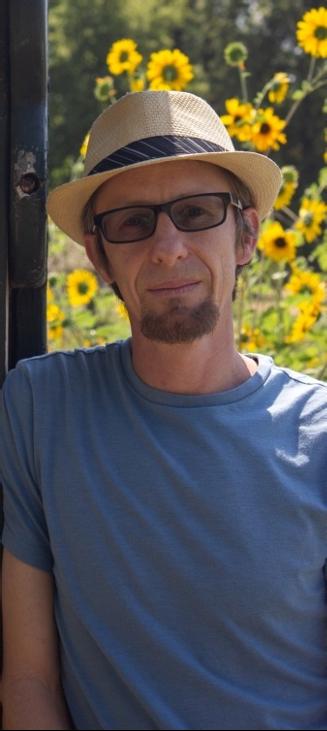
When not teaching at the Community College of Denver, Brian Dickson avoids driving as much as possible to traipse around the front range region by foot, bike, bus or train with kids in tow. Past publications include two chapbooks, In a Heart’s Rut (HighFive press), Maybe This is How Tides Work (Finishing Line Press), and one book, All Points Radiant (WordTech, Cherry Grove Editions) and various journals, including Tipton Poetry Journal.
Barry Harris is editor of the Tipton Poetry Journal and several anthologies by Brick Street Poetry. He has published one poetry collection, Something At The Center. Married and father of two grown sons, Barry lives in Brownsburg, Indiana and is retired from Eli Lilly and Company.
His poetry has appeared in Kentucky Review, Valparaiso Poetry Review, Grey Sparrow, Silk Road Review, Saint Ann‘s Review, North Dakota Quarterly, Boston Literary Magazine, Night Train, Silver Birch Press, Flying Island, Awaken Consciousness, Writers‘ Bloc, Red-Headed Stepchild and Laureate: The Literary Journal of Arts for Lawrence.
He graduated a long time ago with a major in English from Ball State University.
Tipton Poetry Journal
Contributor Biographies
Gilbert Allen lives in Travelers Rest, South Carolina, where he is the Bennette E. Geer Professor of Literature Emeritus at Furman University. In 2014 he was elected to the South Carolina Academy of Authors, the state's literary hall of fame. For more information about him and his work, see the interview at https://slantbooks.org/close-reading/interviews/belladonna-beautiful-but-deadlyqa-with-gilbert-allen/
Editor and author Philip Athans has been a driving force behind varied media including Alternative fiction & poetry magazine and Wizards of the Coast. He lives and works in the Pacific Northwest.
Ann Boaden’s work has appeared in various journals including Another Chicago Magazine, Big Muddy, From SAC, Ginosko, Gingerbread House, The Penwood Review, Sediments, South Dakota Review, Tipton Poetry Journal, The Windhover, The Other Journal, Persimmon Tree and others. A midwest native, she received her master's and doctoral degrees from The University of Chicago before returning to teach at her undergraduate college, Augustana in Illinois.
Besides TPJ, Matthew Brennan's poems have appeared in such journals as Poetry Ireland Review, THINK, Valparaiso Poetry Review, Notre Dame Review, and Sewanee Review. He has published nine books and chapbooks of poems, most recently The End of the Road (2023). Brennan retired after 32 years of teaching at Indiana State University and now lives in Columbus, Ohio.
A nine time Pushcart nominee in both prose and poetry, Liz Dolan has published two poetry collections. Her ten grandchildren pepper her life. Liz lives in Rehobeth Beach, Delaware.
Kaily Dorfman was born and raised in Santa Cruz, California, and completed her MFA in poetry at UC Irvine and her PhD in English and literary arts at the University of Denver. Her work has been nominated for a Pushcart Prize and the Best New Poets anthology, and is published or forthcoming at journals including New England Review, The Wallace Stevens Journal, Painted Bride Quarterly, The New Criterion, Summerset Review, and Ibbetson Street.
Arvilla Fee, from Dayton, Ohio, has been published in numerous presses, and her poetry books, The Human Side, This is Life, and Mosaic: A Million Little Pieces are available on Amazon. Arvilla’s life advice: Never travel without snacks. To learn more, visit her website and her new magazine: https://soulpoetry7.com/
Tipton Poetry Journal
James Green has published six chapbooks of poetry and individual poems have appeared in literary journals in Ireland, the UK, and the USA. He has received numerous awards for previous poems and collections. Most recently, he and his cotranslator, Ei Ei Tin, published their translation of the Myanmar poet Maung Seir Win in a volume titled Lin Lae Lae La. He divides his time between his home in Muncie, Indiana, and Mae Hong Son, Thailand, where he serves as a volunteer education consultant for the Jesuit Refugee Service. His website can be found at www.jamesgreenpoetry.net.
John Grey is an Australian poet, US resident now living in Rhode Island, recently published in Shift, River And South, and Flights. Latest books, Bittersweet, Subject Matters and Between Two Fires are available through Amazon. Work upcoming in Rush, White Wall Review and Trampoline.
Carol Hamilton has retired from teaching 2nd grade through graduate school in Connecticut, Indiana and Oklahoma, from storytelling and volunteer medical translating. She is a former Poet Laureate of Oklahoma and has published 19 books and chapbooks:children's novels, legends and poetry. She has been nominated 12 times for a Pushcart Prize. She has won a Southwest Book Award, Oklahoma Book Award, David Ray Poetry Prize, Byline Magazine literary awards in both short story and poetry, Warren Keith Poetry Award, Pegasus Award and a Chiron Review Chapbook Award.
Poet and Artist Lois Marie Harrod’s Spat was published by Finishing Line Press in 2021, and her collection Woman was published by Blue Lyra 2020. Nightmares of the Minor Poet appeared in June 2016 from Five Oaks; her chapbook And She Took the Heart appeared in 2016; Fragments from the Biography of Nemesis (Cherry Grove Press) and the chapbook How Marlene Mae Longs for Truth (Dancing Girl Press) appeared in 2013. A Dodge poet, life-long educator and writer, winner of 3 New Jersey Council on the Arts Grants for Poetry, she is published in literary journals and online ezines from American Poetry Review to Tar River to Zone 3. Links to her online work at www.loismarieharrod.org
Sharon Hashimoto's first book of poetry, The Crane Wife (co-winner of the 2003 Nicholas Roerich Prize and published by Story Line Press), was recently reprinted by Red Hen Press. Her second poetry book, More American, won the 2021 Off the Grid Poetry Prize and the 2022 Washington State Book Award in Poetry. Her collection of short stories, Stealing Home, was published in September, 2024 by Grid Books.
William Heath has published four poetry books: The Walking Man, Steel Valley Elegy, Going Places, and Alms for Oblivion; three chapbooks: Night Moves in Ohio, Leaving Seville, and Inventing the Americas; three novels: The Children Bob Moses Led (winner of the Hackney Award), Devil Dancer, and Blacksnake's Path; a work of history, William Wells and the Struggle for the Old Northwest (winner of two Spur Awards and the Oliver Hazard Perry Award); and a collection of interviews, Conversations with Robert Stone. He received a Lifetime Achievement Award from Hiram College. He lives in Annapolis, Maryland. visit: www.williamheathbooks.com
Tipton Poetry Journal
Michael Henson is author of six books of fiction and four collections of poetry. His poems, stories, articles, and reviews have been published in a number of periodicals, including Tipton Poetry Journal. Born in rural Ohio, he now lives in Cincinnati.
James Croal Jackson is a Filipino-American poet in film production who lives in Nashville, Tennessee, His latest chapbooks are A God You Believed In (Pinhole Poetry, 2023) and Count Seeds With Me (Ethel Zine & Micro-Press, 2022). Recent poems are in The Garlic Press, Remington Review, and ONE ART. He edits The Mantle Poetry from Nashville, Tennessee. (jamescroaljackson.com)
Michael Keshigian from Londonderry, New Hampshire, is the author of 14 poetry collections, his most recent, What to Do with Intangibles, from Cyberwit.net. His work has appeared in numerous national and international journals as well as many online publications, including The California Quarterly, Chiron Review, Jerry Jazz Musician, San Pedro River Review, Oak Bend Review, and Sierra Nevada Review. He is a 7-time Pushcart Prize and 3 time Best of the Net nominee.
Kathryn Kimball grew up in Montgomery, Alabama, has an MFA and PhD, and taught writing and nineteenth-century English literature. Her translations and poems have appeared in various literary journals. She published a chapbook in 2021 and a volume of poetry in 2025 and won the Columbia Journal 2023 translation prize. She lives in New York City.
Mary Hills Kuck, a born Midwesterner, has spent most of her adult life in the US Northeast and in Jamaica, West Indies. Her poems appear in The Connecticut River Review, Tipton Poetry Journal, Pulsebeat, the Lyric, and a number of other print and online journals. Intermittent Sacraments, her chapbook, was published in 2021 by Finishing Line Press. Her full-length book, Before I Forget, was published by Kelsay Books in 2024. She was nominated for an Eric Hoffer and a Pushcart Prize and was short-listed for the Kelsay Books Women’s Poetry Prize.
David Anson Lee is a physician and philosopher, currently pursuing poetry as a primary form of creative expression. Born on the Pine Ridge Indian Reservation, he draws on his Native American heritage, medical experience, and personal history to explore themes of healing, memory, and the human relationship to land and culture. He lives in Texas and has appeared in journals including Right Hand Pointing, Unbroken Journal, The Scarred Tree, and Braided Way.
Karen Lee writes poetry that falls out of her head onto the page. She writes middle grade fiction that uplifts normal girls that don’t kick ass. She writes cathartic life essays with her tongue in her cheek. When she’s not doing all that, she teaches graphic designs while continuously creating her own art. She is a constant and perpetual student herself taking class from Stanford University, Gotham Writers Workshops and the Indiana Writer Center. She lives in Cicero, Indiana.
Tipton Poetry Journal
Mark Lilley was born and raised in Cynthiana, Kentucky. He earned his undergraduate degree from Morehead State University and his MFA from Butler University. His poems have appeared in Apple Valley Review, Atlanta Review, The Louisville Review, Poet Lore, Potomac Review, Southern Indiana Review, and other journals. His poetry has been nominated for the Pushcart Prize, Best Spiritual Literature Award, and Best of the Net. His debut collection, Lucky Boy, was published in 2020 by Finishing Line Press. He lives in Iowa City.
Mark MacAllister grew up in northern Illinois, spent a great deal of formative time on his grandparents' dairy farm in southwest Wisconsin's Driftless region, and learned to write at Oberlin College. Mark now lives in Pittsboro, North Carolina but travels often to the Wisconsin Northwoods and to Michigan's Upper Peninsula to hike and bike the backcountry. His poems appear in various journals, including Steam Ticket, Quiet Diamonds, The Journal of Undiscovered Poets, Deep Wild: Writing From the Backcountry, Moss Piglet, Flying South, and Passager Journal. Mark’s chapbook, Quiet Men And Their Coyotes, won the 2022 Concrete Wolf Chapbook Contest and was published in January 2023.
Tara Menon is an Indian-American writer based in Lexington, Massachusetts. She is a two-time finalist for the Willow Run Poetry Book Award. Her latest poems are forthcoming or have appeared in Amplify (Sheila-Na-Gig), One Art: a journal of poetry, Blue Heron Review, Grey Sparrow Journal, Tipton Poetry Journal, and Masque & Spectacle.
Lylanne Musselman is an award-winning poet, playwright, and visual artist, living in Indiana. Her work has appeared in Pank, Flying Island, Tipton Poetry Journal, The New Verse News, Indianapolis Review, among others, and many anthologies. Musselman is the author of seven chapbooks, and author of the full-length poetry collection, It’s Not Love, Unfortunately (Chatter House Press, 2018). Her seventh chapbook, Staring Dementia in the Face from Finishing Line Press was published in July 2023.
Robert M. O'Brien now lives in Los Angeles managing a specialty film finance company and is an executive producer for an independent feature film/streaming series production company. He continues to write, remains passionate about his family, and dabbles In photography.
Tia Paul-Louis is a fiction writer and poet from Florida. She began experimenting with songwriting at age 11 and later felt a deeper connection to poetry. Her themes portray family life, gender role controversies, mental health, and spiritual values. She admires the freedom of expression in most forms of art such as music, acting, and painting.
Nancy Kay Peterson’s poetry appeared most recently in The Bluebird Word, Dash Literary Journal, Earth’s Daughters, HerWords, Last Stanza Poetry Journal, One Sentence Poems, RavensPerch, Spank the Carp, Steam Ticket, Three Line Poetry and Tipton Poetry Journal. From 2004-2009, she co-published Main Channel Voices: A Dam Fine Literary Magazine (Winona, MN). Her work appears in Haikus for Hikers (Brick Street Poetry, Inc.) and Play (Outsider Press). Finishing Line Press published her chapbooks, Belated Remembrance (2010) and Selling the Family (2021). She lives in Washington State. See www.nancykaypeterson.com.
Mykyta Ryzhykh lives in Ukraine, has been nominated for the Pushcart Prize and has been published any times in the journals Dzvin, Dnipro, Bukovinian magazine, Polutona, Rechport, Topos, Articulation, Formaslov, Literature Factory, Literary Chernihiv, Tipton Poetry Journal, Stone Poetry Journal, Divot journal, dyst journal, Superpresent Magazine, Allegro Poetry Magazine, Alternate Route, Better Than Starbucks Poetry & Fiction Journal, Littoral Press, Book of Matches, on the portals Litсenter, Ice Floe Press and Soloneba, in the Ukrainian literary newspaper.
Joel Savishinsky is a retired anthropologist and gerontologist, living in Washington State. His Breaking the Watch: The Meanings of Retirement in America, won the Gerontological Society of America’s book-of-the-year prize. A Pushcart and Best of the Net nominee, and a California Quarterly, Cirque Journal, Open Kimono, Passager, Third Wednesday, and LIGHT Magazine award winner, the places his poetry, short stories and nonfiction have appeared include Beyond Words, Caesura, The Decolonial Passage, The Examined Life Journal, The New York Times, The Opiate, and Windfall. His collection, Our Aching Bones, Our Breaking Hearts: Poems on Aging, was published by The Poetry Box. He considers himself a recovering academic and unrepentant activist. savishin@gmail.com
Claire Scott is an award winning poet in Oakland, California who has received multiple Pushcart Prize nominations. Her work has been accepted by the Atlanta Review, Bellevue Literary Review, New Ohio Review, Enizagam and Healing Muse among others. Claire is the author of Waiting to be Called and Until I Couldn’t. She is the co-author of Unfolding in Light: A Sisters’ Journey in Photography and Poetry.
Amy Shin is an undergraduate student at New York University, majoring in English on the creative writing track. Born in Seoul, raised in Hong Kong, and having studied in Hangzhou, she has long grappled with questions of belonging and displacement: what does it mean to be Korean while not entirely feeling like one?
Tipton Poetry Journal
Wally Swist’s books include Huang Po and the Dimensions of Love (Southern Illinois University Press, 2012), selected by Yusef Komunyakaa for the 2011 Crab Orchard Open Poetry Competition, and A Bird Who Seems to Know Me: Poems Regarding Birds and Nature, winner of the 2018 Ex Ophidia Poetry Prize. Recent essays, poems, and translations have appeared in Chicago Quarterly Review, Commonweal, The Comstock Review, Frontier Poetry, Healing Muse, Illuminations, La Piccioletta Barca (U.K.), Pensive, Sunspot Lit, and Your Impossible Voice. Forthcoming titles include If You’re the Dreamer, I’m the Dream: Selected Translations from Rilke’s Book of Hours from Finishing Line Press and Kelsay Books published Aperture, poems regarding caregiving his wife through Alzheimer’s.
Douglas Talley has BFA and MFA degrees in creative writing and a JD degree. As a lawyer, he has advocated various environmental and social justice causes, including the recovery of Jewish assets confiscated by Nazis during World War II. Presently, he leads a writers’ workshop for inmates in a women’s prison. A Pushcart nominee, his poems have appeared in The American Scholar, Tampa Review, and other journals and his poetry collection, Adam’s Dream, was released by Parables Publishing. He lives in Ohio.
Jim Tilley lives in New York State and has published four full-length collections of poetry and a novel with Red Hen Press. His short memoir, The Elegant Solution, was published as a Ploughshares Solo. Five of his poems have been nominated for a Pushcart Prize. His most recent poetry collection, Ripples in the Fabric of the Universe: New & Selected Poems, was published in June 2024. His forthcoming collection, When Godot Arrived, will be published in 2026.
Gene Twaronite is a Tucson poet and the author of five poetry collections. His first poetry book, Trash Picker on Mars, was the winner of the 2017 New MexicoArizona Book Award. His latest poetry collection is Death at the Mall (Kelsay Books). He leads a poetry workshop for University of Arizona OLLI. Follow more of Gene’s writing at: genetwaronitepoet.com.
Mark Vogel lives at the back of a Blue Ridge holler with his wife, Susan Weinberg, an accomplished fiction and creative non-fiction writer, and two foster sons. He currently is an Emeritus Professor of English at Appalachian State University in Boone, North Carolina. Poems and short stories have appeared in several dozen literary journals
Christopher Watkins’ second poetry collection, Famished, was published by Pine Row Press in spring 2024. His debut, Short Houses with Wide Porches, was published by Shady Lane Press. His work has appeared in Redivider, The Massachusetts Review, Harpur Palate, Hayden’s Ferry Review, and more.
Watkins holds an MFA in Creative Writing (Poetry) from the Stonecoast program at the University of Southern Maine. He is also an award-winning songwriter with thirteen albums released under the name Preacher Boy. He lives in Santa Cruz, California, and has previously resided in New York, San Francisco, Chicago, Seattle, and the west of Ireland.
Tipton Poetry Journal
Diane Webster lives in western Colorado. Her poetry has appeared in North Dakota Quarterly, New English Review, Studio One and other literary magazines. Her haiku/senryu have appeared in failed haiku, Kokako, Enchanted Garden Haiku. Micro-chaps were published by Origami Poetry Press in 2022, 2023, 2024 and 2025. Diane has been nominated for Best of the Net and three times for a Pushcart. She was a featured writer in Macrame Literary Journal and WestWard Quarterly. Her website is: www.dianewebster.com
Editor
Barry Harris is editor of the Tipton Poetry Journal and several anthologies by Brick Street Poetry. He has published one poetry collection, Something At The Center.
Married and father of two grown sons, Barry lives in Brownsburg, Indiana and is retired from Eli Lilly and Company.
His poetry has appeared in Kentucky Review, Valparaiso Poetry Review, Grey Sparrow, Silk Road Review, Saint Ann‘s Review, North Dakota Quarterly, Boston Literary Magazine, Night Train, Silver Birch Press, Flying Island, Awaken Consciousness, Writers’ Bloc, Red-Headed Stepchild and Laureate: The Literary Journal of Arts for Lawrence. One of his poems was on display at the National Museum of Sport and another is painted on a barn in Boone County, Indiana as part of Brick Street Poetry‘s Word Hunger public art project. His poems are also included in these anthologies: From the Edge of the Prairie; Motif 3: All the Livelong Day; and Twin Muses: Art and Poetry.
He graduated a long time ago with a major in English from Ball State University.