ASSIGNMENT 2 BUSSINESS DRAFT REPORT FOOD & BEVERAGE DIA30003: INTERIOR ARCHITECTURE ENTREPRENEURSHIP AND PROFESSIONAL DEVELOPMENT STUDENT NAME: TRAN NGUYEN HONG NGOCSTUDENT ID: 104084011
Figure 1.


Tina Tran is a third-year interior design student and also a director of T.N Studio, specializes in designing and creating interior spaces that are both functional and aesthetically pleasing, as well as creating and carrying out objectives by selecting and integrating futuristic aspects into space.
 Figure 2. Figure 2.
Restaurants, bars, catering businesses, and other associated services are all part of the food and beverage industry. In the future, the F&B industry is continually changing and adjusting to the interests and trends of the consumer, pushing its interior design to a new level. The F&B industry has advanced by using interior design as part of their branding and marketing strategy for their target clients. Although the rising market demands for personalisation, sustainability, and technology integration are all too familiar, these trends will probably take even more dramatic turns in the future as the physical, psychological, and technological limits of interior architecture are pushed to unimaginable heights. This report will focus on how T.N Studio, an interior architecture firm, will be approaching these emerging trends and turn them into business opportunities Our studio aims to create spaces that respect the environment and the comfort of people, while concentrating on sustainability and optimizing technology integraation for the interior design.
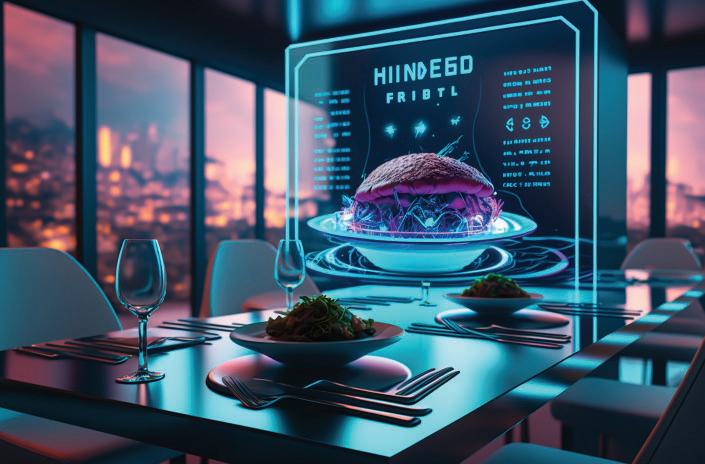 Figure 3.
Virtual reality (VR) has brought dining experiences to a new level with unique memories through interactive storytelling during meals. VR technology also offers customers an immersive journey to explore the space before visiting in person.
Augmented reality (AR) is revolutionizing the way we interact with menus. By using smartphones or AR glasses, we can visualize dishes in 3D, see detailed nutritional information, or watch videos showcasing the preparation process.
The F&B industry is seeing an increase in demand for environmentally friendly practises, and technology is a key enabler of sustainability initiatives.
From energy-efficient appliances to smart lighting systems, green technology is helping to reduce the carbon footprint and create a more sustainable interior space. By adopting sustainable practises, we can also attract eco-aware customers, making ourselves stand out in the F&B market, and contribute to a greener future.
In order to accurately identify how consumers are feeling about the service, brain signal, audiovisual, and body language sensor technologies are merged into the physical installations of a F&B structure. In order to improve the consumer experience, the interiors can then use this information to alter colours, lower lights, provide customised music, etc.
Voice technology makes interactions easier, expedites service, and gives customers a more interesting experience. Voice can be used to take orders, answer common questions, provide suggestions, or even change lighting and music.
From food preparation to service, automation is revolutionising many facets of the F&B industry. Robotic chefs are getting more and more popular since they can prepare specific dishes or automate repetitive jobs. Robotic waitstaff can move around crowded areas while bringing orders to tables, while automated bartenders can prepare and serve drinks with regularity and accuracy.
Adaptability
Creating flexible and transformative F&B design that can satisfy the changing needs of clients at any time, anyplace, and in any form.
Offering creative design solutions that represent and enhance the client’s brand identity and values, thereby strengthening the brand image.
Developing strong connections and relationships with clients that allow for open and honest conversation.
Creating highly unique and creative interior designs that can personalize each client.
Communicating with clients in a respectful and positive manner will help them feel open and willing to share.
Providing unique experiences that create long-lasting effects and raise customer loyalty as well as pushing the F&B industry outside of its comfort zone with latest innovative technology
Taking advantages of the implementation of AI, VR & AR technology, automation and robotics, we continue to create a unique experience and more personalised designs in terms of designing interior spaces, concentrating more on sustainability.
We aim to create spaces that respect the environment and the comfort of people, providing a green and livable world for our generation and the next generations
Highly personalised and unique F&B interior design solutions that meet client requirements and introduce new technological elements into spaces to create an immersive experience.
To provide an interactive and unique dining experience as well as sustainable and innovative designs for clients
By including the latest technology into our designs, creating harmonious tech-integrated spaces; while also attempting to understand the complex diversity of human needs and keep up with emerging trends.
Creating strong brand identities through design
Ensuring both functions and aesthetics in the design
VR walkthroughs
Design personalized or customized furniture & fittings for tech-integration
Adaptive and flexible design that are transformable
Providing memorable experiences for customers
Innovative solutions based on customer constrains & needs
Ensuring the sustainability in the design
Design style taking advantages from the latest innovative technology
Green & sustainable design
Maintain contact & discuss with customers regularly
Highly personalized design
Provide several concepts for customers to choose based on their budget
Design the space and experience based on customer’s business concept
Integrate the use technology and interactive design elements into space
Good design layout showing the space’s main style and concept that differs them from others
Providing unique & memorable dining experiences to customers
Meeting the physical and spiritual needs of the people who use them
Ensuring greenery & sustainability in space
Providing good service and dining experience
Ensuring customer’s satisfaction & loyalty
Lack of expertise
Developing memorable and unique experience for the customers
Limited time & budget
Do not know how to utilize the space
Reducing costs and gain profits by including technology
Express their ideas to designers
Not certain about what type of design, materials, colors,...
Keep up with emerging trends
Lack of understanding in design style & concept
Difficult to integrate technology and robotics aesthetically in the space
 Figure 4.
T.N Studio expertises in creating unique immersive dining experiences and personized designs for the F&B industry by optimizing the use of virtual and digital technology while designing an interior space, providing a sustainable and comfortable space for customers.
We achieve this goal through developing trust in the designer-client connection by learning about the client’s preferences and background and designing not just for but alongside them. The time spent understanding the client is how we can be efficient with the remainder of the process, avoiding unnecessary delays. We will then express our clients’ desires in the design using cutting-edge technology that can suit our clients’ demands down to the smallest details.
 Figure 5.
- Attention to details in terms of design strategy, documentation and budget planning
- Good patience with clients’ needs and concerns
- Great attitude towards challenge and failure
- Open minded and willing to learn new things
- Limited design experience may cause potential clients to seek out higher-profile companies.
- Ability to verbally express the ideas
- Not confident to complete things without guidance or approval from someone higher up
- Awareness on green and sustainable design- Be affected by own personal design aesthetics
- Opportunity to explore and learn new interests and specialties in the industry.
- New technology: AI, VR, AR, and other hardware and software, will enhance and shorten the design development process
- Clients are increasingly more interested in unique, transformative and sustainable designs that attract customers, optimizing and strengthening market position.
- The advancement of technology is uncertain and requires time to develop.
- Firms with more experience and better portfolios might compete for clients.
- People may prefer more experienced designers
- People are sometimes sceptical of new ideas
Uncertain technology that requires time to develop.
Competitor service offerings or prices
Changing in trends
Supplier issues
Connection with materials suppliers
Selection of new innovative technology
Idea and concept development
Personal design aesthetics
More reputable
interior architecture firm
Clients’ choices and decisions
Attention to details
Workflow and strategies
Ability to deal with challenges
Patience and open minded
- Rising living standards have prompted people to seek out more unique and personalised F&B experiences that go beyond the basics.
- Better education and health consciousness have led to consumers becoming more conscious of their dietary consumption.
- Developing technology that can detect people’s emotions, needs, and thoughts can help the evolution of adaptable designs.
- The intergration of AI, AR and VR has created an immersive dining experiences to customers
- The use of powerful software and modelling engines speeds up the design process.
- The intergration of AI, AR and VR has created an immersive dining experiences to customers
- The attempt for sustainable designs prompts business owners to look for alternatives where reduced carbon-footprint designs could attain the same efficiency and performance.
- Increasing rental costs force business owners to consider less expensive locations or sharing a space with another company.
- Rising inflation rates, which prompts an increase in the minimum wage, are likely to result in the less need for workers in digitally transformed industries.
- In order to maintain a sufficient amount of employment, the government may impose restrictions on the digitalizing process of the hospitality sector. New regulations and policies being made about sustainable design practices. With the application of complicated technological installations used in built environments, safety regulations are required ,
- Cultural appropriation must be taken into account,
- Another ethical change that will have an influence on business is the urge for everyone to be more environmentally friendly. People who believe they have an ethical responsibility to protect the environment may be more likely to use a design service that can provide sustainable design.
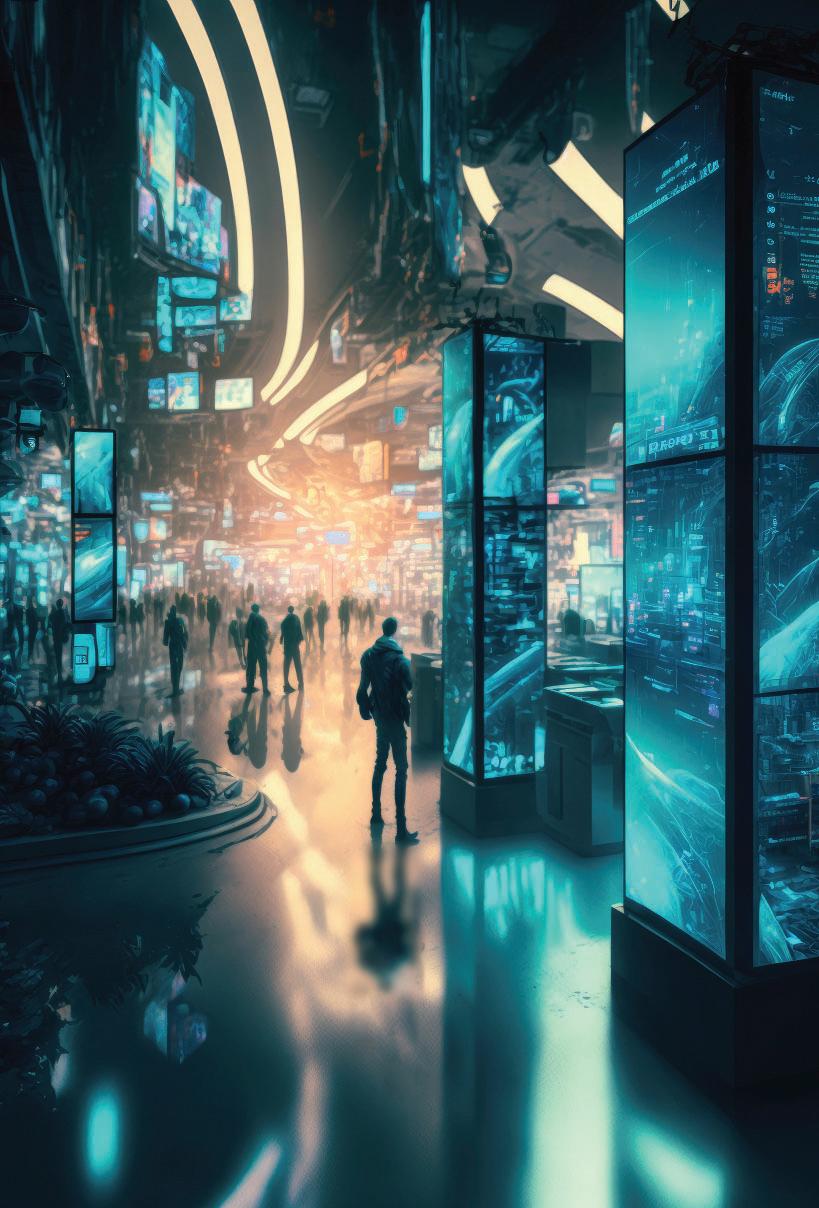 Figure 6.
https://stock.adobe.com/au/611854213
https://stock.adobe.com/au/608528728
https://stock.adobe.com/au/577231558
https://stock.adobe.com/au/616930719
https://stock.adobe.com/au/577231549
https://stock.adobe.com/au/636677624
Figure 1. Adobe Stock & Flash (n.d.). In stock.adobe.com. Figure 2. Adobe Stock & LabirintStudio (n.d.). In stock.adobe.com. Figure 3. Adobe Stock & VicenSanh (n.d.). In stock.adobe.com. Figure 4. Adobe Stock & Oleksandr (n.d.). In stock.adobe.com. Figure 5. Adobe Stock & VicenSanh (n.d.). In stock.adobe.com. Figure 6. Adobe Stock & DNY3D (n.d.). In stock.adobe.com.