Walking through downtown Scottsdale past high-end restaurants and galleries selling thousanddollar paintings, visitors may have no idea they are in a low-income community.
But they are — at least according to a designation afforded the area by an economic development incentive tucked into the federal tax law passed in December 2017.
The law included a provision allowing states across the country to designate certain areas as opportunity zones designed to spur development in needy areas by allowing developers and investors the chance to defer a percentage of taxes on capital gains
Six Scottsdale residents have submitted applications to become the next Justice of the Peace for the McDowell Mountain Precinct, including former Arizona Secretary of State Michele Reagan.
The precinct includes much of Scottsdale and parts of Phoenix with boundaries that reach Tatum Boulevard to the west, McDowell Mountain Road to the east, Thomas Road to the south and Stagecoach Pass to the north.
as long as they hold onto the property for a required number of years.
“Attracting needed private investment into these low-income communities will lead to their economic revitalization, and ensure economic growth is experienced throughout the nation,” said Treasury Secretary Steven Mnuchin when the first zones were announced.
That first batch of zones included downtown Scottsdale, or Census Tract 2107.2, specifically, which drew pause from some who do not associate the term “low-income community” with downtown Scottsdale.
State governors had the ultimate say in which tracts received the designation, but Arizona Governor Doug Ducey delegated much of that authority to the Arizona Com-
merce Authority, which, in turn, relied heavily on input from local governments.
In Scottsdale, city staff made the recommendation to nominate the downtown tract — not the mayor or City Council.
Mayor Jim Lane said he saw “no apparent need” for the opportunity zone designation in downtown Scottsdale, an area not hurting for investment.
That tract is roughly bracketed to north by Camelback Road and northwest by the Arizona Canal and to the south by Indian School Road and east by Miller Road. It does not include Scottsdale Fashion Square Mall but does include much of Old Town, the Arts District, 5th Avenue and
PROGRESS NEWS STAFF
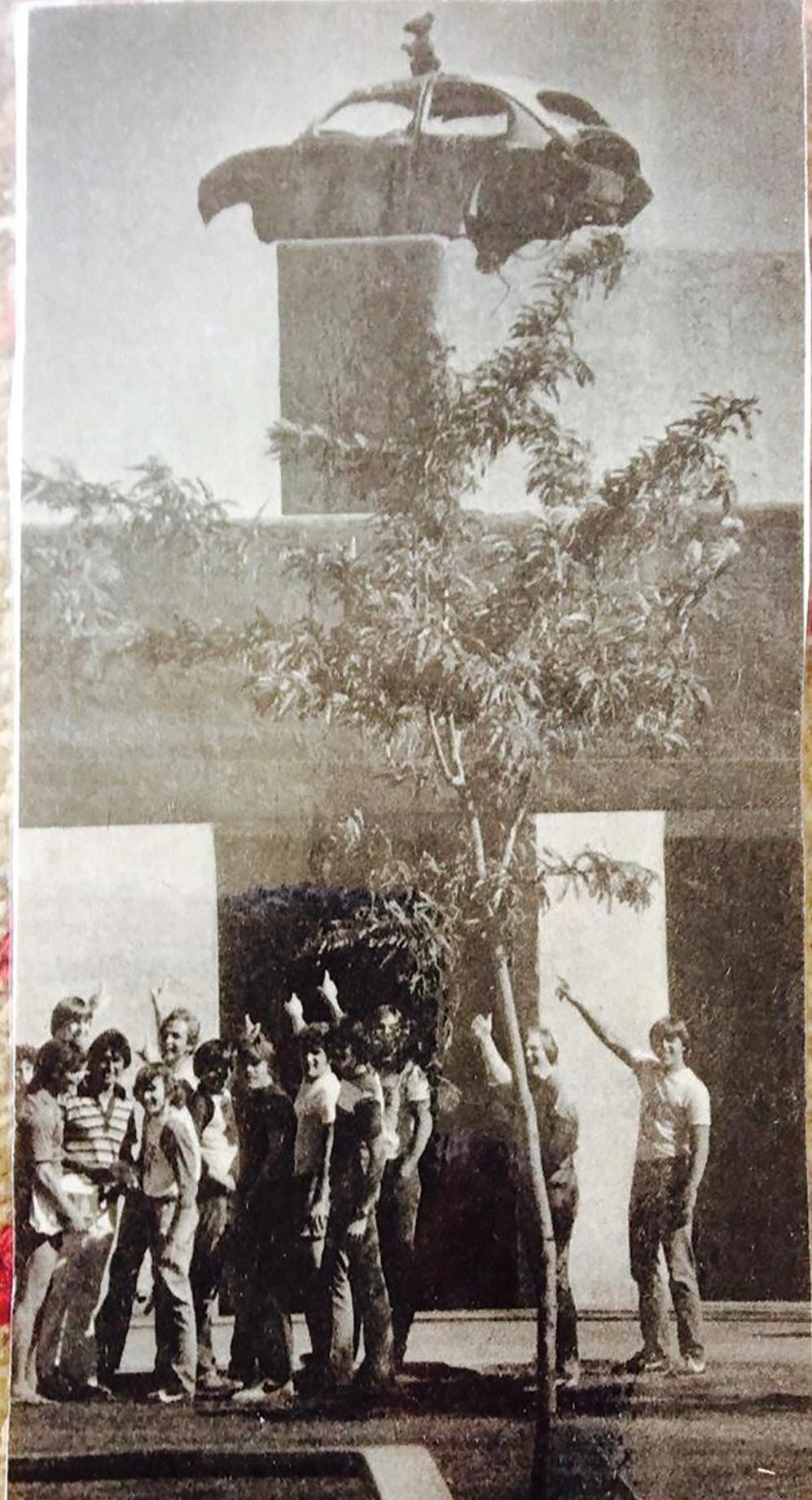
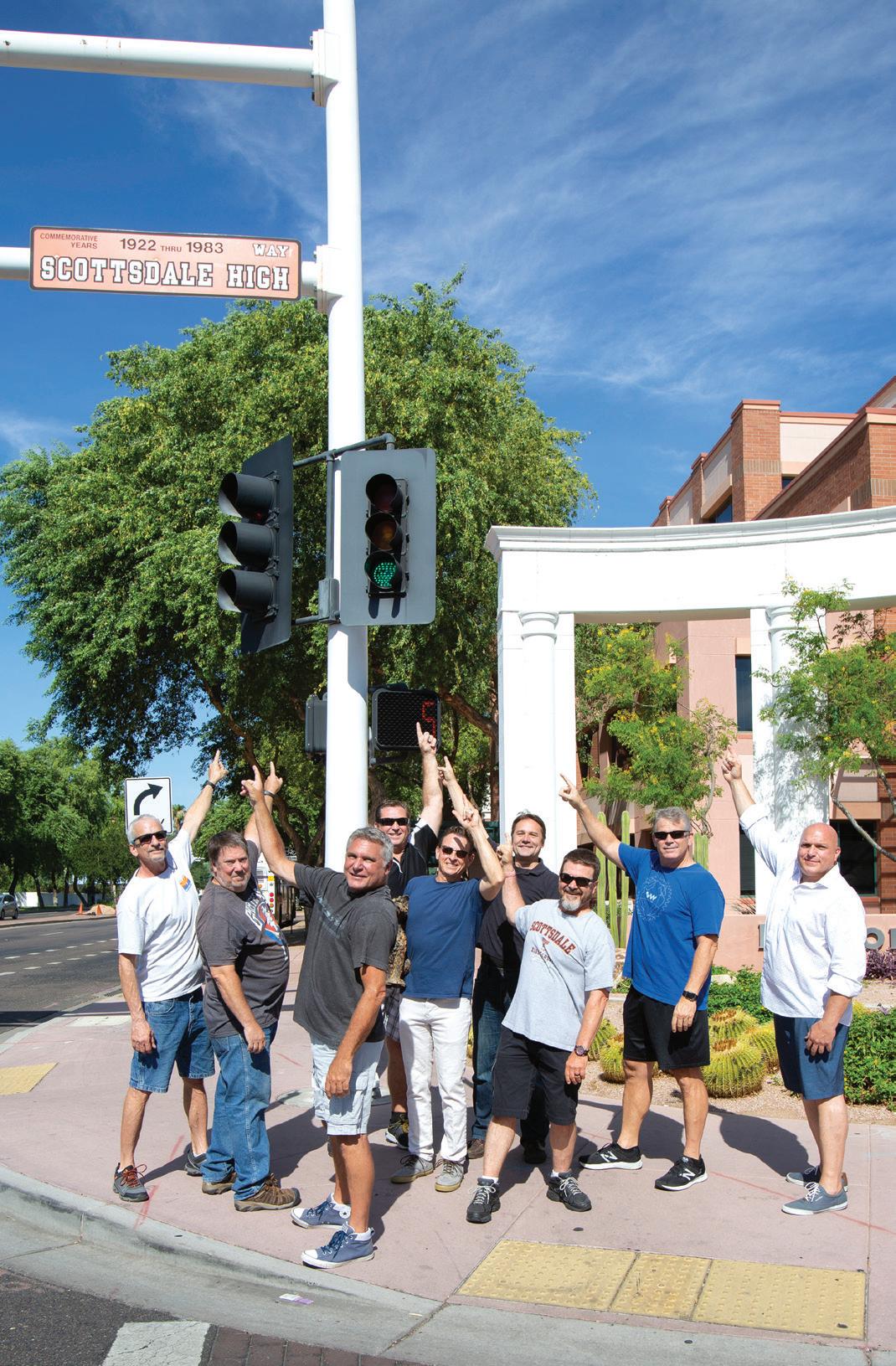
Forty years ago this year, perhaps the greatest senior prank ever played in Scottsdale by high school kids was captured in photos that are being examined by, from left, Mike Forzano, Kathy Shupe and Greg Field. You can learn
Staff)
Scottsdale Progress is published every Sunday and distributed free of charge to homes and in single-copy locations throughout Scottsdale. To find out where you can pick up a free copy of Scottsdale Progress, please visit www.Scottsdale.org.
CONTACT INFORMATION
Main number
480-898-6500 | Advertising 480-898-5624
Circulation service 480-898-5641
Scottsdale Progress 4301 N 75th St., Suite 201, Scottsdale, AZ 85251
AScottsdale-based real estate and investment firm was one of the first companies in the state to take full advantage of the opportunity zone designation tucked into the 2018 tax law, resulting in accolades from the White House.
Caliber got its start in 2009 during the recession focusing on buying and flipping single family residential properties.
In the intervening years, the company — founded by CEO Chris Loeffler and COO Jennifer Schrader — has expanded into general contracting and developing commercial real estate, including multifamily housing and hospitality.
The company also has a number of investment funds available, including a fund focused solely on properties located within opportunity zones.
Essentially, opportunity zones are a tax incentive that allows individuals to temporarily defer taxes on capital gains and potentially avoid taxation on new gains if they invest capital gains in specific areas approved by states and the federal government.
If a qualified investment is held for five years, there is a 10 percent exclusion of deferred gain. That goes up to 15 percent if the investment is held for seven years, according to the IRS.
Rodney Riley, Caliber’s director of acquisitions and development, said that a few years ago the company was building up its accounting and legal teams as it explored the possibility of going public.
That build-up also happened to give the company the resources it needed to get a head start on the considerable compliance requirements associated with opportunity zones when talk about the potential legislation began to heat up.
CEO Chris Loeffler “saw that as opportunity to take advantage of what we were already building,” Riley said.
Riley said that gave Caliber the chance to dive in when the legislation was passed while other companies were still navigating the new landscape.
“There was somewhat of a delayed response (by the industry) because of ambiguity in some regulations associated with it,” Riley said. “Our team felt confident in the direction it was headed, raised money and completed deals
in advance of anybody else.”
Caliber has now invested in dozens of properties located in opportunity zones in Arizona and other southwestern states, including nine buildings in downtown Mesa, a hotel near the Tucson Convention Center and multiple properties near Sky Harbor Airport in Phoenix.
The stated goal of the program, according to statements from Treasury Secretary Steven Mnuchin, was to incentivize needed private investment in low-income communities.
According to Caliber, that is what its fund is doing by bringing needed investment to areas like downtown Mesa, which have struggled in recent years.
Riley said Caliber has already started renovating and marketing its Mesa storefronts in an effort to attract retail and restaurant users.
Caliber also has a knack for investing in struggling areas with high upside.
According to East Valley Tribune, Caliber finalized the purchase of its first eight buildings in downtown Mesa — located in an opportunity zone — just a week after Arizona State University and the City of Mesa announced that it would be partnering to bring an ASU campus to the area.
A few months later, an arm of the Church of Jesus Christ of Latter-day Saints announced plans for a massive redevelopment on lands the church owns just east of downtown Mesa.
“We are ready for that explosion,” Riley said, referencing the new development planned for the area.
Though Caliber has been aggressive in its opportunity zone investments
An edition of the East Valley Tribune
White House Opportunity and Revitalization Council Executive Director Scott Turner, center-right, met with Mesa Mayor John Giles, center-left, and representatives from Caliber and Arizona State University during a tour of Arizona opportunity zones in June. (Courtesy of Caliber)
some properties along the canal.
Due to the designation, investors and developers in the area can reap some significant rewards for parking their money in the area.
If a qualified investment is held for five years, there is a 10 percent exclusion of deferred gain. That goes up to 15 percent if the investment is held for seven years, according to the IRS.
Funds investing in the zones must invest 90 percent of assets in real estate or business equity in qualified areas, and they must stay invested for 10 years to receive the maximum potential benefit, which includes capital-gains tax on 85 percent of the initial investment and no tax on any appreciation, according to financial news magazine Barron’s.
Shawn Novak, an associate professor at ASU’s School of Public Policy, criticized the program more broadly, calling it an inefficient way to invest in low-income communities that disproportionately benefits wealthy investors over the communities it is supposed to help, especially in areas like downtown Scottsdale that are not hurting for investment in the first place.
“You’re basically dumping a subsidy on people for doing something they weren’t going to do anyway,” Novak said. “That is about as inefficient use as you could get.”
Data gamesmanship
The designation has left some local residents and businesses owners questioning how an area with a median home value $100,000 greater than the statewide median and commercial retail vacancy rate hovering around five percent could qualify as low income and in need of investment.
The area qualifies under rules set by the IRS that looks for tracts with indicators of poverty and income levels below the area median.
This tract qualifies under rules allowing for urban tracts with a median family income that is less than 80 percent of the area median family income or statewide median income, whichever is higher.
Josh Utterbeck, an economic development specialist with City of Scottsdale, reiterated that the city could only choose tracts that qualified under the objective measures laid out by the IRS based on census income data.
Still, Novak, the ASU professor, said those guidelines left room open for political gamesmanship.
For instance, in Arizona tract designations relied on outdated census information to gauge area incomes.
According to a map of qualified tracts from the federal government’s Community Development Financial Institutions Fund, the tract in downtown Scottsdale had 72.22 percent of the area median family income, based on data from the U.S. Census Bureau’s 2011-2015 American Community Survey data.
That makes the area low income under IRS rules.
The perception of the tract’s financial situation can change, depending on which data you look at, though.
According to the most recent Census Bureau data, the census tract’s median family income jumped from $45,994 in 2015 to $91,071 in 2017.
Census tract 2172.01 in downtown Scottsdale now has a family median income that is 132 percent of the area family median income, according to the 2017 ACS data, meaning it would no longer qualify if the IRS used the most recent data to select opportunity zones.
Choosing the tracts
Despite this, Gov. Doug Ducey was still well within his power to nominate the tract to the IRS, because it did qualify using those 2015 numbers.
Still, an argument can be made that the Scottsdale tract, at the very least, violates the spirit of the program that, according to the Treasury Secretary’s own words, was designed to infuse investment into impoverished communities by using
cherry-picked figures to justify the designation.
The Scottsdale tract appears to be an outlier when compared to the bulk of tracts in Arizona and across the country, which typically fall in communities with lower incomes and higher poverty rates.
It is unclear exactly how much Ducey himself had to do with the Scottsdale tract’s nomination.
When the tracts were announced, the official line was that it was nominated by Ducey in line with federal guidelines that delegated designation authority to each state’s chief executive office.
However, tracking down who really made the decision took a little more digging.
When asked why this tract was chosen, a spokesperson for the governor’s office deferred to the Arizona Commerce Authority, which “took the lead on this.”
The ACA, in turn, referred the Progress to the City of Scottsdale.
“For incorporated communities with 10,000 or more residents in Maricopa and Pima counties, the Arizona Commerce Authority solicited recommendations for eligible tract nominations from those communities, so the City of Scottsdale would be the resource for that information,“ it explained.
So, who at the city made the call?
It was not Lane or the City Council — and the mayor had a hard time finding out exactly who did make that decision.
“Overall, I don’t see (the need) in the areas that we have selected by whoever did it,” Lane said. “I almost hate to tell you the answer I got; nobody is fessing up on it is the answer I got,” Lane said.
According to a city spokesman, a group comprising representatives from the city’s Economic Development and Planning departments and the City Manager’s office submitted the recommendations.
ACA President/CEO Sandra Watson solicited recommendations from jurisdictions throughout the state, allowing them to recommend tracts for the programs. Scottsdale, a city with seven qualified tracts, was able to recommend two.
When asked how much weight the city’s recommendations carried, the ACA responded with the following statement:
“The ACA reviewed all submitted recommendations for regular and contiguous tracts and prepared a final list. That list was then presented to Gov. Ducey for review and final approval. He approved the list in total.”
The governor’s office and ACA did not provide any specifics as to why they recommended the zone in downtown Scottsdale instead of another qualified tract. Ducey was limited to giving the designation to just 168 of the state’s 1,526 census tracts, according to Howard Fischer with Capitol Media Services. The city was a little more forthcoming.
see OPPORTUNITY page 8
The Arts District may seem at least a little above the poverty level, but not according to the federal government and, apparently, the governor's office, as the area has been designated an opportunity zone. (Pablo Robles/Progress Staff Photographer)
According to staff involved in the recommendation, five of the seven qualified tracts in Scottsdale contained mostly residential properties.
The city chose the two remaining areas, the downtown tract and another further south, because they contained significant amounts of commercial property.
“Residential qualifies for this, but in terms of the macroeconomics and wanting to see what could be the most realized benefits from this, we thought it would make more sense to include as many businesses in that as possible,” said Rob Millar, Scottsdale’s acting economic development director.
The other zone is bracketed north to south by Thomas and McDowell Roads and east to west by Scottsdale Road and 64th Street.
“The McDowell corridor is a City Council top priority, so we thought that made a lot of sense because it’s got a lot of commercial property,” Millar said.
City staff did not consider using opportunity zones in residential areas to incentivize investment to address the city’s affordable housing shortage.
Randy Grant, Scottsdale’s planning and development director, said there are already federal programs in place to incentivize affordable housing development through HUD and that there’s no guarantee developers would invest in housing just because an opportunity zone was put in a residential area.
“This really does not make a distinction about what type of development is being lended, other than it has to be in ownership for a certain period of time,” Grant said.
CALIBER
from page 4
thus far, Riley emphasized that just being located in an opportunity zone is not enough for company leadership to sign off on a deal.
“It has to be a good land deal first,” Riley said.
Caliber’s early forays into opportunity zones caught the attention of the White House.
In mid-June the company received a visit from Scott Turner, executive director of President Donald Trump’s White House Opportunity and Revitalization Council.
Turner toured opportunity zones in Arizona with representatives from Caliber and met with local officials in communities where the company has invested, including Mesa Mayor John Giles.
Still, other cities are looking at opportunity zones as a possible vehicle to spur affordable housing development.
In her recent State of the City Address, Phoenix Mayor Kate Gallego talked about her administration’s plans to reduce homelessness.
“We are researching innovative areas such as opportunity zones and looking at the lands owned by various city departments…to determine if they are ripe for housing development,” Gallego said.
Millar said seeing “reinvestment and revitalization” in downtown Scottsdale was important to the City of Scottsdale.
But Grant acknowledged that the downtown tract was not really in need of incentives to spark that development.
“I think there may be interest in opportunities zone benefits, but I don’t think that necessarily is what is stimulating interest in Scottsdale,” Grant said.
“I think the opportunities zones may provide some sense of urgency, just in terms of the tax benefits that can be accrued from it,” he added, “but we haven’t seen in the absence of opportunities zones, the downtown area lagging behind. There’s a lot of interest.”
Lane questioned the benefits of giving incentives to investors when there was no shortage of interest in downtown Scottsdale in the first place.
“Why would you need to pour accelerant on the most valuable land in Scottsdale?” Lane wondered, noting that much of the plans for development he has seen were in place prior to the new tax act’s approval.
For instance, Millar said there was a 27-acre parcel already assembled for redevelopment in the McDowell Road
“Caliber understands the spirit of this law, and the social impact part and the community development part,” Turner said in a video produced by Caliber.
In the video, Turner characterized opportunity zone investment as “giving back” to communities by creating lasting projects that will benefit multiple generations.
Investing in opportunity zones is not a wholly altruistic venture, though.
It also carries real financial benefits for investors in the form of deferred taxes or taxes avoided completely.
If an opportunity zone investment is held for over 10 years, investors will pay no taxes on the new gains produced through the opportunity zone investment, according to the Tax Policy Center.
The program is not without its critics.
tract prior to the opportunity zone designation.
Also, Museum Square — the multi-use housing and hotel project slated for land next to Museum of the West — sits within the opportunity zone and was technically announced in mid-2018, months after the tax bill was approved by Congress.
However, Maricopa County Assessor records show that the developer MacDonald Development Corporation has been acquiring the land in the area for the project since at least 2015.
Novak said that not only will the program provide tax deferrals to investors who were likely going to invest in the area anyway, it could also pull investment away from other communities.
“Really what they’re doing is they’re shifting investment from one location to another,” Novak said. “Some of the investment that’s made in that particular census tract is probably investment that is now not going to be made in an adjacent tract.”
City staff said simply not designating opportunity zones to fill its two slots was not an option.
“I think it was our responsibility to submit sites that we thought might benefit the most,” Utterbeck said. “I’ve heard (some people ask) ‘what about not submitting at all and just letting others?’ but I think that would be a disservice to our community to not submit it at all.”
The lack of new available space for development has led to local business owner concerns that the city would like to see existing properties redeveloped.
Grant said that is not the case, noting that he believes some people are confusing opportunity zones with redevelopment areas.
Shawn Novak, an associate professor at ASU’s School of Public Policy, argued that opportunity zones are an inefficient way to invest in communities and direct expenditures on programs like those administered by the U.S. Department of Housing and Urban Development would be more effective.
“To me, the real question in any case like this is if you really do want to subsidize economic activity in a targeted area, is this the best and most efficient way to do it?” Novak said. “I would argue, unquestionably, no.”
Contrary to Turner’s contention that the investment resulting from the legislation will result in generational benefits, Novak argued it could actually saddle future generations with more debt.
He said that tax revenue losses resulting from opportunity zone investment
He also said the opportunity zone will not affect the quality of projects that come to the area.
“An opportunity zone really only deals with the financing part of it, so an opportunity zone is not going to in any way affect what is developed on a piece of property…what gets developed is still a local control issue,” Grant said.
Grant said he thought local businesses would see the opportunity as a boon.
“We kind of struggle with the thought that property owners would reasonably be expected to be very favorable for being in an opportunities zones, rather than feeling like it’s a designation that is going to lead to deterioration,” Grant said. “We just don’t think that’s the case.”
Regardless of the type of development the project results in, Novak said there are fundamental issues with opportunity zones, noting that it puts money primarily in the hands of already wealthy investors in hopes that it will trickle down to needy communities.
“There’s really nothing about the way that this is designed that puts the value of the subsidy into the hands of the residents of these areas that are presumably the ones that you want to subsidize,” Novak said.
He said the government could make more lasting impacts by investing in education in low-income communities and could be more efficient by making direct expenditures to agencies like Housing and Urban Development.
“In hindsight when people are looking back at this 10 years from now and asking whether this with a good idea, I think it’s going to be held up as a model for how not to do things,” Novak said.
will likely extend well past the 10 year budget projections examined by Congress when the tax bill was passed.
“When you look back on this, you may see revenue loss was higher than what was projected for purposes of revenue scoring that the bill was enacted under,” Novak said.
Still, there is no question that the opportunity zone model has its supporters and is one of the few bipartisan efforts seen at the Congressional level in recent years. According to the Economic Innovation Group, a public policy organization that helped craft the legislation, opportunity zones were championed by a bipartisan group of lawmakers, including Senators Tim Scott (R-SC) and Cory Booker (D-NJ) and Representatives Pat Tiberi (R-OH) and Ron Kind (D-WI).
Residents demand action on
noisy short-term renters
BY WAYNE SCHUTSKY Progress Managing Editor
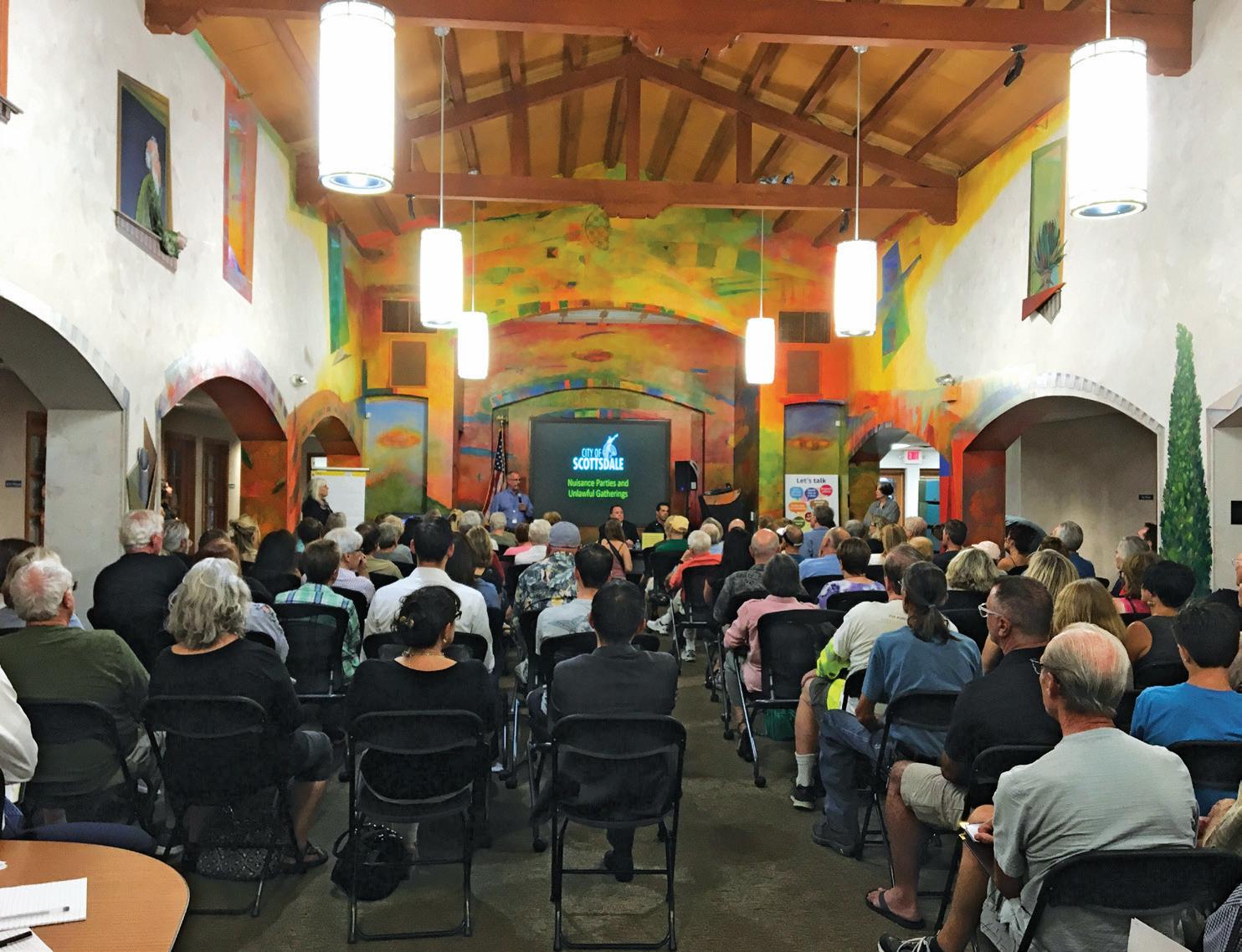
Scottsdale residents came out in droves on last Wednesday to speak with city officials about a proposed nuisance ordinance that would allow the city to impose stiffer penalties to discourage unruly or illegal parties in neighborhoods.
Though the ordinance would apply to all private property in Scottsdale, public comments at the meeting made it clear that the nuisance ordinance discussion was a proxy for Scottsdale residents’ ongoing battle with short-term rentals.
At last count, there were approximately 4,000 short-term rentals in operation in Scottsdale, said Raun Keagy, Scottsdale’s planning and development area director.
“As far as the types of homes, owner occupied versus rental, I would say that the majority of the complaints that we receive…are from rental properties,” Keagy said.
Keagy said the number of complaints to the city for nuisance parties has gone up in connection with the rise in popularity of short-term rentals.
But Keagy also said the city has always has these issues, especially surrounding special events like the Super Bowl.
The proposed ordinance, expected to be considered by the City Council on
Sept. 24, would allow fines if police determine a gathering is a nuisance, unlawful or “a threat to the public peace, health, safety or general welfare.”
According to the ordinance, factors that police will consider in determining if a party is a nuisance or unlawful include minors drinking or possessing alcohol, drug use, public urination, indecent exposure, littering, blocking public thoroughfares, weapons violations or other felonies.
Councilwoman Solange Whitehead called the ordinance “a good first step” and encouraged residents to contact state representatives about the issue.
Under the proposed ordinance, the city could assess a police fee of $250 following the first response to a nuisance party at a property. That fee would jump to $1,000 for a second violation within 90 days and $1,500 for a third violation.
The city could also asses a first-time fee of $500 and second-time fee of $1,500 on property owner’s who allow nuisance parties or unlawful gatherings on their property.
Keagy said the city’s ordinance is modeled after a similar ordinance in City of Tempe.
Tempe currently assesses the same fees as those proposed in the Scottsdale ordinance.
Around 100 residents packed into the Scottsdale Design Center on Aug. 7 to learn more about the City of Scottsdale’s proposed nuisance party ordinance. (Wayne Schutsky/Progress Staff)
Survey shows slim support for education tax
BY HOWARD FISCHER Capitol Media Services
Anew statewide survey shows that a majority of voters are willing to hike sales taxes for education – but not by as much as some are seeking.
The poll Data Orbital also finds that a majority want “results-based funding.’’
The Arizona Chamber of Commerce and Industry, which sponsored the survey, defines results-based funding as tying increasing dollars to improved academic performance.
The survey finds strong public support for the plan crafted by Gov. Doug Ducey and enacted by the Legislature to boost teacher salaries an average of 20 percent by 2020.
The survey comes as the Helios Foundation is working to craft a measure that would raise $1.5 billion a year for education through a combination of increased sales and property taxes.
Foundation officials hope to present a plan to lawmakers to put it on the 2020 ballot.
But adding property taxes to the mix could prove fatal. The survey found using that as a source of revenues far less popular than not just sales taxes but
AIRBNB from page 10
Though Keagy did not have statistics on hand, he said he had been told anecdotally by Tempe officials that its ordinance had helped reduce nuisance gatherings.
One Scottsdale resident for 40 years shared anecdotes echoed by over a dozen speakers.
She said partiers at rentals in her neighborhood regularly overfill trashcans, play loud music at 2 a.m., urinate in public and park illegally.
Of the dozen or so residents who spoke at the meeting, only one did not speak negatively of short-term rentals.
Saying he operates a short-term rental in Scottsdale, the speaker acknowledged there are some irresponsible operators but said he and his wife are respectful to neighbors.
Whitehead said she picked up a number of good ideas at the meeting that she might bring back to council, including increasing the police response fees and creating a dedicated city webpage just for complaints about short-term rentals. Though most of the 100-person crowd supported the ordinance, many believed
also income taxes.
It also comes as the Center for Economic Progress is coming up with its own plan to ask voters to pump more money into education.
Last year the organization attempted to put a measure on the ballot for an income tax surcharge on the wealthiest Arizonans.
That plan drew immediate fire from the state chamber which filed the successful lawsuit that kept it off the ballot.
David Lujan, the group’s executive director, said the form the 2020 initiative will take is still being decided, with ongoing research to find something that would be acceptable to voters.
But Lujan said it could be similar to last year’s plan which sought to hike income taxes on individual earnings of more than $250,000 a year, a plan that would raise $690 million a year without costing the vast majority of voters a penny.
“What we found is it had strong support from Arizonans,’’ Lujan said of that proposal.
The chamber’s poll, however, asked only whether voters prefer sales, income or property taxes to fund education and never inquired about a plan to tax just high earners.
Chamber spokesman Garrick Taylor told
Capitol Media Services that despite the opposition to last year’s bid to raise money for education through an income tax surcharge on the wealthiest that his organization isn’t necessarily opposed to putting more dollars into K-12 – and even doing it with some sort of tax hike.
“But we’ve also supported the idea that results should be valued and proper investments should follow those results,’’ he said.
Taylor said, though, that any academic improvement results used to put new dollars into classrooms should include special financial consideration for schools with “obstacles,’’ such as a high percentage of students in poverty.
Of note in the survey is how much more voters are willing to tax themselves.
Of the 550 people questioned in the telephone poll last month, 57.7 percent said they would support taking the current 0.6-cent sales tax now dedicated for education and raising that to a full penny. That parallels a plan crafted by Sen. Sylvia Allen, R-Snowflake, who chairs the Senate Education Committee.
But there are others, like Sen. Andrea Dalessnadro, D-Green Valley, who have argued that the approximately $473 million the tax hike would raise is nowhere near
it does not go far enough.
“You need to just put a stop to these Airbnbs altogether,” one citizen said.
But, when it comes to these rentals, the city’s hands are tied.
In 2017, the Arizona Legislature passed a law prohibiting cities or towns from banning short-term rentals or restricting those rentals simply based on
enough to make up for the funds that were cut from education during the recession.
There is, however, a risk of going bigger: The survey shows a drop of support, to 45.2 percent, for a plan to take that 0.6cent levy and increase it to 1.5 percent to add $1 billion a year in funding.
One survey question may be an indication of the depth of public support for more education.
The chamber survey told respondents that the Legislature put an additional more than $600 million into education this past year, though the question did not inform respondents that the figure includes not just new money but also what the state is required to fund for both inflation and student population.
And then the survey goes on to state that current K-12 funding amounts to about $5.5 billion of the $11.8 billion state budget. Yet even with those prompts, 52.4 percent of those questioned still believe that more funding for education is necessary.
“It’s not a runaway on that question,’’ Taylor said. “But still a majority, even when given the details of recent budget deals, still believe that more dollars are needed.’’
The new law allows cities to require property owners operating short-term rentals to keep emergency contact information on file with the city, and requires them to have a state transaction privilege tax license.
It also prohibits the use of short-term rentals for non-residential uses and special events that require a permit.
Keagy said the city will be updating its ordinance to take advantage of the new legislation.
Keagy, Whitehead and other city representatives on hand at the meeting encouraged residents to contact their state legislators and the Governor’s Office to push for changes at the state level to allow local governments to further regulate rentals.
That appears unlikely, though.
the use category.
If cities create laws in conflict with state law, they risk losing funding from the state.
The cities got some power back in May when the Governor signed into law a bill sponsored by Rep. John Kavanagh, RScottsdale, that includes fines between $250 and $1,500 for violations.
In announcing the signing of Kavanagh’s bill, Gov. Doug Ducey wrote, “After solving this important enforcement challenge, I am hopeful that additional legislation regulating short-term rentals will not be needed.”
“We need an uproar,” Whitehead said. “And the governor needs to understand that this is not pro-business, it is anticommunity.”
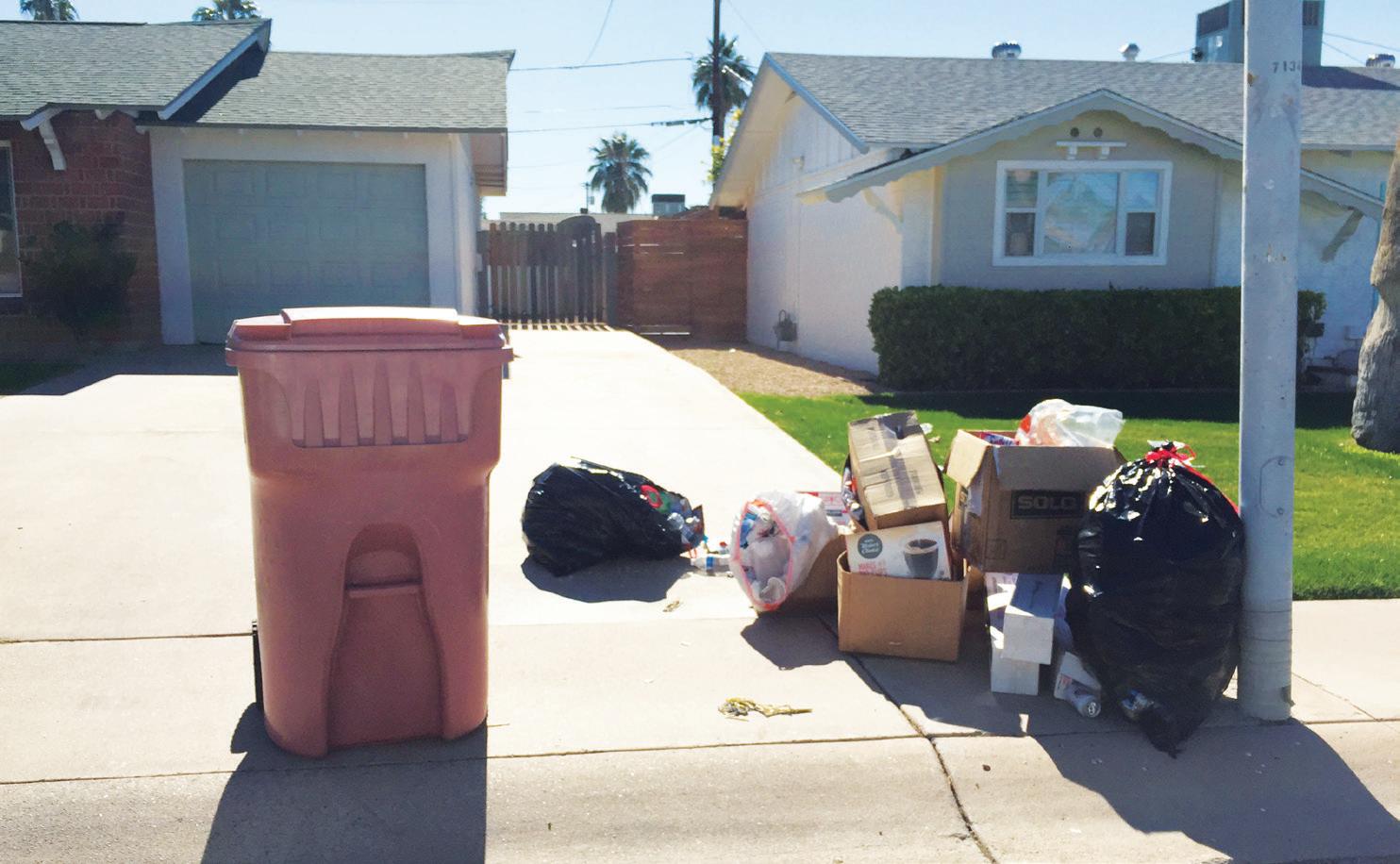
A dozen residents addressed nuisance parties and short-term rentals in their neighborhoods, complaining that they cause trash overflow on streets and in alleys. (Special to the Progress)
•
•
•
•
•
The candidates are vying to replace Judge Michael Reagan, who served in the position for 15 years before retiring on July 26 — and who also is Michelle Reagan’s father.
Justice Courts have jurisdiction over minor civil lawsuits and criminal offenses, including lawsuits where the amount in dispute is less than $10,000, DUI charges and misdemeanor allegations such as shop lifting.
Justices of the Peace can also handle requests for orders of protection and injunctions against harassment.
Judge Michael Reagan will continue to serve as judge pro tempore in the McDowell Mountain Precinct until the Maricopa County Board of Supervisors appoints a replacement.
The Board of Supervisors is responsible for naming Reagan’s replacement.
A Maricopa County Spokesman said the Board will likely name the replacement at its next meeting at the end of August, though that has not been confirmed.
The individual appointed to the position will then run for the office in the 2020 primary and general elections for a chance to complete the term, which runs through 2022.
State statute requires that the new Justice of the Peace be a resident of the McDowell Mountain Precinct, a registered voter and a registered Republican, according to a Maricopa County press release.
A Justice of the Peace in Arizona can earn a salary between $36,250 and $101,500 based on the volume of cases heard by the judge.
The candidates for the position are Michele Reagan, Sherwood Johnston III, Lorie B. Patrick, Christopher T. Hoynicki, Biju Panicker and A. Douglas LaSota.
Michele Reagan
Michele Reagan recently served as Arizona’s secretary of state from January 2015 through January 2019 before losing her re-election bid in the 2018 Republican primary to Steve Gaynor.
Prior to being elected Secretary of State, Reagan served at the Arizona Legislature as a representative from 2003 to 2011 and a senator from 2011 to 2013.
Reagan is currently a faculty associate at Arizona State University’s Watts College of Public Service & Community Solutions where she taught a course on public service ethics in spring 2019. Reagan’s time in public office was not
served in that position since 2001. In that role he oversees various criminal and civil code violation hearings.
He has also worked as a hearing officer and bailiff for the Paradise Valley Municipal Court.
Since 2008, Johnston has also been a Justice of the Peace, Pro Tempore for Maricopa County who substitutes for elected justices on a temporary basis.
Prior to that, Johnston was a small claims hearing officer and civil traffic hearing officer for Maricopa County.
Johnston has undergone training with the Judicial College of Arizona, National Judicial College and Governor’s Office of Highway Safety.
Johnston also has a long resume as a commercial real estate and business executive in Arizona and holds a real estate broker’s license in Arizona.
Court for the Western District of Virginia; was a summer law clerk for the Legal Aid Society of Roanoke Valley; and was a summer associate with the Arizona Attorney General’s Office.
Prior to entering the legal profession, Hoynicki was a manager with Bank of America and supervised over 40 employees.
Biju Panicker
Panicker graduated from Arizona Summit School of Law, formerly Phoenix School of Law, in 2015 and has worked as a small claims hearing officer with the Maricopa County Justice Court since 2018. He has also been a mediator with the same court since 2016.
Panicker was previously a fellow with the Arizona Health and Hospitals Association and held legal internships with the Maricopa County Attorney’s Office, Tempe City Attorney’s Office and the Never Again Foundation. He also held externships with Maricopa County Superior Court and the United States Department of State.
without controversy as the Arizona Attorney General found in 2016 that she violated the law when, as secretary of state, she failed to mail out about 200,000 election pamphlets, according to the Arizona Capitol Times.
The Arizona Attorney General looked into Reagan again earlier this year after current Secretary of State Katie Hobbs told the Attorney General that Reagan and her staff may have deleted official emails before leaving office, according to reports by the AZ Mirror and The Arizona Republic.
A spokesman for the Arizona Attorney General’s Office said the 2019 matter has since been closed and court records show the Attorney General did not pursue charges.
Prior to entering public office, Reagan operated her family’s sign manufacturing business in Phoenix for 10 years.
Reagan has received training from the Judicial College of Arizona and completed the new judge orientation program offered by the Arizona Supreme Court. She also took courses offered by the Maricopa County Superior Court.
She has received support from Gov. Doug Ducey and three members of the Arizona Supreme Court.
Sherwood Johnston III
Johnston is currently a Paradise Valley Municipal Court Judge and has
Lorie B. Patrick
Patrick, a Scottsdale native, has served as a judge pro tempore in Scottsdale City Court for 11 years. Patrick is also a judge pro tempore for Fountain Hills, Tempe and El Mirage.
She is also a judge pro tempore for the justice courts of Maricopa County and recently served in the McDowell Mountain Precinct.
The Saguaro High School and Arizona State University graduate earned her law degree from California Western School of Law in 1994 and was employed by a San Diego-based firm until 1996 when she was admitted to the State Bar of Arizona and returned to this state.
Patrick stopped practicing law in 2017 in order to become a judge pro tempore full time.
Christopher T. Hoynicki
Hoynicki graduated from the Washington and Lee University School of Law in May 2018 and has practiced law in the Valley since September 2018.
Hoynicki was a bankruptcy and tax attorney with Mesa’s Pew Law Center for nine months and is currently an attorney with the Law Offices of Scott M. Clark in Phoenix.
During his education, Hoynicki held an externship with Judge Rebecca B. Connelly, United States Bankruptcy
Prior to pursuing a law degree, Panicker was an EMT and police officer and is currently an EMT and fire science instructor with Maricopa County Community Colleges.
Panicker was an officer with the New York City Police Department from 2005 to 2007 and with the Phoenix Police Department from July 2007 to March 2008.
A. Douglas LaSota
Retired Judge A. Douglas LaSota most recently served two five-year terms as the Presiding Magistrate Judge in the City of Cottonwood in northern Arizona, ending in 2019.
He also worked as a juvenile hearing officer for the Yavapai County Superior Court for 10 years and as a judge pro tempore for Maricopa County Justice Courts and municipal courts in the cities of Scottsdale, Chandler and Mesa.
Prior to becoming a judge, LaSota had a long career as a lawyer after graduating from Arizona State University’s College of Law in 1980. He received permanent admission to the State Bar of Arizona in 1980 and was also admitted to the U.S. District Court for Arizona and U.S. Court of Appeals for the Ninth Circuit.
During his career, LaSota has worked as a deputy public defender in Maricopa County, assistant city prosecutor with City of Phoenix and operated his own law firm.
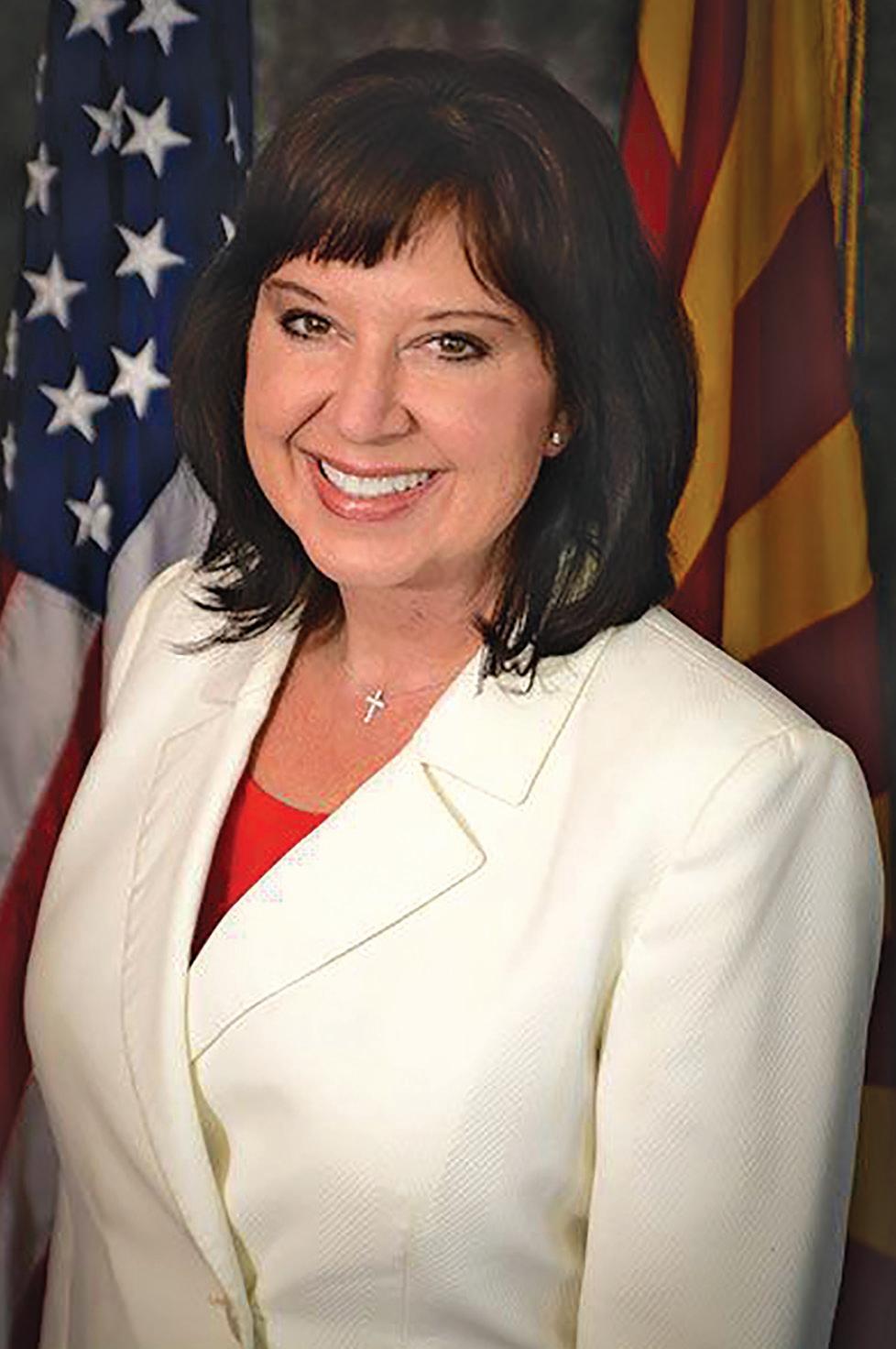
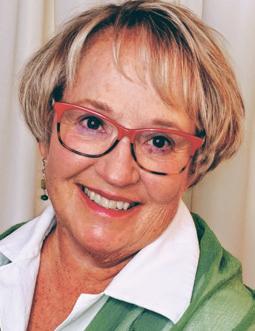
Former Arizona Secretary of State Michelle Reagan is hoping to succeed her father Michael Reagan as Scottsdale Jjustice of the peace. (Progress file photo)
SUSD ditches fee for reduced-price lunches
PROGRESS
The Scottsdale Unified School District is taking steps to increase food security for students by getting rid of the reduced-price lunch fee.
In years past, students who qualified for a reduced-price lunch under federal guidelines had to pay 40 cents. The district had already waived the fee for reduced-price breakfast over a decade ago.
Patti Bilbrey, SUSD’s director of nutrition services, said that she anticipated the removal of the fee will increase the participation in the program, which could pay big dividends for students.
According to the district, over 800 students qualified for reduced-price meals last year and 5,000 students qualified for the free meal program.
Bilbrey said increasing regular access to food through the lunch program can improve student academics, behavior and social interactions with others.
According to the nonprofit Food Research & Action Center, access to regular meals through the National School Lunch Program can reduce food insecurity, obesity rates and poor health amongst students
while also improving performance in the classroom.
The district’s Nutrition Services department will cover the cost to waive the lunch fee.
Bilbrey said the department is in a healthy financial position and can absorb the costs within its budget.
Nutrition Services is a self-sufficient department within the district, meaning it is funded through its own revenues and does not receive allocations from the district’s maintenance and operations budget.
“It is not a stretch for our department to make it happen,” Bilbrey said. “We’re still able to provide all the great things we do for our students, our employees and the district.”
Bilbrey credited staff in her department and on site at schools for tracking food cost and usage to avoid waste and make the department’s dollars go as far as possible.
With that financial stability in place, Bilbrey said waiving the fee was a no brainer.
“We’re not in it for anything else other than we just love what we do and want to make sure that every kid has access to a good meal,”
Bilbrey said. “And when you see kids who come in and can’t pay something as little as
40 cents, you try to figure out a way to make that happen.”
The overall cost to waive the fee will be relatively low.
Bilbrey said the students qualified for the reduced-price lunch program make up only about three percent of the district’s total student population, so the costs to waive the fee will not be overly burdensome.
”It’s such a small percentage that it just seemed like the right thing to do,” Bilbrey said, noting that removing the fee could increase participation.
Last year, only about 60 percent of eligible students participated in the reduced-price lunch program in SUSD, Bilbrey said.
A number of factors, including economic hardship, could play a role in that rate of participation.
The Arizona minimum wage rose to $11 an hour this year but there was no associated change in the federal poverty guidelines, meaning some families that had qualified for free lunches in the past now have too much income to qualify for that program,
according to a district press release. However, that does not mean some families still do not struggle to pay for lunches. “There are so many people who barely miss that free cut off,” Bilbrey said. “If you have multiple children it can be difficult. It is sometimes difficult for them to pay for that everyday.”
Patti Bilbrey, Scottsdale Unified School District’s director of nutrition services, said the district has eliminated the 40-cent fee for students who qualify for reduced-price lunch under federal guidelines. (Progress file photo)
Neighbors
Addict finds hope in Scottsdale center
BY GABRIELLA KHALAJ Cronkite News
Drugs have been a part of half of Perie Prickett’s life — and she’s only 24.
In addition to those 12 lost years, drugs have stolen most of the experiences and memories that come with adolescence and early adulthood.
It started with peer pressure, wanting to fit in and be accepted by classmates. Drugs gave her the confidence she didn’t have.
“It takes you out of your norm and helped me to open up in a way I thought I couldn’t,” Prickett said.
She went from being involved in such activities as dance, acting and theater to smoking marijuana regularly. Two years later, at 14, she tried heroin.
“Once that addiction set in, my social life went out the window and my hobbies and my dreams my aspirations — everything was gone,” Prickett said.
At some point, she mixed heroin
with methamphetamine, a dangerous combination known as goofball.
“I would actually go to school withdrawing from heroin and meth, and that was one of the harder things I had to deal with that made it so that I couldn’t go to school,” Prickett said.
Aleron Toledo, a dual diagnosis and primary therapist at the Scottsdale Recovery Center, said goofball might be a newer drug trend, but its origins have been around for quite some time.
“It’s more-known form is called speedball,” he said. “Usually with speedball, they mix all the uppers, so cocaine and meth, but with goofball … it’s made out of meth and heroin.”
According to a study published in the Drug and Alcohol Dependence Journal, more opioid users nationwide now use meth — its use increased 34 percent in 2017. The greatest increases in meth use were reported in the western U.S.
In addition, reports from the
DEA show a 118 percent increase in meth seizures by law enforcement from 2010 to 2017.
Toledo said the mix of heroin and meth triggers the release of dopamine, also known as the “feel good neurotransmitter.”
This gives the user a sensation of high euphoria, but the drugs have a cancelling effect over one another, increasing the risk of overdose.
“It will go up and down, and up and down, and most of the time because of the canceling effect, it allows the user to use more heroine than anticipated or than wanting to,” Toledo said.
Using meth with heroin allows a person to use more, he said, setting off additional effects, such as the onset of psychosis, insomnia, organ failure, damaged teeth and internal health complications.
Drug use left Prickett malnourished, her skin discolored and scarred at injection sites and her
Scottsdale teen in Pan American karate tourney
BY KRISTINE CANNON Progress Staff Writer
Northern Scottsdale native Sabrina Arevalo was walking by Scottsdale Martial Arts Center off Bell Road when she noticed the kids training inside the dojo.
“I was fascinated with how intense they were as they trained, but I could also tell they were enjoying the class,” she recalled. After taking one trial karate class, Arevalo was hooked.
She was 5 then; and now, 13 years of training later, Arevalo is on her way to Guayaquil, Ecuador, to represent team USA Karate at the 2019 Junior Pan American Championships Aug. 26-31.
“I am extremely excited to be a part of the U.S. team and to train alongside such amaz-
ing athletes, while also building friendships,” Arevalo told the Progress.
“Plus, I just love to compete; I absolutely love the feeling of going out on the mat and putting my training into practice.”
Arevalo previously competed at the 2019 USA Karate National Championships and Team Trials in Schaumburg, Illinois in July and secured herself a spot on the U.S. Junior National Karate Team.
The Junior National team consists of the best athletes between the ages of 12 to 20, who will represent the United States in the prestigious international event.
“Representing the U.S. Junior National Team has been a long-time goal for me,” she said. “I’m looking forward to traveling to Ecuador and giving it my all.”
Perie Prickett's life has taken a bad turn over the 12 years since this picture was taken when she was 12, She is now being treated for her drug addiction at the Scottsdale Recovery Center (Cronkite News)
Sabrina Arevalo, a northern Scottsdale resident and karate student at Scottsdale Martial Arts Center, will leave for Ecuador this month to represent team USA Karate at the 2019 Junior Pan American Championships. (Christine Gaan/Special to the Progress)
Basketball academy couple’s dream come true
BY LILA BALTMAN
Progress Guest Writer
When Mimi and Corey Sommers moved to Scottsdale from the Bay Area in 2016 with their tall, athletically gifted, 9-year-old son, EJ, they immediately looked for competitive basketball programs for him to join.
“The programs we found here in the Phoenix area were perfectly fine as a starting point to get children interested in playing the game,” Mimi said.
“What we really wanted to find for EJ was a facility that specialized in teaching the fundamentals of the game and had professional, experienced basketball coaches on the staff. We were willing to pay for private coaching for our son but just couldn’t find that advanced type of basketball coaching anywhere.”
Eventually, the couple was introduced to Coach Jevon Estelle — a renowned, 6-foot-1, former basketball player for Grand Canyon University — and decided that with the help and guidance from “Coach Von,” they would open up their own, state-of-the-art basketball training facility for kids, ages 6 to 14.
They opened the aptly named DreamTeam Academy (DTA) in a large, twolevel facility on Dial Boulevard — right in the heart of the Scottsdale Airpark.
“When we couldn’t find what we were
KARATE ���� page 16
Arevalo dedicated years to karate training, core conditioning and competing yearround to achieve her goal — a goal she’s had since she was 12 years old.
She said that depending on the week, she’ll spend 15 to 20 hours training both inside and outside the dojo.
“Inside the dojo, I train to perfect my skills and to practice different strategies,” Arevalo said. “Outside of the dojo, like any other major sport, I spend time in the gym working on my physical conditioning.”
SMAC owner and chief instructor Sensei Ray Hughes is proud of what Arevalo and the rest of the school’s athletes have accomplished.
“It has taken 10 years to develop this talent, and we are starting to see the fruits of their labor,” Hughes said.
For Arevalo, karate has helped her build self-confidence.
“I’ve had to push myself hard in basic training, testing and competition and know
looking for, so we decided to build it ourselves,” Mimi explains. “We believed a lot of other parents wanted to find the same type of advanced, nurturing, fundamentals-based basketball program
how to stay strong through it all. When faced with adversity in competition, I know how to stay composed and trust my training and my instincts,” she said.
The sport has also strengthened her public speaking skills, as part of her training involves teaching and training others.
Plus, karate taught Arevalo self-defense skills — “which is super helpful as I head off to college next month,” she said.
Arevalo isn’t the first Scottsdale resident to represent the U.S. Junior National Team.
Last year, Christian Stienstra represented team USA Karate at the 2018 Junior Pan American Championships in Rio De Janeiro, Brazil.
“Being on the U.S. team meant being given the honor and responsibility of representing my country, my karate dojo and all the people that have helped me over the years,” Stienstra said.
He added: “It wasn’t just the fact that I’d made the team that made me happy. It was all the people that had taught me, trained with me and supported me over the years
for kids that we wanted to create.”
In the two years since its doors have opened, DTA has attracted more than 800 kids from across the Valley for their weekly, after-school training program.
that really made the experience one of the greatest of my life thus far. It really is the team aspect that made the U.S. Junior National Team mean so much to me.”
Because Junior National Team members and their coaches are required to cover most of their own travel expenses when representing USA Karate, the Champions Foundation of Arizona has stepped in to help offset costs for Arevalo, her family and her coach, Tyler Warren.
Warren is also vice president and school administrator of Scottsdale Martial Arts.
So far, the Champions Foundation of Arizona has raised $4,500 to help offset traveling expenses.
Their goal is to raise $7,000 to $8,000 by the end of August.
“The Champions Foundation of Arizona doesn’t want Arizona athletes to miss out on an amazing experience simply due to finances,” said a Champions Foundation of Arizona representative, adding:
“It has also been a dream of Sabrina’s, along with many of our Arizona athletes,
Their young students not only attend basketball classes during the week, they also sign up for special Saturday
to make the USA Karate team. Our youth should be able to see such a dream become a reality and we will support them anyway we can.”
The Champions Foundation of Arizona is a nonprofit organization dedicated to helping Arizona-based martial artists.
Sending Warren, the representative said, will help keep Sabrina focused and relaxed.
“Tyler has taught Sabrina since she was 6 years old and having someone that has been with you for so long, will help improve her performance,” the representative said.
Arevalo said the support of the Champions Foundation of Arizona “feels wonderful.”
“Financial support is super helpful for my family, but being able to raise funds so that my coach can be there with me is really helpful,” she said.
“Knowing that I am supported in all aspects of this upcoming journey makes me want to prepare even more so I can make my dojo and country proud.”
Information: smacus.com.
Mimi and Corey Sommers have opened the Dream Team Academy to provide an advanced, nurturing fundamentals basketball program for kids who want to learn how to play the game. (Special to the Progress)
TOURISM SPOTLIGHT
A COMMUNITY REPORT FROM EXPERIENCE SCOTTSDALE
IT’S THAT HOT SUMMER CAMPAIGN
Back in April, Experience Scottsdale debuted the latest It’s That Hot summer campaign, with all promotions directing to ItsThatHot.com
With the campaign, now in its second year, Experience Scottsdale aims to drive additional visitation from Memorial Day to Labor Day, a need period for Scottsdale’s local tourism and hospitality businesses.
This year, the organization expanded its messaging to reach additional markets with a propensity to travel during the summer. Experience Scottsdale returned to Phoenix, Tucson and Los Angeles, which account for nearly 40% of all summer visitors to Scottsdale, according to the organization’s visitor research. New this year, Experience Scottsdale
also targeted New York and Chicago, Scottsdale’s top two markets for visitation.
Across these markets, Experience Scottsdale promoted Scottsdale as a luxury summer destination via a variety of marketing tactics, including radio advertising, messaging in rideshare vehicles, digital promotions, and advertisements on USAToday.com.
With this campaign, which runs through Sept. 2, Experience Scottsdale seeks to move the needle in visitation, as all Scottsdale’s hospitality businesses benefit from an increase in summer visitors. Similar efforts to promote the holiday timeframe have increased hotel occupancy in November and December by 18% over the course of seven years.
Experience Scottsdale provides you with inspiration to explore your city. Learn about local events, restaurants, attractions, discounts and more by visiting ExperienceScottsdale.com. Or find us in person at our two Scottsdale Tourist Information Center locations in Scottsdale Fashion Square and in The Purple Saguaro in the Old Town 5th Avenue Shopping District.
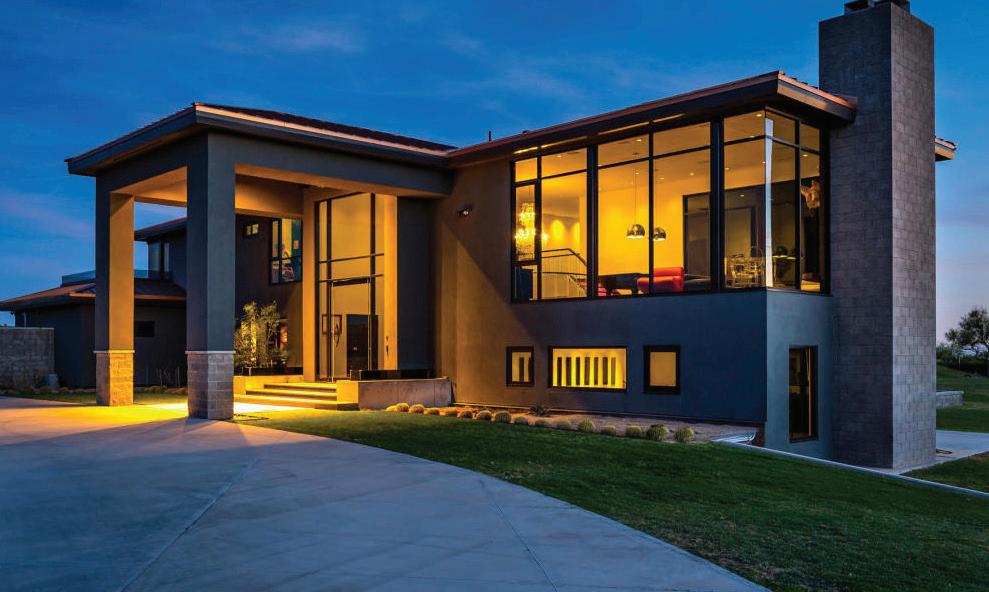
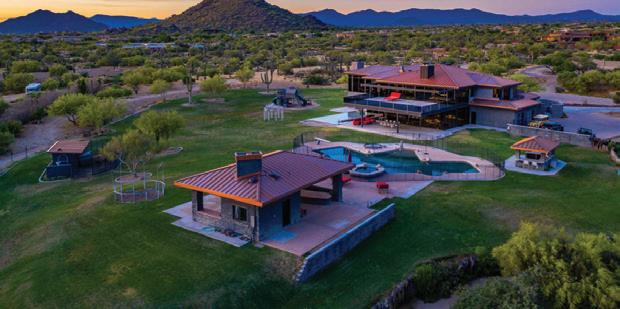
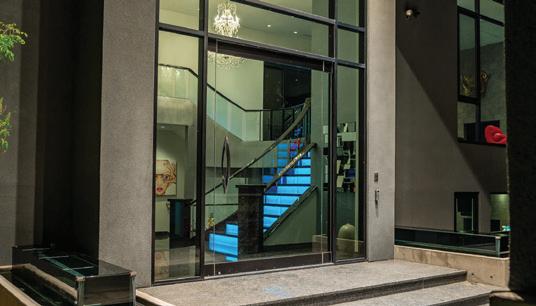
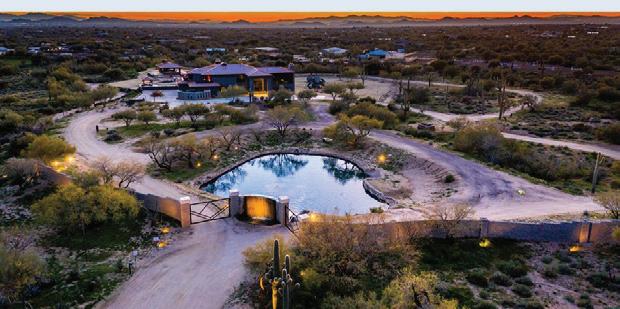
What a BUY !!! Family Legacy and Lasting Memories residence on nearly 5 acres with two additional 5 acre can be purchased here. 9,000 sf of modern contemporary glass and steel beauty. Floor to ceiling windows, 100% granite floors. Highest quality 2011 rebuilt commercial grade finishes, laser beam exterior security. The estate offers dual entry gates with waterfall into a stocked fishing pond, long meandering driveway, fountains, commercial size swimming pool, 1 meter diving board, 1,200 sf pool cabana with wood burning fireplace, home theater, and full bath, vineyard, citrus and deciduous grove of fruit trees, 2 acres of grass. Kitchen – Family Room over 2,000 square feet to comfortably host 40+ of your friends. A grand estate to accommodate a grand lifestyle and experience...EASY TO Show
hair thinning.
“I’ve had a lot of struggles. I was homeless for the last year or so, and it’s been very difficult for my family as well as myself. I really just wanted to make a change because I knew I wouldn’t survive much longer if it continued.”
While using, Prickett not only had to worry about where to get her next fix, but also where to get food, clean clothes, a shower and a place to sleep.
“Having to fight for my life every single day on the streets, that was the turning point for me,” she said.
After struggling for so long, Prickett called home and told her parents she was ready to get help, to save her own life.
She currently is an intensive outpatient at the Scottsdale Recovery Center, where she participates in Alcoholics Anonymous and the center’s drug rehabilitation program. She’s made several friends there, she said, and gained tons of sober support.
“It’s the best change I could have made for myself, just being free,” said Prickett, who remains in her recovery process.
“I’m getting back to the Perie that I used to be … the Perie that everyone knows and loves and just wants the best for.”
clinics, competitive weekend tournaments, holiday and summer day camps, and occasional Friday “Kids’ Night Out” events.
The facility features a brightly lit basketball gymnasium with all the necessary sports and conditioning equipment, as well as the Kids’ Club Level Lounge for kids to relax, play and socialize in after school and on the weekends.
The lounge has video game consoles, a movie watching area, lots of books and board games, chess sets and a quiet homework room. There are also several, giant, soothing massage chairs in the facility for kids and parents.
DTA has also quickly become known among the Valley’s elementary school set as the place in town to have the best basketball-themed birthday party.
While Estelle works as the athletic director/head coach and Mimi works as the operations director, Corey is happy working behind the scenes as a coowner and cheering EJ on at his weekly games and tournaments.
Now, 11 years old, EJ is already 6-foot2 and views the DreamTeam Academy as his comfortable home away from home.
“Mimi is a wonderful matriarch of
“The facility is convenient and o ers amenities that allow us to drop our kids o a little early to practice and pick them up a little after, which is great flexibility for parents. My plan is for my kids to continue to grow with DTA and I’m happy to endorse them and refer them to others.”
the club and brings a personal aspect to it that other clubs tend to lack,” said Pierre Smith of Scottsdale who has two sons in second and fifth grades.
“The coaches here are knowledgeable, professional and energetic, and have the right mix of discipline and fun to keep the kids motivated,” he added, noting:
“The facility is convenient and offers amenities that allow us to drop our kids off a little early to practice and pick them up a little after, which is great
flexibility for parents. My plan is for my kids to continue to grow with DTA and I’m happy to endorse them and refer them to others.”
What really sets DTA’s program apart from others is the fact that Estelle takes the time to properly teach children crucial basketball terminology and the important ABC’s of the game. Estelle calls it “basketball IQ building” and he quizzes all the children in the academy on their individual knowledge of the game.
“We don’t just teach shooting, passing, and dribbling here,” Estelle said. “We also spend a lot of time talking about proper passing, ball handling and footwork, and we make sure every child has a clear understanding of the game.”
Scottsdale’s Jason Lamm enrolled his 8-year-old son in four-day-a-week practices. What impressed Lamm about DTA is the school’s “Code of Conduct” that emphasizes good sportsmanship, camaraderie and doing well in school.
“While skill and sportsmanship on the court are emphasized, academics and good citizenship off the court are equally stressed and important,” Lamm said.
Information: 480-800-8326, dreamteamacademy.com
Sunday AUGUST
Days
story time. Information: 480398-7174.
Mustang writers group
sa Library, 7377 E. Silverstone Dr. Information: 480-3127323.
Book discussion group Discuss “The Improbability of Love” by Hannah Rothschild at 6:15 p.m. at Scottsdale Civic Center Library, 3839 N. Drinkwater Blvd. Information: ellie. kallel@cox.net.
Drop-in e-reader help
11
25th Birthday-versary
Join Desert Stages Theatre in celebrating its 25th anniversary from 5 to 7 p.m. after a performance of “In the Kingdom of the Clouds.” Free admittance at 7014 E. Camelback Road Information: info@ desertstages.org.
Backpacks, Blessings and Brittany
North Scottsdale United Methodist Church will be collecting new backpack donations to be distributed to Vista del Camino during their 10 a.m. worship service. There will be a coffee shop concert featuring Brittany Glenn at 11:30 a.m. following the service. Donate new backpacks to the church at 11735 N. Scottsdale Road Information: 480-948-0529.
Monday
Receive help with downloadables. Bring your device, library card and questions from 11 a.m. to noon at Arabian Library, 10215 E. McDowell Mountain Ranch Road Information: 480-312-7323.
Homework help (Ages 8–18)
Stop by the Arabian Library at 10215 E. McDowell Mountain Ranch Road for help on any subject from 3:30 to 5:30 p.m. Information: 480-312-7323.
Mustang poets
Meet with other poets from 6 to 7:45 p.m. at Mustang Library, 10101 N. 90th St. Information: 480-312-7323.
Mother Goose (Ages 0–5)
Meet with other writers to share and critique writing in a pressure-free and supportive group from 9:15 a.m. to 12:15 p.m. at Mustang Library, 10101 N. 90th St. Information: 480-312-7323.
Books 2 boogie
Children up to 5 and their caregivers are invited to participate in music, movement and song from 10:30 to 11 a.m. at Palomino Library, 12575 E. Via Linda. Information: 480-312-7323.
‘Ivory Tower’
Enjoy the documentary, “Ivory Tower,” from 1:30 to 4 p.m. at Mustang Library, 10101 N. 90th St. The film is rated PG-13 and looks the value of college in the light of rising tuition rates and crippling student loan debt. Information: 480-312-7323.
Family storytime Children up to 5 and their caregivers can listen to stories and music and participate in rhyming activities from 11 to 11:30 a.m. at Mustang Library, 10101 N. 90th St. Information: 480-312-7323.
Wednesday
12
New Faces AA meeting
Find recovery from alcohol addiction alongside this support group at 7:45 a.m. at North Scottsdale Fellowship Club, 10427 N. Scottsdale Road Club membership is not required to attend meetings.
Breakfast Babies
Parents and their babies can enjoy a delicious gourmet breakfast 9 a.m. Mondays at Brunch Café, 15507 N. Scottsdale Road. Families will meet in the large, private dining room and will receive complimentary coffee and a chocolate-covered strawberry with the purchase of any meal. Grandparents are also welcome to join in on the dining, socializing and read-aloud
Celebrate reading with a fun performance by Mother Goose from 10:30 to 11 a.m. at the Appaloosa Library, 7377 E. Silverstone Dr. Space is limited, so please see a staff person prior to the start of the program to pick up a ticket and reserve your place. Information: 480-312-7323.
‘Dear White People’
Enjoy the 2014 Sundance Film Festival’s Special Jury Award for Breakthrough Talent winner, “Dear White People,” from 5 to 7 p.m. at the Scottsdale Civic Center Library, 3839 N. Drinkwater Blvd. The film is rated R. Information: 480312-7323.
Tuesday
Let’s knit
Learn or practice knitting with others from 1:30 to 4 p.m. at Valley of the Sun JCC, 12701 N. Scottsdale Road Free. Information: 480-483-7121.
14
Speedy bridge
Join others in a fast round of bridge at 10:30 a.m. at Via Linda Senior Center, 10440 E. Via Linda. Registration is required. Information: 480312-5810.
Brunch Café
The all-new Brunch Café in Scottsdale will host a special celebration from 6:30 a.m. to 2:30 p.m. at 15507 N. Scottsdale Road All attendees will receive $5 off their total bill. Between 6:30 and 9:30 a.m. attendees will also enjoy complimentary coffee and a chocolate-covered strawberry with the purchase of any meal. Great coupons will be handed out. Information: 480-3987174.
Open cards and games
Enjoy a variety of games including card games from 9:30 a.m. to 12:30 p.m. at Appaloo-
Friday In stitches knitters group
16
Gather with other knitters to work on individual projects, share advice and talk with others from 1 to 3 p.m. at Scottsdale Civic Center Library, 3839 N. Drinkwater Blvd. Information: 480-312-7323.
Advanced beginner bridge
Family storytime
Children up to 5 and their caregivers can listen to stories and music and participate in rhyming activities from 10:30 to 11 a.m. at Appaloosa Library, 7377 E. Silverstone Dr. Information: 480-312-7323.
Croak and Dagger
Stop by the Poisoned Pen Bookstore at 4014 N. Goldwater Blvd. for a book discussion about Jean-Luc Bannalec’s “Fleur de Sol Murders” from 10:30 to 11:30 a.m. Information: 480-947-2974.
Thursday Tai Chi
Everyone is welcome to join a class that focuses on gentle and controlled movements that center the mind, body and spirit for health benefits from 3 to 3:45 p.m. at Ironwood Cancer and Research Centers, 8880 E. Desert Cove Ave. Information: 480-314-6660.
Mature Mavens
Valley of the Sun JCC invites you to make new friends and socialize at a local restaurant from 5 to 7 p.m. Dinner is separate checks. Call Bunnye at 602-371-3744 for restaurant details and to make a reservation.
ESL class
All conversation levels are encouraged to practice the English language with experienced teachers and other students from 9:30 a.m. to noon at Scottsdale Civic Center Library, 3839 N. Drinkwater Blvd. Information: 480-3127323.
Introductory English
This class is designed for students with no prior experience in English and takes place from 9:30 to 10:30 a.m. at Scottsdale Civic Center Library, 3839 N. Drinkwater Blvd. Information: 480-3127323.
Literate Lizards
Pick up and read “The Dry” by Jane Harper for a library book discussion from 4:30 to 5:30 p.m. at Mustang Library, 10101 N. 90th St. Information: 480-948-2651.
Join others in playing a fun game of bridge from 10:30 a.m. to 12:30 p.m. at Appaloosa Library, 7377 E. Silverstone Dr. Information: 480-312-7323.
Chair Pilates
Pilates improves the cardio system, eases back pain, improves bone density and boosts heart rate. Join a class to better physical health from 1 to 2 p.m. at Ironwood Cancer and Research Centers, 8880 E. Desert Cove Ave. Information: 480-314-6660.
Splash into Shabbat
Join PJ Library by the poolside for Shabbat stories, splash pads, crafts, music and pizza at 5:30 p.m. at Valley of the Sun JCC, 12701 N. Scottsdale Road Cost is $10 to $15. Registration is required by Aug. 14. Information: jerishphoenix.org/ shabbatsplash.
Mustang writer’s creative group
Practice writing exercises and share writing in a pressurefree and supportive group from 10 a.m. to noon at Mustang Library, 10101 N. 90th St. Information: gpaulson4@ gmail.com.
Saturday
Sunday
18
Story stop
Build children’s literacy with a free picture book program from 2 to 2:15 p.m. at the Scottsdale Civic Center Library, 3839 N. Drinkwater Blvd. Up to 5 years old. Information: 480-312-7323.
Educator
Appreciation
The Barnes and Noble at 10500 N. 90th St. is offering special discounts to Pre-k through grade 12 educators. Starting at 10 a.m., teachers can enjoy 25% off most books, toys, games and more in store and online. Information: 480-391-0048.
Monday
19
Business Energizer
17
Back to School bash
Children in preschool through fourth grade can bring a towel and swimsuit for a night of fun with friends, two pools, a water slide, DJ, splash pad, rock wall and more from 6 to 10 p.m. at Valley of the Sun JCC, 12701 N. Scottsdale Road Cost is $15 to $30 and includes dinner, snacks and a movie. Registration is required. Information: vosjcc.org/knoschool.
Learn about setting weekly goals and generate business ideas with fellow business owners from 9 to 10 a.m. This group meets virtually. To join, meet the group online through the “Monday Business Energizer” group LinkedIn page. Free. Information: edgar@compasscbs.com.
Tail
waggin’ tales
Children 6-10 can practice their reading skills with a certified therapy dog from 3:30 to 4:15 p.m. at Mustang Library, 10101 N. 90th St. Information: 480-3127 323.
WestWorld in running for prestigious horse event
BY KRISTINE CANNON Progress Staff Writer
WestWorld, Scottsdale’s premiere multi-use events facility, is the sole U.S. destination among 10 international lo- cations competing to host elements of the Fédération Equestre Internationale World Championships in 2022.
North Scottsdale
than trying to put on the entire games,” Dygert said.
“You could bid for all of them, or you could bid for a few of them, or you could bid for one of them,” he added.
WestWorld submitted a bid in 2018 for two of the seven disciplines recognized at the international level in horse sports.
The northern Scottsdale facility is up against competitors in Denmark, Estonia, Hungary, Ireland, Italy, Saudi Arabia, Slovakia, the Netherlands and the United Arab Emirates.
“The mere fact that we were the only supported bid coming out of the U.S. is a very big deal; and I am very, very proud of that,” said Brian Dygert, WestWorld general manager.
WestWorld is vying to host the vaulting and reining competitions in August 2022 and submitted a bid in November.
On July 26, Dygert received notice from the FEI, the international governing body of equestrian sports, that their bid was accepted.
“I did not expect to make it there and we’ve made there,” Dygert said.
“We’re a new player as a venue and a city and a production organizing committee,” he added. “We were picking for the lower, easier-hanging fruit of the world games, and for the city and the venue, that’s significant because now, on an upper national and international level, they know who WestWorld and Scottsdale are.”
As the last step of the bidding process, the WestWorld team will present its bid on Sept. 12 to the FEI Evaluation Committee.
The committee will then submit an evaluation report to the FEI General Assembly, which will announce the final site selection in November.
The event’s Olympic and Paralympic disciplines will serve as qualifiers for the Paris 2024 Olympic Games.
For the first time, the FEI initiated a new bidding process for individual world championships in all disciplines for 2022.
The new process not only allows for the sustainable and cost-effective use of existing equestrian sports facilities, but it was also put in place for venues that may have hesitated to put forward multi-discipline bids in the past — like WestWorld.
“The solicitation of a new bidding process for the games to be segmented was what got our attention because now our ability to seize a portion of those world games was easy — and it’s very different
Dygert said they chose reining and vaulting because they are the easiest to host inside WestWorld, which boasts 300,000 square feet of climate-controlled event space and 11 equestrian arenas.
“Climate control and indoor containment was our target because that’s what we as a venue and a destination port would be very good at being able to host and produce, and we don’t have to do added things,” he said. “[It’s] one of the things that truly makes us different.”
WestWorld is up against Italy and the Kingdom of Saudi Arabia in the two disciplines.
“This is a big deal because it puts the venue and the city on a very elite platform of capabilities of hosting and producing this level of competition in the horse world and the horse sports components,” Dygert said.
WestWorld’s first step was to receive national support from the United States Equestrian Federation, the national governing body for most equestrian sports in the United States.
“The FEI would not accept bids that the national governing body did not support,” Dygert said.
“That’s a very big deal. One because it’s a first time through for Westworld and the city of Scottsdale; and two, it tells us our work was that good because then the USEF was very comfortable with that work and therefore submitting our bid to the FEI,”
Dygert said.
Dygert’s team then attended an FEIhosted interactive workshop in March in Lausanne, Switzerland.
“The FEI was very clear about three things: One, they did not want venues that weren’t already built and active,” Dygert said.
He added that FEI also stressed the importance of financial stability, hospitality and amenities and the ability to promote, attract and advance horse sports to an audience.
“Proximity to a major airport like Sky Harbor, the city of Scottsdale and all of its amenities and the fact that it’s very much focused on destination hospitality puts us way up there on that list,” Dygert said.
Hosting the vaulting and reining competitions would mean increased tourism
during an otherwise dormant time of the year.
“When you talk about a two-week international event in August, that’s significant,” Dygert said.
Arabian Horse Association of Arizona Executive Director Taryl O’Shea said she was elated to find out that WestWorld finally received recognition on an international scale.
“[WestWorld] is more than ready to host an event of this magnitude,” she said. “We not only have the hotels and the tourism infrastructure, but the WestWorld facility with all of the upgrades it’s undergone over the last 10 to 15 years put it in the spotlight of being able to host these kinds of events internationally.”
AHAA hosts between four and six events each year at WestWorld, including the Arabian National Breeder Finals taking place Sept. 25 to 28.
“A lot of people don’t realize that Scottsdale is the mecca for not only the Arabian horse, but there’s so much equestrian activity, and I think a lot of it is primarily driven by the fact that we do have WestWorld,” O’Shea said.
Scottsdale’s long history as a horse community includes the Scottsdale Arabian Horse Show, which started in 1955 and grew to become the world’s largest Arabian horse show held annually in Scottsdale.
Next year marks the 65th anniversary of the Scottsdale Arabian Horse Show.
“A lot of the locals, like the Chauncey’s and the Gainey’s and the Wrigley’s and all of these areas that are now named after these iconic people, they all imported Arabian horses from Europe and started a competition,” O’Shea said.
It’s this history that also helps set Scottsdale and WestWorld apart from its competitors.
“The horse community has been a sig-
nificant portion of the history here for a long time because Scottsdale originated as a western cow town and it evolved into the horse component that was and is a very strong hotbed across all the disciplines and breeds.
“And that helps because you have a significant amount of that activity that already resides here. That’s what’s driven Westworld’s continued evolvement,” Dygert said.
“People don’t realize over the past 100 years it’s been the equestrian community that’s dug its stake in the ground and attracted people from all over the world,” she said.
“Brian’s been a great leader and it’s his ability and insight to try and attract these larger events has put Westworld on the radar — and especially on an international scale — for equestrian events,” she added.
Information: westworldaz.com
The Scottsdale Arabian Horse Show is the world’s largest Arabian horse show held annually at WestWorld in Scottsdale. WestWorld was recently named the sole U.S. destination among 10 international locations considered to host elements of the Fédération Equestre Internationale World Championships in 2022. (Osteen/Schatzberg/Special to the Progress)
‘The Prank’ lives on for Scottsdale High Class of ‘79
BY KRISTINE CANNON Progress Staff Reporter
It’s touted as the “best senior prank in Scottsdale High School history,” but exactly what happened on that late-May evening in 1979?
South Scottsdale
“We kept it very secretive because we didn’t want to get busted,” said Steve Beck, who many of his former Scottsdale High School (SHS) Class of ‘79 classmates call the mastermind of the prank.
The details are a bit blurry but as they plan for a 40th class reunion in October, there are three details the Class of ‘79 reunion committee and a handful of the pranksters could agree on:
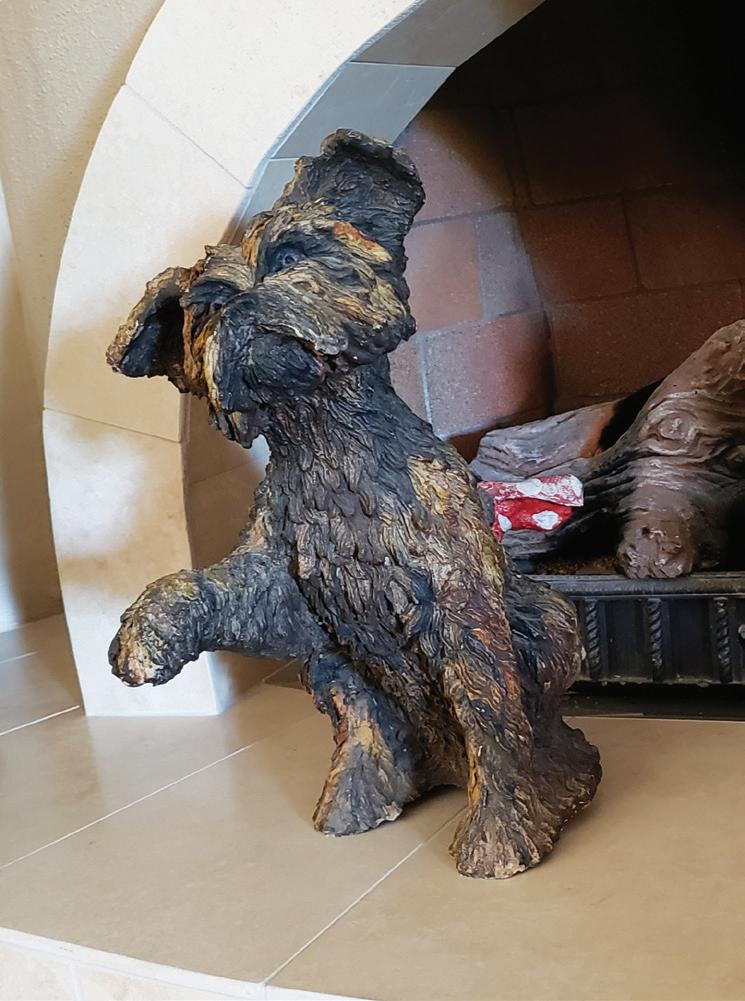
Two Volkswagen car frames were hoisted to the top of the school’s auditorium and cafeteria in the middle of the night; the Hobo Joe’s restaurant dog statue was stolen and placed atop one of the cars; and two of their SHS classmates were arrested.
“I don’t think anybody’s ever topped it,” said Ellen Jacobs, Class of ’79 reunion committee member. “That was the biggest, craziest, frankly most insane prank, and people still talk about it.”
And it all started with Beck, who recalled:
“We knew we wanted to do a prank because back then senior pranks were a big deal and everybody tried to outdo the class before them. So, we needed to do something good.”
Beck obtained two Volkswagen car bodies free of charge through friends of his dad and kept them at his parents’ home for a week.
“My mom, she knew better than to ask what they were for,” he said.
The group of about 40 guys settled on the precise day and time the prank would take place.
“The whole thing was very well organized and orchestrated,” Beck said.
The group of guys either rode their bikes or drove to the school that night, gathering in the courtyard around 1 a.m. with all the necessary supplies: ropes and long, wooden ladders they used as ramps to slide the car bodies up to the roof.
“We stacked picnic tables into pyramids and then used Mike O’Brien’s selfmade ladders to climb onto the roofs,” Beck recalled.
“We had guys below lifting and guiding the cars — flipped on their roofs — while more guys on the roof pulled with ropes attached to multiple points on the car for stability.”
One students Gary Hamann, lost his balance and came close to falling off the roof.
“But [he] was able to jump to a nearby landing, rather than falling to the concrete,” Beck said.
All the while, fellow classmate Tim Warren took photos — photos he still has to this day — documenting the occasion.
“I wasn’t part of the brain trust that put that together, but I was there the night that we put it up there, and I was taking pictures of us while we were doing it,” he said.
According to Dave Hutchens, one of
the seniors there that night, it took about an hour to get both cars up on the roofs.
But the prank wasn’t complete without the Hobo Joe’s dog statue. Hobo Joe’s was a popular coffee shop chain at the time with locations throughout the Valley, including one in downtown Scottsdale just down the street from where Scottsdale High School once stood.
“The whole Hobo Joe thing was the result of a drunken rogue individual who I presume thought we needed decoration for the cars,” Beck said. “A few of us know who did it but won’t reveal his identity other than he has spent his career as a public school educator and administrator.”
Though the guys were careful to avoid damaging school property, the dog end-
ed up on top of the car body atop the cafeteria.
“Surprisingly, only a few individuals had been drinking because we were serious about our goal. We wanted to be successful and have bragging rights to the best senior prank in local history,” Beck said, adding:
“Back in those days, senior pranks were a very common practice and pride was taken in ‘outdoing’ other classes and schools.”
The car atop the cafeteria may have had a prop, but the other car on the auditorium had its own identifier: the name “Evelyn” spray-painted on the side. Evelyn was the name of the school’s principal at the time, Evelyn Caskey, who passed away in October 2018.
“When I went up to get my diploma at graduation, she smiled and said, ‘Did you have anything to do with those cars?’ I just grinned and didn’t say a word,” Beck
In May ‘79, a group of Scottsdale High School Class of ‘79 seniors pulled off the “greatest prank in SHS history,” placing two Volkswagen car bodies atop the school. (Bob Johnstone/Scottsdale Progress Archives)
Forty years later, nine Class of ‘79 alumni gather to recreate the photo published in the Progress. Pictured are (left to right) Mike Forzano, Chip Rodgers, Ray Taylor, Mike O’Brien, Steve Beck, Gary Arnold, Tim Wilson and Lou Ragusa. (Kimberly Carrillo/Progress Staff Photographer)
PRANK ���� page 24
said. “She was a great lady and well-liked.” The guys may have successfully completed their mission, but the night wouldn’t end without two arrests.
Hutchens gave Beck a ride to the school that night, and his car was parked on the other side of the school. They — and fellow, late classmate Bill Foley — were separated from the group.
“I was fearful. I didn’t know what to do. I was not a hardened criminal by any means,” Hutchens said.
But Beck took off running.
“I just thought, ‘I’m 18 years old; I’m fit. This guy is a cop with full garb. There’s no way I cannot outrun him,’” Beck said.
As Beck fled, Hutchens and Foley were arrested and charged with trespassing and curfew violation.
“I was in jail until probably 9 or 10 in the morning before I got home. They put us in the cell together and [Foley] was telling me not to talk to the police and don’t talk about the crime because all of the jail cells were tape-recorded and he knows this from experience,” Hutchens said. “It was all comical, really.”
Hutchens attended his classes the next day in the same clothing he was arrested in.
The day after the prank, Warren said, “Everybody got a good chuckle out of it. I don’t think my dad to this day knows that I was involved.”
The Progress ran a photo of some of the guys involved in the prank pointing up at the VW on top of the cafeteria.
“That was my favorite part of the picture, on the bottom [of the caption] where it says, ‘School officials said they have not figured out how to get the car down.’ That makes me laugh,” Jacobs said.
According to Beck, it took the school
“He is the least person I would ever have suspected to be a doctor,” Warren said. “He was like the class clown.”
a few days to get the cars down with a crane, a maneuver that he believes cost the school several hundred dollars.
Before the cars were removed, however, Beck ran up one last time to grab the dog.
“I put it in my car, and I still have it,” he said. “My wife and I have been married for almost 30 years, and everywhere we move, it goes with us.”
Teachers, parents and students alike got a kick out of the prank.
“They were amazed it was up there,” said Kathy Shupe, reunion committee member. “The girls never really knew who did it for years.”
Though everyone calls Beck the mastermind, he won’t take all the credit.
“There were a lot of people involved,” he said. “It was definitely a group effort.”
Beck is now a pediatric anesthesiologist — much to his former classmates’ surprise.
“Yeah, it was funny at the 10-year reunion; there were a lot of pretty shocked people,” Beck added. “No one had any idea that I was actually a pretty decent student. I just didn’t fit the stereotype for it and they probably thought I’d be in jail or something.”
Two years after he was arrested, Hutchens was hired by Tempe Police.
Hutchens was a cop for 25 years and then worked with the city for 11 years doing pre-employment background investigations.
Hutchens retired in April.
“That is so funny,” Beck said. “There used to be show on back [then] called ‘Scared Straight!’ It was about teenage kids who would go into prison, and the prisoners would talk to them and just scare the crap out of them. So, it was the joke after Dave got caught and ended up being a cop. We’d say, ‘Oh, you got scared straight, huh?’”
As a nod to the prank still talked about to this day by the senior class, the 1979 graduating class’ 40-year reunion held in October will be ’70s themed.
In addition to an evening of drinks and dinner, the Class of ‘79 will host a raffle
and donate the money raised to the Scottsdale Historical Society.
“We’re kind of homeless,” Shupe said. “Our school has been gone since 1984, and [the Little Red Schoolhouse] has a lot of Scottsdale High stuff in there.”
They accepted the Class of 1978’s challenge to raise money for the Historical Society.
“We want to keep passing the box forward,” Shupe said.
The 40-year reunion takes place Oct. 26 at the Old Town Tortilla Factory, and tickets cost $85 each.
This is Beck’s first time as a reunion committee member.
“I think about the people that I hung out with in high school and some of the guys that I’d cause trouble with every weekend, [and] I think with every reunion you realize how important really true friendships are,” Beck added.
The night before, the committee is also hosting a get-together at Gilligan’s, which is owned by Class of ‘79 alumni and reunion committee member, Greg Fields.
“If you graduated in ‘79 and went to school with us, we want you there,” Jacobs said.
Information: shs1979reunion.com or email Jacobs at elj037@aol.com.
Scottsdale High School Class of ‘79 reunion committee members include, from left: Kathy Shupe, Greg Field, Ellen Jacobs, Susan Goss, Susan Taylor, Mike Forzano and Rebecca Forzano. (Pablo Robles/ Progress Staff Photographer)
Tim Warren, SHS Class of ‘79 alumni, took photos of the prank as it was happening. (Tim Warren/ Special to the Progress)
Steve Beck owns the Hobo Joe’s dog and has it displayed in his Scottsdale home. (Steve Beck/Special to the Progress)
Mattress retailer �inds brick-and-mortar success
PROGRESS NEWS STAFF
Amerisleep began as an online retailer in 2010, but did something many retailers are actually moving away from: it created a brick-andmortar store.
After opening its �irst physical location in Gilbert two years ago in SanTan Village, Amerisleep today as has 11 showrooms in four states, with Valley locations in Glendale and Scottsdale.
A Forbes magazine article once described Amerisleep “the Apple store of mattress stores.”
As Amerisleep reached its two-year anniversary in July since making its jump from online, Joey Holt, co-founder and COO shared his thoughts about the company.
What prompted the move from online to a physical building?
Holt: Our move into retail was in response to customer demand. As our business grew online, we received increasing interest from customers who wanted to try out our beds in-person.
Many wanted to experience the Amerisleep difference �irsthand before they committed to making a purchase. Indeed, buying a mattress (even when you know you can return it later) is a big decision to make. So, we focused on what would truly delight the customer, and retail expansion was the answer.
We redesigned the in-store mattress buying experience from the ground up by employing “sleep ambassadors” who are trained as certi�ied “sleep science coaches” and offering “dream suites.” Our dream suites are our dedicated nap rooms, which are built to provide comfort, privacy and simulate a more personalized testing experience.“
Why was Gilbert chosen as the location for the �irst showroom?
Holt: Close to our headquarters in Scottsdale and with the ideal customer demographic, we felt SanTan Village in Gilbert was the perfect opportunity for us to initiate our retail growth plans.
How has the �irst showroom at SanTan Village helped sculpt the retail experience at Amerisleep?
Holt: We’ve continued to use our �irst location at SanTan Village as a model for all of our newer showrooms including our latest overseas locations in Busan and Seoul, South Korea.
We spent years designing the Amerisleep retail experience and only make modest amendments to each new location as a way to further connect with and engage the local audience. What sets Amerisleep apart from others?
Holt: At Amerisleep, we approach our sleep solutions differently compared with other brands. Most other businesses apply a good-better-best approach to their beds. This creates customer confusion, leads to in�lated margins and prioritizes business interests over actual customer needs.
Instead, as a direct-to-consumer company, we price our mattresses affordably and only offer �ive models that range from �irm to soft. With these, customers can select the comfort level that meets their unique sleep needs. In our mattresses, we’ve also incorporated design, materials and technology that are proven to promote a more restful sleep, relieve
pain-causing pressure points and help them sleep cool.
Plus, our award-winning brand offers exceptional customer service with our 100-night, risk-free sleep trial, 20-year warranty and certi�ied sleep science coaches.
What has the company learned over the last two years in Gilbert?
Holt: At SanTan Village, we’ve learned about how sleep — good and bad — has impacted a wide variety of customers. From teens who rely on better sleep to improve their focus at school to adults who work late night shifts and need a comfortable bed to lay in, to the elderly who’ve experienced chronic pain with their previous mattress.
We’ve heard a number of unique stories that reinforce the notion that quality sleep is a major contributor to overall health and happiness. This also motivates us to develop only the best products to alleviate the aches and stiffness customers feel and ensure they wake up rested and rejuvenated.
How has the industry changed since opening Amerisleep’s �irst physical store?
Holt: Amerisleep saw the opportunity to help rede�ine the retail experience for consumers who now expect a customer-�irst mattress shopping experience, in light of hundreds of traditional mattress stores closing across the country.
Overseas, too, customers are recognizing the importance of sleep. Earlier this year, we opened our sixth showroom in South Korea. What advice do you give for people looking to buy a bed?
Holt: Determine your true sleep needs and �ind the right solution that can address them. Some customers have the misconception that all they need to do is walk into a mattress store and buy the best model within their budget.
However, we advise shoppers to avoid looking purely based on price as most other mattress companies use sneaky tactics to sell you the same mattress under different names and at vastly different prices.
Instead, we encourage you to learn how the design, materials and technology of a bed can help enhance your comfort and provide a deeper sleep.
How much money should a consumer plan on spending for a quality bed and how long do beds need to be replaced?
Holt: A good mattress is an investment. You spend one-third of your life in bed, so it’s important that you make every minute count. In fact, a mattress is something you spend more time using than any other household item, including your car. Thankfully, you don’t have to spend $5,000 to get a quality night’s sleep. Of course, you’ll want to buy something that can last decades as well. Amerisleep mattresses start at $999 for a queen and with our 100-night sleep trial and 20-year warranty, you can rest assured knowing your purchase is protected.
Amerisleep's cofounders include Joey Holt and Firas Kittaneh, above, and Moe Kittaneh, who is not pictured. (Special to the Progress)
Opinion
Museum Square will stimulate arts district
BY SANDY SCHENKAT Progress Guest Writer
My friend Laurie Coe in a recent Scottsdale Progress opinion piece said she is against the proposed Museum Square project at the southern edge of Old Town. I am not. I support it.
I have been an advocate of Scottsdale’s “arts districts” for more than 10 years and work to promote the area to Valley hotel concierges.
My familiarity with the area is why I believe Museum Square’s proposed 4-5-star hotel tentatively called “The Arizonan,” combined with new, high-end residences, could be an excellent �it for the area, including for the adjoining Museum of the West, a Smithsonian-af�iliate.
It too supports Museum Square among
many other top community organizations.
We should all want more high-end buyers for the area buying artwork at our local galleries.
Once upon a time, galleries populated Marshall Way to the north of Main Street. Yet, many of them have gone. Why? There is a myriad of reasons: Online purchases, the new arts energy in downtown Phoenix and bad landlords.
I am concerned the same can befall our beloved Main Street if we do relatively nothing — as happened with Marshall Way. Where I agree with Coe and others is that the project must be developed with enough parking. She mistakenly points to a new hotel now under construction as being part of Museum Square. It’s not, but the point remains.
Despite the proliferation of Uber and Lyft, especially for hotel guests, I believe the parking issue can and will be re-
solved. And no, despite Coe’s insinuation, metered parking isn’t going to a be part of the solution. There will be a huge blow back if meters are brought up again.
There’s no doubt we need to have enough parking for hotel guests, condo owners and those visiting the restaurants at Museum Square.
And by so doing our arts district will be that much more vibrant and alive for galleries, businesses, tourists and artists.
There are similarities between the Scottsdale Waterfront and Museum Square.
The former redeveloped a former, non-descript retail center and barren Arizona Canal into a showpiece of art, recreation and residences. And yes, it has buildings 150 feet tall.
But the community seems to like the Scottsdale Waterfront, judging from all the restaurants, people and events there. Also, the downtown area already has numerous other such buildings with more on the way
at Scottsdale Fashion Square and elsewhere.
Compared to the Scottsdale Waterfront, Museum Square has even more open space and better designs in my opinion. The Waterfront doesn’t have a hotel. Museum Square does.
And the project takes a barren piece of land (an abandoned transit station) — far worse than what the Waterfront inherited — and turns it into a new jewel that also sees city taxpayers realize $27 million in new money from the sale of the city land. That is a lot of money that can be used for parking needs in the area as well as other money that will fund our parks, police and quality of life.
While there are numerous bad development proposals in Scottsdale these days, Museum Square is certainly not among them. It is artful and worthy of support, as it endeavors to work out any remaining parking issues.
Arts & Entertainment
Lineup gels for Canal Convergence 2019
BY KRISTINE CANNON Progress Staff Writer
Last year’s Canal Convergence turned up the heat on the Scottsdale Waterfront, thanks to Walter Productions’ “Floatus” installation and fire show choreographed to Top 40 songs, like Ellie Goulding’s 2013 hit “Burn.”
This year, Walter Productions returns to the annual, multi-day event with “Water Serpent,” a 200-foot-long, floating sculpture that will shoot fire along its metallic spine and sparks from its mouth.
And by the sound of it, “Water Serpent” will be even bigger and better than “Floatus.”
“Installing sensitive electronics, lighting and flame effects on floatation platforms in moving water made for some interesting challenges with ‘Floatus.’ The ‘Water Serpent’ design certainly incorporates those learnings, allowing us to take things up a notch or two,” said Kirk Strawn, founder of Walter Productions.
Walter Productions is one of nine artists and studios from around the world
The Squidsoup installation uses approximately 600 interconnected orbs of light and sound to simulate a wave over the Arizona Canal.
The artwork is part of Squidsoup’s Wave series, which also includes “Desert Wave,” an installation the studio is developing for Burning Man.
“From my perspective, the aim is to beguile, entrance, intrigue — and to use digital processes to create abstract but evocative experiences,” said Anthony Rowe, founder of Squidsoup.
featured at Canal Convergence, which is managed by Scottsdale Public Art and takes place Nov. 8-17 on the Arizona Canal between Goldwater Boulevard and Scottsdale Road.
Ready for the show
Canal Convergence will feature 10 installations total, including “Cumulus Connection” by Miracle Wonderland Carnival Co. from Louisiana, “Digital Tintamarresque” by Izobrulo Polylight from Russia, “HeartHug” by Izobrulo Polylight from Russia, “Light Orchestra” by ATOMIC3 and Ottomata in collaboration with JeanSébastien Côté from Canada, “Permutate” by Nicole Anona Banowetz from Colorado, “Soleri, So Laser” by Mike Gould from Michigan, “Standing Wave” by Squidsoup from the United Kingdom, “Swarm” by Toy Studio from the United Kingdom and “Waterlight Graffiti” by Antonin Fourneau from France.
“We’re excited about the selection of artists for this November’s Canal Convergence since our focus is on maintaining the excitement generated at last year’s event,” said Kim Curry-Evans, director of Scottsdale Public Art.
The artists selected will present artworks that engage, encourage interaction, intrigue and educate viewers about water, public art and light, Curry-Evans added.
This year’s Canal Convergence follows the theme of “The Story of Water.”
Many of the large-scale, light-based installations reference that theme, including “Standing Wave.”
Squidsoup is the artist studio behind the 2017 exhibition “Ocean of Light: Submergence” at Scottsdale Museum of Contemporary Art (SMoCA).
And Squidsoup will return to SMoCA in November with “Murmuration” to help celebrate the museum’s 20th anniversary.
“Murmuration” is a site-specific artwork that will use a networked data system to connect hundreds of lights and audio sources to create an auditory experience during the day and an audiovisual experience at night.
“As SMoCA celebrates its 20th anniversary this year, we have looked back to meaningful moments in our history, and ‘Ocean of Light: Submergence,’ with its unprecedented popularity, stands out as a high point,” said Jennifer McCabe, SMoCA director and chief curator, adding:
“Long wanting a light-based installation outside the Museum, it made sense to invite Squidsoup back to mark this important anniversary.”
“Murmuration” will be installed in early November and remain through spring 2020.
Strawn said Walter Productions took seriously Scottsdale Public Art’s request that the installations tell a story of water, as well.
Walter Productions’ lead artist Kristina Ricci conducted research about an
Last year, Walter Productions brought the choreographed “Floatus” fire show to Canal Convergence. This year, the studio returns with “Water Serpent,” a 200-foot-long, floating sculpture that will shoot fire along its metallic spine. (Walter Productions/Special to the Progress)
archaeological site southeast of Phoenix called Snaketown.
A Hohokam village inhabited from about 300 AD to around 1200 AD, Snaketown had extensive irrigation canal systems throughout that fed water to the nearby fields where residents grew beans, squash, corn, cotton and more.
“We were influenced by references to the importance of sharing water to the critical role water plays in food production and to the vision of canals snaking their way through the desert landscape,” Strawn said.
Walter Productions has been working on the conceptual design for several months and procured a new flame effect specifically for the “Water Serpent.”
“[We] tested it during our Kalliope performances at the Bonnaroo Music and Arts Festival in Tennessee earlier this summer, much to the delight of our audiences,” Strawn said.
And “HeartHug,” a heart-shaped installation, will only fully illuminate when two or more people stand below the artwork and hug.
Some installations will also explore ideas of sustainability in support of Canal Convergence’s goal of becoming a zerowaste event.
Scottsdale Public Art, in partnership with Scottsdale Solid Waste and local businesses diverted 88 percent of nonhazardous waste materials through recycling and composting efforts at its November 2018 event, which also drew more than a quarter-million attendees to the Scottsdale Waterfront.
“We were influenced by references to the importance of sharing water to the critical role water plays in food production and to the vision of canals snaking their way through the desert landscape.”
Fabrication of the “Water Serpent” began last month at Walter Productions’ shop located at the Ponderosa Lumberyard in Scottsdale.
Strawn said they will install the installation in early November.
Most Canal Convergence installations will also have interactive components.
For example, “Cumulus Connection” is comprised of a series of swings suspended from glowing cloud structures that are illuminated with vivid colors as people engage with the artwork.
For this year’s Canal Convergence, the goal is 93 percent.
And by 2020, SPA and Solid Waste hopes to reach 100 percent diversion, making Canal Convergence a zero-waste event.
“It would be great if Canal Convergence becomes a model for other organizations, other festivals, other events and eventually the city itself, so the residents understand and know what they can do to help towards that,” Curry-Evans previously told the Progress.
Other artworks may be announced prior to the free public art event.
Canal Convergence will also feature live music and dance performances, food vendors, a beer and wine garden, family-friendly activities, educational artist talks and creative workshops throughout the event.
Information: canalconvergence.com
Food & Drink
Sapiens Paleo doesn’t sacrifice taste for health
BY KRISTINE CANNON Progress Staff Writer
Sapiens Paleo Kitchen, a recently opened restaurant in northern Scottsdale, may specialize in paleofriendly cuisine, but it’s more than that for owners Aurore de Beauduy-Yasinsky and Roman Yasinsky.
They consider paleo a lifestyle.
“What Paleo taught me is that our objective is not to merely survive like our ancestors, but to live a fulfilling and enjoyable life,” chef Aurore said.
Aurore and Roman began paleo while battling health issues — thyroid deficiencies for Aurore and chronic gastritis and acid reflux disease for Roman. They sought out not only their origin, but cures with the right nutritional methods and diet.
After almost a year of research, the couple determined that the paleo diet was the answer.
“We began to notice a difference in how we felt two months after we’d been following paleo nutrition principles,” Roman said. “Many symptoms that we had previously began to subside.”
After three months, he said, they stopped taking all prescription medicine and focused instead on improving their dietary habits.
“It’s been almost two years since we’ve started to eat mindfully. Now we can attest that we are both symptom free and say with confidence that paleo diet and lifestyle is worth following,” Roman said.
Since Sapiens opened in February, Aurore and Roman said they have attracted many customers who share their philosophy about mindful eating.
“However, the majority of our cus-
tomers are people who simply enjoy Aurore’s French cuisine. Many of those customers learned about the health benefit accidentally and appreciated our effort to bring the best ingredients to the table,” Roman said.
At Sapiens, a quaint restaurant that seats a maximum of about 20 guests, chef Aurore uniquely combines the paleo diet with French cuisine.
“Surprisingly, there is more in common between French cuisine and paleo than one may think,” Roman said.
According to Roman, French cuisine is defined by a deep understanding of how ingredients work together, how they complement one another and how they elevate the dish. “Understanding those principles makes it easy to substitute one ingredi-
Local duo on forefront of chocolate revolution
BY ANTHONY WALLACE Progress Contributor
Shoppers who frequent the Old Town Farmers Market may be familiar with the locally based, award winning chocolatiers from Stone Grindz.
Around the Scottsdale apartment complex where they’re based, no one would ever guess that a bonafide chocolate factory resides within one of its units.
But inside Steven Shipler and Kasy McCaslin’s humble base of operations, visitors are confronted with an overwhelming cocoa odor, posters of packaging designs, drawers filled with bars by competitors from around the world, and a medley of
home-cottage-law-compliant, homemade equipment for producing their popular product.
Cocoa beans go in and chocolate bars come out.
Shipler said they sold around 20,000 bars last year, and each one was crafted within their modified, two-bedroom chocolate factory apartment that doubles as his home.
“We have 2,000 pounds of cocoa beans over there and apparently it takes four acres of a cocoa plantation to produce 2,000 pounds of cocoa,” Shipler said. “It’s kinda crazy to think that we have four
Roman Yasinsky and chef Aurore de Beauduy-Yasinsky own Sapiens Paleo Kitchen, located in northern Scottsdale.
(Kimberly Carrillo/Progress Staff Photographer)
Kasy McCaslin is surrounded by boxes of chocolate beans and packages used by Stone Grindz, a popular online business in Scottsdale that she and Steven Shipler own. (Anthony Wallace/Progress Contributor)
ent for another to achieve that perfect balance,” he said.
The paleo diet avoids processed foods and focuses on healthy, whole foods.
Paleo-friendly foods include meat, fish, eggs, seeds, nuts, fruits and veggies, along with healthy fats and oils.
“Most diets imply short-term events, typically focused on restricting food consumption to achieve a specific goal, like weight control,” Roman said, adding:
“Paleo is not about restricting how much food should be consumed. Paleo is about eliminating food groups that cause problems.”
Aurore is committed to using highquality, unprocessed, locally sourced ingredients, grass-fed meats and fresh produce.
“We don’t put any chemicals into our food,” she said. “We make our own mayonnaise and we make our (own) ketchup — we make everything in-house.”
The Sapiens Paleo Kitchen menu features a wide array of poultry, from roasted chicken, grass-fed calf liver and filet mignon to leg of duck confit and rabbit.
All meals, which are made from scratch, can also be adjusted to cater to the keto and autoimmune protocol diets.
“Although we haven’t been open long enough to see a measurable progression over time, we’ve been told multiple times that our food feels light and fresh. Most importantly, we’ve been told that our food inspires people to make the necessary changes in their diets to lead them onto the path of healing,” Roman said.
Sapiens also has a paleo bakery, where customers can purchase freshly
a summer-appropriate dish that can be prepared in about 20 minutes. (Kimberly Carrillo/Progress Staff Photographer)
baked paleo bread, waffle tartines and desserts.
Like all dishes on the Sapiens menu, all baked goods are made with glutenand grain-free flours derived from tubers and root crops, like cassava, chufa and Peruvian maca.
Sapiens also uses free-range eggs.
What customers won’t find in Sapiens’ baked good are soy, dairy, processed sugar, GMO or trans fat.
“Our bread is significantly more nutritious than any traditional bread. It contains high amounts of resistant starch, high-quality dietary fat, insoluble fiber, vitamins, minerals and phytonutrients,” Roman said.
“Nobody knows how to make grain-
free bread. I think it makes us so unique,” Aurore added.
Roman said their goal is to expand the bakery.
“We’ve developed many amazing recipes for our grain-free baking products,” he said.
Sapiens also offers catering, which has been “very active,” according to Roman, and accounts for 30 percent of their business.
But it’s Sapiens’ meal prep that Aurore and Roman are particularly excited about.
“The meal prep is a very exciting new direction for us,” Roman said. “We feel that in this world of deceiving marketing and confusing messages,
This salad is deliciously healthy
PROGRESS NEWS STAFF
Aurore shared a summerand paleo-friendly watermelon salad anyone can make at home.
“Every ingredient in this salad contributes a great deal in supplying our body with vital nutrients, fiber, dietary fat or healthy carbs, while not a single one leads to inflammation and any adverse health effects,” Roman said.
It takes about 20 minutes to make the salad that serves six.
“Brimming with phytonutrients, vitamins and minerals, this salad is a perfect and delicious way to re-
plenish your electrolytes and build up your health reserves for weathering hot Arizona summer,” Aurore said.
Sapiens Watermelon Salad
Serves: 6
Time: 20 minutes
Calories: less than 100 per serving
Ingredients:
4 large tomatoes
4 slices of watermelon
1 bunch arugula
1 bunch frisee
2 small shallots (thinly sliced)
1 clove garlic (minced)
2 tbsp. red wine vinegar
many people find it difficult to maintain healthy nutrition.
“Our meal prep offers people who want to eat well and healthy a perfect solution: freshly prepared food of highquality from the place they can trust.”
Sapiens will deliver to the East Valley and central Phoenix, and meal prep online ordering should be available sometime this month.
The menu will include à la carte items, as well as seasonal combos with seven paleo and seven vegan choices.
It costs $11 per seasonal combo meal, with the à la carte menu varying in price.
To those interested in transforming their favorite dishes into paleo-friendly meals, Roman has a few tips.
“Use organic, high-quality vegetables, nuts and seeds, grass-fed meats and wild-caught seafood, if available. No grains, no sugar, no dairy, no soy or beans, no processed food,” he said.
“Creative substitution is the best way to convert any meal to paleo,” he added.
For example, cream can be replaced with coconut cream, unhealthy soybean oil can be replaced with avocado oil, rice can be replaced with “riced” cauliflower, and sugar can be replaced with monk fruit sweetener or coconut sap.
If you go
Sapiens Paleo Kitchen
Where: 10411 E. McDowell Mountain Ranch Rd.
Hours: Tuesday-Saturday from 4 p.m.10 p.m.
Call: 480-771-5123
Website: sapienskitchen.com
2 tbsp. sherry vinegar
2 tbsp. champagne vinegar
1/2 cup basil leaves (thinly sliced)
1/2 tsp. dijon mustard
1/2 cup olive oil
Salt and pepper
6 slices of Sapiens paleo bread (optional for croutons)
Instructions:
1. Remove seeds and skins of tomatoes by blanching in hot water for one minute, then cooling rapidly with ice water.
2. Cut tomatoes and watermelon into 1.5-in. cubes.
The Sapiens Watermelon Salad is a light, refreshing, paleo-friendly salad featuring freshly picked ingredients, including tomatoes, arugula, watermelon, frisee and more. (Kimberly Carrillo/Progress Staff Photographer)
3. To prepare vinaigrette, combine shallots, garlic, vinegar, mustard and olive oil, and thoroughly whisk.
4. In a large bowl, combine tomatoes, watermelon, arugula and frisee with vinaigrette.
5. Sprinkle paleo bread slices with olive oil and parsley, then roast in the oven for a few minutes. Cut into 1.5-in. cubes.
6. Garnish with basil and croutons before serving.
Chef Aurore de Beauduy-Yasinsky prepares the Sapiens Watermelon Salad,
acres of cocoa in our living room right now.”
Terrior is a French word for all the environmental factors that contribute to a crop’s particular makeup. It is often used in descriptions of wine and coffee, and is understood to result in the unique flavor imbued by the place in which a thing is grown.
Single-origin coffee has exploded in popularity as of late, in part due to a cultural fascination with terrior.
When all other variables are removed and beans from just one particular farm are used, the flavor of the region comes through.
McCaslin and Shipler are obsessive about the beans they use and the farms they come from. At the moment, they are sourcing beans from Ecuador, Peru and Boliva, but that is liable to change.
“We’re always analyzing, doing test batches, just making sure that the cocoa that’s going into our chocolate is the best possible,” said Shipler. “We’re always going for ultimate flavor profiles.”
Massive chocolate producers like Mars, Nestle, and Hershey’s source from a medley of farms — largely in Ivory Coast) — and alkalize their batches in an indus-
trial process that homogenizes the flavor, squashing out any nuance along the way.
Each of these corporations have failed repeatedly to honor nearly 20 year-old pledges to produce their beans without the use of child labor, Shipler noted.
“The state of the chocolate industry is as if the wine industry was based on one bulk commodity grape, all the wine bottles at the store were crafted from this garbage, moldy, slave-trade grape,” said Shipler. “You can’t find the fine wine of
chocolate at the store.”
For whatever reason, chocolate has lagged behind coffee and wine, but that is changing, and Stone Grindz is on the cutting edge.
McCaslin and Shipler have been making chocolate together since 2012 when, as co-workers at Bread Basket Bakery, they saw a YouTube video of someone making bean to bar chocolate.
EL ZARIBAH SHRINE CIRCUS
“When we started seven years ago there were half as many people in this country doing craft chocolate. We haven’t been doing it that long, but I feel like we’re an old school maker almost,” McCaslin said.
“There’s a general interest in getting back to making things and actually understanding the process, not just going to Fry’s or whatever.”
The beans, which come having been dried and fermented at their farm of origin, are first roasted at a low temperature in a home oven to preserve their natural flavor.
Then, they go into a homemade winnowing machine that separates nib from husk. The nibs go to a stone grinder and the husks become compost for McCaslin’s home garden.
Each year, their bars fare better. In 2018, they won three silver medals and a gold at the International Chocolate Award’s first national round, then went on to win bronze at the world competition in Italy for their 70 percent Ucayali, Peru bar.
Recently, Stone Grindz have added a rotating selection of inventive truffles to their repertoire. The recent “Vegan Latte” variation features almond milk, earl grey, blueberry and lavender.
During the Old Town market’s summer break, you can find McCaslin and Shipler at the Uptown and Gilbert Farmers Markets, respectively.
They also sell their bars online, shipping them in insulated packaging designed to prevent melting.
Soon though, their chocolate may be significantly more accessible.
Kacey and Stephen have their sights set on graduating from the apartment building to a proper commercial kitchen with a convection oven, bigger stone grinder, and (eventually) a store front.
Ground numbs are then conched, a heating and mixing process that produces a silky chocolate goo that runs through a tempering machering (necessary in the absence of commercial thinning additives like soy lecithin) before finally going into the fridge, where it hardens into a finished bar.
Stone Grindz’s bars have been recognized by the chocolate-critics community as some of the best in the world.
For the past three years, McCaslin and Shipler’s craft chocolate have been awarded medals by the International Chocolate Awards, Good Food Awards, and Northwest Chocolate Festival.
“We had Whole Foods and AJ’s reach out to us and they really want to carry our chocolate but they can’t carry anything made out of a home kitchen,” said McCaslin.
Until then, they’re enjoying their time in the apartment.
“I really like the process of chocolate,” Shipler said. “It’s awesome. It’s super fulfilling to be in control of our own space and what we’re doing. And it’s an amazing feeling to have created something that the local community is really into.”
Information: stonegrindz.com
Stone Grindz chocolates can be bought in handsome tins. (Photos by Anthony Wallace/Progress Contributor)
Stone Gridnz imports cocoa beans for its chocolate confections just as a coffee shops find their beans, with care and a sense of adventure.
What’s Cooking
With JAN D’ATRI
Progress Contributor
This end-of-season cobbler is peachy keen
We’re nearing the end of peach season, but it’s not too late to give this Caramel Peach Cobbler a try.
It goes together in three layers, but in the oven, the bottom layer rises to the top and bubbles over the peaches to create a delicious cobbler.
The most time-consuming part of the entire recipe
Caramel Peach Cobbler
Ingredients:
1 stick of butter (8 tablespoons)
For the Peach Filling:
1 cup brown sugar
4 tablespoons butter
Pinch of salt
1/4 cup 7-Up or water
2 lbs fresh peaches (6-8), peeled, pitted and sliced, to 4 cups.
1 tablespoon corn starch
For the Batter:
1 ½ cups flour
2 teaspoons baking powder
½ teaspoon salt
¾ cup sugar
1 ½ cups milk
1 teaspoon pure vanilla extract
Directions:
Step 1
In a saucepan, melt brown sugar, butter, salt and water. Bring to boil and simmer until sugar is dis-
is peeling the skin off the peaches, so I have a fabulous tip that will make the process so much easier in the directions.
Believe me, if you make it for family or friends, they’ll think it’s just peachy keen.
Watch my how-to video: jandatri.com/jans-recipe/ one-minute-kitchen
solved. Add peaches and cornstarch, stirring well. Simmer until peaches begin to thicken.
Step 2
Melt 1 stick of butter (8 tablespoons) and pour into the bottom of an 8”x 8” or 9” x 13” baking dish.
Step 3
In a mixing bowl, combine flour, baking powder, salt, sugar, milk and vanilla. Mix until fully combine. Gently pour mixture over melted butter. Do not stir.
Step 4
Carefully spoon peaches on top of batter. Do not stir.
Step 5
Bake at 350 degrees for 40-45 minutes, or until the batter that rises over the top is golden brown.
Serve warm with vanilla ice cream!
Tip for skinning peaches:
Score the bottom of a peach in a 2-inch crisscross. Place the peach in boiling water for 2-3 minutes. Remove the peach from the water and place in a bowl with ice water. The skin will peel right off. This tip works best if peaches are fairly ripe.
cityorethanahalfcenturyagowhenthe dentswasincorporated,Scottsdaleresipitchedafitafterofficialsheedbyedmerchants’pleastoslowdowntowntraffic dalepostingstopsignsateitherendofScotts“Stopsdale”RoadandinthemiddleofOldTown. became