
















































































































































Living in close quarters with a virtual stranger in your new apartment will likely lend to some awkwardness. Even if your weirdo roommate has a weekly ritual of doing yoga with her dog, the easiest thing you could do to make the situation comfortable is to make yourself comfortable. Making the space your own (even if it’s only one room in an apartment, or one half of a room in an apartment) can help you escape the everyday pressure of college. But you have to know where to look and what to buy.
You’ll need:
• Bed coverings
• Storage containers
• Clothes hangers
Optional:
• Live plants
• Curtains
• Door-sized posters
• Photo collages
• Colorful rugs
• White board
• Bulletin board

• Fish bowl (with an actual fish in it)
• Bean bags
• Christmas lights and other mountable lights
• Your original artwork
Through college, your bed will serve as more than just your snuggly sleepy-time destination. It will also be a couch, a kitchen table and a study space. Make sure you’re happy with your aesthetic decisions. There are plenty of options around campus to get unique, versatile and practical bedding to fit your personality.
• Edgy hippie. Urban Outfitters is a college staple. While prices can get steep, check the clearance section for sweet deals. The clearance bedding at Urban isn’t just the ugly, outdated stuff. Oftentimes they’re just making room for new stock. Their look can be described as unique, eclectic and slightly hippie. 545 S. Mill Avenue, Tempe.






Roommates Tricia Renkan, left, and Rose Foronda hang out with their dog, Hiro Nakamura, at home in Oakland, California.

someone I want to live with,” he says.
Jason Martin has a strategy for finding roommates, and it’s not scientific. The 29-year-old financial adviser has had roommates since he was 18 and currently shares a five-bedroom home with three others.
Like thousands of others, Martin posts ads on Craigslist under the “rooms/shared” category in the housing section. His ads are richly detailed –four paragraphs long with a description of the house, its current tenants and expectations of the person he’s looking for. Martin appears to be a relaxed guy. He says he doesn’t mind parties on weekends, and the seven pictures on the ad reveal a tidy, well-furnished living space with tan couches and a kitchen recycle bin.
When a potential housemate sends him an e-mail, he asks the person to call him. Then, Martin says, he doesn’t pick up the phone. He listens to the voice mail and “if they sound like someone I’d hang out with, I call them back.”
The few who pass this test are then invited over. When Martin meets them, he goes with his gut. “Usually within the first two minutes I can tell if it’s
Martin, like so many others, has had difficult living situations before – times when he says he should have continued looking. But, as he repeats the process, he is honing his skills. He has even paid the rent on an empty room for a month or two because he didn’t find the right person to sublet it.
Mary Lou Podlasiak, author of “Rules for Roommates: The Ultimate Guide to Reclaiming Your Space and Your Sanity,” says “birds of a feather flock together”type thinking is the best way to pick roommates.
“Hippies and preppies don’t work,” she says. “It may seem silly, but you need to ask questions such as, ‘What kind of music do you prefer?’ I have lived with a country music lover and found myself plotting to get rid of her.”
She says some of her worst situations happened when she was in a hurry to find a renter.
“Unless you’re just desperate to share the bills, you may want to take time,” she says.
Time, and a clear conversation about your values and what you want, are key to building a lasting living situation.



Congratulations on making it this far; you’ve decided to take the jump and move into an apartment either by yourself or with a group of roommates.
Choosing an apartment to live in is a long-term commitment, often requiring a minimum of a six-month lease, but more often requiring a nine-month or one-year lease.
Picking the right place is more than just snagging the biggest apartment with the best amenities and best price.
One of the first things you should consider when choosing a place to live is location.
Owning a car certainly gives you greater flexibility in where you can live, but, with escalating gas prices, choosing a location close to the places you’ll be going most frequently can save you money and time.
If you don’t have a car, picking a place that’s close to your job or campus or close to a bus or rail line that serves your job or campus, is equally important.
Also, ask yourself: How much space do I really need?
While some Valley apartment complexes include utilities with their rent charges, many do not. Arizona’s hot summers can drive the cost of utilities bill sky high.
Ask yourself: are 16-foot ceilings necessary? Do I really need a guest bedroom? Decisions like these can save you hundreds of dollars over the term of a lease in energy costs alone.
Choosing the right type of complex is equally important. Are you a party animal looking in an apartment community known for families and its quiet atmosphere? Perhaps you might want to consider an alternate location.
Conversely, are you a bookish type prone to early bedtimes and serious studying? Maybe the place known for its all night Friday and Saturday parties isn’t the right choice for you.
Speak to current tenants, read reports online and do your research before signing your name to the dotted line.
You’ll be much happier in the long-run if you do.


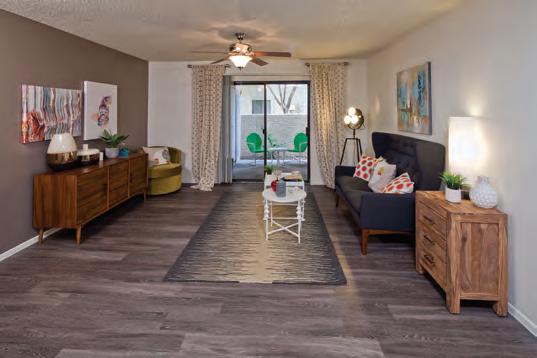




Among the greatest shocks when it comes to moving into an apartment is that those simple luxuries that often go overlooked actually cost money. Cool air, lights, water, garbage collection, cable and internet may all seem like basic human rights, but it takes some effort to actually get them.
• Check with your apartment complex or landlord to see what utilities they cover. Most will cover the cost of water and garbage collection. With the current slumping economic environment, some complexes might even cover electric and cable to entice new and continuing renters.
• Call the utility company to get things set up. If you haven’t established a decent credit record yet, you might have to pay a refundable deposit to get things started, which should be returned within a few months or one year of ontime payments. Electric in the Valley is generally provided by SRP or APS; cable, internet and telephone services are offered by CenturyLink and Cox Communications.
• Live within your means. Be sure to make a wise choice when it comes to how you’ll use your utilities. You might want to forego cable and internet all together.
• Pay those bills. It seems simple, but a few days of delinquent payment can land you in a sweltering hot apartment without water and entertainment.
• Set up automatic online bill pay. If you’re positive that you’ll have enough dough in your checking account to make the bills each month, automatic bill pay could be the easiest option to making sure you get your bills paid on time. The amount will automatically be withdrawn from your account each month, taking the hassle out of writing a check or logging on to pay.
• Use the bare minimum. To save a little moola, turn off the lights, television and any other electric equipment whenever you leave the room. Also be aware that power companies, under certain plans, charge less for electric during different times of the day. Power is generally cheaper after 9 p.m. and on weekends. This way you can save money and use it toward the little luxuries.

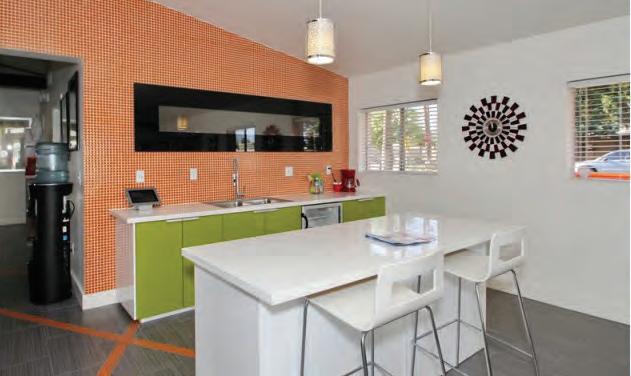
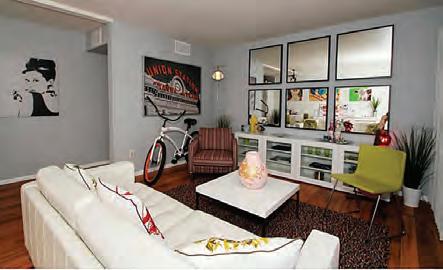




• Simple chic. Head down the I-10 to IKEA, which is known for making things that are simple, functional and inexpensive. You can find twin duvet cover sets in feminine and masculine styles for as low at $19.99, as well as other necessities you’ll need on the cheap. 2110 W. IKEA Way, Tempe. Target, with locations across the Valley, also makes another smart option.
• Modern. Get a European look with slick pieces from Copenhagen/ Denmarket in Phoenix and Tempe. This is stuff you’ll keep after graduation. 1710 E. Camelback Road, Phoenix, 602.266.8060; 2346 E. Southern Avenue, Tempe, 480.838.3080
Your space will be cramped. That’s a given. Make the most of it by limiting
Tyour shopping list to things you really need. Practical doesn’t always mean ugly, though.
• Storage cubes. Simple, plastic storage cubes and shelves are a good way to hide the small things you don’t want strewn around your room. They’re inexpensive and available at major retailers like Target and Walmart.
• Shoe hangers. Girls (and some guys too) have billions of shoes. Believe it or not, you’ll be sharing a closet with another person when living in a dorm — a small one. Make sure you won’t invade your roommate’s half by buying shoe hangers — compartmentalized fabric slots on a hanger. They’re easy to hide in a corner and save a lot of space.
• Skip the extra furniture. Even if you’re living in an apartment, odds are, that yard sale arm chair you bought likely won’t fit.
he school year is about to start. Unless you aren’t planning on leaving the nest, it’s time to choose a place to live.
Picking the right place is more than just picking a neighborhood, or a place with a fantastic pool, or just the right guy-to-girl ratio, although those things can certainly be important, too. It’s about finding a place you can afford, and once you find that place, taking the right steps to make sure your living experience is a good one.
The most important thing to remember when you sign a lease is that you’re making a commitment of up to a year. It’s a serious decision.
But there’s more: there are utilities to turn on, kitchens to stock and food responsibilities to take care of. There are roommates, neighbors and how to handle disputes with both. There are leases, deposits and furniture.






Inside, in addition to a selection of quality places to live in the Valley of the Sun, you’ll find tips and ideas to help you along the way.
n Luxurious, open floor plans: Studio, 1,2 & 3 bedroom with Scenic lakeside, city and mountain views
n Contemporary interior finishes to fit any lifestyle with Whirlpool stainless steel appliances and front-loading washers & dryers
n Short-term and long-term leases available
n Hi-Speed, 1 GB full-fiber Internet available in every apartment
n Ask us about our fully-furnished & stocked Executive Suite options
COMMUNITY DISTINCTIONS
n FREE 24-Hour personal assistant at your beck and call
in
and more!



n 2nd story, club-quality fitness center overlooking pool and lake
n Resort-inspired pool & spa, poolside fire pit, outdoor pool table & outdoor kitchen, 6 private cabanas with TVs and Free Wi-Fi
n Sports lounge and entertainment Area
n Street café with curbside seating
n Dry cleaning service with on-site pickup and delivery
n 4 Convenient electric car charging stations

Simple strategies can make a big difference.
It might seem like your parents were a broken record, because every time you went out while still living at home, they yelled after you “… and be careful!”
Did you ever think that they may be right? Maybe you should be careful?
Here’s what we know: being careful doesn’t mean being the creepy kid in the back of the room with a belt full of sprays, gels and contraptions to keep himself protected from the world around him, but it does means using logic and common sense when making decisions.
And, please be aware that this is not meant to scare you or make you worried, but most of Arizona’s college campuses and the spaces between them and your home are public, and this means that anyone can legally be on or near them at any time.
Some advice:
Always know who is around you
This goes for on campus, at home and when you’re out. If you know who’s around you, you know who you can turn to for help, and who you should steer clear from, like that creepy kid in the
back of the room with a belt on full of sprays, gels and contraptions.
Charge your cell phone every night
I t might sound like a pain to remember to plug in your phone every night, but it will pay off when you need it.
Always have an exit strategy
This point goes for if you’re on campus, at home or out. And it isn’t meant to make you paranoid, but it is definitely a good thing to know how to get out of a situation. Have a party buddy to call on if you feel uncomfortable at a party. Know how to get out of the classroom as fast as possible. And, know the safest way to get out of your house.
Get ICE’d
ICE starts for “in case of emergency.” ICE phone numbers should be clearly marked in your phone, so that if a firefighter or police officer needs to call your family, he or she can look for ICE Mom or ICE (insert boyfriend’s or girlfriend’s name here).
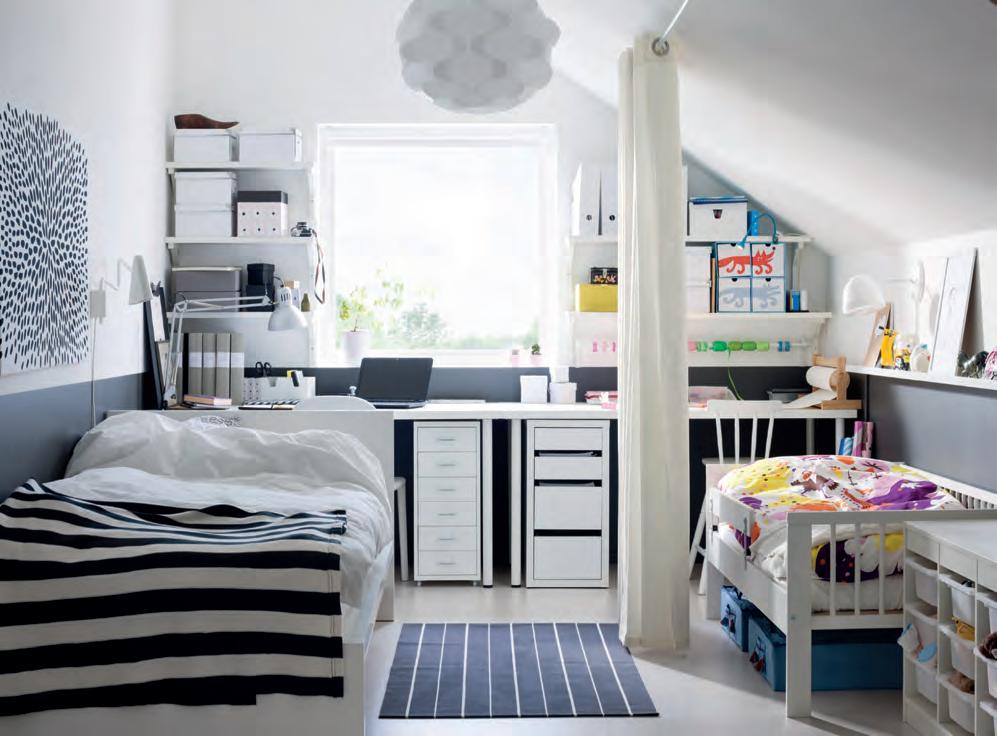







William Hageman • Chicago Tribune
Wven the best neighbors – the c’mon-over-for-a-cookout neighbors, the we-baked-you-somebrownies neighbors – can infuriate you.
Maybe it’s how their kids race their bikes up and down the sidewalk all the time. Or how they blast the stereo at all hours.
And does anyone really need 15 cats?
The aggrieved person, having finished those brownies, has several ways to deal with the bad neighbor. Some are effective; some are not.
Among the latter is the solution many have come to rely upon: Call the police. No matter that the neighbor isn’t doing anything dangerous or illegal. No matter that the police have real crimes to deal with. Calling the cops almost has become a default solution, one that’s not
especially productive.
“No one likes having the police called on them,” said Will Reimers, a neighborhood contact officer with the Boise (Idaho) Police Department. “Oftentimes that makes things worse, when suddenly police show up and start talking to you. People resent that. So it’s not the best first step.”
What is the best first step? Try talking to each other.
“It seems today that talking to your neighbors is something that has fallen out of fashion,” Reimers said. “It’s just not done as much anymore. But it’s an old technique that should be resurrected.”
“I think too many people are afraid to talk to the neighbor, afraid of having a hostile reaction or (being thought) a kook,” said Ted Rueter, founder



(noisefree.org), an organization that seeks to bring noise pollution issues to the attention of the public and elected officials. “You’ve got to take that first step.”
Noisemakers:
Noise is a universal neighborhood complaint: loud stereos or home theater systems, barking dogs, screaming kids, motorcycles, lawn mowers being used extremely early in the day or too late at night.
“A Census Bureau report in 1999 indicated noise was the No. 1 complaint people had about their neighborhood and the No. 1 reason people want to move,” Rueter said. That doesn’t seem to have changed. The online site rentersinsurance.net puts noise at the top of the list of complaints about neighbors.
Resolution of any problem, from noise to intrusive children, should begin with a calm, polite discussion with the neighbor. Just don’t do it when the offending activity is happening. That will only make him defensive and raise tensions. Walk over, be pleasant and broach the issue. Frequently, the offending neighbor will have no idea that he’s making you crazy.
“They say, ‘Why didn’t they come to me first (instead of calling the police)?’ I hear that with noise disputes,” Reimers said.
Explaining the problem in a respectful, even-tempered way can lead to further discussion. And if you’re lucky, a solution.
“I had a neighbor when I lived in Wisconsin who had a leaf blower,” Rueter said. “He used it all the time. So I talked to him and said, ‘This is very bothersome to me.’ He said, ‘Hey, I’m in my 60s and I want my lawn to look nice.’ The agreement we came to, he’d do his
lawn at the same time every week. So on Tuesdays from 9 to 10, he’d get out the leaf blower and I’d leave.”
Outside Peacemakers:
Not all neighbors are that reasonable; not all solutions are that easy. If there is a landlord, contact him or her; they usually know how to deal with bad tenants. Sometimes, though, a third party needs to be called in – another neighbor, perhaps. But even then, those driveway conversations aren’t always productive.
“Sometimes we end up with a situation where there is so much bad blood over many years that somebody has to step in and be a neutral party,” Reimers said. Mediation involves a neutral third party who sits down with both sides in a formal setting and tries to come to an agreement. Mediation can head off a dispute before it escalates, and it avoids having to go through the court system.
There are mediators and mediation groups across the country (go to nafcmorg/public/findhelp to find one near you).
As a Last Resort:
Of course, diplomacy doesn’t always work. There may be no reasoning with the neighbor. He may be stubborn. He may just be a jerk. Then you grab the phone.
If municipal ordinances are being broken – we repeat, does anyone really need 15 cats? – call the city. The same with possible health violations, such as the open burning of trash. Sometimes, though, law enforcement is the best bet.
“When one party feels someone may be hurt, we want to be called,” Reimers said. “If it’s gotten out of control, where someone is going to pick up a shovel or strike a person, we should be called. Once physical violence occurs, it’s pretty hard to repair a relationship.”













































Stainless
Dishwasher
Garbage
Private