





BY JIM WALSH Tribune Staff Writer
Parks, museums, libraries and the Mesa
Arts Center likely will become the first casualties of Mesa’s financial crisis from the recession wrought by the COVID-19 epidemic.
All city facilities that were closed to reduce the corona virus spread would likely stay closed until October, cancelling all summer programs and cultural programs through the long hot summer ahead.
That grim scenario – echoing Mesa’s nearcollapse wrought by the 2008 Great Recession – was detailed during a briefing to City Council last Thursday as officials discussed preparations for the economic damage inflicted by COVID-19.
“This is a sad scenario,’’ Mesa Mayor John Giles said, after City Manager Chris Brady and budget director Candace Cannistraro de-

BY JIM WALSH Tribune Staff Writer
The COVID-19 pandemic has thrown a spotlight on the growing homeless problem in the East Valley, bringing a new urgency to helping a highly vulnerable population that includes the elderly.
With homeless counts soaring and street people becoming a daily sight at freeway exits and elsewhere, East Valley mayors are collabo-




rating and appealing to Gov. Doug Ducey for help in solving the affordable housing crisis.
Mesa Mayor John Giles cited the Legislature’s appropriation last week of $50 million for Gov. Doug Ducey to address social problems – including homelessness – arising from the pandemic.
“We’re already bugging the Governor’s Office about what we need to do to get in line for that funding,’’ Giles said last week.
“I am concerned about the homeless in our
community and I did ask about the distribution of these funds on a recent call with the governor’s office,’’ Giles said in subsequent statement. “I requested that these funds support local organizations that are providing food security and shelter during the crisis.’’
Mesa City Manager Chris Brady said the Council is scheduled to consider a proposal by Deputy City Manager Natalie Lewis next week





The Mesa Tribune is published every Sunday and distributed free of charge to homes and in single-copy locations throughout the East Valley.
Times Media Group: 1620 W. Fountainhead Parkway, Suite 219 Tempe, Arizona, 85282
CONTACT INFORMATION
Main number: 480-898-6500 | Advertising: 480-898-5624
Circulation service: 480-898-5641
Publisher: Steve T. Strickbine
Vice President: Michael Hiatt
ADVERTISING DEPARTMENT
Senior Account Sales: Ryan Brown 480-898-6482 | rbrown@timespublications.com
Local Advertising Sales: Chris Ross 480-898-5649 | cross@timespublications.com
Classifieds/Inside Sales: Elaine Cota | 480-898-7926 | ecota@evtrib.com
TJ Higgins | 480-898-5902 | tjhiggins@evtrib.com
Advertising Office Manager: Lori Dionisio | 480-898-6309 ldionisio@evtrib.com
Director of National Advertising: Zac Reynolds | 480-898-5603 zac@evtrib.com
NEWS DEPARTMENT
Executive Editor: Paul Maryniak | 480-898-5647 | pmaryniak@timespublications.com
Reporters: Jim Walsh | 480-898-5639 | jwalsh@timespublications.com Christopher Boan |480-898-56382 |cboan@timespublications.com
Sports Editor: Zach Alvira | 480-898-5630 | zalvira@timespublications.com
Get Out Editor: Christina Fuoco-Karasinski 480-641-4518 christina@timespublications.com
Photographer: Pablo Robles |Probles@timespublications.com
Designer: Ruth Carlton | rcarlton@timespublications.com
Production Coordinator: Courtney Oldham 480-898-5617 production@timespublications.com
Circulation Director: Aaron Kolodny | 480-898-5641 customercare@evtrib.com
BY ZACH ALVIRA Tribune Sports Editor
Danielle Ferguson thought she was out of options and in a mode of panic.
As a hairdresser, Ferguson rents a chair at The Bespoke Salon in Old Town Scottsdale and as the coronavirus began to spread, the owners closed to lessen the risk of the hairdressers and clients getting sick.
“I freaked out,” Ferguson said. “I’m a single mom and I don’t have any help. But the salon owner has asthma and I have family who have autoimmune diseases and pulmonary issues, and I didn’t want to risk them getting sick.”
Ferguson has remained isolated in her Mesa apartment since the closure, only leaving when necessary out of precaution for her and her 10-month old daughter.
“It’s hard because I don’t have a pandemic savings account, I guess you can call it,” Ferguson said. “With having really nothing to my name and having to probably go without working for six weeks, there was an unbelievable amount of stress and anxiety on my shoulders.”
Ferguson was scrolling through her Facebook timeline when she came across a post that included a tweet from Arizona Cardinals and ESPN broadcaster Dave Pasch.
Pasch encouraged Phoenix-area families to reach out to him if they were struggling to pay bills. Within a few hours, Pasch said, his inbox was full of messages from families in need.
As of March 24, Pasch said hundreds of Phoenix families had been helped in some way, including Ferguson.

but believes it was her late mother, Dolores, who made the most impact.
“I lost my mom 10 years ago to cancer and she’s had a big hand in my life with little blessings here and there,” Ferguson said. “I feel like this was her helping me out.”
With her rent paid, Ferguson could purchase food. Luckily, she had stocked up on diapers and formula ahead of time.
Ferguson still remains uncertain about what is to come in the immediate future, especially with her salon likely shut down for several more weeks. She remains concerned about other payments such as her car and groceries in the future.
“I thought, ‘he’s probably not going to reach out to me, but I’ll do it, something is telling me to do it so I’m going to do it,’” Ferguson said. “He wrote me back later on in the day and he asked me what my immediate needs were.”
Ferguson told Pasch she was having trouble with her rent, electricity and car payment. He quickly responded, asking her for more details about her rent payment and later offered to cover her March payment.
After sending Pasch information about her apartment, he sent a picture of the envelope containing her rent payment.
“I was looking for like $10 or $20, just something to help with groceries,” Ferguson said. “I was not expecting what he did.”
Ferguson, in many ways, believes there was a higher power looking out for her
But even with her own struggles still on the horizon, Ferguson found ways to pay it forward just like Pasch did for her.
“I saw this older man who lives four or five apartments over, and he was walking to his car and I heard him mumbling under his breath something about toilet paper,” Ferguson said. “I asked if he needed help and told him I had toilet paper and would get him a few rolls.”
She hopes others will see the good in helping each other out during difficult times.
“I don’t have money to offer but I have toilet paper,” Ferguson said. “If I can spare some so an older man doesn’t have to go out and fight crowds, I’m sure his family will be grateful he doesn’t have to go out and run the risk of getting sick.”
BY MIKE PHILLIPS Tribune Contributor
The human cost of Covid-19 and the humanitarian response were both evident in Mesa last week.

Mesa-based United Food Bank saw demand for assistance roughly quadruple the past two weeks. Meanwhile, food donations are down and 95 percent of its corporate groups canceled their volunteer shifts because of the virus threat. Into that breach stepped the Arizona National Guard.
On Thursday, about 20 members of the Guard from several units across the state were at United’s distribution center filling plastic bags with various foodstuffs and placing them in large cardboard delivery bins.
It was the latest response from the Guard, mobilized by Gov. Doug Ducey to assist Arizona food banks and supermarkets keep up with an escalating demand for goods.
“We’re not here to compete with the private sector,” said Arizona Guard spokesman David Nunn. “We’re here to
support the logistical mission of getting food and goods from the warehouses to the distribution points. There’s plenty of goods. They just need to be delivered to the right place.”
As classic rock music thumped from speakers, Guard members and civilian volunteers prepared 1,200 food bags in 40 minutes.
One of those volunteers was Army National Guard Specialist Zachary DeHart from Gilbert. Sweat dripped from his
BY ZACH ALVIRA Tribune Sports Editor
Nearly two weeks after Gov. Doug Ducey closed schools, Mesa Public Schools is prepared to roll out remote learning Monday – but only for high school students.
Elementary and junior high school students will begin on the original target date of April 6. At this time, schools are scheduled to remain closed through April 10.
“The timeline, while pushed up quickly, we want to ensure we are giving lots of opportunities for our high school students to improve and have access and an opportunity to continue to grow in their learning,” said Dr. Tracy Yslas, the executive director of teaching and learning.
“So as the state board of education releases some of the guidance around what graduation and credits and things look like, we are ready to go,” told the Governing Board last week.
Well over 200 parents tuned into the board’s meeting via livestream as district
from page 3
brow after the last bags were filled and he had a chance to take a breather.
“Happy to be here,” DeHart said. “Any time the community calls, we will come.”
In civilian life, DeHart is a well digger with the Chandler-based Layne Christensen Company. He’s also a member of the Guard’s 257th Engineer Detachment based in Florence. This isn’t the first time he’s been activated to assist with a state emergency.
Three years ago he deployed to Nogales to help that city battle severe flooding. His team used heavy equipment to build berms and other structures to protect property and hold back rising waters.
“I’ll volunteer to go anywhere to serve because this is my state and this is my community,” he said. “We’re here to do anything we can to help.”
Nunn, the Guard spokesman, said although units have been activated it’s up to

officials outlined the distance learning plans.
Students will utilize Canvas, Google Classroom for lesson plans, while WebEx can also be used. Yslas said teachers were in the final stages of preparing lesson plans.
Officials emphasized that high school students, especially seniors, were their first priority so they could stay on track for graduation in May.
The district has made no announcement on the future of their proms or commencement ceremonies. Maricopa County community colleges, anticipating a longer closure, canceled their commencements last week.
Resources for teachers and students at the elementary and junior high levels are still being designed.
Interim Superintendent Dr. Pete Lesar said there remains a need to determine the deployment of devices for junior high students and the extra time will allow teachers to become more familiar with online learning systems.
individual Guard members to decide if they want to deploy. The idea is not to divert critical skills from the civilian workforce.
“We’re not going to ask a nurse to leave that job and deploy,” he said.
The food bags DeHart and his team helped assemble were scheduled to be transported Friday to the Mesa Convention Center, where they will be hand delivered to those in need.
“If someone presents as hungry, they are going to leave with food,” said United Food Bank’s President and CEO Dave Richins.
Richins said he’s not sure what to expect in the weeks ahead as the virus spreads and laid off and furloughed workers burn through their savings to make ends meet.
He’s hoping food donations will increase as word spreads about the need. And he’s thankful volunteers like the activated Arizona National Guard members stand ready to assist.
“If people need us, we will be here,” he said.
“There are use agreements and things of that nature that we really need to have in place to be able to deploy hundreds of devices to junior high kids,” Lesar said.
Teachers who work with special education students, who have Individualized Education Plans (IEPs), will have to document any changes in those plans with a prior written notice to let parents as they are moved to an online learning platform, according to Theresa Baca, district executive director of special education.
Special education teachers are able to choose from between different virtual learning settings for their students.
Since the district shut down classes the day before Ducey’s March 15 closure order, MPS has served 100,000 free breakfast-lunch packages to food-insecure students, Deputy Superintendent Andi Fourlis said.
Fourlis also got emotional thanking teachers across all grade levels for helping to roll out remote learning.
“We’ve reinvented our business and education model while 10,000 employ-
ees are working at home and in isolation, 3,600 teachers and administrators have reached out to 62,000 students to check on their safety and well-being,” she said.
“At every hour of the day we are asking people to do differently, and we’ve never been told no,” Fourlis added. “It’s an honor and a privilege to work alongside these hard-working people that are working around the clock to do right by our community.”
The board also voted to send a letter with a list of recommendations to Ducey involving various matters, including that he use his influence on telecommunications providers to have internet access readily available in low-income areas.
Cox announced three weeks ago it was providing free internet service to low-income families.
Most neighboring school districts, including Gilbert and Chandler, also are just beginning remote learning this week while schools like Valley Christian and Seton Catholic Prep have been up and running for more than a week.



















BY JIM WALSH Tribune News Staff
Mesa and Phoenix have joined forces to order four million masks to protect firefighters and police officers against COVID-19.
Fire Chief Mary Cameli told Mesa City Council last week that firefighters are using the masks at a higher rate than before the outbreak and that they tapping into a supply of 9,000 expired masks still in storage.
“They are being a little more cautious about it. Right now, we are using it way more than we ever have,’’ she said.
Last year, Mesa firefighters used 4,500 N95 masks, but already have used 2,500 this year, Cameli said. Less effective surgical masks are being used on patients when firefighters perceive a risk.
While the masks might be worn in response to more than one call, they are never used beyond one day, she said. Mesa also received 100 masks over the weekend from the Federal Emergency Management Agency, Cameli said, and more shipments are anticipated.
“All of us have the same needs. It’s really the PPE (personal protective equipment) supplies,’’ she said.
City Manager Chris Brady said the city expects to receive about 250,000 in two weeks. “That will set us up very nicely for the next couple of months,’’ Cameli said.
Brady said the mask shortage, which has reached crisis proportions nationally in states with a heavy COVID-19 outbreak, stems from federal officials failing to replenish supplies after the H1N1 flu pandemic of 2009.
While supply is the main issue, the department also got a great deal of $1 per mask, Smith said, amid reports of price gouging on such medical supplies.
In the meantime, Mesa police and firefighters also are using surgical masks, which provide less protection than the N95 masks.
Cameli said the surgical masks don’t

Sonny Hastings, business manager at Maready Medical in East Mesa, had COVID-19 test kits ready last week for up to 200 people who qualified by taking a prescreening to determine whether they had symptoms of the virus infection. (Pablo Robles/Tribune Staff Photographer)
block fine particles contained in mists sometimes emitted by patients on ventilators.
She said Mesa Fire and Medical also has 37 units equipped with ventilators, advanced life-saving devices that help patients struggling to breathe.
The ventilators also were acquired from a federal grant 10 years ago, Cameli said, and Apache Junction and Queen Creek fire trucks are equipped with them as well.
If a crisis were to occur, Mesa Fire would turn over some of their ventilators and masks to hospitals, which are considered a higher priority in saving patients, she said.
Mesa Police Chief Ken Cost, who is in quarantine for 14 days after a trip to Spain, said that “several thousand’’ surgical masks have been issued to police officers.
Cost described the surgical masks as a “stopgap’’ until the N95 masks arrive.
“They can use it for someone we’re contacting, someone in custody,’’ Cost said.
“They can use it on themselves.’’
The temperatures of police officers and firefighters also are being checked regularly to guard against becoming ill or potentially spreading the virus to others, Cost and Cameli said.
Meanwhile, drive-thru testing locations made a limited debut.
Maready Medical, an east Mesa family practice, used telemedicine to qualify potential patients for COVID-19 tests, which are still in short supply.
If the patient qualified, based upon typical COVID-19 symptoms such as a fever or a dry cough, they were given an appointment for a drive-thru test with a swab at Maready’s office at 4135 S. Power Road.
Banner Health used a similar combination of screening through telemedicine and drive-by tests at four locations, three in the Phoenix metro region and one in Tucson.
Banner did not disclose the locations to avoid being overwhelmed by potential patients who do not qualify.
Maready directed patients to its website to sign up for the “virtual’’ screening, while Banner patients were told to call 1-844549-1851 for the telemedicine screenings.
Mesa Mayor John Giles said he was assured by Banner executives that the tests would be free for qualified patients.
Sonny Hastings, business manager for Maready, said he anticipated the demand for tests as the coronavirus spread.
Hastings said only medical offices with Sonora Quest testing facilities on site can offer the COVID-19 testing.
When a Sonora Quest representative offered Hastings a cache of tests, Hastings said he gladly accepted. He received 200 tests, but he said the ability to administer them hinges on having enough personal protection equipment to administer them so staffers are protected.
“We don’t have the capacity to test everyone who wants to be tested,’’ Hastings said. “We saw the need for the tests a few weeks ago.’’
“We’re concerned about it,’’ he said about the shortage of masks. “We will do the testing until we run out of one or the other.’’
If patients test negative, they will be advised to return to their regular routine but to stay home if they still feel sick because they have a different illness, Banner said in a press release.
But if patients test positive, the reports are sent to state health officials. The patients are advi`sed to go into quarantine to avoid spreading the virus.
Banner also took the unusual step of soliciting donations of N95 masks, hand sanitizer and other medical supplies, including homemade masks.
Sonora Quest, the state’s largest testing service, also announced that it will start processing the tests at its Tempe lab rather than ship them to an affiliate in California.
Banner said it plans to expand the testing centers at a later date, and also launched two funds to collect donations at give.bannerhealth.com/coronavirus.
BY HOWARD FISCHER Capitol Media Services
The number of Arizonans applying for jobless benefits jumped by a factor of seven this past week, providing the first clear indicators of the effect COVID-19 is having on the state economy.
New figures from the state Department of Economic Security shows there were 29,333 initial claims for unemployment insurance for the week ending this past Friday. That compares with 3,844 the week before and 3,357 the week before that.
And all this occurred before the Legislature adopted an expanded definition of who is eligible for benefits to include not just those laid off but also to waive requirements for people to go out and look for work to get the weekly checks.
That provides relief for those who expect to go back to their original jobs once their employer reopens.
More significant, it protects those who are either infected or live in a home where
someone has COVID-19.
Glenn Hamer, president of the Arizona Chamber of Commerce and Industry, said those are precisely the people who should not be out going from job site to job site.
Gov. Doug Ducey has waived the existing oneweek waiting period after being out of work before someone can collect benefits.
All that portends even higher numbers of people out of work – and looking for benefits – in the weeks ahead.
In a new report, the Economic Policy Institute estimated that the state will lose nearly 280,000 jobs in the private sector











scribed three scenarios based upon factors that are impossible to predict at this time.
Those unknown factors include the duration of social distancing measures and the extent of Mesa’s financial hit from plummeting sales tax and other revenue.
Signs of the virus’ impact already abound in Mesa.
Most park bathrooms are now closed after visitors stole the toilet paper, although a few remain open to give the homeless a place to go.
Playgrounds remain open with warning signs that they are not cleaned regularly, even though Councilman Jeremy Whittaker described them as “petri dishes’’ and urged officials to close them.
The doors at Mesa City Hall are locked, with only those who have appointments admitted as 1,000 city employees are working from home.
All of these measures are aimed at curbing the viruses’ spread and protecting employees’ health.
“The quality of life in our community is tied to things we are talking about. I understand it’s probably necessary,’’ Giles said.
Brady said that making cuts earlier will have the biggest economic impact on city revenues, limiting the reductions to “nonessential services’’ and protecting public safety functions.
“This is very painful,” he said. “This is not something we want to do.”
Among the initial casualties of the financial impact is recycling, which the city canceled indefinitely last week.
After passing a “continuing budget’’ in May for the 2020-21 fiscal year, the council could make modifications, either adding more cuts or possibly restoring some services in January 2021 if conditions gradually improve, Brady said.
Brady and Cannistraro plan to discuss more details about potential cuts and even layoffs with the council next week.
“It becomes an estimation of how deep, and how long this is going to last,’’ Brady said. “We are trying to solve a problem on the backs of non-essential services’’–which comprise about 30 percent of the

budget, with the police and fire departments representing 70 percent of that.
He said this is traditionally how recessions have affected Mesa, with 300-400 positions eliminated during the Great Recession of 2008 as the city experienced a $60 million shortfall.
Cannistraro said the budget for the fiscal year beginning July 1 would include immediate austerity measures, such as no pay increases, halting recruiting for nonessential positions and delaying projects where the city has no contractual obligations.
Construction of a new fire station in Eastmark in east Mesa near Phoenix Mesa Gateway Airport would continue because the city has financial obligations.
A long-awaited new police station in northeast Mesa, already considered two or three years away from construction, would probably be delayed.
“It doesn’t mean anything is being eliminated. We can just put them on pause,’’ Cannistraro said, until money is available to staff and operate the facilities.
Mesa has reserves of $90.5 million –about 19 percent of the present budget – and has set aside $7 million in the last year to cover itself during an economic downturn that officials expected even before the virus outbreak, she said.
“We had an economic correction in our
budget options prompted a testy exchange between Giles and Whittaker about the city’s priorities and Whittaker’s proposed Yes on Affordable Utilities charter amendment.
All budget scenarios presented by Brady and Cannistraro reflect the utility measure passed earlier this month by the council and touted by Giles, which cuts utility rates 30 percent for low-income seniors and formalizes a 25 percent transfer to the General Fund from the Enterprise Fund to pay for public safety.
The Enterprise Fund is largely made up of utility revenues and the transfer historically has compensated for Mesa’s lack of a property tax. Whittaker, who repeatedly criticizes the city’s high water rates, wants to reduce the transfer further to 20 percent.
“This initiative is not going to matter, right?’’ Whittaker said.
budget. It’s just that it’s sooner and deeper,’’ Cannistraro said.
She said any potential reductions in positions “will skewer the impact toward these departments’’ already represented in the closures, such as parks, libraries and the Mesa Arts Center.
A skeleton crew would staff such facilities, and positions would be re-evaluated to see if they are necessary when the COVID-19 recession recedes and it is time to consider restoring services.
By delaying projects planned for the upcoming year, “it frees up the resources we need to get through this difficult time,’’ Brady said.
Brady said his six-month scenario represents the minimum the city can do to protect itself from declining revenues, but he did not present any specific number of reductions in revenues or positions.
“We have to make an assumption that nothing is going to change until October,’’ Brady said, noting that it would be impossible to open the Mesa Amphitheatre for shows and still comply with the Centers for Disease Control’s guidelines limiting gatherings to 10 people or less.
“It’s very difficult for me to contemplate how I can protect city employees,’’ Brady said. “The risk to our city employees is undetermined, but it is high.’’
The somber meeting about unappealing
But Brady said that was not correct.
He estimated that the initiative would cost the city another $50 million in revenue, forcing the cancellation of plans to hire more police officers and firefighters and leading to a reduction in public safety.
“This initiative will have a significant impact. It will be on top of COVID,’’ Brady said. “It’s probably not bringing back a lot of services closed today for years.’’
Whittaker challenged that, saying his initiative is based on a percentage and that the recession is already forcing cuts in city revenues.
When Brady said the utility, accounts have sufficient reserves and that utilities have been a strong source of revenue through other recessions, Whittaker suggested that all utility fees be waived for anyone who had been laid off from the COVID-19 crisis.
That drew an unusually strong rebuke from Giles, who strongly opposes the initiative.
“Give us a break on the campaigning for the initiative, ok?’’ Giles said.
He said that it’s time to convince those who support the initiative that the city is in a financial crisis from COVID-19 and they need to drop it.
“The time for floating a stupid idea is not now,’’ Giles said.
for opening up shelters so that homeless people suspected of having COVID-19 could be isolated.
“Natalie has been working on some ideas where we can do immediate services, not something that is going to take a while,’’ Brady said. “We have identified some resources now, where we can meet those obligations.’’
Kathy Di Nolfi, chief program manager for A New Leaf, said she is concerned about the virus spreading through Mesa’s homeless population, whether it’s at a homeless camp or at the East Valley Men’s Center.
“There is more of an awareness now. Some foundations are stepping up, private donors are stepping up, the government is stepping up,’’ Di Nolfi said.
She said many well-intentioned people are asking how they can help the homeless, especially at the East Valley Men’s Center, which has the highest homeless population in one location among A New Leaf’s facilities. The non-profit also operates a domestic violence shelter and a family shelter.
“The focus has shifted from long-term
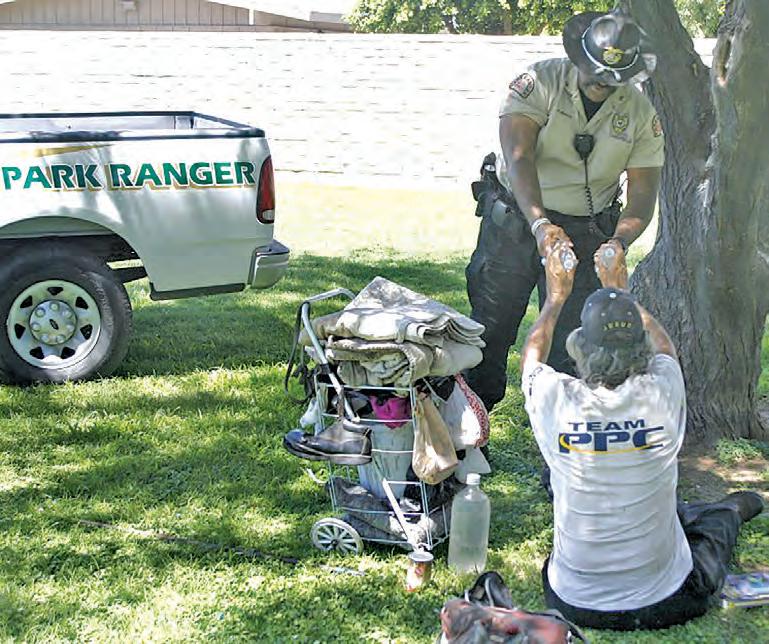
housing to emergency shelter, so we can get as many people off the streets as possible and cared for at this time,’’ Di Nolfi said.
The move comes amid pressure by local officials to achieve a regional solution to the chronic, growing and multi-faceted



homeless problem, which has been fueled by the lack of affordable housing.
Although Ducey last week ordered a halt to evictions from rental properties until mid-July for people affected by the virus crisis, an explosion of homelessness could loom in the future.
Numerous factors have contributed to the rise of homelessness in recent
years – from mental illness to substance abuse to arrests for mostly petty nuisance crimes.
But experts say one major financial setback also can cost low-income people their home and finding something affordable has become increasingly difficult.
“It’s a big part of the problem,’’ DiNolfi said. “I would say it’s 50 percent or more of the problem.’’
Phoenix Mayor Kate Gallego, Giles and Tempe City Manager Andrew Ching are among the political leaders focused on a regional response.
“Governor Ducey has agreed to convene all Maricopa County Mayors to address homelessness with a regional approach– the first time a regional collaboration like this has happened in the past decade. This is only step one,’’ Gallego said earlier this month.
Gallego asked to tap into the state housing trust fund for construction of more affordable housing and said the city would focus on expanding the availability of affordable housing.
Mesa City Council pledged to make homelessness one of its top priorities at a retreat earlier this month. Brady cautioned that the city has a budget of only $3 million in federal community development block grants to assist in the effort and would need to find other resources.
“Phoenix feels they are doing way
see HOUSING page 10
more than their share. Mesa is a close second,’’Giles said. “I think we have to engage people regionally. There can be a regionally collaborative plan.’’
Anne Scott, human services planner with the Maricopa Association of Governments, a regional planning agency, said there are about 2,000 housing referrals a year but at least 13,000 seeking some form of homeless-related services.
“People are not able to find an affordable rent,’’ Scott said. “Honestly, we need more resources in a county the size of Maricopa County.’’
In the East Valley, the homeless count grew from 276 in 2016 to 736 in 2019, with 6,614 recorded county-wide during the one-day census snapshot of homelessness held in January of last year.
Although the final count of homeless people for January 2020 may not be available until May, everyone expects it to go up again.
“I think this is the worst I’ve ever seen. It’s disheartening to see so many people go homeless,’’ said Nicky Stevens, a Tempe solutions supervisor who has spent 17 years helping the homeless.
She said more seniors are turning up homeless, sitting on street corners in wheelchairs – a trend outreach workers call the “senior tsunami.’’
The point-in-time survey results fluctuate in all cities from year to year, but Mesa’s has climbed from 95 in 2016 to 206 in 2019. Chandler’s grew from 14 to 54 during the same period, while Gilbert’s were not listed on a Tempe document.
Mesa, Tempe and Chandler all have teams of outreach workers dedicated to connecting the homeless to the help they need, trying to stretch the most from limited resources, regardless of borders.
“Our motto is, whatever it takes,’’ said Leah Powell, Chandler’s neighborhood resources director.
Darlene Newsom, CEO of UMOM, an east Phoenix shelter that offers support services aimed at eliminating homelessness, said Arizona has an affordable housing crisis and that an increasingly visible homeless population is the living proof.
In Arizona, there are 183,343 extremely low-income households but only 48,585 affordable rental homes available to them, according to UMOM.
Newsom said more “pocket shelters,’’ housing for about 100 people in converted

churches and other buildings, are needed throughout the region to get the homeless off the streets.
“I think the only way to do that is a collective impact. If Maricopa County doesn’t get ahead of this, we will be the next LA,’’ she said, referring to Los Angeles.
Lewis said Giles is working collaboratively with other mayors while looking to Ducey with the focus on a wide spectrum of housing, from additional shelter space to transitional homes to more permanent housing.
Meanwhile, for homeless people wandering the streets, Mesa’s approach is to avoid arrest and use its Community Court Program to get people the resources they need to turn around their lives
Mesa offer the homeless a bed through an arrangement with Community Bridges, a behavioral health agency, to avoid an arrest for trespassing or loitering, Lewis said.
If the homeless refuse the bed, they are cited into the Community Court as another step to get them the services they need.
“It’s using enforcement to get them help,’’ Lewis said.
A team of six community navigators are stationed at hot spots for the homeless, the Community Court, downtown and the Mesa Public Library, serving as a link to
enter the system for services, she said.
Mesa Police Detective Aaron Raine, Mesa’s homeless resource coordinator, said the Community Court program has achieved great victories in helping the chronically homeless who have been arrested numerous times, breaking the cycle of recidivism by giving people the services they need to improve themselves.
But he said the program would be even more successful if more housing options were available.
During 2019, 435 candidates were cited into the court by officers and 128 of them graduated. He said that same group of people had been arrested by Mesa police 1,738 times dating back to 2006 and had 7,400 contacts with the police.
But after their graduation, this same group of chronic offenders had only 24 arrests and only 36 contacts with the police.
The odds to staying clean and having a better life go way up when someone gets off the streets, making affordable housing critical, Raine said.
Mesa’s navigators contacted 854 homeless people in 2019 and assessed 584, but only 90 ended up with a roof over their head because housing was not available, he said.

The worsening coronavirus pandemic has given rise to a new hotline for Arizonans and prompted expansion of another for anxious teenagers.
Gov. Doug Ducey on Sunday launched a statewide COVID-19 Hotline through $2 million in funding provided by the Arizona Department of Economic Security.
The hotline is administered by 2-1-1 Arizona and the Crisis Response Network and will offer an entry point to field questions and concerns from Arizona residents about COVID-19.
from page 7
due to COVID-19.
Not surprisingly, many of these will come in the leisure and hospitality industry with the shuttering of bars and a prohibition against in-restaurant dining in the counties with confirmed cases.
Losses also are projected in retail trade. What makes that important is that one job out of every five in private industry is in those two sectors.
And there’s a hit to the larger economy.
The most recent figures from the state Office of Economic Opportunity – from January, before the outbreak – show 2.54 million people employed in the state’s private sector. The losses projected by the Economic Policy Institute amount to about 11.1 percent of the total.
If the organization is correct, the change will boost the state’s jobless rate from 4.6 percent to close to more than 12 percent by this summer.
That’s higher than not only than what it hit during the Great Recession but even higher than records going back nearly a half century, with a peak of 11.5 percent in December 1982.
Less clear is the financial implication on
“As we continue to combat COVID-19 in Arizona, we want to ensure the public has access to resources needed to stay safe and healthy,” Ducey said in a release. “With this hotline launch, Arizonans can get important COVID-19 related information in English and Spanish by simply dialing 2-1-1.”
Meanwhile, in response to the impact of school closures, Teen Lifeline is expanding its crisis texting hours for teens through its free, confidential and anonymous hotline.
Indirectly noting the rise in teen suicides before the virus even broke out, Teen Lifeline said in an announcement,
all of that to employers.
By law, jobless benefits are paid for from a trust fund financed by a tax that all companies pay on the first $7,000 of each worker’s salary.
Rates can range from less than 1 percent for employers who have the best job history – meaning the fewest number of workers let go – to 5.4 percent for those with the highest number of layoffs.
The average this year, according to DES, is 1.6 percent, down from 2.4 percent following the recession.
That trust fund is supposed to be selfleveling.
Both the measure approved by lawmakers and the governor’s executive order contain provisions saying that an individual company’s experience in having to let go workers due to COVID-19 will not affect their premiums. But as the fund drains down, it will have to be replenished.
That’s precisely what happened after the 2008 Great Recession where the fund, which had been at over $1 billion, went into the red by $600 million.
And that forced the state to actually borrow money from the federal government. All that meant not only higher pre-
“Students being away from friends and trusted adults will mean that they need the crisis hotline’s services now more than ever.”
Teens can call or text if they are struggling and need someone to talk to and the hotline also is also available to parents and other adults in need of mental health and suicide prevention resources for their children.
People around the clock can call 602248-8336. They can text that number noon-9 p.m. on weekdays and 3-9 p.m. on weekends.
Teen peer counselors answer the phones from 3-9 p.m. daily.
miums but an actual $42-per-employee surcharge approved by the Legislature to pay off the note.
What happens this time depends on several factors.
It starts with the trust. The most recent figures show a balance of more than $1.1 billion.
But then there’s the question of how long the downturn lasts.
Hamer said there’s a big difference between the recession of the last decade and what’s happening now. He said that one was the result of structural weakness in the economy, something that took years to overcome.
By contrast, Hamer said, the state and nation was on sound structural footing until the outbreak. And he said the worst of the virus could be over by the summer and employers could start rehiring then.
One thing Hamer does not want to do, at least not now, is entertain calls by Democrats to raise benefits.
By law, those who are fired through no fault of their own are entitled to collect half of their salary, generally for up to 26 weeks. But each state is entitled to decide its own maximum.
For Arizona that is $240 a week, a fig-
Teen Lifeline is a Phoenix-based, 501(c)(3) non-profit organization whose mission is “to provide a safe, confidential and crucial crisis intervention service for teens throughout Arizona.”
Established in 1986, Teen Lifeline is accredited through the American Association of Suicidology. Last year trained, volunteer peer counselors between the ages of 15-19 answered more than 25,600 calls and 2,400 text messages.
Information: teenlifeline.org.
The COVID-19 hotline for Arizonans –which has information on virus prevention, testing, what to do if you get sick – is available 8 a.m.-8 p.m. only
ure that is higher than only Mississippi at $235. It has not been updated since 2004, when the minimum wage here was $5.75 an hour and not $12 as it is now.
Lawmakers urging an increase argued that people cannot live on that.
Hamer, for his part, is not necessarily disagreeing. But he said this isn’t the time given that more money being paid out would lead to higher premiums for companies.
“We have to look at it, as we look at that benefit, the effect it’s going to have on employers that are hemorrhaging cash, particularly for smaller businesses that are facing liquidity issues as we speak,’’ Hamer said. But he acknowledged that his organization has never argued for boosting the benefits.
Zippia, an online career development website, has posted a lengthy blog with tips for people who suddenly find themselves needing work. Go to zippia.com/job-search/ remote-jobs.
BY CHRISTINA FUOCO-KARASINSKI Tribune Staff Writer
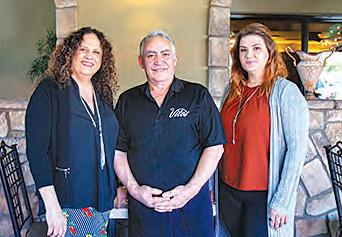
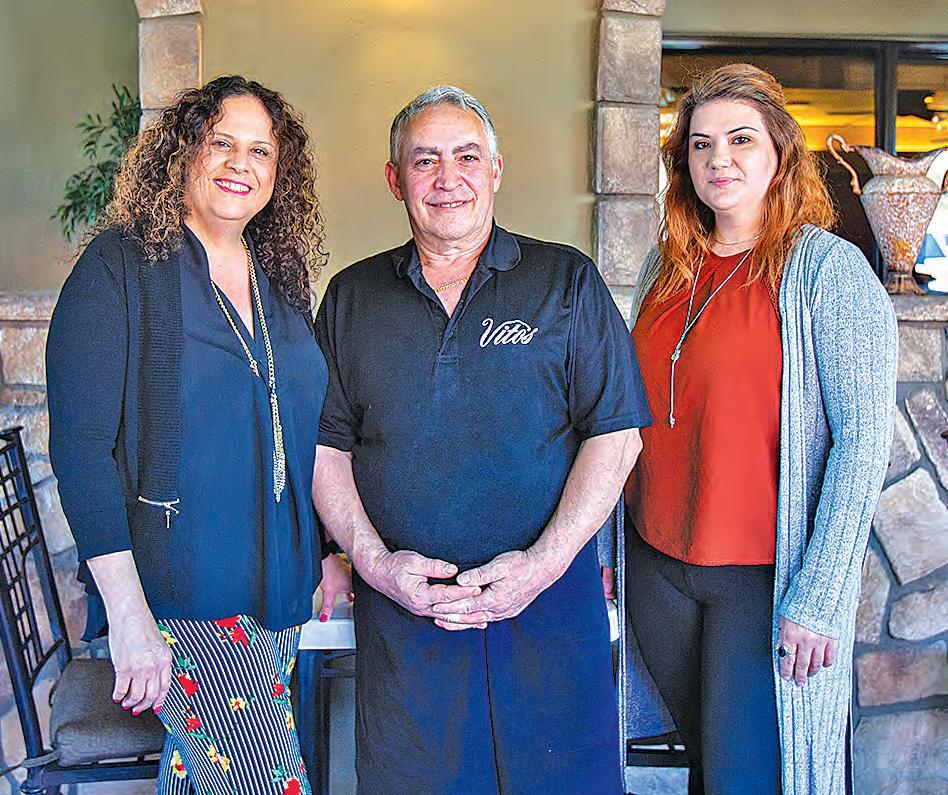
The staff at Vito’s considers each other – and its customers – family.
So when the COVID-19 pandemic swept the world, and the grocery stores’ shelves were bare, the Northeast Mesa Italian eatery had to step in and help.
For $150, Vito’s is offering its “survival bag” with 5 pounds of ground beef, 5 pounds of chicken, 10 pounds of basmati rice, 2 cans of plum tomatoes, 2 pounds of rigatoni pasta, 8 ounces of grated parmesan, 1 dozen eggs and 1 dozen Italian hoagie rolls.
The bags can be delivered or picked up by calling 480-832-3311. The hours are 11 a.m. to 8 p.m. Sunday to Thursday, and 11 a.m. to 9 p.m. Friday and Saturday.
“It’s wonderful,” said general manager Giselle Moen. “We’ve been selling out. I had about 20 of them go out today and I have 15 for tomorrow.
“They’re so helpful. You can’t find eggs. I can’t find ground beef or chicken. Our distributor is helping everyone out. The community helps us, so we’re giving back to the community.”
Several restaurants are relying on their long-term network of suppliers to offer hard-to-find grocery items that they normally wouldn’t be selling.
Last week, all six U.S. Egg restaurants in the Valley, including those in Chandler and Tempe, began selling essential items as an add-on to carry-out orders of $20 or more. Essential items ranged from cleaning supplies and toilet paper to eggs and milk and even protein bars and granola.
U.S. Egg co-owner George Gebran said that they were sitting on a lot of inventory from Shamrock Foods that would “go unsold before it expired.”
So, they decided to make their stock available to the community at near cost.
The Queen Creek Olive Mill also started something similar.
“Bread, cage-free eggs, fresh and dried
pasta are just a few items we currently have in stock and will continue to have at both of our locations,” said owner Perry Rea. “We even have cleaning and personal care products available, including all-purpose cleaner, laundry and bar soap.”
Rea also credited his “large network of local strategic suppliers that we have supported for over 15 years” and said, “You don’t have to worry about empty shelves when shopping for your family meals.”
Gebran said the main reaction they’ve seen from U.S. Egg guests is gratitude.
“We’ve had people emotionally moved by the ability to buy eggs, milk, orange juice, or bathroom tissue. It’s been amazing to see and has been both surprising and fulfilling to see these reactions,” he said.
One way the public can help support restaurants at this time, including U.S. Egg, is by continuing to order takeout.
“An unfortunate side effect of the situa-
tion we’re in is that there are thousands of servers, cooks, bussers and other restaurant staff out there who are currently out of work. We’d love to put out the call to the community to support your local restaurants as much as possible with take-out ordering so we can stay alive long enough to bring our people back when this crisis is over,” Gebran said.
Those who want to order from Vito’s menu can do so as well. Vito’s website and Facebook page have coupons for pizza and other dishes.
“We’re trying to help everyone out and help our staff as well,” Moen said. “My servers are my cashiers now. My servers are my drivers now. I’m trying to help my staff as much as I can. I give them hours where I can.
“Our regular guests—and new guests— are keeping us afloat. We appreciate that. This pandemic has been hurting all of
us. We’re doing whatever it takes to get through this. We’re taking it one day at a time. One guest gave our cashier a $100 tip the other day. People are very generous and very appreciative that we are open.”
Moen has worked at Vito’s since 1990 when Northeast Mesa as a glimmer in the county’s eye. She had just moved to the Valley from Culver City, California.
Vito’s specializes in home-style meals created from recipes passed down over the years from Vito Carrieri’s grandmothers.
Using only the freshest local ingredients, along with some imported from Italy, for over 20 years Vito and JoAnne expanded on their success, creating an Italian eatery that was more than just a place to eat a meal – Vito’s was home.
Moen said Vito’s signature dish is its Chicago thin-crust pizza ($9.99-$24.79) – “without a doubt,” she said. Other popular items are the lasagna ($15.29-$19.49), and spaghetti and meatballs ($12.39).
“We serve homemade meatballs every day,” she said. “Every morning they’re there making them.”
Guests can kick off their meals with creative appetizers like bacon-wrapped scallops ($12.49) or Italian meatball sliders ($8.99). Sandwiches are also on the menu like Vito’s cheesesteak ($9.99) or the Italian combo ($9.99). Those who want to eat light have a choice of eight salads, ranging from the garden ($4.49-$8.99) to the blackened salmon salad ($17.49).
The chef specialties include sausagestuffed chicken $18.99) and beef stroganoff ($21.99). Pasta is its bread and butter, like rigatoni alla Vito’s ($16.29) with homemade sausage, peas and sunrise sauce; and lobster ravioli ($18.99).
The restaurant also delivers with its own drivers and has a drive-thru window facing Lindsay Road.
Vito’s Pizza & Italian Ristorante 1947 N. Lindsay Road, Mesa 480-832-3311, vitospizza.com









BY PAUL MARYNIAK Executive Editor
The abrupt economic downtown created by the COVID-19 pandemic is doing something to the Valley housing market that hasn’t occurred for months – driving up the inventory of homes for sale.
But with unemployment rising in the wake of the coronavirus, that likely won’t be great news from anyone’s standpoint as sellers may not be finding as strong an appetite to buy a home as there had been only a matter of weeks ago.
Fears of close physical contact with strangers shared by sellers and buyers – combined with potential buyers’ concerns for their own financial health – are throwing water, at least for a while, on what had been one of the nation’s hottest housing markets, experts say.
The abruptness of the reversal in the market’s fortunes has been as stunning as that of the overall economic downtown, one expert noted.
“The speed of change is as high as we have ever seen,” remarked the Cromford Report, which closely studies the Valley’s housing market.
Until businesses started closing as the result of social-distancing directives over the last two weeks, the housing market posed a steadily rosier picture for sellers and a spiraling grimmer outlook for buyers.
Home values continued to increase while available homes – particularly those around $250,000 to $300,000 –were nonexistent in some ZIP codes, including in Mesa.
But now, a different picture is emerging.
The early warning signs that the COVID-19 pandemic would impact the housing market came during the first week of March, when Cromford predicted that high-dollar house sales would ebb.
It said in early March that while transactions for homes at prices of $1 million or more had increased in February by 56 percent over February 2019, the trend

was likely to hit a wall.
“With the recent negative developments in the markets for stocks and commodities, we would anticipate the demand for homes over $1,000,000 to be less impressive when we look at numbers for the next few months,” it said.
Meanwhile, buyers of more modest means found greater frustration as the month began: data for February showed closings on homes up to $250,000 were down almost 19 percent from February 2019. Sales of homes between $250,000 and $500,000 increased last month by 26.5 percent over February 2019 while closings on homes between $500,000 and $1 million were up 26.5 percent, Cromford said.
The bottom line, it added: “The supply situation is even more extreme than last month. Rapidly rising prices have done little to dampen demand.”
Conversely, it said, “sellers are still gaining negotiation power in 14 out of 17” communities – including Mesa. But what a difference a pandemic
makes.
Cromford last week was far more pessimistic about the Phoenix metro housing market overall – even as it reported that the available housing stock suddenly began increasing.
For those who are still in the market, it said, the inventory of homes for sale is loosening – with the overall number of available houses increasing by 27 percent Valley-wide in four weeks over last year at this time. In the week of March 12, it added, Mesa’s inventory shot up 19 percent – the third highest increase among 17 Valley cities and the second highest, behind Gilbert, in the Southeast Valley.
“Of course,” Cromford added, “we were starting from an excruciatingly low inventory of active listings between $150,000 and $300,000, so it is not hard to see a high percentage increase from such an abnormally low base.”
By Friday, Cromford stressed that while it’s far too early to predict the virus’ impact on the housing market, it was obviously cooling down as supply increased
and demand began dropping.
Zillow also noted changes, citing an abrupt increase in mortgage rates and Bank of America’s downgrading of some major homebuilders – “suggesting the bank believes COVID-19 will harm consumer sentiment and slow home building.”
If that happens, it could put the brakes on a a frenzy of home construction in the Valley, which experts say has hit a record high, given the number of building permits issued last month alone.
Attention also turned toward foreclosures down the road as unemployment spirals. Zillow Economist Jeff Tucker said, “The big question at the moment is to what degree measures being taken by local, state and national legislators will help limit the number of foreclosures in the months ahead.”
Among the factors driving the inventory increase is the virtual collapse of the tourism and hospitality industry – which has pretty much wrecked, at least for now, vacation rentals, Cromford said.
Homeowners who only last month were enjoying the additional money they were making through Airbnb are quickly deciding it might be a better idea to put that same house up for sale before things get any worse, Cromford indicated.
Moreover, it noted, “A huge amount of wealth has been destroyed on the stock market in the last month as the indexes return to 2016 levels. This leaves cash in short supply and some owners may need to turn fixed assets in liquid assets at short notice.”
Social distancing also is playing a role, the report said, explaining:
“Few normal buyers are willing to make an offer without viewing a property, though some investors may be tempted. …Buying and selling, as well as construction are likely to drop sharply, especially if a close-down is ordered by government, as it has in several states.
“In fact, I am surprised that showings remain as high as they do. Some people are clearly not taking the pandemic seriously enough, which is a big mistake that will cause the virus to spread more quickly and incur a higher mortality rate.”
Cromford and Zillow stressed that homeowners, for now, don’t have to worry that the rapid changes are affecting home values – which have hit almost unprecedented levels over the past year.
“During the outbreak, there is little reason to suppose that house values will be significantly affected, up or down,” Cromford theorized, stressing it was hard to predict what will happen because the virus itself is unpredictable.
“We will not know where we stand until the virus is peaked and the economy is well on the road to recovery,” it said. But, it added, “sales volumes will inevitably collapse for a while until the outbreak dies down. It will not even be possible to calculate meaningful home price numbers if there are too few closed sales to measure effectively.
That volume of sales activity will de-
pend on the duration of lockdowns – especially if they increase in severity.
“Real estate activity will be increasingly limited, causing volumes to drop,” Cromford observed. “How far and fast they drop in Arizona will depend on decisions made at the state and county government levels.”
“It is possible that sales will cease closing if title companies and/or county recorder offices are temporarily closed,” it added, warning:
“The impact of COVID-19 on the housing market has been relatively mild so far, but it is likely to become more dramatic over the next few months.
The virus hit just as inventory inched up after months of shrinking.
At the beginning of March, Cromford noted, “New listings are still arriving more slowly than normal and year-to-date we have experienced a shortfall of 10 percent compared to 2019. Supply continues to fall quickly across most of the market.”
The report had noted prices “have not risen nearly enough to have any effect so far” on demand. Now, it said, “the housing market has reacted to what is happening” as “a powerful upward trend transformed into a sharp downward trend.”









BY DAVID LEIBOWITZ Tribune Columnist
The memoir will feel slight in your hands, only 165 pages long. Even so, for sheer insight per page, Man’s Search For Meaning has no rival among books written in the last 100 years. It is the story of Viktor Frankl, a psychiatrist from Vienna, and how he survived the Nazi death camps. It is a tale of extreme struggle, despair, loss, grief and the many ways in which life can challenge us.
In other words, a perfect book for life in the face of COVID-19.
I first read Frankl’s book while slogging through the crash of a marriage in my early 30s. The end of that relationship left me bitter, ashamed and feeling toxic on a daily basis. Reading about the victims of Auschwitz and their suffering provided some muchneeded perspective.
We urge consumers to be on the lookout for an escalating number of pandemic-related scams, hazards and financial challenges.
From price gouging preventing purchases of critical supplies to fake products promising cures, and from ongoing loan payments to travel cancellations, Arizona PIRG Education Fund wants to help consumers navigate this challenging, confusing time. We’ve prepared a set of guides for consumers which can be found at arizonapirg.org/feature/usp/ responding-crisis. Here are key take-aways: Paying utility bills. Arizonans are likely to face even greater challenges paying utility bills for the foreseeable future. For a list of organizations providing utility assistance, visit wildfireaz.org/find-help/energy-assistance or call 602-604-0640.
Refunding your travel. Many Arizonans wondering how to recoup the costs from cancelled plans. Top airlines and hotels have adjusted their policies and in a number of instances -- highlighted in our guide -- consumers can refund their bookings with each respective company.
The Nazis took away everything Frankl valued: His wife, his mother, his father, his brother, his possessions, everything down to the manuscript he considered his life’s work.
What they could not steal was what Frankl describes as “the last of the human freedoms – to choose one’s attitude in any given set of circumstances, to choose one’s own way.”
Over the years, that quote has crossed my mind thousands of times: At the bedside of my mother as she wasted away in the hospital; in the face of professional disappointments and losses that made me angry, frustrated or despondent; while driving along the freeway and getting cut off by a moron; and over this past week, dealing with the fallout of the coronavirus outbreak.
There’s liberation in the idea: That ultimately we all get to choose our own attitude, no matter what happens around us or to us, no matter how life tests us.
Of course, Frankl wasn’t done dispensing wisdom with one quote, which is why I have read his book at least once a year since the first time I picked it up.
He writes eloquently about surviving the icy cold march to a work site by fixing his imagination upon the face of his wife as he stumbled along for miles.
Her face, he explains, allowed him to grasp “the greatest secret that human poetry and human thought and belief” hold for us.
“The salvation of man,” Frankl writes, “is through love and in love.”
Re-reading the book again over the past few days, I found myself thinking, of all things, about a spat I witnessed in the grocery store: A grown man threatening an elderly woman for adding what he believed to be too many cans of soup to her shopping cart. Profanities flew. The old woman gave as good as she got.
Eventually they went off in separate directions trailing f-bombs in their wake, but
Avoiding price gouging. Arizonans should be able to get the critical supplies they need without being ripped off. Our guide warns consumers about severe price gouging on online marketplaces, namely Amazon, and includes information about how to identify reasonably priced, effective supplies during the outbreak.
Identifying phishing scams. Scammers have seized on people’s fear and confusion to steal their private and/or financial data. Our guide lays out the known phishing scams related to COVID-19 and offers some tips for identifying new ones.
Paying off student debt. Even before the COVID-19 outbreak, Americans were struggling to pay off the nearly $1.7 trillion owed in student loan debt. Nearly a third of borrowers were in default before -- and that number is likely to grow in the coming months. Our guide offers potential ways to reduce student loan payments.
As we listen carefully to the medical community’s directions about protecting our health and that of our communities, let’s also make sure our families and friends are guarding against potential threats to our finances -which in many instances, the repercussions of
COVID-19 have already significantly strained or depleted.
The Arizona PIRG Education Fund will continue issuing tips for consumers on financial issues, product safety, food safety, scams and other threats. Government and corporate policies are rapidly changing and if you are seeking the latest policy of a particular entity it is best to directly check their website.
-Diane E. Brown PIRG executive director
In every Primary Presidential Debate so far, Democratic candidates have discussed “Medicare-For-All.” On the Republican side, President Trump recently signed an executive order in which he took a stand against what he referred to as “Medicare-For-None.”
But neither Democrats nor Republicans should talk about Medicare without addressing Alzheimer’s. The reality is, Alzheimer’s is America’s most expensive disease and will cost to the country $305 billion this year alone, with the majority of costs being borne by Medicare and Medicaid.
not before the man delivered this pearl.
“B–-h, you’ll be dead soon enough anyways.”
Frankl, whose book covers far greater deprivation than a lack of Campbell’s chicken noodle in a can, writes with insight about suffering and how it can lead us to find meaning in our lives. Suffering pushes us to live in one of two ways, he writes.
“(We) may remain brave, dignified and unselfish. Or in the bitter fight for self-preservation he may forget his human dignity and become no more than an animal.”
For Frankl, finding meaning in life is the ultimate goal. Twice he quotes Nietzsche on the subject: “He who has a ‘why’ to live for can bear almost any ‘how.’”
My thought: If the COVID-19 crisis tests us in the most profound ways, you’ll be glad you read the book. If not and I’m just being overly dramatic, you’ll be glad anyways. There are far worse ways to spend a couple hours in quarantine.
This is an urgent issue that deserves to be discussed.
In Arizona specifically, 150,000 citizens have Alzheimer’s. Nearly 400,000 caregivers in the Grand Canyon State are providing a total value of $5.1 billion in unpaid care.
For over 20 years, I have been a caregiver for those with cognitive impairments, even before my own mother was diagnosed with early-onset Alzheimer’s. For millions of families like mine facing this devastating and fatal disease, access to health care professionals and care services through Medicare is critical to our everyday lives.
When it comes to health care, the question isn’t “All or None.” The questions are, how can we best support families today, and are we investing enough in medical research to stop this public health crisis and save Medicare altogether?
The day is approaching when Medicare will be bankrupted by Alzheimer’s, and there won’t be any program to fight about. Despite the debate no longer being in Arizona, our state’s presidential preference election is swiftly approaching, so let’s talk about THAT before it is too late.
-Cynthia Valencia

BY ZACH ALVIRA Tribune Sports Editor
The coronavirus has impacted sports at every level, including Little League baseball and softball leagues across the East Valley.
Little League International announced play would be suspended until at least May 11.
“There were some mixed reactions, but definitely some disappointment,” said Phil Cardis, president of Red Mountain Little League in Mesa. “A lot of the kids were excited about the opportunity to play. We have a lot of families that have been with our program for a long time.
“Initially, I don’t think they were really understanding the depth of everything but now there’s been a lot of empathy for what we are trying to do as a community.”
Cardis is in his first year as president of Red Mountain Little League, which serves as many as 450 players. He has been involved with the league for three years, watching both of his kids play.
He admitted while he was disappointed with the league’s postponement, he knows it is out of an abundance of caution for both players and parents of the league – especially after the Ahwatukee Little League announced that one player had a relative who tested positive for the disease.
Nate Moore, whose son Dru plays in Skyline Little League in Mesa, shared the same sentiment.
“We know Little League is taking precaution to not break that 10 people or more contact thing,” Moore said. “We will probably transition him to club ball a little bit earlier this year because I don’t know if we will have a Little League season.”
Moore said Dru has taken batting practice in the cage in their backyard along with other drills during the postponement. While they may begin the transition to club ball, they’re still hopeful for the Skyline season to resume. After two consecutive years of lopsided losses, Moore believes the league can compete and even

make it past other leagues across the East Valley in postseason tournaments.
“We really felt it was our year,” Moore said. “I know Dru is a little disappointed because of that.”
Even with the possible resumption of play being in May, there remains a chance to salvage the All-Star season.
All-Star selection typically begins midway through the season. Those who make the teams then compete in the state tournament. The Majors All-Star team is able to advance to regional tournaments and beyond. Should they make it, they would end up in South Williamsport, Penn. for the Little League World Series.
Doug Brewster, the president of Chandler National Little League, anticipated a delay to the league.
Even before Little League officially announced the postponement, he had already taken precautionary measures into his own hands.
“We had already canceled Opening Day ceremonies, but we thought we would be able to play the games,” Brewster said. “I had actually reached out to Little League prior to that to ask them what
their stance on it was. When they did respond with something, I felt good about the decision because it gave us a direction and put everyone on the same page.”
Brewster has been involved with Chandler National for 20 years, dating back to when his son, who is now 25, started playing. A board member 18 years, he is in his 11th as president.
He simply has a love for the game of baseball and the league, especially with coaches who share the same passion.
“At least it hasn’t been completely canceled,” said Rich Groppenbacher, one of Chandler National’s coaches. “We are holding out hope at least All-Stars will take place this summer. This group of kids last year lost in the state championship. We have a good squad coming back and every 12-yearold’s dream is to make it to Williamsport.”

Most parents have expressed the same optimism regarding the season and eventually being able to play, including Somsak Smith.
Smith has coached his son, Karson, in Chandler National for six years. The duo started in the league together when Karson
was 5, playing other sports along the way.
“My son plays a lot of baseball. Last year the All-Star season didn’t end until late July then we went right into club ball in the fall,” Smith said. “For me, I think it’s a good opportunity for him to step away from baseball and not get burned out.”
In Gilbert, the impact of the Little League postponement is being felt across all three of the town’s leagues.
Dennis Larson, a longtime board member in the Gilbert National Little League, expected to see some complaints from parents due to the postponement. However, none have come across his email.
“I’ve gotten zero complaints, and I normally see all of those come through,” Larson said. “I saw some people criticize Little League International because they announced it would be postponed before schools were even closed. But now, I haven’t heard anything.”
Ashley Jacobson, a parent in the Ahwatukee Little League, said the postponement of the league was disappointing for her three sons, Carter, 11, Lucas, 8, and Miles, 3. While it’s been hard on all of them, it’s been more difficult for Carter, who is in his last season.
“They’re kind of taking things day-byday, I know they miss playing ball,” Jacobson said. “Being able to sit and watch kids play sports is one of our favorite things to do this time of year. I understand why they did it, but it is still a little disappointing.”
Several members of the Ahwatukee Little League felt the same way about the postponement early on. But after Ahwatukee Little League officials announced a family member of one of its players had tested positive for COVID-19, those feelings may have changed.
“I think this gives another reason that we made a good decision on postponing the league,” said Ray Ng, the president of Ahwatukee Little League. “We want to make sure the community knows this is close to home and it’s not just stuff we read on the news. We should take this seriously for everybody’s safety.”

Rose “Bree” Young


Breanna Rose “Bree ” Young, Forsyth, Ga, passed away Friday, March 20 , 2020. A Memorial Servic e will be announced at a later date.

Bree was born January 3, 1989, in Mesa, Arizona. She was a veteran of the United States Army and was employed as a salesperson at Belk’s.
Survivors include her spouse, Taryn Young of Forsyth; parents Robert and Anita Wienke of Arizona; sisters, Shana Wienke and Rache l Wienke.
MarilynLouise Davispassedawayon March9,2020.Born inOhioonNovember 4,1939,sheledafun andfulfillinglifefullof love,laughter,family, friends,golf,andsono surprisewasa HomecomingQueen andcheerleader.With heroutgoingpersonalityandbeautyshe becameaflightattendantwithAmerican Airlineswhereshedidwhatshelovedtodoseetheworld.Hertravelshelpedhergainher travelindustryknowledgetobuildabusiness andwasanownerinDiversifiedTravel AgencyinTempe,AZformanyyears.

D’ATRI
Contributor
D’ATRI
D’ATRI
D’ATRI





Please visit www.monroecountymemorialc hapel.com to express tributes.

Contributor marvel checkered flag dough) (Volpi at Trader Joe’s)
Contributor recipe may favorite basically whisking the mariover the pork, refrigeratcooking it up! It’s that simple.
Contributor wonder to make prepped, which is an absobecause it will sauté up so
out, top of the dough, then cut dish with pot pie filling, I’ll to the top. Chicken pot pie treasure.
Portofino rotation your choice. nice fresh, crusty loaf of French goodness at the bottom of seems like it has a lot of steps, the easiest you do, I may rotation on schedule.

Monroe County Memorial Chapel has charge of arrangements.
coloring (optional)
garlic D’ATRI
Parmesan cheese for topmore racing stripe with the center of the pizza. about 30 minutes or until When done, sprinkle with pepper flakes, if desired.
recipe we chose when creating “Momma & Me & You,” and it was ever chopped fine thin chopped fine
Marilynissurvivedbyherson,Stephen Hale,herprideandjoy;SisterDorothy WiggintonandBrotherRichardSeverance, bothofColumbus;longtimePartner,James Love,andahostofnieces,nephewsandmany, manygoodfriends.Marilynwasprecededin deathbyherparents,ClarenceandJuanita Severance;brothersDonaldSeveranceand RobertSeverance.TherewillbeaCelebration ofLifethissummer.Inlieuofcardsand flowers,Marilynwouldwantdonationsto barrowneuro.orgfortheresearchofbrain cancer.

Intheearly morninghoursof March14th,2020, MarjorieJ.Hays, lovingwifeand motheroftwo, passedawayatthe ageof91.Marjorie wasbornJanuary 2nd,1929in Mattoon,Illinoisto HowardandNelda(Sanders)Upton.She graduatedfromMattoonHighSchoolin 1946.OnOctober24,1948,shemarried James(Mack)N.HaysofNeoga,Illinois wheretheyraisedtwosons,Davidand Tommy.
Margiehadapassionforcooking, sewing,collectingdolls(anddressingthem inhandmadefinery),butmostlycaringfor herfamily.Shewasknownforherkindand compassionatespirit,andreadysmile.
SigntheGuestbookat: obituaries.EastValleyTribune.com
For obituary questions please call
or visit obituaries.EastValleyTribune.com




Marjoriewasprecededindeathbyher husbandMack,hersisterRose,andher brothersClarenceandKenneth.Sheis survivedbyhertwosons,Davidandhis wifeJoanHammond,Tommyandhiswife AlethaHays,andtheirtwomarried daughtersCatherineClark(withhusband ChrisanddaughterAubrey)andCamile Shamblin(withhusbandDamon).
SigntheGuestbookat: obituaries.EastValleyTribune.com


mushrooms, sliced thin
Contributor cheesy bread delish individual servings. bought of of Italian Seasonings. Evenmozzarella and fresh grated top. cup homemade pesto parmesan pizza sauce for dipping bread


LAS SENDAS HOME CHILD CARE
Caregiver Needed Light duties, located NE Mesa. Call 480-692-9316
capacity. The environment is casual, low stress & friendly. Generally; you’ll be taking customer orders & providing customer support. No outbound sales calling is required, & our customers relationships are the best in the business because we’re fair, honest & friendly. If you’d like to learn more about this position, please visit website at: www.HealthyHabits.com/jobs/


Las Sendas Mom, Newb orn & Up, 16 Yr Exp , C PR Certified , H omemade meals an d healthy snacks, Loving, s afe envir., No pool , Flexible schedule, Early c hildhood, developm ent activities offered M any References Call Lina 480-3248466
PROFESSIONAL TUTORING
Individualized, at-home instruction for grades K12. Multiple subjects inc luding Math, Readin g a nd Writing. Preparat ion for college entrance tests. Assistance for home-schooling, behavioral, organizationa l a nd special educatio n c oncerns. Call Philip N. Swanson, Ph. D. 480-677-9459
Gilbert: Seville Golf & Country Club Huge Community Wide Garage Sale btwn Riggs/ N & S. of Chandler Heights. W. of Power & E. & W. of Higley. Sat March 28th & Sunday March 29th. 8am-?