University Transfer Guide



For students who want a
Bachelor's Degree

WHO people going places
WHAT quality education
WHERE campuses everywhere

For students who want a
Bachelor's Degree
WHO people going places
WHAT quality education
WHERE campuses everywhere

Transfer your associate’s degree credits into an online bachelor’s degree program at Kaplan University.
Thanks to a special agreement between Kaplan University and Maricopa Community College District, graduates and transfer students can be eligible for:
• Tuition reduction†
• Maximum credit transfer
• Credit for work/life experience‡
• The Kaplan CommitmentSM 3-week class trial period§
• Scholarship and grant programs
• Online learning flexibility
• Over 180 programs
• Personalized support
• Career-focused programs
According to federal government statistics, on average, the weekly earnings of full-time employees with a bachelor’s degree are nearly 43 percent higher than those with an associate’s.*
Fast Company ranked Kaplan #3 among the most innovative education companies in the world.# U.S. News & World Report evaluated hundreds of universities and ranked Kaplan University’s online bachelor’s degree program among the nation’s best.**
* Source: Bureau of Labor Statistics, Current Population Survey, on the Internet at www.bls.gov/emp/ep_chart_001.htm. Data are 2013 annual averages for persons age 25 and over. Earnings are for full-time wage and salary workers.
National salary figures may not reflect local salary conditions and are not a guarantee of any particular salary.
† Reduced tuition recipients are not eligible for other Kaplan University scholarships, grants, discounts, or tuition vouchers.
‡ Kaplan University does not guarantee transferability of credit from any of these sources. See University Catalog for Prior Learning Assessment policy.
§ Classes count toward a degree if satisfactorily completed. No credits are earned if the student withdraws during the introductory period (3 weeks for undergraduate students), which begins day one of the first term. Students who choose to continue their studies at the University will need to meet specific requirements. Graduate programs not included. Additional terms may apply to international and non-U.S. citizen students. For further information, see the University Catalog and Addendum available at kaplanuniversity.edu.
# Fast Company magazine, March 2014.
** U.S. News & World Report 2014.




If you are interested in earning a bachelor’s degree, starting at a Maricopa college and transferring to a four-year university provides you with an affordable option. While you can transfer anywhere, the Maricopa Community Colleges have established transfer partnerships with quality, reputable colleges and universities. These university partnerships assist students in making a smooth transition from one institution to the next by maximizing your Maricopa credits. In addition, many university partners offer Maricopa graduates dedicated advisement and financial incentives such as transfer scholarships, waived application and/or textbook fees, and special tuition incentives for military personnel. The Maricopa Community Colleges have formal partnerships with the following institutions.
Arizona Transfer System Partners
• Arizona State University
• Northern Arizona University
• University of Arizona
Private, Online, and Out-Of-State Transfer Partners
• Albright College-Mesa Campus
• Argosy University
• Arizona Christian University
• Ashford University
• A.T. Still University
• Benedictine University at Mesa
• Capella University
• Chamberlain College of Nursing
• College of St. ScholasticaCommuniversity @ Surprise
• Colorado State University-Global Campus
• Columbia College Chicago
• Columbus College of Art and Design
• DeVry University
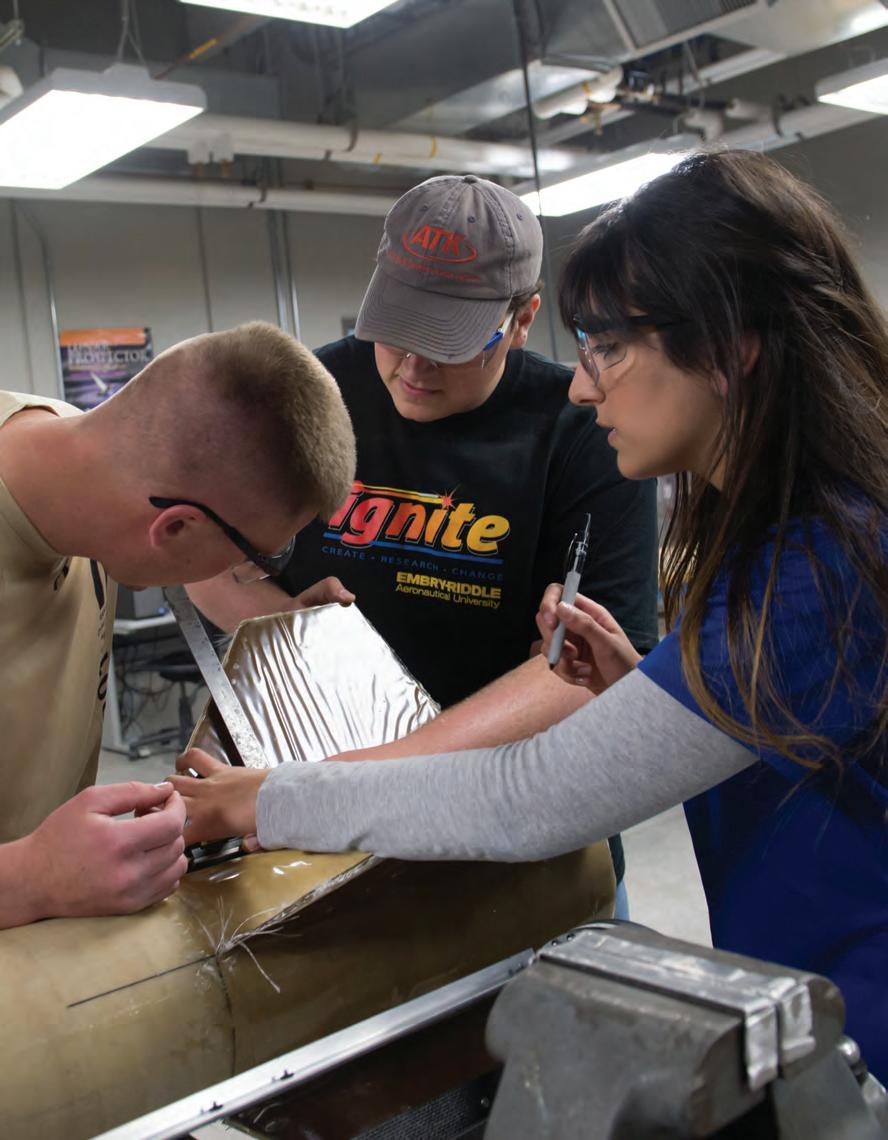
• Embry-Riddle Aeronautical University
• Empire State College (SUNY)
• Excelsior College
• Grand Canyon University
• Kaplan University
• Middlesex University
• Midwestern University
• New Mexico State University
• Northcentral University
• Ottawa University
• Park University
• Prescott College
• Regis University
• Saint Xavier University-Gilbert Campus
• Southern New Hampshire University
• Strayer University
• Touro University Worldwide
• Trine University-Peoria Campus
• Union Institute and University
• University of Advancing Technology
• University of Maryland University College
• University of New Mexico
• University of Phoenix
• University of Texas at El Paso
• Upper Iowa University-Mesa Center
• Wayland Baptist University
• Weber State University
• Western Governors University
• Western International University
• Western New Mexico University
• Westminster College
• Wilkes University-Mesa Campus
Subject to change - Please refer to maricopa.edu/transfer/partners for the most current information.


Visit the Online Transfer Center at maricopa.edu/ transfer/partners to learn more about dozens of college and university transfer options including local, out-of-state, public, private, online and onsite degree programs.
• Compare universities by location, size, tuition, and more
• Explore degree programs and transfer pathways
• Find helpful transfer guides for your major
• Access university sites designed for MCCCD graduates
• Connect with academic advisors
AZTransfer helps students make every credit count. Visit AZTransfer.com for everything you need to plan a smooth and seamless transfer to ASU, NAU, or UA without losing your hard-earned credits!
• Enter course numbers in the Course Equivalency Guide to learn exactly how they are accepted for credit at ASU, NAU, and UA.
• Access step-by-step guides to help you move to the university with ease.
• Learn what courses offered at your community college fulfill general education requirements and transfer as a block to the university.

The Shared Unique Number (SUN) System is Arizona’s college course numbering system that clearly identifies courses that transfer with direct equivalency among Arizona’s public community colleges and three state universities.
• The SUN System includes over 100 of the most commonly transferred courses statewide
• SUN courses are listed in your college class schedule, catalog, and online at www.azsunsystem. com
• SUN courses are a subset of the tens of thousands of courses that transfer among Arizona’s public colleges and universities
On my.maricopa.edu, you’ll find everything you need to get started and stay on track at any of the Maricopa Community Colleges. Log in to:
• Apply for admissions
• Search for classes (“Find a Class” feature, including in-person, online, hybrid, and honors options)
• Read course descriptions
• Drop and add courses
• Check your progress toward a degree
• Access your grades, placement test scores, schedule, financial aid status, charges and payments, contact information, transcripts, and more
Your community college website will provide even more information on transfer advisement and other student services at your campus. For community college websites, start at maricopa.edu and click on “locations.”

Students have many choices when it comes to degree pathways. Earning an associate’s degree that aligns with your academic and career goals will keep you on-track toward earning your bachelor’s degree when you transfer to a university. Academic advisors at the Maricopa Community Colleges can help you identify the degree pathway that will work for you.
The Associate in Arts degree is designed for students who plan to transfer to four-year colleges and universities. In general, the components of the degree meet requirements for majors in the Liberal Arts or programs of study other than business or science, and will transfer as a block without loss of credit to Arizona’s public universities and other institutions with district-wide articulation agreements. The AGEC-A (Arizona General Education Curriculum – Arts) is a component within the AA degree. The Associate in Arts, Fine Arts is offered as a customized pathway within the AA requirements, with specific versions for Dance, Art, and Theatre.
• Offers flexibility while preparing students for transfer
• Minimum math requirement: MAT140 or 141 or 142 - College Mathematics
• 60 credit minimum
The Associate in Business, General Requirements and Special Requirements degrees are designed for students who plan to transfer to Arizona’s public universities into a variety of business majors and for students who plan to complete lower division
course work toward a bachelor’s degree program at other fouryear colleges or universities. Generally, these degrees will transfer as a block without loss of credit to Arizona’s public universities and other institutions with district-wide articulation agreements. The AGEC-B (Arizona General Education Curriculum – Business) is a component within the ABUS-GR and ABUS-SR degrees.
• The ABUS-GR degree is for all business majors except Computer Information Systems
• The ABUS-SR degree is for Computer Information Systems majors
• Minimum math requirement: MAT212 or 213 - Brief Calculus
• 62 credit minimum
The Associate in Science degree is designed for students who plan to transfer to four-year colleges and universities in a variety of science-related majors. In general, the components of the degree meet requirements for majors with more stringent mathematics and mathematics-based science requirements. Generally, the degree will transfer as a block without loss of credit to Arizona’s public universities and other institutions with district-wide articulation agreements. The AGEC-S (Arizona General Education Curriculum – Science) is a component within the AS degree.
• Minimum math requirement: MAT220 or 221 - Analytic Geometry & Calculus I
• Students must meet science requirements with one of the following 8 credit course sequences: BIO181 and 182General Biology I and II OR CHM151/151LL and 152/152LLGeneral Chemistry I and II OR PHY121 and 131 (or 115 and 116) - University Physics I and II
• Includes a “subject options” requirement of 6 credits with a restricted list of science and math options
• 60 credit minimum
The Associate in Arts, Elementary Education degree is designed for students planning to transfer to an Elementary Education, Early Childhood, Multicultural/Multilingual, or Special Education program at an Arizona public higher education institution and/or for studendt who plan to become a classroom instructional aide. Generally, the degree transfers as a block without loss of credit to Arizona's public universities and other institutions with district-wide articulation agreements. The AGEC-A (Arizona General Education Curriculum – Arts) is a component within the AAEE degree.
• Minimum math requirement: MAT140 or 141 or 142 – College Mathematics
• 60 credit minimum
The Associate in Applied Science degree is recommended for students who wish to gain a depth of technical expertise by completing one of the district’s occupational programs. There are over 200 AAS degree programs available. Some are offered at multiple colleges in the district, while others are college-specific. The AAS degree does not include an AGEC, however general education courses are required (specific courses vary by degree). Although students planning to transfer are generally advised to pursue one of the AGEC-based degrees listed (e.g. AA, AS), AAS to BAS pathways are available to students, and much coursework within an AAS can be applicable to a bachelor’s degree program. Completing an AGEC is often recommended if students pursuing AAS degrees are considering transferring (and may not have been originally).
• Minimum math requirement: MAT102 Mathematical Concepts (overall--BUT higher math courses are required for some AAS degrees, depending on major)
• AAS checksheets are updated online monthly to reflect curriculum changes
• 60-105 credit minimum, depending on specific degree (usually approx. 65 credits)
The Associate in General Studies degree is recommended for students whose educational goals require flexibility. The AGS allows students to select courses numbered 100 or above, transferable or not, to complete the degree. Therefore, this degree may be less appropriate for students who intend to transfer to a four-year college or university. When a specific major and/or transfer university is selected by an AGS student, it is usually advisable to consider alternate degree pathways more closely aligned with university requirements.
• Minimum math requirement: MAT102 Mathematical Concepts
• Unlike transfer degrees (AA, AS, ABUS, AAEE), one of the two required natural science courses does not require an accompanying lab
• 60 credit minimum
For a complete list of degree policies and requirements, refer to: www.maricopa.edu/academic/ccta/ curric/viewALLDegrees.php
Course information is based on the 2014-15 catalog year and is subject to change.


Josh is a psychology major at Northern Arizona University. Holly is a psychology major attending Phoenix College, and is planning to transfer to NAU after completing two years at PC.
Both students are working toward the same goal, a Bachelor’s degree in Psychology. By working with her academic advisor, Holly can parallel Josh’s pathway during her freshman and sophomore years of college, earn an associate’s degree from PC along the way, and be right on track to graduation when she transfers to NAU.
Right on track, that is, if the courses she takes are transferable and applicable toward her degree program, and these terms are often confused by students. Courses that are transferable from one college to another are evaluated by the receiving, or transfer, institution as being equivalent in academic content. Applicable courses count toward a student’s degree requirements. In other words, many courses are transferable between colleges, but whether or not they are applicable depends on the student’s specific major and degree requirements.
Kelly Robles, Senior Director for Community College Relations at Arizona State University, recommends the Maricopa to ASU Pathways Program (MAPP), an efficient and effective transfer pathway because “courses on a MAPP both transfer and apply to the specific major at ASU in which a student is interested. It takes all the guesswork out of the planning process while providing guaranteed admission to reputable degrees,” she said. Transfer resources such as major guides and the Course Equivalency Guide on aztransfer.com and various tools on the Maricopa Community College Online Transfer Center (www. maricopa.edu/transfer/partners) also provide support for degree planning.
Students who know where they plan to transfer can also rely on university website transfer information. For University of Arizona-bound students, “Utilizing the Degree Search site (degreesearch.arizona.edu), students can pull up the AZ Transfer Course Equivalents tab for a side-by-side comparison of every class that they can take at the Maricopa Community Colleges that will transfer directly into their chosen degree program,” said Brenna Secore, UA Assistant Director of Transfer Enrollment.
Careful planning with an academic advisor at the community college, including the development of a semester-bysemester educational plan, is critical when a student wants to maximize the transferability and applicability of credits from the community college to the university.
“Do not guess or try to self-advise; talk to someone who can give you accurate information, provide advice, and give direction,” recommends George Ennis, an academic advisor and recruiter at Wayland Baptist University in Phoenix, who urges students to rely on professional adivsors.
If possible, see advisors at both your community college and intended transfer university to learn how your associate’s degree requirements and Bachelor’s degree requirements overlap. In cases where an associate’s degree requirement can be met by a number of course options, advisors can often provide additional guidance on selecting courses that meet your university requirements and prepare you to succeed academically in your junior and senior level courses at the university.
“Before committing to any school, request for the school to complete a degree plan for you so you know exactly what courses/credits will transfer and what you still need to complete your degree,” said Jasmine Khong, Executive Director of Student Success at Touro University Worldwide, an online university based
a transfer program. Most universities will accept and apply 60-64 community college credits toward most of their Bachelor’s degrees. However, many institutions accept up to 90 community college credits for select programs, which leaves only 30 credits at the university to earn a Bachelor’s degree.


Many courses are
transferable between
colleges, but whether or not they are applicable depends on the student’s specific major and degree requirements.


in Los Alamitos, California.
Christina Yang, Director of Academic Partnerships at Excelsior College, an online university based in Albany, New York, said, “In order to get the most accurate assessment of where you stand, be sure to submit all of your transcripts to your transfer institution,” and added, “You don’t want to repeat coursework!”
While efficiency in planning is usually a goal, allowing yourself some flexibility to explore or narrow-in on areas of interest is also important.
Dr. David Bolman, Provost at the University of Advancing Technology in Tempe, said, “Building a program path that is both as straight as possible, while also giving room to explore interests as you grow in your degree preparation is a very satisfying approach. Choosing courses early in your academic career, as a first-or-second-year student, that expose you to a spectrum of ideas, but are applicable in more than one program, is a good strategy.”
Choosing one transfer institution over another can play a big part in how many transfer credits can be applied toward
“However, students need to take the right credits to seamlessly transition (to a university),” said Doug Small, Director of Strategic Partnerships at Northern Arizona University, Extended Campuses in Maricopa County. He recommends connecting early with a university advisor to help select the best program to meet your personal and professional goals. Along with the number of acceptable transfer credits, be sure to consider the academic content, cost, convenience, support services, and program length of your transfer institution options. Prior Learning is a credit source that’s often overlooked when choosing a transfer school. Prior Learning credits are awarded for knowledge gained outside a traditional classroom. Common topics include subjects like management principles, human services, business communications, leadership or other job or life experience that is evaluated and used toward university degree programs. Depending on the school, there is usually a fee for Prior Learning, and students are required to complete an essay and/or an interview with a qualified evaluator to earn the credits.
Diana Hawkins is an academic advisor at SUNY Empire State College’s Center for Distance Learning in Saratoga Springs, New York. SUNY Empire accepts up to 96 transfer credits of classes or Prior Learning to use toward a bachelor’s degree. Hawkins discussed the value this option brings to her students.
“Prior Learning is as unique as every student I work with. When you think about it, we learn every day at work, in the community, through internships and volunteer work. Why not get credit for it? Prior Learning credits save time and money and help students get to their goal faster – graduation,” she said.
Although the Prior Learning process works well for many students, credits are usually only accepted for transfer at other institutions as part of an awarded degree. It is important that students ask transfer advisors about the opportunities to earn and apply Prior Learning credit at the transfer institutions they are considering because policies vary on the type and number of useable credits.
With early planning, information from online resources, and support from college and university professionals, you can maximize your transfer credit and save time and money on your college education.

For more than 127 years, Benedictine University has been preparing students for leadership roles in their communities and the world by providing them with a well-rounded, liberal arts education steeped in the Benedictine values — a search for God, a tradition of hospitality, an appreciation for community, a concern for each person, a life lived in balance, a dedication to stewardship and a commitment to academic excellence
These values are infused throughout our leadership opportunities, student success center and problem-based, technology-enhanced curriculum.



When it comes to college students, academic advisors have seen them all—early planners, late bloomers, lifetime learners, fast-trackers, emerging leaders, and every other kind of student possible. So if you are a college student, note the following words of wisdom from experienced university advisors. They suggest strategies to keep in mind when you are planning on transferring from a community college to a university. The successes and the setbacks of the many students they have worked with can be a helpful tool in your own college experience.
Choosing a school that is a good fit with your goals and lifestyle is the first step in achieving college success. “One of the most important things a student can do when choosing a university is research! Where you get your degree says a lot about you, so you want to choose a university, and specifically, a program that is highly regarded. You also want to choose a university that will support you. Your goal is to get a great career, so that should be your university’s goal too! Find a university that will provide you with strong services, such as career fairs, internship opportunities, and clubs and organizations that offer networking opportunities,” says Sarah White, a Transfer Enrollment Counselor for the University of Arizona.
Contacting university advisors before or while you are enrolled at the community college can help you learn about the services and opportunities that will available to you when you transfer. Maureen Fray, Assistant Director of Northern Arizona University’s Gateway Student Success Center, shares, “Many advisors are willing to speak with prospective students during non-peak times of the semester. Be proactive; contacting advisors early gives them the
opportunity to say when it would be best to meet so they can evaluate your credits in a timely manner and give you their undivided attention.”
Tanya Mure, a Transition Coordinator for Northern Arizona University, emphasizes the importance of applying early for university admission. “The admission process (at NAU) can take six to eight weeks, if you apply and order your official transcripts at the same time. Any delay in ordering transcripts can increase that timeframe and will impact your ability to enroll for your classes while there are still classes open, and the financial aid package a university can offer you. The earlier you apply for admission, the better.” Although admission periods vary by institution, she recommends applying in January for a fall (August) start, and in September for a spring (January) start. Many universities will accept applications up to a year before the projected starting semester.
Having realistic expectations about the time required to be successful in courses helps you adjust to your new surroundings and responsibilities at a university. Ashley Rubin, Academic Advisor for the School of Art at the University of Arizona says, “One of the common pitfalls new transfers from community college experience is taking too much on at one time, especially in their first year. We understand you want to graduate and get out of college as soon as possible, but transferring into a university can be overwhelming. At least take the first semester to develop a routine that you are comfortable with. Build upon that routine and stick with it and you will have a plan in place to succeed!”
Organization and communication skills are also key factors in student success, according to Erica Mitchell, Senior Director of Student Services at Arizona State University’s Mary Lou Fulton Teachers College. She advises students to “know the university’s academic calendar for important deadlines such as drop/add and withdrawal deadlines. If you are struggling with a course, it is often best to withdraw rather than negatively impact your GPA. Refer to the academic calendar and seek advising to know your options.” Retaking courses, though, adds to the cost of college and takes extra time, so asking for help before it’s too late is a smart approach.
Mitchell recommends, “Be proactive and ask questions. Take advantage of using your professor or TA’s (Teaching Assistant’s) office hours to ask any lingering questions or needed clarification. Office hours are the best way to get clarification
on assignments or upcoming exams. Also read the syllabus to know about policies specific to each course.” By asking questions, not only are you helping yourself, you may be helping others by making faculty and staff more aware of student issues.
Many academic advisors stress the importance of starting math classes early in college, ideally in first semester, to facilitate timely degree completion. This is especially relevant for students majoring in STEM (science, technology, engineering, and math) areas, because there are sequences of required courses that depend on successful completion of one course before a student is permitted to take a course at the next level.
Michelle Howe, Student Engagement Coordinator and Advisor at ASU’s School of Mathematical and Statistical Sciences, says math advisors “encourage students to take classes in their major while they are at the community college and to leave some electives for their junior and senior years.” She goes on to explain, “We get a lot of community college transfers who have completed all their general studies but not really any math classes. This causes two problems: First, math classes are progressive. If students transfer without the basic math courses they can only take one math course per semester and it really stretches out the time they are here. Second, if they come to ASU with basically just math left to take they end up with three or four advanced math courses in one semester which is too much. They need to leave some courses to break up the math and provide variety for their junior and senior years.”
As this sampling of practical advice shows, college and university advisors, student services coordinators, and other higher education professionals care a great deal about student success and are eager to share their wisdom with you. Make the most of your college experience by keeping their main ideas for successful transfer in mind:
• Research your university of choice to make sure it is a good fit for you.
• Use advisors as a resource. Communicate with them and your instructors regularly.
• Apply for admissions and request transcripts early.
• Be realistic about the time you’ll need to dedicate to college.
• Know the university’s enrollment and drop/add deadlines.
• Ask for help when you need it.
• Develop an education plan with a strategic course sequence (especially with math).
Receive up to a 40% tuition scholarship when you transfer your credits to Touro University Worldwide.
• Priority admission status • All learning materials provided free







Business Administration
Digital Communication
Game and Simulation Development
Information Systems






degree.

Information Systems and Management
Organizational Behavior/Applied Psychology
Students should have an Associate’s degree or equivalent college credits.
Attend class only one night a week
Tuition includes textbooks
Scholarships available
Financial Aid and Veteran Benefits available
Andrew Allred

The French author Antoine de SaintExupery once said, “The time for action is now. It’s never too late to do something.”
For recent Rio Salado College and Arizona State University (ASU) graduate Andrew Allred, this meant never giving up on his education.
He dropped out of high school at 17. Over the next five years, as he worked and volunteered, his education was still calling to him.
“During this time, I saw how higher education empowered people to do greater amounts of good in the world, so I knew I had to go back to school,” he said. “I got my GED just shy of my 22nd birthday and found out about the MAPP transfer program shortly thereafter.”
He credits this program for opening doors for his education. The program enables students to know what courses they need to take to ensure credits transfer and count toward their bachelor’s degree.
He graduated with high distinction from Rio Salado College in 2012 with an Associate of Arts degree. Allred transferred to ASU to major in Nutrition that fall.
“I chose to attend ASU because of their dedication, as is evident in the MAPP program, to help students in community colleges take their education to the next level with a seamless transition,” Allred explained.
“In addition, ASU has transformed into a top tier school, attracting high-caliber professors and students which have created an atmosphere where anyone can achieve excellence if they put forth the effort.”
Though his coursework guided his path toward being a medical provider, the birth of his first child solidified his career goals.
“She came into this world with several life threatening health complications,” he said. “The medical staff exercised an incredible amount of expertise in treating her conditions and ultimately saved her life.”
The Maricopa Community Colleges and Arizona State University have a long history of working together to support transfer student success. If you are interested in attending ASU, then the Maricopa Community Colleges have a pathway for you. Whether you are interested in teacher education, business, nursing, graphic design, or another area of study, there is a clear path to ASU that will help maximize your community college credits, saving you time and money.
The Maricopa Community Colleges provide an affordable way for you to progress toward a bachelor’s degree. You can complete a degree at a Maricopa college near you and then transfer to ASU. You will save money, learn from highly qualified faculty, and get to know yourself as a student by starting at a Maricopa Community College.
If you know your major, then the MAPP is designed for you. You will follow a prescribed sequence of course work at a Maricopa Community College that meets the lower-division course requirements for an ASU major. When you complete your MAPP, you will have met the requirements for an associate’s degree. MAPP benefits also include guaranteed admission to ASU, eligibility for the Tuition Commitment Program, and the assurance that when you transfer, you are right on track to earn your bachelor’s degree. Sign up for a MAPP with your community college advisor.
Still looking for the major that is right for you? ASU’s Exploratory Pathways are perfect for students like you. These pathways will help you learn more about ASU majors, career options, and university pathways that help you transfer to ASU.
You will get access to supportive academic advisement, student success workshops, and online resources to help you as you decide on your academic and career goals. Sign up for an Exploratory Pathway with your community college advisor.
If you are currently pursuing an Associate of Applied Science (AAS) in nursing at one of the Maricopa Community Colleges to become a registered nurse, you can maximize your career opportunities by following the RN to BSN Pathway to earn a Bachelor of Science in Nursing (BSN) at ASU. Students on this pathway are guaranteed admission to the program at ASU, may transfer up to 75 credit hours, and are also eligible for the Tuition Commitment Program. Sign up for the RN to BSN Pathway with your community college advisor.
If you want to earn a degree in a specific field of study, prepare for a career or job advancement, and keep the door open to transferring to ASU, the AAS-BAS pathway may be for you. This pathway allows students who have earned an AAS degree from a Maricopa Community College to transfer credits into the BAS degree at ASU in areas such as health sciences, operations management, and technology. To request information regarding transferring up to 75 credit hours, please visit transfer.asu.edu/aastobas/contact.
You can transfer to ASU at any time and complete a bachelor’s degree in one of more than 250 academic programs. New pathways and transfer opportunities for students are continuously being added.
Please visit transfer.asu.edu/maricopa for a complete and updated listing of all available pathways and degree programs at ASU
Explore ASU majors and minors to find a degree program that matches your talents, interests, and your ultimate career goals. Search by keyword, area of interest, or campus location. asu.edu/degrees
*For accurate color swatches of the University Colors, contact ASU Trademark Management at artapproval@asu.edu. Color swatches will be mailed to you upon request.
That experience only solidified his passion for helping others. “Having my beautiful and perfectly healthy daughter come home, caused me to realize I would settle for nothing less than paying forward compassionate and competent health care to other individuals and families in medically vulnerable situations,” he said.
His own pursuit of excellence encouraged by his father helped him even when he did not meet his goal of perfect academics.
In fall 2014, he began his Master of Science Physician Assistant program at Baylor College of Medicine. It is never too late to start an academic journey.

Learn how credits from other colleges and universities that you have attended will transfer to ASU. Search for ASU course equivalencies or request a transfer course evaluation. transfer.asu.edu/credits
Students on the MAPP or RN to BSN
Pathway can follow the “Maricopa-ASU Alliance” link from my.maricopa.edu to access My ASU to view individualized transfer and university information that will assist you in your transition from the community college to ASU.
Students on the MAPP or RN to BSN
Pathway can track progress toward completion of their pathway through the Pathway Tracker. See how courses taken fulfill pathway requirements. From the My ASU portal, click on the “Transfer Pathways” link.
Deciding on a major and career goal helps you select the right courses and maximize your transfer credit. Explore majors and career options at maricopa. edu/student-services/career.services.
Meet with an academic advisor or faculty advisor at your Maricopa Community College to discuss your short- and long-term goals and develop a
plan that aligns with your goals.


•

•
•
•
•





Maricopa Community College students now have one more way to get connected to the University of Arizona’s campus before they transfer, through the UA Bridge program. UA Bridge is a partnership between the Maricopa Community Colleges and the University of Arizona that provides a path to an associate’s degree from a Maricopa college, and completion of your bachelor’s degree at UA. To find out more information and apply for the program, visit http:// admissions.arizona.edu/transfer/ua-bridge.
Don’t forget that assistance can be found right here in Maricopa County. We now have three transfer admissions representatives based in the Phoenix area who can help you find your way when deciding if it’s time to transfer. For Central Maricopa County, Brenna Secore is located at Paradise Valley Community College (PVCC), and can be reached at (602) 390-3895 or brennac@arizona.edu. For the West Valley, Lisa Rodrigues is located at Glendale Community College (GCC), and can be reached at (520) 460-6969 or rodrigues@email. arizona.edu. For the East Valley, Sarah White is located at Mesa Community College (MCC) Red Mountain and can be reached at (520) 237-4423 or swhite88@email.arizona.edu. Stop by and talk to them today about the transfer process!
The University of Arizona application accomplishes three things in one. The application is for admissions, scholarships, and your application for the Honors College. You can apply online or print a paper application at http://admissions.arizona. edu/transfer/transfer-applications.
Once you submit an application, you can pay the nonrefundable application fee of $50 for residents or $65 for non-residents by check, money order, credit card, or eligible fee waiver. To complete the application process, you need to submit

For Mark, Wildcat spirit was a part of the family, and going to the University of Arizona was always his dream. Mark chose to start his journey into higher education at Chandler-Gilbert Community College. Upon receiving his Associates, he could not be more thankful for the amazing opportunities and experiences that CGCC had to offer him. Through the support of ChandlerGilbert’s Student Life, Mark was involved in as many organizations as possible. Strong leadership groups like the Male Empowerment Network (M.E.N.) and the Hands Enriching Lives Program (H.E.L.P.) have inspired Mark not only to continue his education, but also to become an involved leader at the University of Arizona. Before even starting his first semester at UA, Mark is already working with fellow transfer students to join and/or develop organizations similar to those he was able to take part in at CGCC. Mark is a shining example of how involvement and leadership at the community college can lead to academic success.
official college transcripts from all colleges attended, and an official high school transcript if you are under the age of 22 at the time of application. The application usually takes two to four weeks to process, so apply early. To track the status of your application, create a MyUA account at https://arizonaug. askadmissions.net/vip/. After you are admitted, you can take your next steps to enrolling at nextsteps.arizona.edu.
Make connections with admissions and college representatives by attending an event, taking a campus tour, or meeting face-to-face with an admissions counselor at your college. The UA hosts numerous transfer events throughout the year and we also participate in college fairs every semester. For details on where we are going to be next and how to register for any of our programs, check out our Calendar of Events at http:// admissions.arizona.edu/transfer/events/month.
Arizona Experience - Transfer Open House: This all-day visit program is designed to introduce you to our outstanding colleges, programs, services, and campus. Attending this event will give you the opportunity to engage with your respective college, familiarize yourself with the campus community, and customize your visit for your needs.
Community College Visits: If you’re unable to join us at a transfer event, don’t worry! We’ve got you covered. UA Transfer representatives visit your campus to meet and talk with you as a prospective student. If you’re looking for more information on UA, check out the Transfer Admissions Calendar of Events and mark the date when we’ll be at your college.
Saturday Transfer Round-Up: Learn about the UA admissions process and take a peek at what life on campus is really like for our transfer students. Following the tour, staff members are available to assist and answer questions from tour

Natalie is a Phoenix native who is “more than excited to be transferring to the University of Arizona.” Natalie was recently awarded The UA’s $2,000 renewable Bridge Scholarship which will assist in funding her educational goals. Natalie said, “On my educational journey my greatest obstacle is my horrible habit of procrastinating. Unfortunately, I have not overcome my obstacle, more so I have learned to live with it.”
Natalie has done more than “live” with her obstacle, she has worked hard to maintain her 3.5 GPA while obtaining an Associates in Arts from Glendale Community College. Natalie will now have $4,000 to put toward her educational goal of pursuing a BA Degree in Deaf Studies-Pre Education. She said, “It has always been a goal of mine to become an American Sign Language Interpreter.” Natalie expects to graduate from the University of Arizona, with honors, in May 2016.


The UA Transfer Student Center is a welcoming place for prospective and new transfer students.
goers as well as anyone looking for some admissions help! Transfer Wildcat Express: Designed for prospective and recently admitted transfer students, Transfer Wildcat Express are half-day events held on the University of Arizona campus. Guests learn about student services, take a campus tour, and can qualify for an expedited admissions decision.
Wildcat Wednesdays: For Maricopa County students, Wildcat Wednesdays are the best way to get a taste of UA without leaving the Phoenix area. Get an overview of UA admissions and financial aid, among other valuable services. Guests can qualify for an expedited admissions decision.
The UA Transfer Student Center, part of the Transfer Enrollment Team, works with the Office of Admissions to help your transition to UA go as smoothly as possible. The Transfer Student Center is located in the Student Union Memorial Center, Room 402, and is open Monday-Friday from 9 a.m. to 5 p.m. You can get more information about their services by visiting transfer.arizona.edu or contact them at 520-626-6463 or uofatransfer@gmail.com.
The Advising Resource Center (ARC) provides advising contact information for new and continuing UA students. ARC is also located on the fourth floor of the Student Union Memorial Center, Room 411. Visit advising.arizona.edu for access to academic advisor contact information and major guides. Contact ARC at 520-626-8667 or advising@email.arizona.edu.
The Student Vets Center is the central hub of information and a meeting place for student veterans and veterans looking to enter the UA. The Center is located in the Student Union Memorial Center, Room 404-O, and is open Monday-Friday from 8:30 a.m. to 5 p.m. The website, vets.arizona.edu, has information about resources for veterans and you can contact the Vets Center directly at 520-626-8380 or VETSofc@email. arizona.edu.

This is Kristin Chapman of Phoenix. She just won Northern Arizona University’s $1,000 Maricopa Transfer Scholarship.
Kristin worked hard to earn it, maintaining high grades at Glendale Community College while working locally as a preschool teacher. Now she has $1,000 to put toward her NAU bachelor’s degree in Elementary Education.
“I have wanted to be a teacher for as long as I can remember,” says Chapman. “This scholarship and earning my degree at NAU will help me get that job and become the best teacher I can possibly be.”
Kristin expects to graduate from NAU in May 2016.
Sign up for 2NAU and be a rock star like Kristin. Apply at www.nau.edu/2NAU or by calling 1-800-426-8315.


hen you make the move from a Maricopa Community College to Northern Arizona University through the 2NAU jointadmission program, you can save up to 60% on the total cost of your education.
No other university—online or in person—offers a more convenient or more affordable way to earn your bachelor’s degree.
Prepare to work in one of Maricopa County’s fastest-growing job fields, including:
• Business Administration
• Diagnostic & Medical Imaging
HOT JOB!
• Education (multiple majors)
• Hotel & Restaurant Management HOT JOB!
• Justice Administration
• Medical Assisting
Partnership Programs Shows average 2014/2015 full-time tuition for all three state universities versus average costs to attend a community college before transferring to NAU–Extended Campuses.
• Paramedic Care
• Parks & Recreation
• Public Management
• Respiratory Care HOT JOB!
• Surgical Technology Assisting HOT JOB!
• Technology Management HOT JOB!
$2,000 2NAU scholarships available.
Other Benefits of 2NAU
• Pursue your degree at one of 10 Maricopa locations, online or in Flagstaff.
• Get dual advising so you don’t waste time/money in the wrong classes.
• Enjoy a seamless transfer process with no application fee.


Ballesteros B.S., Public Management, 2013











Transferring from a community college to a four-year college or university requires good planning. Before you transfer to a university, check into the following:
Arizona General Education Curriculum (AGEC) and Associate Degree:
Have you selected a major with an Arizona General Education Curriculum (AGEC)? If so, have you completed the requirements and requested AGEC certification on your transcripts?
Have you met with an advisor to determine your eligibility to graduate at your community college?
Have you submitted an application for graduation? Some colleges require separate applications for the AGEC and the associate degree.
Does your major have a second language proficiency requirement?
Have you completed all the prerequisites for your university program?
Will you meet the minimum cumulative GPA for admission into the university and academic program you want?
Have you researched university admission priority dates and deadlines?
Have you submitted your application(s) for admission and all of your official transcripts (and any AP and CLEP test scores) prior to transferring?
Have you checked to see if high school transcripts and test scores are required?
Have you requested that your final official transcripts (from each college attended) be sent to the university after your last semester is completed?
Have you submitted your Free Application for Federal Student Aid (FAFSA) by the priority date of your transfer institution(s)?
Have you investigated tuition and fees at the university? Some programs may require a professional fee in addition to tuition.
Have you researched scholarship oppor tunities? Be wary of potential scams, as search services should be free of charge.
Have you decided whether you will live on- or of f-campus? On-campus housing can be limited and is usually awarded on a firstcome, first-served basis.





1 Get your PIN--Personal Identification Number (pin.ed.gov).
2. File your FAFSA--Free Application for Federal Student Aid (fafsa.ed.gov).
3. Apply to college (my.maricopa.edu), take placement tests, and enroll in classes.
4. Apply for scholarships--multiple websites, start with your college’s financial aid website.
5. Submit all documents requested to financial aid office—check “to do” list and message center (my.maricopa.edu).
6. Read your award letter (my.maricopa.edu) by logging into your student center and clicking on “view financial aid” under the “finances” tab.
7 Accept or decline your award.
8. Complete Loan Entrance Counseling --only if receiving loans (dl.ed.gov).
9. Complete a Master Promissory Note (dl.ed.gov).
10. Receive funds-- refer to your college’s financial aid website and the Maricopa Student Refund Program (MSRP) program information (my.maricopa.edu/refund/).
11. Abide by satisfactory academic progress policies to maintain your financial aid eligibility.
• Fill out your FAFSA (Free Application for Federal Student Aid) on Januar y 1 or soon after, for the following academic year.
• Indicate your transfer school’s financial aid code on your FAFSA. This can be found on your community college’s financial aid website or the FAFSA website.
• Notify your lender that you will be transferring to a different institution.
• Complete a loan deferment form unless you plan to start paying back loans right away.
Federal Pell Grant
Federal Direct Loans
Federal Supplemental Educational Opportunity Grant (FSEOG)
Leveraging Educational Assistance Program (LEAP) Grant
Federal Perkins Loan
Direct PLUS Loan
Work-Study Programs
Scholarships
Based on financial need determined by federally-mandated formula. Students may be eligible when registered full- or part-time.
Subsidized (U.S. Department of Education may pay interest while borrower is in school, and during grace and deferment periods.) Must be enrolled at least half-time and have financial need.
Unsubsidized (borrower pays interest over the life of the loan). Must be enrolled at least half-time. Does not require financial need.
Must be Pell Grant eligible and enrolled at least half-time. Awarded first-come, first served to students with exceptional need.
Based on availability and eligibility. Awarded to AZ residents with highest demonstrated financial need. Must be enrolled at least half-time.
Low-interest loan to be paid back directly to the college. (Federal Perkins Loans are not available at all MCCCD colleges)
Available to parents of dependent students enrolled at least half-time. PLUS loans are unsubsidized, so borrower is responsible for paying interest. (Direct PLUS Loans are not available at all MCCCD colleges)
Need-based. Funds earned through part-time employment at the college. Level of funding and number of positions are limited, so early application is important.
Multiple sources. Start with your college’s website (Check “financial aid,” “pay for college,” or similar links.) Others include: www.fastweb.com www.maricopa.edu/foundation
with
Regis University is a place where you’ll apply bold thinking to some of the world’s greatest challenges. So bring your intellectual curiosity—and the credits you’ve already earned. Our Associates to Bachelors® Program is designed to make your transition as easy as possible:
• Transfer up to 98 credit hours
• Study online or on campus
• Choose from multiple start dates
• Familiarize yourself with your degree requirements. Detailed course lists are online at maricopa.edu/academic/ccta/ curric/programsbycollege.php
• Meet with an academic advisor or faculty advisor at your Maricopa Community College to discuss your short- and long-term goals and develop a semester-by-semester educational plan. The plan will be based on your placement test scores, how many courses you can successfully complete within a semester, the recommended sequence of the courses, your life outside of college, and more. Your advisor will ask you a lot of questions to help you sort out your degree options.
• Research BAS degree options and requirements. Details on the statewide transfer policy are found at http:// aztransfer.com/associates_degrees/aas_ bas.html, and degree offerings are listed on university websites.
• Arizona State University’s online AAS to BAS tool at transfer.asu.edu/maricopa you to click on your Maricopa college and AAS program to learn more about the corresponding BAS options at ASU.
• The Northern Arizona University-Maricopa Connection website at maricopa.edu/ connection lists local and online degree programs, including BAS degrees that complement your AAS from a Maricopa Community College.
• The University of Arizona’s online degree search tool at degreesearch.arizona.edu/ lists degree requirements for every major and identifies course equivalencies.
• Reach out to Maricopa’s private and out-of-state college and university advisors to explore transfer options. Some are more expensive per credit than public universities, but they often accept more credits and offer flexible scheduling. This search tool can help you narrow down what is important to you: http://www.maricopa. edu/transfer/partners/partner_list.php (Click on University Partner Search).



Matt has worked at the same company for 12 years, and, although he is a hard-worker and his fellow employees consider him the “go-to” guy when they have questions, he hasn’t been promoted. Without a college degree, he has been at a disadvantage when higher-level positions have opened up. Supervisors have encouraged him to go back to school to earn a degree.
Leah has work experience in web design, but she put her career on hold when she became a stay-at-home mom. Now, eight years later, she would like to become competitive in the job market, but technology in her field has changed a lot. She needs to update her skills to be qualified for the career she hopes to resume.
Marisa is a recent high school graduate. She wants to go to college to earn an associate’s degree in dental hygiene. She would like to be able to start her career as soon as she can, but for now, she cannot picture herself in college for more than a couple of years. Still, she would like to have the option to eventually apply her credits toward a bachelor’s degree.
All of these students could accomplish their goals by earning an Associate in Applied Science (AAS) degree from the Maricopa Community Colleges. An AAS degree prepares students to work in specific fields by completing coursework centered on skills and knowledge applicable to the workplace. In addition, the AAS degrees include some general studies coursework to broaden students’ educational experiences.


The Maricopa County Community College District offers over 300 AAS degrees based on specific areas of expertise, such as nursing, business, administration of justice, fashion merchandising and design, music business, biotechnology, and many more. While AAS degrees are primarily comprised of major-related (program specific) courses, along with a smaller group of general education courses, there are other associate degrees that offer the opposite—mostly general education coursework with a smaller portion of major-related coursework. These degrees are known in the Maricopa district as “transfer degrees,” since they require the appropriate lower-division coursework to prepare students for upper- division coursework at a four-year college or university. These include the Associate in Arts, Associate in Business, Associate in Science, and Associate in Elementary Education degrees. Most majors fit into one of these pathways with proper guidance on course selection from academic advisors. It is critical to talk to an academic advisor early in your college experience to determine which type of associate’s degree is best for you.
Since people want flexibility in their career choices, they need flexibility in the approach they take when deciding which degree path to follow. Years ago, students really needed to decide between an AAS
and a traditional transfer degree to avoid having to backtrack, repeat coursework, or even start over after changing their major or career goals. Now, it is possible to prepare both for work and for transferring to a university by earning an Associate in Applied Science, since many universities offer bachelor’s degree programs designed especially for students with AAS degrees. Bachelor of Applied Science (BAS) degrees build on the foundation of the AAS by including coursework to advance students’ knowledge within their chosen fields. Arizona’s statewide transfer policy authorizes AAS students to transfer up to 75 credits from the community colleges, then earn 45 credits at Arizona State University, Northern Arizona University, or the University of Arizona to complete a BAS degree. Since most AAS degrees are 60-65 credits, students are able to complete the general studies courses beyond the community college requirements and have the credits transfer to the university. In some cases, a 60/60 split makes more sense to remain on track with course sequencing at the university. You and your advisor should develop an educational plan that reflects your educational interests and transfer timeline.
In addition, many of Maricopa’s out-of-state and private university transfer partners will accept your AAS credits as a block, allowing you to be halfway, or even three-fourths of the way, to your bachelor’s degree upon transferring. In general, the more closely the bachelor’s degree program you select aligns with the content of your AAS, the less coursework you will have left to complete at the university.
If you want to earn a degree in a specific field of study, prepare for a career or job advancement, and keep the door open to transferring to a university, an AAS to BAS pathway may be for you.
Having a clear idea of the required courses for your degree program is critical to completing college in a timeefficient manner, which most college students set out to do. In addition to consulting academic and faculty advisors, using online resources like the college catalog, degree checksheets, and transfer guides will provide the information you need to stay on track toward your educational goals.
But what if you don’t know what you want to study or which type of career to pursue? You don’t need to wait to start college until you have decided on a major. There are ways you can get off to a good start, even when you’re not quite sure where you want the road ahead to take you
Countless resources to help you explore your options are at your fingertips and right on your college campus. All ten of the Maricopa Community Colleges offer career services to students, in person and online.
The Maricopa Career Planning System (http://www.maricopa.kuder.com/) delivers customized career planning guidance so you can set relevant academic and career goals that better allow you to plan for your future. You will be able to assess your personal career interests, skills and values, and explore occupations and major that could be a great fit for you. Once you are an admitted student, log in at to get started.
Match Careers to Your Major (http:// my.maricopa.edu/preparing/match-careers-yourmajor) presents broad categories of majors, and breaks them down into more specific career fields and job titles. Related professional associations, job descriptions, and day-to-day expectations for careers are also plentiful on this tool.
Maricopa’s career services staff also assist students with using other online resources, such as the Occupational Outlook Handbook (http://www.bls.gov/ooh/), a nationally recognized source for providing career and salary information, training and education requirements, job prospects, and much more. Career One Stop (http://www.careeronestop. org/), sponsored by the U.S. Department of Labor, provides many career resources, including an easy-to-use search tool called Occupation Finder.
Every college degree requires at least some general courses, which would apply to multiple majors; English, math, and science, for example. If you get started on these, and do research on career options in the meantime, you’ll buy yourself more time to consider your decision on a major. Important to keep in mind, though, is that specific general education
courses may also be required for the major you eventually select. For example, nursing majors are required to take specific biology courses, so if they take astronomy or geology courses for science when they are undecided on their major, they will still need to take the required biology courses later. If you’re even considering a major or two (or three), share this information with your advisor so he or she can help you enroll in courses that count for one or more of the majors you are considering and will meet general education requirements.
You may be thinking, “Didn’t I just read the opposite?”, but a different and equally wise strategy for undecided students is to jump into what really interests you. Starting with introductory level courses in majors you are considering can be motivating, and may actually help you start to narrow in on your interests. In addition, your instructors are knowledgeable about career options within their disciplines. They can also give you an idea of what to expect in higher-level major courses, which may help you decide if you are interested enough in the major to pursue it further.
It can also be beneficial, particularly for full-time students, to take a combination of major-specific and general education courses in their early semesters. Once you decide on a major, there will often be sequenced courses that cannot be taken in the same semester. If you complete most or all of your general education courses first, it may be hard to build a full-time schedule of major-specific courses later, since you can’t take all of them at the same time. Developing a one-to-two semester educational plan with an advisor, even if you don’t know your major, is possible and can help prevent delays in completing your degree.
If you just don’t know where to start on your quest for a major, the structure and support of a college course in career exploration or college success strategies is a great way to learn about resources available to you and receive professional guidance on using them. It also provides a set time for you to explore your interests and research careers--a task that may get set aside otherwise, when you get busy with your classes.
At the Maricopa Community Colleges, there are several courses to help you succeed in college and define your goals. Check descriptions, locations, dates, and times of these courses on my.maricopa.edu:
• CPD102AB Career Exploration
• CPD115/AAA115 Creating College Success
• CPD150/AAA150 Strategies for College Success
The majority of math courses must be taken one at a time, in a prescribed sequence. Many students need to take several math courses to reach the level required for their major. For efficient degree completion and transfer preparation, get started on math right away when you begin college. Taking a free placement test at your Maricopa Community College (once you are an admitted student) will determine your starting level. Again, discuss possible majors with your advisor to find out if specific math courses are required. If several majors are being considered, take the high road by following the highest math sequence among the majors. You may end up having taken higher math than required, but that will serve you better than falling short and having to try to pick up where you left off when you go back to meet any additional requirements.
A good thing about college is that there are a lot of choices. However, so many choices can be overwhelming. When choosing courses, it may not be apparent if or how the content will translate into your career. Part of the college experience is becoming a well-rounded, educated person, and what you learn may come in handy when you least expect it. Think about what you were good at in high school or skills for which you have received recognition in the past. What are you curious about? Some college course offerings may be surprising; for example, you may not see how learning about banned books, rock music, or geologic disasters relates to your future. If you are intrigued by a course, consider taking it! It might fulfill a general education requirement (as do all three of the courses referred to above) or a major-specific requirement, depending on your eventual degree plan. It might also benefit you at work, enrich your life, or help you decide if you want to turn a strength or interest into a degree plan and career.
If you want to play it safe and take courses that apply to a wide variety of majors, select courses like “Introduction to Literature” over courses like “Literature of Southern Wyoming” (not really a class, in case you were wondering…). This is also helpful to remember if you are considering transferring out of state. If you select courses offered at most colleges and universities, it is more likely that they will transfer to other institutions and fit in somewhere on your degree plan. As your goals become more defined, the courses’ transferability and applicability will become clearer.
Don’t create a past that will come back to haunt you, when it comes to your grades. Someday, when you apply to a competitive bachelor’s degree program or graduate school, your chances for admission can be affected by poor grades in courses you didn’t take seriously enough. If you are having trouble with a class, go to tutoring, communicate with your instructor, and be aware of course withdrawal and retake policies. Also, enroll in the number of courses you can complete successfully. A common mistake for new students is taking too many courses at once, in an attempt to move through college quickly. As you progress in school, you can take a heavier course load or speed things up by taking summer or winter session courses when you know what is realistic for you.
As an undecided student, you can still follow a degree plan at the Maricopa Community Colleges. If you plan to eventually transfer to a university to earn a bachelor’s degree, the Associate in Arts is a flexible degree that fulfills general studies requirements for Arizona’s public universities, along with many private, online, and out-of-state institutions. When you begin to consider specific majors, consult an advisor to see if the Associate in Arts is still the best fit for you or if another type of degree, such as an Associate in Business, Associate in Science, or Associate in Applied Science, aligns best with your major requirements and transfer goals. Earning an associate’s degree will formally recognize and celebrate your hard work, and can increase your marketability and earning power in the workplace. If you are going to transfer to a university to earn an additional degree, you will already be a college graduate while you continue to build on your success.
If you hold out on choosing a degree path until the perfect major comes along, you may just be in school forever, and that can get pretty expensive. While finding a rewarding career is very important, sometimes, moving forward with your education and working in a related (or even somewhat related) position for a while is the only way to know if you want to stay a career for years to come.
It makes sense to need time to do research and try different things to help you make a decision, so don’t be too hard on yourself for being undecided on a major. At the same time, keep in mind that most people do not stay in the same job for their whole career. With every step you take toward a goal, you’ll gain information to help you make future decisions.

Why choose Ottawa?
• Transfer up to 80 credit hours toward your Bachelor’s degree
• Study on campus or online to create a course schedule that fits your busy life
• Get the support you need from our energized faculty and Student Success Teams
THE PRESCOTT PLAN deals with the spiraling upward cost of private college education and the complexity around financial aid. New on campus undergraduate tuition has been reduced and financial aid processes simplified and streamlined with a focus on institutional aid. This initiative is a practical and sustainable way to address accessibility, affordability and social justice through structural changes in tuition and financial aid.
What you see is what you get! You enter your information and only you get your award amount. A basic, upfront, online calculator is identical to what the financial aid office uses to determine institutional aid amounts. Compare numbers with us…they’ll match.





• Average student paid less than $7,800 in tuition in 2013*
• Average time to graduation is four years or less†
• Over 150 academic programs on campus or online
• NCAA Division I athletics