
















First Lady Rosalynn Carter once said, “There are only four kinds of people in the world: those who have been caregivers, those who are currently caregivers, those who will be caregivers, and those who will need a caregiver.”
Statistics show her statement holds true. According to the National Alliance for Caregiving and AARP, approximately 43.5 million people have provided unpaid care for an adult or child within the past year. In Arizona alone, according to the AARP Public Policy Institute, there are nearly 855,000 unpaid caregivers supporting loved ones at a combined worth of more than $9 billion per year. The need for caregivers and the economic and emotional impacts they make are well-documented. What’s less reported is the steep toll caregiving can take – studies show the lives of caregivers can be signi cantly shortened, as the stresses of providing medical, emotional and even nancial support for a loved one chip away at personal space and self-care. The Alzheimer’s Association reports that nearly 60 percent of caregivers for people with Alzheimer’s and dementia rate their emotional stress as “high” or “very high,” and more than a third report symptoms of depression. Experts in the eld say it’s increasingly important for caregivers to take care of themselves.
So this issue of Lovin’ Life After 50 is not
about caregivers – it’s for them. Our cover story delves into support groups and resources for caregivers, especially those in the “Sandwich Generation” – Boomers who are caring for their own children and their aging parents simultaneously. From companies like Duet: Partners in Health and Aging, which provides free supportive services and mentoring for caregivers, to programs like Road Scholar’s caregiver travel scholarships, we explore ways caregivers can carve out some muchneeded TLC for themselves. We also touch upon alternative options for would-be caregivers, including Arizona companies that provide in-home care.
As you might have noticed, our cover model this month is Arizona Diamondbacks broadcaster Greg Schulte. The play-by-play veteran recently called his 3,000th game for the D-backs, and will hopefully be calling more wins than losses this summer. We’ve also brought back the “Boomerish” comic strip this issue, in the hopes of making you smile – because no matter what kind of caregivers we are, laughter remains great medicine.
Niki D’Andrea Executive Editor



BY BILL STRAUS
Despite the media’s obsession with it, passing the 100-degree mark does not mark the beginning of summer here. No, summer really hits this month. And I speak as a native Phoenician who has probably spent more summers here than most. I started reminiscing on my Arizona summers and thought I’d share some of those thoughts. When I went to Iowa for college, I realized – maybe for the rst time – that summertime here is the reverse of what it’s like everywhere else. There’s no question that our summers can be oppressive. Draining. Painful even. Those are the very same words people in the Midwest and East use to describe their winters. Even in San Diego, where I lived for eight years, summertime is the time… the
time to be there! Here, summertime is the time to be elsewhere. And if you can a ord it, you are elsewhere.
Back in the ‘50s, before air conditioning was ubiquitous, most of our homes had evaporative cooling. It worked ne until the humid depths of summer, and it was pretty much worthless in those months. I discovered from an old-timer that before evap cooling, people simply slept under dampened sheets, creating their own personal evap cooling system. But real airconditioning was truly a godsend. I am not alone in viewing it as the primary “pumpprimer” (apologies to the president, who incredibly claims to have founded that phrase) for the population explosion that


followed its widespread use. And air conditioning was precisely the attraction that drew us to the very rst indoor shopping mall in Arizona (and one of the rst in the world), Chris-Town (now Spectrum Mall). As teenagers, we would spend entire weekend days there, particularly when the temp surpassed 110 degrees. Oh, we spent many afternoons at local movie theaters, but Chris-Town had one of our rst multi-screen theaters and o ered a whole new world to explore after the movie ended. The mall even created weekend dance parties with local bands so we could extend our visits there well into the evening.
We found a new way to beat the heat the summer of my junior year in high school: waterskiing on the canals. We would simply
close one end of the ski line inside the rear door and one of us would drive along the canal bank while another of us skied alongside. Yeah, it was probably a little more dangerous than we thought at the time, but it was tons of fun and one of the all-time best ways to neutralize the blistering heat. It wasn’t quite as brisk as tubing down the Salt River, but way more convenient. Oh sure, short trips to the White Mountains or California were always a part of our summers. The heat almost drives you away at its peak. But the truth is that as physically demanding as our summers are, anyone can survive them with the right mindset. And it’s important to remember that it could be worse. There are hotter places you could be. Like the White House.



There are several more reasons to have your plan reviewed, including the importance of understanding the plan you have in place and how it will impact those you care about.










Q

BY GAYLE LAGMAN-CRESWICK
Dear Gabby Gayle:
I am a widow in my 60s with only distant relatives. I have a chronic pulmonary disease and I have a terrible fear of ending up dying in a nursing home. There are such horror stories about them that I lay awake thinking about it! I know you have experience in working with aging people. Please give me some advice about how to handle these fears. Thank you.
Signed, Worried Sick
Dear Worried:
Dear JH:
Believe me when I say there are good nursing homes. I believe that the media blows up every bad story and reports very few wonderful stories – and there are many. If you or a friend has access to a computer, you can go to the Department of Health in your state and have access to the inspection reports for each licensed home. You can then visit the ones you deem to be good. Visiting them will be facing your fears head on. If you are able, I suggest you volunteer in one. There are many easy volunteer jobs – visiting, reading to a resident, etc. By the way, there is more abuse of the elderly at home and by a relative than occurs in nursing homes! For you, I suggest you think about moving to a retirement community which has all levels of care, from independent living to skilled nursing. You will get to know other residents and they will become like family to you. So if the day comes and you need skilled care, you will know other residents. In a retirement community, the independent residents become the “quality assurance” for their nursing home, because they know that they or their loved one may someday need it, and they want to be sure it is good! Thanks and good luck.
G.G.
A Q
Dear Gabby Gayle:
I am a 59-year-old widower who is still working in my business. I have enough money to retire, but what will I do? I admit to a great fear of having nothing to do and no reason to get up in the morning. We had no children. I enjoy your common-sense approach to things... give me some common sense!
Signed, JH
I will do my best. First of all, I cannot imagine not having anything to do. When I rst retired, I did take it easy for a couple months – slept in, had lunch with friends, stayed up till midnight, did as little work as possible. I called that recovery time, and for me it was necessary. Then I got busy. Signed up for classes, started volunteering, writing a book, etc. I have to be careful to save time for family now! If you recall, you were probably not ready for the next step in your life. Were you ready for that rst gray hair or baldness? Were you ready to become a widower? Were you a bit scared when you rst left home? I do think it is a good idea to make a plan before you jump into retirement. Please read my advice to the reader above, which may be good advice for you too! Hope that was common sense to you!
G.G.
Q A

Dear Gabby Gayle:
I am a 55-year-old daughter of a very cantankerous father. He has been that way all his life, and now that he is 80 it is getting worse. His health isn’t great, and he calls us for help, and when we try to help him, he gets nasty with us. We don’t feel equipped to handle him. Help, please!
Signed, BW
A
Dear BW:
As you know by now, this is a complex problem! Your father may have had small strokes or beginning dementia. My advice is that sometimes it is better to hire someone, not related, to help him out. Be sure his doctor is aware of the problem and that he has a checkup. He may do well with medication or other treatment. Remember, you cannot deal with an irrational person in a rational way! If he argues that white is black, you may have to agree with him. There are also classes available for caregivers. Good luck! G.G.
Stephen Colbert needs to be red. It’s his prerogative not to like President Trump, but the obscenity that he used was absolutely obscene. It was unacceptable, and where is the FCC in this? We do have freedom of speech, but this was obscenity and it was over the airwaves. Stephen Colbert needs to go. He’s not funny. If he had said that about President Obama, there would’ve been riots in the street. It would’ve been the main headline. He would’ve been run out of town. But double-standard here: They think they could say anything about President Trump and get away with it, and unfortunately, they do.
Please record the truth of the history of Bashas’ in Arizona. They had a store on south Central in the late 1940s. Gee whiz, they only start history in the ‘50s? That must be when somebody important came from back east and decided Arizona was still just a territory. What do you think? If you’re going to print the news, check your history rst and stop reporting the wrong news. Gee whiz, Bashas’ has been here longer than your grandma. And this great-grandma should know; she shopped Bashas’ on south Central in 1947. Whoopee doo-da, get it right next time! It sure is a shame what’s happening to newspapers and all their phony news.
What a sad commentary of hate and racism portrayed in the May “Sound O ” – I’m talking about the letter calling Obama AND his wife Michelle “the epitome of narcissism.” The highly educated former First Lady did nothing but good things while serving in her role. Tell me, what is Melania Trump doing? “She’s going to be
a FABULOUS First Lady” claimed Donald. I see no signs of any interest! Maybe she is working on some grand plans for her future role, as we taxpayers pay millions for her to stay in New York. One would think with the Obamas no longer in the White House, that the hatemongers would try to nd a new person(s) of color to heap undeserved nastiness on. Of course with racist old white men in charge, that won’t be quite as easy.
I’d like to make a comment about Donald Trump. Obviously, he skipped all his high school history classes on World War II. So much misfortune for all the rest of us.
Isn’t it interesting how Democrats are so quick to condemn President Trump, to call for investigations, to call for impeachment for this duly elected president? It’s funny how in eight years, all the unconstitutional things that Obama did, how he whispered to the Russian ambassador when he didn’t know the mic was still on that he was going to have more leniency and he’ll be able to do more with Russia. Funny how they persecuted the Tea Party people, how they conveniently lost emails, all the illegal things that Hillary Clinton did and nothing happened to her. It’s interesting how Democrats are so one-sided, so vicious; it’s disgraceful. With all the important things that need to be done in this country to help hard-working Americans, there is so much emphasis on “What did Trump say? Why did he say it? Let’s get an investigator!” This is dangerous to our country and it needs to stop.
Your message might be printed in the next issue!
At Lovin’ Life we believe your opinions should be heard. Give us yours! Space providing, your Sound O will be printed in the next issue. Please limit your messages to one minute or 100 words.

Email us: soundo @lovinlifeafter50.com
Leave a message: 480-898-6500, option 6
Write us: 1620 W. Fountainhead Pkwy., Suite 219 Tempe, AZ 85282



Conveniently located on the east side of Tucson, we offer Independent Living, Assisted Living and Outpatient Physical Therapy all in one location. Beautiful studio, one and two bedroom apartments available.
Call today for a complimentary lunch and tour!











A doctor has moved to Tucson that treats neuropathy (nerve problems), and his name is Dr Trent Freeman DC (Dr T). He has been treating Neuropathy for the last 10 years. Maybe you have seen him interviewed on CBS by Steve Ochoa or during the Dr Oz show, maybe you saw him on NBC. He has brought this new treatment to persons suffering from neuropathy in Tucson. He uses two kinds of Light to stimulate the nerves to function better. He uses pulsed infrared technology that helps reduce the pain, and FDA approved cold lasers that help the cells function better. He offers his consultation for FREE. He looks at the interview time as a time for him to see if you have the type of neuropathy that he treats but more importantly, for you to interview him and see if he is someone that you would like to work with. His clinic is certified with the Neuropathy Treatment Centers of America and he has received advanced training in the treatment of neuropathy. There are fewer than 100 doctors in America that have received this advanced training in this type of therapy. Dr T looks at neuropathy as a thief that comes to your life and starts to steal from you. If you allow neuropathy to continue, it will steal your independence (driving, walking, balance) As Dr T says “Everyday we are having more success relieving neuropathy pain, WHY NOT YOU?” Give his office a call and schedule the FREE consultation and see if you qualify for this new therapy 520-445-6784.
Give him a call he may be able to change your life! 520-445-6784

BY BARBARA RUSSEK
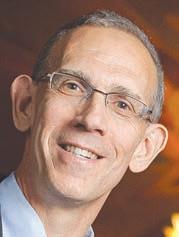
Tucson will go from “ho-hum” to “happenin’” this summer thanks to events planned by executive director Craig Sumberg and his sta at the Fox Tucson Theatre Foundation. Sumberg, 55, has been at the helm of what he and many others consider the crown jewel of downtown Tucson since 2009.
Originally from Massachusetts, Sumberg practiced law for a few years and then decided to devote his professional life to Jewish communal organizations. After accepting a position at the Jewish Federation, he and his family moved to Tucson in 2007. A couple of years later, he was recruited by The Fox Tucson Theatre.
“I love working downtown at The Fox,” Sumberg says enthusiastically. “Every day is di erent, which is great… and sometimes challenging. And Downtown Tucson is on the upswing.”
In addition to his many varied duties at The Fox, Sumberg is chair of the Merchant’s Council of The Downtown Tucson Partnership. “Every merchant is excited about the future of downtown,” he says.
Sumberg also loves living in Tucson; he especially appreciates the landscape, friendly people and the ease of getting around town compared to other places he’s lived. That last comment puts things in perspective for us “nearly natives” who have seen the population (and number of cars and congestion) continue to multiply.
I wanted to know more about The Fox Tucson Theatre – past, present and future.
Can you tell us a bit about the Fox Theatre’s history?
The Fox Theatre opened to the public as a movie house in 1930.
It played an important role in Tucson’s cultural life until the 1960s, when folks started leaving downtown for the ‘burbs; sadly, it closed in 1974.
Herb Stratford and others launched the Fox Tucson Theatre Foundation in 1999 to restore the theater to its former elegance. It reopened on New Year’s Eve, 2006. In the 10-plus years since, countless performers have graced the stage in our beautiful Southwestern Art Deco theatre.
Q2
Is The Fox a nonpro t?
The Fox is a 501(c)(3) nonpro t organization. Our budget is met primarily through ticket sales, rental revenue and concessions. The rest is made up through generous contributions.
promoted by the theater itself. We want to attract a broad spectrum of the Tucson community.
Q5
What makes The Fox an exceptional venue?
The best attributes of this grande dame among Tucson attractions are its physical beauty (rare is the performer or patron who doesn’t marvel at our beautifully painted ceiling) and its exceptional acoustics.
Q6
Can you give us a sneak peek into coming summer attractions at The Fox?

Q3 Q4
Have you met any famous performers through your work at The Fox?
Indeed I have! Memorable musicians I’ve met include Emmylou Harris, Steve Martin (who’s an accomplished banjo player) and the late B.B .King.
How is The Fox used?
Half the events here are rental – everything from bigname concerts to a UA lecture series. The other half includes events

We have some great concerts planned for this summer, including Taj Mahal and Keb’ Mo’ on June 6, Gordon Lightfoot on June 22 and Martina McBride July 6. We also look forward to seeing folks at our Saturday night summer classic lm series.
For the fall schedule, check out our website and/or sign up on the website (foxtucson.com) to be on the email list. I can promise you we have some terri c shows lined up!
Barbara Russek, a Tucson-based freelance writer, welcomes comments at Babette2@comcast.net



As more adults age 65 and older elect to “age in place” at home, family caregivers need more support and resources.
BY NIKI D’ANDREA | Photos Courtesy of DUET
People born between 1945 and 1965 have been called di erent generational terms, most familiarly “Baby Boomers.” But now, many people in the Boomer age group are nding themselves under another label: the “Sandwich Generation.” The term has nothing to do with what they eat. The Sandwich Generation consists of those people who nd themselves caring for both their children and their aging parents simultaneously. It’s a group growing in tandem with the expanding percentage of “family caregivers” – those who provide care for an aging or disabled loved one, free of charge, and often free of outside resources.
The U.S. Department of Health and Human Services estimates that approximately 70 percent of people age 65 and older will need some form of long-term care. And a recent AARP study shows that 87 percent of adults age 65 and older want to “age in place” and stay in their own homes, rather than be moved into a care facility. There are two options for people who want to provide in-home care for their elders: Hire a company to provide it, or be the caregivers themselves. According to the Arizona O ce on Aging, family caregivers provide more than 80 percent of all uncompensated care in the state. But caring for an older adult (or a younger one with a disability) is not easy. Even selecting the right home care provider can be a challenge. So what should people look for in a prospective provider, and what resources and help


are available to those who choose to provide the care themselves?
According to the Area Agency on Aging, there are 10 questions to ask when choosing a home care provider (see sidebar), starting with “What is the background of your company?” There are myriad home care providers throughout the Phoenix metro area and Tucson. One measure of a company’s reputation is whether or not it’s been recognized by a national organization in the eld, according to Carrie Kandes, who does
public relations for FirstLight Home Care, a nationwide company that provides non-medical care. For example, she says, FirstLight Home Care of Scottsdale was named one of the top home care providers in the U.S. in the Home Care Pulse Best of Home Care Awards in April.
“Non-medical home care provides the assistance and support people may need to maintain independence where they live,” Kandes says. “We’re helping people in your community maintain independence and enhance quality of life where they live.”
FirstLight o ers non-medical assistance
From the Area Agency on Aging
1. What is the background of your company?
2. How long has your company been in business?
3. What quali cations, certi cations, experience and training do you require of your workers?
4. Are your sta employees or contract workers? Are they insured and bonded?
5. How do you supervise your workers to make sure the proper care is given?
6. Will the same employee continue with my case?
7. Do you conduct a home visit before starting the home care service?
8. Do you work with my doctor in developing a plan of care?
9. Can you give me some references from doctors, hospital personnel or social workers?
10. Do you guarantee customer satisfaction?
For more information, visit the National Association for Home Care and Hospice at nahc.org.
with things like bathing, cooking, light housekeeping, errands and transportation. Another Arizona-based company, Golden Heart Senior Care in Scottsdale, which provides services Valleywide, recently launched a program called Golden Heart Concierge to provide more specialized services. “We have had many clients request a higher level of service for all aspects of their lives,” says Laurie Malone, managing partner and CEO of Golden Heart Senior Care. “We can manage any level of service that our clients need. We separate ourselves through distinctive enhancements on our o erings and we strive to ensure that all facets of daily life are met.”
Golden Heart’s expanded services include support from RNs, CNAs, estate attorneys, real estate experts, physical therapists, exercise instructors and more. Supportive tasks could include moving a patient in and out of hospitals, coordinating medical advocacy, reviewing healthcare coverage, nancial management or handling discharge paperwork. All of these services should be performed by only the most quali ed professionals, according to Golden Heart partner and COO Rodney Malone. “People respond to a higher level of standards care and owner accountability,” he says. “We ensure we match our caregivers’ skills with our clients’ needs. It is a delicate dance to match-make clients and caregiver skills and personalities. All

play a role in ensuring that we meet and exceed client needs.”
But what if the “client” is a beloved family member who wants personal care from someone they know? What if hiring a home care service isn’t nancially feasible? In cases like these, many people may choose to become caregivers themselves.
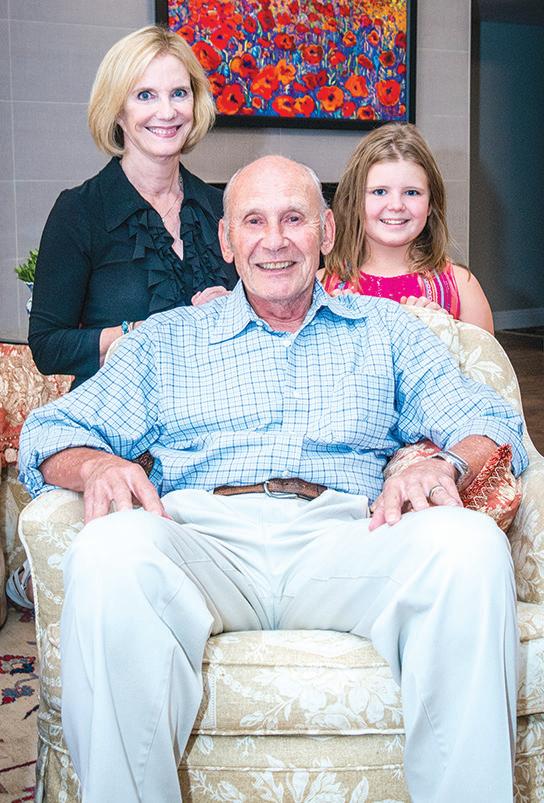
Being a caregiver can be di cult. Caregivers assist with all sorts of things, from everyday tasks like housekeeping, cooking and transportation to more complicated things like administering medications. Juggling all the responsibilities inherent in being a caregiver can be stressful, and full-time caretakers have very little time to themselves. “It’s important for caregivers to receive support because caregiving is one of the most di cult jobs ever asked of anyone. Older adults face the highest burden of care; research shows that being a caregiver can take years o of your life. The health issues that caregivers face can become their own health crisis if caregivers don’t receive help and support,” says Ann Wheat, director of caregiver services for Duet: Partners in Health and Aging.
reach out for support.”
Enter supportive services like Duet: Partners in Health and Aging. The Arizona nonpro t helps homebound older adults, family caregivers, grandparents raising their grandchildren, and those in the “Sandwich Generation” who are caregivers for their parents and their children. Duet helps with transportation to doctors’ appointments, grocery shopping and scheduling friendly visits, and provides caregiver support groups, all free of charge.
“Support groups are important because caregiving can be an isolating, lonely journey. When caregivers come to support groups, they move from isolation to a group of peers that can help them along the way,” Wheat says, adding that Duet’s Caregiving Mentor program, funded by the Piper Trust Grant, and events such as Duet’s Caregiver Symposium on November 2, are also top ways Duet supports caregivers.
“Research shows that the vast majority of family caregivers don’t identify with the term ‘caregiver.’ Once they know that they are a caregiver, they’re more likely to
For the Sandwich Generation, the challenge is compounded by caring for both one’s parents and one’s own children. “Caregiving is set to be a national healthcare crisis and it’s a big
care...continues on page 10


I’m an experienced matchmaker who qualifies and background checks all my clients, providing a confidential and safe dating experience.
I help men and women find their future love and companions.


Book your FREE consultation at MyTopMatchmaker.com or call me at (602) 616-0026





care...continued from page 9
issue for Boomers,” Wheat says. “Many in the Sandwich Generation are experiencing a huge nancial impact as they might give up their careers to be caregivers or are emptying their savings to care for their aging parents. Caregiving is going to become a major issue for the Boomers as it’s going to be a huge part of our lives as the Boomers age.”
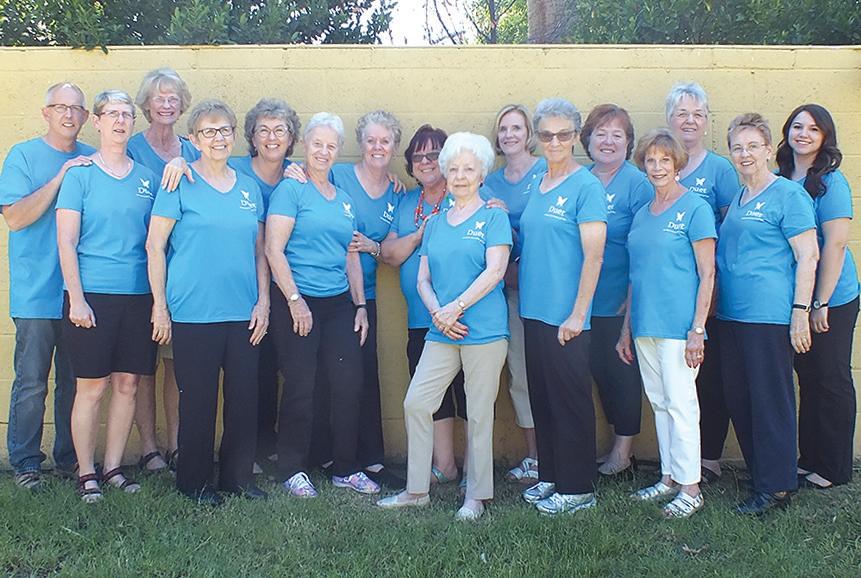
Duet: Partners in Health and Aging o ers supportive services including running errands for homebound adults, faith-based training for nurses, and providing resources for grandparents raising their grandchildren.
Visit duetaz.org for more information.
Duet is always seeking volunteers. Rewarding themselves and taking a much-needed break might be the best course of self-care for caregivers. There are programs designed speci cally for caregivers, such as nancial assistance for caregivers to go on trips through Road Scholar (roadscholar.org), formerly
known as Elderhostel. The company recently began o ering scholarships of up to $1,300 for caregivers to join one of its trips that cost $1,400 or less.
Amy Goyer, a career caregiver, wrote a story last year for aarp.org, in which she described taking a Road Scholar trip to New Mexico. “After seven years of intensive caregiving for multiple family members, to say I was burned out is an understatement. The mental and physical stress has been cumulative, and a few months ago I realized I needed a break. I got that and much more,” Goyer wrote.
BY SCOTT GOHUS SPECIAL TO LLAF
When it comes to quality of life and health, snoring is more than just a nuisance. Kevin, a patient at Koala Center for Sleep Disorders, sought relief for loud snoring that affected the sleep of others near him. He also su ered from other symptoms such as waking up fatigued, headaches and jaw pain. According to Kevin, “I have spent more than 20 years trying to solve my snoring problem. I have had surgery, orthodontia, chiropractors and even a few infomercial products, but nothing has worked until now! I have already recommended Koala to friends.” At his last follow-up appointment, he reported feeling complete relief from snoring and pain, plus an increase in energy during the day and more dreaming.

“For me, this adventure helped me learn that I was actually carrying my bliss within my heart and soul all along,” she continued. “It is in caring for and even in su ering with my loved ones, and in teaching, inspiring and supporting others, that I nd my meaning and bliss.”
Another patient, Dan, came into Koala with moderate obstructive sleep apnea (OSA), having previously su ered a heart attack. While he knew his condition would bene t from treatment, he refused to get treatment if it meant wearing a CPAP device. After treatment with an oral appliance at Koala, Dan claims his symptoms have been resolved: “I feel more energized, need less nap time, am more loving to my wife and honestly more happy.”
Improving the quality of life for patients with OSA is a professional passion and focus at Koala Center for Sleep Disorders. The physicians at Koala have taken hundreds of hours of continuing education courses on mastering sleep physiology and treating OSA with oral appliances. One of their doctors is a diplomate of the American Sleep and Breathing Academy.
Symptoms of OSA include snoring, gasping, stopping breathing, morning headaches, daytime tiredness, weight gain, and jaw problems including teeth grinding, muscle spasms and joint pain.
Collaborating with physicians who make the diagnosis of OSA is particularly important for the CPAP (continuous positive airway pressure) intolerant
patient. The primary medical treatment prescribed for obstructive sleep apnea requires sleeping with a mask over the nose and mouth which provides continuous pressure in the back of the throat to prevent collapsing when the muscles relax, which causes the airway obstruction. The masks work well when worn. Unfortunately, half or more of patients are unable to wear the mask and continue being tired. These patients are ideal candidates for an oral appliance.
E ective OSA treatment can reduce life-threatening health risks, including a 70 percent greater chance of being in an accident. Other preventable risks of OSA include higher probability of dying from heart disease or failure, a greater risk of developing cancer and a higher likelihood of having a stroke. One surprising discovery for me was learning that when hearing someone “died in their sleep,” you should be thinking obstructive sleep apnea could be a cause.
People who su er from OSA or experience symptoms such as snoring, gasping and jaw pain can seek treatment at Koala. The center o ers safe and comfortable treatment options covered by most medical insurance, including Medicare. Contact us to learn more about therapies that could resolve your symptoms and drastically improve your quality of life. For more information on oral appliance therapy for the treatment of sleep apnea, TMJ disorders, or facial and neck pain, call 602-357-9845 or visit koalabitmore. com. Koala Center for Sleep Disorders is located at 4235 N. 32nd Street, Suite A, in Phoenix.


BY PAUL MARYNIAK
John Vandenhuerk didn’t lose a step when asked about the key to a long and happy marriage.
“Just say ‘Yes, Dear’ a lot,” the Chandler man said, quickly adding, “But she said ‘OK’ a lot, too.”
The formula has worked for John and Bennie Lou Vandenhuerk – for seven decades.
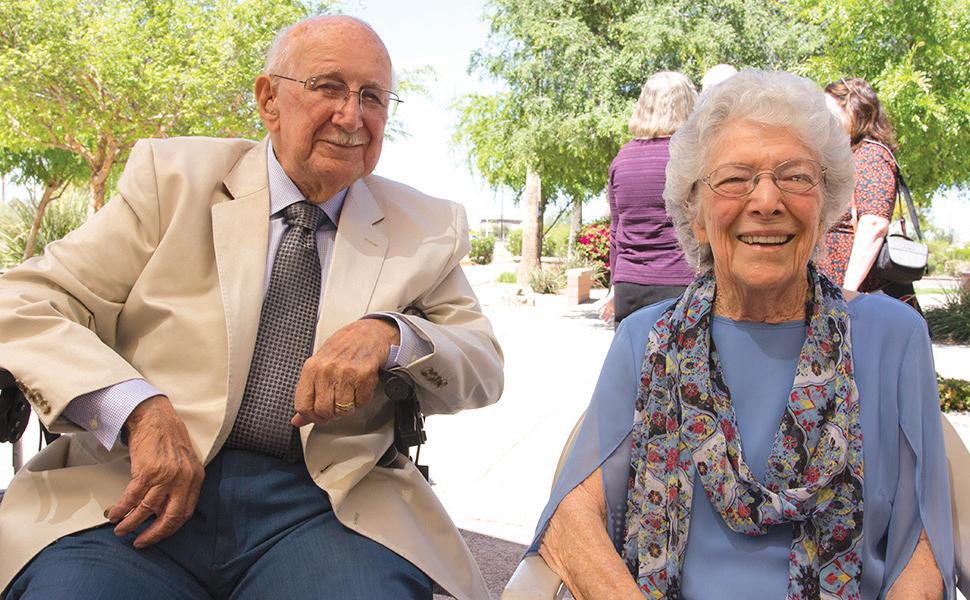
The couple, both 89, celebrated their 70th wedding anniversary this past spring at a luncheon with family and friends following the Sunday service at Faith Church in Chandler.
As well-wishers surrounded them, John looked back at Bennie and sighed, “It went by awfully quick, that 70 years. We’ve had some great times.”
They met as 18-year-olds on a train in California in 1946. He was heading to report for duty at the U.S. Naval base in Santa Barbara and she was traveling to her home in Southern California.
“Trains in those days stopped at every little town, so it was a long ride,” he recalled. “So, we talked. And then she gave me her phone number.”
A few weeks later, John, an Alabama native, had a few days’ leave and nothing to do, so he called her.
She invited him for a visit.
“My father canceled his plans so he could meet this sailor who was visiting his daughter,” Bennie said.
What followed were ve months of letter-writing while he was stationed in Guam.
Then, on a ve-day leave, he and Bennie went to Yuma because California required a three-day wait on a marriage license for a blood test.
And on March 26, 1947, their 70-year romance began, leading to two sons and two daughters – and, eventually, seven grandchildren and nine great-grandchildren.
They didn’t bother renewing their vows last weekend – they did that at the halfway point of their marriage as they celebrated their 35th anniversary on the Love Boat.
Indeed, while they were all dressed up for the celebration at Faith Church, Bennie said she was thinking, “How nice it will be to get back home and into my old duds.”
John is a retired power plant engineer for General Motors who oversaw an operation that produced electricity and compressed air to run tools and machines.
Bennie worked at an upholstery and drapery shop that was owned by a friend.
The Vandenhuerks’ oldest daughter, Jonna Harness, said her parents “have always been ‘can-do’ types of people.”
“Each of them was handy,” Harness said. “Dad could x anything, and my artistic mother was always amazing at decorating and sewing. Although our family surely did not have a lot of money, Mom and Dad were industrious and were able
“Your aunt Dot is tossed!”

Skip the misunderstandings, not the moment.
With a captioned phone, you can hear and read your phone calls on a bright, easy-to-read screen. No asking to repeat. No “can you speak up?” Just the simple joy of conversation.
to provide extras for the family through building things with their own hands.”
He took an early retirement in 1988 to care for some ailing family members and, ve years later, they moved from California to Chandler to be close to their daughter.
Both are active in the church, and he served for several years as a chaplain for the American Legion and then became a nancial o cer for the organization.
The Vandenhuerks’ devotion to each
other has always been visible, said Harness. “One thing I observed as I grew up in our home was that Mom and Dad thoroughly enjoyed being together,” she said. “They talked a lot, shared everything and loved to laugh. They were always active in various churches no matter where they were living and inevitably grew close to people around them. Socializing and providing support for one another within social groups was – and continues to be –important to them.”

BY CHRISTINA FUOCO-KARASINSKI
Photos by Sarah Sachs/Arizona Diamondbacks
Greg Schulte vividly remembers the rst time he sat behind the microphone: age 20 in Rock Island, Illinois. The red light illuminated and he thought one thing.
“I have to talk,” he says with a laugh. “So, I started reading the news. I was really nervous then. I really was.”
Schulte nailed it. Decades later, he celebrated calling his 3,000th game as the radio voice of the Arizona Diamondbacks.
“I loved baseball ever since I was a little kid,” Schulte says in a Chase Field conference room. “To me, it is the best sport.”
Schulte was hired by Jerry Colangelo and the D-backs in 1995, three years before the team hit the eld for its inaugural game.
“It was a lifelong dream,” Schulte says. “I had done minor league baseball, college baseball, NBA basketball, the rst four years of Cardinals football, and ASU football, basketball and baseball. My one true passion, though, was to get to the MLB.”
The son of a John Deere employee, Schulte grew up in the Quad Cities area of northwest Illinois. He became obsessed with listening to St. Louis Cardinals games called by the team’s radio voices, Harry Caray and Jack Buck.
“We had television, but I would listen to the transistor radio at night,” he says. “We didn’t get a lot of baseball on the television. Maybe one game on a Saturday. Now you can pick up a phone and watch a game, or watch it on television. Back in those days, it was all about radio.”
Schulte loved baseball, but knew the odds of making it to the majors as a player were stacked against him. He turned to radio.
“I could picture in my eyes nightly what they were talking about,” Schulte says. “There was a porch in right eld that had a screen in front of it. They would say a ball hit the screen. I could envision that.
“In my mind, as I was playing games or watching games, I was calling the games at a very young age. I would imagine how
I would call them. That’s how I grew into a passion for radio.”
Schulte attended a six-month broadcast school in Milwaukee before attending St. Ambrose College in Davenport, Iowa. He then married his wife, Nancy, and started his broadcast career of 45 years and counting.
He moved to Arizona in the 1970s, following his parents’ relocation to Sun City. At the time, he was broadcasting University of Iowa basketball. When he arrived in the Grand Canyon State, he applied at KTAR and was hired.

He spent 14 years at KTAR prior to joining the D-backs. His resume also includes a 15-season run with the Phoenix Suns, working alongside Hall of Famer Al McCoy, rst as a producer, then as a color commentator for the last two seasons.
The move to Arizona gave him the opportunity to listen to and meet Vin Scully, who was calling Dodgers games carried on KTAR. After his hiring by the D-backs, Schulte became known as “the Gubnuh.”
“It was a name bestowed on me by (former play-by-play man) Thom Brennaman,” Schulte explains. “We were at dinner in Atlanta. I had a sport coat on. I was dressed up. Thom said I looked like ‘a Southern Gubnuh,’ as he called me using a Southern drawl. He used the ‘Gubnuh’ part on-air the following night, and the nickname stuck.”
Schulte is now in his 19th season, and his 11th season with radio partner Tom Candiotti. He delivered the call of Luis Gonzalez’s walk-o , ninth-inning single to win game seven of the 2001 World Series over the New York Yankees. He was behind the mic for Randy Johnson’s historic achievements, including his perfect game on May 18, 2004.
In addition, Schulte called several nohitters such as the D-backs’ Edwin Jackson
on June 25, 2010; the Cardinals’ Jose Jimenez on June 25, 1999; and the Marlins’ Anibal Sanchez on Sept. 6, 2006. He fondly recalls Aaron Hill hitting for the cycle on June 18 and June 29 in 2012.
“I enjoy my work,” he says. “I have a terri c boss here in (D-backs President and CEO) Derrick Hall. He’s the absolute best. He’s so uplifting. You just want to do anything you can for him.”
The feeling is mutual.
“There is one voice that is truly synonymous with D-backs baseball and that’s Greg Schulte, who has been here since the beginning,” Hall says. “He not only does an incredible job each night of describing the action for our fans, but he has always represented the organization with class away from the ballpark and he’s become an invaluable part of our history.”
Fans frequently approach Schulte to share their highlights. But those aside, one group of folks makes Schulte particularly proud of his job.
“I’m the eyes for people who can’t see the ballgame,” he says. “I think the best compliments I get yearly – whether it’s phone calls, letters or emails – are from people who are blind. They tell me I’m their eyes and they really appreciate the color

Birding Agua Caliente Park, 7:30 to 9 a.m., Pima County Agua Caliente Park, 12325 E. Roger Rd., free for members, $5 nonmembers, online registration required, pima.gov/nrpr, eeducation@pima.gov, 615-7855. Take a guided walk to look for the Sonoran Desert’s summer birds, such as warblers, flycatchers, hummingbirds, orioles and vireos.
Alzheimer’s Caregiver Support Group, 10:30 a.m. to noon, repeats June 15, TMC Senior Services, El Dorado Health Campus, 100 N. Wilmot Rd., 3241960, seniorservices@tmcaz.com, tmcaz.com. The group meets the first and third Thursday of the month.
Mindful Yoga Class, 8 to 9 a.m., continues June 8, June 15, June 22 and June 29, Tucson Botanical Gardens, 2150 N. Alvernon Way, $40 members, $50 nonmembers, 326-9686, ext. 10, info@tucsonbotanical.org, tucsonbotanical.org.
Led by certified yoga instructor and massage therapist Vivianne Uyeda, this five-part series explores moderate hatha yoga, with an emphasis on movement, breath and meditation. All levels welcome.
Tucson Cactus and Succulent Society Meeting, 7 to 9 p.m., Sky Islands Public High School, 6000 E. 14th St., free, holcombew@yahoo.com. Tom Van Devender will discuss the Tucson Cactus & Succulent Society’s coastal trip to Sonora, Mexico. Van Devender, recently the manager of the Madrean Archipelago Biodiversity Assessment program at Sky Island Alliance and the senior research scientist at the Arizona-Sonora Desert Museum from 1983 to 2009, has traveled widely in the United States, Mexico and Europe collecting over 25,000 plant specimens.

The Great Summer Art Auction, 5 to 7 p.m., Madaras Gallery, 3035 N. Swan Rd., free admission, 615-3001, madaras.com. The auction selects original paintings sold for a fraction of their value.

Pioneers of American Botany Lecture, 10 a.m. to noon, Tucson Botanical Gardens, 2150 N. Alvernon Way, $16 members, $20 nonmembers, 326-9686, ext. 10, tucsonbotanical.org, info@tucsonbotanical. org. This class will look at the botanists who are remembered in the names of American plants. Look back into a time of discovery in American botany and the adventures of these intrepid explorers.
Tour of Historic Canoa Ranch, 8:30 to 10 a.m., Historic Hacienda de la Canoa, 5375 S. Interstate 19 Frontage Rd., Green Valley, free, online registration required, pima.gov/nrpr, canoaranch@pima.gov, 724-5220. Join a walking tour of the Canoa Ranch headquarters. Visit the historic buildings and corrals and enjoy the special exhibits of the people of Canoa.
Desert Night Shift, 7 to 9 p.m., Pima County Agua Caliente Park, 12325 E. Roger Rd., free for members and children, $5 nonmember adults, online registration required, pima.gov/nrpr, eeducation@ pima.gov, 615-7855. Join Pima County naturalists on an easy hike to discover “who” is out and about in the desert at night.
American Made: A Salute to Country Gospel with the Presidio Boys, 7 p.m., The Gaslight Music Hall,
Calendar...continued from page 12
13005 N. Oracle Rd., Oro Valley, $25, senior discounts available, 529-1000, gaslightmusichall.com.
June 4 Sunday
Music Under the Stars: Vocalist Crystal Stark, 7 p.m., DeMeester Outdoor Performance Center, Reid Park, free, 722-5853, info@tucsonpops.org, tucsonpops. org. Crystal Stark joins the Tucson Pops Orchestra to debut her symphony show Last Dance – A Tribute to the Music of Donna Summer.
June 5 Monday World Environment Day
June 6 Tuesday
American Parkinson Disease Association (APDA)
Education, 10:30 a.m. to noon, TMC Senior Services, El Dorado Health Campus, 1400 N. Wilmot, 334-1960, 3254345, seniorservices@tmcaz.com. cynthiaholmes. org. Cynthia Holmes, PhD, health psychologist/ Parkinson’s coach, coordinates this program. This is a question-and-answer session.
June 7 Wednesday
RESPECT: A Salute to the Women Who Rock, 7 p.m., The Gaslight Music Hall, 13005 N. Oracle Rd., Oro Valley, $25, senior discounts available, 529-1000, gaslightmusichall.com.
June 8 Thursday
Green Valley Stroke Support Group, 10 to 11 a.m., Zuni Room, La Perla at La Posada, 635 S. Park Center Ave., free, reservations required, 626-2901. Facilitated
by Leslie Ritter, PhD, RN, and supported by Banner - University Medical Center, University of Arizona College of Nursing and Sarver Heart Center. For stroke survivors and caregivers to learn more about stroke, to find positive solutions to shared concerns and to unite in support of each other.
June 9 Friday
Full Moon Nature Walk, 7 to 9 p.m., Maeveen Behan Desert Sanctuary at Arthur Pack Regional Park, 9101 N. Thornydale Rd., free for members, $5 nonmembers, online registration required, pima.gov/nrpr, eeducation@pima.gov, 615-7855. Join a Pima County naturalist for this easy, two-hour nature walk.
June 10 Saturday
Exploring Aquatic Life, 9:30 to 11:30 a.m., Pima County Agua Caliente Park, 12325 E. Roger Rd., free for children and members, $5 nonmember adults, online registration required, pima.gov/nrpr, eeducation@ pima.gov, 615-7855. Discover the diversity of life that inhabits the ponds at Agua Caliente Park. Use nets, skimmers and buckets to collect aquatic life, then watch the water come to life under the microscope.
Birding Sweetwater Wetlands, 4:30 to 6:30 p.m., Sweetwater Wetlands, 2667 W. Sweetwater Dr., free, online registration required, pima.gov/nrpr, eeducation@pima.gov, 615-7855. Roam this urban birding hotspot with a naturalist to look for wetland and desert birds as well as other wildlife.
Park After Dark, 7:30 to 9:30 p.m., Feliz Paseos Park, 1600 N. Camino de Oeste, free for children
and members, $5 for adult nonmembers, online registration required, pima.gov/nrpr, eeducation@ pima.gov, 615-7855. Experience Felix Paseos Park in a different light. Take in the sights, sounds and scents of the desert night and discover the wildlife that plays in the park after dark.
June 11 Sunday
Music Under the Stars: 1812 Overture, 7 p.m., DeMeester Outdoor Performance Center, Reid Park, free, 722-5853, info@tucsonpops.org, tucsonpops. org. The Tucson Pops Orchestra performs the season’s final concert, highlighted by the 1812Overture by Tchaikovsky.
June 12 Monday
Piece of My Heart, Tribute to Janis Joplin, 7 p.m., The Gaslight Theatre, 7010 E. Broadway Blvd., $21.95, senior discounts available, 886-9428, thegaslighttheatre. com.
June 13 Tuesday
Tour of Historic Canoa Ranch, 8:30 to 10 a.m., Historic Hacienda de la Canoa, 5375 S. Interstate 19 Frontage Rd., Green Valley, free, online registration required, pima.gov/nrpr, canoaranch@pima.gov, 724-5220. Join a walking tour of the Canoa Ranch headquarters. Visit the historic buildings and corrals and enjoy the special exhibits of the people of Canoa.
Alzheimer’s Film and Discussion Series, 1:30 to 3:30 p.m., repeats June 27, TMC Senior Services, El Dorado Health Campus, 1400 N. Wilmot Rd., 324-1960, seniorservices@tmcaz.com, tmcaz.com.
Bluegrass Jamboree, 6 p.m., The Gaslight Music Hall, 13005 N. Oracle Rd., Oro Valley, $12.50, 529-1000, gaslightmusichall.com.
June 14 Wednesday
Alzheimer’s Association Younger Onset Caregiver
Support, 5 to 6 p.m., TMC Senior Services, El Dorado Health Campus, 1400 N. Wilmot Rd., free, 324-1960, seniorservices@tmcaz.com, tmcaz.com. The group is for care partners of those younger than 65 who have Alzheimer’s or another dementia.
Viva Seniors! Social Group, 10:30 a.m. to noon, TMC Senior Services, El Dorado Health Campus, 1400 N. Wilmot Rd., free, 324-1960, seniorservices@tmcaz. com, tmcaz.com. Sometimes it’s hard to make new friends. Join the group for coffee, to share your thoughts, meet kind-hearted spirits and connect with other seniors.
June 15 Thursday
Zumba Gold with JCC, 9 to 10 a.m., TMC Senior Services, El Dorado Health Campus, 1400 N. Wilmot Rd., free, 324-1960, seniorservices@tmcaz.com, tmcaz.com.
Alzheimer’s Caregiver Support Group, 10:30 a.m. to noon, TMC Senior Services, El Dorado Health Campus, 1400 N. Wilmot Rd., free, 324-1960, seniorservices@ tmcaz.com, tmcaz.com.
June 16 Friday
Old Time Rock ‘n’ Roll Dance Party with Heartbeat, 7 p.m., The Gaslight Music Hall, 13005 N. Oracle Rd., Oro Valley, $12.50, 529-1000, gaslightmusichall.com.
June 17 Saturday
Lizards of Agua Caliente Park, 7:30 to 9 a.m., Pima County Agua Caliente Park, 12325 E. Roger Rd., free, pima.gov/nrpr, eeducation@pima.gov, 615-7855. Join the group as it searches for whiptail, spiny, ornate tree and other lizards.
Tour of Historic Canoa Ranch, 8:30 to 10 a.m., Historic Hacienda de la Canoa, 5375 S. Interstate 19 Frontage Rd., Green Valley, free, online registration required,
Calendar ...continues on page 14

Calendar...continued from page 13
pima.gov/nrpr, canoaranch@pima.gov, 724-5220. Join a walking tour of the Canoa Ranch headquarters. Visit the historic buildings and corrals and enjoy the special exhibits of the people of Canoa.
Bats in Flight, 6:30 to 8:30 p.m., Pima County Rillito River Park, 4200 N. Campbell Ave., free, pima.gov/ nrpr, eeducation@pima.gov, 615-7855. Discover the lives of Mexican free-tailed bats and watch as hundreds of bats emerge from their daytime roosts under the Campbell Avenue Bridge over the Rillito River. Pima County naturalists and volunteers provide information and family-friendly activities.
Love the One You’re With: The Music of Crosby, Stills, Nash and Young, 7 p.m., The Gaslight Music Hall, 13005 N. Oracle Rd., Oro Valley, $25, senior discounts available, 529-1000, gaslightmusichall.com.
June 18 Sunday
Man in Black: The Music of Johnny Cash, 7 p.m., The Gaslight Music Hall, 13005 N. Oracle Rd., Oro Valley, $30, senior discounts available, 529-1000, gaslightmusichall.com.
June 19 Monday
Dragons and Damsels of Agua Caliente Park, 8 to 9:30 a.m., Pima County Agua Caliente Park, 12325 E. Roger Rd., children and adult members free, nonmember adults $5, online registration required, pia.gov/nrpr, eeducation@pima.gov, 615-7855. Join naturalist Jeff Babson for a close-up look at dragonflies and damselflies and learn about their identification biology and conservation.
Stroke Support Group, 10:30 a.m. to noon, TMC Senior Services, El Dorado Health Campus, 1400 N. Wilmot Rd., free, 324-1960. Stroke survivors meet in the wellness center, and care partners meet in the JVP room. Meets April to August.
Country Classics, 7 p.m., The Gaslight Theatre, 7010 E. Broadway Blvd., $21.95, senior discounts available, 886-9428, thegaslighttheatre.com.
June 20 Tuesday
Birding Cienega Creek, 7:30 to 9:30 a.m., Gabe Zimmerman Davidson Canyon Trailhead at Cienega Creek Natural Preserve, 16000 E. Marsh Station Rd., free for members, $5 nonmembers, online registration required, pima.gov/nrpr, eeducation@pima.gov, 615-
7855. Join Jeff Babson on this guided walk to observe the rich bird life in the diverse habitats of Cienega Creek Natural Preserve as the group searches for hawks, tanagers, warblers and sparrows.
APDA Parkinson Support Group, 2 to 3:30 p.m., TMC Senior Services, El Dorado Health Campus, 1400 N. Wilmot Rd., 326-5400, seniorservices@tmcaz.com, free. Those with Parkinson’s meet in the wellness center, while care partners get together in another room.
June 21 Wednesday
Restoration Tour, 9 to 10:30 a.m., Historic Hacienda de la Canoa, 5375 S. Interstate 19 Frontage Rd., Green Valley, free, online registration required, pima.gov/nrpr, canoaranch@pima.gov, 724-5220. From deteriorating ruins to functional buildings, take a behind-the-scenes tour with architectural preservationist Simon Herbert to examine the processes and materials used in the restoration of Historic Canoa Ranch.
Society of Military Widows’ Luncheon and Meeting, noon, Ironwood Club at Davis-Monthan Air Force Base, 2720 S. Craycroft Rd., charge for meal, reservations required, 574-6628.
Anza Tour at Historic Canoa Ranch, 9 to 10 a.m., Historic Hacienda de la Canoa, 5375 S. Interstate 19 Frontage Rd., Green Valley, free, online registration required, pima.gov/nrpr, canoaranch@pima.gov, 7245220. Learn about Col. Juan Bautista de Anza and the group of Spanish colonial settlers who made their first stop at Canoa Ranch in 1775, as they began an epic 1,200-mile journey from Sonora, New Spain, to colonize the port of what is now San Francisco.
June 22 Thursday
I Love Books Group, 2 to 4 p.m., TMC Senior Services, El Dorado Health Campus, 1400 N. Wilmot Rd., free, 324-1960, seniorservices@tmcaz.com, tmcaz.com.
June 23 Friday
Bats in Flight, 6:30 to 8:30 p.m., Pima County Pantano River Park, 2500 S. Pantano Pkwy., free, pima. gov/nrpr, eeducation@pima.gov, 615-7855. Discover the lives of Mexican free-tailed bats and watch as hundreds of them emerge from their daytime roosts under the 22nd Street bridge over the Pantano Wash.
June 24 Saturday
Lizards of Agua Caliente Park, 7:30 to 9 a.m., Pima County Agua Caliente Park, 12325 E. Roger Rd., free, pima.gov/nrpr, eeducation@pima.gov, 615-7855. Join the group as it searches for whiptail, spiny, ornate tree and other lizards that roam the park.
The Music of the Blues Brothers, 3 and 7 p.m., The Gaslight Music Hall, 13005 N. Oracle Rd., Oro Valley, $25, senior discounts available, 529-1000, gaslightmusichall.com.
June 25 Sunday
Tucson Ostomy Support Group, 2 to 4 p.m., TMC Senior Services, El Dorado Health Campus, 1400 N. Wilmot Rd., free, 206-0268, seniorservices@tmcaz. com, tmcaz.com. Meets monthly, except in July and December.
June 26 Monday
Totally ’80s, 7 p.m., The Gaslight Theatre, 7010 E. Broadway Blvd., $21.95, 886-9428, thegaslighttheatre. com.
June 27 Tuesday
Tour of Historic Canoa Ranch, 8:30 to 10 a.m., Historic Hacienda de la Canoa, 5375 S. Interstate 19 Frontage Rd., Green Valley, free, online registration required, pima.gov/nrpr, canoaranch@pima.gov, 724-5220. Join a walking tour of the Canoa Ranch headquarters. Visit the historic buildings and corrals and enjoy the special exhibits of the people of Canoa.
June 28 Wednesday
Family Creation Camp, 6:30 to 8:30 p.m., continues June 29, Christ Community Church, Oasis Building, 530 S. Pantano Rd., call for charge, 296-8501, info@ ccctucson.org, ccctucson.org. Family Creation Evenings are opportunities for families to learn about creation science. The camp explores evolutionary theory and examines God’s creation and the designs he has incorporated throughout his creation.
June 29 Thursday
Family Creation Camp, 6:30 to 8:30 p.m., Christ Community Church, Oasis Building, 530 S. Pantano Rd., call for charge, 296-8501, info@ccctucson. org, ccctucson.org. Family Creation Evenings are opportunities for families to learn about creation science. The camp explores evolutionary theory and examines God’s creation and the designs he has incorporated throughout his creation.
June 30 Friday
All Right Now Dance Party with the Rillito River Band, 7 p.m., The Gaslight Music Hall, 13005 N. Oracle Rd., Oro Valley, $12.50, 529-1000, gaslightmusichall. com.
that I bring into their lives.
“They love the description of each and every play they imagine. I can’t imagine being blind or even sight-impaired. That’s about as good a compliment as you can get.”
Schulte makes it sound easy. He sits in his broadcast chair and speaks with Candiotti about “something we have a passion for” –baseball.
“He played the game for 16 years in the major leagues,” Schulte says. “We also know the history of the game, having grown up about the same time.
“We grew up loving the sport.”
Schulte and Nancy, with whom he has two children, Scott and Stephanie, live in the Valley and are preparing to celebrate their 44th wedding anniversary.
“Nancy and I have a lot in common,” he says. “We love sports. We love to travel. We’re best friends. It just kind of works.
“We married very young, but we waited almost seven years to have children. We didn’t rush into a family. I think we were better equipped to manage children and a family that way. We will celebrate anniversary No. 44 in November.”
Those are his keys to a successful marriage. So how did he succeed behind the mic?
“I’m prepared nightly,” he says. “I think my upbringing listening to a lot of baseball and the Hall of Famers really allowed me to put as good of a broadcast on the air nightly as I possibly could.
“I try and call a game as it should be called. I don’t try to bring a lot of craziness into it. I understand how hard it is to play the game. I want fans to understand that. When a player strikes out, I’ll credit the pitcher trying to get him out. I want to give the fans as much entertainment as we possibly can.”



BY NIKI D’ANDREA
It’s been more than four decades since shock rocker Alice Cooper rst welcomed us to his nightmare in a hazy cloud of psychedelic smoke and writhing pythons. The singer (born Vincent Furnier) turned 69 this year, so it’s perhaps surprising – but also very good – that he continues to give audiences the same crazy, prop- lled, goofy-gory storylines and stage shows they’ve come to know and love. That he still wears eyeliner may not be as shocking as the idea that he once turned down the sexual advances of Raquel Welch. Here are a handful of other things you might not know about Cooper.
He’s a devout Christian.

He was friends with Salvador Dalí.
BY KENNETH LAFAVE
“June is busting out all over,” go the lyrics to a song written about June on the Eastern seaboard. Here in Arizona, things already busted, temperature-wise, in May, with highs sometimes exceeding 100 degrees in Phoenix. Even so, Phoenix’s average high for May is a mere 95, while for June it’s 104. In Tucson, there’s a di erence of 91 vs. 99. So June con rms what May promised: Summer is here.
June is National Candy Month and National Iced Tea Month. Father’s Day, celebrated the third Sunday of June in the United States, happens June 18 this year.
occurred June 6, 1944, when allied forces landed in Normandy, France. By day’s end, some 150,000 American, British and Canadian troops had landed, beginning the long and deadly task of dislodging Nazi occupying forces from France and the low countries.
June 18, 1815, saw the last stand of Emperor Napoleon of France, whose army that day was crushed by British and Prussian forces at Waterloo, Belgium.
Cooper converted to Christianity late in life and established a church group for teenagers in 1995 called the Solid Rock Foundation. He has said, “Drinking beer is easy. Trashing your hotel room is easy. But being a Christian, that’s a tough call. That’s rebellion.”
He’s a golf fanatic.
Cooper reportedly plays six times a week when not on tour, and it’s not unusual to see him on the Arizona Biltmore course. He also participates in a plethora of charity golf tournaments and hosts his own tournament every spring, Alice Cooper’s Rock & Roll Golf Classic, to raise money for Solid Rock Foundation and The Rock Teen Center in Phoenix.
He (jokingly?) ran for Arizona governor.
In 1988, Cooper announced he was running for governor in his home state of Arizona, as a member of the “Wild Party,” with the slogan “Alice Cooper: A Troubled Man for Troubled Times.” He didn’t really campaign but encouraged fans to write him in on the ballot.
He (jokingly?) ran for president of the United States.
Cooper has considered himself a satirical candidate for president ever since 1972, when he released his song “Elected,” in which he proclaims, “I’m your Yankee doodle dandy in a gold Rolls Royce.” In August 2016, he told CNN his campaign slogan for the current presidential election was “I can do nothing as well as they can do nothing.”
The surrealist artist shared Cooper’s appreciation for the bizarre and created a hologram installation in 1973 inspired by Cooper’s stage show titled “First Cylindric Chromo-Hologram Portrait of Alice Cooper’s Brain.”
He reportedly rejected Raquel Welch for his future wife.
According to the memoir of Cooper’s guitarist, Dick Wagner, Welch came on to Cooper in her hotel suite in Miami in 1972. He rejected her advances to stay faithful to his girlfriend, Sheryl Goddard, whom he married in 1976. The couple is still together, and Cooper claims he’s never cheated on her.
He took a (pretty funny) jab at Marilyn Manson
Though Cooper and fellow “shock rocker” Manson have toured together and collaborated, Cooper has been known to sling some snakes, such as “He took a girl’s name as his rst and wears a hell of a lot of makeup. I wish I’d thought of doing that.” 2 5 3 4 1 6 7
What: Alice Cooper
When: 7 p.m. Thursday, June 22
Where: Anselmo Valencia Tori Amphitheater at Casino Del Sol, 5655 W. Valencia Road
Cost: $35-$75; VIP packages cost $190-$725
Info: 855-765-7829, tickets.casinodelsol.com
June 2 is National Doughnut Day, June 3 is Eggs Day, and June 4 is Cheese Day. June 5 is Day of the Great Bloat, if you have over-observed the three previous days.
The largest amphibious landing ever
An old song, sung by Robin Williams in The Fisher King, proclaims “I like ___ in June.” Fill in the two words left blank.
On June 12, 1967, the U.S. Supreme Court struck down a Virginia law forbidding blacks and whites to marry. There is now a move afoot to proclaim June 12 a national holiday named after the couple who fought the law. If successful, what would the name of the new holiday be?
For June, two readers in Tucson and two readers in Phoenix will win a certi cate for a one-night stay at InnSuites.
On a sheet of paper, list the correct answers in order 1 through 5. Include your full name, mailing address, phone number and email address if available.
Mail your trivia contest entry to: Lovin’ Life After 50 Attn: Trivia Contest 1620 W. Fountainhead Pkwy., #219 Tempe, AZ 85282
Or email your entry to: trivia@lovinlife.com
The deadline for entry is the 15th of each month. Please be sure to have your entry postmarked by that date. If you’re a winner in our drawing, we’ll contact you via telephone.
GOOD LUCK!
On June 25, 1876, George Custer and 250 men of the Seventh Cavalry were massacred by some 3,000 Sioux warriors at Little Big Horn in Montana.
What do you know about June?
3
June 14 is Flag Day. Who introduced the idea of the stars and stripes to Congress on that day in 1777?
4
June is considered a “summer month,” even though the majority of its days are in spring. What month, not July or August, has more summer days than June?
5
What war did a U.S. President declare on June 17, and in which year?
The winners each received a one-night stay at InnSuites.
PHOENIX: Jan Sniderman and Caroline Burgess
TUCSON: Diana Giddens and Michelle Bass
1 Cinco de Mayo commemorates Mexican victory in what battle? PUEBLA
2 On May 5, 1862, the Mexican Army defeated the forces of what European leader? NAPOLEON III
3 The European leader above sought to establish a puppet regime in Mexico under the leadership of what monarch? EMPEROR MAXIMILIAN
4 Cinco de Mayo is not Mexican Independence Day. What day is? SEPT. 16
5 Tequila is the uno cial liquor of Cinco de Mayo. On average, how many cases of tequila are purchased by Americans every year? 12.3 MILLION









by Donna Pettman
Place a number in the empty boxes in such a way that each row across, each column down and each small 9-box square contains all of the numbers from one to nine.
by Linda Thistle
The
Unscramble

BY CHRISTINA FUOCO-KARASINSKI
War lead singer/keyboardist Lonnie Jordan never expected his music to be played on the radio. With War’s blend of horns, funk and lyrics lamenting racism, hunger, gangs and crime, the act was di erent than anything else across the dial. Looking back, the 68-year-old feels blessed.
“I didn’t think it would be accepted on the radio or by the people when it was played on the radio,” Jordan says. “I’m really honored. I use the word ‘blessed’ because people took notice of us.”
Since the 1970s, War has become one of the most recognizable rock groups, scoring hits like “Low Rider,”“Spill the Wine,” “The World Is a Ghetto,”“The Cisco Kid” and “Why Can’t We Be Friends.” War, originally known as Eric Burdon and War, has earned 17 gold, platinum or multi-platinum awards.
Jordan says the key to War’s success is having fun with the audience. He stresses he will do that at Casino del Sol’s AVA Amphitheatre on Saturday, July 1.
“When we have fun, it re ects on the people,” he says. “It’s a re ection of all of us. We’re all one when we’re performing. I call them my ‘Rock and Roll Hall of Fans.’ “The fans, they put me here and they can take me out. I’m more of a troubadour or minister preaching the word. I tell you what’s going on around you.”
But being on stage isn’t as easy as it looks. When Jordan arrives, he looks at fans, freezes for a moment and then melts as listeners warm his heart.
“If I didn’t get nervous, I would have to question my talent. It’s bad enough that I don’t have any talent,” Jordan says with a laugh.
“When I shift into second gear, I become one with the people. Then I realize I’m not perfect. I am just like them. They’re watching themselves on stage. It’s an exercise class. You go in there and do your thing. You’re embarrassed for a couple of
seconds, but you just fall right into place.”
One of War’s biggest hits, “Low Rider,” is a crowd favorite and always has been, he says.
“I remember we lmed a video of the lowrider club here in L.A.,” he recalls. “There were the Dukes and the Imperials. They were rival car clubs back then and we helped bring them together.
“That was the rst time lowrider cars were seen in a video outside of L.A. We brought it to an Albuquerque lowrider show. The West Coast was the only place that had lowriders at the time. The Dukes and The Imperials played the song on their cassette stereos.”
Soon, word spread and War took its video to New York. Cheech and Chong featured “Lowrider” in Up in Smoke.
“People started freaking out because they had never seen a lowrider bouncing up and down,” he says. “We took it to Japan and Germany and people really started freaking out.”
War’s music has been covered by a myriad of acts ranging from the metal group Korn to Latin bands. Jordan says it’s an honor.
“At rst, I was like, how? Why? I didn’t know,” he says. “Sometimes I still don’t understand why and how.
“But, at this point of my age, I can see why our music in uenced a lot of musicians. It was di erent from the music being played on the radio, but it opened ears and hearts.”
What: War/Tierra/Malo with Felipe Esparza and Paul Rodriguez
When: 7:30 p.m. Saturday, July 1
Where: Casino Del Sol, AVA Amphitheater, 5655 W. Valencia Rd., Tucson
Cost: Call for ticket prices
Info: 855-765-7829, casinodelsol.com






Ryan Brown 520 275-5823
Kelly Procaccino 520 329-9652
Mel McKinney 520 203-2756
(TTY: 711) Monday-Friday, 8 a.m. to 5 p.m.
*No obligation to enroll.
Humana is a Medicare Advantage HMO, PPO and PFFS organization and a stand-alone prescription drug plan with a Medicare contract. Enrollment in any Humana plan depends on contract renewal. This information is available for free in other languages. Please contact a licensed Humana sales agent at 855-791-4087 (TTY: 711), 8 a.m. – 8 p.m., Monday – Friday.
English: ATTENTION: If you do not speak English, language assistance services, free of charge, are available to you. Call 855-791-4087 (TTY: 711), 8 a.m. – 8 p.m., Monday – Friday. Y0040_GHHHXDEEN17 Accepted

Greetings, parched and scorched readers. In our May 2016 issue, I wrote an article about island destinations which o ered a reprieve from the blistering Arizona heat. Like last year’s article, the destinations don’t necessarily o er tropical treats like island trade winds and crystalclear waters caressing the sand, but are unique island locales o ering experiences not found elsewhere on the globe.
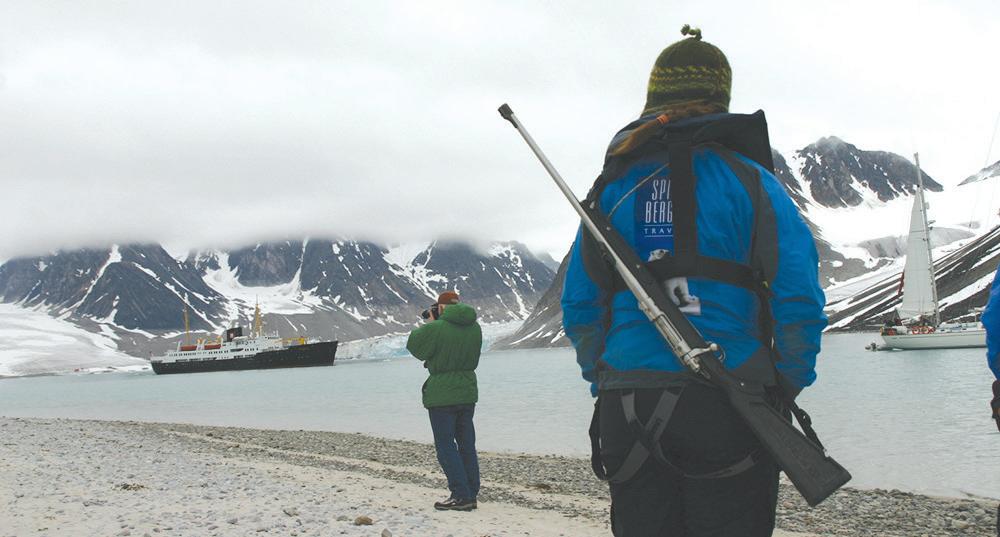
As late as 1990, there was virtually no tourism to the Arctic archipelago of Svalbard. Located between the Norwegian mainland and the North Pole, Svalbard was rst a place for explorers, then whalers and coal miners. But thanks to companies like cruise line Hurtigruten, it is now on the tourist map for the whole world to see. My adventure began aboard the coastal steamer MS Nordstjernen from Longyearbyen – the northernmost city in the world. Heading northwest, I experienced breathtaking ords, calving glaciers, unique animal and plant life, and a



sists of national parks, nature reserves, and bird or plant sanctuaries. Only four land mammals can survive on this barren tundra: the Svalbard reindeer, the Arctic fox, the Svalbard mouse and the polar bear – which has become the very symbol of Svalbard. The largest living land carnivore, they are considered the only animal that actively hunts humans. Actual encounters with this mighty species are rare, but their presence is felt all around. Visitors cannot leave settlements without a weapon or armed guide, and instructions are given on what to do with an unexpected encounter. From the deck of the vessel, I spotted a mother and her cub sleeping on an iceberg. After a couple of restless nights of my own, I would have liked to have asked them how they managed to sleep through the midnight sun. For more information, visit hurtigruten.us.
In Stromboli, Roberto Rossellini’s 1950 masterpiece, Ingrid Bergman plays a displaced Lithuanian World War ll refugee
just to the harsh environment of Stromboli, her husband’s volcanic island home, she attempts to ee by walking to the other side of the island to a waiting boat. As she climbs the active volcano, she is awed by its power and fury, losing her battered suitcase and then her pride, eventually breaking into tears and calling for God. Seeing the little island of Stromboli from the luxury of the 360-foot-long and ve-mast vessel Star Clipper was a slightly di erent experience. As we sailed by, I could see smoke pouring like clockwork out of the crater, and the two small villages below. Sea gypsies hugged the shoreline. Located o the north coast of Sicily in the Tyrrhenian Sea, Stromboli has been in almost continuous eruption for the last 3,000 years. Eruptions typically result in a few seconds of emitting ash and lava fragments, but ery lava ows spilling into the Mediterranean Sea do still occur. The last major eruption was in 2014, resulting in closure of the island. As Stromboli began to disappear in the distance, I stared in awe at the villages of islanders who refused to leave their homes as the black smoke lled the sky. For further information, visit starclippers.com.


In Robert Flaherty’s 1934 documentary
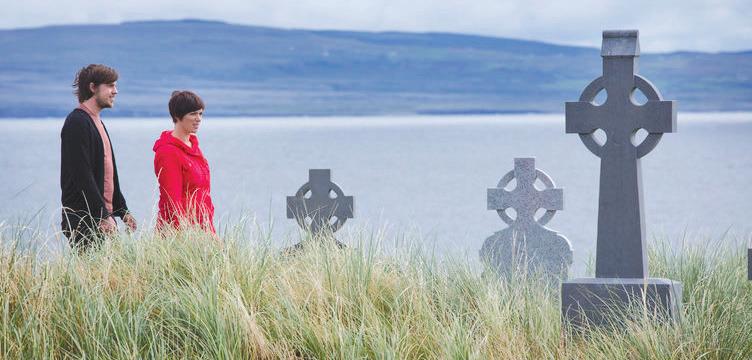
Man of Aran, we see a man smashing limestone rocks to bits while his wife gathers seaweed below the island’s windswept cli s. Meanwhile, their young son scavenges for particles of dirt that have blown from the mainland. These three ingredients will be used to create soil to grow potatoes – the family’s main source of subsistence. This is the Aran Islands, a landscape made entirely of solid limestone rock. It is a landscape that is so cruel and unforgiving that this poor Irish family must manufacture their very own soil in order to survive. When Flaherty heard of these stoic people, he knew that someday he would make a lm about them. When I rst viewed his masterful documentary, I knew that I too would someday set foot on the islands. Located o Ireland’s west coast, the Aran Islanders today no longer create their own soil and tourism is now their largest form of income. Visitors come from all over the globe to experience their living history of primitive stone forts, weathered churches and dramatic scenery. The best way to begin your exploration is at the Aran Heritage Centre, which takes you back 2,000 years in the life and times of the Aran Islands. For more information, visit aranislands.ie.
v Compiled by Ed Boitano
COCONUT WAIKIKI HOTEL is a family-friendly boutique hotel with classic island-chic style, located in the heart of Waikiki and renovated in Summer 2016. With bright rooms spacious enough for cartwheels, private balconies, complimentary Continental breakfast, a pool with sun deck, and Waikiki Beach just blocks away, this is your island home away from home. Book directly through our website and we will waive the resort fee! (808) 923-8828 or www.coconutwaikikihotel.com
CONDOMINIUM RENTALS HAWAII has been managing quality vacation condos on or across the best beaches for 35 years. Choose from the best locations on both Maui and Kauai. Save up to 25% off now through Dec 20th for as low as $105 per night! Call (800) 367-5242 or select your fabulous condo online at www.crhmai.com
SHORELINE HOTEL WAIKIKI is a modern boutique hotel



with classic island-chic style, just 2 blocks from the beach and upscale shopping. Choose from 135 rooms, designed with sleek, minimalist interior design that accents ample natural light each with their own private lanai. The property features free breakfast, Heavenly Organic Restaurant and lounge and an outdoor rooftop pool with panoramic view of the Pacific Ocean. Shoreline Hotel Waikiki is within two blocks of Royal Hawaiian Center and The International Market Place. Book directly through our website and we will waive the resort fee! www.shorelinehotelwaikiki.com or (808) 931-2444
RAMADA PLAZA WAIKIKI — Your island stay begins at Ramada Plaza Waikiki! We are steps away from beautiful Waikiki Beach, Ala Moana Shopping Center, and surrounded by an array of restaurants and local activities! As an off-beach property, we offer affordable accommodations with NO resort fees! Our primary goal is to provide you with our gracious hospitality and comfortable non-smoking rooms. Come and relax, recharge and experience the island lifestyle that awaits you…


To advertise in this section, contact Ed Boitano at 818.985.8132 or Ed@TravelingBoy.com
Special discounts for Seniors and AARP members! Reservations: (808) 744-4351 or visit us at www.ramadaplazawaikiki.com
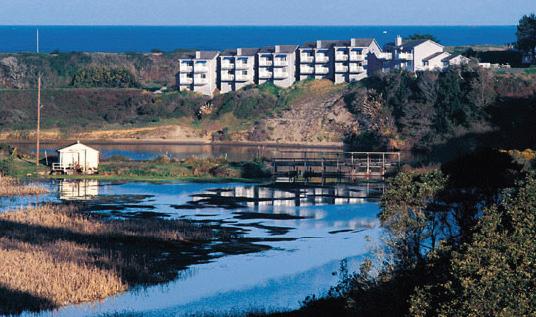
THE BEACH HOUSE INN is an intimate oceanside property located on the Pacific Coast Hwy 1 in Fort Bragg, California. Choose from 30 luxurious rooms with amenities such as fireplaces, large TVs, HBO, extended cable, WI-FI, private balconies and large soaking tubs for two. Framed by an Estuary, natural creek views are captured by the balcony windows - with the beach and bicycle path just a 500 foot walk away. Ideal for travelers and bird fans alike, the Beach House Inn is minutes by car to Fort Bragg or Mendocino. Designated pet-friendly rooms are also available. (707) 961-1700 or www.beachinn.com
THE BEACHCOMBER MOTEL ON THE BEACH is nestled on the dramatic Mendocino Coast with direct access to the beach




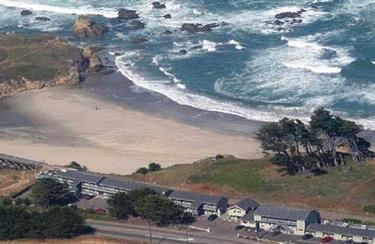


and the ten-mile Coastal Trail. With the Pacific Ocean at its front yard, guests enjoy spectacular views from every suite and room. Luxuriate on spacious decks, ideal for watching the sunset or barbecuing your catch of the day. New Pet Suites available. Be sure to visit Glass Beach and MacKerricher State Park. (800) 400-SURF (7873) or www.TheBeachcomberMotel.com
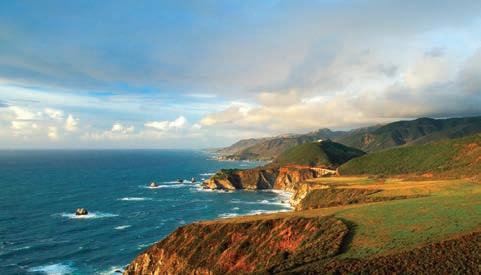
BIG SUR LODGE is located in ancient groves of redwood and oak trees in Pfeiffer Big Sur State Park, Big Sur, California. Guests are invited to step back in time to an earlier, more peaceful era. Our 61 newly-renovated and remodeled cottage-style guest rooms, each with its own deck or porch, are located on a hillside, within walking distance of our restaurant, gift shop, and grocery store. Your stay at the Big Sur Lodge includes free access to Pfeiffer Big Sur State Park, Andrew Molera State Park and Julia Pfeiffer Burns State Park. Ask about our Lovin’ Life discount. (800) 424-4787 or www.BigSurLodge.com
— Set along the rugged California Coast, just south of San Luis Obispo, Dolphin Bay Resort & Spa is centrally located in Pismo Beach. Dolphin Bay is the ideal hotel for romantic getaways or family vacations where guests stay anywhere from two nights to months at a time. With 60 spacious 1 and 2 bedroom suites featuring all of the amenities of a home, The Spa, award winning restaurant, Lido at Dolphin Bay and an array of activities, guests can experience the best of the Central Coast. (800) 516-0112 or www.thedolphinbay.com
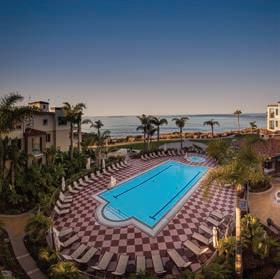
GLORIETTA BAY INN – Nestled just one block from the beach in Coronado, California, the Glorietta Bay Inn combines old-world charm with modern amenities. The eleven-room historic mansion features 89 contemporary inn rooms and suites. Amenities include complimentary expanded continental breakfast, heated swimming pool and spa, flat screen TV, refrigerators, microwaves, complimentary WI-FI, plus afternoon refreshments and more. The Glorietta Bay Inn is just a short





stroll to famous Hotel Del Coronado. (800) 283-9383 or http://www.gloriettabayinn.com/internet-specials
& SUITES OF ATASCADERO — Stay, explore, savor the best of the Central Coast. Experience our award-winning wine country hotel featuring full hot breakfast, Wi-Fi, refrigerators/ microwaves/Keurig coffeemakers in each room, and an outdoor heated pool & spa. Conveniently situated in the heart of the Central Coast – minutes to Hearst Castle and historic Atascadero City Hall. Marston’s 101 Restaurant & Cocktails, and Caladero Event Room – NOW OPEN! (805) 462-0200 or www.hieatascadero.com
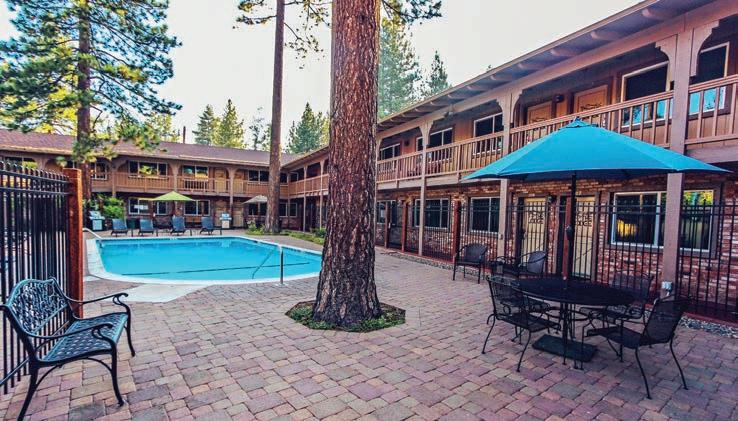
THE LODGE AT LAKE
TAHOE — Centrally located in South Lake Tahoe. Our condominiums provide ample space and comforts of home to relax after a fun-filled day. Heated pool is open seasonally with hot tub open year-round. Our onsite resort amenities serve as the premier spot to relax and enjoy South Lake Tahoe. Call today (866) 4698222 or visit www.8664myvacation.com
PAJARO



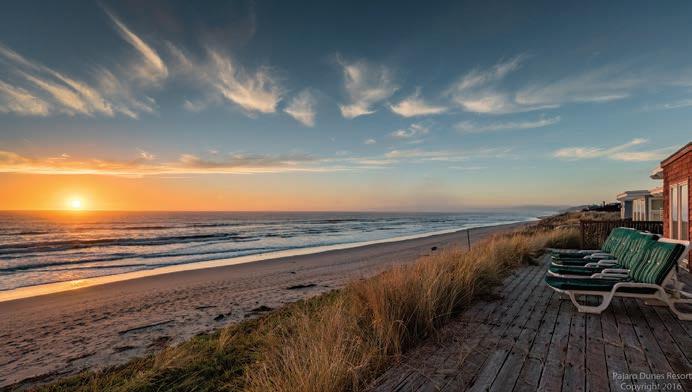




Cruz and Monterey, California. Relax in one of our beach front homes, townhouses or condominiums, all with beautiful coastal views. Plan your next vacation getaway, reunion or seminar retreat with Pajaro Dunes Resort. (800) 564-1771; www. PajaroDunes.com or www.pajarodunes.com/?RCODE=AzLife
PISMO COAST VILLAGE RV RESORT — Located right on the beach, this beautifully landscaped RV resort features 400 full hookup sites, each with complimentary Wi-Fi and cable TV, on 26 grassy, tree-lined acres. Enjoy general Store, children’s arcade, restaurant, Laundromat, heated pool, bicycle rentals and miniature golf course. The resort offers the ideal location for wineries, golf or Hearst Castle. Pismo Coast Village RV Resort was awarded the 2007/2008 National RV Park of the Year. (888) RV-BEACH or www.PismoCoastVillage.com
TAHOE LAKESHORE LODGE & SPA – The only beach front Lake Tahoe hotel where every room has a lake view
and fireplace. Offering both lodge rooms and condominiums. Enjoy summer in Tahoe or make plans for the fall. Amenities include a private beach, seasonal heated pool and hot tub that are lakeside and a day spa for pampering. Centrally located just minutes from downtown casinos, area restaurants, marinas and area attractions. Use promo code AZCL to receive 25% off your midweek (Sunday-Thursday) stay 05/01/17-05/25/17, 05/30/17-06/15/17 and 09/04/17-10/31/17, restrictions apply. (800) 4484577 or www.TahoeLakeshoreLodge.com
SURF & SAND LODGE is located on the beach in Fort Bragg, and Northern California’s spectacular and rugged Mendocino Coast – the ideal location to explore Fort Bragg, Glass Beach, Macke richer State Park and the Mendocino Coast. We have 30 beautiful and luxurious rooms, 24 with an ocean view. We also have rooms with fireplace and spa tub for two. Enjoy the magnificent ocean, whale watching, and beautiful







sunsets, all from your own private balcony. (707) 964-9383 or www.surfsandlodge.com
THE VILLA CAPRI BY THE SEA is an intimate, charming boutique hotel with on site concierge management in the tradition of fine small European hotels. Nestled in Coronado, this historic property is conveniently located directly opposite the Hotel Del Coronado and the Pacific Ocean. Standard rooms include a king size “sleep therapy” pillow top bed, microwave/ fridge, Wi-Fi, cable TV and air conditioning. Full kitchen suites are also available. Guests can walk to shops, restaurants, golf, tennis and theatre. Daily, weekly or monthly rates offered. (619) 435-4137 or www.villacapribythesea.com
CEDAR CITY — Join us in Cedar City, Utah for “A Midsummer Adventure”; a day immersed in art, local history, geology

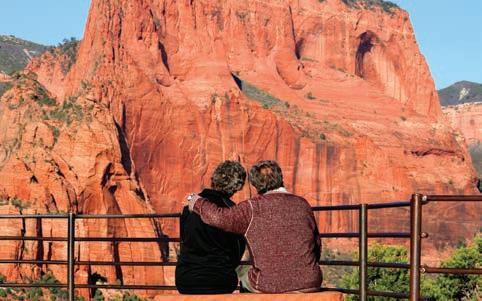


with seasoned southern Utah experts, plus hiking at Cedar Breaks National Monument. Add an evening at the Tony Award winning Utah Shakespeare Festival (bard.org) for a fantastic summer getaway. Dates are: July 19, August 2, and August 9. $75/person (including transportation). Register at go.suu.edu/active-learning-adventures or call 435-586-7759.
LOGAN, UTAH is a few degrees cooler in so many ways. This beautiful high mountain valley offers unparalleled access to world class performing arts on the edge of the great outdoors. It’s only a 10 minute drive from the downtown theater district to hiking, fishing, or picnicking in the Wasatch Cache National Forest. Explore Logan Canyon National Scenic Byway with its dramatic limestone cliffs and wildflowers. Our valley is famous for outdoor adventures, hands-on living history experiences, and fine arts. Just 90minutes north of Salt Lake City. (800) 882-4433 or www.explorelogan.com
PANGUITCH, UTAH is located in a valley 6,624 ft above sea level, creating the perfect summer time temperatures. A Native American Paiute word meaning “Big Fish,” Panguitch is undoubtedly named for the plentiful lakes in the nearby mountains, ideal for year-round fishing. Just 24 miles northwest of Bryce Canyon, surrounded by many National Parks and Monuments, Panguitch is the central hub to many outdoor activities: hiking, biking, camping, ATV trails, making this magical town in the cool mountain air one of Utah’s best kept secrets. (435) 676-8585 or www. panguitch.com
RUBY’S INN is located at the entrance to Bryce Canyon National Park and offers the closest lodging with everything from luxury hotel rooms to RV parks and campgrounds. Ruby’s Inn is open year-round with a General Store that provides fuel, groceries, camping gear, clothing and gifts. To plan your vacation, visit www.RubysInn.com or call 1-866-866-6616.

SunRiver - ST. GEORGE is southern Utah’s premier master-planned active adult lifestyle community. Built in an unspoiled, rural location, SunRiver St. George provides a quiet, superbly planned community with occupancy limited to at least one resident 55 or older. From the golf course layout and community center design to the floor plans of our sensational SunRiver St. George homes, the active adult lifestyle is our central point of focus. SunRiver St. George is
“building a lifestyle, not just homes.” (435) 688-1000 or www.SunRiver.com
CORDOVA — Intentionally off the beaten path. Cordova, Alaska is an authentic commercial fishing town nestled in the heart of a spectacular wilderness, shaped by its dramatic natural setting, rich cultural heritage and colorful residents. In 2017, let Cordova become your base of operations for an unforgettable Alaskan adventure. Go hiking, fishing, birding, boating, kayaking, or travel to other parts of the state. (907) 424-7260 or www.cordovachamber.com
HOMER, ALASKA — This captivating little town has something for everyone. Activities include hiking, worldclass fishing, bear viewing, kayaking, and bird watching, Homer is known as a “foodie” town, cultural arts community, and wellness destination. Enjoy breathtaking views of the Kenai Mountains, glaciers and volcanoes overlooking the Kachemak Bay. Stroll on the beaches and get close up to playful sea otters, bald eagles, puffins and sometimes whales. (907) 235-7740 or www.HomerAlaska.org
TOGIAK RIVER LODGE— Located in Togiak, Alaska, we are all about the fishing and keeping you comfortable and well fed. Yes we have the hot tub on the river’s edge, and a sauna too, satellite television for those who must catch up on their sports teams, Wi-Fi Internet, daily room service and more, but it is the world-class Alaska Salmon fishing, King Salmon Fishing, fly fishing Silver Salmon, and Trophy Rainbow Trout fishing that people travel to Togiak, Alaska for. Allow us to take care of you, your family or friends on a remote Alaskan wilderness fishing adventure of a lifetime. (503) 784-7919; www.togiaklodge.com or llchinook@aol.com
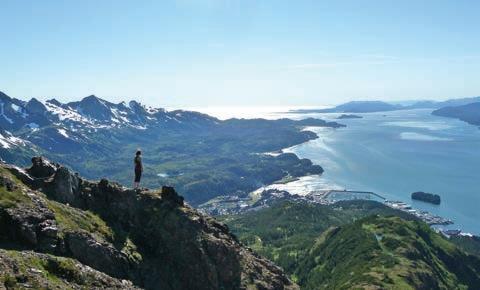




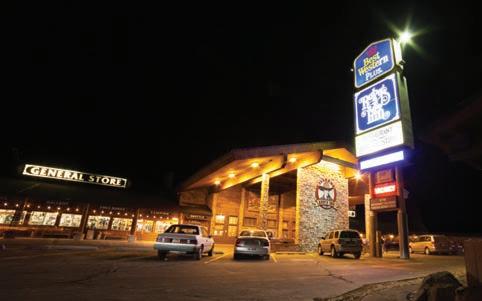


OASIS LAS VEGAS RV RESORT - Experience the exciting environment of Las Vegas’ most spectacular RV resort. The Oasis Las Vegas, with its tropical “Casablanca” theme, helps guests relax in sunny Las Vegas by day and see the bright city lights by night. The resort is conveniently located just south of the Las Vegas Strip, only five minutes from the main hotels. If you are seeking an RV resort that offers numerous champagne-class amenities, affordable luxury and superb customer service, contact us today. (800) 566-4707 or www.oasislasvegasrvresort.com
BEST WESTERN PLUS INN OF SEDONA — The award-winning design of this hotel, nestled in the famous red rocks of Sedona, echoes the natural features of the
surrounding desert terrain, showcasing the panoramic views from the hilltop location with four large terraced balcony walks, and quintessential desert-inspired style complete with an outdoor pool and fire pit seating. The complimentary ‘About Town’ Shuttle will get you to and from your Sedona adventures. www.InnofSedona.com 928.282.3072 or toll free 800.292.6344
COLORADO TRAILS RANCH — What you need is a week unwinding and exploring the wonders of our first class guest ranch. Colorado Trails Ranch is not far from Durango, in Southwest Colorado. Set in the spectacular panoramas of the San Juan Mountains, our dude ranch resort offers lifetime experiences for singles, groups and entire families. There isn’t one difficult activity in our perfectly personalized programs. The food is delicious, the comfort is wonderful and you’ll feel like a well cared member of the family. (800) 323-3833 or www. ColoradoTrails.com

and plain relaxing on the porch swing, everyone is sure to find something that appeals to them. (866) 399-2339 or www.DudeRanch.org
— Wine Tour to Chile & Argentina September 03-10, 2017. Enjoy the best wines of South America. Visit top wineries, stroll the picturesque vineyards, savor famous local varieties, and learn about Chilean and Argentine cuisine, culture and history. We specialize in small groups, expert bilingual guides and guaranteed departures. We also welcome wheelchairs and slow walkers. Contact us at: info@accessibletravelchile.com or www.accessibletravelChile.com
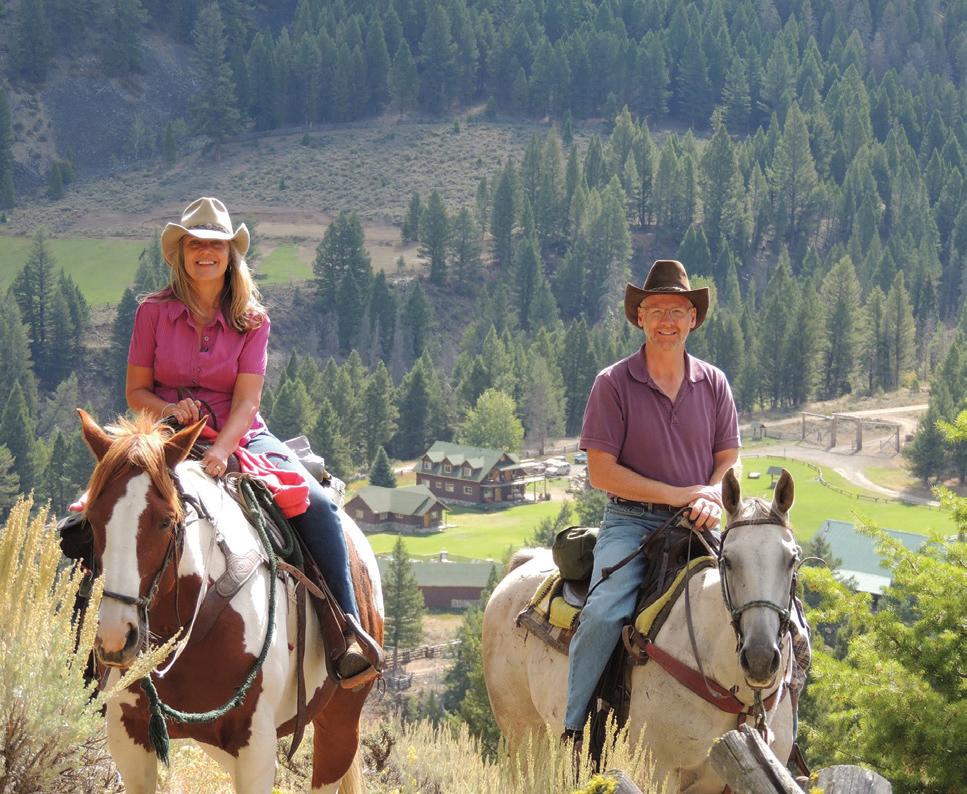




THE DUDE RANCHERS’ ASSOCIATION - Dude ranches are a popular destination vacation for families, couples, singles and groups. All seem to fit in nicely with the easygoing ranch atmosphere. Since most ranches offer a wide variety of activities such as horseback riding, fishing, river rafting, swimming pools, children’s programs, cattle drives, cookouts, line dancing, spas


CRUISEONE specializes in cruise and land vacations to the world’s most exotic destinations, including all western coast destinations, the St. Lawrence River, the Caribbean, the Mediterranean, Hawaii and the Mexican Riviera. Programs range from family reunions at sea and honeymoon cruises to river cruising and land vacations. Each independently owned and operated business combines the latest technology with old-fashioned customer service. Contact Joni Notagiacomo in Los Angeles at (800) 600-4548 or www.luv2cruz.com
TARA TOURS specializes in tours to Latin America with more excitement and mystery one could experience in a lifetime of travel. Tara Tours can take you there, with great service and tour programs, designed with your desires and budget in mind. Experience the majesty of Machu Picchu, Rio de Janeiro’s “Cidade Maravilhosa,” indigenous market of Chichicastenango; Peru’s Amazon Jungle; the incredibility of the Galapagos Islands, Chile and Argentina’s Patagonia,the ruins of Tikal, Easter Island, and natural beauty of Costa Rica. (800) 327-0080 or www.TaraTours.com







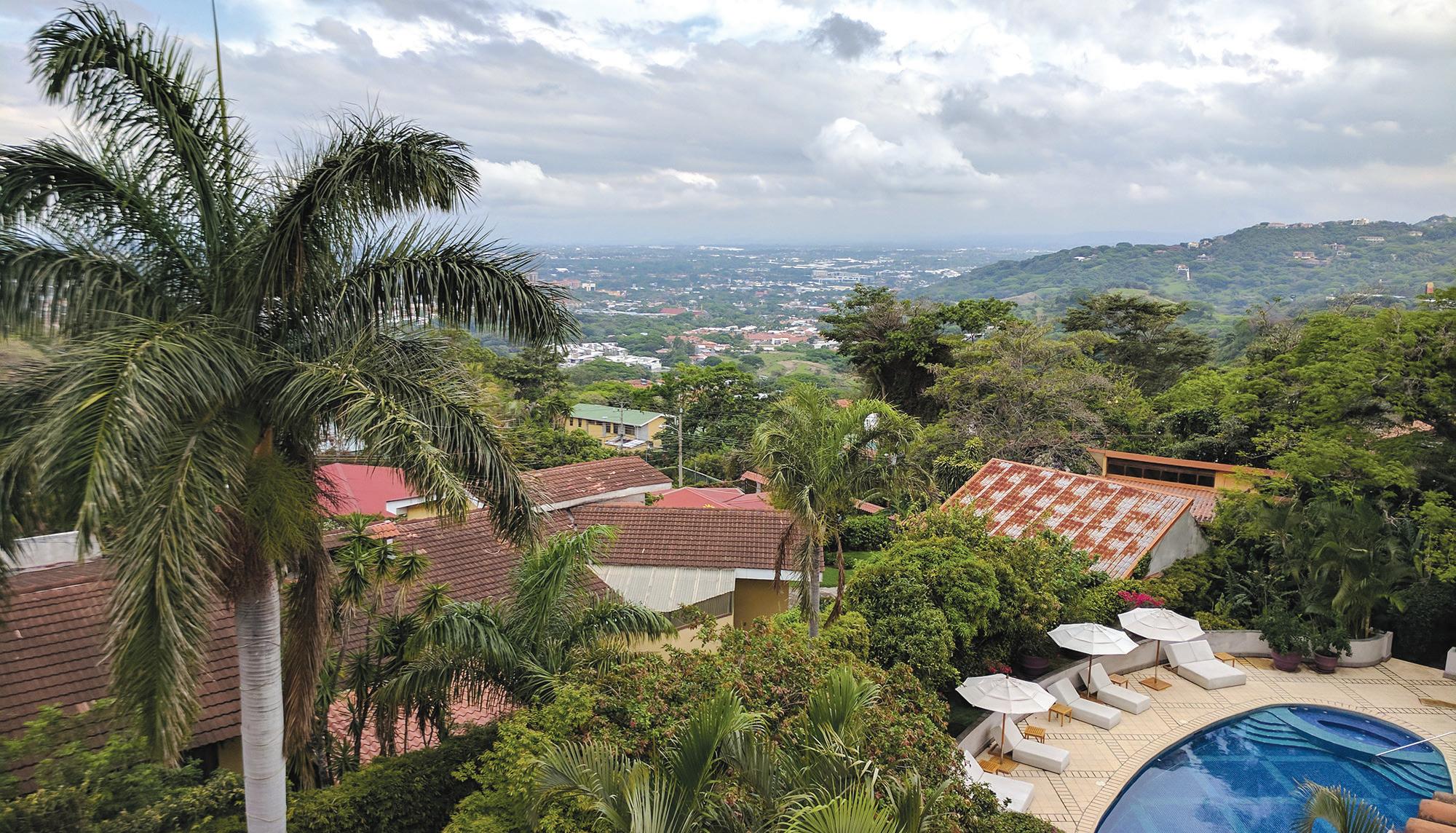



STORY & PHOTOS BY NIKI D’ANDREA
There’s a saying in Costa Rica – pura vida (Spanish for “pure life”). It’s deeply embedded in the culture of this Central American country; people say it to each other frequently in greeting or salutation, but always with gusto, because its various translations are all positive things – “full of life,” “this is living,” “excellent.”
It’s easy to feel full of life in Costa Rica, because it’s a place bubbling with biodiversity, from sandy beaches and lush rainforests to cloud-cuddled mountains and steaming volcanoes. Visitors can indulge in all sorts of adventures in CR’s exotic environments, but also nd the familiar city pursuits – museums, theaters, retail, restaurants – in Costa Rica’s culturally rich but chaotic capital, San Jose. It’s a popular destination for tourists and even retirees, thanks in part to its incredible a ordability. For busy Boomers who just want to get away for a long weekend, Costa Rica o ers a glut of great activities, many of which can be crammed into a four-day getaway. Day 1: See San Jose
Millions of people commute in and out of San Jose every day, causing colossal
tra c congestion. Probably the safest way to get around the city and its surrounds is via taxi, but downtown proper is perfectly navigable by foot – there are even a few pedestrian-only areas, lined with shops and restaurants.
The main city square, Plaza de Cultura, sits along Calle 5 and is marked by a massive concrete courtyard surrounded by stores ranging from small, kitschy souvenir shops to big-box fashion stores. People swarm this urban park, including street performers playing traditional music while bystanders dance nearby. There’s a museum underneath their feet – the Museo Del Oro, or “Museum of Gold,” the entrance of which is concealed under the concrete courtyard. Here, visitors can view more than 1,600 pre-Columbian gold pieces and learn about the history of currency in Costa Rica.
On the east side of the Plaza de Cultura sits the National Theatre of Costa Rica, a majestic example of neoclassical architecture. The meticulously landscaped lawns and outdoor sculptures are impressive, but the interior of the National Theatre is just jaw-dropping in its artistic opulence,




replete with marble oors, mural-covered ceilings, nely carved alabaster sculptures depicting the muses on pedestals, and giant etched glass entryways. The theater

opened in 1897 with a performance of Faust and continues to host a wide range of shows in its now state-of-the-art performance hall, which has a movable stage and impeccable natural acoustics combined with digital surround sound. Events slated for June include performances of the Shakespeare comedy A Midsummer Night’s Dream, an avant-garde “sound theatre” production during which the audience is blindfolded called Life for a Crack, and a puppet show titled Tale of the Garden. Amid the bustle of this big, bursting city, there are numerous nature sanctuaries/parks where people can relax under a shaded canopy of giant trees, including the popular Parque de España, which has been a public space since 1862. Though located in the middle of San Jose, this junglelike slice feels remote and rural, especially with its aviary-like abundance of birds.
Car horns may honk loudly in San Jose, but there’s no horn more blaring than that of the train to Cartago. Located less than an hour from San Jose by a 1920s-era railroad, Cartago was the original capital of Costa Rica, and it’s home to several sites

worth seeing, starting with the Municipal Museum of Cartago. Formerly a military jail, the circa-1639 building has been beautifully refurbished into a museum, with contemporary paintings and sculptures occupying the cells. A giant, colorful, multi-panel mural recounts the history of Costa Rica and its people, which includes a lot of con ict, conquests and cultural collisions.

a million people make a pilgrimage from cities all over Costa Rica, many walking as long as six hours – some crawling on their hands and knees – to make an o ering and/or ask for a blessing from La Negrita, a statue of a Black Madonna inside the church. Even visitors who are not religious may nd themselves in awe of the architecture and art, which includes myriad gilded gold mosaics, vibrant stained glass windows depicting the Virgin Mary and Jesus Christ, and detailed statues of angels.
height, and culminating with the nearly mile-long “adrena-line.” Though the idea of being harnessed to a cable hundreds of feet in the air and ying over the treeline sounds scary, the actual experience is pretty peaceful and o ers a true bird’s-eye view of this rich ecosystem.

are a possibility on a Rainforest Adventures tour; many di erent kinds of monkeys make their home in the Costa Rican rainforest; toucans sometimes y over ziplining tourists in the rainforest. (Photos courtesy Rainforest Adventures)
Should you go for the lunch bu et at The Rainforest Lodge, we highly recommend trying the heart of palm – a crunchy, savory vegetable harvested from the center of certain palm trees. It’s low calorie and resembles white asparagus, and is a popular food from the forest.


Across the street from the museum, the Zapote Agricultural Market – the largest farmers’ market in the Central Valley –draws hundreds of local farmers and vendors, who man stands o ering everything from colorful, plump produce and freshcaught sh on ice to hot, deep-fried corn tortilla empanadas.
The thronged marketplace is a stark contrast to the peaceful and reverential vibe at Basilica de Nuestra Senora de los Angeles (Basilica of Our Lady of the Angels), a breathtaking bastion of Byzantine architecture. Constructed in 1639, the building was partially destroyed by an earthquake and has since been restored with a mix of colonial architecture; the current building dates back to 1939. Every August 2 (feast day of the Virgin of the Angels), more than
The rainforest is the main reason to visit Costa Rica. Plan to spend all day in this verdant, otherworldly environment on a guided tour from Rainforest Adventures. The company o ers a handful of activities, but the “6in-1 Tour” is the most comprehensive. It starts with pickup at your hotel in San Jose. After arriving within the rainforest preserve at Braulio Carrillo National Park (about an hour and 15 minutes from San Jose), you’ll take an aerial tram ride through the dense greenery along the rainforest oor and then up above the treeline while a nature guide regales you with tales of sloths, howler monkeys, toucans and all the various other forms of wildlife that thrive there.
After the aerial tram, it’s time for an awesome adventure on the ziplines. The zipline canopy tour includes a stop for a photo op on a hanging bridge and encompasses 11 cables and 14 platforms, and sends participants soaring over the rainforest and rivers. The circuit starts with shorter ziplines to get you used to the activity, gradually increasing in length and
The “6-in-1 Tour” also includes a visit to the butter y, frog, and orchid gardens, which don’t disappoint those hoping to glimpse ora and fauna on their visits.
Though not native to Costa Rica, co ee has become one of the country’s most signi cant crops, and the beans grown there are considered among the best in the
world by java a cionados. The two most well-known producers of co ee in Costa Rica are Doka Estate, near Paos Volcano National Park, and Café Britt. Tours of both are available, but when Paos Volcano is active (as it was on our visit), Café Britt is the better of the two.
Located in Heredia (about a 20-minute drive from San Jose), Café Britt o ers tours conducted by colorful guides who double as comedy duos as they tease each other and explain every aspect of co ee in both English and Spanish. The tour starts with a history of co ee, which originated in Ethiopia, then moves into a greenhouse where guests can see the growing stages of the co ee plant before it is transplanted to a co ee plantation. A stroll through towering co ee plants and cocoa trees follows, as well as a demonstration of how co ee beans are picked, roasted and packed. It’s well worth a stop in the shop before you head out, where you can buy all sorts of co ees, chocolates and souvenirs – though after an action-packed four days in Costa Rica, your memories may be the best memento of this rugged, rainforestrich land.
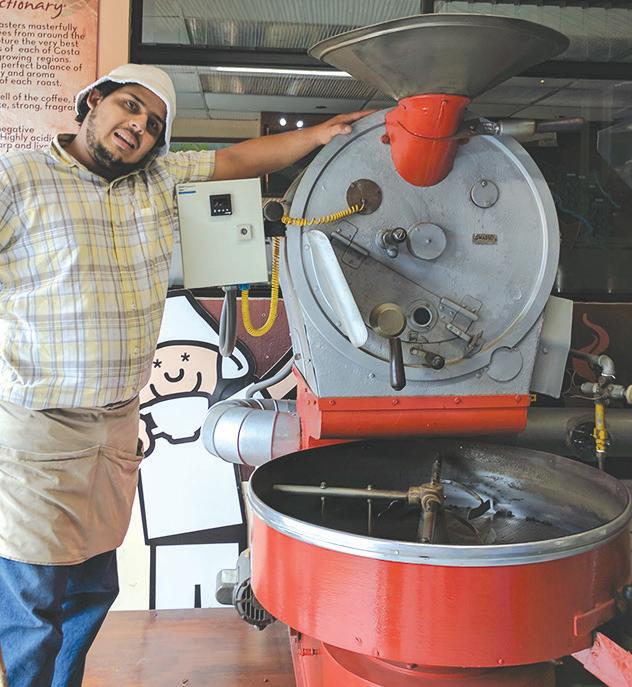
STORY & PHOTOS BY NIKI D’ANDREA
When it comes to food awards, they don’t get any bigger than the James Beard Foundation Awards. And when it comes to Arizona recipients of James Beard Awards, they don’t get any bigger than Melissa Kelly, proprietor of Primo restaurants in Rockland, Maine and at the JW Marriott Starr Pass Resort & Spa in Tucson. Kelly is the rst twotime recipient of the James Beard “Best Chef, Northeast” award, and her food philosophy of “simplicity, seasonality and freshness” shines through in every dish on Primo’s menu.
Kelly spends the majority of her time at Primo in Maine, but Chef de Cuisine Rod LeDesma stays true to the farm-totable roots of the restaurant, serving inventive dishes inspired by the cuisines of France, Italy and Spain, all made with locally sourced ingredients. Primo’s pride in using Arizona purveyors is evident at the top of its menu, in a list of local and heirloom companies that includes Black Mesa Ranch in Snow ake, Sleeping Frog
Farms in Benson, Honeyman in Prescott Valley, and Trigo Y Maiz from Heirloom Farmers’ Markets in Tucson.
Many of the herbs in the dishes come right from Primo’s own on-site garden, which spans 1,500-square feet (including pathways) and is packed with a variety of herbs including basil, oregano, rosemary, chives, thyme and sage. There’s also a small orchard with g and citrus trees. Snag a spot on the patio for a garden view while you dine.
The wine list is pretty California- and Italy-centric, with a few selections from Argentina and New Mexico. Beer skews national craft, with a couple draughts from Tucson-based Dragoon Brewing. The craft cocktail menu is innovative, with a avor for every palate, from sweet (the Rosemary Lemon Sparkler) to spicy (the Southwest Salty Dog).
Among the starters on the menu, the Antipasti Misti provides a chef’s selection of house-cured meats, artisanal cheeses, marinated olives, vegetables pickled in-house (including some tasty tiny beets on our visit), and pickled mustard seeds, all arranged attractively on a board and adorned with a ower from the garden.
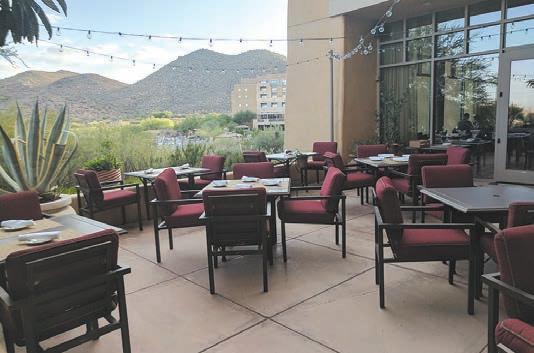



savory piles of steaming “melted” leeks.
Entrees include seafood (panseared Alaskan halibut; seared diver scallops; pan-roasted Ora King salmon) and meat (grilled NY strip; seared duck breast; mustardcrusted chicken) along with a trio of pastas: linguine with chicken cacciatore; tagliatelle Bolognese; and pappardelle with seared diver scallops. Everything’s good, but the signature dish at Primo is the pork “saltimbocca.”

Spanish Octopus also makes an amazing appetizer.
Grilled and toothsome, the octopus is chewy but not laboriously so, and comes with delightfully juicy grilled starfruit and
In Italian, the word “saltimbocca” means something akin to “jump in the mouth.” And that’s pretty much what this delicious dish does. Though traditionally made with veal, Primo’s pork version is tender and avorful, perfectly seasoned and paired with prosciutto, spinach and an umami-bomb mushroom sage jus. It comes on a bed of roasted mash potatoes that packs a garlicky punch.
If you’re smart enough to save some room for dessert, award your epicurean savvy with Cannoli Siciliana, a gluten-
free denouement to a dynamite meal that features hand-rolled pistachio- and chocolate-dipped tuiles lled with sweet ricotta and served with Amarena cherries. All these elements – from the fresh herb garden to the innovative dishes to the award-winning pedigree – help elevate Primo from a hotel-embedded eatery to destination ne dining. It’s well worth your dinner time, whether you’re staying at the Marriott or not. But after a few courses at Primo, you might feel the need to lie down in a resort bed.
Primo at JW Marriott Starr Pass Resort & Spa
3800 W. Starr Pass Boulevard, Tucson 520-791-6071, primotucson.com


BY JAN D’ATRI
I’m not sure how it happened or whether or not dads like the idea, but when we think of Father’s Day dinner, our rst thoughts go to the grill: grilled meats with big, bold avors and basically, “bigguy-hungry-man” recipes.
So Dads, I will not disappoint. This recipe for a succulent steak of your choice drizzled with fresh chimichurri sauce is made for you and a hungry crowd, not only on your special day, but any time of the year.
Just make up the chimichurri sauce in a blender and let those avors marry while you re up the grill or skillet and get that steak started. My favorites for this recipe are a skirt steak, rib eye, porterhouse or New York. If you’re looking for meats for a big crowd, the anken-style short ribs are fantastic. You’ll nd them in your Southwestern markets like Ranch Market and Food City.

Chimichurri sauce
Makes about 1-1/2cups
Ingredients:
– 1 cup (packed) fresh Italian parsley
While growing in popularity here in the U.S., chimichurri sauce has been the sauce/ condiment staple in Argentina for centuries. It’s one of the main recipes for the traditional “asado,” a big outdoor cookout akin to the American barbecue. Seasoned steaks, salty slow-cooked meats of beef, pork and lamb, plus sausages like cured longaniza (similar to chorizo), are all cooked over a roaring wood re while plenty of good red wine ows. The Argentinean asado is as much a social event as a delicious feast of grilled meats, and the breakout star has become the chimichurri sauce.





– 1/4 cup (packed) fresh cilantro
– 2 garlic cloves, peeled and smashed
– 3/4 teaspoon dried crushed red pepper
– 1/2 teaspoon ground cumin
– 1/2 teaspoon kosher salt
– 1/3 cup red wine vinegar
– 3/4 cup olive oil
Directions:
Step #1: Combine all ingredients in a food processor (except vinegar and oil) and pulse until roughly chopped.
Step #2: Add vinegar and oil and pulse until combined. Thin with a little water, if necessary. Transfer to a bowl, cover and refrigerate. Serve at room temperature. Can be made a day ahead.

$10.99 Lunch Tuesdays: 11AM - 2PM
$14.99 Dinner Wednesdays: 4PM - 9PM






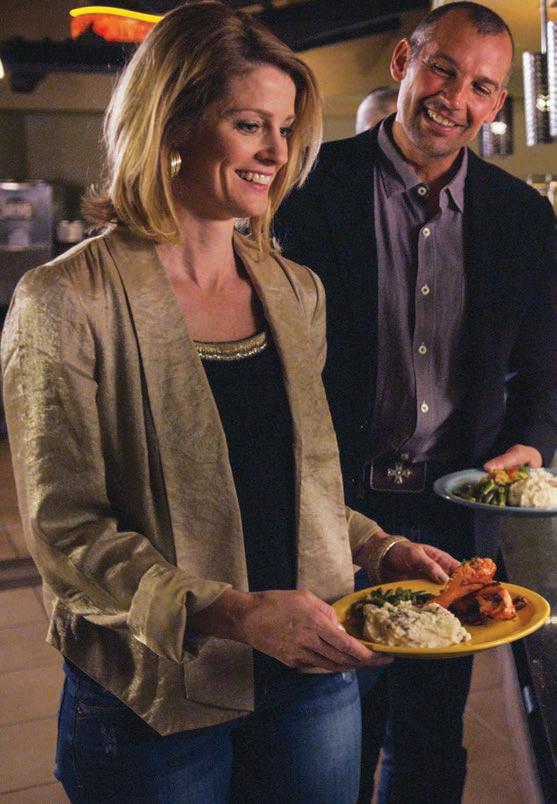
Amazing variety. Awesome deals. That’s the DIAMOND BUFFET! And right now, you and a friend can satisfy your cravings with our incredible 2 for 1 specials! No matter what you’re hungry for, the DIAMOND BUFFET has it. Experience the possibilities.
TUCSON | NOGALES HWY. 1 MILE S. OF VALENCIA RD.







BY BOB ROTH Managing Partner of Cypress Homecare Solutions
When Americans celebrated Thanksgiving six months ago, most of us acknowledged the blessings of a good life. At the midway mark of the year, I ask you: How often have you expressed gratitude since then? According to a 2011 Harvard Mental Health Letter, people who routinely express gratitude sleep better, go to the doctor less often, and show less depressive symptoms. It is amazing how many positive correlates there are to gratitude. So many, you’d think we’d all be chasing after it, hard, all the time. So why aren’t we?
I would like to help you consider cultivating gratitude with a novel approach.
The “Headwinds/Tailwinds Asymmetry,” a paper published by two social scientists, Shai Davidai and Tom Gilovich, asserts that most of us are missing a vital component to gratitude. “The invisibles” is the aptly named component that is missing. But rst, what are the headwinds and tailwinds? The concept should be familiar to anyone who runs or cycles for exercise. The headwind is what is blowing in your face, making your exercise exceedingly difcult. You are aware of it and look forward to changing direction, so that the wind is at your back. When this tailwind happens, we notice but quickly adapt to the new situation and barely notice the boost much more. The tailwind becomes invisible because we adjust to it so quickly and come to expect it.
This headwind-tailwind asymmetry mirrors life. When life gets hard, we have to pay attention to the barriers in front of us because we have to get over them, or get through them in some way. We have to overcome them. These headwinds are the enemies of gratitude. They force us to for-


get about what is good or stop paying attention to those things or people that are boosting us along.
But Gilovich and Davidai argue that as we most often a rm our gratitude for good fortune and family (which is important), we are missing the entire spectrum of gratitude. We mostly fail to appreciate all the things that make our lives the envy of the rest of the world. Have you stopped to consider how we are so blessed to be born during this time in the world? To live in a country not torn apart by civil war? Our internet is not restricted. How about having electricity, central air conditioning, and burgeoning medical breakthroughs? We live in a society that allows us to practice our religion, enjoy theater, sporting events, museums and poetry readings. These are the invisibles.
When was the last time you sat down with a good book in a comfortable chair and thought, “Wow, I am so lucky!” Gratitude is the work you do now to pave the inevitable bump in the road. It allows you to gain perspective to answer the question, “Why is my life so hard”?
Think of gratitude as the reciprocal of the advanced directive, the plan that ensures your wishes are carried out in the event that you are no longer able to make decisions for yourself. This gratitude directive is your ability to control how you see the world when you are presented with the hurdles that you could never predict or control. You can’t grant this to anyone. It is only you who can express this acknowledgment of the tailwinds that boost you along.
Ultimately, this ability to acknowledge what elevates our spirits allows us to better

Gratitude...continued on page 29
BY DR. ABRAHAM JACOB Center for Neurosciences
Hearing loss is a serious medical challenge that is often associated with aging, and unfortunately, it is often a source of insensitive humor. While it is true that hearing loss is mostly experienced by senior populations, it is no laughing matter.
Hearing loss is permanent and hearing continues to deteriorate over time. As frustration grows, people tend to withdraw and avoid the social settings they once enjoyed.
Dr. Abraham Jacob is an otologist/ neurotologist who specializes in hearing impairment and cochlear implant surgery. In this edition of Ask the Expert, Dr. Jacob provides information about hearing loss treatments and cochlear implant technology.
Deep inside the ear, there are cells called “hair cells” that turn sound vibrations into electrical signals which then travel to the brain. Over time, the hair cells die o and do not regenerate. Hair cells can also be damaged by exposure to loud noise.
It’s important to act right away because hearing involves both the ear and the brain. The electrical signals must be decoded and processed by the brain –the longer a person experiences hearing deprivation, the more di cult it will be for the brain to return or relearn to process electrical signals from the ear. The rst step is to see an audiologist and receive a comprehensive hearing test.


Most hearing exams will test what tones can be heard in a sound booth. A comprehensive test takes this a step further by increasing volume and presenting actual words to the individual. If the patient currently uses hearing aids, it is very important that the patient takes the test with and without the hearing aids. This will help determine if the hearing aids are providing bene t.
Hearing aids amplify sound which will still be absorbed by the hair cells and transmitted to the brain. This may not help patients who have signi cant loss of the hair cells. The cochlear implant bypasses the hair cells and transmits the electrical signals directly to the brain.
Properly t hearing aids can also provide strong bene ts. Each person’s physical chemistry and degree of hearing loss is di erent.
It is often assumed the implant can only assist people who have total hearing loss. If the loss is signi cant or hearing aids are not providing bene t, the cochlear implant can be a very e ective treatment.
For 99 percent of patients, the cochlear device is implanted through an outpatient surgery that takes about two hours. The procedure is safe and often completed for individuals in their 80s and 90s who have ancillary health challenges. As with any surgery, there are risks to assess with your care team before making a decision.
Every patient’s situation has many unique factors and it is very important to engage the comprehensive test and other diagnostics to evidence the degree of hearing impairment. Patients should also consider how the hearing loss is impacting their everyday life – in particular, if the loss is creating considerable frustration and causing them to avoid social interaction. Remember that hearing also involves our brains; patients should discuss any cognitive challenges with their care team. In my experience, a vast majority of patients who receive the cochlear implant have very strong outcomes that make a notable improvement in their quality of life. For further information about hearing loss and cochlear implants, please visit cochlear.com.
Dr. Abraham Jacob currently practices at the Center for Neurosciences in Tucson, Arizona. He attended medical school at The University of Michigan and completed his residency at Washington University School of Medicine in St. Louis, Missouri. His fellowship in Otology, Neurotology, and Cranial Base Surgery was at Ohio State University, where he stayed as faculty for an additional five years before moving to Tucson in 2011.

BY TERESA BEAR
Nostalgic for the good old days?
Check out the BBC series Back in Time for Dinner. You can nd the episodes online. The series traces 20th-century British history – through food. I learned that even though WWII ended in 1945, food rationing in Britain continued for nine years afterward. The Brits nally threw out their ration books on July 4, 1954. To me, however, the most shocking fact was that six years earlier – on July 5, 1948 – the National Health Service was born. Although Great Britain was quite literally rebuilding bombed-out cities, food was rationed, and only 2 percent of households owned a refrigerator, the nation found the money to ensure that every person could see a doctor when they were sick.
Fast-forward to today. In 2015, Great Britain managed to provide healthcare to every man, woman and child for an average per capita cost of $4,003 while the United States covered fewer people at more than double the cost ($9,451), according to Wikipedia. Do we get more for our money? Even though we spend more, we die sooner. Americans have a life expectancy of 78.8 years compared with England’s 81.1 years.
Gratitude...continued from page 28
connect to something larger than ourselves as individuals. If gratitude can help us connect to other people, nature or a higher power, why not do it routinely before next Thanksgiving?
Here are some ways to cultivate gratitude on a regular basis:
Write a thank you note
You can make yourself happier and nurture your relationship with another person by writing a thank you letter expressing your enjoyment and appreciation of that person’s impact on your life. Send it, or better yet, deliver and read it in person if possible. Make a habit of sending at least one gratitude letter a month. Once in a while, write one to yourself.
Thank someone mentally
No time to write? It may help just to think www.LovinLifeAfter50.com
Normally, I refrain from politics in this column. However, as I meet with retirees and pre-retirees, the healthcare debate is not political. It’s personal.
In my business, I meet two types of clients: Those who are on Medicare, and those who want to be on Medicare.
Except for those served by the Department of Veterans A airs, I have yet to meet someone over 65 who wants to give back their Medicare card.
Recently, the House of Representatives passed HR 1628, aka Trumpcare. It hasn’t made its way to the Senate, but this law would repeal Obamacare and wipe out the pre-existing conditions protections. If you are reading this column, you are more likely than not to have a preexisting condition – since 68 percent of American retirees have a chronic illness (compared to 33 percent of Brits). We don’t get younger or healthier.
The answer that every other industrialized nation in the world embraces is single-payer. This has been introduced in the House under bill HR 676.Only two Arizona congressmen –Democrats Raul Grijalva and Ruben Gallego – have signed on to support single-payer – or Medicare for all. This bill
about someone who has done something nice for you, and mentally thank the individual.
Make it a habit to write down or share with loved ones thoughts about the gifts you’ve received each day.
Pick a time every week to sit down and write about your blessings – re ecting on what went right or what you are grateful for.
People who are religious can use prayer to cultivate gratitude.
Mindfulness meditation involves focusing on the present moment without judgment.
not only expands coverage to everyone in the country, but it also expands what Medicare covers. Under HR 676, virtually all necessary medical expenses will be covered without premiums or co-pays, including doctor’s visits and lab tests, prescription drugs, nursing home care, and hospitalization.
Why are only two of our state’s legislators standing alone in support of this bill? Above is a chart of the senators and congresspeople representing Arizona. I’ve also included a list of their campaign contributions from the healthcare industry, according to opensecrets.org. Give them a call. Attend town hall meetings. Let them know how you feel about their vote – especially if you voted for them in the last election.
Don’t know who your representative is? Download the “Congress” app for Android or “Countable” for Apple devices. These apps pinpoint who your reps are in Washington and have a handy-dandy feature that will dial their o ce for you.
In all great civil rights battles, those who have rights and privileges stand up for those without. Freemen stood up for slaves in the 1860s. Men stood up for women in the 1920s. Whites stood up for blacks in the 1960s.
It’s time for those with Medicare to stand up for those without. It may save the life of your son, daughter, friend, or co-worker. It will de nitely save the life of a stranger you don’t know.
Note: Opinions expressed are my own and do not re ect those of the publishers of Lovin’ Life After 50.
Teresa Bear, CFP™, CPA (www.TeresaBear. com; 480-503-0050) specializes in retirement planning and asset preservation for retirees and those about to retire. Investment advisory services provided by Brookstone Capital Management, LLC., a SEC registered Investment Adviser. Neither the author nor the publisher is engaged in providing accounting, legal, investment, or other professional services through the publication of this article – you must seek competent, professional representation for your personal situation.




BY GLENDA STRICKBINE
When the Spaniards rst came to the desert, they were confounded by the spiny cacti. These plants resembled no plant they had ever seen. Fast-forward 500 years and environmental biologist Thomas Staudt felt much the same way when he rst laid eyes on the Sonoran Desert. There were spiny blustery chollas, elegant agave and, of course, the saguaro, desert sentinel by nigh and bustling high rise by day. The sheer audacity and stamina of plants adapting to live in an environment of soaring temperatures and little rainfall stopped him in his tracks, literally. When I sat down to breakfast with Staudt to discuss his newly published book, Field Guide to Cacti & Other Succulents of Arizona, I was in for a rare treat. His passion for his work is obvious. I admitted I wasn’t a native Arizonan and he said neither was he. He pointed out that few of us are and I felt immediately comfortable with all of my questions.
Growing and studying succulents is quite simply fascinating. Succulents thrive in diverse landscapes, but here in the low desert they are at their ercest and most beautiful. Field Guide to Cacti & Other Succulents of Arizona is an excellent hands-on eld guide, and is novice-friendly. Staudt
pointed out the work in this guide was begun by botanists, naturalists and writers in covered wagons. He was also quick to point out the writers of the book are Arizonans and the book was published here also.
Just glancing through the pages, you get a glimpse of this diverse and beautiful world that will literally stop you in your tracks. It makes you want to explore this special group of plants.
Making succulents part of your gardening is a winning proposition – low maintenance, symmetrical beauty. You can grow succulents in a container, a garden or pop a few on your windowsill to begin to appreciate their tactile beauty.
Rule number one about succulents is they do not like wet feet. They don’t make a lot of demands, but good drainage is a must. A mixture of 1:1 with pearlite and potting soil will work or simply use sand. Abundant sunshine is usually the other prerequisite, but some may require ltered shade.
It’s been said succulents and rocks go together like peanut butter and jelly. Keep this in mind for large shallow containers as well as gardens. You will feel a deep sense of satisfaction pairing lush succulents with



interesting complementary rocks. It’s fun to not only plant succulents but to create their landscape.





When planting your smaller succulents, be aware that two hours of direct sunlight may be all they can tolerate. Also keep in mind that a berm or mound may be necessary for drainage on some plants. Do not be tempted to crowd your plants; let each one stand on its own. Try to choose from the various succulent groups: agave, yuccas, sedum, kalanchoe or sempervivum, more commonly known as “hen and chicks.”
One of the wonderful attributes of succulents for outdoor landscapes is their diverse blooming seasons. The saguaro, cholla, prickly pear and ocotillo are sun worshippers and profuse spring bloomers. Tree aloe, although not native, can add a winter burst of vibrant orange owers. Likewise, the slipper plant will bloom in the fall as well as spring and bring much needed color to the fall landscape.
Get acquainted with succulents and prepare to be amazed and grati ed. Succulents paint a vivid picture of the daily

struggle to survive and deliver on a promise of breathtaking beauty. I would like to thank Thomas Staudt for providing a launching pad into the fascinating world of succulents with his eld guide and for taking time to share his knowledge and passion with our readers. Field Guide to Cacti & Other Succulents of Arizona is available at Desert Botanical Garden in Phoenix, Tucson Botanical Gardens and other stores and nurseries throughout the state. You can also order it at tucsoncactus.org.

One in five adults older than 55 has experienced some type of mental health concern, and one in three of them do not receive treatment. Walgreens’ goal is to help you be aware of your mental and emotional state so that you can manage it and stay happy, healthy and beautiful.
1) What are the most common mental illnesses in older adults?
Alzheimer’s disease and dementia (memory loss) are the most common mental health issues in older adults. More than 5 million Americans older than the age of 65 suffer from Alzheimer’s disease. Additionally, depression is very common condition in older adults that often goes undiagnosed or untreated.
Anxiety is another common mental health concern in older adults. It can present itself as obsessive-compulsive disorder (OCD), hoarding syndrome, or posttraumatic stress disorder (PTSD). At least 7.6% of older adults have been diagnosed with anxiety disorder in some point in their lives.
2) What are some causes of mental illness?
Mental illness can originate from physical and emotional stresses caused by long-term illness, loss of a loved one, change in environment (i.e., moving to assisted living) or physical disability.
3) What are some of the symptoms of mental illness?
Regular forgetfulness is natural, but persistent memory loss can be more serious.
Symptoms of depression and anxiety include:
• Sadness or depressed mood lasting longer than two weeks
• Loss of interest and social withdrawal
• Lack of energy or unexplained fatigue
• Confusion or memory loss
• Feeling of worthlessness, helplessness, or thoughts of suicide.
4) What can I do to manage mental health?
It is important to address these feelings and symptoms immediately and not let it go undiagnosed or untreated. Here are a few tips that can improve our mental health as we age:
• Promote a sense of purpose
• Maintain social connections through community centers or

places of worship
• Take care of plants or pets
• Have a positive body image
• Dine out with others
• Maintain vision and hearing by getting tested regularly
• Utilize adaptive technologies like walkers or hearing aids.
Walgreens is committed to supporting you and your loved ones’ mental health. Explore Walgreens’
online resources, and consider speaking to a licensed-therapist about your mental health concerns at the privacy of your home. Also, stop by your local Walgreens and speak to your pharmacist to obtain more recommendations on how to manage mental illness. At Walgreens, we want to do everything we can to help you stay happy, healthy and beautiful.













ELECTRIC BICYCLES SAVE HUNDREDS TO THOUSANDS OF DOLLARS
No gasoline needed Pedal with assist, pedal only or just use motor. No Lic., Ins. or Reg. required Fun to ride with many purposes
Bikes contain lithium battery Basic model $750, folding $850, trike $1,200 Free Test Ride Call 520-573-7576
SERVICES
IT'S A DIRTY JOB
But somebody has to do it... Have your home thoroughly cleaned by someone dependable and experienced! $15 off 1st Cleaning 520-747-5341
Place a Friendship Ad! Send ad to LLAF 1620 W. Fountainhead Parkway #219, Tempe AZ 85282 or email to Tracey@times publications.com or call 480-898-5611 Send: Name, Address, Phone, Email and payment. Payments can be check or credit card. Include your 30 word ad ($15). $.25 per word thereafter.
DRAWER LL1567
Lady in her 70's looking for a man to enjoy outings, trips, companionship, with good sense of humor and a love for life.

BUY ANTIQUES & COLLECTIBLES SILVER, GOLD, Jewelry, Watches, Paintings, Glass, Chanel etc. What do you have? We come to you! 602-989-1323


DRAWER LL1608
WWF 70's, slender figure. I look much younger! Seeking M companion to enjoy theatre, dinners, movies, dancing! Great sense of humor. E.Tuc. Seeking LTR.
HOW DO I ANSWER A FRIENDSHIP AD?






Compose your response and address it to: Drawer # Lovin’ Life After 50 Newspapers 1620 W Fountainhead Pkwy, Ste 219 Tempe, AZ 85282

June is an especially exciting month for us this year because we will be launching our online store! Many of you have asked for the opportunity to purchase specialized apparel and other items related to Senior Olympics for special occasions or to wear to the various games in which you compete. By shopping at our online store, you
will not only be selecting from a wide variety of top-of-the-line products; you’ll be helping Arizona Senior Olympics as well. The store will open in mid-June so watch our website at seniorgames.org and experience the convenience and ease of buying the merchandise you want from people you trust.

The City of Phoenix recently kicked o an initiative to make the city more “agefriendly.” Although the city has long had excellent programs for seniors through the Parks and Recreation Department and the Human Services Department, the city is looking to improve on and expand a wide variety of programs that will make living in the city more attractive than ever before. Headed by Councilwomen Thelda

Williams and Kate Gallego, the subcommittee is analyzing every aspect of the lifestyles of various age groups with a goal of making sure the city is compatible with the lifestyles of all of its residents. Seniors can look for new programs and activities that will t contemporary senior preferences. Read The Finish Line for the latest updates on the Age-Friendly Initiative.


It’s that time of year again! Millions of people will be heading to the beaches on all of the American shores, excited to be outdoors enjoying the beauty of the ocean. They’ll swim, play and relax in what we all believe to be some of the most beautiful places on Earth.
It’s hard to believe that lurking in the North Paci c Ocean is a giant garbage patch, oating with the currents and made up of all kinds of waste, put there by our species.
The “garbage patch” is a popular name for concentrations of marine debris in the North Paci c Ocean. While “Great Paci c Garbage Patch” is a term often used by media, it does not paint an accurate picture of the marine debris problem in the North Paci c Ocean.
Here are some startling facts about the Great Paci c Garbage Patch: • 7 million tons of weight
• Twice the size of Texas
• Up to 9 feet deep
• In the great Paci c Ocean currents, there is six times more plastic than plankton, the main food for many ocean animals.
So how did all that debris wind up in the ocean? Of course there are many sources, from human littering on the beaches to losses of shing and shipping equipment in storms. An estimated 10,000 containers are lost at sea each year by container ships. All the contents of those containers are polluting our oceans and over time the plastics become “micro plastics” which can barely be seen but are killing the sh and making their way into our food chain.
It is in the interest of all of us to use less plastic and to recycle all that we do use. It’s really up to us to SAVE OUR OCEANS.

Every year, Arizona Senior Olympics sta begins the process of ordering shirts. The shirts are intended to be souvenirs of the great time everyone has at the annual Arizona Senior Olympic Games.
In the 36 years of ASO’s existence, thousands of shirts have been enjoyed by our athletes. We’ve had all kinds of shirts. Some were very popular, like the one with the theme “Stayin’ Alive” that had Kokopellis dressed like John Travolta dancing on the shirt. Some were popular with women, but not men, like the beautiful yellow one with Hawaiian owers across the front.
Obviously you can’t please all the people all the time, and our shirts are proof of that! However, there are some little-known facts that many ASO athletes
do not understand.
• The shirts are custom, which means they are designed just for Arizona Senior Olympics.
• Because custom shirts are a nite number, they cost more because they are not produced in enough quantity to drive the price down.
• The shirts are screen-printed with the design. This means they go through a printing process on a machine that places one color at a time on the fabric.
• If a shirt is printed with only one color, it goes on the machine once. If it’s printed with six colors, it goes on the machine six times. In between each color, the machine must be cleaned.
Last month in The Finish Line, we announced that Dr. Richard Gitelson of the University of California has volunteered his time and e ort to put together a valid survey for Arizona Senior Olympics. All surveys are anonymous and the results will help ASO learn how
to better serve our participants. Have you taken the survey yet? If you haven’t, take a look in your email for “Evaluation of Arizona Senior Olympics.” We hope that every Senior Olympian will help us in this way. Your opinions are important to us! Thanks for your help!
It’s never too late to start exercising. This is the summer. Feel better! Look better! Be stronger! Be healthier! Don’t wish for it; work for it! Be t by fall!
They’re o to Birmingham! One hundred and nineteen happy, enthusiastic senior athletes from Arizona are on their way to the National Senior Games. The location is Birmingham, Alabama and the schedule is lled with 20 sports held throughout a city that has rolled out the carpet for them. From the exciting check in, where they will meet athletes from all over the country, to the actual venue where they will compete, there will be the joy of renewing friendships, the excitement of competition, the satisfaction of doing their “personal best” and perhaps the winning of a treasured medal.
Arizona Senior Olympics is a member of the National Senior Games Association and we are proud of every athlete who will represent our state. We hope they will remember their Arizona pledge:
“As a Senior Olympian, I pledge myself to the spirit of the Olympics:

THE SPIRIT OF ACHIEVEMENT, that I may reach my goals,
THE SPIRIT OF COMPETITION, that I may win or lose with pride and honor,
THE SPIRIT OF FRIENDSHIP, that I may be a true friend of those around me.”
- Irene Stillwell, 1982
• The screen printer doesn’t manufacture the shirts. They’re purchased from the manufacturers as blanks. White is the least expensive. Color costs more.
• The material of the shirt varies widely. Some people like 100 percent cotton, which is often cooler and more comfortable. Others prefer 50 percent cotton and 50 percent polyester because it retains its shape better and launders easier without wrinkles.
• Shirts are ordered in quantities of 50, but the more you order, the lower the cost.
• In all of this there are deadlines: Deadlines for having the design go to the printer, deadlines for ordering the shirts from the manufacturer, deadlines for paying for the shirts.
After the shirts are ordered – and sometimes after they are printed – an athlete will call, wanting to buy a single shirt. We always feel bad when we have to turn them away because it is not possible to order just one shirt. It’s obvious the person thinks that shirts are ordered “on spec” as they would be in a store. That’s not the case with custom shirts.
Many games give shirts and the cost is included in the registration. Sponsors’ names are almost always on the shirts. In Arizona we give the athlete a choice to buy a shirt or not. In this way, there are no sponsor names on the shirt and we don’t have hundreds of shirts wasted by having to order before quantity is known. So that’s the “Tale of the Shirt.” Order one soon in our own ASO store at our website, seniorgames.org.
FROM PUZZLES ON PAGE 16
answers
BY ELLIE KALLAL
Dementia and Alzheimer’s scare us. We get worried when we start to forget things such as where we put the car keys and the name of the nice kid at the co ee shop. But memory loss is not the rst sign of Alzheimer’s and there are ways to reduce the onset of the dementia.
Some early signs of Alzheimer’s include:
• Changes in walking movements, gait, and stability may be early signs, as well as reduced speed. Since we often change our walking patterns as we age, this sign can go unnoticed.
• Falling frequently (four or more times
a year).This is often assumed to be a balance or aging issue. Not so.
• Losing interest in favorite things and activities. Interests change, but they are usually replaced with new interests. If the interests are not replaced, but simply disregarded, this can be a sign.
• Losing an interest in food, especially favorite foods, can be a sign. Temporary appetite loss is not the same. Many things can cause a temporary loss, including the common cold. Watch for permanent loss. And if ever I say I’m not interested in food, get me to a doctor fast.

• Becoming unusually anxious, aggressive or suspicious
• Saying inappropriate things, making comments and ignoring embarrassment. Making comments of a sexual nature is an example.
• Losing empathy. When a normally nice person starts saying hurtful or insulting things and not realizing that it is unacceptable, it is cause for concern.
• Sleeping a lot; suddenly wanting to sleep more than nine hours at a time, when you usually sleep less
• Not recognizing sarcasm. There are other issues that inhibit an ability to recognize a sarcastic remark, but if this condition is a recent development, it can be an early warning.
• Sudden disregard for the law. For example, shoplifting small items, running stop signs, ignoring the IRS deadline.
There is a test that identi es Alzheimer’s very early, before any symptoms appear. This test looks for increased levels of amyloid protein in the brain. More recently, Tau proteins have been identi ed as a more accurate predictor. However, this is not a commonly run test and many won’t get the test run. Not all insurance policies will pay for tests unless there is a history or other indications the patient is at risk. Some people don’t want to run the risk of losing their insurance if they are diagnosed and others simply assume that it doesn’t do any good to know. Not everyone understands that early detection can mean early treatment. As with most diseases, early treatment helps. We can put o the later stages of Alzheimer’s by changing lifestyle patterns and drugs. If you or someone you care for is exhibiting these symptoms, get to a doctor for analysis.
Time passes, our parents age, and roles change. Once taken care of, we are now the caregivers! While statistics vary, it’s estimated that there are about 35 million family caregivers who provide care to someone over the age of fifty.
However, many of the aging have no family caregiver! Approximately 12.5 million seniors aged 65+ are on their own, managing their care.
Whether a dedicated family caregiver (or) a senior living on your own, we all need a little extra help from time to time!
Does this sound like you?
• You’re doing your best to over-see the day to day complexities of life but it’s become too overwhelming!
• Need a friend to talk to, a hand to hold? Companionship is so crucial and important to one’s well-being, and yet so over-looked and understated!
• You want the best for your aging loved one, but due to distance and/or time, you need someone who can be there when you cannot, ensuring they are receiving the quality of care they so deserve!
• Not sure about a hired service company and/or their quality of work? Want to make sure they are not taking advantage of you, or your loved one?
• Need assistance while attending medical appointments to better facilitate, comprehend, and bridge the gap of communication between doctor and patient?
• Do you need help navigating the complex Healthcare system and/or medical billing? Ever get that “surprise” medical bill you thought insurance took care of?
Fortunately, Sheryl Brown, founder of Advocacy4Solutions,LLC, is Tucson’s own independent elder health and life care advocate. An advocate is a person who supports, defends, and recommends. She does not represent any agency, care facility, or insurance interest. She represents YOU!